


Abstract
The present work investigates the chemical composition of black cumin (Nigella sativa L.) cake obtained as a by-product of cold-pressed oil extraction. The aim of the study is to assess its potential for further utilization and secondary applications. By applying a combination of analytical techniques, including chemical analysis, Soxhlet extraction, ICP-OES, ICP-MS, FTIR, and SEM-EDS, the material was characterized as a rich organic matrix with a significant residual fat content (approximately 20%), proteins, and essential mineral elements such as K, Ca, Fe, Cu, Zn, and P, while containing low levels of toxic elements. Since cold pressing preserves residual bioactive compounds, and considering the high content of essential elements, black cumin cake represents a promising ingredient for food supplements. In addition, its porous surface structure observed by SEM-EDS, together with the functional groups identified by FTIR analysis, suggests potential sorption properties. These findings position black cumin cake as a promising resource within the framework of sustainable agro-industrial waste valorization strategies.
1. Introduction
Black cumin (Nigella sativa L.) is a plant with high resistance to desert and semi-desert climates, in regions where it is traditionally harvested [1]. Black cumin (Nigella sativa L.), including both the plant and its seeds, as well as the oil extracted from them, is regarded as a medicinal product and is widely used in traditional medicine, as well as in the pharmaceutical, cosmetic, and food industries [2,3,4,5]. According to Hannan et al. [6], black cumin can be administered in the form of essential oil, paste, powder, or extract, and has been reported to be beneficial in the treatment of numerous diseases and conditions, including asthma, bronchitis, rheumatism, headache, back pain, anorexia, amenorrhea, paralysis, inflammation, mental disorders, eczema, and hypertension. Among its various bioactive constituents, thymoquinone is the most abundant compound in Nigella sativa L. seed oil, and it is largely responsible for the plant’s therapeutic properties [3,4,7,8].
In general, two techniques are used to obtain black cumin oil, including solvent-free systems (so-called cold pressing) and solvent-based methods. Among these, cold pressing is generally preferred [9] because of the purity of the obtained oil—this technology does not involve heat treatment or organic solvents. Furthermore, the process does not include a refining step. Therefore, the oil obtained by this method may retain higher levels of lipophilic phytochemicals, including natural antioxidants and thymoquinone derivatives [8]. The process of black cumin oil production is accompanied by the generation of a substantial amount of by-product in the form of residual plant material (press cake), which still contains certain quantities of residual oil and bioactive compounds that have not been fully extracted. Available data indicate that black cumin seed cake exhibits strong antioxidant activity and contains high levels of omega-6 fatty acids, total phenolic compounds, protein, dietary fiber, vitamins, and minerals, suggesting potential benefits for human health [10]. The comparison of black cumin cake with widely used oilseed cakes such as soybean cake, sunflower cake, flaxseed cake, rapeseed cake, and almond cake is not straightforward due to significant differences in composition and functionality. Black cumin cake has a lower protein content but a much stronger antioxidant and aromatic profile [10,11], which leads to more specialized applications compared to soybean and rapeseed cakes, which are primarily valued as protein-rich feed sources [12,13]. Compared with sunflower cake, which is mainly rich in protein and fiber [14,15], black cumin cake contains a higher amount of bioactive volatile compounds, stronger antimicrobial activity, and a greater proportion of residual aromatic oil [10,16]. In comparison with flaxseed cake, which is characterized by high omega-3 fatty acid and lignan content and strong antioxidant potential as a functional feed ingredient [17,18], black cumin cake is richer in essential oil-type phytochemicals and pharmacologically active compounds such as thymoquinone [10,16,19]. Overall, black cumin cake combines a relatively high content of residual oil, phenolic compounds, volatile aromatic compounds, and biologically active quinones, which distinguishes it from conventional oilseed cakes in terms of its functional and bioactive properties. Owing to its richness in phenolic and other bioactive compounds, including thymoquinone, which exhibit high antioxidant activity, black cumin press cake offers considerable nutritional and health benefits. According to [20], black cumin press cake is currently used primarily as animal feed and as a raw material for bio-oil production; however, it also shows significant potential for the development of novel functional foods. In this context, authors [11,21] report its application in the food industry as a fortifying ingredient in products such as crackers, muffins, bread, and pasta to enhance their nutritional value, although its addition may influence sensory properties. Furthermore, it has potential applications in the production of bioactive peptides for pharmaceutical and cosmetic purposes, as a substrate for probiotic fermented beverages, and as a feedstock for bio-oil production via pyrolysis [22]. At the same time, products manufactured based on them should be safe for human use.
The potential use of black cumin oil cake depends on its composition and from this point of view requires a combination of analytical methods to elucidate the content of important components. The focus of present study is to explore the composition and some chemical characteristics of the PCN with a view to search market opportunities.
2. Materials and Methods
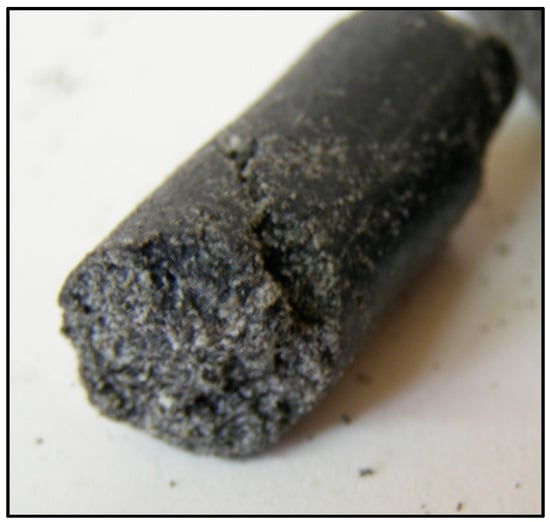
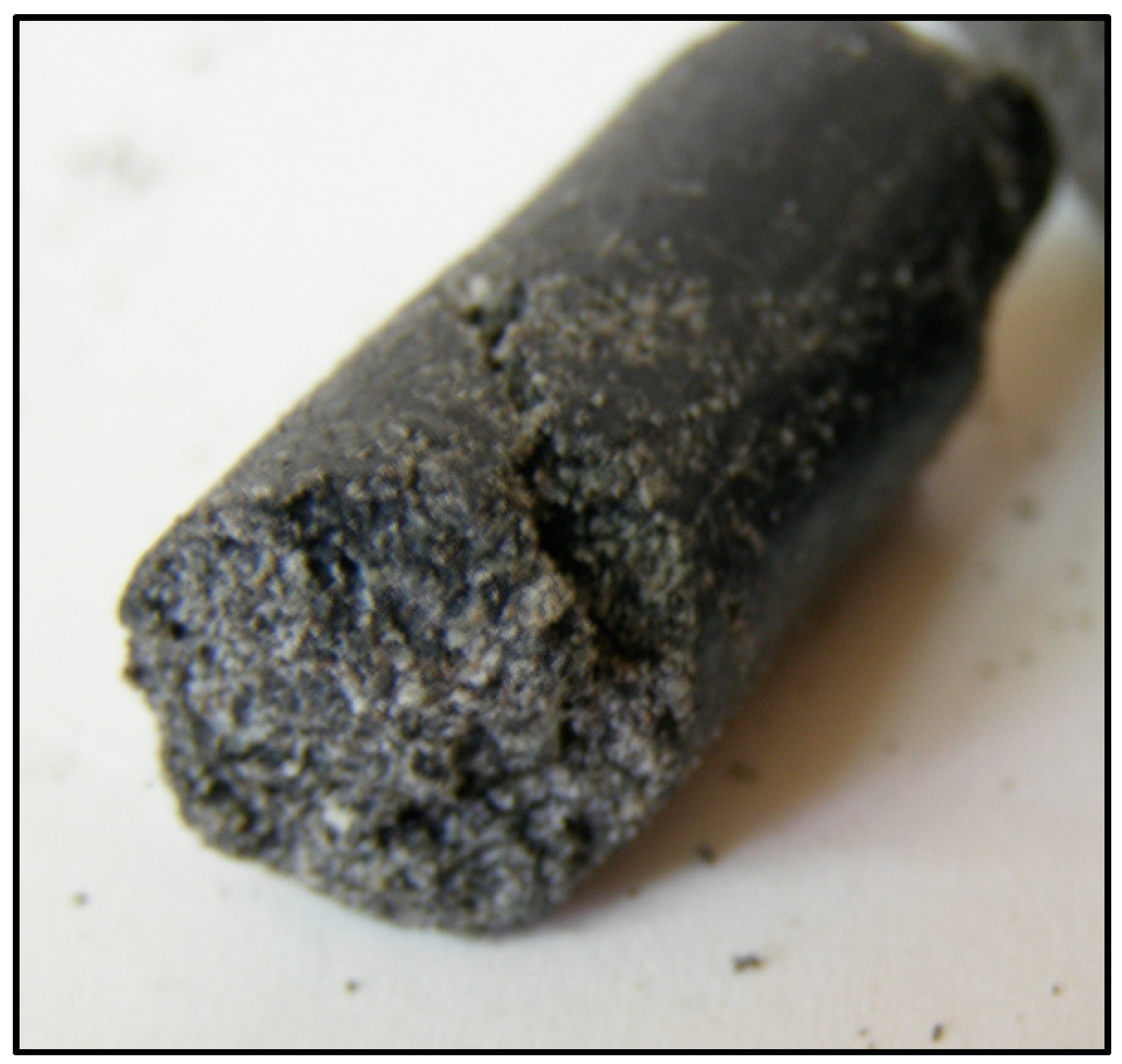
The sample characterized within the framework of this study was black cumin seed cake (PCN), a by-product obtained from the cold pressing of Nigella sativa L. seeds (Figure 1). The raw material was supplied by a small-scale producer, “Nigella” Ltd. (Dimitrovgrad, Bulgaria), which applies a mechanical pressing process without the use of chemical solvents. PCN samples were randomly collected from different production batches during 2024 and subsequently homogenized to obtain a representative composite sample (1 kg) for the subsequent analyses.
Figure 1.
Granulated waste (PCN) from process of cold pressing of cumin seeds.
2.1. Procedure for Sample Preparation
Approximately 1 kg of the collected PCN sample, as shown in Figure 1, was first crushed and dried at room temperature. The sample was then carefully homogenized and stored in a desiccator before subsequent analyses. Analytical procedures (three parallel samples were used for all described determinations).
Moisture and volatile matter were determined gravimetrically according to an oven-drying method. A test portion of known mass (approximately 5 g) was dried at (105 ± 2) °C in an oven at atmosphere pressure until a practically constant mass was reached. The moisture and volatile matter content was calculated from the difference between the initial mass and the final constant mass reached [23].
The contents of total ash were determined by incinerating a test portion of known mass in an electrically heated muffle furnace at (550 ± 15) °C until constant mass was reached. The ash obtained was then treated with a 10% hydrochloric acid solution (Merck KGaA, Darmstadt, Germany) to remove the fraction soluble in this reagent. The remaining residue was subsequently re-incinerated and weighed, and the resulting mass was calculated as ash insoluble in 10% hydrochloric acid.
The crude fiber content was determined after successive acid and alkaline digestion of a defatted sample under controlled conditions to remove soluble substances, leaving an insoluble fibrous residue. The residue was dried, incinerated, and weighed, and the crude fiber content was calculated from the mass difference before and after.
The oil content was determined according to the procedures based on the determination of light-petroleum extract, called “raw oil” (“residual oil content”), applicable to the treatment of residues from the processing of oilseeds obtained during oil extraction, by cold pressing. In this case, about 5 g of PCN weighted into extraction cellulose thimble was used for Soxhlet extraction with petroleum ether (Sigma-Aldrich Chemie GmbH, Taufkirchen, Germany) to obtain residual oil. The experimental conditions for the extraction process were: temperatures heating/cooling = 100/50 °C, number of cycles = 3–4, and extraction time (after boiling) ≈ 30 min.
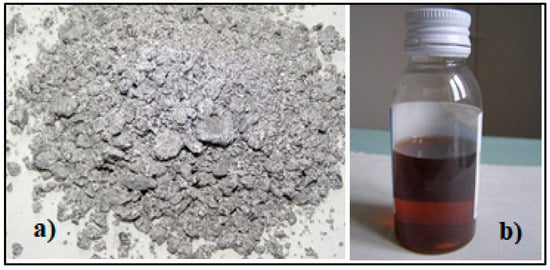
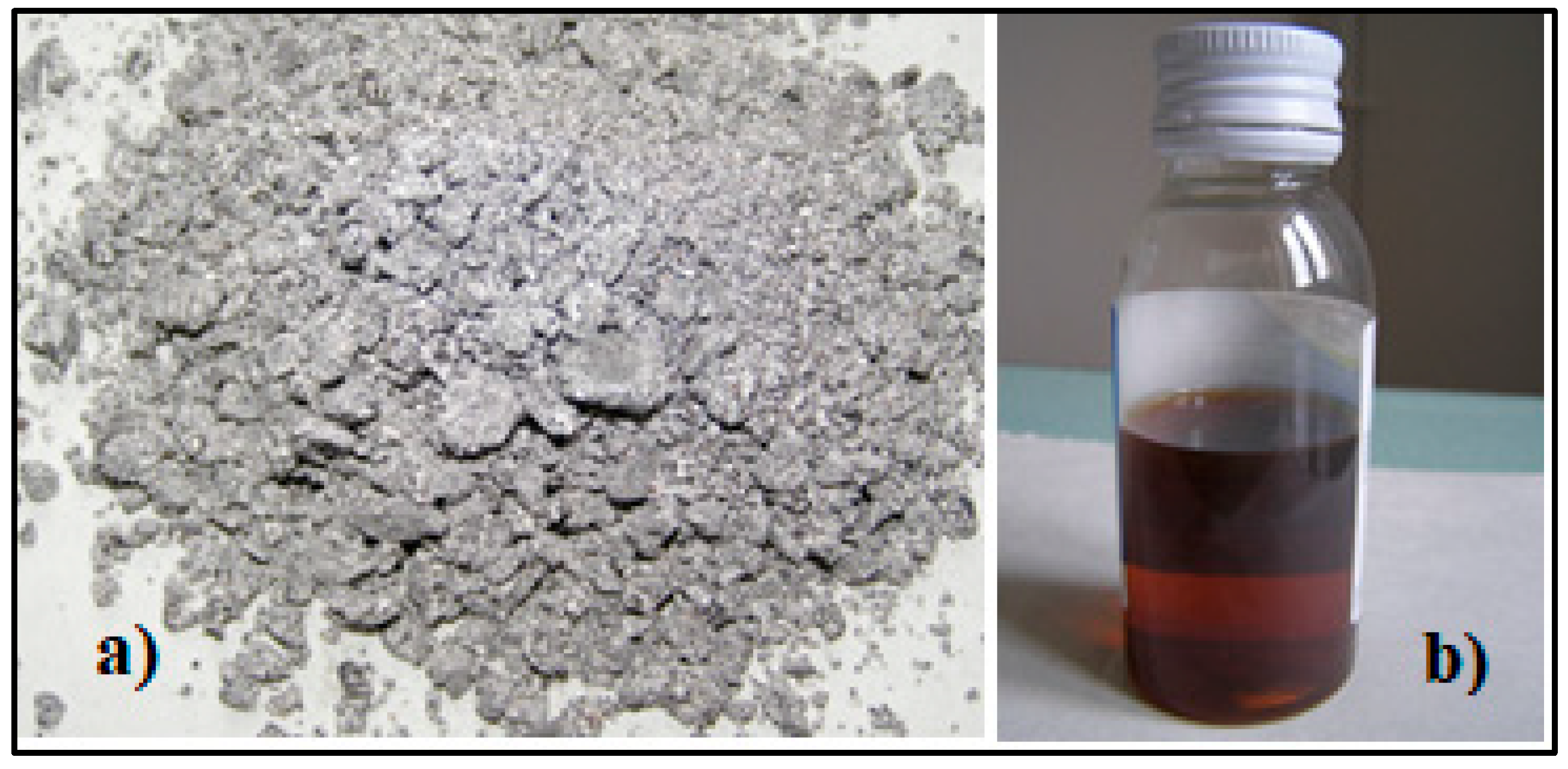
The type of mass after the process of extraction of the residual oil and the residual oil itself are shown in Figure 2.
Figure 2.
Waste material obtained after residual oil extraction—(a) and residual oil—(b).
Determination of total organic nitrogen and crude protein content. The total organic nitrogen was determined by the Kjeldahl method as follows: the dried and homogenized sample was digested with concentrated sulfuric acid in the presence of catalysts, whereby organic nitrogen was converted into ammonium sulfate. After digestion, the solution was cooled, sodium hydroxide was added, liberated ammonia was distilled and collected in solution of boric acid (Merck KGaA, Darmstadt, Germany), and subsequently titrated with standardized solution of sulfuric acid (Merck KGaA, Darmstadt, Germany). Crude protein content was determined based on total organic nitrogen analysis. The crude protein percentage was calculated by multiplying the total organic nitrogen content by a conversion factor of 6.25 (assuming an average nitrogen content of 16% in proteins) [24]. All results were expressed as percentages (%) on a dry weight basis.
The total phosphorus content was determined by UV-VIS spectrophotometry. The sample was digested under acidic conditions to convert phosphorus-containing compounds into soluble orthophosphate ions. The orthophosphate reacted with a solution of ammonium molybdate and ammonium vanadate in an acidic medium to produce a yellow-colored compound, the absorbance of which was measured by spectrophotometer (DLA, Beijing, China, SP-UV1100, range 190–1100 nm) at λ = 420 nm.
2.2. Determination of Chemical Elements
Approximately 0.5 g of prepared waste cake sample was accurately weighed into a glass beaker. The sample was treated with 10 mL of concentrated HNO3 and left to stand overnight under a watch glass. Subsequently, the sample was heated and gently boiled for approximately 5 h and covered with a watch glass. Finally, the watch glass was removed, the sample was evaporated to near dryness and diluted with 0.1 M nitric acid to a final volume of 25 mL in a volumetric flask.
The concentrations of Al, B, Ca, Mg, Fe, Mn, Cu, Zn, K and Na in solutions obtained were determined by inductively coupled plasma optical emission spectrometry (iCAP 7000 SERIES, Thermo Fisher Scientific Inc., Waltham, MA, USA) under optimized instrumental conditions. Calibration standards were prepared in 0.1 M suprapure nitric acid.
The concentrations of As, Cd, Co, Cr, Pb and Ni were determined by inductively coupled plasma mass spectrometry (ICP-MS) (“X SERIES 2”, Thermo Scientific, Waltham, MA, USA) under optimized instrumental conditions. Calibration standards were prepared in 0.05 M suprapure nitric acid.
FTIR Spectroscopy. The IR spectrum was recorded using the KBr pellet method. Approximately 200 mg of KBr was mixed and finely ground with 1–3 mg of press cake. The resulting homogeneous mixture was then compressed into a pellet for analysis.
FTIR spectra were recorded using a Thermo Scientific Nicolet Avatar 360 spectrometer (Thermo Fisher Scientific Inc., Waltham, MA, USA). A total of 32 scans were collected at a spectral resolution of 2 cm−1 over the wavenumber range of 400–4000 cm−1.
Scanning electron microscopy with energy-dispersive X-ray spectroscopy (SEM-EDS) analysis was performed with a Zeiss EVO 10 scanning electron microscope (Carl Zeiss, Oberkochen, Germany) equipped with an Oxford Instruments, Xplore 30 energy-dispersive X-ray spectrometer (Halifax Rd, Bradford, UK). Prior to analysis, the powder sample was mounted on conductive carbon tape and sputter-coated with a thin layer of gold (Au) to ensure electrical conductivity. The analysis was performed in high vacuum mode at an acceleration voltage of 15 kV and a working distance of 10 mm. High-purity nitrogen (N2 5.0, purity > 99.999%, Messer Bulgaria EOOD, Sofia, Bulgaria) was used as a chamber purge gas during sample handling. The energy resolution of the EDS detector is 129 eV at the Mn Kα line (5.9 keV). Image acquisition and processing were performed using the SmartSEM software (Version 7.05, Service Pack 3), while the elemental spectra and maps were acquired and processed using the AztecOne software suite (version number 3.0).
3. Results and Discussion
The results for the physicochemical parameters are described in Table 1.
Table 1.
Physicochemical profile of PCN.
Cold pressing preserves native bioactive compounds but leaves approximately 15–25% residual oil in PCN, as observed in the studied sample [16]. The residual oil content determined in the raw PCN waste was approximately 20%. The residual oil remaining in the cumin cake is expected to retain a composition generally similar to that of the initially extracted cold-pressed oil. Nevertheless, mechanical pressing preferentially removes the more accessible oil fraction, and the remaining oil may therefore contain relatively higher proportions of less extractable, matrix-associated compounds, including polar lipids, phenolic compounds, and other minor bioactive constituents. In contrast, the major fatty acid profile is not expected to differ substantially. The composition of the residual oil may further depend on the processing conditions applied during both the initial pressing and the subsequent extraction procedures [25]. Oil extracted with a solvent directly from the residual press cake shows significantly higher levels of free fatty acids, chlorophyll, and carotenoids compared to virgin seed oil. Concurrently, the peroxide value, total phenolic content, and levels of the valuable thymoquinone are lower in the press cake oil. However, reducing its acid and peroxide values increases its stability, making it more applicable for the food industry [19]. The residual oil could have an unfavourable effect on certain biochemical and microbiological soil properties and may adversely affect the composting process. In this regard, two alternative approaches for the utilization of waste PCN may be considered.
On the one hand, the extraction of residual oil and other valuable compounds from this by-product could enable its subsequent use as a secondary raw material in the cosmetic, pharmaceutical, and food industries [26]. On the other hand, controlled thermal recovery through the combustion of PCN represents another efficient alternative.
The moisture content of the material is below 10 wt.% due to the processing conditions, which further supports its suitability for combustion. Moreover, the extremely low content of insoluble ash suggests that the mineral residue generated after combustion could serve as an effective source of plant nutrients when applied to soil.
The total organic nitrogen content of cumin seed cake reflects its residual protein fraction after oil extraction. The mean total organic nitrogen content of PCN was found to be 1.19%, corresponding to a crude protein content of approximately 7.5%. This value indicates a relatively low-to-moderate crude protein concentration. It is important to note that protein quality is not determined solely by total protein content but also by amino acid composition and digestibility. Despite its lower protein level the cumin cake studied may still contribute nutritionally when used as an ingredient in health-oriented products, considering its content of bioactive compounds, residual lipids, minerals, and antioxidant constituents.
3.1. Total Phosphorus Content
Phosphorus in oilseeds is typically associated with phospholipids, nucleic acids, and predominantly with phytate (myo-inositol hexakisphosphate) which serves as the main storage form of phosphorus in plant tissues [23]. The total phosphorus content of the cumin seed cake studied was found to range between 0.33% and 0.37%, indicating a moderate concentration of this essential macronutrient. Compared with published data which varied in the range of 5665–6807 mg/kg [27,28] the phosphorus content of the studied cumin cake is somewhat lower. It should be considered that, as in most plant-derived materials, a substantial proportion of phosphorus is likely present in the form of phytate, which may reduce its bioavailability in human nutrition. Nevertheless, the detected phosphorus content contributes to the overall nutritional profile of PCN and supports its potential application as a functional food ingredient or feed component.
3.2. Chemical Elements Content
In the present study the multi-element spectrometric method (ICP-OES and ICP-MS) was applied for complete characterization of the mineral content of PCN. The concentration of chemical element content is presented in Table 2.
Table 2.
Chemical element content in PCN.
Cold pressing may lead to changes in the distribution of chemical elements between the oil and the residual press cake. However, in contrast to the extensive data available for cumin seeds, only a limited number of studies have investigated the elemental composition of cumin seed oil cake, and these have focused primarily on essential elements. It might be expected that macro-elements (Ca, Mg, K, Na) would tend to remain predominantly in the press cake due to their association with protein and fiber fractions. Similarly, trace essential elements (Fe, Zn, Cu, Mn) are expected to partition largely into the cake. The oil fraction would generally contain only minor amounts of minerals because most inorganic elements are not lipophilic. Potentially toxic elements (As, Hg, Pb, Cd) must be carefully evaluated in all fractions to ensure safety for food, cosmetic, or pharmaceutical applications. The data presented in Table 2 revealed that Ca, K, Mg, and Na are the predominant elements in the PCN. Potassium was the most abundant element with a concentration of approximately 10,000 mg/kg. Concentrations detected in the present study are in the same order indicating relatively stable levels independent of geographical origin. The next elements with concentrations of about 2000 mg/kg are Ca and Mg which are a bit lower than the published data yet still in the same order. The average content of the macro-elements in the analyzed sample follows the trend K > P > Ca > Mg > Na. Concerning, the essential micro-elements (B, Cu, Fe, Mn and Zn), they were detected at moderate concentrations in the range of published data. Results confirmed the hypothesis that these elements were typically retained in the press cake after cold pressing, as their concentrations are higher than those in the whole cumin seed. The total content of a chemical element is not, by itself, sufficient evidence of its bioavailability or bioaccessibility, and therefore it does not directly demonstrate a health effect. However, we consider that the relatively high total concentrations of essential elements such as P, Ca, Mg, Fe, Cu, and Zn are indicative of potential applicability. At the same time, the levels of toxic elements, including lead and cadmium, are below the maximum limits established for food supplements under Regulation (EU) 2023/915—3 mg/kg for lead and 1 mg/kg for cadmium [29]. The balance between the content of essential elements and low levels of toxic elements suggests that PCN could be a potential candidate for future applications in the food industry or nutraceuticals.
3.3. FTIR Analysis
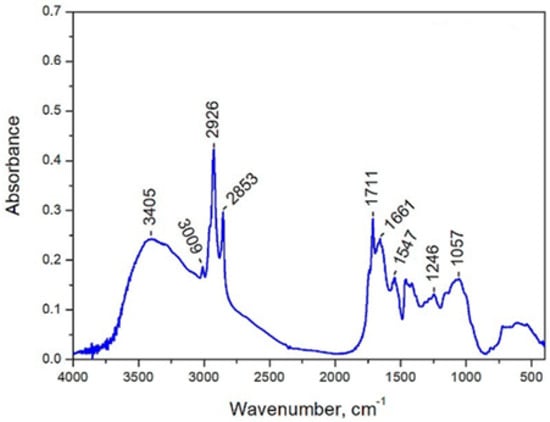
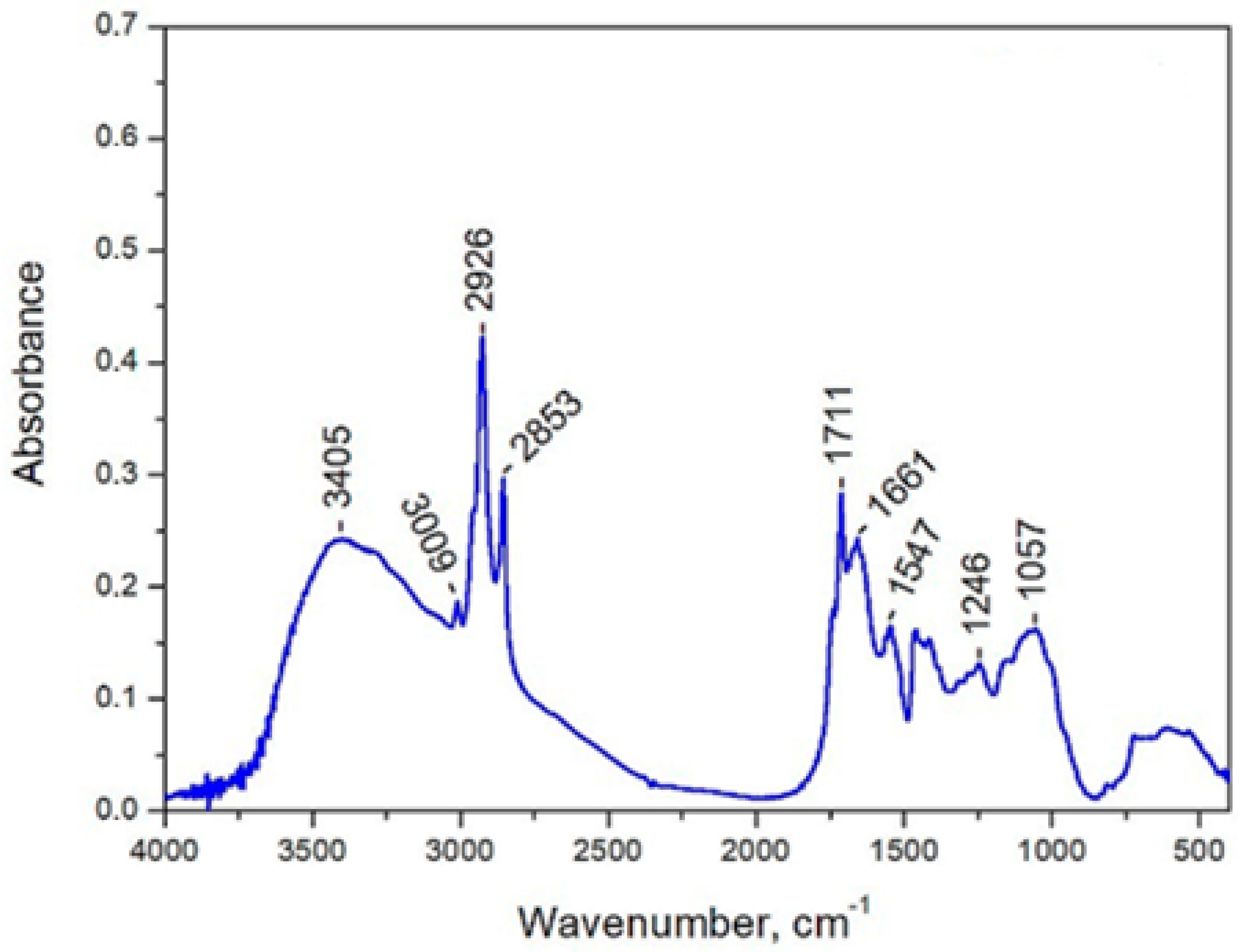
The FTIR spectrum analysis of PCN reflects the transformation of the raw material after the pressing process and is characterized by dominant bands at 3405 cm−1, 3009 cm−1, 2926 cm−1, 2853 cm−1, 1711 cm−1, 1661 cm−1 and 1547 cm−1. The characteristic absorption bands observed in the PCN spectrum (Figure 3) correspond to functional groups present in bioactive compounds typical of the initial material (cumin)—fatty acids, terpenes and alkaloids—together with the potential presence of compounds such as thymoquinone.
Figure 3.
FTIR spectrum of the PCN sample.
The broad band at 3405 cm−1 indicates the presence of O–H groups involved in hydrogen bonds. They originate from various sources: hydroxyl groups of carbohydrates (cellulose, hemicelluloses), phenolic compounds, and adsorbed moisture, as well as from protein side chains. The weak band at 3009 cm−1, characteristic of =C–H groups in sp2 hybridized carbon (aromatic) structures, indicates a relatively low degree of unsaturation in the residual oil phase. This is an expected result of the selective extraction of the more unsaturated fatty acids during the technological process of cold pressing [30]. The two strong peaks at 2926 cm−1 and 2853 cm−1 are due to the asymmetric and symmetric stretching vibrations of the C–H bonds in methylene (–CH2–) and methyl (–CH3) groups and indicate the significant presence of aliphatic structures. They originate mainly from the residual lipids (triglycerides), but also from the protein side chains and the lignocellulosic matrix. The high intensity of these bands, compared to the weak absorption at 3009 cm−1, confirms that the aliphatic chains in the sample are predominantly saturated. The strong peak at 1711 cm−1 is characteristic of the stretching vibrations of the carbonyl groups (C=O) in esters (such as triglycerides) and carboxylic acids from the residual oil. Its high intensity indicates the still significant presence of lipid components in the PCN. The weak band, expressed as a shoulder at ~1661 cm−1, is typical of Amide I (C=O stretching in peptide bonds) [31,32], which probably overlaps with conjugated carbonyls of quinone structures, such as thymoquinone [33].
The relatively weak band at 1547 cm−1 is due to the deformation vibrations of N–H groups combined with C–N stretching in proteins, which is an indicator of the presence of a well-preserved protein matrix in the PCN (Amide II) [30,31,33]. There is a possible partial overlap of the vibrations of N–H groups with C=C vibrations of aromatic rings (lignin skeleton, aromatic amino acids), which are also present in this region.
The absorption bands at 1246 cm−1 and 1057 cm−1 (C–O and C–N stretching vibrations) are typical of the carbohydrate and protein components, as well as possible C–N bonds in alkaloids [34].
FTIR analysis presents PCN as a compound biochemical complex of three main components: lipid residues (dominant C–H bands, C=O at 1711 cm−1), protein matrix (pronounced Amide I and II bands) and carbohydrate-lignin skeleton (broad O–H band and C–O bands in the region of 1200–1000 cm−1). Specific signals corresponding to conjugated carbonyls confirm the presence of thermostable quinone structures (thymoquinone), which determines the high bioactive potential of the material as a raw material for functional foods and food supplements.
3.4. SEM–EDS Studies
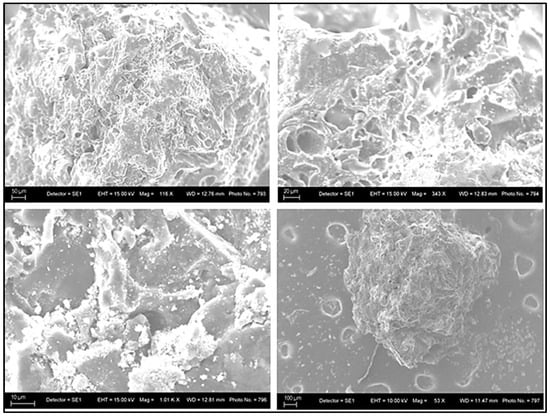
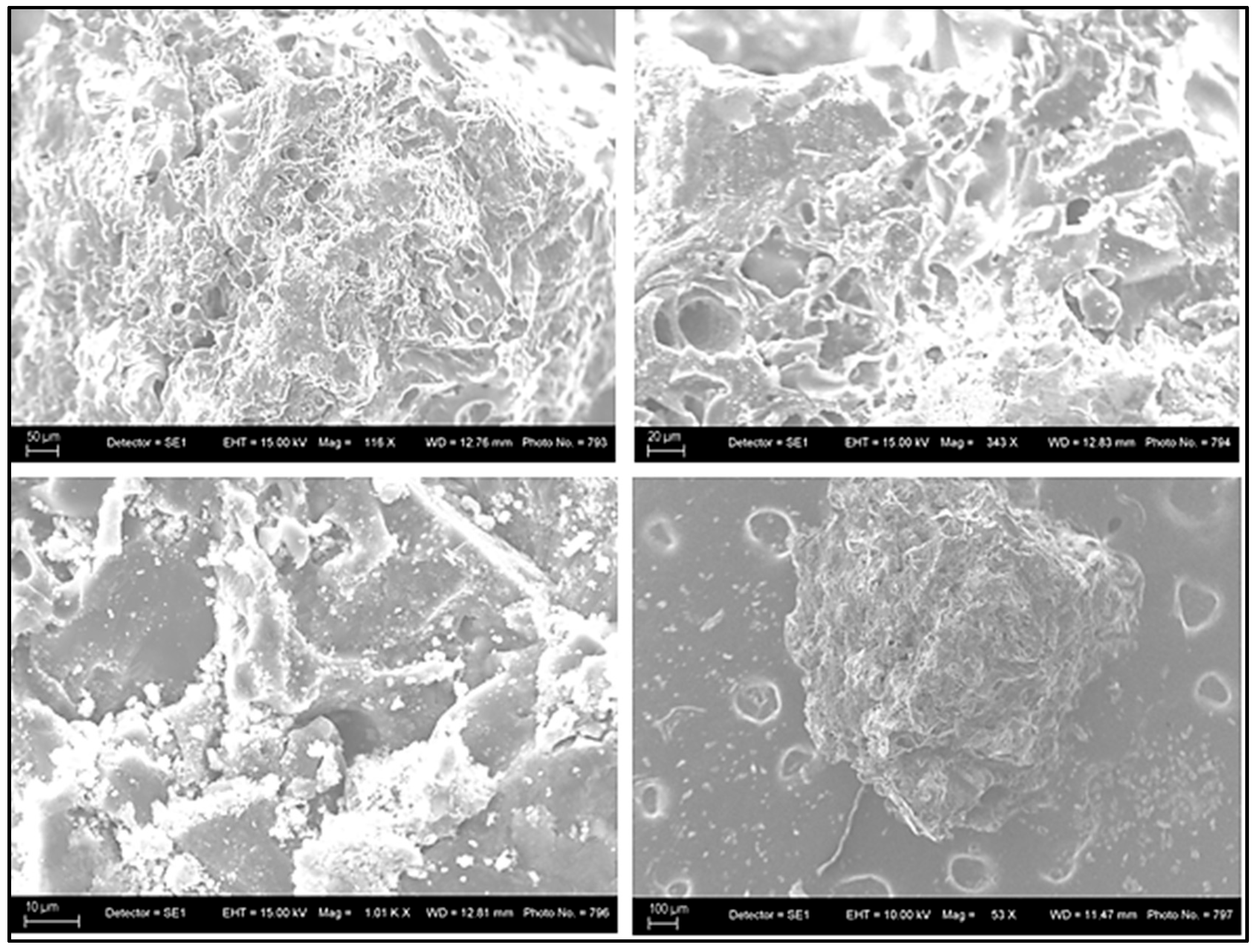
The SEM images of PCN (Figure 4) reveal an irregular surface morphology with isolated pores. The elemental composition determined by EDS indicates the presence of various elements in the sample (C, Ca, K, Mg, Na, Fe, Si, P, O, etc.).
Figure 4.
Scanning electron microscopy (SEM) images of PCN at different magnifications.
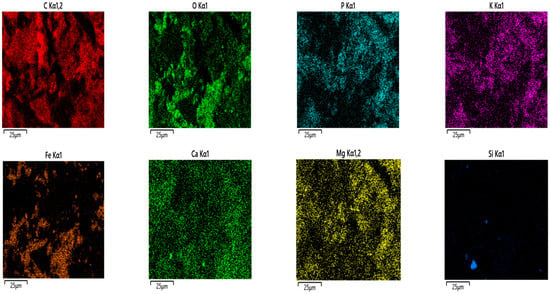
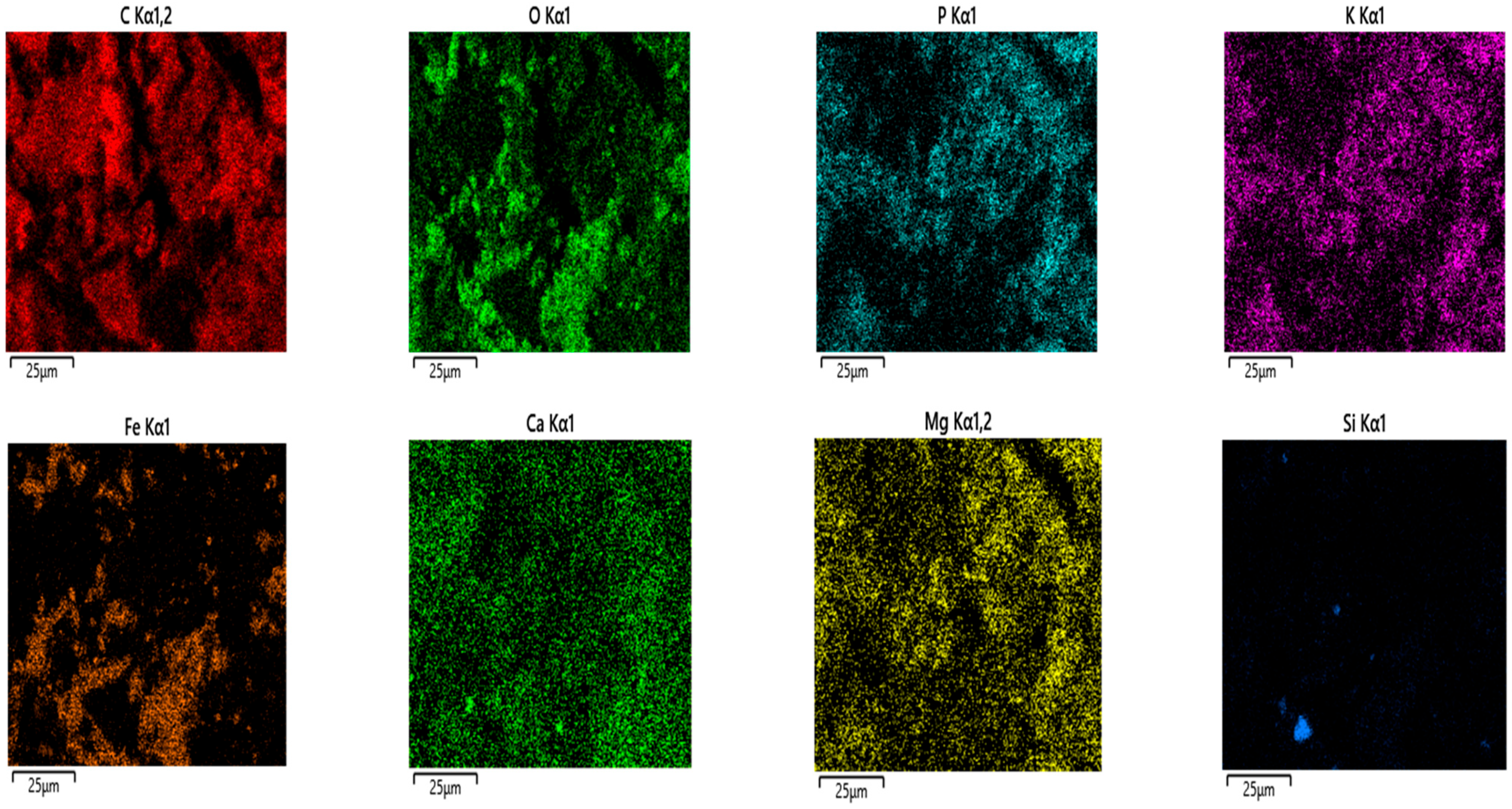
From Figure 5, it can be seen that the distribution of carbon is uniform throughout the structure (surface and depth—pores and cracks), while for oxygen, enrichment is observed in some denser surface areas. This could be a result of the non-uniform distribution and transformation of the surface oxygen-containing groups during the processing/treatment stage. Calcium (~0.4%), magnesium (~0.2%), potassium (~1.5%), and phosphorus (~0.4%) are also distributed relatively uniformly over the surface. The distribution order of the main macroelements (potassium, calcium, and magnesium) K > Ca > Mg has also been reported in other studies [27,28] focused on the elemental composition of caraway press cake. Iron (~0.03%) is found only in separate aggregates, showing that it is not part of the main matrix. The same applies to silicon (~0.3%), which is likely attributed to silicate contamination. The higher carbon content (61%) can be attributed to the complex composition of PCN, which includes not only cellulose but also lignin (a carbon-rich component, approximately 60–65% C) and residual fats/oils. The sample contains about 20% residual oil, composed of long hydrocarbon chains that substantially contribute to the overall carbon percentage. These data are in good agreement with the elemental composition obtained by EDS, despite the semi-quantitative nature of this technique for light elements. The predominance of carbon (~61%) and oxygen (~21%), together with the FTIR spectra, confirms the presence of a large number of oxygen-containing functional groups (such as C=O and C–O) on the PCN surface.
Figure 5.
Energy-dispersive X-ray spectroscopy (EDS) elemental maps of PCN (carbon—red; oxygen—green).
This consistency across different analytical techniques supports the proposed composition and is commonly observed in the characterization of lignocellulose materials derived from biomass [35,36].
The FTIR analysis indicated the presence of several plant-derived functional groups that may contribute to the sorption potential of PCN. In particular, hydroxyl, carbonyl, carboxyl, and phenolic groups associated with lignocellulosic components, proteins, and residual oil constituents may participate in hydrogen bonding, electrostatic interactions, ion exchange, and complex formation with various adsorbates. Such oxygen-containing functional groups are commonly considered active sites in biomass-derived sorbents and may enhance the affinity of the material toward metal ions and organic compounds.
In addition to the chemical functionality, the observed surface morphology suggests structural features favorable for sorption applications. The heterogeneous and irregular surface texture, together with the presence of pores and surface cavities, may increase the available contact area and facilitate the accessibility of active binding sites. These characteristics are important for adsorption processes, as they can promote the interaction between the sorbent surface and target compounds.
Overall, the combination of surface functional groups and structural heterogeneity indicates that pressed cumin cake possesses characteristics comparable to those reported for other lignocellulosic and oilseed-derived biomass materials investigated as low-cost sorbents. In addition, as part of the strategies for the valorization of PCN, its potential as a biosorbent has been already investigated. It was established that, after fat extraction, the material exhibited a high capacity for the removal of the cationic dye Toluidine Blue from aqueous solutions, comparable to that of advanced engineered materials [37]. Another study investigated the carbonization of PCN at 500 °C and its chemical activation with 85% phosphoric acid, with the results confirming the material’s potential for producing high-quality activated carbon [38].
4. Conclusions
Analytical characterization of PCN within the framework of the present study indicated that this by-product represents a plant matrix suitable as an ingredient for food, feed, or nutraceutical applications. PCN retains considerable amounts of essential macroelements (K, Ca, Mg, and P) and trace elements (Fe, Zn, Mn, and Cu), confirming its suitability as a supplementary source of important essential elements.
The main absorption bands identified by the conducted FTIR analysis, taking into account that cold pressing does not significantly alter the bioactive compounds present in cumin seeds, revealed the presence of lipid residues (dominant C–H bands and a C=O band at 1711 cm−1), a protein matrix (pronounced Amide I and Amide II bands), and a carbohydrate–lignin structure (broad O–H band and C–O bands in the 1200–1000 cm−1 region). In addition, specific signals corresponding to conjugated carbonyl groups further confirmed the presence of thermostable quinone structures, particularly thymoquinone.
SEM analysis revealed a porous structure with surface irregularities, which are advantageous for sorption applications, as they facilitate diffusion into the matrix and enhance physical adsorption through increased contact area. The EDS results, in combination with the FTIR data, indicate the presence of hydroxyl (–OH), carboxyl (–COOH), and phosphate (–PO43−) groups.
Author Contributions
Conceptualization, M.M. and G.G.; methodology, M.M., G.G., M.N.-S. and I.Y.; experimental work, M.M., G.G. and I.Y.; data analysis and writing of manuscript, M.M., G.G., M.N.-S. and I.K. All authors have read and agreed to the published version of the manuscript.
Funding
This research was funded by the European Union—NextGenerationEU, through the National Recovery and Resilience Plan of the Republic of Bulgaria, project № BG-RRP-2.004-0002, “BiOrgaMCT”.
Data Availability Statement
The original contributions presented in this study are included in the article. Further inquiries can be directed to the corresponding authors.
Acknowledgments
The authors express their gratitude for the support of Project No7/2023 “Recovery of waste from oil manufacture”, MU-Pleven.
Conflicts of Interest
The authors declare no conflicts of interest.
References
- Seghatoleslami, M. Effect of water stress, bio-fertilizer and manure on seed and essential oil yield and some morphological traits of cumin. Bulg. J. Agric. Sci. 2013, 19, 1268–1274. [Google Scholar]
- Cagidni, O.; Aksoylu, Z.; Savlak, N.; Kose, E. Comparison of physicochemical and functional properties of domestic and commercial tarhana in Turkey. Bulg. J. Agric. Sci. 2016, 22, 324–330. [Google Scholar]
- Tavakkoli, A.; Mahdian, V.; Razavi, B.; Hosseinzadeh, H. Review on Clinical Trials of Black Seed (Nigella sativa) and Its Active Constituent, Thymoquinone. J. Pharmacopunct. 2017, 20, 179–193. [Google Scholar] [CrossRef] [Scilit] [PubMed]
- Yimer, E.; Tuem, K.; Karim, A.; Ur-Rehman, N.; Anwar, F. Nigella sativa L. (Black Cumin): A Promising Natural Remedy for Wide Range of Illnesses. Evid. Based Complement. Alternat. Med. 2019, 1528635. [Google Scholar] [CrossRef] [Scilit]
- Kour, J.; Gani, A. Nigella sativa Seed Cake: Nutraceutical Significance and Applications in the Food and Cosmetic Industry. In Black Cumin (Nigella sativa) Seeds: Chemistry, Technology, Functionality, and Applications; Springer: Cham, Switzerland, 2020; pp. 223–229. [Google Scholar]
- Hannan, A.; Rahman, A.; Sohag, A.; Uddin, J.; Dash, R.; Sikder, M.; Rahman, S.; Timalsina, B.; Munni, Y.; Sarker, P.; et al. Black Cumin (Nigella sativa L.): A Comprehensive Review on Phytochemistry, Health Benefits, Molecular Pharmacology, and Safety. Nutrients 2021, 13, 1784. [Google Scholar] [CrossRef] [Scilit]
- Mohan, M.; Thomas, J.; Mohan, M.; Das, S.; Prabhakaran, P.; Sasidharan, B. A proprietary black cumin oil extract (Nigella sativa) (BlaQmax®) modulates stress-sleep-immunity axis safely: Randomized double-blind placebo-controlled study. Front. Nutr. 2023, 10, 1152680. [Google Scholar] [CrossRef] [Scilit] [PubMed]
- Lutterodt, H.; Luther, M.; Slavin, M.; Yin, J.; Parry, J.; Gao, J.; Yu, L. Fatty acid profile, thymoquinone content, oxidative stability, and antioxidant properties of cold-pressed black cumin seed oils. LWT Food Sci. Technol. 2010, 43, 1409–1413. [Google Scholar] [CrossRef] [Scilit]
- Kiralan, M.; Ozkan, G.; Bayrak, A.; Ramadan, F. Physicochemical properties and stability of black cumin (Nigella sativa) seed oil as affected by different extraction methods. Ind. Crops Prod. 2014, 57, 52–58. [Google Scholar] [CrossRef] [Scilit]
- Zaky, A.A.; Shim, J.H.; Abd El-Aty, A.M. A Review on Extraction, Characterization, and Applications of Bioactive Peptides from Pressed Black Cumin Seed Cake. Front. Nutr. 2021, 8, 743909. [Google Scholar] [CrossRef] [Scilit]
- Krawęcka, A.; Sobota, A.; Ivanišová, E.; Harangozo, Ľ.; Valková, V.; Zielińska, E.; Blicharz-Kania, A.; Zdybel, B.; Mildner-Szkudlarz, S. Effect of Black Cumin Cake Addition on the Chemical Composition, Glycemic Index, Antioxidant Activity, and Cooking Quality of Durum Wheat Pasta. Molecules 2022, 27, 6342. [Google Scholar] [CrossRef] [Scilit]
- Singh, R.; Langyan, S.; Sangwan, S.; Rohtagi, B.; Khandelwal, A.; Shrivastava, M. Protein for Human Consumption From Oilseed Cakes: A Review. Front. Sustain. Food Syst. 2022, 6, 856401. [Google Scholar] [CrossRef] [Scilit]
- Ivanova, P.; Kalaydzhiev, H.; Rustad, T.; Silva, C.; Chalova, V. Comparative biochemical profile of protein-rich products obtained from industrial rapeseed meal. Emir. J. Food Agric. 2017, 29, 170. [Google Scholar] [CrossRef] [Scilit]
- Hadidi, M.; Aghababaei, F.; McClements, D.J. Sunflower meal/cake as a sustainable protein source for global food demand: Towards a zero-hunger world. Food Hydrocoll. 2024, 147, 109329. [Google Scholar] [CrossRef] [Scilit]
- Gültekin Subaşı, B.; Vahapoğlu, B.; Capanoglu, E.; Mohammadifar, M.A. A review on protein extracts from sunflower cake: Techno-functional properties and promising modification methods. Crit. Rev. Food Sci. Nutr. 2022, 62, 6682–6697. [Google Scholar] [CrossRef] [Scilit]
- Yabacı Karaoğlan, S. Cold-Pressed Black Cumin (Nigella sativa L.) Cake as a Functional Ingredient in Sustainable Food Systems. Int. J. Agric. Environ. Food Sci. 2025, 9, 349–357. [Google Scholar] [CrossRef] [Scilit]
- Talwar, B.; Chopra, R.; Taneja, N.K.; Chand, M.; Homroy, S.; Dhiman, A.; Singh, P.; Chaudhary, S. Use of flaxseed cake as a source of nutrients in the food industry and possible health benefits-a review. Food Prod. Process. Nutr. 2025, 7, 22. [Google Scholar] [CrossRef] [Scilit]
- Mueed, A.; Shibli, S.; Korma, S.A.; Madjirebaye, P.; Esatbeyoglu, T.; Deng, Z. Flaxseed Bioactive Compounds: Chemical Composition, Functional Properties, Food Applications and Health Benefits-Related Gut Microbes. Foods 2021, 11, 3307. [Google Scholar] [CrossRef] [Scilit]
- Abedinzadeh, S.; Torbati, M.; Azadmard-Damirchi, S.; Savage, G.P. Effect of refining on the quality of oils extracted by cold press from black cumin (Nigella sativa L.) seed and by solvent from its cake. Int. J. Food Sci. Technol. 2023, 58, 6475–6484. [Google Scholar] [CrossRef] [Scilit]
- Łopusiewicz, L.; Smietana, N.; Paradowska, D.; Drozłowska, E. Black Cumin (Nigella sativa L.) Seed Press Cake as a Novel Material for the Development of New Non-Dairy Beverage Fermented with Kefir Grains. Microorganisms 2022, 10, 300. [Google Scholar] [CrossRef] [Scilit] [PubMed]
- Kamandloo, F.; Miran, M.; Salami, M. Evaluation of black seed (Nigella sativa L.) cake and its protein in muffins as a valuable potential functional source for obesity control. Food Funct. Food Sci. Obes. 2023, 1, 7–25. [Google Scholar] [CrossRef] [Scilit]
- Ciurko, D.; Laba, W.; Kancelista, A.; John, L.; Gudina, E.; Lazar, Z.; Janek, T. Efficient conversion of black cumin cake from industrial waste into lipopeptide biosurfactant by Pseudomonas fluorescens. Biochem. Eng. J. 2023, 197, 108981. [Google Scholar] [CrossRef] [Scilit]
- Kumar, A.; Dash, G.K.; Sahoo, S.K.; Bhat, A.; Chandan, R.K.; Adak, T. Phytic acid: A reservoir of phosphorus in seeds plays a dynamic role in plant and animal metabolism. Phytochem. Rev. 2023, 22, 1281–1304. [Google Scholar] [CrossRef] [Scilit]
- Jones, D. Factors for Converting Percentages of Nitrogen in Foods and Feeds into Percentages of Proteins; Circular No. 183; U.S. Department of Agriculture: Washington, DC, USA, 1931.
- Laukagalis, V.; Tarasevičienė, Ž.; Visockis, M.; Kazancev, K.; Sendžikienė, E.; Kiełtyka-Dadasiewicz, A.; Šatkauskas, S.; Paulauskienė, A. Impact of Pretreatment Methods on Yield and Composition of Cold-Pressed Black Cumin (Nigella sativa L.) Seed Oil. Foods 2024, 14, 4234. [Google Scholar] [CrossRef] [Scilit]
- Rabiej-Kozioł, D.; Szydłowska-Czerniak, A. Antioxidant Potential Evaluation at Various Stages of Black Cumin Oil Production. Foods 2024, 13, 3518. [Google Scholar] [CrossRef] [Scilit] [PubMed]
- Hallouch, O.; Ibourki, M.; Devkota, K.P.; Majourhat, K.; Gharby, S. Proximate Composition, Antioxidant Activity, Lipids and Elemental Profiling of Argan, Almond, Sesame, Nigella, Soybean and Sunflower Oil Press Cakes Reveal a Great Potential of Valorization. Res. Sq. 2024. [Google Scholar] [CrossRef] [Scilit]
- Gharby, S.; Oubannin, S.; Bijla, L.; Gagour, J.; Hajir, J.; Aabd, A.; Sakar, E.H.; Salama, A. Evaluation of Proximate Composition, Elemental Profiling, Physicochemical Characterization and Stability Oxidative Under Accelerated Aging Conditions of Black Cumin (Nigella sativa L.) and Argan (Argania spinosa L. Skeels). SSRN 2022. Available online: https://ssrn.com/abstract=4081140 (accessed on 23 May 2026).
- Commission Regulation (EU) 2023/915. Available online: https://eur-lex.europa.eu/legal-content/EN/TXT/PDF/?uri=CELEX:32023R0915 (accessed on 23 May 2026).
- Coates, J. Interpretation of Infrared Spectra, A Practical Approach. In Encyclopedia of Analytical Chemistry; John Wiley & Sons: Hoboken, NJ, USA, 2006. [Google Scholar]
- Kaushik, N.; Barmanray, A. Optimisation of Ultrasound-Assisted Extraction Conditions Using Response Surface Methodology and Identification of Thymoquinone from Black Cumin (Nigella sativa L.) Seed Extract. Food Technol. Biotechnol. 2025, 63, 262–273. [Google Scholar] [CrossRef] [Scilit] [PubMed]
- Carrión-Prieto, P.; Martín-Ramos, P.; Hernández-Navarro, S.; Silva-Castro, I.; Ramos-Silva, M.; Martín-Gil, J. Vibrational analysis and thermal behavior of Salvia hispanica, Nigella sativa and Papaver somniferum seeds. Pharmacogn. J. 2017, 9, 157–162. [Google Scholar] [CrossRef] [Scilit]
- Al-Majeed, I.; Al-Massody, A. Identification and characterization of thymoquinone from Nigella sativa L. oil using spectroscopic techniques (FTIR and GC-MS). Egypt. J. Chem. 2020, 63, 5105–5112. [Google Scholar]
- Trigui, I.; Yaich, H.; Zouari, A.; Cheikh-Rouhou, S.; Blecker, C.; Attia, H.; Ayadi, M.A. Structure-function relationship of black cumin seeds protein isolates: Amino-acid profiling, surface characteristics, and thermal properties. Food Struct. 2021, 29, 100203. [Google Scholar] [CrossRef] [Scilit]
- Arauzo, P.J.; Checa-Gomez, M.; Maziarka, P.A.; Romul, S.; Roman, S. Influence of the biomass particle size during the hydrothermal carbonization of Jatropha curcas fruit residue to unlock its potential in bioenergy production. Biomass Bioenergy 2025, 200, 107996. [Google Scholar] [CrossRef] [Scilit]
- Tran, T.C.; Ngo, V.T.; Nguyen, H.M.; Tran-Thuy, T.-M.; Nguyen, L.Q.; Nguyen, D.V. Valorization of banana pseudostem for green synthesis of silver nanoparticle-functionalized carboxyl cellulose nanomaterial. J. Ecol. Eng. 2026, 27, 91–101. [Google Scholar] [CrossRef] [Scilit]
- Gentscheva, G.; Vassileva, P.; Tsvetkova, C.; Pashev, A.; Yotkovska, I.; Mladenov, M.; Vassilev, T. Eco-Friendly Dye Removal: Black Cumin Seed Press Cake for Toluidine Blue Adsorption. Separations 2025, 12, 258. [Google Scholar] [CrossRef] [Scilit]
- Nedkova-Stipska, M.; Manoilova, L.; Mladenov, M.; Georgiev, H.; Ruskova, K.; Gentscheva, G. Study of the structure and surface morphology of activated carbon from black cumin seed meal (Nigella sativa L.). J. Chem. Technol. Metall. 2026, 61, 283–292. [Google Scholar] [CrossRef] [Scilit]

Disclaimer/Publisher’s Note: The statements, opinions and data contained in all publications are solely those of the individual author(s) and contributor(s) and not of MDPI and/or the editor(s). MDPI and/or the editor(s) disclaim responsibility for any injury to people or property resulting from any ideas, methods, instructions or products referred to in the content. |
© 2026 by the authors. Licensee MDPI, Basel, Switzerland. This article is an open access article distributed under the terms and conditions of the Creative Commons Attribution (CC BY) license.