


Abstract
This study investigates how sintering temperature affects phase evolution, titanium carbide (TiC) formation, and oil-repellent performance in TiO2–carbon-coated 304 stainless-steel mesh for oil–water separation applications. Coated meshes sintered at 400, 500, 600, 700, and 800 °C were evaluated using gravity-driven oil permeation tests with 5W-20 motor oil and oil contact-angle measurements, while coating morphology, composition, and phase evolution were characterized by SEM, EDS, and XRD. Sintering temperature strongly influenced coating structure and wettability. Among the tested conditions, the mesh sintered at 600 °C showed the highest oil contact angle (105°) and the highest initial oil retention efficiency (80%), indicating the most favorable balance between oleophobicity and coating stability within the tested range. XRD analysis showed that 600 °C corresponded to the onset of the anatase-to-rutile transition and the initial formation of TiC. These results suggest that intermediate sintering temperatures can provide a favorable balance between retention of beneficial anatase content and enhanced interfacial interaction within the TiO2–carbon coating. Within the tested conditions, 600 °C was the best-performing sintering condition among the temperatures examined for this coating system.
1. Introduction
In 2024, ten recorded incidents released more than seven tons of oil into the ocean, raising the decade average to 7.4 tanker spills per year compared with 6.3 spills per year in the 2010s [1]. Oil spills cause severe and persistent damage to marine ecosystems, wildlife, and coastal habitats [2]. Wildlife is also directly affected, as oil disrupts essential physiological functions required for survival. Beyond ecological damage, oil spills also impose major economic burdens. In late 2024, for instance, an oil spill in the Kerch Strait, caused by two aging tankers breaking apart during a storm, was estimated to result in more than $1 billion in restoration costs [3]. Reflecting the scale of this challenge, the global oil spill management market was valued at approximately $151.61 billion in 2024 and is projected to reach nearly $183.50 billion by 2030 [4]. These environmental, ecological, and economic consequences underscore the urgent need for more effective oil spill prevention and remediation technologies.
Containment booms are among the most commonly used tools in oil spill response [5]. They function as physical barriers that confine floating oil and increase its thickness, enabling subsequent treatment or recovery by methods such as in situ burning, bioremediation, chemical dispersion, sorption, and skimming. In situ burning, which involves igniting thick, fresh oil slicks, has been used since the 1960s because of its simplicity and high removal efficiency [6]. However, it presents substantial risks to responders and wildlife due to the intense heat and toxic byproducts generated during combustion. Polynuclear aromatic hydrocarbons (PAHs), as known carcinogens, are present in oil-fire smoke, and burn residues may sink and contaminate benthic ecosystems. Bioremediation offers a more environmentally favorable approach by using microorganisms to convert petroleum compounds into less harmful products such as CO2 and water [7]. This process may be supported through bioaugmentation or biostimulation, although its effectiveness in marine environments is often limited by dilution of spilled petroleum. Chemical dispersion uses surfactants to break oil into smaller droplets that disperse more readily in water [8]. Although this approach can be useful for rapidly treating spills or spills that cannot be contained, it is generally less desirable than direct collection methods from an environmental standpoint. Sorption is one such collection method, in which sorbent materials selectively absorb or adsorb oil over water [5]. While effective in principle, oiled sorbents may become secondary pollutants if lost from the recovery area and typically require transport, disposal, or incineration after use. Skimming physically removes oil from the water surface [9], but it often generates an oil–water mixture rather than achieving complete separation.
Several studies have examined the performance of hydrophilic and oleophobic coatings for oil–water separation. Li et al. reported a separation coating composed of aspartic acid, acrylic acid, vinyl alcohol, and SiO2; however, its fabrication required a vacuum reactor and a residence time of 72 h [10]. Likewise, Zhao et al. developed an SiO2-based coating on a resin substrate that achieved high oil-removal efficiency but still required a preparation time of approximately 1 h [11]. Zinc oxide coatings have also been investigated for oil–water separation, although these systems generally involve long reaction times and have often been evaluated in underwater conditions [12]. Alternative substrate approaches, such as superhydrophobic non-woven fabrics demonstrated by Saeed et al. [13,14], achieve high oil flux but rely on oil-wetting surfaces that may be vulnerable to fouling. More recently, TiO2 coatings prepared by spray deposition have attracted attention because this method may reduce both production time and material cost [15,16,17,18]. Notably, Gondal et al. used spray-deposited TiO2 on stainless-steel mesh and investigated the effect of sintering temperature on wettability, reporting superhydrophilic and underwater superoleophobic behavior [19]. However, their study did not incorporate carbon black, nor did it examine the intermediate temperature range where carbon–TiO2 interfacial reactions, such as titanium carbide (TiC) formation, may occur.
In an effective oil–water separation system, the coated surface should allow water permeation while blocking oil transport. This amphiphilic behavior was first demonstrated on TiO2 thin-film surfaces by Nakajima et al. [20], and subsequent studies have supported the use of TiO2-based coatings for separation applications. Recent studies have demonstrated that TiO2-based coated meshes can support hydrophilic/oleophobic behavior for oil–water separation [16,17,18]. The present study examines how sintering temperature affects phase evolution, oil repellency, and coating stability in a TiO2–carbon-coated mesh system. Because TiO2 is well established as an extremely hydrophilic material [16,17,18,21], and because water spreads immediately on the coated surface, the primary focus of the present study is to evaluate improvements in oil repellency through controlled thermal processing.
TiO2 nanoparticles were used to prepare the coated filters in this study. TiO2 can exist in multiple crystalline phases, with anatase and rutile being the most common [22]. As the temperature increases, TiO2 undergoes a phase transition from anatase to rutile. Anatase is generally favored at lower temperatures, such as 400–500 °C, while rutile becomes increasingly dominant at temperatures above 600 °C [23]. Anatase TiO2 is often associated with higher surface area and porosity, which may be beneficial for separation performance [24,25]. By comparison, rutile TiO2 has a more densely packed structure with fewer hydroxyl groups and surface defects, which may reduce wettability and photocatalytic activity [26]. The anatase-to-rutile transition has commonly been reported to occur between 600 and 700 °C [27,28]. Yet, the presence of carbon black may influence this transition, as the formation of TiC has been cited to occur in the range of 400 °C to 1050 °C [29]. Therefore, this study investigates how temperature-dependent changes in TiO2 phase composition affect the comparative oil-repellent performance of TiO2–carbon-coated filters.
Thermal compatibility between the coating and substrate is an important factor in achieving a uniform and durable coating. In TiO2-coated SS304 systems, differences in the coefficients of thermal expansion (CTE) may promote cracking, delamination, or flaking during heat treatment, thereby reducing coating performance and reusability. Reported linear thermal expansion coefficients indicate that TiO2 has a substantially lower CTE than SS304, suggesting that thermal mismatch may affect coating stability [30,31]. On this basis, sintering temperatures of 400, 500, 600, 700, and 800 °C were selected for investigation [32]. Of these, 600 and 700 °C were considered especially promising, whereas 800 °C was selected to examine the effects of increased surface oxidation of carbon black [33]. Although the thermal expansion behavior of carbon black has been less extensively studied, carbon fillers have been reported to improve the thermal performance of composite systems [34].
Accordingly, this study examines the effect of sintering temperature on TiO2–carbon composite coatings deposited on stainless-steel mesh for oil–water separation applications. Coated meshes sintered at 400, 500, 600, 700, and 800 °C were evaluated in terms of oil-repellent performance and coating stability through oil contact-angle and gravity-driven oil permeation tests. Scanning electron microscopy (SEM), energy-dispersive spectroscopy (EDS), and X-ray diffraction (XRD) were further employed to characterize coating morphology, composition, and phase evolution. By linking sintering temperature to coating structure and performance, this work identifies the temperature range that offers the most favorable balance between coating stability and oil-repellent behavior in a TiO2–carbon-coated mesh system designed for oil–water separation applications.
2. Materials and Methods
2.1. Materials
2.1.1. Substrate Material
To isolate the effect of sintering temperature, the substrate material and aperture size were kept constant for all samples. A 304 stainless-steel mesh (Shenzhen Timsetl Technology Co., Ltd., Shenzhen, China) with an aperture size of 0.18 mm was used as the substrate because of its corrosion resistance in water-based applications. In addition, 304 stainless steel can exhibit peak hardening after annealing near 400 °C [35]. Although 316 stainless steel is also suitable for marine environments, its higher cost makes 304 stainless steel a more practical choice [36].
2.1.2. Carbon Black
Carbon black (Cabot Corporation, Boston, MA, USA) was applied as a base layer on the substrate because of its high surface area, approximately 1000 m2/g, which promotes surface reactivity and interfacial contact. Heteroatoms located at the edges, corners, and other defect sites of graphitic planes act as the main adsorption and reactive sites on carbon and can modify its surface properties and behavior [20]. These characteristics may improve the bonding of TiO2 to the substrate and thereby enhance coating stability. In addition, carbon has been reported to improve the photocatalytic and hydrophilic properties of TiO2-based materials. A previous study on carbon-doped TiO2 found that carbon incorporation increased adsorption and reduced the band-gap energy to approximately 2 eV [37].
2.1.3. TiO2 Nanopowder
Titanium dioxide nanopowder, purchased from Sigma-Aldrich (St. Louis, MO, USA), was used to prepare the coated filters. TiO2 is a widely studied binary metal oxide photocatalyst with extensive applications in environmental remediation. Its photocatalytic activity is attributed to the formation of reactive oxygen species, such as hydroxyl radicals and peroxide species, under irradiation [38]. In addition, TiO2 can impart antimicrobial properties to surfaces, which may improve coating reusability. Through photocatalytic reactions, titanium-based surfaces can generate reactive oxygen species that suppress microbial growth [39].
2.1.4. Glacial Acetic Acid
Glacial acetic acid (Lab Alley, LLC, Austin, TX, USA) at pH 3 was used as the solvent for applying carbon black and TiO2 to the substrate material. Because TiO2 phase composition can strongly influence filter performance, maintaining a predominantly anatase structure is desirable. Previous studies have reported that acids such as glacial acetic acid, oleic acid, and sulfuric acid can affect the anatase-to-rutile phase transition of TiO2 [40]. Mixed anatase–rutile phases have also been observed under acidic conditions, particularly within a pH range of 1.5 to 4 [41]. Accordingly, the pH 3 solvent used in this study may support the formation of a favorable TiO2 phase composition.
2.2. Filter Preparation
A standardized coating procedure was used to ensure uniform coating application across all samples. Stainless-steel mesh substrates were cut into circular pieces with a radius of 3 cm, cleaned with isopropyl alcohol to remove impurities, and rinsed with deionized water prior to coating. TiO2–carbon-coated filters were prepared by first applying a carbon black base layer. Carbon black was mixed with acetic acid at pH 3 and spread evenly onto the substrate using a sponge brush. The coated substrate was then dried with a heat gun to remove excess solvent. Next, the TiO2 layer was prepared by dispersing 10 g of TiO2 nanopowder in 70 mL of acetic acid at pH 3. This suspension was deposited onto the carbon-coated substrate using a commercially available paint sprayer to obtain a uniform coating. After spraying, the filters were dried with a heat gun to evaporate excess acetic acid. Finally, the coated filters were sintered in a Barnstead Thermolyne 1400 Furnace (Thermolyne Corporation, Dubuque, IA, USA) at 400, 500, 600, 700, and 800 °C for 30 min. This temperature range was selected to examine how sintering influences TiO2 phase evolution between anatase and rutile and how these changes affect filter performance.
2.3. Performance Testing
2.3.1. Filtration Test
A timed gravity-driven oil permeation test was conducted to compare the resistance of each filter to oil passage. Each sample was placed on the porous plate of a Büchner funnel positioned directly below a separatory funnel containing 20 mL of 5W-20 motor oil (Valvoline Inc., Lexington, KY, USA). The test was initiated by opening the separatory funnel valve, allowing the oil to flow onto the filter surface. Oil passing through the filter was collected in a graduated cylinder, which was video recorded to permit accurate determination of filtrate volume over time. Each trial was concluded when the interval between consecutive droplets exceeded 60 s, indicating negligible further oil passage under the test conditions.
For each sintering temperature, three filter samples were tested, and each sample was measured three times. Between trials, the filters were irradiated with 405 nm UV light for 30 min to activate the photocatalytic properties of TiO2 and promote self-cleaning [42]. This treatment was used to reduce carryover contamination from prior tests and improve repeatability.
2.3.2. Contact Angle
Contact-angle analysis was performed to provide a comparative measure of the oil-repellent properties of the coated filters. For each measurement, a 1 mL oil droplet was deposited onto the filter surface using a plastic syringe to ensure consistency. The moment of initial contact between the droplet and the surface was recorded on video, and a screenshot was extracted for analysis. Contact angles were measured in ImageJ (version 1.46) using the DropSnake and low-bond axisymmetric drop shape analysis (LB-ADSA) tools to fit the droplet profile. This approach provided a consistent method for comparing the relative oleophobic behavior of each filter sample from the angle formed at the oil–solid interface. Static water contact-angle measurements were not quantified in this study because water droplets spread immediately upon contact with the coated surface, preventing reliable capture of a stable droplet profile. Therefore, wettability comparisons among samples were based primarily on oil contact angle, which provided a practical measure of oleophobic behavior as a function of sintering temperature.
3. Results and Discussion
3.1. Structural Analysis
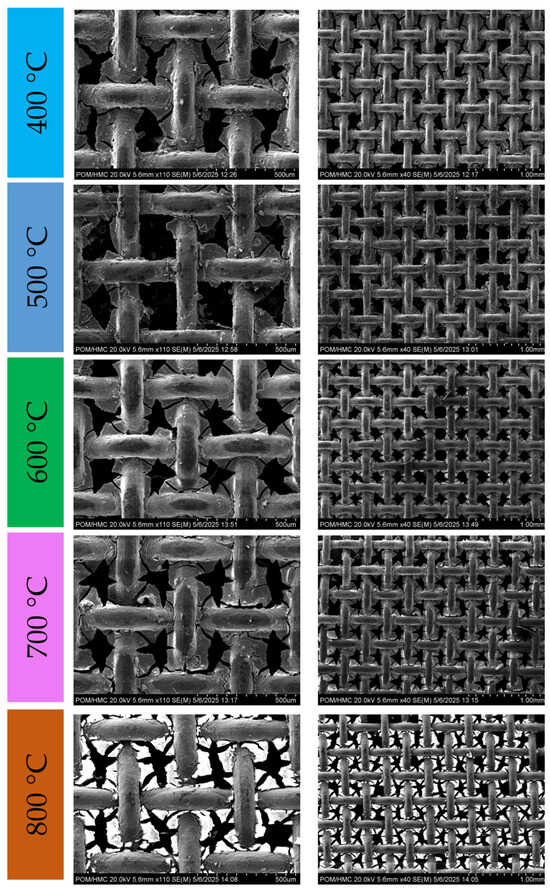
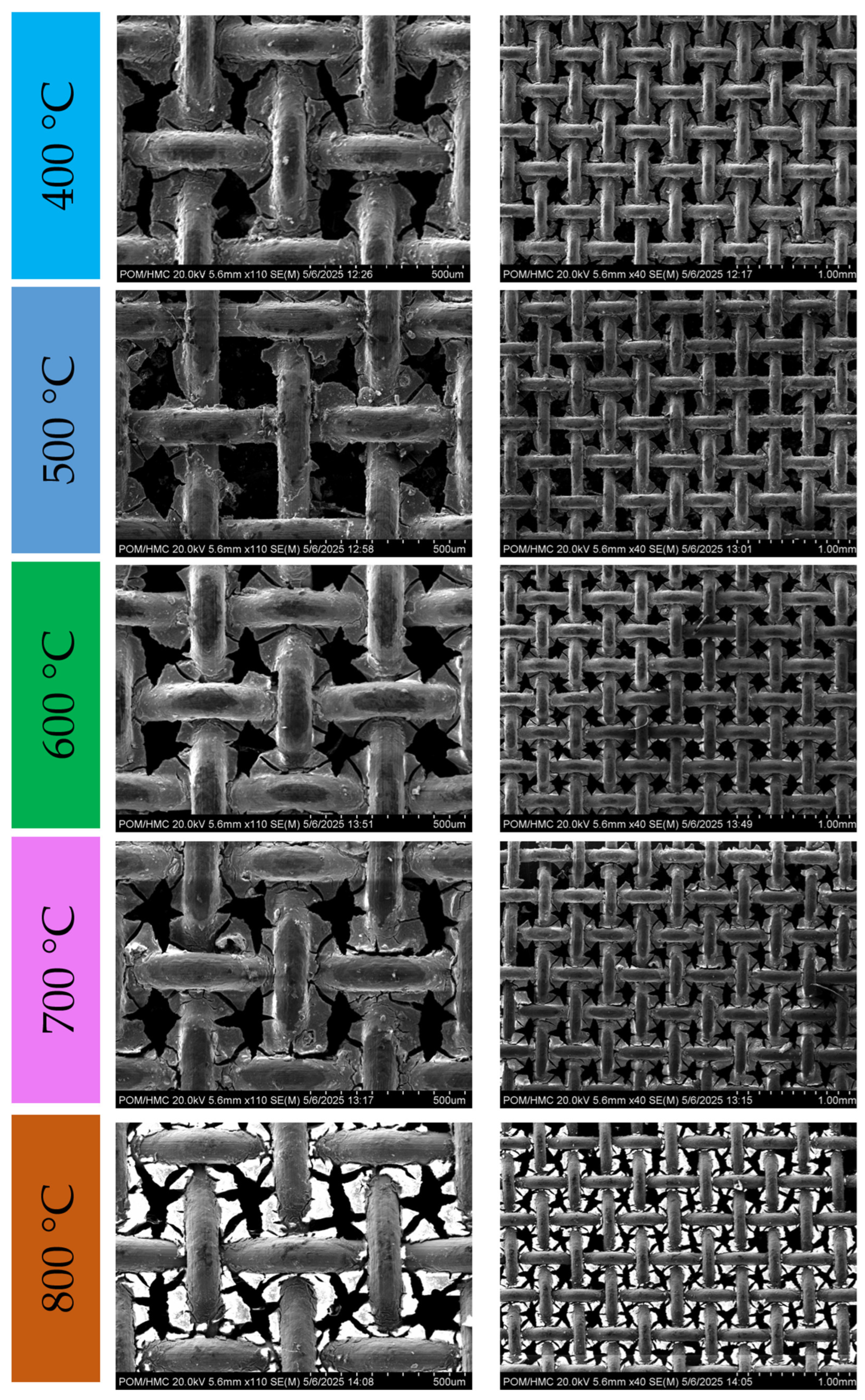
SEM was employed to characterize the surface morphology of the coated samples, as presented in Figure 1. Images were obtained at magnifications of 113× and 40× to assess both local morphological features and overall coating uniformity, including agglomeration behavior.
Figure 1.
Surface electron images of TiO2–carbon-coated mesh samples sintered at different temperatures at 113× and 40× magnification.
To quantify the influence of agglomeration on mesh openness, ImageJ was used to estimate the percentage of void space within each aperture. Overall, void space tended to increase with sintering temperature. The measured void space values were 31%, 46%, 37%, 41%, and 43% for the respective samples. The observed increase in void space at higher sintering temperatures may be partially attributed to the oxidation of carbon black, leading to combustion. Carbon black also undergoes morphological changes, in which oxidative combustion causes the generation of open interconnected pores [33]. Additionally, substantial variation was observed, with approximate percentage deviations of 32%, 53%, 17%, 7%, and 10%, respectively. These findings suggest that lower sintering temperatures produced coatings that were not only more likely to reduce effective aperture size, but also less uniform. This increased nonuniformity is undesirable because it may contribute to inconsistent filtration behavior. Since agglomeration reduces the effective open area of the mesh, samples sintered at lower temperatures may also impede oil flow during operation.
3.2. Phase Analysis by XRD
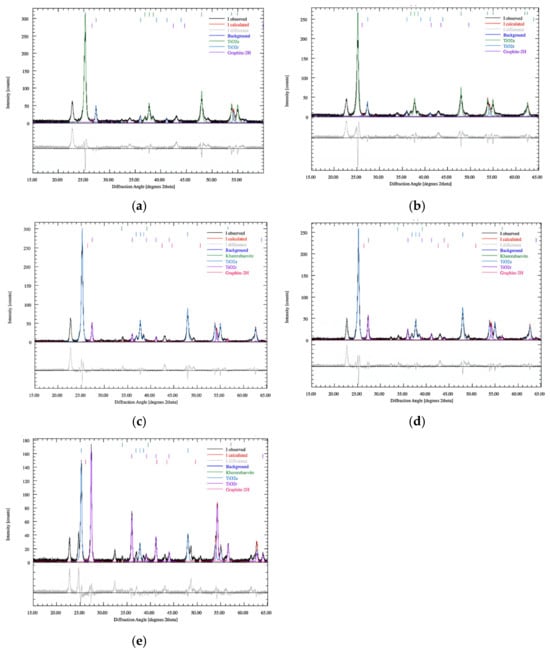
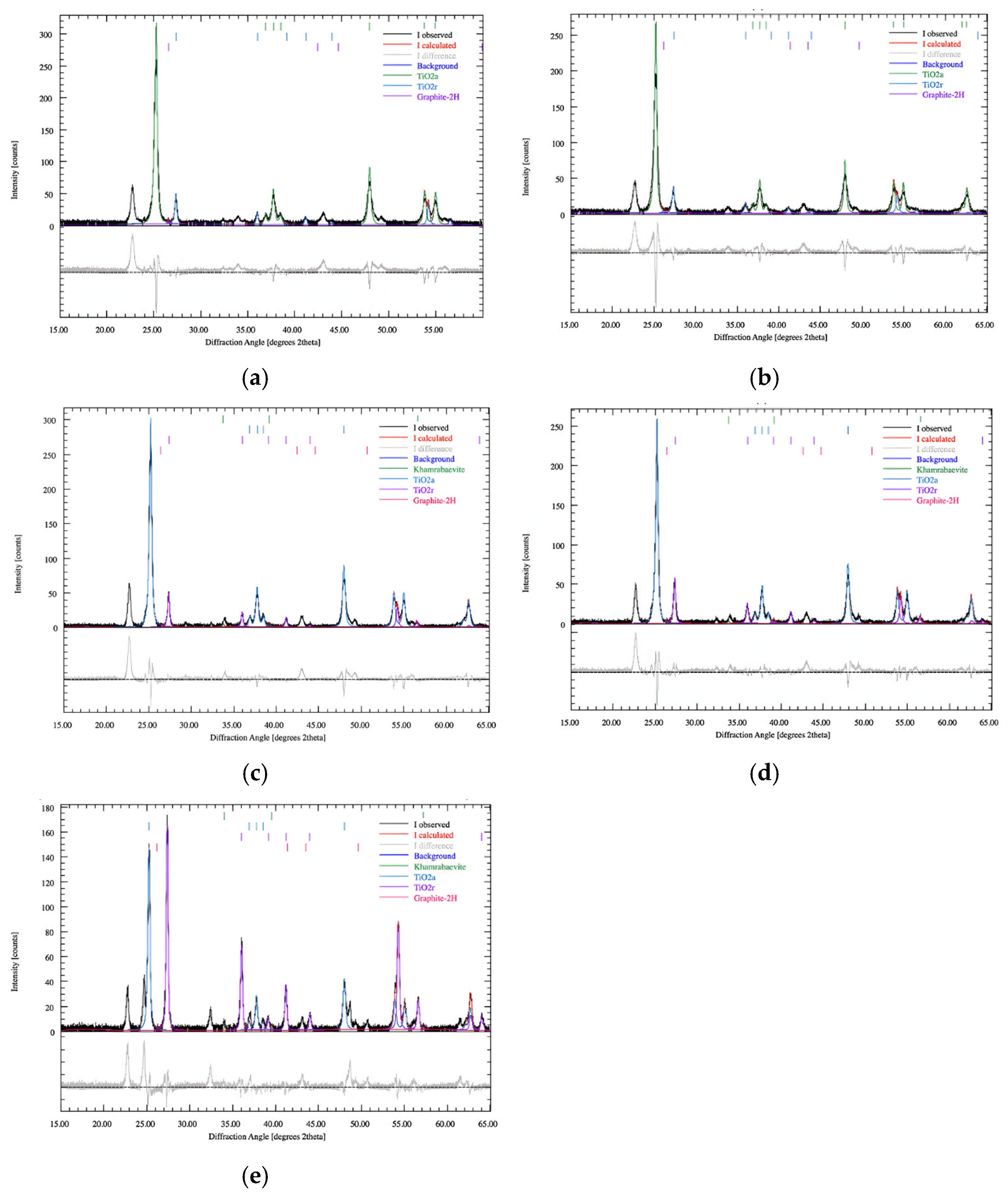
XRD was used to investigate the effect of sintering temperature on the phase composition and structural evolution of the TiO2–carbon mixed coatings. Phase analysis was performed on sintered coating powders using a D6 Phaser X-Ray Diffractometer (Bruker, Karlsruhe, Germany) equipped with an autosampler at Pomona College. Figure 2a–e show the diffractograms of the mixed coatings after heat treatment at 400, 500, 600, 700, and 800 °C, respectively. Phase identification was conducted using the open-source software Profex (version 5.6.1) [43].
Figure 2.
X-ray diffractograms of heat-treated TiO2–carbon mixed coatings with phase references: (a) 400 °C, (b) 500 °C, (c) 600 °C, (d) 700 °C, and (e) 800 °C.
A clear temperature-dependent evolution in crystalline phase composition was observed. At 400 °C (Figure 2a), the coating was composed predominantly of anatase-phase TiO2. At 500 °C (Figure 2b), anatase remained the dominant phase. At 600 °C (Figure 2c), the onset of the anatase-to-rutile transition was observed, and this transition became increasingly pronounced at 700 °C (Figure 2d). By 800 °C (Figure 2e), rutile had become the dominant TiO2 phase, consistent with its greater thermodynamic stability at elevated temperatures.
The XRD results also reveal the formation of khamrabaevite titanium carbide (TiC) beginning at 600 °C, which persisted at 700 and 800 °C. While the role of TiC cannot be isolated from other temperature-dependent changes, it is possible that its formation may have improved coating adhesion. The mix of Ti-O and Ti-C bonds could accommodate the thermal expansion mismatch between the mixed coating and the stainless-steel mesh substrate [44]. Further study is needed to confirm this mechanism. In the present study, the simultaneous appearance of TiC and retention of anatase TiO2 at 600 °C suggests that this temperature may provide a favorable balance between interfacial chemical interaction within the coating and preservation of the TiO2 phase composition associated with improved oil resistance.
3.3. Trace Element EDS
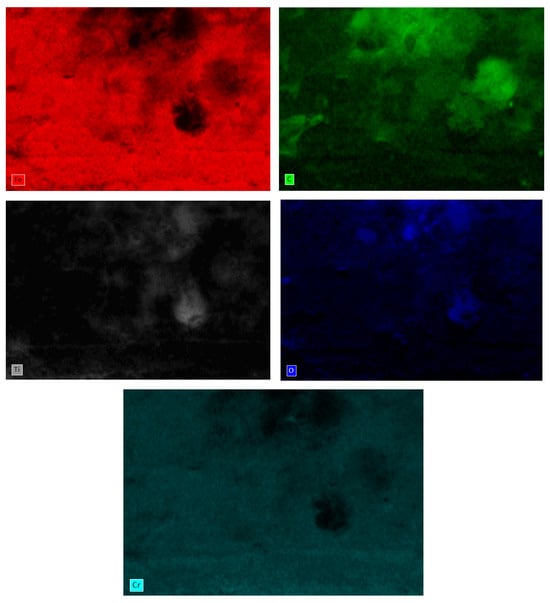
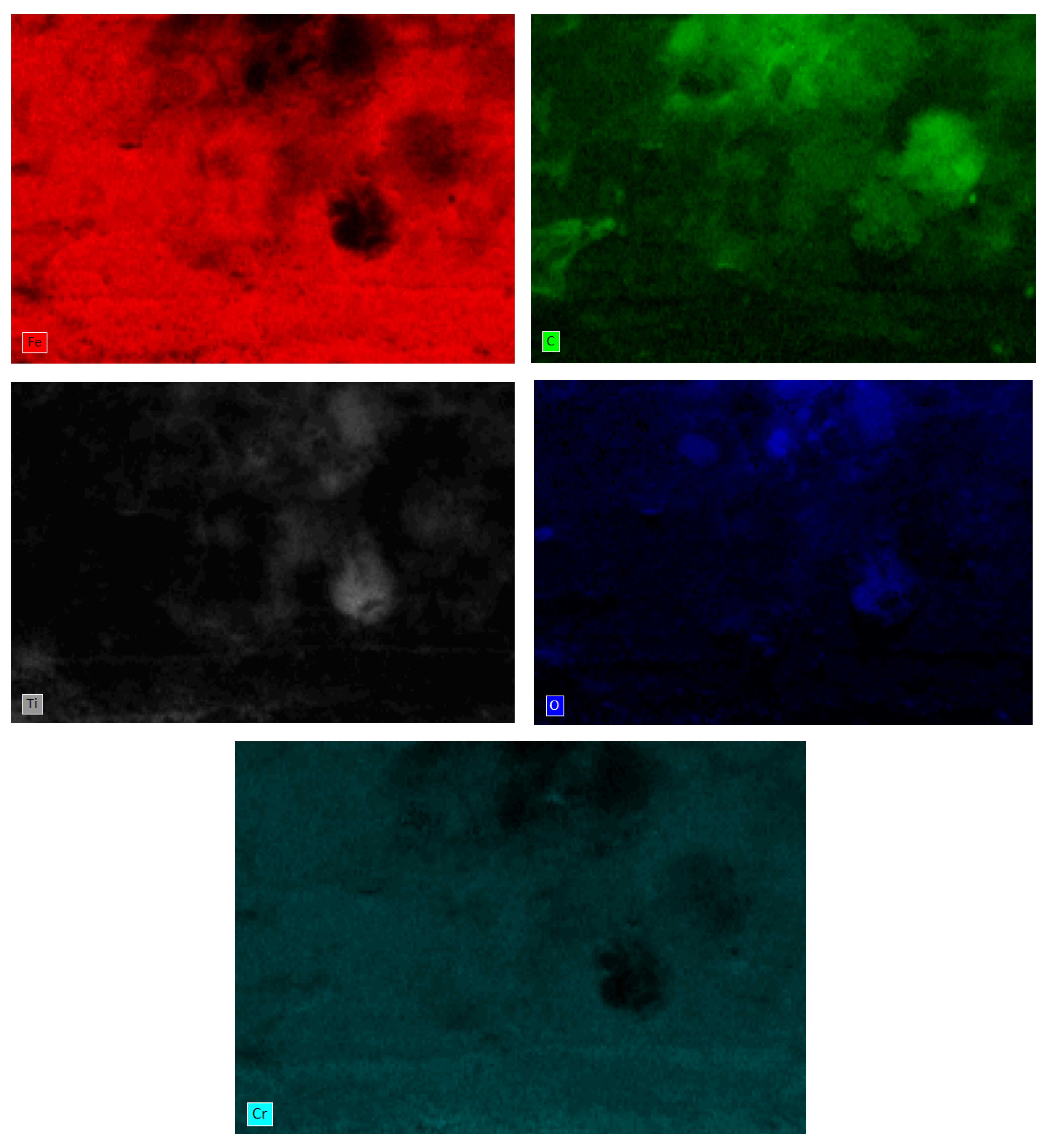
EDS was used to evaluate the elemental composition of the coated filter. Analysis was performed using a Hitachi SU70 scanning electron microscope (Hitachi High-Technologies Corporation, Tokyo, Japan) equipped with a Bruker EDS detector at Pomona College. The scan was conducted at 1000× magnification with an accelerating voltage of 20 kV and a working distance of 12.2 mm. Elemental mapping was used to visualize the spatial distribution of the principal elements in the sample, as shown in Figure 3.
Figure 3.
EDS elemental maps of the TiO2–carbon-coated filter sample.
The maps reveal carbon-rich regions distributed across the mesh surface, together with smaller localized regions of other elements. Comparison of the iron and chromium distributions with those of titanium and carbon suggests the presence of an underlying stainless-steel substrate covered by a TiO2–carbon coating with a distinct spatial distribution.
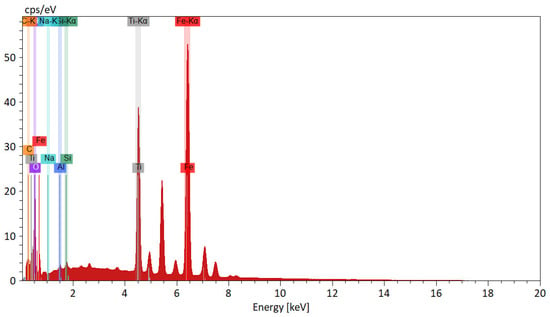
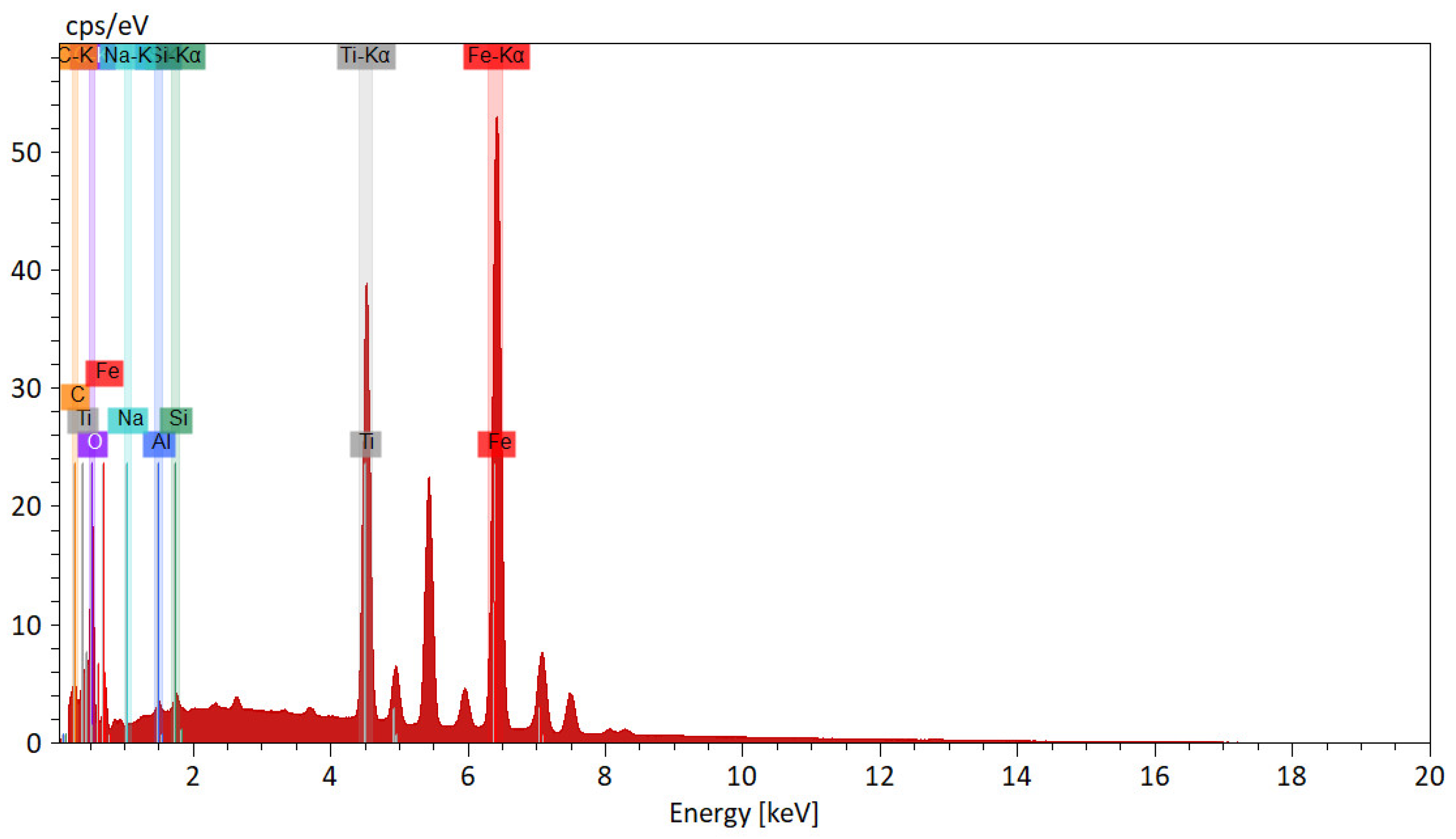
A line scan was also collected to generate the EDS spectrum shown in Figure 4. The measured elemental composition of the sample was 39.5 wt% Fe, 16.3 wt% Ti, 10.1 wt% Cr, 8.0 wt% C, and 16.59 wt% O. Because EDS is less reliable for quantifying light and interstitial elements, the reported carbon and oxygen values should be interpreted cautiously.
Figure 4.
EDS spectrum of the mapped sample.
3.4. Oil Filtration and Oil Retention Efficiency
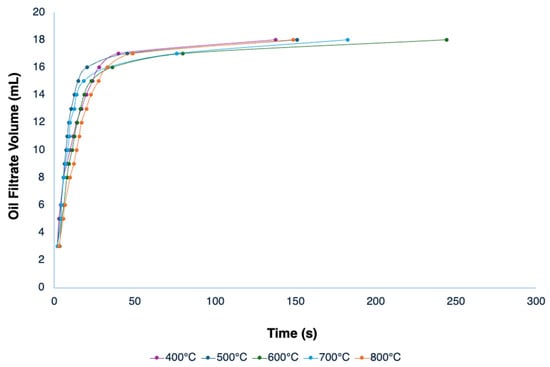
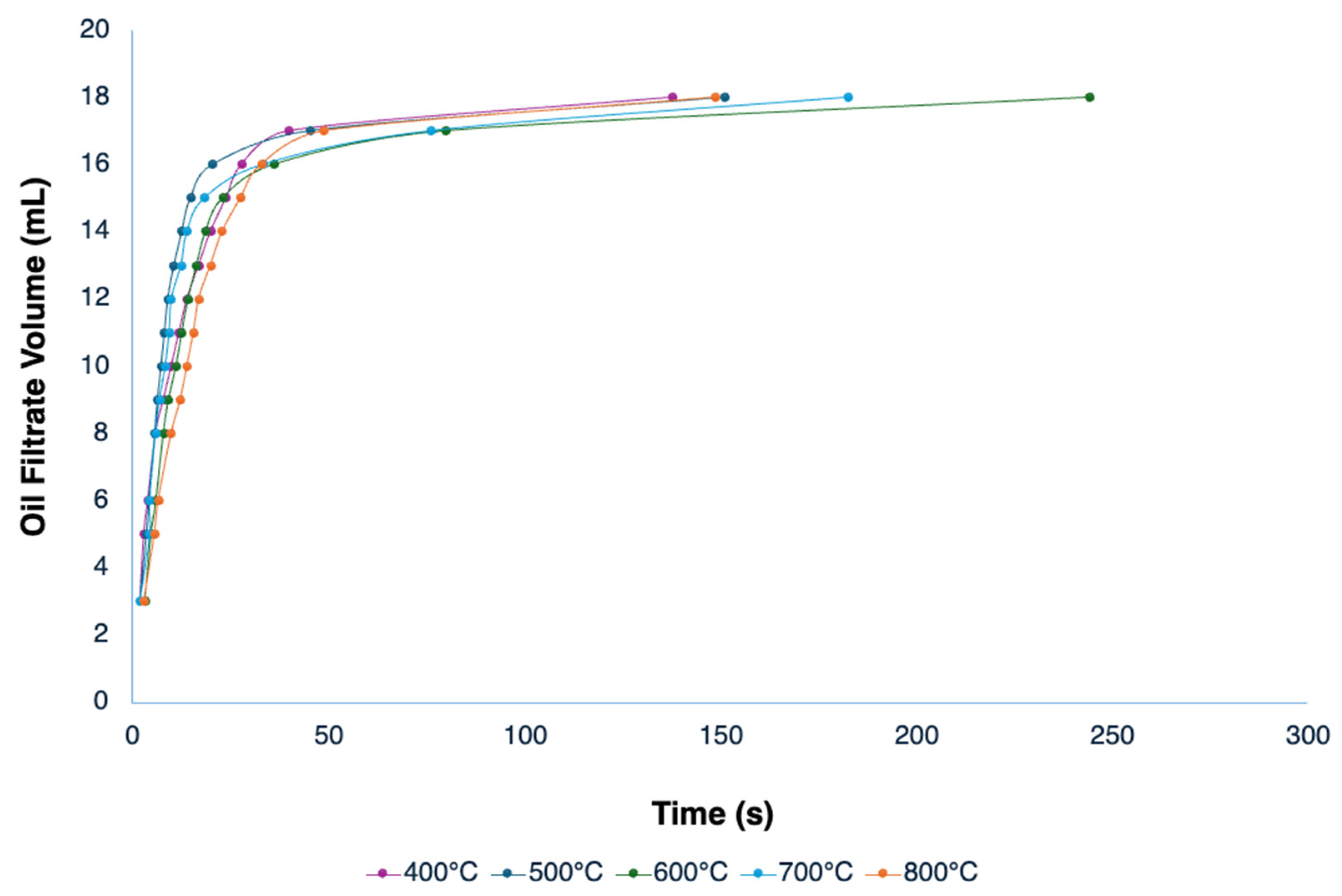
Figure 5 summarizes the first-use results of the gravity-driven oil permeation test, which was used as a comparative measure of resistance to oil permeation through the coated mesh. Although the test was conducted using pure oil rather than an oil–water mixture, lower oil passage indicates greater resistance to oil transport and therefore provides a useful comparative screening metric for the oil-repellent function required in oil–water separation. The average cumulative oil volume passing through the filters was plotted against time. Lower oil passage corresponds to greater resistance to oil transport, and thus improved oil retention performance. In a full oil–water separation system, a surface that effectively resists oil transport would be expected to allow preferential water permeation while the non-wetting oil phase remains above the filter. The filters sintered at 600 °C consistently showed the best performance, followed by those sintered at 700 °C. The 500 and 800 °C filters exhibited similar intermediate behavior, whereas the 400 °C filters performed the worst.
Figure 5.
Oil filtration behavior of TiO2–carbon-coated filters sintered at different temperatures.
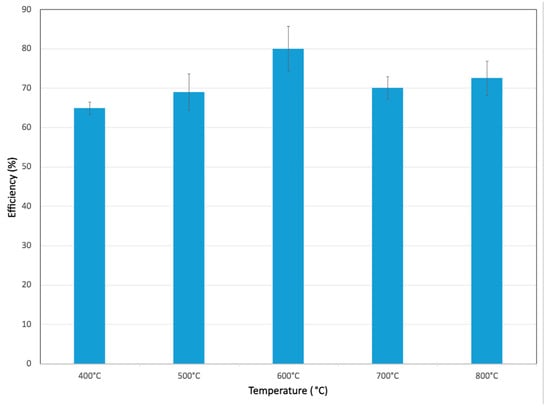
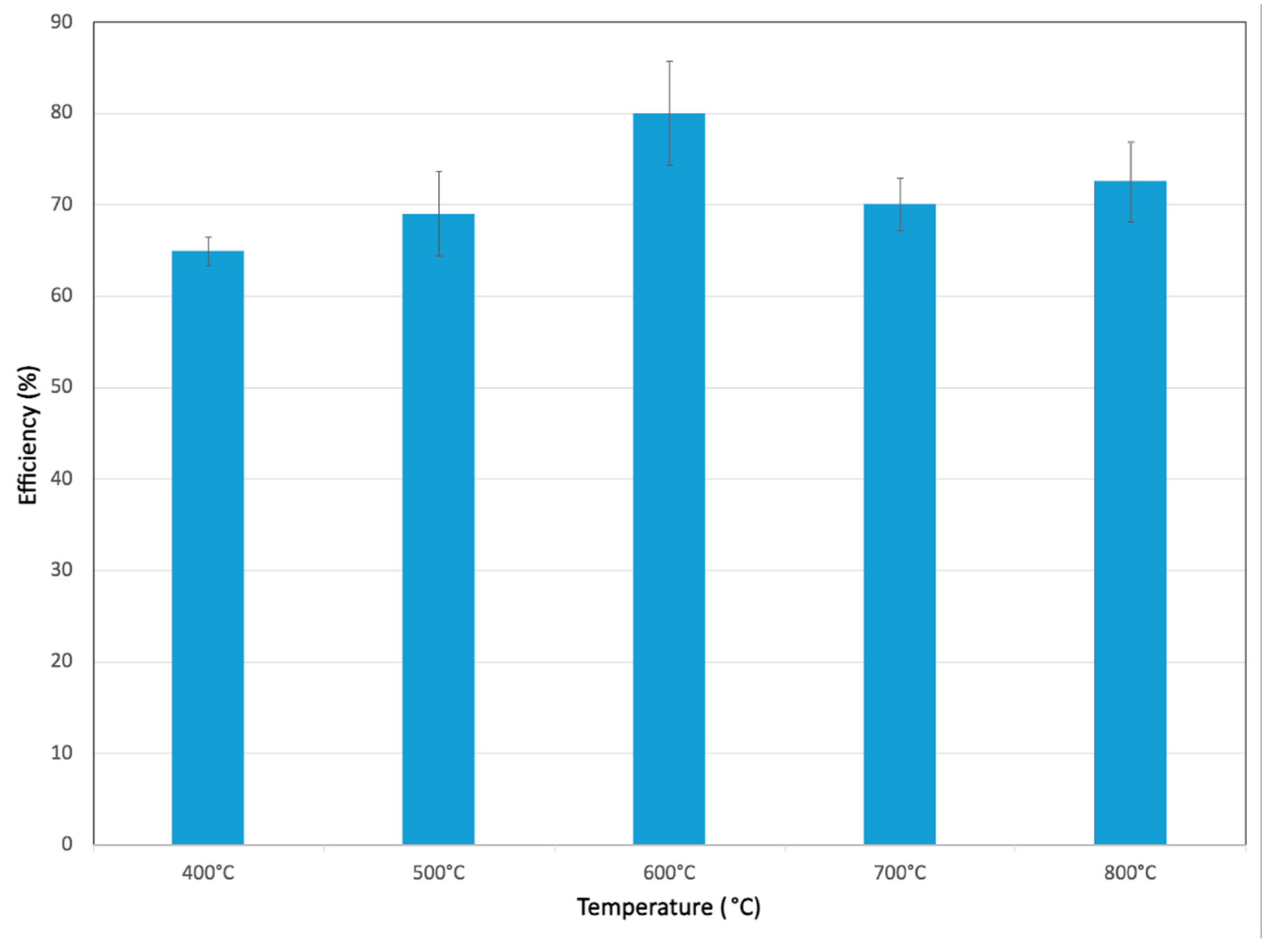
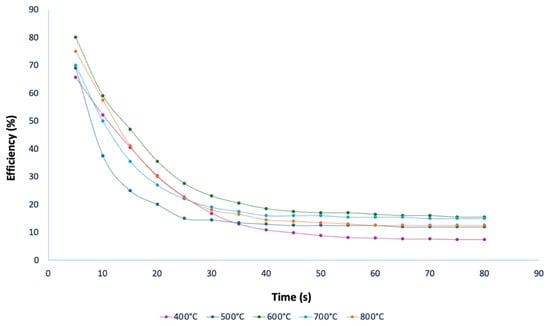
Figure 6 presents the oil retention efficiency, defined as the proportion of oil retained during the first 5 s of the gravity-driven oil permeation test. This interval was chosen because the total test duration varied across samples, making the initial stage of filtration the most consistent basis for comparison. Figure 7 further shows the time evolution of retention efficiency over the first 80 s. The same overall trend was observed: filters sintered at 600 °C performed the best, while those sintered at 400 °C performed the worst. The time-dependent decline in oil retention efficiency should be interpreted within the context of a gravity-driven comparative test, rather than as evidence of clogging or long-term failure in a repeated-cycle separation system.
Figure 6.
Oil retention efficiency of TiO2–carbon-coated filters at different sintering temperatures.
Figure 7.
Comparison of oil retention efficiency during the first 80 s.
3.5. Wettability of Different Sintering Temperatures
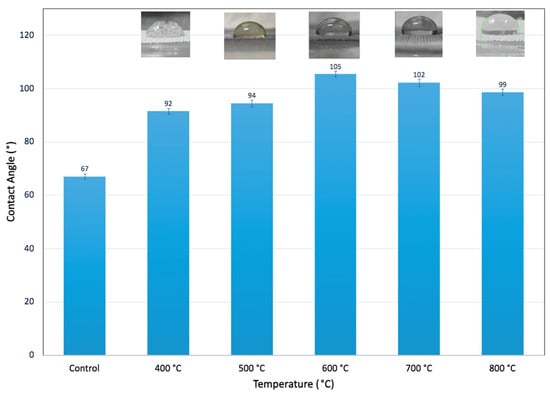
Although the static water contact angle was not quantified because of immediate spreading on the coated surface, the oil contact angle remained sensitive to differences in sintering temperature and therefore served as the primary comparative wettability metric in this study. As shown in Figure 8, the average contact angle varied with sintering temperature. Contact-angle measurement was used to evaluate the wettability of the coated filters and was analyzed using ImageJ software. Contact angle is a widely used parameter for characterizing surface wettability and, in this study, served as one indicator of relative oleophobic or oleophilic behavior. Because oil contact angle can be influenced by factors such as droplet volume, local surface roughness, and surface heterogeneity, coating performance should be interpreted using the combined evidence from contact-angle measurements, oil retention behavior, and structural characterization. A contact angle greater than 90° indicates an oleophobic surface that resists oil spreading and penetration, whereas a contact angle below 90° indicates oleophilic behavior.
Figure 8.
Average contact angle of TiO2–carbon-coated samples at different sintering temperatures.
Among all samples, the filter sintered at 600 °C exhibited the highest average contact angle, 105.35°, indicating the strongest oleophobic behavior. This finding suggests that the 600 °C condition provided the most favorable surface characteristics for resisting oil adhesion among the samples tested. The enhanced performance at this temperature may reflect a favorable balance between coating morphology and TiO2 phase composition.
4. Conclusions
This study examined how sintering temperature controls the structure–property relationships of TiO2–carbon composite coatings on 304 stainless-steel mesh for oil–water separation applications. Among the temperatures tested, 600 °C produced the highest oil contact angle, the greatest initial oil retention efficiency, and the most favorable overall balance between coating integrity and oil resistance. XRD analysis indicated that this temperature corresponded to the onset of the anatase-to-rutile transition together with the initial formation of TiC, suggesting that performance is influenced by both the TiO2 phase composition and interfacial chemical interaction within the coating. At higher temperatures, increased rutile content and high-temperature oxidation of carbon black may reduce the balance of properties needed for effective oil resistance. This study has several limitations, including the use of a single oil type, short-duration gravity-based testing, and the absence of direct coating-thickness or long-term cycling measurements. Future work should include additional oil types, repeated-use and multi-cycle oil/water separation testing, flux measurements, and direct adhesion or thickness characterization to further evaluate the proposed mechanism and practical applicability. Within the conditions examined here, 600 °C was the best-performing sintering condition for the TiO2–carbon coating system.
Author Contributions
Conceptualization, M.L.; methodology, K.L., S.E., J.T., C.W., L.L. and J.G.W.; formal analysis, K.L., S.E., J.T., C.W., L.L. and J.G.W.; investigation, K.L., S.E., J.T., C.W., L.L. and J.G.W.; data curation, K.L., S.E., J.T., C.W., L.L. and J.G.W.; writing—original draft preparation, K.L., S.E., J.T., C.W., L.L. and J.G.W.; writing—review and editing, M.L.; visualization, K.L.; supervision, M.L.; project administration, M.L.; funding acquisition, M.L. All authors have read and agreed to the published version of the manuscript.
Funding
This work is partially funded by the California State University Council on Ocean Affairs, Science & Technology (COAST-GDP-2023-004).
Data Availability Statement
Data will be made available on request.
Acknowledgments
The authors would like to acknowledge Pomona College for providing access to its analytical facilities for the SEM, XRD, and EDS analyses used in this study.
Conflicts of Interest
The funders had no role in the design of the study; in the collection, analyses, or interpretation of data; in the writing of the manuscript; or in the decision to publish the results.
Abbreviations
The following abbreviations are used in this manuscript:
| CTE | Coefficient of thermal expansion |
| EDS | Energy-dispersive spectroscopy |
| SEM | Scanning electron microscope |
| XRD | X-ray diffraction |
References
- ITOPF. ITOPF Oil Tanker Spill Statistics 2024 Report; The International Institute of Marine Surveying (IIMS): Hampshire, UK, 2025; Available online: https://www.iims.org.uk/itopf-oil-tanker-spill-statistics-2024-report/ (accessed on 15 March 2026).
- Oldenburg, T.B.P.; Jaeger, P.; Gros, J.; Socolofsky, S.A.; Pesch, S.; Radović, J.R.; Jaggi, A. Physical and Chemical Properties of Oil and Gas Under Reservoir and Deep-Sea Conditions. In Deep Oil Spills; Murawski, S.A., Ainsworth, C.H., Gilbert, S., Hollander, D.J., Paris, C.B., Schlüter, M., Wetzel, D.L., Eds.; Springer International Publishing: Cham, Switzerland, 2020; pp. 25–42. [Google Scholar] [CrossRef] [Scilit]
- $1 Billion Spills and 90,000 Slicks: Why Oil Spill Response Technology Must Change. Available online: https://cleanoilint.ca/1-billion-spills-and-90000-slicks-why-oil-spill-response-technology-must-change/ (accessed on 15 March 2026).
- Oil Spill Management Market Size|Industry Report. 2030. Available online: https://www.grandviewresearch.com/industry-analysis/oil-spill-management-market (accessed on 15 March 2026).
- Purohit, B.; Tewari, S.; Prasad, K.; Talari, V.K.; Pandey, N.; Choudhury, P.; Panda, S.S. Marine oil spill clean-up: A review on technologies with recent trends and challenges. Reg. Stud. Mar. Sci. 2024, 80, 103876. [Google Scholar] [CrossRef] [Scilit]
- Buist, I.; McCourt, J.; Potter, S.; Ross, S.; Trudel, K. In Situ Burning. Pure Appl. Chem. 1999, 71, 43–65. [Google Scholar] [CrossRef] [Scilit]
- Matilda, M.I.; Samuel, H.S. Bioremediation of oil spill: Concept, methods and applications. Discov. Chem. 2024, 1, 1. [Google Scholar] [CrossRef] [Scilit]
- Prince, R.C. Oil Spill Dispersants: Boon or Bane? Environ. Sci. Technol. 2015, 49, 6376–6384. [Google Scholar] [CrossRef] [Scilit]
- How Do Oil Spills Out at Sea Typically Get Cleaned Up? Reponse.Restoration.Noaa.Gov. Available online: https://response.restoration.noaa.gov/about/media/how-do-oil-spills-out-sea-typically-get-cleaned.html (accessed on 13 March 2026).
- Li, J.; Yang, L.; Liu, H.; Li, G.; Li, R.; Cao, Y.; Zeng, H. Simple Preparation Method for Hydrophilic/Oleophobic Coatings. ACS Appl. Mater. Interfaces 2020, 12, 45266–45273. [Google Scholar] [CrossRef] [Scilit]
- Zhao, Y.; Xiao, Z.; Feng, Z.; Luo, Q.; Liu, X.; Cui, W. Super Hydrophobic SiO2/Phenolic Resin-Coated Filter Screen and Its Application in Efficient Oil–Water Separation. Materials 2022, 15, 8395. [Google Scholar] [CrossRef] [Scilit] [PubMed]
- Li, Y.; Xue, Y.; Wang, J.; Zhang, D.; Zhao, Y.; Liu, J.-J. Antibacterial Hydrophilic ZnO Microstructure Film with Underwater Oleophobic and Self-Cleaning Antifouling Properties. Nanomaterials 2024, 14, 150. [Google Scholar] [CrossRef] [Scilit]
- Saeed, A.; Zhan, D.; Nawaz, M.A.H.; Hu, Q.; Haider, A.A.; Shareef, S.; Rehan, Z.A.; Liu, J. Fabrication of superhydrophobic nonwoven fabric membrane by using a single-step facile strategy for enhanced oil-water separation. Colloids Surf. Physicochem. Eng. Asp. 2024, 695, 134242. [Google Scholar] [CrossRef] [Scilit]
- Saeed, A.; Rehan, Z.A.; Nawaz, R.; Zhan, D.; Zahid, M.; Zi-Hao, L.; Haider, A.A.; Shareef, S.; Gao, Z.-W.; Tang, X.; et al. Eco-friendly fabrication of hierarchical superhydrophobic nonwoven polyester membranes via sol-gel/phase inversion for ultra-high flux oil-water separation. J. Membr. Sci. 2025, 734, 124460. [Google Scholar] [CrossRef] [Scilit]
- Xu, W.; Li, S.; Sun, S.; Chen, Y. TiO2 coated stainless steel mesh with high separation efficiency and flux to separate dispersed and emulsified oil in oil-in-water solution. Sep. Purif. Technol. 2025, 373, 133605. [Google Scholar] [CrossRef] [Scilit]
- Ross, H.; Nguyen, H.; Nguyen, B.; Foster, A.; Salud, J.; Patino, M.; Gan, Y.X.; Li, M. Filter Modified with Hydrophilic and Oleophobic Coating for Efficient and Affordable Oil/Water Separation. Separations 2022, 9, 269. [Google Scholar] [CrossRef] [Scilit]
- Sico, J.; Tang, B.; Flores, D.; Mouawad, R.; Punsalan, R.; Gan, Y.X.; Li, M. Fabrication and Characterization of TiO2 Coatings on 304 Stainless-Steel Substrate for Efficient Oil/Water Separation. Coatings 2023, 13, 1920. [Google Scholar] [CrossRef] [Scilit]
- Boroumand, A.-H.; Laguana, K.; Dudley, E.; Cuadros-Arias, P.; Rubio, A.; Shin, Z.; Webster, J.; Li, M. Titanium Meets Carbon: Enhanced Reusable Filters for Oil–Water Separation and Environmental Remediation. Separations 2025, 12, 83. [Google Scholar] [CrossRef] [Scilit]
- Gondal, M.A.; Sadullah, M.S.; Dastageer, M.A.; McKinley, G.H.; Panchanathan, D.; Varanasi, K.K. Study of Factors Governing Oil–Water Separation Process Using TiO2 Films Prepared by Spray Deposition of Nanoparticle Dispersions. ACS Appl. Mater. Interfaces 2014, 6, 13422–13429. [Google Scholar] [CrossRef] [Scilit] [PubMed]
- Nakajima, A.; Koizumi, S.-I.; Watanabe, T.; Hashimoto, K. Photoinduced Amphiphilic Surface on Polycrystalline Anatase TiO2 Thin Films. Langmuir 2000, 16, 7048–7050. [Google Scholar] [CrossRef] [Scilit]
- Sadia, S.I.; Shishir, K.H.; Ahmed, S.; Aidid, A.R.; Islam, M.; Rana, M.; Al-Reza, S.M.; Alam, A. Crystallographic biography on nanocrystalline phase of polymorphs titanium dioxide (TiO2): A perspective static review. S. Afr. J. Chem. Eng. 2024, 50, 51–64. [Google Scholar] [CrossRef] [Scilit]
- Yao, S.; Ma, Y.; Xu, T.; Wang, Z.; Lv, P.; Zheng, J.; Ma, C.; Yu, K.; Wei, W.; Ostrikov, K. Ti–C bonds reinforced TiO2@C nanocomposite Na-ion battery electrodes by fluidized-bed plasma-enhanced chemical vapor deposition. Carbon 2021, 171, 524–531. [Google Scholar] [CrossRef] [Scilit]
- Li, L.; Qin, X.; Wang, G.; Qi, L.; Du, G.; Hu, Z. Synthesis of anatase TiO2 nanowires by modifying TiO2 nanoparticles using the microwave heating method. Appl. Surf. Sci. 2011, 257, 8006–8012. [Google Scholar] [CrossRef] [Scilit]
- Katal, R.; Masudy-Panah, S.; Tanhaei, M.; Farahani, M.H.D.A.; Jiangyong, H. A review on the synthesis of the various types of anatase TiO2 facets and their applications for photocatalysis. Chem. Eng. J. 2020, 384, 123384. [Google Scholar] [CrossRef] [Scilit]
- Naniwa, S.; Kato, K.; Yamakata, A.; Yamamoto, A.; Yoshida, H. A Quantitative Study on the Relationship of Specific Surface Area and Carrier Lifetime to Photocatalytic Activity of Anatase TiO2 Nanoparticles. ACS Catal. 2023, 13, 15212–15218. [Google Scholar] [CrossRef] [Scilit]
- Guo, Q.; Zhou, C.; Ma, Z.; Yang, X. Fundamentals of TiO2 Photocatalysis: Concepts, Mechanisms, and Challenges. Adv. Mater. 2019, 31, 1901997. [Google Scholar] [CrossRef] [Scilit] [PubMed]
- Dubey, R. Temperature-dependent phase transformation of TiO2 nanoparticles synthesized by sol-gel method. Mater. Lett. 2018, 215, 312–317. [Google Scholar] [CrossRef] [Scilit]
- Hanaor, D.A.H.; Sorrell, C.C. Review of the anatase to rutile phase transformation. J. Mater. Sci. 2010, 46, 855–874. [Google Scholar] [CrossRef] [Scilit]
- Gorthy, R.; Wasa, A.; Land, J.G.; Yang, Z.; Heinemann, J.A.; Bishop, C.M.; Krumdieck, S.P. Effects of post-deposition heat treatment on nanostructured TiO2-C composite structure and antimicrobial properties. Surf. Coat. Technol. 2021, 409, 126857. [Google Scholar] [CrossRef] [Scilit]
- Touloukian, Y.S.; Kirby, R.K.; Taylor, E.R.; Lee, T.Y.R. Thermophysical Properties of Matter-the TPRC Data Series; Thermal Expansion-Nonmetallic Solids; IFI/Plenum Data Corporation: New York, NY, USA, 1977; Volume 13. [Google Scholar]
- Desai, P.D.; Ho, C.Y. Thermal Linear Expansion of Nine Selected AISI Stainless Steels; TEPIAC: Lafayette, Indiana, 1978. [Google Scholar]
- Mashreghi, A. Determining the volume thermal expansion coefficient of TiO2 nanoparticle by molecular dynamics simulation. Comput. Mater. Sci. 2012, 62, 60–64. [Google Scholar] [CrossRef] [Scilit]
- Kelesidis, G.A.; Rossi, N.; Pratsinis, S.E. Porosity and crystallinity dynamics of carbon black during internal and surface oxidation. Carbon 2022, 197, 334–340. [Google Scholar] [CrossRef] [Scilit]
- Shivashankar, H.; Sangamesh, R.; Kulkarni, S. Analysis of Coefficient of Thermal Expansion in Carbon Black Filled PDMS Composite. Mater. Sci. Forum 2020, 978, 237–244. [Google Scholar] [CrossRef] [Scilit]
- Shuro, I.; Kuo, H.H.; Todaka, Y.; Umemoto, M. Property evolution on annealing deformed 304 austenitic stainless steel. J. Mater. Sci. 2012, 47, 8128–8133. [Google Scholar] [CrossRef] [Scilit]
- Dhaiveegan, P.; Elangovan, N.; Nishimura, T.; Rajendran, N. Corrosion behavior of 316L and 304 stainless steels exposed to industrial-marine-urban environment: Field study. RSC Adv. 2016, 6, 47314–47324. [Google Scholar] [CrossRef] [Scilit]
- Krishnankutty, N.; Vannice, M.A. Effect of Pretreatment on Surface Area, Porosity, and Adsorption Properties of a Carbon Black. Chem. Mater. 1995, 7, 754–763. [Google Scholar] [CrossRef] [Scilit]
- Di Valentin, C.; Pacchioni, G.; Selloni, A. Theory of Carbon Doping of Titanium Dioxide. Chem. Mater. 2005, 17, 6656–6665. [Google Scholar] [CrossRef] [Scilit]
- Park, J.-Y.; Lee, C.; Jung, K.-W.; Jung, D. Structure Related Photocatalytic Properties of TiO2. Bull. Korean Chem. Soc. 2009, 30, 3. [Google Scholar] [CrossRef] [Scilit]
- Hsu, C.-Y.; Mahmoud, Z.H.; Abdullaev, S.; Ali, F.K.; Naeem, Y.A.; Mizher, R.M.; Karim, M.M.; Abdulwahid, A.S.; Ahmadi, Z.; Habibzadeh, S.; et al. Nano titanium oxide (nano-TiO2): A review of synthesis methods, properties, and applications. Case Stud. Chem. Environ. Eng. 2024, 9, 100626. [Google Scholar] [CrossRef] [Scilit]
- Periyat, P.; Pillai, S.C.; McCormack, D.E.; Colreavy, J.; Hinder, S.J. Improved High-Temperature Stability and Sun-Light-Driven Photocatalytic Activity of Sulfur-Doped Anatase TiO2. J. Phys. Chem. C 2008, 112, 7644–7652. [Google Scholar] [CrossRef] [Scilit]
- Cargnello, M.; Gordon, T.R.; Murray, C.B. Solution-Phase Synthesis of Titanium Dioxide Nanoparticles and Nanocrystals. Chem. Rev. 2014, 114, 9319–9345. [Google Scholar] [CrossRef] [Scilit]
- Doebelin, N.; Kleeberg, R. Profex: A graphical user interface for the Rietveld refinement program BGMN. J. Appl. Crystallogr. 2015, 48, 1573–1580. [Google Scholar] [CrossRef] [Scilit]
- Yu, C.; Fu, L.; Xiao, H.; Lv, Q.; Gao, B. Effect of carbon content on the microstructure and bonding properties of hot-rolling pure titanium clad carbon steel plates. Mater. Sci. Eng. A 2021, 820, 141572. [Google Scholar] [CrossRef] [Scilit]
Disclaimer/Publisher’s Note: The statements, opinions and data contained in all publications are solely those of the individual author(s) and contributor(s) and not of MDPI and/or the editor(s). MDPI and/or the editor(s) disclaim responsibility for any injury to people or property resulting from any ideas, methods, instructions or products referred to in the content. |
© 2026 by the authors. Licensee MDPI, Basel, Switzerland. This article is an open access article distributed under the terms and conditions of the Creative Commons Attribution (CC BY) license.