


Abstract
Patient motivation is fundamental to engagement, rehabilitation, and recovery within forensic psychiatric hospitals, yet it is often interpreted primarily through the lens of psychopathology and the negative symptoms of schizophrenia. This instrumental case study was conducted in a medium-security forensic inpatient unit within a Canadian tertiary mental health hospital and included two patients and four members of the interdisciplinary clinical team. Qualitative findings were interpreted using Self-Determination Theory and situated within contemporary literature on schizophrenia, institutionalization, organizational behaviour, and forensic mental health care. The findings suggest that patient motivation is influenced by the interaction of individual clinical characteristics with organizational, environmental, interpersonal, and institutional conditions. Participants described barriers that may undermine the basic psychological needs for autonomy, relatedness, and competence, contributing to reduced engagement in recovery-oriented behaviours. Rather than supporting a single explanatory mechanism, the findings highlight the importance of understanding motivation as an emergent outcome of both patient factors and the environments in which treatment is delivered. The study introduces a decision-support framework that prioritizes identified barriers according to the degree of organizational control and their systemic reach, together with an integrative conceptual model that synthesizes qualitative findings with contemporary psychiatric and interdisciplinary theory. The findings suggest that patient motivation should be understood not only as a function of individual psychopathology but also as an outcome shaped by the environments and organizational systems in which care is delivered. By identifying modifiable organizational and environmental determinants of motivation, the proposed framework shifts the focus of intervention beyond patient-level approaches toward system-level strategies—including organizational practice, environmental design, and institutional policy—that may better support engagement in recovery-oriented forensic mental health care.
1. Introduction
Recovery from severe mental illness is not simply a function of symptom reduction; it is a dynamic process through which individuals rebuild purpose, identity, hope, and meaningful participation in their lives [1,2]. Central to this process is motivation—the capacity to initiate, sustain, and engage in goal-directed behaviours that support recovery [3,4]. Motivation influences participation in treatment, psychological therapies, education, vocational rehabilitation, social relationships, and community reintegration [5,6]. Within secure forensic psychiatric settings, where recovery often unfolds over many years under conditions of compulsory treatment, legal restriction, and prolonged hospitalization, maintaining motivation presents a particularly complex challenge [7,8].
While recovery-oriented practice has become increasingly embedded within forensic mental health services [8], and emerging evidence has begun to demonstrate associations between institutional climate and treatment motivation [9,10], considerably less attention has been directed toward understanding the specific organizational and environmental mechanisms through which secure forensic settings may facilitate or impede patient motivation and engagement in recovery-oriented practice.
Contemporary models of schizophrenia recognize motivational impairment as a central feature of the broader negative symptom syndrome [11,12]. Importantly, current conceptualizations distinguish between primary negative symptoms, which are considered intrinsic manifestations of the illness, and secondary negative symptoms, which arise from interacting influences such as depression, anxiety, persistent positive symptoms, medication effects, cognitive impairment, social isolation, and environmental deprivation [3,11,12]. This distinction is clinically significant because secondary motivational impairments may be influenced by interventions that modify environmental, psychological, and organizational conditions in addition to treating the underlying illness [3,11]. Consequently, understanding the contexts within which motivation is either supported or constrained has become an increasingly important component of recovery-oriented psychiatric care.
The influence of institutional environments on behaviour has long been recognized within psychiatry, sociology, and rehabilitation science. Early descriptions of institutionalization highlighted how prolonged hospitalization, restricted autonomy, limited opportunities for meaningful occupation, and reduced social participation could shape behaviour independently of psychiatric diagnosis [13,14]. More recent literature has identified environmental deprivation, social isolation, limited opportunities for self-directed activity, and reduced access to meaningful interpersonal relationships as potentially important influences on motivation and functional outcomes among individuals living with schizophrenia [3,11]. These observations suggest that motivation is not solely a function of individual clinical characteristics, including psychopathology, but is also shaped by the organizational and environmental contexts in which people live, receive care, and pursue recovery.
This distinction may be particularly relevant within forensic psychiatric hospitals, where treatment occurs at the intersection of healthcare, public safety, and the criminal justice system [8]. Unlike general psychiatric settings, forensic services operate within organizational structures that must balance therapeutic objectives with legal accountability, security requirements, and public protection. These competing responsibilities inevitably shape everyday experiences of care, influencing opportunities for choice, participation, therapeutic relationships, and progression through treatment. While these organizational characteristics are essential to the mandate of forensic services, comparatively little research has examined how they are experienced by those who live and work within these environments, or how they may influence motivation for recovery.
Self-Determination Theory (SDT) provides a useful lens for examining these questions because it emphasizes the role of social environments in shaping motivation. Rather than focusing exclusively on individual psychopathology, SDT offers a framework for examining how organizational, interpersonal, and environmental conditions may support or undermine engagement in recovery-oriented behaviours [15].
The study explored how participants understood the organizational, relational, structural, and medico-legal characteristics of the forensic inpatient environment, and how they perceived these conditions in relation to motivation and engagement in recovery-oriented behaviour. These experiences were considered within contemporary distinctions between primary and secondary negative symptoms [16], including the recognized role of secondary factors such as depression, medication effects, positive symptoms, social deprivation, and substance use.
2. Methods
2.1. Study Design
The study examined the experiences of two patients and four members of the interdisciplinary clinical team participating in a therapeutic intervention designed to promote personal goal setting and recovery capital-building. Instrumental case studies are particularly well suited to exploring complex phenomena within their real-world context, where the objective is not simply to understand the case itself, but to generate insight into a broader issue [17]. In the present study, the bounded case comprised a medium-security forensic inpatient unit within a Canadian tertiary mental health hospital. The study was not designed to achieve theoretical saturation or statistical generalization but rather to generate conceptual insight into organizational and environmental influences on patient motivation within a real-world clinical context.
2.2. Theoretical Framework
Self-Determination Theory (SDT) [15,18] served as the interpretive framework for the analysis. SDT conceptualizes motivation as varying in both quality and degree of self-determination, distinguishing autonomous motivation, in which behaviour is experienced as volitional and self-endorsed, from controlled motivation, in which behaviour is driven primarily by external contingencies or internal pressures [19,20,21].
Basic Psychological Needs Theory proposes that sustained autonomous motivation depends upon the consistent satisfaction of three universal psychological needs: autonomy, competence, and relatedness [15]. Organismic Integration Theory further conceptualizes motivation as existing along a continuum from amotivation through increasingly internalized forms of behavioural regulation to intrinsic motivation, reflecting the extent to which behaviour becomes self-determined [15]. A systematic review conducted by Ng et al. [22] demonstrated broad empirical support for SDT across diverse healthcare contexts, including mental health settings, supporting its application as an interpretive framework within forensic psychiatric care.
Themes were developed inductively through qualitative analysis of participant interviews and subsequently interpreted through the theoretical lens of Self-Determination Theory (SDT). This approach allowed participants’ experiences to determine the structure and content of the findings while SDT provided a framework for understanding how those experiences related to motivation.
2.3. Intervention
Participants were recruited from an existing recovery-oriented program operating within the psychiatric institution. The development, implementation, and evaluation of this program have been described in detail elsewhere [23,24]. The intervention was offered to patients who were determined capable of providing informed consent following a formal assessment conducted by the attending psychiatrist. All twenty patients admitted to the unit were assessed as having decision-making capacity and were deemed eligible to participate.
The intervention centered on the collaborative identification of personal recovery goals using a structured self-assessment process based upon wellness domains corresponding to those routinely monitored by the interdisciplinary clinical team. Rather than approaching these domains from a deficit or illness perspective, the intervention emphasized individual strengths, personal aspirations, and recovery capital. Members of the clinical team participated as service partners and received training in motivational interviewing and strengths-based approaches to care planning.
An intervention toolbox was developed to support individualized recovery planning and consisted of asset-building, goal setting, planning, and problem-solving resources. Patients were free to select their preferred service partner from the available clinical staff regardless of previous therapeutic relationships. Session timing was determined collaboratively, with no restrictions placed upon session duration or frequency. The content and duration of each session were documented within the patient’s electronic health record.
2.4. Data Collection
Following completion of the intervention, the principal investigator conducted one unstructured, in-depth interview involving all six participants: the two participating patients and four members of the interdisciplinary clinical team. The interview explored participants’ perceptions of the intervention and of the organizational, relational, structural, and medico-legal characteristics of the forensic inpatient environment that influenced engagement in goal-directed activity.
The interview was conducted collectively at the participants’ preference, audio-recorded, and transcribed verbatim prior to analysis.
A second collaborative session was conducted as a member-checking exercise with the participating clinical staff. The developing thematic structure generated from the initial interview was presented for discussion, allowing participants to review, refine, and reorganize the identified themes and subthemes through group consensus.
A third collaborative session involved the four clinical staff participants and the principal investigator. This session examined the identified subthemes according to two complementary dimensions: the degree of organizational control and the breadth of systemic reach.
2.5. Data Analysis
The transcript from the initial collaborative interview was imported into NVivo 12 (QSR International, Burlington, MA, USA) for qualitative analysis. Data were coded inductively, with codes developed directly from participant narratives and refined through comparison. Related codes were organized into higher-order themes representing shared experiences across participants.
The developing thematic structure was reviewed during the member-checking session with participating clinical staff. Themes and subthemes were discussed, refined, and reorganized through group consensus, resulting in the final thematic structure presented in Figure 1.
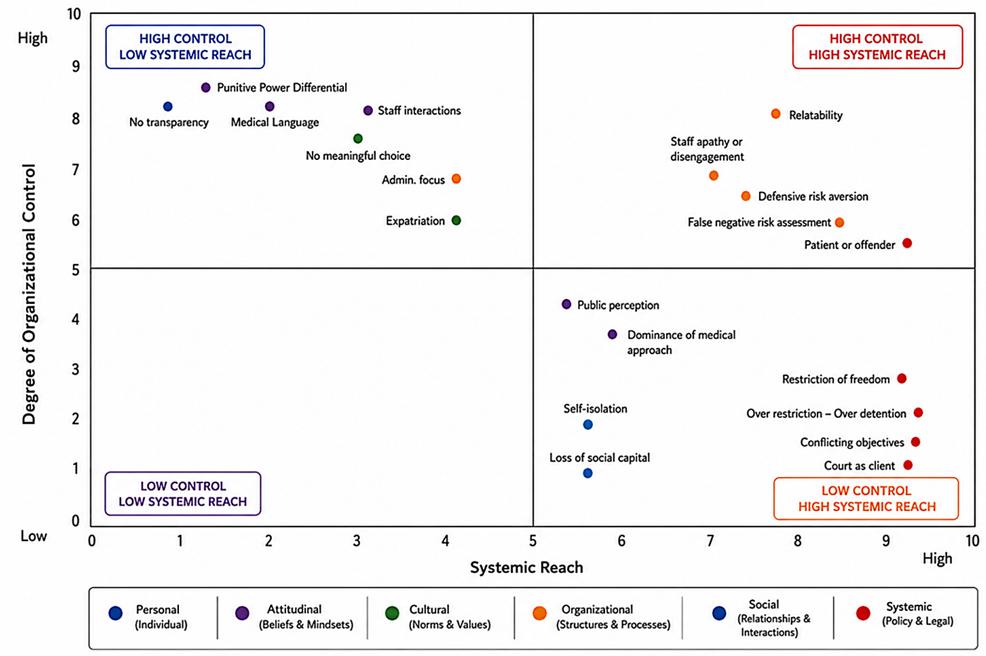
The four clinical staff participants then examined the identified subthemes according to organizational control and systemic reach during the third collaborative session. Through discussion and consensus, the subthemes were positioned within the matrix presented in Figure 2.
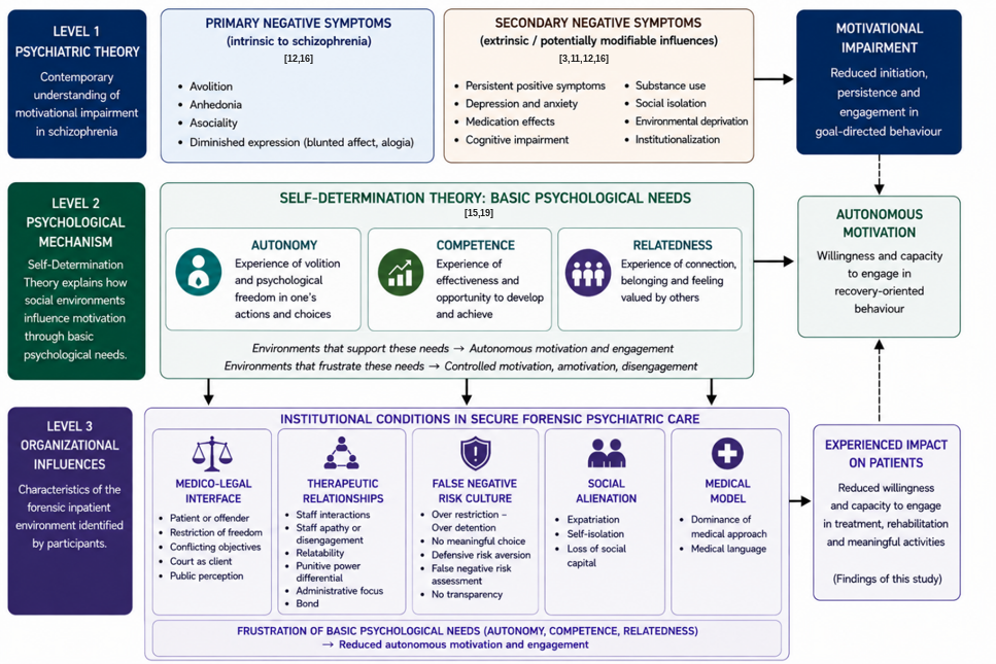
The findings were interpreted through Self-Determination Theory in relation to contemporary distinctions between primary and secondary negative symptoms, forming the three-level conceptual model presented in Figure 3.
2.6. Ethical Considerations
Institutional Research Ethics Board approval was obtained prior to participant recruitment. Written informed consent was obtained from all participating patients and clinical staff before enrolment in the study.
3. Results
3.1. Participant Characteristics
Of the 20 patients admitted to the medium-security forensic unit during the study period, three elected to participate in the intervention. Despite repeated efforts by frontline staff and unit managers to encourage participation, an immediate and persistent reluctance to enroll was evident throughout recruitment. One participant subsequently withdrew from the study, leaving two patients who completed the intervention.
These patients completed 865 min of structured intervention over a six-month period, comprising 32 individual sessions ranging from 10 to 90 min in duration. One participant worked exclusively with their primary nurse, while the second engaged with three members of the interdisciplinary team.
One participant was a female patient in her thirties who had spent between five and ten years in forensic inpatient custody with a primary diagnosis of schizophrenia. The second participant was a male in his twenties who had been hospitalized between one and two years with a primary diagnosis of schizophrenia, a comorbid substance use disorder, and an intellectual disability. Both participants had index offences for which they had been found Not Criminally Responsible (NCR).
Four members of the interdisciplinary clinical staff also participated from the forensic unit team. Professional experience ranged from more than five years to over thirty years within forensic mental health services.
Data collection comprised a 182 min collaborative interview with all six participants, followed by a 104 min member checking session and a 157 min collaborative discussion examining clinician perceptions of organizational influence and barriers to patient participation in recovery-oriented practice.
Figure 1.
Hierarchical Thematic Structure of Institutional Influences on Motivation and Engagement in Recovery-Oriented Behaviour Within Secure Forensic Psychiatric Care. Note. The figure illustrates the superordinate themes and associated subthemes generated through inductive thematic analysis and refined through consensus with participating staff. Relative box size reflects the prominence of each theme within the dataset. The figure represents the empirical organization of participant experiences and is not intended to depict a conceptual or causal model.
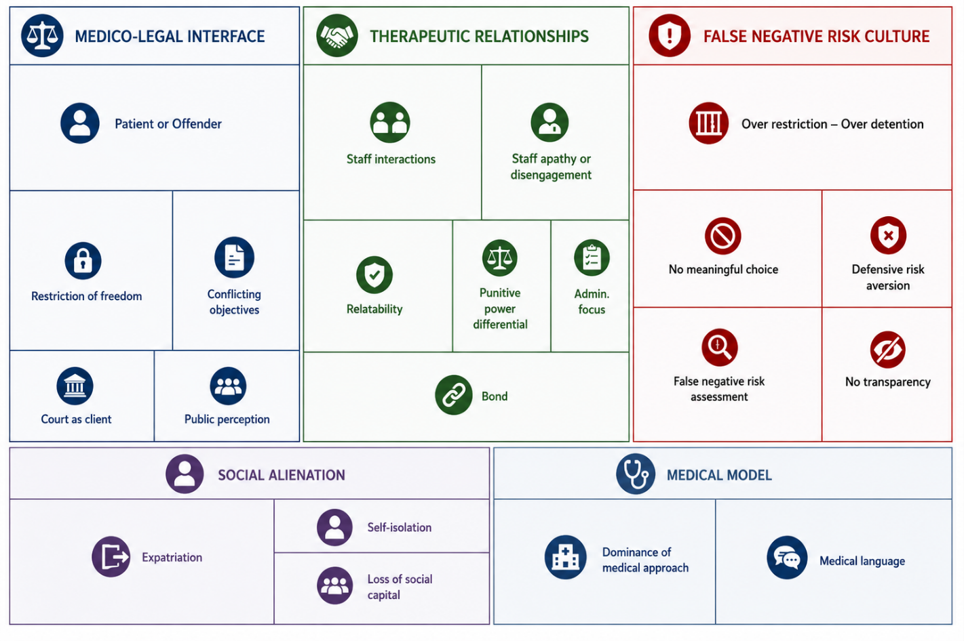
Figure 2.
Organizational Control-Barrier Prioritization Matrix: Degree of Organizational Control x Systemic Reach. Note. The matrix represents a secondary organizational analysis conducted collaboratively by the four participating clinical staff members. The 0–10 axes provide relative qualitative positioning coordinates, ranging from minimal to substantial organizational control on the vertical axis and from local to broad systemic reach on the horizontal axis. Participants first identified subthemes representing the clearest extremes and then positioned the remaining subthemes relative to these reference points through group discussion and consensus. Where related subthemes were considered to occupy the same position, they were represented as a single point.
3.2. Qualitative Findings
3.2.1. Medico-Legal Interface
The medico-legal interface emerged as the most prominent superordinate theme identified by participants (Figure 1). The theme encompassed five recurring subthemes: patient or offender, restriction of freedom, conflicting objectives, court as client, and public perception. Participants described tensions arising from the intersection of healthcare and judicial systems, particularly the dual positioning of individuals as patients requiring treatment and persons subject to ongoing legal authority. Legal restrictions, uncertainty surrounding review processes, and competing institutional priorities were described as important features of the forensic environment.
Participants also described tensions between the objectives of mental healthcare and those of the criminal justice system, including differences between recovery and mental wellness on one hand and public safety, legal accountability, and mental fitness on the other.
“So, he’s not in the hospital, he’s in the court, remember that. We don’t own him, he’s with jail, they own him, they own him, we don’t, we’re just housing him, wellness is not a priority there.”—Interdisciplinary team member 1
“You cannot run a program of patient-centered care when the first thing you do is you tell them you cannot do what you want. ‘I want to go for a walk.’ Sorry you can’t. And why? Have I been found guilty of anything? No, because you have not had your day in court yet... This is the collision of hospital meets jail.”—Interdisciplinary team member 1
“Like [patient] keeps asking, ‘when do I get out, when is my sentence over?’”—Interdisciplinary team member 2
“Wellness is not an objective of the court... it’s all about mitigating risk. And mental fitness is not equivalent to mental wellness, is it?’”—Interdisciplinary team member 2
“You’re on assessment here; you’re in jail... that’s the court’s fault; we have no control. We’re powerless.”—Interdisciplinary team member 1
Clinicians also described patients questioning the consequences of their NCR designation and expressing uncertainty regarding the duration of their hospitalization.
“They regret it. They’re like, if I knew it was going to be this long... I would have made my attorney fight against the NCR... I could be living out in the community.”—Interdisciplinary team member 1
Collectively, these accounts describe the medico-legal interface as a defining feature of the forensic inpatient environment that participants perceived as shaping opportunities for recovery-oriented engagement.
3.2.2. Therapeutic Relationships
Therapeutic relationships consisted of six recurring subthemes: staff interactions, staff apathy or disengagement, relatability, punitive power differential, administrative focus, and bond (Figure 1). Participants described how everyday interactions with staff, including perceived inconsistency, disengagement, and differences in power and authority, shaped patients’ experiences of trust, dignity, connection, and agency. Both patients emphasized the importance of meaningful relationships with care providers, while staff similarly recognized the effects of relational quality on patient engagement.
Participants further described the importance of relatability and bond, particularly where staff were perceived as genuine, approachable, and willing to engage beyond formal clinical roles. Conversely, administrative focus and staff apathy or disengagement were described as limiting opportunities for meaningful interaction and participation.
“So I get up, no one wants to talk to me, breakfast isn’t here, I can’t take my meds until I get breakfast and staff is like ‘ok you need to take your meds’ and it’s like ok but I haven’t eaten breakfast so then you get that guard up and next thing you know by lunchtime you just want to go to your room and sleep.”—Patient
“Like a lot of nurses are assaulted and stuff but they have no relationship with that patient so when that patient assaults them there’s nothing human about that person that they can be like ‘oh that nurse understands me’ or ‘that nurse I can go to anytime she helps me’ or ‘that nurse, he’s always welcoming and treats me with dignity.’”—Patient
“...there’s other people who come to work and say ‘ok this person sat in their room all day, but they were quiet, they were not a management concern’ so that’s a great day, right... that’s not wellness... that’s not them succeeding in life because they’ve sat in their room for 23 h that day.”—Interdisciplinary team member 2
Participants also reflected on power differentials embedded within everyday interactions. Staff acknowledged that routine institutional practices could reinforce distinctions between patients and professionals, contributing to feelings of dependency and diminished agency.
“There’s me and then there’s other... the other is the patient... I have the power and I can tell you when you can go places and what you can do... they have to ask permission for everything.”—Interdisciplinary team member 4
These accounts describe therapeutic relationships as extending beyond formal clinical interactions to encompass everyday experiences of dignity, trust, belonging, and interpersonal connection within the forensic environment.
3.2.3. False Negative Risk Culture
False negative risk culture encompassed five recurring subthemes: over restriction—over detention, no meaningful choice, defensive risk aversion, false negative risk assessment, and no transparency (Figure 1). Participants described a clinical environment in which concerns regarding public safety and risk mitigation influenced decision-making, opportunities for progression, and patients’ ability to participate meaningfully in decisions affecting their care. Both patients and staff described the persistence of restrictions despite perceived improvement, as well as uncertainty surrounding how risk assessments informed clinical decisions.
These accounts suggested that risk management practices shaped patients’ experiences of choice, progression, and engagement in recovery-oriented activity. Participants also described limited transparency regarding risk-related decisions, with restricted opportunities for patients to understand or influence decisions affecting their care.
“The one that frustrates everyone is the one that has the index offence... it can never change... you have all this improvement you’re talking about, but they have to always present the WERS and the WERS has that index offence.”—Interdisciplinary team member 3
“The number one thing we do here is mitigate risk, that’s it, that’s what drives everything. Our hands are tied.”—Interdisciplinary team member 4
“You get them to a level that they’re doing well... but yet you keep them locked up... you can only cage a dog for so long and it regresses.”—Patient
“I think it just feels really frustrating because it’s like you don’t get answers... Dr. S was always forthcoming with me with information.”—Patient
“They have no choice... they still have a lot of apathy because they don’t have a lot of choices in their lives... isn’t that just a recipe for hopelessness?”—Interdisciplinary team member 4
These accounts describe a clinical environment in which risk management practices were perceived to shape patients’ experiences of choice, progression, and engagement in recovery-oriented activity.
3.2.4. Social Alienation
Social alienation encompassed three recurring subthemes: expatriation, self-isolation, and loss of social capital (Figure 1). Participants described how prolonged separation from family, community, previous roles, and meaningful social relationships could contribute to diminished connection and reduced opportunities for participation beyond the institutional setting. These experiences were reflected in both patients’ accounts of isolation and staff observations of patients becoming increasingly disconnected from relationships and activities outside the hospital.
Participants also described the difficulty of maintaining or rebuilding meaningful social connections during prolonged hospitalization. The resulting loss of social capital was experienced not simply as reduced social contact, but as a disruption of identity, belonging, and opportunities to develop relationships and roles that could support recovery and future community participation.
“We come in and we lose everything... we have nothing on the outside... this becomes our home... we lose all hope of ever leaving or ever getting a life back... depending on how the staff are around you determines a lot on behaviour.”—Patient
Staff similarly described prolonged periods of uncertainty during which legal processes limited opportunities for patients to progress.
“We’re waiting for the judge to do something... our hands are tied... he’s in limbo. So why would he [patient] even want to sit down with you and engage in an intervention?”—Interdisciplinary team member 3
These accounts describe social alienation as encompassing not only separation from the broader community but also uncertainty regarding identity, belonging, and future participation beyond the forensic setting.
3.2.5. Medical Model
The medical model as the superordinate theme, captured two recurring subthemes: dominance of medical approach and medical language (Figure 1). Participants described how the clinical framing of patients and their progress could prioritize diagnosis, symptom management, and risk over broader recovery-oriented considerations. The use of clinical terminology was also perceived as influencing how patients were understood and discussed within the institutional setting.
“These people need somebody at this time in their life... especially young ones... ‘You have schizophrenia and you will never be cured... you have it and you can’t get rid of it.’ “—Interdisciplinary team member 4
“It’s an illness model... it’s biological... you have schizophrenia, you get medication... you’re broken so here’s what’s gonna fix you... not only have I committed a crime, but I’m broken.”—Interdisciplinary team member 3
Collectively, these accounts describe participants’ experiences of an illness-oriented model of care and the ways in which diagnostic messaging was perceived to influence hope, identity, and engagement in recovery.
3.3. Secondary Analysis: Organizational Control and Systemic Reach
Following transcript coding and classification by consensus, a secondary analytical exercise asked participating clinicians to position the identified subthemes according to two complementary dimensions: the degree of organizational control and the breadth of systemic reach within the forensic psychiatric environment. This secondary analysis was undertaken to distinguish themes reflecting conditions that could reasonably be modified through organizational leadership, policy, practice, or environmental redesign from those arising primarily from broader institutional, legal, or structural constraints beyond the direct control of the organization.
Figure 2 summarizes the relative positioning of each subtheme across these two dimensions. Subthemes positioned higher within the matrix represent domains over which organizations may exercise greater direct control, whereas those positioned lower reflect domains more strongly influenced by external legal, regulatory, or systemic constraints. Similarly, subthemes located toward the right of the matrix represent domains with broader systemic reach, while those toward the left reflect influences operating primarily at the local organizational or interpersonal level.
The secondary organizational analysis involved substantial discussion among the four clinical staff participants, particularly regarding the degree to which individual barriers reflected organizational control versus broader systemic constraints. Participants did not initially agree on the placement of all subthemes. Rather, the matrix was developed through an iterative mapping exercise in which subthemes were initially positioned according to the two dimensions, discussed as a group, and repositioned through successive rounds of discussion until consensus was reached. Several placements illustrate this process. Punitive power differential was positioned toward higher organizational control and lower systemic reach because participants viewed it as more directly modifiable within the clinical setting, whereas restriction of freedom was positioned toward lower organizational control and higher systemic reach because participants associated it with broader legal and institutional constraints. Public perception was positioned more centrally because participants viewed its effects as extending beyond the immediate organization while recognizing limited direct organizational control. This iterative process highlighted the complexity of distinguishing organizationally modifiable conditions from those shaped by broader legal, institutional, and societal structures.
3.4. Summary of Results
The collaborative interview involving all six participants yielded five superordinate themes through inductive thematic analysis: (1) the medico-legal interface, (2) therapeutic relationships, (3) false negative risk culture, (4) social alienation, and (5) the medical model (Figure 1). The developing thematic structure was reviewed with the clinical participants during a member-checking session, during which the identified themes and subthemes were discussed, refined, and reorganized through group consensus. The final thematic structure reflected the agreed interpretation of the interview data and formed the basis for Figure 1.
The four clinical staff participants reconvened with the principal investigator to examine the identified subthemes according to two complementary dimensions: the degree of organizational control and the breadth of systemic reach. Although each subtheme represented a distinct aspect of the inpatient experience, participants described connections among them as features of the institutional environment. These accounts reflected participants’ perceptions of the organizational, relational, structural, and medico-legal conditions shaping the delivery of care within the forensic psychiatric milieu. These findings formed the basis for the organizational control–barrier analysis (Figure 2) and, together with contemporary distinctions between primary and secondary negative symptoms, were situated within a three-level interpretive model in which Self-Determination Theory provides the framework for understanding how clinical and environmental influences may converge to frustrate the psychological needs for autonomy, competence, and relatedness (Figure 3).
4. Discussion
The present study explored how patients and clinicians experienced the organizational, relational, structural, and medico-legal characteristics of a secure forensic psychiatric environment and how these conditions were perceived to influence engagement in recovery-oriented behaviour. Rather than describing isolated barriers, participants consistently portrayed motivation as emerging from the cumulative interaction of institutional conditions encountered throughout everyday life on the unit. These findings extend existing literature on forensic recovery by suggesting that motivational engagement is experienced not as a fixed characteristic of the individual but as a dynamic process that is continually shaped by interactions between the person and the institutional environment [8,15].
Contemporary models of schizophrenia recognize that diminished motivation may arise through multiple interacting mechanisms, including primary negative symptoms associated with the illness itself and secondary influences such as depressive symptoms, medication effects, psychotic symptoms, social deprivation, and prolonged institutionalization [11,25,26]. The present findings extend this perspective by illustrating how patients and clinicians experienced institutional conditions as either supporting or constraining motivation within secure forensic care.
The prominence of the medico-legal environment within the findings is particularly noteworthy. Participants consistently described tensions arising from the intersection of healthcare and criminal justice systems, where therapeutic objectives frequently coexist alongside statutory responsibilities related to public safety and legal accountability. Similar tensions have been described within forensic psychiatry, where recovery-oriented practice must continually negotiate competing obligations to individual autonomy and societal protection [8]. Participants did not attribute diminished motivation to legal status itself; rather, they described uncertainty, restricted autonomy, and prolonged dependence on external decision-making as persistent features of everyday life that constrained opportunities for motivation and engagement within the forensic environment.
Viewed through the lens of Self-Determination Theory, these experiences correspond closely with the psychological need for autonomy, defined as experiencing one’s behaviour as volitional rather than externally controlled [15]. Participants repeatedly described institutional practices that limited opportunities for meaningful choice, including restrictions associated with legal status, risk management procedures, and dependence upon decisions made by others. Self-Determination Theory proposes that environments characterized by persistent external control may reduce autonomous motivation even when such controls are introduced for legitimate organizational or legal reasons [15,18]. The present findings suggest that participants perceived many features of the forensic environment through precisely this lens.
The importance of therapeutic relationships represents a second major contribution of this study. Although forensic mental health services necessarily operate within highly structured environments, participants consistently emphasized the significance of everyday interpersonal interactions rather than formal treatment interventions alone. Patients described dignity, respect, consistency, and authentic human connection as influencing their willingness to engage in treatment, while staff similarly recognized the impact of relational disengagement within the clinical team. These findings are consistent with recovery-oriented literature emphasizing therapeutic alliance as a central determinant of engagement, hope, and recovery across psychiatric settings [2,6]. Within Self-Determination Theory, these experiences align closely with the psychological need for relatedness, reflecting the importance of feeling understood, respected, and connected to others [15].
Further, participants described a pervasive negative risk management culture, characterized by an emphasis on avoiding adverse outcomes, prolonged reliance on historical risk factors, and limited transparency surrounding progression through the forensic system. Defensive approaches to risk have previously been identified as unintended barriers to recovery-oriented practice within secure psychiatric services [8,27]. While public safety remains an essential responsibility of forensic care, participants perceived highly restrictive practices as reducing opportunities to demonstrate competence, exercise judgement, and experience meaningful progress. Within Self-Determination Theory, competence refers not simply to possessing skills but to experiencing oneself as capable of influencing valued outcomes [15]. Participants’ accounts suggest that opportunities to develop this sense of competence may themselves be shaped by institutional practices.
The findings relating to social alienation similarly resonate with literature describing the psychological consequences of prolonged institutionalization and social exclusion. Loss of community identity, disrupted family relationships, restricted social participation, and uncertainty regarding the future have all been associated with diminished hope and reduced engagement in recovery-oriented behaviour across forensic and non-forensic psychiatric settings [28,29]. Participants in the present study described these experiences not as isolated events but as cumulative conditions that gradually altered expectations regarding recovery and reintegration.
Finally, participants reflected upon their experiences of the medical model, particularly the influence of diagnostic messaging and illness-focused care. Contemporary psychiatric practice has increasingly recognized the importance of integrating recovery-oriented principles alongside biomedical treatment rather than positioning these approaches in opposition [30]. The present findings do not challenge the importance of diagnosis or pharmacological treatment. Instead, participants described the ways in which messages emphasizing chronic illness, symptom management, or perceived permanence could influence personal identity, hope, and engagement with recovery goals. Similar concerns have been raised within recovery literature describing the unintended consequences of diagnostic stigma and diminished self-efficacy following serious mental illness [31,32].
Taken together, these findings support an interpretive model in which organizational, relational, structural, and medico-legal conditions interact to influence the social context within which motivation develops (Figure 3). Rather than operating independently, the five empirical derived themes appeared to reinforce one another, contributing to an institutional environment experienced by participants as undermining autonomy, relatedness, and competence. These findings are consistent with emerging evidence demonstrating that positive therapeutic climates within secure forensic settings are associated with greater treatment motivation and engagement, reinforcing the importance of organizational and environmental conditions as modifiable determinants of recovery-oriented practice [9,10]. Viewed through Self-Determination Theory, the findings suggest that institutional environments may either support or frustrate these fundamental psychological needs, thereby influencing opportunities for autonomous motivation and engagement in recovery-oriented behaviour [15,18]. The model situates the environmental experiences described by participants alongside contemporary distinctions between primary and secondary negative symptoms, while recognizing that motivational impairment may arise through interacting clinical and environmental processes.
Figure 3.
An Interpretive Model of Institutional Conditions Influencing Motivation and Recovery Engagement in Secure Forensic Psychiatric Care. Note. This conceptual model illustrates how the combination of clinical factors (Level 1), [3,11,12,16] and institutional conditions identified in this study (Level 3) may act together to frustrate the basic psychological needs for autonomy, competence, and relatedness (Level 2), [15,19]. Frustration of these needs may contribute to reduced autonomous motivation and engagement and greater controlled motivation, amotivation, and disengagement. The five themes in Level 3 and their subthemes represent empirical findings from participants’ accounts. Level 1 provides the clinical context in which these organizational and environmental conditions operate, while Level 2 (Self-Determination Theory) provides the interpretive framework for understanding their relationship to motivation. The model represents an interpretive synthesis and one possible pathway; it does not imply a single causal mechanism.
5. Limitations
This study should be interpreted within the methodological traditions of an instrumental qualitative case study. As described by Stake [17], instrumental case studies are undertaken to generate conceptual understanding of complex phenomena situated within their real-world context, using a specific, bounded case to illuminate a broader issue. Consistent with this approach, the present study sought to develop an interpretive understanding of how organizational and environmental conditions may shape patient motivation within a secure forensic psychiatric setting. Accordingly, the findings are intended to provide contextually grounded conceptual insight that may inform understanding of similar organizational contexts.
The study was conducted within a single medium-security forensic inpatient unit and included two patients and four members of the interdisciplinary clinical team. Within an instrumental case study, the value of the case lies in the richness of the experiences it illuminates rather than the number of participants recruited [17]. Consequently, the findings reflect one organizational context and should be considered alongside the characteristics of the setting, legislative environment, patient population, and model of forensic care in which they were generated.
The organizational perspective advanced in this study is intended as an interpretive framework for understanding how organizational and environmental conditions may relate to patient motivation within forensic psychiatric care. Contemporary evidence recognizes motivation as emerging through the interaction of psychopathology, primary and secondary negative symptoms, pharmacological factors, and broader environmental conditions [11,25,26]. The present findings contribute an organizational perspective that complements these established clinical understandings by illustrating how patients and clinicians experienced the organizational and environmental context within one secure forensic psychiatric setting.
6. Conclusions
One of the principal contributions of this study is its shift in analytical focus from individual pathology toward organizational and environmental context. Much of the literature on negative symptoms has appropriately concentrated on neurobiology, psychopathology, cognition, and pharmacological treatment [11,25]. The present findings complement, rather than challenge, this body of work by highlighting the organizational conditions within which forensic psychiatric care is delivered. Recognizing environmental influences does not diminish the importance of illness-related factors; instead, it broadens understanding of the multiple interacting conditions that may influence patient motivation within secure forensic psychiatric settings.
The findings suggest that improving patient motivation may require interventions that extend beyond the individual patient to include organizational policies, therapeutic environments, interdisciplinary practices, recovery-oriented service design, and institutional processes that support autonomy, competence, and relatedness. The Organizational Control–Barrier Prioritization Matrix (Figure 2) provides a practical decision-support framework for identifying where organizational interventions may be both feasible and capable of producing the greatest impact on patient motivation.
Future research should examine the transferability of the proposed framework across diverse forensic psychiatric settings, legislative jurisdictions, and models of care, while evaluating whether organizational interventions targeting highly controllable domains produce measurable improvements in patient motivation, engagement, and recovery outcomes. Although Self-Determination Theory provided a robust interpretive framework for understanding participants’ experiences, future research should examine how its explanatory value may be strengthened through integration with complementary theoretical perspectives—including stigma internalization, identity reconstruction, hope, self-efficacy, recovery capital, and organizational justice [32,33]. Such work may contribute to a more comprehensive understanding of the complex relationships among individual clinical factors, organizational practices, environmental conditions, and patient motivation within secure forensic psychiatric care.
Recognizing motivation as both a clinical and organizational phenomenon expands opportunities to strengthen recovery-oriented forensic psychiatric care through thoughtful changes to organizational culture, leadership, policies, clinical practices, interpersonal relationships, and institutional processes—not simply the physical environment in which care is delivered. By broadening the focus beyond individual treatment to include the organizational conditions that shape everyday experiences of care, forensic mental health services may be better positioned to foster engagement, hope, autonomy, and meaningful recovery within secure systems of care.
Funding
This research received no external funding.
Institutional Review Board Statement
This study was completed under institutional REB approval number HRPA 18.11.23.
Informed Consent Statement
Informed consent was obtained from all subjects involved in the study.
Data Availability Statement
Restrictions apply to the availability of these data. Data were obtained from patients and staff of Waypoint Centre for Mental Health Care under a data sharing agreement and are available from the author with the permission of the institution.
Acknowledgments
ChatGPT (5.6 Sol) was used as an editorial and visual formatting aid during revision of Figure 1, Figure 2 and Figure 3, including assistance with layout, label alignment, terminology consistency, typography, and incorporation of author-specified citations. The substantive content of Figure 1 and Figure 2 was derived directly from the study’s empirical and secondary analyses: Figure 1 represents the NVivo-generated thematic structure, while Figure 2 represents the secondary organizational analysis conducted collaboratively by the four clinical staff participants. ChatGPT was not used to generate, interpret, select, remove, or alter empirical findings, participant-derived themes or subthemes, qualitative codes, or the consensus-based positioning of findings in Figure 2. Figure 3 was developed as an interpretive conceptual synthesis of the empirical findings through established theoretical perspectives identified by the author. All substantive content, relationships, and theoretical interpretations were determined by the author, and all AI-assisted outputs were reviewed and verified by the author.
Conflicts of Interest
Author is employed by the non-profit company Frontier Impact Sciences. The author declares that the research was conducted in the absence of any commercial or financial relationships that could be construed as a potential conflict of interest.
References
- Anthony, W.A. Recovery from mental illness: The guiding vision of the mental health service system in the 1990s. Psychosoc. Rehabil. J. 1993, 16, 11–23. [Google Scholar] [CrossRef] [Scilit]
- Slade, M. Personal Recovery and Mental Illness: A Guide for Mental Health Professionals; Cambridge University Press: Cambridge, UK, 2009. [Google Scholar] [CrossRef] [Scilit]
- Foussias, G.; Remington, G. Negative symptoms in schizophrenia: Avolition and Occam’s razor. Schizophr. Bull. 2010, 36, 359–369. [Google Scholar] [CrossRef] [Scilit] [PubMed]
- Ryan, R.M.; Deci, E.L. Self-Determination Theory: Basic Psychological Needs in Motivation, Development, and Wellness; Guilford Press: New York, NY, USA, 2017. [Google Scholar] [CrossRef] [Scilit]
- Andresen, R.; Oades, L.; Caputi, P. The experience of recovery from schizophrenia: Toward an empirically validated stage model. Aust. N. Z. J. Psychiatry 2003, 37, 586–594. [Google Scholar] [CrossRef] [Scilit] [PubMed]
- Leamy, M.; Bird, V.; Le Boutillier, C.; Williams, J.; Slade, M. Conceptual framework for personal recovery in mental health: Systematic review and narrative synthesis. Br. J. Psychiatry 2011, 199, 445–452. [Google Scholar] [CrossRef] [Scilit] [PubMed]
- Livingston, J.D. What does success look like in the forensic mental health system? Perspectives of service users and service providers. Int. J. Offender Ther. Comp. Criminol. 2018, 62, 208–228. [Google Scholar] [CrossRef] [Scilit] [PubMed]
- Simpson, A.I.F.; Penney, S.R. The recovery paradigm in forensic mental health services. Crim. Behav. Ment. Health 2011, 21, 299–306. [Google Scholar] [CrossRef] [Scilit] [PubMed]
- Van der Helm, G.H.P.; Kuiper, C.H.Z.; Stams, G.J.J.M. Group climate and treatment motivation in secure residential and forensic youth care from the perspective of self-determination theory. Child Youth Serv. Rev. 2018, 93, 339–344. [Google Scholar] [CrossRef] [Scilit]
- Koeyvoets, N.P.M.J.; Van Dam, A.; Van Loon, L.M.A. How group climate in forensic and institutional mental health care is related to patients’ treatment motivation. J. Forensic Psychiatry Psychol. 2024, 35, 259–277. [Google Scholar] [CrossRef] [Scilit]
- Galderisi, S.; Mucci, A.; Buchanan, R.W.; Arango, C. Negative symptoms of schizophrenia: New developments and unanswered research questions. Lancet Psychiatry 2018, 5, 664–677. [Google Scholar] [CrossRef] [Scilit] [PubMed]
- Kirkpatrick, B.; Fenton, W.S.; Carpenter, W.T., Jr.; Marder, S.R. The NIMH-MATRICS consensus statement on negative symptoms. Schizophr. Bull. 2006, 32, 214–219. [Google Scholar] [CrossRef] [Scilit] [PubMed]
- Goffman, E. Asylums: Essays on the Social Situation of Mental Patients and Other Inmates; Anchor Books: Garden City, NY, USA, 1961. [Google Scholar]
- Wing, J.K.; Brown, G.W. Institutionalism and Schizophrenia: A Comparative Study of Three Mental Hospitals, 1960–1968; Cambridge University Press: Cambridge, UK, 1970. [Google Scholar] [CrossRef] [Scilit]
- Ryan, R.M.; Deci, E.L. Intrinsic and extrinsic motivation from a self-determination theory perspective: Definitions, theory, practices, and future directions. Contemp. Educ. Psychol. 2020, 61, 101860. [Google Scholar] [CrossRef] [Scilit]
- Mosolov, S.N.; Yaltonskaya, P.A. Primary and Secondary Negative Symptoms in Schizophrenia. Front. Psychiatry 2022, 12, 766692. [Google Scholar] [CrossRef] [Scilit] [PubMed]
- Stake, R.E. The Art of Case Study Research; Sage Publications: Thousand Oaks, CA, USA, 1995. [Google Scholar]
- Deci, E.L.; Ryan, R.M. Intrinsic Motivation and Self-Determination in Human Behavior; Plenum Press: New York, NY, USA, 1985. [Google Scholar] [CrossRef] [Scilit]
- Deci, E.L.; Ryan, R.M. Self-determination theory: A macrotheory of human motivation, development, and health. Can. Psychol. 2008, 49, 182–185. [Google Scholar] [CrossRef] [Scilit]
- Paumier, D.; Chanal, J. The antecedents and consequences of autonomous and controlled motivation: Domain specificity and motivational sequence at the situational level. Front. Psychol. 2022, 13, 987582. [Google Scholar] [CrossRef] [Scilit] [PubMed]
- Zhu, Y.; Dolmans, D.; Köhler, S.E.; Kusurkar, R.A.; Abidi, L.; Savelberg, H. Paths to autonomous motivation and well-being: Understanding the contribution of basic psychological needs satisfaction in health professions students. Med. Sci. Educ. 2024, 34, 1331–1342. [Google Scholar] [CrossRef] [Scilit] [PubMed]
- Ng, J.Y.Y.; Ntoumanis, N.; Thøgersen-Ntoumani, C.; Deci, E.L.; Ryan, R.M.; Duda, J.L.; Williams, G.C. Self-determination theory applied to health contexts: A meta-analysis. Perspect. Psychol. Sci. 2012, 7, 325–340. [Google Scholar] [CrossRef] [Scilit] [PubMed]
- Shewen, E.; Adams, L. Pilot study: Assessing personal and clinical impacts from a recovery-centric intervention in inpatient psychiatry using mixed methods. J. Recovery Ment. Health 2023, 6, 70–89. [Google Scholar] [CrossRef] [Scilit]
- Shewen, E.; Adams, L. Nursing, therapeutic, and rehabilitation specialists: Perspectives on recovery-centric care in inpatient psychiatry. J. Psychosoc. Rehabil. Ment. Health 2025, 12, 377–393. [Google Scholar] [CrossRef] [Scilit]
- Correll, C.U.; Schooler, N.R. Negative symptoms in schizophrenia: A review and clinical guide for recognition, assessment, and treatment. Neuropsychiatr. Dis. Treat. 2020, 16, 519–534. [Google Scholar] [CrossRef] [Scilit] [PubMed]
- Kirschner, M.; Aleman, A.; Kaiser, S. Secondary negative symptoms: A review of mechanisms, assessment and treatment. Schizophr. Res. 2017, 186, 29–38. [Google Scholar] [CrossRef] [Scilit] [PubMed]
- Drennan, G.; Alred, D. Recovery in forensic mental health settings: From alienation to integration. In Secure Recovery: Approaches to Recovery in Forensic Mental Health Settings; Drennan, G., Alred, D., Eds.; Routledge: London, UK, 2012; pp. 1–22. [Google Scholar]
- Shepherd, A.; Doyle, M.; Shaw, J. Personal recovery within forensic settings: Systematic review and meta-synthesis of qualitative methods studies. Crim. Behav. Ment. Health 2017, 27, 388–402. [Google Scholar] [CrossRef] [Scilit] [PubMed]
- Clarke, C.; Lumbard, D.; Sambrook, S.; Kerr, K. What does recovery mean to a forensic mental health patient? A systematic review and narrative synthesis of the qualitative literature. J. Forensic Psychiatry Psychol. 2016, 27, 38–54. [Google Scholar] [CrossRef] [Scilit]
- Slade, M.; Amering, M.; Oades, L. Recovery: An international perspective. Epidemiol. Psichiatr Soc. 2008, 17, 128–137. [Google Scholar] [CrossRef] [Scilit] [PubMed]
- Corrigan, P.W.; Druss, B.G.; Perlick, D.A. The impact of mental illness stigma on seeking and participating in mental health care. Psychol. Sci. Public Interest. 2014, 15, 37–70. [Google Scholar] [CrossRef] [Scilit] [PubMed]
- González-Sanguino, C.; González-Domínguez, S.; Castellanos, M.A.; Muñoz, M. Mental illness stigma: A comparative cross-sectional study of social stigma, internalized stigma and self-esteem. Clin. Salud 2022, 33, 59–64. [Google Scholar] [CrossRef] [Scilit]
- González-Domínguez, S.; González-Sanguino, C.; Muñoz, M. Efficacy of a combined intervention program for the reduction of internalized stigma in people with severe mental illness. Schizophr. Res. 2019, 211, 56–62. [Google Scholar] [CrossRef] [Scilit] [PubMed]
Disclaimer/Publisher’s Note: The statements, opinions and data contained in all publications are solely those of the individual author(s) and contributor(s) and not of MDPI and/or the editor(s). MDPI and/or the editor(s) disclaim responsibility for any injury to people or property resulting from any ideas, methods, instructions or products referred to in the content. |
© 2026 by the author. Licensee MDPI, Basel, Switzerland. This article is an open access article distributed under the terms and conditions of the Creative Commons Attribution (CC BY) license.