


Background
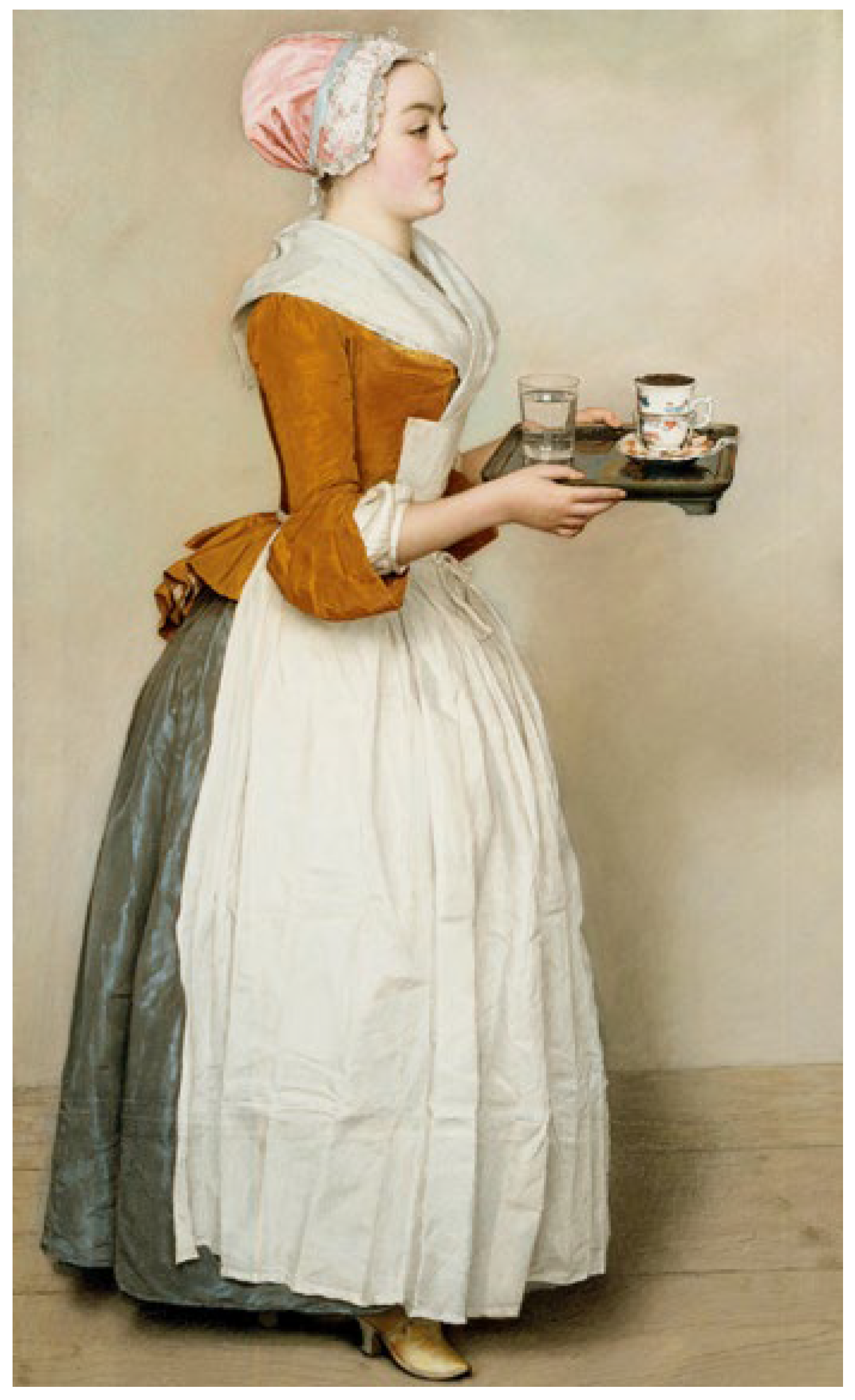
A famed son of Geneva, Jean-Étienne Liotard’s (1702–1789) pastel paintings were epitomised by subtlety and depth [1]. Blending European artistic conventions with influences from his extensive travels, Liotard depicted candid household images from the 18th Century [2]. All this is exemplified in his celebrated piece “The Chocolate Girl” (“La Belle Chocolatière”), painted around 1744, showing a maid offering drinking chocolate for consumption [Figure 1].
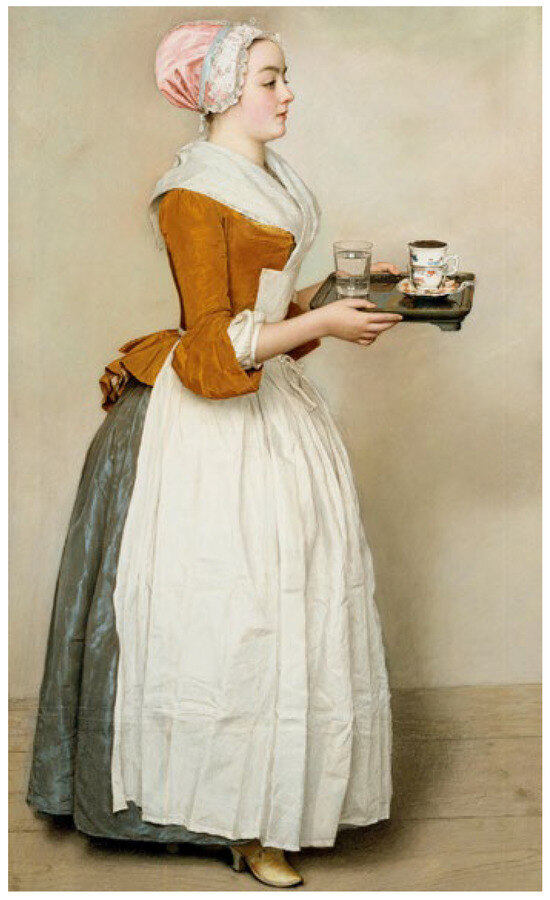
Figure 1.
The Chocolate Girl. Jean-Étienne Liotard. circa. 1744–1745. Pastel on parchment, 82.5 cm × 52.5 cm. Public domain. Old Masters Picture Gallery (Gemäldegalerie Alte Meister), Dresden, Germany.
Liotard’s scene is grounded in an Enlightenment period where chocolate provoked contentious debates, akin to other substances today. Its luminosity aside, considering “The Chocolate Girl” in modern settings invites a broader reflection on the dynamics surrounding substance use and how these may shape policy-based and sociocultural responses, especially in relation to current cannabis debates in Switzerland.
Changing Societal Perceptions about Substance Use and Their Complex Determinants
Chocolate
In the Age of Enlightenment when Liotard was painting, the availability of chocolate was expanding across European societies, eliciting criticism and even moral panic reminiscent of coffee and tobacco [3]. These dialogues encompassed religious ideologies with divergent Protestant and Catholic standpoints on whether drinking chocolate was permissible during fast [2,3]. Further, certain physicians highlighted negative health outcomes from the stimulant properties of chocolate [3].
In the authors’ opinion, Liotard’s focus on the serving girl, with consumers missing from the frame, perhaps gestures towards this contentious status insinuating hidden and illicit undertones without taking an explicit position.
Conversely, at this time, others championed the therapeutic advantages of chocolate. In some regions, chocolate was deemed helpful for digestive issues and a variety of medical conditions including anaemia, gout and tuberculosis [4]. Throughout the centuries, chocolate would gain mainstream acceptance and become extensively commoditised [5], demonstrated by its almost universal accessibility.
Alcohol, Heroin and Psychedelics
The evolving attitude towards chocolate resemble the alternating societal trajectories of other substances. For example, alcohol has been consumed for different purposes throughout history but its moral, social and health perceptions have fluctuated [6]. Specifically, in medieval and post-medieval Europe, alcohol has been deemed to contain selected health benefits [7]. Yet, messaging from 19th and 20th century temperance movements emphasised its detrimental effects, resulting in prohibition in the United States (US) and European countries like Iceland and Finland [8].
Similarly, morphine-based substances and other opioids have frequently been prescribed as medicine and at times, used recreationally [9]. However, as evidence demonstrating their addictive and harmful impact has developed, so have societal patterns. The recent opioid crisis in the US underlines this, and across distinct jurisdictions, illicit heroin use has been both punitively controlled and to a lesser extent, commercially appropriated [10,11].
Similarly, psychedelics have generated both intrigue and controversy. Used in religious and spiritual contexts and traditions, possible therapeutic applications for psychedelics attracted scientific attention in the early- to mid-20th century, before they were socio-politically stigmatised, politicised and criminalised during the “war on drugs” in the US [12]. This impeded clinical trials, though lately there has been a substantial resurgence in research and interest in their medicinal potential, particularly for mental disorders [12]. Notably, the Australian drug regulator allowed for the prescription of psychedelics for treatment-resistant depression and post-traumatic stress disorder, sparking a range of supportive and opposing sentiments about their safety [13].
Notions of Risk and Harm
As illustrated throughout history, views on substances do not always align with established scientific notions or risks. Despite its well-documented and extensive consequences, alcohol has become ingrained within Western sociocultural practices and is legal in most parts of the world [14].
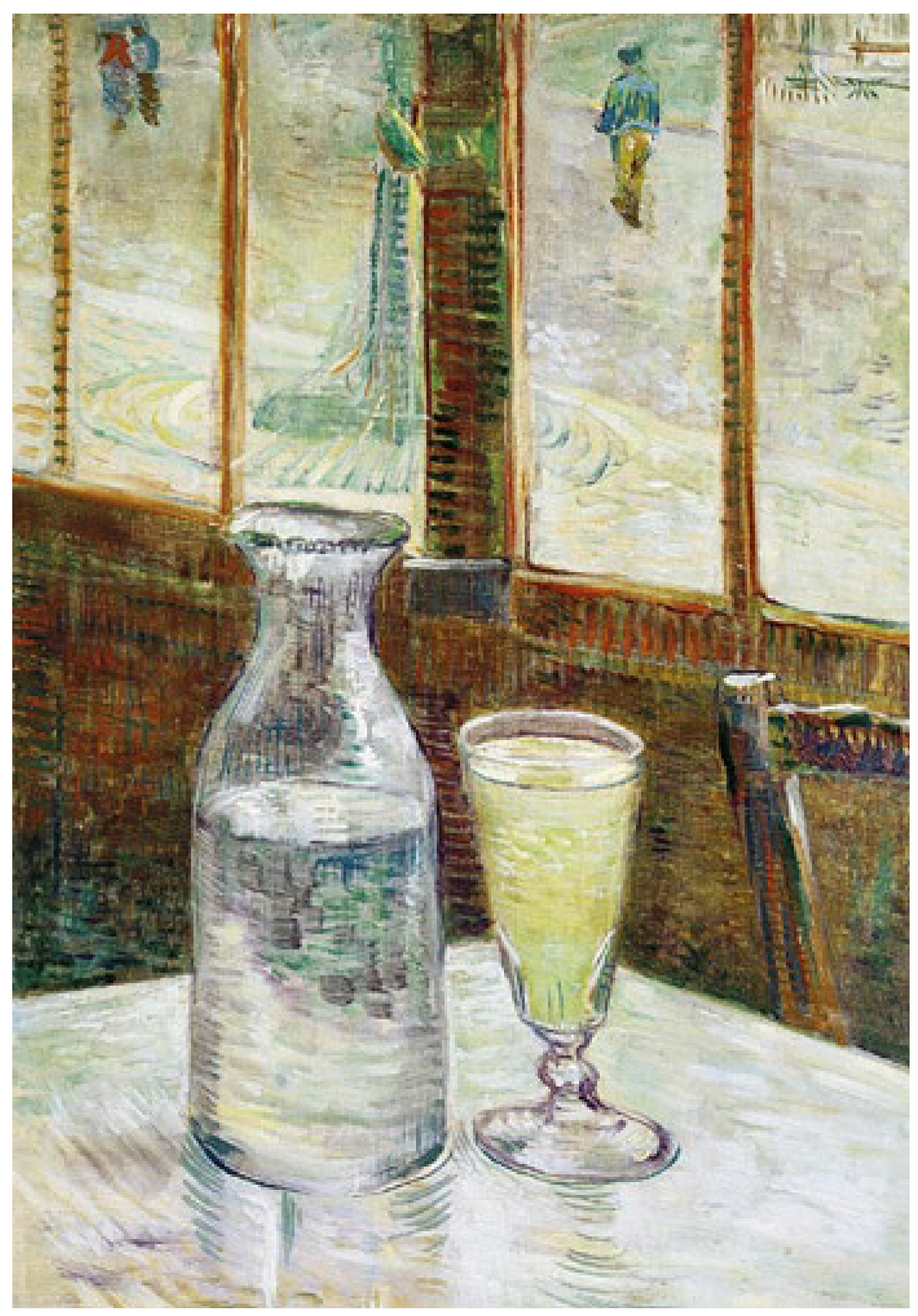
Significantly, alcohol consumption is linked with global disease and injury burdens, social and economic costs, elevated mortality and disability rates, and other deleterious outcomes [15]. Its associated dangers notwithstanding, alcohol intake remains high throughout Europe (although, this could be changing in some countries as suggested by Swiss data [16]). Interestingly, alcohol and its multivarious connotations also preoccupied later European artists after Liotard. For instance, like “The Chocolate Girl”, Vincent Van Gogh’s (1853–1890) “Café Table with Absinthe” (1887) foregrounds the substance with the consumer being absent from the scene [Image 2].
In contrast, heroin consumption with its substantial harms, is generally prohibited and remains widely marginalised and stigmatised, even by some healthcare professionals [17]. This has created barriers for drug policy advances and sufficient treatment for individuals with substance use disorders, who have pronounced vulnerabilities for psychiatric and somatic comorbidities [17,18].
Returning to the Enlightenment when Liotard was painting, the positive health-related aspects of chocolate may have been influenced by capitalistic incentives, with a growing consumer base strengthening economic drivers [3]. Taken together, these paradigms all imply a complex and continuous interplay between social, cultural, economic, judicial and political forces in shaping macro-level attitudes towards specific substances.
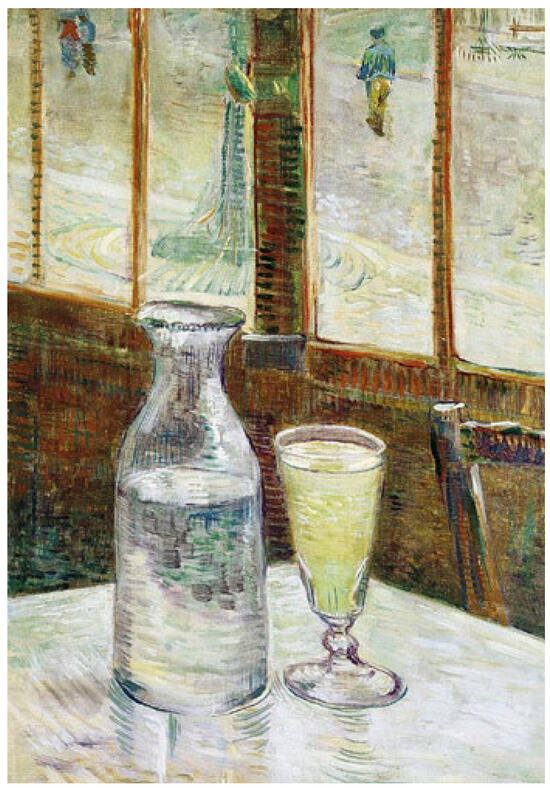
Figure 2.
Café Table with Absinthe. Vincent Van Gogh. 1887. Oil on canvas, 46.3 cm × 33.2 cm. Public domain. Van Gogh Museum, Amsterdam, Netherlands.
Contemporary Perceptions on Cannabis in Switzerland: Another Societal Change?
Prompted by Liotard’s work, such considerations may be particularly pertinent in the context of cannabis-related exchanges in 21st century Switzerland, where opinions on its legislative status have become major talking points [19]. This was demonstrated by a 2008 national referendum, in which 36.7% of the Swiss voters voted in favour of decriminalisation [20]. The legalisation of medicinal cannabis in 2011 further amplified the discourse.
In the 2020s, selective recreational cannabis trials have commenced (e.g., in Basel, Bern, Biel, Luzern and Zurich), enabled by formal amendments to the Swiss Federal Act on Narcotics and Psychotropic Substances [21]. To the authors’ knowledge, extensive results from these pilot studies have yet to be reported [22]. Nevertheless, several schemes have incorporated progressive harm reduction principles, including counselling and psychoeducation for safer use [22]. Elsewhere, some Swiss commentators have expressed opposition to cannabis-related initiatives [23].
Regardless of individual beliefs or outcomes from these programmes, this does appear to signal shifts in societal and governmental approaches to cannabis regulation and consumption, aligning with trends in other jurisdictions and resembling patterns around other substances throughout history [24].
For example, prior research determined that lower religiosity, declining punitiveness and changing media narratives have shaped discussions on the legalisation of cannabis in the US [25]. Similar projects exploring macro-level determinants in Switzerland would provide a basis for future research.
Concluding Remarks
Reflecting on Liotard’s “The Chocolate Girl” in modern settings offers a framework for exploring the macro-level factors that underpin the normalisation or marginalisation of certain substances. This could be relevant for contemporaneous cannabis debates in Switzerland, which has seen considerable transformations in public perceptions and legislative approaches. In this regard, “The Chocolate Girl” may offer an educational heuristic for exploring broader complexities around substance use within psychiatric course materials and beyond.
Further, alike other works, “The Chocolate Girl” shows how artistic production contains and articulates trends within the social milieu from which it emanates, displaying an expressive aspect of the consideration of such representations. As cultural productions are often informed by societal trends (and potentially vice versa), it is intriguing to speculate on how future generations will perceive substance use in the 2020s. Specifically, in a comparable guise to Liotard’s painting, one is tempted to wonder how artworks depicting cannabis consumption will be interpreted in three hundred years’ time.
Author Contributions
AS, NG: Conceptualization; writing—original draft; writing—review and editing. AB, DZ, ML: Conceptualization; writing—review and editing.
Conflicts of Interest
The authors have no competing interests to declare.

Disclaimer/Publisher’s Note: The statements, opinions and data contained in all publications are solely those of the individual author(s) and contributor(s) and not of MDPI and/or the editor(s). MDPI and/or the editor(s) disclaim responsibility for any injury to people or property resulting from any ideas, methods, instructions or products referred to in the content. |
This is an open-access article distributed under the terms of the Creative Commons Attribution Non-Commercial No Derivatives (CC BY-NC-ND) 4.0 License.