


Summary
The objectives of this observational study were twofold: firstly, to examine the feasibility of implementing the Health of the Nation Outcome Scales (HoNOS) in a psychiatry department and secondly, to assess whether information recorded with HoNOS provides meaningful information on patients’ clinical characteristics and outcomes for clinical management purposes. HoNOS is a widely used instrument designed for measurement of clinical mental health outcomes by mental healthcare workers. We implemented it in the four hospitals of the department of psychiatry of a Swiss teaching hospital. Doctors and nurses were instructed to assess each patient using HoNOS at admission and discharge. A total of 2414 patients admitted to one of the four hospitals during implementation from February 15, 2010 to March 31, 2011 were rated with HoNOS. The main outcomes of the study were compliance rates with HoNOS assessments, HoNOS scores (at admission, discharge and the change in scores) and feedback on HoNOS use from clinicians. Of the 2414 admitted patients, 2121 patients were discharged by the end of the study; 2154 (89%) had a HoNOS assessment at admission and 1737 (82%) were assessed both at admission and discharge. Return rates for the different scales varied between 75% and 99% at admission and discharge. HoNOS scores were sensitive and specific in describing patients’ clinical profiles. The instrument was considered easy to use. Implementation of HoNOS in routine patient care is feasible and provides meaningful information for hospital management on clinical characteristics and outcome of their patients’ populations.
Introduction
There is a wide international consensus on the fact that healthcare services should operate in an evidence-based manner and assess as objectively as possible the course of patients, but implementation of outcome measurement is a complex enterprise [1]. In mental healthcare, regional and national services are at different stages of implementation of routine outcome measurement. Some countries, like Australia and New Zealand, have collected outcome measurements at a national level for several years, while Switzerland has just started, in 2012.
The department of psychiatry of the University Hospital of Lausanne (CHUV), Switzerland, is composed of four psychiatric hospitals and several outpatient community services that provide public mental health services for a population of nearly 700,000 inhabitants. The extent of utilisation of standardised assessment tools varies widely across the different units, depending on history and local circumstances. Except for diagnosis and sociodemographic data, data on the clinical conditions or problems for which patients are treated are not routinely collected. The head of the department of psychiatry chose to implement the Health of the Nation Outcomes Scales (HoNOS) as a first standardised assessment tool for routine evaluation of all hospitalised patients.
The HoNOS instrument was developed to measure mental health outcomes in response to the UK government’s target of significantly improving health and social functioning in the population. The objective was to develop an instrument useful to clinicians and brief enough for routine use [2]. It provides wide coverage of the clinical problems and social functioning of people presenting with mental health problems, independent of psychiatric diagnoses. After adequate training and supervision, healthcare workers can quickly and easily complete HoNOS. Comparable measures for specific populations were also developed (children and adolescents [3], older people [4], forensic mental health services [5], patients with learning disabilities [6] and patients with acquired brain injury [7]). All HoNOS instruments are being increasingly used as a routine clinical outcome measurement, with which the quality and effectiveness of mental healthcare services can be monitored, compared and improved [8]. HoNOS has been officially adopted as an outcome tool in the United Kingdom, Australia and New Zealand, and has been widely used in surveys in numerous European countries [9,10]. A field study in Lausanne confirmed its potential utility in the local context [11].
Our study had two objectives: firstly, to examine the feasibility of implementing HoNOS in routine clinical practice in a psychiatric department; secondly, to determine whether the information recorded with HoNOS during the implementation period is clinically valid and provides useful information for clinical management.
Methods
Patient cohort
HoNOS assessment was introduced progressively in the four psychiatric hospitals between February 2010 and January 2011. All patients admitted to one of the hospitals for more than 24 h after the beginning of the study were included. The study was approved by the Research Ethics Committee.
Instrument implementation
Central to the implementation process was a conscious effort to initiate a cultural change to more objective clinical documentation without changing the processes of collecting clinical information. A multidisciplinary working group (composed of physicians and nurses from each hospital, an administrator, a research psychologist and a data manager) was formed to follow the progress of implementation of the instrument. Its task was to provide adequate communication and support to all hierarchical levels, and to deal with practical problems arising during the implementation process. Teaching by a psychiatrist (first author) and a clinical nurse specialist (third author) was provided for all staff involved in assessing patients. Training sessions included a short explanation of the goal of routine outcome measurement, presentation of the instrument, written instructions and an exercise in assessing a patient by means of a case vignette.
Three months after the start of the implementation in each hospital, the first author and a research psychologist (fourth author) provided data feedback sessions to clinicians.
Data collection
Since exhaustive clinical information is usually not available during admission, which almost exclusively occurs in an emergency, the treating psychiatrist and nurse complete the clinical assessment within three days after admission. Thus, in order to obtain as many exhaustive HoNOS assessments as possible, we instructed all clinicians to have HoNOS completed by the treating doctor or a delegated nurse within 72 h after admission and again on the day of discharge. Patients who were discharged on weekends were assessed by the physician on duty during the weekend. Since clinical procedures vary between hospitals, the chief doctor of each decided whether a doctor or a nurse was in charge of the assessment. The instruction was to use the information available from patient interviews, medical records and interviews of members of the patient’s social network. ICD10 diagnoses (International Classification of Diagnosis [12]) were determined by the treating psychiatrist at discharge in accordance with routine practice.
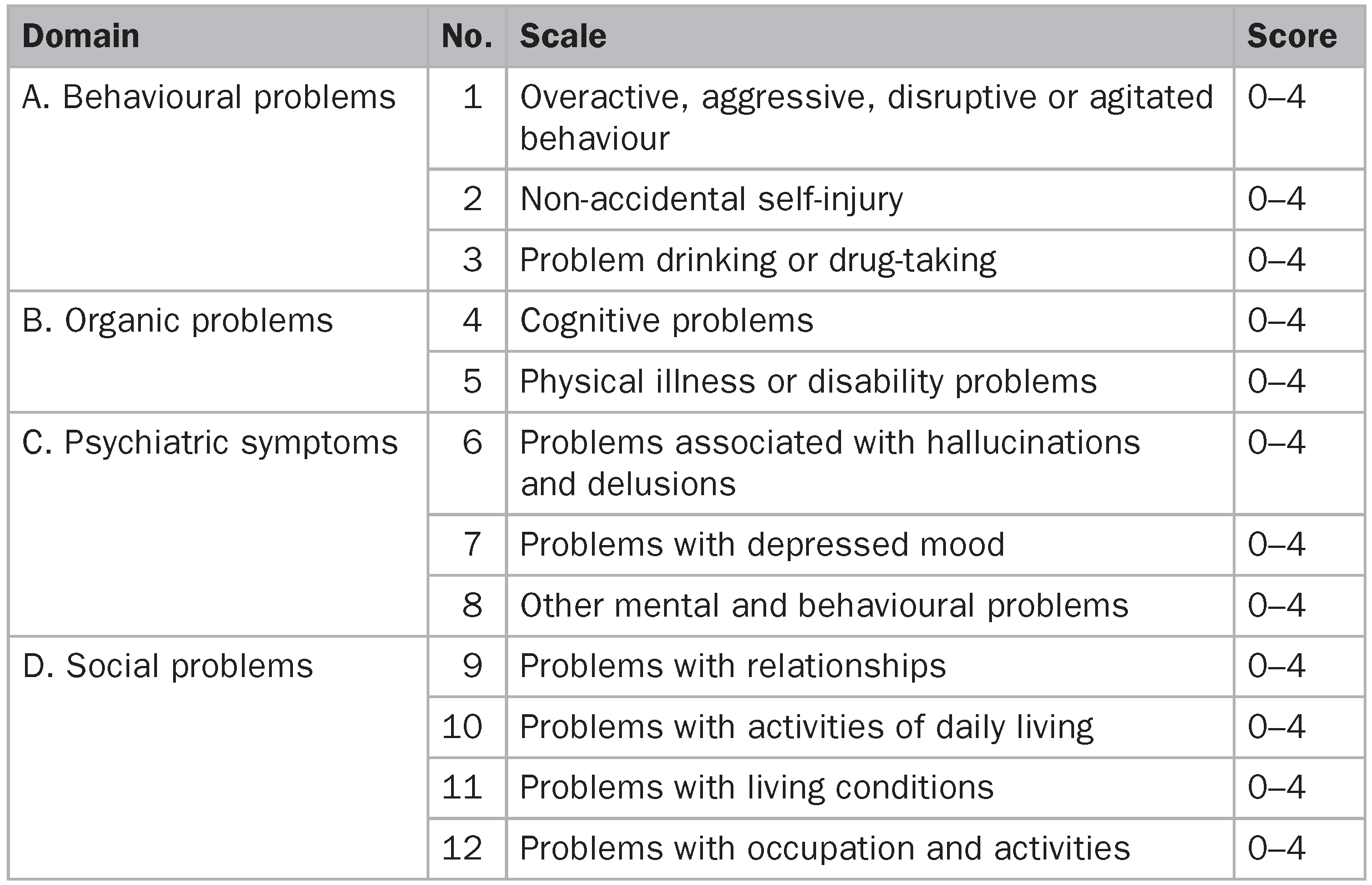
We used the French version of HoNOS for adults from 18 to 65 years [13] and for persons older than 65 years (HoNOS65+) [14]. Table 1 shows the HoNOS scoring sheet. Each of the 12 items is scored on a Likert scale from 0 = “no problem” to 4 = “severe to very severe problem”.
Table 1.
Health of the Nation Outcome Scales scoring sheet.
The members of the working group collected feedback from clinicians in unstructured individual interviews and during data feedback sessions in groups.
Statistical analyses
We analysed the rate of compliance with HoNOS assessments at admission and discharge by comparing the number of patients admitted and discharged with the number of assessments returned. For each individual scale, rates of missing values at admission and discharge were computed. Clinical validity and outcomes were analysed for the patients who had paired HoNOS assessments (admission and discharge). Statistical significance of the difference in scores between admission and discharge was tested using the nonparametric Wilcoxon signed-rank test for paired samples and repeated measures.
Results
Patient cohort and response rate
Of the 2414 patients admitted to one of the four hospitals during implementation (between February 15 2010 and March 31 2011), 2121 patients were discharged by the end of hthe study; 2154 (89%) of admissions and 1834 (86%) of discharges were assessed with HoNOS; 1737 (82%) were assessed at both admission and discharge. The first hospital to implement HoNOS (N = 527, one year of observation) had assessment rates of 87% at admission and 76% at discharge; the second hospital (N = 1244, 9 months) had assessment rates of 97% and 96%, the third hospital (N = 382, 5 months) of 75% and 72%, and the fourth hospital (N = 261, 3 months) of 78% and 77%, respectively. In 66% of all cases the same clinician carried out both assessments. HoNOS drop-outs were linked to a high rate of missing diagnostic information (diagnoses were missing for 19% of HoNOS drop-outs at admission and for 21% at discharge). Patients who stayed less than 72 h had slightly higher rates of HoNOS ratings (93% on admission, 93% on discharge and 86% paired ratings).
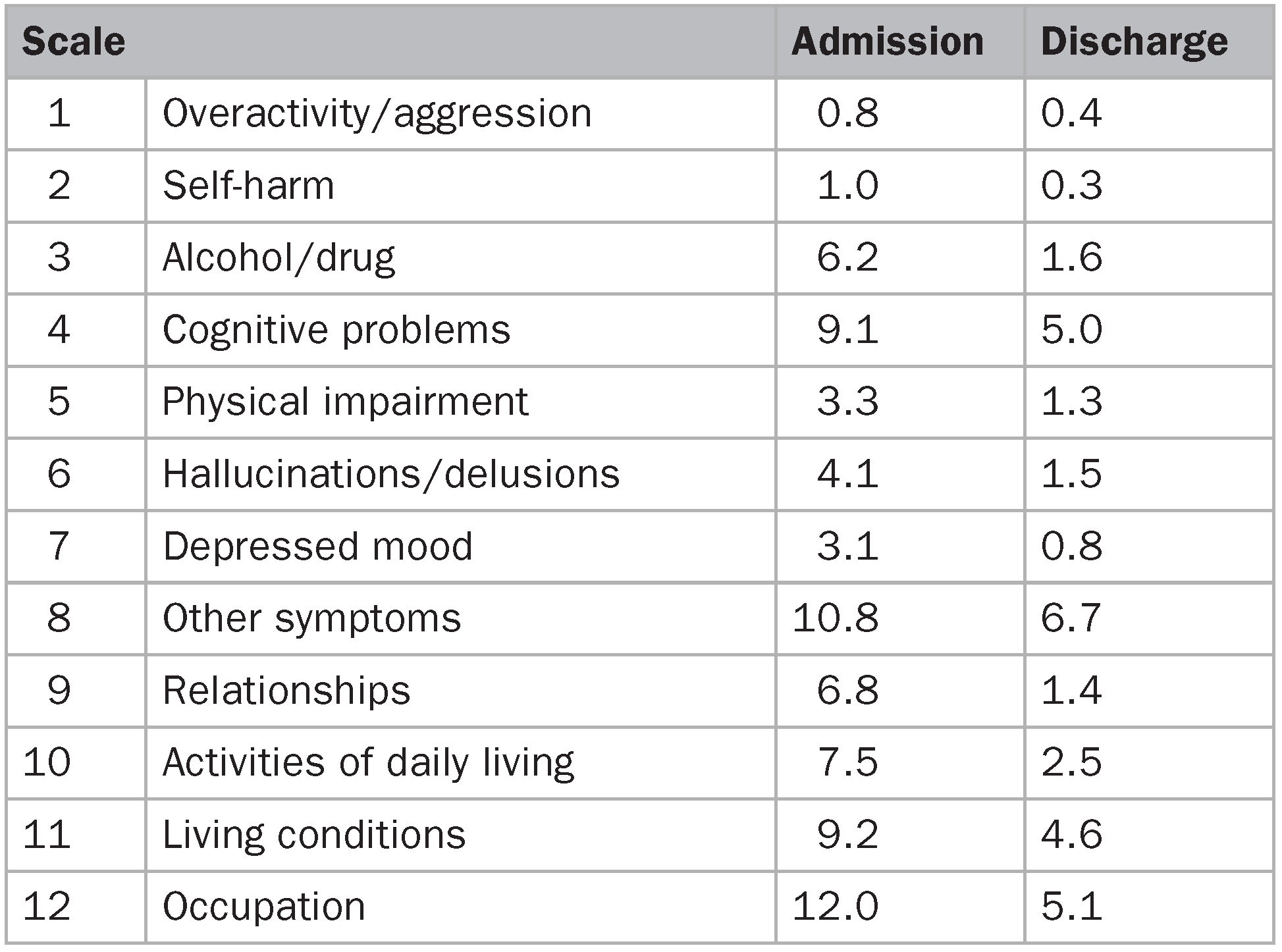
The completion rate for each scale was better at discharge than at admission. Fewer than 10% of HoNOS scores on admission had more than three missing values and only 4.5% had more than four missing values. Analysis of missing values showed that the individual HoNOS scales with the lowest compliance rates were scale 8 “other symptoms”, scale 11 “living conditions” and scale 12 “occupation”. Table 2 shows the rates of missing data for each individual scale of the instrument at admission and discharge.
Table 2.
Rates of missing data for each scale (%, N = 1737 1).
Patients’ characteristics
The mean age of the 1737 patients assessed at admission and discharge was 46.9 years (standard deviation (SD) 19.4 years); 903 (52%) were female; 346 (20%) were more than 64 years old. The five most common ICD-10 diagnostic categories were schizophrenia spectrum disorders (26.7%), disorders related to substance abuse (22.1%), mood disorders (18.8%), organic disorders (11.0%) and personality disorders (10.0%). Anxiety disorders represented 5.0% of the sample, other diagnoses 2.1%, and missing diagnoses 4.3%. Patients older than 64 years had significantly higher rates of organic disorders (50.3%), and lower rates of schizophrenia spectrum disorders (13.3%) and disorders related to substance abuse (6.6%). The characteristics of the patients included in the sample did not significantly differ from those of the total number of patients admitted.
Patients’ outcome
The difference between admission and discharge values of the sample was significant for all scales.
Table 3 shows the results of the Wilcoxon rank test. This effect was greatest for “overactivity/aggression”, “self-harm”, “alcohol/drug”, “hallucinations/delusions”, “depressed mood”, and “other symptoms”.
Table 3.
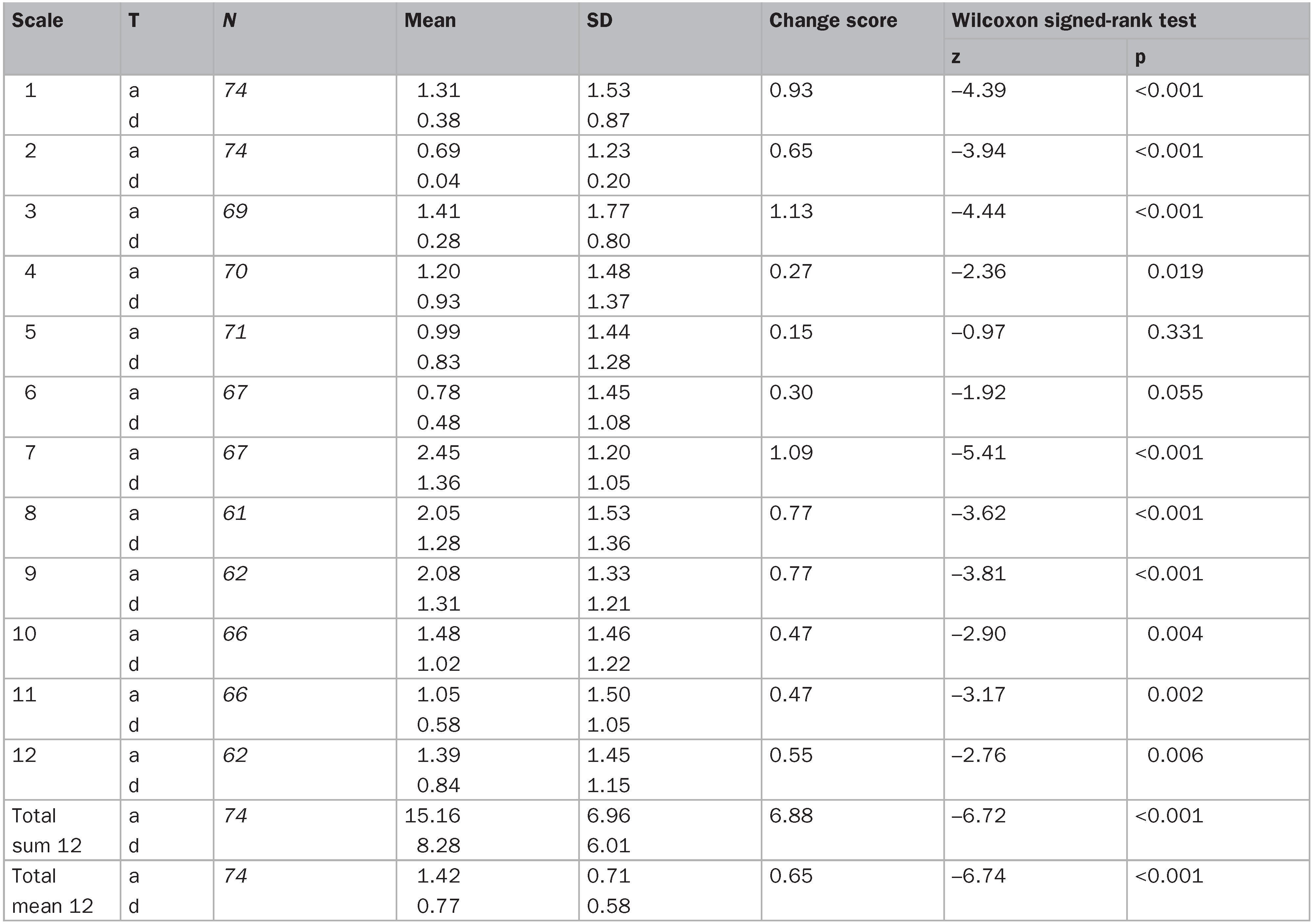
Comparison of HoNOS scores at admission (a) and discharge (d) and change in score (a-d): Total sample (N = 1737).
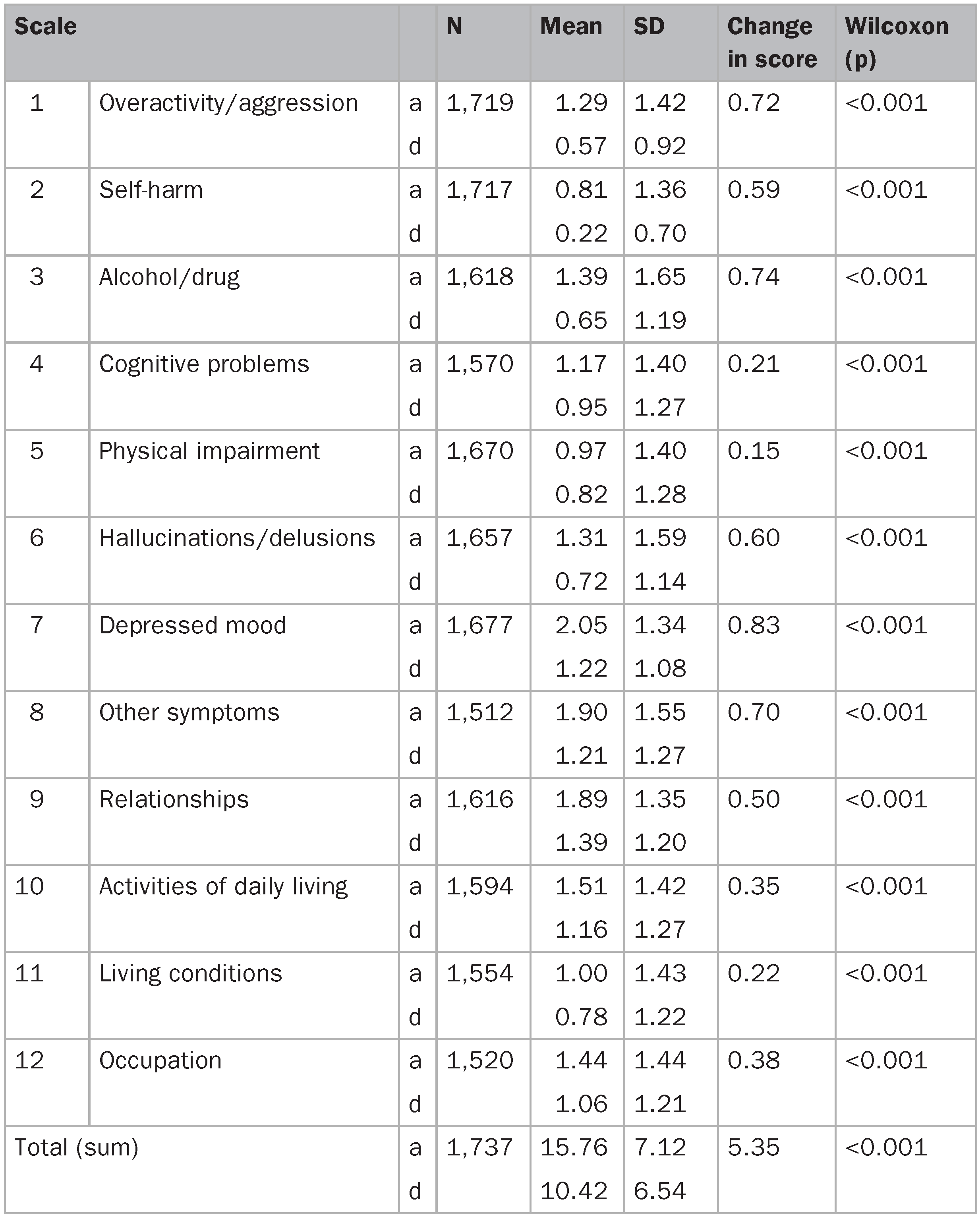
Table 4 shows a comparison of HoNOS scores at admission between the five most common ICD-10 diagnoses; Table 5 shows a comparison of change in HoNOS scores between the same diagnostic classes. Different sample sizes explain the different statistical values of the analyses. The majority of problems measured with the individual HoNOS scales significantly improved during the hospital stay. For each diagnostic category, the scales related to specific problems rated highest on admission. The total score at admission for organic disorders (F0, which includes mainly dementia) was higher than those of all other diagnostic classes, with a particularly high score on the scale “cognition”, which improved little during the stay.
Table 4.
Comparison of HoNOS scores at admission for patients with the five most common ICD-10 diagnoses.
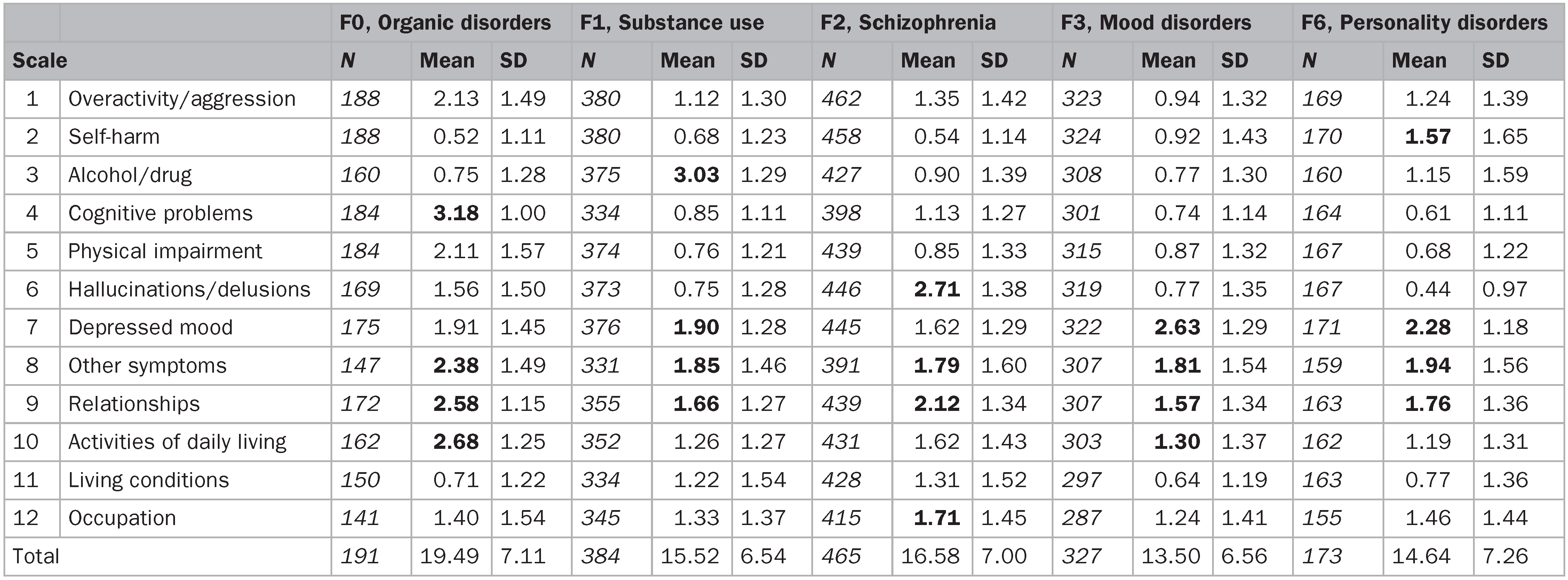
Table 5.
Comparison of change in HoNOS scores for patients with the five most common ICD-10 diagnoses.
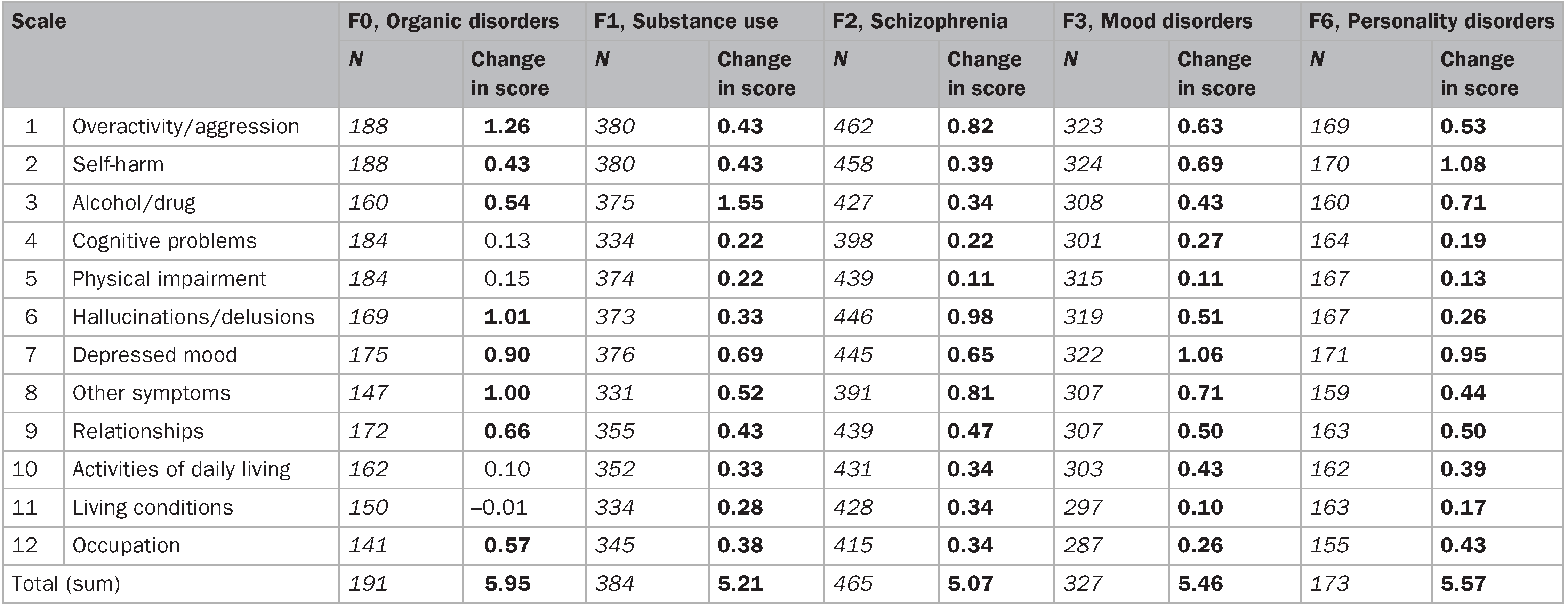
Substance abuse disorders (F1) had a particularly high score on the scale “alcohol/drug” at admission, which improved during the stay. Moderately high scores were recorded on “depressed mood” and “other symptoms” that are often associated with substance abuse, with a relatively uniform improvement during the stay.
Schizophrenia spectrum disorders (F2) had a maximum score at admission on the scale “hallucinations/delusions”, which significantly improved during the stay. Moreover, for these disorders with a strong influence on social relations and social life in general, scores were relatively high on the scales “depressed mood”, “other symptoms”, “activities of daily living”, “living conditions” and “occupation”.
Mood disorders (F3) and anxiety disorders (F4) were very similar, with high scores at admission on the scales “depressed mood”, “other symptoms”, “relationships”, “activities of daily living” and “occupation”. These disorders were frequently associated with suicidal risk, reflected by high scores on “self-harm”, and a marked improvement on this scale especially for anxiety disorders, which were mainly adjustment disorders.
For personality disorders (F6), the admission scores were high on the scales “depressed mood”, “other mental symptoms”, “relationships”, and “self-harm”.
There were no significant differences between adult patients assessed with HoNOS and older persons assessed with HoNOS 65+ with respect to clinical meaningfulness of HoNOS scores. The comparison of HoNOS scores between the different hospitals having comparable patients did not show any significant differences. Comparison between psychiatry wards specialising in the care of patients with different types of psychiatric diagnosis showed the same pattern of results as the analysis by diagnosis.
Feedback of clinicians
During the first months of implementation, clinicians reported worries about the time needed to complete the assessments, issues about use of the data for funding purposes, fear of management interference, and concerns about the psychometric properties of the instrument. During data feedback sessions, some clinicians showed a strong interest and wished to have more detailed information about their specific ward, but the perceived utility of HoNOS for individual treatment planning was generally low. One year after the introduction of routine HoNOS assessments, the members of the working group reported that ways of integrating the instrument into everyday clinical practice varied between services. Except for the second hospital, where assessments were made exclusively by doctors, several units in the other three hospitals explored the possibility of integrating HoNOS assessments within multidisciplinary team meetings. This was considered useful for identifying hidden patient needs through promotion of multidisciplinary discussion, but time consuming. Finally, the time needed by trained clinicians to complete the measurements was estimated at five minutes and generally considered as acceptable.
Discussion
Our first objective was to examine the feasibility of implementing HoNOS in routine clinical practice. Compliance rates for HoNOS assessments in the four hospitals varied between 72% and 97%. The overall compliance rate was 89% on admission and 82% at discharge, showing that routine use is feasible. The high proportion of missing diagnostic information for HoNOS drop-outs may indicate a low compliance not only with HoNOS ratings, but also with recording any coded information. The slightly higher compliance rates for patients staying less than 72 h may be explained by the fact that clinicians completed both HoNOS ratings at the same time. Other authors have reported return rates of 82–85% on admission [15,16], while rates attained for paired outcome assessments at admission and discharge varied widely between studies (55% [16], 64.5% [17] and 84% [18]). Rates were generally higher in experimental situations than in routine implementation.
Given the cultural change that routine evaluation involved in our context, we considered the compliance rates to be very good compared with other similar studies reported in the literature, rates at admission being higher than reported elsewhere and rates at discharge being as high as in experimental studies [18]. One potential contributing factor might be that there was no need to request patients’ written consent, as this assessment was considered to be a routine evaluation within good clinical practice [17]. In addition, we did not discard incomplete HoNOS scales, as was the case in other studies, because we considered analysis of missing values interesting information in itself for quality management.
Some of the difference in compliance rates between services may be ascribed to the varying length of implementation, compliance rates being lower during the first three or four months. Staffing problems with high personnel turnover rates also contributed to diminished compliance in the first hospital. Higher return rates in the second hospital might be correlated with the fact that use of standardised instruments was more common there, for research activities.
We hypothesised that analysis of missing values might be useful for assessing the exhaustiveness of clinical information collection at admission and discharge. The individual HoNOS scales with the lowest compliance rate were scale 8 “other symptoms”, scale 11 “living conditions” and scale 12 “occupation”. These are the scales for which the instrument’s validity has been questioned, because of conceptual complexity [8,19,20]. These scales may be more difficult to score, but this does not explain why they were rated more completely at discharge than at admission. It might indicate that some clinical information was not collected or present at admission. The fact that the scales “overactivity/aggression” and “self-harm” were virtually always rated supports this view, because all clinicians generally are aware of this crucial information. Clinicians may also have had difficulties integrating HoNOS into busy routine practice as they were instructed to do. We found no data in the literature on using missing values for quality management. However, providing missing values rates to clinical managers might help to emphasise the importance of collecting comprehensive patient information shortly after admission in order to set appropriate therapeutic goals, which are essential for good quality of care.
Our second objective was to determine if HoNOS scores provide clinically meaningful information on clinical profiles at admission and outcomes. In order to show clinical validity, scales with the highest mean score should predictably differ between diagnostic groups [2]. For example, the ICD-10 disorder F0 (mainly dementias) should have highest scores on total score and on scales relating to cognitive problems and physical impairment, F1 (substance use disorders) on “alcohol/drug” and so on. Profiles at admission were both sensitive and specific in describing the patients’ clinical profiles because they matched the clinical profile expected from the diagnosis. Reflecting favourable outcomes, mean HoNOS scores diminished between admission and discharge, except for chronic conditions. For the whole population, the most important significant improvements were linked with aspects typically improved by psychiatric inpatient care, such as “overactivity/aggression” and “self-harm”, and scales 6 to 8 rating psychiatric symptoms. For each diagnostic category, clinical improvement was reflected in the improvement in one or several specific dimensions related to the clinical diagnosis. Improvement was smaller for chronic problems, on which psychiatric inpatient care has less impact, such as the scale “cognition” in organic disorders (due to the degenerative nature of these disorders), or scales depending on medical and social factors outside the reach of a psychiatric hospital, such as “physical impairment”, “living conditions” and “occupation”.
Several other studies have attested to the clinical validity of HoNOS scores and their sensitivity to change for outcome measurement [8,19,20]. Our study thus supports these data. However, there are several limitations linked to the naturalistic conditions of the study: Firstly, psychiatrists determined the ICD-10 category in accordance with regular clinical practice, without using a standardised assessment. Secondly, we did not perform inter-rater reliability testing. Thirdly, we did not include an analysis of correlations with other factors that may determine the change in HoNOS scores independently of hospital treatment, especially length of stay. Future studies will have to explore these issues and also take into account differences in diagnoses and length of stay between adult patients assessed with HoNOS and older persons assessed with HoNOS 65+.
We chose to implement HoNOS because it is considered as acceptable for routine use and useful for clinicians. During the first months of the implementation process, clinicians expressed several concerns about the usefulness of the project. We provided support from convinced leaders and data feedback sessions in order to keep enthusiasm for participating as high as possible. After one year, the time to complete the scales was generally considered to be acceptable, but appreciation of the clinical usefulness of the instrument varied widely. We did not conduct a structured assessment of clinicians’ perception of the utility of HoNOS ratings. Anecdotal reports by the members of the working group tended to confirm the statements in other publications in the field: clinicians are known to have strong opinions for or against outcome measurement [21]. Worries about the time required to complete the scales and possible misuse of the data, fear of management interference, and feelings of loss of respect for professionalism are well-known barriers to the implementation of routine outcome measurements [22]. Low enthusiasm for participation by staff is an important source of poor data quality [23]. Implementation of routine measurements requires thus more than just training in using the scale. Clinicians and managers need an explanation of the purpose of these measurements for different levels within the organisation. It is essential to maximise support and produce attractive reports that are easy for clinicians to understand and help them use the instrument [21]. The objective of producing good quality data and increasing clinical utility can be substantially improved by using methods linked with change management [23].
We assumed that information on HoNOS scores would provide meaningful information about clinical management for administrators and clinicians. At this stage, we provide regular information on HoNOS clinical profiles and outcomes to senior management for monitoring the clinical characteristics of patients. However, there is an important issue about the usefulness of routine outcome measurements in supporting clinical decision-making and quality improvement processes [24]. Despite the widespread use of HoNOS and its scientific validation as a routine outcome measurement tool, its psychometric soundness and its clinical utility for individual treatment planning and day-to-day clinical management of patients are regularly questioned by clinicians using the instrument [8,22,25,26]. HoNOS does not provide as detailed information as other scales designed for assessing specific groups of patients (e.g., specific diagnostic categories), which are more valued by clinicians [11]. However, isolated reports of quality improvement projects using routine HoNOS assessments for clinical decision-making exist [27]. In our case, continuing support and resources will be needed in order to explore innovative ways of integrating HoNOS into clinical decision-making and quality improvement projects.
HoNOS was designed to identify health status changes in populations with various mental health problems. It is valued by administrators because it allows comparison of different populations in mental health. The fact that HoNOS profiles differ depending on diagnosis may indicate it could usefully complement diagnosis in qualifying the severity of mental illness.
In summary, implementation of HoNOS as a routine outcome measure in our context was feasible. It is a simple way to describe patients’ clinical characteristics and outcomes at an institutional level. Support for staff and regular data feedback to clinicians are essential to ensure data quality and underline utility for quality improvement in clinical services. However, improving the quality and effectiveness of mental health services is a complex challenge, which needs to be approached on many levels. Governments and administrators need reliable and accurate data in order to plan for future service development and to use existing resources in ways that are most effective. If clinicians are to produce good quality data, they need to be convinced that the use of outcome measurement can improve quality of care for individual patients.
Funding/potential competing interests
This work was supported by funds of the strategic plan of University Hospital of Lausanne (CHUV).
Acknowledgments
We are grateful to the entire staff of Department of Psychiatry for their participation in the study, in particular to Jean-Marc Bressan, Aleksandar Chanachev, Jean-Christophe Hoisne, Laurent Holzer, Ueli Kramer, Françoise Lanet, Enzo Ros, Yves Rossier, Julian Grée, Jesus Rodriguez, Patrice Guex, Luis Basterrechea, Jean-Michel Kaision and Jacques Gasser.
Appendix
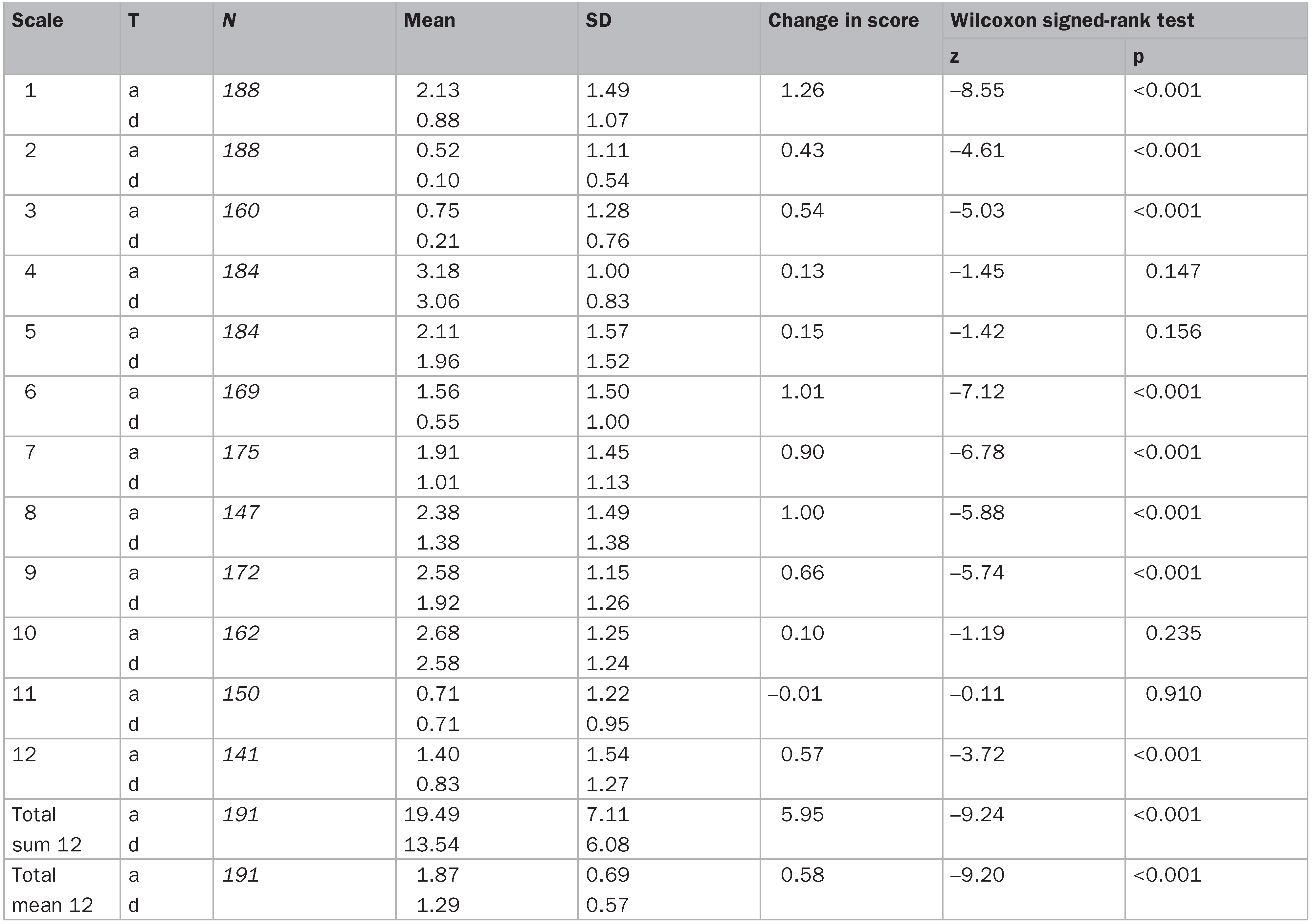
Appendix 1. F0, Organic disorders. Comparison of HoNOS scores at admission (a) and discharge (d) and change in score (a–d).
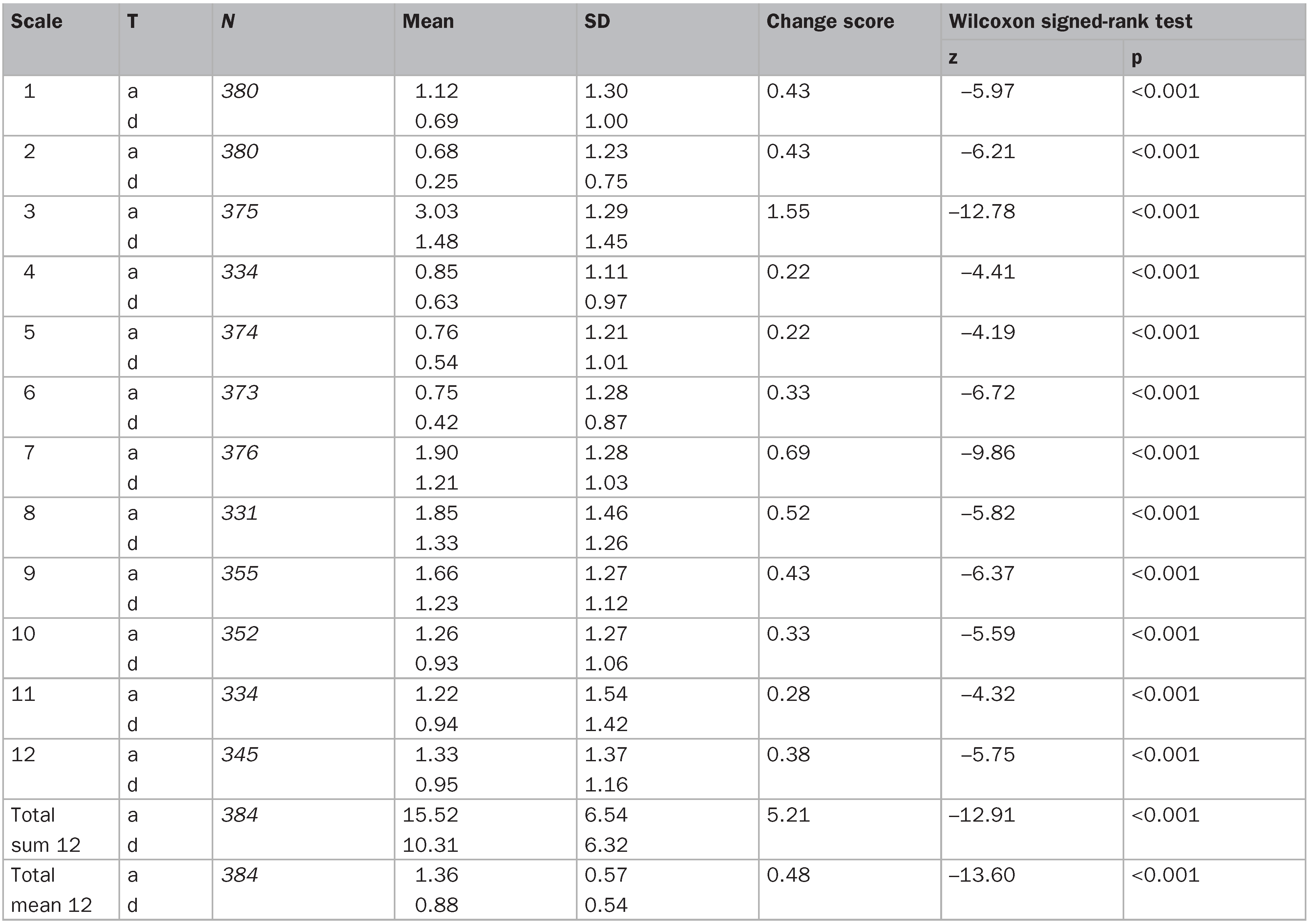
Appendix 2. F1, Substance use. Comparison of HoNOS scores at admission (a) and discharge (d) and change in score (a–d).
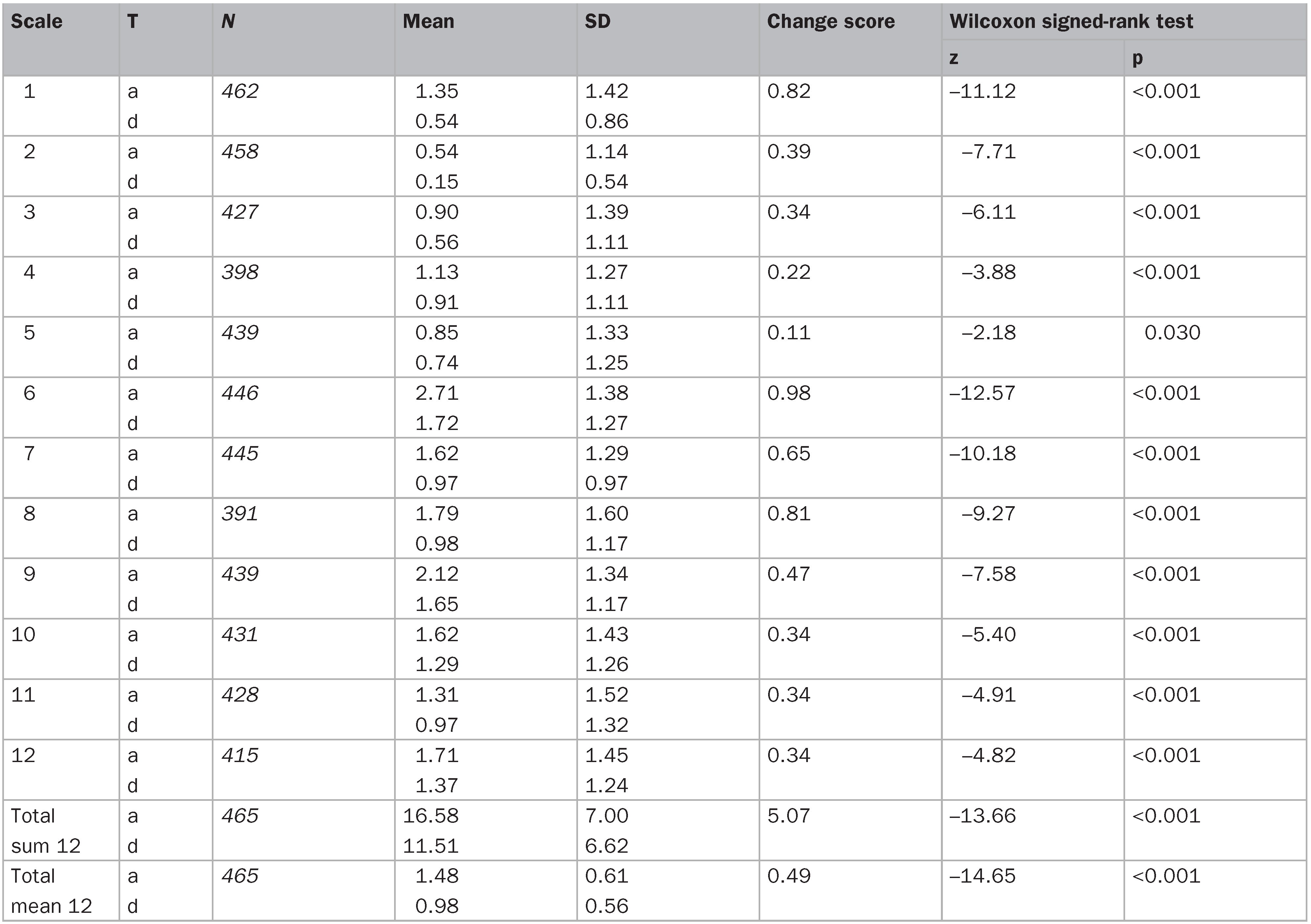
Appendix 3. F2, Schizophrenia spectrum disorders. Comparison of HoNOS scores at admission (a) and discharge (d) and change in score (a–d).
Appendix 4. F3, Mood disorders. Comparison of HoNOS scores at admission (a) and discharge (d) and change in score (a–d).
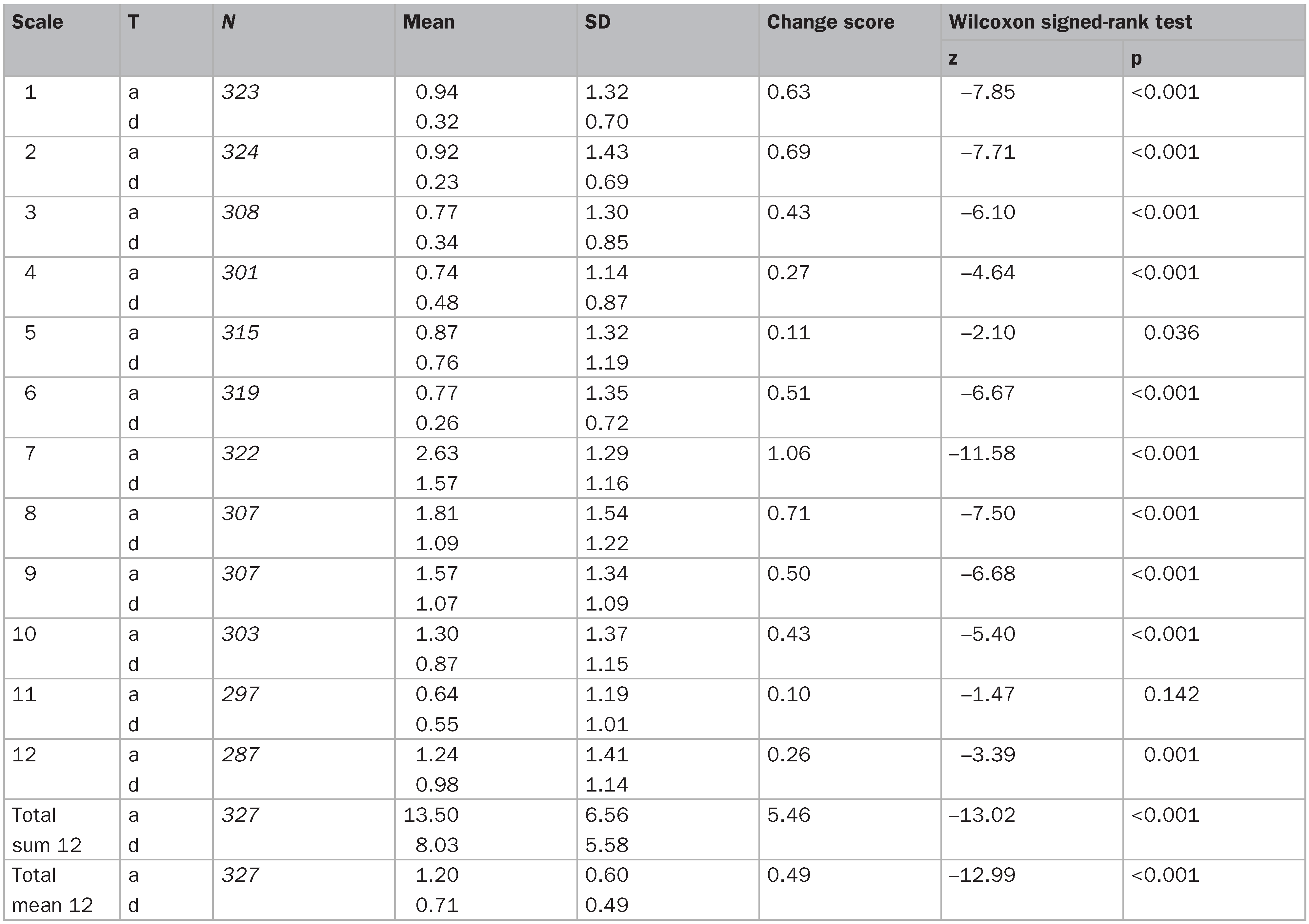
Appendix 5. F4, Anxiety disorders. Comparison of HoNOS scores at admission (a) and discharge (d) and change in score (a–d).
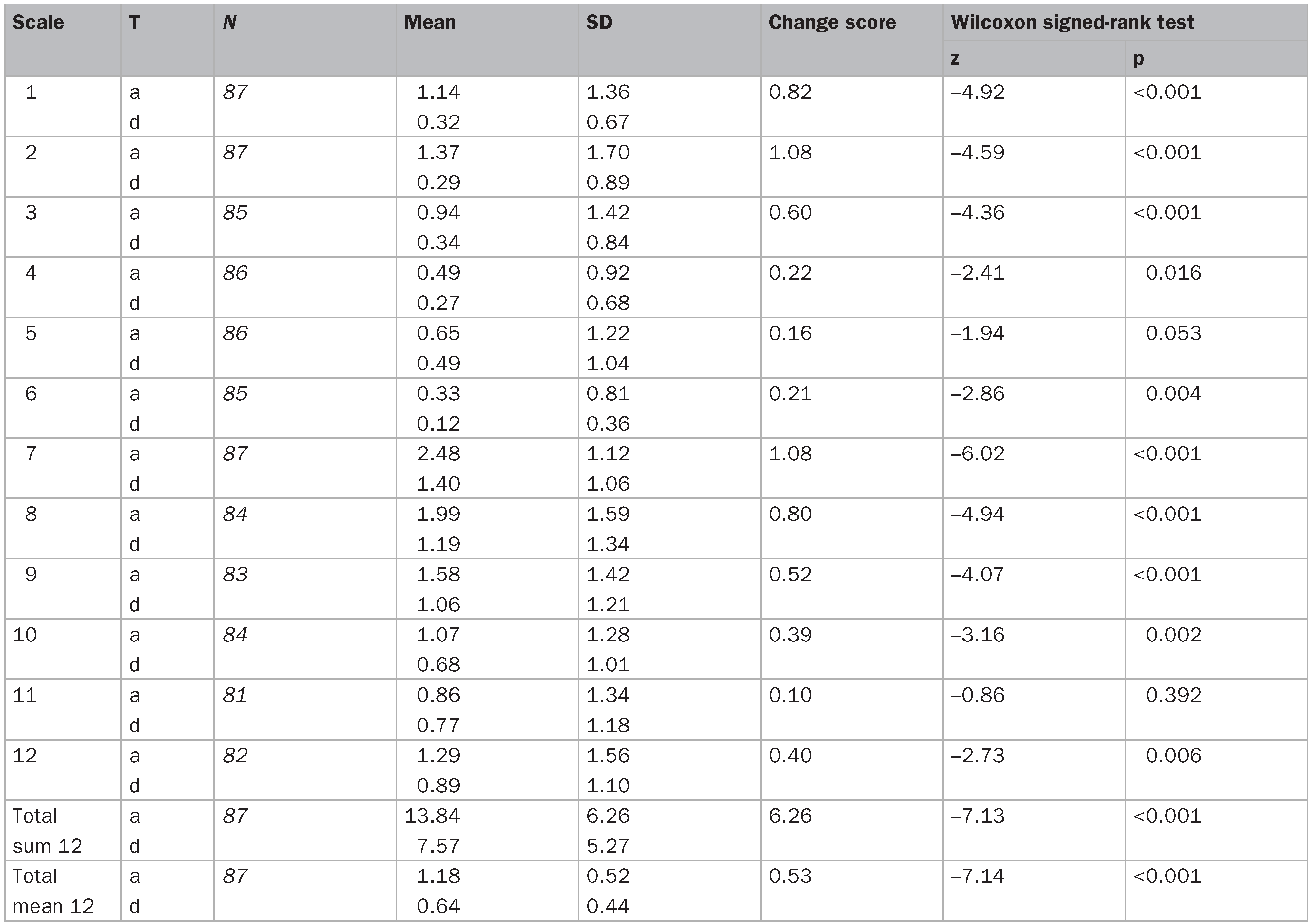
Appendix 6. F6, Personality disorders. Comparison of HoNOS scores at admission (a) and discharge (d) and change in score (a–d).
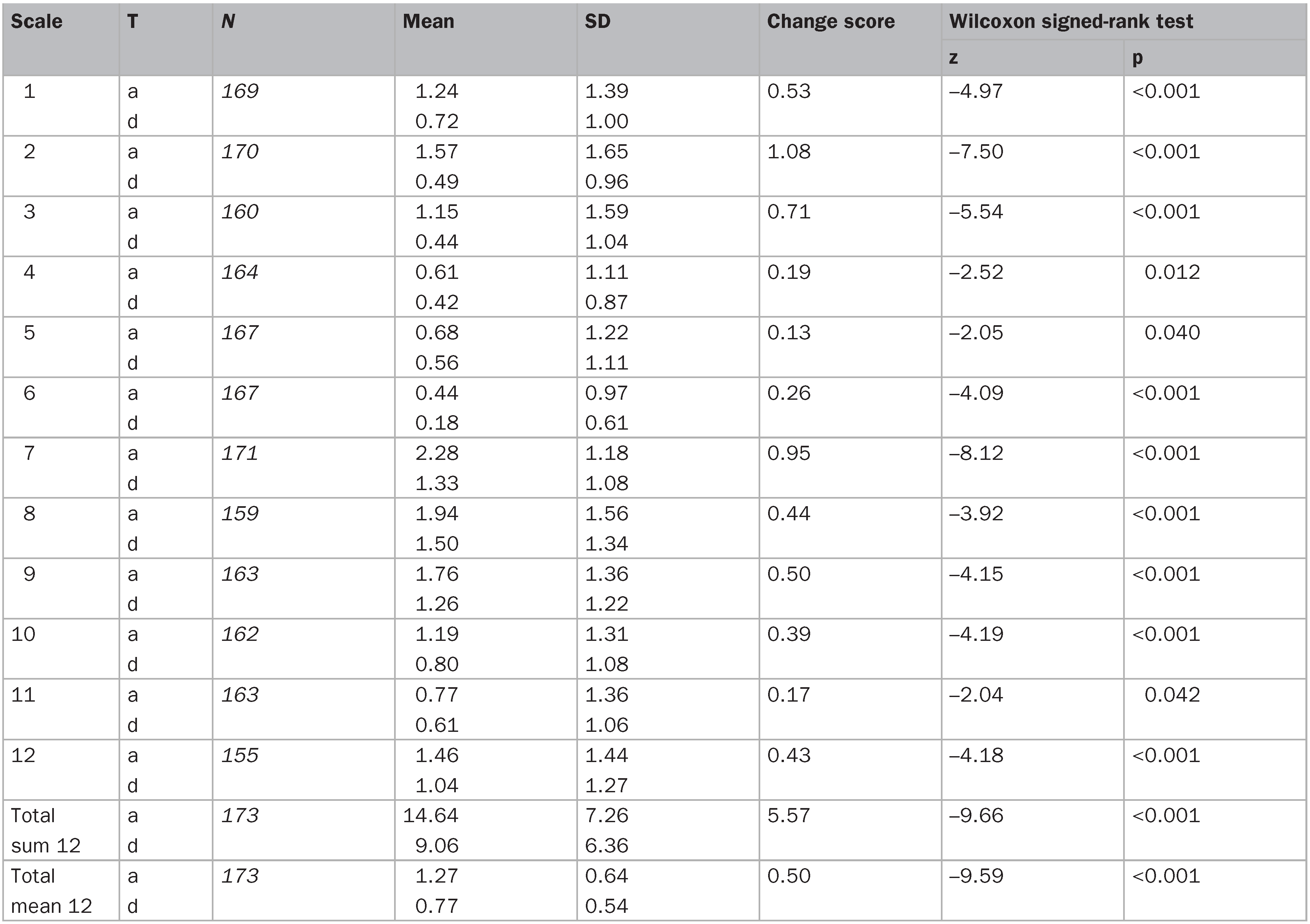
Appendix 7. Other diagnoses. Comparison of HoNOS scores at admission (a) and discharge (d) and change in score (a–d).
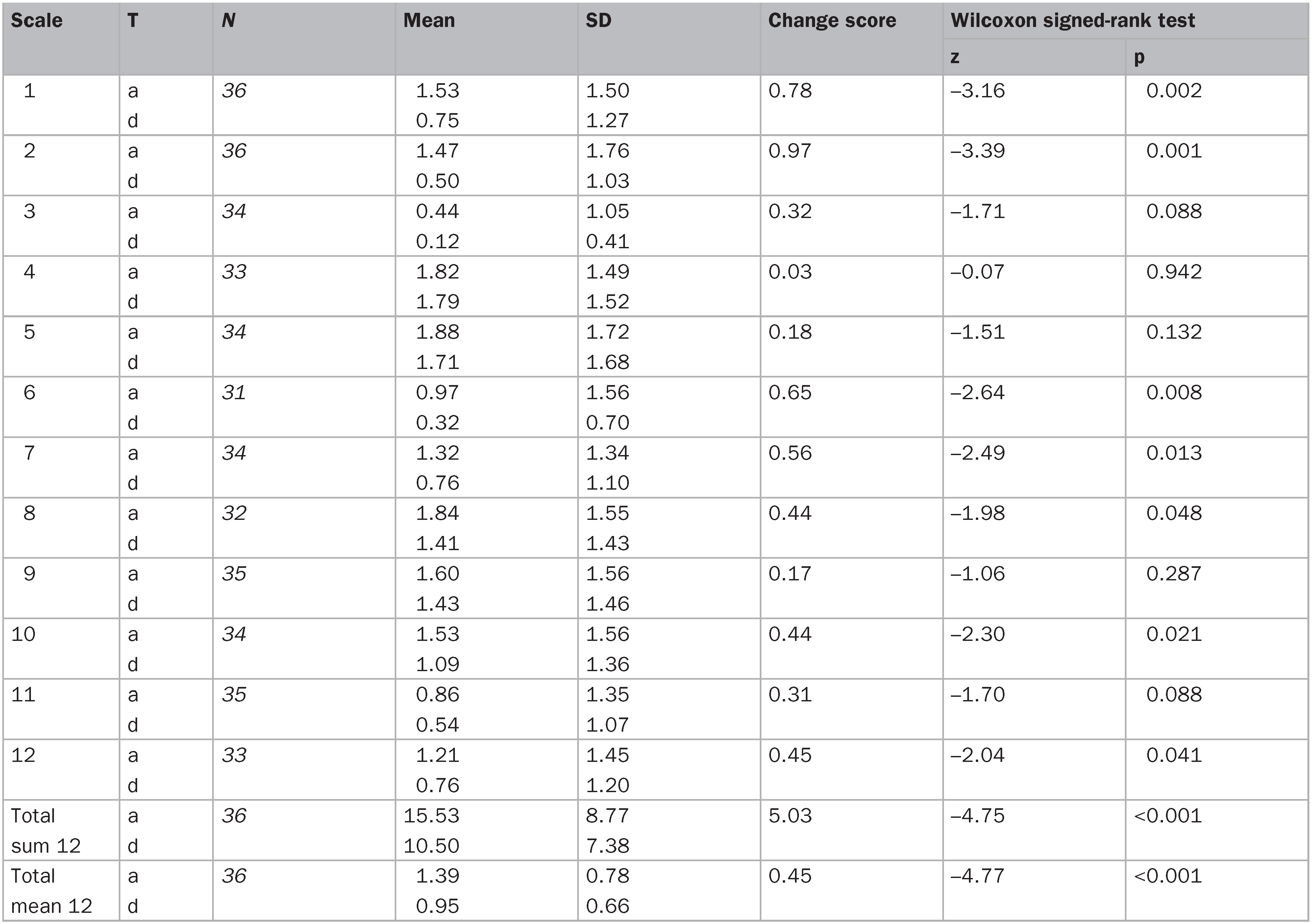
Appendix 8. Missing diagnoses. Comparison of HoNOS scores at admission (a) and discharge (d) and change in score (a–d).
References
- Trauer, T. Current issues in outcome measurement—Future directions. In Outcome Measurement in Mental Health—Theory and Practice; Trauer, T., Ed.; Cambridge University Press: New York, NY, USA, 2010; pp. 254–266. [Google Scholar]
- Wing, J.K.; Beevor, A.S.; Curtis, R.H.; Park, S.B.; Hadden, S.; Burns, A. Health of the Nation Outcome Scales (HoNOS). Research and development. Br. J. Psychiatry 1998, 172, 11–18. [Google Scholar] [CrossRef] [Scilit]
- Gowers, S.G.; Harrington, R.C.; Whitton, A.; Beevor, A.; Lelliott, P.; Jezzard, R.; et al. Health of the Nation Outcome Scales for Children and Adolescents (HoNOSCA). Glossary for HoNOSCA score sheet. Br. J. Psychiatry 1999, 174, 428–431. [Google Scholar] [CrossRef] [Scilit]
- Burns, A.; Beevor, A.; Lelliott, P.; Wing, J.; Blakey, A.; Orrell, M.; et al. Health of the Nation Outcome Scales for elderly people (HoNOS 65+). Br. J. Psychiatry. 1999, 174, 424–427. [Google Scholar] [CrossRef] [Scilit]
- Dickens, G.; Sugarman, P.; Walker, L. HoNOS-secure: A reliable outcome measure for users of secure and forensic mental health services. J. Forensic Psychiatry Psychol. 2007, 18, 507–514. [Google Scholar] [CrossRef] [Scilit]
- Roy, A.; Matthews, H.; Clifford, P.; Fowler, V.; Martin, D.M. Health of the Nation Outcome Scales for People with Learning Disabilities (HoNOS-LD). Br. J. Psychiatry 2002, 180, 61–66. [Google Scholar] [CrossRef] [Scilit]
- Fleminger, S.; Leigh, E.; Eames, P.; Langrell, L.; Nagraj, R.; Logsdail, S. HoNOS-ABI: A reliable outcome measure of neuropsychiatric sequelae to brain injury. Psychiatr. Bull. 2005, 29, 53–55. [Google Scholar] [CrossRef] [Scilit]
- Pirkis, J.E.; Burgess, P.M.; Kirk, P.K.; Dodson, S.; Coombs, T.J.; Williamson, M.K. A review of the psychometric properties of the Health of the Nation Outcome Scales (HoNOS) family of measures. Health Qual. Life Outcomes 2005, 3, 76. [Google Scholar] [CrossRef] [Scilit]
- Lovaglio, P.G.; Monzani, E. Validation aspects of the health of the nation outcome scales. Int. J. Ment. Health Syst. 2011, 5, 20. [Google Scholar] [CrossRef] [Scilit] [PubMed]
- Bech, P.; Bille, J.; Schutze, T.; Sondergaard, S.; Wiese, M.; Waarst, S. Health of the Nation Outcome Scales (HoNOS): Implementability, subscale structure and responsiveness in the daily psychiatric hospital routine over the first 18 months. Nord. J. Psychiatry 2003, 57, 285–290. [Google Scholar] [CrossRef] [Scilit]
- Bonsack, C.; Borgeat, F.; Lesage, A. Measuring patients problems severity and outcomes in a psychiatric sector: A field study with the French version of the Health of Nation Outcome Scales (HoNOS-F). Ann. Médico-Psychol. 2002, 160, 483–488. [Google Scholar] [CrossRef] [Scilit]
- WHO. The ICD-10 Classification of Mental and Behavioural Disorders. In Clinical descriptions and Diagnostic Guidelines; WHO: Geneva, Switzerland, 1992. [Google Scholar]
- Lauzon, S.; Corbiere, M.; Bonin, J.P.; Bonsack, C.; Lesage, A.D.; Ricard, N. Validation of the French version of the Health of the Nation Outcome Scales (HoNOS-F). Can. J. Psychiatry 2001, 46, 841–846. [Google Scholar] [CrossRef] [Scilit]
- Canuto, A.; Weber, K.; Gold, G.; Notaridis, G.; Michon, A.; Giardini, U.; et al. Structured assessment of mental health status in psychogeriatrics: Validity of the French HoNOS65+. Can. J. Psychiatry 2007, 52, 37–45. [Google Scholar] [CrossRef] [Scilit]
- Kisely, S.; Campbell, L.A.; Cartwright, J.; Cox, M.; Campbell, J. Do the Health of the Nation Outcome Scales measure outcome? Can. J. Psychiatry 2010, 55, 431–439. [Google Scholar] [CrossRef] [Scilit]
- Page, A.C.; Hooke, G.R.; Rutherford, E.M. Measuring mental health outcomes in a private psychiatric clinic: Health of the Nation Outcome Scales and Medical Outcomes Short Form SF-36. Aust. N. Z. J. Psychiatry 2001, 35, 377–381. [Google Scholar] [CrossRef] [Scilit] [PubMed]
- Goldney, R.D.; Fisher, L.J.; Walmsley, S.H. The Health of the Nation Outcome Scales in psychiatric hospitalisation: A multicentre study examining outcome and prediction of length of stay. Aust. N. Z. J. Psychiatry 1998, 32, 199–205. [Google Scholar] [CrossRef] [Scilit]
- Andreas, S.; Harfst, T.; Rabung, S.; Mestel, R.; Schauenburg, H.; Hausberg, M.; et al. The validity of the German version of the Health of the Nation Outcome Scales (HoNOS-D): A clinician-rating for the differential assessment of the severity of mental disorders. Int. J. Methods Psychiatr. Res. 2010, 19, 50–62. [Google Scholar] [CrossRef] [Scilit] [PubMed]
- Andreas, S.; Harfst, T.; Dirmaier, J.; Kawski, S.; Koch, U.; Schulz, H. A Psychometric evaluation of the German version of the “Health of the Nation Outcome Scales, HoNOS-D”: On the feasibility and reliability of clinicianperformed measurements of severity in patients with mental disorders. Psychopathology 2007, 40, 116–125. [Google Scholar] [CrossRef] [Scilit] [PubMed]
- Trauer, T.; Callaly, T.; Hantz, P.; Little, J.; Shields, R.; Smith, J. Health of the Nation Outcome Scales. Results of the Victorian field trial. Br. J. Psychiatry 1999, 174, 380–388. [Google Scholar] [CrossRef] [Scilit]
- Trauer, T. Stakeholder perspectives in outcome measurements. In Outcome Measurement in Mental Health—Theory and Practice; Trauer, T., Ed.; Cambridge University Press: New York, NY, USA, 2010; pp. 196–205. [Google Scholar]
- Callaly, T.; Hyland, M.; Coombs, T.; Trauer, T. Routine outcome measurement in public mental health: Results of a clinician survey. Aust. Health Rev. A Publ. Aust. Hosp. Assoc. 2006, 30, 164–173. [Google Scholar] [CrossRef] [Scilit]
- Smith, G. Outcome measurement in Canada: One province’s experience with implementation in community mental health. In Outcome Measurement in Mental Health—Theory and Practice; Trauer, T., Ed.; Cambridge University Press: New York, NY, USA, 2010; pp. 94–102. [Google Scholar]
- Andrews, G.; Page, A.C. Outcome measurement, outcome management and monitoring. Aust. N. Z. J. Psychiatry 2005, 39, 649–651. [Google Scholar] [CrossRef] [Scilit]
- Stein, G.S. Usefulness of the Health of the Nation Outcome Scales. Br. J. Psychiatry 1999, 174, 375–377. [Google Scholar] [CrossRef] [Scilit] [PubMed]
- Sharma, VK; Wilkinson, G; Fear, S. Health of the Nation Outcome Scales: A case study in general psychiatry. Br. J. Psychiatry 1999, 174, 395–398. [Google Scholar] [CrossRef] [Scilit] [PubMed]
- Prowse, L; Coombs, T. The use of the Health of the Nation Outcome Scales (HoNOS) to inform discharge and transfer decisions in community mental health services. Aust. Health Rev. A Publ. Aust. Hosp. Assoc. 2009, 33, 13–18. [Google Scholar] [CrossRef] [Scilit] [PubMed]
This is an open-access article distributed under the terms of the Creative Commons Attribution Non-Commercial No Derivatives (CC BY-NC-ND) 4.0 License.