


This article is based on Hess’s autobiographical sketches [1], on obituaries [2,3,4], articles about his life work [5,6,7,8,9,10], his work and last but not least, on written and oral traditions of his family. Because of limitations of space, only a few aspects of his scientific oeuvre will be touched upon, and an extensive discussion of his scientific achievements will not be attempted. For further information on these subjects, the reader is referred to the extensive writings of Richard Jung [5] and Konrad Akert [8], both of whom collaborated with Hess. Hess’s more important original articles can be found in an English translation in the monograph edited by Akert [11]. A complete bibliography of his 300 articles appeared in an obituary article of the Viennese Academy [12] and can also be found in Akert’s monograph [11].
Life
Walter R. Hess (Figure 1) was born on March 17, 1881, in Frauenfeld in the Canton of Thurgau in eastern Switzerland, the second of three children of Clemens Hess, originally from Zug, and of Gertrud Hess, née Fischer, originally from Mitweida near Chemnitz in Thuringia. Already as a small child, he must have possessed a healthy degree of selfconfidence: having learnt the German language of Germany from his mother, and still speaking with a Saxon accent, he criticised the teacher on the first day of school for his faulty pronunciation! Later he derived an enthusiasm for nature from his father, a physics teacher in grammar school who did research in meteorology and ran a weather station. As a pupil, he took part in experiments in his father’s physics laboratory and helped him electrify the family’s apartment. It was also his father who initially encouraged him to go into scientific research [1]. The family doctor Dr. Elias Haffter (1851–1909), who treated young Walter for tuberculous pleurisy, also had a major effect on him. He decided to study medicine, beginning his studies in Lausanne in 1899 and later pursuing them further in Berlin, Kiel and Zurich. During a summer term in Kiel, he was greatly impressed by the riveting lectures of the legendary internist Prof. Heinrich Quincke (1842–1922). In Zurich he was fascinated by a vascular anomaly that he observed in the dissection room, which he interpreted as the product of haemodynamic forces. He approached the anatomist Prof. Wilhelm Roux (1850–1924) of Halle, the founder of developmental mechanics, who encouraged him to publish his observation [13].
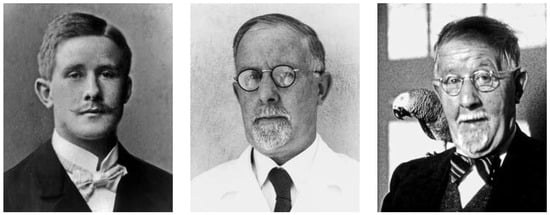
Figure 1.
W. R. Hess as a medical student (left), as chairman of the Institute (centre) and after retirement with his parrot “Joko” (right).
After passing the medical qualifying examination in Zurich in 1906, his first post was in Münsterlingen as an assistant in surgery to Dr. Conrad Brunner (1859–1927) whose efficient and tightly run clinic served as an example to him thereafter. He proposed introducing walking casts to encourage tissue growth through gradually increased weight-bearing, but, as he was still a neophyte, the idea was not accepted. Nonetheless, surgery gave him ample opportunity to pursue his reigning interest at that time and observe the vascular system in the living organism. For his clinical studies he developed a device to measure blood viscosity (named “viscosimeter”), which later was used extensively in clinical medicine until the introduction of blood-sedimentation measurement. To his great disappointment, however, his paper on the subject was rejected by Pflügers Archiv, the leading physiology journal of the day, because he was an unknown beginner without a scientific mentor. The publication, which he submitted as a dissertation in 1906, was finally published in the journal of the scientific research society of Zurich [14].
He could not devote himself fully to his scientific pursuits because, in that era, assistants in theoretical university institutes were not paid a liveable wage. Therefore, in 1907, he went to Prof. Otto Haab (1850–1931) of the Zurich University Ophthalmologic Department for two years to be trained as an ophthalmologist. Haab taught him both the art of diagnosis of eye disease and the surgical skills that served him well not just in his practice as an ophthalmologist, but also later in his animal experiments. Having no one to guide him in his scientific interests, he independently developed a system to identify the paretic eye muscle(s) in diplopia and to quantify the deviation [15]. The apparatus, which he called a “coordimeter”, is still in use among ophthalmologists today and known as “Hess screen”. In the same period he invented a method for making stereoscopic photographs with a finely corrugated prism glass [16], which has recently come into use again. He later intended to perfect this apparatus, establish a company to produce it and take out a patent on it, but these plans came to nothing because of the outbreak of the First World War. A few specimens of these “stereo pictures” decorated the dining room of his apartment on the Zurichberg.
In the spring of 1908, after a brief sojourn in Paris for further training in venereology and neurology, Hess took over an ophthalmologist’s practice in Rapperswil (Canton of Sankt Gallen) and thereby attained the necessary financial security to marry his fiancée Louise Sandmeier and start a family. Lisy, as she was called, was the daughter of a Frauenfeld lawyer; she had worked as a doctor’s assistant in the Ambulatory Eye Clinic at the Zurich Cantonal Hospital and now became his devoted assistant in his outpatient practice and in the operating room. His sister Hanna kept house for them and looked after their daughter Gertrud, who was born in 1910. Their son Rudolf Max was born 3 years later. The ophthalmology practice flourished, with a satellite office in the Cantonal Hospital of Glarus, and allowed Hess to build up his financial reserves. He kept on visiting scientific meetings and also did experiments on arterial blood pressure and with artificial lenses on rabbits in the washhouse of the garden. In 1912 Prof. Justus Gaule (1849–1939) offered him the position of an assistant in the Physiological Institute at the University of Zurich. He decided to accept the offer after careful deliberation and discussion with his wife, whose agreement understandably came with mixed feelings because of the loss of material wealth.
At the Physiological Institute he obtained the rank of “Privatdozent” (scientific associate) one year later (1913) with a thesis on haemodynamics [17], although the work displeased the then chairman of internal medicine, Prof. Hermann Eichhorst (1849–1921), who considered the mathematical formulae found in it to be “foreign to physiology” [6]. After the outbreak of the First World War in 1914, his scientific work was frequently interrupted by calls to active duty as a captain in the Swiss Army Medical Corps. The one advantage the war gave him was that it enabled him to take a scientific leave in Germany, as it was relatively easy to find a good place to do research in view of the many positions left vacant by the fighting. He was thus able to spend the year 1915/16 at the Physiological Institute of the University of Bonn under Prof. Max Verworn (1863–1923), at that time the leading neurophysiologist in Germany. Verworn’s conceptions of physiology, his wide-ranging knowledge and his synthetic mode of thinking left lasting impressions on Hess. Having been largely a scientific autodidact up to that time, Hess had now found, for a short time, a scientific mentor. The happy situation did not last because Verworn suffered the first of several cerebral strokes during Hess’s visit.
Back in Zurich, his chief Gaule was ill as well and went into premature retirement in the autumn of 1916. Hess became acting chief of the Institute and faced a good deal of extra work with teaching and organisational matters. In the spring of 1917, the faculty proposed taking on as new chief a German physiologist who was older and more experienced than Hess. At that time, in Zurich, most of the “important” chairs were held by Germans, and a Swiss could hardly even be considered for an ordinary professorship and the direction and head of an Institute in a theoretical discipline like physiology. Hess was offered an extraordinary professorship (i.e., non-chair full professor without being the head of the Institute), but declined. As Hess had led the Institute successfully during the interregnum and was well liked by the students and trainees, the faculty’s decision raised a good deal of discontent. The responsible university administrative body discovered that the faculty had consulted Max Verworn for advice about the selection of a new head of physiology, that Verworn had recommended Hess as the top candidate and that this expertise had been suppressed. The head of the Cantonal Department of Education, Counsellor Heinrich Mousson (1866–1944, Educational Director from 1914 to 1929), actually went in person to discuss the situation with the students and then attended one of Hess’s lectures during the summer term, obtaining a favourable impression [6]. In the autumn of 1917, Hess was chosen Ordinary Professor and Chairman of the Physiological Institute by unanimous vote of the Cantonal Governing Council (Regierungsrat).
Hess’s first step in office was to modernise the teaching methods. He introduced a course in experimental methods and, as one of the first, moving pictures as an instructional medium (and, later, as a research tool as well). As the Institute staff was very small until 1946 (two academic assistants, one mechanic [Max Jenny] and one secretary [Mina Eugster]), his wife served as his private secretary. At that time, his two first assistants and disciples Dr. Alfred Fleisch (1892–1973) and Dr. Ernst Rothlin (1888–1972) were reliable and diligent support for him. He also hired and trained untaught workers who provided essential support for his research: histologist Verena Bucher, data manager Anna Jaussi.
In his research he at first concentrated on circulatory and respiratory regulation. He was awarded the Marcel Benoist Prize in 1932 for work in this area. He used the prize money to buy a plot of land in Ascona (in the Canton of Ticino), on which he built a small summer house in 1934 that became his hobby. In 1934 the University of Berne made him an honorary Doctor of Natural Philosophy; further honorary degrees (Geneva, McGill [Montreal], Freiburg [Germany]) and prizes followed. It was also in the 1930s that he began his epochmaking experiments with diencephalic stimulation on freely moving cats, for which he won the Nobel Prize (shared with Egas Moniz) in 1949 “for the discovery of the functional organisation of the diencephalon as a coordinating centre of visceral function”.
Hess also made a valuable contribution to research in meteorological physiology. The International Foundation for the High Alpine Research Station Jungfraujoch was founded in 1930 under his direction. The research station was inaugurated only one year later and led by him until 1937. This, too, was the period of his active engagement against the so-called “anti-vivisectionists”, who wished to forbid all experimentation on animals. Hess fought on the front lines of this struggle in the name of the faculty and often bore the brunt of hostility [18]. The attacks culminated in the naively absurd demand of one embittered opponent that, if animal experimentation could not be completely dispensed with, it should at least be performed on creatures “inimical to mankind, such as tigers and lions”!
He faced the major challenge of organising the 16th International Congress of Physiology in Zurich in 1938, which only took place at all because of his uncompromising leadership and steadfastness. On the eve of the Second World War, and right after the “Anschluss” of Austria to Germany, attempts by a few colleagues to exert pressure of a political and anti-Semitic nature endangered the entire event at the last minute [1]. Another very unpleasant consequence of the war was that all of the original page proofs and illustration blocks for Hess’s monograph on the diencephalic regulation of circulation and respiration (ed. 1938) were destroyed by fire on the premises of the Thieme publishing house in Leipzig. Yet another result of the war was that the Swiss physiologists, who had previously been associated with the German and French physiological societies, founded their own national society on Hess’s initiative.
Another scientifically productive phase ensued in the post-war years with the support of the Cantonal authorities (more staff), the Swiss National Research Foundation and the Rockefeller Foundation of New York. After Hess retired to the rank of Professor Emeritus in 1951, the anatomist Prof. Gian Töndury (1906–1985) put an office in his own Institute at Hess’s disposal, where he continued to work on the evaluation of his experimental findings for a number of years. His disciple, Prof. Oskar A. M. Wyss (1903–1992), succeeded him as head of the Institute of Physiology. Hess was highly satisfied to see his vision of a modern brain research institute become reality in 1962, under the leadership of his last and most active disciple Prof. Konrad Akert (*1919). After moving to Ascona in 1967, he continued to carry on a wideranging correspondence from there and to receive visitors from all over the world, including frequent visits from his children and grandchildren. He died of heart failure in August 1973, at the age of 92. His widow outlived him by 14 years.
W. R. Hess as a Person: His View of the World and Mode of Thinking
Hess was certainly a strict chief who placed heavy demands on himself, on the researchers working under him and on his students, some of whom occasionally came to fear him. Once he gave a student the worst possible grade in the first examination of the university course when he had detected academic dishonesty in the performance of an experiment. He was obviously already a personage demanding respect quite early on in his career, yet he regularly held discussions on important matters with all of those working under him.
Like his father before him, his worldview was that of a freethinker, informed by natural science, and he was not religious. He repeatedly emphasised, however, that a scientist should always acknowledge the limits of scientific discovery, and he therefore explicitly refused to rule out the possibility of unknown powers and effects. Unconditional respect for religion and its symbols was as important to him as reverence for all living creatures, including his experimental animals. It was very important to him that they should be treated respectfully and humanely.
Hess held great respect for the Professor of Neurology in Zurich, Constantin von Monakow (1853–1930), and attended his legendary weekly colloquia [8]. In accordance with von Monakow’s ideas, Hess did not believe in the existence of anatomically circumscribed nuclear “centres” in the brain. For Hess the “centres” were, rather, relatively diffuse and sometimes interpenetrating functional networks. Hess’s scientific mode of thinking was more synthetic than analytic, systemoriented, teleological, and also intuitive. His form of teleology was based on biological considerations: it was concerned with the goal-directed integrative performance of the entire organism, rather than involving any form of transcendental inspiration [5,8,19]. Starting from this point, he developed conceptions and formulated hypotheses that he tested by experiment. Clarity of conception and stubborn diligence, spurred on by goal-directed formulation of hypotheses and reined in by methodological limitations, were the characteristic features of his mode of working and the basis of his successes. Though he could become interested in new ideas and findings in conversation and discussion, he restricted his practical research to attainable goals [5]. He always tried to put his findings in a larger biological context, with order and economy of conception being important guiding considerations.
Until the Second World War German physiology was his intellectual home; he regularly visited the German physiological congresses, at which he presented his results [5]. Nonetheless, he made several academic trips to Britain and America to visit the Anglo-American physiologists whose work he attentively followed. The fact that he at first published only in German had the consequence that his physiological concepts remained unknown in the English-speaking world for a long time.
As a speaker, he had a clear manner of oral expression; his extemporaneous speaking was precise and direct. He found writing difficult, however, as he often remarked. His sentences were sometimes convoluted, and he generally rewrote his manuscripts several times.
In private, he loved the Mediterranean and often spent holidays with his family in Bordighera on the Ligurian coast. In his younger years, he was accompanied almost everywhere, including the Institute, by his faithful dog. In my own school-age years, during my weekly visits, I experienced my then retired grandfather as a patriarchal family head who dominated conversations around the family dining table. This had become all the more inevitable because of his severe hardness of hearing. He was still driven by scientific curiosity and bred snakes and dissected crabs in his apartment on the Zurichberg, while, in the luxuriant garden of his summer house, he experimented with exotic plants and cared for various species of grapevine, pears, apples and figs. His pet at that time, the talking parrot “Joko”, whom he had brought up from the beginning, was always by his side.
Scientific Achievements
His more scientific achievements can be summarised as follows (periods of activity):
- The organisation and regulation of the circulation and respiration as autonomic functions (1913–1931).
- The adrenergic-sympathetic (“ergotropic”) and cholinergic-parasympathetic (“trophotropic”) components of a dual, antagonistic autonomic (vegetative) system in the hypothalamus (1924–1949).
- The central representation of motivational and instinctive behaviours such as hunger, thirst, fear and rage (1941–1943).
- The mechanisms of sleep as an active process and its induction by weak medial thalamic stimulation near the massa intermedia (1929–1944).
- The oculomotor system as a pre-cybernetic model (1944–1946).
- The diencephalic postural system of the body and the reciprocal relations between postural and goal-directed motion (1941–1965).
- The biological correlates of mental functions and consciousness (1943–1973).
Hess’s stimulation technique: The decisive breakthrough became possible with his development, in the late 1920s, of a method of stimulating the brain in non-anaesthetised, freely moving animals with electrodes located at precisely defined anatomical sites, enabling him to explore systematically the “vegetative” neuronal networks of the thalamus, hypothalamus and adjacent regions of the midbrain and telencephalon. One needs to understand Hess’s special stimulating technique [20], which differed fundamentally from the then usual Faradic stimulation, in order to interpret the stimulation effects that he found and compare them with the findings of other researchers. Hess aimed at specifically targeting the small (poorly myelinated and unmyelinated) fibres of the autonomic system (in particular of the periventricular grey), and at avoiding or minimising stimulating effects on thickly myelinated fibres that might obscure the effects on the autonomic system. To this end, Hess developed a special technique which he labelled “interrupted direct-current (DC) stimulation”. Rather than the brief (<0.5 ms) square-wave impulses of Faradic stimulation, Hess used stimuli of long duration, typically 12.5 or 25 ms, with ramp-like, attenuated upward and downward slopes. To avoid polarising effects that might damage the tissue adjacent to the electrodes, he often used a very weak “countercurrent” between the stimuli so as to neutralise the cumulative net electrical charge. The trains of stimulation were typically lasting 30 s or one minute. Bipolar and monopolar stimulation was used. Furthermore, the stimuli were weak (around 0.5–1.5 V) and of low frequency (2–12 Hz, usually 8 Hz). Great care was taken to limit the spread of the stimulating currents, which were estimated to be on the order of 0.1–0.15 mA. He also used much finer electrodes than were customary at that time, with a diameter of 0.25 mm. Afterwards he went to great effort to localise the anatomical site of stimulation precisely. He used electrocoagulation by the stimulating electrodes to localise the site and at the same time to produce small lesions allowing observation of the induced behavioural changes [20] and the degenerated nerve fibres emanating from the microcoagulated stimulation points were traced [20,21].
The representation of the autonomic functions in the hypothalamus that Hess discovered placed these functions in two anatomical zones: the “trophotropic” (parasympathetic) components were found to be located in the anterior (lateral) hypothalamus as far as the septal nuclei, while the “ergotropic” (sympathetic) components were found to be located in the posterior ventromedial hypothalamus and perifornical region. Stimulation in the posterior hypothalamus led, e.g., to extreme excitement, sometimes with defence-like behaviour, ranging all the way to flight or to a welldirected attack. Bilateral lesions in this region, on the other hand, led to apathy and an adynamic state or sleep-like behaviour. Meanwhile, stimulation in the rostral “trophotropic” zone led to a fall of blood pressure, slowing of respiration, pupillary constriction, and sometimes even cardio-inhibition. Hunger, thirst, defecation and micturition could also be provoked by stimulation in this region.
For Hess it was obvious that the stimulations also evoked concordant emotions, and the induced behaviour was appropriately referring to the surroundings; e.g., the cat which was put into an aggressive mood attacked the nearest experimenter with due precision, when it was allowed to do so. Likewise, a cat which was stimulated near the “fear zone” watched out for a suitable hiding place, and in one case discovered a slightly open roof window through which it promptly escaped.
The localisation of autonomic and instinctual functions in the hypothalamus has meanwhile been confirmed in man, with roughly analogous sites corresponding to each type of function: for example, bilateral posterior hypothalamic lesions can lead to apathy and hypothermia, while bilateral rostral and lateral hypothalamic lesions can lead to anorexia and sometimes adipsia resulting in dehydration [22,23]. Stereotactic lesions in the posteromedial hypothalamus have even been used to free patients from compulsive aggressive behaviour [24].
Hess’s findings with regard to sleep [25,26], on the other hand, were controversial from the very beginning and remained so for many years, even though his son Rudolf M. Hess, an electroencephalographer, reproduced these experiments using the same stimuli in 1950 in collaboration with Konrad Akert and Werner Koella and was able to record typical sleep-EEG patterns [27]. Other researchers were unable to replicate the induction of sleep by medial thalamic stimulation. However, unlike Hess, they used conventional Faradic stimuli or middle-frequency alternating currents which are not appropriate to excite unmyelinated nerve fibres [28,29,30]. Furthermore, because of the latency between the salvo of stimulation and the animal’s actually falling asleep, it was suspected that Hess’s cats merely fell asleep because they felt comfortable. For Hess, however, it was precisely the fact that the cats curled up comfortably before falling asleep that confirmed that the observed sleep was physiological, in addition to the fact that the cats could be immediately reawakened. Hess considered the slow response to be typical of a “trophotropic” function like sleep. He explained the cats’ not falling asleep during the stimulation train, which lasted 30 to 60 s, by their possibly being kept awake by concomitant stimulation of other systems besides the “vegetative” hypnogenic system [26]. In fact, mild myoclonus in synchrony with the stimulation was sometimes observed during stimulation trains. It is interesting to note, in this context, that Hess regularly achieved the opposite effect (arousal) when he raised the stimulus intensity above 1.5 V [26]. This may indicate that different networks with opposite effects on vigilance and sleep are co-localised in the medial thalamus (midline nuclei/intralaminar system of the central grey). Perhaps this is the main reason for the discrepant results. In fact, recent observations in patients have once again raised the question of the role of the medial thalamus in sleep [31,32], indicating that networks with opposite effects are indeed probably to be found there. According to this hypothesis, lesions in the medial thalamus, depending on their precise site, extent and affected type of neurones, can cause either an arousal deficit (decreased vigilance, hypersomnia) or a sleep deficit (insomnia), or a mixture of these two states, i.e., de-arousal without physiological, deep non-REM sleep.
Hess’s conceptions of the organisation of motor function have also received more attention in recent years. In the diencephalon he found the representation of spatio-temporal coordination of head and body movements in the three cardinal planes of space [33]. Hess considered the motor effects elicited from the diencephalon to be fragments of an integrated motor system [8] and emphasised the reciprocal relations between postural (extrapyramidal) and goal-directed motor systems. Posture, in his view, not only stabilises and supports goal-directed movements, but also supplies the necessary initial conditions (“motorische Bereitschaft”) for voluntary action by providing a proactive, anticipatory control [5,11,34,35]. This concept clearly went beyond Sherrington’s classical views of postural reflexes and has recently been amply confirmed [36]. In view of the unsettled concepts on the mechanism of cataplectic loss of muscle tone in patients with narcolepsy and the role of REM atonia, it is interesting to note that Hess induced muscle atonia when stimulating in a circumscribed area of the anterior ventrolateral hypothalamus just above the chiasm [37]. Atonia started shortly after onset of stimulation and outlasted stimulation up to 10 min.
In the view of Hess it will be of paramount importance to incorporate the biological aspects of psychic functions into the domain of physiology in order to understand human behaviour. Conscious experience seemed to him to represent the supreme level of behavioural integration. However, he believed that the nature of subjective experience would not be causally intelligible [8,38,39]. In his view, “the process of becoming [subjectively] conscious cannot in principle be explained in terms of itself”, due to fundamental limits of our mental potencies [38].
References
- Hess, W.R. From medical practice to theoretical medicine: an autobiographic sketch. Perspect Biol Med. 1963, 6, 400–423. [Google Scholar] [CrossRef] [Scilit] [PubMed]
- Caspers, H.; Hess, R.; Kugler, J.; Petsche, O.; Struppler, A. Nachruf auf W. R. Hess. Z EEG EMG 1973, 5, 139–141. [Google Scholar]
- Wyss, O.A.M. Walter Rudolf Hess 17.3.1881–12.8.1973; Die Selbständigkeit der Physiologie. Schweiz Med Wochenschr 1973, 103, 1758–1759. [Google Scholar]
- Akert, K. Obituary: Walter Rudolf Hess (1881–1973). Brain Res. 1974, 68, V–VIII. [Google Scholar] [CrossRef] [Scilit]
- Jung, R. Walter R. Hess (1881–1973). Rev Physiol Biochem Pharmacol. 1981, 88, 1–21. [Google Scholar]
- Waser, P.G. Walter Rudolf Hess: Aus seinem Leben und seiner Tätigkeit an der Medizinischen Fakultät der Universität Zürich (100-Jahr-Feier seines Geburtstages: 14. März 1981). Gesnerus 1982, 39, 279–286. [Google Scholar] [CrossRef] [Scilit]
- Huber, A.W.R. Hess, the ophthalmologist. Experientia 1982, 38, 1397–1400. [Google Scholar] [CrossRef] [Scilit]
- Akert, K. Walter Rudolf Hess (1881–1973) and his contribution to neuroscience. J Hist Neurosci. 1999, 8, 248–263. [Google Scholar] [CrossRef] [Scilit]
- Davison, J.; Wilson, G. Walter Rudolf Hess. Clin Experiment Ophthalmol. 2005, 33, 517. [Google Scholar] [CrossRef] [Scilit]
- Koella, W.P. A tribute to W. R. Hess (1881–1973). Experientia 1982, 38, 1383. [Google Scholar] [CrossRef] [Scilit]
- Akert, K. Biological Order and Brain Organization. Selected Works of W. R. Hess; Springer: Berlin, Heidelberg, Germany; New York, NY, USA, 1981. [Google Scholar]
- Auerswald, W. Nachruf auf Walter Rudolf Hess. Almanach Österr Akad Wissenschaft 1975, 124, 414–433. [Google Scholar]
- Hess, W.R. Eine mechanisch bedingte Gesetzmäßigkeit im Bau des Blutgefäßsystems. Arch Entwicklungsmech Org. 1903, 16, 632–641. [Google Scholar] [CrossRef] [Scilit]
- Hess, W.R. Zum Thema Viskosität des Blutes und Herzarbeit. Dissertation. Vierteljahresschr Naturforsch Ges Zürich 1906, 51, 236–251. [Google Scholar]
- Hess, W.R. Eine neue Untersuchungsmethode bei Doppelbildern. Arch Augenheilkunde 1908, 62, 233–238. [Google Scholar]
- Hess, W.R. Direkt wirkende Stereoskopbilder. Z Wiss Photogr Photophys Photochem. 1914, 14, 33–38. [Google Scholar]
- Hess, W.R. Das Prinzip des kleinsten Kraftverbrauches im Dienste hämodynamischer Forschung [Habilitation]; Veit Arch Anat Physiol: Leipzig, Germany, 1914; pp. 1–62. [Google Scholar]
- Jäggi, M. In primo loco. In Geschichte der Medizinischen Fakultät Zürich 1833–2003; Rüffer+Rub: Zürich, Switzerland, 2004. [Google Scholar]
- Akert, K; Hess, W.R. Symposion über das Zwischenhirn. Helv Phys Pharm Acta 1950, Suppl VI, 9–80. [Google Scholar]
- Hess, W.R. Beiträge zur Physiologie des Hirnstammes. I. Die Methodik der lokalisierten Reizung und Ausschaltung subkortikaler Hirnabschnitte; Thieme: Leipzig, Germany, 1932; pp. 1–122. [Google Scholar]
- Weisschedel, E; Jung, R. Die anatomische Auswertung und das Studium der sekundären Faserdegeneration nach lokalisierter subcorticaler Ausschaltung durch Elektrokoagulation. Z Anat Entwicklungsgesch 1939, 109, 374–395. [Google Scholar] [CrossRef] [Scilit]
- Plum, F; Van Uitert, R. Nonendocrine diseases and disorders of the hypothalamus. Res Publ Assoc Res Nerv Ment Dis. 1978, 56, 415–473. [Google Scholar]
- Carmel, P.W. Vegetative dysfunctions of the hypothalamus. Acta Neurochir (Wien) 1985, 75, 113–121. [Google Scholar] [CrossRef] [Scilit]
- Sano, J; Mayanagi, Y. Posteromedial hypothalamotomy in the treatment of violent, aggressive behaviour. Acta Neurochir Suppl (Wien) 1988, 44, 145–151. [Google Scholar]
- Hess, W.R. The mechanism of sleep. Am J Physiol. 1929, 90, 386–387. [Google Scholar]
- Hess, WR. Das Schlafsyndrom als Folge dienzephaler Reizung. Helv Physiol Acta 1944, 2, 305–344, (English in [11], pp. 131–170). [Google Scholar]
- Hess, R.M., Jr.; Akert, K; Koella, W. Les potentiels bioélectriques du cortex et du thalamus et leur altération par stimulation du centre hypnotique chez le chat. Rev Neurol. 1950, 83, 537–544. [Google Scholar] [PubMed]
- Ranson, S.W.; Magoun, H.W. The hypothalamus. Ergeb Physiol. 1939, 41, 56–163. [Google Scholar] [CrossRef]
- Hunsperger, R.W.; Leisinger-Trigona, M.-C. Further studies on the alleged hypnogenic zone in the thalamus. Perspectives in Brain Sciences 1972, 1, 100–108. [Google Scholar]
- Wyss, O.A.M. Präzisierung der Reizwirkung mittelfrequenter Wechselströme. Pflügers Arch Ges Physiol. 1967, 295, 136–146. [Google Scholar] [CrossRef] [Scilit]
- Tinuper, P.; Montagna, P.; Medori, R.; Cortelli, P.; Zucconi, M.; Baruzzi, A.; et al. The thalamus participates in the regulation of the sleep-waking cycle. A clinico-pathological study in fatal familial thalamic degeneration. Electroencephalogr Clin Neurophysiol. 1989, 73, 117–123. [Google Scholar] [CrossRef] [Scilit]
- Bassetti, C.; Mathis, J.; Gugger, M.; Lövblad, K.-O.; Hess, C.W. Hypersomnia following paramedian thalamic stroke: a report of 12 patients. Ann Neurol. 1996, 39, 471–480. [Google Scholar] [CrossRef] [Scilit]
- Hess, W.R. Charakter der im Zwischenhirn ausgelösten Bewegungseffekte. Pflügers Arch Ges Physiol. 1941, 244, 767–786, (English in [11], pp. 223–242). [Google Scholar] [CrossRef] [Scilit]
- Hess, W.R. Teleokinetisches und ereismatisches Kräftesystem in der Biomotorik. Helv Physiol Acta 1943, 1, C62–C63, (English in [11], pp. 265–268). [Google Scholar]
- Hess, W.R. Cerebrale Organisation somatomotorischer Leistungen. I. Physikalische Vorbemerkungen und Analyse konkreter Beispiele. Arch Psychiatr Nervenkr 1965, 207, 33–44. [Google Scholar] [CrossRef] [Scilit]
- Stuart, D.G. Integration of posture and movement: contributions of Sherrington, Hess, and Bernstein. Hum Mov Sci. 2005, 24, 621–643. [Google Scholar] [CrossRef] [Scilit]
- Hess, W.R. (Ed.) Hypothalamus und Thalamus. In Experimental-Dokumente; Thieme: Stuttgart, Germany, 1968; p. 63. [Google Scholar]
- Hess, W.R. Interdisciplinary discussion of selected problems with reference to “The biology of mind”. Perspect Biol Med. 1970, 13, 267–293. [Google Scholar] [CrossRef] [Scilit]
- Hess, W.R. Causality, consciousness and cerebral organization. Science 1967, 158, 1279–1283. [Google Scholar] [CrossRef] [Scilit]
This is an open-access article distributed under the terms of the Creative Commons Attribution Non-Commercial No Derivatives (CC BY-NC-ND) 4.0 License.