


Summary
The purpose of this work is to observe the evolution of persons with autism or pervasive developmental disorders and profound intellectual disabilities (ID) implicated in a Programme for Autistic Residents (“PAMS = Programme Autisme Méthode Structurée”) within the Public Socio-Educational Institutions (EPSE) in Geneva. People with autism or pervasive developmental disorders are characterised by the need to live in a very structured environment. They would greatly benefit from a specific treatment programme in residential setting. Our main hypothesis supposes that behavioural disorders could be reduced if the environment is structured, constant and predictable. Time and space must be clearly organised in order to reduce anxiety. As a consequence of anxiety, we often observe behavioural disorders that can compromise the residential life and end up in hospitalisation. PAMS proposes an individual programme for each person, supported by objects, pictures or pictograms. In parallel, the social-educational staff is present in workshops and in apartments in order to enhance continuity. We evaluated the evolution of 10 residents’ behaviour using the ABC (Aberrant Behavior Checklist, Aman and Singh, 1985) every three months.We chose to investigate behavioural problems as a criterion of well-being.We checked the presence and the importance of the autistic features using the CARS (Children Autism Rating Scale, Schopler et al., 1988) before the beginning of the study and then once a year. This longitudinal study over 21 months suggests a favourable clinical evolution of residents confirmed by a significant reduction of some behaviours. The evolution is slow and irregular, but a statistical decrease in irritability and social withdrawal factors was observed during the study.This result validates our hypothesis that PAMS is a beneficial programme for residents with autistic features. To confirm our results, this research will continue and has been extended to another resident group living with structured paedagogy and a control group. Further implications will be discussed.
Autism is a type of pervasive developmental disorder (PDD) characterised by impairments in three main domains: social interaction, communication and restricted interests, and repetitive and stereotypic activities [1]. Other syndromes, such as Asperger’s syndrome and Rett’s syndrome, are also listed under PDD. Atypical autism and PDD not otherwise specified (PDD-NOS) are also diagnosed when symptoms do not completely fit the diagnostic criteria for autism. The major difficulty in defining the aetiology of autism and autistic disorders has amply been described in the literature [2,3,4]. Although progress must be made in order to understand the aetiology of autism and PDD, we currently know that PDD arises from multifactorial genetic and organic causes. Multiple causes affect physiopathological and neuropsychological mechanisms (cognitive and information processing) and influence communication and social skills. Thus, autistic disorders manifest themselves in various ways. Its worldwide prevalence has been evaluated at 5/10 000 persons presenting “classical autism” and at 1/1000 when considering the whole autistic syndromes’ spectrum [5]. The latest review of epidemiological studies [6] reported a prevalence of autistic spectrum disorders close to 0.6%. The sex ratio is constant, with about 1 female for every 4 males, and 80% of individuals with autism have intellectual disabilities (mild to profound).
Because of its highly complex aetiology, prevention of PDD is impossible at this time. No prenatal, genetic or blood tests exist today. Therefore, the focus of our efforts must be on treatments and evaluation of these treatments in order to improve efficiency.
Most of the literature addresses issues of childhood and adolescent evaluation, treatment and education, but the majority of individuals with autism or PDD are now adults. The management of this population is a major social problem, particularly due to their behavioural disorders, which are the main cause of hospitalisation in a psychiatric unit. Socio-educational staff encounters the greatest difficulty in managing challenging disorders, which often lead to team exhaustion. The occurrence of challenging behaviours such as self-injury in the population with autism or PDD is very frequent and these behavioural problems “present barriers to successful integration into the community and unrestricted access to available educational, vocational and leisure opportunities” ([7], p. 392). Therefore, in order to provide wellbeing and satisfactory quality of life during adulthood, residential programmes have been made available within the public socio-educational institutions in Geneva (Switzerland).This residential programme is called PAMS, the French abbreviation for “Programme Autisme Méthode Structurée”. PAMS is inspired by the Treatment and Education of Autistic and related Communications Handicapped Children (TEACCH) [8], an outpatient treatment programme (from childhood to adulthood) proposing adapted and individualised schedules. While keeping in mind that problems observed in autism originate from organic deficits, Schopler and Reichler [9] postulate that psychoeducational strategies may improve behavioural problems. A great deal of research has proved the effectiveness of educational and behavioural interventions during childhood but very few studies have focused on adults with autism [10]. In this study we examine the clinical effectiveness of PAMS in an adult population with autism or PDD and severe to profound intellectual disabilities. In our sample most of the residents are non-verbal; only two of them have limited language and major impairment in learning processes. Although the main goal of PAMS is the development of learning processes, this programme also aims to improve quality of life for individuals in quarantine period. Most of them have lived in psychiatric services for many years and did not benefit from early intervention or specific treatment for autism during childhood.
PAMS is implemented in several apartments, each hosting six residents. The main goal of each programme is to develop autonomous abilities in dependant individuals. The development of autonomy in adulthood is of great importance. Educational staff must work on domestic activities such as having breakfast, bathing, walking or watching TV on a daily basis so that these tasks become habits that residents can accomplish on their own. Many routines are implemented throughout the day with this goal in mind. Repetition is also used to increase predictability and constancy of environment. Daily routines also revolve around the tremendous communication problems of these individuals. Verbal communication is limited and other means of communication are used. Communication is usually supported by visual clues such as objects, pictures or pictograms depending on the cognitive and developmental level. A combination of leisure workshops (e.g. painting, cooking, singing, video, walks) as well as training workshops (e.g. clothes sorting, completing geometric form boards, puzzles) make up weekly programmes. To increase predictability, these activities are always presented in a structured way, with a clear beginning and end. Overall, PAMS seeks to reduce the anxiety related to the incomprehension of a changing environment and the difficulty in communicating this uneasiness.
To study the effectiveness of this programme, we decided to base our observations on a longitudinal prospective design. Evaluation began after an organisational period necessary to set up the PAMS residence, implement resident assessment and determine the programme schedule for each individual resident. We chose to record the first observation as baseline. We evaluated behaviour disorders for 21 months with the Aberrant Behavior Checklist [11].We also checked for the presence and importance of autistic features with the CARS. The purpose of this study is to assess the modifications that occurred with the introduction of PAMS, with the principal hypothesis that behavioural disorders can be reduced when the environment is structured, constant and predictable. Thus, we predict a long-term diminution of the ABC results.
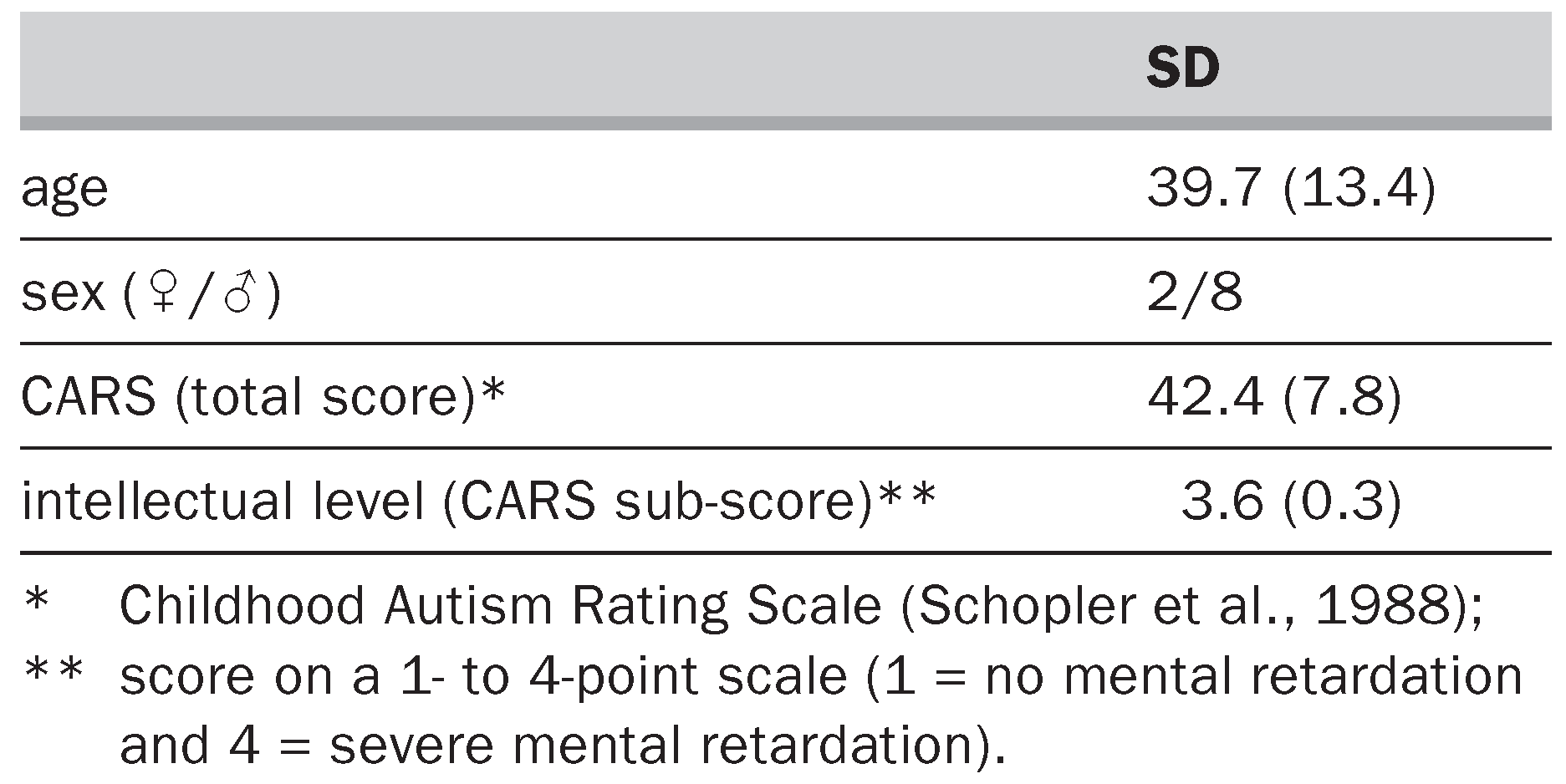
Table 1.
Sample characteristics: age, sex ratio, intellectual level.
Method
Participants
We observed 10 residents, 8 males and 2 females, aged 33 to 54 (mean = 39.7; SD = 13.4). Patients with pervasive developmental disorders (PDD) (F8X) and profound intellectual disabilities (F73) were included (ICD-10 criteria). The participants had low to no verbal capacities and low autonomy capacities.The residents live in two different PAMS apartments of 6 residents within the public socioeducational institutions (EPSE) in Geneva. We excluded residents when the consent of parents or tutors was not obtained. The mean CARS total score was 42.4 (SD = 7.8). The mean CARS subscore of intellectual level was 3.6 (SD = 0.3) (see table 1).
Measurement
Measurement scales
The Aberrant Behavior Checklist (ABC) was chosen as it has the advantage of a limited number of items in conjunction with a clearly established and validated factorial structure [11,12,13,14,15,16]. The scale was also designed for a population of individuals with medium to profound intellectual disabilities. The 58 items are graded on a 3-point scale from 0 (the behavior is not at all a problem) to 3 (it is a very important problem) and grouped into five factors: F1 – irritability, agitation, crying (15 items); F2 – lethargy, social withdrawal (16 items); F3 – stereotypic behavior (7 items); F4 – hyperactivity, noncompliance (16 items); F5 – inappropriate speech (4 items). A higher score indicates a more severe behaviour problem.
In addition, we used the Children Autism Rating Scale (CARS) [17], which was developed to identify children with autism and distinguish them from developmental disorders without autism syndrome. This scale consists of behaviour observations rated on 15 dimensions (e.g. human relatedness, relation to objects, adaptation to change) and a total severity score.The CARS score is the combination of an evaluation made by a psychologist and educational staff observations. Fifteen items are evaluated on a 1-(normal behavior) to 4-(severe behavior problems)point scale.The total score indicates 1 of 3 diagnostic categories: non-autistic (0–26), moderate autism (cut-off: 27) and severe autism (cut-off: 33.5). Cut-offs are based on Mesibov et al. [18] reports of CARS validity in adulthood. This scale is one of the most frequently used measures in PDD research.
Socio-educational presence, satisfaction and efficacy impressions
For each data collection the total hours of presence of the socio-educational team have been calculated.The satisfaction and efficacy impression was a subjective measurement on a basic 10-point Visual Analogic Scale (VAS).
Procedure
The ethics commission of the University Hospitals of Geneva approved this study. A written explanation and clear oral information were provided to patients and their families during individual sessions.
Eight data collections for the ABC were retrieved at three-month intervals, between December 2002 and September 2004. The first data collection (T0) was a baseline measure while the socio-educational team was organising the apartments and activities. T0 has been compared with other data collections (T1 to T7). All the residents were observed by the socio-educational team for one week and the ABC was completed with an educator and one research psychologist. Data from the CARS were gathered twice over the study period, one at the beginning and the second after one year. These evaluations were carried out by a research psychologist who is trained in the observation of PDD.
Due to the characteristics of our data (small sample, non-normality of data, ordinal variables), we used non-parametric statistics. To see the evolution over time, Friedman analyses were computed as a repeated measure for each factor. The Wilcoxon Signed-Rank Test was used to compare different data collections in pairs and observe the evolution of client behaviour between the baseline and the end of the study more precisely.
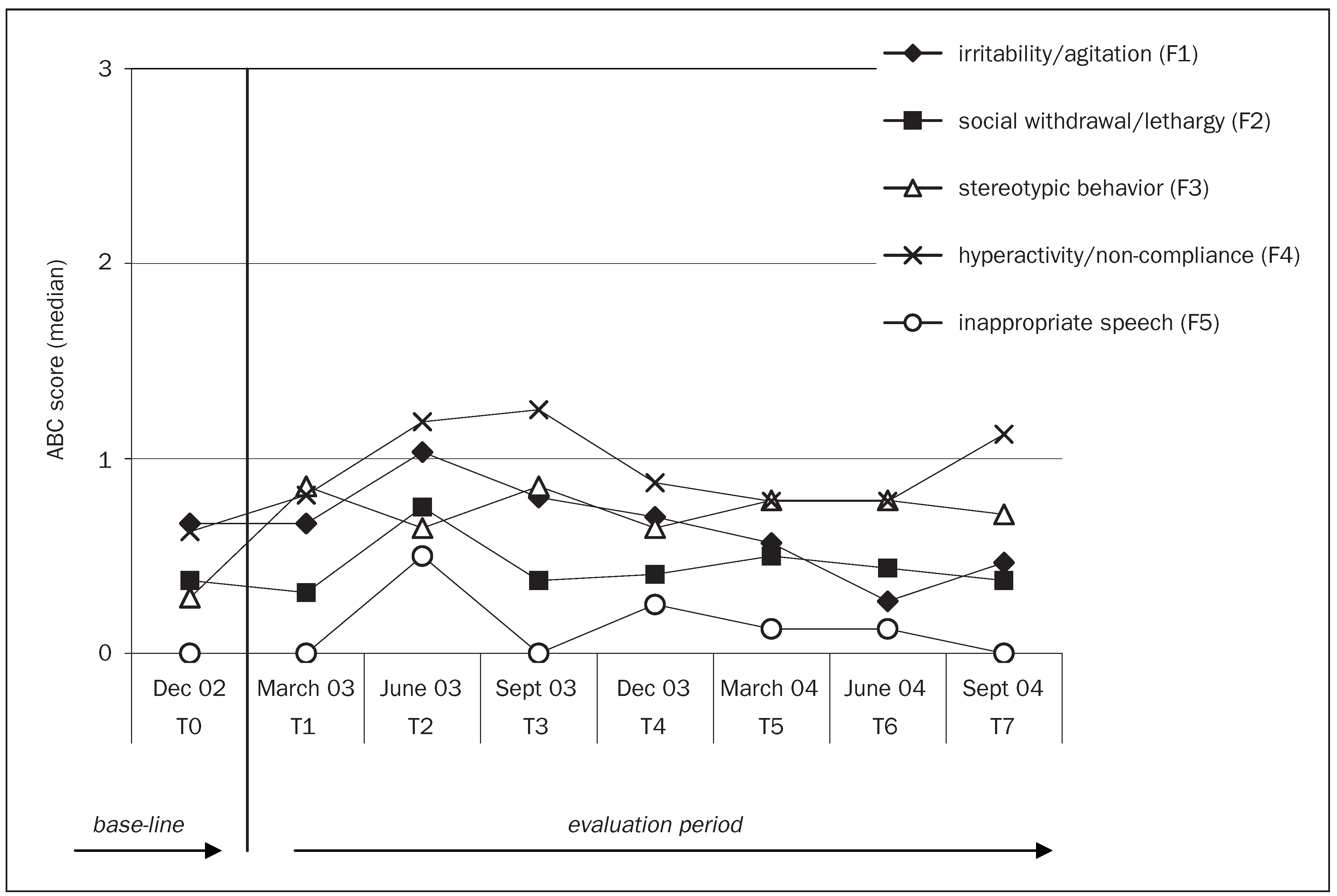
Figure 1.
Evolution of ABC scores (median) over time.
Results
A descriptive analysis of ABC scores (fig. 1) shows an increase in behavioural problems between the period of structural reorganisation corresponding to T0 and T2. A decrease occurs until the last data point (T7) for all factors except Factor 3 (stereotypic behavior) which shows the greatest increase at T1 and a decrease at T2 (fig. 1).
To detect ABC score changes, we ran a Friedman Test as a repeated measure analysis. No significant changes were found throughout the 21-month evaluation period for any of the factors (F2: X2 (8) = 7.22; p = 0.41; F3: X2 (9) = 8.49; p = 0.30; F4: X2 (9) = 5.99; p = 0.54; F5: X2 (9) = 8.36; p = 0.30) except for irritability/agitation (Factor 1) (F1: X2 (8) = 14.69; p = 0.04).
To confirm the descriptive analysis, we computed a Wilcoxon Signed-Rank Test comparing baseline (T0) with the other observations for each factor. No decreases were noted between T0 and subsequent data collections. The differences observed with the Friedman Test are due to a statistical decrease in irritability/agitation between T2 and T7 (Factor 1) (Z (9) = 2.03; p = 0.04). A statistical decrease in social withdrawal/lethargy (Factor 2) (Z (9) = 2.49; p = 0.01) can also be observed between T2 and T7. A statistical increase in stereotypic behavior (Factor 3) is present between baseline (T0) and T2 (Z (9) = 2.54; p = 0.01), but not for other factors.
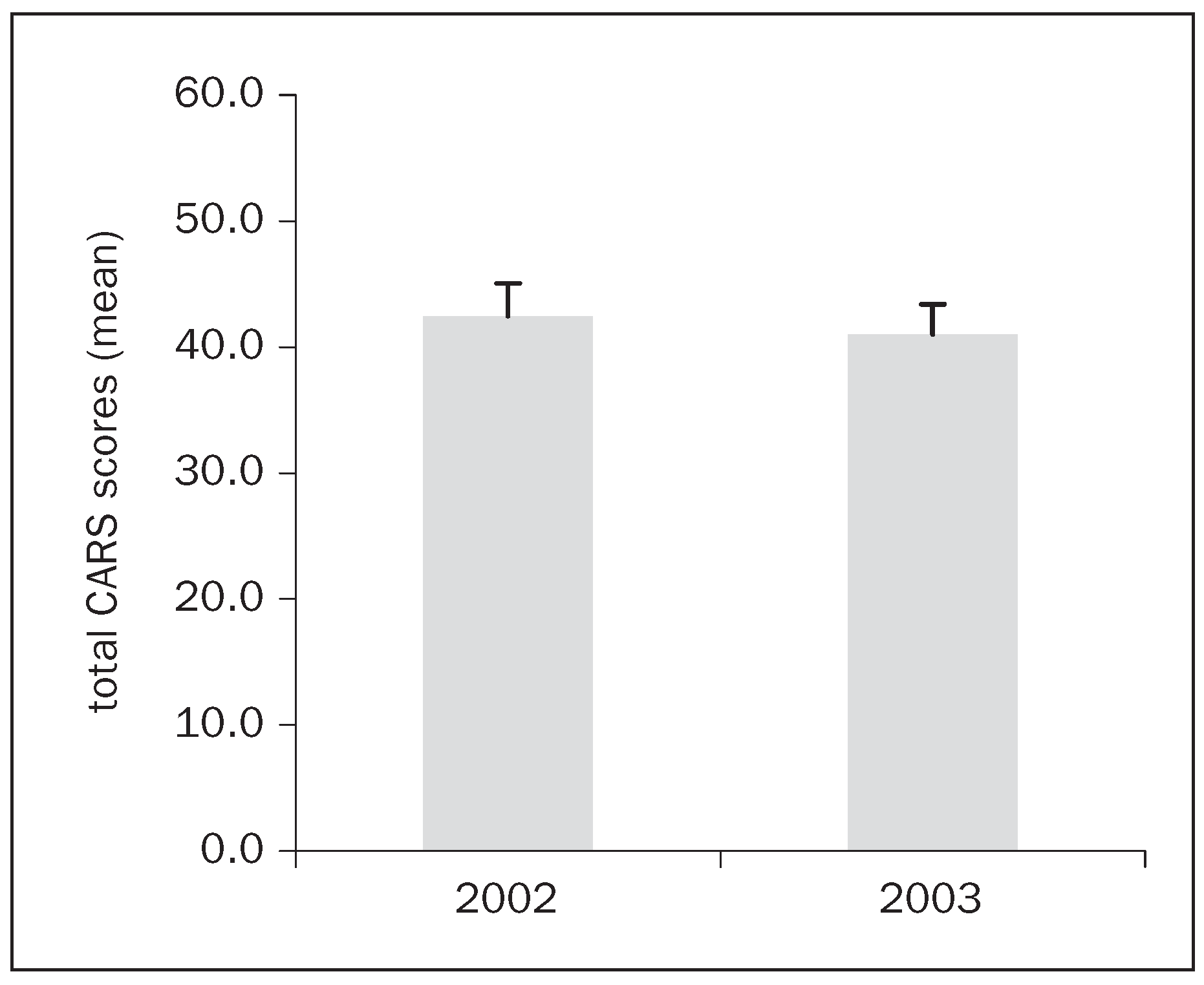
Concerning autistic features, CARS total score results were compared with a Wilcoxon Signed-Rank Test. No significant changes were noticed between the first (mean = 42.4; SD = 7.8) and last (mean = 41.0; SD = 7.5) data collections (Z (9) = 0.24; p = 0.81) (fig. 2). The analysis for each item (fig. 3) does not show any statistical differences between items over time.
Figure 2.
Mean scores (standard errors) of CARS total score at first and last data collection.
Discussion
An overall stable evolution can be observed between the beginning and end of the study. Significant decreases in irritability/agitation (Factor 1) and social withdrawal/lethargy (Factor 2) are observed between the second data collection (T2) and the last data collection (T7). An explanation for this finding may be found in the manner in which the residents react to changes. As we know, individuals with autism have problems managing a changing environment and react in consequence. As we can see in figure 1, hyperactivity/non-compliance (Factor 4) increases between T0 and T2 although no statistical effect can be measured. Irritability/agitation (Factor 1), social withdrawal/ lethargy (Factor 2) and inappropriate speech (Factor 5) remain stable. Apparently, stress induced by the reorganisation of their environment had a greater impact on stereotypic behaviour than on others factors. This finding may indicate that residents needed 6 months to acclimate themselves before feeling less stressed.
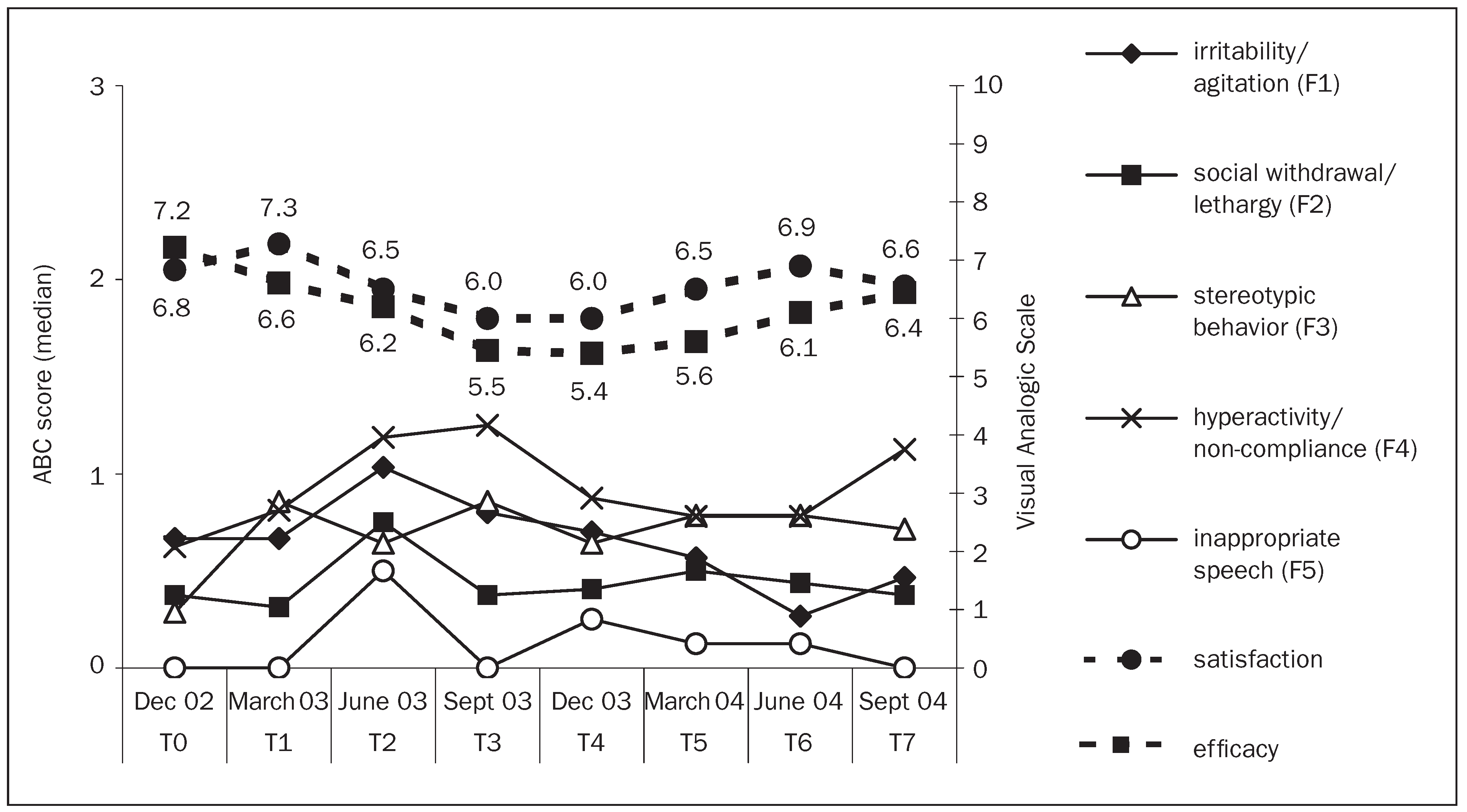
The presence of the educational staff was analysed to explain the global evolution of ABC scores over time. This analysis indicates that the decrease in the number of presence hours had an influence on behavioural disorders. As observed at T2 (see fig. 4), all factors increase, except Factor 3. This observation must be confirmed over time. As we can see, most ABC scores remain low from T3 to T7. A threshold point may exist; for example a number of presence hours inferior to 400 per week may contribute to behavioural disorders. However, this is not the only factor correlated to behavioural problems. Figure 5 shows the evolution of educators’ evaluations of care satisfaction and impressions of efficacy. This subjective measurement seems to show decreased satisfaction and efficacy when behavioural disorders increase.
In attempting to explain these preliminary data, we considered the evaluation tool we used repeatedly and the problems that it could generate. The ABC is a practical and validated instrument and our unit has extensive experience with it [19]. Study 1 [20] is an identical observation in another Geneva EPSE structure with a more heterogeneous group. In study 1 we observed a decrease in behavioural disorders with time for all factors except hyperactivity/non-compliance (Factor 4) which remained stable. So, while behavioural disorders decreased in study 1, they remained stable in the present study (study 2). It seems that a real difference exists between study 1 and 2, probably due to the differences in the samples. Participants in study 1 had higher cognitive levels (mild to profound) than those in study 2, which led to differences in the levels of autonomy. Residents of the present study needed more attention and care and present more cognitive deficits. Therefore, we may need more time for the programme to exert significant effects. As seen in study 1, at least one year (5 data collections) is needed before the first statistical decrease appears. However, we could also hypothesise that the characteristics of the PAMS programme are not adapted to everyone. If this is the case, the PAMS may need to be modified for this sample.
Figure 3.
Mean scores of each CARS item at first and last data collection.
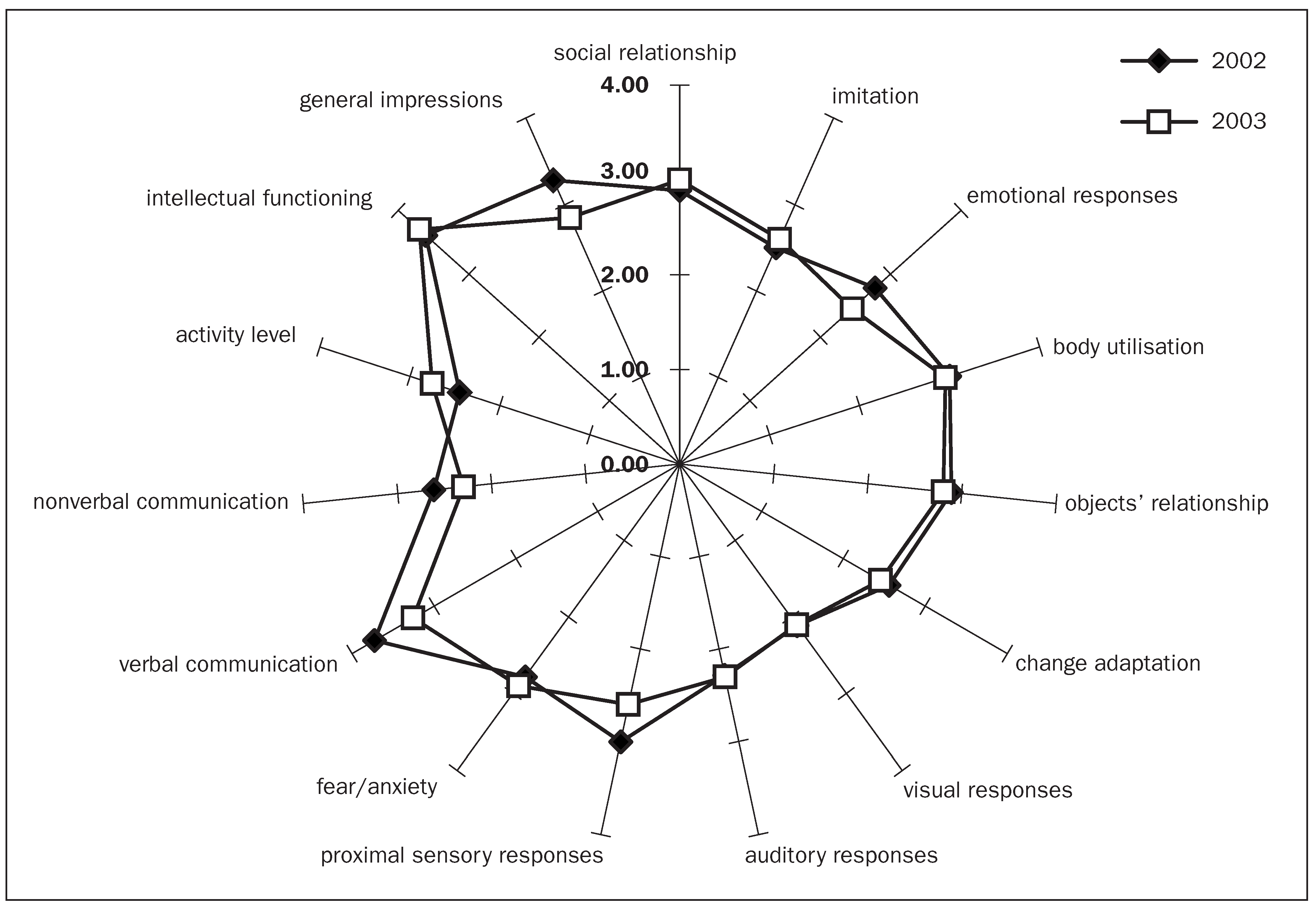
Figure 4.
Evolution of ABC scores (median scores) over time and educator presence hours.
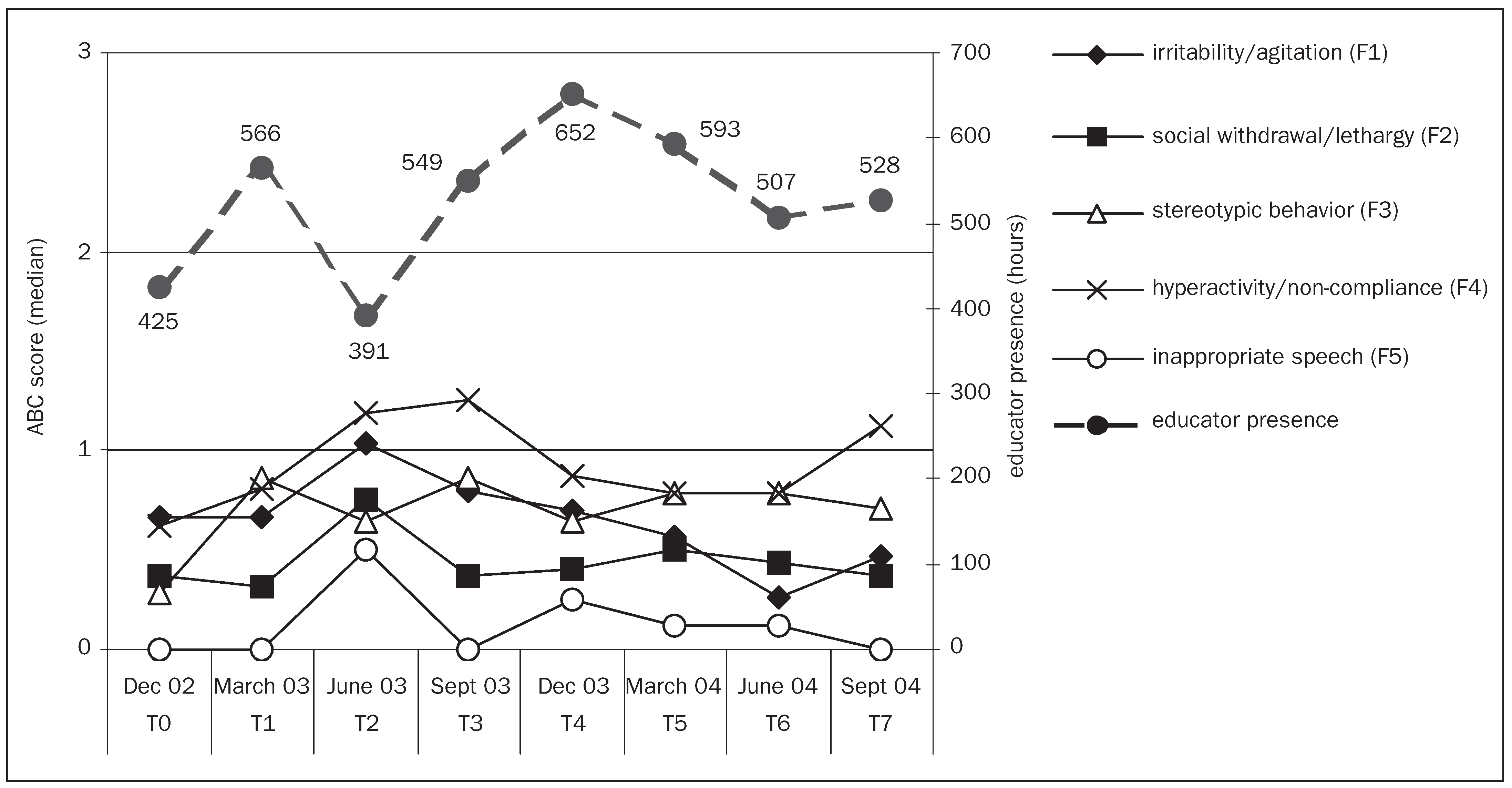
Figure 5.
Evolution of ABC scores (median scores) over time and educator evaluations of satisfaction and efficacy of PAMS programme.
Although our results allow us to form a hypothesis, certain limitations must be mentioned. Firstly, the present study lacks a control group. The management of this population is difficult since no other institution in Geneva has a paired sample, thus making it impossible to observe controlled variables. Moreover, it would be unethical to have a waiting list before the introduction of PAMS for this purpose because we cannot leave the residents without treatment. The results of study 1 encouraged residential teams to continue study 1 while starting the present study.
Furthermore, we cannot be sure that the ABC completely evaluates the full spectrum of behavioural disorders as the scale may be more sensitive to some behavioural components than others. Moreover, the items evaluated can significantly fluctuate over time and a week of observation may be too short as the correct observation time is one month. The ABC may not be sufficient to evaluate programme activities and behavioural changes and we should introduce other measures of clinical improvement.
Figure 6.
Psychotropic medication of one resident over time.
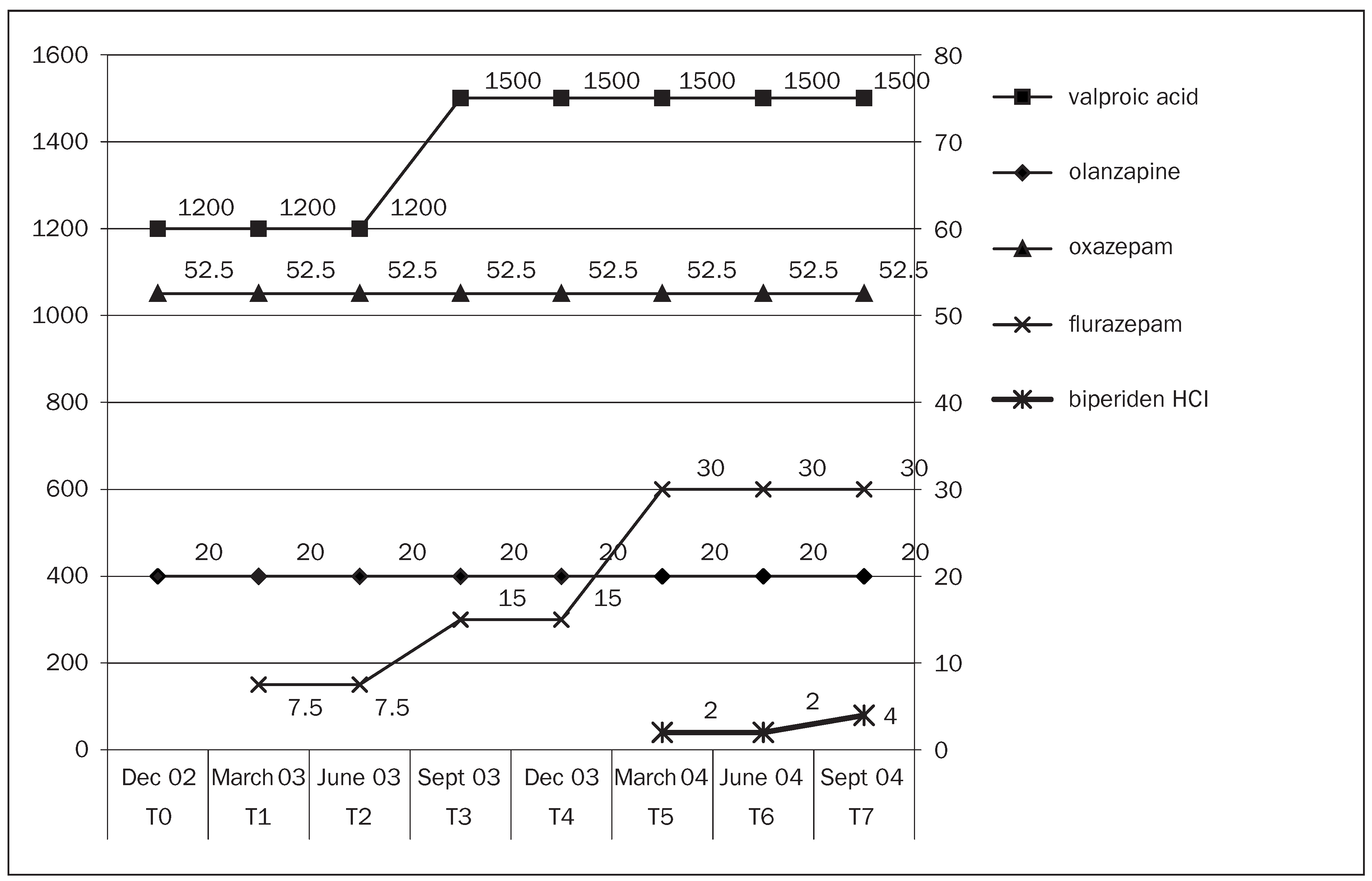
Figure 7.
Psychotropic medication of one resident over time.
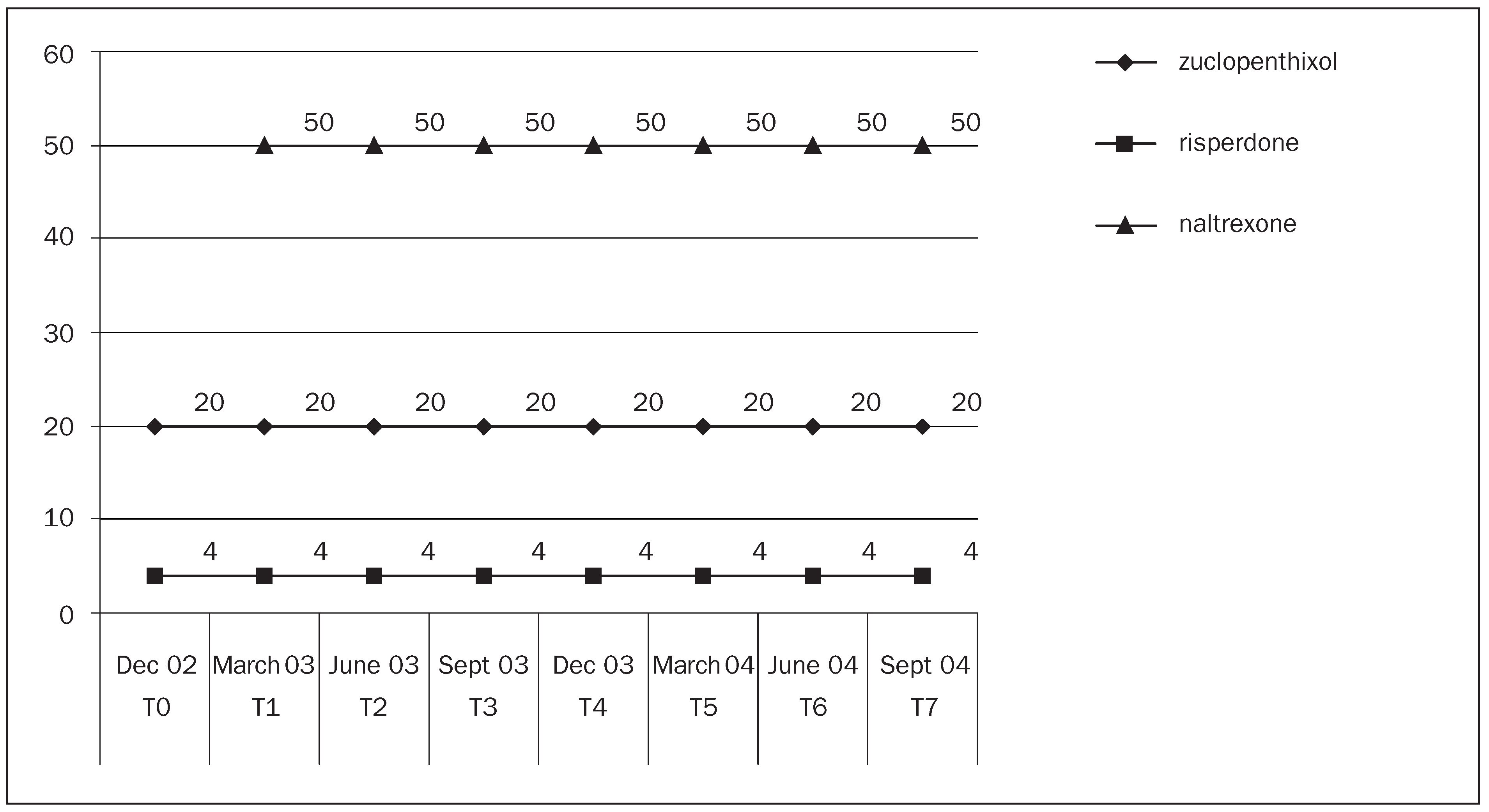
Figure 8.
Distribution of psychotropic medication for the sample (n = 10).
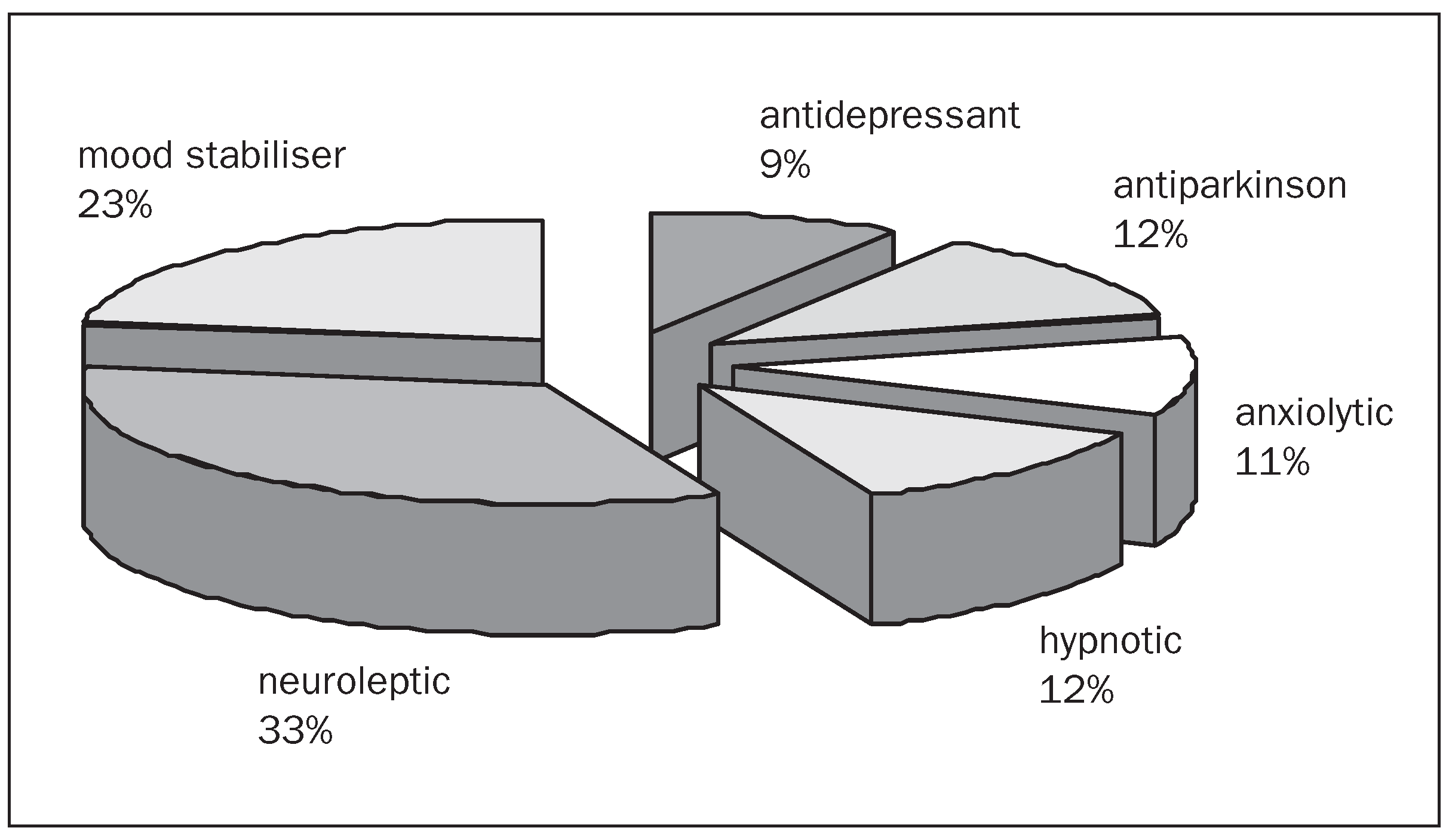
Additionally, the psychotropic medication taken by residents constitutes another important variable. Drugs and doses vary considerably between residents and within residents across time (fig. 6 and 7). The mean number of psychotropic medications was 5.7 per resident. Thirty-three per cent were neuroleptics and twenty-three per cent were mood stabilisers. Antidepressants, anxiolytics, hypnotics and antiparkinson drugs composed the other forty-four per cent (fig. 8). Therefore, the impact of these medications on behavioural problems cannot be ignored.
The major strength of this study was the longitudinal and prospective design. Such a long observation has the major advantage of clearly presenting the evolution of this challenging population. Such a design requires a sizeable investment of energy and money, but makes it possible to consider how the PAMS could be adapted to increase the effectiveness of clinical programmes after the study if needed. The blinded design meant that the socio-educational teams were asked to give priority to their residents’ well-being, and they were allowed to change programmes and activities according to the needs of each resident. When they were asked about the residents’ evolution, they reported a slow improvement in behavioural disturbances. They also recognised the benefits of working with clinical instruments (e.g. visualisation with photos) within a clear theoretical framework for autism and PDD. Another major advantage of our experimental design was that no additional contacts with residents were necessary, which is less stressful for them.
Further studies should try to better describe the differences between Asperger syndrome, fragile X syndrome and autistic disorders in order to determine which aspects of the programme are functioning for which patients. Additionally, the correlation between the educator’s presence and behavioural problems could be more thoroughly analysed in order to verify the efficacy of a greater number of educator-presence hours in the apartments. A rapid descriptive analysis shows that the quantity (numbers of hours) of presence seems to have an impact on ABC scores and behavioural disorders. In June 2003 (T2) educators were less present (386 hours) than in June 2004 (T6) (479.5 hours) (see fig. 4). In order to increase effectiveness, a paired sample should be introduced. Further studies will be carried out in collaboration with another Swiss institution, allowing our evaluation to be completed with a control group. To increase efficiency, an adequate tool will be used as a global evaluation of quality of life, with the aim of offering wellness and well-being to this population.
Furthermore, the collaboration between staff and families has been enhanced greatly. New programmes and a new organisation of time and space created this opportunity and every effort will be made to continue this partnership in the future.
References
- World Health Organization. The International Statistical Classification of Diseases and Related Health Problems (10th rev.). ICD-10. Geneva; 1994.
- Holt G, Bouras N. The Basic Handbook for Mental Health, Primary Care and Other Professionals. London: World Psychiatric Association, Section of Psychiatry of Mental Retardation; 2002.
- Schopler E, Yirmiya N, Shulman C, Marcus Lee M. The Research Basis for Autism Intervention. New York: Kluwer Academic/Plenum Publishers; 2001.
- Rogé B. Autisme, comprendre et agir [Autism Understanding and Taking Action]. Paris: Dunod; 2003.
- Association International Autisme-Europe, editors. Description de l’autisme [Description of Autism]. Bruxelles; 2000.
- Fombonne E. The changing epidemiology of autism. Journal of Applied Research in Intellectual Disabilities. 2005;18:281–94.
- Rojahn J, Aman MG, Matson JL, Mayville E. The Aberrant Behavior Checklist and the Behavior Problems Inventory: convergent and divergent validity. Res Dev Disabil. 2003;24:391–404.
- Schopler E, Mesibov GB. Autism in Adolescents and Adults. New York/London: Plenum Press; 1985.
- Schopler E, Reichler RJ. Parents as cotherapists in the treatment of psychotic children. J Autism Child Schizophr. 1971;1:87–102.
- Van Bourgondien ME, Reichle NC, Schopler E. Effects of a model treatment approach on adults with autism. J Autism Dev Disord. 2003;33:131–40.
- Aman MG, Singh NN, Stewart AW, Field CJ. The aberrant behavior checklist: a behavior rating scale for the assessment of treatment effects. Am J Ment Defic. 1985;89:485–91.
- Aman MG, Singh NN, Stewart AW, Field CJ. Psychometric characteristics of the aberrant behavior checklist. Am J Ment Defic. 1985;89:492–502.
- Aman MG, Richmond G, Stewart AW, Belle, JC, Kissel RC. The aberrant behavior checklist: factor structure and the effect of subject variables in American and New Zealand Facilities. Am J Ment Defic. 1987;91:578–9.
- Aman MG, Singh NN, Turbott SH. Reliability of the Aberrant Behavior Checklist and the effect of variations in instructions. Am J Ment Defic. 1987;92:237–40.
- Marshburn EC, Aman MG. Factor validity and norms for the aberrant behavior checklist in a community sample of children with mental retardation. J Autism Dev Disord. 1992;22:357–73.
- Rojahn J, Helsel WJ. The Aberrant Behavior Checklist with children and adolescents with dual diagnosis. J Autism Dev Disord. 1991;21:17–28.
- Schopler E, Mesibov GB, Reichler RJ, Brenner BR. The Childhood Autism Rating Scale (CARS). Los Angeles: Western Psychological Services; 1988.
- Mesibov GB, Schopler E, Schaffer B, Michal N. Use of the childhood autism rating scale with autistic adolescents and adults. J Am Acad Child Adolesc Psychiatry. 1989;28:538–41.
- Galli Carminati G, Constantin N, Schaya M, Gex-Fabry M, Kummer MF, Cannellas L. Evolution, en hôpital de jour, de 30 personnes avec retard mental et trouble psychiatrique [The Day Hospital for persons with learning disability and psychiatric comorbidity: study of 30 clients]. Schweiz Arch Neurol Psychiatr. 2004;155:24–34.
- Galli Carminati G, Constantin N, Gerber F, Carminati Garbino MV, Schaya M, Legay Y, et al. Longitudinal study on the evolution of autistic adults in Geneva’s Structured Pedagogy (PAMS) residence [unpublished].
This is an open-access article distributed under the terms of the Creative Commons Attribution Non-Commercial No Derivatives (CC BY-NC-ND) 4.0 License.