


Abstract
Ghosting is a common form of digital disengagement in emerging adulthood, yet few instruments distinguish enacting it, receiving it, and reacting emotionally to it. We examined the psychometric properties of the Italian Romantic Ghosting Scale–Colombia (RG-C) in 1073 partnered emerging adults aged 18–29. The three-factor structure (Role of Aggressor, Role of Victim, and Emotional Impact) showed approximate fit after allowing residual correlations between matched items, CFI = 0.96, RMSEA = 0.07, SRMR = 0.07. McDonald’s ω coefficients were 0.89 and 0.91 for the behavioral factors and 0.74 for Emotional Impact. The behavioral roles were strongly correlated, φ = 0.81. Constraining thresholds to equality did not significantly worsen model fit. Additional equality constraints on loadings and intercepts yielded significant χ2 differences, with small changes in approximate fit indices. Separate role factors fit better than a single factor, but the roles were only partly distinguishable. Emotional Impact was largely distinct from behavioral involvement and most strongly associated with attachment anxiety. Both roles were associated with lower satisfaction and commitment and greater perceived quality of alternatives, whereas Emotional Impact was associated with greater investment and commitment. The Italian RG-C provides reliable scores, and enacting and receiving ghosting appear closely interconnected.
1. Introduction
Ghosting has been defined as a relationship-dissolution strategy in which one person unilaterally stops communicating without providing an explanation (Kay & Courtice, 2022). Messaging applications and social media make this form of disengagement easy to enact, because they allow individuals to ignore messages, progressively reduce responsiveness, remove online connections, or block another person without direct confrontation (LeFebvre et al., 2019). Prevalence estimates vary according to definitions and reference periods, but available evidence indicates that both enacting and receiving ghosting are relatively common among emerging adults (Collins et al., 2023; Leckfor et al., 2023; Navarro et al., 2021). Emerging adulthood is characterized by repeated relationship transitions, during which individuals form expectations about intimacy, commitment, rejection, and relationship dissolution (Arnett, 2000, 2024; Shulman & Connolly, 2013). Because romantic communication in this period combines digital and face-to-face contact, reduced communication can be difficult to interpret and may leave the meaning of disengagement uncertain for the other person (Lomanowska & Guitton, 2016).
Research on technology-mediated relationship dissolution among emerging adults predates the use of the term ghosting. Early studies identified text messaging as a common channel for initiating or receiving a breakup (Weisskirch & Delevi, 2013). Subsequent work described ghosting as a distinct dissolution strategy and examined its motives and its consequences for the person who is ghosted and the person who ghosts (Forrai et al., 2023; Koessler et al., 2019; LeFebvre et al., 2019; Schokkenbroek et al., 2025). Unlike direct rejection, ghosting provides no explanation and may interfere with sense-making and closure, threatening needs for belonging, self-esteem, control, and meaningful existence (Campaioli et al., 2022; Langlais et al., 2024; Leckfor et al., 2023). Its consequences vary with the depth of the relationship, prior commitment, and perceived intentionality (Konings et al., 2023; Langlais et al., 2026), and relationships ending through ghosting tend to be shorter and less committed than those ending through direct conversation (Koessler et al., 2019). Research has also shown that the same person may enact ghosting in one relationship and receive it in another. Enacting and receiving ghosting may therefore represent overlapping components of an individual’s relational history rather than mutually exclusive profiles (Navarro et al., 2021; Powell et al., 2021).
As research has expanded, the measurement of ghosting has remained heterogeneous. Available instruments differ in whether they assess sudden or gradual withdrawal, romantic or broader relational contexts, behavioral involvement, or emotional responses (Morales et al., 2025; Santiago-Torner et al., 2026). The Ghosting Questionnaire (GHOST), for example, provides a unidimensional assessment of unexplained communication exclusion across relational contexts (Jahrami et al., 2023). This instrument has since been adapted into Turkish (Atalar et al., 2025; Özalp et al., 2025). A unidimensional score is useful for assessing ghosting broadly, but it cannot determine whether enacting ghosting, receiving it, and responding emotionally to it are distinguishable components. Measures that separate these components are needed to test whether they have different correlates and to compare findings across studies and cultural contexts.
The Romantic Ghosting Scale–Colombia (RG-C; Herrera-López et al., 2024) was developed to address this distinction by representing romantic ghosting through three related components, Role of Aggressor, Role of Victim, and Emotional Impact. The same feature that gives the RG-C its conceptual value also creates its central psychometric challenge. The two behavioral roles describe corresponding acts from opposite relational directions. Their association may reflect genuine overlap between relational experiences, because the same individual may have occupied both roles, but the parallel content of the items may also introduce shared measurement variance distinct from this substantive overlap. Evaluating the RG-C therefore requires determining whether the two roles remain empirically distinguishable once their shared content is taken into account.
The RG-C was developed and validated in Colombia (Herrera-López et al., 2024). Norms concerning communication, relational responsibility, and acceptable relationship-dissolution practices may influence how ghosting behaviors are interpreted (Freedman & Powell, 2026; Kabasakal & Cimsir, 2025), so the structure of the original instrument cannot be assumed to reproduce automatically in another cultural context. An Italian adaptation would make a multidimensional measure of romantic ghosting available for research with Italian emerging adults and would allow future cross-cultural comparisons of its structure and correlates.
Evaluating an adapted instrument also requires evidence that its scores relate to other constructs as expected from theory. Attachment theory and the Investment Model provide two frameworks for specifying these expectations. Attachment anxiety is characterized by heightened concern about rejection and abandonment, whereas attachment avoidance reflects discomfort with dependence and emotional closeness. Previous research has associated being ghosted with greater attachment anxiety and having ghosted a partner with greater attachment avoidance (Morales et al., 2025; Powell et al., 2021), and attachment anxiety has also been linked to receiving a breakup through digital communication (Weisskirch & Delevi, 2013). Anxiety may therefore be especially relevant to experiencing and emotionally interpreting ghosting, whereas avoidance may be more closely associated with indirect disengagement. These associations may be bidirectional, because experiences of ambiguous rejection may themselves shape relational expectations, and their direction cannot be established from cross-sectional data.
According to the Investment Model, commitment is strengthened by greater satisfaction and investment and by a lower perceived quality of alternatives (Rusbult et al., 1998). Ghosting involvement may be related to these dimensions if it forms part of broader orientations toward relational continuity and alternative partners. Greater behavioral involvement in ghosting may coexist with lower commitment or with a greater perceived availability of alternatives, whereas individuals who value relational continuity may attribute greater emotional significance to unexplained disengagement. Ghosting experiences may involve previous partners, whereas these dimensions describe the ongoing relationship. Such associations therefore concern person-level relational patterns. They indicate how a history of ghosting involvement covaries with present relationship functioning and do not imply that ghosting has occurred, or is likely to occur, within the current partnership.
The Present Study
The present study examined the psychometric properties of the Italian RG-C among emerging adults currently involved in a romantic relationship. The research question was whether the Italian RG-C yields structurally valid and reliable scores for involvement in ghosting as aggressor and as victim and for emotional reactivity to being ghosted. A related question was whether these scores are associated with attachment orientations and current relationship functioning as expected from theory, without assuming that ghosting occurred, or was likely to occur, within participants’ current relationship.
The general objective was to evaluate the psychometric properties of the Italian RG-C among partnered emerging adults, including its associations with attachment and relationship functioning. This objective was pursued through three specific objectives. The first specific objective was to test whether the Italian RG-C reproduced the original organization comprising Role of Aggressor, Role of Victim, and Emotional Impact. We expected the three-factor structure to be supported (H1a), with the two behavioral roles strongly related but not fully interchangeable (H1b) and Emotional Impact distinguishable from behavioral involvement (H1c). The second specific objective was to evaluate the reliability of the three RG-C scores, the convergence of items within each factor, and the distinction among the three factors.
The third specific objective was to situate RG-C scores within a nomological network involving attachment orientations and current relationship functioning. Based on previous evidence, we expected Role of Victim and Emotional Impact to be associated primarily with attachment anxiety (H2a), whereas Role of Aggressor was expected to be associated primarily with attachment avoidance (H2b). At a broader relational level, greater behavioral involvement in ghosting was expected to be associated with lower satisfaction and commitment and with a higher perceived quality of alternatives (H2c). Because ghosting involvement and current relationship functioning were not necessarily anchored to the same relationship, these hypotheses concerned person-level relational correlates rather than processes occurring within a specific dyad. The hypotheses were formulated before data analysis but were not preregistered.
2. Materials and Methods
2.1. Participants
The target population consisted of Italian-speaking emerging adults aged 18 to 29 years living in Italy and currently involved in a romantic relationship, either exclusive or nonexclusive. The accessible population comprised members of this population who could be reached through the social media channels and university mailing lists used for recruitment. Because participants were selected through nonprobability sampling (see Section 2.2), the sample is not statistically representative of the target population.
The final sample comprised 1073 emerging adults (Mage = 21.05, SD = 2.87, range 18–29 years) currently involved in a romantic relationship. Full demographic, relational, gender and sexual orientation, and geographic characteristics are reported in Table 1. These characteristics were collected to describe the sample and to define the boundaries within which the results can be generalized (von Elm et al., 2007). Because several subgroups were small, they were not used for group comparisons.
Table 1.
Participant characteristics.
Exclusivity was assessed with a single self-report item accompanied by two definitions provided to participants. An exclusive relationship was defined as one in which both partners had agreed to date only each other, and a nonexclusive relationship was defined as one in which the partners had agreed on the possibility of also dating other people romantically or sexually.
Civil status was assessed with a single item whose response options combined legal marital categories with current relational arrangements, as is common in Italian survey practice. The category translated as “not married” designates the legal status of never having been married and does not indicate the absence of a partner. Because the categories are therefore not mutually exclusive along a single dimension, the distribution is reported descriptively in Table 1 and was not used in any analysis.
Inclusion criteria were (a) age between 18 and 29 years, consistent with commonly used operational definitions of emerging adulthood (Arnett, 2000); (b) current involvement in an exclusive or nonexclusive romantic relationship, required because the Investment Model Scale assesses satisfaction, investment, quality of alternatives, and commitment with respect to an ongoing relationship; and (c) completion of all study measures. From an initial pool of 1515 respondents who accessed the survey, 360 respondents who reported no current romantic relationship and 82 respondents older than 29 years were excluded, yielding the final analytic sample of 1073 participants. No missing data were present in the analytic dataset. Participants resided in all 20 Italian regions, mainly in Northern Italy (48.6%), followed by Southern Italy (18.6%), Central Italy (17.0%), and the islands (15.8%; Table 1).
The sample size was evaluated in relation to model complexity rather than through a post hoc power calculation for a specific fit index. A sample of 1073 participants was considered adequate for the prespecified CFA models given the number of ordinal indicators and freely estimated parameters. Because no exploratory factor model was developed, the sample was not divided into exploratory and confirmatory subsamples.
2.2. Procedure
The study followed a quantitative approach. According to the classification of research designs in psychology proposed by Ato et al. (2013), it was an instrumental study, because its main aim was to evaluate the psychometric properties of a measurement instrument. The research design was nonexperimental and cross-sectional, with a single group of participants who completed an online survey at one time point. Participants were selected through nonprobability convenience and snowball sampling and were recruited through social media and university mailing lists between December 2025 and June 2026.
Data were collected through an online survey hosted on Google Forms. The study is reported following the Checklist for Reporting Results of Internet E-Surveys (CHERRIES; Eysenbach, 2004) and the STROBE guideline for cross-sectional studies (von Elm et al., 2007), and the completed STROBE checklist is provided as Table S1. Before starting the questionnaire, participants received information about the study’s aims, the voluntary nature of participation, their right to withdraw at any time without penalty, and how their data would be handled. Informed consent was mandatory, and the questionnaire could not be accessed without it. Age was asked at the beginning of the survey, and respondents who reported being younger than 18 years could not proceed, so no data were collected from minors.
The study was conducted in accordance with the Declaration of Helsinki and approved by the Internal Ethics Review Board (IERB) of Psychology Research of the Department of Educational Sciences of the University of Catania (protocol code: Ierb-Edunict-2025.04.24/07). Participation was anonymous and unpaid. Instrument order was fixed for all participants. Completion times were not recorded by the platform, and the expected completion time, estimated in the pilot study, was 15 to 20 min. All items required a response before the survey could proceed. The survey did not include attention-check items. Duplicate submissions were checked manually by comparing response patterns and sociodemographic information, and none were identified. No participant gave the same response to all items of the questionnaire.
2.3. Measures
2.3.1. Romantic Ghosting Scale–Colombia
Endorsement of ghosting behaviors and emotional reactivity to being ghosted were assessed with the RG-C (Herrera-López et al., 2024), originally validated on a Colombian sample of 691 young adults (Mage = 24.03, SD = 4.47). The RG-C comprises nine behavioral items, each rated twice under a dual-response format that captures the roles of aggressor (“you toward the partner”) and victim (“the partner toward you”), together with six single-response items assessing emotional reactivity to being ghosted. This format yields 24 scored items organized into three original factors, Role of Aggressor (9 items), Role of Victim (9 items), and Emotional Impact (6 items). Items were rated on a 5-point Likert scale ranging from 1 (never/not at all) to 5 (always/I definitely would), with higher scores indicating greater endorsement of the behavior or reaction described. The Italian version retained the original dual anchors, which combine a frequency reference with a hypothetical one, in order to preserve comparability with the source instrument. Consistent with the original instructions, which were retained in the Italian version, the aggressor role included actions that respondents had used, use, or would use toward others (Herrera-López et al., 2024). Scores above the lowest category may therefore reflect actual involvement in the behavior, willingness to engage in it, or its perceived acceptability. Role of Aggressor items describe disengagement behaviors enacted by the respondent toward a partner. Role of Victim items describe the same behaviors enacted by a partner toward the respondent, including the attribution that they were intended to end the relationship. Emotional Impact items are phrased conditionally (e.g., “Mi arrabbio se…” [I get angry if…]) and assess emotional reactivity to being ghosted, not the consequences of a specific episode. The original label was retained for comparability with the source instrument. The original scale showed good fit in confirmatory factor analysis, CFI = 0.992, RMSEA = 0.042, 90% CI [0.035, 0.049], and reliability ranging from ω = 0.88 to 0.91 across the three factors.
The Italian version was developed following the ITC Guidelines for Translating and Adapting Tests (International Test Commission, 2017). The source was the English version of the RG-C published by the developers (Herrera-López et al., 2024), and two co-authors who developed the original instrument (M. H.-L. and L. H.-S.) checked the Italian items against the Spanish wording to ensure conceptual equivalence. Forward translation into Italian was carried out independently by two native Italian speakers, the first author (V. L. L. R.) and a co-author (E. M.), and the two versions were reconciled into a single draft. An independent back-translation into English was then produced by a native English speaker. Two content experts compared the back-translation with the source version to evaluate semantic and conceptual equivalence, and discrepancies were resolved through discussion with the last author (E. C.). A pilot study was then conducted to evaluate item comprehensibility before full-scale administration. Twenty-five psychology students, balanced for gender and age, completed the full questionnaire in person and rated the clarity of each RG-C item on a 5-point scale ranging from 1 (not at all clear) to 5 (completely clear). With 25 participants, the probability of observing at least one report of a comprehension problem with a prevalence of 10% is about 0.93 (Perneger et al., 2015). An item was reviewed by the research team when at least five of the 25 participants (20%) rated it as unclear (scores of 1 or 2), in line with common practice in cross-cultural adaptation (Borsa et al., 2012; Grover et al., 2025). Pilot participants did not take part in the main study. Based on the pilot, item 6 was simplified by removing the parenthetical qualifier “if the application allows it,” which participants found confusing. No other items were modified after the pilot. In EI6, “love interest” was rendered as “potenziale partner,” consistent with the wording of the other Emotional Impact items, and the opening “I feel it may be my fault” was rendered as “Penso che possa essere colpa mia” (“I think it may be my fault”) because the Italian verb “sentire” is ambiguous between feeling and hearing. Participants were instructed to answer with reference to their current or previous romantic relationships, as applicable. No single target relationship or fixed recall period was specified; consequently, RG-C scores could reflect experiences accumulated across different relationships and periods of time. The full Italian item wording is reported in Table S2, alongside the original English items. The psychometric structure and reliability of the Italian version are described in the Results.
2.3.2. Experiences in Close Relationships
Adult attachment dimensions were measured with the 12-item short form of the Experiences in Close Relationships scale (ECR-12), derived from the original 36-item Experiences in Close Relationships questionnaire (Brennan et al., 1998) through the item-selection procedure reported by Lafontaine et al. (2016). The Italian version administered in the present study was the adaptation validated by Brugnera et al. (2019) on a sample of 1197 Italian adults. In that validation, an exploratory structural equation modeling solution showed good fit for the two-factor structure, CFI = 0.97, RMSEA = 0.056, 90% CI [0.05, 0.06], with good internal consistency for both subscales, ω = 0.84 for anxiety and ω = 0.88 for avoidance. Six items assess attachment anxiety and six assess attachment avoidance, rated on a 7-point Likert scale from 1 (completely untrue) to 7 (completely true). Relevant items were reverse-scored before computing subscale means, so that higher scores indicate greater anxiety or avoidance in intimate relationships. To avoid the double reversal that automatic reverse-scoring functions can introduce when an item has already been recoded upstream, all reverse-scored composites were computed through explicit formulas rather than relying on software defaults. Reliability for both subscales in the current sample is reported in the Results.
2.3.3. Investment Model Scale
Satisfaction, quality of alternatives, investment size, and commitment were assessed with the Investment Model Scale (Rusbult et al., 1998). Italian-language item wording followed the version used by Chiarolanza et al. (2017) in an Italian sample; that study reported internal-consistency estimates but was not treated here as a formal validation of the Italian measure. Items were rated from 0 (completely disagree) to 8 (completely agree). The correspondence between the administered items and those of Rusbult et al. (1998) is reported in Table S3. The Italian version includes four of the five original global satisfaction items, the five global items of Quality of Alternatives and Investment, and the seven original commitment items plus one additional commitment item (CS23). Consistent with the scoring logic of the original instrument (Rusbult et al., 1998, p. 364), the five satisfaction facet items (CS1a–CS1e) were administered to facilitate respondents’ judgments on the global items but were not included in any score. Satisfaction was therefore computed from the four global items (CS2–CS5), whereas Quality of Alternatives and Investment were each computed from five items (CS6–CS10 and CS11–CS15, respectively). Commitment was computed from eight items (CS16–CS23), after reversing CS18 and CS19 on the 0–8 response scale. As sensitivity analyses, Satisfaction was also computed including the mean of the facet items, and Commitment was computed from the seven original items only, excluding CS23. Higher mean scores indicated higher levels of the corresponding construct. Because the five-item Investment score showed borderline internal consistency in the present sample, a four-item score excluding CS14 was examined as a sensitivity analysis. The original five-item score was nevertheless retained as the primary specification to preserve comparability with the original Investment Model Scale.
2.4. Data Analysis Strategy
All analyses were conducted in R (version 4.3.3; R Core Team, 2024) with the lavaan (version 0.6-17; Rosseel, 2012), semTools (version 0.5-6; Jorgensen et al., 2022), and psych (version 2.4.1; Revelle, 2024) packages, using two-tailed tests with α = 0.05.
Data completeness, admissible response ranges, item reversals, and composite-score calculations were checked before analysis. Descriptive statistics were computed for all study variables. Because the Role of Aggressor and Role of Victim scores were strongly floor-skewed and Emotional Impact and Commitment were ceiling-skewed, distributional shape and the proportions at the exact scale endpoints were reported alongside means and standard deviations, following recommendations for transparent reporting of nonnormal Likert data (Field, 2018).
The original 24-item, three-factor structure of the RG-C, comprising Role of Aggressor, Role of Victim, and Emotional Impact, was evaluated on the complete sample (N = 1073) by confirmatory factor analysis (CFA). All models converged normally, with no negative variance estimates or other estimation warnings. The five-category items were treated as ordinal and estimated with weighted least squares mean- and variance-adjusted estimation (WLSMV), which is recommended over maximum likelihood for ordinal indicators with five or fewer response categories (Flora & Curran, 2004). Model fit was evaluated with the scaled χ2 statistic, comparative fit index (CFI), Tucker–Lewis index (TLI), root mean square error of approximation (RMSEA) with its 90% confidence interval, and standardized root mean square residual (SRMR). CFI and TLI values around 0.95 or higher, RMSEA around 0.06 or lower, and SRMR around 0.08 or lower were used as heuristic rather than mechanical benchmarks (Hu & Bentler, 1999; Marsh et al., 2004). These cutoffs were derived for continuous, normally distributed indicators estimated with maximum likelihood. With ordinal indicators estimated with WLSMV, CFI and TLI tend to be higher and therefore more favorable, whereas RMSEA can follow a different pattern (Groskurth et al., 2024; Xia & Yang, 2019). For this reason, the indices were interpreted jointly, CFI and TLI were not considered sufficient evidence of good fit on their own, and model evaluation also relied on the inspection of residual correlations. The χ2 test was reported but not used as a decision criterion, because it is highly sensitive to large samples.
The initial CFA retained the original allocation of items to factors and freely correlated the three factors. Because each behavioral act is rated twice, once from the aggressor and once from the victim perspective, the paired-response format implies that responses to the same act share item-specific variance not accounted for by the role factors. Consistent with Cole et al. (2007), residual covariances between the nine matched aggressor–victim item pairs (RA1 with RV1 through RA9 with RV9) were therefore specified as a single design-driven class and were not selected on the basis of modification indices. The model without these covariances was also estimated to evaluate the structure as originally proposed. To quantify the contribution of the paired format, an equivalent specification replaced the nine residual covariances with nine orthogonal pair-specific method factors, each loading with equal weights on the two items of a matched pair. The proportions of latent response variance attributable to the role factors and to the pair-specific factors were computed for each item and for each role composite.
To evaluate whether the two behavioral roles were better represented as separate factors, the retained model was compared with a rival model that merged all 18 behavioral responses into a single factor. This rival model retained Emotional Impact and the same nine paired residual covariances. Because the merged-factor model is nested within the two-role model, the two were compared with the scaled χ2 difference test for WLSMV estimation. Following Rönkkö and Cho (2022), the latent correlation between the two role factors was also tested against the substantive cutoffs of 0.85 and 0.90. Each cutoff was tested by comparing the retained model with a model in which the correlation was fixed to that value.
Standardized residual correlations of the retained model were inspected to identify local misfit. To evaluate whether a content facet shared by the blocking items (items 2, 5, and 6) accounted for residual misfit, an additional specification added two blocking-specific factors, one within each role. Each factor loaded on the three blocking items of its role, was orthogonal to the role factors and to Emotional Impact, and was allowed to correlate with its counterpart in the other role. This specification retained the general role factors on which the RG-C scores are based.
Measurement invariance across matched Role of Aggressor and Role of Victim items was evaluated in a two-factor model including the 18 behavioral items and the nine paired residual covariances, treating the two roles as repeated assessments of the same behaviors. Following Wu and Estabrook (2016), equality constraints were added in sequence to thresholds, loadings, and intercepts under the theta parameterization. Because χ2 difference tests are highly sensitive to sample size, changes in CFI of 0.010 or less and changes in RMSEA of 0.015 or less were used as supporting criteria (Chen, 2007). The latent means of the two roles were compared in the most constrained model.
The structural evaluation was completed by sensitivity analyses. A 23-item version excluding EI6 was estimated without replacing the original scale as the primary scoring model. The highest response category of the behavioral items and the lowest categories of several Emotional Impact items were sparse. The retained model was therefore re-estimated after collapsing categories 4 and 5 of the behavioral items and categories 1 and 2 of the Emotional Impact items. Finally, a large proportion of participants scored at the floor of both behavioral scales. For this reason, the retained and merged-factor models were also re-estimated among participants who endorsed at least one behavioral item above the lowest response category in either role.
For the retained model, standardized loadings, latent-factor correlations, average variance extracted (AVE), and heterotrait–monotrait ratios (HTMT) were examined. AVE values of approximately 0.50 or higher were interpreted as adequate convergence at the factor level (Fornell & Larcker, 1981). HTMT was computed from the polychoric correlations among items, consistent with the ordinal treatment of the indicators. Values below 0.85 were used as a conservative guideline for discriminant evidence (Henseler et al., 2014), and values approaching or exceeding this threshold were interpreted alongside latent correlations and rival-model comparisons rather than as a binary criterion. Internal consistency was estimated on the full sample with McDonald’s ω as the primary coefficient, given its lower sensitivity to violations of tau-equivalence relative to Cronbach’s α (McNeish, 2018), and Cronbach’s α as a supplementary coefficient for comparability with prior literature. For each scale, ω was computed from a single-factor confirmatory model of the item scores estimated with maximum likelihood, as the proportion of composite variance attributable to the common factor. This coefficient refers to the reliability of the observed mean scores used in all analyses. It is therefore lower than coefficients derived from the polychoric loadings of the ordinal CFA, which refer to the latent response variables underlying the items (Chalmers, 2018). Corrected item–rest correlations and reliability after item deletion were inspected to identify weak items, applying a minimum item–rest correlation of 0.30 as a general benchmark (Nunnally & Bernstein, 1994).
Associations with psychosocial and relationship variables were first described with Spearman rank correlations between composite scores, because several focal scores showed marked floor or ceiling effects, under which Pearson correlations can be attenuated or distorted (Bishara & Hittner, 2012). Confidence intervals for these correlations were computed with the Fisher z transformation and the standard error proposed by Bonett and Wright (2000). Because composite scores retain the item-specific variance shared by matched aggressor and victim items, the focal associations were then estimated within the latent model. The retained three-factor model was extended to include the standardized composite scores of attachment anxiety, attachment avoidance, Satisfaction, Quality of Alternatives, Investment, and Commitment as observed variables, freely correlated with the three RG-C factors and with one another. In both sets of analyses, the 18 associations between the RG-C factors and these variables constituted the focal family of tests, and Holm correction controlled the family-wise error rate while retaining more power than the Bonferroni procedure (Holm, 1979). Differences between dependent latent correlations were tested as derived parameters with delta-method standard errors. For each RG-C factor, the correlations with attachment anxiety and avoidance were compared, and for each attachment dimension, the correlations with the two role factors were compared. These five comparisons were treated as a separate family, and their p values were adjusted with the Holm procedure.
To estimate the unique association of each RG-C factor, each external variable was also regressed simultaneously on the three factors. These regressions were used to partial out shared variance and do not imply a causal direction. Standardized partial coefficients derived from the same model were used to examine whether the associations of the role factors with Satisfaction, Quality of Alternatives, and Commitment held after controlling for attachment avoidance, and whether the associations of Emotional Impact with Investment and Commitment held after controlling for attachment anxiety. The ECR-12 and Investment Model variables were treated as theoretically relevant correlates, not as criterion measures or direct evidence of construct validity. Pearson correlations between composite scores were examined as a sensitivity analysis, and the Spearman associations were repeated using the five-item Emotional Impact score without EI6 and the four-item Investment score without CS14. Given the large sample size, correlation magnitudes were interpreted using conventional effect-size benchmarks (small, around 0.10; medium, around 0.30; large, around 0.50) rather than statistical significance alone.
3. Results
3.1. Preliminary Analyses and Descriptive Statistics
The analytic dataset contained 1073 complete cases and no missing values. Role of Aggressor and Role of Victim scores were concentrated at the lower endpoint (37.4% and 40.8% of participants, respectively, scored exactly 1). Overall, 672 participants (62.6%) endorsed at least one Role of Aggressor item above the lowest response category, and 635 (59.2%) endorsed at least one Role of Victim item above it. On the six-item Emotional Impact scale, 9.4% of participants scored exactly 5. Commitment also showed a pronounced ceiling effect, with 30.9% scoring exactly 8. Item-level means, skewness, kurtosis, and response frequencies are reported in Table S4. Means, standard deviations, reliability coefficients, and Spearman correlations for the composite scores are reported in Table 2.
Table 2.
Descriptive statistics, internal consistency, and Spearman correlations.
3.2. Confirmatory Factor Analysis
The original three-factor model without residual covariances did not reproduce the strong fit reported in the original Colombian validation, scaled χ2(249) = 2092.14, p < 0.001, CFI = 0.94, TLI = 0.93, RMSEA = 0.08, 90% CI [0.08, 0.09], SRMR = 0.09. In this model, Role of Aggressor and Role of Victim showed a very high latent correlation, φ = 0.89, 95% CI [0.86, 0.92], indicating substantial overlap between the two behavioral factors; paired-item dependence was examined separately in the subsequent model. The polychoric correlation matrix among the 24 RG-C items is provided in Table S6.
The model including the design-driven set of nine residual covariances between matched aggressor–victim item pairs showed better fit, scaled χ2(240) = 1345.64, p < 0.001, CFI = 0.96, TLI = 0.96, RMSEA = 0.07, 90% CI [0.06, 0.07], SRMR = 0.07. CFI and TLI exceeded 0.95 and SRMR was below 0.08, but RMSEA remained above 0.06. Because CFI and TLI tend to be favorable under WLSMV estimation, and because residual correlations showed local misfit, the model was considered to show approximate but imperfect fit. The standardized solution of the retained three-factor model, including the nine matched-item residual covariances, is presented in Figure 1.
Figure 1.
Standardized solution of the retained three-factor model of the Italian Romantic Ghosting Scale–Colombia. Vertical double-headed arrows represent residual correlations between matched Role of Aggressor (RA) and Role of Victim (RV) items. All factor loadings, residual correlations, and the correlation between Role of Aggressor and Role of Victim were significant at p < 0.001. The correlation between Role of Victim and Emotional Impact was significant at p = 0.02, and the correlation between Role of Aggressor and Emotional Impact was not significant (p = 0.35). EI = Emotional Impact.
All standardized loadings were statistically significant and ranged from 0.68 to 0.88 for Role of Aggressor, from 0.77 to 0.90 for Role of Victim, and from 0.37 to 0.82 for Emotional Impact (Table S7). The nine paired standardized residual correlations were all positive and statistically significant, ranging from 0.52 to 0.87 (Table 3).
Table 3.
Confirmatory model comparison and factor-level diagnostics.
In the retained model, the latent correlation between Role of Aggressor and Role of Victim decreased to φ = 0.81, 95% CI [0.78, 0.84]. Emotional Impact was not significantly related to Role of Aggressor, φ = 0.04, 95% CI [−0.04, 0.12], p = 0.35, and was only weakly related to Role of Victim, φ = 0.09, 95% CI [0.01, 0.17], p = 0.02.
The scaled χ2 difference test also favored the model retaining separate aggressor and victim factors, Δχ2(2) = 188.90, p < 0.001. Fit statistics and factor-level indices are summarized in Table 3. The latent correlation between the role factors was significantly lower than 0.85, Δχ2(1) = 5.66, p = 0.017, and than 0.90, Δχ2(1) = 31.62, p < 0.001.
In the retained model, 58 of the 276 residual correlations exceeded 0.10 in absolute value, and the largest was 0.21 (Table S8). The largest positive residuals involved pairs of blocking items within the same role (RA5–RA6 = 0.21, RA2–RA5 = 0.17, RV5–RV6 = 0.17), whereas the largest negative residuals involved blocking and withdrawal items (e.g., RA3–RA5 = −0.19). Adding blocking-specific factors improved fit, χ2(233) = 738.84, CFI = 0.983, TLI = 0.980, RMSEA = 0.045, 90% CI [0.041, 0.049], SRMR = 0.055, Δχ2(7) = 389.54, p < 0.001. The blocking-specific factors loaded 0.43 to 0.72 on the blocking items, accounted on average for 32% of their latent response variance in Role of Aggressor and 31% in Role of Victim, and were correlated r = 0.73, 95% CI [0.63, 0.83], across roles. Loadings on the role factors ranged from 0.55 to 0.89 for Role of Aggressor and from 0.63 to 0.92 for Role of Victim. The latent correlation between the role factors was φ = 0.83, 95% CI [0.79, 0.86]. Emotional Impact remained weakly related to Role of Victim, φ = 0.09, 95% CI [0.01, 0.17], and unrelated to Role of Aggressor, φ = 0.04. In this model, 27 residual correlations exceeded 0.10, and the largest involved Emotional Impact items (RA7–EI5 = −0.19).
The specification with nine pair-specific method factors was statistically equivalent to the retained model and yielded the same latent correlation between the role factors, φ = 0.81, 95% CI [0.78, 0.84]. On average, the role factors accounted for 66% of the latent response variance of Role of Aggressor items and 72% of that of Role of Victim items, whereas the pair-specific factors accounted for 21% (range 13–36%). At the composite level, the pair-specific factors accounted for 3.3% of the variance of the Role of Aggressor score and 3.1% of that of the Role of Victim score.
In the invariance analysis, constraining thresholds did not significantly worsen fit, Δχ2(18) = 16.07, p = 0.588, ΔCFI = −0.002. Constraints on loadings, Δχ2(8) = 24.69, p = 0.002, ΔCFI < 0.001, and intercepts, Δχ2(8) = 35.87, p < 0.001, ΔCFI = +0.001, produced significant χ2 differences, whereas RMSEA decreased from 0.094 in the configural model to 0.084 in the most constrained model. In this model, the latent mean of Role of Victim did not differ from that of Role of Aggressor, Δ = −0.04, 95% CI [−0.12, 0.03], p = 0.239. Fit indices for all invariance models are reported in Table S9.
Overall, 350 participants (32.6%) scored at the floor on all 18 behavioral items, corresponding to 87.3% of those at the floor of Role of Aggressor and 79.9% of those at the floor of Role of Victim. Among the 723 participants who endorsed at least one behavioral item above the lowest category, the retained model showed CFI = 0.92, TLI = 0.91, RMSEA = 0.08, 90% CI [0.08, 0.08], SRMR = 0.08. The latent correlation between the role factors was φ = 0.69, 95% CI [0.64, 0.74], and the merged-factor model fit worse than the two-role model, Δχ2(2) = 190.87, p < 0.001. Emotional Impact was not significantly correlated with either role in this subsample (Table S9).
After collapsing sparse response categories, the retained model showed χ2(240) = 1286.71, CFI = 0.966, TLI = 0.961, RMSEA = 0.064, 90% CI [0.060, 0.067], SRMR = 0.073. Standardized loadings differed from those of the original model by 0.013 or less, the latent correlation between the role factors remained φ = 0.81, 95% CI [0.78, 0.84], and the merged-factor model again fit worse than the two-role model, Δχ2(2) = 180.53, p < 0.001.
3.3. Factor Convergence, Role Discrimination, and Reliability
AVE was 0.66 for Role of Aggressor, 0.72 for Role of Victim, and 0.50 for Emotional Impact. HTMT was 0.87 between the two role factors, above the conservative 0.85 guideline, and 0.08 between Role of Aggressor and Emotional Impact and 0.09 between Role of Victim and Emotional Impact.
Internal consistency was good for Role of Aggressor (ω = 0.89, α = 0.89) and Role of Victim (ω = 0.91, α = 0.91), with corrected item–rest correlations of 0.49–0.72 and 0.57–0.78, respectively. Emotional Impact showed acceptable but lower consistency (ω = 0.74, α = 0.75). EI6 was the weakest item, with a standardized loading of 0.37 and a corrected item–rest correlation of 0.30. Excluding EI6 increased Emotional Impact reliability to ω = 0.78 and α = 0.78 and increased AVE from 0.50 to 0.58, but did not materially improve global fit, scaled χ2(218) = 1274.96, CFI = 0.96, TLI = 0.96, RMSEA = 0.07, 90% CI [0.06, 0.07], SRMR = 0.07. EI6 was retained in the primary score to preserve comparability with the original scale.
Reliability was good for attachment anxiety (ω = 0.82), attachment avoidance (ω = 0.85), Satisfaction (ω = 0.83), Quality of Alternatives (ω = 0.80), and Commitment (ω = 0.92). The five-item Investment score showed borderline internal consistency (ω = 0.67). Removing CS14 increased ω to 0.71; however, the original five-item score was retained as primary, with the four-item score used to evaluate robustness.
3.4. Associations with Psychosocial and Relationship Variables
After Holm correction across the 18 focal tests, Role of Aggressor and Role of Victim showed parallel patterns of small positive associations with attachment anxiety (ρ = 0.17 and 0.23), attachment avoidance (ρ = 0.27 and 0.26), and Quality of Alternatives (ρ = 0.13 and 0.11), and small negative associations with Satisfaction (ρ = −0.22 and −0.25) and Commitment (both ρ = −0.22). Neither role score was significantly associated with Investment after correction (both ρ = −0.06).
Emotional Impact was most strongly associated with attachment anxiety (ρ = 0.38), followed by Investment (ρ = 0.25). It also showed a small positive association with Commitment (ρ = 0.12) and a small negative association with Quality of Alternatives (ρ = −0.09). Outside the focal family, Emotional Impact correlated ρ = 0.12 with Role of Victim and ρ = 0.07 with Role of Aggressor. Its associations with attachment avoidance (ρ = 0.00) and Satisfaction (ρ = 0.03) were not significant after correction. Full correlation coefficients are reported in Table 2, and their 95% confidence intervals in Table S5.
The model including the six external variables showed χ2(366) = 1688.49, CFI = 0.958, TLI = 0.951, RMSEA = 0.058, 90% CI [0.055, 0.061], SRMR = 0.063. Latent correlations and their confidence intervals are reported in Table 4. After Holm correction, Role of Aggressor and Role of Victim were correlated with attachment anxiety (r = 0.17 and 0.23), attachment avoidance (r = 0.25 and 0.25), Satisfaction (r = −0.24 and −0.27), Quality of Alternatives (r = 0.14 and 0.12), and Commitment (r = −0.24 and −0.24). The correlations with Investment were r = −0.08, 95% CI [−0.15, −0.01], for Role of Aggressor and r = −0.09, 95% CI [−0.15, −0.02], for Role of Victim, with Holm-adjusted p = 0.068 and 0.043, respectively. Emotional Impact was correlated with attachment anxiety (r = 0.41), Investment (r = 0.29), Quality of Alternatives (r = −0.11), and Commitment (r = 0.11). Its correlations with attachment avoidance (r = −0.07, adjusted p = 0.068) and Satisfaction (r = 0.04) were not significant after correction.
Table 4.
Latent correlations and unique associations between the RG-C factors and attachment and relationship variables.
The difference between the correlations of Role of Aggressor with attachment avoidance and anxiety was Δr = 0.09, 95% CI [0.00, 0.17], unadjusted p = 0.044, Holm-adjusted p = 0.133. Role of Victim showed similar correlations with the two dimensions, Δr = −0.02, 95% CI [−0.10, 0.07], adjusted p = 1.00. Emotional Impact was more strongly correlated with anxiety than with avoidance, Δr = 0.48, 95% CI [0.40, 0.56], adjusted p < 0.001. Attachment anxiety was more strongly correlated with Role of Victim than with Role of Aggressor, Δr = 0.06, 95% CI [0.01, 0.11], adjusted p = 0.048, whereas the correlations of avoidance with the two roles did not differ, Δr = 0.01, 95% CI [−0.04, 0.06], adjusted p = 1.00.
In the simultaneous regressions (Table 4), attachment anxiety was uniquely associated with Role of Victim, β = 0.21, 95% CI [0.08, 0.33], and Emotional Impact, β = 0.39, 95% CI [0.34, 0.45], but not with Role of Aggressor, β = −0.02, 95% CI [−0.14, 0.11]. Neither role showed a unique association with attachment avoidance after Holm correction, β = 0.15, 95% CI [0.01, 0.28], and β = 0.13, 95% CI [0.00, 0.27]. Role of Victim was uniquely associated with Satisfaction, β = −0.25, 95% CI [−0.40, −0.10], and neither role showed a unique association with Quality of Alternatives, Investment, or Commitment. Emotional Impact was uniquely associated with Investment, β = 0.30, 95% CI [0.24, 0.36], Commitment, β = 0.13, 95% CI [0.07, 0.19], and Quality of Alternatives, β = −0.12, 95% CI [−0.19, −0.05].
After controlling for attachment avoidance, Role of Aggressor remained associated with Satisfaction, β = −0.11, 95% CI [−0.17, −0.06], Commitment, β = −0.12, 95% CI [−0.17, −0.07], and Quality of Alternatives, β = 0.09, 95% CI [0.02, 0.15]. Role of Victim also remained associated with Satisfaction, β = −0.15, 95% CI [−0.21, −0.10], Commitment, β = −0.12, 95% CI [−0.17, −0.07], and Quality of Alternatives, β = 0.07, 95% CI [0.01, 0.14]. After controlling for attachment anxiety, Emotional Impact remained associated with Investment, β = 0.23, 95% CI [0.17, 0.30], and Commitment, β = 0.17, 95% CI [0.10, 0.24].
The Pearson sensitivity analysis yielded the same substantive pattern, with a maximum absolute difference of 0.046 from the Spearman estimates and no change in the direction of any focal association. Results were also robust to the scoring sensitivities. The five- and six-item Emotional Impact scores correlated ρ = 0.92 and produced the same substantive conclusions, while use of the four-item Investment score left the null associations with the two role scores unchanged and modestly increased its association with Emotional Impact. The Satisfaction score including the facet items correlated ρ = 0.99 with the four-item score, and its correlations with the RG-C scores differed by 0.02 or less. The seven-item Commitment score correlated ρ = 0.999 with the eight-item score (ω = 0.90) and yielded the same correlations with the RG-C scores. Accordingly, primary results retain all original RG-C items and the original five Investment items, with the shortened scores treated only as robustness checks.
4. Discussion
This study provides the first Italian adaptation of the RG-C, an instrument that separates enacting ghosting, receiving it, and the emotional reactions it elicits. The results support the three-component organization proposed by Herrera-López et al. (2024) and add new evidence on its internal structure and correlates. The behavioral roles proved closely interconnected and distinguishable only to a degree, and part of their overlap could be traced to the paired format of the items. Emotional reactivity to ghosting emerged as a distinct component, more closely tied to attachment anxiety and relational investment than to behavioral involvement.
The three-factor structure anticipated in H1a received approximate support once the dependence between matched items was modeled. Each behavior is rated from both perspectives, so the paired items share content that the role factors do not capture (Cole et al., 2007). These dependencies appeared across all nine pairs and therefore reflect a systematic feature of the paired format. The method-factor analysis clarified their practical weight. Pair-specific content accounted for about one fifth of the variance of individual items but for only about 3% of the variance of the role scores. The composites used in research are therefore largely unaffected by it. The strongest dependence involved item 3, which describes a gradual reduction of contact until communication stops. This form of disengagement is often reciprocal and difficult to attribute to one partner, so respondents may have described the same fading process from both perspectives. A second source of local dependence involved the blocking items. Modeling this facet reduced the remaining misfit and left the role factors intact. Ghosting thus appears to include two related forms, a progressive withdrawal from communication and the active blocking of contact. These forms rely on different relational mechanisms, which may explain why the blocking items shared variance beyond the role factors. Blocking is an explicit act that uses the features of the platform to close the communication channel and makes the end of contact evident to the other person. Gradual withdrawal, often described as fading, leaves the channel open and prolongs the other person’s uncertainty about the status of the relationship. The two forms may therefore have different implications for sense-making and closure (Leckfor et al., 2023). Future versions of the instrument could represent them as distinct facets within the organization proposed by Herrera-López et al. (2024).
The strong association between the aggressor and victim factors is a substantive finding that users of the scale should keep in mind. Separate role factors fit the data better than a single behavioral factor, and their correlation was significantly lower than the cutoffs of 0.85 and 0.90. The two roles also showed equivalent thresholds, whereas constraints on loadings and intercepts produced significant χ2 differences with negligible changes in approximate fit indices. Because the ΔCFI cutoffs were developed under maximum likelihood (Chen, 2007), these changes offer only indirect support for equivalence under WLSMV. Together, these results support H1b. The upper limit of the confidence interval nevertheless fell in the range that Rönkkö and Cho (2022) describe as a marginal discriminant validity concern. HTMT was borderline, and the correlation increased slightly when the blocking facet was modeled (φ = 0.83). The distinction between the roles is therefore one of degree. Among participants reporting some behavioral involvement, the correlation decreased to 0.69. Part of the overlap in the full sample may arise from the large group of participants who endorsed no behavior in either role. Selecting participants on the measured behaviors, however, also restricts their range, which attenuates correlations. The difference between the two estimates therefore cannot be attributed to the floor group alone. The remaining overlap is consistent with theory, because individuals may occupy both positions across different relationships or at different moments of their relational histories. Previous research also shows that ghosting perpetration and victimization often coexist (Freedman & Powell, 2024; Navarro et al., 2021; Powell et al., 2021). Longitudinal and dyadic research could establish whether this co-occurrence reflects reciprocity within the same relationship, repetition across relationships, or shared interpersonal characteristics.
The behavioral factors showed strong loadings and good internal consistency, and their scores have a specific meaning. The response anchors combine a frequency reference with a hypothetical one, and no reference relationship or recall period was specified. The behavioral scores are therefore best interpreted as indices of endorsement of ghosting conduct, which may reflect actual involvement, willingness to disengage in this way, or the perceived acceptability of the behavior. Role of Victim scores also rely on the respondent’s attribution of intention to the partner and therefore capture perceived ghosting. This feature matches the ambiguity that defines the experience from the recipient’s side. The RG-C is thus well suited to studying orientations toward ghosting, and future versions could separate frequency from disposition through distinct response formats.
The Emotional Impact factor was clearly distinct from the behavioral roles, as anticipated in H1c. Its items are phrased conditionally and capture how respondents react, or expect to react, when a partner disengages without explanation. Emotional Impact may therefore reflect a disposition toward rejection-related distress that is largely independent of how often individuals have enacted or received ghosting. Its association with attachment anxiety is consistent with this interpretation. Reactions to actual episodes are likely to depend on expectancy violations, perceived rejection, uncertainty, unmet needs for closure, and the importance attributed to the relationship (Konings et al., 2023; Leckfor et al., 2023; Pancani et al., 2021, 2022). Experimental evidence also suggests weaker consequences when relational investment and expectations are limited (Langlais et al., 2026). The guilt or self-blame item showed the weakest loading, possibly because guilt and self-blame depend on the individual’s role, causal attributions, and culturally shaped beliefs about relational responsibility. In the Italian version, the item also opens with “Penso che” (“I think that”), so it describes a causal attribution, whereas the other Emotional Impact items describe affective reactions such as sadness, anger, and confusion. This difference in wording may have further weakened its association with the factor. The item was retained to preserve comparability with the original RG-C and because it captures self-blame not covered by the other items.
The associations with attachment orientations further support the nomological network of the RG-C. Estimating them within the latent model and formally comparing dependent correlations provided a stringent test of H2a and H2b. Emotional Impact was far more strongly related to anxiety than to avoidance, as anticipated in H2a. Anxious attachment involves heightened sensitivity to rejection and relational uncertainty, and ghosting leaves the status of a relationship ambiguous by preventing clarification (Powell et al., 2021; Weisskirch & Delevi, 2013). For the victim role, the prediction held in part. Anxiety distinguished being ghosted from enacting ghosting and remained uniquely associated with the victim role, but Role of Victim was related to anxiety and avoidance to a similar degree. H2b was not supported. Role of Aggressor was associated with both attachment dimensions, and its correlation with avoidance did not differ reliably from its correlation with anxiety once multiple comparisons were taken into account. Avoidance was associated with both behavioral roles in the bivariate analyses, but neither role showed a statistically significant unique association with avoidance after Holm adjustment. Avoidant individuals may contribute to what could be described as an avoidant relational ecosystem, in which withdrawal through digital channels is tolerated and treated as an ordinary way of ending contact. In such a context, ghosting may function less as an individual dissolution strategy and more as a shared relational norm (Kabasakal & Cimsir, 2025), which makes individuals more likely to occupy both positions. Dyadic studies are needed to test this interpretation. The association of both roles with attachment insecurity suggests that their overlap may partly reflect relational insecurity, while the role-specific components add information on the link between anxiety and being ghosted.
The associations with the Investment Model variables extend this evidence to current relationship functioning. Both behavioral roles were associated with lower satisfaction and commitment and with greater perceived quality of alternatives, in line with H2c and with the Investment Model (Rusbult et al., 1998). This pattern is also consistent with evidence linking ghosting to less committed relational contexts (Koessler et al., 2019). The associations held after controlling for attachment avoidance and mainly reflected the variance shared by the two roles. Because RG-C responses could also refer to previous partners, they describe how a history of ghosting involvement covaries with present relationship functioning. Emotional Impact showed the opposite pattern. It was associated with greater investment and commitment and with lower perceived quality of alternatives, independently of attachment anxiety. Individuals who place greater value on relational continuity may perceive unexplained disengagement as especially consequential (Konings et al., 2023; Langlais et al., 2026). Emotional Impact was unrelated to satisfaction, which suggests that emotional reactivity to ghosting depends on what is at stake in a relationship more than on how positively the relationship is evaluated.
4.1. Strengths and Limitations
This study has several strengths. It provides an Italian version of the RG-C, developed following international adaptation guidelines and tested in a large sample of partnered emerging adults. In this population, romantic exploration and digitally mediated communication are particularly salient. The analyses treated the items as ordinal and quantified the method effects produced by the paired-response format. They also tested the distinction between the behavioral roles against substantive cutoffs and across matched items, and estimated the associations with attachment and relationship functioning within the latent model. The consistency of the results across sensitivity analyses, including alternative scorings, collapsed response categories, and participants with some behavioral involvement, increases confidence in the main conclusions.
Some limitations should also be considered, and several of them point to directions for future research. The cross-sectional and self-report design does not allow conclusions about temporal or causal relationships, including the possibly bidirectional links between attachment and ghosting. It may also have introduced shared-method and retrospective biases. RG-C responses were not restricted to the current relationship, whereas the Investment Model variables referred to it. Future studies should therefore anchor all measures to a defined relationship or ghosting episode and use longitudinal or dyadic designs. The response anchors combine frequency and hypothetical references, the victim items require respondents to infer the partner’s intention, and item 7 includes an attitudinal component whose meaning is less clear in its victim version. Cognitive interviews could clarify how respondents interpret these items, including how they attribute gradual withdrawal and whether they read the guilt or self-blame item as a feeling or as a causal attribution. Floor effects in the behavioral scores and a ceiling effect in Commitment may also have attenuated some associations. The retained model showed approximate rather than close fit, and residual dependencies remained among the blocking items and among some Emotional Impact items. Modeling a blocking-specific facet reduced this misfit, which suggests that future versions of the instrument should represent withdrawal and blocking as distinct facets.
The sample was large and included participants from all Italian regions. However, it was composed mainly of women (94.0% by sex assigned at birth) and of individuals in exclusive relationships (97.1%), and Northern Italy was overrepresented. Groups defined by gender, relationship type, and geographic area were too small for a reliable test of measurement invariance. Future studies with more balanced samples should conduct this test before comparing scores across groups and should extend the scale to adolescents, single individuals, and people who have recently experienced ghosting. No other measure of ghosting was administered, so convergent validity with alternative instruments remains to be examined. Finally, the survey did not include attention checks or record completion times, and the hypotheses were not preregistered. Replications in independent and preregistered studies will therefore help consolidate the present findings.
4.2. Practical Implications
The present findings have implications for research and relationship education among partnered emerging adults. For research, the Italian RG-C offers a multidimensional measure that distinguishes behavioral involvement in ghosting from emotional reactivity to it, provided that the overlap between the two behavioral roles is considered when interpreting role-specific scores. Because the items are not anchored to the current partner, scores describe relational histories and orientations and do not indicate ghosting within an ongoing relationship. The instrument is intended for research and is not suitable for diagnostic or screening purposes.
For relationship education in university and community settings, the overlap between aggressor and victim roles suggests addressing ghosting as a shared relational experience instead of through fixed labels. Such initiatives could focus on communicating changes in relational intentions and on ending relationships without prolonged ambiguity. The distinct pattern of Emotional Impact further suggests that reactions to ghosting depend on relational investment and attachment anxiety more than on behavioral involvement. This aspect could be considered when discussing these experiences with emerging adults. Applications of this kind should build on replications in independent samples.
5. Conclusions
The Italian RG-C showed good reliability for the behavioral scores, acceptable reliability for Emotional Impact, and approximate support for its original three-factor organization among partnered emerging adults once the dependence between matched items was modeled. Enacting and receiving ghosting emerged as closely interconnected roles whose distinction is one of degree, and role-specific scores should be interpreted with this overlap in mind. The paired format affected individual items more than the role scores. Emotional Impact formed a distinct component, more closely related to attachment anxiety and relational investment than to behavioral involvement. These results make the RG-C a useful instrument for research on ghosting among Italian emerging adults and provide a basis for cross-cultural comparisons of its structure. Future research should replicate these findings in independent and more heterogeneous samples and refine the representation of withdrawal and blocking. Longitudinal and dyadic designs could then clarify how ghosting roles and emotional reactions develop across relationships.
Supplementary Materials
The following supporting information can be downloaded at https://www.mdpi.com/article/10.3390/ejihpe16120182/s1: Table S1: STROBE checklist for cross-sectional studies; Table S2: Item wording of the Italian Romantic Ghosting Scale–Colombia (RG-C) as administered, with the original English version; Table S3: Correspondence between the administered Italian items and the Investment Model Scale (Rusbult et al., 1998); Table S4: Item-level descriptive statistics and response distributions for the RG-C; Table S5: Spearman correlations among composite scores with 95% confidence intervals; Table S6: Polychoric correlation matrix among the 24 RG-C items in the full sample; Table S7: Standardized factor loadings for the retained three-factor model; Table S8: Largest residual correlations in the retained model and after adding blocking-specific factors; Table S9: Measurement invariance across matched behavioral items, models among participants with some behavioral involvement, and decomposition of item variance in the method-factor model.
Author Contributions
Conceptualization, V.L.L.R. and E.C.; methodology, V.L.L.R. and M.H.-L.; formal analysis, V.L.L.R.; investigation, E.M.; data curation, V.L.L.R. and E.M.; writing—original draft preparation, V.L.L.R. and E.C.; writing—review and editing, M.H.-L., L.H.-S. and E.M.; visualization, V.L.L.R.; supervision, E.C.; project administration, E.C. All authors have read and agreed to the published version of the manuscript.
Funding
This research received no external funding.
Institutional Review Board Statement
The study was conducted in accordance with the Declaration of Helsinki and approved by the Internal Ethics Review Board (IERB) of Psychology Research of the Department of Educational Sciences of the University of Catania (protocol code: Ierb-Edunict-2025.04.24/07).
Informed Consent Statement
Informed consent was obtained from all participants involved in the study.
Data Availability Statement
The data presented in this study are available on request from the corresponding author. The data are not publicly available because of privacy and ethical restrictions.
Acknowledgments
The authors thank all the participants who took part in the study.
Conflicts of Interest
The authors declare no conflicts of interest.
Abbreviations
The following abbreviations are used in this manuscript:
| AVE | Average variance extracted |
| CFA | Confirmatory factor analysis |
| CFI | Comparative fit index |
| CHERRIES | Checklist for Reporting Results of Internet E-Surveys |
| ECR-12 | Experiences in Close Relationships scale, 12-item short form |
| EI | Emotional Impact |
| HTMT | Heterotrait–monotrait ratio |
| IERB | Internal Ethics Review Board |
| ISTAT | Italian National Institute of Statistics |
| ITC | International Test Commission |
| RA | Role of Aggressor |
| RG-C | Romantic Ghosting Scale–Colombia |
| RMSEA | Root mean square error of approximation |
| RV | Role of Victim |
| SRMR | Standardized root mean square residual |
| STROBE | Strengthening the Reporting of Observational Studies in Epidemiology |
| TLI | Tucker–Lewis index |
| WLSMV | Weighted least squares mean- and variance-adjusted |
References
- Arnett, J. J. (2000). Emerging adulthood: A theory of development from the late teens through the twenties. American Psychologist, 55(5), 469–480. [Google Scholar] [CrossRef]
- Arnett, J. J. (2024). Emerging adulthood: The winding road from the late teens through the twenties (3rd ed.). Oxford University Press. [Google Scholar] [CrossRef] [Scilit]
- Atalar, A. E., Çolakoğlu, N., Bağişlioğlu, Z., Ammar, A., & Jahrami, H. (2025). Turkish adaptation of Ghosting Questionnaire: Validity and reliability study. BMC Psychology, 13, 397. [Google Scholar] [CrossRef] [Scilit]
- Ato, M., López, J. J., & Benavente, A. (2013). Un sistema de clasificación de los diseños de investigación en psicología [A classification system for research designs in psychology]. Anales de Psicología, 29(3), 1038–1059. [Google Scholar] [CrossRef] [Scilit]
- Bishara, A. J., & Hittner, J. B. (2012). Testing the significance of a correlation with nonnormal data: Comparison of Pearson, spearman, transformation, and resampling approaches. Psychological Methods, 17(3), 399–417. [Google Scholar] [CrossRef] [Scilit]
- Bonett, D. G., & Wright, T. A. (2000). Sample size requirements for estimating Pearson, Kendall and spearman correlations. Psychometrika, 65(1), 23–28. [Google Scholar] [CrossRef] [Scilit]
- Borsa, J. C., Damásio, B. F., & Bandeira, D. R. (2012). Cross-cultural adaptation and validation of psychological instruments: Some considerations. Paidéia (Ribeirão Preto), 22(53), 423–432. [Google Scholar] [CrossRef] [Scilit]
- Brennan, K. A., Clark, C. L., & Shaver, P. R. (1998). Self-report measurement of adult attachment: An integrative overview. In J. A. Simpson, & W. S. Rholes (Eds.), Attachment theory and close relationships (pp. 46–76). The Guilford Press. [Google Scholar]
- Brugnera, A., Zarbo, C., Farina, B., Picardi, A., Greco, A., Lo Coco, G., Tasca, G. A., Carlucci, S., Auteri, A., Greco, F., & Compare, A. (2019). Psychometric properties of the Italian version of the experience in close relationship scale 12 (ECR-12): An exploratory structural equation modeling study. Research in Psychotherapy: Psychopathology, Process and Outcome, 22(3), 392. [Google Scholar] [CrossRef] [Scilit]
- Campaioli, G., Testoni, I., & Zamperini, A. (2022). Double blue ticks: Reframing ghosting as ostracism through an abductive study on affordances. Cyberpsychology: Journal of Psychosocial Research on Cyberspace, 16(5), 10. [Google Scholar] [CrossRef] [Scilit]
- Chalmers, R. P. (2018). On misconceptions and the limited usefulness of ordinal alpha. Educational and Psychological Measurement, 78(6), 1056–1071. [Google Scholar] [CrossRef] [Scilit]
- Chen, F. F. (2007). Sensitivity of goodness of fit indexes to lack of measurement invariance. Structural Equation Modeling: A Multidisciplinary Journal, 14(3), 464–504. [Google Scholar] [CrossRef] [Scilit]
- Chiarolanza, C., Porcelli, L., & Muzietti, V. (2017). Il modello 2.0 dell’investimento nelle relazioni intime: Quando la gelosia minaccia la stabilità della coppia [Investment model 2.0 in couple relationships: When jealousy threatens couples’ stability]. Rassegna di Psicologia, 34(3), 83–93. [Google Scholar] [CrossRef] [Scilit]
- Cole, D. A., Ciesla, J. A., & Steiger, J. H. (2007). The insidious effects of failing to include design-driven correlated residuals in latent-variable covariance structure analysis. Psychological Methods, 12(4), 381–398. [Google Scholar] [CrossRef] [Scilit]
- Collins, T. J., Thomas, A., & Harris, E. (2023). Unwanted and unfollowed: Defining ghosting and the role of social media unfollowing. Personal Relationships, 30(3), 939–959. [Google Scholar] [CrossRef] [Scilit]
- Eysenbach, G. (2004). Improving the quality of web surveys: The checklist for reporting results of internet E-surveys (CHERRIES). Journal of Medical Internet Research, 6(3), e34. [Google Scholar] [CrossRef] [Scilit]
- Field, A. P. (2018). Discovering statistics using IBM SPSS statistics (5th ed.). Sage Publications Inc. [Google Scholar]
- Flora, D. B., & Curran, P. J. (2004). An empirical evaluation of alternative methods of estimation for confirmatory factor analysis with ordinal data. Psychological Methods, 9(4), 466–491. [Google Scholar] [CrossRef] [Scilit]
- Fornell, C., & Larcker, D. F. (1981). Evaluating structural equation models with unobservable variables and measurement error. Journal of Marketing Research, 18(1), 39–50. [Google Scholar] [CrossRef] [Scilit]
- Forrai, M., Koban, K., & Matthes, J. (2023). Short-sighted ghosts: Psychological antecedents and consequences of ghosting others within emerging adults’ romantic relationships and friendships. Telematics and Informatics, 80, 101969. [Google Scholar] [CrossRef] [Scilit]
- Freedman, G., & Powell, D. N. (2024). Ghosting: A common but unpopular rejection strategy. Social and Personality Psychology Compass, 18(12), e70026. [Google Scholar] [CrossRef] [Scilit]
- Freedman, G., & Powell, D. N. (2026). A cross-national comparison of ghosting knowledge, attitudes, intentions, and behaviors in friendships and romantic relationships spanning twelve countries. Journal of Social and Personal Relationships. Advance online publication. [Google Scholar] [CrossRef] [Scilit]
- Groskurth, K., Bluemke, M., & Lechner, C. M. (2024). Why we need to abandon fixed cutoffs for goodness-of-fit indices: An extensive simulation and possible solutions. Behavior Research Methods, 56(4), 3891–3914. [Google Scholar] [CrossRef] [Scilit]
- Grover, S., Menon, V., Gupta, S., Vidhukumar, K., Indu, P. V., & Chacko, D. (2025). Translation and adaptation of rating scales. Indian Journal of Psychiatry, 67(6), 643–647. [Google Scholar] [CrossRef] [Scilit]
- Henseler, J., Ringle, C. M., & Sarstedt, M. (2014). A new criterion for assessing discriminant validity in variance-based structural equation modeling. Journal of the Academy of Marketing Science, 43(1), 115–135. [Google Scholar] [CrossRef] [Scilit]
- Herrera-López, M., Coral-Lagos, A., Enríquez-Rosero, M., & Herrera-Solarte, L. (2024). Psychometric properties of the RG-C romantic ghosting scale: An instrumental study in a Colombian sample. Psychology, Society & Education, 16(1), 28–38. [Google Scholar] [CrossRef] [Scilit]
- Holm, S. (1979). A simple sequentially rejective multiple test procedure. Scandinavian Journal of Statistics, 6(2), 65–70. Available online: https://www.jstor.org/stable/4615733 (accessed on 1 November 2026).
- Hu, L.-t., & Bentler, P. M. (1999). Cutoff criteria for fit indexes in covariance structure analysis: Conventional criteria versus new alternatives. Structural Equation Modeling: A Multidisciplinary Journal, 6(1), 1–55. [Google Scholar] [CrossRef] [Scilit]
- International Test Commission. (2017). The ITC guidelines for translating and adapting tests (2nd ed.). International Test Commission. [Google Scholar]
- Jahrami, H., Saif, Z., Chen, W., Helmy, M., Ghazzawi, H., Trabelsi, K., Natan Pires, G., Bragazzi, N. L., Pandi-Perumal, S. R., & Seeman, M. V. (2023). Development and validation of a questionnaire (GHOST) to assess sudden, unexplained communication exclusion or “ghosting”. Heliyon, 9(6), e17066. [Google Scholar] [CrossRef] [Scilit]
- Jorgensen, T. D., Pornprasertmanit, S., Schoemann, A. M., & Rosseel, Y. (2022). semTools: Useful tools for structural equation modeling (R package version 0.5-6). The Comprehensive R Archive Network. Available online: https://cran.r-project.org/package=semTools (accessed on 1 November 2026).
- Kabasakal, B., & Cimsir, E. (2025). Ghosting perceptions across gender, relationship contexts, and prior experiences: Insights from a vignette study. Journal of Social and Personal Relationships, 42(10), 3101–3126. [Google Scholar] [CrossRef] [Scilit]
- Kay, C., & Courtice, E. L. (2022). An empirical, accessible definition of “ghosting” as a relationship dissolution method. Personal Relationships, 29(2), 386–411. [Google Scholar] [CrossRef] [Scilit]
- Koessler, R. B., Kohut, T., Campbell, L., Vazire, S., & Chopik, W. (2019). When your boo becomes a ghost: The association between breakup strategy and breakup role in experiences of relationship dissolution. Collabra: Psychology, 5(1), 29. [Google Scholar] [CrossRef] [Scilit]
- Konings, F., Sumter, S., & Vandenbosch, L. (2023). It’s not you, it’s me: Experiences with ghosting on mobile dating applications and Belgian emerging adults’ self-esteem. Sexuality & Culture, 27(4), 1328–1351. [Google Scholar] [CrossRef] [Scilit]
- Lafontaine, M.-F., Brassard, A., Lussier, Y., Valois, P., Shaver, P. R., & Johnson, S. M. (2016). Selecting the best items for a short-form of the experiences in close relationships questionnaire. European Journal of Psychological Assessment, 32(2), 140–154. [Google Scholar] [CrossRef] [Scilit]
- Langlais, M., Citrano, E., Rentería, L., Gica, R., & Ormsbee, M. (2024). Where did you go? The psychological and physiological consequences of ghosting in romantic relationships. Sexuality & Culture, 28(5), 2175–2190. [Google Scholar] [CrossRef] [Scilit]
- Langlais, M., Pons, A., Dechert, O., Murvich, A. M., & Bigalke, J. A. (2026). Resilience to ghosting? A randomized controlled trial examining the consequences of ghosting on sleep quality in potential romantic relationships. Frontiers in Psychology, 16, 1742356. [Google Scholar] [CrossRef] [Scilit]
- Leckfor, C. M., Wood, N. R., Slatcher, R. B., & Hales, A. H. (2023). From close to ghost: Examining the relationship between the need for closure, intentions to ghost, and reactions to being ghosted. Journal of Social and Personal Relationships, 40(8), 2422–2444. [Google Scholar] [CrossRef] [Scilit]
- LeFebvre, L. E., Allen, M., Rasner, R. D., Garstad, S., Wilms, A., & Parrish, C. (2019). Ghosting in emerging adults’ romantic relationships: The digital dissolution disappearance strategy. Imagination, Cognition and Personality, 39(2), 125–150. [Google Scholar] [CrossRef] [Scilit]
- Lomanowska, A. M., & Guitton, M. J. (2016). Online intimacy and well-being in the digital age. Internet Interventions, 4, 138–144. [Google Scholar] [CrossRef] [Scilit]
- Marsh, H. W., Hau, K.-T., & Wen, Z. (2004). In search of golden rules: Comment on hypothesis-testing approaches to setting cutoff values for fit indexes and dangers in overgeneralizing Hu and Bentler’s (1999) findings. Structural Equation Modeling: A Multidisciplinary Journal, 11(3), 320–341. [Google Scholar] [CrossRef] [Scilit]
- McNeish, D. (2018). Thanks coefficient alpha, we’ll take it from here. Psychological Methods, 23(3), 412–433. [Google Scholar] [CrossRef] [Scilit]
- Morales, A., Fuentes, E., & Fernández-Martínez, I. (2025). A systematic review of ghosting as a relationship dissolution method in emerging adults’ relationships. Revista Latinoamericana de Psicología, 57, 33–49. [Google Scholar] [CrossRef] [Scilit]
- Navarro, R., Larrañaga, E., Yubero, S., & Víllora, B. (2021). Individual, interpersonal and relationship factors associated with ghosting intention and behaviors in adult relationships: Examining the associations over and above being a recipient of ghosting. Telematics and Informatics, 57, 101513. [Google Scholar] [CrossRef] [Scilit]
- Nunnally, J. C., & Bernstein, I. H. (1994). Psychometric theory (3rd ed.). McGraw-Hill. [Google Scholar]
- Özalp, M., Husain, W., Yaman, K. G., Ammar, A., Trabelsi, K., Pandi-Perumal, S. R., & Jahrami, H. (2025). Turkish adaptation of the Ghosting Questionnaire and its impact on relationship satisfaction: Serial mediation effects of negative affect and loneliness. European Journal of Investigation in Health, Psychology and Education, 15(5), 71. [Google Scholar] [CrossRef] [Scilit]
- Pancani, L., Aureli, N., & Riva, P. (2022). Relationship dissolution strategies: Comparing the psychological consequences of ghosting, orbiting, and rejection. Cyberpsychology: Journal of Psychosocial Research on Cyberspace, 16(2), 9. [Google Scholar] [CrossRef] [Scilit]
- Pancani, L., Mazzoni, D., Aureli, N., & Riva, P. (2021). Ghosting and orbiting: An analysis of victims’ experiences. Journal of Social and Personal Relationships, 38(7), 1987–2007. [Google Scholar] [CrossRef] [Scilit]
- Perneger, T. V., Courvoisier, D. S., Hudelson, P. M., & Gayet-Ageron, A. (2015). Sample size for pre-tests of questionnaires. Quality of Life Research, 24(1), 147–151. [Google Scholar] [CrossRef] [Scilit]
- Powell, D. N., Freedman, G., Williams, K. D., Le, B., & Green, H. (2021). A multi-study examination of attachment and implicit theories of relationships in ghosting experiences. Journal of Social and Personal Relationships, 38(7), 2225–2248. [Google Scholar] [CrossRef] [Scilit]
- R Core Team. (2024). R: A language and environment for statistical computing (Version 4.3.3). R Foundation for Statistical Computing. Available online: https://www.r-project.org/ (accessed on 1 November 2026).
- Revelle, W. (2024). psych: Procedures for psychological, psychometric, and personality research (R package version 2.4.1). Northwestern University. Available online: https://cran.r-project.org/package=psych (accessed on 1 November 2026).
- Rosseel, Y. (2012). lavaan: An R package for structural equation modeling. Journal of Statistical Software, 48(2), 1–36. [Google Scholar] [CrossRef] [Scilit]
- Rönkkö, M., & Cho, E. (2022). An updated guideline for assessing discriminant validity. Organizational Research Methods, 25(1), 6–14. [Google Scholar] [CrossRef] [Scilit]
- Rusbult, C. E., Martz, J. M., & Agnew, C. R. (1998). The investment model scale: Measuring commitment level, satisfaction level, quality of alternatives, and investment size. Personal Relationships, 5(4), 357–387. [Google Scholar] [CrossRef] [Scilit]
- Santiago-Torner, C., Corral-Marfil, J.-A., Tarrats-Pons, E., & Monaro, M. (2026). Digital relationality and emotional well-being: An integrative review on empathy, ghosting, narcissism, loneliness, and emotional regulation in online interactions (2015–2025). Human Behavior and Emerging Technologies, 2026(1), 2867288. [Google Scholar] [CrossRef] [Scilit]
- Schokkenbroek, J. M., Telari, A., Pancani, L., & Riva, P. (2025). What is (not) ghosting? A theoretical analysis via three key pillars. Computers in Human Behavior, 168, 108637. [Google Scholar] [CrossRef] [Scilit]
- Shulman, S., & Connolly, J. (2013). The challenge of romantic relationships in emerging adulthood. Emerging Adulthood, 1(1), 27–39. [Google Scholar] [CrossRef] [Scilit]
- von Elm, E., Altman, D. G., Egger, M., Pocock, S. J., Gotzsche, P. C., Vandenbroucke, J. P., & STROBE Initiative. (2007). The strengthening the reporting of observational studies in epidemiology (STROBE) statement: Guidelines for reporting observational studies. Lancet, 370(9596), 1453–1457. [Google Scholar] [CrossRef] [Scilit]
- Weisskirch, R. S., & Delevi, R. (2013). Attachment style and conflict resolution skills predicting technology use in relationship dissolution. Computers in Human Behavior, 29(6), 2530–2534. [Google Scholar] [CrossRef] [Scilit]
- Wu, H., & Estabrook, R. (2016). Identification of confirmatory factor analysis models of different levels of invariance for ordered categorical outcomes. Psychometrika, 81(4), 1014–1045. [Google Scholar] [CrossRef] [Scilit]
- Xia, Y., & Yang, Y. (2019). RMSEA, CFI, and TLI in structural equation modeling with ordered categorical data: The story they tell depends on the estimation methods. Behavior Research Methods, 51(1), 409–428. [Google Scholar] [CrossRef] [Scilit]
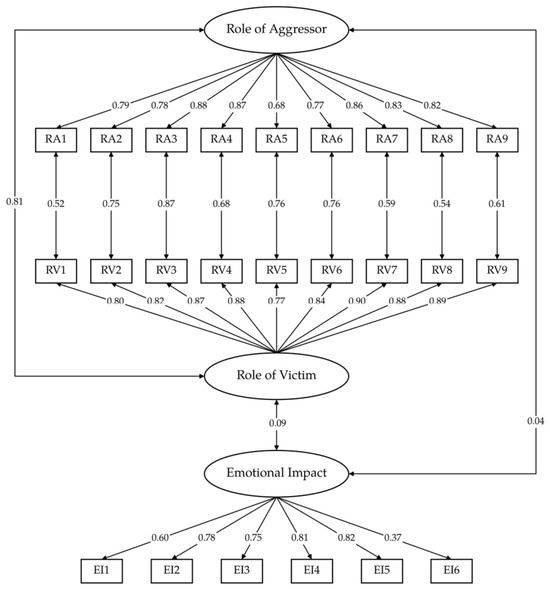
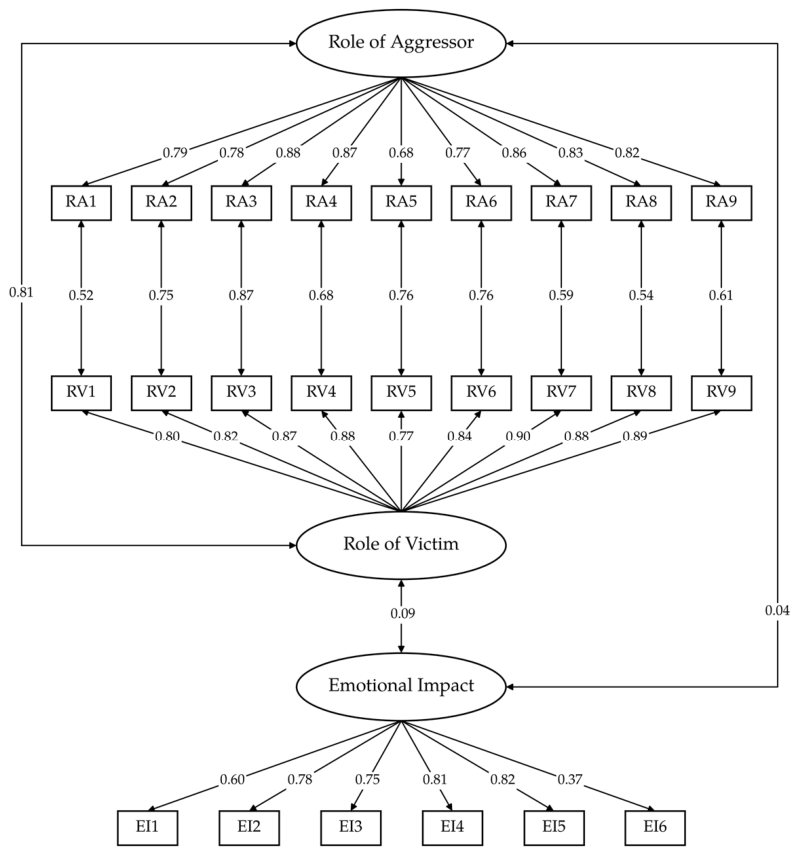

Disclaimer/Publisher’s Note: The statements, opinions and data contained in all publications are solely those of the individual author(s) and contributor(s) and not of MDPI and/or the editor(s). MDPI and/or the editor(s) disclaim responsibility for any injury to people or property resulting from any ideas, methods, instructions or products referred to in the content. |
© 2026 by the authors. Published by MDPI on behalf of the Spanish Scientific Society for Research and Training in Health Sciences. Licensee MDPI, Basel, Switzerland. This article is an open access article distributed under the terms and conditions of the Creative Commons Attribution (CC BY) license.