


Abstract
Background: Seasonal influenza remains a major public health challenge worldwide, causing significant morbidity each year and imposing substantial burdens on individuals, healthcare systems, and national economies. Vaccination is considered the most effective available strategy for prevention; however, uptake rates vary considerably across countries, with many failing to achieve the recommended coverage levels. The aim of this umbrella review is to systematically synthesize and critically appraise the existing evidence on healthcare professionals’ beliefs, attitudes, and behaviors regarding seasonal influenza vaccination. Methods: This umbrella review was conducted in accordance with the PRISMA 2020 statement. A literature search was conducted in PubMed, the Cochrane Library, and Google Scholar. The following search terms were used: beliefs, attitudes, behaviors, influenza vaccination, flu vaccine, healthcare professionals and primary healthcare. The inclusion criteria were as follows: (1) Reviews, (2) Published after 1 January 2000, (3) English language, (4) Healthcare professionals as the target-population. Results: Twenty-five studies met the selection criteria and were included in this review. Twelve out of 25 studies were systematic reviews. Globally, vaccination uptake remains below recommended levels, with reported coverage ranging from approximately 2% to 44% in several settings, while rates can exceed 90% in countries with mandatory vaccination policies. North America demonstrates the highest vaccination coverage, while the lowest coverage is reported in Africa and South America. Overall, low- and middle-income countries show significantly lower vaccination behavior compared with high-income countries. Attitudes and beliefs appear to shape vaccination behavior in high-income countries. The main driver of acceptance is perceived protection of oneself and family, whereas hesitancy is mainly driven by concerns about side effects and vaccine safety. Across studies, non-physician healthcare professionals consistently demonstrated lower influenza vaccine acceptance compared with physicians, while pediatricians and general practitioners were found to receive the influenza vaccine more frequently. In addition, younger physicians and those with fewer years of professional experience showed higher vaccination coverage and a greater likelihood of recommending influenza vaccination to patients. Conclusions: Vaccination coverage, worldwide, is lower than what is recommended by the World Health Organization. Healthcare professionals working in hospital settings tend to be vaccinated at a higher rate compared with those working in primary care or community-based healthcare settings. The recommendations that healthcare professionals give are influenced by whether they accept influenza vaccines themselves. Beliefs and attitudes seem to influence behavior in countries where structural barriers, such as limited access to primary healthcare and socio-economic status are absent.
1. Introduction
Influenza is a major public health concern responsible for seasonal epidemics worldwide, leading to significant morbidity, mortality, and economic burden [1,2,3,4,5,6,7,8,9,10,11,12,13]. Seasonal vaccination remains the most effective preventive strategy, reducing disease severity, transmission, and pressure on healthcare systems [3,4].
Healthcare professionals play a critical role in influenza prevention. Vaccination among this population contributes not only to self-protection but also to the protection of vulnerable patients, including the elderly, immunocompromised individuals, and young children. Furthermore, high vaccination coverage among healthcare personnel is essential for preventing nosocomial outbreaks and maintaining healthcare system functionality, particularly during periods of increased demand [5,14].
In addition, healthcare professionals strongly influence vaccination uptake in the general population through their recommendations and role modelling. Evidence suggests that individuals are more likely to accept vaccination when it is recommended by trusted healthcare providers [5]. Therefore, low vaccination coverage among healthcare professionals may negatively impact public confidence and overall vaccination rates.
Despite the well-documented benefits of influenza vaccination, uptake among healthcare professionals remains suboptimal across regions and professional groups. Barriers such as concerns about vaccine safety and effectiveness, misconceptions, and structural limitations continue to affect vaccination behavior [14,15]. In the context of pandemic preparedness, ensuring adequately protected and trained healthcare personnel is of critical importance for maintaining healthcare system resilience and response capacity.
Although a substantial body of systematic and narrative reviews has examined influenza vaccination uptake among healthcare professionals [16,17], the available evidence remains fragmented across regions, professional subgroups, and conceptual frameworks. Individual reviews typically focus on specific countries, income settings, or professional categories, limiting the ability to derive a coherent global interpretation of beliefs, attitudes, and behaviors. Moreover, the relative contribution of behavioral determinants versus structural and policy-related factors remains inconsistently reported across reviews [18,19]. To address these gaps, the present umbrella review synthesizes evidence from existing reviews to provide a comprehensive, global-level overview of healthcare professionals’ beliefs, attitudes, and behaviors regarding seasonal influenza vaccination. By integrating findings across regions, professional groups, and methodological approaches, this review aims to identify consistent patterns, highlight contextual differences, and delineate evidence gaps relevant to infection prevention strategies and vaccination policy design.
The aim of this umbrella review is to synthesize existing evidence on healthcare professionals’ beliefs, attitudes, and behaviors regarding seasonal influenza vaccination, and to identify key determinants influencing vaccination uptake across different regions and professional groups.
2. Materials and Methods
This umbrella review follows the PRISMA 2020 statement. A literature search was conducted in three databases: PubMed, Cochrane Library, and Google Scholar. These databases were selected due to their extensive coverage of biomedical and public health literature, ensuring comprehensive retrieval of relevant review-level evidence. The search was performed in December 2025 using specific keywords combined with Boolean operators and asterisks, to ensure comprehensive retrieval of relevant studies. The search query used is the following: (belief* OR attitud* OR behav*) AND (“influenza vaccin*” OR “flu vaccin*”) AND (health OR healthcare OR “health care”).
In this review, the term “healthcare professionals” refers to physicians, nurses, pharmacists, and other health-related personnel (e.g., allied healthcare professionals and administrative staff within healthcare settings) who are involved either directly or indirectly in patient care and public health activities.
Based on the search results, articles that met specific criteria were selected to better address the objectives of the present review. The inclusion criteria were as follows:
- (1)
- Articles must be reviews.
- (2)
- Articles must have been published after the following date: 1 January 2000.
- (3)
- The language of the full text of articles must be English.
- (4)
- Article should focus on a population of healthcare professionals and record the beliefs, attitudes, and behaviors towards influenza vaccination.
Two reviewers independently screened titles, abstracts and full texts for eligibility and extracted data from included reviews. Any disagreements were resolved by consensus. A protocol was not registered, as no formal requirement exists for umbrella reviews; however, methodological transparency was ensured through adherence to PRISMA 2020 guidelines.
For Google Scholar, the search was conducted using the same query terms, screening the first 200 results sorted by relevance. This approach was applied to enhance the sensitivity of the search and to capture potentially relevant reviews not indexed in traditional databases. In addition, the reference lists of eligible reviews were hand-searched to identify further relevant studies. Reviews were selected because they summarize data from original studies and can provide a more comprehensive picture of the situation. The starting date for the search was set as 1 January 2000, as this date allows for a complete and thorough depiction of the situation. Articles with full text available in English were selected because English is the internationally recognized language and required for publication in major scientific journals.
Although the review targeted healthcare professionals, this population is described heterogeneously across the literature using multiple terms (e.g., healthcare workers, HCWs, health workers). To avoid missing eligible reviews due to terminological variability, automated exclusions were minimized and eligibility was confirmed through manual assessment. This broad and inclusive definition may introduce heterogeneity in the included populations, which should be considered when interpreting the findings. Finally, the inclusion of reviews focusing on healthcare professionals and describing their beliefs, attitudes, and behaviors towards influenza vaccination ensured alignment with the aims of this review. This approach enhances comparability across studies and strengthens the interpretability of the synthesized evidence.
3. Results
3.1. Selection and Characteristics of Included Studies
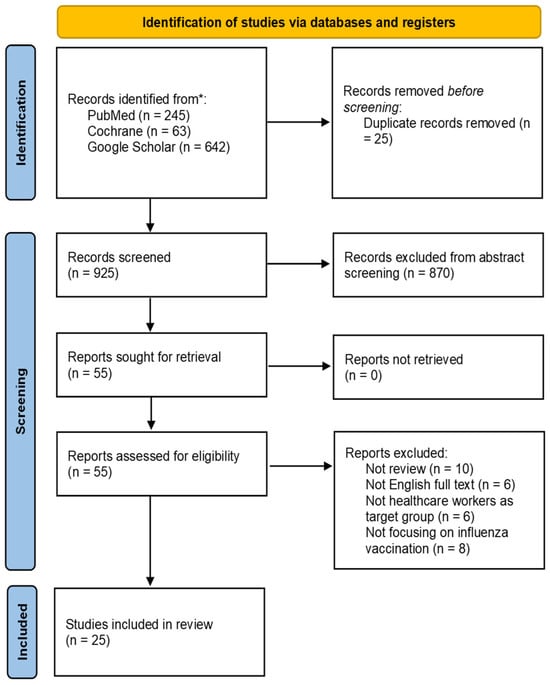
Following the PRISMA guidelines, a total of 950 records were initially identified (Figure 1). After removal of duplicates and initial screening of abstracts, 55 studies remained for further assessment. Following full-text screening, 25 studies fulfilling the selection criteria were finally included in this review. A substantial proportion of records were excluded at the full-text stage after verification that the target population did not meet the predefined inclusion criteria. The high number of exclusions observed during the PRISMA flow diagram reflects the methodological decision to apply a sensitive search strategy.
Figure 1.
PRISMA flow diagram. * Records were identified from PubMed, Cochrane Library, and Google Scholar.
Regarding risk of bias, out of the 12 systematic reviews assessed for quality using the AMSTAR 2 checklist, 1 was ranked as high quality, 4 as moderate quality, 5 as low quality and 2 as very low quality. The remaining 13 narrative reviews were not formally assessed using AMSTAR 2 and were considered descriptive in nature.
In the following pages, a detailed table with the characteristics of the 25 studies included in this review is presented (Table 1). Authors, publication date, region, health profession, aim, materials and methods and beliefs, attitudes and behaviors regarding seasonal influenza vaccination were collected for each study and are presented in Table 1. The included studies are presented in chronological order based on publication year.
Table 1.
Characteristics of included studies.
3.2. Materials and Methods Used for Data Collection in Included Studies
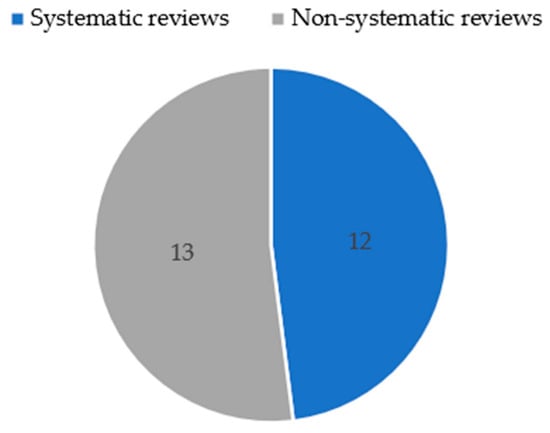
This section presents the methodological tools, main design elements, and theoretical models used in the 25 studies included in this umbrella review, in order to provide a clearer understanding of their design and methodological approaches. Twelve of the 25 included studies were systematic reviews (Figure 2). All systematic reviews followed the PRISMA 2020 guidelines. Most studies conducted structured searches in major scientific databases, with MEDLINE being the most frequently used source; specifically, 20 studies retrieved data from this database. Only two studies incorporated sources from the so-called “grey literature” [27,34]. All studies aimed to document the beliefs, attitudes, and behaviors of healthcare professionals, as well as the factors influencing them. However, only two studies applied a specific theoretical framework, namely the Health Belief Model [21,37].
Figure 2.
Distribution of included reviews by design.
3.3. Knowledge, Attitudes, Beliefs and Behaviors of Healthcare Professionals Around the World
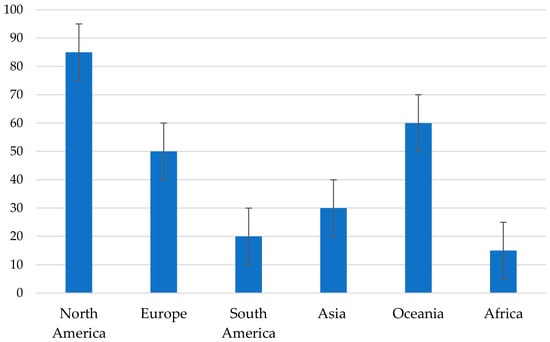
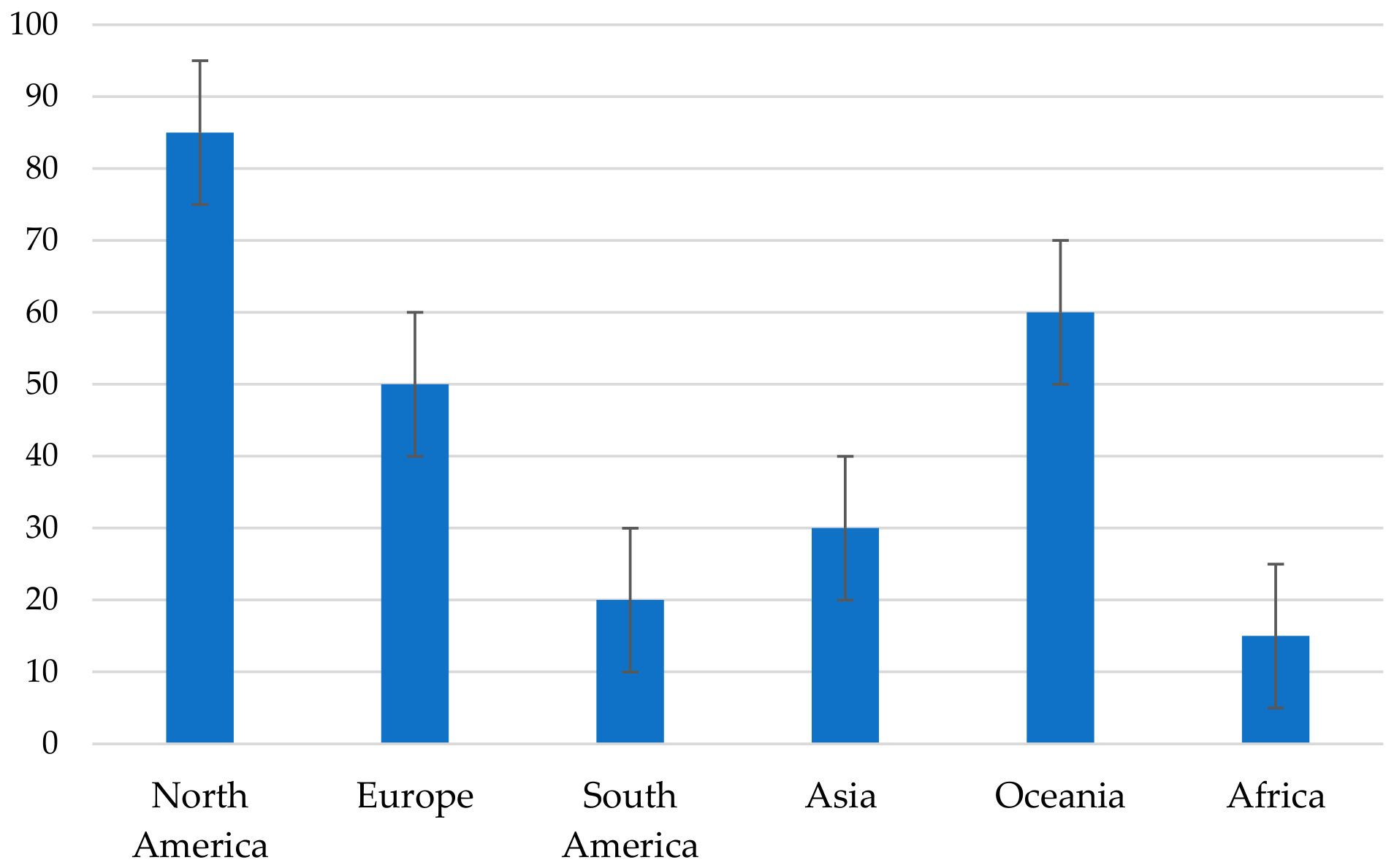
The percentage of healthcare professionals across all continents who accept influenza vaccination shows marked variation (Figure 3). Across the included reviews, reported uptake ranges from approximately 2–44% in several settings without mandates, with pooled estimates around 40% globally, while coverage can exceed 90% where mandatory policies are implemented [17,31,39]. The vaccination behavior of healthcare professionals appears to influence their recommendations, as it is observed that their advice regarding vaccination of the general population often aligns with whether they themselves accept influenza vaccination or not. Regardless of what the exact vaccination coverage rates are, in all continents these rates are significantly lower than the recommended, desirable levels.
Figure 3.
Percentage of vaccination coverage in each continent.
Regarding the beliefs and attitudes of healthcare professionals, it appears that they influence the formation of both the intention to vaccinate and the final vaccination behavior. The strength of this influence seems to be greater in developed countries and weaker in developing countries due to the lack of access to healthcare services in developing countries. Beliefs about protecting oneself and one’s family from the influenza virus were the most reported factors positively influencing vaccine acceptance (Table 2). Additionally, attitudes supporting the effectiveness of the vaccine in preventing influenza transmission were also factors leading to acceptance. The two main barriers leading to non-acceptance were perceptions that influenza vaccines cause adverse side effects, making them unsafe, and beliefs that influenza vaccines are ineffective and unnecessary (Table 2). Although the included reviews consistently report similar determinants, the relative weighting of these factors cannot be quantitatively assessed due to the heterogeneity of reporting and the lack of standardized metrics across studies. However, based on the frequency of reporting across reviews, perceived protection (of self and family) and concerns about vaccine safety emerge as the most consistently identified determinants, whereas other factors appear to be less frequently reported.
Table 2.
Key attitudes and beliefs influencing vaccination acceptance and hesitancy.
3.4. Differences Identified Among Healthcare Professionals
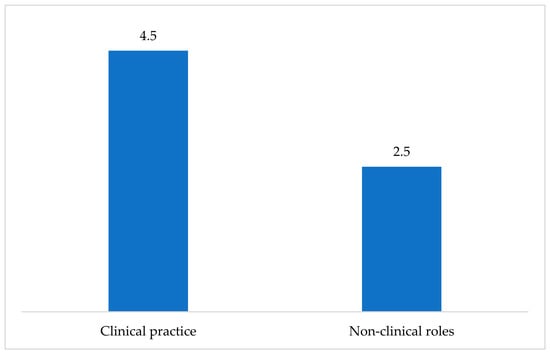
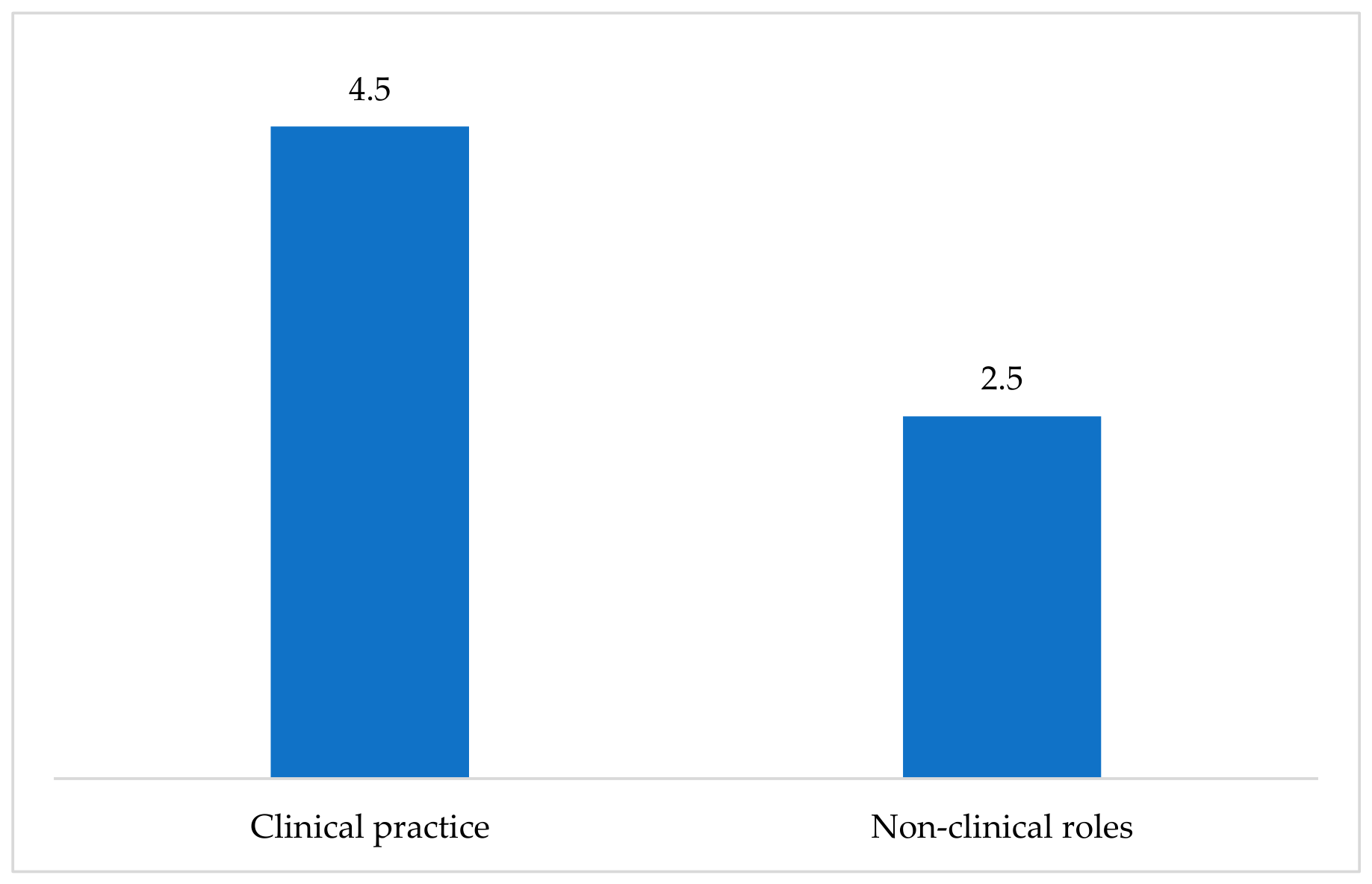
The intention to vaccinate and actual influenza vaccination coverage appear to be higher among healthcare professionals working in clinical practice compared with those in non-clinical roles (Figure 3 and Figure 4). In contrast, those working in primary healthcare settings, with the exception of general practitioners, tend to demonstrate lower vaccination intention and coverage than expected.
Figure 4.
Comparison of influenza vaccination acceptance (%) between healthcare professionals in clinical and non-clinical roles. The y-axis represents percentage of vaccination acceptance.
With regard to age and professional experience, younger healthcare professionals with fewer years of work experience show a higher likelihood of intending to be vaccinated, ultimately receiving the vaccine, and recommending vaccination to their patients, compared with older and more experienced professionals.
Overall, the findings of this umbrella review indicate considerable variability in influenza vaccination uptake among healthcare professionals, influenced by professional role, specialty, and healthcare setting. Physicians generally demonstrate higher vaccination intention, coverage, and frequency of recommending influenza vaccination compared with other healthcare professionals. Among medical specialties, pediatricians and general practitioners were more frequently reported as having higher vaccination uptake compared with other specialties across several included reviews [41,42]. These findings suggest that both professional role and specialty play a key role in shaping vaccination behavior.
4. Discussion
This umbrella review aimed to capture the prevailing situation regarding the knowledge, beliefs, attitudes, and behaviors of professionals in healthcare concerning the acceptance or refusal of the influenza vaccination. Through the review, a limited availability of data was observed from many low- and middle-income countries in the continents of South America and Africa, as well as some low- and middle-income countries in Asia. This is also evident in other research efforts in the available literature and may be due to insufficient record-keeping observed in most countries of these continents, and the limited resources for the epidemiological investigation of influenza, because these resources are allocated to other, more significant and life-threatening health issues that exist in each respective region [43,44].
Regarding the vaccination behavior of healthcare professionals, the highest vaccination coverage is observed in North America. This finding is also consistent with other studies [45,46]. One of the key factors contributing to higher vaccination coverage in this region is the implementation of mandatory vaccination policies for healthcare professionals in several U.S. states and in Canada. While such policies may raise considerations related to individual autonomy and may be associated with varying levels of hesitancy or public debate, evidence consistently indicates that they are highly effective in achieving and sustaining high vaccination coverage among healthcare professionals [39,47]. Policy and implementation considerations are summarized in Section 4.1.
In addition to mandatory vaccination policies, structural factors such as employer-based vaccine provision and cost coverage play a critical role in shaping vaccination uptake among healthcare professionals. In several high-income settings, including the United States and Canada, influenza vaccination is often offered free of charge and may be linked to occupational requirements, thereby reducing financial and logistical barriers. This contrasts with lower-resource settings, where vaccine cost, availability, and access remain important limiting factors. Therefore, differences in vaccination uptake across regions cannot be attributed solely to beliefs and attitudes but also to structural and policy-related determinants [39,46,47].
In contrast, the lowest influenza vaccination coverage among healthcare professionals is observed primarily in African countries and, subsequently, in South American countries, as is also shown by other researchers [48,49,50]. These countries are, mostly, low- and middle-income countries. The availability of resources to meet health needs is limited and primary healthcare services are underdeveloped. Moreover, limited healthcare workforce and urgent health needs essential for survival, lead to substantial gaps in the recording of influenza cases and vaccinations, as well as significant difficulties regarding the cost coverage of vaccines, their availability, and access. As a result, the epidemiological data available for these regions are limited. Nevertheless, low vaccination coverage is consistently reported, which further complicates the public health situation in these areas [51,52,53].
Influenza vaccination coverage among healthcare professionals in Europe and Oceania is similar. Lower than North America’s, but comparatively higher than Africa’s and South America’s [54,55,56,57]. In Europe, as in Oceania, there are no laws mandating influenza vaccination. For this reason, the guidelines concerning the desired vaccination levels for healthcare professionals serve as recommendations rather than obligations. This provides flexibility and freedom of choice; however, it comes at a cost in terms of achieving high levels of vaccination coverage [58,59,60].
Regarding Asia, influenza vaccination coverage among healthcare professionals shows the greatest variability, as it consists of both low- or middle-income and high-income countries [58,61]. Vaccination coverage is higher than South America’s but lower compared to Oceania’s and Europe’s. The Middle East region has the higher vaccination coverage when compared to other countries of Asia. This finding is also reflected in other research efforts [62,63,64].
Overall, the vaccination behavior of healthcare professionals for influenza is lower than recommended levels. This pattern is observed across all regions. In areas where income is lower, vaccination behavior is even more limited [65,66]. It seems that socioeconomic conditions are important in covering health needs. The inability to cover the cost of healthcare services and the deficiencies in primary healthcare limit access to primary healthcare services. Instead, the emphasis is placed on urgent issues necessary for human survival. As a result, priorities are shaped in such a way that certain public health needs—such as influenza vaccination—are overlooked, even among healthcare professionals [67,68,69,70].
Several studies attempt to document knowledge, beliefs, and attitudes to approach the factors shaping behavior [71,72,73]. In low- or middle-income regions, a divergence is observed between attitudes, beliefs and actual behavior, reducing their usefulness in both predicting and shaping behavior [71,74]. Limited vaccine availability, cost, and lack of access may all contribute to low vaccination coverage. For this reason, although knowledge, attitudes, beliefs, and intention to vaccinate support vaccination behavior, the functional barriers mentioned earlier are responsible for preventing attitudes and beliefs from being reflected in behavior as well as in recommendations to the general population [71,75,76].
Beyond structural and contextual determinants, temporal factors may also influence vaccination attitudes and behaviors. Although this umbrella review did not perform a formal temporal stratification of studies, some evidence suggests that the COVID-19 pandemic has influenced healthcare professionals’ attitudes toward vaccination [16,17]. Studies conducted during or after the pandemic indicate increased awareness of infectious disease risks and, in some settings, improved vaccination uptake. However, this effect appears to be heterogeneous and context-dependent, with other studies reporting persistent hesitancy driven by safety concerns and vaccine fatigue. Given that review articles inherently include data collected prior to publication, the extent of post-pandemic shifts should be interpreted with caution.
Within this context, consistent with the findings presented in the Results section, the most frequently reported facilitators of influenza vaccination among healthcare professionals include perceived protection of oneself and family, which strongly motivates both vaccine uptake and recommendation to patients [66,77]. They also report the belief that vaccines are an effective method for preventing influenza and infections in general [78,79]. Overall, a sense of immediate risk to oneself and to close family members leads to quicker compliance with the guidelines [77]. Moreover, confidence in vaccine effectiveness is strongly associated with both personal uptake and the likelihood of recommending vaccination to patients [79].
As for the attitudes and beliefs that act as barriers and lead healthcare professionals to refuse influenza vaccination, the perception of risk prevents individuals from undergoing that intervention, regardless of their level of knowledge about its mechanisms of action [80,81]. Another barrier often mentioned is the belief that influenza vaccines are ineffective in preventing the transmission of the influenza virus, and therefore, do not need to be administered. In contrast to beliefs and attitudes supporting effectiveness, when an intervention is perceived as ineffective, the following question naturally arises: “Why should I undergo or recommend this intervention?” Consequently, individuals who do not consider influenza vaccines effective do not believe it is necessary to receive or recommend them [82,83].
With regard to the differences observed among various healthcare professionals, those who are actively engaged in clinical practice and come into daily contact with patients tend to think more about protecting themselves and their patients [41]. In contrast, healthcare professionals in administrative roles have much less frequent contact with patients. For this reason, having reduced exposure to patients, it is reasonable that they exhibit comparatively lower vaccination intention and behavior [84].
Regarding the different specialties among primary healthcare professionals, it was observed that vaccine acceptance is higher among medical professionals compared with other healthcare professionals. One explanation is the variation in knowledge between physicians and nurses or other professionals concerning the mechanisms of action of influenza vaccines [85]. Physicians, having received the most specialized training among healthcare professionals, are better able to understand how influenza vaccines work, the process of immunization, the duration of protection, and the need for booster doses. As a result, they are more likely to accept, receive, and recommend influenza vaccination [86].
Another factor contributing to higher vaccination intention and coverage among healthcare physicians is their role as examples of healthy and protective behaviors in the eyes of the public. The general population relies on physicians when making health-related decisions [87]. Physicians can influence healthcare users through their own behavior. For this reason, by considering both physicians’ specialized knowledge about influenza vaccines and their responsibility as healthcare role models, the comparatively higher rates of vaccination intention, coverage, and recommendation observed among physicians can be explained [88,89,90]. The highest rates of vaccination coverage and frequency of vaccine recommendation are observed in the specialties of pediatrics and general medicine [41,42].
The findings of this umbrella review support several actionable strategies to increase influenza vaccination coverage among healthcare professionals and strengthen downstream effects on patient uptake.
4.1. Implications for Public Health Policy and Practice
Based on the findings of this umbrella review, several practical implications for public health policy and practice can be identified:
- Communication and role modelling: Vaccinated healthcare professionals are more likely to recommend vaccination to patients, reinforcing their role as trusted role models and amplifying impact at the population level [27,29,38].
- Targeted education: Interventions addressing misconceptions about vaccine safety and effectiveness can increase uptake, particularly among non-physician healthcare professionals, where acceptance is typically lower [22,41,79].
- Convenient access: On-site and free-of-charge vaccination within healthcare facilities improves uptake, especially in settings with lower baseline coverage [35,54].
- Mandates and governance: Mandatory vaccination policies are consistently associated with the highest coverage, often exceeding 90%, compared with voluntary programs [39,46,47].
Key strengths of this umbrella review include the comprehensive literature search, the inclusion of high-level evidence from systematic reviews and meta-analyses, and the global synthesis of behavioral determinants across regions and professional groups.
A further methodological limitation relates to the potential overlap of primary studies across the included reviews. Given that umbrella reviews synthesize evidence from multiple reviews, such overlap is likely [20]. The absence of a formal overlap assessment (e.g., corrected covered area) may result in double-counting of evidence and potential overrepresentation of certain findings.
4.2. Limitations
This umbrella review has several limitations that should be considered when interpreting the findings. A key limitation relates to the methodological heterogeneity of the included studies, as the sample comprised both systematic and non-systematic reviews. Systematic reviews, which follow predefined protocols and standardized methodological frameworks, are generally considered to provide higher-quality evidence [20]. However, most of the systematic reviews included in this umbrella review were assessed as being of moderate or low methodological quality. In contrast, narrative reviews tend to be more inclusive but are not subject to the same level of methodological rigor, which may affect the consistency and strength of the synthesized evidence. Taken together, these factors may have influenced the overall strength and reliability of the findings [20].
Remaining within the methodological considerations, an additional limitation relates to the heterogeneity of the studies included in the reviews examined in this umbrella review. Different research designs provide varying levels of evidence strength, and the inclusion of diverse study types may affect the overall robustness of the findings.
Furthermore, the inclusion of systematic reviews of varying methodological quality, as assessed using the AMSTAR 2 checklist, may influence the strength and reliability of the synthesized evidence. Therefore, the findings should be interpreted with caution, particularly where conclusions are derived from reviews rated as low or very low quality.
A further limitation concerns the variability in how beliefs, attitudes, and intentions toward influenza vaccination are measured and reported. While vaccination behavior can be more directly reflected through coverage rates and recommendations, underlying cognitive and behavioral determinants are influenced by multiple contextual factors and assessed using heterogeneous methods. This variability limits comparability across studies and may reduce the overall consistency and interpretability of the findings.
4.3. Future Research Directions
Future research should address several important gaps identified in this umbrella review, with the aim of advancing understanding of beliefs, attitudes, and behaviors toward seasonal influenza vaccination among healthcare professionals. In particular, there is a notable lack of data from low- and middle-income regions, highlighting the need for increased research activity in these settings to support more robust and generalizable conclusions.
In addition, future studies should move beyond treating healthcare professionals as a homogeneous group and instead focus on differences between specific professional subgroups, such as physicians, nurses, pharmacists, and community health workers. A more granular approach would allow for a better understanding of subgroup-specific determinants of vaccination behavior and support the development of more targeted and effective interventions.
5. Conclusions
Considering the evidence synthesized in this umbrella review, influenza vaccination uptake among healthcare professionals remains suboptimal across most regions. The highest coverage levels are observed in North America, likely reflecting the impact of mandatory vaccination policies, whereas the lowest levels are reported in African and other low- and middle-income regions, where resource constraints and limited access to vaccines remain key barriers.
Vaccination behavior varies across professional groups. Higher uptake is generally observed among those working in clinical and hospital settings, as well as among younger professionals with fewer years of experience. Some evidence suggests that pediatricians and general practitioners may demonstrate higher vaccination uptake compared with other specialties, although this finding is not consistently reported across all studies. In contrast, other primary healthcare professionals tend to exhibit lower vaccination levels.
Vaccination acceptance is strongly influenced by knowledge, attitudes, and beliefs. Perceived protection for oneself and family is a key driver of vaccine uptake, whereas concerns about safety and adverse effects act as major barriers. Importantly, healthcare professionals play a critical role in shaping public attitudes, as their recommendations are closely linked to their own vaccination behavior and are highly influential within the general population.
Strengthening influenza vaccination uptake among healthcare professionals is therefore essential not only for individual and patient protection, but also for improving public confidence and enhancing vaccination coverage at the population level.
Author Contributions
Conceptualization, I.K., N.M., D.K. and A.L.; methodology, I.K., N.S., E.-G.K. and A.L.; software, not applicable; validation, I.K., E.-G.K., N.S., N.M., D.K. and A.L.; formal analysis, E.-G.K.; investigation, I.K., N.S. and A.-D.K.; resources, I.K.; data curation, I.K., N.S. and E.-G.K.; writing—original draft preparation, I.K. and A.-D.K.; writing—review and editing, E.-G.K., N.S., A.-D.K., N.M., D.K. and A.L.; visualization, I.K. and E.-G.K.; supervision, N.M., D.K. and A.L.; project administration, I.K.; funding acquisition, not applicable. All authors have read and agreed to the published version of the manuscript.
Funding
This research received no external funding.
Data Availability Statement
The study is based on previously published data, which are cited throughout the manuscript. No new data was generated.
Acknowledgments
The authors would like to thank their colleagues at the Laboratory of Hygiene & Epidemiology, School of Public Health, University of West Attica, and the Laboratory of Clinical Pharmacology, Faculty of Life Sciences, School of Medicine, Aristotle University of Thessaloniki, for their support during this work. The authors have reviewed and edited the content and take full responsibility for the final version of the manuscript.
Conflicts of Interest
The authors declare no conflicts of interest.
References
- Orenstein, W.A.; Ahmed, R. Simply Put: Vaccination Saves Lives. Proc. Natl. Acad. Sci. USA 2017, 114, 4031. [Google Scholar] [CrossRef] [Scilit] [PubMed]
- Zhang, J.; Nian, X.; Li, X.; Huang, S.; Duan, K.; Li, X.; Yang, X. The Epidemiology of Influenza and the Associated Vaccines Development in China: A Review. Vaccines 2022, 10, 1873. [Google Scholar] [CrossRef] [Scilit] [PubMed]
- WHO. Vaccines and Immunization. Available online: https://www.who.int/health-topics/vaccines-and-immunization (accessed on 29 August 2024).
- Nandi, A.; Shet, A. Why Vaccines Matter: Understanding the Broader Health, Economic, and Child Development Benefits of Routine Vaccination. Hum. Vaccines Immunother. 2020, 16, 1900–1904. [Google Scholar] [CrossRef] [Scilit] [PubMed]
- Teloniatis, S.; Tzortzi, A.; Behrakis, P. Seasonal Influenza Vaccination Coverage in Greece in 2009 and 2014. Pneumon 2017, 30, 41–48. [Google Scholar]
- Dardalas, I.; Pourzitaki, C.; Manomenidis, G.; Malliou, F.; Galanis, P.; Papazisis, G.; Kouvelas, D.; Bellali, T. Predictors of Influenza Vaccination among Elderly: A Cross-Sectional Survey in Greece. Aging Clin. Exp. Res. 2020, 32, 1821–1828. [Google Scholar] [CrossRef] [Scilit] [PubMed]
- Ryu, S.; Cowling, B.J. Human Influenza Epidemiology. Cold Spring Harb. Perspect. Med. 2021, 11, a038356. [Google Scholar] [CrossRef] [Scilit] [PubMed]
- Boktor, S.W.; Hafner, J.W. Influenza. In StatPearls; StatPearls Publishing: Treasure Island, FL, USA, 2024. [Google Scholar]
- WHO. Influenza (Seasonal). Available online: https://www.who.int/news-room/fact-sheets/detail/influenza-(seasonal) (accessed on 29 August 2024).
- Levin, P.J.; Gebbie, E.N.; Qureshi, K. Can the Health-Care System Meet the Challenge of Pandemic Flu? Planning, Ethical, and Workforce Considerations. Public Health Rep. 2007, 122, 573–578. [Google Scholar] [CrossRef] [Scilit] [PubMed]
- Fischer, W.A.; Gong, M.; Bhagwanjee, S.; Sevransky, J. Global Burden of Influenza: Contributions from Resource Limited and Low-Income Settings. Glob. Heart 2014, 9, 325–336. [Google Scholar] [CrossRef] [Scilit] [PubMed]
- de Courville, C.; Cadarette, S.M.; Wissinger, E.; Alvarez, F.P. The Economic Burden of Influenza among Adults Aged 18 to 64: A Systematic Literature Review. Influenza Other Respir. Viruses 2022, 16, 376–385. [Google Scholar] [CrossRef] [Scilit] [PubMed]
- Romanelli, R.J.; Cabling, M.; Marciniak-Nuqui, Z.; Marjanovic, S.; Morris, S.; Dufresne, E.; Yerushalmi, E. The Societal and Indirect Economic Burden of Seasonal Influenza in the United Kingdom. Rand Health Q. 2023, 10, 2. [Google Scholar] [CrossRef] [Scilit] [PubMed]
- Alasmari, A.; Larson, H.J.; Karafillakis, E. A Mixed Methods Study of Health Care Professionals’ Attitudes towards Vaccination in 15 Countries. Vaccine X 2022, 12, 100219. [Google Scholar] [CrossRef] [Scilit] [PubMed]
- Taskou, C.; Sarantaki, A.; Beloukas, A.; Georgakopoulou, V.Ε.; Daskalakis, G.; Papalexis, P.; Lykeridou, A. Knowledge and Attitudes of Healthcare Professionals Regarding Perinatal Influenza Vaccination during the COVID-19 Pandemic. Vaccines 2023, 11, 168. [Google Scholar] [CrossRef] [Scilit] [PubMed]
- Dardas, L.A.; Al-Leimon, O.; Jaber, A.R.; Saadeh, M.; Al-Leimon, A.; Al-Hurani, A.; Jaber, A.-R.; Aziziye, O.; Al-salieby, F.; Aljahalin, M.; et al. Flu Shots Unveiled: A Global Systematic Review of Healthcare Providers’ Uptake of, Perceptions, and Attitudes toward Influenza Vaccination. Vaccines 2023, 11, 1760. [Google Scholar] [CrossRef] [Scilit] [PubMed]
- Fan, J.; Xu, S.; Liu, Y.; Ma, X.; Cao, J.; Fan, C.; Bao, S. Influenza Vaccination Rates among Healthcare Workers: A Systematic Review and Meta-Analysis Investigating Influencing Factors. Front. Public Health 2023, 11, 1295464. [Google Scholar] [CrossRef] [Scilit] [PubMed]
- Dini, G.; Toletone, A.; Sticchi, L.; Orsi, A.; Bragazzi, N.L.; Durando, P. Influenza Vaccination in Healthcare Workers: A Comprehensive Critical Appraisal of the Literature. Hum. Vaccines Immunother. 2017, 14, 772. [Google Scholar] [CrossRef] [Scilit] [PubMed]
- Hall, C.M.; Northam, H.; Webster, A.; Strickland, K. Determinants of Seasonal Influenza Vaccination Hesitancy among Healthcare Personnel: An Integrative Review. J. Clin. Nurs. 2022, 31, 2112–2124. [Google Scholar] [CrossRef] [Scilit] [PubMed]
- del Aguilar-Díaz, F.C.; Jiménez-Corona, M.E.; Ponce-de-León-Rosales, S. Influenza Vaccine and Healthcare Workers. Arch. Med. Res. 2011, 42, 652–657. [Google Scholar] [CrossRef] [Scilit] [PubMed]
- Alalag, Z.A.; Al-Jumaili, A.A.; Al-Hamadani, F.Y. A Comprehensive Review of Drivers Influencing Flu Vaccine Acceptance in the Middle East over the Last Six Years: Using Health Belief Model. Int. J. Pharm. Pract. 2022, 30, 5–16. [Google Scholar] [CrossRef] [Scilit] [PubMed]
- Alfouzan, N.; Almujil, A.; Demyati, E.; AlOtaiby, S. Motivators and Barriers for Seasonal Influenza Vaccination among Healthcare Workers in Gulf Cooperation Council Countries: A Systematic Review. IJMDC 2022, 6, 882–890. [Google Scholar] [CrossRef] [Scilit]
- Bellia, C.; Setbon, M.; Zylberman, P.; Flahault, A. Healthcare Worker Compliance with Seasonal and Pandemic Influenza Vaccination. Influenza Other Respir. Viruses 2013, 7, 97–104. [Google Scholar] [CrossRef] [Scilit] [PubMed]
- Bish, A.; Yardley, L.; Nicoll, A.; Michie, S. Factors Associated with Uptake of Vaccination against Pandemic Influenza: A Systematic Review. Vaccine 2011, 29, 6472–6484. [Google Scholar] [CrossRef] [Scilit] [PubMed]
- Dang, A.; Sharma, J. Assessing the Low Influenza Vaccination Coverage Rate Among Healthcare Personnel in India: A Review of Obstacles, Beliefs, and Strategies. Value Health Reg. Issues 2020, 21, 100–104. [Google Scholar] [CrossRef] [Scilit] [PubMed]
- Diomidous, M.; Isaakidou, M. Factors Influencing the Implementation of Flu Vaccination in Healthcare Professionals: Pros and Cons. Mater. Sociomed. 2020, 32, 307–314. [Google Scholar] [CrossRef] [Scilit] [PubMed]
- Glenton, C.; Carlsen, B.; Lewin, S.; Wennekes, M.D.; Winje, B.A.; Eilers, R.; VITAL Consortium. Healthcare Workers’ Perceptions and Experiences of Communicating with People over 50 Years of Age about Vaccination: A Qualitative Evidence Synthesis. Cochrane Database Syst. Rev. 2021, 2021, CD013706. [Google Scholar] [CrossRef] [Scilit]
- Guillari, A.; Polito, F.; Pucciarelli, G.; Serra, N.; Gargiulo, G.; Esposito, M.R.; Botti, S.; Rea, T.; Simeone, S. Influenza Vaccination and Healthcare Workers: Barriers and Predisposing Factors. Acta Biomed. 2021, 92, e2021004. [Google Scholar] [CrossRef] [Scilit] [PubMed]
- Herzog, R.; Álvarez-Pasquin, M.J.; Díaz, C.; Del Barrio, J.L.; Estrada, J.M.; Gil, Á. Are Healthcare Workers’ Intentions to Vaccinate Related to Their Knowledge, Beliefs and Attitudes? A Systematic Review. BMC Public Health 2013, 13, 154. [Google Scholar] [CrossRef] [Scilit] [PubMed]
- Hollmeyer, H.G.; Hayden, F.; Poland, G.; Buchholz, U. Influenza Vaccination of Health Care Workers in Hospitals—A Review of Studies on Attitudes and Predictors. Vaccine 2009, 27, 3935–3944. [Google Scholar] [CrossRef] [Scilit] [PubMed]
- Jędrzejek, M.J.; Mastalerz-Migas, A. Seasonal Influenza Vaccination of Healthcare Workers: A Narrative Review. Int. J. Occup. Med. Env. Health 2022, 35, 127–139. [Google Scholar] [CrossRef] [Scilit] [PubMed]
- Lorenc, T.; Marshall, D.; Wright, K.; Sutcliffe, K.; Sowden, A. Seasonal Influenza Vaccination of Healthcare Workers: Systematic Review of Qualitative Evidence. BMC Health Serv. Res. 2017, 17, 732. [Google Scholar] [CrossRef] [Scilit] [PubMed]
- Nowak, G.J.; Sheedy, K.; Bursey, K.; Smith, T.M.; Basket, M. Promoting Influenza Vaccination: Insights from a Qualitative Meta-Analysis of 14 Years of Influenza-Related Communications Research by U.S. Centers for Disease Control and Prevention (CDC). Vaccine 2015, 33, 2741–2756. [Google Scholar] [CrossRef] [Scilit] [PubMed]
- Prematunge, C.; Corace, K.; McCarthy, A.; Nair, R.C.; Pugsley, R.; Garber, G. Factors Influencing Pandemic Influenza Vaccination of Healthcare Workers—A Systematic Review. Vaccine 2012, 30, 4733–4743. [Google Scholar] [CrossRef] [Scilit] [PubMed]
- Seale, H.; Macintyre, C.R. Seasonal Influenza Vaccination in Australian Hospital Health Care Workers: A Review. Med. J. Aust. 2011, 195, 336–338. [Google Scholar] [CrossRef] [Scilit] [PubMed]
- Sheldenkar, A.; Lim, F.; Yung, C.F.; Lwin, M.O. Acceptance and Uptake of Influenza Vaccines in Asia: A Systematic Review. Vaccine 2019, 37, 4896–4905. [Google Scholar] [CrossRef] [Scilit] [PubMed]
- Silva, S.B.; de Souza, F.O.; Pinho, P.d.S.; Santos, D.V. Health Belief Model in Studies of Influenza Vaccination among Health Care Workers. Rev. Bras. Med. Trab. 2023, 21, e2022839. [Google Scholar] [CrossRef] [Scilit] [PubMed]
- Sydnor, E.; Perl, T.M. Healthcare Providers as Sources of Vaccine-Preventable Diseases. Vaccine 2014, 32, 4814–4822. [Google Scholar] [CrossRef] [Scilit] [PubMed]
- To, K.W.; Lai, A.; Lee, K.C.K.; Koh, D.; Lee, S.S. Increasing the Coverage of Influenza Vaccination in Healthcare Workers: Review of Challenges and Solutions. J. Hosp. Infect. 2016, 94, 133–142. [Google Scholar] [CrossRef] [Scilit] [PubMed]
- Waszkiewicz, M.; Wnuk, K.; Świtalski, J.; Augustynowicz, A. Knowledge, Attitudes, and Beliefs of Pharmacists Regarding Vaccinations against Influenza and Pneumococci―A Systematic Review. Hum. Vaccin. Immunother. 2025, 21, 2489889. [Google Scholar] [CrossRef] [Scilit] [PubMed]
- Christini, A.B.; Shutt, K.A.; Byers, K.E. Influenza Vaccination Rates and Motivators among Healthcare Worker Groups. Infect. Control Hosp. Epidemiol. 2007, 28, 171–177. [Google Scholar] [CrossRef] [Scilit] [PubMed]
- Alauzet, P.; Morand, A.; Mazenq, J.; Gaudart, J.; Bosdure, E.; Dubus, J.-C. Key Role of Pediatricians and Disease for Influenza Vaccination in Children with High-Risk Chronic Diseases. Eur. J. Pediatr. 2021, 180, 303–306. [Google Scholar] [CrossRef] [Scilit] [PubMed]
- National Research Council (US). The Epidemiological Transition in Africa: Are There Lessons from Asia? In The Continuing Epidemiological Transition in Sub-Saharan Africa: A Workshop Summary; National Academies Press: Washington, DC, USA, 2012. [Google Scholar]
- Sharma, S.; Verhagen, A.; Elkins, M.; Brismée, J.-M.; Fulk, G.D.; Taradaj, J.; Steen, L.; Jette, A.; Moore, A.; Stewart, A.; et al. Research from Low-Income and Middle-Income Countries Will Benefit Global Health and the Physiotherapy Profession, but It Requires Support. Int. J. Sports Phys. Ther. 2023, 18, 83948. [Google Scholar] [CrossRef] [Scilit] [PubMed]
- Nogareda, F.; Gharpure, R.; Contreras, M.; Velandia, M.; Pacis, C.L.; Chevez, A.E.; Azziz-Baumgartner, E.; Salas, D. Seasonal Influenza Vaccination in the Americas: Progress and Challenges during the COVID-19 Pandemic. Vaccine 2023, 41, 4554–4560. [Google Scholar] [CrossRef] [Scilit] [PubMed]
- Perl, T.M.; Talbot, T.R. Universal Influenza Vaccination Among Healthcare Personnel: Yes We Should. Open Forum Infect. Dis. 2019, 6, ofz096. [Google Scholar] [CrossRef] [Scilit] [PubMed]
- Gruben, V.; Siemieniuk, R.A.; McGeer, A. Health Care Workers, Mandatory Influenza Vaccination Policies and the Law. CMAJ Can. Med. Assoc. J. 2014, 186, 1076. [Google Scholar] [CrossRef] [Scilit] [PubMed]
- Chen, C.; Liu, X.; Yan, D.; Zhou, Y.; Ding, C.; Chen, L.; Lan, L.; Huang, C.; Jiang, D.; Zhang, X.; et al. Global Influenza Vaccination Rates and Factors Associated with Influenza Vaccination. Int. J. Infect. Dis. 2022, 125, 153–163. [Google Scholar] [CrossRef] [Scilit] [PubMed]
- González-Block, M.Á.; Gutiérrez-Calderón, E.; Pelcastre-Villafuerte, B.E.; Arroyo-Laguna, J.; Comes, Y.; Crocco, P.; Fachel-Leal, A.; Noboa, L.; Riva-Knauth, D.; Rodríguez-Zea, B.; et al. Influenza Vaccination Hesitancy in Five Countries of South America. Confidence, Complacency and Convenience as Determinants of Immunization Rates. PLoS ONE 2020, 15, e0243833. [Google Scholar] [CrossRef] [Scilit] [PubMed]
- 7th MENA-ISN Study Group; Awaidi, S.A.; Abusrewil, S.; AbuHasan, M.; Akcay, M.; Aksakal, F.N.; Bashir, U.; Elahmer, O.; Esteghamati, A.; Gahwagi, M.; et al. Influenza Vaccination Situation in Middle-East and North Africa Countries: Report of the 7th MENA Influenza Stakeholders Network (MENA-ISN). J. Infect. Public Health 2018, 11, 845. [Google Scholar] [CrossRef] [Scilit] [PubMed]
- González-Block, M.Á.; Portillo, S.P.D.; Laguna, J.A.; Comes, Y.; Crocco, P.; Fachel-Leal, A.; Noboa, L.; Knauth, D.R.; Rodríguez-Zea, B.; Ruoti, M.; et al. Barriers and Facilitators to Influenza Vaccination Observed by Officers of National Immunization Programs in South America Countries with Contrasting Coverage Rates. Cad. Saúde Pública 2022, 38, e00045721. [Google Scholar] [CrossRef] [Scilit] [PubMed]
- Kraigsley, A.M.; Moore, K.A.; Bolster, A.; Peters, M.; Richardson, D.; Arpey, M.; Sonnenberger, M.; McCarron, M.; Lambach, P.; Maltezou, H.C.; et al. Barriers and Activities to Implementing or Expanding Influenza Vaccination Programs in Low- and Middle-Income Countries: A Global Survey. Vaccine 2021, 39, 3419–3427. [Google Scholar] [CrossRef] [Scilit] [PubMed]
- Maltezou, H.C.; Theodoridou, K.; Tseroni, M.; Raftopoulos, V.; Bolster, A.; Kraigsley, A.; Bresee, J.; Lambach, P. Influenza Vaccination Policies for Health Workers in Low-Income and Middle-Income Countries: A Cross-Sectional Survey, January–March 2020. Vaccine 2020, 38, 7433–7439. [Google Scholar] [CrossRef] [Scilit] [PubMed]
- Schumacher, S.; Salmanton-García, J.; Liekweg, A.; Rolfes, M.; Seidel, D.; Mellinghoff, S.C.; Cornely, O.A. Increasing Influenza Vaccination Coverage in Healthcare Workers: Analysis of an Intensified on-Site Vaccination Campaign during the COVID-19 Pandemic. Infection 2023, 51, 1417. [Google Scholar] [CrossRef] [Scilit] [PubMed]
- Seale, H.; Leask, J.; MacIntyre, C.R. Attitudes amongst Australian Hospital Healthcare Workers towards Seasonal Influenza and Vaccination. Influenza Other Respir. Viruses 2010, 4, 41–46. [Google Scholar] [CrossRef] [Scilit] [PubMed]
- Squeri, R.; Pietro, A.D.; Fauci, V.L.; Genovese, C. Healthcare Workers’ Vaccination at European and Italian Level: A Narrative Review. Acta Bio Medica Atenei Parm. 2019, 90, 45. [Google Scholar] [CrossRef] [Scilit] [PubMed]
- Ward, K.; Seale, H.; Zwar, N.; Leask, J.; MacIntyre, C.R. Annual Influenza Vaccination: Coverage and Attitudes of Primary Care Staff in Australia. Influenza Other Respir. Viruses 2010, 5, 135. [Google Scholar] [CrossRef] [Scilit] [PubMed]
- Jennings, L.; Huang, Q.S.; Barr, I.; Lee, P.-I.; Kim, W.J.; Buchy, P.; Sanicas, M.; Mungall, B.A.; Chen, J. Literature Review of the Epidemiology of Influenza B Disease in 15 Countries in the Asia-Pacific Region. Influenza Other Respir. Viruses 2018, 12, 383. [Google Scholar] [CrossRef] [Scilit] [PubMed]
- de Lusignan, S.; Correa, A.; Ellis, J.; Pebody, R. Influenza Vaccination: In the UK and across Europe. Br. J. Gen. Pract. 2016, 66, 452. [Google Scholar] [CrossRef] [Scilit] [PubMed]
- Rizzo, C.; Rezza, G.; Ricciardi, W. Strategies in Recommending Influenza Vaccination in Europe and US. Hum. Vaccines Immunother. 2018, 14, 693. [Google Scholar] [CrossRef] [Scilit] [PubMed]
- Young, B.E.; Chen, M. Influenza in Temperate and Tropical Asia: A Review of Epidemiology and Vaccinology. Hum. Vaccines Immunother. 2020, 16, 1659–1667. [Google Scholar] [CrossRef] [Scilit] [PubMed]
- Abu-Gharbieh, E.; Fahmy, S.; Rasool, B.A.; Khan, S. Influenza Vaccination: Healthcare Workers Attitude in Three Middle East Countries. Int. J. Med. Sci. 2010, 7, 319. [Google Scholar] [CrossRef] [Scilit] [PubMed]
- Alsuhaibani, M. Barriers and Beliefs among Health-Care Workers Regarding Seasonal Influenza Vaccine in Al-Qassim Region, Saudi Arabia. Hum. Vaccines Immunother. 2019, 16, 313. [Google Scholar] [CrossRef] [Scilit] [PubMed]
- Awadalla, N.J.; Al-Musa, H.M.; Al-Musa, K.M.; Asiri, A.M.; Albariqi, A.A.; Majrashi, H.M.; Alasim, A.A.; Almuslah, A.S.; Alshehri, T.K.; AlFlan, M.A.; et al. Seasonal Influenza Vaccination among Primary Health Care Workers in Southwestern Saudi Arabia. Hum. Vaccin. Immunother. 2020, 16, 321–326. [Google Scholar] [CrossRef] [Scilit] [PubMed]
- Guerrero-Soler, M.; Gras-Valenti, P.; Platas-Abenza, G.; Sánchez-Payá, J.; Sanjuan-Quiles, Á.; Chico-Sánchez, P.; Preventive Medicine Vaccination Work Group. Impact of the COVID-19 Pandemic on Influenza Vaccination Coverage of Healthcare Personnel in Alicante, Spain. Vaccines 2024, 12, 370. [Google Scholar] [CrossRef] [Scilit] [PubMed]
- Scardina, G.; Ceccarelli, L.; Casigliani, V.; Mazzilli, S.; Napoletano, M.; Padovan, M.; Petillo, A.; Sironi, D.; Brilli, C.; Gattini, V.; et al. Evaluation of Flu Vaccination Coverage among Healthcare Workers during a 3 Years’ Study Period and Attitude towards Influenza and Potential COVID-19 Vaccination in the Context of the Pandemic. Vaccines 2021, 9, 769. [Google Scholar] [CrossRef] [Scilit] [PubMed]
- Calabrò, G.E.; Rumi, F.; Fallani, E.; Ricciardi, R.; Cicchetti, A. The Economic and Fiscal Impact of Influenza Vaccination for Health Care Workers in Italy. Vaccines 2022, 10, 1707. [Google Scholar] [CrossRef] [Scilit] [PubMed]
- Gaskin, C.M.; Woods, D.R.; Ghosh, S.; Watson, S.; Huber, L.R. The Effect of Income Disparities on Influenza Vaccination Coverage in the United States. Public Health Rep. 2023, 138, 85–90. [Google Scholar] [CrossRef] [Scilit] [PubMed]
- Liu, Y.; Liu, T.; Yao, M.; Kou, Z.; Li, R. Exploring Barriers to Influenza Vaccine Uptake and Recommendation among Healthcare Providers in the Community in China: A Qualitative Study. Hum. Vaccines Immunother. 2024, 20, 2352916. [Google Scholar] [CrossRef] [Scilit] [PubMed]
- Ott, J.J.; Breteler, J.K.; Tam, J.S.; Hutubessy, R.C.; Jit, M.; de Boer, M.R. Influenza Vaccines in Low and Middle Income Countries: A Systematic Review of Economic Evaluations. Hum. Vaccines Immunother. 2013, 9, 1500. [Google Scholar] [CrossRef] [Scilit] [PubMed]
- Dubé, È.; Farrands, A.; Lemaitre, T.; Boulianne, N.; Sauvageau, C.; Boucher, F.D.; Tapiero, B.; Quach, C.; Ouakki, M.; Gosselin, V.; et al. Overview of Knowledge, Attitudes, Beliefs, Vaccine Hesitancy and Vaccine Acceptance among Mothers of Infants in Quebec, Canada. Hum. Vaccin. Immunother. 2019, 15, 113–120. [Google Scholar] [CrossRef] [Scilit] [PubMed]
- Gualano, M.R.; Olivero, E.; Voglino, G.; Corezzi, M.; Rossello, P.; Vicentini, C.; Bert, F.; Siliquini, R. Knowledge, Attitudes and Beliefs towards Compulsory Vaccination: A Systematic Review. Hum. Vaccines Immunother. 2019, 15, 918. [Google Scholar] [CrossRef] [Scilit] [PubMed]
- Pelullo, C.P.; Polla, G.D.; Napolitano, F.; Giuseppe, G.D.; Angelillo, I.F. Healthcare Workers’ Knowledge, Attitudes, and Practices about Vaccinations: A Cross-Sectional Study in Italy. Vaccines 2020, 8, 148. [Google Scholar] [CrossRef] [Scilit] [PubMed]
- Puertas, E.B.; Velandia-Gonzalez, M.; Vulanovic, L.; Bayley, L.; Broome, K.; Ortiz, C.; Rise, N.; Antelo, M.V.; Rhoda, D.A. Concerns, Attitudes, and Intended Practices of Caribbean Healthcare Workers Concerning COVID-19 Vaccination: A Cross-Sectional Study. Lancet Reg. Health Am. 2022, 9, 100193. [Google Scholar] [CrossRef] [Scilit] [PubMed]
- Baral, P.; Ahmed, T.; Fernandez, P.A.; Peters, M.A.; Drouard, S.H.P.; Muhoza, P.; Mwinnyaa, G.; Mwansambo, C.; Nzelu, C.; Tassembedo, M.; et al. Vaccine Hesitancy among Healthcare Workers in Low- and Middle-Income Countries during the COVID-19 Pandemic: Results from Facility Surveys across Six Countries. PLoS ONE 2023, 18, e0288124. [Google Scholar] [CrossRef] [Scilit] [PubMed]
- Solís Arce, J.S.; Warren, S.S.; Meriggi, N.F.; Scacco, A.; McMurry, N.; Voors, M.; Syunyaev, G.; Malik, A.A.; Aboutajdine, S.; Adeojo, O.; et al. COVID-19 Vaccine Acceptance and Hesitancy in Low- and Middle-Income Countries. Nat. Med. 2021, 27, 1385–1394. [Google Scholar] [CrossRef] [Scilit] [PubMed]
- Corace, K.; Prematunge, C.; McCarthy, A.; Nair, R.C.; Roth, V.; Hayes, T.; Suh, K.N.; Balfour, L.; Garber, G. Predicting Influenza Vaccination Uptake among Health Care Workers: What Are the Key Motivators? Am. J. Infect. Control 2013, 41, 679–684. [Google Scholar] [CrossRef] [Scilit] [PubMed]
- Bellali, T.; Liamopoulou, P.; Karavasileiadou, S.; Almadani, N.; Galanis, P.; Kritsotakis, G.; Manomenidis, G. Intention, Motivation, and Empowerment: Factors Associated with Seasonal Influenza Vaccination among Healthcare Workers (HCWs). Vaccines 2023, 11, 1508. [Google Scholar] [CrossRef] [Scilit] [PubMed]
- Riphagen-Dalhuisen, J.; Gefenaite, G.; Hak, E. Predictors of Seasonal Influenza Vaccination among Healthcare Workers in Hospitals: A Descriptive Meta-Analysis. Occup. Env. Med. 2012, 69, 230–235. [Google Scholar] [CrossRef] [Scilit] [PubMed]
- Mubarak, S.; AlGhawrie, H.; Qaddumi, B. Knowledge, Attitudes, Concern, Behaviors, and Barriers Associated with the Readiness to Receive Seasonal Influenza Vaccine among Healthcare Workers in Oncology Setting during the COVID-19 Pandemic. Hum. Vaccines Immunother. 2023, 19, 2251836. [Google Scholar] [CrossRef] [Scilit] [PubMed]
- Vijayasaratha, K.; Basumani, K.; Sasank, A. Influenza Vaccination Uptake, Awareness, and Barriers among Healthcare Workers (HCWs) at Tertiary Care Setting in India. Eur. Respir. J. 2019, 54, PA4548. [Google Scholar] [CrossRef] [Scilit]
- Hussein, Y.H.H.; Ibrahim, M.H.; Badran, S.G.; Eldeeb, S.M. Hesitancy for Influenza Vaccine among Healthcare Workers and Mothers of Preschool Children: A Cross-Sectional Study in Zagazig, Egypt. J. Fam. Community Med. 2022, 29, 108. [Google Scholar] [CrossRef] [Scilit] [PubMed]
- Hwang, S.W.; Lim, H.B. Barriers and Motivators of Influenza Vaccination Uptake among Primary Healthcare Workers in Singapore. Proc. Singap. Healthc. 2014, 23, 126–133. [Google Scholar] [CrossRef] [Scilit]
- Simeonsson, K.; Summers-Bean, C.; Connolly, A. Influenza Vaccination of Healthcare Workers: Institutional Strategies for Improving Rates. North Carol. Med. J. 2004, 65, 323–329. [Google Scholar] [CrossRef] [Scilit]
- Tuckerman, J.L.; Collins, J.E.; Marshall, H.S. Factors Affecting Uptake of Recommended Immunizations among Health Care Workers in South Australia. Hum. Vaccin. Immunother. 2015, 11, 704–712. [Google Scholar] [CrossRef] [Scilit] [PubMed]
- Hadigal, S.; Cook, J. Knowledge and Perception Regarding Effectiveness in Influenza Vaccines among General Practitioners in Germany: A National Survey. Vaccine X 2022, 12, 100236. [Google Scholar] [CrossRef] [Scilit] [PubMed]
- Hussain, H.; McGeer, A.; McNeil, S.; Katz, K.; Loeb, M.; Simor, A.; Powis, J.; Langley, J.; Muller, M.; Canadian Health Care Worker Study Group; et al. Factors Associated with Influenza Vaccination among Healthcare Workers in Acute Care Hospitals in Canada. Influenza Other Respir. Viruses 2018, 12, 319–325. [Google Scholar] [CrossRef] [Scilit] [PubMed]
- Lauer, J.; Kastner, J.; Nutsch, A. Primary Care Physicians and Pandemic Influenza: An Appraisal of the 1918 Experience and an Assessment of Contemporary Planning. J. Public Health Manag Pract. 2008, 14, 379–386. [Google Scholar] [CrossRef] [Scilit] [PubMed]
- Passi, V.; Johnson, N. The Impact of Positive Doctor Role Modeling. Med. Teach. 2016, 38, 1139–1145. [Google Scholar] [CrossRef] [Scilit] [PubMed]
- Watanakunakorn, C.; Ellis, G.; Gemmel, D. Attitude of Healthcare Personnel Regarding Influenza Immunization. Infect. Control Hosp. Epidemiol. 1993, 14, 17–20. [Google Scholar] [CrossRef] [Scilit] [PubMed]

Disclaimer/Publisher’s Note: The statements, opinions and data contained in all publications are solely those of the individual author(s) and contributor(s) and not of MDPI and/or the editor(s). MDPI and/or the editor(s) disclaim responsibility for any injury to people or property resulting from any ideas, methods, instructions or products referred to in the content. |
© 2026 by the authors. Published by MDPI on behalf of the Germs. Licensee MDPI, Basel, Switzerland. This article is an open access article distributed under the terms and conditions of the Creative Commons Attribution (CC BY) license.