


Abstract
Introduction: The growing demand for traditional medicines and health supplements (TMHS) in Malaysia has raised concerns regarding microbial contamination in hard-shell capsule products. Despite regulatory oversight, recurring recalls highlight persistent non-compliance with Good Manufacturing Practice (GMP) standards. This study examines the risks of microbial contamination, recall patterns, and encapsulation practices among TMHS hard-shell capsule manufacturers in Malaysia. Methods: A cross-sectional approach was employed, comprising a review of regulatory guidelines, analysis of NPRA recall data from 2020 to 2024, and a structured survey of 86 TMHS manufacturers on equipment and production parameters. Results: Review of GMP guidance indicated that greater automation and reduced manual handling in capsule-filling processes help minimise microbial contamination. In line with this, TMHS products were recalled at a rate of 4.73%, more than 4 times the pharmaceutical recall rate (1.09%). Among the 245 TMHS recalls, 68 involved hard-shell capsule products that failed microbial testing, primarily total aerobic microbial count (73.53%). Additionally, manufacturers with 50–100 registered products had significantly higher odds of recall (OR = 10.0, 95% CI: 2.35–42.47). However, no significant associations were found between recall status and equipment type, capsule size, or production frequency. Conclusions: Microbial contamination remains a critical issue in TMHS hard-shell capsule products. Regulatory efforts should focus on medium-scale manufacturers and reinforce risk-based GMP adherence to enhance product safety and public health protection.
1. Introduction
The global demand for natural health products, particularly in the Asia-Pacific region, is increasing rapidly, driven by cultural heritage and a growing preference for herbal and traditional healthcare practices [1,2]. The market, valued at USD 317.22 billion in 2023, is projected to grow at a 9.6% CAGR from 2024 to 2030, reflecting a consumer shift toward natural therapies and plant-based treatments over synthetic pharmaceuticals [3]. Malaysia’s traditional medicine and health supplement (TMHS) industry thrives due to rich biodiversity, cultural heritage, and consumer demand [4].
However, the rapid expansion of the TMHS sector has created complexities that strain regulatory capacity and raise concerns among public health stakeholders [5]. Although consumer confidence in the safety, efficacy, and purity of TMHS products has fuelled industry growth, concerns remain about manufacturers’ capacity to sustain these standards amid rising production demands [6]. Regulatory surveillance by Malaysia’s National Pharmaceutical Regulatory Agency (NPRA) has reported recurring quality failures, particularly involving contamination, adulteration, and other non-compliance issues [7]. Numerous product recalls due to microbial contamination suggest that some TMHS manufacturers struggle to maintain Good Manufacturing Practice (GMP) compliance [8]. These trends reflect systemic gaps between industry expectations and operational execution, highlighting the need for coordinated regulatory and public health interventions, such as establishing evidence-based safety standards, monitoring product quality, and supporting manufacturers in adhering to GMP requirements [9].
Hard-shell capsules are widely used in TMHS due to their advantages in dosage accuracy, ingredient protection, and taste masking [10]. Despite these advantages, the encapsulation stage involves extensive material handling, exposure to the manufacturing environment, and direct contact with equipment, making it particularly vulnerable to contamination if controls are inadequate [11]. Microbial contamination may arise from multiple sources, including raw plant-based materials with inherent bioburden, unsanitary manufacturing environments, and inadequately maintained equipment [12,13,14]. Bacteria (e.g., Escherichia coli, Pseudomonas aeruginosa, and Staphylococcus epidermidis) as well as increased counts of yeasts and moulds (e.g., Aspergillus and Penicillium), have been reported in recalled products [11,15].
In parallel, heavy metal contamination, frequently introduced via raw materials, poses a significant risk of chronic toxicity, potentially affecting the kidneys, liver, and nervous system, and elevating cancer risk, particularly among vulnerable populations such as immunocompromised individuals [16]. Collectively, these contamination risks, summarised in Table 1, emphasise the need to treat encapsulation as a critical control point to safeguard product safety and support GMP compliance.
Table 1.
Common sources of contamination during encapsulation.
Malaysia’s regulatory framework for TMHS, governed by the Control of Drugs and Cosmetics Regulations 1984 and administered by NPRA, mandates that manufacturers comply with GMP standards [21]. These standards align with international expectations under the Pharmaceutical Inspection Co-operation Scheme and the ASEAN Guidelines on GMP [22,23,24]. Enforcement mechanisms such as manufacturing licences, inspections, and post-market surveillance, including product recalls, form the foundation of regulatory oversight in the country [25,26,27]. When non-compliant products are detected, recalls are classified into three recall degrees and levels, depending on the risk to human health [28]. The current regulatory system effectively identifies and removes non-compliant products. However, it mainly addresses issues after they occur, providing limited insight into the root causes of contamination. Due to its technical complexity and central role in product formulation, encapsulation is particularly susceptible to quality control failures.
Accordingly, this study aims to evaluate contamination risks associated with the production of hard-shell capsule TMHS in Malaysia by integrating national recall data from 2020 to 2024 with a structured assessment of encapsulation practices among TMHS manufacturers. Specifically, the study seeks to (i) characterise patterns of contamination-related recalls, with emphasis on microbial contamination; (ii) assess the utilisation of encapsulation machines among TMHS manufacturers; and (iii) present the regulatory implications of these findings to support improvements to existing inspection approaches, procedures, and policy frameworks for preventive quality assurance.
2. Methodology
2.1. Study Design
The study utilised a cross-sectional, retrospective design encompassing three main components. First, a comprehensive literature review of regulatory and technical references was conducted to assess the risks of capsule contamination. Second, product recall data related to hard-shell capsule TMHS formulations were systematically analysed. Third, a structured evaluation of encapsulation practices among TMHS manufacturers was undertaken.
2.2. Literature Search of Regulatory and Technical References
A targeted qualitative document analysis assessed how various regulatory and technical references address microbial contamination risks. Six primary sources were selected based on their regulatory authority, relevance to GMP principles, and applicability to encapsulation practices. The findings were synthesised in a comparative matrix to evaluate how each reference contributes to contamination control logic, particularly in non-sterile manufacturing settings.
2.3. Product Recall Data Collection and Analysis
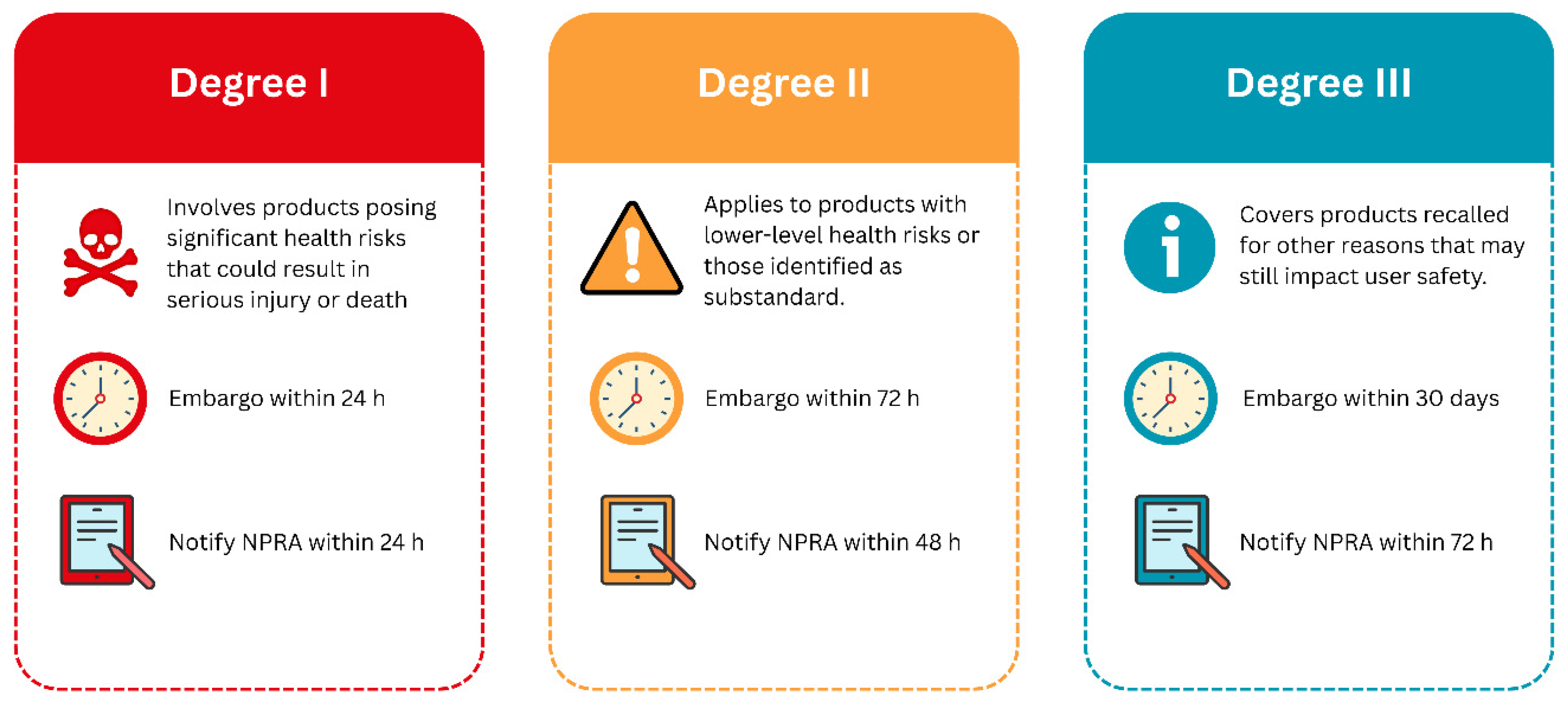
Product recall data were sourced from NPRA’s internal surveillance database between 2020 and 2024. Only TMHS hard-shell capsule products manufactured in Malaysia that failed microbial limit tests, including total aerobic microbial count (TAMC), total yeast and mould count (TYMC), and bile-tolerant Gram-negative bacteria (BTGNB), were included. Records of recalls due to unrelated causes, such as adulteration with active pharmaceutical ingredients, mislabelling, or heavy metal contamination, were excluded. The extracted data included anonymised company and product codes, batch sizes, degree of recall (the severity and potential risk to public health) (Figure 1), colony-forming unit (CFU/g) test analysis, duration of the recall process in days, recall history status, and the year of the most recent prior recall, if applicable.
Figure 1.
Overview of NPRA product recall degrees and corresponding reporting timelines.
2.4. Encapsulation Practice Assessment Among TMHS Hard-Shell Capsule Manufacturers
A structured data-collection process was conducted with all TMHS hard-shell capsule manufacturers to characterise their manufacturing equipment and production characteristics. A questionnaire was developed to capture detailed information on the encapsulation process and refined in consultation with GMP inspection officers to ensure comprehensive content validity. The questionnaire was piloted with a subset of manufacturers to assess clarity and feasibility. Collected data included manufacturer type (traditional medicine, health supplement, or both), number of registered capsule products, capsule sizes (e.g., 00, 0, 1, 2), production frequency, types of encapsulation machines (manual, semi-automatic, automatic, or combinations), estimated production capacity per hour, and presence of polishing equipment. Responses were further validated against NPRA inspection reports, where available, to ensure accuracy and reliability.
2.5. Statistical Analysis
Categorical variables from the questionnaire dataset were summarised as absolute frequencies and proportions. Associations with recall status were assessed using univariate logistic regression to estimate odds ratios (ORs) with 95% confidence intervals (CIs) in RStudio version 2025.05.0+496 (Posit Software, Boston, MA, USA). Global p-values were derived from likelihood ratio tests.
2.6. Ethical Considerations
This study utilised institutional regulatory data collected under the authority of the NPRA. Manufacturer-level data were reported in aggregate to preserve non-disclosure. The study adhered to the Malaysian Ministry of Health’s confidentiality and data protection standards.
3. Results
3.1. Evaluation of Regulatory and Technical Guidance on Contamination Risk in Capsule Filling
A comparative assessment of six primary regulatory and technical references was conducted to evaluate their coverage of capsule filling system types, discuss the risk of microbial contamination, and determine the relevance of risk-based decision-making in TMHS encapsulation. The synthesised results are presented in Table 2.
Table 2.
Comparison of the suitability of guidelines and references on capsule filling machine types and microbial contamination risk.
3.2. Comparison of Product Recalls Between TMHS and Pharmaceutical Products Under Post-Marketing Surveillance (2020–2024)
Between 2020 and 2024, a total of 8930 products were subjected to post-marketing surveillance in Malaysia, comprising 5175 TMHS products and 3755 pharmaceutical products (Table 3).
Table 3.
Product recalls among TMHS and pharmaceutical products under post-marketing surveillance (2020–2024).
3.3. Analysis of TMHS Hard-Shell Capsule Product Recalls Due to Microbial Contamination
Of the 245 TMHS recalls, 105 cases (42.86%) involved hard-shell capsule formulations. Among these, 68 products (64.8%) were withdrawn due to microbial contamination (Table 4). Most were classified as Degree III recalls (n = 64; 94.12%), while four products (5.88%) were assigned Degree II recall status, reflecting a higher perceived health risk. Microbial test failures were most associated with TAMC, affecting 50 products (73.53%). Failures in TYMC were observed in 15 products (22.06%), and BTGNB in 29 products (42.65%). The range of affected batch sizes was broad, spanning from 1190 to 903,600 capsules, indicating significant variability in public health exposure. The median recall period was 161 days (IQR: 64–249), ranging from 3 to 888 days. 17 recalled products originated from companies with a previous history of recalls during the same study period. One manufacturer, coded as HIS, accounted for 17 products (25%) that were recalled due to microbial contamination.
Table 4.
Microbial contamination-related recalls of TMHS hard-shell capsule products (2020–2024).
3.4. Assessment of Encapsulation Practices Among TMHS Hard-Shell Capsule Manufacturers
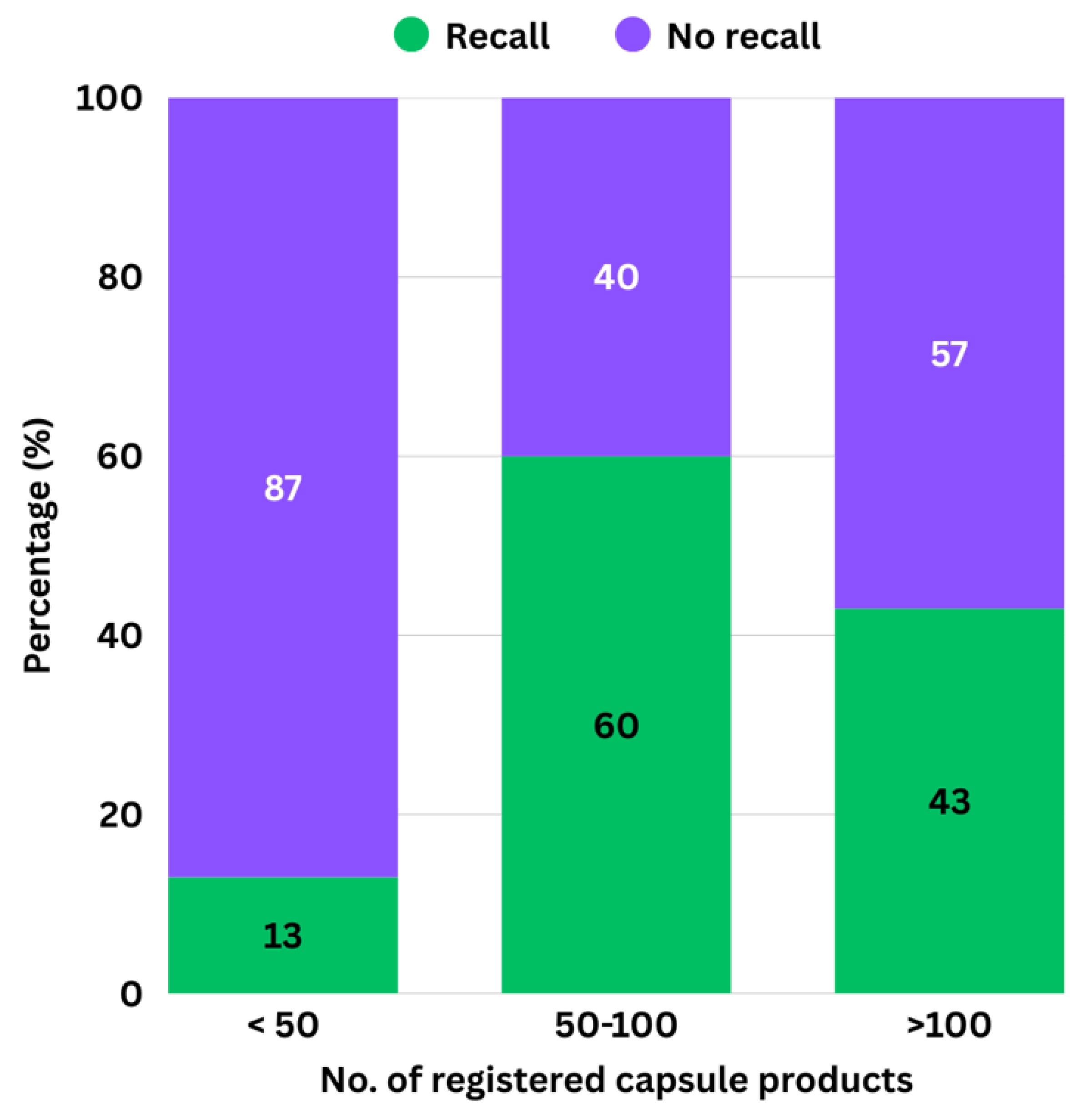
Among the 212 TMHS manufacturers subject to NPRA GMP surveillance, 144 were directly engaged in the manufacture of hard-shell capsule products. A total of 86 manufacturers (41%) provided complete responses to the questionnaire, with 18 (21%) manufacturers having documented product recalls and 68 (79%) having no recall history (Table 5). The participation status of the remaining manufacturers could not be determined, as they either declined involvement or failed to provide sufficient data despite two follow-up attempts over one month. Furthermore, the number of registered capsule products was the only factor significantly associated with recall. Manufacturers registering fewer than 50 products had a recall rate of only 13% (9 of 69), compared with 60% among those registering 50–100 products (6 of 10; OR = 10.0, 95% CI: 2.35–42.47, p < 0.0018), and 43% among those with more than 100 products (3 of 7; OR = 5.0, 95% CI: 0.96–26.1) (Figure 2).
Table 5.
Association between manufacturer, capsule production characteristics, and recall incidence 1.
Figure 2.
Distribution of recall and no recall percentages among registered capsule product groups (<50, 50–100, and >100).
4. Discussion
4.1. Evaluation of GMP Regulatory Oversight
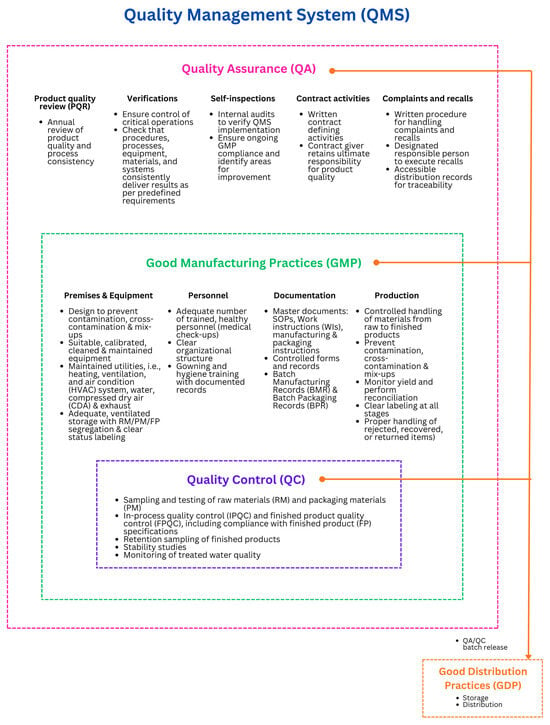
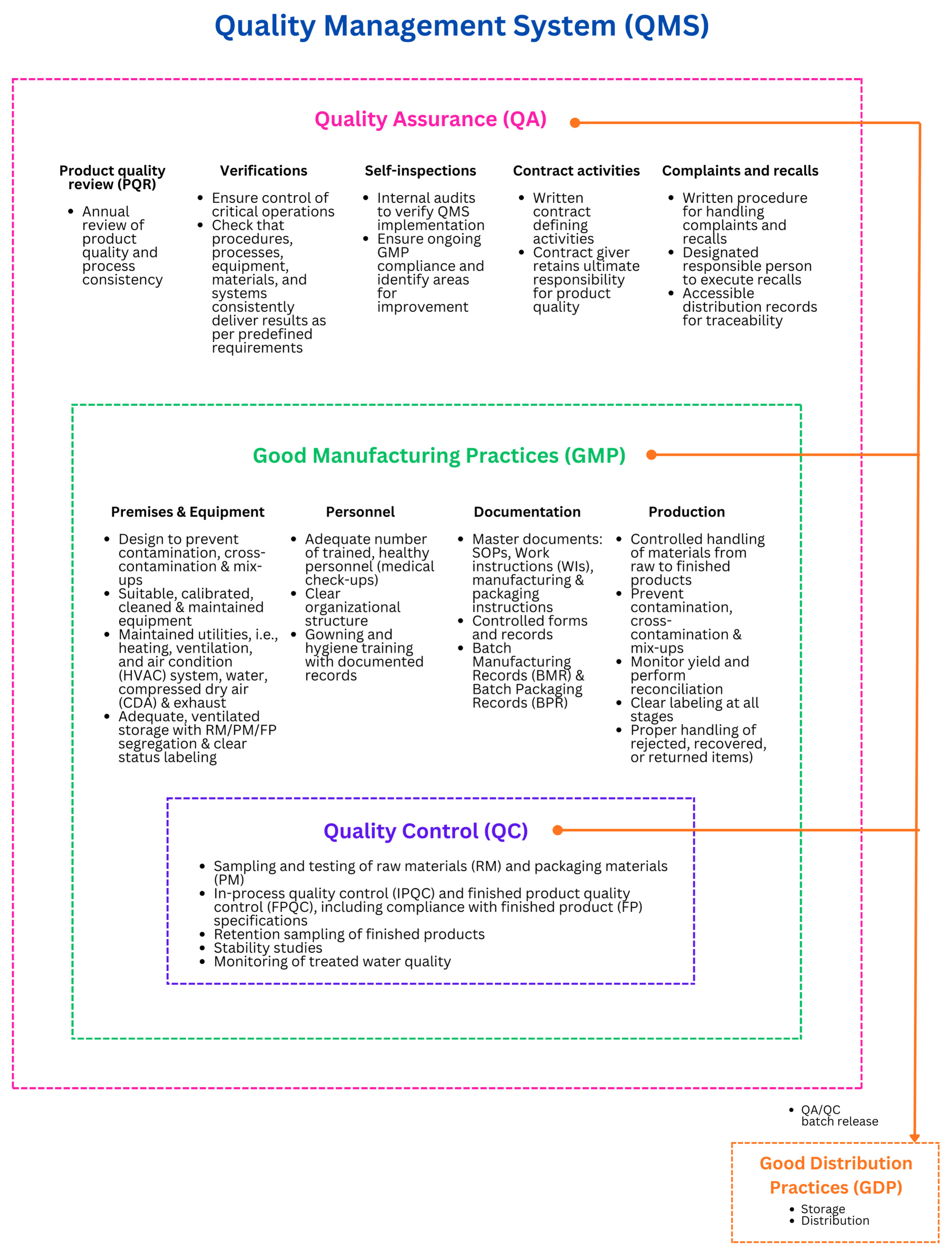
The initial component of the study focused on evaluating the extent to which existing regulatory and technical references address microbial risk across different types of capsule-filling systems. Specifically, the objective was to determine whether current guidance supports a risk-based approach to equipment selection in non-sterile encapsulation processes. Among the references reviewed, Augsburger and Hoag [33] emerge as the most directly applicable to the present study. It provides a detailed comparison of manual, semi-automatic, and automatic capsule filling systems, explicitly linking increased human handling in manual operations to an elevated risk of microbial contamination. In contrast, documents such as PIC/S PE009-17 Annex 1 [29], EU GMP Volume 4 (Part I) [31], and the WHO TRS 986 Annex 2 [32], address broad contamination control frameworks or are tailored toward sterile and aseptic manufacturing contexts. While their principles, particularly regarding operator intervention, environmental hygiene, and equipment sanitation, are valuable, their direct applicability to selecting capsule-filling equipment in non-sterile settings is limited. Nonetheless, when these principles are interpreted through a risk-based manufacturing perspective, they support the overarching premise that reducing human contact and improving equipment enclosure can mitigate contamination risk. Malaysia’s GMP Guidelines for Traditional Medicines and Health Supplements [34] provides relevant, general guidance (Figure 3). Clause 3.41 emphasises the importance of equipment design and placement that facilitates effective cleaning and minimises contamination potential. Although it does not differentiate between capsule-filling technologies, this clause implicitly supports a preference for more enclosed, automated systems over manual ones. While direct evidence correlating capsule filling machine type with microbial risk is limited to a single source, the broader thematic synthesis of available literature indicates that greater automation and minimised manual intervention are critical determinants of effective contamination control [35,36].
Figure 3.
Schematic overview of Malaysia’s Quality Management System (QMS) for TMHS based on National Pharmaceutical Regulatory Agency [34] guidelines.
4.2. Disproportionate Recall Rates in the TMHS Sector
Between 2020 and 2024, post-marketing surveillance conducted by the NPRA revealed a notable difference in product recall rates: 4.73% of TMHS products were recalled, compared to only 1.09% of pharmaceutical products. The recall rate for TMHS is over four times higher, indicating a pronounced imbalance in regulatory non-compliance across the sector. The observed disparity suggests that TMHS products are more prone to quality and safety deficiencies than pharmaceuticals. This outcome is likely attributable to differences in manufacturing rigour. In general, pharmaceutical production is governed by stricter GMP requirements, validated equipment, and robust microbial monitoring [37,38,39,40], whereas TMHS manufacturing often involves heterogeneous raw materials, less dosage standardisation, and variable levels of technical oversight [41,42,43]. The recent recall rate suggests that although current regulatory measures effectively detect and withdraw unsafe products, they operate primarily in a reactive capacity. Reliance on post-marketing surveillance alone is insufficient to address risks that should be mitigated at the manufacturing stage. Alignment with pharmaceutical standards may require strengthened pre-market evaluation, broader implementation of risk-based GMPs, and heightened focus on contamination control during manufacturing processes [9,24,44,45].
4.3. Patterns and Implications of Microbial Contamination
This study provides a comprehensive overview of 68 product recalls involving TMHS hard-shell capsule formulations in Malaysia, which were reported to have microbial contamination between 2020 and 2024. The majority (73.53%) of the recall products failed the TAMC, followed by 22.06% for TYMC and 42.65% for BTGNB. These results indicate the presence of both general and specific microbial contaminants, reflecting poor manufacturing hygiene and potential GMP non-compliance [12,46,47]. Failure across multiple microbial quality assessments indicates a higher risk burden, particularly for individuals with compromised immunity [48]. Human exposure to microbial biotoxins, e.g., endotoxin, cytotoxin, and mycotoxins, has been associated with diverse adverse outcomes, such as septic shock [49], organ failures [50], chronic inflammation [51], hepatotoxicity [52], carcinogenesis [53,54], and alterations in metabolic pathways [55]. The high failure rate in TAMC highlights systemic weaknesses in environmental and process controls, with inadequate cleanroom maintenance and insufficient personnel hygiene frequently implicated in microbial contamination events [11,12,56]. Failures in BTGNB testing are particularly concerning, as these organisms often include pathogenic species linked to gastrointestinal and intestinal disturbances [57,58] as well as opportunistic infections [59,60]. Notably, studies in Brazil reported the isolation of Salmonella spp. and E. coli from contaminated herbal medicines, at rates of 34.8% and 25.8%, respectively [48]. Moreover, contamination with BTGNB and Klebsiella pneumoniae suggests a deficiency in the washing and handling of raw materials during TMHS production [13].
4.4. Systemic Lapses: Batch Sizes, Recall Delays, and Recurrent Non-Compliance
The recalled batch sizes varied considerably, ranging from 1190 to 903,600 capsules, with an overall cumulative total exceeding 11.97 million capsules. High-volume recalls, particularly those involving RMH (903,600 capsules) and SBI (598,800 capsules), indicate significant public health exposure due to the potential for widespread distribution. Prolonged recall periods, in some cases extending beyond two years, further magnify this risk, as contaminated products may have remained available in the supply chain and been used by consumers during this time. Delays in recall implementation are often attributed to insufficient post-marketing surveillance systems, limited pharmacovigilance capacity, and decentralised decision-making [61,62,63]. Such systemic gaps highlight the critical need for more robust regulatory oversight to minimise exposure to unsafe products and to ensure timely recall execution. Moreover, despite the significant volume of affected products, 94.12% of recalls were classified as Degree III, indicating minimal immediate health risk. However, this should not detract from the regulatory significance of non-compliance, particularly when recall implementation is delayed or incomplete. An observable finding is the repeated involvement of certain manufacturers, most prominently HIS, which accounted for 17 product recalls. Other manufacturers with recurrent involvement include RRM and SZB. Seventeen products (25%) were linked to manufacturers with documented recall histories. These patterns illustrate systemic lapses in internal quality assurance, suggesting that post-marketing surveillance alone may be insufficient to ensure product safety. The recurrence of non-compliance among specific manufacturers warrants a shift toward a risk-based regulatory framework. Manufacturers with a history of recalls should be subject to more frequent inspections and stricter criteria for licencing renewal [64]. However, according to Wu and Wang [65] an examination of the USFDA’s risk-based inspection model in the generic drug industry, increased inspection frequency did not significantly lower recall events. One potential way to address these challenges is through stricter regulation that treats herbal supplements more like pharmaceuticals [66]. In conjunction with this, rigorous quality control measures in the manufacturing and distribution of herbal medicines could further strengthen consumer safety and product reliability [9].
Additionally, prior research highlights the importance of traceability and containment across global supply chains, emphasising that manufacturers must balance rapid growth with strong quality design to avoid recalls [67]. In the pharmaceutical industry, the incidence of recalls has increased, partly due to enhanced inspection rates and industry digitisation [68]. USFDA data from 2012 to 2023 indicate an annual average of 330 drug recalls, each lasting an average of 1.3 years and affecting roughly 400,000 product units, with impurities (37%), control issues (28%), and labelling/packaging problems (19%) being the most common causes [64]. Complementing this, our analysis reveals wide variability in recall periods, ranging from 3 days to 888 days. Such protracted timelines undermine the central purpose of recalls, i.e., rapid risk mitigation, by exposing inefficiencies in detection, notification, and execution. Digital pharmacovigilance solutions, including real-time reporting, integrated safety data collection, patient engagement tools, and digital batch tracking, show promise for addressing these gaps [69,70]. A more integrated surveillance system of this kind could accelerate containment, reduce consumer risk, and enhance the overall resilience of pharmaceutical supply chains [71].
4.5. Survey Findings: The Primacy of Quality Systems over Equipment Choice
The questionnaire-based analysis among TMHS hard-shell capsule manufacturers indicated that most operational characteristics, including manufacturer type, capsule size, production frequency, encapsulation machine type, production capacity, and polishing machine usage, were not significantly associated with recall status. Manufacturer type showed no meaningful differences compared with TM (global p = 0.55). Similarly, capsule size was not associated with recall (global p = 0.20), compared with size 00 (reference), size 0 (OR = 0.43, 95% CI: 0.11–1.69, p = 0.22) and size 1 (OR = 0.78, 95% CI: 0.21–2.96, p = 0.72) showed no statistically significant differences.
Production frequency was likewise not associated with recall (global p = 0.80). Compared with yearly production (reference), monthly (OR = 2.43, 95% CI: 0.45–13.14, p = 0.30), weekly (OR = 2.80, 95% CI: 0.43–18.34, p = 0.28), and daily production (OR = 2.10, 95% CI: 0.29–14.98, p = 0.46) did not significantly alter recall odds. Encapsulation machine type also showed no statistically significant association (global p = 0.30), although manufacturers using manual machines demonstrated higher, though non-significant, odds of recall (OR = 4.67, 95% CI: 0.59–37.11, p = 0.15). Capsule production capacity per hour (global p = 0.50) and polishing machine usage (OR = 1.58, 95% CI: 0.56–4.51, p = 0.39) were similarly not associated with recall. In contrast, the number of registered capsule products was strongly associated with recall (global p < 0.0005). Compared with manufacturers registering fewer than 50 products, those registering 50–100 products had significantly higher odds of recall (OR = 10.00, 95% CI: 2.35–42.47, p = 0.0018). Manufacturers with more than 100 registered products also demonstrated elevated odds (OR = 5.00, 95% CI: 0.96–26.11), although this did not reach conventional statistical significance (p = 0.06), likely reflecting limited sample size and wide confidence intervals.
These findings suggest that recall risk among TMHS hard-shell capsule manufacturers is less strongly related to technical specifications or equipment characteristics and more closely associated with organisational scale, particularly the breadth of registered product portfolios. The markedly increased risk observed among manufacturers with 50–100 registered products may reflect transitional vulnerabilities, in which the expansion of product lines outpaces the maturation of quality management systems [72]. Although manufacturers with more than 100 products also showed elevated odds, statistical uncertainty limits firm conclusions. Overall, the results highlight the importance of aligning quality assurance capacity with portfolio expansion and support consideration of targeted regulatory oversight for mid-sized manufacturers experiencing rapid growth.
4.6. Limitations and Recommendations
This study has several limitations that should be acknowledged. First, its cross-sectional, retrospective design provides only a temporal snapshot based on retrospective recall. At the same time, associations can be observed, but causality between manufacturing practices and contamination events cannot be established. Second, reliance on self-reported survey data introduces the risk of response bias, including the potential for over-reporting of desirable GMPs or under-reporting of deficiencies. Third, participation was incomplete, with only 86 of 144 hard-shell capsule manufacturers responding, which may constrain the generalisability of the findings given the unknown practices of non-respondents. Fourth, the study did not capture highly granular operational data, such as cleaning validation protocols, environmental monitoring results, supplier quality controls, or personnel training records, which are often central to identifying the root causes of microbial contamination. The scope was also limited to microbial contamination, excluding other critical quality issues such as chemical contamination or cross-contamination with active pharmaceutical ingredients.
To effectively reduce contamination risks and prevent product recalls, TMHS manufacturers must embed a comprehensive, proactive quality system that goes beyond simple reactive testing. This foundation begins with the verification and validation of utility, equipment, and processes, ensuring all systems are fit for purpose, operate in a state of control, and are supported by strong data integrity (ALCOA+) to eliminate reporting biases. This stringency must extend externally to supplier quality assurance, including risk-based supplier audits and independent raw material testing, rather than relying solely on suppliers’ Certificates of Analysis (COAs). Internally, cleaning validation should be scientifically rigorous, incorporating worst-case challenge conditions and direct surface swab sampling to demonstrate that cleaning procedures consistently reduce residues to predefined, scientifically justified acceptance limits. This is complemented by a proactive environmental monitoring programme that uses trend data as an early warning system and by competency-based personnel training that focuses on the purpose of hygiene and gowning.
Additionally, an effective quality system must be supported by continuous improvement efforts. A robust self-inspection programme must be established to systematically identify areas for improvement before issues arise. When any deviation is identified, whether through an audit, process check, or customer complaint, a formal Corrective and Preventive Action (CAPA) management system is significant to ensure that the root cause is thoroughly investigated and permanently resolved. Furthermore, the annual Product Quality Review (PQR) provides a mandatory, high-level analysis that aggregates data from all these areas to identify subtle negative trends and drive strategic improvements. Finally, even with robust prevention measures in place, a recall preparedness plan with a dedicated team, strong traceability, and regular mock recall drills is essential to ensure a rapid and effective response in the event of a failure.
Beyond operational recommendations, these findings have broader implications for the TMHS ecosystem. For manufacturers, they reinforce the importance of embedding quality systems that not only meet regulatory requirements but also actively safeguard product integrity. Regulatory authorities can use this evidence to refine inspection protocols, prioritise high-risk facilities, and strengthen policies that protect public health. Healthcare professionals worldwide should recognise the practical relevance of these quality practices when advising patients, as awareness of manufacturing risks can influence clinical decisions and patient safety. Collectively, these insights outline the interconnected roles of industry, regulators, and health practitioners in maintaining the safety and efficacy of hard-shell capsule TMHS, both in Malaysia and in other markets experiencing parallel constraints.
Moving ahead, future research should adopt prospective or longitudinal designs, include on-site process monitoring, and expand the focus beyond microbial hazards to cover chemical and physical risks. Studies could also investigate additional quality-related issues, such as labelling accuracy, product stability, and sourcing of raw materials. A longitudinal approach would allow tracking contamination over time, distinguishing between persistent and sporadic sources, and assessing the effectiveness of interventions such as GMP improvements or equipment upgrades. This comprehensive approach would strengthen evidence-based regulatory actions and provide insights relevant to Malaysia and other emerging TMHS sectors facing similar quality assurance challenges.
5. Conclusions
In conclusion, microbial contamination remains a significant concern in Malaysia’s TMHS hard-shell capsule products. Recall rates were more than 4 times those for pharmaceuticals, revealing persistent weaknesses in manufacturing quality systems. Operational scale was the primary risk factor, with medium-sized manufacturers (50–100 registered products) being most affected, suggesting that expansion may exceed the quality assurance capacity. Technical aspects, such as capsule size or machinery, had a limited influence, indicating that contamination stems primarily from systemic quality management deficiencies. These findings emphasise the need for regulatory reform, shifting from reactive post-market surveillance to proactive, risk-based oversight. Strengthening pre-market evaluation, prioritising GMP inspections for expanding manufacturers, and improving contamination control guidance will be essential to safeguard public health and ensure the integrity of TMHS industries in emerging markets.
Author Contributions
M.A.A. wrote the main manuscript text and prepared the figures. M.A.A. and J.H.K. performed data analysis. J.H.K. contributed to data collection. J.H.K., X.Y.Y., N.A.S. and M.M.Z. provided strategic oversight on regulatory analysis. All authors have read and agreed to the published version of the manuscript.
Funding
This research received no external funding.
Institutional Review Board Statement
The study protocol was reviewed by the Medical Research and Ethics Committee (MREC), Ministry of Health Malaysia, and was granted an exemption, as the study did not involve any human subjects or interventions (NMRR ID-25-00286-OTP).
Informed Consent Statement
Not applicable as the study did not involve any human subjects or interventions.
Data Availability Statement
The data presented in this study are available on request from the corresponding author due to regulatory confidentiality obligations that restrict public disclosure.
Acknowledgments
We would like to thank the Director General of Health Malaysia for his permission to publish this article. Sincere appreciation is also extended to the Director of National Pharmaceutical Regulatory Agency, the Deputy Director of Centre of Compliance and Quality Control, and the Surveillance and Complaints Section, for their support, guidance, and valuable contributions.
Conflicts of Interest
The authors declare no conflicts of interest.
References
- Mudondo, J.; Happy, K.; Gang, R.; Ban, Y.; Kang, Y. From nature to nutrition: Exploring the synergistic benefits of functional foods and herbal medicines for holistic health. Appl. Biol. Chem. 2025, 68, 17. [Google Scholar] [CrossRef] [Scilit]
- Zamani, S.; Fathi, M.; Ebadi, M.-T.; Máthé, Á. Global trade of medicinal and aromatic plants. A review. J. Agric. Food Res. 2025, 21, 101910. [Google Scholar] [CrossRef] [Scilit]
- Chhabra, N.; Shiriskar, J.; Srinivasan, G. Current and future market of the dietary supplements and nutraceuticals in the global economy. In Dietary Supplements and Nutraceuticals; Springer: Singapore, 2025; pp. 1–48. [Google Scholar]
- Harmayani, E.; Anal, A.K.; Wichienchot, S.; Bhat, R.; Gardjito, M.; Santoso, U.; Siripongvutikorn, S.; Puripaatanavong, J.; Payyappallimana, U. Healthy food traditions of Asia: Exploratory case studies from Indonesia, Thailand, Malaysia, and Nepal. J. Ethn. Foods 2019, 6, 1. [Google Scholar] [CrossRef] [Scilit]
- Dubale, S.; Usure, R.E.; Mekasha, Y.T.; Hasen, G.; Hafiz, F.; Kebebe, D.; Suleman, S. Traditional herbal medicine legislative and regulatory framework: A cross-sectional quantitative study and archival review perspectives. Front. Pharmacol. 2025, 16, 1475297. [Google Scholar] [CrossRef] [Scilit]
- Ngai, H.-L.; Shaw, P.-C. Advancing global herbal medicine: Enhancing herb quality through innovative strategies explored in Hong Kong-An international hub. Phytomed. Plus 2025, 5, 100727. [Google Scholar] [CrossRef] [Scilit]
- Amil, M.A.; Gan, K.Z.; Mohamad Adzib, M.S.; Bujang, N.B.; Mohd Yusop, A.Y.; Md Roduan, M.R. GC–MS method for routine analysis of camphor, menthol, methyl salicylate, and thymol in traditional topical products: Addressing compliance and adulteration from Malaysia’s National Pharmaceutical Regulatory Agency. Results Chem. 2025, 18, 102721. [Google Scholar] [CrossRef] [Scilit]
- Ismail, S.F.; Abd Ghani Azmi, I.M.; Daud, M.; Abd Jalil, J.; Safuan, S. Regulatory control of herbal and traditional medicines in Malaysia: Issues and concerns. Int. J. Bus. Soc. 2020, 21, 192–204. [Google Scholar]
- Wang, H.; Chen, Y.; Wang, L.; Liu, Q.; Yang, S.; Wang, C. Advancing herbal medicine: Enhancing product quality and safety through robust quality control practices. Front. Pharmacol. 2023, 14, 1265178. [Google Scholar] [CrossRef] [Scilit]
- Adepu, S.; Ramakrishna, S. Controlled drug delivery dystems: Current status and future directions. Molecules 2021, 26, 5905. [Google Scholar] [CrossRef] [Scilit]
- Dao, H.; Lakhani, P.; Police, A.; Kallakunta, V.; Ajjarapu, S.S.; Wu, K.-W.; Ponkshe, P.; Repka, M.A.; Narasimha Murthy, S. Microbial stability of pharmaceutical and cosmetic products. AAPS PharmSciTech 2018, 19, 60–78. [Google Scholar] [CrossRef] [Scilit] [PubMed]
- Tyski, S.; Burza, M.; Laudy, A.E. Microbiological contamination of medicinal products—Is it a significant problem? Pharmaceuticals 2025, 18, 946. [Google Scholar] [CrossRef] [Scilit] [PubMed]
- Opuni, K.F.M.; Kretchy, J.P.; Agyabeng, K.; Boadu, J.A.; Adanu, T.; Ankamah, S.; Appiah, A.; Amoah, G.B.; Baidoo, M.; Kretchy, I.A. Contamination of herbal medicinal products in low-and-middle-income countries: A systematic review. Heliyon 2023, 9, e19370. [Google Scholar] [CrossRef] [Scilit]
- Myemba, D.T.; Bwire, G.M.; Sangeda, R.Z. Microbiological quality of selected local and imported non-sterile pharmaceutical products in Dar es Salaam, Tanzania. Infect. Drug Resist. 2022, 15, 2021–2034. [Google Scholar] [CrossRef] [Scilit]
- Ahmed, M.A.E.-G.E.-S.; Abbas, H.S.; Kotakonda, M. Fungal diseases caused by serious contamination of pharmaceuticals and medical devices, and rapid fungal detection using nano-diagnostic tools: A critical review. Curr. Microbiol. 2024, 81, 10. [Google Scholar] [CrossRef] [Scilit]
- Luo, L.; Wang, B.; Jiang, J.; Fitzgerald, M.; Huang, Q.; Yu, Z.; Li, H.; Zhang, J.; Wei, J.; Yang, C. Heavy metal contaminations in herbal medicines: Determination, comprehensive risk assessments, and solutions. Front. Pharmacol. 2021, 11, 595335. [Google Scholar] [CrossRef] [Scilit]
- Marçon, F.; Lagarce, F.; Roland, I.; Brossard, D.; Merienne, C.; Chennell, P.; d’Huart, E.; Briot, T.; Carrez, L.; Podilsky, G. Recommendations on training objectives and staff qualification for the manual preparation of capsules in pharmacy. Pharm. Technol. Hosp. Pharm. 2024, 9, 20230013. [Google Scholar] [CrossRef] [Scilit]
- Grumbach, C.; Czermak, P. Process analytical technology for the production of parenteral lipid emulsions according to good manufacturing practices. Processes 2022, 10, 1174. [Google Scholar] [CrossRef] [Scilit]
- Malik, D.J.; Goncalves-Ribeiro, H.; GoldSchmitt, D.; Collin, J.; Belkhiri, A.; Fernandes, D.; Weichert, H.; Kirpichnikova, A. Advanced manufacturing, formulation and microencapsulation of therapeutic phages. Clin. Infect. Dis. 2023, 77, S370–S383. [Google Scholar] [CrossRef] [Scilit] [PubMed]
- Aglave, G.; Yerram, S.; Patnam, J.D.; Ajmal, C.; Nizam, V.M.; Joga, R.; Raghuvanshi, R.S.; Srivastava, S. Proactive approaches to cGMP compliance: Insights and key takeaways from USFDA warning letters to pharmaceutical industries between 2019 and 2024. J. Pharm. Innov. 2024, 19, 49. [Google Scholar] [CrossRef] [Scilit]
- Lim, L.P.; Aziz, M.F.B.A. The issues and challenges of addressing the importation of unregistered pharmaceutical products in Malaysia. J. Pharm. Policy Pract. 2025, 18, 2523939. [Google Scholar] [CrossRef] [Scilit] [PubMed]
- Kamaraj, R.; Balakumar, P. Pharmaceutical Inspection Co-operation Scheme: An overview. Cureus 2024, 16, e69043. [Google Scholar] [CrossRef] [Scilit] [PubMed]
- Liu, C.-X. Overview on development of ASEAN traditional and herbal medicines. Chin. Herb. Med. 2021, 13, 441–450. [Google Scholar] [CrossRef] [Scilit]
- He, T.-T.; Ung, C.O.L.; Hu, H.; Wang, Y.-T. Good manufacturing practice (GMP) regulation of herbal medicine in comparative research: China GMP, cGMP, WHO-GMP, PIC/S and EU-GMP. Eur. J. Integr. Med. 2015, 7, 55–66. [Google Scholar] [CrossRef] [Scilit]
- Sharma, A.K.; Shrivastava, T.P.; Singh, M.A.; Ahuja, J.; Goyal, R.K. Regulations in India. In Global Regulations of Medicinal, Pharmaceutical, and Food Products; CRC Press: Boca Raton, FL, USA, 2024; pp. 133–152. [Google Scholar]
- Loh, E.Y.X.; Goh, P.S.; Mannan, A.M.M.; Sani, N.M.; Ab Ghani, A. Cell and gene therapy products in Malaysia: A snapshot of the industry’s current regulation preparedness. Cytotherapy 2021, 23, 1108–1113. [Google Scholar] [CrossRef] [Scilit]
- Park, J.-E.; Yi, J.; Kwon, O. Twenty years of traditional and complementary medicine regulation and its impact in Malaysia: Achievements and policy lessons. BMC Health Serv. Res. 2022, 22, 102. [Google Scholar] [CrossRef] [Scilit]
- National Pharmaceutical Regulatory Agency. Product Recall. Available online: https://www.npra.gov.my/index.php/en/consumers/safety-information/product-recall.html (accessed on 8 July 2025).
- Pharmaceutical Inspection Convention Pharmaceutical Inspection Co-Operation Scheme (PIC/S). Guide to Good Manufacturing Practice for medicinal products. Available online: https://www.gmp-compliance.org/files/guidemgr/pe-009-17-gmp-guide-xannexes.pdf (accessed on 22 July 2025).
- Gad, S.C. Pharmaceutical Manufacturing Handbook: Production and Processes; John Wiley & Sons: Hoboken, NJ, USA, 2008. [Google Scholar]
- European Commission. EudraLex—Volume 4—Good Manufacturing Practice (GMP) Guidelines. Available online: https://health.ec.europa.eu/medicinal-products/eudralex/eudralex-volume-4_en (accessed on 5 August 2025).
- World Health Organization. WHO Good Manufacturing Practices for Pharmaceutical Products: Main Principles (WHO Technical Report Series No. 986, Annex 2). Available online: https://www.who.int/publications/m/item/trs986-annex2 (accessed on 11 September 2025).
- Augsburger, L.L.; Hoag, S.W. Pharmaceutical Dosage Forms: Capsules; CRC Press: Boca Raton, FL, USA, 2017. [Google Scholar]
- National Pharmaceutical Regulatory Agency. Guidelines on Good Manufacturing Practice for Traditional Medicines and Health Supplements. Available online: https://www.npra.gov.my/images/Guidelines_Central/Guidelines_on_Regulatory/GMP_Guidelines_on_TMHS-final.pdf (accessed on 27 September 2025).
- Saharan, V.A. Robotic automation of pharmaceutical and life science industries. In Computer Aided Pharmaceutics and Drug Delivery: An Application Guide for Students and Researchers of Pharmaceutical Sciences; Springer: Singapore, 2022; pp. 381–414. [Google Scholar]
- Djerry, R.; Merniz, S.; Himed, L.; D’Elia, M.; Rastrelli, L. Cream formulated with lemon essential oil-loaded pectin capsules: Effects on microbiological quality and sensory properties. Foods 2025, 14, 2828. [Google Scholar] [CrossRef] [Scilit]
- Covarrubias, C.E.; Rivera, T.A.; Soto, C.A.; Deeks, T.; Kalergis, A.M. Current GMP standards for the production of vaccines and antibodies: An overview. Front. Public Health 2022, 10, 1021905. [Google Scholar] [CrossRef] [Scilit]
- Jatto, E.; Okhamafe, A.O. An overview of pharmaceutical validation and process controls in drug development. Trop. J. Pharm. Res. 2002, 1, 115–122. [Google Scholar] [CrossRef] [Scilit]
- Pashang, R.; Gilbride, K.A.; Wenk, J. Microbial dynamics and quality monitoring in biopharmaceutical production. ChemBioEng Rev. 2024, 11, e202400022. [Google Scholar] [CrossRef] [Scilit]
- Song, M.; Li, Q.; Liu, C.; Wang, P.; Qin, F.; Zhang, L.; Fan, Y.; Shao, H.; Chen, G.; Yang, M. A comprehensive technology strategy for microbial identification and contamination investigation in the sterile drug manufacturing facility—A case study. Front. Microbiol. 2024, 15, 1327175. [Google Scholar] [CrossRef] [Scilit] [PubMed]
- Liu, C.-L.; Jiang, Y.; Li, H.-J. Quality consistency evaluation of traditional Chinese medicines: Current status and future perspectives. Crit. Rev. Anal. Chem. 2025, 55, 684–701. [Google Scholar] [CrossRef] [Scilit] [PubMed]
- Busia, K. Herbal medicine dosage standardisation. J. Herb. Med. 2024, 46, 100889. [Google Scholar] [CrossRef] [Scilit]
- Klein-Junior, L.C.; de Souza, M.R.; Viaene, J.; Bresolin, T.M.; de Gasper, A.L.; Henriques, A.T.; Vander Heyden, Y. Quality control of herbal medicines: From traditional techniques to state-of-the-art approaches. Planta Medica 2021, 87, 964–988. [Google Scholar] [CrossRef] [Scilit] [PubMed]
- Li, J.; Zhu, J.; Hu, H.; Harnett, J.E.; Lei, C.I.; Chau, K.Y.; Chan, G.; Ung, C.O.L. Internationalization of traditional/complementary medicine products: Market entry as medicine. Chin. Med. 2018, 13, 50. [Google Scholar] [CrossRef] [Scilit]
- Fung, V.S.C. Integrating traditional Chinese (herbal) medicines into risk based regulation-With focus on non-clinical requirements to demonstrate safety. J. Tradit. Chin. Med. Sci. 2020, 7, 88–94. [Google Scholar]
- Ahiabor, W.K.; Darkwah, S.; Donkor, E.S. Microbial contamination of herbal medicines in Africa, 2000-2024: A systematic review. Environ. Health Insights 2024, 18, 11786302241293345. [Google Scholar] [CrossRef] [Scilit]
- Gravante, F.; Sacchini, F.; Mancin, S.; Lopane, D.; Parozzi, M.; Ferrara, G.; Sguanci, M.; Morales Palomares, S.; Biondini, F.; Marfella, F. Preventing microorganism contamination in starting active materials for synthesis from global regulatory agencies: Overview for public health implications. Microorganisms 2025, 13, 1595. [Google Scholar] [CrossRef] [Scilit]
- de Sousa Lima, C.M.; Fujishima, M.A.T.; de Paula Lima, B.; Mastroianni, P.C.; de Sousa, F.F.O.; da Silva, J.O. Microbial contamination in herbal medicines: A serious health hazard to elderly consumers. BMC Complement. Med. Ther. 2020, 20, 17. [Google Scholar] [CrossRef] [Scilit]
- Kellum, J.A.; Ronco, C. The role of endotoxin in septic shock. Crit. Care 2023, 27, 400. [Google Scholar] [CrossRef] [Scilit]
- Nguyen, M.; Gautier, T.; Masson, D.; Bouhemad, B.; Guinot, P.-G. Endotoxemia in acute heart failure and cardiogenic shock: Evidence, mechanisms and therapeutic options. J. Clin. Med. 2023, 12, 2579. [Google Scholar] [CrossRef] [Scilit]
- Li, B.w.; Liu, Y.; Zhang, L.; Guo, X.q.; Wen, C.; Zhang, F.; Luo, X.y.; Xia, Y.p. Cytotoxin-associated gene A (CagA) promotes aortic endothelial inflammation and accelerates atherosclerosis through the NLRP3/caspase-1/IL-1β axis. FASEB J. 2021, 35, e21942. [Google Scholar] [CrossRef] [Scilit]
- Ruan, H.; Lu, Q.; Wu, J.; Qin, J.; Sui, M.; Sun, X.; Shi, Y.; Luo, J.; Yang, M. Hepatotoxicity of food-borne mycotoxins: Molecular mechanism, anti-hepatotoxic medicines and target prediction. Crit. Rev. Food Sci. Nutr. 2022, 62, 2281–2308. [Google Scholar] [CrossRef] [Scilit]
- Kościelecka, K.; Kuć, A.; Kubik-Machura, D.; Męcik-Kronenberg, T.; Włodarek, J.; Radko, L. Endocrine effect of some mycotoxins on humans: A clinical review of the ways to mitigate the action of mycotoxins. Toxins 2023, 15, 515. [Google Scholar] [CrossRef] [Scilit]
- Unicsovics, M.; Molnár, Z.; Mézes, M.; Posta, K.; Nagyéri, G.; Várbíró, S.; Ács, N.; Sára, L.; Szőke, Z. The possible role of mycotoxins in the pathogenesis of endometrial cancer. Toxins 2024, 16, 236. [Google Scholar] [CrossRef] [Scilit]
- Mandal, P.; Lanaridi, O.; Warth, B.; Ansari, K.M. Metabolomics as an emerging approach for deciphering the biological impact and toxicity of food contaminants: The case of mycotoxins. Crit. Rev. Food Sci. Nutr. 2024, 64, 9859–9883. [Google Scholar] [CrossRef] [Scilit]
- Moheb, N.; Mohamed, A.F.; Elbaghdady, K.Z.; Saeed, A.M.; Abu-Elghait, M. Monitoring and controlling bacteria in cleanrooms of pharmaceutical plant model: An in vitro study. Environ. Monit. Assess. 2024, 197, 3. [Google Scholar] [CrossRef] [Scilit]
- Walusansa, A.; Asiimwe, S.; Kafeero, H.M.; Stanley, I.J.; Ssenku, J.E.; Nakavuma, J.L.; Kakudidi, E.K. Prevalence and dynamics of clinically significant bacterial contaminants in herbal medicines sold in East Africa from 2000 to 2020: A systematic review and meta-analysis. Trop. Med. Health 2021, 49, 10. [Google Scholar] [CrossRef] [Scilit]
- Hartantyo, S.H.P.; Chau, M.L.; Koh, T.H.; Yap, M.; Yi, T.; Cao, D.Y.H.; Gutierrez, R.A.; Ng, L.C. Foodborne Klebsiella pneumoniae: Virulence potential, antibiotic resistance, and risks to food safety. J. Food Prot. 2020, 83, 1096–1103. [Google Scholar] [CrossRef] [Scilit] [PubMed]
- Shah, A.A.; Alwashmi, A.S.; Abalkhail, A.; Alkahtani, A.M. Emerging challenges in Klebsiella pneumoniae: Antimicrobial resistance and novel approach. Microb. Pathog. 2025, 202, 107399. [Google Scholar] [CrossRef] [Scilit] [PubMed]
- Mkangara, M. Prevention and control of human Salmonella enterica infections: An implication in food safety. Int. J. Food Sci. 2023, 2023, 8899596. [Google Scholar] [CrossRef] [Scilit] [PubMed]
- Nizam VP, M.; Yerram, S.; Patnam, J.D.; CS, A.; Aglave, G.; Joga, R.; Raghuvanshi, R.S.; Srivastava, S. Ensuring product safety: A comprehensive retrospective study of USFDA drug recalls (2019–2023). J. Pharm. Innov. 2024, 19, 63. [Google Scholar] [CrossRef] [Scilit]
- Sardella, M.; Belcher, G.; Lungu, C.; Ignoni, T.; Camisa, M.; Stenver, D.I.; Porcelli, P.; D’Antuono, M.; Castiglione, N.G.; Adams, A. Monitoring the manufacturing and quality of medicines: A fundamental task of pharmacovigilance. Ther. Adv. Drug Saf. 2021, 12, 20420986211038436. [Google Scholar] [CrossRef] [Scilit]
- Hosseini-Motlagh, S.-M.; Jazinaninejad, M.; Nami, N. Recall management in pharmaceutical industry through supply chain coordination. Ann. Oper. Res. 2023, 324, 1183–1221. [Google Scholar] [CrossRef] [Scilit]
- Ghijs, S.; Wynendaele, E.; De Spiegeleer, B. The continuing challenge of drug recalls: Insights from a ten-year FDA data analysis. J. Pharm. Biomed. Anal. 2024, 249, 116349. [Google Scholar] [CrossRef] [Scilit] [PubMed]
- Wu, A.A.; Wang, Y.I. The more monitoring, the better quality? Empirical evidence of heterogeneous compliance from the generic drug industry. SSRN Electron. J. 2021. [Google Scholar] [CrossRef] [Scilit]
- Zakaryan, A.; Martin, I.G. Regulation of herbal dietary supplements: Is there a better way? Drug Inf. J. 2012, 46, 532–544. [Google Scholar] [CrossRef] [Scilit]
- Kumar, S.; Schmitz, S. Managing recalls in a consumer product supply chain—Root cause analysis and measures to mitigate risks. Int. J. Prod. Res. 2011, 49, 235–253. [Google Scholar] [CrossRef] [Scilit]
- Miglani, A.; Saini, C.; Musyuni, P.; Aggarwal, G. A review and analysis of product recall for pharmaceutical drug product. J. Generic Med. 2022, 18, 72–81. [Google Scholar] [CrossRef] [Scilit]
- Nagar, A.; Gobburu, J.; Chakravarty, A. Artificial intelligence in pharmacovigilance: Advancing drug safety monitoring and regulatory integration. Ther. Adv. Drug Saf. 2025, 16, 20420986251361435. [Google Scholar] [CrossRef] [Scilit]
- Zhao, Z.; Wang, Z. Comprehensive promotion of drug traceability codes in China in 2025: Challenges and solutions for tertiary outpatient pharmacists. Front. Pharmacol. 2025, 16, 1619916. [Google Scholar] [CrossRef] [Scilit]
- Getov, I.; Panayotova, D.; Dobrev, S.; Dimitrova, M.; Petkova, V. Opportunities for implementing digital applications to monitor the impact of risk-minimization measures within the pharmacovigilance process: Scoping review of published literature. Pharmacia 2025, 72, 1–6. [Google Scholar] [CrossRef] [Scilit]
- O’Connor, T.F.; Yu, L.X.; Lee, S.L. Emerging technology: A key enabler for modernizing pharmaceutical manufacturing and advancing product quality. Int. J. Pharm. 2016, 509, 492–498. [Google Scholar] [CrossRef] [Scilit] [PubMed]

Disclaimer/Publisher’s Note: The statements, opinions and data contained in all publications are solely those of the individual author(s) and contributor(s) and not of MDPI and/or the editor(s). MDPI and/or the editor(s) disclaim responsibility for any injury to people or property resulting from any ideas, methods, instructions or products referred to in the content. |
© 2026 by the authors. Published by MDPI on behalf of the Germs. Licensee MDPI, Basel, Switzerland. This article is an open access article distributed under the terms and conditions of the Creative Commons Attribution (CC BY) license.