Review

Glycoalkaloids: Structure, Properties, and Interactions with Model Membrane Systems

Department of Chemistry and Biochemistry, University of Missouri—Saint Louis, Saint Louis, MO 63121, USA
*
Author to whom correspondence should be addressed.
Processes 2019, 7(8), 513; https://doi.org/10.3390/pr7080513
Submission received: 22 June 2019 / Revised: 29 July 2019 / Accepted: 31 July 2019 / Published: 5 August 2019
(This article belongs to the Section Biological Processes and Systems)

Abstract

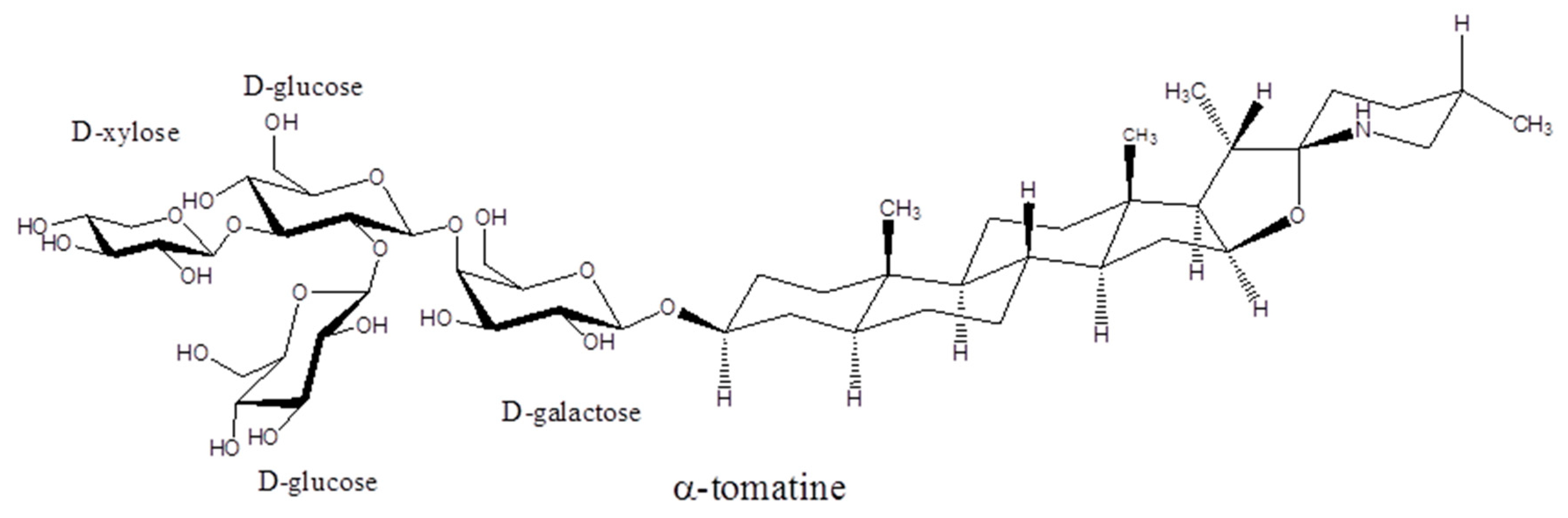
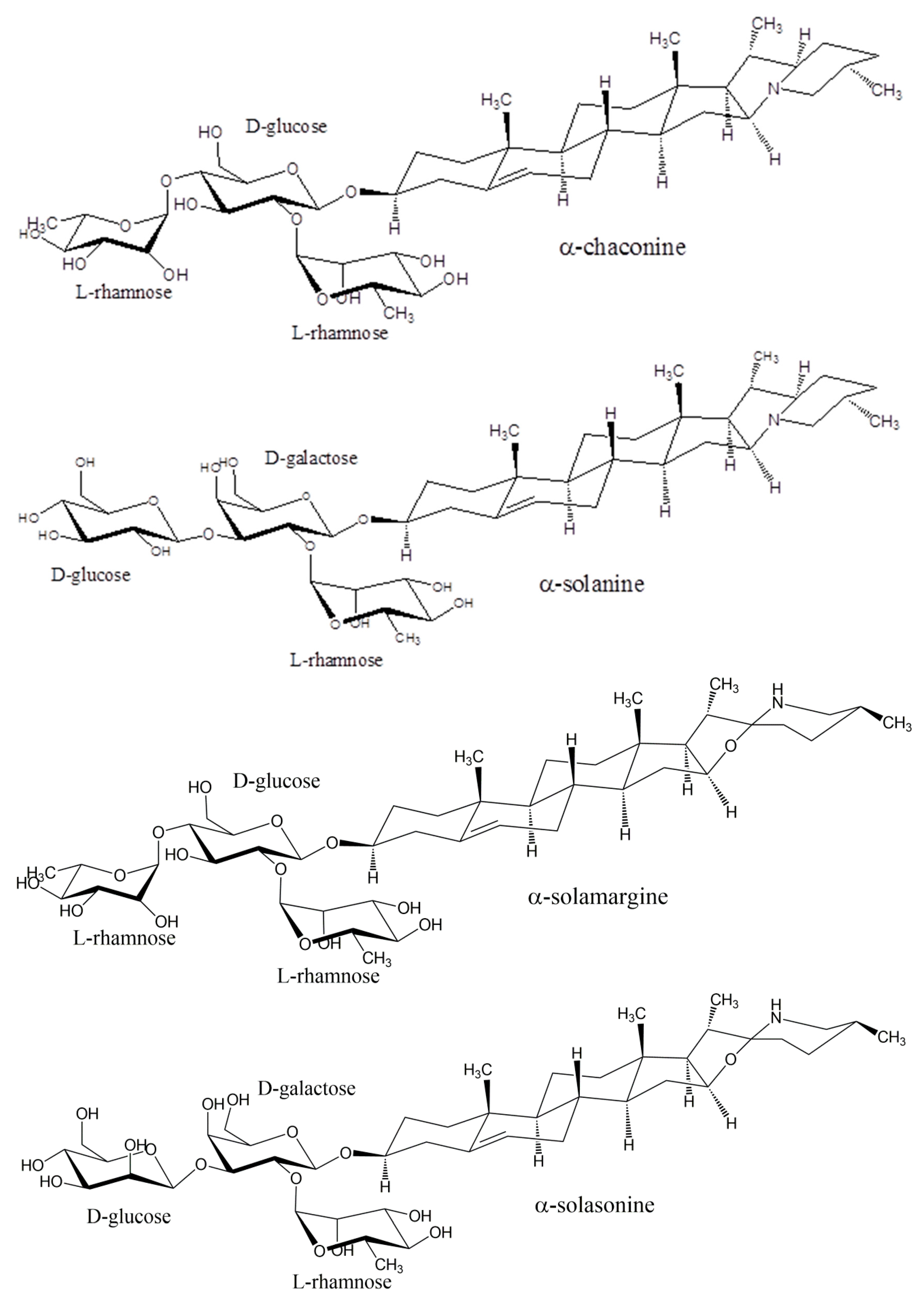
The glycoalkaloids which are secondary metabolites from plants have proven to be of significant interest for their biological properties both in terms of their roles in plant biology and the effects they exhibit when ingested by humans. The main feature of the action of glycoalkaloids is their strong binding to 3β-hydroxysterols, such as cholesterol, to form complexes with the consequence that membrane structure is significantly perturbed, and leakage or release of contents inside cells or liposomes becomes possible. The glycoalkaloids have been studied for their ability to inhibit the growth of cancer cells and in other roles such as vaccine adjuvants and as synergistic agents when combined with other therapeutics. The glycoalkaloids have rich and complex physical behavior when interacting with model membranes for which many aspects are yet to be understood. This review introduces the general properties of glycoalkaloids and aspects of their behavior, and then summarizes their effects against model membrane systems. While there are many glycoalkaloids that have been identified, most physical or biological studies have focused on the readily available ones from tomatoes (α-tomatine), potatoes (α-chaconine and α-solanine), and eggplant (α-solamargine and α-solasonine).
Keywords: glycoalkaloid; membrane; monolayer; liposome glycoalkaloid; membrane; monolayer; liposome
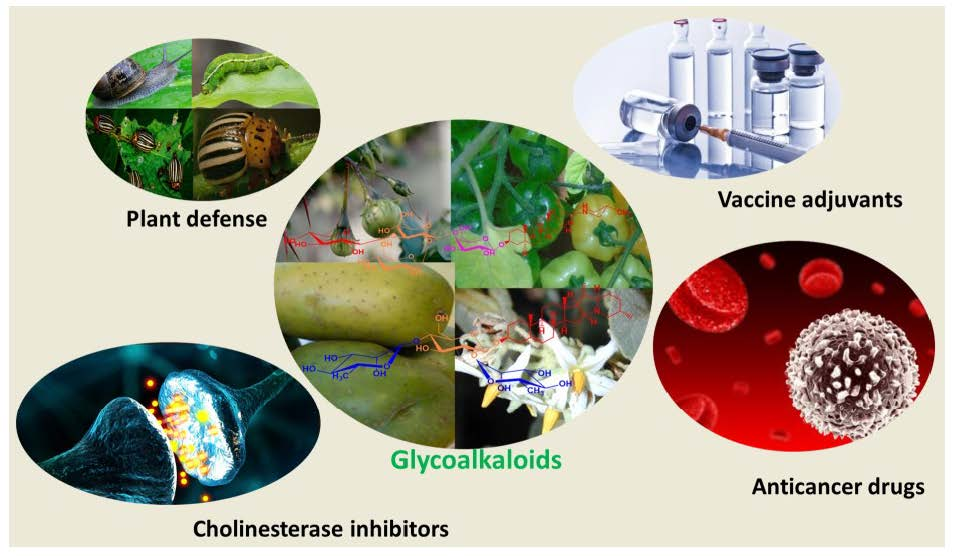
Graphical Abstract