


Abstract
Images of wind turbine blades captured by drones often feature complex backgrounds, and small targets such as minor defects or images have low resolution, leading to reduced recognition rates. To address environments with complex feature backgrounds, this paper proposes the PPS-MSDeim model. Based on the lightweight end-to-end detection framework DEIM-N, it introduces three core innovations to tackle the challenge of detecting small, irregular defects on wind turbine blades against complex backgrounds. First, we design an inverted multi-scale deep separable convolutional module (MDSC). After compressing channels via a bottleneck layer, it concurrently processes 3 × 3, 5 × 5, and 7 × 7 inverted deep separable convolutions. By first fusing channel information and then extracting multi-receiver-field spatial features, this approach enhances the ability to characterize morphologically variable defects while reducing computational overhead. The MDSC is then embedded into the backbone network HGNetv2. Second, we construct a Multi-Scale Feature Aggregation and Diffusion Pyramid Network (MFADPN). Through a Multi-Scale Feature Aggregation Module (MSFAM), it directly fuses features from layers P2 to P5, achieving deep integration of high-level semantics and low-level details. Combining dilated convolutions with expansion ratios of 1, 3, and 5 captures multi-level context, and a Sobel edge branch is introduced to enhance defect contours; subsequently, a feature diffusion operation is performed to distribute the enhanced features back to each level, shortening information paths and preventing signal decay; simultaneously, a high-resolution detection head is added to P2 and the P5 head is removed to improve sensitivity for small object detection. Finally, we propose the PPSformer module to replace the original Transformer encoding layer. It uses patch embedding to convert images into sequences and introduces a multi-head probabilistic sparse self-attention mechanism that focuses only on key-value pairs during attention computation. This design efficiently captures irregularly varying feature information and globally detects data anomalies induced by external defects. This study uses real engineering data sets, and the results show that PPS-MSDeim, based on DEIM, increased mAP@0.5 by 6.7%, reaching 95.1%. mAP@0.5–0.95 increased by 12.0%, reaching 70.1%. This indicates that the proposed method has a significant advantage in detecting defects in wind turbine blades.
1. Introduction
With the comprehensive implementation of “carbon peak” and “carbon neutrality” policies, wind power generation has become a key pillar of sustainable development [1,2,3]. As the global leader in the wind power market (holding approximately one-third of the share), China has demonstrated its dominance in this sector. From 2016 to 2023, the cumulative installed capacity of China’s wind power industry continued to rise, with annual growth rates consistently exceeding 10%. By 2023, the cumulative installed capacity reached 475 gigawatts, marking a 20% year-on-year increase. By November 2024, China’s cumulative wind power capacity reached 492 GW—nearly four times that of the second-ranked country, the United States.
Despite the continuous expansion of the wind power industry, higher demands are placed on the reliability and operation and maintenance (O&M) management of wind power equipment. Irregular load patterns, intermittent duration, and harsh climatic conditions are the primary causes of degradation and failure in wind turbine (WT) components [4], with O&M costs accounting for approximately 10–15% of total expenses. As the core component capturing wind energy in wind farms, turbine blades play a critical role in the overall performance of the wind turbine system. With the advancement of image processing methods, machine vision-based inspection technology has emerged as a promising approach due to its advantages of its low cost, ease of operation, and lack of requirement for prior knowledge [5]. Therefore, researching image recognition-based defect detection algorithms for turbine blades holds significant theoretical and practical importance for enhancing the accuracy of blade inspections.
Currently, defect detection primarily employs deep learning methods [6], and blade defect detection technologies based on artificial neural network algorithms hold immense research potential. Compared to traditional intelligent fault diagnosis methods, deep learning can automatically learn valuable features, whereas traditional approaches require additional feature extractors or selectors. In other words, deep learning methods bypass various signal processing techniques, enabling end-to-end learning. Deep learning networks have been applied to wind turbine blade defect detection, primarily utilizing the YOLO series of algorithms [7] (such as YOLOv8 [8] and YOLOv11 [9]), the DETR series of algorithms [10] (such as Deformable DETR [11] and Sparse DETR [12]), and improved object detection algorithms based on Transformers. Shi et al. [13] proposed DMR-YOLO, an enhanced wind turbine blade surface damage detection method based on YOLOv8. It incorporates a Multi-Scale Edge Perception Enhancement (MEPE) module and a Multi-Branch Block (DBB) [14], demonstrating significant advantages in handling irregular defect shapes on turbine blades and preserving fine edge details. Ying et al. [15] proposed the ViMAF-YOLO (Visual Mamba Attention Fusion YOLO) module, which integrates the efficient Visual Mamba module [16] and combines cross-layer feature fusion pyramids with the CGAFusion [17] module. This addresses limitations in feature fusion and model lightweighting, laying a foundation for wind power equipment maintenance. Deng et al. [18] proposed using an enhanced YOLOv5s for real-time monitoring of wind turbine blades, aiming to improve target recognition effectiveness, training speed, and data robustness. Images of wind turbine blades captured by drones feature complex backgrounds, and small targets with minor defects or low resolution result in reduced recognition rates. Therefore, improving the speed and accuracy of detecting small targets representing minor defects on wind turbine blade surfaces in low-resolution images within complex scenes represents an urgent new research topic.
Images of wind turbine blades captured by drones feature complex backgrounds, and small targets with minor defects or low image resolution result in reduced recognition rates. Previous studies have addressed the detection of minor defects in high-resolution images of wind turbine blades. For certain defects of smaller sizes, Li et al. [19] proposed KGPYOLO, which introduced keypoint localization and the Binary Routing Cross-Attention (BRCA) mechanism for the first time, along with a keypoint-aware geometric guidance preprocessing network (KGP-Net) as a filter. This method is capable of detecting small object defects even in high-resolution scenarios (such as 1080p). Therefore, enhancing the speed and accuracy of detecting minute defects on wind turbine blade surfaces within low-resolution images under complex scenarios represents an urgent new research topic. For model architectures capable of capturing fine-grained details and high-level contextual information, approaches typically either leverage model regularization techniques and feature extraction advantages, generate large quantities of high-quality samples based on real-world distributions, or apply emerging machine learning techniques such as meta-learning and transfer learning. Chen et al. [20] proposed an attention-based feature extraction method combining MobileNetv1-YOLOv4 and transfer learning, replacing YOLOv4’s backbone convolutional neural network with lightweight MobileNetv1 for feature extraction to reduce complexity and computational load. In order to solve the problems of slow convergence and low detection accuracy caused by insufficient data, they introduced a two-stage transfer learning method to fine-tune the pre-training network. This significantly improves the detection accuracy, accelerates the response speed and reduces the computational complexity. Fu et al. [21] proposed a new detection method based on enhanced YOLO-v7 algorithm. This method integrates Ghost-Shuffle convolution (GSConv) and introduces simple attention mechanism (SimAM) into ELAN architecture to improve the recognition ability of small wind turbine blades. In order to accelerate the convergence of the model, they adopted the edge intersection ratio (EIoU) as the edge loss function.
Aiming at the challenge of complex detection scenes (such as tiny defect size, irregular shape and serious background interference), this paper proposes a lightweight end-to-end target detection model PPS-MSDeim, which is used for high-precision surface defect detection of wind turbine blades. The network is based on DEIM-N, and its overall architecture consists of HGNetv2 backbone network, MDSC enhancement module, MFADPN feature pyramid structure and PPSformer global modeling module. Firstly, the original blade images taken by UAV are input into HGNetv2 backbone network. The key innovation lies in MDSC module, which replaces the original HGBlock unit. MDSC module adopts a reverse multi-scale depth separable convolution strategy to compress channels in parallel and extract spatial features of multi-receptive fields, effectively capturing nonlinear and changeable defect morphology. In addition, MFADPN integrates semantic information and details from high to low through multi-scale feature aggregation and diffusion mechanism. Sobel edge branch is introduced to enhance contour representation, and it works with high-resolution P2 detector to optimize small target response. In addition, the PPSformer module replaces the traditional Transformer encoder. It uses block embedding and probabilistic sparse self-attention mechanism to model the long-range global dependency, and at the same time significantly reduces the computational overhead, so that it can accurately extract the defect context. The main contributions of this paper are summarized as follows:
- To address the challenges of diverse defect morphologies and varying scales, MDSC first compresses channels via 1 × 1 convolutions, then concurrently employs 3 × 3, 5 × 5, and 7 × 7 depthwise separable convolutions to extract multi-receptive field features. This realizes the joint modeling of local details and global structure, enhances the expression ability of nonlinear defect features, and reduces the number of parameters, and is embedded in HGNetv2 backbone network.
- MFADPN breaks through the limitation that traditional FPN only fuses adjacent layers, and directly aggregates P2 to P5 layers through MSFAM. It combines multi-spread hole convolution and Sobel edge branching to enhance context and contour information. Subsequently, the diffusion operation feeds back the enhanced features to all layers, and optimizes the structure of the detection head (adding P2 layer and removing P5 layer), thus significantly improving the detection performance of tiny defects.
- Replace the original Transformer coding layer with the multi-head probability sparse self-attention mechanism. Image sequences are constructed by embedding sliding window blocks, and sparse constraints are introduced into attention calculation, only focusing on key-value pairs. This reduces the computational complexity from to nearly linear while maintaining the advantages of global feature extraction and meeting the lightweight requirements.
The rest of this paper is structured as follows: Section 2 introduces the basic theoretical model of external defect detection; Section 3 elaborates PPS-MSDeim; in detail; Section 4 verifies the superior performance of the proposed model through comparative experiments and analysis; Section 5 summarizes the whole paper and looks forward to future research directions.
2. Fundamental Theory
This section introduces relevant theories and background information. Firstly, the DEIM (Improved matching DETR) network model is introduced, and then the basic principle of reverse depth separable convolution is explained in detail.
2.1. DEIM Network Model
Target detection is a basic task in computer vision, which is widely used in the fields of automatic driving [22,23] and robot navigation [24]. The increasing demand for efficient detectors promotes the development of detection methods. The appearance of Transformer-based target detection (DETR) paradigm [10] has aroused widespread concern [25,26,27]; it uses multi-head attention mechanism to capture global context information, thus enhancing the ability of location and classification. DETR adopts the one-to-one (O2O) matching strategy, and establishes the unique correspondence between the prediction frame and the real target through the Hungarian algorithm [28] in the training process, so it is unnecessary to use non-maximum suppression (NMS). This end-to-end framework provides an attractive alternative for target detection.
In order to solve the problem of insufficient supervision signal in DETR, DEIM proposed a novel and direct method called Dense O2O matching. Its core idea is to increase the number of targets in each training image, so as to generate more positive samples in the training process. The dense O2O matching not only provides the same level of supervision as O2M method, but also avoids the usual complexity and computational overhead of O2M method.
The existing DETR loss function [29], such as Varifocal Loss (VFL) [30], is mainly designed for sparse anchor frame sets, in which there are relatively few low-quality matches. These loss functions mainly punish high-quality matches (especially those with high IoU but low confidence), while ignoring low-quality matches. In order to solve the problem of low-quality matching and further improve the performance of dense OO, DEIM introduces Matchability-Aware Loss (MAL). MAL adjusts the punishment intensity according to the matching by combining the IoU and classification confidence between the matching query and the target. For high-quality matching, MAL’s performance is similar to VFL’s, but it pays more attention to low-quality matching, thus improving the utilization rate of limited positive samples in the training process. In addition, MAL’s mathematical expression is more concise than VFL.
The proposed DEIM method integrates Dense O2O with MAL to establish an efficient training framework. By introducing more efficient models, the network also proposes a series of novel detectors. Integrating DEIM into D-FINE-L [31] and D-FINEX yields DEIM-D-FINE-L and DEIM-D-FINEX, which outperform existing models—including the state-of-the-art YOLOv11 [9]—establishing new state-of-the-art (SoTA) benchmarks for object detection.
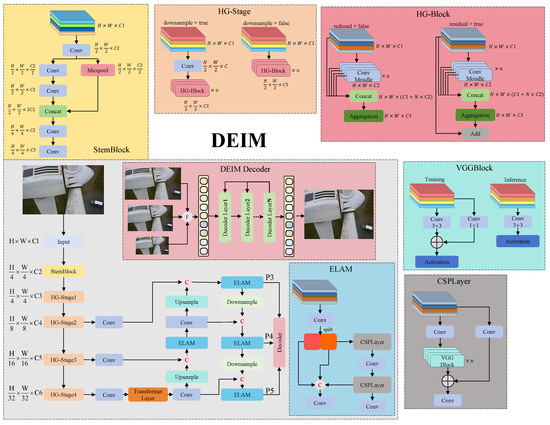
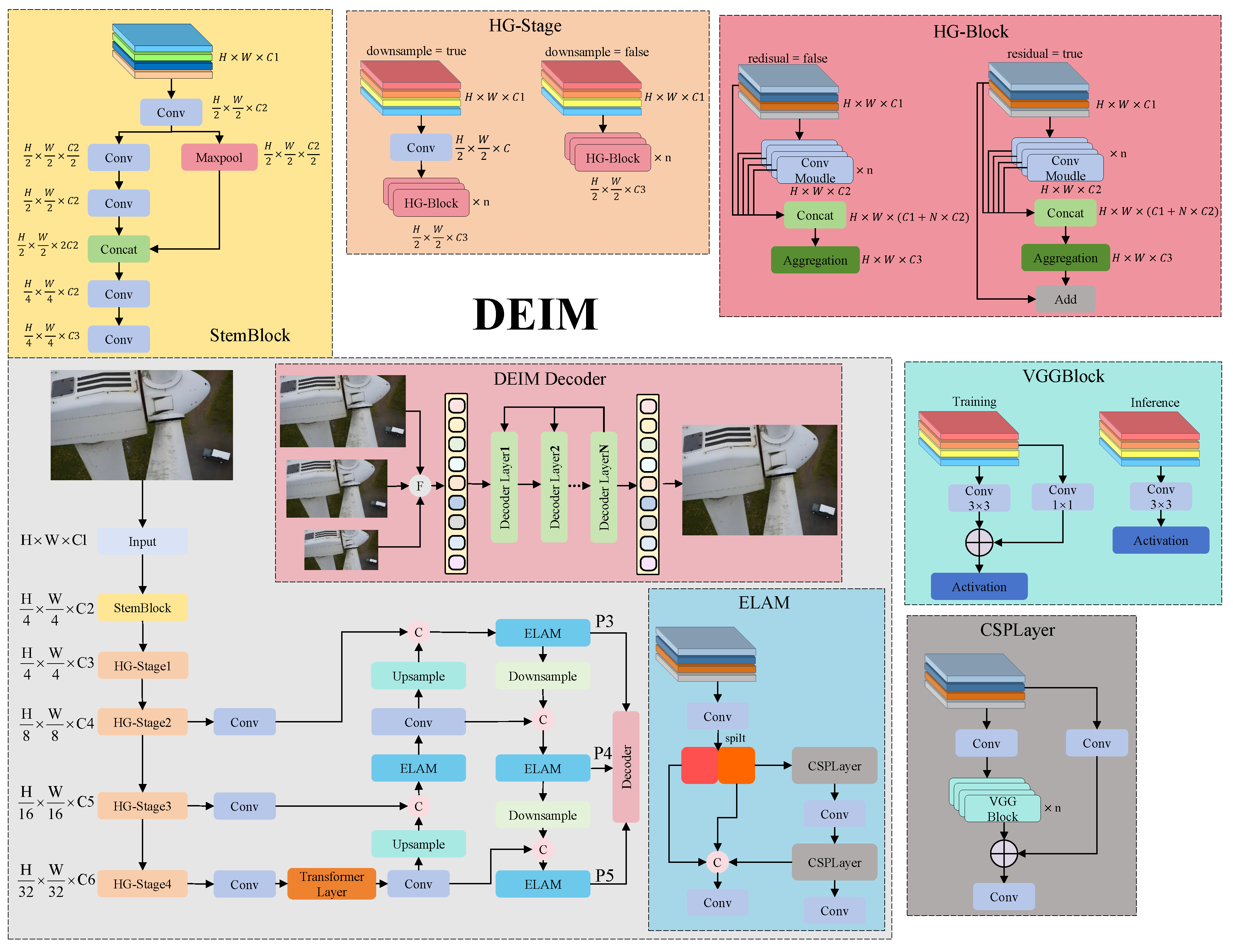
The fundamental DEIM framework employs a hierarchical architecture for end-to-end object detection, as illustrated in Figure 1. This framework comprises three primary components: (1) the HGNetv2 backbone for multi-scale feature extraction, (2) the HybridEncoder for feature enhancement and fusion, and (3) the D-FINE-Transformer decoder with self-distillation capabilities for iterative detection refinement. This pipeline is designed for progressive feature extraction, multi-scale fusion, and end-to-end detection directly on drone images without any additional post-processing (e.g., NMS). The most important contribution is to combine the fine-tuning scheme based on diffusion with the intensive supervision scheme.
Figure 1.
DEIM network architecture.
2.2. Inverted Depth-Separable Convolution-Xception Module
In order to obtain a deeper feature map, traditional neural networks usually increase the number of convolutional layers, which will lead to too many parameters and increase the training difficulty. More importantly, it will increase the consumption of time and space. In addition, the convolutional kernel in the same layer of the traditional convolutional neural network is relatively uniform, but the correlation between different channels in a time–frequency diagram is not strong, so it is necessary to use different convolutional kernels for different channels.
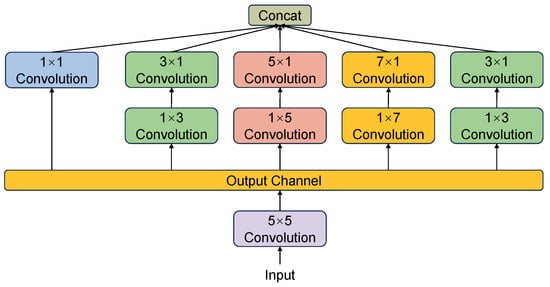
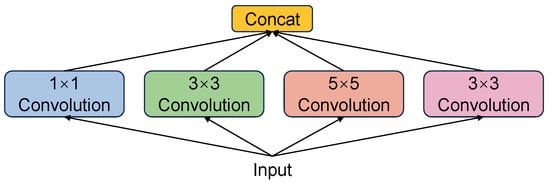
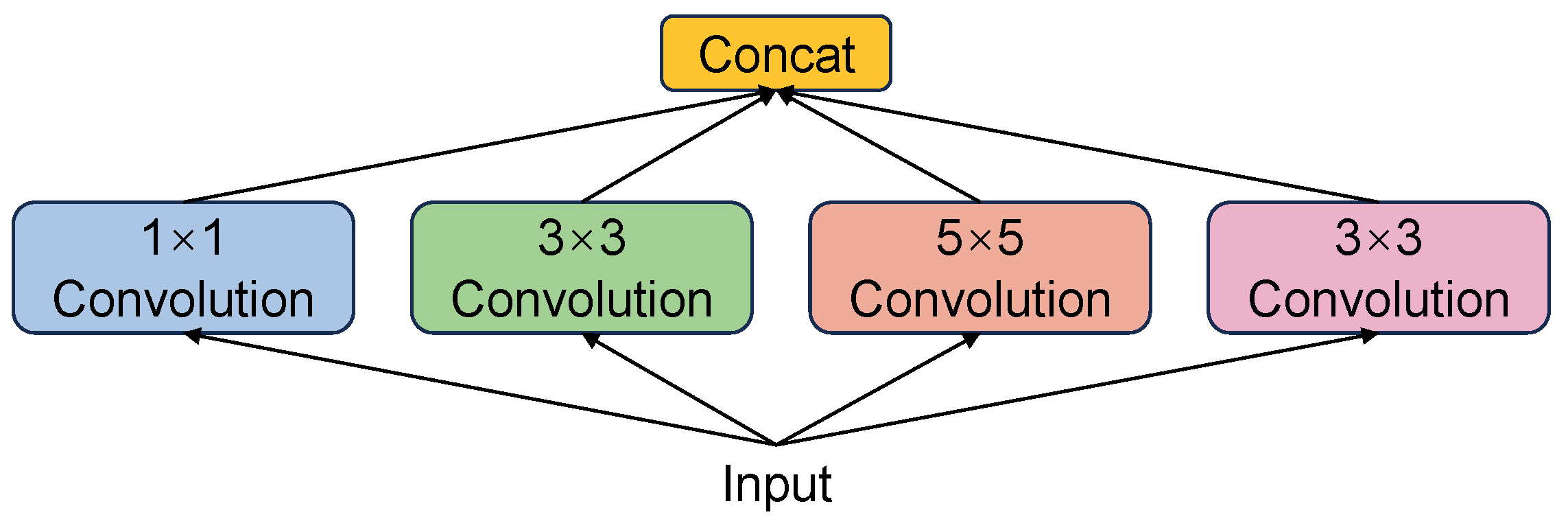
In order to meet these challenges, Inception provides an alternative method to extract deeper feature maps. It uses convolutional kernels with different sizes in the same layer to generate receptive fields with different dimensions, thus improving the classification performance. Its architecture is shown in Figure 2.
Figure 2.
Inception module.
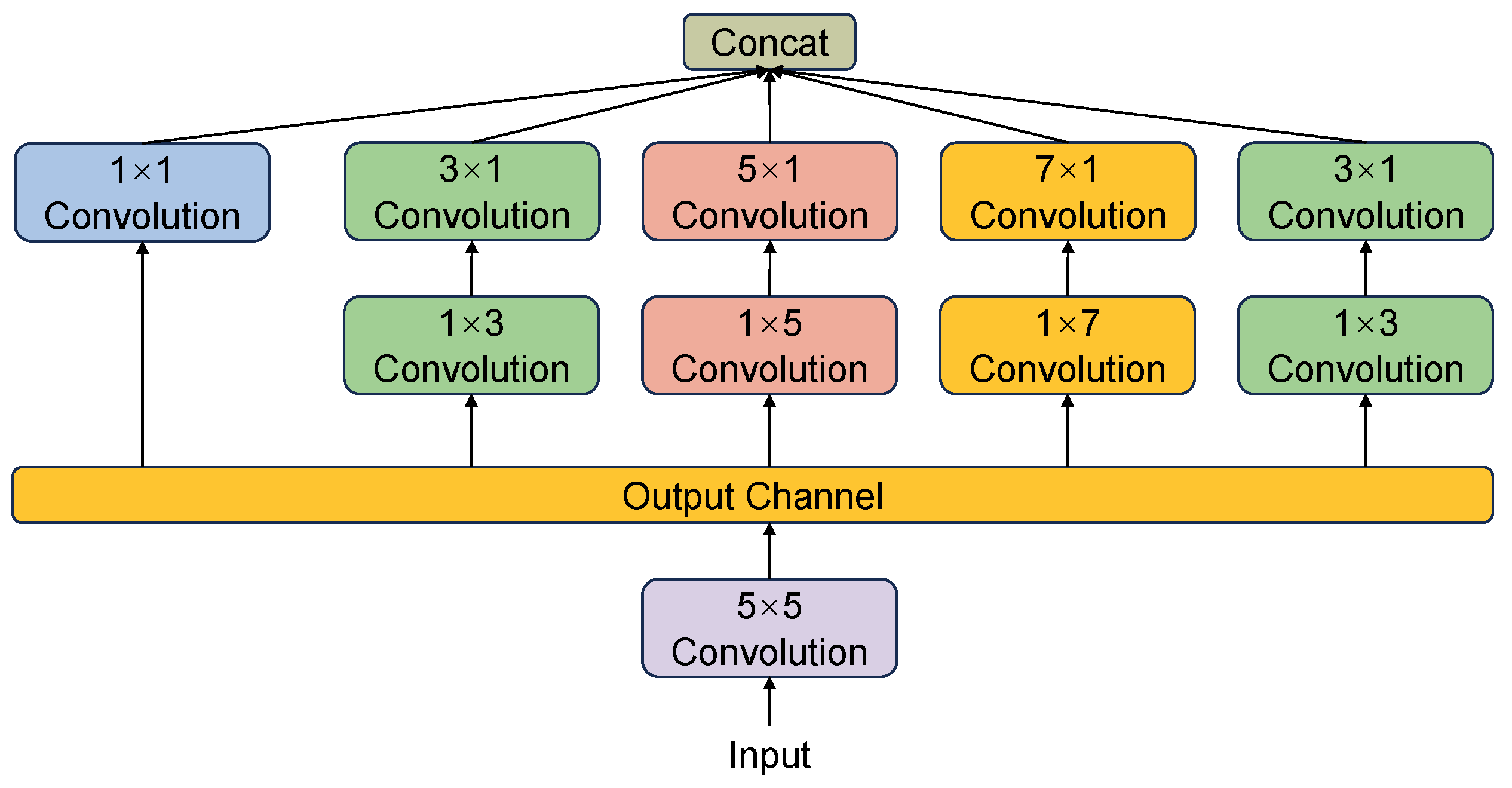
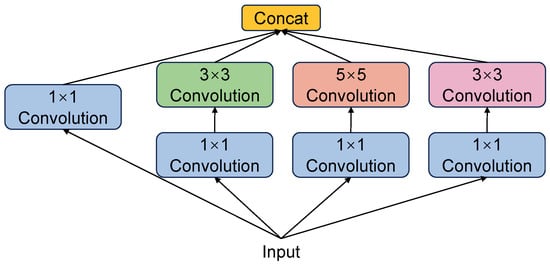
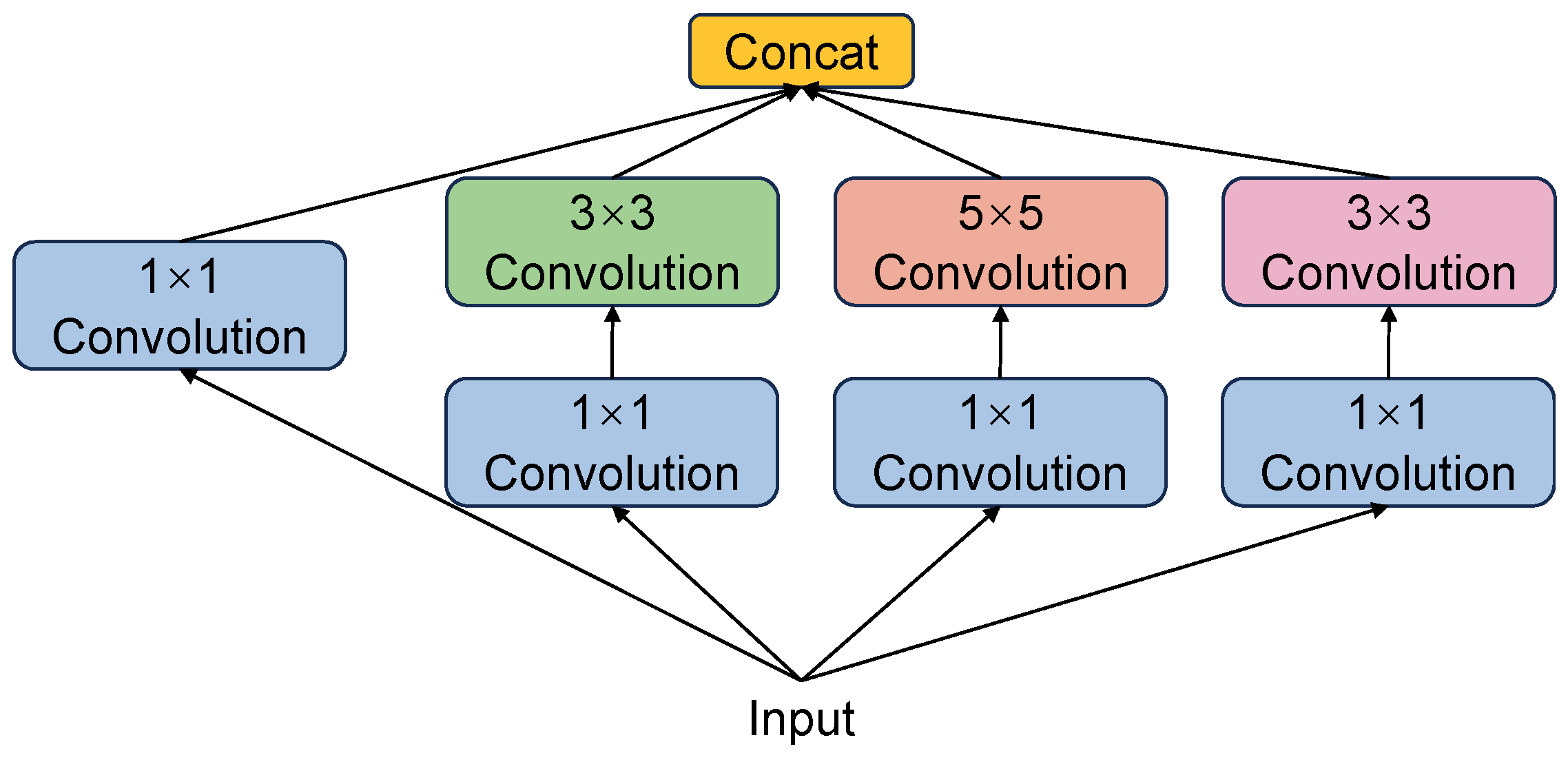
Using 1 × 1, 3 × 3 and 5 × 5 convolutional kernels to process the input feature map at the same time, and then combining the obtained features, various features can be extracted to obtain better results. However, this structure suffers from a significant drawback: the number of parameters is vastly larger than using a single kernel, and such immense computational load renders the model inefficient. This limitation inspired the incorporation of 1 × 1 convolutional kernels within the network. Inception incorporates 1 × 1 convolutional kernels into its architecture, as shown in Figure 3.
Figure 3.
Inception module with convolution.
Channel-to-channel correlations and spatial correlations within convolutional layers can be decoupled. Therefore, separately mapping these correlations yields superior results. Based on the Inception hypothesis, it is reasonable to assume that when the number of channels increases, cross-channel correlations and spatial correlations should be mapped completely separately. Based on these findings and assumptions, the Xception module was proposed. Its architecture is shown in Figure 4. First, it uses a convolution to map cross-channel correlations. Then, an independent spatial convolution is applied to each output channel of the convolution to map spatial correlations. Performing convolution for inter-channel correlations ensures that the number of subsequent convolution kernels of different types matches the output channels from the convolution. Since distant parts of an image are less important, Xception employs distinct convolution kernels. Inspired by convolution decomposition, this approach is applied to different kernels. Such operations not only accelerate computation but also further increase network depth, enhancing the neural network’s learning capacity. Additionally, it routes each input segment to the neurons best suited for processing it, effectively finding the optimal path.
Figure 4.
Xception–Inverted depthwise separable convolution module.
Figure 4 reveals that Xception’s architecture modifies the standard depthwise separable convolution, which typically performs depthwise convolution followed by pointwise convolution. In contrast, Xception’s module performs pointwise convolution first, followed by depthwise convolution. Consequently, this paper refers to the Xception module as an inverted depthwise separable convolution module. Compared to traditional depthwise separable convolution, the inverted approach offers advantages by first performing efficient channel information projection and fusion in a low-dimensional space, then applying spatial filtering in a higher-dimensional, richer feature space. This not only significantly improves computational efficiency but also enables the learned spatial features to be more discriminative. Building upon inverted separable depth convolution and centered on multi-scale separable depth convolution, this paper proposes an inverted multi-scale separable depth module.
3. PPS-MSDeim Object Detection Model
To address challenges posed by complex feature backgrounds, this study adopts the DEIM network [32] as the basic framework for the backbone network while enhancing its optimization. The DEIM series includes multiple versions—N, S, M, L, and X—with DEIM-N being the lightweight variant. To ensure lightweight application of the model, the lightest DEIM version is selected as the backbone network. Based on the DEIM-N framework, this paper proposes the PPS-MSDeim object detection model featuring multi-scale detection blocks and a multi-head probsparse encoder. It is applied to wind turbine blade defect detection. The main architecture of the PPS-MSDeim model is outlined below.
3.1. Inverted MDSC Module for Enhanced Irregular Feature Capture
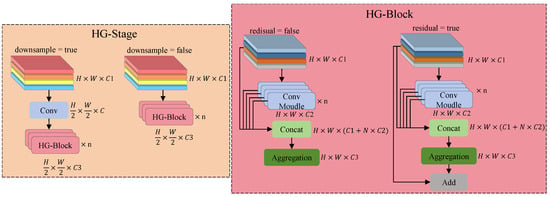
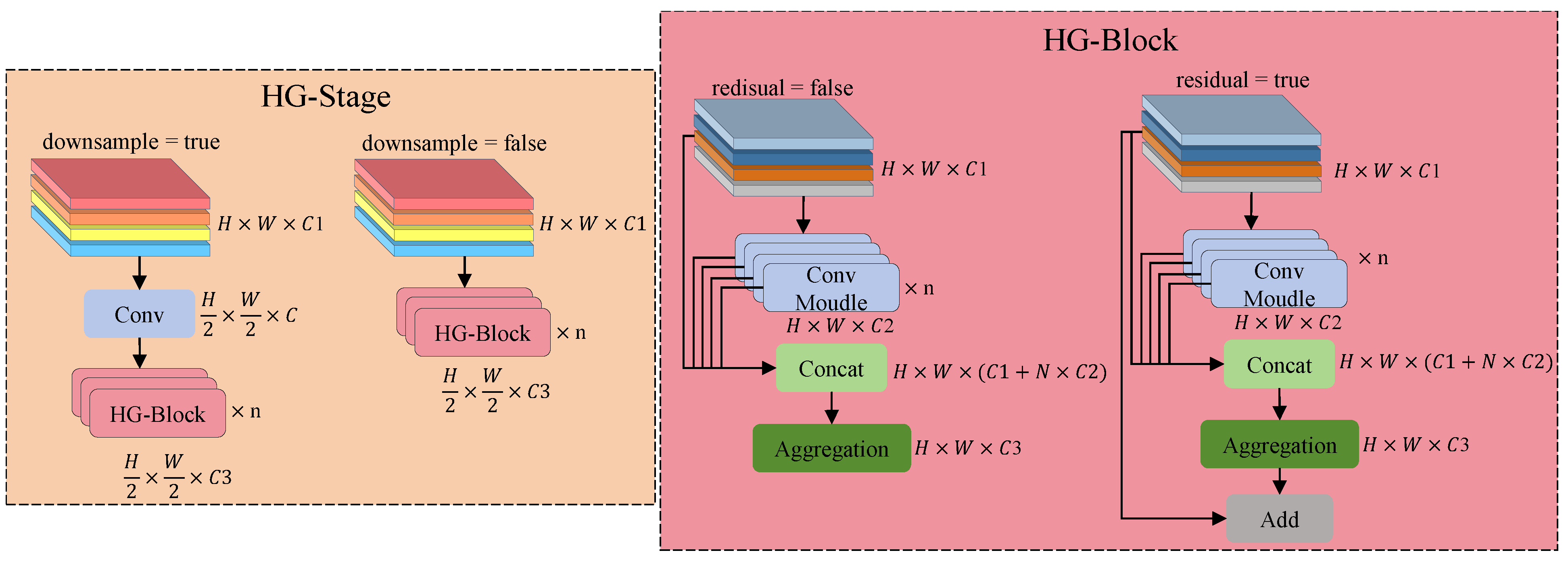
The backbone structure of HGNetv2 comprises HGStage modules and multiple HGBlock units. It progressively extracts features across five scales, continuously increasing the receptive field and semantic abstraction. The network has gone through four hierarchical stages (HGStage1-4), and generated feature maps with scales of P2/4, P3/8, P4/16 and P5/32, respectively. At each level, the proposed channel subtly balances resolution reduction and channel dimension expansion. This method not only preserves the fine local details for small target detection, but also provides enough capacity for global context information, thus supporting semantic understanding. This hierarchical structure ensures complete multi-scale feature representation and promotes dense gradient flow through connection. A schematic diagram of HGStage and HGBlock modules is shown in Figure 5.
Figure 5.
Structure of HGStage and HGBlock.
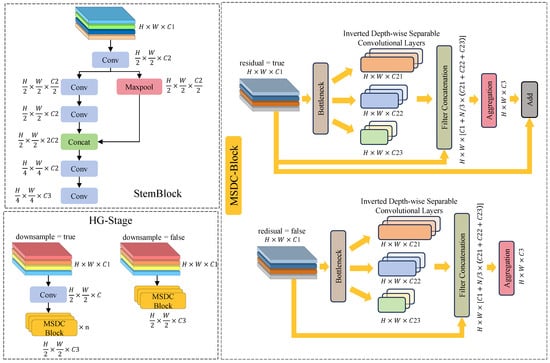
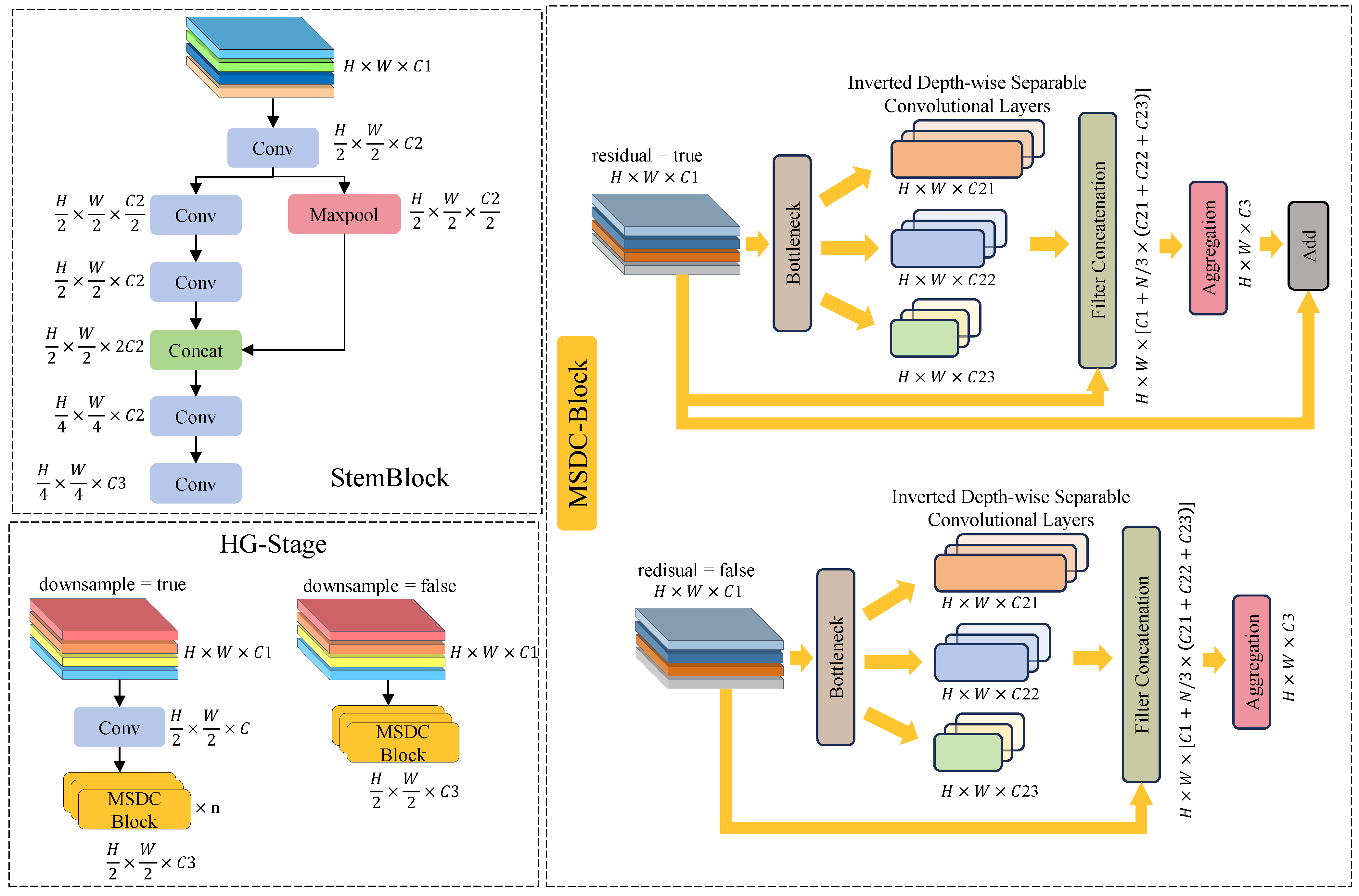
Obviously, the standard fixed-size convolution kernel is not suitable for the detection signal of irregular fan blade images. A convolution kernel with a single size can only capture the features with a fixed scale, and cannot fully extract the features of objects with different sizes and scales in the image. In order to solve this problem, this paper proposes a multi-scale reverse depth separable convolutional network (MDSC) as the basic module to extract the characteristics of nonlinear signals. Its structure is shown in Figure 6. Multi-scale depth separable convolution operation first inputs the signal to the bottleneck layer to reduce the number of channels. Then, the feature map of bottleneck layer reconstruction is input into three groups of filters with the same number of channels in parallel. These filters use three groups of two-dimensional depth-separable convolution with different sizes. This design choice is mainly based on two reasons: first, the larger convolutional kernel can capture the effective features in the signal sequence more comprehensively; secondly, convolution kernels with different sizes can extract finer-grained features from the signal. This method minimizes the number of parameters and the calculation cost without affecting the performance. Finally, the output of each parallel depth separable convolution is merged with the output of channel pooling operation to form a more comprehensive and advanced feature. This makes this structure very suitable for extracting features from the original image signal. In this paper, the HGBlock structure is replaced by the MDSC structure, and it is deployed to the HG-Stage layer, as shown in Figure 6.
Figure 6.
Structure of MSDCBlock and the new HGStage with embedded MSDCBlock.
3.2. Multi-Scale Feature Aggregation Diffusion Pyramid Network
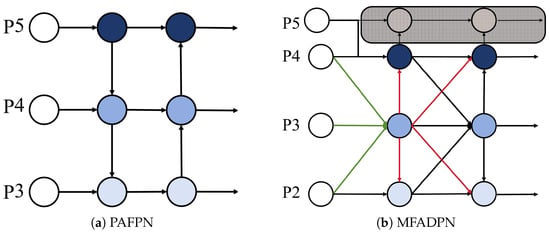
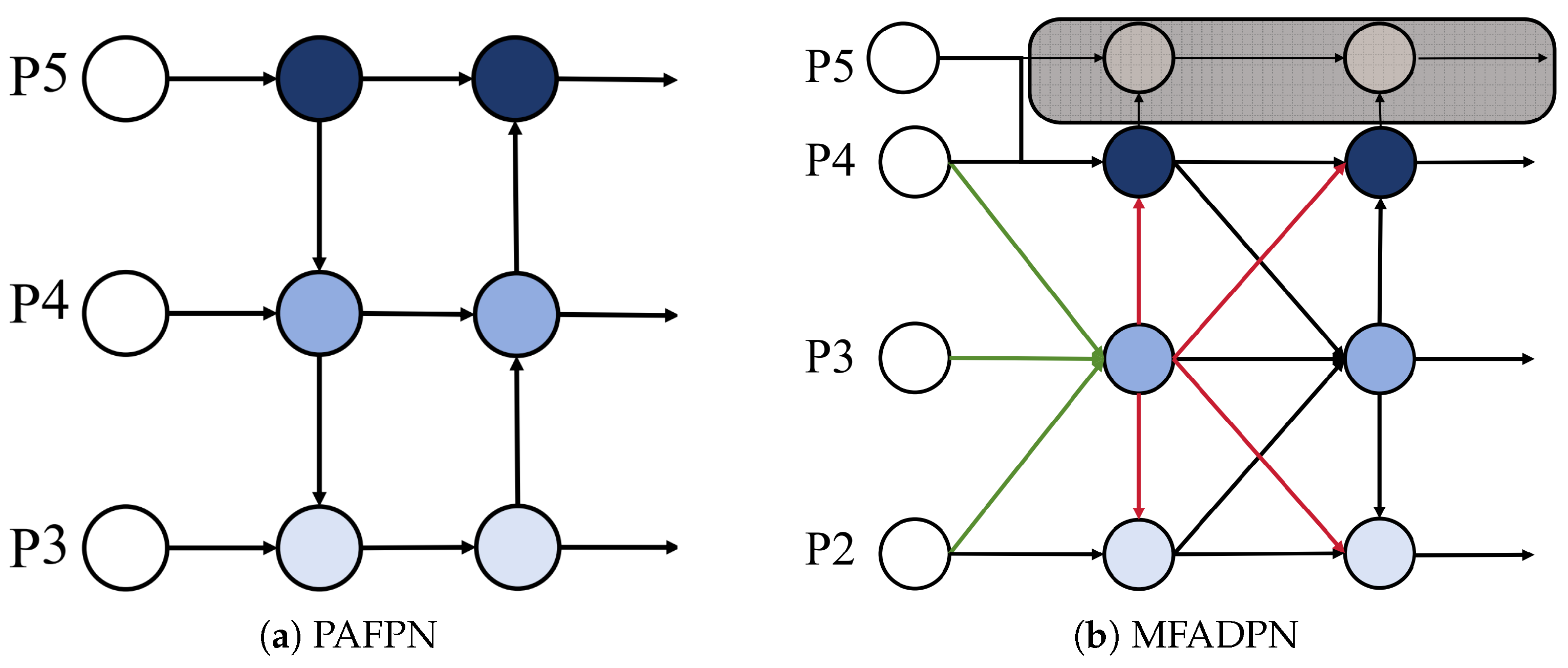
In aerial images, multi-scale targets are ubiquitous. Existing methods usually use feature pyramid strategy, such as PAFPN [33], to fuse multi-level feature information, thus enhancing the multi-scale detection ability of the model, as shown in Figure 7a. However, this kind of structure still has some limitations. Firstly, feature fusion in PAFPN is limited to adjacent layers, and it is impossible to directly fuse features between distant layers. This local fusion method limits the global information sharing between different scales. For example, P3 (usually containing fine-grained details) and P5 (usually containing semantic information) cannot be directly integrated, which limits the overall expression ability of features. In addition, the fusion of low-level and high-level features needs to go through multiple intermediate layers. This process makes features undergo repeated convolution and pooling operations on the propagation path, resulting in information attenuation or loss. Therefore, the final fused features cannot effectively capture the advantages of multi-scale information. In order to solve these problems, we propose a multi-scale feature aggregation diffusion pyramid network. The network adopts a multi-scale aggregation and diffusion strategy to enhance the global interaction ability of different scale features, shorten the information transmission path, and effectively overcome the limitations of existing methods, as shown in Figure 7b.
Figure 7.
Feature pyramid network architecture.
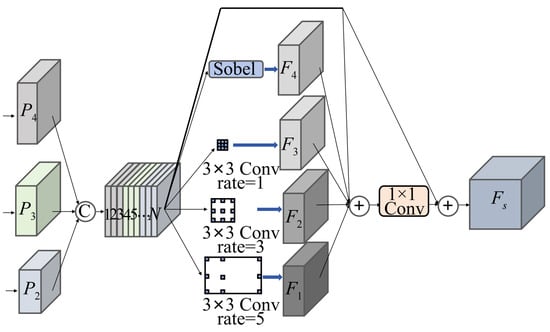
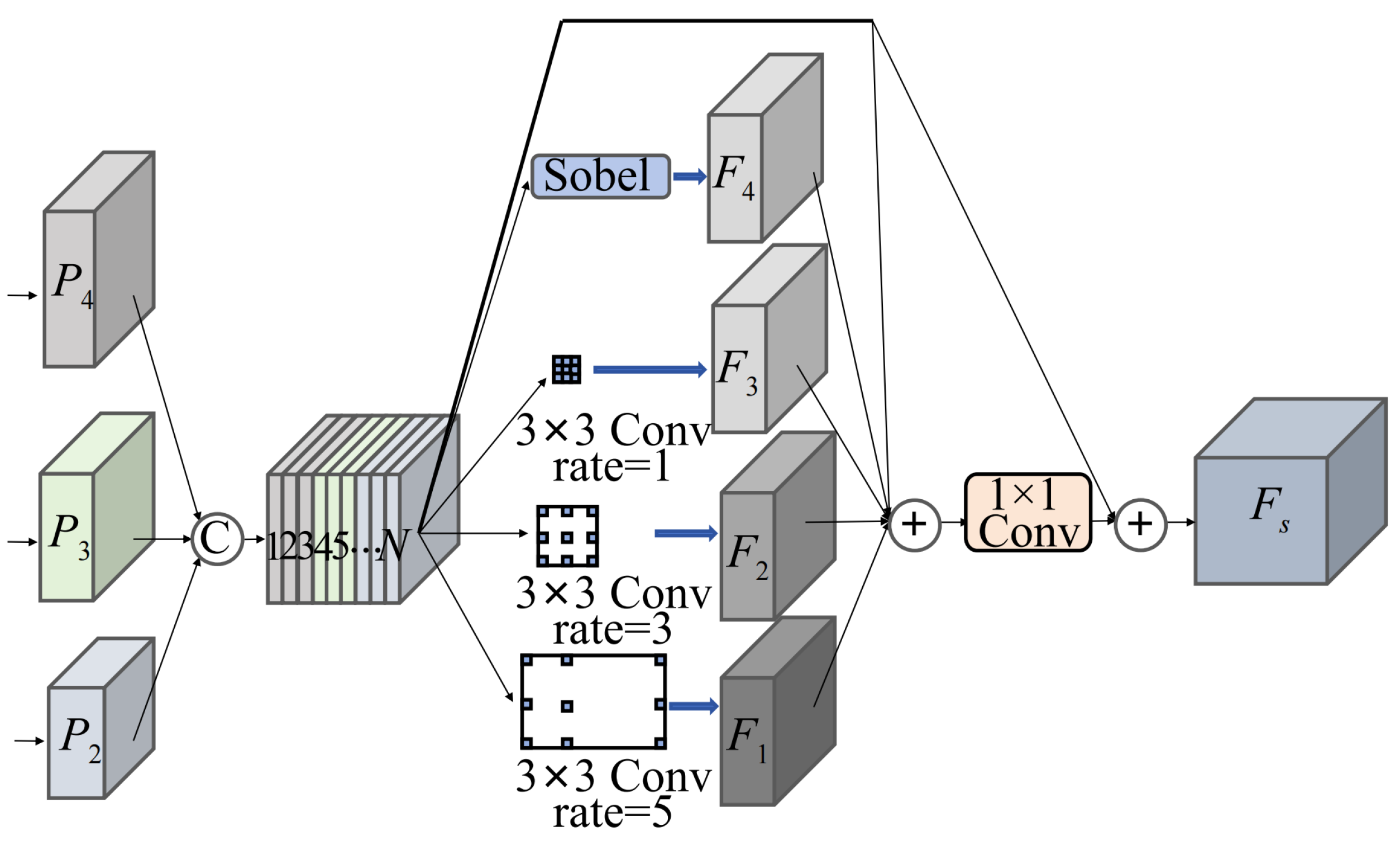
In the feature aggregation stage, a multi-scale feature aggregation module (MSFAM) is designed to integrate feature maps from different levels. This enables fine-grained information and semantic information to be directly integrated, thus enhancing the comprehensive expression ability of features, as shown in Figure 8.
Figure 8.
MSFAM structure.
Specifically, MSFAM first connects feature maps , , and from different layers along the channel dimension to generate feature maps containing multi-scale information:
where denotes the channel concatenation operation, and F represents the feature map obtained after concatenating , , and along the channels.
Subsequently, the void convolution with void ratios of 1, 3 and 5 is applied. Specifically, hole convolution introduces gaps between convolution kernel weights while keeping the actual number of weights unchanged, thus effectively expanding the receptive field without adding parameters. This enables the network to capture richer contextual information. When the void ratio is 1, the behavior of void convolution is the same as that of standard convolution, mainly extracting local features. When the void ratio is 3, it captures more extensive context information. When the void ratio is 5, it pays more attention to the global information and is suitable for extracting features on a larger scale. The results of these different void ratios complement each other, so that the network can obtain local and global features on the same scale at the same time. In the feature fusion stage, the model can form a more expressive feature representation by combining information from different scales. This process can be expressed by mathematical expressions as follows:
where denotes a deep convolution with kernel size k and dilation rate d. , , and represent the feature maps obtained after convolution operations with different dilation rates.
In addition, considering that convolution is usually good at capturing spatial information, but it is often difficult to deal with edge details, an edge detection branch based on Sobel operator is introduced to extract edge information from images:
Here, denotes the feature map generated after Sobel operator convolution.
Finally, by fusing the original feature map F with the multi-scale convolved feature maps , , , and the edge-rich feature map , MSFAM generates a more comprehensive feature representation , enabling the model to better understand image content. The feature aggregation stage can be expressed as:
Here, denotes a convolution operation with a kernel size of 1, represents the output feature map from the MSFAM module, and the symbol + indicates element-wise addition.
In the diffusion stage, the composite features after polymerization are distributed to feature layers of different scales. This enables each scale to directly benefit from the rich information after fusion, thus enhancing the model’s ability to detect multi-scale targets. Specifically, as shown by the green line in Figure 7b, after the multi-scale features are aggregated in the middle layer, the features will spread from the middle layer to the adjacent layers on both sides. This shortens the propagation path of feature information and effectively prevents possible attenuation or loss during long-distance transmission, as shown by the red line in Figure 7b.
In addition, considering that the input of P2 layer mainly comes from the shallow layer of backbone network and contains finer-grained features such as texture, inspired by Dong et al. [34], a high-resolution detector is added to P2 layer to make better use of this information and effectively improve the detection performance of the model for small objects. Simultaneously, to maintain the model’s original output of three feature maps of different sizes, the detection head from layer P5 is removed.
3.3. PPSformer Module for Capturing Better Global Features
The emergence of Transformers has revealed their immense potential in computer vision. Particularly excelling in global feature extraction, they surpass most convolutional neural networks. Introducing the feature extraction philosophy of Transformer models into fault diagnosis problems, we utilize Transformer models for direct input of raw data and self-feature extraction for two-dimensional image features of wind turbine blade defect data. The TransformerLayer in DEIM utilizes its Encoder layer, specifically the encoding component.
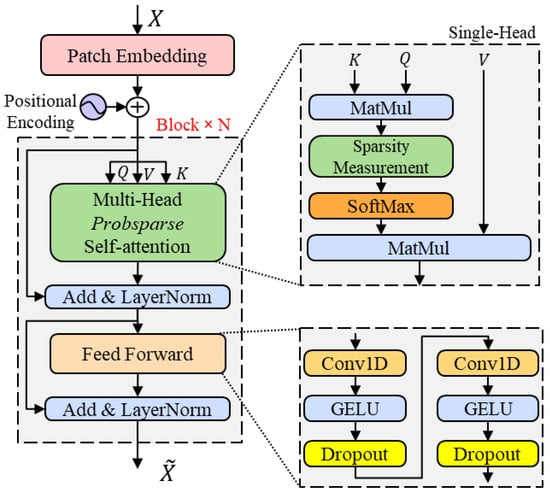
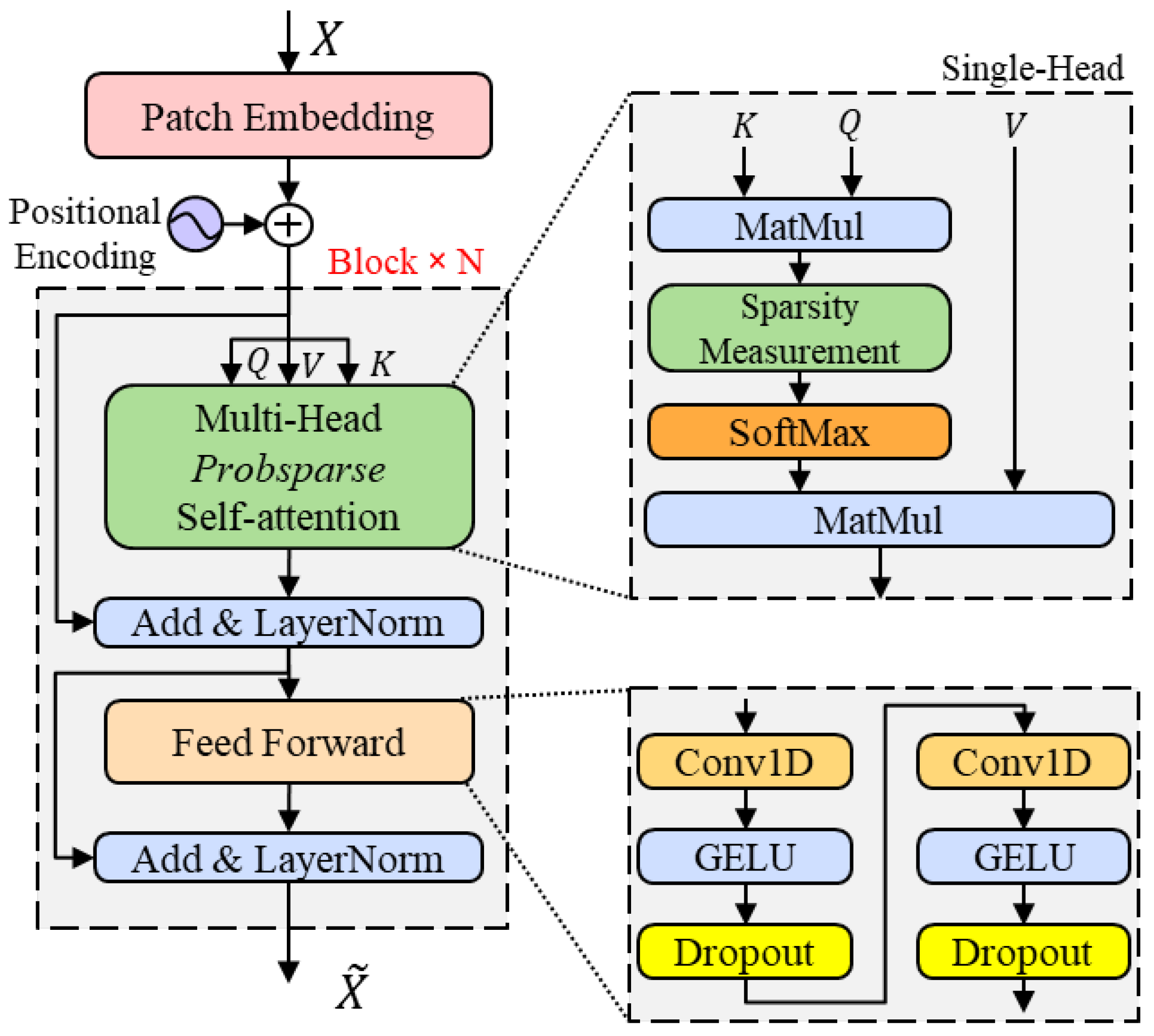
This paper proposes the PPSformer module to capture better global features, replacing the original network’s TransformerLayer. The PPSformer network was developed to extract long-term defect features and global correlations within extended sequences, serving as the core module for the wind turbine blade defect object detection network. It primarily consists of a patch embedding layer, a multi-head probsparse self-attention layer, a residual connection, a layer normalization, and a feedforward layer, as shown in Figure 9.
Figure 9.
Structure of the PPSformer module.
(1) Input Mechanism: Patch Embedding Layer
Since the Transformer’s input mechanism involves embedding sequences via dictionary lookup, a sliding window approach is adopted to partition the input sequence of each univariate 2D image sequence into overlapping or non-overlapping patches. This ensures the desired embedded sequences are obtained while accounting for sequential relationships, as shown in Equations (7) and (8).
Here, P denotes the sliding window length, and S represents the non-overlapping region between two consecutive patches.
The patching process expands the original input labels into a two-dimensional label sequence , where L is the length of the input label sequence X and N is the number of labels. By employing patching, the number of input labels is reduced from L to approximately . Reducing the number of tags can reduce the memory occupation and computational complexity of attention diagram by about S times. Therefore, under the condition of limited training time and GPU memory, the full coverage image block design enables the model to process more two-dimensional image sequences, thus significantly improving the target detection performance.
(2) Multi-head probsparse self-attention
The self-attention mechanism used in the original Transformer can be expressed in the form of probability, as shown in Equation (9).
The self-attention mechanism calculates its output by calculating probabilities and V, which involves quadratic dot product operation, thus increasing the computational complexity. Previous studies have shown that the probability distribution of self-attention is inherently sparse, in which only a few dot product pairs contribute significantly to primary attention, while most dot product pairs contribute to secondary attention. Therefore, filtering the principal dot product pairs can improve the computational efficiency of the attention layer.
In this paper, the multi-head probability sparse self-attention mechanism [35] is introduced into PPSformer to replace the classical self-attention mechanism to model degradation behavior. The sparse self-attention mechanism evaluates sparsity between distributions p and q, effectively capturing high-value attention features. It utilizes the Kullback–Leibler divergence with a maximum mean strategy to compute the sparsity metric, specifically described in Equation (10).
where the first term represents the maximum value among all query keys , and the second term denotes the weighted average of these query vectors.
If the i-th query achieves a large coefficient metric , the probability of attention allocation becomes non-uniform, meaning certain receive more attention. Therefore, by redefining the sparse self-attention layer to allow each key to focus only on the top n most important queries, the final expression for sparse self-attention is shown in Formula (11).
Here, denotes retaining only the most important query vectors under the coefficient metric .
It is worth noting that the sequence lengths of keys and queries are typically equal in attention calculations, resulting in a time complexity of for the probabilistic sparse self-attention mechanism. When L is large, its time complexity is significantly lower than of standard self-attention, enabling the model to process longer sequences. Finally, a multi-head mechanism is employed to generate various sparse keyword query pairs, minimizing information loss.
After deploying the PPSformer model into the HG-Stage4 module of the backbone network, this paper effectively captures temporal dynamics and complex patterns within global image signal features using a novel encoder composed of self-attention and a feedforward network. In this way, higher probability can be assigned to the most relevant categories according to the learned characteristics, so as to accurately classify the potential wind turbine blade defects.
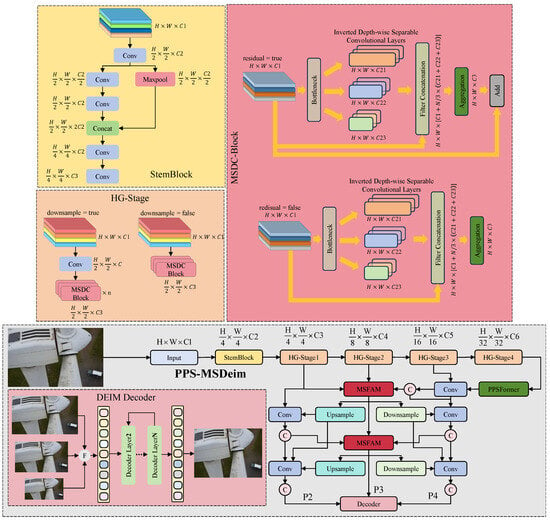
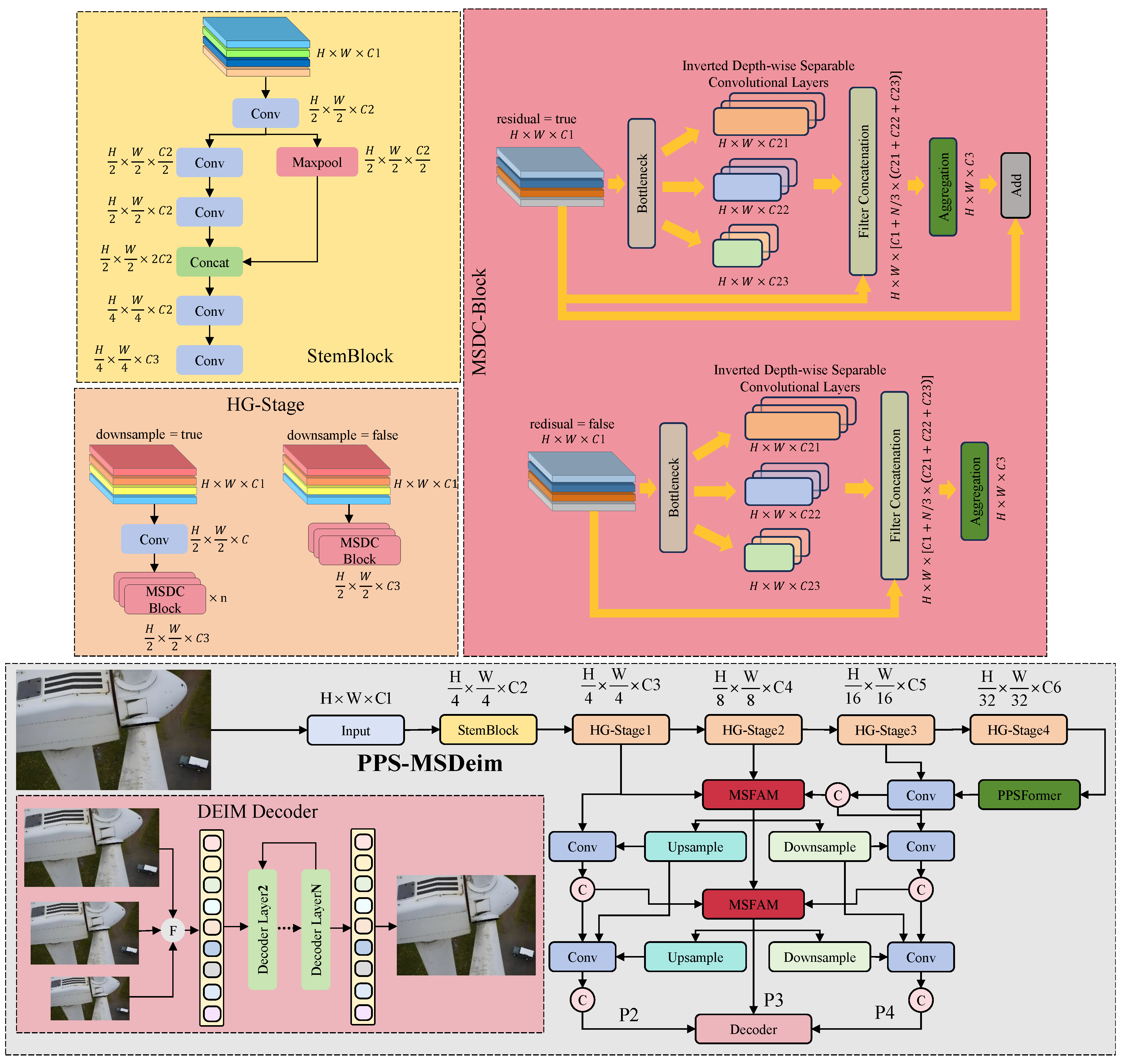
As shown in Figure 10, the overall architecture of PPS-MSDeim aims to solve the core challenges in the inspection image of UAV wind turbine blades: tiny defect size, irregular shape and complex background. This model is based on the lightweight end-to-end detection framework DEIM-N, and has been systematically improved from backbone network, neck to encoder.
Figure 10.
Overall architecture of the PPS-MSDeim model.
Firstly, the HGBlock unit in HGNetv2 backbone network is replaced by the Inverse Multiscale Depth Separable Convolution Module (MDSC). The module firstly compresses the channel dimension by 1 × 1 point-by-point convolution, and then introduces 3 × 3, 5 × 5 and 7 × 7 depth separable convolution at the same time, realizing a reverse strategy of “spatial filtering after channel fusion”. This design significantly reduces the number of parameters; at the same time, it effectively captures the local details and structural information of multiple receptive fields, and enhances the characterization ability of nonlinear and diverse defect forms.
Secondly, in view of the limitation that the traditional feature pyramid network only supports inter-layer feature fusion and it is difficult to achieve deep semantic detail fusion, we propose a multi-scale feature aggregation diffusion pyramid network (MFADPN) as the neck structure. MFADPN directly integrates P2–P5 hierarchical features through its multi-scale feature aggregation module (MSFAM), and realizes the effective coupling of cross-scale semantic and spatial information. Subsequently, it uses hole convolution with hole rates of 1, 3 and 5 to model multi-level context information at the same time, and introduces edge detection branch based on Sobel to explicitly enhance defect contour. The aggregated features are redistributed to their original scale through diffusion mechanism, which effectively suppresses the information attenuation. At the same time, the detection sensitivity of small targets is significantly improved by adding a high-resolution detector in P2 layer and removing the inefficient detector in P5 layer.
Finally, in order to extract the long-term defect features and global correlation from the extended sequence, the PPSformer module replaces the original Transformer encoder. The module transforms the feature map into sequential input through sliding window block embedding, and introduces a multi-head probability sparse self-attention mechanism. By imposing sparsity constraints in attention calculation, it only pays attention to the most distinguishing key-value pairs, thus striking a balance between global feature extraction and lightweight.
In summary, PPS-MSDeim constructs an efficient and robust end-to-end detection framework by integrating MDSC, MFADPN and PPSformer. This method not only ensures the performance, but also significantly improves the detection accuracy of tiny defects in wind turbine blades.
4. Experiments and Analysis
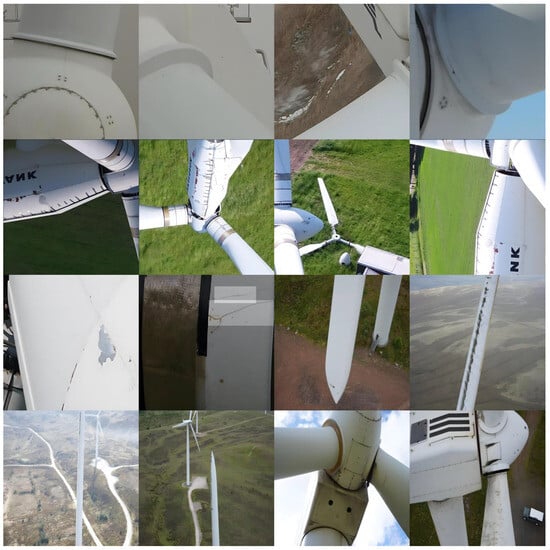
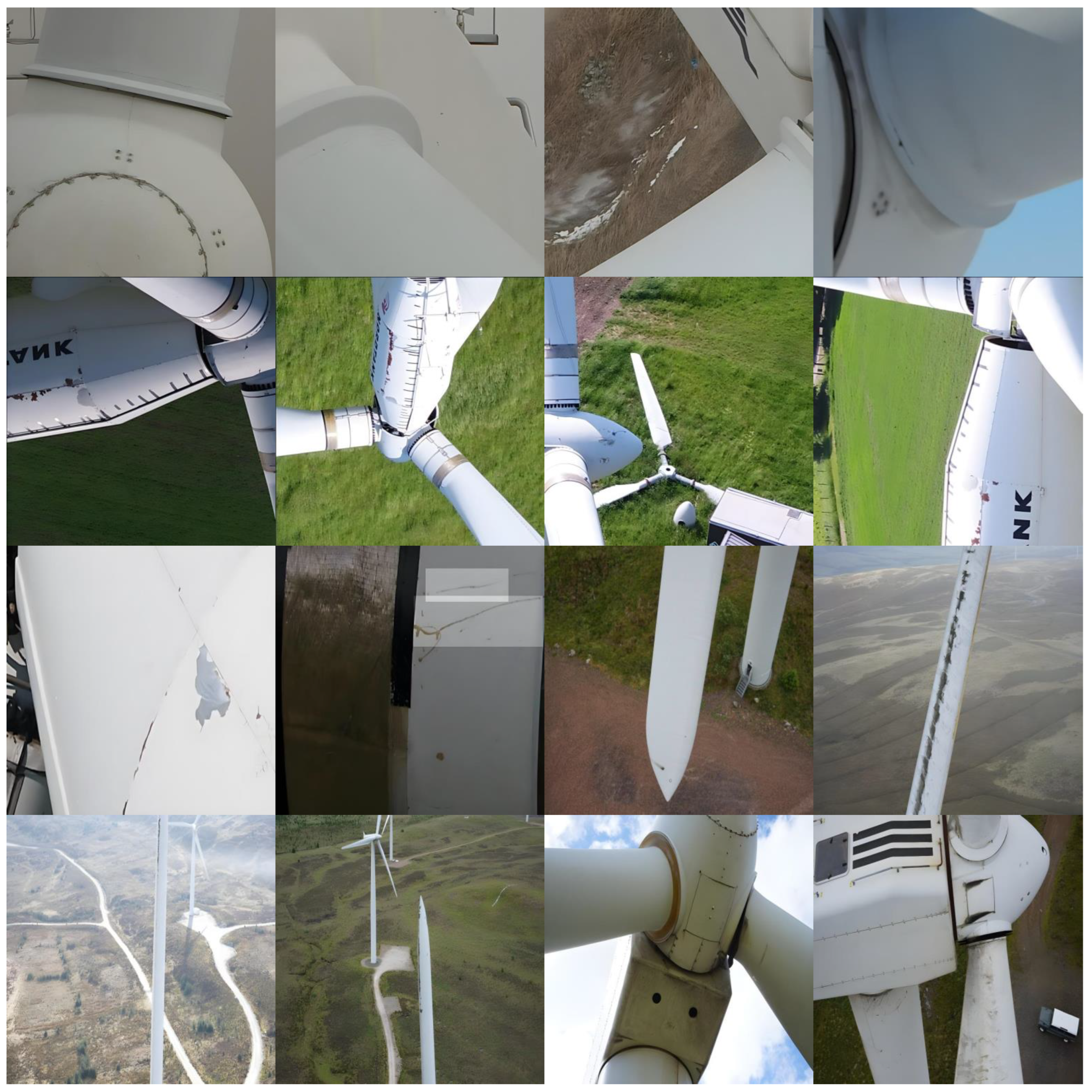
In order to verify the advantages of the proposed method in detecting micro-scale, irregular shape and complex background defects, this paper uses real wind turbine blade datasets for verification. This dataset contains seven kinds of defects: burn marks, cracks, deformation, dirt, oil stains, peeling and corrosion. The selected wind turbine blade defect dataset contains 4467 images from Shihavuddin and Chen datasets [36]. These images are independently divided into a training set, verification set and test set according to the ratio of 8:1:1. The training set contains 3573 images, the verification set contains 447 images and the test set also contains 447 images. The training set is used to train the algorithm and contains a large number of labeled images and their corresponding target frames. The verification set is divided independently from the whole dataset and is not included in the training set. The verification set is used to evaluate the performance of the algorithm in the training process. The test set is randomly selected from a dataset that is completely independent of the training set and the verification set, and used to finally evaluate the performance of the algorithm. The defect dataset was collected under various illumination angles, weather conditions and interference scenes. This method significantly improves the robustness and accuracy of the target detection model. Figure 11 displays representative photographs of blade defects.
Figure 11.
Partial defect dataset of wind turbine blades.
In the experiments, Pycharm (version 2024.2) was used for training and testing operations of the transfer learning model, with model training conducted using the PyTorch 1.10.1 framework. All programs ran on a computer with the following configuration: AMD Ryzen 7 5800H, NVIDIA RTX 3070, 16 GB RAM. All models in this experiment were trained with identical hyperparameters and data preprocessing. The batch size was set to 64, and the maximum number of iterations was limited to 100. The SGD with Momentum optimizer was used, with an initial learning rate of 0.012 and a weight decay of 0.0005. The learning rate scheduling employed the StepLR strategy, decaying to 0.01 times the original value every 100 epochs (i.e., gamma = 0.01). Models that achieved stable convergence on the loss function were selected as the final classification models.
Data annotation aimed to label the location and category of objects in each image. In order to ensure the rationality and accuracy of labeling, we manually labeled the data with LabelImg software (version 1.8.6) under professional guidance. Labeling data strictly follows Pascal VOC format [37] (applicable to public datasets), and labeling files are saved in. xml format. The labels for burning, cracks, deformities, dirt, oil stains, peeling, and rust are, respectively, “burning,” “crack,” “deformity,” “dirt,” “oil,” “peeling,” and “rusty.”
4.1. Model Comparison and Evaluation Metrics
To validate the proposed object detection model, six different object detection models are selected for application in wind turbine blade defect detection as baseline models for comparison. These include DEIM-N, RTDETR-R50 [38], YOLOV13-N [39], YOLOV12-N [40], SwinTransformer-T [41], MobileViTv3-S [42], and EfficientViT-M0 [43]. All models were trained using raw wind turbine blade images as input, with all data augmentation strategies disabled (parameters such as Mosaic, color perturbation, and translation were set to 0 in the configuration) to ensure a consistent evaluation benchmark. Model preprocessing included only pixel value normalization; no data augmentation (such as cropping, rotation, or color perturbation) was used. This decision was based on the following considerations: first, the original dataset already contained diverse industrial scenes sufficient to simulate real-world detection environments; second, to fairly compare the capabilities of different model architectures and avoid bias introduced by data augmentation; and third, preliminary experiments indicated that augmentation offers limited performance gains and may increase the risk of overfitting.
When integrating machine learning technology, accuracy evaluation is an indispensable part of evaluating model performance. To assess the effectiveness of PPS-MSDeim as a backbone network for wind turbine blade defect detection, this paper employs the following metrics: Precision, Recall, Number of Parameters, Average Precision (AP), mAP, and Floating-Point Operations (FLOPs). All metrics are calculated at the Box-level. AP represents the area under the precision–recall (PR) curve, where this study employs as the intersection-over-union (IoU) value (). mAP denotes the average of AP values calculated for each individual class. The experimental metric used in the remainder of this paper, mAP@0.5–0.95, refers to the average AP across all classes at IoU thresholds ranging from 0.50 to 0.95 (with a step size of 0.05, totaling 10 thresholds). Higher AP and mAP values indicate superior performance.
Precision is defined as shown in Formula (12):
Recall is defined as in Equation (13):
where (True Positives) denotes the number of correctly identified positive samples, (False Positives) denotes the number of samples that are actually negative but predicted as positive, (False Negatives) denotes the number of samples that are actually positive but predicted as negative, and (True Negatives) denotes the number of samples that are actually negative and correctly predicted as negative.
FLOPs are used to measure algorithm complexity, as shown in Equation (14):
where denotes the number of input channels, represents the number of output channels, and K signifies the kernel size. and correspond to the height and width of the feature map, respectively. indicates the number of attention heads, while and denote the dimensions of the key and value vectors, respectively. refers to the number of sparse connections, and represents the number of patches per dimension. Finally, stands for the model dimension, and denotes the expansion dimension of the feed-forward network.
4.2. Loss Curve Analysis
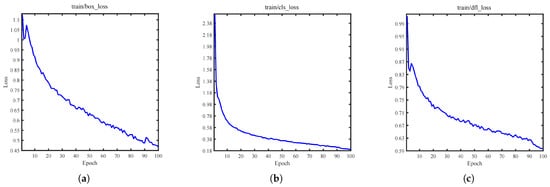
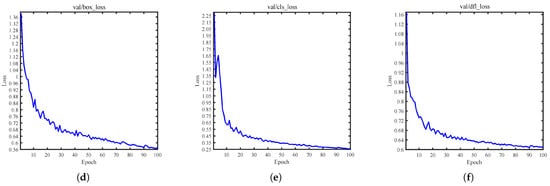
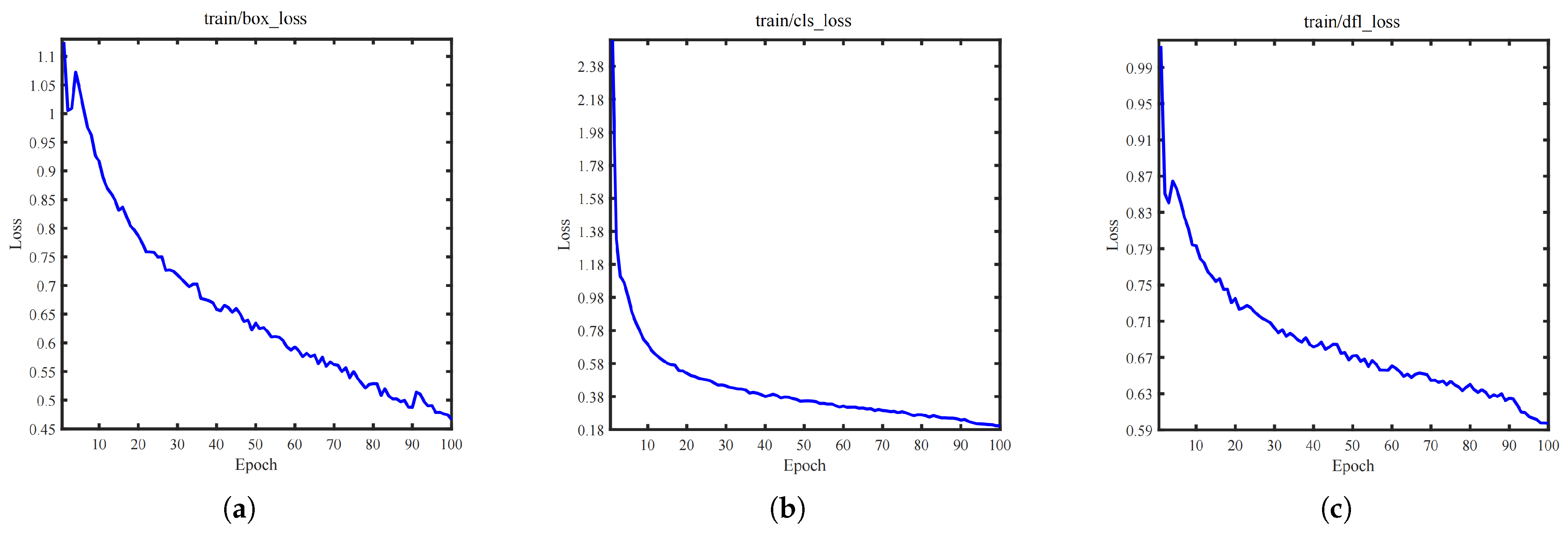
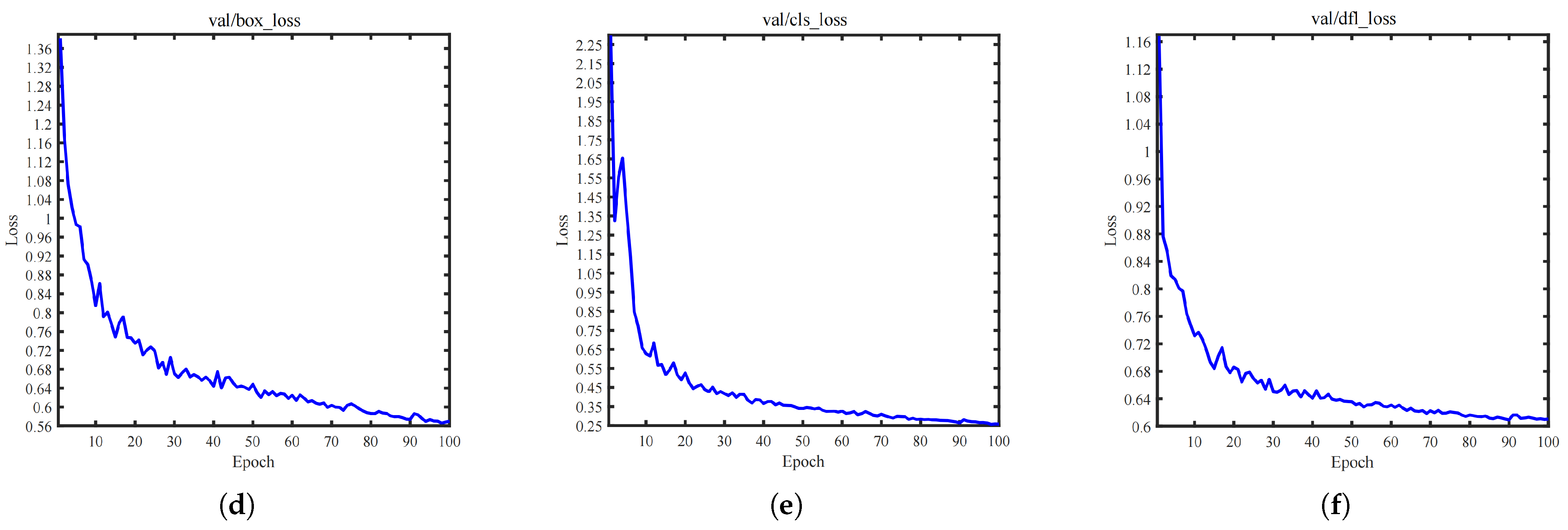
As shown in Figure 12, the PPS-MSDeim model exhibits favourable convergence during training. Specifically, the bounding box loss (box_loss) on the training set decreased steadily from an initial value of 1.13 to 0.47, the classification loss (cls_loss) dropped significantly from 2.54 to 0.21, and the distribution focus loss (dfl_loss) decreased smoothly from 1.01 to 0.60. Correspondingly, the validation set’s box_loss decreased from 1.37 to 0.57, cls_loss from 2.27 to 0.25, and dfl_loss from 1.17 to 0.61. Notably, all loss curves exhibited a stable downward trend during the latter stages of training. Although validation set losses were generally slightly higher than training set losses (box_loss by 0.10, cls_loss by 0.06, and dfl_loss remained nearly unchanged), no significant fluctuations in validation losses were observed. The steady decline in the loss curve effectively verifies the optimization effect of the model in target positioning accuracy, category discrimination ability and distribution focus prediction. At the same time, the technical advantages of MDSC, MFADPN and PPSformer in enhancing feature extraction ability, optimizing multi-scale feature fusion efficiency and strengthening global context modeling have also been fully demonstrated. This provides reliable technical support for high-precision defect detection in wind turbine blades.
Figure 12.
(a), (b), and (c), respectively, compare the bounding box loss, classification loss, and distribution focus loss for the training set. Figures (d), (e), and (f), respectively, compare the bounding box loss, classification loss, and distribution focus loss for the validation set.
4.3. PR Curve Analysis
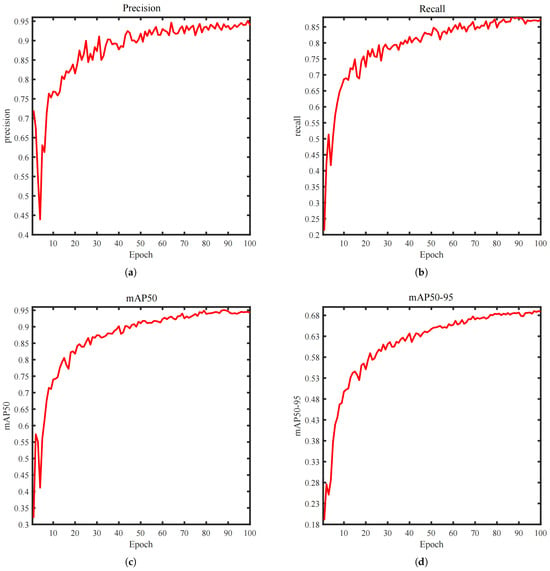
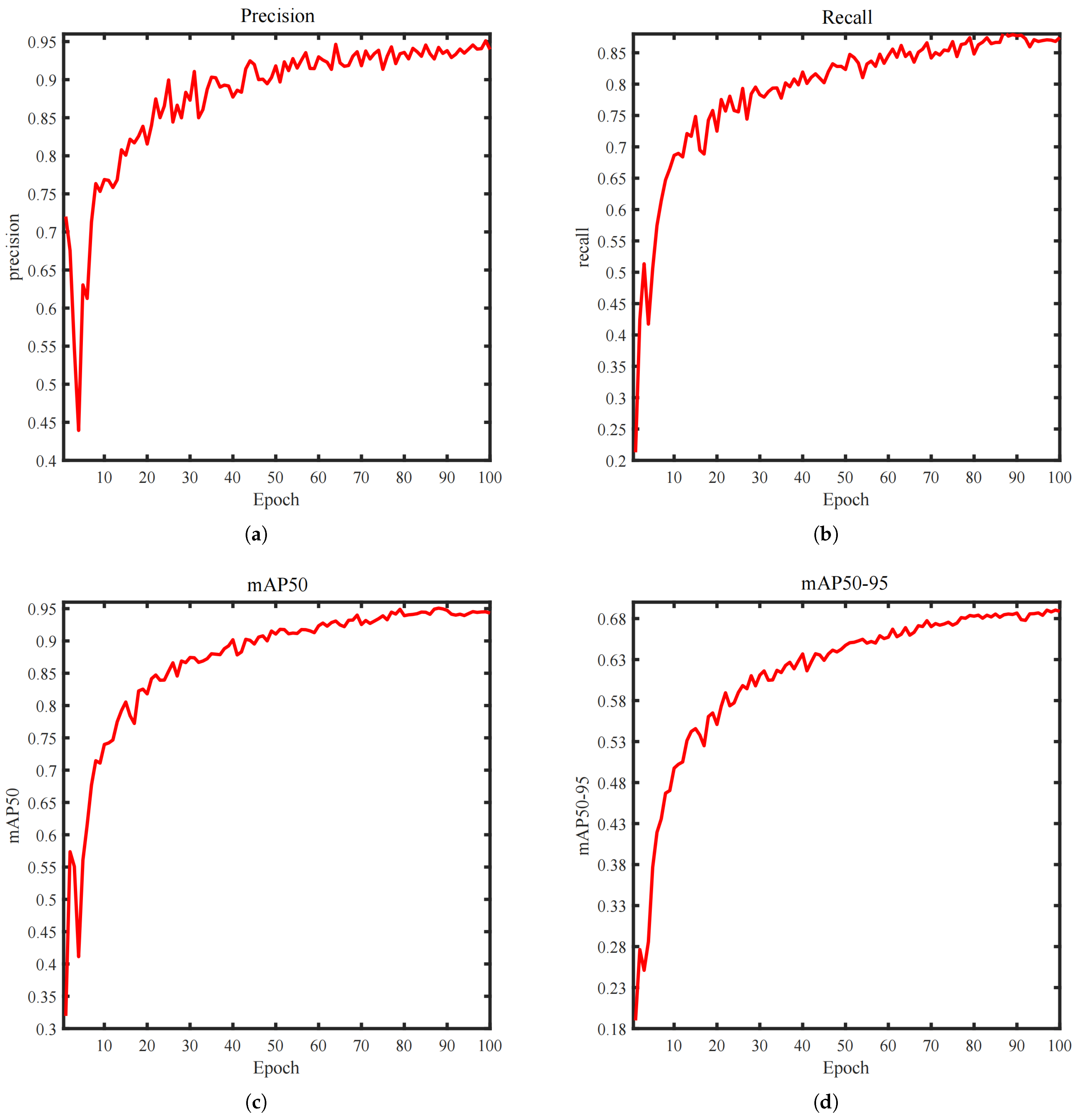
As shown in Figure 13, during the training of PPS-MSDeim model, all the indexes of PR curve showed a convergence mode, which showed that with the increase in training rounds, the indexes rose rapidly and then oscillated stably. This fully proves the optimization potential and stability of the model. Specifically, the Precision rose rapidly from the initial 0.45 to 0.85 in the first 30 rounds, then fluctuated slightly (±0.03) in the remaining training stages, and finally stabilized at 0.96 in the 100th round. The Recall rate increased steadily from the initial 0.47, entered the platform period after the 50th round exceeded 0.70, and reached 0.87 in the 100th round. This shows that the detection ability of the model for turbine blade defect targets is significantly enhanced. At the same time, the mAP50 index increased rapidly from the initial 0.55 to 0.88, then fluctuated slightly in the range of 0.92–0.95, and finally stabilized at 0.95. However, the mAP50–95 index increased continuously from the initial 0.25, and converged to a stable range of 0.65–0.71 after the 80th epoch. This demonstrates the model’s robust performance across varying detection accuracy requirements. Overall, after 100 training cycles, the model achieved high metrics across all evaluations (Precision: 0.96, Recall: 0.87, mAP50: 0.95, mAP50–95: 0.71), with a well-balanced trade-off between precision and recall (F1-score ≈ 0.91). This demonstrates that PPS-MSDeim effectively enhances high-precision detection capabilities for minute, irregular defects in wind turbine blades through the synergistic interaction of its three innovative modules: MDSC, MFADPN, and PPSformer.
Figure 13.
PR curve of the PPS-MSDeim model: (a) Precision, (b) Recall, (c) mAP50, (d) mAP50-95.
4.4. Model Comparison Experiment
A model comparison experiment for wind turbine blade defect detection was conducted by comparing the proposed method with several mainstream backbone network algorithms based on convolutional architectures and Transformer architectures, including DEIM-N, RTDETR-R50, YOLOV13-N, YOLOV12-N, SwinTransformer-T, MobileViTv3-S, and EfficientViT-M0. The experimental results are shown in Table 1.
Table 1.
Model comparison experiment for wind turbine blade defect detection test set.
In order to comprehensively evaluate the performance of the proposed PPS-MSDeim model in wind turbine blade defect detection, we use the same test dataset and compare it with the current mainstream target detection model. The results are shown in Table 1. In terms of detection accuracy, PPS-MSDeim model reached 95.1% at mAP@0.5 and 70.1% at map @ 0.5–0.95, which was significantly better than all the comparison models, including YOLOv13, RT-DETR and DEIM-N, a lightweight baseline network. This verifies its excellent ability to identify tiny irregular defects in complex background. Regarding model complexity, PPS-MSDeim contains only 5.87 million parameters—significantly fewer than SwinTransformer (27.9 million) and RT-DETR (32.3 million)—and is comparable to the lightweight model DEIM-N (5.03 million). Its computational load of 7.02 GFLOPs is slightly higher than YOLOv13 (6.65 GFLOPs) but substantially lower than traditional Transformer architectures (e.g., SwinTransformer’s 15.42 GFLOPs). Meanwhile, in the inference test using 447 images from the test set, PPS-MSDeim achieved an average frame rate of 92 frames per second, slightly below YOLOv13 (95 fps) but significantly higher than SwinTransformer (27 fps) and RT-DETR (69 fps). This demonstrates highly efficient real-time inference capabilities while maintaining the highest detection accuracy. Overall, PPS-MSDeim achieves the current optimal detection accuracy while maintaining extremely low parameter counts and reasonable computational overhead.
To analyze the trade-offs among model metrics, we evaluated the balance between accuracy, model size, and speed. As shown in Table 1, PPS-MSDeim achieves an 8.8% improvement in mAP@0.5–0.95 while maintaining a lightweight architecture comparable to DEIM-N (5.87 million vs. 5.03 million parameters). In terms of inference speed, PPS-MSDeim consumes only 7.02 GFLOPs of computational resources while maintaining real-time processing capabilities at 92 FPS, which is significantly faster than RT-DETR (69 FPS). This analysis confirms that PPS-MSDeim achieves a balance between accuracy, model size, and speed, making it highly suitable for resource-constrained industrial scenarios.
This fully demonstrates the effectiveness of the proposed MDSC, MFADPN, and PPSformer modules in enhancing feature representation capabilities, multiscale fusion efficiency, and global modeling accuracy. It exhibits an excellent balance between accuracy and efficiency, making it suitable for resource-constrained scenarios.
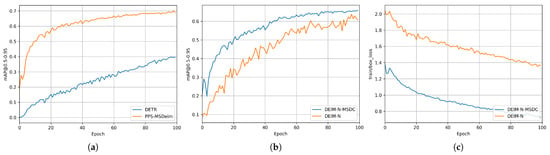
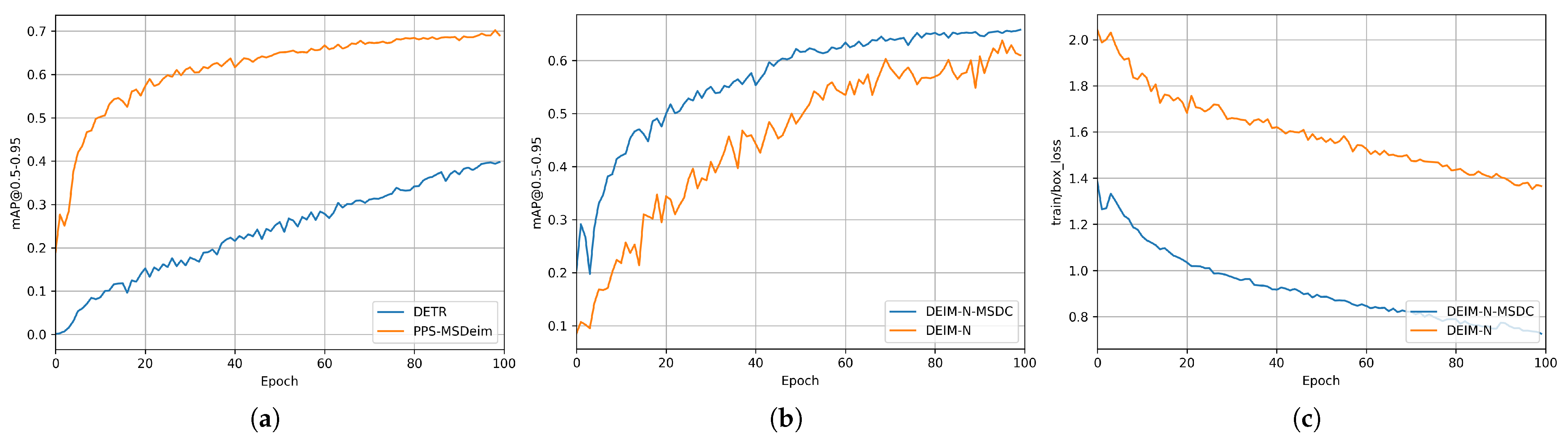
DEIM stands for “Improved matching DETR” and is a DETR-class detection model. The PPS-MSDeim proposed in this paper is an enhanced model based on DEIM, and is therefore also a DETR-class model. This paper compares the improved PPS-MSDeim model with the original DETR model, as shown in Figure 14a. The figure indicates that the original DETR model has not converged after 100 iterations, with a maximum mAP@0.5–0.95 value of only 0.4. This demonstrates that the original DETR model performs poorly in wind turbine blade defect detection tasks. In contrast, the mAP@0.5–0.95 value of PPS-MSDeim rises rapidly, reaching approximately 0.6 by the 20th epoch. This demonstrates that the three key improvements—MSDC, PPSformer, and MFADPN—effectively accelerate the model’s learning of target features and convergence. To verify whether replacing HGBlock affects residual learning dynamics, we also compared the original DEIM-N model with a DEIM-N model where only MSDC was replaced (DEIM-N-MSDC). Results shown in Figure 14b reveal that throughout training, the mAP curve of DEIM-N-MSDC exhibits minimal fluctuation, particularly maintaining stability above 0.65 after epoch 44; whereas the DEIM-N curve exhibits significant fluctuations. This demonstrates that the improved MSDC scheme enhances model training robustness, reduces performance fluctuations during training, and promotes more stable model training. In Figure 14c, the loss curve for DEIM-N-MSDC shows only slight fluctuations at the beginning before converging smoothly, whereas the loss curve for DEIM-N is steeper throughout. This indicates that MSDC does not affect the convergence of the original model. The experiments above demonstrate that the improvements proposed in this paper significantly enhance the accuracy of object detection, resulting in performance that ultimately outperforms the baseline model.
Figure 14.
(a) Comparison of mAP@0.5–0.95 between PPS-MSDeim and original DETR, (b) comparison of mAP@0.5–0.95 between DEIM-N-MSDC and original DEIM-N, (c) comparison of box-level loss on the training set between DEIM-N-MSDC and the original DEIM-N.
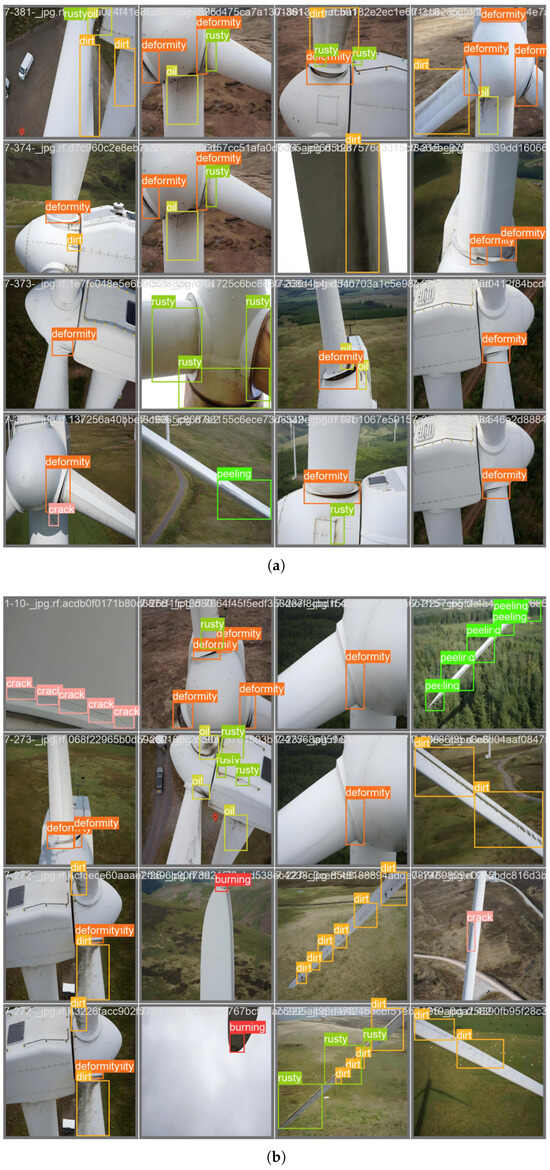
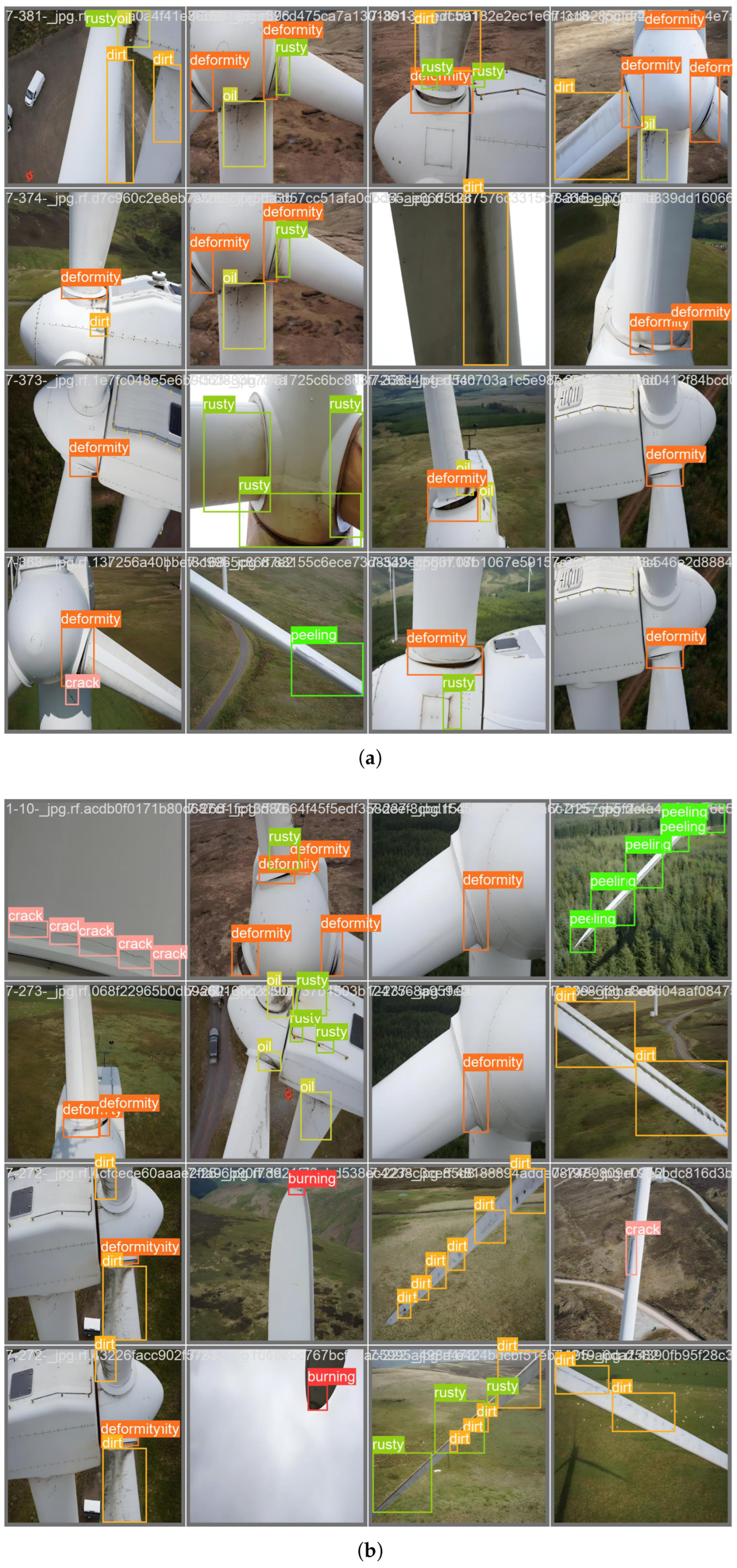
In order to visually verify the generalization ability and positioning accuracy of PPS-MSDeim model in the actual wind turbine blade defect detection task, we selected representative UAV detection images from the test set for visual analysis. The results are shown in Figure 15. The figure shows that the model can effectively identify many typical types of defects, including fine cracks, surface peeling, corrosion, oil stains, deformation and dirt. The detection frame is closely attached to the defect area, showing the ability of accurate boundary location. Especially in the complex background such as blade edge, seam or uneven illumination, the model always outputs high confidence prediction results, showing strong robustness. For example, in an image containing multiple micro-cracks, the model can successfully capture subtle linear features. The detection frame can also provide a reasonable coverage for large-area dirt coverage and local deformation, and the missed detection and false detection rates are not high. In addition, different color labeling boxes can clearly distinguish various defect types, which reflects the strong classification ability of the model for multi-category targets. Generally speaking, PPS-MSDeim shows excellent detection performance in the actual scene, which meets the actual needs of efficient and accurate defect identification in wind power generation operation and maintenance.
Figure 15.
Wind turbine blade defect detection performance: (a) First object detection experiment image, (b) Second object detection experiment image.
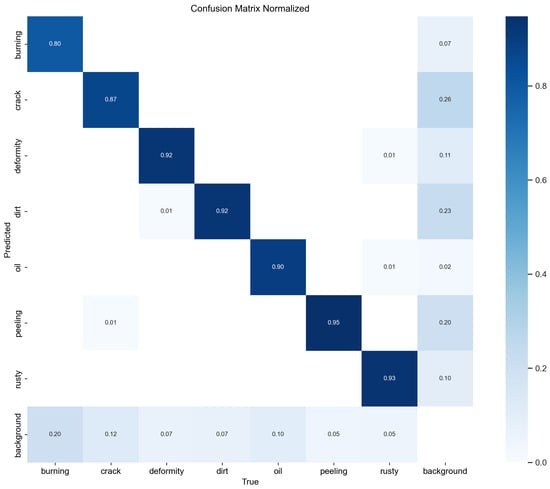
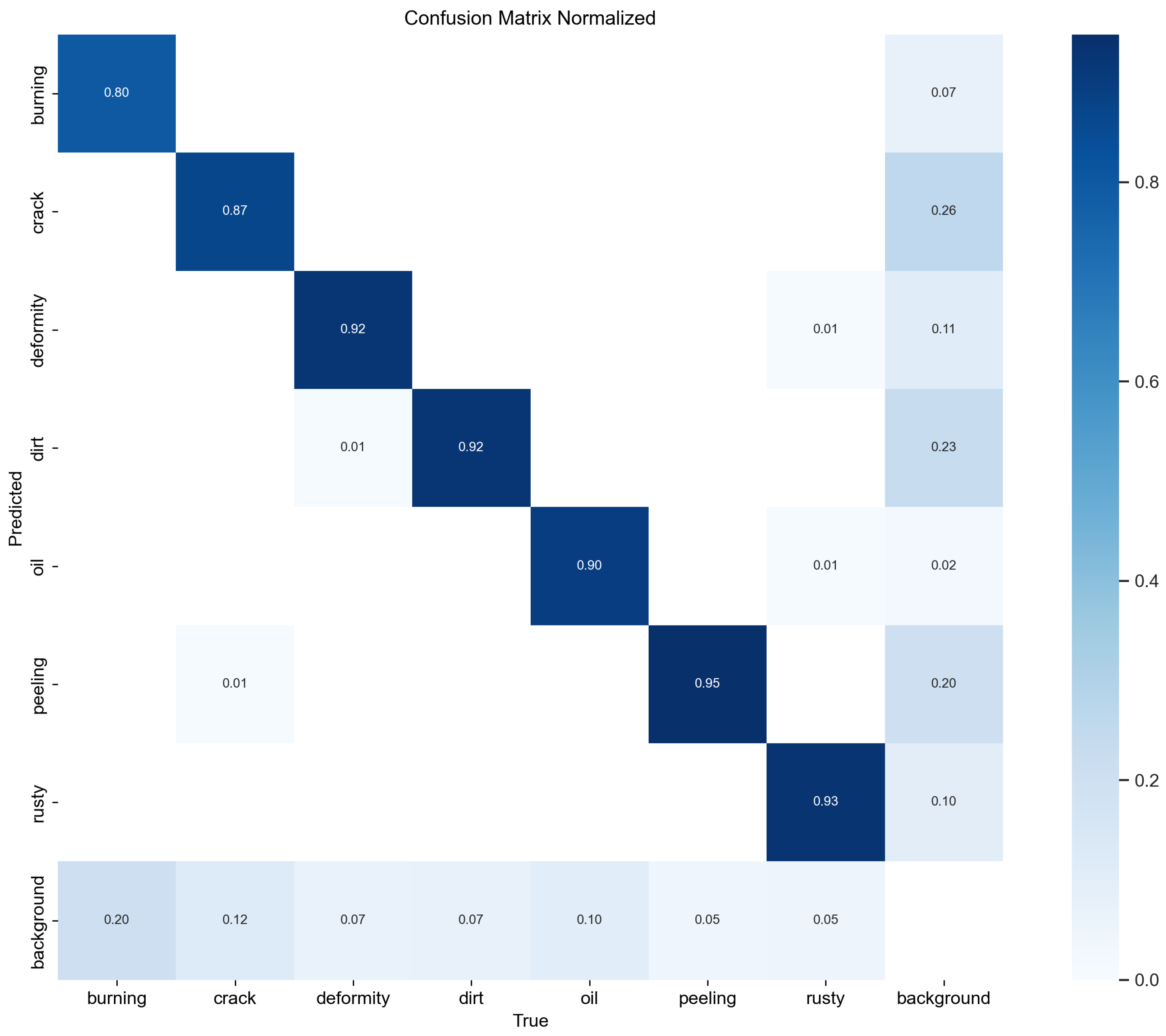
To verify whether PPS-MSDeim exhibits target uncertainty and error, this paper uses a confusion matrix on the test set for analysis, as shown in Figure 16. Judging from the diagonal elements of the normalized confusion matrix (i.e., the recall rates for each category), the model performs exceptionally well in the peeling, deformity, and dirt categories, with recall rates as high as 0.95, 0.92, and 0.92, respectively. This indicates that the model has a strong ability to capture these defect features and that the prediction results are relatively stable. However, the model also exhibits specific error patterns and sources of uncertainty. First, the burning category has the lowest recall rate (0.80), and 20% of the samples are incorrectly predicted as background. This indicates a significant issue of false negatives in this category, likely due to the small scale of the target and similar background textures, which blur the features and increase the model’s prediction uncertainty. Second, the crack category also exhibits some error, with 26% of samples misclassified as background. Furthermore, the values along the non-diagonal axis reveal cross-category confusion; for example, 12% of crack instances are misclassified as background, and 10% of rusty instances are misclassified as background. Overall, this analysis not only highlights performance differences across categories but also identifies the primary sources of error and the model’s uncertainty boundaries, providing direction for subsequent work targeting specific defects (such as burning and crack).
Figure 16.
Normalized confusion matrix of the PPS-MSDeim model on the test set.
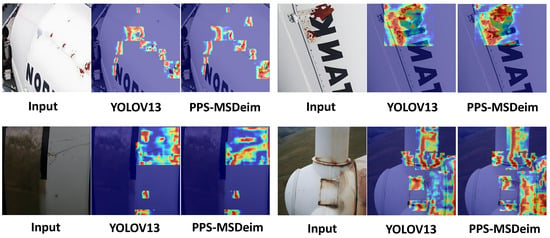
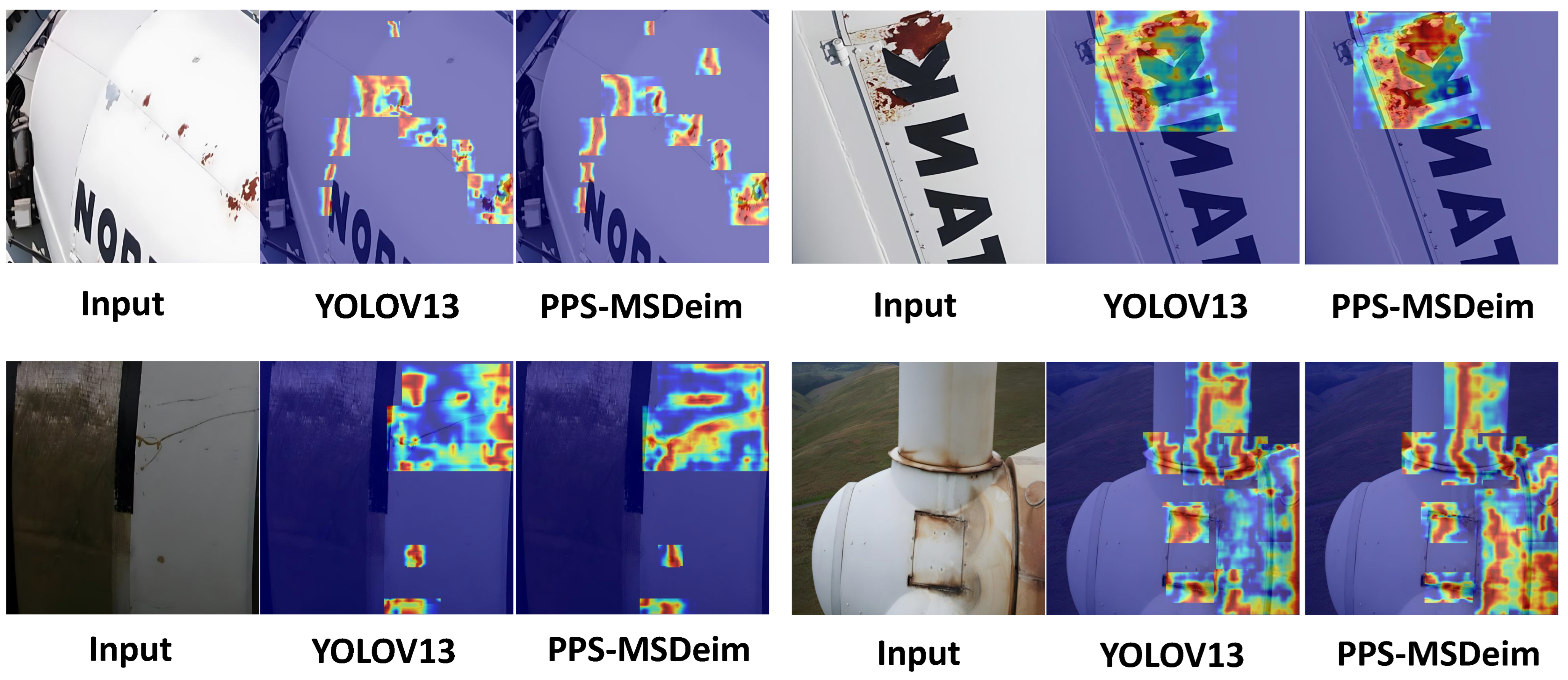
This paper also shows the target detection accuracy of PPS-MSDeim by using thermal map, and compares it with YOLOV13, the model with the best performance in the above evaluation, as shown in Figure 17. The thermogram shows that PPS-MSDeim can locate tiny blade defects more accurately. Its activation area is highly consistent with the actual defect contour, especially in the blade edge and complex texture area; the defect boundary is clear and sharp. In contrast, the thermal map of YOLOV13 shows scattered activation points at corresponding positions, and the positions of some defect areas are deviated. This intuitively shows the advantages of PPS-MSDeim in feature extraction and boundary location, which is consistent with its high mAP accuracy of 70.1%. This verifies the ability of the model to identify irregular defects of wind turbine blades. These results clearly indicate that the synergistic interaction among the three core modules—MDSC, MFADPN, and PPSformer—significantly enhances detection accuracy.
Figure 17.
Heatmap comparison between YOLOV13-N and the model proposed in this paper. All results were obtained by applying Grad-CAM to the model’s final convolutional layer.
4.5. Ablation Experiment
To validate the effectiveness of the improved modules, ablation experiments were conducted on the PPS-MSDeim model. Four distinct models were designed for each enhanced module, as shown in Table 2. First, the model was evaluated using only DEIMM-N as the backbone for wind turbine blade defect detection. Second, the HG-Block was replaced with the improved MSDC module, and comparisons were made with the original module to demonstrate the efficacy of integrating MSDC. Then, PPSformer was substituted for the network’s Transformer-Layer to demonstrate the advantages of enhanced global feature extraction and lightweight. Finally, the model was integrated into a multi-scale feature aggregation diffusion pyramid network for experimentation to illustrate its effectiveness in capturing nonlinear, variable defect morphologies.
Table 2.
Ablation experiments with four distinct models.
Experiment 1 employs DEIM-N as the base architecture, achieving 88.4% and 58.1% for mAP@0.5 and mAP@0.5–0.95, respectively, with 5.03 M parameters and 6.24 GFLOPs. In Experiment 2, introducing the inverted multi-scale deep separable convolution (MSDC) module improved mAP@0.5 by 3.5% to 91.9%. mAP@0.5–0.95 improved by 7.7% to 65.8%, with parameter count and GFLOPs only slightly increasing to 5.52 M and 6.65, respectively. This demonstrates MSDC’s advantage in extracting irregular defect features without significantly increasing inference latency. In Experiment 3, replacing the original Transformer layer with PPSformer reduces parameters to 5.23 M and GFLOPs to 6.44 while achieving 89.5% mAP@0.5, validating PPSformer’s ability to enhance global modeling capabilities while maintaining a lightweight architecture. Experiment 4 introduces the Multi-Scale Feature Aggregation Diffusion Pyramid Network (MFADPN), which maintains stable GFLOPs while boosting mAP@0.5 to 91.1%, highlighting computational efficiency advantages. Finally, Experiment 8 combines all improved modules to form the final PPS-MSDeim model, achieving optimal performance: mAP@0.5 of 95.1%, mAP@0.5–0.95 of 70.1%, 5.87 M parameters, and 7.02 GFLOPs. These results demonstrate that the synergistic interaction of the three innovative modules significantly enhances detection accuracy while maintaining low computational overhead, fully validating the effectiveness and practicality of the proposed method for wind turbine blade defect detection.
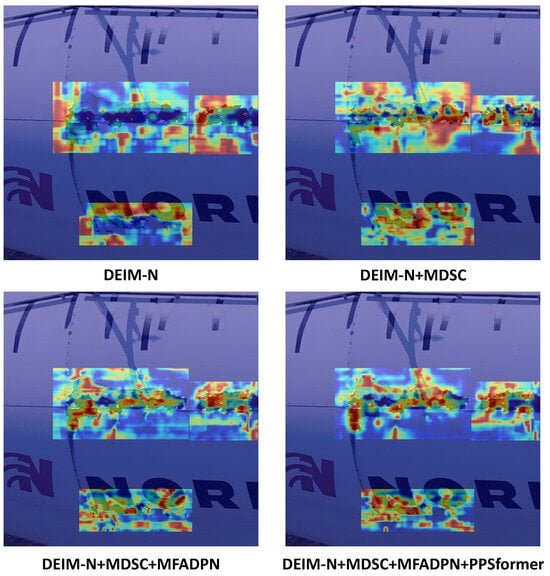
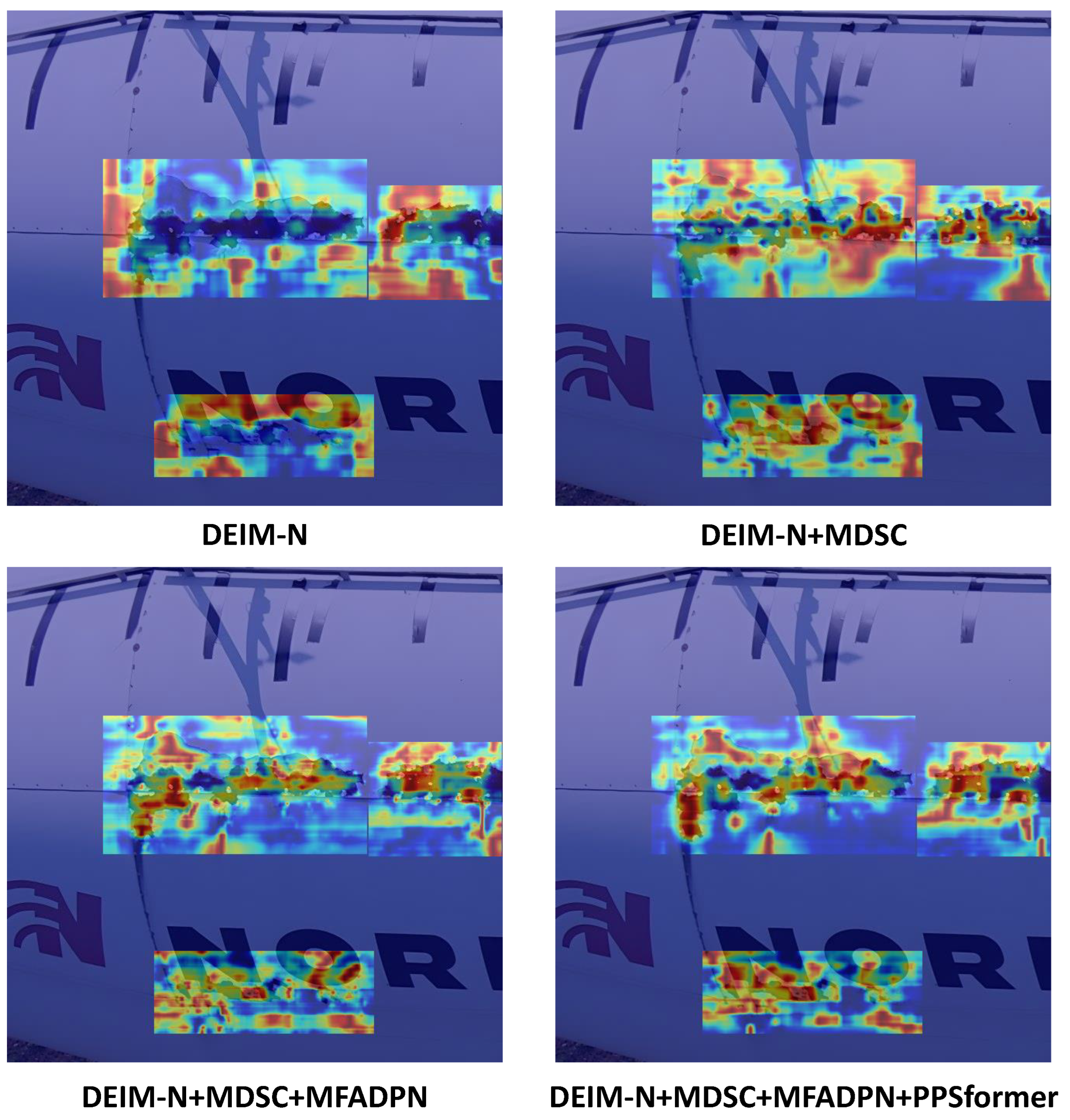
This paper also verifies the accuracy of PPS-MSDeim in thermal imaging object detection by comparing it with ablation experiments 1, 2, 4, and 8, as shown in Figure 18. The thermal imaging results indicate that PPS-MSDeim can locate minute defects with higher precision. Its activated regions closely match the actual defect contours; particularly in edge regions and areas with complex textures, the defect boundaries appear clear and sharp. In contrast, the thermal images generated by DEIM-N display scattered activation points at the corresponding locations, and the positions of some defect regions are offset. This intuitively demonstrates the advantages of PPS-MSDeim in feature extraction and boundary localization. By sequentially combining the three innovative modules—MDSC, MFADPN, and PPSformer—we observe a significant enhancement in defect region detection by MDSC. Furthermore, MFADPN refines and concentrates the defect regions, and finally, PPSformer deepens the previously refined defect regions. These results clearly demonstrate that the synergy among the three core modules—MDSC, MFADPN, and PPSformer—significantly improves detection accuracy.
Figure 18.
Heatmap comparison between ablation experimental models. All results were obtained by applying Grad-CAM to the last convolutional layer of the models.
To verify the effectiveness of the various components in MFADPN, we conducted ablation experiments on the MFADPN module, as shown in Table 3. In the first experiment, the MSFAM was replaced with a standard 3 × 3 convolution, resulting in PPS-MSDeim-3 × 3Conv. In the second experiment, the dilated convolution in the MSFAM was replaced with a standard convolution, while the number of convolution layers remained unchanged, resulting in PPS-MSDeim-MSFAMConv. The final experiment used the full MSFAM, resulting in PPS-MSDeim.
Table 3.
Ablation experiment of the MFADPN module.
As shown in the table, both the MSFAM component and the dilated convolutions embedded in the MFADPN module in this paper are essential. The MSFAM component achieves a 6.4% performance improvement over traditional convolutions at mAP@0.5, while the dilated convolutions achieve a 3.8% improvement over traditional convolutions at mAP@0.5.
In summary, the experimental results indicate that the proposed PPS-MSDeim network is an effective approach for object detection in wind turbine blade fault signals. The method exhibits strong discrimination capabilities in complex environments and features lower computational complexity than most other models.
5. Conclusions
5.1. Model Summary
To address challenges in drone inspection imagery—such as minute defect scales, irregular blade shapes, and complex backgrounds—this paper proposes a lightweight end-to-end object detection model: PPS-MSDeim (a multi-scale detection block and multi-head probsparse encoder-based model for wind turbine blade defect detection). The network is constructed based on DEIM-N framework, and consists of three collaborative components: backbone network, feature fusion neck and global modeling encoder. It takes the original turbine blade image taken by UAV as input. Firstly, HGNetv2 backbone network embedded with MDSC module is used to extract multiple local features, which significantly enhances the characterization ability of nonlinear and irregular defects. Subsequently, the multi-scale feature aggregation and diffusion pyramid network (MFADPN) directly aggregates and reversely diffuses the P2–P5 hierarchical features. Combining hole convolution and Sobel edge branching, the context semantics and contour information are enhanced, and the sensitivity of small target detection is significantly improved. Finally, the PPSformer module replaces the traditional Transformer coding layer. Through block embedding and multi-head probability sparse self-attention mechanism, it efficiently models long-range global dependencies with nearly linear computational complexity and accurately extracts the context of defects.
5.2. Model Comparison
This paper compares the PPS-MSDeim model with other mainstream models. In terms of detection accuracy, PPS-MSDeim model reached 95.1% at mAP@0.5 and 70.1% at map @ 0.5–0.95, which was significantly better than all the comparison models, including YOLOv13, RT-DETR and DEIM-N, a lightweight baseline network. This verifies its excellent ability to identify tiny irregular defects in complex background. Regarding model complexity, PPS-MSDeim has only 5.87 million parameters, far fewer than SwinTransformer (27.9 million) and RT-DETR (32.3 million), and comparable to the lightweight model DEIM-N (5.03 million). Its computational load of 7.02 GFLOPs is slightly higher than YOLOv13 (6.65 GFLOPs) but substantially lower than traditional Transformer architectures (e.g., SwinTransformer’s 15.42 GFLOPs). Overall, PPS-MSDeim achieves good detection accuracy while maintaining extremely low parameter counts and reasonable computational overhead.
5.3. Model Limitations
Although PPS-MSDeim model has shown remarkable performance advantages in wind turbine blade defect detection, the accuracy of mAP0.5 and mAP0.5–0.95 reaches 95.1% and 70.1%, respectively, but its robustness in extreme occlusion scenes is still obviously insufficient. The model is prone to false positives when detecting small objects in dense arrangement, and the sparse attention mechanism itself needs to make a trade-off between accuracy and computational efficiency. Future research will focus on developing a dynamic sparsity adjustment strategy to adaptively optimize the computational efficiency, and explore the hardware-aware architecture design to improve the feasibility of edge device deployment. In addition, because the flow visualization technology plays a key role in revealing the surface condition and early failure mechanism of running blades [44], future work will extend the model to the defect detection tasks of energy infrastructure such as photovoltaic panels and transmission lines. By integrating multi-modal data such as infrared thermal imaging, the model will enhance the ability of fault prediction and diagnosis under complex operating conditions.
Author Contributions
Conceptualization, X.F. and M.G.; methodology, M.G., F.S. and H.T.; software, X.F. and Y.W.; validation, M.G. and Y.W.; formal analysis, H.T., F.S. and Y.W.; investigation, H.T. and X.F.; resources, M.G., C.S. and X.F.; data curation, M.G. and Y.W.; writing—original draft preparation, X.F., M.G. and H.T.; writing—review and editing, X.F., M.G. and H.T.; supervision, X.F., F.S., C.S. and Y.W. All authors have read and agreed to the published version of the manuscript.
Funding
This research was supported by the National Natural Science Foundation of China (Grant No. 42275156, 42475151 and 42175157), the National Key R&D Program Project: Integration and Application of Intelligent Control Technology for Networked Collaborative Production in the Iron and Steel Industry (No. 2020YFB1712805), the “LIGHT OF TAIHU LAKE SCIENTIFIC AND TECHNOLOGICAL RESEARCH PLAN” (No. K20231025), the “Qing Lan Project” of Jiangsu Province Higher Education Institutions, the Key Project of Jiangsu Province Higher Education Teaching Reform Research, Research on the Application-Oriented Talent Cultivation Mode of Automation Major in Local Universities under the Background of Emerging Engineering Education (Grant No. 2021JSJG064), and the Major Project of Laboratory Management by the China Association of Higher Education, Research on the Informatization Construction of Laboratory Management in Higher Education Institutions (Grant No. 22SY0109).
Data Availability Statement
The data and code used to support the findings of this study are available from the corresponding author upon request (fengyong.sun@cwxu.edu.cn).
Conflicts of Interest
Authors Xingxing Fan and Manxiang Gao are employed by Nanjing Iron and Steel Co., Ltd. Author Haining Tang is employed by NARI Nanjing Control System Co., Ltd. The remaining authors declare that the research was conducted in the absence of any commercial or financial relationships that could be construed as a potential conflict of interest.
References
- Zhao, S.; Zhu, Y.; Lou, L.; Zhou, A.; Ma, Y.; Sun, J. Comparison and analysis of major research methods for non-destructive testing of wind turbine blades. Rev. Sci. Instruments 2025, 96, 051501. [Google Scholar] [CrossRef] [Scilit]
- Ge, X.; Zhang, C.; Sun, M.; Liu, C.; An, X. Enhanced equivalent strain damage model predicting multiaxial non-proportional metal fatigue life. J. Constr. Steel Res. 2025, 235, 109787. [Google Scholar] [CrossRef] [Scilit]
- Ge, X.; Zhang, C.; Liu, G.; Xu, S.; Zhang, J.; Wu, Y. A Fatigue Damage Accumulation Model Considering Load Interaction and Material Parameters Under Variable Load Conditions. Fatigue Fract. Eng. Mater. Struct. 2025, 48, 2518–2539. [Google Scholar] [CrossRef] [Scilit]
- Zhang, C.; Chen, H.P.; Huang, T.L. Fatigue damage assessment of wind turbine composite blades using corrected blade element momentum theory. Measurement 2018, 129, 102–111. [Google Scholar] [CrossRef] [Scilit]
- Du, Y.; Zhou, S.; Jing, X.; Peng, Y.; Wu, H.; Kwok, N. Damage detection techniques for wind turbine blades: A review. Mech. Syst. Signal Process. 2020, 141, 106445. [Google Scholar] [CrossRef] [Scilit]
- Zhao, Z.; Liu, N.; Wang, L. Localization of multiple insulators by orientation angle detection and binary shape prior knowledge. IEEE Trans. Dielectr. Electr. Insul. 2016, 22, 3421–3428. [Google Scholar] [CrossRef] [Scilit]
- Chai, J.; Zeng, H.; Li, A.; Ngai, E.W. Deep learning in computer vision: A critical review of emerging techniques and application scenarios. Mach. Learn. Appl. 2021, 6, 100134. [Google Scholar] [CrossRef] [Scilit]
- Sohan, M.; Sai Ram, T.; Rami Reddy, C.V. A review on yolov8 and its advancements. In International Conference on Data Intelligence and Cognitive Informatics; Springer: Singapore, 2014; pp. 529–545. [Google Scholar]
- Khanam, R.; Hussain, M. Yolov11: An overview of the key architectural enhancements. arXiv 2024, arXiv:2410.17725. [Google Scholar] [CrossRef] [Scilit]
- Carion, N.; Massa, F.; Synnaeve, G.; Usunier, N.; Kirillov, A.; Zagoruyko, S. End-to-End Object Detection with Transformers. In European Conference on Computer Vision; Springer: Cham, Switzerland, 2020; pp. 213–229. [Google Scholar]
- Zhu, X.; Su, W.; Lu, L.; Li, B.; Wang, X.; Dai, J. Deformable DETR: Deformable Transformers for End-to-End Object Detection. arXiv 2020, arXiv:2010.04159. [Google Scholar]
- Roh, B.; Shin, J.; Shin, W.; Kim, S. Sparse DETR: Efficient End-to-End Object Detection with Learnable Sparsity. arXiv 2021, arXiv:2111.14330. [Google Scholar]
- Shi, L.; Wang, S.; Zhao, J.; Kuang, Z.; Wang, L.; Ma, L.; Yang, H.; Wang, H. DMR-YOLO: An Improved Wind Turbine Blade Surface Damage Detection Method Based on YOLOv8. Appl. Sci. 2026, 16, 1333. [Google Scholar] [CrossRef] [Scilit]
- Ding, X.; Zhang, X.; Han, J.; Ding, G. Diverse branch block: Building a convolution as an inception-like unit. In Proceedings of the IEEE/CVF Conference on Computer Vision and Pattern Recognition; IEEE: Piscataway, NJ, USA, 2021; pp. 10886–10895. [Google Scholar]
- Zhu, Y.; Gao, H.; Zhang, J.; He, G. ViMAF-YOLO: A lightweight detection model integrating multi-scale feature fusion and attention mechanisms. Meas. Sci. Technol. 2026, 37, 046004. [Google Scholar] [CrossRef] [Scilit]
- Zhu, L.; Liao, B.; Zhang, Q.; Wang, X.; Liu, W.; Wang, X. Vision Mamba: Efficient Visual Representation Learning with Bidirectional State Space Model. arXiv 2024, arXiv:2401.09417. [Google Scholar] [CrossRef] [Scilit]
- Chen, Z.; He, Z.; Lu, Z.-M. DEA-Net: Single image dehazing based on detail-enhanced convolution and content-guided attention. IEEE Trans. Image Process. 2024, 33, 1002–1015. [Google Scholar] [CrossRef] [Scilit]
- Deng, L.; Bi, L.; Li, H.; Chen, H.; Duan, X.; Lou, H.; Zhang, H.; Bi, J.; Liu, H. Lightweight aerial image object detection algorithm based on improved YOLOv5s. Sci. Rep. 2023, 13, 7817. [Google Scholar] [CrossRef] [Scilit]
- Li, X.; Deng, B.; He, Y.; Chen, Q.; Zhang, Y.; Zhang, B.; Zhang, X. Wind Turbine Blade Surface Defect Detection via UAV High-Resolution Images. IEEE Sens. J. 2026, 26, 2678–2687. [Google Scholar] [CrossRef] [Scilit]
- Zhang, C.; Yang, T.; Yang, J. Image recognition of wind turbine blade defects using attention-based MobileNetv1-YOLOv4 and transfer learning. Sensors 2022, 22, 6009. [Google Scholar] [CrossRef] [Scilit] [PubMed]
- Fu, Z.; Zhang, F.; Ren, X.; Hao, B.; Zhang, X.; Yin, C.; Li, G.; Zhang, Y. LE-YOLO: Lightweight and efficient detection model for wind turbine blade defects based on improved YOLO. IEEE Access 2024, 12, 135985–135998. [Google Scholar] [CrossRef] [Scilit]
- Chen, X.; Kundu, K.; Zhang, Z.; Ma, H.; Fidler, S.; Urtasun, R. Monocular 3d object detection for autonomous driving. In Proceedings of the IEEE Conference on Computer Vision and Pattern Recognition; IEEE: Piscataway, NJ, USA, 2016; pp. 2147–2156. [Google Scholar]
- Chen, X.; Ma, H.; Wan, J.; Li, B.; Xia, T. Multi-view 3d object detection network for autonomous driving. In Proceedings of the IEEE Conference on Computer Vision and Pattern Recognition; IEEE: Piscataway, NJ, USA, 2017; pp. 1907–1915. [Google Scholar]
- Ess, A.; Schindler, K.; Leibe, B.; Van Gool, L. Object detection and tracking for autonomous navigation in dynamic environments. Int. J. Robot. Res. 2010, 29, 1707–1725. [Google Scholar] [CrossRef] [Scilit]
- Chen, Q.; Chen, X.; Wang, J.; Zhang, S.; Yao, K.; Feng, H.; Han, J.; Ding, E.; Zeng, G.; Wang, J. Group detr: Fast detr training with group-wise one-to-many assignment. In Proceedings of the IEEE/CVF International Conference on Computer Vision; IEEE: Piscataway, NJ, USA, 2023; pp. 6633–6642. [Google Scholar]
- Zhang, H.; Li, F.; Liu, S.; Zhang, L.; Su, H.; Zhu, J.; Ni, L.M.; Shum, H.Y. Dino: Detr with improved denoising anchor boxes for end-to-end object detection. arXiv 2022, arXiv:2203.03605. [Google Scholar]
- Zong, Z.; Song, G.; Liu, Y. Detrs with collaborative hybrid assignments training. In Proceedings of the IEEE/CVF International Conference on Computer Vision; IEEE: Piscataway, NJ, USA, 2023; pp. 6748–6758. [Google Scholar]
- Kuhn, H.W. The Hungarian method for the assignment problem. Nav. Res. Logist. (NRL) 2004, 52, 7–21. [Google Scholar] [CrossRef] [Scilit]
- Lin, T.Y.; Goyal, P.; Girshick, R.; He, K.; Dollár, P. Focal loss for dense object detection. In Proceedings of the IEEE International Conference on Computer Vision; IEEE: Piscataway, NJ, USA, 2017; pp. 2980–2988. [Google Scholar]
- Zhang, H.; Wang, Y.; Dayoub, F.; Sunderhauf, N. Varifocalnet: An iou-aware dense object detector. In Proceedings of the IEEE/CVF Conference on Computer Vision and Pattern Recognition; IEEE: Piscataway, NJ, USA, 2021; pp. 8514–8523. [Google Scholar]
- Peng, Y.; Li, H.; Wu, P.; Zhang, Y.; Sun, X.; Wu, F. D-FINE: Redefine regression task in DETRs as fine-grained distribution refinement. arXiv 2024, arXiv:2410.13842. [Google Scholar]
- Huang, S.; Lu, Z.; Cun, X.; Yu, Y.; Zhou, X.; Shen, X. Deim: Detr with improved matching for fast convergence. In Proceedings of the Computer Vision and Pattern Recognition Conference; IEEE: Piscataway, NJ, USA, 2025; pp. 15162–15171. [Google Scholar]
- Liu, S.; Qi, L.; Qin, H.; Shi, J.; Jia, J. Path aggregation network for instance segmentation. In Proceedings of the IEEE Conference on Computer Vision and Pattern Recognition; IEEE: Piscataway, NJ, USA, 2018; pp. 8759–8768. [Google Scholar]
- Dong, D.; Li, J.; Liu, H.; Deng, L.; Gu, J.; Liu, L.; Li, S. EA-YOLO: An Efficient and Accurate UAV Image Object Detection Algorithm. IEEJ Trans. Electr. Electron. Eng. 2025, 20, 61–68. [Google Scholar] [CrossRef] [Scilit]
- Zhou, H.; Zhang, S.; Peng, J.; Zhang, S.; Li, J.; Xiong, H.; Zhang, W. Informer: Beyond efficient transformer for long sequence time-series forecasting. In Proceedings of the AAAI Conference on Artificial Intelligence; AAAI: Washington, DC, USA, 2021; Volume 35, pp. 11106–11115. [Google Scholar]
- Shihavuddin, A.S.M.; Chen, X. DTU–Drone inspection images of wind turbine. In Mendeley Data; Elsevier: Amsterdam, The Netherlands, 2018. [Google Scholar] [CrossRef]
- Tong, K.; Wu, Y. Rethinking PASCAL-VOC and MS-COCO dataset for small object detection. J. Vis. Commun. Image Represent. 2023, 93, 103830. [Google Scholar] [CrossRef] [Scilit]
- Zhao, Y.; Lv, W.; Xu, S.; Wei, J.; Wang, G.; Dang, Q.; Liu, Y.; Chen, J. Detrs beat yolos on real-time object detection. In Proceedings of the IEEE/CVF Conference on Computer Vision and Pattern Recognition; IEEE: Piscataway, NJ, USA, 2024; pp. 16965–16974. [Google Scholar]
- Lei, M.; Li, S.; Wu, Y.; Hu, H.; Zhou, Y.; Zheng, X.; Ding, G.; Du, S.; Wu, Z.; Gao, Y. YOLOv13: Real-Time Object Detection with Hypergraph-Enhanced Adaptive Visual Perception. arXiv 2025, arXiv:2506.17733. [Google Scholar]
- Tian, Y.; Ye, Q.; Doermann, D. Yolov12: Attention-centric real-time object detectors. arXiv 2025, arXiv:2502.12524. [Google Scholar]
- Liu, Z.; Lin, Y.; Cao, Y.; Hu, H.; Wei, Y.; Zhang, Z.; Lin, S.; Guo, B. Swin transformer: Hierarchical vision transformer using shifted windows. In Proceedings of the IEEE/CVF International Conference on Computer Vision; IEEE: Piscataway, NJ, USA, 2021; pp. 10012–10022. [Google Scholar]
- Wadekar, S.N.; Chaurasia, A. Mobilevitv3: Mobile-friendly vision transformer with simple and effective fusion of local, global and input features. arXiv 2022, arXiv:2209.15159. [Google Scholar]
- Liu, X.; Peng, H.; Zheng, N.; Yang, Y.; Hu, H.; Yuan, Y. Efficientvit: Memory efficient vision transformer with cascaded group attention. In Proceedings of the IEEE/CVF Conference on Computer Vision and Pattern Recognition; IEEE: Piscataway, NJ, USA, 2023; pp. 14420–14430. [Google Scholar]
- Chen, Q.; Yang, R.; Liu, X.; Deng, B.; Wang, H.; He, Y. A review on flow visualisation of wind turbine blades in operation. Nondestruct. Test. Eval. 2026, 41, 1195–1216. [Google Scholar] [CrossRef] [Scilit]

Disclaimer/Publisher’s Note: The statements, opinions and data contained in all publications are solely those of the individual author(s) and contributor(s) and not of MDPI and/or the editor(s). MDPI and/or the editor(s) disclaim responsibility for any injury to people or property resulting from any ideas, methods, instructions or products referred to in the content. |
© 2026 by the authors. Licensee MDPI, Basel, Switzerland. This article is an open access article distributed under the terms and conditions of the Creative Commons Attribution (CC BY) license.