


Abstract
Chroococcidiopsis sp. was isolated from the endolithic habitat of the Atacama Desert (northern Chile), one of the most challenging-to-life polyextreme environments on Earth. The photosynthetic machinery of microorganisms inhabiting this environment is supposed to be highly adapted to cope with the intense solar radiation of the area. Thus, PAR-red light ranging from 100 to 900 µmol photon·m−2·s−1 has been investigated as a strategy to enhance culture productivity and stimulate the synthesis of bioactive molecules in Chroococcidiopsis sp. A control culture was maintained under white light at 100 µmol photon·m−2·s−1. The results revealed that red light was utilized more efficiently than white light of similar irradiance, and its modulation enhanced both growth and photosynthetic activity of the cyanobacterium. Furthermore, Chroococcidiopsis sp. appeared to activate mechanisms to mitigate photooxidative stress produced by excess light energy. Specifically, increasing light irradiance induced photoacclimation responses, characterized by a decrease in chlorophyll content and a concomitant increase in carotenoid accumulation, likely aimed at reducing photon flux transduced to photosynthesis. Additionally, scytonemin synthesis was enhanced under high irradiances, contributing to dissipating excess light energy. Overall, this study demonstrates that modulation of red-light irradiance effectively improves the growth of Chroococcidiopsis sp. while promoting the accumulation of antioxidant compounds—primarily carotenoids and, to a lesser extent, scytonemin.
1. Introduction
Cyanobacteria or blue-green algae are among the first organisms that appeared on Earth, approximately 3.5 billion years ago, and are responsible for the accumulation of oxygen in the atmosphere through their photosynthetic activity [1]. They are prokaryotic microorganisms belonging to the group of Gram-negative bacteria [2], and perform oxygenic photosynthesis, although some species are also capable of anoxygenic photosynthesis [3].
The photosynthetic apparatus of cyanobacteria comprises phycobilisomes (PBS), and two large chlorophyll-associated protein complexes—photosystems (PS) PS I and PS II—, which absorb and convert light energy into stored chemical energy [4]. The phycobilisome acts as a light-harvesting antenna, enhancing light capture and transferring the absorbed energy to chlorophyll molecules, which subsequently deliver it to the reaction centers. Each PBS core contains the phycobiliprotein allophycocyanin (AP), connected to the phycobiliproteins phycocyanin (PC) and phycoerythrin (PE), forming an efficient light-harvesting complex. In addition, carotenoids are present in the light-harvesting complexes, where they transform light absorption into chemical energy, but with lower efficiency than chlorophylls [5].
The efficiency of photosynthetic activity depends on the wavelength of incident light [5]. The quantum yield—defined as the amount of oxygen produced or CO2 assimilated per absorbed light unit in the absence of photorespiration—represents the maximum efficiency of photosynthetic light conversion into chemical energy [6]. In cyanobacteria, the maximum quantum yield typically occurs near 600 nm, decreasing rapidly at wavelengths below 400 nm and above 680 nm [7]. Red light can be absorbed more efficiently by photosynthetic pigments than other wavelengths within the photosynthetic active radiation (PAR) range [5]. However, due to its long wavelength (600–700 nm), red light penetrates less deeply into dense microalgal cultures [8]. For instance, in species such as Phormidium sp., Cyanothece sp., Nostoc sp., and Microcystis aeruginosa, red light has been shown to stimulate greater biomass and pigment production, while white light induces mixed responses depending on the intensity [9].
Cyanobacteria have evolved diverse strategies to cope with variations in light irradiance and spectral quality. These include structural and compositional adjustment in compounds of the photosynthetic apparatus, i.e., phycobiliproteins—particularly phycocyanins, with absorption peaks between 610 and 665 nm—and photo-protective compounds such as scytonemin, carotenoids and chlorophylls, among others. These molecules dissipate excess absorbed energy, thereby limiting the energy reaching the reaction centers and preventing oxidative damage [10,11]. These metabolites, in addition to fulfilling essential functions in cellular photoprotection, have high added value for their application in industrial sectors such as agricultural biotechnology and the nutraceutical, cosmetics, and pharmaceutical industries, where they are used as natural colorants and antioxidant compounds in various formulations [12].
Certain microorganisms thrive under extreme environmental conditions and are classified as extremophiles. The study of these organisms has gained increasing attention, as it enhances our understanding of the limits of life and adaptive mechanisms enabling survival under extreme stress, while also providing insights into the origin, distribution, and evolution of life [13]. Extremophiles, to adapt to extreme environments, often activate metabolic pathways leading to the synthesis of bioactive compounds of industrial relevance [14], making them attractive for biotechnological applications [13,15,16].
The genus Chroococcidiopsis is particularly notable for its extremotolerant character, being capable of surviving conditions of extreme aridity, high salinity, temperature fluctuations and intense ionizing radiation. Species of this genus colonize gypsum rocks at the Atacama Desert, one of the most inhospitable environments on Earth [17]. This desert is characterized by minimal precipitation and low stratospheric ozone concentrations, resulting in extremely intense solar irradiance. Consequently, the photosynthetic microorganisms inhabiting the Atacama Desert are exposed to conditions that may lead to photoinhibition and photooxidative stress [18]. To survive these harsh conditions, Chroococcidiopsis sp. synthesizes protective and biotechnologically valuable molecules, including the UV-screening indole-alkaloid pigment scytonemin, which has attracted attention for its potential applications in human health and photoprotection [19,20].
Given the extreme light conditions of the Atacama Desert, the photosynthetic machinery of Chroococcidiopsis would be expected to tolerate or adapt to high irradiances. In microalgae and cyanobacteria, excess light irradiance not utilized in photosynthesis induces the biosynthesis of photoprotective pigments, such as carotenoids, xanthophylls and scytonemin, to dissipate the excess energy and mitigate photooxidative stress [21]. Although studies have explored its response to ultraviolet radiation and different white light irradiance [19,22], information on how Chroococcidiopsis sp. responds to variations in irradiance combined with different PAR-red light remains limited, particularly with regard to the activation of antioxidant mechanisms. Detailed evaluation of these responses in Chroococcidiopsis sp. may provide valuable information for further biotechnological applications. In this sense, although the strain of Chroococcidiopsis used in this study is not a known high producer of scytonemin, its capacity for carotenoid accumulation under red-light irradiance has been scarcely explored [23] and might be of applied value.
2. Materials and Methods
2.1. Biological Material and Culture Conditions
The microorganism used in this study was the extremotolerant cyanobacterium Chroococcidiopsis sp. The cyanobacterium was isolated from the gypsum rock fragments of the Atacama Desert (23°53′ S, 068°08′ W and 2720 m a.s.l.) located in the north–south trending depression of the Cordon de Lila range, in northern Chile. The isolated cyanobacterium was supplied by researchers from the National Museum of Natural Sciences, CSIC, Madrid, to the Biotechnology of Extremophiles research group of the Department of Chemistry “Profesor José Carlos Vílchez Martín” from the Faculty of Experimental Sciences and CIQSO of the University of Huelva, Spain. Chroococcidiopsis sp. was cultivated at pH 7 in a sterile BG11 culture medium, which is widely used for the growth of freshwater green algae and cyanobacteria [24]. The constituents of BG11 are presented in Table 1.
Table 1.
Constituents of BG11 culture medium.
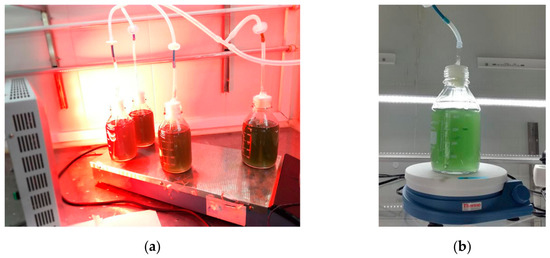
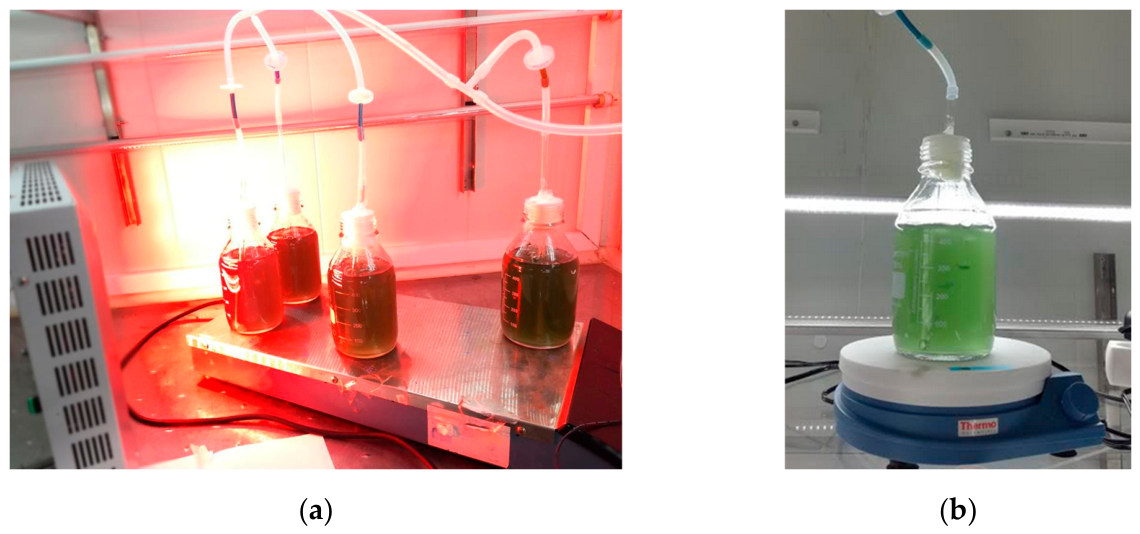
The experiment aimed to evaluate the effect of different red-light irradiances on the growth and production of valuable molecules in the cyanobacterium Chroococcidiopsis sp. as a physiological response to light-induced stress. For this purpose, different cultures of 400 mL were prepared at pH 7 in 500 mL glass bottles using BG11 as a culture medium, each with an initial optical density of 0.8, measured at 750 nm. The cultures were grown in an algal cultivation room at 25 ± 2 °C, continuously bubbled with a gas mixture of air enriched with 2.5% (v/v) CO2, which served as the sole carbon source. Continuous agitation was provided using magnetic stirrers. Each culture was positioned at a predetermined distance from the light source provided at a constant 24 h irradiance to achieve the desired irradiance: red light at irradiances of 100, 300, 600 and 900 µmol photon·m−2·s−1, respectively (see Figure 1) and a control culture receiving PAR-white light irradiance of 100 µmol photon·m−2·s−1.
Figure 1.
Conditioning of Chroococcidiopsis sp. cultures in the culture room at different light irradiances and qualities: (a) red light, ordered from the highest to the lowest light irradiance from left to right; (b) white light.
2.2. Extraction of Valuable Compounds
The extraction and subsequent determination of the target antioxidant molecule content (chlorophylls, carotenoids and scytonemin) of the cultures of Chroococcidiopsis sp. was carried out using the modified Lichtenthaler method [25]. Thus, a culture sample of 2 mL was harvested by centrifugation at 4400 rpm for 2 min in a MiniSpin micro-centrifuge model (Eppendorf, Hamburg, Germany). The pellet obtained was resuspended in an appropriate volume of methanol and shaken in a vortex, model ZX3 (Velp Scientifica, Usmate Velate, Italy). Then, the samples were placed in an ultrasound bath at 60 °C for 5 min, and vortexed after that. The samples were subjected to a sudden change in temperature, from 60 °C to 0 °C, in a freezer for 10 min. Finally, the samples were centrifuged at 4400 rpm for 5 min and the supernatant was used for the subsequent determination of the target molecules.
The determination of target molecules was carried out by measuring the absorbance of the supernatant, after extraction, at 384, 470, 490, 652, 663 and 665 nm in a Cary 60 UV-Vis spectrophotometer (Agilent Technologies, Santa Clara, CA, USA) using methanol as a blank. The concentrations of target molecules present in the extract were calculated using the following equations, the results of which are expressed in mg·L−1.
2.3. Photosynthetic and Respiratory Activities
The measurement of photosynthetic and respiratory activities was performed using a Clark electrode (Hansatech, King’s Lynn, Norfolk, UK). The working temperature of the system was maintained at 25 °C, which received light irradiance of 110 µmol photon·m–2·s–1. A culture sample of 2.5 mL was placed into the electrode cuvette and 30 µL of bicarbonate 0.2 M was added. Net oxygen consumption by endogenous respiration was recorded in darkness, while the net oxygen production was recorded during the illumination period. The photosynthetic activity was calculated as the sum of slopes obtained under both light and dark oxygen evolution kinetics. The evolution of oxygen was quantified as µmoles of O2 produced (photosynthetic activity) or consumed (endogenous respiratory activity) per unit of time (h) and chlorophyll (mg).
2.4. Specific Growth Rate
Specific growth rate was calculated according to the following logarithmic expression:
where Ct and C0 represent the cell density for times t = 3 and t = 1, respectively, and μ represents the specific growth rate, expressed in d−1. Cell density was determined by measuring the dry weight (dw) of the biomass contained in 2 mL of the culture medium.
2.5. Statistics
Unless otherwise indicated, the presented data indicates the means of three independent experiments while standard deviations are represented in the corresponding figures and tables. Analysis of variance (ANOVA) was used to analyze the data with univariate statistical models, ensuring a 95% confidence level. Significant differences were evaluated using Tukey’s range test with a confidence level of 95% (p ≤ 0.05). Additional statistical details are provided in Tables S1–S6 of the Supplementary Materials. The Minitab 17 software was used to perform the statistical analysis.
3. Results
Our study aims to investigate, on a laboratory scale, the effect of different light irradiances and qualities on the growth and photosynthetic viability of the extremotolerant cyanobacterium Chroococcidiopsis sp. Due to the proximity of the red-light emission spectrum to the maximum absorption wavelengths of chlorophylls and phycobiliproteins (particularly phycocyanin), we expect red light to be absorbed more efficiently by cyanobacterial cells than other PAR irradiances. This would, hypothetically, lead to greater biomass productivity of cyanobacterial cultures. Additionally, the production of the target antioxidant compounds produced by the cyanobacterium (chlorophylls, carotenoids and scytonemin) was also assessed in response to the light irradiance and quality.
3.1. Growth and Photosynthetic Viability as a Function of Light Irradiance and Quality
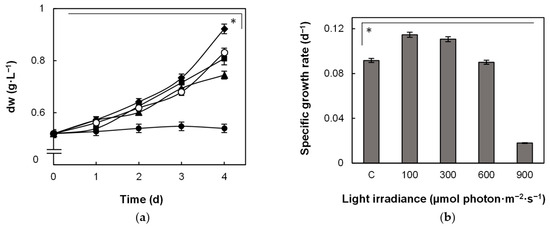
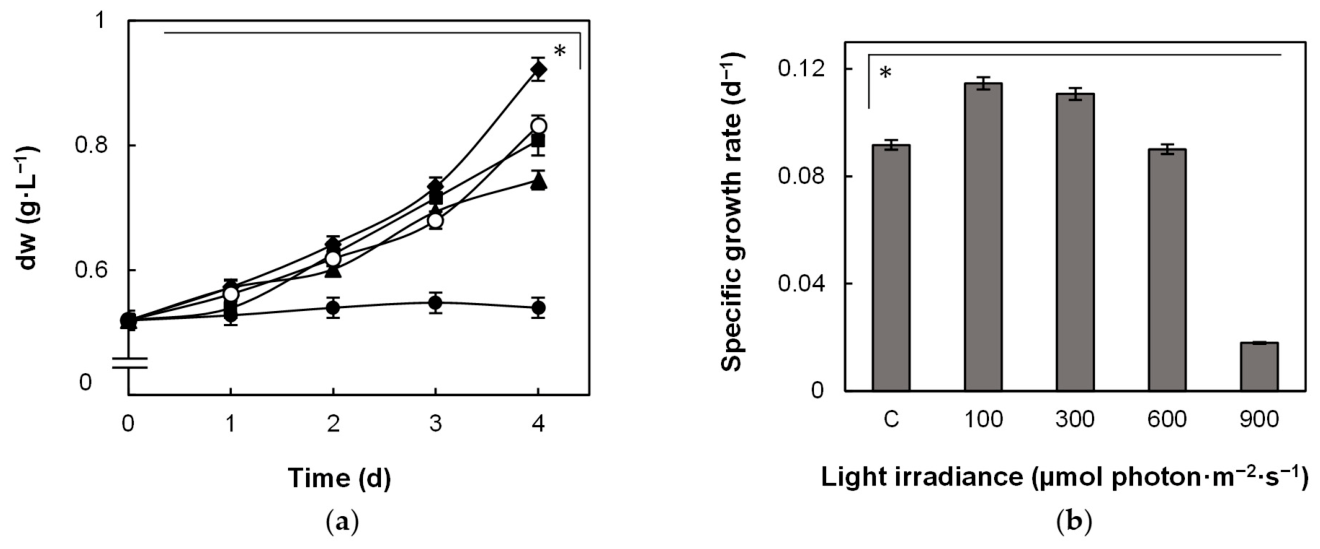
This section focuses on the growth and photosynthetic viability of the cyanobacterium Chroococcidiopsis sp. under different light irradiances and qualities, using the culture exposed to white light at the lowest irradiance tested (100 µmol photon·m−2·s−1) as a control culture. The early growth dynamics (4-day experiment) of the cyanobacterium are presented in Figure 2 based on dry weight (expressed in g·L−1) and specific growth rate.
Figure 2.
(a) Time-dependent evolution of the biomass concentration, expressed as dry weight parameter, dw, for the Chroococcidiopsis sp. culture exposed to white light at 100 µmol photon·m−2·s−1 (control culture) (-▲-) and red light at 100 (-◆-), 300 (-◼-), 600 (-○-) and 900 (-●-) µmol photon·m−2·s−1, and (b) the specific growth rate, obtained between days 1 and 3 of incubation; symbol C corresponds to control culture. (*) represents the significant differences in all treatments with respect to the control culture with 95% confidence.
According to Figure 2, a significant increase in the growth rate was obtained as red-light irradiance increased (Table S1 of Supplementary Materials), with the maximum value of about 0.115 d−1 reached between 100 and 300 µmol photon·m−2·s−1, approximately 20% higher than that of the control culture, 0.091 d−1 (white light, 100 µmol photon·m−2·s−1). The culture exposed to red light at 600 µmol photon·m−2·s−1 exhibited a growth dynamic similar to that of the control culture. Nevertheless, at the highest irradiance (900 µmol photon·m−2·s−1), biomass concentration barely increased, resulting in the lowest specific growth rate, 0.018 d−1.
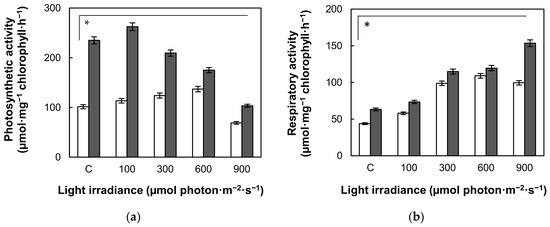
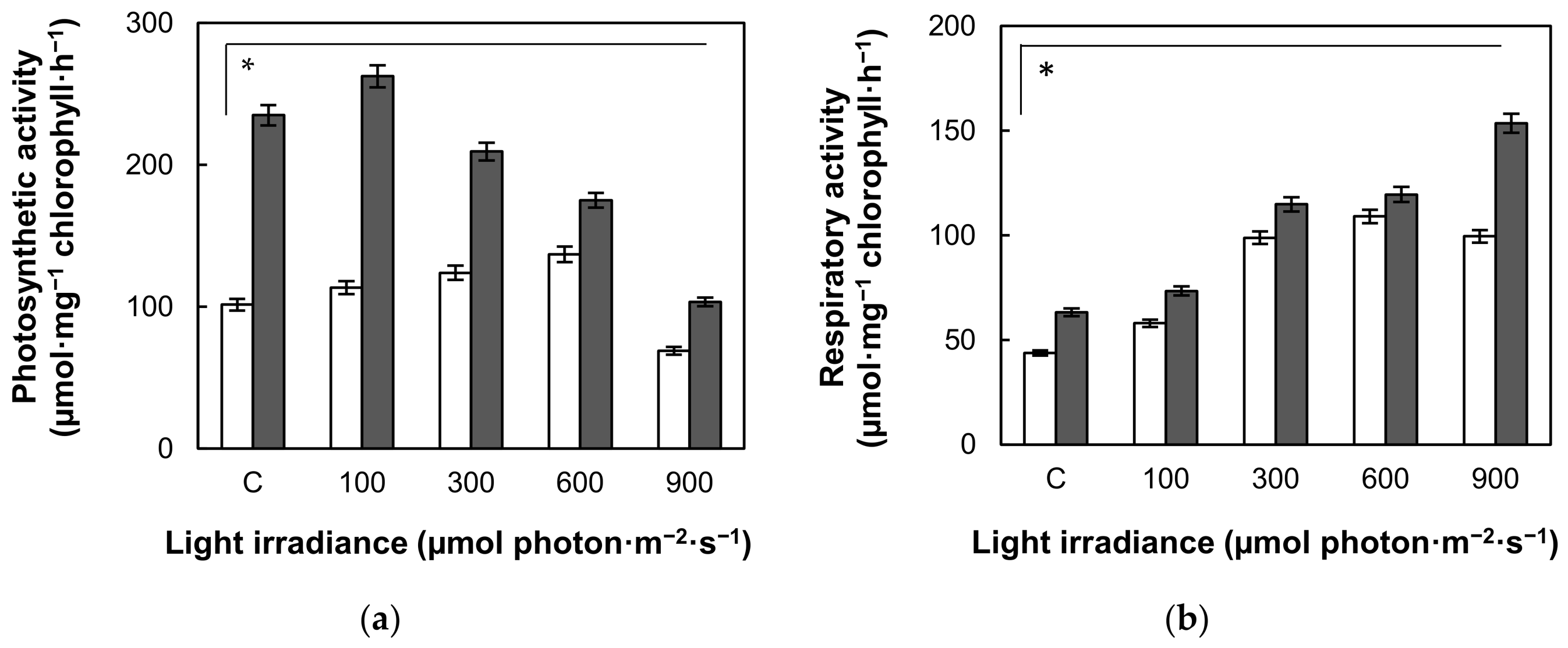
These results suggest that red light can be modulated to enhance the growth of the cyanobacterium Chroococcidiopsis sp. Culture viability was evaluated by measuring cyanobacterial photosynthetic efficiency in the use of red light, through measurements of light-dependent oxygen production (photosynthetic activity, light phase) and oxygen consumption (endogenous respiratory activity). The results are presented in Figure 3.
Figure 3.
Evolution of the (a) photosynthetic and (b) respiratory activity, measured by means of a Clark electrode, of Chroococcidiopsis sp. cultures as a function of different light irradiances and qualities. Data was taken from living cyanobacterial samples on day 1 (white bars) and 3 (gray bars) of incubation; symbol C corresponds to the control culture. (*) represents the significant differences in all treatments with respect to the control culture with 95% confidence.
Overall, two main observations can be inferred from the data plotted for photosynthetic activity (Figure 3a): (i) an increasing trend was observed on day 1 as red-light irradiance increased, whereas a decreasing trend was obtained at later growth stages, on day 3; (ii) light-dependent oxygen production on day 3 was significantly higher than on day 1 (Table S2 of Supplementary Materials). Unlike photosynthetic activity, the data obtained for endogenous respiratory activity showed an increasing trend at both stages (day 1 and 3) as light irradiance increased (Figure 3b). In addition, the values obtained for respiratory activity were consistently lower than the corresponding photosynthetic activity, except for the culture exposed to 900 µmol photon·m−2·s−1.
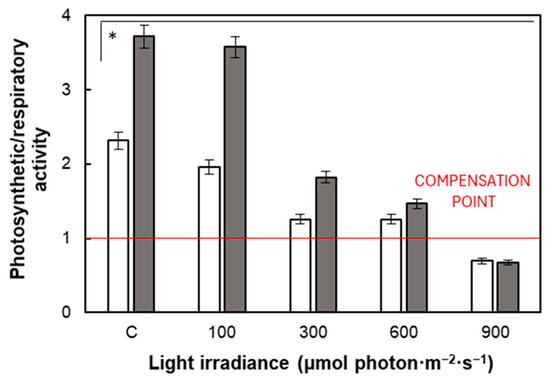
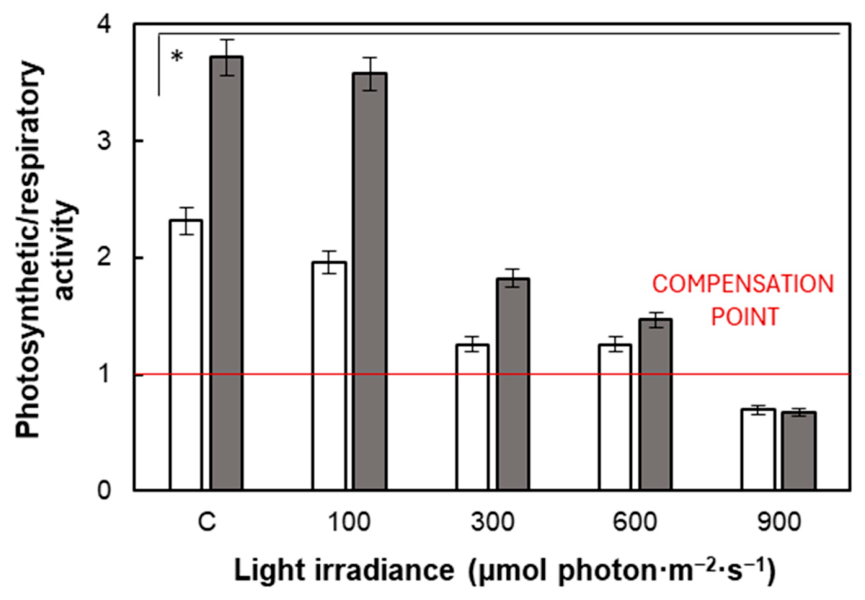
Interestingly, the increase in photosynthetic activity from day 1 to 3 was markedly greater than the corresponding increase in respiratory activity over the same period. This suggests that cells in the early growth stages—which individually experience higher light irradiance compared to those in later stages—are closer to the photosynthetic compensation point than cells in later stages, as shown in Figure 4 by the ratio between photosynthetic and respiratory activity. Therefore, under the experimental conditions tested, the photosynthetic compensation point appears to lie between 600 and 900 µmol photon·m−2·s−1 for Chroococcidiopsis sp. regardless of growth stage (Table S3 of Supplementary Materials). The implications of this finding will be discussed in Section 4.
Figure 4.
Effect of light irradiance and quality on the ratio of photosynthetic to respiratory activity in the cultures of Chroococcidiopsis sp. Data was taken from living cyanobacterial samples at day 1 (white bars) and 3 (gray bars). (*) represents the significant differences in all treatments with respect to the control culture with 95% confidence.
The consequence of the increased light irradiances is the induction of the biosynthesis of antioxidant molecules. These molecules, including carotenoids, act to dissipate excess energy, thus reducing photooxidative damage. Accordingly, the accumulation of target antioxidant compounds in this study would be expected in the cultures exposed to moderate to high irradiances. This aspect is examined in the following section.
3.2. Production of Antioxidant Molecules as a Function of Light Irradiance and Quality
This section focuses on the variation in the biochemical composition of the cells regarding target antioxidant molecules (chlorophylls, carotenoids and scytonemin), as a function of the light irradiance and quality to which the cyanobacterial cultures were exposed.
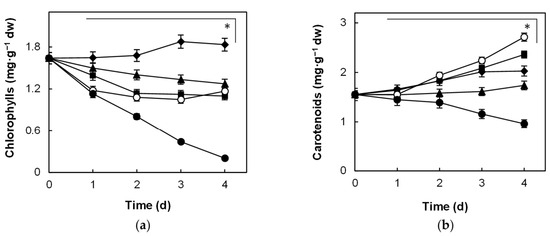
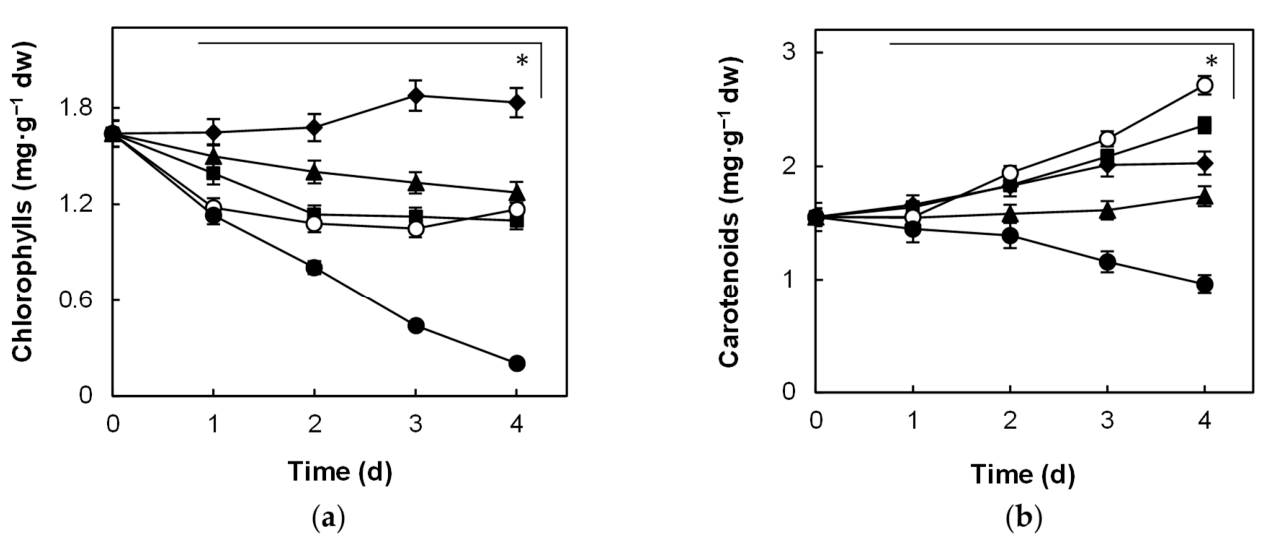
Figure 5 shows the variation in the intracellular concentrations of chlorophylls and carotenoids in the Chroococcidiopsis sp. cultures exposed to different light irradiances and qualities. Regarding total chlorophylls (Figure 5a), a progressive decrease in the time-dependent evolution of chlorophyll was obtained as light irradiance increased, with the lowest values recorded in the culture exposed to the maximum light irradiance tested. Additionally, at any red-light irradiance, the chlorophyll concentrations were lower than those of the control culture (white light), except for the culture grown under 100 µmol photon·m−2·s−1 of red light, which showed a 37% higher chlorophyll content. In contrast, the time-dependent evolution of intracellular carotenoid concentration in the cultures grown under red light displayed a significant increase compared to the control culture (Figure 5b) (Table S4 of Supplementary Materials). The highest intracellular carotenoid concentration was recorded in the culture grown under red light at 600 µmol photon·m−2·s−1 on day 4 of incubation, reaching approximately 2.68 mg of carotenoid·g−1 dw, 67% higher than the control culture.
Figure 5.
Evolution of the intracellular concentration of (a) chlorophyll and (b) carotenoids of the Chroococcidiopsis sp. cultures exposed to different light irradiances and qualities. Symbols: control culture (white light of 100 µmol photon·m−2·s−1) (-▲-); cultures exposed to red light of 100 (-◆-), 300 (-◼-), 600 (-○-) and 900 (-●-) µmol photon·m−2·s−1. (*) represents the significant differences in all treatments with respect to the control culture with 95% confidence.
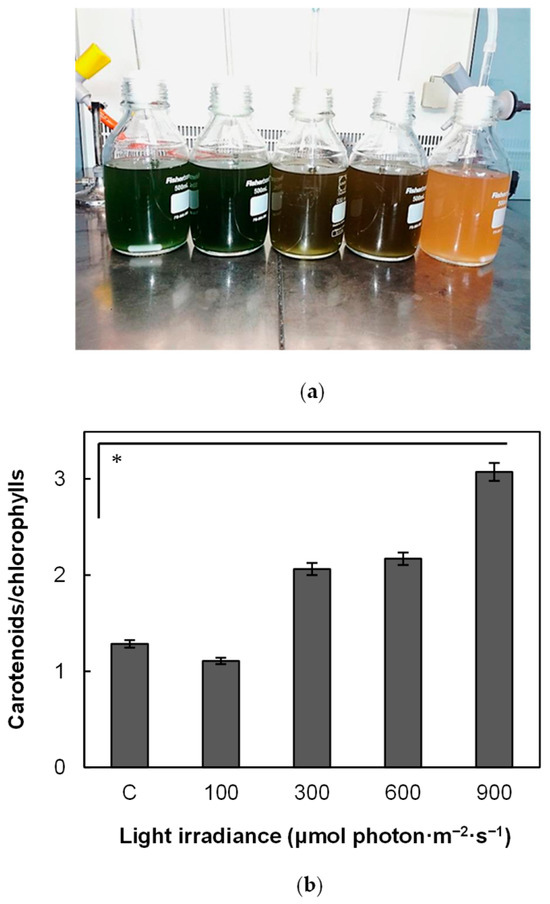
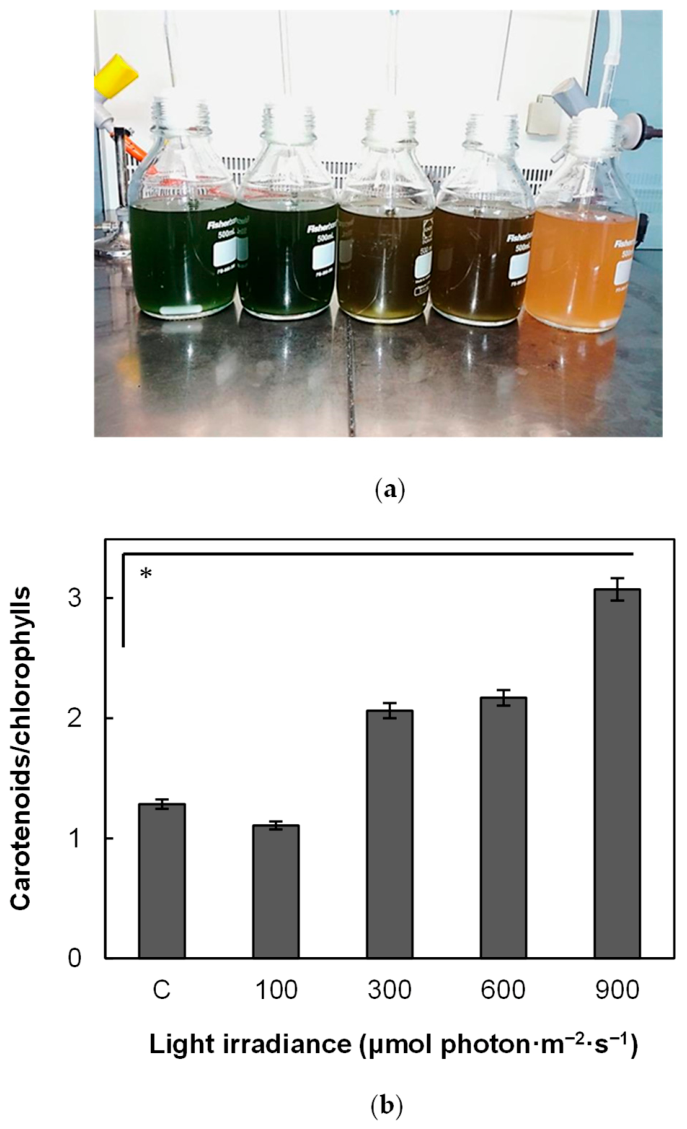
Figure 6 illustrates the increasing carotenoid-to-chlorophyll ratio as red-light irradiance increased, paralleling the enhanced carotenoid-like pigmentation of the cultures. These results are consistent with the expected carotenoid-protective role in mitigating ROS accumulation and dissipating excess light energy. According to Figure 6, the culture exposed to red light at 100 µmol photon·m−2·s−1 (left) exhibited the most intense blue-green pigmentation (Figure 6a), corresponding to the lowest carotenoid-to-chlorophyll ratio (approximately 1.1) (Figure 6b). As red-light irradiance increased, a progressive change in pigmentation was observed—brown pigmentation in the cultures exposed to 300 and 600 µmol photon·m−2·s−1, and orange pigmentation at 900 µmol photon·m−2·s−1. Accordingly, the carotenoid-to-chlorophyll ratio significantly increased with red-light irradiance (Table S5 of Supplementary Materials), reaching a value of approximately two for the cultures exposed to 300 and 600 µmol photon·m−2·s−1, whereas for the culture exposed to 900 µmol photon·m−2·s−1, a ratio of three was obtained. This trend, clearly inferred from Figure 5, is the result of both a pronounced decrease in the chlorophyll content per cell and a substantial increase in carotenoids, which may have practical applications for producing carotenoid-rich, low-chlorophyll extracts.
Figure 6.
Effect of light irradiance and quality on the pigmentation of the Chroococcidiopsis sp. cultures. (a) Photograph taken on day 4 of cultivation; from left to right: 100 µmol photon·m−2·s−1 white light and 100, 300, 600 and 900 µmol photon·m−2·s−1 red light. (b) Carotenoid to chlorophyll ratio on day 4, symbol C corresponds to the control culture. (*) represents the significant differences in all treatments with respect to the control culture with 95% confidence.
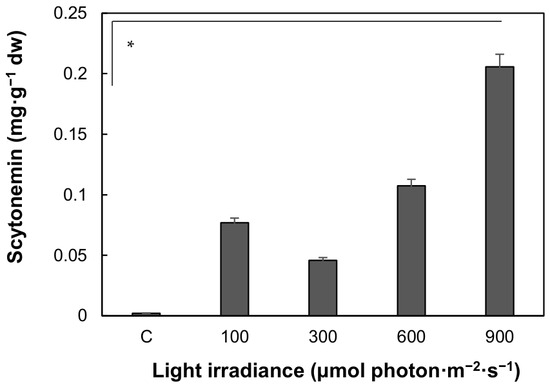
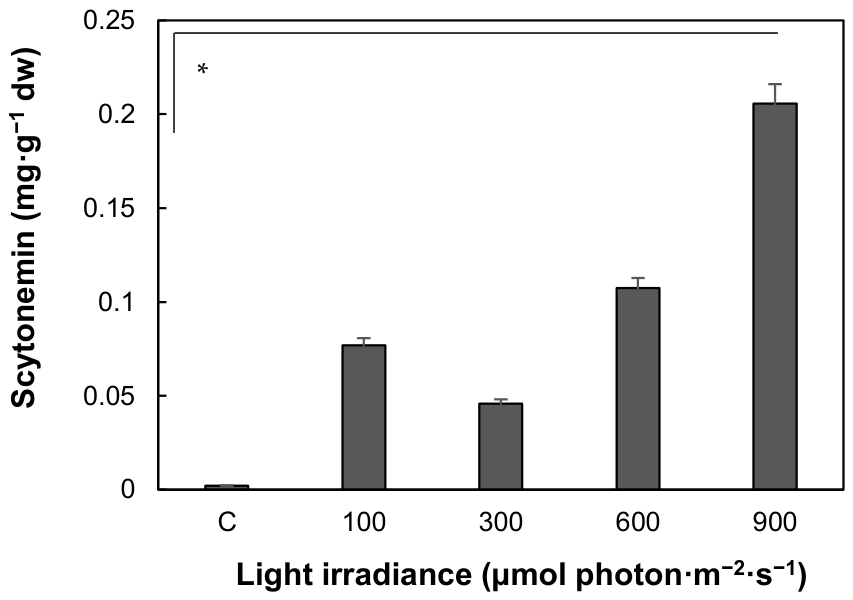
Scytonemin is also involved in dissipating excess photons to mitigate photooxidative damage. Figure 7 presents the variations in scytonemin intracellular concentration as a function of the light conditions the cultures were exposed to.
Figure 7.
Effect of light irradiance and quality on the scytonemin intracellular concentration of the Chroococcidiopsis sp. cultures, symbol C corresponds to the control culture. (*) represents the significant differences in all the treatments with respect to the control culture with 95% confidence.
Figure 7 shows the variation in scytonemin concentration in the cultures of Chroococcidiopsis sp. as a function of different light irradiances and qualities. According to Figure 7, a significant increase in the intracellular concentration of scytonemin was obtained as light irradiance increased (Table S6 of Supplementary Materials), reaching the maximum value in the culture exposed to the highest irradiance tested, where the concentration was approximately 100-fold higher than in the control culture (white light). Additionally, scytonemin accumulation was enhanced in the cyanobacterial cultures grown under red light, as evidenced by the higher intracellular content measured in the culture grown under 100 µmol photon·m−2·s−1 red light—about 39-fold higher than that observed in the cultures exposed to the same irradiance of white light (control culture).
Thus, the acclimation of the extremophilic cyanobacterium Chroococcidiopsis sp. to increasing red-light irradiances has been proven to occur under low to moderate irradiances. The proposed mechanisms of excess light dissipation are further discussed in the next section through analysis and comparison of the main changes obtained in target molecules (chlorophylls, carotenoids and scytonemin) and cell viability markers (photosynthetic and respiratory activities).
4. Discussion
4.1. Growth and Photosynthetic Viability as a Function of Light Irradiance and Quality
The results of this study reveal that red light appears to be used more efficiently than white light by the cyanobacterium Chroococcidiopsis sp. This is inferred from the increased biomass productivity of the cultures grown under red light compared to white light (Figure 2a). This fact could be explained based on previous literature (see Section 1), in which photosynthetic activity is dependent on the radiation wavelength to which cultures are exposed [5]. For instance, red light has a narrow wavelength range between 600 and 700 nm, corresponding to the absorption peaks of chlorophyll (665–680 nm) and phycocyanin (610 and 665 nm). In this context, red light should be absorbed by cyanobacteria more efficiently than light from other PAR ranges, minimizing energy losses and thereby leading to greater biomass productivity [8].
This is coherent with the results obtained in this study, which allows us to suggest that the PAR-light wavelength range has a stronger effect on the growth of Chroococcidiopsis sp. than the photon flux density reaching the cells. This is supported by the fact that the culture grown at 100 µmol photon·m−2·s−1 of white light (control culture) showed a lower growth rate than the culture grown at higher red-light irradiances (300 and 600 µmol photon·m−2·s−1). Similar observations have been reported in other cyanobacteria. For instance, the effect of light quality on Nostoc sp. ATCC 53789 was studied in [26], and they found that an orange-red filter increased the growth of the cyanobacterium compared to blue light. Likewise, white and red LEDs in Cyanobium sp. were reported in [27] to increase photosynthetic activity and pigment content (ca. 1.8-fold) under red light. Our results are consistent with this observation, showing that red light induced higher photosynthetic activity in the Chroococcidiopsis sp. cultures. Interestingly, photosynthetic activity increases as light irradiance increases on day 1 of cultivation, until 600 µmol photon·m−2·s−1, whereas at later growth stages the maximum photosynthetic activity was observed at 100 µmol photon·m−2·s−1, followed by a decline at higher irradiances. This behavior can be interpreted as a photoprotective mechanism to limit light absorption in growing cultures, thereby reducing the photon flux transduced into chemical energy through the photosynthetic chain [28].
Unlike O2 production (photosynthetic activity), O2 consumption (respiratory activity) showed an increasing trend, whatever the growth stage evaluated, day 1 or 3. Respiration is one of the most important biological processes, even in oxygenic phototrophs that produce NAD(P)H and ATP via photosynthesis [15]. However, the physiological interactions between respiration and photosynthesis are not yet fully understood in photosynthetic organisms [29], making it challenging to interpret the observed differences in respiratory activity as light irradiance increases. In this study, the compensation point, the light irradiance at which the rate of carbon fixation via photosynthesis equals the rate of carbon release through respiration [30], was obtained between 600 and 900 µmol photon·m−2·s−1 (Figure 4). Beyond the compensation point, photosynthetic rates generally increase, leading to higher biomass productivity [31]. However, our results showed lower growth at this range, indicating reduced culture viability.
Accordingly, the observed increase in O2 consumption with increasing light irradiance could be attributed to elevated oxidative pressure in cyanobacterial cells, corroborated by the activation of the non-enzymatic system observed in this study (Figure 5, Figure 6 and Figure 7). In all aerobically living organisms, respiration is thought to be a source of ROS produced inside the cells. In addition to ROS produced by respiratory machinery, photosynthetic organisms are challenged by ROS generated by the photosynthetic electron transport chain [32]. Light provides the energy necessary for NADPH and ATP generation, but excessive photon flux can lead to photoinhibition, saturating primary electron acceptors in the photosynthetic chain [33]. Similarly, the rate of oxygen consumption per volume of aphotic mat in Microcoleus chthonoplastes increased at high irradiances, probably as a consequence of increased rates of photosynthate exudation, stimulating respiration [34].
Considering that the cultures were exposed directly to the aforementioned light irradiances without prior adaptation, the lowest photosynthetic activity recorded in the culture exposed to 900 µmol photon·m−2·s−1 would be justified by the collapse of PSII reaction centers and, subsequently, photoinhibition, leading, therefore, to growth cessation (Figure 2). The oxidative damage induced by excess light likely exceeded the capacity of photoprotective mechanisms [35], increasing ROS production and partially explaining the elevated O2 consumption [32]. In addition, when light irradiance exceeds the capacity of the photosynthetic electron flow, oxygen rather than ferredoxin can act as an electron acceptor, producing superoxide anion via the Mehler reaction [36]. Compared to algae and higher plants, cyanobacteria reduce a larger proportion of O2, consuming 50% of photosynthetic electrons instead of only 15% in plants [37]. Several additional mechanisms have also been described to explain the increase in O2 consumption in cyanobacteria exposed to increasing light irradiances. As is the case with alternative oxidase (AOX), one of the terminal oxidases of the plant mitochondrial electron transport chain. AOX acts as a safety valve by transferring excessive electrons to oxygen, thereby preventing the generation of harmful radicals, contributing to a decrease in O2 levels within the cells [38,39]. In addition, another light-dependent energy-dissipating mechanism in photosynthetic organisms is photorespiration [40]. In microalgae, photorespiration oxidizes ribulose diphosphate to lower intracellular oxygen levels, thereby reducing oxidative stress.
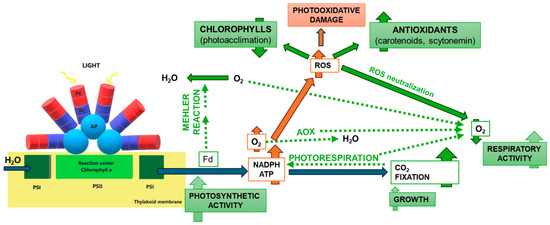
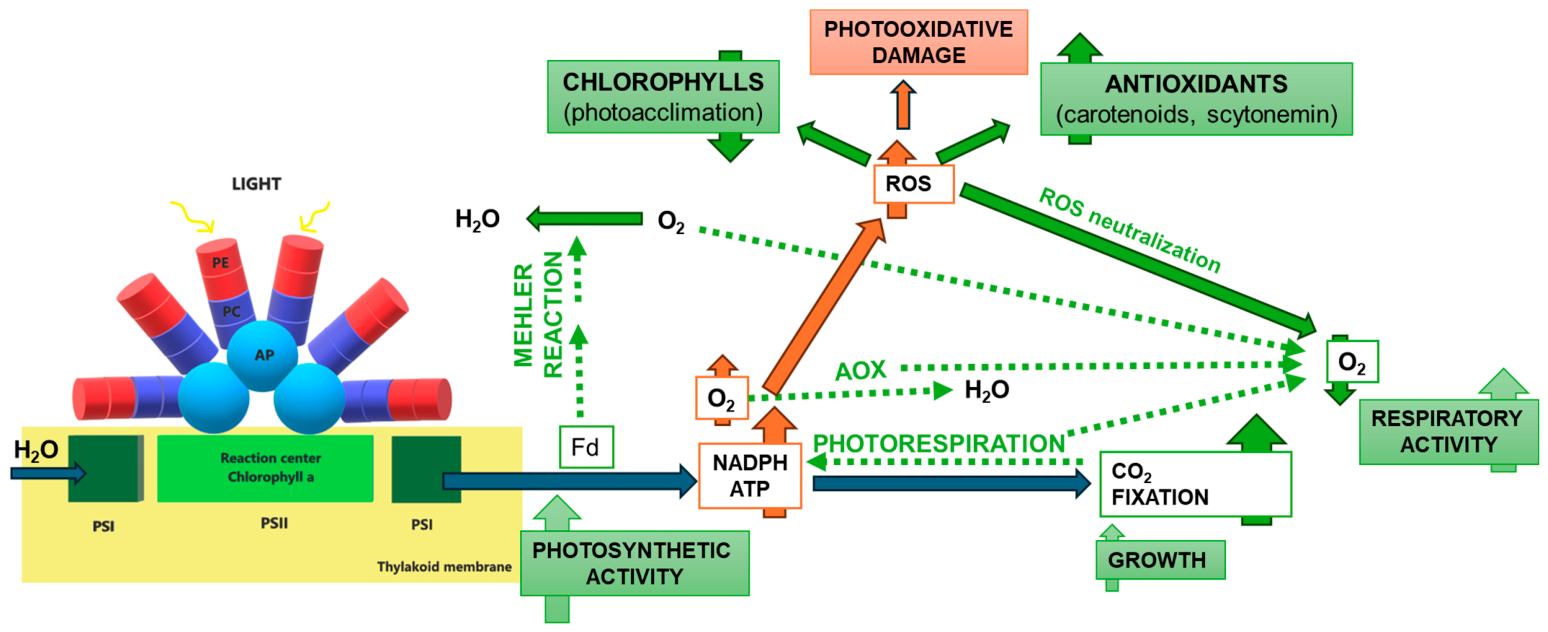
Although deeper analyses are required to confirm these hypotheses, the above-mentioned mechanisms, schematically represented in Figure 8, may partly explain the observed increase in O2 consumption with increasing light irradiance. However, considering that the physiological functions of respiration in association with photosynthesis have not yet been fully understood in photosynthetic organisms [29], it becomes difficult to understand the variations in O2 consumption obtained in this study and to hypothesize which mechanisms are activated in a major proportion. The only clear evidence is that an excess of NAD(P)H produced under high irradiance led to higher ROS production, which acts as a signaling cascade to induce antioxidant biosynthesis [21,41]. These antioxidant molecules, including carotenoids, dissipate excess energy, therefore reducing photooxidative damage. Accordingly, the accumulation of target antioxidant molecules in this study increased in the cultures exposed to moderate excess irradiance, as analyzed in the following section.
Figure 8.
Proposed photoacclimation mechanism of Chroococcidiopsis sp. in response to increased light irradiances. Symbols: orange color in frames represents oxidative stress (ROS generation) and oxidative damage, green color in frames represents the proposed photoacclimation mechanism to reduce oxidative pressure in the cells, solid arrows indicate evidence from our results, and discontinuous arrows correspond to the suggested processes described in the literature for cyanobacteria under increased light irradiance. Abbreviations: photosystem I (PSI), photosystem II (PSII), phycoerythrin (PE), phycocyanin (PC), allophycocyanin (APC), reactive oxygen species (ROS), ferredoxin (Fd), alternative oxidase (AOX).
4.2. Production of Antioxidant Molecules as a Function of Light Irradiance and Quality
Increasing red-light irradiance caused a decrease in the chlorophyll content in the Chroococcidiopsis sp. cultures (Figure 5), evidencing the downregulation of chlorophyll biosynthesis at high irradiance levels, as represented in Figure 8. Interestingly, the growth rates of the cultures incubated under moderate to high irradiances (300 and 600 µmol photon·m−2·s−1) remained close to that of the control culture (only 8% lower), whereas the cellular chlorophyll content noticeably decreased (by more than 30% compared to the control culture). Consequently, an apparent reduction in chlorophyll antenna size with increasing light irradiance is expected, thereby limiting the photon flux transduced into chemical energy through the photosynthetic chain and reducing the oxidative pressure generated [28]. Conversely, at the highest irradiances tested (900 µmol photon·m−2·s−1), the large decrease in the chlorophyll concentration could be attributed to the decline in metabolic activity derived from photosynthesis (photo)inhibition. This is supported by the pronounced drop in photosynthetic activity (Figure 3). Photoinhibition arises from excessive ROS production and its oxidative impact on the photosynthetic machinery, as elegantly described by [42] in the classical short review entitled “Too many photons”.
Accordingly, the reduced chlorophyll content obtained in the cultures exposed to high light irradiance would allow the production of extracts with a higher carotenoid-to-chlorophyll ratio (Figure 6). This higher ratio highlights the antioxidant and photoprotective role of carotenoids in mitigating photooxidative damage caused by excess irradiance. Microalgae and cyanobacteria have developed additional protective strategies against excess light referred to as “photoacclimation” mechanisms. These include alterations in cellular pigmentation, typically manifested as a decrease in the chlorophyll content and a concomitant increase in carotenoids [40]. Such acclimations have been described in various microalgal species exposed to oversaturating light irradiances as a means of minimizing non-photochemical quenching, thereby reducing photooxidative damage in the chloroplasts by lowering the cellular light absorption capacity. This, in turn, limits the excess electron flux through the photosynthetic electron transport chain, preventing an increase in ROS production [28].
As red light induced higher photosynthetic activity (Figure 3), under increased red-light irradiances, Chroococcidiopsis sp. might reduce the abundance of its primary light-harvesting pigments, namely chlorophylls (Figure 5), probably to minimize both non-photochemical and photochemical quenching-related photosynthesis damage derived from excess light absorption [42]. Consequently, to reduce the photon flux transduced through the photosynthetic chain, the cyanobacterium may downregulate chlorophyll biosynthesis, as reported for Synechocystis sp. PCC6803 [43].
Conversely, an opposite trend was obtained for the time-dependent evolution of carotenoids. The increase in the intracellular carotenoid content with increasing red-light irradiance indicates enhanced carotenoid biosynthesis activity. Since the absorption spectrum of carotenoids does not overlap with the red-light emission range, most of the increase in the carotenoid content is not expected to be directly associated with photosynthetic performance. Consequently, this intracellular accumulation is hypothesized to be linked to the antioxidant nature of carotenoids and their role in mitigating photooxidative damage [44]. This behavior has been previously described in microalgal cultures exposed to saturating light irradiances [21,45]. The lowest carotenoid content obtained in the cultures exposed to the highest light irradiance can again be attributed to growth cessation which is induced by oversaturating light conditions. Accordingly, modulation of light irradiance variation can be applied to regulate carotenoid production in Chroococcidiopsis, although the maximum intracellular concentrations obtained in this study can be considered moderate compared with those typically found in carotenoid-producing strains [46].
Overall, the results obtained for the extremotolerant cyanobacterium Chroococcidiopsis sp. may have practical applications for producing carotenoid-enriched extracts with low chlorophyll content, suitable for the formulation of antioxidant-rich dietary supplements [15]. Additionally, it has been described that Chroococcidiopsis produces an exopolysaccharide (EPS) layer surrounding its cells, which promotes the formation of cellular aggregates enabling the cyanobacterium to dissipate part of the incident light and consequently reduce the oxidative damage [47]. Within this outermost EPS sheath, cells accumulate the UV-screening phenolic pigment scytonemin [19,48]. Scytonemin has received increasing attention for its biochemical and ecological roles owing to UV-absorption and antioxidant functions, and also for its anti-inflammatory and anti-proliferative properties [49]. Therefore, the observed increase in the scytonemin content with rising red-light irradiance (Figure 7) is consistent with these protective strategies, enhancing the biotechnological potential of Chroococcidiopsis sp. biomass.
This discussed adaptability of Chroococcidiopsis sp. when growing under high light irradiance likely reflects its extremophilic nature, which enables this cyanobacterium to thrive under the harsh environmental conditions of its natural habitat Photosynthetic microorganisms inhabiting the Atacama Desert must therefore possess photosynthetic systems capable of coping with the extreme solar radiation. In this study the photoacclimation response of Chroococcidiopsis sp. is hypothesized to involve: (i) an intracellular decrease in chlorophylls to reduce the photon flux density entering the photosynthetic electron transport chain, and (ii) an increase in carotenoid and scytonemin accumulation serving as a photoprotective mechanism to dissipate excess light energy in the cultures exposed to high irradiance. Thus, the ability of this cyanobacterium to increase the content of antioxidant compounds highlights its potential as a promising resource for biotechnological applications, particularly in the development of compounds with photoprotective and antioxidant properties. Additionally, the remarkable extremotolerance of Chroococcidiopsis sp. highlights its potential as a model organism for space research, particularly for NASA missions. Its ability to survive radiation, desiccation, and Mars-like conditions, together with its role in oxygen production and carbon fixation, supports its use in developing bioregenerative life support systems for future space exploration [50].
5. Conclusions
In the polyextremophilic cyanobacterium Chroococcidiopsis sp. red light is absorbed more efficiently than white light, resulting in increased photosynthetic activity. Consequently, red-light irradiance can be modulated to stimulate the growth of Chroococcidiopsis sp. However, red-light irradiances equal to or greater than 900 µmol photon·m−2·s−1 lead to photoinhibition and consequently to growth cessation. In this study, Chroococcidiopsis sp. has been suggested to undergo photoacclimation as a mechanism to reduce light absorption and dissipate excess energy, probably in response to photooxidative stress. This mechanism involves a reduction in the total chlorophyll content—thereby limiting the photon flux transduced into chemical energy through photosynthesis—and an increase in carotenoid concentration, presumably as a photoprotective mechanism. Additionally, the intracellular scytonemin content increases with irradiance, further contributing to the dissipation of excess light energy. Overall, modulation of red-light irradiance in cultures of the extremotolerant cyanobacterium Chroococcidiopsis sp. can be used to enhance both the biomass productivity and the biosynthesis of antioxidant compounds of biotechnological interest.
Supplementary Materials
The following supporting information can be downloaded at https://www.mdpi.com/article/10.3390/pr14081301/s1. Table S1. Effect of light irradiance and quality on the growth of Chroococcidiopsis sp.; symbol C corresponds to the control culture. Table S2. Effect of light irradiance and quality on the photosynthetic and respiratory activity of Chroococcidiopsis sp.; symbol C corresponds to the control culture. Table S3. Effect of light irradiance and quality on the photosynthetic to respiratory activity ratio of Chroococcidiopsis sp.; symbol C corresponds to the control culture. Table S4. Effect of light irradiance and quality on the intracellular concentration of chlorophylls and carotenoids of Chroococcidiopsis sp.; symbol C corresponds to the control culture. Table S5. Effect of light irradiance and quality on the chlorophyll to carotenoid ratio of Chroococcidiopsis sp.; symbol C corresponds to the control culture. Table S6. Effect of light irradiance and quality on the intracellular concentration of scytonemin of Chroococcidiopsis sp.; symbol C corresponds to the control culture.
Author Contributions
Conceptualization, C.V. and M.R.; investigation, M.R.; writing—original draft preparation, M.R., I.G., C.V., and J.W.; methodology, M.R. and V.B.; supervision, I.G. and C.V.; funding acquisition, J.W. All authors have read and agreed to the published version of the manuscript.
Funding
C.V. and J.W. are thankful for the financial support provided by grant PID2021-124362NB-I00 from MCINU/AEI/10.13039/501100011033 and FEDER, UE.
Data Availability Statement
All of the data are contained within the article.
Conflicts of Interest
The authors declare no conflicts of interest.
References
- Devi, D.; Oinam, G.; Devi, I.; Singh, A.; Tiwari, O.; Sharma, G. d Ecology and Biodiversity Analysis of Cyanobacteria. Assam Univ. J. Sci. Technol. Biol. Environ. Sci. 2010, 5, 6–13. [Google Scholar]
- Ferris, M.J.; Muyzer, G.; Ward, D.M. Denaturing gradient gel electrophoresis profiles of 16S rRNA-defined populations inhabiting a hot spring microbial mat community. Appl. Environ. Microbiol. 1996, 62, 340–346. [Google Scholar] [CrossRef] [Scilit]
- Cohen, Y.; Jørgensen, B.B.; Revsbech, N.P.; Poplawski, R. Adaptation to Hydrogen Sulfide of Oxygenic and Anoxygenic Photosynthesis among Cyanobacteria. Appl. Environ. Microbiol. 1986, 51, 398–407. [Google Scholar] [CrossRef] [Scilit]
- Gan, F.; Shen, G.; Bryant, D.A. Occurrence of Far-Red Light Photoacclimation (FaRLiP) in Diverse Cyanobacteria. Life 2015, 5, 4–24. [Google Scholar] [CrossRef] [Scilit] [PubMed]
- Liu, J.; van Iersel, M.W. Photosynthetic Physiology of Blue, Green, and Red Light: Light Intensity Effects and Underlying Mechanisms. Front. Plant Sci. 2021, 12, 619987. [Google Scholar] [CrossRef] [Scilit] [PubMed]
- Emerson, R. Dependence of yield of photosynthesis in long-wave red on wavelength and intensity of supplementary light. In Proceedings of the Annual Meeting of the National Academy of Sciences, Washington, DC, USA, 22–24 April 1957. [Google Scholar]
- McCree, K.J. The action spectrum, absorptance and quantum yield of photosynthesis in crop plants. Agric. Meteorol. 1971, 9, 191–216. [Google Scholar] [CrossRef] [Scilit]
- Mohsenpour, S.F.; Willoughby, N. Luminescent photobioreactor design for improved algal growth and photosynthetic pigment production through spectral conversion of light. Bioresour. Technol. 2013, 142, 147–153. [Google Scholar] [CrossRef] [Scilit]
- Hotos, G.N.; Antoniadis, T.I. The Effect of Colored and White Light on Growth and Phycobiliproteins, Chlorophyll and Carotenoids Content of the Marine Cyanobacteria Phormidium sp. and Cyanothece sp. in Batch Cultures. Life 2022, 12, 837. [Google Scholar] [CrossRef] [Scilit]
- Kirilovsky, D.; Kerfeld, C.A. The Orange Carotenoid Protein: A blue-green light photoactive protein. Photochem. Photobiol. Sci. 2013, 12, 1135–1143. [Google Scholar] [CrossRef] [Scilit]
- Gwizdala, M.; Wilson, A.; Kirilovsky, D. In Vitro Reconstitution of the Cyanobacterial Photoprotective Mechanism Mediated by the Orange Carotenoid Protein in Synechocystis PCC 6803. Plant Cell 2011, 23, 2631–2643. [Google Scholar] [CrossRef] [Scilit]
- Arslan, N.P.; Azad, F.; Orak, T.; Budak-Savas, A.; Ortucu, S.; Dawar, P.; Baltaci, M.O.; Ozkan, H.; Esim, N.; Taskin, M. A review on bacteria-derived antioxidant metabolites: Their production, purification, characterization, potential applications, and limitations. Arch. Pharm. Res. 2025, 48, 253–292. [Google Scholar] [CrossRef] [Scilit]
- Varshney, P.; Mikulic, P.; Vonshak, A.; Beardall, J.; Wangikar, P.P. Extremophilic micro-algae and their potential contribution in biotechnology. Bioresour. Technol. 2015, 184, 363–372. [Google Scholar] [CrossRef] [Scilit] [PubMed]
- Raddadi, N.; Cherif, A.; Daffonchio, D.; Neifar, M.; Fava, F. Biotechnological applications of extremophiles, extremozymes and extremolytes. Appl. Microbiol. Biotechnol. 2015, 99, 7907–7913. [Google Scholar] [CrossRef] [Scilit]
- Forján, E.; Navarro, F.; Cuaresma, M.; Vaquero, I.; Ruíz-Domínguez, M.C.; Gojkovic, Ž; Vázquez, M.; Márquez, M.; Mogedas, B.; Bermejo, E.; et al. Microalgae: Fast-Growth Sustainable Green Factories. Crit. Rev. Environ. Sci. Technol. 2015, 45, 1705–1755. [Google Scholar] [CrossRef] [Scilit]
- Malavasi, V.; Soru, S.; Cao, G. Extremophile Microalgae: The potential for biotechnological application. J. Phycol. 2020, 56, 559–573. [Google Scholar] [CrossRef] [Scilit]
- Wierzchos, J.; de los Ríos, A.; Ascaso, C. Microorganisms in desert rocks: The edge of life on Earth. Int. Microbiol. 2012, 15, 171–181. [Google Scholar]
- Solovchenko, A.E.; Merzlyak, M.N. Screening of visible and UV radiation as a photoprotective mechanism in plants. Russ. J. Plant Physiol. 2008, 55, 719–737. [Google Scholar] [CrossRef] [Scilit]
- Casero, M.C.; Ascaso, C.; Quesada, A.; Mazur-Marzec, H.; Wierzchos, J. Response of endolithic Chroococcidiopsis strains from the polyextreme Atacama Desert to light radiation. Front. Microbiol. 2021, 11, 614875. [Google Scholar] [CrossRef] [Scilit] [PubMed]
- Hu, C.; Gao, K.; Whitton, B. Semi-arid Regions and Deserts. In Ecology of Cyanobacteria II: Their Diversity in Space and Time; Whitton, B., Ed.; Springer: Dordrecht, The Netherlands, 2012; pp. 345–369. [Google Scholar]
- Faraloni, C.; Di Lorenzo, T.; Bonetti, A. Impact of Light Stress on the Synthesis of Both Antioxidants Polyphenols and Carotenoids, as Fast Photoprotective Response in Chlamydomonas reinhardtii: New Prospective for Biotechnological Potential of This Microalga. Symmetry 2021, 13, 2220. [Google Scholar] [CrossRef] [Scilit]
- Montero-Lobato, Z.; Fuentes, J.L.; Garbayo, I.; Ascaso, C.; Wierzchos, J.; Vega, J.M.; Vílchez, C. Identification, biochemical composition and phycobiliproteins production of Chroococcidiopsis sp. from arid environment. Process Biochem. 2020, 97, 112–120. [Google Scholar] [CrossRef] [Scilit]
- Assunção, J.; Amaro, H.; Lopes, G.; Tavares, T.; Malcata, F.; Guedes, A. Exploration of marine genus Chroococcidiopsis sp.: A valuable source for antioxidant industry? J. Appl. Phycol. 2021, 33, 2169–2187. [Google Scholar] [CrossRef] [Scilit]
- Richmond, A. Biological Principles of Mass Cultivation. In Handbook of Microalgal Culture; Richmond, A., Ed.; Wiley: Oxford, UK, 2003; pp. 125–177. [Google Scholar]
- Cuaresma, M.; Buffing, M.; Janssen, M.; Vílchez, C.; Wijffels, R. Performance of Chlorella sorokiniana under simulated extreme winter conditions. J. Appl. Phycol. 2012, 24, 693–699. [Google Scholar] [CrossRef] [Scilit] [PubMed]
- Polyzois, A.; Kirilovsky, D.; Dufat, T.; Michel, S. Effects of Modification of Light Parameters on the Production of Cryptophycin, Cyanotoxin with Potent Anticancer Activity, in Nostoc sp. Toxins 2020, 12, 809. [Google Scholar] [CrossRef] [Scilit]
- Pagels, F.; Lopes, G.; Vasconcelos, V.; Guedes, A.C. White and red LEDs as two-phase batch for cyanobacterial pigments production. Bioresour. Technol. 2020, 307, 123105. [Google Scholar] [CrossRef] [Scilit] [PubMed]
- Ort, D.; Melis, A. Optimizing Antenna Size to Maximize Photosynthetic Efficiency. Plant Physiol. 2010, 155, 79–85. [Google Scholar] [CrossRef] [Scilit]
- Shimakawa, G.; Kohara, A.; Miyake, C. Characterization of Light-Enhanced Respiration in Cyanobacteria. Int. J. Mol. Sci. 2021, 22, 342. [Google Scholar] [CrossRef] [Scilit]
- Nobel, P.S. 8—Leaves and Fluxes. In Physicochemical and Environmental Plant Physiology (Fifth Edition); Nobel, P.S., Ed.; Academic Press: San Diego, CA, USA, 2020; pp. 409–488. [Google Scholar]
- Wang, J.; Tian, Q.; Zeng, W.; Qiu, G.; Shen, L. Insights about fungus-microalgae symbiotic system in microalgae harvesting and wastewater treatment: A review. Renew. Sustain. Energy Rev. 2023, 182, 113408. [Google Scholar] [CrossRef] [Scilit]
- Latifi, A.; Ruiz, M.; Zhang, C.-C. Oxidative stress in cyanobacteria. FEMS Microbiol. Rev. 2009, 33, 258–278. [Google Scholar] [CrossRef] [Scilit]
- Mandal, M.; Sarkar, M.; Khan, A.; Biswas, M.; Masi, A.; Rakwal, R.; Agrawal, G.K.; Srivastava, A.; Sarkar, A. Reactive Oxygen Species (ROS) and Reactive Nitrogen Species (RNS) in plants—maintenance of structural individuality and functional blend. Adv. Redox Res. 2022, 5, 100039. [Google Scholar] [CrossRef] [Scilit]
- Epping, E.; Kühl, M. The responses of photosynthesis and oxygen consumption to short-term changes in temperature and irradiance in a cyanobacterial mat (Ebro Delta, Spain). Environ. Microbiol. 2000, 2, 465–474. [Google Scholar] [CrossRef] [Scilit]
- Nishiyama, Y.; Yamamoto, H.; Allakhverdiev, S.I.; Inaba, M.; Yokota, A.; Murata, N. Oxidative stress inhibits the repair of photodamage to the photosynthetic machinery. EMBO J. 2001, 20, 5587–5594–5594. [Google Scholar] [CrossRef] [Scilit]
- Mehler, A.H. Studies on reactions of illuminated chloroplasts: I. Mechanism of the reduction of oxygen and other hill reagents. Arch. Biochem. Biophys. 1951, 33, 65–77. [Google Scholar] [CrossRef] [Scilit]
- Osmond, C.B.; Foyer, C.H.; Bock, G.; Badger, M.R.; von Caemmerer, S.; Ruuska, S.; Nakano, H. Electron flow to oxygen in higher plants and algae: Rates and control of direct photoreduction (Mehler reaction) and rubisco oxygenase. Philos. Trans. R. Soc. B Biol. Sci. 2000, 355, 1433–1446. [Google Scholar]
- Kaye, Y.; Huang, W.; Clowez, S.; Saroussi, S.; Idoine, A.; Sanz-Luque, E.; Grossman, A.R. The mitochondrial alternative oxidase from Chlamydomonas reinhardti enables survival in high light. J. Biol. Chem. 2019, 294, 1380–1395. [Google Scholar] [CrossRef] [Scilit] [PubMed]
- Vanlerberghe, G.C. Alternative Oxidase: A Mitochondrial Respiratory Pathway to Maintain Metabolic and Signaling Homeostasis during Abiotic and Biotic Stress in Plants. Int. J. Mol. Sci. 2013, 14, 6805–6847. [Google Scholar] [CrossRef] [Scilit] [PubMed]
- Sousa, C.; Compadre, A.; Vermuë, M.H.; Wijffels, R.H. Effect of oxygen at low and high light intensities on the growth of Neochloris oleoabundans. Algal Res. 2013, 2, 122–126. [Google Scholar] [CrossRef] [Scilit]
- Robles, M.; Torronteras, R.; Ostojic, C.; Oria, C.; Cuaresma, M.; Garbayo, I.; Navarro, F.; Vílchez, C. Fe (III)-Mediated Antioxidant Response of the Acidotolerant Microalga Coccomyxa onubensis. Antioxidants 2023, 12, 610. [Google Scholar] [CrossRef] [Scilit]
- Osmond, B.; Badger, M.; Maxwell, K.; Björkman, O.; Leegood, R. Too many photons: Photorespiration, photoinhibition and photooxidation. Trends Plant Sci. 1997, 2, 119–121. [Google Scholar] [CrossRef] [Scilit]
- Yoshikawa, K.; Ogawa, K.; Toya, Y.; Akimoto, S.; Matsuda, F.; Shimizu, H. Mutations in hik26 and slr1916 lead to high-light stress tolerance in Synechocystis sp. PCC6803. Commun. Biol. 2021, 4, 343. [Google Scholar] [CrossRef] [Scilit]
- Sandmann, G. Antioxidant Protection from UV- and Light-Stress Related to Carotenoid Structures. Antioxidants 2019, 8, 219. [Google Scholar] [CrossRef] [Scilit]
- Lamers, P.; van de Laak, C.; Kaasenbrood, P.; Lorier, J.; Janssen, M.; De Vos, R.; Bino, R.; Wijffels, R. Carotenoid and Fatty Acid Metabolism in Light-Stressed Dunaliella salina. Biotechnol. Bioeng. 2010, 106, 638–648. [Google Scholar] [CrossRef] [Scilit]
- Pagels, F.; Vasconcelos, V.; Guedes, A.C. Carotenoids from Cyanobacteria: Biotechnological Potential and Optimization Strategies. Biomolecules 2021, 11, 735. [Google Scholar] [CrossRef] [Scilit] [PubMed]
- Flemming, H.-C.; Wingender, J. The biofilm matrix. Nat. Rev. Microbiol. 2010, 8, 623–633. [Google Scholar] [CrossRef] [Scilit] [PubMed]
- Vítek, P.; Jehlička, J.; Ascaso, C.; Mašek, V.; Gómez-Silva, B.; Olivares, H.; Wierzchos, J. Distribution of scytonemin in endolithic microbial communities from halite crusts in the hyperarid zone of the Atacama Desert, Chile. FEMS Microbiol. Ecol. 2014, 90, 351–366. [Google Scholar] [CrossRef] [Scilit] [PubMed]
- Gao, X.; Jing, X.; Liu, X.; Lindblad, P. Biotechnological Production of the Sunscreen Pigment Scytonemin in Cyanobacteria: Progress and Strategy. Mar. Drugs 2021, 19, 129. [Google Scholar] [CrossRef] [Scilit]
- Billi, D. Desert cyanobacteria under non-Earth conditions: Implications for astrobiology and sustainable life support. Acta Astronaut. 2026, 238, 209–214. [Google Scholar] [CrossRef] [Scilit]

Disclaimer/Publisher’s Note: The statements, opinions and data contained in all publications are solely those of the individual author(s) and contributor(s) and not of MDPI and/or the editor(s). MDPI and/or the editor(s) disclaim responsibility for any injury to people or property resulting from any ideas, methods, instructions or products referred to in the content. |
© 2026 by the authors. Licensee MDPI, Basel, Switzerland. This article is an open access article distributed under the terms and conditions of the Creative Commons Attribution (CC BY) license.