


Abstract
Coalbed methane (CBM) hosted by multiple (>20) thin (<2 m) seams in South China represents an important unconventional gas supplement. In the Yanjiao composite syncline, high-frequency sea-level fluctuations produced widely distributed thin seams (20–60 layers), with tidal-flat coal groups I (No. 2–No. 9) and III (No. 20–No. 35) as primary targets. Variable magma intrusion drives the present coal-rank partitioning (1.8–4.3% Ro) and pronounced reservoir heterogeneity. A basalt floor (>200 m) and the Lower Triassic Feixianguan caprock (~100 m) confine the Longtan strata into an independent hydrodynamic unit. Groundwater migrates from syncline wings to the axial domain and seals CBM in stagnant zones, resulting in higher gas contents toward the axis. Deep CBM is constrained by high in situ stress and low permeability (typically <0.1 mD below 600 m) and a relatively uniform and low-abnormal pressure system. The syncline is divided into four parts: Part I is the most favorable, where staged fracturing of closely spaced (<60 m) coal group III achieved a maximum production rate of 2400 m3/d and a stabilized rate of 2100 m3/d, whereas Part IV (depth > 1000 m) records a peak daily gas rate of 512–654 m3/d and shows no stabilized-production stage.
1. Introduction
As an important part of unconventional oil and gas, coalbed methane (CBM) development in China has entered the large-scale production stage [1,2,3,4]. According to the latest round of national oil and gas resources evaluation results in China, the CBM resources with a depth < 2000 m are as high as 30.05 trillion m3, and the technically recoverable resource was about 12.5 trillion m3 [5,6]. Generally, the CBM is mainly distributed in four gas regions (Northeast, Northwest, North, and South China) and five stratigraphic strata (Carboniferous–Permian and Jurassic in North China, Permian in South China, Jurassic in Northwest China, and Jurassic–Cretaceous in Northeast China) [7,8]. Currently, the exploration and development technology systems suitable for high-rank CBM in the Qinshui Basin and medium-rank CBM in the Ordos Basin have been formed, and a breakthrough was also made for low-rank CBM in the Junggar Basin [9,10,11]. The southern region is characterized by multi-seam and thin coal seams, hosting 5462.8 billion m3 of CBM geological resources and 3826.7 billion m3 of recoverable resources, accounting for 18.2% and 18.5% of the national totals, respectively [6,7,12]. Commercial development under comparable multi-seam CBM settings has been achieved in basins such as the Alberta Basin (Canada) and the Surat–Bowen Basin (Australia) [13,14,15]. In recent years, China has also carried out extensive CBM activities in southern China. As of the end of 2023, more than 900 CBM wells had been drilled cumulatively in Guizhou, Sichuan, Chongqing, and Yunnan, with cumulative proved reserves of 40.893 billion m3 and an annual gas production of 0.157 billion m3, mainly concentrated in Yunlian (southern Sichuan) and Zhijin (western Guizhou) [16].
Guizhou is the richest province of coal resources in South China, and CBM resources in western and north Guizhou account to 92.57% of total resources in the province and 49.94% of total resources in South China. The main resource rock and reservoir are coal seams from the Upper Permian [17,18]. In 2010, Sinopec East China Company drilled the Z2 and Z3 wells in the Yanjiao Syncline of the Zhijin block, adopting a two-seam commingled production scheme; the daily gas rates reached 1000 m3 and 2800 m3, respectively, representing the first CBM exploration breakthrough in Guizhou. On this basis, 54 wells were deployed with different well types, coal-seam combinations, and fracturing methods. Vertical wells typically produced 1000–3500 m3/d. The U-shaped well achieved stable production exceeding 5000 m3/d, and subsequent horizontal wells maintained stable daily gas rates of 11,000–13,000 m3/d. In 2014, a nine-well clustered pad in the Songhe area recorded daily gas rates above 1000 m3/d per well, with a maximum exceeding 3000 m3/d. In addition, the Yangmeican-1 vertical well drilled by the China Geological Survey in the Yangmeishu syncline reached a peak daily gas rate of 5011 m3/d and sustained about 3600 m3/d [16]. Collectively, these field results demonstrate a promising CBM production potential in Guizhou, as both vertical and horizontal wells can deliver commercially meaningful gas rates once favorable intervals are accessed and effectively stimulated. However, the observed well performance varies markedly, indicating strong geological heterogeneity [19,20]. Such productivity dispersion is likely controlled by the coupled variability in coal thickness and lateral continuity, coal rank, gas content and saturation, cleat development, in situ stress and permeability, and hydrodynamic conditions.
More than one hundred CBM production wells have been drilled in Guizhou province, but they have a lower gas rate than the national average. Currently, the basic geological exploration and adaptive engineering technology are still the main research direction and target for CBM development. Many investigations related to CBM geology in the multi-coal seams were carried out [11,21,22], and the representative idea of “superposed multilayer coalbed methane system” was put forward by Qin [23]. However, this research mainly focused on a single aspect of CBM geology, and the research on the CBM system is still weak in this area. The concept of the CBM system is the extension of the concept of the petroleum system, which is defined as all the geological elements (e.g., coal seams distribution, buried history and thermal evolution history, capping condition, reservoir physical property, and hydrogeological conditions related to the generation, migration, and accumulation of CBM) [24,25]. The research on the CBM system in the San Juan and Powder River basins by Ayers and in the Qinshui basin by Su provides excellent instances of the methodology [26,27].
The main difference for multiple coal-seam areas is that the CBM system needs to take both vertical and horizontal variations into consideration, and the purpose of the CBM system investigation is to find the most favorable area and productive seams for CBM development. Yanjiao composite syncline with a total CBM resource of 2.065 × 10¹¹ m3 and a total area of 1692 km2 in western Guizhou was selected as the main research objective in this work to investigate the Upper Permian CBM system. The exploration of CBM in Yanjiao composite syncline started in 2003, and CBM development began in 2009. The Sinopec East China Oil & Gas Company has drilled more than 20 CBM wells in this area, and the highest gas rate of 5865 m3/d was reached. Despite increasing attention to CBM in this area, an integrated understanding of the stratigraphy/structure, coal-seam distribution, pressure-hydrogeology framework, and its coupling with stress-dependent permeability and desorption behavior remains limited, which directly hampers a quantitative comparison of producibility among different coal groups and tectonic sub-units, and the design of feasible commingled/segmented stimulation strategies for dispersed thin seams. Based on datasets from CBM exploration/production wells, coal mines, laboratory measurements, and field operations, an integrated workflow was implemented to (1) delineate coal-group and coal-rank distributions and link their spatial patterns to tectono-stratigraphic framework and thermal evolution, together with identification of the main mineable seams and their vertical spacing; (2) quantify coal-rank zoning and evaluate the effects of magmatic/thermal events and sealing conditions on gas preservation; (3) characterize reservoir properties (gas content, adsorption/desorption parameters, permeability, and in situ stress) and examine depth-dependent constraints; and (4) establish four development domains and benchmark coal-group producibility using representative pilot wells.
2. Geological Settings and Data Sources
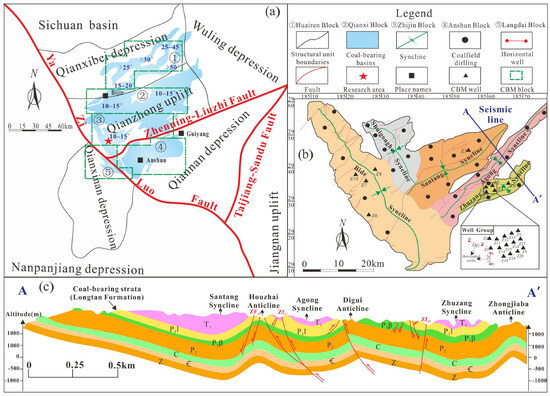
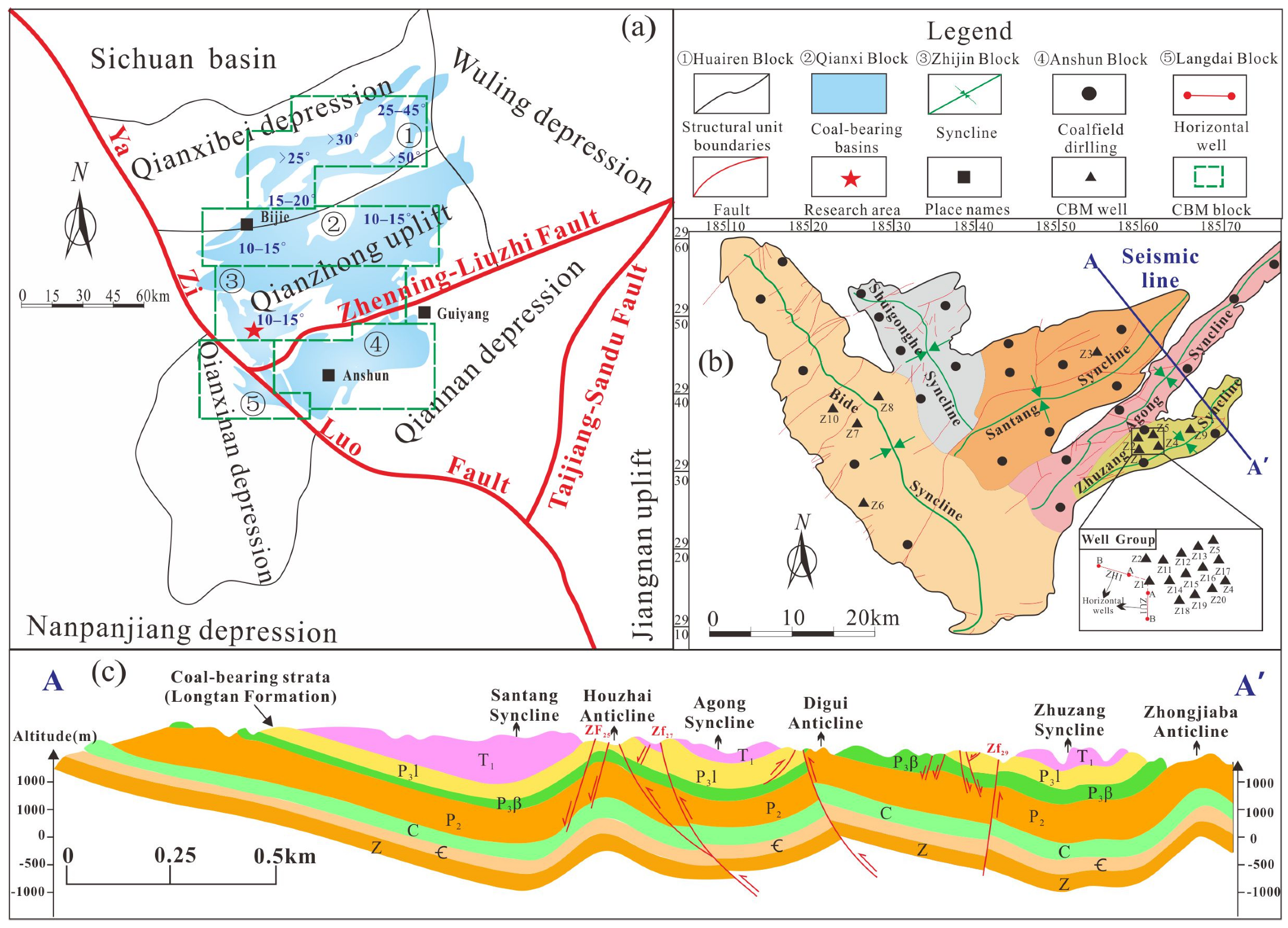
Coal-bearing sequences were deposited in the Late Permian in western Guizhou [28]. After that, the study area was influenced by the Indosinian, Yanshannian, and Himalayan movements [29]. During the Indosinian Movement in the Late Triassic, the study area changed from ocean to land. Tectonic activities during the Yanshan and Himalayan movement is the most important fold-creating movements in the Guizhou province. In this stage, the unity of the Late Permian upper Yangtze Basin evolved into the present tectonic framework with an alternative arrangement of anticlines and synclines. In the late Yanshanian period, the folds and faults formed in the Early Yanshanian period were superimposed by the large-angle transformation with extrusion stress changes from NE-SW direction to NW-SE direction, and the early-stage folds and faults were sinistrally sheared into an “S-shape”. Since the Paleogene, due to the interaction of the Indian plate, the Pacific plate, and the Eurasian plate, intermittent and differential continental crust uplift occurred in western Guizhou, and the Upper Permian coal system in the anticline was denuded. The Yanjiao composite syncline is located inside the triangular block surrounded by three largest faults of the Yaziluo fault, the Zhenning-liuzhi fault, and the Taijiang-sandu fault in western Guizhou province (Figure 1a). The structures in the synclines are relatively simple, and the displacement of most faults is less than 10 m. Currently, coal and CBM resources are mainly preserved in those large synclines. In the Yanjiao composite syncline, there are two groups of structure lines in the NW direction and NE direction, represented by Bide syncline/Shuigonghe syncline and Santang syncline/Agong syncline/Zhuzang syncline, respectively (Figure 1b).
Figure 1.
(a) Geologic structural location of Yanjiao syncline in western Guizhou; (b) Tectonic units and CBM wells distribution in Yanjiao syncline; (c) Seismic interpretation section of A-A′ (Z-Sinian system; ∈—Cambrian system; C—Carboniferous System; P2—Middle Permian system; P3β—Mount Emei basalt formation; P3l—Longtan formation; T1—Lower Triassic System) (Modified after Chen) [29].
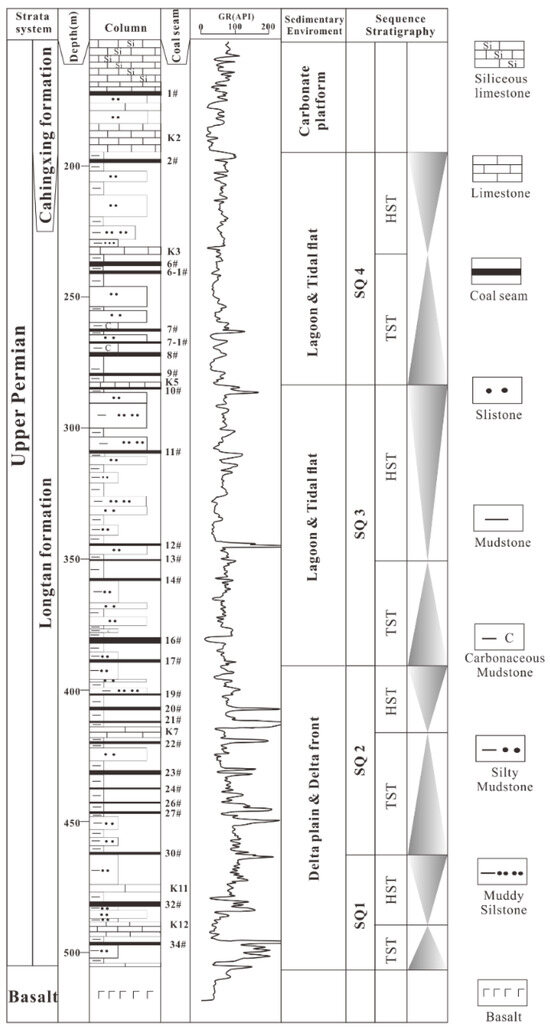
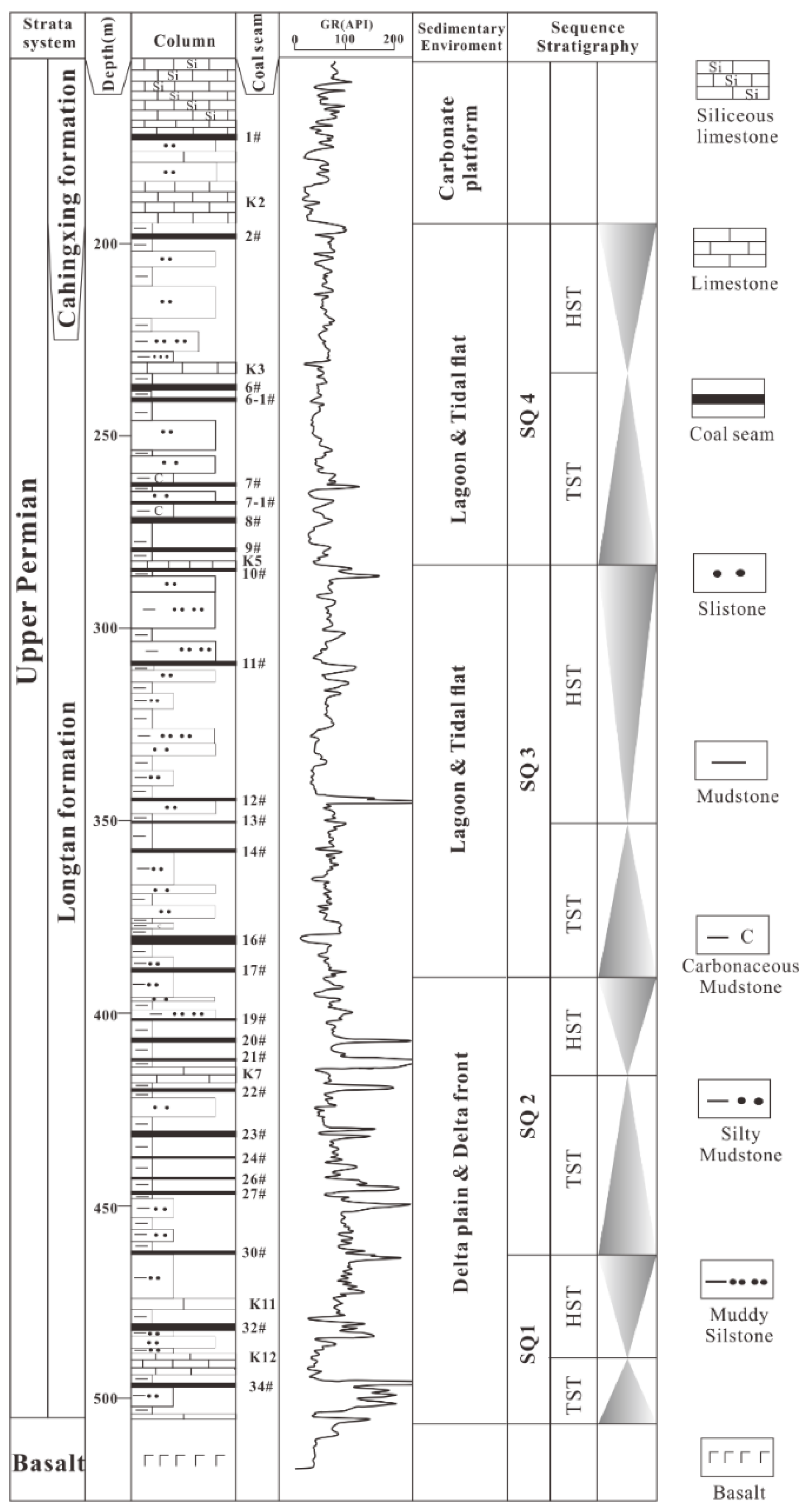
Influenced by multi-stage tectonics, coal varying degrees of fragmentation and deformation. Interestingly, coal textures in the Yanjiao composite syncline are dominated by cataclastic coals, which are obviously different from the common tectonic coals in other coal-bearing synclines. The main reason for this phenomenon is that the Yanjiao syncline is developed on an Early Paleozoic uplift (the Qianzhong Uplift), with the main lithology of gneiss, schist, granulite, and amphibolite [30]. This rigid crystalline basement plays an important role in the structural deformation and structural complexity of the overlying coal-bearing synclines by weakening tectonic stress. This particularity is the most important advantage of the study area in terms of the coalbed methane geology, and it is also one of the directions for CBM favorable area selection in complex structural areas in South China. Another important piece of evidence is that the dip of the strata in this area is 10–15°, far less than that in the surrounding coal-bearing synclines developed on the depression with no basement or soft basement (Figure 1a). In the Yanjiao syncline, the sedimentary rocks include the Upper Sinian, Cambrian, Lower Ordovician, Middle and Upper Devonian, Carboniferous, Permian, Triassic, Lower Middle Jurassic, Upper Cretaceous, and Ancient Department and Quaternary, missing the Middle-Upper Ordovician, Silurian, Lower Devonian, Upper Jurassic, Lower Cretaceous, and Neogene strata. The Permian and Triassic strata are the most widely distributed, accounting for more than 60% of the total area (Figure 1c). In addition to sedimentary rocks, there are also basalt (Emei Mountain basalt formation) located at the bottom of coal measures strata, with a thickness > 200 m. The Late Permian–Longtan formation is the main coal-bearing sequence (Figure 2).
Figure 2.
Stratigraphic column and sedimentary characteristics of the Upper Permian coal-bearing strata of well Z2 in Yanjiao syncline (Modified after Chen [29]).
In this study, multi-source datasets were compiled to characterize the CBM system and geological zonation across multiple coal seams in the Yanjiao composite syncline. Coal-core measurements were conducted on 9 CBM exploration wells, including Wells Z1, Z2, Z4, Z5, and Z9 in the Zhuzang syncline; Well Z3 in the Santang syncline; and Wells Z6, Z7, Z8, and Z10 in the Bide syncline (locations shown in Figure 1b). In addition, coalfield drilling data were compiled to obtain spatially continuous distributions of coal-seam depth and coal thickness; the contour map was drawn and provided by Sinopec East China Oil & Gas Company, Nanjing, China. Vitrinite reflectance (Ro) and maceral compositions were determined for 33 coal cores using a Leitz MPV-3 photometer microscope, following ISO 7404-3:1994 and ISO 7404-5:1994 [31,32]. Measured gas content (air-dried basis) was quantified as the sum of lost gas, desorbed gas, and residual gas, in accordance with the China National Standard GB/T 19559–2021 [33]. Desorbed gas and residual gas were measured directly, whereas lost gas was estimated using the USBM method. Isothermal methane adsorption experiments were further performed on coal cores from exploration wells in different sub-synclines to obtain Langmuir volume and Langmuir pressure, following GB/T 19560–2008 [34], thereby constraining gas saturation and the critical desorption pressure. Two permeability datasets were used. Laboratory porosity and permeability were measured on coal-core samples without confining pressure using an automatic helium porosity/permeability analyzer (AP 608), following the Chinese petroleum industry standard SY/T 6385-1999 [35]. In contrast, well-test (in situ) permeability was interpreted from injection fall-off tests, representing reservoir-scale permeability under in situ stress conditions. Reservoir pressure and in situ stress were obtained from injection/fall-off well tests and multi-cycle hydraulic fracturing, respectively, following GB/T 24504–2009 and DB/T 14–2000 [36,37]; detailed procedures and interpretation methods are described in Chen [8].
3. Coal-Seam Distribution and CBM Accumulation
3.1. Depositional Environments and Coal-Seam Distribution
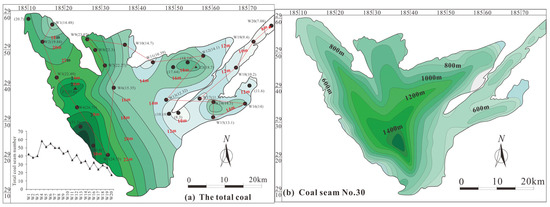
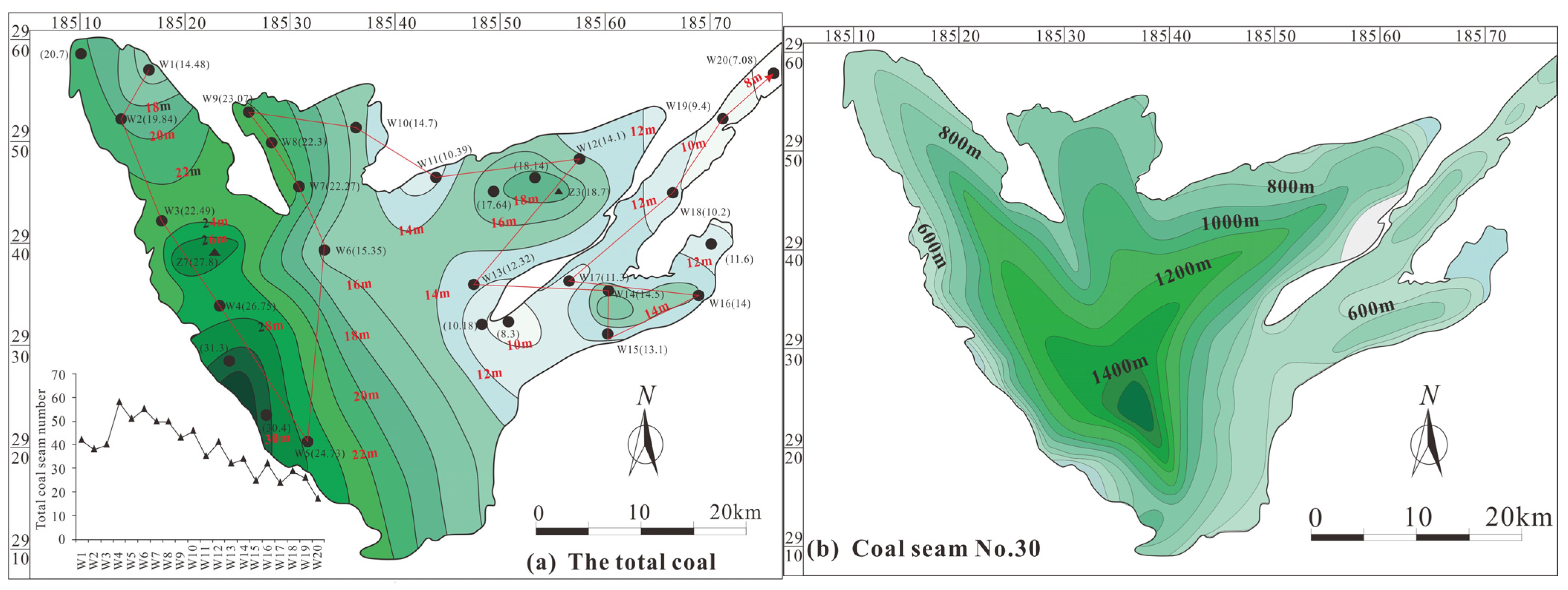
The Late Permian coal accumulation period is mainly affected by the dual factors of the land-sourced rivers from the northwest and the coastal tidal action from the southeast. The Longtan formation was deposited in transitional facies, with tidal-flat facies, delta facies, and flat facies superimposed vertically, which mainly consist of fine sandstone, siltstone, silty mudstone, limestone, mudstone, and coal seams [21]. Despite the large-scale development of marshes in the area, the stable period of peat swamps is short due to the influence of high-frequency sea-level changes in the Late Permian, resulting in a wide distribution of coal seams with thin thickness in each layer (Figure 3a). The total coal-seam numbers in this area are 20–58, with a total coal thickness from 8.28 m to 33.56 m; The spacing between two adjacent numbered coal seams is 8.06–28.37 m. Coal seams No. 6, No. 16, and No. 30 are the three main comparable coal seams and are rather stable in the entire area. The total thickness and number of the coal seam are the largest in the Bide syncline, while those in the Agong syncline are the smallest. The coal depth is obviously controlled by the syncline, and the coal depth of No. 30 reached 1500 m at the axial of the Bide syncline (Figure 3b). The depth conditions in the eastern parts are more favorable for CBM development (<800 m), where the coal-bearing synclines (Zhuzang and Agong synclines) have a large uplift.
Figure 3.
(a) The total coal thickness and coal-seam numbers in Yanjiao syncline; (b) The depth map of Coal seam No. 30.
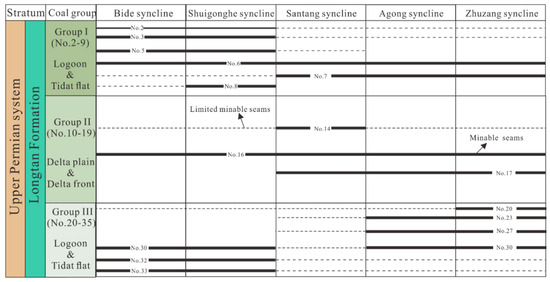
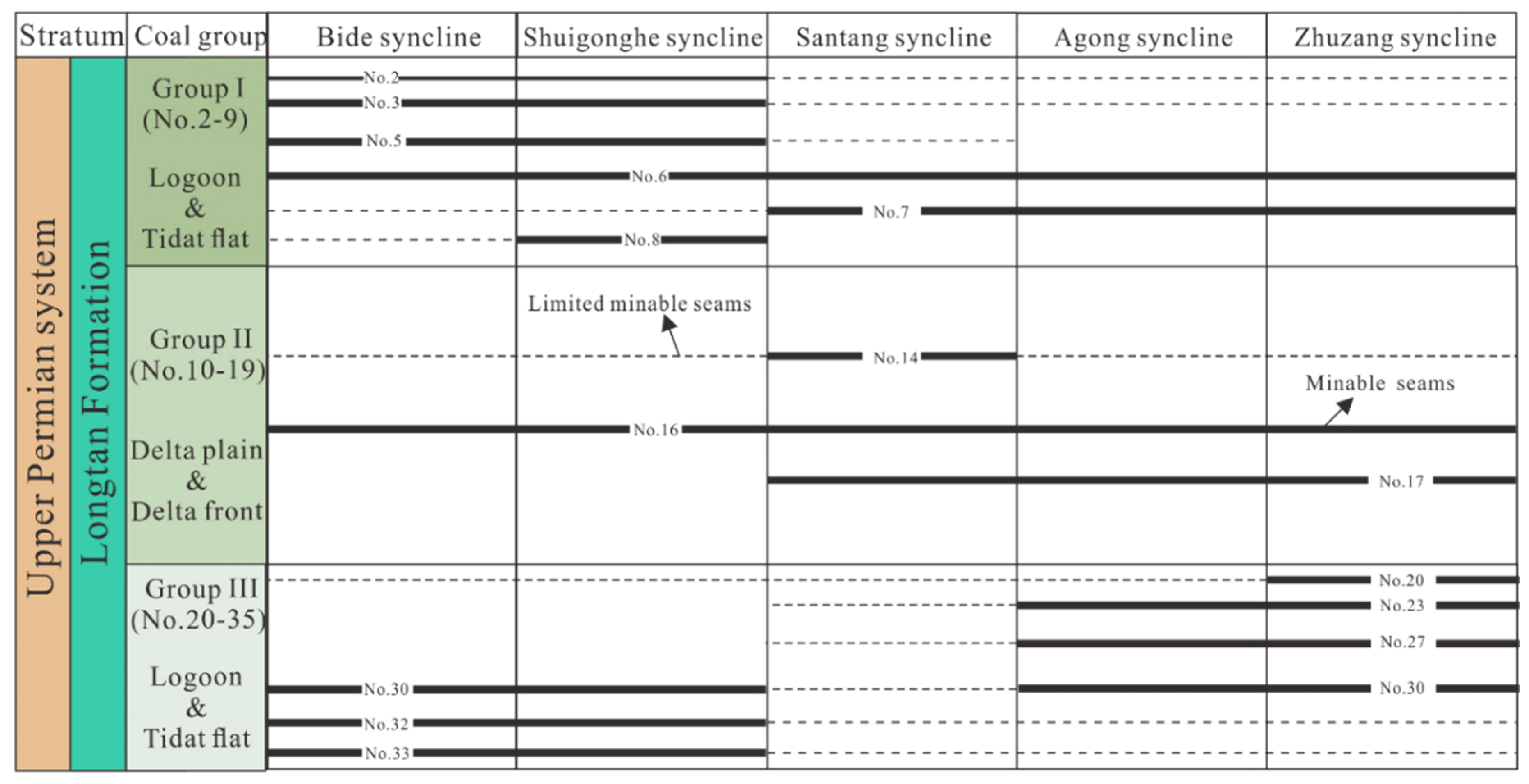
In addition, there are also some mineable coal seams that develop stably in different secondary synclines, which should be paid more attention to for CBM development. Based on the coalfield division and sedimentary characteristics, the Longtan formation is divided into three coal groups, corresponding to tidal-flat facies, delta facies, and flat facies, respectively (Figure 4). Coal seams with a thickness of ≥0.8 m and a stable distribution are included in the statistics category. Coal-seam distribution model based on hundreds of coalfields drilling shows that coal seams formed in tidal-flat facies at the bottom and top of the Longtan formation were the two main coal groups, and delta facies is not beneficial for coal accumulation. In Bide syncline and Shuigonghe syncline, the coal seams of No. 2, No. 3, No. 5 and No. 6 of the coal group I are concentrated in the spacing <80 m, with a thickness of 6–14 m (Averaging 8 m); The average total thickness of coal seam No. 30, No. 32, and No. 33 of the coal group III is 4.7 m, with the spacing of only 10–20 m. For Zhuzang syncline, No. 6/No. 7 coal seams of coal group I, No. 16/No. 17 coal seams of coal group II, and No. 20/No. 23/No. 27/No. 30 coal seams of coal group III have a relatively large thickness and are stable in distribution. Overall, coal seams No. 2, No. 3, No. 5, No. 6, No. 14, No. 16, No. 17, No. 20, No. 23, No. 27, No. 30, No. 32, and No. 33 should be the main objects for CBM development in this area, and mineable coal seams vary greatly in different secondary synclines.
Figure 4.
The distribution of mineable coal seams in different tectonic units (Collected from Sinopec East China Oil & Gas Company, Nanjing, China).
3.2. Burial and Thermal History
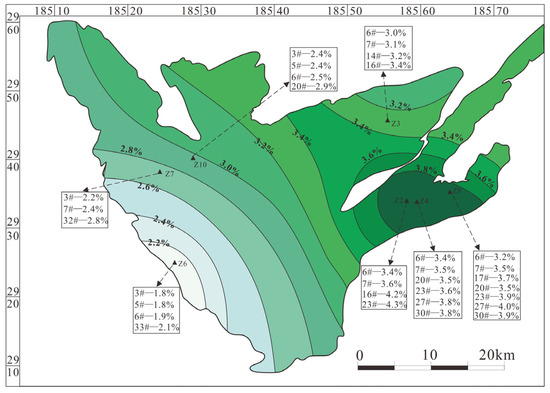
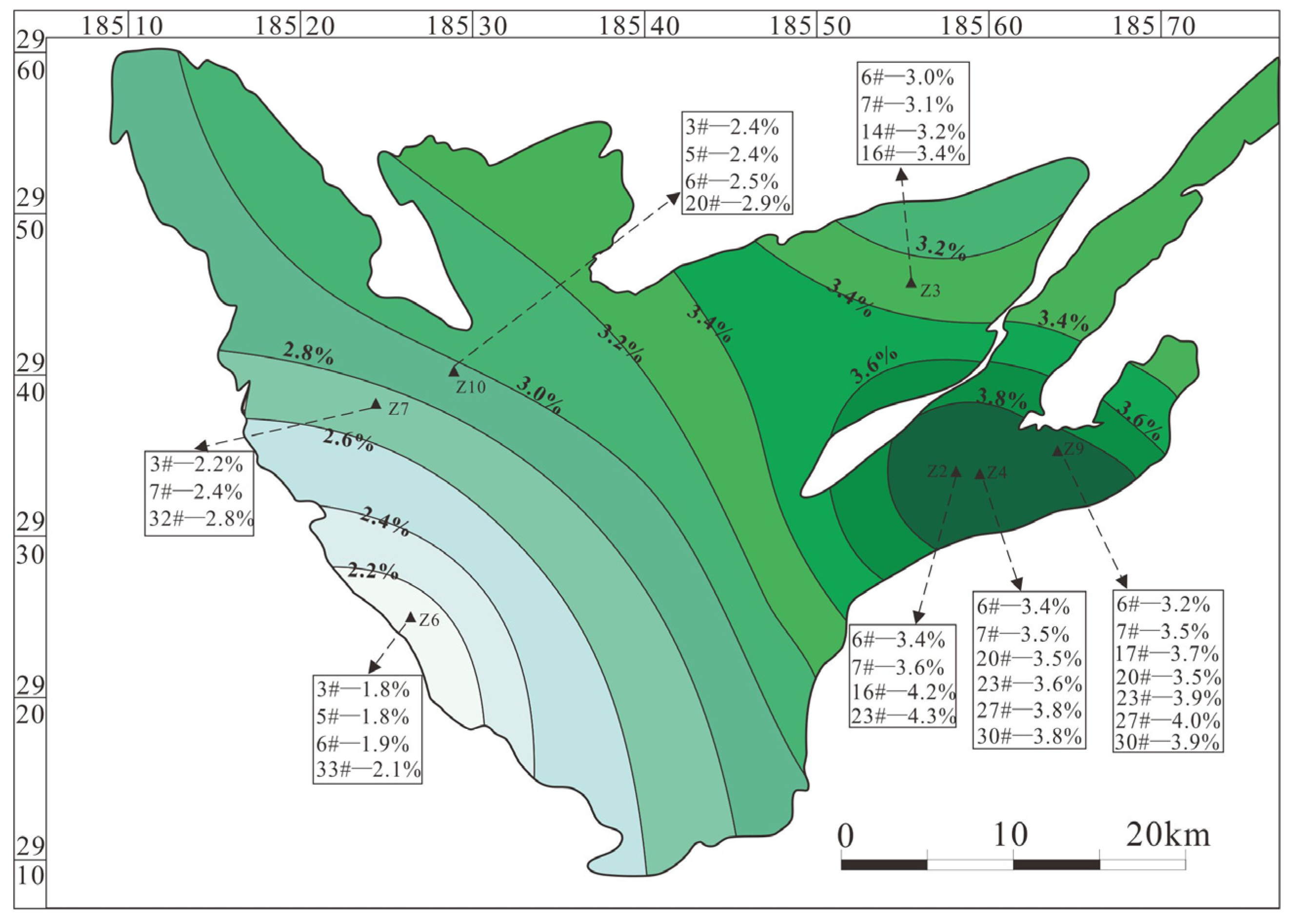
The Upper Permian coal-bearing strata in Yanjiao syncline experienced five evolution stages [38]. Stage I is a subsidence stage that occurred in the Early–Middle Triassic with a burial depth of about 5200 m. In this stage, the Upper Permian paleotemperature reached 140–150 °C at the end of the middle Triassic, and Ro of coal seams reached 1–1.2%, with the first-phase generation of protozoal gas and early thermogenic gas. The hydrocarbon generation was stopped due to the uplift in the Late Triassic. Stage II was an uplifting and erosion stage in the Late Triassic, with an erosion thickness of the Triassic strata of 500 m. Stage III is the second subsidence stage from Early Jurassic to Middle Jurassic, with a burial depth of about 5500 m. In this stage, the Upper Permian paleotemperature reached 160 °C at the end of the Middle Jurassic, and Ro of coal seams reached 1.2–1.5%, with the second peak of hydrocarbon generation (Thermogenic methane gas). Stage IV is the second uplifting and erosion stage from late Jurassic to now, with the erosion thickness reaching 4000–5000 m. It can be further divided into three sub-stages, including a rapid erosion stage in the mid-Yanshanian period, a slowly erosion stage in the late Yanshanian period, and a rapid erosion stage in the Himalaya period. Stage V is the third coalification and hydrocarbon generation stage, caused by a tectonic thermal event during the mid-Yanshanian period. Although this was slowly uplifted in this stage, the highest Upper Permian paleotemperature reached 220 °C, with coal seams evaluated to anthracite. Varying magma intrusion is the main reason for the current distribution of coal rank, where Ro (1.8–4.3%) tends to increase from southwest to northeast in the Yanjiao syncline (Figure 5).
Figure 5.
The coal-rank map of coal seam No. 30 in Yanjiao syncline.
3.3. Sealing Condition and CBM Accumulation
Although the CBM in the Yanshan period and Himalaya period has experienced drastic dissipation, the gas content is still very high presently. According to the 890 coalfield-measured gas content data of 5 secondary synclines, the average gas content of coal reservoirs ranged from 9.76 m3/t to 15.78 m3/t, showing better potential for CBM development (Table 1). The gas content of 21 sets of coal seams with different depths from 6 CBM wells indicates that the current gas content is typically from 12 m3/t to 15 m3/t (Depth > 200 m), with the highest value of 23.7 m3/t. Three reasons for the high gas content: First, the tectonic thermal events greatly raised the gas generating amount, thus creating a beneficial gas-source condition for CBM enrichment; Secondly, the well sealing condition are favorable to CBM preservation; Thirdly, most of the small faults are filled with calcareous and muddy sandstone with poor water conductivity and gas permeability, and in general, it has little effect on CBM dissipation.
Table 1.
Average current gas content of each coal-bearing structural unit from the coalfield test.
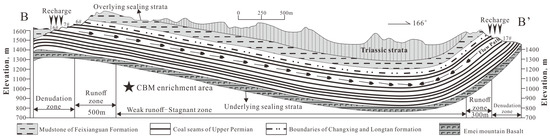
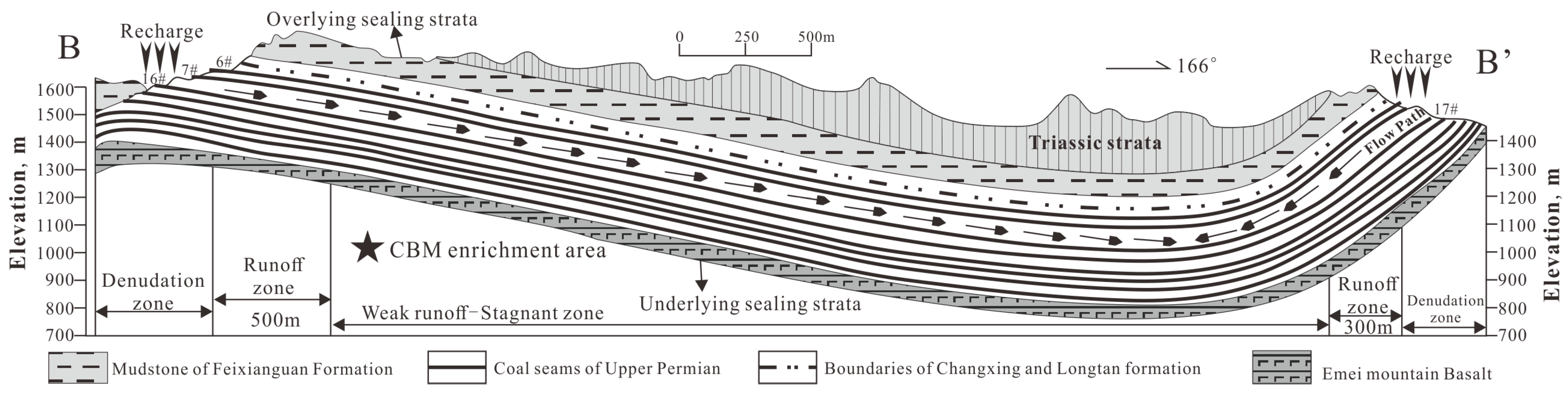
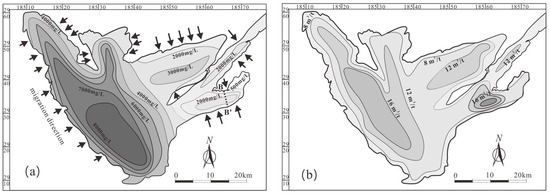
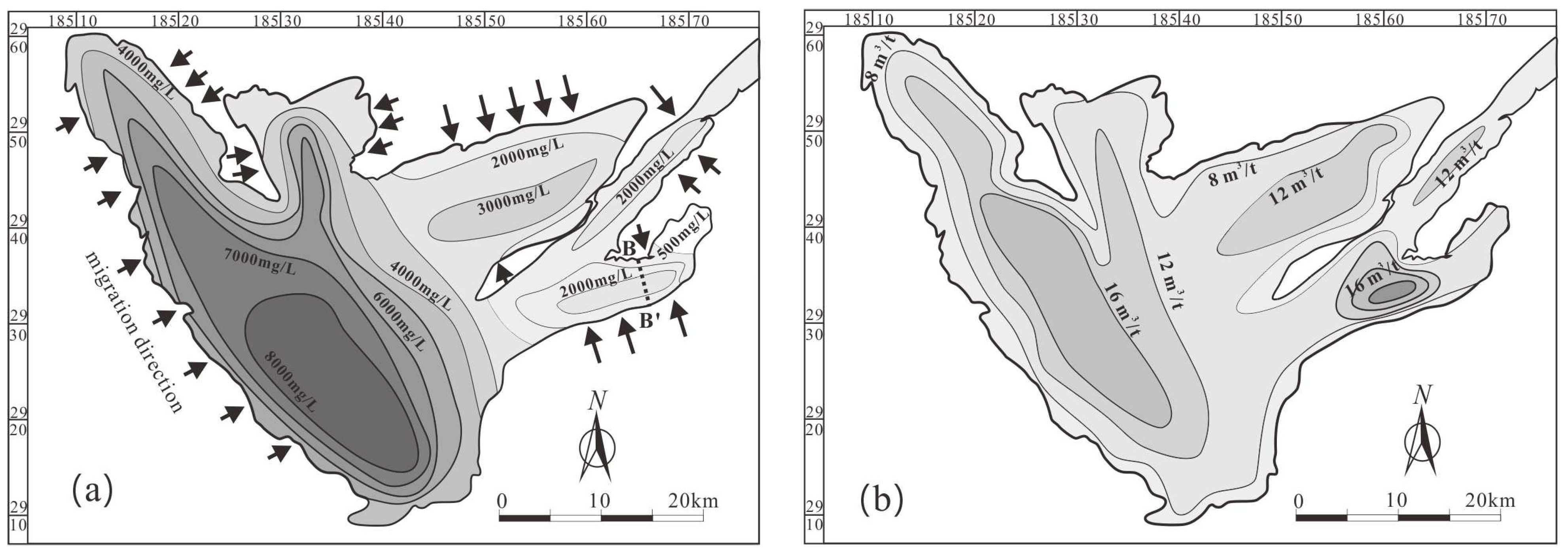
The upper covering layer (roof) and the lower volt partitions (floor) of coal seams are key controlling factors for CBM accumulation [27,39]. Here, two low-permeability layers in the vertical confine the Upper Permian CBM system (Figure 6). The underlying sealing layer of Longtan formation is the Emei Mountain basalt formation, which consists of volcaniclastic rocks and volcanic lava with a thickness of >200 m. The overlying sealing strata are the Feixianguan formation of the Lower Triassic, which consists of calcareous siltstone and calcareous mudstone with about 100 m in height, playing a barrier role to the overlying aquifer and surface water. Those two water-resistant layers make the coal strata of the Longtan formation become an independent CBM system, which is favorable for CBM preservation. Also, the hydrodynamic characteristics are the most important factors for the current gas content distribution [40,41,42]. In the Yanjiao syncline, groundwater is recharged from the denudation zone of anticlinal structures. The migration of groundwater is mainly influenced by the geological structure, and the groundwater recharge, migration, and discharge processes in different coal reservoirs are similar. In each syncline, the migration direction of groundwater is from the high potential area of the syncline wings to the low potential area of axial. The increasing direction of formation water mineralization also confirms the groundwater migration (Figure 7a). This is due to the fact that CBM was migrated by groundwater and sealed in the stagnant zone, causing a higher gas content area close to the syncline axial (Figure 7b). In this area, the highest gas content area was found in the Zhuang syncline, where the coal seam has the highest maturity. Vertically, the gas content of coal seams No. 6, No. 16, and No. 30 is 8.12–19.21 m3/t, 9.3–21.93 m3/t, and 10.2–24.96 m3/t, respectively. The average gas content of three coal groups exhibits an order of coal group I (14.2 m3/t) > coal group II (15.2 m3/t) > coal group III (16.4 m3/t).
Figure 6.
Hydro-stratigraphic cross-section of B-B′ in the Zhuzang syncline (location see Figure 7a, modified after He [43]).
Figure 7.
(a) The water mineralization map of coal seam No. 6 in the Yanjiao syncline. (b) Average gas content map of coal seam No. 6 in the Yanjiao syncline (Modified after Liu) [44].
4. CBM Reservoir Characteristics
4.1. Maceral Composition
The coal seams in Yanjiao syncline mainly consist of bright coal with 60.30–94.58% vitrinite (Averaging 76.2%), 1.50–46.50% inertinite (Averaging 17.74%), and a small amount of minerals. For inorganic components, clay minerals are dominant, pyrite and quartz are the second, and calcite is the last. Controlled by coal-rank distribution, the vitrinite content in the west of Yanjiao syncline is relatively low, ranging from 62.89% to 69.24%, especially for the southwest wing of Bide syncline. In addition, the moisture content of the coal seam in the study area is 1.70–3.38%, with an average of 2.69%. The average ash content of coal seams in each syncline changed little, between 17.22 and 26.14%. Because of the deposit environment variation, the sulfur content in different coal seams is complicated and changeable. In this area, coal seams belong to medium-high sulfur coal, with the sulfur content ranging from 2.73% to 3.56%. Vertically, the sulfur content of different exhibits a low–high–low change trend, and this phenomenon can also be found in the similar coal-bearing synclines in the western Guizhou province, e.g., Panguan syncline [45].
4.2. Permeability
Because of the multi-stage tectonic movement, exogenetic fractures are well developed in this area, with a density of 30–50 numbers/5 cm. The cleat density is about 10–12 numbers/6.5 cm, and the length of the face cleat is greater than 3 cm, while the width is between 0.1 mm and 0.5 mm. Most of the face cleats are filled with calcites, and thus, exogenetic fractures contribute to most of the porosity and permeability, which are the main pathways for gas and water. The porosity of coal cores in this area ranged from 1.8% to 9.5%, and the permeability is typically from 0.01 mD to 1 mD. Coal rank is one of the most important factors influencing the porosity of coal reservoirs. The average porosity in the Bide syncline, Shuigonghe syncline, and Santang syncline are 6.67%, 4.79%, and 1.66%, respectively, indicating that porosity tends to decrease with increasing coal maturity. Coal texture is another factor affecting coal porosity and permeability. Based on lab testing on different types of coal from western Guizhou, we found that the cataclastic coals have the largest permeability and porosity, which is 1.5 times that of undeformed coal and 2.5 times that of mylonitic coal [46]. In the Yanjiao syncline, coal textures are dominated by cataclastic coals due to the existence of the rigid crystalline basement, which is favorable for CBM development.
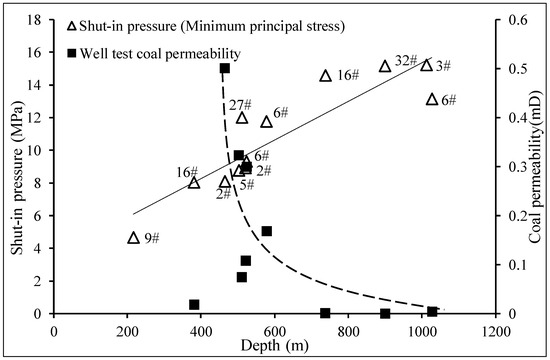
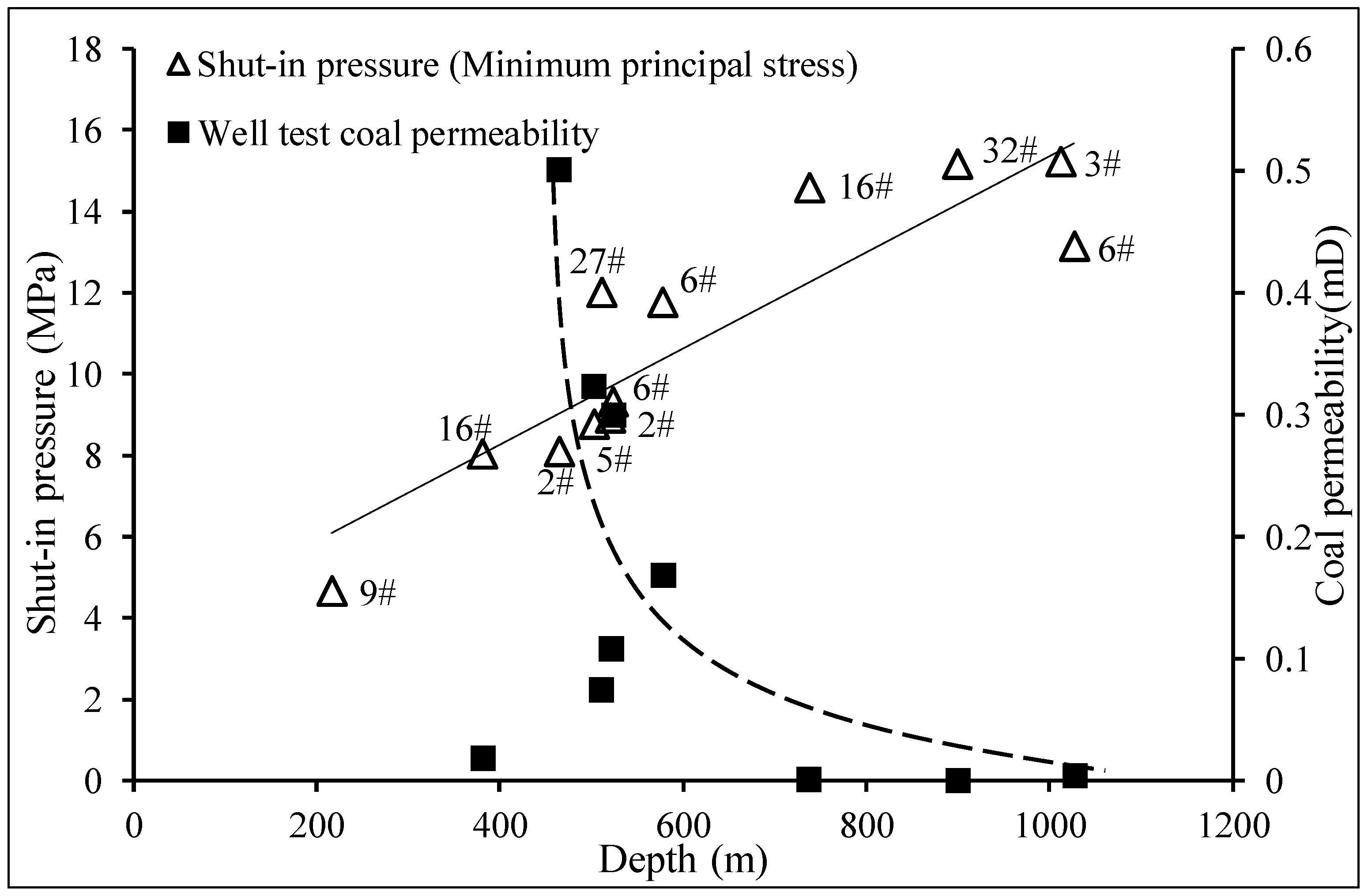
However, the underground coal seams are subject to the extrusion stress, resulting in the reduction of coal permeability by controlling the deformation and destruction of coal fractures. According to Chen [8], western Guizhou is typically a high in situ tress region, and the effective stress plays an important role in coal permeability variation. Based on the injection fall/off test and in situ stress measurements, we found that the underground coal permeability from well testing is from 0.0001 mD to 0.5 mD and typically lower than 0.1 mD when the depth is greater than 600 m (Figure 8). The shut-in pressure gradient (or minimum horizontal principal stress) is 1.68–2.38 MPa/100 m, with an average of 1.86 MPa/100 m. The well-test permeability decreases exponentially with increasing shut-in pressure, and this phenomenon has been verified in many coal-bearing basins [47,48,49]. Overall, CBM development in this type of coal reservoir must be combined with fracturing technology to improve the permeability of coal reservoirs.
Figure 8.
Relationship between depth, well-test permeability, and shut-in pressure in Yanjiao syncline.
In addition, the stress-dependent permeability in this area is lower with increasing depth, meaning that it is more difficult to develop CBM commercially in the Bide syncline due to the challenge of both extremely low permeability and higher in situ stress. The influence of in situ stress on CBM development is mainly manifested in the artificial fracturing process. The hydraulic fracturing of CBM wells in Zhuzang syncline shows the characteristics of low breakdown pressure (10.1–17.5 MPa), low pump stopping pressure (2–10 MPa), and high flow-back rate (22.85–46.91%), while that in the Bide syncline exhibits a higher breakdown pressure (23.1–31.8 MPa), higher pump stopping pressure (15–25 MPa), and lower flow-back rate (10.5–18.6%). In addition, the increasing stress with depth means a higher extrusion stress for the proppant in fractures in deep coal seams, leading to a reduction in permeability and ultimately affecting gas production capacity.
4.3. Reservoir Pressure
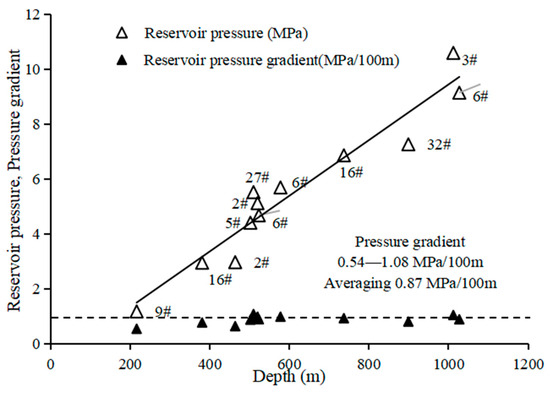
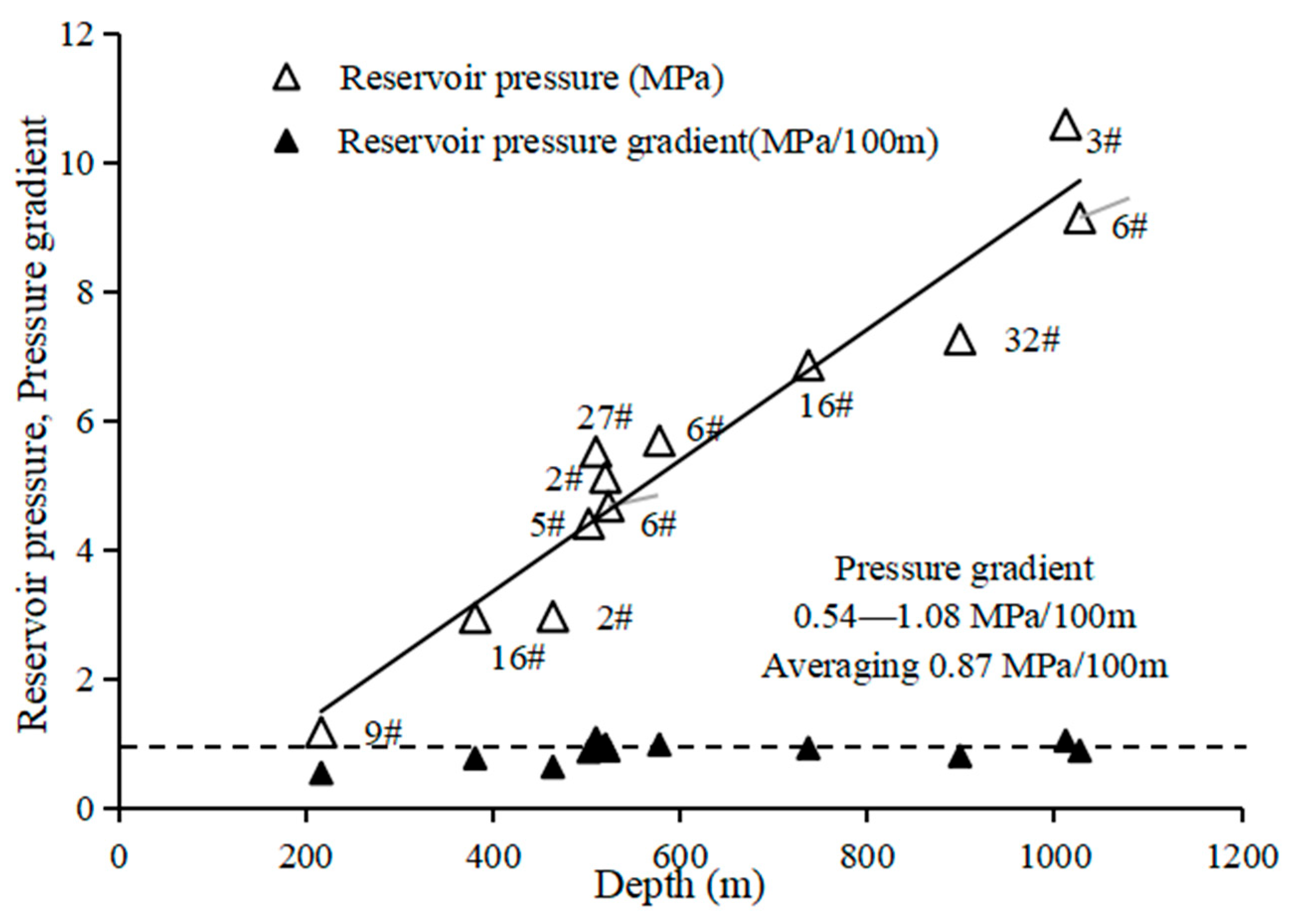
Reservoir pressure is one of the most important factors for CBM development in multi-seam areas. Up to now, it has been reported that the superposed pressure systems may exist in multiple coal seams, which are liable to cause interference during the multilayer combination production process. The superposed pressure system is mainly characterized by a jump in the pressure coefficient between different coal seams. Recently, Shen [21] and Chen [22] explained its genesis from the perspective of tectonic stress and sedimentation, respectively [21,22]. According to the reservoir pressure collected from CBM wells in the Yanjiao syncline, the reservoir pressure with a depth from 216.5 m to 1027 m is 1.18–10.59 MPa, with an average of 6.07 m. The pressure gradient ranged from 0.54 MPa/100 m to 1.08 MPa/100 m, with an average of 0.87 MPa/100 m (Figure 9). There is a positive linear relationship between reservoir pressure and depth. Taking pressure gradient of 0.9 MPa/100 m and 1.1 MPa/100 m as the cut-value of low-pressure zone (<0.9 MPa/100 m), normal pressure zone (0.9–1.1 MPa/100 m), and high-pressure zone (>1.1 MPa/100 m), most areas of Yanjiao syncline are low-abnormal pressure zone with a relatively uniform pressure system.
Figure 9.
Relationship between depth, reservoir pressure, and pressure gradient from CBM wells in Yanjiao syncline.
4.4. Coal Adsorption and Coalbed Methane Saturation
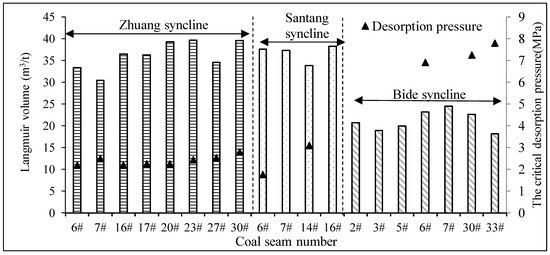
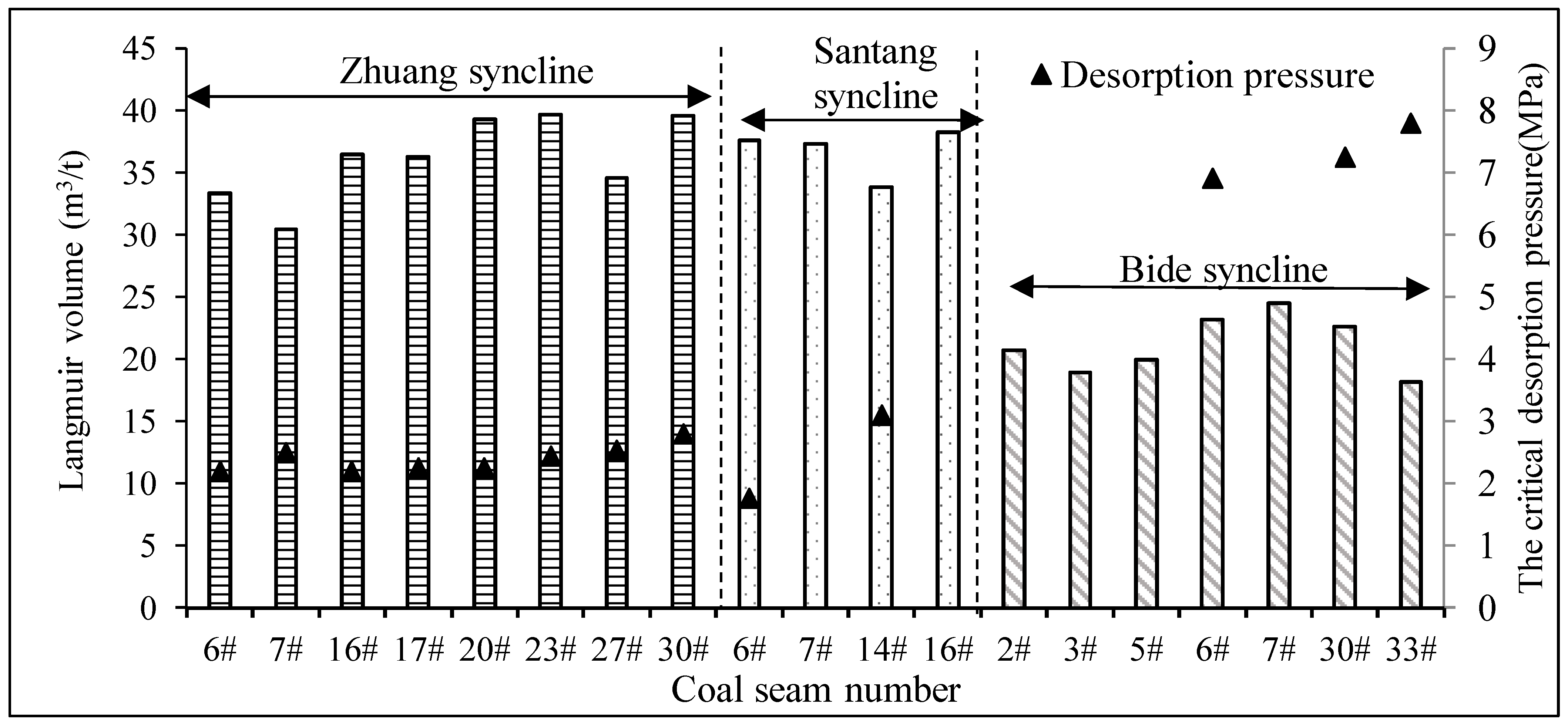
The adsorption capacity of the Upper Permian–Longtan formation coals is generally high, with the Langmuir volume from 18.32 m3/t to 39.62 m3/t (averaging 30.45 m3/t) and the Langmuir pressure from 0.53 MPa to 3.15 MPa. The adsorption capacity in this area is significantly affected by coal rank (Figure 10). Based on the test of coal cores from different wells, we found that the Langmuir volume of the lower rank coal in the Bide syncline ranges from 18.32 m3/t to 23.5 m3/t (averaging 21.8 m3/t), while the higher rank coal cores from Santang syncline and Zhuzang syncline have a larger Langmuir volume of 33.56–39.53 m3/t (averaging 37 m3/t). This is also the internal reason for the overall higher CBM content in the Zhuzang syncline. CBM saturation refers to the ratio of the measured gas content to the total gas capacity of the coal reservoir under reservoir pressure conditions, which can be estimated by the measured gas content and theoretical adsorption capacity [50]:
where Sg is gas saturation, %; Vm is measured gas content, m3/t; V is the theoretical gas content at the measured reservoir pressure, m3/t; P is measured reservoir pressure (The main mineable coal seams in the Bide syncline have a depth of 800–1200 m with P of 8–12 MPa; the P in other secondary ranged from 3 MPa to7 MPa), MPa; PL Langmuir pressure, MPa; VL Langmuir volume, m3/t.
Figure 10.
The adsorption capacity and desorption pressure of representative samples from CBM wells in different tectonic units.
The CBM saturation in the Yanjiao syncline ranges from 52.1% to 105%, mostly less than 80%. It is more than 100% only found in coal seam No. 6 in the Zhuzang syncline. Generally, the coal seam is undersaturated with coalbed methane in most areas and coal seams, and the adsorbed CBM will begin to desorb when the reservoir pressure drops below the critical desorption pressure. The critical desorption pressure (Pcd) of coalbed methane refers to the pressure at which desorption and adsorption reach equilibrium:
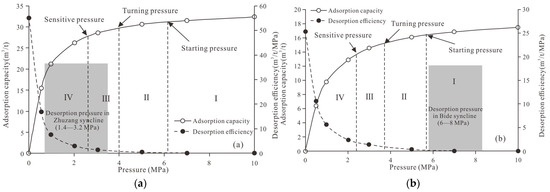
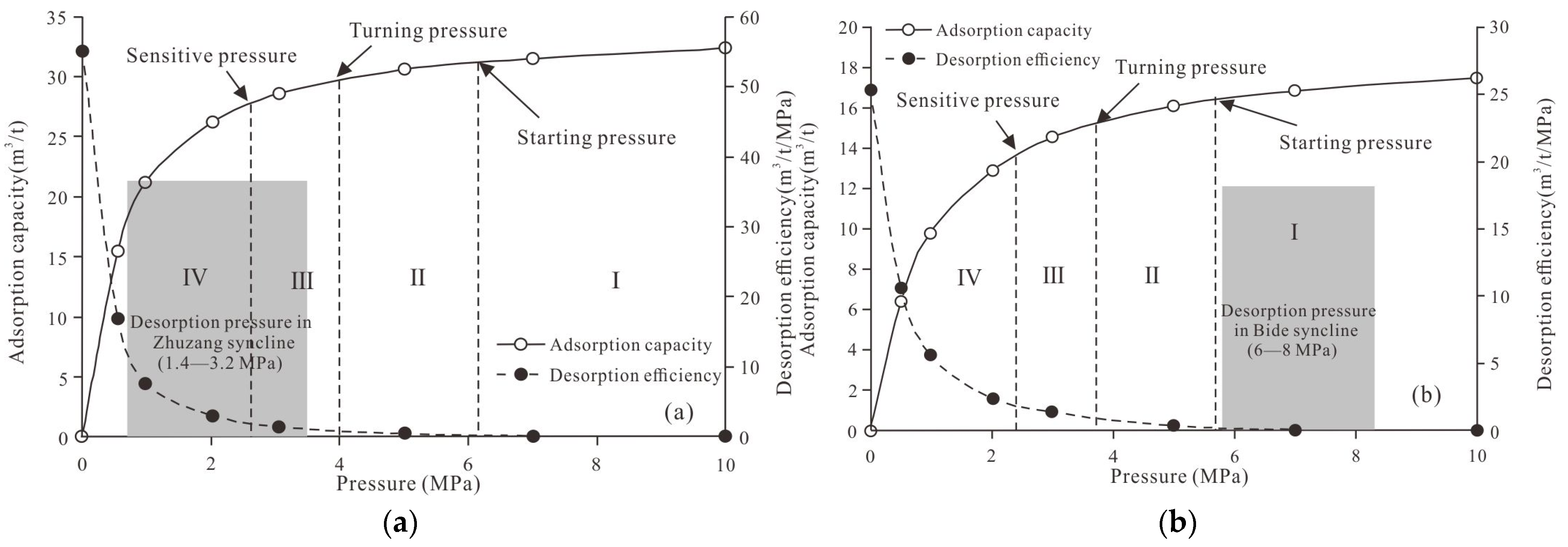
The desorption pressure of reservoirs in the Bide syncline is 6~8 MPa, which is far higher than that in other secondary synclines (1.4–3.2 MPa) (Figure 10). This is closely related to the buried depth distribution of coal reservoirs. The desorption characteristics of reservoirs have an important impact on the production potential of CBM wells [51]. Here, the desorption efficiency was defined as the desorption gas volume of a ton of coal under unit pressure drop, which represents the first derivative of adsorption capacity according to the Langmuir equation [52]. With the decrease of reservoir pressure, the desorption efficiency of coalbed methane gradually increases (Figure 11). Under the low-pressure condition, the desorption efficiency of lower rank coal in the Bide syncline is significantly higher than that of the higher rank coals in the Zhuzang syncline. Specifically, CBM adsorption stages can be divided into four stages (including inefficient (I), slow (II), fast (III), and sensitive desorption (IV) stages) based on three key pressures (the starting pressure, turning pressure, and sensitive pressure) following the methods published by Meng [52]. Figure 11 shows two typical isothermal adsorption curves of coal cores from CBM wells in Bide and Zhuangzang synclines. We found that the starting pressure, turning pressure, and sensitive pressure of higher rank coal cores are greater than those of lower rank coal cores. The desorption pressure (6–8 MPa) of lower rank coal reservoirs is mainly located at stage II with the desorption efficiency of 0.5 m3/t/MPa, while that (1.4–3.2 MPa) of the higher rank coals in Zhuang syncline is located at the stages IIII with the desorption efficiency of 3.7 m3/t/MPa. This means that, after the desorption pressure is reached, the CBM in higher rank coal reservoirs will desorb quickly, and the gas production will rise rapidly as the reservoir pressure drops further. Therefore, there should be some differences between those two types of reservoirs during the production process. For example, if the desorption pressure is located at Stage III or Stage IV, a low production rate is suggested after desorption. Otherwise, it should properly increase the pressure drop speed to improve the desorption efficiency once the reservoir reaches the critical desorption pressure.
Figure 11.
(a) CH4 adsorption isotherm, desorption stages, and desorption efficiency of coal seam No. 30 from well 4 in Zhuzang syncline. (b) CH4 adsorption isotherm, desorption stages, and desorption efficiency of coal seam No. 30 from well 6 in Bide syncline.
5. Partitions and CBM Production Potential
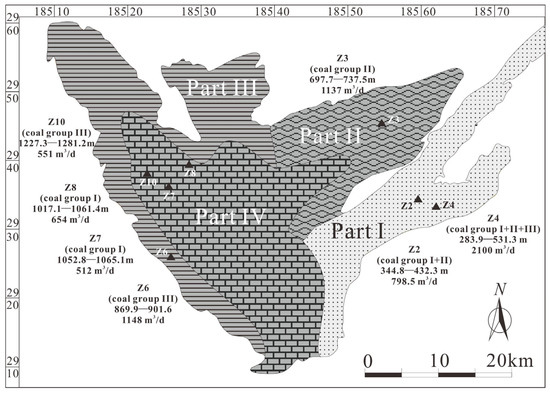
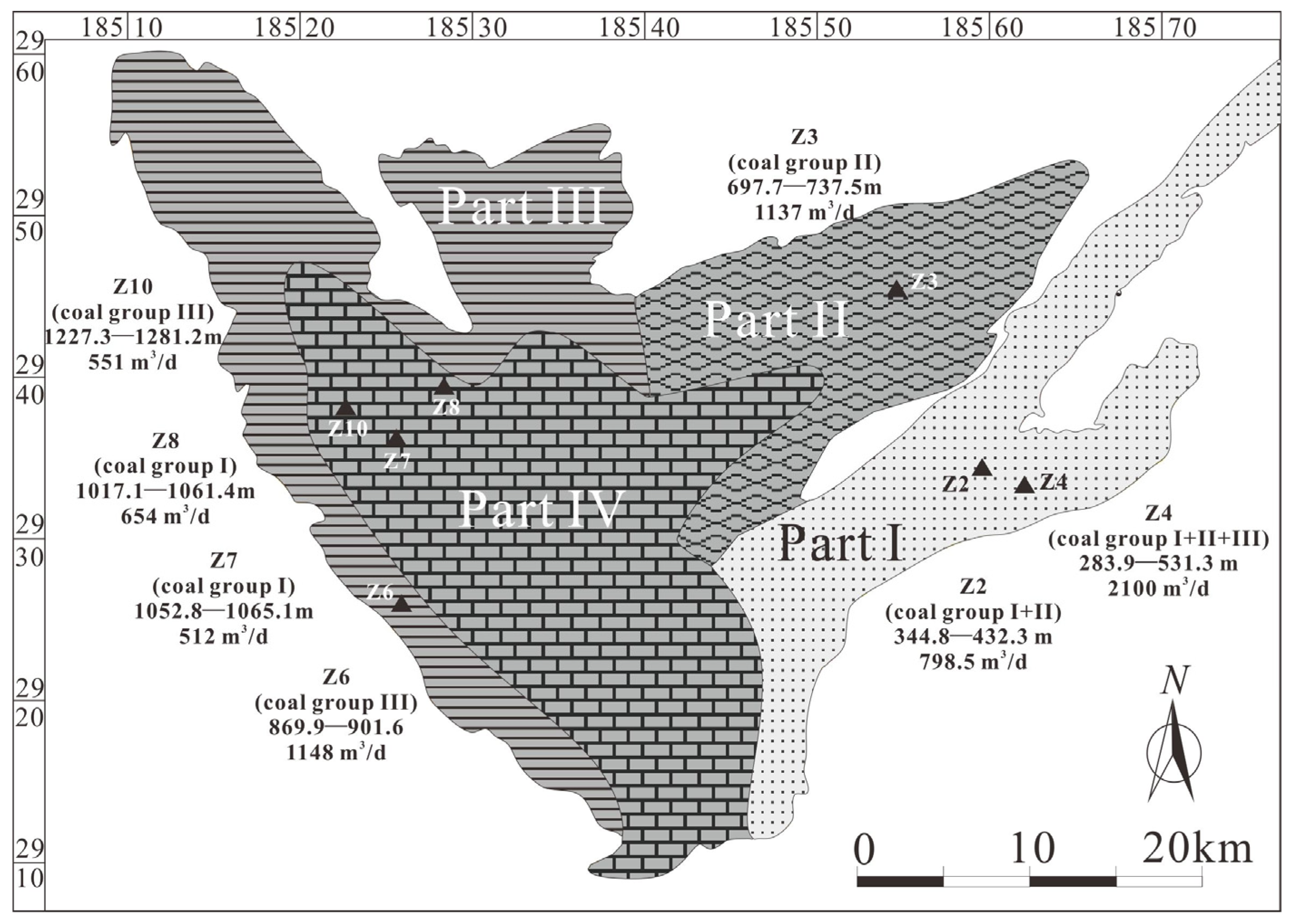
According to the investigation of basic geological features, the Yanjiao syncline was divided into four parts. Meanwhile, several testing wells were fractured with the goal of finding the CBM production potential of different coal groups in different parts (Figure 12):
Figure 12.
Regional division with coalbed methane production capacity in Yanjiao syncline.
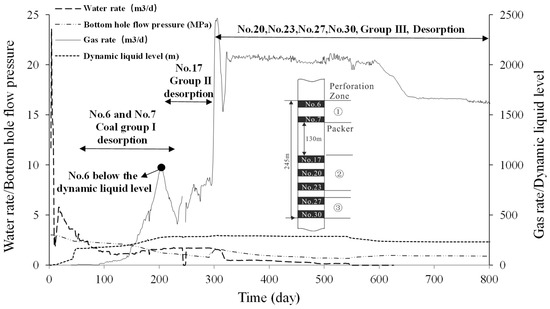
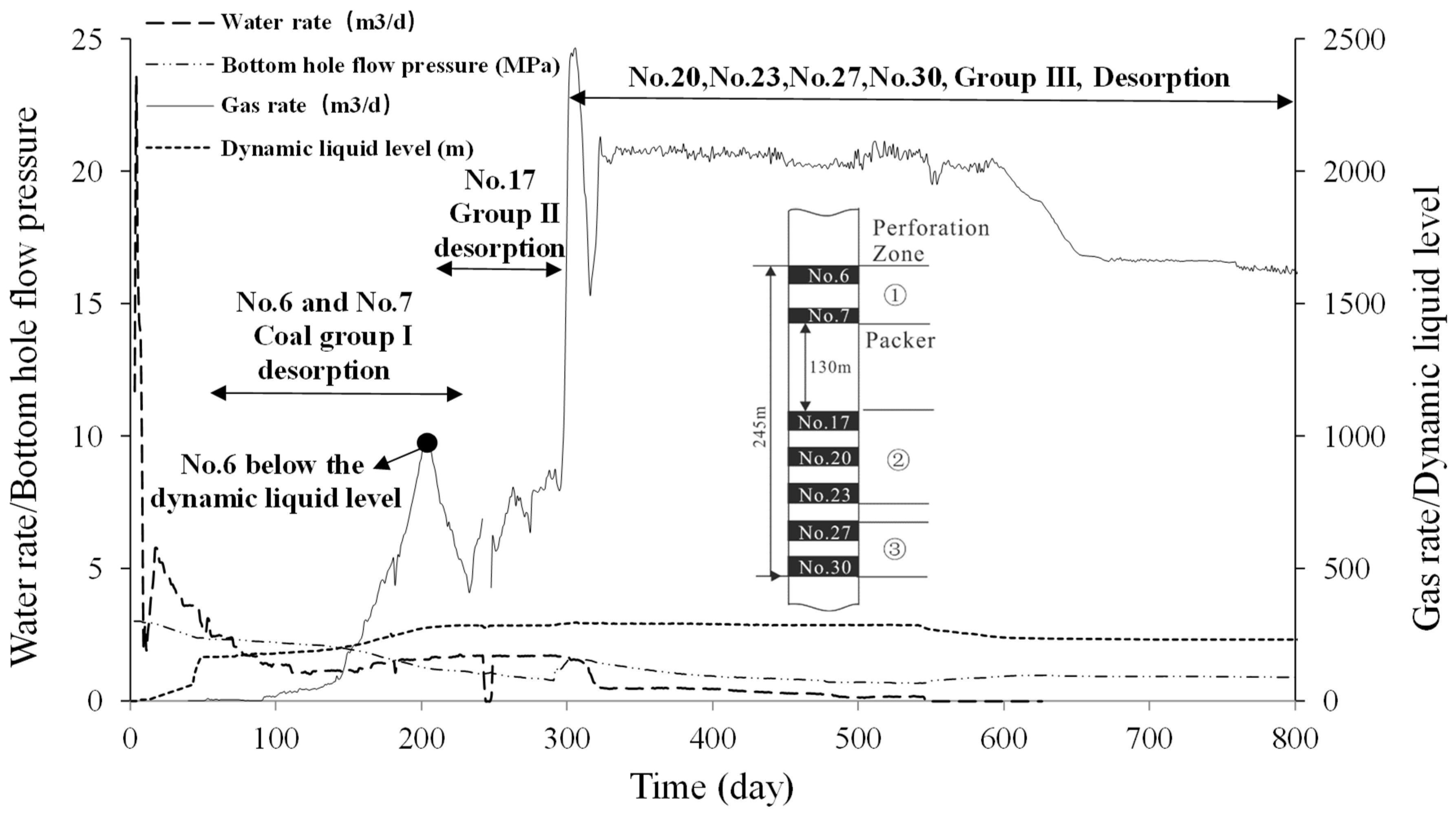
Part I is located at the Zhuzang syncline and Agong syncline. The target coal seam is No. 6 and No. 7 of coal group I, No. 16 and No. 17 of coal group II, and No. 20, No. 23, No. 27, and No. 30 of coal group III. The coal seam in this part has a depth of less than 800 m, with Ro ranging from 3.4% to 4.3% and an average gas content of 15.79 m3/t. This part is most favorable for CBM development in the Yanjiao syncline at present. Generally, coal group III with a space < 60 m in this area has the greatest development potential, and coal groups I+II are substitute resources. Taking well 4 as an example. The maximum span of the production layer is 240 m and No. 6/No. 7, No. 17/No. 20/No. 23, and No. 27/No. 30 were fractured in three stages, respectively. The maximum gas rate from coal groups I–II was 800 m3/d. With the onset of desorption in coal group III, the production rate rose to a peak of 2400 m3/d and subsequently stabilized at approximately 2100 m3/d (Figure 13).
Figure 13.
The gas and water production of well 4 (Modified after Li) [53].
Part II is located at the Santang syncline. The target coal seam is No. 6 and No. 7 of coal group I, No. 14 and No. 16 of coal group II. The coal seam in this part has a depth of less than 1000 m, with Ro ranging from 3.0% to 3.6% and an average gas content of 13.3 m3/t. Coal group II in this area is most favorable for CBM development. Here, the production of No. 14 and No. 16 in well 3 reached the gas rate of 1137 m3/d. However, the complicated earth surface conditions in this part may cause certain difficulties for on-site construction.
Part III is located at the Shuigonghe syncline and northwestern of the Bide syncline. The main target coal seam is No. 2, No. 3, No. 5, No. 6 of coal group I, No. 30, No. 32, and No. 33 of coal group III. The coal seam in this part has a depth of less than 1000 m, with Ro ranging from 1.8% to 3.2% and gas content of 10–20 m3/t. The upper coal group is concentrated in the 80 m spacing, the cumulative thickness of the recoverable coal seam is 6–10 m; The cumulative thickness of the 3 sets of coal seam in the lower coal group is 4–6 m. Both of those two coal groups are beneficial for CBM development, and coal group III of well 6 has a gas rate of 1148 m3/d.
Part IV is mainly located at the center of the Bide syncline. The main target coal seams in this part are similar to the Part III, and the coal rank in this part is 2.4–3.0%. Most of the coal seams are located in the groundwater stagnant area, with the largest coal-bearing area and the highest CBM resources. However, the CBM in this part belongs to the deep CBM with the depth > 1000 m, and coal reservoirs are characterized by “high in situ stress and low permeability”. Three test wells of well 7 (No. 6-1, No. 6-2 of coal group I, with depth from 1052.8 m to 1065.1 m), well 8 (No. 3-1, No. 3-2, No. 6-1, No. 6-2 of coal group I, with depth from 1017.1 m to 1061.4 m) and well 10 (No. 30, No. 32, No. 33 of coal group III, with depth from 1227.3 m to 1281.2 m) only have a maximum gas rate of 512 m3/d, 654 m3/d and 551 m3/d, respectively. Moreover, the production histories do not show a distinct stabilized-production stage. Generally, this part is not conducive to CBM development under the current technical conditions.
6. Conclusions
(1) Coal seams of the Upper Permian–Longtan formation are the main CBM source rock. The high-frequency sea-level changes during the coal formation process result in a widely distribution of multiple (20–60 layers) and thin (generally <2 m) coal seams. Coal groups I (No. 2–No. 9) and III (No. 20–No. 35) formed in the tidal-flat facies were the main development targets, and mineable coal seams varied greatly in different secondary synclines. Varying magma intrusion leads to an increase in coal rank (1.8–4.3%) from south to east and causes a strong reservoir heterogeneity. The differential uplift of basins from late Jurassic to now has resulted in a homogeneous distribution of coal depth and deep CBM in the eastern part, subject to a high in situ stress, high reservoir pressure, and low permeability.
(2) Longtan coal-bearing strata are an independent hydrodynamic unit with relatively uniform reservoir pressure systems. The migration of groundwater from high potential area of the syncline wings to low potential area of the axial zone is the controlling factor for current CBM accumulation, while CBM was migrated by groundwater and sealed in the stagnant zone. Several partitions were divided with CBM productivity. CBM in Part I with higher coal rank, higher adsorption capacity, higher desorption efficiency, and shallow depth is the most favorable area for CBM development, and coal group III with space < 60 m has the greatest development potential. The deep CBM in Part IV is not conducive to CBM development under the conventional stimulation methods.
Author Contributions
Conceptualization, L.W.; Methodology, L.W. and S.C.; Validation, G.Z.; Formal analysis, L.W. and S.C.; Investigation, L.W., G.Z. and C.L.; Resources, G.Z., C.L. and S.C.; Data curation, L.W., G.Z., C.L. and S.C.; Writing—original draft, L.W. and G.Z.; Writing—review & editing, L.W. and S.C.; Visualization, C.L.; Supervision, S.C.; Project administration, G.Z.; Funding acquisition, G.Z. All authors have read and agreed to the published version of the manuscript.
Funding
This work was supported by the Guizhou Provincial Science and Technology Plan Project (Qiankehe support-ZK [2025] commonly 062).
Data Availability Statement
The original contributions presented in this study are included in the article. Further inquiries can be directed to the corresponding authors.
Acknowledgments
The authors would like to thank Sinopec East China Oil & Gas Company, Guizhou Coal Geological Bureau, and Guizhou Research Center of Shale Gas and CBM Engineering Technology for providing the regional observation wells data.
Conflicts of Interest
Author Lihua Wang was employed by the company Gas Field Development Department, Changqing Oildfield Company, PetroChina. Author Guoxiao Zhou was employed by the company Research Institute of Exploration and Development, Changqing Oilfield Company, PetroChina. The remaining authors declare that the research was conducted in the absence of any commercial or financial relationships that could be construed as a potential conflict of interest. The companies had no role in the design of the study; in the collection, analyses, or interpretation of data; in the writing of the manuscript, or in the decision to publish the results.
References
- Jia, C.Z.; Zheng, M.; Zhang, Y. Unconventional hydrocarbon resources in China and the prospect of exploration and development. Pet. Explor. Dev. 2012, 39, 139–146. [Google Scholar] [CrossRef] [Scilit]
- Lau, H.C.; Li, H.; Huang, S. Challenges and opportunities of coalbed methane development in China. Energy Fuels 2017, 31, 4588–4602. [Google Scholar] [CrossRef] [Scilit]
- Li, H.; Lau, H.C.; Huang, S. China’s coalbed methane development: A review of the challenges and opportunities in subsurface and surface engineering. J. Pet. Sci. Eng. 2018, 166, 621–635. [Google Scholar] [CrossRef] [Scilit]
- Li, S.; Qin, Y.; Tang, D.; Shen, J.; Wang, J.; Chen, S. A comprehensive review of deep coalbed methane and recent developments in China. Int. J. Coal Geol. 2023, 279, 104369. [Google Scholar] [CrossRef] [Scilit]
- McGlade, C.; Speirs, J.; Sorrell, S. Unconventional gas—A review of regional and global resource estimates. Energy 2013, 55, 571–584. [Google Scholar] [CrossRef] [Scilit]
- Zhang, D.; Zhu, J.; Zhao, X.L.; Gao, X.; Geng, M.; Chen, G.; Jiao, J.; Liu, S.T. Dynamic assessment of coalbed methane resources and availability in China. J. China Coal Soc. 2018, 43, 1598–1604. [Google Scholar]
- Qin, Y.; Moore, T.A.; Shen, J.; Yang, Z.B.; Shen, Y.L.; Wang, G. Resources and Geology of Coalbed Methane in China: A Review. In Coal Geology of China; Dai, S., Finkelman, R.B., Eds.; Routledge: Boca Raton, FL, USA, 2019; pp. 265–300. [Google Scholar] [CrossRef]
- Chen, S.D.; Tang, D.Z.; Tao, S.; Xu, H.; Li, S.; Zhao, J.L.; Ren, P.F.; Fu, H.J. In-situ stress measurements and stress distribution characteristics of coal reservoirs in major coalfields in China: Implication for coalbed methane (CBM) development. Int. J. Coal Geol. 2017, 182, 66–84. [Google Scholar] [CrossRef] [Scilit]
- Su, X.; Lin, X.; Liu, S.; Zhao, M.; Song, Y. Geology of coalbed methane reservoirs in the Southeast Qinshui Basin of China. Int. J. Coal Geol. 2005, 62, 197–210. [Google Scholar] [CrossRef] [Scilit]
- Tao, S.; Tang, D.Z.; Xu, H.; Gao, L.J.; Fang, Y. Factors controlling high-yield coalbed methane vertical wells in the Fanzhuang Block, Southern Qinshui Basin. Int. J. Coal Geol. 2014, 134, 38–45. [Google Scholar] [CrossRef] [Scilit]
- Li, S.; Tang, D.; Pan, Z.; Xu, H.; Guo, L. Evaluation of coalbed methane potential of different reservoirs in western Guizhou and eastern Yunnan, China. Fuel 2015, 139, 257–267. [Google Scholar] [CrossRef] [Scilit]
- Wang, H.; Shao, L.Y.; Hao, L.M.; Zhang, P.F.; Ian, J.G.; James, R.W. Sedimentology and sequence stratigraphy of the Lopingian (Late Permian) coal measures in southwestern China. Int. J. Coal Geol. 2011, 85, 168–183. [Google Scholar] [CrossRef] [Scilit]
- Beaton, A.P. Production Potential of Coalbed Methane Resources in Alberta; EUB/AGS Earth Sciences Report; Alberta Energy and Utilities Board: Edmonton, AB, Canada, 2003; Volume 3, pp. 1–7. [Google Scholar]
- Beaton, A.; Langenberg, W.; Pană, C. Coalbed methane resources and reservoir characteristics from the Alberta Plains, Canada. Int. J. Coal Geol. 2006, 65, 93–113. [Google Scholar] [CrossRef] [Scilit]
- Scott, S.; Anderson, B.; Crosdale, P.; Dingwall, J.; Leblang, G. Coal petrology and coal seam gas contents of the Walloon Subgroup—Surat Basin, Queensland, Australia. Int. J. Coal Geol. 2007, 70, 209–222. [Google Scholar] [CrossRef] [Scilit]
- Guo, T.; Zhou, Y.; Jin, X.; Gao, X.; Peng, X. Primary geological characteristics, advances in exploration and production, and strategies of coalbed methane in South China. Coal Geol. Explor. 2025, 53, 44–53. [Google Scholar] [CrossRef]
- Yang, Z.; Qin, Y.; Wang, G.X.; An, H. Investigation on coal seam gas formation of multi-coalbed reservoir in Bide-Santang Basin Southwest China. Arab. J. Geosci. 2015, 8, 5439–5448. [Google Scholar] [CrossRef] [Scilit]
- Yang, Z.; Qin, Y.; Yi, T.; Tang, J.; Zhang, Z.; Wu, C. Analysis of multi-coalbed CBM development methods in western Guizhou, China. Geosci. J. 2019, 23, 315–325. [Google Scholar] [CrossRef] [Scilit]
- Tang, S.; Tang, D.; Tang, J.; Tao, S.; Xu, H.; Geng, Y. Controlling factors of coalbed methane well productivity of multiple superposed coalbed methane systems: A case study on the Songhe mine field, Guizhou, China. Energy Explor. Exploit. 2017, 35, 665–684. [Google Scholar] [CrossRef] [Scilit]
- Guo, C.; Yang, X.; Qin, Y.; Lyu, P.; Taherdangko, R.; Lu, L.; Cheng, X. Coalbed methane systems and hydrochemical signature of produced water in the Zhijin Block, Western Guizhou province, China: Implications for gas production. Unconv. Resour. 2025, 8, 100225. [Google Scholar] [CrossRef] [Scilit]
- Shen, Y.; Qin, Y.; Guo, Y.; Yi, T.; Yuan, X.; Shao, Y. Characteristics and sedimentary control of a coalbed methane-bearing system in Lopingian (late permian) coal-bearing strata of western Guizhou Province. J. Nat. Gas Sci. Eng. 2016, 33, 8–17. [Google Scholar] [CrossRef] [Scilit]
- Chen, S.; Tang, D.; Tao, S.; Xu, H.; Zhao, J.; Fu, H.; Ren, P. In-situ stress, stress-dependent permeability, pore pressure and gas-bearing system in multiple coal seams in the Panguan area, western Guizhou, China. J. Nat. Gas Sci. Eng. 2018, 49, 110–122. [Google Scholar] [CrossRef] [Scilit]
- Qin, Y.; Xiong, M.H.; Yi, T.S.; Yang, Z.B.; Wu, C.F. On unattached multiple superposed coalbed-methane system: A case of the Shuigonghe syncline, Zhijin—Nayong coalfield, Guizhou. Geol. Rev. 2008, 54, 65–70. [Google Scholar]
- Dow, W.G. Application of oil correlation and source rock data to exploration in Williston basin. AAPG Bull. 1974, 58, 1253–1262. [Google Scholar] [CrossRef] [Scilit]
- Magoon, L.B. Identified petroleum systems within the United States. In The Petroleum System: Status of Research and Method, 1992; Magoon, L.B., Ed.; U.S. Geological Survey: Reston, VA, USA, 1992; pp. 2–11. [Google Scholar]
- Ayers, W.B., Jr. Coalbed gas systems, resources, and production and a review of contrasting cases from the San Juan and Powder River basins. AAPG Bull. 2002, 86, 1853–1890. [Google Scholar] [CrossRef] [Scilit]
- Su, X.; Lin, X.; Zhao, M.; Song, Y.; Liu, S. The upper Paleozoic coalbed methane system in the Qinshui basin, China. AAPG Bull. 2005, 89, 81–100. [Google Scholar] [CrossRef] [Scilit]
- Lehrmann, D.J.; Enos, P.; Payne, J.L.; Montgomery, P.; Wei, J.; Yu, Y.; Xiao, J.; Orchard, M.J. Permian and Triassic depositional history of the Yangtze platform and Great Bank of Guizhou in the Nanpanjiang basin of Guizhou and Guangxi, south China. Albertiana 2005, 33, 149–168. [Google Scholar]
- Chen, S.; Tang, D.; Tao, S.; Liu, P.; Mathews, J.P. Implications of the in situ stress distribution for coalbed methane zonation and hydraulic fracturing in multiple seams, western Guizhou, China. J. Pet. Sci. Eng. 2021, 204, 108755. [Google Scholar] [CrossRef] [Scilit]
- Feng, Y.T.; Zhao, Z.H.; Zhao, P.R.; Zhou, Z.Z. Basement structures and fault characteristics in Qianzhong Uplift and its circumferential areas. J. Oil Gas Technol. 2007, 3, 35–38. [Google Scholar]
- ISO 7404-3:1994; Methods for the Petrographic Analysis of Bituminous Coal and Anthracite—Part 3: Method of Determining Maceral Group Composition. International Organization for Standardization: Geneva, Switzerland, 1994.
- ISO 7404-5:1994; Methods for the Petrographic Analysis of Bituminous Coal and Anthracite—Part 5: Method of Determining Microscopically the Reflectance of Vitrinite. International Organization for Standardization: Geneva, Switzerland, 1994.
- GB/T 19559-2021; Method of Determining Coalbed Methane Content. Standardization Administration of the People’s Republic of China: Beijing, China, 2021.
- GB/T 19560-2008; Experimental Method of High-Pressure Isothermal Adsorption to Coal. Standardization Administration of the People’s Republic of China: Beijing, China, 2008.
- SY/T 6385-1999; The Porosity and Permeability Measurement of Rock Under Overburden Pressure. State Bureau of Petroleum and Chemical Industry: Beijing, China, 1999.
- GB/T 24504-2009; The Method of Injection/Falloff Well Test for Coalbed Methane Well. Standardization Administration of the People’s Republic of China: Beijing, China, 2009.
- DB/T 14-2000; Technical Specification for In-Situ Stress Measurement—Hydraulic Fracturing and Overcoring Techniques. China Earthquake Administration: Beijing, China, 2000.
- Lou, Y.; Su, Y.; Wang, W.; Xia, P.; Wang, K.; Xiong, W.; Yu, Y.; Shao, L.; Yang, F.; Chen, X. Coal facies and its effects on pore characteristics of the Late Permian Longtan coal, Western Guizhou, China. Geofluids 2022, 2022, 6071514. [Google Scholar] [CrossRef] [Scilit]
- Fu, H.; Tang, D.; Xu, T.; Xu, H.; Tao, S.; Zhao, J.; Chen, B.; Yin, Z. Preliminary research on CBM enrichment models of low-rank coal and its geological controls: A case study in the middle of the southern Junggar Basin, NW China. Mar. Pet. Geol. 2017, 83, 97–110. [Google Scholar] [CrossRef] [Scilit]
- Fu, H.; Tang, D.; Pan, Z.; Yan, D.; Yang, S.; Zhuang, X.; Li, G.; Chen, X.; Wang, G. A study of hydrogeology and its effect on coalbed methane enrichment in the southern Junggar Basin, China. AAPG Bull. 2019, 103, 189–213. [Google Scholar] [CrossRef] [Scilit]
- Scott, A.R. Hydrogeologic factors affecting gas content distribution in coal beds. Int. J. Coal Geol. 2002, 50, 363–387. [Google Scholar] [CrossRef] [Scilit]
- Yao, Y.B.; Liu, D.M.; Yan, T.T. Geological and hydrogeological controls on the accumulation of coalbed methane in the Weibei field, southeastern Ordos basin. Int. J. Coal Geol. 2014, 121, 148–159. [Google Scholar] [CrossRef] [Scilit]
- He, X.; Guo, T.; Gao, Y.; Zhou, Y.; Han, K.; Cai, X.; Li, C.; Xiao, C. Geological characteristics and key technologies for exploration and development of coalbed methane in the Zhijin block of Guizhou Province. Coal Sci. Technol. 2026, 54, 324–338. [Google Scholar]
- Liu, C. CBM Accumulation Effect and Logging Identification of Dominant Reservoirs in Zhijin Area. Master’s Thesis, China University of Geosciences (Beijing), Beijing, China, 2020. [Google Scholar]
- Chen, S.; Tang, D.; Tao, S.; Chen, Z.; Xu, H.; Li, S. Coal Reservoir Heterogeneity in Multicoal Seams of the Panguan Syncline, Western Guizhou, China: Implication for the Development of Superposed CBM-Bearing Systems. Energy Fuels 2018, 32, 8241–8253. [Google Scholar] [CrossRef] [Scilit]
- Li, S.; Tang, D.; Xu, H.; Yang, Z. Advanced characterization of physical properties of coals with different coal structures by nuclear magnetic resonance and X-ray computed tomography. Comput. Geosci. 2012, 48, 220–227. [Google Scholar] [CrossRef] [Scilit]
- McKee, C.R.; Bumb, A.C.; Koenig, R.A. Stress-dependent permeability and porosity of coal and other geologic formations. SPE Form. Eval. 1988, 3, 81–91. [Google Scholar] [CrossRef] [Scilit]
- Zhao, J.; Tang, D.; Xu, H.; Li, Y.; Li, S.; Tao, S.; Liu, Z. Characteristic of in situ stress and its control on the coalbed methane reservoir permeability in the eastern margin of the Ordos Basin, China. Rock Mech. Rock Eng. 2016, 49, 3307–3322. [Google Scholar] [CrossRef] [Scilit]
- Meng, Z.; Zhang, J.; Wang, R. In-situ stress, pore pressure and stress-dependent permeability in the Southern Qinshui Basin. Int. J. Rock Mech. Min. Sci. 2011, 48, 122–131. [Google Scholar] [CrossRef] [Scilit]
- Langmuir, I. The constitution and fundamental properties of solids and liquids. J. Am. Chem. Soc. 1916, 38, 2221–2295. [Google Scholar] [CrossRef] [Scilit]
- Zhang, B.; Zhang, Y.; Zhao, S.; He, W.; Tao, S.; Pan, Z.; Cui, Y. Coalbed methane desorption characteristics controlled by coalification and its implication on gas co-production from multiple coal seams. Front. Earth Sci. 2023, 17, 121–134. [Google Scholar] [CrossRef] [Scilit]
- Meng, Y.; Tang, D.; Xu, H.; Qu, Y.; Li, Y.; Zhang, W. Division of coalbed methane desorption stages and its significance. Pet. Explor. Dev. 2014, 41, 671–677. [Google Scholar] [CrossRef] [Scilit]
- Li, Z.; Chen, S.; Tao, S.; Tang, D.; Ding, P. CBM adsorption-desorption characteristics of coal in western Guizhou-eastern Yunnan region and its significance to commingled production. Pet. Geol. Recovery Effic. 2021, 28, 125–131. [Google Scholar]

Disclaimer/Publisher’s Note: The statements, opinions and data contained in all publications are solely those of the individual author(s) and contributor(s) and not of MDPI and/or the editor(s). MDPI and/or the editor(s) disclaim responsibility for any injury to people or property resulting from any ideas, methods, instructions or products referred to in the content. |
© 2026 by the authors. Licensee MDPI, Basel, Switzerland. This article is an open access article distributed under the terms and conditions of the Creative Commons Attribution (CC BY) license.