


Abstract
As surface-active functional compounds, defoamers play a pivotal role in seawater desalination processes. In this study, a polyether-modified silicone compound was synthesized, and its structure was confirmed through FITR and 1H-NMR characterization. Using this compound as the main component, a more effective and stable composite defoamer product was obtained through a co-optimization method. The particle size of the defoamer ranged from 600 to 700 nm in aqueous systems, and the surface tension could be reduced to 27.46 mN/m, thereby exhibiting superior defoaming and antifoaming properties. Additionally, the defoamer demonstrated good compatibility with commonly used scale inhibitors and was non-corrosive to equipment. Industrial testing further confirmed its efficacy in controlling foam during seawater desalination effectively.
1. Introduction
As an effective water resource incremental technology, seawater desalination has been extensively adopted across various countries and regions worldwide [1,2,3]. Based on the physical characteristics of the seawater desalination process, it can be broadly categorized into two types [4]: thermal technologies and membrane technologies. Thermal technologies employ the principle of evaporation and vaporization to separate salts from water, whereas membrane technologies utilize filtration devices to produce potable water directly from seawater. By the end of 2024, China had commissioned 18 low-temperature multi-effect desalination projects, with a combined capacity of 900,530 tons per day. Although the growth of thermal desalination has shown a declining trend in recent years, it remains advantageous in certain energy structures due to its high waste heat utilization efficiency, particularly in the case of Multiple Effect Distillation (MED) technology [5].
The formation of foam during seawater desalination is inherent to the intrinsic properties of seawater [6]. Seawater usually contains more organic matter. In thermal desalination processes, scale inhibitors and biocides are added to prevent scaling and inhibit microorganisms. Under the influence of vigorous water vapor turbulence, these organic substances and polymers can form stable foam structures [7]. In the absence of effective mitigation strategies, foam formation leads to instability in seawater liquid level control, thereby compromising desalination efficiency and the quality of the resulting freshwater [8,9].
The addition of defoamer is a commonly used method, and numerous defoamers are commercially available for industrial foam elimination [10,11], and they have found widespread applications in mineral flotation [12], gas purification [13], and other applications [14,15].
After decades of development, the defoamers currently available on the market can be classified into four types based on their composition: mineral oil defoamers, polyether defoamers, silicone-based defoamers, and modified silicone defoamers. Mineral oil defoamers are considered as the first generation. They primarily consist of organic compounds such as mineral oils, amides, phosphate esters, carboxylates, and fatty alcohols. These defoamers are cost-effective and perform well in systems with low liquid shear, but their capability to collapse dense foam is limited. Currently, research on this type of defoaming agents mainly focuses on their compounding with emulsifiers. Polyether defoamers are a type of water-soluble nonionic surfactants derived from the ring-opening polymerization of ethylene oxide and propylene oxide. Their performance can be fine-tuned by adjusting the EO/PO ratio and molecular weight [16], offering superior foam suppression capabilities. Notably, these defoamers have demonstrated exceptional performance in high-temperature or acidic/alkaline environments, making them suitable for a broader range of industrial applications [17]. Silicone-based defoamers, primarily composed of silicone oils, inherently exhibit limited defoaming capabilities due to their poor dispersibility in aqueous environments. However, upon compounding with hydrophobic silica, emulsifiers, or deionized water, these agents demonstrate rapid surface tension reduction and potent foam rupture properties, albeit with comparatively weaker foam suppression efficacy. Modified silicone defoamer integrate the advantages of silicone and polyether defoamers [18]. They are formulated either through emulsification (silicone oil blended with polyether) or graft polymerization (polyether grafted onto silicone oil). This hybridization broadens the applicable range, though the emulsification process remains a critical factor.
The defoamer agents employed in seawater desalination must meet more stringent requirements beyond surface activity, necessitating high thermal and pressure resistance and compatibility with other treatment chemicals [19,20]. With the development of defoamers [17,21,22], those low-grade agents with a single-component structure and poor economic benefits will gradually be replaced by multi-functional and high-efficiency compound ones. As a functional material with surface activity, its development is focused on being green and efficient.
In this study, a case of seawater desalination defoamer was prepared through compounding optimization based on polyether-modified silicone. Unlike previous approaches that primarily focused on adjusting the EO/PO ratio to optimize structure–activity relationships, our strategy synergistically combines the inherent advantages of polyethers and organosilicon compounds through a specialized blending technique. The polyether segment provides hydrophilicity and compatibility in high-temperature aqueous solutions, while the silicone segment contributes strong hydrophobicity and low surface energy, enabling effective penetration and disruption of foam films stabilized by organic matter in seawater. It exhibits excellent defoaming performance and a strong ability to inhibit foam regeneration, thus demonstrating promising application prospects.
2. Materials and Methods
2.1. Materials and Instruments
The materials used in this study were poly-dimethyl-siloxane (Shandong Dayi Chemical Co., Ltd., Yantai, China), fumed silica (GBS High Tech & Industry, Guangzhou, China), sodium carboxymethylcellulose (Fuchen Chemical Reagent Factory, Tianjin, China), allyl alcohol polyether (Haian Petroleum Chemical Factory, Hainan, China), isopropyl alcohol (Fuchen Chemical Reagent Factory, Tianjin, China), low hydrogen silicone oil (Dayi Chemical Co., Ltd., Yantai, China), Span 60 (Fuchen chemical Reagent Factory, Tianjin, China), Tween 60 (Fuchen chemical Reagent Factory, Tianjin, China), and polyacrylic acid seawater desalination scale inhibitor-SD203A (Zhonghai Water Treatment Technology Co., Ltd., Tianjin, China), Specimen Material: Copper alloy 77-2, Titanium TA-1 and Stainless steel 316L (Guanjie Industrial Cleaning and Water Treatment Technology Co., Ltd., Hangzhou, China).
The instruments used in this study included an FA25 batch high shear (FLUKO, Shanghai, China), a DFA100 dynamic foam analyzer (KRÜSS, Hamburg, Germany), a DSA30 contact angle measuring instrument (KRÜSS, Hamburg, Germany), a Zetasizer NANO ZS90 laser particle size meter (Malvern Panalytical, Malvern, UK), and a Centrifuge 5804 (Eppendorf, Hamburg, Germany).
2.2. Preparation of Defoamer
2.2.1. Preparation of Silicone Paste
Poly-dimethyl-siloxane (500 cp) and fumed silica were added to the reactor in the appropriate proportions and stirred at 100 °C for 6 h to obtain a homogeneous silicone paste.
2.2.2. Preparation of Polyether-Modified Silicone
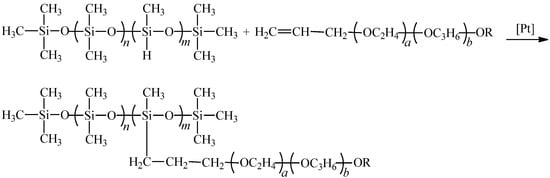
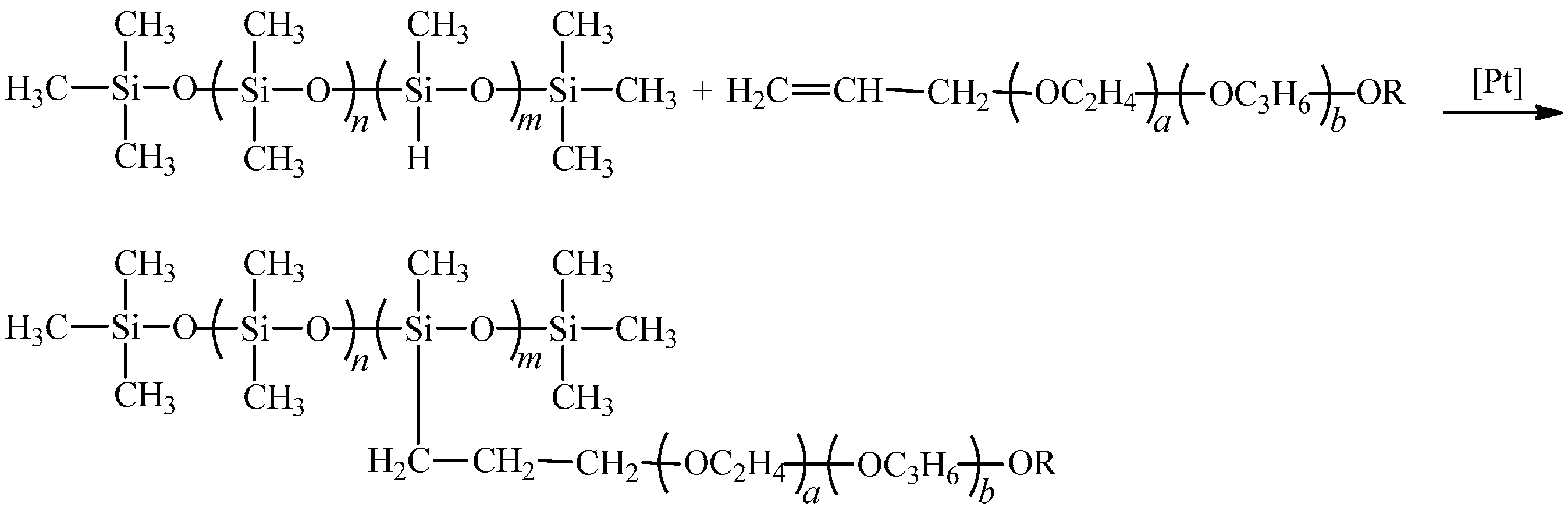
In a nitrogen atmosphere, catalyst H2PtCl6.6H2O dissolved in isopropyl alcohol was added to the allyl alcohol polyether. Subsequently, low-hydrogen silicone oil was added gradually with continuous stirring. The reaction was conducted at 85 °C for 6 h (Scheme 1).
Scheme 1.
Synthesis of polyether-modified silicone.
The FTIR spectra of the polyether-modified silicone was recorded using a NILOLET Spectrum 6700 FT-IR spectrometer with transmission mode, in the spectral region from 500 to 4000 cm−1. 1H-NMR spectra of the polyether-modified silicone was recorded on Bruker Advance 400 M NMR spectrometers.
2.2.3. Preparation of Seawater Desalination Defoamer
Polyether-modified silicone inherently possesses intrinsic defoaming properties; however, its standalone use is limited by relatively high costs. To develop a cost-effective, stable, and highly efficient emulsion-based defoamer, we employed a synergistic formulation strategy by incorporating it with other components. A co-optimization method was utilized to determine the optimal ratio of each constituent, thereby achieving superior overall performance in terms of stability, efficacy, and cost-effectiveness. The compounding process was conducted via a phase-inversion emulsification method, as detailed below:
- (1)
- Weigh the silicone paste, polyether-modified silicone, and emulsifier (a blend of Span 60 and Tween 60) in accordance with the prescribed mass ratio. Transfer the weighed components to a reactor and stir at 70 °C for 20 min.
- (2)
- Prepare an aqueous solution of sodium carboxymethylcellulose and heat it to 70 °C, ensuring thorough mixing.
- (3)
- While maintaining agitation, slowly introduce one-third of the (2) solution into the reactor containing the mixture from step (1), keeping the temperature constant at 70 °C. After achieving homogeneity, add the remaining two-thirds of the (2) solution in three equal portions, maintaining the same proportion. Then, shear the mixture at a high speed of 10,000 r/min for 15 min. Finally, allow the mixture to cool and discharge, yielding the desired seawater desalination defoamer.
2.3. Experimental Methods
2.3.1. Foam Reduction, Dispersibility, and Stability Tests
Foam reduction test: The effectiveness of the defoaming agents was evaluated according to the ASTM standard test method (ASTM E2407) “Standard Test Method for Effectiveness of Defoaming Agents” [23]. In this test, a predetermined volume of foaming solution was prepared, and the foam height was measured before and after the addition of a specified amount of the defoamer. The reduction in foam height served as a quantitative indicator of the defoamer’s efficacy.
Dispersibility test: A measured quantity of the defoamer was weighed and transferred into a beaker containing purified water. The mixture was subjected to gentle shaking or slight stirring and then allowed to stand undisturbed for 2 min. The dispersion was subsequently inspected visually under natural lighting to evaluate the uniformity of the solution according to the standard method (HG/T 5259-2017) “Polyether ester defoamer” [24].
Stability test: Two graduated centrifuge tubes were filled with equal volumes of the antifoam agent. The tubes were positioned symmetrically in a centrifuge and subjected to continuous rotation at 3000 rpm for 15 min [25]. Following centrifugation, the tubes were carefully removed, and the volume of the separated liquid layer was measured to assess the stability of the formulation.
2.3.2. Performance Evaluation and Foam Structure Analysis
The defoaming and antifoaming properties of the defoamer were evaluated using a KRÜSS Dynamic Foam Analyzer. Microscopic analysis was also performed using the foam structure module analysis software integrated with this instrument. The foaming mode was inflation, the gas flow rate was 0.3 L/min, the illumination wavelength was λ = 469 nm (blue).
Determination of the defoaming property: A fixed volume of foaming solution was placed in the analyzer, and a bubble column was generated to a predetermined height. A measured amount of defoamer was subsequently introduced, and the foam height was recorded both before and after addition to assess the agent’s efficacy.
Determination of the antifoaming property: The defoamer was directly mixed with the foaming solution, and a total of 1500 mL of gas was introduced at a constant flow rate of 0.3 L/min. The dynamic changes in foam height were monitored over time, providing a quantitative measure of the agent’s foam inhibition capabilities.
2.3.3. Compatibility Test Between Defoamer and Scale Inhibitor
The compatibility between the defoamer and the scale inhibitor was evaluated in accordance with the national standard GB/T 34550.2-2017, which outlines the method for assessing cooling seawater treatment agents (Part 2: Determination of Scale Inhibition Performance) [26]. The experimental conditions were set at a temperature of 70 °C, and the seawater concentration factor was maintained at 2.0. This test aimed to determine whether the presence of the defoamer would affect the efficacy of the scale inhibitor under these simulated operating conditions.
2.3.4. Corrosion Performance Test
The corrosion performance of the prepared defoamer on materials commonly used in seawater desalination systems was assessed following the national standard GB/T 18175-2014 [27], which specifies the rotating specimen method for determining the corrosion inhibition performance of water treatment agents. This test involved exposing material specimens to a seawater environment containing the defoamer and measuring the corrosion rate to evaluate the defoamer’s impact on material integrity.
3. Results and Discussion
3.1. Characterization of the Polyether-Modified Silicone
The FTIR spectra reveal characteristic peaks at 2960.70, 1455.41, and 1349.24 cm−1, corresponding to the vibrational modes of –CH2 groups. The band at 1258.76 cm−1 is attributed to the bending vibration of –CH3. The stretching vibration peak of C–O–C at 1084.48 cm−1 partially overlaps with the Si–O–Si absorption band at 1011.98 cm−1, while the Si–C stretching vibration absorption appears at 793.01 cm−1. No characteristic absorption bands for Si–H or C=C were observed.
In the 1H-NMR spectrum, the proton signal in the range of δ = 1.0–1.5 ppm is assigned to the methylene (C–CH2) protons of long-chain alkyl groups; the resonance at δ = 1.6 ppm corresponds to Si–CH2 protons; the signal at δ = 2.0 ppm is attributed to CH2–C=O protons; and the multiplets observed in the region of δ = 3.2–3.7 ppm are assigned to the methylene protons of –OC2H4– and –OC3H6– units in the polyether chain.
The corresponding FTIR and NMR spectra are provided in the Supplementary Materials.
3.2. Formulation Optimization of Desalination Defoamer
Effects of silicone paste dosage: The literature and experimental results indicate that both the viscosity and dosage of silicone paste significantly influence the performance of defoamer formulations [28]. Low-viscosity silicone oil components disperse easily in foaming liquids and assist in foam breaking, but their foam suppression duration is relatively short. In contrast, high-viscosity silicone oils have low solubility and are difficult to emulsify, resulting in poor defoaming efficiency. Therefore, a dimethyl silicone oil with a viscosity of 500 mPa·s was selected for this silicone paste. Furthermore, excessive or insufficient amounts of silicone paste can impair emulsion stability. To achieve optimal performance, a dosage of 10% was adopted in this study.
Effects of polyether-modified silicone dosage: Polyether-modified silicone can exhibit synergistic effects when compounded with other additives, leading to improved performance. As shown in the Table 1, the defoaming capability generally increases with increasing dosage of polyether-modified silicone. A dosage range of 20–25% yields the best results; however, taking economic considerations into account, a dosage of 20% was determined for this experiment.
Table 1.
Performance parameters of the composite emulsion defoamer.
Effects of emulsifier dosage: Emulsifier selection was guided by matching the hydrophilic–lipophilic balance (HLB) of the mixed system to that required for the target emulsion. Optimal emulsification occurs when the emulsifier HLB approximates the required HLB of the dispersed phase; mismatches lead to destabilization through coalescence or phase separation. In this work, a binary emulsifier system comprising Span 60 (HLB ≈ 4.7, lipophilic) and Tween 60 (HLB ≈ 14.9, hydrophilic) was utilized to span a broad HLB range. At total emulsifier concentrations of 5–10 wt%, stable oil in water emulsions with favorable water dispersibility were obtained, suggesting effective interfacial stabilization over the experimental period.
Thickener dosage: Within a defined concentration window, incorporation of a thickener increased the bulk viscosity of the solvent phase, thereby retarding droplet coalescence and promoting colloidal stability of the composite emulsion. Excessive thickener loading, however, was observed to hinder the ease of solvent incorporation and may negatively impact application performance. Balancing stability against processability, a maximum thickener concentration of 2 wt% was adopted.
On the basis of the above systematic investigation, the optimized defoamer formulation is as follows: 10% silicone paste, 20% polyether-modified silicone, 5% emulsifier, 2% thickener, with the remainder being water. This composition delivered a stable, water dispersible emulsion exhibiting effective and sustained defoaming action under the tested conditions.
3.3. The Particle Size and Surface Tension of the Defoamer
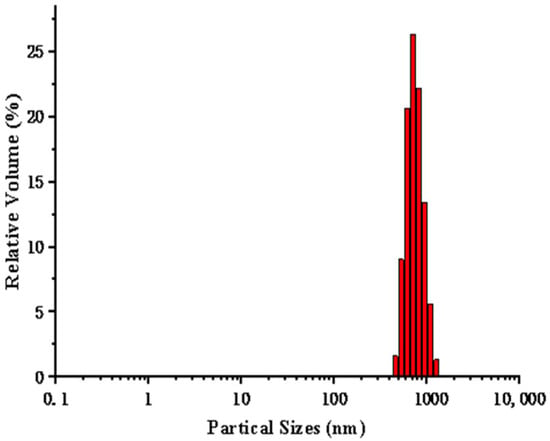
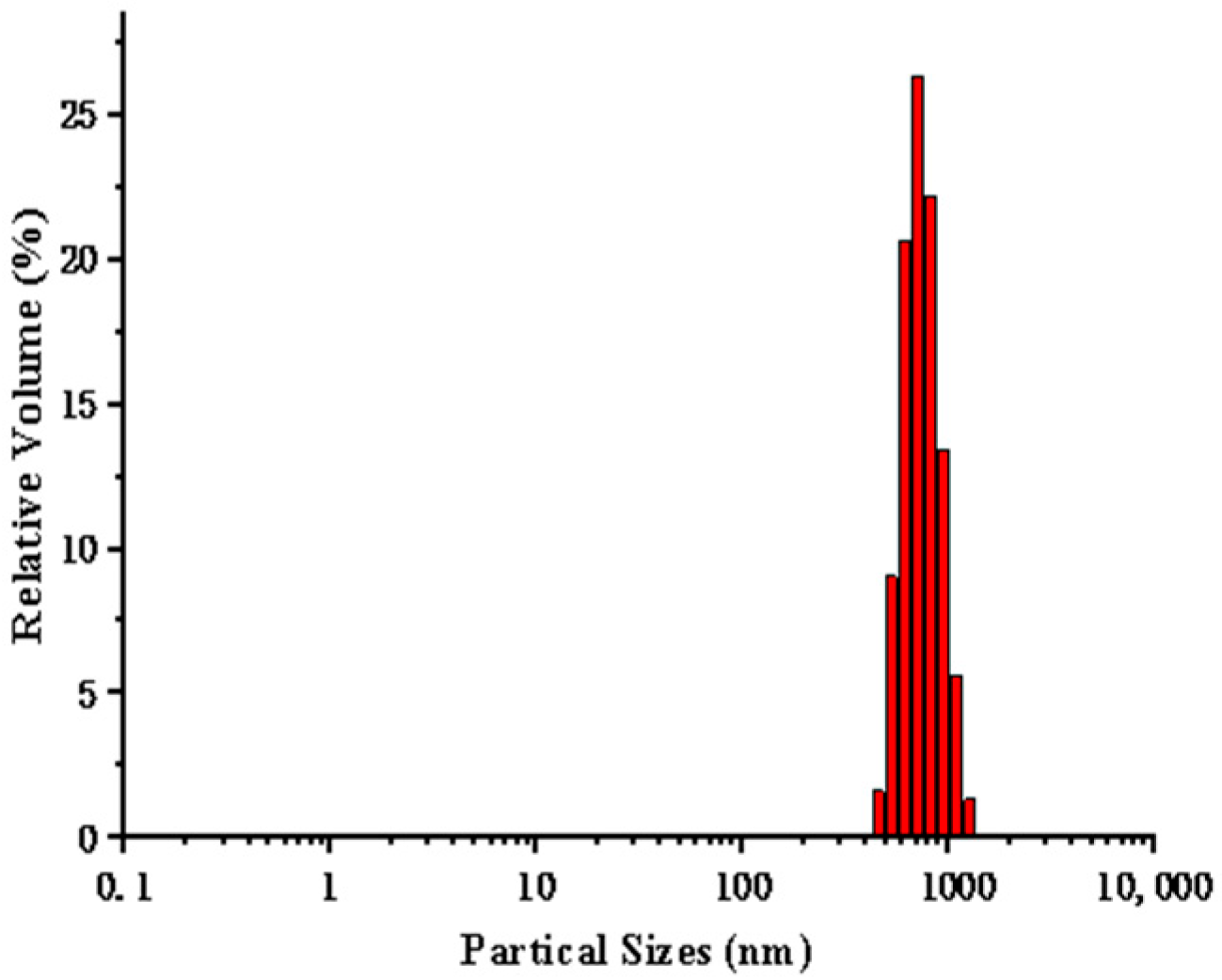
The particle size of the emulsion plays a crucial role in determining the performance of the defoamer [29]. Excessively large particles tend to coalesce into aggregates, which can compromise the efficacy of the defoamer and lead to premature demulsification. The defoamer prepared in this study was characterized using a laser particle size meter, and the resulting distribution is presented in Figure 1.
Figure 1.
Particle size distributions of the defoamer by volume in aqueous solution at 25 °C.
As illustrated in Figure 1, the majority of the particles fall within the 600–700 nm range. This size distribution can be attributed to the incorporation of hydrophobic fumed silica in the silicone paste, as well as the high-shear emulsification process employed during preparation. According to Stokes’ law, smaller emulsion particles exhibit slower sedimentation rates, thereby enhancing the overall stability of the emulsion.
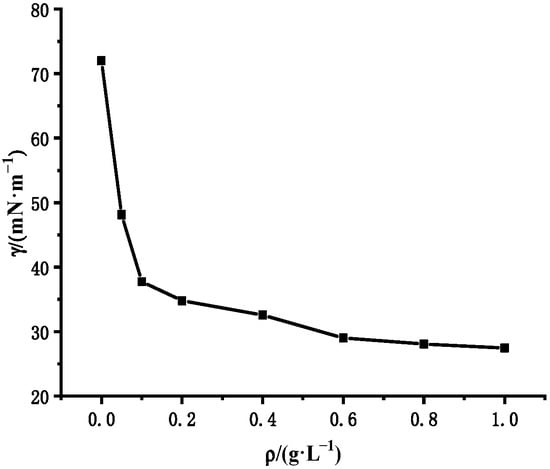
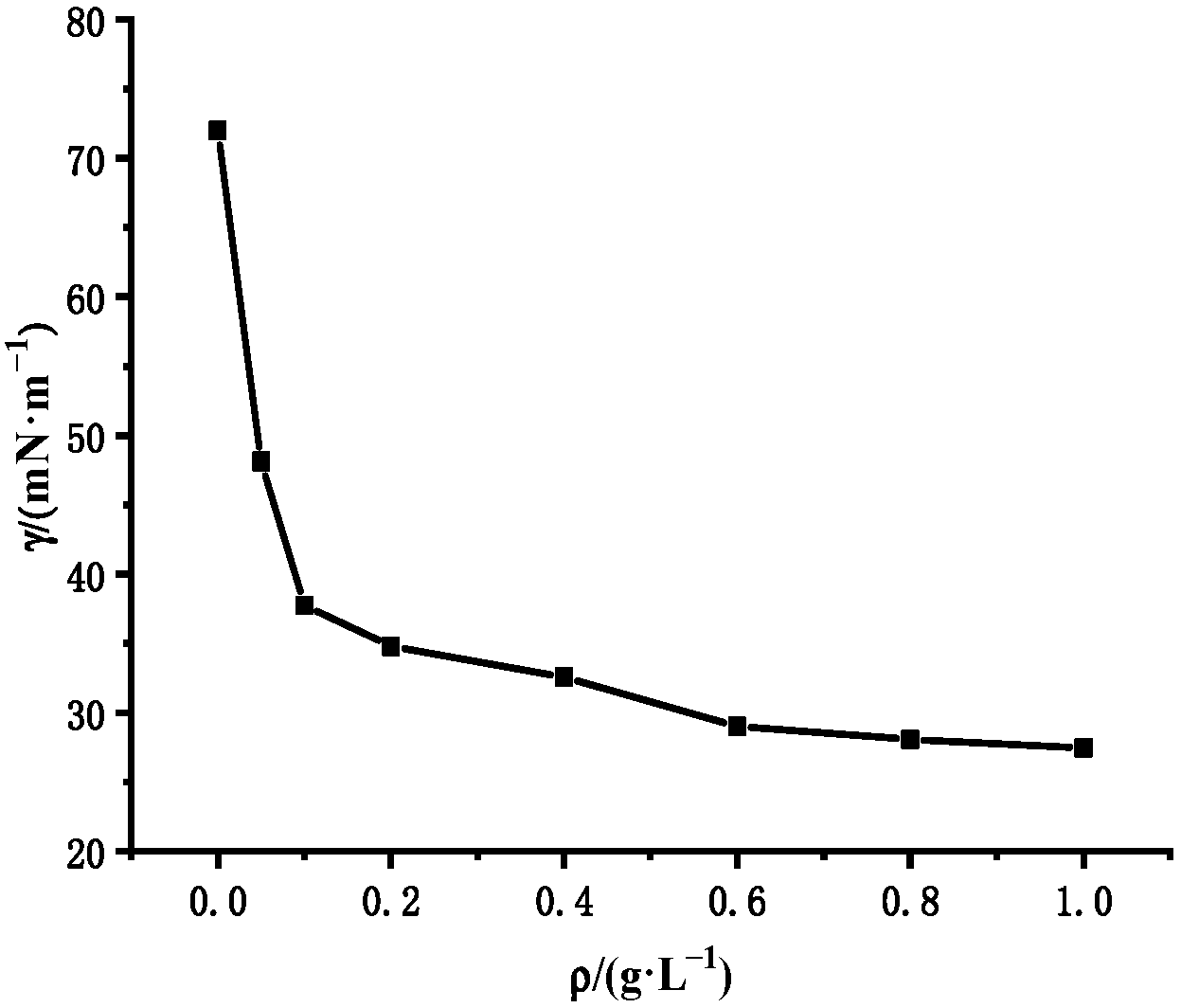
To assess the surface activity, the defoamer was diluted to various concentrations at room temperature, and the surface tension of each solution was measured using the pendant drop method. The data are summarized in Figure 2.
Figure 2.
Surface tension of the defoamer with varying concentration.
It is evident from the figure that the surface tension of the aqueous solutions decreases with increasing mass concentration. Notably, the surface tension exhibits a rapid decline at concentrations below 0.1 g/L, while the rate of decrease diminishes at higher concentrations. At a concentration of 1 g/L, the surface tension reaches a low value of 27.46 mN/m, indicative of the defoamer’s low surface energy and superior interfacial performance. Such low-surface-tension substances readily spread across the foam surface, locally reducing the surface tension of the liquid film. This localized tension reduction induces film thinning and stretching, ultimately leading to the rupture of bubbles and effective defoaming.
3.4. Defoaming and Antifoaming Properties of the Defoamer
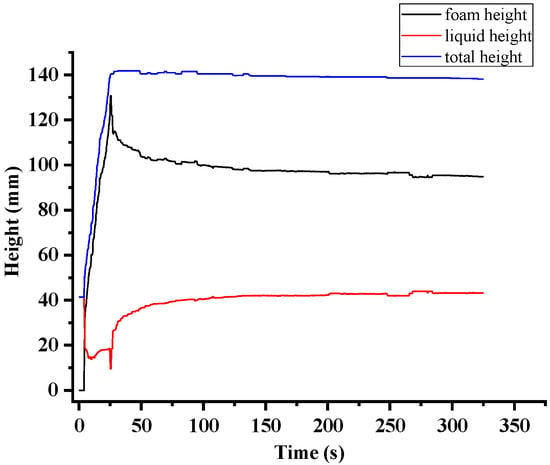
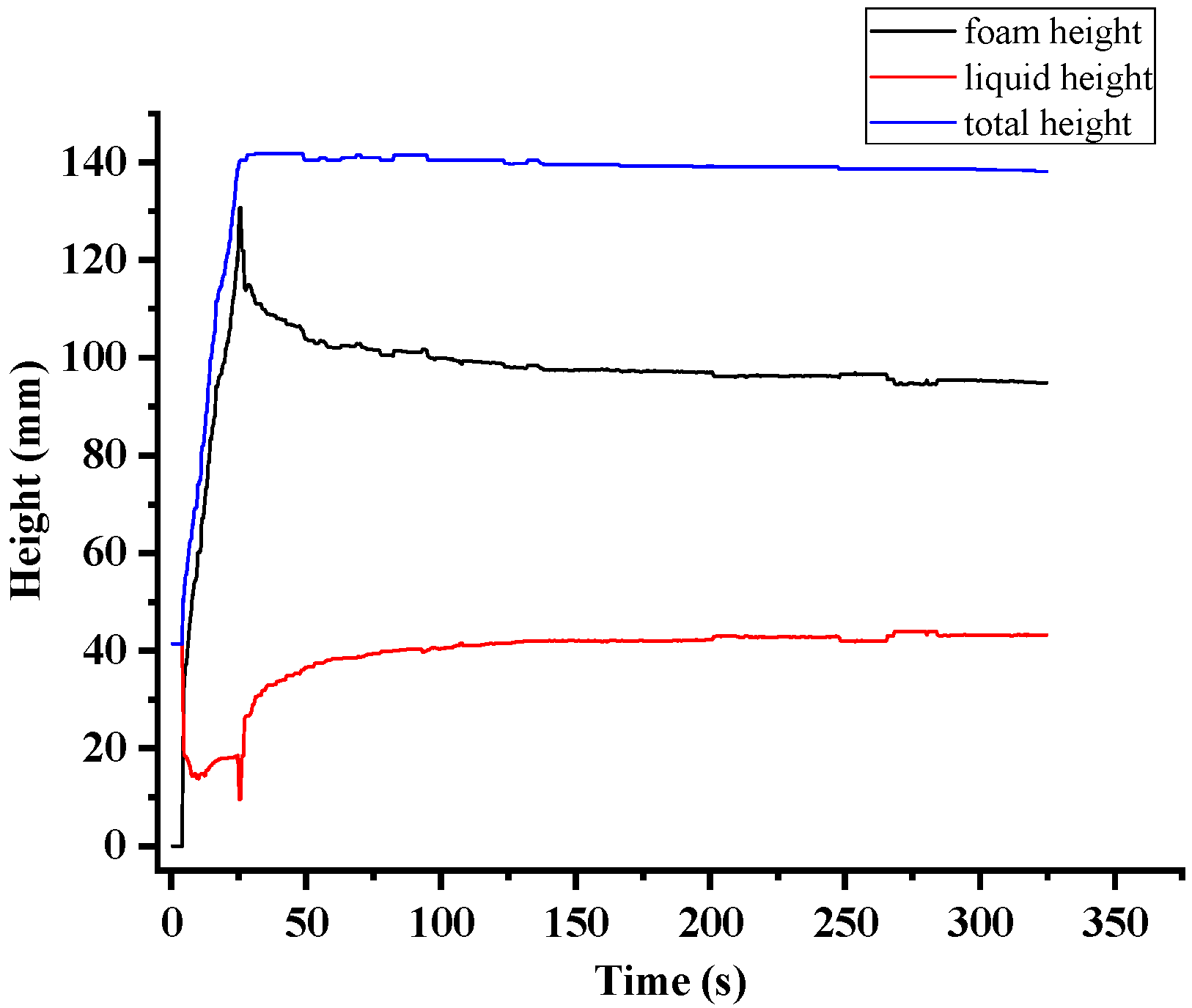
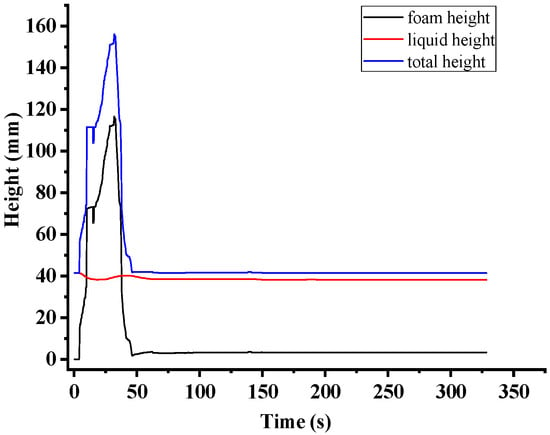
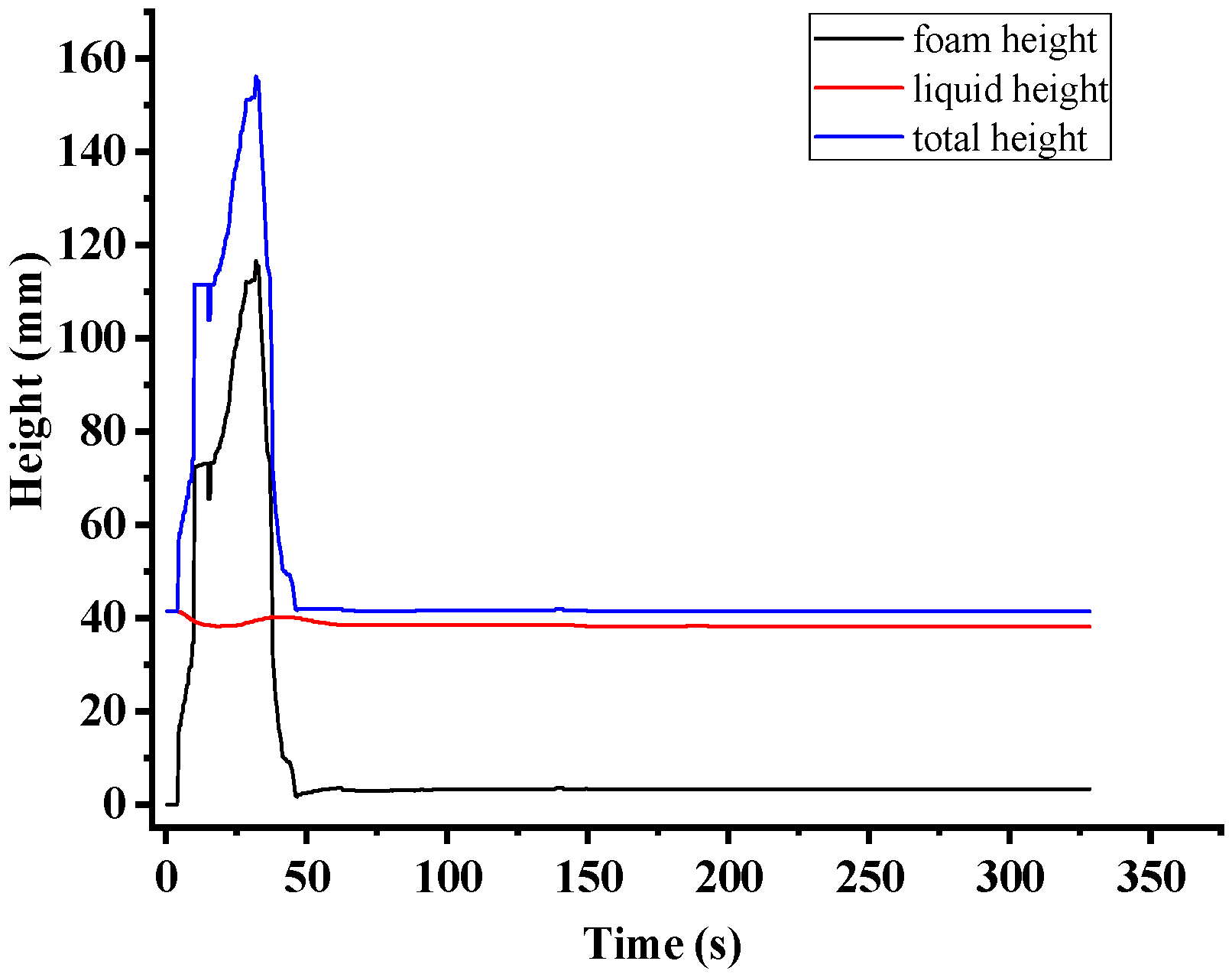
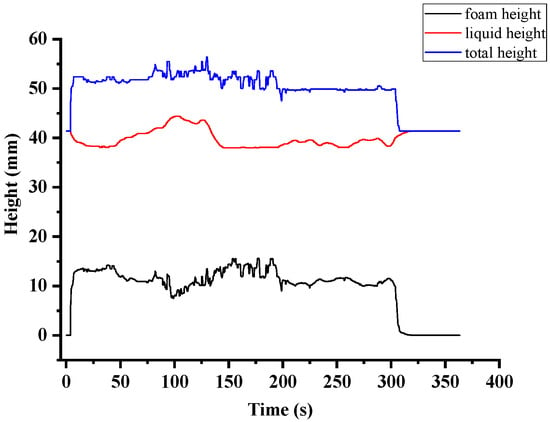
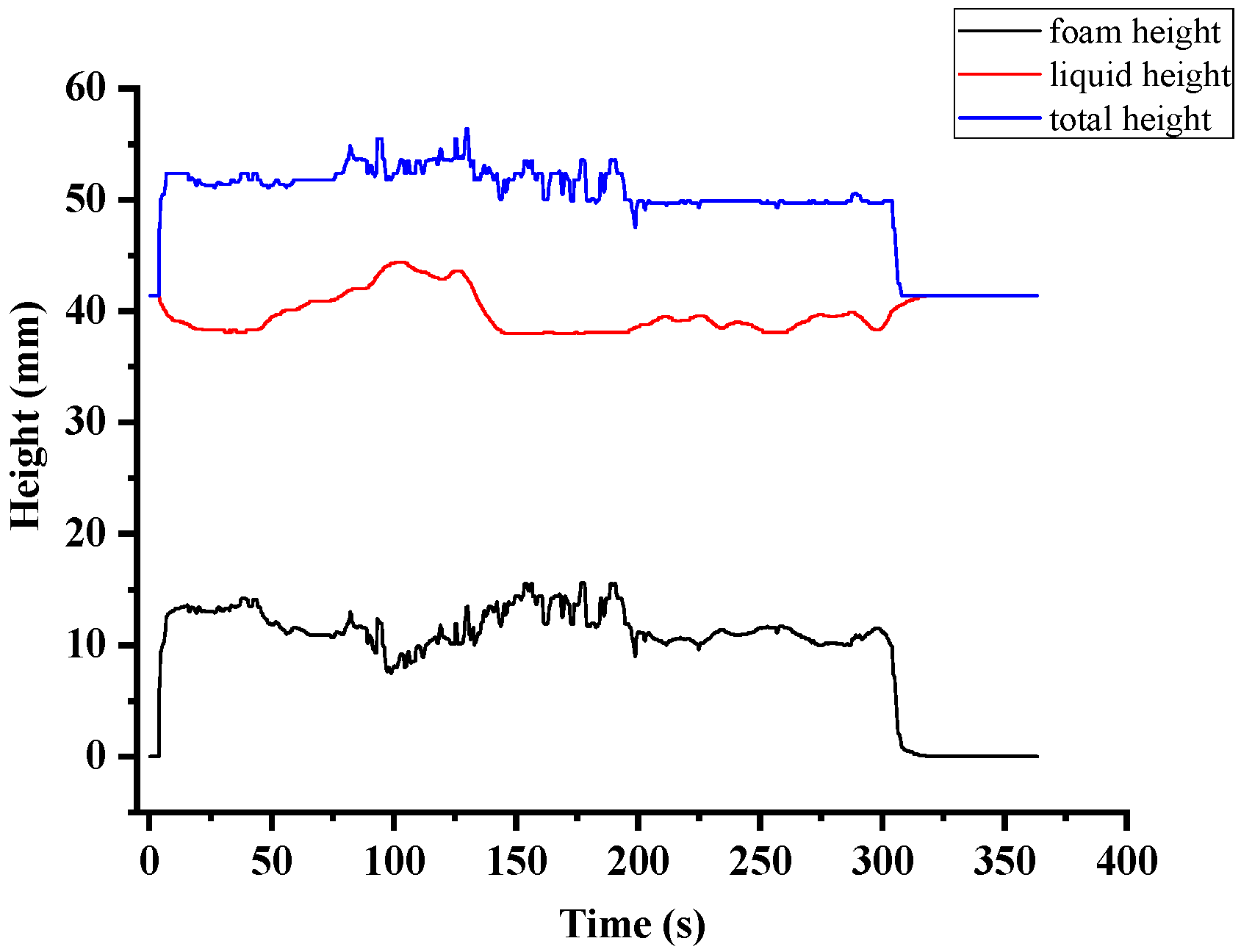
Figure 3, Figure 4 and Figure 5 illustrate the performance of the prepared defoamer in seawater systems, focusing on its ability to eliminate existing foam (defoaming) and prevent new foam formation (antifoaming).
Figure 3.
Changes in foam height over time without the addition of the defoamer.
Figure 4.
Defoaming performance of the defoamer.
Figure 5.
Antifoaming performance of the defoamer.
Figure 3 presents the baseline behavior of the seawater foaming system in the absence of any chemical additives. Under a constant gas flow rate, the foam rapidly reaches a stable height and remains unchanged for at least 5 min, indicating the inherent stability of the foam under these conditions.
Figure 4 demonstrates the defoaming capability of the newly formulated agent, which reflects its capacity to collapse pre-formed foam. In this experiment, the foaming liquid was subjected to a constant gas flow until the foam attained its maximum height. At this point, 1 mL of the diluted defoamer was introduced rapidly. The subsequent rapid decline in foam height, culminating in complete disappearance, underscores the high efficiency and fast response of the defoamer in collapsing existing foam structures.
Figure 5 evaluates the antifoaming performance of the defoamer, which reflects its ability to prevent foam generation. During this test, a controlled volume of air was introduced into the seawater foaming system containing the defoamer. The foam height remained below 10 mL throughout the experiment. Upon cessation of aeration at 300 s, the minimal foam that had formed dissipated quickly. This result confirms that the defoamer can effectively inhibit foam formation in seawater systems under continuous aeration conditions.
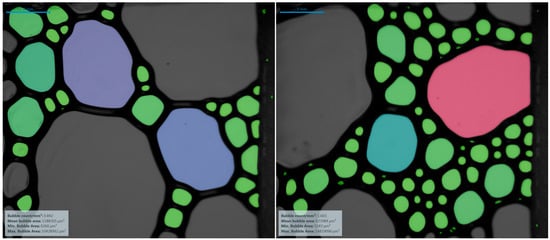
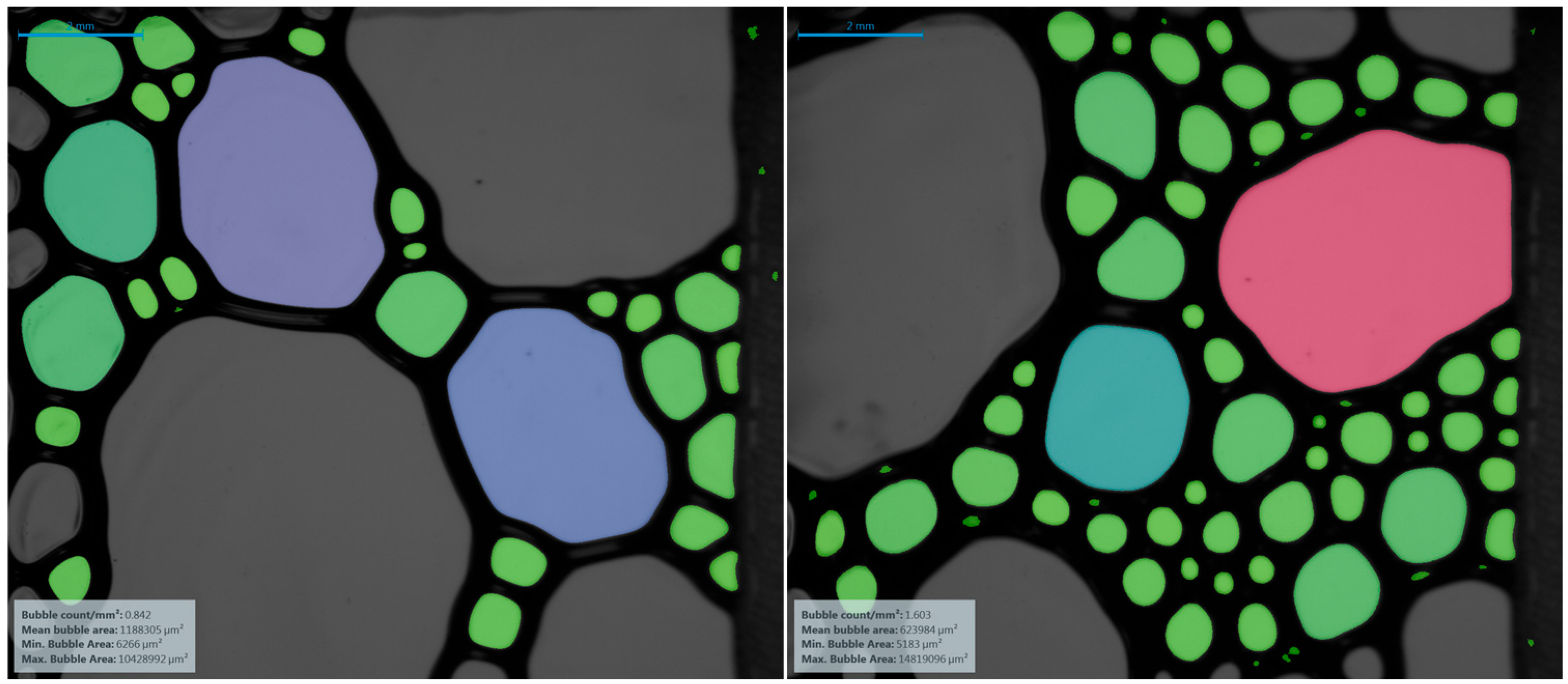
To further elucidate the impact of the defoamer on foam morphology, samples with (left) and without (right) defoamer were analyzed using more precise techniques [30] for quantitative image analysis. The results are presented in Figure 6.
Figure 6.
Microscopic morphology of samples with (left) and without (right) defoamer in the structure test.
In the control sample (right) (without defoamer), the bubble density was measured at 1.603 bubbles/mm2, with an average bubble area of 623,984 μm2. Conversely, in the treated sample (left) (with defoamer), the bubble density decreased to 0.842 bubbles/mm2, while the average bubble area increased to 1,188,305 μm2.
It can be observed that the addition of the defoamer results in a coarser and less-stable foam structure, which facilitates the gradual rupture of bubbles and consequently leads to a reduction in foam height.
3.5. Compatibility of the Defoamer with Seawater Desalination Systems
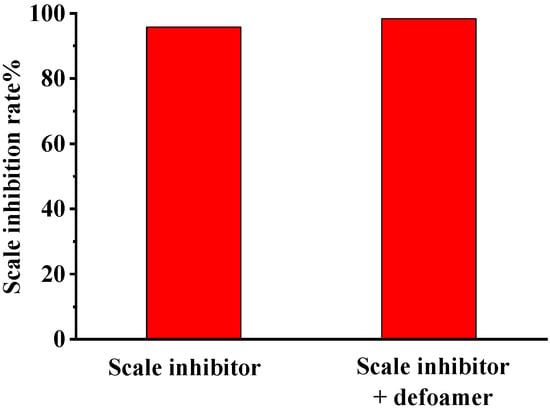
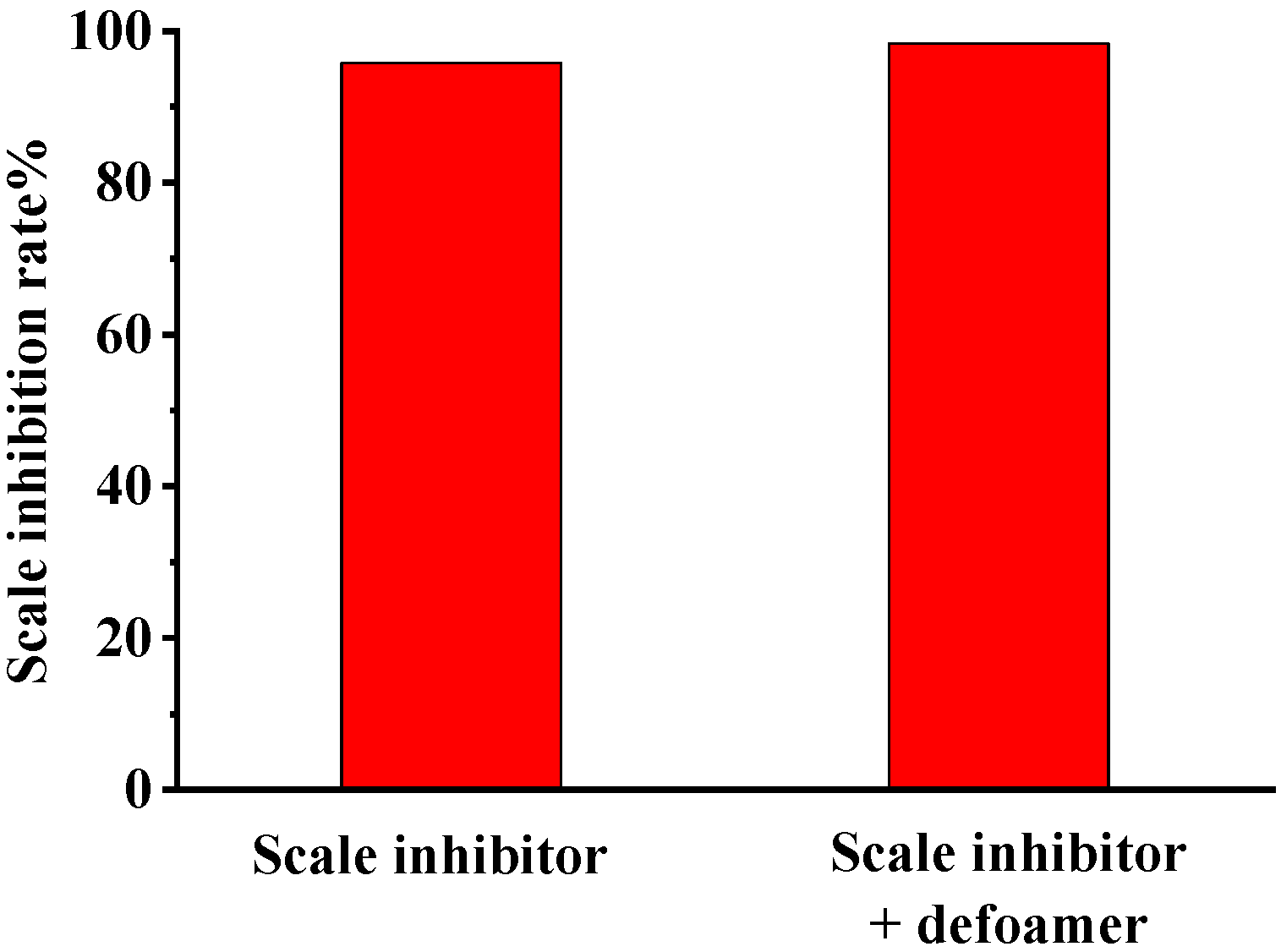
Usually, when the seawater desalination defoamer is applied in the same process as the seawater scale inhibitor, the combined result of the two different agents is very important. As can be seen from Figure 7, in the presence of 4 ppm defoamer, the scale inhibition rate was 98.29%, which was greater than that without defoamer at 95.83%. This outcome indicates that the defoamer does not adversely affect the efficacy of the scale inhibitor; on the contrary, it appears to exert a modest promotional effect. This enhancement may be attributed to the defoamer’s superior dispersion capabilities within the seawater matrix, which facilitate the adsorption and dispersion of nascent particulate aggregates, thereby augmenting the overall scale inhibition performance.
Figure 7.
Effect of the defoamer on the scale inhibition rate of the scale inhibitor.
The corrosion behavior of the defoamer toward typical desalination system materials was also investigated, as presented in Table 2.
Table 2.
Test results of the corrosion inhibition performance of the defoamer materials used in seawater desalination systems.
The results demonstrate that the defoamer not only exhibits excellent defoaming and antifoaming performance but also possesses a certain degree of corrosion inhibition. This protective effect is primarily attributed to the amphiphilic nature of the agent; its combined hydrophilic and hydrophobic surface activities facilitate the formation of a protective film on equipment surfaces, thereby preventing corrosive damage to the system components and existing anti-corrosion layers.
The safety and quality indices of desalinated water for municipal and household use have become the focus of public attention [31]. However, the current seawater desalination standards in China do not cover all segments of the seawater desalination industry [32]. By using the method of high doses (0.5, 1.0, and 2.0 g/kg BW, respectively) of defoamer for 90 days through oral administration, the results of this study show that [33] long-term exposure to the defoamer had no significant effect on the weight gain of both male and female rats. The safe use of the defoamer in the process of seawater desalination is under further study.
3.6. Industrial Testing of the Defoamer
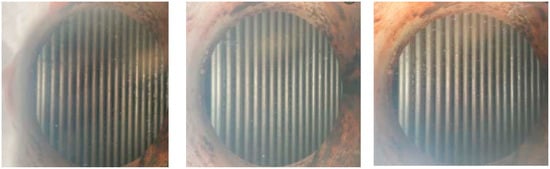
Power Plant A is constructing two 1000 kV supercritical coal-fired units, along with a low-temperature multi-effect seawater desalination project with a daily output of 8 × 25,000 tons. Special defoamer needs to be added daily to control the liquid level. During field trials using the prepared defoamer, the liquid level in each monitored circuit remained stable, and no foam fluctuations were observed at the inspection ports (Figure 8). Throughout the continuous dosing operation, no sudden operational disturbances related to foam formation occurred, confirming that the selected type and concentration of the defoamer are appropriate for the safe and stable operation of the unit.
Figure 8.
No foam was observed on the 3-effect evaporator observation hole during the industrial test.
3.7. Mechanistic Analysis
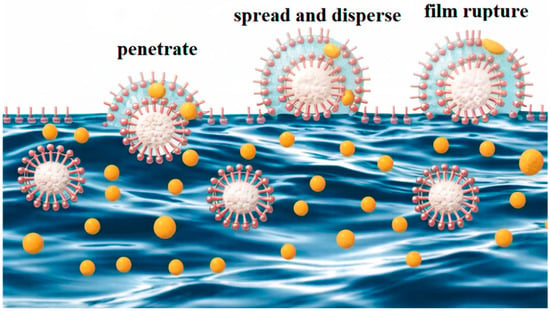
Numerous classical reports have documented the mechanisms of defoamer agents in aqueous systems [34,35,36]. In summary, the defoaming process typically proceeds through a series of sequential steps: the active constituents of the defoamer spontaneously penetrate the liquid film and rapidly spread and disperse at the interface, thereby reducing the local surface tension. Consequently, the liquid within the film is drawn toward regions of higher surface tension, resulting in accelerated film thinning and eventual rupture (Figure 9).
Figure 9.
Possible mechanisms of action of the defoamer in seawater.
Based on the experimental data and the prevailing understanding of defoamer mechanisms, we propose a concise analysis of the defoaming mechanism exhibited by the prepared defoamer agent in a MED process. The superior performance of this agent from a synergistic interplay of several mechanisms: (1) chemical modification and surface activity—the defoamer’s chemical modification endows it with low surface tension and excellent dispersibility, facilitating rapid spreading over the foam’s liquid film and creating a local surface tension gradient (Marangoni effect), which promotes film drainage, thinning, and eventual rupture; (2) physical disruption by hydrophobic particles—the composite formulation incorporates hydrophobic particles that infiltrate the gas–liquid interface, acting as a “bridge” or “de-wetting” heterophase core that compromises film stability, accelerates bubble coalescence, and precipitates rupture; (3) dual functionality of polyether-modified silicone structure—the polyether segment provides hydrophilicity and compatibility in high-temperature aqueous solutions, while the silicone segment contributes strong hydrophobicity and low surface energy, thereby enabling effective penetration and disruption of foam films stabilized by organic matter in seawater; (4) microstructural evolution—microscopic analyses confirm that defoamer addition leads to a coarser, less stable foam structure, with an increased average bubble area and a decreased bubble density, further promoting bubble coalescence and rupture. In summary, through rapid spreading, bridging de-wetting, and liquid film drainage, the defoamer achieves stable and efficient foam control in the harsh environment of seawater desalination.
4. Conclusions
To address the foaming challenges in seawater desalination processes, we prepared a high-efficiency defoamer based on polyether-modified silicone using a compounding method. The product forms a stable emulsion with a particle size distribution of 600–700 nm and can significantly reduce the surface tension of the aqueous system to 27.46 mN/m, thereby exhibiting excellent defoaming and antifoaming performance. Test results show that the defoamer not only matches well with commonly used seawater desalination scale inhibitors but also has no corrosive effect on typical materials used in desalination systems. Long-term exposure to the defoamer had no significant effect on weight gain in either male or female rats. The safe use of defoamer in the process of seawater desalination is under further study.
Supplementary Materials
The following supporting information can be downloaded at: https://www.mdpi.com/article/10.3390/pr14050789/s1, Figure S1: FTIR spectra of polyether-modified silicone; Figure S2: 1H-NMR spectra of polyether-modified silicone.
Author Contributions
This research was conceived and designed with the participation of all the authors. M.H.: conceptualization, writing—original draft; H.G.: writing review, editing, formal analysis; N.H.: visualization, formal analysis; X.X.: data curation, funding acquisition; C.S.: validation; Z.L.: investigation; C.C.: data curation, supervision, funding acquisition. All authors have read and agreed to the published version of the manuscript.
Funding
This research was funded by the Central Level, Scientific Research Institutes for Basic R&D Special Fund Business (K-JBYWF-2024-T05), the National Key R&D Program of China (2017YFC0404100), and the Tianjin Natural Science Foundation (No. 23JCYBJC00640).
Data Availability Statement
The original contributions presented in this study are included in the article/Supplementary Material. Further inquiries can be directed to the corresponding author.
Conflicts of Interest
The authors declare no conflicts of interest.
References
- Prabakar, P.; Thampan, D.; Karthika, S.; Ravichandran, M.K.; Subramanian, A.; Nagarajan, A.M.; Hussain, R.; Sivagami, K. Emerging investigator series: A state-of-the-art review on large-scale desalination technologies and their brine management. Environ. Sci. Water Res. Technol. 2025, 11, 167–195. [Google Scholar] [CrossRef] [Scilit]
- Palenzuela, P.; Alarcón-Padilla, D.-C.; Ortega-Delgado, B.; Zaragoza, G. Cogeneration of Fresh Water and Electricity with High-Temperature Power Cycles: Comparative Assessment of Multi-Effect Distillation and Reverse Osmosis. Processes 2023, 11, 1181. [Google Scholar] [CrossRef] [Scilit]
- Al-Hamzah, A.A.; Fellows, C.M. Drinking Water Quality in the Kingdom of Saudi Arabia. Water 2024, 16, 1810. [Google Scholar] [CrossRef] [Scilit]
- Olufisayo, O.E.; Olanrewaju, O. A Review of Renewable Energy Powered Seawater Desalination Treatment Process for Zero Waste. Water 2024, 16, 2804. [Google Scholar] [CrossRef] [Scilit]
- Al-Obaidi, M.; Alsarayreh, A.A.; Rashid, F.L.; Sowgath, M.T.; Alsadaie, S.; Ruiz-García, A.; Khayet, M.; Ghaffour, N.; Mujtaba, I.M. Hybrid membrane and thermal seawater desalination processes powered by fossil fuels: A comprehensive review, future challenges and prospects. Desalination 2024, 583, 117694. [Google Scholar] [CrossRef] [Scilit]
- Lim, Y.J.; Goh, K.; Goto, A.; Zhao, Y.; Wang, R. Uranium and lithium extraction from seawater: Challenges and opportunities for a sustainable energy future. J. Mater. Chem. A 2023, 11, 22551–22589. [Google Scholar] [CrossRef] [Scilit]
- Mecozzi, M.; Pietroletti, M. Chemical composition and surfactant characteristics of marine foams investigated by means of UV-vis, FTIR and FTNIR spectroscopy. Environ. Sci. Pollut. Res. 2016, 23, 22418–22432. [Google Scholar] [CrossRef] [Scilit]
- Imam, M.; Al-Rasheed, R.; Al-Tisan, I.; Abdulgader, A.Y.; Mustafa, G.M.; Al-Mobayed, A.S.; Ehsan, A.; Brose, D. Studies on a polyoxypropylene glycol-based antifoaming agent in MSF plants. Desalination 2000, 129, 187–196. [Google Scholar] [CrossRef] [Scilit]
- Auerbach, M.H.; O’neill, J.J.; Reimer, R.A.; Walinsky, S.W. Foam Control Additives In MSF Desalination. Desalination 1981, 38, 159–168. [Google Scholar] [CrossRef] [Scilit]
- Yang, L. Preparation and evaluation of water-based sealants for repairing cracks in sports building road surfaces. Przem. Chem. 2025, 104, 1088–1093. [Google Scholar] [CrossRef] [Scilit]
- Lu, Y.; Huang, M.; Zhou, Q.; Wang, B.N.; Wei, W.; Chen, J. On recycling earth pressure balance shield muck with residual foaming agent: Defoaming and antifoaming investigations. Environ. Sci. Pollut. Res. 2024, 31, 8046–8060. [Google Scholar] [CrossRef] [Scilit]
- Quan, X.; Dengpan, N.; Bin, L.; Wenliang, T. Investigation on Defoaming Mechanism of Collophanite Reverse Flotation. Non-Met. Mines 2021, 44, 62–65. [Google Scholar] [CrossRef]
- Wei, B.; Wang, H.; Ren, F.; Gao, C.; Liu, R. Application and effect evaluation of domestic polyether defoamer in natural gas purification unit. Chem. Eng. Oil Gas 2025, 54, 31–37. [Google Scholar] [CrossRef]
- Lee, Y.; Choi, J.I.; Kim, H.K.; Lee, B.Y. Effects of a defoamer on the compressive strength and tensile behavior of alkali-activated slag-based cementless composite reinforced by polyethylene fiber. Compos. Struct. 2017, 172, 166–172. [Google Scholar] [CrossRef] [Scilit]
- Gao, Y.F.; Wang, J.; Xu, D.H.; Lin, Y.X.; Song, W.B.; Wang, Y.B.; Xu, F.; Chen, G. Preparation and performance evaluation of CNF-enhanced polyether-modified polysiloxane defoamer. J. Surfactants Deterg. 2025, 28, 363–372. [Google Scholar] [CrossRef] [Scilit]
- Kim, S.; Liu, C.C.; Huang, J.Y.; Feng, X.; Sun, H.; Zhan, X.L.; Shi, M.K.; Bai, H.Z.; Tang, G.P. Optimized Si-H Content and Multivariate Engineering of PMHS Antifoamers for Superior Foam Suppression in High-Viscosity Systems. Coatings 2025, 15, 894. [Google Scholar] [CrossRef] [Scilit]
- Taddeo, F.; Vitiello, R.; Ruocco, M.; Turco, R.; Russo, V.; Tesser, R.; Di Serio, M. Synthesis of new defoamer agents and characterization of cementitious formulations. Heliyon 2024, 10, e33164. [Google Scholar] [CrossRef] [Scilit]
- Hassan, A.; Jumbri, K.; Ramli, A.; Borhan, N. Physio-Chemical Analysis of Amide and Amine Poly(dimethylsiloxane)-Modified Defoamer for Efficient Oil-Water Separation. Acs Omega 2021, 6, 14806–14818. [Google Scholar] [CrossRef] [Scilit] [PubMed]
- Shen, C.; Xu, X.; Hou, X.-Y.; Wu, D.-X.; Yin, J.-H. Molecular weight effect on PAA antiscale performance in LT-MED desalination system: Static experiment and MD simulation. Desalination 2018, 445, 1–5. [Google Scholar] [CrossRef] [Scilit]
- Al-Hamzah, A.A.; Fellows, C.M.; Hamed, O.A. Methallylsulfonate Polymeric Antiscalants for Application in Thermal Desalination Processes. Polymers 2024, 16, 2838. [Google Scholar] [CrossRef] [Scilit]
- Cancouët, P.; Daudet, E.; Hélary, G.; Moreau, M.; Sauvet, G. Functional polysiloxanes. I. Microstructure of poly(hydrogenmethylsiloxane-co-dimethylsiloxane)s obtained by cationic copolymerization. J. Polym. Sci. Part A Polym. Chem. 2000, 38, 826–836. [Google Scholar] [CrossRef]
- Schramm, L.L.; Stasiuk, E.N.; Marangoni, D.G. 2 Surfactants and their applications. Annu. Rep. Sect. C (Phys. Chem.) 2003, 99, 3–48. [Google Scholar] [CrossRef] [Scilit]
- ASTM E2407; Standard Test Method for Effectiveness of Defoaming Agents. ASTM International: West Conshohocken, PA, USA, 2015.
- HG/T 5259-2017; Polyether Ester Defoamer. Ministry of Industry and Information Technology of the People’s Republic of China: Beijing, China; China Standard Press: Beijing, China, 2017.
- HG/T 4783-2014; Fatty Alcohol Emulsion Defoamer. Ministry of Industry and Information Technology of the People’s Republic of China: Beijing, China; China Standard Press: Beijing, China, 2014.
- GB/T 34550.2-2017; Method for Evaluation of Cooling Seawater Treatment Agents—Part 2: Determination of Scale Inhibition Performance. Ministry of Natural Resources of the People’s Republic of China: Beijing, China; China Standard Press: Beijing, China, 2017.
- GB/T 18175-2014; Determination of Corrosion Inhibition Performance of Water Treatment Agent―Rotating Specimen Method. Ministry of Natural Resources of the People’s Republic of China: Beijing, China; China Standard Press: Beijing, China, 2014.
- Wang, L.N.; Wang, H.M.; Rong, M.M.; Li, W.; Li, N.; Liu, P.S.; Li, X.H.; Zhang, Z.J. Preparation of hyperbranched hydrophobic nano-silica and its superior needling-effect in PDMS defoam agent. J. Colloid Interface Sci. 2024, 670, 698–708. [Google Scholar] [CrossRef] [Scilit] [PubMed]
- Sugiyama, K.; Miyamoto, T.; Miyama, S.; Nishiyama, S.; Esumi, K. Particle Size Effect of a Food Emulsifier on Antifoaming Action in Casein Solution. J. Jpn. Oil Chem. Soc. 1998, 47, 269–275,292. [Google Scholar] [CrossRef] [Scilit]
- Xu, J.; Zhu, Y.; Xu, X.; Bao, H. Study on multidimensional evaluation method of foam performance of daily chemicals. China Surfactant Deterg. Cosmet. 2022, 52, 506–513. [Google Scholar] [CrossRef]
- Liu, Y.H.; Feng, H.J.; Ge, Y.H. Analysis on Characteristics and Use of Product Water from Seawater Desalination Plants. China Water Wastewater 2009, 25, 88–92. [Google Scholar] [CrossRef]
- GB/T 17218-2025; Hygienic Safety Evaluation of Chemicals Used in Drinking Water Treatment. Ministry of Health of the People’s Republic of China: Beijing, China; China Standard Press: Beijing, China, 2025.
- Duan, L.; Zhang, C.H.; Gu, W.; Zhi, H.; Kong, J.; Zhang, S.P.; Li, Y.M.; Lu, K. Sub-chronic Toxicity of Defoamer Used in Seawater Desalination. Biomed. Environ. Sci. 2019, 32, 334–344. [Google Scholar] [CrossRef] [Scilit]
- Denkov, N.D. Mechanisms of foam destruction by oil-based antifoams. Langmuir 2004, 20, 9463–9505. [Google Scholar] [CrossRef] [Scilit]
- Horozov, T.S. Foams and foam films stabilised by solid particles. Curr. Opin. Colloid Interface Sci. 2008, 13, 134–140. [Google Scholar] [CrossRef] [Scilit]
- McClure, D.D.; Lamy, M.; Black, L.; Kavanagh, J.M.; Barton, G.W. An experimental investigation into the behaviour of antifoaming agents. Chem. Eng. Sci. 2017, 160, 269–274. [Google Scholar] [CrossRef] [Scilit]

Disclaimer/Publisher’s Note: The statements, opinions and data contained in all publications are solely those of the individual author(s) and contributor(s) and not of MDPI and/or the editor(s). MDPI and/or the editor(s) disclaim responsibility for any injury to people or property resulting from any ideas, methods, instructions or products referred to in the content. |
© 2026 by the authors. Licensee MDPI, Basel, Switzerland. This article is an open access article distributed under the terms and conditions of the Creative Commons Attribution (CC BY) license.