


Abstract
An improved depleting sand fracture model was derived in this work using Finite Element Methods, taking into consideration the effect of pore pressure and production on in situ stresses. Sets of governing equations from the commercial finite element simulator COMSOL Multiphysics were used to obtain a model that compares well with the existing fracture model, mainly based on the Mohr–Coulomb failure criterion. The model uniquely couples reservoir depletion-induced stress evolution with fracture initiation and propagation within a unified finite element framework. A constant overburden load was used since its value majorly depends on depth, and the formation is assumed to be fixed at the bottom. The reservoir is assumed to be depleting at a constant rate with no water injection to assist pressure, with an average porosity of 25% and an average permeability of 251 mD at the beginning of production. The reservoir compacted during production, and in turn, porosity and permeability were reduced over the years of observation. Fracturing was observed to be much easier for the depleted reservoir, since horizontal stresses, which might have created friction, are reduced during reservoir production, signifying that for depleted reservoirs, a small fracture pressure is required. Created fractures are observed to propagate in the direction of the maximum horizontal stress and perpendicular to the direction of the minimum horizontal stress.
1. Introduction
When reservoir formation matures and there are declines in hydrocarbon due to years of oil and gas production, it may lead to deformation, compaction, displacement, and stress changes both inside and around the reservoir, affecting fracture initiation and propagation. A well can be damaged when casing buckles because of compaction along the well and compaction-induced fault slip [1].
Recently, researchers have explained that variation in in situ stresses leads to reservoir compaction, fracture, initiation of faults, etc., and emphasized improved well planning and construction. Understanding changes in in situ stress helps predict fracture propagation during depletion and helps in choosing appropriate recovery methods. Numerical-sector model studies comparing CO2-WAG and continuous injection schemes have demonstrated that the injection strategy strongly influences stress redistribution, sweep efficiency, and fracture-controlled flow paths, particularly in heterogeneous sandstone reservoirs undergoing pressure depletion. This study provides conceptual insight into stress evolution under varying pressure paths [2].
When pore pressure decreases, effective stress rises and alters the minimum and maximum stresses that control fracture initiation. It is prudent for us to understand these changes, as they are critical for safe well planning, optimal well placement, stimulation designs, and the selection of the appropriate recovery mechanism.
Effective reservoir management means continuous assessment of production-induced changes to identify drainage patterns and the intensity of the compaction as well as understanding how such changes affect future development. Recent assessments of depleted hydrocarbon wells repurposed for geothermal applications further emphasize that long-term production alters in situ stresses and the rock’s mechanical properties, making accurate geomechanical modeling essential for evaluating fracture stability and subsurface integrity [3]. In simulation designs, we can make use of some numerical modeling tools that handle flow and geomechanics and enable predictions of stress evolution. An example of such a tool is the Finite Element Method (FEM) model that offers a strong framework for simulating the mechanics of fracture initiation and propagation.
Unlike prior geomechanical studies that primarily focus on compaction or stress redistribution, this work explicitly links depletion-driven stress evolution to fracture initiation using a coupled finite element approach. In this study, we developed a hydraulic fracture initiation and propagation model for a depleting sand reservoir using an FEM-based geomechanical workflow. The model enabled us to quantify stress changes and propagation trends over time. Understanding the relationship between the results obtained and the past experimental findings will help support more reliable well planning and stimulation designs in mature fields. A new methodology is introduced that connects the depletion-induced evolution of stress to the initiation and propagation of fractures through finite element modeling. The proposed methodology offers a more precise means of calculating how stresses and pore pressures evolve with time and the impacts that should be considered when modeling depletion’s effect on induced or solved fracture propagation as compared to classical methods.
Literature Survey
Sandstone reservoirs typically exhibit porosity-dependent mechanical behavior, where pressure depletion leads to effective stress increases and compaction. In depleted sandstones, stress redistribution alters the near-wellbore and reservoir-scale stress state, influencing both the fracture initiation pressure and fracture growth behavior. Sandstones provide reservoirs for oil and gas, but also for groundwater, which is a fluid that is becoming increasingly valuable. The term sand refers to a grain size of 62 μm–2 mm [4].
A fracture in a reservoir is defined as a surface along which a loss of cohesion, i.e., the holding force in the rock texture, has taken place. Fractures are usually called joints and, at the surface, are termed cracks in rocks [5]. The direction of the fractures can be anything from vertical to orthogonal to horizontal. Natural fractures are more common in carbonate rocks than in sandstones [5]. Some of the best fractured reservoirs are in granite—often referred to as unconventional reservoirs. The vertical extent of fractures is often controlled by thin layers of plastic material, such as shale beds or laminations, or by weak layers of rock, such as stylolite in carbonate sequences [5].
Sandstone reservoir fracturing is a critical aspect of oil and gas production, particularly in tight sandstone formations, where it is essential for enhancing recovery and ensuring economic viability [6]. The mechanical behavior of sandstone under the complex stress conditions induced by production activities, including pore pressure changes, stress redistribution, and depletion-induced compaction, directly influences the effectiveness and longevity of fracturing treatments [6]. The success of hydraulic fracturing in tight sandstone reservoirs is contingent upon understanding various geological and geomechanical properties, such as low porosity and permeability, varying in situ stress, and the presence of natural fractures [7]. Studies have shown that complex fracture networks are often difficult to form in tight sandstone reservoirs with undeveloped natural fractures during traditional volume fracturing [8].
The decline in production from sandstone reservoirs significantly impacts fracturing behavior, primarily through changes in reservoir pressure, stress distribution, and the mechanical properties of the rock matrix [9]. As hydrocarbons are extracted, the pore pressure within the reservoir decreases, which in turn alters the effective stress acting on the rock [6]. This change in effective stress can lead to reservoir compaction, which may induce surface subsidence and seismicity, as observed in the Groningen gas field [10]. Such compaction is partly elastic but also involves instantaneous plastic and rate/time-dependent processes like subcritical crack growth, meaning compaction can continue even after production ceases [10]. One critical aspect of production decline is its effect on the stress sensitivity of tight sandstone reservoirs [11].
Stress sensitivity refers to the rock’s response, particularly its porosity and permeability, to changes in effective stress, or unconsolidated sandstone reservoirs, which exhibit low cementation strengths. Analytical pore-scale modeling has further shown that fluid imbibition and transport in tight formations are strongly governed by pore geometry and effective stress conditions, with depletion-induced stress changes directly altering capillary-driven flow behavior and permeability evolution [12]. Stress sensitivity damage induced by changes in effective stress can negatively impact crude oil productivity and overall recovery efficiency [13]. Ultra-deep and ultra-high-pressure tight sandstone gas reservoirs are characterized by strong heterogeneity and stress sensitivity, making traditional geological and numerical models that ignore variations in in situ stress during production less accurate for fracturing modification design [11]. Mathematical models have been developed to analyze production declines in fractured tight sand gas wells, considering factors such as high-velocity non-Darcy (hvnD) flow, threshold pressure gradients (TPGs), and stress sensitivity. These models are crucial for accurately predicting and managing production from such complex reservoirs [14]. Existing models of wellbore stability often idealize the borehole wall as either perfectly permeable or impermeable, but recent studies suggest that the borehole wall should be considered a non-ideal semi-permeable medium, as it allows solvent molecules to pass while impeding solutes, leading to significant differences in stress and pore pressure fields under non-isothermal conditions [15]. For instance, fully coupled hydromechanical simulations of hydraulic fracturing in 3D discrete-fracture networks can describe the propagation of hydraulic fractures and the opening and shear stimulation of natural fractures [16]. Numerical simulations have been employed to investigate hydraulic fracture propagation in multilayered formations using techniques like limited entry fracturing [17].
New models are continually being developed to address these complexities. For example, a pseudo-3D hydraulic fracture propagation model has been introduced for sandstone reservoirs that considers fracture penetrating height, an important factor in thin-layered formations where fractures are prone to breaking through the target horizon [18].
2. Materials and Methods
This study develops a numerical framework to evaluate hydraulic fracture initiation and propagation in a depleting sandstone reservoir. The methodology combines fundamental rock mechanics, reservoir geomechanics during depletion, and finite element simulation in COMSOL Multiphysics ®, version 4.3, COMSOL AB, Stockholm, Sweden and Finite Element Analysis (FEA)/the Finite Element Method.
Finite Element Analysis is a vital tool for analyzing design parameters and optimizing results, thereby reducing time and cost. The model was implemented in COMSOL Multiphysics using the Solid Mechanics and Darcy’s Law physics interfaces, coupled through the poroelastic formulation to account for fluid flow-induced stress evolution. Finite Element Analysis forms one of the primary steps in the design or early developmental stage. Finite Element Analysis helps predict and study problems and consequences before initiation or at the point of initiation.
Recent advances in Finite Element Analysis software and high-performance computing have significantly changed the landscape of computational engineering, as simulation results are obtained more quickly and accurately. In this work, COMSOL Multiphysics 4.3a (trial version) will be employed owing to its multidisciplinary capabilities. COMSOL was specifically chosen for its applications in solid mechanics, geomechanics, flow within a poroelastic medium, and Darcy flow. Essentially, geomechanics can be coupled with fluid flow in COMSOL Multiphysics, and appropriate equations can be applied. In a reservoir-fluid-flow case, COMSOL uses the built-in poroelastic medium and Darcy flow equations unless the user specifies how the change will occur in the reservoir. The modeling setup started with initialization, processing, and post-processing.
In this study, we represented the fracture initiation and propagation using a damage-based finite element approach that is implemented within the COSMOL Multiphysics. The fracture onset is governed by a Mohr–Coulomb failure criterion that is expressed in terms of effective stress. Localized material degradation reduces stiffness and localizes strain, leading to fracture initiation. Stress concentration around the borehole is evaluated using the Mohr–Coulomb failure criterion.
2.1. The Model
The premise of this work is to correct production-induced formation damage (permeability loss) caused by compaction during hydraulic fracturing. The objective is to develop a model that describes hydraulic fracture initiation and/or propagation in a depleting sand reservoir using the direction and orientation of stress and strain. Fracture initiation and propagation tendencies are inferred from the evolving stress state and failure criteria under reservoir depletion.
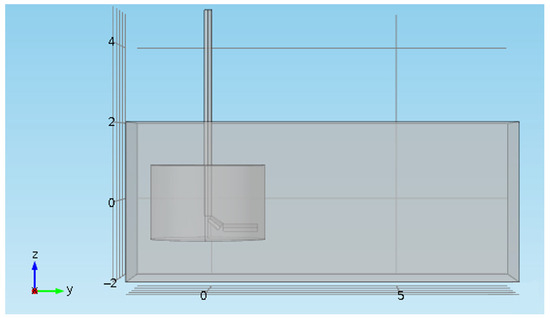
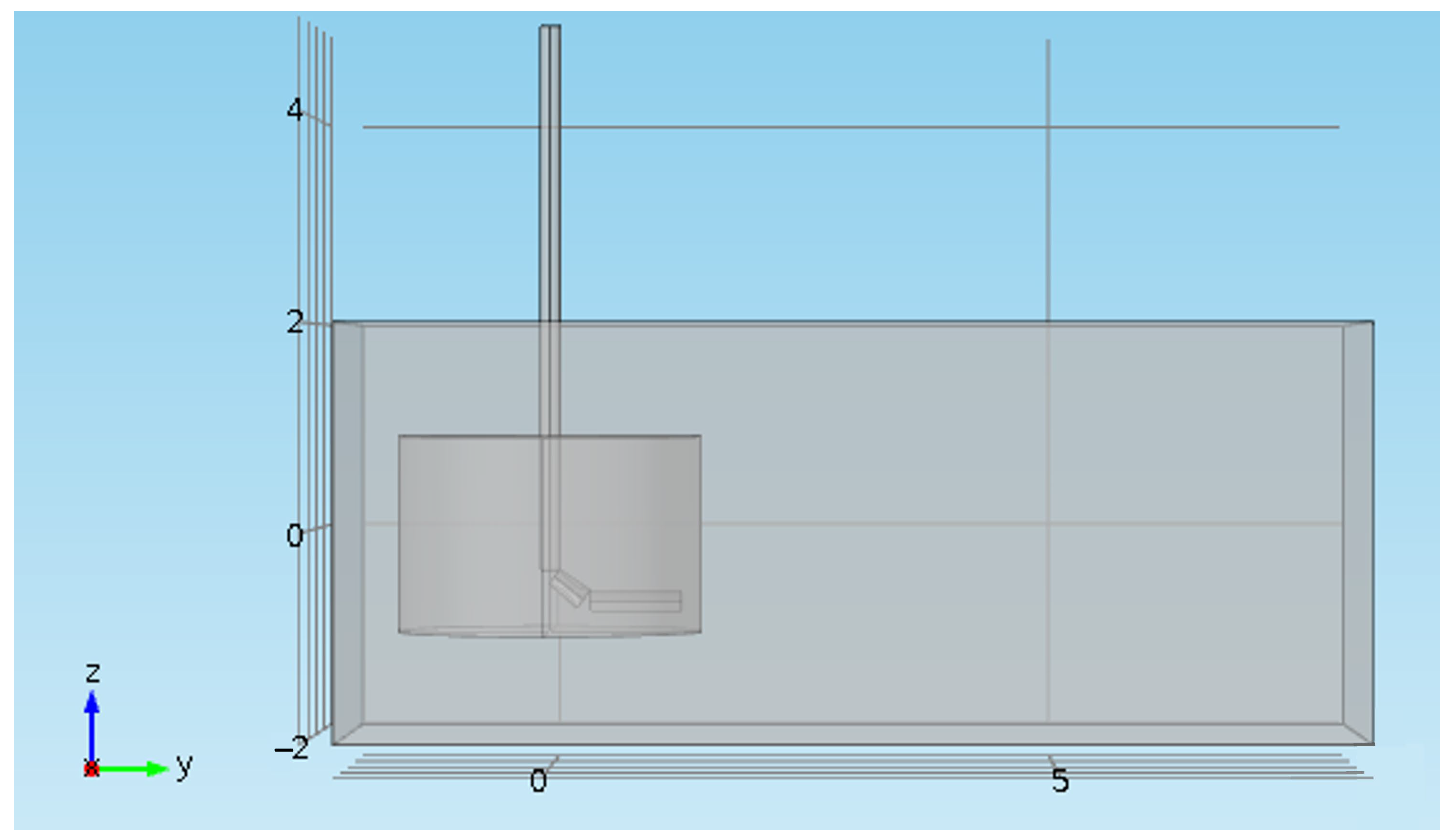
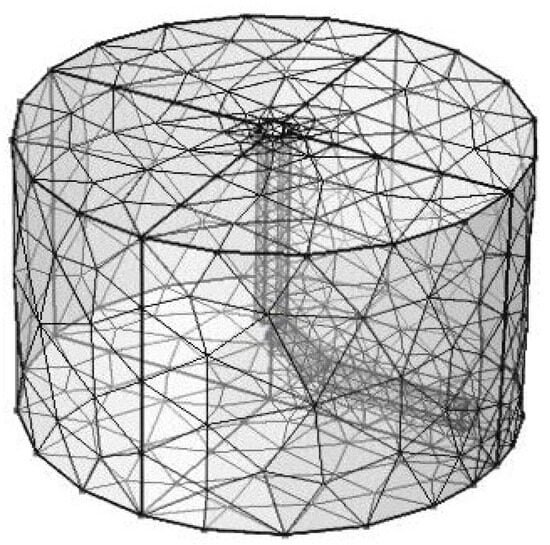
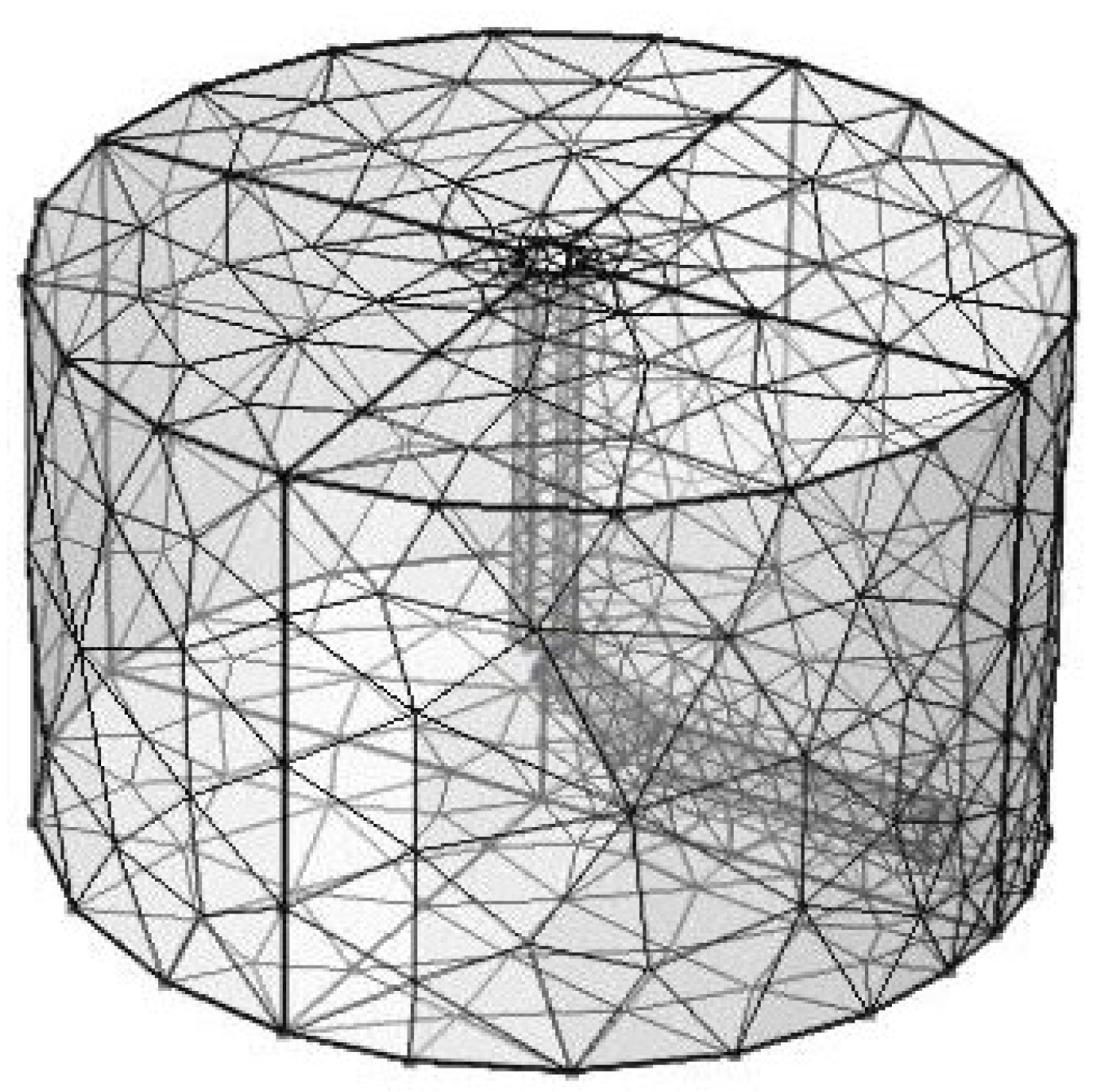
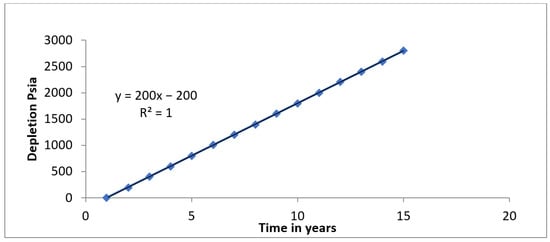
Table 1 shows the reservoir depletion data. Figure 1 shows the model in COMSOL Multiphysics consists of a rectangular-shaped box representing the overburden surrounding the reservoir and the vertical and horizontal sections of an imaginary well drilled to produce the reservoir, and then Figure 2 defines the reservoir by a cylindrical element (note the whole representation is a downscale of a whole reservoir, which could also be upscaled by adjusting the dimensions in COMSOL). Figure 3 shows a plot of the reservoir depletion.
Table 1.
Reservoir depletion table.
Figure 1.
A model showing reservoir consideration and overburden extent in COMSOL Multiphysics 4.3a.
Figure 2.
Model in COMSOL Multiphysics 4.3a showing a meshed section to be observed for analysis.
Figure 3.
Reservoir depletion plot.
Table 2 contains reservoir properties that represent a consolidated sandstone reservoir and are also consistent with values reported in the experimental studies of [5,19]. Experimental studies from [5,19] reported that consolidated sandstone depths of 6000–8000 ft usually retain porosities in the range of exhibit 20% and 30% and horizontal permeabilities exceeding 100 mD. Refs. [15,19] reported Young’s modulus values between 5 and 25 GPa and Poisson’s ratios ranging from 0.15 to 0.3 for consolidated sandstone. Again, the rock mechanic literature [19,20] includes cohesion of roughly 30 MPa and internal friction angles within the range of 33–35°. These parameters from Table 2 are validated by experimental studies from [5,19,20]. Table 3 shows the model dimensions of the overburden reservoir, while Table 4 shows the model dimensions for the reservoir and well.
Table 2.
Reservoir parameters.
Table 3.
Model dimensions of overburden reservoir.
Table 4.
Model dimension for reservoir and well.
2.2. Modeling Procedure
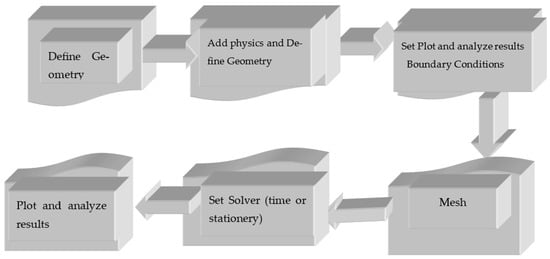
The modeling procedure used in this study follows a step-by-step workflow that guides the numerical implementation from model definition to result interpretation. Key stages include geometry creation, selection of governing physics, specification of boundary conditions and material inputs, mesh generation, solver execution, and post-processing of outputs. Figure 4 illustrates the workflow for the modeling procedure.
Figure 4.
Modeling procedure.
A parametric setup was adopted to define the key reservoir and mechanical inputs for the simulations, including depth, pressure, porosity, permeability, and strength and elastic properties. Table 5 shows the varying mechanical properties at optimal fracture pressure.
Table 5.
Varying mechanical properties at optimal fracture pressure.
Field data and experimental studies support fracture pressures greater than two times the effective horizontal stress, which is particularly applicable for depleted reservoirs that exist in tight sandstones or mature oil fields.
3. Results
This section presents and discusses the simulation results under various fracture pressures and mechanical property conditions. To validate the developed fracture model, governing equations were derived, and results were visualized through cross-sectional plots, slice plots, deformed shape plots, and animations. These visualizations depict stress and strain distributions, total displacement, principal stresses, and von Mises stress. Sensitivity analyses were performed on porosity and permeability to assess their evolution under reservoir depletion. Recent advancements in coupled geomechanical modeling, digital rock physics, and machine learning applications in fracture propagation are also integrated to contextualize the findings within contemporary research trends.
3.1. Governing Equations
In a poroelastic medium, Equation (1) describes how stress changes in response to strain. Equation (2) represents the governing flow equations, while Equation (3) expresses how strain evolves as pressure declines over time. Here, Qm denotes the fluid flow through a poroelastic medium, and is the cross-sectional area.
3.2. Fracturing Model Equation for a Depleting Sand Reservoir
Invoking Mohr’s failure criterion,
This can be written in terms of effective overburden and horizontal pressure as:
where β is the failure angle and S0 is minimal failure stress [19].
Equation (5) can be re written as
Substituting for σ2 in terms of reservoir pressure decline with time, then Equation (6) becomes
The above equation represents the minimum fracture pressure to overcome internal friction in the sand during production. Recent studies [19] emphasize the role of stress paths in depletion-induced stress reorientation, which are critical for designing refracturing and infill drilling in mature fields. Advanced monitoring techniques such as distributed acoustic sensing (DAS) and microseismic imaging have validated these theoretical models in field applications [21].
3.3. General Consideration of Initial Fracturing Pressure of 13,900 psi with Young’s Modulus of 10 Gpa
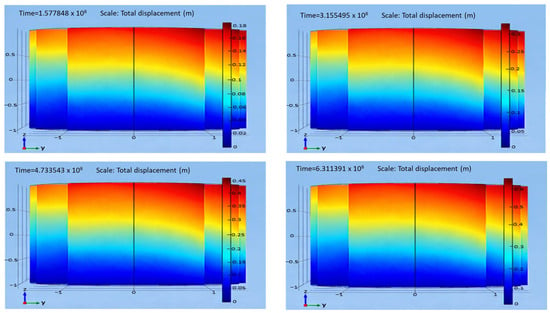
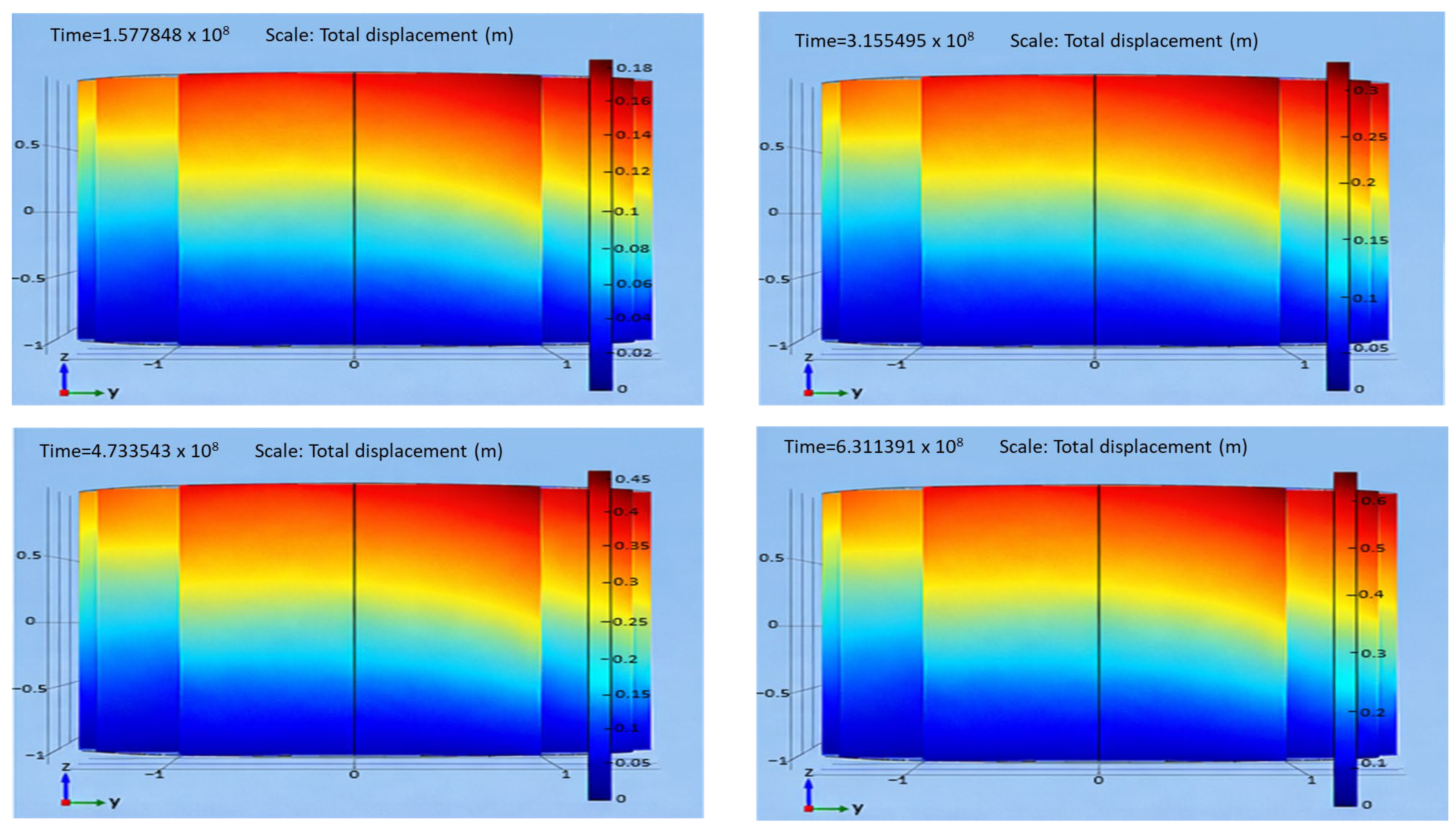
A Young’s modulus of 1 GPa was selected to simulate a moderately stiff sandstone reservoir. Figure 5 illustrates reservoir compaction over 5, 10, 15, and 20 years of production. The increasing deformation over time confirms that porosity and permeability reduction due to compaction is a continuous process, potentially leading to formation damage and reduced recovery if not mitigated.
Figure 5.
A snapshot of total reservoir deformation after 5, 10, 15, and 20 years.
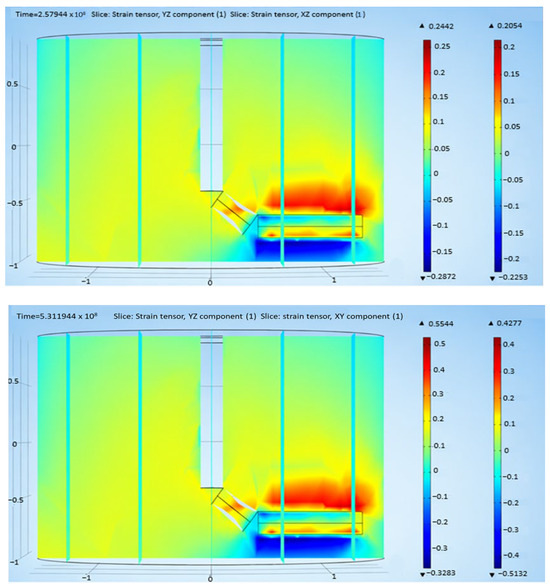
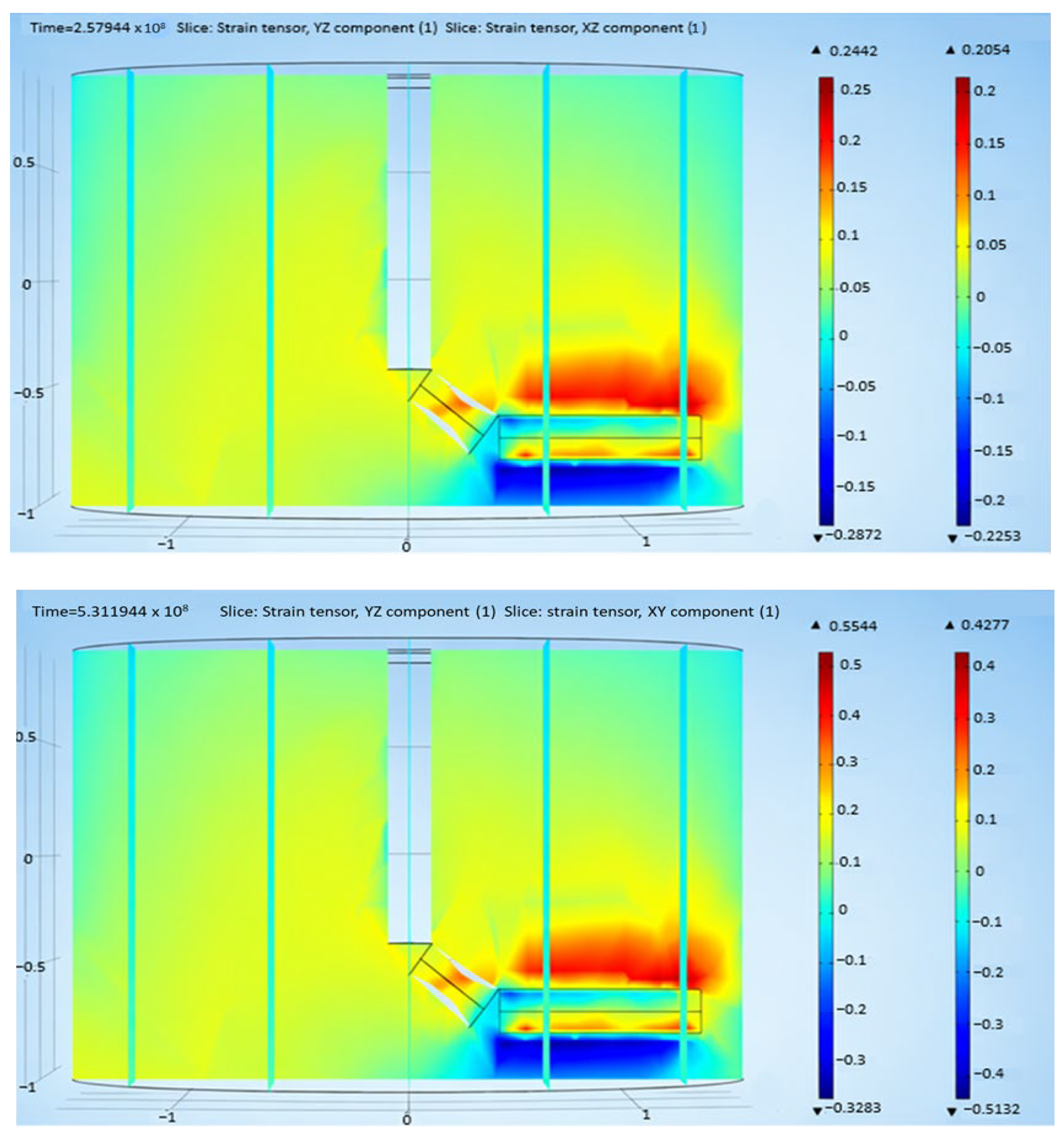
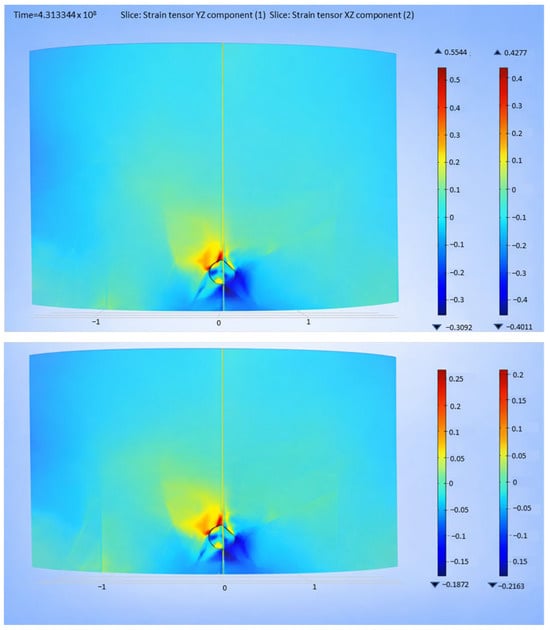
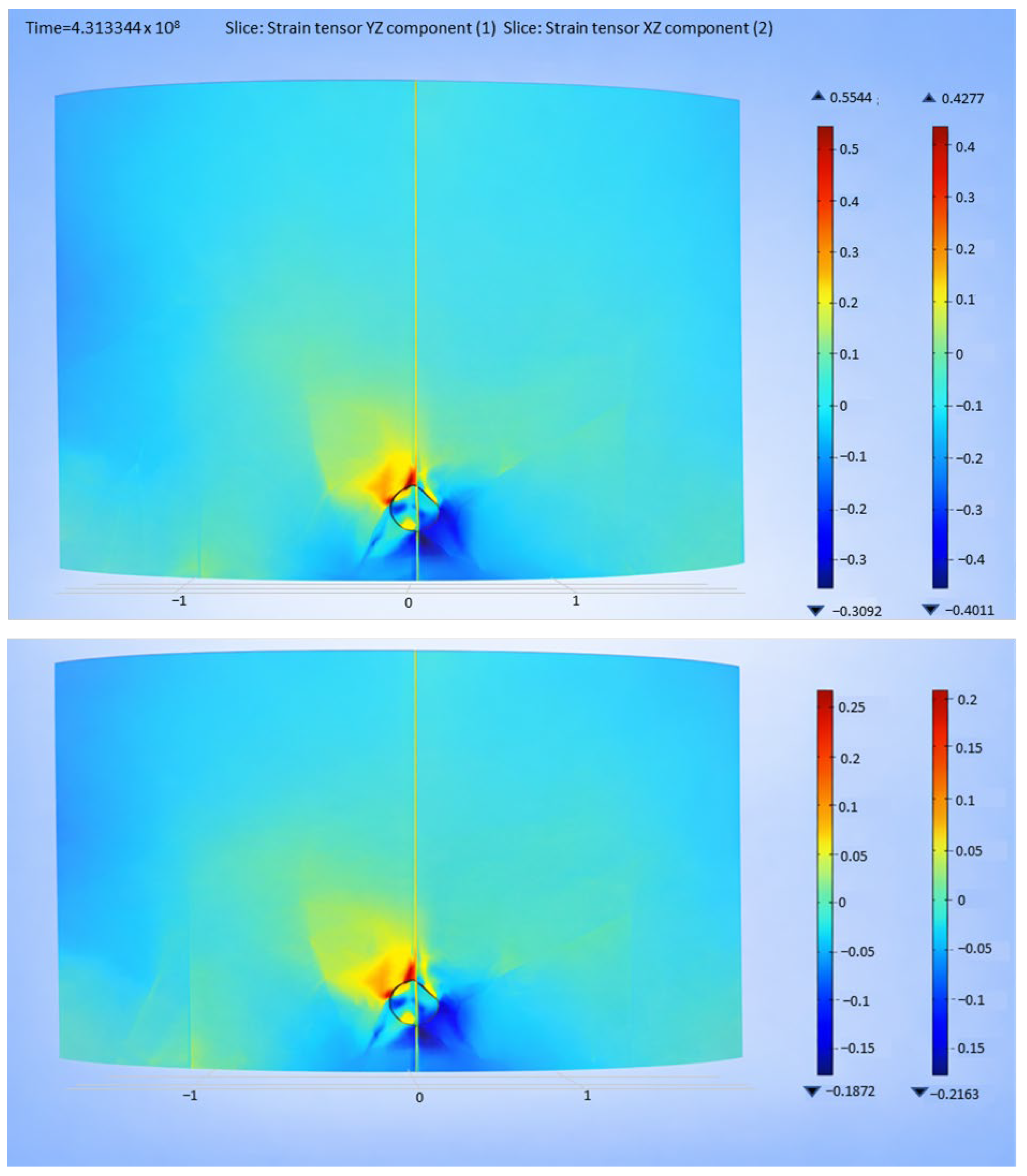
Figure 6 shows strain distribution around the borehole on the YZ plane at 5 and 20 years. The maximum strain increases from approximately 0.2 at 5 years to 0.4 at 20 years, indicating that fracture initiation becomes easier with continued depletion due to reduced horizontal stresses.
Figure 6.
Strain around the bore hole on the YZ plane when fracture pressure was applied at 5 and 20 years respectively.
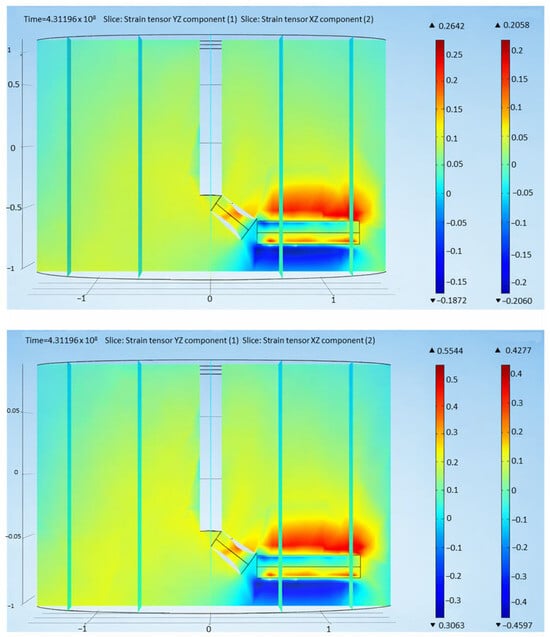
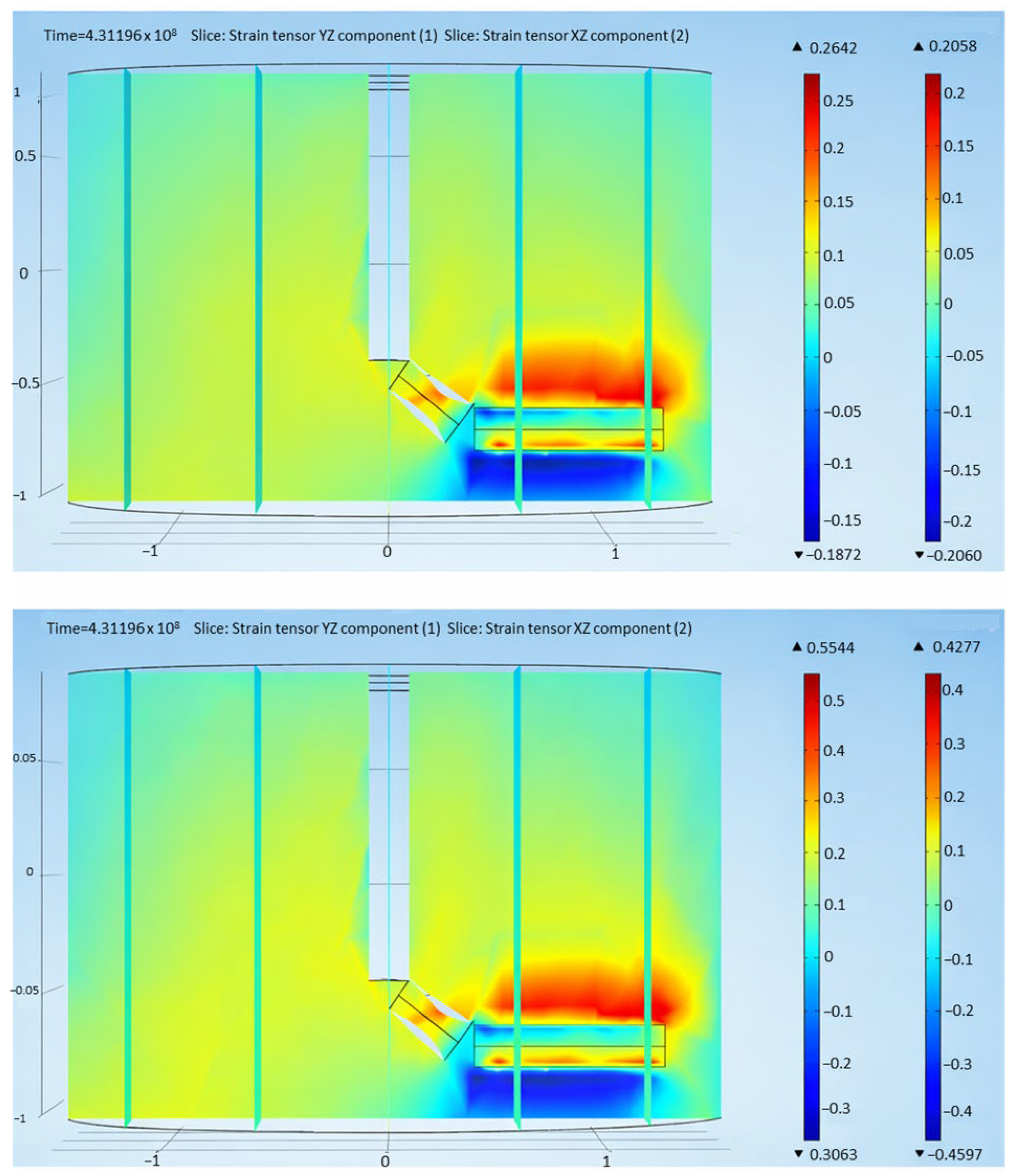
Figure 7 presents strain tensors on the XZ plane, demonstrating that fractures propagate perpendicular to the minimum horizontal stress direction, consistent with classical hydraulic fracturing theory. This behavior aligns with field observations documented in recent studies on depleted reservoir refracturing [22].
Figure 7.
Strain tensor on XZ plane where fracture pressure is applied after 5 and 20 years of production respectively.
Figure 8 compares strain distributions at different fracture pressures (1× and 2× the minimum effective horizontal stress) after 20 years of production. The results validate linear elasticity assumptions under varied loading conditions and highlight the impact of stress anisotropy on fracture geometry. A similar depletion-controlled stress redistribution has been observed in compositional simulations of CO2 flooding, where solid deposition mechanisms caused permeability losses exceeding 35% and significantly altered injectivity, underscoring the coupled impact of mechanical deformation and flow impairment in mature sandstone reservoirs [23].
Figure 8.
Comparisons between strains of the formation at different fracture pressures in the 20th year of production.
Table 6 summarizes the effective horizontal stress, defined as the difference between the total horizontal stress and the pore pressure scaled by the Biot–Willis coefficient.
Table 6.
Fracture geometry at different depletion stages.
The applied fracture pressure exerts direct control on the fracture geometry. It does that by governing the magnitude of the tensile opening and the extent of fracture propagation. The effective minimum horizontal stress increases with increases in fracture pressure. The fracture half-length and aperture increase as the stress contrast enhances and there is greater tensile displacement at the fracture tip, as summarized in Table 6.
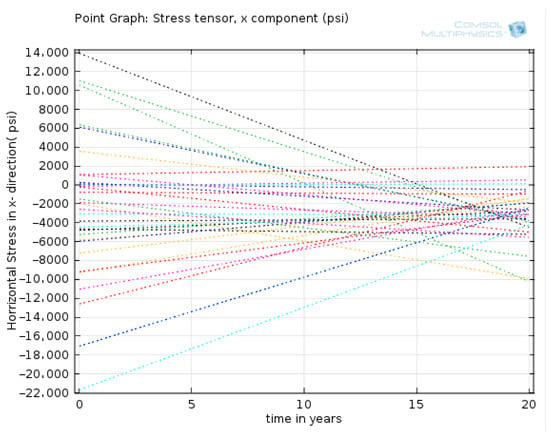
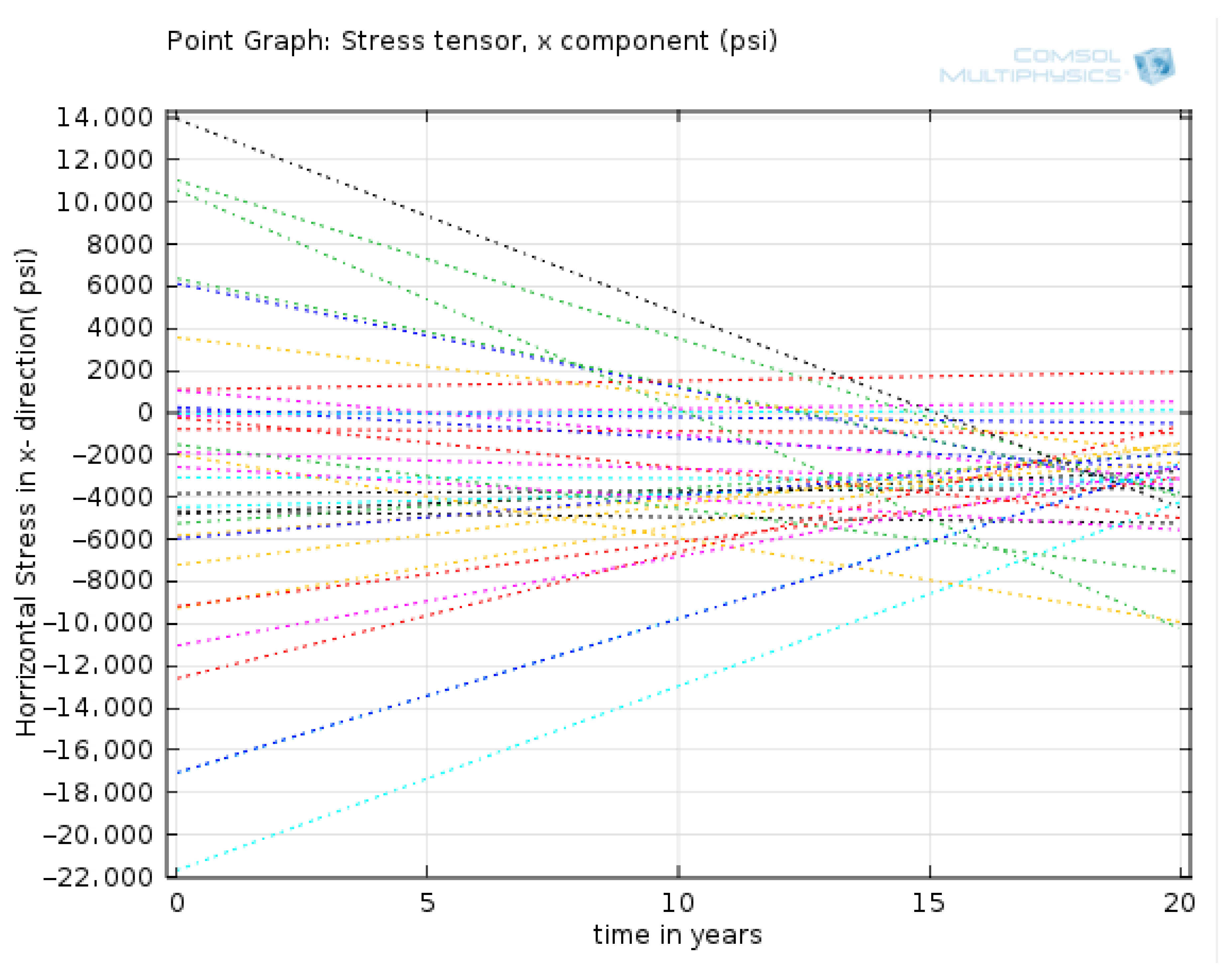
Figure 9 depicts the reduction in horizontal stresses over time. Tensile regions (above zero) and compressive regions (below zero) illustrate how depletion alters the in situ stress field, potentially reactivating faults or inducing shear failure—a phenomenon widely reported in geomechanical studies of the Permian Basin and North Sea fields [24].
Figure 9.
Plot showing reduction in horizontal stress over time. The lines above the zero-stress point are edge forces in nature, whereas the lines below are edge forces compressive in nature.
The studied model was benchmarked against published numerical and experimental studies on depletion-induced stress evolution in sandstone reservoirs. Ref. [22] investigated refracturing in depleted reservoirs using coupled reservoir–geomechanical simulations and showed how pressure depletion leads to a reduction in horizontal stress magnitude and changed the distribution of stress near the wellbore. This influences the fracture initiation pressure and fracture propagation pathways. From this model, the stress reorientation and reduced effective horizontal stresses are consistent with the findings from [22], especially the observation of fractures in depleted reservoirs that are initiated at lower pressures while remaining strongly controlled by the in situ stress regime. Further, the model shows consistency with [25]’s findings on how increasing effective stress due to pore pressure depletion results in significant permeability degradation in sandstone formations.
The agreement between the model’s predictions and that of the independent numerical and experimental studies gives confidence in the proposed approach as it captures the dominant geomechanical and flow mechanisms of fracture behavior in pressure-depleted sandstone reservoirs.
3.4. Fracture Length Calculation to Determine How Permeability Loss Can Be Corrected
Ratio of productivity index after 20 years of production
where kf = fracture permeability (md);
re = drainage radius (m);
rw = wellbore radius (m);
k = permeability (md).
The model explicitly links depletion-induced stress evolution to fracture initiation and propagation behavior, giving practical insights for refracturing designs in pressure-depleted sandstone reservoirs. The model predicts that fracture orientation is controlled by the in situ stress regime, which can inform optimal well and stage orientation during refracturing. Again, the model can be used as a screening tool to assess integrity risks before refracturing and long-term management strategies in depleted reservoirs.
3.5. Sensitivity Analysis on Porosity, Permeability, and Stress Path
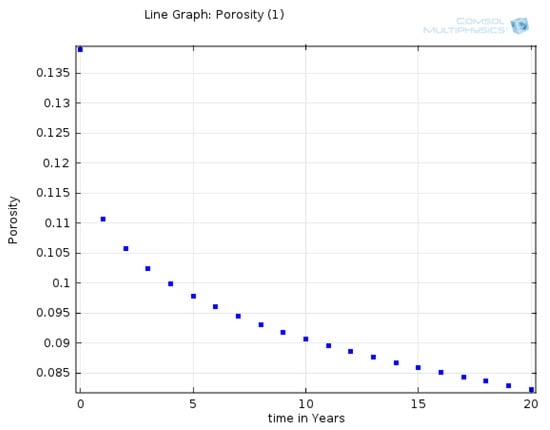
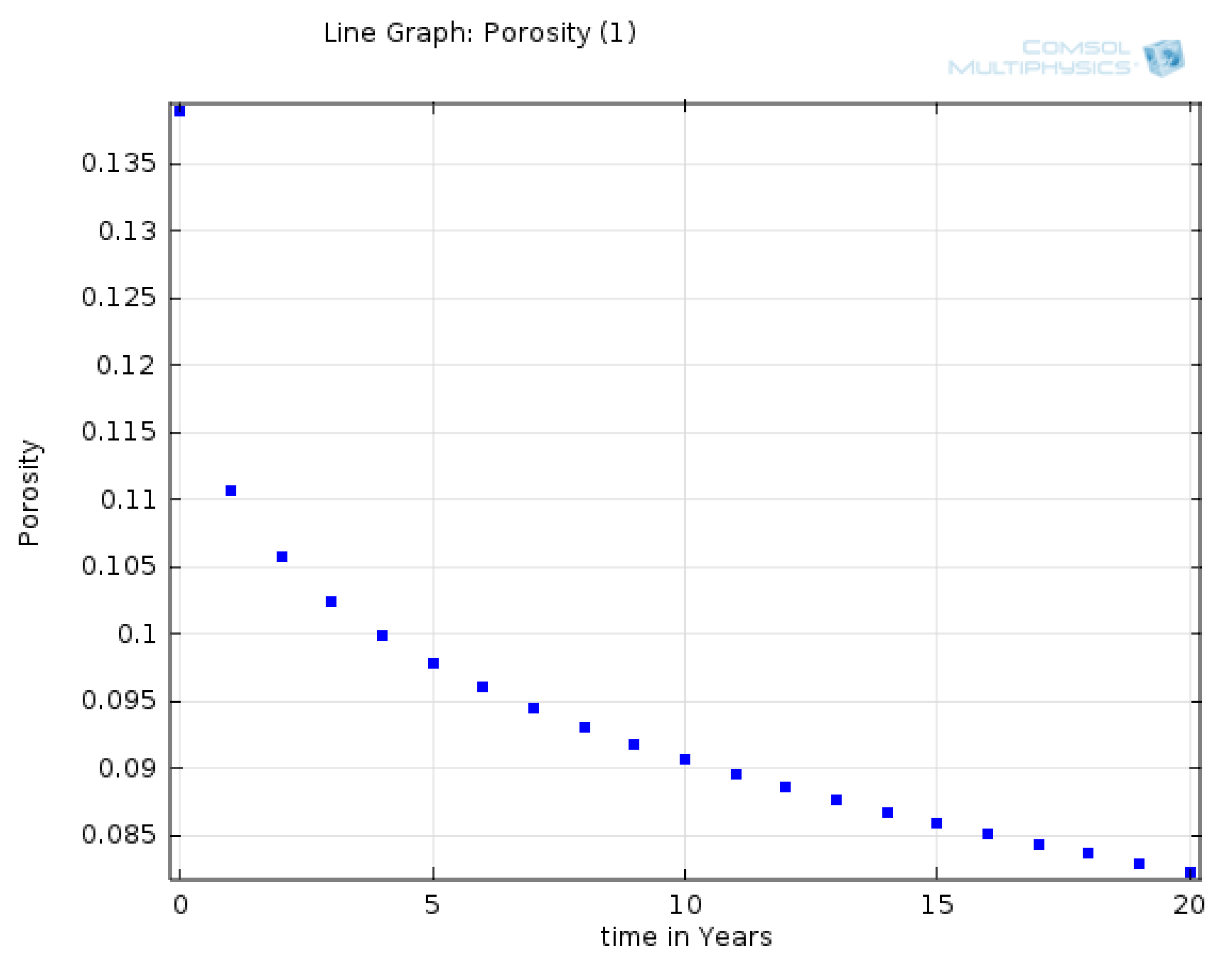
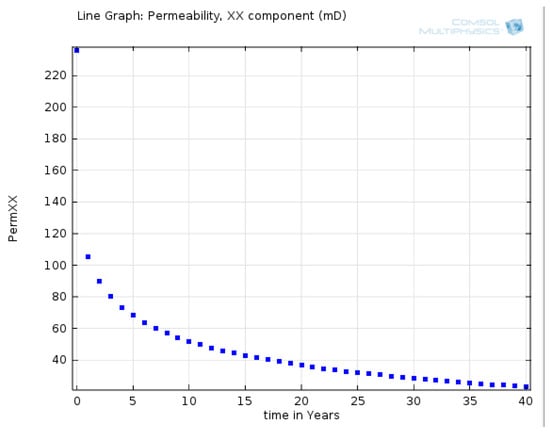
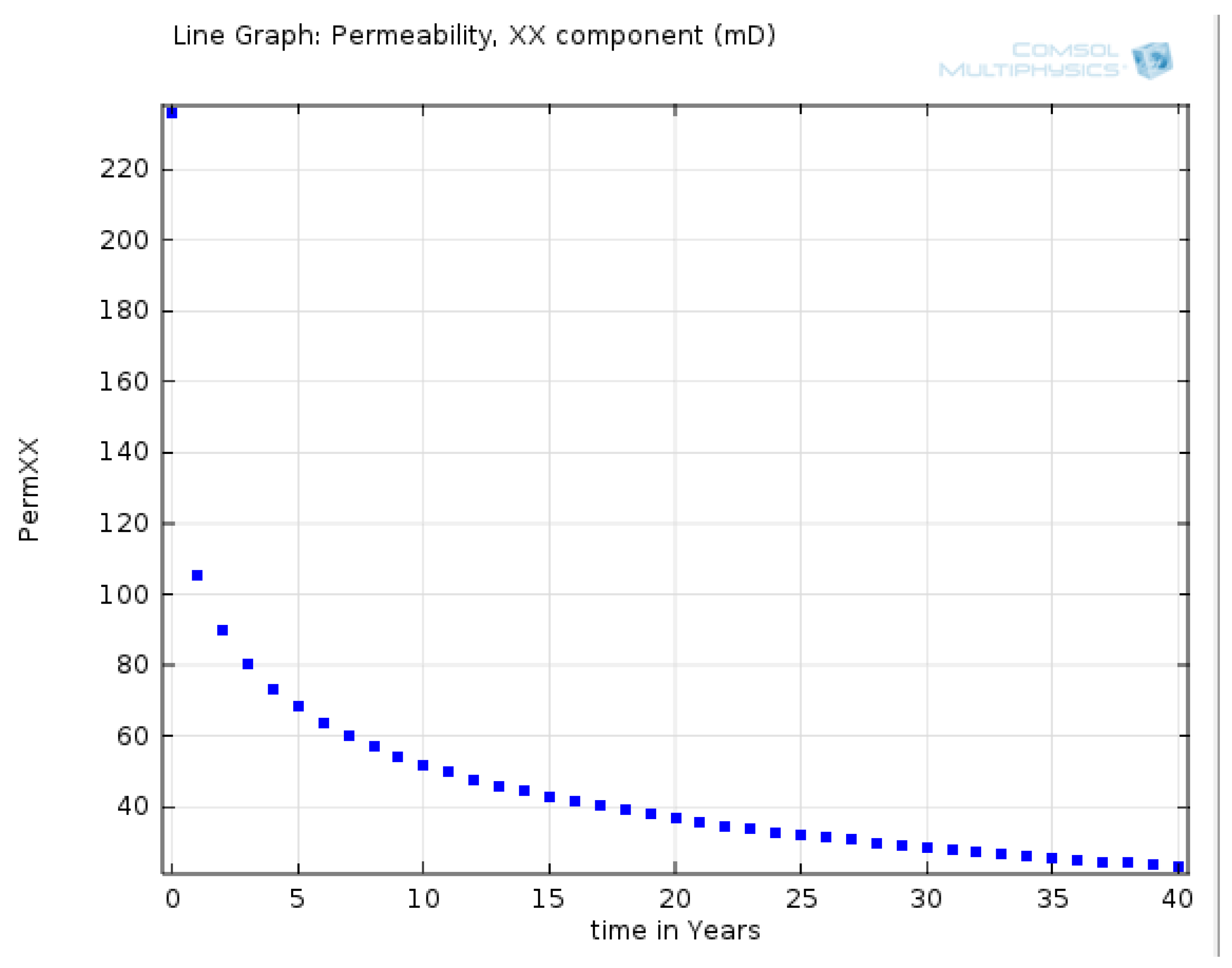
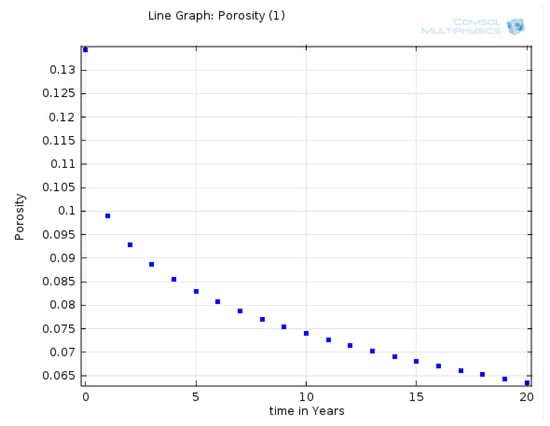
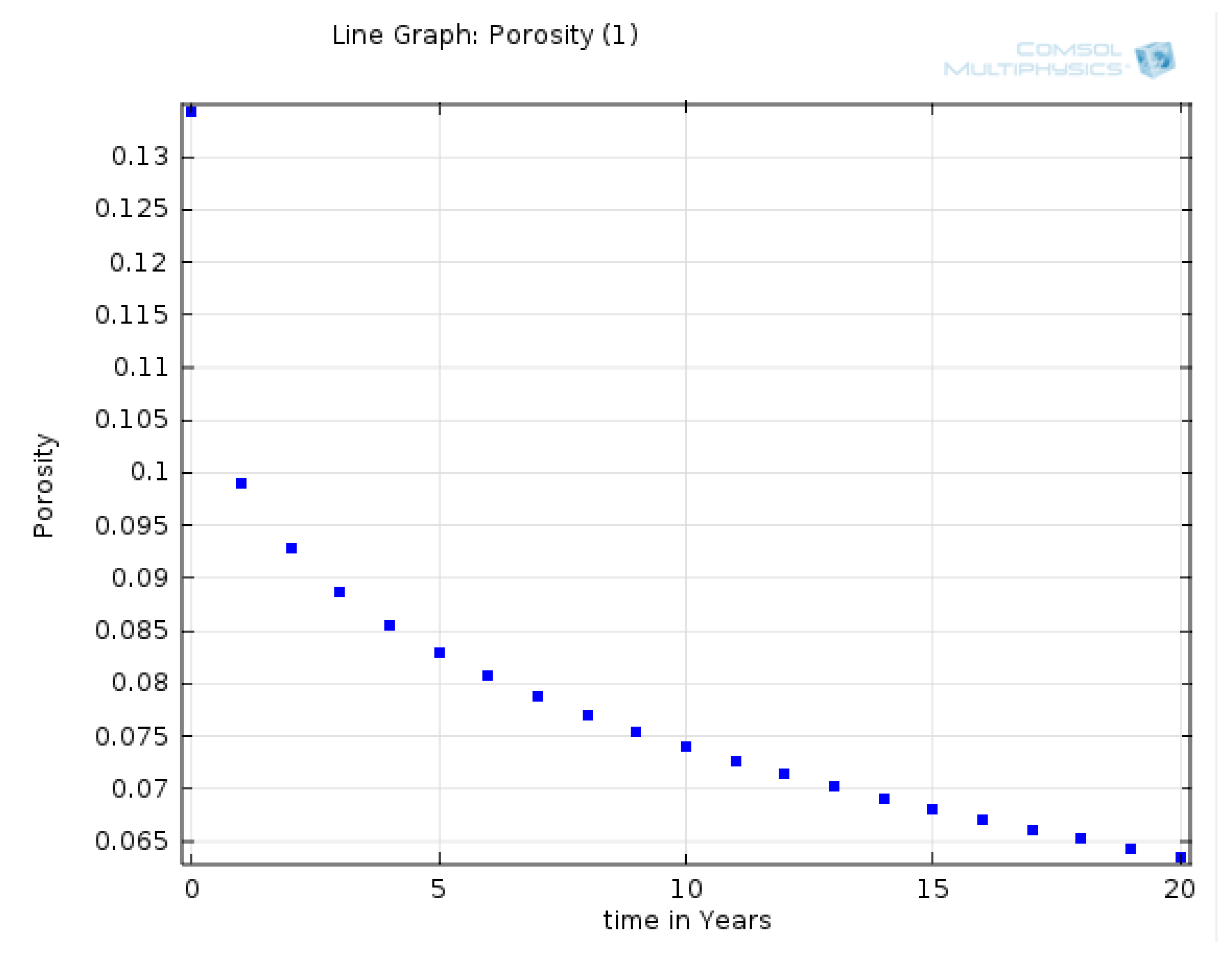
Porosity and permeability decrease exponentially with continued depletion (Figure 10 and Figure 11). The permeability loss is more severe than porosity reductions due to pore-throat collapse and fine migration, a behavior consistent with experimental studies on sandstone cores under triaxial stress [25]. The permeability–porosity relationship follows a modified Kozeny–Carman equation, validated by [20]:
where ki and ϕi are initial permeability and porosity, respectively. The productivity index (PI) is strongly influenced by permeability:
where S is the skin factor. In depleted reservoirs, it may become positive due to compaction damage, necessitating stimulation.
Figure 10.
Porosity plot against time (years) for a Young’s modulus of 10 GPa and an overburden load of 48 MPa. Porosity follows an exponential decrease as the number of years of production increases even though the effect of the overburden remains constant.
Figure 11.
Permeability plot against time (years).
Figure 12 shows the porosity decline under an increased overburden load (60 MPa). A 25% increase in overburden stress leads to a 33% reduction in porosity over time, highlighting the critical role of effective stress management in reservoir stewardship.
Figure 12.
Porosity against time for an overburden load of 60 MPa. A 25 percent increase in overburden load results in a 33 percent reduction in porosity over time.
Further, the declining trends in the porosity and permeability in Figure 10 and Figure 11 were evaluated using regression analysis. The porosity decline shows a strong exponential relationship with production time and an R2 of 0.98 was recorded, indicating roughly 98% of the observed data was explained by the fitted model. Similarly, the permeability decline shows a stronger correlation with production time, recording an R2 of 0.99. This shows that the observed porosity and permeability trends are robust, again showing that permeability is more sensitive to depletion-induced effective stress changes than porosity in the model of this study.
This study explicitly quantified the relationship between porosity/permeability reduction and fracture initiation. This coupling is demonstrated through equations and supported by experimental data, highlighting the impact of permeability loss on fracture behavior during depletion.
3.6. Validation
The validation of our model was based on the comparison of results from Aben et al.’s (2025) [1] analytical solution and results from Al-Shalabi et al.’s (2018) [25] experiments. Our model predicted a 28% decrease in fracture initiation pressure, which is close to Aben et al.’s 30% decrease in fracture pressure. Our model also predicted, just as Al-Shalabi et al. observed, an overall 85% reduction in permeability/porosity for depleted sandstone reservoirs where porosity and permeability decreased over time; however, Al-Shalabi et al.’s quantitative results were somewhat different in their overall magnitude than those predicted by our model. Our results also agree with the results observed by Ref. [26] showing that fracture propagation and reorientation of stress occur when there are decreasing horizontal stresses in a depleted sandstone reservoir at lower depletion pressures than observed for other reservoirs. Therefore, these comparisons indicate that our model is robust and accurate in reproducing the conditions for fractured behavior in depleted sandstone reservoirs.
4. Conclusions
Recent advancements in coupled flow–geomechanics simulations (e.g., using CMG, AD-GPRS, or OPM) have enabled more accurate prediction of fracture propagation in depleting reservoirs [27]. Digital rock physics and CT-scan imaging have provided pore-scale insights into compaction-induced permeability damage [28]. Additionally, machine learning models are now being used to optimize fracture staging and well spacing in depleted zones [29]. The simulation results presented here align with these contemporary trends, particularly in demonstrating stress reorientation and its impact on fracture geometry, the exponential decline in permeability with depletion, and the feasibility of low-pressure refracturing in depleted zones, a practice increasingly adopted in the Eagle Ford and Bakken formations [30]. These findings underscore the importance of integrating real-time geomechanical monitoring with reservoir simulation to enhance fracture design and maximize recovery in mature sandstone reservoirs. Appropriate governing equations were employed to derive a fracture model incorporating depletion by applying the finite element capability of the COMSOL Multiphysics software and using the poroelastic/Darcy’s equations modules.
The simulation results indicated that porosity decreased significantly (62%) with 23.8% pressure depletion. The study highlighted the porosity changes affecting permeability and that there was an 85% decrease because of a 23.8% decrease in the reservoir pressure. According to the calculations, using the developed model, the optimal fracture pressure will create a fracture length of 0.2 L and increase the productivity index after 20 years by 230%. The results observed were only used in comparing similar theoretical values for future works, and experiments on core samples of sand from the same or similar reservoirs will reinforce the results obtained in this work. Finally, COMSOL Multiphysics is a powerful modeling tool, but if its modules could be coupled with ECLIPSE reservoir simulation software, we could have the best representation of subsurface occurrence during oil and gas production.
Author Contributions
Conceptualization, K.O.S. and F.B.; Methodology, V.N.B.A.; Software, B.A.I.; Validation, F.B.; Formal analysis, D.A.; Investigation, V.N.B.A.; Resources, M.N.U.; Data curation, M.N.U.; Writing—original draft preparation, K.O.S.; Writing—review and editing, D.A.; Visualization, B.A.I.; Supervision, F.B.; Project administration, D.A. All authors have read and agreed to the published version of the manuscript.
Funding
This research received no external funding.
Data Availability Statement
The original contributions presented in this study are included in the article. Further inquiries can be directed to the corresponding authors.
Conflicts of Interest
The authors declare no conflicts of interest.
References
- Aben, F.M.; Pruiksma, J.P.; Kraaijpoel, D.; Osinga, S.; Pluymaekers, M.P.D. A stress model for nonlinear reservoir compaction and application to the post shut-in Groningen gas field. Geophys. J. Int. 2025, 241, 1495–1518. [Google Scholar] [CrossRef] [Scilit]
- Hussain, M.; Boukadi, F.; Hu, Z.; Adjei, D. Optimizing Oil Recovery: A Sector Model Study of CO2-Water-Alternating-Gas and Continuous Injection Technologies. Processes 2025, 13, 700. [Google Scholar] [CrossRef] [Scilit]
- Guo, B.; Islam, M.T.; Amponsah, V.N.B. An Innovative Solution Method for the Evaluation of CO2 Disposal in the Seafloor Environment. C 2025, 11, 81. [Google Scholar] [CrossRef] [Scilit]
- Kenter, C.J.; Van den Beukel, A.C.; Hatchell, A.C.; Maron, P.J.; Molenaar, K.P.; Molenaar, M.M.; Stammeijer, J.G.F. Geomechanics and 4D: Evaluation of Reservoir Characteristics from Timeshifts in the Overburden. In Proceedings of the Gulf Rocks 2004, the 6th North America Rock Mechanics Symposium (NARMS), Houston, TX, USA, 5–9 June 2004. [Google Scholar]
- Crain, E.R. Crain’s Petrophysical Handbook. Technical Reference Manual. 2011. Available online: https://www.spec2000.net/index.htm (accessed on 14 February 2016).
- Ying, J. Comprehensive Stress Sensitivity Analysis During CO2 Flooding and Storage in Tight Sandstone Reservoirs. In Proceedings of the SPE Asia Pacific CCUS Conference, Kuala Lumpur, Malaysia, 26–27 August 2025. [Google Scholar] [CrossRef] [Scilit]
- Tang, H.; Tang, H.; He, J.; Zhao, F.; Zhang, L.; Liao, J.; Wang, Q.; Yuan, X. Damage mechanism of water-based fracturing fluid to tight sandstone gas reservoirs: Improvement of The Evaluation Measurement for Properties of Water-based Fracturing Fluid: SY/T 5107-2016. Nat. Gas Ind. B 2021, 8, 163–172. [Google Scholar] [CrossRef] [Scilit]
- Qiu, X.; Chen, M.; Dai, Y.; Kou, X.; Wei, Y.; Song, X. Hydraulic fracturing fracture propagation in tight sandstone reservoir. IOP Conf. Ser. Earth Environ. Sci. 2021, 861, 062082. [Google Scholar] [CrossRef] [Scilit]
- Shinohara, T.; Verberne, B.A.; Spiers, C.J.; de Bresser, J.H.P.; Hangx, S.J.T. Rate-dependent inelastic deformation of Slochteren sandstone: Implication for reservoir compaction in the Groningen gas field. Geomech. Geophys. Geo-Energy Geo-Resour. 2025, 11, 83. [Google Scholar] [CrossRef] [Scilit]
- Shinohara, T.; Thieulot, C.; Spiers, C.J.; Hangx, S.J.T. Non-Hertzian Stress Fields in Simulated Porous Sandstone Grains and Implications for Compactive Brittle Failure—A High-Resolution FEM Approach. J. Geophys. Res. Solid Earth 2025, 130, e2024JB030818. [Google Scholar] [CrossRef] [Scilit]
- Zhao, C.; Shi, L.; Su, H.; Yan, L.; Luo, Y.; Luo, S.; Qiu, P.; Hu, Y. Study on the Four-Dimensional Variations of In Situ Stress in Stress-Sensitive Ultra-High-Pressure Tight Gas Reservoirs. Processes 2025, 13, 1508. [Google Scholar] [CrossRef] [Scilit]
- Xue, J.; Guo, B. Analytical Modeling and Comparative Analysis of Capillary Imbibition in Shale Pores of Various Geometries. Comput. Model. Eng. Sci. 2025, 144, 3307–3328. [Google Scholar] [CrossRef] [Scilit]
- Wang, C.; Zhang, X.; Yang, T.; Zhou, Z.; Luo, X.; Fan, J.; Gao, H. Stress sensitivity mechanism of pores in unconsolidated sandstone reservoir using NMR technology. Geoenergy Sci. Eng. 2024, 240, 212999. [Google Scholar] [CrossRef] [Scilit]
- Liu, X.; Geng, S.; Hu, P.; Li, Y.; Zhu, R.; Liu, S.; Ma, Q.; Li, C. Blasingame production decline curve analysis for fractured tight sand gas wells based on embedded discrete fracture model. Gas Sci. Eng. 2024, 121, 205195. [Google Scholar] [CrossRef] [Scilit]
- Fan, Z.; Zhang, C.; Wang, D.; Li, S.; Zhao, J.; Wu, Z. Thermoporoelastic response of a semi-permeable wellbore subjected to convective cooling and non-hydrostatic in situ stresses. Int. J. Numer. Anal. Methods Geomech. 2023, 47, 2116–2135. [Google Scholar] [CrossRef] [Scilit]
- Khan, R.A.; Hafeez, Q.; Khan, Z.H.; Ahmed, R.; Ahmed, Q.I.; Zafar, J. Investigating Hydraulic Fracturing/Re-Fracturing Success, Challenges, and Lessons Learnt in Depleted Reservoir: Case Studies. In Proceedings of the SPE/PAPG Pakistan Section Annual Technical Symposium and Exhibition, Islamabad, Pakistan, 18–19 February 2025. [Google Scholar] [CrossRef] [Scilit]
- Gu, T.; Yu, X.; Zhang, L.; Su, X.; Wu, Y.; Jie, Y.; Wang, H.; Zhou, D. A Study on the Influence of Natural Fractures in Tight Sandstone Reservoirs on Hydraulic Fracture Propagation Behavior and Post-Fracture Productivity. Processes 2024, 12, 2813. [Google Scholar] [CrossRef] [Scilit]
- Liu, J.; Qu, L.; Song, Z.; Li, J.; Liu, C.; Feng, Y.; Sun, H. Fracability Evaluation Method and Influencing Factors of the Tight Sandstone Reservoir. Geofluids 2021, 2021, 7092143. [Google Scholar] [CrossRef] [Scilit]
- Zoback, M.D. Reservoir Geomechanics; Cambridge University Press: Cambridge, UK, 2010. [Google Scholar]
- Jaeger, J.C.; Cook, N.G.W.; Zimmerman, R. Fundamentals of Rock Mechanics; Blackwell Publishing: Malden, MA, USA, 2009. [Google Scholar]
- Luo, B.; Jin, G.; Staněk, F. Near-field strain in distributed acoustic sensing-based microseismic observation. Geophysics 2021, 86, P49–P60. [Google Scholar] [CrossRef] [Scilit]
- Wang, X.H.; Zhang, F.S.; Yin, Z.R.; Weng, D.W.; Liang, H.B.; Zhou, J.P.; Xu, B. Numerical investigation of refracturing with/without temporarily plugging diverters in tight reservoirs. Pet. Sci. 2022, 19, 2210–2226. [Google Scholar] [CrossRef] [Scilit]
- Sergio, D.; Oladele, D.A.; Nuetor, F.D.; Goswami, H.; Trabelsi, R.; Trabelsi, H.; Boukadi, F. Practical Approach for Formation Damage Control in CO2 Gas Flooding in Asphaltenic Crude Systems. Processes 2025, 13, 2740. [Google Scholar] [CrossRef] [Scilit]
- Rodriguez, J.A.; Zoback, M.D.; Gorelick, S.M. Depletion-induced stress changes and fault reactivation risk during subsurface energy operations. Geophys. Res. Lett. 2022, 49, e2022GL099876. [Google Scholar] [CrossRef] [Scilit]
- Al-Shalabi, E.W.; Sepehrnoori, K.; Delshad, M. Experimental investigation of stress-dependent permeability and porosity in sandstone reservoirs. J. Pet. Sci. Eng. 2018, 164, 445–456. [Google Scholar] [CrossRef] [Scilit]
- Masouleh, S.F.; Kumar, D.; Ghassemi, A. Three-dimensional geomechanical modeling and analysis of refracturing and “frac-hits” in unconventional reservoirs. Energies 2020, 13, 5352. [Google Scholar] [CrossRef] [Scilit]
- Hosseinzadeh, S.; Abdollahi, R.; Salimzadeh, S.; Haghighi, M. Three-dimensional coupled temporal geomechanical model for fault-reactivation and surface-deformation evaluation during reservoir depletion and CO2 sequestration, securing long-term reservoir sustainability. Sustainability 2024, 16, 8482. [Google Scholar] [CrossRef] [Scilit]
- Gudala, M.; Madadi, M.; Al-Muntasheri, G.A. Pore-scale investigation of compaction-induced permeability damage in sandstones using digital rock physics and X-ray micro-CT imaging. J. Pet. Sci. Eng. 2022, 208, 109269. [Google Scholar] [CrossRef] [Scilit]
- Li, W.; Zhang, T.; Liu, X.; Dong, Z.; Dong, G.; Qian, S.; Yang, Z.; Zou, L.; Lin, K.; Zhang, T. Machine learning-based fracturing parameter optimization for horizontal wells in Panke field shale oil. Sci. Rep. 2024, 14, 6046. [Google Scholar] [CrossRef] [Scilit]
- Smith, J.D.; Miller, R.K.; Thompson, L.G. Low-pressure refracturing strategies for depleted shale reservoirs. SPE J. 2024, 29, 1021–1038. [Google Scholar]

Disclaimer/Publisher’s Note: The statements, opinions and data contained in all publications are solely those of the individual author(s) and contributor(s) and not of MDPI and/or the editor(s). MDPI and/or the editor(s) disclaim responsibility for any injury to people or property resulting from any ideas, methods, instructions or products referred to in the content. |
© 2026 by the authors. Licensee MDPI, Basel, Switzerland. This article is an open access article distributed under the terms and conditions of the Creative Commons Attribution (CC BY) license.