


Abstract
Over the last decade, the use of energy storage in power grids has grown enormously, primarily to improve system stability and maximize the benefits of renewable energy sources. As many countries set ambitious targets to increase the share of renewable energy in their energy mix, the deployment of energy storage in future grids is expected to increase. This is crucial for ensuring stable grid operation. Conventional energy storage technologies are limited by technical, environmental, and economic factors. CO2-based energy storage is an emerging technology that overcomes these limitations. This paper presents a techno-environmental assessment of CO2-based energy storage technology. It provides a roadmap for technology deployment to help energy leaders and project managers make informed decisions about this emerging technology. This should facilitate a smoother energy transition and decarbonization of power grids.
1. Introduction
As power utilities increase their use of renewable energy sources, the need for energy storage has become increasingly critical. This is because renewable resources such as wind, solar, and wave energy exhibit inherently variable and non-dispatchable output. Their generation profiles often do not align with load demand, resulting in excess production during periods of low demand and insufficient output during periods of peak demand. This mismatch limits the contribution of renewable energy to the overall energy generation mix. It also presents significant challenges for system control, stability, and operational planning. Energy storage systems have emerged as a promising solution to mitigate these issues.
The effective deployment of energy storage can provide power utilities with substantial technical, operational, and economic benefits. These benefits include maximizing renewable energy penetration, optimizing resource utilization, improving generation–demand balancing, reducing greenhouse gas emissions, lowering grid connection and reinforcement costs, and enabling more flexible, resilient, and reliable system operation.
Several conventional energy storage technologies are currently available for utility-scale applications, including pumped hydro energy storage (PHES), flywheel energy storage, compressed air energy storage (CAES), battery energy storage, hydrogen storage, supercapacitor energy storage, and superconducting magnetic energy storage (SMES).
Despite their widespread use, conventional technologies face technical limitations that restrict their deployment and reduce their effectiveness in supporting power system operations. Future grids are expected to rely more heavily on energy storage to facilitate the energy transition and enhance system reliability. Thus, new, advanced storage solutions are needed.
Compressed carbon dioxide energy storage (CCES) is one promising emerging technology. This novel, thermodynamic-based system addresses many of the challenges associated with conventional storage technologies, offering improved performance, flexibility, and operational benefits. This paper presents a comprehensive technical assessment of CCES as a potential large-scale energy storage solution.
In recently published articles and studies, CO2-based energy storage and other long-duration energy storage technologies have been assessed. These articles primarily addressed the thermodynamic principles, the existing system configurations, or comparing the working process and concepts from a high-level point of view. In contrast, this paper’s key contribution is advancing the current literature by addressing techno-economic assessment and benchmarking with conventional energy storage technologies. In addition, it addresses the environmental impacts of technology, discusses the real-world deployed projects and puts this into a unified assessment framework. Furthermore, this work introduces a structured deployment roadmap that links technology maturity, application scenarios, and system-scale requirements, alongside a comparative techno-economic dashboard that benchmarks CO2-based storage against conventional storage technologies using consistent assumptions. The assessment also introduces a comparative techno-economic dashboard which incorporates data from existing and pilot-scale projects, which provides practical insight into scalability, operational constraints and implementation challenges. This dashboard is a valuable decision-support tool which can support decision-making by utilities and energy planners on practical adoption of CO2-based energy storage in modern power systems.
2. Role of Energy Storage in Power Grids
To meet government targets and national sustainability goals, power utilities around the world are undergoing an energy transition. A key part of this transition is increasing the share and penetration of renewable energy sources in their energy mix. However, the contribution of renewable energy sources to overall power generation is limited by technical and operational challenges inherent to their characteristics.
2.1. Key Challenges Facing Bulk Penetration of Renewable Sources
Most renewable energy sources are inherently intermittent, exhibiting output variations ranging from minutes to hours. This variability limits their ability to provide consistent, controllable power and poses significant challenges to the large-scale integration of renewable energy. The key challenges of bulk penetration of renewable energy are summarized in Table 1 [1,2,3,4,5].
Table 1.
Key challenges of bulk penetration of renewable energy.
2.2. Key Benefits of Energy Storage for Power Grids
Efficiently deploying the proper energy storage technologies will help overcome these challenges. Energy storage plays an important role in the operation, control, and management of power systems. It stores surplus energy generated from intermittent renewable energy sources during off-peak times and provides it back to the grid during peak times. Table 2 summarizes the key benefits that energy storage can provide for power grid operations [1,2,3,4,5].
Table 2.
Key benefits of energy storage for power grids.
2.3. Key Applications of Energy Storage for Power Grids
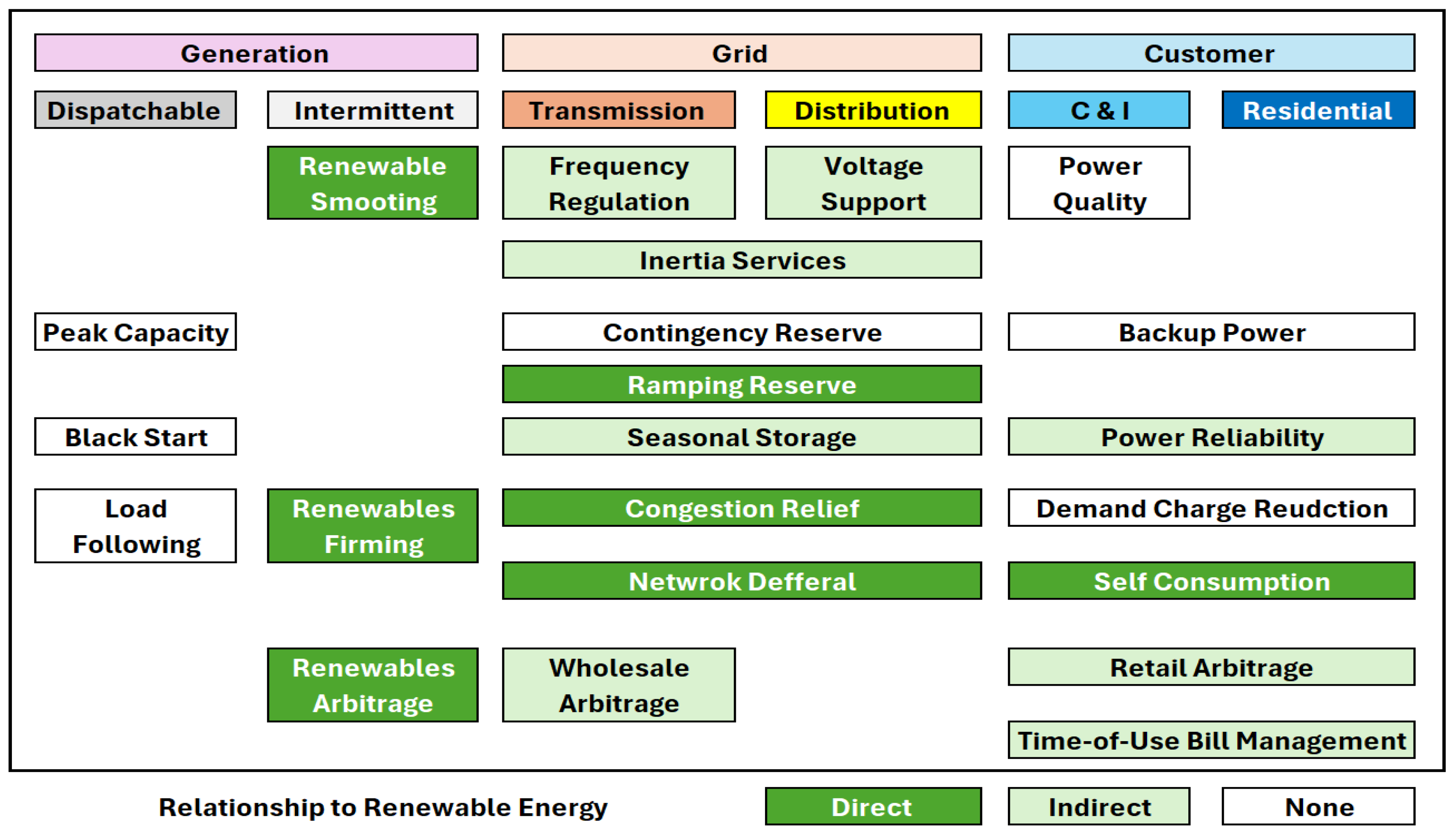
When examining the applications of energy storage in power grids, three main categories emerge: (1) generation applications, (2) transmission and distribution (T&D) applications, and (3) customer service (end-user) applications. The key applications according to this categorization are summarized in Table 3.
Table 3.
Key applications of energy storage for power grids.
Due to the rapid growth and penetration of low-carbon electricity generation, it is crucial to consider deploying energy storage systems to enhance grid flexibility. Some storage technologies are more suitable for specific applications than others, enabling more flexible grid operation. These storage technologies have a wide range of applications and can be categorized according to [6]:
- Actual service that the energy storage provides
- Location in the grid
- Relation to intermittent renewable energy
Figure 1 illustrates the wide range of energy storage applications, explaining the services provided, their locations across the grid, and their relationship to renewable energy integration [6].
Figure 1.
Applications of energy storage for better grid flexibility.
3. Conventional Energy Storage Technologies
Various technologies have been developed for energy storage. Each technology has its own operational characteristics and is therefore more suitable for specific applications. However, they all have technical, environmental, and economic limitations that prevent their use in certain cases. This section reviews these conventional technologies with a focus on their limitations.
3.1. Classification and Types of Energy Storage Technologies
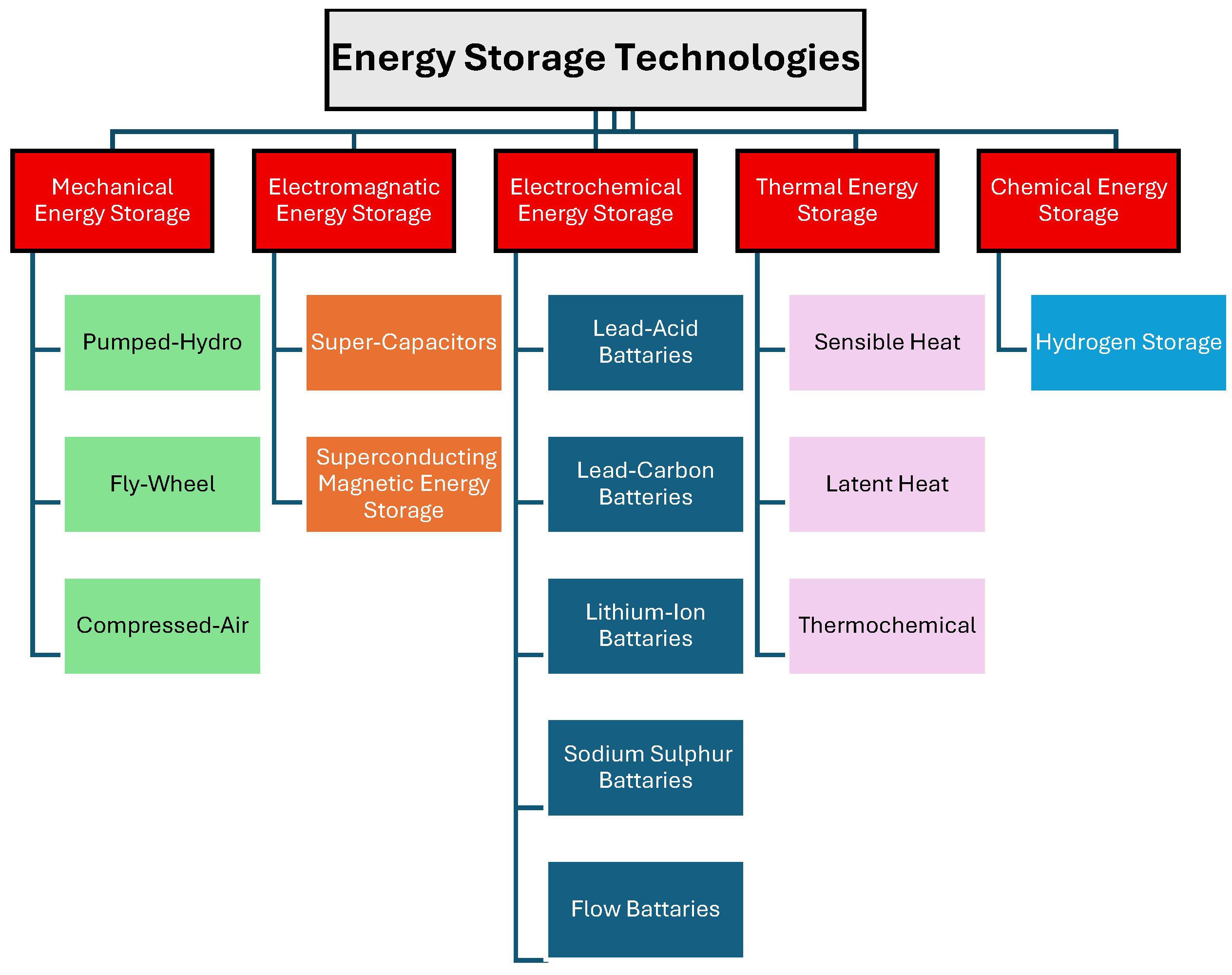
Over the decades, several conventional energy storage technologies have been incorporated into power grids. These technologies can be classified according to their operating principle, the form of energy stored and retrieved, and the conversion process [7]. The five main categories of energy storage technologies include (1) mechanical, (2) electromagnetic, (3) electrochemical, (4) thermal, and (5) chemical energy storage. Figure 2 illustrates the key technologies in each of these categories.
Figure 2.
Classification of energy storage technologies.
3.2. Limitations Matrix of Energy Storage Technologies
These conventional energy storage technologies are widely used across power systems. The key characteristics of energy storage include initial capital cost, operating cost, round-trip efficiency (RTE), storage capacity, discharge cycles, and lifetime. Each storage option is more suitable for specific applications than others due to its technology characteristics. However, these conventional options have operational, technical, economic, and environmental limitations. Table 4 presents the limitations matrix of conventional energy storage technologies [7,8,9,10].
Table 4.
Limitations matrix of conventional energy storage technologies.
4. Carbon Dioxide (CO2)-Based Energy Storage
The need for greater integration of clean and low-carbon energy sources will significantly increase the deployment of energy storage in the future. However, conventional energy storage technologies have technical, economic, and environmental limitations that slow their deployment. CO2-based energy storage is emerging as a promising alternative to conventional systems. This section explains the technical principles behind this technology.
4.1. Novelty Behind the Technology
Recently, CCES has emerged as an innovative energy storage technology and a potential alternative that addresses the limitations of conventional storage options. In its main principle, CCES exploits the thermophysical properties of compressed CO2 in a closed-loop or supercritical state in a Brayton-based system to efficiently store and discharge energy. This novel technology has many attractive features, including high energy density, low viscosity, and long-duration energy storage, and it operates with high RTE (65–80%) [15,16]. Furthermore, it is site-flexible and modular, making it superior to PHES and CAES, which require specific geophysical or geological conditions. CCES offers compelling performance for daily and weekly energy storage applications when integrated with thermal energy storage (TES) and heat exchangers. In addition, CCES relies on abundant materials and can easily integrate with renewable energy sources. These characteristics establish CCES as a promising storage technology for the energy transition. Furthermore, CCES can address the intermittency of renewable generation and support future low-carbon power grids effectively.
4.2. Technology Thermodynamics Basics
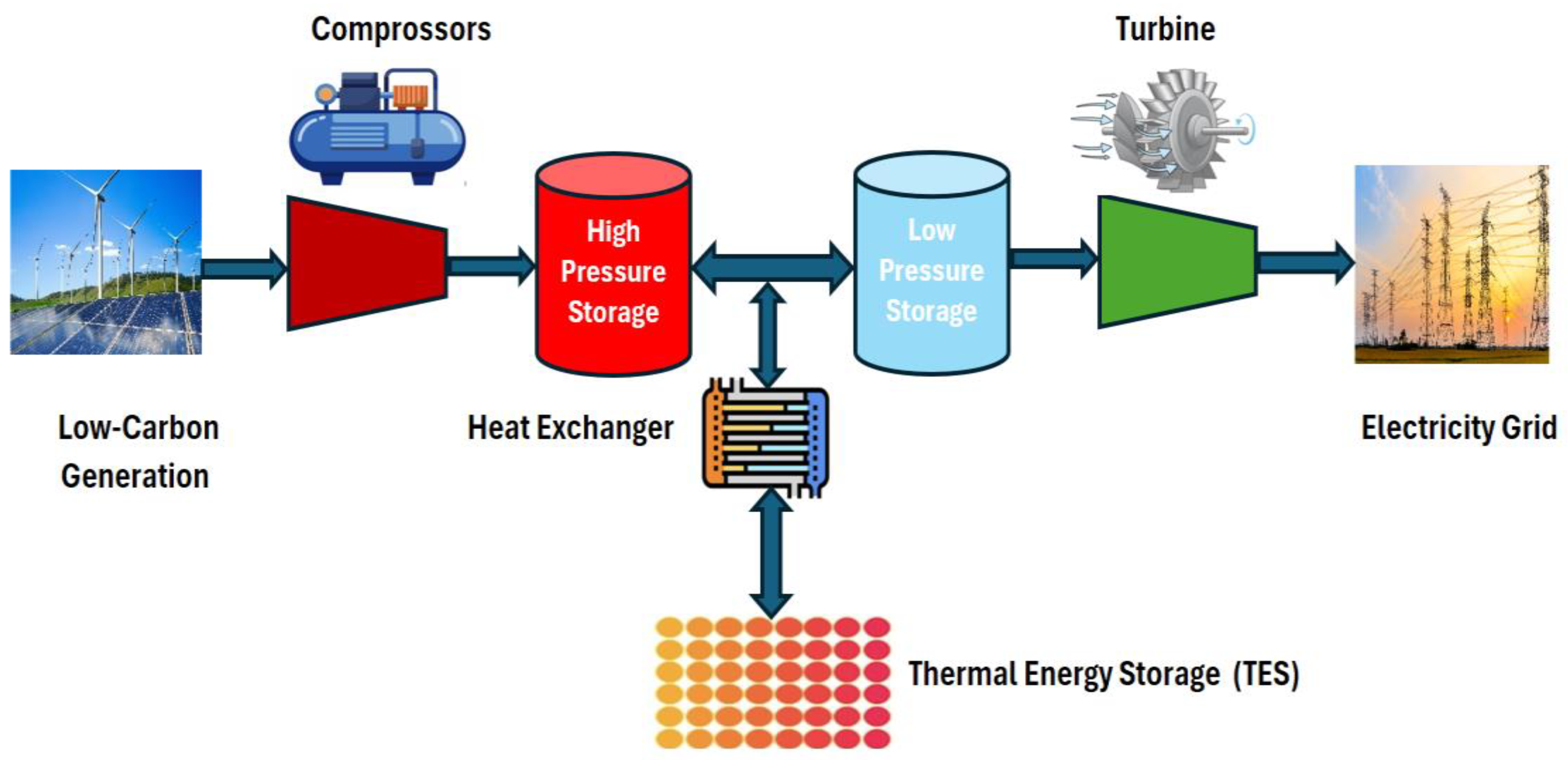
CCES uses surplus energy to compress and liquefy CO2, storing it in storage tanks as a compressed liquid. This is accomplished using a closed-loop system. When energy is required, the stored energy is released by heating the stored liquid, which expands and transforms into high-pressure gas. When released, the high-pressure gas generates mechanical energy that drives a turbine, which generates electricity. After spinning the turbine, gas experiences a significant pressure drop and is stored in low-pressure storage tanks. Figure 3 shows the basic configuration of a compressed CO2 energy storage system.
Figure 3.
Basic system architecture and components of CO2 energy storage.
The basic configuration of the CO2 storage system consists of five components:
- Compressors: These apply excess electrical energy, usually from the grid, to compress and liquefy CO2 gas. This is done by increasing the gas’s pressure, converting it from a gaseous state to a liquid state. This process typically occurs at temperatures about 400 °C.
- TES: During the compression process, significant heat is released. The purpose of this unit is to recover this wasted heat from the compression cycle. Heat exchangers are required for heat recovery and are therefore integrated with the system. This captures the heat from the hot liquid CO2 and cools it down. As a result, the hot liquid CO2 can transform into high-pressure CO2 gas.
- Heat exchanger: Its main function is to capture the heat from the hot liquid CO2, which reduces its temperature. As a result, CO2 transforms into high-pressure gas.
- Low-pressure storage: It is mainly used to store CO2 in its gaseous state.
- High-pressure storage: It uses high-pressure tanks, which may be cylindrical, to store CO2 in its liquid state.
CO2 has excellent thermodynamic properties. For this reason, it is highly suitable for energy storage applications, especially when operated in a closed-loop compression–expansion configuration. Its critical point is about 31.1 °C (73.8 bar). Near this point, it transitions to a supercritical phase, exhibiting properties of both gases and liquids. This unique behavior results in an exceptionally high density and low compressibility, enabling the storage of substantial amounts of energy within compact volumes [17,18].
Compared to air, CO2 has a key advantage: it requires less compression work. This feature results in a considerable reduction in the energy needed for compression during the charging stage of the system. Furthermore, CO2’s low critical temperature makes liquefaction and thermal management easier for the system, eliminating the need for cryogenic conditions [19]. Additionally, and more importantly, CO2 undergoes a reversible phase transition within an accessible range of pressure and temperature conditions. This results in efficient heat capture and maximization of recovered heat energy. These properties justify the integration of TES into the system, improving the RTE through better recycling and compression heat during the discharge cycle stage [18,20].
4.3. Key System Configurations
Currently, there are three basic configurations for the CO2-based energy storage system. Each configuration has been designed for specific grid applications and storage duration capabilities. This section will address the key characteristics and features of each configuration.
- CCES—Compressed CO2 Energy Storage [17,18,20]:
It is the most commercially mature configuration. In principle, it operates through a compression–expansion cycle: it compresses to store CO2 and releases it through expansion to discharge. This process occurs near or above the critical point of CO2. The performance of this configuration benefits from high energy density, reversible phase change, and integration of underground tanks. The thermophysical behavior near the critical point significantly impacts system performance. This configuration is better suited to utility-scale and long-duration applications. The Energy Dome system is one example of this configuration; it stores CO2 at ambient pressure in a flexible dome and compresses it into high-pressure tanks during the charging phase. When discharged, the CO2 expands through turbines using recovered thermal energy, delivering an RTE exceeding 75% [15,16].
- LAES—Liquid CO2 Energy Storage [18,19]:
This configuration is based on liquid–vapor phase transitions. Here, CO2 is stored as a liquid to increase volumetric energy density. The system is integrated with a thermal reservoir that evaporates and recondenses CO2. This configuration is better suited to space-constrained or long-duration applications [19,21]. Compared to CCES, LAES has a higher volumetric energy density and simple construction. However, precautions must be taken when integrating TES to reduce liquefaction losses.
- PTES—Pumped Thermal Energy Storage [19,22,23]:
This configuration uses heat pumps to store energy and heat engines to convert that energy back into electricity. Modern systems employ the supercritical CO2 PTES configuration. This configuration is often referred to as a “Carnot battery.” These modern systems operate on a closed Brayton cycle, storing surplus electricity as heat between two temperature reservoirs. Then, supercritical CO2 cycles between hot and cold tanks to drive turbines with high thermodynamic efficiency [18,21]. This configuration is highly scalable and flexible in terms of geographical conditions [23]. Its overall performance depends on temperature lift and the efficiency of the system’s various components. Compared to CCES and LAES, this configuration has a longer lifespan but operates with a lower RTE. Improving the configuration’s RTE requires advanced cycle integration. Table 5 presents a summarized comparison of these key configurations.
Table 5.
Comparison of the three basic CO2 energy storage configurations.
5. Key Deployed Projects/Signed Agreements and Featured R&D Projects
This section highlights the key projects and agreements for CO2-based energy storage technology that have been deployed or signed. It also discusses key research and development projects focusing on using CO2 for energy storage applications.
5.1. Key Deployed Projects/Signed Agreements
In the coming years, significant growth in the implementation of this technology is expected, especially given the shift among world utilities toward greater contributions from renewable energy generation. This growth is expected based on signed agreements and growing trust in this technology. Currently, several projects using CO2 energy storage technologies are deployed or under deployment, and they are listed below.
5.1.1. Energy Dome, Sardinia, Italy (Phase I: 2.5 MW/4 MWh, Phase II: 20 MW/200 MWh)
The Energy Dome project is considered the most advanced implementation of CCES at the commercial scale to date. The first phase of the project began as a pilot program in 2022. The implemented system is 2.5 MW and can store up to 4 MWh of energy. The second phase, which is under development, will be utility-scale with a power size of 20 MW and an energy capacity of 200 MWh. An agreement has been signed with Engie to purchase the project’s output.
5.1.2. Columbia Energy Storage Project, Columbia, Wisconsin, USA (20 MW/200 MWh)
This will be the first commercial-scale project based on CO2 energy storage technology in the United States. Energy Dome will supply the technology and Alliant Energy will serve as the utility lead for the county of Columbia. It has a power output of 20 MW and an energy capacity of 200 MWh. It is designed for long-duration energy storage and can supply electricity for 10 h at full capacity. This is enough to supply 18,000–20,000 homes with energy at full load for 10 h. State regulators approved the project in 2025. Construction is planned to start in 2026. The project is expected to be completed by the end of 2027.
5.1.3. NTPC CO2 Battery Energy Storage Project, Kudgi, Karnataka, India (20 MW/160 MWh)
The project is owned by National Thermal Power Corporation (NTPC), India’s largest power producer. The CO2 battery is based on a closed Brayton thermodynamic cycle and has a power output of 20 MW and an energy capacity of 160 MWh. When fully charged, it should provide electricity for 8 h. Energy Dome developed the CO2 battery for this project in collaboration with NETRA (NTPC’s R&D arm) and Triveni Turbine Limited, an Indian industrial partner. This project supports NTPC’s strategy of penetrating more renewable energy sources and managing system stability.
5.1.4. Ørsted–Energy Dome MoU for CO2 Battery
Ørsted, a major Danish developer of offshore wind and renewable energy, has signed a memorandum of understanding (MoU) with Energy Dome. This MoU is intended to conduct feasibility studies for 20 MW/200 MWh CO2-based long-duration energy storage. The main objective is to evaluate deployment and integration with Ørsted’s renewable energy projects. If the 20 MW/200 MWh system feasibility studies are successful, there will be potential for multiple deployments at Ørsted sites throughout continental Europe.
5.1.5. Google and Energy Dome CO2 Battery Partnership
Google and Energy Dome have formed a strategic partnership. The partnership aims to deploy multiple CO2-based long-duration energy storage projects on a global scale. The partnership will help Google support and achieve its sustainability goals. Google has also invested in Energy Dome [24]. This investment clearly indicates the importance of this storage technology and will support scaling it globally.
In addition to the above-mentioned projects, there is a broader pipeline of projects in the development and contracting stage that have not yet been announced.
5.2. Featured R&D Projects
Several studies have addressed the use of CO2-based long-duration energy storage. Key research and funded R&D projects will be discussed.
In China, multiple pilot studies on aquifer-based CO2 CAES systems are being carried out. In these studies, CO2 is compressed and injected into deep saline formations or geological aquifers. The goal is to achieve the dual benefits of CO2 sequestration and energy storage, which should improve overall system efficiency and land use [25,26].
In the USA, the Department of Energy (DOE) has funded R&D into using captured carbon for geothermal heat extraction and energy storage. CO2-plume geothermal energy storage systems use captured CO2 for heat extraction purposes and as an energy storage medium simultaneously. In such projects, the depleted reservoirs simultaneously provide dispatchable energy and store captured emissions [27,28,29].
In Germany and the Netherlands, the Carbon Capture, Utilization, and Storage (CCUS) hubs are located in the North Sea. The main purpose of these hubs is to capture CO2 from the atmosphere. These systems are now considered ready to integrate into CCES systems. The goal is for these hubs to not only capture carbon but also serve as CO2-based energy storage using the proper technological infrastructure. The adapted system can benefit from offshore oil and gas fields that are no longer in use. These fields can be reused to store compressed CO2 at high pressure with the adapted system. Thus, these fields will act as massive storage reservoirs. Since these storage spaces are located close to carbon capture and storage (CCS) hubs, the energy storage system is significantly reduced. Furthermore, this approach minimizes the land area required for the system, resulting in minimal environmental impact [30].
6. Environmental Benchmark of CO2-Based Energy Storage
While moving toward energy transition, it is critically important to consider the environmental impact of energy storage, especially for large-scale deployment. CO2-based energy storage systems have a promising environmental performance compared to conventional energy storage due to their very low emissions and reliance on sustainable materials [31,32].
CO2-based energy storage plants rely on materials such as steel, concrete, and carbon dioxide in their manufacturing. These materials are abundant and easily recyclable. Other conventional storage technologies, such as batteries, use critical materials that degrade over time, significantly impacting the environment during the manufacturing stage and presenting recycling challenges [32,33]. Furthermore, CO2-based storage systems are deployed in brownfield sites, including depleted oil and gas reservoirs that are no longer in use. This minimizes the impact on land use and disruption to the planet’s ecosystems [31,34]. The system can also be integrated with CCS system infrastructure. This further enhances its environmental performance and grid decarbonization when CO2 energy storage is located with CCS system facilities [31].
Benchmarking CO2 energy storage against key conventional storage technologies reveals the environmental superiority of CO2-based systems. PHES has a long lifetime and operates with low emissions. However, it requires specific geographical locations and extensive land modification, resulting in a higher environmental impact during the construction stage. Furthermore, large water reservoirs are required, which causes ecological disruption [33]. Although batteries such as lithium-ion operate with high efficiency and low emissions, they result in higher emissions over the system lifecycle and pose potential fire hazards and difficulties in material sourcing and recycling [32].
Many utilities are considering hydrogen-based energy storage in order to achieve their decarbonization and sustainability goals. Hydrogen-based technology provides long-duration energy storage. However, it has a low RTE (30–40%), uses a large volume of water, and poses potential safety risks [35]. Flywheel energy storage, also known as a mechanical battery, has a minimal environmental impact, but is limited to short-duration energy storage applications [36]. CAES is a widely used technology with moderate environmental performance. The key environmental issue with CAES is its dependence on fossil fuel combustion, which leads to higher emissions and makes the technology less attractive from a sustainability standpoint [34].
From an environmental perspective, it is critical to investigate lifecycle assessment (LCA) metrics such as CO2-equivalent emissions per kWh and material intensity. These metrics are widely evaluated and applied for mature conventional energy storage technologies. Unfortunately, the application of such important metrics to CO2-based energy storage systems remains limited due to the early deployment stage and the diversity of system configurations. The available studies and reports often rely on conceptual designs or site-specific assumptions. This results in large variability and limited comparability across technologies.
From a lifecycle perspective, CO2-based energy storage systems benefit from the use of non-toxic working fluids, long operational lifetimes, and the potential integration with existing CO2 capture and industrial infrastructure. This might reduce the carbon emissions associated with such system significantly. With more deployment and operational data of pilot and commercial-scale projects, there is a need to have standardized LCA datasets to enable robust, quantitative environmental benchmarking against conventional energy storage technologies
In summary, CO2-based energy storage demonstrates excellent environmental performance compared to conventional energy storage methods. It is superior for utility-scale, long-duration energy storage applications. Integrating the technology with existing subsurface and CCS plants will maximize its environmental benefits [31,32,34].
Based on this benchmark, it is highly recommended that utilities investigates and consider applying CO2-based energy storage to their grids. This will facilitate a smooth energy transition and help achieve grid decarbonization targets. It enables the grid to operate with greater renewable energy penetration and enhanced stability.
7. Barriers and Limitations of CO2-Based Energy Storage
CO2-based energy storage is an emerging technology with the potential to enhance the efficiency, stability, and sustainability of future power grids. However, there are several technical barriers and limitations of which utilities should be aware. This section will address and explain the main technical and nontechnical barriers, which are considered challenges for large-scale deployment.
7.1. Durability of Materials and System Components [37,38,39]
The technology operates under supercritical conditions of high temperature and pressure, above ~31 °C and ~73.8 bar. At these operating conditions, the behavior of CO2 is critical, as it exists in a mixed state between pure gas and liquid. This adds stress to system components; metals and alloys may experience fatigue and creep problems. In addition, seals and joints may leak at these extreme temperatures and pressures. Furthermore, there is the issue of material corrosion resulting from the reaction of CO2 with impurities.
7.2. Heat Transfer Losses [37,39,40,41]
The overall performance of CO2-based energy storage systems relies on the efficiency with which heat exchangers transfer heat. The performance of these heat exchangers degrades over time, complicating the design requirement to minimize degradation rates. This requires advanced materials and proper management of heat transfer components to reduce heat loss, which increases the system’s overall cost.
7.3. Sophisticated Control and System Integration [39,42]
Because CO2-based energy storage systems operate at supercritical temperatures and pressures, a sophisticated control system is necessary. The main function of this system is to precisely manage operational pressure and temperature. Advanced control systems are also required to quickly and precisely predict grid supply and demand. These systems should be integrated with essential power electronics devices.
7.4. Commercial Manufacturing and System Scale-Up [43,44]
The technology is emerging and not yet widely deployed; it is still on the pilot scale. System manufacturing relies on unique components that are not widely produced. Large-scale manufacturing requires high capital investments. Furthermore, technical manufacturing standards for these components are lacking. Special turbines and valves are examples of such components, creating cost increases and supply risks. Since most projects are on a pilot scale, there is uncertainty about operational issues, which affects the speed for large-scale deployment.
7.5. Overall System Efficiency and Losses [41,45]
The overall system efficiency of CO2-based energy storage is highly dependent on the performance of turbomachinery and heat transfer. It is critical to audit and optimize system performance to maximize thermal-to-electrical energy conversion. When optimizing the system, different components should be considered, such as pumps, compressors, and heat exchangers. A key challenge is the lack of, and limitations in, experimental data for large-scale deployment.
7.6. Lack of Long-Term and Real-World Experimental Data [43,44]
Most projects are on a pilot scale, and there is a lack of long-term and experimental data about the technology. Until now, we have had very limited operational experience regarding long-term system performance, the percentage of degradation, and the actual operational and maintenance costs. There is no precise answer as to how the system will behave in a large-scale deployment.
7.7. Safety, Standards, and Regulation [43,44]
The effective operation of CO2-based energy storage systems requires consideration of safe operating practices at high pressure values, as high pressure is considered a potential risk. Currently, there are no technical standards or codes to ensure high safety levels for pressure relief and containment in CO2-based systems. Specific industrial standards, codes, and regulatory frameworks for supercritical CO2 storage are required.
7.8. Technical Skills and Incentives
Even as technology emerges, there is still a significant shortage of skilled professionals capable of operating and maintaining this technology effectively. Specialized training is required to raise the awareness and improve the skills of professionals working with energy storage systems. It is necessary to identify the essential skills and prepare technical and administrative staff for this new technology. Furthermore, policy and regulatory uncertainty limits the use of CO2-based energy storage systems. Regulatory approval is essential for plant deployment. Large-scale deployment requires public awareness, which could be achieved through detailed safety demonstrations.
Table 6 summarizes the technical and non-technical barriers to CO2-based energy storage.
Table 6.
Technical/non-technical matrix of barriers, limitations, and risks (***** very high, **** high, *** moderate).
8. A Roadmap for CO2-Based Energy Storage Deployment
Currently, many utilities are investing heavily in energy storage as a key enabler of more efficient renewable energy integration. This shift is fueled by national and international targets aimed at decarbonizing the electricity sector and improving its sustainability. Furthermore, energy storage plays a vital role in enhancing grid stability, particularly in the context of significant penetration of large renewable energy sources. This section provides a roadmap to help grid leaders investigate the feasibility of CO2-based energy storage for their grids and ensure the technology’s effective deployment. The roadmap is structured to evolve from early-stage demonstration toward large-scale deployment, accounting for regulatory readiness, cost reduction through scale and learning, and system-level integration requirements.
- STEP 1: Market Research
As a starting point, grid leaders should study the available energy storage options, summarizing the key advantages and disadvantages of each technology. Focus on CO2-based energy storage and learn more about it. How does it work? How much does it cost? What are the available configurations?
- STEP 2: Application Definetion
It is crucial to clearly define the application for which you want to use energy storage. Some technologies are better suited to specific applications. For example, CO2-based energy storage is ideal for long-duration applications.
- STEP 3: Feasibility Assessment
After you have become familiar with the technology and your application, it is time to begin a feasibility study. Begin by drafting a MoU with the technology provider. The purpose of the MoU is to establish a framework for collaboration and conduct feasibility and technical studies for technology deployment. Upon successfully completing these studies, there will be potential for the technology to be deployed at one or more sites according to the results. It is essential to draft the MoU according to your requirements and have it signed and approved by all parties.
- STEP 4: Physical Deployment
Based on the results of the feasibility and technical studies, stakeholders should begin physically deploying one site. After the system is operational, the technical team should review its performance.
- STEP 5: Workforce Professional Training
This is a new technology coming to your system. Therefore, make sure you invest in training your staff on how to use it to ensure efficient operation and maximize its benefits.
- STEP 6: Operational Performance Review
Implement a suitable monitoring system to evaluate plant performance after completion. Share the technical, environmental, and economic performance reports with your top management.
- STEP 7: Continuous Improvement and System Expansion
Based on the review reports of the deployed system, implement continuous improvement options. Then, discuss the outcome of the reports with the technology provider and plan for future deployments.
9. Techno-Economic and Environmental Benchmarking Matrix
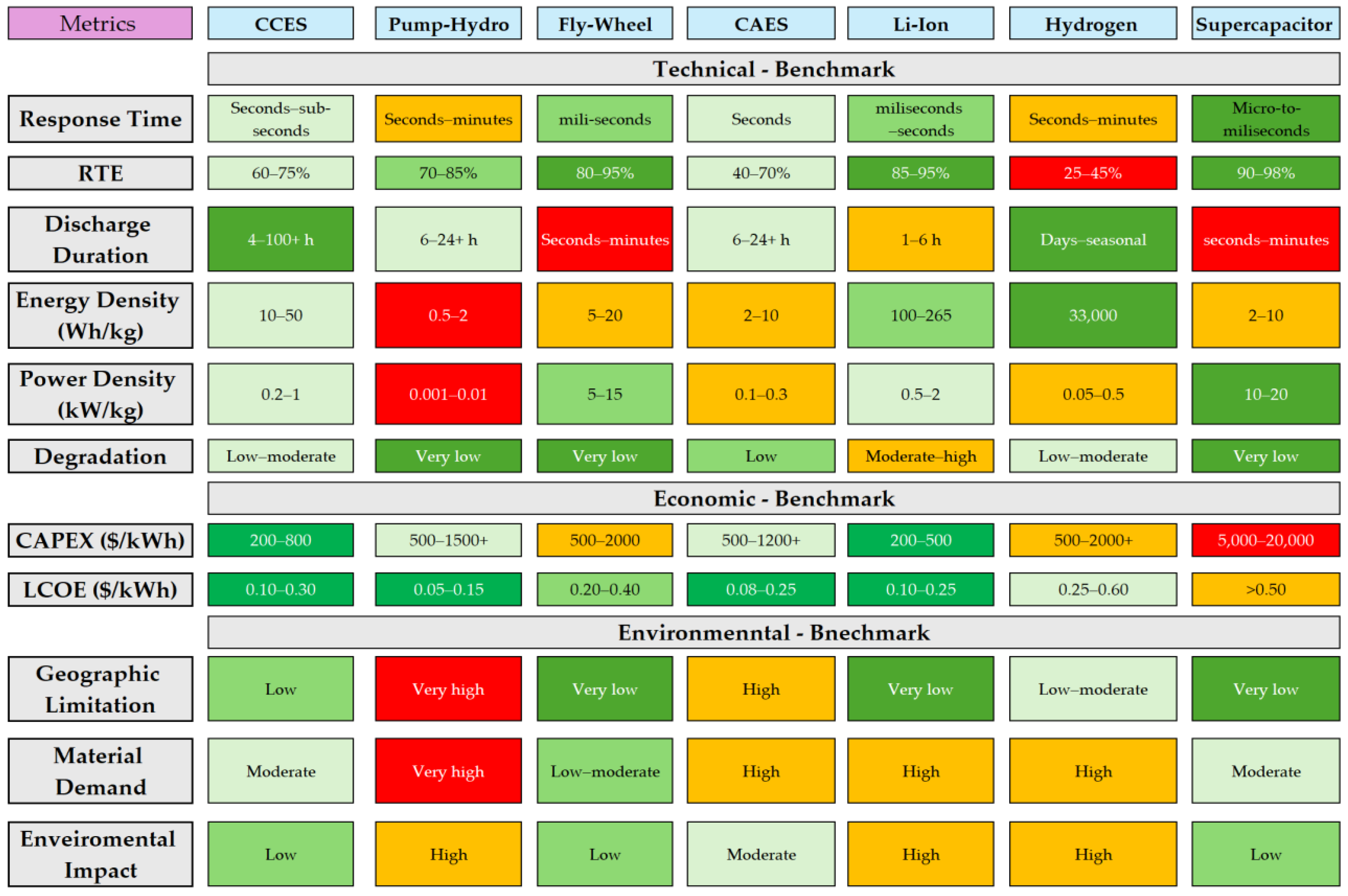
This section presents a benchmark of CO2-based energy storage technology against key conventional storage technologies. These technologies include PHES, flywheel, CAES, lithium-ion battery, hydrogen, and supercapacitor technologies. Each technology is evaluated based on technical, economic, and environmental metrics. Technical metrics include response time, RTE, discharge duration, energy density, power density, and degradation. The economic metrics chosen were capital expenditure and levelized cost of energy. The environmental metrics selected were geographical limitations, material demand, and environmental impact. Based on literature, the benchmark metrics were summarized for CCES [46,47,48,49,50], CAES [51], PHES [52], Li-ion [52,53], flywheel [54], hydrogen [55,56,57], and supercapacitor [58].
For more informative decisions based on quantitative basis of the dashboard, representative ranges have been provided. This includes capital cost, levelized cost of energy (LCOE), and round-trip efficiency. Pumped hydro energy storage as a large-scale technology, has CAPEX in the range of 500–1500+ USD/kWh, with RTE of 70–85% and LCOE well below 150 USD/MWh considering long lifetimes and high utilization [52]. Compressed air energy storage (CAES) has similar system-scale characteristics, with CAPEX ranging from 500–1200+ USD/kWh, RTE’s of 45–70% which relies on thermal integration applied, and LCOE commonly in the range of 80–250 USD/MWh [51]. Lithium-ion battery systems are very widely applied globally. The technology offers high efficiencies of 85–95% and fast response time. But, characterized by higher energy-related costs, with CAPEX typically ranging from 200–500 USD/kWh and LCOE values between 100–250 USD/MWh due to degradation and replacement requirements [52,53]. Li-Ion batteries are normally used for short-medium duration storage applications. Hydrogen-based energy storage exhibits wide cost variability, with system efficiencies typically below 45% for power-to-power pathways and LCOE often ranges from 250–600 USD/MWh, reflecting conversion losses and infrastructure intensity [56,57,58]. Flywheels and supercapacitors operate with very high efficiencies (>90%). However, both technologies are limited by short discharge durations and high specific costs. This limits its applications to power quality and ancillary services [54,58].
Within this context, CO2-based energy storage technology demonstrates competitive economical values and operational characteristics. The technology has a projected CAPEX ranges between 200–800 USD/kWh, which is very competitive for long-duration storage [46,48]. It is nearly 50% cheaper than pumped hydro energy storage. In terms of operational efficiency, technology can operate at 60–75% with low degradation rate. The LCOE estimates in the range of 100–200 USD/MWh for long-duration, high-cycle applications [46,47,48,49,50]. These quantitative benchmark gives credibility to CO2-based energy storage and illustrating its competitiveness for large-scale, long-duration storage applications. Furthermore, CO2-based energy storage technology maintains favorable environmental and siting characteristics relative to conventional alternatives.
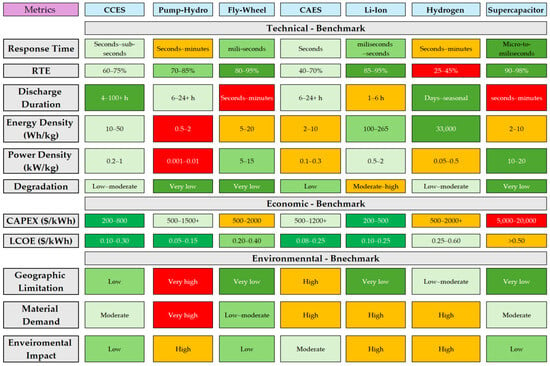
Figure 4 depicts the benchmark and provides a dashboard to guide energy leaders in making the right decisions about their storage projects.
Figure 4.
Benchmark dashboard for energy storage technologies.
Colored boxes indicate the attractiveness of the technology based on this performance metric. Dark green indicates very attractive, while lighter shades of green indicate less attractive. Orange and red indicate that the technology performs low and very low, respectively, for the metric. Discharge duration has been evaluated based on the technology’s suitability for long-duration energy storage.
The greener the metric, the better the performance. The benchmark shows that CCES has excellent long-duration storage performance compared with other key conventional technologies. This is evident because most of its performance metrics are at green levels. Meanwhile, other competing technologies show low and very low performance in some benchmark metrics. This indicates that CCES is a promising emerging storage technology with excellent technical, economic, and environmental performance.
10. Conclusions
As renewable energy becomes more prevalent in power grids, it is crucial to consider the deployment of energy storage to ensure effective integration, maximize the contribution of renewable energy, and enhance grid stability. Conventional storage technologies have limitations that affect integration efficiency, grid stability, and grid reliability, thereby reducing the contribution of renewable energy to future grids. CO2-based energy storage is an emerging technology with promising performance. This paper presents a techno-economic and environmental assessment of CO2-based energy storage as an alternative to conventional technologies. The paper addresses the key limitations of conventional energy storage technologies. It also provided an explanation of the operational principle of CO2-based energy storage and key system configurations. Furthermore, it discussed the key deployed projects, signed agreements, and featured R&D projects. Technical and nontechnical barriers to the technology have been explained, and solutions have been proposed to overcome each barrier. Finally, a detailed environmental assessment of the emerging technology was presented.
The paper provided a roadmap with detailed steps for energy professionals, project managers, and energy leaders on how to effectively deploy such emerging technology in their systems. The assessment concluded with the development of a decision-based selection dashboard benchmarking CO2-based energy storage against key conventional technologies. The assessment concluded that CO2-based energy storage is a promising technology for future power grids. Effectively deploying this technology can maximize the contribution of renewable energy sources while maintaining stable and reliable grid operation.
Funding
This research was funded by Taif University, Saudi Arabia, Project No. (TU-DSPP-2024-128).
Data Availability Statement
The original contributions presented in this study are included in the article. Further inquiries can be directed to the corresponding author.
Acknowledgments
The author extend his appreciation to Taif University, Saudi Arabia, Project No. (TU-DSPP-2024-128) for supporting this work.
Conflicts of Interest
The author declares no conflicts of interest.
References
- Areola, R.I.; Adebiyi, A.A.; Moloi, K. Integrated energy storage systems for enhanced grid efficiency: A comprehensive review of technologies and applications. Energies 2025, 18, 1848. [Google Scholar] [CrossRef] [Scilit]
- Adeyinka, A.M.; Esan, O.C.; Ijaola, A.O.; Farayibi, P.K. Advancements in hybrid energy storage systems for enhancing renewable energy-to-grid integration. Sustain. Energy Res. 2024, 11, 26. [Google Scholar] [CrossRef] [Scilit]
- Jha, R.; Lee, S.; Iyengar, S.; Hajiesmaili, M.H.; Irwin, D.; Shenoy, P. Emission-aware energy storage scheduling for a greener grid. In Proceedings of the 11th ACM International Conference Future Energy Systems (e-Energy), Virtual Event, Australia, 22–26 June 2020; ACM: New York, NY, USA, 2020; pp. 363–373. [Google Scholar]
- Su, H.-I.; El Gamal, A. Limits on the benefits of energy storage for renewable integration. arXiv 2011, arXiv:1109.3841. [Google Scholar]
- Silva-Rodriguez, J.; Zhao, T.; Mo, R.; Li, X. Grid-edge energy-flexible technologies: A comparative analysis across generators, loads, and energy storage systems. arXiv 2025, arXiv:2508.14297. [Google Scholar]
- Schmidt, O.; Staffell, I. Monetizing Energy Storage: A Toolkit to Assess Future Cost and Value; Oxford Univ. Press: Oxford, UK, 2023. [Google Scholar]
- Liu, X.; Li, W.; Guo, X.; Su, B.; Guo, S.; Jing, Y.; Zhang, X. Advancements in energy-storage technologies: A review of current developments and applications. Sustainability 2025, 17, 8316. [Google Scholar] [CrossRef] [Scilit]
- Elalfy, D.A.; Gouda, E.; Kotb, M.F.; Bureš, V.; Sedhom, B.E. Comprehensive review of energy storage systems technologies, objectives, challenges, and future trends. Energy Strategy Rev. 2024, 54, 101482. [Google Scholar] [CrossRef] [Scilit]
- Khan, M.K.; Raza, M.; Shahbaz, M.; Farooq, U.; Akram, M.U. Recent advancement in energy storage technologies and their applications. J. Energy Storage 2024, 92, 112112. [Google Scholar] [CrossRef] [Scilit]
- Alamri, B.R.; Alamri, A.R. Technical review of energy storage technologies when integrated with intermittent renewable energy. In Proceedings of the International Conference Sustainable Power Generation and Supply, Nanjing, China, 6–7 April 2009; pp. 1–5. [Google Scholar]
- Cheung, K.Y.; Cheung, S.T.; De Silva, R.N.; Juvonen, M.P.; Singh, R.; Woo, J.J. Large-Scale Energy Storage Systems; Imperial College London: London, UK, 2003. [Google Scholar]
- Dunn, B.; Kamath, H.; Tarascon, J.-M. Electrical energy storage for the grid: A battery of choices. Science 2011, 334, 928–935. [Google Scholar] [CrossRef] [Scilit]
- Kusko, A. Short-term, long-term, energy storage methods for standby electric power systems. In Proceedings of the IEEE Industry Applications Conference, Hong Kong, China, 2–6 October 2005; pp. 2672–2678. [Google Scholar]
- Baker, N.; Collinson, A. Electrical energy storage at the turn of the millennium. Power Eng. J. 1999, 13, 107–112. [Google Scholar] [CrossRef] [Scilit]
- Sciacovelli, A.; Verda, V.; Calabrese, L. Thermodynamic optimization of closed-loop CO2 energy storage cycles. Energy 2021, 221, 119884. [Google Scholar]
- Xu, M.; Wang, X.; Wang, Z.; Zhao, P.; Dai, Y. Preliminary design and performance assessment of compressed supercritical carbon dioxide energy storage system. Appl. Therm. Eng. 2021, 183, 116153. [Google Scholar] [CrossRef] [Scilit]
- Molière, M. Supercritical CO2 power technology: Strengths but limitations. Energies 2024, 17, 1129. [Google Scholar] [CrossRef] [Scilit]
- Ma, H.; Tong, Y.; Wang, X.; Wang, H. Advancements and assessment of compressed carbon dioxide energy storage technologies: A comprehensive review. RSC Sustain. 2024, 2, 2731–2750. [Google Scholar] [CrossRef] [Scilit]
- Dai, D.; Yang, X.; Liu, Y. Lifecycle cost modeling of CO2 and Li-ion battery systems for flexible grid operations. J. Clean. Prod. 2021, 301, 126952. [Google Scholar]
- Liu, H.; He, Q.; Borgia, A.; Pan, L.; Oldenburg, C.M. Thermodynamic analysis of a compressed carbon dioxide energy storage system using two saline aquifers at different depths. Energy Convers. Manage 2016, 127, 149–159. [Google Scholar] [CrossRef] [Scilit]
- Wang, M.; Zhao, P.; Wu, Y.; Dai, Y. Performance analysis of a novel energy storage system based on liquid carbon dioxide. Appl. Therm. Eng. 2015, 91, 812–823. [Google Scholar] [CrossRef] [Scilit]
- White, A.; Parks, G.; Markides, C. Thermodynamic analysis of pumped thermal electricity storage. Appl. Therm. Eng. 2013, 53, 291–298. [Google Scholar] [CrossRef] [Scilit]
- Alami, A.H.; Hawili, A.A.; Hassan, R.; Al-Hemyari, M.; Aokal, K. Experimental study of carbon dioxide as working fluid in a closed-loop compressed gas energy storage system. Renew. Energy 2019, 134, 603–611. [Google Scholar] [CrossRef] [Scilit]
- Dome, E. Energy Dome Inks a Strategic Commercial Agreement with Google; Business Wire: San Francisco, CA, USA, 2025. [Google Scholar]
- Li, Y.; Yu, H.; Xiao, Y.; Li, Y.; Liu, Y.; Luo, X.; Tang, D.; Zhang, G.; Liu, Y. Numerical verification on the feasibility of compressed carbon dioxide energy storage in two aquifers. Renew. Energy 2023, 207, 743–764. [Google Scholar] [CrossRef] [Scilit]
- Wang, S.; Tian, H.; Zhao, X.; Yan, Y.; Yang, X.; Wang, X. Assessment of the geological storage potential and suitability of CO2 in deep saline aquifers. Energies 2024, 17, 6387. [Google Scholar] [CrossRef] [Scilit]
- Norouzi, A.M.; Pouranian, F.; Rabbani, A.; Fowler, N.; Gluyas, J.; Niasar, V.; Ezekiel, J.; Babaei, M. CO2-plume geothermal: Power net generation from 3D fluvial aquifers. Appl. Energy 2023, 332, 120546. [Google Scholar] [CrossRef] [Scilit]
- Randolph, J.B.; Saar, M.O. Combining geothermal energy capture with geologic carbon dioxide sequestration. Geophys. Res. Lett. 2011, 38, L10401. [Google Scholar] [CrossRef] [Scilit]
- Adams, B.M.; Kuehn, T.H.; Bielicki, J.M.; Randolph, J.B.; Saar, M.O. On the importance of the thermosiphon effect in CO2 plume geothermal power systems. Energy 2014, 69, 409–418. [Google Scholar] [CrossRef] [Scilit]
- Heinemann, N.; Alcalde, J.; Miocic, J.M.; Hangx, S.J.T.; Kallmeyer, J.; Ostertag-Henning, C.; Hassanpouryouzband, A.; Thaysen, E.M.; Strobel, G.J.; Schmidt-Hattenberger, C.; et al. Enabling large-scale hydrogen and CO2 storage in porous media. Energy Environ. Sci. 2021, 14, 853–864. [Google Scholar] [CrossRef] [Scilit]
- Du, Y.; Pei, W.; Hao, Y.; Zhang, P.; Wang, C.; Yang, Y.; Pang, M.; Zhang, L. Life cycle assessment of pumped hydro energy storage systems in China. Energy 2025, 331, 137102. [Google Scholar] [CrossRef] [Scilit]
- Zhang, K.; Mo, J.; Liu, Z.; Yin, W.; Wu, F.; You, J. Life cycle environmental and economic impacts of various energy storage systems: Eco-efficiency analysis and potential for sustainable deployments. Integr. Environ. Assess. Manag. 2025, 22, 289–302. [Google Scholar] [CrossRef] [Scilit]
- Yin, H.; Zhao, X.; Chen, M.; Fu, Z.; Fang, Y.; Wang, H.; Li, M.; Luo, J.; Tan, P.; Fu, X. A review on ecological and environmental impacts of pumped hydro storage. Water 2025, 17, 2752. [Google Scholar] [CrossRef] [Scilit]
- Rabi, A.M.; Radulovic, J.; Buick, J.M. Comprehensive review of compressed air energy storage technologies. Thermo 2023, 3, 104–126. [Google Scholar] [CrossRef] [Scilit]
- Alves, E.; Bindi, J.; Garelli, F.; Carbone, C.; Agostini, A.; Pellegrini-Masini, G.; Padovan, D.; Baricco, M.; Rizzi, P. Life cycle assessments in hydrogen-based energy storage systems. J. Energy Storage 2025, 133, 118008. [Google Scholar] [CrossRef] [Scilit]
- Olabi, A.G.; Wilberforce, T.; Abdelkareem, M.A.; Ramadan, M. Critical review of flywheel energy storage system. Energies 2021, 14, 2159. [Google Scholar] [CrossRef] [Scilit]
- Zhang, X.; Anderson, M.; Sindelar, R.L. Materials challenges for supercritical CO2 power cycles. Energy Fuels 2015, 29, 6621–6633. [Google Scholar]
- Cui, G.; Yang, Z.; Liu, J.; Li, Z. A comprehensive review of metal corrosion in a supercritical CO2 environment. Int. J. Greenh. Gas Control 2019, 90, 102814. [Google Scholar] [CrossRef] [Scilit]
- Marchionni, M.; Persico, G.; Zunino, P. Design and off-design performance of supercritical CO2 power cycles. J. Eng. Gas Turbines Power 2018, 140, 041701. [Google Scholar]
- Zheng, P.; Hao, J.; Zhang, Z.; Yang, J.; Li, X.; Yue, Y. Analysis of heat transfer characteristics of a novel liquid CO2 energy storage system. Front. Energy 2025, 19, 193–204. [Google Scholar] [CrossRef] [Scilit]
- Zhao, R.; Liu, Z. Thermo-economic performance of a compressed CO2 energy storage system with a flexible gas holder. J. Energy Storage 2023, 60, 106675. [Google Scholar] [CrossRef] [Scilit]
- Bruschi, D.; Perdichizzi, A.; Rebay, G. Dynamic modeling and control of supercritical CO2 Brayton cycles. Energy Convers. Manag. 2019, 184, 130–142. [Google Scholar]
- International Energy Agency. Energy Storage Technology Roadmap; International Energy Agency: Paris, France, 2023. [Google Scholar]
- Jiang, J.; Zhang, B.; Chen, W.; Zhang, X.; Li, D.; Li, J.; Li, H.; Xue, X. Investigation and optimization of the thermal performance of compressed supercritical CO2 energy storage systems. Renew. Energy 2025, 238, 121966. [Google Scholar] [CrossRef] [Scilit]
- U.S. Department of Energy. Supercritical CO2 Power Cycles for Energy Storage and Power Generation; NETL Report; U.S. Department of Energy: Washington, DC, USA, 2022. [Google Scholar]
- Li, Y.; Wang, X.; Zhang, P.; Liu, H.; Zhao, J.; Sun, Y.; Chen, G. Compressed carbon dioxide energy storage: Principles, research progress and prospects. Energy 2025, 282, 128764. [Google Scholar] [CrossRef] [Scilit]
- Zheng, P.; Hao, J.; Zhang, Z.; Li, X.; Yue, Y.; Wang, Q. Thermodynamic and economic analysis of compressed carbon dioxide energy storage systems. Appl. Therm. Eng. 2024, 243, 122669. [Google Scholar] [CrossRef] [Scilit]
- Liu, Z.; Chen, M.; Wang, Y.; Zhao, L.; Li, Q.; Zhang, H. Performance of compressed CO2 energy storage systems with different liquefaction scenarios. Fuel 2024, 359, 130527. [Google Scholar] [CrossRef] [Scilit]
- Zhang, B.; Li, H.; Sun, Y.; Wang, J.; Zhao, X. Techno-economic evaluation of a compressed CO2 energy storage system. Energies 2023, 16, 7894. [Google Scholar] [CrossRef] [Scilit]
- National Renewable Energy Laboratory. Techno-Economic Assessment of Thermal and Pumped Thermal Energy Storage Systems; National Renewable Energy Laboratory: Golden, CO, USA, 2021. [Google Scholar]
- Budt, A.; Wolf, D.; Span, R.; Yan, J. A review on compressed air energy storage. Appl. Energy 2016, 170, 250–268. [Google Scholar] [CrossRef] [Scilit]
- U.S. Department of Energy. Energy Storage Technology and Cost Characterization Report; U.S. Department of Energy: Washington, DC, USA, 2020. [Google Scholar]
- Vykhodtsev, A.; Khabarov, N.; Sorokin, V.; Mironov, A. Review of lithium-ion battery models for techno-economic analysis. Renew. Sustain. Energy Rev. 2021, 135, 110178. [Google Scholar]
- Li, X.; Palazzolo, A. A review of flywheel energy storage systems. J. Energy Storage 2022, 46, 103576. [Google Scholar] [CrossRef] [Scilit]
- International Energy Agency. The Future of Hydrogen; International Energy Agency: Paris, France, 2019. [Google Scholar]
- Ball, M.; Weeda, M. The hydrogen economy—Vision or reality? Int. J. Hydrogen Energy 2015, 40, 7903–7919. [Google Scholar] [CrossRef] [Scilit]
- IRENA. Hydrogen: A Renewable Energy Perspective; IRENA: Abu Dhabi, United Arab Emirates, 2019. [Google Scholar]
- Conway, B.E. Electrochemical Supercapacitors; Springer: Boston, MA, USA, 2013. [Google Scholar]

Disclaimer/Publisher’s Note: The statements, opinions and data contained in all publications are solely those of the individual author(s) and contributor(s) and not of MDPI and/or the editor(s). MDPI and/or the editor(s) disclaim responsibility for any injury to people or property resulting from any ideas, methods, instructions or products referred to in the content. |
© 2026 by the author. Licensee MDPI, Basel, Switzerland. This article is an open access article distributed under the terms and conditions of the Creative Commons Attribution (CC BY) license.