


Abstract
Frequent drilling fluid lost circulation in the Kuqa foreland area of the Tarim Oilfield severely constrains drilling efficiency and safety. The complex formation structures and diverse lost circulation types in this region are compounded by a lack of systematic classification in existing studies and weak correlation between mechanism analysis and field plugging measures, leading to a deficiency in quantitative decision-making for lost circulation prevention and control. Based on lithology analysis, loss zone pressure differential calculation, well log interpretation, and core observations, this study establishes an integrated “formation–lithology–pressure” diagnostic and classification method for lost circulation. A systematic classification framework comprising five types of lost circulation channels and mechanisms was developed. Based on this, the dominant lost circulation types and characteristics of three typical vertical formations in the Kuqa foreland were clarified: ① The supra-salt sandy conglomerate formations (e.g., Q1x, N2k) are dominated by permeability loss, where the loss rate (V) and bottomhole pressure differential (ΔP) exhibit a strong positive correlation (V ∝ ΔP). On-site application of graded bridging plugging formulations achieved a first-attempt success rate of ≥90%. ② The salt–gypsum formations (E1-2km) are primarily characterized by induced fracture loss, with a weak correlation between V and ΔP and dynamic fracture opening/closing behavior. Conventional rigid plugging materials showed limited effectiveness, resulting in a first-attempt success rate of <50%. ③ The K1bs formation is dominated by vertically developed natural fracture loss, where V and ΔP also demonstrate a strong positive correlation. In a specific Keshen block, a power-law relationship between the fracture aperture (W) and loss rate was established (W = 0.26·V0.62, R2 = 0.98), providing a basis for predicting fracture aperture and optimizing plugging formulations, with a plugging success rate of ≥80%. The classification system and quantitative criteria developed in this study effectively link lost circulation mechanisms, dynamic characteristics, and engineering countermeasures, offering theoretical support and a decision-making framework for optimizing lost circulation prevention and control measures and improving success rates in the Kuqa foreland area.
1. Introduction
Drilling fluid loss has consistently remained a critical technical bottleneck in oil and gas exploration [1]. In the Kuqa foreland area of the Tarim Oilfield, frequent drilling fluid losses occur during drilling operations. Recent statistics indicate that over 1000 wells have been drilled in this region, with 750 wells experiencing approximately 2750 loss incidents [2,3]. According to field data, the primary loss-prone formations from top to bottom include the Quaternary Xiyu Formation (Q1x), Neogene Kuqa Formation (N2k), Kumugeliemu (E1-2km), and Cretaceous Bashijiqike Formation (K1bs) [4,5]. Based on geological characteristics, drilling fluid losses can be classified into porous loss, fractured loss, and cavernous loss. Fractured loss is further subdivided into natural fracture-induced and induced fracture-induced types, each requiring tailored loss prevention and control strategies [6]. Therefore, it is imperative to categorize loss types across different stratigraphic intervals in the Kuqa foreland area to guide the selection of effective mitigation measures.
The three essential prerequisites for drilling fluid loss are as follows [7]: ① The presence of permeable channels with sufficient void space in the formation. ② A positive pressure differential where the wellbore working fluid (drilling fluid) pressure exceeds the formation pressure. ③ Aperture dimensions of the formation channels larger than the solid particle size in the drilling fluid. Generally, loss channels exceed the size of drilling fluid solids, rendering conventional sealing ineffective. Consequently, the accurate identification of loss channels and precise calculation of pressure differentials are pivotal for addressing drilling fluid loss. To classify loss types systematically, these three prerequisites must be rigorously analyzed to determine channel types and characterize loss mechanisms.
Guo Jiahao [8], focusing on the E1-2km in the Kuqa foreland area, utilized geological data and drilling history records to determine that lost circulation in salt–gypsum formations is predominantly characterized by induced fracture initiation and fracture propagation types. Ma Zhihu applied machine learning algorithms to predict lost circulation, combined with laboratory experiments to optimize plugging materials, and developed an oil-based drilling fluid plugging formulation, providing certain guidance for lost circulation prevention and control in the Kuqa foreland area. Wang Tao et al. [9] summarized the types of lost circulation in the Tarim Oilfield, including porous, fractured, and vugular losses, with fractured and fracture–vugular types being predominant. They established technologies such as oil-based drilling fluid lost circulation prevention and control, high-strength pressure-bearing plugging, high-pressure brine layer lost circulation prevention, and fracture–vugular loss control. Li Ning et al. [10], by statistically analyzing lost circulation incidents in the Kuqa foreland blocks, identified the characteristics of lost circulation in salt–gypsum formations and target zones. They concluded that lost circulation in salt–gypsum formations is mainly caused by induced fracture initiation and propagation, while in target zones, it is primarily due to medium-to-large fractures, supplemented by fracture propagation. This analysis led to the formulation of basic plugging principles and technical approaches for lost circulation control. Researchers [11,12,13] have conducted studies and applications of machine learning in lost circulation, using it to predict loss probability, loss rate, loss zone dimensions, and plugging solutions, thereby improving the efficiency of lost circulation treatment. Currently, the determination of lost circulation types faces the following issues: the classification of lost circulation in the Kuqa foreland area lacks systematic and regular analysis; there is a shortage of quantitative indicators or criteria for analyzing loss types; and a comprehensive understanding of the loss mechanisms integrating lithology analysis, loss zone pressure differential calculations, well logging, and core observations is absent. Furthermore, there is a weak correlation between the identified loss mechanisms and the corresponding plugging measures.
Therefore, to classify drilling fluid lost circulation in the Kuqa foreland area of the Tarim Oilfield and clarify its characteristics, this study conducts systematic classification of lost circulation across different strata based on lithology analysis, loss zone pressure differential calculation, and data from well logging and core analysis. A lost circulation classification system applicable to multiple formations in the Kuqa foreland area was established. This system delineates the pressure differential–loss rate relationship characteristics for each type of loss, correlates the classification results with field plugging measures and their first-attempt success rates, and provides a quantitative decision-making basis for targeted lost circulation prevention and control. This work offers theoretical support for the subsequent selection of appropriate lost circulation prevention and plugging measures.
2. Classification of Loss Channels and Loss Properties
2.1. Classification of Loss Channels
Loss channels and their formation mechanisms vary significantly depending on lithology. Therefore, loss channels can be preliminarily categorized based on the specific rock types involved [14].
- (1)
- Claystone
Claystone includes mudstone, shale, and loess. In medium-to-deep well sections, mudstone may develop fractures due to diagenesis, abnormal high pressure, or tectonic activity, forming potential loss channels. Weak or fragmented formations, such as sandstone-shale interbeds, are prone to induced fracture-induced losses. Loess layers exhibit high porosity (40–50%), loose structure, and significant permeability. Initial drilling through loess layers may result in partial fluid return, but prolonged exposure can lead to total loss.
- (2)
- Sandstone Conglomerate
Unconsolidated or poorly cemented sand conglomerate formations in shallow-to-medium depths feature high porosity (>50%), well-connected pores, and permeability exceeding 10 Darcy, forming porous-type loss channels. Drilling through such formations (e.g., surface conglomerate layers in the Kuqa foreland) often triggers rapid losses. In deeper, diagenetically compacted sandstone layers with low porosity and permeability, structural deformation and tectonic stress generate tectonic fractures, creating loss pathways.
- (3)
- Carbonate Rock
Carbonate rocks, primarily composed of calcite and dolomite, develop loss channels through primary pores formed by carbonate sedimentation, as well as secondary dissolution pores, vugs, and fractures formed by diagenesis and tectonic activity. Structural processes amplify the complexity of these channels, which often combine porous, fractured, and cavernous features.
- (4)
- Igneous Rock
Igneous rocks, dominated by lava (e.g., basalt, andesite, and dacite), as well as pyroclastic and volcaniclastic deposits, develop porosity and fractures due to magmatic processes (eruption, cooling, crystallization), tectonic movements, and weathering. These features form loss channels for drilling fluids.
In summary, loss channels can be classified into five fundamental types based on their structural morphology (Table 1): fracture-type channels, porous-type channels, cavern-type channels, porous–fracture composite channels, and cavern–fracture composite channels.
Table 1.
Classification of loss channels.
2.2. Classification of Loss Properties
Porous-type channels are prone to permeability loss, while cavern-type channels typically exhibit cavernous loss. Fracture-type channels, however, present greater complexity, requiring comprehensive evaluation based on operational conditions and pressure differentials [15,16]. Fracture-induced losses can be categorized into three subtypes: (1) natural fracture loss, (2) induced propagation-related loss, and (3) induced fracturing-related loss.
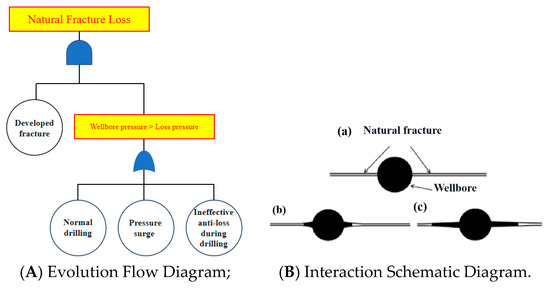
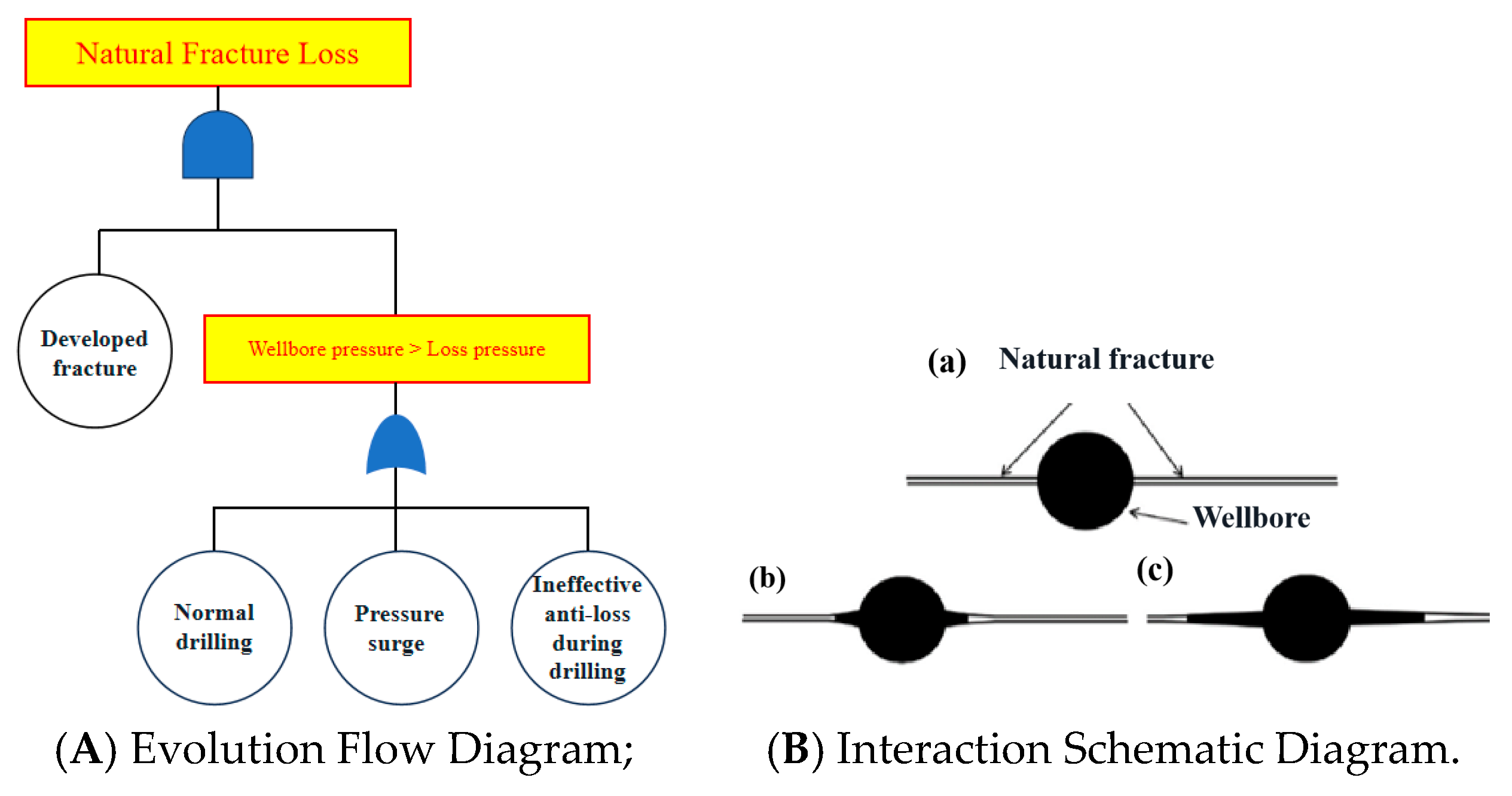
Natural fracture-induced losses typically occur in formations with naturally developed loss-prone fractures or faults. The Figure 1 shows when the bottomhole pressure exceeds the loss pressure, natural fracture-induced losses occur, usually during normal drilling operations, pressure surges, or ineffective loss prevention measures while drilling [17].
Figure 1.
Schematic diagram of natural fracture loss.
Induced Fracture Propagation Loss typically occurs in formations with microfractures or low closure pressure. The Figure 2 shows when the bottomhole pressure (BHP) exceeds the closure pressure, induced fracture propagation loss is triggered. This phenomenon is commonly observed during cementing operations, density adjustment cycles, or pressure-bearing plugging processes [18].
Figure 2.
Schematic Diagram of Induced Propagation loss.
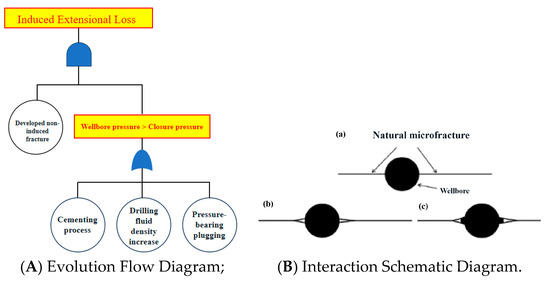
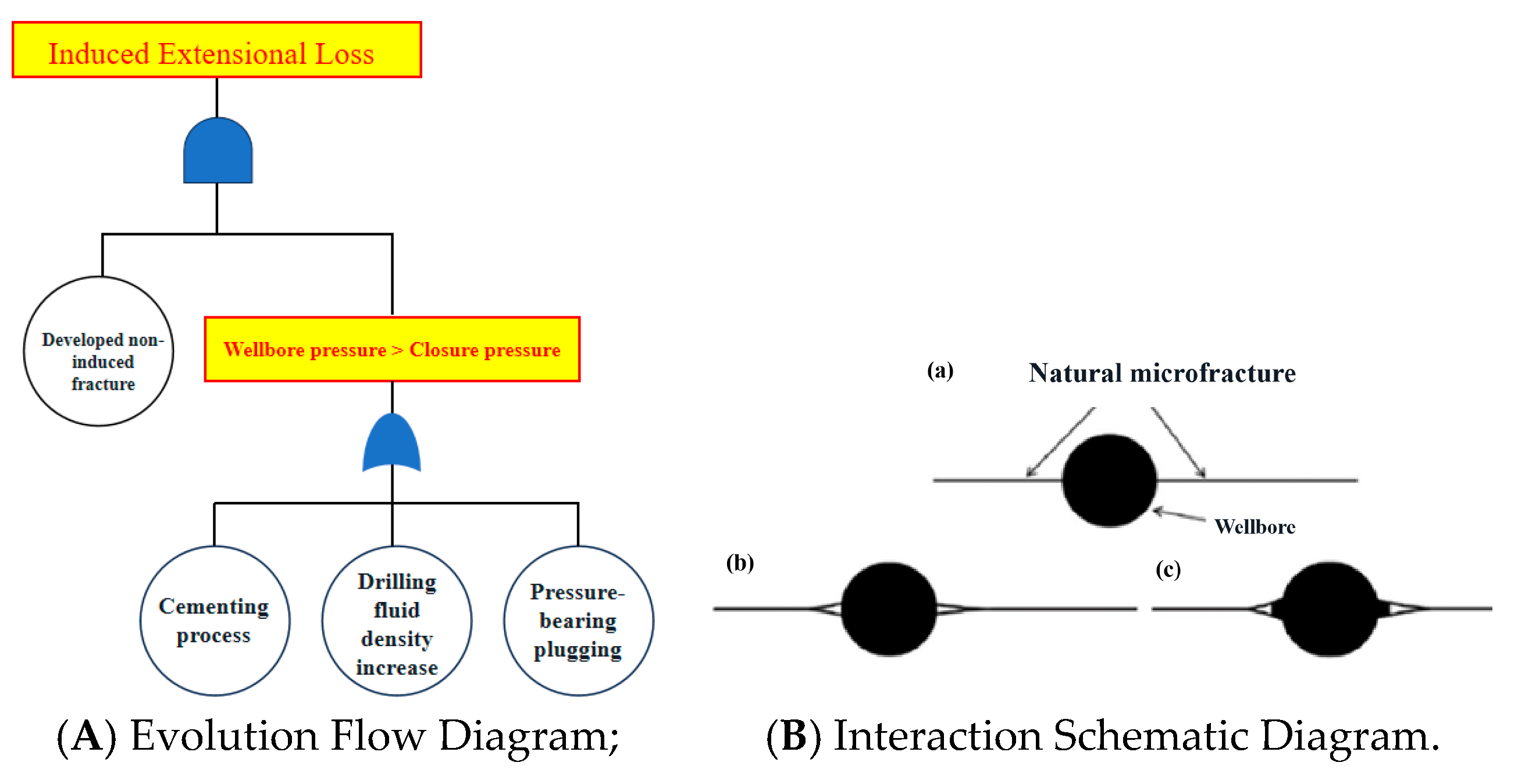
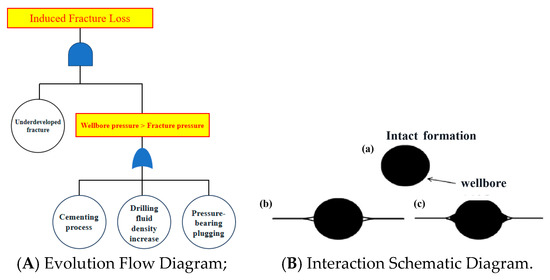
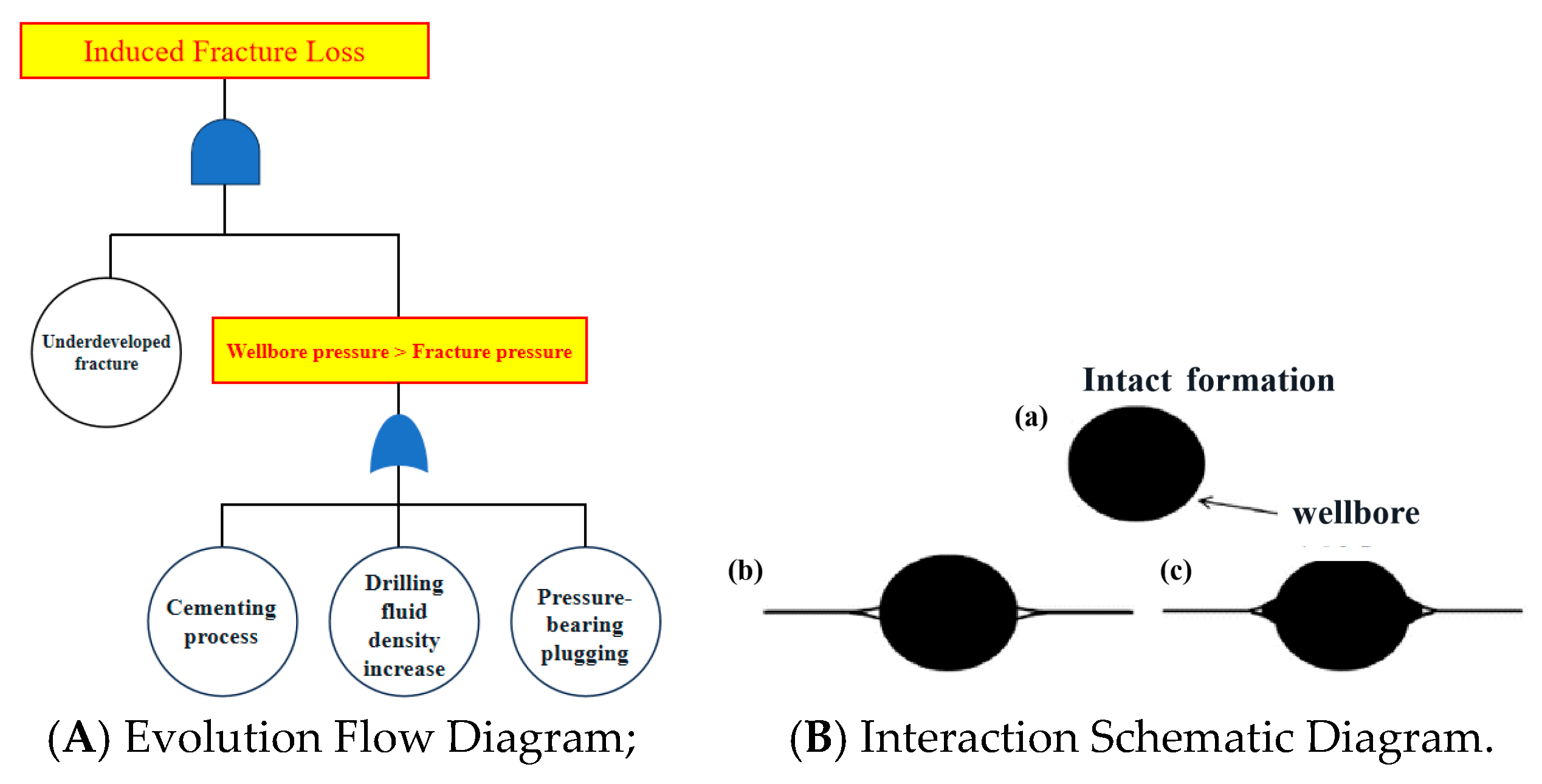
Induced extensional loss typically occurs in intact formations with relatively low fracture pressure or when the equivalent circulating density (ECD) of drilling fluid is excessively high. The Figure 3 shows When wellbore pressure exceeds formation fracture pressure, induced fracturing and subsequent loss occur. This phenomenon is commonly observed during cementing operations, while increasing mud weight circulation, or during loss tests [19].
Figure 3.
Schematic diagram of induced fracture loss.
By applying the aforementioned classification methodology, loss pathways and mechanisms across stratigraphic intervals in the Kuqa foreland area of the Tarim Oilfield were systematically evaluated through lithology analysis, pressure differential calculations, well logging data interpretation, and core observations, as shown in Table 2.
Table 2.
Research on the classification of loss properties.
3. Classification of Loss Types in the Kuqa Foreland Area of the Tarim Oilfield
3.1. Methodology for Classifying Lost Circulation Types
First, based on the first of the three necessary conditions for lost circulation, the type of lost circulation channel is preliminarily determined through observations of outcrops or core samples.
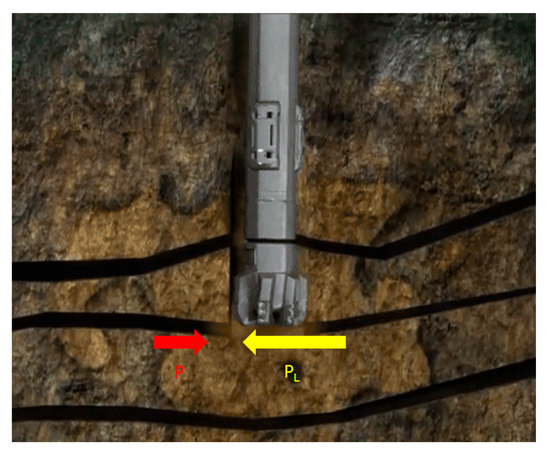
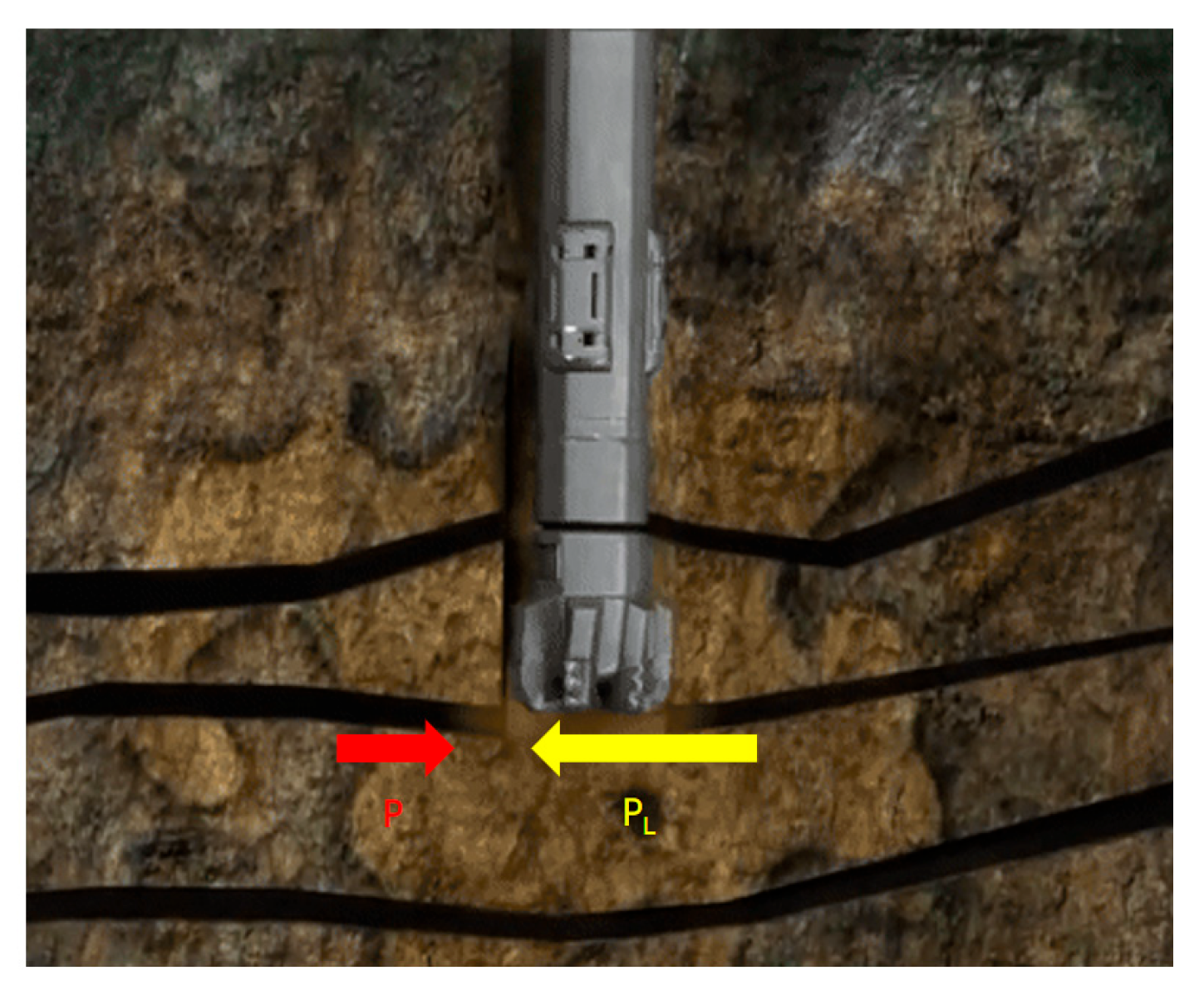
Next, leveraging the second necessary condition, the lost circulation pressure differential is calculated (Figure 4). The relationship between the pressure differential and the loss rate is analyzed, and the nature of the lost circulation is determined through statistical patterns. This is further validated using the pressure profiles from drilling design, where closure pressure and fracture pressure are obtained from field loss tests. Specifically, if pore pressure (loss pressure) < loss zone pressure, it is classified as natural fracture-induced lost circulation. If closure pressure < loss zone pressure < fracture pressure, it is classified as induced fracture propagation lost circulation. If fracture pressure < loss zone pressure, it is classified as induced fracture initiation lost circulation [20,21].
Figure 4.
Schematic diagram of lost circulation pressure differential calculation.
Finally, geological data are analyzed, and fracture identification from imaging logs is used to further confirm the lost circulation mechanism. This is integrated with lithology and core observations for a comprehensive assessment.
In the aforementioned judgment criteria, the lost circulation rate can be obtained through field monitoring, while the calculation of the lost circulation pressure differential (ΔP) is key to this study. The formula for calculating the lost circulation pressure differential is as follows:
where P is the pressure at the wellbore at the loss point during lost circulation, MPa. PL is the formation lost circulation pressure, MPa, defined as the minimum pressure required for drilling fluid in the wellbore to enter the formation’s lost circulation channels, with PL = PP + PB, where PB represents the flow resistance encountered by the drilling fluid when entering the formation’s lost circulation channels. For natural fracture and vugular lost circulation, the lost circulation pressure is typically slightly greater than the pore pressure.
ΔP = P − PL
During drilling fluid circulation, the wellbore pressure at the loss point is calculated as follows:
where P0 is the static hydrostatic pressure of the drilling fluid, MPa. ρ is the density of the drilling fluid, g/cm3. H is the true vertical depth of the loss point, m. PYH is the annular pressure loss, MPa. This value can be simulated and calculated using specialized software by inputting parameters such as wellbore geometry and drilling fluid properties. The software we employed is Landmark 5000, and the core parameters input for the calculations include wellbore depth, bottomhole assembly for each well section, borehole diameter, drilling fluid type, drilling fluid density, plastic viscosity (PV), yield point (YP), pump rate, etc.
P = P0 + PYH
P0 = ρgH
The calculation of lost circulation pressure is divided into two scenarios. The first scenario involves total lost returns, where no drilling fluid is observed returning to the surface during circulation. In this case, the pump is stopped on-site to monitor the static fluid level in the annulus. The lost circulation pressure (PL) is then calculated using the following formula:
where h is the static annular fluid level height measured after lost returns, in meters. The other scenario occurs when drilling fluid does not experience total lost returns, but partial loss into the formation. In this case, the flow rate is reduced on-site to measure the loss rate. The wellbore pressure at which the loss rate becomes zero is defined as the lost circulation pressure (PL). Exceeding this flow rate will result in drilling fluid loss.
PL = ρg (H − h)
3.2. Classification of Loss Types in Supra-Salt Formations
Supra-salt formations in the Kuqa foreland include the Quaternary Xiyu Formation (Q1x) and the Neogene Kuqa Formation (N2k).
- (1)
- Xiyu Formation (Q1x)
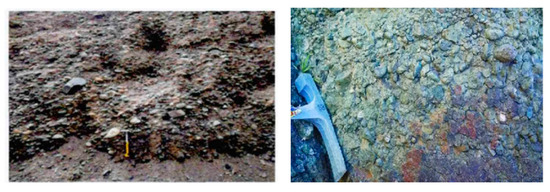
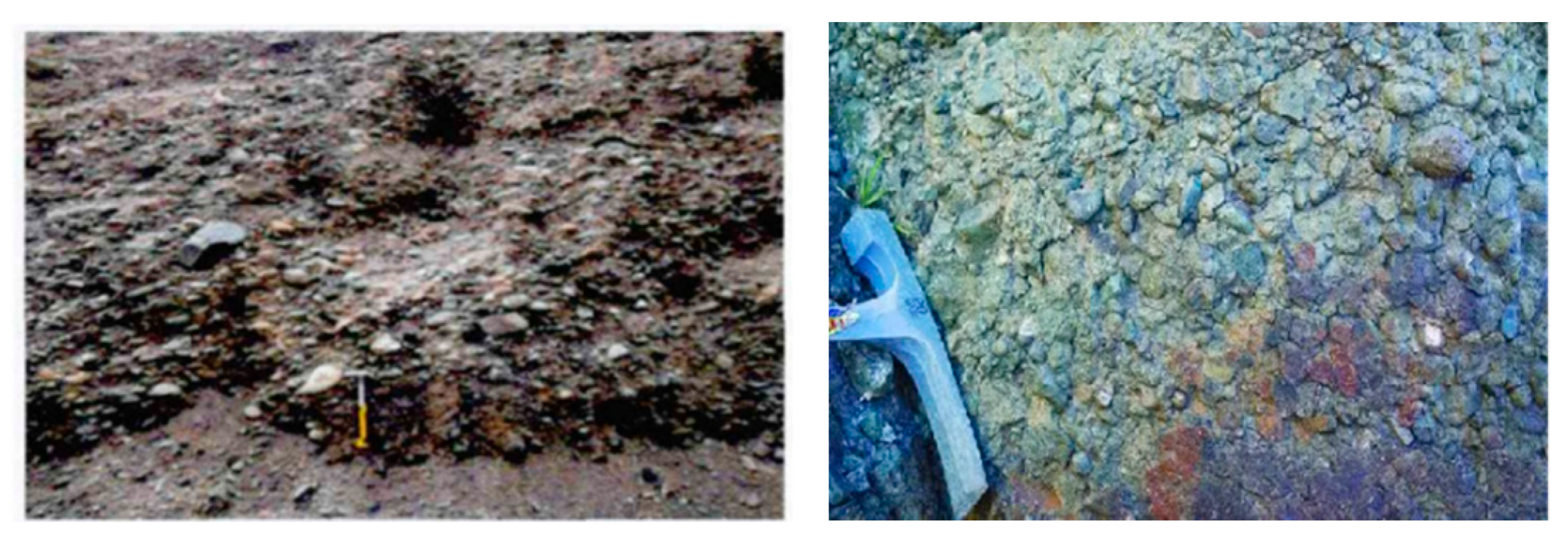
The lithology of the Quaternary Xiyu Formation (Q1x) is dominated by variegated fine conglomerate, small pebble conglomerate, and sandy conglomerate. As shown in the Figure 5, the rock formation exhibits thick-bedded, massive structures with loose lithology and extremely weak cementation. The gravel and sandy matrix are poorly sorted, and the porosity is extremely high. Numerous open pores and well-connected intergranular pores are clearly visible, providing direct geological evidence for highly permeable lost circulation channels. This type of lithology is widely distributed in shallow formations, and its structural characteristics determine that permeable lost circulation is highly likely to occur during drilling. When drilling through such intervals, drilling fluid, driven by a positive pressure differential, rapidly infiltrates deep into the formation through the interconnected pore network. If measures such as reducing the flow rate, implementing lost circulation control while drilling, or optimizing the sealing performance of the drilling fluid are not taken promptly, lost returns often occur, severely impacting drilling efficiency and safety. The lost circulation channel in the Xiyu Formation (Q1x) is of the porous type, and the nature of the lost circulation is permeable.
Figure 5.
Outcrop sample of the Quaternary Xiyu Formation (Q1x).
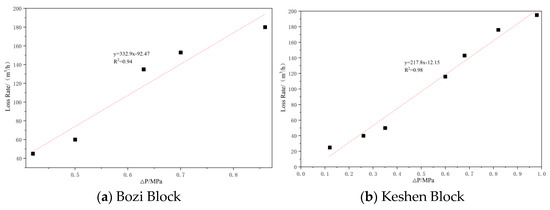
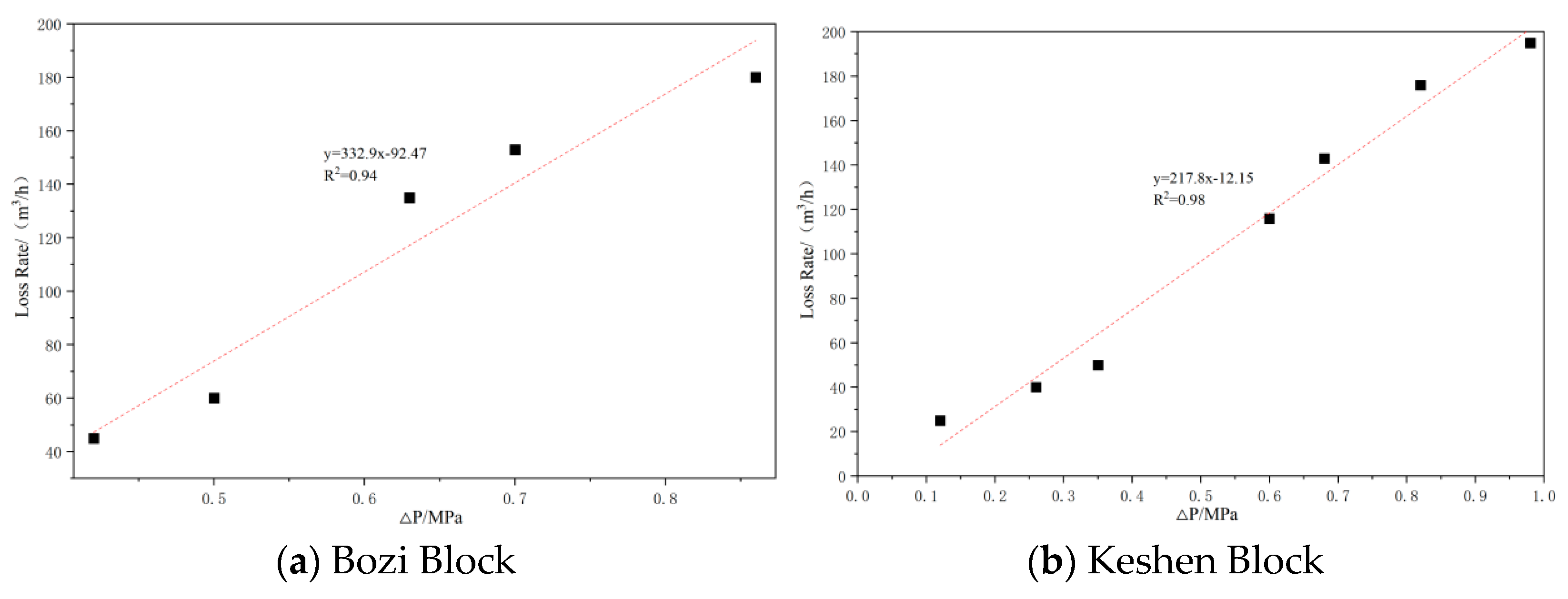
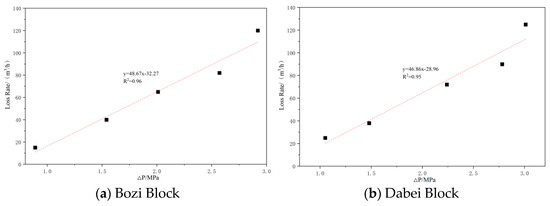
For example, while drilling Well Bozi 1n1-A to a depth of 390 m, lost circulation occurred with a drilling fluid density of 1.13 g/cm3, a flow rate of 42 L/s, and a loss rate of 45 m3/h. The lithology at this depth is coarse conglomerate. The pressure differential at the loss zone for typical wells was calculated as shown in the Table 3, and the relationship between the pressure differential and loss rate for the block was plotted (see Figure 6). In the graph, the horizontal axis represents the bottomhole pressure differential (ΔP), and the vertical axis represents the loss rate. The data points exhibit a clear positive linear increasing trend. This indicates a strong positive correlation between loss rate and pressure differential in the high-porosity sandy conglomerate formations of Quaternary, consistent with the fundamental principles of permeable lost circulation. Driven by a positive pressure differential, drilling fluid filtrates through interconnected pore networks, with the loss rate increasing proportionally as the pressure differential rises. Lost circulation in the Xiyu Formation (Q1x) primarily occurs during drilling, characterized by relatively small pressure differentials but high loss rates, suggesting larger dimensions of the loss channels. During on-site plugging operations, large-particle bridging materials such as extra-coarse and coarse walnut shells are even employed to ensure successful plugging.
Table 3.
Analysis of loss zone pressure differential in the Xiyu Formation (Q1x).
Figure 6.
Relationship between pressure differential and loss rate in the Q1x formation.
- (2)
- Kuqa Formation (N2k)
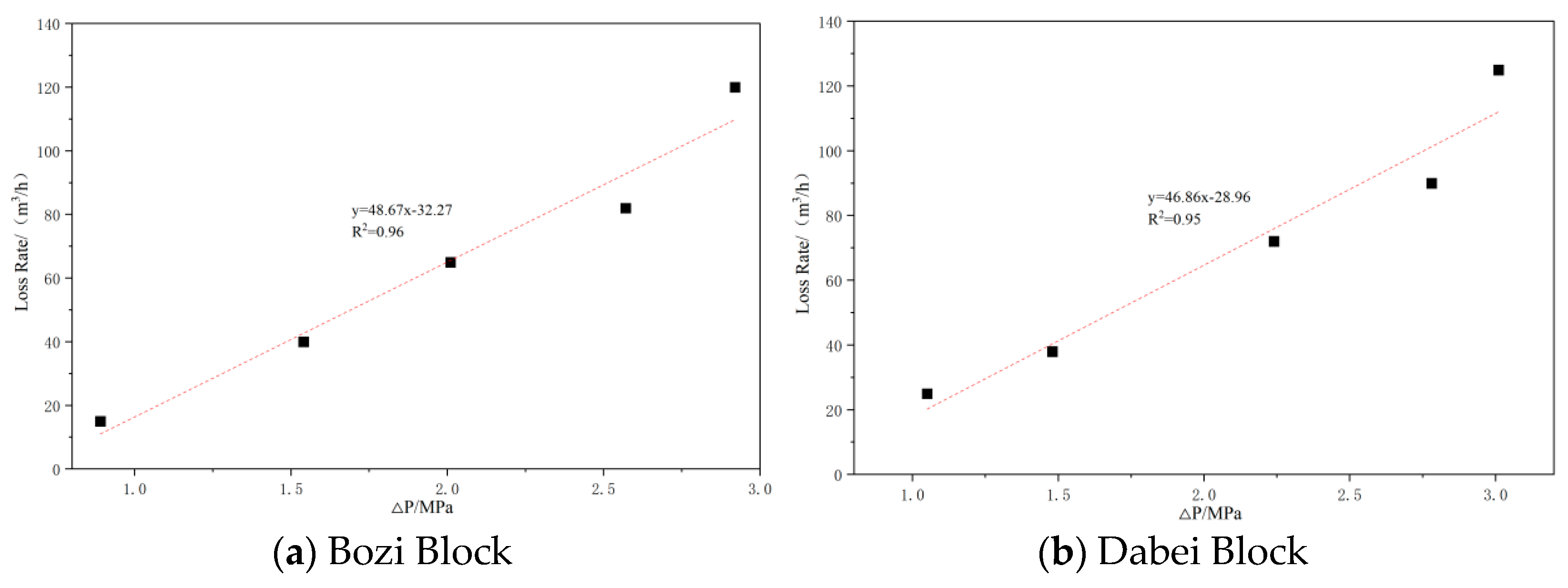
The lithology of the Kuqa Formation (N2k) is dominated by variegated small pebble conglomerate, fine conglomerate, and sandy conglomerate. Lost circulation primarily occurs during the drilling process, with relatively high loss rates. For example, lost circulation occurred in Well Dabei 12nA at a depth of 2274.86 m, with a drilling fluid density of 1.26 g/cm3, a flow rate of 65 L/s, and a loss rate of 48 m3/h. The pressure differential at the loss zone for typical wells was calculated as shown in the Table 4, and the relationship between the pressure differential and loss rate for the block was plotted (see Figure 7). The results indicate that the loss pressure is less than the wellbore pressure at the loss point, which in turn, is less than the closure pressure. Combined with the sandy conglomerate lithological characteristics, the lost circulation channel is identified as a porous type, and the nature of the lost circulation is permeable. Data points from both blocks exhibit a significant positive linear distribution trend, indicating a strong positive correlation between the loss rate and bottomhole pressure differential in this sandy conglomerate formation. This validates the mechanism whereby permeable lost circulation dominates in supra-salt formations: high formation porosity and good connectivity allow drilling fluid to be lost under positive pressure differentials, with the loss rate increasing almost linearly as the pressure differential rises. This quantitative relationship provides a critical basis for proactively managing lost circulation risks on-site through the precise control of the equivalent circulating density (ECD) and flow rate.
Table 4.
Analysis of loss zone pressure differential in the Kuqa Formation (N2k).
Figure 7.
Relationship between pressure differential and loss rate in the N2k formation.
In summary, lost circulation in the supra-salt formations of the Kuqa foreland is predominantly characterized by permeable loss in sandy conglomerates. This type of loss mostly occurs during drilling, with high loss rates or even total loss. On-site measures typically include reducing flow rate, static holding, and pumping lost circulation slurry followed by waiting on plugging. Commonly used plugging formulations consist of combinations such as walnut shells (extra coarse, coarse, medium coarse, fine), calcium carbonate particles, SQD-98, and lost circulation materials while drilling. Based on different loss rates and stratigraphic intervals, the frequently used on-site plugging formulations are summarized in Table 5, with a first-attempt plugging success rate of ≥90%. The Xiyu Formation (Q1x) is dominated by coarse conglomerate and sandy conglomerate with high porosity, where lost circulation mainly occurs during drilling operations. It is characterized by a relatively small pressure difference yet a high leakage rate, even total lost circulation, indicating the large size of lost circulation channels. In field plugging operations, even large-particle bridging materials such as ultra-coarse and coarse walnut shells have been adopted to ensure successful plugging. The Kuqa Formation (N2k) consists of small pebbly conglomerate and fine conglomerate with slightly lower porosity than the Q1x Formation. The pore size of its lost circulation channels is relatively small and the leakage rate is low; thus, the dosage of walnut shells is reduced, and JXD material is introduced to enhance the strength of the sealing layer.
Table 5.
On-site plugging formulations for supra-salt loss zones.
3.3. Classification of Loss Types in the Salt–Gypsum Formation
As shown in Table 6, the E1-2km in the Kuqa foreland comprises salt–gypsum formations, divided into five intervals: upper mudstone, salt rock, middle mudstone, gypsum–salt rock, and lower mudstone. Due to the presence of high-pressure brine layers or the suppression of formation creep, drilling fluid density must be increased when entering the salt–gypsum intervals. Consequently, high-density drilling fluids often fracture weak interlayers (e.g., inter-salt or salt-bottom mudstones), leading to drilling fluid losses [22,23,24].
Table 6.
Lithological description of the E1-2km.
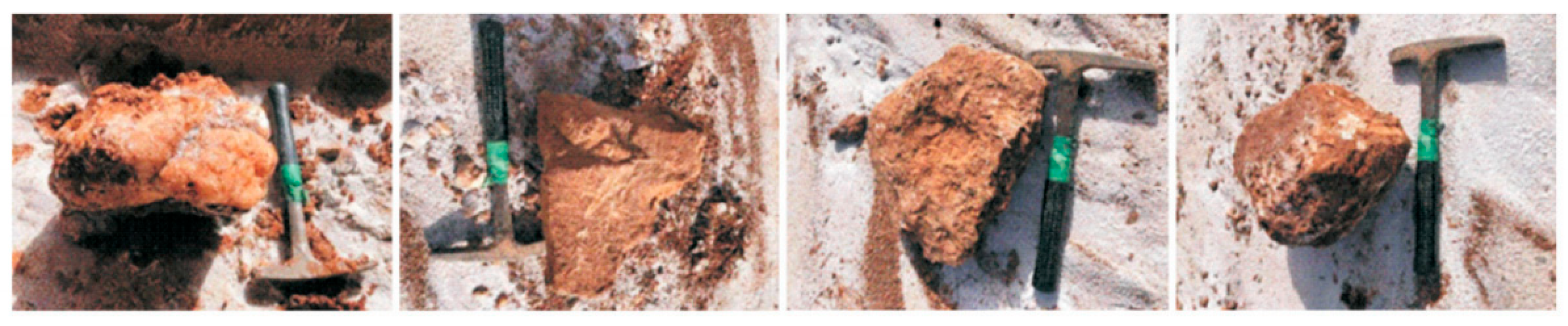
Macroscopic observations of rock samples from the E1-2km Group (Figure 8), combined with macro- and micro-scale analyses, indicate that the inter-salt intercalations have poorly developed fractures. Under subsurface high-stress conditions, these intervals essentially lack the inherent material basis for direct fluid loss. Pure mudstone, pure salt rock, gypsum-bearing mudstone, and salt-bearing mudstone all exhibit low porosity and permeability. Although rock samples from the salt-bearing mudstone/salt rock interface show slightly higher porosity and permeability, the overall characteristics remain low porosity and low permeability, insufficient to provide the material conditions for fluid loss. However, impure rocks such as gypsum-bearing mudstone and salt-bearing mudstone have low tensile strength, with salt-bearing mudstone exhibiting the lowest average tensile strength of 0.60 MPa. This suggests that under pressure, impure rocks like gypsum-bearing mudstone and salt-bearing mudstone are more prone to fracture formation and are more likely to act as mechanical weak points for fracture initiation [25].
Figure 8.
Photographs of salt–gypsum formation rock samples [25].
While drilling to a depth of 6267.1 m in Well Keshen n5, lost circulation occurred in the E1-2km formation, characterized by grayish-white mud–gypsum rock. At a flow rate of 20 L/s, the loss rate was 6 m3/h. At 13.5 L/s, no loss was observed. Increasing the flow rate to 16 L/s resulted in no loss, while further increasing to 19 L/s caused a loss rate of 0.5 m3/h. When the flow rate was reduced back to 16 L/s, no loss occurred. The pressure differential at the loss zone for typical wells was calculated and compared with pressure profiles, as shown in the Table 7. The lithology associated with lost circulation in salt–gypsum formations is predominantly mudstone or gypsum-bearing mudstone, leading to the classification of the loss as fracture-induced. Calculations indicate that lost circulation in the E1-2km is primarily of the induced propagation or induced fracture types. Specifically, if the closure pressure < wellbore pressure at the loss point < fracture pressure, it is classified as induced propagation lost circulation. If the fracture pressure < wellbore pressure at the loss point, it is classified as induced fracture lost circulation. Additionally, in dolomite intervals where natural fractures are developed, if the pore pressure (loss pressure) < loss zone pressure, it is classified as natural fracture-induced lost circulation.
Table 7.
Classification of loss pathways and mechanisms in the E1-2km.
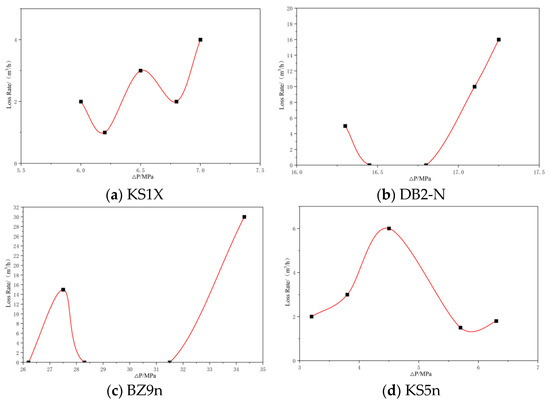
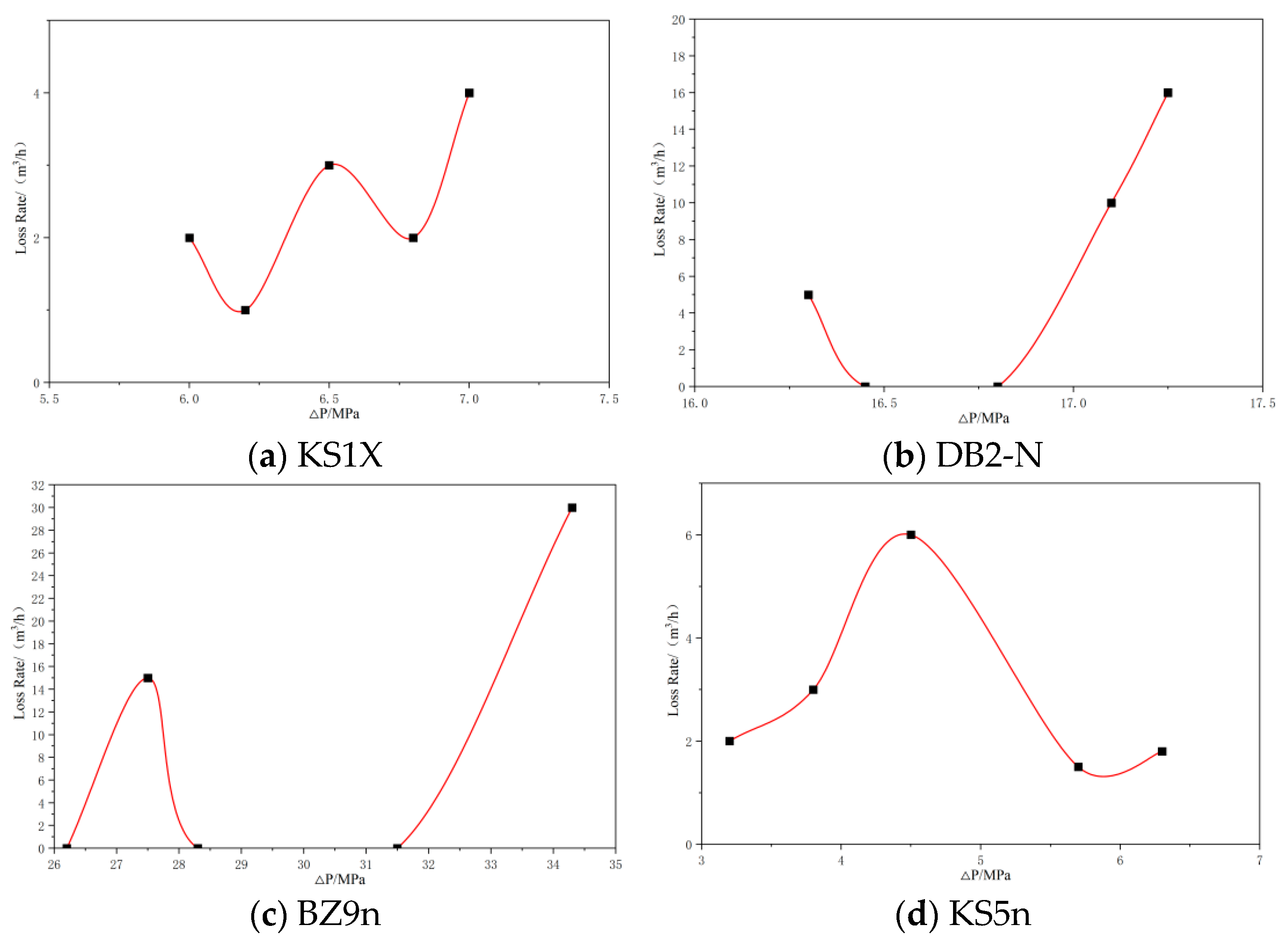
The relationship between lost circulation rates and pressure differentials under varying pressure conditions in the E1-2km was statistically analyzed (see Figure 9). For induced fracture loss, the correlation between the bottomhole pressure differential and loss rate is generally weak, and loss ceases when fractures close. Based on bottom-hole pressure differential analysis and the relationship between loss rates and pressure differentials, the classification of loss pathways and mechanisms in the E1-2km is summarized in Table 8.
Figure 9.
Relationship between pressure difference and loss rate.
Table 8.
Classification of loss in the E1-2km.
In summary, the E1-2km in the Kuqa foreland is predominantly characterized by induced fracture propagation and induced fracture initiation types of lost circulation. The nonlinear relationship between the on-site loss rate and lost circulation pressure differential can be used to identify the specific loss type. Losses in this formation typically occur during drilling, circulation, reaming, cementing, or pressure testing operations. On-site measures generally include static settling, flow rate reduction, and drilling suspension for pressure-bearing plugging. Larger particle-sized plugging materials, such as coarse walnut shells, are commonly used. These materials are forced into the loss channels via pressure application, with high plugging slurry concentrations (>30%). However, the single-attempt plugging success rate is relatively low (<50%), often requiring multiple plugging attempts or the adoption of managed pressure drilling techniques.
The low success rate of plugging is attributed to the behavior of conventional plugging materials (e.g., walnut shells, rigid particles). While these materials may enter fractures when they are open, they are prone to being expelled or failing to form a stable bridge plug due to the “breathing effect” during pressure fluctuations or fracture closure, leading to plugging failure. The fractures formed by this type of lost circulation exhibit dynamic propagation, pressure sensitivity, and incomplete closure characteristics, making it difficult for conventional rigid particle plugging materials to achieve long-term, stable sealing [26,27]. Current plugging strategies based on flow rate reduction, static conditions, and large-particle materials may temporarily control the loss rate but fail to fundamentally reinforce the fracture faces or fill the fracture network, resulting in a high likelihood of recurrence. Therefore, the key to improving the plugging success rate for this type of lost circulation lies in developing adaptive, high-toughness, elastic, cementitious, or self-healing plugging materials capable of maintaining sealing performance as fracture apertures change [28]. Coupled with processes such as staged pressure-bearing and stress cage construction, the goal is to achieve “consolidated sealing” of dynamic fractures rather than “temporary sealing,” thereby enhancing plugging success rates.
3.4. Classification of Loss Circulation Types in the Reservoir Formation
Loss circulation in the reservoir formation of the Kuqa mountain front typically occurs in the Bashijiqik Formation (K1bs), which is predominantly composed of grayish-brown fine sandstone with well-developed fractures and microfractures [20,21]. Loss circulation generally happens during drilling, with minor to small losses at rates less than 10 m3/h, persisting throughout the vertical drilling process.
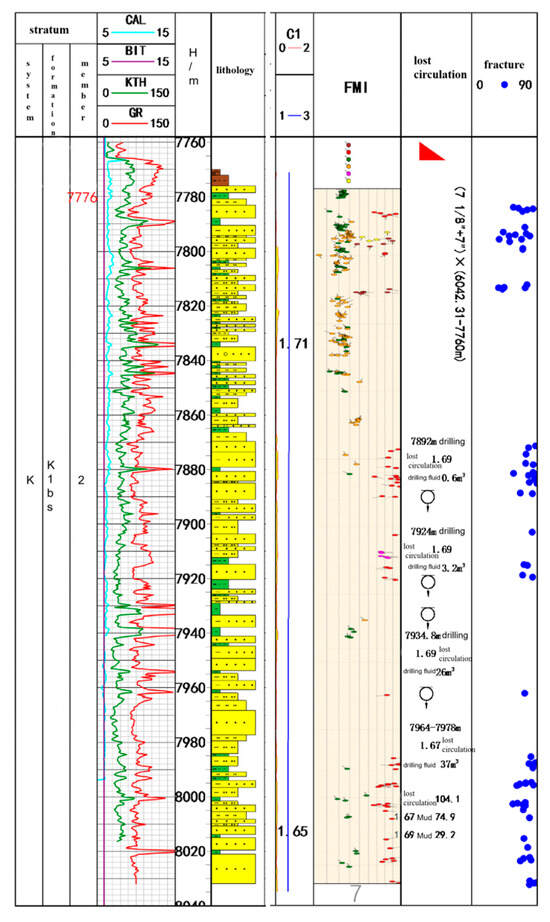
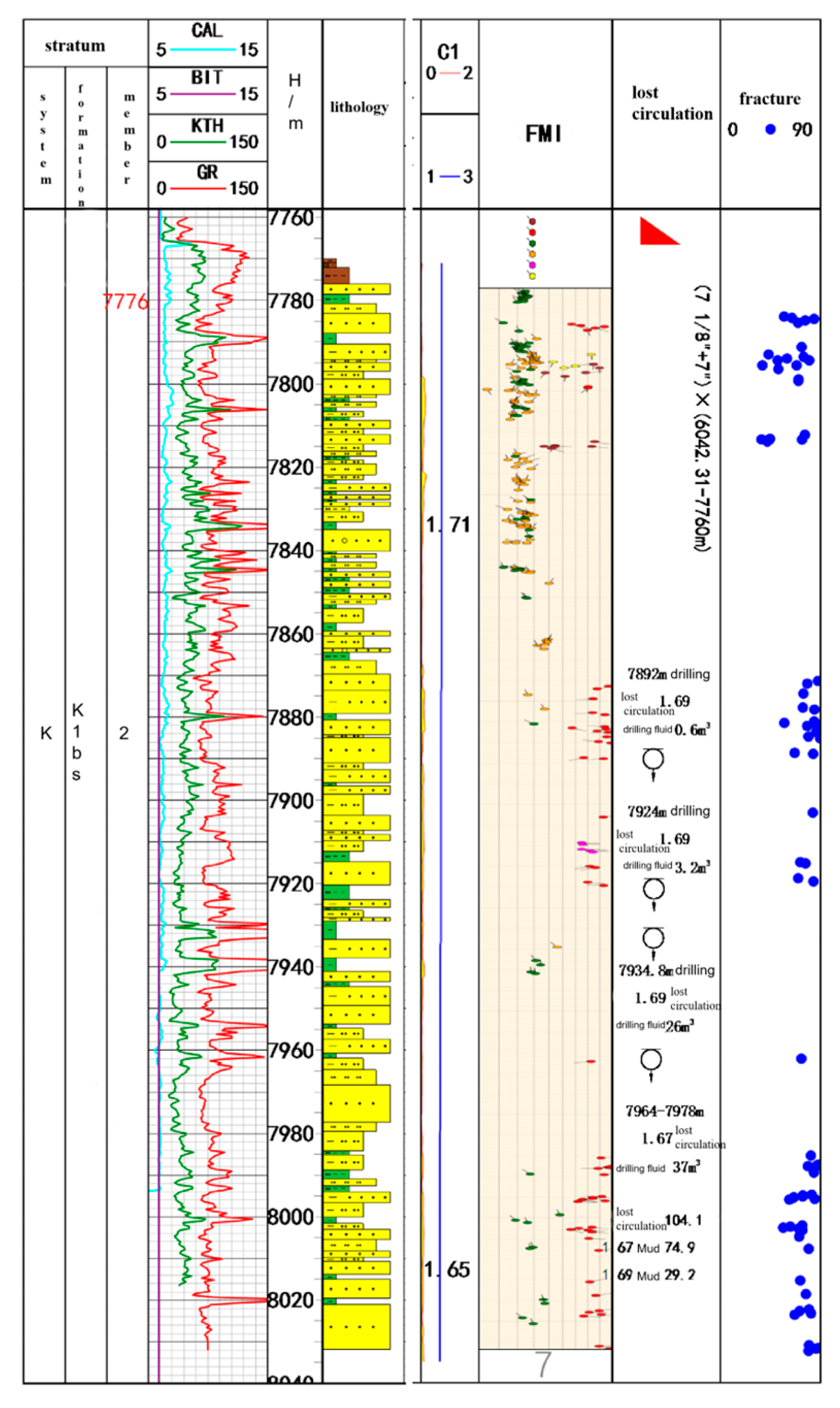
During the drilling process of Well Dabei XC from 7856.3 m to 8035 m, continuous drilling fluid loss occurred. The statistical results are presented in the Table 9. After drilling was completed, electrical imaging logging was conducted on the well to identify fracture conditions, as illustrated in the Figure 10. In the figure, the red tadpole plots represent the development of open fractures, while the blue dots indicate fracture density and angle characteristics. The electrical imaging logging identified 73 fractures in the K1bs Formation between 7776 m and 8035 m, predominantly consisting of dark, high-angle open to semi-open fractures. Among these, 58 were open fractures, 11 were semi-open fractures, and 4 were closed fractures. The fracture linear density was 0.28 fractures per meter, with an average dip angle of 77.4°, indicating good fracture effectiveness. The fractures were primarily concentrated in the intervals of 7783 m–7815 m, 7875 m–7903 m, 7915 m–7920 m, and 7985 m–8032 m. Therefore, the fracture identification results from electrical imaging logging are entirely consistent with the on-site lost circulation conditions, confirming that the lost circulation in the K1bs Formation is of the natural fracture-induced type.
Table 9.
Statistical of lost circulation for Well Dabei XC.
Figure 10.
Electrical imaging log fracture identification curve for Well Dabei XC.
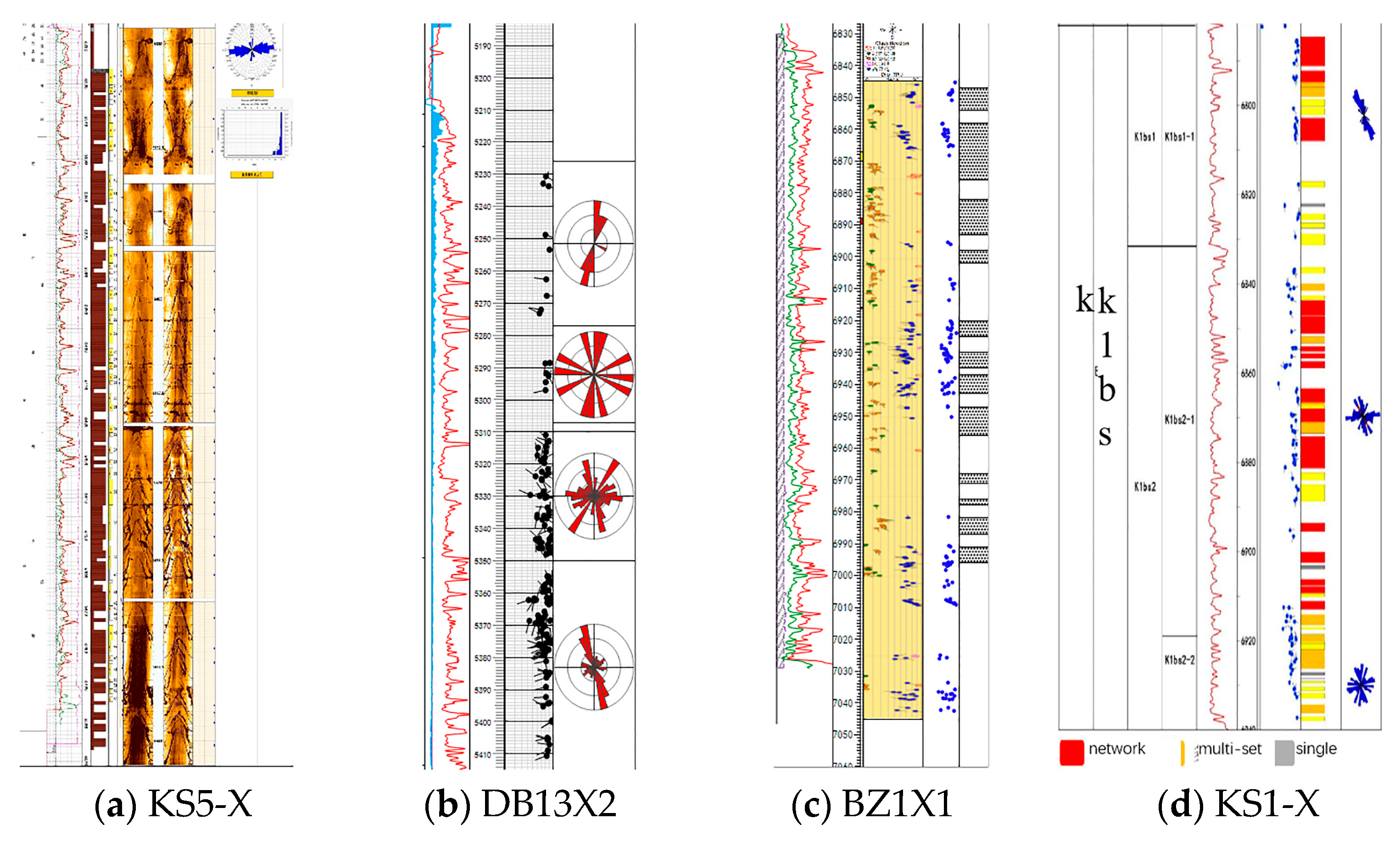
Lost circulation occurred in Well Keshen 5-X at a depth of 6798.2 m, with a pump pressure of 18 MPa, a flow rate of 12 L/s, and a loss rate of 6 m3/h. After reducing the flow rate to 8.5 L/s, the loss rate decreased to 1.5 m3/h. The lithology is brown argillaceous siltstone. Based on imaging log observations (Figure 11a), 45 high-angle natural fractures were identified, leading to the classification of the lost circulation as fracture-induced. Additionally, as shown in the figure below, 155 fractures and small faults were identified in the K1bs Formation of Well Dabei 13X2, forming a complex fracture network. In the K1bs Formation of Well Bozi 1X1, 95 fractures were developed, while Well Keshen 1-X exhibited complex networked fractures and multiple fracture sets, with a total of 78 fractures continuously developed along the vertical section. The aforementioned natural fracture networks serve as the primary channels for drilling fluid lost circulation.
Figure 11.
Electrical imaging log fracture identification curve for K1bs.
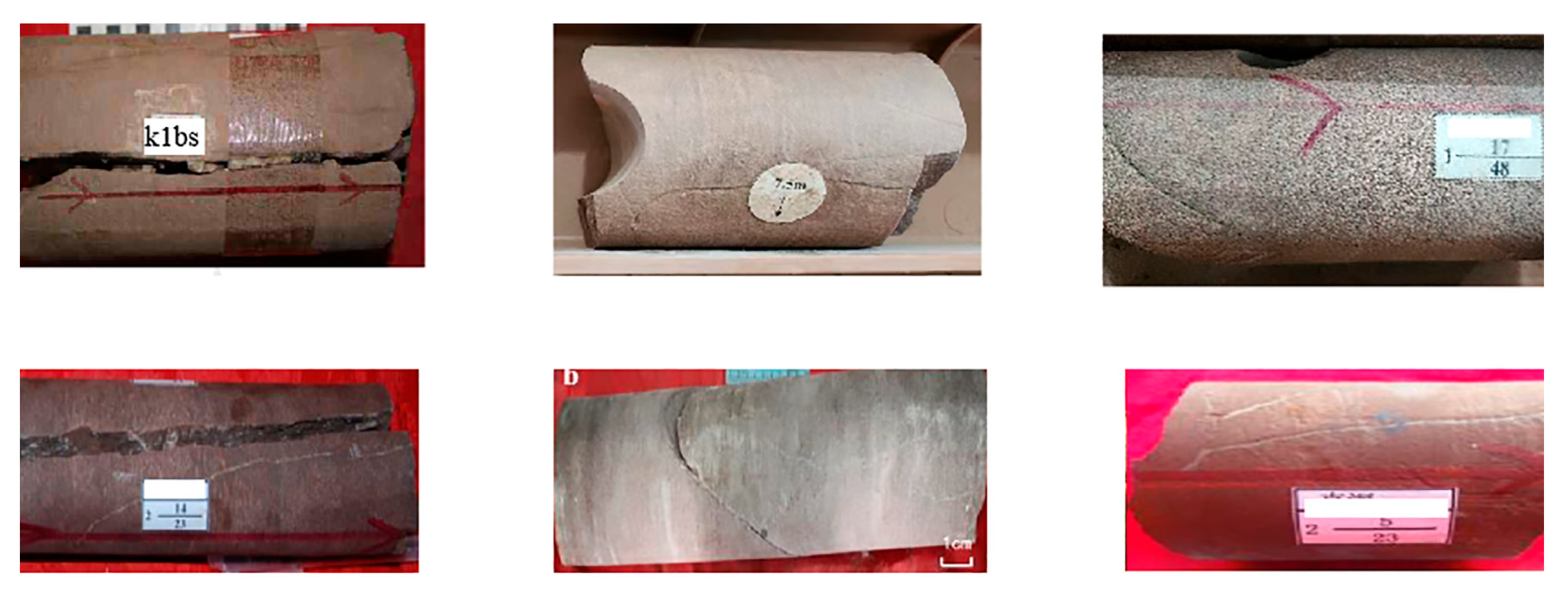
Furthermore, core observations of fracture development in the K1bs Formation, as illustrated in the Figure 12, reveal distinct fracture characteristics within these core samples. High-angle fractures are predominantly developed, consistent with the fracture identification results from well logging. The fracture types include tensile fractures, shear fractures, and potential structural fractures. These fracture characteristics have a direct correlation with drilling fluid lost circulation: fractures serve as natural permeable pathways, and when drilling encounters formations with such fracture development, drilling fluid is prone to loss along the fracture system [29,30]. The severity of lost circulation is determined by the degree of fracture development, connectivity, and aperture. The more developed and better connected the fractures are, the higher the risk of lost circulation. Therefore, in drilling engineering, analyzing core fracture characteristics can aid in predicting and assessing the risk of drilling fluid lost circulation, providing critical guidance for drilling fluid design and well control measures [31].
Figure 12.
Core-identified fractures in the K1bs Formation.
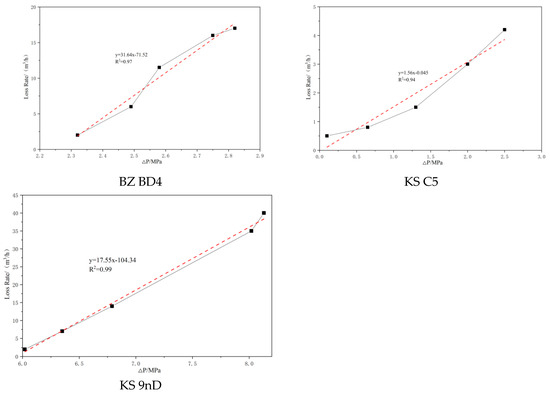
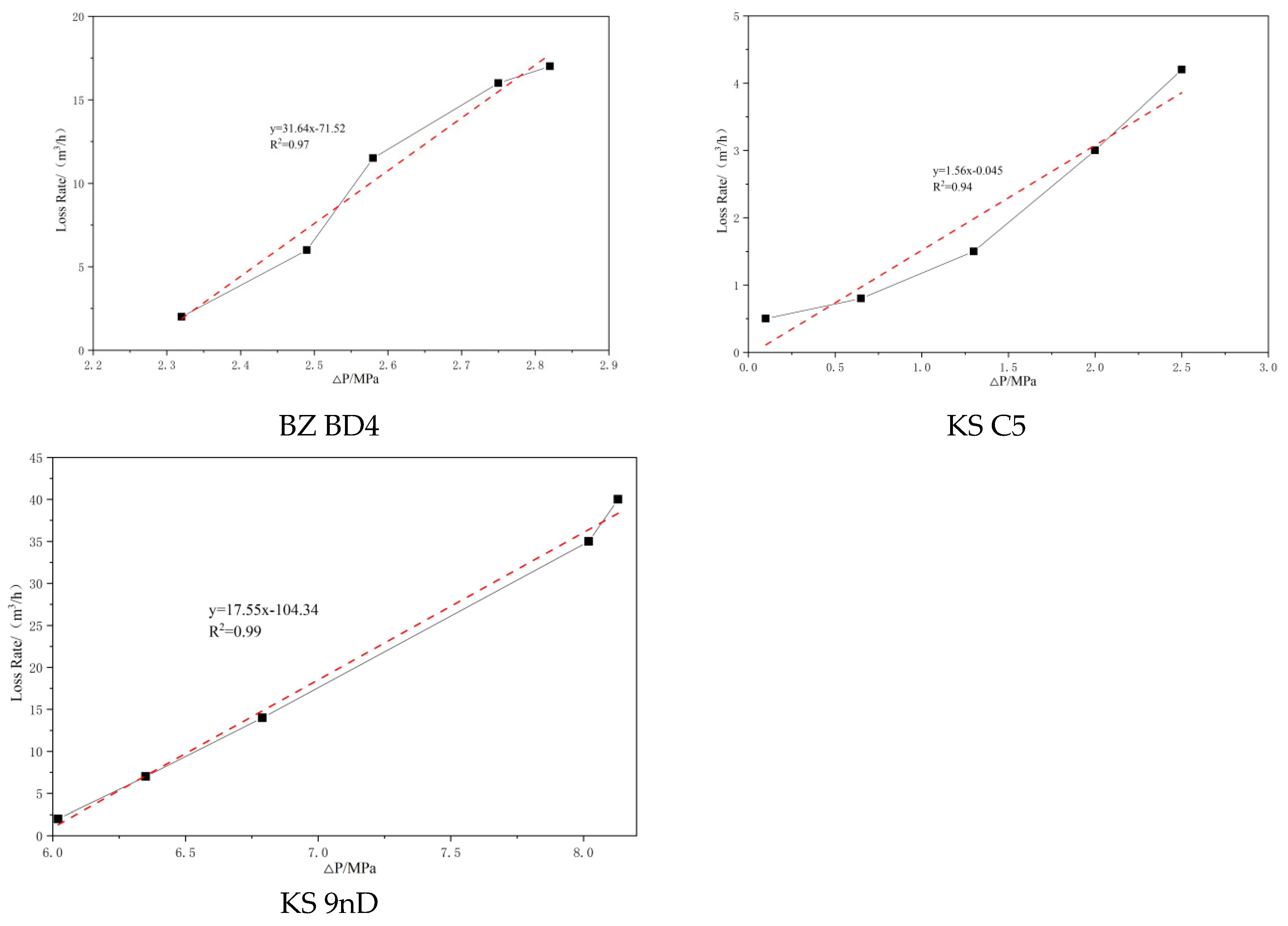
The pressure differential at the loss zone for typical wells was calculated and compared with pressure profiles, as shown in the Table 10. The calculations indicate that the loss pressure is less than the wellbore pressure at the loss point, which in turn is less than the closure pressure in the K1bs Formation, leading to its classification as natural fracture-induced lost circulation. Additionally, the relationship between the loss rate and pressure differential under varying lost circulation pressure differentials in the K1bs Formation was statistically analyzed, as illustrated in the Figure 13. The correlation between the loss zone pressure differential and the loss rate is strong, showing a nearly positive linear relationship. Lost circulation occurs immediately upon penetrating the fracture-developed formation, and as the pressure differential increases, the loss rate rises linearly. This behavior aligns with the characteristics of natural fracture-induced lost circulation and is consistent with the fracture identification results from well logging and core analysis.
Table 10.
Pressure differential analysis of the K1bs Formation.
Figure 13.
Relationship between pressure difference and loss rate in the K1bs Formation.
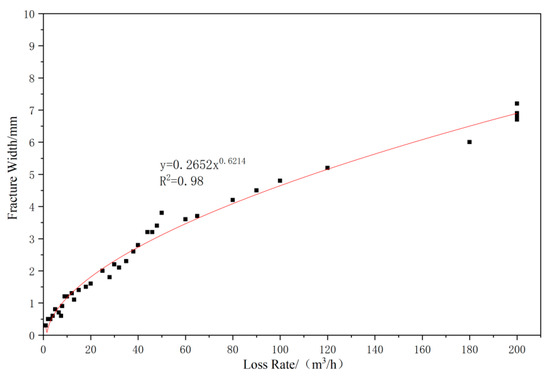
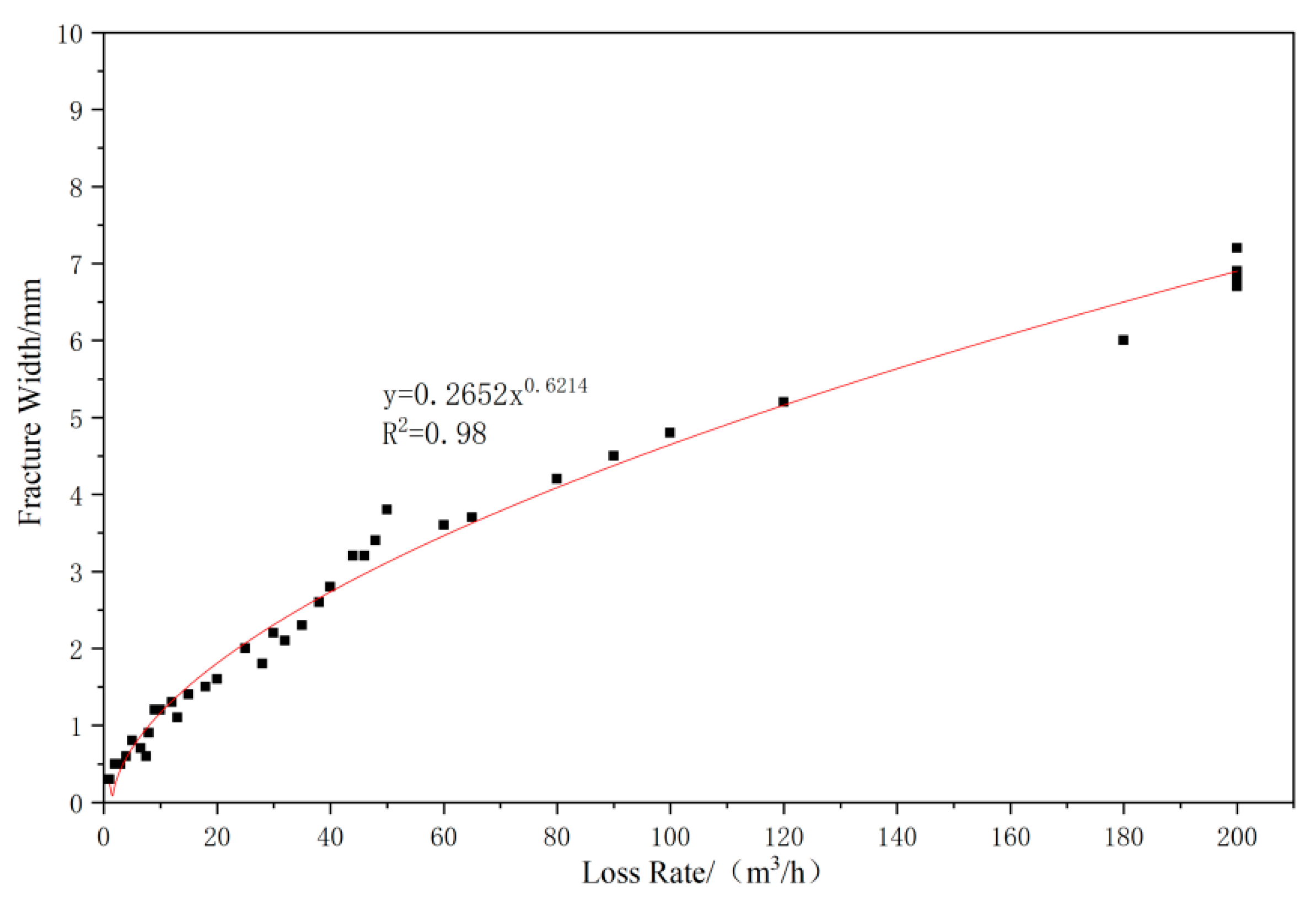
For natural fracture-induced lost circulation in the Bashijiqike Formation, the relationship between the loss zone pressure differential and the loss rate generally follows a positive linear correlation. Therefore, under similar geological conditions within the same block, the relationship between the loss rate and fracture aperture under a given pressure differential can be analyzed. The fracture aperture in the loss zone is inversely derived using the D90 value of successful on-site plugging formulations, and its relationship with the loss rate is established. A plugging formulation is defined as successful if, after plugging, the loss rate is less than 2 m3/h, no loss occurs, or drilling can continue. Plugging formulations with a 100% success rate in the first or second attempt are selected to inversely derive the fracture aperture. The D90 value of these formulations is tested, and based on the modified D90 rule [32], the fracture aperture in the loss zone is inversely calculated. The resulting relationship curve between the loss rate and fracture aperture for the Keshen X block is shown in the Figure 14, which approximately follows a power-law pattern with an R2 value of 0.98. Therefore, when lost circulation occurs during drilling in the Bashijiqike Formation of this block, the power-law equation can be used to simulate and predict the fracture aperture in the loss zone, providing a basis for optimizing plugging formulations. Similarly, this method can be applied to natural fracture aperture prediction in other blocks, offering valuable insights for recommending plugging formulations and improving on-site plugging success rates [33,34,35].
Figure 14.
Relationship between loss rate and fracture aperture in the K1bs Formation of the Keshen X.
In summary, as shown in Table 11, lost circulation in the K1bs Formation of the Kuqa foreland is predominantly characterized by vertically developed natural fracture-induced losses, which typically occur during the drilling process. On-site measures primarily include reducing the flow rate, lowering density, implementing lost circulation prevention while drilling, and applying drilling plugging slugs. The single-attempt plugging success rate is ≥80%. Prior to cementing the target zone, drilling is usually suspended for pressure-bearing plugging to enhance the formation’s pressure-bearing capacity.
Table 11.
On-site plugging formulations for K1bs.
4. Conclusions
- A systematic classification system for drilling fluid lost circulation applicable to the Kuqa foreland area was established. The study categorizes five types of lost circulation channels—fracture-type, porous-type, cavern-type, and their composite forms—as well as five types of lost circulation mechanisms: permeability loss, natural fracture-induced loss, induced fracture propagation loss, induced fracture initiation loss, and cavernous loss. This framework integrates geological lithological and engineering mechanical factors, translating abstract loss mechanisms into identifiable and distinguishable types, thereby addressing the shortcomings of previous classification systems, which lacked quantitative indicators and regional specificity.
- The dominant lost circulation types, dynamic characteristics, and quantitative relationships for the three major vertical stratigraphic units in the Kuqa foreland were clarified. ① The supra-salt sandy conglomerate formations (Q1x, N2k) are dominated by permeability loss, where loss rate and pressure differential exhibit a strong positive linear correlation, with a first-attempt plugging success rate of ≥90%. ② The salt–gypsum formations (E1-2km) are predominantly characterized by induced fracture loss, where the loss rate–pressure differential relationship is nonlinear, revealing the dynamic propagation and closure behavior of fractures, and the first-attempt plugging success rate is generally <50%. ③ The K1bs Formation is mainly subject to natural fracture-induced loss, with electrical imaging logs identifying 45–155 fractures. The loss rate and pressure differential show a strong positive correlation. Based on inversely derived fracture aperture values, a power-law predictive model (R2 = 0.98) linking the loss rate to fracture aperture was established, achieving a plugging success rate of ≥80%.
- Differentiated lost circulation prevention and plugging technical strategies were developed based on the classification system, and the underlying mechanisms of their effectiveness were elucidated. For permeability loss, the key measures include reducing the flow rate, controlling pressure differential, and employing large-particle-sized graded plugging materials. For induced fracture loss, the focus is on developing adaptive elastic, self-cementing, or self-healing materials to address dynamic fractures. For natural fracture-induced loss, the emphasis lies on combining lost circulation prevention while drilling with slug plugging, while optimizing the particle size distribution of plugging formulations using fracture aperture predictive models. This study advances lost circulation classification from theoretical diagnosis to practical engineering application, providing direct and quantitative scientific guidance for optimizing field operations and improving first-attempt plugging success rates.
Author Contributions
Conceptualization, H.L. and A.S.; methodology, C.L. and A.S.; validation, J.Z., G.Q. and D.B.; formal analysis, J.Z. and C.L.; investigation, J.Z. and H.L.; resources, C.L., G.Q. and S.Z.; data curation, J.Z.; writing—original draft preparation, J.Z.; writing—review and editing, J.Z. and D.B.; visualization, H.L.; supervision, C.L. and D.B.; project administration, G.Q., S.Z. and D.B.; funding acquisition, D.B. All authors have read and agreed to the published version of the manuscript.
Funding
This study was supported by the Shareholding Major Science and Technology Project 2023ZZ14 Research on Large-scale Reserve Increase, Production Enhancement and Exploration and Development Technology of Ultra-Deep Clastic Rock Oil and Gas, 2023ZZ14, the National Natural Science Foundation of China (Grant No. 52304006), and the Science and Technology Research Program of Chongqing Municipal Education Commission (Grant No. KJZD-K202501508).
Data Availability Statement
The original contributions presented in this study are included in the article. Further inquiries can be directed to the corresponding authors.
Conflicts of Interest
Authors Jinzhi Zhu, Hongjun Liang, Chengli Li, Guochuan Qin, Shaojun Zhang and Aisheng Sun were employed by the company China National Petroleum Corporation (CNPC) Tarim Oilfield Branch. The remaining author declares that the research was conducted in the absence of any commercial or financial relationships that could be construed as a potential conflict of interest.
References
- Sun, J.; Yang, J.; Bai, Y.; Lyu, K.; Liu, F. Research progress and development of deep and ultra-deep drilling fluid technology. Pet. Explor. Dev. 2024, 51, 889–898. [Google Scholar] [CrossRef] [Scilit]
- Liu, Q. Study on Big Data Lost Circulation Prediction in Kuqa Piedmont Area. Master’s Thesis, China University of Petroleum (Beijing), Beijing, China, 2022. [Google Scholar] [CrossRef]
- Yin, D. Study on Reservoir Protection Technology of Deep Fractured Tight Sandstone Gas Reservoir; Southwest Petroleum University: Chengdu, China, 2021. [Google Scholar] [CrossRef]
- Liu, W.; Zhou, Y.; Shi, X.; Wang, Y.; Lei, W.N.; Li, M. Precise Managed Pressure Drilling Technology for Ultra-High Pressure Brine Layer in the Kuqa Piedmont of the Tarim Oilfield. Pet. Drill. Tech. 2020, 48, 23–28. [Google Scholar] [CrossRef]
- Xu, C.; Zhang, H.; Kang, Y.; You, L.; Fang, J.; Zhang, J.; Yan, X.; Xie, Z.; Zhou, H. Quantitative evaluation and selection method of physical plugging materials in deep fractured reservoirs. Nat. Gas Ind. 2021, 41, 99–109. [Google Scholar] [CrossRef] [Scilit]
- Sun, J.; Bai, Y.; Cheng, R.; Lyu, K.; Liu, F.; Feng, J.; Lei, S.F.; Zhang, J.; Hao, H. Research progress and prospect of plugging technologies for fractured formation with severe lost circulation. Pet. Explor. Dev. 2021, 48, 630–638. [Google Scholar] [CrossRef] [Scilit]
- Xu, T.; Shen, W.; Feng, J.; Shi, B.; Liu, X. Leakage Prevention and Plugging Technology in Drilling Engineering; Petroleum Industry Press: Beijing, China, 2021. [Google Scholar]
- Guo, J. The Lost Circulation Mechanism and Control of Salt-Gypsum Formation in the Kuqa Piedmont; China University of Petroleum: Beijing, China, 2023. [Google Scholar] [CrossRef]
- Wang, T.; Liu, F.; Luo, W.; Yan, Z.H.; Lu, H.Y.; Guo, B. The Technical Advance and Development Suggestions for Leakage Prevention and Plugging Technologies in the Tarim Oilfield. Pet. Drill. Tech. 2021, 49, 28–33. [Google Scholar] [CrossRef]
- Li, N.; Li, L.; Wang, T.; Li, X.; Liu, Y.S.; Zhou, Z.S.; Guo, B. The Study of Leakage Mechanism and Plugging Measures of Gypsum—Salt Formations and Target Zones in the Tian Mountain Front Block in Tarim Basin. Guangzhou Chem. Ind. 2020, 48, 101–103. [Google Scholar] [CrossRef]
- Alkinani, H.H.; Al-Hameedi, A.T.T.; Dunn-Norman, S.; Flori, R.E.; Alsaba, M.T.; Amer, A.S.; Hilgedick, S.A. Using Data Mining to Stop or Mitigate Lost Circulation. J. Pet. Sci. Eng. 2019, 173, 1097–1108. [Google Scholar] [CrossRef] [Scilit]
- Hui, G.; Chen, S.; He, Y.; Wang, H.; Gu, F. Machine Learning-based Production Forecast for Shale Gas in Unconventional Reservoirs Via Integration of Geological and Operational Factors. J. Nat. Gas Sci. Eng. 2021, 94, 104045. [Google Scholar] [CrossRef] [Scilit]
- Hou, X.; Yang, J.; Yin, Q.; Liu, H.; Chen, H.; Zheng, J.; Wang, J.; Cao, B.; Zhao, X.; Hao, M.; et al. Lost Circulation Prediction in South China Sea using Machine Learning and Big Data Technology. In Proceedings of the Offshore Technology Conference, Houston, TX, USA, 4–7 May 2020. [Google Scholar] [CrossRef] [Scilit]
- Sun, J.; Yang, J.; Bai, Y.; Lv, K.H.; Wang, J.T.; Wang, R. Review and prospect of bridging plugging technology in fractured formation. Pet. Sci. Bull. 2023, 8, 415–431. [Google Scholar] [CrossRef]
- Xu, C.; Yan, X.; Kang, Y.; You, L.; Zhang, J. Structural failure mechanism and strengthening method of fracture plugging zone for lost circulation control in deep naturally fractured reservoirs. Pet. Explor. Dev. 2020, 47, 430–440. [Google Scholar] [CrossRef] [Scilit]
- Xu, C.; Xie, J.; Kang, Y.; Liu, L.; Guo, K.; Xue, D.; You, Z. Fracture Prepropping and Temporary Plugging for Formation Damage Control in Deep Naturally Fractured Tight Reservoirs. SPE J. 2024, 29, 4737–4752. [Google Scholar] [CrossRef] [Scilit]
- Xu, C.; Zhang, J.; Kang, Y.; Xu, F.; Lin, C.; Yan, X.; Jing, H.; Shang, X. Structural formation and evolution mechanisms of fracture plugging zone. Pet. Explor. Dev. 2021, 48, 202–210. [Google Scholar] [CrossRef] [Scilit]
- Qiu, X.; Zhang, H.; Wei, Y.; Wu, K.; Liu, C.; Yang, X.; Yu, H. Study on Construction Parameters of Pressure Bearing Plugging Considering High Stress Difference. Drill. Fluid Complet. Fluid 2023, 40, 54–59. [Google Scholar] [CrossRef]
- Qiu, X. Study on Mechanical Mechanism of Pressure-Plugging and Optimization of Plugging Technology Experimental in Shunbei Tight Formation; China University of Petroleum: Beijing, China, 2022. [Google Scholar] [CrossRef]
- Zhang, S. Study on Lost Circulation Mechanism and Control Formulation in Multi-Scale Fracture Formation; China University of Petroleum: Beijing, China, 2023. [Google Scholar] [CrossRef]
- Zhang, L.; Xu, J.; Xie, T.; Lin, H.; Liu, H.L. Comparison of Several Calculation Models for Loss Pressure of Fractured Formation. China Pet. Mach. 2018, 46, 13–17. [Google Scholar] [CrossRef]
- Chen, L.; Lu, H.; Wang, Z.; Li, C.; Yang, H.; Zhang, M.; Xu, T. Identifying types and analyzing main controlling factors of mud losses using a method integrating LightGBM Aagorithm and SHAP. Drill. Fluid Complet. Fluid 2023, 40, 771–777. [Google Scholar] [CrossRef]
- Li, L.; Yin, D.; Huang, C.; Zhong, S.; Zhang, D. Application of High-Strength Plugging Technology in KES 1103. Drill. Prod. Technol. 2022, 45, 157–160. [Google Scholar] [CrossRef]
- Yin, D.; Liu, F.; Kang, Y.; Guo, B.; Luo, W.; Wang, T.; Yan, Z. Identification of Genetic Type of Drilling Fluid Leakage in Salt-Gypsum Layers in Front of Kuqa Mountain. Drill. Prod. Technol. 2019, 42, 121–123. [Google Scholar] [CrossRef]
- Fang, C.; Zhang, H.; Chen, C.; Chen, Y.; Feng, Y.; Lin, Z.; Fan, J.; Zhai, W.; Liu, E. Geology-Engineering Integrated Investigation of Leakoff Mechanisms and Prevention Measures: A Case Study of the Palaeogene Composite Salt Layer in the Kuqa Piedmont Zone, Tarim Basin. Oil Drill. Prod. Technol. 2022, 44, 684–692. [Google Scholar] [CrossRef]
- Bao, D. Study on Tight Sealing Mechanism with High Pressure Bearing Capacity and Drilling Fluid Plugging Technology in Fractured Formation; China University of Petroleum: Beijing, China, 2020. [Google Scholar] [CrossRef]
- Yan, X.; Xu, C.; Kang, Y.; Shang, X.Y.; Jing, H.R.; Lin, C.; Zhang, J.Y. Mechanical Mechanism of Meso-Structure Instability of Fracture Plugging Zone Based on the Characterization of Force Chain Network. Acta Pet. Sin. 2021, 42, 765–775. [Google Scholar] [CrossRef]
- Bao, D.; Liu, S.-Y.; Yang, Y.-J.; Sang, Y.-T.; Miao, Z.-P.; Li, H.; Wang, B.; Liang, T.-S.; Zhang, P. Preparation and performance of high temperature resistant and high strength self-healing lost circulation material in the drilling industry. Pet. Sci. 2025, 22, 3655–3670. [Google Scholar] [CrossRef] [Scilit]
- Wang, K. Structural Characterization of Fracture Plugging Layers in High-Temperature High-Density Oil-Based Drilling Fluids; Southwest Petroleum University: Chengdu, China, 2019. [Google Scholar]
- Wang, Z. Study of Wellbore Stability and Fracture Characteristics of Bashijiqike Reservoir in Keshen 5 Gas Field, Tarim Basin; China University of Petroleum (East China): Beijing, China, 2018. [Google Scholar] [CrossRef]
- Guo, K.; Kang, Y.-L.; Xu, C.-Y.; Lin, C.; Zhang, L.-J.; You, L.-J. Plugging mode of flaky lost circulation materials within fractures and mechanism to enhance pressure-bearing capacity for the plugging zone. Pet. Sci. 2025, 22, 3315–3332. [Google Scholar] [CrossRef] [Scilit]
- Wang, G.; Huang, Y.; Lu, H.; Wang, T.; Cao, C. Selection of the particle size distribution of granular lost circulation materials for use in naturally fractured thief zones. J. Pet. Sci. Eng. 2022, 215, 110702. [Google Scholar] [CrossRef] [Scilit]
- Li, W.; Liao, J. Microscopic Analysis of Flow Resistance of Oil Displacement Fluid in Reservoir Fractures. Reserv. Sci. 2026, 2, 16–33. [Google Scholar] [CrossRef] [Scilit]
- Xu, N.; Wang, Y. Effect of Nanomaterials on Improving the Apparent Viscosity of Heavy Oil and the Environmental Evaluation of Reservoir Environment. Reserv. Sci. 2026, 2, 1–15. [Google Scholar] [CrossRef] [Scilit]
- Li, M.; Liu, J.; Xia, Y. Risk Prediction of Gas Hydrate Formation in the Wellbore and Subsea Gathering System of Deep-Water Turbidite Reservoirs: Case Analysis from the South China Sea. Reserv. Sci. 2025, 1, 52–72. [Google Scholar] [CrossRef] [Scilit]

Disclaimer/Publisher’s Note: The statements, opinions and data contained in all publications are solely those of the individual author(s) and contributor(s) and not of MDPI and/or the editor(s). MDPI and/or the editor(s) disclaim responsibility for any injury to people or property resulting from any ideas, methods, instructions or products referred to in the content. |
© 2026 by the authors. Licensee MDPI, Basel, Switzerland. This article is an open access article distributed under the terms and conditions of the Creative Commons Attribution (CC BY) license.