


Abstract
The management of sludge from wastewater treatment plants presents both an environmental challenge and an opportunity for resource recovery. This study presents a comparative characterization of two sludge samples, N1 and N2, originating from treatment plants with and without anaerobic digestion, respectively. Thermo-oxidative behavior was investigated using TG/DTG/DTA analysis coupled with FTIR spectroscopy, while the residues obtained at 900 °C were characterized via SEM–EDX and XRD. Energy potential was assessed through calorimetric measurements. Total mass losses were 66.46% for N1 and 67.64% for N2, with main exothermic peaks recorded at 555.1 °C and 474.0 °C, respectively. Sample N2 exhibited a higher calorific value (14.7 MJ/kg) compared to N1 (10.1 MJ/kg). Analyses of the solid residues revealed the presence of mineral phases that warrant investigating their potential utilization in the construction materials industry. The results highlight differences in thermo-oxidative behavior as well as the potential for energy and material recovery, the industrial applicability of which requires further validation.
1. Introduction
Wastewater treatment contributes to the protection of surface waters [1] and groundwater [2,3] by reducing organic and inorganic pollutant loads prior to the discharge of effluents into the natural environment.
Wastewater treatment is achieved through physical, chemical, and biological processes tailored to the characteristics of the influent and the capacity of the treatment plant. In large-capacity wastewater treatment plants, the resulting sludge can undergo anaerobic digestion—a process in which a portion of the biodegradable organic matter is converted into biogas [4,5]. Activated sludge processes are widely used in wastewater treatment due to their effectiveness in removing biodegradable organic pollutants and their operational flexibility. These processes also generate excess biological sludge, which may undergo anaerobic digestion for biogas recovery in appropriately equipped treatment plants [6,7]. The degradation of organic substances into nitrogen and phosphorus compounds takes place with the additional production of biomass [8], with direct impact on the composition of the resulting sludge and the wastewater treatment. Aside from the microbial biomass, the sludge itself may contain residual, minerals, microplastics, or even potentially toxic metals [9,10].
The organic matter and nutrients in the sludge may also find good use as fertilizers; however, the presence of metals, persistent organic pollutants, and pathogenic microorganisms require additional recovery treatments. One such approach involves composting sludge together with plant residues to produce a material intended for use in agriculture. This approach has also been studied in horticulture, through the evaluation of the compost’s effects on soil properties and fruit quality [11].
The sewage sludge can be salvage in the construction materials industry either by using the ash obtained from the thermal treatment of the sludge into the manufacturing workflow of cement-based materials, or by introducing the sludge directly into the raw material mixture, prior to the thermal treatment. This option is of interest because it allows the recovery of part of the energy contained in the organic fraction, while the mineral components can be incorporated into the ceramic product or clinker. The two recovery options are not equivalent, however, and must be analyzed separately, taking into account the particularities of each technological process [12,13,14].
In the last two decades, research on the utilization of sewage sludge has included different thermal processes, including pyrolysis [15,16,17] as well as incineration or combustion [18,19,20]. Through these treatments, organic matter is transformed, with the possibility of recovering a portion of the energy contained in the sludge. One factor that complicates the application of thermal processes is the high moisture content of the sludge, as removing the water requires additional energy consumption [21,22]. The oxidative treatments release gaseous products and ash, which can exceed 30% of the dry mass, depending on the initial composition of the sludge. This ash can be used as a secondary base material in the construction materials manufacturing, because of the silicon, calcium, iron, and aluminum likely found in its composition, if the technological and environmental requirements are met.
Although the thermal treatment of sewage sludge has been extensively investigated, previous studies have frequently focused on individual aspects of its characterization, such as thermal decomposition, energy recovery, or the composition of the resulting solid residues [13,23]. However, evaluating the potential for integrated resource recovery requires considering both the organic fraction undergoing thermo-oxidative conversion and the inorganic fraction remaining after treatment. In this context, the contribution of the present study lies in combining TG/DTG/DTA–FTIR analysis, calorimetric measurements, and SEM–EDX and XRD characterization within a comparative investigation of sewage sludges originating from two wastewater treatment plants with different technological configurations. This approach allows the thermal decomposition behavior, evolved gaseous compounds, calorific values, and mineral residue characteristics to be examined together. Particular attention is given to the relationship between the energy potential of the organic fraction and the characteristics of the residual inorganic material. Rather than proposing a new thermal treatment technology, the study provides complementary experimental evidence for assessing the potential integration of energy recovery and mineral residue valorization, while recognizing that practical implementation requires further technological and environmental validation.
2. Materials and Methods
2.1. Sludge Samples and Their Preparation
To investigate thermal behavior and identify the gaseous compounds released during progressive heating in an air atmosphere—from ambient temperature up to 900 °C—two sludge samples from wastewater treatment plants with different technological configurations were analyzed.
The sewage sludge samples were collected from two wastewater treatment plants located in Bistrița-Năsăud County, Romania, serving communities with different demographic and infrastructural characteristics. The Bistrița WWTP serves an urban population of approximately 100,000 inhabitants. The facility has a reported design capacity of 148,600 population equivalents (PE), according to the Romanian National Administration “Romanian Waters” [24]. Industrial wastewater is subjected to pretreatment before being discharged into the municipal sewer system. However, the contribution of individual industrial sources to the influent pollutant load was not quantified in the present study. In contrast, the Romuli WWTP serves a mountain village with approximately 2300 inhabitants and 980 households connected to the sewer network, receiving predominantly domestic wastewater. According to the Romanian National Administration “Romanian Waters”, the Romuli WWTP has a reported design capacity of 2527 population equivalents [25].
In addition to differences in population served and wastewater sources, the two facilities differ in their sludge treatment configurations. The Bistrița WWTP includes anaerobic digestion with biogas production, whereas the Romuli WWTP operates without a methane-producing anaerobic digestion stage.
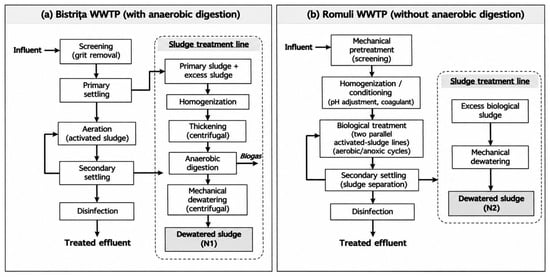
At the Bistrița WWTP, wastewater treatment begins with mechanical pretreatment, including screening and grit removal, followed by primary sedimentation. The wastewater then undergoes biological treatment in activated-sludge aeration tanks, followed by secondary sedimentation, where treated water is separated from the biological sludge. Part of the settled activated sludge is returned to the biological treatment stage, while the excess sludge is directed to the sludge treatment line. Primary sludge and excess activated sludge undergo homogenization and thickening, followed by anaerobic digestion with biogas production. The digested sludge is subsequently mechanically dewatered by centrifugation. The resulting dewatered sludge was collected as sample N1.
At the Romuli WWTP, wastewater undergoes preliminary mechanical treatment, followed by homogenization and conditioning before entering the biological treatment stage. Biological treatment is performed in two parallel activated-sludge lines operating under alternating aerated and non-aerated conditions [26]. Following biological treatment, the activated sludge is separated from the treated wastewater. Part of the sludge is recirculated to maintain the biological process, while the excess sludge is removed for further processing. The treated wastewater undergoes disinfection before discharge. The excess biological sludge is mechanically dewatered, and the resulting material was collected as sample N2.
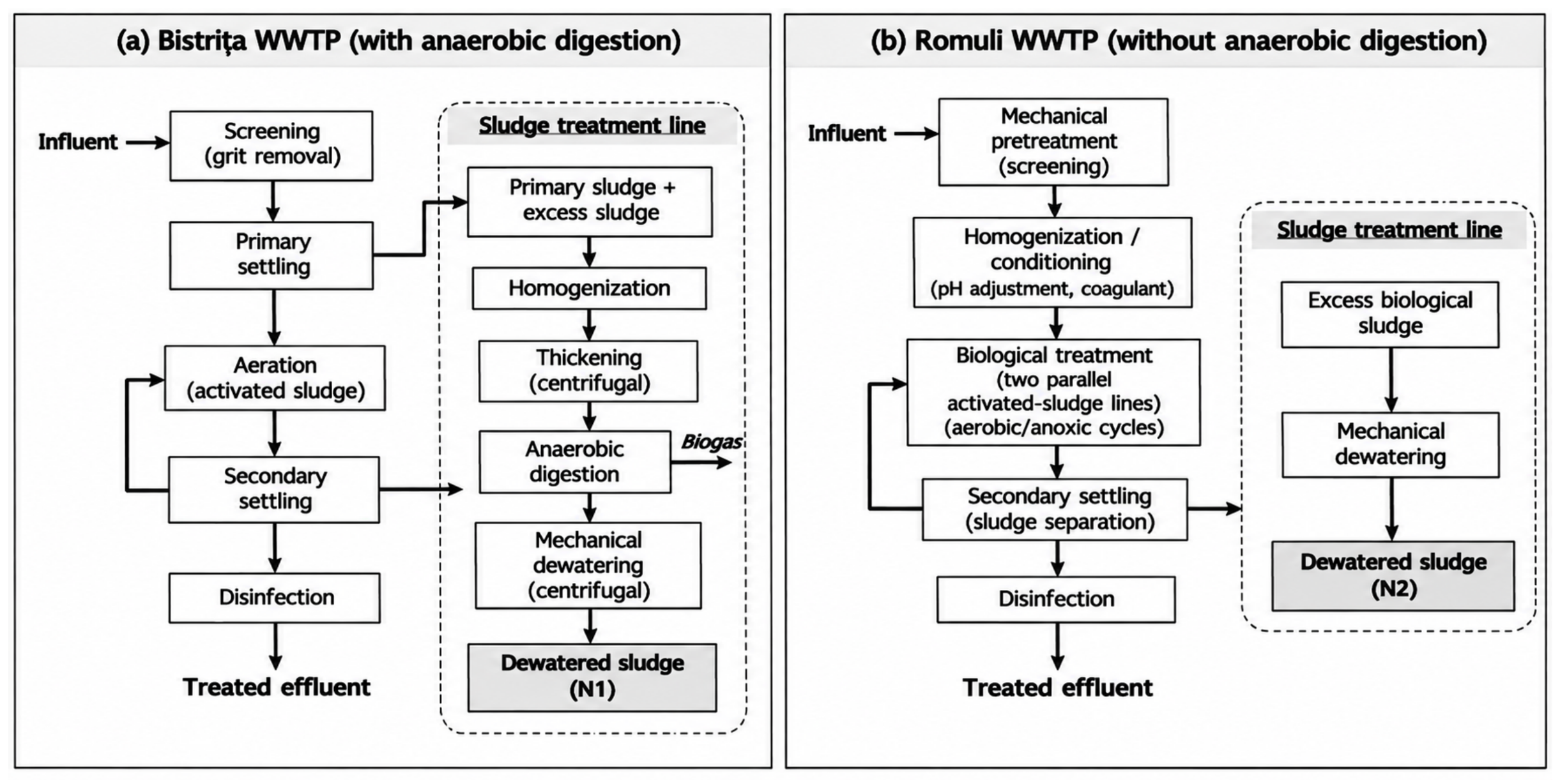
The main wastewater treatment stages and sludge processing pathways of the two facilities are comparatively illustrated in Figure 1. The schematic highlights the differences in sludge management, particularly the presence of anaerobic digestion at Bistrița and its absence at Romuli. These technological differences provide relevant context for the comparative characterization of the two sludge samples, although their physicochemical properties may also be influenced by influent composition and operating conditions.
Figure 1.
Simplified schematic representation of wastewater and sludge treatment processes at the (a) Bistrița and (b) Romuli wastewater treatment plants. N1 and N2 indicate the dewatered sludge samples investigated in this study. RAS: return activated sludge; WAS: waste activated sludge.
The dewatered sludge samples (N1 and N2) were collected from their respective wastewater treatment plants and subsequently transported to the laboratory for thermo-oxidative and physicochemical characterization. The collected materials were subsequently transported to the laboratory for thermo-oxidative and physicochemical characterization.
The influent wastewater composition may vary with domestic activities, precipitation, and other local conditions. Previously published studies provided information on wastewater characteristics and treatment processes at these facilities [26,27]. For the Romuli WWTP, previously reported measurements at the inlet of the biological treatment stage indicated COD concentrations of 1340–1550 mg/L, ammonium nitrogen concentrations of 40.2–43.9 mg/L, and phosphorus concentrations of 4.4–6.1 mg/L [26]. These historical measurements were not obtained concurrently with the sludge samples investigated in the present study.
However, simultaneous monitoring of influent composition and sludge generation was not performed in the present study. Therefore, the observed differences in sludge composition cannot be attributed exclusively to the treatment configuration. The objective was to characterize the organic and inorganic fractions of the resulting sludges and assess their potential for energy and material recovery.
The comparative investigation was designed to characterize the thermo-oxidative conversion of sewage sludge from two facilities with different technological configurations, rather than to evaluate wastewater treatment performance. The experimental assessment focused on thermal decomposition behavior, gaseous products released during heating, calorific values, and the characteristics of the resulting mineral residues.
Prior to analysis, both sludge samples were pre-dried for one hour at 80 °C in a temperature-controlled, ventilated oven. Residual moisture content was not determined separately after the pre-drying step. Therefore, the samples cannot be considered completely dry, and the reported mass losses and calorific values refer to the pre-dried materials rather than to an absolutely dry basis. The low-temperature mass losses observed during TG/DTG analysis may be partly associated with the removal of residual moisture and bound water, although contributions from volatile compounds cannot be excluded. Consequently, residual moisture may influence the initial thermal events and the measured calorific values. Its contribution could not be quantified independently from the available experimental data.
The characterization of the two sludge samples was based on complementary thermal, calorimetric, and physicochemical analyses. TG/DTG/DTA measurements were used to investigate mass loss and thermal transformations during heating, while FTIR spectroscopy provided qualitative information on the gaseous compounds released. Calorimetric measurements were performed to determine the energy potential of the pre-dried samples. The solid residues obtained after heating to 900 °C were further characterized by SEM–EDX and XRD to assess their elemental composition and mineral phases. The main thermal parameters and calorific values are compared in Table 1, while the elemental composition of the resulting ashes is presented in Table 2. The initial moisture content independently determined volatile matter and fixed carbon contents, and ultimate elemental composition (CHNS) of the original sludges were not determined. Consequently, the experimental results characterize the thermo-oxidative behavior and resource recovery potential of the investigated materials rather than providing a complete proximate and ultimate analysis of the original sludges.
Table 1.
Comparative thermal characteristics and calorific values of sewage sludge samples N1 and N2.
Table 2.
Average elemental composition (wt.%) of sewage sludge ashes N1 and N2 determined by EDX analysis (mean ± SD, wt.%, n = 10).
2.2. Thermal Analysis Coupled with FTIR Spectroscopy (TG/DTG/DTA–FTIR)
TG/DTG/DTA thermal analyses were performed using an STA 409PC analyzer (NETZSCH-Gerätebau GmbH, Selb, Germany) over the temperature range of 25–900 °C, at a heating rate of 10 °C/min, in a synthetic air atmosphere with a flow rate of 50 mL/min. Samples weighing 250 ± 50 mg were used for the measurements and were placed in uncovered platinum crucibles.
Gases evolved during heating were transferred from the thermal analyzer outlet to a Tensor 27 FTIR spectrometer (Bruker Optik GmbH, Ettlingen, Germany) to identify the gaseous compounds formed. Spectra were recorded in the 4000–650 cm−1 range with a spectral resolution of 4 cm−1.
2.3. X-Ray Diffraction (XRD) Analysis
The solid residues obtained after heating the sludge samples in air up to 900 °C were characterized by X-ray diffraction (XRD) to identify the crystalline phases present.
The analyses were performed using a D8 Discover (Bruker) diffractometer equipped with a copper-anode X-ray tube (λ = 1.540598 Å), a Göbel mirror in the primary optical system, and a LynxEye 1D detector (Bruker AXS GmbH, Karlsruhe, Germany) in the secondary optical system. Diffractograms were recorded with an angular step of 0.04° and an acquisition time of 1 s per step. Qualitative identification of the crystalline phases was achieved by comparing the experimental data with the ICDD database (2014 version).
2.4. Scanning Electron Microscopy and Energy-Dispersive X-Ray Spectroscopy (SEM-EDX)
The solid residues obtained after heating the sludge samples in air up to 900 °C were characterized by scanning electron microscopy (SEM) coupled with energy-dispersive X-ray spectroscopy (EDX) to examine their morphology and determine their elemental composition.
The analyses were performed using a field-emission scanning electron microscope (FESEM, Zeiss) equipped with an INCA Energy 250 energy-dispersive X-ray spectrometer (Oxford Instruments). The elemental composition was expressed as the mean values of the normalized mass percentages. Given the heterogeneity of the material and the fact that EDX analysis is conducted on specific, delimited areas of the sample, the results obtained are semi-quantitative in nature and describe the composition of the regions investigated. Ten EDX measurements were performed on different analyzed regions of each ash sample. The elemental compositions were expressed as mean ± standard deviation (SD, n = 10), calculated from the individual measurements. These values describe the variability between the analyzed regions and should not be interpreted as the uncertainty of the bulk elemental composition, given the semi-quantitative nature of EDX analysis and the heterogeneity of the ash samples.
2.5. Calorific Value Determination
Ten measurements were performed for each type of sludge by using an IKA C200 oxygen bomb calorimeter (IKA-Werke GmbH & Co. KG, Staufen, Germany), in accordance with the SR ISO 1928:2020 standard [28]. The calorific values were determined on a mass basis (MJ/kg) using samples pre-dried for one hour at 80 °C in a forced-air circulation oven. The results were expressed as mean ± standard deviation (SD), with the standard deviation calculated from the ten individual determinations using the sample standard deviation (n = 10).
3. Results and Discussion
3.1. Thermal Behavior of Sample N1
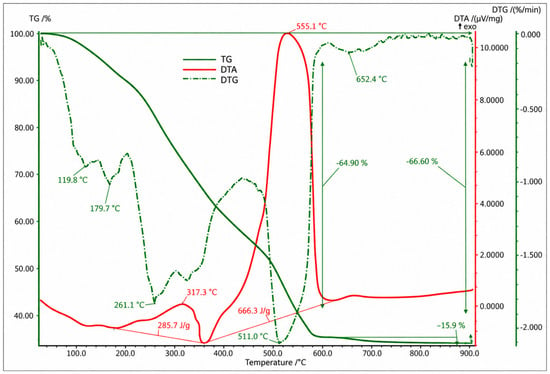
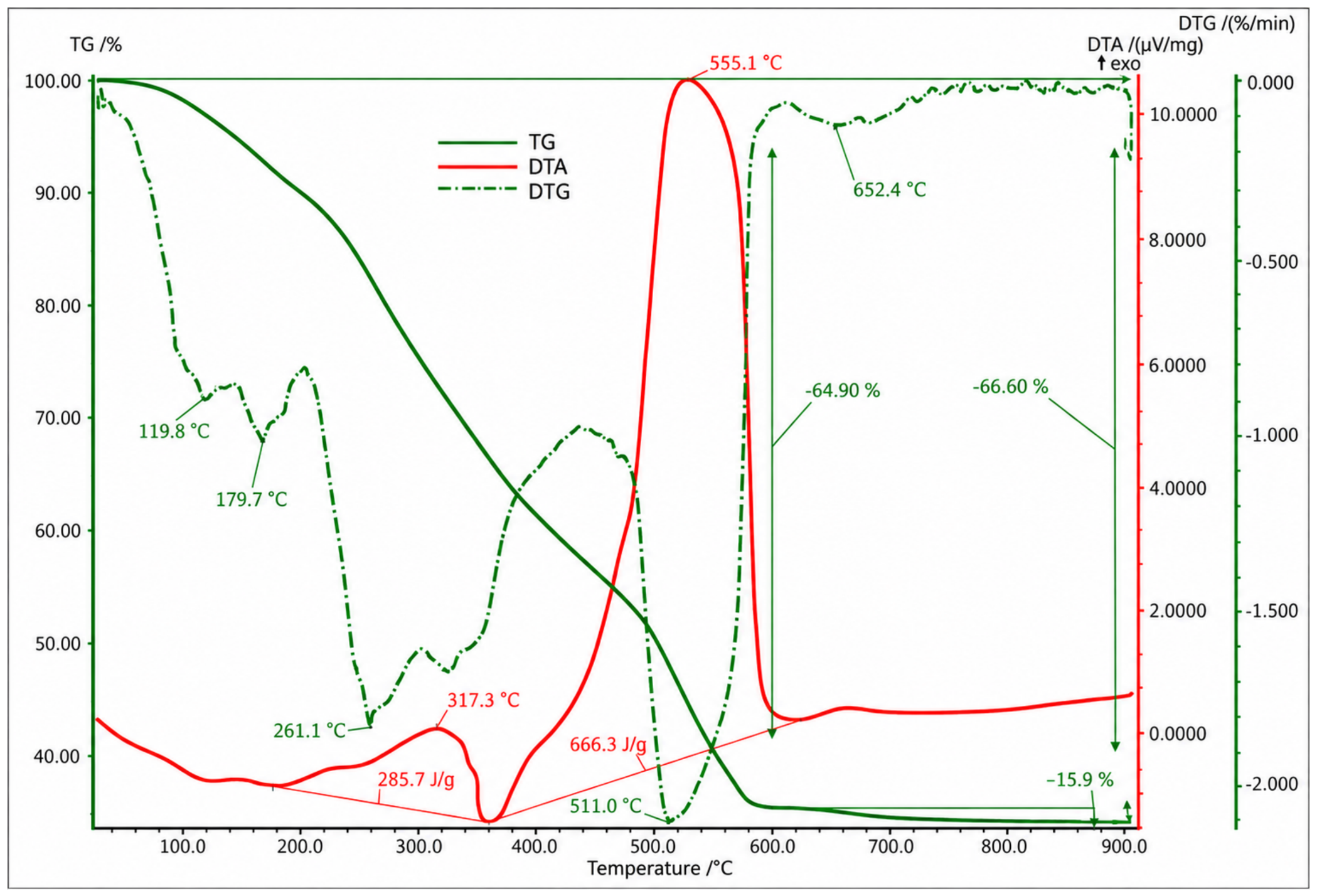
The thermogravimetric (TG), derivative thermogravimetric (DTG), and differential thermal analysis (DTA) curves obtained for sludge sample N1—sourced from the Bistrița municipal wastewater treatment plant, which is equipped with an anaerobic digestion unit for biogas production—are presented in Figure 2.
Figure 2.
TG, DTG, and DTA curves of sewage sludge sample N1 recorded under a synthetic air atmosphere. The arrows indicate the temperature intervals associated with mass losses and thermal effects.
Analysis of the TG curve reveals a progressive decrease in sample mass as the temperature rises. Up to approximately 580 °C, the mass loss is 64.90%, followed by a slow decline—amounting to an additional ~1.53%—at higher temperatures. At 900 °C, the total mass loss reached 66.46%, and the solid residue accounts for 33.54% of the initial mass of the sample.
In the low-temperature range, the DTG curve exhibits two peaks—at 119.8 °C and 179.7 °C—associated with mass losses. These can be explained primarily by the removal of water remaining within the sludge structure. This water may be retained by microbial biomass, extracellular polymeric substances, and certain mineral components. Although the sample was previously dried at 80 °C, some moisture remained in the material, likely due to stronger interactions with its matrix. The release of certain volatile compounds within this temperature range cannot be ruled out; however, their nature cannot be determined based solely on the DTG curve.
The DTA analysis reveals two significant exothermic processes of varying intensities. The first exhibits a peak at 317.3 °C with a thermal effect of 786.7 J/g, while the second—which is much more intense—reaches its peak at 555.1 °C, with a thermal effect of 6696 J/g. Two extrema are also observed on the DTG curve, at 261.1 °C and 511.0 °C, indicating changes in the rate of mass loss. This behavior suggests that the oxidation of organic components occurs in several stages, depending on their thermal stability. At higher temperatures, the oxidation of carbonized residues formed during the earlier stages of heating may also take place.
At temperatures above 600 °C, a further, low-intensity process is observed, characterized by an extremum on the DTG curve at 652.4 °C and an additional mass loss of approximately 1.53%. This may be associated with the transformation of residual organic components or certain mineral constituents. Overall, the thermal behavior of sample N1 is dominated by two main thermo-oxidative decomposition regions, with the one corresponding to the DTA peak at 555.1 °C exhibiting the most pronounced thermal effect. At the end of the analysis, at 900 °C, a solid residue remains, accounting for 33.54% of the initial mass. This proportion indicates the presence of a significant inorganic fraction, the composition of which was subsequently investigated using SEM-EDX and XRD.
The predominance of the exothermic event at 555.1 °C suggests that a substantial fraction of the combustible material in N1 undergoes oxidation at relatively high temperatures. This behavior may reflect the presence of residual organic components with greater thermal stability, including carbonaceous material formed during earlier decomposition stages. Since N1 originates from a wastewater treatment plant equipped with anaerobic digestion, the partial biodegradation of readily degradable organic matter before sludge collection may also have influenced the composition of the remaining organic fraction. However, the specific contribution of anaerobic digestion to the observed thermal profile cannot be established from the available data.
3.2. FTIR Spectroscopic Analysis of Gases Evolved from Sample N1
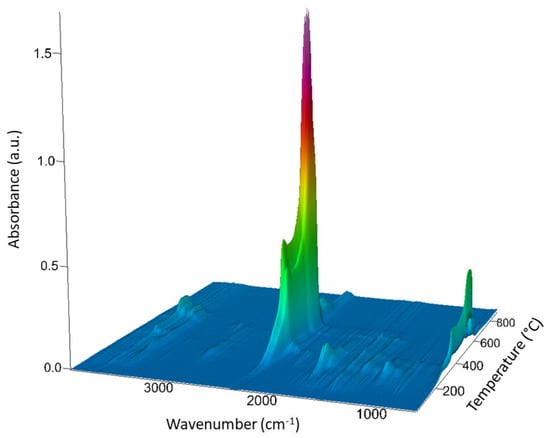
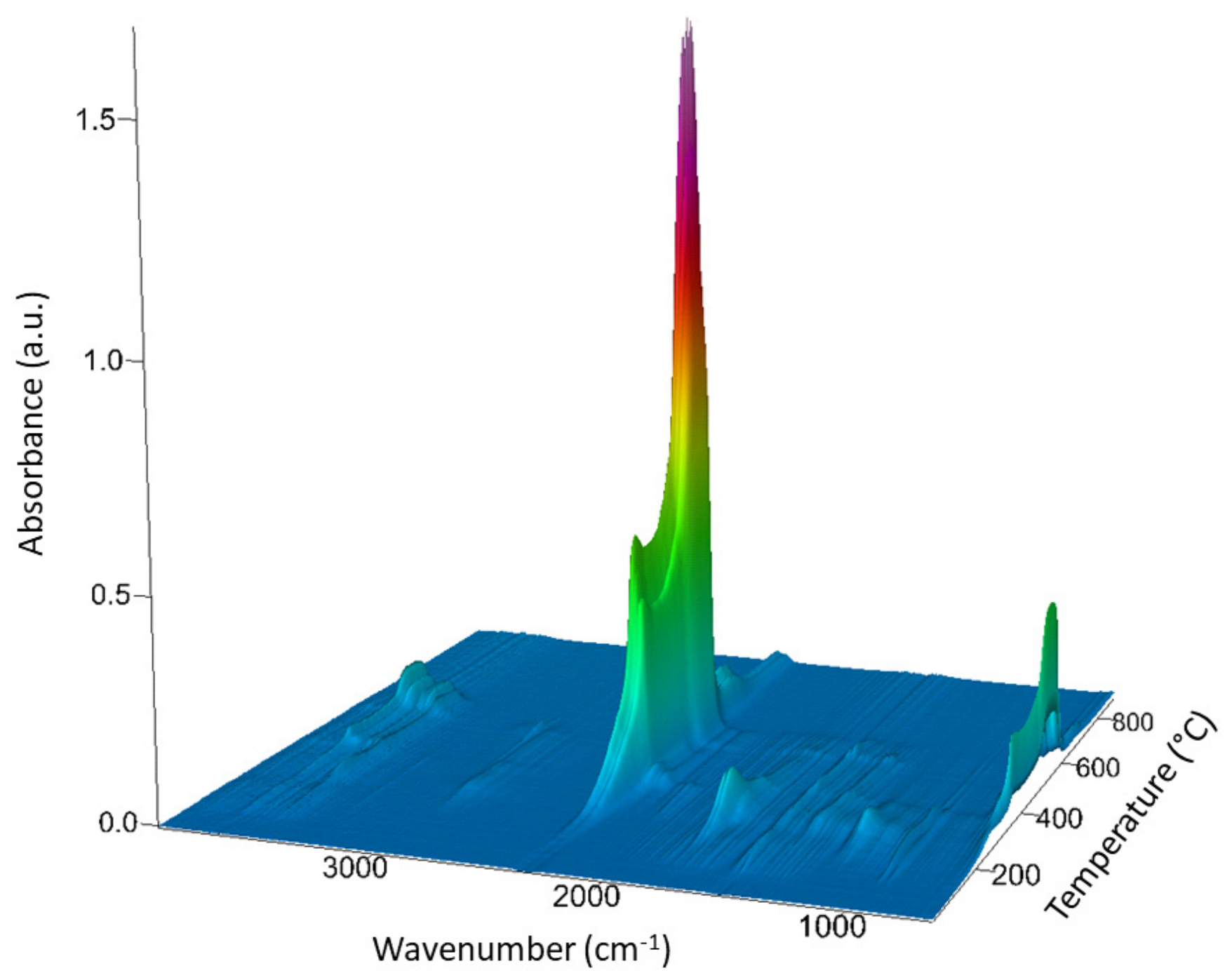
The gases evolved during the progressive heating of sample N1 in an oxidizing atmosphere were analyzed by FTIR spectroscopy. The evolution of the spectra in the 100–800 °C range is shown in Figure 3. It is observed that the most intense release of FTIR-detectable compounds occurs primarily between 250 °C and 580 °C, consistent with the temperature range where the two major exothermic processes were identified on the thermal analysis curves (Figure 2).
Figure 3.
Three-dimensional FTIR spectra of gaseous products evolved from sewage sludge sample N1 during heating in synthetic air. The arrows indicate the temperature intervals associated with mass losses and thermal effects.
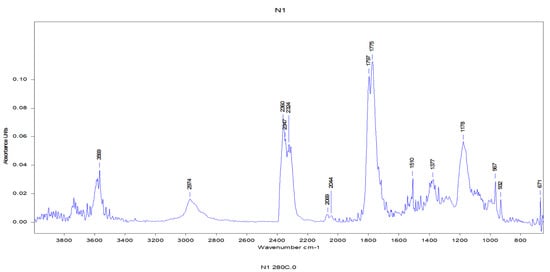
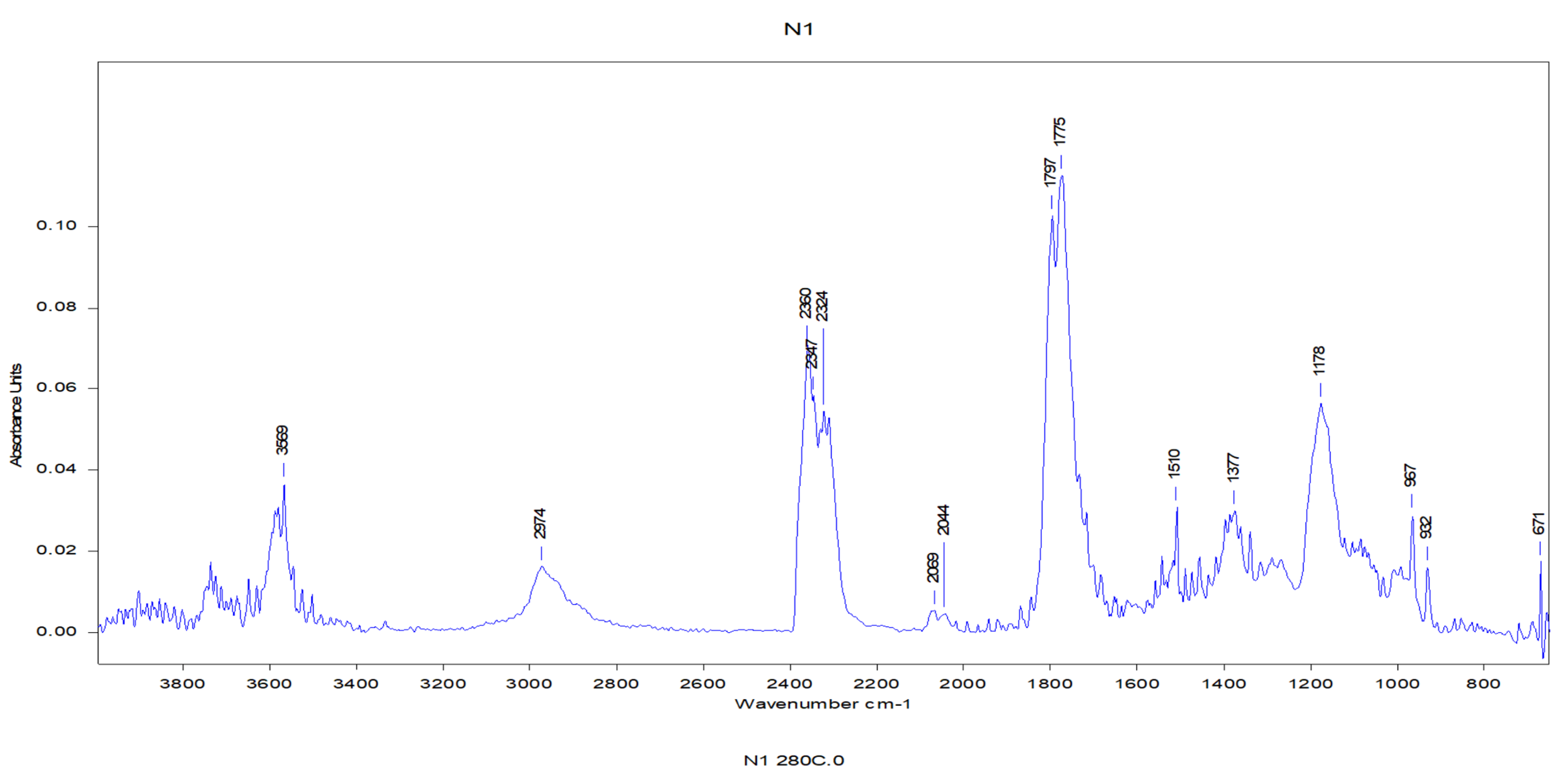
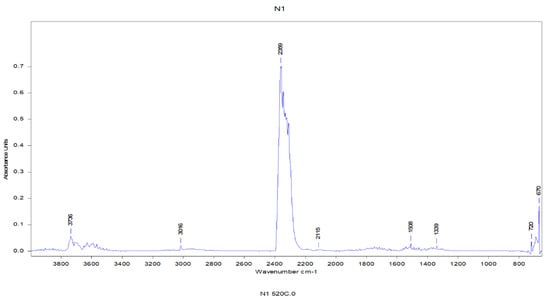
To characterize the gaseous compounds formed during the two main stages of thermo-oxidative decomposition, FTIR spectra recorded at 280 °C (Figure 4) and 520 °C (Figure 5) were selected.
Figure 4.
FTIR spectrum of gaseous products evolved from sewage sludge sample N1 at 280 °C.
Figure 5.
FTIR spectrum of gaseous products evolved from sewage sludge sample N1 at 520 °C.
Comparing the recorded FTIR spectra with reference spectral data allowed for the identification of several gaseous compounds. Carbon dioxide (CO2) was identified via bands in the 2324–2360 cm−1 range, with peak evolution observed around 530 °C. The amount of CO2 released increases significantly around 520 °C, near the second exothermic peak observed on the DTA curve at 555.1 °C. This correspondence between the FTIR results and the thermal analysis suggests that, within this range, the oxidation of organic matter and carbonized residues is particularly intense.
At lower temperatures, the FTIR spectra indicate the presence of acetic acid (CH3COOH), evidenced by bands at 3569, 1797, 1775, and 1178 cm−1. The release of this compound is most pronounced around 280 °C. Its formation can be attributed to the thermal decomposition of oxygenated organic constituents within the sludge, which generate volatile products during the initial stages of heating.
The presence of water vapor is indicated by several absorption bands located in the 3500–4000 cm−1 and 1300–2000 cm−1 ranges. The evolution of these bands shows peaks near 180, 300, 370, and 520 °C. During the early stages of heating, the released water likely originates from residual moisture as well as from water strongly bound within the sludge structure. At higher temperatures, the appearance of water vapor may also be linked to the decomposition and oxidation reactions of organic compounds. Carbon monoxide was identified via absorption bands at 2180 and 2115 cm−1, with peak evolution recorded at approximately 530 °C. Its presence in the gases resulting from the heating of the sludge may indicate the occurrence of incomplete oxidation reactions of the organic matter, alongside the formation of CO2. Carbonyl sulfide was detected via bands at 2069 and 2044 cm−1, with a maximum at approximately 350 °C. The identification of these compounds indicates the formation of gaseous intermediate products during the thermo-oxidative transformations of organic matter and sulfur-containing components.
The absorption bands at 967 cm−1 and 932 cm−1 were assigned to ammonia (NH3), for which peak evolution was observed at approximately 250 °C and 340 °C. Its formation can be linked to the degradation of nitrogen-containing organic compounds. Methane (CH4) was identified by the band at 3016 cm−1, with a peak evolution occurring around 520 °C.
The FTIR results highlight changes in the composition of the gases released during the heating of sample N1. At lower temperatures, signals associated with water and volatile organic compounds appear, whereas in the region of the second exothermic process, the absorption characteristic of CO2 predominates. This progression is consistent with the thermo-oxidative decomposition of organic matter and the identification of the resulting gaseous products.
FTIR spectroscopy enables the identification of compounds that exhibit characteristic infrared absorption bands. Homonuclear diatomic molecules—such as N2, O2, and H2—do not display fundamental vibrational transitions that are infrared-active; consequently, they cannot be identified using this method. Furthermore, a direct quantitative comparison of band intensities belonging to different gaseous species requires appropriate calibration.
From an environmental perspective, the identification of CO, NH3, and COS indicates the formation of gaseous compounds that require consideration when evaluating thermal sludge treatment processes. Carbon monoxide is a toxic gas associated with incomplete oxidation, while ammonia may contribute to atmospheric pollution and can participate in reactions leading to secondary particulate matter formation. Carbonyl sulfide is a sulfur-containing compound that may undergo further oxidation under suitable combustion conditions. These findings highlight the importance of controlling temperature, oxygen availability, and gas residence time during thermal treatment. However, the qualitative TG–FTIR results do not provide emission concentrations or allow direct assessment of environmental risks under industrial operating conditions.
3.3. Thermal Behavior of Sample N2
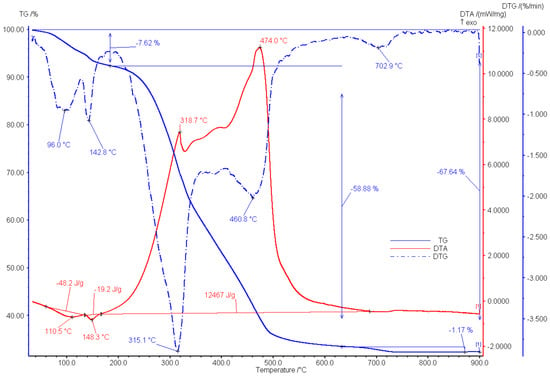
Figure 6 dislays the TG, DTG, and DTA curves recorded for the sludge sample N2, collected from the wastewater treatment plant in Romuli, where an anaerobic digestion unit is not part of the technological configuration.
Figure 6.
TG, DTG, and DTA curves of the sludge sample N2, recorded in a synthetic air atmosphere. The numerical annotations indicate characteristic temperatures (°C), mass losses (%), and thermal effects (J/g).
Sample N2 exhibits thermal behavior like that observed for N1. In both cases, mass loss begins at low temperatures and is followed by thermo-oxidative decomposition processes characterized by significant exothermic effects.
In the first stage, the DTG curve reveals two events, with peaks at 96.0 °C and 142.8 °C. These correspond to endothermic effects on the DTA curve, with peaks at 110.5 °C and 148.3 °C and values of 48.2 J/g and 19.2 J/g, respectively. The mass loss in this region is 7.62%. The observed transformations can be primarily attributed to the removal of residual moisture and water retained within the sludge matrix, including water associated with microbial biomass and extracellular polymeric substances.
At higher temperatures, the DTG and DTA curves indicate an extended region of thermo-oxidative decomposition, in which several overlapping transformations occur. Two exothermic peaks are discernible on the DTA curve, at 318.7 °C and 474.0 °C, with the latter being dominant. For sample N2, the processes occurring at higher temperatures are accompanied by a mass loss of 58.88% and a total thermal effect of 12,467 J/g. These results indicate that a large portion of the organic matter present in the sludge is transformed during this stage. Above 650 °C, the DTG curve shows a low-intensity event, with an extremum at 702.9 °C, accompanied by an additional mass loss of approximately 1.17%. The total mass loss reported for sample N2 is 67.64%, and the solid residue obtained at 900 °C represents approximately 32.4% of the initial mass. These values are close to those recorded for N1, indicating comparable solid residue proportions, despite differences in the thermo-oxidative behavior of the two samples.
Compared with N1, sample N2 exhibits its dominant exothermic peak at a lower temperature (474.0 °C versus 555.1 °C) and a higher integrated exothermic thermal effect. These differences suggest variations in the composition and thermal reactivity of the combustible fractions. The absence of a separate anaerobic digestion stage at the Romuli WWTP may contribute to the retention of biodegradable organic matter, potentially influencing the oxidation processes observed during heating. Differences in the distribution of organic compounds, the formation of carbonaceous intermediates, and interactions with inorganic constituents may also affect the position and intensity of the thermal events. Nevertheless, the available TG/DTG/DTA–FTIR results do not allow these mechanisms to be individually identified or quantified. The differences should therefore be regarded as possible consequences of the distinct sludge characteristics rather than as direct evidence of a specific treatment effect.
3.4. FTIR Analysis of Gases Evolved from Sample N2
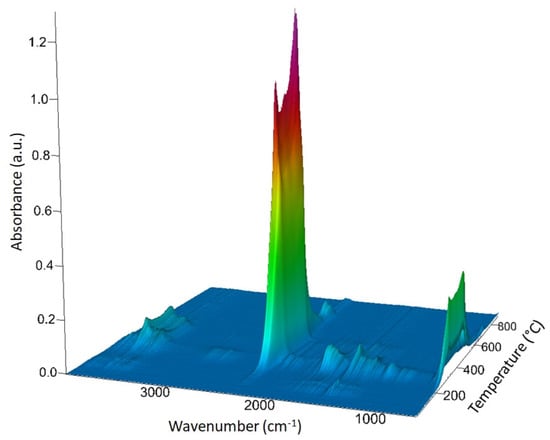
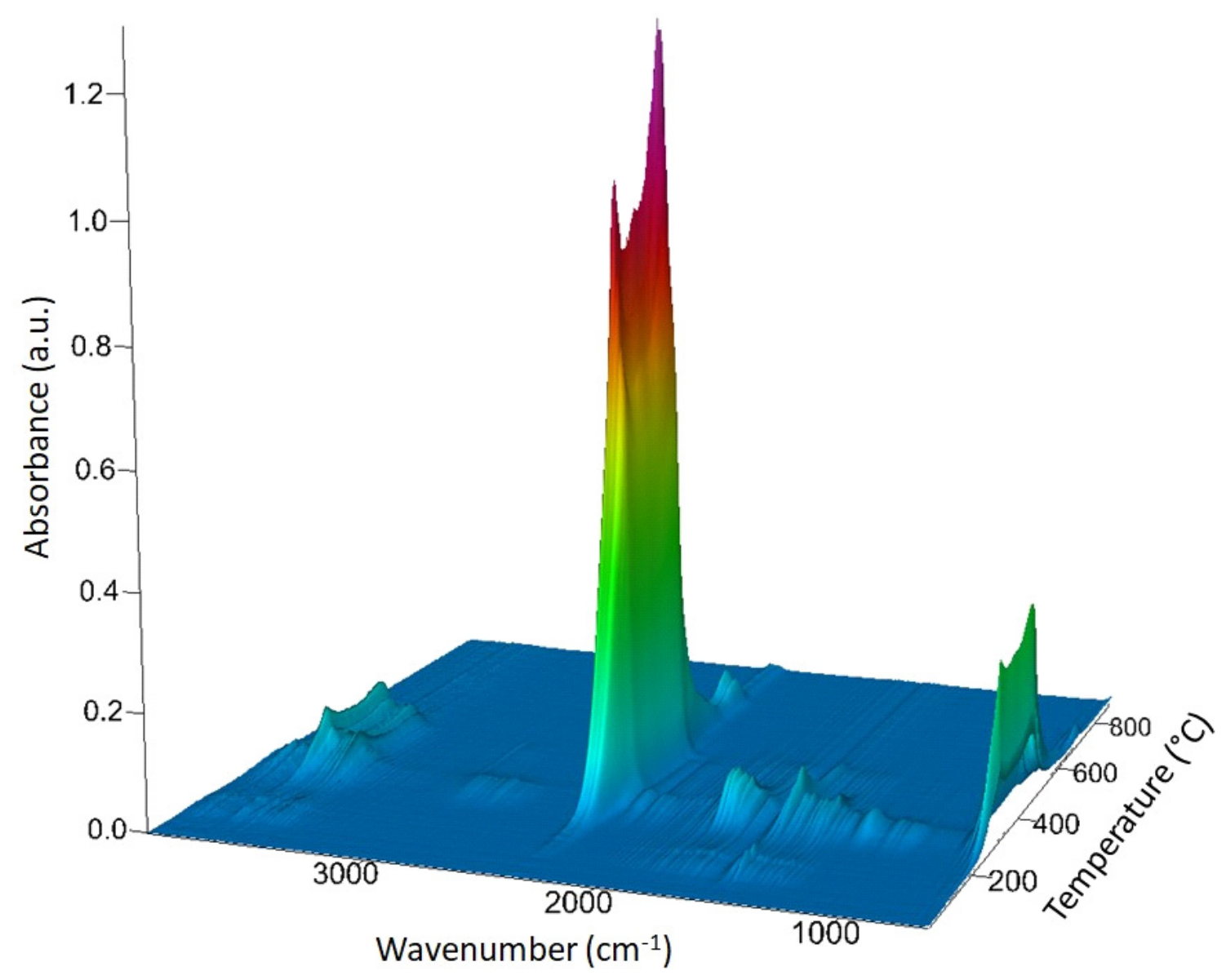
The evolution of gaseous compounds released during the heating of sample N2 in a synthetic air atmosphere, within the 100–800 °C range, is illustrated by the three-dimensional FTIR spectra in Figure 7. Like sample N1, the most intense absorption signals appear in the main thermo-oxidative decomposition range, consistent with the transformations revealed by thermal analysis (Figure 6).
Figure 7.
Three-dimensional FTIR spectra of gaseous products evolved from sewage sludge sample N2 during heating in synthetic air. The colors indicate absorbance intensity, ranging from low (blue) to high (red and violet). Please add this explanation to the figure caption.
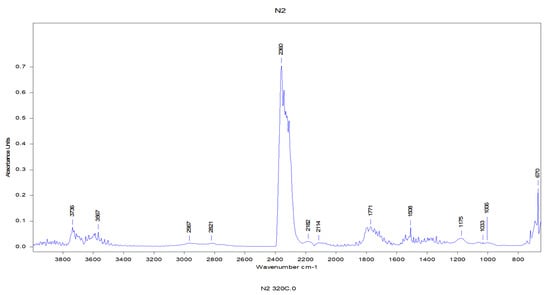
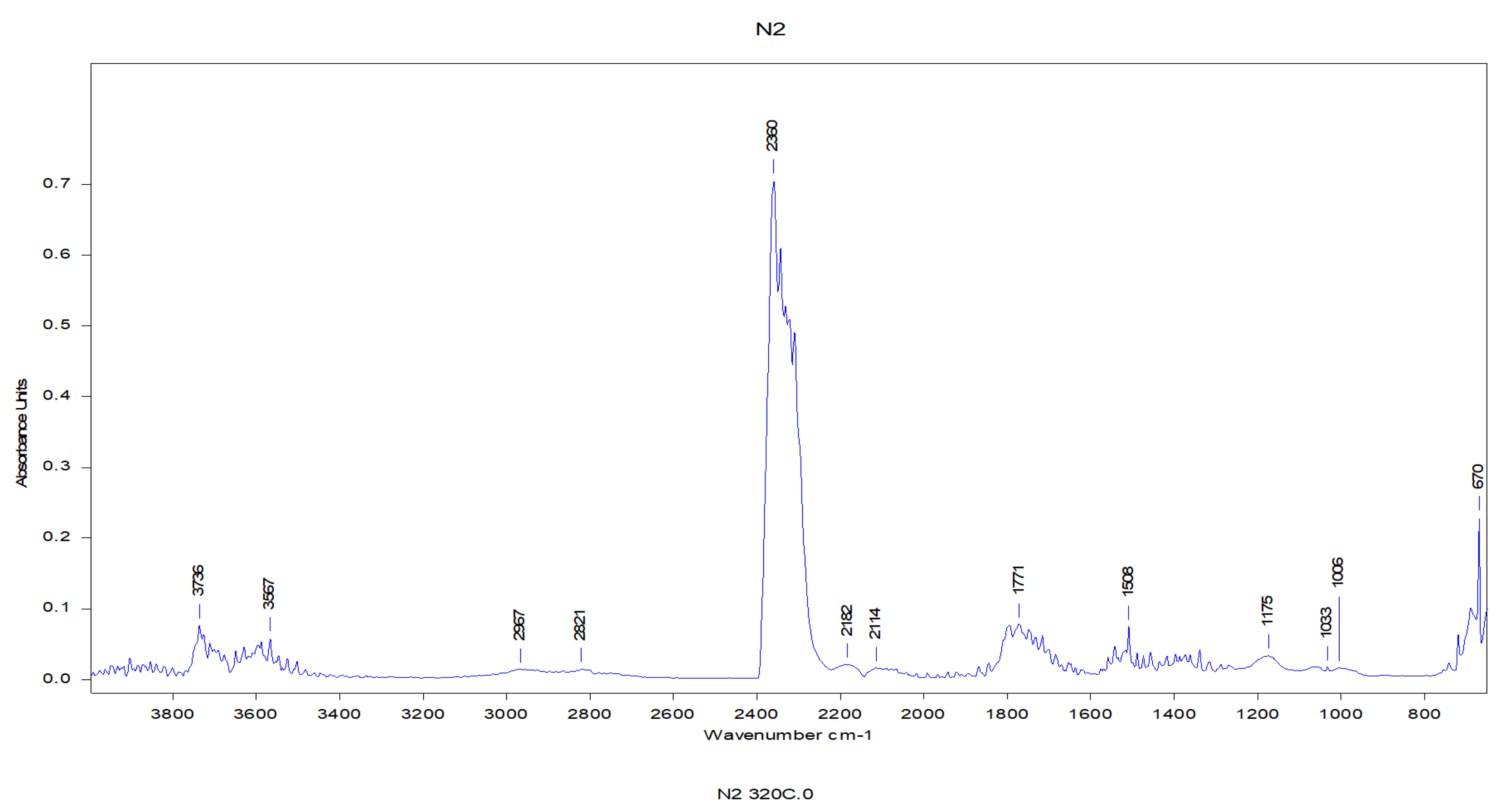
To identify the gaseous compounds formed during the first thermo-oxidative decomposition stage, the FTIR spectrum recorded at 320 °C (Figure 8) was analyzed; this temperature is close to the first exothermic peak observed on the DTA curve at 318.7 °C.
Figure 8.
FTIR spectrum of gaseous products evolved from sewage sludge sample N2 at 320 °C.
FTIR analysis of the gases evolved during the thermo-oxidative decomposition of sample N2 revealed the presence of the same compounds identified for sample N1: CO2, CO, H2O, CH3COOH, COS, NH3, and CH4. In the FTIR spectrum of the gases evolved from the N2 sample, an absorption band is observed at 1033 cm−1, with its maximum intensity recorded at approximately 320 °C. This band may indicate the presence of methanol (CH3OH) among the volatile products resulting from the thermal decomposition of the sludge, but the identification of methanol requires confirmation through additional analytical methods.
As the temperature rises, various volatile compounds are released, alongside products resulting from oxidation reactions. The identification of CO and CH4, together with other intermediate substances, indicates that the thermo-oxidative processes are complex and do not lead exclusively to the formation of final oxidation products. Nevertheless, the obtained results do not allow for the quantification of the individual evolved gases, nor do they confirm their complete conversion into CO2 and H2O by 700 °C.
The presence of ammonia (NH3) and carbonyl sulfide (COS) in the analyzed gases indicates that nitrogen- and sulfur-containing compounds participate in the thermal decomposition processes of the sludge. Under oxidizing conditions, these compounds may undergo further transformations, leading to the formation of nitrogen or sulfur oxides. However, the progression of these reactions depends on several factors, including temperature, oxygen availability, and the residence time of the gases within the heated zone. In the case of sample N2, the FTIR results provide no direct evidence for the formation of NOx or SO2; therefore, their presence cannot be confirmed based on the available data. The environmental implications of the gaseous compounds identified for N2 are similar to those discussed for N1. In particular, the detection of CO, NH3, and COS indicates the need to consider incomplete oxidation products and nitrogen- and sulfur-containing volatile compounds when evaluating possible thermal valorization pathways. Their formation during laboratory heating does not necessarily imply their release at comparable concentrations during industrial combustion, where further oxidation reactions may occur depending on the operating conditions. Therefore, quantitative emission measurements and appropriate flue-gas monitoring would be necessary to assess the environmental performance of any proposed industrial application.
Upon heating to 900 °C, both samples generated solid residues representing approximately one third of the initial mass of the predried sludges at 80 °C. The close proportions of residues, 33.54% for N1 and about 32.4% for N2, indicate the presence of an important mineral fraction, whose composition and structure are further analyzed by SEM-EDX and XRD.
Comparing the results obtained for the two samples reveals that, although the proportions of mineral residues are similar, their energetic behavior differs considerably. For sample N2, the main exothermic peak occurs at 474.0 °C—compared to 555.1 °C for sample N1—and the integrated thermal effect is higher. This difference is also reflected in the calorific values, which are higher for N2. The results suggest the existence of differences between the residual organic fractions of the two sludges; however, these cannot be attributed solely to the anaerobic digestion process. The samples originate from different wastewater treatment plants, and both the characteristics of the wastewater and the operational conditions can, in turn, influence the composition of the sludge.
The differences observed between N1 and N2 should be interpreted in the context of the distinct characteristics and operating conditions of the two wastewater treatment plants, as described in Section 2.1. In addition to their different treatment capacities and wastewater sources, the facilities differ in their sludge processing configurations, particularly regarding the presence or absence of anaerobic digestion. Although this treatment stage may influence the amount and characteristics of the residual organic matter, the available experimental data do not allow its individual contribution to be distinguished from the effects of influent composition and other operational factors. Therefore, the differences in thermal behavior and calorific values are discussed as characteristics of the investigated sludge samples rather than as effects attributable exclusively to anaerobic digestion.
Table 1 summarizes the main characteristics of the thermo-oxidative decomposition and the experimentally determined calorific values for the two sludge samples, to allow for a direct comparison of the results.
The calorific value of sample N2 (14.7 MJ/kg) was approximately 45.5% higher than that of N1 (10.1 MJ/kg), whereas the residual solid fractions were approximately 32–34% of the initial pre-dried sample mass. These results indicate that differences in the energy potential of the organic fraction do not necessarily correspond to equally pronounced differences in the quantity of mineral residue generated. This distinction is relevant when considering thermal treatment pathways involving both energy recovery and subsequent mineral residue management. However, the observed differences cannot be attributed exclusively to anaerobic digestion because the samples originated from different facilities.
3.5. Morphological and Elemental Characterization of the Ashes by SEM-EDX
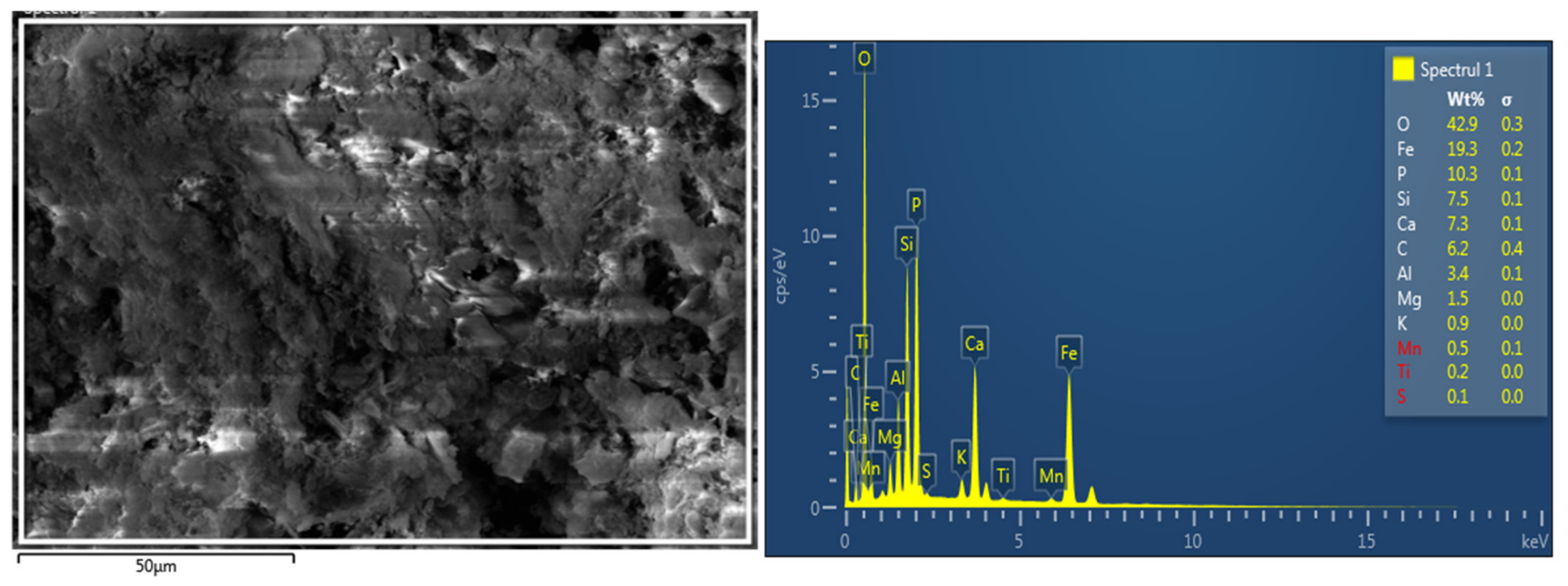
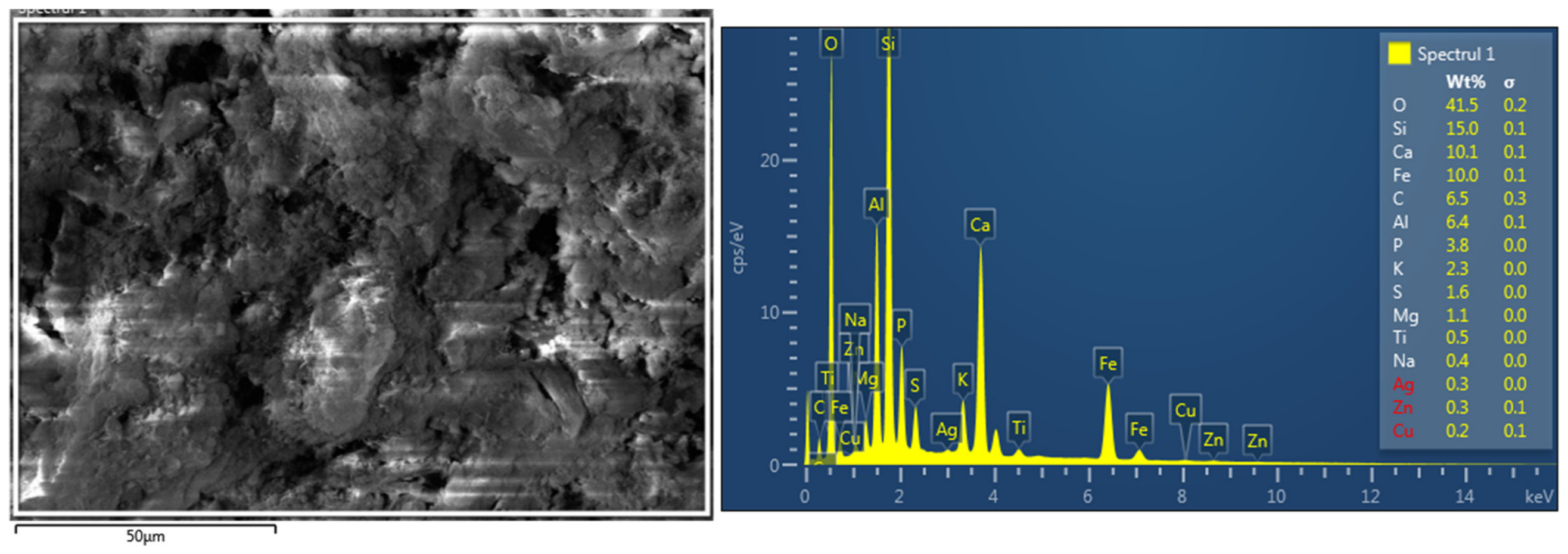
Given the high proportion of solid residues obtained after the thermal treatment of the sludges (approximately 33% of the mass of the pre-dried samples), the composition and morphology of the resulting ashes were investigated to evaluate their potential for valorization as secondary base materials in constructions.
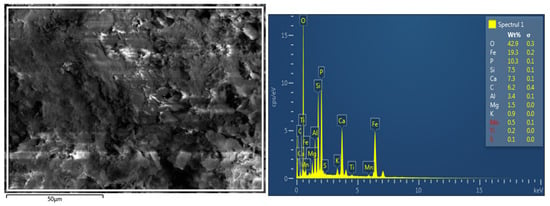
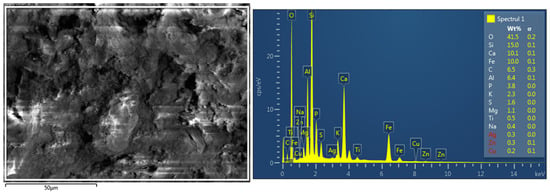
Representative SEM images and EDX spectra of the ashes obtained after heating samples N1 and N2 to 900 °C in an air atmosphere are presented in Figure 9 and Figure 10.
Figure 9.
Representative SEM micrograph and EDX spectrum of the ash obtained from sewage sludge sample N1 after heating to 900 °C in air.
Figure 10.
SEM image and EDX spectrum of the ash resulting from the thermal treatment of sludge sample N2 at 900 °C, in the presence of air.
The SEM images reveal a heterogeneous structure for both ash samples, characterized by agglomerated particles and irregular surfaces. No major morphological differences between the two samples were observed in the examined regions.
The results of the EDX analysis show that oxygen, iron, silicon, calcium, phosphorus, carbon, and aluminum are the primary elements identified in the two ash samples. Smaller quantities of potassium, magnesium, and sodium were also detected, along with other elements present in lower proportions. This composition indicates that the residues obtained following the thermal treatment of sludge contain a variety of mineral constituents. For this reason, these ashes could be considered for certain applications within the construction materials industry, provided that their properties, as well as any potential limitations regarding their use, are evaluated [29].
Regarding phosphorus, the two samples exhibit significant differences. For sample N1, the EDX analysis indicated an average proportion of 8.31% by mass, compared to only 2.37% for sample N2. Consequently, the value determined for N1 is approximately 3.5 times higher. A possible explanation may relate to the initial composition of the wastewater, as well as the technological processes it underwent prior to the formation of the sludge. Phosphorus in domestic wastewater can originate, among other sources, from detergents and products containing phosphates [30]. The EDX data are insufficient to determine to what extent the observed differences between the ashes are attributable to the use of such products by the general population. However, the EDX spectra indicate differences in terms of elemental composition (Table 2).
The difference in phosphorus content between the two ashes may have implications for their potential valorization. In cement and ceramic applications, phosphorus-containing compounds may influence mineral phase formation during thermal processing, particularly through interactions with calcium-containing constituents [20]. Therefore, the higher phosphorus content observed in N1 should be considered when evaluating its possible incorporation into construction materials. Alternatively, phosphorus recovery could represent an additional valorization pathway, although its feasibility would depend on the chemical forms and extractability of phosphorus in the ash. Since the EDX results are semi-quantitative and reflect the analyzed regions, further quantitative chemical characterization and technological testing would be necessary before selecting a suitable recovery route.
SEM-EDX analysis provides information on the elemental composition of the investigated areas; however, the results must be interpreted with caution, given the semi-quantitative nature of the method and the fact that the ash samples are not homogeneous. Consequently, the differences observed between N1 and N2 cannot necessarily be considered representative of the entire quantity of material.
Before proposing the use of these residues in mixtures intended to produce clinker or ceramic products, a more detailed quantitative chemical characterization would be required. Furthermore, the mere identification of elements such as zinc and copper is insufficient to assess how they will behave within the final materials. To this end, specific tests should be conducted, including assessments of the potential for these elements to be released under certain environmental conditions.
Examination of the two types of ash via SEM-EDX revealed certain morphological similarities, even though the proportions of the identified elements are not identical. The presence of silicon, calcium, iron, and aluminum in both samples supports further research into the use of these residues in the field of construction materials. Nevertheless, to better evaluate their potential for valorization, the data obtained must be supplemented with information regarding the crystalline phases present, as determined by X-ray diffraction.
3.6. Characterization of the Crystalline Phases Present in the Ash by X-Ray Diffraction
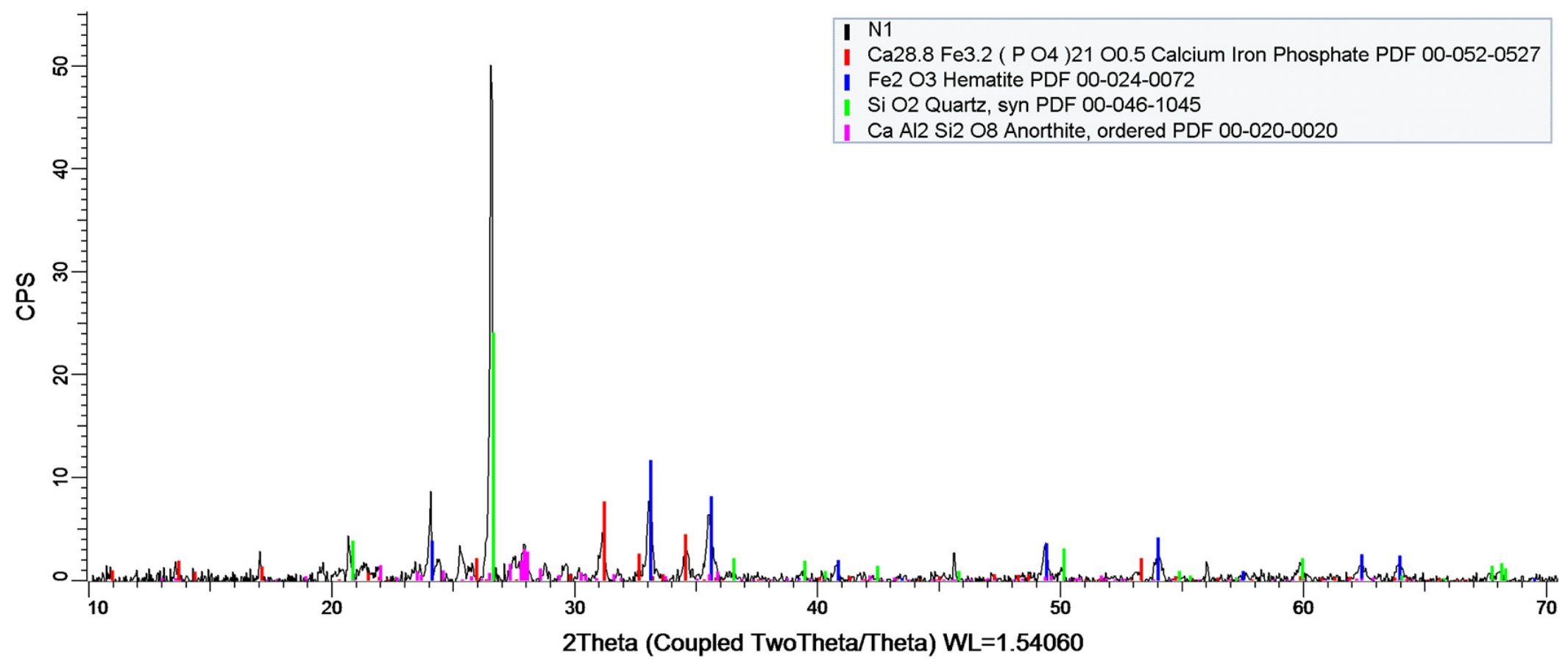
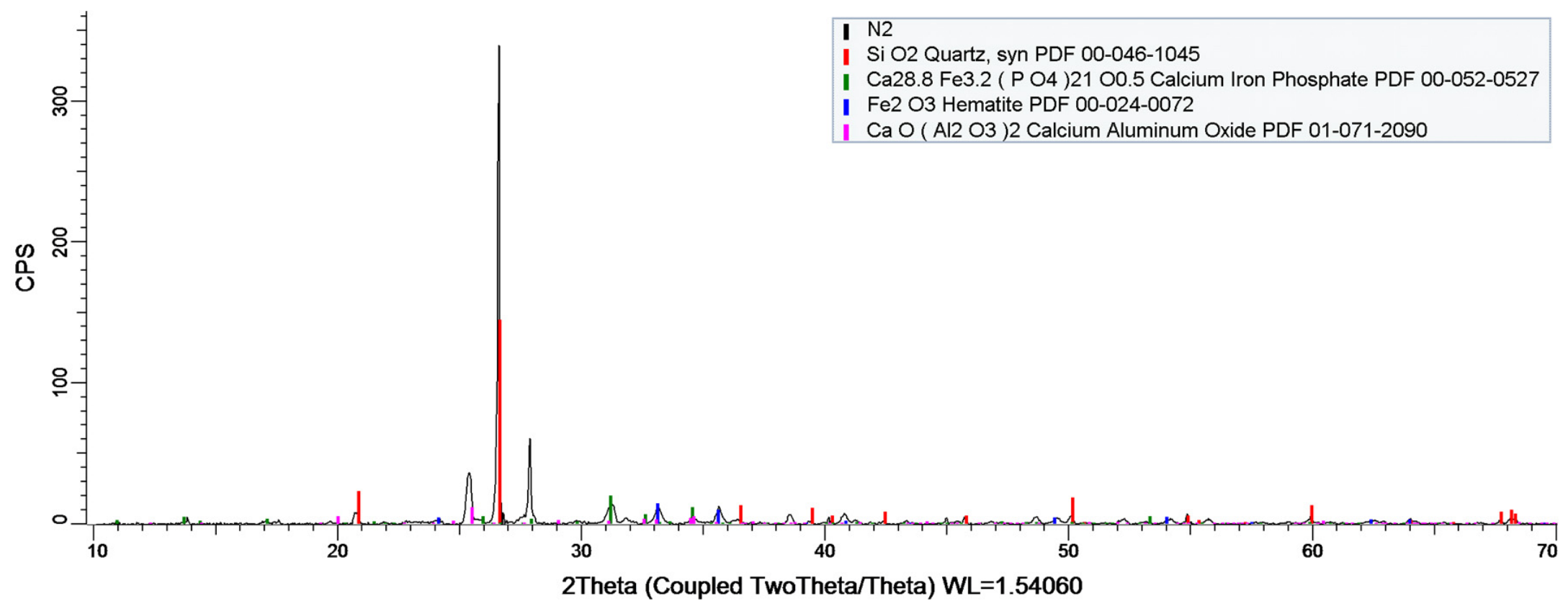
The diffractograms corresponding to the ashes obtained by heating samples N1 and N2 to 900 °C in an air atmosphere are presented in Figure 11 and Figure 12. Their analysis allowed for the identification of the crystalline phases present in the residues resulting from the heat treatment. Several common crystalline phases were identified in both samples, including quartz, hematite, and a complex calcium-iron phosphate. In addition to these components, the diffractogram of ash N1 also indicates the presence of anorthite, whereas a calcium-aluminum oxide phase was identified in sample N2. However, this interpretation remains a hypothesis. Qualitative phase identification via XRD does not provide sufficient information to establish the proportions of these phases or to confirm a direct relationship between the phosphorus content and the distribution of calcium among the various crystalline phases.
Figure 11.
XRD pattern of the ash obtained from sewage sludge sample N1 after heating to 900 °C in air.
Figure 12.
XRD pattern of the ash obtained from sewage sludge sample N2 after heating to 900 °C in air.
The presence of calcium and iron phosphates is of interest regarding the potential incorporation of sludge into the raw material mix for clinker production. According to literature, phosphorus can influence the phase transformations occurring during the co-incineration of sludge and may alter the mineralogical composition of the clinker [19]. In this context, the higher phosphorus content of ash N1 must be taken into account when determining the proportion to be added. However, the available XRD results do not allow for the prediction of the behavior of the resulting clinker.
However, while XRD analysis provides information on the identified crystalline phases, it is not sufficient on its own to determine the overall chemical composition or to estimate how the material will behave during the clinker manufacturing process. Assessing technological applicability requires additional quantitative analyses, the determination of appropriate addition proportions, and an investigation into how the residues influence the mineralogical phases that form and the properties of the final product. Consequently, XRD and SEM–EDX results provide a preliminary basis for investigating residue utilization without yet demonstrating technological feasibility or safety in use.
3.7. Calorific Value and Implications for Integrated Utilization
Calorific value is one of the parameters used to assess the potential for energy recovery from sewage sludge. The mean calorific values were 10.10 ± 0.16 MJ/kg for N1 and 14.70 ± 0.31 MJ/kg for N2 (mean ± SD, n = 10), based on the pre-dried samples.
The higher value recorded for N2 indicates a greater energy potential for this sample, which aligns with the more intense cumulative exothermic effect observed during thermal analysis. However, a distinction must be made between the thermal effects determined via DTA and the calorific value measured through calorimetry, as these represent different experimental quantities and cannot be directly equated.
The calorific values determined in this study can be compared with those reported in previous investigations of sewage sludge. Patel et al. [20] summarized higher heating values of approximately 16–21 MJ/kg dry solids for primary sludge, 15–17 MJ/kg dry solids for activated sludge, and 10–14 MJ/kg dry solids for anaerobically digested sludge. The values obtained for N1 (10.1 MJ/kg) and N2 (14.7 MJ/kg) are broadly consistent with the variability reported for sewage sludge, with N1 falling within the range reported for digested sludge and N2 approaching the range reported for activated sludge. However, these comparisons should be interpreted cautiously because the literature values are expressed on a dry-solids basis, whereas the present measurements refer to samples pre-dried at 80 °C without independent determination of residual moisture. Furthermore, differences in calorific value definitions, sludge composition, and treatment conditions may affect direct comparability. Although the measured values indicate that both samples contain recoverable chemical energy, the technical feasibility of energy recovery also depends on drying requirements, thermal conversion efficiency, and process operating conditions.
The higher calorific value of N2 (14.7 MJ/kg) compared with N1 (10.1 MJ/kg) indicates differences in the energy content of the investigated pre-dried sludge samples. These differences should be interpreted considering the distinct characteristics of the two wastewater treatment plants described in Section 2.1, including their treatment capacities, wastewater sources, and sludge processing configurations. Although anaerobic digestion may influence the amount and composition of residual organic matter, its specific contribution to the observed differences cannot be established from the available data. Other factors, including influent composition, industrial wastewater contributions, and operating conditions, may also affect sludge properties. Therefore, the calorific values are compared as experimentally determined characteristics of the two samples, without attributing the observed differences to a specific treatment stage.
By benchmarking the determined calorific value against a reference energy value of approximately 35.8 MJ/m3 for methane, theoretical equivalents of approximately 0.28 m3 CH4/kg for N1 and 0.41 m3 CH4/kg for N2 are obtained (calculated for pre-dried samples). These figures represent purely energetic equivalents and should not be interpreted as actual fuel savings. To assess the energy balance of an industrial process, one must account for the energy required for sludge drying, thermal losses, the moisture content of the raw material, and the specific operating conditions.
From the perspective of integrated resource recovery, the results indicate the potential for using pre-dried sludge in industrial thermal processes, where the organic matter can contribute to the energy input, while the mineral fraction can be incorporated into the resulting material. Areas of interest include the controlled introduction of sludge into raw material mixtures intended for clinker production [12,19] and its use in ceramic compositions to produce bricks [14,31].
However, the proportion of sludge that can be introduced into the process and the conditions for its use must be determined based on its composition and moisture content, as well as on specific technological requirements [12,14,19].
After heating to 900 °C, the solid residues account for 33.54% of the initial mass for N1 and approximately 32.4% for N2. These proportions indicate that the inorganic fraction plays a significant role when evaluating potential recovery options. SEM–EDX data regarding elemental composition, combined with the identification of crystalline phases via XRD, provide useful preliminary information for assessing the potential use of these residues in the construction materials industry.
The incorporation of ash derived from the thermal treatment of sludge into cement-based materials has been examined in the specialized literature [13], as well as the influence of phosphorus-rich sludges on the formation of the mineralogical phases of clinker [19]. However, the mineral characteristics highlighted in the present study are not sufficient to demonstrate the technological applicability of these solutions.
The research presented is based on the laboratory-scale characterization of two sludge samples from different wastewater treatment plants, as well as the solid residues obtained after heating them to 900 °C.
The simultaneous recovery of energy and mineral components from sludge is an avenue worth exploring; however, its practical application requires experimental validation. Future direction should investigate how the proportion of sludge incorporated into raw material mixtures influences the entire technological process and the characteristics of the resulting materials. It is necessary to evaluate energy consumption, generated emissions, and the behavior of potentially toxic elements to determine whether this solution can be implemented safely.
4. Conclusions
In order to identify possibilities for the full valorization of sewage sludge (SS) within a circular economy, two types of SS were comparatively investigated using thermal analysis techniques (TG, DTG, and DTA) coupled with FTIR. One sample originated from a wastewater treatment plant (WWTP) equipped with a biogas fermenter, while the other came from a small-scale facility where biological treatment is achieved through the aerobic metabolism of organic pollutants by the microbial flora present in the activated sludge. The solid residue (ash) obtained at 900 °C following thermal decomposition in air (during thermal analysis) was characterized in terms of its morphostructure using SEM-EDAX and XRD techniques. Furthermore, the net calorific value of the pre-dried SS was determined using bomb calorimetry. Total mass losses were similar, at 66.46% for N1 and 67.64% for N2. However, the two samples differed in terms of their exothermic effects and calorific value. The main exothermic peak was recorded at 555.1 °C for N1 and 474.0 °C for N2, while the calorific values of the pre-dried samples were 10.1 MJ/kg and 14.7 MJ/kg, respectively. Although the calorific value was higher for N2, the available data do not establish the causes of this difference. Variations in influent composition, sludge treatment configurations, and operating conditions may all contribute to the observed results.
The integrated valorization of organic and mineral fractions may represent an alternative for sludge management; however, the technological feasibility of this solution was not demonstrated within the study. Given the limited number of samples and the preliminary nature of the technological assessment, further research is required regarding the impact of sludge addition on manufacturing processes, the properties of the resulting materials, the energy balance, emissions, and the behavior of potentially toxic elements.
Author Contributions
Conceptualization, I.L., C.U. and M.L.; methodology, I.L., C.U., A.C., V.M., C.B., A.T. and M.L.; validation, I.L., C.U., A.C., V.M., C.B., A.T. and M.L.; formal analysis, A.C., V.M., C.B. and A.T.; investigation, I.L., C.U., A.C., V.M., C.B., A.T. and M.L.; resources, I.L., V.M. and C.B.; data curation, A.C., V.M., C.B. and A.T.; writing—original draft preparation, I.L., C.U. and M.L.; writing—review and editing, I.L., C.U., A.C., V.M., C.B., A.T. and M.L.; visualization, C.U., A.C., V.M. and A.T.; supervision, I.L., C.U. and M.L.; project administration, I.L. and C.U. All authors have read and agreed to the published version of the manuscript.
Funding
This work was financially supported by grants from the Romanian Ministry of Education and Research, CCCDI–UEFISCDI, under projects PN-III-P2-2.1-PTE-2019-0139 (ESELFBio) and PN-IV-P7-7.1-PTE-2024-0106 (EPDEcoA).
Data Availability Statement
The original contributions presented in this study are included in the article. Further inquiries can be directed to the corresponding author.
Conflicts of Interest
Authors Iosif Lingvay, Csaba Bartha and Attila Tókos were employed by the Research & Development Institute for Environmental Protection Technologies and Equipment (ICPE Bistrița S.A.). Authors Andrei Cucoș and Virgil Marinescu were employed by the National Institute for Research and Development in Electrical Engineering ICPE-CA. The remaining authors declare that the research was conducted in the absence of any commercial or financial relationships that could be construed as a potential conflict of interest.
Abbreviations
The following abbreviations are used in this manuscript:
| TG | Thermogravimetry |
| DTG | Derivative Thermogravimetry |
| DTA | Differential Thermal Analysis |
| FTIR | Fourier Transform Infrared Spectroscopy |
| SEM | Scanning Electron Microscopy |
| FESEM | Field-Emission Scanning Electron Microscopy |
| EDX | Energy-Dispersive X-ray Spectroscopy |
| XRD | X-ray Diffraction |
| TG/DTG/DTA–FTIR | Coupled Thermal Analysis and Fourier Transform Infrared Spectroscopy |
| ICDD | International Centre for Diffraction Data |
| N1 | Sewage sludge sample from the Bistrița wastewater treatment plant |
| N2 | Sewage sludge sample from the Romuli wastewater treatment plant |
| wt.% | Weight Percentage |
References
- Frincu, M. Impact of bucharest wastewater on dambovita river water quality (2010–2015). Carpathian J. Earth Environ. Sci. 2021, 16, 47. [Google Scholar] [CrossRef] [Scilit]
- Burcă, S.; Indolean, C. The Water Quality of Some Shallow Wells from Harghita County (Sândominic Commune), Romania. Stud. Univ. Babeș-Bolyai Chem. 2021, 66, 115–125. [Google Scholar] [CrossRef] [Scilit]
- Cristian Paltineanu, S.I.D.; Anca-Rovena LĂCĂ, T. Assessing land susceptibility for possible groundwater pollution due to leaching—A case study on Romania. Carpathian J. Earth Environ. Sci. 2022, 17, 49–57. [Google Scholar] [CrossRef] [Scilit]
- Shen, Y.; Linville, J.L.; Urgun-Demirtas, M.; Mintz, M.M.; Snyder, S.W. An overview of biogas production and utilization at full-scale wastewater treatment plants (WWTPs) in the United States: Challenges and opportunities towards energy-neutral WWTPs. Renew. Sustain. Energy Rev. 2015, 50, 346–362. [Google Scholar] [CrossRef] [Scilit]
- Tókos, A.; Micu, D.D.; Caramitu, A.R.; Nascu, I.; Bartha, C.; Jipa, M.; Marin, D.; Lingvay, I. Long-term Energy Analysis of a Wastewater Treatment Plant with Biogas Production-Case Analysis. In Proceedings of the 2021 9th International Conference on Modern Power Systems (MPS), Cluj-Napoca, Romania, 16–17 June 2021; pp. 1–5. [Google Scholar]
- Meng, X.; Huang, Z.; Ge, G. Upgrade and reconstruction of biological processes in municipal wastewater treatment plants. Desalin. Water Treat. 2024, 317, 100299. [Google Scholar] [CrossRef] [Scilit]
- Tókos, A.; Bartha, C.; Micu, D.D.; Jipa, M.; Nascu, I.; Lingvay, I. Energy Consumption in Wastewater Treatment Plants. In Proceedings of the 2021 9th International Conference on Modern Power Systems (MPS), Cluj-Napoca, Romania, 16–17 June 2021; pp. 1–6. [Google Scholar]
- Ștefan, D.S.; Ungureanu, C.; Lingvay, I.; Tókos, A.; Ștefan, M. Assessment of the Evolution of Microbial Populations During Wastewater Treatment Plant Processes. UPB Sci. Bull. Ser. B Chem. Mater. Sci. 2025, 87, 149–160. [Google Scholar]
- Kay, P.; Hiscoe, R.; Moberley, I.; Bajic, L.; McKenna, N. Wastewater treatment plants as a source of microplastics in river catchments. Environ. Sci. Pollut. Res. 2018, 25, 20264–20267. [Google Scholar] [CrossRef] [Scilit]
- Vaiopoulou, E.; Gikas, P. Effects of chromium on activated sludge and on the performance of wastewater treatment plants: A review. Water Res. 2012, 46, 549–570. [Google Scholar] [CrossRef] [Scilit]
- Pandelea, G.; Călinescu, M.F.; Mazilu, I.C.; Ștefan, D.S.; Ungureanu, C. Enhancing Red Currant Berry Quality through Fertilization Using Compost from Municipal Sludge and from Vegetal Waste. Agronomy 2023, 13, 1363. [Google Scholar] [CrossRef] [Scilit]
- Chang, Z.; Long, G.; Zhou, J.L.; Ma, C. Valorization of sewage sludge in the fabrication of construction and building materials: A review. Resour. Conserv. Recycl. 2020, 154, 104606. [Google Scholar] [CrossRef] [Scilit]
- Świerczek, L.; Cieślik, B.M.; Konieczka, P. Challenges and opportunities related to the use of sewage sludge ash in cement-based building materials—A review. J. Clean. Prod. 2021, 287, 125054. [Google Scholar] [CrossRef] [Scilit]
- Zat, T.; Bandieira, M.; Sattler, N.; Segadães, A.M.; Cruz, R.C.D.; Mohamad, G.; Rodríguez, E.D. Potential re-use of sewage sludge as a raw material in the production of eco-friendly bricks. J. Environ. Manag. 2021, 297, 113238. [Google Scholar] [CrossRef] [Scilit]
- Fonts, I.; Gea, G.; Azuara, M.; Ábrego, J.; Arauzo, J. Sewage sludge pyrolysis for liquid production: A review. Renew. Sustain. Energy Rev. 2012, 16, 2781–2805. [Google Scholar] [CrossRef] [Scilit]
- Hu, Y.; Chen, Z. Thermochemical Conversion of Sewage Sludge: Progress in Pyrolysis and Gasification. Water 2025, 17, 1833. [Google Scholar] [CrossRef] [Scilit]
- Zaker, A.; Chen, Z.; Wang, X.; Zhang, Q. Microwave-assisted pyrolysis of sewage sludge: A review. Fuel Process. Technol. 2019, 187, 84–104. [Google Scholar] [CrossRef] [Scilit]
- Deng, W.; Yan, J.; Li, X.; Wang, F.; Chi, Y.; Lu, S. Emission characteristics of dioxins, furans and polycyclic aromatic hydrocarbons during fluidized-bed combustion of sewage sludge. J. Environ. Sci. 2009, 21, 1747–1752. [Google Scholar] [CrossRef] [Scilit]
- Li, X.; Liang, S.; Yang, Z.; Quan, J.; Ke, Y.; Gui, L.; Hu, J.; Yuan, S.; Duan, H.; Yang, Y.; et al. A Strategy for Complete Utilization by Coincinerating Phosphorus-Rich Sewage Sludge in a Cement Kiln: Clinker Mineral Phase Transformation and Carbon Emission Reduction. ACS Sustain. Chem. Eng. 2025, 13, 12396–12406. [Google Scholar] [CrossRef] [Scilit]
- Patel, S.; Hakeem, I.G.; Marzbali, M.H.; Halder, P.; Vuppaladadiyam, A.K.; Kumar, L.; Surapaneni, A.; Sharma, A.; Batstone, D.J.; Shah, K. Thermal treatment options for biosolids management: A critical review. Environ. Sci. Water Res. Technol. 2026, 12, 93–120. [Google Scholar] [CrossRef] [Scilit]
- Stillwell, A.S.; Hoppock, D.C.; Webber, M.E. Energy Recovery from Wastewater Treatment Plants in the United States: A Case Study of the Energy-Water Nexus. Sustainability 2010, 2, 945–962. [Google Scholar] [CrossRef] [Scilit]
- Xie, L.-p.; Li, T.; Gao, J.-d.; Fei, X.-n.; Wu, X.; Jiang, Y.-g. Effect of moisture content in sewage sludge on air gasification. J. Fuel Chem. Technol. 2010, 38, 615–620. [Google Scholar] [CrossRef] [Scilit]
- de Oliveira Silva, J.; Filho, G.R.; da Silva Meireles, C.; Ribeiro, S.D.; Vieira, J.G.; da Silva, C.V.; Cerqueira, D.A. Thermal analysis and FTIR studies of sewage sludge produced in treatment plants. The case of sludge in the city of Uberlândia-MG, Brazil. Thermochim. Acta 2012, 528, 72–75. [Google Scholar] [CrossRef] [Scilit]
- Administrația Națională Apele Române. Treatment Plant RO6BN_55 ROWP Bistrita. Urban Wastewater Portal. Available online: https://epurare-ape-uzate-urbane.rowater.ro/ro/retea/statiiepurare/412/ (accessed on 23 November 2026).
- Administrația Națională Apele Române. ROWP Romuli—Stație de Epurare. Portal ape Uzate Urbane. Available online: https://epurare-ape-uzate-urbane.rowater.ro/ro/retea/statiiepurare/424/ (accessed on 23 November 2026).
- Bartha, C.; Tókos, A.; Jipa, M.; Caramitu, A.; Voina, A.; Circiumaru, G.; Micu, D.-D.; Lingvay, I. Saving Energy in Biological Wastewater Treatment by Using Extremely Low-Frequency Electric Field—Pilot-Scale Study. Sustainability 2023, 15, 11670. [Google Scholar] [CrossRef] [Scilit]
- Bartha, C.; Caramitu, A.; Jipa, M.; Ignat, D.M.; TÓKos, A. Dielectric behavior of sludge from wastewater treatment. Stud. Univ. Babeș-Bolyai Chem. 2020, 65, 85–93. [Google Scholar] [CrossRef] [Scilit]
- ISO 1928:2020; Coal and Coke—Determination of Gross Calorific Value. International Organization for Standardization (ISO): Geneva, Switzerland, 2020.
- Mojapelo, K.S.; Kupolati, W.K.; Burger, E.A.; Ndambuki, J.M.; Snyman, J.; Achi, C.G.; Quadri, A.I. Durability and Environmental Impact of Wastewater Sludge Ash as a Cement Replacement in Concrete: Challenges and Future Directions. Mater. Circ. Econ. 2025, 7, 15. [Google Scholar] [CrossRef] [Scilit]
- Abdoli, S.; Asgari Lajayer, B.; Dehghanian, Z.; Bagheri, N.; Vafaei, A.H.; Chamani, M.; Rani, S.; Lin, Z.; Shu, W.; Price, G.W. A Review of the Efficiency of Phosphorus Removal and Recovery from Wastewater by Physicochemical and Biological Processes: Challenges and Opportunities. Water 2024, 16, 2507. [Google Scholar] [CrossRef] [Scilit]
- Ospanov, K.; Andraka, D.; Kuldeeva, E.; Munussov, I. Utilization of Sewage Sludge in the Sustainable Manufacturing of Ceramic Bricks. Sustainability 2025, 17, 6431. [Google Scholar] [CrossRef] [Scilit]

Disclaimer/Publisher’s Note: The statements, opinions and data contained in all publications are solely those of the individual author(s) and contributor(s) and not of MDPI and/or the editor(s). MDPI and/or the editor(s) disclaim responsibility for any injury to people or property resulting from any ideas, methods, instructions or products referred to in the content. |
© 2026 by the authors. Licensee MDPI, Basel, Switzerland. This article is an open access article distributed under the terms and conditions of the Creative Commons Attribution (CC BY) license.