


Abstract
The mechanical properties and microstructure of butyl rubber sealant materials were systematically analyzed under high-temperature (40–80 °C), low-temperature (−20 °C), and UV-accelerated aging conditions. Tensile bonding strength, elongation at break, Shore hardness and compressive stress at 20% strain were tested for specimens at different aging periods. Raman spectroscopy and scanning electron microscopy (SEM) were employed to characterize the evolution of molecular structure and surface morphology during aging. Performance retention rates were calculated using non-aged specimens as a common reference, and statistical analysis was conducted via one-way analysis of variance (ANOVA). Results indicate that high-temperature aging markedly reduces tensile bonding strength of butyl rubber: tensile bonding strength decreases by approximately 90.2% at 80 °C compared to the non-aged state, while elongation at break drops by about 80.6%. As temperature increases, thermal oxidation leads to chain scission and reduced unsaturation. Under low-temperature conditions (−20 °C), tensile performance slightly improves, and the molecular structure remains highly stable within 56 days. UV aging primarily causes surface damage; after 35 days of aging, tensile bonding strength decreases by only about 10.9% compared to the non-aged condition, with minimal overall degradation in macroscopic mechanical properties. This study characterizes the chemical and physical aging mechanisms under the three aging conditions, proposes qualitative failure warning indicators, and reveals decoupling phenomena under low-temperature conditions. These findings provide a reference for durability design and material selection in sealing applications.
1. Introduction
Butyl rubber, copolymerized from a small amount of isoprene and isobutylene, exhibits low permeability, excellent gas tightness, and strong resistance to chemical corrosion [1,2]. It has been widely applied as a non-vulcanized joint sealing material in waterproofing and seepage control for expansion joints and construction joints in hydraulic engineering projects [3,4,5,6,7]. However, during actual service, sealing materials are subjected to multiple environmental stresses such as high-temperature exposure, constant low-temperature environments, and intense ultraviolet radiation. Their aging behavior directly affects the reliability of structural sealing and service life [8], yet systematic comparative studies on performance degradation mechanisms under different aging conditions remain insufficient [9,10,11].
Polymer aging can be categorized into two mechanisms: chemical aging (irreversible changes at the molecular level, such as chain scission, crosslinking, and oxidation) and physical aging (microstructural relaxation and surface morphology deterioration without chemical bond changes). Most previous research has focused on the thermal-oxidative aging behavior of butyl rubber [12,13,14,15,16,17,18], where oxidation-induced crosslinking dominates at lower temperatures, while macromolecular chain scission becomes dominant at higher temperatures [19,20,21]. In recent years, studies on rubber aging have further clarified the competitive mechanisms between crosslinking and chain scission [22,23], as well as the influence of physical aging at low temperatures on mechanical properties. Nevertheless, significant gaps remain: (1) aging conditions such as low temperature and ultraviolet radiation—critical factors in real-world service environments—are rarely systematically compared [24,25,26,27,28]; (2) although Raman spectroscopy has shown qualitative potential in assessing aging of other rubbers [29,30,31], it has not yet been utilized to analyze the aging mechanisms of butyl rubber, despite its effectiveness in detecting C=C bonds and characteristic signals of oxidation products [32]; (3) existing studies lack clear differentiation between chemical and physical aging mechanisms under various aging conditions, making it difficult to determine whether performance degradation is primarily driven by chemical bond breakage or physical morphological deterioration under different environmental stresses [33,34,35]. Although some researchers have investigated polymer degradation under complex environments (e.g., comparative studies on polypropylene and nylon 6 [36]), the degradation mechanisms of hydraulic joint sealants under coupled environmental conditions still require deeper exploration.
To address these gaps, this study systematically investigates the mechanical properties and microstructure of butyl rubber joint sealant under three aging conditions—high temperature, low temperature, and ultraviolet radiation. By combining Raman spectroscopy (for chemical structure characterization) with SEM (for physical morphology analysis), we systematically distinguish the relative dominance of chemical versus physical aging under each condition, propose qualitative failure warning indicators, and identify an anomalous phenomenon where the chemical structure remains stable while mechanical properties slightly improve under low-temperature conditions. These findings provide mechanistic insights for evaluating the service life of polymer sealing materials across diverse climatic regions [37,38,39,40].
2. Materials and Methods
2.1. Experimental Materials
The raw materials used for preparing the cement mortar substrate in the experiment were P.O.42.5 ordinary Portland cement (Anhui Quanjiao Conch Cement Co., Ltd., Chuzhou, China) and ISO standard sand [41] (Xiamen ISO Standard Sand Co., Ltd., Xiamen, China), with a fineness modulus of 2.5 for the standard sand. The butyl rubber sealing material was a commercially available non-vulcanized butyl rubber sealant (Jinan Ronghou Environmental Protection Technology Co., Ltd., Jinan, China), whose main formulation (by mass fraction) consisted of butyl rubber 45%, carbon black 25%, calcium carbonate 15%, plasticizer 10%, and other additives 5%. The performance parameters of the butyl rubber used are shown in Table 1.
Table 1.
Performance parameters of the butyl rubber sealant.
2.2. Specimen Preparation
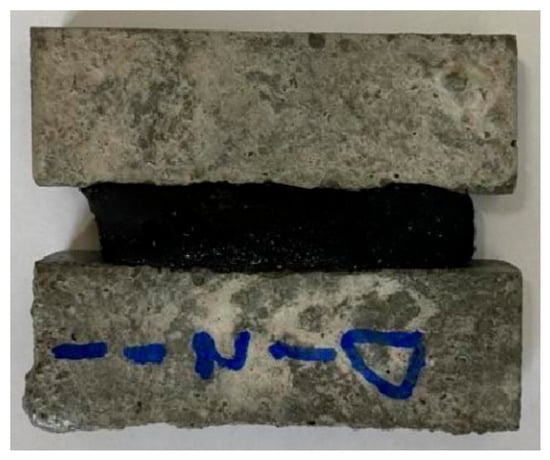
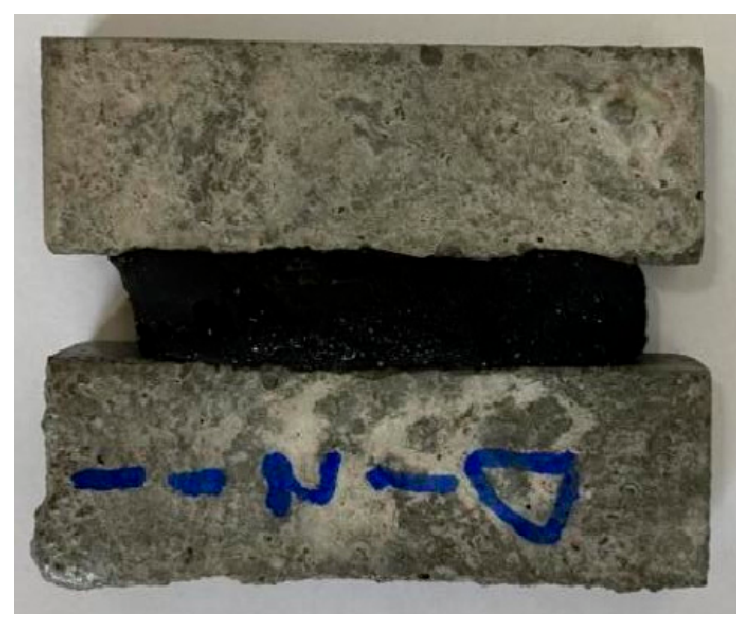
The cement mortar substrate was prepared according to GB/T 13477.8-2017 [42], with dimensions of 75 mm × 25 mm × 12 mm. After 28 days of curing, the surface was ground until the fine aggregate was exposed. The butyl rubber sealant specimen had a width of approximately 60 mm and a height of approximately 12 mm, and was directly bonded to the surface of the cement mortar substrate. The prepared specimen is shown in Figure 1.
Figure 1.
Bonded specimen.
2.3. Experimental Methods
Three sets of tests were designed separately for high-temperature aging, low-temperature aging, and UV accelerated aging. The high-temperature aging test included five temperature gradients: 40 °C, 50 °C, 60 °C, 70 °C, and 80 °C, with an aging duration of 14 days. The low-temperature aging test was conducted under a −20 °C low-temperature environment, with aging periods of 7, 14, 35, 56, and 84 days. The UV accelerated aging test involved aging durations of 7, 14, 21, 28, and 35 days. Three replicate specimens were used in each group. Tensile bonding strength and elongation at break were tested according to GB/T 13477.8-2017; Shore hardness was measured according to GB/T 531.1-2008 [43]; and compressive stress at 20% strain was determined according to GB/T 7757-2009 [44]. All mechanical property data are presented as mean ± standard deviation, and the coefficient of variation (CV) was calculated. One-way ANOVA was performed within each aging series (i.e., comparing different temperatures within the high-temperature series, or different durations within the same aging mode) to evaluate the significance of differences among different aging conditions (p < 0.05 indicates significant difference). Data plotting and statistical analyses were performed using OriginPro 2021 (OriginLab Corp., Northampton, MA, USA) and SPSS 26.0 (IBM Corp., Armonk, NY, USA).
The UV aging test was performed using a QUV UV aging tester (Q-Lab Corporation, Westlake, OH, USA), equipped with UVA-340 lamps, with a wavelength range of 295–365 nm and irradiance set at 0.76 W/m2/nm@340 nm. An alternating light-exposure and condensation cycle was applied: 8 h of light exposure at a black panel temperature of 60 °C, followed by 4 h of condensation at 50 °C. The distance between the specimen and the lamp was approximately 5 cm.
In this study, unaged specimens from the same batch (tensile bonding strength: 0.0541 MPa, elongation at break: 219.6%) served as the common reference baseline for calculating retention rates across all aging series. To account for the potential temperature effect during the −20 °C testing, an additional aging rate was calculated for these specimens using the 7-day data as the initial reference.
2.4. Microscopic Characterization
The characteristic peak changes were analyzed using a DXR3xi micro-Raman spectrometer (Thermo Fisher Scientific, Waltham, MA, USA) with an excitation wavelength of 532 nm, laser power of 2.0 mW, spectral resolution < 2 cm−1, integration time of 10 s, three scans, and a wavenumber range of 50–4000 cm−1. The spectra were baseline-corrected by polynomial fitting. Changes in characteristic peaks were also analyzed using a confocal Raman spectrometer, while surface morphology was observed via scanning electron microscopy (FEI Company, Hillsboro, OR, USA). For each sample, Raman spectra were collected from three randomly selected spots on three independent replicate specimens to ensure representativeness. It should be noted that since no internal standard normalization was applied, and due to the extremely low unsaturation (0.9 mol%) of the butyl rubber and the high loading of carbon black (25 wt%), the intrinsic Raman signals of the rubber matrix are extremely weak and are severely superimposed and masked by the strong fluorescence background and characteristic bands of carbon black. Therefore, the Raman spectra were used solely for qualitative trend analysis of peak positions and shapes, without semi-quantitative peak intensity ratio analysis. This limitation has been noted in the conclusion. Due to limitations in contrast of the original SEM images, quantitative statistical analysis of surface defects was not performed in this study, and only qualitative descriptions were provided.
3. Results
3.1. High-Temperature Aging
3.1.1. Mechanical Properties
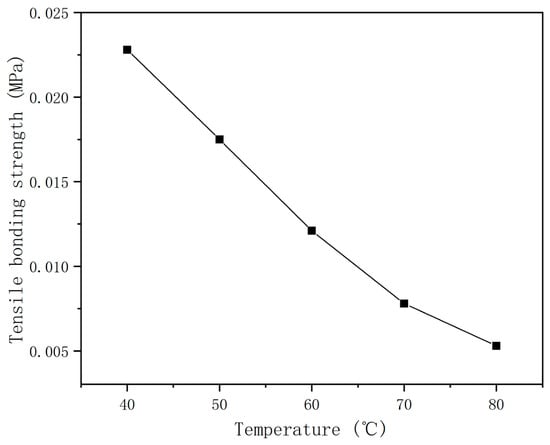
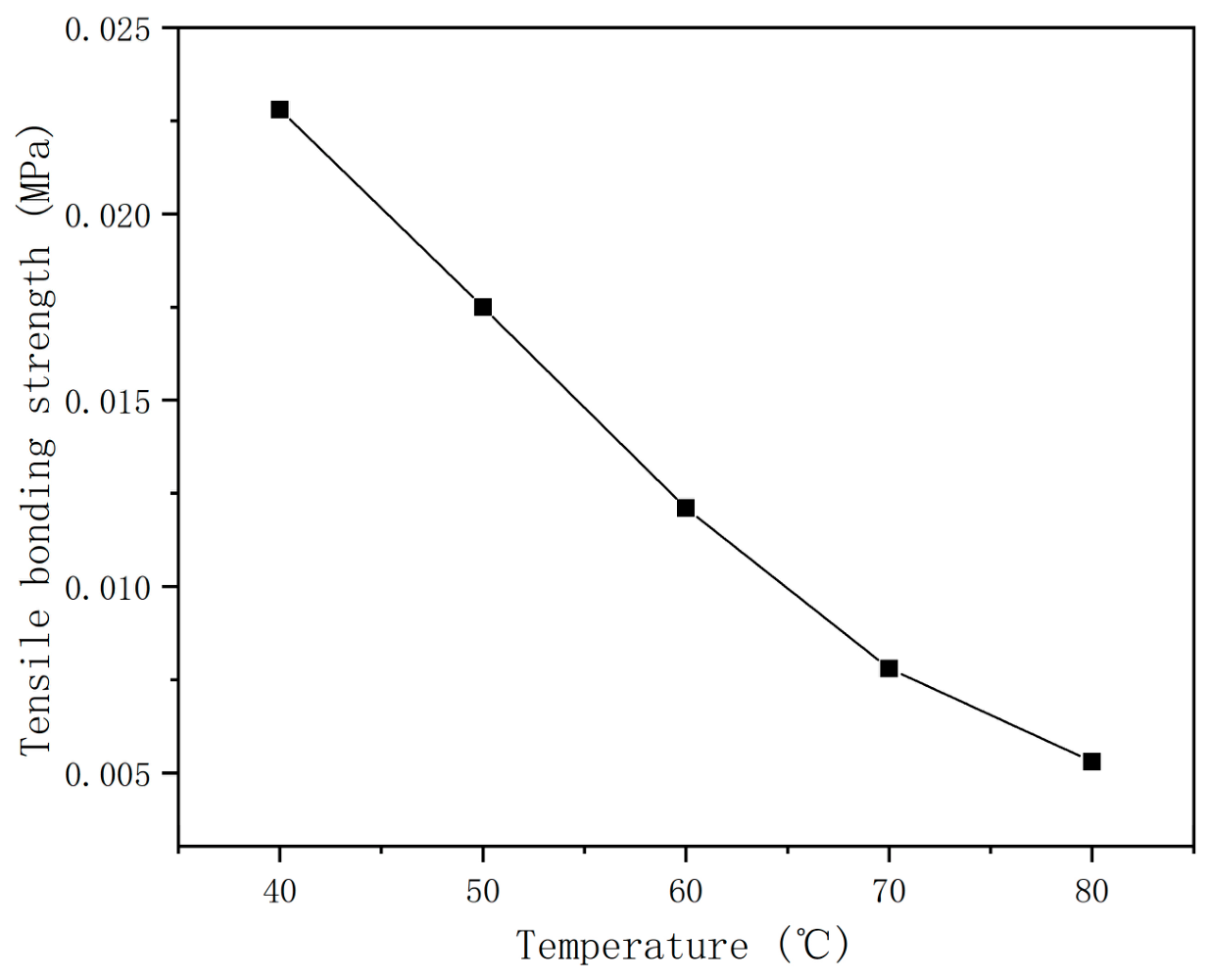
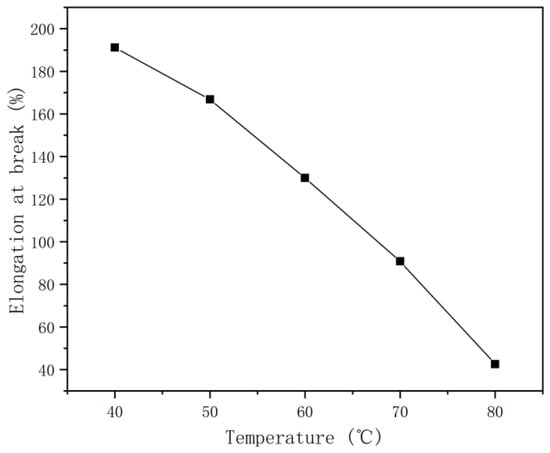
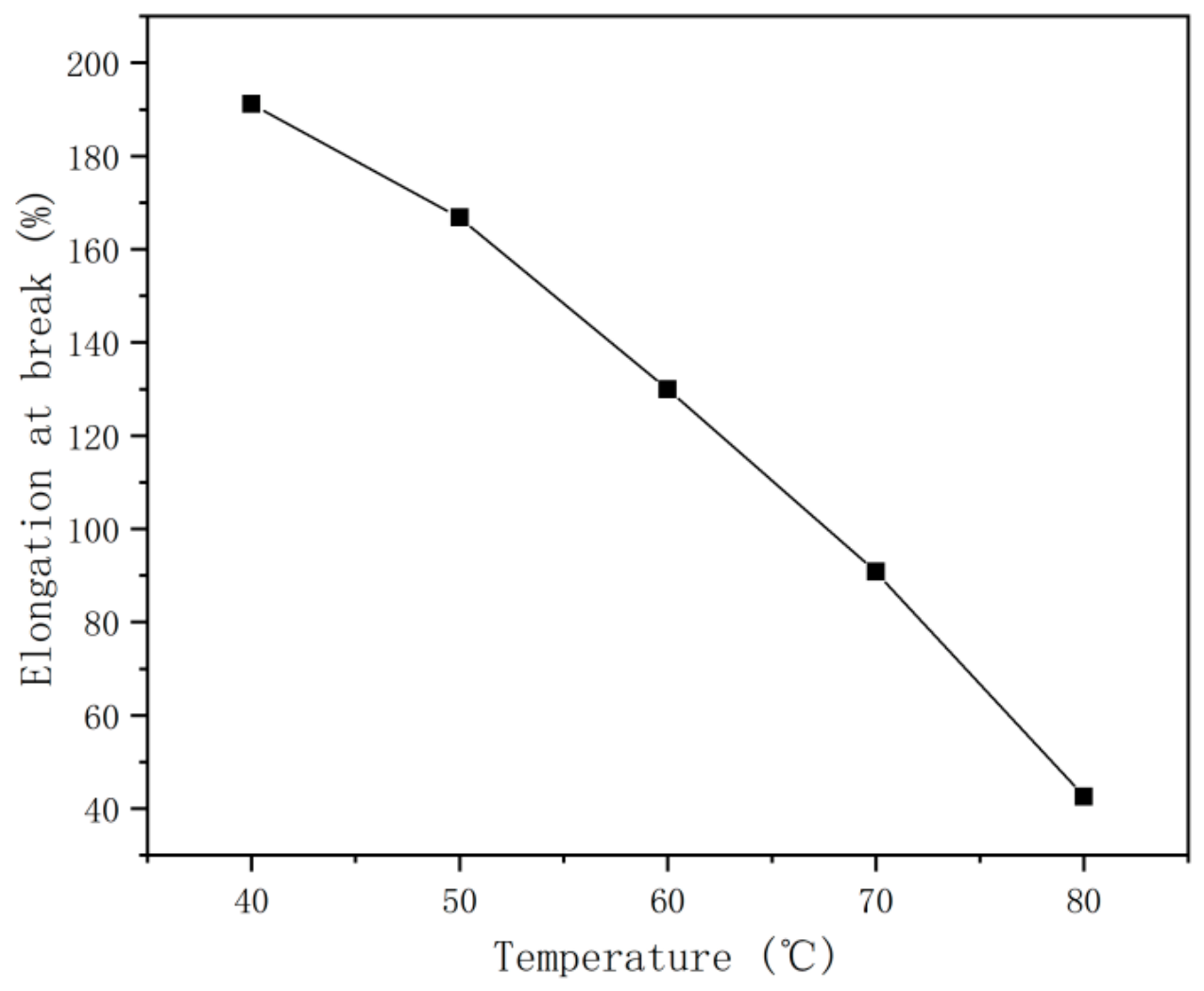
Figure 2 and Figure 3 present the temperature-dependent variations in tensile bonding strength and elongation at break, respectively. Both properties exhibited a monotonic decline with increasing aging temperature. Relative to the unaged control specimen (tensile bonding strength: 0.0541 MPa; elongation at break: 219.6%), exposure to 80 °C resulted in a reduction of approximately 90.2% in tensile bonding strength and 80.6% in elongation at break. Visual inspection of the failure surfaces confirmed that all specimens—across all tested temperatures—failed exclusively via interfacial debonding at the butyl rubber–cement mortar interface. This consistent failure mode indicates that the measured values reflect the adhesive bond strength between the two materials, rather than the bulk tensile properties of the butyl rubber itself.
Figure 2.
Tensile bonding strength as a function of high-temperature aging.
Figure 3.
Elongation at break as a function of high-temperature aging.
To assess the quantitative influence of aging temperature on bond durability, linear regression was performed. The aging temperature (°C) was set as the independent variable, and the tensile bonding strength retention (%) was set as the dependent variable. A strong linear correlation was observed (y = −0.793x + 71.31; R2 = 0.98). It should be noted that this equation is strictly empirical and is only applicable to describe the degradation kinetics within the specific temperature range of 40–80 °C. It should not be extrapolated outside this experimental window. Table 2 summarizes the mechanical properties (mean ± standard deviation, n = 3) and their corresponding retention rates for both tensile bonding strength and elongation at break across the investigated temperature range. One-way ANOVA further confirmed statistically significant differences among the temperature groups for both mechanical parameters (p < 0.05).
Table 2.
Mechanical properties under high-temperature aging (mean ± SD, n = 3).
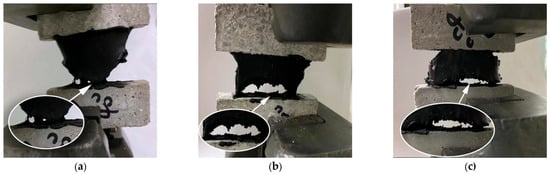
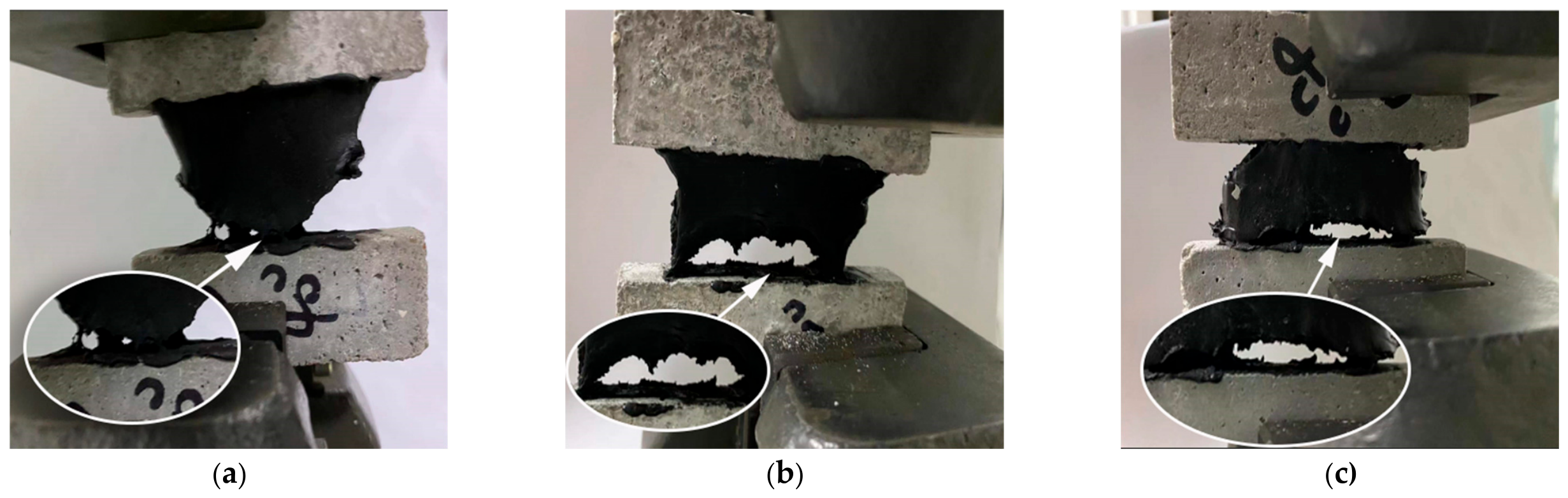
Regarding the failure modes, Figure 4 presents the tensile failure morphologies of all specimens, all of which exhibited interfacial debonding at the butyl rubber–cement mortar interface. However, with increasing aging temperature, the onset of debonding occurred at progressively lower strain levels.
Figure 4.
High-temperature tensile failure behavior of the butyl rubber sealant. (a) Tensile failure morphology at 40 °C. (b) Tensile failure morphology at 60 °C. (c) Tensile failure morphology at 80 °C.
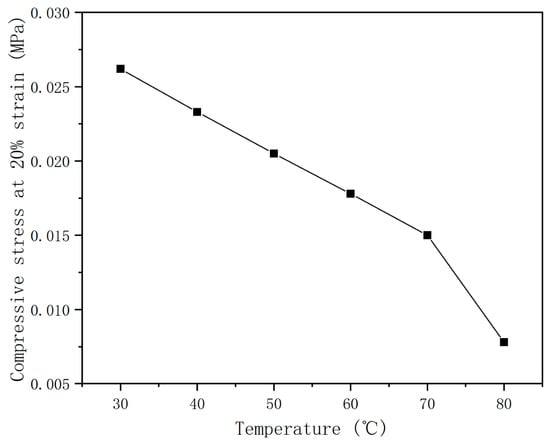
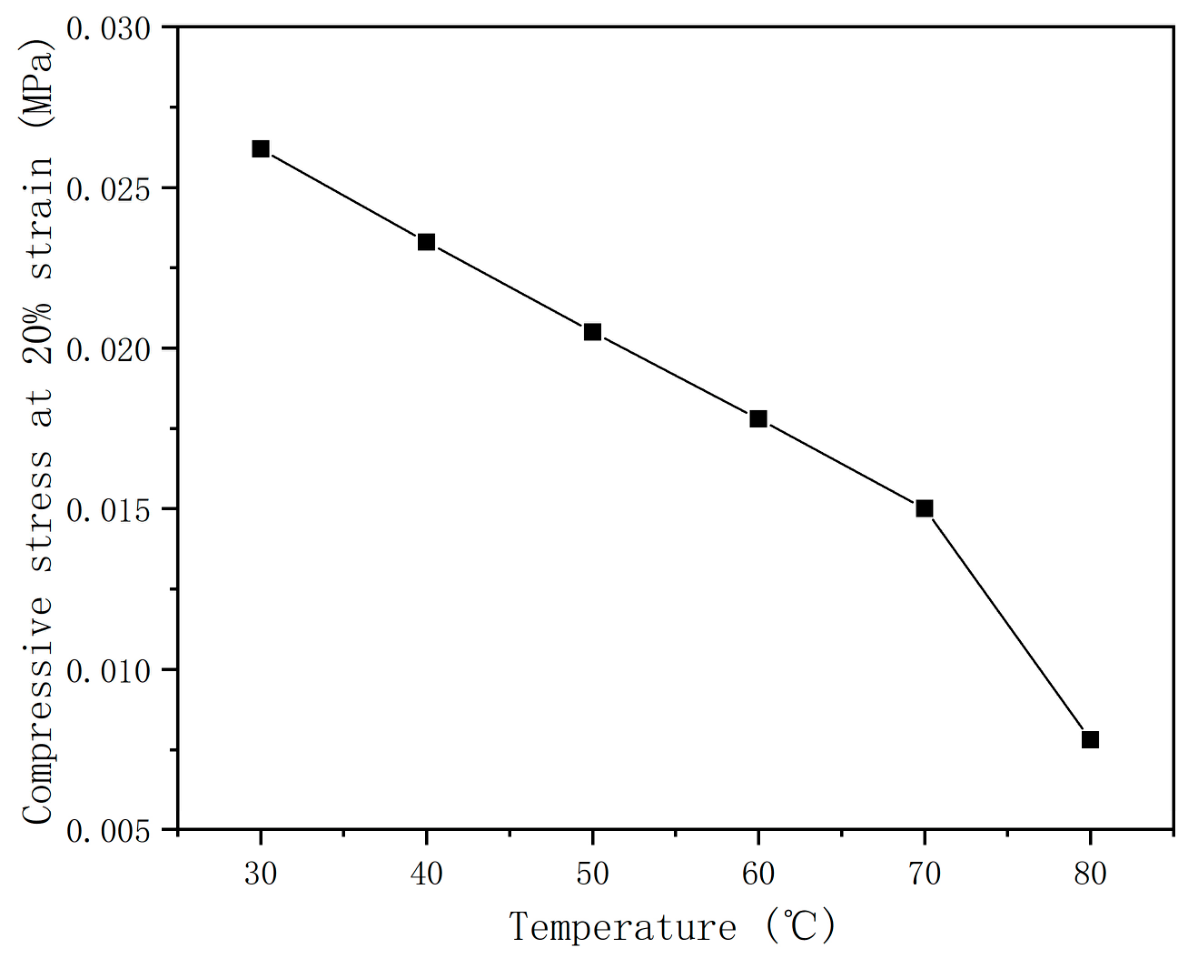
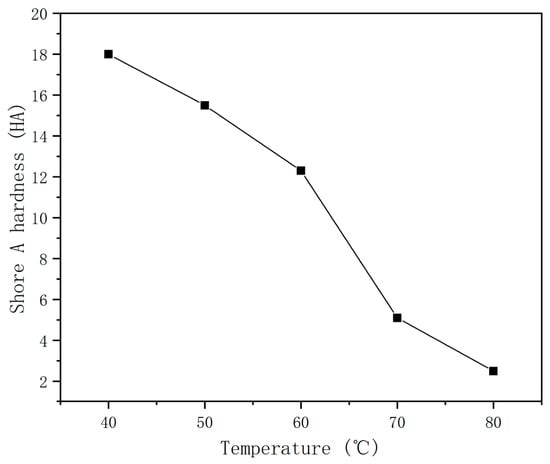
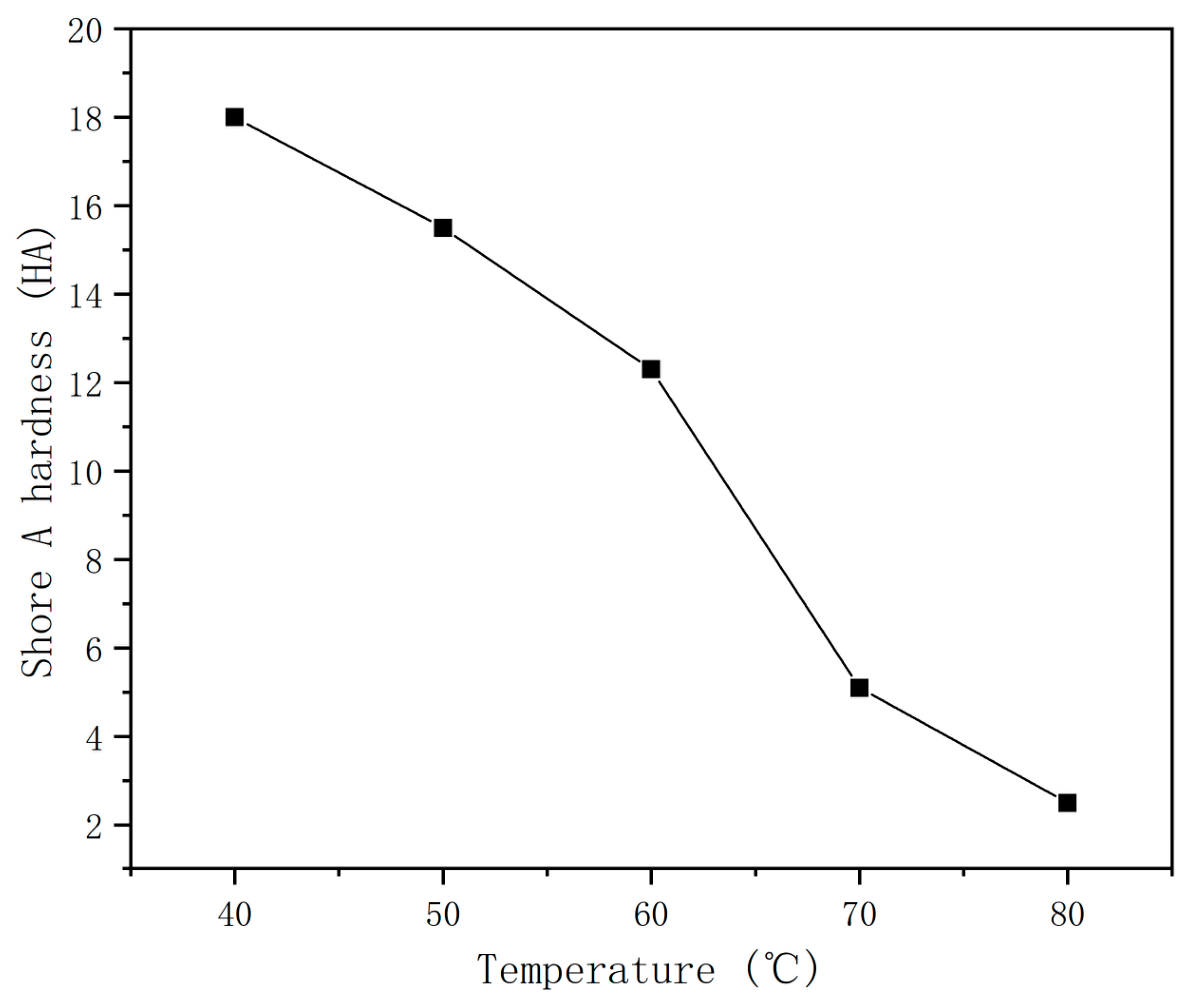
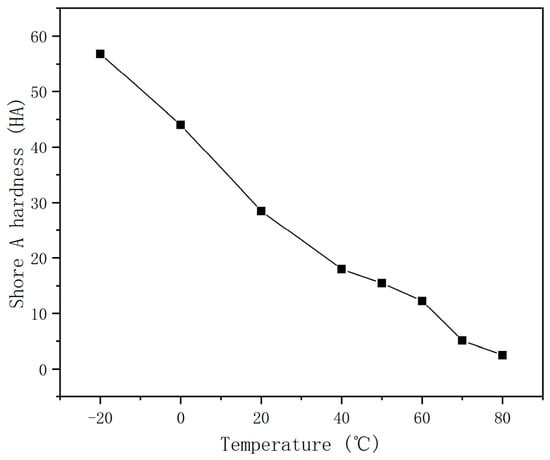
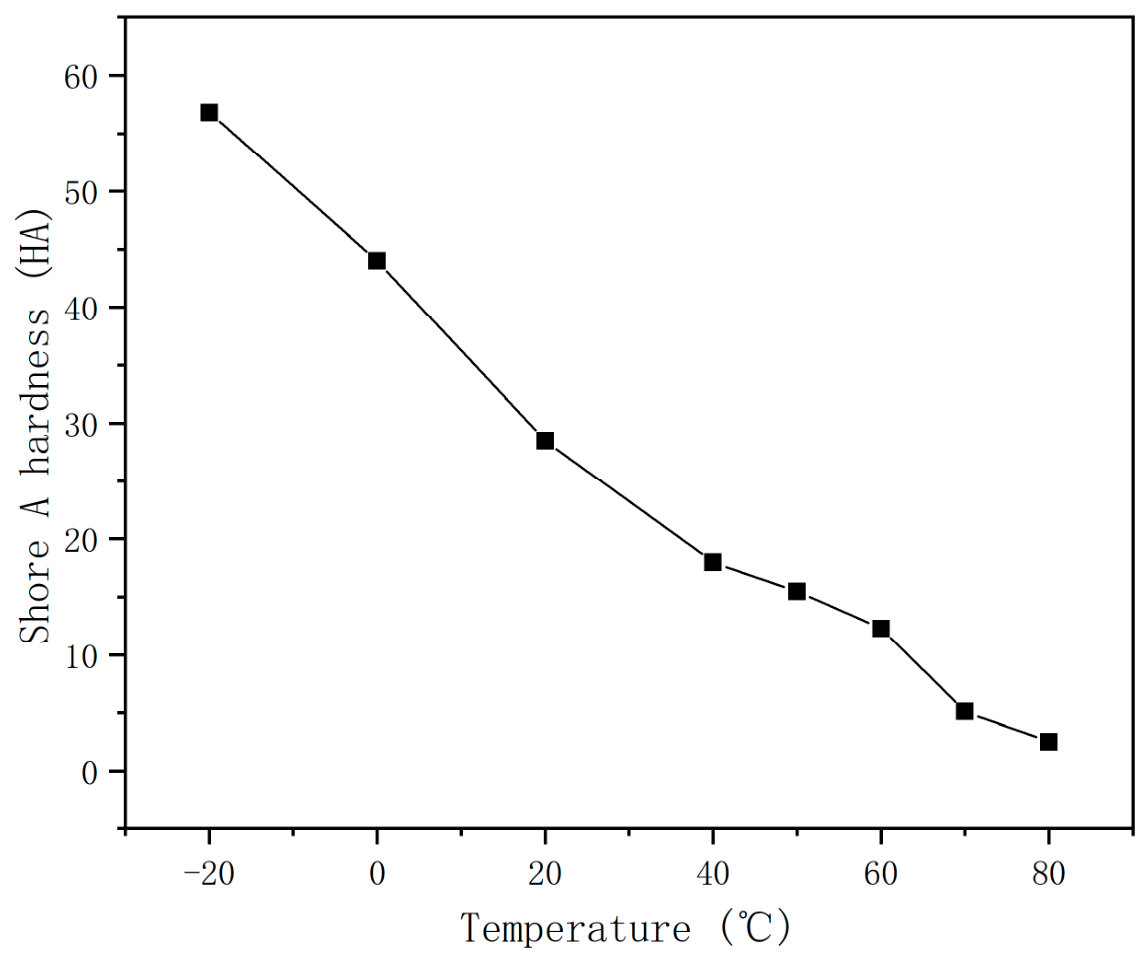
Figure 5 illustrates the temperature-dependent variation in compressive stress measured at 20% strain. A monotonic decline was observed across the entire temperature range; notably, the rate of decrease accelerated markedly within the 60–80 °C interval—consistent with the pronounced reduction in elongation at break under comparable thermal conditions. Figure 6 displays the corresponding variation in Shore A hardness, which followed a qualitatively similar trend: both parameters decreased progressively with rising temperature. Specifically, hardness declined by an average of ~17% per 10 °C increment within the 40–60 °C range; this attenuation intensified beyond 70 °C.
Figure 5.
Compressive stress at 20% strain following high-temperature aging.
Figure 6.
Shore A hardness of the butyl rubber sealant as a function of aging temperature.
3.1.2. Microstructural Analysis
- (1)
- Raman spectroscopic analysis
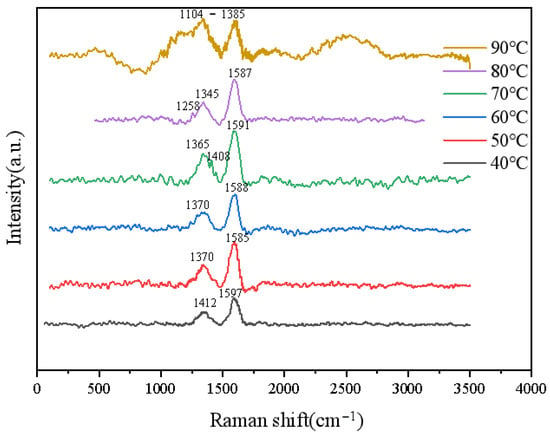
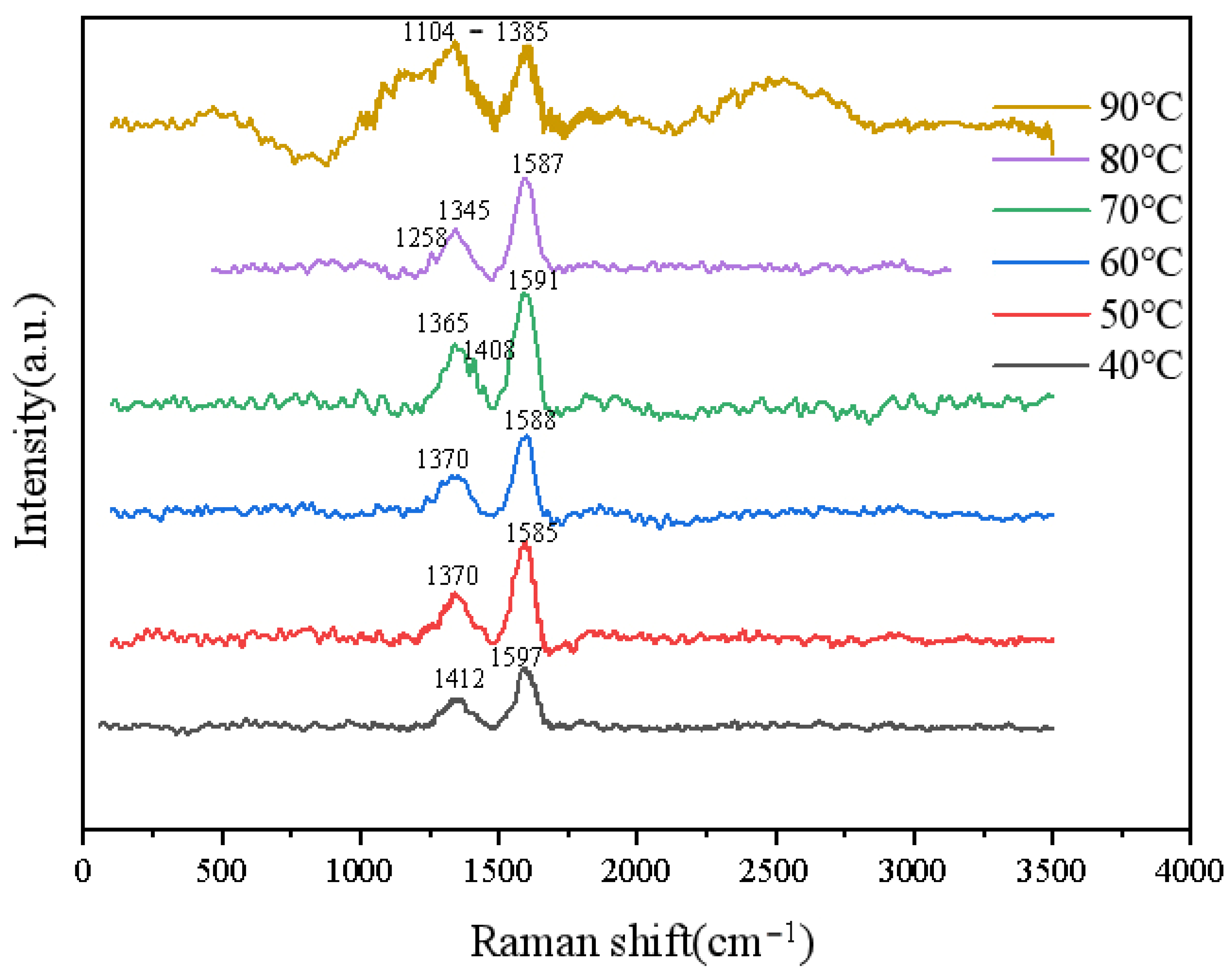
To probe thermo-oxidative degradation mechanisms beyond the upper bound of the primary aging protocol, supplementary Raman spectroscopy was performed on specimens aged at 90 °C. Figure 7 shows the Raman spectra acquired after aging at 40, 60, 80, and 90 °C. At 40 °C, two apparent composite bands were observed in the ~1580–1600 cm−1 and ~1345–1412 cm−1 regions, which include contributions from both the rubber matrix and the carbon black filler. With increasing temperature, the intensity of the C=C band diminished progressively; at 80 °C, substantial attenuation was evident, accompanied by the emergence of new peaks attributable to oxidative products. At 90 °C, additional bands appeared in the 1104–1385 cm−1 region, assigned to C–C stretching and CH2/CH3 deformation vibrations—indicative of advanced chain scission and oxidative decomposition. The 90 °C condition represents an extreme accelerated aging scenario, introduced solely to identify the onset threshold of irreversible molecular degradation; it is not intended for direct mechanical property comparison with the 80 °C dataset.
Figure 7.
Raman spectra of butyl rubber following high-temperature aging.
- (2)
- Scanning electron microscopy analysis
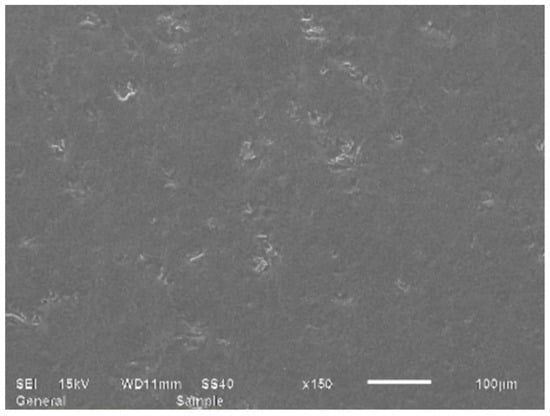
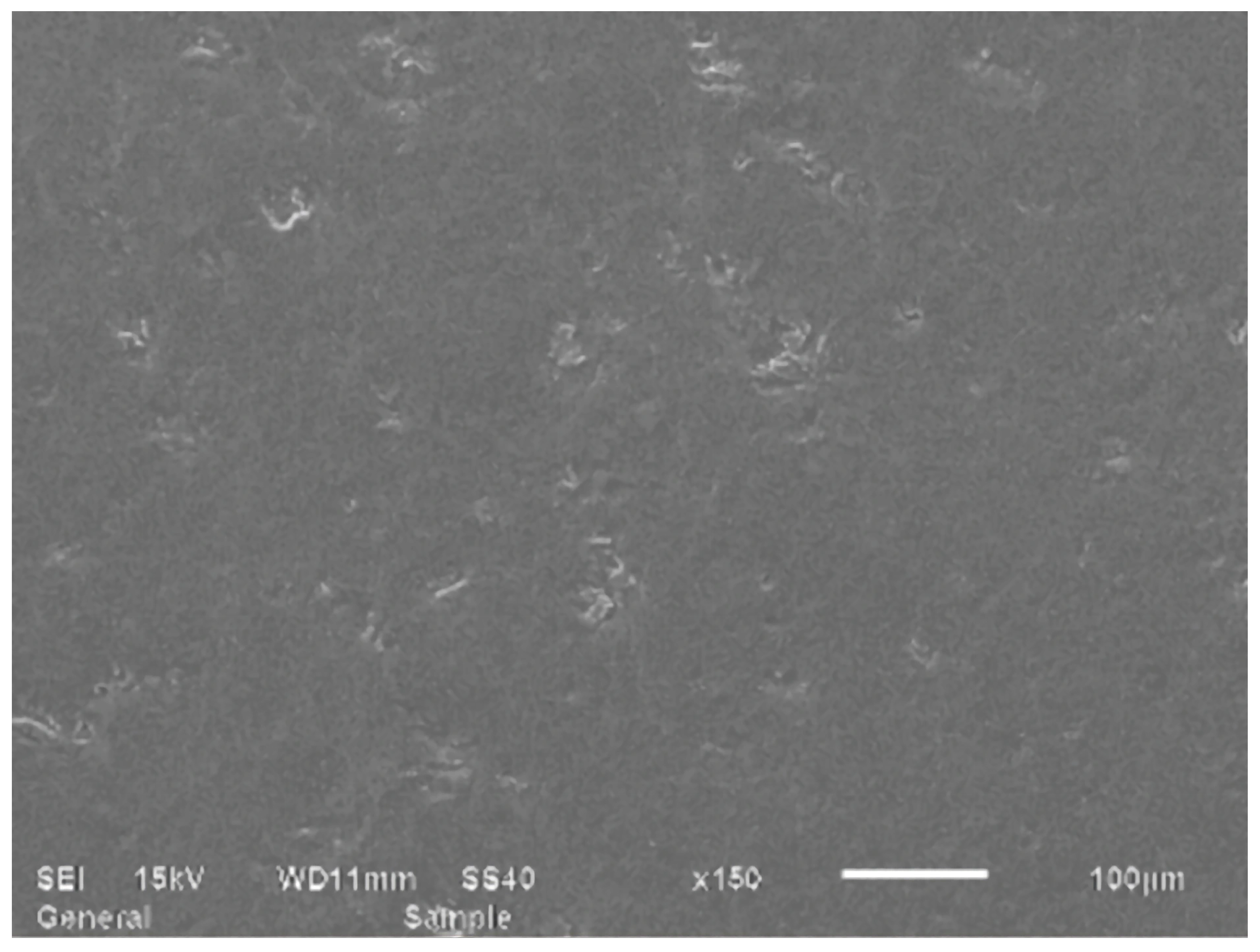
To evaluate the impact of high-temperature aging on surface topography, specimens were aged at 40 °C and 80 °C for 14 days, and their surfaces were examined via SEM. Representative micrographs of the unaged and aged specimens are shown in Figure 8 and Figure 9, respectively. It should be noted that the unaged specimen (Figure 8) inherently exhibits minor wrinkles and surface irregularities, which are likely physical characteristics of the soft plasticized compound or minor artifacts from the vacuum/coating process during SEM preparation. The SEM equipment was properly calibrated, and no equipment-induced artifacts were observed. Compared to this baseline, the specimens aged at 40 °C exhibited newly formed minor surface irregularities, including isolated microcracks, shallow wrinkles, and localized protrusions (Figure 9a–c). In contrast, the specimens aged at 80 °C exhibited distinctly severe aging-induced defects, such as deep cracks, voids, and fissures (Figure 9d–f). Therefore, our morphological analysis focused specifically on distinguishing these prominent aging-induced structural degradations from the inherent baseline surface texture.
Figure 8.
SEM micrographs of the unaged butyl rubber sealant surface.
Figure 9.
SEM micrographs of the butyl rubber sealant surface following high-temperature aging. (a) 40 °C, 50×. (b) 40 °C, 100×. (c) 40 °C, 150×. (d) 80 °C, 50×. (e) 80 °C, 100×. (f) 80 °C, 150×. Red circles indicate the typical surface defects.
Under high-temperature aging conditions, the relative spectral shapes of the apparent composite bands in the ~1580–1600 cm−1 region exhibit distinct evolution, and new bands attributed to oxidative products (such as C-O and C=O stretching vibrations) emerge progressively. These qualitative spectral variations indicate likely thermal oxidative scission of molecular chains, which is the fundamental cause of significant degradation in mechanical properties. The surface defects observed by SEM are secondary consequences, likely associated with probable volume shrinkage and the migration of degradation products following chain scission. Therefore, the dominant mechanism of high-temperature aging is chemical aging, and the morphological changes observed by SEM are secondary effects of chemical aging rather than an independent physical aging mechanism.
3.2. Low-Temperature Aging
3.2.1. Mechanical Properties
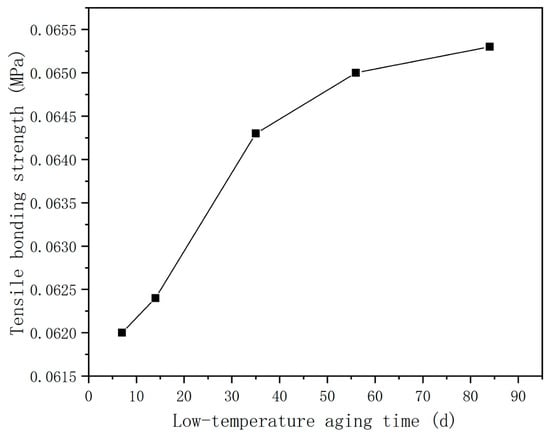
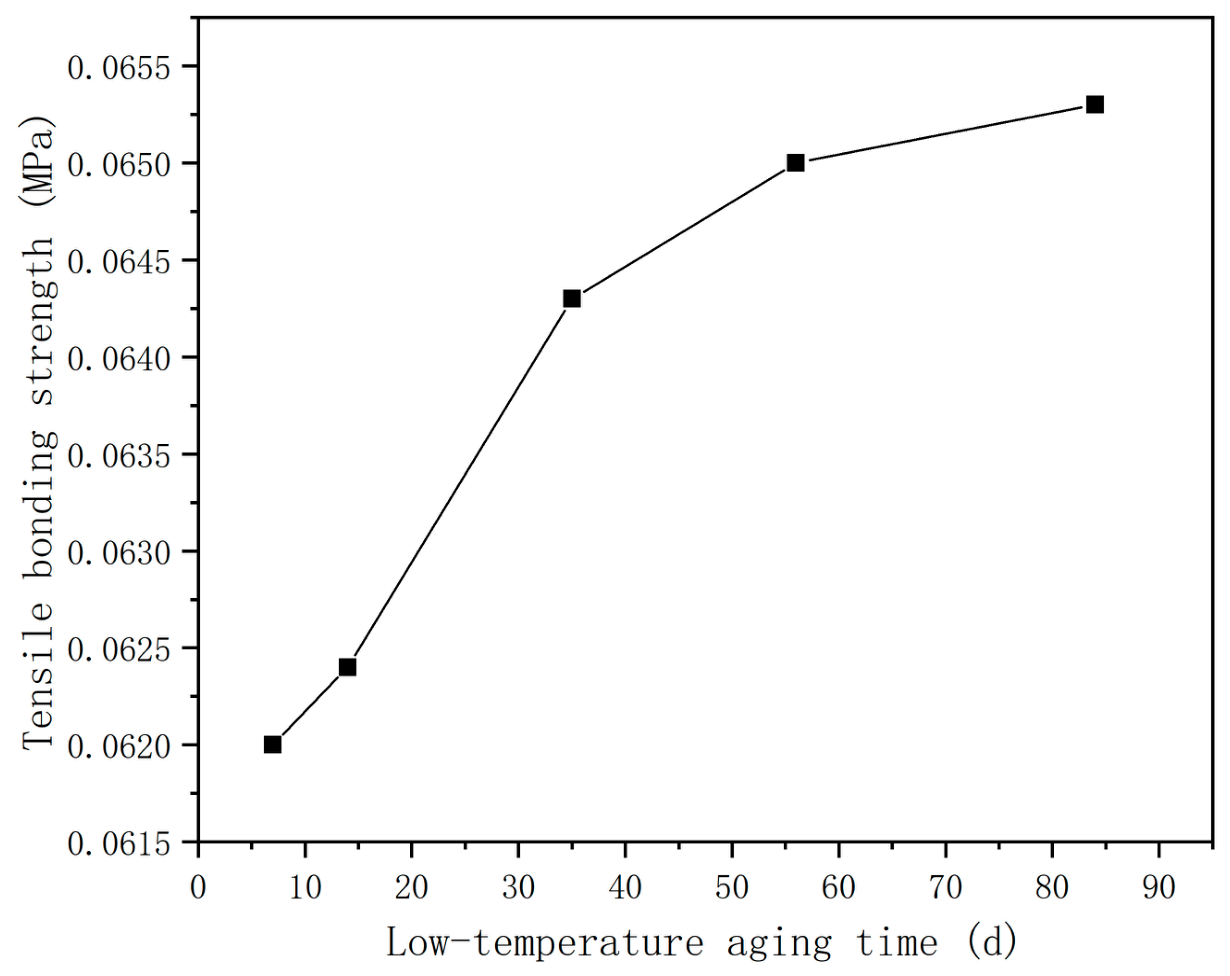
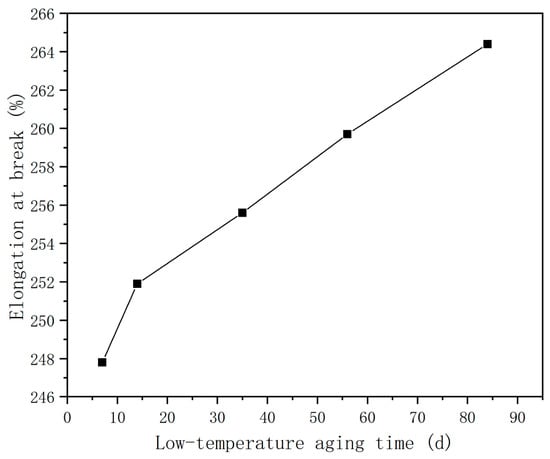
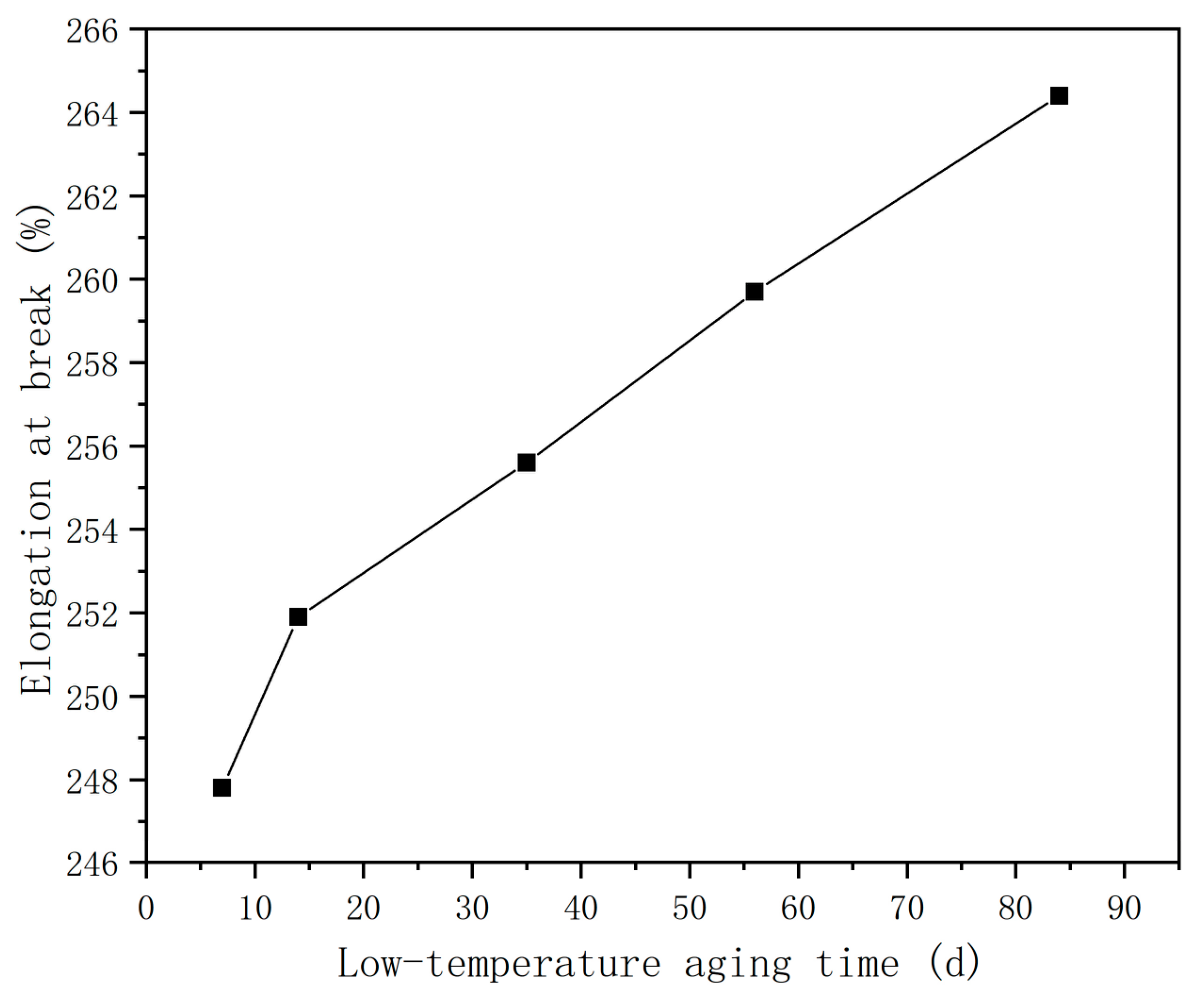
Figure 10 shows the variation curve of tensile bonding strength of butyl rubber at −20 °C with aging time. As shown in the figure, the tensile bonding strength exhibits a slight increasing trend as aging time extends. Compared to the unaged specimen, the tensile bonding strength increased by approximately 20.7% after 84 days of aging. Figure 11 indicates that the elongation at break also shows an increasing trend, with an increase of about 20.4%. Since the specimens had already reached thermal equilibrium at −20 °C during the initial aging period (7 days), the physical hardening effect became stable; therefore, this study used the data from day 7 as the baseline for calculating low-temperature aging rate. The results show that after 84 days of aging, the tensile bonding strength increased by approximately 5.3% compared to day 7, and the elongation at break increased by about 6.7%. During the period from day 7 to day 84, the average growth rates of tensile bonding strength and elongation at break were approximately 0.069%/day and 0.087%/day, respectively. However, it should be noted that the short-term increments (e.g., from day 7 to 14) for both properties are smaller than their respective standard deviations. Therefore, these average rates should be interpreted with caution and serve only as rough engineering estimates. Table 3 lists the mechanical property retention rates (mean ± standard deviation, n = 3) of the samples at various low-temperature aging times relative to the unaged specimens. One-way ANOVA results indicate that differences in both tensile bonding strength and elongation at break among different time points are statistically significant (p < 0.05).
Figure 10.
Tensile bonding strength of the butyl rubber sealant as a function of low-temperature aging duration.
Figure 11.
Elongation at break of the butyl rubber sealant as a function of low-temperature aging duration.
Table 3.
Mechanical properties under low-temperature aging (mean ± SD, n = 3).
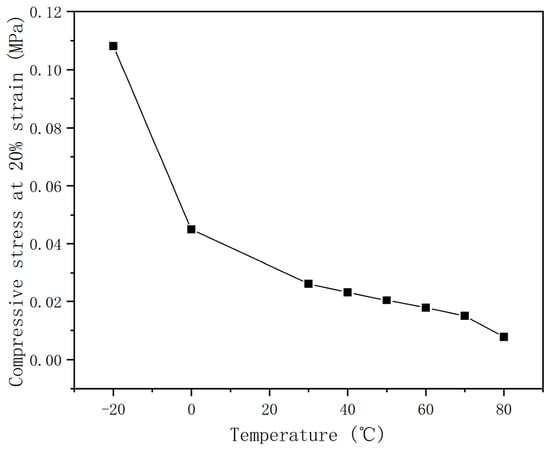
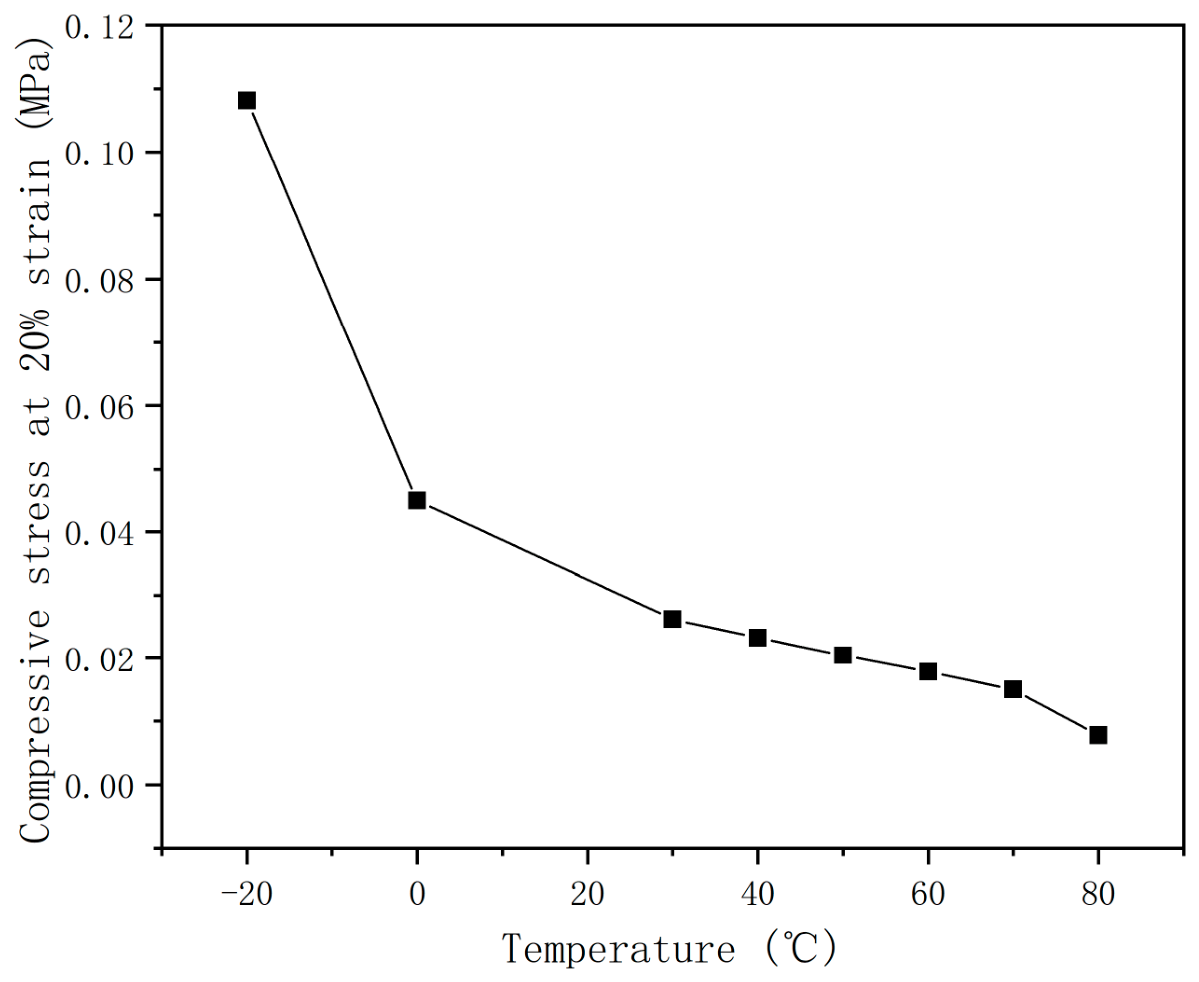
Figure 12 and Figure 13 show the variation curves of compressive stress at 20% strain and Shore hardness of butyl rubber with temperature. The compressive stress at 20% strain increases by approximately 140% at −20 °C compared to 0 °C. The data indicate a strong temperature dependence of compressive stress. The temperature-dependent variations are presented in Figure 12 and Figure 13. The Shore hardness increased from ~28 HA at 20 °C to ~57 HA at −20 °C, representing a significant physical stiffening of the sealant. While this hardening slightly increases the tensile bonding strength, it severely reduces the material’s deformation adaptability, posing a risk of brittle failure.
Figure 12.
Compressive stress at 20% strain across the high- and low-temperature range.
Figure 13.
Shore A hardness of the butyl rubber sealant across the high- and low-temperature range.
3.2.2. Microstructural Analysis
- (1)
- Raman spectroscopy analysis
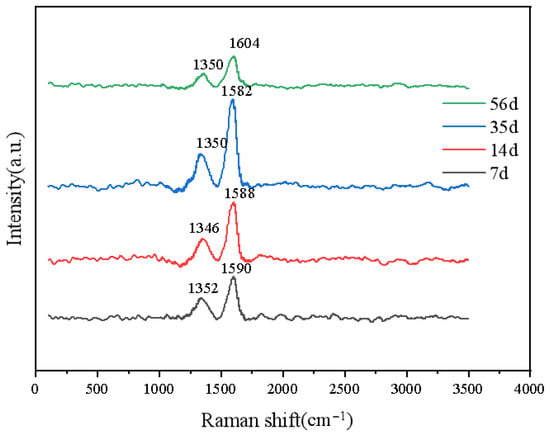
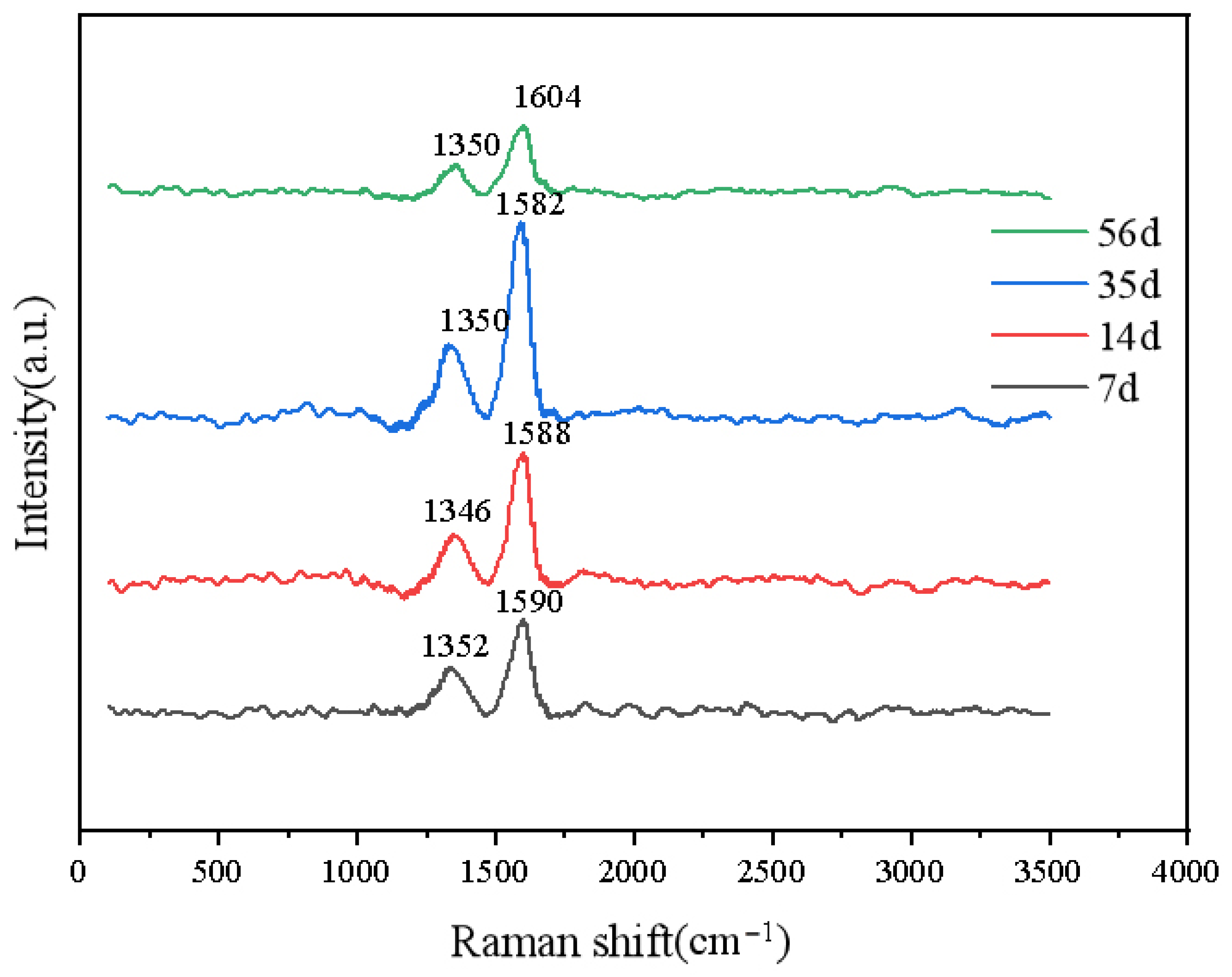
Figure 14 shows the comparative Raman spectra of butyl rubber after aging at −20 °C for 7, 14, 35, and 56 days. No new chemical bonds (such as O-H or C=O) were observed within the monitored period of 56 days. The peak positions fluctuate slightly within the range of ~1580–1604 cm−1, which is likely attributed to the micro-heterogeneity of the specimen surface at different testing spots rather than actual chemical bond changes. Although the apparent peak heights varied visually, this is primarily due to different testing locations and local carbon black concentration.
Figure 14.
Raman spectra of butyl rubber following low-temperature aging at −20 °C.
- (2)
- Scanning electron microscopy analysis
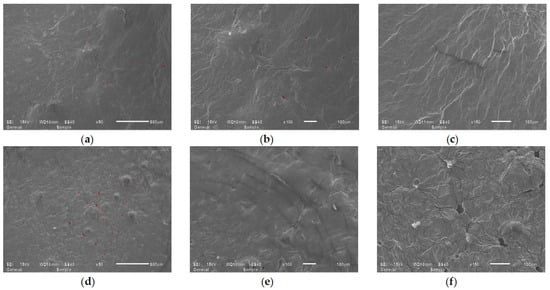
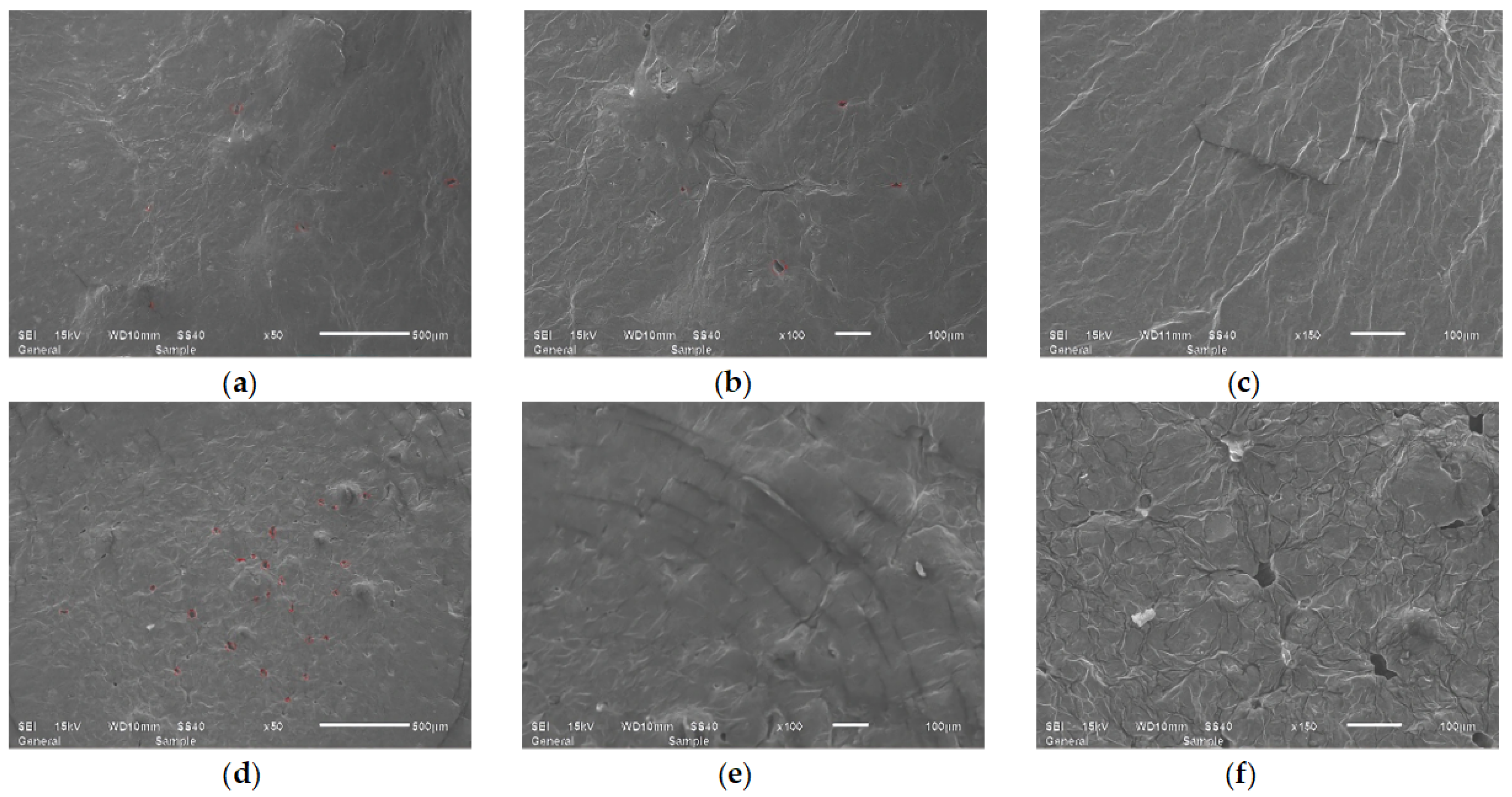
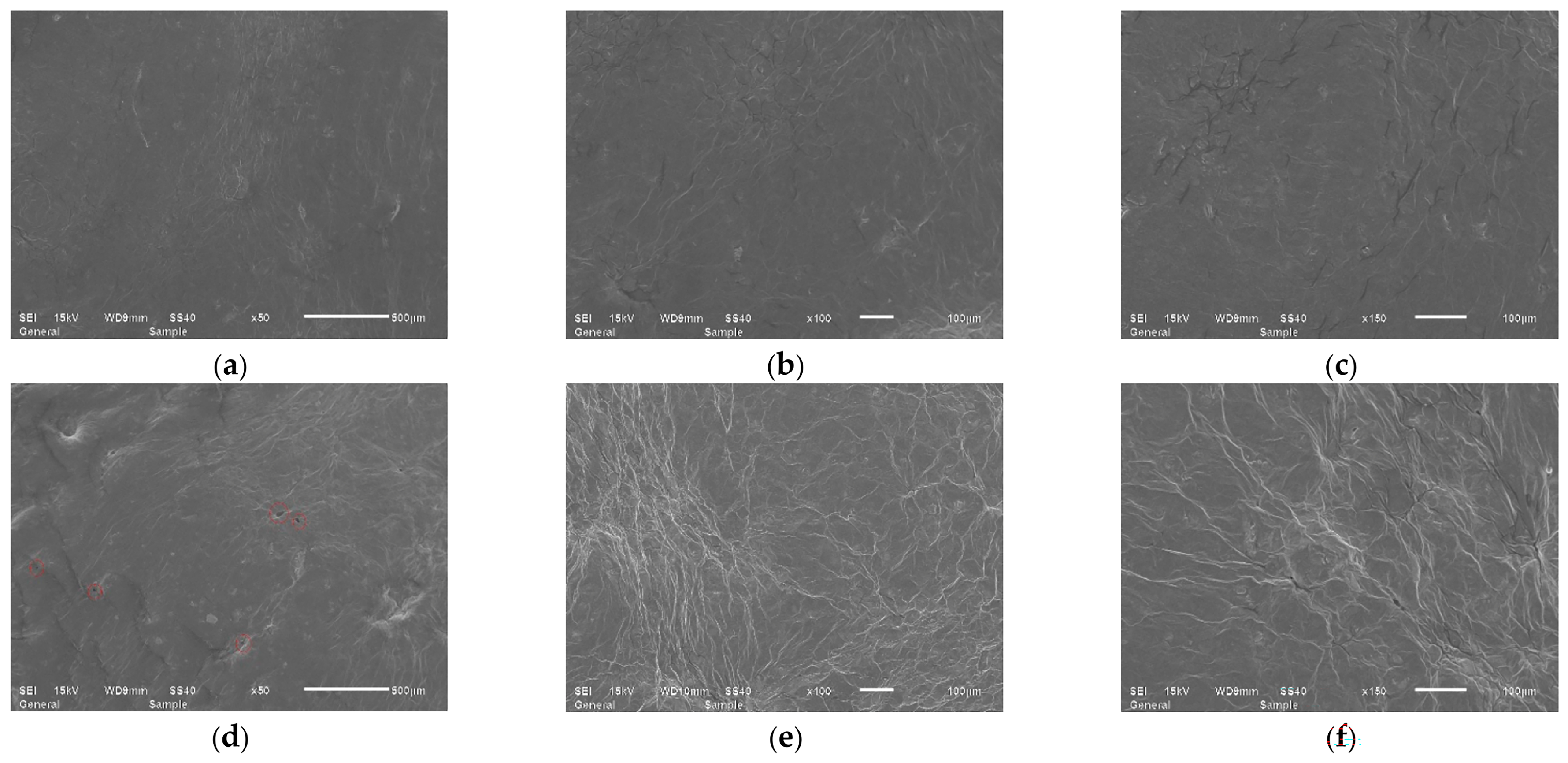
Figure 15 shows SEM images of butyl rubber after 7 and 84 days of aging at −20 °C. After 7 days of aging, a few pores, wrinkles, and microcracks are visible on the surface; after 84 days, the number of pores increases markedly, and wrinkles and microcracks become more densely distributed.
Figure 15.
SEM micrographs of the butyl rubber sealant surface following low-temperature aging. (a) 7 days, 50×. (b) 7 days, 100×. (c) 7 days, 150×. (d) 84 days, 50×. (e) 84 days, 100×. (f) 84 days, 150×. Red circles indicate the typical surface defects.
Under low-temperature conditions, all characteristic peaks in the Raman spectrum remain stable within the 56-day monitoring period, indicating no change in the molecular chain’s chemical structure. SEM analysis reveals surface physical morphology degradation; however, mechanical properties not only remain unchanged but actually improve. This phenomenon—“chemically stable structure with slightly enhanced mechanical performance”—suggests that the conventional coupling between chemical and physical aging is disrupted at low temperatures, meaning they no longer follow the synchronized evolution pattern of “microstructural changes → macroscopic property degradation.” At low temperatures, surface physical defects are confined to the outer layer. The restriction of segmental mobility and the reduction in free volume lead to physical hardening, which may contribute to the slight improvement in mechanical properties. Therefore, the effect of low temperature on butyl rubber is primarily governed by physical mechanisms rather than chemical aging. However, it should be noted that direct quantitative evidence (such as DSC or DMA) for these physical changes was not obtained in this study and remains to be provided in future studies.
3.3. UV Aging
3.3.1. Mechanical Properties
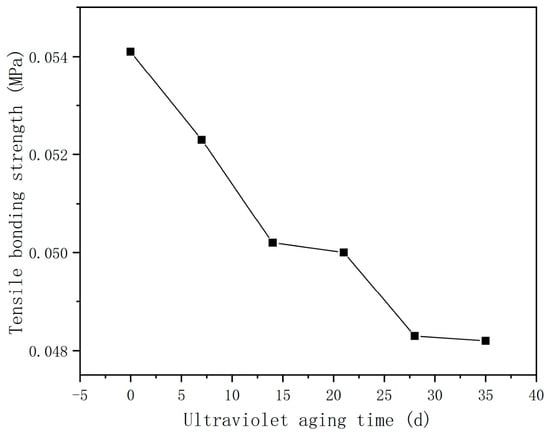
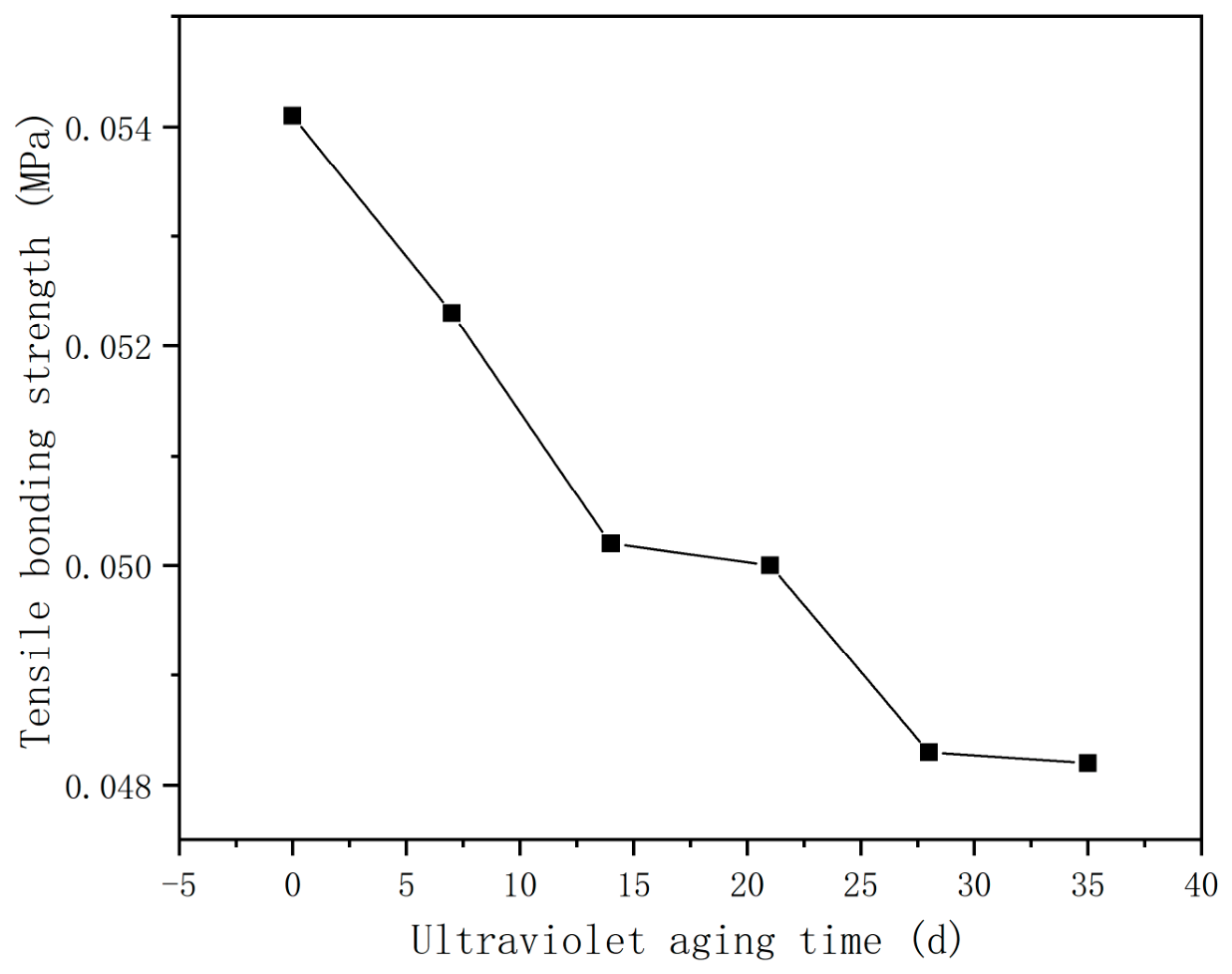
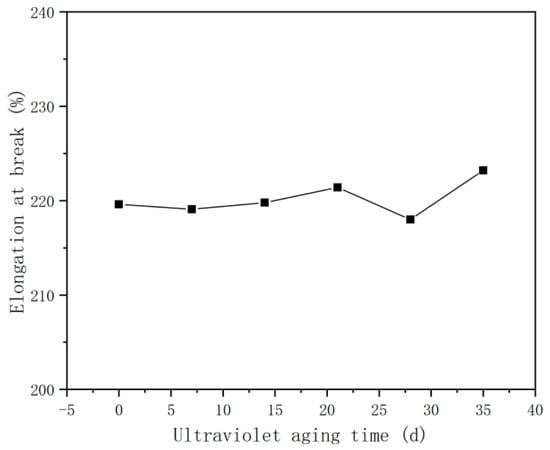
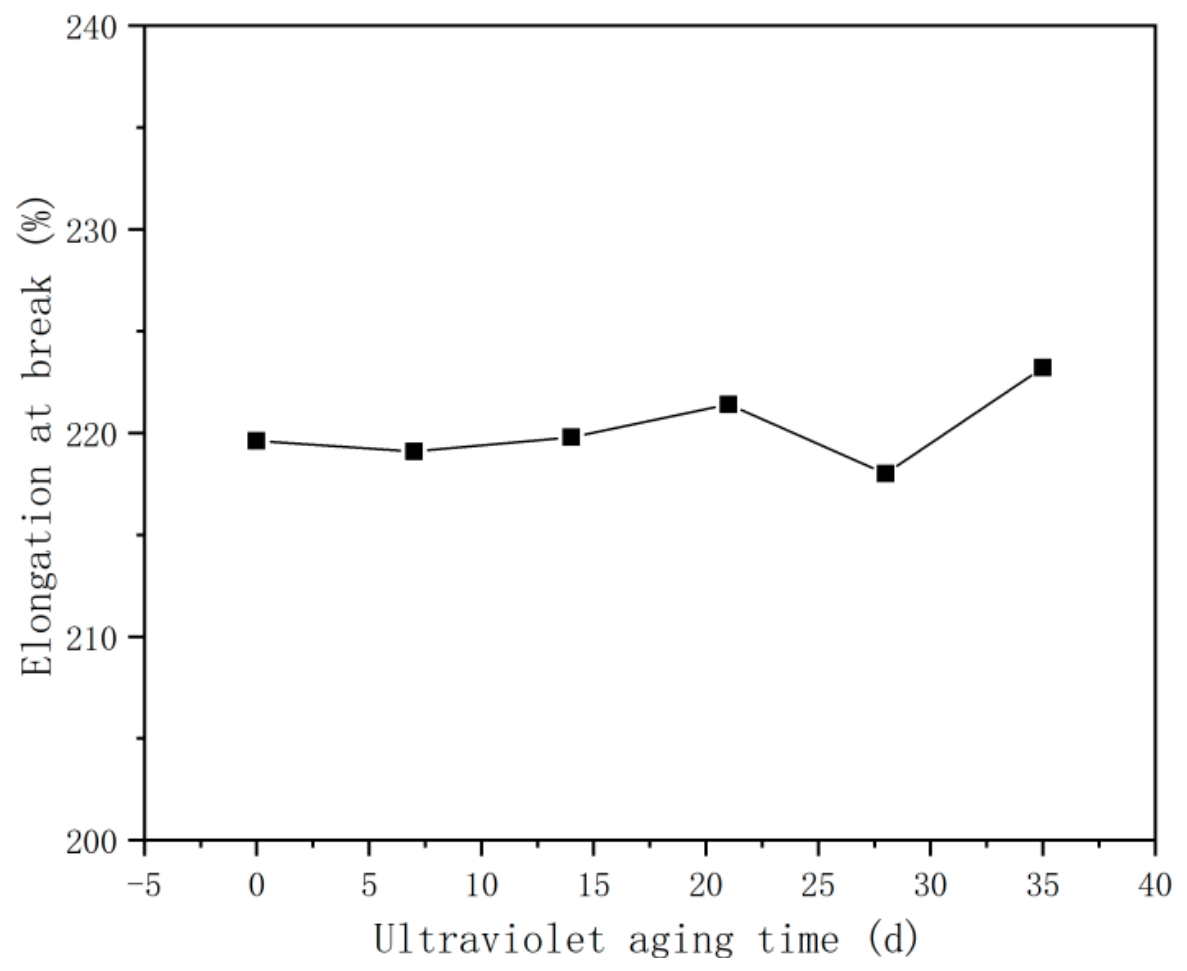
Figure 16 shows the variation curve of tensile bonding strength of butyl rubber with ultraviolet aging time. Taking the unaged condition as the baseline, the tensile bonding strength decreased to 0.0482 MPa at 35 days, representing a cumulative reduction of approximately 10.9%. Figure 17 presents the variation curve of elongation at break for butyl rubber with ultraviolet aging time; the elongation at break remained generally stable around 220%, without significant fluctuations. The failure mode of all specimens was interfacial debonding, with no signs of bulk fracture observed. Table 4 lists the retention rates at each time point (mean ± standard deviation, n = 3). One-way ANOVA results indicate that the tensile bonding strength showed significant differences over time (p < 0.05), while the elongation at break showed no significant difference (p > 0.05).
Figure 16.
Tensile bonding strength of the butyl rubber sealant as a function of UV exposure duration.
Figure 17.
Elongation at break of the butyl rubber sealant as a function of UV exposure duration.
Table 4.
Mechanical properties under UV aging (mean ± SD, n = 3).
3.3.2. Microstructural Analysis
- (1)
- Raman spectroscopy analysis
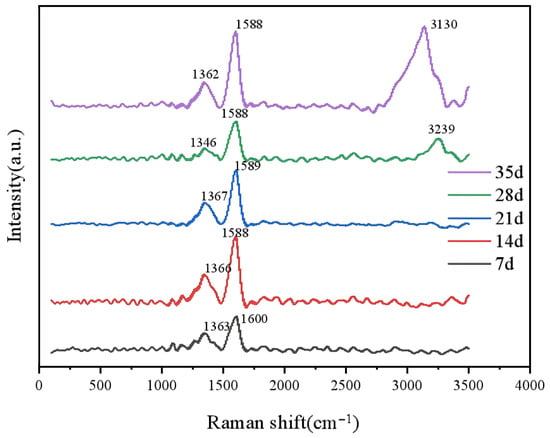
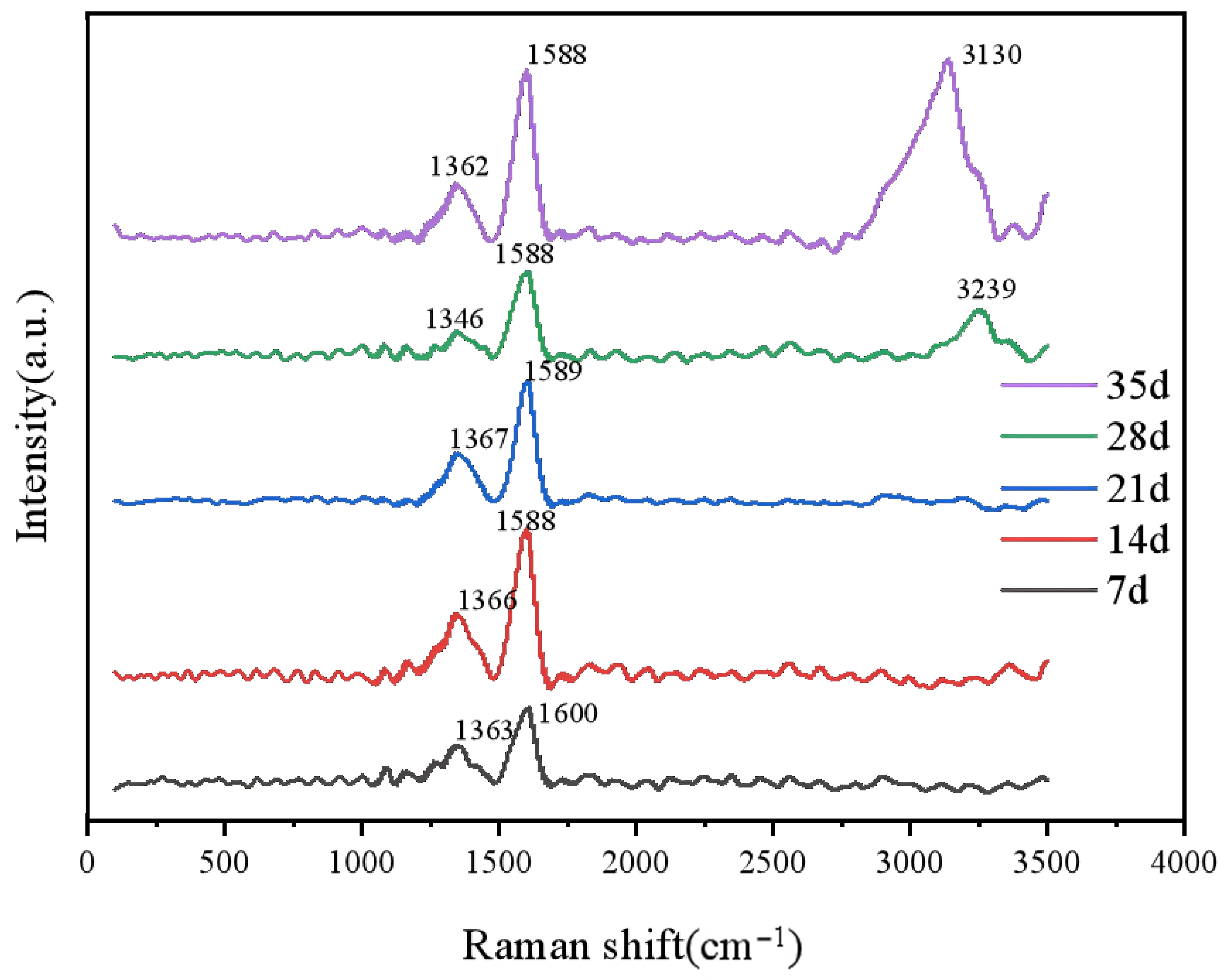
Figure 18 shows the comparative Raman spectra of butyl rubber after different ultraviolet aging periods. During aging from 7 to 21 days, no significant changes were observed in the peak positions or shapes of the C=C and CH2 peaks. After 28 days of aging, a broad band emerged in the 3200–3400 cm−1 region, which may be associated with the formation of hydroxyl groups during photo-oxidation. However, interference from surface adsorbed moisture during the condensation cycles and fluorescence background cannot be excluded. The band remained present at ~3130 cm−1 after 35 days of aging.
Figure 18.
Raman spectra of butyl rubber following UV aging.
- (2)
- Scanning electron microscopy analysis
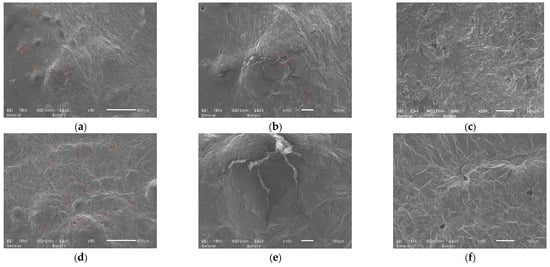
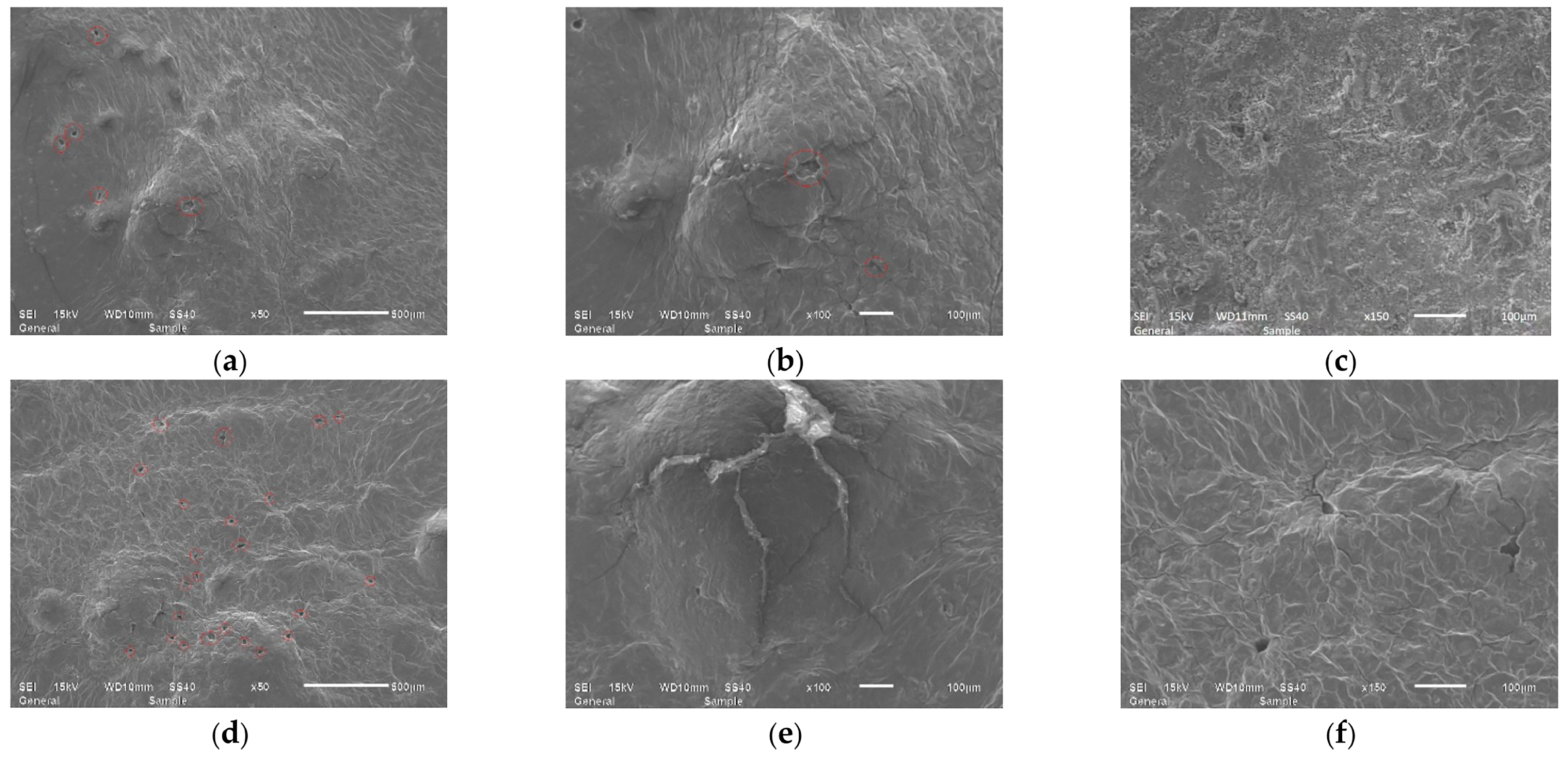
Figure 19 shows SEM images of butyl rubber after 7 days and 35 days of UV aging. After 7 days of aging, the surface remains relatively smooth, with only a few microcracks visible in localized areas. After 35 days of aging, numerous cracks, wrinkles, and pores appear on the surface, and surface roughness increases, indicating severe localized physical degradation on the surface layer. However, this deterioration did not penetrate deeply into the bulk material.
Figure 19.
SEM micrographs of the butyl rubber sealant surface following UV aging. (a) 7 days, 50×. (b) 7 days, 100×. (c) 7 days, 150×. (d) 35 days, 50×. (e) 35 days, 100×. (f) 35 days, 150×. Red circles indicate the typical surface defects.
Under UV aging conditions, an O-H characteristic peak appeared in the Raman spectrum after 28 days, while the spectral evolution of the composite bands decreased only slightly, indicating limited depth of photo-oxidation. SEM results showed that surface defects gradually increased with prolonged aging time. Regarding mechanical properties, the tensile bonding strength decreased by approximately 10.9% compared to the unaged state at 35 days, markedly less than the degradation observed under high-temperature aging. Therefore, the mechanism of UV aging is dominated by surface chemical aging. Although the bulk mechanical properties showed limited degradation, the surface morphology exhibited severe localized physical degradation. It should be noted that this study infers deterioration is primarily confined to the surface based on surface Raman and SEM analyses, but without conducting depth-sectional analysis, the possibility of slight bulk aging cannot be entirely ruled out.
3.4. Mechanistic Analysis
The results of the above three aging tests indicate that high temperature, low temperature, and ultraviolet (UV) environmental stresses lead to fundamentally different degradation pathways for butyl rubber sealant materials. Based on synergistic characterization using Raman spectroscopy (chemical structural changes) and SEM (surface morphology changes), the mechanisms under these three aging conditions can be summarized as follows.
- (1)
- High-temperature aging mechanism
Under high-temperature conditions, mechanical properties exhibit the most severe degradation. The gradual appearance of oxidative characteristic bands and the qualitative evolution of the composite spectral bands in Raman spectra indicates thermal oxidative cleavage of unsaturated bonds within the molecular chains, disrupting the integrity of the three-dimensional network structure. Surface cracks and wrinkles observed via SEM are secondary consequences resulting from volume contraction following chain scission. Chemical aging serves as the primary driving force behind the significant performance decline, while surface morphology changes represent a secondary effect. These findings align with previous literature reporting that high-temperature thermal-oxidative aging in butyl rubber is dominated by macromolecular chain scission [45].
- (2)
- Low-temperature aging mechanism
Low-temperature aging exhibits entirely different behavior. During the 56-day Raman monitoring period, all characteristic peaks in the Raman spectrum remain stable, indicating negligible chemical aging; however, SEM reveals deterioration in surface physical morphology. Notably, mechanical properties do not degrade but instead improve slightly. This suggests that the conventional coupling between chemical and physical aging is disrupted at low temperatures—no longer following the synchronized evolution pattern of “microstructural changes → macroscopic property degradation.” This phenomenon arises because low temperatures restrict segmental mobility and reduce the free volume within the butyl rubber matrix, leading to physical hardening. Surface physical defects remain confined to the outer layer without penetrating into the bulk. This physical hardening, rather than chemical crosslinking or crystallization, contributes to the marginal enhancement of mechanical properties at low temperatures. Thus, low-temperature effects on butyl rubber are primarily physical rather than chemical. Here, we define this “decoupling” behavior as the asynchrony between chemical structural stability and the physical enhancement of mechanical properties, which breaks the conventional pathway where microstructural degradation directly leads to macroscopic property decline. It should be noted that this behavior is currently described qualitatively, and quantitative criteria will need to be established in future work through normalized Raman analysis with internal references and multiple parallel sample testing.
- (3)
- UV aging mechanism
Under UV exposure, the reduction in mechanical properties lies between those observed under high- and low-temperature conditions. An O-H peak appears in the Raman spectrum after 28 days, but the intensity of the C=C peak only weakens slightly, indicating limited depth of photo-oxidation reactions. SEM shows that surface defects gradually increase with aging time, yet degradation remains restricted to the surface layer. In terms of mechanical performance, the tensile bonding strength decreases by approximately 10.9% cumulatively after 35 days compared to the unaged state—markedly less than the decline seen under high-temperature aging. Comparing UV aging with high-temperature aging reveals that chemical aging in the former is confined to the surface and has minimal impact on the bulk material, whereas high-temperature chemical aging penetrates throughout the entire material, causing substantial performance loss. Therefore, the spatial distribution depth of chemical aging is a key factor determining the extent of macroscopic property degradation.
- (4)
- Comprehensive analysis
A comparison of the degradation mechanisms of butyl rubber under the three aging conditions is shown in Table 5. Whether chemical aging occurs and its spatial penetration depth determine the degree and reversibility of mechanical property degradation. High-temperature aging is dominated by irreversible chemical aging; low-temperature service conditions are governed by physical effects with no chemical aging taking place; UV aging is primarily characterized by surface-level chemical aging, which has limited influence on the bulk material.
Table 5.
Comparative dominance of chemical versus physical aging mechanisms.
3.5. Life Assessment and Early Warning Recommendations
Based on the above macroscopic and microscopic analysis results, the following preliminary recommendations for life assessment and early warning are proposed regarding the actual service safety of hydraulic joint sealing materials:
- (1)
- Laboratory Mechanism Evaluation: Raman spectroscopy characteristic peaks can serve as sensitive indicators for identifying aging mechanisms. For example, the continuous attenuation of the C=C peak under high-temperature conditions or the emergence of the O-H peak under ultraviolet exposure may act as microscopic early warning signals of irreversible chemical degradation.
- (2)
- Field Engineering Early Warning: Considering practical feasibility in field inspections for hydraulic engineering projects, it is recommended to use easily measurable macroscopic mechanical properties and visible surface phenomena as early warning parameters. For high-temperature environments, a sharp drop in Shore hardness or significant reduction in tensile bonding strength could serve as warning signs of chemical failure. In ultraviolet-exposed environments, surface powdering and cracking should be closely monitored as direct indicators of surface deterioration. In low-temperature conditions, although short-term physical hardening may slightly increase elongation, excessive hardening reduces the material’s deformation adaptability; thus, sudden increases in hardness (over-hardening) and the initiation of surface microcracks should be carefully observed to prevent potential brittle failure. The specific quantitative thresholds mentioned above require further precise calibration through long-term field exposure tests.
4. Discussion
This study compares the degradation pathways of butyl rubber sealant under high-temperature, low-temperature, and UV aging. The macroscopic mechanical responses and microscopic structural evolutions are discussed as follows:
- (1)
- High-temperature aging mechanism: High-temperature exposure caused the most severe degradation in all mechanical indicators. Raman and SEM characterizations revealed a pronounced emergence of oxidative signals and surface deterioration, which suggests severe thermal-oxidative chain scission. The substantial performance loss is primarily driven by this irreversible chemical aging, while the morphological cracks are likely secondary physical consequences of the degraded matrix.
- (2)
- Low-temperature aging mechanism: In contrast, low-temperature aging resulted in a slight upward trend in adhesion and elongation. Raman spectra confirmed chemical stability (within the 56-day window), while SEM showed minor physical surface defects. This suggests a divergence between chemical stability and physical hardening. The low temperature may restrict segmental mobility and reduce free volume, leading to physical hardening rather than chemical degradation.
- (3)
- UV aging mechanism: UV exposure induced a limited decrease in adhesion, with elongation remaining relatively stable. The emergence of O–H signals in Raman indicates localized surface photo-oxidation. Unlike continuous high-temperature aging, UV degradation appeared not to deeply penetrate the bulk material. However, the possibility of minor bulk aging cannot be entirely excluded without cross-sectional analysis.
- (4)
- Comprehensive comparison: The comparative analysis clarifies the distinct dominant mechanisms: high-temperature aging is dominated by bulk chemical degradation, UV aging is governed by localized surface chemical degradation, and low-temperature aging is controlled by physical hardening. The spatial distribution depth of chemical aging is considered a key factor determining the extent of macroscopic property degradation.
5. Conclusions
This study systematically investigated the adhesion properties, mechanical behavior, and microscopic mechanisms of butyl rubber sealing materials under high-temperature, low-temperature, and UV aging conditions. The main conclusions are as follows.
High-temperature aging causes severe bulk chemical degradation, leading to a drastic decline in tensile bonding strength (approx. 90.2% loss at 80 °C), which is likely attributed to thermal-oxidative chain scission. Low-temperature aging induces physical hardening (restricted segmental mobility and reduced free volume), resulting in a slight improvement in tensile properties compared to the unaged state (approx. 20.7%), while the continuous aging rate after thermal equilibrium remains minor. UV aging causes severe localized surface degradation but limited bulk deterioration, resulting in only a 10.9% loss in tensile bonding strength. These findings provide a reference for the durability assessment and material selection of sealing materials in hydraulic engineering.
Although this study has achieved certain results, several limitations remain. First, the quantitative characterization of physical crosslink density in non-vulcanized butyl rubber (e.g., DSC analysis), as well as the more critical compression set performance of sealing materials, requires more thorough investigation in future work due to current experimental constraints and specimen dimensions. Future research will focus specifically on these two key sealing performance indicators. Second, given the limited number of testing time points at each temperature during thermal aging tests, an accurate Arrhenius lifetime prediction model was not established in this study. Future studies will design long-term accelerated aging tests with multiple time points to develop a more reliable lifetime equation. Finally, on the microscopic level, challenges remain in characterizing the depth distribution of UV aging (e.g., cross-sectional Raman analysis), quantifying internal reference signals in Raman spectra (severely interfered with by the highly loaded carbon black and fluorescence background), excluding the interference of surface adsorbed moisture in the O-H stretching region during UV aging, and threshold-based segmentation of SEM morphology features. Future studies will explore the use of cross-sectional slicing techniques and advanced spectral normalization algorithms to deepen the quantitative understanding of multi-scale aging mechanisms.
Supplementary Materials
The following supporting information can be downloaded at: https://www.mdpi.com/article/10.3390/pr14233770/s1, Table S1: Raw data and statistical results of tensile tests under low-temperature aging; Table S2: Raw data and statistical results of tensile tests under UV aging; Table S3: Raw mechanical data for high-temperature aging; Table S4: Statistical results of one-way ANOVA and verification tests.
Author Contributions
Conceptualization, F.Y.; Methodology, F.Y.; Formal analysis, X.C., Z.S., C.X. and X.W.; Investigation, X.C., Z.S., C.X. and X.W.; Data curation, X.C., Z.S., C.X. and X.W.; Writing—original draft, F.Y.; Writing—review & editing, W.L.; Supervision, W.L.; Funding acquisition, W.L. All authors have read and agreed to the published version of the manuscript.
Funding
This research was funded by China Yangtze Power Co., Ltd. (Grant No. Z222302032); the Basic Research Fund for Central Public Welfare Research Institutes (Grant Nos. CKSF20241023/CL and CKSF2026372/CL); and the Key Program of the National Natural Science Foundation of China (Grant No. U2340229).
Data Availability Statement
The original contributions presented in this study are included in the article/Supplementary Materials. Further inquiries can be directed to the corresponding author.
Conflicts of Interest
Authors Feng Yu and Xiaoxiang Wei were employed by the company China Yangtze Power Co., Ltd. Author Wenwei Li was employed by the company China Yangtze River Three Gorges Group Co., Ltd. The remaining authors declare that the research was conducted in the absence of any commercial or financial relationships that could be construed as a potential conflict of interest. The authors declare that this study received funding from China Yangtze Power Co., Ltd. (Grant No. Z222302032). The funder had the following involvement with the study: Feng Yu was responsible for Conceptualization, Methodology, and Writing—original draft. Xiaoxiang Wei was responsible for Formal analysis, Investigation, and Data curation.
References
- Liang, X. Application Technology of Butyl Rubber; Chemical Industry Press: Beijing, China, 2004. [Google Scholar]
- Vohra, A.; Filiatrault, H.L.; Amyotte, S.D.; Carmichael, R.S.; Suhan, N.D.; Siegers, C.; Ferrari, L.; Davidson, G.J.E.; Carmichael, T.B. Elastomers: Reinventing Butyl Rubber for Stretchable Electronics. Adv. Funct. Mater. 2016, 26, 5222–5229. [Google Scholar] [CrossRef] [Scilit]
- Wang, R. Application of Non-Sulfurized Butyl Rubber Joint Sealing Material in Crack Repair of Tingxia Reservoir. Water Resour. Hydropower Eng. 1984, 43–45+15. [Google Scholar]
- Wang, L. Causes and Prevention Measures for Cracks in Hydraulic Concrete. Eng. Constr. Des. 2017, 22, 116–117. [Google Scholar]
- Xie, H. Study on Causes and Preventive Treatment Measures for Cracks in Large Volume Hydraulic Concrete. Water Resour. Hydropower Express 2021, 42, 88–91. [Google Scholar]
- Wang, Y.; Zhou, F.; Chen, L.; Ren, J. Experimental Study on Waterproof Durability of Shield Tunnel Segment Joint Seals. J. Hohai Univ. (Nat. Sci. Ed.) 2023, 51, 129–137. [Google Scholar]
- Zhang, Z.; Zhang, J.; Huang, X.; Zhuang, Q. Experimental Study on Long-Term Waterproof Performance Prediction of Shield Tunnel Seals. J. Zhejiang Univ. (Eng. Sci.) 2020, 54, 118–125. [Google Scholar]
- Wang, F. Study on Bonding Performance of Rubber Joint Filler in Cement Concrete Pavement Joints; Jinan University: Guangzhou, China, 2017. [Google Scholar]
- Tian, X.; Zhang, J.; Yao, M.; Liang, J.; Wang, C.; Jiang, Z. Effect of Plasticizer Content on the Properties of Silicone-Based Plastic Joint Sealant Materials. New Chem. Mater. 2024, 52, 263–266. [Google Scholar]
- Li, B. Current Status and Trends in the Development of New Waterproofing Materials. Build. Mater. Decor. 2018, 73. [Google Scholar]
- Li, G.; Deng, C. A Brief Discussion on the Current Situation and Development of Building Joint Sealing Materials in China. China Build. Waterproofing Mater. 1985, 4–6. [Google Scholar]
- Xiang, K.; Huang, G.; Zheng, J.; Wang, X.; Huang, J. Investigation on the Thermal Oxidative Aging Mechanism and Lifetime Prediction of Butyl Rubber. Macromol. Res. 2013, 21, 10–16. [Google Scholar] [CrossRef] [Scilit]
- Liu, J.; Yang, Z. Research on Formulation of Environmentally Friendly Butyl Rubber Waterproof Adhesive Tape. Rubber Plast. Resour. Util. 2018, 19–24. [Google Scholar]
- Du, M.; Xing, W.; Liu, X.; Gong, Z.; Yang, J.; Liu, K. Influencing Factors and Research Progress on Fatigue Performance of Butyl Rubber. Polym. Bull. 2023, 2, 183–190. [Google Scholar]
- Jin, H.; Yi, Z.; Li, H.; Wen, H.; Tan, Y.; Xie, Y. Preliminary Study on Aging Performance of Polyurethane Joint Filling Materials. Polyurethane Ind. 2014, 29, 22–24+44. [Google Scholar]
- Zheng, J. Infrared Spectroscopy Study on Aging Mechanism and Service Life Prediction of Butyl Rubber. Aerosp. Mater. Technol. 2013, 1, 89–92. [Google Scholar]
- Zhao, J.; Cheng, Y.; Zhu, S.; Shan, Y.; Yang, W.; Hu, S. Theories, Simulations, and Challenges in Predicting Thermal-Oxidative Aging Life of Rubber. Mod. Chem. Ind. 2026, 46, 44–49. [Google Scholar]
- Wang, S. Study on Aging Behavior and Mechanism of Brominated Butyl Rubber. Master’s Thesis, Beijing University of Chemical Technology, Beijing, China, 2010. [Google Scholar]
- Hao, F.; Cao, K.; Mou, X.; Zhou, D.; Mu, Q.; Ren, X.; Liu, Z. Rheological Property Study of BIIR During Thermal-Oxidative Aging Based on RPA. J. Petrochem. Univ. 2023, 36, 25–31. [Google Scholar]
- Yu, C. Side Chain Structure Design and Performance Study of Epoxidized Emulsion-Polymerized Styrene-Butadiene Rubber. Master’s Thesis, Beijing University of Chemical Technology, Beijing, China, 2024. [Google Scholar]
- Cheng, Q. Study on Thermal-Oxidative Aging and Mechanical Properties of Carbon Nanomaterial-Reinforced Nitrile Rubber. Ph.D. Thesis, Shenyang University of Technology, Shenyang, China, 2024. [Google Scholar]
- Zaghdoudi, K.; Kömmling, A.; Jaunich, M.; Wolff, D. Scission, cross-linking, and physical relaxation during thermal degradation of elastomers. Polymers 2019, 11, 1280. [Google Scholar] [CrossRef] [Scilit] [PubMed]
- Oh, S.; Stache, E.E. Recent advances in oxidative degradation of plastics. Chem. Soc. Rev. 2024, 53, 7309–7327. [Google Scholar] [CrossRef] [Scilit] [PubMed]
- Oh, J.; Yoo, Y.H.; Yoo, I.S.; Huh, Y.; Chaki, T.K.; Nah, C. Effect of plasticizer and curing system on freezing resistance of rubbers. J. Appl. Polym. Sci. 2014, 131, 39795. [Google Scholar] [CrossRef] [Scilit]
- Nizel, N.; Bieliński, D.M.; Pawlak, A.; Maciejewska, M.; Wręczycki, J.; Masłowski, M.; Anyszka, R. Effect of butadiene rubber crystallization on low-temperature properties of butadiene/silicone rubber blends with potential for Mars applications. Materials 2024, 17, 4857. [Google Scholar] [CrossRef] [Scilit] [PubMed]
- Zhang, X.; Li, X.; Zhu, W.; Xie, X.; Ji, H.; Bi, J. Effect of dilution on the crystallization kinetics of neodymium-based rare earth polybutadiene rubber. Polymers 2024, 16, 35. [Google Scholar] [CrossRef] [Scilit] [PubMed]
- Andrady, A.L.; Barnes, P.W.; Bornman, J.F.; Gouin, T.; Madronich, S.; White, C.; Zepp, R.; Jansen, M. Oxidation and fragmentation of plastics in a changing environment: From UV-radiation to biological degradation. Sci. Total Environ. 2022, 851, 158022. [Google Scholar] [CrossRef] [Scilit] [PubMed]
- Trusler, M.M.; Kent, M.S.; Lomax, B.H.; Vane, C.H.; Cook, S. The use of ATR-FTIR to track the degradation of single-use polystyrene cup lids during 24 months of temperate outdoor exposure. PLoS ONE 2025, 20, e0330354. [Google Scholar] [CrossRef] [Scilit] [PubMed]
- Yuan, Y.; Wang, M.; Qu, Y.; Zhang, Z.; Zhang, J. Application of Raman spectroscopy in polymer characterization research. Acta Polym. Sin. 2021, 52, 1206–1220. [Google Scholar]
- Cui, Z.; Liu, W.; Tan, L.; Sun, G.; Hu, X. Evidence for non-Arrhenius behavior of EPDM rubber by combining Arrhenius and time-temperature superposition (TTS) extrapolations. RSC Adv. 2024, 14, 5216–5221. [Google Scholar] [CrossRef] [Scilit] [PubMed]
- Zaghdoudi, M.; Kömmling, A.; Jaunich, M.; Wolff, D. Erroneous or Arrhenius: A degradation rate-based model for EPDM during homogeneous ageing. Polymers 2020, 12, 2152. [Google Scholar] [CrossRef] [Scilit] [PubMed]
- Fan, Y.; Chen, X.; Huang, G.; Yuan, L.; Shi, W.; Chen, X. Assessment of aging status of wire insulation materials based on Raman spectroscopy. Spectrosc. Spectr. Anal. 2022, 42, 3161–3167. [Google Scholar]
- Liu, Y.; Yu, J.; Zhang, Q. Aging and service life evaluation of rubber. Mater. Rev. 2026, 40, 236–246. [Google Scholar]
- Wang, X. Analysis of Aging Performance and Molecular Simulation Study of Diene Rubbers and Polycarbonate Materials. Ph.D. Thesis, Beijing University of Chemical Technology, Beijing, China, 2016. [Google Scholar]
- Peng, X.; Lin, H.; Wang, R.; Wang, Z.; Huang, Z.; Fang, P. A review on aging mechanisms and service life prediction of silicone rubber composite insulators. High Volt. Appar. 2018, 54, 1–8+15. [Google Scholar]
- Tian, J.; Bai, Y.; Fu, C.; Wang, J.; Qi, X.; Xu, J.; Safonov, A.; Xian, G.; Xiao, H. Comparative mechanisms of hydrothermal versus hydrolytic degradation of polypropylene and nylon 6 in aqueous and saline-alkaline environments. J. Mater. Res. Technol. 2026, 42, 9425–9439. [Google Scholar] [CrossRef] [Scilit]
- Kömmling, A.; Jaunich, M.; Goral, M.; Wolff, D. Insights for lifetime predictions of O-ring seals from five-year long-term aging tests. Polym. Degrad. Stab. 2020, 179, 109278. [Google Scholar] [CrossRef] [Scilit]
- Redon, A.; Le Cam, J.B.; Robin, E.; Miroir, M.; Fralin, J. Aging characterization of different nitrile butadiene rubbers for sealing in a pneumatic system: Linking the change of the physicochemical state to the mechanical properties. J. Appl. Polym. Sci. 2023, 140, e54068. [Google Scholar] [CrossRef] [Scilit]
- Riahinezhad, M.; Esmizadeh, E.; Lopez-Carreon, I.; Gaur, A.; Lu, H.; Lacasse, M.A. Crack length of elastomeric sealants and their service life in contrasting Canadian climates: Effects of climate change. Polymers 2024, 16, 2039. [Google Scholar] [CrossRef] [Scilit] [PubMed]
- Zhang, K.; Ma, Y.; Yi, Z.; Wu, J. Service life prediction of O-ring ethylene propylene diene monomer (EPDM) rubber seals. Rubber Ind. 2014, 61, 746–749. [Google Scholar]
- ISO 679:2009; Cement—Test Methods—Determination of Strength. International Organization for Standardization: Geneva, Switzerland, 2009.
- GB/T 13477.8-2017; Test Method for Building Sealants—Part 8: Determination of Tensile Properties. Standards Press of China: Beijing, China, 2017.
- GB/T 531.1-2008; Rubber, Vulcanized or Thermoplastic—Determination of Indentation Hardness—Part 1: Durometer Method. Standards Press of China: Beijing, China, 2008.
- GB/T 7757-2009; Rubber, Vulcanized or Thermoplastic—Determination of Compression Stress-Strain Properties. Standards Press of China: Beijing, China, 2009.
- Hu, Q.; Chen, Q.; Song, P.; Gong, X.; Chen, J.; Zhao, Y. Performance of thermal-oxidative aging on the structure and properties of ethylene propylene diene monomer (EPDM) vulcanizates. Polymers 2023, 15, 2329. [Google Scholar] [CrossRef] [Scilit] [PubMed]

Disclaimer/Publisher’s Note: The statements, opinions and data contained in all publications are solely those of the individual author(s) and contributor(s) and not of MDPI and/or the editor(s). MDPI and/or the editor(s) disclaim responsibility for any injury to people or property resulting from any ideas, methods, instructions or products referred to in the content. |
© 2026 by the authors. Licensee MDPI, Basel, Switzerland. This article is an open access article distributed under the terms and conditions of the Creative Commons Attribution (CC BY) license.