


Abstract
The kinetics of the azo-Diels-Alder reaction of 4-phenyl-1,2,4-triazoline-3,5-dione (1) with naphthalene (2) in solution and solid phase without a solvent was studied by manually grinding the reactants with a pestle and mortar. It was found that the 1 + 2 mechanochemical reaction proceeds with an initial induction period, which decreases from 30 to 0 min as the temperature increases from 295 to 314 K. The 1 + 2 solvothermal reaction proceeds without an initial induction period. The duration of the period corresponding to the 1 + 2 chemical reaction under mechanochemical activation conditions is constant (10 min) in the temperature range of 295–314 K. A correlation was found between the duration of the induction period of the 1 + 2 mechanochemical reaction and the rate constant of the 1 + 2 solvothermal reaction in the temperature range of 295–314 K. It was found that the maximum conversion of 2 during the 1 + 2 mechanochemical reaction is constant within the measurement errors in the temperature range of 295–314 K. This behavior of the 1 + 2 reaction under mechanochemical conditions differs sharply from the behavior of the 1 + 2 reaction under solvothermal conditions, in which the maximum conversion of 2 decreases with increasing temperature. The behavior of azo-Diels-Alder reactions between 1 and various polycyclic aromatic hydrocarbons (PAHs) in solution and in solid phase was compared. A correlation was found between the maximum yield of 1-PAHs adducts in the solid phase and the enthalpy of these reactions in solution. For reactions of 1 with anthracene derivatives, a correlation was observed between the duration of the induction period in the solid phase and the rate constant in solution. The point corresponding to the 1 + 2 reaction deviates from this correlation. The results suggest that the duration of the induction period for mechanochemical azo-Diels-Alder reactions depends not only on the reactivity of the reactants but also on their crystal lattice energy.
1. Introduction
Solvothermic methods of activating substances are used in traditional synthetic organic chemistry. However, due to increasingly stringent environmental requirements, the interest of researchers has shifted to the field of mechanochemical methods of activating reagents [1,2,3,4,5,6,7]. The relevance of research in this area is due to the possibility of carrying out reactions without the use of toxic organic solvents and a reduction in energy costs due to a reduction in the number of stages involved in obtaining the product [8]. The problem of low solubility and dissolution rate of substances in various solvents when carrying out reactions in the solid phase is eliminated. However, despite their advantages, mechanochemical activation methods have not found wide application in laboratory and industrial synthesis. This is due to the difficulty of predicting the results of any mechanochemical reaction [9,10].
It is known that the mere mixing of solid reagents fails to initiate a chemical transformation. This limitation stems from the fact that kinetics in heterogeneous systems are severely constrained by the diffusional mobility of reactant species across phase boundaries [11]. Conversely, mechanical activation—whether performed manually via grinding with a pestle and mortar or scaled up through mechanochemical treatment in vibration and planetary ball mills—fundamentally alters the reaction landscape. The applied forces induce crystal lattice disruption, thereby generating a sharp increase in the interfacial contact area. Furthermore, the applied forces ensure constant renewal of particle-to-particle interfaces, while localized compression within the impact zone between the milling media (balls or pestle) and the vessel wall generates transient high-pressure microenvironments. These conditions promote an intermolecular spacing short enough to allow for effective orbital overlap and subsequent chemical interaction [11,12].
It is known that mechanochemical reactions proceed through three stages: (1) an induction period, (2) the reaction phase, and (3) the final steady-state reaction plateau [13,14]. Stage 2 is chemical in nature and depends on the nature of the reagents. Stages 1 and 3 are physical in nature and are determined by the unique physicochemical properties of solids. In stage 1, the periodic dynamic mechanical stresses arising during ball milling or manual grinding of reagents with a pestle and mortar shift the solid from its thermodynamic equilibrium state to a metastable state [15,16,17]. It is known that activation in stage 1 occurs through an increase in surface area or the formation of structural defects in the solid [18,19]. Similarly, the chemical composition achieved at stage 3 is the result of the interaction between the continued mechanical stressing and processes of reverse thermal relaxation. Any changes in the conditions of the mechanochemical process (such as a change in mechanical energy or temperature, or the presence of additives) can shift this equilibrium and affect the reaction product [20]. It is important to note that the physical processes occurring at stages 1 and 3 are connected with the chemical processes at stage 2. To control a mechanochemical reaction, it is necessary to establish the factors determining the duration of the induction period and the mechanochemical yield.
The Diels-Alder reactions, in addition to their enormous synthetic potential, are interesting in that they provide a reliable testing ground for quantitatively studying the influence of various internal and external factors on the reaction rate and equilibrium. Diels-Alder reactions are pericyclic reactions and proceed via a concerted mechanism [21]. The Diels-Alder reactions are actively used in the development of drug delivery systems [22], the synthesis of natural compounds [23], and the production of resins and plastics [24]. The Diels-Alder reactions are employed in click chemistry approaches for the specific modification of proteins in situ, owing to its high reaction rate and biorthogonality [25].
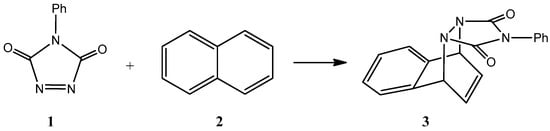
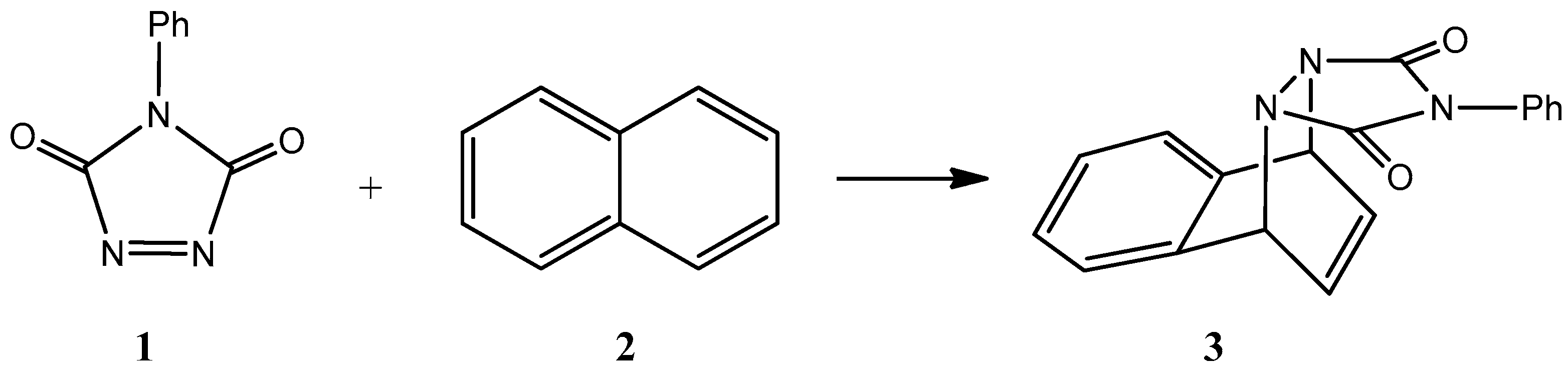
Currently, the literature contains a limited number of studies [5,26,27,28] on the kinetics of Diels-Alder reactions under mechanochemical activation conditions, and these data are insufficient for predicting the results of mechanochemical reactions. Kinetic tracking protocols routinely employed in solution lose their validity in mechanochemical systems unless the transformation proceeds at a negligible rate. In this case, the reagent conversion during the analysis can be neglected. The rate of mechanochemical reactions can be monitored in solution at very low reagent concentrations using UV spectrophotometry. Naphthalene (2) has a high extinction coefficient, therefore UV monitoring of the progress of reactions involving 2 can be carried out at low reactant concentrations. Compound 2 is a very inert diene and undergoes the Diels-Alder reaction only with highly active dienophiles, such as 4-phenyl-1,2,4-triazoline-3,5-dione (1) [29]. In this study, we investigated the kinetics of the azo-Diels-Alder reaction of 1 with 2 (Scheme 1) in solution and solid phase without the addition of solvent by manually grinding the solid reactants with a pestle and mortar, compared the behavior of a number of polycyclic aromatic hydrocarbons in the azo-Diels-Alder reaction with 1 in solution and solid phase, and suggested factors that determine the rate and reagent conversion in the mechanochemical azo-Diels-Alder reactions.
Scheme 1.
The azo-Diels-Alder reaction of 4-phenyl-1,2,4-triazoline-3,5-dione (1) with naphthalene (2).
2. Materials and Methods
2.1. Reagents and Products
4-Phenyl-1,2,4-triazoline-3,5-dione 1 (Sigma-Aldrich, 97%, Saint Louis, MO, USA) and naphthalene 2 (Sigma-Aldrich, 99%, Saint Louis, MO, USA) were purified by sublimation under reduced pressure (10 Pa) at 100–110 °C and 50–60 °C, respectively. 1,2-Dichloroethane was purified according to the procedure [30]. The structure of adduct 3 of the 1 + 2 azo-Diels-Alder reaction was established previously [31]. The synthesis of adduct 3 and its purification to determine the rate constant of the 3 → 1 + 2 reaction were carried out according to the procedure [32].
2.2. Kinetic Measurements in Solution
The equilibrium constants for the reaction of 1 with 2 in the temperature range of 303–323 K were determined from the initial and final absorbance values of 1 in 1,2-dichloroethane at a wavelength of λ = 544 nm using a Shimadzu UV-2600 spectrophotometer (Shimadzu, Kyoto, Japan). The equilibrium constants for the reaction of 1 with 2 were determined at least twice at each temperature. To test the stability of 1, the absorbance values of its solution in 1,2-dichloroethane were monitored at 323 K for 8 h. After 8 h of monitoring, the change in absorbance did not exceed 0.6%. To maintain the temperature with an accuracy of ±0.1 K in the cuvette with the reagent solution, an LOIP LT-105a circulation thermostat (LOIP, Saint Petersburg, Russia) and a cuvette holder thermostatted on 5 sides were used. A calibration curve was constructed to establish the correlation between the thermostat water temperature and the actual temperature of the sample cuvette in its holder. The equilibrium constants (K) for the reaction of 1 with 2 were determined under conditions of excess 2 (C01 = 5.3 · 10−3 M, C02 = 1.49 M) and calculated using Equation (1). A high concentration of 2 (1.49 M) is required to shift the equilibrium toward the formation of adduct 3. Even at such a high concentration of 2, the conversion of 1 reaches only 55% at 303 K.
Here, D01 and D∞1 are the absorbance values of solution 1 at the initial moment of time and at the moment of equilibrium, respectively, and C02 is the concentration of 2.
The rate constants of the reverse 3 → 1 + 2 reaction in the temperature range of 303–323 K were determined from the increase in the absorbance of diene 2 over time at a wavelength of λ = 277 nm using a Shimadzu UV-2600 spectrophotometer. The rate constants of the 3 → 1 + 2 reaction were determined at least twice at each temperature. The extinction coefficient of diene 2 in 1,2-dichloroethane at a wavelength of λ = 277 nm is 6000 M−1 cm−1. 2,3-Dimethylbutene-2 was used to capture dienophile 1 formed during the decomposition of adduct 3. The choice was due to a rapid (k2 = 335 L·mol−1·s−1, 296.7 K, 1,2-dichloroethane [33]) and irreversible (∆Hr-n = −150.2 kJ·mol−1, 1,2-dichloroethane [33]) reaction between 2,3-dimethylbutene-2 and 1. The initial concentration of adduct 3 was 1.5 · 10−4 M, and that of 2,3-dimethylbutene-2 was (6–8) · 10−4 M. The rate constants (k−1) for the decomposition of adduct 3 were calculated using Equation (2):
where D∞2 is the absorbance of diene 2 after complete decomposition of adduct 3, and Dt2 is the absorbance of diene 2 at the current moment in time.
The rate constants (k2) of the forward 1 + 2 → 3 reaction were determined using Equation (3):
k2 = Kk−1
2.3. Kinetic Measurements in the Solid Phase
The 1 + 2 → 3 azo-Diels-Alder reaction was carried out by manually stirring equimolar amounts (0.57 mmol) of reagents 1 and 2 with a pestle in an agate mortar in the temperature range of 295–314 K. Kinetic measurements in the solid phase were performed at least twice at each temperature. A DLab MS-H280-Pro laboratory hot plate (China) was used to thermostat the agate mortar. A calibration curve was constructed, representing the ratio between the surface temperature of the laboratory hot plate and the temperature of the agate mortar. The constancy of the temperature of the agate mortar was monitored for 4 h. During this time, temperature changes did not exceed 0.5 K. The 1H NMR spectrum of adduct 3, obtained under mechanochemical conditions, corresponds to the 1H NMR spectrum of this adduct obtained under solvothermal conditions [31]. The progress of the 1 + 2 → 3 mechanochemical reaction was monitored as follows: 2–3 mg of the mixture of 1 and 2 was sampled at regular intervals and dissolved in 1,2-dichloroethane; the absorbance of the resulting solutions was subsequently measured using a Shimadzu UV-2600 spectrophotometer. Due to the high value of the extinction coefficient of 2 (ε = 6000 M−1·cm−1 at a wavelength of λ = 277 nm), UV monitoring of solution 2 is possible at concentrations of 5 · 10−5–2 · 10−4 mol·L−1. The 1 + 2 reaction does not occur in solution at such reagent concentrations, since the Gibbs free energy of this reaction is greater than zero (∆Gr-n > 0). It was taken into account that solutions of 1 absorb light at a wavelength of 277 nm (ε = 1040 M−1·cm−1). Adduct 3 and 1,2-dichloroethane do not absorb light at a wavelength of 277 nm. This means that the absorbance of 2 constitutes 85% of the absorbance of the reaction mixture of 1 and 2. These data make it possible to correctly determine the content of diene 2 in the 1 + 2 powder mixture during the 1 + 2 mechanochemical reaction. To ensure uniform distribution of the reagents throughout the mixture, this powder compound was periodically (with an interval of 1–2 min) scraped from the walls of the agate mortar toward its center using a stainless-steel spatula. The rate of grinding was 2 rotations per second. Reagents 1 and 2 were not pre-ground with a pestle in a mortar. The effective grinding time within each interval was 1–2 min. The applied force was 40 ± 3 N. The initial particle size of 1 and 2 was 132 μm. The mechanochemical reactions of 1 with 2 were carried out immediately after the sublimation of reagents 1 and 2. The geometric characteristics of an agate mortar: outer diameter d = 118 mm, inside diameter d = 102 mm, height h = 35 mm, capacity v = 120 cm3. The geometric characteristics of the pestle: length l = 100 mm, diameter of the working part (base) d = 28 mm. The manual grinding experiments were performed by the same researcher under the same conditions throughout the study. The standard uncertainty in determining the diene 2 content in the mixture did not exceed 3%.
3. Results and Discussion
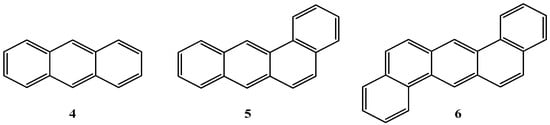
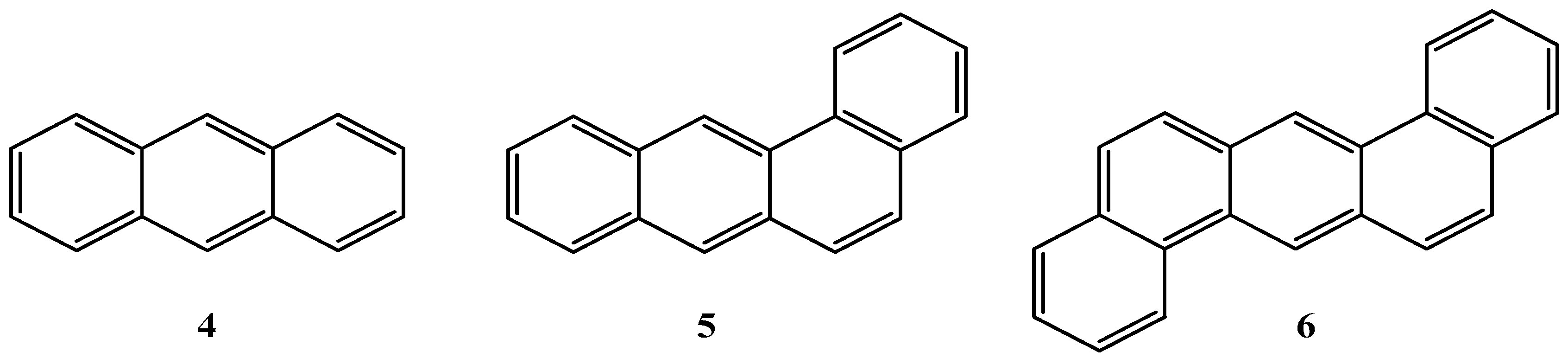
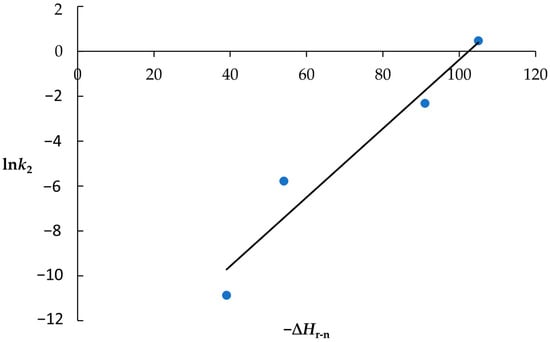
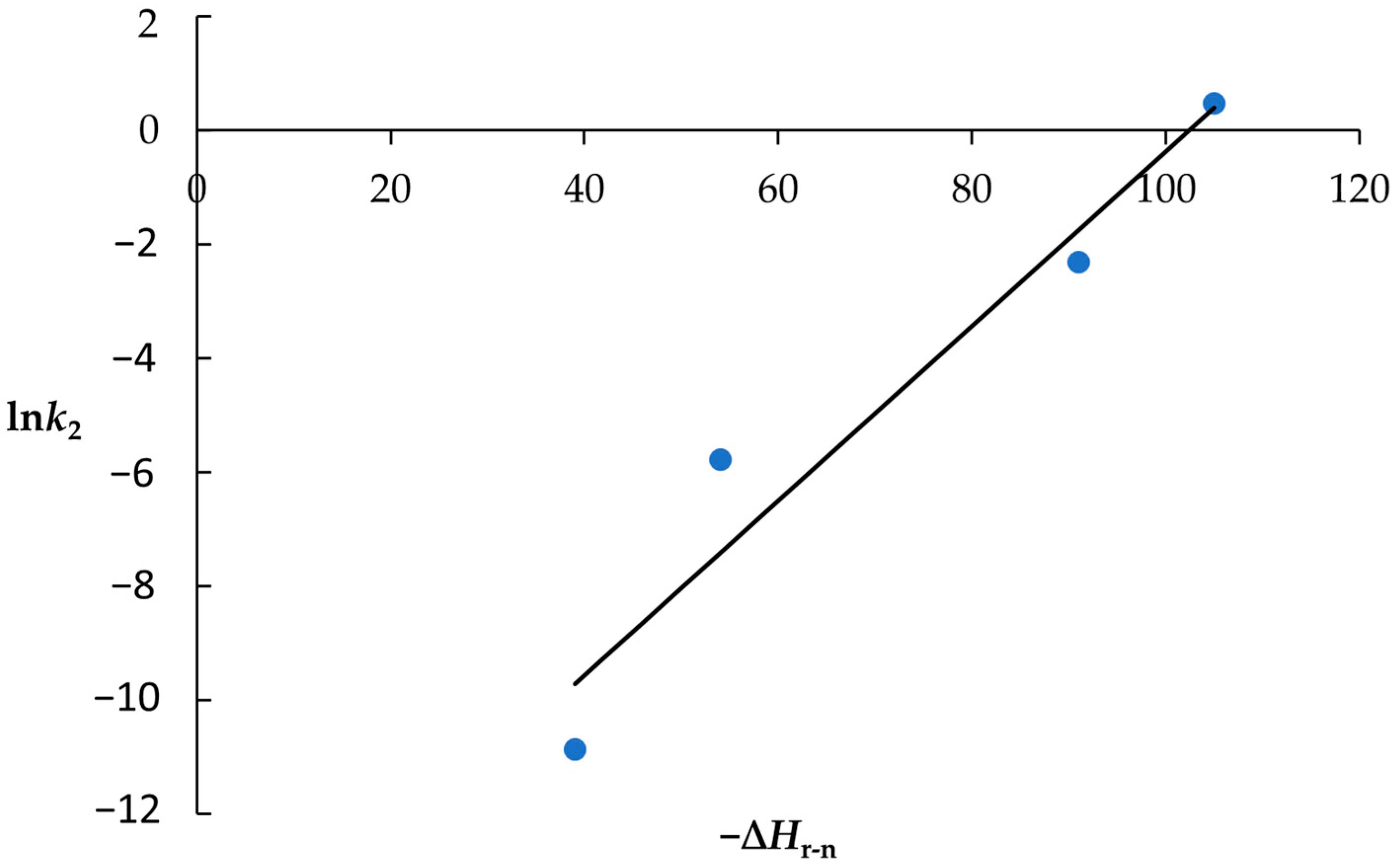
The equilibrium constants of the 1 + 2 ⇄ 3 reaction, the rate constants of the forward 1 + 2 → 3 and reverse 3 → 1 + 2 reactions in 1,2-dichloroethane were determined in the temperature range of 303–323 K, the activation parameters of the 1 + 2 → 3 and 3 → 1 + 2 reactions were calculated, and the enthalpy and entropy of the 1 + 2 ⇄ 3 reaction were determined (Table 1). The activation and reaction entropies of the 1 + 2 reaction and other Diels-Alder reactions [34] are close. The rate constants (Table 2) of the azo-Diels-Alder reactions of 1 with various polycyclic aromatic hydrocarbons (Scheme 2) were compared. The difference in the rate constants of reactions 1 + 2, 1 + 4, 1 + 5, and 1 + 6 is determined by the difference in the energy of aromatic stabilization of dienes 2, 4, 5, and 6, which is confirmed by the correlation between the rate constants and enthalpy of these reactions (Figure 1).
Table 1.
Equilibrium constants K (L·mol−1) of the 1 + 2 ⇄ 3 reaction, rate constants of the forward k2 (L·mol−1·s−1) 1 + 2 → 3 and reverse k−1 (s−1) 3 → 1 + 2 reactions in the temperature T (K) range, enthalpies ∆Hr-n (kJ·mol−1) and entropies ∆Sr-n (J·mol−1·K−1) of the reaction, enthalpies ∆H≠ (kJ·mol−1) and entropies ∆S≠ (J·mol−1·K−1) of activation of the forward and reverse reactions in 1,2-dichloroethane, and their standard uncertainties (u).
Table 2.
Rate constants k2 (L·mol−1·s−1) and enthalpies ∆Hr-n (kJ·mol−1) of the 1 + 2, 1 + 4, 1 + 5, and 1 + 6 azo-Diels-Alder reactions in 1,2-dichloroethane at T = 298 K.
Scheme 2.
Structures of dienes: 4—anthracene, 5—benz(a)anthracene, 6—dibenz(a,h)anthracene.
Figure 1.
Correlation between the rate constants lnk2 and the enthalpy ∆Hr-n (kJ·mol−1) 1 + 2, 1 + 4, 1 + 5, and 1 + 6 azo-Diels-Alder reactions: lnk2 = −(0.15 ± 0.03)∆Hr-n − (16 ± 2), R2 = 0.94.
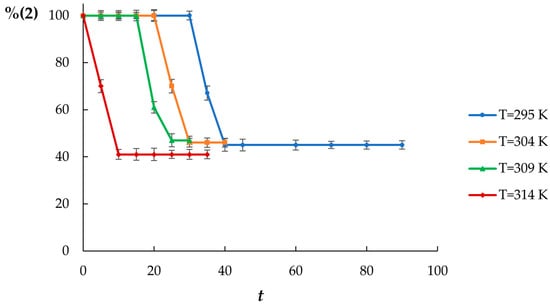
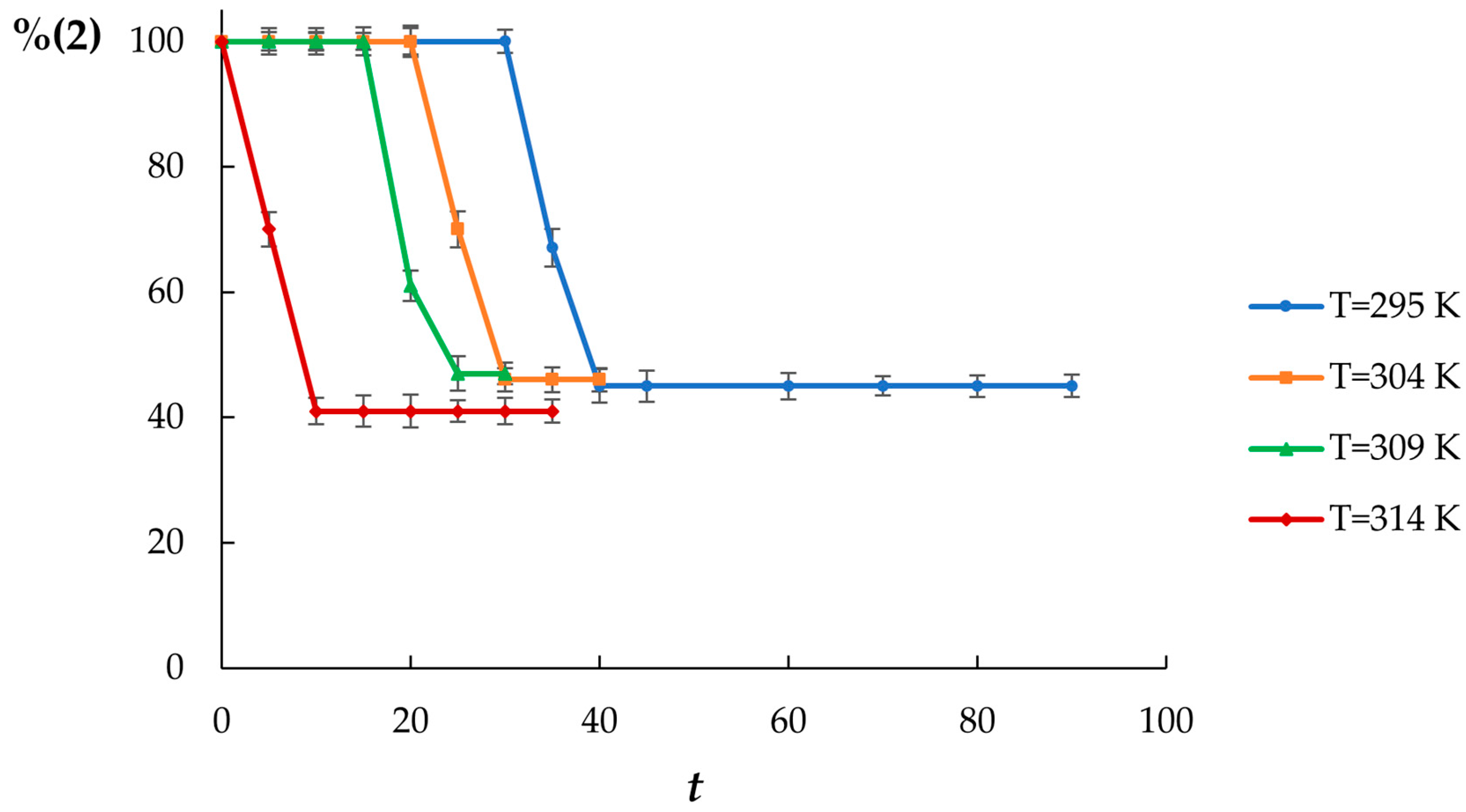
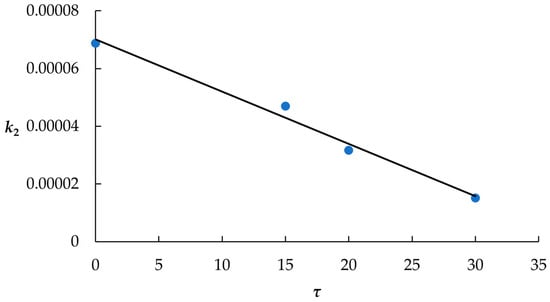
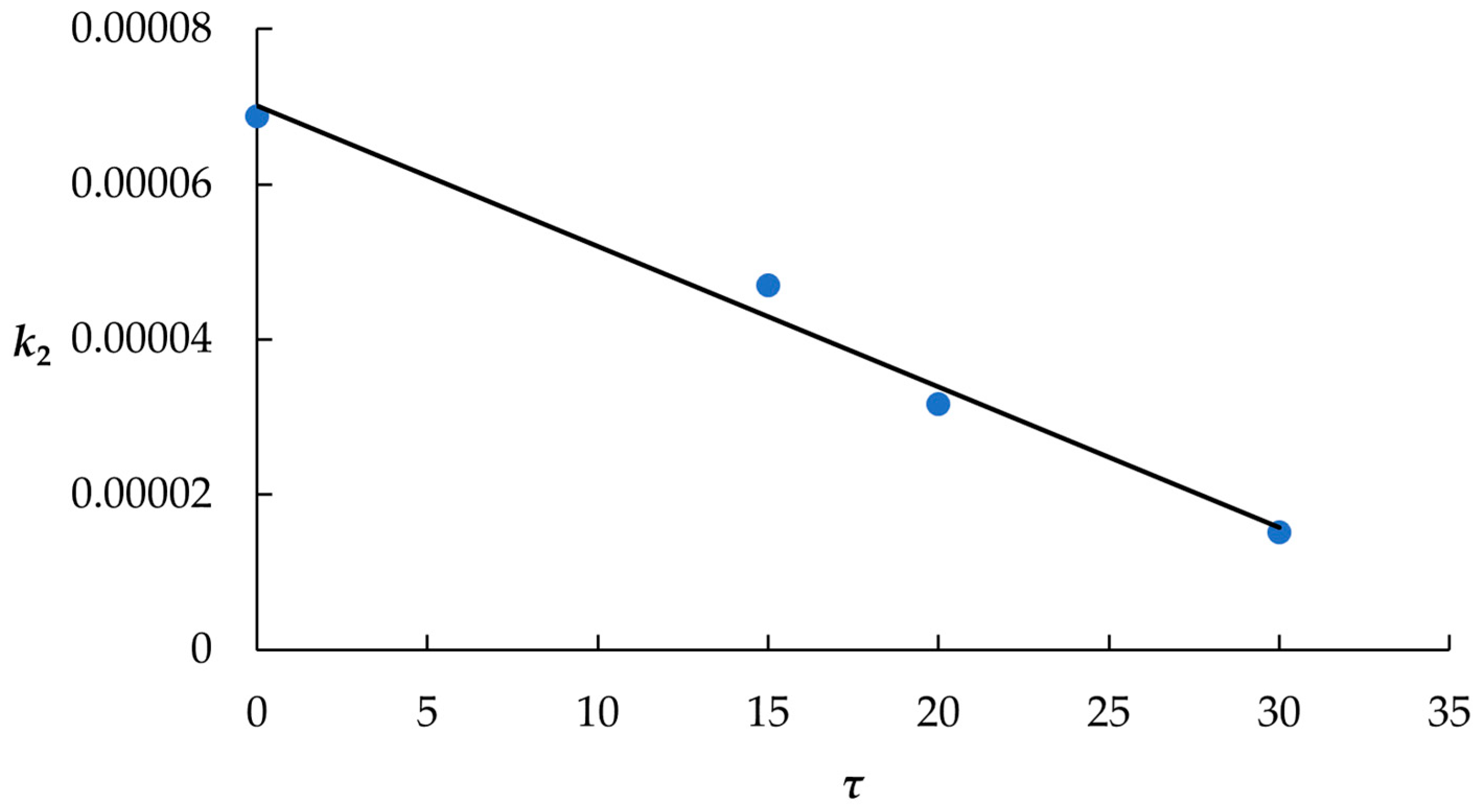
Figure 2 shows the kinetic curves for the 1 + 2 mechanochemical reaction in the temperature range 295–314 K. From Figure 2, it can be seen that these kinetic curves have an S-shape. Similar S-shaped dependences with an initial induction period were also observed for the Diels-Alder reactions of diphenylfulvene with maleimide [28], dibenz(a,h)anthracene with 4-phenyl-1,2,4-triazoline-3,5-dione [35], and 9,10-dimethylanthracene with N-phenylmaleimide [39]. The induction period of mechanochemical reactions is associated with the transition of solids from a state of thermodynamic equilibrium to a metastable state [15,16,17]. The internal energy of a mechanochemical system can be increased by raising the temperature of the system or by increasing the surface area of the solid reactants and accumulating defects in their crystal lattice [9]. Figure 2 shows that the duration of the induction period of the 1 + 2 mechanochemical reaction decreases with increasing temperature. It should be noted that there is a correlation between the duration of the induction period of the 1 + 2 mechanochemical reaction and the rate constant of the 1 + 2 solvothermal reaction (Figure 3). A decrease in the duration of the induction period with increasing temperature was also observed for the Diels-Alder reaction of diphenylfulvene with maleimide [28]. It should be noted that in the temperature range of 295–314 K, the duration of the period corresponding to the chemical reaction is constant (10 min). With increasing temperature, the maximum conversion of 2 during the 1 + 2 mechanochemical reaction remains constant within the standard uncertainties (Figure 2). This behavior of the 1 + 2 reaction under mechanochemical conditions differs sharply from the behavior of the reaction under solvothermal conditions, in which the maximum conversion of 2 decreases with increasing temperature.
Figure 2.
Dependencies of the content (%) of diene 2 in the reaction mixture of equimolar amounts of 1 and 2 on the time of manual grinding of the reagents t (min) with a pestle in a mortar in the temperature range of 295–314 K. The lines are guides for the eyes.
Figure 3.
Correlation between the rate constant k2 (L·mol−1·s−1) and the duration of the induction period τ (min) for the 1 + 2 reaction in the temperature range of 295–314 K: k2 = −(1.8 ± 0.2) · 10−6τ + (7.0 ± 0.3) · 10−5, R2 = 0.99.
The effect of grinding time on the particle size of a mixture of reagents 1 and 2 at room temperature (295 K) can be seen from Table 3. The particle size of a mixture of 1 and 2 was determined using a SALD-7101 nanoparticle size analyzer (Shimadzu, Japan). The principle of its operation is based on static laser light scattering with a light wavelength λ = 375 nm (laser diffraction method). An aqueous solution of emulsifier OP-7 with a concentration of 0.2 mass. % was used as a dispersion medium. The minimum particle size was achieved after 15 min of manual grinding of the reagent mixture with a pestle and mortar, which is 50% of the induction period at T = 295 K (30 min). It should be noted that the induction period of the Diels-Alder reaction between diphenylfulvene and maleimide without preliminary grinding of the reagents is 3.6 h. When the reagents are preliminarily ground for 1 h, the induction period decreases to 1.8 h [28]. The obtained results are consistent with the fact that the activation of solid reagents consists of two stages. The first stage of activation is achieved by reducing the crystallite size and, consequently, increasing the surface energy [40,41]. Once the grinding limit is reached, mechanical energy accumulates in the form of structural defects within the crystal structure itself [42].
Table 3.
Effect of grinding time t (min) on particle diameter d (μm) of a mixture of reagents 1 and 2 at temperature T = 295 K.
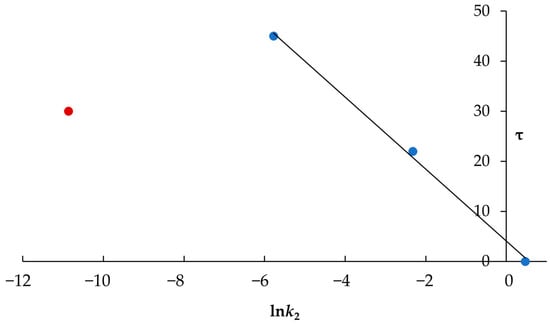
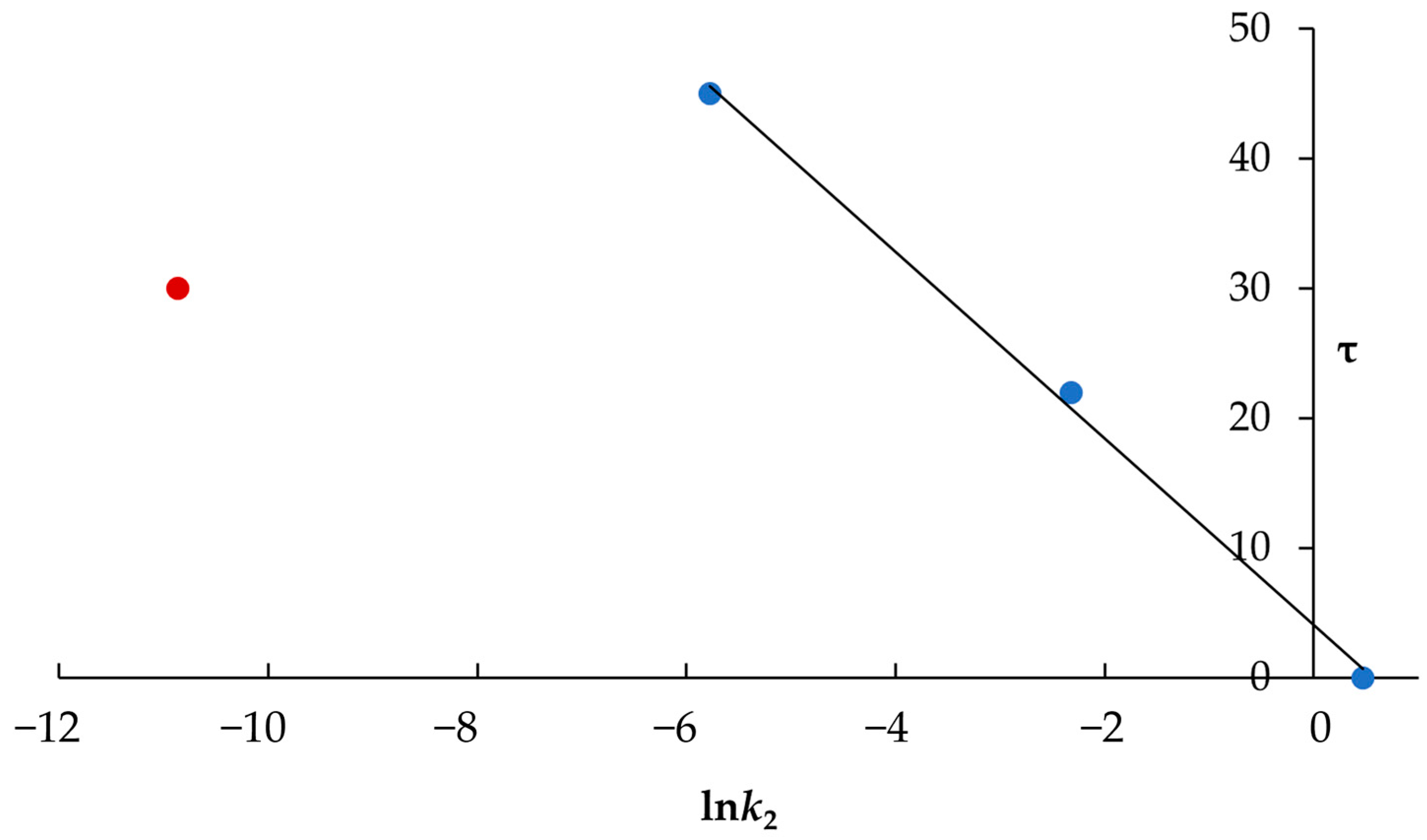
The induction periods of the 1 + 2, 1 + 4, 1 + 5, and 1 + 6 mechanochemical azo-Diels-Alder reactions were collected (Table 4). A correlation (Figure 4) was found between the duration of the induction period in the solid phase and the rate constant (Table 2) in solution for the 1 + 4, 1 + 5, and 1 + 6 azo-reactions. The 1 + 4 reaction, characterized by the highest rate constant in solution in this series of reactions (Table 2), occurs without an induction period in the solid phase. The 1 + 5 and 1 + 6 reactions, which occur in solution 16 and 516 times slower than reaction 1 + 4, respectively, occur with the initial induction periods in the solid phase of 22 and 45 min (Table 4), respectively. The 1 + 2 reaction is characterized by the lowest rate constant in solution in this reaction series (Table 2), but in the solid phase, it proceeds with a shorter induction period compared to reaction 1 + 6 (Table 4). Presumably, this inversion in the reaction rates of 1 + 2 and 1 + 6 in solution versus the solid phase is due to the difference in the crystal lattice energies of dienes 2 and 6. It should be noted that the crystal lattice energy values of molecular crystals 2, 4, 5, and 6 are close to the enthalpies of sublimation of these compounds. Table 4 presents the sublimation enthalpy values for substances 2, 4, 5, and 6.
Table 4.
Reagent conversion ϕ (%) and duration of induction periods τ (min) of the 1 + 2, 1 + 4, 1 + 5, and 1 + 6 azo-Diels-Alder reactions in the solid phase under manual grinding with a pestle in a mortar at room temperature (294–298 K), and the sublimation enthalpies ∆Hsubl diene (kJ·mol−1) of dienes 2, 4, 5, and 6 at 298 K.
Figure 4.
Correlation between the duration of the induction period τ (min) in the solid phase and the rate constant lnk2 (k2, L·mol−1·s−1) in solution for the 1 + 4, 1 + 5, and 1 + 6 azo-Diels-Alder reactions (blue dots): τ = −(7.2 ± 0.3)lnk2 + (4.1 ± 1.2), R2 = 0.9977. The red data point deviating from the correlation corresponds to the 1 + 2 reaction.
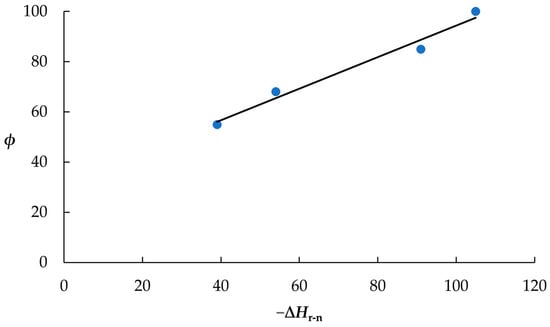
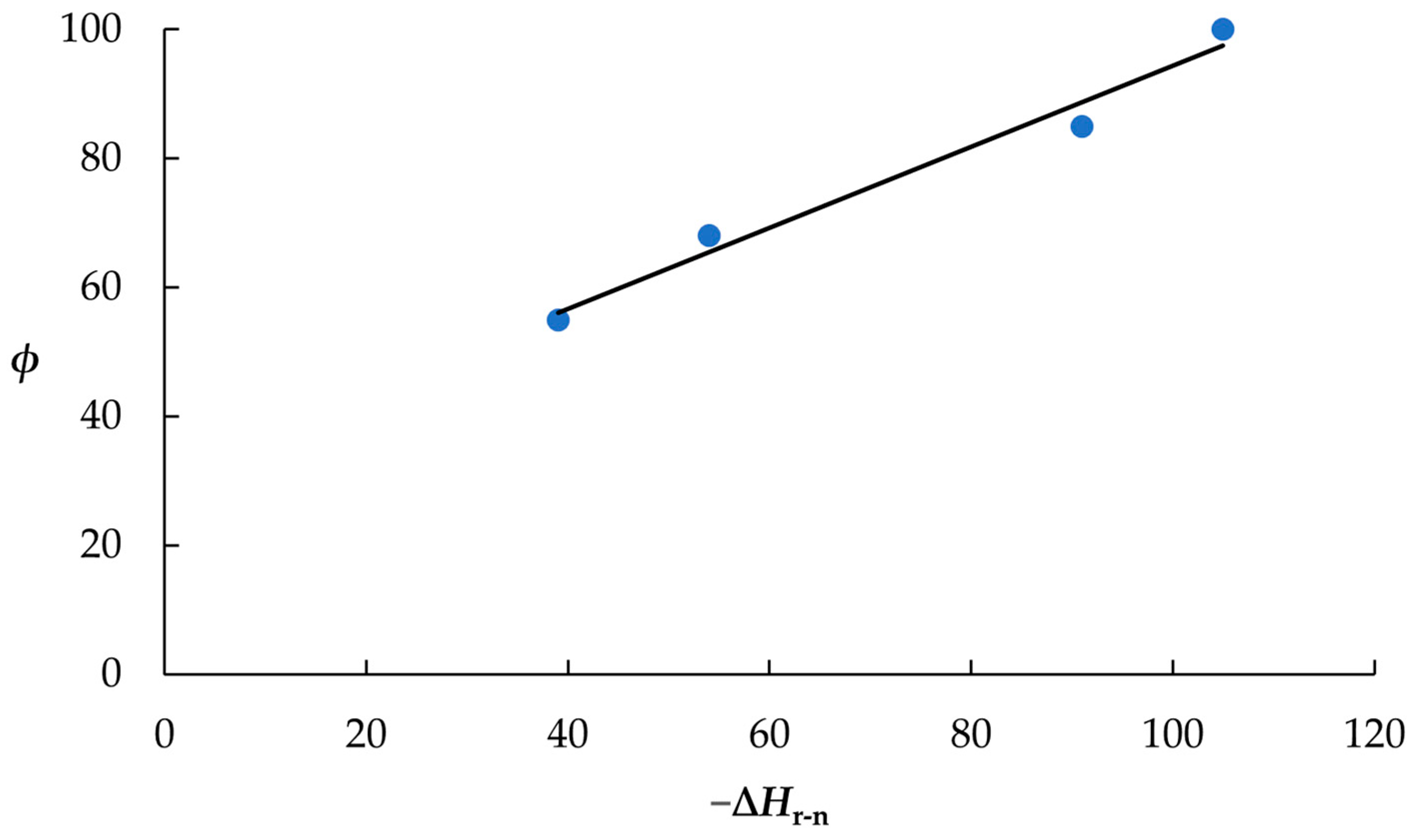
The Diels-Alder reactions proceed with a decrease in entropy; therefore, the reaction Gibbs free energy is negative (∆Gr-n < 0) due to the enthalpy factor. The degree of conversion in the Diels-Alder reaction can be estimated using the reaction enthalpy value: irreversible Diels-Alder reactions are characterized by more negative values of the reaction enthalpy (1 + 4 and 1 + 5 reactions, Table 2); reactions with small thermal effects are reversible (1 + 2 and 1 + 6 reactions, Table 2). A correlation should exist between the enthalpies of reactions in solution and those in the solid state if the differences in solution enthalpies of products and reagents are significantly smaller than the reaction enthalpies themselves. It is then reasonable to expect that there is a correlation between the enthalpies of the Diels-Alder reactions in solution and the maximum reagent conversion under equivalent conditions (equimolar amounts of diene and dienophile, manual grinding of the reactants with a pestle and mortar). From Figure 5, it is evident that there is a correlation between these values, which enables the prediction of the maximum reagent conversion in azo-Diels-Alder reactions under mechanochemical activation conditions.
Figure 5.
Correlation between the reagent conversion ϕ (%) in the 1 + 2, 1 + 4, 1 + 5, and 1 + 6 azo-Diels-Alder reactions in the solid phase under manual grinding with a pestle in a mortar and the enthalpy ∆Hr-n (kJ·mol−1) of these reactions in 1,2-dichloroethane: ϕ = −(0.63 ± 0.07)∆Hr-n + (32 ± 5), R2 = 0.98.
It is important to compare the rate of 1 + 2 reaction under mechanochemical and solvothermal conditions. The 1 + 2 mechanochemical reaction was carried out using equimolar amounts of reactants, and the average reagent conversion in the 295–314 K temperature range was 55%. A 55% conversion of reagents in the 1 + 2 reaction under solvothermal conditions at 295 K can be achieved only with concentrations of 1 and 2 equal to 2.17 M (Table 5). Since the equilibrium constant for the 1 + 2 reaction decreases as temperature increases, higher reagent concentrations are required to achieve 55% conversion of 1 and 2 at higher temperatures (Table 5). The times to reach maximum conversion (55%) of the reactants during the 1 + 2 reaction in the solid phase and solution were compared (Table 5). The time to reach 55% reagent conversion in solution was calculated using Equation (4). Equation (4) is the integrated rate equation for a reversible second-order reaction of the type A + B ⇄ P (equal concentrations of reagents). As follows from Table 5, the time required to reach 55% conversion of reagents under mechanochemical conditions is lower than that under solvothermal conditions. These results are consistent with the data reported in other studies. The Diels-Alder reactions of anthracene with various dienophiles [10] and diphenylfulvene with maleimide [28] also proceeded faster under mechanochemical conditions than under solvothermal conditions.
Table 5.
Comparison of the time to reach the maximum conversion (55%) of reagents during the 1 + 2 reaction in the solid phase tcr (min) and solution tsol (min) at appropriate initial concentrations (C0R = C01 = C02, M) of reagents.
Here, C0R is the initial concentration of the reagents (C0R = C01 = C02), C3 is the equilibrium concentration of adduct 3, and K is the equilibrium constant of the 1 + 2 reaction.
4. Conclusions
The kinetics of the solvothermal and mechanochemical azo-Diels-Alder reactions of 4-phenyl-1,2,4-triazoline-3,5-dione (1) with naphthalene (2) were studied. The mechanochemical process was implemented by manually grinding the reactants with a pestle in a mortar. The equilibrium constants of the 1 + 2 ⇄ 3 reaction and the rate constants of the forward 1 + 2 → 3 and reverse 3 → 1 + 2 reactions in 1,2-dichloroethane were determined in the temperature range of 303–323 K. The enthalpy and entropy of the reaction and the activation parameters of the forward and reverse reactions were calculated. The effect of temperature on the rate of the 1 + 2 reaction in the solid phase was studied. It was found that with an increase in temperature from 295 K to 314 K, a decrease in the induction period from 30 to 0 min was observed. With increasing temperature, the maximum conversion of naphthalene during the 1 + 2 mechanochemical reaction remains constant within the standard uncertainties. This behavior of the 1 + 2 mechanochemical reaction differs sharply from the behavior of the reaction under solvothermal conditions, where the maximum conversion of 2 decreases with increasing temperature. The behavior of azo-Diels-Alder reactions between 1 and various polycyclic aromatic hydrocarbons (PAHs) in solution and in the solid phase is compared. A correlation is found between the maximum reagent conversion in the 1 + 2, 1 + 4, 1 + 5, and 1 + 6 azo-Diels-Alder reactions in the solid phase and the enthalpy of these reactions in solution. For reactions of 1 with anthracene derivatives, a correlation is observed between the duration of the induction period in the solid phase and the rate constant in solution. The point corresponding to the 1 + 2 reaction deviates from this correlation, which is likely due to the lower lattice energy of 1 compared to anthracene derivatives. It is shown that the time required to reach 55% conversion of reagents under mechanochemical conditions is lower than that under solvothermal conditions.
Author Contributions
Supervision, methodology, and writing—review and editing, A.S.N.; data processing, B.S.A.; conceptualization and methodology, I.A.M.; conceptualization, writing—original draft preparation, and writing—review and editing, D.A.K. All authors have read and agreed to the published version of the manuscript.
Funding
This research was funded by the Russian Science Foundation, grant number 25-23-00675.
Data Availability Statement
The original contributions presented in this study are included in the article. Further inquiries can be directed to the corresponding authors.
Conflicts of Interest
The authors declare no conflicts of interest.
References
- Liu, X.; Li, Y.; Zeng, L.; Li, X.; Chen, N.; Bai, S.; He, H.; Wang, Q.; Zhang, C. A review on mechanochemistry: Approaching advanced energy materials with greener force. Adv. Mater. 2022, 34, 2108327. [Google Scholar] [CrossRef] [Scilit] [PubMed]
- Lei, L.; Zhou, Y. Solvent-free or less-solvent solid state reactions. Prog. Chem. 2020, 32, 1158–1171. [Google Scholar] [CrossRef]
- Cintas, P.; Tabasso, S.; Veselov, V.V.; Cravotto, G. Alternative reaction conditions: Enabling technologies in solvent-free protocols. Curr. Opin. Green Sustain. Chem. 2020, 21, 44–49. [Google Scholar] [CrossRef] [Scilit]
- Avila-Ortiz, C.G.; Juaristi, E. Novel methodologies for chemical activation in organic synthesis under solvent-free reaction conditions. Molecules 2020, 25, 3579. [Google Scholar] [CrossRef] [Scilit] [PubMed]
- McKissic, K.S.; Caruso, J.T.; Blair, R.G.; Mack, J. Comparison of shaking versus baking: Further understanding the energetics of a mechanochemical reaction. Green Chem. 2014, 16, 1628–1632. [Google Scholar] [CrossRef] [Scilit]
- Sakai, W.; Gonnet, L.; Haruta, N.; Sato, T.; Baron, M. Theoretical study on the mechanochemical reactivity in Diels-Alder reactions. Phys. Chem. Chem. Phys. 2024, 26, 873–878. [Google Scholar] [CrossRef] [Scilit] [PubMed]
- Li, S.; Liu, J.; Wang, Z.L.; Wei, D. Mechano-driven chemical reactions. Green Energy Environ. 2025, 10, 937–966. [Google Scholar] [CrossRef] [Scilit]
- Li, M.-Y.; Gu, A.; Li, J.; Liu, Y. Advanced green synthesis: Solvent-free and catalyst-free reaction. Green Synth. Catal. 2025, 6, 36–66. [Google Scholar] [CrossRef] [Scilit]
- Linberg, K.; Szymoniak, P.; Schönhals, A.; Emmerling, F.; Michalchuk, A.A.L. The origin of delayed polymorphism in molecular crystals under mechanochemical conditions. Chem. Eur. J. 2023, 29, e202302150. [Google Scholar] [CrossRef] [Scilit] [PubMed]
- Zholdassov, Y.S.; Yuan, L.; Garcia, S.R.; Kwok, R.W.; Boscoboinik, A.; Valles, D.J.; Marianski, M.; Martini, A.; Carpick, R.W.; Braunschweig, A.B. Acceleration of Diels-Alder reactions by mechanical distortion. Science 2023, 380, 1053–1058. [Google Scholar] [CrossRef] [Scilit] [PubMed]
- Tanaka, K.; Toda, F. Solvent-free organic synthesis. Chem. Rev. 2000, 100, 1025–1074. [Google Scholar] [CrossRef] [Scilit] [PubMed]
- Boldyreva, E.V. Mechanochemistry of inorganic and organic systems: What is similar, what is different? Chem. Soc. Rev. 2013, 42, 7719–7738. [Google Scholar] [CrossRef] [Scilit] [PubMed]
- Colacino, E.; Garcia, F. Mechanochemistry and Emerging Technologies for Sustainable Chemical Manufacturing; CRC Press: Boca Raton, FL, USA, 2023; 336p. [Google Scholar] [CrossRef] [Scilit]
- Michalchuk, A.A.L.; Emmerling, F. Time-resolved in situ monitoring of mechanochemical reactions. Angew. Chem. Int. Ed. 2022, 61, e202117270. [Google Scholar] [CrossRef] [Scilit] [PubMed]
- Boldyrev, V.V. Mechanochemistry and mechanical activation. Mater. Sci. Forum 1996, 225–227, 511–520. [Google Scholar] [CrossRef] [Scilit]
- Shakhtshneider, T.P.; Boldyrev, V.V. Phase transformations in sulfathiazole during mechanical activation. Drug Dev. Ind. Pharm. 1993, 19, 2055–2067. [Google Scholar] [CrossRef] [Scilit]
- Shakhtshneider, T.P. Phase transformations and stabilization of metastable states of molecular crystals under mechanical activation. Solid State Ion. 1997, 101–103, 851–856. [Google Scholar] [CrossRef] [Scilit]
- Tkáčová, K.; Heegn, H.; Števulová, N. Energy transfer and conversion during comminution and mechanical activation. Int. J. Miner. Process. 1993, 40, 17–31. [Google Scholar] [CrossRef] [Scilit]
- Amrute, A.P.; Łodziana, Z.; Schreyer, H.; Weidenthaler, C.; Schüth, F. High-surface-area corundum by mechanochemically induced phase transformation of boehmite. Science 2019, 366, 485–489. [Google Scholar] [CrossRef] [Scilit] [PubMed]
- Belenguer, A.M.; Friščić, T.; Day, G.M.; Sanders, J.K.M. Solid-state dynamic combinatorial chemistry: Reversibility and thermodynamic product selection in covalent mechanosynthesis. Chem. Sci. 2011, 2, 696–700. [Google Scholar] [CrossRef] [Scilit]
- Bachrach, S.M. Computational Organic Chemistry; Wiley: Hoboken, NJ, USA, 2014; pp. 197–295. [Google Scholar] [CrossRef] [Scilit]
- Yeingst, T.J.; Helton, A.M.; Hayes, D.J. Applications of Diels-Alder chemistry in biomaterials and drug delivery. Macromol. Biosci. 2024, 24, 2400274. [Google Scholar] [CrossRef] [Scilit] [PubMed]
- Kinghorn, A.D.; Falk, H.; Gibbons, S.; Asakawa, Y.; Liu, J.-K.; Dirsch, V.M. The Diels-Alder Reaction as a Key Step in Natural Product Synthesis; Springer: Cham, Switzerland, 2026; 270p. [Google Scholar] [CrossRef] [Scilit]
- Penrhyn-Lowe, O.B.; Wright, S.; Lomas, S.; Slark, A.T.; Dwyer, A.B.; Rannard, S.P. Investigating the synthesis, properties and Diels-Alder reactivity of diene-functional branched polyesters using copolymerisation of furfuryl methacrylate under transfer-dominated branching radical telomerisation (TBRT) conditions. Polym. Chem. 2026, 17, 2332–2339. [Google Scholar] [CrossRef] [Scilit]
- Maujean, T.; Marchand, P.; Wagner, P.; Riché, S.; Boisson, F.; Girard, N.; Bonnet, D.; Gulea, M. Hetero-Diels-Alder click reaction of dithioesters for a catalyst-free indirect 18F-radiolabelling of peptides. Chem. Commun. 2022, 58, 11151–11154. [Google Scholar] [CrossRef] [Scilit] [PubMed]
- Watanabe, H.; Senna, M. Acceleration of solid state Diels-Alder reactions by incorporating the reactants into crystalline charge transfer complexes. Tetrahedron Lett. 2005, 46, 6815–6818. [Google Scholar] [CrossRef] [Scilit]
- Zhang, Z.; Peng, Z.-W.; Hao, M.-F.; Gao, J.-G. Mechanochemical Diels-Alder cycloaddition reactions for straightforward synthesis of endo-norbornene derivatives. Synlett 2010, 2010, 2895–2898. [Google Scholar] [CrossRef] [Scilit]
- Gonnet, L.; Chamayou, A.; André-Barrès, C.; Micheau, J.-C.; Guidetti, B.; Sato, T.; Baron, M.; Baltas, M.; Calvet, R. Elucidation of the Diels-Alder reaction kinetics between diphenylfulvene and maleimide by mechanochemistry and in solution. ACS Sustain. Chem. Eng. 2021, 9, 4453–4462. [Google Scholar] [CrossRef] [Scilit]
- De Bruycker, K.; Billiet, S.; Houck, H.A.; Chattopadhyay, S.; Winne, J.M.; Du Prez, F.E. Triazolinediones as highly enabling synthetic tools. Chem. Rev. 2016, 116, 3919–3974. [Google Scholar] [CrossRef] [Scilit] [PubMed]
- Reichardt, C.; Welton, T. Solvents and Solvent Effects in Organic Chemistry; Wiley-VCH: Weinheim, Germany, 2011; 692p. [Google Scholar] [CrossRef] [Scilit]
- Burger, U.; Mentha, Y.; Thorel, P.J. Die synthese und der thermische zerfall des 1,2-diazabenzo[e]-semibullvalens und dessen beziehung zur thermolyse des benzobenzvalens. Helv. Chim. Acta 1986, 69, 670–675. [Google Scholar] [CrossRef] [Scilit]
- Breton, G.W.; Newton, K.A. Further studies of the thermal and photochemical Diels-Alder reactions of N-methyl-1,2,4-triazoline-3,5-dione (MeTAD) with naphthalene and some substituted naphthalenes. J. Org. Chem. 2000, 65, 2863–2869. [Google Scholar] [CrossRef] [Scilit] [PubMed]
- Kiselev, V.D.; Kornilov, D.A.; Potapova, L.N.; Kashaeva, H.A.; Konovalov, A.I. Enthalpy and entropy of activation and the heat effect of the ene reaction between 4-phenyl-1,2,4-triazoline-3,5-dione and 2,3-dimethyl-2-butene in solution. Russ. J. Phys. Chem. A 2014, 88, 890–892. [Google Scholar] [CrossRef] [Scilit]
- Kiselev, V.D.; Konovalov, A.I. Internal and external factors influencing the Diels-Alder reaction. J. Phys. Org. Chem. 2009, 22, 466–483. [Google Scholar] [CrossRef] [Scilit]
- Kornilov, D.A.; Novikov, A.S.; Mustafin, A.G. Kinetics of the Diels-Alder reaction of dibenz[a,h]anthracene with 4-phenyl-1,2,4-triazoline-3,5-dione in solution and in the solid phase. Russ. J. Gen. Chem. 2026, 96, 63. [Google Scholar] [CrossRef] [Scilit]
- Kornilov, D.A.; Yagofarov, M.I.; Sadykov, A.S.; Sattarova, A.F.; Mustafin, A.G. The rate of the Diels-Alder cycloaddition reactions of benz(a)anthracene with tetracyanoethylene and 4-phenyl-1,2,4-triazoline-3,5-dione in solution and solid state. Int. J. Chem. Kinet. 2026, 58, 470–476. [Google Scholar] [CrossRef] [Scilit]
- Kiselev, V.D.; Shakirova, I.I.; Kornilov, D.A.; Kashaeva, H.A.; Potapova, L.N.; Konovalov, A.I. Homo-Diels-Alder reaction of a very inactive diene, bicyclo[2,2,1]hepta-2,5-diene, with the most active dienophile, 4-phenyl-1,2,4-triazolin-3,5-dione. Solvent, temperature, and high pressure influence on the reaction rate. J. Phys. Org. Chem. 2013, 26, 47–53. [Google Scholar] [CrossRef] [Scilit]
- Kiselev, V.D.; Kashaeva, E.A.; Potapova, L.N.; Kornilov, D.A.; Konovalov, A.I. Enthalpies of the Diels-Alder reactions of a series of dienes with tetracyanoethylene and 4-phenyl-1,2,4-triazoline-3,5-dione. Russ. Chem. Bull. 2015, 64, 2514–2516. [Google Scholar] [CrossRef] [Scilit]
- Kiselev, V.D.; Kolesnikova, A.O.; Dinikaev, I.F.; Shulyatiev, A.A.; Klimovitskii, A.E.; Kornilov, D.A. Diels-Alder reaction rate in the solid state and the evidence of the location of molecular complexes between the reagents on the reaction pathway. Int. J. Chem. Kinet. 2021, 53, 207–212. [Google Scholar] [CrossRef] [Scilit]
- Belenguer, A.M.; Lampronti, G.I.; Cruz-Cabeza, A.J.; Hunter, C.A.; Sanders, J.K.M. Solvation and surface effects on polymorph stabilities at the nanoscale. Chem. Sci. 2016, 7, 6617–6627. [Google Scholar] [CrossRef] [Scilit] [PubMed]
- Lampronti, G.I.; Michalchuk, A.A.L.; Mazzeo, P.P.; Belenguer, A.M.; Sanders, J.K.M.; Bacchi, A.; Emmerling, F. Changing the game of time resolved X-ray diffraction on the mechanochemistry playground by downsizing. Nat. Commun. 2021, 12, 6134. [Google Scholar] [CrossRef] [Scilit] [PubMed]
- Boldyrev, V.V.; Pavlov, S.V.; Goldberg, E.L. Interrelation between fine grinding and mechanical activation. Int. J. Miner. Process. 1996, 44–45, 181–185. [Google Scholar] [CrossRef] [Scilit]
- Roux, M.V.; Temprado, M.; Chickos, J.S.; Nagano, Y. Critically evaluated thermochemical properties of polycyclic aromatic hydrocarbons. J. Phys. Chem. Ref. Data. 2008, 37, 1855–1996. [Google Scholar] [CrossRef] [Scilit]
- Kornilov, D.A.; Sadykov, T.T.; Sattarova, A.F.; Faizrakhmanov, I.S.; Talipov, R.F. Mechanochemical Diels-Alder reactions of benz(a)anthracene with tetracyanoethylene and 4-phenyl-1,2,4-triazoline-3,5-dione under impact force and shear stress. Proc. SPIE. 2026, 14135, 1413503. [Google Scholar] [CrossRef] [Scilit]

Disclaimer/Publisher’s Note: The statements, opinions and data contained in all publications are solely those of the individual author(s) and contributor(s) and not of MDPI and/or the editor(s). MDPI and/or the editor(s) disclaim responsibility for any injury to people or property resulting from any ideas, methods, instructions or products referred to in the content. |
© 2026 by the authors. Licensee MDPI, Basel, Switzerland. This article is an open access article distributed under the terms and conditions of the Creative Commons Attribution (CC BY) license.