


Abstract
To address drilling-fluid filtrate invasion and the resulting wellbore instability associated with the well-developed micropore throats of hard–brittle shale in the Yangxia Formation, X-ray diffraction, contact-angle measurements, and low-field nuclear magnetic resonance were employed to investigate the effects of different drilling-fluid systems on shale wettability and fluid invasion into micropore throats. The compatibility and anti-invasion mechanisms of the hydrophobic-film-forming agent in different base fluids were also analyzed. The results show that the Yangxia Formation shale contains 50.1% clay minerals and exhibits strong hydrophilicity. In the absence of an externally applied pressure differential, fluid invasion is mainly driven by spontaneous capillary imbibition through micropore throats, with the newly generated NMR signals concentrated primarily in the short T2 region. The hydrophobic-film-forming agent exhibited pronounced compatibility differences among the base fluids. The organic-salt polysulfonate base fluid reduced the 24 h unit-volume NMR short-T2 signal to 375.0 a.u./cm3, corresponding to a 48.3% reduction relative to freshwater. After incorporation of the hydrophobic-film-forming treatment, the signal further decreased to 337.5 a.u./cm3, representing an additional reduction of 10.0% relative to the corresponding base fluid and an overall reduction of 53.5% relative to freshwater. The contact angle increased from 52° to 68° after treatment. These results indicate that the strong overall anti-invasion performance arises primarily from the organic-salt polysulfonate base system, while the hydrophobic-film-forming treatment provides an additional improvement through interfacial wettability regulation and restriction of pore-throat fluid entry. These results provide a basis for improving wellbore stability and optimizing drilling-fluid systems in the Yangxia Formation.
1. Introduction
Hard and brittle shale is generally characterized by a high content of brittle minerals, abundant microfractures, and pronounced water sensitivity associated with clay minerals [1,2]. During drilling, the invasion of water-based drilling fluid into shale micropore throats and microfracture networks may induce clay hydration, weaken interparticle cementation, and facilitate fracture propagation. These processes can further lead to wellbore instability problems, including wall spalling, block sloughing, and collapse. Therefore, effectively limiting drilling fluid filtrate invasion into micropore throats is critical for maintaining wellbore stability in hard and brittle shale formations [3,4].
Fluid invasion into shale differs substantially from conventional filtration into sandstone because shale contains abundant clay minerals and generally exhibits a strong affinity for water. Different clay minerals exhibit different water affinities and hydration behaviors; for example, expandable clay minerals such as montmorillonite generally show stronger hydration behavior, whereas kaolinite is comparatively less hydration-sensitive. When shale is exposed to water-based drilling fluids (WBMs), water can be adsorbed by clay-mineral surfaces and enter micropores and microfractures through spontaneous imbibition. These processes may promote clay hydration, weaken interparticle bonding, and further aggravate wellbore instability [1,2,3,5,6,7].
Fluid uptake by shale is therefore controlled by the combined effects of mineral-surface properties, pore-throat structure, chemical-potential differences, and capillary forces. Under conditions without an externally imposed pressure differential, capillary force represents an important driving mechanism for spontaneous aqueous-phase entry into micropores and microfractures [5,6,7,8,9,10]. In the present study, the capillary contribution is described using the classical capillary-pressure model for an idealized cylindrical pore throat:
where Pc is the capillary pressure, γ is the interfacial tension of the liquid phase, θ is the contact angle of the liquid on the rock surface, and r is the equivalent pore-throat radius. This equation provides a simplified description of the capillary contribution to spontaneous liquid invasion. For a water-wet pore surface with θ < 90°, the capillary pressure remains positive, and a smaller pore-throat radius or stronger water-wetting tendency generally favors spontaneous aqueous-phase imbibition. In shale, however, the actual invasion process is more complex because capillary effects are coupled with clay hydration, surface adsorption, chemical-potential gradients, and the heterogeneous pore–fracture network [8,9,10,11].
Therefore, controlling aqueous-phase invasion into shale requires not only restriction of connected pore-throat pathways but also reduction of direct water–clay interaction and regulation of rock–fluid interfacial wettability. Non-aqueous drilling fluids, such as oil-based drilling fluids (OBMs), can reduce direct water–shale interaction and are commonly used in highly water-sensitive formations. However, OBMs are mentioned here only as a contrasting engineering strategy and are not the subject of the present study. This work focuses specifically on the comparative evaluation of different water-based drilling-fluid systems and their film-forming modifications under capillary-driven invasion conditions.
Hydrophobic-film-forming technology combines hydrophobic agents, film-forming agents, and wellbore-strengthening materials to modify the rock surface and pore-throat entrances through adsorption, spreading, and film formation, thereby establishing an interfacial barrier with relatively low surface energy [12,13,14]. On the one hand, the resulting film increases the contact angle of the aqueous phase on the rock surface and decreases cosθ, thereby weakening the capillary driving force. On the other hand, the film reduces direct contact between the aqueous phase and hydrophilic mineral surfaces and acts synergistically with polymers, resins, and plugging particles in the drilling fluid. This combined effect may partially cover pore-throat entrances, reduce effective pore-network connectivity, and increase resistance to fluid penetration into the rock matrix [12,15,16,17,18,19,20,21].
Low-field nuclear magnetic resonance (LF-NMR) provides a nondestructive approach for monitoring fluid invasion into shale pores by detecting variations in the relaxation behavior of hydrogen nuclei in pore fluids. In particular, changes in the short-T2 region are mainly associated with variations in fluid content within relatively small pores and pore throats and can therefore be used to characterize microscale fluid invasion under capillary-driven imbibition conditions [22,23,24,25]. In this study, three base drilling fluids—organic-salt polymer drilling fluid, undersaturated brine drilling fluid, and organic-salt polysulfonate drilling fluid—with their corresponding hydrophobic-film-forming formulations, were investigated. The effects of the different base fluids and hydrophobic-film-forming treatments on rock wettability, capillary imbibition, and microscale fluid invasion were systematically evaluated. The objective was to clarify the synergistic mechanism of interfacial wettability regulation and film-forming plugging and to provide a basis for optimizing drilling-fluid systems for hard and brittle mudstone in the Yangxia Formation.
Nuclear magnetic resonance (NMR) measurements are based on the magnetic resonance response of hydrogen nuclei in fluids contained within porous media. Hydrogen nuclei possess spin angular momentum and magnetic moments. Under a static magnetic field, they become preferentially aligned and generate macroscopic magnetization. When a radio-frequency (RF) pulse at the resonance frequency is applied, the hydrogen nuclei absorb energy and undergo transitions between energy states, producing an NMR response [26]. After the RF excitation is removed, the nuclei gradually return to their equilibrium state through relaxation processes governed by interactions with pore surfaces and the surrounding fluid environment. The resulting NMR signal decays with time, and its decay behavior can be characterized by relaxation times [22]. Because hydrogen-nucleus relaxation is affected by pore size, pore-surface properties, and fluid occurrence state, the relaxation response provides information on pore structure and fluid distribution within porous media [27].
Low-field nuclear magnetic resonance (LF-NMR) detects the relaxation response of hydrogen-containing fluids in shale and obtains the transverse relaxation-time (T2) distribution through signal acquisition and inversion. In shale, the relaxation behavior of pore fluids is affected not only by pore geometry but also by fluid mobility, mineral-surface interactions, and the degree of confinement [23,24,25].
Water in shale may occur in several forms according to its interaction with the mineral matrix, including structurally bound or crystalline water, interlayer water associated with clay-mineral layers, and external or adsorbed water associated with mineral surfaces and pore spaces [12,16]. These water populations differ in molecular mobility and in the strength of their interaction with the surrounding mineral surfaces.
Structurally bound or crystalline water is strongly constrained within the mineral structure and exhibits very limited molecular mobility. Interlayer water is confined within or between clay-mineral layers and is strongly influenced by electrostatic and surface interactions. In contrast, external or adsorbed water is associated with exposed mineral surfaces and pore spaces and generally exhibits relatively greater molecular mobility, although its relaxation behavior is still strongly affected by mineral-surface interactions and pore confinement [23,24,25].
In general, stronger surface interaction and confinement result in faster transverse relaxation and shorter T2 values, whereas water with relatively greater molecular mobility tends to exhibit longer T2 values [23,24,25]. Consequently, short-T2 signals are commonly associated with strongly confined or surface-influenced fluids, while relatively long-T2 signals may be associated with more mobile fluids in less confined pore or fracture environments. However, a specific T2 interval should not be interpreted as uniquely corresponding to a single water-occurrence state.
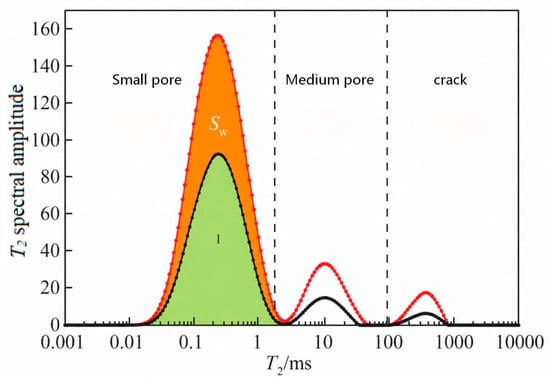
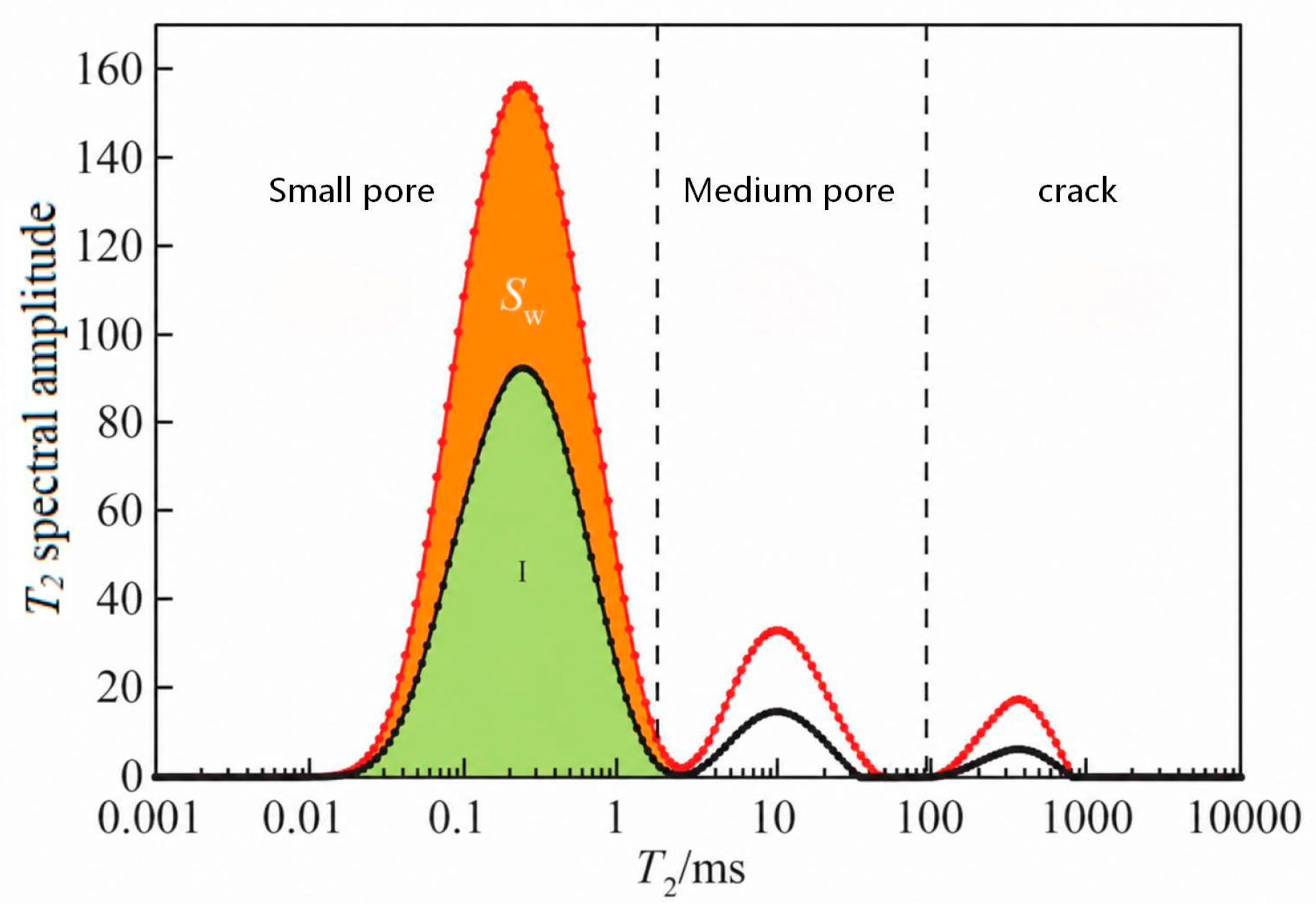
In the present study, the LF-NMR T2 spectrum was therefore used primarily to monitor the relative change in hydrogen-containing fluid within the mudstone after immersion, rather than to uniquely distinguish crystalline water, interlayer water, and adsorbed water. By analyzing the distribution, amplitude, and integrated area of the T2 spectrum, variations in the amount and relaxation behavior of the invading fluid under different confinement and surface-interaction conditions were evaluated [22,23,24,25]. A schematic representation of the LF-NMR T2 response is shown in Figure 1 [28].
Figure 1.
Schematic illustration of LF-NMR T2 responses of water under different mineral-surface interaction and confinement conditions in shale.
2. Experimental Materials and Methods
2.1. Rock Samples and Test Fluids
The rock samples used in this study were obtained from hard and brittle mudstone cuttings collected at a depth of approximately 3100 m from the Yangxia Formation in the same exploratory well. All samples were collected from the same depth interval and geological horizon. Therefore, the samples were regarded as homogeneous in terms of mineralogical composition and structural characteristics for the purposes of the present comparative experiments, thereby minimizing the influence of differences in sampling depth and geological source on the experimental results.
All drilling-fluid additives were supplied by Chuanqing Drilling Fluid Technical Service Company. Prior to the immersion experiments, the six drilling-fluid systems were thermally aged at 120 °C for 12 h. This thermal-aging step was applied only to condition the drilling-fluid formulations and did not represent the temperature of the subsequent rock-immersion experiments. The compositions and intended functions of the different drilling-fluid systems are summarized in Table 1.
Table 1.
Test fluid systems and treatment conditions.
2.2. Instruments and Test Methods
2.2.1. Mineralogical Composition Analysis by X-Ray Diffraction (XRD)
An appropriate amount of the rock sample was first crushed and passed through a 100-mesh sieve as a preliminary particle-size control step to remove coarse fragments and improve the uniformity and efficiency of subsequent fine grinding. The sieved material was then vacuum-dried at 50 °C to remove free water and finely ground in an agate mortar to obtain a homogeneous powder suitable for X-ray diffraction analysis. The prepared powder was uniformly packed and compacted in the sample holder to obtain a flat and homogeneous surface and to minimize the influence of preferred particle orientation. XRD measurements were performed using Cu Kα radiation (\( \lambda = 1.5406\) Å) at a tube voltage of 40 kV and a tube current of 30 mA. The diffraction patterns were collected over a 2θ range of 5°–45° at a scanning rate of 1.2°/min.
2.2.2. Wettability Measurement
Rock samples were cut into slices with relatively flat and smooth surfaces for wettability measurements. To minimize the influence of surface-condition differences on the comparison, the rock slices were prepared using the same procedure before testing. Filtrates from the six drilling-fluid systems were collected after filtration and used as the test liquids.
The static contact angles of the different drilling-fluid filtrates on the mudstone surfaces were measured using a JC2000D contact-angle goniometer (Shanghai Zhongchen Digital Technology Equipment Co., Ltd., Shanghai, China) by the sessile-drop method. During each measurement, a droplet of the corresponding filtrate was gently deposited on the rock surface. Rather than using a predetermined fixed equilibrium time, the contact-angle image was recorded only after the droplet profile had become stable and no further visible change in droplet shape was observed. This stabilization criterion and the same sample-preparation and measurement procedure were applied consistently to all tested fluid systems to reduce the influence of transient droplet-shape variation and improve comparability among the measurements.
The original experimental records did not retain a calibrated droplet volume or a sufficient number of independent replicate measurements for each fluid system. Therefore, the exact droplet volume and statistically meaningful standard deviations cannot be reliably reconstructed retrospectively. Accordingly, the contact-angle values reported in this study are used as descriptive indicators of relative wettability alteration rather than as statistically validated quantitative differences among the fluid systems.
The contact-angle measurements were primarily used to provide a descriptive comparison of the relative water-wetting tendency of the mudstone surface under different drilling-fluid conditions. Because the original experimental campaign did not include sufficient independent replicate measurements for each fluid system, statistically meaningful standard deviations could not be determined. Therefore, the contact-angle values reported in this study are interpreted as descriptive indicators of relative wettability alteration rather than as statistically validated quantitative differences among the fluid systems.
2.2.3. Evaluation of Microscale Plugging Performance by Low-Field NMR
Low-field NMR measurements were performed using a MacroMR12-150-1 NMR analyzer. The measurements were conducted using a Carr–Purcell–Meiboom–Gill (CPMG) pulse sequence. The operating magnetic-field strength was approximately 0.3 T, with a proton resonance frequency of approximately 12 MHz. The echo spacing (TE) was set to 0.2 ms, the waiting time (TW) to 8000 ms, the number of echoes (NECH) to 8000, and the number of scans (NS) to 32. These acquisition parameters were kept identical for all samples throughout the experiments to ensure comparability of the LF-NMR T2 spectra.
Because the rock samples were irregularly shaped wellbore cavings, their bulk volumes could not be accurately determined from geometric dimensions. Therefore, the bulk volume of each sample was determined using the liquid-displacement method based on Archimedes’ principle, with kerosene used as the displacement liquid. Kerosene was selected to minimize hydration and swelling of the clay-rich mudstone during volume determination. The displaced liquid volume was recorded as the bulk volume of the rock sample and was subsequently used to normalize the LF-NMR signal intensity according to Equation (1).
After volume determination, the rock samples were thoroughly dried, and the baseline LF-NMR signal of each dry sample was recorded. The samples were then separately immersed in the six drilling-fluid systems and freshwater, resulting in seven test groups. The immersion experiments were conducted under laboratory room-temperature and atmospheric-pressure conditions without an externally applied pressure differential. This condition was deliberately selected because the present study focuses on the spontaneous capillary-driven invasion of the drilling-fluid liquid phase into the mudstone pore-throat system, rather than on pressure-differential-driven filtration or permeability behavior. By excluding an externally imposed pressure gradient, the capillary-driven invasion characteristics and associated rock–fluid interfacial effects could be evaluated under controlled static conditions. After immersion for 4, 8, 12, 16, and 24 h, each rock sample was removed from the corresponding test fluid. Before LF-NMR measurement, visible residual fluid adhering to the external surface of the rock sample was gently removed using moisture-absorbent paper. The same surface-fluid removal procedure and sample-handling process were applied to all samples to minimize additional LF-NMR signals arising from externally retained free liquid. The samples were then immediately subjected to LF-NMR T2-spectrum measurements and subsequently returned to the corresponding test fluids for continued immersion.
In addition to removing externally retained fluid, the baseline LF-NMR signal of each dry rock sample was measured before immersion. During data processing, this dry-rock baseline signal, M0, was subtracted from the measured signal after immersion, M(t), to eliminate the contribution of the rock sample itself to the measured LF-NMR response. Therefore, the corrected signal primarily represents the change in hydrogen-containing fluid associated with fluid invasion into the rock sample. It should be noted that baseline subtraction cannot compensate for residual free liquid remaining on the external rock surface; therefore, consistent removal of visible surface fluid before each measurement was necessary to reduce this source of measurement error.
The surface-fluid removal procedure, sample handling time, and LF-NMR acquisition parameters were kept consistent throughout the experiments to minimize experimental variability. Consequently, changes in the measured LF-NMR signal were primarily used to characterize the relative variation in hydrogen-containing fluid entering the internal pore system of the rock samples.
To minimize the influence of both the intrinsic rock-sample signal and differences in sample volume, the dry-rock baseline signal was first subtracted from the measured LF-NMR signal after immersion, and the corrected signal was subsequently normalized by the bulk volume of the corresponding rock sample. The LF-NMR signal intensity per unit volume was calculated using Equation (1):
where Mv(t) is the LF-NMR signal intensity per unit volume at immersion time (t), a.u./cm3; M(t) is the LF-NMR signal intensity of the rock sample after immersion, a.u.; M0 is the baseline LF-NMR signal intensity of the dry rock sample, a.u.; and V is the bulk volume of the rock sample, cm3. The results from two parallel rock samples were used to calculate the mean and standard deviation to describe the central tendency and observed between-sample variability. Because only two parallel samples were available, these statistics were used for descriptive comparison rather than for inferential statistical evaluation.
3. Experimental Results
3.1. Whole-Rock and Clay-Mineral Composition
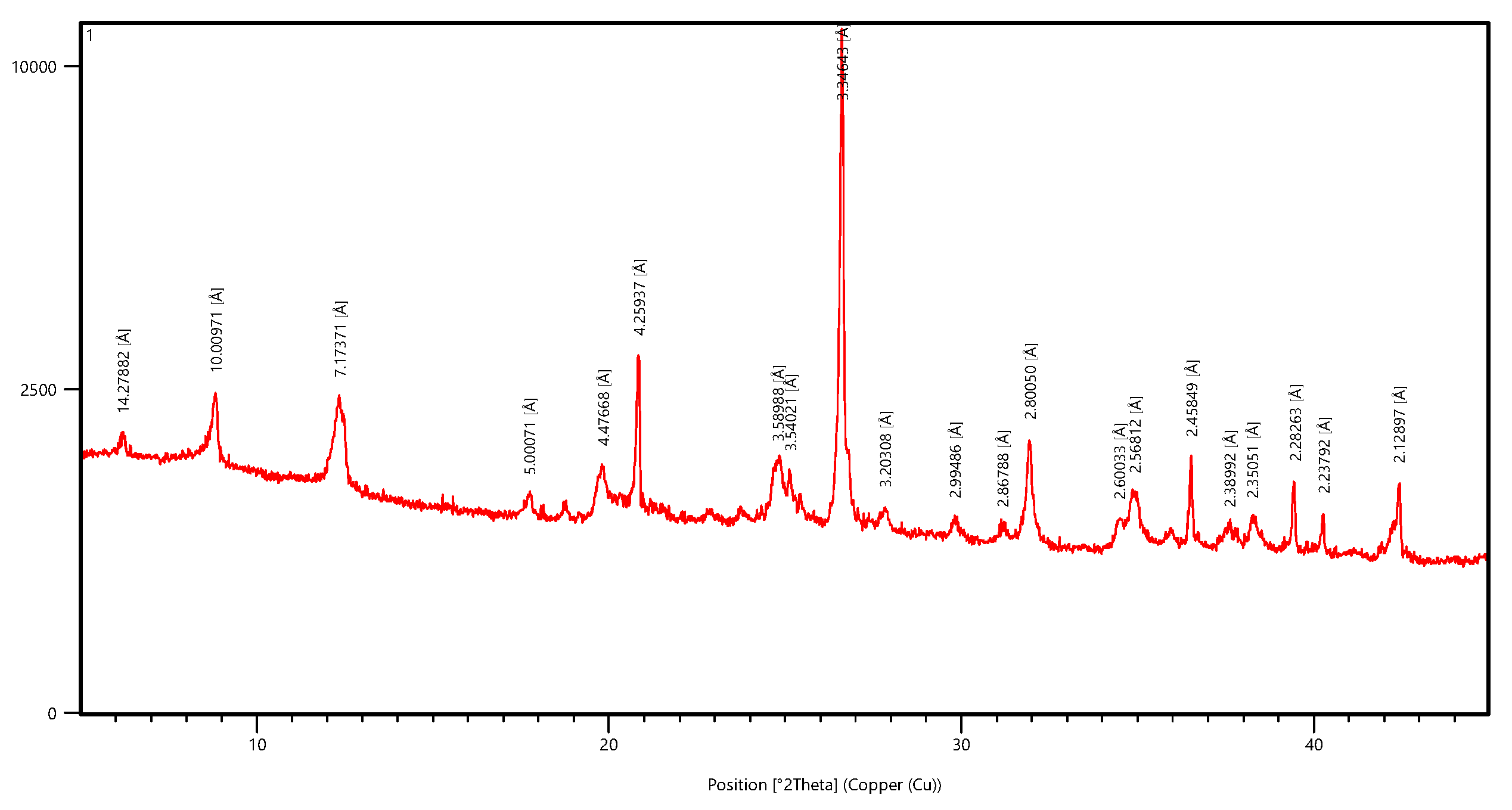
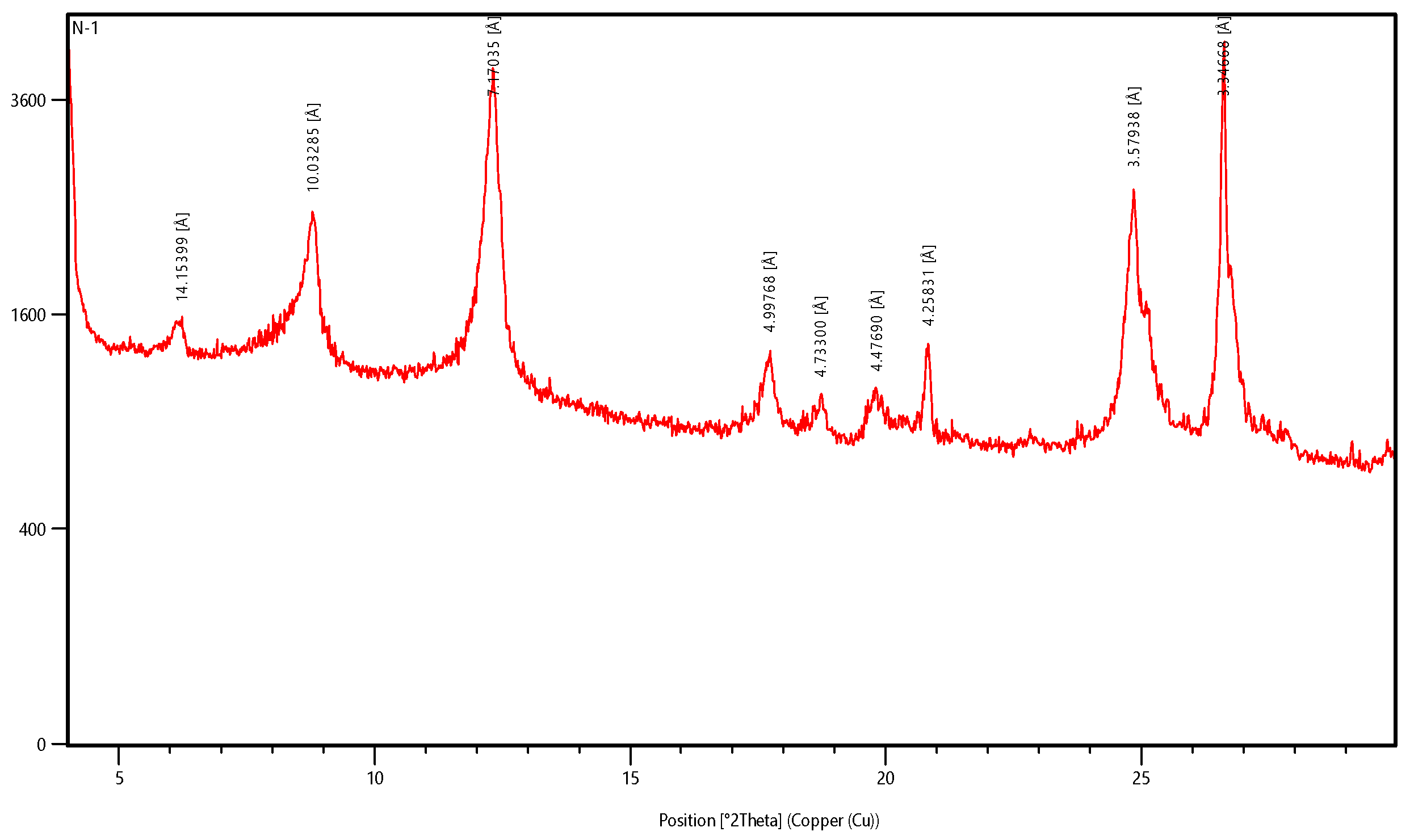
The whole-rock and clay-mineral compositions of the Yangxia Formation mudstone were determined by XRD, and the quantitative results are summarized in Table 2 and Table 3. The whole-rock sample contains 50.1% clay minerals and 49.9% non-clay minerals. Quartz is the dominant non-clay mineral, accounting for 36.9%, followed by siderite (10.9%), plagioclase (1.2%), and K-feldspar (0.9%). Calcite, dolomite, barite, pyrite, analcime, and hematite were reported as 0.0% in the quantitative XRD analysis.
Table 2.
Whole-rock mineralogical composition of the Yangxia Formation mudstone determined by XRD.
Table 3.
Relative composition of clay minerals in the Yangxia Formation mudstone.
The relative composition of the clay-mineral fraction is summarized in Table 3. Kaolinite is the dominant clay mineral, accounting for 43%, followed by illite (26%), mixed-layer illite/smectite (I/S, 17%), and chlorite (14%). No discrete smectite or chlorite/smectite mixed-layer phase was identified. Within the I/S mixed layer, smectite layers account for 5%, whereas illite layers account for 95%.
The relatively high quartz content contributes substantially to the rigid and brittle character of the mudstone framework. In contrast, siderite should not be regarded as a principal brittle mineral comparable to quartz; its presence may instead contribute to mineralogical and mechanical heterogeneity. Meanwhile, the high clay-mineral content indicates pronounced sensitivity to water–rock interactions. The presence of illite/smectite mixed layers may contribute to hydration-related changes in the rock structure. However, because the smectite-layer proportion within the I/S phase is only 5%, its swelling contribution should not be overstated.
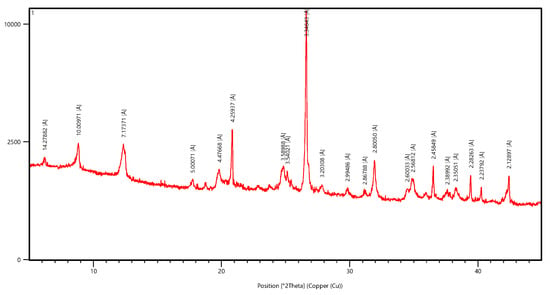
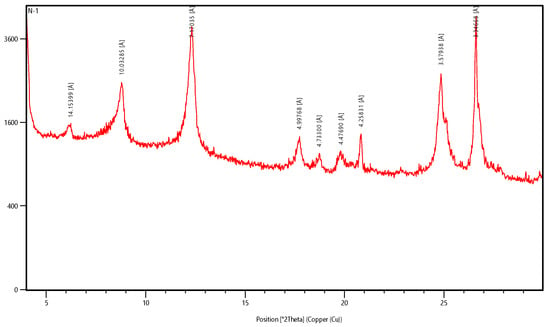
Overall, the mineralogical characteristics indicate that the instability of the Yangxia hard and brittle mudstone is controlled by the combined effects of a brittle mineral framework and hydration-sensitive clay minerals. Hydration-induced weakening and particle dispersion are expected to play important roles, while local swelling associated with mixed-layer I/S may provide an additional contribution. Therefore, an effective drilling-fluid system should simultaneously suppress clay hydration and dispersion and limit fluid invasion into micropores and microfractures (see Figure 2).
Figure 2.
X-ray diffraction (XRD) analysis results of clay minerals.
3.2. Wettability Characteristics of Fluids on the Rock Surface
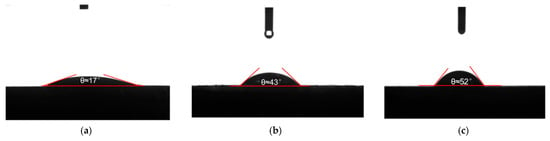
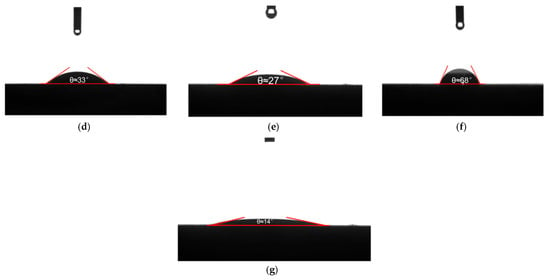
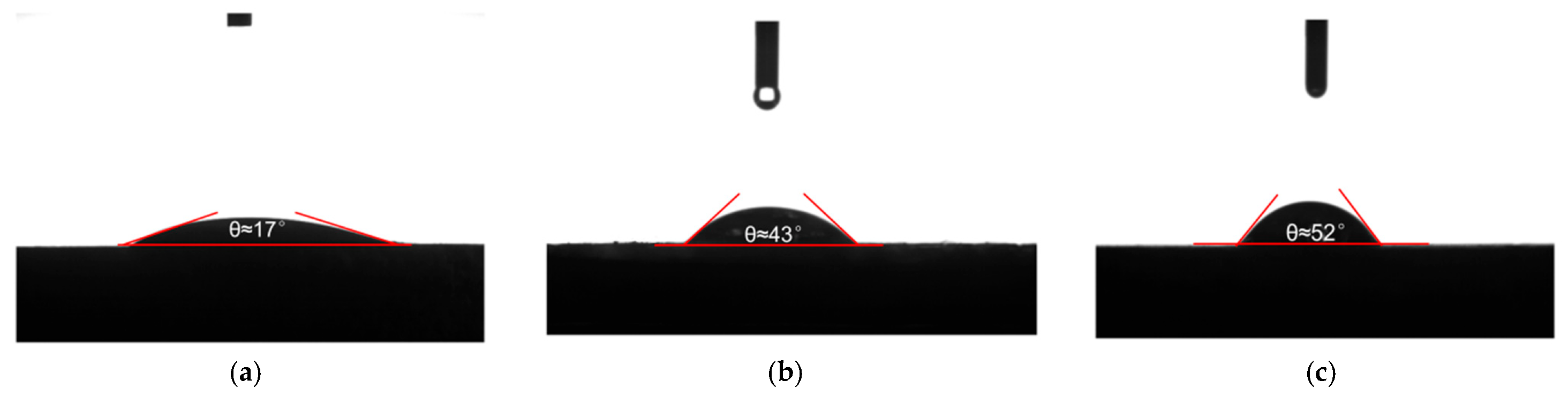
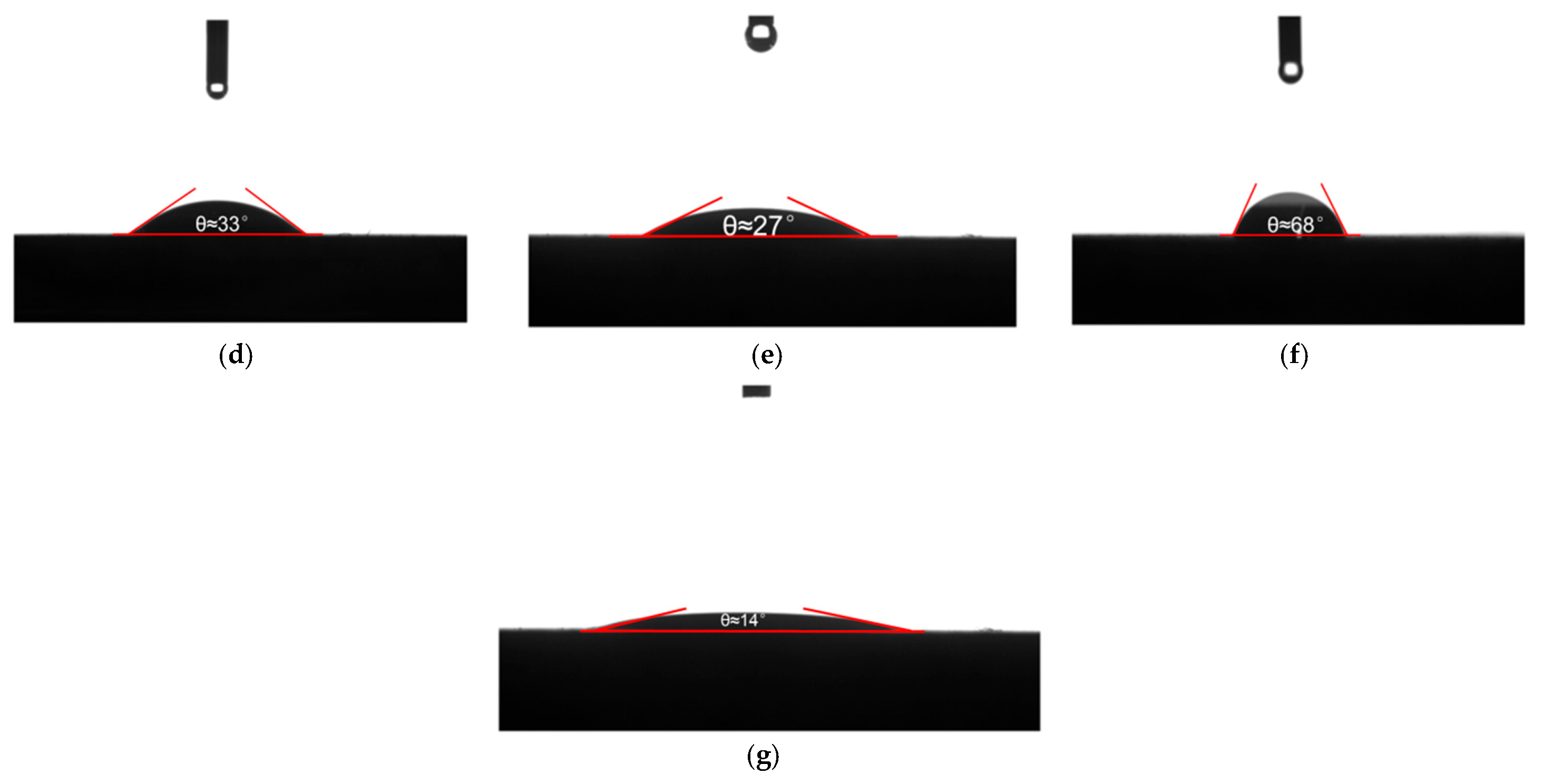
The wettability of the mudstone surface was evaluated by static contact-angle measurements using the sessile-drop method. The measured contact angles of the seven test fluids are summarized in Table 4, while representative images of the stabilized sessile droplets are shown in Figure 3. Because sufficient independent replicate measurements were not available from the original experimental campaign, these values are interpreted descriptively to compare relative changes in water-wetting tendency among the different fluid systems.
Table 4.
Measured contact angles of different drilling-fluid filtrates on the mudstone surface.
Figure 3.
Representative sessile-drop contact-angle images of filtrates from different drilling-fluid systems on the mudstone surface (a) organic-salt polymer drilling fluid; (b) undersaturated brine drilling fluid; (c) organic-salt polysulfonate drilling fluid; (d) organic-salt polymer hydrophobic-film-forming drilling fluid; (e) undersaturated brine hydrophobic-film-forming drilling fluid; (f) organic-salt polysulfonate hydrophobic-film-forming drilling fluid; and (g) freshwater.
The measured contact angles provide a descriptive indication of the relative water-wetting tendency of the mudstone surface after exposure to the different filtrates. In the present study, the contact-angle results are used primarily to compare changes in wettability rather than to demonstrate a complete transition from a water-wet to a hydrophobic surface.
The contact angle of freshwater on the untreated rock surface was 14°, indicating a strongly water-wet surface. Such wettability favors aqueous-phase spreading along the pore walls and contributes to a relatively strong capillary driving force for spontaneous imbibition. For the organic-salt polymer drilling-fluid system, the measured contact angle was 17°, which increased to 33° after addition of the hydrophobic-film-forming additives. This increase suggests that the treatment reduced the affinity of the mudstone surface for the aqueous phase. However, because the contact angle remained well below 90°, the treated surface should still be regarded as water-wet, and the degree of wettability modification was relatively limited.
For the undersaturated brine drilling-fluid system, the measured contact angle decreased from 43° to 27° after addition of the hydrophobic-film-forming additives. This result indicates that the treatment did not produce the expected reduction in water-wetting tendency under this base-fluid condition. The observed response suggests that the effectiveness of the film-forming treatment may depend on its compatibility with the composition and ionic environment of the base fluid. However, because direct measurements of additive dispersion, adsorption, or interfacial film structure were not performed in the present study, the specific origin of this behavior cannot be conclusively determined from the contact-angle measurements alone.
In contrast, the organic-salt polysulfonate drilling-fluid system exhibited a contact angle of 52°, which increased to 68° after addition of the hydrophobic-film-forming additives, representing the highest measured contact angle among the tested systems. Although the value of 68° remained below 90°, indicating that the rock surface was still water-wet, the increase from 52° to 68° suggests a pronounced reduction in water-wetting tendency. According to the capillary-pressure relationship, an increase in contact angle within the range below 90° decreases the value of (θ), thereby reducing, but not eliminating, the positive capillary driving force for spontaneous aqueous-phase imbibition. The observed increase in contact angle therefore indicates that the film-forming treatment altered the solid–liquid interfacial properties and reduced the affinity of the mudstone surface for the aqueous phase.
Overall, the contact-angle measurements suggest that the wettability response to the film-forming treatment depended on the composition of the base drilling fluid. The organic-salt polysulfonate system showed the largest increase in the measured contact angle after treatment, whereas the undersaturated brine system showed a decrease. Importantly, none of the measured contact angles exceeded 90°; therefore, the treated mudstone surfaces should still be regarded as water-wet rather than hydrophobic. Accordingly, the effect of the treatment is more appropriately described as a reduction in water-wetting tendency or weakening of surface hydrophilicity, rather than a complete hydrophilic-to-hydrophobic transition. Because direct surface-chemical or morphological characterization of the interfacial film was not performed, the contact-angle results are interpreted as evidence of interfacial wettability modification rather than direct proof of the formation of a continuous hydrophobic film.
3.3. Experimental Results of Microscale Plugging Performance by Low-Field NMR
3.3.1. T2-Spectrum Evolution Characteristics of Drilling-Fluid Microscale Plugging
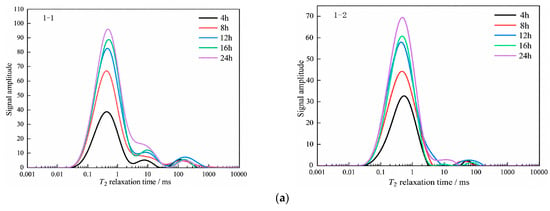
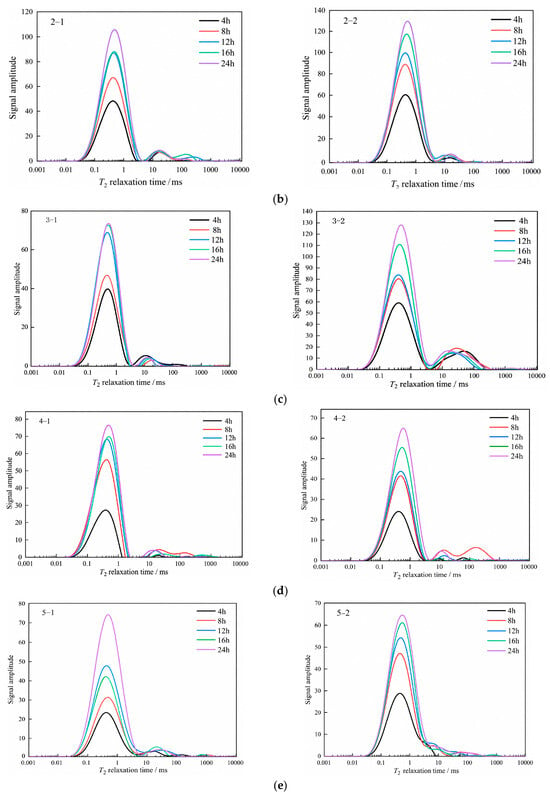
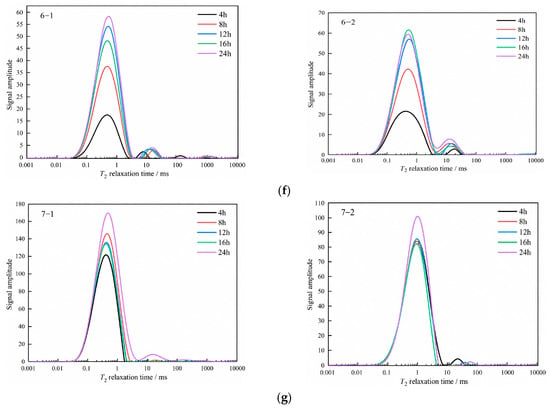
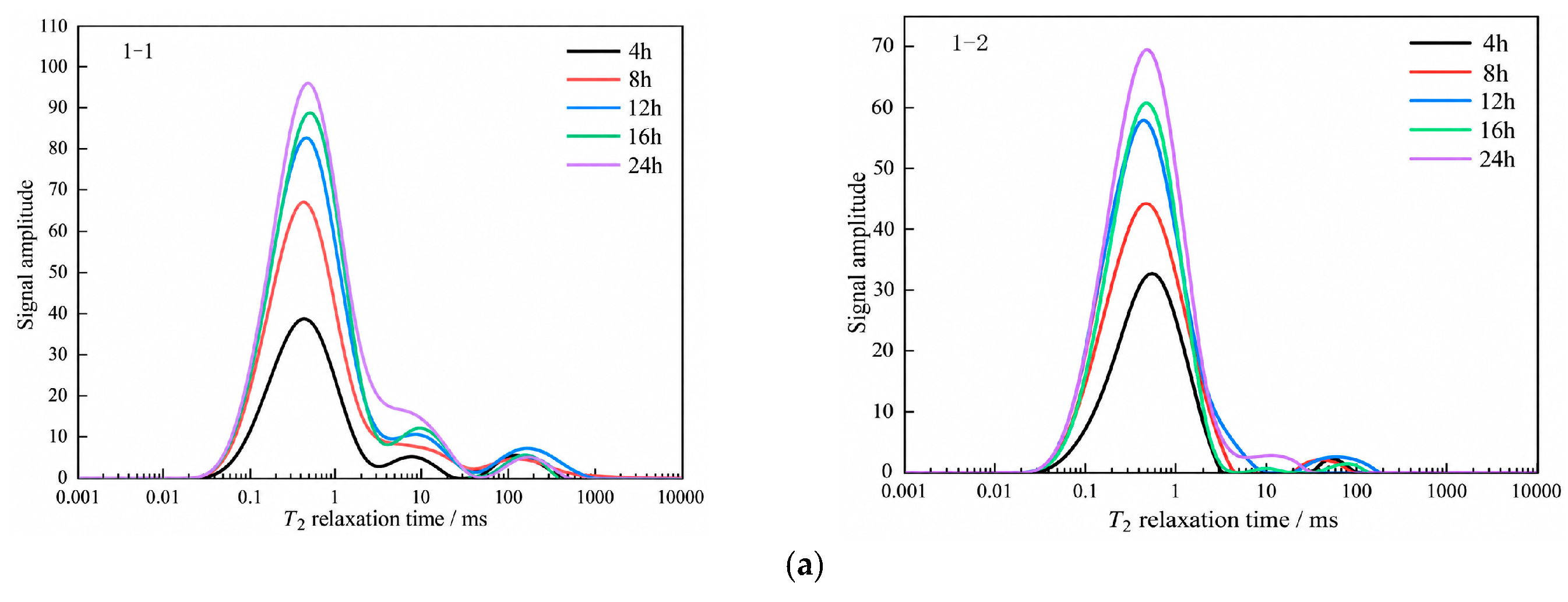
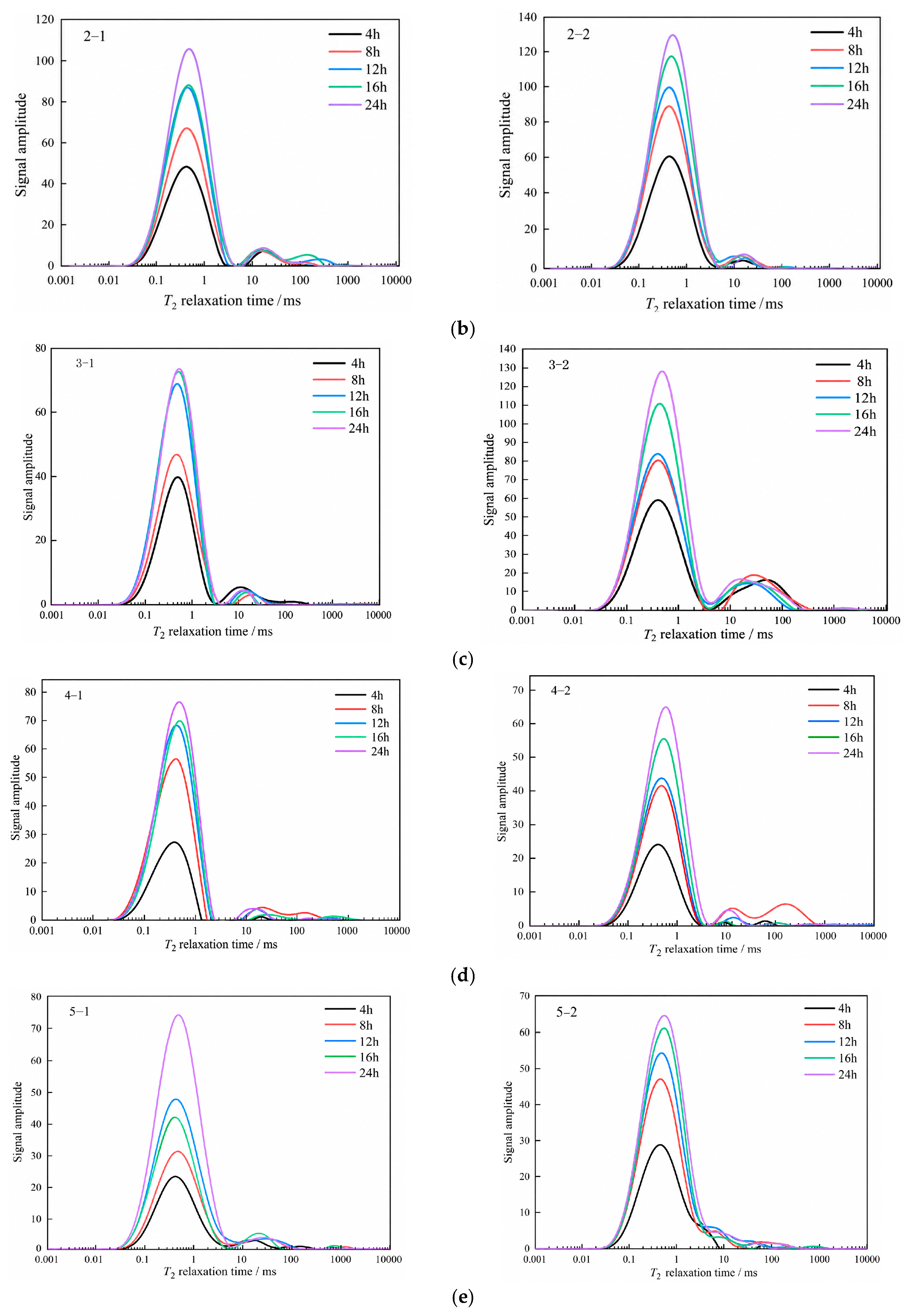
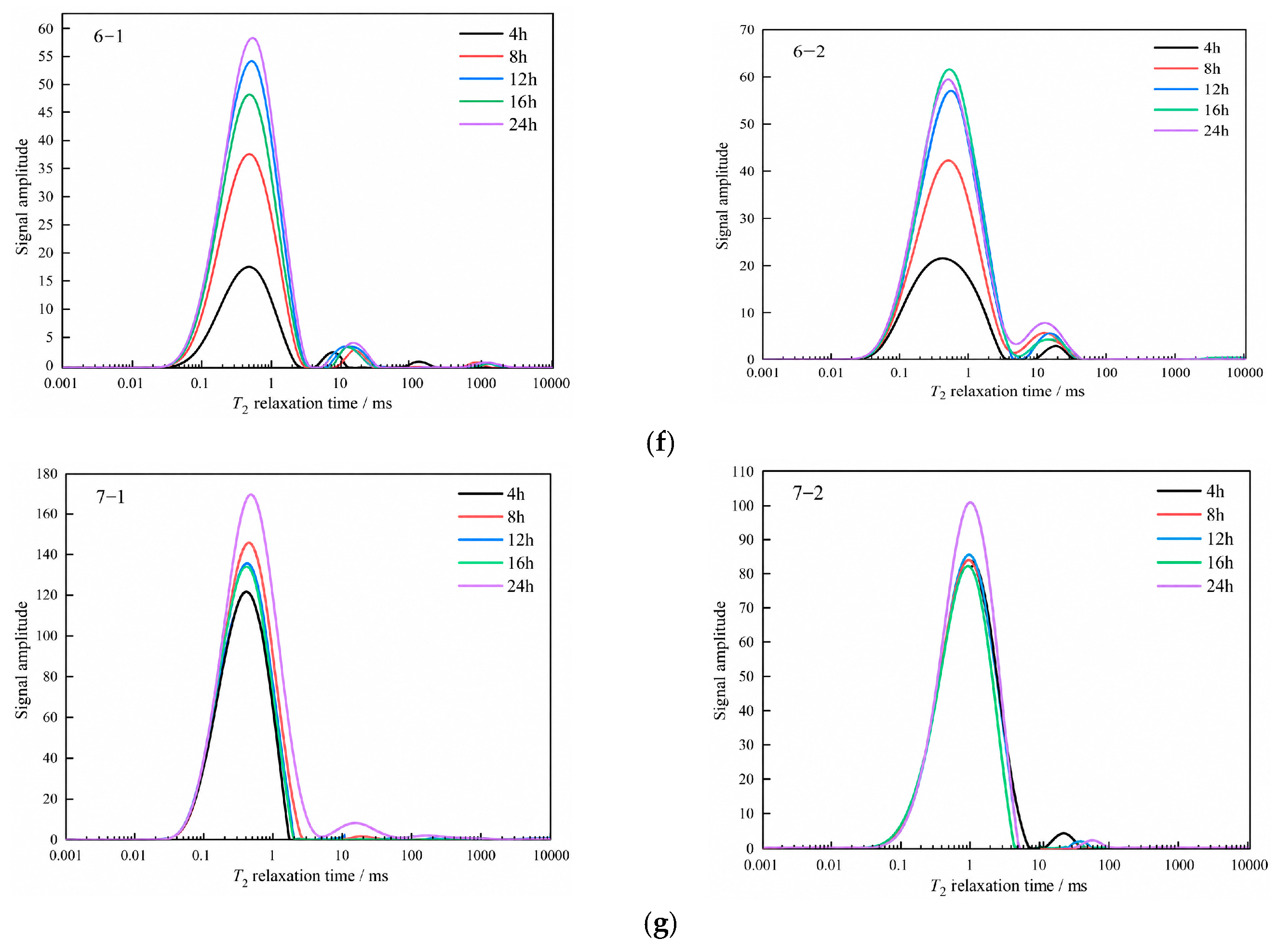
The low-field NMR T2 spectra of the rock samples after spontaneous imbibition in the different drilling-fluid systems and freshwater for various immersion times are shown in Figure 4. For all test fluids, the newly generated LF-NMR signals were concentrated predominantly in the short T2 region, whereas only a weak secondary peak was observed at longer T2 values. This distribution indicates that the invading hydrogen-containing fluids were mainly associated with relatively small pores and pore throats under strong surface-relaxation effects, rather than being uniformly distributed throughout the entire pore system [23,24,25].
Figure 4.
LF-NMR T2 spectra of mudstone samples immersed in different drilling-fluid systems: (a) organic-salt polymer; (b) undersaturated brine; (c) organic-salt polysulfonate; (d) organic-salt polymer + hydrophobic-film-forming treatment; (e) undersaturated brine + hydrophobic-film-forming treatment; (f) organic-salt polysulfonate + hydrophobic-film-forming treatment; (g) freshwater.
As the immersion time increased from 4 to 24 h, both the amplitude and integrated area of the dominant short T2 peak generally increased. This trend indicates continued capillary-driven fluid invasion into the rock matrix and a progressive increase in the amount of aqueous fluid occupying the smaller pore-throat system.
Comparison among the different test fluids showed that the freshwater group consistently exhibited a higher dominant peak in the short T2 region at all immersion times. After 24 h, its peak amplitude remained substantially higher than those of the drilling-fluid systems, indicating a greater extent of fluid invasion into the smaller pore-throat system. The relatively rapid increase in the freshwater signal also suggests a stronger early-stage spontaneous imbibition response.
Some drilling-fluid systems exhibited weak secondary peaks at longer T2 values, indicating that a limited amount of fluid may have migrated into relatively larger pores or pre-existing fractures. Nevertheless, the short T2 region remained the predominant contributor to the increase in LF-NMR signal over the 24 h test period. These results suggest that small pores and pore throats constitute the primary domains for fluid entry and accumulation during capillary-driven invasion.
3.3.2. Comparison of Low-Field NMR Signal Intensity per Unit Volume
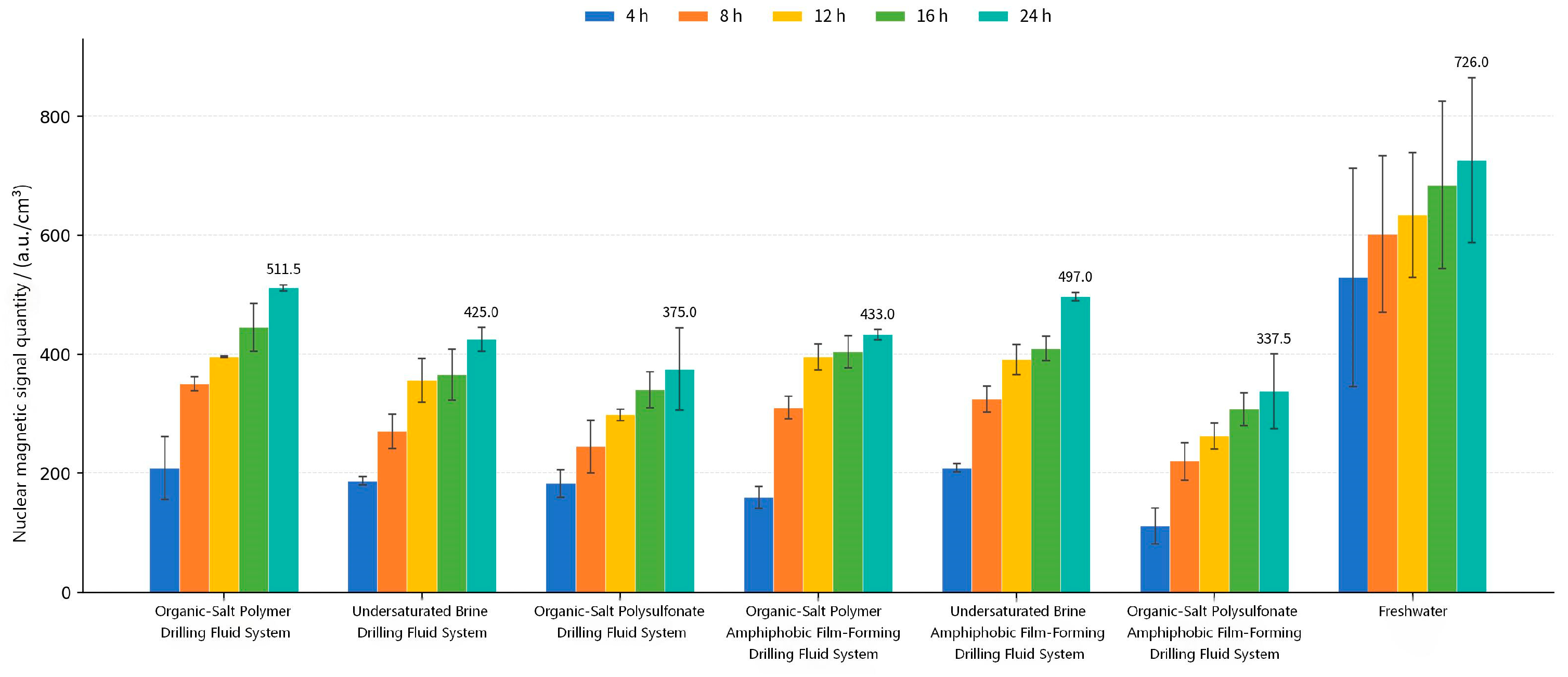
Focusing on the short T2 region, the results from the two parallel experiments were summarized using the mean and standard deviation for descriptive comparison. Because only two parallel rock samples (n = 2) were available, the error bars represent the observed variability between the two samples and are not intended as rigorous estimates of population-level variability. The purpose of the parallel measurements in this study was primarily to examine whether the overall capillary-driven invasion behavior of the drilling fluids could be reproduced between independent mudstone samples, rather than to establish population-level statistical parameters. Although some differences in signal magnitude were observed between the two parallel samples, both samples exhibited the same overall temporal trend of increasing LF-NMR signal intensity with immersion time. This consistent evolution indicates that the principal capillary-driven invasion behavior was reproducible under the tested conditions. Therefore, the comparisons among the drilling-fluid systems are discussed mainly in terms of overall invasion trends and magnitude differences under the tested conditions, rather than inferential statistical significance or definitive ranking among closely performing systems.
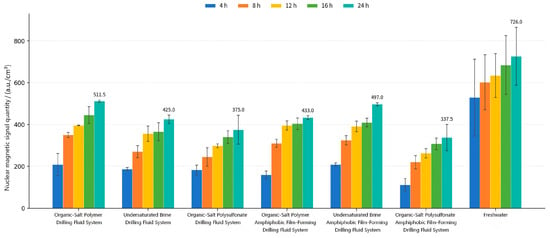
Figure 5 shows the variation in the LF-NMR signal intensity per unit volume in the short T2 region with immersion time for the rock samples exposed to the different drilling-fluid systems. For all systems, the mean signal intensity increased with increasing immersion time, indicating that capillary-driven spontaneous imbibition continued to promote fluid invasion into the rock matrix even in the absence of an externally applied pressure differential. However, the magnitude and rate of signal increase differed markedly among the drilling-fluid systems, indicating substantial differences in their ability to suppress microscale fluid invasion.
Figure 5.
LF-NMR signal intensity per unit volume of the short T2 peak at different immersion times (n = 2, error bars represent standard deviations).
The freshwater group maintained the highest signal intensity throughout the 4–24 h immersion period, with mean LF-NMR short T2 signal intensities per unit volume of 529.0 and 726.0 a.u./cm3 at 4 and 24 h, respectively. These results indicate that freshwater exhibited the most rapid initial invasion and the greatest final invasion volume. All drilling-fluid systems reduced fluid invasion to varying degrees, among which the organic-salt polysulfonate hydrophobic-film-forming drilling-fluid system generally exhibited the lowest signal intensity at each immersion time (see Table 5).
Table 5.
Overall invasion characteristics of different systems and relative reduction at 24 h.
From the perspective of hydrophobic film formation, the decrease in low-field NMR signal intensity reflects not only improved physical restriction of fluid entry at pore-throat entrances but also a reduction in the capillary driving force resulting from wettability alteration. For all systems, the short T2 signal increased with immersion time, indicating continued fluid invasion into the rock matrix, mainly within the smaller pore-throat domain. The freshwater group exhibited the highest short T2 signal, consistent with the strong water-wet character of the untreated rock surface and the resulting capillary-driven spontaneous imbibition [8,9,10,11,18,20,21].
For the organic-salt polymer system, addition of the hydrophobic-film-forming treatment reduced the NMR signal intensity per unit volume at 24 h from 511.5 to 433.0 a.u./cm3, corresponding to a reduction of 15.3%. This result indicates that the hydrophobic treatment effectively suppressed fluid invasion. The improvement can be attributed to the combined effects of surface wettability modification and polymer-assisted interfacial coverage, which together reduce aqueous-phase spreading and increase resistance to fluid entry. However, the contact angle increased only to 33°, suggesting that the extent of wettability alteration remained limited. Accordingly, although the anti-invasion performance was improved, it remained weaker than that of the organic-salt polysulfonate system.
For the undersaturated brine system, addition of the hydrophobic-film-forming treatment increased the 24 h LF-NMR short-T2 signal intensity per unit volume from 425.0 to 497.0 a.u./cm3, corresponding to an increase of 16.9%. This trend was accompanied by a decrease in contact angle from 43° to 27°, indicating an adverse response of the film-forming treatment under this base-fluid condition. One possible explanation is that the saline and ionic environment of the undersaturated brine affected the dispersion, adsorption, or retention behavior of the film-forming components, thereby reducing their ability to modify the rock–fluid interface. However, this interpretation should be regarded as a hypothesis rather than a confirmed mechanism, because no direct measurements of zeta potential, additive adsorption, film morphology, or solubility were performed in the present study. Further mechanistic studies are therefore required to determine the specific origin of this adverse response.
For the organic-salt polysulfonate system, addition of the hydrophobic-film-forming treatment further reduced the 24 h LF-NMR short T2 signal intensity per unit volume from 375.0 to 337.5 a.u./cm3, corresponding to a reduction of 10.0%. Although the relative decrease was smaller than that observed for the organic-salt polymer system, the modified organic-salt polysulfonate system maintained the lowest overall signal level during the immersion period. Its 24 h signal intensity was 53.5% lower than that of the freshwater group, showing the lowest mean LF-NMR signal among the tested systems under the present experimental conditions.
Within each corresponding base-fluid pair, a qualitative consistency was observed between the change in contact angle and the change in the 24 h LF-NMR short-T2 signal intensity. For the organic-salt polymer system, the contact angle increased from 17° to 33°, while the 24 h LF-NMR signal decreased from 511.5 to 433.0 a.u./cm3. Similarly, for the organic-salt polysulfonate system, the contact angle increased from 52° to 68°, accompanied by a decrease in the LF-NMR signal from 375.0 to 337.5 a.u./cm3. In contrast, for the undersaturated brine system, the contact angle decreased from 43° to 27°, while the LF-NMR signal increased from 425.0 to 497.0 a.u./cm3. These paired comparisons therefore suggest that, within a given base-fluid system, reduced water-wetting tendency was generally associated with reduced fluid invasion.
However, this relationship should not be generalized as a one-to-one predictive relationship across chemically different drilling-fluid systems. The measured LF-NMR signal reflects the amount of hydrogen-containing fluid entering the rock under the combined influence of wettability, fluid rheology, ionic composition, polymer/resin interactions, filtrate chemistry, and pore-throat plugging. Because the present study did not systematically isolate or independently quantify the effects of rheology and filtrate chemistry on fluid invasion, their individual contributions cannot be separated from the wettability effect. Therefore, the contact-angle and LF-NMR results are interpreted jointly as complementary indicators rather than as a universal predictive relationship.
The superior performance of the hydrophobic-film-forming organic-salt polysulfonate system can be explained by the combined effects of physical plugging and interfacial wettability regulation. Polysulfonate additives, resinous components, and colloidal particles can provide an adsorption and plugging framework near pore entrances, while the hydrophobic components further modify the interfacial properties of this framework. The resulting increase in contact angle decreases cosθ and thereby weakens the capillary driving force for spontaneous imbibition. At the same time, physical plugging reduces the effective connectivity of the pore network and increases resistance to fluid migration. These two mechanisms act cooperatively to suppress sustained fluid invasion into the rock matrix [13,14,18,19,20,21].
4. Analysis and Discussion
4.1. Capillary-Driven Spontaneous Imbibition Mechanism in Micropore Throats
The present study primarily focuses on the spontaneous capillary-driven invasion of drilling-fluid liquid phases into the mudstone pore-throat system. According to the classical capillary-pressure relationship, the contact angle is one of the key interfacial parameters governing capillary pressure and therefore directly affects the driving force for aqueous-phase imbibition. Accordingly, contact-angle measurements were introduced to characterize changes in rock–fluid wettability and to assist in interpreting the LF-NMR response associated with capillary-driven fluid invasion. In this study, the LF-NMR signal is therefore used mainly to reflect the extent of drilling-fluid imbibition into the rock, while the contact angle provides an important interfacial basis for explaining changes in capillary driving force.
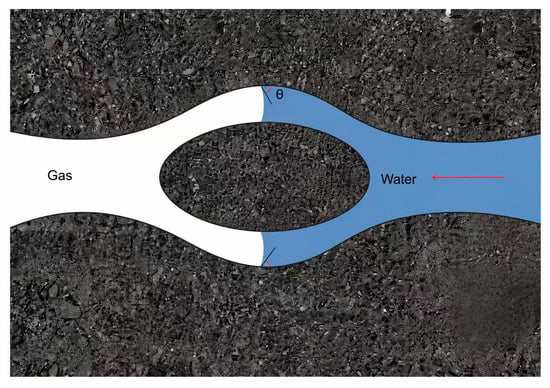
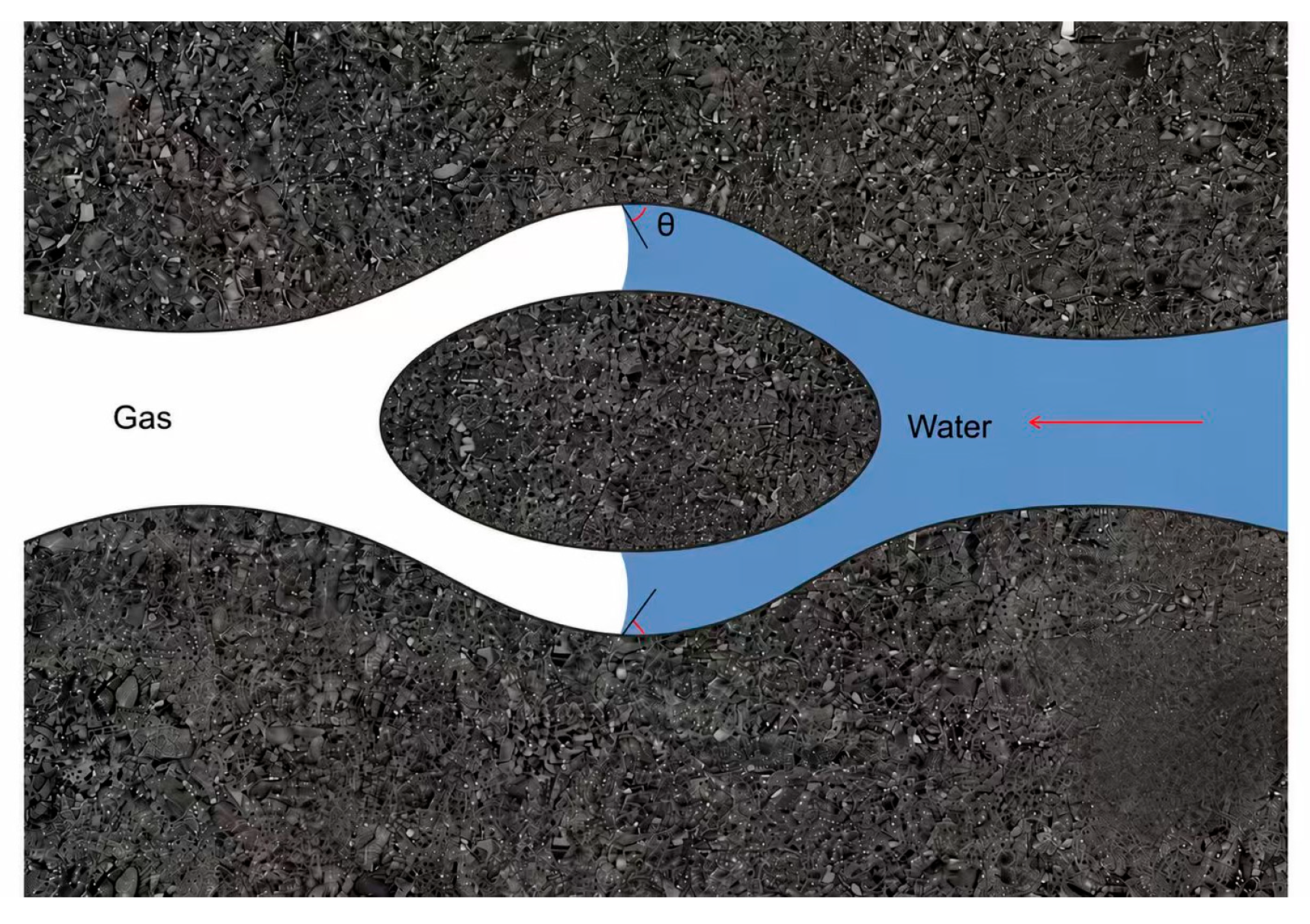
According to the capillary-pressure relationship, a decrease in pore-throat radius leads to an increase in capillary pressure, thereby favoring spontaneous imbibition into smaller pores and pore throats, as schematically illustrated in Figure 6. This interpretation is consistent with the progressive increase in the dominant short T2 signal observed with increasing immersion time. The results suggest that the smaller pore-throat system represents the primary domain for the initial entry and subsequent accumulation of the invading fluid [8,9,10].
Figure 6.
Schematic illustration of capillary force in narrow pore throats. Red arrow indicates the direction of capillary-driven aqueous-phase imbibition.
As the immersion time increased, the integrated signal area in the short T2 region progressively increased, indicating a continuous increase in the amount of invading fluid associated with the smaller pore system. The weak peaks observed at longer T2 values suggest that a limited fraction of the fluid may have migrated into relatively larger pores or fractures, as reflected by the T2 spectra in Figure 4. Previous LF-NMR studies have shown that shale hydration can modify pore structure and may involve the development of larger fractures, the generation of additional small pores, and progressive fracture coalescence and interconnection [16,23,24,25].
In the present study, the increase in LF-NMR signal intensity per unit volume primarily reflects continued fluid invasion, while the evolution of the T2 distribution suggests that fluid–rock interactions may also be accompanied by changes in pore and fracture structure. Therefore, improving the microscale anti-invasion performance of drilling fluids requires simultaneous regulation of rock wettability, capillary driving force, and effective pore-network connectivity at or near pore-throat entrances.
4.2. Coupled Inhibition Mechanism of Fluid Invasion by Interfacial Wettability Regulation and Film-Forming/Pore-Throat Restriction
The resistance to microscale fluid invasion provided by the different drilling-fluid systems depends on the combined effects of interfacial wettability regulation, film-forming behavior, and pore-throat plugging [13,14,18,19,20,21]. Under conditions without an externally applied pressure differential, filtrate invasion into the rock samples is governed primarily by capillary forces. Therefore, increasing fluid viscosity or suppressing clay hydration alone may be insufficient to prevent continued aqueous-phase entry into strongly water-wet micropores and pore throats. Effective control of microscale invasion requires simultaneous reduction in pore-surface wettability, disruption of continuous capillary pathways, and enhancement of flow resistance at pore-throat entrances.
The compatibility-dependent effects of the hydrophobic-film-forming treatment in the different base fluids were evaluated using the LF-NMR signal intensity per unit volume in the short T2 region after 24 h of immersion, as summarized in Table 6. Addition of the hydrophobic-film-forming treatment to the organic-salt polymer and organic-salt polysulfonate systems reduced the mean 24 h signal intensity by 15.3% and 10.0%, respectively, indicating that the combined effects of interfacial modification and physical restriction of pore-throat entry effectively suppressed fluid invasion. In contrast, incorporation of the same treatment into the undersaturated brine system increased the signal intensity by 16.9%. This response suggests that the high-salinity environment may adversely affect the dispersion, adsorption, or retention of the film-forming components, thereby weakening their interfacial modification and anti-invasion effects. These results indicate that the performance of hydrophobic-film-forming additives should be evaluated in the context of their compatibility with the base drilling fluid rather than solely on the intrinsic properties of the additives themselves.
Table 6.
Compatibility effects of the hydrophobic-film-forming agent on 24 h fluid invasion in different base fluids.
Among the tested systems, the hydrophobic-film-forming organic-salt polysulfonate system exhibited the lowest LF-NMR signal intensity per unit volume in the short T2 region. This behavior suggests a favorable synergistic interaction between the adsorption and plugging effects of the polysulfonate/resinous components and the wettability-regulation effect of the hydrophobic treatment. The former may provide a more stable interfacial and plugging framework under high-temperature and saline conditions, whereas the latter reduces the water-wet character of the rock surface and weakens the capillary driving force for spontaneous imbibition. Their combined action decreases effective pore-network connectivity and increases resistance to fluid migration, thereby providing the strongest microscale anti-invasion performance among the systems investigated [13,14,18,19,20,21].
5. Conclusions
- (1)
- The hard and brittle mudstone of the Yangxia Formation contains a relatively high proportion of clay minerals and exhibits strong water-wet characteristics. Under conditions without an externally applied pressure differential, fluid invasion is governed primarily by capillary-driven spontaneous imbibition. The LF-NMR results indicate that the invading fluid is mainly associated with the smaller pore-throat system. Therefore, reducing rock-surface wettability, weakening the capillary driving force, and decreasing effective pore-network connectivity are important for improving resistance to microscale fluid invasion.
- (2)
- All tested drilling-fluid systems reduced fluid invasion to varying degrees compared with freshwater, although substantial differences were observed among the systems. The freshwater group consistently exhibited the highest LF-NMR signal intensity per unit volume throughout the immersion period, indicating the strongest capillary-driven imbibition and the greatest extent of fluid invasion. After 24 h of immersion, the hydrophobic-film-forming organic-salt polysulfonate drilling fluid exhibited the lowest LF-NMR signal intensity per unit volume, at 337.5 a.u./cm3, which was 53.5% lower than that of freshwater. This system therefore exhibited the lowest mean LF-NMR signal among the tested formulations under the present experimental conditions.
- (3)
- The effectiveness of the hydrophobic-film-forming treatment depended strongly on its compatibility with the base drilling fluid. After incorporation of the hydrophobic-film-forming additives, the 24 h LF-NMR signal intensity per unit volume in the short T2 region decreased by 15.3% and 10.0% for the organic-salt polymer and organic-salt polysulfonate systems, respectively, whereas an adverse response was observed for the undersaturated brine system. The superior performance of the hydrophobic-film-forming organic-salt polysulfonate system can be attributed to the synergistic effects of interfacial wettability regulation and physical restriction of pore-throat entry. The polysulfonate/resinous components provide an adsorption and plugging framework, while the hydrophobic treatment further reduces the water-wet character of the rock surface and weakens the capillary driving force. Their combined action decreases effective pore-network connectivity and increases resistance to fluid migration, thereby suppressing sustained capillary-driven invasion.
This study investigated mudstone cuttings collected at a depth of approximately 3100 m from a single exploratory well in the Yangxia Formation under static room-temperature and atmospheric-pressure conditions without an externally applied pressure differential. These conditions were intentionally selected because the primary objective was to evaluate spontaneous capillary-driven fluid invasion into the mudstone pore-throat system rather than pressure-differential-driven filtration or permeability behavior. Nevertheless, actual downhole conditions involve elevated temperature, formation and differential pressures, fluid circulation, and cyclic shear, which may alter drilling-fluid properties, rock–fluid interactions, and fluid-invasion behavior. Therefore, the present results should be interpreted as a comparative evaluation of capillary-driven fluid invasion under controlled static conditions rather than as a direct quantitative representation of fluid invasion under downhole high-temperature and high-pressure conditions. Owing to the inherent heterogeneity of mudstone and the differences between laboratory and downhole environments, the present findings may not fully represent the fluid-invasion behavior of the entire Yangxia Formation. Further evaluation using samples from multiple wells and depth intervals under high-temperature, high-pressure, and dynamic conditions would be valuable for assessing the broader applicability of the present findings.
Author Contributions
Conceptualization, T.H.; methodology, Y.X.; software, Y.J.; validation, B.H., J.S. and W.Z.; formal analysis, B.H. and Z.L.; investigation, Y.X., J.S. and T.L.; resources, Y.X., J.S. and W.Z.; data curation, B.H., Y.J. and T.L.; writing—original draft preparation, Z.L.; writing—review and editing, T.H. and W.Z.; visualization, Y.J. and T.L.; supervision, T.H.; project administration, T.H.; funding acquisition, T.H. All authors have read and agreed to the published version of the manuscript.
Funding
This research was funded by the National Science and Technology Major Project for New Oil and Gas Exploration and Development, “Exploration and Development Technologies and Integrated Demonstration for Deep and Ultra-Deep Carbonate Gas Reservoirs in the Sichuan Basin” (2025ZD1402504).
Data Availability Statement
The data presented in this study are available on request from the corresponding author.
Conflicts of Interest
Authors Tao He, Yi Xu, Bo Hai, Yujuan Jing, Jun Sun and Zhimin Liu were employed by the company CNPC Chuanqing Drilling Engineering Co., Ltd. The remaining authors declare that the research was conducted in the absence of any commercial or financial relationships that could be construed as a potential conflict of interest.
Abbreviations
| Abbreviation | Full Term | |
| LF-NMR | Low-field nuclear magnetic resonance | |
| NMR | Nuclear magnetic resonance | |
| RF | Radio-frequency | |
| XRD | X-ray diffraction | |
| I/S | Illite/smectite mixed layer | |
| Symbols used | ||
| T2 | ms | Transverse relaxation time |
| Pc | Pa | Capillary pressure |
| γ | N·m−1 | Interfacial tension of the liquid phase |
| θ | ° | Contact angle of the fluid on the rock surface |
| r | m | Equivalent pore-throat radius |
| Mv(t) | a.u./cm3 | NMR signal intensity per unit volume at immersion time t |
| M(t) | a.u. | NMR signal intensity of the rock sample after immersion for time t |
| M0 | a.u. | Baseline NMR signal intensity of the dry rock sample |
| V | cm3 | Volume of the rock sample |
| t | h | Immersion time |
| Ii24 | a.u./cm3 | Mean NMR signal intensity per unit volume at 24 h for the corresponding drilling-fluid system |
| Iw24 | a.u./cm3 | Mean NMR signal intensity per unit volume at 24 h for the freshwater group |
References
- Mody, F.K.; Hale, A.H. Borehole-Stability Model to Couple the Mechanics and Chemistry of Drilling-Fluid/Shale Interactions. J. Pet. Technol. 1993, 45, 1093–1101. [Google Scholar] [CrossRef] [Scilit]
- Van Oort, E.; Hale, A.H.; Mody, F.K.; Roy, S. Transport in Shales and the Design of Improved Water-Based Shale Drilling Fluids. SPE Drill. Complet. 1996, 11, 137–146. [Google Scholar] [CrossRef] [Scilit]
- Van Oort, E. On the Physical and Chemical Stability of Shales. J. Pet. Sci. Eng. 2003, 38, 213–235. [Google Scholar] [CrossRef] [Scilit]
- Gholami, R.; Elochukwu, H.; Fakhari, N.; Sarmadivaleh, M. A Review on Borehole Instability in Active Shale Formations: Interactions, Mechanisms and Inhibitors. Earth-Sci. Rev. 2018, 177, 2–13. [Google Scholar] [CrossRef] [Scilit]
- Zeynali, M.E. Mechanical and Physico-Chemical Aspects of Wellbore Stability During Drilling Operations. J. Pet. Sci. Eng. 2012, 82–83, 120–124. [Google Scholar] [CrossRef] [Scilit]
- Jin, Y.; Bo, K.; Zhang, Y.; Lu, Y. Advancements and Considerations of Chemo-Mechanical Coupling for Wellbore Stability in Deep Hard Brittle Shale. Pet. Drill. Tech. 2023, 51, 159–169. [Google Scholar] [CrossRef]
- Yang, B.; Xu, C.; Zhang, H.; Guo, Y.; Yang, J.; Li, Y.; Zhao, J. Research Progress on Mechanism of Wellbore Instability in Deep Fractured Formations and Related Countermeasures. Acta Pet. Sin. 2024, 45, 875–888. [Google Scholar] [CrossRef]
- Dehghanpour, H.; Zubair, H.A.; Chhabra, A.; Ullah, A. Liquid Intake of Organic Shales. Energy Fuels 2012, 26, 5750–5758. [Google Scholar] [CrossRef] [Scilit]
- Dehghanpour, H.; Lan, Q.; Saeed, Y.; Fei, H.; Qi, Z. Spontaneous Imbibition of Brine and Oil in Gas Shales: Effect of Water Adsorption and Resulting Microfractures. Energy Fuels 2013, 27, 3039–3049. [Google Scholar] [CrossRef] [Scilit]
- Gao, Z.; Fan, Y.; Hu, Q.; Jiang, Z.; Cheng, Y.; Xuan, Q. A Review of Shale Wettability Characterization Using Spontaneous Imbibition Experiments. Mar. Pet. Geol. 2019, 109, 330–338. [Google Scholar] [CrossRef] [Scilit]
- Arif, M.; Zhang, Y.; Iglauer, S. Shale Wettability: Data Sets, Challenges, and Outlook. Energy Fuels 2021, 35, 2965–2980. [Google Scholar] [CrossRef] [Scilit]
- Zhang, S.; Jiang, G.; Guo, H.; Tang, X.; Jin, H. Development of New Film-Forming Agent for Drilling Fluids and Application in Chenghai Oilfield. Pet. Drill. Tech. 2013, 41, 44–48. [Google Scholar] [CrossRef]
- Sun, J.; Zhang, F.; Lv, K.; Chang, X. A Novel Film-Forming Silicone Polymer as Shale Inhibitor for Water-Based Drilling Fluids. e-Polymers 2019, 19, 574–578. [Google Scholar] [CrossRef] [Scilit]
- Huang, X.; Sun, J.; Li, H.; Wang, R.; Lv, K.; Li, H. Fabrication of a Hydrophobic Hierarchical Surface on Shale Using Modified Nano-SiO2 for Strengthening the Wellbore Wall in Drilling Engineering. Engineering 2022, 11, 101–110. [Google Scholar] [CrossRef] [Scilit]
- Jiang, G.; Ni, X.; Li, W.; Quan, X.; Luo, X. Super-Amphiphobic, Strong Self-Cleaning and High-Efficiency Water-Based Drilling Fluids. Pet. Explor. Dev. 2020, 47, 421–429. [Google Scholar] [CrossRef] [Scilit]
- Wang, P.; Qu, Z. NMR Technology Based Hydration Damage Evolution of Hard Brittle Shale. Rock Soil Mech. 2015, 36, 687–693. [Google Scholar] [CrossRef]
- Huang, X.; Shen, H.; Sun, J.; Lv, K.; Liu, J.; Dong, X.; Luo, S. Nanoscale Laponite as a Potential Shale Inhibitor in Water-Based Drilling Fluid for Stabilization of Wellbore Stability and Mechanism Study. ACS Appl. Mater. Interfaces 2018, 10, 33252–33259. [Google Scholar] [CrossRef] [Scilit] [PubMed]
- Li, H.; Sun, J.; Lv, K.; Huang, X.; Zhang, P.; Zhang, Z. Wettability Alteration to Maintain Wellbore Stability of Shale Formation Using Hydrophobic Nanoparticles. Colloids Surf. A Physicochem. Eng. Asp. 2022, 635, 128015. [Google Scholar] [CrossRef] [Scilit]
- Saleh, T.A.; Rana, A.; Arfaj, M.K.; Ibrahim, M.A. Hydrophobic Polymer-Modified Nanosilica as Effective Shale Inhibitor for Water-Based Drilling Mud. J. Pet. Sci. Eng. 2022, 209, 109868. [Google Scholar] [CrossRef] [Scilit]
- Li, Y.; Xia, C.; Liu, X. Water-Based Drilling Fluids Containing Hydrophobic Nanoparticles for Minimizing Shale Hydration and Formation Damage. Heliyon 2023, 9, e22990. [Google Scholar] [CrossRef] [Scilit] [PubMed]
- He, Z.; Yang, Y.; Wu, Y.; Lu, H. In Situ Shale Wettability Regulation Using Hydrophobic Ionic Liquid Functionalized Nano-Silica to Enhance Wellbore Stability in Deep Well Drilling. Colloids Surf. A Physicochem. Eng. Asp. 2024, 703, 135329. [Google Scholar] [CrossRef] [Scilit]
- Qian, B.; Zhu, J.; Yang, H.; Liang, X.; Yin, C.; Shi, X.; Li, D.; Li, J.; Fang, H. Experiments on Shale Reservoirs Plugs Hydration. Pet. Explor. Dev. 2017, 44, 652–658. [Google Scholar] [CrossRef] [Scilit]
- Yang, L.; Dou, N.; Lu, X.; Zhang, X.; Chen, X.; Gao, J.; Yang, C.; Wang, Y. Advances in Understanding Imbibition Characteristics of Shale Using an NMR Technique: A Comparative Study of Marine and Continental Shale. J. Geophys. Eng. 2018, 15, 1363–1375. [Google Scholar] [CrossRef] [Scilit]
- Zeng, Y.; Pang, Y.; Ding, S.; Di, K.; Shen, Z.; Chen, S. Pore-Fracture Network Alteration during Forced and Spontaneous Imbibition Processes in Shale Formation. J. Pet. Sci. Eng. 2022, 209, 109846. [Google Scholar] [CrossRef] [Scilit]
- Bai, L.; Liu, B.; Huo, Y.; Jia, R.; Ma, Y.; Hu, Q.; Ostadhassan, M. Liquid Spontaneous Imbibition and Its Time-Resolved Nuclear Magnetic Resonance Within Differently Matured Shale: Indications for Shale Pore Structure and Wettability. Energy Fuels 2024, 38, 22804–22819. [Google Scholar] [CrossRef] [Scilit]
- Tao, L. Study on Mechanism of Aqueous Phase Imbibition in Shale Reservoirs. Master’s Thesis, Southwest Petroleum University, Chengdu, China, 2019. [Google Scholar]
- Zhou, J.; Zhang, Y.; Schröer, L.; Cnudde, V.; Chi, Z. Monitoring Multiphase Flow Within Porous Media Using Nuclear Magnetic Resonance Method. Hydrogeol. Eng. Geol. 2026, 53, 73–83. [Google Scholar]
- Wei, B.; Li, Q.; Ye, Q.; Wu, R.; Zhao, J.; Lu, J.; Chen, H. Microscopic Imbibition Mechanism of Surfactant in Tight Oil Reservoirs Based on Low-Field Nuclear Magnetic Resonance and Nanofluidic Techniques. Acta Pet. Sin. 2026, 47, 1080–1093. [Google Scholar]

Disclaimer/Publisher’s Note: The statements, opinions and data contained in all publications are solely those of the individual author(s) and contributor(s) and not of MDPI and/or the editor(s). MDPI and/or the editor(s) disclaim responsibility for any injury to people or property resulting from any ideas, methods, instructions or products referred to in the content. |
© 2026 by the authors. Licensee MDPI, Basel, Switzerland. This article is an open access article distributed under the terms and conditions of the Creative Commons Attribution (CC BY) license.