


Abstract
Diamond-like carbon (DLC) films are widely used for corrosion protection, but the same film may perform differently on different substrates. Tungsten-doped (W-DLC) and titanium-doped (Ti-DLC) DLC films were sputtered with the same deposition parameters on 316L stainless steel and Ti6Al4V. The films were characterized by SEM, EDX, water contact angle measurement, and Raman spectroscopy. Their corrosion behavior in 3.5 wt% NaCl was evaluated by potentiodynamic polarization and electrochemical impedance spectroscopy. The substrate affected the wettability of Ti-DLC but had little effect on that of W-DLC. It hardly changed the bonding structure of either film. The effective capacitances were too high for insulating barriers. The corrosion current density of each film was also largely independent of the substrate. Both observations indicate that the electrochemical response was governed mainly by the metal-doped film surfaces. As a result, the improvement in corrosion resistance depended on the bare substrate. Both films substantially improved the corrosion resistance of 316L. On Ti6Al4V, Ti-DLC gave only a small improvement, and W-DLC gave no clear benefit. The coatings were therefore most beneficial on 316L, whose passive film is less resistant to chloride attack.
1. Introduction
Thin films are a common way to protect metals from corrosion. The same film, however, can behave differently on different substrates. This substrate effect has received less attention than the film itself. It matters for 316L stainless steel and Ti6Al4V, two alloys widely used in load-bearing and blood-contacting medical devices. 316L has long been used for coronary stents [1,2], while Ti6Al4V is the most widely used titanium alloy for orthopedic implants [3]. Both alloys release metal ions in chloride-rich body fluids. These ions can trigger inflammatory responses. Metallic stents can also provoke a foreign-body inflammatory reaction that contributes to in-stent restenosis [4]. A protective surface layer is therefore needed.
Diamond-like carbon (DLC) is a leading candidate for this layer. It is an amorphous carbon network of sp2 and sp3 bonds, which gives it high hardness, low friction, chemical inertness, and good biocompatibility [5,6,7,8,9,10]. Its properties can be tuned by the deposition method, the dopant, and the film architecture, such as interlayers and multilayers [9]. Our group has studied DLC thickness and interlayer design [11], internal and residual stress [12,13], substrate roughness [14], and precursor chemistry [15].
Doping is widely used to tailor DLC [16,17]. The corrosion resistance of DLC depends on its structure, porosity, and roughness [18,19,20]. It also depends on wettability, because a hydrophobic surface limits electrolyte contact [21]. Fluorine doping follows this route on 316 stainless steel and NiTi [21,22]. Copper doping improved the corrosion resistance of bronze and Ti6Al4V [23,24].
Titanium is a common dopant. It forms TiC nanocrystals, lowers residual stress, and improves adhesion to steel [25]. In co-doped films on 304 stainless steel, TiC crystallites lengthened the corrosion path and densified the surface [26]. On 316L, Ti-doped DLC with 5.33 at% Ti gave the lowest corrosion current and the highest polarization resistance, attributed to a TiO2-rich surface [27]. Ti-doped DLC with a Ti interlayer also improved 316L [28]. On 304L, Ti-doped DLC (Ti-DLC) with a lower Ti content and a larger amorphous-carbon fraction gave the best wear and tribocorrosion resistance [29]. Titanium also has an optimal content range: too little or too much reduces protection [30].
The effect of tungsten doping is less clear. On nitrided steel in sulfuric acid, W-doped DLC (W-DLC) did not outperform plain DLC, likely because it grew columnar, more porous, and more hydrophilic [31]. In simulated seawater, however, W-DLC on bearing steel gave a more positive corrosion potential and a lower corrosion current than undoped DLC [32]. In artificial seawater, W-DLC with 0.9 at% W outperformed undoped DLC, whereas 3.1 and 15.1 at% W performed worse [19]. Gradient W-DLC also remained amorphous and protective on a WC-based cermet in 3.5 wt% NaCl under 20 MPa alternating hydrostatic pressure [33]. That coating, however, had an undoped DLC top layer, so its surface acted as a barrier. The benefit of tungsten therefore seems to depend on film structure and substrate, not on the dopant alone.
Across dopants, similar mechanisms are proposed: lower roughness, relieved stress, higher hydrophobicity, and passivating phases such as TiC, TiO2, or SiO2 [21,26,27,28,29,30,34]. Most treat the film as a barrier that keeps the electrolyte away from the substrate. In that case, the corrosion rate follows the substrate exposed at pores [20]. Metal doping, however, raises the conductivity of DLC by many orders of magnitude [35,36]. A conductive film may therefore act as an electrode rather than only a barrier. In that case, the electrochemical response should depend less on the substrate. Undoped DLC was reported to be more stable on Ti6Al4V than on 316L [37]. Whether this holds for conductive, metal-doped DLC and for different dopants is still unclear.
In this study, W-DLC and Ti-DLC films were sputtered with the same deposition parameters on 316L and Ti6Al4V. Because the resulting W and Ti contents differed, each film was compared with itself on the two substrates. The aim was to determine whether the substrate changes the wettability and structure of each film, its corrosion rate, and the mechanism that controls its corrosion.
2. Materials and Methods
2.1. Substrates and Film Deposition
Two substrates were used: 316L austenitic stainless steel and Ti6Al4V titanium alloy (Gredmann Group, Taipei, Taiwan) (Table 1 and Table 2). Plates were cut into 12 mm × 12 mm coupons and used as received to represent commercially supplied material. They were not ground or polished before deposition, so the films followed the as-received surface texture. Their average roughness (Sa) was 119 nm for 316L and 377 nm for Ti6Al4V. The influence of substrate topography on DLC surface roughness depends on film thickness [38]. It is treated here as part of the substrate effect. The coupons were ultrasonically cleaned in deionized water, ethanol, and isopropanol, then dried.
Table 1.
Nominal chemical composition of 316L stainless steel (wt%).
Table 2.
Nominal chemical composition of Ti6Al4V titanium alloy (wt%).
The films were deposited by magnetron sputtering from W and Ti targets (99.95%). Argon (99.95%) was the sputtering gas, and C2H2 was the carbon precursor. Before deposition, the substrates were cleaned in an Ar plasma (20 sccm, −180 V bias, 10 min). A Cr adhesion interlayer was then deposited for both films from a Cr target (99.95%). The main parameters were a base pressure of 4.5 × 10⁻⁵ torr, a working pressure of 5 × 10⁻³ torr, a target-to-substrate distance of 85 mm, a rotation of 10 rpm, a DC power of 100 W, no substrate bias, and a C2H2/(Ar + C2H2) flow ratio of 18%. The substrates were not heated. The deposition time was adjusted to give a film thickness of about 1.5 µm. For each film, both substrates were coated in the same run.
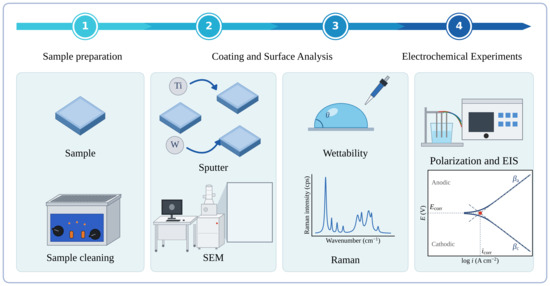
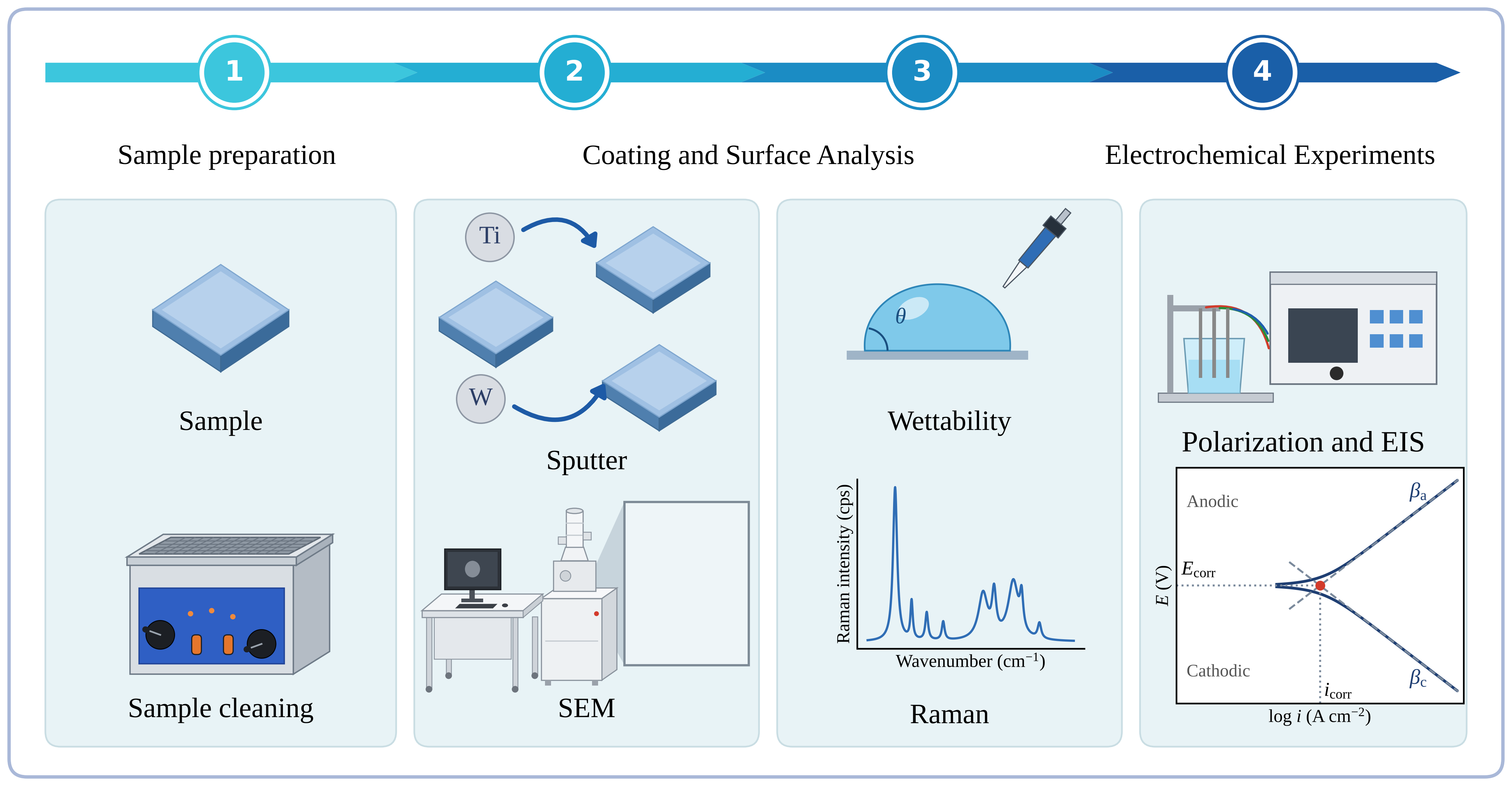
Cross-sectional scanning electron microscopy (SEM) gave mean film thicknesses of 1.51 ± 0.08 µm (W-DLC/316L), 1.57 ± 0.03 µm (W-DLC/Ti6Al4V), 1.49 ± 0.11 µm (Ti-DLC/316L), and 1.39 ± 0.07 µm (Ti-DLC/Ti6Al4V) in the pre-test sections (Section 3.4). Six specimens were tested: the two bare substrates and each film on each substrate (W-DLC/316L, W-DLC/Ti6Al4V, Ti-DLC/316L, and Ti-DLC/Ti6Al4V). Figure 1 summarizes the workflow.
Figure 1.
Experimental workflow for the preparation and evaluation of W-DLC and Ti-DLC films on 316L and Ti6Al4V.
2.2. Surface Characterization
Surface and cross-sectional morphology were examined by SEM before and after the corrosion test, and composition was measured by energy-dispersive X-ray spectroscopy (EDX). Pre-test cross-sections were taken from a second specimen coated in the same run. For cross-sections, each specimen was cut and hot-mounted. The mounted specimens were ground with SiC papers from 240 to 4000 grit and polished to a mirror finish with diamond suspension on a polishing cloth. Wettability was measured by the sessile-drop method with distilled water (five 5 µL droplets, 23 ± 1 °C, read after 5 s). Because the apparent contact angle depends on roughness [39], it is used only to compare specimens.
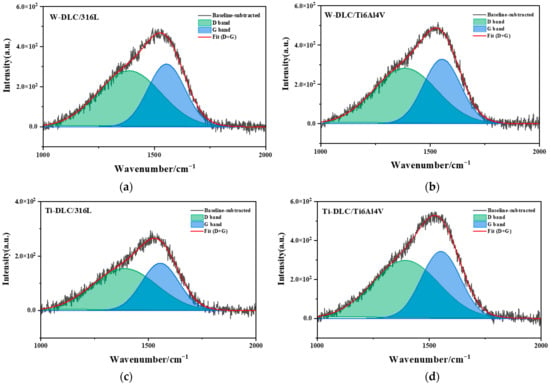
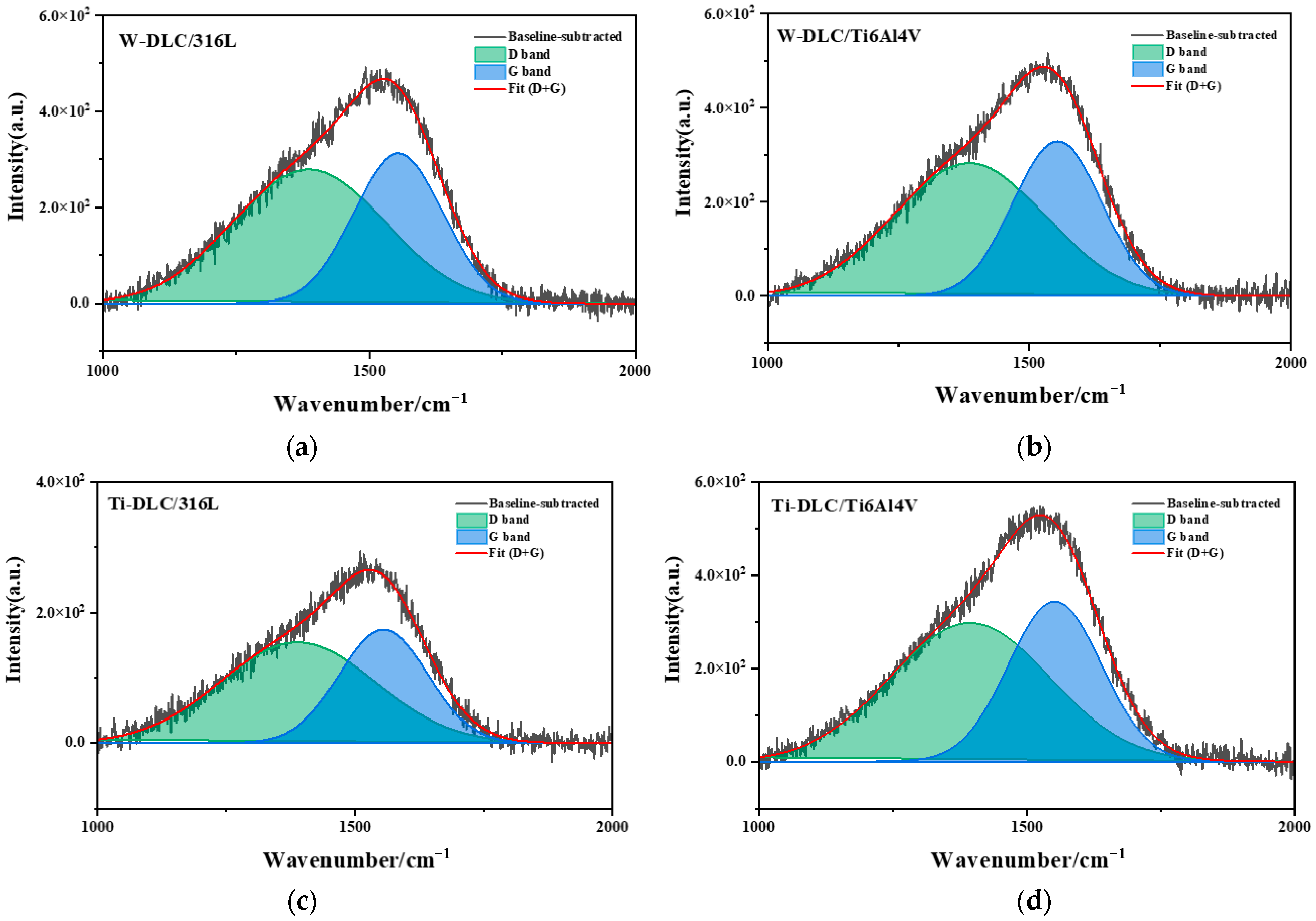
Raman spectra were recorded from 1000 to 2000 cm−1. The broad DLC band was fitted with two Gaussians: the D band at about 1350–1400 cm−1 and the G band at about 1540–1580 cm−1 [40]. A cosmic-ray spike was removed before fitting. A linear baseline was fitted simultaneously with the two bands, and ID/IG was taken as the ratio of the integrated areas of the D and G bands. ID/IG does not give the sp3 fraction directly.
2.3. Electrochemical Corrosion Testing
Corrosion tests used 3.5 wt% NaCl, deaerated with N2 for 30 min, in a three-electrode cell. This standard chloride medium was chosen to compare the films and substrates; the results are not intended to predict in vivo behavior. The specimen (1 cm2 exposed area) was the working electrode, Ag/AgCl the reference electrode, and a graphite rod the counter electrode. After 30–60 min at open circuit, electrochemical impedance spectroscopy (EIS) was measured at the open-circuit potential with a 10 mV amplitude from 100 kHz to 1 Hz (51 points). Spectra were fitted in ZView (version 3.1, Scribner Associates Inc., Southern Pines, NC, USA) The arcs did not close at 1 Hz, so the polarization resistance (Rp) was obtained by extrapolating the fitted model and is used as supporting evidence.
Potentiodynamic polarization was performed on the same specimen, from −0.2 V versus the open-circuit potential to +1.0 V versus Ag/AgCl at 1 mV/s. The corrosion potential (Ecorr) and corrosion current density (icorr) were obtained by Tafel extrapolation over 50–150 mV from Ecorr [41]. With Tafel slopes of about 200 mV/dec, this window covered only about half a decade of current. The icorr values are therefore compared between specimens rather than used as absolute corrosion rates. All potentials are given versus Ag/AgCl. Each condition was measured once, so the uncertainties reported in the tables are fitting errors.
3. Results
3.1. Surface Composition
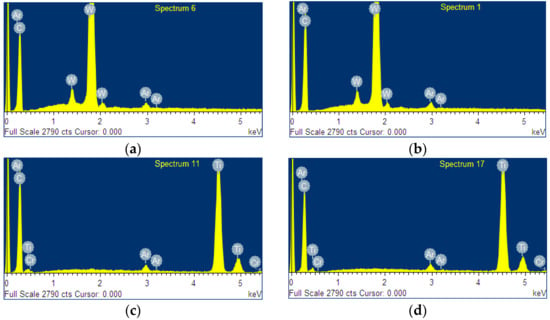
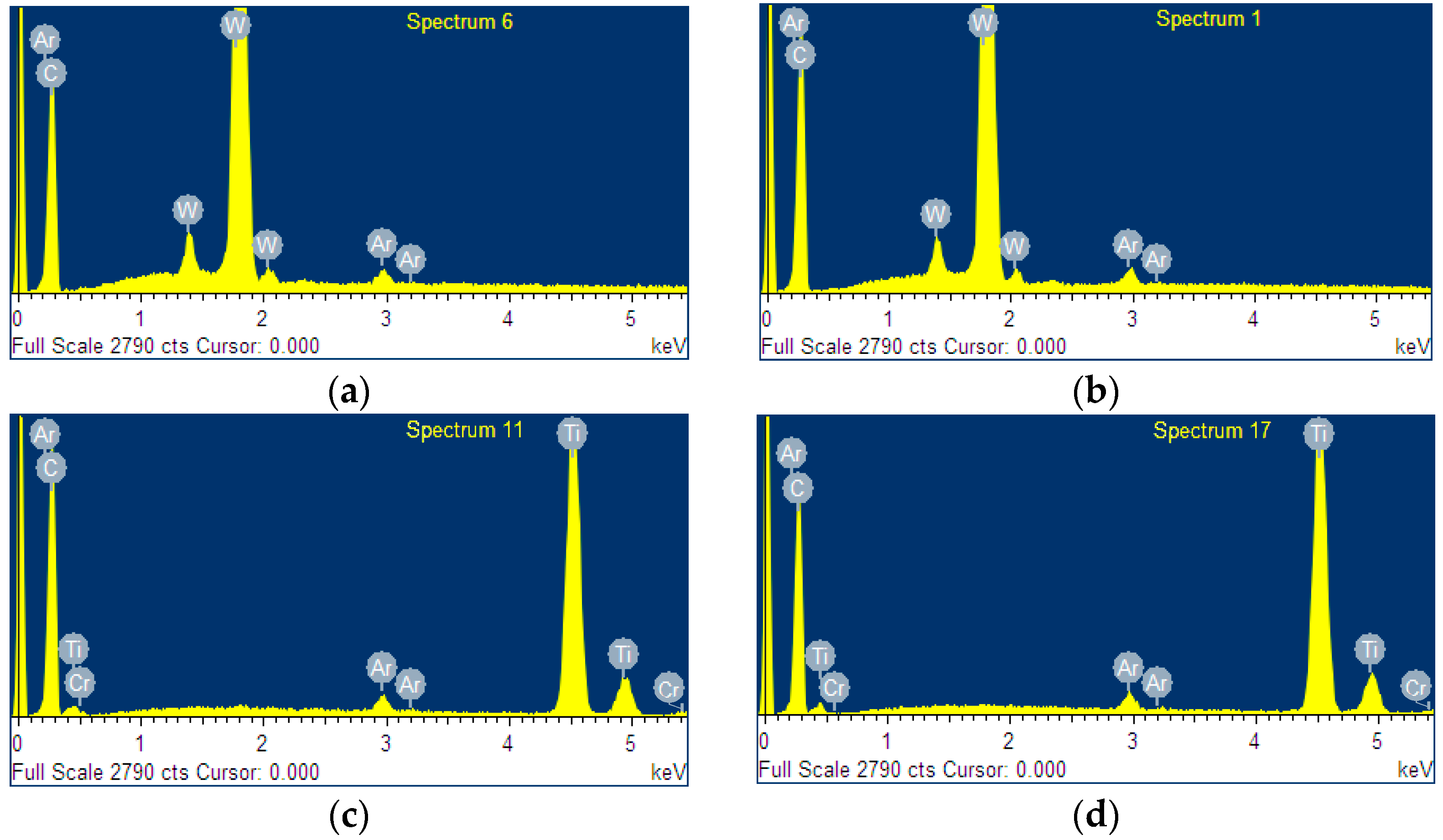
EDX confirmed the intended dopant in each film on both substrates (Figure 2, Table 3). No Fe or Ni was detected in the analyzed areas, so the films covered the substrates there. W-DLC contained about 9 at% W on 316L and 7 at% W on Ti6Al4V. Ti-DLC contained far more dopant, about 23 at% Ti on 316L and 26 at% Ti on Ti6Al4V. Both films used a Cr interlayer, so the Ti signal comes mainly from the film. On Ti6Al4V, the substrate may add a little, although no Al or V was detected. Cr from the interlayer was detected only under Ti-DLC (0.3–0.4 at%). In W-DLC, the high W content (54–59 wt%) raises the mean atomic number and density of the film, which probably shortened the electron range, so the interlayer signal was not detected under W-DLC.
Figure 2.
EDX spectra of the doped DLC films: (a) W-DLC/316L; (b) W-DLC/Ti6Al4V; (c) Ti-DLC/316L; (d) Ti-DLC/Ti6Al4V.
Table 3.
Elemental composition of the doped DLC films determined by EDX.
Both dopant levels are high compared with optimized films. The Ti content of Ti-DLC (23–26 at%) is far above the 3–6 at% at which Ti-DLC gave the best corrosion resistance [25,27,30]. At such levels, Ti-DLC usually forms a TiC/amorphous-carbon nanocomposite [26,29,30], which tends to protect less. A Ti-DLC with 26.8 at% Ti on 304L gave the highest corrosion current in its series [29], and one with 15.24 at% Ti corroded faster than bare 316L in simulated body fluid [27].
The W content of W-DLC (7–9 at%) is lower. Sputtered W-DLC often contains W2C or WC1−x nanocrystals, at least at 10–20 at% W [31,42]. Reported effects on corrosion differ. W-DLC with 3.1–15.1 at% W protected worse than undoped DLC in artificial seawater [19], whereas W-DLC with 25–50 wt% W protected 100Cr6 steel better in 3.5 wt% NaCl [32].
These phases were not confirmed in our films, so the reported structures are used only as a guide when interpreting their corrosion behavior. For each film, the dopant content was similar on the two substrates, so differences between substrates are not due to composition.
3.2. Surface Wettability
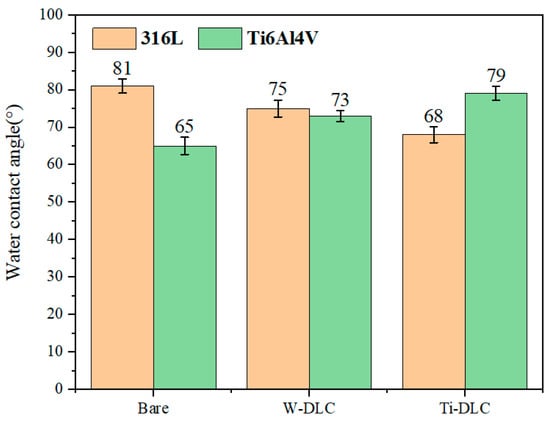
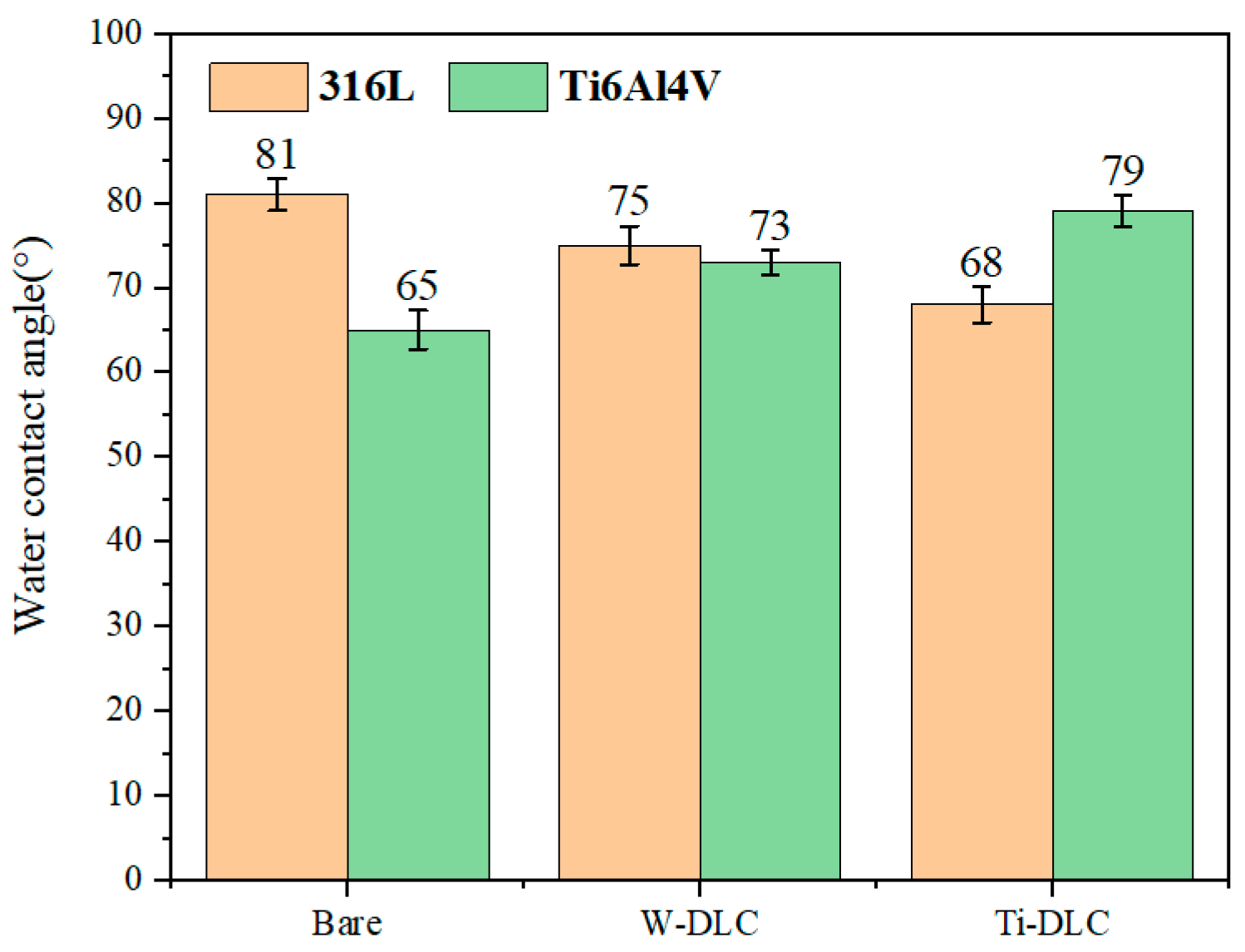
Figure 3 shows the water contact angles. Bare 316L had the highest contact angle (81°), and bare Ti6Al4V the lowest (65°). All surfaces were hydrophilic (below 90°). Because only water was used, the results show relative wettability, not surface free energy [43]. The low angle of Ti6Al4V reflects its polar TiO2 surface, and its higher roughness may add to it [39]. All four films fell between these limits (68–79°). Each film therefore lowered the contact angle on 316L and raised it on Ti6Al4V.
Figure 3.
Water contact angles of the bare substrates and of W-DLC and Ti-DLC on 316L and Ti6Al4V. Error bars show the standard deviation of five droplets.
The two films responded differently to the substrate. W-DLC had nearly the same contact angle on both substrates (75° and 73°), within the droplet scatter. Ti-DLC was clearly less wettable on Ti6Al4V (79°) than on 316L (68°).
3.3. Raman Spectroscopy
Both films showed broad D and G bands on both substrates (Figure 4, Table 4). The G band lay at 1552–1555 cm−1 and was about 200 cm−1 wide, indicating a highly disordered carbon network. ID/IG ranged from 1.47 to 1.56, with fitting uncertainties of about ±0.3. Because the broad D band overlaps the background, ID/IG depends on the baseline and is compared only between spectra fitted in the same way. For each film, the band positions on the two substrates differed by less than 6 cm−1, and the bandwidths and ID/IG agreed within the fitting uncertainty. The substrate therefore had no significant effect on the bonding structure of either film.
Figure 4.
Raman spectra with fitted D and G bands: (a) W-DLC/316L; (b) W-DLC/Ti6Al4V; (c) Ti-DLC/316L; (d) Ti-DLC/Ti6Al4V.
Table 4.
Raman fitting parameters of W-DLC and Ti-DLC on 316L and Ti6Al4V.
3.4. Morphology Before and After Corrosion
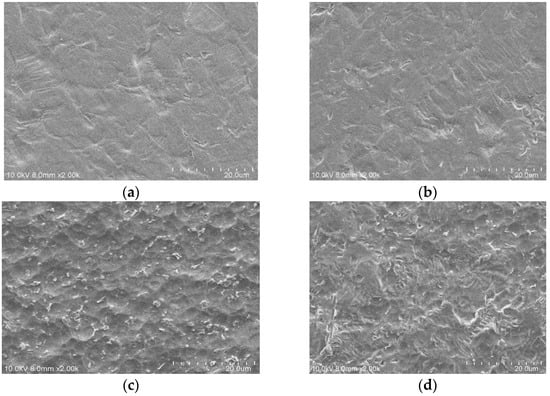
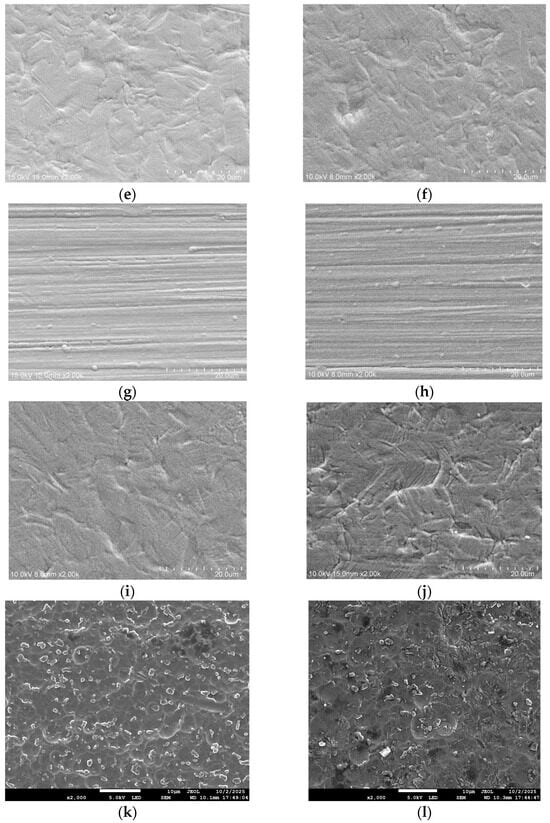
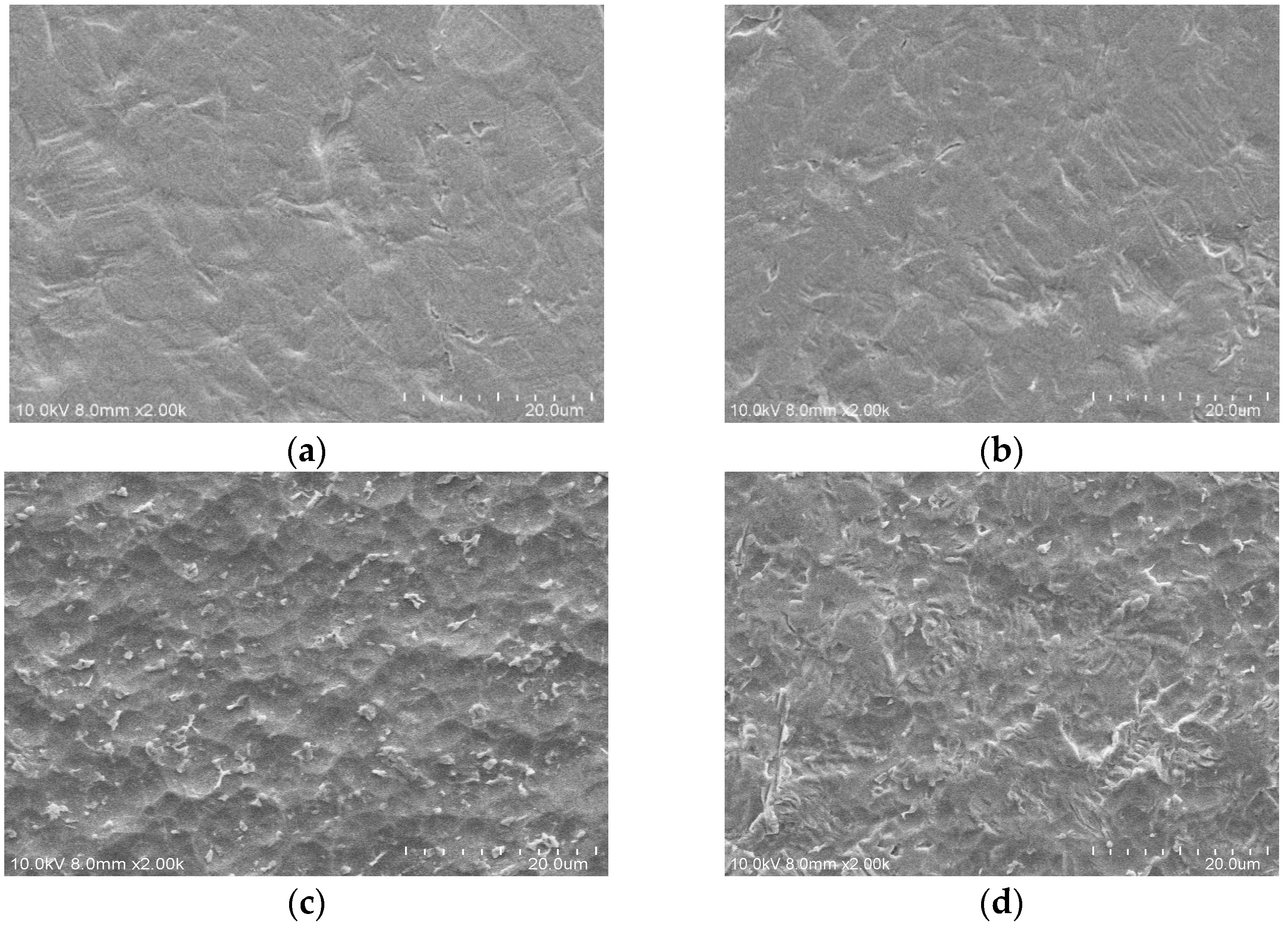
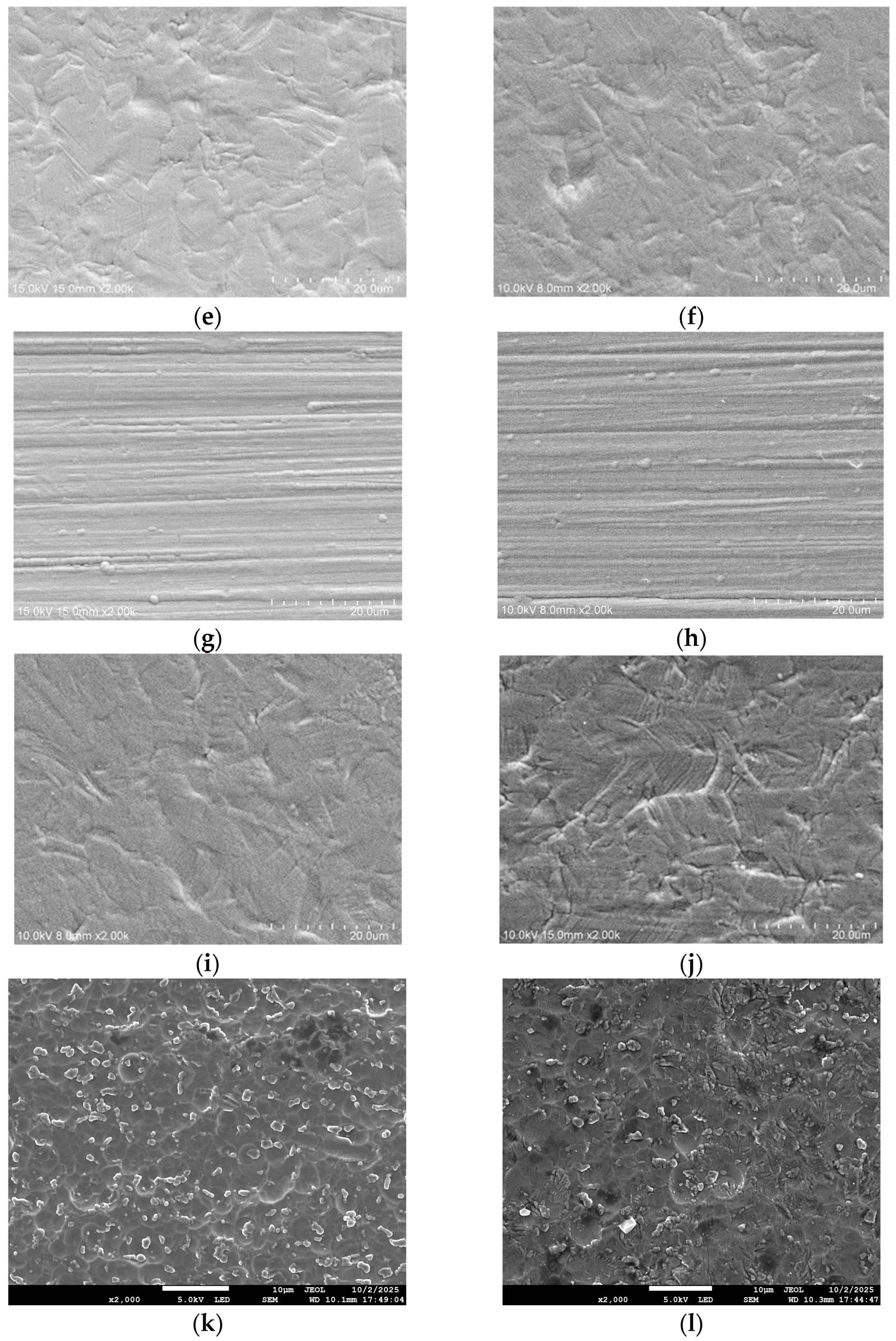
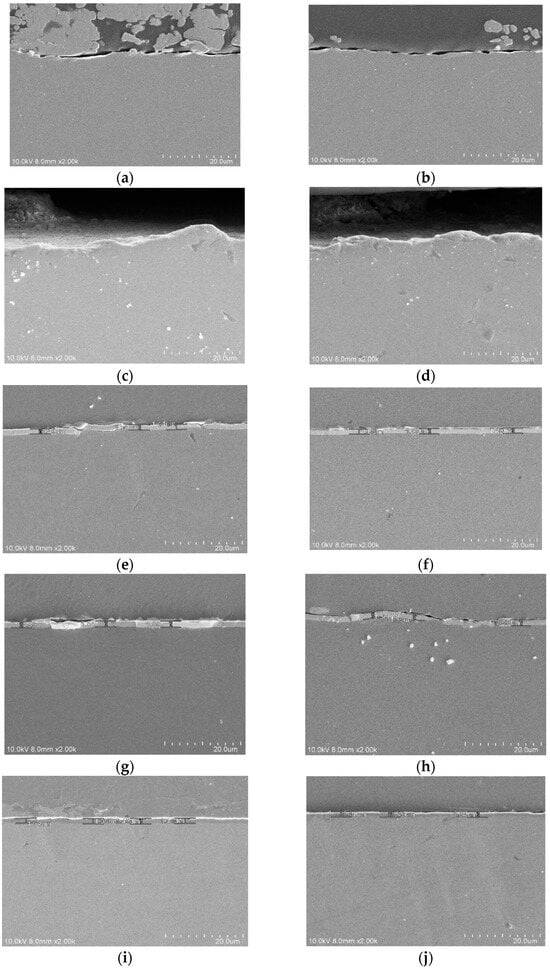
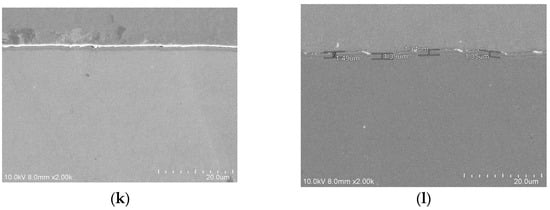
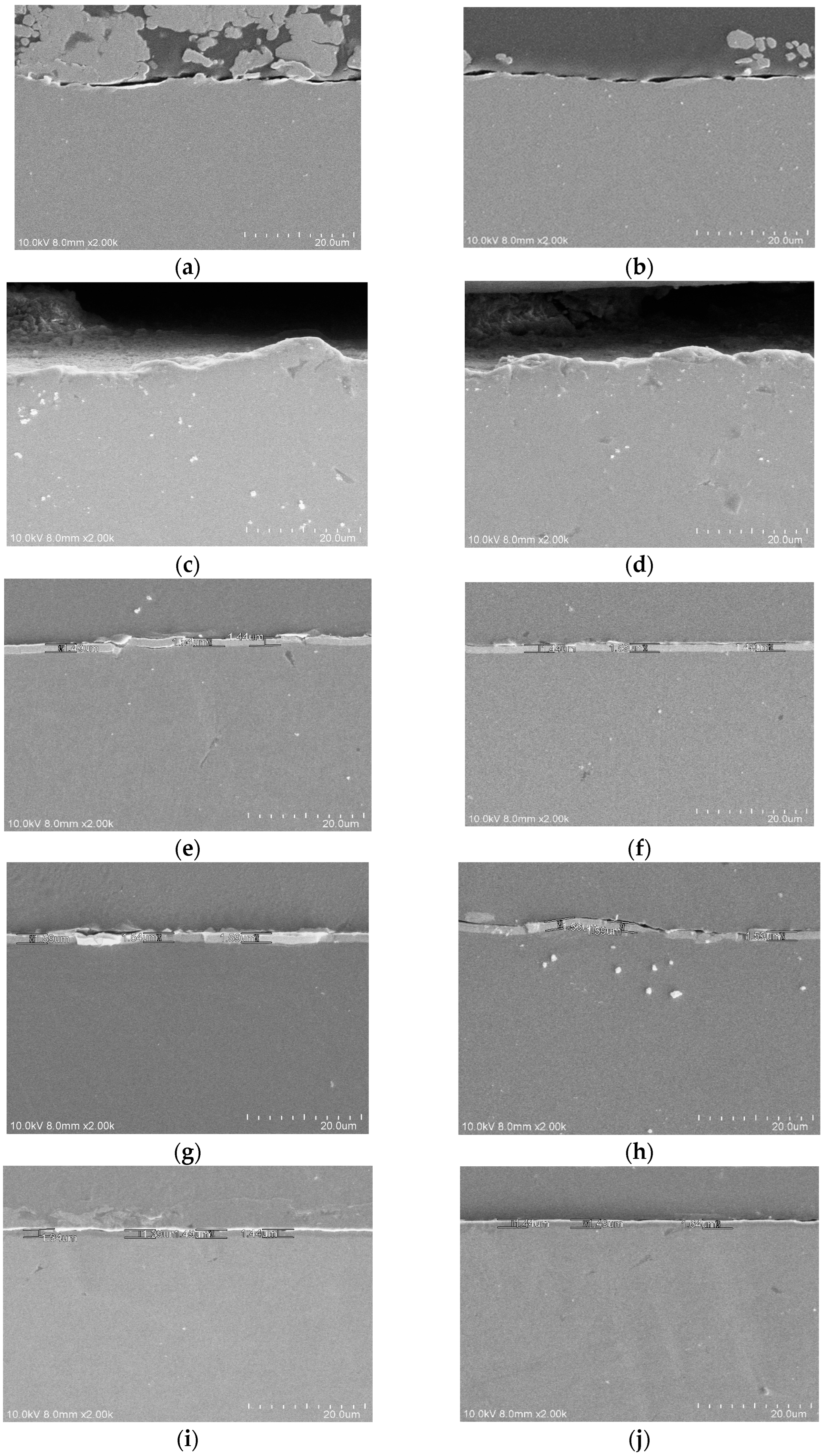
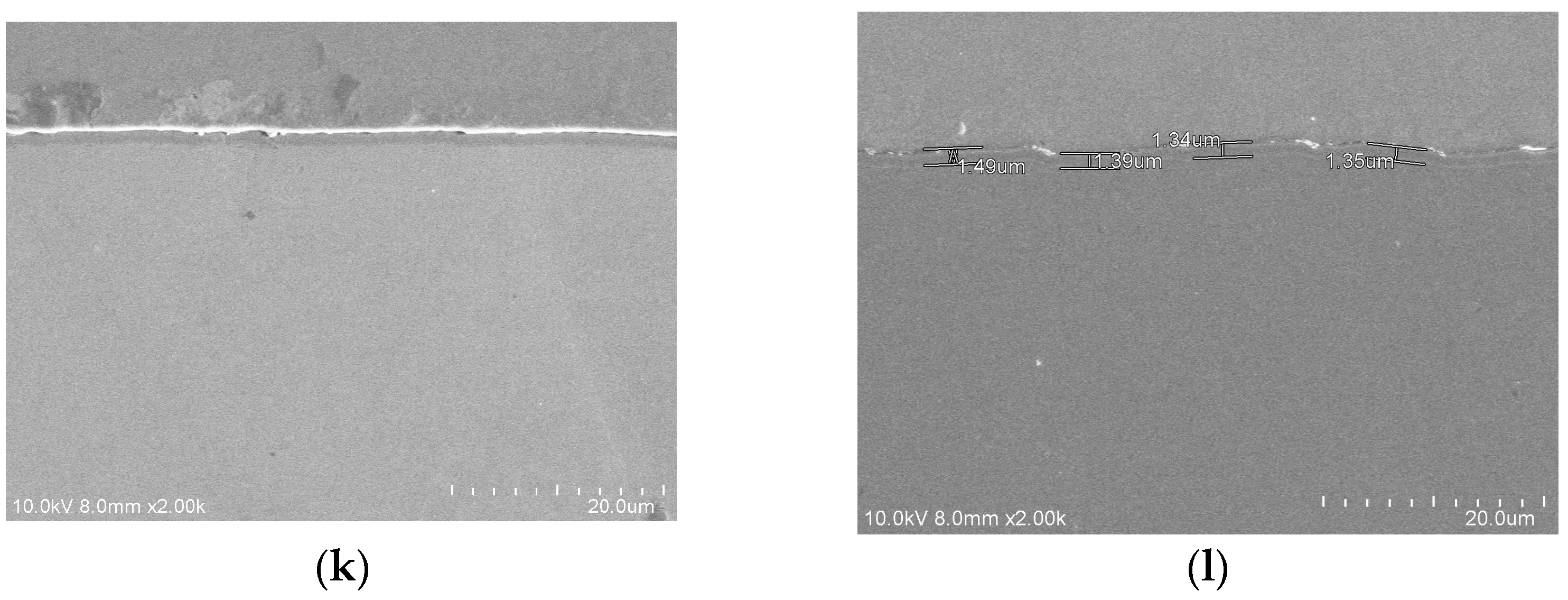
Figure 5 and Figure 6 compare each film on the two substrates before and after the test. No pits or delamination were found on any film after testing. The bare substrates also showed no resolvable pits in the imaged areas. Bare 316L, however, reached several mA cm−2 above about 0.8 V during polarization (Section 3.5). Its attack at high potential was therefore probably shallow and uniform or located outside the imaged areas.
Figure 5.
Surface SEM images before (left) and after (right) the corrosion test: (a,b) bare 316L; (c,d) bare Ti6Al4V; (e,f) W-DLC/316L; (g,h) W-DLC/Ti6Al4V; (i,j) Ti-DLC/316L; (k,l) Ti-DLC/Ti6Al4V.
Figure 6.
Cross-sectional SEM images before (left) and after (right) the corrosion test: (a,b) bare 316L; (c,d) bare Ti6Al4V; (e,f) W-DLC/316L; (g,h) W-DLC/Ti6Al4V; (i,j) Ti-DLC/316L; (k,l) Ti-DLC/Ti6Al4V.
The substrate changed the surface morphology of Ti-DLC the most. On 316L, the film followed the grain relief of the steel and showed fine crack-like lines already before testing (Figure 5i,j). On Ti6Al4V, it was covered with discrete bright particles of about 1 µm (Figure 5k,l). This particle-rich surface was found only for Ti-DLC/Ti6Al4V. It may come from Ti-rich clusters or from nodular growth on the rougher substrate. W-DLC followed the substrate texture on both substrates and was nearly unchanged after testing (Figure 5e–h).
In cross-section (Figure 6), Ti-DLC remained continuous on both substrates. The surface lines of Ti-DLC on 316L did not extend through the film (Figure 6j). W-DLC also covered both substrates, but gaps appeared along the film/resin boundary, most clearly on Ti6Al4V (Figure 6g,h). These were present before testing and most likely formed during mounting and polishing, so they are not corrosion damage. The gap at the edge of the bare 316L (Figure 6a,b) was also present before testing.
3.5. Potentiodynamic Polarization
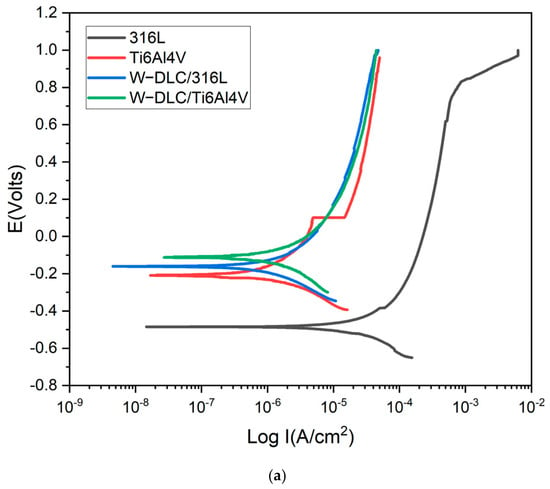
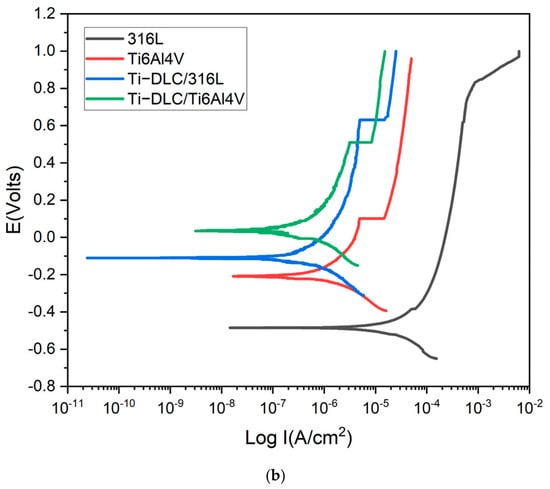
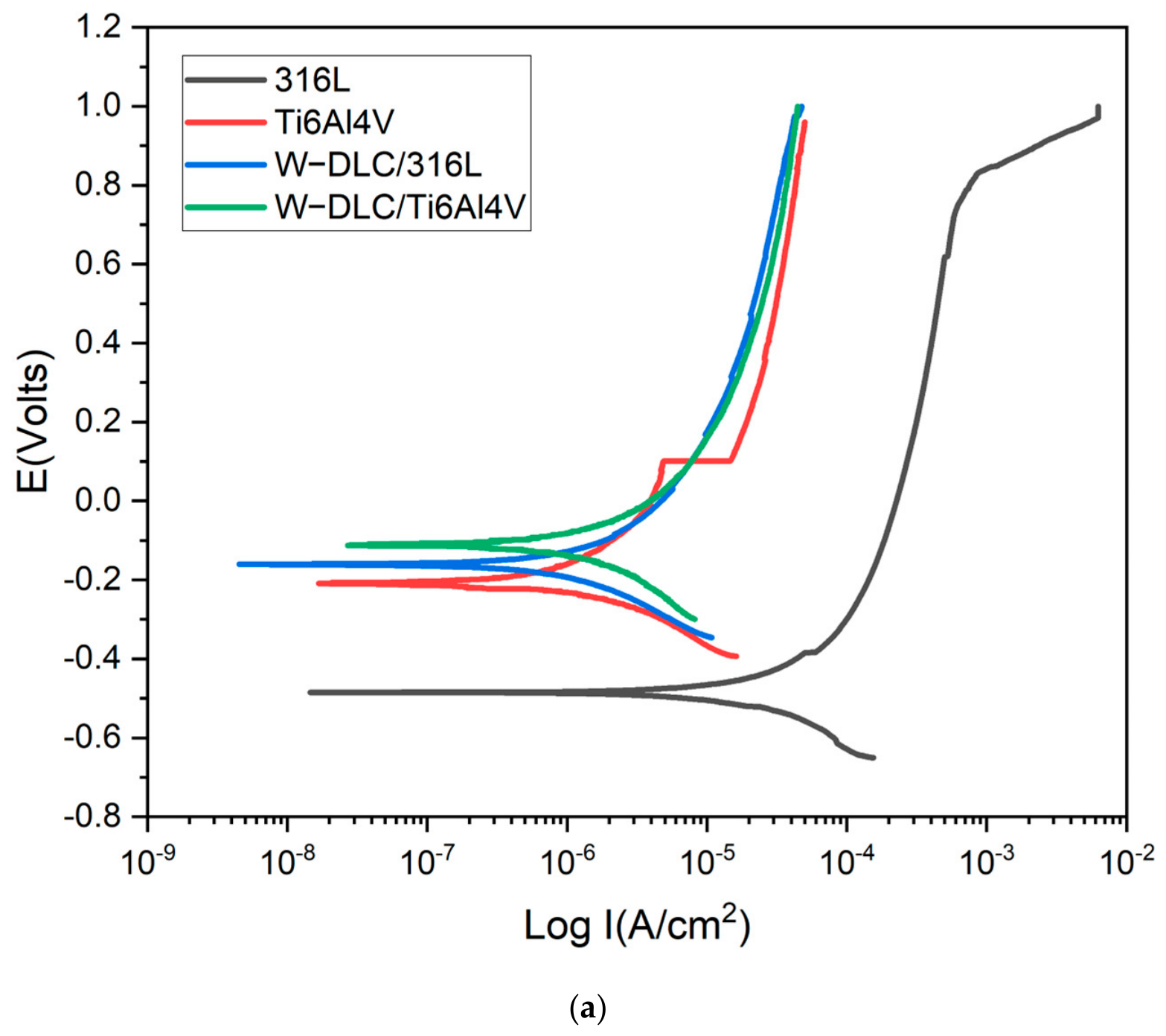
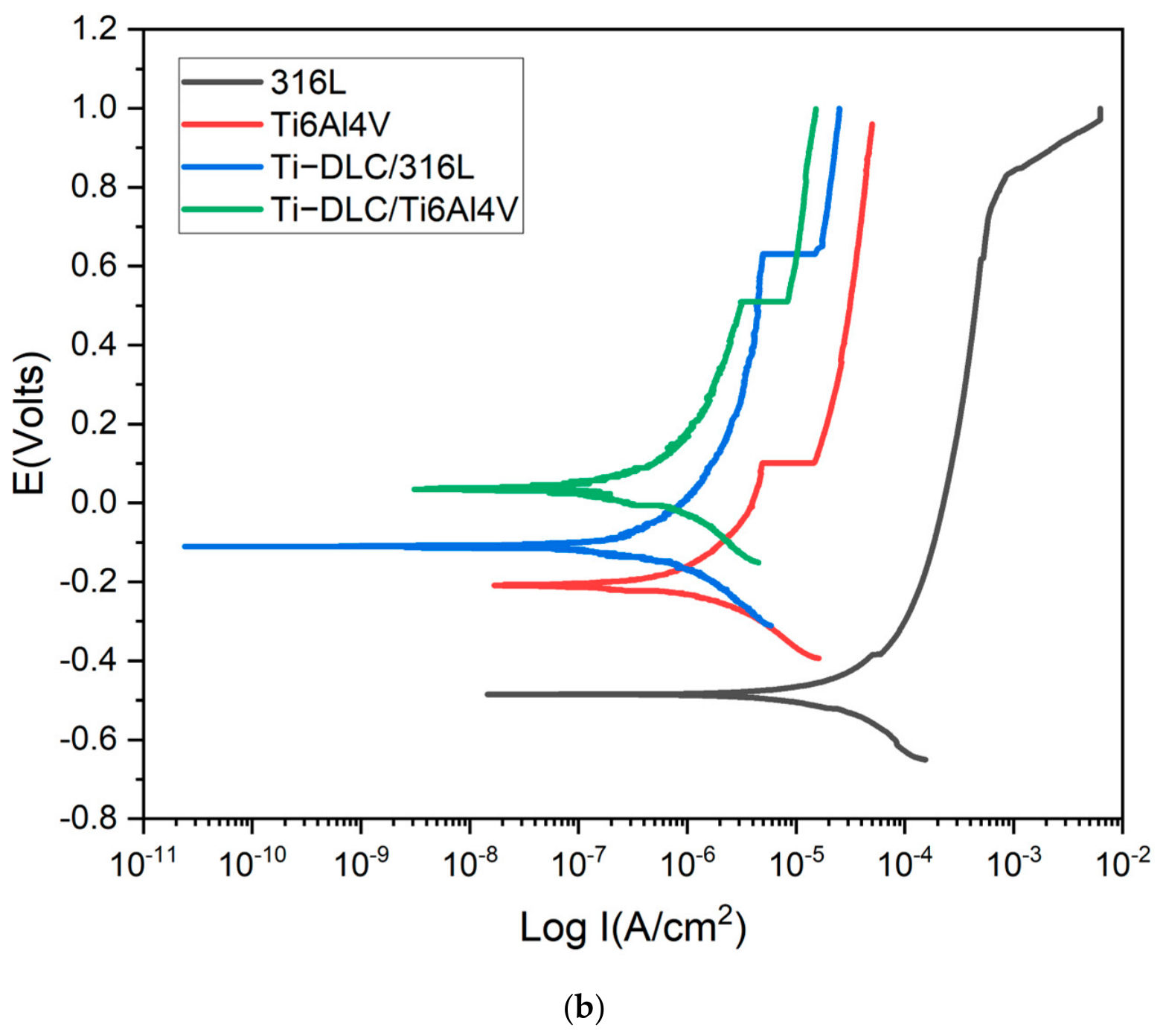
Figure 7 shows the polarization curves, and Table 5 lists the fitted parameters. The two bare substrates differed greatly in corrosion resistance. Bare 316L had the lowest Ecorr and the highest icorr. Bare Ti6Al4V corroded much more slowly, consistent with its more protective native oxide. The coupons were not polished, and crevice attack at the cell seal cannot be excluded.
Figure 7.
Potentiodynamic polarization curves in 3.5 wt% NaCl: (a) W-DLC and (b) Ti-DLC on 316L and Ti6Al4V, with the bare substrates for reference.
Table 5.
Polarization parameters in 3.5 wt% NaCl.
Each film raised Ecorr on both substrates, and its polarization curves on the two substrates were similar. The substrate changed its icorr by no more than about 20% and hardly affected its Tafel slopes (Table 5). All specimens, including the bare substrates, gave Tafel slopes well above those expected for simple charge-transfer control, so the slopes were not used to identify the controlling reaction. The corrosion current density of each film was therefore considered nearly independent of the substrate. The reduction in icorr, however, depended strongly on the substrate. On 316L, both films lowered icorr by more than an order of magnitude because the passive film of the steel is less stable in chloride. On Ti6Al4V, the reduction was small or absent because the substrate already has a protective oxide.
3.6. Electrochemical Impedance Spectroscopy
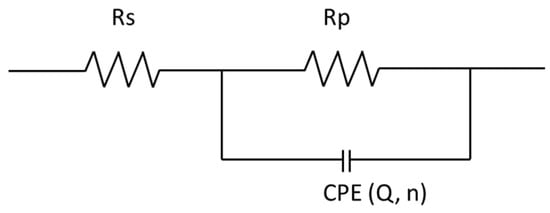
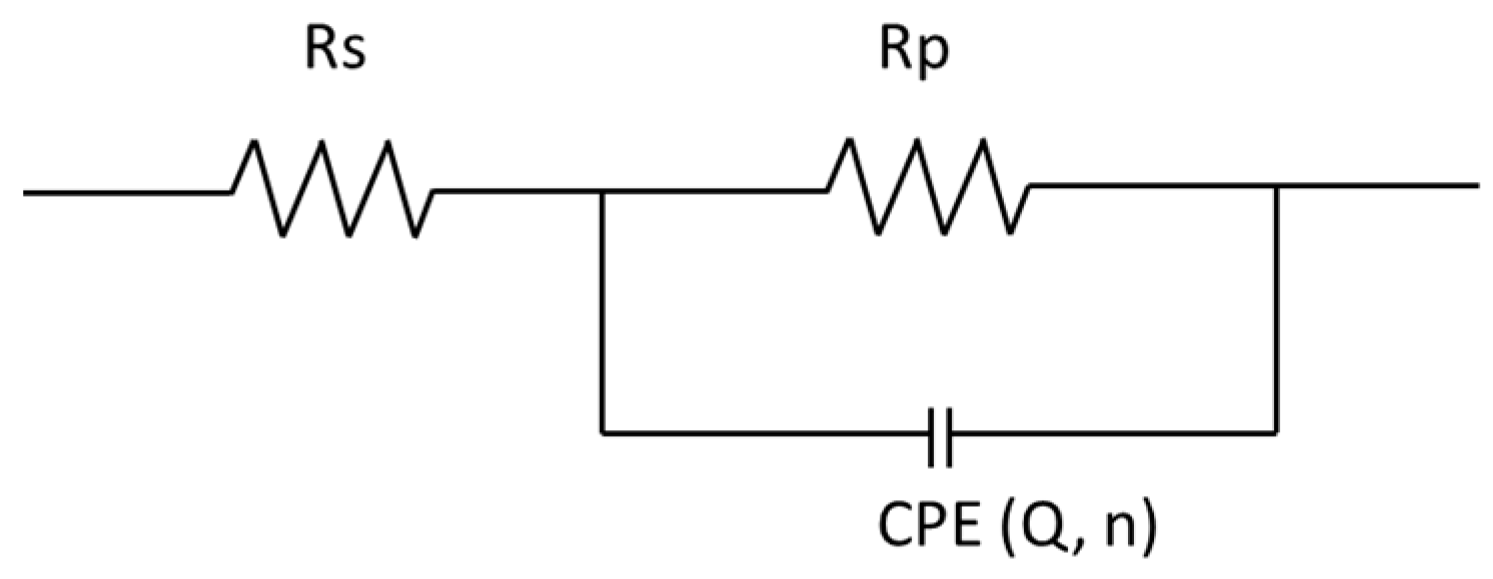
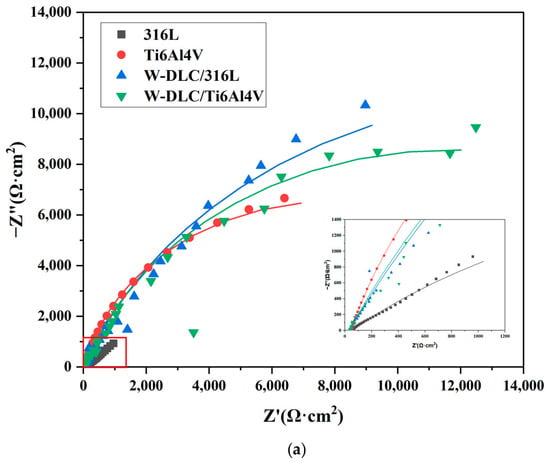
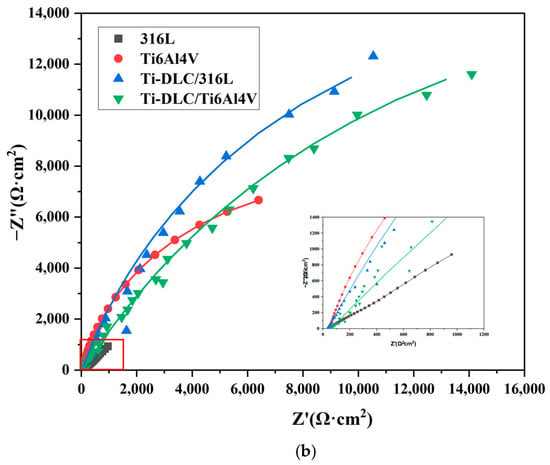
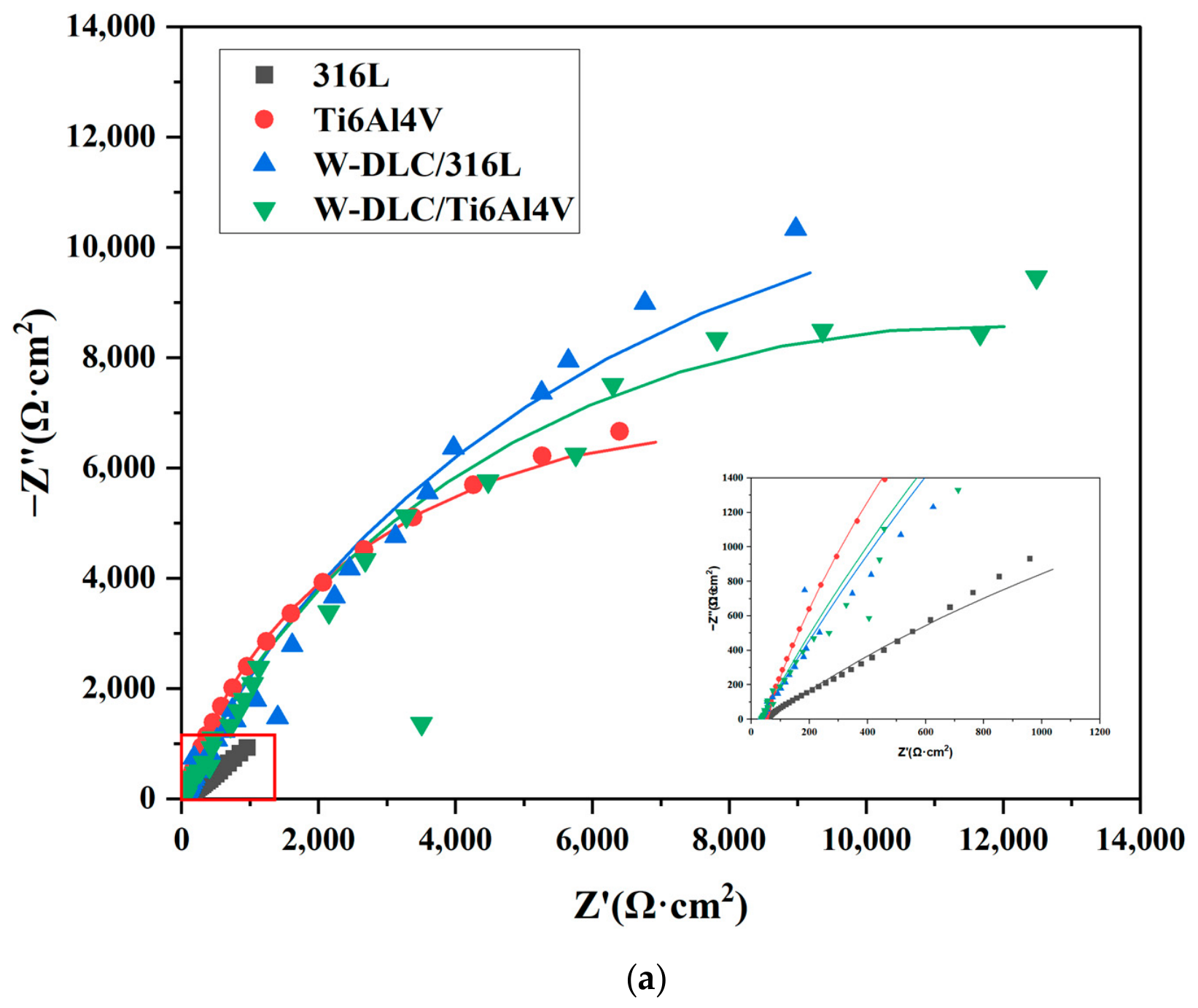
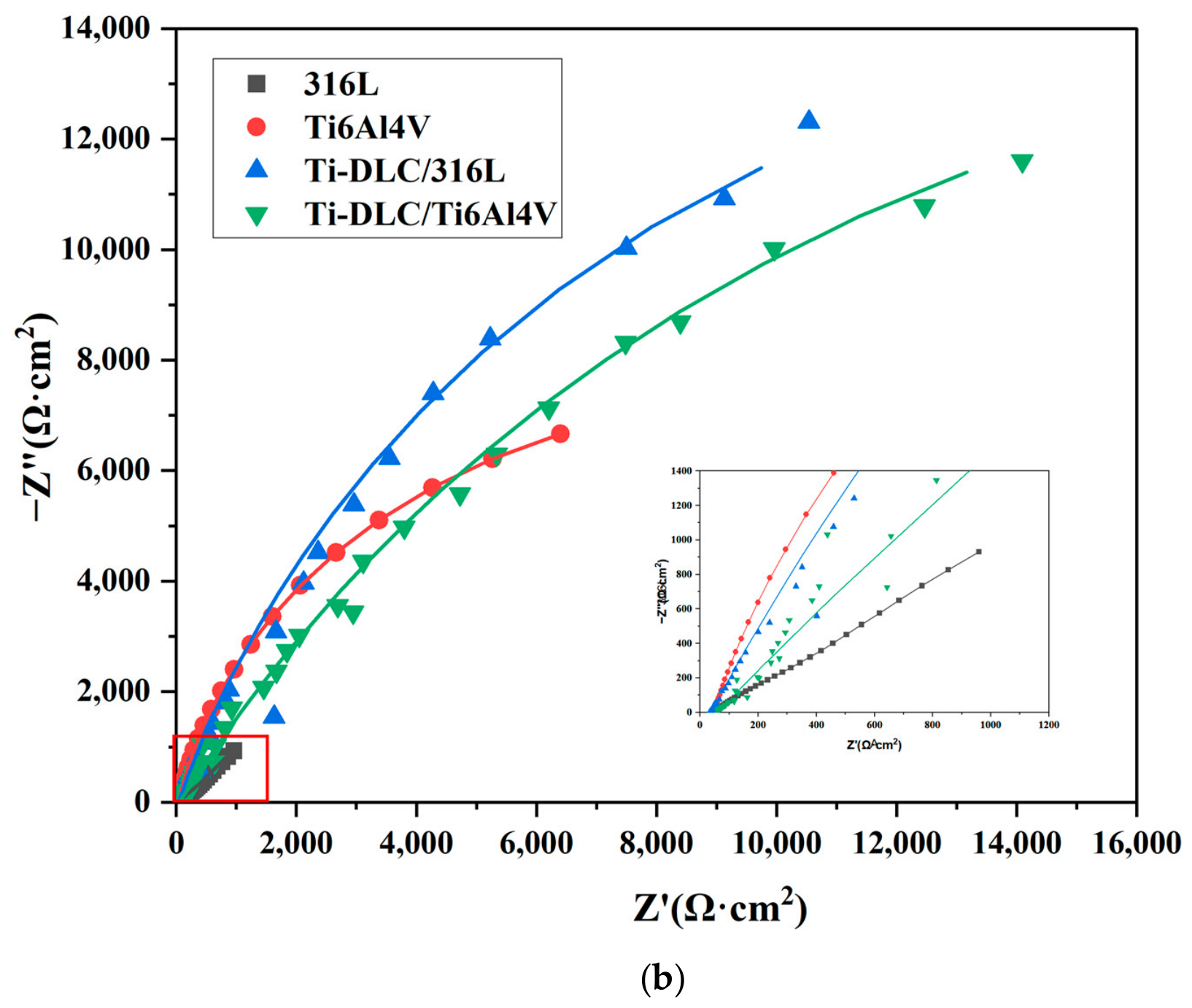
Table 6 lists the parameters obtained with the equivalent circuit in Figure 8, and Figure 9 shows the Nyquist plots. Both films gave larger arcs than the bare substrate. For each film, the arcs on the two substrates were of similar size.
Table 6.
Equivalent-circuit parameters from EIS fitting in 3.5 wt% NaCl.
Figure 8.
Equivalent circuit used to fit all EIS spectra.
Figure 9.
Nyquist plots in 3.5 wt% NaCl: (a) W-DLC and (b) Ti-DLC on 316L and Ti6Al4V. Insets show the low-impedance region.
All spectra showed a single, incomplete, flattened arc, with no distinct second time constant in the measured range. They were therefore fitted with the single-time-constant circuit in Figure 8. In this circuit, Rs is the solution resistance, Rp the polarization resistance, and Q and n the coefficient and exponent of the constant-phase element (CPE). A two-CPE circuit did not improve the fit, and its extra parameters were not resolved. The simpler single-CPE circuit was therefore adopted. The same circuit was used for all specimens so that their parameters could be compared directly. For the bare substrates, the CPE and Rp describe the native passive film; for the coated specimens, they describe the film surface. Because Rp was obtained by extrapolation below 1 Hz, its value depends on the model. A second time constant below 1 Hz cannot be excluded. The effective capacitance (Ceff) was calculated from the CPE parameters with the Brug formula [44]:
where Q is the CPE coefficient and n is the CPE exponent. Ceff expresses the non-ideal CPE response as an equivalent ideal capacitance. The Brug formula assumes a distribution of time constants along the electrode surface. For a dielectric film, whose properties vary normal to the surface, the power-law model is more appropriate, but it requires the resistivity profile of the film [45]. Ceff from Equation (1) is therefore compared with the capacitance of a dielectric film only in order of magnitude. All fits gave a chi-squared value (χ2) below 10−2.
The fitted Rp followed the polarization results, and bare 316L had the lowest Rp. Bare Ti6Al4V, however, had only about twice the Rp of bare 316L, although its icorr was much lower. The arcs of the more resistive specimens were far from closed at 1 Hz, so their extrapolated Rp is likely underestimated. Rp was therefore used only to compare trends. For each film, Rp on the two substrates overlapped within the fitting uncertainty. Relative to the bare substrate, both films raised Rp more on 316L than on Ti6Al4V. On Ti6Al4V, the gain was moderate for Ti-DLC and small for W-DLC. The small gain for W-DLC/Ti6Al4V depended on the extrapolation, so this specimen showed no clear improvement. The surface lines of Ti-DLC/316L did not lower Rp below that of the bare substrate. There was therefore no electrochemical evidence that they formed continuous paths to the substrate during the test.
The effective capacitance helps to distinguish barrier behavior from conductive behavior. The coated specimens gave Ceff values in the µF cm−2 range (Table 6). An insulating carbon layer of the same thickness would give only a few nF cm−2 [46], two to three orders of magnitude less. The EIS response was therefore inconsistent with the expected insulating barrier layer. The high capacitance most likely reflects the electrical conductivity of the metal-containing films [35,36], although electrolyte-filled defects and surface oxides may also contribute. The capacitance therefore arises mainly at the film surface, for which the Brug formula is appropriate. In sputtered Ti-DLC, only about 3 at% Ti lowered the resistivity by more than five orders of magnitude [25]. TiC-rich Ti-DLC has been reported to be more conductive and less protective than lightly doped films [27]. A thin surface oxide could also give µF-range values. On Ti-DLC, such capacitances were attributed to a TiO2-rich passive film only a few nanometers thick [27]. In both cases, the response differs from that of an insulating layer, and the film surface likely takes part in the charge-transfer reactions. This held even for W-DLC, which contained only 7–9 at% W.
The CPE exponent was well below 1 for all specimens, reflecting rough and heterogeneous surfaces (Table 6). It was lowest for bare 316L, consistent with a heterogeneous, partly active surface. For W-DLC, it was similar on both substrates. For Ti-DLC, it was lower on Ti6Al4V than on 316L, consistent with its particle-rich surface. A low n also lowers the Ceff obtained from Equation (1). With the n of Ti-DLC/316L, Ti-DLC/Ti6Al4V would give a Ceff similar to those of the other coated specimens. Its low Ceff therefore reflects its heterogeneous surface, not a lower conductivity. For this reason, Ceff values are compared here only in order of magnitude.
4. Discussion
Two limiting cases help to interpret the results. Barrier coatings, such as undoped hydrogenated DLC, are highly resistive and block charge transfer [5,47,48]. Their performance is limited by pores through which the electrolyte reaches the substrate [20]. At sufficient metal content, DLC becomes electrically conductive [5,35,36], and the film surface itself can then act as an electrode. Real films lie between these two limits, because pores and surface defects can still expose the substrate. The high Ceff values indicate that W-DLC and Ti-DLC lie close to the conductive limit. This behavior is discussed below in three respects.
First, the corrosion rate was governed mainly by the film. For each film, icorr and Rp were nearly the same on both substrates, although the bare substrates differed greatly in corrosion rate. A barrier coating would instead follow the substrate exposed at its pores. Under such a model, coated Ti6Al4V would show a much lower corrosion current density than coated 316L, as the bare substrates do. This substrate dependence was not observed for either film. Even if all the current on 316L came from exposed steel, the ratio of the coated to bare corrosion current densities implies an exposed area of several percent, far larger than the defects observed by SEM.
Second, the substrate determines how much the film improves corrosion resistance. Because the film mainly governs the corrosion rate, the improvement depends mainly on how fast the bare substrate corrodes. 316L has a thin Cr2O3-based passive film that is prone to chloride breakdown [49], so it gained the most from the films. Ti6Al4V is already protected by a stable TiO2-based film [50], so the films added little. Ti-DLC coatings on Ti6Al4V even showed a lower polarization resistance than the bare substrate in phosphate-buffered solution [51]. Other studies follow the same pattern. The improvement from a doped DLC film is largest on active magnesium alloys [52], smaller on stainless steel [19], and smallest on passive titanium alloys [51].
Third, the substrate can still change the surface properties of the film, such as its wettability, corrosion potential, and morphology. On Ti6Al4V, Ti-DLC had a more positive corrosion potential, a less wettable surface, and a more heterogeneous surface. Its corrosion rate, however, stayed the same. Because the corrosion potential is a mixed potential, a small exposed area can shift it without noticeably changing the corrosion rate. A shift to a more positive corrosion potential without a lower corrosion rate has also been reported for Ti-rich DLC [30]. W-DLC was hardly affected. The two films also differed in dopant content, so this difference cannot be assigned to the dopant type alone. The oxides on the film and at defects offer a likely explanation. Ti in the film can form TiO2 at the surface [27,28,29]. Defects that penetrate both the film and the Cr interlayer would expose Ti6Al4V, which forms a similar TiO2-based film. Exposed 316L instead carries a Cr-rich passive film that is less stable in chloride [49]. Such sites can act as anodes, as reported for Ti/Ti-DLC on magnesium alloy [52]. They shift the mixed potential most when the film itself is passive, as TiO2-covered Ti-DLC is likely to be. Tungsten dissolves much faster in neutral and alkaline solutions than in acid, because its oxide is not stable there [53]. The W-DLC surface therefore probably stays more active. Its corrosion potential is then less sensitive to the exposed substrate. This interpretation needs to be verified by surface analysis.
Metal-doped DLC can behave as a conductive surface, as found here. Its corrosion rate then depends little on the substrate, so it protects most on substrates whose passive film breaks down in chloride, such as 316L stainless steel. On passive substrates such as Ti6Al4V, the film is better justified by other functions, such as the tribocorrosion resistance reported for Ti-DLC on this substrate [51]. Metal doping also supports such functions: it relieves stress [16,25] and improves wear resistance [30,32]. Long-term durability was not tested here. It depends strongly on the interlayer: DLC-coated implants have failed in vivo by slow crevice corrosion of the interlayer [10], and interlayer choice controls the stability of DLC on 316L [54].
5. Conclusions
W-DLC and Ti-DLC films were sputtered with the same deposition parameters on as-received 316L and Ti6Al4V, and each film was compared with itself on the two substrates. Because the W and Ti contents differed, the differences between the two films reflect both dopant type and dopant content. The main conclusions are as follows:
- (1)
- The corrosion rate of each film was nearly independent of the substrate. High effective capacitances indicated that both metal-doped films behaved mainly as conductive electrodes rather than insulating barriers.
- (2)
- The benefit of each film depended on the bare substrate. Both films strongly improved the corrosion resistance of 316L, whose passive film is vulnerable to chloride. On Ti6Al4V, whose passive film is stable in chloride, W-DLC gave no clear benefit and Ti-DLC only a small one.
- (3)
- The substrate changed the surface state of Ti-DLC but not its corrosion rate. On Ti6Al4V, Ti-DLC had a more positive corrosion potential and a less wettable surface. This may be because titanium oxide forms both on the film and on the substrate exposed at defects that penetrate the interlayer.
Author Contributions
Conceptualization, C.W.; methodology, C.W., L.-C.C., C.-H.H., H.-C.H. and K.-M.H.; validation, C.W.; investigation, C.W., L.-C.C. and H.-C.H.; data curation, L.-C.C.; writing—original draft preparation, C.W.; writing—review and editing, C.W.; visualization, L.-C.C.; project administration, C.W.; funding acquisition, C.W. All authors have read and agreed to the published version of the manuscript.
Funding
This work was supported by the National Science and Technology Council (NSTC) of Taiwan under grant number 113-2221-E-036-007.
Data Availability Statement
The original contributions presented in this study are included in the article. Further inquiries can be directed to the corresponding author.
Conflicts of Interest
The authors declare no conflicts of interest.
Abbreviations
The following abbreviations are used in this manuscript:
| DLC | Diamond-like carbon |
| Ti-DLC | Titanium-doped diamond-like carbon |
| W-DLC | Tungsten-doped diamond-like carbon |
| SEM | Scanning electron microscopy |
| EDX | Energy-dispersive X-ray spectroscopy |
| EIS | Electrochemical impedance spectroscopy |
| CPE | Constant-phase element |
| Ecorr | corrosion potential |
| icorr | corrosion current density |
| Rs | solution resistance |
| Rp | polarization resistance |
| βa, βc | anodic and cathodic Tafel slopes |
| Q | CPE coefficient |
| n | CPE exponent |
| Ceff | effective capacitance |
| ID/IG | ratio of the integrated areas of the D and G bands |
| FWHM | full width at half maximum |
| Sa | average roughness |
| χ2 | chi-squared value of the fit |
References
- Mani, G.; Feldman, M.D.; Patel, D.; Agrawal, C.M. Coronary stents: A materials perspective. Biomaterials 2007, 28, 1689–1710. [Google Scholar] [CrossRef] [Scilit] [PubMed]
- Asri, R.I.M.; Harun, W.S.W.; Samykano, M.; Lah, N.A.C.; Ghani, S.A.C.; Tarlochan, F.; Raza, M.R. Corrosion and surface modification on biocompatible metals: A review. Mater. Sci. Eng. C 2017, 77, 1261–1274. [Google Scholar] [CrossRef] [Scilit] [PubMed]
- Chen, Q.; Thouas, G.A. Metallic implant biomaterials. Mater. Sci. Eng. R 2015, 87, 1–57. [Google Scholar] [CrossRef] [Scilit]
- Kornowski, R.; Hong, M.K.; Tio, F.O.; Bramwell, O.; Wu, H.; Leon, M.B. In-stent restenosis: Contributions of inflammatory responses and arterial injury to neointimal hyperplasia. J. Am. Coll. Cardiol. 1998, 31, 224–230. [Google Scholar] [CrossRef] [Scilit] [PubMed]
- Robertson, J. Diamond-like amorphous carbon. Mater. Sci. Eng. R 2002, 37, 129–281. [Google Scholar] [CrossRef] [Scilit]
- Bociaga, D.; Sobczyk-Guzenda, A.; Szymanski, W.; Jedrzejczak, A.; Jastrzebska, A.; Olejnik, A.; Swiatek, L.; Jastrzebski, K. Diamond like carbon coatings doped by Si fabricated by a multi-target DC-RF magnetron sputtering method—Mechanical properties, chemical analysis and biological evaluation. Vacuum 2017, 143, 395–406. [Google Scholar] [CrossRef] [Scilit]
- Love, C.A.; Cook, R.B.; Harvey, T.J.; Dearnley, P.A.; Wood, R.J.K. Diamond like carbon coatings for potential application in biological implants—A review. Tribol. Int. 2013, 63, 141–150. [Google Scholar] [CrossRef] [Scilit]
- Hauert, R.; Müller, U. An overview on tailored tribological and biological behavior of diamond-like carbon. Diam. Relat. Mater. 2003, 12, 171–177. [Google Scholar] [CrossRef] [Scilit]
- Vetter, J. 60 years of DLC coatings: Historical highlights and technical review of cathodic arc processes to synthesize various DLC types, and their evolution for industrial applications. Surf. Coat. Technol. 2014, 257, 213–240. [Google Scholar] [CrossRef] [Scilit]
- Hauert, R.; Thorwarth, K.; Thorwarth, G. An overview on diamond-like carbon coatings in medical applications. Surf. Coat. Technol. 2013, 233, 119–130. [Google Scholar] [CrossRef] [Scilit]
- Wei, C.; Yen, J.-Y. Effect of film thickness and interlayer on the adhesion strength of diamond-like carbon films on different substrates. Diam. Relat. Mater. 2007, 16, 1325–1330. [Google Scholar] [CrossRef] [Scilit]
- Wei, C.; Yang, J.-F.; Tai, F.-C. The stress reduction effect by interlayer deposition or film thickness for diamond-like carbon on rough surface. Diam. Relat. Mater. 2010, 19, 518–524. [Google Scholar] [CrossRef] [Scilit]
- Wei, C.; Yang, J.-F. A finite element analysis of the effects of residual stress, substrate roughness and non-uniform stress distribution on the mechanical properties of diamond-like carbon films. Diam. Relat. Mater. 2011, 20, 839–844. [Google Scholar] [CrossRef] [Scilit]
- Wei, C.; Pan, W.-J.; Hung, M.-S. The effects of substrate roughness and associated surface properties on the biocompatibility of diamond-like carbon films. Surf. Coat. Technol. 2013, 224, 8–17. [Google Scholar] [CrossRef] [Scilit]
- Wei, C.; Peng, K.-S.; Hung, M.-S. The effect of hydrogen and acetylene mixing ratios on the surface, mechanical and bio-compatible properties of diamond-like carbon films. Diam. Relat. Mater. 2016, 63, 108–114. [Google Scholar] [CrossRef] [Scilit]
- Sun, H.; Yang, L.; Wu, H.; Zhao, L. Effects of element doping on the structure and properties of diamond-like carbon films: A review. Lubricants 2023, 11, 186. [Google Scholar] [CrossRef] [Scilit]
- Ramos, B.B.; Vicente, F.A.; Hammes, G.; Bendo, T.; Binder, C. Enhancing corrosion and tribology performance of stainless steel with DLC coatings: Effects of doping and multilayered structures. Surf. Coat. Technol. 2024, 477, 130334. [Google Scholar] [CrossRef] [Scilit]
- Dalibón, E.L.; Escalada, L.; Simison, S.; Forsich, C.; Heim, D.; Brühl, S.P. Mechanical and corrosion behavior of thick and soft DLC coatings. Surf. Coat. Technol. 2017, 312, 101–109. [Google Scholar] [CrossRef] [Scilit]
- Cao, L.; Liu, J.; Wan, Y.; Pu, J. Corrosion and tribocorrosion behavior of W doped DLC coating in artificial seawater. Diam. Relat. Mater. 2020, 109, 108019. [Google Scholar] [CrossRef] [Scilit]
- Creus, J.; Mazille, H.; Idrissi, H. Porosity evaluation of protective coatings onto steel, through electrochemical techniques. Surf. Coat. Technol. 2000, 130, 224–232. [Google Scholar] [CrossRef] [Scilit]
- Ru, L.; Wang, Y.; Liu, J.; Tao, S.; Xiao, J. Hydrophobic, anticorrosion, and frictional properties of F-DLC films prepared by magnetron sputtering. Vacuum 2023, 217, 112567. [Google Scholar] [CrossRef] [Scilit]
- Sui, J.; Zhang, Z.; Cai, W. Surface characteristics and electrochemical corrosion behavior of fluorinated diamond-like carbon (F-DLC) films on the NiTi alloys. Nucl. Instrum. Methods Phys. Res. B 2009, 267, 2475–2479. [Google Scholar] [CrossRef] [Scilit]
- Javidparvar, A.A.; Mosavi, M.A.; Ramezanzadeh, B. Nickel-aluminium bronze (NiBRAl) casting alloy tribological/corrosion resistance properties improvement via deposition of a Cu-doped diamond-like carbon (DLC) thin film; optimization of sputtering magnetron process conditions. Mater. Chem. Phys. 2023, 296, 127279. [Google Scholar] [CrossRef] [Scilit]
- Milan, P.B.; Khamseh, S.; Zarrintaj, P.; Ramezanzadeh, B.; Badawi, M.; Morisset, S.; Vahabi, H.; Saeb, M.R.; Mozafari, M. Copper-enriched diamond-like carbon coatings promote regeneration at the bone–implant interface. Heliyon 2020, 6, e03798. [Google Scholar] [CrossRef] [Scilit] [PubMed]
- Guo, Y.; Yang, J.; Lu, J.; Huang, M.; Huang, N.; Liu, L.; Jiang, X.; Yang, B. Improvement of adhesion and anti-corrosion properties of Ti-doped diamond-like carbon coatings on medium carbon steel. Diam. Relat. Mater. 2025, 156, 112406. [Google Scholar] [CrossRef] [Scilit]
- Wu, Y.; Zhou, S.; Zhao, W.; Ouyang, L. Comparative corrosion resistance properties between (Cu, Ce)-DLC and Ti co-doped (Cu, Ce)/Ti-DLC films prepared via magnetron sputtering method. Chem. Phys. Lett. 2018, 705, 50–58. [Google Scholar] [CrossRef] [Scilit]
- Wongpanya, P.; Wongpinij, T.; Photongkam, P.; Siritapetawee, J. Improvement in corrosion resistance of 316L stainless steel in simulated body fluid mixed with antiplatelet drugs by coating with Ti-doped DLC films for application in biomaterials. Corros. Sci. 2022, 208, 110611. [Google Scholar] [CrossRef] [Scilit]
- Wongpanya, P.; Pintitraratibodee, N.; Thumanu, K.; Euaruksakul, C. Improvement of corrosion resistance and biocompatibility of 316L stainless steel for joint replacement application by Ti-doped and Ti-interlayered DLC films. Surf. Coat. Technol. 2021, 425, 127734. [Google Scholar] [CrossRef] [Scilit]
- Shen, Y.; Luo, J.; Liao, B.; Zhang, X.; Zhao, Y.; Zeng, X.; Chen, L.; Pang, P.; Bao, F. Tribocorrosion and tribological behavior of Ti-DLC coatings deposited by filtered cathodic vacuum arc. Diam. Relat. Mater. 2022, 125, 108985. [Google Scholar] [CrossRef] [Scilit]
- Li, H.; Sun, P.; Lu, Y.; Zhang, J.; Liu, B. The effects of Ti content on the wear and corrosion resistance of Ti-doped DLC films deposited on AZ91 surface via magnetron sputtering. Ceram. Int. 2025, 51, 43346–43360. [Google Scholar] [CrossRef] [Scilit]
- Feng, X.; Hu, H.; Gui, B.; Guo, F.; Wang, K.; Zheng, Y.; Zhou, H. Corrosion behavior of W-DLC and DLC films deposited on plasma nitrided CF170 steel in H2SO4 solution. Vacuum 2022, 204, 111385. [Google Scholar] [CrossRef] [Scilit]
- Vicen, M.; Kajánek, D.; Trško, L.; Bokůvka, O.; Buchtík, M.; Florková, Z.; Frkáň, M. Improving of 100Cr6 steel corrosion and wear properties in simulated sea water environment by tungsten-doped DLC coating. Materials 2023, 16, 4334. [Google Scholar] [CrossRef] [Scilit] [PubMed]
- Zhang, Y.; Zhang, Y.; Li, L.; Li, H.; Guo, P.; Wang, A. Effect of alternating hydrostatic pressure (AHP) on the corrosion and tribocorrosion behavior of gradient W-DLC coated WC-based cermet. Corros. Sci. 2025, 256, 113190. [Google Scholar] [CrossRef] [Scilit]
- Fayed, S.M.; Chen, D.; Li, S.; Sadawy, M.; Eid, E. Microstructure, mechanical, and electrochemical properties of Si/DLC coating deposited on 2024-T3 Al alloy. J. Alloys Compd. 2023, 966, 171452. [Google Scholar] [CrossRef] [Scilit]
- Dimigen, H.; Hübsch, H.; Memming, R. Tribological and electrical properties of metal-containing hydrogenated carbon films. Appl. Phys. Lett. 1987, 50, 1056–1058. [Google Scholar] [CrossRef] [Scilit]
- Takeno, T.; Miki, H.; Takagi, T.; Onodera, H. Electrically conductive properties of tungsten-containing diamond-like carbon films. Diam. Relat. Mater. 2006, 15, 1902–1905. [Google Scholar] [CrossRef] [Scilit]
- Zhang, T.F.; Deng, Q.Y.; Liu, B.; Wu, B.J.; Jing, F.J.; Leng, Y.X.; Huang, N. Wear and corrosion properties of diamond-like carbon (DLC) coating on stainless steel, CoCrMo and Ti6Al4V substrates. Surf. Coat. Technol. 2015, 273, 12–19. [Google Scholar] [CrossRef] [Scilit]
- Salvadori, M.C.; Martins, D.R.; Cattani, M. DLC coating roughness as a function of film thickness. Surf. Coat. Technol. 2006, 200, 5119–5122. [Google Scholar] [CrossRef] [Scilit]
- Wenzel, R.N. Resistance of solid surfaces to wetting by water. Ind. Eng. Chem. 1936, 28, 988–994. [Google Scholar] [CrossRef] [Scilit]
- Ferrari, A.C.; Robertson, J. Interpretation of Raman spectra of disordered and amorphous carbon. Phys. Rev. B 2000, 61, 14095–14107. [Google Scholar] [CrossRef] [Scilit]
- McCafferty, E. Validation of corrosion rates measured by the Tafel extrapolation method. Corros. Sci. 2005, 47, 3202–3215. [Google Scholar] [CrossRef] [Scilit]
- Song, R.; Chen, S.; Liu, Z.; Huo, C.; Chen, Q. Effect of W-doping on the structure and properties of DLC films prepared by combining physical and chemical vapor deposition. Diam. Relat. Mater. 2023, 132, 109687. [Google Scholar] [CrossRef] [Scilit]
- Owens, D.K.; Wendt, R.C. Estimation of the surface free energy of polymers. J. Appl. Polym. Sci. 1969, 13, 1741–1747. [Google Scholar] [CrossRef] [Scilit]
- Brug, G.J.; van den Eeden, A.L.G.; Sluyters-Rehbach, M.; Sluyters, J.H. The analysis of electrode impedances complicated by the presence of a constant phase element. J. Electroanal. Chem. 1984, 176, 275–295. [Google Scholar] [CrossRef]
- Hirschorn, B.; Orazem, M.E.; Tribollet, B.; Vivier, V.; Frateur, I.; Musiani, M. Determination of effective capacitance and film thickness from constant-phase-element parameters. Electrochim. Acta 2010, 55, 6218–6227. [Google Scholar] [CrossRef] [Scilit]
- Grill, A. Electrical and optical properties of diamond-like carbon. Thin Solid Films 1999, 355–356, 189–193. [Google Scholar] [CrossRef] [Scilit]
- Sharma, R.; Barhai, P.K.; Kumari, N. Corrosion resistant behaviour of DLC films. Thin Solid Films 2008, 516, 5397–5403. [Google Scholar] [CrossRef] [Scilit]
- Huang, K.; Gu, D.; Shao, S.; Dong, C.; Li, J.; Qiao, Z.; Zu, Q.; Shuai, X.; Liu, J.; Chen, L.; et al. Effect of hydrogen concentration on structure and corrosion behavior of DLC coatings. Diam. Relat. Mater. 2025, 159, 112919. [Google Scholar] [CrossRef] [Scilit]
- Choudhary, S.; Kelly, R.G.; Birbilis, N. On the origin of passive film breakdown and metastable pitting for stainless steel 316L. Corros. Sci. 2024, 230, 111911. [Google Scholar] [CrossRef] [Scilit]
- Qin, P.; Chen, L.-Y.; Liu, Y.-J.; Liang, S.-X.; Chai, L.; Zhang, L.-C. Corrosion and passivation behavior of laser powder bed fusion produced Ti-6Al-4V in static/dynamic NaCl solutions with different concentrations. Corros. Sci. 2021, 191, 109728. [Google Scholar] [CrossRef] [Scilit]
- Bayón, R.; Igartua, A.; González, J.J.; Ruiz de Gopegui, U. Influence of the carbon content on the corrosion and tribocorrosion performance of Ti-DLC coatings for biomedical alloys. Tribol. Int. 2015, 88, 115–125. [Google Scholar] [CrossRef] [Scilit]
- Xie, W.; Guo, C.; Zhao, Y.; Chen, L.; Liao, B.; Zhang, S. Development of Ti/Ti-DLC multilayers on magnesium alloys—Part 2: Corrosion and wear resistance. Surf. Coat. Technol. 2024, 477, 130332. [Google Scholar] [CrossRef] [Scilit]
- Lillard, R.S.; Kanner, G.S.; Butt, D.P. The nature of oxide films on tungsten in acidic and alkaline solutions. J. Electrochem. Soc. 1998, 145, 2718–2725. [Google Scholar] [CrossRef] [Scilit]
- Azzi, M.; Amirault, P.; Paquette, M.; Klemberg-Sapieha, J.E.; Martinu, L. Corrosion performance and mechanical stability of 316L/DLC coating system: Role of interlayers. Surf. Coat. Technol. 2010, 204, 3986–3994. [Google Scholar] [CrossRef] [Scilit]

Disclaimer/Publisher’s Note: The statements, opinions and data contained in all publications are solely those of the individual author(s) and contributor(s) and not of MDPI and/or the editor(s). MDPI and/or the editor(s) disclaim responsibility for any injury to people or property resulting from any ideas, methods, instructions or products referred to in the content. |
© 2026 by the authors. Licensee MDPI, Basel, Switzerland. This article is an open access article distributed under the terms and conditions of the Creative Commons Attribution (CC BY) license.