


Abstract
This study focuses on optimizing the quenching process for insoluble sulfur (IS) production, addressing the issues of high energy consumption and poor safety associated with the existing vaporization method. A process simulation model for a pilot-scale reactor was established using Aspen Plus V11. The research specifically investigated the influence patterns of three key parameters—the inlet temperature of the circulating liquid, the carbon-disulfide-to-sulfur (CS2/S) mass ratio, and the mass ratio of circulating liquid to sulfur vapor—on the quenching effectiveness. Unlike previous Aspen Plus studies mainly directed toward overall IS production and recovery processes, the present work focuses specifically on the pilot-scale quenching stage and integrates single-factor thermodynamic analysis with a simulation-based orthogonal design to quantitatively rank the effects of the circulating liquid operating parameters. The orthogonal analysis showed that the mass feed ratio of circulating liquid to sulfur vapor was the dominant factor affecting the mixed temperature, followed by the circulating liquid inlet temperature, whereas the CS2/S mass ratio had a comparatively smaller influence. Based on the simulated quenching behavior and thermodynamic constraints, the proposed process-level operating conditions were a CS2:S mass ratio of 86:14–88:12, a circulating liquid inlet temperature of 50–56 °C, and a circulating liquid-to-sulfur vapor mass ratio of no less than 260:1. These results provide quantitative guidance for the steady-state optimization of the pilot-scale quenching process.
1. Introduction
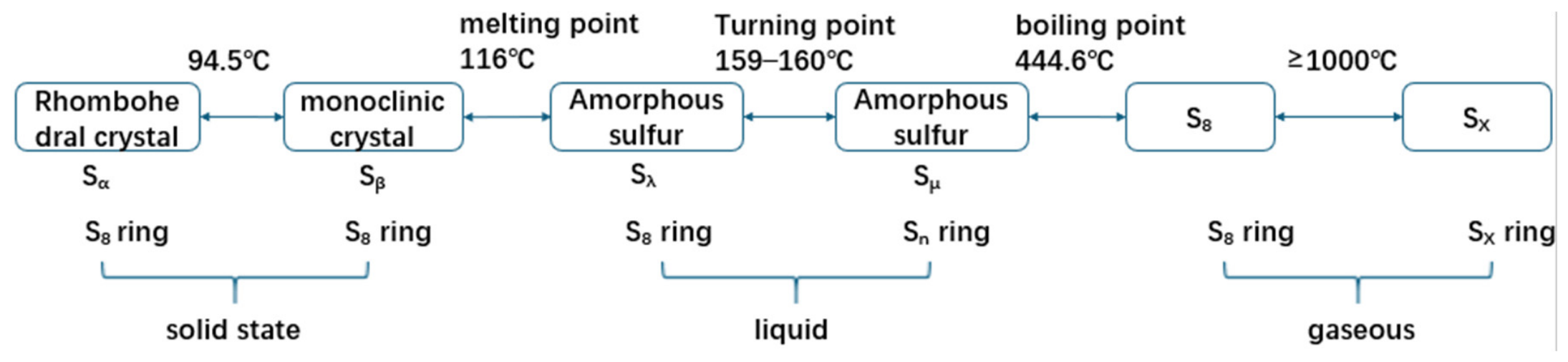
Insoluble sulfur (IS) is a polymeric form of sulfur produced through the ring-opening polymerization of cyclic sulfur (S8) at elevated temperatures. Previous studies have extensively investigated the preparation and fundamental properties of IS [1,2,3,4], while other studies have focused on the development and application of high-performance IS products in different fields [5,6,7]. The formation of polymeric sulfur is closely associated with the temperature-dependent phase transition and molecular structure of elemental sulfur. Solid sulfur melts at 116 °C, and the S8 rings begin to polymerize at 159 °C. Sulfur vaporizes at 414.6 °C, producing vapor containing various molecular species from S2 to S8. Above 444.6 °C, these molecules further dissociate into smaller sulfur clusters [8,9,10]. The reversible phase transitions of elemental sulfur with temperature are shown in Figure 1. Industrial IS production utilizes these distinct phase-dependent sulfur forms within specific temperature windows to direct the synthesis. Unlike soluble sulfur, IS does not dissolve in common solvents such as carbon disulfide (CS2) [11,12] and effectively prevents sulfur “blooming” in rubber compounds. Consequently, it is primarily used in the rubber industry [13,14,15] and is particularly important for the manufacture of radial tires [16,17]. The continuous development of IS preparation technology reflects the industrial demand for products with improved stability and quality [18]. Recent market reports have also indicated sustained commercial demand for IS products [19,20], consistent with earlier market assessments [21,22]. Therefore, the development of efficient, continuous, and environmentally friendly IS production processes remains an important industrial objective.
Figure 1.
Reversible phase transitions of elemental sulfur as a function of temperature.
Several production routes have been developed for insoluble sulfur, mainly including the contact process, the low-temperature molten process, and the high-temperature vaporization process. Previous studies have investigated the low-temperature molten route from the perspectives of preparation conditions, conversion, and product thermal stability [23,24]. Other researchers have proposed different IS preparation methods and production technologies [25,26], while the development and characteristics of existing IS production processes have also been systematically reviewed [27,28]. Further studies have continued to explore improvements and new preparation technologies for IS production [29,30].
Among these processes, the contact process is relatively simple but is limited by feedstock toxicity and product stability. The low-temperature molten process provides comparatively mild and safe operating conditions, whereas its conversion may be constrained by thermodynamic equilibrium. In contrast, the high-temperature vaporization process can achieve a relatively high initial conversion. However, CS2 is required as an important solvent in the downstream treatment of this process [31], introducing additional requirements for energy consumption, solvent recovery, equipment design, and operational safety. Beyond the production method, research indicates that IS yield and quality are also influenced by multiple factors, including sulfur feedstock purity [32], temperature control [33,34], stabilization treatments [35,36], stabilizer selection [37], and post-treatment steps [38,39].
Among the different stages of the high-temperature vaporization process, the quenching stage plays a critical role in the production of insoluble sulfur. Rapid cooling is required to preserve the metastable polymeric sulfur structure formed at high temperature and to suppress its reversible depolymerization to stable cyclic S8. Therefore, the thermal conditions during quenching directly influence the effectiveness of the process and may further affect product quality. As the circulating quench liquid serves as the primary cooling medium, its operating conditions, particularly its composition, inlet temperature, and circulation rate, are important parameters for controlling the quenching process.
Previous studies on insoluble sulfur production have mainly focused on the optimization of heat-treatment conditions [40], the development of stabilizer systems [41,42], improvements in extraction processes [43,44,45,46], and equipment-level modifications [47]. Aspen Plus has also been employed for IS process simulation. For example, Zhou et al. [33] established an Aspen Plus model for continuous IS production, with emphasis on overall process integration, sulfur utilization, extraction conditions, and solvent and tail-gas recovery. However, comparatively limited attention has been devoted to the quenching stage itself, particularly to the quantitative effects of the operating conditions of the circulating quench liquid. The influences of quench-liquid composition, inlet temperature, and circulating liquid-to-sulfur vapor feed ratio on the mixed-stream temperature under pilot-scale steady-state conditions, as well as their relative importance, remain insufficiently clarified. Consequently, a quantitative basis for prioritizing these operating variables and defining an appropriate operating window for the quenching stage is still needed.
To address this research gap, a steady-state process model of the pilot-scale insoluble sulfur quenching process was developed using Aspen Plus V11, with the mixed-stream temperature selected as the principal indicator of quenching performance. The novelty of the present study lies in establishing a quench-specific optimization framework rather than simply examining individual conventional operating variables. Specifically, the effects of the CS2/S mass ratio in the circulating liquid, the circulating liquid inlet temperature, and the mass feed ratio of circulating liquid to sulfur vapor were first analyzed individually from a process-thermodynamic perspective. An L16(43) orthogonal experimental design [48,49,50,51] was then employed to quantitatively determine their relative importance. By integrating the single-factor analysis, thermodynamic constraints, and orthogonal factor ranking, practical operating ranges were further identified for the pilot-scale quenching process. This framework therefore provides a more targeted basis for parameter prioritization and operational control of the quenching stage than overall IS flowsheet optimization alone.
2. Simulation Methodology and Orthogonal Design
2.1. Simulation Methodology
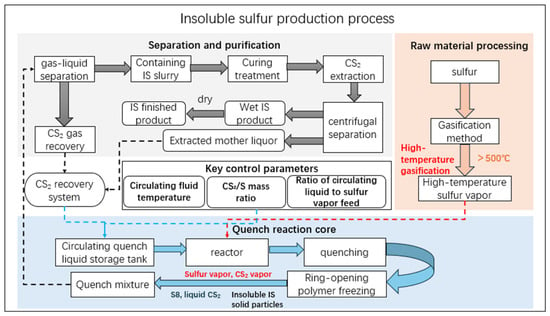
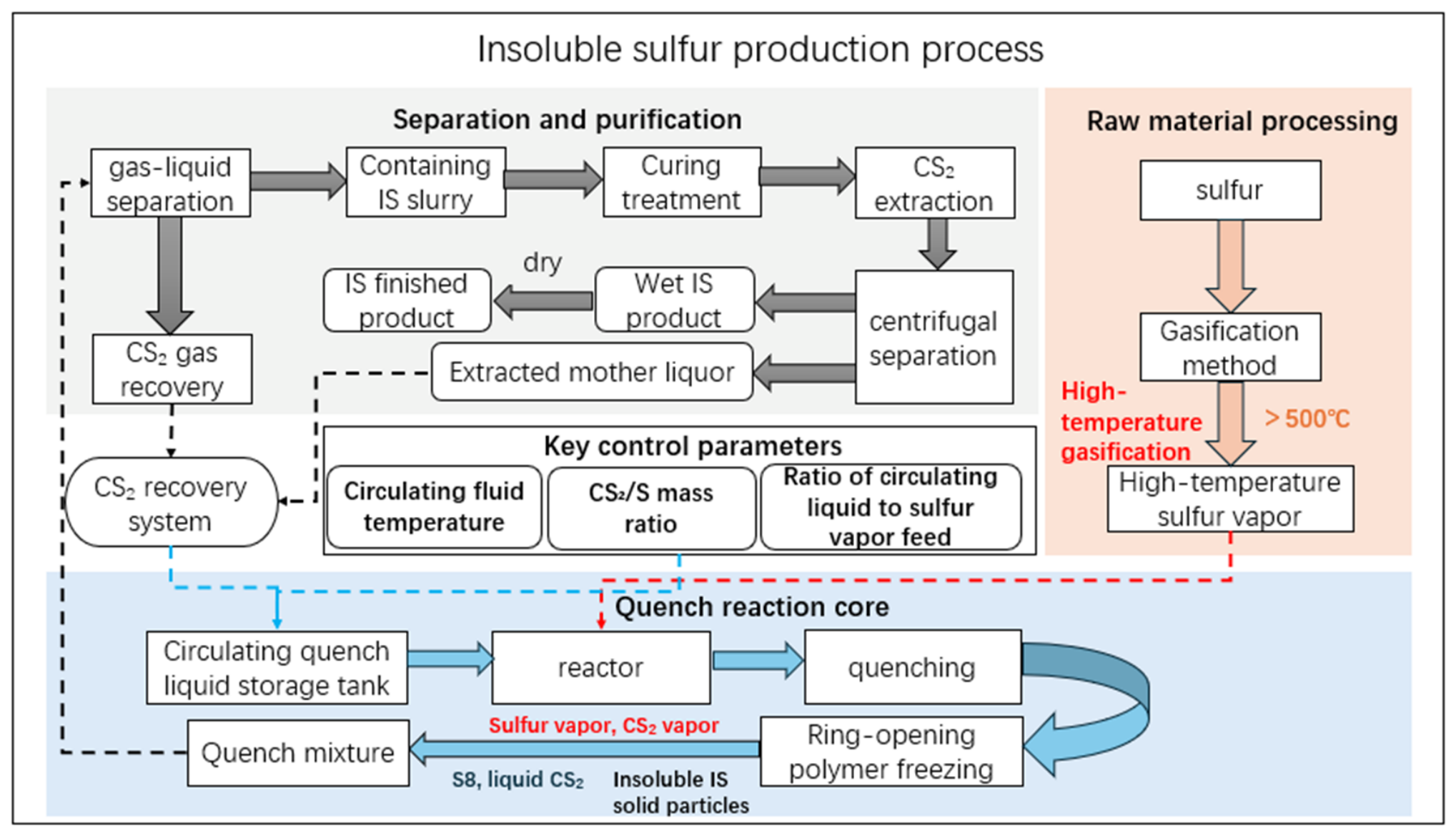
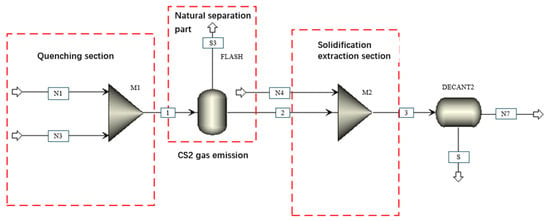
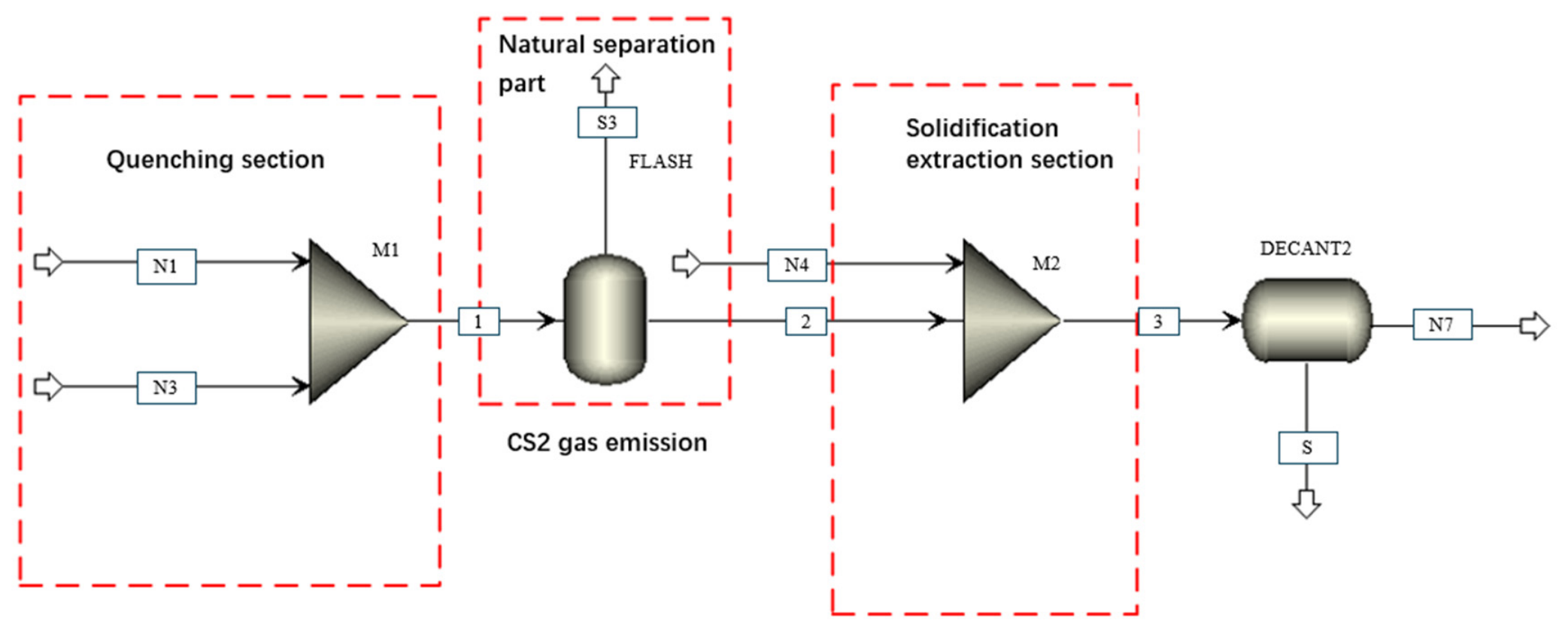
The industrial insoluble sulfur production process considered in this study mainly consists of feedstock processing, high-temperature sulfur vaporization and quenching, and subsequent separation and purification, as illustrated in Figure 2. The high-temperature sulfur vapor is rapidly cooled by contact with the circulating quench liquid, after which the resulting mixture undergoes separation, stabilization, extraction, and solvent recovery [52]. Since the present study focuses specifically on the quenching stage, the industrial process was simplified and represented by the steady-state Aspen Plus flowsheet shown in Figure 3.
Figure 2.
Process flow diagram for the production of insoluble sulfur.
Figure 3.
Simulated process flow diagram (PFD) for insoluble sulfur production using Aspen Plus.
To examine the internal temperature evolution following the contact between sulfur vapor and the circulating carbon disulfide (CS2) quench liquid in a pilot-scale reactor, this study simulated the insoluble sulfur (IS) formation process using the chemical process simulation software Aspen Plus V11 (AspenTech, Bedford, MA, USA). The simulation was conducted based on steady-state equilibrium, with a focus on analyzing the system’s temperature profile and heat exchange characteristics.
The process flow, as illustrated in the diagram, comprises three main sections. The first is the Quenching Section, which simulates the rapid cooling of high-temperature sulfur vapor upon contact with the low-temperature circulating carbon disulfide (CS2) liquid containing sulfur, leading to the formation of insoluble sulfur (IS). The core of this stage lies in calculating the “Mixed Fluid Temperature” after thorough mixing and heat exchange between the two streams. The second section involves the partial vaporization of liquid CS2 following mixing, corresponding to the venting of CS2 gas and related gas–liquid separation steps in the diagram. The third section is the Bottom Solidification and Extraction Stage, represented by separation units like DECANT2 and the outlet structures in the diagram, which accomplishes the final separation of IS.
The equipment and stream labels in the diagram (e.g., M1, S3, Z2, X1) represent mixers, separators, heat exchange units, and material streams, respectively, collectively forming the complete framework of this simulation. Within the Aspen Plus simulation, it is assumed that all fluid mixing and heat exchange processes are uniform, complete, and free of side reactions—essentially idealized conditions. Consequently, while the simulation results exhibit certain deviations from actual production data, the overall trends remain consistent. The model thus still provides an effective reference for analyzing the internal temperature distribution and heat transfer within the reactor.
Regarding the selection of thermodynamic methods, given that the system involves elemental sulfur, CS2, and solid IS, encompassing complex gas–liquid–solid phase changes, this study employed and compared two equations of state: PR-BM (Peng–Robinson with Boston–Mathias) and RK-SOVE (Redlich–Kwong–Soave) [53]. Both methods are suitable for addressing phase equilibrium problems of non-polar or weakly polar mixtures under medium to high pressures and can reliably predict the thermodynamic properties of sulfur-containing compound systems. The pure component property data required for the simulation, including various forms of sulfur, were directly retrieved from the built-in database of Aspen Plus V11. The binary interaction parameters for key components within the system were estimated and refined based on the software’s built-in group contribution method.
To ensure simulation feasibility and focus on the macroscopic analysis of heat transfer and phase changes, several reasonable assumptions were introduced. First, it was assumed that all mixing, separation, and heat exchange processes instantaneously reach thermodynamic equilibrium. Second, potential internal flow and mass transfer resistances within the equipment were neglected, simplifying each unit operation to an ideal mixing or ideal separation model. Finally, the formation process of IS was simplified to an instantaneous precipitation triggered by the temperature quench, without considering the detailed polymerization reaction kinetics. Although these simplifications introduce quantitative deviations between the simulation results and actual conditions, the established model is capable of capturing the core heat transfer and phase change characteristics inside the quenching reactor, which provides a reliable basis for analyzing reactor internal heat transfer. Only qualitative trend consistency between simulation outputs and pilot plant observations was obtained, as strictly matched quantitative measured data for each working condition are not available; relevant discussion covering temperature, CS2 vaporization, circulating liquid composition, product yield and stability is given at the end of Section 3.1.
2.2. Simulation-Based Orthogonal Design
To systematically investigate the impact of key operating parameters on the reaction process, this section employs the orthogonal experimental design method, focusing on three factors: the inlet temperature of the circulating quench liquid, the mass ratio of carbon disulfide to sulfur within the liquid (CS2/S), and the mass feed ratio of the circulating liquid to sulfur vapor. Since Aspen Plus does not directly describe the detailed polymerization/depolymerization kinetics of sulfur, product-level properties such as IS yield, thermal stability, purity, and residual soluble sulfur content cannot be directly predicted by the present steady-state model. Therefore, the mixed-stream temperature is used in this study as a process-level indicator of quenching intensity rather than as a direct surrogate for final product quality. Rapid cooling to an appropriate temperature range is essential for suppressing the reversion of metastable polymeric sulfur to cyclic S8; consequently, the mixed temperature is physically related to the thermal history that can influence IS formation and thermal stability [34,36,38]. However, purity and residual soluble sulfur content are also strongly affected by subsequent stabilization, extraction, and purification steps [38,39], which are beyond the scope of the present quenching-stage model. Accordingly, the mixed-stream temperature is employed here specifically to compare the relative effects of the investigated operating parameters on quenching performance.
The fixed boundary conditions and the levels of the three investigated factors used in the steady-state simulations are summarized in Table 1. Based on these conditions, an L16(43) orthogonal array was constructed, and the corresponding experimental arrangement is presented in Table 2. In Table 2, the left column lists the experiment numbers, while the numbers under each factor column on the right represent the level code assigned to that factor for the corresponding run. Taking Experiment 1 as an example: Factor A (CS2/S mass ratio in the circulating liquid) is set to Level 1, corresponding to a ratio of 84:16; Factor B (Circulating liquid inlet temperature) is set to Level 1, corresponding to 50 °C; Factor C (Mass feed ratio of circulating liquid to sulfur vapor) is set to Level 1, indicating that the mass flow rate of the circulating liquid is 100 times that of the sulfur vapor. The parameter combinations for the remaining experimental groups follow this pattern accordingly.
Table 1.
Boundary conditions and factor levels used in the steady-state simulations and orthogonal experimental design.
Table 2.
Orthogonal array used for the simulation-based parameter design.
In the simulation analysis, based on the established steady-state process model, the influence of each factor and its different levels on the Mixed Temperature was first examined. All simulation runs were conducted under a unified set of initial operating conditions, specified as follows: the sulfur vapor inlet had a mass flow rate of 15 kg/h, a temperature of 540 °C, and a pressure of 90 kPa; the circulating liquid inlet had a mass flow rate of 5000 kg/h, a temperature of 50 °C, and a pressure of 220 kPa, with the initial mass ratio of carbon disulfide to sulfur fixed at 84:16. Through orthogonal experiments and range analysis, the aim was to identify the dominant factor influencing the Mixed Temperature, thereby providing a basis for subsequent process optimization.
3. Analysis of the Single-Factor Influence of Circulating Liquid Inlet Parameters
To elucidate the influence mechanisms of operating parameters on the quenching process, this chapter, based on the established Aspen Plus model, separately investigates the effects of three key parameters—the composition of the circulating liquid, its inlet temperature, and the feed ratio—on the system’s mixed temperature. The orthogonal experimental method was employed to identify the primary influencing factors, aiming to provide a theoretical basis for process optimization.
3.1. Influence of the Carbon Disulfide-to-Sulfur Ratio in the Circulating Liquid
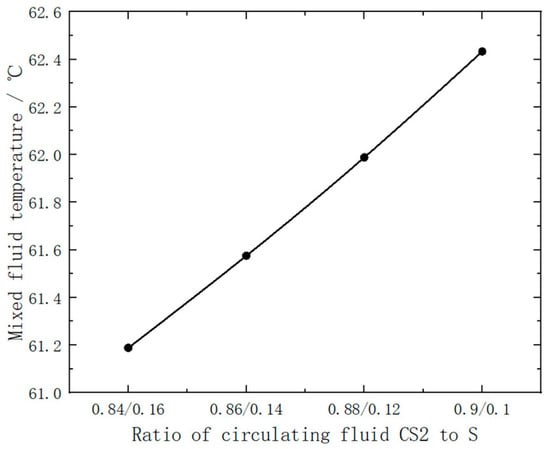
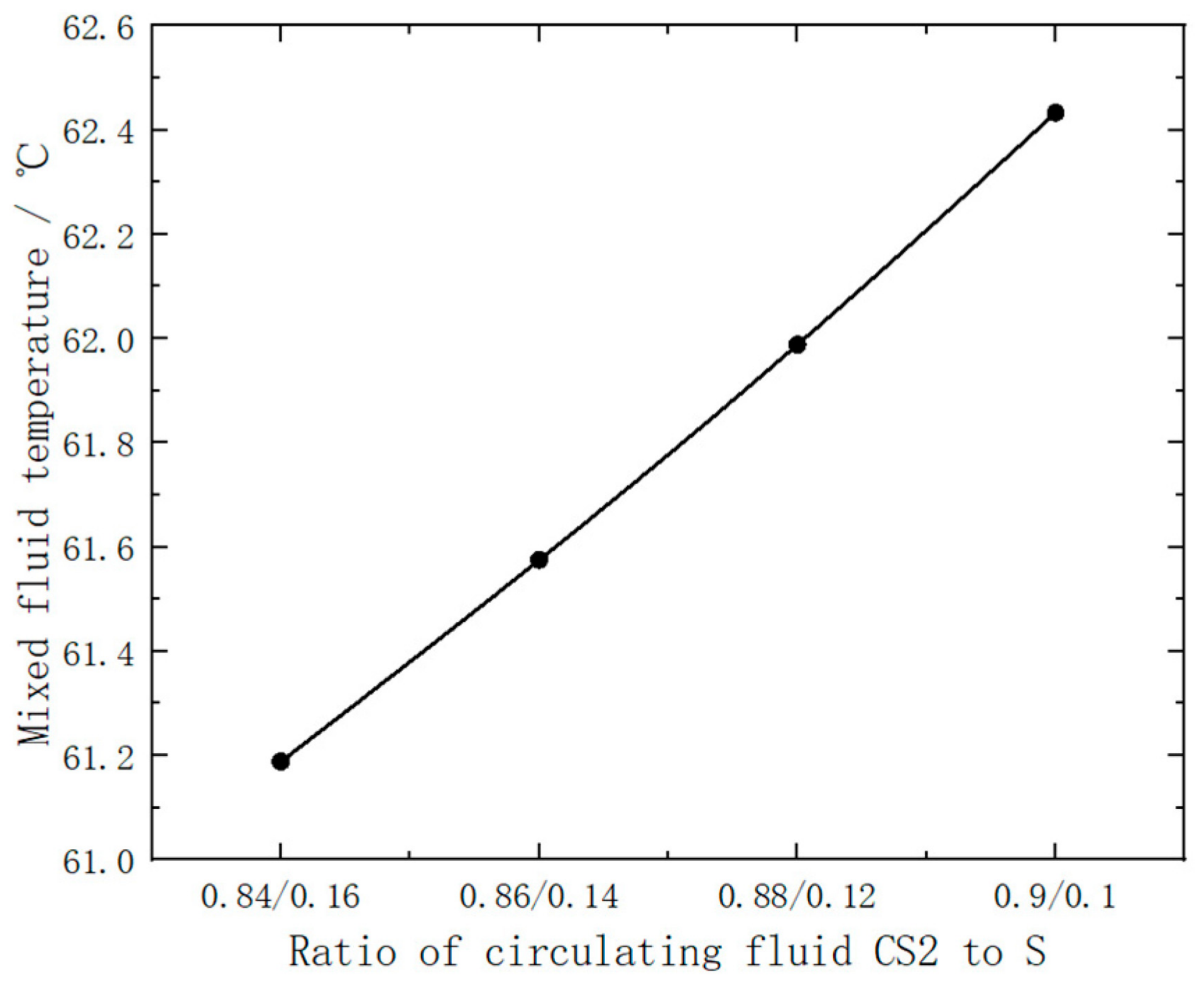
This study investigated the influence of varying the carbon disulfide-to-sulfur (CS2/S) ratio within the circulating liquid on the reaction process temperature profile through simulation tests. The simulation conditions were set as follows: the inlet temperature, pressure, and mass flow rate of the high-temperature sulfur vapor were 540 °C, 90 kPa, and 15 kg/h, respectively; the corresponding parameters for the quenching circulating liquid were 50 °C, 220 kPa, and 5000 kg/h; the sulfur component in the circulating liquid consisted of cyclic S8 and insoluble sulfur in a 1:1 mass ratio; the mass feed ratio of circulating liquid to sulfur vapor was 333:1; and the system insulation layer temperature was maintained at 70 °C. The simulation results are presented in Figure 4.The straight segments connecting adjacent data points are included solely as visual guides to facilitate comparison of the overall variation trends and do not represent linear regression, linear interpolation, or an assumption of a strictly linear relationship between the investigated variables.
Figure 4.
Influence of Circulating Liquid Composition on Internal Temperature.
Under identical inlet temperature and flow rate conditions, the temperature of the mixed fluid gradually increased with a higher CS2 content in the circulating liquid. This indicates a corresponding weakening of the quenching effectiveness. To maintain efficient quenching, it is recommended to control the CS2 proportion in the circulating liquid within a reasonable range, thereby ensuring the temperature remains within a controllable scope.
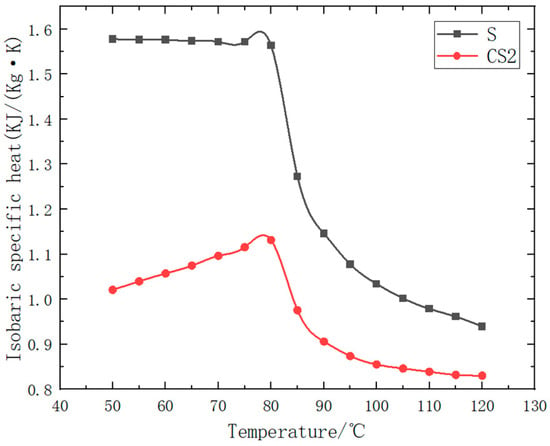
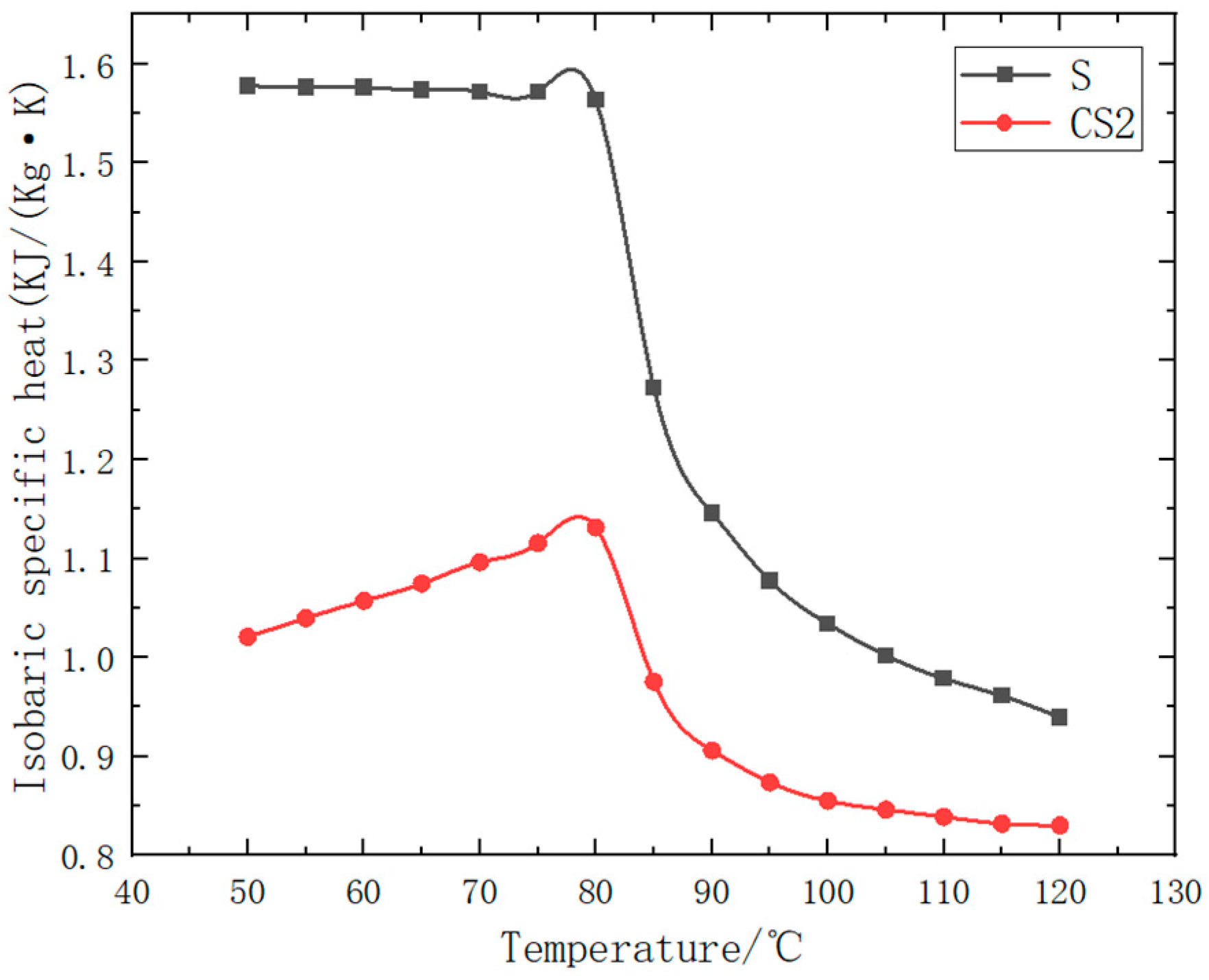
To further investigate this phenomenon, this study utilized the National Institute of Standards and Technology (NIST) database integrated within Aspen software to obtain the constant-pressure specific heat capacity data for sulfur and carbon disulfide at 220 kPa, as detailed in Figure 5 and Table 3. The data indicate that, within the temperature range of 50–90 °C and at 220 kPa, the constant-pressure specific heat capacity of sulfur dissolved in CS2 can reach 1.577 kJ/(kg·K), whereas under the same conditions, the specific heat capacity of pure CS2 ranges only from 1.02 to 1.1 kJ/(kg·K). As the proportion of CS2 increases, the overall specific heat capacity of the mixture decreases, resulting in a more pronounced temperature rise when absorbing the same amount of heat. Furthermore, from a thermodynamic perspective, the dissolution of cyclic S8 in CS2 alters the phase-change characteristics of the system. An increase in CS2 concentration enables the mixture to reach thermal equilibrium more readily under idealized conditions, thereby leading to a higher mixed temperature.
Figure 5.
Constant-pressure specific heat capacity of S and CS2 as a function of temperature.
Table 3.
Molar heat capacity and constant-pressure (Cp) heat capacity of S and CS2 at 220 kPa across varying temperatures.
Based on the integrated simulation results and thermodynamic analysis, the CS2-to-S ratio in the circulating liquid has a significant impact on the quenching effectiveness. To ensure quenching efficiency and process stability, it is recommended to maintain the CS2:S ratio within the range of 86:14 to 88:12 by mass. Although reducing the CS2 proportion helps enhance quenching, an excessively low CS2 content may drive sulfur extraction close to its saturation limit, thereby compromising overall process stability. Therefore, minimizing the CS2 ratio should not be the sole objective.
The mixed temperature values under different circulating liquid CS2/S mass ratios are illustrated in Figure 4. The rising trend of quenching outlet mixed temperature predicted by simulation is qualitatively consistent with pilot site observations.
For key indicators of the quenching process, including quench outlet mixed temperature, CS2 vaporization amount, circulating liquid composition, insoluble sulfur yield and product thermal stability, the model predictive capability and available pilot plant data are clarified as follows.
- (1)
- Quench outlet mixed temperature: Simulation prediction results are given in Figure 4. Only qualitative trend variations have been observed in pilot-scale runs; one-to-one quantitative measured values matching each simulation case are currently absent.
- (2)
- CS2 vaporization amount: The simulation can calculate the magnitude of vaporized CS2. However, the existing pilot setup is not equipped for quantitative measurement of CS2 vapor flow rate; only qualitative gas release phenomena can be observed on site.
- (3)
- Circulating liquid composition (CS2/S mass ratio): This is an input operating parameter defined in the simulation. Although circulating liquid with target composition can be prepared in pilot tests, synchronous sampling and compositional analysis for each discrete simulation working condition were not performed in the present experimental campaign.
- (4)
- Insoluble sulfur yield and product thermal stability: The present Aspen Plus model is established for heat transfer and phase equilibrium simulation, without incorporating the kinetic description of sulfur ring opening polymerization. Consequently, these product-related performance metrics cannot be calculated from the simulation. Corresponding product characterization data from matched pilot operating points are also not available.
Due to the absence of complete matched experimental datasets, a direct side-by-side numerical comparison between simulation outputs and pilot plant measurements cannot be constructed in this work. The simulated quenching outlet mixed temperature range of 61.2–62.4 °C is consistent with the typical operating temperature window for CS2-based sulfur vapor quenching in industrial-scale practice [18]. It should be noted that those reported industrial process parameters were obtained under different sulfur vapor temperature, pressure and feed ratio conditions, so strict quantitative comparison is not appropriate. Future dedicated pilot-scale experiments covering these simulation operating points will be implemented. These tests will collect quench outlet temperature, CS2 vaporization quantity, circulating liquid compositional data, as well as insoluble sulfur yield and thermal stability results, to support further quantitative calibration of the simulation model.
3.2. Influence of Circulating Liquid Inlet Temperature
This study further simulated the influence of varying the inlet temperature of the circulating liquid on the temperature profile of the reaction process. The simulation conditions were set as follows: the high-temperature sulfur vapor inlet had a temperature of 540 °C, a pressure of 90 kPa, and a flow rate of 15 kg/h; the quenching circulating liquid inlet had a pressure of 220 kPa and a flow rate of 5000 kg/h, with a composition mass ratio of CS2:S = 84:16, where the sulfur component consisted of cyclic S8 and insoluble sulfur in a 1:1 mass ratio; the mass feed ratio of circulating liquid to sulfur vapor was 333:1, and the system insulation layer temperature was maintained at 70 °C. In the simulation, it was assumed that only the liquid CS2 provided the cooling capacity required for quenching. The results are shown in Figure 6.
Figure 6.
Influence of Circulating Liquid Inlet Temperature on Internal Temperature.
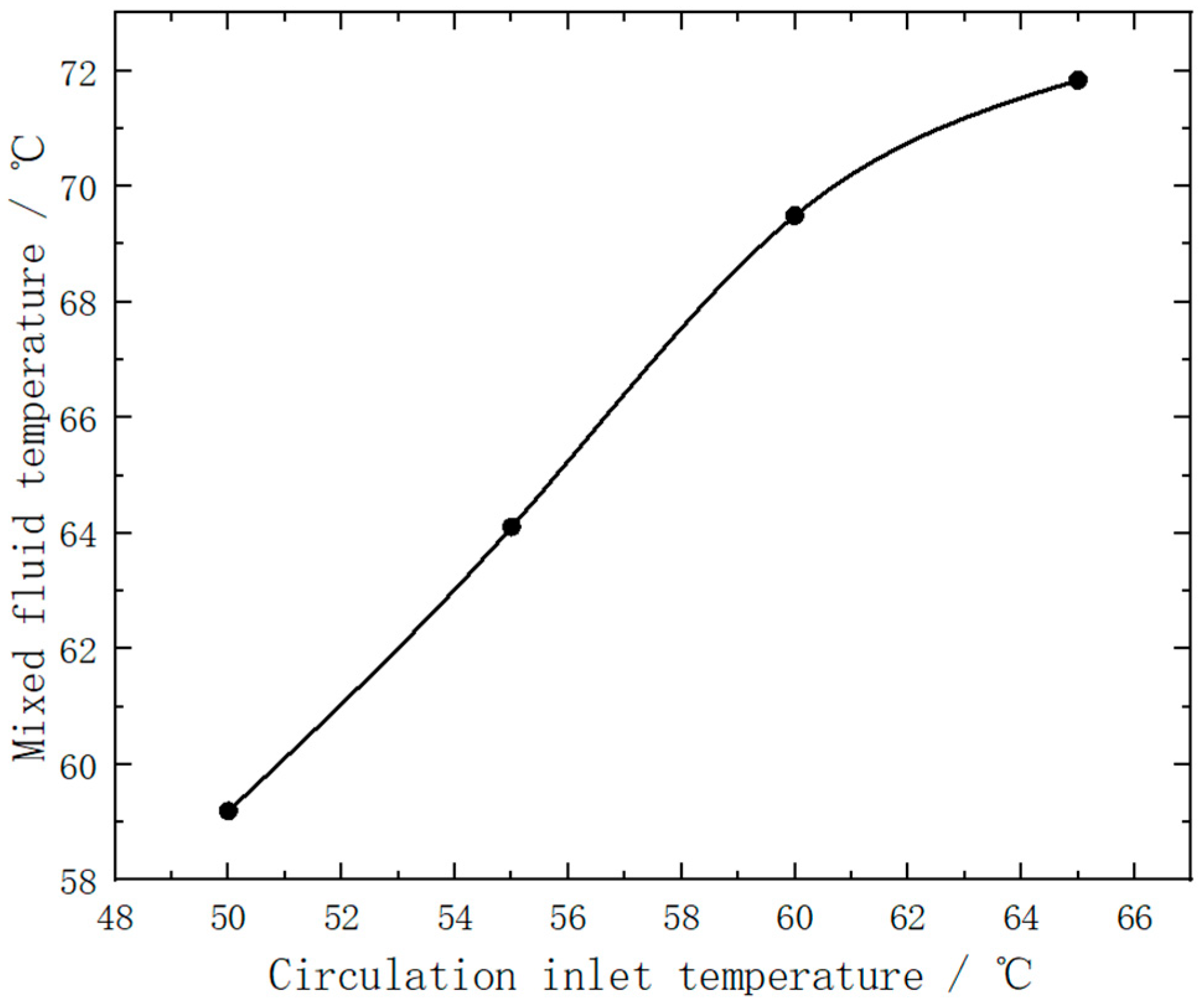
Under conditions of identical circulating liquid composition and inlet flow rate, the temperature of the mixed fluid after quenching increased as the inlet temperature of the circulating liquid rose. When the inlet temperature was 65 °C, the mixed temperature reached 71.89 °C, representing an increase of approximately 12 °C compared with the 59.18 °C observed at an inlet temperature of 50 °C. Previous studies have shown that quenching and subsequent thermal treatment can influence both IS yield and thermal stability [34,36,38]. A lower quenching temperature generally favors more rapid fixation of the metastable polymeric sulfur structure, whereas excessively low thermal conditions may adversely affect the subsequent thermal stability of the product. Therefore, the mixed-stream temperature in the present simulation is interpreted as an indicator of the thermal environment during quenching rather than a direct predictor of IS yield or thermal stability.
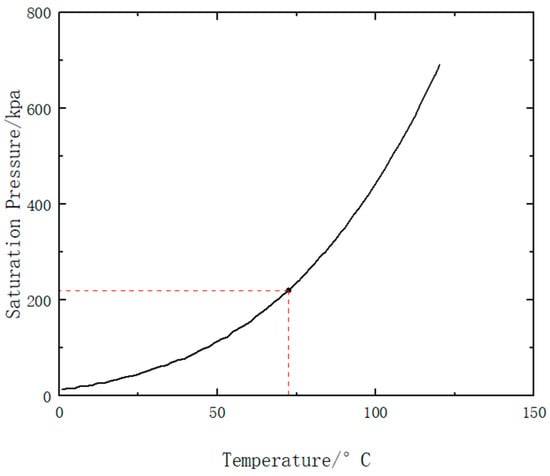
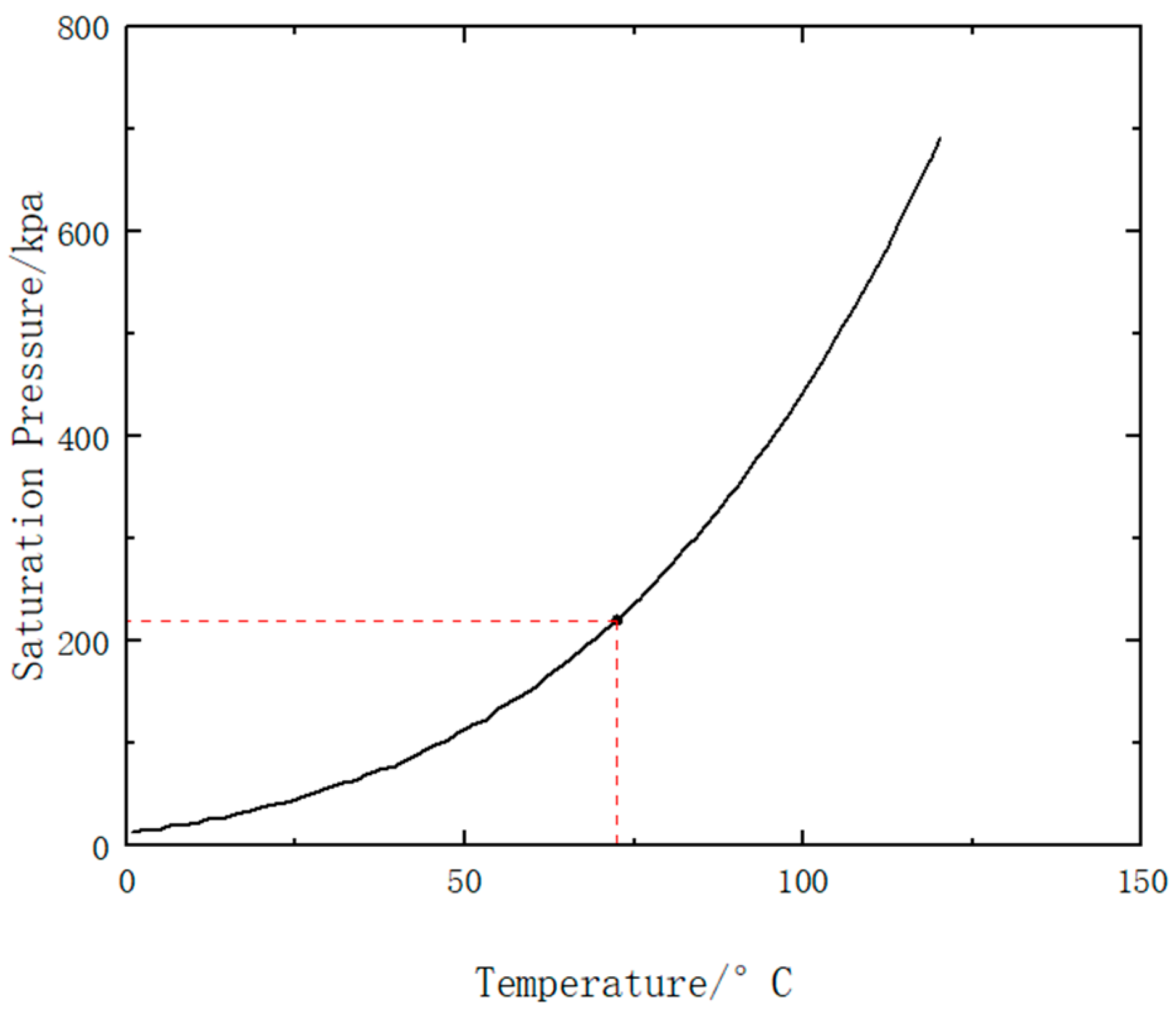
Based on the saturation-pressure data obtained from the NIST database in Aspen Plus V11, the relationship between CS2 saturation pressure and temperature is presented in Figure 7. At the operating pressure of 220 kPa, the corresponding saturation temperature of CS2 is approximately 72.5 °C, which represents the identified operating point in Figure 7. Accordingly, 72.5 °C was taken as the relevant saturation-temperature threshold for the subsequent analysis. At 220 kPa, temperatures above this value would promote CS2 vaporization and increase the cooling requirement for subsequent condensation. Therefore, the mixed-fluid temperature should be maintained below approximately 72.5 °C. An additional simulation at a circulating liquid inlet temperature of 70 °C showed that, even when only the cooling capacity of liquid CS2 was considered, the mixed-fluid temperature remained below this threshold. If the cooling contribution of the sulfur component in the circulating liquid is also taken into account, the mixed-fluid temperature would be further reduced.
Figure 7.
Variation of CS2 saturation pressure with temperature. The identified point corresponds to a saturation temperature of approximately 72.5 °C at an operating pressure of 220 kPa.
In summary, although from the perspective of quenching efficiency, a lower circulating liquid temperature is more conducive to rapid cooling, the literature indicates that an excessively low quenching temperature leads to a decrease in the thermal stability of the crude insoluble sulfur product. Therefore, to balance quenching effectiveness with product stability, it is recommended to control the inlet temperature of the circulating liquid within the range of 50–56 °C for pilot-scale production.
3.3. Influence of the Circulating Liquid to Sulfur Vapor Feed Ratio
This study further simulated the influence of the feed mass ratio between the circulating liquid and sulfur vapor on the temperature profile of the reaction process. The baseline simulation conditions were as follows: the high-temperature sulfur vapor inlet had a temperature of 540 °C, a pressure of 90 kPa, and a flow rate of 15 kg/h; the quenching circulating liquid inlet had a temperature of 50 °C and a pressure of 220 kPa, with a composition mass ratio of CS2:S = 84:16, where the sulfur component consisted of cyclic S8 and insoluble sulfur in a 1:1 mass ratio; the system insulation layer temperature was maintained at 70 °C. The simulation assumed that only the liquid CS2 provided the cooling capacity for the quenching process. The results are shown in Figure 8.
Figure 8.
Influence of the Circulating Liquid to Sulfur Vapor Feed Ratio on Internal Temperature.
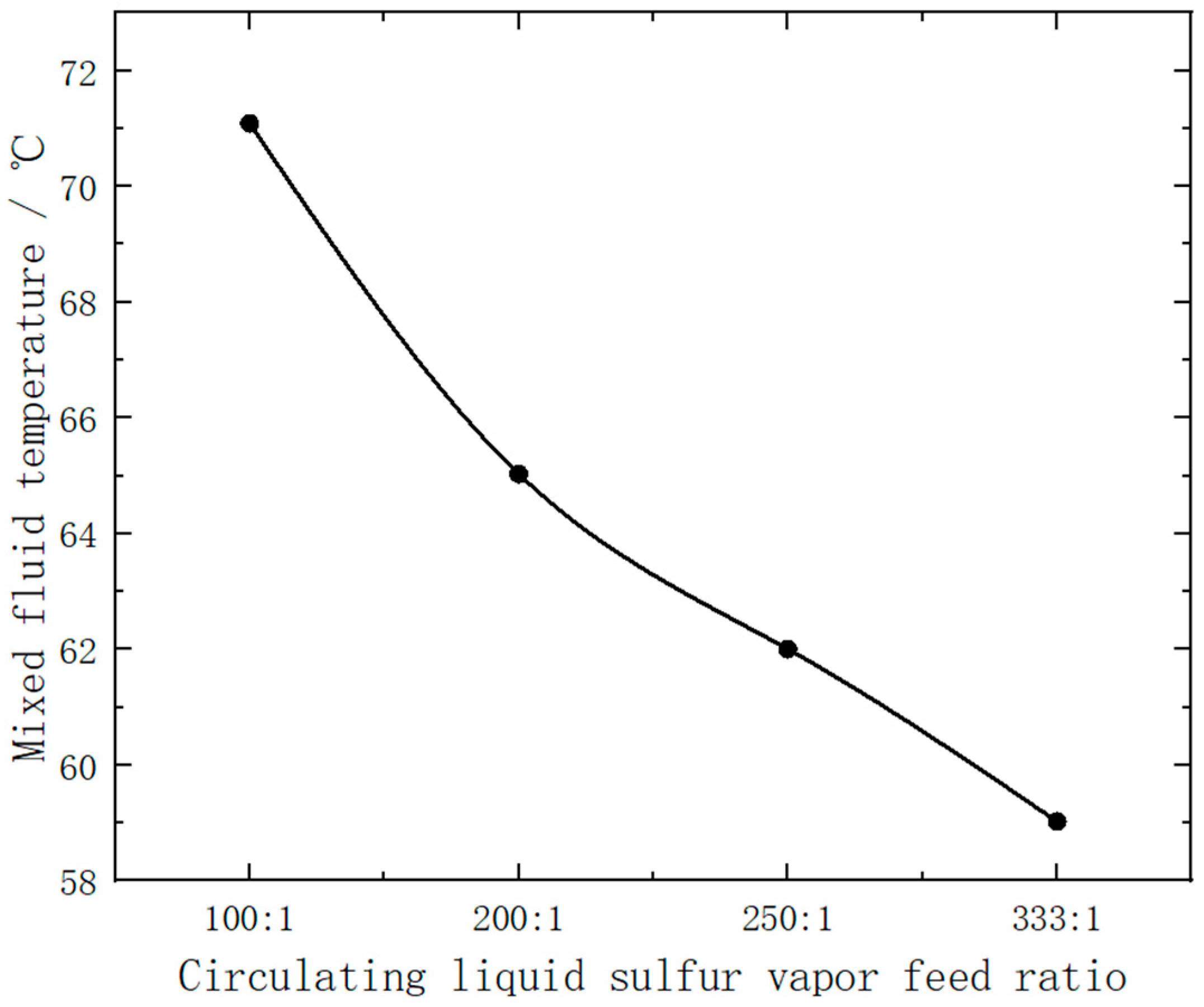
Under conditions of identical inlet temperature and circulating liquid composition, as the mass feed ratio of circulating liquid to sulfur vapor increased, the cooling capacity provided by the circulating liquid increased significantly, resulting in a rapid decrease in the final temperature of the mixed fluid. The mixed temperature at a feed ratio of 333:1 was approximately 15 °C lower than that at 100:1. Observing the trend indicates that, under the parameters of the pilot-scale setup, the temperature change tended to level off once the feed ratio exceeded 200:1. Therefore, a feed ratio in the range of 160:1 to 200:1 is preliminarily considered. However, this range differs considerably from the current operating condition of 5000 kg/h (corresponding to a feed ratio of 333:1). To address this, a further simulation analysis was conducted for feed ratios within the range of 200:1 to 333:1, with the results shown in Figure 9.
Figure 9.
Variation in Mixed Fluid Temperature and Heat Supply Required by the Insulation Layer with Circulating Liquid Feed Ratio.
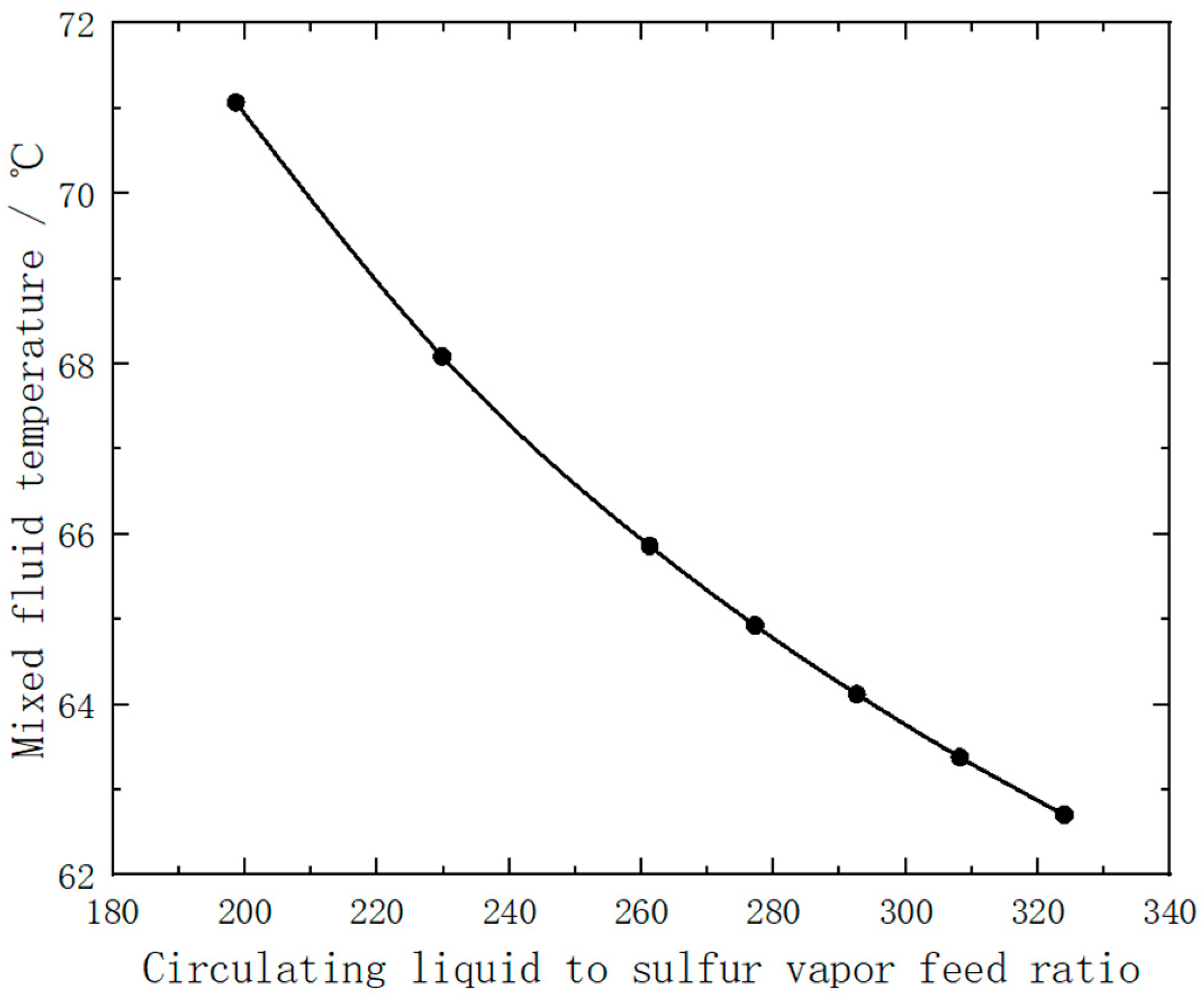
Based on maintaining the temperature of the bottom liquid section at 70 °C via the insulation layer, the mixed fluid temperatures were calculated for circulating liquid feed ratios (to sulfur vapor) of 333:1 (5000 kg/h), 316:1 (4750 kg/h), 300:1 (4500 kg/h), 283:1 (4250 kg/h), 266:1 (4000 kg/h), 233:1 (3500 kg/h), and 200:1 (3000 kg/h), respectively. The comparison results show that as the inlet mass flow rate of the circulating liquid increased, its provided cooling capacity correspondingly increased. With the sulfur vapor flow rate held constant, the discrete simulation results showed a consistent decrease in the mixed-fluid temperature as the circulating liquid feed ratio increased over the investigated range.
Based on the simulated thermal response, a circulating liquid-to-sulfur vapor mass ratio of approximately 260:1, corresponding to a circulating liquid flow rate of about 3900 kg/h, is proposed as a candidate process-level operating condition for the pilot-scale quenching stage. Compared with the current operating condition of 333:1 (5000 kg/h), the reduced circulation rate still maintains the mixed-stream temperature within the required thermal range in the steady-state simulation. However, this value is derived primarily from the thermal response of the quenching stage and should not be interpreted as a fully validated optimum for the entire production process.
Reducing the circulating liquid flow rate may also affect several aspects of the overall process that are not fully represented by the mixed-stream temperature. First, a lower circulation rate reduces the thermal capacity and buffering capability of the quenching liquid, which may decrease the operating margin when fluctuations occur in the sulfur-vapor flow rate or inlet temperature. Second, because CS2 is an important component of the circulating liquid, reducing the circulation rate also decreases the amount of CS2 entering the quenching and downstream recovery sections. This may reduce the overall CS2 recovery load, but its effects on solvent inventory, vaporization behavior, and recycle stability require further evaluation. Third, at a constant sulfur-vapor throughput, reducing the circulating liquid flow rate may increase the solids concentration and decrease the liquid-to-solid ratio of the stream entering the subsequent separation and extraction units, potentially affecting slurry transport, solid–liquid separation, and extraction performance. Finally, the present model is based on steady-state equilibrium and idealized separation assumptions; therefore, long-term phenomena such as material accumulation, fouling or deposition, solvent loss, recycle fluctuations, and dynamic control stability cannot be quantitatively assessed. Consequently, the suitability of the 260:1 ratio for continuous industrial operation should be further validated through pilot-scale experiments and long-term operating data.
3.4. Analysis of Primary Influencing Factors Using Simulation-Based Orthogonal Design
Following the single-factor analysis, a simulation-based L16(43) orthogonal design was employed to investigate the effects of the three circulating liquid operating parameters on the mixed-stream temperature. Sixteen independent steady-state Aspen Plus simulation runs were performed according to the orthogonal array, and the corresponding results are presented in Table 4.
Table 4.
Results of the orthogonal experiments on circulating liquid inlet parameters.
Firstly, the influence of Factor A on the temperature after mixing of the inlet streams was analyzed. According to the standard range-analysis method for orthogonal experimental design [54], the average temperature value kiA for each level of Factor A (the internal composition ratio of the circulating liquid) and the corresponding range were calculated as follows.
Subsequently, the influence of Factor B (the inlet temperature of the circulating liquid) was analyzed.
Finally, the influence of Factor C (the mass feed ratio of circulating liquid to sulfur vapor) was analyzed.
Comparison of the range values for each factor reveals that RC > RB > RA, indicating that Factor C (the mass feed ratio of circulating liquid to sulfur vapor) has the greatest influence on the mixed-stream temperature, followed by Factor B (the circulating liquid inlet temperature), while Factor A (the CS2/S mass ratio) has a comparatively smaller influence.
To further evaluate the statistical importance of the three factors, a main-effects analysis of variance (ANOVA) was performed using the 16 steady-state simulation results of the L16(43) orthogonal design. The calculated F-values for Factors A, B, and C were 22.31, 1239.61, and 3893.99, respectively, with corresponding p-values of 0.0012, <0.0001, and <0.0001. Their contributions to the total variation in the mixed-stream temperature were 0.43%, 24.03%, and 75.50%, respectively. Thus, the statistical analysis confirms the same order of influence as the range analysis, namely C > B > A, with the circulating liquid-to-sulfur vapor mass feed ratio being the dominant factor. Because these data were obtained from deterministic Aspen Plus simulations rather than replicated physical experiments, the residual variation in the ANOVA represents the variation not explained by the additive main-effect model and should not be interpreted as experimental measurement error.
4. Conclusions
Based on the PR-BM and RK-SOVE property methods, combined with the built-in property database of Aspen Plus V11, this study established a process simulation model for a pilot-scale synthesis reactor. The investigation focused on the effects of the circulating liquid’s composition ratio, inlet temperature, and its feed ratio to sulfur vapor on the temperature of the reaction system. The main conclusions are as follows:
- (1)
- Since Aspen Plus does not directly describe the detailed bond-breaking, polymerization, and depolymerization kinetics of sulfur, product-level properties such as IS yield, thermal stability, purity, and residual soluble sulfur content cannot be directly predicted by the present model. Therefore, the mixed-stream temperature was employed as a process-level indicator to characterize the relative quenching intensity under different operating conditions. The results obtained in this study should thus be interpreted primarily in terms of quenching-process performance rather than as direct predictions of final product quality.
- (2)
- The simulation results indicate that among the circulating liquid inlet parameters, the feed ratio of the circulating liquid to sulfur vapor has the most significant impact on quenching effectiveness: a higher ratio provides greater cooling capacity, leading to a faster quenching process. The inlet temperature of the circulating liquid is the second most influential factor, while the composition ratio of the circulating liquid itself has a relatively minor effect.
- (3)
- The specific influence patterns are as follows: An increase in the CS2-to-sulfur ratio in the circulating liquid negatively impacts quenching effectiveness, attributed to the combined effects of their differing specific heat capacities and phase-change behaviors. The inlet temperature of the circulating liquid is negatively correlated with quenching effectiveness; a higher inlet temperature leads to an increased mixed fluid temperature. Conversely, the circulating liquid feed ratio exhibits a positive correlation with quenching effectiveness; increasing this ratio significantly enhances the system’s cooling capacity, promoting a more rapid and thorough quenching process.
- (4)
- Based on the simulated quenching behavior, thermodynamic constraints, and process-operability considerations, the recommended process operating ranges are a CS2:S mass ratio of 86:14–88:12, a circulating liquid inlet temperature of 50–56 °C, and a circulating liquid-to-sulfur vapor mass ratio of no less than 260:1, corresponding to a circulating liquid flow rate of approximately 3900 kg/h or higher under the present pilot-scale conditions. These ranges should be regarded as process-level recommendations for the quenching stage. Their effects on IS yield, thermal stability, purity, and residual soluble sulfur content require further experimental validation.
Author Contributions
H.L.: Investigation, writing—original draft preparation, software, validation, formal analysis, supervision; W.Y.: methodology, software, resources, writing—original draft; K.C.: conceptualization, data curation, visualization; W.X.: resources, supervision. All authors have read and agreed to the published version of the manuscript.
Funding
This research was funded by the National Natural Science Foundation of China, grant number 52476043.
Data Availability Statement
The datasets presented in this article are not readily available because the current study is confidential and not publicly available.
Conflicts of Interest
The authors declare no conflict of interest.
References
- Cataldo, F. A study on the structure and properties of polymeric sulfur. Die Angew. Makromol. Chem. 1997, 249, 137–149. [Google Scholar] [CrossRef]
- Istighfarah, Z.; Delphia, R.; Gunawan, S. Pembuatan Insoluble Sulfur dari Olahan Limbah Sulfur PT. Pertamina RU IV Cilacap. J. Tek. ITS 2016, 5, F88–F92. [Google Scholar] [CrossRef] [Scilit]
- Ouyang, F.; Hao, T.; Li, Y.; Yin, C. Preparation of Insoluble Sulfur. Chem. Ind. Eng. Prog. 2015, 34, 1389–1394, 1400. [Google Scholar] [CrossRef]
- El’kin, I.A.; Remizova, S.V.; Nadezhina, E.A.; Krylova, L.V. Synthesis of stabilized polymeric sulfur by rapid cooling of sulfur melts in the presence of α,α,α,α′,α′,α′-hexachloro-p-xylene. Russ. J. Appl. Chem. 2006, 79, 494–496. [Google Scholar] [CrossRef] [Scilit]
- Eastman. Eastman and Double Coin Tires Experts Praise Eastman Crystex™ Cure Pro Insoluble Sulfur for Its Thermal Stability. 2020. Available online: https://www.eastman.com/en/media-center/news-stories/2020/tires-experts-praise-eastman-crystex-cure-pro (accessed on 10 January 2026).
- Wang, C.; Cui, J.; Fang, X.; Zheng, N. Regulating the Deposition of Insoluble Sulfur Species for Room Temperature Sodium-Sulfur Batteries. Chem. Res. Chin. Univ. 2022, 38, 128–135. [Google Scholar] [CrossRef] [Scilit]
- Eastman launches enhanced vulcanizing agent for tyre industry. Addit. Polym. 2018, 2018, 5. [CrossRef] [Scilit]
- Meyer, B. Elemental Sulfur. Chem. Rev. 1976, 76, 367–388. [Google Scholar] [CrossRef] [Scilit]
- Ma, J.; Zhao, J.; Wang, R.; Shen, B. Theoretical Study on Structure of Polymeric Sulfur. Asian J. Chem. 2015, 27, 4583–4586. [Google Scholar] [CrossRef] [Scilit]
- Yang, M.; Trizio, E.; Parrinello, M. Structure and Polymerization of Liquid Sulfur across the λ-Transition. Chem. Sci. 2024, 15, 3382–3392. [Google Scholar] [CrossRef] [Scilit] [PubMed]
- Fehnel, E.A. The Formation of Insoluble Sulfur in the Presence of Gases Other than Sulfur Dioxide. J. Am. Chem. Soc. 1942, 64, 3041–3042. [Google Scholar] [CrossRef] [Scilit]
- Donohue, J.; Caron, A. Carbon Disulfide-Insoluble Sulfur. J. Polym. Sci. Part B Polym. Lett. 1963, 1, 561. [Google Scholar] [CrossRef] [Scilit]
- Chen, S.; Li, T.; Wan, S.; Huang, X.; Cai, S.; He, X. In-situ Modification of Graphene Oxide by Insoluble Sulfur and Application for Nitrile Butadiene Rubber. Int. Polym. Process. 2020, 35, 221–228. [Google Scholar] [CrossRef] [Scilit]
- Shahrampour, H. Comparison of Sulfur Curing Systems (Insoluble-Rhombic) on Physical and Thermal Properties of the Matrix Polymeric of Styrene-Butadiene Rubber and Natural Rubber. Pet. Chem. 2018, 58, 721–726. [Google Scholar] [CrossRef] [Scilit]
- Yu, X.; Kim, M.W. Method for Isolation of Insoluble Sulfur. CN104445086A, 25 March 2015. Available online: https://patents.google.com/patent/CN104445086A/en (accessed on 13 January 2026).
- Hu, W.; Wu, L.; Huang, W.; Luo, W. Preparation and Application Evaluation of High Thermal Stability Insoluble Sulfur. J. Petrochem. Univ. 2015, 28, 18–21. [Google Scholar] [CrossRef]
- Wang, R.; Shen, B.; Liu, J.; Zhao, J. The Properties of TBR Tire Belt Produced from Cleaning Insoluble Sulfur. Chem. Ind. Eng. Prog. 2018, 37, 2432–2437. [Google Scholar] [CrossRef]
- Zhang, H.; Li, W.; Zhao, H.P.; Chen, J.Y.; Wang, J.; Kang, T.L. Preparation Technology and Industrial Status of Insoluble Sulfur. Mod. Chem. Ind. 2018, 38, 41–45. [Google Scholar] [CrossRef]
- Radiant Insights. Insoluble Sulfur Market Size, Key Highlights, Share, Growth Challenges, Industry Segments, Competitors Analysis & Forecast to 2024; Radiant Insights: San Francisco, CA, USA, 2019. [Google Scholar]
- Research and Markets. World Markets for Insoluble Sulfur 2016; Research and Markets: Dublin, Ireland, 2017. [Google Scholar]
- Research and Markets. World Markets for Insoluble Sulfur 2015–2020; Research and Markets: Dublin, Ireland, 2015. [Google Scholar]
- European Rubber Journal. Notch Publishes Report on Insoluble Sulphur Markets. 2009. Available online: https://www.european-rubber-journal.com/article/2081715/notch-publishes-report-on-insoluble-sulphur-markets (accessed on 13 January 2026).
- Wang, R.; Shen, B.; Zhao, J. A Facile Way to Synthesis Insoluble Sulfur with High Thermal Stability by Low Temperature Melting Method. Phosphorus Sulfur Silicon Relat. Elem. 2019, 194, 139–146. [Google Scholar] [CrossRef] [Scilit]
- Feng, G.; Chen, Y.; Xu, P.; Chen, Y. Process Conditions for Preparation of Insoluble Sulfur at Low Temperature. Zhejiang Chem. Ind. 2019, 50, 50–52. [Google Scholar]
- Zhou, Y.; Liao, C.; Meng, F.; Liu, Z.; Wang, H.; Jin, P.; Dai, J.; Liu, P.; Piao, Y. Production System and Method for Insoluble Sulfur. EP4071109A1, 12 October 2022. Available online: https://patents.google.com/patent/EP4071109A1/en (accessed on 13 January 2026).
- Li, G.; Shao, Y.; Ding, J.; Jiang, B.; Hao, D.; Wu, W.; Wei, L.; Li, N.; Zhang, L.; Bian, C. Insoluble Sulfur Preparation. CN1424247A, 18 June 2003. Available online: https://patents.google.com/patent/CN1424247A/zh (accessed on 13 January 2026).
- Wang, Y.; Li, G.; Gao, M.; Bai, Y. Advance in Insoluble Sulfur for Rubber. China Elastomerics 2006, 16, 51. [Google Scholar]
- Wang, L.; Qiu, Z.; Qiu, J. Research and Development of Insoluble Sulfur. Sci. Technol. Chem. Ind. 2006, 14, 49–53. [Google Scholar] [CrossRef]
- Qiu, Z.; Ke, Y.; Zhang, Y. Research and Development of Insoluble Sulfur at Present. Chem. World 2003, 44, 320–322. [Google Scholar] [CrossRef]
- Ma, J.; Zhao, J.; Wang, R.; Shu, Y.; Shen, B. Molecular Simulation Studies on the Properties of Insoluble Sulfur Stabilizers. Chem. Ind. Eng. Prog. 2016, 35, 706–710. [Google Scholar] [CrossRef]
- Cui, X.; Wang, W.; Du, M.; Ma, D.; Zhang, X. Molecular Simulation to Explore the Dissolution Behavior of Sulfur in Carbon Disulfide. Molecules 2022, 27, 4402. [Google Scholar] [CrossRef] [Scilit] [PubMed]
- Wang, Z.X.; Chen, M.C.; Liu, H.B. Production Technology and Development of Insoluble Sulfur. Mod. Chem. Ind. 2004, 24, 19–22. [Google Scholar] [CrossRef]
- Zhou, L.; Wang, W.; Du, M.; Ma, D.; Zhang, X. Synthesis of Insoluble Sulfur and Development of Green Technology Based on Aspen Plus Simulation. Green Process. Synth. 2022, 11, 886–894. [Google Scholar] [CrossRef] [Scilit]
- Ouyang, F.; Gu, Y.; Hao, T. Study on Thermostability of Insoluble Sulfur. Spec. Petrochem. 2015, 32, 41–46. [Google Scholar]
- Zhao, J.; Shu, Y.; Wang, R.; Shen, B. A Novel and Easy Way to Improve the Thermal Stability of Insoluble Sulfur by Curing Process. Phosphorus Sulfur Silicon Relat. Elem. 2017, 192, 431–436. [Google Scholar] [CrossRef] [Scilit]
- Terada, N.; Kouge, K.; Komaguchi, K.; Hayakawa, S.; Tsutsumi, H. Thermal Stability Change of Insoluble Sulfur by a Heat Treatment and Its Mechanism Study. Anal. Sci. 2020, 36, 75–79. [Google Scholar] [CrossRef] [Scilit] [PubMed]
- You, W.; He, Y.; Song, W.; Wang, Y. Research Advance of Stability of Insoluble Sulfur. Chem. Propellants Polym. Mater. 2005, 3, 14–16. [Google Scholar] [CrossRef]
- Terada, N.; Kouge, K.; Yamaguchi, T.; Komaguchi, K.; Hayakawa, S.; Tsutsumi, H. Effects of Post-heat Treatment on Thermal Stability and Yield of Insoluble Sulfur and Elucidation of Its Mechanism through ESR Technique. Nippon Gomu Kyokaishi 2020, 93, 345–351. [Google Scholar] [CrossRef] [Scilit]
- Wang, Y.; Li, F.; Wang, F.; Pu, Y.; Zhao, N.; Xiao, F. Effect of Extractant on Preparation of Insoluble Sulfur and Optimization of Operation Conditions. Petrochem. Technol. 2017, 46, 1017–1021. [Google Scholar]
- Wang, Y.; Wu, W.; Zeng, C.; Wang, X.; Zhou, L. Study on the Preparation and Thermal Stability of Insoluble Sulfur. Spec. Petrochem. 2006, 23, 27–30. [Google Scholar] [CrossRef] [Scilit]
- Wang, Y.; Li, F.; Wang, F.; Wang, Y.; Zhao, N.; Xiao, F. Effects of Olefin and Acid Stabilizers on the Properties of Insoluble Sulfur. J. Alloys Compd. 2018, 735, 821–827. [Google Scholar] [CrossRef] [Scilit]
- Du, M.; Guo, Q.; Wang, W. Preparation Method for Insoluble Sulfur and Anti-reversion Stabilizer Used Thereby. US20210269309A1, 2 September 2021. Available online: https://patents.justia.com/patent/20210269309 (accessed on 14 January 2026).
- Ouyang, F.; Bi, Y.; Li, B.; Sun, Q.; Weng, H. Effect of the Molecular Structures of Extractants on Separating Insoluble Sulfur. J. East China Univ. Sci. Technol. 2008, 34, 482–486. [Google Scholar]
- Wang, R.; Shen, B.; Liu, J.; Zhao, J. Optimization of Insoluble Sulfur Extraction by Response Surface Methodology. Appl. Chem. Ind. 2018, 47, 1457–1461. [Google Scholar]
- ASTM D4578-22; Standard Test Methods for Rubber Chemicals—Determination of Percent Insoluble Sulfur by Extraction. ASTM International: West Conshohocken, PA, USA, 2022. [CrossRef] [Scilit]
- Ouyang, F.; Gu, J.; Zhang, Y.; Weng, H. Study on New Extractant for Insoluble Sulfur. Spec. Petrochem. 2008, 25, 7–12. (accessed on 16 January 2026). [Google Scholar]
- Gu, G.; Chen, H.; Liu, X.; Yu, L.; Zhang, X. Supporting Structure for Sulfur Reactor. CN203159221U, 28 August 2013. Available online: https://patents.google.com/patent/CN203159221U/en?oq=CN203159221U (accessed on 16 January 2026).
- He, M.; Wang, Z.; Chen, H.; Cao, Y.; Ma, L. Multi-Objective Evolutionary Algorithm Based on Decomposition with Orthogonal Experimental Design. Expert Syst. 2025, 42, e13802. [Google Scholar] [CrossRef] [Scilit]
- Halimov, A.; Lauster, M.; Müller, D. Optimal Design Method for Lightweight Buildings to Minimize the Cooling Load with Phase Change Materials Using Orthogonal Experimental Design. Renew. Energy Power Qual. J. 2019, 17, 31–36. [Google Scholar] [CrossRef] [Scilit]
- Yu, R.; Gao, P.; Miao, Y.; Gong, J.; Li, L. Optimization of the Process Parameters of Atmospheric Plasma Spraying Cobalt Ferrite Coatings by Orthogonal Experimental Design. J. Mater. Eng. Perform. 2024, 33, 13374–13386. [Google Scholar] [CrossRef] [Scilit]
- Kavcı, E. Investigations of Adsorption of Direct Red BWS Textile Dye Using Taguchi L9 (34) Orthogonal Experimental Design. Niğde Ömer Halisdemir Univ. J. Eng. Sci. 2021, 10, 358–363. [Google Scholar] [CrossRef] [Scilit]
- Wang, T. Insoluble Sulfur Preparation Method. CN1323026C, 27 June 2007. Available online: https://patents.google.com/patent/CN1323026C/en (accessed on 14 January 2026).
- Li, C.; Gao, Y.; Xia, S.; Shang, Q.; Ma, P. Calculation of the Phase Equilibrium of CO2–Hydrocarbon Binary Mixtures by PR-BM EOS and PR EOS. Trans. Tianjin Univ. 2019, 25, 540–548. [Google Scholar] [CrossRef] [Scilit]
- Taguchi, G. System of Experimental Design: Engineering Methods to Optimize Quality and Minimize Costs; UNIPUB/Kraus International Publications: White Plains, NY, USA, 1987. [Google Scholar]

Disclaimer/Publisher’s Note: The statements, opinions and data contained in all publications are solely those of the individual author(s) and contributor(s) and not of MDPI and/or the editor(s). MDPI and/or the editor(s) disclaim responsibility for any injury to people or property resulting from any ideas, methods, instructions or products referred to in the content. |
© 2026 by the authors. Licensee MDPI, Basel, Switzerland. This article is an open access article distributed under the terms and conditions of the Creative Commons Attribution (CC BY) license.