


Abstract
Acidic wetting–drying cycles can progressively deteriorate sandstone used in rock engineering, but the link between macroscopic mechanical degradation and three-dimensional pore-crack evolution remains unclear. The objective of this work was to clarify the deterioration mechanism of sandstone under repeated acidic wetting–drying action. Sandstone specimens were subjected to 0, 5, 10, 20, or 30 wetting–drying cycles in a H2SO4 solution with an initial pH of 2.00. Triaxial shear testing, micro-CT reconstruction, scanning electron microscopy, and a correlation analysis were combined to characterize changes in the mechanical behavior and microstructure. With an increasing cycle number, the cohesion and internal friction angle decreased by 40.85% and 11.27%, respectively, while the pore network became progressively enlarged, connected, and structurally complex. The pore fractal dimension increased from 2.18 to 2.49. Scanning electron microscopy images showed enlarged pores and cracks, looser particle contacts, and local damage along particle boundaries. Increasing the confining pressure improved the peak resistance and restricted crack development. A correlation analysis indicated that mechanical degradation was closely associated with the evolution of the pore and crack structure. These results establish a multiscale relationship between the loss of mechanical performance and microstructural deterioration, providing a basis for evaluating sandstone stability in acidic environments.
1. Introduction
In mining areas, groundwater-level fluctuations, seasonal precipitation, mine dewatering, and repeated drainage-recharge processes expose surrounding rock to multiple wetting and drying (W-D) cycles [1,2,3,4]. When the infiltrating water is acidic, hydraulic cycling is accompanied by chemical reactions that may weaken mineral cements, enlarge pre-existing pores, and promote crack growth [5]. The cumulative hydrochemical–mechanical action can therefore reduce the rock strength and deformation resistance and threaten the long-term stability of mine slopes and underground openings [6].
Sandstone is widely encountered in slopes, tunnels, reservoir banks, and mining excavations [7,8,9]. It is mainly composed of sand-sized mineral grains bonded by various cementing materials, and it commonly exhibits a relatively high porosity, abundant primary defects, and a pronounced structural heterogeneity [10]. These characteristics provide preferential pathways for the penetration and migration of acidic solutions, making sandstone particularly sensitive to acidic environments. Previous studies have reported surface spalling, mass loss, pore enlargement, microcrack coalescence, and strength reduction after acidic or wetting–drying exposure [11,12]. These findings indicate that sandstone deterioration is governed not only by changes in the bulk strength, but also by the progressive reorganization of its pore-fracture network.
Mechanical responses to water–rock interactions have been investigated using uniaxial compression, triaxial compression, Brazilian splitting, and dynamic loading tests [13,14,15,16,17]. Constitutive and damage models have also been proposed to describe hydrochemical weakening and acid-induced stress–strain behavior [18,19]. Crack analyses and triaxial studies further show that water saturation and chemical exposure promote the expansion of initial defects and the interconnection of secondary fractures [20]. However, while previous studies mainly focused on the macroscopic characteristics of sandstone under water–rock effects, the internal microstructure is subjected to complex stress-seepage disturbances [21]. To fully reveal the deterioration mechanism, it is imperative to explore the structural changes of pores and fissures in rocks under the cyclic acidic solution and W-D coupling effect.
Micro-CT (computerized tomography) enables the non-destructive reconstruction of internal pores and cracks, while SEM provides localized evidence of changes in the grain contacts and fracture surfaces [22,23,24,25]. When these methods are combined with mechanical tests, they can distinguish directly measured structural changes from mechanism interpretations [26]. Nevertheless, mineral-specific dissolution cannot be established from pre-test XRD and qualitative SEM images alone [27], and post-treatment mineralogy or solution chemistry is required [28]. A multiscale analysis should therefore calibrate its causal claims to the available evidence and explicitly account for the absence of a complete neutral wetting–drying control.
Accordingly, this study investigates the mechanical behavior and pore-structure evolution of sandstone subjected to 0, 5, 10, 20, or 30 acidic W-D cycles. Triaxial shear tests under confining pressures of 1, 2, or 5 MPa were integrated with micro-CT scanning and SEM observations to establish correlations between macroscopic mechanical responses and microscopic structural parameters. The findings provide multiscale experimental evidence for understanding the deterioration mechanisms of sandstone under acidic W-D conditions.
2. Materials and Methods
2.1. Geology Background
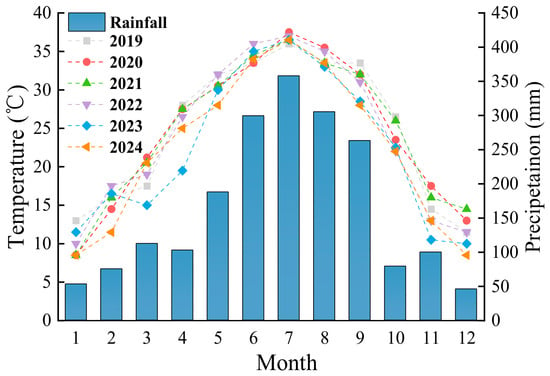
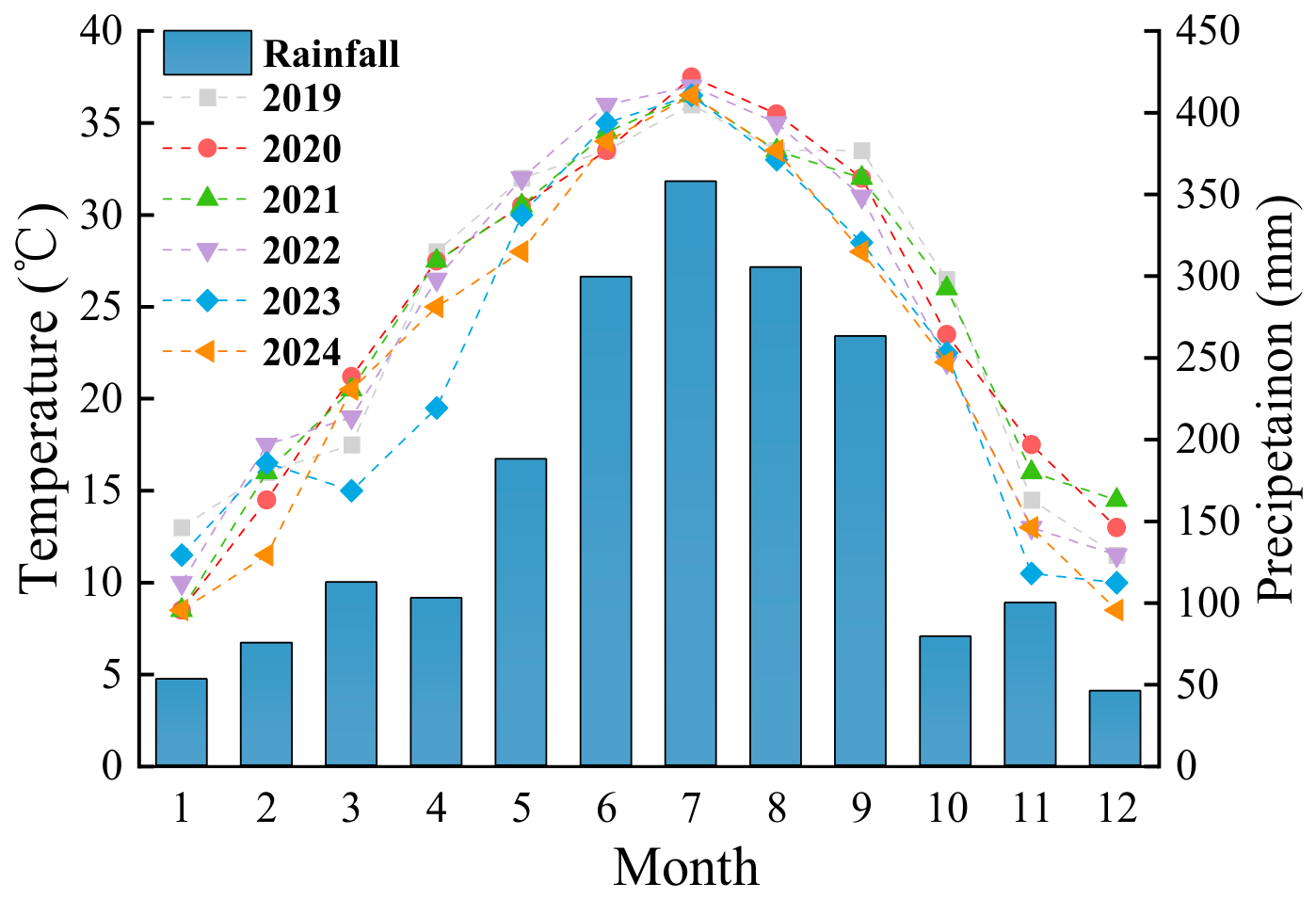
The sandstone samples were collected from the slope of an open-pit mine of phosphate in Yichang City, China (111°32′–111°64′ E, 31°03′–31°15′ N). The studied area lies in a subtropical monsoon climate zone with abundant rainfall and marked seasonal variability. Monthly precipitation and temperature data from 2019 to 2024 are presented in Figure 1. Frequent rainfall infiltration and groundwater-level fluctuations expose the slope rock to repeated wetting and drying. Acidic groundwater in mining areas generally has a pH of approximately 2.5–6.5. SO42− is commonly the dominant anion, while the major cations include Ca2+, Mg2+, Fe2+/Fe3+, Al3+, and Mn2+, with variable concentrations of Na+, K+, Cl−, HCO3−, and trace metals. Accordingly, the pH 2 H2SO4 solution used herein is defined as a strongly acidic, accelerated-deterioration boundary condition rather than a direct reproduction of mine-water chemistry.
Figure 1.
Monthly average precipitation and temperature (2019–2024) of the studied area.
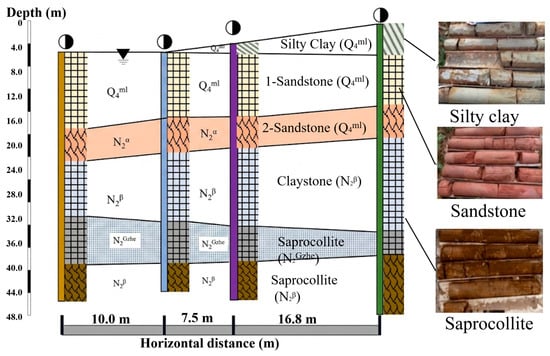
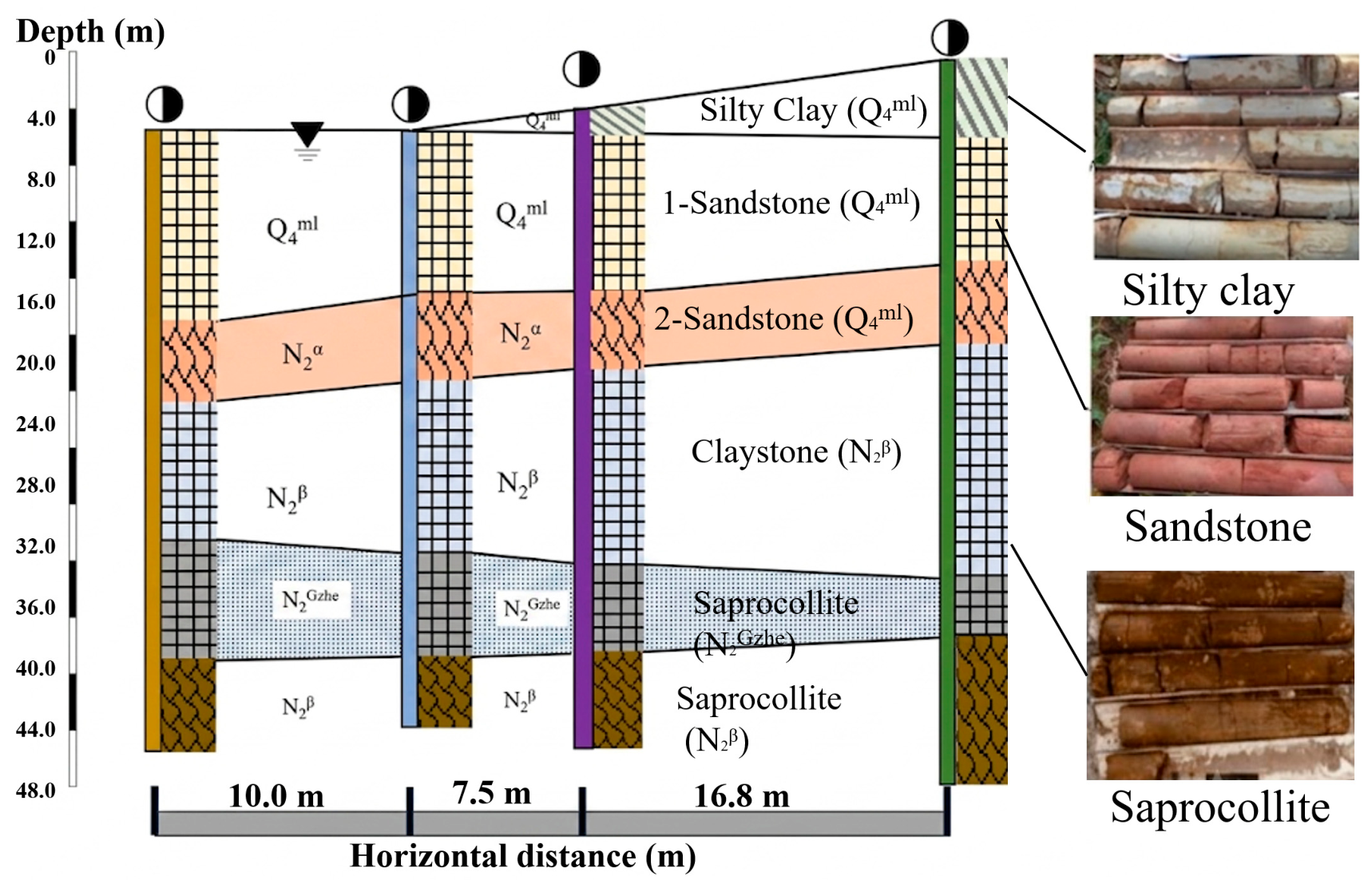
According to the borehole profiles shown in Figure 2, the sandstone specimens were collected from the upper sandstone layer of the Quaternary Q4ᵐˡ unit at a depth of approximately 9–11 m below ground level. Figure 2 presents the typical geological profiles of the sampling site obtained from four boreholes. The groundwater table was approximately 4.5 m below ground level. The initial moisture content of the collected sandstone was 2.37%, and the samples were in a saturated state.
Figure 2.
Geological section of the studied site. The semi-circle represents the sampling points, and the upside-down triangle represents the groundwater level.
2.2. Materials
The basic physical properties, including the water content (following ASTM D2216-19 [29]), density (following ASTM D6473-24 [30]), permeability (following ASTM D4525-13e2 [31]), porosity (following ASTM D7063-18 [32]), and P-wave velocity (following GB/T 50266-2013 [33]), were measured and are listed in Table 1. X-ray diffraction tests indicated that the sandstone consists of nonclay minerals, including quartz (62.8%), feldspar (16.2%), and mica (11.7%), and clay minerals, including montmorillonite (5.5%) and kaolinite (3.8%). Rock cores were cut and ground to the dimensions required for the corresponding tests. The specimen dimensions and preparation procedures for the triaxial and micro-CT tests are described separately in Section 2.3.2 and Section 2.3.3, respectively.
Table 1.
Bacic physical properties of sandstone.
2.3. Experimental Apparatus and Testing Method
2.3.1. Acidic Wetting–Drying Test
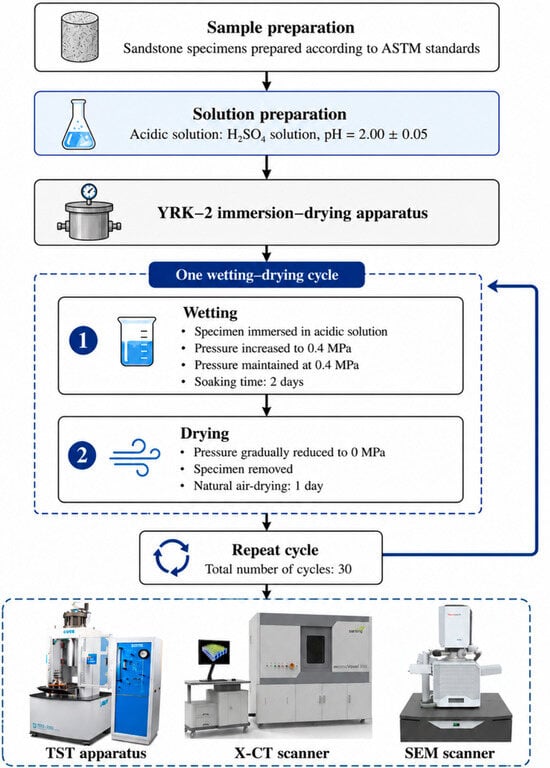
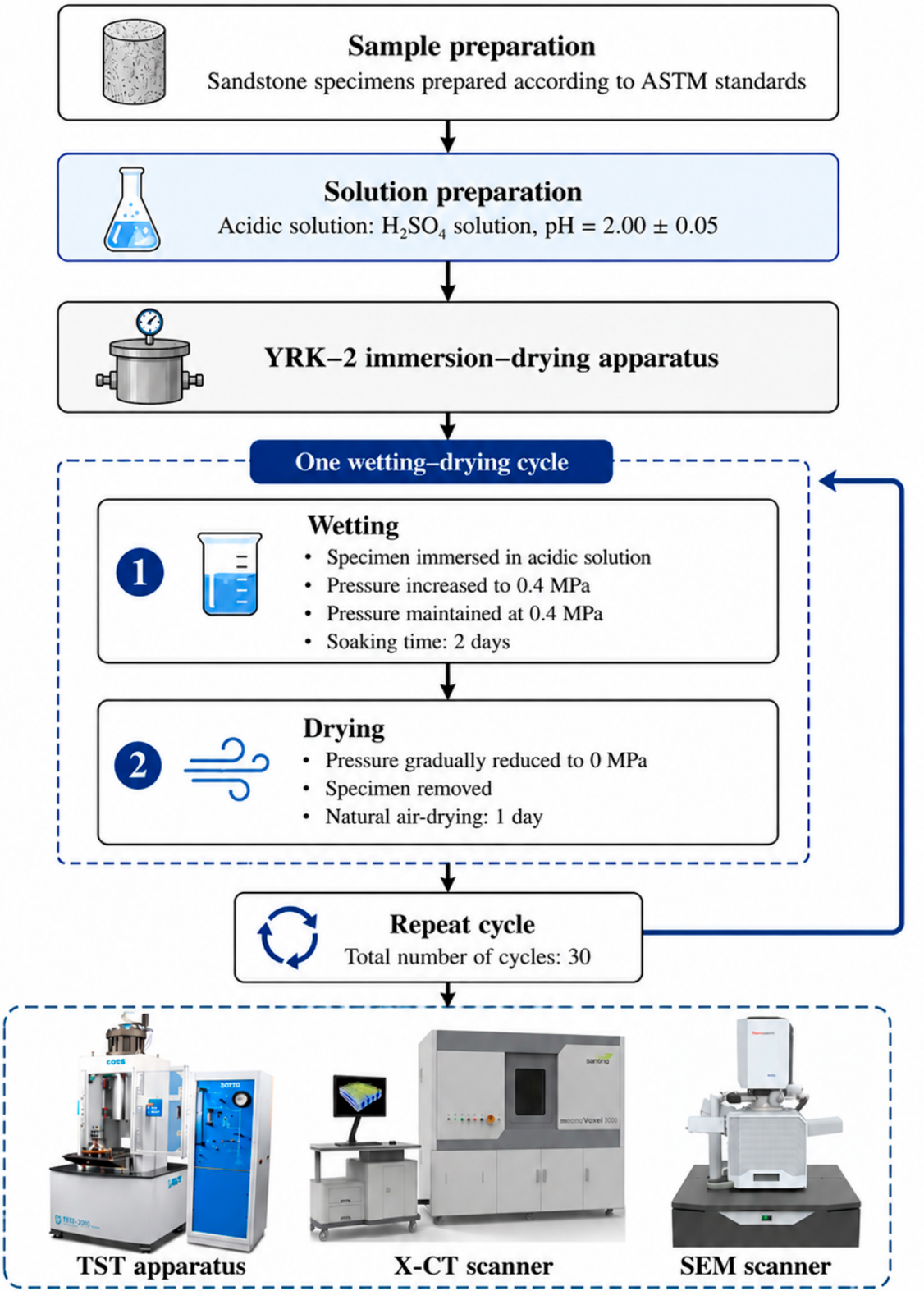
A self-developed YRK-2 rock immersion-drying apparatus was used for the acidic wetting–drying tests (Figure 3). Three independent specimens were tested for each experimental condition. Specimens without visible defects and with a comparable initial density and P-wave velocity were assigned to the different groups. The acidic solution, with an estimated H2SO4 concentration of approximately 6.7 × 10⁻³ mol/L, was selected as an accelerated deterioration medium. Dilute H2SO4 was gradually added to distilled water until the initial pH reached 2.00+/−0.05. The test groups were N = 0, 5, 10, 20, and 30. The experiments were conducted at a laboratory temperature of 20 ± 2 °C and a relative humidity of 50 ± 5%. Each cycle began at immersion with an osmotic pressure of 0.4 MPa for 2 days. After each immersion period, the specimens were naturally air-dried for 24 h. Then, fresh H2SO4 solution was prepared and replaced at the beginning of each W-D cycle, and the solution was not renewed during the immersion period.
Figure 3.
Flowchart of the testing process.
2.3.2. Triaxial Shear Test
Triaxial shear tests were conducted using a GCTS Rock Triaxial Testing System (Tempe, AZ, USA). The rock samples were cored, cut, and polished to obtain cylinders with a diameter of 38 mm and a height of 80 mm. Both end faces were carefully ground to ensure a tolerance within ±0.05 mm. The tested procedure followed ASTM D7012-23 [34]. Three independent replicate specimens were tested for each testing group. Before the triaxial tests, the sandstone specimens were subjected to back-pressure saturation for 2 days to promote water penetration into the pores. Subsequently, the specimens were initially placed in the pressure chamber for consolidation under a confining pressure (σ3) of 1, 2, or 5 MPa. When the pore pressure became stable, the axial pressure was applied with the loading rate being 0.05 mm/min.
2.3.3. Micro-CT Scanning
By referring to ASTM E1441-26 [35], cylindrical specimens (25 mm in diameter × 50 mm in height) were scanned using a nano-Voxel 3000 micro-CT scanner (Tianjin, China) at a spatial resolution of 0.1 μm. The acquired projection images were subsequently reconstructed to obtain CT slices. Based on the segmented CT slices, three-dimensional models of the internal pore network were reconstructed. Quantitative parameters, including the porosity and pore connectivity, were extracted to evaluate the progressive deterioration of the microstructure. The pore fractal dimension (Dm) was determined using the box-counting method. The value of Dm was determined by the slope of the linear fitting relationship in the reconstruction result, as shown in Equation (1):
where ε is the cubic boxes’ side length. N(ε) is the number of boxes intersecting the pore phase. is the fitting parameter.
2.3.4. Scanning Electron Microscope Test
To further investigate the microstructural evolution of the rock specimens after corrosion, the fracture surfaces of the damaged specimens were examined using SEM at a 5000× magnification. The SEM images were used to characterize changes in the microscopic features, including pores, cracks, mineral particles, and cementing materials of the sandstone.
3. Results
3.1. Macroscopic Mechanical Behavior
3.1.1. Stress–Strain Relationship
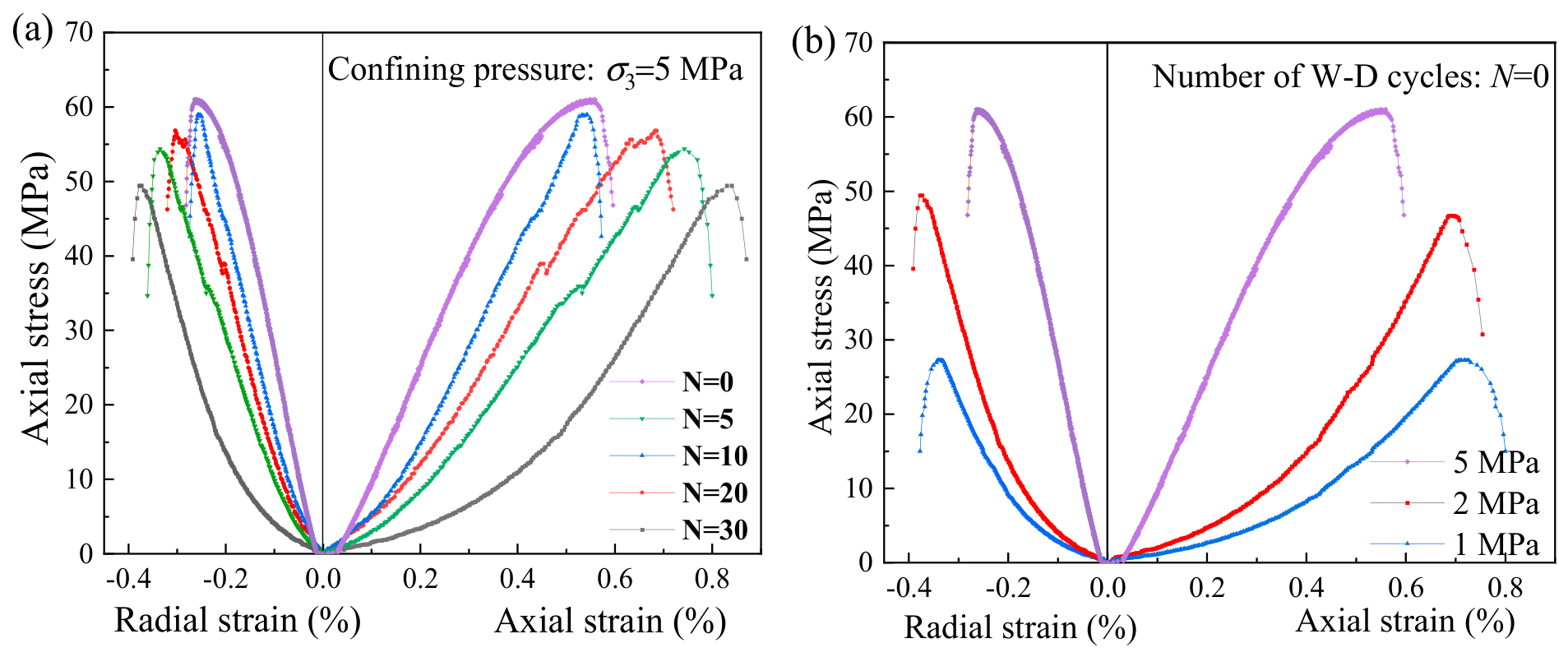
Figure 4 compares the triaxial stress–strain responses under the combined effects of the cycle number and confining pressure. Figure 5a presents the curves at a fixed confining pressure of σ3 = 5 MPa, while Figure 5b presents the curves at N = 0. As increased from 0 to 30, the compaction stage generally lengthened, the tangent stiffness and peak stress decreased, and the post-peak response became progressively softer. These trends are consistent with the accumulation and interconnection of internal defects. The generation of massive microcracks and the softening effect of the water–rock damage resulted in an obvious softening trend in the post-peak curve. Lateral confinement effectively suppressed lateral expansion and crack opening, causing the post-peak deformation of the axial strain curve to become steeper in a high-confining-pressure environment. Acidic W-D cycles and confining pressure exerted contrasting effects on the mechanical behavior of the specimens. The confining pressure suppressed crack opening and lateral expansion, leading to enhanced peak strength and deformation resistance. Therefore, the internal damage induced by acidic W-D cycles was the primary cause of shear strength degradation, whereas the confining pressure partially alleviated the adverse influence of the damage on the macroscopic mechanical properties.
Figure 4.
Failure mode of sandstone at different times of acidic W-D cycles.
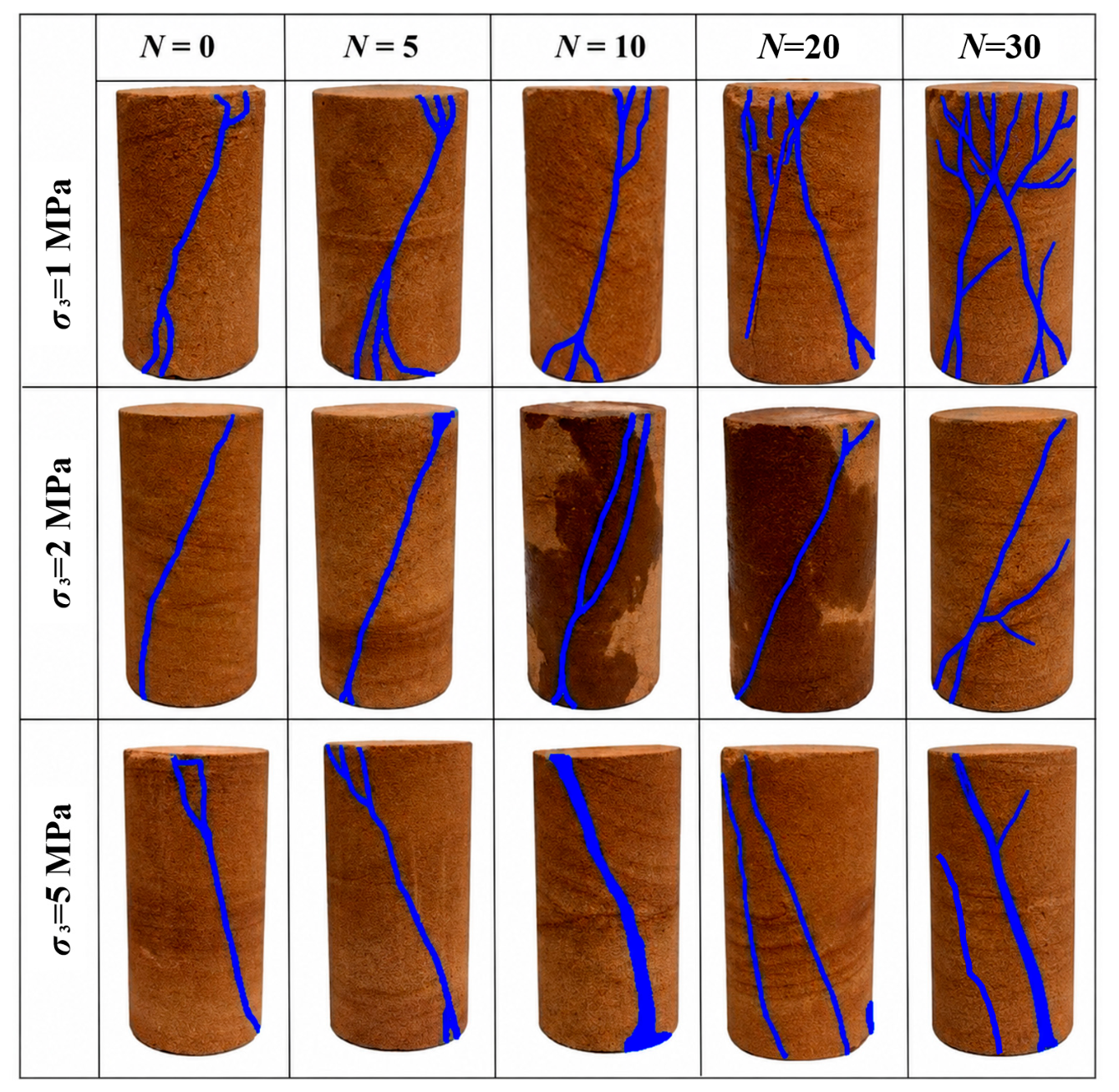
Figure 5.
The stress–strain curves of sandstone (a) at different W-D cycles and (b) at different confined pressures.
The Mohr circles were constructed from the measured peak principal stresses. For each wetting–drying cycle, the failure envelope was fitted using the Mohr–Coulomb criterion. The peak strengths measured at confining pressures of 1, 2, and 5 MPa were fitted to determine the cohesion c and internal friction angle φ (Table 2). The cohesion of sandstone decreased from 8.20 to 4.85 MPa (40.85%), whereas φ decreased from 37.52 degrees to 33.29 degrees (11.27%) as N increased from 0 to 30. The more pronounced reduction in cohesion is consistent with the progressive weakening of interparticle bonds and cementation under repeated acidic wetting–drying cycles, which reduced the integrity of the load-bearing structure and facilitated the initiation and propagation of microcracks.
Table 2.
Values of shear strength parameters of sandstone.
3.1.2. Failure Mode of Sandstone
The macroscopic failure mode was governed by the combined influence of prior acidic wetting–drying damage and the confining pressure (Figure 4). As illustrated in Figure 4, the lateral confinement effect dominated, effectively suppressing the initiation of internal microcracks and the propagation of secondary cracks at the specimen ends. At the initial stage of acidic W-D cycles and high confining pressures, sample failure is entirely governed by a single through-going shear crack, resulting in a smooth and regular fracture surface. Under a high confining pressure, the instability of the specimen is entirely governed by a single major shear crack, resulting in a smooth and regular failure surface. Particularly under later acidic W-D cycles, the specimen becomes highly susceptible to shear slip along multiple weak structural planes during the failure process. Consequently, the failure mode gradually transitions from a single shear plane to a complex fracture network interwoven with a main shear crack and multi-branch secondary cracks. Ultimately, the failure mode is characterized by an intensified degree of fragmentation. These observations agree with the transition from localized brittle failure toward distributed damage reported for chemically or hydraulically weakened sandstone [2,10,19,21]. These findings support the present reductions in the cohesion and internal friction angle.
3.2. Mesoscopic Pore Distribution
3.2.1. Two-Dimensional Pore Distribution
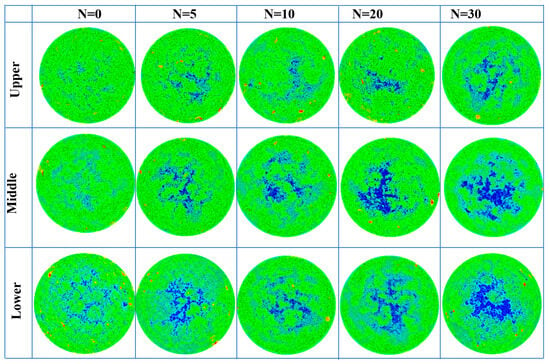
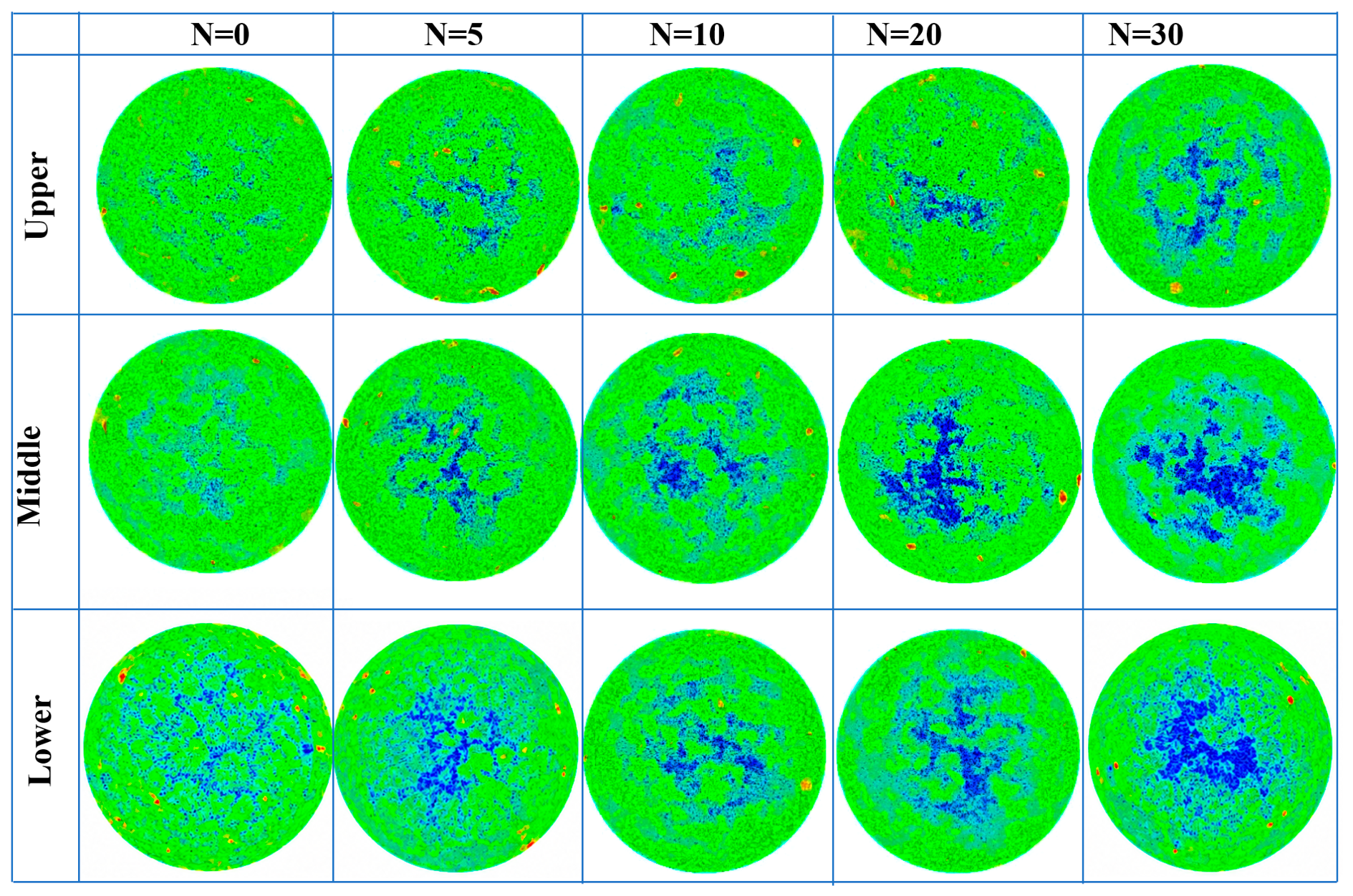
Micro-CT slices and binary segmentation were used to characterize the evolution of pores and cracks (Figure 6). The presence of blue regions in local areas of the CT slices indicated that there was a high degree of pore accumulation or damage accumulation areas. In the undisturbed state and during the initial stage (N = 0), the internal defects of the sandstone predominantly manifested as isolated primary micropores. During the subsequent 5–20 cycles, high-porosity regions expanded and developed banded or bifurcated patterns, indicating progressive pore growth and local crack connection. At N = 30, several irregular oblique pathways formed as pores and cracks coalesced. The outward-to-inward damage pattern was consistent with progressive exposure through connected surface-accessible defects, although the segmentation threshold and specimen correspondence must be verified before a quantitative comparison [36].
Figure 6.
2D CT slices at different parts of the sandstone specimen.
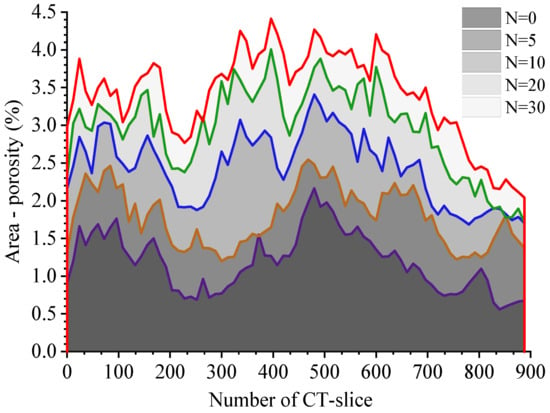
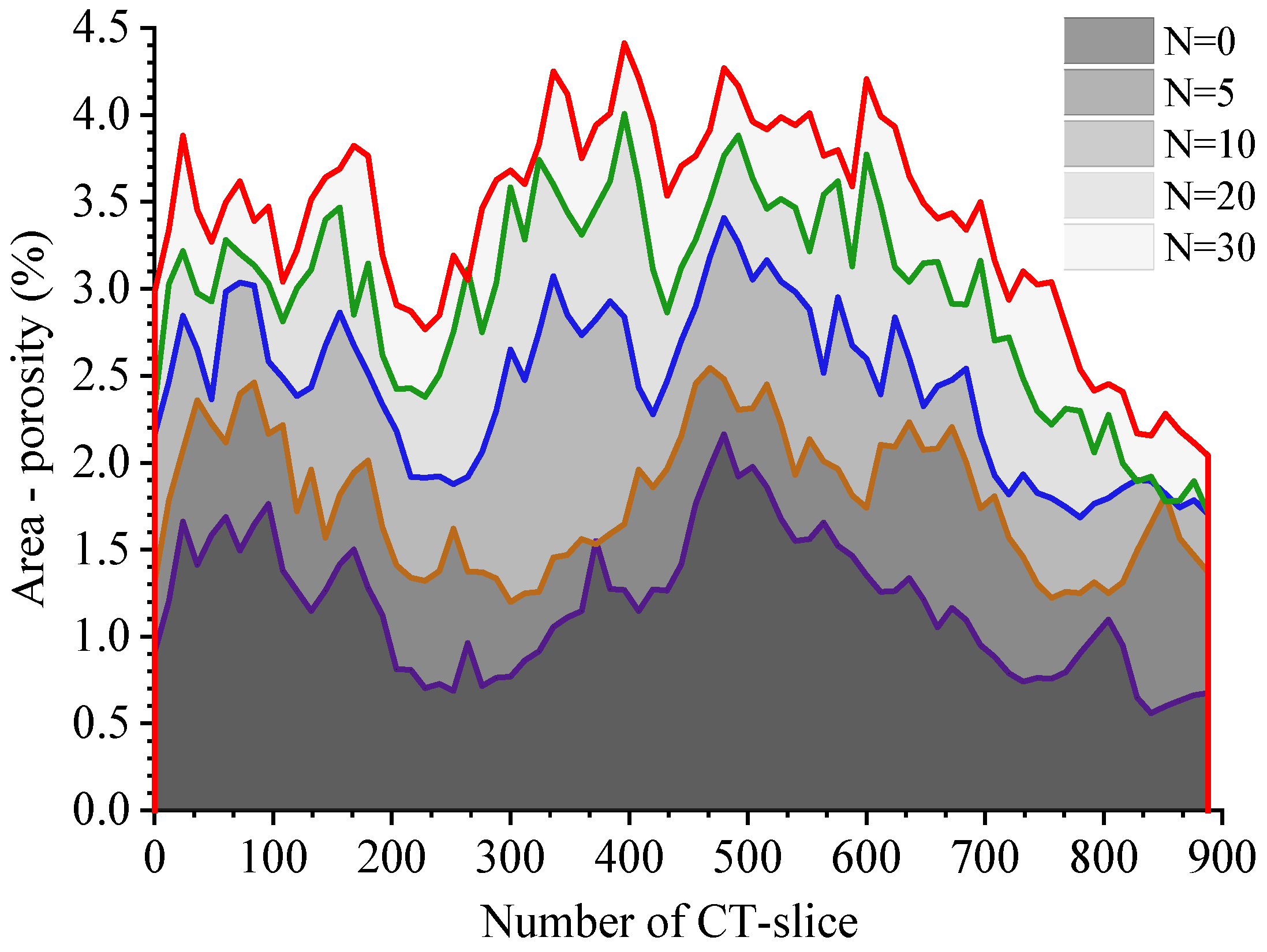
The axial area porosity profiles of the sandstone increased and became more dispersed with increasing N (Figure 7 and Table 3). Owing to the heterogeneous propagation and localized coalescence of the pores and cracks, the areal porosity demonstrated fluctuations and pronounced dispersion along the axial direction. Specifically, the variance in the areal porosity surged significantly from 12.4% to 37.1%, and the standard deviation escalated from 31.5% to 60.7%. Ultimately, the microstructural deterioration and the increase in statistical parameters collectively indicated that hydrochemical interaction-induced fatigue damage reconstructed the internal structure of sandstone. The increasing area porosity and dispersion indicated that pore growth was spatially heterogeneous along the specimen axis.
Figure 7.
Axial distribution of porosity in sandstone at different acidic W-D cycles.
Table 3.
Statistics of areal porosity obtained from the micro-CT slices.
3.2.2. Three-Dimensional Pore Distribution
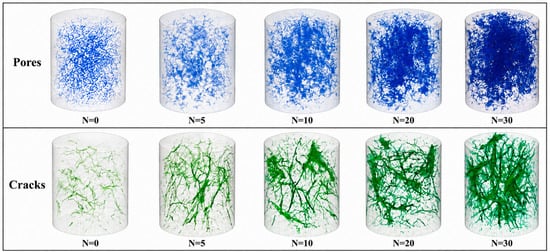
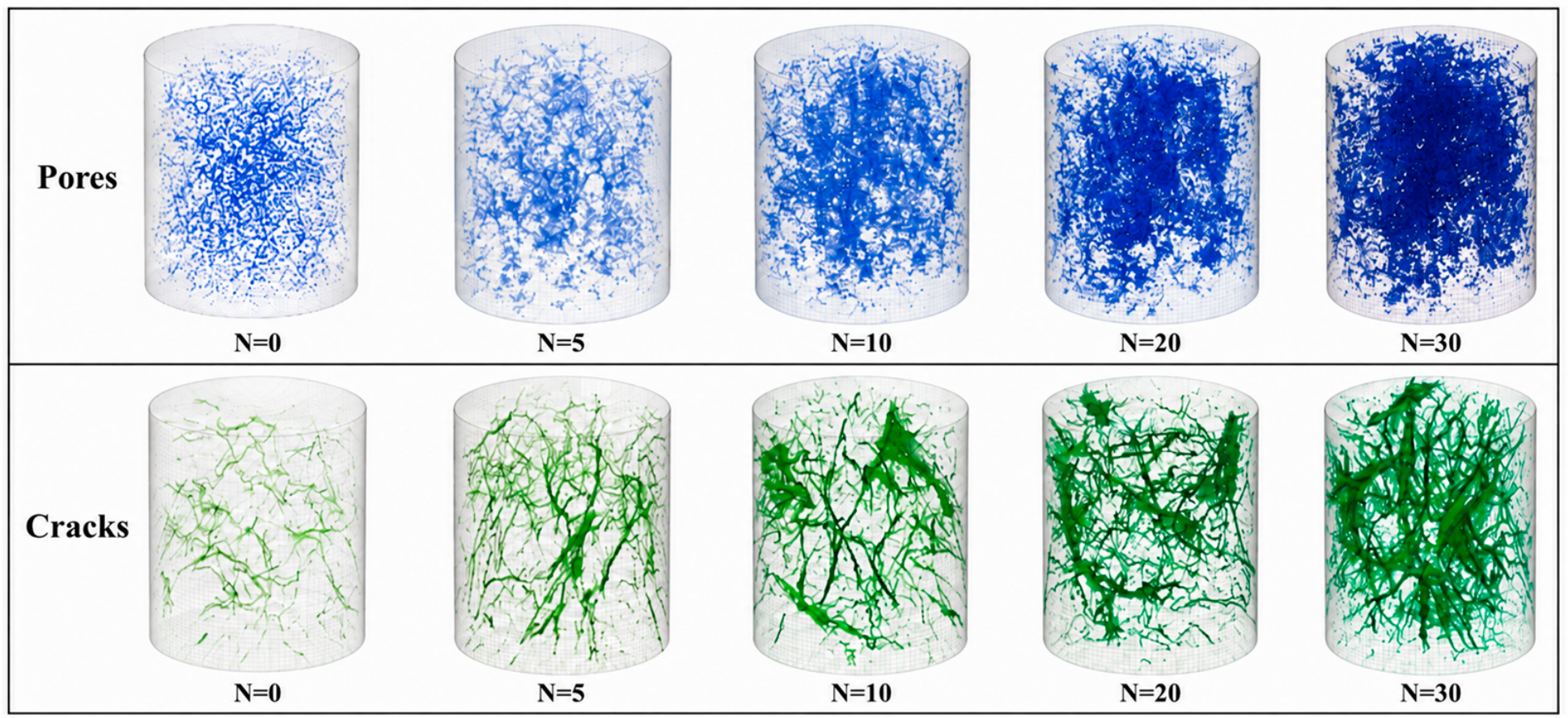
Because individual CT slices cannot represent the complete spatial topology, three-dimensional models of pores and cracks were reconstructed for the verified W-D cycle groups [37]. A multi-threshold segmentation algorithm was applied to quantitatively characterize the spatial distribution of defects within the sandstone on the AVIZO 2019.1 software platform. Pore and crack clusters (Figure 8) forming continuous pathways were classified as interconnected cracks, whereas disconnected voids were classified as isolated pores based on their topological connectivity [38]. The pores and cracks were distinctly differentiated according to their volumetric dimensions to enhance the spatial clarity and feature identification. With the increasing N, the pores gradually increased in number and volume, evolving from a dispersed distribution into densely clustered zones. Meanwhile, isolated pores progressively propagated, branched, and coalesced, eventually forming a complex interconnected three-dimensional crack network.
Figure 8.
Three-dimensional reconstruction models of pores and cracks after different acidic wetting–drying cycles.
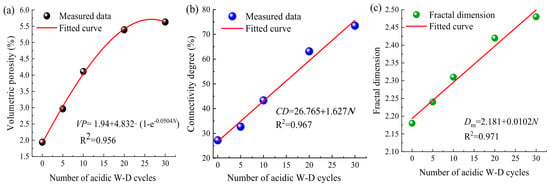
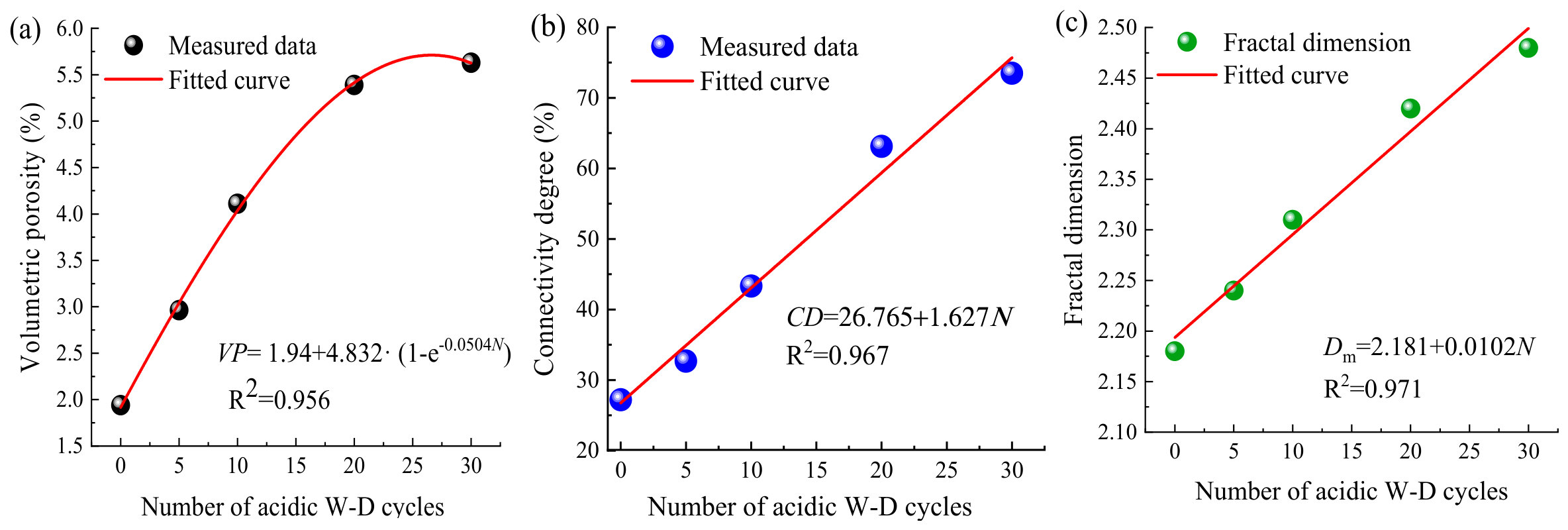
The pore and crack volumes were determined by voxel counting, from which the volumetric porosity (VP) and connectivity degree (CD) were calculated. The evolution of the volumetric porosity is presented in Figure 9a. A regression analysis indicated that the VP of sandstone exhibited a nonlinear exponential increase with N. This behavior can be attributed to the initial stages of microstructure damage, where the scarcity of cracks leads to a slow progression of structural damage and a correspondingly gradual increase in porosity. As N increased, microstructure damage propagated within the specimen’s interior, thus significantly elevating the overall porosity. As illustrated in Figure 9b, the value of CD demonstrated a linear increase over the tested range of acidic W-D cycles. In the intact state, the sandstone contained minimal interconnected networks, with defects predominantly manifesting as isolated pores (where CD is initially 27.55%). However, CD approached 78.19% after 30 cycles. This substantial increase implies that the expansion of the pore volume was primarily governed by the interconnecting cracks. As illustrated in Figure 9c, the fractal dimension (Dm) is an important parameter used to quantitatively characterize the complexity, spatial heterogeneity and irregularity of the pore structure. Dm reflects the evolution characteristics of the microstructure in sandstone from the perspective of geometric complexity [39]. As N increased, the value of Dm gradually rose from 2.18 to 2.49, exhibiting an increasing trend of linear function. This indicates the number of pores in sandstone and makes their morphology increasingly irregular, while continuously enhancing the surface roughness and spatial complexity of the microstructure.
Figure 9.
Variation in pore parameters under acidic W-D cycles: (a) volumetric porosity, (b) connectivity degree, and (c) fractal dimension.
Based on the evolution of the microstructure, the pore-structure evolution can be divided into three descriptive stages. At N = 0–5, the existing pores enlarged and a limited number of microcracks initiated. At N = 5–20, neighboring pores became connected and localized pore-crack damage zones developed. At N = 20–30, connected defects expanded into a more continuous three-dimensional network, reducing the effective load-bearing area. The increase in sandstone porosity following acidic exposure has been widely documented. For example, Geng et al. [12] reported that an acid treatment altered the pore-size distribution of tight sandstone and was accompanied by mechanical weakening. Li et al. [16] demonstrated that coupled acid–temperature–pressure exposure aggravated internal pore damage, while Li et al. [28] observed progressive pore-structure deterioration under acidic conditions. Consistent with these findings, the present study revealed progressive increases in the porosity, pore connectivity, and fractal dimension with increasing W-D cycles. However, previous studies did not jointly quantify the relationships among these mesoscopic pore-structure parameters and the macroscopic mechanical properties. By combining micro-CT reconstruction with a correlation analysis, the present study extended the previous findings by revealing the three-dimensional transition from relatively isolated pores to a more connected and complex pore–crack network and relating this structural evolution to the measured mechanical deterioration.
3.3. Microstructure Evolution
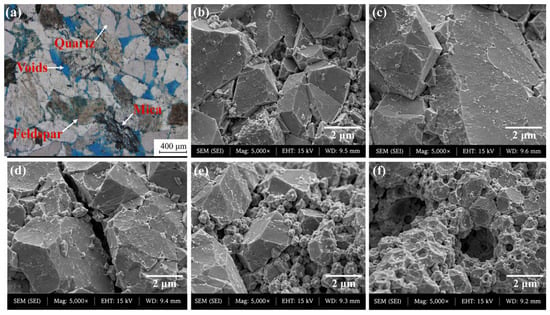
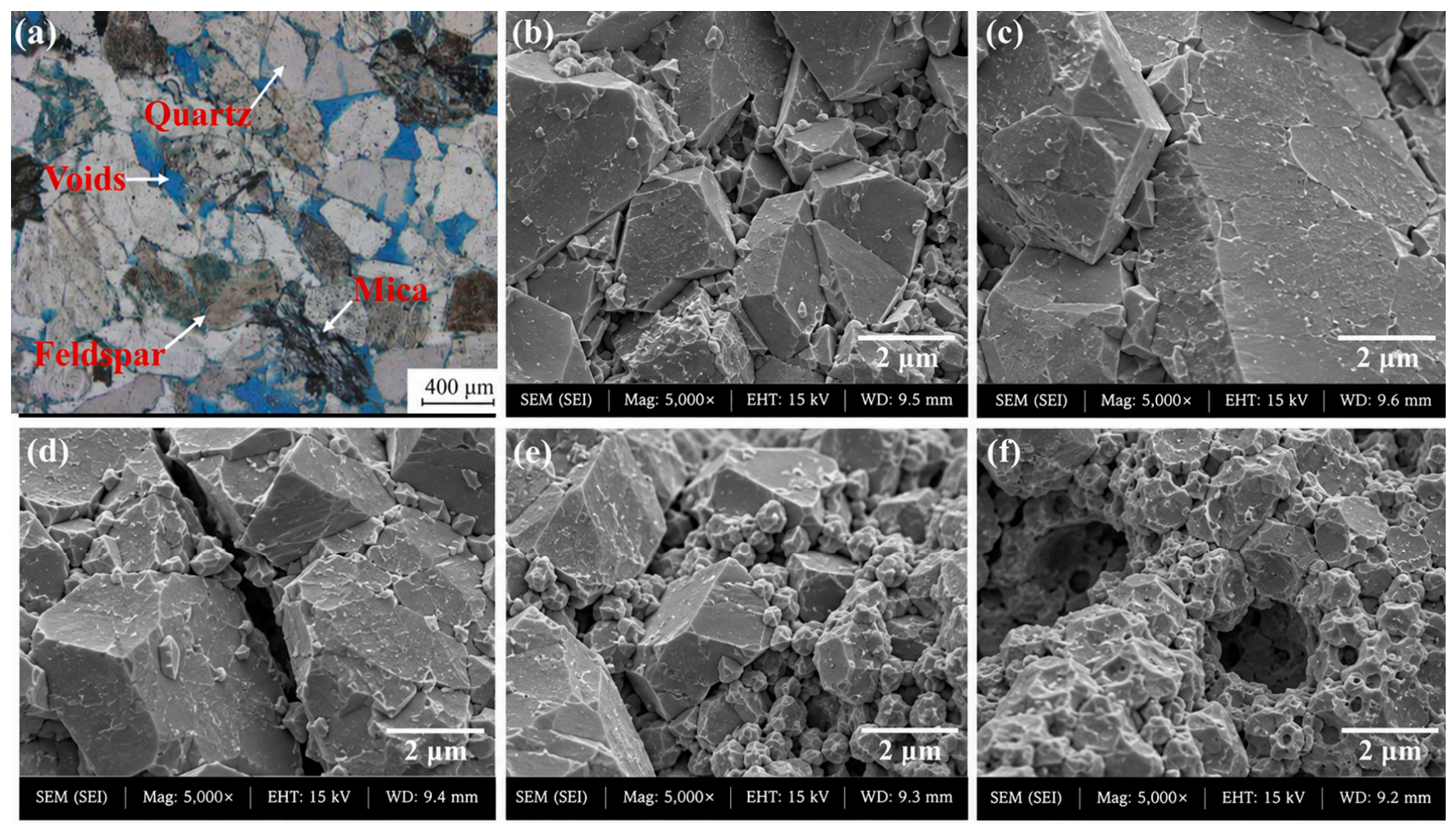
Figure 10 shows the microscopic morphology of sandstone. SEM images directly show enlarged pores and cracks, looser particle contacts, and local damage along particle boundaries after acidic W-D cycles. These morphological changes are consistent with the deterioration detected by the micro-CT scans. In the initial state (N = 0–5), the acidic solution preferentially attacked particle boundaries and weakly cemented regions, resulting in slight surface dissolution and the roughening of particle edges. As N increased from 5 to 20, the cementation between mineral particles was further weakened, accompanied by pore growth and microcrack extension. At the late stage (N = 30), the particle contacts became increasingly loose, and interconnected cracks gradually developed into continuous fracture networks, indicating that the sandstone evolved from an intact structure into a porous structure. The SEM-observed changes are consistent with the microstructural deterioration of rocks after acidic exposure reported by previous studies [5,16,40]. Mineral dissolution and the weakening of cementing materials are discussed by literature-supported mechanisms rather than as direct experimental findings.
Figure 10.
Microstructural evolution of sandstone under acidic W-D cycles: (a) initial microscopic morphology; (b–f) microstructures after 0, 5, 10, 20, and 30 W-D cycles.
These morphological changes are consistent with the progressive weakening of interparticle cement under combined acidic exposure and wetting–drying disturbance [41]. The environmental corrosion action led to the continuous degradation of the inter-particle bonding strength in sandstone. Consequently, the action of acidic W-D cycles exerted an impact on the morphological and spatial distribution characteristics of cracks in sandstone. This progressive microstructural deterioration provides an important internal mechanism for the reduction in sandstone strength, stiffness, and deformation resistance. However, mineral-specific dissolution and clay swelling-shrinkage are treated as plausible interpretations rather than directly measured mechanisms. Further mechanistic explanations will be elaborated upon in conjunction with detailed microscopic experiments.
4. Discussion
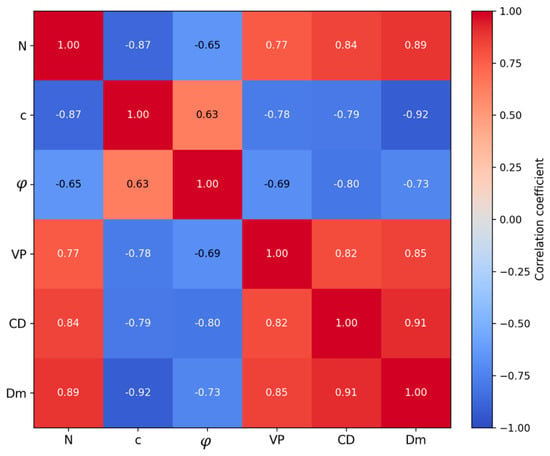
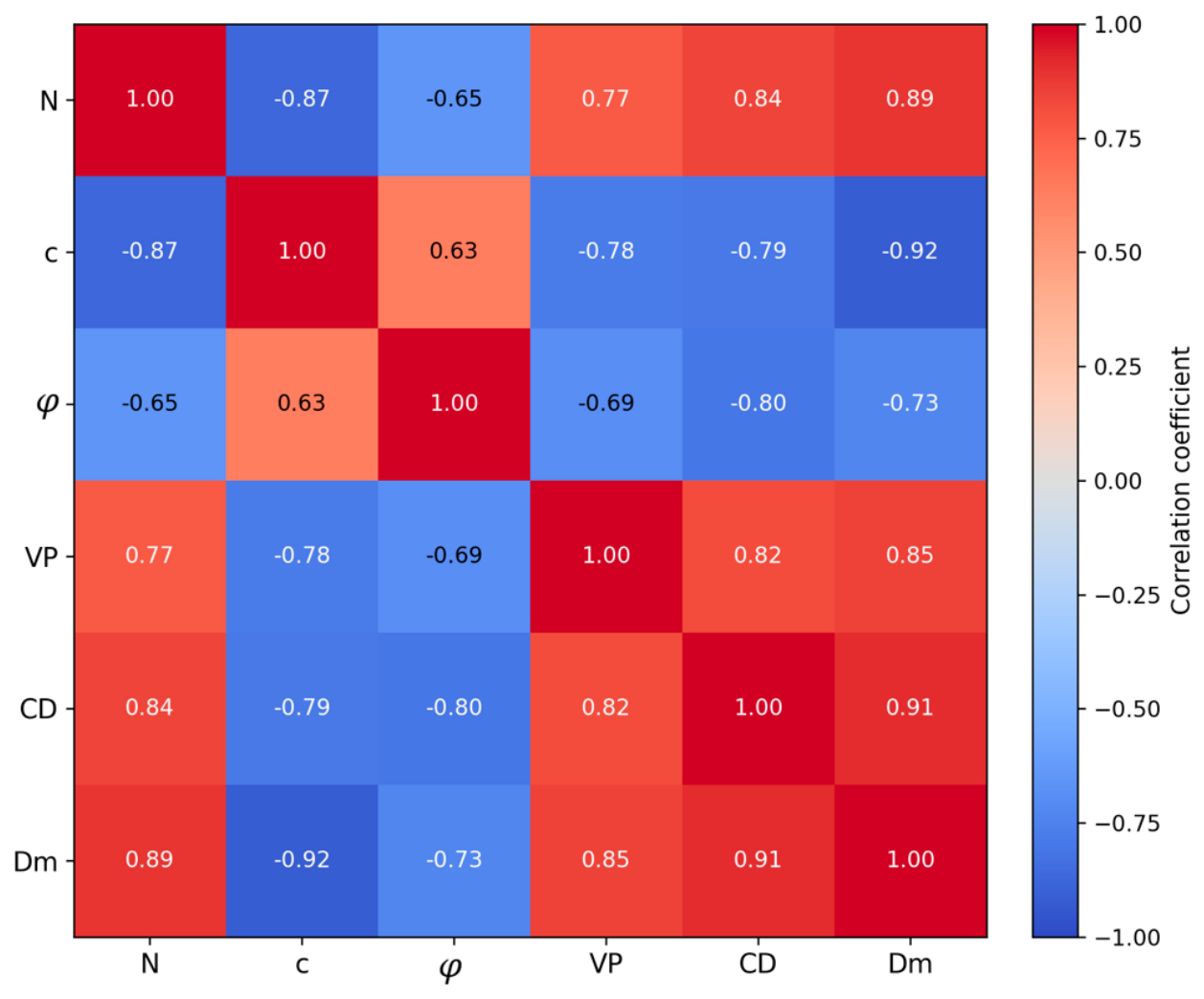
The correlation analysis examined the relationships among multiple variables, including N, c, , VP, CD, and Dm, as shown in Figure 11. N was negatively correlated with c and , with correlation coefficients (r) of −0.87 and −0.65, respectively. In comparison, the correlation between and N was relatively weak, suggesting that acidic W-D cycles exert a stronger influence on the interparticle cementation strength than on particle friction and interlocking. N exhibited strong positive correlations with VP, CD, and Dm, with r values of 0.88, 0.77, and 0.89, respectively. Regarding the relationships between the mechanical and porosity parameters, c was significantly negatively correlated with VP, CD, and Dm, with r values of −0.78, −0.79, and −0.92, respectively. The corresponding r values between and these parameters were −0.69, −0.80, and −0.73, respectively. These results indicate that acidic W-D cycles promote the interconnection of pores and cracks, resulting in a gradual increase in the number of seepage pathways within the sandstone and continuous increases in the pore connectivity and spatial complexity. Among these parameters, the pore fractal dimension showed the strongest correlation with the number of W-D cycles, indicating that Dm is highly sensitive to microstructural deterioration and thus serves as an important indicator for characterizing the internal damage of sandstone.
Figure 11.
Statistical results of multi-parameter correlations.
The coupled decrease in the shear strength parameters and increase in the pore connectivity is consistent with previous acid-treated sandstone studies that reported cement weakening, defect growth, and strength loss. However, the present results should not be interpreted as an acid-only effect. Neutral-solution control tests have also reported pore expansion and connectivity growth through repeated saturation and drying [21]. In the present experiment, the solution was adjusted to the target initial pH before each wetting stage, but the pH evolution and ionic composition during and after immersion were not systematically monitored [40]. Future work should include neutral controls, site-representative hydrochemistry, continuous pH and ion monitoring, post-cycle XRD/EDS, mass-loss measurements, and sufficient independent replicates.
5. Conclusions
This laboratory study links sandstone mechanical degradation with pore-network and microscopic evolution under the specified acidic wetting–drying cycles. The principal conclusions are as follows:
- (1)
- The increasing W-D cycles reduced the peak strength and changed the stress–strain response from comparatively brittle failure toward more distributed post-peak softening. The cohesion decreased from 8.20 to 4.85 MPa (at a decrease of 40.85%), and phi decreased from 37.52° to 33.29° (at a decrease of 11.27%). Increasing the confining pressure from 1 to 5 MPa restrained crack opening and partially mitigated the deterioration.
- (2)
- Micro-CT reconstruction showed progressive pore enlargement and connection. The CD increased from 27.55% to 78.19%, and Dm increased from 2.18 to 2.49 as N increased from 0 to 30, indicating the development of a more connected and geometrically complex network of pores and cracks.
- (3)
- SEM directly revealed that the action of acidic W-D cycles progressively weakened sandstone by dissolving cementing materials and promoting pore expansion and crack connectivity. These observations support an interpretation of an acid-induced cement-weakening tendency in sandstone.
- (4)
- Based on the statistical analysis, Dm showed the strongest reported correlation with the cohesion (r = −0.92) and was highly correlated with N (r = 0.89), indicating its potential as a damage-sensitive pore-structure index. The conclusions are limited to laboratory-scale accelerated exposure; neutral controls, site-representative solutions, pH monitoring, and independent replicates are required before field-scale generalization.
Author Contributions
Conceptualization, R.A.; methodology, L.Y.; software, S.W.; investigation, L.Y.; writing—original draft preparation, L.Y.; writing—review and editing, S.W. All authors have read and agreed to the published version of the manuscript.
Funding
This research was funded by the Special Fund for Basic Research Expenses of Central Universities (grant No. JZ2025HGTB0189).
Data Availability Statement
The data presented in this study are available from the corresponding author upon request. The data are not publicly available due to privacy.
Acknowledgments
The authors appreciate the anonymous reviewers for their constructive comments and suggestions that significantly improved the quality of this manuscript.
Conflicts of Interest
The authors declare no conflicts of interest.
References
- Miao, S.; Wang, H.; Cai, M.; Song, Y.; Ma, J. Damage constitutive model and variables of cracked rock in a hydro-chemical environment. Arab. J. Geosci. 2018, 11, 19. [Google Scholar] [CrossRef] [Scilit]
- Tong, R.; Liu, H.; Liu, J.; Shi, Y.; Xie, L.; Ban, S. Meso-mechanical characteristics of granite with natural cracks after mud acid corrosion. Energies 2022, 15, 721. [Google Scholar] [CrossRef] [Scilit]
- Hsu, S.M.; Ke, C.C.; Lin, Y.T.; Huang, C.C.; Wang, Y.S. Unravelling preferential flow paths and estimating groundwater potential in a fractured metamorphic aquifer in Taiwan using borehole logs and a hybrid DFN/EPM model. Environ. Earth Sci. 2019, 78, 150. [Google Scholar] [CrossRef] [Scilit]
- Yu, C.; Zhong, W.; Zhang, X.; Li, T.; Fei, Z. Damage characteristics of a red sandstone foundation under rainfall infiltration in the red-bed area of the Sichuan Basin: A case study of Zhongjiang County. Buildings 2024, 14, 3406. [Google Scholar] [CrossRef] [Scilit]
- Liang, Y.; Huo, R.; Song, S.; Song, Z.; Li, G.; Mu, Y. Effect of the surface-area-to-volume ratio on dissolution and deterioration of acid-corroded sandstone. J. Build. Eng. 2024, 86, 108789. [Google Scholar] [CrossRef] [Scilit]
- Liu, Y.Q.; Sun, C.; Xiong, Y.; Wu, W.; Zhang, Y.; Li, N. Kinetics study of surface reaction between acid and sandstone based on the rotating-disk instrument. Chem. Technol. Fuels Oils 2020, 55, 765–777. [Google Scholar] [CrossRef] [Scilit]
- Wang, H.; Xie, F.; Song, J.; Bao, W.; Yin, Z.; Fu, X.; Tian, Y. Investigation of sandstone-like material for damaged rock mass based on an orthogonal experimental method. Buildings 2024, 14, 686. [Google Scholar] [CrossRef] [Scilit]
- Mao, Y.; Ma, R.; Chen, D.; Zhang, L.; Chen, J. Sustainable conservation of the Xumishan Grottoes: Weathering characteristics and causes of red sandstone surfaces. Sustainability 2026, 18, 2437. [Google Scholar] [CrossRef] [Scilit]
- Sun, M.L.; Liang, C.X.; Shen, Y.X.; Shang, X.J.; Cao, Z.Z. Characteristics of salt damage to sandstone grottoes in Northwest China and contributing factors. J. Earth Environ. 2022, 5, 543–556. [Google Scholar] [CrossRef] [Scilit]
- Ning, L.; Yunming, Z.; Bo, S.; Gunter, S. A chemical damage model of sandstone in acid solution. Int. J. Rock Mech. Min. Sci. 2003, 40, 243–249. [Google Scholar] [CrossRef] [Scilit]
- Chen, Y.; Tong, H.; Chen, Q.; Du, X.; Wang, S.; Pan, Y.; Dong, Y.; Ma, H. Chemical corrosion–water–confining pressure coupling damage constitutive model of rock based on the SMP strength criterion. Materials 2023, 16, 6234. [Google Scholar] [CrossRef] [Scilit] [PubMed]
- Geng, W.L.; Wang, J.D.; Zhang, X.C.; Huang, G.; Li, L.; Guo, S.L. Experimental study of pore structure and rock mechanical properties of tight sandstone after acid treatment. Acta Geotech. 2023, 18, 6559–6571. [Google Scholar] [CrossRef] [Scilit]
- Kun-peng, L.; Xiao-yan, Z.; Dian, X.; Xing, Z.; Hong-jie, L. Study on disintegration mechanism of silty mudstone exacerbated by acid rain water chemical damage. Rock Soil Mech. 2019, 41, 2693–2702. (In Chinese) [Google Scholar]
- Morsy, S.; Hetherington, C.; Sheng, J. Effect of low-concentration HCl on the mineralogy, physical and mechanical properties, and recovery factors of some shales. J. Unconv. Oil Gas. Resour. 2015, 9, 94–102. [Google Scholar] [CrossRef] [Scilit]
- Zhang, S.; Zhao, S.; Fan, M.; Sun, Y.; Liu, W.; Qi, W. Constitutive modeling of viscoelastic-plastic strain characteristics and damage in southern China red sandstone under chemical exposure. Mech. Time-Depend. Mater. 2024, 28, 3005–3028. [Google Scholar] [CrossRef] [Scilit]
- Li, S.; Huo, R.; Fujii, Y.; Ren, D.; Song, Z. Effect of acid–temperature–pressure on the damage characteristics of sandstone. Int. J. Rock Mech. Min. Sci. 2019, 122, 104079. [Google Scholar] [CrossRef] [Scilit]
- Cong, L.; Hu, X. Triaxial rheological property of sandstone under low confining pressure. Eng. Geol. 2017, 231, 45–55. [Google Scholar] [CrossRef] [Scilit]
- Li, S.G.; Huo, R.K.; Wang, B.; Ren, Z.Z.; Ding, Y.; Qian, M.T.; Qiu, T. Experimental study on physicomechanical properties of sandstone under an acidic environment. Adv. Civ. Eng. 2018, 2018, 5784831. [Google Scholar] [CrossRef] [Scilit]
- Huang, X.; Pang, J.Y.; Zou, J.Q. Effect of dry-wet cycles on the dynamic mechanical properties of sandstone under sulfuric acid solution. Rock Mech. Rock Eng. 2022, 55, 1253–1269. [Google Scholar] [CrossRef] [Scilit]
- Chen, X.; Liu, X.; Luo, H.; Long, L.; Liu, C. Microscopic damage to limestone under acidic conditions: Phenomena and mechanisms. Sustainability 2022, 14, 11771. [Google Scholar] [CrossRef] [Scilit]
- Li, X.S.; Peng, K.; Peng, J.; Xu, H. Effect of cyclic wetting—Drying treatment on strength and failure behavior of two quartz-rich sandstones under direct shear. Rock Mech. Rock Eng. 2021, 54, 5953–5960. [Google Scholar] [CrossRef] [Scilit]
- Zhao, Z.H.; Liu, H.; Gao, X.J.; Feng, Y.H. Meso-macro damage deterioration of weakly cemented red sandstone under the coupling effect of high-humidity and uniaxial loading. Eng. Fail. Anal. 2023, 143, 106911. [Google Scholar] [CrossRef] [Scilit]
- Grgic, D.; Giraud, A. Influence of different fluids on the static fatigue of a porous rock: Poro-mechanical coupling versus chemical effects. Mech. Mater. 2014, 71, 34–51. [Google Scholar] [CrossRef] [Scilit]
- Agbotui, P.Y.; Firouzbehi, F.; Medici, G. Review of effective porosity in sandstone aquifers: Insights for representation of contaminant transport. Sustainability 2025, 17, 6469. [Google Scholar] [CrossRef] [Scilit]
- Gao, J.; Chen, G.; Mitani, Y.; Gong, S.; Feng, C. Effect of hydrochemical dissolution on the shear properties of rock fractures using improved discontinuous deformation analysis. Int. J. Numer. Anal. Methods Geomech. 2023, 47, 1457–1480. [Google Scholar] [CrossRef] [Scilit]
- Li, X.; An, R.; Zha, F.; Wang, Y.; Xu, L.; Lei, X. Mechanical properties and microstructural mechanism of MICP-cemented coral sand modified with xanthan gum. Appl. Ocean Res. 2026, 171, 105079. [Google Scholar] [CrossRef] [Scilit]
- An, R.; Kong, L.W.; Zhang, X.W.; Li, C.S. Effects of dry-wet cycles on the three-dimensional pore structure and permeability characteristics of granite residual soil using X-ray micro-computed tomography. J. Rock Mech. Geotech. Eng. 2022, 14, 851–860. [Google Scholar] [CrossRef] [Scilit]
- Li, X.L.; Liu, Z.T.; Feng, X.J.; Zhang, H.J.; Feng, J.J. Effects of acid sulfate and chloride ions on the pore structure and mechanical properties of sandstone under dynamic loading. Rock Mech. Rock Eng. 2021, 54, 6105–6121. [Google Scholar] [CrossRef] [Scilit]
- ASTM D2216-19; Standard Test Methods for Laboratory Determination of Water (Moisture) Content of Soil and Rock by Mass. ASTM International: West Conshohocken, PA, USA, 2019.
- ASTM D6473/D6473M-24; Standard Test Method for Specific Gravity and Absorption of Rock for Erosion Control. ASTM International: West Conshohocken, PA, USA, 2024.
- ASTM D4525-13e2; Standard Test Method for Permeability of Rocks by Flowing Air. ASTM International: West Conshohocken, PA, USA, 2013.
- ASTM D7063/D7063M-18; Standard Test Method for Effective Porosity and Effective Air Voids of Compacted Bituminous Paving Mixture Samples. ASTM International: West Conshohocken, PA, USA, 2018.
- GB/T 50266-2013; Standard for Test Methods of Engineering Rock Mass. China Planning Press: Beijing, China, 2013.
- ASTM D7012-23; Standard Test Methods for Compressive Strength and Elastic Moduli of Intact Rock Core Specimens under Varying States of Stress and Temperatures. ASTM International: West Conshohocken, PA, USA, 2023.
- ASTM E1441-19; Standard Guide for Computed Tomography (CT). ASTM International: West Conshohocken, PA, USA, 2026.
- Van Stappen, J.F.; De Kock, T.; De Schutter, G. Uniaxial compressive strength measurements of limestone plugs and cores: A size comparison and X-ray CT study. Bull. Eng. Geol. Environ. 2019, 78, 5301–5310. [Google Scholar] [CrossRef] [Scilit]
- Li, S.; Wu, Y.; Huo, R.; Song, Z.; Fujii, Y.; Shen, Y. Mechanical properties of acid-corroded sandstone under uniaxial compression. Rock Mech. Rock Eng. 2021, 54, 289–302. [Google Scholar] [CrossRef] [Scilit]
- Zhang, Y.; Chen, C.; Yin, X.; Chen, J. Subarea description and breakage constitutive model of rock mass based on CT testing. Buildings 2022, 12, 1232. [Google Scholar] [CrossRef] [Scilit]
- Yu, C.Y.; Tang, S.B.; Tang, C.A.; Duan, D.; Zhang, Y.J.; Liang, Z.Z.; Ma, K.; Ma, T.H. The effect of water on the creep behavior of red sandstone. Eng. Geol. 2019, 253, 64–74. [Google Scholar] [CrossRef] [Scilit]
- Li, X.S.; Peng, K.; Peng, J.; Hou, D. Experimental investigation of cyclic wetting–drying effect on mechanical behavior of a medium-grained sandstone. Eng. Geol. 2021, 293, 106335. [Google Scholar] [CrossRef] [Scilit]
- Li, N.Y.; Zeng, F.H.; Li, J.; Zhang, Q.; Feng, Y.L.; Liu, P.L. Kinetic mechanisms of reactions between HCl/HF acid mixtures and sandstone minerals. J. Nat. Gas. Sci. Eng. 2016, 34, 792–802. [Google Scholar] [CrossRef] [Scilit]

Disclaimer/Publisher’s Note: The statements, opinions and data contained in all publications are solely those of the individual author(s) and contributor(s) and not of MDPI and/or the editor(s). MDPI and/or the editor(s) disclaim responsibility for any injury to people or property resulting from any ideas, methods, instructions or products referred to in the content. |
© 2026 by the authors. Licensee MDPI, Basel, Switzerland. This article is an open access article distributed under the terms and conditions of the Creative Commons Attribution (CC BY) license.