


Abstract
Excess fluoride originating from phosphate mining activities poses a significant environmental and public health challenge, particularly in arid and semi-arid regions where water resources are limited. This study presents a comparative evaluation of four conventional defluoridation technologies for the treatment of real phosphate mine waters collected from two major Moroccan phosphate mining sites (Youssoufia and Khouribga). The investigated processes included coagulation–flocculation using aluminum sulfate and ferric chloride, chemical precipitation with calcium hydroxide and calcium chloride, adsorption on aluminum oxide (Al2O3) and zirconium oxide (ZrO2), and fluoride removal using calcined bovine bone apatite under both batch and continuous-flow conditions. Adsorption equilibrium was interpreted using Langmuir and Freundlich isotherm models, while the effects of adsorbent dosage, contact time, and water matrix composition were systematically investigated. Among the coagulation processes, aluminum sulfate achieved fluoride removal of up to approximately 82.5% in phosphate washing water and approximately 76.3% in mine drainage water, whereas ferric chloride removed about 52% of the dissolved fluoride under the reported conditions. Lime and calcium chloride exhibited moderate removal efficiencies of 66% and 61%, respectively. Aluminum oxide showed the highest equilibrium adsorption capacity (qm = 7.14 mg g−1), while zirconium oxide displayed faster fluoride uptake because of its higher surface affinity for fluoride ions. The presence of competing ions in real mine waters was associated with lower adsorption performance compared with synthetic fluoride solutions. Calcined bone apatite proved to be the most effective material, achieving approximately 83% fluoride removal within 20 min under batch conditions and maintaining good performance during continuous fixed-bed operation, producing treated water with fluoride concentrations below the World Health Organization guideline value. Overall, the results demonstrate that calcined bone apatite provides the highest fluoride-removal performance among the investigated materials under the tested conditions. Its waste-derived origin, rapid adsorption kinetics, and effective fluoride removal make it a promising material for the treatment of fluoride-rich phosphate mine waters. The comparative evaluation further indicates that integrating chemical pretreatment with adsorption may represent a promising strategy for the treatment and potential reuse of mining effluents, although the performance of such a combined treatment train should be validated experimentally.
1. Introduction
Freshwater is a vital resource for economic development, food security, and the preservation of ecosystems. However, rapid population growth, urbanization, industrialization, and climate change continue to place increasing pressure on freshwater resources, particularly in arid and semi-arid regions. This situation underscores the urgent need not only for more sustainable water management practices but also for the development of effective and sustainable technologies for the treatment and reuse of unconventional water resources. Therefore, protecting water quality has become one of the major environmental challenges of the twenty-first century [1,2,3].
Among the inorganic contaminants commonly found in natural and industrial waters, fluoride is of particular concern because of its dual role in human health. At low concentrations, fluoride plays an essential role in the mineralization of teeth and bones and contributes to the prevention of dental caries. However, prolonged exposure to elevated fluoride concentrations can result in dental and skeletal fluorosis, potentially causing irreversible damage to the skeletal system. To minimize these health risks, the World Health Organization (WHO) recommends a maximum fluoride concentration of 1.5 mg L−1 in drinking water. This value has been widely adopted as the international reference limit by most national drinking water regulations [4,5,6,7].
Fluoride contamination of water resources originates from both natural and anthropogenic sources. Natural fluoride mainly results from the weathering and dissolution of fluoride-bearing minerals such as fluorite, cryolite, and particularly fluorapatite. Anthropogenic sources include industrial activities such as aluminum smelting, phosphate fertilizer production, glass manufacturing, ceramic industries, and mining operations. Wastewaters generated by these activities often contain fluoride concentrations that far exceed regulatory limits, making efficient defluoridation processes indispensable prior to wastewater discharge or reuse [7,8,9].
Morocco represents a particularly relevant case study because it contains more than 70% of the world’s known phosphate reserves and has developed one of the world’s largest phosphate mining and processing industries. Moroccan phosphate ores are predominantly composed of fluorapatite (Ca5(PO4)3F), whose gradual dissolution releases fluoride ions into mine drainage water and phosphate washing effluents. As a result, these waters frequently contain fluoride concentrations exceeding the guideline values recommended for drinking water and several industrial applications [6,7,8]. Moreover, phosphate mine waters are typically characterized by high salinity and mineralization, with elevated concentrations of chloride, sulfate, bicarbonate, calcium, magnesium, and sodium ions. These coexisting ions can substantially influence fluoride removal through competitive adsorption and other physicochemical interactions. Such a complex water matrix makes phosphate mine water fundamentally different from the synthetic fluoride solutions commonly used in laboratory-scale studies [9,10,11].
During the past two decades, numerous technologies have been developed for fluoride removal from contaminated water. Among them, coagulation–precipitation remains one of the most widely applied methods because of its operational simplicity and relatively low capital cost. Aluminum salts, ferric salts, and the Nalgonda process have demonstrated satisfactory fluoride removal efficiencies under optimized operating conditions. Nevertheless, the effectiveness of these techniques is highly dependent on solution pH, water chemistry, and coagulant dosage. Furthermore, coagulation processes generate considerable amounts of sludge and may leave residual aluminum in treated water, thereby posing additional environmental and operational challenges [12,13,14].
Adsorption is widely recognized as one of the most promising technologies for fluoride removal owing to its simplicity, operational flexibility, and the wide variety of available adsorbent materials. Recent research has focused on developing high-performance adsorbents, including metal oxides (Al2O3, Fe2O3, and ZrO2), layered double hydroxides, hydroxyapatite, functionalized biochars, carbonaceous materials, metal–organic frameworks (MOFs), and nanostructured materials. Biomass-derived and waste-derived carbonaceous materials have attracted particular interest because they can combine pollutant removal with resource valorization and potentially lower material costs [15,16,17,18]. The adsorption performance of these materials is primarily determined by their specific surface area, pore structure, surface functional groups, and interactions between dissolved oxyanions and surface-active sites. Such interactions can be strongly affected by competing ions present in complex water matrices [19]. Despite these significant advances, most adsorption studies have been conducted using synthetic fluoride solutions. Consequently, the reported adsorption capacities do not necessarily reflect the performance of these materials under real operating conditions, where highly mineralized natural or industrial waters contain multiple competing ions.
Adsorption onto hydroxyapatite-based materials or “fluoride removal using bone-derived materials” represents another attractive alternative for fluoride removal because of their high selectivity toward fluoride ions. Natural and synthetic hydroxyapatites, calcined bone apatites, layered double hydroxides, and various ion-exchange resins have demonstrated excellent fluoride removal capacities, often producing treated water with residual fluoride concentrations that comply with international drinking water standards. However, their relatively high cost, regeneration requirements, and sensitivity to competing ions remain major challenges limiting their large-scale implementation in water treatment applications [20].
Despite the considerable progress achieved in fluoride removal technologies, several important knowledge gaps remain. First, the vast majority of published studies have been conducted using synthetic fluoride solutions rather than real industrial wastewaters. Second, direct comparisons among different defluoridation technologies are still limited, since most investigations focus on a single adsorbent or treatment process. Third, only a few studies have systematically compared several treatment technologies using real and complex water matrices containing multiple competing ions, despite the fact that such conditions are representative of phosphate-mine effluents. Consequently, selecting the most suitable treatment technology for real industrial applications remains a significant challenge [17].
Taken together, the available evidence indicates that the performance of conventional fluoride-removal technologies is strongly dependent on the characteristics of the treated water and the operating conditions. In particular, fluoride concentration, pH, treatment dosage, contact time, and the presence of competing ions can substantially influence coagulation, precipitation, and adsorption mechanisms. These factors are especially relevant for highly mineralized phosphate-mine waters, where the complex ionic composition may lead to treatment performances that differ considerably from those obtained with synthetic fluoride solutions. Waste-derived calcium- and phosphate-containing materials, particularly bone-derived apatites, are also of interest because they combine fluoride affinity with the potential for waste valorization. However, their technical, economic, and environmental performance under real mining-water conditions remains insufficiently characterized and requires further technical, economic, and environmental assessment.
Despite the considerable progress achieved in conventional fluoride-removal technologies, their performance under real phosphate-mine water conditions remains insufficiently characterized. The complex ionic composition of these waters can modify coagulation, precipitation, and adsorption mechanisms and may substantially affect fluoride-removal efficiency compared with synthetic-water systems. Moreover, direct comparisons among complementary treatment approaches using real phosphate-mine waters remain limited. This knowledge gap is particularly relevant for phosphate-mining regions, where the selection of an appropriate treatment technology must account not only for fluoride-removal efficiency but also for water chemistry, operating conditions, sludge generation, and practical treatment constraints.
In this context, the present study provides a comparative experimental evaluation of complementary conventional defluoridation processes, including coagulation–flocculation, chemical precipitation, adsorption using aluminum oxide and zirconium oxide, and fluoride removal using calcined bovine bone apatite. Real phosphate-mine waters collected from the Youssoufia and Khouribga mining sites in Morocco were used to evaluate these treatment approaches under their respective investigated operating conditions. A particular contribution of this work is the comparative assessment of several complementary defluoridation approaches within a single study using real and highly mineralized phosphate-mine waters, together with the evaluation of calcined bovine bone apatite under both batch and continuous fixed-bed conditions. The investigated processes are compared in terms of fluoride-removal performance, adsorption capacity and kinetics where applicable, operating conditions, and practical treatment characteristics. The findings provide comparative experimental information to support the selection and further development of appropriate fluoride-removal strategies for phosphate-mine waters, while recognizing that large-scale implementation requires further pilot-scale, techno-economic, and environmental assessment.
2. Materials and Methods
2.1. Water Sampling and Physicochemical Characterization
Mine drainage water was collected from the Youssoufia phosphate mine (Morocco), whereas phosphate washing water was collected from the Sidi Daoui phosphate processing plant located in the Khouribga mining basin (Morocco). Water samples were collected in high-density polyethylene (HDPE) containers previously rinsed with deionized water and the corresponding sample water. Three water samples were collected from each sampling site during the sampling campaign. The samples were transported to the laboratory under refrigerated conditions (4 ± 1 °C) and analyzed within 24 h of collection without chemical preservation.
The physicochemical characteristics of the raw water samples were determined according to the French Standard Methods (AFNOR) [21] and the Standard Methods for the Examination of Water and Wastewater [22]. The analyzed parameters included electrical conductivity (EC), pH, total suspended solids (TSS), bicarbonate (HCO3−), chloride (Cl−), sulfate (SO42−), calcium (Ca2+), magnesium (Mg2+), sodium (Na+), potassium (K+), and fluoride (F−).
2.2. Defluoridation Processes
2.2.1. Coagulation–Precipitation
Coagulation–flocculation experiments were carried out at room temperature using a conventional jar-test apparatus according to the standard AFNOR procedure [21]. Rapid mixing was performed at 200 rpm for 2 min, followed by slow mixing at 45 rpm for 15 min. The suspensions were allowed to settle for 96 min, after which the supernatants were filtered through 0.45 μm membrane filters prior to analysis.
Aluminum sulfate (Al2(SO4)3) and ferric chloride (FeCl3) were evaluated as coagulants. In addition, precipitation experiments were performed using calcium hydroxide (Ca(OH)2) and calcium chloride (CaCl2) to assess their fluoride removal performance.
2.2.2. Batch Adsorption Experiments
Batch adsorption experiments were carried out using commercial aluminum oxide (Al2O3) and zirconium oxide (ZrO2) as adsorbent materials. All chemicals were of analytical grade and used as received. The adsorbents were characterized by nitrogen adsorption–desorption analysis (BET specific surface area and pore size distribution). Aluminum oxide was further characterized by scanning electron microscopy (SEM) and Fourier-transform infrared (FTIR) spectroscopy [23].
Adsorption isotherm experiments were conducted at room temperature (25 ± 2 °C) in 50 mL polypropylene centrifuge tubes containing 25 mL of real phosphate mine drainage water or phosphate washing water, with initial fluoride concentrations ranging from 1 to 50 mg L−1 (adjusted by spiking with NaF when necessary to obtain the full isotherm range). The adsorbent dosage was varied between 0.5 and 10 g L−1 depending on the adsorbent material, to identify the optimal dosage range. The suspensions were continuously stirred at 250 rpm using a magnetic stirrer for 24 h to ensure equilibrium attainment, as determined from preliminary kinetic tests. The initial pH of the solutions was measured (natural pH ≈ 8.4) and was not adjusted to reflect real treatment conditions, except where specified for comparison. After equilibration, the suspensions were filtered through 0.45 μm syringe filters, and the residual fluoride concentration in the supernatant was measured using the SPADNS spectrophotometric method [22]. All experiments were performed in duplicate, and the average values are reported.
The equilibrium adsorption capacity, qe (mg g−1), was calculated using the mass balance equation: where C0 and Ce are the initial and equilibrium fluoride concentrations (mg L−1), respectively, V is the solution volume (L), and m is the adsorbent mass (g). The equilibrium data were fitted to the Langmuir and Freundlich isotherm models using OriginPro 2021 software (OriginLab Corporation, Northampton, MA, USA). The isotherm parameters were derived from the linearized forms of the respective models, as described in Section 3.3.2.
2.2.3. Fluoride Removal Using Calcined Bone Apatite
Calcined bovine bone apatite was selected as an alternative fluoride-removal material because of its high affinity for fluoride ions, as reported in previous studies [20,21]. Batch and continuous fixed-bed column experiments were performed to evaluate its fluoride removal performance. Fresh bovine bones were thoroughly washed, degreased, dried, and calcined at 400 and 600 °C under an air atmosphere for 3 h to produce the apatite materials used in this study.
2.3. Analytical Methods
Fluoride concentrations were determined using the SPADNS spectrophotometric method with a UV–Visible spectrophotometer, in accordance with the Standard Methods for the Examination of Water and Wastewater [22].
Major cations (Ca2+, Mg2+, Na+, and K+) were determined by flame atomic absorption spectrometry (FAAS), whereas major anions were analyzed according to the corresponding AFNOR standard methods [21]. Each analysis was performed in triplicate, and average values are reported.
All analyses were performed following validated analytical procedures. Quality assurance and quality control (QA/QC) included calibration with certified standard solutions, routine analysis of blanks and standards, and periodic verification of analytical accuracy [24,25,26,27]. Recoveries ranged between 95 and 105%, and relative standard deviations were below 5%.
The analytical protocol included the water-quality parameters considered most relevant to fluoride removal, namely fluoride, major cations, and major anions (Cl−, SO42−, NO3−, and HCO3−). Phosphate was not included in the initial analytical characterization. Nevertheless, its potential influence on fluoride removal through competition for adsorption sites and interactions with coagulant species should be considered when interpreting adsorption and coagulation processes.
3. Results and Discussion
3.1. Physicochemical Characteristics of Mine Waters
The physicochemical characteristics of the phosphate mine waters collected from the Youssoufia and Sidi Daoui (Khouribga) mining sites in Morocco are summarized in Table 1. Both water samples exhibited a high degree of mineralization, as evidenced by their elevated electrical conductivity and high concentrations of major dissolved ions. These characteristics are typical of phosphate mining effluents, where prolonged water–rock interactions promote the dissolution of fluorapatite and associated evaporitic minerals, resulting in highly mineralized waters. The high ionic strength of these waters is expected to influence all investigated defluoridation processes by modifying adsorption equilibria, precipitation kinetics, and coagulant hydrolysis.
Table 1.
Physicochemical characteristics of the phosphate mine waters collected from the Youssoufia and Sidi Daoui (Khouribga) mining sites.
Fluoride concentrations in both water samples exceeded the World Health Organization (WHO) guideline value of 1.5 mg L−1 for drinking water. This result indicates that fluoride removal would be required if these waters were intended for potable use or for applications subject to comparable fluoride limits. The high fluoride levels mainly result from the dissolution of fluorapatite (Ca5(PO4)3F), the predominant mineral phase in Moroccan phosphate deposits. Similar fluoride enrichment has been reported in phosphate mining regions of Morocco and other phosphate-producing countries [6,7]. The fluoride concentrations measured in the present study are consistent with previous investigations conducted on Moroccan phosphate mine waters, particularly those reported for the Youssoufia mining area by Moufti (2019) [7]. Similar fluoride enrichment has also been reported in phosphate mining regions of Tunisia [28], India [29], and Jordan [30], where fluorapatite dissolution constitutes the main source of fluoride contamination. The concentrations reported in Table 1 represent mean values for the collected phosphate mine water samples. Because the composition of these waters varied among samples, the initial fluoride concentration (C0) and, where relevant, the magnesium concentration were determined for each experimental set. The specific values are reported in the respective figure captions, tables, and text, and were used to calculate fluoride removal efficiency and adsorption capacity.
Besides fluoride, both water samples contained appreciable concentrations of calcium, magnesium, sulfate, bicarbonate, and chloride ions. These dissolved species play a key role during defluoridation because they may either promote fluoride precipitation or compete with fluoride ions for the active sites of adsorbent materials. Sulfate and bicarbonate ions are well known to reduce fluoride adsorption efficiency through competitive adsorption on hydroxylated surfaces, whereas calcium ions may promote the precipitation of sparingly soluble calcium fluoride (CaF2) under suitable operating conditions.
The high ionic strength of phosphate mine waters therefore represents a major challenge for fluoride removal compared with the synthetic fluoride solutions commonly used in laboratory studies. Unlike synthetic solutions, real mine waters contain multiple competing ions that may substantially influence adsorption equilibrium, precipitation mechanisms, and overall treatment efficiency. Consequently, the treatment performance obtained in the present study provides a more realistic assessment of the practical applicability of the investigated defluoridation processes.
Overall, the physicochemical characterization highlights the complexity of Moroccan phosphate mine waters and emphasizes the need for robust defluoridation technologies capable of maintaining high fluoride removal efficiencies under highly mineralized conditions. These findings also provide a strong rationale for the comparative evaluation of coagulation–precipitation, adsorption, and fluoride removal using calcined bone apatite presented in the following sections [6,16]. Although the Youssoufia mine drainage water exhibited higher fluoride concentrations, the Sidi Daoui phosphate washing water showed a substantially higher electrical conductivity, indicating a more highly mineralized matrix. This difference illustrates the distinct chemical characteristics of the two waters and provides a valuable basis for evaluating the robustness of the investigated defluoridation processes under different hydrochemical conditions.
3.2. Fluoride Removal by Coagulation–Precipitation
3.2.1. Performance of Different Coagulants
The performance of the investigated coagulants differed markedly depending on their hydrolysis behavior and the dominant fluoride removal mechanisms. Coagulation–precipitation remains one of the most widely applied technologies for fluoride removal because of its operational simplicity, relatively low capital and operating costs, and easy integration into conventional water treatment facilities. The process is based on the hydrolysis of metal salts, leading to the formation of amorphous metal hydroxide flocs capable of destabilizing suspended particles and removing dissolved fluoride through adsorption, ligand exchange, charge neutralization, sweep flocculation, and coprecipitation mechanisms. Calcium-based reagents further contribute to fluoride removal through the precipitation of sparingly soluble calcium fluoride (CaF2). Recent studies have demonstrated that coagulation–precipitation is particularly suitable for the treatment of highly mineralized waters and industrial effluents when operating conditions are properly optimized.
Among the investigated coagulants, aluminum sulfate exhibited the highest fluoride removal efficiency under the tested experimental conditions. This superior performance is primarily attributed to the rapid hydrolysis of aluminum sulfate, which produces amorphous aluminum hydroxide flocs according to the following reaction:
Followed by the hydrolysis of dissolved aluminum species
The freshly precipitated Al(OH)3 possesses a large specific surface area and abundant hydroxylated functional groups, providing numerous active sites for fluoride adsorption. The dominant mechanism is generally accepted to be ligand exchange between surface hydroxyl groups and fluoride ions:
Besides surface complexation, sweep flocculation plays an important role by physically entrapping fluoride ions within the growing amorphous Al(OH)3 precipitates. Recent mechanistic studies have further shown that the formation of soluble aluminum–fluoride complexes may influence the overall removal efficiency, particularly at elevated fluoride concentrations or under non-optimal pH conditions, highlighting the importance of process optimization [31,32,33].
Ferric chloride also achieved significant fluoride removal through the formation of ferric hydroxide precipitates, although its maximum removal efficiency (approximately 52%) remained considerably lower than that obtained with aluminum sulfate under comparable operating conditions. The hydrolysis of ferric chloride produces amorphous ferric hydroxide according to:
Fluoride removal subsequently occurs through ligand-exchange reactions involving surface hydroxyl groups:
The lower performance of ferric chloride is generally attributed to differences in hydrolysis equilibria, surface chemistry, and the weaker affinity of ferric hydroxides for fluoride ions compared with aluminum hydroxides. Furthermore, ferric hydroxides are more sensitive to water chemistry, particularly in the presence of elevated sulfate and bicarbonate concentrations, where competitive adsorption reduces the number of available active sites. Similar observations have been reported in comparative studies of aluminum- and iron-based coagulants [34,35].
For calcium hydroxide and calcium chloride, fluoride removal occurs predominantly through the precipitation of sparingly soluble calcium fluoride. Following the dissolution of calcium-based reagents, calcium ions react with dissolved fluoride according to:
The efficiency of this precipitation mechanism mainly depends on calcium availability, fluoride concentration, and solution pH. Although calcium-based reagents are inexpensive and readily available for large-scale applications, they generally require higher dosages than aluminum salts to achieve comparable fluoride removal efficiencies. Their performance may also decrease in highly mineralized waters because competing carbonate and sulfate ions consume part of the dissolved calcium, thereby reducing the amount available for CaF2 precipitation [31,33,35].
Overall, the experimental results demonstrate that the nature of the coagulant strongly influences fluoride removal efficiency and determines the dominant removal mechanism. Under the investigated experimental conditions, aluminum sulfate proved to be the most effective coagulant for the treatment of Moroccan phosphate mine waters owing to the combined effects of surface adsorption and sweep flocculation. Calcium-based reagents remain attractive because of their low cost, widespread availability, and ease of implementation, whereas ferric chloride represents a valuable alternative when operational or environmental considerations limit the use of aluminum salts. These findings provide a solid basis for the optimization of the coagulation–precipitation process discussed in the following sections [32,33,34].
3.2.2. Effect of Coagulant Dose
The effect of aluminum sulfate dosage on fluoride removal is presented in Figure 1, whereas the performance of ferric chloride is summarized in Table 2. For both mine drainage water and phosphate washing water, increasing the coagulant dosage resulted in a progressive decrease in the residual fluoride concentration, confirming that coagulant dosage is one of the most influential operating parameters governing the coagulation–precipitation process. Similar trends have been widely reported for aluminum- and iron-based coagulation systems applied to fluoride removal from groundwater and industrial effluents [32,33,36].
Figure 1.
Effect of the amount of aluminum sulfate added on fluoride removal from phosphate wash water and mine drainage water.
Table 2.
Effect of ferric chloride dosage on fluoride removal from phosphate washing water (C0 = 2.0 mg L−1).
For aluminum sulfate, fluoride removal increased markedly with increasing coagulant dosage (Figure 1). In phosphate washing water, the residual fluoride concentration decreased from approximately 2.0 mg L−1 in the untreated sample to 0.35 mg L−1 at the highest investigated dosage (320 mg L−1), corresponding to an overall fluoride removal of approximately 82.5%. A similar trend was observed for mine drainage water, where the fluoride concentration decreased from approximately 4.0 mg L−1 to 0.95 mg L−1, corresponding to approximately 76.3% fluoride removal under the reported conditions. Nevertheless, fluoride removal remained consistently lower than that achieved for phosphate washing water, indicating that the more complex chemical composition of mine drainage water affected the coagulation process. Elevated concentrations of sulfate, bicarbonate, and dissolved salts may have competed with fluoride ions for active surface sites associated with freshly precipitated aluminum hydroxide species, thereby reducing the overall treatment efficiency. Similar competitive effects have been reported for highly mineralized waters by Deng et al. (2024) [34] and Devasthali (2024) [35]. Under the highest investigated aluminum sulfate dosage, the residual fluoride concentration was reduced below the World Health Organization (WHO) guideline value of 1.5 mg L−1 in both water matrices, demonstrating the potential of aluminum sulfate for fluoride removal from highly mineralized phosphate mine waters.
The experimental results further indicate that fluoride removal increased rapidly at relatively low aluminum sulfate dosages before gradually reaching a plateau above approximately 160–240 mg L−1. This behavior suggests that the available adsorption sites on the freshly formed aluminum hydroxide flocs become progressively saturated, whereas additional coagulant mainly contributes to sludge production rather than further fluoride removal. Such saturation behavior is commonly observed in coagulation systems and is generally attributed to the finite number of hydroxyl functional groups available for ligand exchange on amorphous Al(OH)3 flocs [33,37]. Once these active sites become occupied, the adsorption process approaches equilibrium and further increases in coagulant dosage produce only marginal improvements in fluoride removal. Moreover, excessive aluminum sulfate addition may induce charge reversal and colloidal restabilization, thereby reducing the efficiency of particle aggregation and sweep flocculation. Consequently, identifying the coagulant dosage that provides the highest fluoride-removal performance under the investigated conditions is essential to balance fluoride removal, chemical consumption, sludge generation, and overall treatment costs.
The influence of ferric chloride dosage is presented in Table 2. Increasing the FeCl3 dosage from 10 to 80 mg L−1 reduced the residual fluoride concentration from 2.0 to 0.96 mg L−1, corresponding to a maximum fluoride removal efficiency of approximately 52%. Although fluoride removal improved with increasing ferric chloride dosage, its overall performance remained lower than that of aluminum sulfate under comparable operating conditions. This difference is mainly attributed to the lower affinity of ferric hydroxide surfaces for fluoride ions, together with differences in hydrolysis equilibria and floc structure. Similar conclusions have been reported in comparative studies evaluating aluminum- and iron-based coagulants for defluoridation [33,36].
It should be noted that phosphate (PO43−) concentrations were not measured during the ferric chloride coagulation experiments. Phosphate is known to compete with fluoride for adsorption sites on metal hydroxide surfaces and may influence coagulation efficiency [34,35]. In phosphate mine waters, phosphate concentrations can range from several to hundreds of mg L−1, depending on the specific site and water type [6,7]. The potential competitive effect of phosphate on fluoride removal should therefore be considered when interpreting the coagulation results. Future studies should include systematic phosphate analysis to better elucidate the competitive interactions between phosphate and fluoride during coagulation–flocculation processes.
From a practical perspective, identifying the coagulant dosage that provides the highest fluoride-removal performance under the investigated conditions is important for the treatment of phosphate mine waters. Excessive coagulant addition not only increases chemical consumption but also generates larger quantities of sludge, thereby increasing treatment and disposal costs. Consequently, the selected dosage should be evaluated by considering fluoride removal efficiency, chemical consumption, and sludge production. Such considerations are particularly important in phosphate mining industries, where large volumes of water require continuous treatment. Similar economic considerations have recently been highlighted in reviews addressing sustainable fluoride removal technologies [17,31,32].
Overall, the experimental results demonstrate that aluminum sulfate is considerably more effective than ferric chloride for the treatment of Moroccan phosphate mine waters. Its superior performance results from the combined effects of adsorption, ligand exchange, and sweep flocculation, whereas ferric chloride appears to be more sensitive to water chemistry and consequently provides lower fluoride removal efficiencies. These findings justify the selection of aluminum sulfate as the reference coagulant for the subsequent optimization studies.
3.2.3. Effect of Initial pH on Fluoride Removal
The initial pH is one of the most important operating parameters governing fluoride removal by coagulation because it directly influences aluminum hydrolysis, the surface charge of aluminum hydroxide flocs, and the aqueous speciation of fluoride. The effect of the initial pH on fluoride removal using aluminum sulfate is presented in Figure 2. The results clearly show that fluoride removal strongly depended on the solution pH, with both phosphate washing water and mine drainage water exhibiting the highest fluoride-removal performance at an initial pH of approximately 6.5 within the investigated pH range. Similar pH-dependent behavior has been extensively reported for aluminum-based coagulation systems and is generally attributed to changes in aluminum hydrolysis equilibria and fluoride adsorption mechanisms [32,34,36].
Figure 2.
Variation in residual fluoride levels with pH for wash water and mine drainage water.
The natural pH of the phosphate mine waters was approximately 8.4–8.5 (Table 1), whereas the highest fluoride-removal performance for aluminum sulfate coagulation was observed at an initial pH of approximately 6.5 within the investigated range. This difference is not contradictory, since the former represents the initial physicochemical condition of the untreated waters, whereas the latter corresponds to the optimized operating condition identified experimentally for fluoride removal. At pH values around 6.5, aluminum hydrolysis favors the formation of amorphous Al(OH)3 flocs with a high density of hydroxylated surface sites, which promote fluoride removal through adsorption and ligand-exchange mechanisms. Therefore, when treating the naturally alkaline mine waters under the optimized alum conditions, pH adjustment from approximately 8.4–8.5 to 6.5 may be required. Such adjustment would involve additional acid consumption and consequently increase the chemical demand and operating cost. Because the acid dose required for this pH adjustment was not quantitatively determined in the present study, its specific contribution to the overall treatment cost cannot be reliably estimated.
As shown in Figure 2, increasing the initial pH from 5.0 to approximately 6.5 resulted in a marked decrease in the residual fluoride concentration. For phosphate washing water, the residual fluoride concentration decreased from approximately 2.0 mg L−1 at pH 5.0 to 0.8 mg L−1 at pH 6.5, whereas for mine drainage water it decreased from approximately 4.0 mg L−1 to 2.2 mg L−1. This improvement can be attributed to the progressive formation of amorphous Al(OH)3 flocs, which provide numerous hydroxylated surface sites available for ligand exchange with fluoride ions. Within this pH range, aluminum hydroxides exhibit their maximum adsorption capacity, thereby maximizing fluoride removal. Similar optimum pH values (6–7) have been reported in numerous studies investigating fluoride removal by alum coagulation [33,34,35,36,37]. Under the highest-performing conditions identified in the present experiments (pH ≈ 6.5), the residual fluoride concentration in phosphate washing water decreased below the World Health Organization (WHO) guideline value of 1.5 mg L−1, whereas a higher residual fluoride concentration remained in mine drainage water because of its higher initial fluoride concentration and more complex ionic composition.
When the initial pH exceeded approximately 6.5, fluoride removal efficiency gradually decreased for both water matrices. At alkaline pH values, aluminum hydroxides progressively transformed into soluble aluminate species (Al(OH)4−), thereby reducing the amount of amorphous precipitate available for adsorption and sweep flocculation. Furthermore, the increasingly negative surface charge of aluminum hydroxides enhanced electrostatic repulsion toward fluoride ions, leading to lower adsorption efficiency. Recent spectroscopic investigations have also shown that excessive alkalinity promotes the formation of soluble aluminum–fluoride complexes, which may further reduce the overall defluoridation efficiency [32,38].
The results also showed that phosphate washing water consistently exhibited lower residual fluoride concentrations than mine drainage water throughout the investigated pH range. This difference is most likely associated with the more complex chemical composition of mine drainage water, which contains higher concentrations of sulfate, bicarbonate, and dissolved mineral species. These ions compete with fluoride for the available adsorption sites and may also interfere with aluminum hydrolysis and floc formation, thereby reducing the overall treatment efficiency. Similar competitive effects have been reported for highly mineralized industrial and mining wastewaters [33,34].
From an operational perspective, maintaining the coagulation process at approximately pH 6.5 provided the best fluoride-removal performance under the investigated conditions. However, for naturally alkaline phosphate mine waters, achieving this pH would require pH adjustment and additional acid consumption. Therefore, the chemical demand associated with pH adjustment should be considered when assessing the practical applicability and operating cost of aluminum sulfate coagulation on a larger scale. Accurate pH control should consequently be regarded as an important design parameter for large-scale treatment of phosphate mine waters. Comparable conclusions have been reported in recent studies addressing the optimization of coagulation processes for fluoride removal from natural and industrial waters [31,35]. Overall, the experimental results confirmed that the efficiency of aluminum sulfate coagulation was highly dependent on the initial pH, with the highest fluoride-removal performance occurring under slightly acidic to near-neutral conditions within the investigated pH range. This behavior is consistent with the hydrolysis chemistry of aluminum species and indicates that pH control is important for maximizing fluoride removal while minimizing unnecessary chemical consumption.
3.2.4. Fluoride Removal by Lime and Calcium Chloride Precipitation
Lime and calcium chloride were investigated as alternative calcium-based reagents for fluoride removal through chemical precipitation. Under the investigated operating conditions, both reagents exhibited comparable fluoride removal efficiencies, confirming that calcium availability plays a dominant role in the precipitation process. The highest fluoride-removal performance for lime treatment was observed at an initial pH of approximately 8.0 within the investigated range, whereas the natural pH of the phosphate washing water (≈8.5) was already suitable for calcium chloride application, thereby eliminating the need for additional pH adjustment. Similar pH ranges have been reported for calcium-based defluoridation processes, in which fluoride removal is primarily governed by the precipitation of sparingly soluble calcium fluoride (CaF2) [34,39].
Under identical operating conditions, lime treatment achieved a fluoride removal efficiency of approximately 66%, corresponding to the removal of 1 mg of fluoride per 8.1 mg of calcium added. Calcium chloride produced a slightly lower fluoride removal efficiency (61%), although only 4.5 mg of calcium was required to remove 1 mg of fluoride. These results indicate that calcium chloride provides a higher calcium utilization efficiency, whereas lime achieves slightly higher overall fluoride removal. The precipitation mechanism is primarily governed by the following reaction:
The efficiency of this reaction depends on calcium concentration, fluoride activity, solution pH, and the chemical composition of the treated water [33,35].
To better elucidate the fluoride removal mechanism, additional experiments were performed using synthetic solutions containing 2 mg L−1 NaF as the sole fluoride source. Under these conditions, neither lime nor calcium chloride achieved significant fluoride removal. This observation clearly demonstrates that calcium fluoride precipitation alone cannot account for the removal efficiencies obtained in real phosphate mine waters. Instead, naturally occurring dissolved ions play a crucial role in enhancing the overall defluoridation process. This finding further demonstrates that experiments performed exclusively with synthetic fluoride solutions may either overestimate or underestimate the performance of defluoridation technologies when applied to real industrial waters, where complex ionic interactions strongly influence removal mechanisms.
Particular attention should be paid to the role of magnesium ions in enhancing fluoride removal. Previous studies have demonstrated that fluoride can be efficiently removed through adsorption onto freshly precipitated magnesium hydroxide, Mg(OH)2, formed during the softening process [37,40]. Consequently, fluoride removal is enhanced not only through CaF2 precipitation but also through surface adsorption onto Mg(OH)2. Previous studies have reported that approximately 50 mg L−1 of Mg2+ is required to remove 1 mg L−1 of fluoride, indicating that magnesium can significantly enhance defluoridation beyond the contribution of CaF2 precipitation alone [37,40].
In the absence of sufficient Mg2+, magnesium supplementation may be required, for example, through the addition of magnesium sulfate or the use of dolomitic lime. In the present study, the phosphate washing water used in the corresponding experiments contained approximately 34 mg L−1 Mg2+, which was sufficient to favor fluoride removal; therefore, no additional magnesium source was required. It should be noted that the Mg2+ concentrations reported in Table 1 (72 mg L−1 for drainage water and 45 mg L−1 for wash water) represent mean values for the collected water samples, whereas the value of 34 mg L−1 corresponds to the specific washing-water sample used in these precipitation experiments. This variability reflects the natural heterogeneity of the phosphate mine waters and emphasizes the importance of characterizing the water matrix for each experimental set. Similar synergistic effects between CaF2 precipitation and Mg(OH)2 surface adsorption have been reported for highly mineralized waters [34].
These findings further emphasize the importance of evaluating defluoridation technologies using real phosphate mine waters rather than synthetic fluoride solutions, since naturally occurring dissolved ions can substantially modify the dominant removal mechanisms and, consequently, the overall treatment performance.
From an engineering perspective, lime treatment remains one of the most attractive technologies for large-scale defluoridation because of its low reagent cost, widespread availability, and operational simplicity. Although its fluoride removal efficiency was lower than that achieved with aluminum sulfate, lime treatment offers significant economic advantages for industrial applications involving large water volumes, particularly in the phosphate mining industry. Moreover, when sufficient magnesium is naturally present or when dolomitic lime is used, the overall process efficiency can be further improved while maintaining relatively low operating costs. Therefore, lime precipitation may represent an effective pretreatment step prior to adsorption or bone-apatite-based treatment in integrated defluoridation systems.
Overall, the experimental results indicate that calcium-based precipitation alone cannot completely remove fluoride from phosphate mine waters. Nevertheless, its simplicity, low cost, and compatibility with existing industrial water treatment facilities make it an attractive first-stage treatment process, particularly when combined with complementary polishing technologies such as adsorption using metal oxides or calcined bone apatite.
3.3. Adsorption on Metal Oxides
3.3.1. Characterization of the Adsorbents
Aluminum Oxide
The adsorption performance of aluminum oxide is strongly influenced by its textural properties, pore structure, particle size, and surface chemistry. Therefore, the adsorbent was comprehensively characterized using nitrogen adsorption–desorption analysis (BET/BJH), particle-size distribution analysis, and Fourier-transform infrared (FTIR) spectroscopy. The corresponding results are presented in Table 3 and Figure 3a–c.
Table 3.
Textural properties of the commercial aluminum oxide used in this study.
Figure 3.
(a) Pore diameter distribution of Al2O3 obtained by the BJH method (desorption—cylindrical pores). (b) Particle size distribution in Al2O3 powder. (c) Infrared spectrum of Al2O3 in KBr.
BET analysis revealed a specific surface area of 101.07 m2 g−1, a total pore volume of 0.23 cm3 g−1, and an average BJH pore diameter of 9.28 nm (Table 3). According to the IUPAC classification, this pore diameter falls within the mesoporous range (2–50 nm), indicating that the adsorbent possesses a well-developed porous structure that is favorable for fluoride adsorption. Mesoporous materials facilitate the diffusion of fluoride ions toward internal adsorption sites while simultaneously providing a large accessible surface area for ligand-exchange reactions. Comparable textural characteristics have been reported for commercial activated alumina employed in water defluoridation [41,42,43]. Although the BET specific surface area is lower than those reported for some nanostructured alumina adsorbents, it is comparable to values commonly reported for commercial activated alumina used in industrial water treatment, confirming the suitability of the material for practical defluoridation applications [41,42,43].
The BJH pore-size distribution (Figure 3a) indicates that most pores are centered between approximately 8 and 10 nm, consistent with the BJH average pore diameter of 9.28 nm reported in Table 3. This confirms a relatively homogeneous mesoporous structure. Such pore dimensions are favorable for the adsorption of small inorganic ions because they provide accessible pathways toward internal adsorption sites while maintaining a high density of hydroxylated surface sites. Previous studies have shown that mesoporous activated alumina generally exhibits higher fluoride adsorption capacities than macroporous materials owing to the improved accessibility of active adsorption sites [36,38].
Particle-size analysis (Figure 3b) revealed a relatively broad particle-size distribution ranging from approximately 3 to 70 μm, with most particles centered around 20–25 μm. This particle-size distribution provides a satisfactory compromise between adsorption kinetics and hydraulic performance. Smaller particles generally favor fluoride uptake because they provide a larger external surface area and shorter transport distances toward adsorption sites, whereas excessively fine particles may create operational difficulties during solid–liquid separation and increase pressure losses in fixed-bed adsorption systems [44,45]. Therefore, the observed particle-size distribution appears well suited for practical water-treatment applications requiring both efficient adsorption and acceptable hydraulic performance.
The FTIR spectrum (Figure 3c) confirms the presence of abundant hydroxylated surface groups on aluminum oxide. The broad absorption band centered at approximately 3400 cm−1 corresponds to the stretching vibration of surface hydroxyl groups (–OH), whereas the band near 1630 cm−1 is assigned to the bending vibration of adsorbed water molecules. The absorption bands observed below 1000 cm−1 are attributed to Al–O and Al–OH lattice vibrations characteristic of aluminum oxide. These surface hydroxyl groups constitute the principal active sites responsible for fluoride adsorption through an inner-sphere ligand-exchange mechanism, whereby surface hydroxyl groups are progressively replaced by fluoride ions according to:
This ligand-exchange mechanism is widely recognized as the dominant pathway governing fluoride adsorption on activated alumina and explains the high adsorption performance observed in the subsequent adsorption experiments [34,36,38]. The abundance of surface hydroxyl groups revealed by FTIR therefore provides direct experimental evidence supporting the adsorption mechanism proposed in this study.
Overall, the physicochemical characterization demonstrates that the commercial aluminum oxide used in this study possesses favorable properties for fluoride adsorption, including a relatively high specific surface area, a homogeneous mesoporous structure, an appropriate particle-size distribution, and abundant surface hydroxyl groups. These characteristics are expected to promote efficient fluoride uptake through rapid intraparticle diffusion and ligand-exchange interactions, thereby providing a robust physicochemical basis for interpreting the adsorption equilibrium, kinetic behavior, and fluoride removal performance discussed in the following sections.
Zirconium Oxide
The physicochemical properties of zirconium oxide were characterized using nitrogen adsorption–desorption analysis (BET/BJH) and particle-size distribution analysis. The corresponding results are summarized in Table 4 and Figure 4a,b.
Table 4.
Textural properties of the commercial zirconium oxide used in this study.
Figure 4.
(a) Pore size distribution of ZrO2 obtained by the BJH method. (b) Particle distribution in the ZrO2 powder.
BET analysis revealed a specific surface area of 34.86 m2 g−1, a total pore volume of 0.124 cm3 g−1, and an average BJH pore diameter of 17.89 nm (Table 4). According to the IUPAC classification, this pore diameter falls within the mesoporous range (2–50 nm), indicating that zirconium oxide possesses a well-developed mesoporous structure that is favorable for fluoride adsorption. Although its BET specific surface area is substantially lower than that of aluminum oxide, the relatively large pore diameter may facilitate access of fluoride ions to internal adsorption sites [46]. Similar textural characteristics have been reported for commercial zirconium oxide adsorbents employed in drinking water and industrial wastewater treatment [42,44,46]. These observations suggest that the adsorption performance of zirconium oxide may be influenced strongly by its surface chemistry in addition to its textural properties.
The BJH pore-size distribution (Figure 4a) indicates that most pores are distributed between approximately 10 and 100 nm, with a maximum centered around 18 nm, consistent with the BJH average pore diameter of 17.89 nm reported in Table 4 and confirming the predominance of mesopores. Compared with aluminum oxide, zirconium oxide exhibits larger average pore diameters but a lower total pore volume, suggesting a distinct pore architecture. Such textural properties are expected to facilitate access of fluoride ions to internal adsorption sites and may contribute to the relatively rapid fluoride uptake observed experimentally. Similar pore-size distributions have been reported for zirconium-based adsorbents developed for fluoride removal from drinking water and industrial wastewater [42,44].
Particle-size analysis (Figure 4b) revealed a relatively narrow particle-size distribution ranging from approximately 1 to 29 μm, with most particles centered around 7.5 μm. Compared with aluminum oxide, the considerably smaller particle size is expected to increase the external surface area available for adsorption while reducing the diffusion path length of fluoride ions, thereby enhancing adsorption kinetics. However, excessively fine particles may increase hydraulic resistance and complicate solid–liquid separation in large-scale continuous treatment systems [44]. Therefore, zirconium oxide exhibits a particle-size distribution that is advantageous for rapid adsorption, although appropriate hydraulic design should be considered for large-scale applications.
Although FTIR characterization was not performed for zirconium oxide in the present study, previous studies have reported that hydrated zirconium oxide surfaces can contain hydroxylated sites that may contribute to fluoride adsorption. Fluoride uptake on zirconium-based adsorbents has been associated with surface complexation and ligand-exchange interactions involving surface hydroxyl groups. However, these mechanisms were not directly characterized in the present study. Therefore, the faster fluoride uptake observed for zirconium oxide is interpreted cautiously and may reflect the combined effects of its surface chemistry, pore structure, and particle-size distribution [34,36,46].
These considerations suggest that surface chemistry may play an important role in fluoride adsorption onto zirconium oxide, in addition to its textural properties. However, further spectroscopic characterization, such as FTIR and XPS before and after fluoride adsorption, would be required to directly identify the surface species involved and to confirm the proposed adsorption mechanisms.
Overall, the physicochemical characterization indicates that fluoride adsorption onto zirconium oxide is likely influenced by both surface chemistry and textural properties. The relatively large pore diameter and small particle size may facilitate fluoride transport toward accessible adsorption sites, while the chemical nature of the zirconium oxide surface may contribute to fluoride affinity. However, the relative contribution of these factors cannot be established conclusively from the characterization performed in the present study.
Comparative Discussion
The physicochemical characterization demonstrated that both aluminum oxide and zirconium oxide possess well-developed mesoporous structures, making them suitable adsorbents for fluoride removal from aqueous solutions. Nevertheless, significant differences were observed in their textural properties (Table 3 and Table 4), suggesting that the adsorption performance of the two materials is governed by different physicochemical factors.
Aluminum oxide exhibited a BET specific surface area nearly three times higher than that of zirconium oxide (101.07 versus 34.86 m2 g−1) together with a larger total pore volume (0.23 versus 0.124 cm3 g−1), indicating a greater number of potentially accessible adsorption sites. In contrast, zirconium oxide displayed a larger average pore diameter (17.89 versus 9.28 nm) and considerably smaller particle sizes, both of which may facilitate access to internal adsorption sites and may contribute to the faster fluoride uptake observed experimentally.
From a mechanistic perspective, the adsorption performance of metal oxides cannot be explained solely by BET specific surface area. Although aluminum oxide provides a larger specific surface area and a greater number of potentially accessible adsorption sites, zirconium oxide exhibited a faster fluoride uptake under the investigated conditions. This behavior may be related to differences in surface chemistry and textural properties, including its larger average pore diameter and smaller particle size.
The comparison between the two adsorbents highlights the complementary roles of textural properties and surface chemistry in governing fluoride adsorption. A high specific surface area increases the number of available adsorption sites, whereas the chemical nature of these sites may influence their affinity and selectivity toward fluoride ions. Consequently, adsorbents possessing a lower BET surface area may still exhibit favorable adsorption performance depending on their surface properties and accessibility of active sites.
However, it should be emphasized that the specific surface species and surface complexes responsible for fluoride uptake were not directly identified in the present study. Further spectroscopic characterization, such as FTIR and XPS before and after fluoride adsorption, would be required to directly identify the surface species involved and to confirm the proposed adsorption mechanisms. Therefore, the relative contributions of surface chemistry and textural properties to the observed adsorption behavior cannot be established conclusively from the present characterization. Similar considerations have been reported for various metal-oxide adsorbents used in water defluoridation [34,36,38,42].
The adsorption equilibrium, kinetic studies, and experiments performed using real phosphate-mine waters presented in the following sections provide further information on how these physicochemical characteristics are associated with fluoride-removal behavior under the investigated operating conditions. This comparative characterization therefore provides a robust physicochemical framework for interpreting the adsorption behavior of both adsorbents and identifying the key parameters governing fluoride removal from highly mineralized phosphate-mine waters.
3.3.2. Adsorption Equilibrium: Langmuir and Freundlich Isotherms
Adsorption equilibrium studies provide valuable information on the interaction between fluoride ions and adsorbent surfaces, allowing the determination of adsorption capacity, adsorption affinity, and the dominant adsorption mechanism. Among the available equilibrium models, the Langmuir and Freundlich isotherms are the most widely employed for evaluating fluoride adsorption onto metal oxides because they describe two complementary adsorption behaviors. The Langmuir model assumes monolayer adsorption on a homogeneous surface containing energetically identical adsorption sites, whereas the Freundlich model describes adsorption on heterogeneous surfaces with sites exhibiting different adsorption energies. Consequently, the equilibrium parameters derived from these models provide valuable insight into the adsorption mechanism and facilitate comparisons among different adsorbents used for fluoride removal [36,42,47].
The equilibrium data obtained for aluminum oxide are presented in Figure 5, while the corresponding isotherm parameters are summarized in Table 5. The Langmuir model adequately described the experimental data, yielding a correlation coefficient of R2 = 0.961, which suggests that fluoride adsorption predominantly occurred through monolayer coverage of relatively homogeneous adsorption sites. The calculated maximum adsorption capacity (qm = 7.14 mg g−1) indicates that aluminum oxide possesses a relatively high capacity for fluoride uptake and agrees well with values reported for commercial activated alumina under comparable experimental conditions [36,42]. Moreover, the Langmuir affinity constant (b = 0.11 L mg−1) confirms a favorable interaction between fluoride ions and the hydroxylated alumina surface through ligand-exchange reactions involving surface ≡Al–OH groups. This interpretation is further supported by the Freundlich exponent (n = 1.30), which exceeds unity and therefore indicates favorable adsorption throughout the investigated concentration range. Collectively, these results suggest that fluoride adsorption onto aluminum oxide is mainly governed by specific surface complexation rather than by weak electrostatic interactions.
Figure 5.
Langmuir (A) and Freundlich (B) isotherms for fluoride adsorption onto aluminum oxide.
Table 5.
Langmuir and Freundlich isotherm parameters for fluoride adsorption onto aluminum oxide.
For zirconium oxide, the equilibrium data (Figure 6 and Table 6) were also satisfactorily described by the Langmuir model, with a correlation coefficient of R2 = 0.968. Although the maximum adsorption capacity (qm = 3.70 mg g−1) was lower than that obtained for aluminum oxide, zirconium oxide exhibited a substantially higher Langmuir affinity constant (b = 1.56 L mg−1), indicating a much stronger affinity toward fluoride ions. This behavior is consistent with the higher Lewis acidity of zirconium and suggests a strong chemical interaction between fluoride ions and the zirconium oxide surface. Similar observations have been reported for zirconium-based adsorbents and have been attributed to the formation of stable surface complexes involving ≡Zr–OH groups [36,46]. However, the specific nature of the fluoride surface complexes was not directly characterized in the present study. Consequently, adsorption performance should not be evaluated solely on the basis of maximum adsorption capacity but should also consider adsorption affinity, particularly when treating dilute fluoride solutions or complex industrial waters. Similar observations have been reported for zirconium-based adsorbents, where relatively modest BET surface areas are compensated by highly reactive surface ≡Zr–OH groups [36,46] (Table 6).
Figure 6.
Langmuir (A) and Freundlich (B) isotherms for fluoride adsorption onto zirconium oxide.
Table 6.
Langmuir and Freundlich isotherm parameters for fluoride adsorption onto zirconium oxide.
The Freundlich model also provided an excellent description of the experimental data for both adsorbents, with Freundlich exponents (n = 1.30 for aluminum oxide and 2.57 for zirconium oxide) exceeding unity, thereby confirming favorable fluoride adsorption over the investigated concentration range (Table 6). The higher n value obtained for zirconium oxide indicates greater adsorption intensity and a greater affinity for fluoride ions. Moreover, the excellent agreement of the experimental data with both Langmuir and Freundlich models suggests that fluoride adsorption proceeds predominantly through monolayer adsorption on highly reactive surface sites while simultaneously reflecting a certain degree of surface heterogeneity arising from hydroxyl groups exhibiting different coordination environments. Such behavior is commonly observed for hydrated metal oxides used in fluoride removal [46,47].
Overall, the equilibrium studies demonstrate that adsorption performance is governed by the combined effects of adsorption capacity and adsorption affinity rather than by either parameter alone. Aluminum oxide provides a larger number of accessible adsorption sites because of its higher specific surface area, whereas zirconium oxide exhibits a stronger intrinsic affinity for fluoride owing to the greater chemical reactivity of surface ≡Zr–OH groups. These complementary characteristics highlight the importance of considering both textural properties and surface chemistry when selecting adsorbents for fluoride removal from highly mineralized phosphate mine waters. The practical implications of these differences are further evaluated in the adsorption experiments conducted using real phosphate mine waters presented in the following sections.
3.3.3. Effect of Adsorbent Dose and Contact Time
The influence of adsorbent dosage and contact time on fluoride removal was investigated for both aluminum oxide and zirconium oxide under batch conditions. These two operational parameters strongly influence adsorption performance because they determine both the number of available adsorption sites and the time required to reach adsorption equilibrium. The experimental results are presented in Figure 7a for aluminum oxide and for zirconium oxide.
Figure 7.
(a) Effect of aluminum oxide dosage and contact time on residual fluoride concentration. (b) Fluoride removal as a function of contact time for different ZrO2 masses.
For aluminium oxide (Figure 7a), the residualluoride concentration decreased rapidly during the initial stage of adsorption. A substantial fraction of fluoride ions was removed within the first 30–60 min, after which the adsorption rate gradually declined until equilibrium was reached after approximately 180–240 min. This two-stage adsorption behavior, characterized by rapid initial fluoride uptake followed by a slower approach to equilibrium, is consistent with the progressive occupation of readily accessible adsorption sites followed by slower transport toward less accessible sites within the porous structure [36,47]. However, the specific contribution of intraparticle diffusion or other mass-transfer mechanisms cannot be established from the present kinetic profiles alone.
Increasing the aluminum oxide dosage from 2 to 6 g L−1 enhanced fluoride removal. At the lowest dosage, the residual fluoride concentration remained close to 5 mg L−1, whereas increasing the adsorbent dosage to 6 g L−1 reduced the equilibrium fluoride concentration to approximately 2 mg L−1. This improvement is attributed to the greater number of available adsorption sites and the corresponding increase in accessible surface area. However, once adsorption equilibrium was approached, further increases in adsorbent dosage produced only marginal improvements because most dissolved fluoride had already been removed. Similar dosage effects have been widely reported for activated alumina and other aluminum-based adsorbents used in water defluoridation [38,42].
In contrast, zirconium oxide exhibited considerably faster adsorption kinetics (Figure 7b). At adsorbent dosages of 6–8 g L−1, more than 90% fluoride removal was achieved within approximately 10–20 min, and adsorption equilibrium was established after only 30–40 min. Increasing the zirconium oxide dosage from 4 to 8 g L−1 produced only a slight improvement in the final fluoride removal efficiency, indicating that adsorption was already close to completion at intermediate dosages. Under these conditions, the process became limited by the availability of dissolved fluoride rather than by the number of active adsorption sites.
The remarkably rapid adsorption observed for zirconium oxide may be attributed to a combination of physicochemical factors, including its surface chemistry, relatively large average pore diameter (17.89 nm), and small particle size (≈7.5 μm), all of which may facilitate rapid access of fluoride ions to adsorption sites. Previous studies have reported that hydrated zirconium oxide surfaces contain hydroxylated sites (≡Zr–OH) that can interact strongly with fluoride ions, potentially through ligand-exchange mechanisms [34,42,46]. However, the specific surface species and surface complexes responsible for fluoride uptake were not directly identified in the present study. Therefore, the observed kinetic behavior should be interpreted cautiously.
Although zirconium oxide possesses a lower BET specific surface area (34.86 m2 g−1) and a lower Langmuir adsorption capacity (3.70 mg g−1) than aluminum oxide (101.07 m2 g−1 and 7.14 mg g−1, respectively), it reached adsorption equilibrium approximately six times faster. This finding demonstrates that adsorption kinetics are governed primarily by surface reactivity and adsorption affinity, whereas equilibrium adsorption capacity is more closely related to the number of available adsorption sites and the textural properties of the adsorbent. Similar behavior has been reported for zirconium-based adsorbents, where the exceptional affinity of surface ≡Zr–OH groups toward fluoride compensates for their comparatively lower specific surface areas [34,42].
From a practical perspective, the rapid adsorption kinetics exhibited by zirconium oxide represent a significant advantage for continuous treatment systems because they permit shorter hydraulic retention times and smaller reactor volumes, thereby reducing capital and operating costs. Conversely, aluminum oxide remains an attractive option for applications requiring higher adsorption capacities or where longer contact times can be accommodated. Therefore, the selection of an appropriate adsorbent should be based not only on equilibrium adsorption capacity but also on adsorption kinetics, treatment objectives, and overall process economics.
Overall, the adsorption experiments demonstrate that adsorption capacity and adsorption kinetics are complementary rather than interchangeable performance indicators. Aluminum oxide benefits from a larger accessible surface area and higher equilibrium adsorption capacity, whereas zirconium oxide exhibits a much stronger intrinsic affinity toward fluoride, resulting in substantially faster adsorption. These findings confirm that the selection of an adsorbent for industrial defluoridation should consider both equilibrium and kinetic performance, particularly for the treatment of highly mineralized phosphate mine waters, where complex water chemistry strongly influences adsorption behavior.
3.3.4. Fluoride Removal from Real Mine Drainage Water
The adsorption performance of aluminum oxide and zirconium oxide was subsequently evaluated using real phosphate mine drainage water to assess the applicability of the proposed treatment under realistic operating conditions. Unlike synthetic fluoride solutions, mine drainage water contains a complex mixture of dissolved inorganic ions that may compete with fluoride for adsorption sites, thereby influencing both adsorption capacity and adsorption kinetics. Consequently, experiments performed using real water matrices provide a more realistic assessment of adsorbent performance for practical industrial applications than experiments conducted with synthetic fluoride solutions alone [36,38].
For aluminum oxide, the adsorption behavior observed in real mine drainage water (Figure 8a) generally followed the same kinetic trend previously obtained with synthetic fluoride solutions. Fluoride concentration decreased rapidly during the first hour of contact, followed by a slower approach toward adsorption equilibrium as the available adsorption sites became progressively occupied. However, the final residual fluoride concentration remained noticeably higher than that obtained in synthetic solutions. At an adsorbent dosage of 6 g L−1, the residual fluoride concentration stabilized at approximately 1.3 mg L−1, whereas a dosage of 2 g L−1 resulted in equilibrium concentrations close to 2.5 mg L−1. These results indicate that the adsorption efficiency of aluminum oxide is strongly influenced by the complex ionic composition of real mine drainage water.
Figure 8.
(a) Evolution of residual fluoride concentration in mine drainage water over time at different Al2O3 masses. (b) Fluoride removal by zirconium oxide from real mine drainage water as a function of contact time.
The lower fluoride removal efficiency observed in real water can be attributed to competitive adsorption by naturally occurring anions, including bicarbonate (HCO3−), sulfate (SO42−), phosphate (PO43−), and silicate species, which compete with fluoride ions for the hydroxylated surface sites (≡Al–OH) of aluminum oxide. Among these species, phosphate and bicarbonate may contribute to competitive interactions because of their high affinity for aluminum hydroxide surfaces. As a result, fewer active sites remain available for fluoride adsorption, leading to lower adsorption capacities than those obtained in synthetic solutions. Similar competitive adsorption effects have been widely reported for activated alumina treating natural waters containing elevated concentrations of dissolved inorganic ions [38,42,43].
The adsorption behavior of zirconium oxide (Figure 8b) differed markedly from that of aluminum oxide. Fluoride concentration decreased rapidly during the first 10–20 min, reaching a minimum residual concentration of approximately 0.7 mg L−1, corresponding to a fluoride removal efficiency of about 82%. Subsequently, a slight increase in the residual fluoride concentration was observed with increasing contact time. Although the mechanism responsible for this behavior cannot be established conclusively from the present experiments, it may indicate a progressive modification of the adsorption equilibrium in the presence of competing anions naturally present in the mine drainage water, such as sulfate, bicarbonate, phosphate, and silicate species. Similar behavior has been reported for zirconium-based adsorbents operating in complex water matrices, where competitive adsorption by coexisting anions may reduce fluoride retention over prolonged contact times [34,46]. However, the specific competitive interactions and their effects on fluoride surface complexes were not directly investigated in the present study.
These results clearly demonstrate that adsorption mechanismsestablished using synthetic laboratory solutions cannot fully predict the behavior of complex industrial waters. Although zirconium oxide exhibits an exceptionally high intrinsic affinity for fluoride under controlled laboratory conditions, the presence of competing ions in real mine drainage water can substantially modify adsorption equilibria and reduce the effective fluoride removal efficiency over extended contact times. Similar behavior has been reported for zirconium-based adsorbents operating under conditions of high ionic strength or in waters containing elevated bicarbonate and phosphate concentrations, where competitive ligand-exchange reactions reduce the availability and stability of fluoride adsorption sites [34,46].
Overall, the experiments conducted with real phosphate mine drainage water highlight the critical influence of water chemistry on fluoride adsorption. Both aluminum oxide and zirconium oxide remained effective adsorbents; however, their performances were affected by the complex composition of the real mine water. These findings demonstrate that adsorption performance cannot be reliably predicted from experiments performed exclusively with synthetic fluoride solutions. Consequently, evaluating adsorbents under realistic water conditions is essential for accurately assessing their practical applicability and for designing efficient industrial defluoridation processes for phosphate mine effluents.
The lower adsorption performance observed in real phosphate-mine water compared with synthetic fluoride solutions is consistent with a possible contribution of competing dissolved species, including sulfate, bicarbonate, phosphate, and other mineral ions. However, because these ions were not independently controlled in the present experiments, their individual contributions to fluoride inhibition cannot be quantitatively distinguished. The observed matrix effect should therefore be interpreted as the combined influence of the dissolved constituents of the real mine water rather than as the effect of a single dominant competing ion. Controlled experiments using individual competing ions at systematically varied concentrations would be required to quantify their respective effects on fluoride adsorption.
3.4. Fluoride Removal Performance of Calcined Bone Apatite
3.4.1. Batch Process
Calcined boone apatite was investigated as a low-cost and environmentally friendly adsorbent for fluoride removal because of its high hydroxyapatite content and strong affinity for fluoride ions. Thermal calcination removes the organic matrix while preserving the crystalline apatite structure, thereby improving the accessibility of active adsorption sites and enhancing fluoride uptake. Several studies have demonstrated that bone-derived hydroxyapatite is among the most efficient natural adsorbents for fluoride removal from water [47,48].
The influence of calcination temperature was first evaluated using synthetic fluoride solutions under batch conditions. Bone apatite calcined at 600 °C exhibited higher fluoride removal efficiency (approximately 97%) than the material calcined at 400 °C, indicating that thermal treatment considerably improves adsorption performance. Calcination promotes the removal of collagen and other organic constituents while preserving the hydroxyapatite framework responsible for fluoride fixation. However, excessively high calcination temperatures may induce partial dehydroxylation of hydroxyapatite, thereby reducing the number of available hydroxyl groups involved in fluoride uptake and consequently decreasing the adsorption capacity [13,49]. Based on these preliminary results, bone apatite calcined at 600 °C was selected for subsequent experiments using real phosphate mine drainage water.
The adsorption kinetics obtained with the selected material are presented in Figure 9. Fluoride concentration decreased rapidly during the first minutes of contact, and adsorption equilibrium was reached after approximately 20 min. Under these conditions, the residual fluoride concentration decreased to approximately 0.67 mg L−1, corresponding to an overall fluoride removal efficiency of approximately 83%. This equilibrium time is considerably shorter than that observed for aluminum oxide and comparable to that obtained with zirconium oxide in the present study, as well as with high-performance zirconium-based adsorbents reported in the literature [50,51,52].
Figure 9.
Defluoridation of mine drainage water using bone apatite calcined at 600 °C.
The observed fluoride-removal performance of calcined bone apatite may be related to the crystal chemistry of hydroxyapatite. Fluoride uptake by hydroxyapatite-based materials has been associated with interactions with surface functional groups and, under appropriate conditions, with the substitution of structural hydroxyl groups by fluoride within the apatite lattice. However, the formation of fluorapatite after fluoride adsorption was not directly characterized in the present study. Therefore, this mechanism is considered a plausible interpretation based on the reported behavior of hydroxyapatite-based materials rather than a directly demonstrated mechanism in the present experiments [48,50].
Overall, calcined bone apatite exhibited the best overall performance among the adsorbents investigated under batch conditions, combining high fluoride-removal efficiency, rapid adsorption kinetics, and the use of an inexpensive waste-derived material. These characteristics make calcined bone apatite a promising candidate for further investigation in the treatment of fluoride-contaminated phosphate-mine waters, particularly in regions where animal bone waste is readily available. However, its long-term technical, economic, and environmental performance requires further validation under continuous and pilot-scale conditions [52].
3.4.2. Continuous Fixed-Bed Column Process
Following the promising batch adsorption results, calcined bone apatite (600 °C) was evaluated under continuous fixed-bed conditions to assess its practical applicability for the treatment of real phosphate mine drainage water. Continuous fixed-bed operation provides a more representative assessment of adsorbent performance under flow-through conditions than batch experiments.
The fixed-bed adsorption system consisted of a cylindrical column (51 cm in height and 5 cm in internal diameter) packed with approximately 850 g of calcined bone apatite. Under the selected operating conditions, the hydraulic residence time within the packed bed was approximately 15.4 min at a flow rate of 28 mL min−1, assuming a bed porosity of 0.43. As shown in Figure 10, the treated water reached a residual fluoride concentration of approximately 0.70 mg L−1, remaining well below the WHO drinking-water guideline value of 1.5 mg L−1 throughout the experiment. These results indicate that the fluoride-removal performance observed under batch conditions was maintained during the continuous-flow experiment under the tested operating conditions.
Figure 10.
Experimental fixed-bed column used for continuous fluoride removal from real phosphate mine drainage water using calcined bone apatite (600 °C).
A slight yellow coloration was initially observed in the treated water, probably due to the release of fine suspended particles and trace soluble impurities from the calcined bone material during the initial stages of operation. The coloration was completely removed by passing the treated water through an activated carbon polishing cartridge without affecting fluoride removal efficiency. Such a polishing step is commonly recommended in bone-char treatment systems to improve the aesthetic quality of the treated water while preserving the adsorption performance [53,54].
The continuous fixed-bed experiment was conducted over a limited operating period and was designed as a preliminary assessment of the fluoride-removal performance of calcined bone apatite under continuous-flow conditions, rather than as a complete column-performance study. Therefore, a full breakthrough curve was not generated, and breakthrough parameters such as breakthrough time, exhaustion time, and column capacity at breakthrough were not determined. The main objective of this experiment was to verify that the promising batch adsorption results could be maintained during continuous operation using real phosphate mine drainage water.
During the tested period, calcined bone apatite maintained effective fluoride removal. The observed performance may be related to the strong affinity of apatite phases for fluoride and the possible incorporation of fluoride into calcium-phosphate phases. However, the specific contribution of these mechanisms was not directly characterized in the present study. The combination of effective fluoride removal, a relatively short hydraulic residence time, a waste-derived raw material, and a simple column configuration supports the potential of calcined bone apatite for further investigation in continuous treatment systems.
Overall, the continuous-flow experiment indicates that calcined bone apatite achieved effective fluoride removal under the tested column conditions. The agreement between the batch and fixed-bed results provides preliminary evidence of its potential for continuous fluoride treatment. However, long-term performance, breakthrough behavior, adsorbent lifetime, regeneration potential, and scale-up feasibility were not evaluated in the present study and require further experimental investigation before practical or industrial implementation can be assessed. Future work should focus on breakthrough curve analysis over extended operating periods to determine the adsorbent lifetime, regeneration potential, and overall column performance under continuous operating conditions. Such studies would provide the necessary data for scale-up and industrial implementation [55,56,57].
3.5. Comparative Assessment of the Different Defluoridation Processes
The present study compared four complementary defluoridation approaches for the treatment of real phosphate-mine waters: coagulation–flocculation using aluminum sulfate and ferric chloride, chemical precipitation using lime or calcium chloride, adsorption on aluminum oxide and zirconium oxide, and calcined bone apatite adsorption under batch and continuous-flow conditions. This comparative framework differs from studies focusing on a single treatment process or synthetic fluoride solutions because it considers several conventional approaches within the same study and evaluates their performance using real, highly mineralized phosphate-mine waters. Each approach exhibited specific advantages and limitations depending on fluoride concentration, water chemistry, treatment objectives, and operational requirements. Therefore, selecting an appropriate treatment technology requires consideration not only of fluoride-removal efficiency but also of treatment time, chemical or material requirements, sludge generation, material availability, and process complexity (Table 7). Fluoride removal efficiencies are based on the experimental results obtained under the conditions investigated in this study. The classification of advantages, limitations, and recommended applications reflects the combined interpretation of the experimental data and general knowledge of the processes. Statements regarding regeneration or economic aspects are based on literature reports and were not directly evaluated in the present study.
Table 7.
Comparative assessment of the investigated defluoridation processes.
Aluminum sulfate produced the highest removal efficiency, reaching approximately 82.5% in phosphate washing water and 76.3% in mine drainage water, whereas ferric chloride achieved approximately 52% fluoride removal under the reported conditions. The superior performance of aluminum sulfate is generally attributed to the formation of amorphous Al(OH)3 flocs possessing a high density of active hydroxyl groups capable of adsorbing fluoride ions through ligand-exchange mechanisms. Nevertheless, both coagulants generate relatively large quantities of sludge requiring subsequent handling and disposal, which may increase operating costs in large-scale applications [36,58].
Chemical precipitation using lime and calcium chloride constituted the simplest treatment processes investigated in this work. Under the investigated conditions, lime achieved a fluoride-removal efficiency of approximately 66%, while calcium chloride reached 61%. The experimental results further demonstrated that removal efficiency strongly depended on the magnesium concentration naturally present in the mine water, suggesting that fluoride removal was associated with the formation of magnesium hydroxide and subsequent fluoride uptake, in addition to calcium-based precipitation. Consequently, these processes may be considered low-cost pretreatment options for highly mineralized waters containing sufficient magnesium concentrations [59,60].
The adsorption experiments demonstrated that aluminum oxide and zirconium oxide exhibited distinct fluoride-removal behaviors. Aluminum oxide showed the highest equilibrium adsorption capacity (qm = 7.14 mg g−1) owing, at least in part, to its relatively large specific surface area (101.07 m2 g−1), whereas zirconium oxide exhibited considerably faster fluoride uptake despite its lower adsorption capacity (qm = 3.70 mg g−1). These results indicate that the observed adsorption behavior reflects the combined influence of textural properties and surface chemistry. Aluminum oxide may be advantageous when higher equilibrium adsorption capacity is desired, whereas zirconium oxide may offer advantages where rapid fluoride uptake is important. However, the specific contribution of surface functional groups and surface complexes to the observed adsorption behavior could not be established conclusively from the present characterization [38,42].
The lower adsorption performance observed in real phosphate-mine water is consistent with a possible contribution of competing dissolved species, including sulfate, bicarbonate, phosphate, and other mineral ions. However, because these ions were not independently controlled in the present experiments, their individual contributions to fluoride inhibition cannot be quantitatively distinguished. The observed matrix effect should therefore be interpreted as the combined influence of the dissolved constituents of the real mine water rather than as the effect of a single dominant competing ion.
The adsorption capacities obtained in the present study are within the range reported for several fluoride-adsorbing materials, although direct quantitative comparison should be made cautiously because adsorbent properties, initial fluoride concentrations, water matrices, pH, and experimental conditions differ among studies. For bone-derived materials, Nigri et al. [57] reported fluoride adsorption capacities of approximately 6.2–6.4 mg g−1 for modified cow-bone chars, while Kennedy and Arias-Paic [55] demonstrated the applicability of bone-derived adsorbents in fixed-bed fluoride-removal systems. These studies support the potential of waste-derived bone materials for fluoride removal while highlighting the strong influence of material preparation and operating conditions on treatment performance.
Compared with these and other previously reported studies, the present work combines several distinctive experimental features. Most reported adsorption studies have been conducted using synthetic fluoride solutions or simplified water matrices, whereas the present study evaluates complementary defluoridation processes using real, highly mineralized phosphate-mine waters containing multiple dissolved constituents. In addition, previous investigations have generally focused on individual adsorbents or individual treatment processes, whereas the present work provides a comparative assessment of coagulation–flocculation, chemical precipitation, metal-oxide adsorption, and calcined bone apatite within a single study. For calcined bone apatite specifically, its performance was further evaluated under both batch and continuous fixed-bed conditions using real phosphate-mine water. These features provide complementary information on fluoride-removal performance under realistic water-matrix conditions and help distinguish the present study from investigations conducted under simplified laboratory conditions.
Among the materials investigated, calcined bone apatite exhibited the highest fluoride-removal performance under the tested conditions. Under batch conditions, fluoride removal reached approximately 83%, with apparent equilibrium attained within approximately 20 min. Continuous fixed-bed experiments further demonstrated good fluoride-removal performance under the tested operating conditions, producing treated water containing approximately 0.70 mg L−1 fluoride. The observed fluoride removal may be associated with fluoride incorporation into calcium-phosphate phases and surface interactions involving apatite functional groups; however, the specific contribution of these mechanisms was not directly characterized in the present study. In addition to its treatment performance, bone apatite is produced from animal bone waste, making it a promising waste-derived adsorbent for further investigation. However, its overall economic and environmental performance requires further assessment considering calcination energy, material preparation, transport, regeneration, and spent-adsorbent management, particularly in phosphate-mining regions where animal bone waste is readily available [48,57].
Regeneration of the investigated adsorbents was not evaluated in the present study. While regeneration may be feasible for some materials based on literature reports, its practical applicability and economic viability under the conditions of phosphate mine water treatment require dedicated experimental investigation.
Beyond treatment efficiency alone, practical implementation requires balancing technical performance with economic and environmental considerations. Coagulation–precipitation is relatively simple to operate but generates substantial sludge volumes. Lime treatment offers relatively low chemical cost but provides only moderate fluoride removal unless sufficient magnesium is present. Metal oxide adsorption generally provides efficient fluoride removal but may involve relatively expensive adsorbent materials and regeneration procedures. Conversely, calcined bone apatite combines high fluoride-removal performance, rapid kinetics, and a waste-derived origin, making it a promising candidate for further investigation in mining wastewater treatment. However, its economic and environmental advantages cannot be established quantitatively without dedicated cost and life-cycle assessments.
Overall, the comparative analysis demonstrates that no single technology can be considered universally optimal. Process selection should instead depend on the characteristics of the water to be treated, the target treated-water quality, operating conditions, and practical constraints. Under the conditions investigated in the present study, coagulation–precipitation provided effective fluoride removal for phosphate-mine waters, whereas calcined bone apatite showed the highest fluoride-removal performance among the investigated materials. Accordingly, the combination of chemical pretreatment with calcined bone apatite adsorption may represent a promising treatment strategy for highly mineralized phosphate-mine waters. However, this integrated treatment train was not experimentally evaluated in the present study, and its technical, economic, and environmental performance should therefore be validated through pilot-scale experiments and dedicated techno-economic and environmental assessments.
Future studies should investigate the long-term performance, regeneration potential, adsorbent stability, and fluoride-release behavior of calcined bone apatite under continuous operation using real phosphate-mine waters. Pilot-scale testing, techno-economic assessment, and life-cycle assessment will also be required to determine the feasibility of its industrial implementation.
4. Conclusions
This study systematically compared four complementary defluoridation technologies for the treatment of phosphate mine drainage water, namely coagulation–precipitation, chemical precipitation, adsorption on metal oxides, and calcined bone apatite. The results demonstrate that fluoride removal efficiency depends not only on the selected treatment process but also on the physicochemical characteristics of the treated water.
Among the coagulation processes investigated, aluminum sulfate exhibited the highest performance, achieving approximately 82.5% fluoride removal in phosphate washing water and approximately 76.3% in mine drainage water under the highest investigated dosage, while ferric chloride achieved about 52% removal under the reported conditions. Lime and calcium chloride precipitation provided moderate fluoride removal efficiencies of 66% and 61%, respectively, with their performance being strongly influenced by the magnesium content of the treated water. These findings confirm that coagulation and chemical precipitation can provide useful treatment or pretreatment options for highly mineralized phosphate mine waters, particularly when the water chemistry favors fluoride removal.
Adsorption experiments revealed distinct behaviors for the two investigated metal oxides. Aluminum oxide exhibited the highest equilibrium adsorption capacity (qm = 7.14 mg g−1) owing to its larger specific surface area, whereas zirconium oxide displayed faster adsorption kinetics because of its stronger chemical affinity toward fluoride ions. Furthermore, experiments conducted using real phosphate mine water highlighted the influence of competing ions on adsorption performance, emphasizing the importance of evaluating adsorbents under realistic water matrices rather than relying exclusively on synthetic laboratory solutions.
Among all the investigated materials, calcined bone apatite showed the highest fluoride-removal performance under the tested conditions. Fluoride removal reached approximately 83% under batch conditions, with equilibrium attained within approximately 20 min. Continuous fixed-bed experiments further demonstrated good fluoride-removal performance under the tested operating conditions, producing treated water with fluoride concentrations below the World Health Organization guideline value. The combination of high treatment efficiency, rapid adsorption kinetics, waste-derived origin, and the use of an abundant waste-derived material makes calcined bone apatite a particularly attractive adsorbent for sustainable fluoride removal from phosphate mine waters.
Overall, the comparative assessment demonstrates that no single treatment technology is universally applicable. Instead, the selection of an appropriate process should consider water chemistry, treatment objectives, operational constraints, and economic factors. For phosphate mine waters, a treatment strategy combining chemical pretreatment with adsorption, particularly using calcined bone apatite, may represent a promising approach for fluoride removal. Future research should focus on adsorbent regeneration, long-term fixed-bed operation, pilot-scale validation, and techno-economic assessment to support future scale-up and industrial implementation.
The present work provides a comparative experimental evaluation of complementary defluoridation technologies using real phosphate mine waters. The results provide practical guidance for selecting efficient, sustainable, and economically viable fluoride-removal strategies for mining regions. Future research should focus on adsorbent regeneration, long-term fixed-bed operation, breakthrough-curve analysis, pilot-scale validation, and techno-economic assessment to support future scale-up and industrial implementation.
Author Contributions
Conceptualization, H.G. and A.M.; Methodology, H.G. and A.M.; Validation, A.M.; Formal analysis, H.G.; Investigation, H.G. and A.M.; Resources, H.G.; Data curation, H.G.; Writing—original draft, H.G. and A.M.; Writing—review and editing, A.M.; Supervision, H.G. and A.M.; Funding acquisition, H.G. All authors have read and agreed to the published version of the manuscript.
Funding
This research received no external funding.
Data Availability Statement
The original contributions presented in this study are included in the article. Further inquiries can be directed to the corresponding author.
Conflicts of Interest
The authors declare no conflict of interest.
References
- UNESCO World Water Assessment Programme. Water for Prosperity and Peace: United Nations World Water Development Report 2024; UNESCO: Paris, France, 2024. [Google Scholar] [CrossRef] [Scilit]
- World Health Organization (WHO). Guidelines for Drinking Water Quality: Fourth Edition Incorporating the Second Addendum; World Health Organization: Geneva, Switzerland, 2022. [Google Scholar]
- World Health Organization (WHO). Chemical Fact Sheet: Fluoride 2022; WHO Fluoride Fact Sheet; WHO: Geneva, Switzerland, 2022. [Google Scholar]
- Yadav, K.K.; Kumar, S.; Pham, Q.B.; Gupta, N.; Rezania, S.; Kamyab, H.; Yadav, S.; Vymazal, J.; Kumar, V.; Tri, D.Q.; et al. Water quality assessment and management for sustainable development of water resources. Ecotoxicol. Environ. Saf. 2019, 182, 109362. [Google Scholar] [CrossRef] [Scilit] [PubMed]
- Fawell, J.; Bailey, K.; Chilton, J.; Dahi, E.; Fewtrell, L.; Magara, Y. Fluoride in Drinking-Water; WHO: Geneva, Switzerland; IWA Publishing: London, UK, 2006. [Google Scholar]
- Garmes, H. Analyse des Interférences Naturelles et Anthropiques sur le Développement de la Fluorose (Province Khouribga). Défluoruration des Eaux Par Procédés Conventionnels et des Procèdes à Membrane. Ph.D. Thesis, Université Chouaib Doukkali, Faculté des Sciences, El Jadida, Morocco, 2002. [Google Scholar]
- Moufti, A. Characterization of the Youssoufia-Morocco Mine Fluoride-Contaminated Water and Their Detrimental Effects on Human Health. In Environmental Chemistry and Recent Pollution Control Approaches; IntechOpen: London, UK, 2019. [Google Scholar] [CrossRef] [Scilit][Green Version]
- Essaebahi, I.; Ouazzani, C.; Moustaghfir, A.; Er-ramly, A.; El Baroudi, Y.; Balouch, L. Analysis of the fluoride levels of well water consumed by the Moroccan population in different rural areas. Int. J. Environ. Sci. Dev. 2022, 13, 158–163. [Google Scholar] [CrossRef] [Scilit]
- McClellan, G.H.; Lehr, J.R. Crystal Chemistry of Carbonate Apatites. Am. Mineral. 1969, 54, 1374–1391. [Google Scholar]
- Laghzizil, A.; El Herch, N.; Britel, O.; Bouhaouss, A.; Ferhat, M. Removal of fluoride from Moroccan phosphate and synthetic fluoroapatites. J. Fluorine Chem. 2000, 101, 69–73. [Google Scholar] [CrossRef] [Scilit]
- Wu, X.; Zhang, Y.; Dou, X.; Zhao, B.; Yang, M. Fluoride adsorption on an Fe–Al–Ce trimetal hydrous oxide: Characterization of adsorption sites and adsorbed fluorine complex species. Chem. Eng. J. 2013, 223, 364–370. [Google Scholar] [CrossRef] [Scilit]
- Viswanathan, N.; Meenakshi, S. Role of metal ion incorporation in ion exchange resin on the selectivity of fluoride. J. Haz. Mat. 2009, 162, 920–930. [Google Scholar] [CrossRef] [Scilit]
- Wei, Y.; Wang, L.; li, H.; Yan, W.; Feng, J. Synergistic Fluoride Adsorption by Composite Adsorbents Synthesized From Different Types of Materials—A Review. Front. Chem. 2022, 10, 900660. [Google Scholar] [CrossRef] [Scilit]
- Pellenz, L.; de Oliveira, C.R.S.; Júnior, A.H.d.S.; da Silva, L.J.S.; da Silva, L.; de Souza, A.A.U.; Souza, S.M.d.A.G.U.d.; Borba, F.H.; da Silva, A. A comprehensive guide for characterization of adsorbent materials. Sep. Purif. Technol. 2022, 305, 122435. [Google Scholar] [CrossRef] [Scilit]
- Rathnayake, A.; Hettithanthri, O.; Sandanayake, S.; Mahatantila, K.; Rajapaksha, A.U.; Vithanage, M. Essence of hydroxyapatite in defluoridation of drinking water: A review. Environ. Pollut. 2022, 311, 119882. [Google Scholar] [CrossRef] [Scilit]
- Bhaumik, R.; Mondal, N.K.; Das, B.; Roy, P.; Pal, K.C.; Das, C.; Banerjee, A.; Datta, J.K. Eggshell Powder as an Adsorbent for Removal of Fluoride from Aqueous Solution: Equilibrium, Kinetic and Thermodynamic Studies. J. Chem. 2012, 9, 1457–1480. [Google Scholar] [CrossRef] [Scilit]
- Moufti, A.; Taoufik, M.; Amri, A.; Mabrouki, J.; Mountadar, M.; Garmes, H. Defluoridation of contaminated mine water by adsorption on fly ash in the static and dynamic reactor: A case study in Morocco. In Sorption—New Perspectives and Applications; IntechOpen: London, UK, 2025. [Google Scholar] [CrossRef] [Scilit]
- Tripathi, E.A. Biomass-based graphene aerogel for the removal of emerging pollutants from wastewater. React. Chem. Eng. 2024, 9, 753–776. [Google Scholar] [CrossRef] [Scilit]
- Wu, E.A. Selective Phosphate Removal from Water and Wastewater using Sorption: Process Fundamentals and Removal Mechanisms. Environ. Sci. Technol. 2020, 54, 50–66. [Google Scholar] [CrossRef] [Scilit] [PubMed]
- Reichle, W.T. Anionic Clay Minerals. J. Catal. 1985, 94, 547–557. [Google Scholar] [CrossRef] [Scilit]
- AFNOR. Qualité de L’eau–Recueil de Normes Françaises; Environnement; Association Française de Normalisation: Paris, France, 2005. [Google Scholar]
- American Public Health Association (APHA); American Water Works Association (AWWA); Water Environment Federation (WEF). Standard Methods for the Examination of Water and Wastewater, 23rd ed.; American Public Health Association: Washington, DC, USA, 2017. [Google Scholar]
- Rouquerol, F.; Rouquerol, J.; Sing, K.S.W.; Llewellyn, P.; Maurin, G. Adsorption by Powders and Porous Solids: Principles, Methodology and Applications, 2nd ed.; Academic Press: Oxford, UK, 2014. [Google Scholar]
- ISO 7027-1; Water Quality–Determination of Turbidity. Part 1: Quantitative Methods. International Organization for Standardization (ISO): Geneva, Switzerland, 2016.
- ISO 10523; Water Quality–Determination of pH. International Organization for Standardization (ISO): Geneva, Switzerland, 2008.
- ISO 7888; Water Quality–Determination of Electrical Conductivity. International Organization for Standardization (ISO): Geneva, Switzerland, 1985.
- ISO 10304-1; Water quality—Determination of Dissolved Anions by Ion Chromatography—Part 1: Determination of Bromide, Chloride, Fluoride, Nitrate, Nitrite, Phosphate and Sulfate. International Organization for Standardization (ISO): Geneva, Switzerland, 2007.
- Hamdi, M.; Kassaa, S.; Béjaoui, J.; Zouari, K. Hydrogeochemistry and fluoride contamination in southern Tunisia groundwater. Environ. Earth Sci. 2021, 80, 231. [Google Scholar]
- Ayoob, S.; Gupta, A.K. Fluoride in drinking water: A review on the status and stress effects. Crit. Rev. Environ. Sci. Technol. 2006, 36, 433–487. [Google Scholar] [CrossRef] [Scilit]
- Al-Khateeb, I.; Al-Tabbal, J.A.; Al-Zboon, K. Hydrochemical characteristics and water quality assessment of wastewater generated from phosphate mining industries in Jordan. Int. J. Environ. Stud. 2018, 75, 612–628. [Google Scholar]
- Tagar, S.; Rizwan, M.; Qambrani, N.A. Defluoridation of drinking water by using low-cost point-of-use treatment technologies: A review. Eur. J. Environ. Public Health 2024, 8, em0158. [Google Scholar] [CrossRef] [Scilit] [PubMed]
- Arab, N.; Derakhshani, R.; Sayadi, M.H. Approaches for the Efficient Removal of Fluoride from Groundwater: A Comprehensive Review. Toxics 2024, 12, 306. [Google Scholar] [CrossRef] [Scilit] [PubMed]
- Sinharoy, A.; Chung, C.M. Fluoride removal from wastewater and potential for resource recovery: Comparative studies between different treatment technologies. Environ. Eng. Res. 2024, 29, 240179. [Google Scholar] [CrossRef] [Scilit]
- Deng, Z.; Xu, A.; Wei, X.; Zhang, X.; Pan, B. Formation of Aluminum–Fluoride Complexes Compromises Defluoridation Efficiency of Aluminum-Based Coagulation. Environ. Sci. Technol. 2024, 58, 14918–14928. [Google Scholar] [CrossRef] [Scilit] [PubMed]
- Devasthali, O.S. Fluoride Removal from Water Using Filtration and Chemical Precipitation. In Advanced Treatment Technologies for Fluoride Removal in Water; Water Science and Technology Library; Springer: Cham, Switzerland, 2024; Volume 125, pp. 181–210. [Google Scholar] [CrossRef] [Scilit]
- Bhatnagar, A.; Kumar, E.; Sillanpää, M. Fluoride removal from water by adsorption—A review. Chem. Eng. J. 2011, 171, 811–840. [Google Scholar] [CrossRef] [Scilit]
- Tomar, V.; Kumar, D. A critical study on efficiency of different materials for fluoride removal from aqueous media. Chem. Cent. J. 2013, 7, 51. [Google Scholar] [CrossRef] [Scilit] [PubMed]
- He, J.; Luo, X.; Chen, Y.; Shen, C. Review of fluoride removal from water environment by adsorption. J. Environ. Chem. Eng. 2020, 8, 104516. [Google Scholar] [CrossRef] [Scilit]
- Atia, D.; Hoggui, A. Fluoride reduction from water by precipitation with Calcium Chloride and lime. J. Fundam. Appl. Sci. 2015, 5, 129. [Google Scholar] [CrossRef] [Scilit]
- Nawlakhe, W.G.; Bulusu, K.R.; Nawlakhe, R.G. Defluoridation of Water by the Nalgonda Technique. Indian J. Environ. Health 1975, 17, 26–65. [Google Scholar]
- Meenakshi; Maheshwari, R. Fluoride in Drinking Water and Its Removal. J. Hazard. Mater. 2006, 137, 456–463. [Google Scholar] [CrossRef] [Scilit] [PubMed]
- Habuda-Stanić, M.; Ravančić, M.E.; Flanagan, A. A review on adsorption of fluoride from aqueous solution. Materials 2014, 7, 6317–6366. [Google Scholar] [CrossRef] [Scilit] [PubMed]
- Wan, K.; Huang, L.; Yan, J.; Ma, B.; Huang, X.; Luo, Z.; Zhang, H.; Xiao, T. Removal of fluoride from industrial wastewater by using different adsorbents: A review. Sci. Total Environ. 2021, 773, 145535. [Google Scholar] [CrossRef] [Scilit] [PubMed]
- Crini, G.; Lichtfouse, E. Advantages and disadvantages of techniques used for wastewater treatment. Environ. Chem. Lett. 2019, 17, 145–155. [Google Scholar] [CrossRef] [Scilit]
- Thommes, M.; Kaneko, K.; Neimark, A.V.; Olivier, J.P.; Rodriguez-Reinoso, F.; Rouquerol, J.; Sing, K.S.W. Physisorption of gases, with special reference to the evaluation of surface area and pore size distribution (IUPAC Technical Report). Pure Appl. Chem. 2015, 87, 1051–1069. [Google Scholar] [CrossRef] [Scilit]
- Sujana, M.G.; Pradhan, H.K.; Anand, S. Studies on sorption of fluoride onto zirconium-based materials: A review. J. Environ. Chem. Eng. 2013, 1, 529–542. [Google Scholar] [CrossRef] [Scilit]
- Foo, K.Y.; Hameed, B.H. Insights into the modeling of adsorption isotherm systems. Chem. Eng. J. 2010, 156, 2–10. [Google Scholar] [CrossRef] [Scilit]
- Medellin-Castillo, N.A.; Leyva-Ramos, R.; Ocampo-Perez, R.; de la Cruz, R.F.G.; Aragon-Piña, A.; Martinez-Rosales, J.M.; Guerrero-Coronado, R.M.; Fuentes-Rubio, L. Adsorption of Fluoride from Water Solution on Bone Char. Ind. Eng. Chem. Res. 2007, 46, 9205–9212. [Google Scholar] [CrossRef] [Scilit]
- Medellin-Castillo, N.; Leyva-Ramos, R.; Padilla-Ortega, E.; Perez, R.O.; Flores-Cano, J.; Berber-Mendoza, M. Adsorption capacity of bone char for removing fluoride from water solution: Role of hydroxyapatite content, adsorption mechanism and competing anions. J. Ind. Eng. Chem. 2014, 20, 4014–4021. [Google Scholar] [CrossRef] [Scilit]
- Hart, A.; Ebiundu, K.; Peretomode, E.; Onyeaka, H.; Nwabor, O.F.; Obileke, K. Value-added materials recovered from waste bone biomass: Technologies and applications. RSC Adv. 2022, 12, 22302–22330. [Google Scholar] [CrossRef] [Scilit] [PubMed]
- Mosiman, D.S.; Sutrisno, A.; Fu, R.; Mariñas, B.J. Internalization of Fluoride in Hydroxyapatite Nanoparticles. Environ. Sci. Technol. 2021, 55, 2639–2651. [Google Scholar] [CrossRef] [Scilit] [PubMed]
- Piccirillo, C. Preparation, characterisation and applications of bone char, a food waste-derived sustainable material: A review. J. Environ. Manag. 2023, 339, 117896. [Google Scholar] [CrossRef] [Scilit] [PubMed]
- Ghorbani, M.; Azarnejad, N.; Brown, R.W.; Chadwick, D.R.; Loppi, S.; Jones, D.L. Sustainable resource management with bone char-challenges and opportunities for enhancing soil health and phosphorus stocks. Biochar 2026, 8, 34. [Google Scholar] [CrossRef] [Scilit] [PubMed]
- Thompson, M.O.; Kearns, J.P. Modeling and experimental approaches for determining fluoride diffusion kinetics in bone char sorbent and prediction of packed-bed groundwater defluoridator performance. Water Res. X 2021, 12, 100108. [Google Scholar] [CrossRef] [Scilit] [PubMed]
- Kennedy, A.M.; Arias-Paic, M. Fixed-bed adsorption comparisons of bone char and activated alumina for the removal of fluoride from drinking water. J. Environ. Eng. 2020, 146, 04019099. [Google Scholar] [CrossRef] [Scilit]
- Su, Y.; Zhao, X.; Zhang, H.; Zhao, Y. Adsorption behavior of fluoride on nano-sized hydroxyapatite: Influence of co-existing anions and modeling. Water Res. 2013, 47, 5018–5026. [Google Scholar] [CrossRef] [Scilit] [PubMed]
- Nigri, E.M.; Cechinel, M.A.P.; Mayer, D.A.; Mazur, L.P.; Loureiro, J.M.; Rocha, S.D.F.; Vilar, V.J.P. Cow bones char as a green sorbent for fluorides removal from aqueous solutions: Batch and fixed-bed studies. Environ. Sci. Pollut. Res. 2017, 24, 2364–2380. [Google Scholar] [CrossRef] [Scilit] [PubMed]
- Sun, Y.; Zhang, C.; Ma, J.; Sun, W.; Shah, K.J. Review of fluoride removal technology from wastewater environment. Desalin. Water Treat. 2023, 299, 90–101. [Google Scholar] [CrossRef] [Scilit]
- American Water Works Association; Letterman, R.D. (Eds.) Water Quality and Treatment: A Handbook of Community Water Supplies, 5th ed.; McGraw-Hill: New York, NY, USA, 1999. [Google Scholar]
- United States Environmental Protection Agency (US EPA). Drinking Water Treatability Database: Fluoride; U.S. Environmental Protection Agency: Washington, DC, USA, 2023.
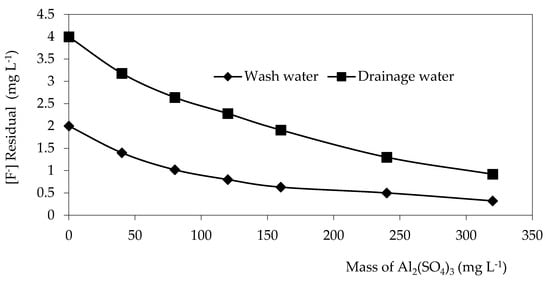
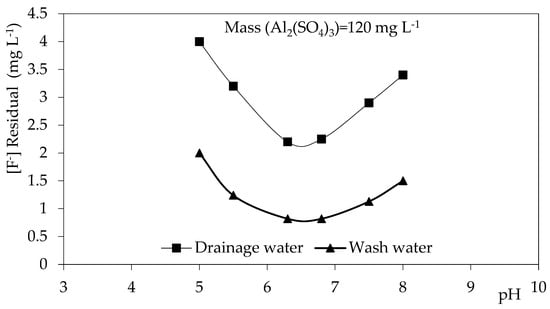
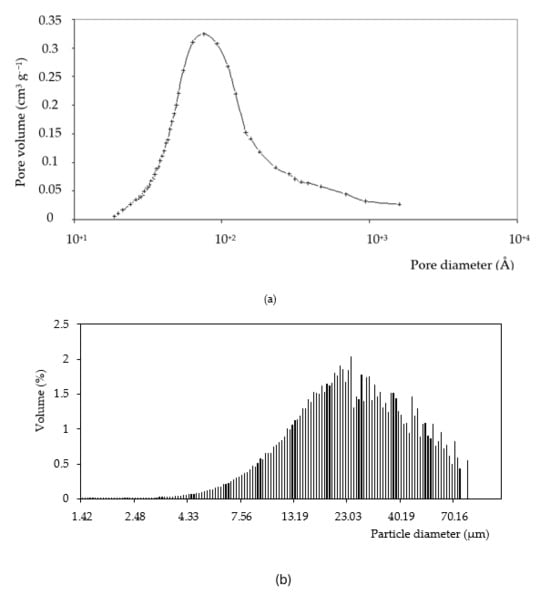
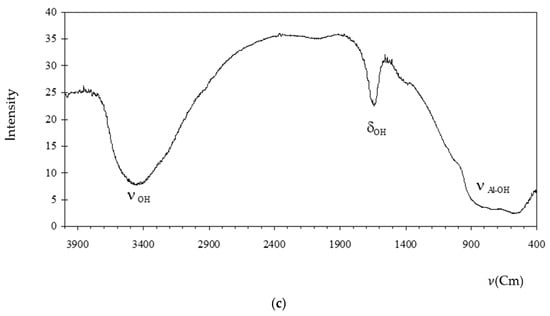
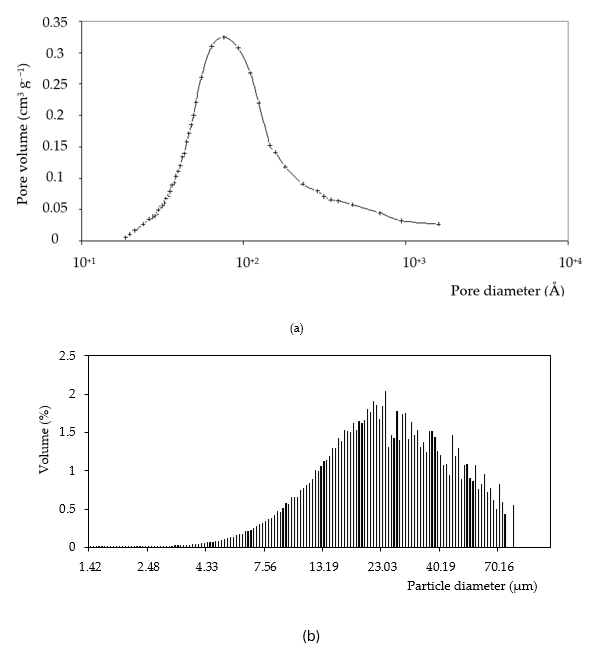
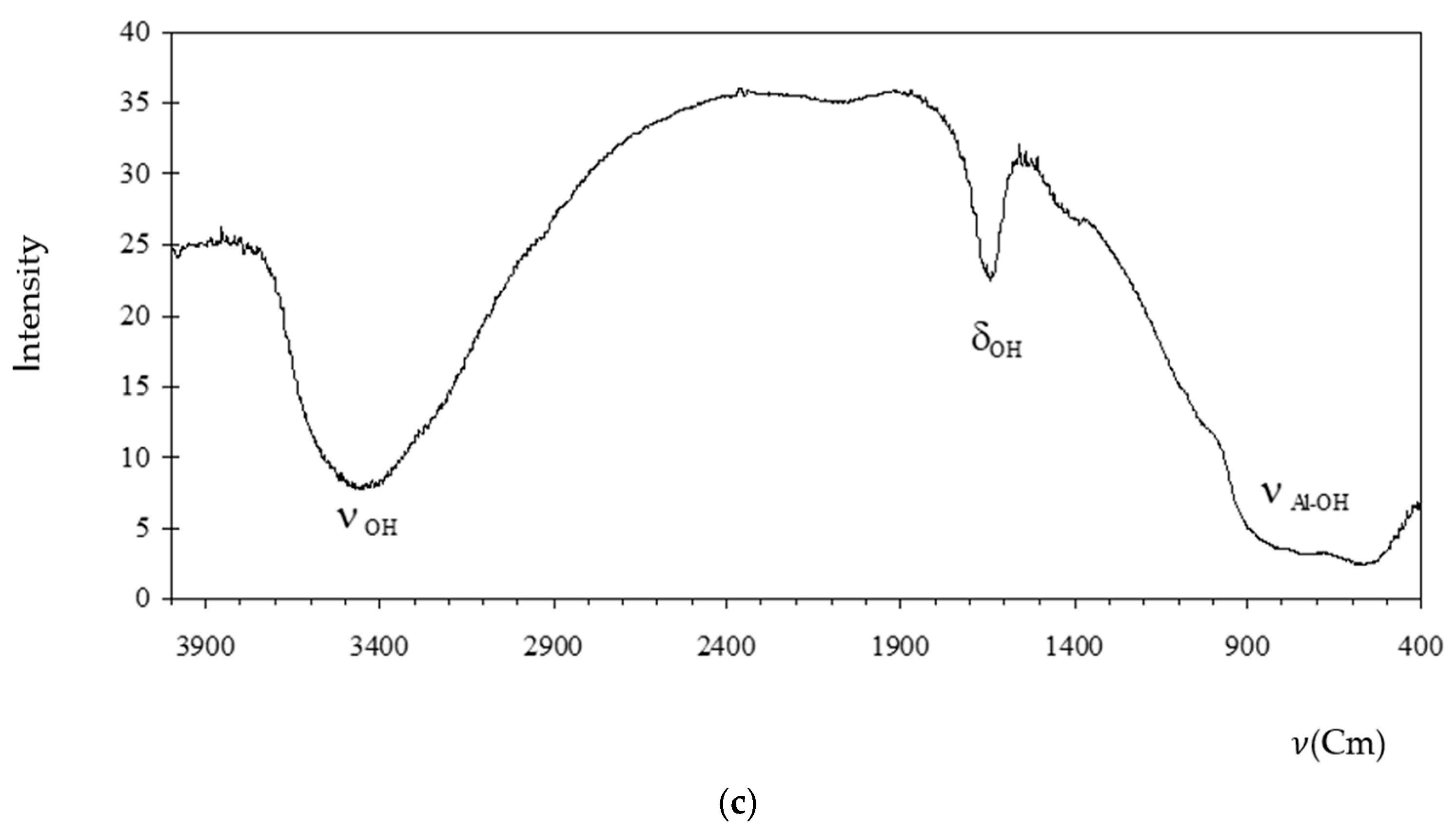
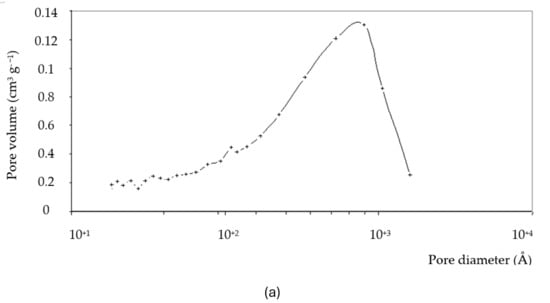
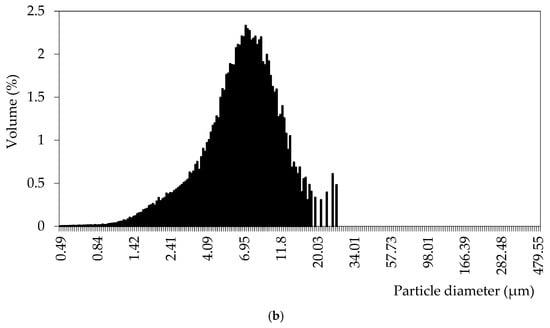
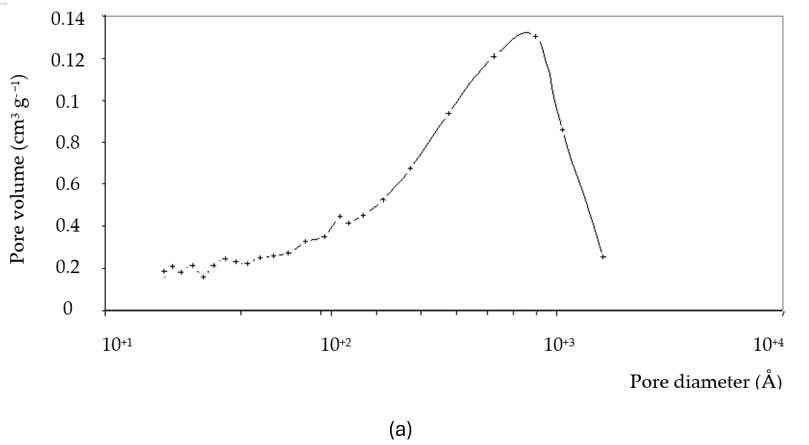
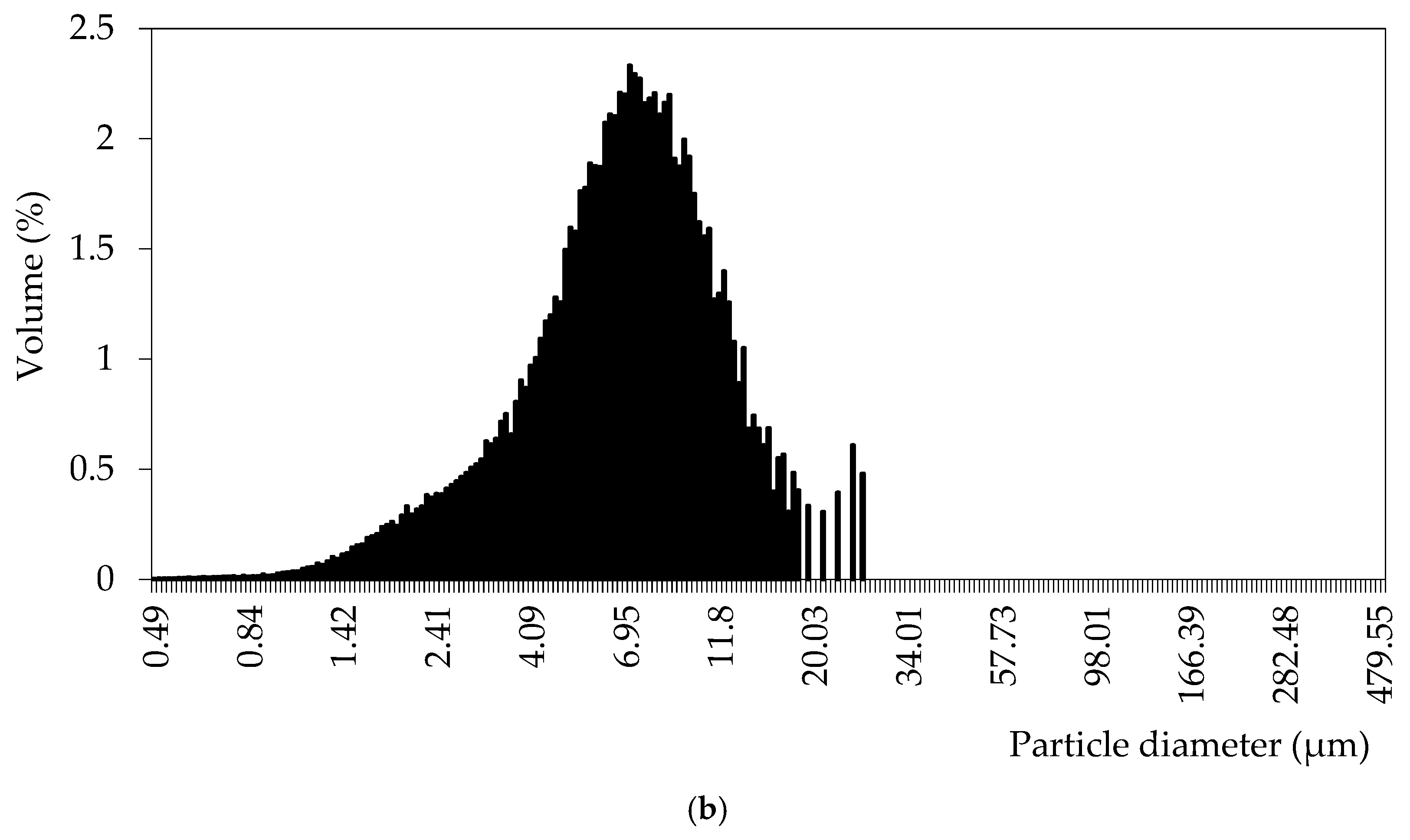
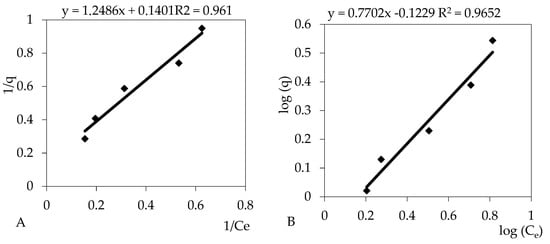
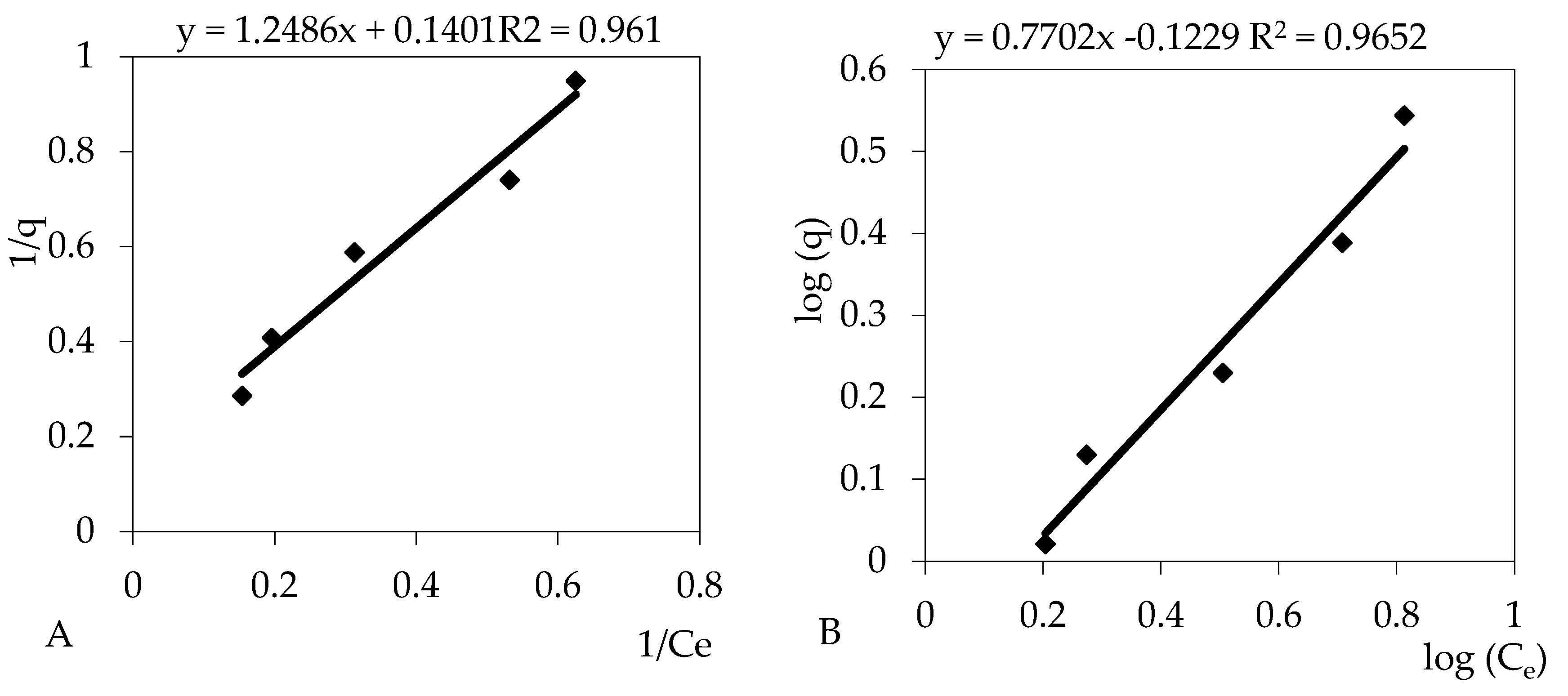
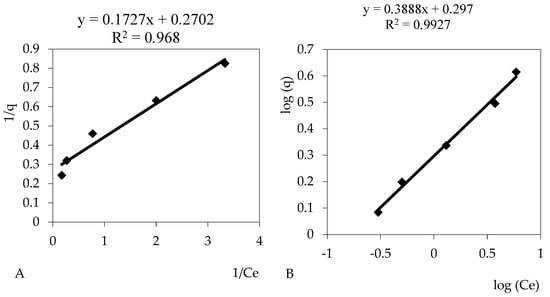
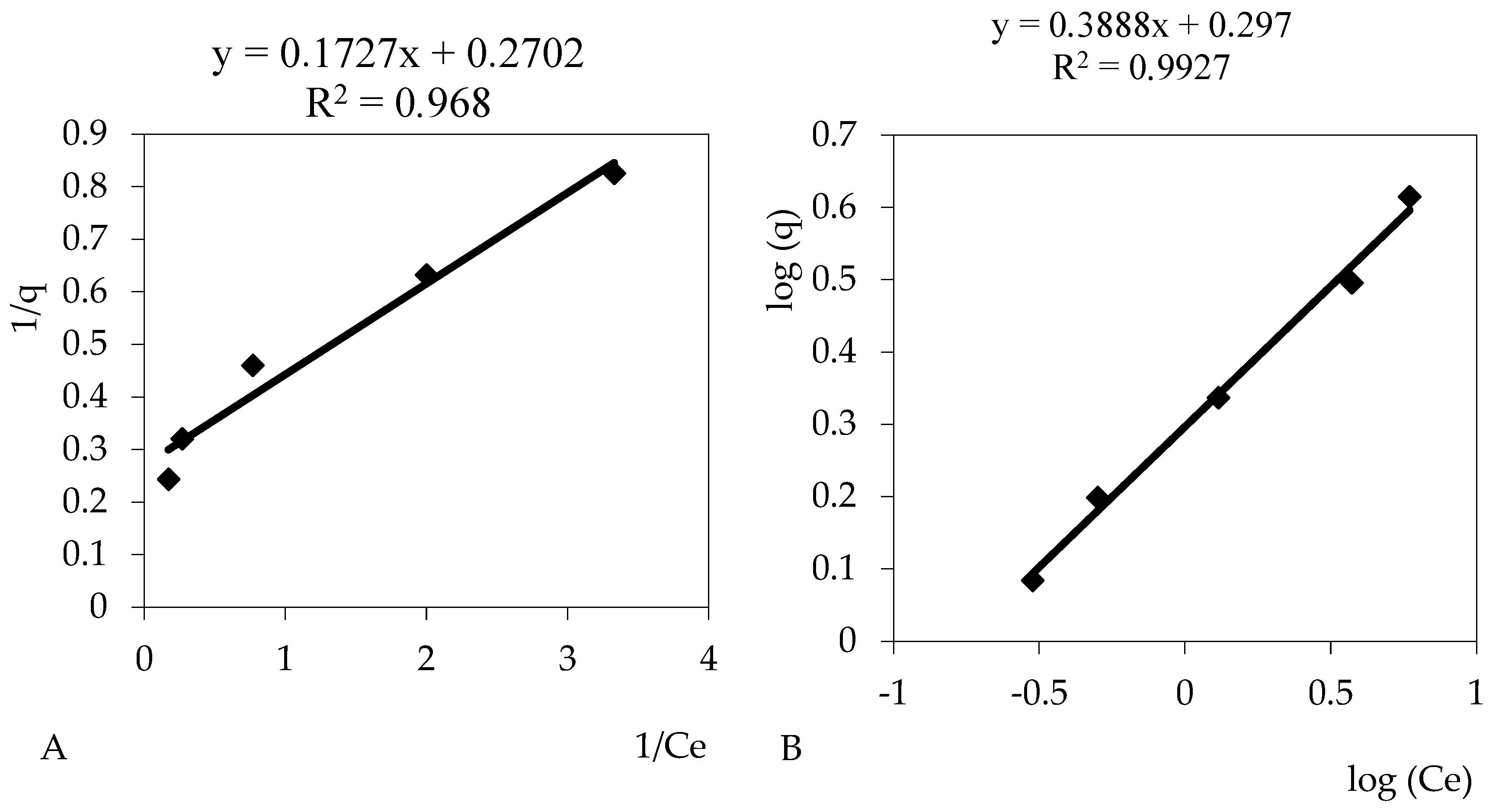
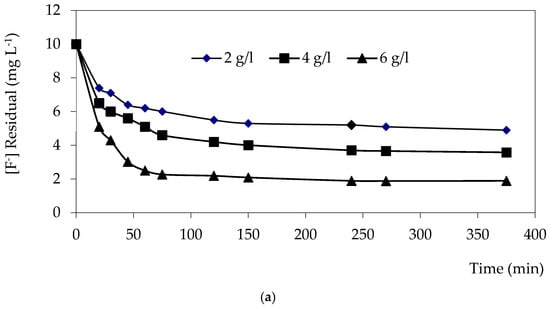
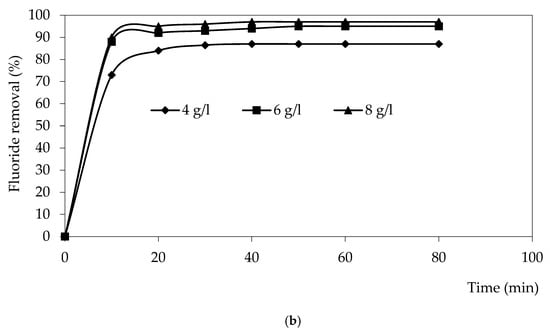
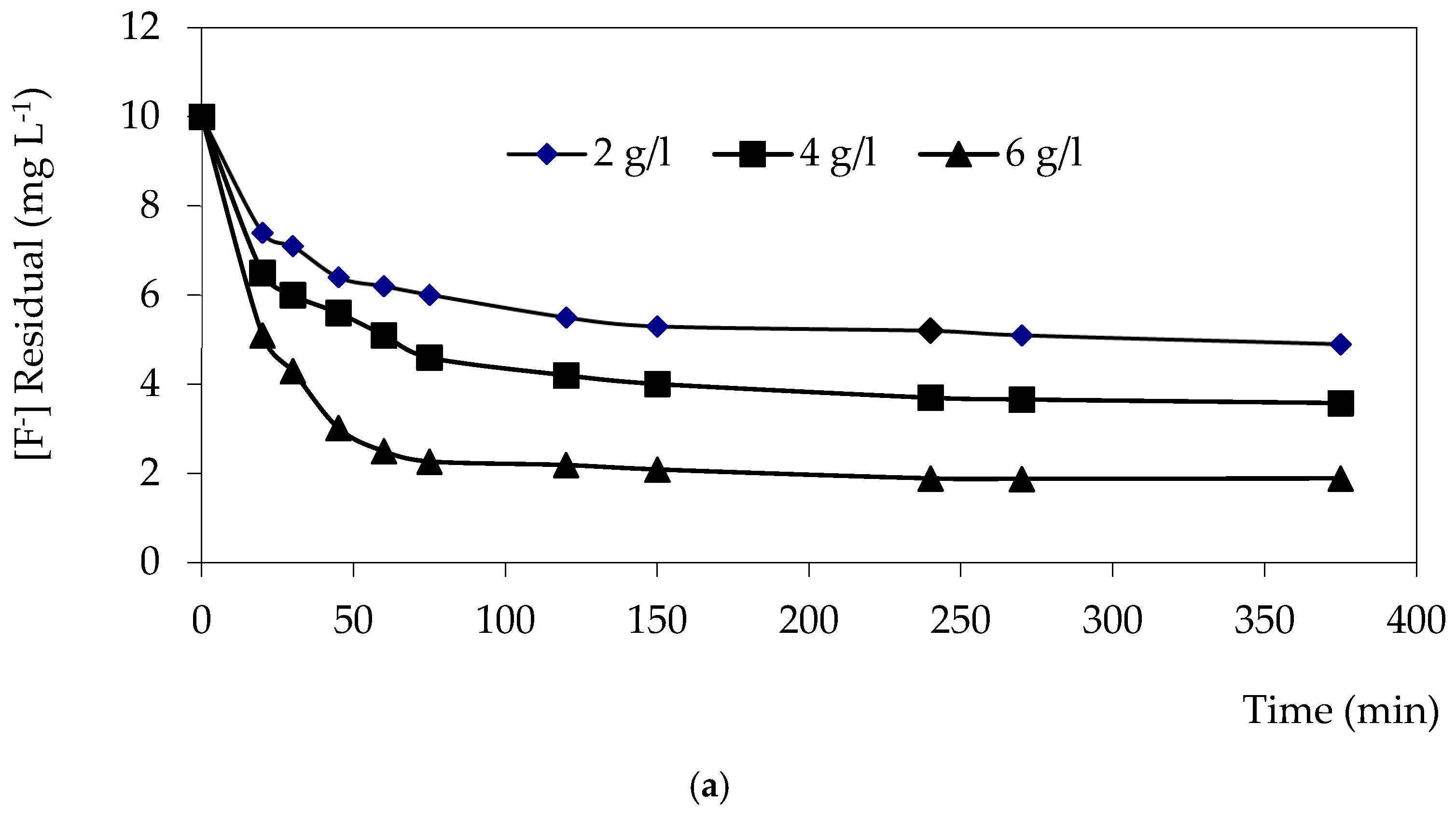
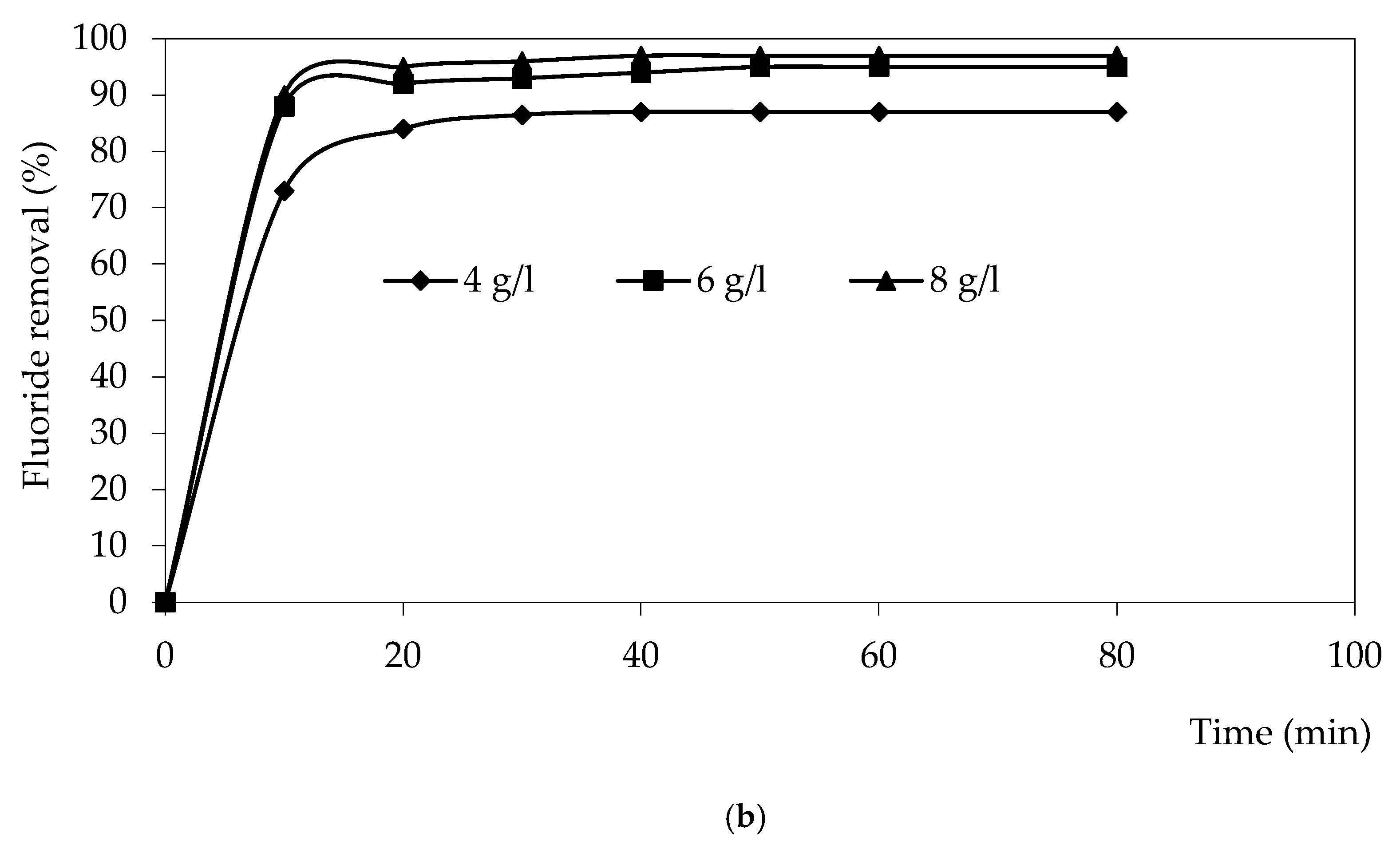
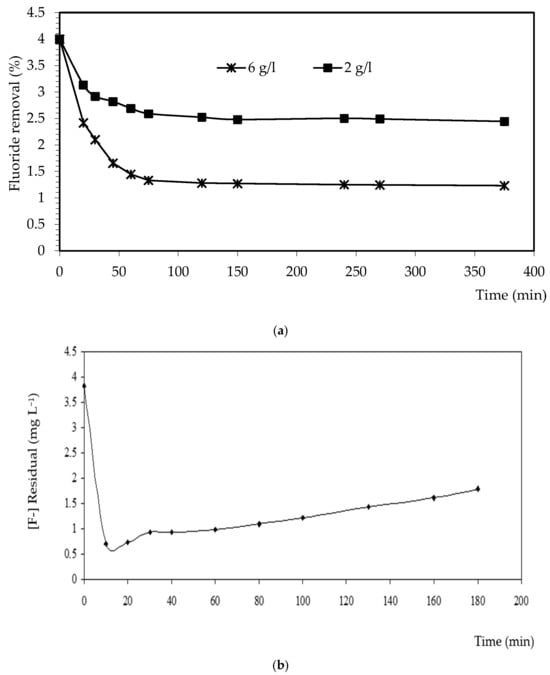
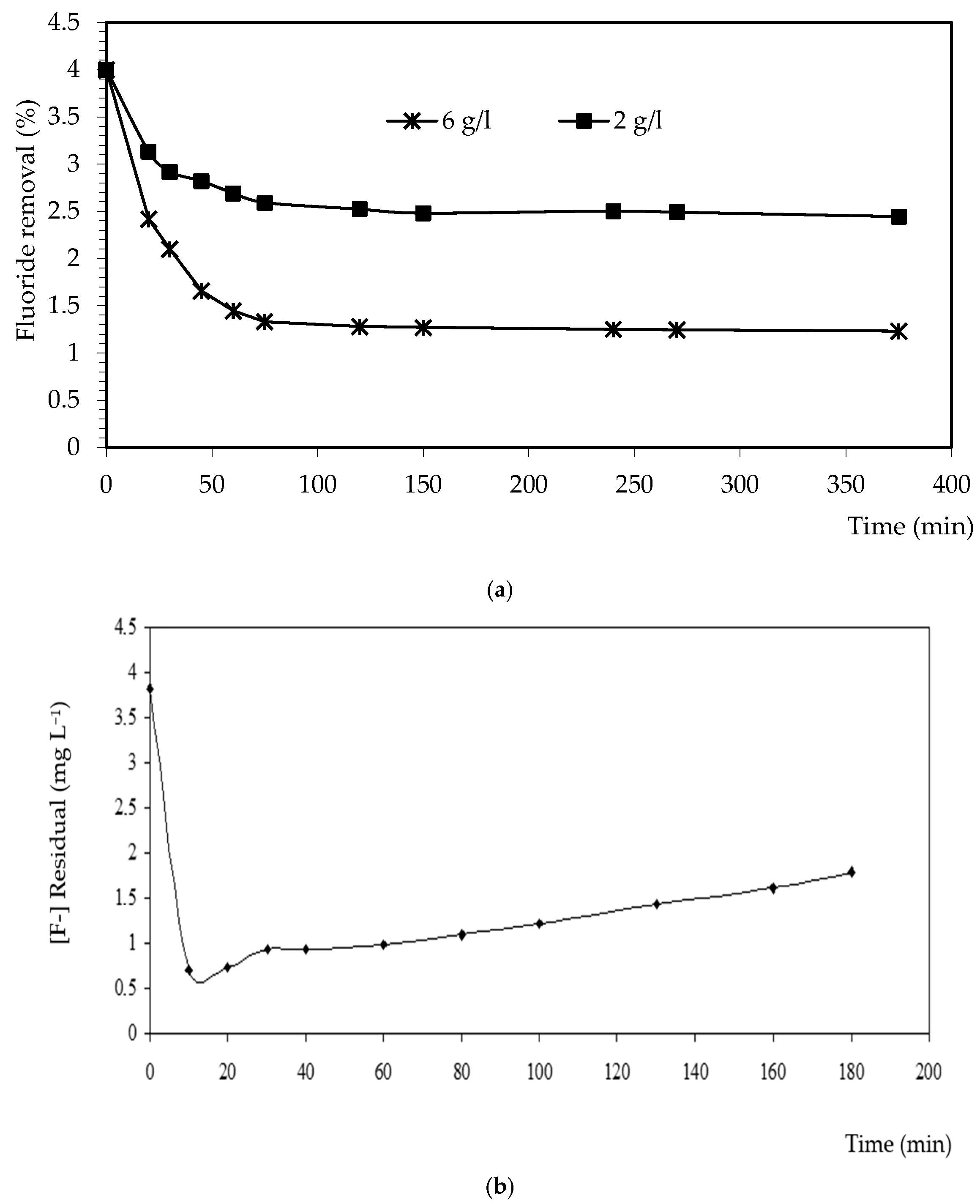
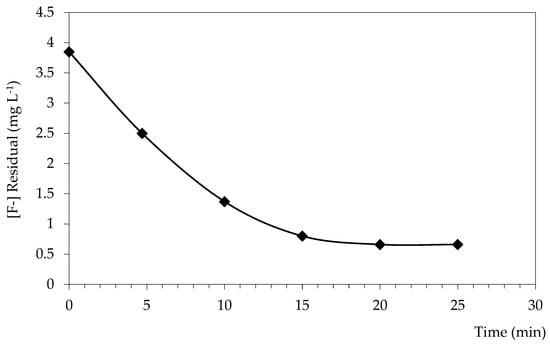
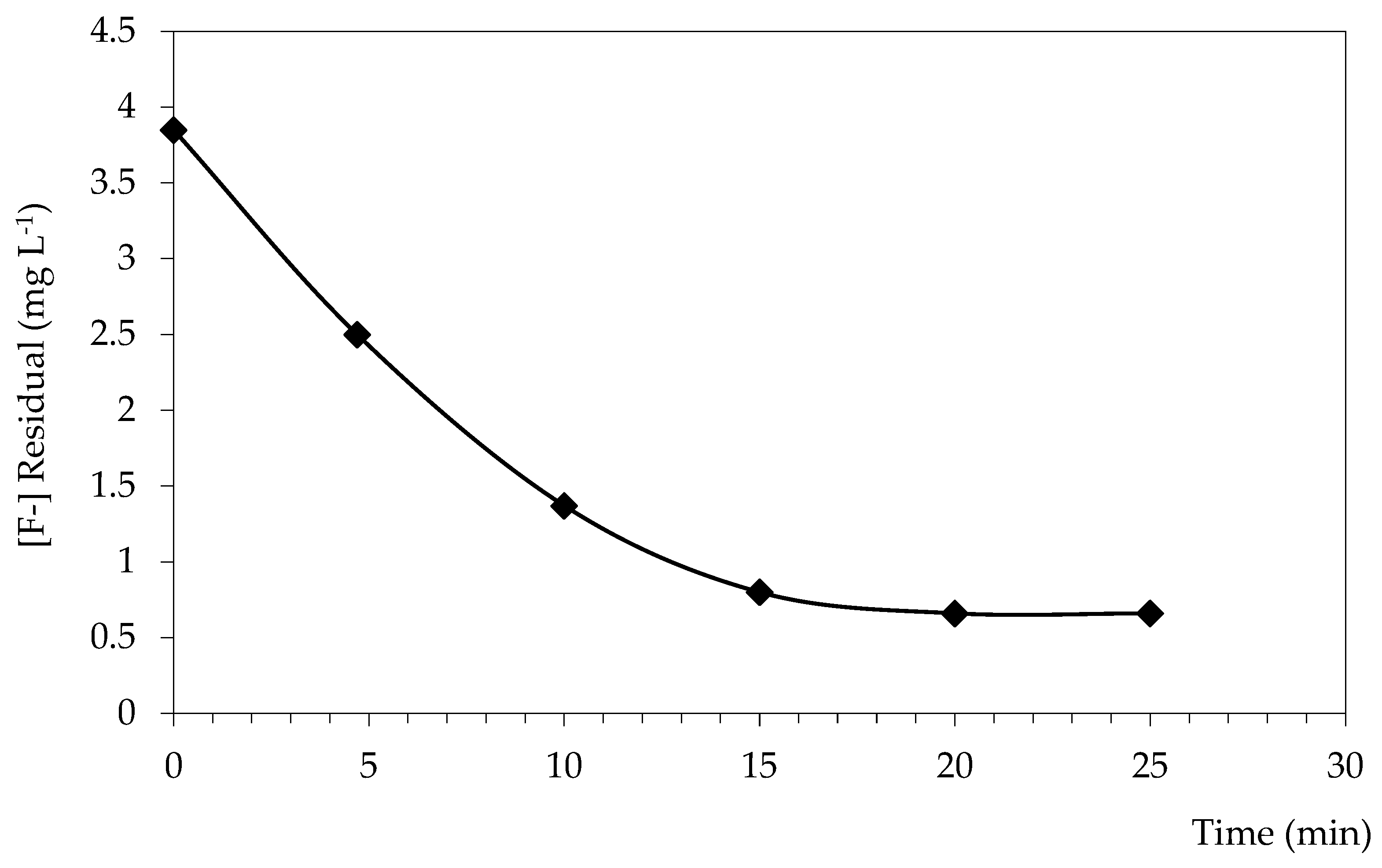
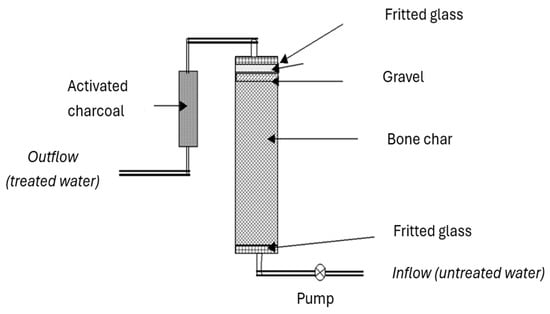
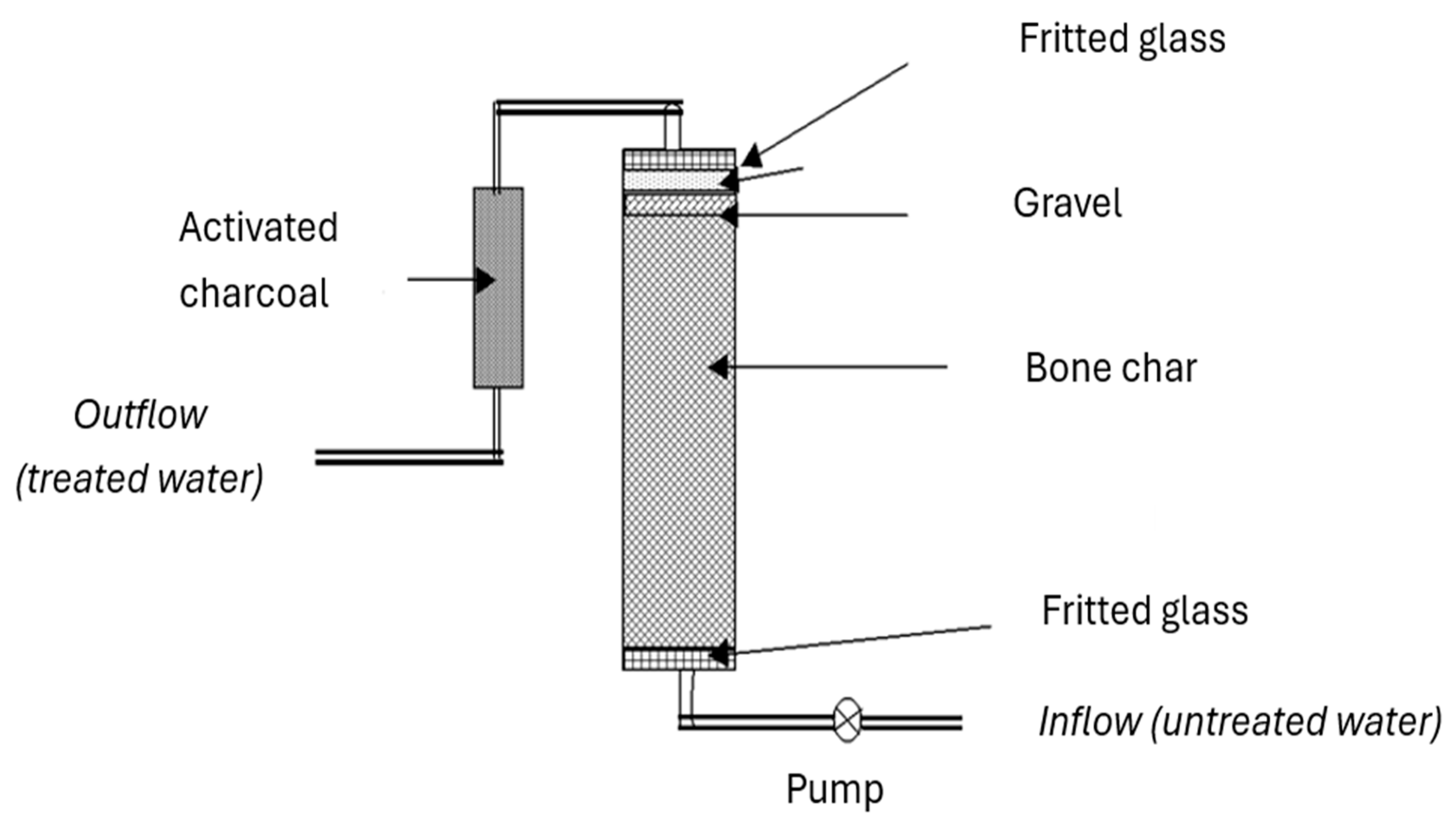

Disclaimer/Publisher’s Note: The statements, opinions and data contained in all publications are solely those of the individual author(s) and contributor(s) and not of MDPI and/or the editor(s). MDPI and/or the editor(s) disclaim responsibility for any injury to people or property resulting from any ideas, methods, instructions or products referred to in the content. |
© 2026 by the authors. Licensee MDPI, Basel, Switzerland. This article is an open access article distributed under the terms and conditions of the Creative Commons Attribution (CC BY) license.