


Abstract
Reliable fault diagnosis of rotating machinery is critical for averting serious failures in modern industrial systems. While data-driven deep learning has advanced condition monitoring, its success is fundamentally predicated on the availability of independent and identically distributed (I.I.D.) datasets. In realistic operational environments, machinery frequently experiences massive domain shifts induced by varying rotational speeds. Concurrently, acquiring high-fidelity fault instances is limited compared to abundant healthy baseline data, often resulting in a long-tailed distribution. Under such data-starved conditions, conventional few-shot domain adaptation (FSDA) methodologies often may be affected by distributional erasure; global alignment objectives are mainly driven by the healthy majority, causing sparse fault signatures to be erroneously absorbed as noise and leading to severe diagnostic performance degradation. To address this setting, this study develops a physics-guided dual-stream fusion framework for extreme few-shot cross-domain fault diagnosis. The method does not treat the Laplace wavelet, STFT, CNNs, or AdaBN as newly introduced techniques. Instead, it integrates these components into a unified diagnostic pipeline designed for long-tailed target support sets under large speed shifts. A learnable Laplace wavelet convolution is used in the temporal branch to emphasize transient impact responses, while STFT spectrograms provide a complementary time-frequency representation for the two-dimensional branch. The two feature streams are then fused for target fault classification. For domain adaptation, a Strict AdaBN strategy is applied using only the target support set, rather than the target test data or a large unlabeled target pool. Under the evaluated 50 healthy + 12 fault support condition, the healthy samples provide target-domain operating-background statistics for BN recalibration, while the limited fault samples are used for supervised classifier adjustment. Experiments on the HUSTbearing and Torino DIRG datasets show that the proposed integrated framework achieves stable performance under the evaluated few-shot cross-speed settings. These results suggest that combining physics-guided Laplace convolution, time-frequency representations, and support-set-restricted BN recalibration can be useful for bearing fault diagnosis when target fault samples are limited.
1. Introduction
Rolling element bearings frequently serve as the mechanical heart of complex industrial systems. Developing highly robust fault diagnosis frameworks for these components is paramount to intercepting progressive degradation, averting system failures, and minimizing unexpected downtime costs [1,2,3]. Concurrently, the plummeting costs of widespread sensor deployment have fundamentally catalyzed a methodological transition in condition monitoring. The diagnostic paradigm has progressively shifted from traditional, heavily engineered signal processing routes toward autonomous data-driven pipelines. The integration of deep learning, particularly Convolutional Neural Networks (CNNs), has been widely validated across diverse domains [4,5,6,7,8,9,10]. This integration has improved diagnostic performance. By executing end-to-end representation learning, these architectures reduce reliance on domain expertise while demonstrating strong capability in disentangling complex, deeply buried fault signatures [11,12]. However, the empirical success of these data-driven architectures is heavily predicated on a stringent statistical assumption: the training data (source domain) and the testing data (target domain) must be strictly independent and identically distributed (I.I.D.) [13,14].
This idealized identical distribution is rarely sustained in actual industrial applications. Real-world machinery typically operates under dynamic environments characterized by frequent startups, load fluctuations, and profound speed variations. A substantial shift in rotational velocity directly alters the mechanical impact intervals, inducing severe non-linear scaling of resonance bands and global energy redistribution within the vibration spectrum. This phenomenon, widely recognized as domain shift, inherently violates the I.I.D. assumption, causing a source-trained deep diagnostic model to experience substantial performance degradation when deployed in a newly shifted target condition.
To bridge this massive distributional discrepancy, the academic community has extensively gravitated toward Few-Shot Domain Adaptation (FSDA) and related transfer learning paradigms [15]. Rather than retraining networks from scratch, FSDA aims to extract domain-invariant representations that are discriminative for faults while remaining agnostic to the specific operating speed. Classic alignment strategies, such as Maximum Mean Discrepancy (MMD) [16] and Domain-Adversarial Neural Networks (DANN) [17], have provided a robust foundation by minimizing global statistical divergence or employing min-max optimization to confuse domain discriminators. However, these global alignment paradigms frequently suffer from negative transfer when confronted with complex, fine-grained fault modes. Consequently, recent literature has witnessed a surge in structurally refined FSDA variants. Contemporary research has progressively integrated Graph Attention Networks (GATs) to model cross-domain topological correlations [18], and fused spectral attention mechanisms to adaptively prioritize fault-related frequency bands [19,20]. Furthermore, the paradigm is rapidly evolving toward semantic-level alignment, with researchers deploying spectrum-aware prototypical contrastive learning to push structurally disparate samples apart while pulling cross-domain representations of the same health state together [21]. Overall, this line of research mainly focuses on reducing cross-domain distribution discrepancy and improving target-domain sample efficiency, but it does not explicitly encode the mechanical impact-response characteristics of bearing faults into the early feature extraction process.
Despite the conceptual efficacy of FSDA in reconciling cross-speed discrepancies, its mathematical foundation remains heavily predicated on the availability of dense manifold coverage in both domains. This statistical prerequisite is frequently invalidated in high-reliability industrial ecosystems, where severe mechanical degradation is intrinsically a rare-event phenomenon. When a system transitions to a novel operating velocity, while baseline operational data (the majority class) is readily observable, the acquisition of high-fidelity fault instances, particularly incipient defects, remains practically unattainable. This operational reality inevitably culminates in an extreme long-tail distribution, characterized by a marked class imbalance. In such “data-starved” scenarios, prevailing FSDA frameworks may suffer from a phenomenon termed as “distributional erasure”: the global alignment objectives are mainly influenced by the healthy majority. Consequently, the singular, weak fault signatures are statistically treated as noise or outliers and are erroneously absorbed into the dominant healthy cluster, reducing diagnostic discriminability.
Driven by these constraints, contemporary research has branched into several sophisticated technical trajectories. One notable paradigm involves the decoupling of domain alignment and class imbalance, as exemplified by the Iterative Re-sampling Deep Decoupled Domain Adaptation (IRDDDA) method [22]. By sequestering global alignment and local refinement into independent phases, IRDDDA demonstrably mitigates mutual interference, yielding superior stability on minority categories compared to conventional monolithic networks. Concurrently, a segment of the community has pivoted toward Cross-Domain Few-Shot Learning (CDFSL) [23]. Architectures integrating prototypical networks with adversarial alignment, or deploying dynamic weighted prototypical contrast and Generative Adversarial Network (GAN)-driven augmentation [24,25], have shown significant promise in extracting transferable knowledge from sparse samples. Complementary to these efforts, self-supervised learning integrated with multi-layer information fusion has emerged to exploit the latent structural value inherent in unlabeled data pools.
Another closely related research direction is physics-guided fault diagnosis. Instead of relying only on fully data-driven convolutional filters, this type of method introduces mechanical knowledge or signal-analysis priors into the representation process. For rotating machinery, localized defects usually generate transient impact responses with oscillatory decay patterns, and such prior knowledge can be used to guide the extraction of fault-sensitive temporal features. Time-frequency representations such as STFT can also provide complementary structural descriptions of non-stationary vibration signals. However, many physics-guided or signal-prior-based diagnostic methods are mainly developed under single-domain or relatively data-sufficient settings, and their integration with long-tailed few-shot domain adaptation remains insufficiently explored.
Taken together, existing FSDA methods and physics-guided diagnostic methods address different aspects of the problem. FSDA methods mainly focus on cross-domain distribution alignment and target-domain sample scarcity, whereas physics-guided diagnostic methods emphasize physically meaningful feature extraction from vibration signals. However, under an extreme long-tailed target support condition, these two aspects need to be considered jointly. When only a small number of target fault samples are available, purely statistical alignment may be dominated by the healthy majority, while a physics-guided feature extractor alone cannot fully correct the target-domain distribution shift. This motivates an integrated framework that combines physical-prior-based transient feature extraction, time-frequency representation, and support-set-restricted statistical recalibration.
Motivated by this gap, this study proposes a Physics-Guided Dual-Stream Fusion architecture tailored for extreme few-shot cross-speed fault diagnosis. Rather than relying on standard one-dimensional (1D) convolutions to learn features amidst heavy structural noise [26], the proposed network embeds a learnable Laplace wavelet equation at the network entrance. This physical constraint forces the temporal branch to explicitly act as a physically constrained feature extractor, extracting the kinematic transient decay of mechanical impacts. To establish comprehensive domain invariance, this highly purified transient stream is synergistically fused with macroscopic structural textures extracted via Short-Time Fourier Transform (STFT) spectrograms [27]. This dual-stream representation ensures that microscopic impact signatures are anchored by macroscopic energy envelopes, effectively mitigating the modality interference commonly observed under severe domain shifts.
Addressing the subsequent challenge of domain alignment under data starvation requires a paradigm shift away from complex adversarial networks or dense contrastive mapping. This paper introduces a distributional anchoring strategy via Strict Adaptive Batch Normalization (AdaBN) [28]. Instead of estimating alignment directions mainly from extremely sparse minority fault samples, this strategy uses the healthy operational baseline as a practical target-domain background reference. By recalibrating the global operational background explicitly through the statistics of these baseline samples, the relative topological distances of the sparse fault features are intrinsically preserved. This strategy achieves robust domain adaptation through a minimalist, non-adversarial statistical substitution.
The main contributions of this study are summarized as follows:
(1) An integrated dual-stream diagnostic framework is constructed for extreme few-shot cross-domain bearing fault diagnosis. The framework combines a physics-parameterized Laplace convolution with STFT-based time-frequency representation, allowing transient impact responses and time-frequency energy patterns to be jointly used for classification.
(2) A support-set-restricted Strict AdaBN protocol is incorporated into the framework. Different from conventional AdaBN settings that may rely on a larger target pool, the proposed protocol recalibrates BN statistics only with the available target support set, thereby keeping the adaptation process consistent with the few-shot evaluation setting.
(3) The method is evaluated under a long-tailed target support condition with 62 samples. Results on the HUSTbearing and Torino DIRG datasets show that the integrated use of physics-guided Laplace convolution, time-frequency representation, and restricted BN recalibration provides competitive performance under the evaluated cross-speed few-shot settings.
The remainder of this article is organized as follows. Section 2 establishes the theoretical foundation, including the physical principles of Laplace wavelets and the mathematics of adaptive domain alignment. Section 3 elaborates on the structural architecture and training protocols of the proposed dual-stream fusion network. Section 4 details the configuration of the extreme few-shot datasets and the rigorous evaluation metrics. Section 5 presents a comparative analysis against representative paradigms, accompanied by ablation studies and high-frequency generalization verifications. Finally, Section 6 summarizes the key findings and outlines future research trajectories.
2. Theoretical Background
2.1. Physics-Guided Learnable Laplace Wavelet Convolution
When localized defects occur in rotating machinery, the dynamic interaction between rolling elements and the fault surface naturally induces high-frequency relaxation oscillations. These recurring mechanical impacts inherently manifest as transient oscillatory decays in the time domain. Rather than relying on standard convolutional kernels with random initialization, which often struggle to capture weak fault signatures under heavy background noise, restricting the neural network’s hypothesis space using physics-guided Laplace convolution offers a more resilient feature extraction paradigm.
The kinematic behavior of such transient impacts can be mathematically abstracted by the Laplace wavelet [29]. Formally, a continuous Laplace wavelet is defined as a unilateral exponentially damped sinusoid, expressed as
where denotes the central resonance frequency excited by the mechanical impact, and represents the viscous damping ratio of the system. The time variable t dictates the temporal progression of the impulse response.
To seamlessly embed this physical mechanism into a deep learning framework, the continuous waveform must be discretized and transformed into a trainable 1D convolution operation. By mapping the time vector t to a discrete tensor corresponding to the kernel size, the intrinsic physical parameters, namely, the frequency and the damping ratio , are decoupled from static predefined values and redefined as learnable weights within the network graph [30].
Consequently, during the backpropagation process, instead of blindly updating discrete spatial weights, the optimizer computes the gradients with respect to and . This targeted parameterization essentially forces the initial layers of the network to function as an adaptive band-pass filter bank. It selectively amplifies the transient impact components while inherently suppressing stationary harmonic interference and random noise, thereby providing a highly purified, physics-grounded 1D feature representation for the subsequent fusion stages.
2.2. Short-Time Fourier Transform and Time-Frequency Representation
While the aforementioned 1D Laplace convolution effectively isolates microscopic transient impacts, macroscopic fault signatures under changing operating conditions typically exhibit severe non-stationary spectral variations. Variable rotational speeds and fluctuating loads cause the mechanical energy distribution to shift continuously across the frequency band. To map these dynamic energy variations, a joint time-frequency representation is indispensable for capturing the temporal evolution of spectral components.
The STFT provides a mathematically rigorous mechanism to bridge the time and frequency domains [31]. By applying a sliding window operation, STFT dissects the non-stationary vibration waveform into a sequence of localized stationary frames. The continuous STFT of a given 1D vibration signal is formulated as
where is the specified window function centered at time t, and f represents the frequency variable. Rather than utilizing the complex-valued outputs directly, the squared magnitude of the STFT is extracted to construct the spectrogram, denoted as .
Transforming the 1D signal into a 2D spectrogram essentially maps the invisible mechanical degradation into highly distinctive visual textures. In this time-frequency matrix, localized defect impacts emerge as vertical energy strips, whereas relaxation oscillations and background noise formulate horizontal or dispersed background textures [32,33].
This visual transformation is strategically crucial for the dual-stream architecture. Compared to raw sequential data, the 2D energy spectrograms inherently exhibit a higher tolerance to the phase shifts and global noise interferences prevalent in extreme cross-domain scenarios. Feeding these localized energy concentration maps into a subsequent 2D CNN enables the extraction of robust morphological features, which complements the highly sensitive, physics-grounded transient features derived from the 1D branch.
2.3. Adaptive Batch Normalization for Domain Adaptation
Deep neural networks often suffer from severe performance degradation when exposed to unseen operating conditions. This vulnerability primarily stems from the covariate shift between the source and target domains. During the standard training phase, Batch Normalization (BN) layers compute and store the moving average of the mean and variance derived explicitly from the source data distribution [34].
For an intermediate feature map x within a mini-batch, the standard BN operation is mathematically formulated as
where and denote the channel-wise statistical mean and variance accumulated from the source domain. The parameters and are learnable affine transformations that restore the representation capacity of the network, and is a small constant ensuring numerical stability. When directly applying a source-trained model to a target domain with a divergent distribution, utilizing the frozen and inevitably distorts the target feature activations, pushing them into inappropriate decision boundaries.
AdaBN offers an elegant, parameter-free mechanism to mitigate this statistical mismatch [35]. The core philosophy of AdaBN posits that the domain-invariant discriminative knowledge resides in the structural weights of the convolutional filters, whereas the domain-specific variations are heavily encapsulated within the BN statistics.
Instead of devising complex auxiliary loss functions to penalize domain discrepancy, AdaBN executes a straightforward statistical replacement. By freezing the affine parameters () and all convolutional weights, the target domain data is fed into the network solely to recalculate the target-specific mean () and variance (). Consequently, Equation (3) is re-calibrated using these newly derived target statistics. This operation effectively normalizes the target features into a standardized scale comparable to the source domain. Under conventional adaptation paradigms, obtaining robust estimates for and inherently demands a substantial volume of unlabeled target samples. Addressing how to reliably perform this statistical recalibration under scenarios of extreme data scarcity remains a critical challenge for industrial applications.
3. Proposed Method
3.1. Overall Architecture
To tackle the severe performance degradation caused by cross-condition distribution shifts under extreme data scarcity, this study develops a physics-guided dual-stream fusion network. The macroscopic design philosophy deliberately avoids overly complex parameterization, opting instead for structural robustness. As illustrated in Figure 1, the operational pipeline is systematically organized into three sequential phases: source domain pre-training, restricted statistical domain alignment, and linear probing under frozen feature representations.
Figure 1.
The overall architecture of the proposed physics-guided dual-stream fusion network and the three-phase strict adaptation protocol.
Rather than relying on a single data modality, the network synchronously processes the raw 1D vibration waveforms and their corresponding 2D STFT spectrograms. The 1D stream is initialized with a physics-parameterized learnable Laplace convolution to capture high-frequency transient mechanical impacts. Concurrently, a standard CNN branch operates on the 2D spectrograms to extract macroscopic energy variation textures. These two distinct yet inherently complementary representations are directly integrated through a parameter-free concatenation mechanism. Complex gating or attention modules are not used, which helps reduce the risk of overfitting when only limited target instances are available.
The cross-domain generalization is orchestrated through a constrained adaptation protocol. During the initial phase, the dual-stream network establishes generalized feature decision boundaries utilizing a balanced, large-scale source dataset. Upon shifting to the target domain, the BN statistics are strictly recalibrated (Strict AdaBN). This recalibration explicitly abandons the conventional assumption of abundant unlabeled data, utilizing solely a miniature, strictly limited, and heavily imbalanced target support set.
Following this statistical alignment, the network enters the final fine-tuning phase. To prevent source-knowledge forgetting of the source-learned discriminative knowledge and mitigate the classification bias induced by the long-tailed target data, the weights of both the 1D and 2D feature extractors are completely frozen. The optimization process is exclusively restricted to the terminal two-layer Multilayer Perceptron (MLP) classifier. This conservative training strategy ensures that the minority fault instances, despite their extreme sparsity, can be accurately identified within the newly aligned feature space.
3.2. Physics-Guided 1D Feature Stream
Processing raw vibration sequences effectively necessitates constraining the hypothesis space of deep models to prevent the indiscriminate fitting of heavy background noise. Deviating from the convention of initializing convolutional filters with stochastic weights, the primary layer of the proposed 1D stream integrates a learnable Laplace wavelet convolution. This mechanism enforces an explicit physical regularization on the receptive field.
Rather than updating discrete spatial matrices blindly, the parameters of this specialized filter are driven entirely by underlying kinematic variables: the resonance frequency and the viscous damping ratio . For a convolution kernel of size K, the physics-parameterized weight vector is dynamically synthesized during each forward pass. The discrete weight at index i is formulated as
where , and represents the normalized time sequence adjusted by scale and translation parameters to correctly align the impulse envelope. To ensure numerical stability during gradient propagation, the term is bounded by a diminutive constant to prevent division by zero.
The evolutionary trajectory of these physical parameters during backpropagation is visually validated in Figure 2. Through gradient descent, the optimizer adaptively tunes and , driving the initial frequency band towards the actual resonance region excited by localized defects (Figure 2a,b). Consequently, when applied to a severely corrupted raw signal (Figure 2c), the calibrated kernel operates as an effective band-pass filter. It helps to isolates the periodic transient impulses inherent to bearing faults, yielding a highly purified feature representation (Figure 2d) ready for subsequent deep extraction.
Figure 2.
Mechanistic validation of the learnable Laplace convolution: (a) Time-domain weight evolution; (b) Adaptive frequency band shifting; (c) Raw vibration signal heavily masked by noise; (d) Purified transient impulses extracted by the optimized physical kernel.
Subsequent to this specialized entry layer, the continuous 1D backbone is structured to learn higher-order abstract representations. The architecture comprises a cascade of four identical convolutional blocks. Each block seamlessly integrates a standard 1D convolution, BN, a Rectified Linear Unit (ReLU), and a Max-pooling layer for progressive spatial downsampling.
Considering the extreme data scarcity inherent to few-shot target environments, mitigating the overall parameter burden becomes structurally paramount. Therefore, the terminal stage of the 1D stream discards dense fully connected operations. Instead, a Global Average Pooling (GAP) layer is deployed to collapse the temporal feature maps into a compact 256-dimensional vector. This dimension reduction strategy simultaneously ensures translational invariance and acts as a strict structural safeguard against overfitting.
3.3. 2D Image Feature Stream and Multimodal Fusion
While the physics-guided 1D stream is adept at isolating microscopic transient impacts, cross-condition distribution shifts typically manifest as macroscopic spectral variations. To capture these non-stationary global energy fluctuations, the vibration sequence is concurrently mapped into the time-frequency domain. Utilizing the STFT framework defined in Section 2.2, the raw signal is transformed into a 2D energy spectrogram . This representation effectively converts invisible mechanical degradation into distinctive visual textures, where localized defect impacts emerge as vertical energy strips against structural background noise.
The 2D feature stream is specifically architected to extract these morphological characteristics. This branch operates through a streamlined CNN backbone consisting of two consecutive convolutional blocks. To enhance the generalization capacity under extreme data scarcity, Dropout layers are strategically integrated between the convolutional stages to regularize the learning process. Following the final convolution, the high-dimensional feature maps are flattened and projected into a 256-dimensional energy feature vector through a fully connected layer.
The core of the joint representation learning lies in the integration of the transient and energy streams. Upon acquiring the 256-dimensional vectors from both the 1D and 2D branches, the network executes feature-level fusion. Deviating from modern complex paradigms such as attention-based gating, this architecture deliberately adopts a parameter-free concatenation strategy. The two distinct feature vectors are directly concatenated along the channel dimension to synthesize a 512-dimensional joint representation. This minimalist fusion design fundamentally mitigates additional parameter optimization burdens, thereby maximizing structural robustness and preventing feature collapse in few-shot target environments.
3.4. Strict AdaBN and Distributional Anchoring Strategy
While the dual-stream architecture ensures stable feature representations, applying a source-trained model directly to unseen operating conditions still encounters substantial covariate shifts. To mitigate this, the network utilizes the AdaBN mechanism outlined in Section 2.3. However, a critical divergence in this study from conventional FSDA protocols is the strict enforcement of a leakage-free adaptation paradigm.
The proposed architecture adopts a Strict AdaBN strategy, in which BN-statistics recalibration is restricted to the target support set of 62 samples. This setting differs from conventional AdaBN protocols that often estimate target-domain statistics from a much larger unlabeled target pool. Here, the support set is deliberately kept small and imbalanced, so that the statistical recalibration follows the same data constraint used in the subsequent few-shot adaptation stage.
The rationale for this design is based on a common operating condition in fault diagnosis: after a change in rotational speed, healthy vibration records are usually easier to obtain than fault samples, whereas fault instances remain sparse and class-imbalanced. Under this condition, the healthy samples provide a practical estimate of the target-domain operational background. The updated BN mean and variance are therefore used to recalibrate the feature distribution with respect to the new speed condition.
It should be noted that this strategy does not assume that a healthy-dominated support set is universally effective. Instead, it provides a constrained recalibration protocol for the long-tailed few-shot setting considered in this study. The sparse fault samples are normalized under the updated target-domain background statistics, and the subsequent classifier fine-tuning adjusts the decision boundaries using the labeled target support set.
Following this spatial anchoring, the network transitions to a highly constrained supervised fine-tuning phase. To circumvent source-knowledge forgetting of the domain-invariant discriminative knowledge acquired during source pre-training, the weights of both the 1D and 2D feature extractors are completely frozen. The optimization process is confined entirely to the terminal MLP (Linear Probing). This conservative fine-tuning acts as a final safeguard, ensuring that the decision boundaries are gently adjusted to accommodate the newly anchored feature topology without overfitting the strictly limited long-tail support set.
4. Experimental Setup
4.1. Datasets Description and Configuration Rationale
The performance of the proposed architecture is evaluated using two rolling element bearing benchmarks with distinct physical characteristics: the HUSTbearing dataset and the Politecnico di Torino (DIRG) dataset. These datasets are selected to represent a high-dimensional contrast in terms of fault induction mechanisms, component geometries, and spectral densities. A comprehensive outline of their engineering specifications and the rationale behind the selected transfer tasks is provided in Table 1.
Table 1.
Engineering specifications and rationale for task configuration across the evaluated datasets.
The HUSTbearing dataset provides a standard frequency environment using SKF 6205-2RS deep groove ball bearings [36]. The geometric profile of the test components includes a pitch diameter of 39.00 mm and a ball diameter of 7.94 mm, housing nine rolling elements. Discrete localized defects were artificially induced via Electrical Discharge Machining (EDM) on the inner race, outer race, and rolling elements to represent nine health states. To evaluate the sensitivity of the learned filters to defect magnitude, we utilize medium damages (0.2 mm width, 0.1 mm depth) and severe damages (0.4 mm width, 0.2 mm depth). Vibration signals from the horizontal X-axis accelerometer are digitized at 25.6 kHz. The evaluation focuses on three motor speeds of 35 Hz, 65 Hz, and 80 Hz to ensure a sufficiently large variance in the characteristic frequency shifts, thereby simulating the significant domain shifts encountered in variable-speed industrial machinery.
To further scrutinize the model under ultra-high frequency and evolutionary damage conditions, the DIRG dataset from Politecnico di Torino utilizes a high-speed spindle equipped with SKF 6002-2Z bearings [37]. These aeronautical-grade components are smaller than the SKF 6205 series, possessing a pitch diameter of 23.50 mm and a ball diameter of 4.762 mm. Unlike the static EDM faults in HUST, the DIRG defects were generated via laser indentation. This technique allows for the simulation of progressive damage evolution through spherical indentations of light (150 µm), medium (300 µm), and severe (450 µm) scales.
The sampling frequency is doubled to 51.2 kHz, creating a dense spectral landscape that increases the risk of aliasing and dense spectral interference. The formulation of transfer tasks on this dataset is strictly governed by a high-load consistency requirement. We exclusively utilize Z-axis vibration data acquired under a constant 1400 N radial load to ensure the stability of the diagnostic background. This specific load constraint necessitates the selection of operating frequencies at 100 Hz, 300 Hz, and 400 Hz. The 500 Hz condition is intentionally excluded from this study because the original experimental matrix for the DIRG dataset does not provide 1400 N recordings at this speed, which would violate the load consistency required for a fair cross-domain comparison.
It should be noted that the two benchmarks are not used as a direct cross-bearing transfer task in this study. The HUSTbearing experiments evaluate cross-speed adaptation within the SKF 6205-2RS bearing, whereas the Torino DIRG experiments evaluate cross-speed adaptation within the SKF 6002-2Z bearing. Therefore, the reported results should not be interpreted as isolating the effect of rotational speed from bearing geometry across the two datasets. Bearing geometry can affect characteristic defect frequencies, impact intervals, resonance bands, and the resulting vibration distributions. In this study, the two datasets are used as complementary benchmarks with different mechanical structures, fault-generation mechanisms, and spectral characteristics, rather than as a controlled pair for quantifying the independent effect of bearing type. Accordingly, the conclusions are limited to the evaluated few-shot cross-speed settings and similar support-set conditions.
4.2. Extreme Few-Shot Partitioning and Anti-Leakage Protocol
To rigorously simulate the “data island” phenomenon prevalent in highly reliable industrial systems, this study abandons the conventional assumption of large target domain data availability. Instead, we enforce an exceptionally restrictive evaluation protocol characterized by extreme class imbalance and strict data isolation.
The configuration of the target domain training set is strategically designed to reflect the physical reality of mechanical operations. In practical industrial deployments, machinery operates under normal conditions for the vast majority of its lifecycle. Consequently, acquiring baseline vibration data under a newly shifted operating condition is relatively effortless, whereas capturing fault signatures, especially specific progressive degradation stages, is extremely rare. To mirror this reality, the target training sets across all cross-condition tasks are architected as highly asymmetric long-tailed distributions.
For the HUSTbearing dataset, the target training set is strictly confined to 62 samples. This miniature pool utilizes 50 healthy samples to establish the fundamental operational baseline of the new condition. The fault categories are severely restricted to evaluate recognition under extreme sparsity. Severe damages are allocated two training instances each, and medium-level damages are constrained to a solitary sample, formulating a 50:2:1 imbalance ratio. The Torino DIRG dataset maintains an identical volumetric constraint to test sensitivity across progressive degradation. It comprises 50 healthy samples alongside exactly two training instances for each of the six specific fault conditions, encompassing severe (450 µm), medium (300 µm), and light (150 µm) indentations across both inner race and roller components. This yields a consistent total of 62 training instances across different benchmarks. The exact numerical partitioning of these datasets, derived from an initial pool of 200 samples per class, is detailed in Table 2.
Table 2.
Detailed sample distribution and partitioning scheme under extreme few-shot and progressive severity constraints.
Beyond sample scarcity, temporal partitioning is important because adjacent windows may be correlated, especially when overlapping segmentation is used. In this study, windows were generated in chronological order for each class and each operating condition. For the HUSTbearing dataset, each window contains 2048 sampling points and the stride is 1024 points, corresponding to a 50% overlap. For the Torino DIRG dataset, the window length is also 2048 sampling points, while the stride is 2048 points, so adjacent windows do not overlap.
The target-domain support and test sets were constructed by a block-wise temporal partition rather than by randomly mixing all generated windows. For each target-domain class, the first 90 chronologically ordered windows were used as the support candidate block, and the final 100 windows were reserved as the fixed test block. The intermediate windows between these two blocks were left unused as a temporal buffer. The target support samples were randomly selected only from the support candidate block according to the class-wise few-shot setting in Table 2. The test block was kept unchanged across all repeated trials and was not used during source pre-training, AdaBN recalibration, target fine-tuning, or model selection.
This block-wise protocol was used to reduce the risk of leakage caused by correlations between adjacent windows. In HUSTbearing, overlap exists only between neighboring windows within the same chronological block. Since the support candidates and the test samples were selected from separated temporal blocks with unused buffer windows between them, the target samples used for AdaBN recalibration and fine-tuning did not share raw sampling points with the target test samples. In Torino DIRG, the stride equals the window length, so the generated windows are already non-overlapping.
For the 30 independent trials, the random seed of the r-th run was set to (). The seed controlled the random selection of target support samples from the support candidate block and the stochastic optimization process. The target test block remained fixed across all 30 trials. The reported mean and standard deviation therefore reflect the variability caused by support-set sampling and training randomness, rather than changes in the test set.
4.3. Implementation Details and Evaluation Metrics
To ensure complete experimental transparency and reproducibility, all comparative baselines and the proposed architecture are implemented under a rigorously controlled environment. The algorithmic framework is constructed utilizing Python 3.11 and the PyTorch 2.0 deep learning library. Physical computations are accelerated on a dedicated workstation running the Windows 10 operating system, equipped with an Intel Core i5-12600KF processor, 64 GB of Random Access Memory, and an NVIDIA GeForce RTX 4060 Graphics Processing Unit.
The baseline ensemble encompasses five distinct learning paradigms, integrating foundational architectures with their recent state-of-the-art adaptations to ensure a holistic and highly competitive evaluation. Prototypical Networks trained via episodic meta-learning (PN-Meta) [38,39,40] map temporal sequences into a metric space governed by Euclidean distance formulations. To evaluate classical margin-based hybrid boundaries, a standard CNN is coupled with a Support Vector Machine (2DCNN-SVM) [41], leveraging a Radial Basis Function (RBF) kernel with a penalty parameter and a scaled gamma coefficient. The efficacy of channel-wise attention is investigated through a 1D Residual Network subjected to target domain fine-tuning (SE-ResNet1D-FT) [42,43], incorporating Squeeze-and-Excitation modules with a dimensionality reduction ratio of 16. Supervised Contrastive Learning adapted for few-shot scenarios (SupCon-FSL) [44,45] is deployed with a projection head dimension of 128 and a contrastive temperature scaling factor of to optimize latent space separation. Finally, to represent advanced subdomain alignment, Sliced Wasserstein Distance-based Domain Adaptation (SWD-DA) is employed to minimize the geometric discrepancies between high-dimensional feature slices. The precise configurations orchestrating the network optimization are summarized in Table 3.
Table 3.
Implementation configurations and primary hyperparameters strictly aligned with the experimental source code.
Evaluating diagnostic models under extreme long-tail distributions requires metrics that reflect the recognition capability across both majority and minority classes. Relying only on global accuracy may obscure misclassifications in sparse fault categories because the healthy class occupies a larger proportion of the target support set. Therefore, this study reports Accuracy, Macro-Precision, Macro-Recall, and Macro-F1. For a diagnostic task with C classes, let denote the confusion matrix, where is the number of samples whose true label is class i and predicted label is class j. Let denote the total number of test samples.
The overall Accuracy () is defined as the proportion of correctly classified samples among all test samples:
where and denote the ground-truth and predicted labels of the n-th test sample, respectively, and is the indicator function. This definition avoids repeated counting of true negatives in a one-vs-rest multiclass formulation.
For each class c, the class-wise precision and recall are computed as
The Macro-Precision () and Macro-Recall () are then obtained by averaging the class-wise metrics with equal weight for each class:
The Macro-F1 score () is computed by first calculating the F1 score of each class and then averaging over all classes:
When a class-wise denominator is zero, the corresponding metric is set to zero in the implementation. Macro-F1 is used as the primary metric for evaluating minority-class recognition under the long-tailed target support condition.
To rigorously account for the stochastic variations inherent in mini-batch sampling and classifier initialization, every cross-domain transfer scenario is subjected to 30 independent experimental trials utilizing fixed random seeds. The forthcoming quantitative analyses strictly report the statistical mean and standard deviation across these trials, thereby guaranteeing the algorithmic reliability of the proposed physical dual-stream architecture.
5. Results and Analysis
5.1. Ablation Analysis of 2D Signal Representations
Transforming 1D vibration sequences into 2D energy-frequency representations establishes the fundamental feature space for the spatial convolutional branch. To compare different visual encoding strategies under extreme data scarcity, an ablation study is conducted. The proposed STFT representation is compared with four signal processing paradigms.
The selection of these comparative methodologies encompasses a broad spectrum of feature mapping philosophies. Continuous Wavelet Transform (CWT) is integrated to evaluate the efficacy of multi-resolution analysis, which relies on scalable wavelet basis functions to capture transient anomalies [46]. Synchrosqueezing Transform (SST) represents advanced energy-reassignment techniques aiming to sharpen time-frequency ridges, providing a higher-resolution alternative to standard linear transforms [47]. Moving beyond frequency-domain mapping, the Gramian Angular Field (GAF) is incorporated to explore non-linear topological transformations, which preserve temporal correlations by mapping the 1D sequence into a polar coordinate space [48]. Finally, direct sequence Reshaping serves as the absolute baseline, preserving the raw temporal ordering without any mathematical domain transformation. The specific algorithmic parameters utilized to generate these 2D representations are meticulously aligned with contemporary diagnostic standards, as detailed in Table 4.
Table 4.
Algorithmic configurations and recent theoretical references for the evaluated 2D signal transformation methodologies.
The discriminative robustness of STFT-based energy spectrograms is initially elucidated through visual signature analysis. Utilizing horizontal X-axis signals from the HUSTbearing dataset under 35 Hz operating conditions, the morphological evolution of energy textures provides a transparent mechanistic reflection of progressive bearing degradation, as illustrated in Figure 3. The healthy baseline (Figure 3e) exhibits a stochastic and diffuse energy distribution devoid of deterministic periodic concentrations. Upon the emergence of medium-level localized defects (Figure 3a–d), the mechanical impacts manifest as subtle vertical energy strips corresponding to the defect frequencies of the Ball, Cage, Inner race, and Outer race components. When degradation progresses to severe fault instances (Figure 3f–i), these impacts evolve into high-contrast, deterministic energy spikes with intensified periodicity. This visual saliency is inherently critical under extreme few-shot constraints, as the distinctive vertical textures allow the CNN to reliably anchor diagnostic boundaries despite the severe deficiency of training samples.
Figure 3.
Visual signatures of STFT energy spectrograms extracted from 35 Hz vibration signals: (a) medium-level ball fault; (b) medium-level cage fault; (c) medium-level inner-race fault; (d) medium-level outer-race fault; (e) healthy operational baseline; (f) severe-level ball fault; (g) severe-level cage fault; (h) severe-level inner-race fault; (i) severe-level outer-race fault.
To quantitatively validate the resilience of these encoding schemes against variable degrees of domain shift, the Macro-F1 performances derived from 30 independent trials are visualized in Figure 4. The comparative bar chart shows that the STFT representation obtains an average F1 score of 97.14% across the evaluated transfer tasks. A deeper physical analysis of the visual gaps reveals a severe correlation between the magnitude of rotational velocity variance and the degradation of distinct feature mapping mechanisms. In scenarios characterized by relatively minor distribution shifts (e.g., 65 Hz → 80 Hz or 80 Hz → 65 Hz), the mechanical impact frequencies shift marginally. Under these stable conditions, advanced spectral methods perform adequately, with SST providing highly competitive metrics by actively sharpening the time-frequency ridges to enhance short-term resolution.
Figure 4.
Macro-F1 performance comparison of different 2D signal representations across cross-speed transfer tasks.
However, when subjected to maximum-margin shifts characterized by extreme velocity discrepancies—specifically the 35 Hz → 80 Hz and 80 Hz → 35 Hz transfer tasks—the structural vulnerabilities of alternative representations are thoroughly exposed in Figure 4. Topological methodologies like GAF experience a substantial performance degradation, visually plummeting to a 51.85% Macro-F1 score during the large deceleration from 80 Hz to 35 Hz. This diagnostic failure originates from the fundamental mapping logic of GAF. A dramatic reduction in rotational speed drastically lengthens the temporal interval between mechanical impacts. This non-linear phase stretching fundamentally destroys the established polar coordinate geometry learned in the source domain, rendering the target features unidentifiable.
Similarly, high-resolution continuous transforms like CWT and SST experience noticeable performance degradation during large velocity shifts. While these methods excel at precisely localizing high-frequency transients within a single operational state, large speed reductions may cause the fault-related transient-response frequency components to shift toward lower, noise-corrupted frequency regions, thereby confusing the decision boundaries. In contrast, STFT maintains a competitive 96.71% Macro-F1 score under the same extreme 80 Hz → 35 Hz deceleration condition. This stability is associated with the fixed-window energy spectral envelopes of STFT. The macroscopic morphology of the fault-induced time-frequency energy patterns remains relatively coherent under motor-speed variation, allowing the spatial convolutional branch to retain useful cross-speed information.
5.2. Ablation Analysis of Architectural Modules
While the utility of the STFT visual encoding has been established, the cross-domain generalization capability of the proposed architecture fundamentally relies on the synergistic integration of heterogeneous feature streams and the statistical recalibration mechanism. To rigorously quantify the individual contribution of each architectural component, a structural ablation study is executed. The complete dual-stream network is deconstructed into four distinct baseline variations. The first two variants assess unimodal capacity: w/o 2D discards the spatial feature stream to evaluate the limitations of pure temporal modeling, while w/o 1D removes the transient extraction branch to establish the performance ceiling of pure time-frequency visual recognition. To isolate the impact of the physics-guided Laplace convolution, the w/o Laplace Conv. configuration maintains the dual-stream architecture but replaces the learnable Laplace convolution layer with a standard, randomly initialized convolution. Furthermore, the necessity of the distributional anchoring strategy is validated through the w/o AdaBN variant, which omits the statistical recalibration phase and forces the network to rely entirely on frozen source-domain statistics.
These architectural variants are evaluated across the identical six HUSTbearing transfer scenarios, with the comprehensive Macro-F1 metrics visualized in Figure 5. A critical examination of the macroscopic visual gaps reveals profound insights into the feature fusion mechanism. The unimodal w/o 2D network yields the lowest baseline stability, visually exhibiting severe degradation to 68.20% in the extreme 35→80 Hz shift. This indicates that while the 1D branch preserves microscopic temporal characteristics, raw vibration sequences inherently lack the structural invariance required to independently withstand large rotational velocity variations. Conversely, the w/o 1D architecture driven solely by STFT energy spectrograms demonstrates robust resilience. This empirically validates the theoretical assertion that macroscopic energy spectral envelopes possess intrinsic domain invariance, though a purely spatial stream still exhibits a discernible performance ceiling when distinguishing incipient faults under extreme operational shifts.
Figure 5.
Module ablation results evaluating the contributions of distinct feature streams, the physics-guided Laplace convolution, and target-domain statistical alignment (AdaBN) across cross-condition tasks.
The contribution of the physics-guided Laplace convolution is quantified by the w/o Laplace Conv. configuration. As shown in Figure 5, when a standard randomly initialized 1D convolutional layer replaces the learnable Laplace convolution before fusing with the 2D stream, the overall performance exhibits a measurable degradation, particularly in challenging maximum-margin transfers. This confirms that a standard convolution acts as a sub-effective feature extractor under heavy background noise. The learnable Laplace wavelet functions as a highly selective transient filter, fundamentally purifying the temporal representations before they geometrically interact with the spatial boundaries.
Furthermore, the indispensable role of target-domain statistical recalibration is highlighted by the w/o AdaBN performance deficit. Even with the dual-stream architecture, relying strictly on source-domain BN statistics causes a consistent performance reduction. The network features already demonstrate high invariance, yet the unmitigated covariate shift prevents the classifier from achieving effective decision boundaries. The Strict AdaBN strategy effectively utilizes the majority healthy samples as a distribution anchor point, re-calibrating the entire latent coordinate system without causing feature collapse.
By constraining the 1D receptive field with kinematic physics and executing rigorous statistical alignment, the complete architecture operates synergistically: the 2D STFT stream provides the robust morphological anchor necessary to bridge large domain gaps, while the physics-purified 1D stream injects highly sensitive transient features, culminating in high diagnostic resilience.
Although the w/o AdaBN variant confirms the necessity of target-domain BN recalibration, this architectural ablation does not further distinguish which target samples contribute useful BN statistics. In particular, the proposed Strict AdaBN uses a healthy-dominated target support set, and this assumption requires a more direct examination. Therefore, an additional BN-statistics-source analysis was conducted to separate the effects of source-only BN, health-only AdaBN, balanced-target AdaBN, and the proposed mixed-support Strict AdaBN.
5.3. Additional Analysis of BN-Statistics Source and Distribution Anchoring
To further examine the role of the proposed distribution anchoring mechanism, an additional BN-statistics-source analysis was conducted on the two largest HUST cross-speed transfer tasks, namely 35 Hz → 80 Hz and 80 Hz → 35 Hz. These two tasks were selected because they represent the most evident speed discrepancy in the HUSTbearing benchmark. All compared protocols used the same network architecture, source-domain pre-training procedure, labeled target support set for classifier fine-tuning, and target test set. The only difference was the subset of target samples used for BN-statistics recalibration during the AdaBN phase.
Four protocols were considered. Source-only BN keeps the BN statistics estimated from the source domain and does not perform target-domain recalibration. Health-only AdaBN updates BN statistics using only target-domain healthy samples. Balanced-target AdaBN uses the same number of samples from each target class. Mixed-support Strict AdaBN follows the proposed setting and uses the original long-tailed support set, including 50 healthy samples and 12 fault samples.
As shown in Table 5, target-domain BN recalibration generally provides better or comparable performance than source-only BN. The difference is more visible in the 35 Hz → 80 Hz task, where Macro-F1 increases from 91.32% with source-only BN to 93.13% with the proposed mixed-support Strict AdaBN. Health-only AdaBN and balanced-target AdaBN also achieve competitive results, indicating that the improvement is mainly associated with correcting the target-domain operating statistics rather than with classifier fine-tuning alone.
Table 5.
BN-statistics-source analysis on the two largest HUST cross-speed transfer tasks. Values are reported as Mean ± SD (%) over independent trials.
The comparison also suggests that the proposed strategy should not be interpreted as a universally superior BN protocol. The performance gap among the three target-domain AdaBN variants is modest. The value of mixed-support Strict AdaBN lies in its consistency with the intended long-tailed support condition: it uses the target samples that are available in the proposed few-shot setting, without requiring a balanced target support set. This is important because balanced-target AdaBN assumes a more favorable target sampling condition that may not be available when fault samples are scarce.
To further evaluate the influence of the healthy-to-fault ratio, another sensitivity analysis was performed. The number of fault samples used for BN recalibration was fixed at 12, while the number of healthy samples was varied from 0 to 90. The classifier fine-tuning support set and the target test set were kept unchanged across all settings.
Table 6 shows that the relationship between the number of healthy samples and Macro-F1 is not strictly monotonic. This is reasonable because BN statistics are affected not only by sample count but also by the local variability of the selected support samples. Nevertheless, the model remains stable across different healthy-to-fault ratios. In the more difficult 35 Hz → 80 Hz task, using more healthy samples tends to reduce the standard deviation, with H90-F12 producing the lowest variation among the evaluated settings. These results support the use of healthy samples as operational-background references, while also suggesting that the proposed strategy should be described as a practical support-set recalibration protocol rather than an absolutely effective BN design.
Table 6.
Sensitivity analysis under different healthy-to-fault ratios during BN-statistics recalibration. Fault samples were fixed at 12, while the number of healthy samples used for AdaBN was varied. Values are reported as Mean ± SD (%).
5.4. Comparative Analysis with Representative Learning Paradigms
To rigorously validate the robustness of the proposed physics-guided dual-stream architecture, a comprehensive benchmark is established against five representative mainstream diagnostic paradigms. Rather than restricting the comparison to minor algorithmic variants, this diverse ensemble deliberately evaluates fundamentally different feature extraction and domain alignment philosophies. As detailed in Section 4.3, these established baselines encompass metric-based meta-learning (PN-Meta), classical margin-based hybrid classification (2DCNN-SVM-Hybrid), attention-enhanced residual fine-tuning (SE-ResNet1D-FT), few-shot supervised contrastive learning (SupCon-FSL), and Sliced Wasserstein Distance-based domain adaptation (SWD-DA). All methodologies are evaluated under the identical extreme few-shot constraint (62 target samples structured in a strict 50:2:1 long-tail distribution).
The macroscopic diagnostic metrics across all six cross-speed HUSTbearing transfer tasks, consistently derived from 30 strictly independent experimental trials, are quantified in Table 7. The empirical results expose a profound vulnerability in prevailing deep learning architectures when simultaneously confronted with extreme data scarcity and large domain shifts.
Table 7.
Performance comparison (Mean ± SD %) against representative diagnostic paradigms across HUSTbearing transfer tasks over 30 independent trials. The effective metrics are highlighted in bold.
Modern 1D representation learning algorithms, including SE-ResNet1D-FT, SupCon-FSL, and the domain adaptation method SWD-DA, experience substantial performance degradation. SWD-DA yields a mere 33.08% average Macro-F1 score, while SupCon-FSL and SE-ResNet1D-FT hover around 43.91% and 46.05%, respectively. In maximum-margin shifts (e.g., 80 Hz → 35 Hz), SWD-DA completely fails to converge, dropping to a 3.22% F1 score. This vulnerability fundamentally arises from their architectural reliance on substantial data volumes to accurately estimate target distributions or construct meaningful contrastive pairs. Under the strict 50:2:1 long-tail constraint, the overwhelming majority of healthy samples violently dictates the loss gradients. Consequently, these data-hungry algorithms fail to establish precise decision boundaries for the sparsely represented progressive faults, essentially treating the singular localized defect instances as statistical outliers.
Conversely, PN-Meta and 2DCNN-SVM demonstrate moderate resilience. PN-Meta achieves an average F1 score of 84.64%, benefiting from its metric-learning philosophy which constructs robust class prototypes rather than relying on dense, iterative parameter optimization. However, lacking explicit physics-guided filters, the Euclidean distances calculated by PN-Meta remain highly susceptible to high-frequency background noise distortions. The 2DCNN-SVM helps to captures global morphological features through its spatial stream, excelling in minor domain shifts (e.g., 94.80% F1 in 35 → 65 Hz). Yet, the traditional margin-based SVM classifier lacks the non-linear flexibility required to organically align deeply shifted domains, causing significant degradation during large velocity variations. The proposed architecture outperforms the benchmark methods, sustaining a robust 97.14% average F1 score by systematically integrating physics-purified transient extraction, invariant visual anchoring, and leakage-free statistical alignment.
To deconstruct the latent representation quality driving these macroscopic metrics, t-Distributed Stochastic Neighbor Embedding (t-SNE) is utilized to project the high-dimensional feature manifolds into a 2D topological space. Specifically targeting the extreme 35 Hz → 80 Hz transfer task, Figure 6 illustrates how the underlying domain shifts compromise feature clustering. The manifolds generated by data-driven 1D methods (Figure 6c–e) exhibit severe structural collapse. SE-ResNet1D-FT, SupCon-FSL, and SWD-DA fail to establish distinctive clusters for the minority fault classes, which are visually dispersed and severely entangled with the dominant healthy baseline. PN-Meta (Figure 6b) manages to form loose local clusters, but the inter-class margins remain perilously narrow due to unmitigated noise corruption. The 2DCNN-SVM (Figure 6a) distinctly isolates certain defect severities but suffers from intra-class fragmentation. In stark contrast, the proposed dual-stream network (Figure 6f) orchestrates a highly discriminative topology under the exact same 35→80 Hz shift. The integration of the Laplace physics-guided Laplace convolution and STFT spatial anchors compels the target features to form tight, cohesive intra-class clusters while maximizing the inter-class geometric margins.
Figure 6.
t-SNE visualization of the high-dimensional latent feature manifolds specifically extracted from the extreme 35 Hz → 80 Hz transfer task: (a) 2DCNN-SVM-Hybrid; (b) PN-Meta; (c) SE-ResNet1D-FT; (d) SupCon-FSL; (e) SWD-DA; (f) Proposed Method.
This topological coherence directly translates into precise diagnostic boundaries under the challenging 35 Hz → 80 Hz shift, as visually evidenced by the corresponding confusion matrices in Figure 7. The profound inter-class entanglement previously observed in the SWD-DA and SupCon-FSL t-SNE manifolds causes rampant misclassification across progressive degradation stages, completely failing to differentiate between medium and severe localized defects (Figure 7d,e). The metric-based PN-Meta (Figure 7b) frequently misassigns sparse fault instances to adjacent damage categories due to blurred Euclidean boundaries. Ultimately, only the proposed method (Figure 7f) achieves a highly diagonalized probability distribution. By physically purifying temporal impulses and aligning macroscopic spatial energy envelopes, the proposed architecture helps to maps even solitary fault training samples to their correct target-domain coordinates, providing a robust, noise-resilient solution to the extreme few-shot fault diagnosis challenge.
Figure 7.
Diagnostic confusion matrices detailing the specific classification behaviors of the evaluated methodologies under the extreme 35 Hz → 80 Hz cross-domain transfer task: (a) 2DCNN-SVM-Hybrid; (b) PN-Meta; (c) SE-ResNet1D-FT; (d) SupCon-FSL; (e) SWD-DA; (f) Proposed Method.
5.5. Generalization Verification on High-Frequency Progressive Degradation
While the HUSTbearing benchmark extensively validates the architecture against varying rotational velocities, modern industrial systems frequently operate under more extreme mechanical conditions characterized by ultra-high frequencies and incipient progressive degradation. To rigorously verify the cross-machine generalization limits of the proposed dual-stream network, a parallel evaluation is conducted utilizing the Politecnico di Torino (DIRG) dataset. As outlined in Section 4.1, this aeronautical-grade dataset presents an intrinsically higher diagnostic difficulty compared to HUSTbearing. It introduces two distinct physical challenges: an ultra-high sampling frequency (51.2 kHz) that heavily densifies broadband structural noise, and progressive laser-indented defects as minute as 150 μm, which generate exceedingly weak transient impulses highly susceptible to aliasing.
The evaluation focuses on transferring diagnostic knowledge across large velocity shifts (100 Hz, 300 Hz, 400 Hz) under a constant 1400 N heavy load. The target domain strictly adheres to the established 62-sample extreme few-shot constraint. To maintain theoretical consistency with the previous benchmark while avoiding analytical redundancy, the assessment prioritizes macroscopic quantitative metrics across the identical five representative paradigms, omitting latent visualizations to focus purely on algorithmic robustness against high-frequency aliasing and incipient fault masking. The comprehensive results derived from 30 independent trials are presented in Table 8.
Table 8.
Generalization verification (Mean ± SD %) against representative paradigms on the ultra-high frequency Torino (DIRG) dataset. The evaluation targets cross-speed transfers with progressive incipient faults. (Bold data is the best performing data).
The empirical results indicate the diagnostic difficulty of the high-frequency Torino dataset. Data-driven representation learning algorithms and domain adaptation methods show more severe performance degradation compared with the HUST benchmark. SWD-DA yields a 28.77% average Macro-F1 score, dropping to 7.87% in the 400 Hz → 100 Hz task. This degradation is related to the physical characteristics of the dataset. At a 51.2 kHz sampling rate, the 150 µm laser indentations generate weak transient impulses that are heavily obscured by dense structural noise. Under these conditions, data-driven alignment methods can be affected because the statistical discrepancy between the healthy baseline and the 150 µm incipient fault may be smaller than the macroscopic variance induced by a large rotational-speed shift. Consequently, methods such as SWD-DA and SupCon-FSL may map weak incipient fault signatures close to the operational healthy cluster.
Interestingly, PN-Meta demonstrates an relatively stable performance in this specific high-frequency environment, achieving a competitive 90.72% average F1 score. This success stems from its metric-based episodic training paradigm. By calculating geometric distances to class prototypes rather than blindly aligning global data distributions, PN-Meta avoids the statistical traps that deceive domain adaptation methods. Nevertheless, its performance still exhibits noticeable instability (e.g., dropping to 84.10% in the 100 → 400 Hz shift and yielding high variance) because it lacks dedicated temporal filters to suppress the 51.2 kHz background aliasing prior to prototype construction.
The Proposed architecture performs better under these high-frequency conditions, achieving an average Macro-F1 score of 96.56%. This result indicates the contribution of the physics-guided 1D branch in incipient fault diagnosis. While pure data-driven networks may struggle to differentiate the 150 μm impulses from pervasive structural noise, the learnable Laplace convolution provides a physically constrained temporal filter for extracting kinematic decay signatures related to mechanical impacts. When this physics-guided transient representation is fused with STFT energy spectrograms, the framework can better preserve weak evolutionary fault information under the evaluated support-set condition. These results suggest that the proposed framework may be useful under similar support-set conditions, especially when weak incipient fault samples are available only in very small numbers.
5.6. Methodological Limitations and Future Scope
Although the proposed physics-guided dual-stream architecture shows stable performance under the evaluated few-shot settings, several methodological limitations should be noted.
First, the current empirical validation is primarily concentrated on rolling element bearings. The applicability of the Laplace prior to more complex transmission mechanisms, such as multi-stage planetary gearboxes or motor rotors with compounded, multi-source relaxation oscillations, remains to be systematically verified. In addition, although two bearing benchmarks are included, the independent influence of bearing geometry was not isolated through a controlled cross-bearing experimental design. Future work should evaluate the framework under more strictly controlled settings involving the same bearing under wider speed ranges and different bearings under matched operating conditions. Second, although the target support set is heavily restricted (e.g., relying on only two target fault instances), the framework inherently operates under a few-shot supervised adaptation protocol rather than being entirely unsupervised. Third, the efficacy of the Strict AdaBN strategy explicitly relies on the healthy operational baseline dominating the target support set. In hypothetical scenarios where the target data is severely deprived of healthy samples, this distributional anchoring effect may be compromised, potentially degrading alignment performance. Finally, while this study rigorously investigates large cross-speed domain shifts, future investigations must expand to unconstrained industrial variables, including fluctuating dynamic loads, variable sensor placement, and extreme acoustic noise environments. Future research will focus on online incremental updating mechanisms and health-only adaptation settings, with additional validation under more diverse operating conditions.
6. Conclusions
In highly reliable modern industrial systems, the extreme scarcity of progressive fault data is not an artificially engineered experimental constraint, but an unavoidable operational reality. Conventional deep learning architectures, despite their success in data-abundant environments, can still be affected by the joint presence of large domain shifts and extreme class imbalance.To address this problem, this study proposed a physics-guided dual-stream fusion framework for extreme few-shot fault diagnosis.
Rather than relying on pure data-driven parameter optimization, which has been proven vulnerable to high-frequency aliasing and structural noise under data starvation, the proposed architecture introduces a strict mechanistic constraint. The learnable Laplace wavelet convolution acts as an adaptive physical filter, explicitly isolating the kinematic decay signatures of transient impacts from raw 1D sequences. This physics-purified representation seamlessly complements the macroscopic, domain-invariant morphological textures extracted by the 2D STFT branch. By recalibrating BN statistics with the healthy-dominated target support set, the network adapts the feature distribution without using target test samples during adaptation.
Evaluations on the HUSTbearing variable-speed benchmark and the Torino ultra-high-frequency incipient fault dataset show the effectiveness of the integrated framework under the evaluated few-shot cross-speed settings. While state-of-the-art domain adaptation and contrastive learning methodologies experienced performance degradation (often plunging below 40% Macro-F1 under maximum-margin shifts), the proposed architecture consistently sustained high diagnostic stability, achieving average Macro-F1 scores of 97.14% and 96.56%, respectively. Most notably, the model helps to identified microscopic 150 μm evolutionary defects utilizing only two target training instances, These results suggest its potential usefulness under similar support-set conditions, especially when early fault samples are limited.
Despite these advancements, the current methodology exhibits certain limitations that chart the course for future research. The physics-guided Laplace prior is primarily formulated to characterize single-point localized defects. In complex transmission environments (e.g., multi-stage planetary gearboxes), the compounded relaxation oscillations generated by simultaneous interacting faults may distort the assumed unilateral exponential decay, potentially degrading the 1D filtering efficacy. Furthermore, while the target reliance is extremely minimal, the architecture still operates under a closed-set assumption. Future investigations will focus on extending the physical kernel to multi-source coupled vibrations and exploring open-set domain adaptation for previously unseen fault modes under more diverse operating conditions.
Author Contributions
Conceptualization, S.W., Y.L. and Y.Z.; methodology, S.W. and W.Z.; software, S.W. and W.Z.; validation, W.Z., H.L. and Y.Z.; formal analysis, S.W.; investigation, S.W., Y.L. and W.Z.; resources, H.L. and Y.Z.; data curation, W.Z. and H.L.; writing—original draft preparation, S.W.; writing—review and editing, W.Z., Y.L., H.L. and Y.Z.; visualization, S.W., Y.L. and W.Z.; supervision, Y.Z.; project administration, Y.Z. All authors have read and agreed to the published version of the manuscript.
Funding
This research was funded by the Science and Technology Research Project of Jiangxi Provincial Department of Education under grant number GJJ2504804, China. This research was also supported by the Mid Sweden University for Open Access Publication.
Informed Consent Statement
Not applicable.
Data Availability Statement
The data and code used in this study are available from the corresponding author upon reasonable request.
Conflicts of Interest
The authors declare no conflicts of interest.
References
- Li, G.; Chen, M.; Lu, Y.; Zhang, Y. Rolling bearing fault diagnosis in noisy environments using Channel-Time parallel attention networks. Sci. Rep. 2025, 15, 35034. [Google Scholar] [CrossRef] [Scilit] [PubMed]
- Mishra, R.K.; Choudhary, A.; Fatima, S.; Mohanty, A.R.; Panigrahi, B.K. A systematic review on advancement and challenges in multi-fault diagnosis of rotating machines. Eng. Appl. Artif. Intell. 2025, 156, 111306. [Google Scholar] [CrossRef] [Scilit]
- Lin, H.; Basem, A.; Yang, Y.; Alkhayyat, A.; Alhumaid, S.; Zhu, P.; Alotaibi, T.S.; Jaghdam, I.H.; Alkhalaf, S.; Ali, H.E. Leveraging cascade heat recovery from a gas turbine cycle in a sustainable integrated energy system; multi-objective optimization using radial basis function-driven Ant Colony algorithm. Int. Commun. Heat Mass Transf. 2026, 174, 110962. [Google Scholar] [CrossRef] [Scilit]
- Huang, S.H.; Wu, T.E.; Huang, S.H.; Lai, C.H.; Yang, Q.L. Toward greener welding manufacturing: Real-time CO2 estimation and weld quality optimization. Int. J. Adv. Manuf. Technol. 2026, 143, 6745–6756. [Google Scholar] [CrossRef] [Scilit]
- Yang, T.; Qian, Z.; Hang, N.; Liu, M. S-PINN: Stabilized physics-informed neural networks for alleviating barriers between multi-level co-optimization. Comput. Methods Appl. Mech. Eng. 2025, 447, 118348. [Google Scholar] [CrossRef] [Scilit]
- Chen, P.; Nie, X.; Ning, Y.; Zhang, Y. Learning Efficient and Adaptive Cross-Channel Dependencies for Weakly-Supervised Object Detection. IEEE Trans. Multimed. 2025, 27, 8954–8966. [Google Scholar] [CrossRef] [Scilit]
- Weng, Y.; Yang, K.; Liu, Z.; He, W.; Tang, X. Lgvlm-miot: A lightweight generative visual-language model for multilingual iot applications. IEEE Internet Things J. 2025, 12, 13311–13326. [Google Scholar] [CrossRef] [Scilit]
- Lu, Y.; Li, Y.; Liu, H.; Zhang, Y.; Wang, X.; Chen, M.; Zhao, C.; Wahab, M.A. Learning multi-dimensional sensor relationships for robust marine pipeline leakage non-destructive detection via adaptive graph networks. Eng. Struct. 2026, 350, 121983. [Google Scholar] [CrossRef] [Scilit]
- Zhang, Y.; Lu, Y.; Li, D.; Bader, S.; Zio, E. Dynamic Causal Graph Network for reliable pipeline leak detection. Reliab. Eng. Syst. Saf. 2026, 275, 112795. [Google Scholar] [CrossRef] [Scilit]
- Lu, Y.; Zhang, Y.; Liu, H.; Bader, S. TinyLSN: A lightweight network for real-time marine pipeline leakage detection in IoT systems. IEEE Internet Things J. 2026, 13, 21104–21116. [Google Scholar] [CrossRef] [Scilit]
- Hoang, D.T.; Kang, H.J. A survey on deep learning based bearing fault diagnosis. Neurocomputing 2019, 335, 327–335. [Google Scholar] [CrossRef] [Scilit]
- Puntambekar, R.; Vyas, P.; Thakkar, A.; Patel, D. A survey of machine learning and deep learning methods for vibration-based Bearing fault diagnosis: The need, challenges, and potential future research directions. Neurocomputing 2026, 659, 131628. [Google Scholar] [CrossRef] [Scilit]
- Lin, X.; Jiang, Q.; Shen, Y.; Xu, F.; Zhang, Q. Multiscale pooled convolutional domain adaptation network for intelligent diagnosis of rolling bearing under variable conditions. IEEE Sens. J. 2023, 23, 26163–26176. [Google Scholar] [CrossRef] [Scilit]
- Liao, Y.; Huang, R.; Li, J.; Chen, Z.; Li, W. Deep semisupervised domain generalization network for rotary machinery fault diagnosis under variable speed. IEEE Trans. Instrum. Meas. 2020, 69, 8064–8075. [Google Scholar] [CrossRef] [Scilit]
- Bai, G.; Xing, T.; Sun, W.; Chi, H.; Zhong, Z.; Sun, Q.; Sun, L. Unsupervised multiple-target domain adaptation for bearing fault diagnosis. Eng. Appl. Artif. Intell. 2025, 154, 111063. [Google Scholar] [CrossRef] [Scilit]
- Huang, M.; Yin, J.; Yan, S.; Xue, P. A fault diagnosis method of bearings based on deep transfer learning. Simul. Model. Pract. Theory 2023, 122, 102659. [Google Scholar] [CrossRef] [Scilit]
- Huo, C.; Jiang, Q.; Shen, Y.; Qian, C.; Zhang, Q. New transfer learning fault diagnosis method of rolling bearing based on ADC-CNN and LATL under variable conditions. Measurement 2022, 188, 110587. [Google Scholar] [CrossRef] [Scilit]
- Cai, M.; Chen, S.; Liu, J.; Yang, Y.; Cen, L. Global receptive field graph attention network for unsupervised domain adaptation fault diagnosis in variable operating conditions. J. Intell. Manuf. 2025, 36, 3285–3312. [Google Scholar] [CrossRef] [Scilit]
- Yu, Z.; Zhao, W.; Gao, S.; He, B. Cross-size underwater propeller fault diagnosis via domain adversarial training with spectral attention and multi-task learning. Ocean Eng. 2025, 323, 120604. [Google Scholar] [CrossRef] [Scilit]
- Wang, Z.; Yang, X.; Li, T.; She, L.; Guo, X.; Yang, F. Intelligent Fault Diagnosis for Rotating Machinery via Transfer Learning and Attention Mechanisms: A Lightweight and Adaptive Approach. Actuators 2025, 14, 415. [Google Scholar] [CrossRef] [Scilit]
- Zhang, C.; Cao, Z.; Wang, D.; Fang, L. Spectrum-aware prototypical contrastive learning for cross-domain fault diagnosis. Eng. Res. Express 2026, 8, 055319. [Google Scholar] [CrossRef] [Scilit]
- Wu, Z.; Guo, J.; Liu, Y.; Li, L.; Ji, Y. An iterative resampling deep decoupling domain adaptation method for class-imbalance bearing fault diagnosis under variant working conditions. Expert Syst. Appl. 2024, 252, 124240. [Google Scholar] [CrossRef] [Scilit]
- Tao, L.; Wang, Q.; Yu, F.; Cao, H.; Liang, Y.; Luo, H.; Guo, J. Newton cooling theorem-based local overlapping regions cleaning and oversampling techniques for imbalanced datasets. Neurocomputing 2025, 616, 128959. [Google Scholar] [CrossRef] [Scilit]
- Li, X.; Ma, J.; Wu, J.; Na, J. Graph Convolutional Domain Adversarial Network for Cross-Domain Few-Shot Rolling Bearing Fault Diagnosis. IEEE Trans. Instrum. Meas. 2025, 75, 3501215. [Google Scholar]
- Wu, T.; Liao, W.; Zhang, Y. Center-loss regularized conditional generative adversarial network with triple attention for few-shot bearing fault diagnosis. Meas. Sci. Technol. 2026, 37, 026106. [Google Scholar] [CrossRef] [Scilit]
- Peng, D.; Liu, Z.; Wang, H.; Qin, Y.; Jia, L. A novel deeper one-dimensional CNN with residual learning for fault diagnosis of wheelset bearings in high-speed trains. Ieee Access 2018, 7, 10278–10293. [Google Scholar]
- Griffin, D.; Lim, J. Signal estimation from modified short-time Fourier transform. IEEE Trans. Acoust. Speech Signal Process. 1984, 32, 236–243. [Google Scholar] [CrossRef] [Scilit]
- Li, Y.; Wang, N.; Shi, J.; Hou, X.; Liu, J. Adaptive batch normalization for practical domain adaptation. Pattern Recognit. 2018, 80, 109–117. [Google Scholar] [CrossRef] [Scilit]
- Unser, M.; Sage, D.; Van De Ville, D. Multiresolution monogenic signal analysis using the Riesz–Laplace wavelet transform. IEEE Trans. Image Process. 2009, 18, 2402–2418. [Google Scholar] [CrossRef] [Scilit] [PubMed]
- Cuomo, S.; Di Cola, V.S.; Giampaolo, F.; Rozza, G.; Raissi, M.; Piccialli, F. Scientific machine learning through physics–informed neural networks: Where we are and what’s next. J. Sci. Comput. 2022, 92, 88. [Google Scholar] [CrossRef] [Scilit]
- Cohen, L. Time-frequency analysis: What we know and what we don’t. In Landscapes of Time-Frequency Analysis: Applied and Numerical Harmonic Analysis; Birkhäuser: Cham, Switzerland, 2020; pp. 75–101. [Google Scholar]
- Pandey, A.; Wang, D. A new framework for CNN-based speech enhancement in the time domain. IEEE/ACM Trans. Audio Speech Lang. Process. 2019, 27, 1179–1188. [Google Scholar] [CrossRef] [Scilit] [PubMed]
- Huang, J.; Chen, B.; Yao, B.; He, W. ECG arrhythmia classification using STFT-based spectrogram and convolutional neural network. IEEE Access 2019, 7, 92871–92880. [Google Scholar] [CrossRef] [Scilit]
- Ioffe, S.; Szegedy, C. Batch normalization: Accelerating deep network training by reducing internal covariate shift. In Proceedings of the International Conference on Machine Learning, Lille, France, 6–11 July 2015; pp. 448–456. [Google Scholar]
- Li, Y.; Wang, N.; Shi, J.; Liu, J.; Hou, X. Revisiting batch normalization for practical domain adaptation. arXiv 2016, arXiv:1603.04779. [Google Scholar]
- Zhao, C.; Zio, E.; Shen, W. Domain generalization for cross-domain fault diagnosis: An application-oriented perspective and a benchmark study. Reliab. Eng. Syst. Saf. 2024, 245, 109964. [Google Scholar] [CrossRef] [Scilit]
- Daga, A.P.; Fasana, A.; Marchesiello, S.; Garibaldi, L. The Politecnico di Torino rolling bearing test rig: Description and analysis of open access data. Mech. Syst. Signal Process. 2019, 120, 252–273. [Google Scholar] [CrossRef] [Scilit]
- Snell, J.; Swersky, K.; Zemel, R. Prototypical networks for few-shot learning. In Proceedings of the 31st Conference on Neural Information Processing Systems (NIPS 2017), Long Beach, CA, USA, 4–9 December 2017; Volume 30. [Google Scholar]
- Lim, J.Y.; Lim, K.M.; Lee, C.P.; Tan, Y.X. SSL-ProtoNet: Self-supervised Learning Prototypical Networks for few-shot learning. Expert Syst. Appl. 2024, 238, 122173. [Google Scholar] [CrossRef] [Scilit]
- Luo, J.; Shao, H.; Lin, J.; Liu, B. Meta-learning with elastic prototypical network for fault transfer diagnosis of bearings under unstable speeds. Reliab. Eng. Syst. Saf. 2024, 245, 110001. [Google Scholar] [CrossRef] [Scilit]
- Zhang, Q.; Ju, Z. Rolling bearing fault diagnosis based on 2D CNN and hybrid kernel fuzzy SVM. Adv. Theory Simul. 2025, 8, 2400793. [Google Scholar] [CrossRef] [Scilit]
- Hu, J.; Shen, L.; Sun, G. Squeeze-and-excitation networks. In Proceedings of the IEEE Conference on Computer Vision and Pattern Recognition, Salt Lake City, UT, USA, 18–23 June 2018; pp. 7132–7141. [Google Scholar]
- Mohammad-Alikhani, A.; Nahid-Mobarakeh, B.; Hsieh, M.F. One-dimensional LSTM-regulated deep residual network for data-driven fault detection in electric machines. IEEE Trans. Ind. Electron. 2023, 71, 3083–3092. [Google Scholar]
- Khosla, P.; Teterwak, P.; Wang, C.; Sarna, A.; Tian, Y.; Isola, P.; Maschinot, A.; Liu, C.; Krishnan, D. Supervised contrastive learning. Adv. Neural Inf. Process. Syst. 2020, 33, 18661–18673. [Google Scholar]
- Pang, B.; Liu, Q.; Sun, Z.; Xu, Z.; Hao, Z. Time-frequency supervised contrastive learning via pseudo-labeling: An unsupervised domain adaptation network for rolling bearing fault diagnosis under time-varying speeds. Adv. Eng. Inform. 2024, 59, 102304. [Google Scholar] [CrossRef] [Scilit]
- Gu, J.; Peng, Y.; Lu, H.; Chang, X.; Chen, G. A novel fault diagnosis method of rotating machinery via VMD, CWT and improved CNN. Measurement 2022, 200, 111635. [Google Scholar] [CrossRef] [Scilit]
- Yu, G.; Lin, T.; Wang, Z.; Li, Y. Time-reassigned multisynchrosqueezing transform for bearing fault diagnosis of rotating machinery. IEEE Trans. Ind. Electron. 2020, 68, 1486–1496. [Google Scholar] [CrossRef] [Scilit]
- Han, B.; Zhang, H.; Sun, M.; Wu, F. A new bearing fault diagnosis method based on capsule network and Markov transition field/Gramian angular field. Sensors 2021, 21, 7762. [Google Scholar] [CrossRef] [Scilit] [PubMed]
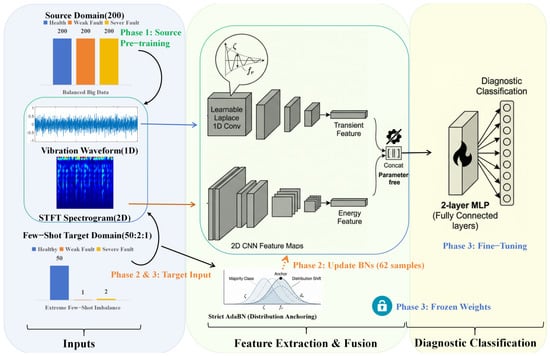
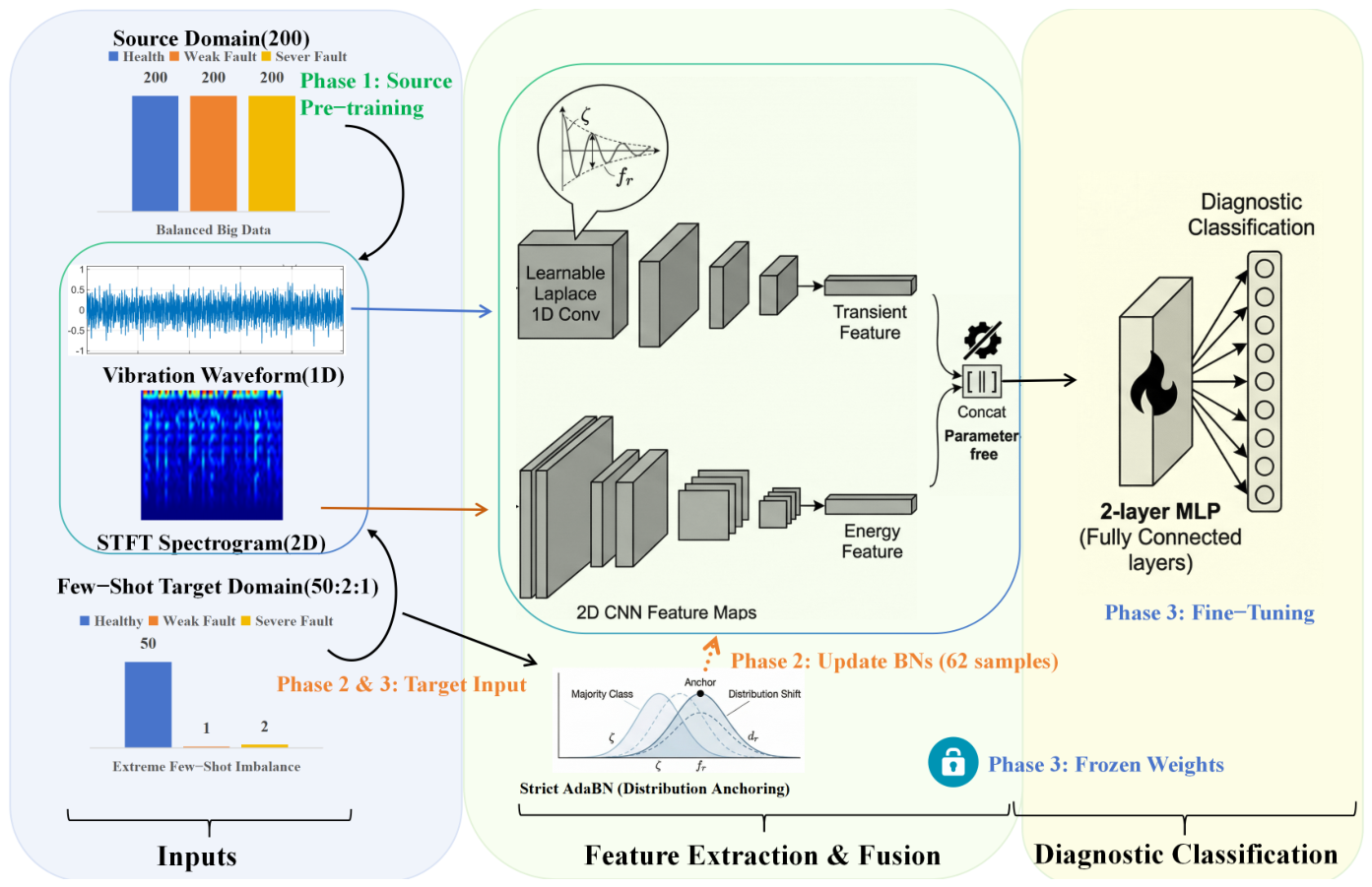
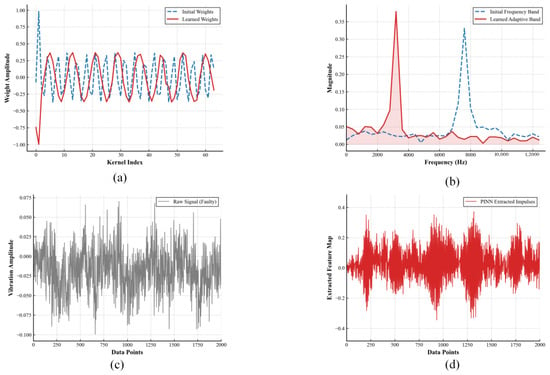
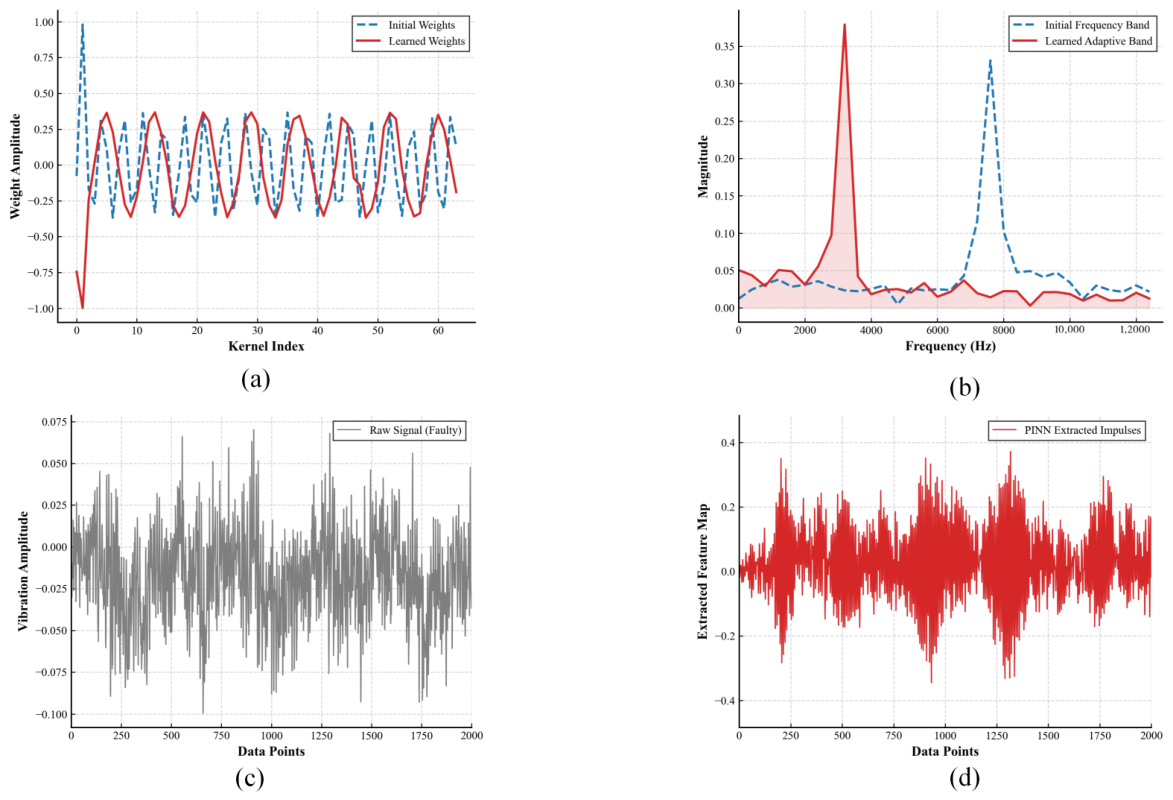
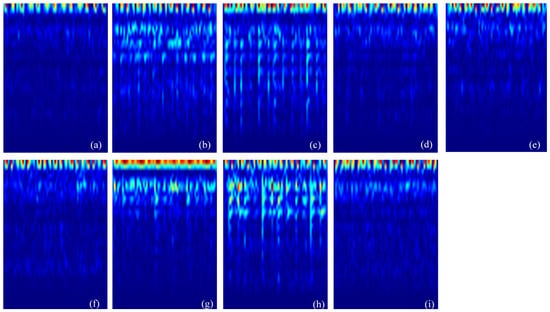
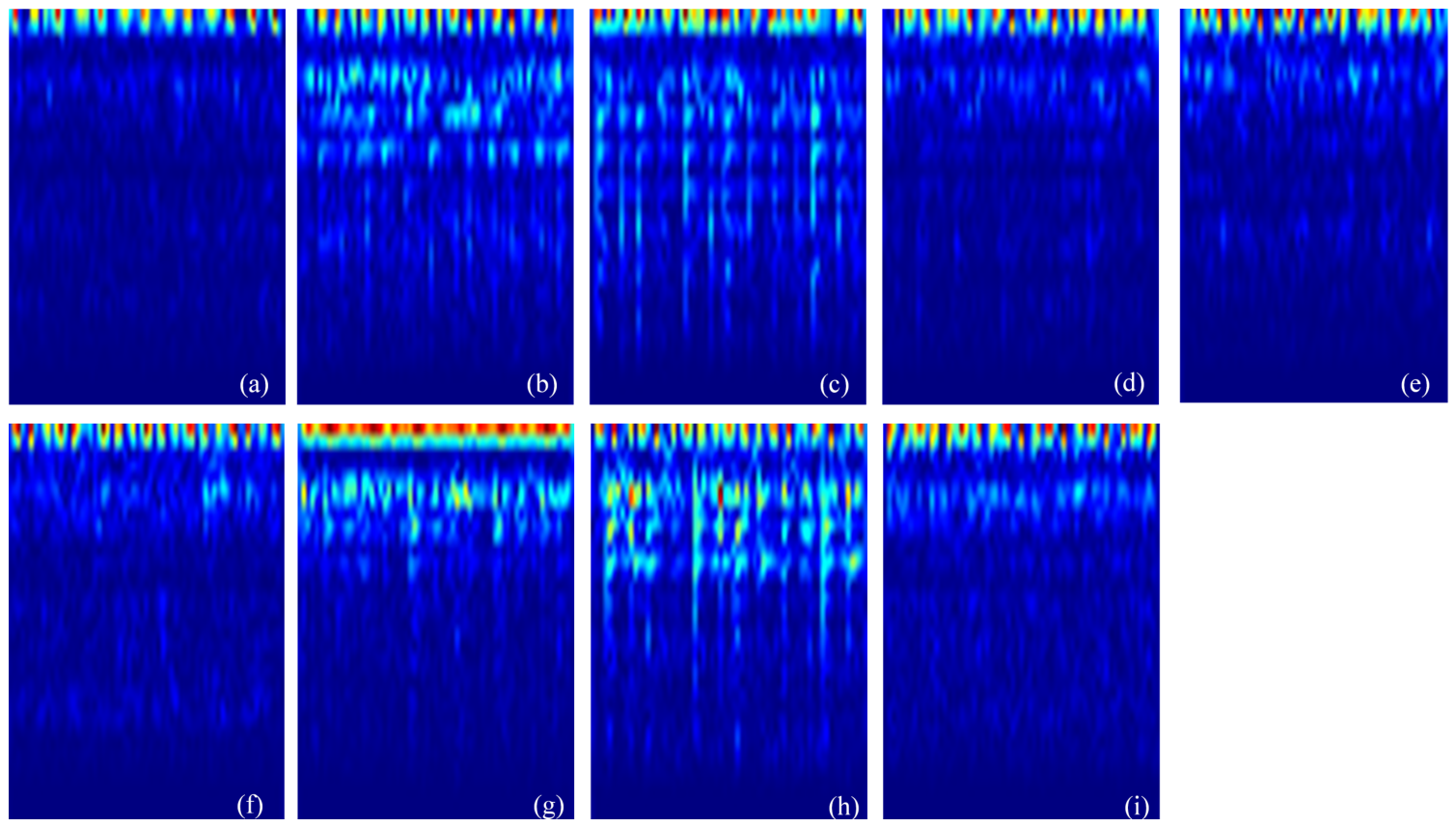
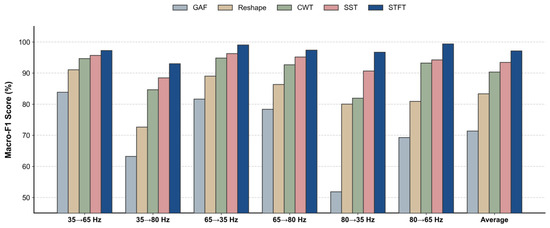
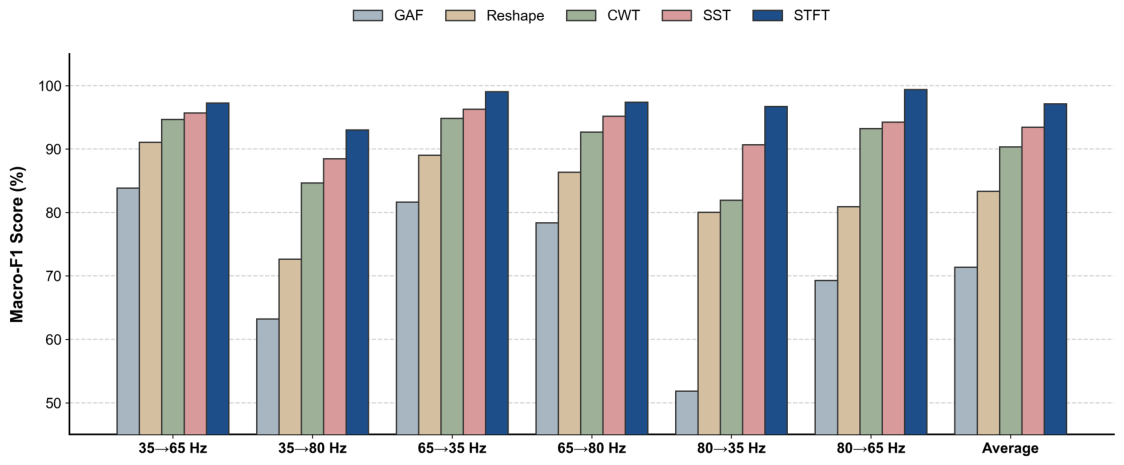
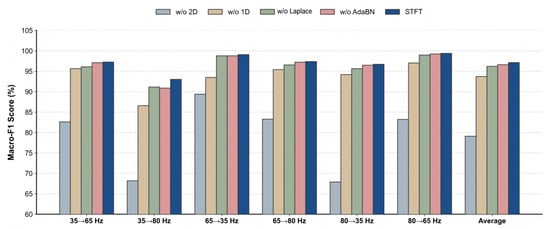
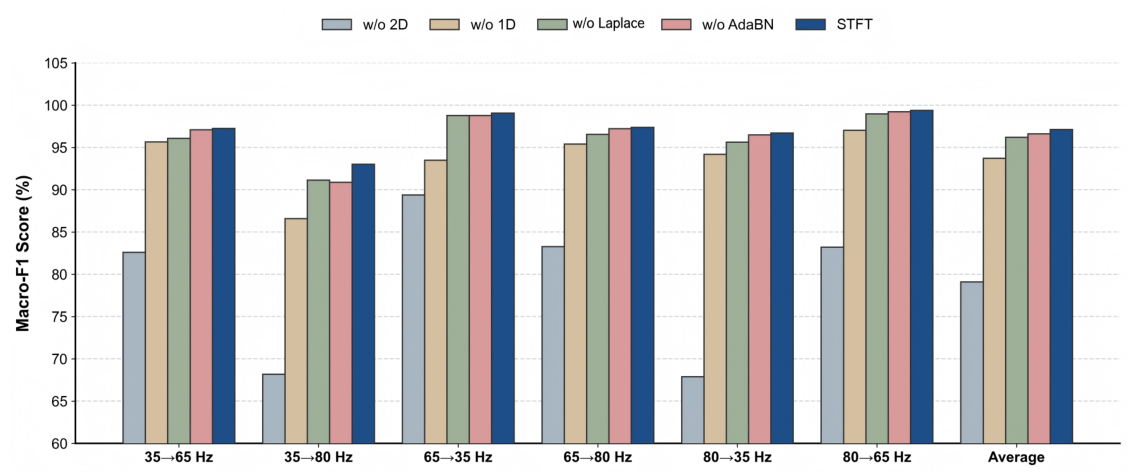
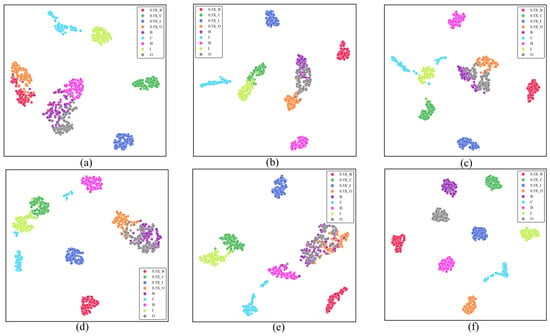
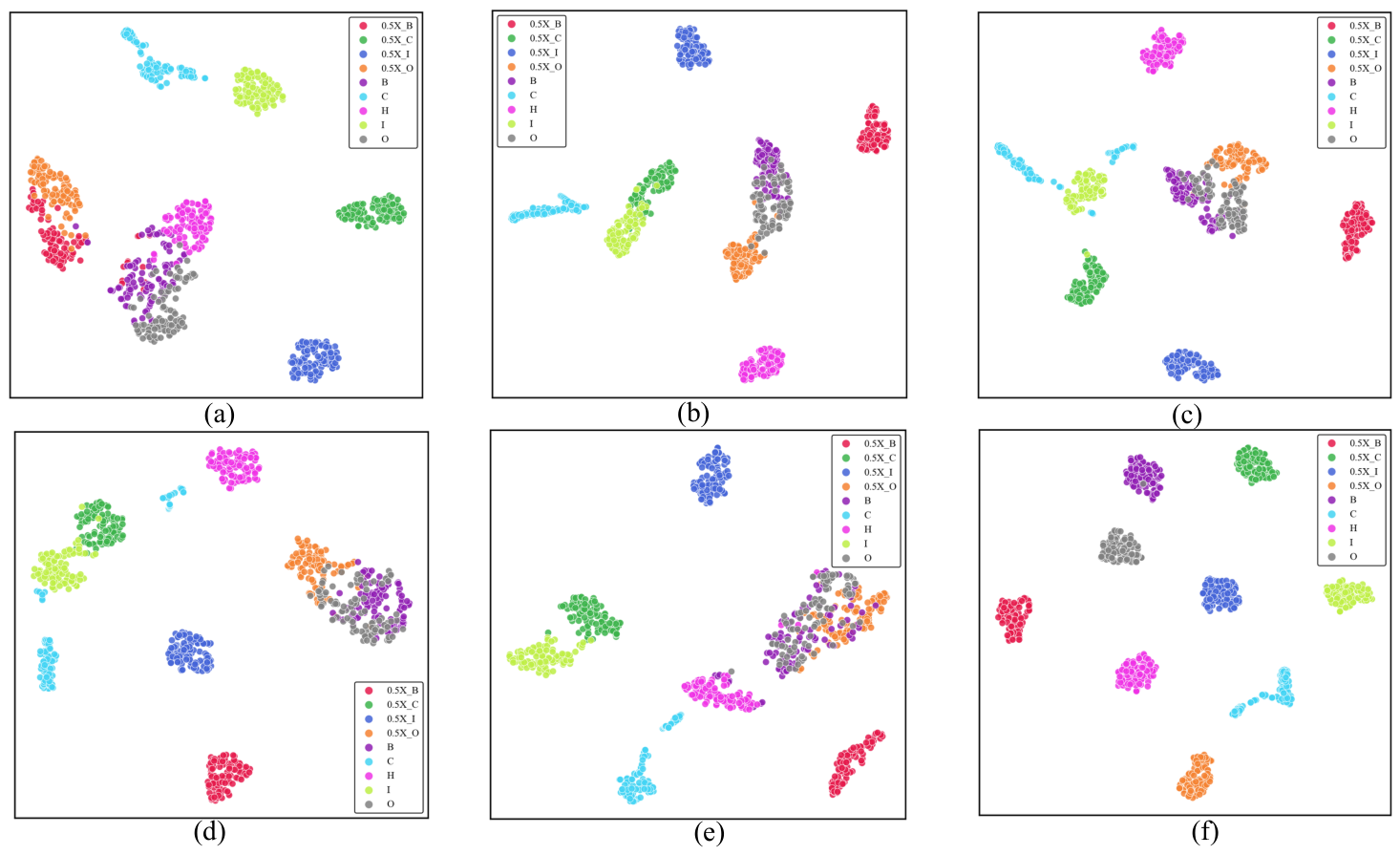
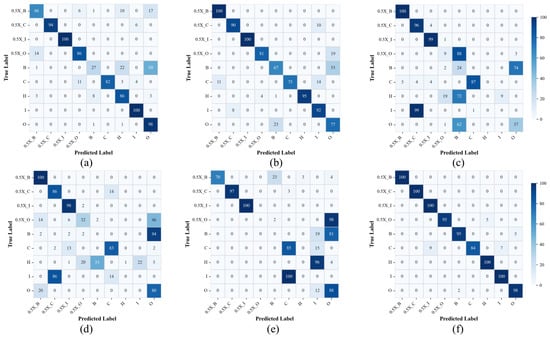
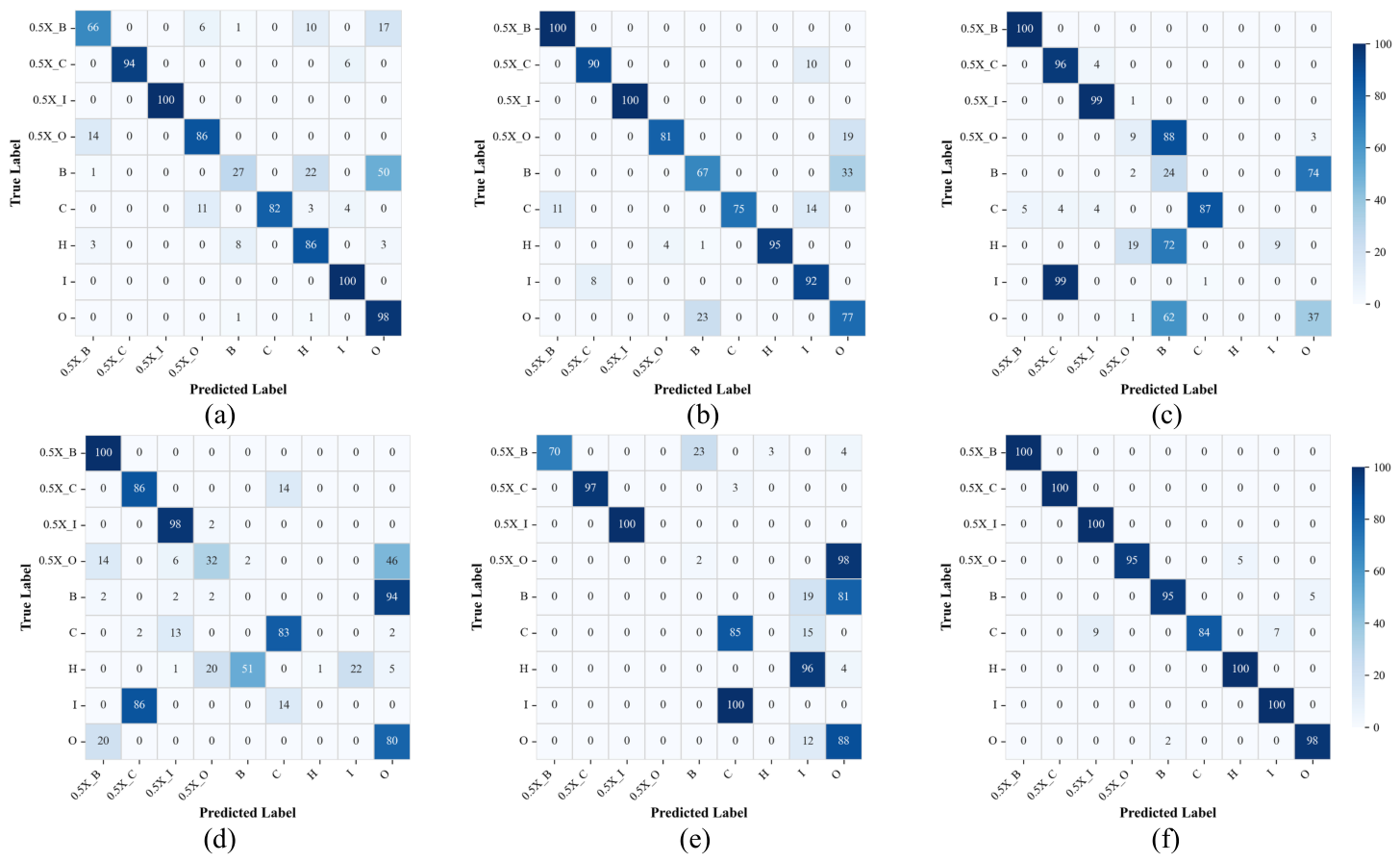

Disclaimer/Publisher’s Note: The statements, opinions and data contained in all publications are solely those of the individual author(s) and contributor(s) and not of MDPI and/or the editor(s). MDPI and/or the editor(s) disclaim responsibility for any injury to people or property resulting from any ideas, methods, instructions or products referred to in the content. |
© 2026 by the authors. Licensee MDPI, Basel, Switzerland. This article is an open access article distributed under the terms and conditions of the Creative Commons Attribution (CC BY) license.