Exploratory Numerical Assessment of Hybrid-Melting-Point Phase Change Materials for Building Envelopes



Abstract
1. Introduction
- (1)
- How does distributing PCM melting thresholds influence transient thermal regulation behavior under dynamically varying thermal conditions?
- (2)
- Can hybrid-melting-point PCM systems improve overheating mitigation and cold-regime thermal retention relative to conventional single-transition PCM systems while maintaining identical latent heat capacity?
- (3)
- How does staged phase-transition evolution influence transient thermal buffering behavior within hybrid PCM systems?
2. Research Motivation and Problem Formulation
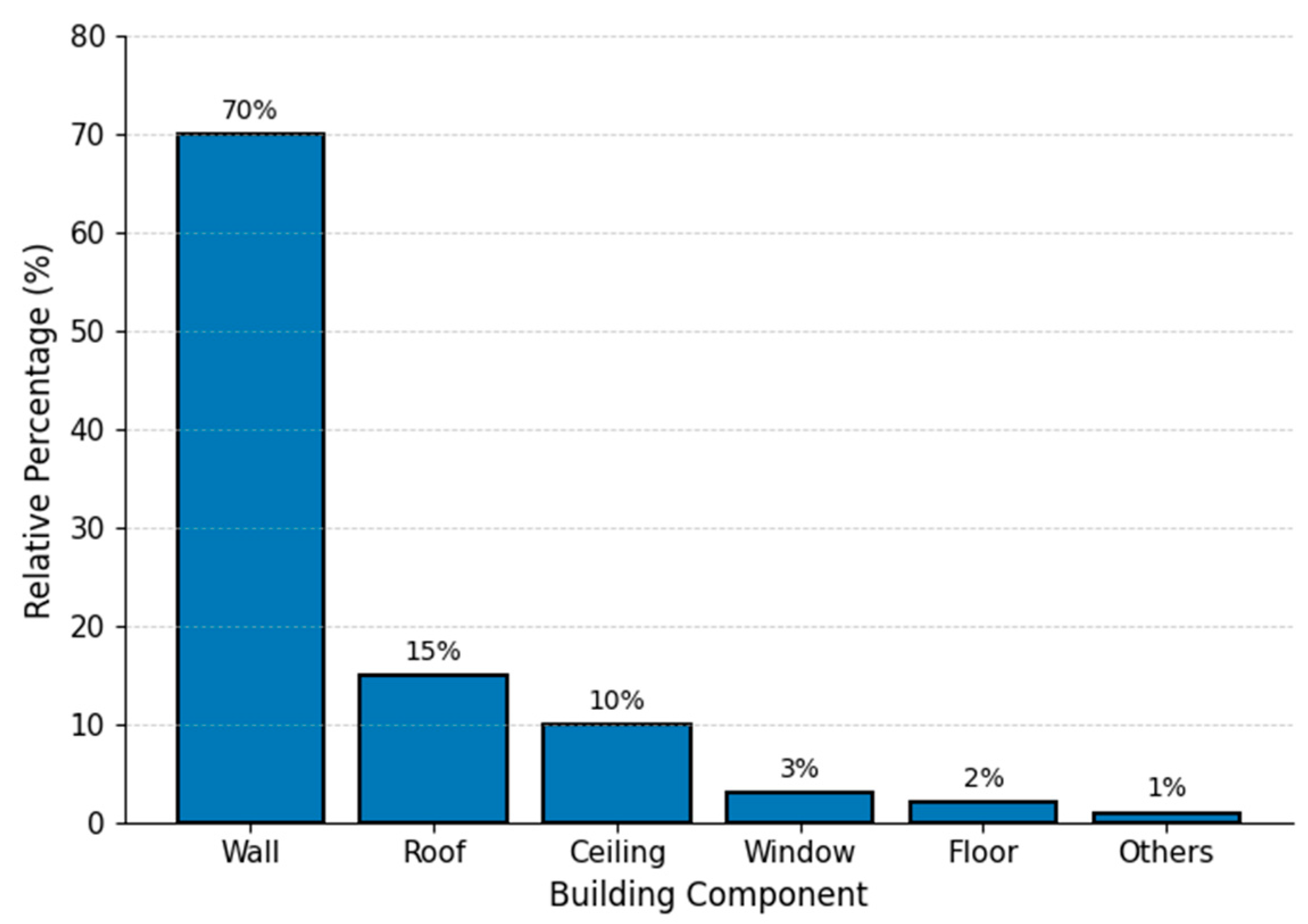
2.1. Performance Constraints of Single-Melting-Point PCM Systems
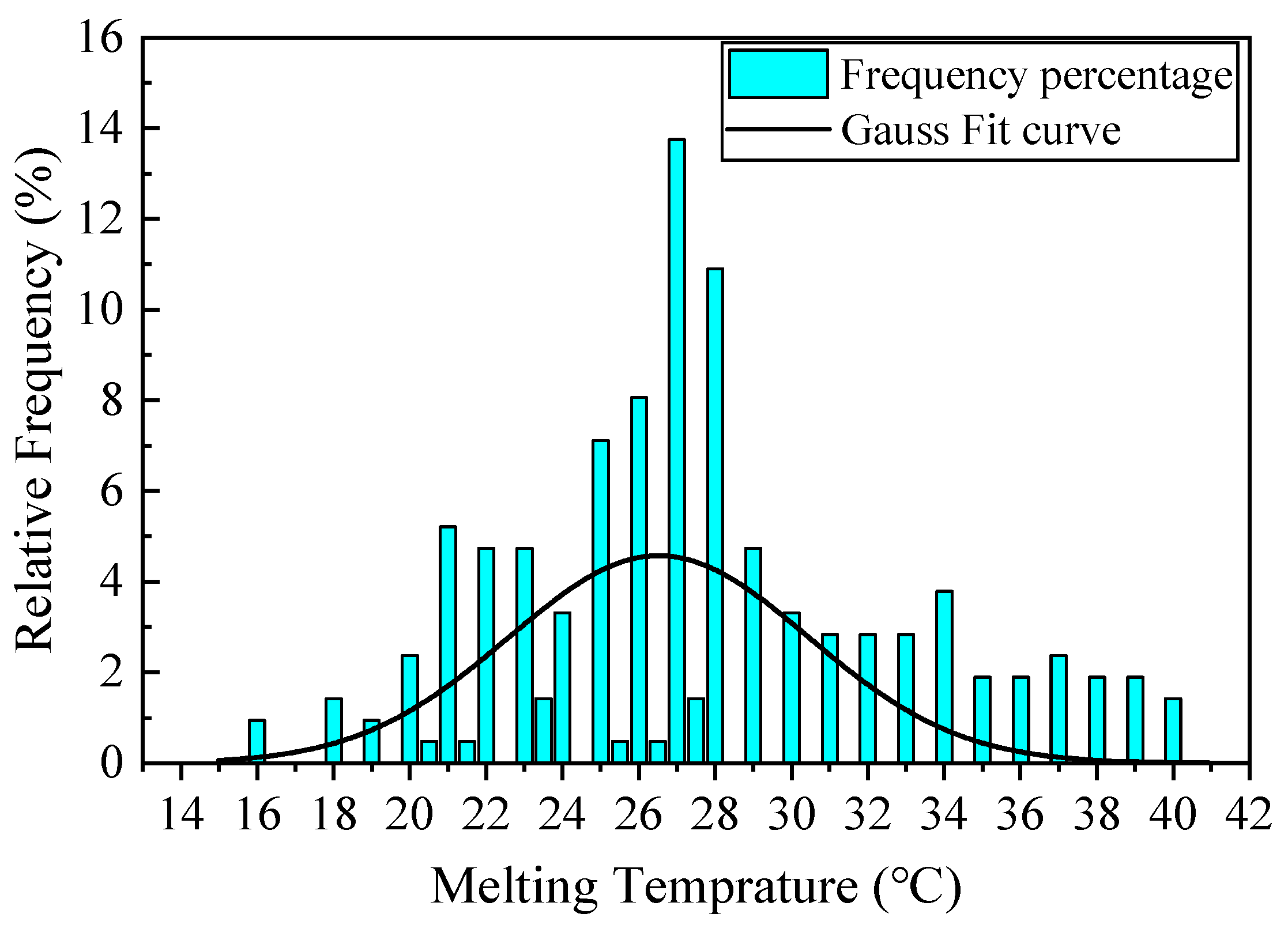
2.2. Evolution Toward Hybrid Systems and Current Gaps
3. Modeling of PCM-Reinforced Building Envelopes
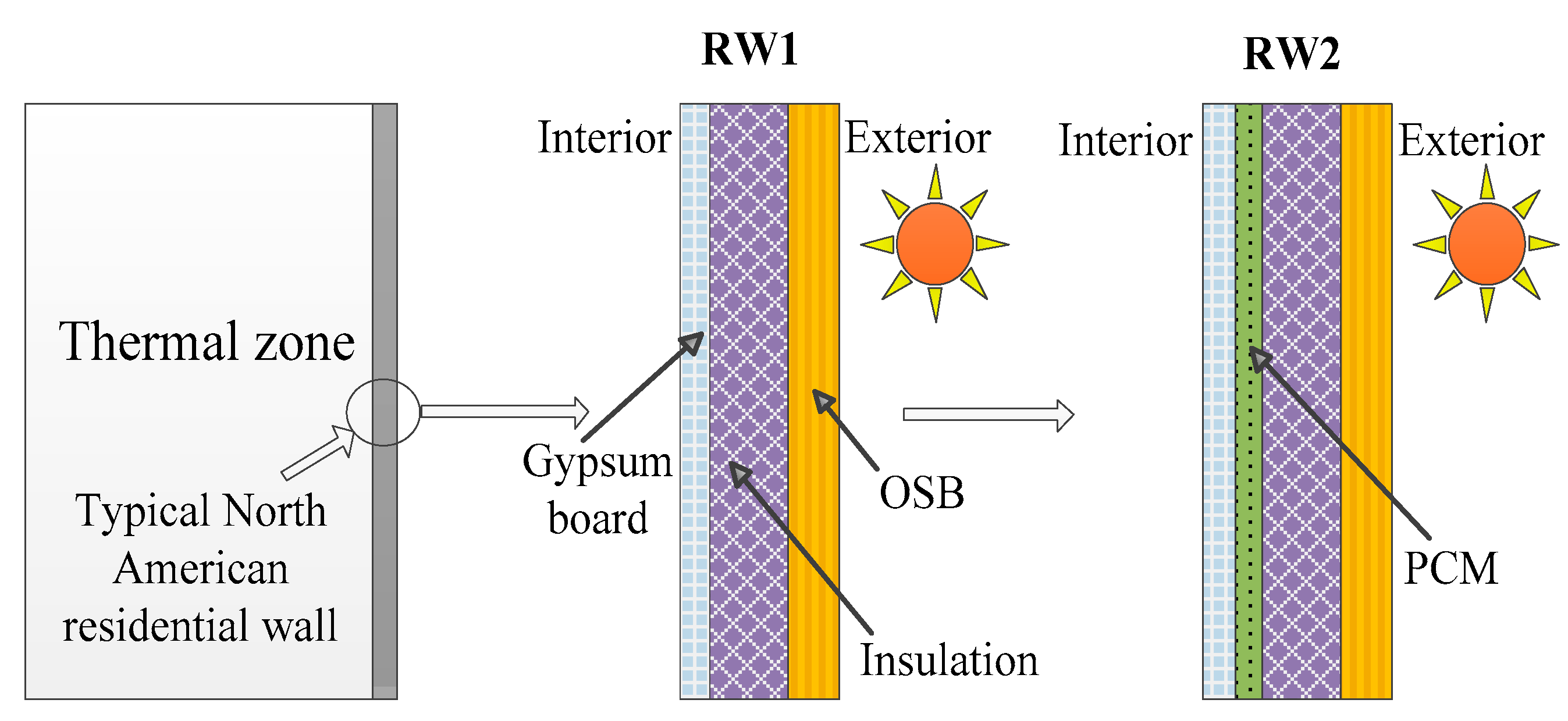
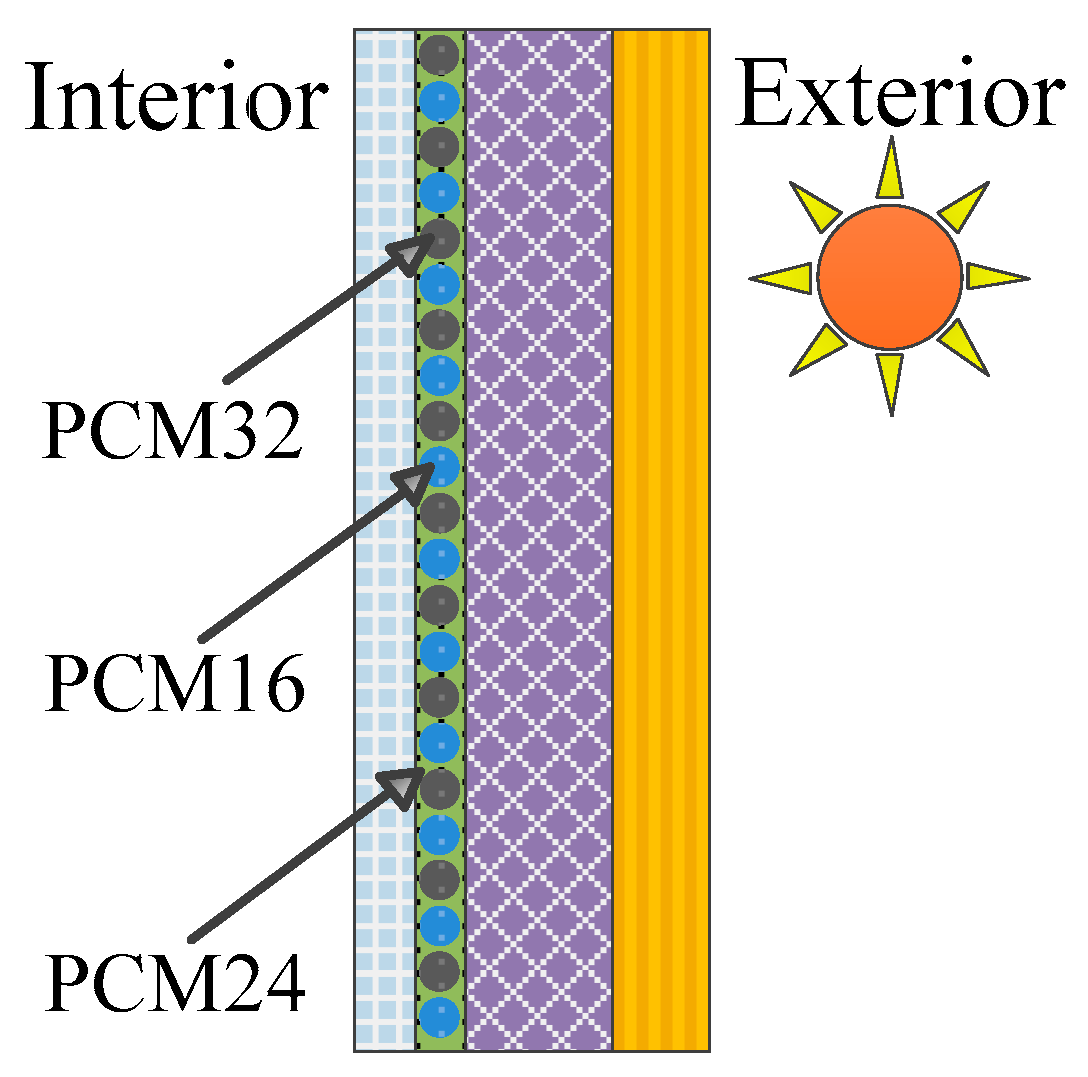
3.1. Wall Configurations and PCM Design with Hybrid Melting Points
3.2. Methodology for Modeling Building Envelopes with PCM Layer
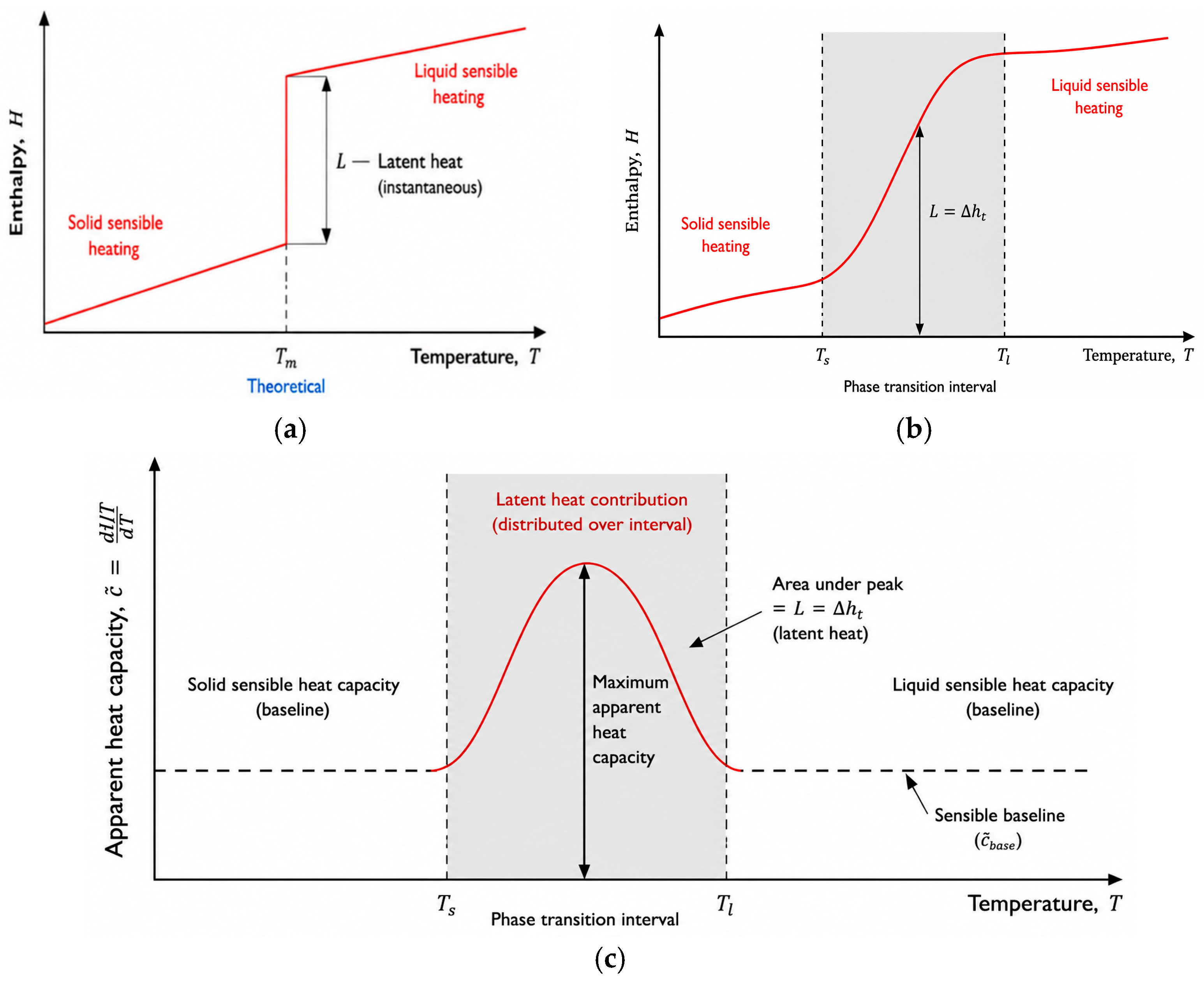
3.2.1. Governing Equations and PCM Formulation
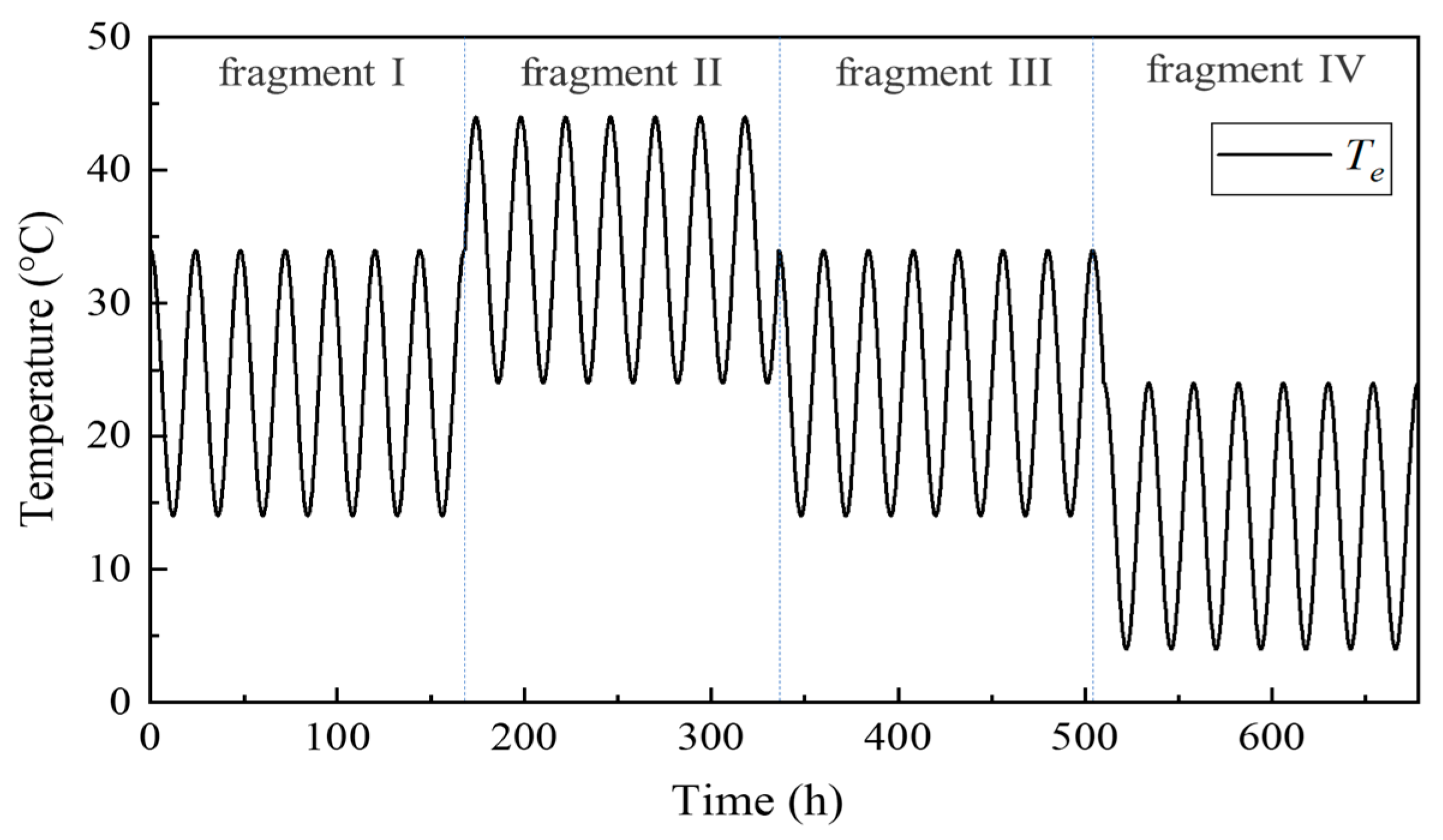
3.2.2. Boundary Conditions and Controlled Thermal Loading
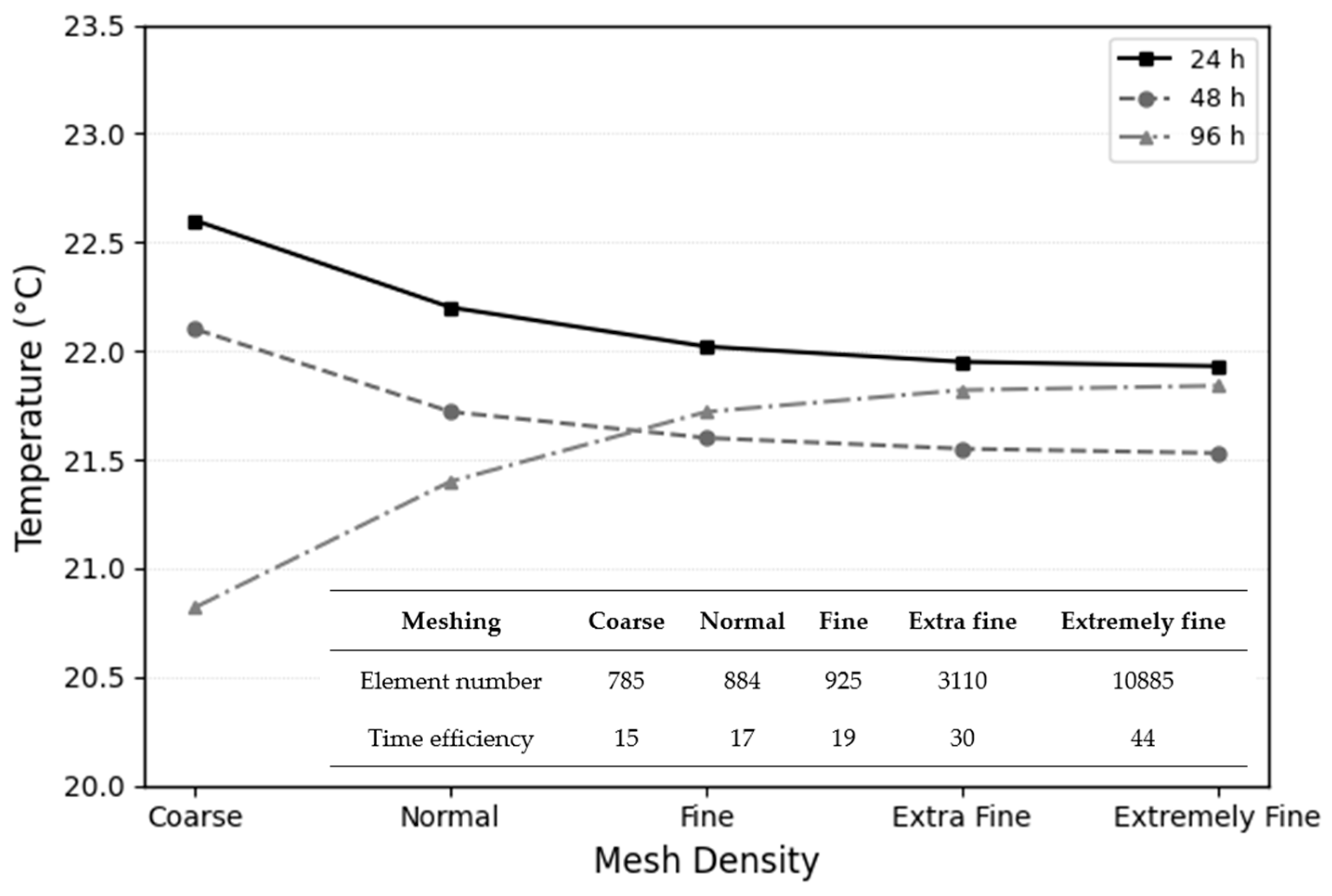
3.2.3. Mesh Sensitivity and Model Calibration
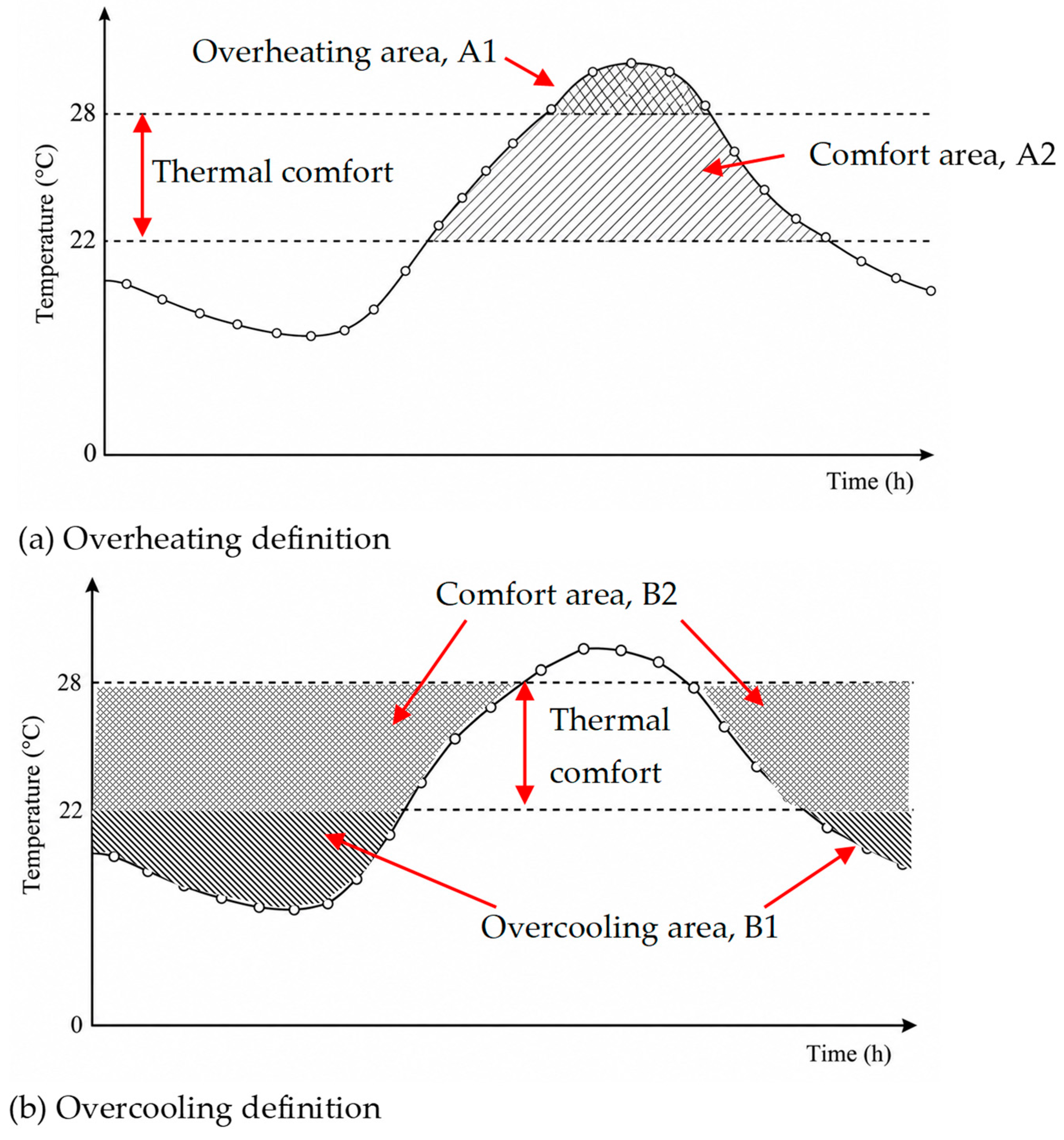
3.2.4. Performance Indexes
4. Results and Discussion
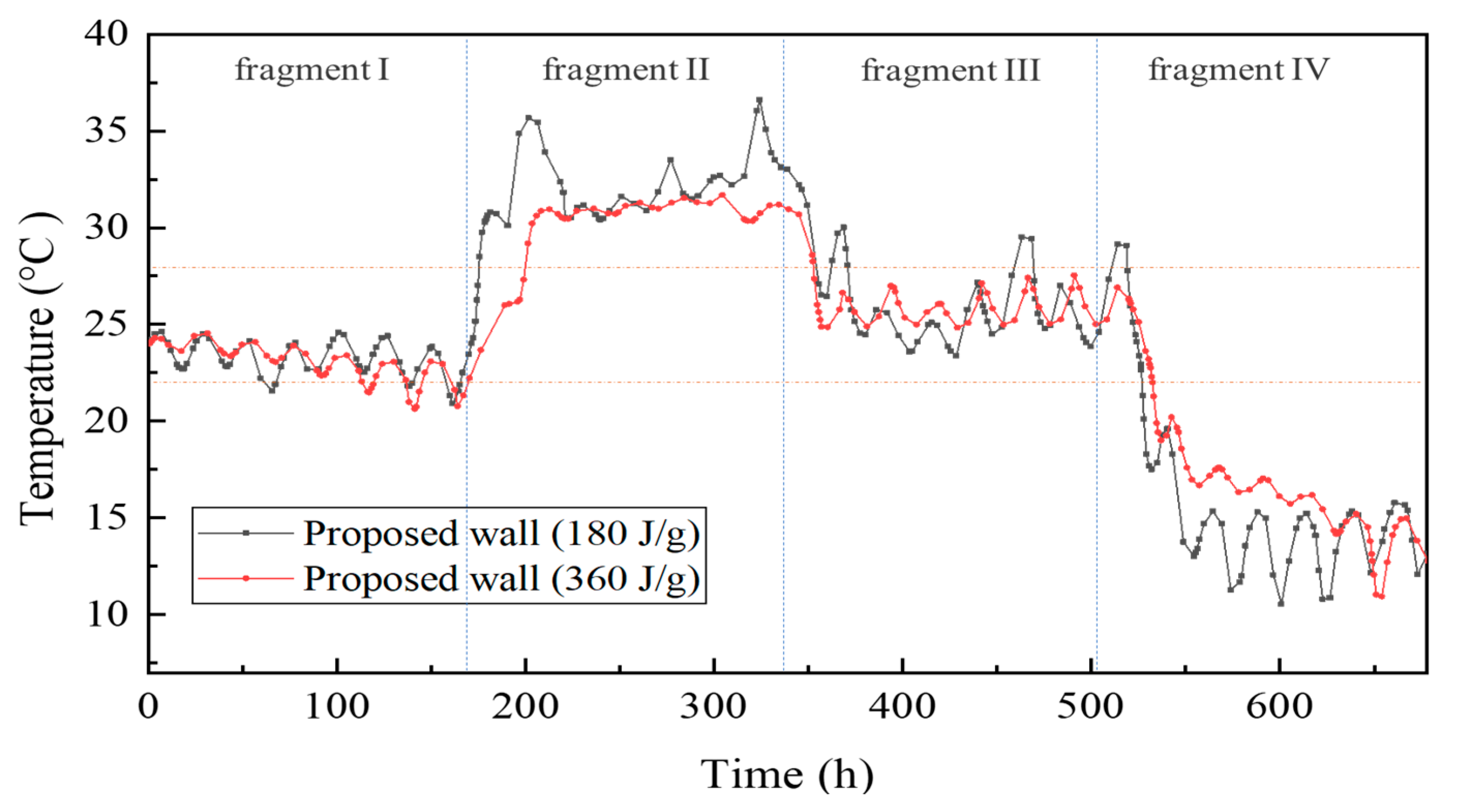
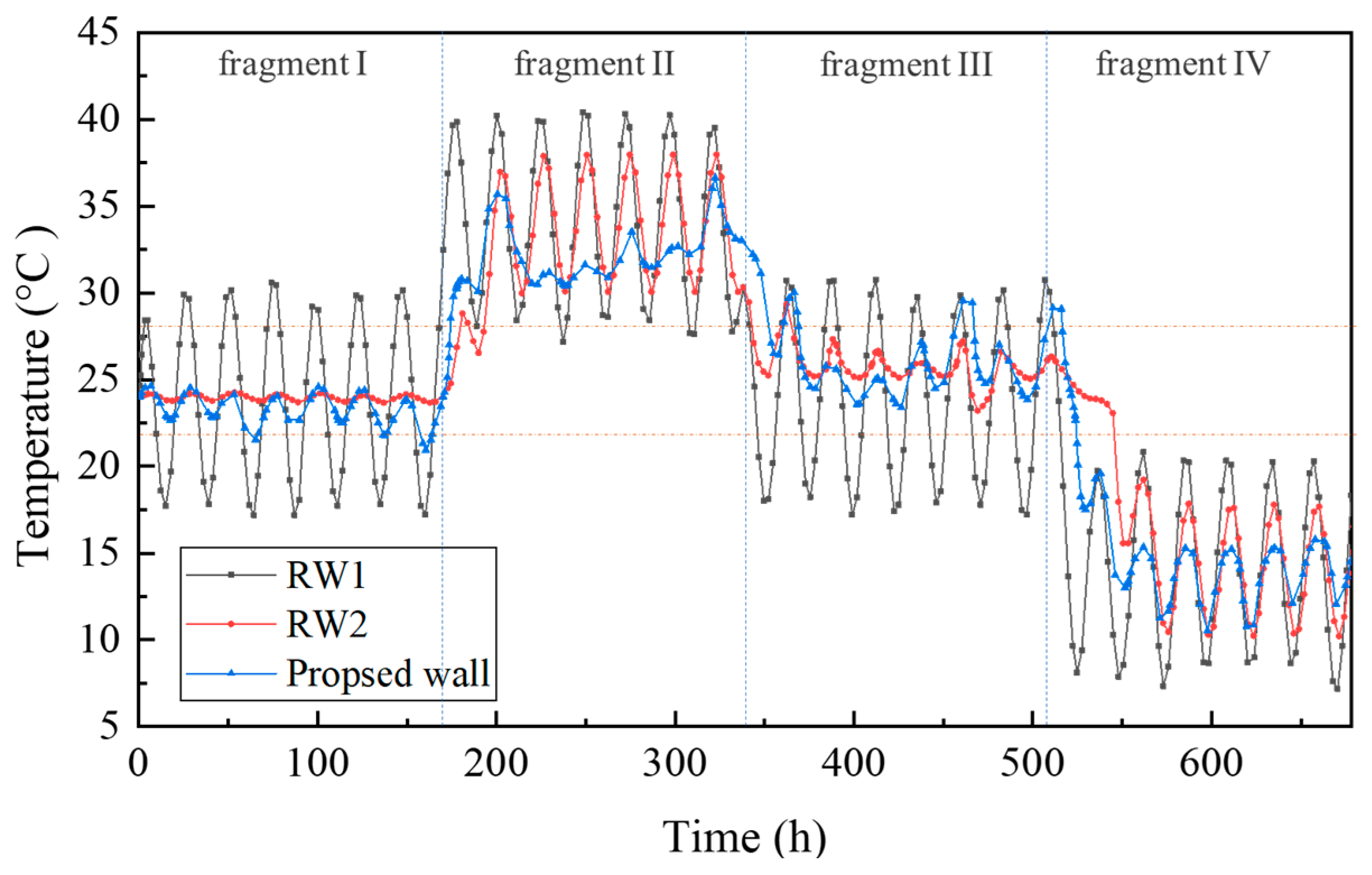
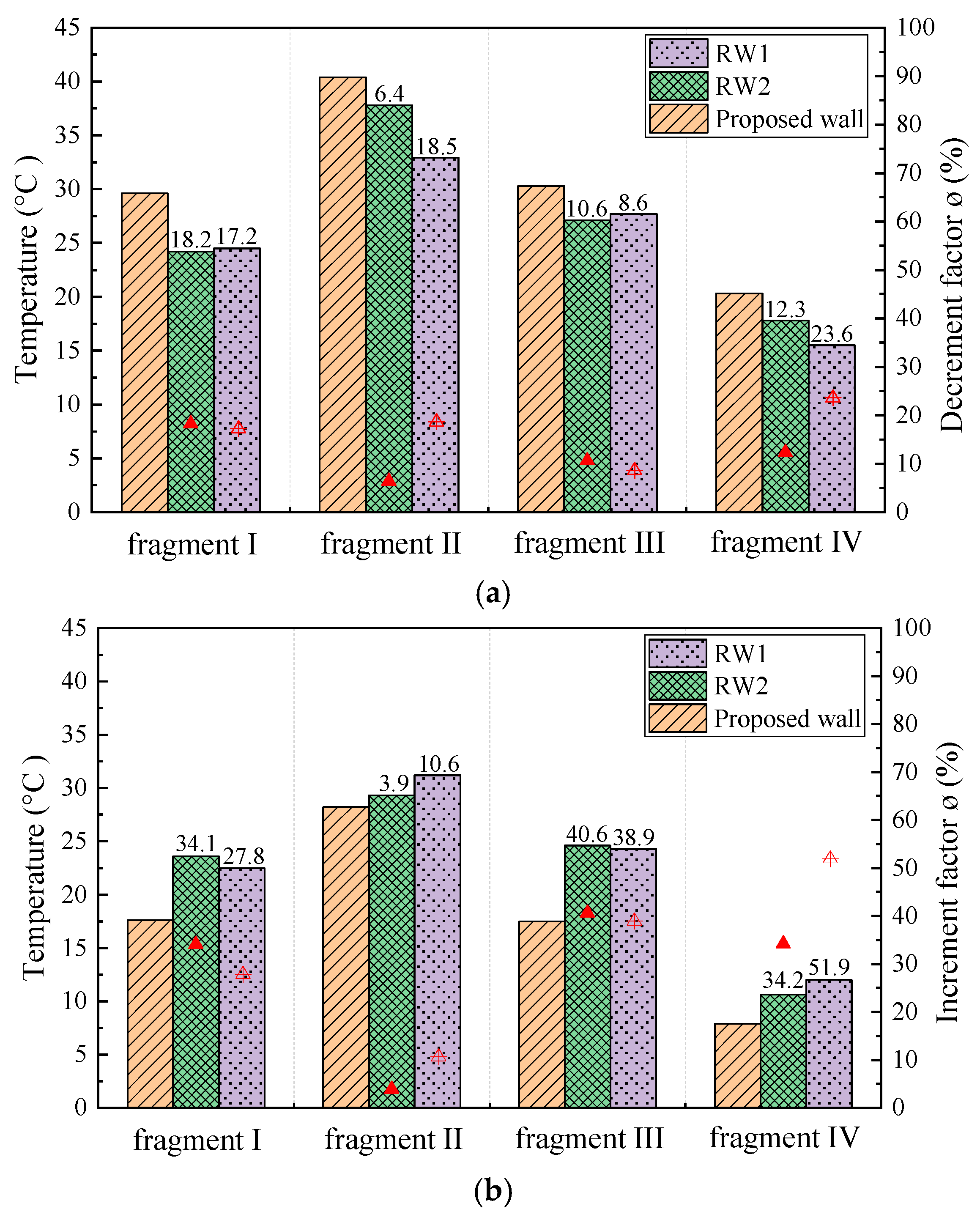
4.1. Transient Thermal Performance Under Mild Conditions (Fragments I and III)
4.2. Overheating Mitigation Under Hot Thermal Regimes (Fragment II)
4.3. Thermal Retention Under Cold Thermal Regimes (Fragment IV)
4.4. Thermal Comfort Evaluation Using ITD Metrics
4.5. Influence of Latent Heat Capacity on Thermal Regulation
5. Thermodynamics of Hybrid PCM Behavior
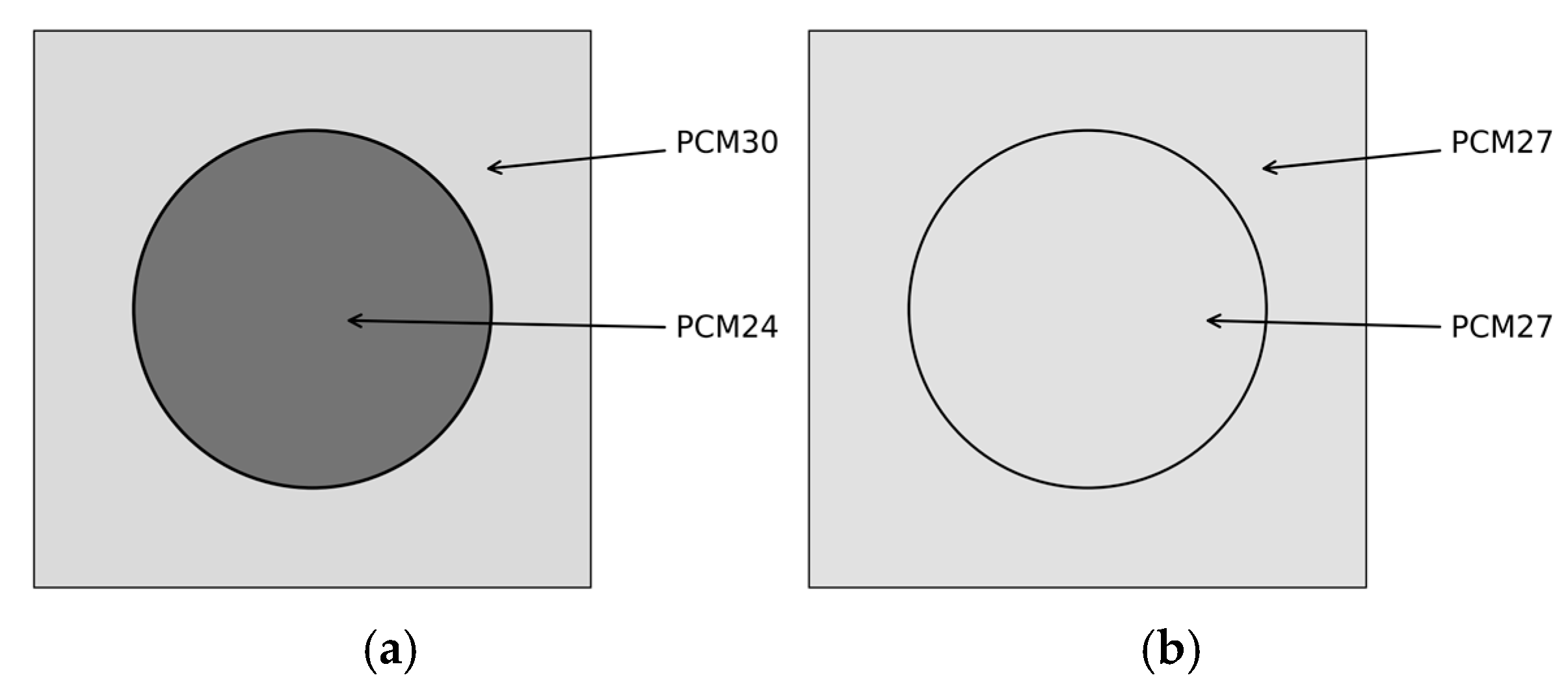
5.1. Configuration of Composite PCM Blocks
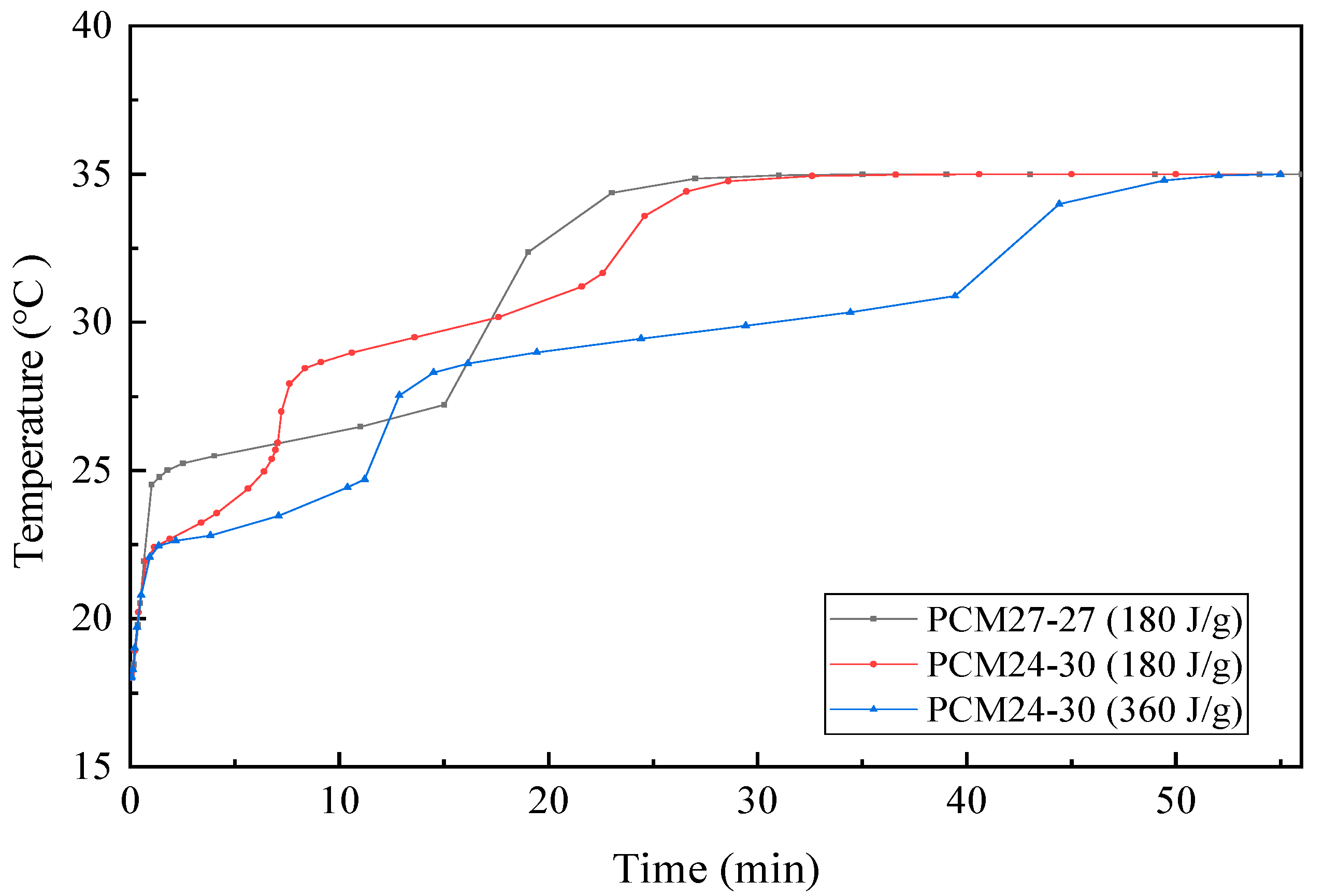
5.2. Transient Temperature Evolution and Latent Heat Effects
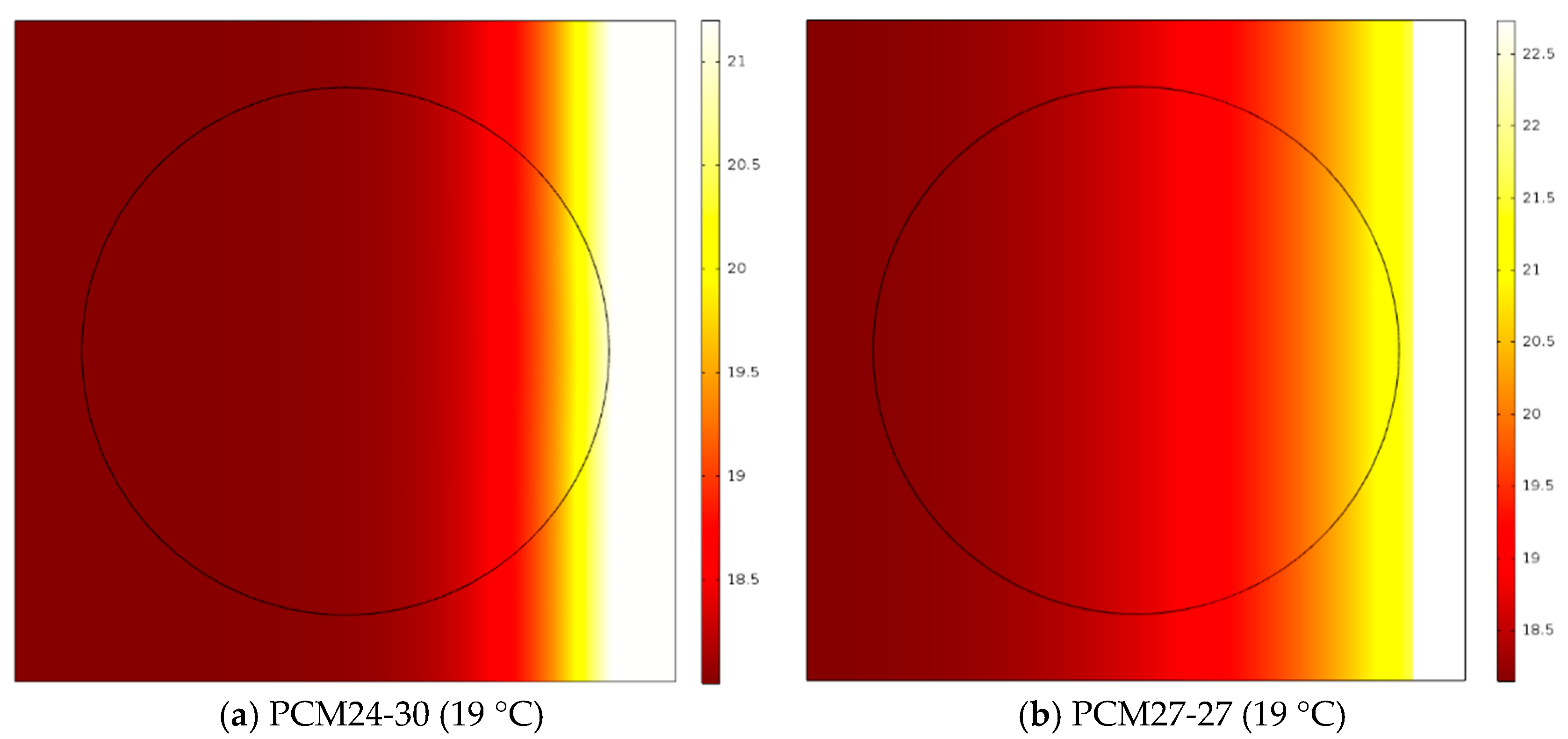
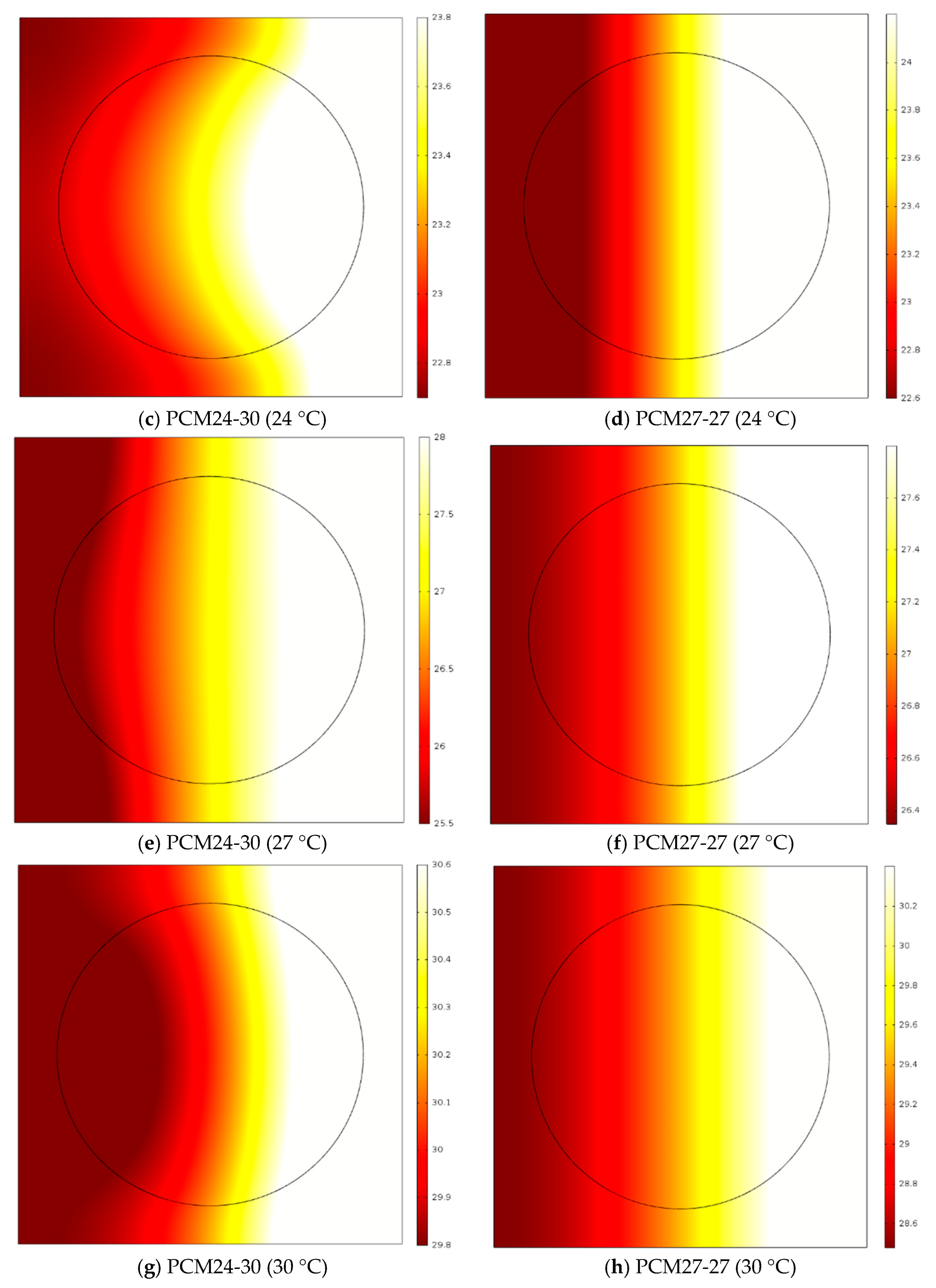
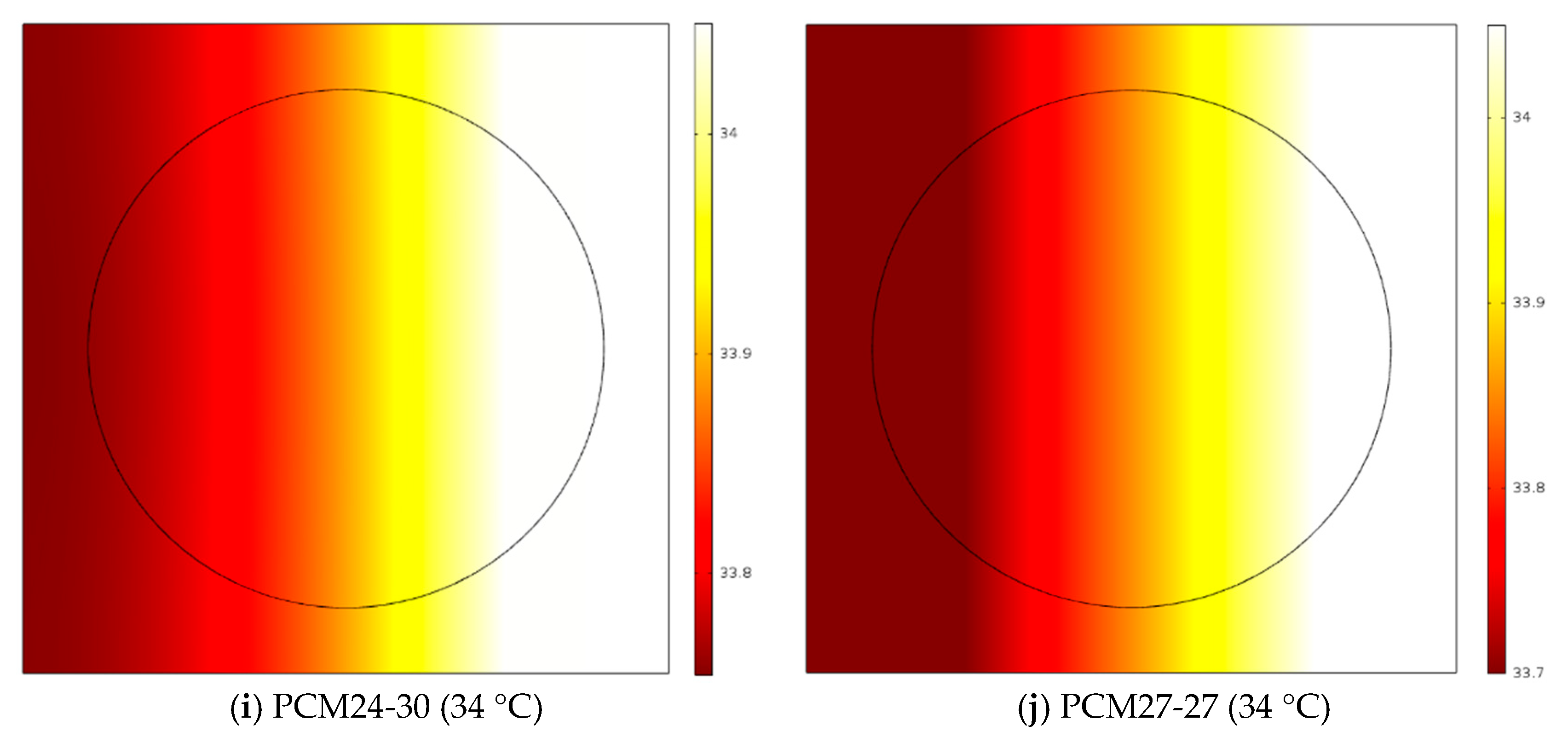
5.3. Spatial Temperature Distribution and Phase-Front Dynamics
6. Conclusions
Author Contributions
Funding
Data Availability Statement
Conflicts of Interest
References
- Capuano, L. International Energy Outlook 2019 (IEO2019), for Center for Strategic and International Studies, September 24, 2019|Washington, DC. Available online: https://www.eia.gov/pressroom/presentations/capuano_09242019.pdf (accessed on 20 April 2026).
- Department of Energy, Office of Energy Efficiency and Renewable Energy. Buildings Energy Efficiency Frontiers & Innovation Technologies (BENEFIT); Department of Energy, Office of Energy Efficiency and Renewable Energy: Washington, DC, USA, 2019.
- Kahan, A. EIA Projects Nearly 50% Increase in World Energy Usage by 2050, Led by Growth in Asia. 2019. Available online: https://www.eia.gov/todayinenergy/detail.php?id=41433# (accessed on 20 April 2026).
- Buildings Performance Institute Europe (BPIE). Europe’s Buildings Under the Microscope; A Country-by-Country Review of the Energy Performance of Buildings; Buildings Performance Institute Europe (BPIE): Brussels, Belgium, 2011. [Google Scholar]
- Akeiber, H.; Nejat, P.; Majid, M.Z.; Wahid, M.A.; Jomehzadeh, F.; Famileh, I.; Calautit, J.; Hughes, B.; Zaki, S. A review on phase change material (PCM) for sustainable passive cooling in building envelopes. Renew. Sustain. Energy Rev. 2016, 60, 1470–1497. [Google Scholar] [CrossRef]
- Khadiran, T.; Hussein, M.Z.; Zainal, Z.; Rusli, R. Advanced energy storage materials for building applications and their thermal performance characterization: A review. Renew. Sustain. Energy Rev. 2016, 57, 916–928. [Google Scholar] [CrossRef]
- Heier, J.; Bales, C.; Martin, V. Combining thermal energy storage with buildings—A review. Renew. Sustain. Energy Rev. 2015, 42, 1305–1325. [Google Scholar] [CrossRef]
- Li, M.; Gui, G.; Lin, Z.; Jiang, L.; Pan, H.; Wang, X. Numerical Thermal Characterization and Performance Metrics of Building Envelopes Containing Phase Change Materials for Energy-Efficient Buildings. Sustainability 2018, 10, 2657. [Google Scholar] [CrossRef]
- Li, M.; Cao, Q.; Pan, H.; Wang, X.; Lin, Z. Effect of melting point on thermodynamics of thin PCM reinforced residential frame walls in different climate zones. Appl. Therm. Eng. 2021, 188, 116615. [Google Scholar] [CrossRef]
- Li, M.; Lin, Z. Numerical study of the feasibility of coupling vacuum isolation panels with phase change material for enhanced energy-efficient buildings. Energy Build. 2021, 251, 111369. [Google Scholar] [CrossRef]
- Li, X.; Chen, H.; Li, H.; Liu, L.; Lu, Z.; Zhang, T.; Duan, W.H. Integration of form-stable paraffin/nanosilica phase change material composites into vacuum insulation panels for thermal energy storage. Appl. Energy 2015, 159, 601–609. [Google Scholar] [CrossRef]
- Sardari, P.T.; Babaei-Mahani, R.; Giddings, D.; Yasseri, S.; Moghimi, M.A.; Bahai, H. Energy recovery from domestic radiators using a compact composite metal Foam/PCM latent heat storage. J. Clean. Prod. 2020, 257, 120504. [Google Scholar] [CrossRef]
- Shaik, S.; Arumugam, C.; Shaik, S.V.; Arıcı, M.; Afzal, A.; Ma, Z. Strategic design of PCM integrated burnt clay bricks: Potential for cost-cutting measures for air conditioning and carbon dioxide extenuation. J. Clean. Prod. 2022, 375, 134077. [Google Scholar] [CrossRef]
- Rahemipoor, S.; Hasany, M.; Mehrali, M.; Almdal, K.; Ranjbar, N.; Mehrali, M. Phase change materials incorporation into 3D printed geopolymer cement: A sustainable approach to enhance the comfort and energy efficiency of buildings. J. Clean. Prod. 2023, 417, 138005. [Google Scholar] [CrossRef]
- Shohan, A.A.A.; Ganesan, H.; Alsulamy, S.; Kumar, A.; Almujibah, H.R.; Petrounias, P.; Muruga Lal Jeyan, J.V. Developments on energy-efficient buildings using phase change materials: A sustainable building solution. Clean. Technol. Environ. Policy 2024, 26, 263–289. [Google Scholar] [CrossRef]
- Parameshwaran, R.; Harikrishnan, S.; Kalaiselvam, S. Energy efficient PCM-based variable air volume air conditioning system for modern buildings. Energy Build. 2010, 42, 1353–1360. [Google Scholar] [CrossRef]
- Devaux, P.; Farid, M.M. Benefits of PCM underfloor heating with PCM wallboards for space heating in winter. Appl. Energy 2017, 191, 593–602. [Google Scholar] [CrossRef]
- Evola, G.; Marletta, L.; Sicurella, F. Simulation of a ventilated cavity to enhance the effectiveness of PCM wallboards for summer thermal comfort in buildings. Energy Build. 2014, 70, 480–489. [Google Scholar] [CrossRef]
- Bondareva, N.S.; Sheremet, M.A. Influence of phase change material melting point and its location on heat and mass transfer in a brick. J. Energy Storage 2021, 42, 103122. [Google Scholar] [CrossRef]
- Almeshaal, M.; Babu, P.K.; Chinnasamy, S.; Manoj Kumar, P.; Subramanian, S. Influence of different melting points of phase change material on photovoltaic phase change materials system performance: An energy, exergy, and environmental point of view. Energy Technol. 2025, 13, 2400286. [Google Scholar] [CrossRef]
- Beltrán, R.D.; Miño-Rodríguez, I.; Lobato, A.; Gallardo, A.; Naranjo-Mendozac, C. Thermal comfort performance within heritage buildings subject to a change of use. In Proceedings of the Mediterranean Green Building and Renewable Energy Forum, Florence, Italy, 26–28 August 2015. [Google Scholar]
- Kheradmand, M.; Azenha, M.; de Aguiar, J.L.; Castro-Gomes, J. Experimental and numerical studies of hybrid PCM embedded in plastering mortar for enhanced thermal behaviour of buildings. Energy 2016, 94, 250–261. [Google Scholar] [CrossRef]
- Zhou, D.; Zhao, C.Y.; Tian, Y. Review on thermal energy storage with phase change materials (PCMs) in building applications. Appl. Energy 2012, 92, 593–605. [Google Scholar] [CrossRef]
- Alawadhi, E.M. Thermal analysis of a building brick containing phase change material. Energy Build. 2008, 40, 351–357. [Google Scholar] [CrossRef]
- Saffari, M.; De Gracia, A.; Fernández, C.; Cabeza, L.F. Simulation-based optimization of PCM melting temperature to improve the energy performance in buildings. Appl. Energy 2017, 202, 420–434. [Google Scholar] [CrossRef]
- Dames, C.; Prasher, R.; Jackson, R. Solid State Tunable Thermal Energy Storage and Switches for Smart Building Envelopes. 2023. Available online: https://www.energy.gov/sites/default/files/2023-06/bto-peer-2023-31352-therm-lbnl-dames.pdf (accessed on 20 April 2026).
- Cao, F.; Zheng, Y.; Chen, C.H.; Bonner, R. Thermal energy storage with tunable melting point phase change materials. In International Heat Transfer Conference Digital Library; Begel House Inc.: Danbury, CT, USA, 2018. [Google Scholar]
- Wei, H.; Wang, C.; Yang, S.; Han, J.; Yang, M.; Zhang, J.; Lu, Y.; Liu, X. A strategy for designing microencapsulated composite phase change thermal storage materials with tunable melting temperature. Sol. Energy Mater. Sol. Cells 2019, 203, 110166. [Google Scholar] [CrossRef]
- Sovetova, M.; Memon, S.A.; Kim, J. Thermal performance and energy efficiency of building integrated with PCMs in hot desert climate region. Sol. Energy 2019, 189, 357–371. [Google Scholar] [CrossRef]
- Tunçbilek, E.; Arıcı, M.; Bouadila, S.; Wonorahardjo, S. Seasonal and annual performance analysis of PCM-integrated building brick under the climatic conditions of Marmara region. J. Therm. Anal. Calorim. 2020, 141, 613–624. [Google Scholar] [CrossRef]
- Incropera, F.P.; DeWitt, D. Introduction to Heat Transfer, 3rd ed.; Wiley: Hoboken, NJ, USA, 1996. [Google Scholar]
- Barz, T.; Krämer, J.; Emhofer, J. Identification of Phase Fraction–Temperature Curves from Heat Capacity Data for Numerical Modeling of Heat Transfer in Commercial Paraffin Waxes. Energies 2020, 13, 5149. [Google Scholar] [CrossRef]
- Reichl, C.; Both, S.; Mascherbauer, P.; Emhofer, J. Comparison of Two CFD Approaches Using Constant and Temperature Dependent Heat Capacities during the Phase Transition in PCMs with Experimental and Analytical Results. Processes 2022, 10, 302. [Google Scholar] [CrossRef]
- Sharifi, N.P.; Freeman, G.E.; Sakulich, A.R. Using COMSOL modeling to investigate the efficiency of PCMs at modifying temperature changes in cementitious materials—Case study. Constr. Build. Mater. 2015, 101, 965–974. [Google Scholar] [CrossRef]
- Rady, M. Granular phase change materials for thermal energy storage: Experiments and numerical simulations. Appl. Therm. Eng. 2009, 29, 3149–3159. [Google Scholar] [CrossRef][Green Version]
- Mandilaras, I.D.; Kontogeorgos, D.A.; Founti, M.A. A hybrid methodology for the determination of the effective heat capacity of PCM enhanced building components. Renew. Energy 2015, 76, 790–804. [Google Scholar] [CrossRef]


| ITDup (%) | ITDdown (%) | |||||
|---|---|---|---|---|---|---|
| RW1 | RW2 | Proposed Wall | RW1 | RW2 | Proposed Wall | |
| Fragment I | 86.5 | 100 | 100 | 79.9 | 100 | 98.9 |
| Fragment II | 65.7 | 74.7 | 85.2 | 100 | 100 | 100 |
| Fragment III | 85.2 | 96.9 | 94.5 | 78.6 | 100 | 100 |
| Fragment IV | 100 | 100 | 96.7 | 59.4 | 77.4 | 76.5 |
| Total | 84.4 | 92.9 | 94.1 | 79.5 | 92.7 | 93.9 |
Disclaimer/Publisher’s Note: The statements, opinions and data contained in all publications are solely those of the individual author(s) and contributor(s) and not of MDPI and/or the editor(s). MDPI and/or the editor(s) disclaim responsibility for any injury to people or property resulting from any ideas, methods, instructions or products referred to in the content. |
© 2026 by the authors. Licensee MDPI, Basel, Switzerland. This article is an open access article distributed under the terms and conditions of the Creative Commons Attribution (CC BY) license.
Share and Cite
Pan, H.; Khan, M.A.; Zhou, X.; Li, M.; Lin, Z. Exploratory Numerical Assessment of Hybrid-Melting-Point Phase Change Materials for Building Envelopes. Processes 2026, 14, 1850. https://doi.org/10.3390/pr14121850
Pan H, Khan MA, Zhou X, Li M, Lin Z. Exploratory Numerical Assessment of Hybrid-Melting-Point Phase Change Materials for Building Envelopes. Processes. 2026; 14(12):1850. https://doi.org/10.3390/pr14121850
Chicago/Turabian StylePan, Hong, Mohsin Ali Khan, Xuanyu Zhou, Mingli Li, and Zhibin Lin. 2026. "Exploratory Numerical Assessment of Hybrid-Melting-Point Phase Change Materials for Building Envelopes" Processes 14, no. 12: 1850. https://doi.org/10.3390/pr14121850
APA StylePan, H., Khan, M. A., Zhou, X., Li, M., & Lin, Z. (2026). Exploratory Numerical Assessment of Hybrid-Melting-Point Phase Change Materials for Building Envelopes. Processes, 14(12), 1850. https://doi.org/10.3390/pr14121850