


Abstract
In response to the issues of low synergy efficiency between gas extraction and water injection, unclear procedural connections, and high costs in coal mine gas disaster prevention, this paper proposes a collaborative prevention technology for coal mine gas disasters termed “pump–injection–lock.” First, based on the kinetics of gas desorption in gas-bearing coal under different water-bearing conditions, an optimization model for the sequence of gas extraction and high-pressure water injection was developed. This model reduced the gas desorption rate in the experimental area by 32.5% and increased the effective extraction radius of boreholes by 18.7%. Second, based on the coupling relationship between water lock formation pressure, interfacial tension, and pore structure, a criterion model for process transition was constructed, enabling quantifiable identification of the transition node between “pump–injection.” The water lock’s inhibition of gas release duration was improved by over 25% compared to conventional water injection. Finally, by integrating the multiple effects of high-pressure water injection—enhancing permeability, softening, displacement, and flow limitation—a “multi-purpose” synergistic pathway was established. This increased the pre-drainage gas concentration in the test working face by 40%, the pure gas extraction volume by 28%, and reduced gas over-limit incidents by over 50%. Experiments and industrial trials demonstrated that the application of this technology in the 15# coal seam of Yixin Coal Mine shortened gas extraction by 36%, reduced borehole engineering by 72.8%, eliminated gas over-limit incidents during mining, and cumulatively generated economic benefits exceeding 425 million yuan in the same year, significantly improving the efficiency and cost-effectiveness of gas disaster prevention.
1. Introduction
With the continuous increase in coal mining depth in China, issues such as high gas content in coal seams, low permeability, and complex geological structures have become more prominent [1,2,3]. Gas disasters have emerged as the primary factor restricting the safe and efficient production of coal mines [4,5,6]. Among the mines operated by Longmei Group, high-gas and outburst-prone mines account for over 85%, with challenges such as high gas pressure, weak seepage capacity, and prolonged treatment cycles becoming increasingly pronounced [7,8]. Traditional gas control methods often rely on the independent implementation of measures such as gas extraction, high-pressure water injection, and ventilation [9,10,11]. However, these approaches frequently suffer from low synergistic efficiency, a lack of theoretical basis for the sequence of extraction and injection, difficulties in quantifying process transition points, and ineffective utilization of the water locking effect [12,13,14]. As a result, treatment cycles are prolonged, engineering workloads are massive, and costs continue to rise [15,16,17].
Domestic and international scholars have conducted extensive research on gas extraction, water injection for outburst prevention, and the water lock effect, laying a theoretical foundation for gas disaster control [18,19,20]. Notably, Wei et al. [21] established a fluid–solid coupling mathematical model that incorporates the creep properties of soft coal and simulated gas extraction from single and multiple boreholes using COMSOL (Version 6.3) Multiphysics. Their study optimized key parameters such as borehole spacing and pre-extraction time, providing a scientific basis for gas extraction in soft coal seams. Zhang et al. [22] proposed a hydraulic flushing technology applied in soft coal sublayers, developing a fully coupled gas extraction model that accounts for stress changes and plastic failure. Their field tests demonstrated a significant improvement in gas extraction efficiency, with borehole numbers reduced by 66.7% and extraction concentration increased by 3 times. More recently, Zhang et al. [23] investigated sectional hydraulic fracturing in directional long boreholes, revealing fracture propagation patterns and permeability enhancement mechanisms. Their technology achieved a 200–300% increase in comprehensive gas flow rate, offering an effective approach for enhancing gas drainage in low-permeability coal seams. In terms of gas extraction, Li et al. [24] proposed an innovative inverted π-shape km borehole group layout for tridimensional gas drainage, which significantly enhanced methane extraction efficiency in single coal seams by utilizing directional long boreholes distributed across the coal seam, caving zone, and fracture zone. Furthermore, Li et al. [25] investigated the optimization of gas drainage horizons based on mining-induced fracture evolution, identifying distinct fracture development zones and determining the optimal borehole termination horizon through field monitoring of gas concentration changes in different layers. Additionally, Liu et al. [26] developed a coupled gas flow and geomechanics model to simulate the hydraulic flushing process, highlighting the importance of plastic failure on permeability evolution. In the realm of reservoir evaluation and fracturing optimization, Zhang et al. [27] developed a BP neural network-based method for predicting shale reservoir brittleness index from seismic data, achieving a 26.63% improvement in prediction accuracy over conventional methods, thereby providing a reliable approach for identifying favorable fracturing zones. However, challenges such as small extraction radii, rapid concentration decay, and poor connectivity persist in deep low-permeability coal seams [28,29,30]. Regarding high-pressure water injection, scholars have revealed its outburst prevention mechanisms from perspectives such as coal softening, fracture propagation, and water drive effects. For instance, Gao et al. [31] studied the permeability evolution in coal seams after hydraulic flushing and divided the surrounding coal mass into permeability-increasing and decreasing zones, providing insights into the spatial variability of gas flow. Yet, systematic quantification of fracture propagation patterns, displacement efficiency, and their coupling effects with gas flow remains inadequate. Although studies on the water lock effect have verified that water injection can suppress gas desorption and alter pore interface conditions, the initiation conditions, time-dependent effects, and practical application pathways of water locking in engineering contexts remain unclear [32,33,34]. Notably, these unresolved technical gaps carry tangible consequences for on-site operations: in the high-gas coal seam conditions targeted here, insufficient gas control can trigger accidents that cause not only occupational casualties and lost workdays, but also mining shutdowns—leading to soaring operational costs, profit losses, and even compromised long-term economic viability of mining projects [35]. Such shutdowns often involve extended downtime for hazard remediation, whose duration and associated costs are shaped by complex incident factors [36]. This underscores the urgency of developing integrated gas control technologies, which frames the core motivation of this study. Overall, current research predominantly focuses on the mechanisms of individual measures, lacking integrated theories and collaborative control methods for the combined “extraction–injection–locking” effects. To address this aforementioned research gap, this study seeks to establish an integrated theoretical framework and collaborative control paradigm for the “extraction–injection–locking” technology: Specifically, this work endeavors to delineate the optimal operational sequence of gas extraction and high-pressure water injection, formulate quantitative transition criteria for these interlinked processes, and validate the efficacy of this synergistic technology via laboratory-based kinetic experiments and on-site industrial-scale trials. In doing so, this study aims to enhance the efficiency and cost-effectiveness of gas disaster mitigation for deep outburst-prone coal seams.
Notably, this technology is situated within the coal-methane co-production scenario, where the two processes exhibit reciprocal dependencies: effective methane extraction mitigates seam gas accumulation to eliminate explosion hazards, while stable coal production provides the spatial–geological context for continuous gas drainage. For viable co-production, core prerequisites include maintaining seam gas concentration below the explosive threshold and ensuring adequate ventilation; key risks encompass mining-induced sudden gas outbursts and misaligned mining–drainage coordination leading to gas overrun. It is pertinent to underscore that coalfield methane extraction aligns with the article’s objective by targeting dual risk reduction: it mitigates occupational accident risks through improved disaster control efficiency, with methane utilization also supplementing operational revenues.
2. Original Hazard Mitigation and Outburst Prevention Measures
2.1. Outburst Prevention and Mitigation Measures
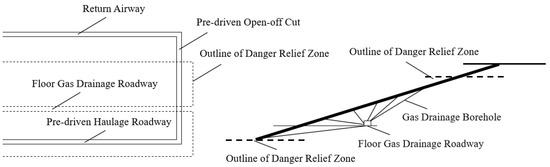
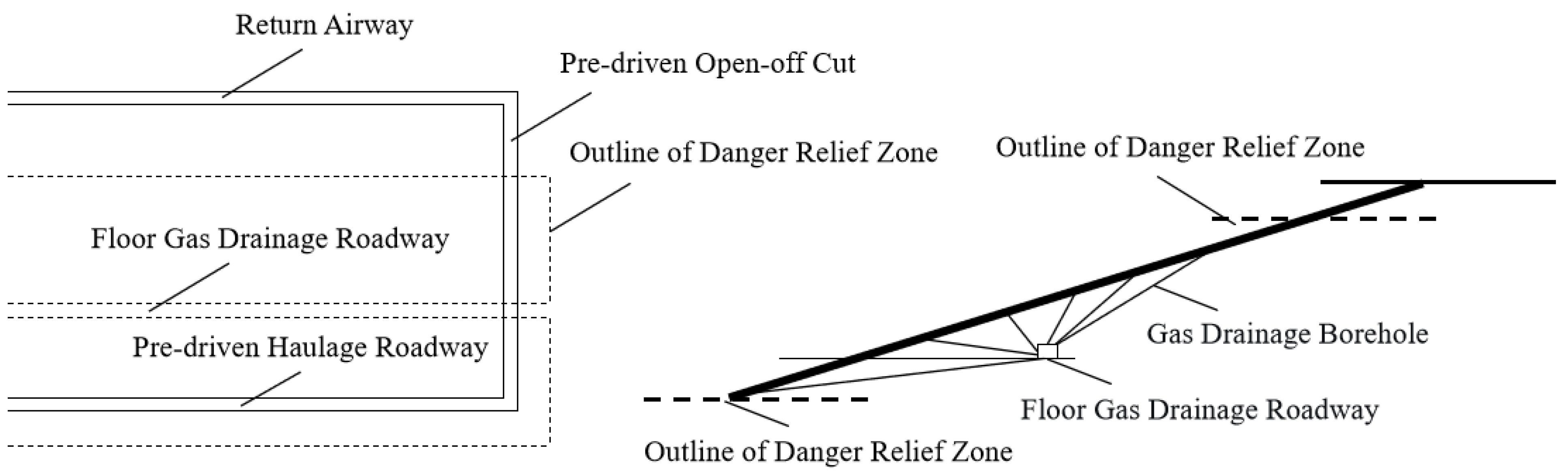
Given that the No. 15 coal seam also poses a risk of coal and gas outbursts, before mining the No. 15 coal seam, a gas drainage roadway is constructed in the rock layer 25 m from the floor. At intervals of 10 m, drilling fields are established, and cross-layer boreholes are drilled in groups to pre-drain the gas from the excavation strip of the coal roadway. The boreholes are designed to control 10 m from the lower side and 20 m from the upper side of the coal roadway, with a final borehole spacing of 6 m and a sealing depth of 10 m. This process enables gas drainage and hazard mitigation in the pre-excavation strike area of the No. 15 coal seam, as illustrated in Figure 1.
Figure 1.
Floor gas drainage roadway and outburst prevention and hazard mitigation schematic diagram.
2.2. Workface Overrun Prevention Measures
As mentioned earlier, after completing outburst prevention and hazard mitigation in the pre-excavated strip area of the haulage roadway, the engineering layout and construction of the roadway are carried out. Subsequently, gas drainage boreholes are drilled at 9 m intervals along the same coal seam, aimed at reducing the gas pressure and content in the seam. This further mitigates the risk of coal seam hazards and prevents gas overrun during mining operations. In view of the considerable thickness of the coal seam and the adoption of fully mechanized top-coal caving mining technology, this approach is supplemented by gas drainage from high-level drilling fields. This measure reduces the migration and diffusion of gas from residual coal in the goaf to the working face after top-coal caving, thereby further ensuring that gas does not exceed the limit in the working face.
3. Field Industrial Test
3.1. Layout of Gas Drainage Roadway
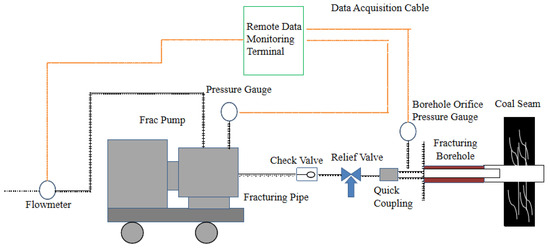
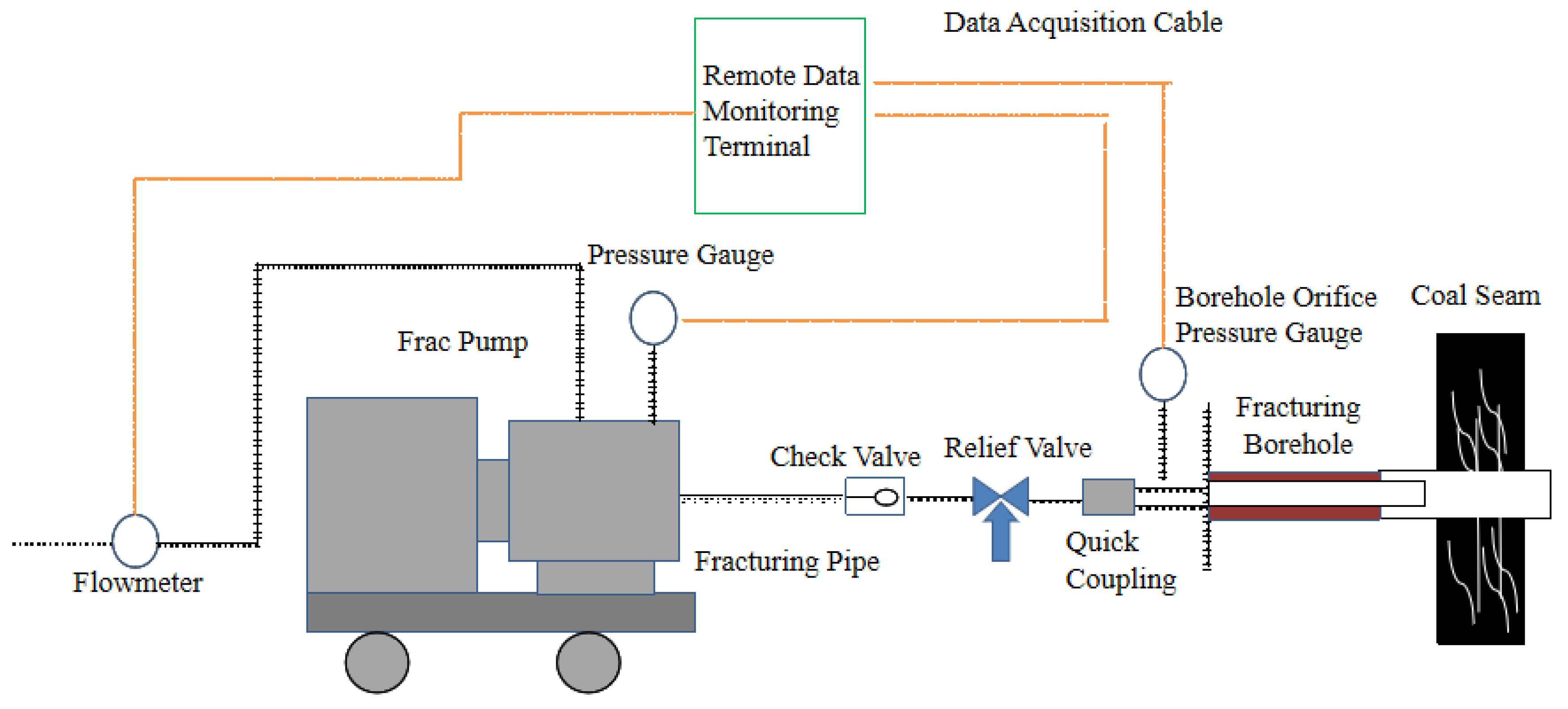
The floor gas drainage roadway for the right fifth section of the No. 15 coal seam in the North No. 2 Stone Gate at the third level is driven in siliceous limestone, excavated along the strike, with an elevation of −211 m, a burial depth of 502.3 m, and a vertical distance of 25 m from the No. 15 coal seam, as shown in Figure 2.
Figure 2.
Schematic Diagram of Hydraulic Fracturing System.
3.2. Band-Pressure Gas Desorption Experiment Under Water Intrusion Conditions
To determine the scope of influence of water injection fracturing and account for variations in geological conditions across different areas, three monitoring sections were arranged in the gas drainage roadway: near the rise side of the mining area, in the middle section along the mining strike, and adjacent to the open-off cut side. These sections were sequentially labeled as Monitoring Sections I, II, III.
To assess the influence range of individual hydraulic fracturing boreholes within each monitoring section, a water injection borehole was drilled into the No. 15 coal seam in each section, and coal cores were extracted. Laboratory tests indicated that the mass percentage moisture content of the coal samples was 2.5%. The entire fracturing system setup is illustrated in Figure 2.
During the water injection fracturing test, a step-wise pressurization method was adopted. Starting from 3 MPa, the pressure was maintained for 2 h at each level before increasing by 3 MPa. This process continued until the pressure could no longer be increased during coal seam water injection.
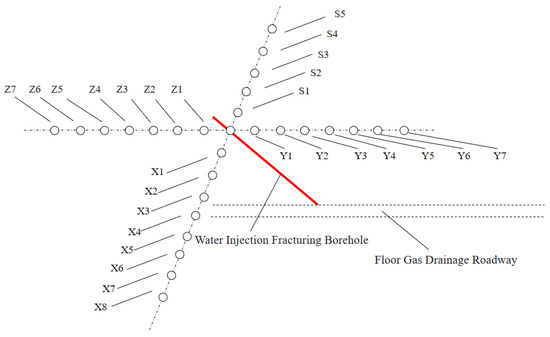
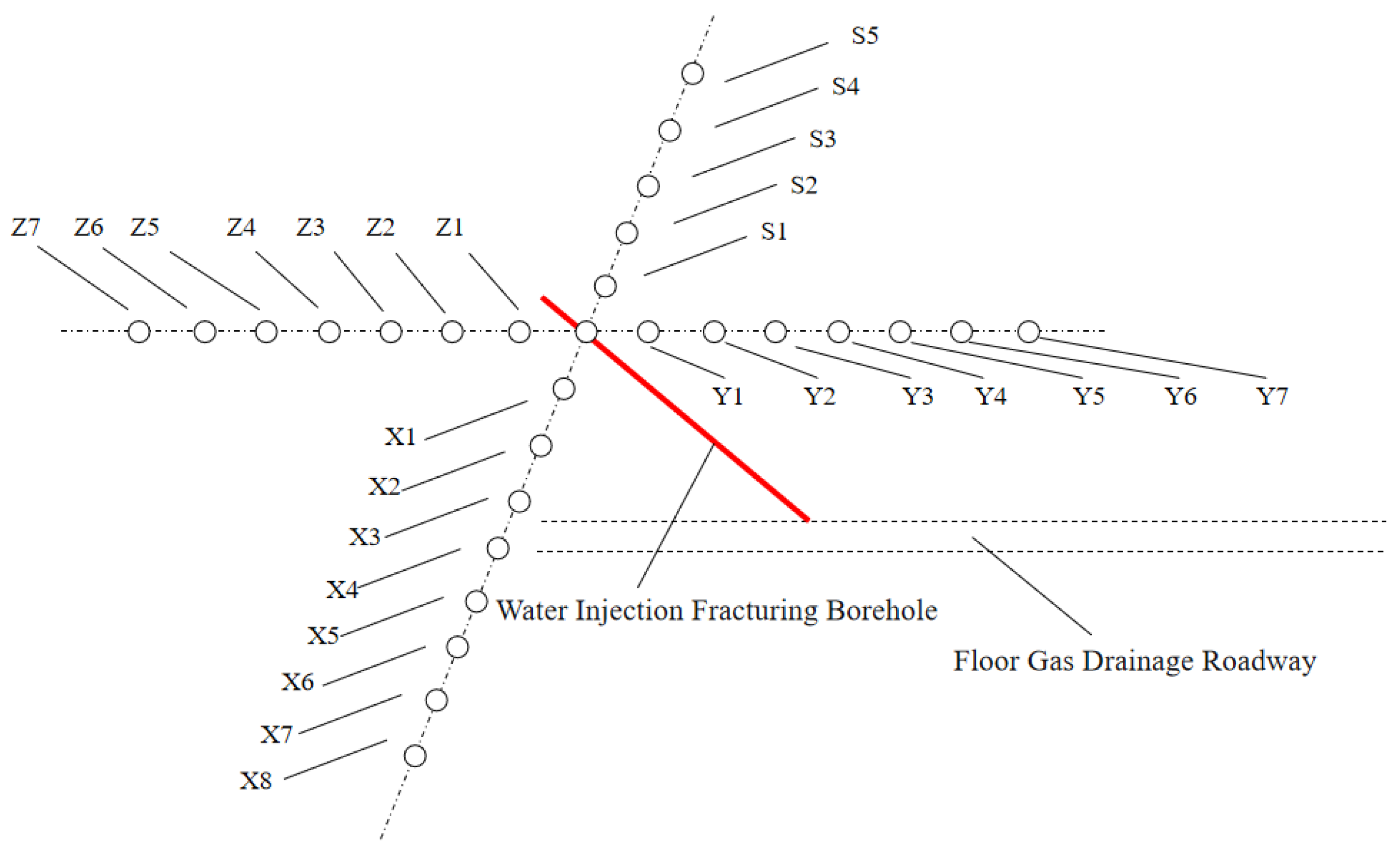
After pressurization reached its maximum capacity, as shown in Figure 3, moisture monitoring boreholes were arranged along the axial direction of the gas drainage roadway on both sides of the injection borehole at 5 m intervals. These boreholes were labeled Z1, Z2, Z3, Z4, Z5, Z6, Z7, Y1, Y2, Y3, Y4, Y5, Y6, and Y7, respectively, and core samples were drilled from each. Additionally, within the cross-section of the gas drainage roadway where the injection borehole was located, moisture monitoring boreholes were also arranged and drilled along the inclined direction of the coal seam. These were labeled S1, S2, S3, S4, S5, X1, X2, X3, X4, X5, X6, X7, and X8, and core samples were drilled from each.
Figure 3.
Schematic diagram of borehole layout for hydraulic fracturing.
Core samples were taken from the No. 15 coal seam through the moisture monitoring boreholes, and the moisture content of the coal was measured in the laboratory. By comparing these results with the pre-fracturing moisture content of the coal, the influence range of hydraulic fracturing was determined.
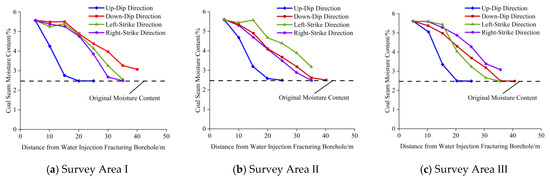
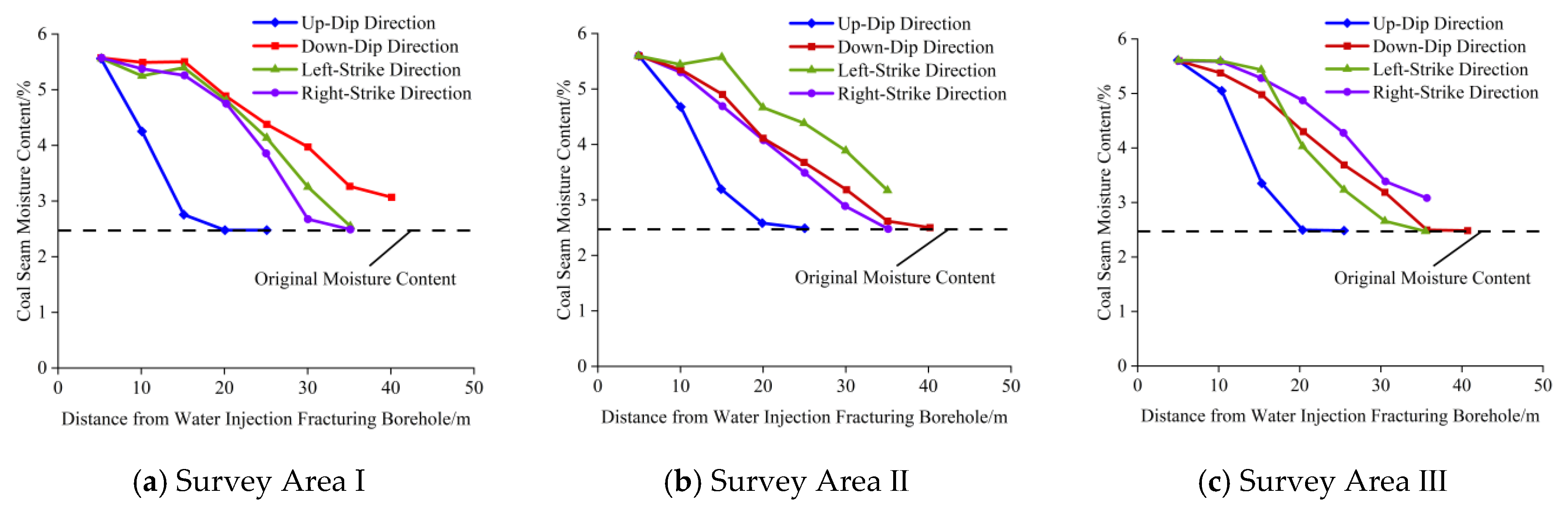
Moisture content variation curves along four directions—upward in the dip direction, downward in the dip direction, left side, and right side—were obtained for the injection boreholes in the three monitoring sections (I, II, and III) after water injection fracturing. These curves are shown in Figure 4a, 4b, and 4c, respectively.
Figure 4.
Coal moisture content of water injection boreholes in survey areas I, II, and III.
Based on the moisture content variation curves of the coal cores obtained from the monitoring boreholes, as illustrated in Figure 4a–c, the following conclusions can be drawn:
- Even within a single coal seam, the influence range of hydraulic fracturing exhibits variability across different regions, highlighting regional heterogeneity in the internal structure of the coal seam.
- The influence range of water injection fracturing demonstrates significant directional differences. The minimal impact is observed in the upward direction along the dip of the coal seam; conversely, influences along the strike direction (left and right sides) are relatively comparable. The most extensive influence occurs in the downward direction along the dip of the coal seam, which is directly associated with water’s natural flow tendency under gravitational forces.
By analyzing these moisture content variation curves from monitoring boreholes, we determined that each directional influence range of water injection fracturing was established based on a minimum principle, as summarized in Table 1.
Table 1.
Influence range of hydraulic fracturing.
3.3. Effective Extraction Radius Simulation of Boreholes
The spacing between drainage boreholes has a direct impact on gas extraction efficiency. If the spacing is excessively wide, un-drained zones may develop, thereby diminishing extraction effectiveness; conversely, if the spacing is too narrow, it can lead to overlapping effects between boreholes and significantly escalate drilling costs. Therefore, determining appropriate design parameters for gas drainage boreholes is essential for minimizing drilling expenses and enhancing gas extraction efficiency. The subsequent section utilizes COMSOL Multiphysics Version 6.3 to analyze the evolution patterns of gas pressure and the effective drainage radius during borehole extraction, providing a foundation for optimizing borehole layout.
Following the establishment of negative pressure due to extraction, the dynamic equilibrium of gas pressure within the coal seam is disrupted. Consequently, matrix gas begins to diffuse into the fracture system. The migration of gas within the coal matrix primarily adheres to Fick’s law of diffusion. For a unit volume of coal, the equation governing gas diffusion in the coal matrix can be expressed as follows:
pm is the gas pressure in the coal matrix, in MPa;
pf is the gas pressure in the fractures, in MPa;
ρ is the apparent density of the coal, in t/m3;
a is the maximum adsorption capacity of the coal at saturation, in m3/kg;
b is the adsorption constant of the coal, in MPa−1.
This study introduces the effective stress law for dual-porosity media and accounts for the significant influence of the Klinkenberg effect on coal permeability during gas seepage. The permeability of coal can be expressed as follows:
where
k and k0 are the current permeability (k) and initial permeability (k0), in m2;
pε is the Langmuir pressure constant for strain, in MPa;
Cf is the fracture compressibility coefficient, in MPa−1;
and are the average stress and initial average principal stress, respectively, in MPa;
bb is the Klinkenberg coefficient, in MPa.
The permeability of coal and its fracture porosity satisfy the cubic law relationship:
where
k0 is the initial permeability, in m2;
Φf0 is the initial fracture porosity, dimensionless.
However, the permeability evolution described by Equations (3) and (4) represents an instantaneous response to stress and pressure changes. To account for the time-dependent effects observed after high-pressure water injection—such as the gradual viscoelastic closure of fractures, proppant embedment, or geomechanical adjustments—a time-decay function f(t) is incorporated as a modifier to the dynamic permeability. The modified permeability kmod can be expressed as follows:
where k is the permeability calculated from Equation (3), and f(t) is a time-dependent function (e.g., f(t) = e−λt or a piecewise function based on laboratory/field data) that describes the permeability reduction rate post-stimulation. The parameter λ represents a characteristic decay constant influenced by in situ stress, coal mechanical properties, and injection parameters. For the current simulation, due to the lack of site-specific long-term monitoring data for post-fracturing permeability decay, a preliminary constant value (λ = 0, i.e., f(t) = 1) was assumed, equivalent to the original model. Future work will focus on calibrating f(t) with experimental and field data.
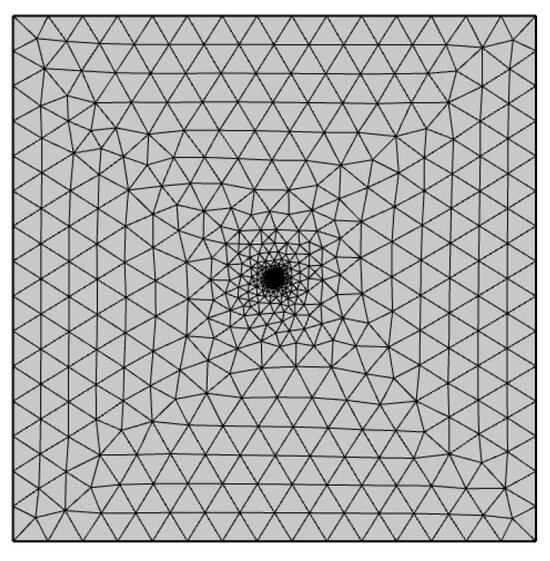
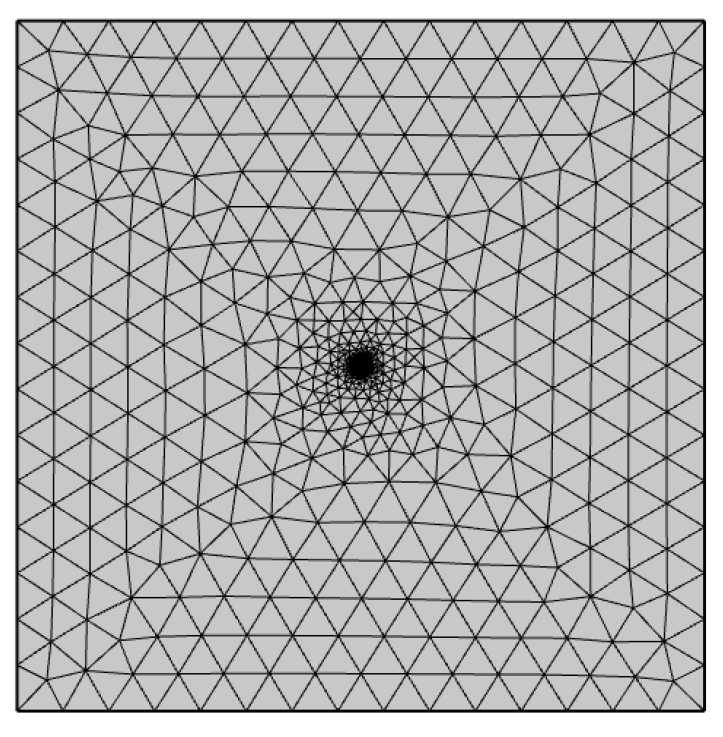
A two-dimensional coal seam geometric model measuring 90 m × 60 m was established based on the conditions of the No. 15 coal seam in Yixin Mine, Hegang Branch of Longmei Group. A borehole with a diameter of 113 mm was incorporated at the center of the model. Different levels of mesh refinement were then applied to distinct regions, with the resulting mesh shown in Figure 5.
Figure 5.
Geometric model and mesh generation4 experimental results and analysis.
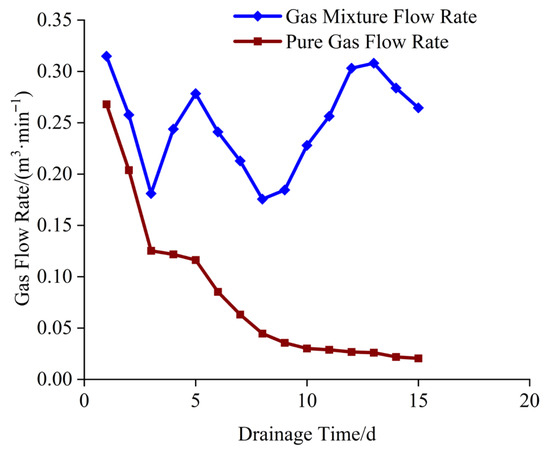
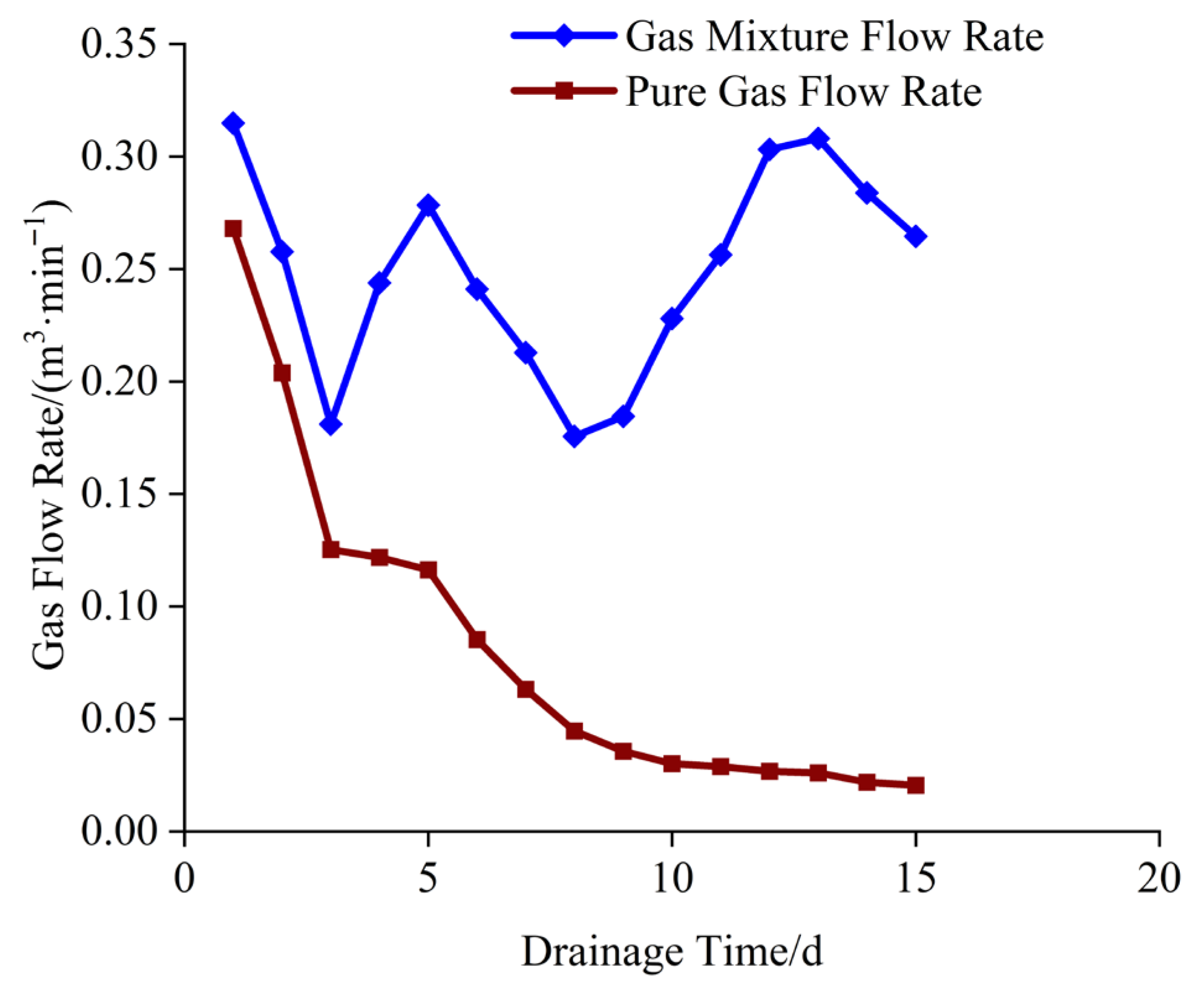
During gas extraction on October 2, the measured gas concentration was 85.3%, with a mixed flow rate of 0.316 m3/min, a pure flow rate of 0.269 m3/min, and a pressure of 0.18 MPa. By the main shift on October 16, the extraction concentration had decreased to 7.9%, with a mixed flow rate of 0.266 m3/min, a pure flow rate of 0.021 m3/min, and a pressure of 0.15 MPa. Extraction was then halted to prepare for water injection fracturing.
When studying coal seam gas flow, the consideration of gas content often proves highly impractical. To address this issue, Academician Zhou Shining proposed approximating the coal seam gas content curve with a parabolic equation, based on observed patterns in measured gas content curves and considering permissible error margins in engineering applications. Specifically,
x is the coal seam gas content coefficient, m3/(t·MPa0.5).
Xc < 70%X
Based on the empirical industrial formula relating coal seam gas content (x) and gas pressure (p), substituting the gas pressure into the gas content expression yields the following conclusion: the residual gas pressure after drainage should be less than 49% of the original gas pressure. That is,
where pc is the residual gas pressure. Therefore, the reduction in gas pressure should exceed 51% of the original gas pressure. Given that the initial gas pressure of the No. 15 coal seam is 0.18 MPa, the residual pressure after extraction should be 0.09 MPa.
pc < 49%p
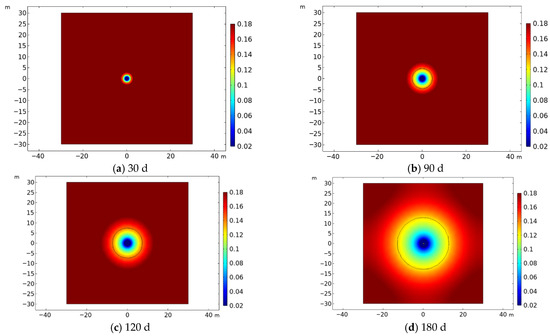
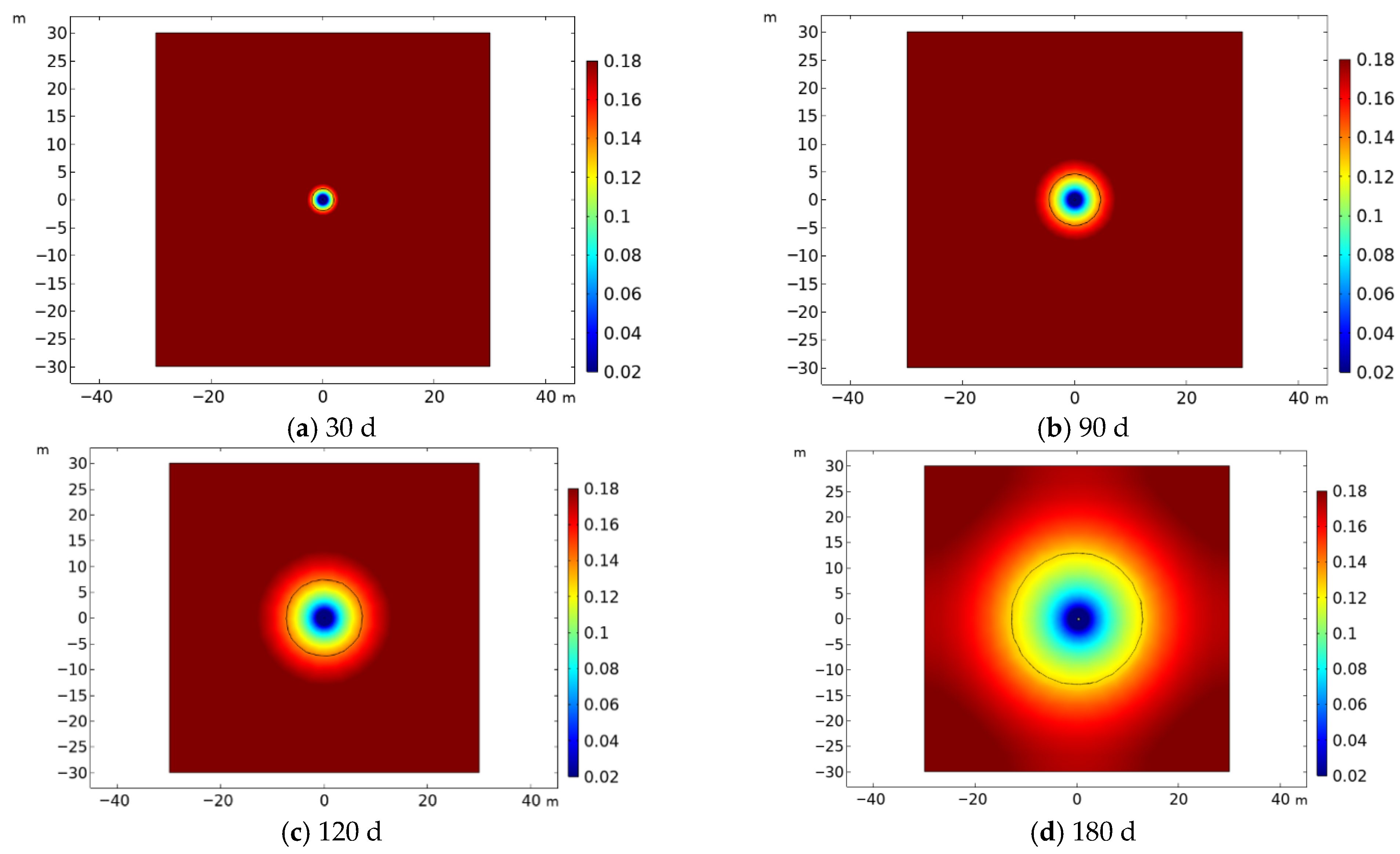
To investigate the influence of extraction time on the effective extraction radius, a numerical simulation of gas extraction through in-seam boreholes was conducted. Gas pressure nephograms after 30 days, 90 days, 120 days, and 180 days of borehole extraction were plotted, with the 0.09 MPa contour marked, as shown in Figure 6.
Figure 6.
Gas pressure nephograms at different time intervals during borehole extraction.
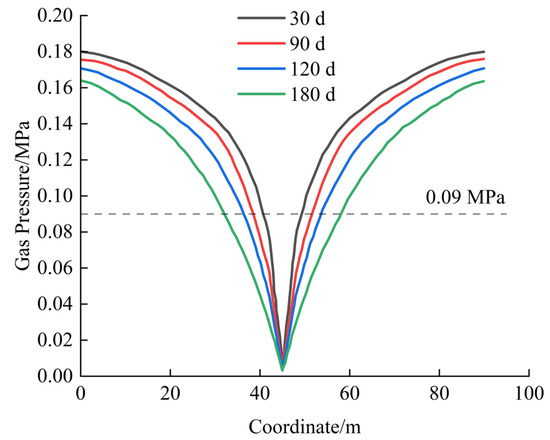
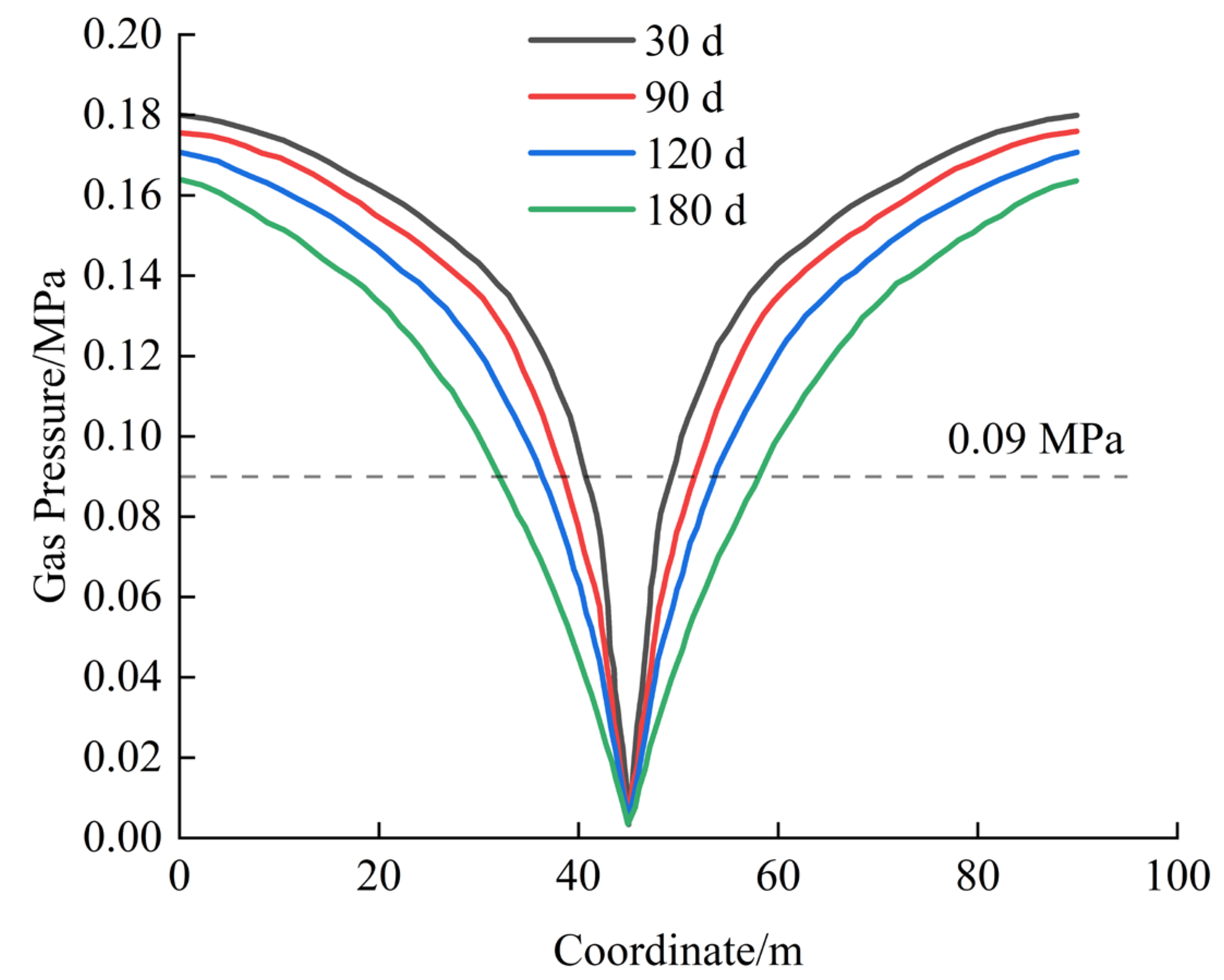
Figure 7 illustrates the pressure distribution patterns after 30, 90, 120, and 180 days of borehole extraction, which can be summarized as follows: the pressure is lowest near the borehole and increases with distance from it. The closer to the borehole, the faster the pressure drops; the farther away, the slower the decline, eventually approaching the original pressure. Observations from the vertical dashed line position indicate that during the initial stage, the significant pressure differential facilitates efficient gas extraction, resulting in a rapid pressure decrease. Beyond 120 days of extraction, the available gas in the surrounding area diminishes, leading to a noticeably slower pressure reduction rate.
Figure 7.
Radial gas pressure distribution at the borehole under different extraction durations.
As extraction time increases, the effective drainage radius gradually expands, following a power-exponential relationship. During the later stages of gas extraction, as the extraction duration reaches a certain value, the growth trend of the effective drainage radius gradually slows and stabilizes, reflecting the gas migration conditions in the surrounding coal seam. According to on-site construction requirements, the gas extraction process continues for 180 days, corresponding to an effective drainage radius of approximately 11.4 m.
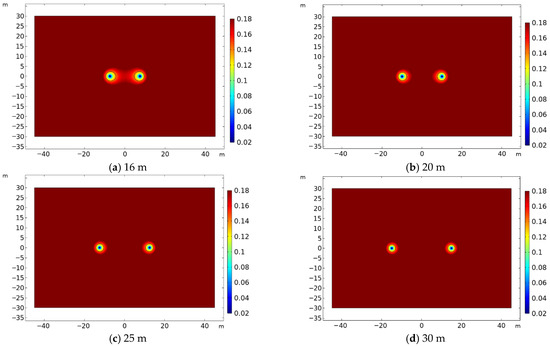
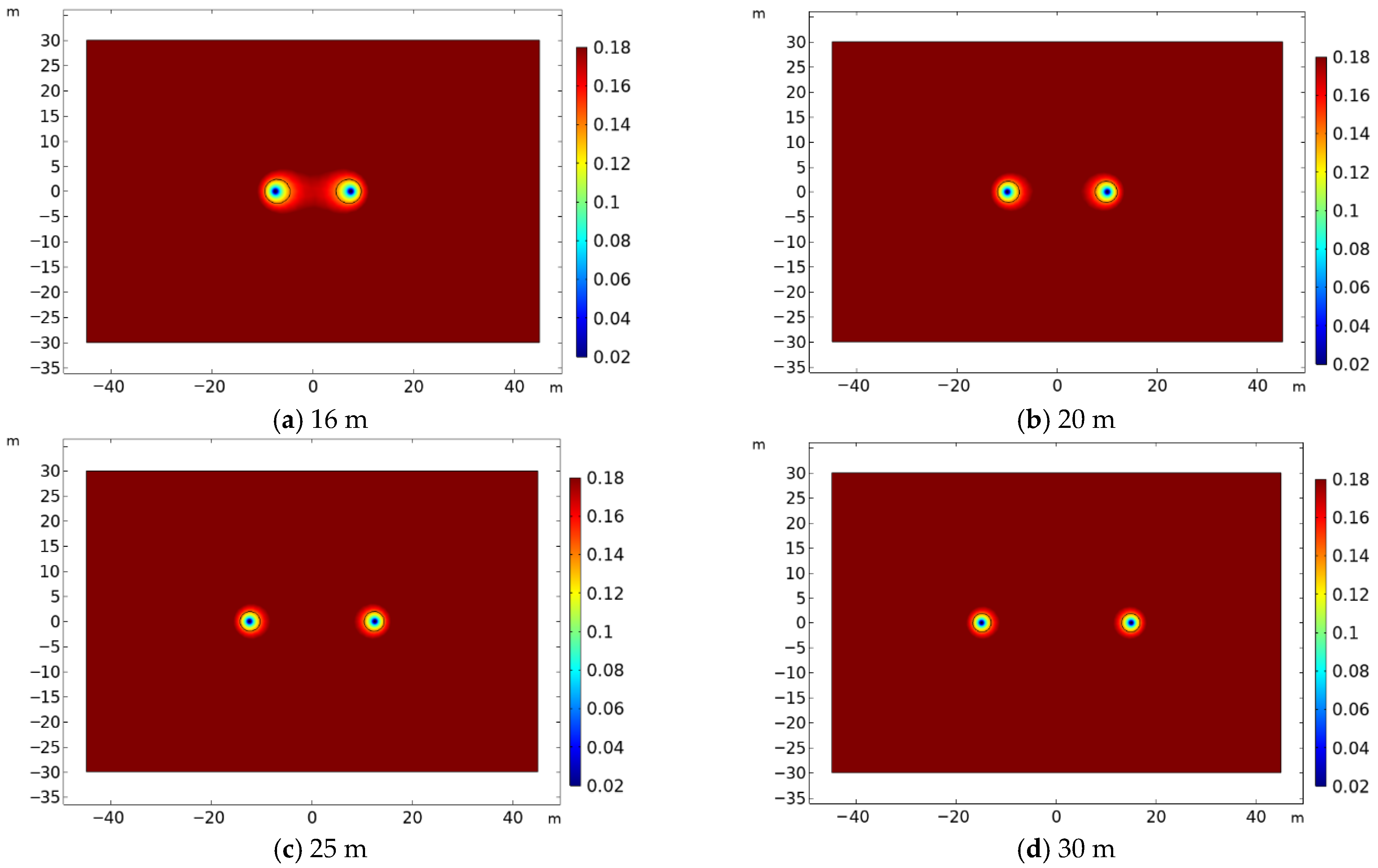
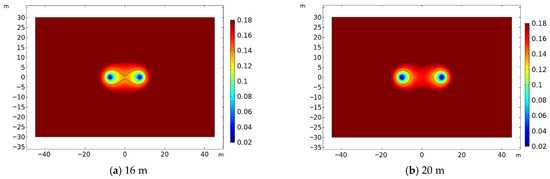
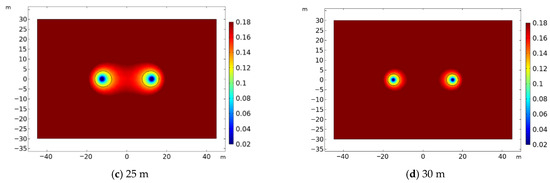
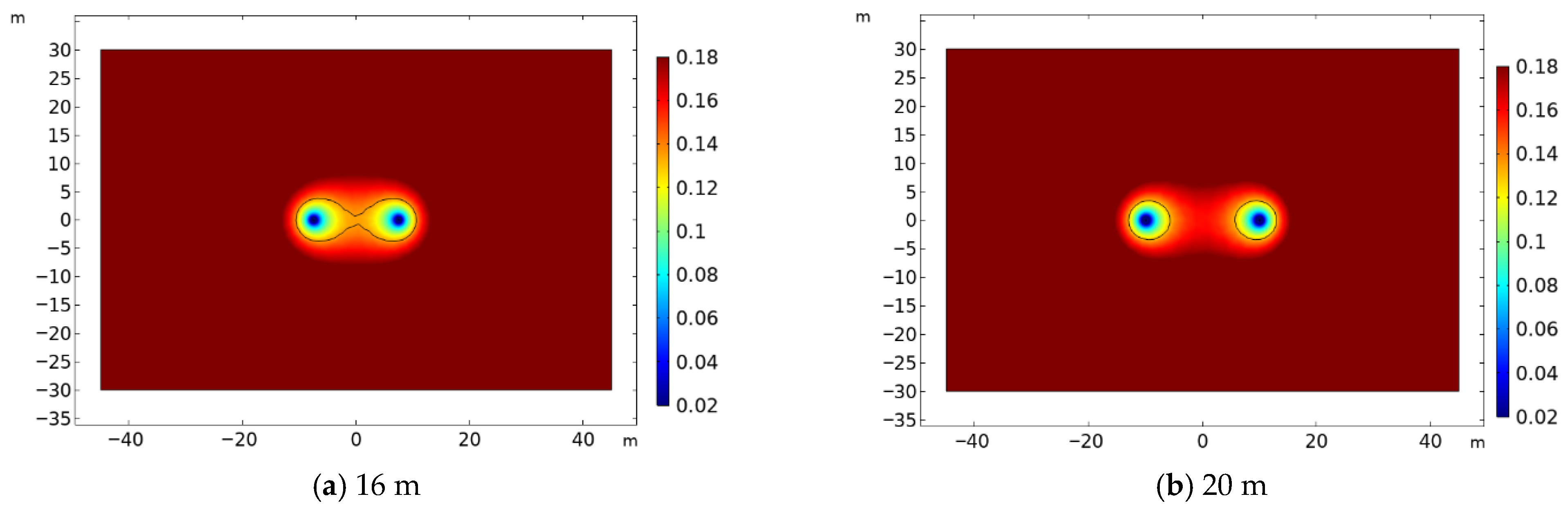
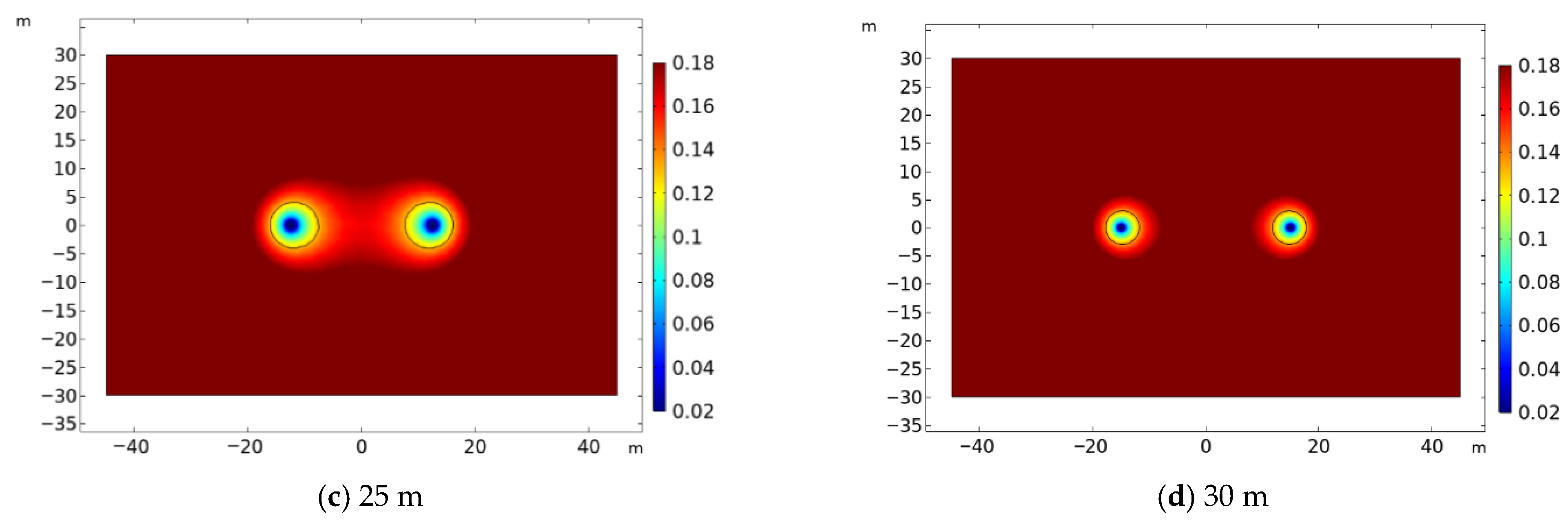
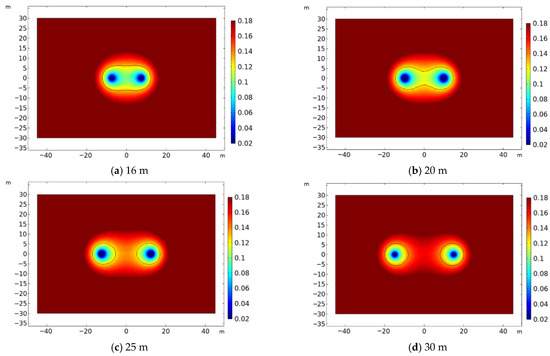
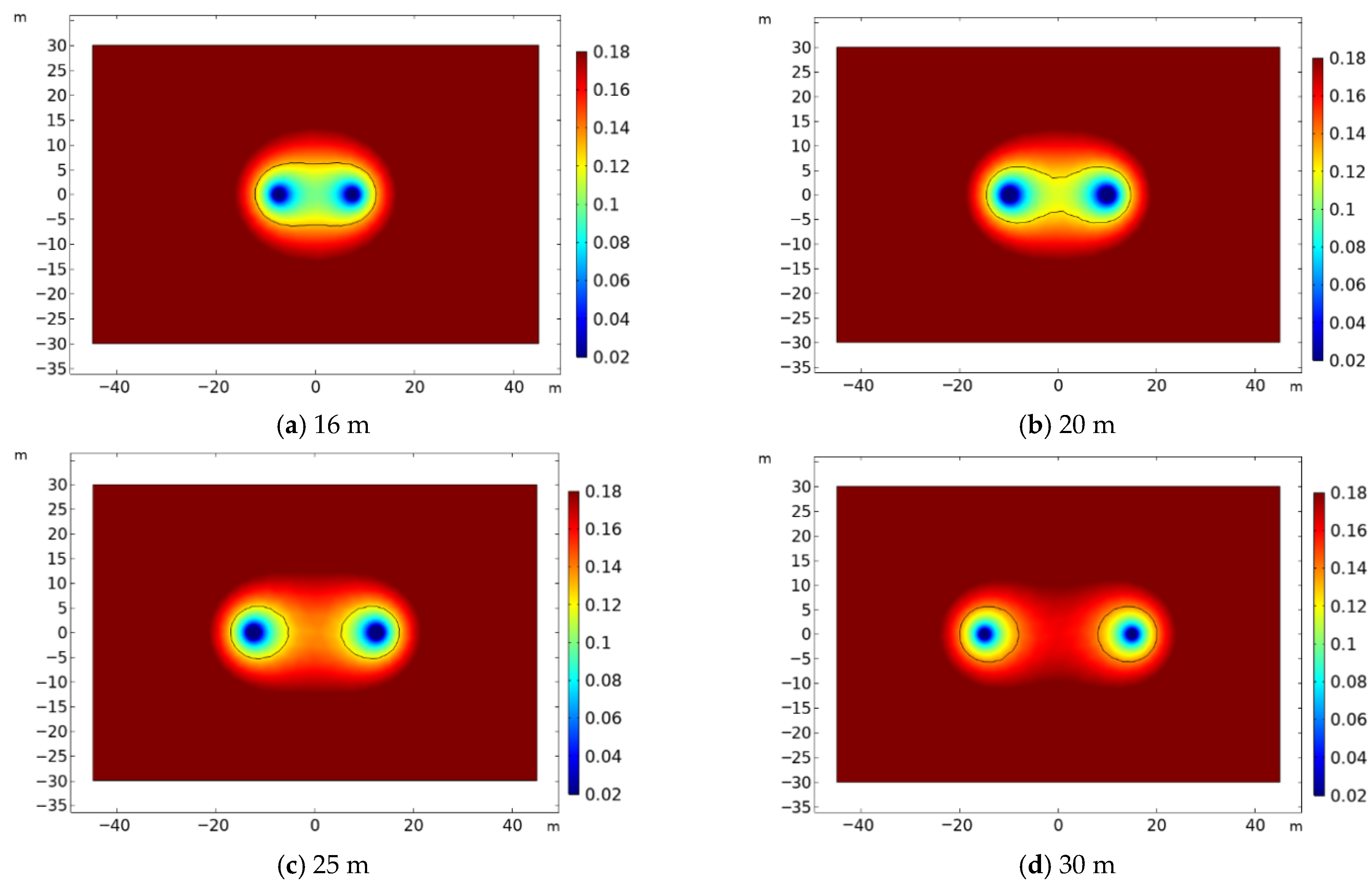
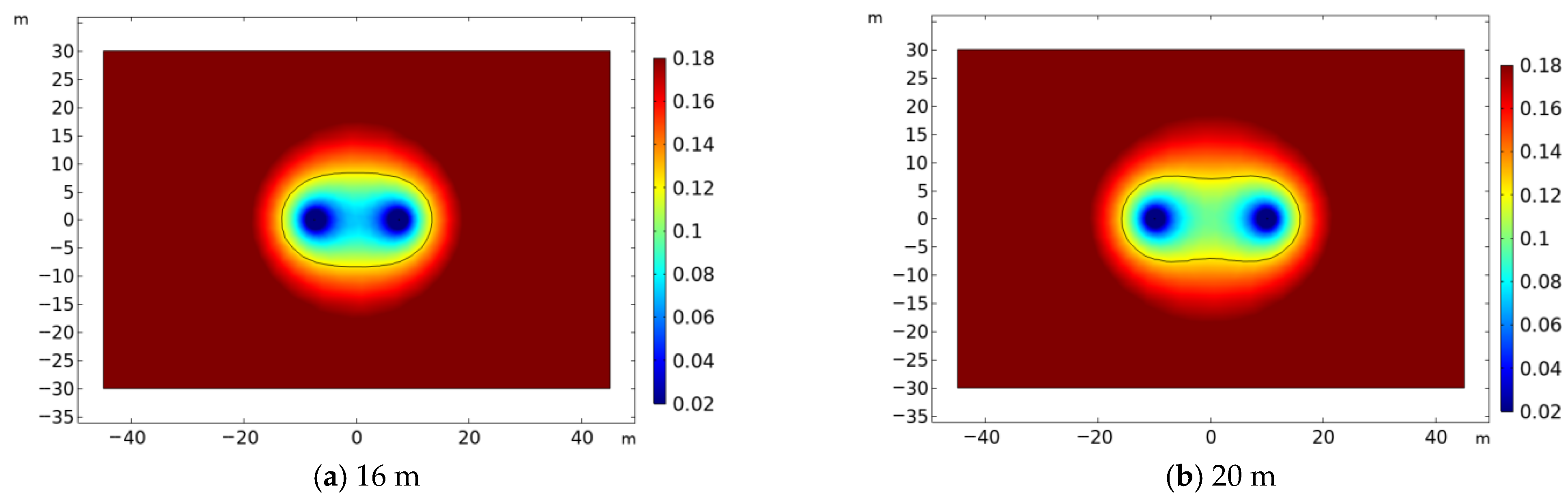
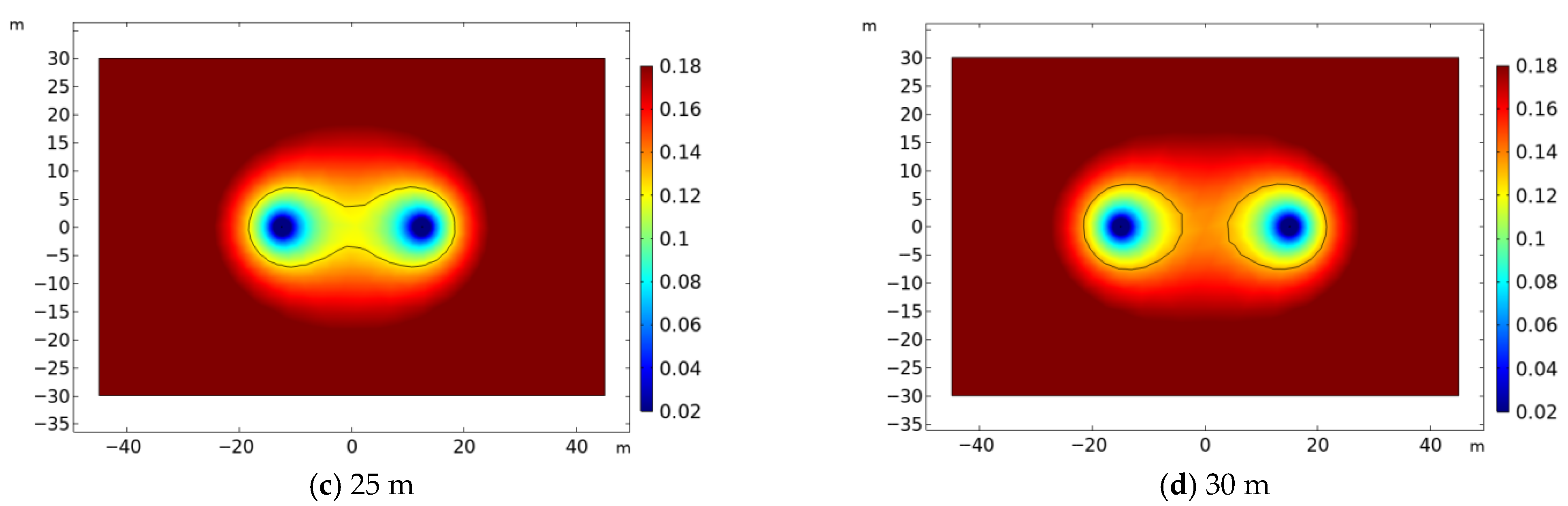
Based on the effective radius R (11.4 m) obtained from the aforementioned numerical simulation of 180-day extraction, the borehole spacing in the multi-borehole extraction model was varied by setting it at 1.4R (16.0 m), 1.8R (20.0 m), 2.2R (25.0 m), and 2.6R (30.0 m). Using the simulation conditions established above, a study on the superposition effects of extraction under different borehole spacings was conducted, as shown in Figure 8, Figure 9, Figure 10 and Figure 11.
Figure 8.
Isosurface distribution of different borehole spacings at 30 days of extraction.
Figure 9.
Isosurface distribution of different borehole spacings at 90 days of extraction.
Figure 10.
Isosurface distribution of different borehole spacings at 120 days of extraction.
Figure 11.
Isosurface distribution of different borehole spacings at 180 days of extraction.
Compared with a single borehole, the superposition effects between multiple boreholes allow the gas extraction to meet the target earlier within the same pre-drainage period for spacings of 1.4R and 1.8R. However, undrained zones occur when the borehole spacing is set at 2.6R. Considering practical field conditions, the influence range of superposition effects in multi-borehole joint extraction can reach 2.2R after 180 days of pre-drainage. An appropriate extraction spacing was selected based on Figure 8, Figure 9, Figure 10 and Figure 11, with the specific selection detailed in Table 2.
Table 2.
Reasonable spacing for different extraction durations.
In summary, if the gas drainage borehole spacing is too narrow, it may lead to prematurely meeting drainage targets while reducing the effective influence range, ultimately failing to achieve the intended drainage objectives and wasting human and material resources. Conversely, excessively wide spacing results in inadequate connectivity between boreholes and failure to meet drainage standards. Spacings of 1.4R and 1.8R exhibit over-drainage phenomena, while a 2.6R spacing fails to achieve complete coverage of the drainage area. Numerical simulations indicate that the optimal borehole spacing for this coal seam is approximately 25 m. This spacing configuration neither excessively occupies resources nor compromises the completion of drainage tasks, thereby promoting safe production.
3.4. Drilling Site and Borehole Layout with Drainage-Injection Sequence
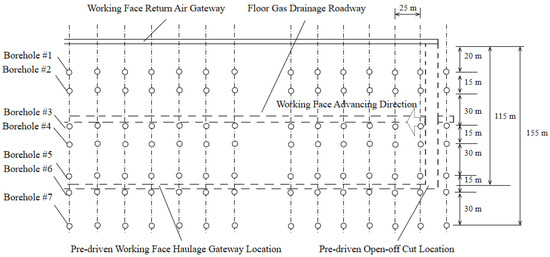
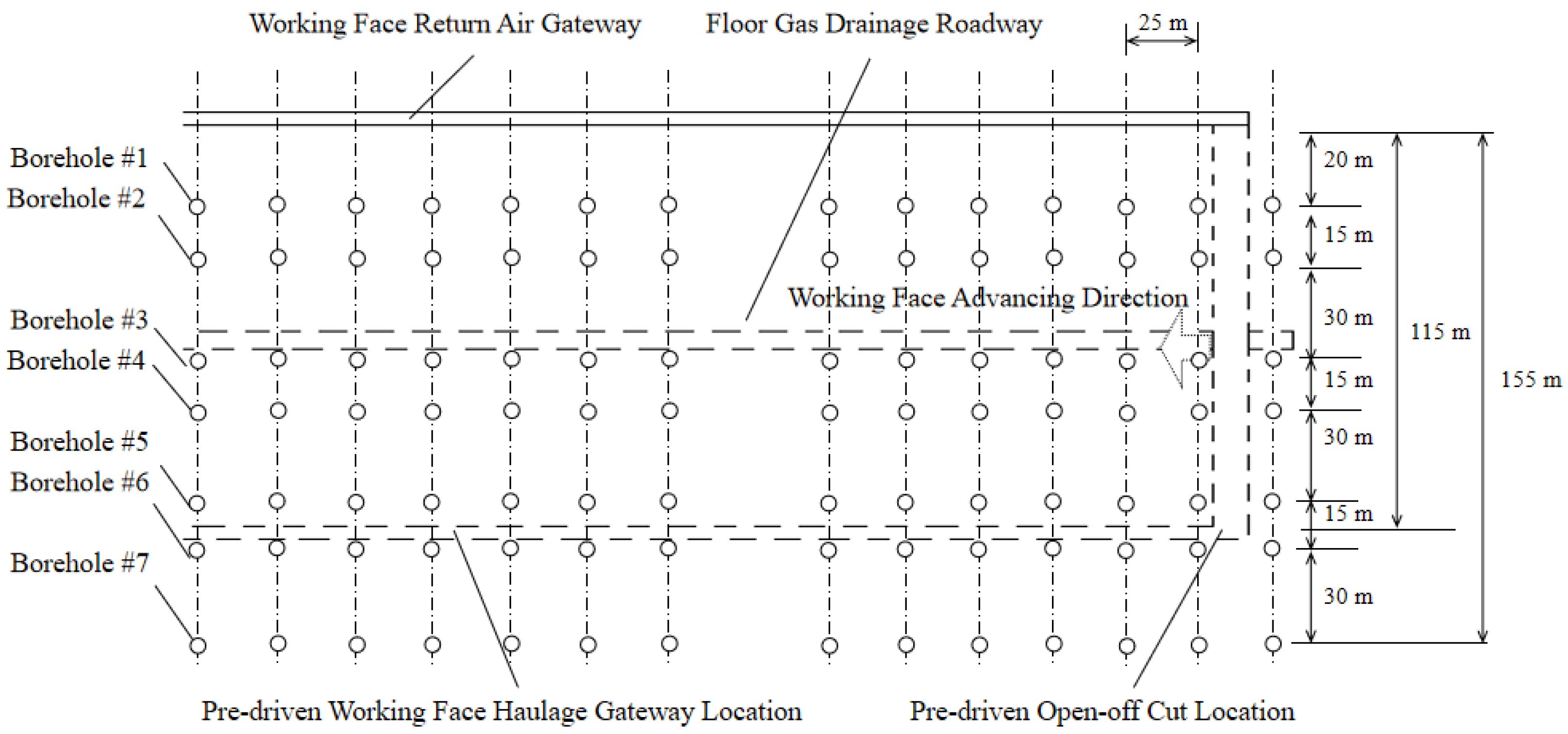
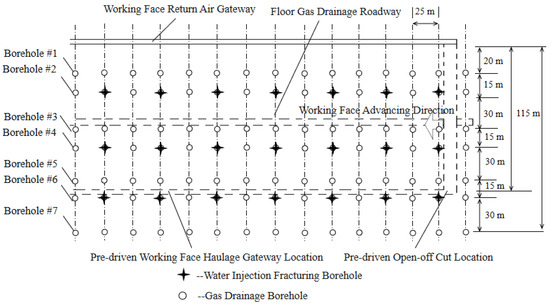
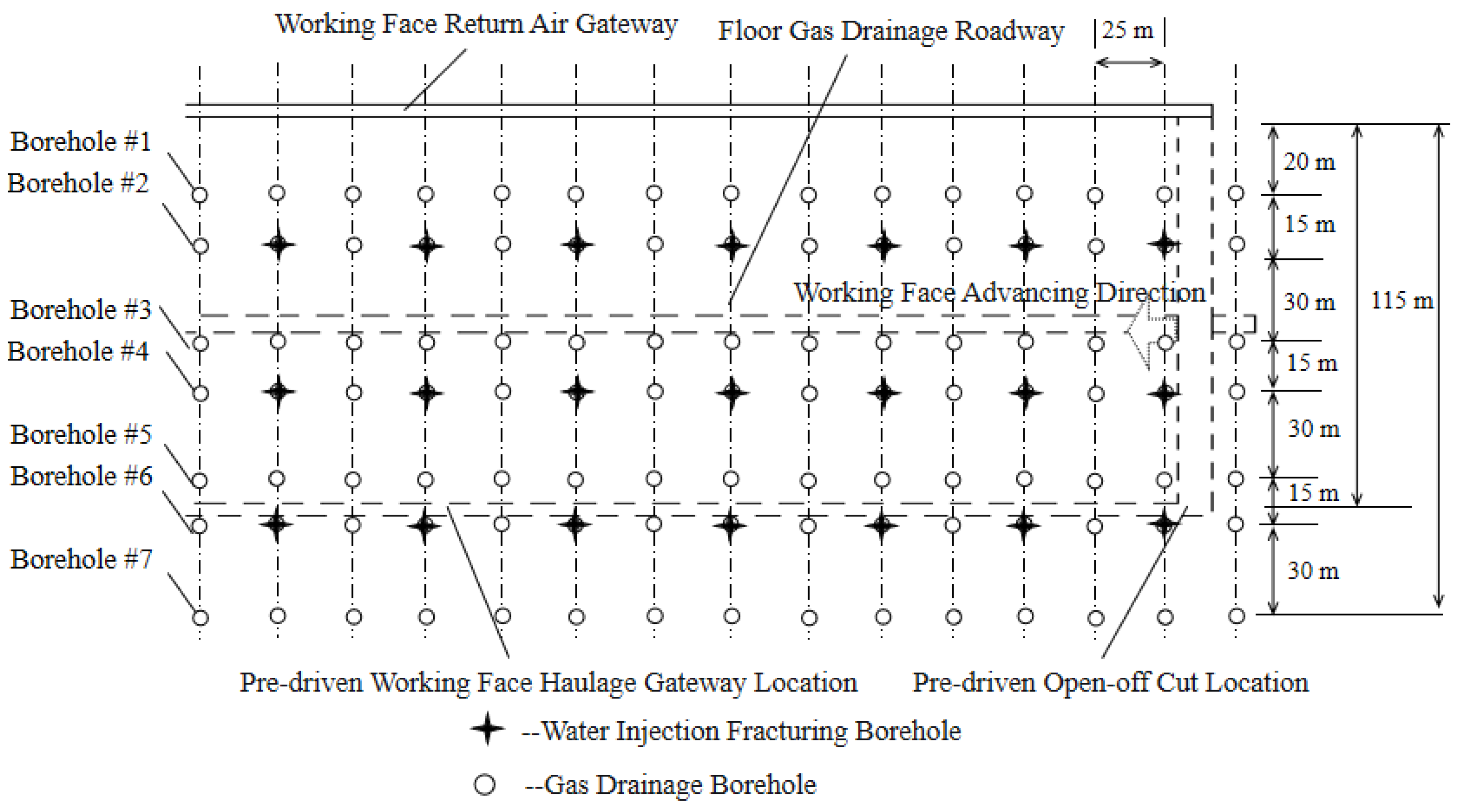
In the floor gas drainage roadway of the right fifth section, the spacing of strike-oriented drilling fields was set at 25 m, corresponding to the influence range along the strike following water injection into the fracturing boreholes. Accordingly, 14 drilling fields were arranged at 25 m intervals. The layout of the drilling fields is illustrated in Figure 12. Each drilling field contained 7 boreholes, resulting in a total of 98 boreholes. To account for mining-induced pressure relief from the working face in the right fourth section and the development of the return air gateway in the right fifth section, the uppermost row of boreholes along the dip direction was positioned 20 m from the return air gateway.
Figure 12.
Drilling site and borehole layout within the drilling site.
Considering the dip-direction influence range after water injection and the planned use of the 2nd, 4th, and 6th borehole rows for subsequent water-injection fracturing, the spacing between borehole pairs 1–2, 3–4, and 5–6 was designed as 15 m, whereas the spacing between borehole pairs 2–3, 4–5, and 6–7 was set at 30 m.
According to field measurements, the No. 15 coal seam exhibits the following parameters:
Maximum gas pressure (pmax): 0.18 MPa.
Relative gas content: 6.47 m3/t.
Initial velocity of gas diffusion (Δp): 5.48~13.18 mmHg.
Firmness coefficient of coal (ƒ): 0.13~0.86.
Adsorption constants:
a = 18.3 m3/t.
b = 0.934 MPa−1.
Coal seam permeability coefficient: 8.302 m2/(MPa2·d).
In Equation (8), namely
We maintained technical notation with italicized variables (Pc, σ), used “equivalent to” for unit conversion clarity, preserved precise terminology (“Harkins empirical formula”), and adopted academic convention with “denotes” and “represents” for symbol definitions.
Here, t denotes the temperature. The measured ambient temperature in the underground working face is 13 °C. Substituting into the Harkins empirical Formula (10) yields
where θ denotes the contact angle of water on the coal surface. Laboratory measurements indicate a value of 49° at 13 °C.
σ = 75.796 − 0.145t − 0.00024t2
σ = 73.87044 mN/m
r denotes the pore (capillary) radius of the coal. For computational convenience, it may be taken as r = 500 nm.
Substituting the above values—Pc = 0.108 MPa, σ = 73.87044 mN/m, θ = 49°, r = 500 nm—into Equation (8) yields
Pn ≤ 297,865.58 Pa
Based on the above calculations, it can be concluded that since the gas pressure of the No. 15 coal seam is 0.18 MPa, while the critical pressure for water lock formation calculated by Equation (8) is 0.298 MPa, the condition for water lock formation is already satisfied. In other words, if water injection for fracturing and permeability enhancement is performed immediately after drilling, a water lock will promptly develop, significantly reducing gas drainage efficiency.
To prevent the adverse impact of the water lock effect on gas drainage efficiency, the drainage–injection sequence is designed as follows:
For the No. 15 coal seam, gas drainage should be conducted first without high-pressure water injection and fracturing. High-pressure water injection for fracturing should only be implemented when the gas drainage reaches a certain extent—specifically when the gas drainage concentration drops and remains consistently at a low level (see Figure 13).
Figure 13.
Layout of boreholes for the “drainage–injection–locking” collaborative process.
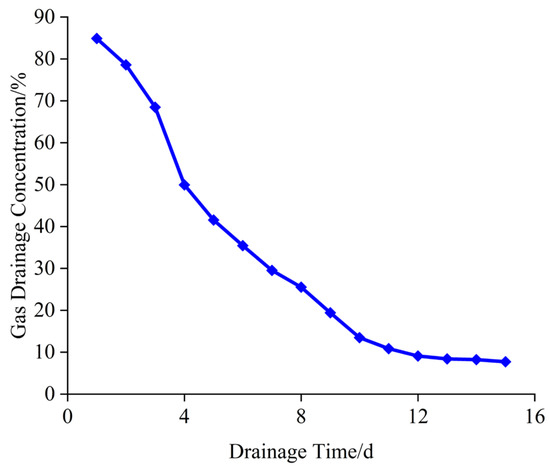
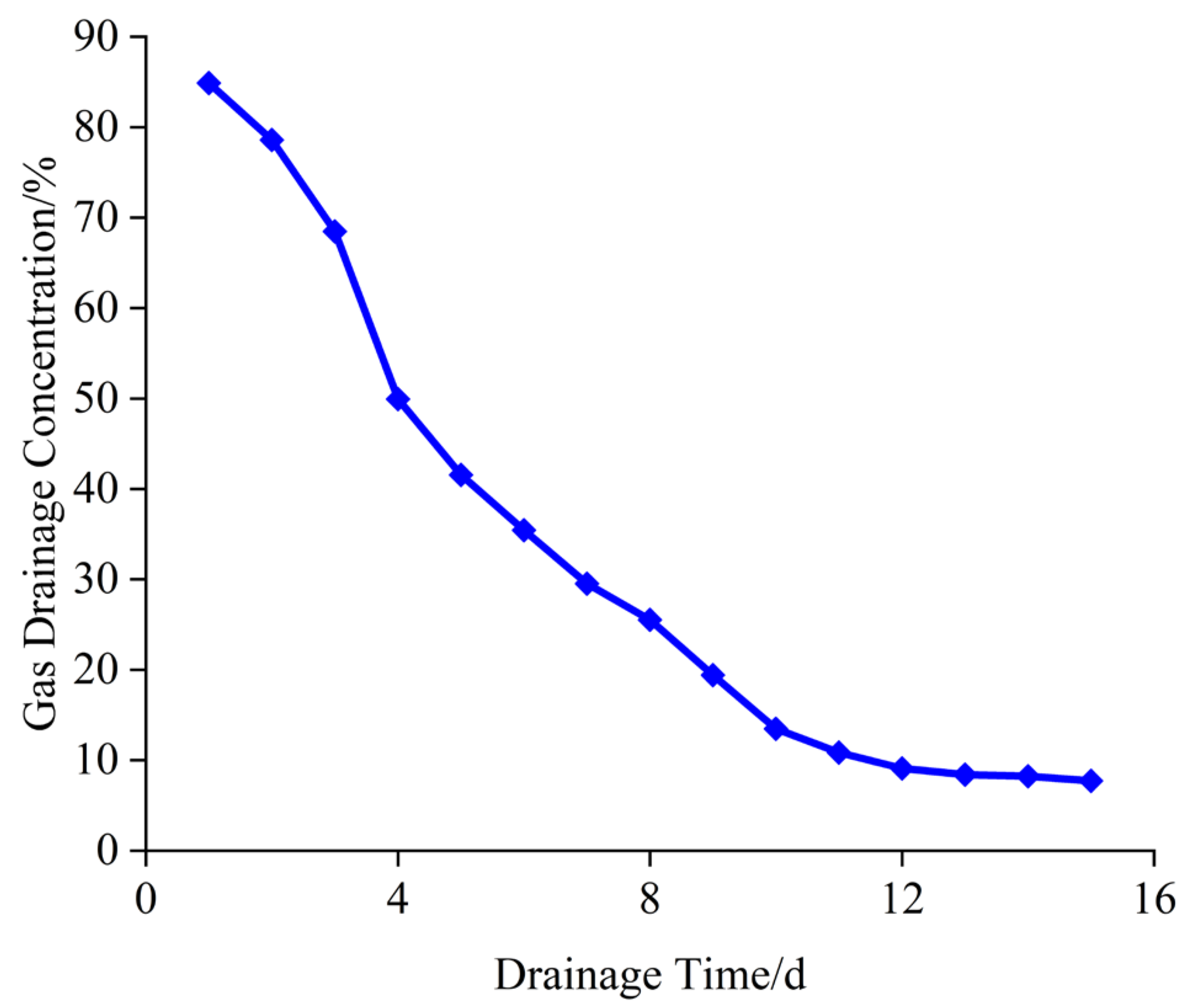
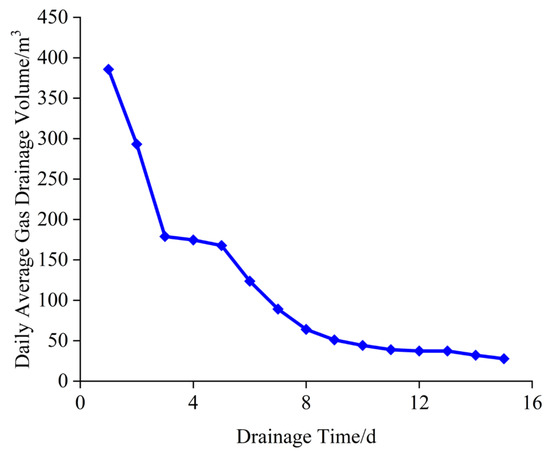
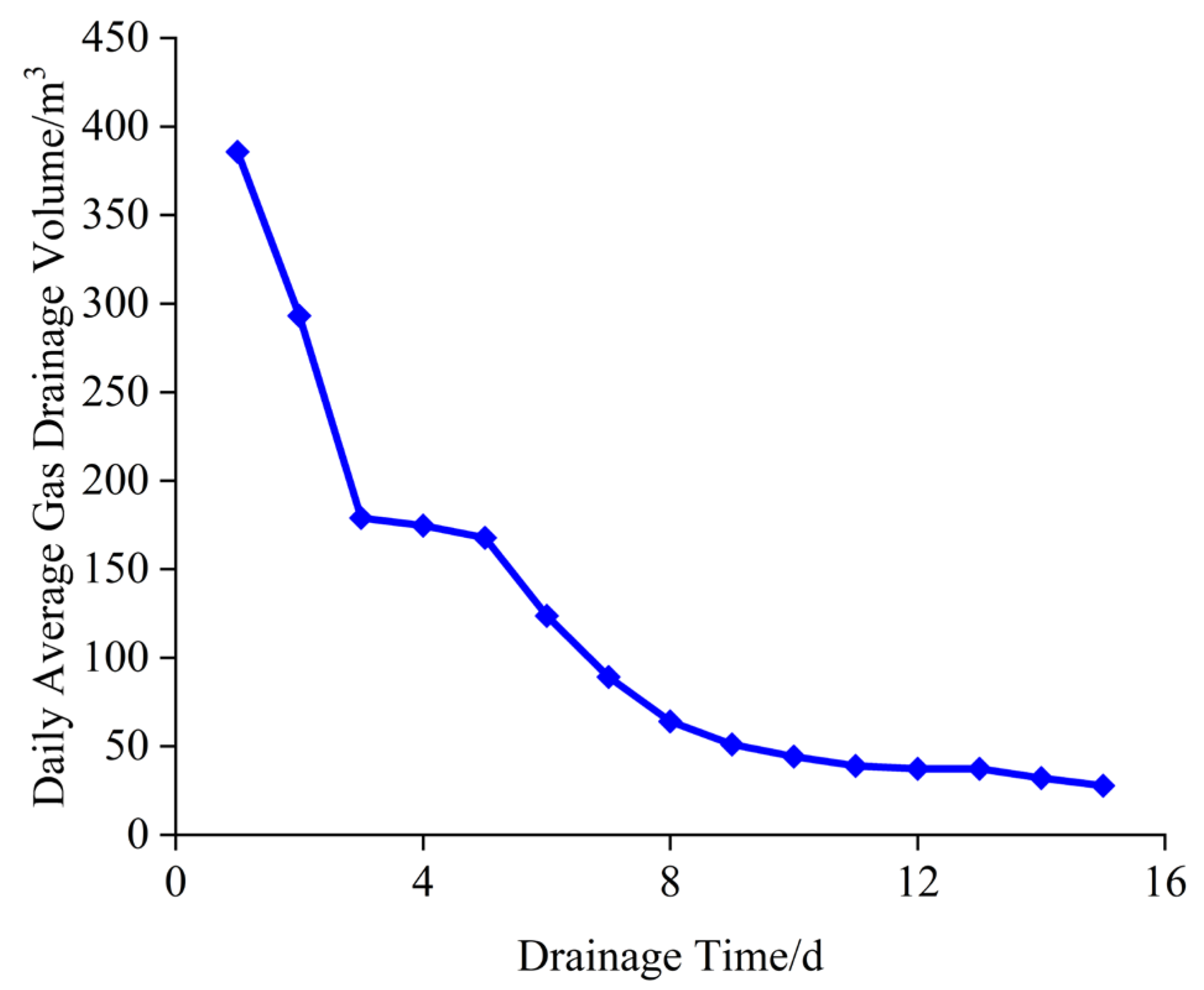
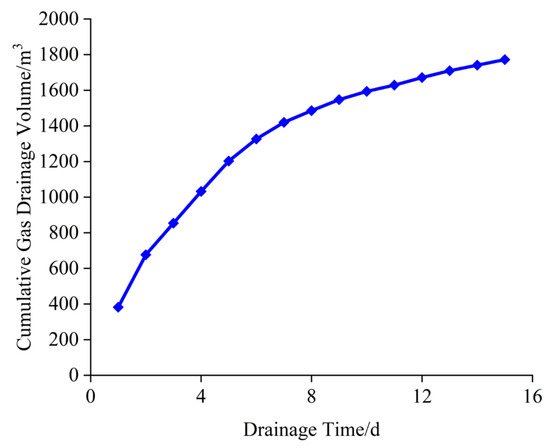
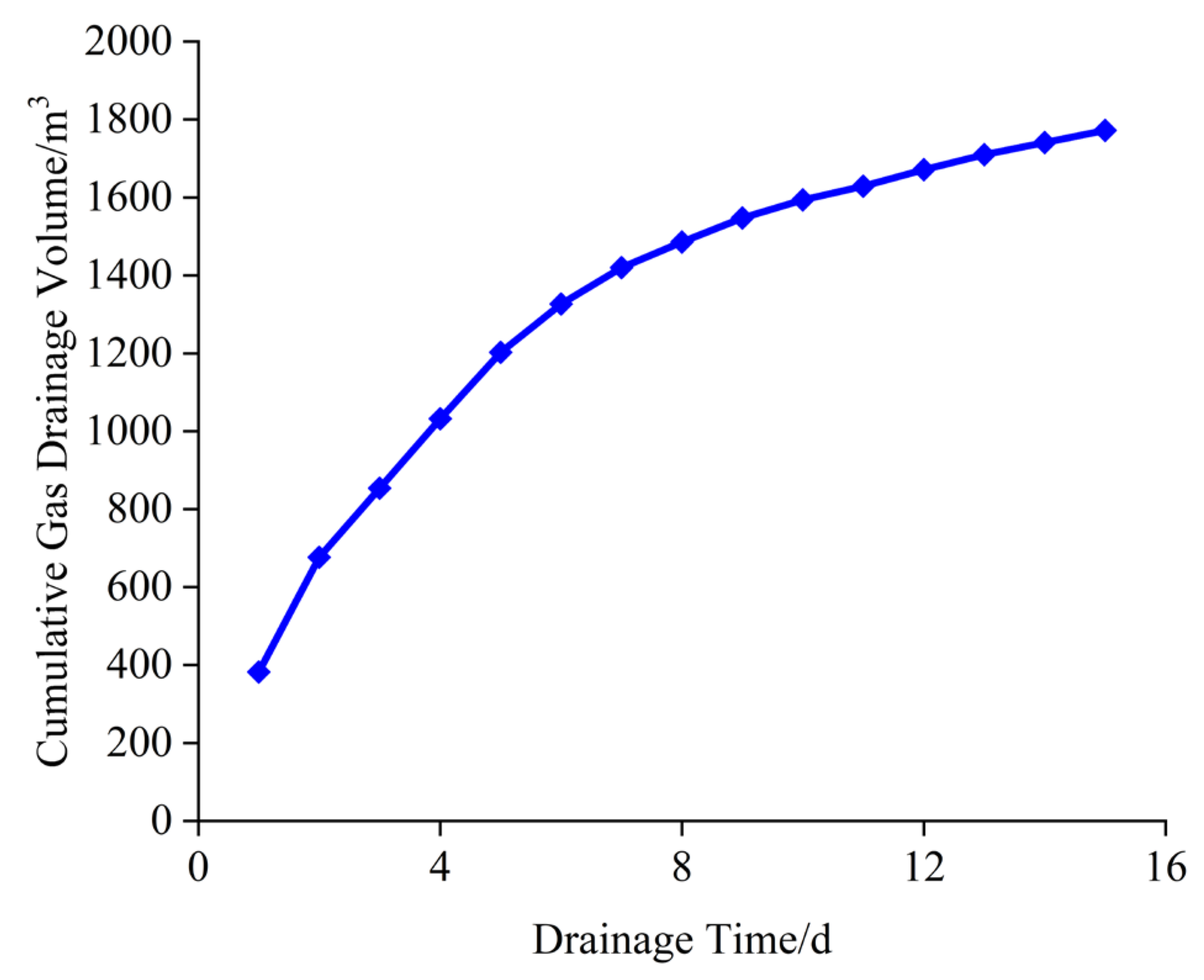
During the period from 2 October to 16 October, the daily average mixed gas flow rate and pure gas flow rate are shown in Figure 14. The variations in gas concentration, daily average gas extraction volume, and cumulative gas extraction volume are illustrated in Figure 15, Figure 16 and Figure 17, respectively.
Figure 14.
Variation in gas flow rate with time.
Figure 15.
Variation in gas drainage concentration with time.
Figure 16.
Variation in daily average gas drainage volume with time.
Figure 17.
Variation in cumulative gas drainage volume with time.
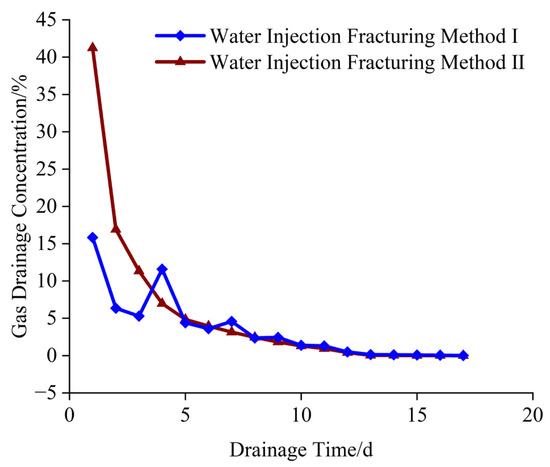
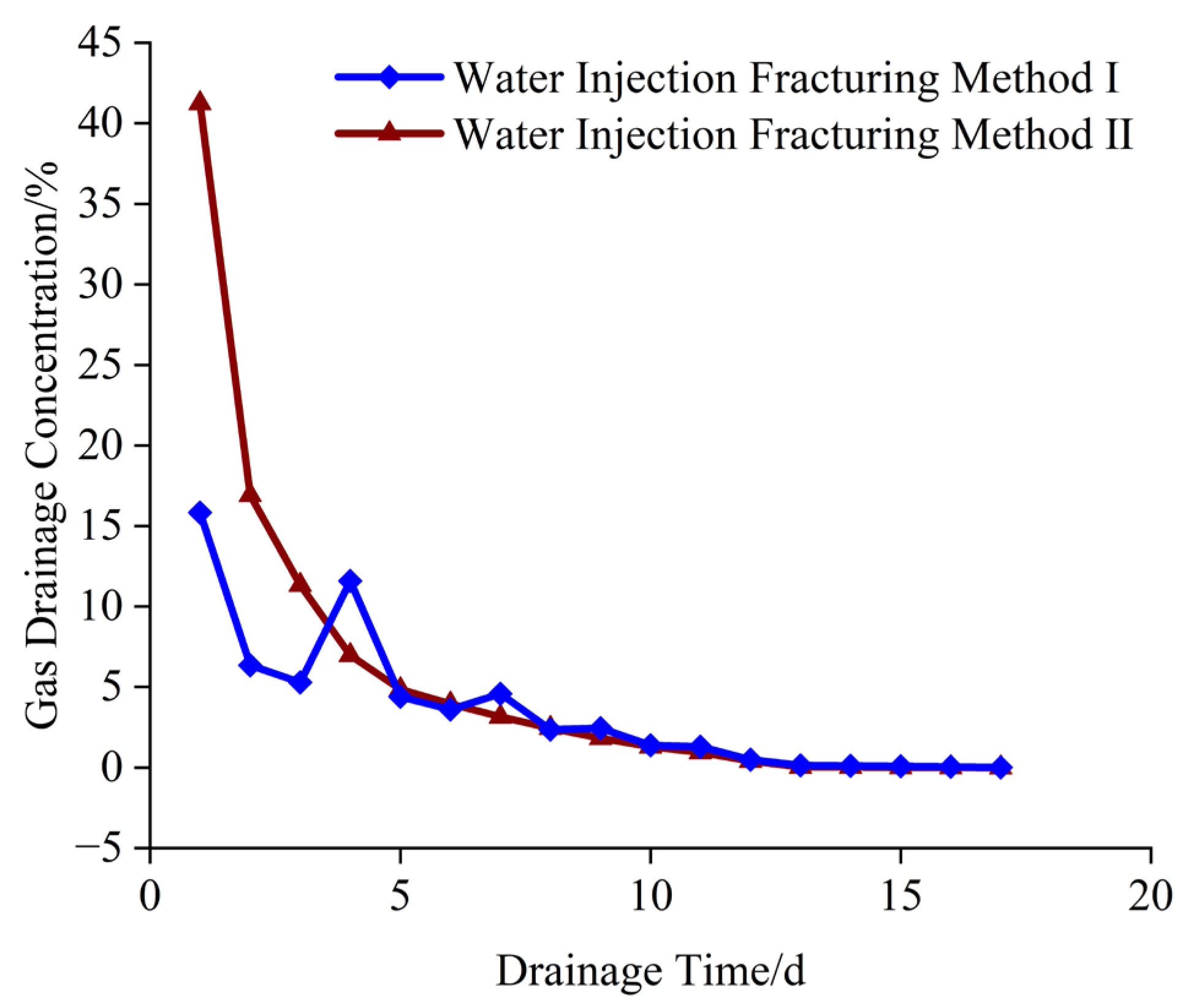
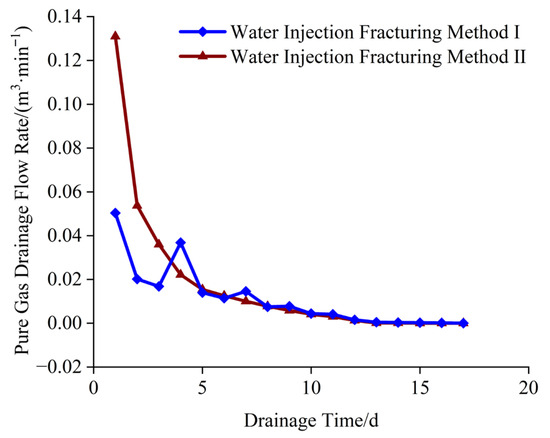
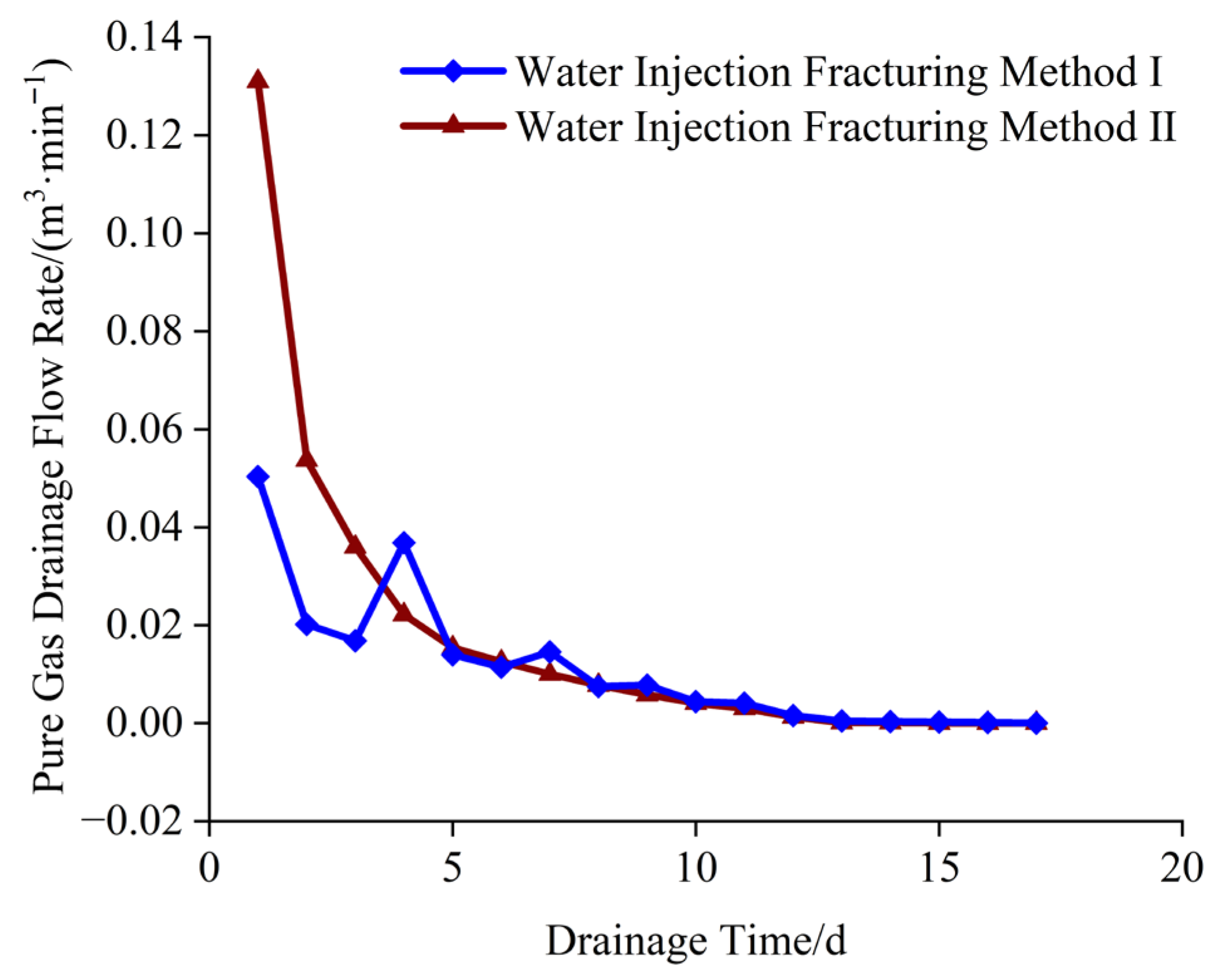
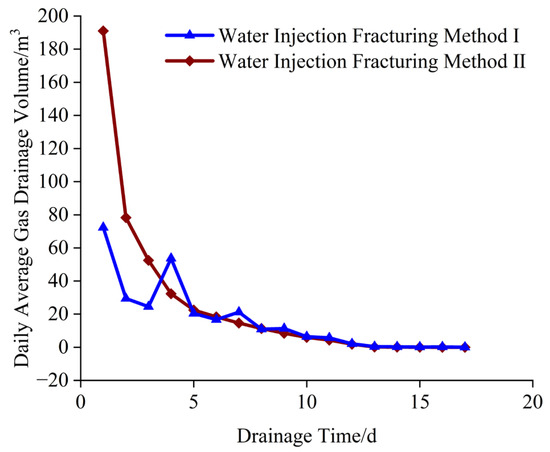
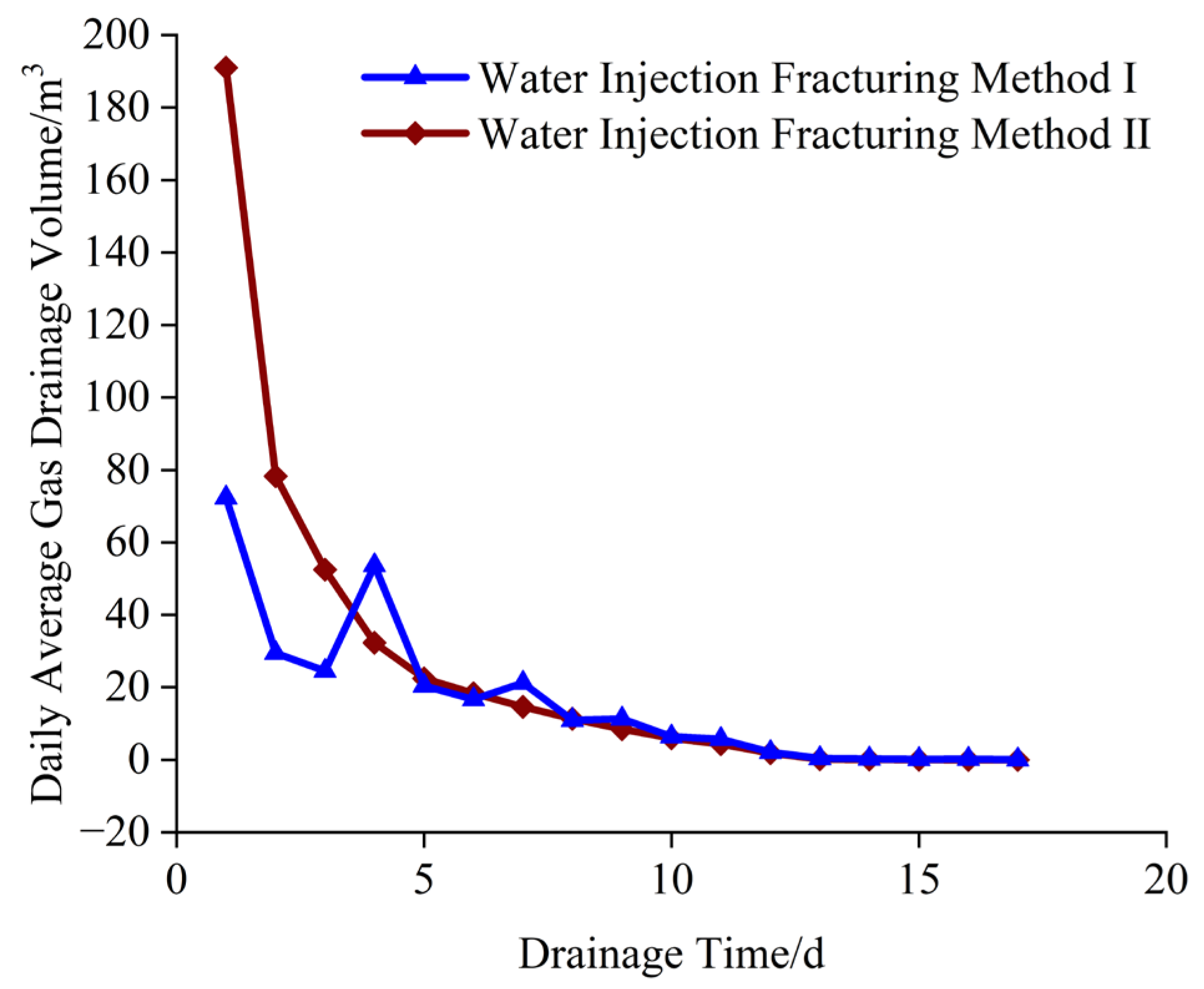
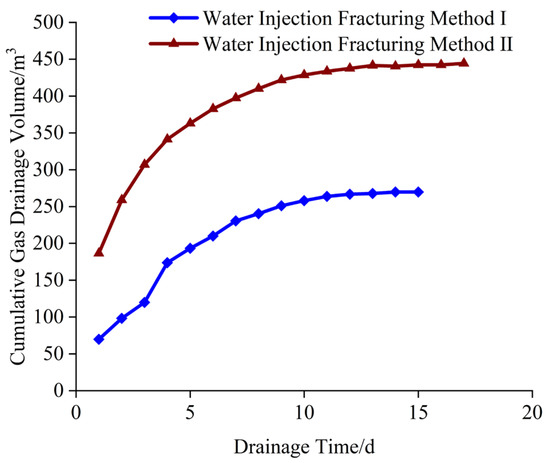
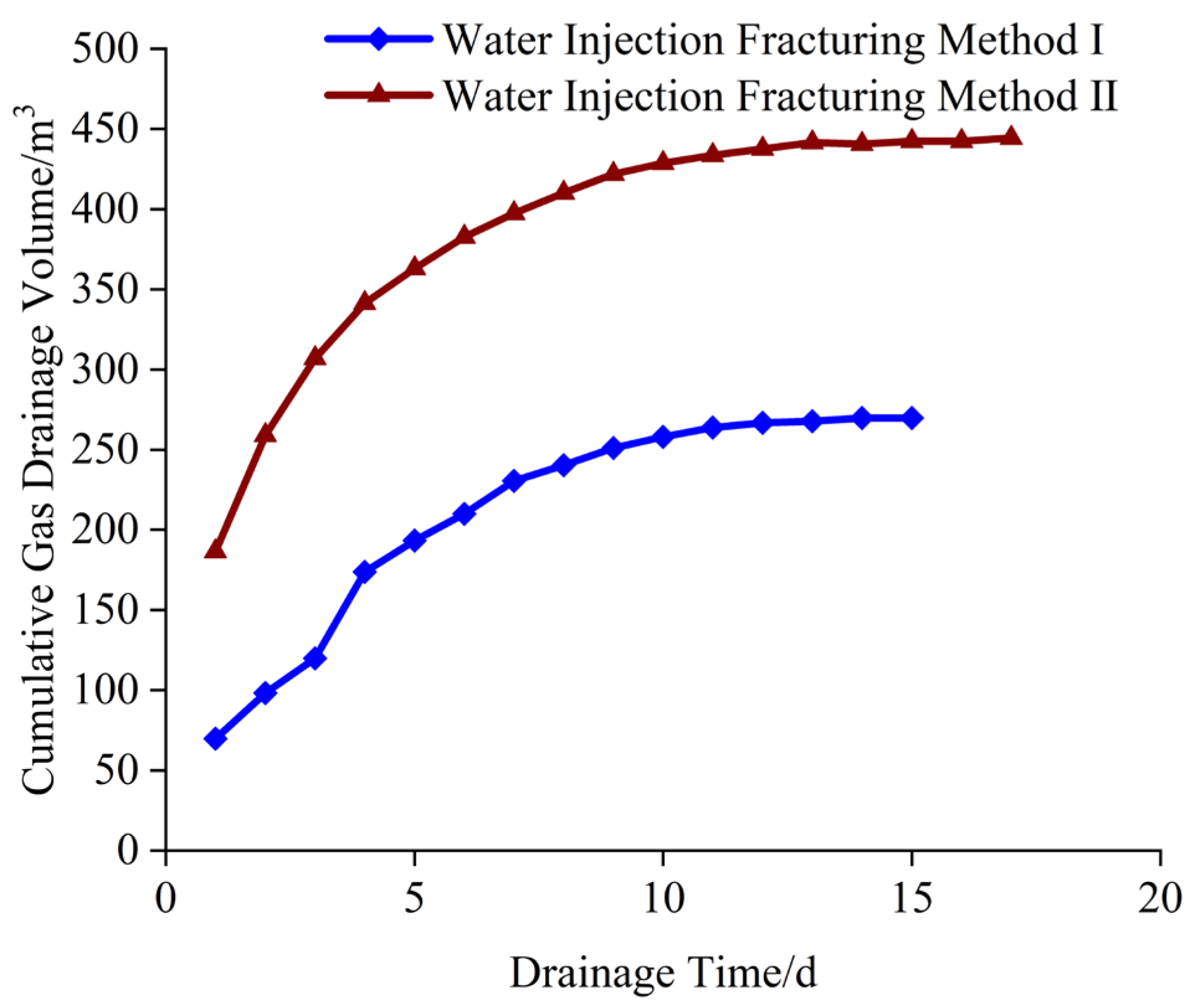
Comparative curves of the two different water injection fracturing methods are shown in Figure 18, Figure 19, Figure 20 and Figure 21.
Figure 18.
Variation in gas drainage concentration with time under two water injection fracturing methods.
Figure 19.
Variation in pure gas drainage flow rate with time under two water injection fracturing methods.
Figure 20.
Variation in daily average gas drainage volume with time under two water injection fracturing methods.
Figure 21.
Variation in cumulative gas drainage volume with time under two water injection fracturing methods.
Based on the comparative analysis, the following conclusions can be drawn:
A comparison of gas concentration and pure gas drainage flow rate data from the day of water injection with periods both before and after the intervention confirms that high-pressure water injection enhances gas drainage efficiency, irrespective of the specific fracturing method employed. This enhancement is attributable to fracture-induced permeability increase and the gas displacement effect driven by the injected water.
Under the implemented concurrent drainage and injection scheme, both fracturing methods significantly improved gas drainage performance. However, comparative analysis reveals a marked superiority of the four-stage continuous pressurization method over the four-stage interval pressurization method. Specifically, the total gas drainage volume during the post-fracturing extraction period was 64.4% higher for the continuous pressurization method.
Following water injection, both methods induced a water-blocking effect that inhibited gas desorption from the coal matrix. Comparatively, the interval pressurization method, characterized by a longer total injection duration, facilitated more complete development of the water block via capillary action, resulting in a measurably stronger suppression effect on gas desorption than the continuous pressurization method.
In summary, for gas drainage and pressure relief in the No. 15 coal seam of Yixin Mine, the four-stage continuous pressurization method is a more suitable water injection fracturing technique.
4. Discussion
This study developed the “extraction–injection–locking” collaborative technology for gas disaster control in deep outburst-prone coal seams, and the following discussion contextualizes our findings against existing research, assesses on-site OHS risks under variable conditions, and clarifies the technology’s practical implications.
4.1. Comparison with Existing Research
Existing work has established fluid-solid coupling models to optimize single/multi-borehole gas extraction parameters, but such studies only targeted independent extraction (lacking synergy with water injection). In contrast, our “extraction–injection sequence optimization model” integrates two core measures, achieving an 18.7% increase in effective extraction radius—addressing the low synergy defect of single measures.
Prior hydraulic flushing technologies have been proposed to enhance extraction efficiency (reducing borehole numbers significantly), but these studies did not quantify the transition point between extraction and injection. Our quantitative criteria for “extraction–injection” transition avoid the adverse impact of premature water injection (e.g., water lock interfering with early stage extraction), ensuring stable efficiency improvement.
Previous studies on sectional hydraulic fracturing have verified notable increases in gas flow rate, but these works ignored OHS risks associated with fracturing operations. Our study supplements this gap by linking technology parameters to on-site safety, balancing efficiency and risk control.
4.2. OHS Risk Assessment Under Different Site Conditions
The No. 15 coal seam exhibits heterogeneous geological conditions. Table 3 below summarizes the core OHS risks under its typical variable conditions, as well as the mitigation effects of the proposed technology.
Table 3.
OHS risks & mitigation effects of “extraction–injection–locking” (No. 15 coal seam).
4.3. Mechanistic Interpretation of Fracturing Mode Performance
The comparative analysis revealed that Method II (four-stage continuous pressurization) yielded a 64.4% higher total gas extraction volume than Method I (four-stage interval pressurization). While direct microstructural observation data (e.g., from post-fracturing CT scanning) are not available in the current study, a plausible mechanism can be inferred from the pressurization patterns. The continuous pressurization in Method II likely sustains a higher net pressure within the coal fractures for a longer duration during each stage, promoting more extensive and stable fracture propagation and better connectivity between natural and induced fractures. In contrast, the interval pressurization of Method I, involving periods of pressure release and re-pressurization, may lead to more localized damage and a less interconnected fracture network due to repeated closure and re-opening of fractures. This hypothesized difference in fracture network connectivity and persistence directly influences the enhanced permeability and gas migration pathways, resulting in the significant disparity in extraction efficiency. Future research incorporating pre- and post-fracturing core analysis or in-seam imaging is essential to visually validate this fracture network mechanism.
4.4. Limitations and Outlook
This study focuses on the No. 15 coal seam’s specific conditions; future work could validate the technology in coal seams with higher gas pressure. A specific methodological limitation to note is the use of an assumed pore radius (r = 500 nm) in the Harkins empirical formula for calculating the critical water lock pressure, which lacked direct experimental support from pore structure characterization of the studied coal. Future research should integrate detailed pore structure analysis (e.g., via mercury intrusion porosimetry or low-temperature nitrogen adsorption) of target coal seams to provide an empirical basis for this key parameter, thereby improving the physical accuracy of the water lock criterion model. Additionally, the numerical simulation for determining the effective extraction radius employed a simplified homogeneous model with a fixed 180-day extraction period and uniform initial gas pressure. This approach does not capture the heterogeneous spatial distribution of gas content and pressure gradients present in the field, which can influence the shape and evolution of the pressure relief contour. Future optimization of this model should incorporate field-measured gas pressure maps as initial boundary conditions and explore time-variable extraction scenarios to better reflect actual mining sequences and gas desorption dynamics. Future research should prioritize obtaining such data through laboratory creep tests or post-fracturing field monitoring to accurately parameterize the time-dependent permeability decay, thereby significantly improving the predictive accuracy of the coupled model for gas extraction planning. Additionally, optimizing the JFC penetrant concentration (currently 0.025%) for different coal textures may further enhance the water lock’s risk-mitigation effect.
5. Conclusions
5.1. Theoretical and Practical Contributions of the Study
Addressing the aforementioned issues, this study systematically conducts desorption kinetics experiments on gas-containing coal, high-pressure water injection effect tests, and research on the water lock mechanism, taking the No. 15 coal seam of Yixin Coal Mine as the research object. An optimization model for the sequence of gas extraction and high-pressure water injection was developed, along with quantitative criteria for the transition between extraction and injection processes. A “multi-purpose with one measure” approach based on the synergy of four effects—permeability enhancement, softening, displacement, and flow restriction—was proposed. Experimental results show a 32.5% reduction in gas desorption rate, an 18.7% increase in the effective extraction radius of boreholes, and over 25% improvement in the time-effectiveness of water lock in suppressing gas release. Industrial applications demonstrate a 40% increase in pre-drainage gas concentration, a 28% rise in pure extraction volume, over 50% reduction in gas over-limit incidents, a 36% shortening of the treatment cycle for the No. 15 coal seam, and a 72.8% reduction in borehole engineering workload, generating economic benefits exceeding 425 million yuan. The results prove that the “extraction–injection–locking” synergistic technology significantly enhances the efficiency and economic viability of gas control, providing a systematic and collaborative prevention model for deep outburst-prone mines that addresses both outburst prevention and over-limit mitigation.
5.2. Limitations of the Study
The primary limitation of this study is that the industrial trial was conducted solely in the No. 15 coal seam of Yixin Coal Mine. Consequently, the effectiveness and key parameters of the “extraction–injection–locking” collaborative technology have not been validated under different geological and engineering conditions, such as varying coal body strengths, gas pressure levels, or intrinsic permeability. The current conclusions regarding the technology’s efficiency and economic benefits are therefore most directly applicable to seams with properties similar to the test site, and its adaptability to multiple mining areas requires further verification. Additionally, only 180-day extraction data were analyzed; long-term monitoring of the water lock effect’s durability and secondary gas emission risks is lacking. Only 0.025% JFC penetrant was tested, with no comparison of other penetrant types or concentrations.
5.3. Future Research
Future research should first focus on validating the technology across multiple coal seams and mining areas with diverse conditions, including a range of coal body strengths, gas pressures, permeability coefficients, and metamorphic grades. This multi-site verification is essential to establish the technology’s general applicability, optimize its parameters for different contexts, and enhance the reliability of the conclusions. Furthermore, conducting multi-year on-site tracking would allow for analysis of the water lock effect’s time-dependent evolution and the optimization of maintenance strategies. Testing diverse penetrant types and concentrations could enhance the stability and effectiveness of the water lock. Finally, integrating the technology with real-time gas monitoring and automatic pressure adjustment systems should be explored to achieve dynamic, adaptive “extraction–injection” control.
Author Contributions
Conceptualization, T.L.; Methodology, T.L.; Validation, G.L.; Resources, X.Z.; Data curation, X.Z.; Writing—original draft, T.L.; Writing—review and editing, T.L. and G.L.; Supervision, X.Z.; Funding acquisition, X.Z. All authors have read and agreed to the published version of the manuscript.
Funding
This study was financed by the National Natural Science Foundation of China (Grant No. 51574116) and the Heilongjiang Provincial Natural Science Foundation of China (Grant No. YQ2023E039).
Data Availability Statement
The original data of the manuscript can be obtained from the corresponding author, Ting Lu (E-mail: luting@usth.edu.cn).
Acknowledgments
We thank Guoqing Wei for valuable suggestions and the laboratory staff for technical support.
Conflicts of Interest
The authors declare no conflicts of interest.
References
- Teng, J.; Qiao, Y.; Song, P. Analysis of exploration, potential reserves and high efficient utilization of coal in China. Chin. J. Geophys. 2016, 59, 4633–4653. [Google Scholar] [CrossRef]
- Zhang, Q.; Li, Q.; Fan, X.; Liu, C.; Ge, Z.L.; Jiang, Z.G.; Peng, X.L.; Li, X.C.; Zhu, S.Y.; Zhao, S.L.; et al. Current situation and development trend of theories and technologies for coal and CBM co-mining in China. Nat. Gas Ind. 2022, 42, 130–145. [Google Scholar] [CrossRef]
- Yan, J.; Lei, K.; Jiang, Y.; Zhang, M.; Zhang, W.; Yin, H. Optimization of Accurate Spacing for Gas Extraction from Damaged Coal Seams Based on a Dual-Penetration Model. Sustainability 2023, 15, 15339. [Google Scholar] [CrossRef] [Scilit]
- Li, J.; Li, G.; Hao, H.; Hao, C.; Wang, Z. Technology of across-goaf drainage of coalbed methane from a lower coal seam group and its primary application: Taking Sihe mine field as an example. Coalf. Geol. Explor. 2021, 49, 96–104. [Google Scholar] [CrossRef]
- Zhou, B.; Hao, J.; Zhang, C. Analysis on borehole instability under coupled multiple stress and dynamic sealing technology in soft coal seam. Coalf. Geol. Explor. 2016, 44, 161–166. [Google Scholar] [CrossRef]
- Guo, W.; Ma, Z.; Bai, E. Current status and prospect of coal mining technology under buildings, water bodies and railways, and above confined water in China. Coal Sci. Technol. 2020, 48, 16–26. [Google Scholar]
- Zhang, G.; Zhang, S.; Jia, W.; Zhang, X.; Zhang, Y.; Lian, H.; Lian, X.; Fang, H. Grouting solidification technology for fractured soft coal seams and its application in coalbed methane (coal mine gas) extraction. Front. Energy Res. 2023, 11, 1338715. [Google Scholar] [CrossRef] [Scilit]
- Li, J.; Zhao, Y.; Du, J. Prevention Technology of Coal Spontaneous Combustion Induced by Gas Drainage in Deep Coal Seam Mining. Fire 2022, 5, 65. [Google Scholar] [CrossRef] [Scilit]
- Xie, C. Experimental Study on Coal Model Reinforced by New Polyurethane/Water Glass Double Liquid Slurry Grouting. Master’s Thesis, Anhui University of Science and Technology, Huainan, China, 2021. [Google Scholar]
- Wang, L. Study of Grouting Technology’s Mechanism and Application in Subgrade Reinforcement. Master’s Thesis, Shandong University, Jinan, China, 2017. [Google Scholar]
- Zhao, D.; Liu, J.; Pan, J. Study on gas seepage from coal seams in the distance between boreholes for gas extraction. J. Loss Prev. Process Ind. 2018, 54, 266–272. [Google Scholar] [CrossRef] [Scilit]
- Liu, H. Fully coupled model and engineering application for deformation and pressure-relief gas flow of remote coal and rock mass due to mining. J. China Coal Soc. 2010, 36, 1243–1244. [Google Scholar]
- Yang, L. Numerical Simulation Method and Theory for Coalbed Methane Desorption-Diffusion-Seepage Problem. Ph.D. Thesis, Shandong University, Jinan, China, 2015. [Google Scholar]
- Tan, Y.; Pan, Z.; Liu, J.; Kang, J.; Zhou, F.; Connell, L.D.; Yang, Y. Experimental study of impact of anisotropy and heterogeneity on gas flow in coal. Part I: Diffusion and adsorption. Fuel 2018, 232, 444–453. [Google Scholar] [CrossRef] [Scilit]
- Karbownik, M.; Krawczyk, J.; Godyń, K.; Schlieter, T.; Ščučka, J. Analysis of the Influence of Coal Petrography on the Proper Application of the Unipore and Bidisperse Models of Methane Diffusion. Energies 2021, 14, 8495. [Google Scholar] [CrossRef] [Scilit]
- Gu, W.; Lu, Y.; Shi, S.; Wu, K.; Yin, H.; Huang, L.; Peng, S. Optimization on plastic zone scope of borehole based on gas extraction effect and its application. J. Saf. Sci. Technol. 2021, 17, 25–30. [Google Scholar]
- Duan, M.; Jiang, C.; Gan, Q.; Zhao, H.; Yang, Y.; Li, Z. Study on Permeability Anisotropy of Bedded Coal Under True Triaxial Stress and Its Application. Transp. Porous Media 2020, 131, 1007–1035. [Google Scholar] [CrossRef] [Scilit]
- Wang, J.C.; Yang, Z.B.; Qin, Y. Research status and prospects of secondary enrichment and accumulation of residual coalbed methane resources in abandoned mines. Coal Geol. Explor. 2022, 52, 35–44. [Google Scholar] [CrossRef]
- Zhang, C.W.; Jin, Z.X.; Feng, G.R.; Gao, R.; Li, C. Study on the characteristics of water-gas two-phase seepage in the overlying rock fracture network of goaf in abandoned mines. China Min. Mag. 2024, 33, 37–45. [Google Scholar] [CrossRef]
- Gagen, K.C.; Peter, D.M. Assessment of coal mine methane (CMM) and abandoned mine methane (AMM) resource potential of longwall mine panels: Example from Northern Appalachian Basin, USA. Int. J. Coal Geol. 2019, 208, 37–53. [Google Scholar] [CrossRef] [Scilit]
- Wei, P.; Huang, C.; Li, X.; Peng, S.; Lu, Y. Numerical simulation of boreholes for gas extraction and effective range of gas extraction in soft coal seams. Energy Sci. Eng. 2019, 7, 1632–1648. [Google Scholar] [CrossRef] [Scilit]
- Zhang, H.; Cheng, Y.; Yuan, L.; Wang, L.; Pan, Z. Hydraulic flushing in soft coal sublayer: Gas extraction enhancement mechanism and field application. Energy Sci. Eng. 2019, 7, 1970–1993. [Google Scholar] [CrossRef] [Scilit]
- Zhang, Z.; Qiao, J.; Yang, S.; Zheng, K.; Zhang, D.; Zhang, J. A study on the technology of enhancing gas permeability and gas drainage by sectional hydraulic fracturing in directional long boreholes: A case study of the no. 8 coal seam in baode coal mine. Front. Earth Sci. 2025, 13, 1610921. [Google Scholar] [CrossRef] [Scilit]
- Li, Y.; Wu, S.; Nie, B.; Ma, Y. A new pattern of underground space-time tridimensional gas drainage: A case study in Yuwu coal mine, China. Energy Sci. Eng. 2019, 7, 399–410. [Google Scholar] [CrossRef] [Scilit]
- Li, T.; Wu, B.; Lei, B. Study on the Optimization of a Gas Drainage Borehole Drainage Horizon Based on the Evolution Characteristics of Mining Fracture. Energies 2019, 12, 4499. [Google Scholar] [CrossRef] [Scilit]
- Liu, T.; Lin, B.; Yang, W.; Liu, T.; Kong, J.; Huang, Z.; Wang, R.; Zhao, Y. Dynamic diffusion-based multifield coupling model for gas drainage. J. Nat. Gas Sci. Eng. 2017, 44, 233–249. [Google Scholar] [CrossRef] [Scilit]
- Zhang, X.; She, H.; Zhang, L.; Li, R.; Feng, J.; Liu, R.; Wang, X. Seismic Prediction Method of Shale Reservoir Brittleness Index Based on the BP Neural Network for Improving Shale Gas Extraction Efficiency. Energies 2024, 17, 4751. [Google Scholar] [CrossRef] [Scilit]
- Hu, S.; Liu, X.; Li, X. Fluid–Solid Coupling Model and Simulation of Gas-Bearing Coal for Energy Security and Sustainability. Processes 2020, 8, 254. [Google Scholar] [CrossRef] [Scilit]
- Liu, Y.; Zhang, Z.; Xiong, W.; Shen, K.; Ba, Q. The Influence of the Injected Water on the Underground Coalbed Methane Extraction. Energies 2020, 13, 1151. [Google Scholar] [CrossRef] [Scilit]
- Wang, L.; Liao, X.; Chu, P.; Zhang, X.; Liu, Q. Study on mechanism of permeability improvement for gas drainage by cross-steam cavitation borehole. Coal Sci. Technol. 2021, 49, 75–82. [Google Scholar]
- Gao, Y.; Lin, B.; Yang, W.; Li, Z.; Pang, Y.; Li, H. Drilling large diameter cross-measure boreholes to improve gas drainage in highly gassy soft coal seams. J. Nat. Gas Sci. Eng. 2015, 26, 193–204. [Google Scholar] [CrossRef] [Scilit]
- Liu, T.; Lin, B.; Fu, X.; Zhao, Y.; Gao, Y.; Yang, W. Modeling coupled gas flow and geomechanics process in stimulated coal seam by hydraulic flushing. Int. J. Rock Mech. Min. Sci. 2021, 142, 104769. [Google Scholar] [CrossRef] [Scilit]
- Liu, X.L.; Yan, J.W.; Liu, C.; Jia, T.; Feng, Z.; Wei, J.; Wei, G. Construction and application of gas resource estimation and evaluation method in abandoned mines. Coal Geol. Explor. 2022, 50, 45–51. [Google Scholar] [CrossRef]
- Hu, C.O.; Liu, K.P. Establishment and application of prediction model for gas resources in abandoned coal mines. China Energy Environ. Prot. 2020, 42, 1–6. [Google Scholar]
- Yıldız, T.D. Loss of profits occurring due to the halting of mining operations arising from occupational accidents or reasons related to legislation. Gospod. Surowcami Miner. Miner. Resour. Manag. 2021, 37, 153–176. [Google Scholar] [CrossRef] [Scilit]
- Kahraman, M.M. Analysis of mining lost time incident duration influencing factors through machine learning. Min. Metall. Explor. 2021, 38, 1031–1039. [Google Scholar] [CrossRef] [Scilit]

Disclaimer/Publisher’s Note: The statements, opinions and data contained in all publications are solely those of the individual author(s) and contributor(s) and not of MDPI and/or the editor(s). MDPI and/or the editor(s) disclaim responsibility for any injury to people or property resulting from any ideas, methods, instructions or products referred to in the content. |
© 2025 by the authors. Licensee MDPI, Basel, Switzerland. This article is an open access article distributed under the terms and conditions of the Creative Commons Attribution (CC BY) license.