Abstract
Diagnosing water-phase damage remains challenging because routine petrophysical parameters do not capture capillary hysteresis and pressure-transmission effects. In this study, a standardized, auditable workflow was established to link laboratory descriptors to field-relevant cleanup. Full-curve mercury injection capillary pressure data were acquired and converted using consistent Washburn parameters, from which withdrawal efficiency was computed on the withdrawal branch. A pressure-transmission coefficient was evaluated under unified boundary conditions to complement permeability and porosity. After preprocessing and partial least-squares regression (PLSR) screening, MICP descriptors were clustered by k-means (k = 5) to obtain reservoir Types I–V. Regressions relating WE to permeability and flowback behavior were then used to assess engineering relevance. The results indicate that WE capture hysteretic trapping/back-pressure not contained in permeability or porosity and, when interpreted jointly with PTC, differentiates reservoir types by cleanup propensity. This framework provides a reproducible bridge from laboratory MICP hysteresis to field-scale flowback interpretation. Practical implications include prioritization of gas–wet wettability modification, low-surface-tension systems, and minimized early liquid loading for clusters exhibiting higher WE and lower PTC.
1. Introduction
In recent decades, unconventional low-permeability tight sandstone gas reservoirs have been discovered successively in some petroliferous basins in the world. Various kinds of water-based working fluids, such as drilling fluid, completion fluid, and fracturing fluid, are often used in the drilling, completion, and stimulation of tight sandstone gas reservoirs. Because of the huge resource potential of tight sandstone gas reservoirs, the development of low-permeability tight sandstone gas reservoirs has become the key to unconventional gas reservoir development. China is rich in tight sandstone gas reservoirs, which are widely distributed in the Upper Paleozoic of Ordos, Mesozoic of Western Sichuan, and Cretaceous in front of Kuche Mountain in Tarim. Among them, the amount of tight sandstone gas is about 12 × 1012 m3 [1]. Tight sandstone gas reservoirs are prone to severe formation damage due to narrow pore-throats, strong capillary forces, and complex fluid–rock interactions, requiring targeted prevention and remediation technologies [2,3,4,5,6]. During drilling and completion, invasion of water-based fluids into the tight sandstone matrix can readily induce aqueous-phase trapping, increasing water saturation above irreducible levels and causing significant reductions in effective gas permeability [7,8,9]. Aqueous-phase trapping damage can also occur in the long-term production process of oil wells, for example, due to the liquid loading of wellbore, the formation water saturation near wells increases. Once aqueous-phase trapping damage occurs, it is difficult to eliminate, and will lead to a reduction in the production of gas wells [10]. Water-trapping damage is the main type of formation damage in tight sandstone gas reservoirs, and the damage rate can approach ~70% in extreme cases [11,12].
The pore structure of sandstone reservoirs with low porosity and permeability is complex, and they have strong heterogeneity in two-dimensional and three-dimensional space, which has considerable influence on logging response of reservoir space [13]. Mercury shows non-wettability to common rocks. In theory, the pore size of mercury intrusion is a function of pressure exerted. This conclusion is widely used in the evaluation of pore characteristics [14]. Mercury injection capillary pressure (MICP) curve is a curve that represents the relationship between mercury saturation and pressure. Based on MICP curves, micro-parameters (e.g., pore-throat size distributions) are selected and quantified to characterize pore structure and to assess permeability. For irregularly shaped core samples, mercury injection measurements can be used to obtain capillary pressure curves, such as rock chips [15]. Compared with other methods, the mercury injection measurements method has the advantage of simple and fast acquisition of experimental results. There are many pressure stabilization points in the MICP curves, which cover the throat diameter of various sizes in rocks. Many models, such as the Katz–Thompson models and the Purcell model can be used to predict permeability based on MICP curves. However, as a means of reservoir pore structure research, the parameters of MICP curve have not been fully utilized.
In this paper, the aqueous-phase trapping damage of tight sandstone in Jurassic Formation is evaluated by the MICP curve. Cluster analysis of the MICP curves of core samples, the classification of tight sandstone reservoirs, and the core spontaneous imbibition and flooding experiments were conducted. Based on the experiments and field data analysis, the aqueous-phase trapping damage of Jurassic Formation is discussed. The results could serve as a guide for the damage prediction of tight sandstone reservoirs.
2. Methodology
Following a brief overview, a standardized, auditable workflow was implemented to link pore-scale descriptors to engineering response. The sequence is initiated with core preparation and petrophysical/petrological characterization, followed by MICP acquisition and withdrawal-based WE extraction using consistent Washburn and compressibility corrections, and is extended to include PTC estimation under unified boundary conditions. After preprocessing, permeability-sensitive MICP variables are screened using PLSR and are clustered using k-means to derive reservoir Types I–V. Finally, regressions and core-scale flowback tests are employed to provide quantitative links and field-scale implications.
2.1. Core Samples and Fluid
A total of 82 tight sandstone core samples from the Tarim Basin were selected for mercury intrusion porosimetry. The sandstone intervals are stable in lateral distribution, with single sandstone layers up to 20 m and thin mudstone interbeds (<10 m). The mean initial water saturation of formation rocks is about 20%, which was set for all core tests. Simulated formation water with a salinity of 37,981 mg/L was prepared based on reservoir water composition (Table 1) and filtered before experiments to prevent particle migration. In order to prevent the core permeability from being damaged by the migration of undissolved solid particles, the simulated formation water should be filtered before the experiment [16,17].
Table 1.
The composition of simulated formation water.
2.2. Mineralogical and Petrological Characterization
Representative tight sandstone core plugs (diameter ≈ 2.5 cm, length ≈ 5 cm) were prepared and characterized. Whole-rock and clay compositions were determined by X-ray diffraction (XRD) on ground powders; pore types, textures, and cement features were examined by SEM and petrographic thin sections to document mineralogy and pore-throat fabrics.
High-pressure mercury injection capillary pressure (MICP) tests were performed using a Corelab CMS-300 (Core Laboratories, Houston, TX, USA) and a Micromeritics AutoPore IV 9505 porosimeter (Micromeritics Instrument Corp., Norcross, GA, USA). Cylindrical core plugs (diameter ≈ 2.5 cm, length ≈ 5 cm) were oven-dried at 105 °C to constant weight and cooled in a desiccator. Each plug (total 82) was then mounted in the penetrometer, sealed, and evacuated prior to mercury filling to remove residual air.
Intrusion–extrusion measurements included a full stepwise intrusion followed by a stepwise withdrawal cycle. The maximum intrusion pressure was 200 MPa, corresponding to a minimum equivalent pore-throat radius of approximately 3.6 nm. Pore-throat radii were calculated from the Washburn equation:
where σ is the mercury–air surface tension, 0.485 N/m; θ is the contact angle, 140°; and P is the pressure, MPa. Apparatus compliance and mercury compressibility were corrected using the manufacturers’ standard blank-cell calibration; the resulting cumulative volumes therefore represent corrected pore volumes.
For each pressure step during intrusion, the cumulative intruded mercury volume Vin(P) was recorded; during withdrawal, the expelled volume Vout(P) was recorded to obtain the full hysteretic capillary-pressure curve. Volumes were normalized by the pore volume Vp measured by the porosimeter to give mercury saturation.
The maximum mercury saturation Smax was defined as the saturation at the end of the intrusion branch at Pmax = 200 MPa:
After pressure was reduced back to ambient, the residual mercury saturation was obtained from the last point of the withdrawal branch:
Mercury withdrawal efficiency (WE) was defined as [18]:
All the data of Smax and Sr values are directly extracted from the measured intrusion and withdrawal curves, ensuring consistency across all samples.
In addition, constant-rate mercury injection tests were conducted on selected plugs using a Coretest ASPE-730 apparatus (Coretest Systems Inc., Morgan Hill, CA, USA) to support pore-throat characterization. Mercury was injected at 25 °C with a constant flow rate of 0.0001 mL·min up to 2 MPa (minimum accessed throat radius ≈ 0.2 μm), using the same contact angle θ = 140°. The pressure–time response and characteristic pressure drops were used qualitatively to verify entry-pressure behavior and pore-throat connectivity derived from the high-pressure MICP data.
2.3. Aqueous-Phase Trapping Damage Evaluation
2.3.1. Prediction of Aqueous-Phase Trapping Degree
Aqueous-phase trapping potential was predicted using the Phase Trapping Criterion (PTC), which incorporates permeability, porosity, pressure gradient, viscosity ratio, interfacial tension, contact angle, and initial/irreducible water saturation [19]. Classification of damage severity is shown in Table 2.
where k is the permeability, D; φ is porosity, fraction; Δp is the biggest differential pressure for the driving fluid; 10−3 MPa; μm is the viscosity ratio to the trapping phase and oil/gas; σ is the interfacial tension, mN/m; θ is the angle of contact; Swi is the initial water saturation; and Swirr is the irreducible water saturation (not movable water saturation).
Table 2.
PTC prediction criterion of phase trapping [19].
2.3.2. Core Displacement Experiment
Spontaneous imbibition and gas-driven flowback tests were conducted on right-cylindrical core plugs (2.5 cm in diameter and ~5.0 cm in length). All tests were performed at (20–25) °C. Formation water was prepared according to Table 1, with a total salinity of approximately 38,384 mg/L, and was filtered through a 0.22 μm membrane prior to use to avoid solid-particle-induced permeability damage.
For spontaneous imbibition, dried and evacuated cores were fully saturated with gas and then placed vertically with the inlet face in contact with the synthetic brine. Mass was recorded at short intervals at the early stage and then at progressively longer intervals; imbibition was considered stabilized when the change in water mass was <0.1% of the pore volume over at least 2 h, typically reached within 16–24 h, consistent with recent tight sandstone imbibition studies.
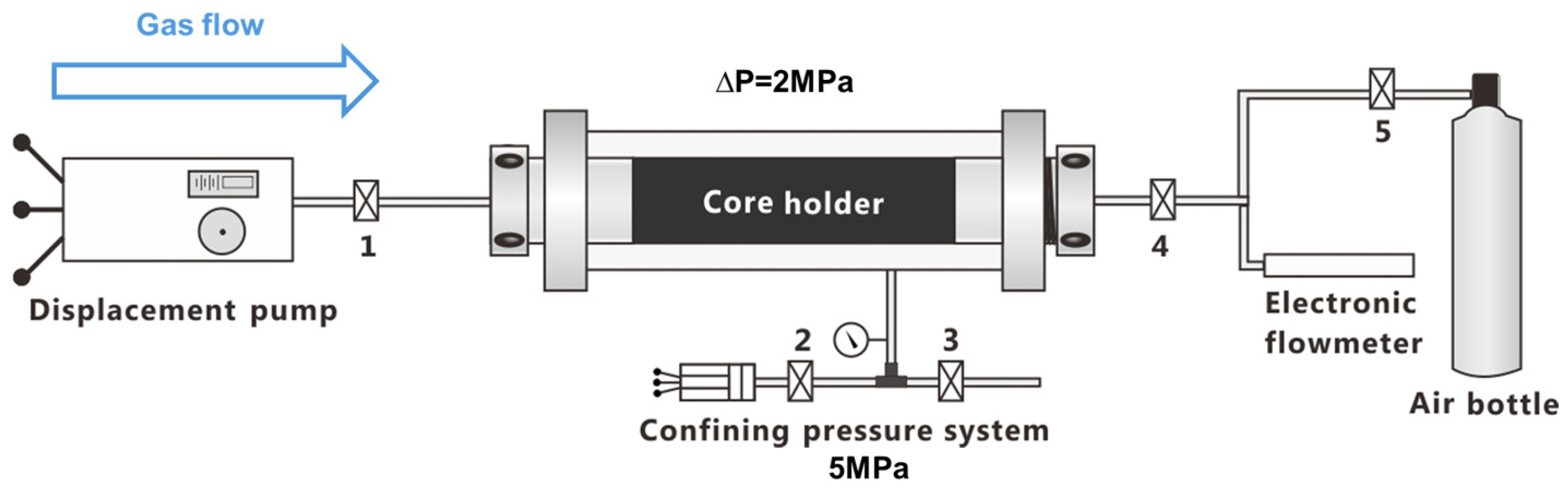
After imbibition, cores were mounted in a core holder under a confining pressure of 5 MPa. Gas-driven flowback was performed using high-purity N2 at a constant upstream displacement pressure of 2 MPa, corresponding to effective volumetric flow rates on the order of 10−2–10−1 mL/min over the tested permeability range. The produced liquid was collected and weighed periodically, and flowback was regarded as stabilized when the incremental liquid production was <0.1% of the initial imbibed water over 2 h. The reported flowback efficiencies and permeability regain were calculated at this stabilized state.
The imbibition medium was a synthetic formation brine reconstructed from the produced/formation-water assay of the study area. For PTC, interfacial parameters were fixed to unified values across all samples. A schematic of the experimental apparatus is shown in Figure 1, and the procedure is as follows:
Figure 1.
Schematic diagram of the core displacement test device. 1–5 are valves.
- The air tightness of the device needs to be checked before the experiment.
- After the core imbibition test, the core is weighted as G′ and placed into the core holder, and the liquid pump is used to apply 5 MPa confining pressure.
- The liquid phase in the core is displaced by gas through a small container under 2 MPa displacement pressure.
- The core is taken out and weighed at intervals, then re-placed it into the core holder, and this process is repeated until the mass Gi′ is basically unchanged.
2.4. Classification of Tight Sandstone Reservoir
2.4.1. Partial Least-Squares Regression
MICP-derived variables were screened via partial least-squares regression (PLSR) against permeability to identify permeability-sensitive descriptors. The principal retained set comprised maximum, mean, and median throat radii, the sorting coefficient, and the modal radius [20]. Continuous variables were transformed (log/logit as appropriate), minorized (1st–99th percentiles), and z-standardized prior to analysis.
2.4.2. Cluster Analysis
Reservoirs were further classified by K-means clustering based on the selected MICP parameters. This approach avoids subjective bias of manual classification and ensures that reservoir types are determined by pore structure similarity [21]. All continuous variables were log- or logit-transformed as needed, winsorized at the 1st/99th percentiles, and z-score standardized. k-means was run for k = 2–8 with 100 random initializations (300 max iterations) and the average silhouette was computed:
where a(i) is the mean intra-cluster dissimilarity and b(i) the minimum mean inter-cluster dissimilarity.
All bivariate relationships (e.g., WE vs. permeability, WE vs. flowback efficiency) were fitted using ordinary least squares. These regressions are intended as empirical, first-order trends within the observed experimental scatter rather than strict predictive equations, and the interpretation focuses on consistent patterns across the different rock types instead of any single fitted coefficient.
3. Results
3.1. Reservoir Physical Properties
The Jurassic Formation in northern Tarim Basin and the southern Tianshan orogenic belt are connected by thrusting faults, and are a composite foreland basin dominated by Mesozoic and Cenozoic sediments [22]. The results of XRD test show that the minerals of are mainly quartz with an average content of 68.03%; the average content of potash feldspar is 8.26%, the average content of plagioclases is 3.74%, with a small amount of calcite; clay minerals constitute 4.06~11.83%, with an average content of 10.57% (Table 3). Among them, illite is the main type of clay mineral, with an average content of 66.5%; the average content of illite is 18.1%; the average content of chlorite is 10.9%, and the average content of kaolinite is 4.4%.
Table 3.
X-ray diffraction of mineral composition of core samples.
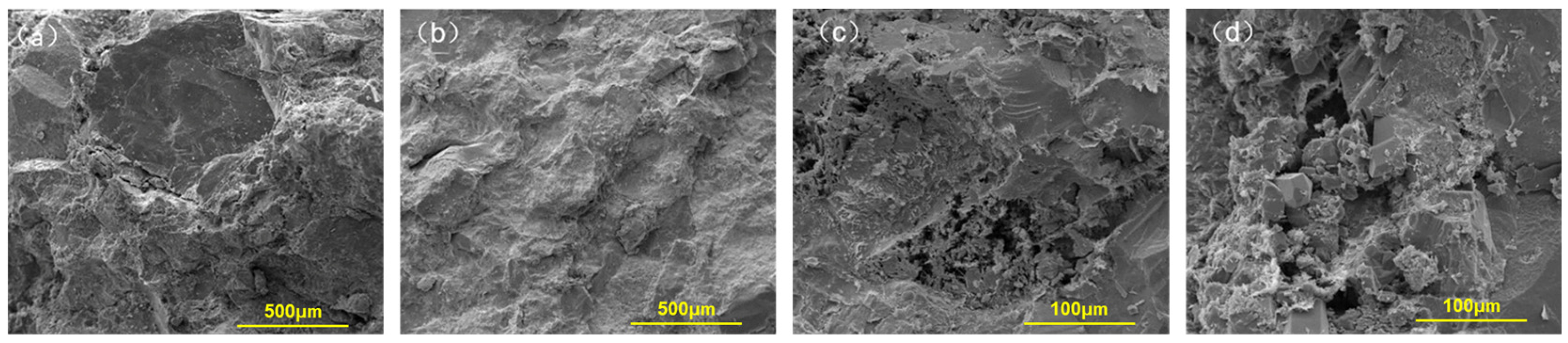
Reservoir pore types in the Tarim Basin are mainly intergranular micropores in clays and intragranular dissolution pores in feldspar, forming fracture–pore systems with poor connectivity. SEM observations reveal dense cementation with low porosity and permeability (Figure 2). Clay minerals are concentrated in pore-throats, reducing throat radii, increasing structural complexity, and enlarging surface area. Framework minerals are dominated by quartz and feldspar with interstitial clays, among which kaolinite and illite are hydrophilic [23]. The large specific surface area enhances water adsorption [24], leading to strong capillary imbibition and aqueous-phase trapping. Consequently, water faces difficulty regarding flowback due to the combined effects of capillary pressure and surface adsorption.
Figure 2.
SEM images of tight sandstone in Tarim Basin: (a) poorly developed fractures; (b) tight cementation of rock particles; (c) intergranular dissolution pores; (d) residual intergranular pores.
The lithology of the study area is dominated by lithic sandstone and glutenite with medium sorting and textural maturity. Matrix content ranges from 3% to 11% (avg. 9.5%), and cement content from 1% to 5% (avg. 2%), mainly argillaceous (5.8%) with minor kaolinite, calcite, siliceous and ferro-calcite cements (Figure 3a,b). Due to siliceous and argillaceous cements, cementation strength is weak and sand migration is prone to occur. Clastic grains are subangular to subrounded, mainly in line contact, and cementation is predominantly pore-filling (Figure 3c,d). Kaolinite may induce water-blocking, mineral sensitivity, and velocity sensitivity, while calcite contributes to potential HF acid sensitivity. Grain size is mostly 0.25–0.5 mm (range 0.05–2.3 mm). Reservoir porosity ranges from 1% to 14% (median 5.3%), and permeability from 0.01 to 402.36 mD (median 0.49 mD).
Figure 3.
Identification of the thin sections of Tarim Basin rocks. (a) Quartz and lithic fragment in rock samples; (b,c) mid-fine sand-like structure with a slightly directional arrangement of lithic fragments; (d) coarse sand-like structure.
3.2. Classification of Tight Sandstone Reservoirs
3.2.1. Artificial Subjective Classification of Sandstone Gas Reservoirs
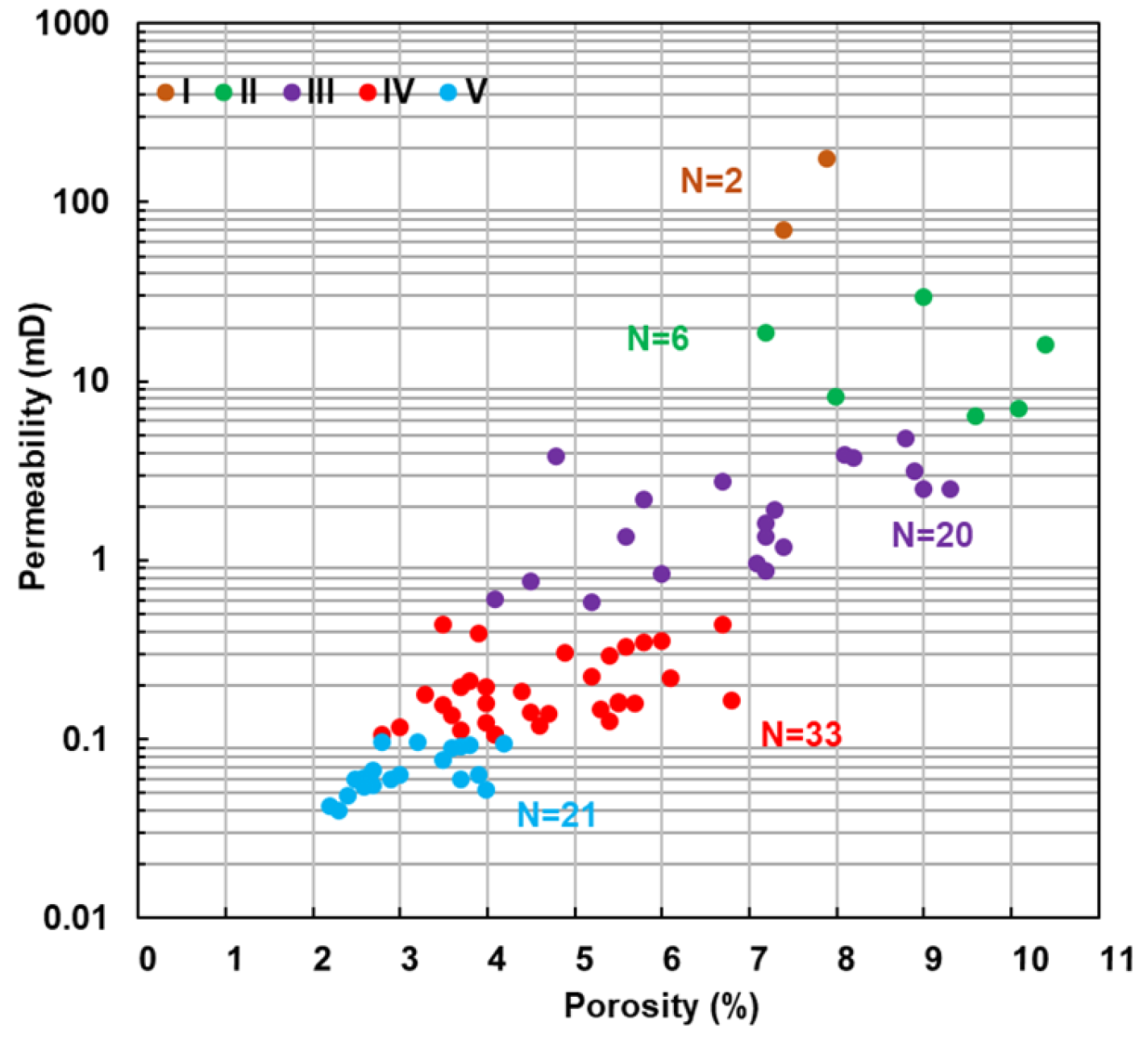
Evaluating and predicting high-quality intervals is central to reservoir assessment in tight oil and gas plays. Because there is no universally accepted scheme, published classification references for sandstone reservoirs vary widely, hampering lateral correlation and comparison. Guided by the Classification of Gas Reservoirs of Reservoir Physical Properties (SY/T 6168-1995) [25] and the measured porosity–permeability trend of the Tarim Basin core set (Figure 4), a five-category reference for sandstone gas reservoirs was proposed (Table 4). To ensure cross-figure consistency, a single, color-blind-safe symbol–color mapping is fixed for reservoir Types I–V and reused it in all figures. Types I–V are differentiated by permeability/porosity bands together with pore-throat metrics from MICP (maximum and median throat radii, mean throat radius, and sorting coefficient) and typical lithology. In this framework, Types I–II represent relatively better-sorted, larger-throat systems (conglomeratic to gravelly coarse/medium sandstone), whereas Type V reflects fine-sandstone fabric with smaller, more poorly sorted throats. This practical scheme provides a consistent basis for lateral correlation and subsequent engineering screening.
Figure 4.
Relationship between the permeability and porosity of Tarim Basin samples (82 sets of data).
Table 4.
Classification reference of sandstone gas reservoirs.
3.2.2. Clustering Analysis Classification of Tight Sandstone Gas Reservoirs
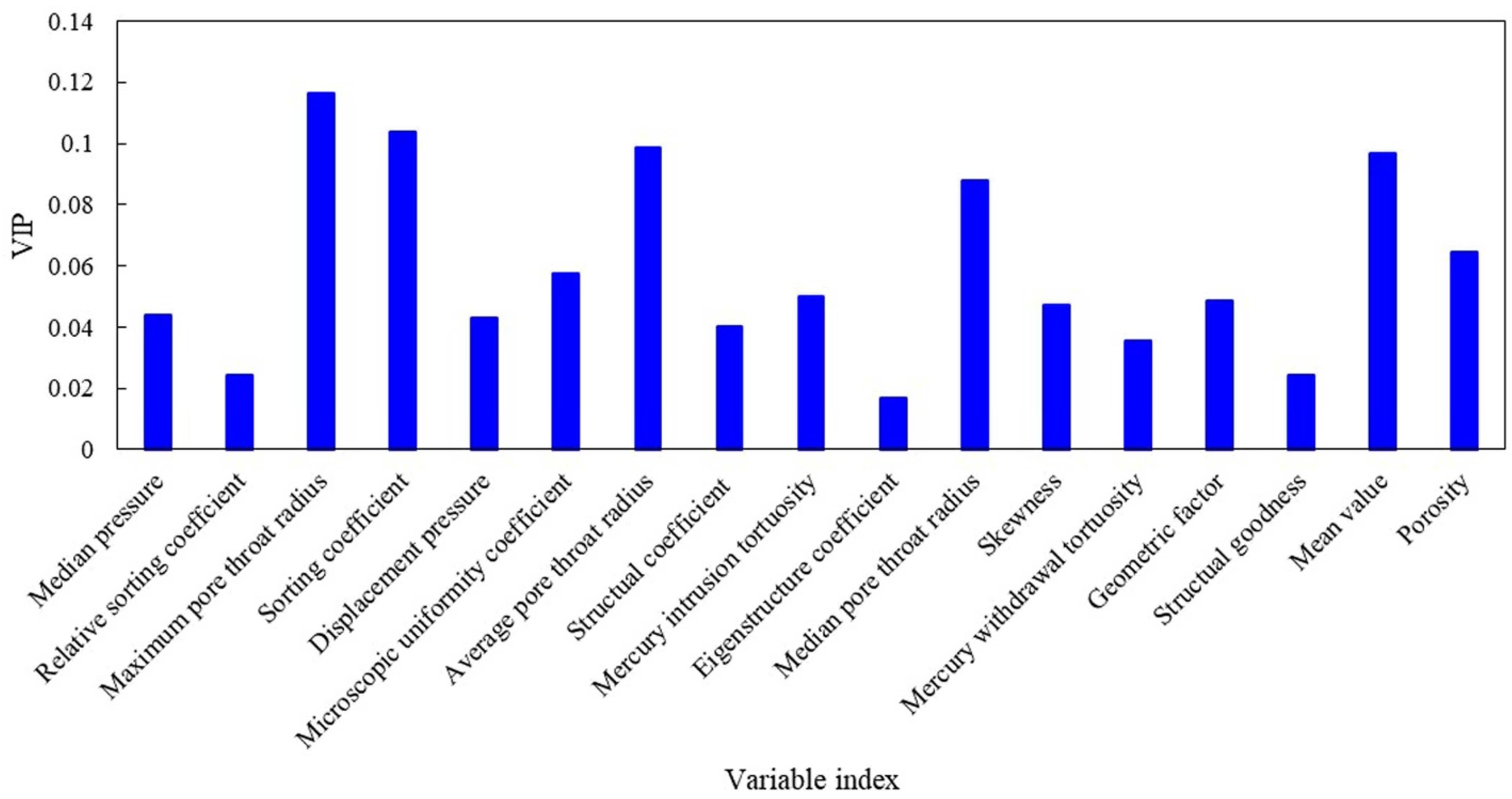
To test the objectivity of the above reference and mitigate subjective bias a two-step, data-driven workflow was performed. First, PLSR screening on Jurassic core MICP descriptors identified five permeability-sensitive variables—maximum pore-throat radius, sorting coefficient, average pore-throat radius, mean value, and median pore-throat radius (Figure 5). Second, these five variables were input in a k-means clustering analysis (distance to cluster centroids normalized) to discover natural groupings in the dataset [24].
Figure 5.
Multiparameter PLSR result analysis of capillary pressure curves of Jurassic Formation.
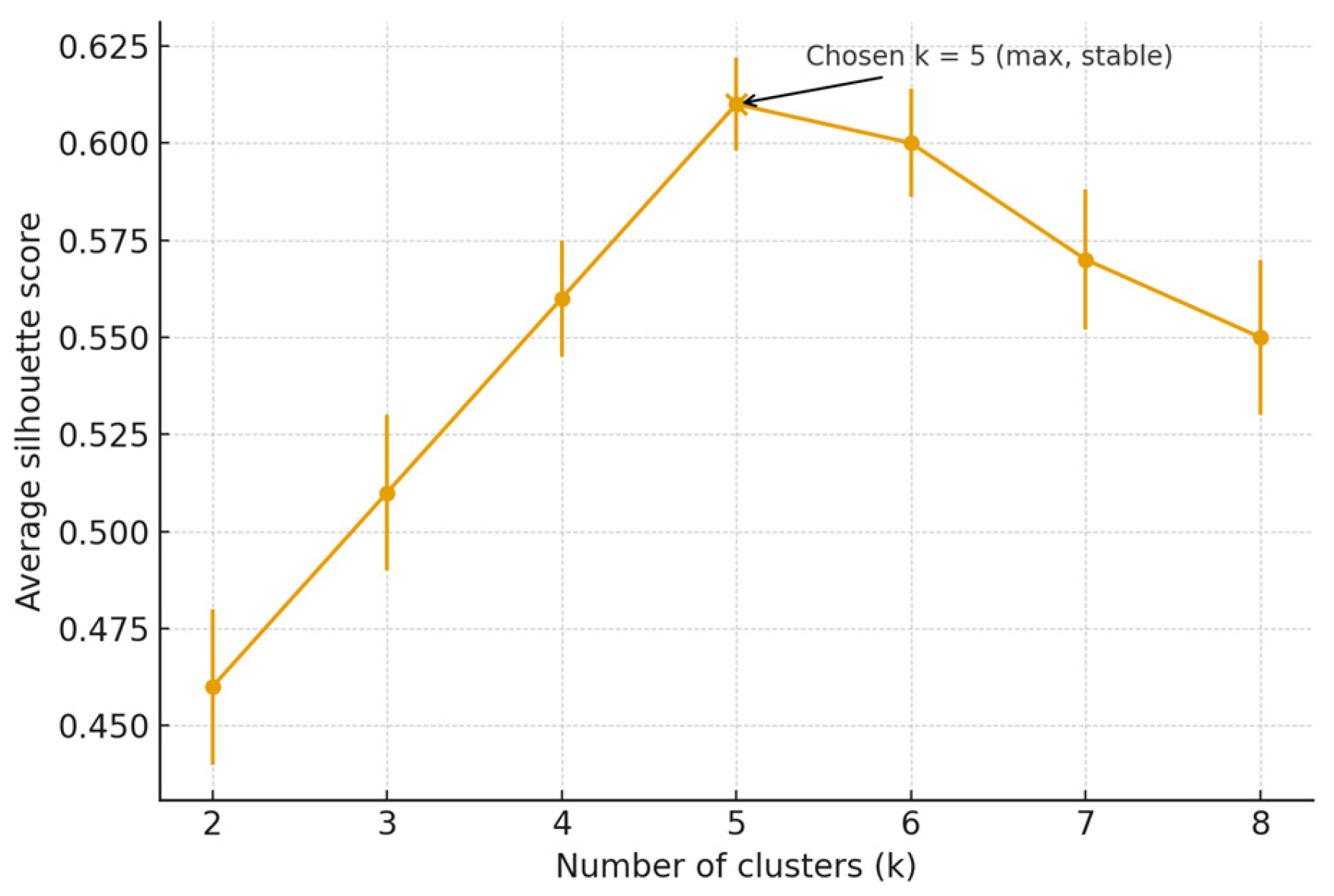
As shown in Figure 6, the average silhouette increased from k = 2 to k = 5 and reached a maximum at k = 5 (mean 0.61 ± 0.012), followed by a decline at k ≥ 6 (mean 0.60 ± 0.014). The improvement from k = 4 to k = 5 exceeded one standard deviation, whereas further splitting (k ≥ 6) yielded lower silhouettes and less balanced clusters. Therefore, k = 5 was selected as the optimal and parsimonious solution, which also aligns with the five-tier permeability taxonomy used in sandstone reservoir engineering (SY/T 6168-1995) and the observed porosity–permeability trend of our Tarim Basin cores. The close agreement between the clustering outcome and the artificial scheme demonstrates that the proposed classification is both statistically supported and operationally simple. In the following sections, Types I–III were focused on as the primary targets for exploration and development (Figure 5; Table 5).
Figure 6.
Silhouette-based selection of k.
Table 5.
Results of the cluster analysis of MICP curves.
3.3. Prediction of Aqueous-Phase Trapping Degree
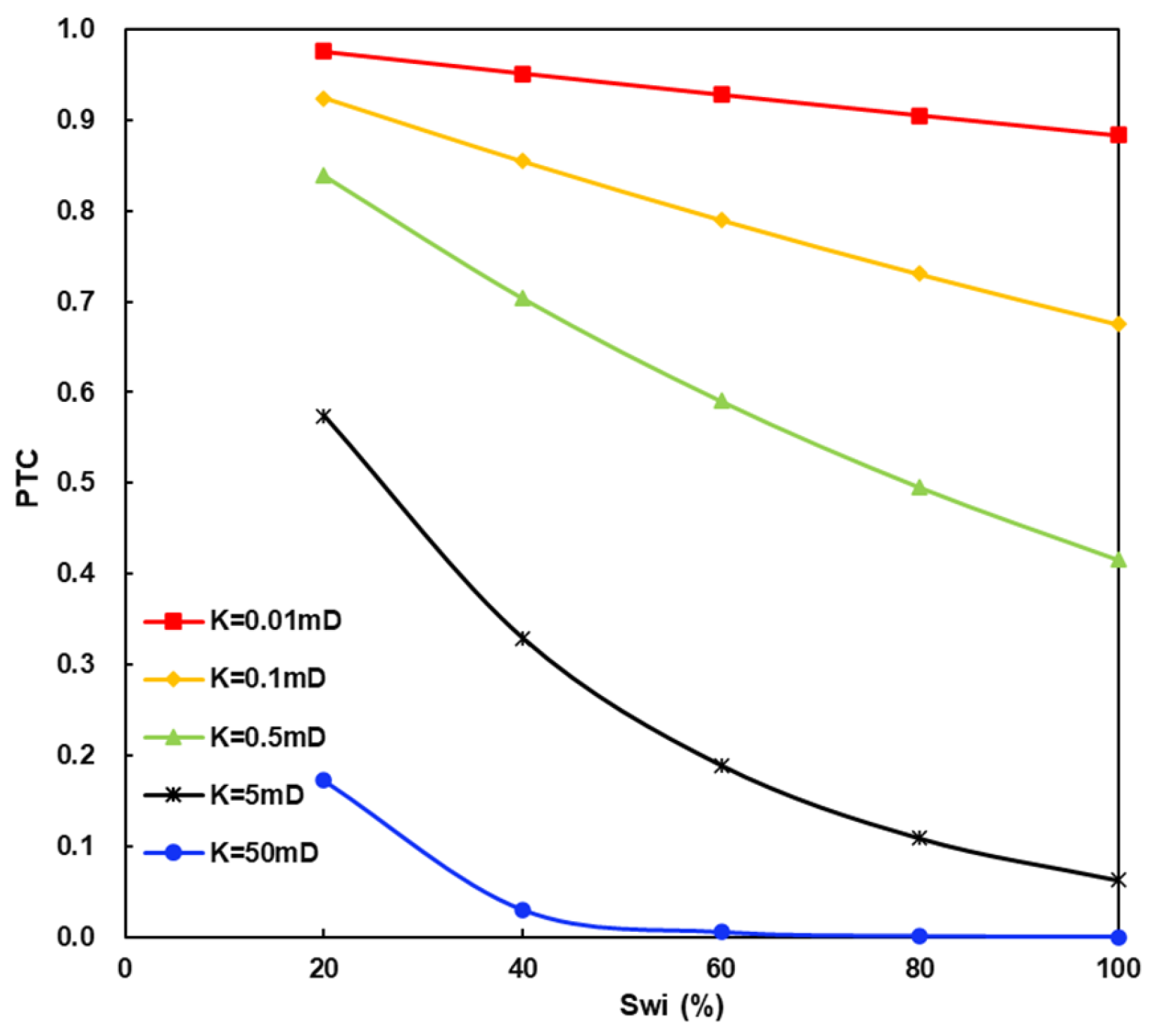
The phase trapping degree reservoir is closely related to reservoir physical properties, intrusive fluid properties and backflow pressure difference. As mentioned above, according to classification reference of tight sandstone reservoirs, dividing reservoir rocks into five categories. Taking Tarim Basin as an example, the degree of damage of aqueous-phase trapping of different rock classes under a 10 MPa pressure difference is predicted. Figure 6 shows that under a fixed pressure difference, the degree of water-trapping damage decreases with the increase in permeability and initial water saturation. The PTC values of Type I and Type II are basically less than 0.3, which indicates there will not be any phase trapping damage in Type I and Type II reservoirs, so the rocks of Type I and Type II are not the focus of the experimental study in this paper. When reservoirs belong to Type IV and Type V, the PTC are all greater than 0.7, which shows intense phase trapping damage. The Type III PTC are much more extensive, ranging from weak to intense phase trapping damage.
We assessed aqueous-phase trapping (APT) using a PTC computed under identical boundary conditions for all cores. Figure 7 shows a monotonic risk gradient across reservoir classes: Type I–II < Type III < Type IV–V. Samples with smaller and more poorly sorted throats exhibit higher capillary entry pressures and longer de-trapping pathways, yielding larger PTC-based risk scores. This hierarchy is consistent with capillary-controlled phase distribution during drainage/imbibition cycles inferred from mercury porosimetry and with reported water-blocking behavior in tight gas reservoirs. Operationally, the PTC map provides a practical screening tool to rank intervals for cleanup difficulty and to prioritize mitigation in Types IV–V.
Figure 7.
Aqueous-phase trapping prediction of different rock class in Tarim Basin.
3.4. Core Flowback Experiment
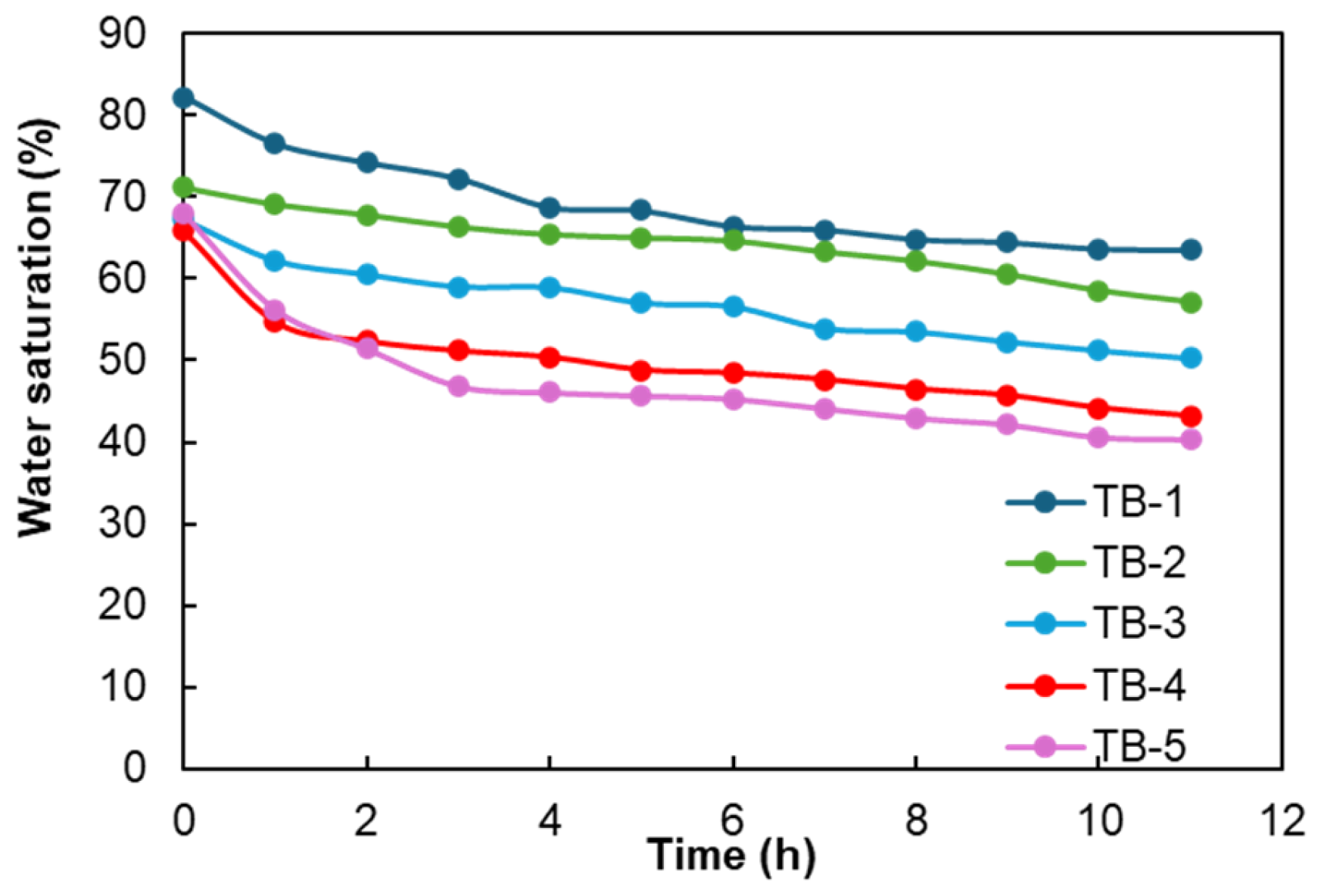
Figure 8 shows water saturation changes in five tight sandstone samples with different permeability in the Tarim Basin under 2 MPa pressure difference. Under gas displacement pressure, the rapid flowback stage of tight sandstone mainly occurs in the first 4 h. We selected one typical core from each of the five classifications to analyze the core displacement results, and the five cores are named TB-1, TB-2, TB-3, TB-4, and TB-5. Within the first four hours of gas displacement, the decrease in water saturation of TB-1, TB-2, TB-3, TB-4, and TB-5 core samples accounts for 47.78%, 64.59%, 77.36%, 58.80%, and 41.24%, respectively. After the core displacement experiment, the retention water-phase saturation of the five samples is 63.53%, 43.16%, 40.38%, 50.27%, and 57.16%, respectively, and the flowback rate is 31.16%, 50.63%, 58.11%, 60.38% and 59.17%, respectively. It can be concluded that the lower the initial permeability of tight sandstone, the worse its water backflow ability.
Figure 8.
Results of water flowback in tight sandstone samples by gas flooding.
4. Discussion
4.1. Characteristic Analysis of MICP Curves
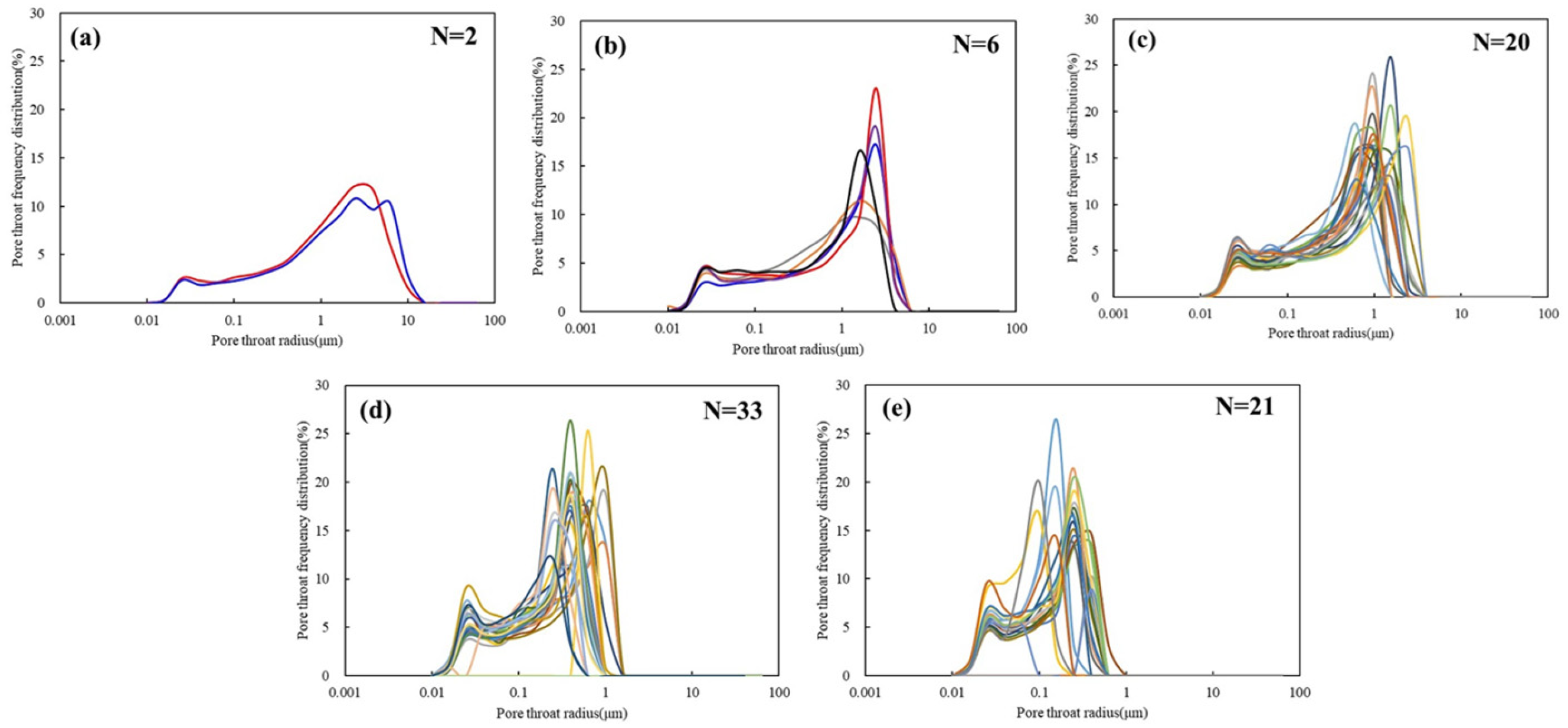
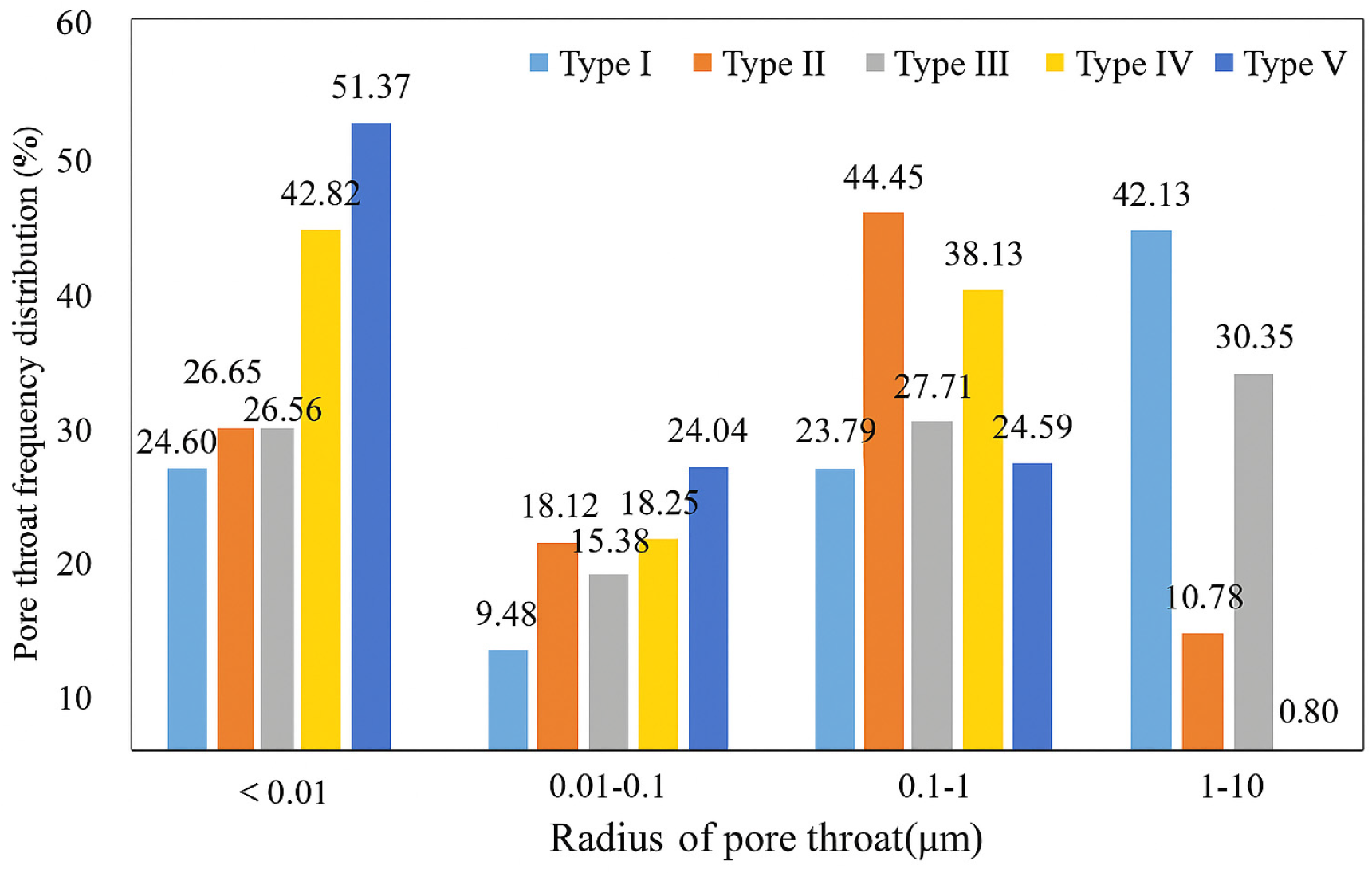
The MICP curves of core samples can be obtained by mercury intrusion porosimetry, and then the size and distribution of pore-throats can be analyzed. The MICP curves of reservoir rock mainly consist of two sections: the initial section and the gradually rising section. The pore-throat radius is multimodal, and the main peak is between 0.25 and 4.00 μm (Figure 9). The displacement pressure ranges from 0.063 MPa to 2.985 MPa, with an average of 0.94 MPa, and the median pressure ranges from 0.495 MPa to 26.63 MPa, with an average of 10.39 MPa. The displacement pressure and median pressure are relatively high. The study area is liable to induce water-trapping damage, nano-micron solid particle invasion damage, and fluid sensitivity damage. As shown in Figure 10, with the decrease in permeability, the distribution frequency of fine pore-throat increases gradually, while that of large pore-throat decreases significantly. Especially in the fourth and fifth types of reservoirs, the pore-throats less than 0.1 μm are obviously increased, while the pore-throats from 1 to 10 μm are almost absent.
Figure 9.
Relation of pore-throat frequency distribution and pore-throat radius of five categories. (a) Type I; (b) Type II; (c) Type III; (d) Type IV; (e) Type V.
Figure 10.
Frequency distribution of pore-throat in different pore-throat diameter range of five categories.
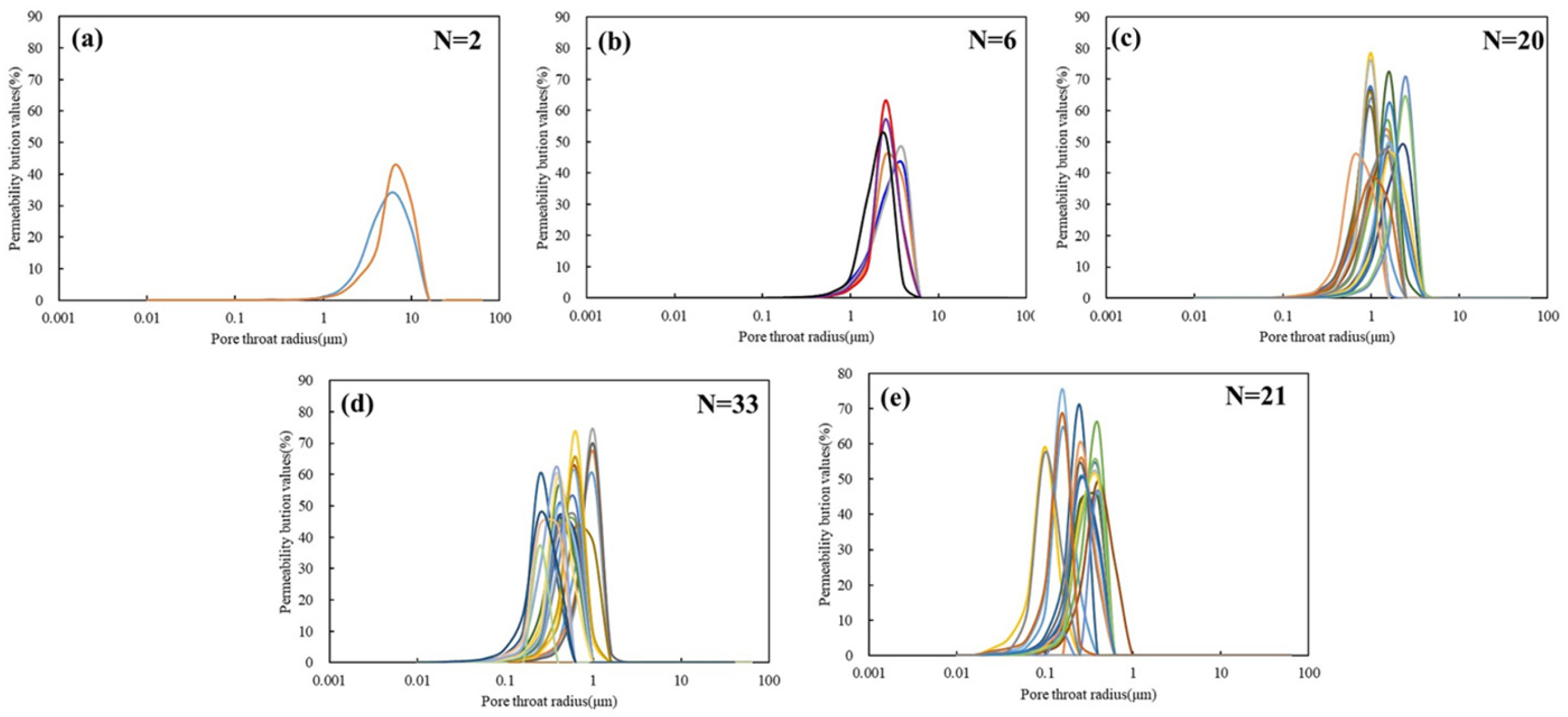
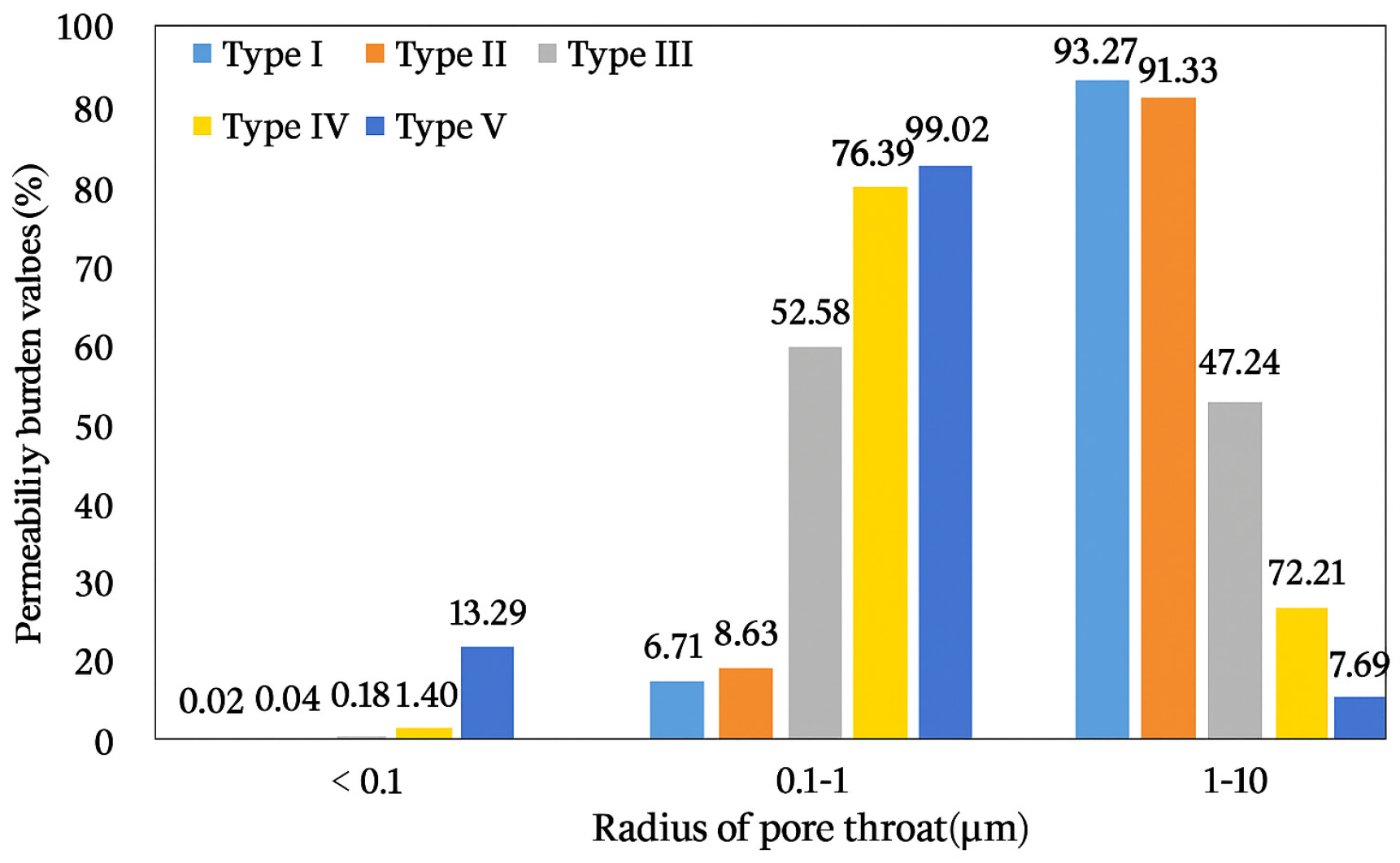
With the decrease in permeability, the contribution value of reservoir permeability gradually shifts to the smaller pore-throat (Figure 11). As shown in Figure 12, with the decrease in permeability, the permeability distribution value of large pore-throat obviously decreases, and the permeability distribution value is mainly concentrated in small and medium pore-throat (i.e., less than 0.1 μm and 0.1–1 μm). The above results further illustrate the rationality of reservoir classification. The pore-throat distribution of each type of reservoir is obviously different.
Figure 11.
Relation of permeability distribution values and pore-throat radius of five categories. (a) Type I; (b) Type II; (c) Type III; (d) Type IV; (e) Type V.
Figure 12.
Permeability distribution values in different pore-throat diameter range of five categories.
4.2. Mercury Withdrawal Efficiency
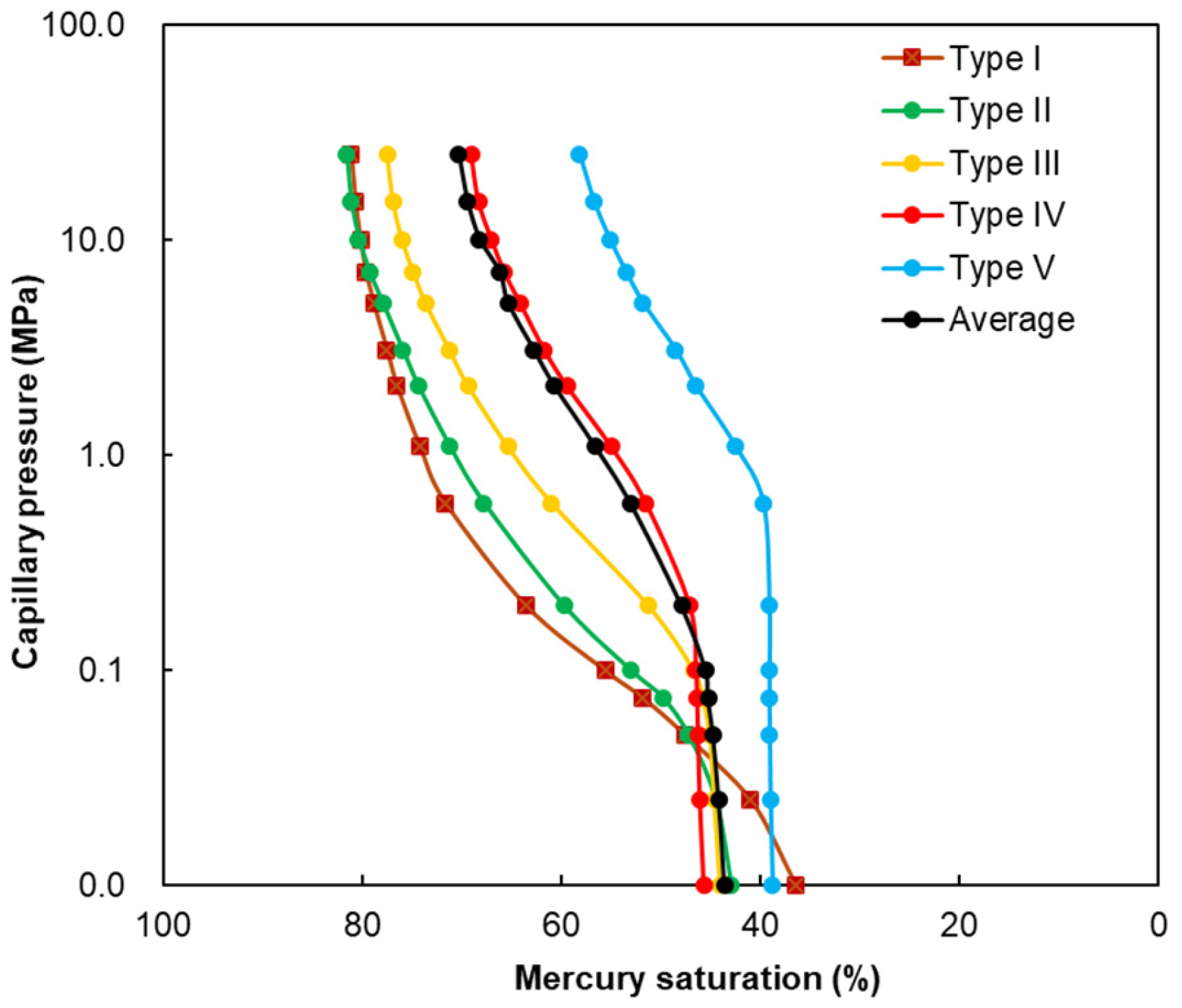
Based on the classification of sandstone reservoirs, the MICP curves can be divided into five categories, and the average mercury intrusion curves and mercury withdrawal efficiency of each category can be analyzed. The average mercury intrusion curves and mercury withdrawal efficiency of the study area is similar to Type IV because the number of core samples in Type IV is relatively large. Figure 13 shows the core samples are characterized by generally poor sorting features and fine skewness. Previous studies have shown that for two core samples with similar intrusion curves, the mercury withdrawal curves are quite different [26]. When the wetted phase replaces the non-wetted phase, the mercury withdrawal efficiency is equivalent to the measurement of the non-wetted phase, which is of great significance for reservoir recovery prediction [27]. Table 6 shows that the minimum volume percentage of unsaturated mercury at Smax decreases, the residual mercury saturation from maximum intrusion pressure to SR increases, with the increasing compactness of core samples. Also, WE rapidly falling off, which indicates the variation in reservoir rock productivity with rock compactness to a certain extent. The mercury withdrawal efficiency of 82 core samples in the mercury intrusion curves of the Tarim Basin is calculated separately. For sandstone, the throat thickness, pore size, and interconnection directly control the mercury withdrawal efficiency [28].
Figure 13.
Average mercury intrusion curves of each category and the total.
Table 6.
Average mercury withdrawal efficiency of each category and the total.
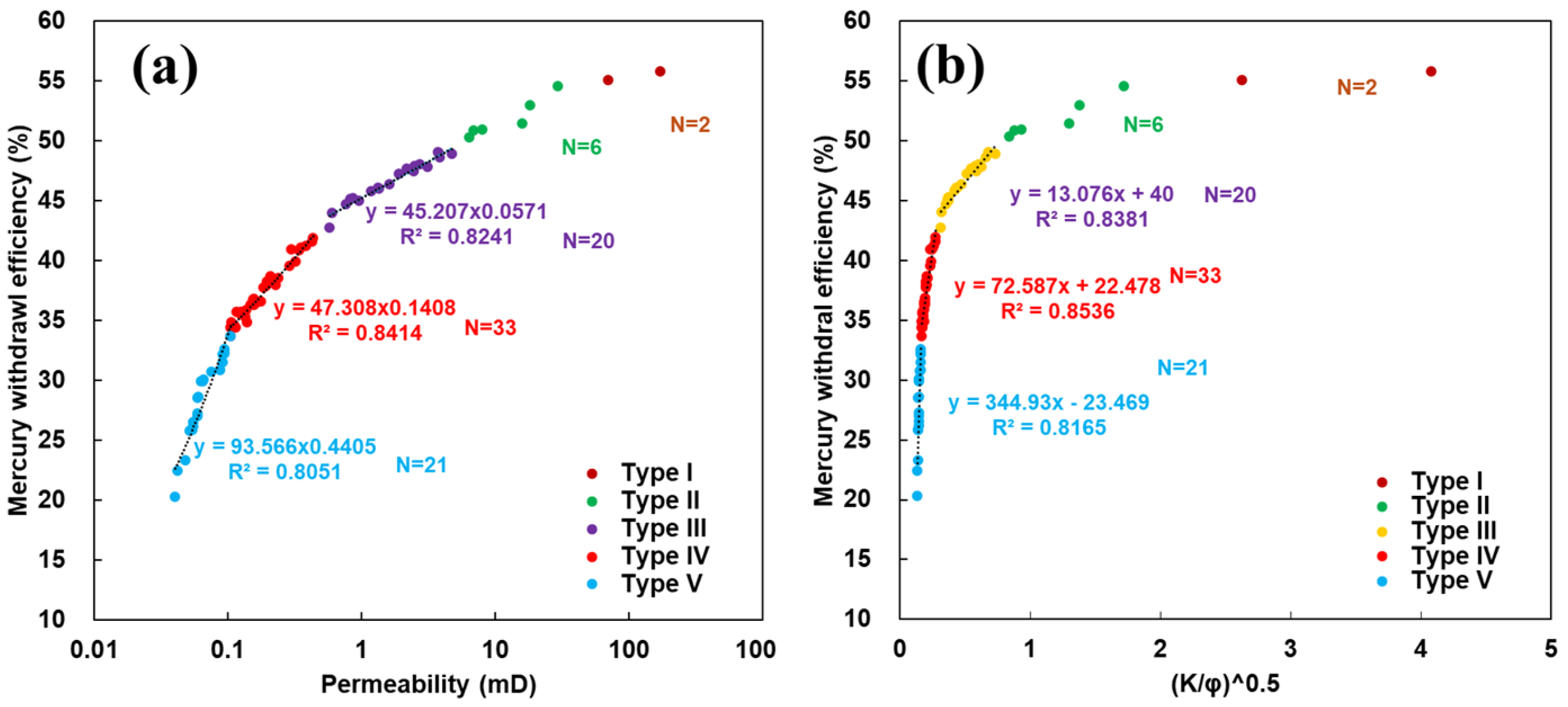
As shown in Figure 14, there is a power function relationship between withdrawal efficiency and different permeability categories. As the number of the Type I and Type II core samples is small, the fitting results are not statistically regular and do not belong to the category of tight sandstone, so they are not discussed in this paper. Permeability is the dimension of the area, which reflects the size of the pore channel area in porous media. The larger the permeability, the larger the pore area in the rock. The reservoir rock of tight sandstone gas reservoir is a kind of natural porous medium with complex pore structure and strong heterogeneity. It develops a multi-scale seepage structure with a coexisting tight matrix and natural fracture [29]. is defined as the comprehensive physical property index of reservoir rock, which can reflect the average pore-throat radius of the reservoir. There is a linear relationship between withdrawal efficiency and the comprehensive physical property index of different categories. Overall, the fitting effect of comprehensive physical parameters and mercury removal efficiency is better than that of permeability. This is because the comprehensive physical property index considers the influence of permeability and porosity at the same time, which can reflect the reservoir characteristics more comprehensively.
Figure 14.
(a) Mercury withdrawal efficiency relationship with permeability of tight sandstone, (b) mercury withdrawal efficiency relationship with comprehensive physical property index of reservoir of tight sandstone.
4.3. Evaluation of Aqueous-Phase Trapping Damage
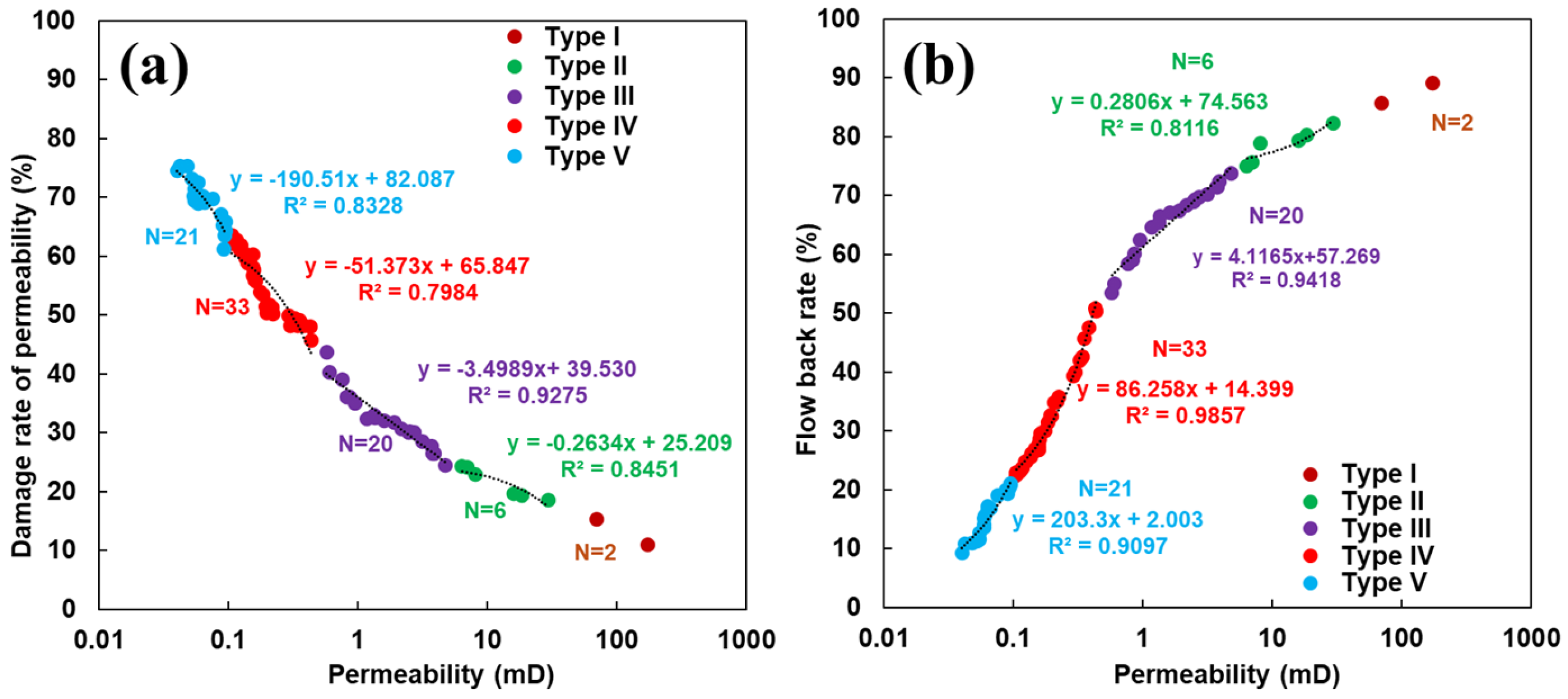
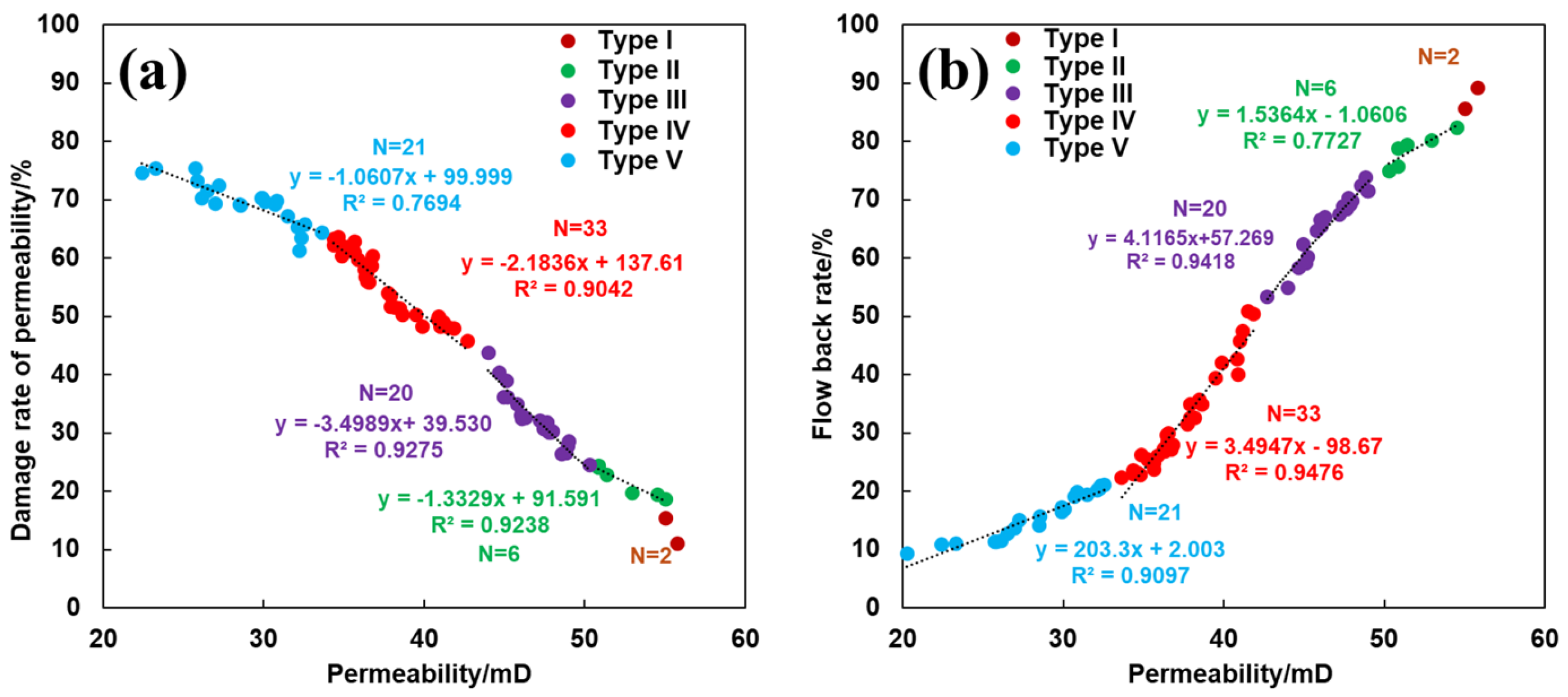
Figure 15a shows the higher the initial permeability is, the smaller the permeability damage rate is. Figure 15b shows the higher the initial permeability is, the higher the flowback rate is. The relationship between permeability damage rate/flowback rate and initial permeability is linear. Moreover, the slope of the fitting curve of different categories of cores changes regularly with the increase in permeability. However, the pore-throat of the tight matrix is very small, and the throat is mainly micro–nano-scale, with very low permeability and weak pressure transfer capacity, so the fluid flow capacity in the tight reservoir is poor [30]. The water phase trapped in the pore-throat faces difficulty in flowback. The gas production of tight sandstone undergoes a multi-scale process of desorption–diffusion–percolation, in which diffusion dominates in the micro–nano throat, the transfer rate is slow, and the pressure supply capacity is weak [11]. When there are two phases of gas and water, on the one hand, the increase in water saturation will cause a decrease in gas flow channel size; on the other hand, it will cause additional flow resistance and further hinder gas mass transfer. The multi-scale heterogeneous pore structure, consisting of a tight matrix and natural fracture, makes the water-phase backflow selective, in which the matrix is the main damage area and the fracture is the backflow area.
Figure 15.
(a) The relationship between the permeability damage rate and the permeability of tight sandstone; (b) the relationship between the flowback rate and the permeability of reservoir of tight sandstone.
The backflow degree of water-phase gas drive is related to the maximum pressure drop that the reservoir can provide. Capillary pressure is the driving force when the water phase intrudes into the reservoir; capillary pressure is the resistance when the water-phase gas drive flows back [31]. When the radius of the rock pore-throat is 0.1 μm, the capillary pressure exceeds 7 MPa. The pore-throat radius of the tight sandstone gas reservoir is mostly lower than 0.1 μm (nano scale), and the capillary pressure can be as high as tens or even hundreds of MPa. When multiple throats are connected in series, the accumulated capillary pressure will be difficult to overcome with the fluid pressure of the reservoir itself. In this case, it is difficult for the water phase trapped in the nano pore-throat to flowback through the pressure drop of the gas layer itself.
As shown in Figure 16, there are also some statistical rules between mercury withdrawal efficiency and the permeability damage rate/flowback rate of Type III, Type IV and Type V core samples. The relationship between the permeability damage rate/flowback rate and the initial permeability is linear. In Figure 15a, the slope of the fitting curve decreases with the increase in permeability, while with the increase in permeability, the slope of fitting curve increases first and then decreases in Figure 15b. On the one hand, the heterogeneity of pore-throat development causes the difference in water saturation distribution; on the other hand, when the water phase flows back, the water phase inside the coarse pore-throat tends to flowback. Because the pore fluid pressure provided by the reservoir is certain, according to the principle of capillary resistance and minimum seepage resistance, only part of the water phase in the coarse pore-throat can be displaced out of the reservoir. Therefore, this part of the pore-throat will form a dominant flow channel, which makes it harder for the water phase inside the pore-throat to be affected by the formation pore fluid pressure. When the backflow seepage channel is formed, the wetting phase in the fine pore-throat will be trapped, so it is difficult to backflow completely.
Figure 16.
(a) The relationship between the permeability damage rate and the mercury withdrawal efficiency of tight sandstone; (b) the relationship between the flowback rate and the mercury withdrawal efficiency of tight sandstone reservoirs.
In general, the water-phase flowback can be divided into displacement stage and evaporation stage, in which the rapid water-phase flowback occurs in the displacement stage, while the evaporation stage depends on the gas-phase drainage channel and gas-phase flow rate. The pressure drop that the reservoir can provide is certain. Under the effect of the pressure drop, the part of water-phase corresponding to the pore-throat has been expelled and formed a dominant seepage channel [30]. Especially in the early stage of backflow, the water phase in fractures and macropores has basically backflowed, and become the main channel of gas pressure transmission, so that the water phase in smaller pores cannot flowback. In addition, for some gas reservoirs with significant interlayer differences, water invasion and gas production may not be in the same layer, which results in the situation of “gas path, water channel” when water invasion and gas drive flowback, that is, water invasion and gas production, are separated by two paths, which makes it difficult to flowback [32]. This can cause microfractures to develop in the tight sandstone reservoirs. When the water phase intrudes, it first quickly enters into the fractures intersecting with the wellbore, and then advances to the depth of the formation. However, the water phase of the base block intrudes slowly, mainly enters the reservoir through capillary self-priming. With the increase in soaking time, a high water saturation zone is formed near the wellbore. Due to the existence of fractures in tight sandstone reservoirs, the high water saturation zone that separates the wellbore is further away. When the gas drive flows back, the water phase in the near fracture area and macropores flows back first, while the water phase in the base block cannot flow back effectively.
The fitting result for the mercury withdrawal efficiency and flowback rate is better than that of permeability damage rate. This is because the mercury withdrawal efficiency can better reflect the retention of fluid by rock pore structures. In conclusion, the mercury withdrawal efficiency of tight sandstone can be used to evaluate the aqueous-phase trapping damage. A more accurate prediction needs to be made by combining the gas–water interface of tight sandstone and the water-film thickness of pore-throats with different diameters.
5. Implication
From an engineering standpoint, WE captures the hysteretic component of pore-scale trapping (capillary backpressure and wettability memory) that is not represented by permeability or porosity alone. In tight sandstones with micro–nano-scale throats, high capillary pressures and small effective radii promote aqueous-phase trapping and hinder clean-up/flowback even where ϕ are comparable; WE therefore acts as a complementary descriptor of APT risk and cleanup behavior. This interpretation is consistent with previous observations that MICP-derived parameters encode information on capillary barriers and flow capacity beyond bulk porosity.
In tight rocks with fractal-like pore-throat populations, stress dynamically reshapes geometry and connectivity, leading to the co-evolution of permeability and capillary thresholds. Recent fractal-based studies quantitatively link stress-induced changes in pore/fracture roughness and aperture distributions to permeability and pressure-transmission behavior [33,34]. Our findings—that WE adds incremental predictive value beyond ϕ, and that PTC reflects pressure-transmission efficiency—are consistent with this framework: WE maps the capillary barrier associated with small-throat statistics, whereas PTC reflects stress- and geometry-dependent transmission through the coupled fracture–matrix system during early flowback. Together, they support WPD-aware completion design and staged drawdown strategies, particularly in intervals exhibiting high WE and low PTC.
SEM and mineralogical analyses indicate that kaolinite and illite are preferentially distributed in pore-throats and along grain contacts, locally occluding effective channels and increasing specific surface area [23]. These hydrophilic clays promote adsorbed-water films and capillary-bound water in micro–nano throats, enhancing spontaneous imbibition and residual water saturation. Clay-rich tight sandstones are thus expected to show systematically lower WE and higher APT risk [35], and the WE–PTC-based rock types implicitly capture this mineralogically controlled trapping behavior. Intervals enriched in kaolinite/illite and throat-filling clays can therefore be flagged as high-risk zones where fluid selection and drawdown schedules should be more conservative.
At the field scale, illite/kaolinite-rich and high-WE/low-PTC intervals are candidates for gas–wet wettability modification and low-surface-tension flowback systems, combined with minimized early liquid loading (e.g., foam or assisted lift with staged drawdown). In contrast, intervals with lower WE and higher PTC can be managed with less aggressive mitigation while still maintaining effective cleanup.
Most plotted relationships are based on single measurements per core without parallel replicates. Introducing per-point error bars would conflate natural geological heterogeneity with instrumental noise and imply a level of statistical precision not supported by the dataset. All bivariate relationships (e.g., WE vs. permeability, WE vs. flowback efficiency) are fitted using ordinary least squares and are intended as empirical, first-order trends within the observed scatter. The conclusions rely on consistent patterns across multiple rock types rather than on any single fitted coefficient.
From an implementation perspective, the proposed WE–PTC workflow relies solely on routine MICP measurements and straightforward statistical processing, without requiring additional special-core programs. Once MICP data are available, rock typing and APT/WPD risk ranking can be integrated into standard in-house workflows with negligible incremental time and cost, providing a practical, semi-quantitative tool for screening sensitive intervals rather than a high-precision production forecasting model.
6. Conclusions
- (1)
- Tight sandstone gas reservoirs are characterized by small pore-throat systems, high capillary entry pressure, and large specific surface area; MICP indicates effective throats mainly fall in <0.01–1 μm ranges, which naturally leads to strong imbibition and persistent water retention.
- (2)
- Because of marked pore-structure heterogeneity, fractures and coarse throats form preferential flowback pathways, while micro/fine throats remain below the pressure required to overcome capillary barriers; consequently, a portion of the aqueous phase in micropores does not flow back.
- (3)
- Permeability is most sensitive to five MICP descriptors—maximum pore-throat radius, sorting coefficient, average pore-throat radius, median pore-throat radius, and mean value. For screening, tight sandstones can be grouped by permeability into 0.01–0.10 mD, 0.10–0.50 mD, and 0.50–5.0 mD.
- (4)
- WE, when used as a damage proxy, captures the pore-structure-controlled fluid retention more directly than permeability alone and can be used to quantify water-phase trapping damage and to rank intervals for cleanup difficulty.
Author Contributions
Conceptualization, Y.T. and N.Z.; methodology, X.Z.; validation, Y.L. (Ying Liu), Q.B. and N.Z.; formal analysis, Y.T. and X.Z.; investigation, Y.T., Y.L. (Ying Liu) and Q.B.; writing—original draft preparation, Y.L. (Yu Lu); writing—review and editing, N.Z., Y.L. (Yu Lu) and X.Z. All authors have read and agreed to the published version of the manuscript.
Funding
This research received no external funding.
Data Availability Statement
The original contributions presented in this study are included in the article. Further inquiries can be directed to the corresponding author.
Conflicts of Interest
Authors Yuanyuan Tian, Ying Liu, Qin Bie were employed by the company PetroChina Southwest Oil & Gasfield Company, and authors Yu Lu, Xin Zhou were employed by the company CNPC Chuanqing Drilling Engineering Company Limited. The remaining author declares that the research was conducted in the absence of any commercial or financial relationships that could be construed as a potential conflict of interest. The funders had no role in the design of the study; in the collection, analyses, or interpretation of data; in the writing of the manuscript; or in the decision to publish the results.
References
- Kang, Y.; Luo, P.; Xu, J.; Xu, X. Formation damage control technology for tight gas sandstone reservoirs in western Sichuan Basin: Developments and challenges. J. Southwest Pet. Univ. (Sci. Technol. Ed.) 2000, 22, 5–8. [Google Scholar]
- Chang, B.; Tong, Q.; Cao, C.; Zhang, Y. Effect of pore-throat structure on movable fluid and gas–water seepage in tight sandstone from the southeastern Ordos Basin, China. Sci. Rep. 2025, 15, 7714. [Google Scholar] [CrossRef]
- Zhang, H.; Guo, L.; Wu, Z.; Ma, J. Pore-throat structure, fractal characteristics and permeability prediction of tight sandstone: The Yanchang Formation, southeast Ordos Basin. Sci. Rep. 2024, 14, 27913. [Google Scholar] [CrossRef] [PubMed]
- Zhang, Q.; Qi, H.; Huo, Y.; Li, Y.; Li, T.; Zhang, D.; Lin, K.; Yang, C.; Tong, J.; Zhao, H.; et al. Study of pore-throat structure characteristics and fluid mobility of Chang 7 tight sandstone reservoir in Jiyuan area, Ordos Basin. Open Geosci. 2023, 15, 20220534. [Google Scholar] [CrossRef]
- Dong, X.X.; Meng, X.Z.; Pu, R.H. Impacts of mineralogy and pore throat structure on the movable fluid of tight sandstone gas reservoirs in coal measure strata: A case study of the Shanxi Formation along the southeastern margin of the Ordos Basin. J. Pet. Sci. Eng. 2023, 220, 111257. [Google Scholar] [CrossRef]
- Liu, J.; Li, L.; Zhang, C.; Jiang, Y.; Swennen, R.; Zhao, C.; Hou, S. Identification and quantitative evaluation of pores and throats of a tight sandstone reservoir (Upper Triassic Xujiahe Formation, Sichuan Basin, China). Mar. Pet. Geol. 2022, 140, 105663. [Google Scholar] [CrossRef]
- Wang, J.; Zhou, F. Cause analysis and solutions of water blocking damage in cracked/non-cracked tight sandstone gas reservoirs. Pet. Sci. 2021, 18, 964–978. [Google Scholar] [CrossRef]
- Zhang, J.; Zhang, X.; Liu, Y.; Tang, Y.; Wang, H.; Huang, L.; Liao, F.; Chen, Y. Study on the mechanism of water blocking in tight sandstone gas reservoirs based on centrifugal and nuclear magnetic resonance methods. Energies 2022, 15, 6680. [Google Scholar] [CrossRef]
- Miao, J.; Zhong, C. Dynamic variation of water saturation and its effect on aqueous phase trapping damage during tight sandstone gas well production. ACS Omega 2021, 6, 5166–5175. [Google Scholar] [CrossRef]
- She, J.; Wang, Y.; Liu, H.; Zhang, L.; Sun, J. Aqueous phase trapping damage in the production of tight gas reservoirs. J. Nat. Gas Sci. Eng. 2020, 76, 103205. [Google Scholar] [CrossRef]
- Tian, J.; Chen, Q.; Kang, Y.; Wang, Y.; Qin, C. Rapid assessment of water phase trapping on gas permeability reduction in typical tight gas reservoirs in China. Geomech. Geophys. Geo-Energy Geo-Resour. 2023, 9, 179. [Google Scholar] [CrossRef]
- He, C.; Hu, W. Elementary lecture on water lock effect and reservoir damage. Nat. Gas Ind. 1999, 14, 36–38. [Google Scholar]
- Alessa, S.; Sakhaee-Pour, A.; Sadooni, F.N.; Al-Kuwari, H.A. Capillary pressure correction of cuttings. J. Pet. Sci. Eng. 2022, 217, 110908. [Google Scholar] [CrossRef]
- Li, L.; Li, Z.; Han, H.; Liu, C.; Li, Y.; Zhao, W.; Wang, J.; Bao, Z. Multifractal analysis of tight sandstone using micro-CT and high-pressure mercury injection methods. Fractal Fract. 2025, 9, 336. [Google Scholar] [CrossRef]
- Wang, Y.X.; Xie, B.; Lai, Q.; Zhao, Z.; Xia, X.; Xie, R. Evaluation of pore structure and classification in tight gas reservoir based on NMR logging. Prog. Geophys. 2023, 38, 759–767. [Google Scholar] [CrossRef]
- Esmaeilinasab, M.R.; Hajipour, M.; Shahrabadi, A.; Behnood, M. Synchronous impact of divalent ions on formation damage and wettability alteration during smart water injection: Static and dynamic assessment. J. Pet. Explor. Prod. Technol. 2025, 15, 124. [Google Scholar] [CrossRef]
- Wu, F.; Dai, J.; Shi, L.; Fan, L.; Guan, Y.; Li, Y.; Wang, Q.; Chen, C. An experiment-based study of formation damage using a microetching model displacement method. Micromachines 2022, 13, 270. [Google Scholar] [CrossRef]
- Bennion, D.B.; Thomas, F.B.; Bietz, R.F.; Bennion, D.W. Water and hydrocarbon phase trapping in porous media—Diagnosis, prevention and treatment. J. Can. Pet. Technol. 1996, 35, 29–36. [Google Scholar] [CrossRef]
- You, L.; Kang, Y.; Chen, Y.; Zhang, H.; Liu, Y. Integrated evaluation of water phase trapping damage potential in tight gas reservoirs. In Proceedings of the 8th European Formation Damage Conference, Scheveningen, The Netherlands, 27–29 May 2009; p. SPE-122034. [Google Scholar]
- Abbasi, J.; Zhao, J.; Ahmed, S.; Cai, J.; Jiao, L. Prediction of permeability of tight sandstones from mercury injection capillary pressure tests assisted by a machine-learning approach. Capillarity 2022, 5, 53–67. [Google Scholar] [CrossRef]
- Jiang, D.; Chen, H.; Xing, J.; Shang, L.; Wang, Q.; Sun, Y.; Zhao, Y.; Cui, J.; Duncan, I. A novel method of quantitative evaluation and comprehensive classification of low permeability-tight oil reservoirs: A case study of Jidong Oilfield, China. Pet. Sci. 2022, 19, 1527–1541. [Google Scholar] [CrossRef]
- Cui, J.; Xiang, K.; Tong, X.; Shi, Y.; Hu, Z.; Yan, L. Analysis and modeling of elastic and electrical response characteristics of tight sandstone in the Kuqa foreland Basin of the Tarim Basin. Minerals 2025, 15, 764. [Google Scholar] [CrossRef]
- Shi, K.; Chen, J.; Pang, X.; Jiang, F. Wettability of different clay mineral surfaces in shale: Implications from molecular dynamics simulations. Pet. Sci. 2023, 20, 689–704. [Google Scholar] [CrossRef]
- Yang, Y.; Wen, Z.; Tian, W.; Fan, Y.; Gao, H. A new model for predicting permeability of Chang 7 tight sandstone based on fractal characteristics from high-pressure mercury injection. Energies 2024, 17, 821. [Google Scholar] [CrossRef]
- SY/T 6168-1995; Gas Reservoir Classification. Petroleum Industry Press: Beijing, China, 1995.
- Song, X.; Feng, C.; Li, T.; Zhang, Q.; Pan, X.; Sun, M.; Ge, Y. Quantitative classification evaluation model for tight sandstone reservoirs based on machine learning. Sci. Rep. 2024, 14, 20712. [Google Scholar] [CrossRef]
- Pan, H.; Du, Y.; Zuo, Q.; Xie, Z.; Zhou, Y.; Xu, A.; Zhang, J.; Guo, Y. Stress sensitivity of tight sandstone reservoirs under the effect of pore structure heterogeneity. Processes 2025, 13, 1960. [Google Scholar] [CrossRef]
- Dai, J.; Pi, S.; Wu, J.; Zhang, Y. Research on the influence of dynamic contact angle of mercury meniscus on the interpretation of rock pore throat radius in mercury intrusion experiments. Front. Earth Sci. 2024, 12, 1434211. [Google Scholar] [CrossRef]
- Tang, L.; Zhang, Y.; Chen, X.; Zhang, Q.; Chen, M.; Pei, X.; Kang, Y.; Zhang, Y.; Tang, X.; Zhou, B.; et al. Multiscale gas flow mechanisms in ultra-deep fractured tight sandstone reservoirs with water invasion. Processes 2025, 13, 3596. [Google Scholar] [CrossRef]
- Jiang, T.; Sun, H.; Xiao, X.; Zhu, S.; Ouyang, W.; Tang, Y. Multi-scale flow mechanism and water control strategy of ultra-deep multi-porosity fractured tight sandstone gas reservoirs. Front. Energy Res. 2022, 10, 977439. [Google Scholar] [CrossRef]
- Chen, F.; Duan, Y.; Wang, K. Study on the flow behavior of gas and water in fractured tight gas reservoirs considering matrix imbibition using the digital core method. Processes 2024, 12, 709. [Google Scholar] [CrossRef]
- Li, T.; Ren, D.; Sun, H.; Wang, H.; Tian, T.; Li, Q.; Yan, Z. Imbibition characteristics and influencing factors of the fracturing fluid in a tight sandstone reservoir. ACS Omega 2024, 9, 17204–17216. [Google Scholar] [CrossRef]
- Xue, K.; Pu, H.; Li, M.; Luo, P.; Liu, D.; Yi, Q. Fractal-based analysis of stress-induced dynamic evolution in geometry and permeability of porous media. Phys. Fluids 2025, 37, 036630. [Google Scholar] [CrossRef]
- Pu, H.; Xue, K.; Wu, Y.; Zhang, S.; Liu, D.; Xu, J. Estimating the permeability of fractal rough rock fractures with variable apertures under normal and shear stresses. Phys. Fluids 2025, 37, 036635. [Google Scholar] [CrossRef]
- Liu, D.; Ren, D.; Du, K.; Qi, Y.; Ye, F. Impacts of mineral composition and pore structure on spontaneous imbibition in tight sandstone. J. Pet. Sci. Eng. 2021, 201, 108397. [Google Scholar] [CrossRef]
Disclaimer/Publisher’s Note: The statements, opinions and data contained in all publications are solely those of the individual author(s) and contributor(s) and not of MDPI and/or the editor(s). MDPI and/or the editor(s) disclaim responsibility for any injury to people or property resulting from any ideas, methods, instructions or products referred to in the content. |
© 2025 by the authors. Licensee MDPI, Basel, Switzerland. This article is an open access article distributed under the terms and conditions of the Creative Commons Attribution (CC BY) license (https://creativecommons.org/licenses/by/4.0/).