


Abstract
Over the past three decades, artificial intelligence (AI) has substantially reshaped marketing research and practice, yet the discipline has not established a systematic understanding of its evolutionary trajectory and intellectual structure. A bibliometric analysis of 1923 Scopus publications (1992–2025) was conducted using CiteSpace to explore collaboration patterns, conceptual development, and thematic organization. It identified six evolutionary stages with accelerating innovation cycles, starting with neural networks (1992–2000) and ending with generative AI (2024–2025), with research attention per stage compressing from approximately 9 years to just 2 years. The analysis of the collaboration network shows that the key contributors are India, China, the USA, and the UK. Co-citation analysis indicates that there are three thematic dimensions with seven clusters, namely: (i) AI technological foundations and capabilities, (ii) AI marketing applications and transformation, and (iii) responsible AI governance and ethics. It suggests a Three-Force Evolutionary Framework, which combines technology-push, market-pull, and governance-moderator forces to describe the dynamics of the field. This framework shows that the Regulatory Awakening of 2018 (e.g., GDPR and the Cambridge Analytica incident) guided, not limited, innovation, and highlighted the critical personalization–privacy paradox on which modern developments are based. It identifies three priority research directions: generative AI in creative marketing, consumer trust in the personalization–privacy paradox, and organizational adaptation to fast innovation cycles. This study provides scholars with a comprehensive knowledge map, practitioners with strategic imperatives for responsible AI adoption, and policymakers with evidence that well-designed regulation accelerates innovation by balancing commercial value with societal concerns.
1. Introduction
The digital revolution has profoundly transformed economic and social systems, with marketing emerging as one of the most significantly affected industries [1]. The application of technological innovations has become one of the fundamental factors of shaping marketing plans, quality of customer interaction, and brand performance in the new digital environment [2]. This new industrial practice has resulted in the introduction of AI in marketing as a new area of study.
AI in marketing refers to the application of diverse AI technologies to include data-driven information in marketing strategies and to realize the objective of enhancing customer experiences and increasing business performance [3]. The use of AI in marketing has enabled personalized customer interactions on a large scale [4], forecasting customer behavior [5], and content creation [6], and has fundamentally altered the way organizations understand and interact with customers [7]. Altogether, AI in marketing represents a paradigm shift in marketing practices that is shaped by the co-evolution of AI technologies and market demands, and simultaneously, it promises massive prospects for academic research.
In recent years, particularly since 2019, the topic of AI in marketing has generated several research subtopics and a considerable amount of knowledge on diverse themes and valuable discoveries. Research areas include AI-powered customer segmentation and targeting [8], chatbots and conversational AI in customer service [9], predictive analytics for consumer behavior [5], AI-driven content creation and personalization [6], sentiment analysis and social media monitoring [10], and ethical considerations in AI marketing applications [11]. These research streams remain fragmented, with inconsistencies in theoretical constructs and empirical findings, which has restricted the practical applicability of the individual research to some degree.
At the same time, the application of AI in marketing presents opportunities and challenges. Although AI technologies have transformed marketing activities and competition, they have also cast doubt on consumer privacy, algorithmic bias, transparency, and excessive dependence on automation [12,13]. The relevance of AI in marketing has been further increased due to the digital acceleration in the context of the COVID-19 pandemic [14,15]. Consequently, an extensive bibliometric analysis is needed to understand the patterns of evolution and development in the field of AI marketing research.
Previous reviews of AI in marketing research have had two basic limitations: disjointed research contents and subjective research methodologies. Existing research mainly concentrates on niche applications such as machine learning in customer analytics [16], natural language processing in sentiment analysis [17], chatbot application in customer service [18], and machine learning in customer lifetime value prediction [19]. Such literature reviews typically only focus on isolated AI technologies and do not reflect the interconnectedness of AI applications in the entire marketing ecosystem. Although Chintalapati and Pandey [20] expanded the scope of the analysis by finding five functional themes in 170 use cases, their study is limited to categorization by theme, without showing the intellectual structure and development of the research field.
In terms of methods of analysis, both traditional narrative and systematic reviews are subjective and limited in scope. While theoretical frameworks have been proposed to classify AI capabilities in marketing, including the intelligence hierarchy framework by Huang and Rust [21,22], these models remain primarily functional classifications and do not capture evolutionary dynamics or enable cross-domain integration. Conversely, bibliometric analysis provides a broad coverage over a long time period and is more objective and reproducible [23].
Although bibliometric analyses have demonstrated considerable analytical rigor in specific sub-domains of AI marketing, including retail marketing [24], brand management [25], and B2B marketing [26], these studies have remained largely confined to single application contexts. Consequently, a significant research gap persists in mapping the interrelationships among these sub-domains and tracing their co-evolutionary patterns.
To address these gaps, this study employs bibliometric analysis to conduct a cross-domain integrative examination of AI in marketing research. In particular, the research questions that this study aims to answer are as follows:
RQ1. How do authors collaborate and with what countries/regions in AI marketing research?
RQ2. What has changed in the conceptual framework of AI in marketing since 1992 to 2025, and what are the emerging research frontiers?
RQ3. What are the intellectual and thematic aspects that comprise the knowledge structure of AI marketing research?
RQ4. What are the most important research gaps and future directions of AI development in marketing?
To answer these research questions, this study uses bibliometric analysis of 1923 articles found in Scopus between 1992 and November 2025. This study makes three contributions: (1) it provides a comprehensive overview of current research developments through objective bibliometric analysis; (2) it adopts a cross-domain integrative approach examining a broad range of AI technologies within the AI marketing ecosystem; and (3) it proposes an overarching theoretical framework to categorize and systematize the fragmented AI marketing literature.
2. Methodology
2.1. Analytical Tool: CiteSpace
CiteSpace (version 6.2.R3, 64-bit) is a powerful bibliometric software designed to visualize and analyze the intellectual structure and evolution of scientific knowledge [27]. It supports multiple forms of network analysis, each illuminating distinct dimensions of a field’s structure [28]. Co-authorship analysis identifies collaboration patterns among authors and institutions, directly addressing RQ1 [29]. Keyword co-occurrence analysis reveals the change in the conceptual framework of the area, compatible with RQ2 [30]. Co-citation analysis determines relations between jointly cited documents and reveals intellectual basis and thematic organization required to answer RQ3 [31].
CiteSpace possesses two sophisticated analytical capabilities that are particularly suitable for this study. First, its clustering algorithm finds influential articles and assigns membership based on co-citation links, revealing thematic groupings [28,32]. Second, burst detection identifies keywords or articles that experience significant citation changes during specific periods, detecting the research frontier [33]. CiteSpace also captures network dynamics in timeline, time-zone and cluster views [34].
2.2. Data Collection and Curation
2.2.1. Database Selection
The bibliographic information was obtained from Scopus on 14 November 2025. Scopus was selected for three reasons. First, Scopus provides broader coverage of peer-reviewed sources in business, marketing, and computer science compared to Web of Science [35,36,37]. Second, prior bibliometric studies on AI and marketing have consistently adopted Scopus as the primary database, owing to its superior coverage of interdisciplinary research [24,25]. Third, a comparative search confirmed this selection: Scopus retrieved 2005 relevant articles, substantially more than the 832 identified through Web of Science, indicating greater comprehensiveness in coverage of the AI marketing literature.
2.2.2. Search Strategy and Inclusion Criteria
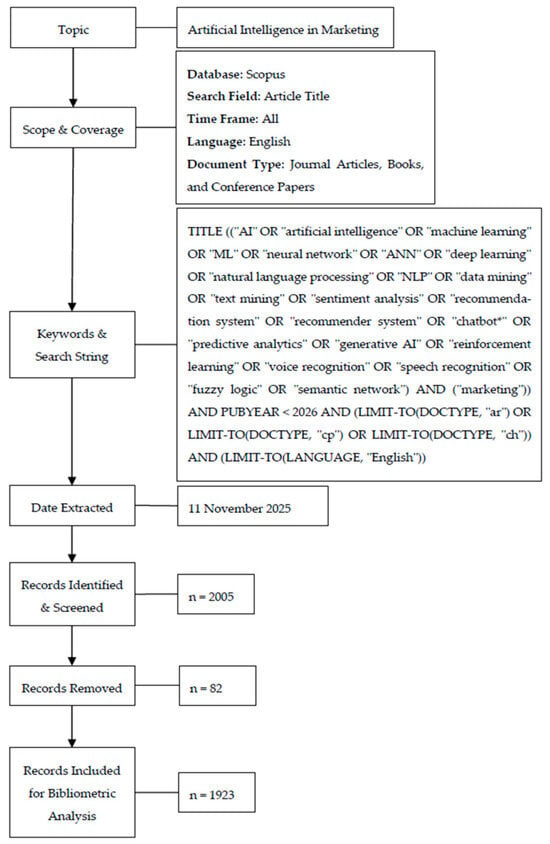
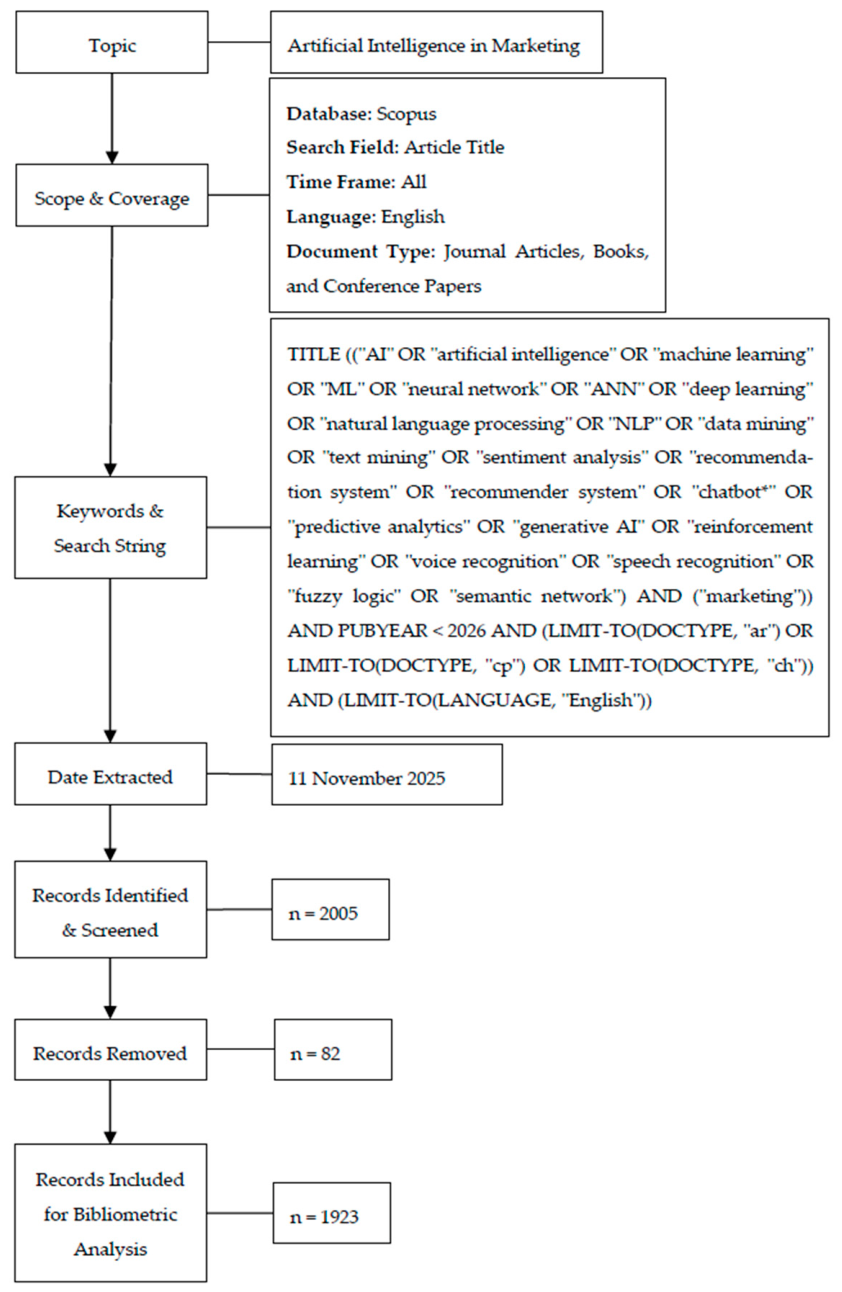
The systematic search was conducted using a modified PRISMA protocol [38]. The search strategy targeted article titles containing AI-related terms, including machine learning, deep learning, natural language processing, data mining, and generative AI technologies, in combination with the term “marketing”. The complete search string is presented in Figure 1. The search was limited to journal articles, conference papers, and book chapters published in English before 2026 (see Figure 1).
Figure 1.
Flow diagram of the search strategy.
2.2.3. Data Screening and Refinement
The initial search resulted in 2005 documents. Duplicate records were identified and removed using CiteSpace’s built-in deduplication function, which detected no duplicate entries in the dataset. Manual screening of titles and abstracts was conducted in two stages: one author performed the initial screening to exclude irrelevant studies, and a second author conducted an independent review to verify the inclusion decisions. This curation process resulted in a final analytical corpus of 1923 documents (Figure 1).
2.2.4. Dataset Characteristics
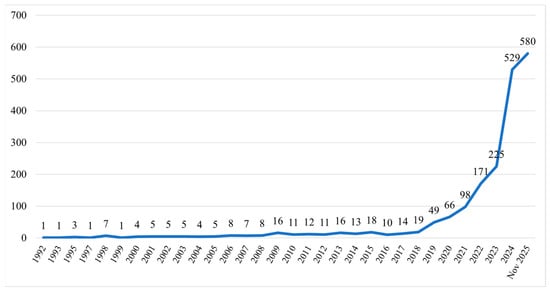
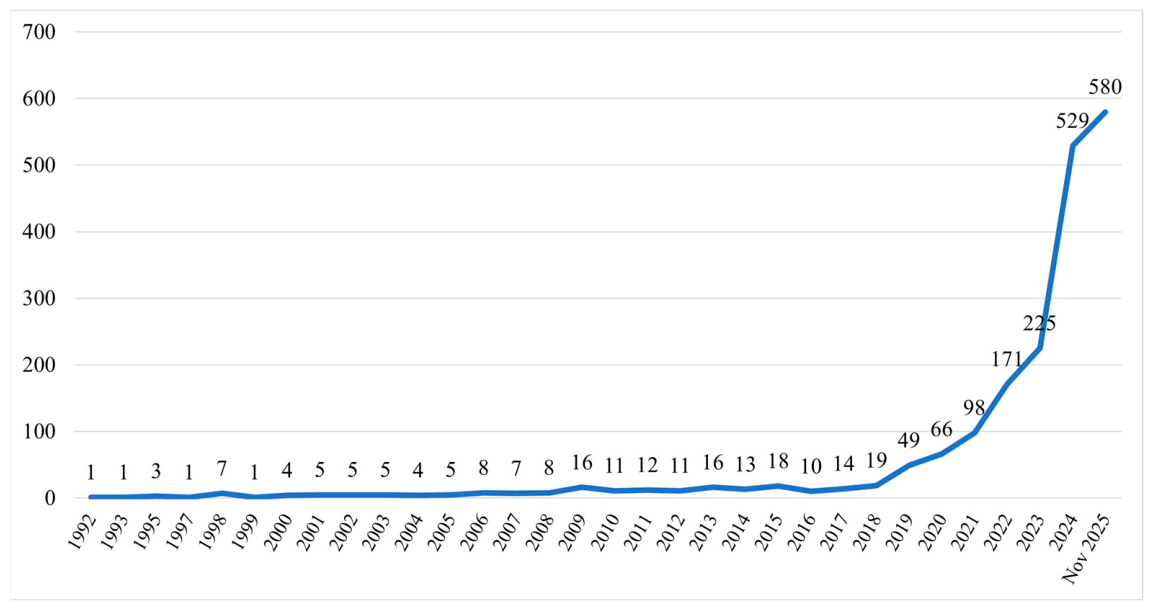
As shown in Figure 2, publications on AI in marketing have exhibited a consistent upward trend over the past 34 years, with an average annual growth rate of 21.27%. Notably, research activity has accelerated markedly since 2019, reflecting rapid advancements in AI technologies, greater data availability, and expanding practical adoption.
Figure 2.
Annual publications of AI in marketing.
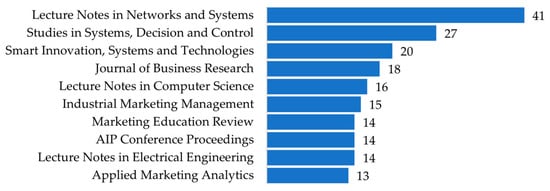
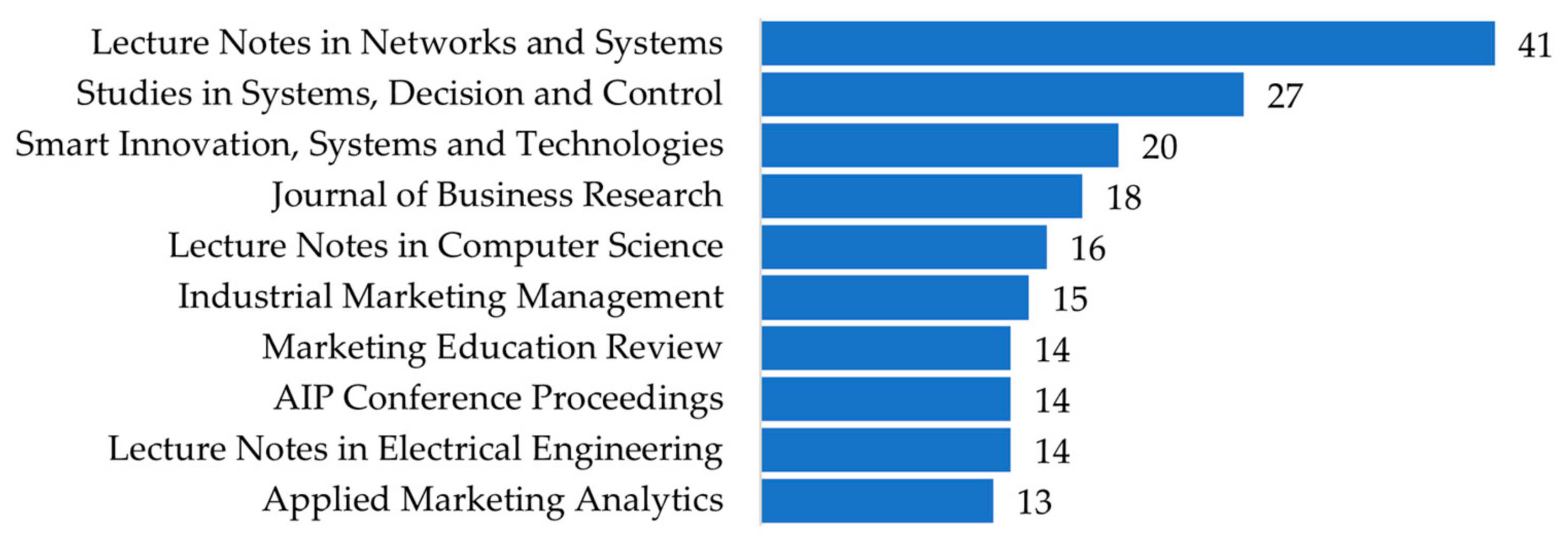
Figure 3 shows the top ten journals in terms of publication volume. Lecture Notes in Networks and Systems is first in terms of publications, while the variety of publications from computer science to marketing demonstrates the interdisciplinary nature of the field.
Figure 3.
The top 10 journals regarding AI in marketing.
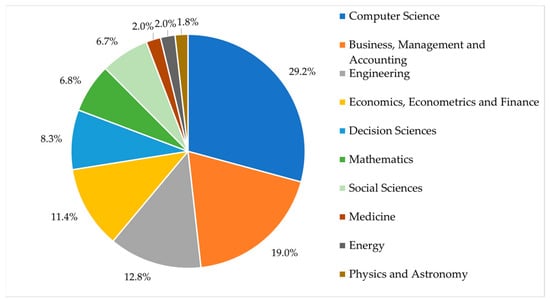
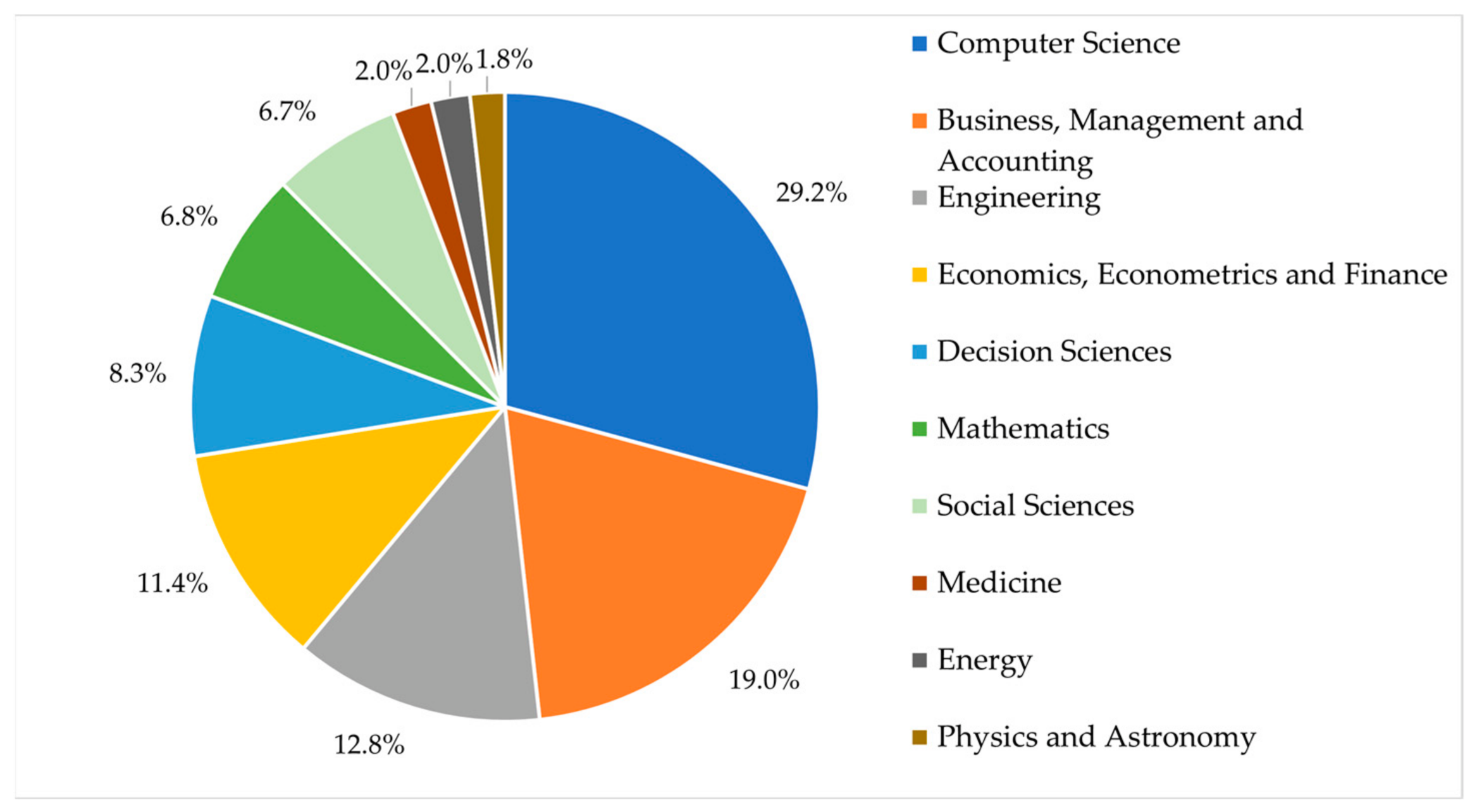
The disciplinary analysis presented in Figure 4 indicates that AI in marketing research spans at least ten broad subject categories. Beyond the core domains of business, management, and accounting, the field exhibits substantial overlaps with computer science, engineering, economics, econometrics, and finance.
Figure 4.
The top 10 subject categories with AI in marketing publications.
This methodological framework integrates the advanced analysis capabilities of CiteSpace with a well-curated dataset of 1923 publications over 34 years, providing a solid base for the extensive bibliometric analyses covering each research question.
3. Results
3.1. Scholarly Collaboration
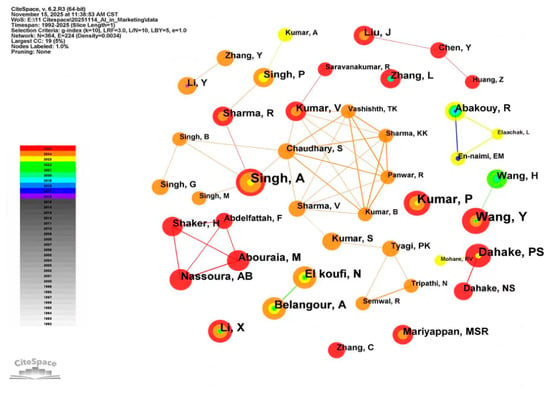
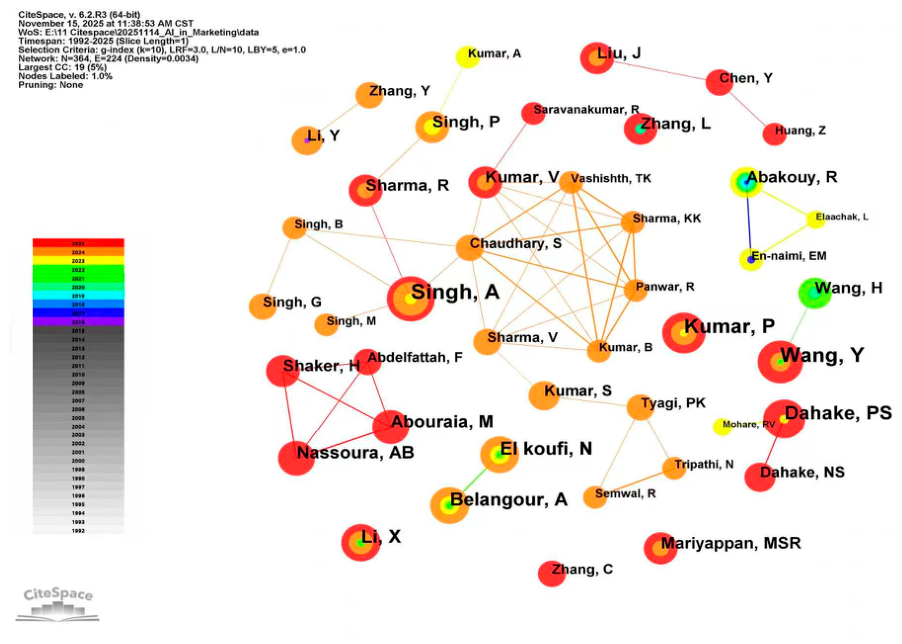
The author collaboration network represents the collaboration relationship between authors. As shown in Figure 5, AI in the marketing domain has formed a major collaboration network around many small fragmented author groups. Node size reflects the number of publications and link thickness and color reflect the intensity and recency of collaboration, respectively. The most influential author is Arti Singh, followed by Yu Wang and Pramod Kumar. Notably, a number of high-productivity authors are totally isolated from the main network.
Figure 5.
Authors’ collaboration network.
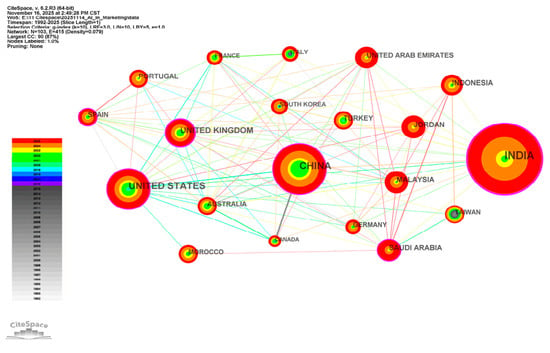
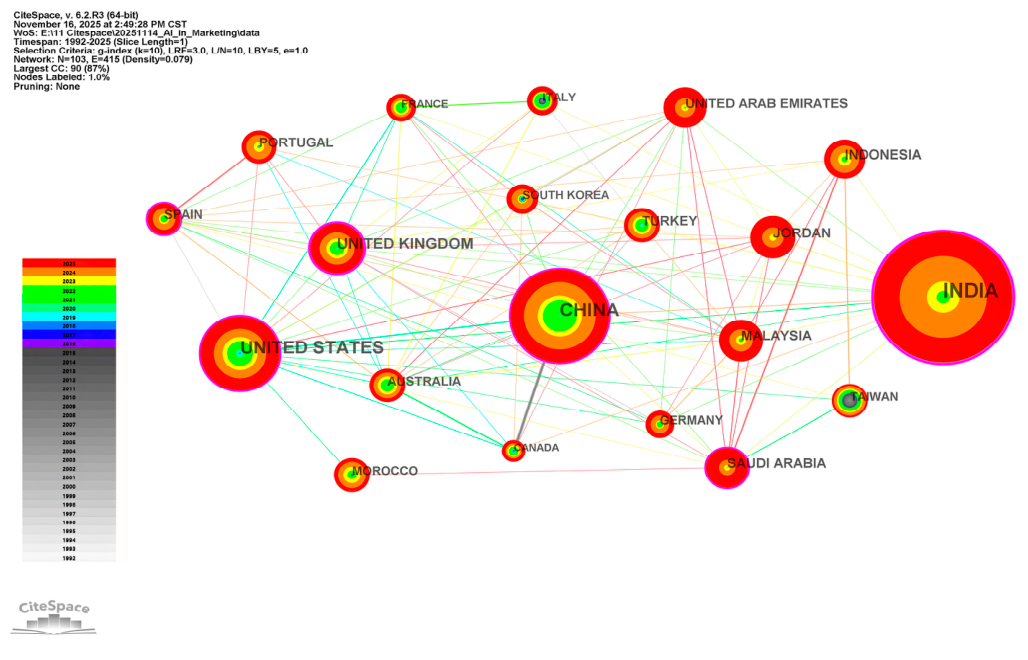
The network of regions/countries is given in Figure 6. India, China, the USA and the United Kingdom are the core contributors with both high research outputs and high centrality scores. Prominent collaborative linkages exist between China and Canada, the USA and China, Spain and Portugal, Saudi Arabia and Indonesia, Saudi Arabia and Malaysia, Canada and Australia, and France and Italy. Although India is the most influential country, its cooperation with other countries is relatively weak.
Figure 6.
Country collaboration network.
3.2. Evolution of the Conceptual Structure
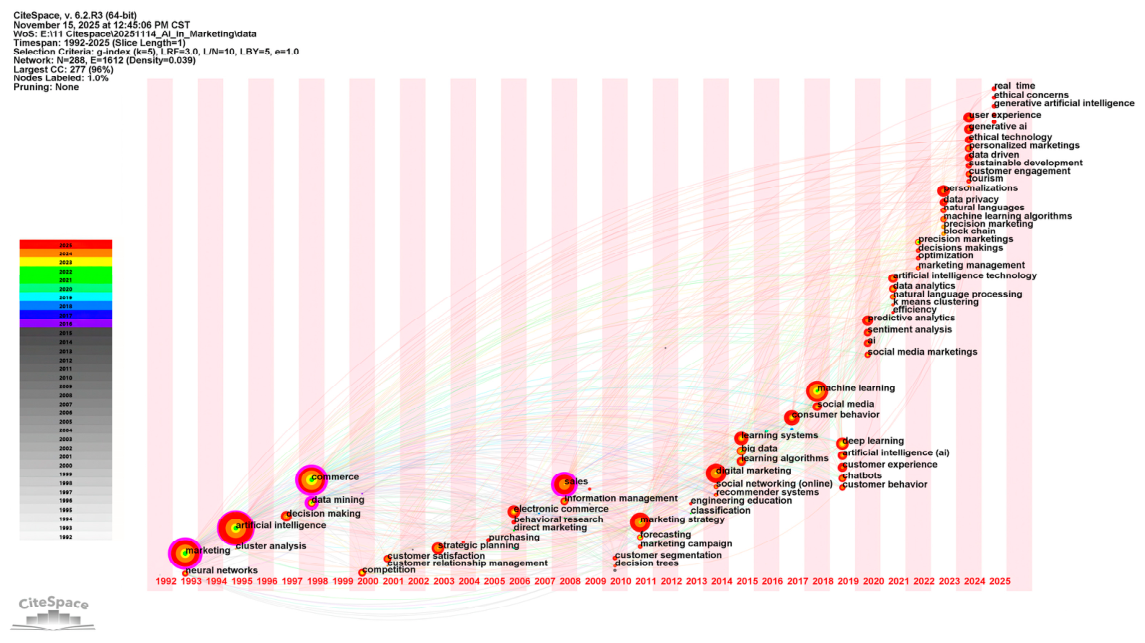
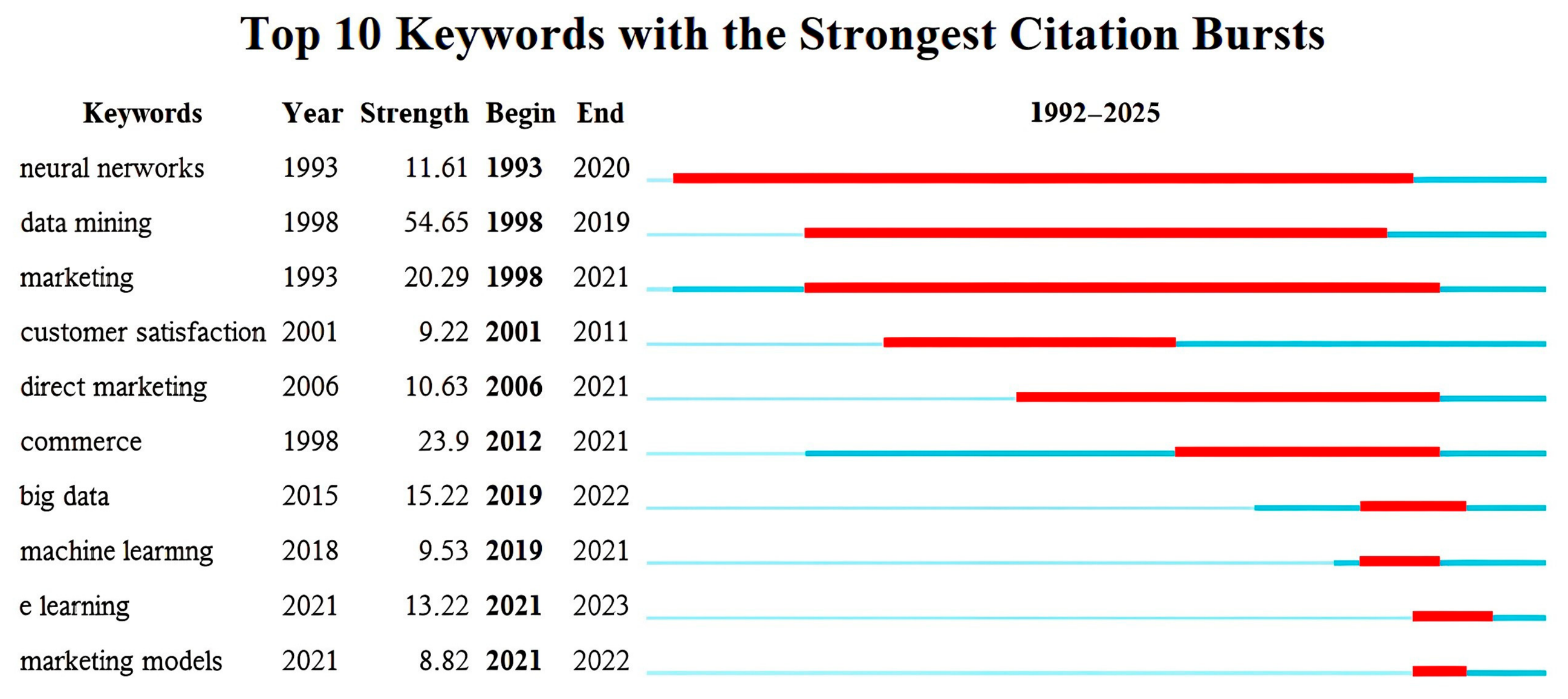
Keyword co-occurrence analysis helps to identify the topic evolution of AI in marketing over time. The boundaries of these six stages were determined through triangulation of two objective indicators derived from the CiteSpace analysis rather than through subjective periodization. First, the time-zone view of keyword co-occurrence (Figure 7) identified temporal clusters of emergent terminology, with each stage boundary corresponding to a discernible shift in the dominant keyword constellation. Second, burst detection results (Figure 8) provided independent confirmation of transition points: the onset and termination of sustained citation bursts in keywords such as neural networks (1993–2020), customer satisfaction (2001–2011), direct marketing (2006–2021), and machine learning (2019–2021) align with the stage boundaries identified through keyword clustering. The convergence of these two independent CiteSpace outputs at consistent temporal points provides an objective empirical basis for the proposed periodization.
Figure 7.
A time-zone view of keywords with high frequencies.
Figure 8.
Top 10 keywords with the strongest citation bursts.
Figure 7 shows a time-zone of keywords, which reveals the publication year or peak year of keywords. The topic evolution of AI in marketing can be roughly divided into six stages: Stage I (1992–2000), Stage II (2001–2009), Stage III (2010–2017), Stage IV (2018–2021), Stage V (2022–2023) and Stage VI (2024–2025).
Stage I (1992–2000): Foundation and Early Exploration
The first stage brought the initial AI techniques to marketing research. The formal application of neural networks to marketing in 1993 established computational approaches to consumer analysis, while the adoption of cluster analysis from 1995 onward provided systematic tools for customer segmentation. The AI-assisted managerial decision-making interest started around 1997, and the simultaneous development of e-commerce combined data mining with transactional systems provided new opportunities to consumer insights. By 2000, researchers had begun to recognize that AI capabilities could meaningfully reshape competitive dynamics. Taken together, this stage established both the technical vocabulary and the empirical foundations that would sustain AI’s expanding role in marketing for decades to come.
Stage II (2001–2009): The CRM Revolution and Intelligence Integration
This period marked a decisive shift from product-oriented to relationship-oriented marketing research. Customer satisfaction and customer relationship management (CRM) became strategic priorities in the period of 2001, and later research on consumer behavior (2006) started to associate AI capabilities with psychological elements of decision-making. At the same time, AI applications were spread to a wider set of commercial functions, such as purchasing (2005), e-commerce (2006), direct marketing (2006), and sales management (2008). At the strategic level, strategic planning (2003) and information management (2008) frameworks focused on data-driven capabilities as long-term sources of competitive advantage. In general, this stage changed the orientation of marketing to the management of customer relationships with the help of data instead of products.
Stage III (2010–2017): Big Data Infrastructure and Digital Transformation
The surge in keyword diversity during this period reflects the twin pressures of technological advancement and methodological expansion. The operational viability of large-scale population analysis became possible with the maturation of machine learning systems and big data analytics (2015), and the analytical sophistication of marketing research was increased with a wider methodological toolkit, such as decision trees, customer segmentation (2010), classification algorithms (2013), and forecasting models (2011). Automated personalization at scale was made possible by the growth of social media and digital marketing channels (2014) with the help of recommender systems. By 2017, the focus of research had shifted from demographic segmentation toward behavioral prediction. The development of the keyword engineering education (2013) also shows that AI in marketing was being incorporated into business education at this stage of growth. Taken together, Stage III transformed the field from isolated data mining applications into integrated analytical ecosystems.
Stage IV (2018–2021): AI Mainstreaming Era and Deep Learning Breakthrough
This stage represented a qualitative leap in capability, driven by three converging developments. First, core technologies became mainstream: machine learning (2018) became a standard research tool, deep learning (2019) made autonomous feature extraction possible, and the repeated appearance of “artificial intelligence” as a keyword between 2019 and 2021 reflects its consolidation as the field’s conceptual anchor. Second, the scope of application increased significantly, as social media (2018) and social media marketing (2020) opened new opportunities for real-time interaction, and chatbots (2019) fundamentally changed the automation of customer service. Third, analytical sophistication improved via predictive analytics and sentiment analysis (2020), natural language processing (2021), and data analytics platforms (2021), and k-means clustering (2021) improved the efficiency of segmentation. During this phase, customer experience and behavioral measures replaced transactional measures as the main competitive differentiation dimensions.
Stage V (2022–2023): Precision Marketing and Privacy Paradox
A defining tension of this period was the growing friction between technical ambition and ethical responsibility. Precision marketing systems (2022–2023), optimization frameworks (2022), and marketing management platforms (2022) allowed automated decision-making at scale never seen before, and innovations in machine learning algorithms (2023) and natural language processing (2023) improved personalization capabilities. At the same time, data privacy (2023) emerged simultaneously as a central concern, crystallizing a foundational tension in the field: how to deliver individualized experiences without eroding user autonomy. The reappearance of decision-making as a keyword, now framed around automated systems rather than individual judgment, raised pressing questions about transparency and accountability. Blockchain (2023) was explored as one potential pathway toward privacy-preserving solutions. Broadly, this stage prompted substantive disciplinary reflection on what sustainable innovation in AI marketing actually entails.
Stage VI (2024–2025): Generative AI Revolution and Sustainable Transformation
The current stage represents something more fundamental than incremental progress, signaling a paradigm shift from analytical to generative capability. Generative AI (2024–2025) has shifted marketing not only to the understanding of consumer behavior but to the creation of personal-level content at scale, which has fundamentally changed the economics of content creation. This technological turn is marked by three complementary transformations. To begin with, the concept of user experience and customer engagement (2024) has been redefined in terms of value co-creation instead of transactional efficiency. Second, ethical technology (2024) and ethical concerns (2025) are no longer seen as external constraints, but as design imperatives, and sustainable development (2024) is no longer an afterthought, but a core strategic priority. Third, the autonomous optimization capacity has been improved by data-driven methodologies (2024) and real-time decision-making (2025). The spread of AI marketing to other industries, including tourism (2024), demonstrates the growing cross-industry adoption, and personalized marketing (2024) has transformed precision targeting into creative content creation. This stage is thus defined by three simultaneous transformations: technologically, from predictive to generative; ethically, from compliance to responsibility-by-design; and strategically, from efficiency to sustainability.
Across these six stages, three distinct structural transitions are discernible, each unfolding over a markedly shorter timeframe than the last. The first, capability expansion (Stages I–III), spanned approximately 26 years, tracing the development from rule-based systems to big data infrastructure. The second, integration deepening (Stages IV–V), covered approximately 6 years, involving the integration of AI into marketing functions in platform ecosystems. The third, paradigm shift (Stage VI), took around 2 years, bringing proactive content generation via generative capabilities. Within each transition, the duration of individual stages also compressed markedly, from approximately 9 years (Stage I) to 4 years (Stage IV) and ultimately to 2 years (Stage VI), reflecting the compounding advantages of accumulated knowledge and more mature infrastructure.
3.3. Emerging Themes
Keyword burst detection identifies emerging research trends and paradigm shifts [33]. Figure 8 presents the top ten keywords with the strongest citation bursts between 1992 and 2025. Neural networks represent the earliest burst keyword (1993–2020), sustaining the longest period of scholarly attention at 27 years. This foundational technology laid the groundwork for subsequent AI applications in marketing.
In Stage II (2001–2009), customer satisfaction (2001–2011) represented the earliest CRM-related burst keyword, reflecting the broader paradigm shift toward relationship-oriented marketing. This 11-year burst indicates sustained scholarly interest in the effects of AI technologies on customer outcomes and loyalty.
Stage III (2010–2017) exhibited two prominent burst patterns. The longest burst, direct marketing (2006–2021), spanned 16 years and encompassed the transition from e-commerce to digital marketing transformation. Commerce (2012–2021) reached its burst peak in 2012, suggesting a maturation inflection point in the field.
Stage IV (2018–2021) saw a dramatic rise in research frontiers. The data mining burst (1998–2019) peaked at the transition point between big data infrastructure development and machine learning applications. The intersection of big data (2019–2022) and machine learning (2019–2021) beginning in 2019 became a critical point. Marketing models (2021–2022) also exploded, reflecting the systematization of AI marketing frameworks.
Recent years (2022–2023) show changing patterns. The ending of multiple long-running bursts (neural networks, data mining, marketing, commerce) implies the maturation of the field beyond the fundamentals to more specialized applications.
3.4. Major Co-Citation Clusters
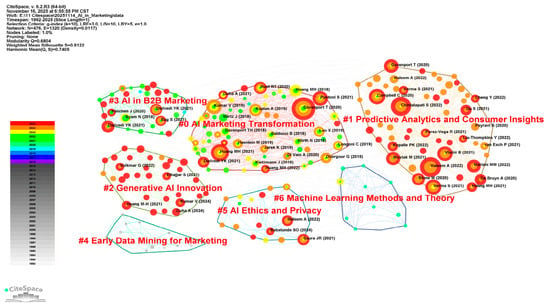
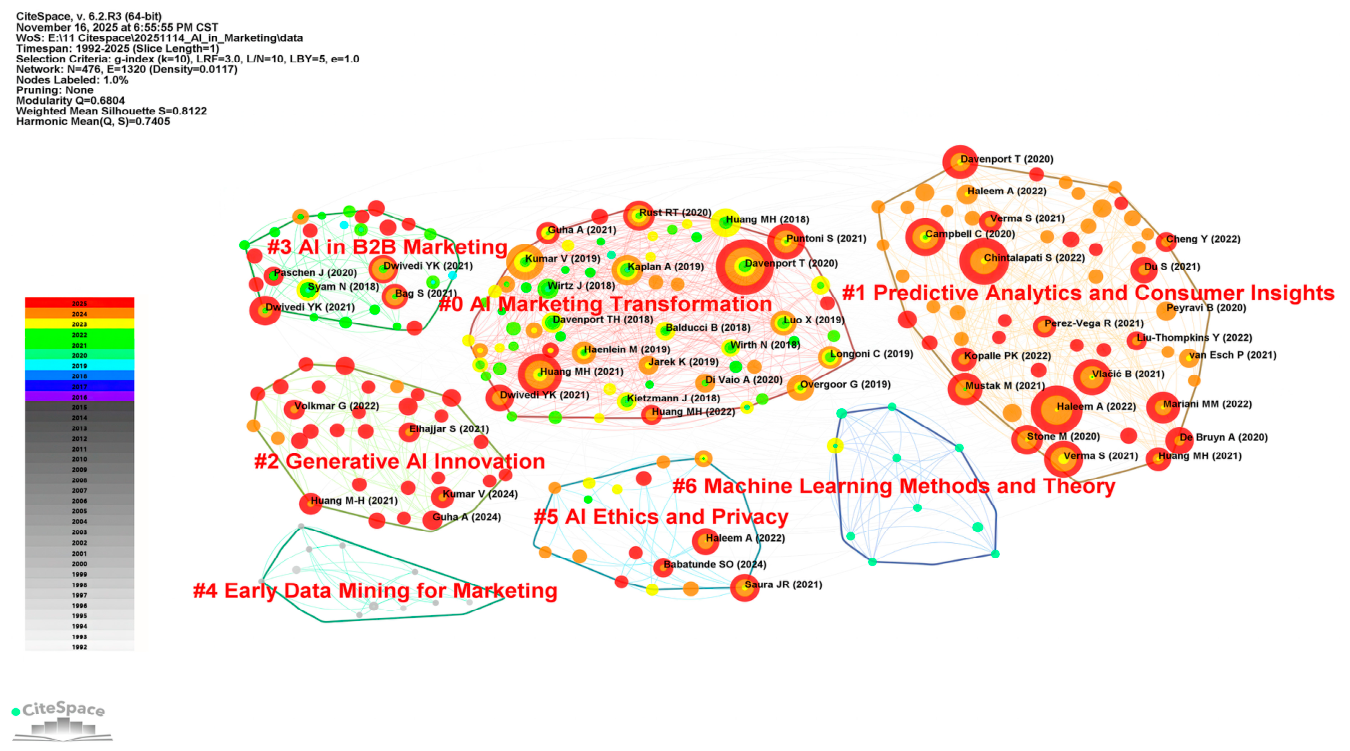
Co-citation clusters expose the intellectual foundation and central themes of AI in marketing research. Seven major clusters were identified, labeled by titles that present the main concept of each cluster (Figure 9). Three main thematic dimensions were identified: AI technological foundations and capabilities, AI marketing applications and transformation, and responsible AI governance and ethics.
Figure 9.
Cluster analysis of the reference co-citation network [28].
The grouping of seven clusters into three thematic dimensions was based on a systematic examination of the representative publications within each cluster. Clusters #4, #6, and #1 share a common intellectual focus on AI methodological capabilities, spanning from early data mining algorithms to machine learning theory and predictive modeling, and were therefore grouped under the dimension of AI technological foundations and capabilities. Clusters #0, #2, and #3 center on the deployment of AI across specific marketing contexts including B2B, B2C, and generative AI applications, forming the dimension of AI marketing applications and transformation. Cluster #5 addresses data privacy, algorithmic bias, and regulatory compliance, representing concerns that cut across both technical and application domains, and was therefore treated as a distinct dimension of responsible AI governance and ethics.
1. AI Technological Foundations and Capabilities. This thematic dimension includes Clusters #4, #6 and #1. Cluster #4 (Early Data Mining for Marketing) is foundational research during the early machine learning period (1990s–2000s) [39,40,41]. Representative works in this cluster, including Ha and Park’s [39] application of data mining to hotel database marketing and Shaw et al.’s [41] integration of knowledge management with data mining for marketing decision support, established the foundational proposition that structured transactional data could be systematically mined to generate actionable customer insights, a premise that all subsequent clusters build upon. Cluster #6 (Machine Learning Methods and Theory) investigates the methodological basis and theoretical foundations of machine learning in marketing [42,43]. Ma and Sun [42] exemplify this cluster’s theoretical orientation by demonstrating how machine learning bridges computational power with human marketing insight, arguing that the value of algorithmic methods lies not in replacing managerial judgment but in augmenting it with pattern recognition at scales beyond human capacity. Cluster #1 (Predictive Analytics and Consumer Insights) revolves around the predictive nature of AI and its application in the study and control of consumer behavior [44,45]. The studies in this cluster change the emphasis from descriptive to predictive modeling, examining how AI systems can predict consumer choices before they happen. This transition from retrospective data mining to prospective behavioral prediction represents the primary intellectual advance of Cluster #1 relative to Cluster #4.
2. AI Marketing Applications and Transformation. Clusters #0, Clusters #2, and Clusters #3 are included in this thematic dimension. Cluster #0 (AI Marketing Transformation) examines the transformative role of AI in marketing across both B2B [46] and B2C contexts [47,48]. An example of the interest of this cluster in the redefinition of the underlying logic of marketing relationships is provided by Keegan et al. [46] and Lee and Ham [48]: Keegan et al. discuss the power dynamics of B2B AI adoption, and Lee and Ham discuss the cognitive differentiation of consumers in influencer marketing situations between AI and human agents. Cluster #2 (Generative AI Innovation) investigates how generative AI technologies, particularly ChatGPT, are being applied to transform marketing education and practice [49,50,51,52,53]. Representative works, including Wilendra et al.’s [50] examination of ChatGPT applications in Indonesian cosmetic marketing and Martin and Martin’s [49] framework for AI integration in marketing education, converge on the generative turn: the shift from AI as an analytical tool to AI as a creative collaborator capable of producing original marketing content. Cluster #3 (AI in B2B Marketing) examines the application of AI and innovation within business-to-business marketing contexts [26,46]. Although it partially overlaps with Cluster #0 in its coverage of B2B contexts [46], this cluster is distinguished by its focus on innovation adoption processes and inter-organizational dynamics, reflecting the structurally different logic of business purchasing decisions relative to consumer markets.
3. Responsible AI Governance and Ethics. Cluster #5 (AI Ethics and Privacy) addresses ethical concerns and privacy issues arising from AI applications in digital marketing. Key issues addressed include data privacy, responsible AI implementation, transparency and accountability [54], and the mitigation of algorithmic bias. Industries examined include hospitality [55] and cosmetics [50], with a focus on how organizations can deploy AI marketing strategies while complying with ethical standards and privacy regulations such as GDPR. The emergence of this cluster exclusively in Stages V–VI reflects a structural precondition: the long-term academic interest in AI ethics in marketing necessitated both a large enough number of AI applications to produce noticeable harms and a regulatory stimulus to make ethics a research priority. Such a catalyst was given by the Cambridge Analytica scandal [56] and GDPR [57] in 2018, but the critical mass of ethics-oriented publications did not form a specific co-citation cluster until Stages V–VI, when the number of empirical studies on privacy, algorithmic bias, and regulatory compliance reached the threshold required to form a cluster in CiteSpace.
The relationships among the seven clusters reflect a progression from technical foundations to applied transformation and ultimately to normative governance. Clusters #4, #6, and #1 form a sequential knowledge-building chain, with each cluster inheriting and extending the methodological advances of its predecessor. Clusters #0, #2, and #3 draw on this technical foundation but redirect analytical attention toward deployment contexts, with Clusters #0 and #3 sharing theoretical concerns about organizational adoption while Cluster #2 represents a qualitative departure toward generative capability. Cluster #5 occupies a cross-cutting position, drawing on empirical findings from both the applications dimension and the technical foundations dimension to construct its normative arguments about responsible AI deployment.
The tripartite pattern found in co-citation analysis closely agrees with the evolutionary phases found in keyword co-occurrence analysis (Section 3.2). The technological foundations dimension (Clusters #4, #6, #1) resulted from Stages I–III. The applications dimension (Clusters #0, #2, #3) is associated with Stages IV–VI. Cluster #5, addressing responsible AI governance and ethics, emerged predominantly in Stages V–VI.
4. Discussion and Research Framework
4.1. Summary of Key Findings
Based on our in-depth bibliometric analysis, this study uncovers the dynamic evolution of AI in marketing research in the past three decades. The results can be summarized into three main patterns, each indicating overall global trends in scientific collaboration, technological evolution, and regulatory change.
Pattern 1: Global Collaboration Networks and Geopolitical Dynamics. The analysis of collaboration networks shows that India, China, the USA, and the United Kingdom are the most active contributors to AI marketing research, with both high output and centrality. India emerges as the most influential nation in the network, consistent with recent global assessments. According to the Stanford AI Index 2024, India leads globally in AI skill penetration at 2.8 times the global average, and has recorded the fastest-growing AI talent concentration, with a 263% increase between 2016 and 2023 [58]. India is also a source of 16% of the world AI talent and the second largest in publicly available generative AI projects on GitHub [59]. Nevertheless, India’s international research collaboration remains comparatively limited relative to other leading nations. This pattern of limited international engagement is not unique to India; more broadly, the collaboration network reveals significant geographic imbalances. Moreover, regions such as Sub-Saharan Africa, Latin America, and Southeast Asia remain substantially underrepresented in the collaboration network (Figure 6), reflecting broader disparities in global AI adoption capacity [60]. From a theoretical perspective, existing AI marketing knowledge is predominantly derived from the experience of technologically advanced economies, which may embed implicit assumptions about consumer behavior, digital infrastructure, and regulatory contexts that do not transfer universally. This finding aligns with broader observations on North–South disparities in AI development, where the concentration of research capacity in the Global North risks deepening existing knowledge divides [61]. This calls for a more inclusive research agenda that actively incorporates diverse geographic perspectives, as the applicability of existing AI marketing theories across different institutional and cultural settings remains empirically untested.
Pattern 2: Rapid Innovation Cycles and Time Compression. The conceptual structure of AI marketing research has evolved through six distinct phases from 1992 to 2025, exhibiting an unprecedented acceleration in the rate of technological adoption. Innovation cycles have shortened dramatically, compressing from decades to just a few years. A compelling illustration is generative AI, which achieved a 54.6% adoption rate within three years of ChatGPT’s launch, compared to 19.7% for the personal computer and 30.1% for the internet at equivalent stages of diffusion [62]. From a theoretical perspective, this accelerating compression of innovation cycles challenges existing technology adoption frameworks, which were largely developed under assumptions of gradual diffusion. As Palm (2022) notes, existing diffusion theories fail to adequately account for contextual factors such as accumulated knowledge and maturing infrastructure, which can fundamentally alter adoption trajectories [63]. The fact that AI marketing research has already gone through six stages in slightly more than thirty years, with each new stage taking place in a significantly shorter period of time, suggests that the traditional diffusion models need to be revamped considerably to accommodate the compounding effects of the accumulated knowledge and maturation of digital infrastructure [63]. This temporal compression also poses growing coordination challenges for researchers and practitioners, as the window available for developing robust theoretical frameworks before mainstream adoption narrows considerably.
Pattern 3: The Development of Ethics as a Focal Issue. Co-citation analysis reveals three thematic dimensions, which are: (1) AI technological foundations and capabilities; (2) AI marketing applications and transformation; and (3) responsible AI governance and ethics. The emergence of a distinct ethics dimension represents perhaps the most significant structural change in the field. The Cambridge Analytica scandal [56] and the enactment of GDPR in May 2018 [57] constituted pivotal regulatory moments that substantially reshaped industry practices [64]. GDPR introduced penalties of up to 4% of global annual revenues for non-compliance [65], and consumer research confirmed that privacy protection had become a competitive necessity, with 91% of consumers refusing to purchase from companies they did not trust with their data [66]. From a theoretical perspective, the emergence of a distinct ethics dimension signifies more than a regulatory response; it represents a fundamental reconceptualization of the relationship between technological capability and social responsibility. Governance considerations are no longer peripheral constraints on innovation but have become constitutive elements of the innovation process itself. This view is supported by empirical evidence: research on GDPR’s impact indicates that well-designed data protection regulation does not suppress innovation but redirects it, stimulating incremental product improvements, opening new competitive spaces, and constraining socially harmful practices [67,68]. For AI marketing scholarship, this structural shift implies that future theoretical frameworks must explicitly integrate ethical and governance dimensions alongside technical and commercial ones, rather than treating them as separate or secondary concerns.
4.2. The Three-Force Evolutionary Framework
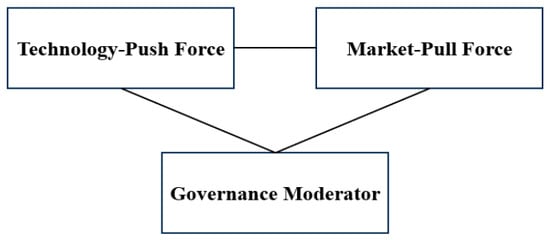
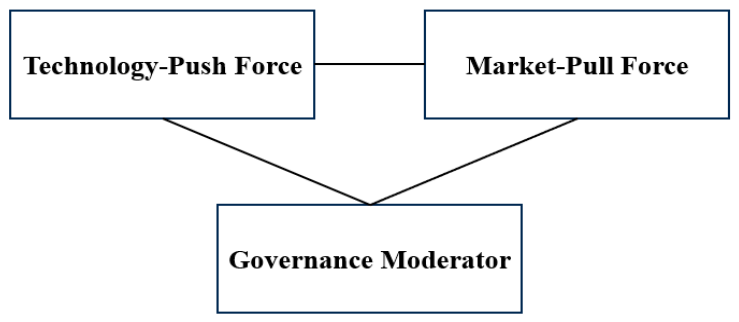
To synthesize these heterogeneous findings and explain the dynamics of AI marketing development, we propose a Three-Force Evolutionary Framework (Figure 10). This framework integrates three interacting forces that collectively shape the trajectory of AI marketing research and practice.
Figure 10.
The Three-Force Evolutionary Framework.
Technology-Push Force represents the extent to which advances in AI capabilities drive innovation. Three major technological inflection points are identified: (1) the CRM Revolution (2001–2009); (2) the Big Data Era (2010–2017), in which big data infrastructure and machine learning algorithms enabled population-scale marketing analysis; and (3) the Generative AI Revolution (2024–2025), in which marketing shifted fundamentally toward large-scale creative content generation. This acceleration has been enabled by accumulated knowledge, infrastructure maturity, and ecosystem development, which collectively reduce barriers to adoption [69,70,71,72].
Market-Pull Force shows how demand for AI solutions is impacted by fluctuating consumer expectations and competitive pressures. Three fundamental demand shifts defined the development of AI marketing: (1) transaction-focused to relationship-oriented (2001–2009); (2) basic customer segmentation to automated personalization at scale (2010–2017); and (3) privacy compliance to privacy-by-design (2018–2025), reflecting the “personalization–privacy paradox” identified in Stage V.
Governance-Moderator Force indicates how regulatory provisions and ethical aspects shape lawful applications of technology in the market. Three governance transitions occurred: (1) the Pre-regulation Period (1992–2017) when ethical considerations were not a primary focus; (2) the Regulatory Awakening (2018–2023) as a result of GDPR and the Cambridge Analytica scandal; and (3) the Ethics-by-Design Era (2024–2025) when ethical technology and ethical concerns became design imperatives rather than constraints.
These three forces interact to form an innovation possibility space in which successful AI marketing applications arise at the intersection of technological feasibility, market desirability, and regulatory legitimacy.
The interaction among these three forces follows two primary mechanisms. First, technology-push and market-pull forces operate not as independent drivers but as components of a mutually reinforcing feedback loop. The field has progressively moved away from treating these forces as competing alternatives toward recognizing their fundamental interdependence [73]. This dynamic is empirically supported: innovation spillovers from upstream industries stimulate downstream market growth, which in turn accelerates innovation activity in adjacent sectors, generating a self-reinforcing cycle of technological and commercial development [74]. This bidirectional relationship explains the accelerating compression of innovation cycles documented in our analysis: as each successive wave of AI capability expansion created new market opportunities, the resulting commercial investment further shortened the lead time to the next technological breakthrough, compressing adoption cycles from approximately 9 years to 4 years and ultimately to 2 years across the six stages identified.
The second mechanism concerns the moderating role of the governance force on the technology-push and market-pull feedback loop. Rather than operating as an independent driver, governance shapes the direction and pace of the push–pull cycle by altering the conditions under which technological exploration and commercial exploitation occur. The timing of such interventions relative to the developmental stage of the sociotechnical system is particularly consequential: policy instruments introduced at different stages of technological maturity produce systematically different outcomes, as the dominant cost-reduction mechanisms and the balance between exploration and exploitation shift as a technology matures [75]. This moderating role can be seen in the three governance transitions that we identified in our analysis in AI marketing. During the Pre-Regulation Period (1992–2017), the absence of binding constraints permitted unconstrained interaction between technology-push and market-pull forces, enabling rapid capability accumulation while simultaneously generating privacy externalities that would subsequently require regulatory correction. The Regulatory Awakening (2018–2023), anchored by GDPR, did not suppress innovation but redirected it: empirical evidence indicates that binding data protection obligations stimulated privacy-enhancing innovation and reoriented firm-level R&D toward compliance-compatible solutions [67,68]. This pattern is consistent with the theoretical expectation that governance interventions introduced at sufficient levels of technological maturity can redirect, rather than halt, the push–pull feedback cycle. Taken together, these findings suggest that governance does not simply add to or subtract from innovation outcomes; rather, it modulates the feedback between technology-push and market-pull forces in ways that are contingent on the stage of technological development at the point of intervention.
Based on this theoretical framework, we propose the following testable propositions:
Proposition 1 (Infrastructure Inheritance): The adoption rate of new AI marketing technologies will be lower when the technology requires infrastructure configurations that deviate substantially from incumbent systems, because path-dependent accumulation of technical capabilities and organizational routines creates adoption friction that is proportional to the degree of infrastructural discontinuity [63].
Proposition 2 (Regulatory Response Curve): The capacity of governance interventions to redirect AI marketing innovation toward socially beneficial outcomes will follow an inverted-U pattern across stages of technological maturity. Interventions introduced before sufficient market formation produce negligible directional effect due to the absence of established innovation trajectories; interventions introduced at intermediate maturity stages most effectively redirect innovation by altering incentive structures within an already-functioning push–pull feedback cycle; and interventions introduced after dominant designs have consolidated risk reinforcing existing lock-ins rather than opening new innovation pathways [67,68,75].
Proposition 3 (Privacy–Personalization Moderation): The tension between personalization effectiveness and privacy protection in AI marketing will intensify as the granularity of individual-level data increases, but this relationship will be moderated by the implementation of transparency mechanisms, such that firms deploying algorithmic transparency and user-controlled data governance will experience attenuated paradox intensity relative to firms relying on opaque data practices, because transparency restores the perceived autonomy that high-granularity personalization erodes [57,67,68].
4.3. Future Research Agenda
4.3.1. Generative AI and Creative Marketing Transformation
Stage VI (2024–2025) marks a change of paradigm towards generative AI capabilities and creative applications. The emergence of Cluster #2 (Generative AI Innovation) as a distinct research cluster suggests this area should be developed theoretically.
FRQ1: How do different generative AI architectures impact marketing content effectiveness across consumer segments and cultural contexts?
This question arises from our observation that generative AI research (Cluster #2) is concentrated on applications with little theoretical framework development. Future research should use experimental designs that compare AI-generated to human-created content.
4.3.2. Consumer Trust and the Personalization–Privacy Paradox
Stage V (2022–2023) identified a central tension: the “Precision Marketing and Privacy Paradox.” The chronological alignment of the appearance of ethics clusters and privacy-associated keywords in Stage V–VI indicates trust and privacy as increasing issues:
FRQ2: Under what conditions do privacy-preserving technologies (such as blockchain identified in our Stage V analysis) resolve versus shift the personalization–privacy paradox?
FRQ3: How does the dramatic acceleration of AI adoption cycles (from approximately 9 years to 2 years) impact consumer trust formation across different contexts?
4.3.3. Organizational Adaptation to Rapid Innovation Cycles
We find a phenomenon of rapid churn of research topics and a fragmented network of author collaboration (Figure 5) suggesting coordination challenges:
FRQ4: What organizational capabilities enable firms to capture value from rapidly evolving AI technologies before competitive advantages erode?
5. Conclusions
The paper presents a bibliometric systematization of AI marketing studies published from 1992 to November 2025 and provides six stages of evolution, three thematic dimensions with seven research clusters, and three interacting forces that define the evolution of the given field. The Three-Force Evolutionary Framework synthesizes these results coherently.
AI marketing research has developed from a technology-oriented investigation to a balanced approach of innovation, implementation, and regulation. Three major trends define the field: (1) increasing speed of innovation, where adoption cycles are now shortening to 2 years (generative AI) instead of 9 years (neural networks); (2) an emergent personalization–privacy paradox shaping modern innovation; and (3) a shift in governance towards responsibility-by-design rather than compliance.
To researchers, the paper provides a complete knowledge map and reveals three priority research directions: generative AI in creative marketing (Section 4.3.1), consumer trust in the personalization–privacy paradox (Section 4.3.2), and organizational adaptation to accelerated innovation cycles (Section 4.3.3).
To practitioners, three strategic imperatives exist, namely invest in adaptive capabilities, adopt paradox resolution by investing in privacy-preserving technologies, and make ethics a proactive part of the approach, as post-GDPR data suggests ethical AI development can speed up innovation by fostering consumer trust.
To policymakers, the timing of regulation is crucial. The GDPR case demonstrates good timing: it was presented when AI marketing was mature enough yet harmful practices had not become conventional, thus influencing innovation towards privacy-saving solutions. Policymakers should monitor technology maturity indicators to identify intervention windows that stimulate responsible innovation.
6. Limitations
This study is subject to several limitations. First, the analysis is restricted to Scopus-indexed publications, which may not adequately capture practitioner innovations, industry reports, or non-English scholarship. Second, bibliometric methods capture aggregate patterns but cannot represent nuanced theoretical arguments or methodological details within individual studies. Third, while our framework captures field-level evolution, it does not account for micro-level heterogeneity in firm adoption decisions, consumer responses, or cross-cultural differences. Fourth, the rapid pace of AI development means that some recent trends, particularly in generative AI, are supported by limited longitudinal data. Fifth, this study focuses on bibliometric patterns and does not evaluate the quality or validity of the methodological approaches and empirical findings of individual studies. Sixth, restricting the search strategy to title fields may have excluded relevant studies in which AI marketing terms appear only in abstracts or keywords. Lastly, the term marketing as the only field term, without incorporating related terms like consumer behavior or advertising, might have resulted in the exclusion of studies on AI applications in other related fields of marketing practice.
Author Contributions
Conceptualization, W.W. and Z.L.; methodology, Z.L.; software, W.W.; formal analysis, W.W.; investigation, Z.L.; resources, Z.L.; data curation, W.W. and Z.L.; writing—original draft preparation, W.W. and Z.L.; writing—review and editing, Z.L.; visualization, W.W.; project administration, W.W. All authors have read and agreed to the published version of the manuscript.
Funding
This research received no external funding.
Institutional Review Board Statement
Not applicable.
Informed Consent Statement
Not applicable.
Data Availability Statement
The bibliographic data analyzed in this study were retrieved from the Scopus database (www.scopus.com) (accessed on 14 November 2025). The CiteSpace project files used for network analysis are available from the corresponding author (weimingwang@ieee.org) upon reasonable request.
Conflicts of Interest
The authors declare no conflicts of interest.
References
- Dwivedi, Y.K.; Ismagilova, E.; Hughes, D.L.; Carlson, J.; Filieri, R.; Jacobson, J.; Wang, Y. Setting the future of digital and social media marketing research: Perspectives and research propositions. Int. J. Inf. Manag. 2021, 59, 102168. [Google Scholar] [CrossRef] [Scilit]
- Hoffman, D.L.; Moreau, C.P.; Stremersch, S.; Wedel, M. The Rise of New Technologies in Marketing: A Framework and Outlook. J. Mark. 2021, 86, 1–6. [Google Scholar] [CrossRef] [Scilit]
- Azuka, P.; Ajiga, N.D.; Olaoluwa, S.; Ezeigweneme, N.C. Predictive analytics for market trends using AI: A study in consumer behavior. Int. J. Eng. Res. Updates 2024, 7, 36–49. [Google Scholar] [CrossRef] [Scilit]
- Owusu-Mensah, D.; Sarfo, P.A.; Kusi, G.A. Exploring the Impact of Artificial Intelligence on Customer Experience Personalization and Marketing Strategy Optimization in Digital Marketing: An Empirical Analysis. J. Manag. Inf. 2025, 4, 822–843. [Google Scholar] [CrossRef] [Scilit]
- Lin, J. Application of machine learning in predicting consumer behavior and precision marketing. PLoS ONE 2025, 20, e0321854. [Google Scholar] [CrossRef] [Scilit] [PubMed]
- Beyari, H.; Hashem, T. The Role of Artificial Intelligence in Personalizing Social Media Marketing Strategies for Enhanced Customer Experience. Behav. Sci. 2025, 15, 700. [Google Scholar] [CrossRef] [Scilit]
- Hardcastle, K.; Vorster, L.; Brown, D.M. Understanding Customer Responses to AI-Driven Personalized Journeys: Impacts on the Customer Experience. J. Advert. 2025, 54, 176–195. [Google Scholar] [CrossRef] [Scilit]
- Hemalatha, A. AI-Driven Marketing: Leveraging Artificial Intelligence for Enhanced Customer Engagement; Jupiter Publications Consortium: Chennai, India, 2023; pp. 51–58. [Google Scholar] [CrossRef] [Scilit]
- Sidlauskiene, J.; Joye, Y.; Auruskeviciene, V. AI-based chatbots in conversational commerce and their effects on product and price perceptions. Electron. Mark. 2023, 33, 24. [Google Scholar] [CrossRef] [Scilit]
- Rajan, K.V. Sentiment Analysis of Social Media Using Artificial Intelligence. In Artificial Intelligence; IntechOpen: London, UK, 2024. [Google Scholar] [CrossRef] [Scilit]
- Karami, A.; Shemshaki, M.; Ghazanfar, M.A. Exploring the Ethical Implications of AI-Powered Personalization in Digital Marketing. Data Intell. 2025, 7, 1035–1084. [Google Scholar] [CrossRef] [Scilit]
- Bahangulu, J.K.; Owusu-Berko, L. Algorithmic bias, data ethics, and governance: Ensuring fairness, transparency and compliance in AI-powered business analytics applications. World J. Adv. Res. Rev. 2025, 25, 1746–1763. [Google Scholar] [CrossRef] [Scilit]
- Rosário, A.T.; Raimundo, R.J. The Integration of AI and IoT in Marketing: A Systematic Literature Review. Electronics 2025, 14, 1854. [Google Scholar] [CrossRef] [Scilit]
- de Nigris, S.; Gomez-Gonzales, E.; Gomez, G.E.; Martens, B.; Iglesias, P.M.; Vespe, M.; Schade, S.; Micheli, M.; Kotsev, A.; Mitton, I.; et al. Artificial Intelligence and Digital Transformation: Early Lessons from the COVID-19 Crisis; Craglia, M., Ed.; Publications Office of the European Union: Luxembourg, 2020; Available online: https://publications.jrc.ec.europa.eu/repository/handle/JRC121305 (accessed on 14 November 2025).
- Amar, J.; Rahimi, S.; Surak, Z. Stronger Forecasting in Operations Management, Even with Weak Data; McKinsey & Company: New York, NY, USA, 2022; Available online: https://www.mckinsey.com/capabilities/operations/our-insights/ai-driven-operations-forecasting-in-data-light-environments (accessed on 14 November 2025).
- Mustak, M.; Hallikainen, H.; Laukkanen, T.; Plé, L.; Hollebeek, L.D.; Aleem, M. Using machine learning to develop customer insights from user-generated content. J. Retail. Consum. Serv. 2024, 81, 104034. [Google Scholar] [CrossRef] [Scilit]
- Malik, N.; Bilal, M. Natural language processing for analyzing online customer reviews: A survey, taxonomy, and open research challenges. PeerJ Comput. Sci. 2024, 10, e2203. [Google Scholar] [CrossRef] [Scilit]
- Ramesh, A.; Chawla, V. Chatbots in Marketing: A Literature Review Using Morphological and Co-Occurrence Analyses. J. Interact. Mark. 2022, 57, 472–496. [Google Scholar] [CrossRef] [Scilit]
- Sun, Y.; Liu, H.; Gao, Y. Research on customer lifetime value based on machine learning algorithms and customer relationship management analysis model. Heliyon 2023, 9, e13384. [Google Scholar] [CrossRef] [Scilit]
- Chintalapati, S.; Pandey, S.K. Artificial intelligence in marketing: A systematic literature review. Int. J. Mark. Res. 2021, 64, 38–68. [Google Scholar] [CrossRef] [Scilit]
- Huang, M.H.; Rust, R.T. Artificial Intelligence in Service. J. Serv. Res. 2018, 21, 155–172. [Google Scholar] [CrossRef] [Scilit]
- Huang, M.-H.; Rust, R.T. A Strategic Framework for Artificial Intelligence in Marketing. J. Acad. Mark. Sci. 2021, 49, 30–50. [Google Scholar] [CrossRef] [Scilit]
- Li, Z.; Huo, M.; Huo, T.; Luo, H. Digital tourism research: A bibliometric visualisation review (2002–2023) and research agenda. Tour. Rev. 2023, 79, 273–289. [Google Scholar] [CrossRef] [Scilit]
- Haque, A.; Akther, N.; Khan, I.; Agarwal, K.; Uddin, N. Artificial Intelligence in Retail Marketing: Research Agenda Based on Bibliometric Reflection and Content Analysis (2000–2023). Informatics 2024, 11, 74. [Google Scholar] [CrossRef] [Scilit]
- Hue, T.T.; Hung, T.H. Impact of artificial intelligence on branding: A bibliometric review and future research directions. Humanit. Soc. Sci. Commun. 2025, 12, 209. [Google Scholar] [CrossRef] [Scilit]
- Han, R.; Lam, H.K.S.; Zhan, Y.; Wang, Y.; Dwivedi, Y.K.; Tan, K.H. Artificial intelligence in business-to-business marketing: A bibliometric analysis of current research status, development and future directions. Ind. Manag. Data Syst. 2021, 121, 2467–2497. [Google Scholar] [CrossRef] [Scilit]
- Liu, D.; Che, S.; Zhu, W. Visualizing the Knowledge Domain of Academic Mobility Research from 2010 to 2020: A Bibliometric Analysis Using CiteSpace. SAGE Open 2022, 12, 21582440211068510. [Google Scholar] [CrossRef] [Scilit]
- Chen, C. CiteSpace II: Detecting and visualizing emerging trends and transient patterns in scientific literature. J. Am. Soc. Inf. Sci. Technol. 2006, 57, 359–377. [Google Scholar] [CrossRef] [Scilit]
- Klarin, A. How to conduct a bibliometric content analysis: Guidelines and contributions of content co-occurrence or co-word literature reviews. Int. J. Consum. Stud. 2024, 48, e13031. [Google Scholar] [CrossRef] [Scilit]
- Radhakrishnan, S.; Erbis, S.; Isaacs, J.A.; Kamarthi, S. Novel keyword co-occurrence network-based methods to foster systematic reviews of scientific literature. PLoS ONE 2017, 12, e0172778. [Google Scholar] [CrossRef] [Scilit]
- Benckendorff, P.; Zehrer, A. A Network Analysis of Tourism Research. Ann. Tour. Res. 2013, 43, 121–149. [Google Scholar] [CrossRef] [Scilit]
- Havemann, F. Topics as clusters of citation links to highly cited sources: The case of research on international relations. Quant. Sci. Stud. 2021, 2, 204–223. [Google Scholar] [CrossRef] [Scilit]
- Chen, C.; Dubin, R.; Kim, M.C. Orphan drugs and rare diseases: A scientometric review (2000–2014). Expert Opin. Orphan Drugs 2014, 2, 709–724. [Google Scholar] [CrossRef] [Scilit]
- Zang, X.; Zhu, Y.; Zhong, Y.; Chu, T. CiteSpace-Based Bibliometric Review of Pickup and Delivery Problem from 1995 to 2021. Appl. Sci. 2022, 12, 4607. [Google Scholar] [CrossRef] [Scilit]
- Ahmi, A.; Elbardan, H.; Raja Mohd Ali, R.H. Bibliometric Analysis of Published Literature on Industry 4.0. In Proceedings of the 2019 International Conference on Electronics, Information, and Communication (ICEIC), Auckland, New Zealand, 22–25 January 2019; IEEE: Piscataway, NJ, USA, 2019; pp. 1–6. [Google Scholar] [CrossRef] [Scilit]
- Burnham, J.F. Scopus database: A review. Biomed. Digit. Libr. 2006, 3, 1. [Google Scholar] [CrossRef] [Scilit]
- Mongeon, P.; Paul-Hus, A. The Journal Coverage of Web of Science and Scopus: A Comparative Analysis. Scientometrics 2016, 106, 213–228. [Google Scholar] [CrossRef] [Scilit]
- Moher, D.; Liberati, A.; Tetzlaff, J.; Altman, D.G. Preferred reporting items for systematic reviews and meta-analyses: The PRISMA statement. BMJ 2009, 339, b2535. [Google Scholar] [CrossRef]
- Ha, S.H.; Park, S.C. Application of data mining tools to hotel data mart on the Intranet for database marketing. Expert Syst. Appl. 1998, 15, 1–31. [Google Scholar] [CrossRef] [Scilit]
- Jha, G.; Hui, S.C. Data mining for risk analysis and targeted marketing. In Lecture Notes in Computer Science; Springer: Berlin/Heidelberg, Germany, 1998; Volume 1531, pp. 158–169. [Google Scholar] [CrossRef] [Scilit]
- Shaw, M.J.; Subramaniam, C.; Tan, G.W.; Welge, M.E. Knowledge management and data mining for marketing. Decis. Support Syst. 2001, 31, 127–137. [Google Scholar] [CrossRef] [Scilit]
- Ma, L.; Sun, B. Machine Learning and AI in Marketing, Connecting Computing Power to Human Insights. Int. J. Res. Mark. 2020, 37, 481–504. [Google Scholar] [CrossRef] [Scilit]
- Manis, K.T.; Madhavaram, S. AI-Enabled marketing capabilities and the hierarchy of capabilities: Conceptualization, proposition development, and research avenues. J. Bus. Res. 2023, 157, 113485. [Google Scholar] [CrossRef] [Scilit]
- Goel, R.; Singla, J. Reimagining Marketing in the Transformative Power of AI in Consumer Engagement. In AI Marketing and Ethical Considerations in Consumer Engagement; IGI Global: Hershey, PA, USA, 2025; pp. 81–106. [Google Scholar] [CrossRef] [Scilit]
- Mahafdhah, M.; Ali, A.; Alghizzawi, M.; AlFraihat, S.F.; Abu-AlSondos, I.A.; Yaseen, S.G. The Role of Artificial Intelligence in Generating Effective Marketing Campaigns. In Applied Artificial Intelligence in Business; Studies in Systems, Decision and Control; Springer: Cham, Switzerland, 2025. [Google Scholar] [CrossRef] [Scilit]
- Keegan, B.J.; Canhoto, A.I.; Yen, D.A. Power negotiation on the tango dancefloor: The adoption of AI in B2B marketing. Ind. Mark. Manag. 2022, 100, 36–48. [Google Scholar] [CrossRef] [Scilit]
- Aleixo, J.E.; Reis, J.L.; Teixeira, S.F.; Pinto, A. Artificial Intelligence Applied to Digital Marketing. In The Use of Artificial Intelligence in Digital Marketing: Competitive Strategies and Tactics; IGI Global: Hershey, PA, USA, 2024; pp. 21–72. [Google Scholar] [CrossRef] [Scilit]
- Lee, D.; Ham, C.-D. AI versus Human: Rethinking the Role of Agent Knowledge in Consumers’ Coping Mechanism Related to Influencer Marketing. J. Interact. Advert. 2023, 23, 241–258. [Google Scholar] [CrossRef] [Scilit]
- Martin, M.C.; Martin, M.J. Implementing AI in Marketing Education. In AI in Marketing: Applications, Insights, and Analysis; Walters, H.D., Hammond, R.M., Eds.; Routledge: London, UK, 2025. [Google Scholar]
- Wilendra, W.; Nadlifatin, R.; Kusumawulan, C.K. ChatGPT: The AI Game-Changing Revolution in Marketing Strategy for the Indonesian Cosmetic Industry. Procedia Comput. Sci. 2024, 234, 1012–1019. [Google Scholar] [CrossRef] [Scilit]
- Richter, S.; Giroux, M.; Piven, I.; Sima, H.; Dodd, P. A Constructivist Approach to Integrating AI in Marketing Education: Bridging Theory and Practice. J. Mark. Educ. 2024, 47, 94–111. [Google Scholar] [CrossRef] [Scilit]
- Turner-Henderson, T.; Bryant, M.; Riley, J.; Watson, A.; Scott, K.N. Strategic AI Integration in Marketing Education: Elevating Personal Branding and Career Readiness. Mark. Educ. Rev. 2025, 1–14. [Google Scholar] [CrossRef] [Scilit]
- Elhajjar, S. Unveiling the marketer’s lens: Exploring experiences and perspectives on AI integration in marketing strategies. Asia Pac. J. Mark. Logist. 2025, 37, 498–517. [Google Scholar] [CrossRef] [Scilit]
- Santio, J.F. Tools of Machine Learning for Effective Customer Segmentation in Digital Marketing: A Literature-Based Study. In Intelligent Computing and Optimization; Lecture Notes in Networks and Systems; Springer: Cham, Switzerland, 2025; pp. 850–862. [Google Scholar] [CrossRef] [Scilit]
- Almeida, S.; Ivanov, S. Generative AI in Hotel Marketing, A Reality Check. Tourism 2024, 72, 422–455. [Google Scholar] [CrossRef] [Scilit]
- Cadwalladr, C.; Graham-Harrison, E. Revealed: 50 Million Facebook Profiles Harvested for Cambridge Analytica in Major Data Breach. The Guardian. 17 March 2018. Available online: https://www.theguardian.com/news/2018/mar/17/cambridge-analytica-facebook-influence-us-election (accessed on 23 November 2025).
- European Union. Regulation (EU) 2016/679 of the European Parliament and of the Council. Off. J. Eur. Union 2016, L119, 1–88. Available online: https://eur-lex.europa.eu/eli/reg/2016/679/oj/eng (accessed on 24 November 2025).
- Maslej, N.; Fattorini, L.; Perrault, R.; Parli, V.; Reuel, A.; Brynjolfsson, E.; Clark, J. The 2024 AI Index Report; Stanford University: Stanford, CA, USA, 2024; Available online: https://hai.stanford.edu/ai-index/2024-ai-index-report (accessed on 14 November 2025).
- Kumar, S.; Kataria, R.; Kalia, S. India’s AI Revolution. Press Information Bureau, Government of India. 2025. Available online: https://www.pib.gov.in/PressReleasePage.aspx?PRID=2108810 (accessed on 21 November 2025).
- Appel, R.; McCrory, P.; Tamkin, A.; Stern, M.; McCain, M.; Neylon, T. Anthropic Economic Index Report: Uneven Geographic and Enterprise AI Adoption; Anthropic: San Francisco, CA, USA, 2025; Available online: https://www.anthropic.com/research/anthropic-economic-index-september-2025-report (accessed on 20 March 2026).
- UNESCO Independent Expert Group on Artificial Intelligence and Culture. Report of the Independent Expert Group on Artificial Intelligence and Culture; UNESCO: Paris, France, 2025; p. 14. Available online: https://www.unesco.org/sites/default/files/medias/fichiers/2025/09/CULTAI_Report%20of%20the%20Independent%20Expert%20Group%20on%20Artificial%20Intelligence%20and%20Culture%20%28final%20online%20version%29%201.pdf (accessed on 3 April 2026).
- Bick, A.; Blandin, A.; Deming, D. The State of Generative AI Adoption in 2025. Federal Reserve Bank of St. Louis, 2025. Available online: https://www.stlouisfed.org/on-the-economy/2025/nov/state-generative-ai-adoption-2025 (accessed on 19 November 2025).
- Palm, A. Innovation systems for technology diffusion: An analytical framework and two case studies. Technol. Forecast. Soc. Change 2022, 182, 121821. [Google Scholar] [CrossRef] [Scilit]
- Privacy International. Cambridge Analytica, GDPR-1 Year on-a Lot of Words and Some Action. 2019. Available online: https://privacyinternational.org/news-analysis/2857/cambridge-analytica-gdpr-1-year-lot-words-and-some-action (accessed on 23 November 2025).
- Luponis, D.; Besnard, J.-M. Cambridge Analytica case: Last wakeup call before GDPR. Forvis Mazars Group. 2018. Available online: https://www.forvismazars.com/group/en/services/consulting/insights/cambridge-analytica-case (accessed on 23 November 2025).
- Cisco. Consumer Privacy Survey: The Growing Imperative of Getting Data Privacy Right; Cisco: San Jose, CA, USA, 2019; Available online: https://www.cisco.com/c/dam/global/en_uk/products/collateral/security/cybersecurity-series-2019-cps.pdf (accessed on 23 November 2025).
- Blind, K.; Niebel, C.; Rammer, C. The impact of the EU General Data Protection Regulation on product innovation. Ind. Innov. 2023, 31, 311–351. [Google Scholar] [CrossRef] [Scilit]
- Niebel, C. The impact of the General Data Protection Regulation on innovation and the global political economy. Comput. Law Secur. Rev. 2021, 40, 105523. [Google Scholar] [CrossRef] [Scilit]
- Deloitte. State of Generative AI in the Enterprise 2024; Deloitte: New York, NY, USA, 2024; Available online: https://www.deloitte.com/content/dam/assets-zone3/us/en/docs/campaigns/2025/us-state-of-gen-ai-2024-q4.pdf (accessed on 24 November 2025).
- Khan, O. New Infrastructure for the Era of AI: Emerging Technology and Trends in 2024. Microsoft. 2024. Available online: https://azure.microsoft.com/en-us/blog/new-infrastructure-for-the-era-of-ai-emerging-technology-and-trends-in-2024/ (accessed on 24 November 2025).
- van der Vlist, F.; Helmond, A.; Ferrari, F. Big AI: Cloud Infrastructure Dependence and the Industrialisation of Artificial Intelligence. Big Data Soc. 2024, 11, 20539517241232630. [Google Scholar] [CrossRef] [Scilit]
- Korir, K. Open Source AI: Democratizing the Future of Artificial Intelligence. Medium. 2024. Available online: https://medium.com/@kiplangatkorir/open-source-ai-democratizing-the-future-of-artificial-intelligence-7deaa45bd6da (accessed on 26 November 2025).
- Di Stefano, G.; Gambardella, A.; Verona, G. Technology push and demand pull perspectives in innovation studies: Current findings and future research directions. Res. Policy 2012, 41, 1283–1295. [Google Scholar] [CrossRef] [Scilit]
- Hötte, K. Demand-pull, technology-push, and the direction of technological change. Res. Policy 2023, 52, 104740. [Google Scholar] [CrossRef] [Scilit]
- Nuñez-Jimenez, A.; Knoeri, C.; Hoppmann, J.; Hoffmann, V.H. Beyond innovation and deployment: Modeling the impact of technology-push and demand-pull policies in Germany’s solar policy mix. Res. Policy 2022, 51, 104585. [Google Scholar] [CrossRef] [Scilit]
Disclaimer/Publisher’s Note: The statements, opinions and data contained in all publications are solely those of the individual author(s) and contributor(s) and not of MDPI and/or the editor(s). MDPI and/or the editor(s) disclaim responsibility for any injury to people or property resulting from any ideas, methods, instructions or products referred to in the content. |
© 2026 by the authors. Licensee MDPI, Basel, Switzerland. This article is an open access article distributed under the terms and conditions of the Creative Commons Attribution (CC BY) license.