


Abstract
Background: The COVID-19 pandemic revealed persistent gaps in local health department (LHD) health informatics capacity. This study examines organizational characteristics of LHDs associated with the adoption of six health information systems: electronic case reporting (eCR), electronic disease reporting systems (EDRS), electronic health records (EHR), electronic lab reporting (ELR), health information exchange (HIE), and immunization registries (IR). Methods: We used a mixed-methods design, including multinomial or binary logistic regression analyses of quantitative data from the 2022 NACCHO National Profile of Local Health Departments (n = 441) and thematic analysis of semi-structured interviews with five LHD staff members. Results: About half (49.9%) of LHDs had implemented eCR, while higher proportions had implemented EDRS (78.0%), EHR (62.4%), ELR (57.2%), HIE (92.6%), and IR (92.6%). Workforce size was associated with the implementation of eCR, EHR, and IR. The number of vacant staff positions was associated with a lower odds of IR implementation; compared with medium-sized LHDs, both small and large LHDs had higher odds of IR implementation. Shared-governance LHDs had higher odds of adopting ELR and HIE than state-governed LHDs. Qualitative themes highlighted challenges, including staff burnout, high turnover, pay inequities, role ambiguity, political pressures, rapid changes in informatics, and interoperability problems. Conclusions: Findings underscore the need to improve LHD workforce capacity and governance structures to support a resilient public health informatics infrastructure.
1. Introduction
The COVID-19 pandemic brought many firsts that challenged healthcare systems, requiring rapid and substantial adaptations in personnel and health informatics operations to address these unique circumstances. Some of the rapid alterations local health departments (LHDs) made to accommodate the influx of patients, adopt public health policies, and use new technology have positioned them to stay at the forefront of these pandemic-related transformations [1]. Shortly after the start of the pandemic, rapid technological adoption and adjustment to complex, dynamic environments occurred. This technological adoption was swifter than the pre-pandemic pace of development and long-term planning [2].
Studies prior to COVID-19 mainly examined the uptake of health informatics in a relatively stable, sluggish technological landscape and the integration of new systems into existing workflows [3]. Studies have disproportionately focused on the advantages and limitations of Electronic Health Records (EHRs) and the challenges of interoperability, with gradual implementation of edits and enhancements [4]. Prior research in public health informatics has emphasized that information systems function as adaptive socio-technical systems that evolve in response to shifting organizational demands and external shocks. During COVID-19, these adaptive dynamics became more visible, as surges in information needs and emergency funding accelerated implementation timelines that had previously been gradual and incremental. Recent national data from NACCHO’s 2022 Profile Study show that 62.4% of LHDs have implemented electronic health records (EHRs), 78.0% have implemented an electronic disease reporting system (EDRS), and 92.6% have implemented an immunization registry (IR), illustrating how the pandemic coincided with a marked increase in key health information systems compared with pre-pandemic LHD informatics patterns. [5]. Pre-pandemic LHD informatics adoption was slow and uneven. In 2013, only 22% of LHDs reported EHR implementation, up modestly from 19.3% in 2010, with most using non-EHR systems for primary data storage. Immunization registries and basic reporting tools were more common, whereas advanced integration, such as HIE, was used by only 13%. Barriers such as costs, interoperability, and staffing constrained progress, resulting in multi-year implementation cycles [6]. While pre-pandemic work focused on structural predictors, post-COVID-19 studies emphasize dynamic factors such as staffing changes and governance flexibility amid crises, few disaggregate HIS types (eCR vs. HIE) or use recent datasets, leaving uncertainty about system-specific trajectories [7]. However, research evidence indicates that emergency reassignments increased capacity. LHDs that hired or reallocated staff had 1.3–2.5 times the odds of engaging in informatics activities. Federal funding mitigated gaps, but turnover and burnout eroded gains in 20–30% of agencies [8]. This study addresses these by examining workforce size/changes, population served, and governance associations with six HIS in the 2022 NACCHO data.
More recent national assessments show that workforce stability, governance flexibility, dedicated informatics staffing, and investment in interoperability infrastructure remain the strongest predictors of readiness for data modernization and advanced public health surveillance [9]. Rapid adoption of electronic reporting during the COVID-19 pandemic, primarily through initiatives such as electronic case reporting (eCR Now), demonstrated how emergencies can accelerate digital reporting and create essential implications for public health informatics [10]. Significant data sharing gaps exist between state health agencies (SHAs) and local health departments in critical areas [11]. Analysis of organizational factors associated with gaps in data sharing revealed that 34.0% of LHDs experienced data sharing gaps for childhood immunizations, 69.8% for vital records, and 81.8% for reportable conditions [11]. Increased SHA technological capacity and larger organizational size reduced the odds of experiencing these gaps [11]. The COVID-19 pandemic exposed longstanding capacity gaps within the public health sector, with outdated technological infrastructure significantly slowing the public health response on multiple occasions, from exchanging laboratory results with healthcare facilities to conducting disease surveillance [12]. Several states continued to report no ethnicity data as of September 2020. Although individual health departments sought to close information gaps, persistent gaps in public health surveillance and a lack of technical uniformity exacerbated pandemic inequities [12]. One study notes that effective public health requires a workforce with capabilities in information technology and data management to enable departments to respond appropriately to emerging health concerns and to develop capacity for online engagement with the public [13]. The federal response included partnerships between the Office of the National Coordinator for Health Information Technology (ONC) and the Centers for Disease Control and Prevention (CDC) to support COVID-19 response efforts, emphasizing the crucial role of health IT in collecting and reporting COVID-19 data and facilitating electronic health information exchange strategies [13]. The COVID-19 pandemic accelerated digital health transformation dramatically, with more changes occurring in March 2020 than in the previous 20 years [14].
Local health departments vary considerably in HIT adoption rates, with only 13.5% implementing health information exchanges and 22.2% adopting electronic health records [11,15]. Persistent workforce shortages, burnout, and ongoing interoperability challenges in information systems indicate a critical need to strengthen LHDs’ infrastructure capacity and governance frameworks to support resilient public health informatics [16]. A larger LHD workforce tends to be an enabling factor in the implementation of electronic case reporting (eCR), electronic health records (EHR), and immunization registries (IR). In contrast, shared governance models promote the adoption of electronic laboratory reporting (ELR) and health information exchange (HIE) [17]. The COVID-19 pandemic revealed significant gaps in local health department informatics capacity [18]. The Technology–Organization–Environment (TOE) framework explains adoption patterns across multiple contexts [13,14].
This study aims to examine organizational characteristics associated with the adoption of health information systems among U.S. local health departments. Using a mixed-methods approach, the study integrates secondary organizational data with qualitative insights to understand better how workforce, governance, and contextual factors influence health information system adoption.
2. Materials and Methods
2.1. Study Design and Research Questions
This study employed a cross-sectional mixed methods design to examine organizational characteristics associated with the implementation of health information systems among U.S. local health departments. The quantitative component used secondary, organizational-level data, and the qualitative component consisted of interviews with local health department staff to provide context for the quantitative findings. The study focused on the implementation of six health information systems, including electronic case reporting, electronic disease reporting systems, electronic health records, electronic laboratory reporting, health information exchange, and immunization registries, to identify organizational and contextual factors associated with system adoption.
The quantitative analyses were conceptually informed by the Technology Organization Environment framework, with emphasis on organizational and environmental domains relevant to public health informatics. Organizational factors reflected workforce capacity, staffing stability, and governance structure, whereas environmental factors encompassed jurisdictional and governance contexts. Technology-specific characteristics were not directly assessed because the study used secondary data, and system implementation status served as the technology adoption outcome. Qualitative interviews were used to explore workforce, governance, and interoperability challenges and to support the interpretation of quantitative findings.
2.2. Quantitative Data and Variables
Quantitative data for this study were drawn from the National Association of County and City Health Officials (NACCHO) 2022 National Profile of Local Health Departments Study (referred to here as ‘Profile study’). The Profile is a national, triennial census of LHDs. With a 73% response rate, this population-based survey provides a detailed portrait of LHD funding, staffing, governance, and activities, producing a robust representation of LHD infrastructure and practice. From June to September 2022, 2319 LHDs completed an online survey, including 441 that responded to COVID-19-related questions, for a response rate of 38%.
Outcome Variables: Health Information Systems Implementation Status for the EDRS, EHR, and ELR was captured using the categories “In Process of Implementation” and “Have Implemented”, which were combined and compared against the combined “No Activity” and “Do Not Know” categories. Response categories were combined when cell counts were low to achieve optimal model fit. For eCR, all four original categories were retained. For HIE and IR binary models, the same combined approach was used as for EDRS/EHR/ELR.
Key Independent Variables (Staffing Measures): The staffing variables included in the analysis captured both workforce size and changes in staffing levels. The variable Change in Staffing was assessed using the question: “How many employees were laid off between 1 January 2021 and 31 December 2021?” The number of staff laid off was indicated. There were other questions used for this variable, including: how many employees did your LHD hire for each of the following reasons between 1 January 2021 and 31 December 2021?; and for each programmatic area in which your LHD provided services during the calendar year 2020, indicate how the level of service delivery changed during 2021 in terms of budget or number of staff allocated to work in this area. These questions were not used because they were collinear with the other independent variables. The other independent variable used was full-time equivalent (FTE)/per 10,000 population. For this variable, the question was: Indicate the number of individuals and the number of Full-Time Equivalents who currently work for your LHD (number of individuals currently employed as full-time employees) [16].
Similarly, additional questions were asked regarding the FTE variable, but only FTE per 10,000 population was used to mitigate multicollinearity. A correlation matrix was computed to assess the model’s fit before proceeding with inferential statistical analysis. Contextual variables included in the model were LHD population size (small, medium, or large), governance type (local, shared, or state), and LHD characteristics. These contextual variables included FTE per 10,000 population and personnel changes during the COVID-19 pandemic. Contextual covariates included population size within LHD jurisdiction (small (<50,000), medium (50,000–499,999), or large (≥500,000)) and governance classification (local, shared, or state). These covariates helped account for structural and organizational differences that may influence the adoption of health information systems.
2.3. Statistical Analysis
We performed descriptive analyses to characterize LHDs in the sample and bivariate analyses to examine associations among changes in personnel, full-time equivalents (FTEs), and system implementation outcomes. For five outcome variables, we computed binary multivariable logistic regression models, as their implementation status could be effectively dichotomized given the minimal proportion of “Don’t Know” responses. For eCR, a significant percentage of LHDs indicated “Don’t Know” (22%). This high proportion implied substantial uncertainty separate from both the non-adoption and implementation response categories. Accordingly, we opted to perform multinomial logistic regression for eCR to preserve all response categories and more precisely model distinctions among implementation, in-process status, inactivity, and uncertainty. To assess and address multicollinearity among staffing-related predictors, bivariate correlations were computed before model building. Additionally, predictors were selected based on their theoretical relevance to the outcome variables rather than enforcing the inclusion of all variables across all models to ensure appropriate alignment. Variables with high intercorrelation (r > 0.70) were further evaluated, and the variable with greater theoretical relevance and lower missing-data rates was retained. For example, although multiple FTE hiring measures were available, only specific FTE counts and vacancy measures were included to reduce redundancy. Final multivariable models included only staffing variables with acceptable collinearity, as indicated by variance inflation factors (VIFs < 5.0) in preliminary diagnostics.
The NACCHO 2022 Profile survey provided sampling weights to account for non-response and ensure national representativeness of descriptive statistics. However, regression models were conducted on unweighted data. This decision was made because (1) the analytic focus was on organizational-level associations rather than population-level prevalence estimates, (2) weighted regression can reduce statistical power in moderate sample sizes, and (3) key covariates (governance type, population size) were used as stratification variables in the survey design, partially accounting for sampling structure within the regression framework itself. We performed all quantitative analyses using IBM SPSS Statistics, version 29.0 (IBM Corp., Armonk, NY, USA) [15].
2.4. Qualitative Data Collection and Thematic Analysis
Qualitative data were collected and analyzed to understand how factors such as workforce change shape the implementation of and interaction with informatics. To align the qualitative interviews with the study’s focus on health information system adoption, the interview guide included questions on how pandemic-related workforce conditions influenced informatics use and implementation. These questions helped bridge the quantitative components of study by ascertaining (a) how staffing shortages, turnover, or reassignment affected the adoption or use of information systems; (b) whether information systems were modified or updated during the pandemic and challenges in doing so; (c) challenges related to staff training or system interoperability under increased workload and political pressures; and (d) how leadership decisions and governance context shaped informatics-related responses during COVID-19.
Participants were initially solicited via email, and further participants were recruited through word of mouth (snowball sampling), in which respondents were asked to recommend others for the interview. Study participants met the following criteria: they must have worked for a local health department, engaged in COVID-19-related activities, and been willing to participate online and complete a follow-up interview. The email recruitment process began by reaching out to contacts and to people recommended by contacts. Ten participants were solicited, and five participants from the LHDs in Georgia and California agreed to participate. While the political landscapes in Georgia and California differ, it was desirable to include a variety of perspectives on how state governments viewed and responded to COVID-19. Email-informed consent was obtained, and Zoom was used for the semi-structured interviews. The qualitative sample size and recruitment strategy were guided by the study’s exploratory aims rather than by an intention to achieve thematic saturation. The goal was to capture a range of roles, experiences, and organizational perspectives related to health information systems implementation during the COVID-19 pandemic, rather than to represent all local health departments comprehensively. Inclusion criteria were designed to ensure participants had direct experience with informatics-related activities during the pandemic. At the same time, recruitment via email and snowball sampling facilitated the identification of informants holding diverse positions within local health departments. This approach prioritized diversity of perspectives across governance contexts and workforce roles to inform interpretation of the quantitative findings and to surface contextual factors influencing health information system adoption. The principal researcher led the interviews and reminded participants of their voluntary participation. Next, the data were transcribed. Irrelevant material was deleted, and extraneous circumstantial data was removed. Transcripts were read numerous times for quality checks. To establish credibility, we used independent dual coding coupled with structured remediation of coding differences. Given the exploratory design and small sample, we did not aim for thematic saturation; instead, the qualitative component was intended to contextualize quantitative associations.
Data were coded inductively in NVivo by two independent coders, using a two-step coding reconciliation to ensure coding reliability. Coders used a dedicated coding strategy and compared findings one-on-one. Discrepancies were resolved through consensus and open, constructive discussion, and the agreed-upon data coding structure was applied to all transcripts for analysis.
3. Results
3.1. Quantitative Results
Nearly half (49.9%) of LHDs had implemented Electronic Case Reporting, 78.0% had implemented an Electronic Disease Reporting System, 62.4% had implemented Electronic Health Records, 57.2% had implemented Electronic Lab Reporting, 92.6% had implemented Health Information Exchange, and 92.6% had implemented an Immunization Registry (Table 1). Over half of the LHDs (55.8%) reported serving a small population. For governance classification, 74.6% reported being local, 20% self-reported as state-governed, and 5.4% reported being shared-governed.
Table 1.
Number and percent of LHD characteristics from the NACCHO 2022 Profile Study Survey.
Characteristics of LHDs significantly associated with implementation of the Electronic Disease Reporting System included the number of FTE contractual vacancies and a medium population size (Table 2). Specifically, LHDs with an additional contractual FTE vacancy had odds of implementing or being in the process of implementing the Electronic Disease Reporting System (EDRS) (compared with no activity or unknown status) that increased by 1.091 (AOR = 1.091, p = 0.015). Medium-sized LHDs (serving 50,000 to 499,999 population) had 2.79 times higher odds of having implemented or being in the process of implementing EDRS compared to small LHDs (serving less than 50,000 population) (AOR = 2.790, p = 0.003).
Table 2.
Binary Logistic Regression of LHD Implementation for Electronic Disease Reporting System (EDRS), Electronic Health Records (EHR), and Electronic Lab Reporting (ELR) from NACCHO 2022 Profile Study Survey.
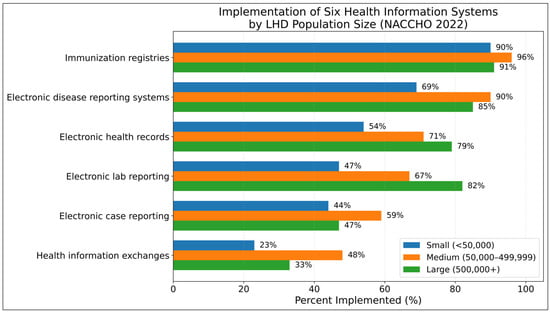
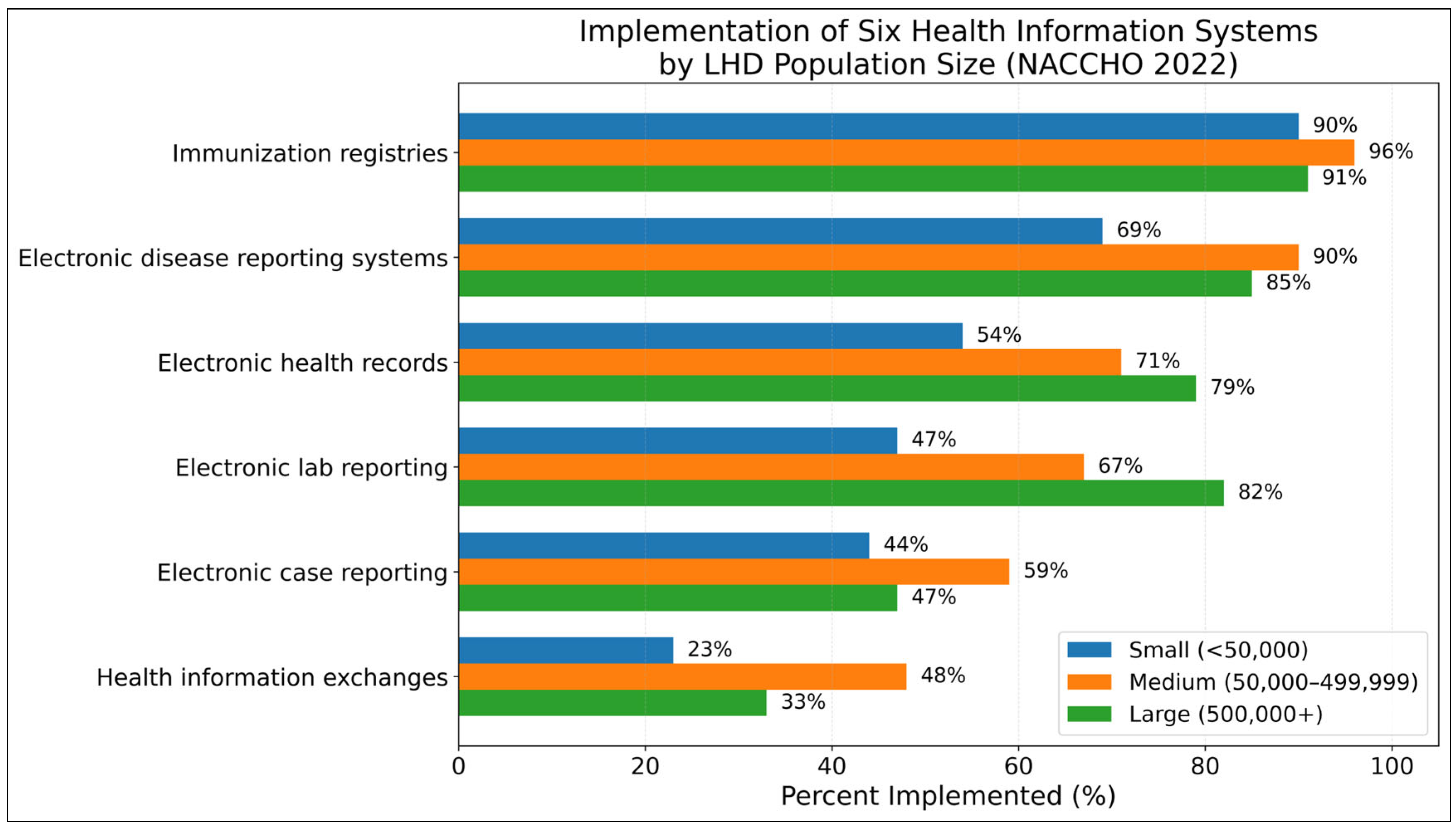
Figure 1 presents the percentage of LHDs that have implemented various information by population size. LHDs serving medium-sized LHDs had higher implementation rates for several systems, including immunization registries, EDRS, and HIEs, compared to small LHDs. Large LHDs showed relatively high adoption for EHRs and ELRs.
Figure 1.
Implementation of Health Information Systems by Local Health Departments (LHDs) by Size of Population in LHDs’ Jurisdiction.
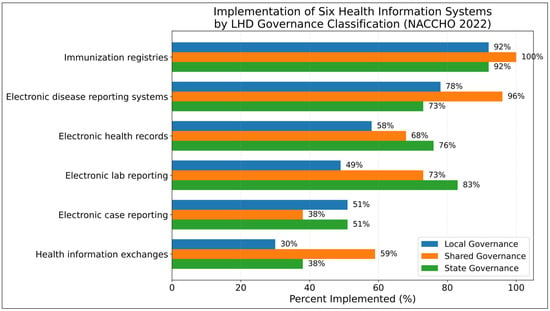
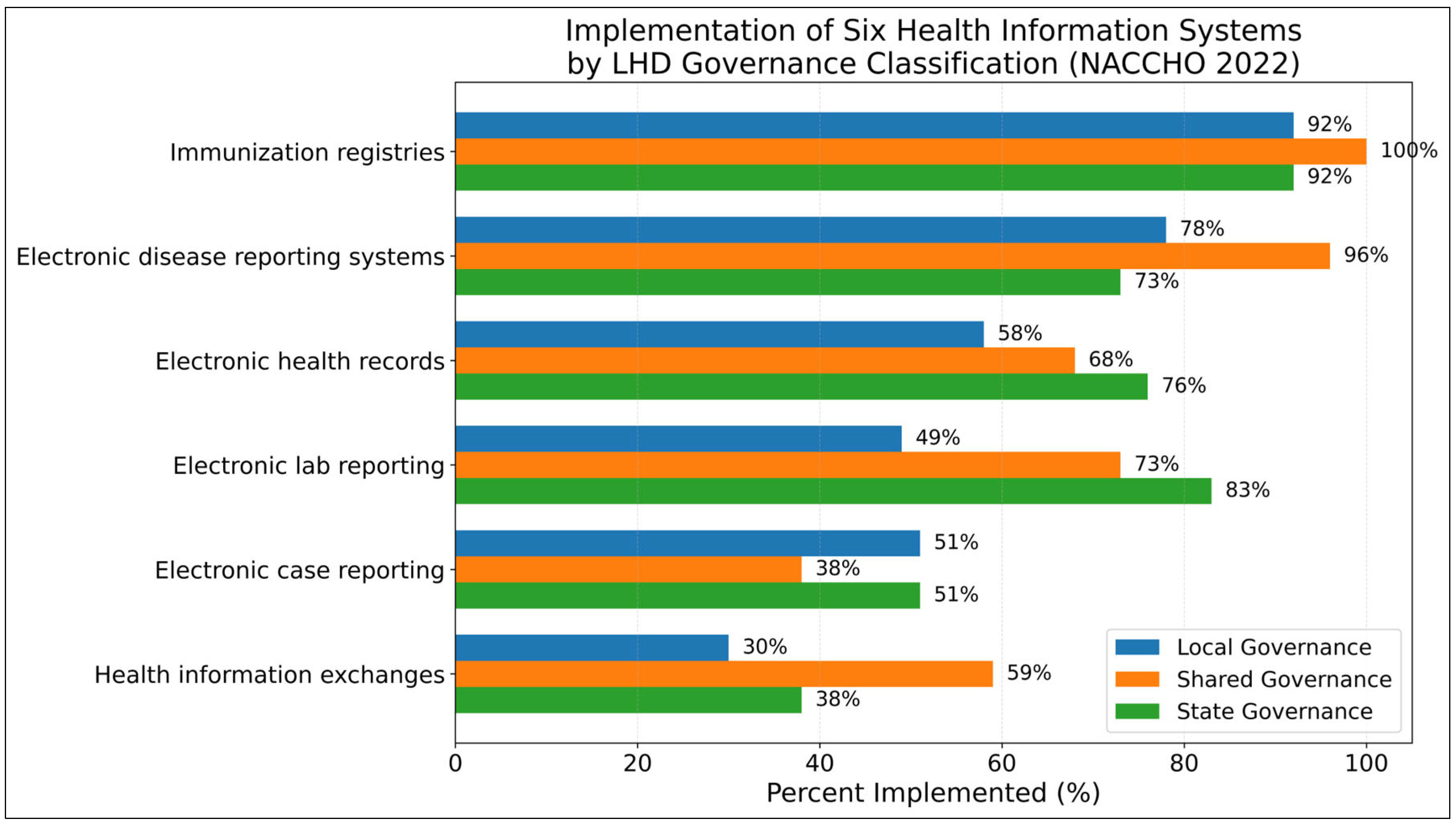
Figure 2 shows the variation in the implementation of the information systems by governance structure relative to the state health agency’s authority. The LHDs with shared governance had a higher percentage of current implementation of IR, EDR, ELR, and HIE compared to state-governed and locally governed LHDs. Variation also existed in EHR implementation rates across governance categories, with locally governed LHDs reporting lower adoption relative to state- or shared-governed LHDs.
Figure 2.
Implementation of Health Information Systems by Local Health Departments (LHDs) by Type of LHD Governance Authority Relative to State Health Department.
Characteristics of LHDs significantly associated with the implementation and in-process status of Electronic Health Records (EHR) included the number of full-time FTEs and governance classification (Table 2). Specifically, LHDs with an additional full-time employee (FTE) were associated with a higher odds of implementing or in the process of implementing EHR (compared with no activity or unknown status) (AOR = 1.054, p < 0.001). Locally governed LHDs had 94.2% lower odds of implementing or being in the process of implementing EHRs compared to state-governed LHDs (AOR = 0.058, p = 0.005). The odds of shared governance LHDs (compared to state governance LHDs) implementing or being in the process of implementing EHR were 6.70 times higher (AOR = 6.701, p < 0.001).
For Electronic Laboratory Reporting (ELR), medium population size and shared governance were significantly associated with implementation (Table 2). Medium-sized LHDs had higher odds of ELR implementation compared to small LHDs (AOR = 2.208, p = 0.005). Shared-governance LHDs had substantially higher odds of ELR implementation compared to state-governed LHDs (AOR = 7.348, p < 0.001).
Table 3 presents binary logistic regression results for Health Information Exchange (HIE) and Immunization Registry (IR) implementation. For HIE, medium population size and shared governance were significantly associated with implementation status. Medium-sized LHDs had higher odds of HIE implementation compared to small LHDs (AOR = 1.89, p = 0.042). Shared-governance LHDs had higher odds of HIE implementation compared to state-governed LHDs (AOR = 1.83, p = 0.040).
Table 3.
Binary logistic regression of LHD implementation status for health information exchange and immunization registry.
For Immunization Registry implementation, full-time FTEs, part-time FTEs, full-time FTE vacancies, new positions filled, and vacancies filled due to turnover were significantly associated with implementation (Table 3). Each additional full-time FTE was associated with higher odds of IR implementation (AOR = 1.08, p < 0.001), and each additional part-time FTE showed substantially higher odds (AOR = 2.35, p < 0.001). However, full-time FTE vacancies were associated with lower odds (AOR = 0.91, p < 0.001), new positions filled were associated with lower odds (AOR = 0.78, p < 0.001), and vacancies filled due to turnover were positively associated (AOR = 1.18, p < 0.001). Compared to small-sized LHDs (reference category), medium-sized LHDs had higher odds of IR implementation (AOR = 1.51, p < 0.001). Also, compared to state-governed LHDs (reference category), shared-governed LHDs had higher odds of IR implementation (AOR = 2.35, p < 0.001).
Multinomial logistic regression examined eCR implementation stages, with “No Activity” as the reference (Table 4). For LHDs that had implemented eCR versus no activity, full-time FTEs and governance structure were significantly associated. Each additional full-time FTE increased the odds of eCR implementation (AOR = 1.014, p = 0.027). Locally governed LHDs had lower odds of eCR implementation compared to state-governed LHDs (AOR = 0.365, p = 0.017). For LHDs in the process of implementing eCR versus no activity, full-time FTEs remained significant (AOR = 1.013, p = 0.035). For LHDs reporting “Don’t Know” status versus no activity, local governance showed significantly lower odds compared to state governance (AOR = 0.173, p < 0.001), suggesting that locally governed LHDs may have less awareness of their eCR implementation status. Variables for contractual FTE vacancies and vacancies filled due to turnover were excluded from the final eCR multinomial model due to sparse data and quasi-complete separation issues.
Table 4.
Multinomial Logistic Regression of LHD Implementation of Electronic Case Reporting (eCR).
3.2. Qualitative Results
Participant Characteristics: A diverse sample of LHD employees encompassed a broad range of experiences across various jobs, comprising five participants (two men and three women) aged 29–52. The qualitative arm of this study included an epidemiologist, a public health director, a health educator, an environmental health specialist, and a public information officer. All job functions encompassed a broad range of experience, from 5 to 25 years. The interviewees, representing diverse ages and genders, held various occupations (ranging from entry-level employees to supervisors) and had varying levels of expertise and experience within their local health departments. Of the 5 participants included in the study, 3 were from Georgia and 2 were from California (Table 5).
Table 5.
Participant characteristics (5 interviewees).
Overview of Emergent Themes:
Respondents highlighted several issues regarding LHDs and the utilization of informatics in these conversations. Discussions with interviewees elucidated multiple interrelated themes (Table 6) that emerged during the early days of the pandemic response: staff frustration and burnout, lack of staff support, staff resilience, high levels of staff turnover, and changes influenced by political pressures. The first theme, employee burnout and dissatisfaction, was mentioned by every interviewee and reflected the intense strain on local health staff. The second theme, high personnel turnover, often overlapped with burnout and contributed to significant disruptions in informatics implementation. These themes characterize how LHDs adopted and used informatics systems during the pandemic.
Table 6.
Primary themes and sub-themes in LHD include changes in the work environment, changes in informatics, and recommendations for success due to COVID-19 (5 interviewees).
Interviewees described the use of informatics in their local health departments both before and during the COVID-19 pandemic, enabling comparison of practices before and after the onset of the public health emergency. Before the pandemic, all participants reported that their LHDs utilized specification tools, including software and electronic health records (EHRs). However, the pandemic brought several challenges and opportunities for change. Interviewees identified multiple themes of change related to these experiences, including differences in staff roles and capabilities; leadership adaptations, including telework; efforts to improve informatics use; enhanced quality improvement (QI) and quality assurance (QA) processes; and persistent interoperability issues. Interoperability emerged as a critical, ongoing problem, as the urgent need to scale up data collection and reporting during the pandemic exposed gaps in system integration. At the same time, LHDs accelerated their development of informatics capacity through improved leadership strategies and quality assurance, highlighting both challenges and progress in pandemic response informatics.
Theme 1. Burnout, Role Ambiguity, and Staff Dissatisfaction
The pandemic drastically changed working conditions in LHDs, resulting in widespread staff dissatisfaction. Line workers were regularly moved to new roles, work hours exceeded demand, and adequate supervision was unavailable. Continuous reassignment and unclear communication about roles and responsibilities further compounded the already challenging environment for effective informatics use. Burnout was also driven by the lack of clarity regarding duties and roles, and rapidly changing state and federal guidelines:
You get these new hires or people reassigned to you, and then there is something on my calendar, and I join the meeting with nurses working on vaccines, and I am like, what is this? Then you have a staff meeting in the morning, and a couple of hours later, the state or the CDC comes out with new guidance that goes into effect, and we then meet again and say forget what we said in the morning, and it is crazy.
Theme 2. Staff Turnover and Its Antecedents and Consequences
Increased turnover may have been both a cause and an effect of growing frustration and burnout. Employees became upset when they learned that newly hired, non-public health staff were being paid higher salaries than they were; their frustration turned to resentment when people began resigning, and that resentment, combined with high turnover, led to even more resignations. This further stressed the informatics systems as new staff had to be onboarded, trained, and incorporated. I mean, I think people are burnt out just from like, there’s like an intensity to the work and shifting to totally new jobs, and then sometimes multiple months later, you’re shifting to another job. It’s really tiring...That’s not the way an organization is supposed to be or run. It’s a bunch of chickens with their heads cut off running doing stuff because people are getting moved in and out. Another participant said: You kind of get these new hires or people reassigned to you, and then there’s something on my calendar, and I join the meeting with nurses working on vaccines, and I’m like what’s this?
Emerging subthemes highlighted the antecedents and consequences of staff turnover during the pandemic period: Pay Discrepancies: Present staff were demoralized and upset upon learning that new employees were paid less. Financial Differences resulted in inefficiencies; frustrated staff were less motivated to use new systems: So, the people we brought in who were not public health professionals were paid more than our public health professionals, which caused huge issues. We had a 100% turnover in my program in 2021, except for me. I am the only one out of 22 people that’s left. Capacity Issues: The resulting turnover created substantial capacity issues. It also increased stress levels and underscored the importance of well-done informatics to manage the workload: We were also limited to what we could share because of staffing. So, we did not have staff. In March 2020, I was one of 2 epidemiologists covering the 13-county area with half a million people. Telework Tensions: Stakeholders agreed that the threat of COVID-19 necessitated the need for telework, but this created tension between the leadership and staff, layering even further tension/frustration that underscores the importance of informatics systems being in place to support telework: We are in the clinical business. We have to see patients; not everybody can telework. Luckily, not everybody left at one point in time. They left over a whole six months to eight months.
Theme 3. Interoperability and Data Governance Challenges
Although LHDs could feasibly collect and report their data, the State reported data that needed more reflection. A related big goal for the pandemic was increasing attention to equity and how to reach and target marginalized groups. We were excited that a few LHDs (for instance) were considering this as a goal for their pandemic response and ensuring their systems were culturally sensitive and made sense to their target population(s): n of the LHDs due to duplicate entries.
The numbers differed after a few weeks to where we knew ours were accurate because each county sends their stuff to us, and we are tabulating the numbers. … We would look at the number of vaccines given and the number of cases, and we knew that our epidemiology team was keeping up with it. We knew ours was accurate, but suddenly, the State’s numbers went way ahead of ours, and we were like, what is accounting for this? So, we pulled our team through it all, and there were duplications. Moreover, there was such a vast amount. They needed more resources or the team to clean up their data so we could monitor this stuff daily. We are cleaning up as we go. They are not. They need to clean it up on their end…
Theme 4: Informatics Adaptation and System Improvement
There were silver linings in the cloud of pandemic-related anxieties and deaths; for example, informatics was enhanced to accelerate the application of disaster science. LHDs were able to call attention to aspirations for funding that could translate into infrastructure improvement:
They are just putting money towards it to improve its infrastructure. So that has been something constructive. We moved to the cloud, our system, and it probably will not crash anymore.
The new IT base was relatively easy to use, and almost all within LHDs could use it.
The IT infrastructure, everything flipped within one week to allow people to use their VPN at home and have the entire DPH workforce do that, and the whole county workforce, essentially, which before people would say that they did not have the number of licenses, they did not have the infrastructure to do that, and they just made it happen. So that is like, there is a way.
Quality Improvement (QI) and Quality Assurance (QA): Luckily, the majority of the LHD leaders we interviewed were aware of these issues and explained that leadership was well-informed about the interoperability and data standardization issues during the COVID-19 pandemic and utilized some of their QI and QA skills to create protective force fields against the harmful effects:
They may have been interpreting it differently as well. However, they may have had data needs we were not collecting, so we are trying to bridge those gaps. Moreover, make sure everybody is trained in the things. However, also, we have data collection talking to the program people.
A related big goal for the pandemic was increasing attention to equity and how to reach and target marginalized groups. We were excited that a few LHDs (for instance) were considering this as a goal for their pandemic response and ensuring their systems were culturally sensitive and made sense to their target population(s):
But we had to take on this technology piece. Okay, how do we make this accessible to the staff? And then also, would you like to try to include equity in the patients we are trying to reach? Like, are we reaching the population? Do we have the language line accessible, like, that kind of thing?
In summary, burnout, role ambiguity, and staff dissatisfaction were closely intertwined with developments in informatics during the COVID-19 pandemic. Rapid changes to workflows, along with the need to adopt new informatics tools while maintaining existing systems, intensified stress and fatigue among LHD staff. These pressures contributed to workforce dissatisfaction and operational challenges. Those challenges included issues related to data discrepancies and reporting requirements. Overall, these perceptions highlight how the expansion of informatics and workforce strain reinforced one another during the pandemic response. Together, the qualitative findings help contextualize the quantitative results and underscore how workforce conditions and informatics demands jointly shaped LHD adoption of health information systems during the COVID-19 pandemic.
Together, the quantitative and qualitative results address the study aim by demonstrating how organizational characteristics, including workforce capacity, staffing stability, governance structure, and population context, are associated with variation in health information system adoption across local health departments. Quantitative associations between staffing levels, governance type, and system implementation were complemented by qualitative findings that illustrated how workforce strain, turnover, leadership decisions, and interoperability challenges shaped real-world adoption and use of health information systems during the COVID-19 pandemic.
4. Discussion
The COVID-19 pandemic has brought to light some long-neglected, fundamental infrastructure issues related to LHDs. This study focuses on the role of personnel numbers, governance structures, and data management in these units. Specifically, this study examined how the COVID-19 pandemic has affected the deployment of electronic health systems within LHDs and the extent to which they are used to improve the management of the pandemic and other disease outbreaks. The combined quantitative and qualitative findings have identified critical gaps that must be addressed to better prepare our public health institutions for the next round of crises and to shed light on how the unprecedented pressures of the pandemic have affected health informatics management.
One key takeaway is the critical role of adequate staffing in the adoption and operation of electronic health systems. The study shows that LHDs were more likely to establish core systems, such as Immunization Registries and EDRS, with higher staff and relative full-time (FTE) employee levels. Besides making the uptake and the use of such technology smoother, adequate staffing also improves data management during public health emergencies and mitigates worker burnout [11]. The COVID-19 pandemic offers an exemplary test case for this expectation: In its most severe periods, rapid and effective viral containment relied heavily on the timely administration and implementation of public health measures by health departments, both directly and indirectly.
These analyses also identify critical issues that undermine the usefulness and sustainability of an informatics system, such as high staff turnover and burnout. Informatics systems necessitate mass onboarding and training of new personnel to maintain operations. This process can lead to inefficiencies and system-use errors due to high turnover rates. The COVID-19 pandemic’s impact on staff numbers has heightened the need for methods to maintain efficient, sustainable workforce models that minimize the adverse effects of employee turnover on public health operations. They argue that initiatives like the Public Health Workforce Loan Repayment Plan, which provides annual funding of up to $50,000 for public health services, offer a viable strategy to stabilize the data-driven workforce essential to contemporary surveillance and emergency response. Properly funded and implemented, these incentives can address the staffing shortages highlighted in this study by enhancing the competitiveness of public health positions for recent graduates with specialized skills.
This study focuses on how shared governance impacts the adoption of health IT systems, particularly for ELR, EHR, and HIE, resource allocation, and staffing challenges. As LHDs adopted several cutting-edge technologies, such as Electronic Lab Reporting (ELR) and Electronic Health Records (EHRs), at higher rates, LHDs with shared governance achieved higher adoption rates of these technologies. Shared governance enables more flexible, adaptive resource utilization to meet public needs, which is crucial during public health crises. Therefore, this framework emphasizes the importance of strong governance in technology adoption by combining resources and negotiating more effectively with vendors. On the other hand, deploying and managing technologies became more challenging for LHDs with limited governance, underscoring the need for a flexible governance structure to address the public health crisis.
Our study had several limitations. Noteworthy problems in the study design include the use of quantitative data that may reflect only the overall US experience, potentially limiting the generalizability of the results. Furthermore, the study’s cross-sectional approach would capture only a single time point rather than the longitudinal dimension of the survey, thereby limiting its ability to assess how the deployment of the electronic system would influence public health outcomes and LHD performance over time. Also, although the sample was nationally representative, the findings for small subgroups, particularly local health departments with shared governance, should be interpreted cautiously due to limited sample sizes. Finally, as highlighted in the qualitative findings, the system works, and acceptance differs across LHDs, which could introduce bias into some quantitative results. To strengthen rigor, trustworthiness, and transparency in the qualitative component of this mixed-methods study, several validation strategies were employed. Qualitative data were independently coded by more than one member of the research team, followed by dual coding reconciliation through structured meetings to review discrepancies and reach consensus. Regular analytic meetings were held to discuss emerging themes, challenge interpretations, and ensure alignment between data and findings. In addition, reflective memoing was used throughout the analytic process to document analytic decisions, track evolving interpretations, and enhance reflexivity. These strategies support the credibility and reliability of the qualitative findings despite inherent limitations associated with cross-sectional designs and variation in local health department contexts.
This study provides a valuable synthesis of data on the challenges posed by the COVID-19 pandemic that had previously been latent realities in LHDs. The data shows the importance of robust data management protocols, effective governance frameworks, and adequate staffing. Public health systems could enhance their preparedness and responsiveness to the next public health emergency by prioritizing these critical areas. Future research should build on these results by further exploring longitudinal effects and by developing a roadmap to enhance the resilience and effectiveness of health informatics systems in the face of current and future crises.
This research also points to improved data linkages and customized informatics solutions. LHDs serving mid-sized populations often developed custom systems (though small and large populations showed higher odds of implementation of certain systems) for Electronic Laboratory Reporting (ELR) and Health Information Exchanges (HIE) to meet their unique needs and improve responsiveness to community health needs [5]. Custom-made solutions have helped enhance operational success while working with staffing and resourcing challenges and helped LHDs work through national emergencies and pandemics such as SARS, H1N1/Swine Flu, Ebola, and Zika. In addition to improving interoperability, building upon the existing models from local public health has a good track record of facilitating the collection and combining of all forms of data in a spatially enhanced data infrastructure. Several positive evolutions with the pandemic highlighted critical problems with data quality and interoperability, revealing the need for increased data standards and integration to create robust approaches to upload, share, and make data usable. Robust quality improvement (QI) and quality assurance (QA) processes are essential to achieve this and ensure reliable data handling. They include stacked elements of frequent staff training and ongoing process review [5,11]. Future research should build on these results by further exploring longitudinal effects and developing a roadmap to make health informatics systems more resilient and effective when faced with current and future crises [11]. Additionally, future research should build on these results by further exploring longitudinal effects and developing a roadmap to make health informatics systems more resilient and effective when faced with current and future crises, in line with broader calls to transform public health data systems and modernize infrastructure after COVID-19 [19].
This study adds substantially to the existing evidence on LHDs’ informatics capacity. Instead of using a composite measure of informatics capacity, we disaggregate adoption across six distinct public health information systems. We use the most recent nationally representative data collected during the COVID-19 period. In addition, we model eCR using multinomial regression, using categories that retain implementation uncertainty. Most importantly, we use qualitative data to contextualize workforce and governance mechanisms underlying observed adoption patterns. By integrating quantitative analyses of organizational characteristics with qualitative accounts of workforce and governance experiences, this mixed-methods study directly addresses its aim of examining factors associated with health information system adoption among local health departments. The combined findings highlight that health information system adoption is not driven by technology alone, but by the interplay of staffing capacity, governance flexibility, and organizational context, underscoring the value of mixed-methods approaches for understanding complex public health informatics implementation.
5. Conclusions
The research employs a mixed-methods approach that uses of both quantitative and qualitative data to examine the adoption of six public health information by LHDs using national survey data and qualitative interviews. The quantitative data suggest a high level of acceptance of critical systems, which varied substantially across several factors. Qualitative data identified operational challenges, including employee turnover, fatigue, and data quality/interoperability, particularly during the implementation of electronic health systems. The findings imply that a deeper understanding of how adequately staffed and well-governed health organizations affect the success of electronic health systems could lead to improved performance in public health through this integrated approach. The study’s findings on disparities between data produced at the local and state levels indicate the need to emphasize improved data integration and standardization. More importantly, we need to prioritize efforts to improve the accuracy and interoperability of health data. In enhancing public health reporting and response capacities, the quality of public health statistics and the availability of seamless data transfer across platforms are crucial. In the long run, research is needed to understand the effects of governance structures on technology adoption. It is essential to understand the roles of different governance models in the successful deployment of health informatics systems to inform the development of more appropriate public health informatics strategies and policies.
Author Contributions
Conceptualization, G.H.S. and N.S.; methodology, G.H.S. and N.S.; formal analysis, N.S. and M.A.; investigation, N.S. and T.C.M.; data curation, N.S. and T.C.M.; writing—original draft preparation, N.S. and M.A.; writing—review and editing, G.H.S., B.A.A., W.A.M. and T.C.M.; supervision, G.H.S.; project administration, G.H.S. and T.C.M. All authors have read and agreed to the published version of the manuscript.
Funding
This research received no external funding.
Institutional Review Board Statement
The study was conducted in accordance with the Declaration of Helsinki and approved by the Institutional Review Board of Georgia Southern University (Protocol H24093, approved on 10 September 2024).
Informed Consent Statement
This study included both secondary quantitative data and primary qualitative interviews. The quantitative analyses were based on secondary data collected at the organizational level from local health departments and did not include identifiable individuals, personal behaviors, or individual-level outcomes. This component of the study did not involve recruitment or interaction with human subjects and was classified as non-human subjects research under U.S. federal regulations by the Georgia Southern University Institutional Review Board (IRB). The qualitative interviews were reviewed under the same IRB protocol. Email-informed consent was obtained from all interview participants prior to data collection. Accordingly, informed consent was applicable to the qualitative component of the study but not to the quantitative secondary data.
Data Availability Statement
The quantitative data used in this study are publicly available from the National Association of County and City Health Officials (NACCHO) 2022 National Profile of Local Health Departments at [https://www.naccho.org/] (accessed on 26 January 2026) Qualitative interview data are not publicly available due to privacy and confidentiality agreements with participants but are available from the corresponding author upon reasonable request and with appropriate ethical approval.
Acknowledgments
The authors acknowledge the National Association of County and City Health Officials (NACCHO) provide access to the 2022 National Profile of Local Health Departments data. We also thank the local health department staff who participated in the qualitative interviews for their time and valuable insights during the challenging COVID-19 pandemic period.
Conflicts of Interest
The authors declare no conflicts of interest.
Abbreviations
The following abbreviations are used in this manuscript:
| Abbreviation | Full Form |
| LHD | Local Health Department |
| NACCHO | National Association of County and City Health Officials |
| eCR | Electronic Case Reporting |
| EDRS | Electronic Disease Reporting System |
| EHR | Electronic Health Records |
| ELR | Electronic Laboratory Reporting |
| HIE | Health Information Exchange |
| IR | Immunization Registry |
| FTE | Full-Time Equivalent |
| AOR | Adjusted Odds Ratio |
| COVID-19 | Coronavirus Disease 2019 |
| SPSS | Statistical Package for the Social Sciences |
| QI | Quality Improvement |
| QA | Quality Assurance |
| CDC | Centers for Disease Control and Prevention |
| IT | Information Technology |
| NNDSS | National Notifiable Diseases Surveillance System |
| NEDSS | National Electronic Disease Surveillance System |
| VPN | Virtual Private Network |
| GIS | Geographic Information Systems |
| API | Application Programming Interface |
References
- Balluck, J.; Asturi, E.; Brockman, V. Use of the ADKAR® and CLARC® change models to navigate staffing model changes during the COVID-19 pandemic. Nurse Lead. 2020, 18, 539–546. [Google Scholar] [CrossRef] [Scilit] [PubMed]
- Dixon, B.E. Public health: Interoperability applications to support population health. In Nursing Informatics: A Health Informatics, Interprofessional and Global Perspective; Hübner, U.H., Mustata Wilson, G., Morawski, T.S., Ball, M.J., Eds.; Springer International Publishing: Cham, Switzerland, 2022; pp. 339–354. [Google Scholar] [CrossRef] [Scilit]
- Lotfinejad, N.; Peters, A.; Tartari, E.; Fankhauser-Rodriguez, C.; Pires, D.; Pittet, D. Hand hygiene in health care: 20 years of ongoing advances and perspectives. Lancet Infect. Dis. 2021, 21, e209–e221. [Google Scholar] [CrossRef] [Scilit] [PubMed]
- Miller, S.; Smith, M. Ethics, public health and technology responses to COVID-19. Bioethics 2021, 35, 366–371. [Google Scholar] [CrossRef] [Scilit] [PubMed]
- Cunningham, M.; Patel, K.; McCall, T.C.; Hall, K.; Garofalini, C.; Lee, J.; Alford, A. 2022 National Profile of Local Health Departments; National Association of County and City Health Officials: Washington, DC, USA, 2024; Available online: https://www.naccho.org/resources/lhd-research/national-profile-of-local-health-departments (accessed on 20 November 2025).
- Williams, K.S.; Shah, G.H. Electronic health records and meaningful use in local health departments: Updates from the 2015 NACCHO informatics assessment survey. J. Public Health Manag. Pract. 2016, 22, S27–S33. [Google Scholar] [CrossRef] [Scilit] [PubMed]
- Bamgboje-Ayodele, A.; Boscolo, A.; Burger, M.; Hutchings, O.; Shaw, M.; Shaw, T.; Baysari, M. Health IT implementation and the impact of the COVID-19 pandemic on clinician-IT dynamics: Qualitative study. J. Med. Internet Res. 2025, 27, e57847. [Google Scholar] [CrossRef] [Scilit] [PubMed]
- Bonney, T.; Grant, M.P. Local health department engagement with workplaces during the COVID-19 pandemic: Examining barriers of and facilitators to outbreak investigation and mitigation. Front. Public Health 2023, 11, 1116872. [Google Scholar] [CrossRef] [Scilit] [PubMed]
- Lenert, L.A.; Ding, W.; Jacobs, J. Informatics for public health and health system collaboration: Applications for the control of the current COVID-19 pandemic and the next one. J. Am. Med. Inform. Assoc. 2021, 28, 1807–1811. [Google Scholar] [CrossRef] [Scilit] [PubMed]
- Centers for Disease Control and Prevention (CDC). eCR Now: COVID-19 Electronic Case Reporting for Healthcare Providers: Improve Outbreak Response with Real Time Data Flow. 2020. Available online: https://stacks.cdc.gov/view/cdc/92702 (accessed on 12 December 2025).
- Vest, J.R.; Issel, L.M. Factors related to public health data sharing between local and state health departments. Health Serv. Res. 2014, 49, 373–391. [Google Scholar] [CrossRef] [Scilit] [PubMed]
- DeSalvo, K.; Hughes, B.; Bassett, M.; Benjamin, G.; Fraser, M.; Galea, S.; Gracia, J.N. Public health COVID-19 impact assessment: Lessons learned and compelling needs. NAM Perspect. 2021, 2021, 10.31478/202104c. [Google Scholar] [CrossRef] [Scilit] [PubMed]
- Avidan, M.S.; Myles, P.S. Auditing the national audit projects: Impact and implementation. Br. J. Anaesth. 2018, 121, 107–111. [Google Scholar] [CrossRef] [Scilit] [PubMed]
- Keesara, S.; Jonas, A.; Schulman, K. COVID-19 and health care’s digital revolution. N. Engl. J. Med. 2020, 382, e82. [Google Scholar] [CrossRef] [Scilit] [PubMed]
- Yeung, T. Local health department adoption of electronic health records and health information exchanges and its impact on population health. Int. J. Med. Inform. 2019, 128, 1–6. [Google Scholar] [CrossRef] [Scilit] [PubMed]
- Norton, P.T.; Rodriguez, H.P.; Shortell, S.M.; Lewis, V.A. Organizational influences on health care system adoption and use of advanced health information technology capabilities. Am. J. Manag. Care 2019, 25, e21–e25. [Google Scholar] [PubMed]
- Linnan, L.A. Research collaboration with 2-1-1 to eliminate health disparities: An introduction. Am. J. Prev. Med. 2012, 43, S415–S419. [Google Scholar] [CrossRef] [Scilit] [PubMed]
- Khurshid, A.; Shah, G.H.; Nguyen, T.H.; Jones, J.A. Building informatics capacity of local health departments to combat COVID-19: A call to action. J. Public Health Manag. Pract. 2020, 26, 322–324. [Google Scholar] [CrossRef] [Scilit] [PubMed]
- Walker, D.M.; Yeager, V.A.; Lawrence, J.; McAlearney, A.S. Identifying opportunities to strengthen the public health informatics infrastructure: Exploring hospitals’ challenges with data exchange. Milbank Q. 2021, 99, 393–425. [Google Scholar] [CrossRef] [Scilit] [PubMed]

Disclaimer/Publisher’s Note: The statements, opinions and data contained in all publications are solely those of the individual author(s) and contributor(s) and not of MDPI and/or the editor(s). MDPI and/or the editor(s) disclaim responsibility for any injury to people or property resulting from any ideas, methods, instructions or products referred to in the content. |
© 2026 by the authors. Licensee MDPI, Basel, Switzerland. This article is an open access article distributed under the terms and conditions of the Creative Commons Attribution (CC BY) license.