


Abstract
Traditional textile crafts face significant challenges in preserving and transferring knowledge due to the aging of expert artisans and declining community engagement. The Phum Riang silk-weaving tradition in Suratthani Province is a critical example of indigenous knowledge systems that require systematic documentation and digital conservation strategies. This research aims to develop a comprehensive ontological framework to support the capture, organization, and preservation of traditional knowledge related to Phum Riang silk production processes, establishing practical methodologies applicable to broader cultural heritage craft digitization and knowledge management systems. The research methodology employs ontology engineering principles, using the Web Ontology Language to create structured knowledge representation systems. Data collection was conducted through ethnographic fieldwork, in-depth interviews with expert craftspeople, and systematic documentation covering production processes, materials, tools, and cultural practices. The developed ontology encompasses five primary knowledge domains: production processes, raw materials, traditional tools, geographical context, and cultural significance. The framework comprises 23 distinct classes organized in hierarchical structures, 15 object properties, and 12 data properties, complemented by business rules ensuring authenticity and quality control mechanisms. This framework has significant implications for cultural heritage digitization, indigenous intellectual property protection, systematic knowledge transfer across generations, cultural authenticity preservation, and traditional craft community economic sustainability.
1. Introduction
The conservation of intangible cultural heritage constitutes one of the most urgent challenges confronting contemporary societies, particularly at a time when traditional craft-based knowledge systems are facing unprecedented threats from globalization, demographic shifts, and technological advancements. UNESCO estimates that approximately half of the world’s more than seven thousand languages—along with their associated cultural practices—are at risk of disappearing within this century [1]. Traditional textile craftsmanship, which embodies centuries of accumulated knowledge regarding materials, techniques, and cultural meanings, exemplifies both the complexity and vulnerability of these heritage systems. The aging of master artisans, the declining engagement of younger generations within local communities, and the absence of systematic documentation methods have collectively created an urgent need for innovative conservation strategies capable of capturing both the technical and cultural dimensions of these traditions [2,3]. The scope of cultural heritage preservation has expanded beyond artifacts and monuments, to include intangible cultural heritage (ICH), formally recognized under the 2003 UNESCO Convention for the Safeguarding of the Intangible Cultural Heritage. The Convention defines ICH broadly—practices, expressions, knowledge, skills, and associated instruments, objects, and cultural spaces that communities, groups, or individuals acknowledge as part of their cultural heritage. These forms of heritage are vital in sustaining community identity and continuity. However, the very nature of ICH presents preservation challenges substantially more complex than those for tangible heritage. As argued by [4], ICH does not exist as durable physical objects but as embodied and tacit knowledge—knowledge stored in the bodies, memories, and lived practices of tradition bearers. Transmission typically occurs informally via demonstration, storytelling, and communal participation, making it inherently dynamic and context-sensitive.
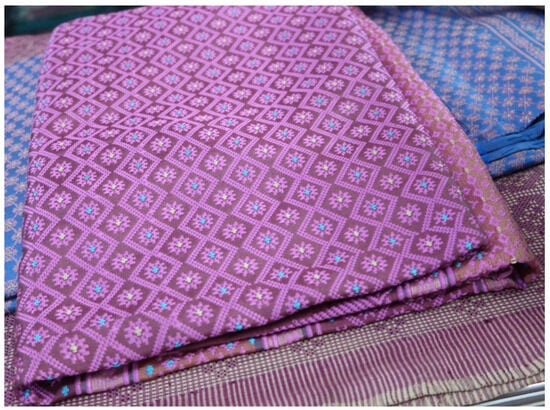
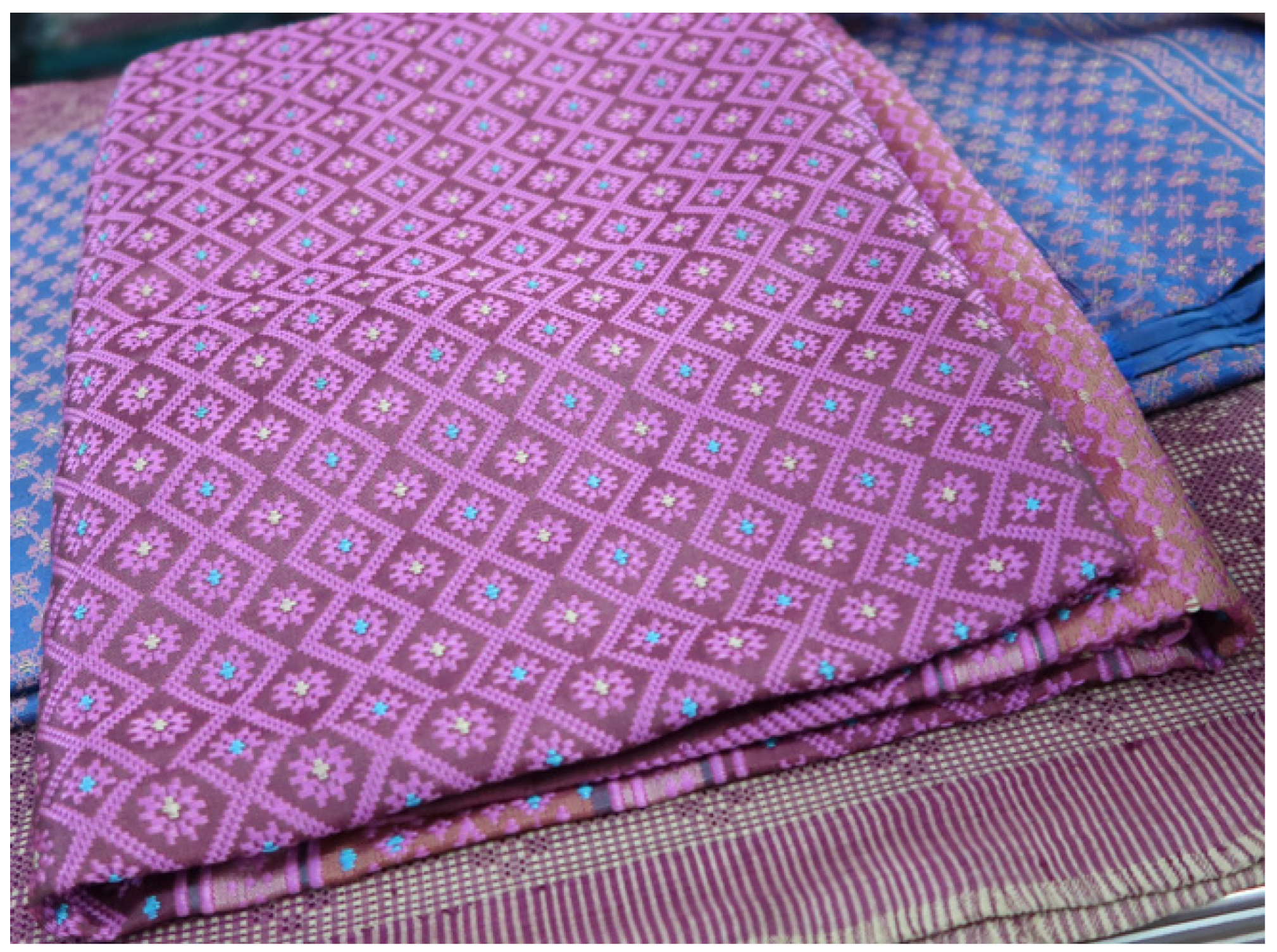
Among the diverse craft heritage traditions in Thailand, the weaving of Phum Riang silk in Chaiya District, Suratthani Province, stands out as a particularly important and well-suited case for research and the development of innovative conservation frameworks. This suitability is grounded in several interrelated factors: its historical and cultural value, the complexity of its underlying knowledge system, and the urgent threat to its continuity. Figure 1 presents an example of a traditional Phum Riang Silk Heritage textile.
Figure 1.
An example of a traditional Phum Riang Silk Heritage textile.
Phum Riang silk weaving represents a significant example of Thailand’s endangered traditional craft heritage. This distinctive weaving tradition, originating in the seventeenth-century Ayutthaya period, is renowned for its intricate supplementary-weft Yok Dok techniques that produce finely raised patterns on silk textiles [5]. The tradition encompasses knowledge of sericulture, natural dyeing, and complex weaving techniques, as well as the cultural meanings embedded in ancient motifs that reflect Buddhist cosmology, courtly symbolism, and representations drawn from nature. Historical evidence suggests that Phum Riang silk was once produced for royal court use and held a prestigious status within Thailand’s traditional textile hierarchy. Thus, Phum Riang silk is not merely a textile product but a tangible record of the southern peninsula’s cultural history.
In contemporary practice, however, production has declined dramatically. Fewer than fifty active weavers remain, most of whom are over sixty years of age. Recent field surveys conducted by the Office of Contemporary Art and Culture reveal that much of the knowledge of traditional motifs and techniques persists only among a small number of elderly master artisans, presenting a critical risk of knowledge loss [6]. Existing studies (e.g., refs. [5,7]) provide valuable historical and ethnographic insight—but their descriptive nature lacks a systematic knowledge framework, leaving the collected information fragmented and difficult to access, integrate, or reuse for education, revitalization, or further development.
The most critical challenge is the vulnerability to loss. Because knowledge resides in individuals, when practitioners—especially master artisans—disappear without transmission, ICH may be lost forever. Contemporary forces exacerbate this risk: demographic shifts such as rural youth migrating to urban centers for economic opportunities disrupt intergenerational transmission [3], while globalization introduces inexpensive industrial replacements that undermine the economic viability of and motivation for traditional craftsmanship [2]. A second major challenge lies in documentation difficulties: conventional media (notes, photos, video) capture only explicit or surface-level knowledge (e.g., process steps), but fail to encode tacit knowledge—sensory judgments, manual techniques, esthetic decisions made during creative processes—which are difficult to verbalize [8]. As a consequence, recorded knowledge tends to fragment, failing to express the complex interrelations of technique, material, belief, and social practice that constitute the craft system.
Finally, ethical and participatory concerns arise when external entities attempt to preserve ICH. As [9] observes, such efforts risk “freezing heritage”—imposing rigid standards or canonical forms that contradict the inherently adaptive nature of ICH. Effective safeguarding must balance the preservation of tradition with community agency, allowing adaptation to contemporary contexts. Intellectual property rights and equitable benefit-sharing remain critical when traditional knowledge is used commercially. Recent scholarship therefore advocates shifting from viewing ICH as static “objects of preservation” toward supporting a living cultural ecosystem that sustains heritage through community practice and meaning [10]. Given these deeply intertwined challenges, there is an urgent need for innovative, context-sensitive, and community-engaged methods and tools to preserve ICH knowledge systems in their full complexity.
The challenges associated with safeguarding traditional craftsmanship are multidimensional and demand approaches that transcend conventional documentation practices. Unlike tangible artifacts, which can be preserved within museum settings, intangible cultural heritage persists primarily through the embodied knowledge and practices of skilled artisans [4]. Such knowledge encompasses not only explicit procedural information on techniques and materials, but also the tacit, experientially acquired knowledge developed over extended practice, the cultural meanings encoded in motifs and designs, and the social practices surrounding production and use [8]. Traditional documentation methods—typically centered on textual descriptions or photographic records—often fail to capture the interconnections among these knowledge domains or provide a structured framework for systematic organization and retrieval [11]. Moreover, many conservation initiatives struggle to balance the preservation requirements of traditional knowledge with the needs of heritage-bearing communities to adapt and innovate their practices in response to contemporary conditions [9].
The case of Phum Riang silk possesses several characteristics that make it particularly suitable as a model for developing widely applicable approaches to traditional craft preservation. First, the tradition encompasses a complete textile production chain—ranging from sericulture and yarn preparation to dyeing and weaving—making it a holistic example of a craft knowledge system. Second, it involves complex interactions among multiple forms of knowledge, including technical skills, material knowledge, cultural symbolism, and social practices, thereby exemplifying the multidimensional nature of intangible cultural heritage. Third, although the tradition is rooted in a specific geographical and cultural setting that shapes its production methods and meanings, it also shares structural similarities with textile traditions in other regions, enabling the broader applicability of preservation frameworks developed from this case. Fourth, the preservation challenges currently facing Phum Riang silk—such as aging master artisans, declining community engagement, and limited documentation—reflect issues experienced by traditional craft practices worldwide.
Phum Riang silk’s suitability as a pilot case for ontology-driven heritage conservation stems from the comprehensiveness of its knowledge system. The tradition encompasses a full textile production chain—from sericulture (cultivating mulberry for silkworms), silk reeling, fiber preparation, and natural dyeing using local botanicals, to weaving using highly specialized techniques. This cradle-to-finish completeness makes Phum Riang a nearly ideal model for creating a knowledge representation framework that captures the entire craft lifecycle. Moreover, the knowledge embodied in Phum Riang weaving spans multiple domains: technical craftsmanship, material and botanical knowledge, esthetic design, and socio-cultural symbolism. This multidimensionality mirrors the complexity characteristic of intangible cultural heritage (ICH) and underscores the challenge to accurately model such systems.
Given the urgency of the situation, combined with the knowledge system’s intrinsic complexity and completeness, Phum Riang silk weaving should not be viewed merely as a beneficiary of conservation technologies—but as a prototype case study for developing a dedicated ontology for traditional craftsmanship. The ontology framework built from this case would not only support the preservation of Phum Riang heritage but also serve as a transferable model applicable to other threatened textile crafts and artisanal traditions worldwide.
Digital technologies have emerged as powerful tools for the preservation of cultural heritage, offering new opportunities for documenting, organizing, and disseminating traditional knowledge while maintaining its inherent complexity and interconnectedness [12,13]. Large-scale digitization initiatives, such as Europeana and the Digital Public Library of America, have demonstrated the potential of digital platforms to facilitate global public access to cultural heritage [14]. However, these initiatives primarily focus on tangible heritage and archival documents, paying limited attention to the structured representation of intangible cultural heritage knowledge [15].
However, when it comes to ICH, these object-focused approaches hit significant limitations, because ICH is fundamentally process- and knowledge-based. Several scholars point out that digitization alone cannot sufficiently capture the contextual, performative, and experiential dimensions of ICH [16,17].
To address these constraints, researchers have turned to multimedia methods (video, audio, textual documentation) to record intangible practices—weaving, rituals, dance—and immersive technologies such as Virtual Reality (VR) or Augmented Reality (AR) to recreate experiential aspects [18,19]. These methods better capture the spatial–temporal dynamics of performance than traditional documentation. However, output is often unstructured, resulting in large, siloed digital repositories which make targeted querying, cross-tradition comparison, or integrated analysis difficult [11].
Despite its significance and the urgency of preservation, existing documentation efforts remain limited and fragmented. Previous research provides valuable historical and ethnographic accounts [5,7] but does not offer systematic frameworks for organizing and safeguarding the recorded knowledge. Government agencies and cultural organizations have implemented measures such as training programs and exhibitions, yet these initiatives are not supported by comprehensive digital documentation systems that facilitate long-term knowledge transmission and accessibility. The absence of structured knowledge representation frameworks renders the valuable information recorded through research and conservation initiatives difficult to access, integrate, and apply for public education, quality management, and community development.
Recent advancements in semantic web technologies and knowledge representation provide promising avenues for addressing this gap. In particular, ontology engineering—which offers a formal framework for representing domain knowledge by explicating entities, relationships, and rules—has shown considerable potential for capturing the complexity of cultural heritage domains [20,21]. A growing body of research has explored the application of ontological approaches to cultural heritage preservation. The CIDOC Conceptual Reference Model (CIDOC-CRM), for instance, is a comprehensive ontology for museum documentation and is widely recognized as an international standard [22]. Other initiatives have developed domain-specific ontologies for particular heritage types, including archeological sites [23], historical documents [24], and traditional music [25].
Nevertheless, these efforts predominantly emphasize tangible heritage or performing arts traditions, with comparatively limited attention to traditional craft knowledge systems. The few ontologies addressing craft heritage—such as those focusing on traditional construction techniques [26] or ceramic production [27]—tend to privilege narrowly defined technical aspects rather than developing comprehensive frameworks that integrate production processes, materials, tools, geographical contexts, and cultural meanings.
As highlighted by [15], a core limitation lies in systems that produce only digital surrogates for objects or events, without modeling the underlying knowledge systems. This has led recent research to emphasize the adoption of semantic-web technologies and knowledge-modeling frameworks—constructing machine-interpretable networks that embed meaning and relationships rather than merely storing files [28].
Ontology-based approaches and knowledge graphs have therefore emerged as powerful tools. Recent studies demonstrate their utility in representing craft traditions, ritual systems, and embodied practices, enabling detailed modeling of relationships among artisans, techniques, materials, motifs, and cultural meanings [29,30,31,32]. These semantic models enhance precision in retrieval and support advanced computational reasoning, comparative analysis, and even decision-support systems for stakeholders [33]. Such developments mark a shift from digital documentation to structured digital knowledge management—a critical evolution for sustainable ICH preservation.
Ontology Engineering has become a central methodology within Digital Humanities, offering a formal, explicit specification of shared conceptualizations [34]. Through ontologies, domain knowledge can be modeled by defining classes, properties, and interrelationships in a way that enables computational processing and semantic reasoning, surpassing the limitations of rigid relational database schemas.
One of the most influential and widely adopted ontologies in cultural heritage is the CIDOC Conceptual Reference Model (CIDOC-CRM), developed by the International Committee for Documentation (CIDOC) of the International Council of Museums (ICOM) and standardized as ISO 21127:2023 [35]. CIDOC-CRM functions as an upper-level ontology, providing a conceptual schema for representing cultural and historical events, actors, and objects [22]. For instance, the production of a textile can be modeled as a “production event” involving a “weaver” (actor), a “loom” and “threads” (objects), occurring at a particular time and place—enabling the detailed representation of provenance, the production process, and contextual metadata. Because of its flexibility and extensibility, CIDOC-CRM has served as the foundational framework for many global heritage data-integration projects. Building on this foundation, domain-specific ontologies have been developed to capture subfield-specific nuances of cultural heritage. For example, research in this period includes the following:
- The SILKNOW project, which focuses on European silk heritage. SILKNOW extends CIDOC-CRM to model the production process, material properties, and semantic metadata of silk artifacts, supporting integrated digital documentation and analysis [36].
- A study constructing an ontology-based knowledge graph for ICH in traditional medicine, implementing semantic network and ontology modeling to organize and preserve intangible heritage data [37].
- Recent developments in semantic visualization tools: for instance, the use of ontology-based frameworks to support the interactive visualization of heritage knowledge graphs, accommodating temporal and spatial granularity and enabling richer user interaction [36].
- Broader efforts to build large, interlinked knowledge graphs for cultural heritage, enabling interoperability across institutions and datasets [33].
These works illustrate that ontologies and knowledge graphs are increasingly being recognized as effective instruments not only for metadata management but also for enabling semantic interoperability, complex querying, comparative analysis, and sustainable heritage stewardship—transforming how cultural heritage (both tangible and intangible) is documented, preserved, and accessed.
Despite these advances, a significant research gap persists: there is a lack of comprehensive ontologies that adequately represent traditional craft knowledge systems, particularly textile crafts. Traditional crafts embed complex, multidimensional knowledge—combining technique, materials science, ecological context, symbolic meaning, social structure, and esthetic values. However, existing ontology models remain insufficiently expressive for such complexity. Most prior efforts are limited in scope, focusing on narrow technical aspects or particular subdomains.
For example, some ontologies for traditional construction document materials, tools, and step-by-step procedures (e.g., ref. [26]), but omit symbolic meanings of architectural elements or indigenous ecological knowledge guiding material selection. Similarly, ontology work on pottery or artifact typologies (e.g., ref. [27]) emphasize formal production metadata but do not encode intangible dimensions central to ICH. These examples demonstrate ontology’s potential for structuring technical data—but also its current limitation in representing the symbolic, ecological, and social layers of traditional craft heritage.
A major gap lies in linking procedural knowledge (how things are made) with cultural significance (why they are made in specific ways, and what meanings they encode). In textile crafts, motifs are not mere decoration; they often embody folklore, religious beliefs, social status, identity, or ritual significance. A robust ontology for textile crafts must represent that “Motif A” is produced via “Technique B” using “Material C” and at the same time carries symbolic meaning “D” and is used in ritual “E.” Current models rarely achieve such cross-dimensional integration.
Moreover, knowledge about materials and ecological context remains largely overlooked. Traditional artisans often source materials from local ecosystems—e.g., cultivating mulberry trees for silk, harvesting plants for natural dyes, or selecting wood species for looms suitable for the local climate and terrain. Such ecological–material knowledge is essential for sustainability and the unique identity of localized crafts, but seldom appears in existing ontologies or knowledge graphs [29].
Therefore, there is an urgent need for a dedicated ontology framework tailored to traditional crafts—one that integrates at least five core dimensions: (1) production processes; (2) materials and provenance; (3) tools; (4) geographical and historical context; and (5) cultural and symbolic meaning. Such a framework would provide a comprehensive and semantically rich knowledge model that genuinely reflects the complexity of craft heritage, facilitating preservation, knowledge transmission, quality assurance, and sustainable community development. This research addresses this gap by using the traditional silk weaving of Phum Riang as a pilot case study, aiming to demonstrate the feasibility and utility of an integrated ontology for traditional craft heritage.
This research develops a systematic, ontology-based framework for the formal capture, organization, and preservation of knowledge associated with Phum Riang silk production. The framework provides a comprehensive representation of technical processes, materials, tools, geographical contexts, and cultural meanings—elements that underpin its potential applications in education, quality assurance, and sustainable community development. Accordingly, the study addresses key questions regarding the essential components and relationships that structure the knowledge system of Phum Riang silk weaving; how ontology-engineering principles can be applied to construct a representation capable of accommodating the complexity of traditional craftsmanship; which classes, properties, and axioms are required to model its multidimensional knowledge; and how effectively the resulting ontology can support diverse applications, including its adaptability to other endangered craft traditions.
A mixed-method research design was adopted, combining technical knowledge-development principles from ontology-engineering standards with field-based ethnographic approaches. These included interviews with weavers, participant observation, document analysis, and consultations with cultural heritage experts to produce a model that accurately reflects the perceptions and lived practices of knowledge-bearing artisans. The ontology was implemented in the OWL language in accordance with Semantic Web standards and augmented with business rules to ensure validity, consistency, and practical usability.
The findings advance theoretical understanding by demonstrating that formal knowledge-representation methods can be effectively applied to intangible cultural heritage, thereby contributing to ongoing developments in digital humanities and knowledge-management research. The study also exemplifies a methodological approach that balances technical rigor with cultural contextualization. Practically, the proposed ontology framework supports multiple applications, including curriculum design, digital knowledge-repository development, product-quality enhancement, and cultural-tourism promotion. Furthermore, the framework aligns with global efforts to safeguard intangible cultural heritage under the UNESCO Convention, underscoring the critical role of digital technologies in strengthening the sustainability and long-term resilience of local knowledge systems. The aim is to develop a digital conservation framework based on ontology for Phum Riang silk heritage that is capable of supporting cross-disciplinary integration and semantic querying, while ensuring semantic interoperability according to international standards, validated through both automated assessment systems and expert evaluation.
This research introduces a domain-specific ontology framework to encapsulate the knowledge system of traditional crafts, thereby overcoming the deficiencies of current cultural heritage ontologies. While CIDOC-CRM is a sophisticated ontology essential for depicting events, objects, and historical contexts in cultural heritage, and the SILKNOW project emphasizes the management and interconnection of silk data within museums and digital repositories, these ontologies remain inadequate in encapsulating process knowledge, local wisdom, and the symbolic meanings inherent in the practices of producing communities. This research introduces an ontology framework that consolidates production processes, materials, ecological resources, cultural significances, and community contexts into a cohesive semantic structure to facilitate the systematic and sustainable conservation, transmission, and management of intangible cultural heritage knowledge.
2. Materials and Methods
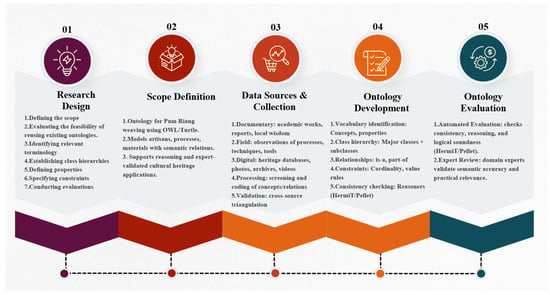
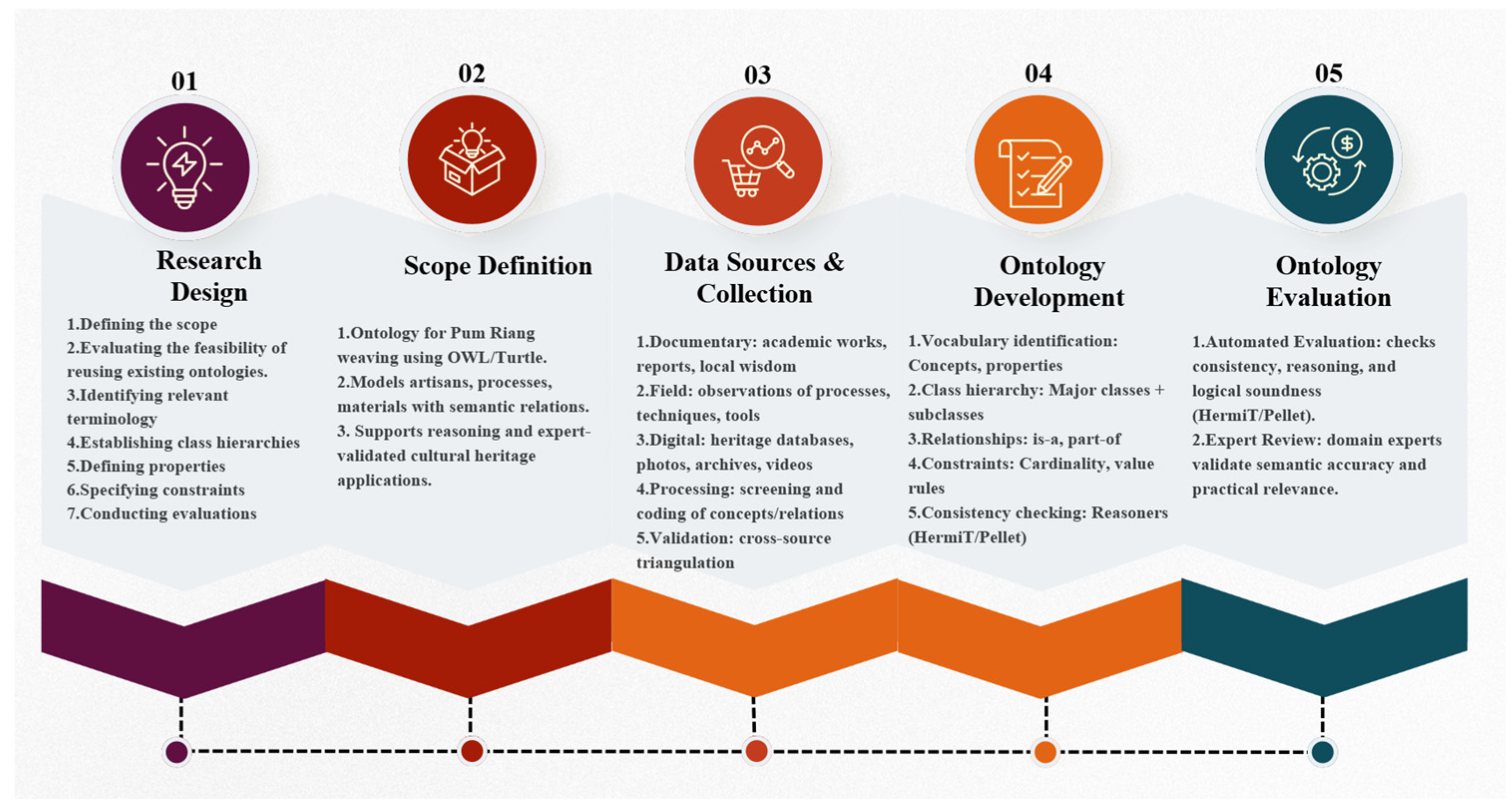
To provide a clear and concrete overview of the research methodology, Figure 2 demonstrates the conceptual research framework for the systematic development of the ontology. This framework is designed to consolidate and organize domain knowledge related to the Phum Riang silk heritage, outlining all essential phases and procedures employed in the study—from conceptual design and scoping, data collection, and ontology development, to evaluation. The framework enables readers to clearly understand the sequence of activities and the interconnections among the research components.
Figure 2.
The research conceptual framework.
2.1. Research Design
This study employs a systematic ontology development approach, guided by widely recognized conceptual frameworks [38]. The development process consists of seven main steps: (1) defining the scope, (2) evaluating the feasibility of reusing existing ontologies, (3) identifying relevant terminology, (4) establishing class hierarchies, (5) defining properties, (6) specifying constraints, and (7) conducting evaluations. This structured methodology ensures that the resulting ontology is comprehensive, consistent, and suitable for supporting semantic integration and interoperability across disciplines.
2.2. Scope Definition
The scope of this study centers on the design, construction, and evaluation of a domain-specific ontology for the formal representation of the complex knowledge system underlying Phum Riang silk weaving. Developed in accordance with Semantic Web standards (OWL/Turtle), the ontology is structured to ensure semantic precision and interoperability. It comprises a hierarchical class structure, well-defined properties, representative instances, and metadata aligned with digital preservation principles. The research further delineates key domain entities—including artisans, production processes, natural materials, motifs, and weaving tools—and models their semantic relationships to support inference-based retrieval and competency-driven query answering. Finally, the ontology undergoes both automated quality assessment and expert evaluation to ensure structural coherence, representational adequacy, and practical applicability for cultural heritage preservation, digital archiving, and semantic information retrieval.
2.3. Data Source and Collection
This study employed a multi-source data collection approach to ensure comprehensive and in-depth coverage of the knowledge system underlying Phum Riang silk weaving. The data sources consisted of the following:
- Documentary sources, including research articles, government reports, academic publications, books, and local wisdom manuals related to Phum Riang silk, textile craftsmanship, and cultural heritage preservation.
- Field-based data, collected through participant observation within the Phum Riang community to document weaving processes, specialized techniques, materials, and tools in actual practice. This study conducted interviews with 15 informants, each lasting 40 to 60 min, to collect extensive data aligned with the research aims and inquiries. This involved the selection of primary informants using purposive and snowball sampling approaches, targeting individuals capable of directly addressing the research questions and objectives and who also consented to provide information, including weavers and local experts.
- Digital sources, obtained from online cultural heritage repositories, including curated databases of textile artifacts, photographs, archival records, and demonstration videos.
The data collection process involved systematic content screening and coding to identify key concepts, entities, relationships, and attributes essential for ontology construction. To enhance the credibility and validity of the results, all information was subjected to cross-source triangulation, ensuring the consistency and reliability of the data used for developing the ontology structure.
2.4. Ontology Development Process
2.4.1. Vocabulary Identification
The process of vocabulary identification was conducted through a systematic analysis of collected documents to extract relevant terms and concepts. Extracted terms were semantically analyzed to reduce redundancy and ensure clarity of meaning. The identified vocabulary was categorized into three main types: (1) concepts and topics, (2) properties and attributes, and (3) definitional elements. This step ensures that the ontology captures both domain-specific knowledge and its nuanced interpretations.
2.4.2. Class Hierarchy Development
The class hierarchy was developed through iterative analysis of conceptual relationships within the domain. Ten primary classes were identified based on thematic analysis of the literature and the requirements of key stakeholders. Each primary class was further subdivided into subclasses to provide fine-grained coverage of concepts. The hierarchy design adhered to widely accepted ontology engineering principles, including maintaining proper subsumption relationships, avoiding unnecessary class overlap, and ensuring an appropriate balance between hierarchy depth and breadth.
2.4.3. Property and Relationship Specification
Properties and relationships among classes were specified through logical analysis of domain linkages. Two main types of relationships were defined: “is-a” relationships for taxonomic hierarchies and “part-of” relationships for compositional structures. This structured specification supports precise semantic modeling and enables interoperability and reasoning over the ontology.
2.4.4. Constraint Specification
Constraints were defined to ensure data integrity, consistency, and domain compliance within the ontology. These constraints included cardinality restrictions (e.g., minimum and maximum number of relationships), value restrictions (e.g., allowed data types for attributes), and logical rules to enforce domain-specific knowledge. By applying constraints, the ontology can prevent invalid or inconsistent representations of traditional craft knowledge, such as incompatible material–technique combinations or erroneous sequences of production processes.
2.4.5. Ontology Evaluation
Ontology evaluation was conducted using a twofold approach to ensure both technical validity and domain relevance:
- Automated Evaluation: Automated tools were used to assess the structural consistency, reasoning capabilities, and logical soundness of the ontology. Tools such as Protégé’s reasoners (HermiT and Pellet) were applied to verify the absence of unsatisfiable classes, circular dependencies, or logical conflicts. Metrics such as class richness, relationship density, and property coverage were calculated to quantify the completeness and quality of the ontology.
- Expert Review: A panel of domain experts, including master weavers, cultural heritage specialists, academics in textile studies, and ontology engineering and semantic web technologies, reviewed the ontology for semantic accuracy, practical relevance, and comprehensiveness. A five-point Likert scale is utilized to assess the proposed ontology. Feedback focused on ensuring that the ontology correctly represents production techniques, materials, symbolic meanings, and contextual knowledge (e.g., ritual usage, geographic specificity). Iterative refinement was conducted based on expert suggestions to enhance the ontology’s usability for semantic querying and knowledge integration.
This methodology ensures that the resulting ontology is capable of supporting semantic querying, semantic interoperability, and integration of multidisciplinary knowledge, providing a robust framework for the digital conservation of traditional Phum Riang silk craftsmanship.
3. Results
This study presents the outcomes of developing and evaluating an ontology framework for structuring the domain knowledge of Phum Riang silk, implemented using the OWL/Turtle standard. The ontology comprises four key components: a formally defined class hierarchy, object and data properties, representative instances, and accompanying metadata. The results are organized into three principal elements: (1) the ontology class structure, (2) the specification of properties, and (3) representative instances that illustrate the semantic modeling of real-world entities and processes.
3.1. Ontology Class Structure
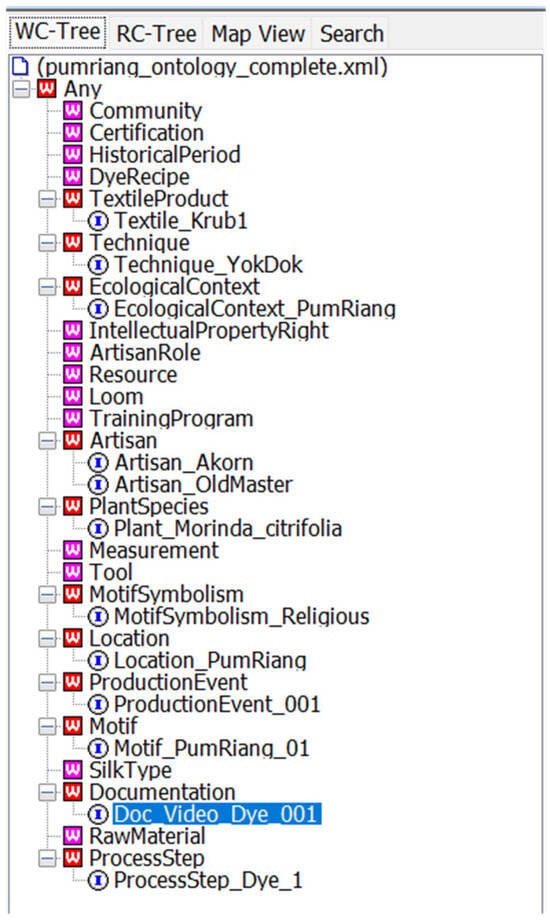
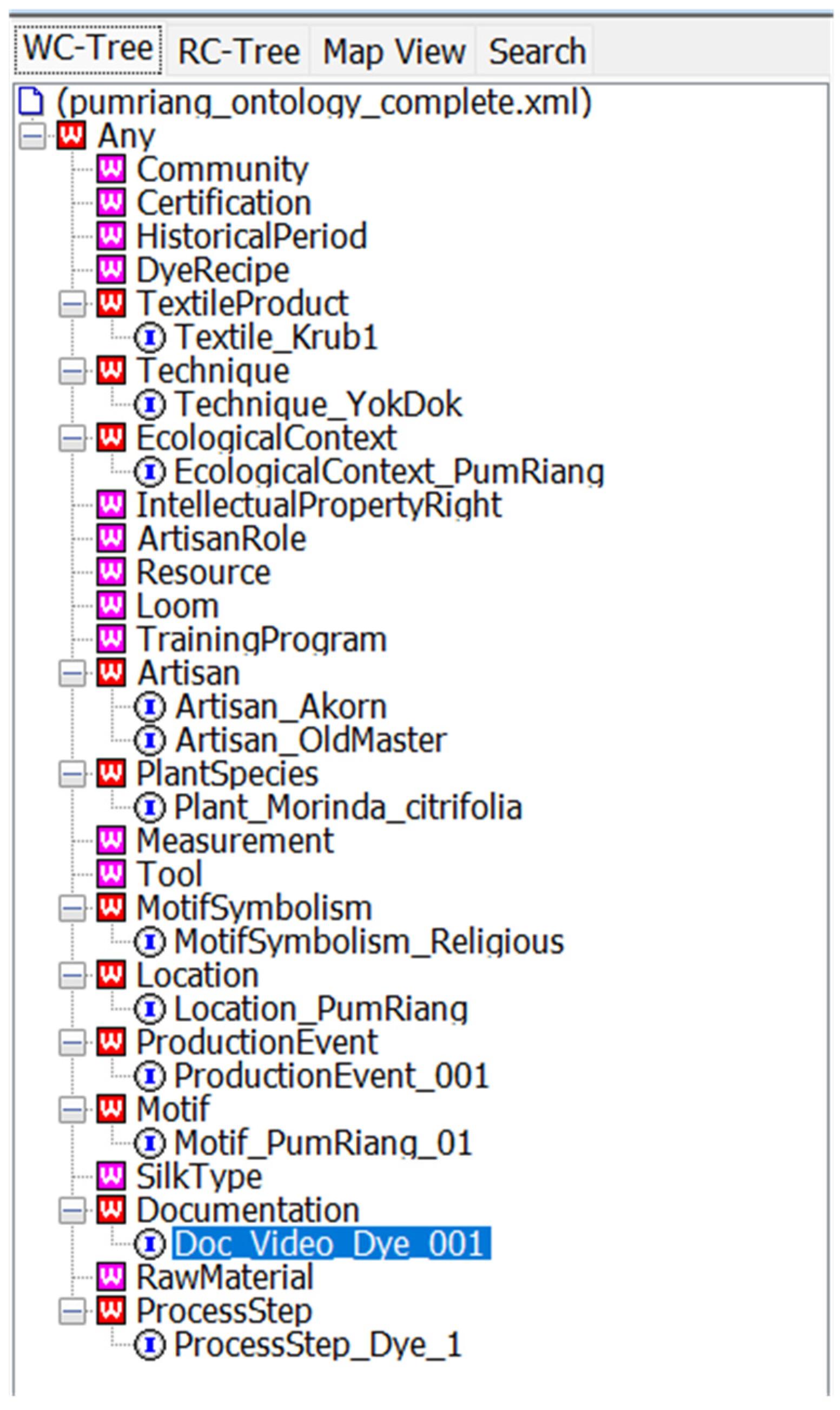
Analysis of the ontology file reveals a total of 23 classes, organized across five core dimensions of traditional craft knowledge: (1) production processes, (2) raw materials, (3) traditional tools, (4) community and geographical context, and (5) cultural meanings and symbolism. Table 1 presents the class structure categorized by knowledge domains. The designed ontology class hierarchy for Phum Riang silk is presented in Figure 3. The grouping of these classes reflects a deliberate conceptual framing of the domain, capturing both procedural components (e.g., ProductionEvent, ProcessStep, Technique) and static entities (e.g., TextileProduct, Motif, RawMaterial), along with contextual and management-oriented classes such as Location, Documentation, Certification, and IntellectualPropertyRight.
Table 1.
Class Structure Categorized by Knowledge Domains.
Figure 3.
Ontology class hierarchy for Phum Riang silk.
A central design principle is the clear separation of concerns between the following:
- (a)
- Event-centric modeling—representing activities, temporal flows, and production events;
- (b)
- Entity-centric modeling—representing stable conceptual objects and resources.
This dual-structured design supports both provenance-oriented queries and component-based semantic retrieval, enhancing the ontology’s expressiveness and computational utility. Practical examples of this modeling approach include the following:
- Distinguishing ProductionEvent from ProcessStep enables the explicit documentation of production sequences (temporal ordering) and allows metadata such as dates, annotations, or multimedia records to be attached at the event level—an essential feature for provenance tracking.
- Separating Motif from MotifSymbolism facilitates symbolic and semiotic interpretation of textile patterns, which is crucial for cultural analysis, community knowledge preservation, and intellectual property protection.
Overall, the class structure strategically anticipates key competency questions, such as “Which textiles produced in Phum Riang employ the Yok Dok technique and are dyed using fang (Morinda)?” or “Which master artisan is associated with the creation of this specific textile piece?” The defined class hierarchy and its interlinked conceptual architecture fully support these forms of semantic inquiry through clearly articulated relationships and domain-driven modeling logic.
3.2. Property Specification (Object and Data Properties)
The ontology comprises 15 object properties and 12 data properties, collectively defining the semantic relationships and descriptive attributes essential for modeling the Phum Riang silk knowledge system. Table 2 presents the summary of object properties. Key object properties—such as usesMaterial, hasTechnique, hasMotif, produces, and originatesFrom—establish the core relational structure that supports semantic querying, pattern detection, and logical inference.
Table 2.
Summary of Object Properties.
The set of 15 object properties effectively captures the fundamental relationships required for domain reasoning. Their explicit definitions support both triadic semantic queries (linking process–material–product) and rule-based inferencing within heritage knowledge graphs. Examples include the following:
- By combiningProcessStep → usesMaterial → PlantSpecies and ProcessStep → hasTechnique → Technique, and linking these to ProductionEvent → produces → TextileProduct, the ontology enables the formulation of pattern-based inference rules capable of automatically identifying textile products created using local dye plants and recognized weaving techniques. This functionality is particularly valuable for provenance-driven authenticity verification and heritage quality assessment.
- The property documentedBy plays a critical role in maintaining traceability by linking events or resources to Documentation instances. This facilitates the attachment of essential metadata—such as file URIs, recording dates, source types, or confidence scores—supporting long-term preservation, FAIR-compliant metadata management, and integration with digital archival systems.
In parallel, the 12 data properties encode descriptive attributes (e.g., names, timestamps, measurements, artisan ages, motif dimensions) that enhance the granularity and richness of each instance. These literal-valued properties strengthen the ontology’s suitability for quantitative queries, quality-control validation, and downstream applications such as training datasets for machine learning models in digital heritage analytics.
Together, the object and data properties establish a coherent semantic backbone for representing the intertwined procedural, ecological, material, and cultural aspects of Phum Riang silk weaving. Their design reflects a balance between conceptual precision and computational interoperability, ensuring compatibility with semantic web standards and facilitating advanced knowledge retrieval across both human-centered and machine-driven applications.
3.3. Representative Instances
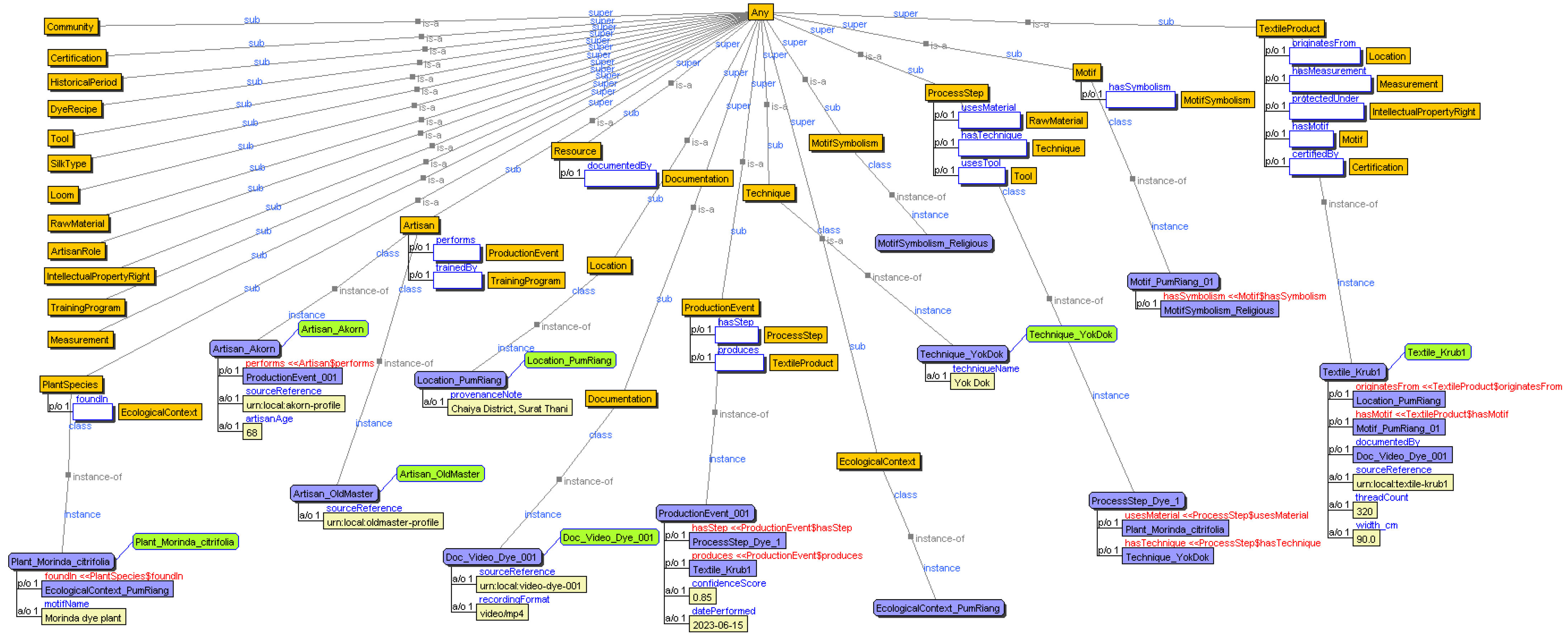
The constructed ontology includes 26 exemplary instances that implement the abstract class hierarchy and connect it to empirical data from the Phum Riang silk domain. These instances comprise fundamental elements of the knowledge ecosystem, including artisans, production processes, natural raw materials, textile products, and relevant documentation. They together illustrate the ontology’s capacity to formalize intangible craft knowledge into a structured, semantically processable format. Figure 4 depicts the class interconnections in Phum Riang silk.
Figure 4.
Class inter-reconnection in Phum Riang silk.
Table 3 presents the summary of representative instances and roles. Key instances such as Artisan_Akorn (a senior 68-year-old weaver), Artisan_OldMaster (a highly skilled master artisan), Plant_Morinda_citrifolia (a natural dye plant), Technique_YokDok (the traditional “Yok Dok” weaving technique), and Textile_Krub1 (a representative textile with a traditional Phum Riang motif) illustrate rich multi-level connections between knowledge entities. These include relationships between master artisans and inherited craft practices, the use of local ecological resources in dyeing, sequential production steps, and the resulting textile characteristics. Such instances validate the accuracy of the conceptual model and reinforce the coherence between the ontology’s structural design and the lived cultural context of the Phum Riang weaving community.
Table 3.
Summary of Representative Instances and Roles.
A notable strength of the instance set is its ability to represent multidimensional relational structures. For example, links between process steps and local plant species emphasize ecological knowledge embedded in dyeing practices, while connecting textile products to Location_PhumRiang supports provenance tracking and contextualized interpretation of cultural origin. Documentation-related instances such as Doc_Video_Dye_001 further enhance the ontology by integrating digital media through metadata fields such as capture date, source, and file type, aligning the model with best practices in digital preservation and FAIR principles.
These instance-level representations enable the ontology to support complex competency questions, such as identifying textiles dyed with specific plant species and woven using the Yok Dok technique, or tracing the involvement of particular artisans across production steps. This functionality highlights the ontology’s value for semantic retrieval, authenticity verification, knowledge transmission, and data-driven cultural heritage research.
In summary, the complete set of 26 instances serves as a prototype dataset that both validates the structural integrity of the ontology and enriches its representational depth. These instances enhance the ontology’s applicability in cultural heritage preservation, educational programs, community knowledge management, and the development of digital tools for safeguarding intangible cultural heritage.
3.4. Evaluation Results
3.4.1. Automated Evaluation the OOPS! v1
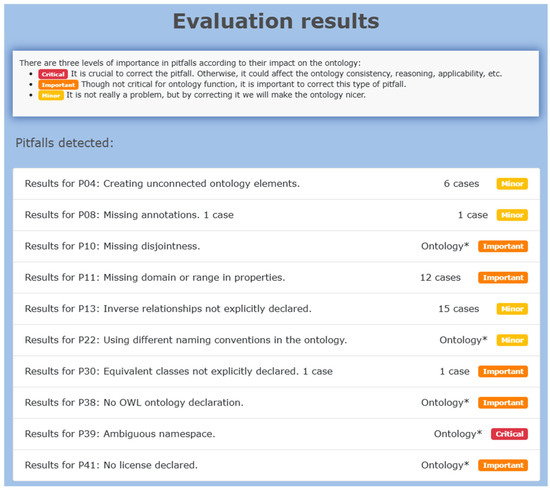
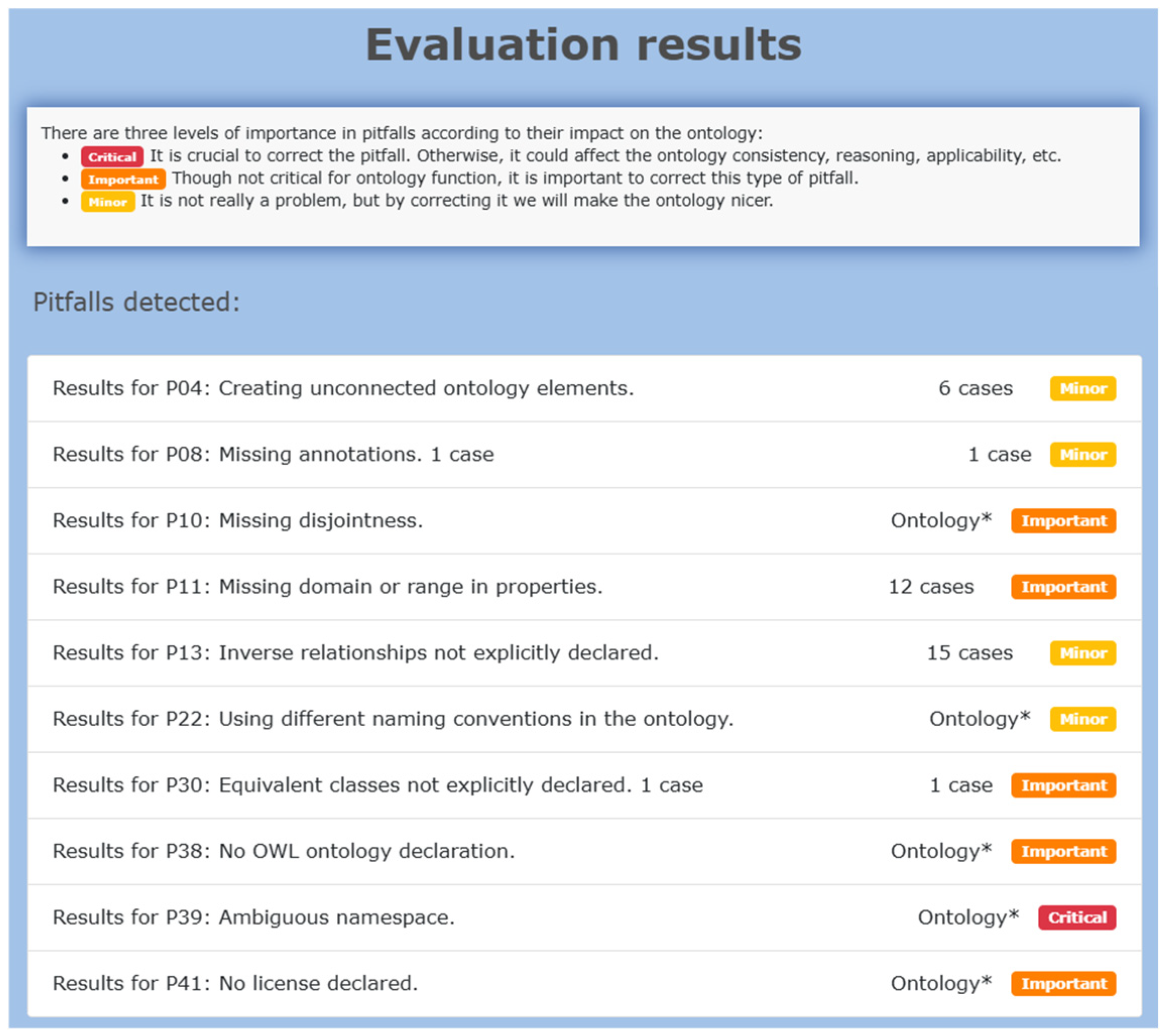
The automated assessment using the OOPS! tool identified three primary issues requiring correction.
First, P10 Missing disjointness indicated the absence of explicit disjointness declarations among certain classes or properties. This was resolved by introducing appropriate disjointness axioms and relationship constraints to prevent unintended conceptual overlap.
Second, P11 Missing domain or range in properties revealed that several data properties lacked fully defined domains and ranges. To address this, suitable datatypes were assigned and explicit domain–range specifications were added, thereby enhancing structural accuracy and semantic consistency within the ontology.
Third, P41 No license declared showed that the ontology did not include a usage license. Although this issue pertains to documentation rather than structural design, it is essential for enabling future dissemination and reuse. The ontology was therefore updated with a clearly defined licensing statement.
Following these revisions, the ontology demonstrated marked improvements in structural completeness and internal coherence. A subsequent OOPS! evaluation confirmed that no additional structural or usability issues remained. The summarized automated evaluation results are presented in Figure 5.
Figure 5.
The automated evaluation results using the OOPS! tool.
3.4.2. The Expert Evaluation
To assess the accuracy, completeness, and appropriateness of the Phum Riang Silk heritage ontology, an expert evaluation was conducted with three domain specialists. The assessment instrument comprised five key dimensions: (1) determining the scope of the ontology, (2) defining classes and concepts, (3) specifying properties, (4) creating instances, and (5) evaluating applicability for ontology development. Table 4 presents the summarized results of the expert evaluation, including the mean scores and corresponding levels of agreement. These findings reflect the structural quality, semantic rigor, and practical applicability of the developed ontology in alignment with established international standards.
Table 4.
The evaluation of the Phum Riang Silk heritage ontology results by experts.
The proposed Phum Riang silk ontology was assessed by three professionals utilizing a five-point Likert scale. The findings demonstrate a high to very high degree of consensus across all assessment categories, encompassing ontology scope and aims, class and property definitions, instance modeling, and applicability for reuse. The instance definition dimension attained the highest mean score, indicating robust expert consensus on semantic consistency and accuracy. These findings substantiate the conceptual validity and structural sufficiency of the proposed ontology and help alleviate the limitations of conceptual assessment. Nevertheless, additional quantitative and extensive technical evaluations are reserved for future endeavors.
Across all dimensions, the ontology demonstrated consistently high levels of agreement, with mean scores ranging from 3.97 to 4.25. This indicates strong validation of the ontology’s conceptual design, semantic structure, and practical utility.
In the dimension of Determining the Scope, experts agreed that the ontology aligns well with the defined knowledge boundaries of the Phum Riang Silk heritage and provides sufficiently comprehensive coverage to support real-world implementation ( = 4.23, High). This confirms the appropriateness of the domain specification and the adequacy of the ontology’s content scope.
For Defining Classes and Concepts, the ontology received an average score of 3.97 (High), reflecting the soundness of its hierarchical organization, conceptual clarity, and terminological precision. Experts highlighted that the taxonomy and class constraints were well structured and logically coherent, ensuring a stable foundation for semantic modeling.
In terms of Defining Properties, the ontology achieved an average score of 4.00 (High), demonstrating that the relationships and constraints were defined with conceptual relevance, internal consistency, and sufficient technical accuracy. This dimension reinforces the ontology’s ability to support meaningful semantic linking across domain entities.
The dimension of Creating Instances yielded the highest score ( = 4.25, High), indicating that the representative instances were appropriately defined in both semantic meaning and linguistic accuracy. The experts emphasized that the instances effectively reflected real-world domain characteristics and strengthened the ontology’s capacity for semantic querying and knowledge representation.
Finally, the Application for Ontology Development dimension ( = 4.13, High) confirmed that the ontology is reliable and adaptable for practical implementation and can be effectively reused or extended for related systems and digital heritage applications.
Overall, the expert evaluation demonstrates that the Phum Riang Silk heritage ontology exhibits high structural integrity, conceptual soundness, and readiness for practical deployment. The validated ontology is well positioned to support semantic search, digital preservation, community knowledge management, and the development of advanced cultural heritage information systems.
4. Discussion
The findings of this study demonstrate that an ontology-driven approach offers a rigorous and semantically explicit foundation for representing the multi-layered knowledge embedded in the Phum Riang silk weaving tradition. The developed ontology—comprising 23 classes, 15 object properties, 12 data properties, and 26 representative instances—successfully models both procedural and conceptual dimensions of the craft, including production events, raw materials, tools, motif structures, artisan roles, ecological resources, and cultural symbolism. This comprehensive representation contrasts sharply with conventional documentation approaches, which often produce fragmented or purely descriptive datasets lacking semantic interoperability [11,15]. The ontology not only formalizes the knowledge system but also enables advanced semantic querying, reasoning, and provenance tracking necessary for long-term digital conservation.
A key methodological contribution is the separation of event-centric and entity-centric components, which allows the ontology to accommodate processual aspects of weaving (e.g., sequencing of steps, temporal metadata, technique-based dependencies) alongside stable cultural and material entities. This aligns with principles of CIDOC-CRM and related cultural heritage ontologies emphasizing events as the backbone for knowledge integration [20,21]. The structure supports competency questions essential for cultural heritage applications such as identifying dye plants linked to specific motifs or tracing the contributions of master artisans across production events. Additionally, the inclusion of symbolic and semiotic components (motifs, symbolisms, associated rituals) addresses a persistent research gap in heritage digitization, where intangible meanings are often excluded despite their central cultural role [8].
Another significant contribution is the integration of ecological and material knowledge, which situates textile production within a broader socio-ecological system. This reflects growing recognition that ICH cannot be preserved solely through object-based documentation, but must also incorporate ecological context and community practice [4,10]. By explicitly modeling dye plants, silk types, and local environmental resources, the ontology supports sustainability-oriented knowledge transfer and protects community-derived ecological knowledge. Furthermore, the formalization of motif symbolism and intellectual property constraints contributes to safeguarding the cultural and economic rights of local practitioners, aligning with ethical considerations highlighted in contemporary scholarship [9].
Validation through OOPS! and expert review confirms the structural coherence, conceptual coverage, and domain applicability of the ontology. Experts particularly emphasized its potential for scaling into broader knowledge graphs for Southern Thai textiles and other traditional crafts. Overall, this research advances the field of semantic cultural heritage modeling by proposing a domain-appropriate, high-fidelity, and interoperable ontology capable of supporting education, craft revitalization, certification systems, and culturally respectful knowledge preservation.
This research serves as a significant case study on the use of ontology to local silk and contributes conceptually to ontology engineering and knowledge representation in various critical domains as follows.
- This study presents an ontology framework that conceptualizes traditional handicrafts as a cohesive knowledge system, rather than simply a collection of production procedures or item metadata. This study broadens the domain of ontology engineering beyond only depicting object or event data to include linkages across processes, materials, ecosystems, symbolic meanings, and sociocultural contexts into a unified semantic framework.
- This research demonstrates the feasibility of systematically constructing an ontology that integrates procedural knowledge (e.g., weaving techniques, materials, and procedures) with conceptual knowledge (e.g., the significance of patterns, beliefs, and rituals). This domain has numerous constraints in various cultural heritage ontologies. Consequently, the research addresses a conceptual deficiency in knowledge representation for knowledge characterized by a significant degree of “abstract and symbolic” qualities.
- This study presents a methodological framework for integrating event-centric and entity-centric information representations within a unified ontology. The proposed solution facilitates the representation of temporal sequences, production processes, provenance, objects, knowledge, and abstract concepts. This conceptual framework can serve as a design pattern for ontologies in other areas defined by common procedural and cultural knowledge.
- This research introduces an ontological framework that consolidates the challenges of certification and intellectual property rights of community knowledge into a unified paradigm. The result broadens the domain of ontology engineering from depicting “neutral knowledge” to encompassing normative information concerning the equitable safeguarding and exploitation of traditional knowledge.
- This research employs Phum Riang silk as a case study; nevertheless, the established ontology framework is not confined to a particular domain setting. Rather, it is based on conceptual principles that can be applied to various forms of traditional crafts. Consequently, the work serves as a conceptual prototype for formulating an ontology encompassing the system of handicraft knowledge and intangible cultural legacy as a whole.
The ontology created and validated in this research, based on a singular case study of Phum Riang silk, possesses a conceptual design that is not confined to a particular domain setting. Rather, it is founded on abstract ideas that may be adapted and expanded to other traditional craft knowledge systems. Consequently, the research aims to use this case study as a conceptual testbed rather than developing a site-specific model.
The ontology is constructed on the overarching knowledge framework of traditional crafts, encompassing diverse domains beyond weaving, including production methods, materials and ecological resources, tools, geographical and social contexts, and symbolic and cultural significance. This framework is a domain-independent conceptual template that may be used across several crafts, such as pottery, woodworking, metalworking, or local food crafts, by merely altering the subclasses and instances. In contrast, the overarching conceptual structure remains the same.
This research, compared with CIDOC-CRM, reveals that the generated ontology does not compete with or supplant CIDOC-CRM but functions as a domain-specific extension at the conceptual level, characterized by the following connection. CIDOC-CRM functions as an upper ontology concentrating on event-centric documentation and the provenance of cultural heritage. This research elaborates on the event-centric framework of CIDOC-CRM, specifically addressing the domain of craft knowledge, which it only superficially encompasses. The differentiation of ProductionEvent, ProcessStep, and Technique can be conceptually aligned with E7 Activity and E12 Production of CIDOC-CRM, incorporating specifics about processes, techniques, and the knowledge inherent in handicraft. This research’s ontology addresses the domain gap in CIDOC-CRM regarding handicrafts and intangible cultural heritage.
This research and SILKNOW both examine the ontology of silk, although they exhibit two distinct conceptual differences:
- SILKNOW emphasizes the representation of silk data as museum artifacts and collections. In contrast, this research seeks to depict the knowledge system of the producing community by highlighting process knowledge, local wisdom, symbolic significance, and community rights.
- The incorporation of courses on Motif Symbolism, Ecological Context, and Intellectual Property Rights indicates aspects that SILKNOW currently addresses only to a limited extent.
Consequently, although they pertain to closely related areas, the two ontologies tackle conceptual challenges at distinct levels and can enhance one another within a multi-layered historical knowledge graph.
5. Conclusions
This study presents a comprehensive ontology-based digital preservation framework for safeguarding the intangible cultural heritage of Phum Riang silk weaving. Through a combination of ethnographic fieldwork, expert interviews, and ontology engineering using OWL/Turtle, the research produced a structured and interoperable knowledge model that captures technical processes, material resources, cultural meanings, artisan roles, and ecological contexts. The ontology responds directly to critical challenges in heritage preservation, including the fragmentation of existing documentation, declining community participation, and the risk of knowledge loss as master artisans age.
The developed ontology demonstrates strong alignment with international semantic standards and exhibits structural consistency, conceptual clarity, and domain specificity. Automated evaluation using OOPS! confirmed the absence of critical modeling pitfalls, while expert reviews validated the ontology’s completeness, cultural appropriateness, and potential utility in real-world applications. The framework establishes a durable digital infrastructure for long-term knowledge preservation, semantic retrieval, cultural education, quality certification, and the safeguarding of community intellectual property.
Beyond its immediate contribution to Phum Riang silk, the framework provides a replicable methodological model that can be applied to other traditional crafts facing similar risks of knowledge erosion. By bridging semantic technologies with cultural heritage contexts, the research demonstrates how ontology engineering can support sustainable heritage transmission, foster intergenerational learning, and strengthen community resilience. The ontology thus offers a significant contribution to both digital heritage scholarship and practical heritage conservation, positioning intangible craft knowledge for continued relevance in the digital era.
Despite expert assessment affirming the ontology’s conceptual validity, this research has yet to incorporate quantitative evaluations or performance testing in practical usage scenarios. Moreover, the model’s validation is based on a single case study on Phum Riang silk, which is adequate for demonstrating concepts but insufficient to experimentally substantiate its cross-domain applicability. Future research needs to focus on the use of ontology in other craft types, expand examples, and conduct further technical evaluations, such as semantic reasoning assessments, collaboration with external datasets, and the use of quantitative metrics to substantiate qualitative evaluation outcomes.
Author Contributions
Conceptualization, A.-P.M. and T.C.; methodology, A.-P.M.; software, A.-P.M.; validation, A.-P.M.; formal analysis, A.-P.M., T.C. and S.C.; resources, A.-P.M.; writing—original draft preparation, A.-P.M. and S.C.; writing—review and editing, A.-P.M. and S.C.; project administration, A.-P.M.; funding acquisition, A.-P.M., W.K. and T.C. All authors have read and agreed to the published version of the manuscript.
Funding
This research was funded by Suratthani Rajabhat University, grant number 047/2567.
Institutional Review Board Statement
The study was conducted in accordance with the Declaration of Helsinki, and approved by the Institutional Review Board (or Ethics Committee) of Suratthani Rajabhat University (approval number: SRU-REC 2024/067, date of approval: 24 June 2024).
Informed Consent Statement
Informed consent was obtained from all subjects involved in the study.
Data Availability Statement
The original data presented in the study are openly available in http://oc.sru.ac.th/ontology/myDocumentation/ (accessed on 10 February 2026).
Conflicts of Interest
The authors declare no conflicts of interest.
References
- Aikawa-Faure, N. From the proclamation of Masterpieces to the Convention for the Safeguarding of Intangible Cultural Heritage. In Intangible Heritage; Smith, L., Akagawa, N., Eds.; Routledge: London, UK, 2008; pp. 13–44. [Google Scholar]
- Bortolotto, C. From objects to processes: UNESCO’s ‘intangible cultural heritage’. J. Mus. Ethnogr. 2007, 19, 21–33. [Google Scholar]
- Smith, L.; Akagawa, N. Intangible Heritage; Routledge: London, UK, 2009. [Google Scholar]
- Kurin, R. Safeguarding Intangible Cultural Heritage in the 2003 UNESCO Convention: A critical appraisal. Mus. Int. 2004, 56, 66–77. [Google Scholar] [CrossRef] [Scilit]
- Atthapan, U. Pumriang Silk Weaving. J. Natl. Res. Council Thailand 1991, 23, 1–29. Available online: https://mhesi.nrct.go.th/archives/files/original/4aa11b493fe0a8ebc27bc5ba2f37583de752841f.pdf (accessed on 20 June 2024).
- Virunanont, P. Traditional Intricate Paper Cutting Techniques of Southern Thailand: Background, Beliefs, and Cultural Animation of Thai Buddhist Culture. Manusya J. Humanit. 2020, 23, 60–85. [Google Scholar] [CrossRef] [Scilit]
- Traditional Craftsmanship. Available online: https://ich.unesco.org/en/traditional-craftsmanship-00057 (accessed on 20 July 2025).
- Stefano, M.L.; Davis, P.; Corsane, G. Safeguarding Intangible Cultural Heritage; Boydell Press: Suffolk, UK, 2012. [Google Scholar]
- Lenzerini, F. Intangible cultural heritage: The living culture of peoples. Eur. J. Int. Law 2011, 22, 101–120. [Google Scholar] [CrossRef] [Scilit]
- Blake, J. International Cultural Heritage Law; Oxford University Press: Oxford, UK, 2021. [Google Scholar]
- Zamiri, M.; Esmaeili, A. Methods and Technologies for Supporting Knowledge Sharing within Learning Communities: A Systematic Literature Review. Adm. Sci. 2024, 14, 17. [Google Scholar] [CrossRef] [Scilit]
- Cameron, F.; Kenderdine, S. Theorizing Digital Cultural Heritage: A Critical Discourse; MIT Press: Cambridge, MA, USA, 2007. [Google Scholar]
- Ch’ng, E.; Gaffney, V.; Chapman, H. Visual Heritage: Digital Preservation; Springer: Berlin/Heidelberg, Germany, 2013. [Google Scholar]
- Valtysson, B. Access culture: Web 2.0 and cultural participation. Int. J. Cult. Policy 2012, 18, 65–77. [Google Scholar] [CrossRef] [Scilit]
- Ronchi, A.M. ECulture: Cultural Content in the Digital Age; Springer: Berlin/Heidelberg, Germany, 2009. [Google Scholar]
- Peng, Y. Study on the Role of Digital Technology in the Protection of Intangible Cultural Heritage of Traditional Minority Sports. Appl. Math. Nonlinear Sci. 2024, 9, 1–15. [Google Scholar] [CrossRef] [Scilit]
- Safeguarding Intangible Cultural Heritage. Available online: https://www.unesco.org/en/fieldoffice/bangkok/clt/intangible-cultural-heritage (accessed on 21 August 2025).
- Zlodi, G. Information and Documentation Perspective to Intangible Cultural Heritage in the Context of Digital Humanities Research. Stud. Ethnol. Croat. 2023, 35, 115–148. [Google Scholar] [CrossRef] [Scilit]
- Bekele, M.K.; Pierdicca, R.; Frontoni, E.; Malinverni, E.S.; Gain, J. A survey of augmented, virtual, and mixed reality for cultural heritage. J. Comput. Cult. Herit. 2021, 14, 1–36. [Google Scholar] [CrossRef] [Scilit]
- Doerr, M. The CIDOC conceptual reference model: A new standard for knowledge sharing. Int. J. Digit. Libr. 2003, 3, 52–66. [Google Scholar]
- Stănescu, G.; Oprea, S.-V. Recent Trends and Insights in Semantic Web and Ontology-Driven Knowledge Representation Across Disciplines Using Topic Modeling. Electronics 2025, 14, 1313. [Google Scholar] [CrossRef] [Scilit]
- Doerr, M.; Hunter, J.; Lagoze, C. Towards a core ontology for information integration. J. Digit. Inf. 2003, 4. Available online: https://jodi-ojs-tdl.tdl.org/jodi/article/view/jodi-109 (accessed on 20 July 2025).
- Daoudi, H.; Chaker, I.; Zahi, A. Building an Ontology for the Tangible Cultural Heritage of the Medina of Fez. Hetitage 2025, 8, 391. [Google Scholar] [CrossRef] [Scilit]
- Ramli, F.; Noah, S.A.; Kurniawan, T.B. Ontology-based information retrieval for historical documents. In Proceedings of the third International Conference on Information Retrieval and Knowledge Management, Malacca, Malaysia, 23–24 August 2016. [Google Scholar]
- de Berardinis, J.; Carriero, V.; Jain, N.; Lazzari, N.; Meroño-Peñuela, A.; Poltronieri, A.; Presutti, V. The Polifonia Ontology Network: Building a Semantic Backbone for Musical Heritage. In Proceedings of the 22nd International Semantic Web Conference, Athens, Greece, 6–10 November 2023. [Google Scholar]
- Acierno, M.; Cursi, S.; Simeone, D.; Fiorani, D. Architectural heritage knowledge modeling: An ontology-based framework. J. Cult. Herit. 2017, 24, 124–133. [Google Scholar] [CrossRef] [Scilit]
- Allepuz, E.T.; Gordo, S.M.; Bernal, P.d.F.; Tarré, J.V.; Martí, A.M. Towards an Ontology-Driven Information System for Archaeological Pottery Studies: The Greyware Experience. Appl. Sci. 2021, 11, 7989. [Google Scholar] [CrossRef] [Scilit]
- Berners-Lee, T.; Hendler, J.; Lassila, O. The semantic web. Sci. Am. 2001, 284, 28–37. [Google Scholar] [CrossRef] [Scilit]
- Chansanam, W.; Chaichuay, V.; Manorom, P.; Kanyacome, S.; Sugimoto, S.; Huang, Y.J.; Zhang, G.I.; Li, C. Cultural heritage preservation through ontology-based semantic search systems. Conserv. Sci. Cult. Herit. 2023, 23, 183–196. [Google Scholar]
- Hoaihongthong, S.; Kwiecien, K. Development of ontology for knowledge of traditions and common culture of the Greater Mekong Subregion. Informatics 2022, 9, 58. [Google Scholar] [CrossRef] [Scilit]
- Sevilla, J.; Samper, J.J.; Fernández, M.; León, A. Ontology and software tools for the formalization and visualization of cultural heritage knowledge graphs. Heritage 2023, 6, 4722–4736. [Google Scholar] [CrossRef] [Scilit]
- Wang, Y.; Liu, J.; Wang, W.; Chen, J.; Yang, X.; Sang, L.; Wen, Z.; Peng, Q. Construction of cultural heritage knowledge graph based on graph attention neural network. Appl. Sci. 2024, 14, 8231. [Google Scholar] [CrossRef] [Scilit]
- Faralli, S.; Lenzi, A.; Velardi, P. A large interlinked knowledge graph of the Italian cultural heritage. In Proceedings of the 13th Language Resources and Evaluation Conference (LREC 2022), Marseille, France, 20–25 June 2022. [Google Scholar]
- Studer, R.; Benjamins, V.R.; Fensel, D. Knowledge engineering: Principles and methods. Data Knowl. Eng. 1998, 25, 161–197. [Google Scholar] [CrossRef] [Scilit]
- ISO 21127:2023; Information and Documentation—A Reference Ontology for the Interchange of Cultural Heritage Information. International Organization for Standardization (ISO): Geneva, Switzerland. Available online: https://www.iso.org/standard/85100.html (accessed on 20 July 2025).
- Sevilla, J.; Casanova Salas, P.; Casas Yrurzum, S.; Portalés, C. Multi-purpose ontology-based visualization of spatio-temporal data: A case study on silk heritage. Appl. Sci. 2021, 11, 1636. [Google Scholar] [CrossRef] [Scilit]
- Huang, R.; Wei, H.; Bei, D.; Liu, H.; Zhou, Z. Research on the Construction of Knowledge Graph of Traditional Medical Intangible Cultural Heritage. Front. Sustain. Dev. 2023, 3, 10. [Google Scholar] [CrossRef] [Scilit]
- Noy, N.F.; McGuinness, D.L. Ontology Development 101: A Guide to Creating Your First Ontology (Technical Report No. KSL-01-05). Stanford Knowledge Systems Laboratory. Available online: https://protege.stanford.edu/publications/ontology_development/ontology101.pdf (accessed on 24 June 2024).

Disclaimer/Publisher’s Note: The statements, opinions and data contained in all publications are solely those of the individual author(s) and contributor(s) and not of MDPI and/or the editor(s). MDPI and/or the editor(s) disclaim responsibility for any injury to people or property resulting from any ideas, methods, instructions or products referred to in the content. |
© 2026 by the authors. Licensee MDPI, Basel, Switzerland. This article is an open access article distributed under the terms and conditions of the Creative Commons Attribution (CC BY) license.