


Abstract
This study examines the role of digital standardization in developing functional interoperability within the BRICS digital ecosystem. A mixed-methods design combines qualitative analysis of national standardization repositories with comparative statistical tests of the World Bank Digital Adoption Index and a Difference-in-Differences (DiD) model based on the United Nations E-Government Development Index, covering BRICS and selected European Union economies. The qualitative analysis identifies distinct national standardization trajectories, ranging from international alignment to autonomous standard setting, and examines institutional, regulatory, and technological barriers to interoperability. The quantitative results are sectorally uneven: improvements in business and household digital adoption are consistent with broader catch-up processes, whereas a BRICS-specific advantage is observed only in digital government, where the DiD estimates indicate an additional improvement following the intensification of BRICS digital cooperation in 2015. These estimates reflect an association rather than a definitive causal effect. The study conceptualizes digital standards as institutional mechanisms of functional interoperability that can facilitate cross-border digital coordination without complete regulatory harmonization, and suggests that BRICS cooperation may benefit most from interoperability-oriented measures that prioritize public-sector services.
1. Introduction
Digital transformation is increasingly taking place within complex digital ecosystems that connect governments, businesses, and citizens. These ecosystems rely on the continuous exchange of information across diverse technological environments, making interoperability a fundamental prerequisite for sustainable digital development. As artificial intelligence, cloud computing, digital identity systems, cross-border data exchange and platform-based services become deeply integrated into economic and social activities, ensuring compatibility among digital infrastructures has recently become a major challenge for technological development and institutional design [1,2,3].
In this context, digital standards play a much broader role than merely providing technical specifications. They establish common rules that enable information systems and organizations to exchange data, coordinate processes, and deliver digital services. By reducing technical fragmentation, digital standardization forms the institutional foundation of modern digital ecosystems. It influences not only technological performance, but also the ability of organizations and governments to collaborate efficiently [4,5].
Recent research in social and business informatics increasingly emphasizes that interoperability is not only a technological property, but also an institutional one [6]. Successful digital ecosystems require governance mechanisms that can align technical protocols, regulatory principles, cybersecurity requirements, organizational practices, etc., across multiple stakeholders [7]. Digital standards act as institutional coordination mechanisms, enabling heterogeneous actors to exchange information while preserving the autonomy of individual organizations and jurisdictions.
BRICS (Brazil–Russia–India–China–South Africa) offers a particularly valuable empirical setting for studying institutional interoperability under conditions of high regulatory heterogeneity and the absence of supranational authority. Its member countries have rapidly expanded their digital economies while maintaining highly diverse legal systems, regulatory traditions, technological capabilities, and approaches to digital sovereignty [8,9]. Unlike highly integrated regional organizations such as the European Union, BRICS has no supranational authority that can impose unified digital regulation. Instead, cooperation increasingly relies on the development of interoperable technical standards, compatible digital infrastructures and shared institutional mechanisms that enable cross-border digital interaction without requiring complete legal harmonization. Within the BRICS bloc, the process of standard harmonization officially began in 2015 when the Strategy for BRICS Economic Partnership adopted at the Ufa Summit formally recognized the need to address disparate technical regulations and standards to enhance trade [10,11]. The BRICS Working Group on ICT Cooperation was also created in 2015 to formalize the harmonization of technological protocols and digital standards across member states [12].
With the expansion of BRICS to BRICS+, which now includes Egypt, Ethiopia, Iran, the United Arab Emirates, and Indonesia, discussions on alternative payment and settlement arrangements, alongside growing ambitions for intra-group trade and digital cooperation, raise the importance of interoperable digital infrastructures. Yet differences in regulatory frameworks, administrative practices, and national approaches to digital governance may constrain cross-border integration. Understanding how digital standardization can support interoperability under these conditions is therefore relevant not only to academic research but also to policymakers designing cross-border cooperation mechanisms and businesses operating across BRICS markets.
Existing studies have primarily investigated digital transformation, e-government, interoperability, and standardization separately [13]. Qin et al. [14] examined digital development and institutional factors in BRICS trade relations, but did not address digital standardization as a mechanism linking institutional coordination and interoperability. Oukes et al. [15] studied digital modernization in land administration, identifying the need for standards, but providing limited guidance on how standardization connects institutional levels and services. They also highlighted the risk that digitalization without interoperability standards preserves organizational fragmentation. Similarly, Wahyuni et al. [16] examined institutional determinants of inter-agency data exchange, including leadership, organizational preparedness, and culture, but did not explain how technical standards interact with these factors. Mutiarin et al. [17] analyzed interoperability through inter-agency coordination and local governance efficiency, but did not explicitly examine the role of technical standardization. Evidence from Indonesia’s Super Mantab application [18] further shows that national e-government policies do not guarantee organizational interoperability: regulatory inconsistencies and bureaucratic rigidity remain barriers, while the broader mechanisms through which standardization addresses institutional fragmentation remain underexplored. Campmas [19] examined how National Interoperability Frameworks (NIFs) improve citizen-government interactions, but focused on external outcomes rather than the internal institutional mechanisms supporting coordination among public organizations.
Taken together, these studies indicate that interoperability requires both technical compatibility and institutional coordination, yet their interaction remains insufficiently understood. In particular, little is known about how digital standardization enables interoperability across heterogeneous regulatory and governance systems without supranational authority. This gap is especially relevant to BRICS, whose members pursue different approaches to digital governance and technological sovereignty.
This study aims to examine how digital standardization contributes to institutional interoperability within the BRICS digital ecosystem, and whether this emerging coordination mechanism is associated with measurable improvements in digital transformation. Based on Lundqvist [20], this study defines digital standardization as the process through which technical specifications, protocols, and institutional rules governing data exchange, system compatibility, and digital service delivery are developed, formalized, and adopted by public and private actors, either nationally or across jurisdictions. The paper identifies institutional, legal and technical barriers to interoperability, and analyses recent BRICS initiatives that support digital coordination. In addition, this study evaluates whether the evolution of common digital standards strengthens digital government and broader digital transformation.
The study adopts a mixed-methods design combining qualitative analysis of national standardization repositories with comparative statistical tests and a Difference-in-Differences model based on internationally comparable digital adoption and e-government indices.
The main novelty and contribution of this study lie in its being the first to examine the effectiveness of supranational efforts undertaken within BRICS to promote the convergence of digital standards and to assess their impact on the digital development of member states.
The rest of the paper is organized as follows. Section 2 develops the theoretical framework by integrating institutional theory, digital governance, and interoperability perspectives. Section 3 presents the research design, data sources, and empirical methods. Section 4 reports the results of the qualitative and quantitative analyses of digital standardization and institutional interoperability in BRICS. Section 5 discusses the findings in the broader context of digital ecosystems and social informatics, and Section 6 concludes.
2. Theoretical Framework
2.1. Digital Ecosystems, Digital Governance, and Institutional Coordination
The understanding of digital transformation has improved considerably over the past two decades. While early studies primarily associated digitalization with the adoption of information and communication technologies (ICT), contemporary research more and more conceptualizes digital transformation as a complex institutional process that reshapes public administration, governance mechanisms, and interactions between governments, businesses, and citizens [21,22,23,24]. From this perspective, digital governance represents not only a mechanism for managing digital transformation but also an institutional layer through which interactions within digital ecosystems are coordinated.
Digital governance extends beyond simple implementation of digital technologies in public administration [25]. Instead, it encompasses the institutional arrangements, regulatory frameworks, organizational capabilities, and coordination mechanisms that enable governments to create, manage, and continuously improve digital public services [26,27]. The transition from traditional e-government to digital government and, subsequently, to smart governance reflects this conceptual evolution, emphasizing collaboration, interoperability, data-driven decision-making, and adaptive institutional capacity rather than technological modernization alone [28,29,30,31]. These developments indicate that the effectiveness of digital ecosystems depends on the capacity of institutions to coordinate heterogeneous technological and organizational actors.
Recent studies support this institutional interpretation of digital transformation [32,33,34]. Troshani et al. [32] show that harmonisation through different network configurations, including public-private networks, inter-regulator networks, and regulator dyads, was crucial to the success of business-to-government reporting regardless of technological readiness. Dąbrowska et al. [33] identify technical infrastructure as a base layer and demonstrate that the quality of regulatory institutions at the geopolitical level influences whether digital transformation creates value or causes harm. Dumo [34] similarly finds that digital infrastructure significantly improves exchange rate management efficiency only when institutional quality exceeds minimum thresholds.
Institutional quality affects governments’ ability to coordinate stakeholders, establish common rules for data exchange, ensure cybersecurity, and support innovation across sectors [35]. Accordingly, digital governance is increasingly understood as an institutional precondition for sustainable economic development and administrative modernization rather than solely as a technological initiative [36,37,38,39]. For interconnected digital ecosystems, however, institutional coordination also requires mechanisms that allow otherwise heterogeneous systems and organizations to interact. Digital standardization provides one such mechanism.
Institutional theory helps explain why standards can perform this role. Following North [40], institutions are humanly devised formal and informal constraints that structure interaction, and their economic function is to reduce the costs of transacting; the distinction between formal and informal institutions is also central to recent work on firm behaviour [41]. New Institutional Economics decomposes these costs into ex ante costs of searching, specifying and negotiating exchange and ex post costs of monitoring and adapting it, which rise with bounded rationality and uncertainty [42,43].
A formal standard acts on these costs through three channels. First, it reduces informational uncertainty: common data definitions, formats and identity schemes allow an agency to anticipate what a counterpart system will send and how to interpret it, without bilateral verification. Second, it reduces coordination and negotiation costs: a published specification replaces repeated bilateral agreements on interfaces, so that connecting n systems requires n adoptions of one common reference rather than up to
bilateral arrangements. Third, it reduces monitoring and enforcement costs by providing a shared benchmark against which compliance can be assessed [44,45,46]. In public administration, where integrated services depend on repeated exchange among agencies with separate legacy systems [47], these channels act directly on the cost of inter-agency data exchange. Standards are therefore treated here as formal institutions in the sense that they are codified, published and subject to conformity assessment; in the BRICS context, however, they are typically voluntary or soft-law instruments rather than supranationally enforced rules [48,49].
Standards also operate through a second, distinct mechanism. Digital systems are network goods: the value of adopting a system rises with the number of compatible adopters [50]. Compatibility standardization therefore creates a coordination game with multiple equilibria: each actor prefers to adopt what others adopt, yet a group may settle on incompatible systems or remain locked into an installed base even when a superior alternative exists [51,52,53]. Because switching between incompatible systems requires sunk investments in data, software and skills, incompatibility is self-reinforcing. Where no central authority can mandate a common solution, the problem becomes one of finding and sustaining a focal point, which is the classic argument for international institutions as cost-reducing devices in the absence of hierarchy [54,55]. Two implications follow from this. First, the benefits of harmonization should accrue as the compatible network approaches critical mass, rather than in proportion to each additional standard. Second, full harmonization is not necessary: converters and gateway technologies can connect otherwise incompatible systems at a fraction of the cost of unification [56,57]. This provides the theoretical basis for the notion of functional interoperability without complete regulatory harmonization used in this study.
Digital standardization establishes common regulatory and technical conditions under which public institutions, private organizations, and digital platforms can interact [58]. Common standards facilitate information exchange, improve administrative coordination, strengthen cybersecurity requirements, and reduce duplication of technological solutions across public agencies [59]. These effects can enhance institutional capacity by improving governments’ ability to manage increasingly complex digital ecosystems [60]. Standards also perform a governance function by establishing shared expectations concerning data quality, system architecture, communication protocols, and security requirements [61].
Interoperability is central to this process. It refers to the capacity of independent information systems, organizations, and administrative bodies to exchange data and use shared information effectively [15,16,62]. As digital governance becomes more dependent on interactions across governmental agencies, jurisdictions, and technological platforms, interoperability has become an increasingly important condition for effective digital governance [18,63]. It should therefore be understood as more than a technical property of information systems. Interoperability also depends on organizational coordination and institutional arrangements that enable different actors to operate within a common digital environment.
Digital standardization constitutes one of the principal mechanisms through which such interoperability can be achieved. Common technical and regulatory standards establish shared protocols for data exchange, cybersecurity, digital identity, cloud infrastructure, artificial intelligence, and platform integration [19,64]. Without harmonized standards, digital systems remain fragmented, limiting governments’ ability to deliver integrated services and coordinate digital policies [17]. At the same time, standardization does not necessarily require complete legal or institutional uniformity.
Nevertheless, much of the existing literature examines interoperability primarily from technological or engineering perspectives. Comparatively less attention has been devoted to the institutional mechanisms that facilitate standard harmonization across sovereign states, particularly within international partnerships that lack supranational regulatory authority. This limitation becomes especially relevant when analysing emerging economies characterized by substantial institutional diversity.
2.2. BRICS as an Emerging Digital Ecosystem and a Laboratory for Institutional Interoperability
The rapid expansion of digital economies within BRICS has generated increasing scholarly interest in governance models supporting digital transformation. Existing research has primarily examined national digital strategies, digital infrastructure development, artificial intelligence policies, innovation ecosystems, and technological sovereignty within individual BRICS countries [65,66,67]. These studies demonstrate considerable progress in expanding digital capabilities while simultaneously highlighting substantial differences in institutional structures and regulatory approaches.
Another pool of literature focuses on policy coordination within BRICS, emphasizing cooperation in digital economy development, cybersecurity, cross-border digital trade, and technological innovation [68,69,70,71]. Researchers acknowledge the growing importance of institutional collaboration for strengthening economic integration and reducing technological dependence on external standards.
From the perspective of digital ecosystems, these characteristics make BRICS a particularly valuable empirical setting for examining institutional interoperability. Its member states are simultaneously developing interconnected digital infrastructures and pursuing national approaches to regulation, technological development, and digital sovereignty [8,9]. Consequently, the BRICS digital ecosystem combines increasing requirements for cross-border digital interaction with substantial institutional and regulatory heterogeneity.
Despite these advances, the BRICS literature leaves the standardization channel largely unexamined. Macro-level studies link digitalization to growth, trade and sustainability in BRICS or BRICS+ economies [8,9,13,14,66], but treat institutions as context rather than as a coordination mechanism. Policy-oriented work documents cooperation agendas and governance proposals [65,66,67,70] without assessing whether they are associated with convergence in digital government performance. Studies of data sovereignty, data protection and AI regulation [72,73,74] stress regulatory divergence and thereby raise the question addressed here, namely how compatibility can be achieved without legal harmonization, but they do not analyze technical standards or national standards portfolios. The mechanisms through which BRICS actors pursue such compatibility, such as trusted data corridors or BRICS Pay, are described mainly in policy and grey literature [75,76,77]. Consequently, there is neither comparative evidence on how the five members build their digital-standards portfolios nor a test of whether BRICS-level coordination is associated with measurable gains in digital government.
This gap is particularly significant because BRICS differs fundamentally from highly institutionalized regional organizations. The absence of supranational regulatory authority requires member states to coordinate digital policies through consensus-based institutional arrangements rather than centralized governance mechanisms, making standard harmonization considerably more complex. As harmonized digital standards, this study refers to standards that are functionally compatible across BRICS member states, whether through direct adoption of common international standards (e.g., ISO/IEC) or through interoperable but formally distinct national standards enabling cross-border technical and administrative compatibility.
To address this gap, this study assumes that harmonization of digital standards reduces uncertainty, facilitates coordination, and enables compatible interactions among public institutions and other digital ecosystem participants. Since the institutional effects of standardization are expected to be particularly relevant to public-sector digitalization, the empirical analysis distinguishes between government, business, and people dimensions of digital adoption and further evaluates changes in digital government.
The two mechanisms are complementary: the transaction-cost mechanism explains why a given standard lowers the cost of a given exchange, while the network-effects mechanism explains why the value of harmonization depends on how many systems adopt it. Both predict the largest effects where outcomes depend on interaction among organizations with heterogeneous systems, that is, in digital government, where integrated service delivery requires cross-agency exchange. They predict weaker effects for business and household digital adoption, which is driven mainly by market incentives, income and infrastructure, and by largely individual adoption decisions. If standards reduce inter-organizational transaction costs and lock-in, the BRICS advantage should therefore be concentrated in the Government dimension of digital adoption.
2.3. The European Union’s Model: Regulatory Harmonization and Legal Interoperability
The EU combines a supranational legal order with binding regulation, so that interoperability is pursued mainly through legal harmonization supported by standards, rather than through technical compatibility between formally distinct national systems. The European Interoperability Framework (EIF) conceptualizes interoperability across four layers, namely legal, organizational, semantic, and technical, supported by integrated governance and a set of general principles [78]. The Interoperable Europe Act (Regulation (EU) 2024/903) strengthens this largely recommendation-based framework by requiring interoperability assessments for new binding requirements affecting trans-European digital public services and by establishing a dedicated governance body, the Interoperable Europe Board [79].
The EU regulatory approach to cross-border data exchange rests on the General Data Protection Regulation (GDPR), which applies common rules for personal data within the Union and sets conditions for transfers to third countries through adequacy decisions, standard contractual clauses, and other safeguards [80]. The strictness of these conditions was confirmed by the Court of Justice of the European Union in the Schrems II judgment [81]. The GDPR is complemented by the Data Governance Act and the Data Act, which regulate data intermediation, data altruism, and access to and use of data [80,81], and by sector-specific Common European Data Spaces [82]. Legal compatibility is therefore secured ex-ante through harmonized rules and formal transfer mechanisms. The EU framework is itself under revision: the Digital Omnibus proposals of November 2025 seek to simplify and consolidate parts of the data rulebook, including the GDPR and the Data Act, and were still going through the legislative process at the time of writing [83].
Digital identity illustrates how the EU combines legal and technical instruments. The European Digital Identity Framework (Regulation (EU) 2024/1183, amending the eIDAS Regulation) obliges Member States to offer European Digital Identity Wallets and to recognize each other’s electronic identification means, and it is accompanied by common technical specifications and an agreed architecture and reference framework [84].
Finally, standardization is embedded in EU governance [85,86]. Regulation (EU) No 1025/2012 recognizes the European Committee for Standardization (CEN), the European Committee for Electrotechnical Standardization (CENELEC), and the European Telecommunications Standards Institute (ETSI) as European Standardization Organizations and allows the Commission to request harmonized standards in support of EU legislation. European standardization is linked to the international system through formal cooperation agreements with ISO and IEC, such as the Vienna and Frankfurt Agreements, so that international standards can be adopted as European standards. This institutional link is the EU counterpart of the ISO/IEC alignment indicator used in this study for BRICS countries.
Therefore, the EU approach offers legal certainty and enforceability but entails substantial coordination and compliance requirements, which the Commission’s own simplification agenda acknowledges [84].
The comparison between the BRICS and EU approaches highlights two distinct institutional pathways towards digital interoperability. While the EU relies primarily on supranational legal harmonization and binding regulatory frameworks, BRICS cooperation develops through consensus-based coordination and the functional compatibility of national systems in the absence of supranational authority. These differences provide the institutional context for examining whether digital standardization and coordination within BRICS are associated with measurable improvements in digital government, particularly in comparison with more institutionally integrated economies.
Accordingly, the study tests the following hypotheses:
H1a.
Harmonized digital standards and institutional coordination within BRICS are associated with faster improvements in digital government than in comparable non-BRICS economies.
H1b.
The intensification of the harmonization of digital standards within the BRICS under the Ufa Declaration is associated with further improvements in the development of digital government, compared to the selected EU economies.
3. Materials and Methods
The study employs a mixed-methods research design integrating quantitative analysis of digital transformation indicators with qualitative investigation of digital standards and institutional arrangements. The methodological framework combines Difference-in-Differences (DiD) estimation, comparative statistical analysis, qualitative content analysis, and comparative institutional analysis. Figure 1 provides a schematic overview of the research design, linking the data sources, analytical methods, hypotheses, and the subsequent interpretation of the findings.
Figure 1.
Overview of the mixed-methods research design linking data sources, analytical methods, hypotheses, and results. Source: authors’ elaboration.
The quantitative component evaluates whether the development and harmonization of digital standards are associated with measurable improvements in digital government and broader digital transformation. The qualitative component examines the evolution of digital standards across BRICS countries and identifies the institutional, regulatory, and technological mechanisms and barriers that shape interoperability. Combining these approaches makes it possible to examine both the measurable outcomes associated with digital standardization and the institutional mechanisms underlying these outcomes.
H1a is examined through comparative t-tests of the World Bank Digital Adoption Index (DAI) and its Government, Business, and People dimensions across BRICS, the selected EU economies, and BRICS+ countries (https://www.worldbank.org/en/publication/wdr2016/Digital-Adoption-Index, accessed on 5 June 2026) before and after 2015 (creation of BRICS Working Group on ICT Cooperation under the Ufa Declaration).
H1b is tested using a Difference-in-Differences model based on the United Nations E-Government Development Index (EGDI), which evaluates changes in digital government development before and after the intensification of coordinated BRICS digital standardization initiatives in 2015 (https://publicadministration.un.org/egovkb/en-us/About/Overview/-e-Government-Development-Index, accessed on 5 June 2026).
3.1. Data Sources and Search Strategy
The primary outcome variable for the DiD analysis is the United Nations E-Government Development Index (EGDI), a composite measure of digital government development encompassing online public services, telecommunication infrastructure, and human capital. EGDI is used as the principal indicator for assessing changes in digital government because it captures the institutional and service-delivery dimensions of digital transformation.
A balanced panel dataset covering the period 2008–2024 was constructed for nine countries. The treatment group comprises the five BRICS economies (Brazil, Russia, India, China, and South Africa), while the control group consists of four of the largest economies of the European Union: Germany, France, Italy, and Spain. These countries were selected because they represent the largest EU economies, have well-established digital government systems, and play a significant role in European digital governance and standardization policies. Focusing on the largest EU economies provides a more homogeneous institutional benchmark than including all EU member states, whose substantial differences in economic size, administrative capacity, and digital maturity could introduce additional heterogeneity into the analysis. The resulting balanced panel contains 81 country-year observations.
To complement the EGDI-based analysis, the study employs the World Bank Digital Adoption Index (DAI) and its three dimensions: Business, People, and Government. Whereas EGDI measures the maturity of digital government, DAI captures the broader diffusion of digital technologies across the economy and therefore provides an independent measure of digital transformation. The distinction between the three DAI dimensions also makes it possible to determine whether the observed differences are particularly pronounced in the government sector or reflect broader patterns of digital adoption.
Because DAI is available only for 2014 and 2016, it is used to compare changes immediately before and after the 2015 institutional intervention across three country groups: BRICS, the four selected EU economies, and the BRICS+ countries—Egypt, Ethiopia, Indonesia, and Iran. Differences in DAI and its sub-indices are assessed using independent-samples t-tests.
The qualitative component is based on an original dataset compiled from official national and international standardization repositories covering the five BRICS countries. Only primary institutional sources were used to ensure the reliability, comparability, and official status of the collected information (Table 1).
Table 1.
Databases of standards for BRICS countries.
For Russia, data were collected from the Federal Agency for Technical Regulation and Metrology (Rosstandart). For China, information was obtained from the Standardization Administration of China (SAC) and the National Public Information Service Platform for Standards administered by the State Administration for Market Regulation (SAMR). The Indian dataset was compiled using the Bureau of Indian Standards (BIS), particularly the Electronics and Information Technology Technical Committee (LITD). For Brazil, data were retrieved from the Brazilian Association of Technical Standards (ABNT) and the ABNT Catalogue, which provides searchable information on national technical standards and the adoption of ISO/IEC standards within the Brazilian ICT sector. The South African data were obtained from the South African Bureau of Standards (SABS), specifically from the SABS catalogue.
Data collection followed a harmonized protocol across all five countries. First, official standardization databases were searched using a unified set of keywords associated with digital governance and smart technologies, including artificial intelligence, Internet of Things, big data, cloud computing, cybersecurity, digital government, smart city, data governance, and related terms. The keywords used to identify relevant standards were initially defined based on the Indian BIS database, which, unlike the other databases considered, provides a comprehensive catalogue of standards organized by thematic categories. This structure made it possible to establish an initial set of thematic search terms. To expand this set and account for possible variations in terminology, additional keywords were generated using Claude AI (Sonnet 5.5).
The searches were conducted in the language appropriate to each national database. The Russian databases were searched in Russian by a native Russian speaker (author 1), while the Brazilian database was searched in Portuguese by a native Portuguese speaker (author 2). The Indian and South African databases were searched in English, as their interfaces and catalogues are available in English. For the Chinese database, the search was conducted using keywords translated with Google Translate. The Chinese translations were checked in advance by native speakers to ensure their linguistic and contextual appropriateness.
The full search protocol, including the keywords used, language versions of the search queries, search results, and the subsequent screening procedure, is provided in Table A1 (Appendix A).
For qualitative analysis, policy reports and strategic documents were used as complementary sources to identify national priorities in digital standardization and to interpret institutional differences in standardization governance.
3.2. Quantitative Analysis
To test H1a, the study compares changes in the DAI and its Government, Business, and People sub-indices across BRICS, the selected EU economies, and BRICS+ countries. The comparison focuses on the period immediately preceding and following the 2015 institutional intervention. Independent-samples t-tests are used to assess whether differences between the country groups are statistically significant. Differences in the changes in DAI and its sub-indices (2014–2016) between country groups are assessed using two-sample Welch t-tests, which do not assume equal variances and are more reliable than Student’s t-test when group sizes are small and unequal (n = 5, 4 and 4). Degrees of freedom are computed using the Welch–Satterthwaite approximation. All tests are two-tailed, and significance is assessed at the 1%, 5% and 10% levels. Given the small samples and the number of comparisons, the results are treated as exploratory.
The Government sub-index is of particular importance for testing H1a because the theoretical framework predicts that institutional coordination through digital standards should be most directly reflected in government digitalization. The Business and People sub-indices are examined as complementary dimensions of digital adoption, allowing the analysis to distinguish institutional effects in government from broader convergence in digital technology adoption.
To test H1b, the study employs a Difference-in-Differences (DiD) model. The empirical analysis is based on the assumption that the coordinated policy of digital standards harmonization within BRICS began in 2015, following the launch of cooperation in the field of the digital economy. Accordingly, 2015 is treated as the intervention point separating the pre-policy and post-policy periods.
The year 2015 marked a pivotal institutional shift for BRICS, as the Strategy for BRICS Economic Partnership adopted at the Ufa Summit formally recognized the need to address disparate technical regulations and standards to enhance trade [10]. Simultaneously, the October 2015 inaugural BRICS Meeting of Ministers of Communications initiated the BRICS Working Group on ICT Cooperation, formalizing the harmonization of technological protocols and digital standards across member states [11]. The Ufa Declaration reinforced this trajectory, with leaders explicitly confirming a commitment to deepening technological integration and aligning regulatory frameworks [12].
Importantly, 2015 is treated as a common institutional starting point for intensified BRICS-level coordination rather than as a year of uniform implementation across member states; the subsequent qualitative analysis explicitly documents substantial differences in the timing, scope, and institutional form of national implementation.
The treatment group comprises the BRICS member states, while the four largest EU member states (Germany, France, Italy, and Spain) constitute the control group. The European Union countries were selected because they represent an advanced model of institutional integration and digital governance, providing an appropriate benchmark against which to evaluate whether BRICS countries experienced additional improvements associated with their harmonization efforts rather than with broader global trends in digitalization. The four control countries share comparable levels of e-government maturity and operate within a common EU regulatory and standardization environment. The selection does not imply equivalence in initial digital maturity or institutional development; rather, the EU economies provide a benchmark for comparing post-2015 changes against a relatively integrated digital-governance environment, with the identification relying on differences in trajectories rather than levels.
The dependent variable is the United Nations E-Government Development Index (EGDI), which serves as a comprehensive indicator of digital government maturity. The index combines measures of online public service provision, telecommunication infrastructure, and human capital, making it an appropriate proxy for evaluating the effectiveness of digital governance policies.
The estimated model is specified as follows:
where
EGDIit = α + β1 × Treatmenti + β2 × Postt + β3 × (Treatmenti × Postt) + εit
Treatment is a binary variable identifying countries belonging to the treatment group,
Post—distinguishes the post-intervention period (2015 onwards), and
Treatment × Post—the interaction between treatment status and the post-intervention period. The coefficient of the interaction term captures the average treatment effect of the digital standards harmonization policy on digital government development.
By exploiting both temporal and cross-country variation, the model allows the estimated policy effect to be distinguished from broader global developments affecting digital transformation.
3.3. Qualitative and Comparative Institutional Analysis
The qualitative component examines the evolution of digital standardization across the five BRICS countries and identifies differences in the institutional logic underlying national standardization trajectories. Particular attention is given to the development of standards related to artificial intelligence, IoT, big data, cybersecurity, digital government, smart cities, and digital infrastructure.
The analysis compares the institutional sources, technological domains, and development trajectories of national digital standards and examines how these national approaches interact with international standards and BRICS-level coordination initiatives.
The qualitative evidence is used to complement the quantitative findings by explaining the institutional mechanisms through which digital standards may facilitate or constrain interoperability. In particular, it allows the study to distinguish between the quantitative expansion of national standards and their broader institutional function in enabling compatible digital systems, cross-border data exchange, and coordinated digital services. The combined quantitative and qualitative analysis therefore provides evidence both on the measurable outcomes associated with digital standardization and on the institutional mechanisms that may explain these outcomes.
4. Results
4.1. Evolution of Digital Standardization in BRICS Countries
The comparative analysis revealed substantial differences in both the pace and institutional logic of digital standardization across the BRICS countries. Although all five countries have significantly expanded their portfolios of digital standards since 2018, the trajectories of development differ considerably depending on national digital strategies, industrial priorities, and approaches to technological governance (Figure 2 and Figure 3). Overall, three distinct patterns of digital standardization can be identified.
Figure 2.
Temporal distribution of the standards in digital areas. Source: authoring; data are presented in Table A2 (Appendix A).
Figure 3.
Thematic and temporal distribution of the standards in digital areas across BRICS countries based on data in Supplementary Materials. Source: generated with the assistance of Claude Sonnet 5.5 (Anthropic) using Python 3.12 and Matplotlib 3.8.2. The authors supplied the data, verified the figure against the source tables, and take full responsibility for its content; data are presented in Table A2 (Appendix A).
Brazil exhibits the most stable and broad-based trajectory. Its registry is rooted in a formative biometric core. As Figure 3 demonstrates, before 2015, biometrics accounted for 21 of the country’s 26 standards in this period. During the expansion phase (2015–2021), standardization diversified gradually across digital infrastructure, smart manufacturing, and information technologies. The emerging-technology phase (2022–2026) brought the appearance of artificial intelligence and a stronger role for security and IoT-related standards, although overall growth remained relatively modest. Importantly, the Brazilian trajectory is characterized by close alignment with international standardization: 98% of records contain an explicit reference to ISO/IEC standards. Therefore, the expansion of the national digital standards system has followed the international standardization agenda rather than developing as an autonomous national track.
South Africa demonstrates a similar pattern. Its formative phase was strongly concentrated on biometrics, with 23 of 27 standards belonging to this area. Figure 3 also shows that during 2015–2021, the profile broadened substantially, with cloud computing and smart-city standards becoming particularly prominent. The emerging-technology phase was marked by a sharp and recent turn towards artificial intelligence. Overall, 98–99% of South African records are harmonized with ISO/IEC standards. The similarity between Brazil and South Africa therefore extends beyond their aggregate levels of harmonization: both countries show a strong correspondence between the development of their national standards and the international standardization cycle, with national adoption closely following internationally developed standards.
India follows a different, but still predominantly internationally oriented trajectory. Its registry is the largest in the sample, with 322 standards. As shown in Figure 2, the formative phase was relatively limited, whereas the expansion phase generated a substantial increase in activity, particularly in 2019–2021, when output reached 104 standards. Information security and biometrics dominated this expansion, accounting together for 165 of the 322 standards in the full corpus. The emerging-technology phase subsequently brought rapid growth in IoT and artificial intelligence, which became prominent only from 2022 onwards. At the same time, India exhibits the clearest internal differentiation between internationally harmonized and nationally oriented standardization. While 83% of its standards are harmonized with ISO/IEC, the digital infrastructure category has only 16% international alignment. This selective divergence suggests that national policy priorities can generate departures from otherwise strong international harmonization.
Russia presents a more discontinuous trajectory. During the formative phase, its 51 early documents consisted mainly of general IT and information-security standards, reflecting a conventional understanding of digital standardization (Figure 3). The expansion phase brought broader diversification, including the development of IoT and cybersecurity standards. The emerging-technology phase, however, is characterized by a highly selective sectoral orientation. Digital industry and smart home standards dominate the 2022–2026 period, accounting for 29 of the 44 standards produced during this window. Together, digital industry and smart home represent 29% of the entire Russian corpus, with smart home being almost absent from the other countries except China. Thus, the post-2022 acceleration does not represent a general expansion of digital standardization but rather a concentration on industrial automation and cyber-physical applications.
China demonstrates a contrast to the other countries. Its expansion phase began with a substantial increase in standardization activity during 2015–2021 (Figure 2), particularly in cloud computing, e-learning, and smart cities (Figure 3). The emerging-technology phase is characterized by a particularly strong orientation towards artificial intelligence: AI accounts for 20 of China’s 49 standards in 2025–2026, including standards addressing generative AI, large models, and AI agents. China also shows the most balanced thematic profile overall and includes a comparatively strong e-government component. Despite substantial activity in areas that overlap with international standardization, however, explicit references to ISO/IEC standards are virtually absent from the Chinese corpus. This pattern indicates a fundamentally different institutional model, based predominantly on the autonomous development of national standards rather than systematic adaptation of ISO/IEC standards.
Overall, the comparison identifies three distinct patterns of digital standardization within BRICS. Brazil and South Africa represent highly internationalized “shadowing” models, in which national standards closely follow the timing and substantive direction of ISO/IEC developments. India combines substantial international harmonization with selective national divergence in strategically sensitive digital infrastructure. Russia and China demonstrate stronger national institutional autonomy, although their trajectories differ: Russia increasingly concentrates on specific industrial and cyber-physical applications, whereas China has developed a broad and largely independent national standardization system. These differences suggest that the expansion of digital standardization across BRICS does not necessarily imply convergence in institutional approaches. Rather, the same technological domains, such as AI, IoT, cybersecurity, digital infrastructure, and smart manufacturing, are incorporated into substantially different national standardization regimes, ranging from international alignment to selective adaptation and autonomous standard setting.
4.2. Institutional Barriers to Smart Governance in BRICS
While all BRICS countries recognize digital standardization as a strategic instrument of digital transformation, the analysis of secondary sources (literature, analytics, and working papers of research projects) demonstrates that significant institutional barriers continue to hinder the development of an integrated digital governance space. These barriers arise primarily from differences in regulatory philosophies, technical standards, and approaches to digital sovereignty rather than from technological limitations.
The first and most significant barrier concerns the fragmentation of data governance frameworks [72]. Although each BRICS country has established comprehensive personal data protection legislation, considerable differences exist regarding cross-border data transfers, localization requirements, and legal interoperability [73]. Brazil, China, and Russia apply substantially different legal requirements governing data storage, encryption, and international data exchange, creating serious obstacles for developing common AI platforms, cloud services, and cross-border digital ecosystems [70]. Similar inconsistencies emerge in regulations governing international transfers of personal data and the recognition of adequate levels of data protection, making the deployment of shared digital infrastructures both legally complex and economically inefficient [87].
A second barrier relates to technological interoperability. Despite ongoing cooperation in digital currencies, Industry 4.0, and intelligent logistics, BRICS countries continue to employ different cryptographic algorithms, blockchain architectures, IoT protocols, and digital identity standards. These technical incompatibilities restrict interoperability between national digital payment systems, industrial platforms, and cross-border logistics networks, reducing the potential benefits of regional digital integration [88].
The analysis also reveals significant differences in platform governance and artificial intelligence regulation [74]. Divergent standards governing algorithmic transparency, digital marketplace regulation, consent mechanisms, and the processing of AI training datasets create unequal competitive conditions for firms operating across BRICS markets. For example, variations in legal concepts such as legitimate interest, explicit consent, and anonymization complicate the lawful exchange and reuse of datasets necessary for training advanced AI models. These differences substantially increase regulatory uncertainty for companies developing cross-border digital services.
Therefore, the identified regulatory differences can be interpreted as contrasting institutional philosophies of digital governance (Table 2), which manifest themselves in the policies for data localization and anonymized data. We can see that Russia and China primarily conceptualize digital standards as instruments of national sovereignty and strategic control over critical digital infrastructure. Brazil and South Africa adopt regulatory approaches more closely aligned with international privacy principles inspired by the GDPR framework, emphasizing individual rights and legal safeguards. India occupies an intermediate position by combining relatively flexible data governance with strong governmental oversight designed to support economic development and Digital Public Infrastructure.
Table 2.
Regulatory differences in digital governance in BRICS countries. Source: authoring, based on data from CyberBRICS Project [89].
Taken together, these findings suggest that the principal challenge for smart governance within BRICS is not the lack of digital standards themselves but the limited interoperability between national standardization systems. Rather than converging toward a single regulatory model, BRICS countries increasingly pursue institutional compatibility through selective harmonization, technical interfaces, and bilateral or multilateral cooperation mechanisms. This emerging approach reflects a pragmatic form of digital governance in which interoperability, rather than complete regulatory unification, becomes the principal mechanism for facilitating cross-border digital cooperation. Importantly, technical interoperability does not imply legal harmonization: cross-border data exchange, payment infrastructures, and technology transfers remain subject to the applicable national legal and regulatory requirements of the participating BRICS jurisdictions.
4.3. Institutional Mechanisms Underlying Digital Standards Harmonization
The comparative analysis demonstrates that, in recent years, BRICS countries have gradually shifted from attempts to harmonize national digital legislation toward a model of functional interoperability. Rather than pursuing a unified digital code, BRICS members have developed several complementary standardization initiatives designed to reduce regulatory fragmentation while preserving national digital sovereignty (Table 3). To avoid conflating different levels of evidence, each initiative is classified as proposed, experimental (pilot), operational, or supported by documented outcomes. Table 3 summarizes this assessment. It is important to emphasize that the evidence base for all three is largely conceptual, policy-oriented, or descriptive, and independent empirical evaluations remain scarce.
Table 3.
Comparative analysis of digital standardization initiatives in BRICS. Source: authoring, based on [75,76,77,90,91].
The first institutional mechanism concerns the establishment of trusted cross-border data corridors [75,76]. Instead of transferring raw datasets across jurisdictions with different data localization requirements, participating countries increasingly rely on interoperable data gateways based on secure APIs, encrypted communication channels, and distributed cloud infrastructures. This approach enables analytical outputs or anonymized datasets to circulate while sensitive information remains within national jurisdictions. Such an institutional design is intended to reduce legal conflicts arising from divergent data protection legislation, and some BRICS sources suggest it could accelerate customs verification and information exchange in digital trade logistics [75,76]. However, these claims are drawn mainly from policy analyses rather than independent evaluations, and the corridors should currently be regarded as a proposed or early-stage mechanism. Comparable European experience, such as Gaia-X and International Data Spaces, shows that sovereignty-preserving data-sharing architectures face persistent challenges of governance, interoperability and compliance with cross-border transfer rules [81,82]. Nevertheless, implementation remains uneven because interoperable infrastructure is still under development across several BRICS members.
A second example is represented by the BRICS Pay initiative, which can be treated as an illustration of standardization through technological interoperability rather than regulatory unification [77,92]. The platform employs decentralized application programming interfaces capable of translating payment instructions between different national cryptographic standards instead of requiring participating countries to adopt a single encryption protocol (Table 3). Consequently, interoperability is intended to be achieved without compromising national cybersecurity regulations or sovereign digital currency strategies. The initiative is aimed at reducing transaction costs and increasing resilience against disruptions affecting conventional international payment systems, particularly for business-to-business transactions, but these benefits are projected rather than empirically demonstrated. BRICS Pay remains at the proposal or pilot stage, and its feasibility depends on unresolved issues of sanctions exposure, anti-money-laundering compliance, central bank coordination and legal compatibility across jurisdictions [77,93].
A third case concerns federated learning, which is discussed as a candidate technical approach for AI collaboration under data localization constraints [93,94]. Since personal, medical, and financial datasets remain within national jurisdictions during model training, only model parameters are exchanged among participating institutions. This can ease some legal constraints on cross-border transfers, but it does not remove them: model updates may still leak information, and their legal status under different data protection regimes is not settled. Evidence of effectiveness comes mainly from clinical and technical research outside BRICS governance frameworks, and no common BRICS standard has been demonstrated. The approach has become especially relevant for healthcare and scientific research, where access to large distributed datasets is essential but direct cross-border data transfers remain legally constrained (Table 3).
Finally, BRICS has strengthened institutional coordination through specialized governance bodies and financial instruments supporting digital infrastructure development. Working groups on ICT governance, AI governance platforms, and financing provided through the New Development Bank facilitate the diffusion of common technical standards, shared cybersecurity protocols, and interoperable digital infrastructure [94]. Rather than directly harmonizing legislation, these institutions promote convergence through coordinated investments, technical guidance, and capacity building, thereby reducing technological asymmetries among member states.
Overall, the analyzed cases suggest that interoperability-based governance is a promising but still largely unproven approach to balancing national digital sovereignty with the need for cross-border digital cooperation. The maturity of individual initiatives differs considerably, and the available evidence does not yet allow firm conclusions about their effects, which is consistent with the sector-specific and partly inconclusive quantitative results in Section 4.4.
4.4. Quantitative Assessment of the Effects of Digital Standardization in BRICS
To evaluate whether institutional efforts aimed at digital standardization have translated into measurable improvements in digital transformation, we compared the dynamics of digital development indicators across three groups of countries: BRICS members, BRICS+ candidate countries (Egypt, Iran, Ethiopia, Indonesia), and technological leaders of European Union countries (Germany, Italy, Spain and France). The underlying hypothesis was that, if BRICS initiatives effectively facilitate digital cooperation and harmonization, member countries should demonstrate faster improvements in digitalization indicators than comparable non-member economies.
To test H1a, the analysis first examines changes in the World Bank Digital Adoption Index (DAI) between 2014 and 2016 (Table 4).
Table 4.
World Bank Digital Adoption Index (DAI).
Independent-samples mean comparison tests revealed statistically significant differences between BRICS and EU countries for the overall DAI, with BRICS exhibiting a larger average increase in digital adoption. However, no significant differences were observed between BRICS and BRICS+ countries, while BRICS+ also outperformed the EU at a marginal significance level. These findings indicate that the faster pace of digital adoption is not unique to BRICS membership and is more likely associated with the catch-up dynamics typically observed in emerging economies (Table 5).
Table 5.
Differences in changes in the World Bank Digital Adoption Index (DAI), 2014–2016: Welch two-sample t-tests. Source: World Bank Digital Adoption Index; authors’ calculations.
A similar pattern emerged for the Business sub-index of the DAI. Both BRICS and BRICS+ countries demonstrated significantly faster improvements than EU member states, whereas no statistically significant difference was found between BRICS and BRICS+. Since the initial level of business digitalization was substantially higher in the EU, these results are consistent with the hypothesis of convergence rather than indicating a specific institutional effect attributable to BRICS digital cooperation (Table 5).
The People sub-index produced even weaker evidence in support of the institutional hypothesis. Statistically significant differences were identified only between BRICS+ and EU countries, while BRICS countries did not outperform either comparison group. This suggests that improvements in household digital adoption are primarily driven by broader socio-economic determinants, such as income growth, mobile connectivity, and educational expansion, rather than by interstate coordination initiatives (Table 5)
A different pattern was observed for the Government sub-index of the Digital Adoption Index. Here, BRICS countries exhibited significantly stronger growth than BRICS+ economies. Since no significant differences were detected between BRICS+ and the EU, these findings provide the strongest empirical indication that institutional cooperation within BRICS may have contributed to accelerating digital government development. In contrast to business and household digitalization, government digital transformation relies heavily on common standards, interoperable digital infrastructure, and coordinated administrative reforms, making it more directly influenced by collective governance initiatives (Table 5).
To test H1b, the Difference-in-Differences model evaluates changes in the dynamics of the United Nations E-Government Development Index (EGDI). The model assumes 2015 as the starting point of intensified BRICS digital standardization initiatives, with BRICS countries representing the treatment group and EU countries serving as the control group (Table 6).
Table 6.
Difference-in-Differences estimates of the effect of the 2015 BRICS digital standardization initiatives on the UN E-Government Development Index (EGDI). Source: UN E-Government Development Index; authors’ calculations.
The negative coefficient of the treatment variable confirms that BRICS countries initially lagged behind EU countries in digital government development before the policy period. The positive time coefficient indicates that digital government performance improved across all countries due to general technological progress and broader digitalization trends. Most importantly, the positive Difference-in-Differences coefficient (0.108) is associated with additional improvements in BRICS-specific institutional developments beyond the common time trend.
Parallel Trends Assessment. The parallel trends assumption was assessed visually by comparing the pre-intervention dynamics of EGDI for the BRICS treatment group and the selected EU control group (Figure 4).
Figure 4.
Diagnostic for the parallel trends assumption. Source: United Nations E-Government Development Index; authors’ calculations. The figure was produced with the assistance of Claude (Anthropic), which wrote the Python 3.1.2 (matplotlib 3.8.2) code from the authors’ data and instructions; the authors checked the figure against the source data and take full responsibility for it.
Despite differences in the absolute levels of EGDI, the two groups exhibit broadly similar upward trajectories during the pre-intervention period (2008–2014), with no systematic divergence evident before 2015. This provides visual support for the parallel trends assumption underlying the Difference-in-Differences estimation.
To further verify our assumption, a placebo test was performed on the restricted pre-intervention sample (2008–2014), assuming a fake treatment year in 2014. The Difference-in-Differences (DiD) coefficient proved to be statistically insignificant (β3 = −0.030, p = 0.67), which validates the use of the DiD estimator on the full sample with 2015 (more accurately, 2016) as an intervention point. Given the limited number of pre-intervention observations, the visual assessment was complemented by the pre-treatment placebo test, which provides an additional diagnostic of whether a differential treatment effect is detectable before the designated intervention period.
Although this estimate should be interpreted with appropriate caution, it provides quantitative evidence that digital standardization initiatives within BRICS were associated with measurable improvements in government digitalization after accounting for pre-existing differences between the groups.
However, the quantitative evidence presents a differentiated picture. The analyses do not support the hypothesis that BRICS membership systematically accelerates all dimensions of digital transformation. The observed improvements in indicators of business and household digitalization appear to be largely explained by the convergence effects characteristic of developing economies. By contrast, the strongest empirical evidence supporting the effectiveness of BRICS institutional cooperation is found in digital government. Both comparative tests and the Difference-in-Differences model suggest that implementing coordinated digital governance standards and institutional harmonization results in additional improvements.
5. Discussion
As predicted by the transaction-cost and network-effects mechanisms, the findings provide sectorally uneven evidence for the relationship between digital standardization, institutional coordination, and digital transformation within the BRICS block. The strongest evidence is observed in digital government, while the results for business and household digitalization are more associated with broader processes of economic and technological convergence. This distinction is important because it suggests that the effects of institutional coordination are more visible where digital transformation depends directly on interoperability between public organizations, shared procedures, and coordinated digital infrastructures.
The results therefore provide differentiated support for H1a, with the strongest evidence concentrated in the Government dimension. The significant BRICS advantage in government digital adoption, together with the positive Difference-in-Differences coefficient for EGDI, is consistent with the view that common standards can support public-sector digitalization. By contrast, the weaker BRICS-specific effects for Business and People indicate that digital adoption in these domains is also strongly influenced by market incentives, investment, income, education, and telecommunications infrastructure. This finding complements previous research emphasizing the importance of institutional quality and interoperability for digital government, while extending this literature by considering digital standards as a mechanism linking institutional coordination with digital government outcomes [88,89,90].
The qualitative evidence helps explain revealed sectoral differentiation. BRICS countries have expanded standardization in areas such as artificial intelligence, cybersecurity, data governance, and digital infrastructure, but they have followed different institutional trajectories. China increasingly uses standardization to support technological leadership; Russia emphasizes technological sovereignty and domestic digital resilience; India links standards closely to digital public infrastructure; while Brazil and South Africa rely more heavily on the adaptation of international standards. These differences indicate that BRICS digital integration does not depend on a single model of standardization. Functional interoperability can instead emerge through different institutional pathways, provided that national systems develop sufficiently compatible technical and governance arrangements.
This perspective also qualifies the interpretation of H1b. The positive and statistically significant Difference-in-Differences coefficient indicates that the improvement in EGDI for BRICS after 2015 exceeded the corresponding change in the selected EU economies. The result is consistent with an association between intensified BRICS digital cooperation and additional improvements in digital government. In a setting without supranational regulatory authority, standards may offer a flexible coordination mechanism because they can establish common technical and organizational requirements without requiring complete legal harmonization. The findings therefore support the concept of functional interoperability as a potential form of digital integration among institutionally heterogeneous states.
Placing the BRICS findings against the EU model clarifies what is being compared. The four EU economies operate within a harmonized legal order in which interoperability is supported by binding instruments, such as the GDPR, the European Digital Identity Framework, and the Interoperable Europe Act, and by standards developed through the European Standardization Organizations in cooperation with ISO and IEC, whereas BRICS relies on voluntary coordination and technical interfaces that leave national law unchanged (Table 7). Applying the same criteria shows complementary strengths and weaknesses. The EU model offers legal certainty, enforceability, and cross-border recognition, but entails high coordination and compliance costs and is subject to continuing regulatory revision. The BRICS model preserves sovereignty and allows pragmatic technical cooperation, but depends on political consensus, offers limited legal certainty for cross-border exchange, and, as Section 4.3 shows, rests on initiatives that are mostly proposed or at an early stage.
Table 7.
Comparison of EU regulatory harmonization and BRICS functional interoperability using common analytical criteria. Source: authoring, based on [19,86,88,89,95,96,97,98] and the results of this study.
The findings can be positioned relative to prior research along four lines. First, macro-level studies of digitalization in BRICS and BRICS-T economies, including comparisons with EU countries, mainly link digital development to growth, trade, and sustainability and treat institutions as background context [8,9,13,14]. Our results are consistent with the catch-up logic of this literature: faster improvements in overall, business, and household digital adoption in BRICS are matched by BRICS+ economies and therefore cannot be attributed to BRICS cooperation. The additional contribution of this study is to show that a BRICS-specific advantage emerges only in digital government, where outcomes depend on interoperability among public organizations.
Second, research on the institutional determinants of digital transformation shows that its outcomes depend on institutional quality and on harmonization among institutional actors, rather than on technological readiness alone [32,33,34]. The sectorally uneven pattern observed here aligns with this conditional view. The study identifies standardization as a concrete mechanism through which such coordination may occur.
Third, studies of interoperability in public administration report that digitalization without common standards preserves organizational fragmentation [15] and that national e-government policies alone do not secure organizational interoperability [18]. Meanwhile, evidence from the EU examines how national interoperability frameworks stimulate the use of digital public services [19]. These studies concern single-country cases or a supranational setting with enforceable rules. Our results suggest that interoperability-oriented standardization may also be associated with improvements in digital government where standards remain largely voluntary or soft-law instruments [48,49].
Fourth, legal studies of data sovereignty, data protection, and AI regulation in BRICS emphasize regulatory divergence [72,73,74]. Our qualitative evidence confirms this divergence (Section 4.2) but shows that BRICS members respond to it primarily through technical interoperability mechanisms, such as trusted data corridors, BRICS Pay, and federated learning [75,76,77,91], rather than through legal convergence.
The quantitative evidence should nevertheless be interpreted cautiously. The DiD specification uses 2015 as the beginning of coordinated BRICS digital cooperation, although several of the more advanced standardization initiatives identified in the qualitative analysis emerged or expanded only in subsequent years. In addition, the DAI comparison covers only 2014 and 2016, while the EGDI analysis contains a limited number of pre-intervention observations. Comparable measures of digital government and digital adoption are not consistently available for all countries and years, which substantially constrains the construction of a longer and more balanced panel. Expanding the country sample would therefore come at the cost of reducing temporal comparability or relying on indicators that are not sufficiently harmonized across countries. The selected sample was consequently designed to balance cross-country comparability with the availability of consistent observations over the study period. This data constraint is particularly relevant for the Difference-in-Differences analysis and limits the extent to which the estimated relationships can be generalized beyond the selected countries. Therefore, the estimated effects should be interpreted as evidence of an association with the early phase of institutional coordination rather than as a definitive estimate of the long-term causal effect of BRICS standardization.
The study has several theoretical implications. First, it extends institutional and transaction-cost accounts of digital transformation by treating digital standards as formal institutions that operate through two complementary mechanisms: lowering the costs of inter-organizational exchange and overcoming coordination problems in network goods. The two mechanisms jointly predict where effects should appear, namely in sectors that depend on cross-organizational interaction, and the observed concentration of the BRICS advantage in digital government is consistent with this prediction. Because the mechanisms are not tested directly, this consistency should be interpreted as plausibility rather than proof. Second, the three patterns of standardization identified in the qualitative analysis (internationally aligned, selectively divergent, and autonomous) suggest that functional interoperability can be pursued through different institutional routes. This qualifies the view that interoperability presupposes convergence on a single regulatory model and supports the argument that gateways and converters can substitute for full unification [56,57]. Third, for social informatics, the study shows that interoperability in digital ecosystems is better analyzed as a socio-technical and institutional outcome than as a purely technical property, and it extends the analysis from supranational settings such as the EU to coordination among sovereign states without a central authority.
From a policy perspective, the findings suggest that BRICS cooperation may gain more from interoperability-oriented standardization than from attempts to achieve full regulatory convergence. Priority areas include interoperable digital identity systems, common API architectures, cybersecurity standards, shared principles for AI governance, and protocols for cross-border data exchange. Such arrangements could facilitate interaction between national digital ecosystems while preserving the institutional diversity and digital sovereignty of BRICS members.
Three further implications follow. First, the evidence suggests prioritizing initiatives that promote public-sector interoperability, since this is where the associated gains are strongest. Business and household digitalization depend more on market incentives, income, and infrastructure. Therefore, standards in these areas need to be complemented by investment and connectivity policies. Second, since national standards portfolios differ substantially, a single common set of standards is less realistic than mechanisms for mapping, mutual recognition, and conformity assessment that link national standards with each other and with ISO/IEC. For new BRICS+ members displaying similar catch-up dynamics, participating in these mechanisms may provide a more cost-effective way to connect their systems with existing members’. Third, firms and platform operators working across BRICS markets need systematic compliance mapping due to the diversity of standardization regimes.
Several directions for further research follow from these results and limitations. Longer panels, as further EGDI waves become available, would allow formal pre-trend tests and estimators that accommodate staggered or graduated treatment, as well as alternative intervention dates linked to later standardization initiatives. In addition, direct measures of interoperability, such as cross-referencing between national standards, network analysis of standards portfolios, or indicators of cross-border data exchange, would complement aggregate indices. Finally, in-depth case studies of data corridors, BRICS Pay, and federated learning, as well as extension of the analysis to BRICS+ members, would clarify how the mechanisms identified here work in practice.
6. Conclusions
This study examined digital standardization as an institutional mechanism for developing interoperability within the heterogeneous digital ecosystem of BRICS. By combining qualitative analysis of national standards with comparative statistical tests and a Difference-in-Differences (DiD) model, the study found that the relationship between standardization and digital transformation varies across sectors. The strongest evidence of a BRICS-specific advantage was observed in digital government, while improvements in business and household digital adoption were more consistent with broader processes of socioeconomic and technological convergence. The DiD estimates also indicated an additional improvement in e-government development following the intensification of BRICS digital cooperation after 2015, although this result should be interpreted in light of the study’s methodological limitations.
The principal novelty of this research lies in linking the analysis of national digital standardization with quantitative evidence on digital development to examine whether institutional coordination within BRICS is associated with measurable outcomes. Rather than treating standards solely as technical instruments, the study conceptualizes them as potential mechanisms of functional interoperability connecting heterogeneous national digital systems. This contribution is important because it shifts attention from the adoption of standards itself to the conditions under which standardization may support institutional coordination and digital government development.
Some elements of this approach may be relevant to other international digital ecosystems operating across diverse national regulatory environments, such as ASEAN, whose member states differ in their approaches to cross-border data flows and digital trade regulation, and the African Union, which promotes continental digital integration while relying on implementation by its member states. In these contexts, shared technical protocols, interoperable digital infrastructures, cybersecurity standards, and mechanisms for institutional coordination may facilitate functional interoperability without requiring complete regulatory uniformity. However, the applicability of these principles depends on the institutional and legal context of each regional initiative, and their effectiveness should be assessed empirically rather than assumed. Functional interoperability can facilitate cross-border interaction without requiring complete regulatory harmonization, but it does not replace legal compliance. Technical compatibility must operate within applicable national and international legal frameworks, while the need for regulatory alignment depends on the relevant policy domain and legal obligations.
The findings therefore support the potential value of interoperability-oriented standardization as a coordination principle, rather than establishing the general effectiveness of particular BRICS initiatives beyond the cases examined. Longer observation periods, direct measures of interoperability, and comparative case studies of other international digital ecosystems are needed to assess the causal mechanisms involved and determine the conditions under which these approaches can be transferred. Such research would help distinguish the broadly applicable principles of functional interoperability from the institutional arrangements that depend on specific regulatory and political contexts.
Supplementary Materials
The following supporting information can be downloaded at https://www.mdpi.com/article/10.3390/informatics13110192/s1, Supplementary Table S1: Data; Supplementary Table S2: Distribution of standards by thematic block (unique standards, duplicates removed); Supplementary Table S3: Distribution by thematic block and period—by country; Supplementary Table S4: Reclassification log: standards whose theme by content differs from the block header in the source file; Supplementary Table S5: Parameters; Supplementary Table S6: Methodology, assumptions and caveats.
Author Contributions
Conceptualization, S.R. and A.N.-N.; methodology, S.R.; validation, R.S. and Y.H.; formal analysis, S.R.; investigation, R.S.; resources, R.S.; data curation, A.N.-N. and Y.H.; writing—original draft preparation, S.R., A.N.-N., R.S. and Y.H.; writing—review and editing, S.R.; visualization, A.N.-N.; supervision, R.S.; project administration, S.R.; funding acquisition, Y.H. All authors have read and agreed to the published version of the manuscript.
Funding
This research received no external funding.
Institutional Review Board Statement
Not applicable.
Informed Consent Statement
Not applicable.
Data Availability Statement
Open repository: United Nations E-Government Development Index (EGDI): https://publicadministration.un.org/egovkb/en-us/About/Overview/-e-Government-Development-Index (accessed on 15 June 2026)
Acknowledgments
During the preparation of this manuscript, the authors used Claude AI (Sonnet 5.5, High) to support the search and identification of potentially relevant records in official digital standardization repositories. The authors reviewed and verified the retrieved information against the corresponding primary sources and take full responsibility for the content of this publication. The authors also acknowledge the use of ChatGPT (OpenAI, GPT-5.6 Luna) for text and Claude Sonnet 5.5 (Anthropic) for picture editing and polishing during the preparation of this manuscript. After using these tools, the authors thoroughly reviewed, edited, and validated the final content and take full responsibility for the manuscript.
Conflicts of Interest
The authors declare no conflicts of interest.
Appendix A
Table A1.
Search protocol.
Table A2.
Distribution of standards by country, topic and year.
References
- Amaral, E.; Naranjo-Zolotov, M.; Bação, F. Unequal AI readiness: Institutional and digital disparities in e-government across the European Union. Telemat. Inform. 2026, 107, 102400. [Google Scholar] [CrossRef] [Scilit]
- Tissayakorn, K. Comparative analysis of E-government development status of ASEAN member states: Accomplishments and challenges. Sustain. Futures 2025, 10, 101353. [Google Scholar] [CrossRef] [Scilit]
- Bokhari, S.A.A. Artificial intelligence, governance, and economic growth: Toward a new theory of digital developmentalism. Soc. Sci. Humanit. Open 2026, 13, 102842. [Google Scholar] [CrossRef] [Scilit]
- Blind, K.; Jastram, S.M.; Müller, J.A. Subsidiary strategy and importance of standards: An institutional development of the integration-responsiveness framework. Eur. Manag. J. 2025, 43, 933–944. [Google Scholar] [CrossRef] [Scilit]
- Viardot, E.; Mccarthy, I.P.; Chen, J. Standardization in a digital and global world: State-of-the-art and future perspectives. IEEE Trans. Eng. Manag. 2021, 68, 11–17. [Google Scholar] [CrossRef] [Scilit]
- Gil-García, J.R.; Pardo, T.A. E-government success factors: Mapping practical tools to theoretical foundations. Gov. Inf. Q. 2005, 22, 187–216. [Google Scholar] [CrossRef] [Scilit]
- Zhao, T.; Yan, N.; Ji, L. Digital transformation, life cycle and internal control effectiveness: Evidence from China. Finance Res. Lett. 2023, 58, 104223. [Google Scholar] [CrossRef] [Scilit]
- Audi, M.; Ahmad, K.; Poulin, M.; Ali, A. From globalization to innovation: Investigating the impact of R&D, internet penetration, and economic factors on digitalization in BRICS. Res. Glob. 2025, 11, 100314. [Google Scholar] [CrossRef] [Scilit]
- Kasap, A. The Effects of Digitalization on Economic Growth: A Comparative Panel Data Analysis of EU and BRICS-T Countries. Dyn. Soc. Sci. Humanit. 2025, 6, 10–24. [Google Scholar] [CrossRef] [Scilit]
- BRICS. The Strategy for BRICS Economic Partnership; University of Toronto BRICS Information Centre: Toronto, ON, Canada, 2015; Available online: http://www.brics.utoronto.ca/docs/150709-partnership-strategy-en.pdf (accessed on 25 September 2026).
- BRICS Science, Technology and Innovation Ministerial Meeting. (28 October 2015). Moscow Declaration: III BRICS STI Ministerial Meeting. Indian Council of Agricultural Research. Available online: https://icar.org.in/sites/default/files/Circulars/2015-Moscow-Declaration.pdf (accessed on 25 September 2026).
- BRICS. VII BRICS Summit: Ufa Declaration; University of Toronto BRICS Information Centre: Toronto, ON, Canada, 2015; Available online: http://www.brics.utoronto.ca/docs/150709-ufa-declaration_en.pdf (accessed on 25 September 2026).
- Rani, T.; Wang, F.; Rehman, S.A.U.; Amjad, M.A. Shaping sustainable futures in BRICS-T economies: The role of digitalization with moderating effects of green technology innovation and financial inclusion. Technol. Soc. 2025, 82, 102879. [Google Scholar] [CrossRef] [Scilit]
- Qin, S.; Deng, H.; Hu, S. Digital development and China–BRICS trade: Role of institutional distance. Finance Res. Lett. 2025, 73, 106636. [Google Scholar] [CrossRef] [Scilit]
- Oukes, P.; Okembo, C.; Morales, J.; Lemmen, C.; Zevenbergen, J.; Kuria, D. Implementing data exchange and interoperability on LADM country profiles using the ISO framework for enterprise interoperability standard. Land Use Policy 2024, 146, 107333. [Google Scholar] [CrossRef] [Scilit]
- Wahyuni, H.; Mutiarin, D.; Pribadi, U.; Ismail, N.S.A.; Priyo Purnomo, E.; Kumorotomo, W. Maturity of data interoperability cross-organizations in supporting the concept of one employment data at the ministry and regional government levels. Cogent Soc. Sci. 2024, 10, 2407936. [Google Scholar] [CrossRef] [Scilit]
- Mutiarin, D.; Lawelai, H.; Sadat, A.; Wijaya, A.A.M.; Sa’ban, L.A. Interoperability governance: An analysis of the impact of digitization of public services on local government. J. Local Gov. Issues 2024, 7, 111–128. [Google Scholar] [CrossRef] [Scilit]
- Erowati, D.; Farhan, E.K.; Astuti, P.; Rizqi, M.D. E-government interoperability in promoting e-governance: A study of the Super Mantab Application in Musi Rawas Regency. J. Studi Pemerintah. 2026, 17, 102–131. [Google Scholar]
- Campmas, A.; Iacob, N.; Simonelli, F. How can interoperability stimulate the use of digital public services? An analysis of national interoperability frameworks and e-Government in the European Union. Data Policy 2022, 4, e19. [Google Scholar] [CrossRef] [Scilit]
- Lundqvist, B. Standardization for the Digital Economy: The Issue of Interoperability and Access Under Competition Law: The Issue of Interoperability and Access Under Competition Law. Antitrust Bull. 2017, 62, 710–725. [Google Scholar]
- Dakwal, S.M.; Okwanya, I.; Ogiri, A.I. Digital Economy, Institutional Quality and Inclusive Growth in Selected African Countries. Lapai J. Econ. 2024, 8, 1–22. [Google Scholar] [CrossRef] [Scilit]
- Egbeleo, E.; Sodokin, K. Digital transformation, institutional quality and productivity in Sub-Saharan Africa. Cogent Econ. Finance 2025, 13, 2519924. [Google Scholar] [CrossRef] [Scilit]
- Malodia, S.; Dhir, A.; Mishra, M.; Bhatti, Z.A. Future of e-Government: An integrated conceptual framework. Technol. Forecast. Soc. Change 2021, 173, 121102. [Google Scholar] [CrossRef] [Scilit]
- Nabi, A.A.; Tunio, F.H.; Azhar, M.; Syed, M.S.; Ullah, Z. Impact of information and communication technology, financial development, and trade on economic growth: Empirical analysis on N11 countries. J. Knowl. Econ. 2023, 14, 3203–3220. [Google Scholar] [CrossRef] [Scilit]
- Pérez-Morote, R.; Pontones-Rosa, C.; Núñez-Chicharro, M. The effects of e-government evaluation, trust and the digital divide in the levels of e-government use in European countries. Technol. Forecast. Soc. Change 2020, 154, 119973. [Google Scholar] [CrossRef] [Scilit]
- Di Giulio, M.; Vecchi, G. How “institutionalization” can work. Structuring governance for digital transformation in Italy. Rev. Policy Res. 2023, 40, 406–432. [Google Scholar] [CrossRef] [Scilit]
- Cheng, M.; Corsaro, D. Dynamic capabilities in digital transformation: An institutional theory perspective from case studies of Chinese B2B technology firms. J. Bus. Ind. Mark. 2026, 41, 1045–1068. [Google Scholar] [CrossRef] [Scilit]
- Yue, X.; Shi, Q. Digital economy, innovation capability, and new quality productivity. Finance Res. Lett. 2025, 88, 109112. [Google Scholar] [CrossRef] [Scilit]
- Yang, L.; Zhang, Y.; Huo, B.; Tian, M. The impact of digital transformation on new quality productivity: A moderating analysis based on the socio-technical system theory. Ind. Manag. Data Syst. 2025, 125, 3179–3198. [Google Scholar] [CrossRef] [Scilit]
- Liu, B.; Guo, R. Can the development of e-government make local enterprises more attractive to foreign capital: Empirical evidence from the performance of Chinese local government websites. Res. Int. Bus. Finance 2025, 74, 102717. [Google Scholar] [CrossRef] [Scilit]
- Huang, X.; Hu, Y.; Zhang, F.; Li, T. Government digital transformation for sustainable development: How e-government initiatives enhance total factor energy efficiency. Res. Int. Bus. Finance 2025, 80, 103084. [Google Scholar] [CrossRef] [Scilit]
- Troshani, I.; Janssen, M.; Lymer, A.; Parker, L.D. Digital transformation of business-to-government reporting: An institutional work perspective. Int. J. Account. Inf. Syst. 2018, 31, 17–36. [Google Scholar] [CrossRef] [Scilit]
- Dąbrowska, J.; Almpanopoulou, A.; Brem, A.; Chesbrough, H.; Cucino, V.; Di Minin, A.; Giones, F.; Hakala, H.; Marullo, C.; Mention, A.-L.; et al. Digital transformation, for better or worse: A critical multi-level research agenda. R D Manag. 2022, 52, 930–954. [Google Scholar] [CrossRef] [Scilit]
- Dumo, W.M. The mediating role of institutional quality in the relationship between digital infrastructure and exchange rate management efficiency in Sub-Saharan Africa. Int. Rev. Econ. Finance 2026, 105435. [Google Scholar] [CrossRef] [Scilit]
- Ahmed, E.M.; Elfaki, K.E.; Bashir, M.S. The impacts of globalization, institutional quality, and digital technology innovation on OECD countries sustainable digital economic growth. Soc. Sci. Humanit. Open 2026, 13, 102560. [Google Scholar] [CrossRef] [Scilit]
- Patalon, M. Situated isomorphism: Institutional logics and the interpretive dynamics of municipal digital transformation. J. Organ. Change Manag. 2026, 39, 39–55. [Google Scholar] [CrossRef] [Scilit]
- Lipiäinen, N.; Gustafsson, R.; Aalto, E.; Hyvönen, J. The executives’ multi-stakeholder view on digital transformation of value creation and capture. Scand. J. Manag. 2026, 42, 101474. [Google Scholar] [CrossRef] [Scilit]
- Brieger, S.A.; Chowdhury, F.; Hechavarría, D.M.; Muralidharan, E.; Pathak, S.; Lam, Y.T. Digitalization, institutions and new venture internationalization. J. Int. Manag. 2022, 28, 100949. [Google Scholar] [CrossRef] [Scilit]
- Gaglio, C.; Kraemer-Mbula, E.; Lorenz, E. The effects of digital transformation on innovation and productivity: Firm-level evidence of South African manufacturing micro and small enterprises. Technol. Forecast. Soc. Change 2022, 182, 121785. [Google Scholar] [CrossRef] [Scilit]
- North, D.C. Institutions, Institutional Change and Economic Performance; Cambridge University Press: Cambridge, UK, 1990. [Google Scholar]
- Weng, C.; Li, X.; Yang, H.; Ren, T. Formal and informal institutions: The independent and joint impacts on firm innovation. Manag. Organ. Rev. 2021, 17, 918–967. [Google Scholar] [CrossRef] [Scilit]
- Williamson, O.E. The Economic Institutions of Capitalism: Firms, Markets, Relational Contracting; Free Press: New York, NY, USA, 1985. [Google Scholar]
- Williamson, O.E. The new institutional economics: Taking stock, looking ahead. J. Econ. Lit. 2000, 38, 595–613. [Google Scholar] [CrossRef] [Scilit]
- Blind, K.; Müller, J.A. Why corporate groups care about company standards. Int. J. Prod. Res. 2020, 58, 3399–3414. [Google Scholar] [CrossRef] [Scilit]
- Grillo, F.; Wiegmann, P.M.; de Vries, H.J.; Bekkers, R.; Tasselli, S.; Yousefi, A.; Van de Kaa, G. Standardization: Research Trends, Current Debates, and Interdisciplinarity. Acad. Manag. Ann. 2023, 18, 788–830. [Google Scholar] [CrossRef] [Scilit]
- Blind, K. The Economics of Standards: Theory, Evidence, Policy. In The Economics of Standards; Edward Elgar: Cheltenham, UK, 2004. [Google Scholar]
- Scholl, H.J.; Klischewski, R. E-government integration and interoperability: Framing the research agenda. Int. J. Public Adm. 2007, 30, 889–920. [Google Scholar] [CrossRef] [Scilit]
- Abbott, K.W.; Snidal, D. Hard and soft law in international governance. Int. Organ. 2000, 54, 421–456. [Google Scholar] [CrossRef] [Scilit]
- Abbott, K.W.; Snidal, D. International ‘standards’ and international governance. J. Eur. Public Policy 2001, 8, 345–370. [Google Scholar] [CrossRef] [Scilit]
- Katz, M.L.; Shapiro, C. Network externalities, competition and compatibility. Am. Econ. Rev. 1985, 75, 424–440. [Google Scholar]
- Farrell, J.; Saloner, G. Standardization, compatibility, and innovation. RAND J. Econ. 1985, 16, 70–83. [Google Scholar] [CrossRef] [Scilit]
- Farrell, J.; Saloner, G. Installed base and compatibility: Innovation, product preannouncements, and predation. Am. Econ. Rev. 1986, 76, 940–955. [Google Scholar]
- David, P.A.; Greenstein, S. The economics of compatibility standards: An introduction to recent research. Econ. Innov. New Technol. 1990, 1, 3–41. [Google Scholar] [CrossRef] [Scilit]
- Keohane, R.O. After Hegemony: Cooperation and Discord in the World Political Economy; Princeton University Press: Princeton, NJ, USA, 1984. [Google Scholar]
- Mattli, W.; Büthe, T. Setting international standards: Technological rationality or primacy of power? World Politics 2003, 56, 1–42. [Google Scholar] [CrossRef] [Scilit]
- David, P.A.; Bunn, J.A. The economics of gateway technologies and network evolution: Lessons from electricity supply history. Inf. Econ. Policy 1988, 3, 165–202. [Google Scholar] [CrossRef] [Scilit]
- Farrell, J.; Saloner, G. Converters, compatibility, and the control of interfaces. J. Ind. Econ. 1992, 40, 9–35. [Google Scholar] [CrossRef] [Scilit]
- Brouthers, K.D.; Ascencio, C.; Benmamoun, M.; Alhorr, H. Digital standardization vs. adaptation: Mitigating the liability of outsidership–A literature review. Int. Bus. Rev. 2025, 34, 102487. [Google Scholar] [CrossRef] [Scilit]
- Barbu, M.; Vevera, A.V.; Barbu, D.C. Standardization and interoperability—Key elements of digital transformation. In Digital Transformation: Technology, Tools, and Studies; Springer Nature: Cham, Switzerland, 2024; pp. 87–94. [Google Scholar]
- Yang, J.; Zhou, L.; Qu, Y.; Jin, X.; Fang, S. Mechanism of innovation and standardization driving company competitiveness in the digital economy. J. Bus. Econ. Manag. 2023, 24, 54–73. [Google Scholar] [CrossRef] [Scilit]
- Chen, X.; Ge, E.; Xu, X.; Zhou, Q. Does digitalization of government activities improve business environment? The influence of public service standardization. Econ. Anal. Policy 2025, 87, 533–560. [Google Scholar] [CrossRef] [Scilit]
- Colonna, L. Free and Open Source Software in education and the Interoperable Europe Act: Advancing digital autonomy? Comput. Law Secur. Rev. 2026, 61, 106305. [Google Scholar] [CrossRef] [Scilit]
- Vignieri, V.; Santoni, R. Is digital transformation a catalyst of knowledge assets for public value creation? J. Intellect. Cap. 2026, 27, 997–1027. [Google Scholar] [CrossRef] [Scilit]
- Galetta, D.U. Public Administration in the Era of Database and Information Exchange Networks: Empowering Administrative Power or Just Better Serving the Citizens? Eur. Public Law 2019, 25, 171–181. [Google Scholar] [CrossRef] [Scilit]
- Morozkina, A. Regional perspective of digitalization in BRICS. Int. Organ. Res. J. 2020, 15, 70–90. [Google Scholar] [CrossRef] [Scilit]
- Lavrikova, N.I.; Magomaeva, L.R.; Kochyan, G.A.; Ponomarev, S.V.; Borshchevskaya, E.P. Assessing the digital divide in OECD and BRICS countries: Implications for public policy. Int. J. Technol. Policy Manag. 2024, 24, 285–302. [Google Scholar] [CrossRef] [Scilit]
- Karpunina, E.K.; Agabekyan, R.L.; Petrov, I.V.; Gorlova, E.A.; Sobolevskaya, T.G. BRICS countries as new growth poles of the global digital economy. Int. J. Econ. Policy Emerg. Econ. 2025, 21, 21–38. [Google Scholar] [CrossRef] [Scilit]
- Ignatov, A. The digital economy of BRICS: Prospects for multilateral cooperation. Int. Organ. Res. J. 2020, 15, 31–62. [Google Scholar] [CrossRef] [Scilit]
- Andrade, C.R.D.O.; Gonçalo, C.R. Digital transformation by enabling strategic capabilities in the context of “BRICS”. Rev. Gest. 2021, 28, 297–315. [Google Scholar] [CrossRef] [Scilit]
- Ayodele, O.; Petla, V. Leveraging the BRICS digital partnership for collaborative digital governance. J. BRICS Stud. 2024, 3, 1–7. [Google Scholar] [CrossRef] [Scilit]
- Haryono, H. BRICS in the Digital Age: Investigating Technological Innovation and Knowledge Sharing as Catalysts for Economic Transformation. Eastasouth J. Inf. Syst. Comput. Sci. 2024, 2, 84–91. [Google Scholar] [CrossRef] [Scilit]
- Tomar, J.S. Data Governance in the Digital Era: How BRICS Nations Balance Sovereignty and Global Data Transfers. In Artificial Intelligence in Context of Digital Sovereignty; Routledge: London, UK, 2026; pp. 301–332. [Google Scholar]
- Sharma, A.K.; Sharma, R. Comparative analysis of data protection laws and AI privacy risks in BRICS nations: A comprehensive examination. Glob. J. Comp. Law 2024, 13, 56–85. [Google Scholar]
- Cyman, D.; Gromova, E.; Juchnevicius, E. Regulation of artificial intelligence in BRICS and the European Union. Brics Law J. 2021, 8, 86–115. [Google Scholar] [CrossRef] [Scilit]
- Ideas BRICS. How Can BRICS+ Design Trusted Data Corridors Without Weakening Sovereignty? Ideas BRICS Research Portal. Retrieved 20 July 2026. 2025. Available online: https://ideas-brics.org/how-can-brics-design-trusted-data-corridors-without-weakening-sovereignty/ (accessed on 25 September 2026).
- Dialog Russia. Sovereign Data Mobility: Enabling Trusted Cross-Border Flows for BRICS Economic Connectivity and Equitable Growth. Dialog Russia Essay Collection: Investments in Connectivity . Retrieved 20 July 2026. 2024. Available online: https://dialog.russia.ru/en/essay_collection/investitsii_v_svyazannost/sovereign_data_mobility_enabling_trusted_cross_border_flows_for_brics_economic_connectivity_and_equit/ (accessed on 25 September 2026).
- Krause, D. The Future of Global Payments: BRICS Pay and the Evolving Financial Order. SSRN. 2024. Available online: https://ssrn.com/abstract=5043142 (accessed on 25 September 2026).
- European Commission. European Interoperability Framework—Implementation Strategy; COM(2017) 134 final; European Commission: Brussels, Belgium, 2017. [Google Scholar]
- European Parliament; Council of the European Union. Regulation (EU) 2024/903 of 13 March 2024 laying down measures for a high level of public sector interoperability across the Union (Interoperable Europe Act). Off. J. Eur. Union 2024, L. Available online: https://eur-lex.europa.eu/eli/reg/2024/903/oj (accessed on 8 November 2026).
- European Parliament; Council of the European Union. Regulation (EU) 2016/679 of 27 April 2016 on the protection of natural persons with regard to the processing of personal data (General Data Protection Regulation). Off. J. Eur. Union 2016, L 119, 1–88. [Google Scholar]
- Court of Justice of the European Union. Data Protection Commissioner v Facebook Ireland Ltd and Maximillian Schrems (Schrems II), Case C-311/18, Judgment of 16 July 2020, ECLI:EU:C:2020:559. Available online: https://eur-lex.europa.eu/legal-content/EN/TXT/?uri=celex:62018CJ0311 (accessed on 25 September 2026).
- European Commission. Commission Staff Working Document on Common European Data Spaces; SWD(2022) 45 final; European Commission: Brussels, Belgium, 2022. [Google Scholar]
- European Commission. Digital Omnibus Regulation Proposal; European Commission: Brussels, Belgium, 2025. [Google Scholar]
- European Parliament; Council of the European Union. Regulation (EU) 2023/2854 of 13 December 2023 on harmonised rules on fair access to and use of data (Data Act). Off. J. Eur. Union 2023, L. Available online: https://eur-lex.europa.eu/eli/reg/2023/2854/oj (accessed on 8 November 2026).
- European Parliament; Council of the European Union. Regulation (EU) 2024/1183 of 11 April 2024 amending Regulation (EU) No 910/2014 as regards establishing the European Digital Identity Framework. Off. J. Eur. Union 2024, L. Available online: https://eur-lex.europa.eu/eli/reg/2024/1183/oj (accessed on 8 November 2026).
- European Parliament; Council of the European Union. Regulation (EU) No 1025/2012 of 25 October 2012 on European standardisation. Off. J. Eur. Union 2012, L 316, 12–33. [Google Scholar]
- Ignatov, A. Global governance of cyberspace: The BRICS agenda. In Digital International Relations; Springer Nature: Singapore, 2023; pp. 305–327. [Google Scholar]
- Shcherbina, A.; Shabalina, L. Strengthening Digital Trade Integration within BRICS Countries Based on an International Digital Communication Platform. In Artificial Intelligence and Digital Transformation; Lecture Notes in Information Systems and Organisation; Tao, F., Gadekallu, T.R., Kumar, V., Akberdina, V., Kuzmin, E., Eds.; Springer: Cham, Switzerland, 2025; Volume 78. [Google Scholar] [CrossRef] [Scilit]
- CyberBRICS Project (2021) Data Protection Across BRICS Countries. Available online: https://cyberbrics.info/data-protection-across-brics-countries/ (accessed on 6 October 2026).
- Kairouz, P.; McMahan, H.B.; Avent, B.; Bellet, A.; Bennis, M.; Bhagoji, A.N.; Bonawitz, K.; Charles, Z.; Cormode, G.; Cummings, R.; et al. Advances and Open Problems in Federated Learning. Found. Trends Mach. Learn. 2021, 14, 1–210. [Google Scholar] [CrossRef] [Scilit]
- Dayan, I.; Roth, H.R.; Zhong, A.; Harouni, A.; Gentili, A.; Abidin, A.Z.; Liu, A.; Costa, A.B.; Wood, B.J.; Tsai, C.-S.; et al. Federated learning for predicting clinical outcomes in patients with COVID-19. Nat. Med. 2021, 27, 1735–1743. [Google Scholar] [CrossRef] [Scilit] [PubMed]
- Casalini, F.; González, J.L. Trade and Cross-Border Data Flows; OECD Trade Policy Papers, No. 220; OECD Publishing: Paris, France, 2019. [Google Scholar]
- BRICS. XVI BRICS Summit Kazan Declaration: Strengthening Multilateralism for Just Global Development and Security; Russian Federation: Kazan, Russia, 2024. [Google Scholar]
- Jain, S.; Srivastava, A.K.; Gupta, S. Unleashing Business Intelligence and Economic Power in BRICS Nations. In Transforming Business Management with AI, BI, and Data-Driven Decision-Making; CRC Press: Boca Raton, FL, USA, 2025; pp. 30–62. [Google Scholar]
- Belli, L.; Doneda, D. Data Protection in the BRICS Countries: Legal Interoperability through Innovative Practices and Convergence. Int. Data Priv. Law 2022, 12, 194–215. [Google Scholar]
- Liu, X.; Wang, Y.; Du, X.; Li, J.; Che, D. Development status and trend of standards digitization. Strateg. Study Chin. Acad. Eng. 2022, 23, 147. [Google Scholar] [CrossRef] [Scilit]
- El Khatib, M.; Al-Nakeeb, A.; Binkhadim, S.; Shehata, O. Modern digitization, technical integration, and social sustainability: Together toward better quality of life. In 2024 2nd International Conference on Cyber Resilience (ICCR); IEEE: New York, NY, USA, 2024; pp. 1–5. [Google Scholar]
- Abbas, H.S.M.; Qaisar, Z.H.; Ali, G.; Alturise, F.; Alkhalifah, T. Impact of cybersecurity measures on improving institutional governance and digitalization for sustainable healthcare. PLoS ONE 2022, 17, e0274550. [Google Scholar] [CrossRef] [Scilit] [PubMed]
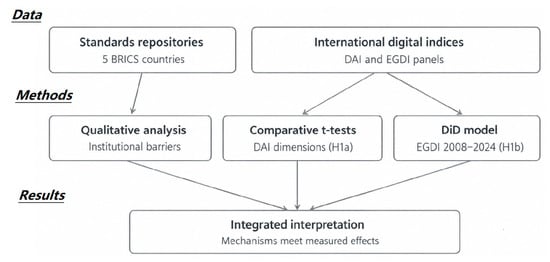
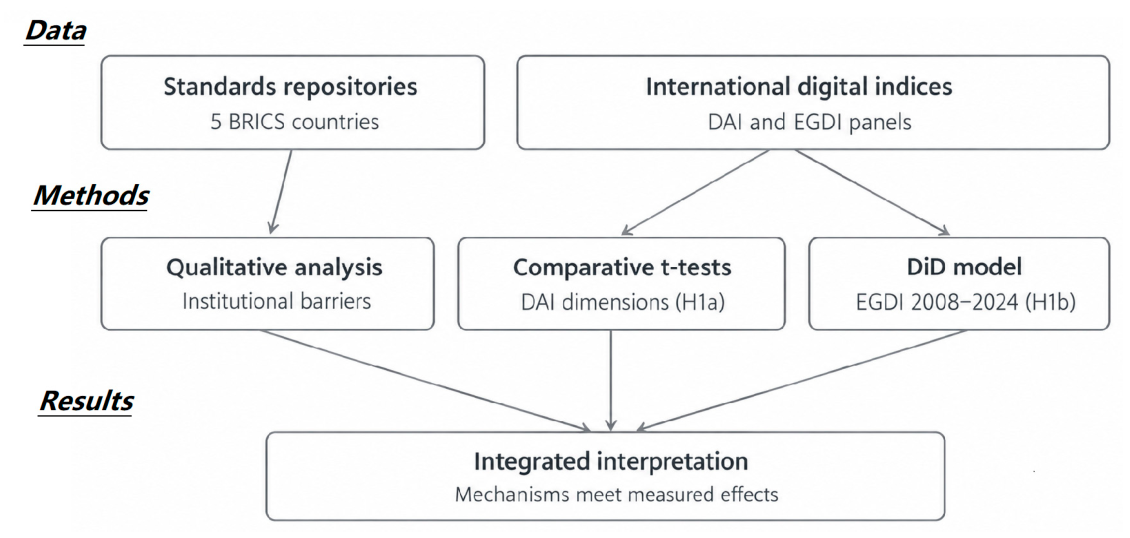
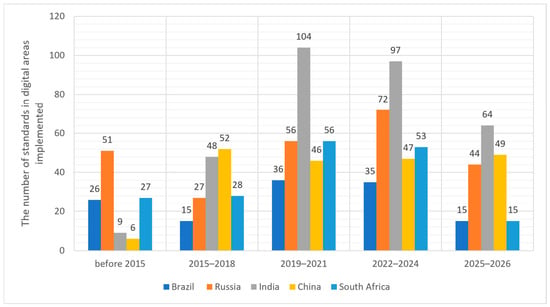
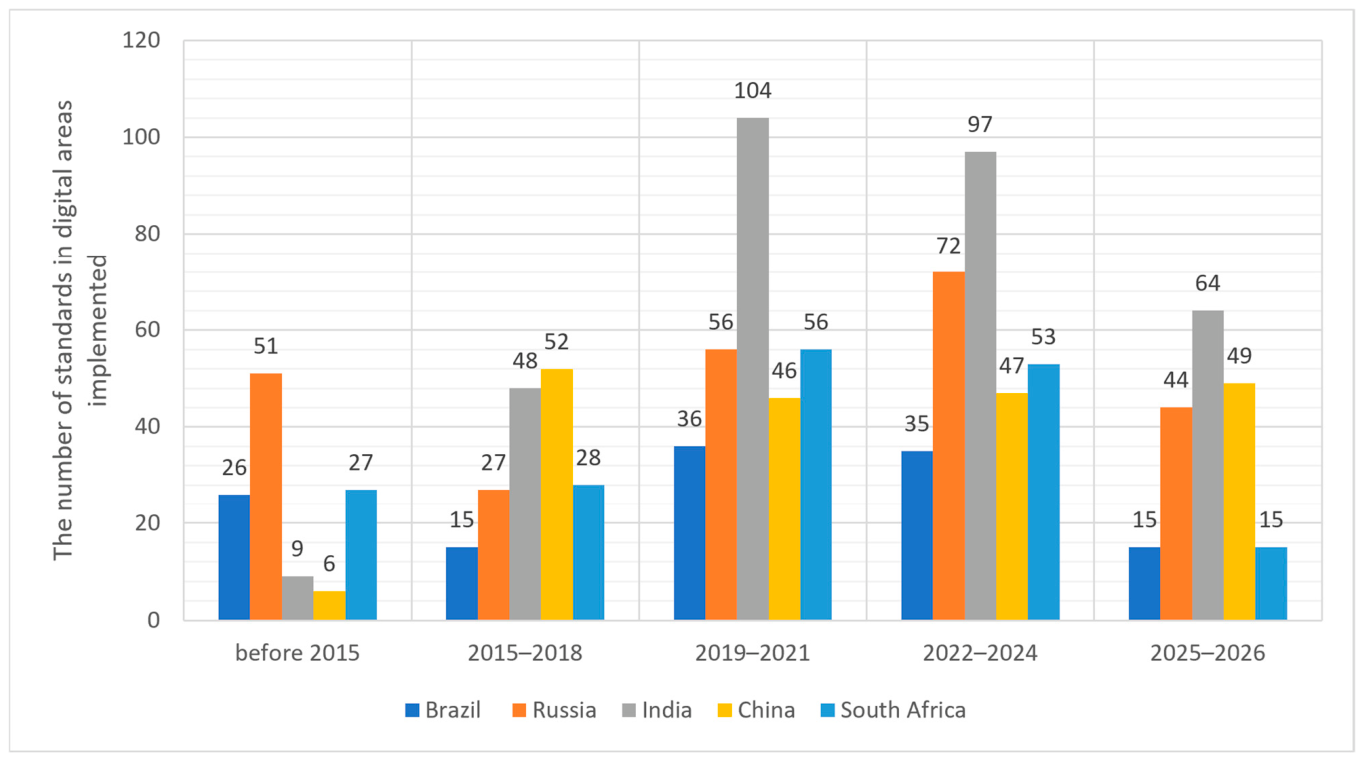
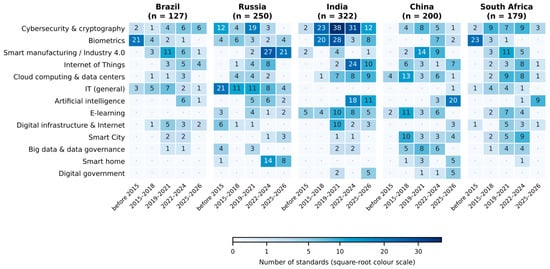
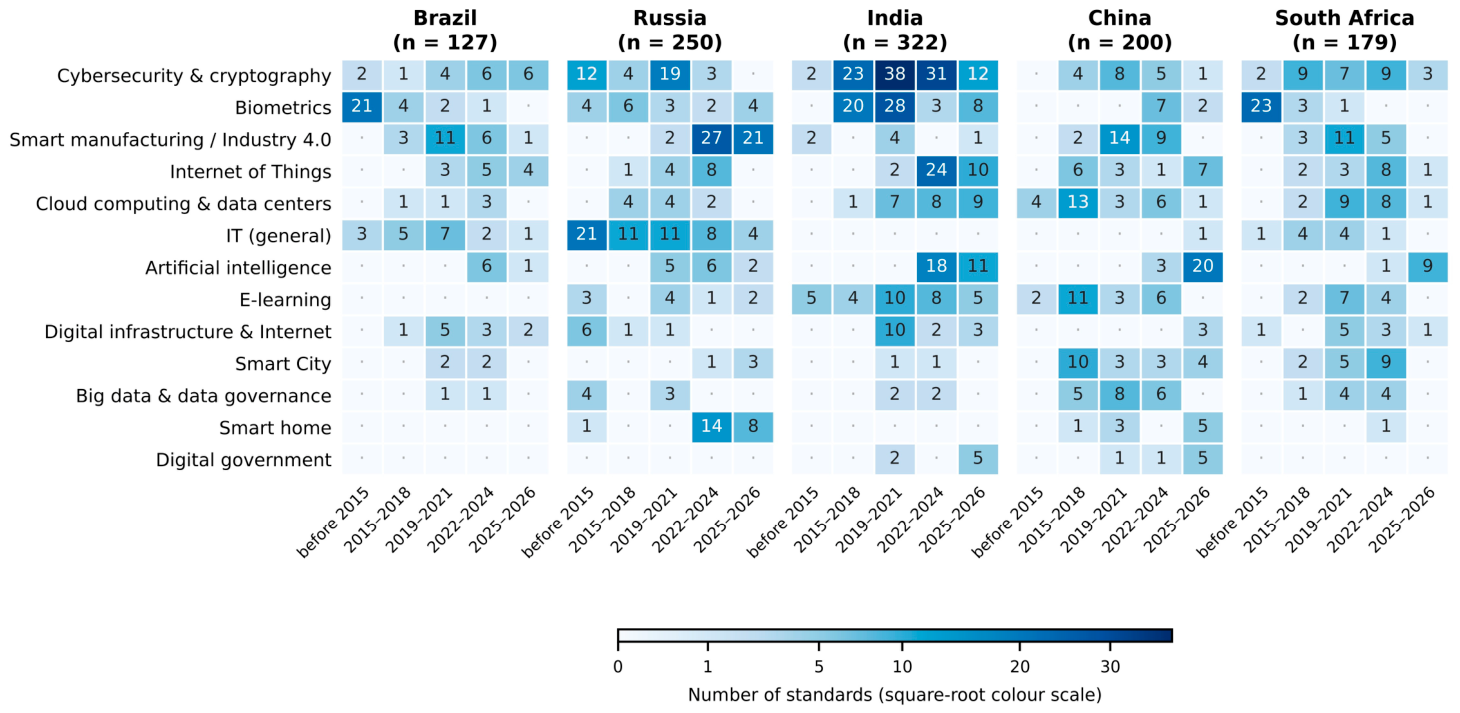
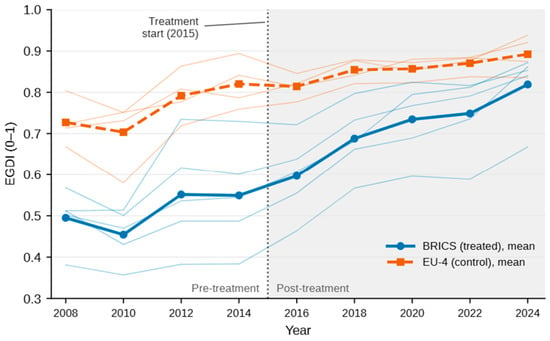
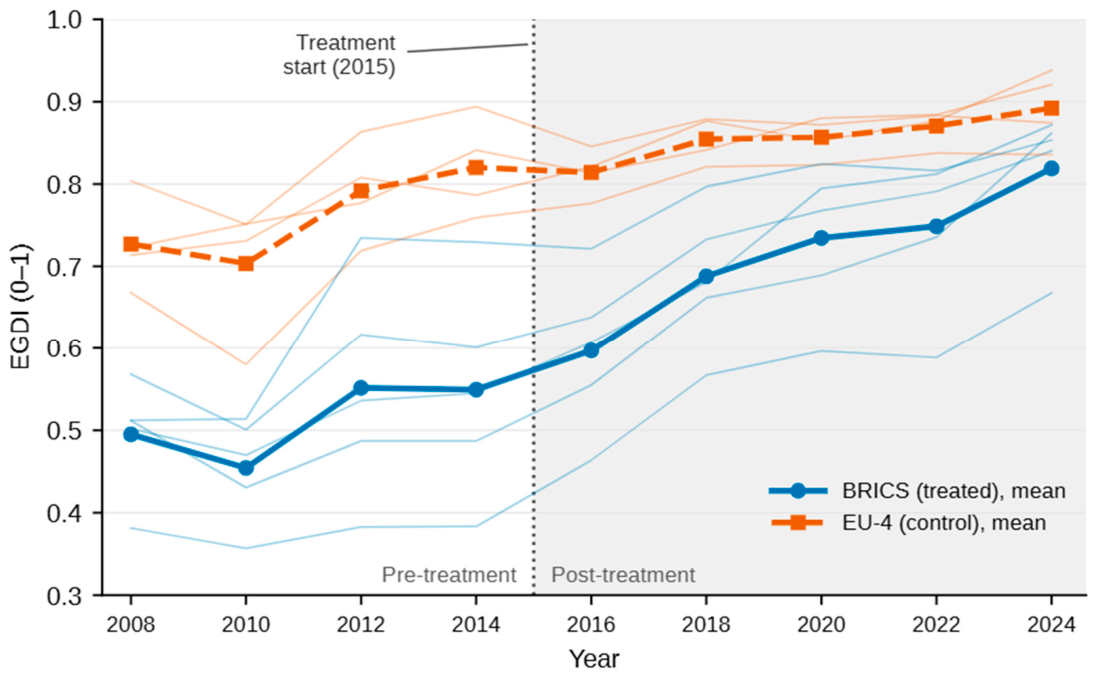

Disclaimer/Publisher’s Note: The statements, opinions and data contained in all publications are solely those of the individual author(s) and contributor(s) and not of MDPI and/or the editor(s). MDPI and/or the editor(s) disclaim responsibility for any injury to people or property resulting from any ideas, methods, instructions or products referred to in the content. |
© 2026 by the authors. Licensee MDPI, Basel, Switzerland. This article is an open access article distributed under the terms and conditions of the Creative Commons Attribution (CC BY) license.