


Highlights
What are the main findings?
- One in every eight newborns had low birth weight.
- Women who were experiencing their first pregnancy, had undernutrition, and did not use folic acid were at higher risk of having LBW newborns.
What are the implications of the main findings?
- Greater effort is needed regarding maternal nutrition in order to prevent LBW.
- Women should be encouraged to take folic acid supplements.
Abstract
Background: Low birth weight (LBW) is one of the most significant health issues worldwide, especially in countries with fewer resources. No systematic reviews or meta-analyses on LBW have been conducted in Sudan, the third largest African country. Methods: A systematic review and a meta-analysis were conducted to assess the pooled prevalence of LBW in Sudan and the associated factors. PubMed, Google Scholar, and ScienceDirect were searched for studies on LBW in Sudan. The meta-analysis was performed by calculating the pooled prevalence of LBW. The meta package in R was used for statistical analysis. Results: The final sample comprised 10 studies, with 10,043 neonates enrolled. The overall pooled prevalence of LBW was 13.0% (95% CI [13.0, 14.0]; I2 = 47.0%, p = 0.05), without significant heterogeneity. Primiparity (adjusted odds ratio [AOR] = 1.4, 95% CI [1.1, 2.1]), a short interpregnancy interval, lack of iron–folic acid supplementation (AOR = 3.33, CI [1.47, 5.88]), a low level of antenatal/perinatal care (AOR = 2.10, 95% CI [1.30, 3.57]), maternal undernutrition (AOR = 1.66, 95% CI [1.09, 2.53]), and decreasing gestational age of pregnancy (AOR = 0.80, 95% CI [0.66, 0.96]) were associated with LBW in different studies. In three studies, anemia was associated with LBW. Conclusions: This review reveals a high prevalence of LBW in Sudan. The factors identified in this review may help health planners and policymakers design and implement preventive interventions for LBW.
1. Introduction
The World Health Organization (WHO) defines a low birthweight (LBW) as a weight of less than 2500 g at birth, irrespective of gestational age [1]. There were 20.5 million cases of LBW worldwide—most of which were in Africa—and this number is expected to increase [2,3]. LBW is one of the most significant health issues. It can lead to several perinatal, neonatal, childhood, and adulthood complications, such as intrauterine and intrapartum death [4], neonatal infections [5], neonatal distress syndrome and birth asphyxia [6], increased rates of admission to the neonatal intensive care unit [7], childhood undernutrition [8], neonatal mortality [9], childhood allergies/asthma [10], systematic/arterial hypertension, decreased glomerular filtration rates, chronic kidney disease in childhood and adulthood [11], impaired motor and cognitive function [12], type 2 diabetes mellitus, insulin resistance [13], and death among children under five [14].
Despite ongoing efforts to apply different preventive measures at all levels, LBW and its complications are still prevalent in many countries [14,15,16,17], especially African countries [18,19,20,21,22,23,24,25,26]. Moreover, several factors, such as being a young/adolescent mother [27], a maternal age of >34 years, unplanned pregnancy, family size, alcohol abuse [28], maternal factors (e.g., education, undernutrition [29,30], and a low level of antenatal care (ANC)) [31], late antenatal attendance [15], birth interval, maternal hypertension [32], maternal anthropometric measurements [33], maternal smoking [34], household second-hand smoke, socioeconomic status [35], being unmarried [36], inadequate gestational weight gain [37], maternal anemia [38], maternal infection [39], and female sex [40], are reportedly associated with LBW.
Sudan is the third-largest country in Africa. Several studies have reported a high prevalence of LBW in different regions of Sudan [23,41,42,43,44,45,46]. Moreover, it has been reported that LBW is the leading cause of neonatal/perinatal mortality in Sudan [47]. There is a need to investigate the prevalence of LBW, along with the factors associated with it, to generate data that can help health planners reduce its incidence. This task is a public health priority worldwide, particularly in resource-limited countries such as Sudan. Decreasing the incidence of LBW is part of the UN’s Sustainable Development Goal (SDG) 3.2, which targets reducing neonatal mortality to below 12 per 1000 live births by 2030 [48]. Because no systematic reviews or meta-analyses have addressed LBW in Sudan, we conducted this systematic review and meta-analysis to estimate the pooled prevalence of LBW and its associated factors.
2. Materials and Methods
2.1. Data Extraction
The Preferred Reporting Items for Systematic Reviews and Meta-Analyses (PRISMA) guidelines were followed in this systematic review and meta-analysis [49]. The Joanna Briggs Institute Meta-Analysis of Statistics Assessment and Review Instrument was used to assess the included studies [50].
The following search strategy, prepared according to the PICOS protocol, was used:
P (population): neonates OR newborns
I (intervention/exposure): birth weight OR LBW OR infant
C (comparison): average birth weight OR without LBW
O (outcome): prevalence OR associated factors OR predictors
S (study design): cohort OR cross-sectional
A search strategy combining free-text terms, title and abstract words, and medical subject headings for each exposure, participant, and study design was employed. These searches were then combined using Boolean operators. Additional eligible studies on LBW were sought by reviewing the reference lists of the identified articles. The major databases—PUBMED/MEDLINE, Cochrane Library, Google, Google Scholar, and African Index Medicus—were used to identify published articles. The reference lists of the identified studies were checked to retrieve additional articles. The key terms used in the PubMed search were as follows: [(newborn [MeSH Terms] OR neonate OR child OR infant OR children AND (birth weight [MeSH Terms] OR small for gestation OR low birth weight OR underweight OR normal birth weight OR abnormal birth weight) AND (Sudan)].
2.2. Inclusion Criteria
2.2.1. Study Scope
All studies that reported the prevalence of LBW in Sudan and associated factors were included in this systematic review and meta-analysis.
2.2.2. Study Design
Cross-sectional or cohort studies were included.
2.2.3. Language
We included English-language articles reporting the prevalence of LBW or at least one associated factor.
2.2.4. Publication and Publication Year
Articles published before January 2025 were included.
2.3. Exclusion Criteria
Articles published in languages other than English, case reports, review articles, studies that did not report specific data on LBW, studies assessing LBW under particular conditions, such as malaria and preeclampsia, editorials, and qualitative studies were excluded from the analysis.
- Outcome measurement
We aimed to have two findings/measurements. The primary outcome was the prevalence of LBW, and the secondary outcome constituted the factors (socioeconomic, maternal, and neonatal) associated with LBW.
- Operation definition
LBW was defined as a birth weight of less than 2500 g [1].
2.4. Quality of the Studies
The Modified Newcastle–Ottawa scale (NOS) was used to assess the quality of the included studies [51]. It uses a star system (with a maximum of 9 stars) to indicate study quality across three major domains: participant selection, comparability of study groups, and ascertainment of outcomes of interest. Studies with a score of ≥7 stars were considered high-quality (Table 1).
Table 1.
Modified Newcastle–Ottawa scale scores of the included studies on low birth weight in Sudan.
Two investigators (EMM and AA) independently identified studies eligible for this meta-analysis. Any disagreements were resolved through discussion with the other researcher (IA). For each included analysis, the following data were input into an Excel sheet: name(s) of author(s), year of publication, region of study, neonate sample size, and number of neonates with LBW (see Supplementary File S1).
2.5. Data Analysis and Heterogeneity Assessment
The “metacont” function in the meta package [59] of the open-source statistical software R version 4.0.3 (The R Foundation for Statistical Computing, Vienna, Austria) was used to perform meta-analyses of the pooled prevalence of LBW. The heterogeneity of the included studies was evaluated using the Cochrane Q statistic and the I2 statistic. A Cochrane Q with p < 0.10 and I2 > 50 was employed as a standard to indicate the heterogeneity of the included studies [60]. According to the Cochrane Q and I2 analyses, a random-effects or fixed-effects model was used to combine the included studies. In the meta-analysis, we did not observe any significant heterogeneity. Therefore, the corresponding tests (sensitivity analysis, subgroup analysis, and meta-regression) were not performed. Publication bias was assessed using Egger’s and Begg’s tests.
3. Results
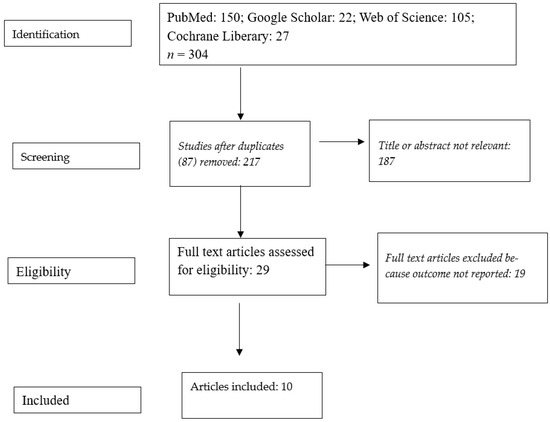
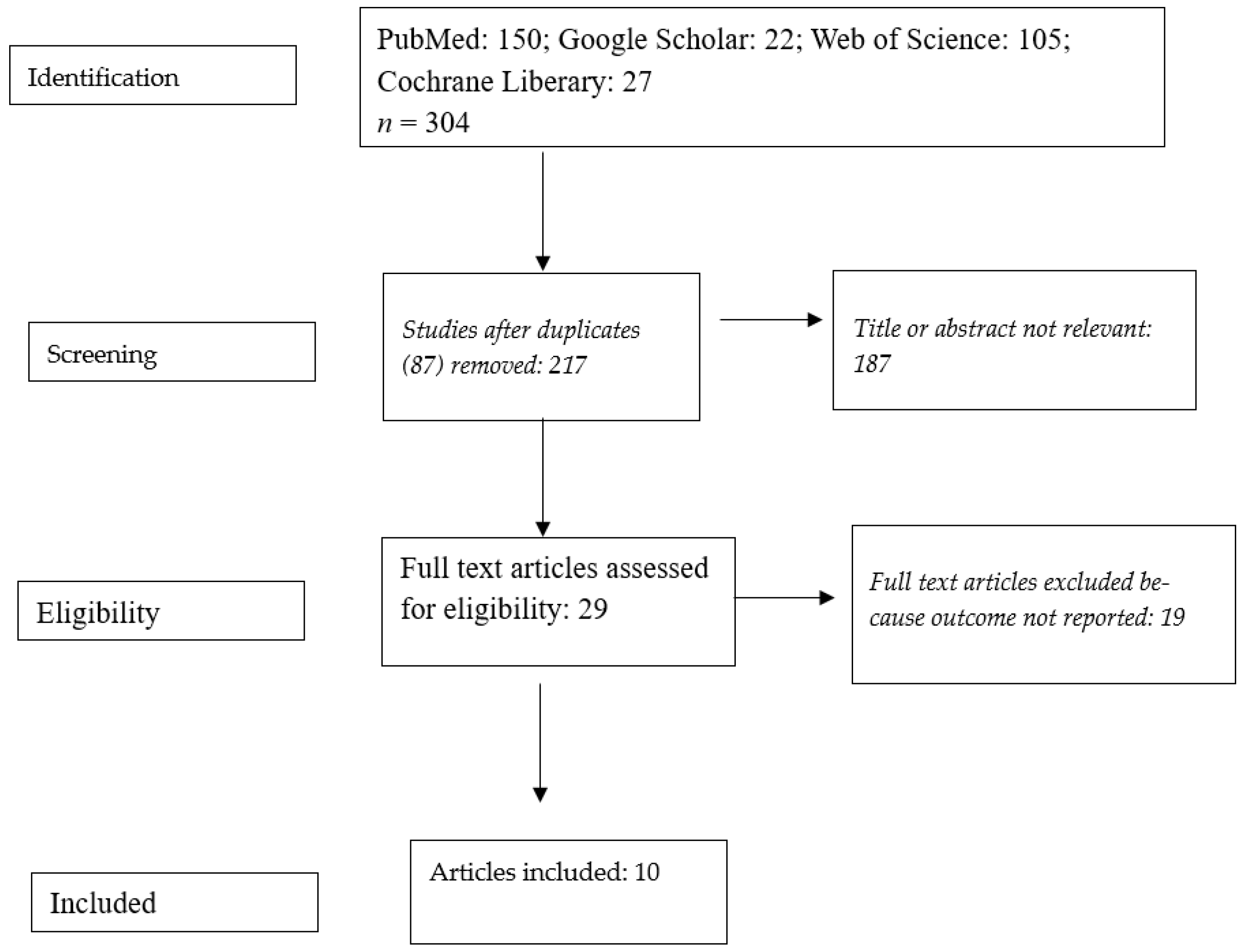
After excluding articles for various reasons (e.g., titles and abstracts were not relevant, the outcome measure was not identified, LBW was assessed in regard to a specific disease (e.g., preeclampsia)), we used 10 articles to determine the prevalence and associated factors [41,45,46,52,53,54,55,56,57,58] (Figure 1). Sample sizes ranged from 253 neonates in Rabak [56] to 2818 neonates in Khartoum [52].
Figure 1.
Flow chart showing how studies on low birth weight in Sudan were identified and selected.
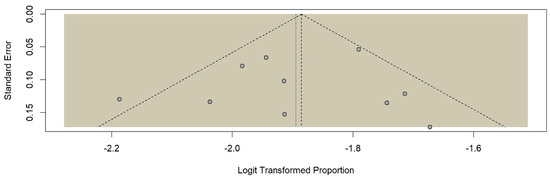
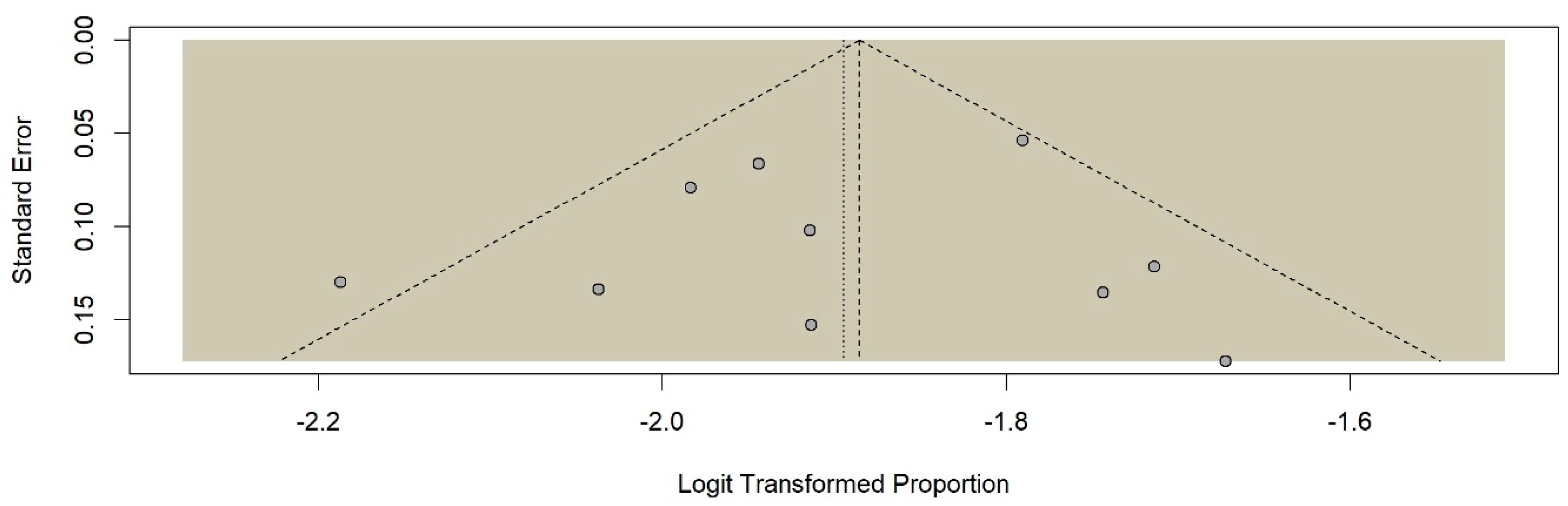
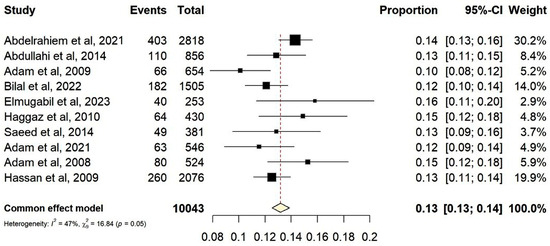
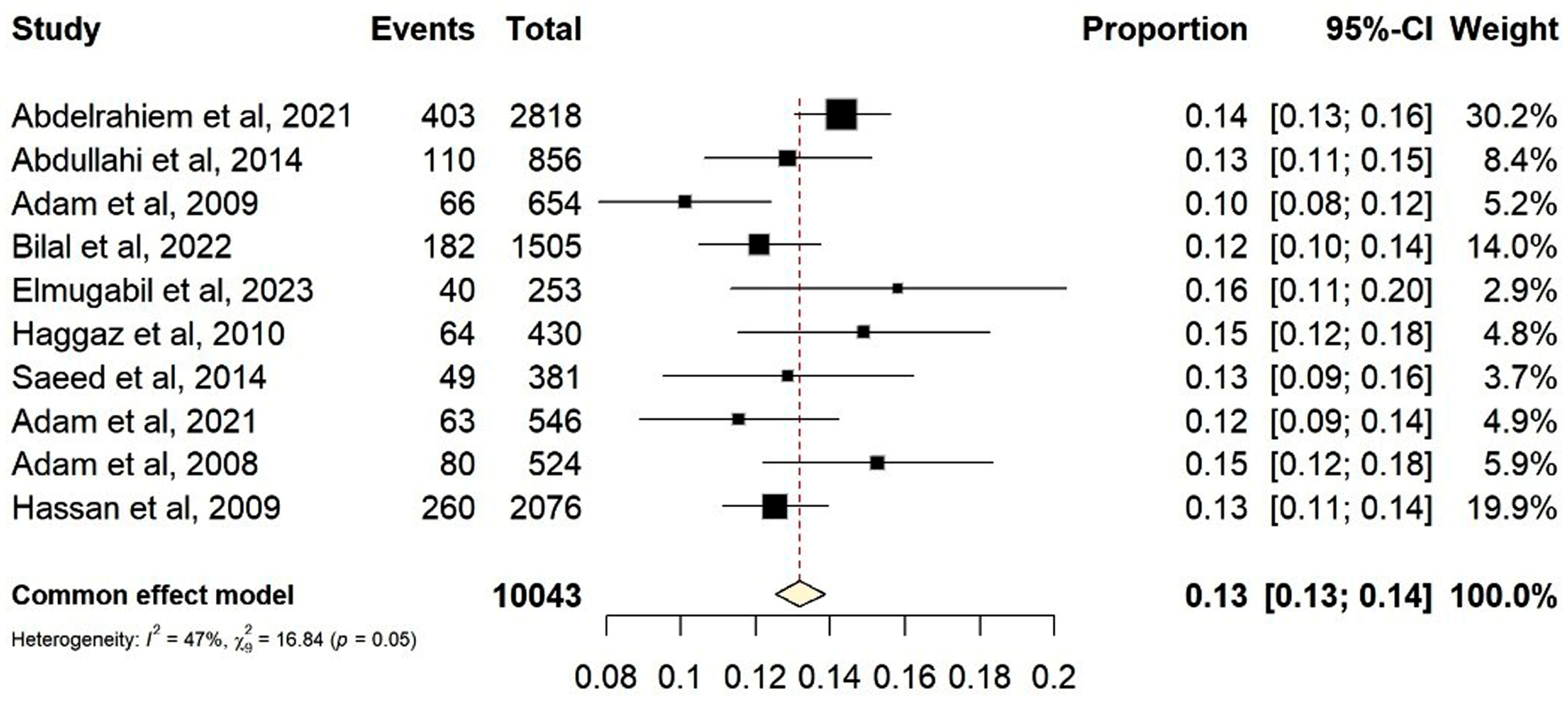
All included articles were high-quality cross-sectional studies that used face-to-face questionnaires (Table 1). All studies were hospital-based. Five (50.0%) of these studies were conducted in Khartoum [41,53,55,57,58]. A funnel plot showing a symmetrical distribution is given in Figure 2. Egger’s regression test yielded a p-value of 0.063, which indicates the absence of publication bias. The prevalence of LBW ranged from 10.0% in Khartoum [55] to 15.8% in Rabak [56]. The overall pooled prevalence of LBW was 13.0% (95% CI [13.0, 14.0]; I2 = 47.0%, p = 0.05), without significant heterogeneity (Figure 3).
Figure 2.
Funnel plot of the publication bias of the studies on low birth weight in Sudan.
Figure 3.
Forest plot of the pooled prevalence of low birth weight in Sudan [41,45,46,52,53,54,55,56,57,58].
Factors Associated with Low Birth Weight
Maternal undernutrition was the most commonly reported factor associated with LBW across four studies [41,46,53,54]. Gestational age was inversely associated with LBW, as reported in three [41,56,58]. Moreover, three studies reported associations between low-level ANC attendance and LBW [41,44,53] (Table 2 and Table 3).
Table 2.
Characteristics of the studies, confounders, and factors associated with low birth weight in Sudan.
Table 3.
Factors associated with low birth weight in Sudan.
Three studies reported an inverse association between gestational age and LBW. Primiparity (AOR 1.4, 95% CI [1.1, 2.1]) [55], a short interpregnancy interval [55], not using iron–folic acid supplements (AOR = 3.33, CI [1.47, −5.88]) [53], low maternal BMI (AOR = 1.8, 95% CI [1.0, 3.2]) [46], low level of education (of the mother) [54], low level of perinatal/antenatal care (<2 visits) (AOR = 2.10, 95% CI [1.30, 3.57]), maternal undernutrition (AOR = 1.66, 95% CI [1.09, 2.53]) [41], and decreasing duration/gestational age (AOR = 0.80, 95% CI [0.66, 0.96]) [56] were associated with LBW. In Medani (AOR = 9.0, 95% CI [3.4, 23.8]) [44], White Nile (AOR = 4.70, 95% CI [2.06, 10.94]) [56], and Darfur (AOR: 5.1, 95% CI [1.7, 15.2]) [45], anemia was associated with LBW (Table 2 and Table 3). In all these studies, the information was obtained from participants rather than from records. Moreover, with the exception of one study [54], in nine studies the associated factors were adjusted for confounders (Table 2).
4. Discussion
The pooled prevalence of LBW in this systematic review–meta-analysis was 13.0%. This is similar to the prevalence of LBW reported in Addis Ababa, Ethiopia (13.1%) [20], and Ghana (13.5%) [24], as well as in an extensive survey of 9734 births in Jordan (13.8%) [14]. The pooled prevalence of LBW in this systematic review was higher than in a similar study conducted in South Sudan (11.4%) [26]. Moreover, the detected pooled prevalence of LBW in our study was significantly higher than the recently reported value of 5.7% among 33,585 enrolled newborns in the Demographic and Health Survey (DHS) of Saharan African countries [31]. Likewise, the pooled prevalence of LBW in our analysis was higher than that (8.5%) reported in a meta-analysis that included 14 articles and 93,924 neonates in Iran [16]. However, the pooled prevalence in our systematic review and meta-analysis is lower than that (17.3%) reported in a meta-analysis of 30 studies and 55,085 neonates in Ethiopia [61]. Likewise, our pooled prevalence of LBW is lower than the reported prevalence (17.29%) for 175,240 neonates included in the fifth National Family Health Survey in India [17].
Differences in LBW prevalence across studies may be attributable to regional characteristics and factors associated with LBW. It has been reported that the prevalence of LBW is not evenly distributed across a country and that risk factors for LBW differ between countries and within regions of the same country [62]. Perhaps different factors associated with LBW, such as HIV [63] and malaria [64], have different prevalences across regions, and the prevalence of LBW varies across populations.
This systematic review and meta-analysis showed that primiparity, a short interpregnancy interval, lack of iron–folic acid supplementation, low maternal BMI, low education level (of the mother), low antenatal care level, maternal preterm birth, and maternal anemia were associated with LBW. This finding aligns with the results of a recent meta-analysis that included 30 studies with 55,085 participants in Ethiopia. Endalamaw et al. reported that maternal age, a short interpregnancy interval, a low BMI, and preterm birth were associated with LBW [61]. Likewise, in Jordan, preterm birth, maternal age, a low level of education (of the mother), and short birth interval were associated with LBW [14]. A previous meta-analysis showed that women who had fewer than four ANC visits were at a higher risk of delivering LBW neonates [31]. Gautam et al. showed that each increase in the number of ANC visits can lead to a 22 g increase in newborn birth weight as well as a 1.2 percentage reduction in the risk of delivering a LBW newborn [65]. It was recently shown that not only ANC or iron–folic acid supplementation but also multiple-micronutrient and calcium supplementation could prevent LBW relative to a placebo [66].
Three of the ten studies in this review reported an association between maternal anemia and LBW. In their meta-analysis, which included 68 articles, Figueiredo et al. reported that maternal anemia was associated with LBW (OR: 1.23, 95% CI [1.06, 1.43]) [67]. In Ethiopia, after adjusting for confounders (maternal age, parity, ANC), anemia was associated with LBW [32,68]. Anemia among pregnant women is one of the most significant health problems [69], including in Sudan [70]. Thus, preventive measures against anemia should be implemented across regions to reduce the prevalence of LBW. The difference between the results of this systematic review and meta-analysis and other results from other studies on different populations in Africa can be attributed to differences in the socioeconomic characteristics of the populations studied. For instance, while alcohol abuse [28], maternal smoking [34], and being unmarried are reportedly associated with LBW in African countries, smoking and alcohol consumption are rarely habits among women in Sudan. Moreover, according to the law, as well as tradition, women are not allowed to get pregnant without being married.
In summary, the main factors (maternal education, low AN levels, undernutrition, and anemia) associated with LBW are interrelated and interact. For example, it has been reported that low maternal education, not taking supplements, and not having nutritional education are associated with maternal anemia [32]. Moreover, it has been shown that, after controlling for the factors(maternal age, marital status, level of education, age of child, and wealth index), maternal anemia was associated with LBW [31].
Strengths and Limitations
As for strengths, this study is the first systematic review and meta-analysis focused on Sudan that addresses a relevant public health topic with clear public health implications of great regional importance, thereby filling a genuine knowledge gap. It was elaborated in accordance with PRISMA guidelines, and the methodology is generally transparent. The databases searched are extensive (PubMed, Google Scholar, Cochrane, and African Index Medicus). Critically, a quality assessment was performed (Modified Newcastle–Ottawa Scale), and all studies that were included were rated as being of high quality. The sample size is reasonable, with 10 studies and more than 10,000 neonates included. Furthermore, the statistical analysis was appropriate.
However, this study has some weaknesses/limitations. Although the sample size is reasonable, it is small (n = 10), which limits the robustness of the conclusions. A major limitation of this review is its heavy reliance on cross-sectional studies, restricting the ability to establish causal relationships between risk factors and low birth weight. Consequently, the observed associations should be interpreted with caution, as they do not allow for definitive inferences regarding causality. The review was restricted to studies published in English, which may have introduced language bias and led to the exclusion of relevant non-English research. Risk factors were summarized descriptively using reported adjusted odds ratios, without pooling. Some key variables, such as maternal diet, mental health, infections (malaria, HIV, etc.), and socioeconomic status after pursuing an education, are missing. Although the included studies were conducted across various regions of Sudan, some, such as Northern Sudan (near Egypt) and Eastern Sudan (along the Red Sea), lack published data on LBW.
5. Conclusions
This review reveals a high prevalence of LBW in Sudan. The factors identified may help health planners and policymakers design and implement interventions to prevent LBW. Thus, greater efforts are needed to increase ANC levels and ensure iron and folic acid supplementation. Preventive measures against maternal undernutrition and anemia (nutrition) should be implemented across regions to reduce the prevalence of LBW.
Supplementary Materials
The following supporting information can be downloaded at: https://www.mdpi.com/article/10.3390/children13020274/s1, File S1: The details of the included studies.
Author Contributions
E.M.M. and I.A. conceived and designed the study. A.A.-N. and A.A. developed the search strategy. I.A. and E.M.M. conducted the statistical analysis. All authors have read and agreed to the published version of the manuscript.
Funding
This research received no external funding.
Institutional Review Board Statement
Not applicable.
Informed Consent Statement
Not applicable.
Data Availability Statement
The datasets used and analyzed in this study are included in the paper.
Acknowledgments
The authors thank the authors of the analyzed studies. The researchers also thank the Deanship of Graduate Studies and Scientific Research at Qassim University for the financial support (QU-APC-2026).
Conflicts of Interest
The authors declare no conflicts of interest.
Abbreviations
The following abbreviations are used in this manuscript:
| ANC | antenatal care |
| AOR | adjusted odds ratio |
| CI | confidence interval |
| IQR | interquartile range |
| WHO | World Health Organization |
References
- International Statistical Classification of Diseases and Related Health Problems. Available online: https://apps.who.int/iris/handle/10665/246208 (accessed on 8 May 2023).
- WHO Recommendations for Care of the Preterm or Low-Birth-Weight Infant—World|ReliefWeb. Available online: https://reliefweb.int/report/world/who-recommendations-care-preterm-or-low-birth-weight-infant (accessed on 8 May 2023).
- Blencowe, H.; Krasevec, J.; de Onis, M.; Black, R.E.; An, X.; Stevens, G.A.; Borghi, E.; Hayashi, C.; Estevez, D.; Cegolon, L.; et al. National, regional, and worldwide estimates of low birthweight in 2015, with trends from 2000: A systematic analysis. Lancet Glob. Health 2019, 7, e849–e860. [Google Scholar] [CrossRef] [Scilit] [PubMed]
- Kasa, G.A.; Woldemariam, A.Y.; Adella, A.; Alemu, B. The factors associated with stillbirths among sub-saharan African deliveries: A systematic review and meta-analysis. BMC Pregnancy Childbirth 2023, 23, 835. [Google Scholar] [CrossRef] [Scilit] [PubMed]
- Bech, C.M.; Stensgaard, C.N.; Lund, S.; Holm-Hansen, C.; Brok, J.S.; Nygaard, U.; Poulsen, A. Risk factors for neonatal sepsis in Sub-Saharan Africa: A systematic review with meta-analysis. BMJ Open 2022, 12, e054491. [Google Scholar] [CrossRef] [Scilit] [PubMed]
- Techane, M.A.; Alemu, T.G.; Wubneh, C.A.; Belay, G.M.; Tamir, T.T.; Muhye, A.B.; Kassie, D.G.; Wondim, A.; Terefe, B.; Tarekegn, B.T.; et al. The effect of gestational age, low birth weight and parity on birth asphyxia among neonates in sub-Saharan Africa: Systematic review and meta-analysis: 2021. Sub-S. Afr. J. Med. 2022, 48, 64–69. [Google Scholar] [CrossRef] [Scilit]
- Rebelo, F.; Carrilho, T.R.B.; Canuto, R.; Schlussel, M.M.; Farias, D.R.; Ohuma, E.O.; Kac, G. Estimated fetal weight standards of the INTERGROWTH-21st project for the prediction of adverse outcomes: A systematic review with meta-analysis. J. Matern. Fetal. Neonatal Med. 2023, 36, 2230510. [Google Scholar] [CrossRef] [Scilit]
- Elmighrabi, N.F.; Fleming, C.A.K.; Agho, K.E. Factors Associated with Childhood Stunting in Four North African Countries: Evidence from Multiple Indicator Cluster Surveys, 2014–2019. Nutrients 2024, 16, 473. [Google Scholar] [CrossRef] [Scilit]
- Hazel, E.A.; Erchick, D.J.; Katz, J.; Lee, A.C.C.; Diaz, M.; Wu, L.S.F.; West, K.P.; Shamim, A.A.; Christian, P.; Ali, H.; et al. Neonatal mortality risk of vulnerable newborns by fine stratum of gestational age and birthweight for 230 679 live births in nine low- and middle-income countries, 2000–2017. BJOG 2025, 132, S60–S72. [Google Scholar] [CrossRef] [Scilit]
- Ni, M.; Li, B.; Zhang, Q.; Zhao, J.; Li, W.; Qi, S.; Shen, Q.; Yao, D.; Chen, Z.; Wang, T.; et al. Relationship Between Birth Weight and Asthma Diagnosis: A Cross-Sectional Survey Study Based on the National Survey of Children’s Health in the U.S. BMJ Open 2023, 13, e076884. [Google Scholar] [CrossRef] [Scilit]
- Grillo, M.A.; Mariani, G.; Ferraris, J.R. Prematurity and Low Birth Weight in Neonates as a Risk Factor for Obesity, Hypertension, and Chronic Kidney Disease in Pediatric and Adult Age. Front. Med. 2022, 8, 769734. [Google Scholar] [CrossRef] [Scilit]
- Radaelli, G.; Leal-Conceição, E.; Neto, F.K.; Taurisano, M.R.G.; Majolo, F.; Bruzzo, F.T.K.; Booij, L.; Nunes, M.L. Motor and cognitive outcomes of neonates with low birth weight in Brazil: A systematic review and meta-analysis. Arq. Neuropsiquiatr. 2023, 81, 186–200. [Google Scholar] [CrossRef] [Scilit]
- Martín-Calvo, N.; Goni, L.; Tur, J.A.; Martínez, J.A. Low birth weight and small for gestational age are associated with complications of childhood and adolescence obesity: Systematic review and meta-analysis. Obes. Rev. 2022, 23, e13380. [Google Scholar] [CrossRef] [Scilit] [PubMed]
- Islam, M.M.; Ababneh, F.; Akter, T.; Khan, H.R. Prevalence and risk factors for low birth weight in Jordan and its association with under-five mortality: A population-based analysis. East. Mediterr. Health J. 2020, 26, 1273–1284. [Google Scholar] [CrossRef] [Scilit] [PubMed]
- Kusolo, R.; Mumpe-Mwanja, D.; Serunjogi, R.; Delaney, A.; Namale-Matovu, J.; Mwambi, K.; Namukanja-Mayambala, P.M.; Williams, J.L.; Mai, C.T.; Qi, Y.P.; et al. Prevalence, trends, and maternal risk factors of adverse birth outcomes from a hospital-based birth defects surveillance system in Kampala, Uganda, 2015–2022. BMC Pregnancy Childbirth 2025, 25, 408. [Google Scholar] [CrossRef] [Scilit] [PubMed]
- Sabbaghchi, M.; Jalali, R.; Mohammadi, M. A Systematic Review and Meta-analysis on the Prevalence of Low Birth Weight Infants in Iran. J. Pregnancy 2020, 2020, 3686471. [Google Scholar] [CrossRef] [Scilit]
- Girotra, S.; Mohan, N.; Malik, M.; Roy, S.; Basu, S. Prevalence and Determinants of Low Birth Weight in India: Findings From a Nationally Representative Cross-Sectional Survey (2019-21). Cureus 2023, 15, e36717. [Google Scholar] [CrossRef] [Scilit]
- Barut, A.; Mohamud, D.O. The association of maternal anaemia with adverse maternal and foetal outcomes in Somali women: A prospective study. BMC Women’s Health 2023, 23, 193. [Google Scholar] [CrossRef] [Scilit]
- Odongkara, B.; Nankabirwa, V.; Ndeezi, G.; Achora, V.; Arach, A.A.; Napyo, A.; Musaba, M.; Mukunya, D.; Tumwine, J.K.; Thorkild, T. Incidence and Risk Factors for Low Birthweight and Preterm Birth in Post-Conflict Northern Uganda: A Community-Based Cohort Study. Int. J. Environ. Res. Public. Health 2022, 19, 12072. [Google Scholar] [CrossRef] [Scilit]
- Tadesse, T.; Abebe, M.; Molla, W.; Ahmed Mahamed, A.; Mebratu, A. Magnitude and associated factors of low birth weight among term newborns delivered in Addis Ababa public hospitals, Ethiopia, 2021. J. Obstet. Gynaecol. 2023, 43, 2114332. [Google Scholar] [CrossRef] [Scilit]
- Kargbo, D.K.; Nyarko, K.; Sackey, S.; Addo-Lartey, A.; Kenu, E.; Anto, F. Determinants of low birth weight deliveries at five referral hospitals in Western Area Urban district, Sierra Leone. Ital. J. Pediatr. 2021, 47, 212. [Google Scholar] [CrossRef] [Scilit]
- Wondemagegn, A.T.; Tsehay, B.; Mebiratie, A.L.; Negesse, A. Effects of dietary diversification during pregnancy on birth outcomes in east Gojjam, northwest Ethiopia: A prospective cohort study. Front. Public Health 2022, 10, 1037714. [Google Scholar] [CrossRef] [Scilit]
- Ahmed, A. Association between maternal undernutrition among Sudanese women and newborn birth weight. J. Fam. Med. Prim. Care 2022, 11, 2824. [Google Scholar] [CrossRef] [Scilit]
- Ahenkorah, B.; Sakyi, S.A.; Helegbe, G.; Owiredu, E.W.; Fondjo, L.A.; Ofosu, W.; Der, E.M.; Amoani, B.; Larbi, A.A.; Cheetham, S.; et al. Foeto-maternal complications associated with low birth weight: A prospective multicenter study in northern Ghana. PLoS ONE 2022, 17, e0266796. [Google Scholar] [CrossRef] [Scilit] [PubMed]
- Kamala, B.A.; Mgaya, A.H.; Ngarina, M.M.; Kidanto, H.L. Predictors of low birth weight and 24-hour perinatal outcomes at Muhimbili National Hospital in Dar es Salaam, Tanzania: A five-year retrospective analysis of obstetric records. Pan Afr. Med. J. 2018, 29, 220. [Google Scholar] [CrossRef] [Scilit] [PubMed]
- Lat, C.; Murila, F.; Wamalwa, D. Prevalence and factors associated with low birth weight among newborns in South Sudan. Afr. Health Sci. 2023, 23, 149–158. [Google Scholar] [CrossRef] [Scilit] [PubMed]
- Nborah, S.A.; Saah, F.I.; Gyamera, O.G.; Amu, H. Adverse birth outcomes and associated factors among adolescent mothers in Nabdam District, Ghana: A retrospective cross-sectional study. BMJ Open 2026, 16, e099915. [Google Scholar] [CrossRef] [Scilit]
- Aga, M.A.; Woldeamanuel, B.T. Nutritional and prenatal care factors associated with low birth weight among full-term infants in public hospitals of Addis Ababa, Ethiopia. BMJ Paediatr. Open 2025, 9, e003732. [Google Scholar] [CrossRef] [Scilit]
- Walle, B.M.; Adekunle, A.O.; Arowojolu, A.O.; Dugul, T.T.; Mebiratie, A.L. Low birth weight and its associated factors in East Gojjam Zone, Amhara, Ethiopia. BMC Nutr. 2022, 8, 124. [Google Scholar] [CrossRef] [Scilit]
- Nkwabong, E.; Djientcheu Deugoue, F.; Fouedjio, J. Pre-eclampsia in a Sub-Saharan African country and maternal-perinatal outcome. Trop. Doct. 2023, 53, 61–65. [Google Scholar] [CrossRef] [Scilit]
- Weyori, A.E.; Seidu, A.A.; Aboagye, R.G.; Holmes, F.A.; Okyere, J.; Ahinkorah, B.O. Antenatal care attendance and low birth weight of institutional births in sub-Saharan Africa. BMC Pregnancy Childbirth 2022, 22, 283. [Google Scholar] [CrossRef] [Scilit]
- Habtegiorgis, S.D.; Kumlachew, L.; Tesfaye, A.; Azmeraw, M.; Tesfaw, E.; Telayneh, A.T.; Adugna, A.; Molla, F.; Birhanu, M.Y.; Mitiku, K.W. Prevalence and determinants of low birth weight in Ethiopia: A multilevel meta-analysis and systematic review. Public Health 2025, 239, 215–223. [Google Scholar] [CrossRef] [Scilit]
- Goto, E. Dose-response relationships of maternal height and weight with risk of low birthweight neonates: A meta-analysis. Minerva Pediatr. 2023, 75, 110–116. [Google Scholar] [CrossRef] [Scilit] [PubMed]
- Dadi, A.F.; Hassen, T.A.; Ketema, D.B.; Ahmed, K.Y.; Kassa, Z.Y.; Amsalu, E.; Kibret, G.D.; Alemu, A.A.; Bore, M.G.; Ayalew, A.A.; et al. Anxiety symptoms during pregnancy and risk of adverse birth outcomes in Gondar Town Ethiopia. Sci. Rep. 2025, 15, 35475. [Google Scholar] [CrossRef] [Scilit] [PubMed]
- Yaya, S.; Odusina, E.K. Association between household second-hand smoke and low birth weight in sub-Saharan Africa. PLoS ONE 2025, 20, e0330214. [Google Scholar] [CrossRef] [Scilit] [PubMed]
- Berhane, M.; Workineh, N.; Girma, T.; Lim, R.; Lee, K.J.; Nguyen, C.D.; Neal, E.; Russell, F.M. Prevalence of Low Birth Weight and Prematurity and Associated Factors in Neonates in Ethiopia: Results from a Hospital-based Observational Study. Ethiop. J. Health Sci. 2019, 29, 677–688. [Google Scholar] [CrossRef] [Scilit]
- Jabin, N.; Malla, L.; Otieno, G.; Ismail, L.C.; Barros, F.C.; Berkley, J.; Carvalho, M.; Munim, S.; Norris, S.; Nosten, F.; et al. Association between gestational age-specific weight gain in pregnancy and risk of adverse perinatal outcomes: A secondary analysis of the INTERBIO-21st Fetal Study. Am. J. Clin. Nutr. 2025, 121, 1304–1314. [Google Scholar] [CrossRef] [Scilit]
- Dorsamy, V.; Bagwandeen, C.; Moodley, J. The prevalence, risk factors and outcomes of anaemia in South African pregnant women: A systematic review and meta-analysis. Syst. Rev. 2022, 11, 16. [Google Scholar] [CrossRef] [Scilit]
- Stampini, V.; Amadori, R.; Bracci Laudiero, L.; Vendola, N.; Pires Marafon, D.; Gerbino, M.; Piccirillo, V.; Rizza, E.; Aquino, C.I.; Surico, D. COVID-19 seroprevalence in a group of pregnant women compared to a group of non-pregnant women. Ital. J. Gynaecol. Obstet. 2021, 33, 235–240. [Google Scholar] [CrossRef] [Scilit]
- Adeoye, I.A.; Unogu, C.O.; Adediran, K.; Gbadebo, B.M. Determinants of Adverse Perinatal Outcomes in Ibadan, Nigeria: The influence of maternal lifestyle. PLoS Glob. Public Health 2025, 5, e0004199. [Google Scholar] [CrossRef] [Scilit]
- Bilal, J.A.; Rayis, D.A.; AlEed, A.; Al-Nafeesah, A.; Adam, I. Maternal Undernutrition and Low Birth Weight in a Tertiary Hospital in Sudan: A Cross-Sectional Study. Front. Pediatr. 2022, 10, 927518. [Google Scholar] [CrossRef] [Scilit]
- Omer, S.A.S.A.; Noureldein, A.N.A.N.; Eisa, H.; Abdelrahim, M.; Idress, H.E.H.E.; Abdelrazig, A.M.A.M.; Adam, I. Impact of Submicroscopic Plasmodium falciparum Parasitaemia on Maternal Anaemia and Low Birth Weight in Blue Nile State, Sudan. J. Trop. Med. 2019, 2019, 3162378. [Google Scholar] [CrossRef] [Scilit]
- Ali, A.A.; Rayis, D.A.; Abdallah, T.M.; Elbashir, M.I.; Adam, I. Severe anaemia is associated with a higher risk for preeclampsia and poor perinatal outcomes in Kassala hospital, eastern Sudan. BMC Res. Notes 2011, 4, 311. [Google Scholar] [CrossRef] [Scilit] [PubMed]
- Elhassan, E.M.; Abbaker, A.O.; Haggaz, A.; Abubaker, S.M.; Adam, I. Anaemia and low birth weight in Medani, Hospital Sudan. BMC Res. Notes 2010, 3, 181. [Google Scholar] [CrossRef] [Scilit] [PubMed]
- Haggaz, A.D.; Radi, E.A.; Adam, I. Anaemia and low birthweight in western Sudan. Trans. R. Soc. Trop. Med. Hyg. 2010, 104, 234–236. [Google Scholar] [CrossRef] [Scilit] [PubMed]
- Adam, I.; Babiker, S.; Mohmmed, A.A.; Salih, M.M.; Prins, M.H.; Zaki, Z.M. Low body mass index, anaemia and poor perinatal outcome in a Rural Hospital in Eastern Sudan. J. Trop. Pediatr. 2008, 54, 202–204. [Google Scholar] [CrossRef] [Scilit]
- Ahmed, M.A.A.; Mahgoub, H.M.; Al-Nafeesah, A.; Al-Wutayd, O.; Adam, I. Neonatal mortality and associated factors in the neonatal intensive care unit of Gadarif Hospital, Eastern Sudan. Children 2022, 9, 1725. [Google Scholar] [CrossRef] [Scilit]
- UNICEF-WHO Low Birthweight Estimates: Levels and Trends 2000–2015|UNICEF. Available online: https://www.unicef.org/reports/UNICEF-WHO-low-birthweight-estimates-2019 (accessed on 16 October 2020).
- Moher, D.; Liberati, A.; Tetzlaff, J.; Altman, D.G.; The PRISMA Group. Preferred reporting items for systematic reviews and meta-analyses: The PRISMA statement. Ann. Intern. Med. 2009, 151, 264–269, W64. [Google Scholar] [CrossRef]
- Munn, Z.; Tufanaru, C.; Aromataris, E. JBI’s Systematic Reviews. AJN Am. J. Nurs. 2014, 114, 49–54. [Google Scholar] [CrossRef] [Scilit]
- Wells, G.; Shea, B.; O’Connell, J.; Robertson, J.; Peterson, V.; Welch, M.L.; Tugwell, P. The Newcastle-Ottawa Scale (NOS) for Assessing the Quality of Nonrandomized Studies in Meta-Analysis. Available online: https://www.ohri.ca/programs/clinical_epidemiology/oxfordasp (accessed on 21 June 2016).
- Abdelrahiem, S.K.; Bilal, J.A.; Al Nafeesah, A.; Al-Wutayd, O.; Rayis, D.A.; Adam, I. Low and high birth weight in a hospital population in Sudan: An analysis of clinical cut-off values. Int. J. Gynecol. Obstet. 2021, 154, 427–430. [Google Scholar] [CrossRef] [Scilit]
- Abdullahi, H.; Gasim, G.I.G.I.; Saeed, A.; Imam, A.M.A.M.A.M.; Adam, I. Antenatal iron and folic acid supplementation use by pregnant women in Khartoum, Sudan. BMC Res. Notes 2014, 7, 498. [Google Scholar] [CrossRef] [Scilit]
- Adam, K.A.; Hammad, K.H.M. Low birth weight among the newborns at Ol-Obied maternity and gynecological teaching hospital (2013–2015). EPRA Int. J. Multidiscip. Res. 2021, 7, 188. [Google Scholar]
- Adam, I.; Ismail, M.H.; Nasr, A.M.; Prins, M.H.; Smits, L.J.M. Low birth weight, preterm birth and short interpregnancy interval in Sudan. J. Matern. Neonatal Med. 2009, 22, 1068–1071. [Google Scholar] [CrossRef] [Scilit]
- Elmugabil, A.; Al-Nafeesah, A.; AlEed, A.; AlHabardi, N.; Adam, I. Prevalence of low birth weight and its association with anemia in White Nile State, Sudan: A cross-sectional Study. SAGE Open Nurs. 2023, 9, 23779608231197590. [Google Scholar] [CrossRef] [Scilit] [PubMed]
- Hassan, A.A.; Abubaker, M.S.; Radi, E.A.; Adam, I. Education, prenatal care, and poor perinatal outcome in Khartoum, Sudan. Int. J. Gynaecol. Obs. 2009, 105, 66–70. [Google Scholar] [CrossRef] [Scilit] [PubMed]
- Saeed, O.A.M.; Ahmed, H.A.; Ibrahim, A.M.F.; Mahmood, E.A.A.; Abdu-Allah, T.O.A. Risk factors of low birth weight at three hospitals in Khartoum State, Sudan. Sudan. J. Paediatr. 2014, 14, 22–28. [Google Scholar]
- Metacont Function—RDocumentation. Available online: https://www.rdocumentation.org/packages/meta/versions/4.9-9/topics/metacont (accessed on 3 February 2026).
- Sedgwick, P. Meta-analyses: Heterogeneity and subgroup analysis. BMJ 2013, 346, f4040. [Google Scholar] [CrossRef] [Scilit]
- Endalamaw, A.; Engeda, E.H.; Ekubagewargies, D.T.; Belay, G.M.; Tefera, M.A. Low birth weight and its associated factors in Ethiopia: A systematic review and meta-analysis. Ital. J. Pediatr. 2018, 44, 141. [Google Scholar] [CrossRef] [Scilit]
- Banerjee, A.; Singh, A.K.; Chaurasia, H. An exploratory spatial analysis of low birth weight and its determinants in India. Clin. Epidemiol. Glob. Health 2020, 8, 702–711. [Google Scholar] [CrossRef] [Scilit]
- Zotova, N.; Munyaneza, A.; Murenzi, G.; Kubwimana, G.; Adedimeji, A.; Anastos, K.; Yotebieng, M.; Fokong, K.; Mivumbi, J.P.; Nyirarukundo, J.; et al. Low birth weight and adverse pregnancy outcomes among women living with HIV and HIV-uninfected in Rwanda. PLoS ONE 2025, 20, e0329312. [Google Scholar] [CrossRef] [Scilit]
- Alemayehu, A.; Kiya, G.T.; Berhanu, S.; Zeynudin, A.; Beyene, J.; Yewhalaw, D. Prevalence, predictors and adverse perinatal outcomes of placental malaria in sub-Saharan Africa: A systematic review and meta-analysis. Arch. Public Health 2025, 83, 295. [Google Scholar] [CrossRef] [Scilit]
- Gautam, S.; Suso, A.; Wood, E. Effect of antenatal care on birth outcomes in the Gambia: A propensity score matching analysis. PLoS Glob. Public Health 2025, 5, e0003880. [Google Scholar] [CrossRef] [Scilit]
- Yasin, R.; Azhar, M.; Allahuddin, Z.; Das, J.K.; Bhutta, Z.A. Antenatal Care Strategies to Improve Perinatal and Newborn Outcomes. Neonatology 2025, 122, 13–31. [Google Scholar] [CrossRef] [Scilit]
- Figueiredo, A.; Gomes-Filho, I.; Silva, R.; Pereira, P.; Mata, F.; Lyrio, A.; Souza, E.; Cruz, S.; Pereira, M. Maternal Anemia and Low Birth Weight: A Systematic Review and Meta-Analysis. Nutrients 2018, 10, 601. [Google Scholar] [CrossRef] [Scilit]
- Beressa, G.; Whiting, S.J.; Kuma, M.N.; Lencha, B.; Belachew, T. Association between anemia in pregnancy with low birth weight and preterm birth in Ethiopia: A systematic review and meta-analysis. PLoS ONE 2024, 19, e0310329. [Google Scholar] [CrossRef] [Scilit]
- Karami, M.; Chaleshgar, M.; Salari, N.; Akbari, H.; Mohammadi, M. Global prevalence of anemia in pregnant women: A comprehensive systematic review and meta-Analysis. Matern. Child Health J. 2022, 26, 1473–1487. [Google Scholar] [CrossRef] [Scilit]
- Elmardi, K.A.; Adam, I.; Malik, E.M.; Abdelrahim, T.A.; Elhag, M.S.; Ibrahim, A.A.; Babiker, M.A.; Elhassan, A.H.; Kafy, H.T.; Elshafie, A.T.; et al. Prevalence and determinants of anaemia in women of reproductive age in Sudan: Analysis of a cross-sectional household survey. BMC Public Health 2020, 20, 1125. [Google Scholar] [CrossRef] [Scilit]

Disclaimer/Publisher’s Note: The statements, opinions and data contained in all publications are solely those of the individual author(s) and contributor(s) and not of MDPI and/or the editor(s). MDPI and/or the editor(s) disclaim responsibility for any injury to people or property resulting from any ideas, methods, instructions or products referred to in the content. |
© 2026 by the authors. Licensee MDPI, Basel, Switzerland. This article is an open access article distributed under the terms and conditions of the Creative Commons Attribution (CC BY) license.