


Highlights
What are the main findings?
- Six term neonates with CNS thrombotic events received rivaroxaban following initial parenteral anticoagulation, with variable degrees of thrombus resolution on follow-up imaging.
- No thrombus progression or recurrence was observed, and no major bleeding events occurred; one patient experienced minor conjunctival bleeding.
What are the implications of the main findings?
- Rivaroxaban was feasible to administer orally as part of the anticoagulation strategy in this small neonatal case series.
- These preliminary observations support further investigation but do not establish the efficacy or safety of rivaroxaban in neonates with CNS thrombotic events.
Abstract
Background: Central nervous system (CNS) thrombotic events in neonates are a rare but severe condition. Evidence on the use of direct oral anticoagulants in this population is extremely limited, and rivaroxaban use remains off label. Objectives: To describe the safety and effectiveness outcomes of rivaroxaban use in neonates with CNS thrombotic events. Methods: We conducted a retrospective case series including all neonates treated with rivaroxaban for CNS thrombotic events in two tertiary neonatal intensive care units between January and December 2025. Clinical, laboratory, thrombophilia screening, treatment, imaging, and outcome data were retrospectively collected. Rivaroxaban was administered as an oral suspension (Xarelto®, 1 mg/mL) following initial parenteral anticoagulation. We reported effectiveness and safety outcomes. Results: Six term neonates were included. Rivaroxaban was initiated between 13 and 31 days of life using weight-based dosing. Maternal or perinatal risk factors were identified in five cases, while thrombophilia screening revealed heterogeneous and isolated abnormalities without a consistent inherited prothrombotic profile. Among six neonates with adequate imaging follow-up, complete thrombus resolution was documented in three cases and partial resolution in two cases, with no thrombus progression or recurrence. One neonate showed imaging evolution related to the initial cerebral injury without documented thrombus resolution. One minor bleeding event occurred (a transient conjunctival bleeding), without need for treatment modification. No major bleeding events, treatment interruptions, or deaths were observed. Conclusions: In this neonatal case series, off-label rivaroxaban use for CNS thrombosis was feasible and generally well tolerated, with favorable effectiveness outcomes in patients on available neuroimaging follow-up. Larger prospective studies are needed to define safety, effectiveness, and optimal dosing in neonates.
1. Introduction
Central nervous system (CNS) thrombotic events are a rare condition in neonates, with an incidence ranging from 1.4 to 12/100,000 term neonates/year [1,2,3,4]. CNS venous thrombosis is characterized by the occlusion of the cerebral venous system, which includes the cortical veins, deep veins, and dural venous sinuses [5], leading to an obstruction of cerebral venous drainage, resulting in vasogenic edema associated with increased intracranial pressure, potentially leading to hemorrhagic venous infarcts and a reduction in cerebral perfusion pressure, causing ischemic venous infarctions [6].
Perinatal arterial ischemic stroke is a relatively common condition that can lead to severe neurological sequelae. Its incidence varies from 1 in 3000 live births to 1 in 10,000 live births, depending on the study [7].
Neonatal arterial ischemic stroke is caused by the occlusion of a cerebral artery. The most commonly affected cerebral artery is the middle cerebral artery, most frequently in the left hemisphere [8].
Several maternal, perinatal, and neonatal risk factors have been implicated in the development of CNS thrombotic events. Maternal risk factors include thrombophilia, preeclampsia, hypertension, and gestational diabetes, while perinatal risk factors include prolonged rupture of membranes and forceps or vacuum-assisted delivery [3,9,10]. Neonatal risk factors include dehydration, infection, thrombophilia, hypoxia and congenital heart disease [11]. Clinical presentation in neonates can be unspecific, often resulting in missed or delayed diagnosis. Infants with CNS thrombotic events may present with encephalopathy and seizures, often concurrently with other perinatal disorders such as sepsis and meningitis [12].
Anticoagulation therapy prevents formation and propagation of new thrombus, inhibiting coagulant factors to generate thrombin, and enabling inherent fibrinolytic pathways to dissolve fibrin, thereby relieving venous congestion. Furthermore, with pressure relief, the risk of local hemorrhage within infarcted areas decreases. Therefore, theoretically, anticoagulants can be expected to be beneficial in CNS thrombotic events [13], although no RCTs are available. An international stroke study demonstrated that regional antithrombotic treatment practices had a considerable variability and uncertainty about indications for antithrombotic therapy [14].
Recently, rivaroxaban, an oral direct factor Xa inhibitor, has been approved by the European Medicines Agency (EMA) and the US Food and Drug Administration (FDA) for the treatment of venous thromboembolism (VTE) in pediatric patients, including eligible term neonates under specific conditions [15,16]. Evidence supporting its use in pediatric cerebral venous thrombosis (CVT) comes from the EINSTEIN-Jr CVT study, a prospective randomized study involving 114 children with CVT, of whom 73 received rivaroxaban and 41 standard anticoagulation [15]. Although the study reported a low risk of recurrent VTE and clinically relevant bleeding, no patients younger than 6 months received rivaroxaban in the CVT subgroup, limiting the applicability of these findings to neonates. Therefore, despite its approval for pediatric VTE in eligible term neonates, evidence specifically supporting rivaroxaban use in neonatal CNS thrombotic events remains limited.
In this manuscript, we aimed to describe our clinical experience with rivaroxaban for the treatment of CNS thrombotic events in neonates.
2. Materials and Methods
2.1. Study Design, Setting and Patient Selection
We conducted a retrospective case series including all neonates with CNS thrombotic events treated at two tertiary-level neonatal intensive care units (NICUs) in Italy between January and December 2025. During the study period, six neonates with radiologically confirmed CNS thrombotic events were identified in the two participating centers, and all received rivaroxaban as part of their anticoagulation management. The study aimed to describe patient characteristics, anticoagulation strategies, safety, and clinical and imaging outcomes associated with rivaroxaban use.
Eligible patients were neonates (≤28 days of postnatal age at diagnosis) with radiologically confirmed CNS thrombosis or arterial ischemic stroke who received rivaroxaban as part of their anticoagulation management. The decision to initiate rivaroxaban was based on individual clinical assessment by our multidisciplinary team after checked drug indications.
2.2. Data Collection
Clinical data were retrospectively extracted from medical records using a standardized data collection form. The study database and data collection variables were predefined and agreed upon during a joint meeting involving members of both neonatal teams prior to data extraction. Collected variables included demographic characteristics, perinatal and maternal history, risk factors for thrombosis, type and location of thrombotic event, laboratory values at baseline, thrombophilia screening results, anticoagulation regimen, neuroimaging follow-up and clinical outcomes.
Baseline laboratory assessment prior to rivaroxaban initiation included renal function (serum creatinine), liver function tests (transaminase and gamma-glutamyl transferase), complete blood count, and coagulation parameters, as available in routine clinical practice.
2.3. Thrombophilia Screening
A thrombophilia screening was performed in all patients and included testing for prothrombin gene mutation (FII), factor V Leiden, methylenetetrahydrofolate reductase (MTHFR) variants (C677T and A1298C), plasma homocysteine levels, lupus anticoagulant (using aPTT-LA and dRVVT ratios), activated protein C resistance, protein C and protein S activity, antithrombin activity, and selected coagulation factors when available. Results were interpreted using age-appropriate reference ranges.
2.4. Anticoagulation Strategy
All neonates initially received parenteral anticoagulation with Low-Molecular-Weight Heparin (LMWH), in particular enoxaparin, or unfractionated heparin, according to local clinical practice. Rivaroxaban was subsequently initiated as oral suspension (Xarelto®, 1 mg/mL) after transition from parenteral therapy. Rivaroxaban dosing was weight-based, with infants weighing 2.6–2.9 kg receiving 0.8 mg three times daily and those weighing 3.0–3.9 kg receiving 0.9 mg three times daily. No therapeutic drug monitoring was performed. The planned duration of anticoagulation was approximately three months, unless ongoing treatment was clinically indicated.
2.5. Outcome Definitions
Effectiveness outcomes were assessed based on available neuroimaging follow-up data. The first follow-up magnetic resonance imaging (MRI) examination was performed in all neonates between 30 and 45 days after starting anticoagulant treatment with rivaroxaban. Further MRI examinations were performed at subsequent intervals in patients with persistent thrombosis.
Thrombus resolution was evaluated by comparing follow-up MRI with baseline imaging. Complete resolution was defined as the absence of a visible thrombus in the previously affected vascular structure, whereas partial resolution was defined as a reduction in thrombus extension or burden compared with baseline, without complete disappearance. Thrombus stability was defined as no appreciable change in thrombus extension, while progression indicated an increase in thrombus extension or involvement of additional vascular segments. All MRI examinations were evaluated by neuroradiologists experienced in neonatal neuroimaging.
Time to documented thrombus resolution was recorded when applicable. Recurrence of thrombosis during treatment or follow-up was also assessed.
Safety outcomes included bleeding events, classified according to International Society on Thrombosis and Haemostasis (ISTH) criteria as major, clinically relevant non-major, or minor bleeding [16]. Additional safety outcomes included need for transfusion, treatment interruption, laboratory abnormalities, readmissions related to bleeding or thrombosis, and mortality.
2.6. Ethical Considerations
This retrospective study, based on fully anonymized and non-identifiable data, with no direct interventions or contact with human subjects, was considered exempt from full ethical review in accordance with the Declaration of Helsinki (6th revision, 2008) and current institutional regulations. The study was approved by the Scientific Direction of “Bambino Gesù” Children’s Hospital (code Maddaloni-2026-0001), the promoting center.
3. Results
3.1. Patient Characteristics and Indications
Six neonates with CNS thrombotic events were treated with rivaroxaban in our two NICUs in 2025. Five patients were male, and one was female. Gestational age ranged from 37 to 40 weeks, and all infants were born at term. Birth weight ranged from 2510 to 3340 g. Baseline characteristics and indications were reported in Table 1.
Table 1.
Baseline characteristics of neonates treated with rivaroxaban for CNS thrombosis.
Rivaroxaban was initiated at a postnatal age ranging from 13 to 31 days. At treatment initiation, current body weight ranged from 2600 to 3780 g, and postmenstrual age ranged from 39 to 43 weeks. All patients received at least 5 days of parenteral anticoagulation and 10 days of feeding tolerance. The primary indication for anticoagulation was central venous thrombosis in five neonates and arterial ischemic stroke in one neonate. Venous thrombotic events involved the superior sagittal sinus, transverse and sigmoid sinuses, deep medullary cerebral veins, or multiple dural sinuses. One patient presented with extensive dural sinus thrombosis associated with intracranial hemorrhage, and another with combined ischemic and hemorrhagic lesions.
Maternal or perinatal risk factors were identified in 5/6 cases (83.3%), including inherited thrombophilia, assisted reproduction, intrapartum fever, oligohydramnios with fetal growth restriction and neonatal respiratory complications. No relevant neonatal comorbidities were documented at baseline.
Baseline renal and hepatic function prior to rivaroxaban initiation showed wide interindividual variability but no severe organ dysfunction. Serum creatinine ranged from 0.21 to 0.80 mg/dL. Baseline liver enzymes (transaminases and gamma glutamyl transferase) were variably elevated in some patients but rapidly return to normal levels at a subsequent follow up, while platelet counts ranged from 102,000 to 671,000/mm3 and hemoglobin from 12.0 to 16.9 g/dL. Given the mild degree of these abnormalities, they were not considered a contraindication to treatment initiation. Rivaroxaban was therefore started with close weekly laboratory monitoring. All initially abnormal laboratory parameters progressively normalized during follow-up, with no clinically significant laboratory deterioration observed.
A thrombophilia screening was performed in all six neonates. No cases of prothrombin gene mutation (FII) were identified. Heterozygosity for factor V Leiden was detected in one neonate (P1). Variants of the methylenetetrahydrofolate reductase (MTHFR) gene were observed in 5/6 cases (83.3%): C677T variants were identified in three neonates (two heterozygous, P1 and P6, and one homozygous, P4), while A1298C heterozygosity was detected in two neonates (P2 and P3). However, plasma homocysteine levels were within the normal range in all tested patients.
Screening for antiphospholipid antibodies did not reveal evidence of lupus anticoagulant activity. Lupus anticoagulant-sensitive activated partial thromboplastin time (aPTT-LA) and dilute Russell viper venom time (dRVVT) ratios were within reference ranges in all tested cases. Functional testing of the activated protein C resistance pathway showed abnormal values in one neonate (P3: 0.58, reference range 0.76–1.47), although no associated clinical recurrence of thrombosis was observed.
Levels of natural anticoagulant C and S proteins were within age-appropriate reference ranges, with borderline low protein S levels observed in one neonate. Antithrombin activity was within the normal range in all tested patients.
Coagulation factor levels (factors VII, VIII, IX and von Willebrand factor antigen and activity) were available only for patient P1 and were within reference ranges, with no consistent prothrombotic pattern identified.
3.2. Anticoagulation Strategy and Treatment Exposure
Rivaroxaban was administered as an oral suspension (Xarelto®, 1 mg/mL) in all six neonates, according to recommended weight-based dosing, with infants weighing 2.6–2.9 kg receiving 0.8 mg three times daily and those weighing 3.0–3.9 kg receiving 0.9 mg three times daily. The dosage was subsequently adjusted according to the gain of body weight.
Treatment was initiated following an initial course of parenteral anticoagulation in all cases, including enoxaparin in five patients and unfractionated heparin in one patient, with subsequent transition to rivaroxaban. No therapeutic drug monitoring was performed in any patient. Laboratory monitoring was based on routine clinical practice, including periodic assessment of renal function, liver enzymes, complete blood count, and coagulation parameters, without protocol-driven monitoring schedules.
The planned duration of rivaroxaban therapy was of about 3 months in all neonates; with no discontinuation duo to criticism of the therapy.
3.3. Effectiveness Outcomes
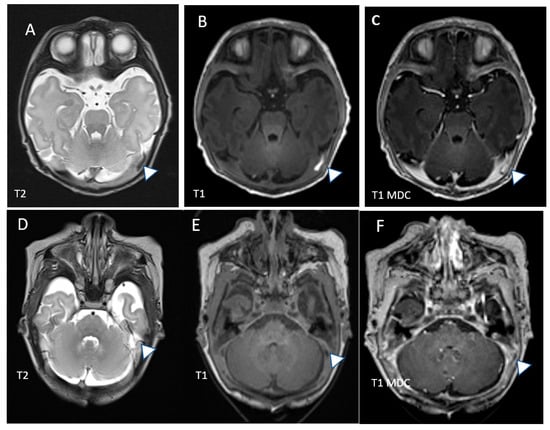
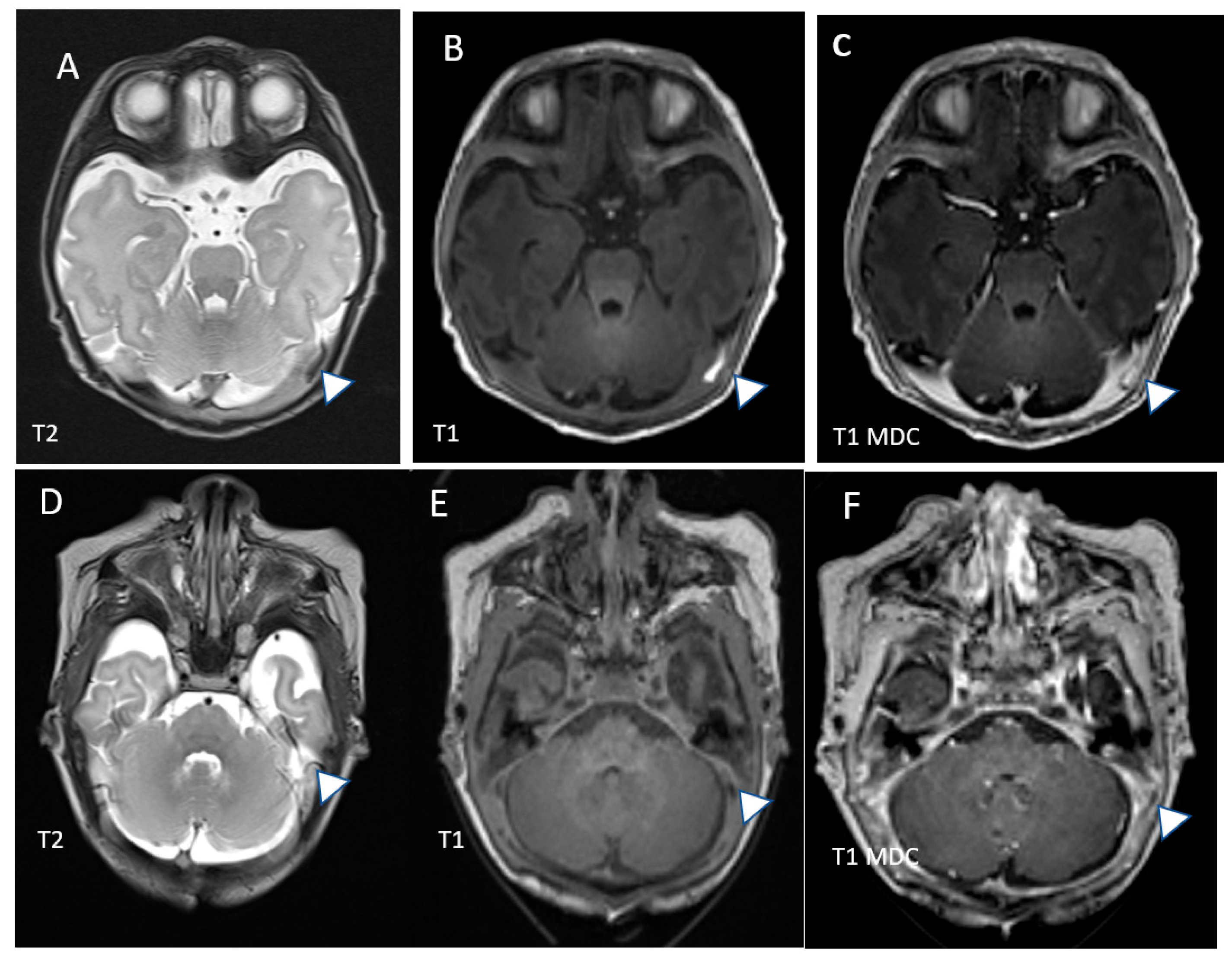
Among the five neonates with venous thrombotic events, neuroimaging follow-up demonstrated the complete thrombus resolution in three cases, while partial resolution was observed in one case (Figure 1). In the further case involving deep cerebral venous thrombosis, imaging evolution was characterized by malacic changes related to the initial cerebral injury, without clear documentation of thrombus resolution.
Figure 1.
Patient 2. Thrombosis of left transverse sinus: (A–C) shows hemorrhagic thrombus in left transverse sinus that in (D–F) after 1 month is almost completely resolved. The triangle indicate the Thombosis.
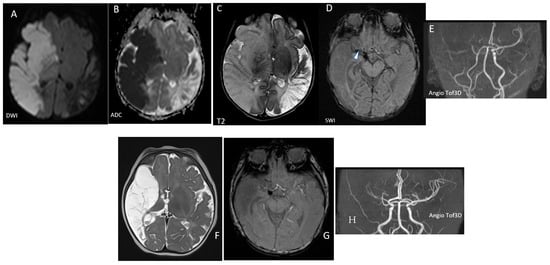
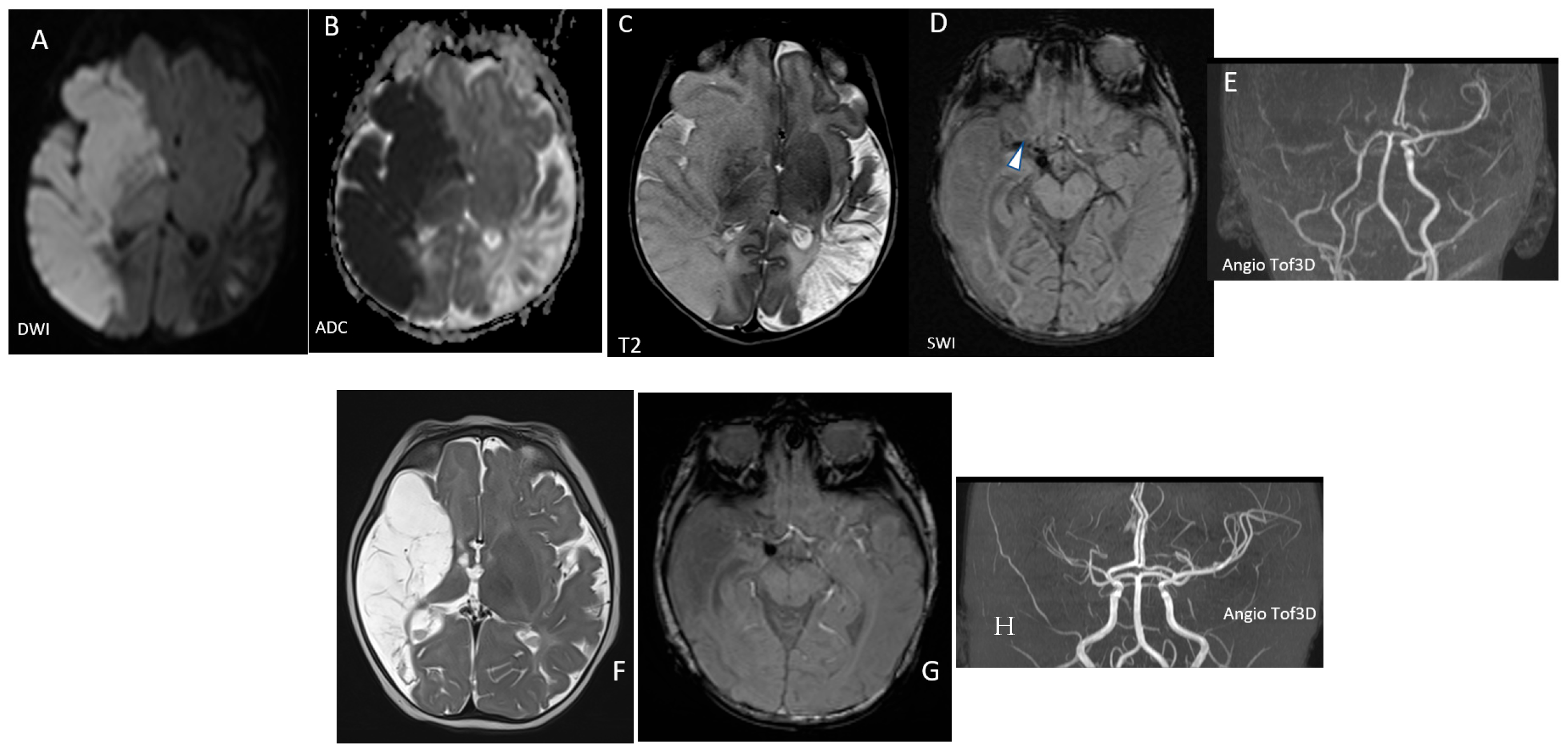
Conversely, in the neonate with arterial ischemic stroke, follow-up imaging showed partial thrombus resolution at one month, with no further change on subsequent imaging (Figure 2).
Figure 2.
(A–E): DWI (A) and ADC (B) and T2 (C) show subacute extensive ischemic stroke of right MCA and chronic smaller stroke of left MCA; SWI (D) sequences show thrombosis in «horizontal» tract of right MCA 8M1- M2; Angio TOF3D sequences (E) show no visualization of right MCA. (F–H): same sequences on a 3 months follow up imaging months show malacic lesion (F), initial recanalization of MCA (H), small hemosiderin residue outside MCA (G).
When documented, complete thrombus resolution occurred between approximately 30 and 45 days after initiation of rivaroxaban therapy, always at the first follow up imaging. No progression of thrombosis was observed in any of the six patients during treatment.
No recurrence of thrombotic events was recorded during rivaroxaban therapy or during available follow-up after treatment discontinuation in these patients. None of the six neonates required interruption or premature discontinuation of rivaroxaban due to lack of effectiveness (Table 2).
Table 2.
Patient-level rivaroxaban treatment characteristics, imaging outcomes, and complications.
At last available follow-up, overall clinical outcome was reported as good in all patients except for the patient with arterial stroke, who presented severe neurological sequelae related to the initial cerebral insult.
3.4. Safety Outcomes
Rivaroxaban was generally well tolerated. The oral administration of the drug was well tolerated by the patients, with no episodes of vomiting or interruption of feeding. The medication was consistently taken orally, with no need for administration via nasogastric tube or mixing with milk. One minor bleeding event was reported, consisting of transient conjunctival bleeding. This event was classified as minor bleeding according to ISTH criteria, was not associated with hemoglobin drop, hemodynamic instability, or need for transfusion, and did not require specific intervention. Rivaroxaban therapy was continued without dose modification, and no recurrence of bleeding was observed.
No major or clinically relevant non-major bleeding events occurred. No patient required blood product transfusion or reversal therapy (Table 2).
No other adverse events related to rivaroxaban were observed, including significant elevations in liver enzymes or deterioration in renal function. No treatment interruptions occurred, and no rivaroxaban-related readmissions were recorded. There were no deaths during treatment or follow-up. The neurodevelopmental follow-up of the six patients is still ongoing.
4. Discussion
Our paper provides a comprehensive account of the use of rivaroxaban to treat CNS thrombotic events in newborns, based on clinical practice data from our two NICUs with longitudinal radiological and clinical follow-up. Despite the limited sample size, this study provides evidence on the safety and efficacy of oral anticoagulant approaches, as well as imaging outcomes, in a group where treatment data is extremely rare.
Neonatal CNS thrombotic events, including cerebral venous sinus thrombosis and arterial ischemic stroke, are rare conditions, with reported incidence rates ranging from 1.4 to 12 per 100,000 live births per year [3,17].
These events are likely underdiagnosed due to non-specific clinical presentation and frequent overlap with other perinatal conditions such as sepsis, hypoxic–ischemic encephalopathy, or meningitis [11].
The optimal management of neonatal CNS thrombosis remains controversial. Spontaneous thrombus resolution in neonatal cerebral venous thrombosis has been reported, but rates are variable and often associated with worsening brain injury or hemorrhagic transformation [12]. CNS thrombosis carries significant morbidity and long-term neurodevelopmental impairment [12]. Therefore, anticoagulation may be considered in carefully selected neonates to prevent thrombus extension and secondary brain injury [7,14].
Current recommendations are based largely on observational studies and expert consensus, as randomized controlled trials are lacking. LMWH is currently regarded standard therapy; nonetheless, its parenteral administration, the need for laboratory testing, and the influence on hospital stay and caregiver load are significant constraints, particularly in newborns requiring long-term treatment [13,14].
Importantly, the recently updated 2025 ASH/ISTH guidelines conditionally suggest the use of direct oral anticoagulants, including rivaroxaban, over standard anticoagulant therapy for pediatric patients with VTE. This recommendation reflects evidence suggesting a reduction in thrombus recurrence and improved thrombus resolution. However, the certainty of evidence remains low to very low, and specific neonatal populations, particularly low-weight infants, remain underrepresented in clinical trials. Therefore, these recommendations should be cautiously extrapolated to neonatal patients with CNS thrombosis [18].
Rivaroxaban, an oral direct factor Xa inhibitor, has recently been approved by the European Medicines Agency and the U.S. Food and Drug Administration for the treatment of venous thromboembolism in pediatric patients, based primarily on the EINSTEIN-Junior program [19]. However, neonates were underrepresented in these trials, consequently, rivaroxaban use in neonatal CNS thrombosis is primarily guided by extrapolation from older pediatric populations with limited neonatal pharmacokinetic data [15,20]. Moreover, its use in neonatal arterial ischemic stroke is not an approved indication, for this reason, in one of our cohort of patients the drugs was used off-label.
In our cohort, rivaroxaban was started after an initial course of parenteral anticoagulation and given in weight-based doses without therapeutic drug monitoring. Radiological follow-up demonstrated complete or partial thrombus resolution in the majority of neonates with venous CNS thrombosis, with no documented thrombus progression during treatment. When complete resolution occurred, it was observed within a timeframe comparable to that reported for conventional anticoagulation, typically between one and three months [3,12]. No recurrent thrombotic events were observed during treatment or follow-up.
An important consideration in our series is the inclusion of one neonate with arterial ischemic stroke. Routine anticoagulation is generally not recommended in neonatal AIS because of the low risk of recurrent stroke. As highlighted in the American Heart Association scientific statement, antithrombotic treatment should be reserved for selected cases with specific risk factors for recurrence [18]. Therefore, the decision to initiate anticoagulation in this patient was individualized. In our patient, the decision to anticoagulate was made following multidisciplinary discussion, based on the presence of a documented arterial thrombus and associated prothrombotic risk factors.
In the single neonate with arterial ischemic stroke, partial thrombus resolution without progression was documented, although interpretation is limited by the different pathophysiology and natural history of arterial events. Therefore, this case should be interpreted separately from those involving venous thrombosis, and no general conclusions regarding rivaroxaban use in neonatal arterial ischemic stroke can be drawn from this observation.
The safety profile observed in our series was favorable. The drug was well tolerated when administered orally and was found to be palatable. Only one minor bleeding event was reported, with no major or clinically relevant non-major bleeding, no need for transfusion, and no treatment interruption. No clinically significant deterioration in renal or hepatic function was observed. These results are consistent with pediatric data on rivaroxaban and the limited neonatal experience reported by Zhang et al., who described adequate safety and predictable exposure in neonates and young infants treated for catheter-related thrombosis [21].
Although our sample size precluded formal risk factor analysis, the heterogeneity of underlying conditions highlights the multifactorial pathogenesis of neonatal CNS thrombosis. Unlike catheter-related thrombosis, where mechanical and procedural factors play a dominant role, CNS thrombotic events reflect a complex interaction between developmental hemostasis, cerebral venous anatomy, and systemic risk factors. In fact, several maternal, perinatal, and neonatal risk factors for CNS thrombosis were identified in our patients, including inherited thrombophilia, perinatal complications and neonatal respiratory morbidity, consistent with previous reports [10,22].
This study has several limitations. First, the small sample size and case-series design limit generalizability of our findings regarding the safety or effectiveness of rivaroxaban in neonates. Second, the off label for age use of rivaroxaban was not guided by a standardized dosing or monitoring protocol, and therapeutic drug monitoring was not performed. Third, the heterogeneity of included disorders and the absence of a control group treated with standard parenteral anticoagulation prevents direct comparison with established therapies. Finally, long-term neurodevelopmental outcomes are still under evaluation and remain essential for a comprehensive assessment of treatment impact.
For all these reasons, the interpretation of our findings regarding the effectiveness and safety of rivaroxaban requires caution. All patients received initial parenteral anticoagulation before switching to rivaroxaban, and the absence of a control group prevents us from distinguishing the contribution of rivaroxaban from that of preceding anticoagulant treatment or the natural course of the thrombotic event. Therefore, the radiological improvements observed during follow-up should be interpreted as outcomes occurring during the overall anticoagulation strategy, rather than as evidence of an effect attributable to rivaroxaban alone. Similarly, although no major bleeding events were observed, the small sample size and limited number of patients do not allow firm conclusions regarding the safety of rivaroxaban in this population. Our findings should therefore be considered preliminary and hypothesis-generating, and further prospective studies involving larger cohorts and appropriate comparison groups are needed to better establish its efficacy and safety in neonates with CNS thrombotic events.
5. Conclusions
In this case series, rivaroxaban was used as part of the anticoagulation strategy in six neonates with CNS thrombotic events, with no major bleeding events observed and only one minor bleeding event. It was generally associated with favorable effectiveness outcomes, including complete or partial thrombus resolution and absence of thrombus progression or recurrence during treatment.
These findings suggest that rivaroxaban may represent a feasible and potentially safe oral anticoagulation option in selected neonates with CNS thrombosis. However, given the retrospective design, the small sample size, the absence of a control group and the initial use of parenteral anticoagulation in all patients, these findings do not allow definitive conclusions regarding the efficacy or safety of rivaroxaban in this population. Larger prospective studies are needed to better define dosing strategies, safety profile, and effectiveness in this highly vulnerable population.
Author Contributions
Conceptualization, D.U.D.R. and F.C.; methodology, C.M.; software, R.A., S.R.; data curation, C.M. and S.R.; writing—original draft preparation, V.R., D.U.D.R., C.M., D.L., M.L.; writing—review and editing, F.C., F.G.; supervision, A.D., A.B. All authors have read and agreed to the published version of the manuscript.
Funding
This work was supported by the Italian Ministry of Health with “Current Research” funds.
Institutional Review Board Statement
This retrospective study, based on fully anonymized and non-identifiable data, with no direct interventions or contact with human subjects, was considered exempt from full ethical review in accordance with the Declaration of Helsinki (6th revision, 2008) and current institutional regulations. The study was approved by the Scientific Direction of “Bambino Gesù” Children’s Hospital (code Maddaloni-2026-0001, date 10 February 2026).
Informed Consent Statement
Written informed consent for the publication of clinical data and images was obtained from the parents or legal guardians of all patients.
Data Availability Statement
The original contributions presented in this study are included in the article. Further inquiries can be directed to the corresponding author.
Conflicts of Interest
The authors declare no conflict of interest.
Abbreviations
The following abbreviations are used in this manuscript:
| CNS | Central Nervous System |
| ISTH | International Society on Thrombosis and Haemostasis |
| LMWH | Low-Molecular-Weight Heparin |
| MRI | Magnetic resonance imaging |
| NICU | Neonatal Intensive Care Unit |
References
- Grunt, S.; Wingeier, K.; Wehrli, E.; Boltshauser, E.; Capone, A.; Fluss, J.; Gubser-Mercati, D.; Jeannet, P.-Y.; Keller, E.; Marcoz, J.-P.; et al. Cerebral sinus venous thrombosis in Swiss children. Dev. Med. Child Neurol. 2010, 52, 1145–1150. [Google Scholar] [CrossRef] [Scilit]
- Heller, C.; Heinecke, A.; Junker, R.; Knöfler, R.; Kosch, A.; Kurnik, K.; Schobess, R.; von Eckardstein, A.; Sträter, R.; Zieger, B.; et al. Cerebral venous thrombosis in children: A multifactorial origin. Circulation 2003, 108, 1362–1367. [Google Scholar]
- Berfelo, F.J.; Kersbergen, K.J.; van Ommen, C.H.; Govaert, P.; van Straaten, H.L.; Poll-The, B.-T.; van Wezel-Meijler, G.; Vermeulen, R.J.; Groenendaal, F.; de Vries, L.S.; et al. Neonatal cerebral sinovenous thrombosis from symptom to outcome. Stroke 2010, 41, 1382–1388. [Google Scholar] [CrossRef] [Scilit]
- Dunbar, M.; Mineyko, A.; Hill, M.; Hodge, J.; Floer, A.; Kirton, A. Population Based Birth Prevalence of Disease-Specific Perinatal Stroke. Pediatrics 2020, 146, e2020013201. [Google Scholar] [CrossRef] [Scilit]
- Ropper, A.H.; Klein, J.P. Cerebral Venous Thrombosis. N. Engl. J. Med. 2021, 385, 59–64. [Google Scholar] [CrossRef] [Scilit]
- Ichord, R. Cerebral Sinovenous Thrombosis. Front. Pediatr. 2017, 5, 163. [Google Scholar] [CrossRef] [Scilit]
- Ferriero, D.M.; Fullerton, H.J.; Bernard, T.J.; Billinghurst, L.; Daniels, S.R.; DeBaun, M.R.; Deveber, G.; Ichord, R.N.; Jordan, L.C.; Massicotte, P.; et al. Management of Stroke in Neonates and Children: A Scientific Statement From the American Heart Association/American Stroke Association. Stroke 2019, 50, e51–e96. [Google Scholar] [CrossRef] [Scilit]
- Dunbar, M.; Kirton, A. Perinatal stroke: Mechanisms, management, and outcomes of early cerebrovascular brain injury. Lancet Chil. Adolesc. Health 2018, 2, 666–676. [Google Scholar] [CrossRef] [Scilit]
- Fitzgerald, K.C.; Williams, L.S.; Garg, B.P.; Carvalho, K.S.; Golomb, M.R. Cerebral sinovenous thrombosis in the neonate. Arch. Neurol. 2006, 63, 405–409. [Google Scholar] [CrossRef] [Scilit]
- Sorg, A.L.; Von Kries, R.; Klemme, M.; Gerstl, L.; Beyerlein, A.; Lack, N.; Felderhoff-Müser, U.; Dzietko, M. Incidence and risk factors of cerebral sinovenous thrombosis in infants. Dev. Med. Child Neurol. 2021, 63, 697–704. [Google Scholar] [CrossRef] [Scilit]
- Ramenghi, L.A.; Govaert, P.; Fumagalli, M.; Bassi, L.; Mosca, F. Neonatal cerebral sinovenous thrombosis. Semin. Fetal Neonatal Med. 2009, 14, 278–283. [Google Scholar] [CrossRef] [Scilit]
- Deveber, G.; Andrew, M.; Adams, C.; Bjornson, B.; Booth, F.; Buckley, D.J.; Camfield, C.S.; David, M.; Humphreys, P.; Langevin, P.; et al. Cerebral sinovenous thrombosis in children. N. Engl. J. Med. 2001, 345, 417–423. [Google Scholar] [CrossRef] [Scilit]
- Mandel-Shorer, N.; Sabapathy, C.A.; Krishnan, P.; Sharma, M.; Goldenberg, N.A.; Brandão, L.R.; Moharir, M.D. Cerebral Sinovenous Thrombosis in Infants and Children: A Practical Approach to Management. Semin. Pediatr. Neurol. 2022, 44, 100993. [Google Scholar] [CrossRef] [Scilit]
- Jordan, L.C.; Rafay, M.F.; Smith, S.E.; Askalan, R.; Zamel, K.M.; Deveber, G.; Ashwal, S. Antithrombotic treatment in neonatal cerebral sinovenous thrombosis: Results of the International Pediatric Stroke Study. J. Pediatr. 2010, 156, 710.e1–710.e2. [Google Scholar] [CrossRef] [Scilit]
- Connor, P.; van Kammen, M.S.; Lensing, A.W.A.; Chalmers, E.; Kállay, K.; Hege, K.; Simioni, P.; Biss, T.; Bajolle, F.; Bonnet, D.; et al. Safety and efficacy of rivaroxaban in pediatric cerebral venous thrombosis (EINSTEIN-Jr CVT). Blood Adv. 2020, 4, 6250–6258. [Google Scholar] [CrossRef] [Scilit]
- Bidlingmaier, C.; Grote, V.; Budde, U.; Olivieri, M.; Kurnik, K. Prospective evaluation of a pediatric bleeding questionnaire and the ISTH bleeding assessment tool in children and parents in routine clinical practice. J. Thromb. Haemost. 2012, 10, 1335–1341. [Google Scholar] [CrossRef] [Scilit]
- Clive, B.; Vincer, M.; Ahmad, T.; Khan, N.; Afifi, J.; El-Naggar, W. Epidemiology of neonatal stroke: A population-based study. Paediatr. Child Health 2020, 25, 20–25. [Google Scholar] [CrossRef] [Scilit]
- Monagle, P.; Azzam, M.; Bercovitz, R.; Betensky, M.; Bhat, R.; Biss, T.; Branchford, B.; Brandão, L.R.; Chan, A.K.C.; Faustino, E.V.S.; et al. American Society of Hematology/International Society on Thrombosis and Haemostasis 2024 updated guidelines for treatment of venous thromboembolism in pediatric patients. Blood Adv. 2025, 9, 2587–2636. [Google Scholar] [CrossRef] [Scilit]
- Young, G.; Lensing, A.W.; Monagle, P.; Male, C.; Thelen, K.; Willmann, S.; Palumbo, J.S.; Kumar, R.; Nurmeev, I.; Hege, K.; et al. Rivaroxaban for treatment of pediatric venous thromboembolism. An Einstein-Jr phase 3 dose-exposure-response evaluation. J. Thromb. Haemost. 2020, 18, 1672–1685. [Google Scholar] [CrossRef] [Scilit]
- Male, C.; Lensing, A.A.W.; Palumbo, J.S.; Kumar, R.; Nurmeev, I.; Hege, K.; Bonnet, D.; Connor, P.; Hooimeijer, H.L.; Torres, M.; et al. Rivaroxaban compared with standard anticoagulants for the treatment of acute venous thromboembolism in children: A randomised, controlled, phase 3 trial. Lancet Haematol. 2020, 7, e18–e27. [Google Scholar] [CrossRef] [Scilit]
- Zhang, R.; Chen, G.; Cai, W.H.; Yang, B.; Lin, Y.F.; Zhan, T.H. Efficacy and safety of rivaroxaban in neonatal catheter-related thrombosis: A single-center retrospective study of 122 cases. PeerJ 2025, 13, e20375. [Google Scholar] [CrossRef] [Scilit]
- Filip, C.; Zonda, G.I.; Vasilache, I.-A.; Scripcariu, I.S.; Vicoveanu, P.; Dima, V.; Socolov, D.; Paduraru, L. Neonatal Cerebral Sinovenous Thrombosis and the Main Perinatal Risk Factors-A Retrospective Unicentric Study. Children 2022, 9, 1182. [Google Scholar] [CrossRef] [Scilit]

Disclaimer/Publisher’s Note: The statements, opinions and data contained in all publications are solely those of the individual author(s) and contributor(s) and not of MDPI and/or the editor(s). MDPI and/or the editor(s) disclaim responsibility for any injury to people or property resulting from any ideas, methods, instructions or products referred to in the content. |
© 2026 by the authors. Licensee MDPI, Basel, Switzerland. This article is an open access article distributed under the terms and conditions of the Creative Commons Attribution (CC BY) license.