


Highlights
What are the main findings?
- Placental disorders, fetal distress, and gestational age < 32 weeks were associated with the study-defined adverse early neonatal composite outcome.
- These associations persisted in measured-pH analyses using thresholds of <7.20 and <7.10; preterm birth and scarred uterus were associated with a 5 min Apgar score ≤ 7.
What are the implications of the main findings?
- These associations describe adverse early neonatal status in a clinically selected population undergoing cesarean delivery under general anesthesia.
- The study did not establish causal effects or evaluate whether changes in delivery-room preparation or clinical management improve outcomes.
Abstract
Background: Neonatal outcomes after cesarean delivery under general anesthesia reflect maternal, obstetric, fetal, and perioperative circumstances. We examined factors associated with a study-defined adverse early neonatal composite outcome. Methods: This single-center retrospective cohort included 791 neonates delivered under general anesthesia between 1 June 2021 and 30 June 2026. The composite comprised a 1 min Apgar score ≤ 3, a 5 min Apgar score ≤ 5, umbilical arterial pH < 7.20, or hypoxic-ischemic encephalopathy (HIE). Binomial generalized estimating equations accounted for maternal clustering. Sensitivity analyses examined emergency deliveries, a 5 min Apgar score ≤ 7, alternative pH thresholds, and a composite excluding pH. Results: The primary composite occurred in 69 neonates (8.7%). Placental disorders (adjusted odds ratio [aOR], 3.913; 95% confidence interval [CI], 1.883–8.131), fetal distress (aOR, 4.403; 95% CI, 2.331–8.316), and gestational age < 32 weeks (aOR, 3.792; 95% CI, 1.852–7.765) were associated with the primary outcome. These associations persisted in measured-pH analyses using thresholds of <7.20 and <7.10. Preterm birth and scarred uterus were associated with a 5 min Apgar score ≤ 7. Conclusions: Selected obstetric and gestational-age factors were associated with adverse early neonatal status. The heterogeneous composite, missing pH, limited events, and retrospective variable selection constrain interpretation; these associations do not establish perinatal asphyxia or causal effects.
1. Introduction
Birth asphyxia and impaired neonatal transition remain important causes of neonatal morbidity and mortality worldwide. A recent systematic review and meta-analysis from China reported a pooled prevalence of neonatal birth asphyxia of 4.8%, with estimates varying according to diagnostic criteria; studies using Apgar score alone reported a pooled prevalence of 4.6%, whereas those combining Apgar score and umbilical arterial pH reported a pooled prevalence of 3.7% [1]. Perinatal asphyxia remains a clinically relevant global problem and is associated with substantial neonatal mortality and morbidity [2].
The Apgar score is widely used to assess the newborn’s clinical condition and response to resuscitation shortly after birth. The Apgar score should not be interpreted as synonymous with birth asphyxia [3]. However, in a multinational cohort study of very preterm infants, a 5 min Apgar score < 7 was associated with an increased risk of in-hospital death, intraventricular hemorrhage, cystic periventricular leukomalacia, retinopathy of prematurity, and bronchopulmonary dysplasia [4]. Even among low-risk pregnancies, a low 5 min Apgar score (<7) is associated with a significantly increased risk of adverse neonatal outcomes [5]. Further evidence suggests that a low 5 min Apgar score remains associated with adverse neonatal outcomes even when umbilical arterial pH is within the normal range (≥7.20) [6]. Previous observational studies have suggested that a higher 1 min Apgar score was associated with more favorable neurodevelopmental outcomes in extremely preterm infants [7]. A 1 min Apgar score ≤ 3 or a 5 min Apgar score ≤ 5 may indicate a more severe degree of cardiorespiratory depression [8].
Umbilical arterial pH provides an objective assessment of acid–base status at birth, but acidemia (pH < 7.20) alone should not be equated with perinatal asphyxia [9,10,11]. Published studies have used different pH thresholds, which capture different degrees of acidemia. Malin et al. found associations between low arterial cord pH and adverse neonatal outcomes, with variation across thresholds and outcomes [11]. In this study, pH < 7.20 was an operational component of a broader early neonatal endpoint; pH < 7.10 was examined in a sensitivity analysis.
Multiple maternal, fetal, obstetric, peripartum, and anesthesia-related factors may contribute to low Apgar score and early neonatal morbidity [1,2,12]. For cesarean section, neuraxial anesthesia is preferred [13]. However, general anesthesia remains necessary in certain urgent or high-risk situations [13,14]. Several studies have reported that neonates delivered by cesarean section under general anesthesia have lower Apgar scores and higher rates of resuscitation or neonatal intensive care unit admission than those delivered under neuraxial anesthesia [12,14,15]. However, the interpretation of these findings is challenging. Women receiving general anesthesia often have more urgent obstetric indications, severe maternal disease, and worse fetal status before delivery. Therefore, comparisons between general and neuraxial anesthesia may be confounded by indication. Less is known about which factors within the population of cesarean deliveries performed under general anesthesia are associated with adverse early neonatal outcomes.
The aim was to identify maternal, obstetric, anesthetic, and surgical factors associated with a study-defined adverse early neonatal composite outcome within the population of cesarean deliveries under general anesthesia. Potentially actionable perioperative factors were examined as associations rather than established treatment targets.
2. Materials and Methods
2.1. Study Design and Setting
This was a single-center retrospective cohort study conducted at Peking University Third Hospital, a tertiary perinatal center. The study included neonates delivered by cesarean section under general anesthesia between 1 June 2021 and 30 June 2026. The study was reported according to the general principles for observational clinical research.
2.2. Participants
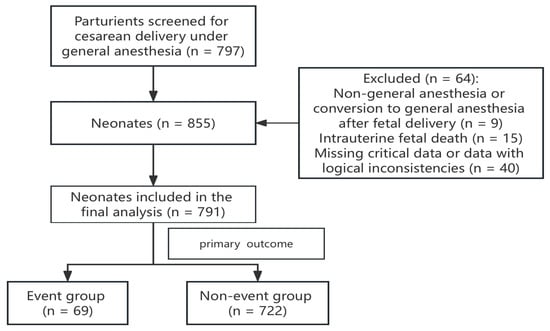
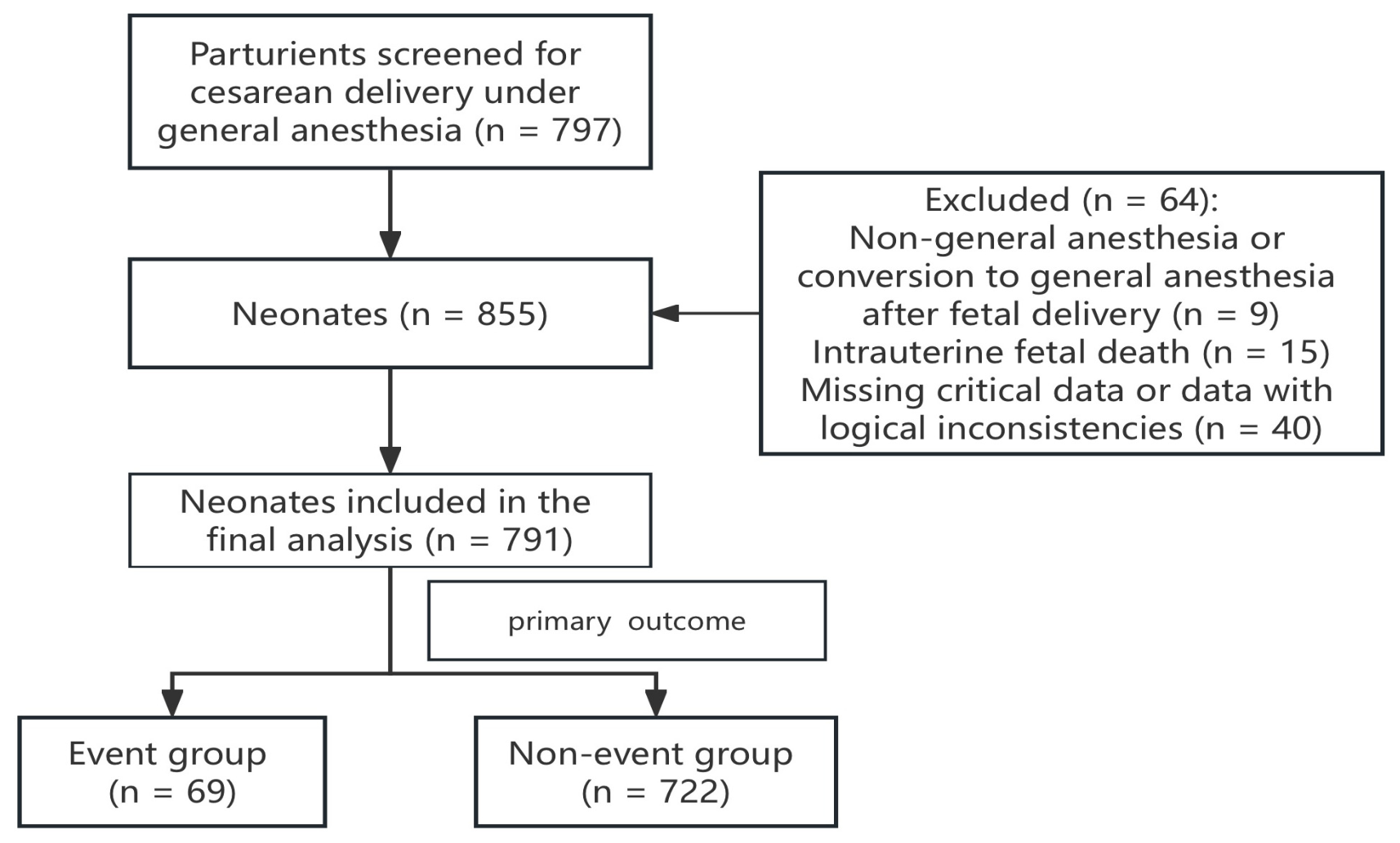
The study cohort consisted of eligible women who underwent cesarean section under general anesthesia and their neonates; inclusion and exclusion are shown in Figure 1. General anesthesia was selected when maternal or fetal urgency precluded timely establishment of neuraxial anesthesia, including acute fetal distress (particularly profound bradycardia), suspected or confirmed uterine rupture, severe antepartum hemorrhage, severe placental abruption, or umbilical cord prolapse. Other indications included contraindications to neuraxial anesthesia (such as coagulopathy, clinically significant thrombocytopenia associated with HELLP syndrome, anticoagulation precluding neuraxial blockade, or infection at the puncture site), hemodynamic instability, technical difficulty related to severe spinal deformity or trauma, maternal refusal or inability to cooperate, and failed or inadequate neuraxial blockade requiring conversion. General anesthesia was also selected when severe maternal cardiopulmonary disease or concurrent surgery required it, such as pregnancy complicated by aortic dissection or severe aortic stenosis with heart failure. Decisions were individualized according to maternal, fetal, anesthetic, and surgical circumstances. Obstetric urgency and the fetal condition before delivery were considered in determining whether there was sufficient time to establish an effective neuraxial block.
Figure 1.
Patient flow diagram.
2.2.1. Inclusion Criteria
- (1)
- Cesarean section performed at the study center during the study period;
- (2)
- Use of general anesthesia for cesarean section;
- (3)
- Available maternal, anesthesia, delivery, and neonatal records.
2.2.2. Exclusion Criteria
- (1)
- Confirmed intrauterine fetal death before the initiation of anesthesia;
- (2)
- Non-cesarean surgery or general anesthesia after delivery of the newborn;
- (3)
- Major congenital anomalies likely to affect Apgar score or resuscitation assessment;
- (4)
- Confirmed chromosomal abnormalities or severe inherited metabolic disease;
- (5)
- Severely incomplete anesthesia, delivery, or neonatal records.
For multiple pregnancies, each neonate was included as an individual observation, and clustering within the same mother was accounted for in the statistical analysis.
2.3. Outcome Definition
2.3.1. Primary Outcome
The primary outcome was an adverse early neonatal composite outcome, defined as the occurrence of at least one of the following: a 1 min Apgar score ≤ 3, a 5 min Apgar score ≤ 5, umbilical arterial pH < 7.20, or a diagnosis of hypoxic-ischemic encephalopathy (HIE). The components represent neonatal depression, acidemia, and clinically diagnosed HIE, respectively, and differ in severity and prognostic significance. The composite was intended to describe adverse early neonatal status, not to diagnose perinatal asphyxia or establish hypoxic-ischemic injury. The pH threshold of <7.20 was used as a broad operational acidemia criterion; it includes milder acidemia and was examined using a stricter threshold of <7.10 in sensitivity analysis.
Umbilical arterial blood gas sampling was routinely required for all newborns at our institution, including those born vaginally and by elective or emergency cesarean delivery. The same sampling protocol applied to elective and emergency cases. Cord blood was collected by the obstetric physician responsible for the newborn at delivery. When immediate neonatal resuscitation was required, sampling proceeded as usual if sufficient neonatal staff were available and the obstetric physician was not needed for resuscitation. If additional assistance was required, the obstetric physician participated in resuscitation, which could delay sampling and result in clotting before analysis. The reason for each unavailable pH measurement was not systematically documented in the medical records. Infants with missing pH were classified as composite events if another observed component was present. Those with missing pH and no other observed component were classified as non-events based on the available components; an unmeasured pH < 7.20 could not be excluded.
2.3.2. Sensitivity Analyses
Sensitivity analyses retained the original emergency-cesarean subgroup and the alternative outcome of a 5 min Apgar score ≤ 7. Additional analyses among neonates with measured arterial pH used the original pH < 7.20 composite criterion and a stricter pH < 7.10 criterion, with both Apgar criteria and HIE unchanged. Infants with pH 7.10–<7.20 were retained and classified according to the other components. An exploratory full-cohort analysis used a composite containing only the two Apgar criteria or HIE, excluding pH (Table S7). Univariable generalized estimating equation (GEE) analyses were followed by a multivariable model including placental disorders, fetal distress, gestational age, and blood-stained amniotic fluid.
2.3.3. Neonatal Outcome Assessment and Quality Control
Apgar scores were assigned by trained neonatologists according to institutional practice. Cord blood gas analysis was attempted immediately after birth; arterial values were used when paired arterial and venous samples were available. All pH values used were umbilical arterial samples rather than postnatal blood gas samples. HIE was diagnosed by the neonatal team using clinical assessment, neurologic examination, and serial evaluation. The 11 records explicitly documenting HIE had gestational ages ranging from 33 weeks 6 days to 40 weeks 4 days; two were born at <37 weeks (33 weeks 6 days and 35 weeks 3 days) and nine at ≥37 weeks, and none at <32 weeks. For infants born at ≥35 weeks of gestation, clinical assessment for HIE was guided by the Queensland Clinical Guideline [16]. An infant born at 33 weeks and 6 days of gestation following fetal distress had Apgar scores of 1, 2, and 8 at 1, 5, and 10 min, respectively, and an umbilical arterial pH of 6.812. Seizures occurred within the first 24 h after birth. Brain magnetic resonance imaging revealed extensive brain parenchymal injury and bilateral hypoxic–ischemic changes involving the thalami and basal ganglia. Following a case review by the departmental neonatology expert team, neonatal hypoxic–ischemic encephalopathy was diagnosed.
2.4. Data Collection and Definitions
2.4.1. Maternal and Pregnancy Variables
Maternal and pregnancy-related variables extracted from electronic medical records included advanced maternal age (≥35 years), pre-pregnancy body mass index (BMI), gestational weight gain (kg), scarred uterus, adverse obstetric history, isolated gestational hypertension, hypertensive emergency, gestational diabetes mellitus, autoimmune disease or autoantibody positivity, intrahepatic cholestasis of pregnancy, antenatal anemia, and maternal cardiac dysfunction or heart failure. Overweight, obesity, and underweight were defined as a BMI of 24.0–27.9 kg/m2, ≥28.0 kg/m2, and <18.5 kg/m2, respectively [17]. Hypertensive emergency included severe preeclampsia, eclampsia, and hemolysis, elevated liver enzymes, and low platelet count (HELLP) syndrome [18]. For this retrospective study, infection-related risk was an operational screening variable defined by at least one documented finding: antenatal fever (temperature > 38 °C), leukocytosis (white blood cell count > 15 × 109/L), a positive cervical secretion culture, or prelabour rupture of membranes with an interval of >18 h before delivery. These study-specific criteria did not constitute a diagnosis of maternal intraamniotic infection or neonatal sepsis. The 2024 Chinese consensus on neonatal sepsis provides clinical context for prolonged rupture of membranes and maternal infectious risk [19], but does not validate all four individual criteria or their combination as an established prediction rule. Scarred uterus was defined as a history of cesarean section or other uterine surgery resulting in a uterine scar.
2.4.2. Obstetric Variables
Obstetric variables included fetal distress, abnormal fetal presentation, antepartum bleeding, placental disorders (placenta previa or placental abruption), cord disorders (cord prolapse or cord presentation), meconium-stained amniotic fluid (MSAF), blood-stained amniotic fluid (BSAF), abnormal amniotic fluid volume (polyhydramnios or oligohydramnios), emergency cesarean delivery, multiple pregnancy, gestational age at delivery, and intrauterine growth restriction (IUGR). Fetal distress was a predelivery diagnosis documented by the obstetric team based primarily on fetal heart-rate monitoring, including absent baseline variability with recurrent late decelerations, recurrent variable decelerations, or bradycardia, or a sinusoidal pattern [20,21]. Postnatal Apgar scores and arterial pH were not components of this predelivery definition. Placenta previa and placental abruption were recorded separately; no overlap was identified in this cohort.
Gestational age was categorized as term birth (≥37 weeks), moderate-to-late preterm birth (32 to <37 weeks), and very or extremely preterm birth (<32 weeks). Term birth was the reference category in regression analyses.
2.4.3. Anesthetic and Surgical Variables
Anesthetic and surgical variables included predelivery induction and maintenance regimens, opioid administration before delivery, neuromuscular blocker type, maternal hypotension before delivery, estimated blood loss, the induction-to-delivery interval, the skin incision-to-delivery interval, and surgical type (emergency versus elective). Estimated blood loss comprised suctioned fluid after subtraction of amniotic fluid and the increase in weight of blood-soaked surgical materials, including dressings, gauze, and pads. It represented total blood loss throughout surgery, including bleeding before and after neonatal delivery; predelivery blood loss was not analyzed separately.
The induction regimen was categorized as single-agent or combined-agent induction. Single-agent induction comprised propofol alone, whereas combined-agent induction comprised propofol with either etomidate or esketamine.
Maintenance was categorized as propofol, sevoflurane, combined propofol and sevoflurane, or no maintenance agent before delivery.
2.5. Statistical Analysis
Continuous variables were summarized as mean ± standard deviation or median (interquartile range), as appropriate, and categorical variables as numbers and percentages calculated using the available observations for the corresponding variable within each outcome group. Covariate missingness was handled separately for each regression: observations lacking the outcome, clustering identifier, or any covariate required by that model were excluded, without statistical imputation. Missing pH was handled according to the outcome-classification and sensitivity-analysis rules described above, rather than automatically excluding those neonates from the full-cohort models. Separate univariable binomial GEE models with a logit link were fitted, using maternal identifiers as clusters, an exchangeable working correlation structure, and robust sandwich standard errors. Gestational age was retained in all multivariable models regardless of its univariable p value and entered as a three-category factor (<32 weeks, 32 to <37 weeks, and ≥37 weeks); both preterm indicator terms were retained, with ≥37 weeks as the reference. Other covariates were selected manually using univariable results, previous literature, and relevance to obstetric conditions or potentially actionable perioperative factors. Selection was therefore partly data-informed rather than entirely prespecified. The primary multivariable model included surgical type, placental disorders, fetal distress, blood-stained amniotic fluid, gestational age, the induction-to-delivery interval, and the incision-to-delivery interval. The emergency-only multivariable model included placental disorders, fetal distress, blood-stained amniotic fluid, gestational age, the induction-to-delivery interval, and the incision-to-delivery interval. This matched the primary adjustment set except for surgical type, which was invariant within this subgroup. Both delivery intervals were retained irrespective of statistical significance. The alternative-outcome model for a 5 min Apgar score ≤ 7 included gestational age, scarred uterus, placental disorders, and hypertensive emergency. For the two measured-pH analyses, a common adjustment set was specified during revision: placental disorders, fetal distress, gestational age, induction-to-delivery interval, and surgical type. All terms were entered simultaneously and retained irrespective of their individual p values. Binary references were absence/non-exposure or elective delivery; BMI and maintenance references were normal BMI and no predelivery maintenance agent, respectively. Continuous odds ratios (ORs) were expressed per kg, mL, or minute, as applicable. Model-specific analytic sample sizes were reported. Zero-event exposure categories were not assigned interpretable finite ORs. Multicollinearity assessment is presented in Table S2. Two-sided p < 0.05 was used as the statistical significance threshold. Adjusted ORs and 95% confidence intervals (CIs) are reported.
The original analyses were performed using SPSS, version 27.0 (IBM Corp., Armonk, NY, USA).
3. Results
3.1. Study Population and Outcome Incidence
During the study period, 34,749 women delivered 37,190 live-born neonates at our institution, comprising 32,321 singleton, 2415 twin, and 13 triplet deliveries. There were 14,800 cesarean deliveries, of which 797 (5.4%) were performed under general anesthesia and 14,003 (94.6%) under neuraxial anesthesia (including spinal, epidural, and combined spinal–epidural anesthesia). General-anesthesia cesarean deliveries accounted for 2.3% of all maternal deliveries.
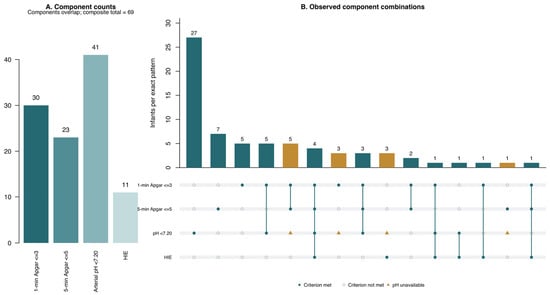
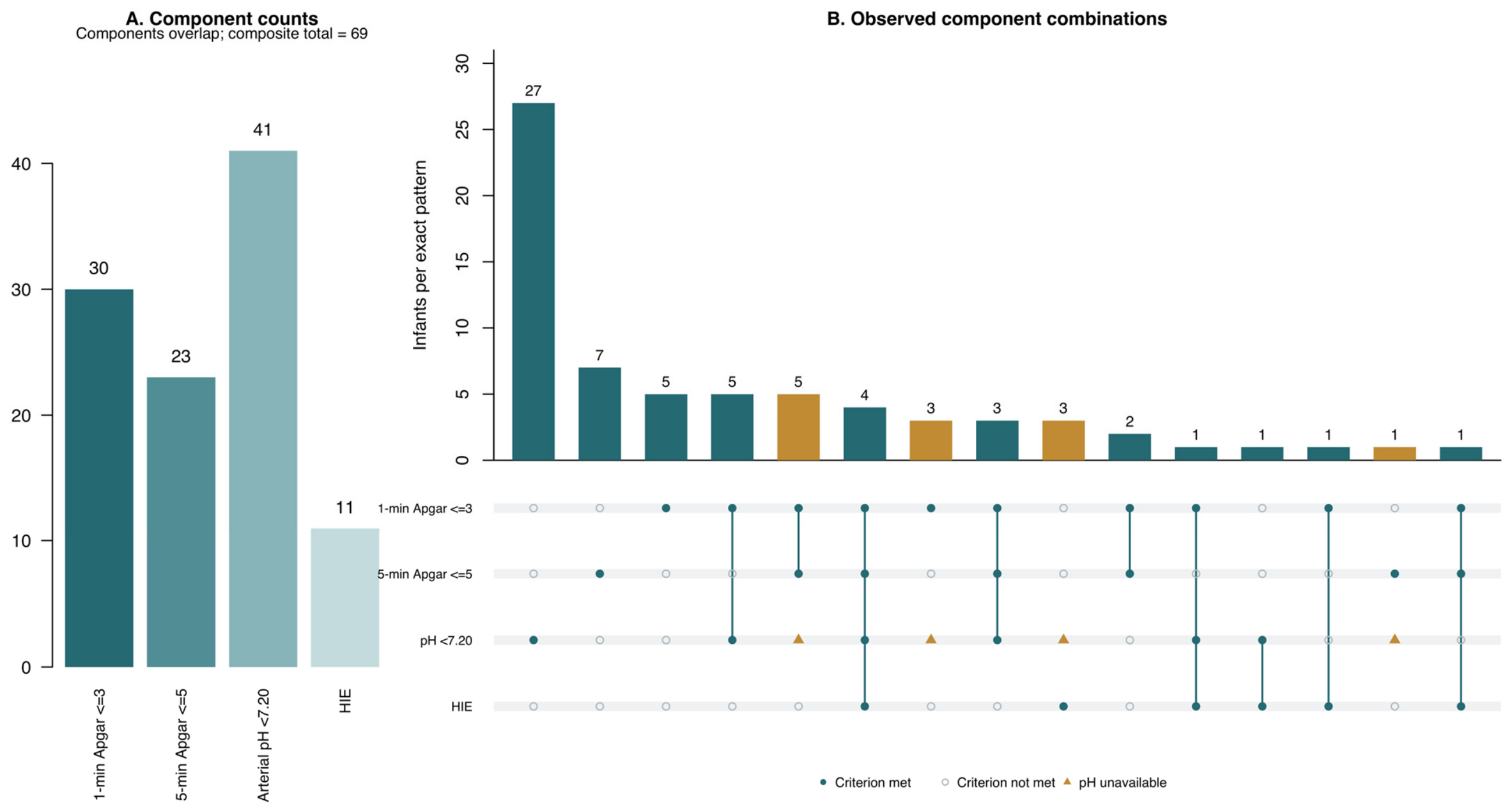
The cohort included 791 neonates, of whom 69 (8.7%) met the primary composite outcome. A 1 min Apgar score ≤ 3 occurred in 30 neonates and a 5 min Apgar score ≤ 5 in 23; 15 met both Apgar criteria, yielding 38 distinct neonates meeting either criterion. Arterial pH < 7.20 was recorded in 41 neonates and HIE in 11. Component counts and overlap are shown in Figure 2. Of the 69 events, 46 met one observed component, 14 met two, five met three, and four met all four. Counts of observed positive components do not treat unavailable pH as a negative result.
Figure 2.
Components and overlap of the adverse early neonatal composite outcome. (A) Numbers meeting each component: 1 min Apgar ≤ 3 (n = 30), 5 min Apgar ≤ 5 (n = 23), arterial pH < 7.20 (n = 41), and HIE (n = 11). Component counts overlap; 69 neonates met at least one criterion. (B) Mutually exclusive combinations of observed component status. Filled teal circles indicate criteria met, open gray circles indicate criteria not met, and orange triangles indicate unavailable pH. Lines connect positive criteria. Bars show the number of neonates with each pattern; orange bars identify unavailable pH. Twelve neonates with unavailable pH met another component and were counted as events.
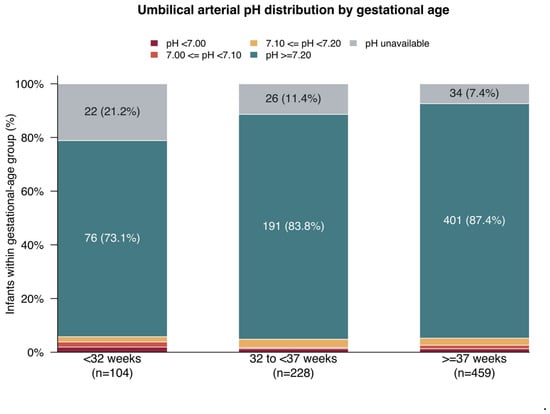
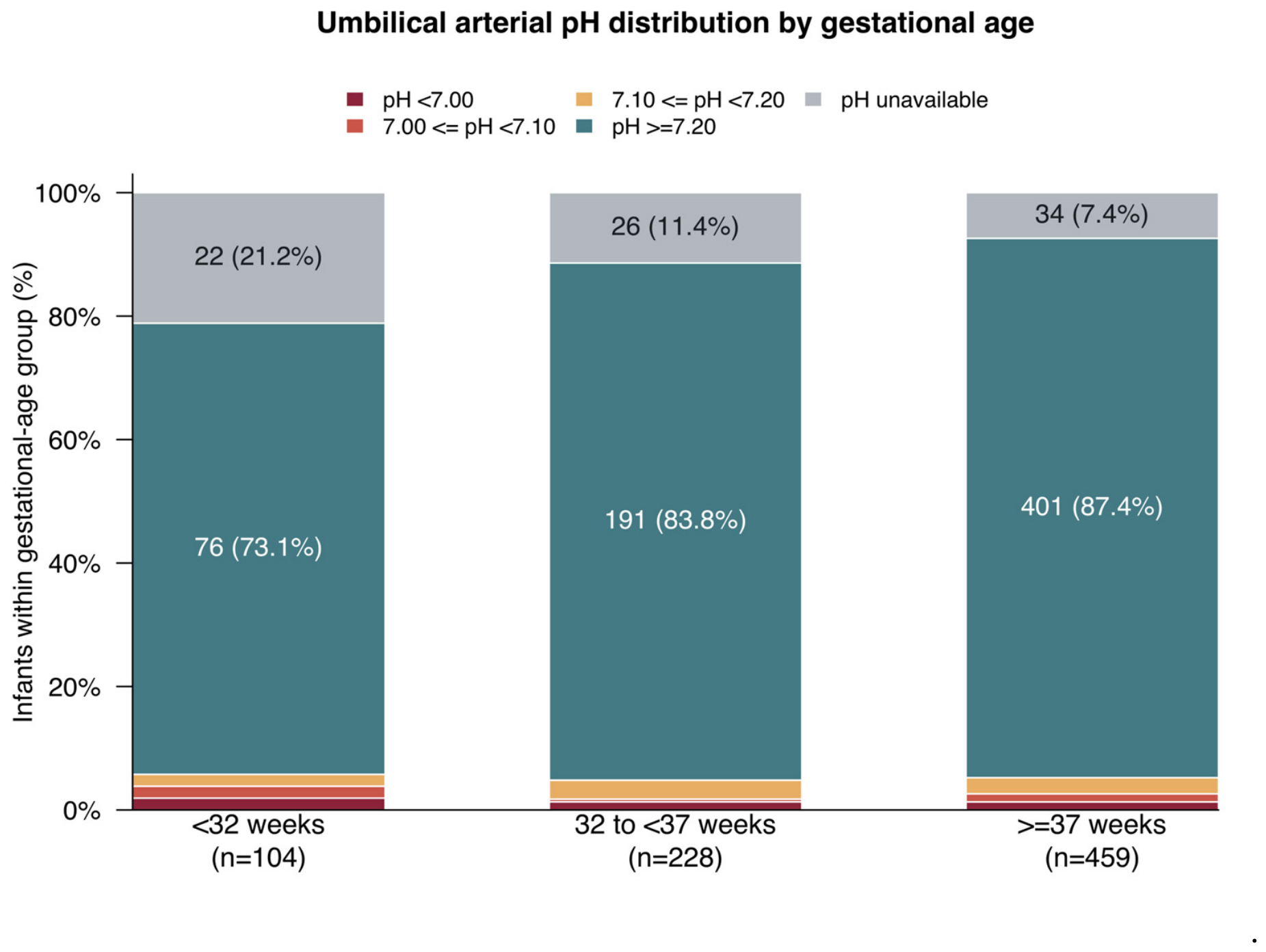
Emergency cesarean delivery under general anesthesia involved 630 women and 677 neonates, including 67 primary events. Arterial pH was available in 709 neonates and unavailable in 82 (10.4%). The composite outcome occurred in 57/709 (8.0%) neonates with measured pH and 12/82 (14.6%) without measured pH. The other 70 neonates with missing pH did not meet an observed non-pH component and were classified as non-events under the available-component rule. Among measured samples, pH was <7.00 in 11 neonates, 7.00–<7.10 in nine, 7.10–<7.20 in 21, and ≥7.20 in 668. The pH distribution, including unavailable measurements, is shown by gestational age in Figure 3. Several observed clinical characteristics differed by pH availability (Table S1); these comparisons do not establish the mechanism of missingness.
Figure 3.
Distribution of umbilical arterial pH categories and unavailable measurements by gestational age. Percentages were calculated using all infants within each gestational-age group as the denominator. Unavailable measurements are shown separately in gray and were not classified as normal pH values.
3.2. Analysis of Primary Outcome Measures
3.2.1. Maternal and Pregnancy Factors
No maternal or pregnancy-related factors were significantly associated with the primary composite outcome in univariable GEE analyses (Table 1).
Table 1.
Comparison of maternal and pregnancy factors between the event and non-event groups in univariable GEE analysis.
3.2.2. Obstetric Factors
In univariable GEE analyses, emergency delivery, placental disorders, fetal distress, blood-stained amniotic fluid, and gestational age < 32 weeks were associated with the primary composite outcome (Table 2). Placental disorders were recorded in 99 neonates: 39 from 36 mothers with placenta previa and 60 from 58 mothers with placental abruption, with no overlap. The composite occurred in 4/39 (10.3%) neonates exposed to placenta previa and 17/60 (28.3%) exposed to placental abruption, compared with 48/692 (6.9%) without either condition. The placenta-previa group included 12 neonates with concomitant placenta accreta. Because only four events occurred in the placenta-previa group, diagnosis-specific multivariable models were not fitted.
Table 2.
Obstetric factors in univariable GEE analysis.
3.2.3. Anesthetic and Surgical Factors
In univariable GEE analyses, estimated blood loss and the induction-to-delivery and incision-to-delivery intervals were associated with the primary composite outcome (Table 3).
Table 3.
Anesthetic and surgical factors in univariable GEE analysis.
3.2.4. Multivariable GEE Analysis of Factors Associated with the Primary Outcome
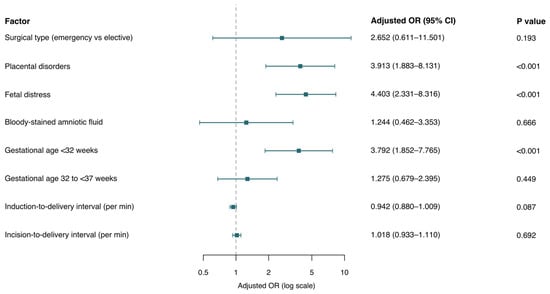
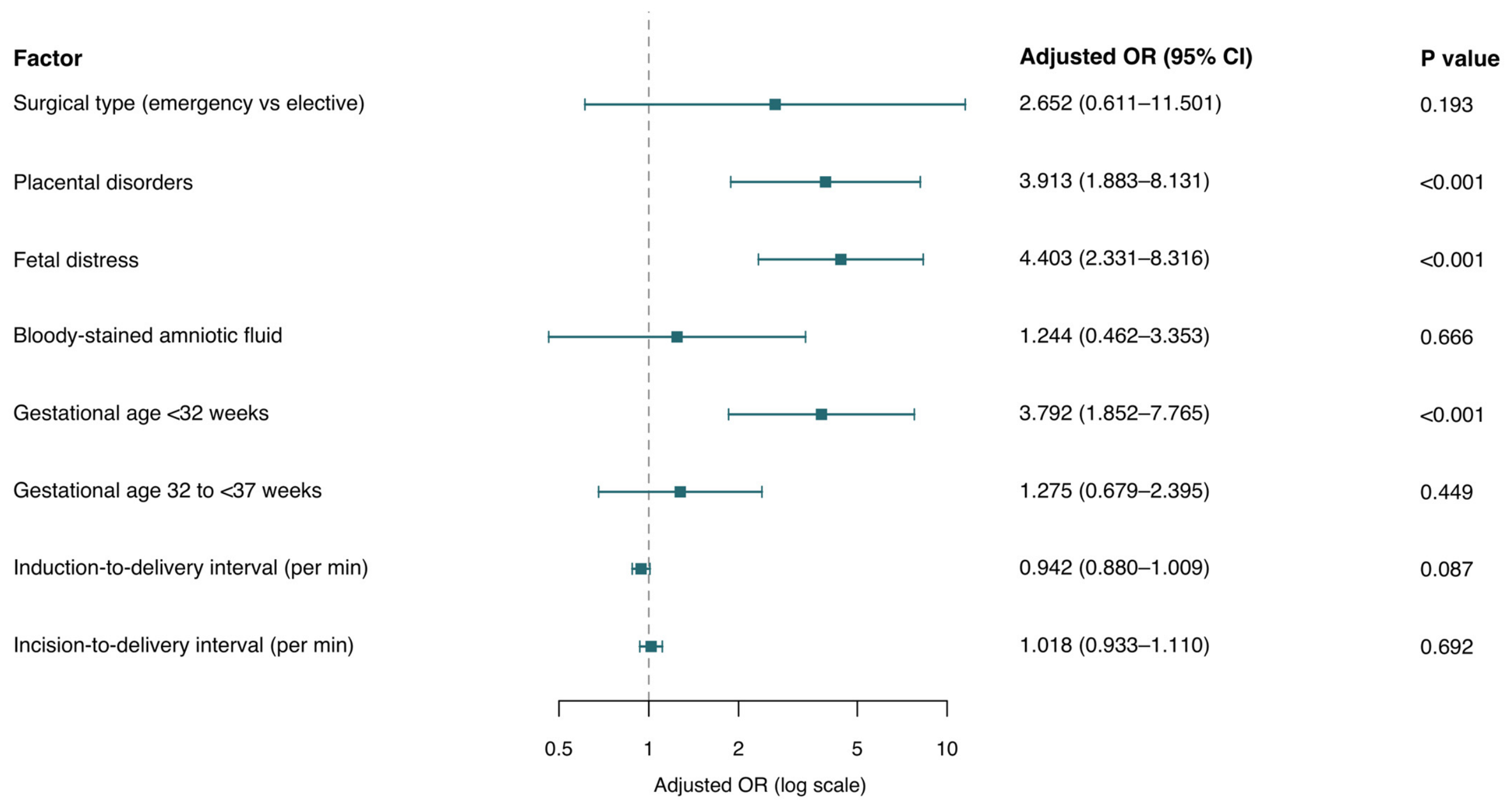
In the multivariable GEE model, placental disorders (adjusted OR, 3.913; 95% CI, 1.883–8.131), fetal distress (adjusted OR, 4.403; 95% CI, 2.331–8.316), and gestational age < 32 weeks (adjusted OR, 3.792; 95% CI, 1.852–7.765) were associated with the primary composite outcome (all p < 0.001). Surgical type, blood-stained amniotic fluid, gestational age 32 to <37 weeks, and the induction-to-delivery and incision-to-delivery intervals were not statistically significant (Figure 4). Multicollinearity assessment of the model covariates is presented in Table S2.
Figure 4.
Multivariable GEE analysis of the primary composite outcome. The model included surgical type, placental disorders, fetal distress, blood-stained amniotic fluid, gestational age, the induction-to-delivery interval, and the incision-to-delivery interval. Squares indicate adjusted ORs, and horizontal lines indicate 95% CIs. The dashed line denotes OR = 1; the horizontal axis is logarithmic. Reference categories were gestational age ≥ 37 weeks, elective delivery, and absence of the respective condition for other binary predictors. Interval estimates are per 1 min increase. GEE, generalized estimating equations; OR, odds ratio; CI, confidence interval.
3.3. Sensitivity Analysis
3.3.1. Sensitivity Analysis Restricted to Parturients and Their Neonates Undergoing Emergency Cesarean Section Under General Anesthesia
In the emergency-cesarean subgroup (677 neonates; 67 events), placental disorders, fetal distress, blood-stained amniotic fluid, estimated blood loss, and gestational age < 32 weeks were associated with the composite in univariable GEE analyses (Table S3).
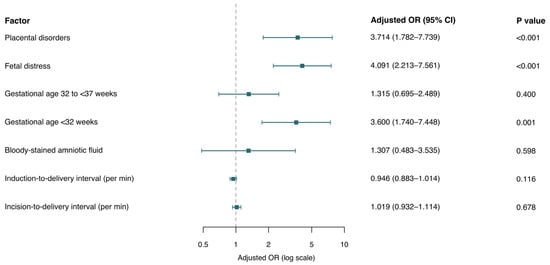
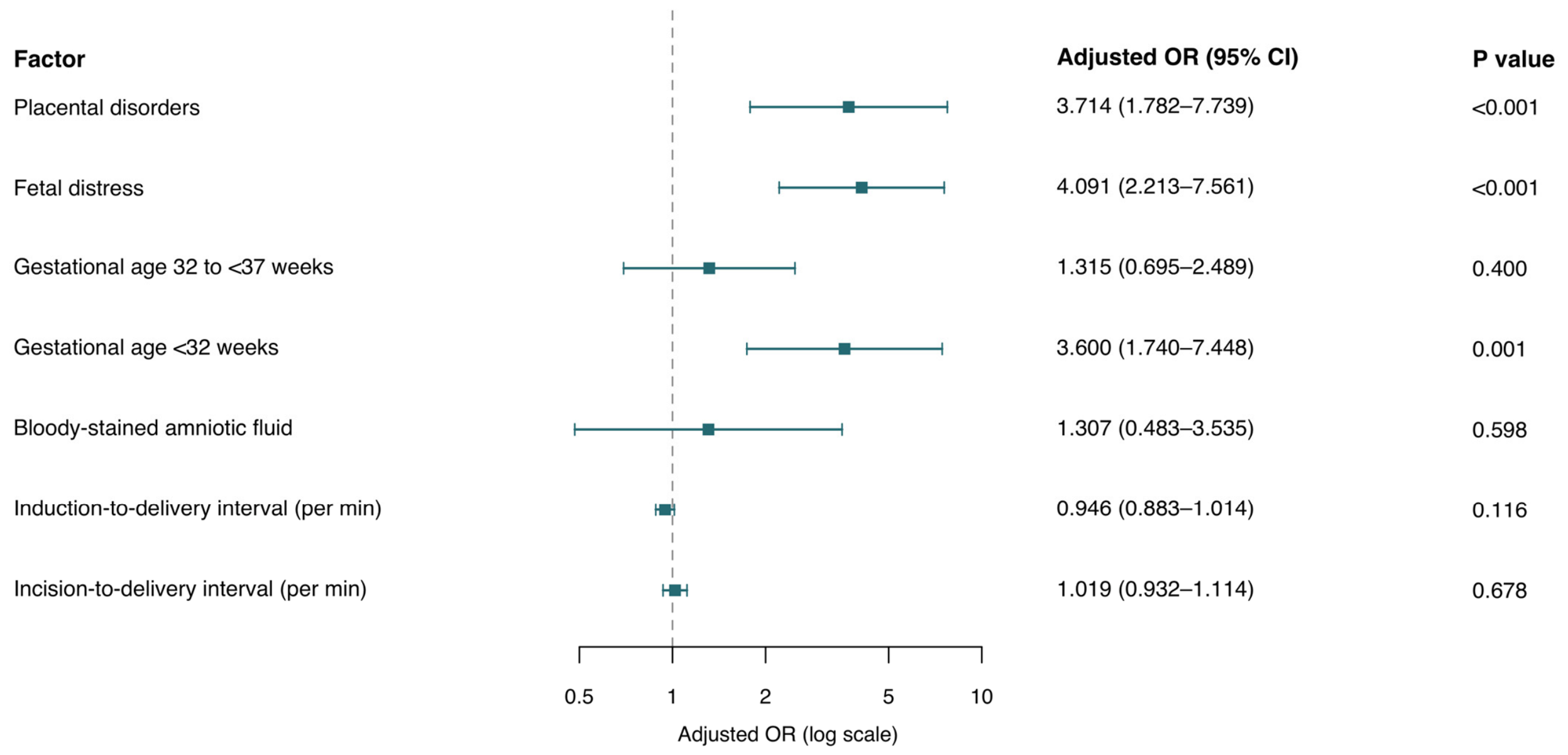
In the emergency-only multivariable GEE model, adjusted for placental disorders, fetal distress, blood-stained amniotic fluid, gestational age, and both delivery intervals, placental disorders (adjusted OR, 3.714; 95% CI, 1.782–7.739; p < 0.001), fetal distress (adjusted OR, 4.091; 95% CI, 2.213–7.561; p < 0.001), and gestational age < 32 weeks (adjusted OR, 3.600; 95% CI, 1.740–7.448; p = 0.001) were associated with the composite outcome. Blood-stained amniotic fluid, gestational age 32 to <37 weeks, the induction-to-delivery interval (adjusted OR, 0.946; 95% CI, 0.883–1.014; p = 0.116), and the incision-to-delivery interval (adjusted OR, 1.019; 95% CI, 0.932–1.114; p = 0.678) were not statistically significant (Figure 5). The emergency-only analysis contained 67 of the 69 primary events and was a within-cohort sensitivity analysis rather than an independent validation.
Figure 5.
Multivariable GEE analysis restricted to emergency cesarean deliveries. Squares indicate adjusted ORs, and horizontal lines indicate 95% CIs. The dashed line denotes OR = 1. Gestational age ≥ 37 weeks and absence of the respective condition were the reference categories. Both interval estimates are per 1 min increase; the horizontal axis is logarithmic.
3.3.2. Sensitivity Analysis Using a 5 min Apgar Score ≤ 7 as the Outcome
A total of 47/791 neonates (5.9%) had a 5 min Apgar score ≤ 7. In univariable GEE analyses, pre-pregnancy overweight or obesity, scarred uterus, hypertensive emergency, placental disorders, and preterm birth were associated with this outcome (Table S4).
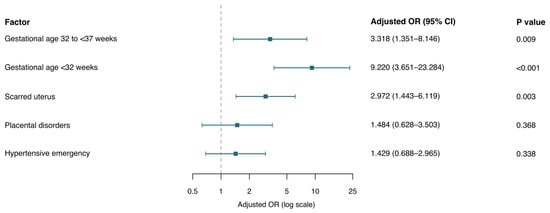
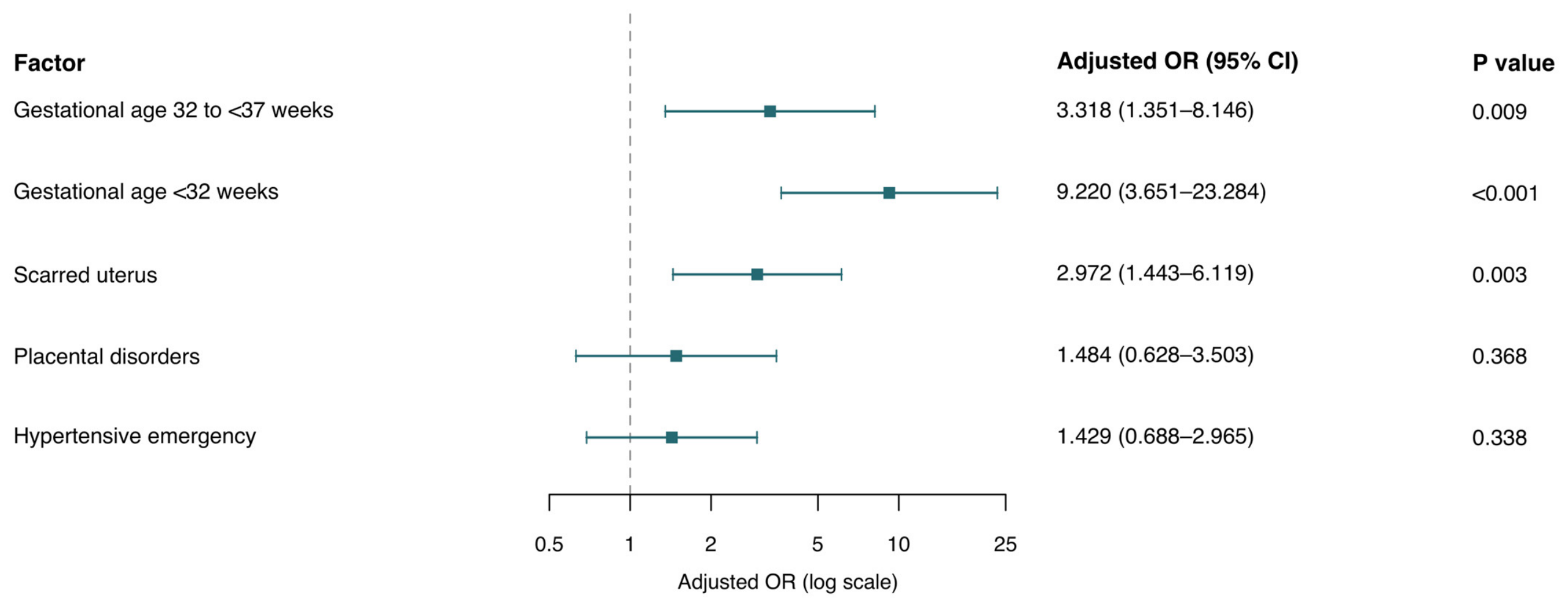
In the original multivariable GEE analysis, gestational age of 32 to <37 weeks (adjusted OR 3.318, 95% CI 1.351–8.146), gestational age < 32 weeks (adjusted OR 9.220, 95% CI 3.651–23.284), and scarred uterus (adjusted OR 2.972, 95% CI 1.443–6.119) were associated with higher odds of a 5 min Apgar score ≤ 7. The gestational-age reference was ≥37 weeks (Figure 6). This alternative-outcome model used a different adjustment set from the original primary analysis.
Figure 6.
Factors associated with a 5 min Apgar score ≤ 7 in the original multivariable GEE model. Squares represent adjusted ORs and horizontal lines 95% CIs. The dashed line denotes OR = 1. The gestational-age reference was ≥37 weeks.
3.3.3. Sensitivity Analyses Among Neonates with Measured Arterial pH
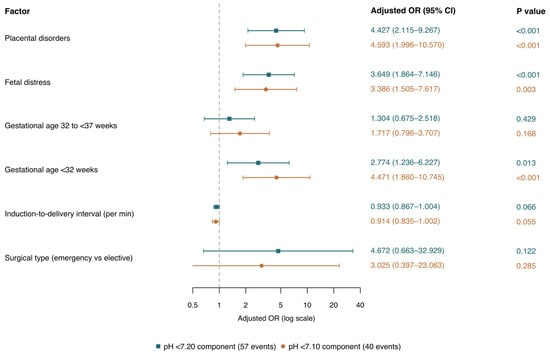
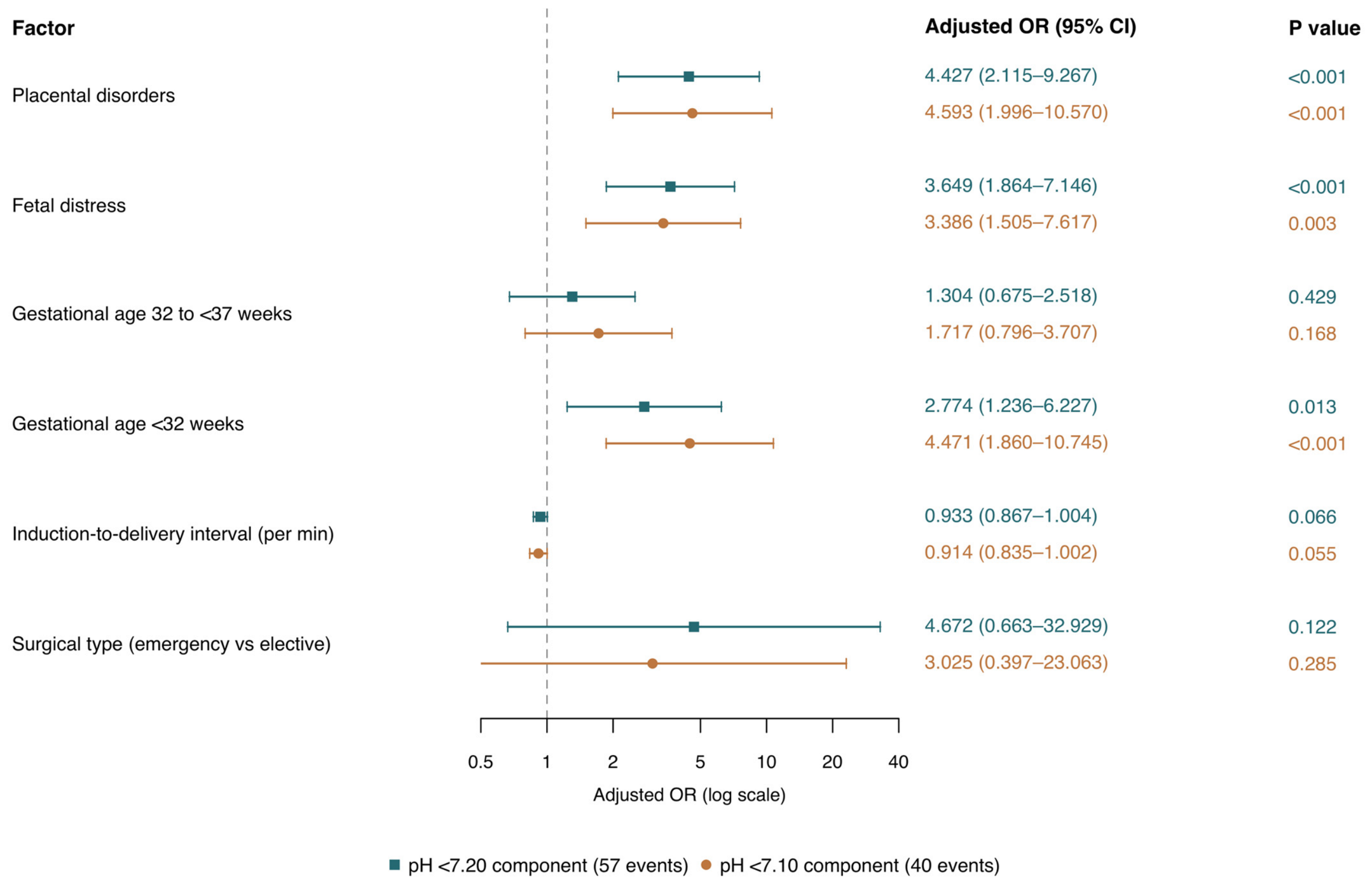
Among the 709 neonates with available umbilical arterial pH measurements, 57 (8.0%) met the composite outcome using the pH < 7.20 criterion, compared with 40 (5.6%) using the stricter pH < 7.10 criterion. In univariable GEE analyses, placental disorders, fetal distress, gestational age < 32 weeks, and greater estimated blood loss were associated with higher odds of both outcomes, whereas a longer induction-to-delivery interval was associated with lower odds. Emergency cesarean delivery was additionally associated with the outcome using pH < 7.20, while hypertensive emergency and antepartum bleeding were associated with the outcome using pH < 7.10 (Tables S5 and S6). After adjustment for the same covariates—placental disorders, fetal distress, gestational age, induction-to-delivery interval, and surgical type—placental disorders, fetal distress, and gestational age < 32 weeks remained associated with both outcomes. For the pH < 7.20 definition, the adjusted ORs were 4.427 (95% CI 2.115–9.267), 3.649 (1.864–7.146), and 2.774 (1.236–6.227), respectively; the corresponding estimates for the pH < 7.10 definition were 4.593 (1.996–10.570), 3.386 (1.505–7.617), and 4.471 (1.860–10.745). Gestational age 32 to <37 weeks, surgical type, and the induction-to-delivery interval were not statistically significant in either adjusted model (Figure 7).
Figure 7.
Comparison of multivariable GEE estimates using alternative pH criteria in the composite outcome. Both analyses included the same 709 neonates with measured pH. Squares and circles represent adjusted ORs for composites using pH < 7.20 (57 events) and pH < 7.10 (40 events), respectively; the Apgar and HIE components were unchanged. Both models adjusted for placental disorders, fetal distress, gestational age, induction-to-delivery interval, and surgical type. Gestational age ≥ 37 weeks and elective delivery were the respective references. Interval estimates are per 1 min increase. Lines show 95% CIs, and the dashed line denotes OR = 1.
3.3.4. Exploratory Analysis of the Composite Excluding pH
The composite outcome excluding pH, defined as a 1 min Apgar score ≤ 3, a 5 min Apgar score ≤ 5, or HIE, occurred in 42 of 791 neonates (5.3%). In univariable GEE analyses, scarred uterus, hypertensive emergency, placental disorders, fetal distress, blood-stained amniotic fluid, both preterm gestational-age categories, estimated blood loss, and combined maintenance-agent use were associated with this outcome (all p < 0.05; Table S7).
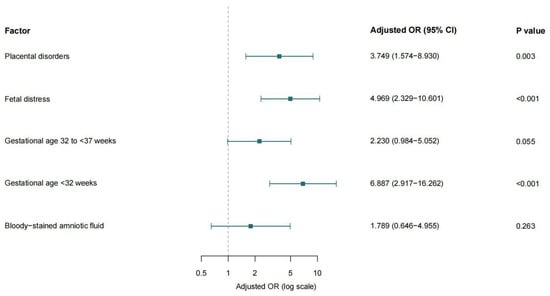
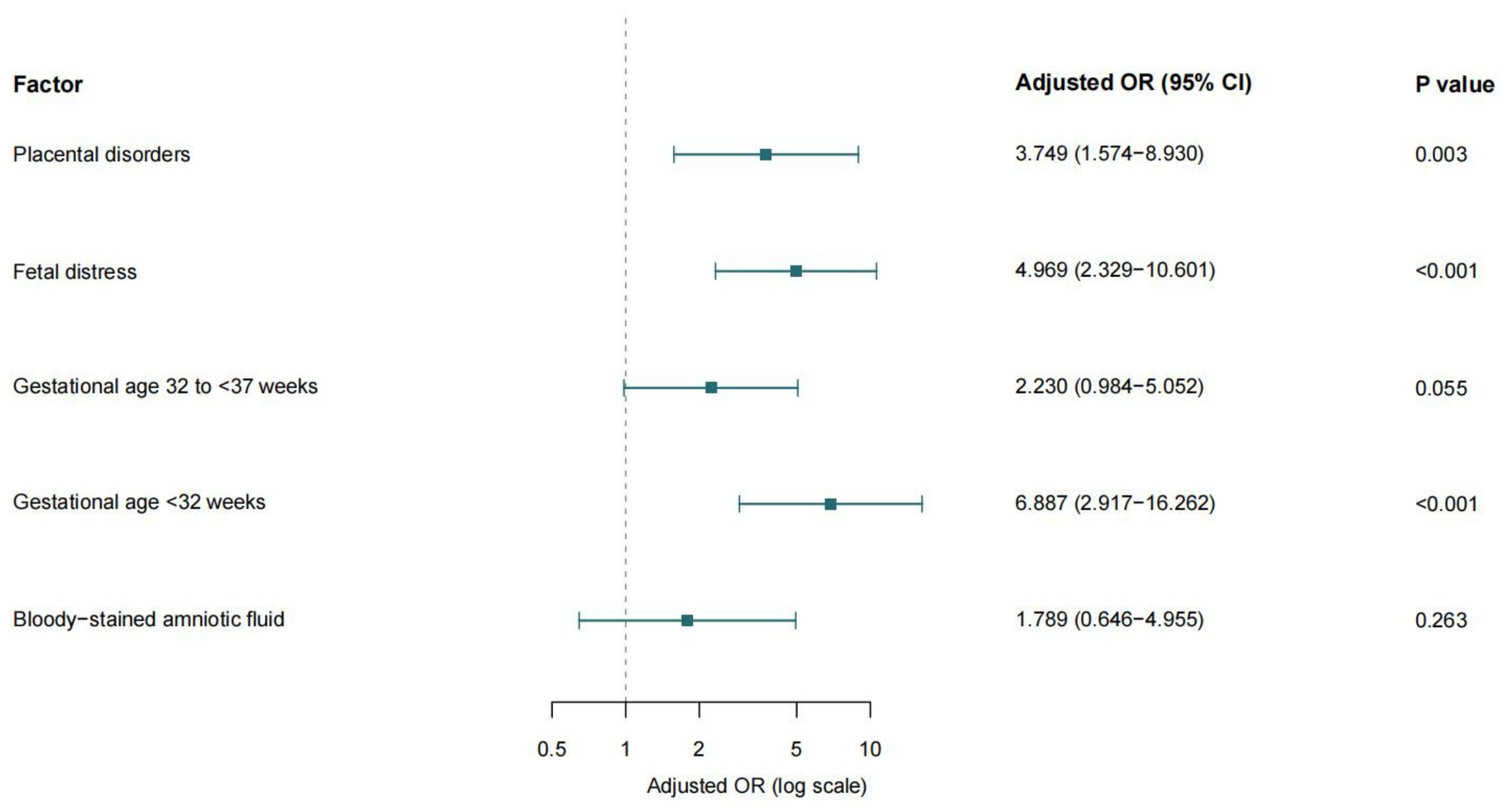
In the multivariable GEE model including placental disorders, fetal distress, gestational age, and blood-stained amniotic fluid, placental disorders (adjusted OR, 3.749; 95% CI, 1.574–8.930; p = 0.003), fetal distress (adjusted OR, 4.969; 95% CI, 2.329–10.601; p < 0.001), and gestational age < 32 weeks (adjusted OR, 6.887; 95% CI, 2.917–16.262; p < 0.001) were associated with the outcome. The associations with gestational age 32 to <37 weeks (adjusted OR, 2.230; 95% CI, 0.984–5.052; p = 0.055) and blood-stained amniotic fluid (adjusted OR, 1.789; 95% CI, 0.646–4.955; p = 0.263) were not statistically significant (Figure 8).
Figure 8.
Multivariable GEE analysis of the composite outcome excluding umbilical arterial pH. The composite comprised a 1 min Apgar score ≤ 3, a 5 min Apgar score ≤ 5, or HIE (791 neonates; 42 events). The model included placental disorders, fetal distress, gestational age, and blood-stained amniotic fluid. Reference categories were gestational age ≥ 37 weeks and absence of the respective condition for binary predictors. Squares indicate adjusted ORs, and horizontal lines indicate 95% CIs. The dashed line denotes OR = 1; the horizontal axis is logarithmic. Two-sided Wald p values are shown. GEE, generalized estimating equations; OR, odds ratio; CI, confidence interval; HIE, hypoxic-ischemic encephalopathy.
4. Discussion
This retrospective cohort identified associations between obstetric and gestational-age factors and a study-defined adverse early neonatal composite outcome after cesarean delivery under general anesthesia. Placental disorders, fetal distress, and gestational age < 32 weeks were associated with both measured-pH composites after adjustment using the same five covariates. Preterm birth and scarred uterus were associated with a 5 min Apgar score ≤ 7 in the original alternative-outcome model. These findings concern overlapping indicators of neonatal depression, acidemia, and HIE rather than a uniform diagnosis of hypoxic-ischemic injury. The study did not test whether risk identification, multidisciplinary preparation, or changes in anesthetic management improve outcomes.
Missing arterial pH was an important source of uncertainty. Twelve of the 82 neonates without pH met another observed composite component and were counted as events. The other 70 did not meet an observed non-pH component, but their true pH status was unknown; some may have met the pH criterion. Incorporating Apgar scores and HIE therefore preserved known events but did not eliminate outcome misclassification. Immediate resuscitation could delay sampling and contribute to clotting, although this mechanism was not documented for each missing result. Differences in observed characteristics by pH availability do not identify the missingness mechanism. Restricting analyses to measured pH can introduce selection bias, and the direction of bias cannot be established from these data. The measured-pH threshold analyses and pH-excluded analysis address different aspects of this uncertainty and should not be regarded as definitive corrections. In the exploratory analysis excluding pH, placental disorders, fetal distress, and gestational age < 32 weeks also remained associated with the composite after adjustment. This analysis avoids classification based on unavailable pH but addresses a different endpoint and does not establish that the associations reflect acidemia or hypoxic-ischemic injury.
Placental disorders were associated with the study-defined composite, but the combined category contains clinically different conditions. In this cohort, 39 neonates were exposed to placenta previa and 60 to placental abruption, with four and 17 composite events, respectively, and no overlap. Previous studies have reported associations of these conditions with neonatal asphyxia or other adverse outcomes [22,23]. Placenta accreta spectrum and recurrent bleeding in placenta previa have also been associated with adverse maternal or neonatal outcomes [24,25]. However, these studies used different populations and outcome definitions. Placental abruption can acutely compromise placental exchange, whereas placenta previa may be associated with hemorrhage, indicated early delivery, and other obstetric complications [26]. Pooling them in a single covariate limits disease-specific interpretation, and the small number of placenta-previa events precluded a stable separate multivariable estimate.
Fetal distress was associated with the composite outcome, consistent with reports linking intrapartum fetal distress and neonatal asphyxia [2,27,28]. In this study it was a predelivery diagnosis based on fetal monitoring, rather than a diagnosis derived from neonatal Apgar scores or pH. It may reflect fetal compromise already present before anesthesia and can also influence the urgency and speed of delivery. The observed association therefore does not establish an effect of the anesthetic technique or the benefit of any specific intrapartum intervention. Fetal and neonatal status are related, but low Apgar scores and acidemia alone do not establish perinatal asphyxia [3,29].
The association with gestational age < 32 weeks is clinically plausible but is not specific to hypoxic injury. In the adjusted models, gestational age 32 to <37 weeks was associated with a 5 min Apgar score ≤ 7 but not with the composite outcomes. Physiological immaturity can lower muscle tone and respiratory effort and hence Apgar scores, even without hypoxic-ischemic injury [3,4,6]. Previous studies have linked prematurity with low Apgar scores and adverse early neonatal outcomes [1,15,23,30]. Shah et al. reported associations of 5 min Apgar score with mortality among infants born at 24–28 weeks, without a consistent gradient for severe neurologic injury among survivors [31]. Thus, the gestational-age association may partly reflect the composition of this endpoint. Separate reporting of its components and the measured-pH threshold analyses provide context but do not remove this interpretive limitation.
Scarred uterus was associated with a 5 min Apgar score ≤ 7 in the original alternative-outcome model. Previous reports have examined scarred uterus, abnormal placentation, operative complexity, and neonatal outcomes [23,32,33]. In this cohort, a uterine scar may indicate a more complex obstetric or surgical history rather than a direct mechanism of neonatal early adverse outcomes. The Apgar analysis used a different outcome and adjustment set from the primary model; its associations should not be interpreted as interchangeable with those of the composite outcome.
The sensitivity analyses were informative but not uniformly concordant. The emergency-only sample contained 67 of the 69 primary events and provided limited independent information. In the same 709 neonates with measured pH, placental disorders, fetal distress, and gestational age < 32 weeks remained associated with both pH-based composites after identical adjustment. The estimated association for gestational age < 32 weeks was larger with the stricter threshold, but the confidence intervals overlapped and no formal between-model contrast was performed. The induction-to-delivery interval was inversely associated in univariable analyses but not statistically significant after the five-variable adjustment (p = 0.066 and p = 0.055). This should not be interpreted as evidence that delaying delivery is beneficial. Confounding by urgency and fetal status, retrospective time measurements, and model specification may influence the association. Previous studies have examined delivery intervals and neonatal outcomes in emergency cesarean deliveries or under spinal anesthesia [34,35,36], but their findings cannot be directly transferred to this selected general-anesthesia cohort.
This single-center retrospective study is subject to selection bias, residual confounding, and limited generalizability. The limited number of events, sparse categories, and partly data-informed selection of covariates may produce unstable coefficients and overly optimistic precision. The composite combines components of different clinical meaning and severity. Missing pH can lead to outcome misclassification and selection bias in measured-pH analyses; the sensitivity analyses do not eliminate these problems. Prospective multicenter studies with standardized sampling, predictor definitions, and outcome ascertainment are needed.
The study provides descriptive and exploratory association data for a clinically specific population. Its results should be interpreted in terms of the measured components and the adjustment set used, rather than as validated causal risk factors or evidence of benefit from clinical interventions.
5. Conclusions
Among neonates delivered by cesarean section under general anesthesia, placental disorders, fetal distress, and gestational age < 32 weeks were associated with the study-defined adverse early neonatal composite outcome, including in analyses restricted to measured pH using thresholds of <7.20 and <7.10. Preterm birth and scarred uterus were associated with a 5 min Apgar score ≤ 7 in the original alternative-outcome model. The heterogeneous composite, missing pH, and retrospective modeling limit interpretation; these findings do not establish intervention benefits and require prospective validation.
Supplementary Materials
The following supporting information can be downloaded at: https://www.mdpi.com/article/10.3390/children13111563/s1, Table S1: Baseline comparison between neonates with and without umbilical artery blood gas data; Table S2: Multicollinearity assessment of covariates in the multivariable analysis of the primary outcome; Table S3: Univariable analysis results for the sensitivity analysis restricted to neonates delivered by emergency cesarean section under general anesthesia; Table S4: Univariable GEE analyses of factors associated with a 5 min Apgar ≤ 7 in the sensitivity analysis; Table S5: Univariable GEE analyses of factors associated with the primary composite outcome among neonates with available pH measurements; Table S6: Univariable GEE analyses of the composite using pH < 7.10 among neonates with available pH measurements; Table S7: Exploratory univariable GEE analyses of the whole-cohort composite excluding pH.
Author Contributions
Conceptualization, T.H., W.Z., C.G. and Q.W.; methodology, W.Z.; software, W.Z.; validation, W.Z., C.G. and T.H.; formal analysis, W.Z.; investigation, C.G.; data curation, W.Z. and Q.W.; writing—original draft preparation, W.Z.; writing—review and editing, W.Z. and C.G.; supervision, T.H.; project administration, T.H.; funding acquisition, T.H. and Q.W. All authors have read and agreed to the published version of the manuscript.
Funding
This work was supported by the Capital’s Funds for Health Improvement and Research (Grant No. 2026-1-4072), the Peking University Third Hospital Cohort Construction Project (Grant No. BYSYDL2024012), and the Peking University Third Hospital Interdisciplinary Joint Special Fund (Grant No. BYSYJC2026069).
Institutional Review Board Statement
This study was approved by the Ethics Committee of Peking University Third Hospital (approval number: [2026] Medical Ethics Review No. [710-01], approved on 27 August 2026).
Informed Consent Statement
Patient consent was waived because this was a retrospective study using medical record data obtained from previous clinical diagnosis and treatment for analysis. There was no risk to individuals who met the inclusion criteria, and it was objectively difficult to obtain informed consent and/or signatures from each prior patient individually. In addition, the project did not involve any commercial interests.
Data Availability Statement
The data presented in this study are only available on request from the corresponding author due to the author’s workplace policy on medical data.
Conflicts of Interest
The authors declare no conflicts of interest.
Abbreviations
The following abbreviations are used in this manuscript:
| BMI | body mass index |
| HIE | hypoxic-ischemic encephalopathy |
| GEE | generalized estimating equations |
| MSAF | meconium-stained amniotic fluid |
| BSAF | blood-stained amniotic fluid |
| IUGR | intrauterine growth restriction |
References
- Su, Y.J.; Liu, W.; Xing, R.R.; Yu, Z.B.; Peng, Y.M.; Luo, W.X. Prevalence and risk factors associated with birth asphyxia among neonates delivered in China: A systematic review and meta-analysis. BMC Pediatr. 2024, 24, 845. [Google Scholar] [CrossRef] [Scilit] [PubMed]
- Agudelo-Pérez, S.; Mejía Echeverría, V.; Medellín Ortiz, L.V.; García Cárdenas, T.D.; Pérez Flórez, J.M.; Maldonado, M.J. Prevalence and risk factors of perinatal asphyxia in newborns in Colombia: A systematic review and meta-analysis. Front. Pediatr. 2025, 13, 1534397. [Google Scholar] [CrossRef] [Scilit] [PubMed]
- American Academy of Pediatrics Committee on Fetus and Newborn; American College of Obstetricians and Gynecologists Committee on Obstetric Practice. The Apgar score. Pediatrics 2015, 136, 819–822. [Google Scholar] [CrossRef] [Scilit] [PubMed]
- Ehrhardt, H.; Behboodi, S.; Maier, R.F.; Aubert, A.M.; Åden, U.; Draper, E.S.; Gudmundsdottir, A.; Siljehav, V.; Varendi, H.; Weber, T.; et al. Five-minute Apgar scores and its prognostic value for mortality and severe morbidity in very preterm infants: A multinational cohort study. BJOG 2026, 133, 649–659. [Google Scholar] [CrossRef] [Scilit] [PubMed]
- Chen, H.Y.; Blackwell, S.C.; Chauhan, S.P. Association between Apgar score at 5 minutes and adverse outcomes among low-risk pregnancies. J. Matern. Fetal Neonatal Med. 2022, 35, 1344–1351. [Google Scholar] [CrossRef] [Scilit] [PubMed]
- Ehrhardt, H.; Behboodi, S.; Maier, R.F.; Aubert, A.M.; Ådén, U.; Staude, B.; Draper, E.S.; Gudmundsdottir, A.; Siljehav, V.; Varendi, H.; et al. Apgar Score Plus Umbilical Artery pH and Adverse Neonatal Outcomes in Very Preterm Infants. JAMA Netw. Open 2026, 9, e2557913. [Google Scholar] [CrossRef] [Scilit] [PubMed]
- Yang, Y.L.; Qu, X.L.; Zhang, S.; Peng, C.J.; Luo, N.; Zeng, H.; Wei, Z. Risk factors associated with neurodevelopmental outcomes at 2–3 years of corrected age in extremely preterm infants. Chin. J. Contemp. Pediatr. 2026, 28, 458–463. [Google Scholar] [CrossRef] [PubMed]
- Chinese Medical Association Perinatal Medicine Branch; Neonatal Resuscitation Group. Expert consensus on the diagnosis of neonatal asphyxia. Chin. J. Perinat. Med. 2016, 19, 3–6. (In Chinese) [Google Scholar]
- Pérez, M.L.M.; Hernández Garre, J.M.; Pérez, P.E. Analysis of factors associated with variability and acidosis of the umbilical artery pH at birth. Front. Pediatr. 2021, 9, 650555. [Google Scholar] [CrossRef] [Scilit] [PubMed]
- Bajgain, A.; Yadav, B.K.; Khan, S.A.; Bhattarai, C.D.; Basnet, K.; Adhikari, K.; Budhathoki, A.M.; Bhattarai, N.M.; Chauhan, S.M.; Dhungana, A.M. Correlation between umbilical cord blood pH with perinatal asphyxia and early neonatal outcome. Medicine 2025, 104, e43624. [Google Scholar] [CrossRef] [Scilit] [PubMed]
- Malin, G.L.; Morris, R.K.; Khan, K.S. Strength of association between umbilical cord pH and perinatal and long term outcomes: Systematic review and meta-analysis. BMJ 2010, 340, c1471. [Google Scholar] [CrossRef] [Scilit] [PubMed]
- Ajibo, B.D.; Wolka, E.; Aseffa, A.; Nugusu, M.A.; Adem, A.O.; Mamo, M.; Temesgen, A.S.; Debalke, G.; Gobena, N.; Obsa, M.S. Determinants of low fifth minute Apgar score among newborns delivered by cesarean section at Wolaita Sodo University Comprehensive Specialized Hospital, Southern Ethiopia: An unmatched case control study. BMC Pregnancy Childbirth 2022, 22, 665. [Google Scholar] [CrossRef] [Scilit] [PubMed]
- Landau, R.; Sultan, P. Neuraxial anesthesia and pain management for cesarean section. Am. J. Obstet. Gynecol. 2026, 233, S135–S152. [Google Scholar] [CrossRef] [Scilit] [PubMed]
- Liu, T.; Wang, Y.; Xiao, X.; Chen, Z.; Li, X.; Liu, C. Comparison of maternal and neonatal outcomes between general anesthesia and combined spinal-epidural anesthesia in cesarean section for pregnancy complicated with placenta previa. BMC Anesthesiol. 2025, 25, 294. [Google Scholar] [CrossRef] [Scilit] [PubMed]
- Gao, Y.; Song, Y.; Miao, J.; Lei, X.; Liu, H.; Gan, L.; Cai, M.; Yu, J. Correlation between anesthetic concentration and low Apgar scores in neonates born via cesarean sections under general anesthesia. BMC Pediatr. 2024, 24, 571. [Google Scholar] [CrossRef] [Scilit] [PubMed]
- Queensland Health. Queensland Clinical Guidelines. Hypoxic Ischaemic Encephalopathy (HIE); Guideline No. MN21.11-V11-R26.; Amended November 2022; Queensland Health: Brisbane, Australia, 2021. [Google Scholar]
- Chinese Nutrition Society Obesity Prevention and Control Section; Chinese Nutrition Society Clinical Nutrition Section; Chinese Preventive Medicine Association Behavioral Health Section. Expert consensus on obesity prevention and treatment in China. Chin. J. Prev. Med. 2022, 23, 321–339. (In Chinese) [Google Scholar]
- Ohya, Y.; Arakawa, K.; Arata, N.; Arima, S.; Arima, H.; Asayama, K.; Dohi, Y.; Fukami, A.; Furuhashi, M.; Goto, K.; et al. The Japanese Society of Hypertension guidelines for the management of elevated blood pressure and hypertension 2025 (JSH2025). Hypertens. Res. 2026, 49, 9–235. [Google Scholar] [CrossRef] [Scilit] [PubMed]
- Subspecialty Group of Neonatology; the Society of Pediatrics; Chinese Medical Association; Editorial Board; Chinese Journal of Pediatrics. Expert consensus on diagnosis and management of neonatal bacteria sepsis (2024). Zhonghua Er Ke Za Zhi 2024, 62, 931–940. (In Chinese) [Google Scholar] [CrossRef] [PubMed]
- Arnold, J.J.; Gawrys, B.L. Intrapartum fetal monitoring. Am. Fam. Physician 2020, 102, 158–167. [Google Scholar] [PubMed]
- Society of Maternal and Child Health of China; Perinatal Medicine Education Professional Committee of China Medical Education Association. Expert consensus on clinical practice of antenatal and intrapartum electronic fetal heart rate monitoring. Chin. J. Pract. Gynecol. Obstet. 2022, 38, 714–725. (In Chinese) [Google Scholar]
- Ikechebelu, J.I.; Eleje, G.U.; Onubogu, C.U.; Ojiegbe, N.O.; Ekwochi, U.; Ezebialu, I.U.; Ezenkwele, E.P.; Nzeribe, E.A.; Umeh, U.A.; Obumneme-Anyim, I.; et al. Incidence, predictors and immediate neonatal outcomes of birth asphyxia in Nigeria. BJOG 2024, 131, 88–100. [Google Scholar] [CrossRef] [Scilit] [PubMed]
- Yu, Y.; Gao, J.; Liu, J.; Tang, Y.; Zhong, M.; He, J.; Liao, S.; Wang, X.; Liu, X.; Cao, Y.; et al. Perinatal maternal characteristics predict a high risk of neonatal asphyxia: A multi-center retrospective cohort study in China. Front. Med. 2022, 9, 944272. [Google Scholar] [CrossRef] [Scilit] [PubMed]
- Tang, L.; Shi, H.; Chen, D. Risk factors and maternal-neonatal outcomes of placenta accreta spectrum: A case control study. Medicine 2025, 104, e44906. [Google Scholar] [CrossRef] [Scilit] [PubMed]
- Huang, S.; Zuo, Q.; Wang, T.; Tang, X.; Ge, Z.; Lu, H.; Zhou, X.; Jiang, Z. Maternal and neonatal outcomes of repeated antepartum bleeding in 493 placenta previa cases: A retrospective study. J. Matern. Fetal Neonatal Med. 2022, 35, 5318–5323. [Google Scholar] [CrossRef] [Scilit] [PubMed]
- Baumfeld, Y.; Herskovitz, R.; Niv, Z.B.; Mastrolia, S.A.; Weintraub, A.Y. Placenta associated pregnancy complications in pregnancies complicated with placenta previa. Taiwan J. Obstet. Gynecol. 2017, 56, 331–335. [Google Scholar] [CrossRef] [Scilit] [PubMed]
- Lemma, K.; Misker, D.; Kassa, M.; Abdulkadir, H.; Otayto, K. Determinants of birth asphyxia among newborn live births in public hospitals of Gamo and Gofa zones, Southern Ethiopia. BMC Pediatr. 2022, 22, 280. [Google Scholar] [CrossRef] [Scilit] [PubMed]
- Mulugeta, T.; Sebsibe, G.; Fenta, F.A.; Sibhat, M. Risk factors of perinatal asphyxia among newborns delivered at public hospitals in Addis Ababa, Ethiopia: Case-control study. Pediatr. Health Med. Ther. 2020, 11, 297–306. [Google Scholar] [CrossRef] [Scilit] [PubMed]
- Low, J.A.; Pancham, S.R.; Piercy, W.N.; Worthington, D.; Karchmar, J. Intrapartum fetal asphyxia: Clinical characteristics, diagnosis, and significance in relation to pattern of development. Am. J. Obstet. Gynecol. 1977, 129, 857–872. [Google Scholar] [CrossRef] [Scilit] [PubMed]
- Jikamo, B.; Abdissa, Z.D.; Jena, B.H.; Addila, A.E.; Legesse, S.M.; Hailemariam, T. Epidemiology of perinatal asphyxia among newborns in Ethiopia: A systematic review and meta-analysis of incidence and risk factors. Matern. Health Neonatol. Perinatol. 2025, 11, 42. [Google Scholar] [CrossRef] [Scilit] [PubMed]
- Shah, P.S.; Norman, M.; Rusconi, F.; Kusuda, S.; Reichman, B.; Battin, M.; Bassler, D.; Modi, N.; Hakansson, S.; Yang, J.; et al. Five-minute Apgar score and outcomes in neonates of 24–28 weeks’ gestation. Arch. Dis. Child. Fetal Neonatal Ed. 2022, 107, 437–446. [Google Scholar] [CrossRef] [Scilit] [PubMed]
- Song, Z.; Chen, Y.; Wang, J.; Liu, H.; Shen, S.; Sun, Y.; Chen, X. Study of maternal risk factors associated with neonatal asphyxia in late preterm and term infants. Chin. Gen. Pract. 2026, 29, 2874–2878. [Google Scholar] [CrossRef]
- Tunta, T.; Dana, T.; Wolie, A.; Lera, T. Determinants of birth asphyxia among neonates admitted to neonatal intensive care units in hospitals of the Wolaita zone, Southern Ethiopia: A case-control study. Heliyon 2023, 10, e23856. [Google Scholar] [CrossRef] [Scilit] [PubMed]
- Zewdu, D.; Tantu, T.; Degemu, F.; Hawlet, M.; Dejene, N.; Asefa, E. Exploring factors influencing skin incision to the delivery time and their impact on neonatal outcomes among emergency cesarean deliveries indicated for non-reassured fetal heart rate status. Front. Pediatr. 2023, 11, 1224508. [Google Scholar] [CrossRef] [Scilit] [PubMed]
- Hassanin, A.S.; El-Shahawy, H.F.; Hussain, S.H.; Bahaa Eldin, A.M.; Elhawary, M.M.; Elbakery, M.; Elsafty, M.S.E. Impact of interval between induction of spinal anesthesia to delivery on umbilical arterial cord pH of neonates delivered by elective cesarean section. BMC Pregnancy Childbirth 2022, 22, 216. [Google Scholar] [CrossRef] [Scilit] [PubMed]
- Knigin, D.; Avidan, A.; Weiniger, C.F. The effect of spinal hypotension and anesthesia-to-delivery time interval on neonatal outcomes in planned cesarean delivery. Am. J. Obstet. Gynecol. 2020, 223, 747.e1–747.e13. [Google Scholar] [CrossRef] [Scilit] [PubMed]

Disclaimer/Publisher’s Note: The statements, opinions and data contained in all publications are solely those of the individual author(s) and contributor(s) and not of MDPI and/or the editor(s). MDPI and/or the editor(s) disclaim responsibility for any injury to people or property resulting from any ideas, methods, instructions or products referred to in the content. |
© 2026 by the authors. Licensee MDPI, Basel, Switzerland. This article is an open access article distributed under the terms and conditions of the Creative Commons Attribution (CC BY) license.