


Highlights
What are the main findings?
- Among 5834 Chilean schools, school climate showed the strongest additional association with academic achievement when the four Indicators of Personal and Social Development were examined separately.
- The association between school climate and academic achievement remained positive across structural models, although its magnitude varied depending on the pathways included.
What are the implications of the main findings?
- Examining school climate alongside participation, healthy lifestyle habits, and academic motivation provides a broader understanding of educational quality beyond standardized test scores.
- The findings highlight the importance of considering socioeconomic inequalities and model specification when interpreting school-level relationships, without assuming causal effects.
Abstract
Background/Objectives: School environments are important contexts for adolescents’ academic, social, and socioemotional development. However, less is known about how multiple dimensions of personal and social development are jointly associated with academic achievement after accounting for school context. This study examined the direct and indirect associations between Chilean Indicators of Personal and Social Development (IDPS) and academic achievement in schools serving eighth-grade students. Methods: A quantitative, observational, cross-sectional secondary analysis was conducted using publicly available 2025 SIMCE data from 5834 Chilean schools. The IDPS included school climate, civic participation and education, healthy lifestyle habits, and academic self-esteem and school motivation. Academic achievement was modeled as a latent factor based on school-level Reading, Mathematics, and History scores. Structural equation modeling with robust maximum likelihood estimation was performed while adjusting for socioeconomic group, rurality, and school administrative sector. Results: The structural model showed satisfactory fit (CFI = 0.990, TLI = 0.974, RMSEA = 0.054, SRMR = 0.012). School climate was strongly associated with civic participation and education (β = 0.874) and showed a positive direct association with academic achievement (β = 0.259). Academic self-esteem and school motivation were also positively associated with achievement (β = 0.051). The total indirect association between school climate and academic achievement through the remaining IDPS was β = 0.040, resulting in a total association of β = 0.298. Conclusions: Among the IDPS examined separately, school climate showed the largest incremental association with school-level academic achievement. Its direct and indirect associations in the structural model should be interpreted within the specified pathways rather than as evidence of an intrinsically central role. These findings support a multidimensional interpretation of educational quality while emphasizing that the observed pathways represent structural associations rather than causal relationships.
1. Introduction
Academic achievement continues to be one of the main indicators used to assess the effectiveness of educational systems. However, there is growing consensus that understanding academic performance requires moving beyond cognitive outcomes to consider the social, emotional, and contextual dimensions of learning and adolescent development [1,2]. Within the international debate on educational quality, approaches such as whole-child development and whole-child education have challenged conceptions of school effectiveness focused exclusively on standardized outcomes, proposing a broader perspective that integrates students’ academic, cognitive, social, emotional, and physical development [3,4]. From this perspective, learning takes place within school ecosystems in which interpersonal relationships, safety, participation, motivation, and everyday habits constitute relevant conditions for students’ development, well-being, and academic performance [1,5]. Consequently, contemporary assessment systems face the challenge of integrating achievement indicators with measures that provide a more comprehensive understanding of the school experience and the conditions that support adolescents’ holistic development [2].
Within this discussion, school climate has received considerable attention. International research has shown that environments characterized by respectful relationships, support among members of the educational community, clear rules, perceptions of safety, and a sense of belonging are associated with more favorable conditions for learning, greater school engagement, and lower levels of conflict [4,6]. School climate is not merely a dimension of well-being but also an organizational component related to how students participate in school life, develop academic expectations, and engage with learning opportunities [7,8]. In Germany, school culture was examined from the perspective of cultural education, emphasizing learning environments that support students’ autonomy, sense of competence, and belonging [9]. Although focused on school culture rather than school climate, this approach offers a complementary perspective on the role of school environments in students’ development. During adolescence, these relational and organizational characteristics may be particularly relevant because school constitutes a major developmental context in which belonging, peer and adult relationships, perceived safety, and opportunities for participation are experienced on a daily basis. Adolescence is also a distinct developmental stage marked by biological, cognitive, and socioemotional changes and increasing autonomy [10]. Identity exploration constitutes a central developmental task shaped by interactions with significant others, including peers [11]. For this reason, several international frameworks have begun to recognize school climate as a relevant indicator of educational quality alongside traditional measures of academic achievement [12]. In parallel, research on student participation and civic education has emphasized that active involvement in school can strengthen students’ sense of belonging, collective responsibility, and connection to the school community [13,14]. Participation is not limited to formal representation or extracurricular activities; it also encompasses opportunities to express opinions, take part in decision-making, and feel recognized as a legitimate member of the school community [15]. From this perspective, participation may serve as a bridge between the relational conditions within schools and other processes associated with engagement, motivation, and well-being.
Academic self-esteem and school motivation represent another key dimension within these relationships. International perspectives on self-regulation, motivation, and student engagement have emphasized that perceived competence, achievement expectations, and willingness to engage in learning are associated with persistence, effort, and participation in academic tasks [16,17]. However, these variables should not be understood exclusively as individual attributes, as they are also shaped through interactions with the school environment. In this regard, a positive school climate has been associated with greater self-determined academic motivation and, through this pathway, with higher school grades [18]. A climate characterized by support, recognition, and safety may foster more positive academic self-perceptions, whereas contexts marked by conflict, disorganization, or limited participation may undermine these processes. Thus, academic self-esteem and motivation can be understood as part of the broader set of developmental processes through which adolescents interpret their competence, position within the school environment, and engagement with learning.
Healthy lifestyle habits have also gained increasing prominence on the international child and adolescent health and educational agenda. Organizations such as the World Health Organization have promoted Health-Promoting Schools approaches that integrate health, well-being, and learning within a whole-school perspective [19]. However, healthy lifestyle habits refer specifically to health-related practices, whereas health and well-being represent broader constructs that were not directly measured by this indicator. Physical activity, nutrition, self-care, and other behaviors associated with well-being are therefore considered part of the school-related conditions that may support holistic development. In particular, evidence regarding physical activity and academic achievement has generally shown positive or non-detrimental effects, although the magnitude of these associations varies according to the intensity, frequency, and type of activity [20,21]. In this sense, healthy habits become especially relevant when personal and social development is understood as a system of interrelated dimensions rather than as a set of isolated indicators.
The proposed relationship between civic participation and healthy lifestyle habits draws on school health promotion approaches that recognize student involvement as relevant to health-related practices and school engagement [22]. Healthy lifestyle habits may also be associated with academic self-perceptions and motivation through experiences of well-being and perceived competence [16]. However, the evidence does not establish a fixed directional sequence among these dimensions. Accordingly, the proposed sequence linking school climate, participation, healthy lifestyle habits, academic motivation, and achievement represents a theoretically informed model specification rather than an established developmental pathway.
A particularly relevant consideration is that these dimensions tend to be strongly associated with one another. School climate, participation, motivation, belonging, and well-being form part of an interdependent network of processes, creating important methodological challenges. When analyzed as independent predictors, high collinearity may make it difficult to identify their specific contributions and may even produce suppression effects. Structural equation modeling therefore provides a particularly useful alternative for examining configurations of direct and indirect relationships among observed and latent variables [23]. Nevertheless, in observational and cross-sectional designs, these relationships should be interpreted as structural associations rather than as evidence of causality. This complexity is compounded by the influence of socioeconomic context. Internationally, inequalities associated with students’ socioeconomic backgrounds remain among the strongest determinants of educational achievement and constitute an important contextual influence on children’s and adolescents’ developmental opportunities. In PISA 2022, socioeconomic status explained, on average, approximately 15% of the variation in mathematics performance across OECD countries, with substantial socioeconomic gradients also observed in reading and science [1]. Schools serving more socioeconomically advantaged populations tend to demonstrate higher academic outcomes, whereas indicators of well-being and school experience may exhibit more heterogeneous patterns. This situation may partially obscure bivariate associations between psychosocial variables and academic achievement. Accordingly, explicitly controlling for contextual variables is methodologically important for appropriately interpreting the relationship between personal and social development and academic achievement. International comparative evidence reinforces the relevance of these relationships. Su and Lee (2023), examining educational systems in China, South Korea, Finland, and the United States, identified context-dependent associations between school climate, academic achievement, and student well-being [4]. Similarly, Wang et al. (2022), using PISA data from 63 countries and economies, reported positive school-level associations between disciplinary climate and mathematics achievement [24]. These findings highlight the international relevance of school climate while emphasizing the importance of examining its associations within specific educational contexts.
In Latin America, this discussion is particularly relevant because of persistent territorial, socioeconomic, and institutional inequalities among schools, which continue to shape educational trajectories and learning outcomes across the region [25,26]. These inequalities also shape the school environments in which children and adolescents develop, participate, establish relationships, and adopt health-related behaviors. In this context, simultaneously examining indicators of personal and social development and academic outcomes can contribute to a more comprehensive understanding of students’ development within educational settings. Nevertheless, relatively few studies have used large-scale national data to examine how these dimensions are interconnected and associated with academic achievement through structural models adjusted for contextual factors. In Chile, the Indicators of Personal and Social Development (Indicadores de Desarrollo Personal y Social, IDPS) constitute a particularly valuable source of information for this purpose. These indicators include academic self-esteem and school motivation, school climate, civic participation and education, and healthy lifestyle habits. They were designed to complement SIMCE results and broaden the concept of educational quality beyond strictly academic performance [27]. Because these indicators capture relational, motivational, participatory, and health-related dimensions of school experience, they offer an opportunity to examine adolescent development from a broader school-based perspective. School climate is examined here as a relational dimension associated with other aspects of personal and social development and academic achievement. In the Chilean context, studies using large samples have shown that a favorable school climate is associated with better academic outcomes even after accounting for socioeconomic status and may partially offset disadvantages associated with lower socioeconomic contexts [28]. Previous studies have also identified associations among school climate, subjective well-being, and academic achievement among Chilean students, further supporting the relevance of examining these dimensions jointly while accounting for contextual factors [29].
Despite the importance of the IDPS within the Chilean educational system, evidence examining their integrated relationships with academic achievement using national school-level aggregate data remains limited. Previous research has examined associations between IDPS and SIMCE outcomes, but these studies have often focused on specific dimensions or partial associations, leaving room for approaches that simultaneously model the interrelationships among school climate, participation, healthy habits, academic self-esteem and motivation, and academic achievement [30,31]. Moreover, using a latent academic achievement factor constructed from different curricular areas makes it possible to represent the common variance in performance and reduce reliance on a single assessment, an approach consistent with the use of latent-variable models in educational research. In this regard, integrating SIMCE scores in Reading, Mathematics, and History provides an opportunity to examine whether dimensions of personal and social development are associated with a common pattern of school-level academic achievement. Furthermore, the IDPS were specifically designed as complementary indicators to SIMCE outcomes and learning standards in order to broaden the conceptualization of educational quality toward a more holistic perspective [32]. Against this background, the present study uses national SIMCE 2025 data from Chilean schools serving eighth-grade students to examine associations between the four IDPS dimensions and academic achievement. By focusing on students at a developmental stage corresponding predominantly to early adolescence, the study seeks to situate academic achievement within a broader network of relational, motivational, participatory, and health-related school conditions. The analysis explicitly accounts for socioeconomic group, rurality, and school administrative sector and combines incremental models with structural equation modeling to examine direct and indirect associations among the dimensions under study.
This study contributes to the field by proposing an integrated analytical framework linking personal and social development, school context, and academic achievement using large-scale national data. Its main contribution lies in moving beyond fragmented analyses of the IDPS through a strategy that combines incremental model comparisons with structural modeling, thereby allowing the identification of specific associations, indirect pathways, and patterns of interdependence among school climate, participation, healthy habits, academic self-esteem and motivation, and academic achievement [23]. Additionally, modeling academic achievement as a latent construct based on three curricular domains and explicitly controlling for socioeconomic group, rurality, and school administrative sector strengthens the study’s capacity to identify robust associations beyond contextual differences among schools. This approach extends previous research examining the relationship between IDPS and standardized test performance in regional Chilean contexts [31], by incorporating a national sample and an integrated structural model. Within this international framework, the present study contributes school-level evidence from Chile by integrating relational, participatory, motivational, and health-related dimensions into a single structural model, thereby extending comparative discussions on school climate and academic achievement in Latin American educational contexts. From this perspective, the study provides an original and methodologically integrative approach to understanding how schools’ socioeducational and relational conditions are associated with academic performance during adolescence, while also contributing to broader discussions on school environments as contexts for holistic development and well-being.
1.1. General Objective
We aimed to examine the direct and indirect associations among the Indicators of Personal and Social Development (school climate, civic participation and education, healthy lifestyle habits, and academic self-esteem and school motivation) and academic achievement in Chilean schools serving eighth-grade students, while controlling for socioeconomic group, rurality, and school administrative sector.
1.2. Specific Objectives
SO1. To examine the associations among school climate, civic participation and education, healthy lifestyle habits, and academic self-esteem and school motivation at the school level.
SO2. To assess the associations between the IDPS and academic achievement, controlling for socioeconomic group, rurality, and school administrative sector.
SO3. To examine the indirect structural associations between school climate and academic achievement through civic participation and education, healthy lifestyle habits, and academic self-esteem and school motivation.
2. Materials and Methods
A quantitative, observational, cross-sectional secondary data analysis was conducted using official information from the 2025 SIMCE assessment administered to eighth-grade students in Chile, a school grade comprising predominantly early adolescents. Data were obtained from the Statistical Information Portal of the Agencia de Calidad de la Educación (2026) [27]. The unit of analysis was the educational institution, identified through its unique school identifier (Rol Base de Datos, RBD). Accordingly, all variables analyzed corresponded to aggregated school-level scores rather than individual student data. Thus, the study examined differences between schools and did not estimate individual-level associations among adolescents. The analytical objective was to examine associations between the Indicators of Personal and Social Development (Indicadores de Desarrollo Personal y Social, IDPS) and academic achievement while simultaneously accounting for the contextual characteristics of schools. Given the cross-sectional and aggregated nature of the data, relationships estimated through structural equation modeling were interpreted as direct and indirect associations rather than causal effects [23].
2.1. Study Sample
The original SIMCE dataset contained 6026 unique school identifiers (RBD), whereas the IDPS dataset included 5999 schools. All schools in the IDPS dataset were also identified in the SIMCE dataset, leaving 27 SIMCE schools without a corresponding IDPS record.
Information on the IDPS and academic achievement outcomes was merged using the unique school identifier. The IDPS dataset included four indicators: (a) academic self-esteem and school motivation; (b) school climate; (c) civic participation and education; and (d) healthy lifestyle habits. Together, these indicators represent relational, motivational, participatory, and health-related dimensions of students’ school experience. Academic achievement was operationalized using school-level mean scores in Reading, Mathematics, and History, Geography, and Social Sciences.
Among the 5999 schools identified in both datasets, 38 had missing scores in all three academic subjects and all constituent IDPS dimensions and were therefore not retained in the merged working dataset (n = 5961). Subsequently, 127 additional schools (2.13% of the merged dataset) were excluded because of missing information in at least one of the required IDPS or academic achievement variables. The final analytical sample thus comprised 5834 educational institutions serving eighth-grade students across Chile, representing 96.8% of the schools in the original SIMCE dataset.
Regarding contextual characteristics, 35.6% of schools belonged to the lower-middle SEG, 26.3% to the middle SEG, 19.3% to the low SEG, 10.4% to the upper-middle SEG, and 8.4% to the high SEG. Overall, 77.0% of schools were located in urban areas and 23.0% in rural areas. In terms of school administrative sector, 43.2% were government-subsidized private schools, 31.3% were municipal schools, 17.5% were administered by Local Public Education Services (Servicios Locales de Educación Pública, SLEP), and 8.0% were private fee-paying schools.
Each school constituted one unit of analysis and received equal analytical weight, irrespective of school enrollment or the number of assessed students. No additional sampling weights or adjustments for differences in questionnaire respondent coverage were applied. The analyses used the officially published aggregated IDPS scores, and respondent-specific participation rates were not available in the analytical dataset. Consequently, differences in questionnaire coverage across schools and respondent groups could not be directly accounted for in the statistical models. Because the analytical dataset comprised aggregated school-level records, individual student ages and family socioeconomic characteristics were unavailable. Consequently, mean age and its standard deviation could not be calculated, and SEG was interpreted as a school-level socioeconomic classification rather than an individual family-level measure.
2.2. Study Variables
Indicators of Personal and Social Development. The four IDPS were included as continuous observed variables at the school level [32]. These indicators are reported as official aggregated school-level scores and therefore reflect characteristics of the student population within each educational institution rather than individual-level measurements:
- (a)
- Academic self-esteem and school motivation, representing perceptions related to students’ appraisal of their own academic abilities and their disposition toward learning. It comprises academic self-perception and self-evaluation, and school motivation, both assessed through student questionnaires.
- (b)
- School climate, referring to perceptions of interpersonal relationships, organization, respect, and safety within the educational community. Its three dimensions are respectful, organized, and safe school environments, assessed through questionnaires completed by students, teachers, and parents or guardians.
- (c)
- Civic participation and education, related to opportunities for participation, belonging, and the development of democratic practices within the school. It comprises school belonging, participation, and democratic life. Student responses contribute to all three dimensions, whereas parent or guardian responses contribute to the participation dimension.
- (d)
- Healthy lifestyle habits, associated with self-care practices, nutrition, and an active lifestyle. It includes eating habits, active lifestyles, and self-care practices, assessed through student questionnaires.
The four IDPS are derived from the Quality and Context of Education Questionnaires administered alongside SIMCE. These questionnaires collect self-reported perceptions, attitudes, and behaviors from students and, depending on the indicator, perceptions reported by teachers and parents or guardians. Item response formats vary and include Likert-type categories rather than a single uniform response scale. According to the Agencia de Calidad de la Educación’s technical documentation, questionnaire responses are recoded on a 0–100 scale and combined across items, dimensions, and respondent groups, as applicable, to obtain aggregated school-level scores. The agency’s documented scoring procedure accommodates items with two to five response alternatives, with higher scores indicating more favorable results for each indicator. Previous technical evaluations have provided evidence regarding factorial structure and internal consistency [33]. However, the present study relied on published aggregate scores and did not independently assess the psychometric properties or discriminant validity of the four indicators in the 2025 sample.
For all analyses, the official school-level mean scores for each indicator were used.
Academic achievement. Academic achievement was modeled as a latent construct defined by three observed school-level indicators:
- (a)
- Mean SIMCE Reading score.
- (b)
- Mean SIMCE Mathematics score.
- (c)
- Mean SIMCE History score.
The strong correlations among these three measures supported their use as indicators of a common academic achievement dimension at the school level.
Control variables. Three groups of covariates were included:
- (a)
- Socioeconomic group (SEG). SEG was classified into five categories: low, lower-middle, middle, upper-middle, and high. Because descriptive analyses did not reveal a strictly linear pattern between SEG and the main outcomes, it was modeled as a categorical variable using four dummy variables, with the low socioeconomic group as the reference category.
- (b)
- Rurality. Schools were classified as either urban or rural.
- (c)
- School administrative sector. The categories considered were municipal, government-subsidized private, private fee-paying, and Local Public Education Service (Servicio Local de Educación Pública, SLEP). Municipal schools were used as the reference category.
2.3. Procedure and Data Preparation
The study involved no educational or experimental intervention, as it consisted of a secondary analysis of publicly available, aggregated school-level data. The research procedure comprised five successive phases: data acquisition, dataset integration, data quality assessment, selection of the analytical sample, and descriptive data preparation.
Official public datasets corresponding to eighth grade in 2025 were obtained from the Statistical Information Portal of the Agencia de Calidad de la Educación (2026) [34]. The IDPS and SIMCE achievement datasets were merged using the RBD identifier. Record consistency and the presence of missing values were then examined. The proportion of missing data was low, with values below 2% for all main variables. To ensure comparability across the incremental models, a common sample of 5834 schools with complete information on the four IDPS, the three achievement measures, and the contextual covariates was used. A complete-case analytical strategy was therefore applied to all model comparisons. Mean, standard deviation, median, range, skewness, and kurtosis were examined for the continuous variables. Frequencies and percentages were also calculated for SEG, rurality, and school administrative sector.
Regarding ethical considerations, the study relied exclusively on publicly available, anonymized, and aggregated school-level data. The researchers had no access to individually identifiable information, did not recruit or interact with participants, and did not collect new data. Ethical review and informed consent were waived for this secondary analysis, as stated in the corresponding ethical declarations of the manuscript.
2.4. Statistical Analysis
Statistical analyses were conducted in R v4.6.0 [35], running on macOS. Data preparation and transformation were performed primarily using the packages dplyr v1.2.1, tidyr v1.3.2, purrr v1.2.2, and readxl v1.5.0. Descriptive statistics were obtained using psych v2.6.5. Structural equation models were estimated using lavaan v0.7–2 [36]. Results were visualized using ggplot2 v4.0.3 and ggforce v0.5.0.
First, Pearson correlations were calculated among the four IDPS, academic achievement scores, and SEG. Given the large sample size, interpretation focused primarily on the magnitude and direction of the coefficients rather than exclusively on statistical significance. Means and standard deviations were also examined across the five socioeconomic groups.
An initial contextual model was estimated in which the latent academic achievement factor was predicted by SEG, rurality, and school administrative sector. Each IDPS was then added individually to the contextual model, resulting in four additional models. This strategy allowed the incremental association of each dimension with academic achievement to be estimated while avoiding the instability that may arise from high collinearity among correlated predictors. Models were compared using standardized coefficients, proportion of explained variance (R2), change in R2 relative to the contextual model, Akaike Information Criterion (AIC), and Bayesian Information Criterion (BIC). All models were estimated using the same sample of 5834 schools, a necessary condition for the interpretation of comparisons based on information criteria. Information criteria were compared only among these incremental models. Additionally, each IDPS was examined using unadjusted, SEG-adjusted, and fully adjusted models to assess the influence of socioeconomic context.
Based on the theoretical framework and preliminary analyses, a structural equation model was estimated, specifying paths from school climate to civic participation and education; from participation to healthy lifestyle habits; from participation, healthy lifestyle habits, and school climate to academic self-esteem and school motivation; and from school climate and academic self-esteem and school motivation to the latent academic achievement factor. SEG, rurality, and school administrative sector were included as covariates of the endogenous variables. The model was estimated using robust maximum likelihood (MLR), which is appropriate for reducing the sensitivity of standard errors and model fit tests to departures from multivariate normality [23,36].
The proposed sequence was theoretically informed by the relationships between school climate, participation, health-related practices, and academic motivation. Preliminary correlations and incremental models informed the examination of these associations but did not determine their direction. Direct paths from civic participation and healthy lifestyle habits to academic achievement were excluded from the initial specification to examine a more parsimonious model emphasizing indirect associations through academic self-esteem and school motivation. This restriction does not imply that direct associations are absent, particularly given the positive associations observed in the separately adjusted models.
Robust χ2, the Comparative Fit Index (CFI), Tucker–Lewis Index (TLI), Root Mean Square Error of Approximation (RMSEA) with a 90% confidence interval, and Standardized Root Mean Square Residual (SRMR) were reported. Model adequacy was evaluated by considering the fit indices jointly rather than applying a single cutoff value rigidly [23,37].
Standardized coefficients were estimated for the structural paths and for the indirect associations between school climate and academic achievement through the following pathways: school climate → civic participation and education → academic self-esteem and school motivation → academic achievement; school climate → civic participation and education → healthy lifestyle habits → academic self-esteem and school motivation → academic achievement; and school climate → academic self-esteem and school motivation → academic achievement. The total indirect association and the total association between school climate and academic achievement were also estimated. Their 95% confidence intervals were calculated using the delta method with robust standard errors. Given the cross-sectional and observational nature of the study, these parameters were interpreted as structural indirect associations rather than as evidence of causal mediation [23].
Finally, two complementary analyses were conducted. First, the adjusted association between school climate and each academic domain separately—Reading, Mathematics, and History, Geography, and Social Sciences—was examined to verify that the observed pattern did not depend exclusively on the construction of the latent factor. Second, the primary specification of SEG as a categorical variable was compared with an alternative specification in which it was treated as a continuous ordinal variable. Stability of the main coefficients across these specifications was considered additional evidence of robustness. An additional sensitivity analysis incorporated direct paths from civic participation and healthy lifestyle habits to academic achievement, comparing model fit through robust indices and a scaled chi-square difference test.
3. Results
3.1. Sample Characteristics and Descriptive Statistics
The final analytical sample consisted of 5834 Chilean schools with complete information for the variables included in the eighth-grade analyses conducted for 2025. The mean scores for the Indicators of Personal and Social Development (IDPS) were 75.12 (SD = 5.72) for academic self-esteem and school motivation, 76.37 (SD = 5.66) for school climate, 78.39 (SD = 6.41) for civic participation and education, and 71.41 (SD = 5.71) for healthy lifestyle habits. Regarding academic achievement, the mean scores were 233.58 (SD = 22.98) in Reading, 251.79 (SD = 26.62) in Mathematics, and 245.60 (SD = 23.67) in History. Skewness values ranged from −0.22 to 0.79, whereas kurtosis values ranged from 0.11 to 0.70, indicating no extreme departures from normality (Table 1).
Table 1.
Descriptive statistics for the main variables.
The proportion of missing data in the dataset prior to complete-case selection was low. The percentage of missing values ranged from 0.47% to 1.59% for the IDPS and from 0.57% to 0.67% for the academic achievement measures. No missing values were observed for socioeconomic group (SEG), rurality, or school administrative sector.
3.2. Associations Among the IDPS, Socioeconomic Context, and Academic Achievement
The four IDPS showed strong positive correlations with one another (Table 2), with coefficients ranging from r = 0.71 to r= 0.89. The strongest associations were observed between school climate and civic participation and education (r = 0.89), and between academic self-esteem and school motivation and civic participation and education (r = 0.87). In contrast, the associations between the IDPS and academic achievement were smaller in magnitude. School climate showed the strongest positive correlations with Reading (r = 0.21), Mathematics (r = 0.17), and History (r = 0.23). Academic achievement scores, however, were strongly correlated with one another: Reading–Mathematics, r = 0.83; Reading–History, r = 0.87; and Mathematics–History, r = 0.82. This high degree of covariation supported their subsequent use as indicators of a latent academic achievement factor. SEG showed a particularly noteworthy pattern: it was positively associated with Reading (r = 0.58), Mathematics (r = 0.63), and History (r = 0.58), but negatively associated with all four IDPS, especially healthy lifestyle habits (r = −0.39). This contrasting pattern highlighted the importance of explicitly accounting for socioeconomic context in the subsequent adjusted models.
Table 2.
Correlations among the IDPS and academic achievement indicators.
Descriptive analyses across the five socioeconomic groups showed decreasing healthy lifestyle habits scores (74.05, 72.69, 70.55, 68.03, and 66.75, respectively), whereas Mathematics scores increased (236.55, 242.03, 253.55, 270.06, and 299.99, respectively), with similar patterns in Reading and History. Moreover, the association between healthy lifestyle habits and academic achievement changed from negative in the unadjusted model (β = −0.054) to positive after adjusting for SEG (β = 0.240), remaining similar after additional adjustment for rurality and school administrative sector (β = 0.234).
3.3. Modeling Academic Achievement
Reading, Mathematics, and History were specified as indicators of a latent academic achievement factor. All three variables showed high standardized representation of the common construct. The coefficients of determination were R2 = 0.870 for Reading, R2 = 0.795 for Mathematics, and R2 = 0.862 for History, corresponding to approximate standardized factor loadings of 0.933, 0.892, and 0.928, respectively. These results supported the use of a latent academic achievement factor in the structural model, while simultaneously reducing reliance on any single subject area and capturing the common variance in school-level academic performance.
3.4. Incremental Contribution of the IDPS to Academic Achievement
An initial contextual model was estimated including socioeconomic group, rurality, and school administrative sector as predictors of academic achievement. This model explained 48.3% of the variance in academic achievement. Subsequently, each IDPS was added individually using the same sample of 5834 schools to estimate its incremental association with academic achievement while avoiding problems of comparability across models. These models were estimated using maximum likelihood with the same academic achievement indicators and fixed exogenous covariates. AIC and BIC comparisons were therefore restricted to the incremental specifications, which shared the same school sample, outcome variables, and likelihood framework, and were not extended to the full structural model.
All IDPS showed positive and statistically significant adjusted associations with academic achievement. School climate exhibited the strongest adjusted association (β = 0.299, p < 0.001), followed by academic self-esteem and school motivation (β = 0.250, p < 0.001), civic participation and education (β = 0.237, p < 0.001), and healthy lifestyle habits (β = 0.234, p < 0.001). The model including school climate showed the largest increase in explained variance in academic achievement, from R2 = 0.483 to R2 = 0.561 (ΔR2 = 0.079). It also yielded the lowest AIC and BIC values among the models compared (Table 3). Thus, among the four IDPS examined separately, school climate showed the strongest incremental association with school-level academic achievement after adjustment for contextual characteristics.
Table 3.
Incremental models of the IDPS on academic achievement.
3.5. Structural Equation Model
The primary structural model was estimated using robust maximum likelihood (MLR). Because socioeconomic group (SEG) consisted of five ordered categories and the descriptive analyses did not indicate a strictly linear relationship between SEG and the IDPS, this factor was incorporated using dummy variables, with the low-SEG category as the reference group. The model was also adjusted for rurality and school administrative sector. The final structural specification and its estimated pathways are illustrated in Figure 1.
Figure 1.
Structural equation model examining the associations among school climate, civic participation and education, healthy lifestyle habits, academic self-esteem and school motivation, and academic achievement. Rectangles represent observed variables, and the ellipse represents the latent academic achievement factor measured through Reading, Mathematics, and History scores. Standardized path coefficients (β) and explained variance (R2) are reported. The model was adjusted for socioeconomic group, rurality, and school administrative sector (n = 5834 schools). The figure represents the primary structural specification. ** p < 0.01; *** p < 0.001.
The model showed satisfactory robust fit: robust χ2(27) = 429.73, p < 0.001, robust CFI = 0.990, robust TLI = 0.974, robust RMSEA = 0.054, 90% CI [0.050, 0.059], and SRMR = 0.012. Given the large sample size, interpretation of model fit focused primarily on the approximate fit indices.
Within the IDPS structure, school climate showed a strong positive association with civic participation and education (β = 0.874, p < 0.001). In turn, civic participation and education was strongly associated with healthy lifestyle habits (β = 0.763, p< 0.001) and with academic self-esteem and school motivation (β = 0.702, p < 0.001). Healthy lifestyle habits showed an additional positive association with academic self-esteem and school motivation (β = 0.115, p < 0.001), while school climate retained a direct, although smaller, association with the latter (β = 0.089, p < 0.001). These results indicate a highly interconnected pattern among the relational, participatory, health-related, and motivational dimensions represented by the IDPS at the school level.
With respect to academic achievement, school climate showed a positive direct association of moderate magnitude (β = 0.259, 95% CI [0.225, 0.292], p < 0.001). Academic self-esteem and school motivation was also positively associated with academic achievement, although the magnitude of this association was considerably smaller (β = 0.051, 95% CI [0.017, 0.085], p = 0.003).
The model explained 79.9% of the variance in civic participation and education, 70.0% of the variance in healthy lifestyle habits, 76.8% of the variance in academic self-esteem and school motivation, and 56.2% of the variance in academic achievement. The variance explained in academic achievement (R2 = 0.562) was nearly identical to that obtained in the model including school climate and contextual covariates (R2 = 0.561) (Table 4).
Table 4.
Structural coefficients of the final model.
In addition to its direct association with academic achievement, school climate showed statistically significant indirect associations through the remaining dimensions of personal and social development.
The largest indirect pathway was school climate → civic participation and education → academic self-esteem and school motivation → academic achievement (β_ind = 0.031, p = 0.003). The pathway school climate → civic participation and education → healthy lifestyle habits → academic self-esteem and school motivation → academic achievement showed a smaller association (β_ind = 0.004, p = 0.005), while the pathway school climate → academic self-esteem and school motivation → academic achievement also showed a small indirect association (β_ind = 0.005, p = 0.013).
Overall, the standardized total indirect association between school climate and academic achievement was β_ind = 0.040, p = 0.003. When the direct and indirect associations were combined, the standardized total association was β_total = 0.298, p< 0.001 (Table 5).
Table 5.
Indirect and total associations of school climate with academic achievement.
The results indicate that most of the total association between school climate and academic achievement was attributable to its direct component, although a statistically significant indirect association operating through the remaining IDPS was also observed. Given the cross-sectional and school-level nature of the data, these indirect pathways represent statistical associations and should not be interpreted as developmental or causal sequences.
3.6. Subject-Specific Robustness Analysis
As a complementary analysis, we examined whether the association between school climate and academic achievement remained consistent when the three subject areas were considered separately. After adjusting for categorically modeled SEG, rurality, and school administrative sector, school climate was positively associated with Reading (β = 0.283, p < 0.001), Mathematics (β = 0.243, p < 0.001), and History (β = 0.287, p < 0.001). Each subject-specific analysis was conducted using the same sample of 5834 schools, with school climate as the predictor of interest and socioeconomic group (four dummy variables), rurality, and school administrative sector (three dummy variables) as covariates. The remaining IDPS were not simultaneously included in these models. The pattern was therefore consistent across all three assessed domains, with numerically slightly larger associations for History and Reading than for Mathematics. Because these differences were not subjected to specific statistical tests, they were not interpreted as substantive differences across subject areas.
Likewise, the alternative specification in which SEG was treated as a continuous ordinal variable produced virtually identical estimates for the main structural coefficients. For example, the school climate → academic achievement association was β = 0.256 under the linear specification and β = 0.259 in the model with categorical SEG, while the standardized total association of school climate remained β = 0.298. This stability supports the robustness of the findings across different specifications of socioeconomic context and indicates that the central association between school climate and academic achievement was not dependent on the coding strategy used for SEG.
3.7. Structural Model Sensitivity Analysis
To examine the sensitivity of the findings to the specified structural pathways, an alternative model was estimated by adding direct paths from civic participation and education and healthy lifestyle habits to the latent academic achievement factor. All other structural paths and contextual adjustments were retained.
The expanded model showed improved fit (robust χ2(25) = 350.27, robust CFI = 0.992, robust TLI = 0.978, robust RMSEA = 0.050, and SRMR = 0.011). A robust scaled chi-square difference test indicated a statistically significant improvement relative to the primary model (Δχ2(2) = 73.11, p < 0.001). AIC decreased from 228,346.6 to 228,255.2, while BIC decreased from 228,666.8 to 228,588.7. Explained variance in academic achievement increased from R2 = 0.562 to R2 = 0.570, representing an additional 0.8 percentage points.
In the expanded model, school climate remained positively associated with academic achievement (β = 0.376, 95% CI [0.332, 0.421], p < 0.001), as did academic self-esteem and school motivation (β = 0.143, 95% CI [0.102, 0.185], p < 0.001). Healthy lifestyle habits showed a small positive direct association (β = 0.059, 95% CI [0.022, 0.096], p = 0.002). In contrast, civic participation and education showed a negative conditional coefficient (β = −0.264, 95% CI [−0.324, −0.203], p < 0.001), despite its positive association with achievement in the separately adjusted incremental model (β = 0.237).
This reversal may reflect statistical suppression or shared variance among the highly correlated IDPS, particularly school climate and civic participation and education (r = 0.89). It should not be interpreted as evidence that greater participation adversely affects academic achievement. Although the expanded specification improved model fit, the increase in explained variance was modest, and the changes in structural coefficients indicate that their magnitudes and directions are sensitive to the selected pathways. Consequently, the findings support cautious interpretation of the structural associations rather than a unique or causally established ordering among the IDPS.
4. Discussion
With respect to the first specific objective, the results showed a very strong association between school climate and civic participation and education, together with positive associations among participation, healthy lifestyle habits, and academic self-esteem and school motivation. This pattern is consistent with theoretical perspectives that conceptualize school climate as a relational and organizational environment that shapes opportunities for engagement, belonging, and participation [6,38]. From this perspective, a school characterized by respectful relationships, safety, organization, and recognition may provide more favorable conditions for students to become involved in school life and develop a stronger identification with the educational community [13,15]. In the Chilean context, the relevance of school coexistence and conflict-resolution strategies for promoting healthy school relationships and supporting students’ holistic development has also been emphasized [39]. The high magnitude of the association between school climate and participation further reinforces the idea that these dimensions, although conceptually distinguishable, form part of a common network of school experiences in which belonging, participation, safety, and recognition operate interdependently [4]. Nevertheless, the strong correlation between these indicators (r = 0.89) may also reflect overlapping content, particularly regarding interpersonal relationships and school belonging. Shared student respondents and the aggregation of scores at the school level may further contribute to their covariance. Since discriminant validity could not be independently assessed, the structural relationship between these indicators should be interpreted cautiously.
The strong relationship observed between civic participation and education and academic self-esteem and school motivation is also consistent with perspectives on school engagement and socioemotional development. Active participation may promote experiences of recognition, agency, and belonging, all of which may be related to more positive perceptions of academic competence and a greater willingness to engage in learning. Empirical studies have shown that authentic forms of student participation are positively associated with school well-being, partly through experiences of recognition and being valued within the educational community [40]. Likewise, teaching practices that incorporate student voice have been associated with higher levels of engagement, agency, attendance, and academic achievement [41]. The positive relationship between participation and healthy lifestyle habits also suggests that schools characterized by higher levels of engagement and cohesion may provide a favorable context for the development of comprehensive health-promotion initiatives. This interpretation is compatible with school-based approaches that jointly address well-being, physical activity, dietary habits, sleep, and sense of community [42]. Nevertheless, this association requires further investigation because the present data do not allow the temporal direction of the relationship to be determined.
Regarding the second specific objective, both school climate and academic self-esteem and school motivation were positively associated with academic achievement after controlling for the contextual characteristics of the schools. However, the magnitude of these relationships differed substantially. School climate showed a moderate direct association with academic achievement, whereas academic self-esteem and school motivation showed a smaller positive association. The relationship between school relational conditions and learning processes has also been emphasized by perspectives noting that violence and unfavorable school interactions may negatively affect learning experiences [43]. This finding is consistent with longitudinal evidence showing that more positive perceptions of school climate are associated with more favorable academic trajectories and a greater likelihood of maintaining or improving achievement over time [6]. Likewise, studies focusing on motivation and academic self-concept have shown that these dimensions explain relevant variance in academic achievement, although their contribution may depend on the context and academic domain examined [44]. Overall, our findings suggest that the relational and organizational conditions of schools remain associated with academic performance beyond socioeconomic and administrative differences, whereas academic self-esteem and school motivation appear to operate as more proximal but smaller correlates within the structural model.
The relevance of school climate was further reinforced by the incremental models. Among the four IDPS, school climate was the dimension that produced the largest increase in explained variance in academic achievement beyond the contextual model and yielded the most favorable information criteria. This result identifies the largest incremental association among the four separately adjusted models but does not establish that school climate has a uniquely dominant role when all dimensions are considered simultaneously. Although academic self-esteem and school motivation, civic participation and education, and healthy lifestyle habits also showed positive associations when examined individually, school climate displayed the largest incremental association in these separate comparisons. This result converges with previous evidence from Chile, where school and classroom climate has shown an additional contribution to explaining Mathematics achievement even after accounting for socioeconomic status and other student- and school-level characteristics [28]. Similarly, longitudinal and international studies have shown that different dimensions of school climate are associated with engagement and academic achievement beyond structural characteristics of the school system [6,7]. From a theoretical perspective, this pattern is compatible with an interpretation of school climate as a broader contextual condition associated with multiple aspects of the educational experience, although the present analyses cannot establish its relative importance within a fully unrestricted structural model. This interpretation is also consistent with research conducted in Chilean school contexts showing that characteristics of the educational environment are associated with emotional regulation and learning processes [45]. However, explained variance in academic achievement was nearly identical in the model including school climate and contextual covariates (R2 = 0.561) and the full structural model (R2 = 0.562). This descriptive comparison suggests that the main contribution of the full model lies in characterizing school-level interrelationships among the IDPS rather than substantially increasing explained achievement variance.
The consistency of this association was confirmed in the subject-specific robustness analyses. School climate was positively associated with Reading, Mathematics, and History, with coefficients of similar magnitude across the three domains. This finding reduces the possibility that the observed association was driven exclusively by the construction of the latent academic achievement factor and suggests that the relationship between school climate and academic performance may extend across different curricular domains. This interpretation is consistent with previous evidence documenting associations between school climate and academic outcomes across different areas of learning and educational contexts [6,7,28]. Although the coefficients were numerically somewhat larger for History and Reading than for Mathematics, these differences were small and were not evaluated using specific statistical contrasts; therefore, they should not be interpreted as substantive differences across subject areas.
Regarding the third specific objective, which examined indirect associations between school climate and academic achievement, the total indirect association was small but statistically significant. However, its magnitude (β = 0.040) was modest compared with the direct association (β = 0.259), indicating limited substantive relevance despite statistical significance. The largest pathway linked school climate with civic participation and education, then with academic self-esteem and school motivation, and finally with academic achievement. This pattern is conceptually consistent with models that position school climate as a contextual condition that may foster engagement and a sense of belonging, which in turn may be associated with motivational processes and, subsequently, academic performance [6,18]. Likewise, studies on student participation have shown that experiences of voice, recognition, and agency are associated with higher levels of well-being and school engagement, providing a plausible basis for the observed connection between participation and motivation [40]. Pathways involving healthy lifestyle habits were smaller in magnitude, suggesting that their role within the overall structure may be more distal or dependent on additional mechanisms not represented in the model. In this regard, the findings support a systemic interpretation of the IDPS; however, given the cross-sectional and aggregated nature of the data, these pathways should be understood as indirect associations consistent with the theoretical framework rather than as confirmed causal mechanisms.
A particularly relevant aspect of the findings was the role of socioeconomic group. Bivariate correlations showed that SEG was positively associated with academic achievement and negatively associated with the IDPS, particularly healthy lifestyle habits. Mean healthy lifestyle habits scores decreased from 74.05 in the low SEG to 66.75 in the high SEG, whereas academic achievement increased across socioeconomic groups. This configuration is compatible with a pattern of suppression or contextual confounding, whereby adjusted associations between the IDPS and academic achievement were larger than the corresponding zero-order correlations. Specifically, the association between healthy lifestyle habits and academic achievement changed from negative without adjustment (β = −0.054) to positive after SEG adjustment (β = 0.240), remaining similar after full adjustment (β = 0.234). This finding highlights the importance of adequately controlling for socioeconomic context in studies of this type. International evidence consistently shows that socioeconomic background continues to explain a relevant proportion of differences in academic achievement. In PISA, for example, socioeconomic status explained, on average, approximately 15% of the variation in Mathematics performance across OECD countries and approximately 12% in Chile [1,12]. Without this adjustment, some associations between psychosocial variables and academic achievement could be underestimated or even display different directional patterns.
The decision to model SEG categorically was also methodologically appropriate. Descriptive analyses showed that the relationship between SEG and the IDPS was not strictly linear. By using dummy variables, the model avoided imposing an artificial linear structure and left the main structural relationships virtually unchanged. The stability of the coefficients across the categorical specification and the alternative continuous ordinal specification further supports the robustness of the findings. In particular, the association between school climate and academic achievement remained virtually unchanged, as did the total association of school climate. This stability is also consistent with a contextual understanding of the school experience, in which characteristics of the educational environment may be differentially associated with well-being and emotional development according to territorial and school-level conditions [46].
Another important aspect was the construction of academic achievement as a latent factor based on Reading, Mathematics, and History. The high factor loadings and proportions of explained variance supported the existence of a common component of school-level academic performance. This strategy reduced reliance on any single subject area and provided a more comprehensive representation of academic achievement. From a methodological perspective, latent-variable modeling makes it possible to estimate the common variance shared across multiple indicators while separating it from the measure-specific variance associated with each observed variable [23]. In this regard, the consistency of the associations subsequently observed in the subject-specific analyses provides additional evidence that the identified pattern was not merely an artifact of the latent factor construction.
4.1. Limitations
The findings should be interpreted in light of several limitations. First, the unit of analysis was the school; therefore, the findings cannot be directly extrapolated to the individual student level. Doing so would constitute an ecological fallacy, that is, attributing to individuals relationships observed at an aggregated level [47].
Second, both the IDPS and SIMCE scores corresponded to school-level aggregated measures, which may reduce individual variability and obscure within-school heterogeneity among students attending the same institution. The high correlations among the IDPS also raise concerns about conceptual overlap and shared measurement sources, while the absence of item-level data prevented an independent assessment of their discriminant validity.
Third, complete-case selection excluded 127 schools (2.13%), with higher exclusion rates among rural (4.76%) and low-SEG schools (4.09%), potentially introducing selection bias. Furthermore, schools were equally weighted, and differences in IDPS questionnaire respondent coverage could not be adjusted for using the available aggregated data.
The apparent prominence of school climate is also partly dependent on the structural specification, which included a direct path from school climate to academic achievement but excluded corresponding paths from civic participation and healthy lifestyle habits. The sensitivity analysis confirmed that including these paths improved model fit but altered some structural coefficients, suggesting possible suppression effects among the highly correlated IDPS. Finally, although the model incorporated relevant contextual variables, the influence of other unobserved institutional, territorial, or pedagogical factors cannot be ruled out.
4.2. Implications and Future Directions
From an applied perspective, the findings suggest that school climate should be considered not only as an indicator of school well-being but also as a dimension closely associated with other processes of personal and social development and with academic achievement. This does not imply that improving school climate will automatically lead to better academic outcomes. Rather, the findings show that schools characterized by more favorable relational and organizational conditions also tend to display more positive patterns across multiple dimensions of the school experience.
This interpretation is consistent with school improvement and whole-child education approaches that identify safety, support, belonging, participation, and the quality of relationships as relevant components of the environment in which learning occurs [3,4,6]. Along the same lines, studies conducted in Chilean school contexts have emphasized that relational conditions in educational environments, including teachers’ emotional competencies, are associated with student well-being and with the development of contexts that support educational processes [48]. In this sense, educational policies aimed at strengthening school climate, student participation, and sense of belonging could be integrated into broader school-improvement strategies, particularly when combined with measures intended to reduce the socioeconomic inequalities that continue to strongly shape educational opportunities and outcomes [12].
In summary, school climate showed the largest increase in explained school-level academic achievement among the four separately adjusted IDPS models. Within the specified structural model, it was also positively associated with achievement through direct and indirect pathways. Its association with performance remained after accounting for SEG, rurality, and school administrative sector, was consistent across Reading, Mathematics, and History, and was accompanied by indirect associations through other components of personal and social development. These findings reinforce the relevance of moving toward broader conceptions of educational quality that integrate academic performance, well-being, participation, and context, thereby moving beyond approaches centered exclusively on cognitive outcomes. From this perspective, school outcomes can be understood as part of complex socioeducational systems in which relational, motivational, social, and structural conditions are closely interconnected.
5. Conclusions
This study shows that the Indicators of Personal and Social Development are closely interconnected and associated with academic achievement among Chilean schools serving eighth-grade students, even after accounting for differences in socioeconomic group, rurality, and school administrative sector. Among the IDPS considered in separate incremental models, school climate yielded the largest additional proportion of explained variance in academic achievement. In the specified structural model, it was also associated with achievement directly and indirectly through the other IDPS. However, the full structural model explained nearly the same proportion of academic achievement variance (R2 = 0.562) as the model including school climate and contextual covariates (R2 = 0.561). Thus, its principal contribution lies in describing the interrelationships among the IDPS rather than substantially increasing the explained variance in academic achievement.
The position of school climate within the structural model partly reflects the specified pathways and the exclusion of direct achievement paths from civic participation and healthy lifestyle habits. Consequently, its estimated associations should not be interpreted as evidence that it is inherently more influential than the other IDPS. Its association with academic achievement remained positive, but the standardized coefficient increased from β = 0.259 in the primary model to β = 0.376 in the expanded model, indicating sensitivity in magnitude to structural specification. The association was also positive in Reading, Mathematics, and History, supporting consistency in direction across academic domains. Moreover, the total indirect association was small (β = 0.040) compared with the direct association (β = 0.259), and the sensitivity analysis showed that some structural coefficients varied according to the specified pathways. These findings emphasize the importance of distinguishing statistical significance from substantive relevance and interpreting structural coefficients within their model specification. At the same time, the findings confirmed the strong association between socioeconomic context and school performance, underscoring the need to interpret indicators of educational quality within the structural conditions in which schools operate. The change in the association between healthy lifestyle habits and academic achievement after socioeconomic adjustment further illustrates the importance of accounting for contextual differences among schools.
These findings support a conception of educational quality that extends beyond standardized test outcomes and recognizes the relevance of the relational, participatory, and socioemotional conditions of school life. Nevertheless, because of the cross-sectional and aggregated nature of the data, the associations identified should not be interpreted causally or directly extrapolated to the individual student level. Future longitudinal and multilevel studies will allow the temporal ordering of these relationships to be examined more closely and will provide a more precise understanding of the mechanisms through which school climate and other dimensions of personal and social development are associated with learning.
Taken together, the findings suggest that progress toward higher-quality educational systems requires simultaneous consideration of academic achievement, well-being, participation, and the contextual conditions of schools. From this perspective, school climate is not merely a complementary indicator of institutional functioning, but rather a relevant dimension for developing a more comprehensive understanding of the processes associated with academic achievement.
Author Contributions
Conceptualization, G.F.-V. and F.C.-N.; methodology, G.F.-V., F.C.-A. and F.C.-N.; software, G.F.-V.; validation, C.A.-H., F.C.-A., F.C.-N. and E.S.-V.; formal analysis, G.F.-V.; resources, G.F.-V.; data curation, G.F.-V.; writing—original draft preparation, G.F.-V.; writing—review and editing, C.A.-H., F.C.-A., F.C.-N. and E.S.-V.; visualization, G.F.-V.; supervision, F.C.-N. and E.S.-V.; project administration, G.F.-V. All authors have read and agreed to the published version of the manuscript.
Funding
This research received no external funding.
Institutional Review Board Statement
Ethical review and approval were waived for this study because it involved a secondary analysis of publicly available, anonymized, and aggregated school-level data obtained from the 2025 SIMCE assessment and the Indicators of Personal and Social Development published by the Agencia de Calidad de la Educación de Chile. The researchers had no access to individually identifiable information, did not recruit or interact with participants, and did not collect new data from students, teachers, or other members of the school community.
Informed Consent Statement
Informed consent was waived because this study involved a secondary analysis of official, publicly available, aggregated data from the Chilean Education Quality Measurement System (SIMCE), obtained through the Statistical Information Portal of the Agencia de Calidad de la Educación de Chile. The researchers had no direct contact with students and were not involved in the primary data collection. Furthermore, the unit of analysis was the educational institution, and all variables analyzed corresponded to aggregated school-level results. No individual-level or personally identifiable student information was accessed or analyzed.
Data Availability Statement
The data analyzed in this study were obtained from publicly available datasets provided by the Chilean Agency for Quality Education (Agencia de Calidad de la Educación), including the Educational Quality Measurement System (SIMCE) and the Indicators of Personal and Social Development (IDPS). These datasets are publicly accessible through the Agency’s official statistical information portal (https://informacionestadistica.agenciaeducacion.cl/). The analytical dataset was constructed from these secondary sources at the school level.
Conflicts of Interest
The authors declare no conflicts of interest.
References
- OECD. PISA 2022 Results (Volume I): The State of Learning and Equity in Education; OECD Publishing: Paris, France, 2023. [Google Scholar] [CrossRef] [Scilit]
- OECD. PISA 2022 Results (Volume V): Learning Strategies and Attitudes for Life; OECD Publishing: Paris, France, 2024. [Google Scholar] [CrossRef] [Scilit]
- Darling-Hammond, L.; Cook-Harvey, C.M. Educating the Whole Child: Improving School Climate to Support Student Success. Learning Policy Institute. 2018. Available online: https://learningpolicyinstitute.org/sites/default/files/product-files/Educating_Whole_Child_REPORT.pdf (accessed on 17 September 2026).
- Su, M.; Lee, J. Eastern versus Western gaps in whole child education: How school climate works for academic achievement and well-being across China, Korea, Finland, and the United States. Educ. Res. Policy Pract. 2023, 22, 117–138. [Google Scholar] [CrossRef] [Scilit]
- Limone, P.; Toto, G.A. Psychological strategies and protocols for promoting school well-being: A systematic review. Front. Psychol. 2022, 13, 914063. [Google Scholar] [CrossRef] [Scilit]
- Daily, S.M.; Mann, M.J.; Lilly, C.L.; Dyer, A.M.; Smith, M.L.; Kristjansson, A.L. School climate as an intervention to reduce academic failure and educate the whole child: A longitudinal study. J. Sch. Health 2020, 90, 182–193. [Google Scholar] [CrossRef] [Scilit]
- Aldridge, J.M.; Blackstock, M.J.; McLure, F.I. School climate: Using a person–environment fit perspective to inform school improvement. Learn. Environ. Res. 2024, 27, 411–430. [Google Scholar] [CrossRef] [Scilit]
- Wang, M.T.; Degol, J.L.; Amemiya, J.; Parr, A.; Guo, J. Classroom climate and children’s academic and psychological wellbeing: A systematic review and meta-analysis. Dev. Rev. 2020, 57, 100912. [Google Scholar] [CrossRef] [Scilit]
- Sliwka, A.; Klopsch, B.; Maksimović, A. Schulkultur durch kulturelle Bildung entwickeln: Die Kulturschule als wirksame Lernumgebung [Developing school culture through cultural education: The cultural school as an effective learning environment]. In Die Kulturschule Und Kulturelle Schulentwicklung: Grundlagen, Analysen Und Kritik. Band 1: Schultheorie Und Schulentwicklung; Fuchs, M., Braun, T., Eds.; Beltz Juventa: Weinheim, Germany, 2015; pp. 151–164. Available online: https://content-select.com/de/portal/media/view/552557cc-df84-4806-a263-4cc3b0dd2d03 (accessed on 10 September 2026).
- Crone, E.A.; Dahl, R.E. Understanding adolescence as a period of social–affective engagement and goal flexibility. Nat. Rev. Neurosci. 2012, 13, 636–650. [Google Scholar] [CrossRef] [Scilit]
- Branje, S. Adolescent identity development in context. Curr. Opin. Psychol. 2022, 45, 101286. [Google Scholar] [CrossRef] [Scilit]
- OECD. PISA 2022 Results (Volume II): Learning During—And From—Disruption; OECD Publishing: Paris, France, 2023. [Google Scholar] [CrossRef] [Scilit]
- Encina, Y.; Berger, C.; Miranda, D. Authoritative school climate as a context for civic socialization. Int. J. Educ. Dev. 2023, 98, 102752. [Google Scholar] [CrossRef] [Scilit]
- Urbina Hurtado, C.; Allende Silva, P.; Carrasco-Aguilar, C.; Durán, C. Pasarlo bien juntos: Experiencias y significados sobre participación estudiantil desde la voz de niños y niñas. Perspect. Educ. 2021, 60, 185–209. [Google Scholar] [CrossRef] [Scilit]
- Müller-Kuhn, D.; Herzig, P.; Häbig, J.; Zala-Mezö, E. Student participation in everyday school life—Linking different perspectives. Z. Für Bild. 2021, 11, 35–53. [Google Scholar] [CrossRef] [Scilit]
- Ryan, R.M.; Deci, E.L. Intrinsic and extrinsic motivation from a self-determination theory perspective: Definitions, theory, practices, and future directions. Contemp. Educ. Psychol. 2020, 61, 101860. [Google Scholar] [CrossRef] [Scilit]
- Eccles, J.S.; Wigfield, A. From expectancy-value theory to situated expectancy-value theory: A developmental, social cognitive, and sociocultural perspective on motivation. Contemp. Educ. Psychol. 2020, 61, 101859. [Google Scholar] [CrossRef] [Scilit]
- Verner-Filion, J.; Véronneau, M.-H.; Vaillancourt, M.-C.; Mathys, C. Perceived school climate and school grades in secondary school students: The mediating effect of self-determined motivation. Contemp. Educ. Psychol. 2023, 74, 102202. [Google Scholar] [CrossRef] [Scilit]
- World Health Organization; United Nations Educational; Scientific and Cultural Organization. Making Every School a Health-Promoting School: Global Standards and Indicators for Health-Promoting Schools and Systems. 2021. Available online: https://www.who.int/publications/i/item/9789240025059 (accessed on 19 August 2026).
- Muntaner-Mas, A.; Morales, J.S.; Martínez-de-Quel, Ó.; Lubans, D.R.; García-Hermoso, A. Acute effect of physical activity on academic outcomes in school-aged youth: A systematic review and multivariate meta-analysis. Scand. J. Med. Sci. Sports 2024, 34, e14479. [Google Scholar] [CrossRef] [Scilit]
- Li, D.; Wang, D.; Zou, J.; Li, C.; Qian, H.; Yan, J.; He, Y. Effect of physical activity interventions on children's academic performance: A systematic review and meta-analysis. Eur. J. Pediatr. 2023, 182, 3587–3601. [Google Scholar] [CrossRef] [Scilit]
- Griebler, U.; Rojatz, D.; Simovska, V.; Forster, R. Effects of student participation in school health promotion: A systematic review. Health Promot. Int. 2017, 32, 195–206. [Google Scholar] [CrossRef] [Scilit]
- Kline, R.B. Principles and Practice of Structural Equation Modeling, 5th ed.; Guilford Press: New York, NY, USA, 2023; Available online: https://www.guilford.com/books/Principles-and-Practice-of-Structural-Equation-Modeling/Rex-Kline/9781462551910 (accessed on 17 August 2026).
- Wang, F.; Liu, Y.; Leung, S.O. Disciplinary climate, opportunity to learn, and mathematics achievement: An analysis using doubly latent multilevel structural equation modeling. Sch. Eff. Sch. Improv. 2022, 33, 479–496. [Google Scholar] [CrossRef] [Scilit]
- UNESCO International Institute for Educational Planning. Radiografía de las Trayectorias Escolares: La Educación Secundaria en América Latina. UNESCO IIEP. 2024. Available online: https://unesdoc.unesco.org/ark:/48223/pf0000390698 (accessed on 19 August 2026).
- UNESCO International Institute for Educational Planning. Investigaciones Sobre Políticas de Protección de Trayectorias: La Educación Secundaria en América Latina. UNESCO IIEP. 2024. Available online: https://unesdoc.unesco.org/ark:/48223/pf0000390701 (accessed on 19 August 2026).
- Agencia de Calidad de la Educación. Otros Indicadores de Calidad. 2026. Available online: https://www.agenciaeducacion.cl/evaluar/otros-indicadores-de-calidad/ (accessed on 17 August 2026).
- López, V.; Salgado, M.; Berkowitz, R. The contributions of school and classroom climate to mathematics test scores: A three-level analysis. Sch. Eff. Sch. Improv. 2023, 34, 43–64. [Google Scholar] [CrossRef] [Scilit]
- López, V.; Oyanedel, J.C.; Bilbao, M.; Torres, J.; Oyarzún, D.; Morales, M.; Ascorra, P.; Carrasco, C. School achievement and performance in Chilean high schools: The mediating role of subjective wellbeing in school-related evaluations. Front. Psychol. 2017, 8, 1189. [Google Scholar] [CrossRef] [Scilit]
- Agencia de Calidad de la Educación. Los Indicadores de Desarrollo Personal y Social en los Establecimientos Educacionales Chilenos: Una Primera Mirada. Ministerio de Educación de Chile. 2016. Available online: https://bibliotecadigital.mineduc.cl/handle/20.500.12365/4558 (accessed on 17 August 2026).
- Arias-Arias, B.; Cáceres-Valenzuela, L.; Hernández-Guerra, N.; Ponce-Castro, J.; Rojas-Guerrero, M.; Yañez-Almuna, D.; Castillo-Retamal, F.; Castillo-Retamal, M. Relación de los Indicadores de Desarrollo Personal y Social con los desempeños en las pruebas nacionales estandarizadas en colegios de una región del centro-sur de Chile. Converg. Educ. 2024, 15, 96–107. [Google Scholar] [CrossRef] [Scilit]
- Ministerio de Educación de Chile. Indicadores de Desarrollo Personal y Social. Currículum Nacional. 2026. Available online: https://www.curriculumnacional.cl/portal/Evaluacion/Estandares-y-otros-indicadores/Indicadores-de-Desarrollo-Personal-y-Social/ (accessed on 23 August 2026).
- Agencia de Calidad de la Educación. SIMCE 2025, 8.º Básico: Bases de Datos a Nivel de Establecimiento e Indicadores de Desarrollo Personal y Social [Base de Datos]. Portal de Información Estadística. 2026. Available online: https://informacionestadistica.agenciaeducacion.cl/#/bases (accessed on 23 August 2026).
- Agencia de Calidad de la Educación. Indicadores de Desarrollo Personal y Social Medidos con Cuestionarios Autorreportados: Informe Técnico 2024. 2026. Available online: https://s3.us-east-1.amazonaws.com/archivos.agenciaeducacion.cl/IDPS_Informe-tecnico-2024.pdf (accessed on 23 August 2026).
- R Core Team. R: A Language and Environment for Statistical Computing [Computer Software]; R Foundation for Statistical Computing: Vienna, Austria, 2026; Available online: https://www.R-project.org/ (accessed on 28 August 2026).
- Rosseel, Y. Lavaan: An R package for structural equation modeling. J. Stat. Softw. 2012, 48, 1–36. [Google Scholar] [CrossRef] [Scilit]
- Hu, L.-T.; Bentler, P.M. Cutoff criteria for fit indexes in covariance structure analysis: Conventional criteria versus new alternatives. Struct. Equ. Model. A Multidiscip. J. 1999, 6, 1–55. [Google Scholar] [CrossRef] [Scilit]
- Thapa, A.; Cohen, J.; Guffey, S.; Higgins-D’Alessandro, A. A review of school climate research. Rev. Educ. Res. 2013, 83, 357–385. [Google Scholar] [CrossRef] [Scilit]
- Guzmán Sáez, M.; Sepúlveda Villarroel, E. Estrategias pedagógicas utilizadas en el contexto escolar para el desarrollo de una convivencia saludable. Rev. Inclusión Educ. Divers. RIED 2023, 1, 73–98. [Google Scholar] [CrossRef]
- Anderson, D.L.; Graham, A.P.; Simmons, C.; Thomas, N.P. Positive links between student participation, recognition and wellbeing at school. Int. J. Educ. Res. 2022, 111, 101896. [Google Scholar] [CrossRef] [Scilit]
- Conner, J.; Posner, M.; Nsowaa, B. How teachers’ student voice practices affect student engagement and achievement: Exploring choice, receptivity, and responsiveness to student voice as moderators. J. Educ. Change 2025, 26, 89–118. [Google Scholar] [CrossRef] [Scilit]
- Bonnesen, C.T.; Rosing, J.A.; Jensen, M.P.; Wehner, S.K.; Madsen, K.R.; Toftager, M.; Due, P.; Krølner, R.F. What characterizes schools and students participating in health promoting school-based intervention studies? Findings from the Healthy High School study. Prev. Med. Rep. 2021, 23, 101491. [Google Scholar] [CrossRef] [Scilit]
- Muñoz-Escobar, C. Influencia de la violencia escolar en el desarrollo de aprendizajes: Análisis desde la teoría del aprendizaje social de Bandura. Rev. De Inclusión Educ. Divers. RIED 2023, 1, 15–31. [Google Scholar] [CrossRef]
- Martín-Romero, N.; Sánchez-López, Á. Factores motivacionales y de autoconcepto implicados en la predicción del rendimiento académico en Educación Secundaria. Apunt. Psicol. 2021, 39, 65–74. [Google Scholar] [CrossRef] [Scilit]
- Fuentes Vilugrón, G.; Saavedra Vallejos, E.; Rojas-Mora, J.; Riquelme Mella, E. Incidencia de los espacios escolares sobre la regulación emocional y el aprendizaje en contextos de diversidad social y cultural. Rev. Estud. Exp. En. Educ. 2023, 22, 142–159. [Google Scholar] [CrossRef] [Scilit]
- Fuentes-Vilugrón, G.; Caamaño-Navarrete, F.; Riquelme-Mella, E.; Godoy Rojas, I.; Saavedra-Vallejos, E.; del Val Martín, P.; Muñoz-Troncoso, F.; Arriagada-Hernández, C. The impact of physical/natural spaces on the mental and emotional well-being of students according to the report of rural female teachers. Psychiatry Int. 2025, 6, 6. [Google Scholar] [CrossRef] [Scilit]
- Robinson, W.S. Ecological correlations and the behavior of individuals. Am. Sociol. Rev. 1950, 15, 351–357. [Google Scholar] [CrossRef] [Scilit]
- Fuentes-Vilugrón, G.; Sandoval-Obando, E.; Caamaño-Navarrete, F.; Arriagada-Hernández, C.; Etchegaray-Pezo, P.; Muñoz-Troncoso, F.; Cuadrado-Gordillo, I.; del Val Martín, P.; Riquelme-Mella, E. Difficulties among teachers’ emotional regulation: Analysis for the development of student well-being in Chilean schools. Behav. Sci. 2024, 14, 749. [Google Scholar] [CrossRef] [Scilit]
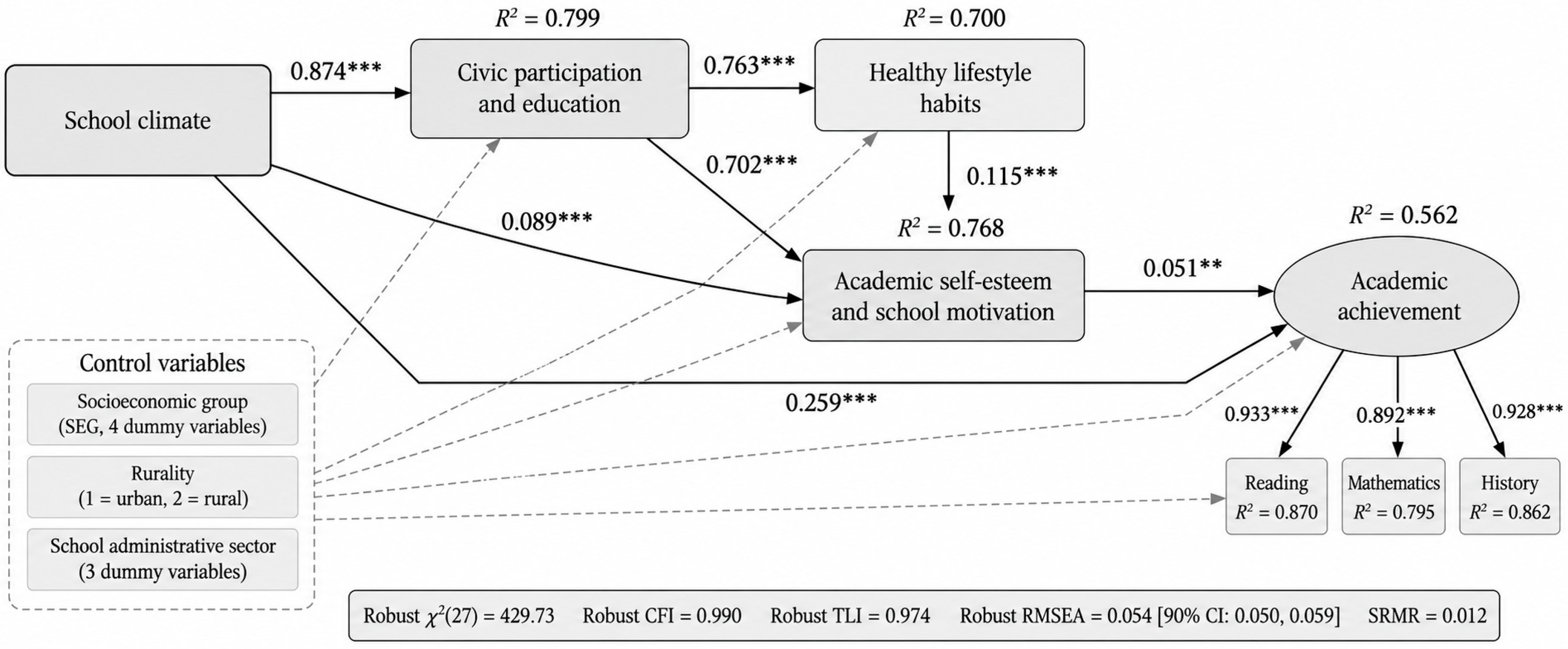

Disclaimer/Publisher’s Note: The statements, opinions and data contained in all publications are solely those of the individual author(s) and contributor(s) and not of MDPI and/or the editor(s). MDPI and/or the editor(s) disclaim responsibility for any injury to people or property resulting from any ideas, methods, instructions or products referred to in the content. |
© 2026 by the authors. Licensee MDPI, Basel, Switzerland. This article is an open access article distributed under the terms and conditions of the Creative Commons Attribution (CC BY) license.