


Highlights
What are the main findings?
- •
- Overall, the Helping Babies Breathe (HBB) course increased neonatal resuscitation knowledge after the course.
- •
- Performance was lower at the three-month assessment than immediately after the course.
What are the implications of the main finding?
- •
- A low-dose high-frequency refreshing course may be offered to help participants maintaining the acquired knowledge.
- •
- Further research including longer follow-up periods may assess the durability of training effects, identify the optimal timing for refresher training, and evaluate whether improved knowledge translates into better clinical practice and neonatal outcomes.
Abstract
Background: The application of neonatal guidelines developed for high-resource settings is often difficult in low-resource settings due to structural differences and lack of equipment and personnel. The Helping Babies Breathe (HBB) program has been developed to overcome this limitation by adapting the protocols to local needs and resources. Objective: To evaluate knowledge after the HBB course among healthcare providers in a low-resource setting. Methods: A prospective, observational assessment of knowledge after a HBB course and knowledge retainment three months later. Participants were 38 healthcare providers in a referral hospital of Abidjan in Côte d’Ivoire. A multiple-choice written test was administered before the course, after the course and three months later to assess knowledge changes. Results: Over maximum 18 points, median total score was 14 points (IQR 12–15) before the course, 15 points (IQR 13–16) after the course, and 14 points (IQR 13–15) three months later. A passing criterion of ≥80% was achieved by 26% participants before the course, 58% after the course (p = 0.006) and 39% three months later (p = 0.07). Conclusions: In a referral hospital in Côte d’Ivoire, neonatal resuscitation knowledge of healthcare staff increased after a HBB course but the performance was lower at the three-month assessment than immediately after the course. Further research may assess long-term knowledge retainment and future educational interventions may target other areas of improvement.
1. Introduction
The 2025 report of the United Nations Inter-Agency Group for Child Mortality Estimation indicated approximately 4.9 million deaths in children under 5 years, with half of them occurring within the first 28 days of life [1]. Intrapartum-related complications are the second cause of neonatal mortality and most of them can be prevented or managed with quality care from antenatal to postnatal periods [1,2].
Sub-Saharan Africa accounts for the largest share of neonatal mortality, with 27 deaths per 1000 live births [3]. The 2015 Sustainable Development Goals of the United Nations set the target of lowering child mortality to under 12 per 1000 live births by 2030 [4]. Every year, approximately ten million newborns do not start breathing immediately after birth and require prompt assistance (“the Golden Minute”) to avoid neonatal mortality [4]. However, shortage of professionals and lack of formal education in neonatal resuscitation among birth attendants have a negative impact on neonatal outcomes in low-resource settings [4]. The World Health Organization estimated that countries would require approximately 44.5 health providers for every 10,000 people to meet the Sustainable Development Goal for health and well-being, but the 10 countries with the highest newborn mortality have around 11 health workers for every 10,000 people [5]. In additions, birth attendants are frequently not trained to provide fetal monitoring or newborn resuscitation, leading to delayed ventilation [6].
The application of neonatal guidelines that were developed for high-resource settings is often difficult in low-resource settings due to structural differences and lack of equipment and personnel. The Helping Babies Breathe (HBB) program has been developed to overcome this limitation by adapting the protocols to local needs and resources [7]. The strengths of the program include low cost, feasibility and flexibility that allows country-specific adaptations to meet local needs [8,9]. The program includes a simulation-based approach focusing on practical neonatal resuscitation skills, with additional educational materials such as checklists and questionnaires [7]. The literature showed that HBB contributed to improving knowledge and skills of health care providers and reducing neonatal mortality in low-resource settings [8]. Nonetheless, the retention of learned skills is acknowledged as a major challenge, suggesting the importance of recurrent training [10].
Côte d’Ivoire is one of the countries with the highest neonatal mortality, accounting for 27 deaths per 1000 live births in 2024 [11]. The World Health Organization found persistent inequalities in the coverage of healthcare services, as well as challenges in resource management and quality of care [12]. In 2025, an intervention was implemented in Abidjan (Côte d’Ivoire) to strengthen the quality of maternal and neonatal health. Among the dimensions of the intervention, healthcare providers were trained in neonatal care immediately after birth according to the HBB program.
2. Aim
We aimed to evaluate the knowledge after the HBB course and three months later among healthcare providers in a low-resource setting.
3. Materials and Methods
3.1. Study Design
This prospective assessment evaluated the knowledge after a HBB course and three months later among healthcare providers in a referral hospital of Abidjan in Côte d’Ivoire. The course was carried out within the framework of a broader maternal and neonatal health project.
3.2. Setting
The assessment was carried out at the maternity and neonatology departments of the Centre Hospitalier Régional Félix Houphouët-Boigny (CHR), located in the Abobo East health district of Abidjan (Côte d’Ivoire). The CHR is a secondary-level referral hospital covering more than 1.5 million people and accounting for approximately 7000 births annually. The CHR acts as a key facility for the management of neonatal and obstetric emergencies that cannot be addressed in primary healthcare facilities [13].
3.3. Participants
The participants were the 38 healthcare professionals who were involved in maternal and neonatal care at CHR, including 32 midwives and six clinicians working in the maternity and neonatology services.
3.4. Intervention
The course was carried out within the framework of a broader maternal and neonatal health project (protocol number 06346/MSHPCMU/CAB) that was implemented in the Abobo East health district of Abidjan (Côte d’Ivoire) by the University of Padova (Italy) and the Non-Governmental Organization Doctors with Africa CUAMM (Italy), in partnership with the Ministry of Health (Côte d’Ivoire), and was financed by the Italian Agency for Development Cooperation (AICS) with the support of the Italian Government [13].
The project entitled “Towards Universal Health Coverage: Strengthening the Quality of Maternal and Neonatal Health in Côte d’Ivoire” was launched in March 2025 with a total duration of 36 months. The interventions include infrastructural improvements, provision of modern equipment, development of standardized protocols for emergency identification and management, and training of healthcare providers [14]. In addition, acceptability of care and community engagement are implemented with awareness campaigns, education on maternal and neonatal health and involvement of the local community [14].
In September 2025, an educational course based on the Helping Babies Breathe (HBB) program was conducted in French by a multidisciplinary team comprising two Ministry of Health-certified neonatologists and two pediatricians, supported by three trained facilitators. The course followed the standard HBB program and aimed to provide participants with theoretical knowledge and practical skills for the recognition and management of newborns requiring resuscitation at birth. Emphasis was placed on timely assessment, initial resuscitation steps, effective positive-pressure ventilation, stabilization, and essential newborn care following resuscitation. The training consisted of three 4 h, face-to-face sessions delivered over two consecutive days and included three components: theoretical lessons, practical skill stations, and simulation exercises. Approximately 1.5 h were dedicated to interactive theoretical teaching covering the physiology and pathophysiology of birth, initial newborn assessment and management, resuscitation steps, and positive-pressure ventilation. Sessions also included manikin demonstrations, essential newborn care, and group discussion to facilitate the transition from theoretical knowledge to practical application. A further 1.5 h were devoted to supervised hands-on practice using neonatal manikins. Participants repeatedly practiced the initial resuscitation sequence and ventilation techniques, while facilitators provided immediate feedback and addressed technical difficulties. This approach was intended to promote familiarity with the equipment and procedural competence before simulation-based training. The remaining hour consisted of simulation exercises reproducing clinical situations requiring neonatal resuscitation and stabilization. Three scenarios were performed: a mildly depressed newborn, a severely asphyxiated newborn, and a preterm infant. Participants were required to promptly recognize the clinical condition, initiate appropriate resuscitation, and provide subsequent stabilization according to the HBB approach. Practical and simulation activities used four full-term neonatal manikins, including two NewBorn Anne and two NeoNatalie models (Laerdal, Stavanger, Norway), together with blankets, caps, suction pumps, and self-inflating bags. Standardized manikins allowed resuscitation procedures to be practiced in a controlled and consistent environment. The training was completed according to the predefined schedule, with all three educational components delivered as planned. Following the course, participants received no additional formal training, supervised practice, or refresher sessions before the three-month assessment. Thus, no structured HBB or neonatal resuscitation activities were undertaken during the interval between training and assessment.
3.5. Instruments
A multiple-choice written test was administered before and after the course to assess knowledge acquisition (September 2025), and three months later to assess knowledge retainment (December 2025). The test included 18 items (Supplementary Table S1) and was derived from the Knowledge Check (HBB 2nd Edition), which is a validated standardized questionnaire of the HBB program [15]. The questionnaire evaluates theoretical knowledge of neonatal resuscitation in low-resource settings, including preparation for birth, newborn evaluation, initial steps of birth asphyxia management, cord clamping, bag-mask ventilation, the importance of the “golden minute”, and step-by-step decision-making in neonatal resuscitation [15].
3.6. Statistical Analysis
Numerical data were summarized as median and interquartile range (IQR), while categorical data as absolute and relative frequency (percentage). At each timepoint (before the course, after the course and three months later), participant’s knowledge was scored by summing the number of correct answers in the 18 items, and the total score could range from 0 to 18 points. Effect sizes for score changes between consecutive timepoints were reported as median difference with 99% bootstrap confidence intervals. Due to coverage error of bootstrap confidence intervals for percentiles in small-sized groups, empirical bootstrap 99% confidence intervals were calculated using re-sampling with replacement (1000 samples of the same size as the original). A passing criterion of ≥80% (15 correct answers out of 18) was considered according to a previous study in Ethiopia [16], and pairwise comparisons between consecutive timepoints were performed using the McNemar exact test (function mcnemar.exact in package exact2x2). In addition, the number of correct answers for each item was reported at the three timepoints and compared between consecutive timepoints using the McNemar exact test (function mcnemar.exact in package exact2x2). All tests were two-sided and a p-value less than 0.05 was considered statistically significant. Adjustment for multiple testing was not applied given the exploratory (rather than confirmatory) purpose, and item-level comparisons were presented only as descriptive and hypothesis-generating. As subgroup analysis, the total score was stratified in clinicians and midwives with descriptive purpose and statistical testing was not performed due to the small subgroup size. The statistical analysis was carried out with R 4.6 (R Foundation for Statistical Computing, Vienna, Austria) [17].
4. Results
Thirty-eight health care providers (36 women and two men) attended the course and were assessed before the course, after the course and three months later. The sample included 32 midwives and six clinicians with a median 12 months (IQR 6–42) of experience in neonatal care.
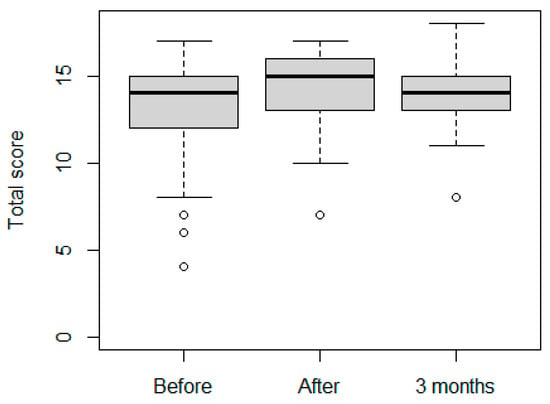
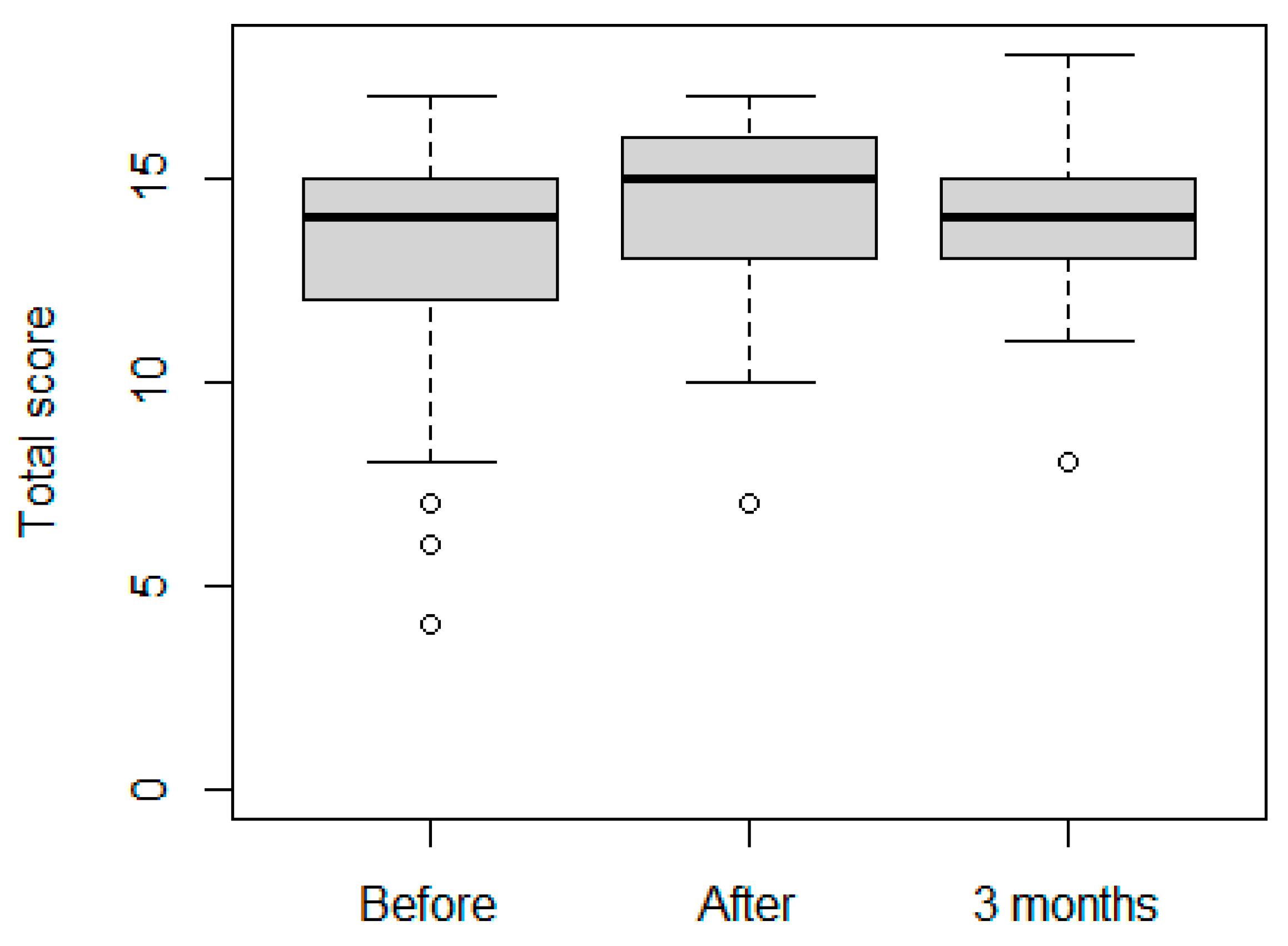
Overall, the median total score was 14 points (IQR 12–15) before the course, 15 points (IQR 13–16) after the course, and 14 points (IQR 13–15) three months later (Figure 1). Median difference in score change from before to after the course was 1.0 points (99% bootstrap confidence interval −0.4 to 1.9 points). Median difference in score change from after the course to three months later was 0.0 points (99% bootstrap confidence interval −0.8 to 1.1 points).
Figure 1.
Total score at the three timepoints (before the course, after the course and three months later): box and whiskers plots.
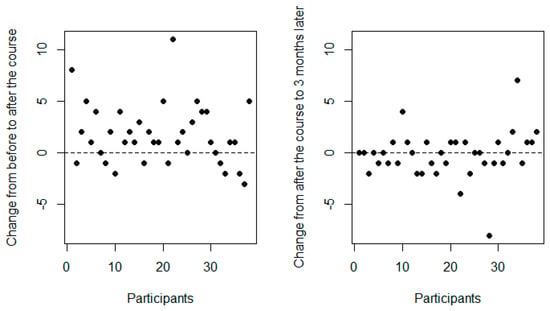
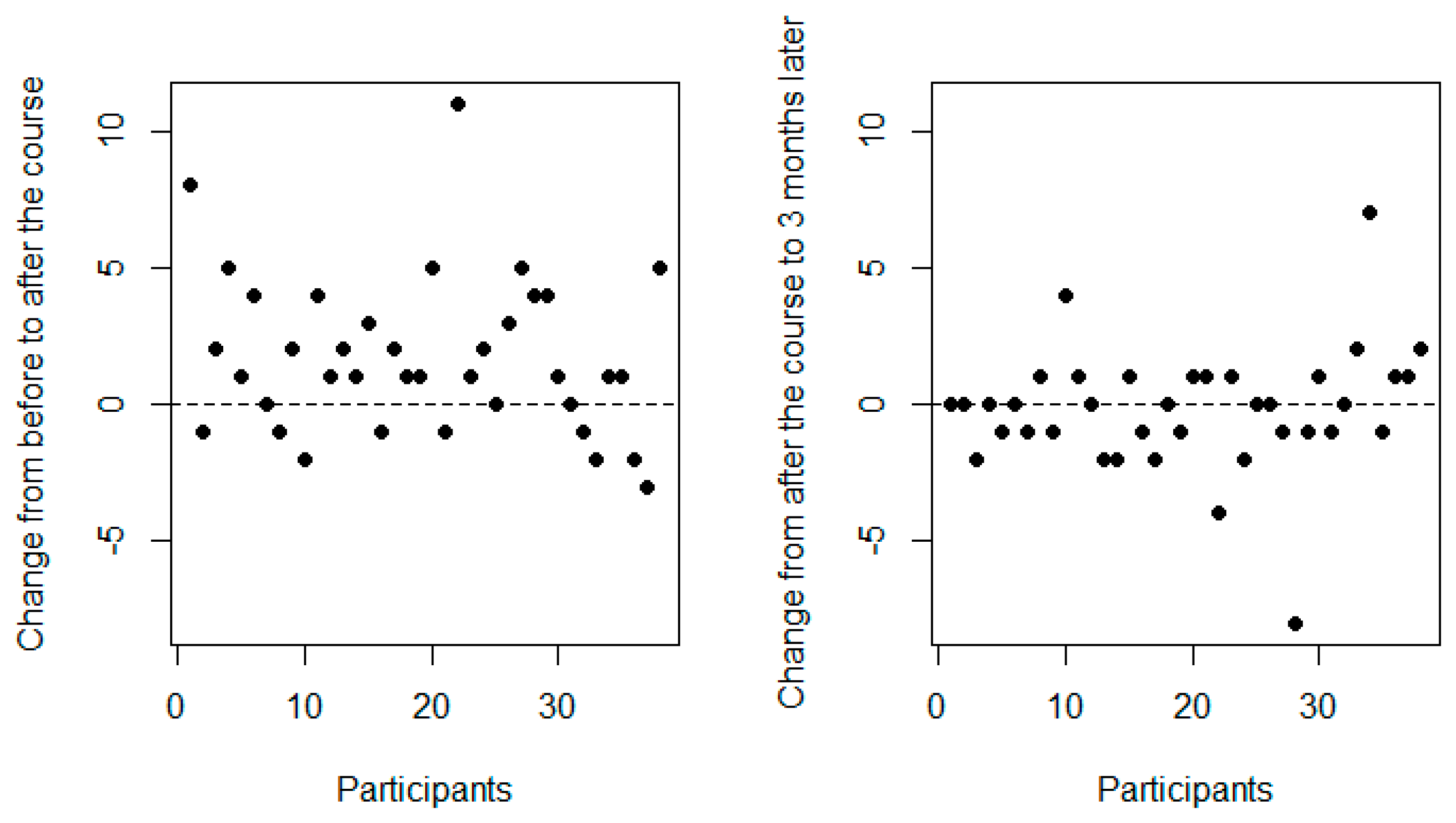
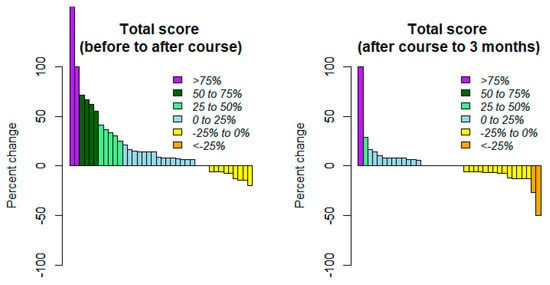
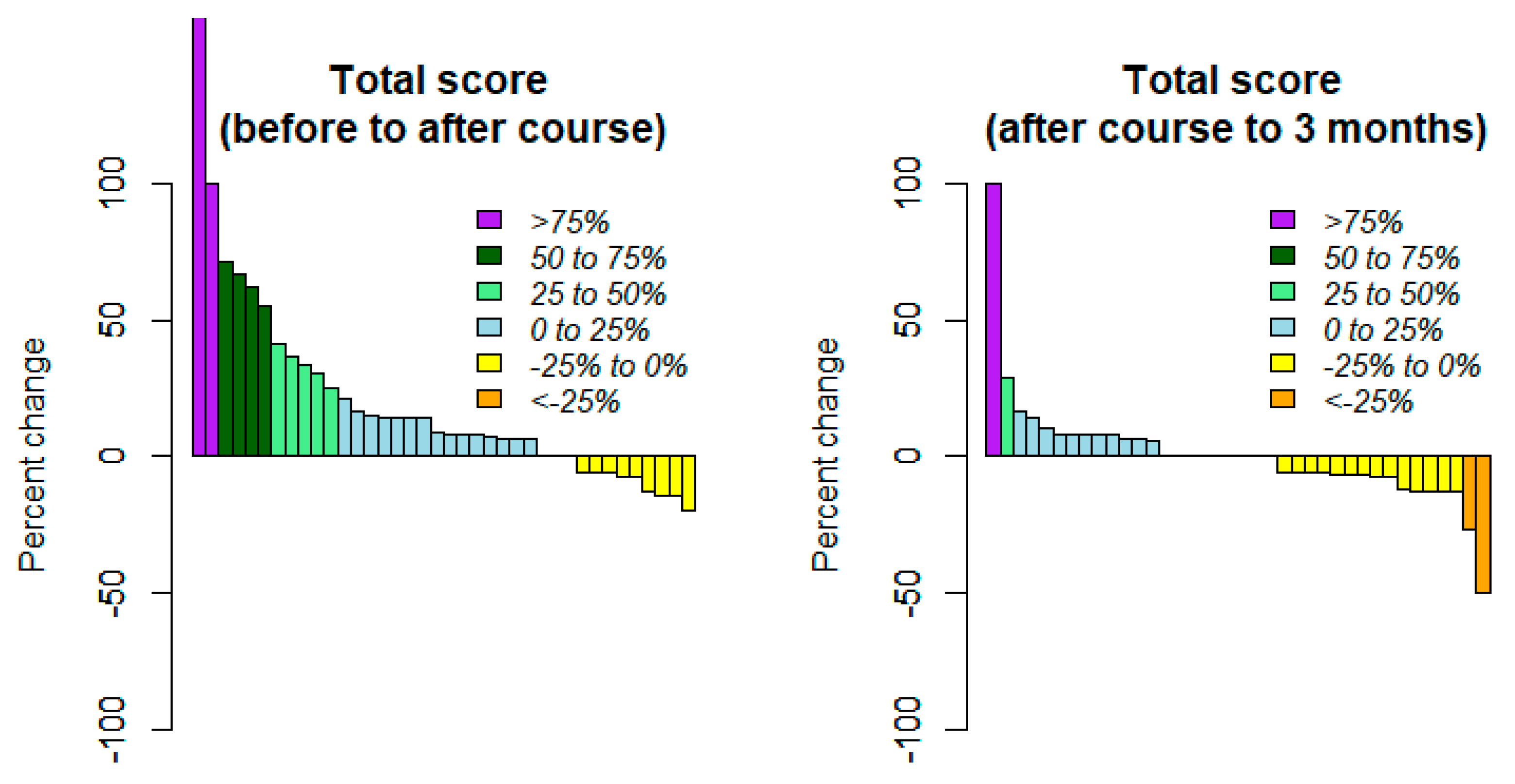
The scatterplots in Figure 2 show how the total score of each participant changed from before to after the course, and from after the course to three months later. The individual waterfall plots in Figure 3 display the individual percent change in the total score over time.
Figure 2.
Change in the total score from before the course to after the course (left panel) and from after the course to three months later (right panel): scatter plots.
Figure 3.
Percent change in the total score from before to after the course (left panel) and from after the course to three months later (right panel): individual waterfall plots.
Among the six clinicians, the median total score was 14 points (IQR 12–14) before the course, 16 points (IQR 16–17) after the course and 15 points (IQR 14–17) three months later. Among the 32 midwives, the median total score was 14 points (IQR 11–15) before the course, 14 points (IQR 13–15) after the course and 14 points (IQR 13–15) three months later.
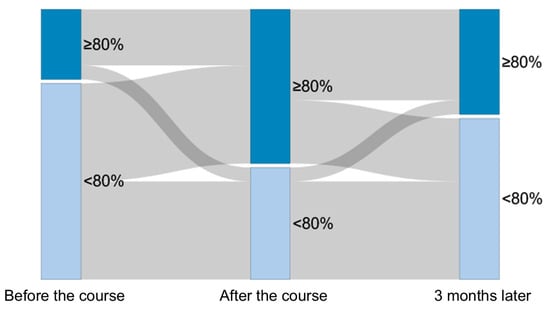
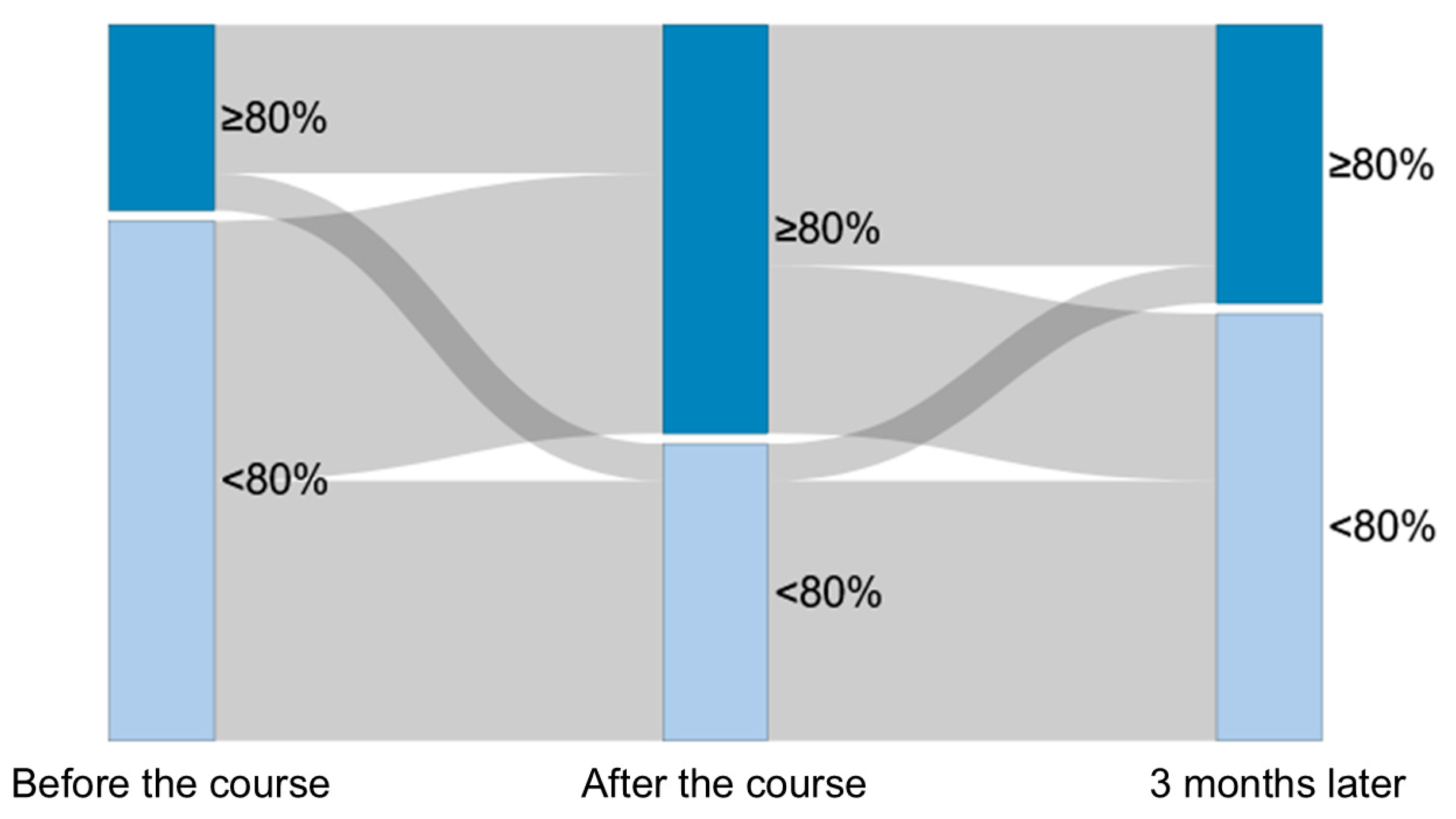
Overall, a passing criterion of ≥80% was achieved by 10/38 participants (26%) before the course, 22/38 (58%) after the course (p = 0.004 compared to the previous assessment) and 15/38 (39%) three months later (p = 0.07 compared to the previous assessment). Figure 4 shows participants’ performance in the consecutive timepoints.
Figure 4.
Passing criterion of ≥80% achieved by the participants before the course, after the course and three months later: Sankey diagram. The line widths are proportional to the number of participants in each flow.
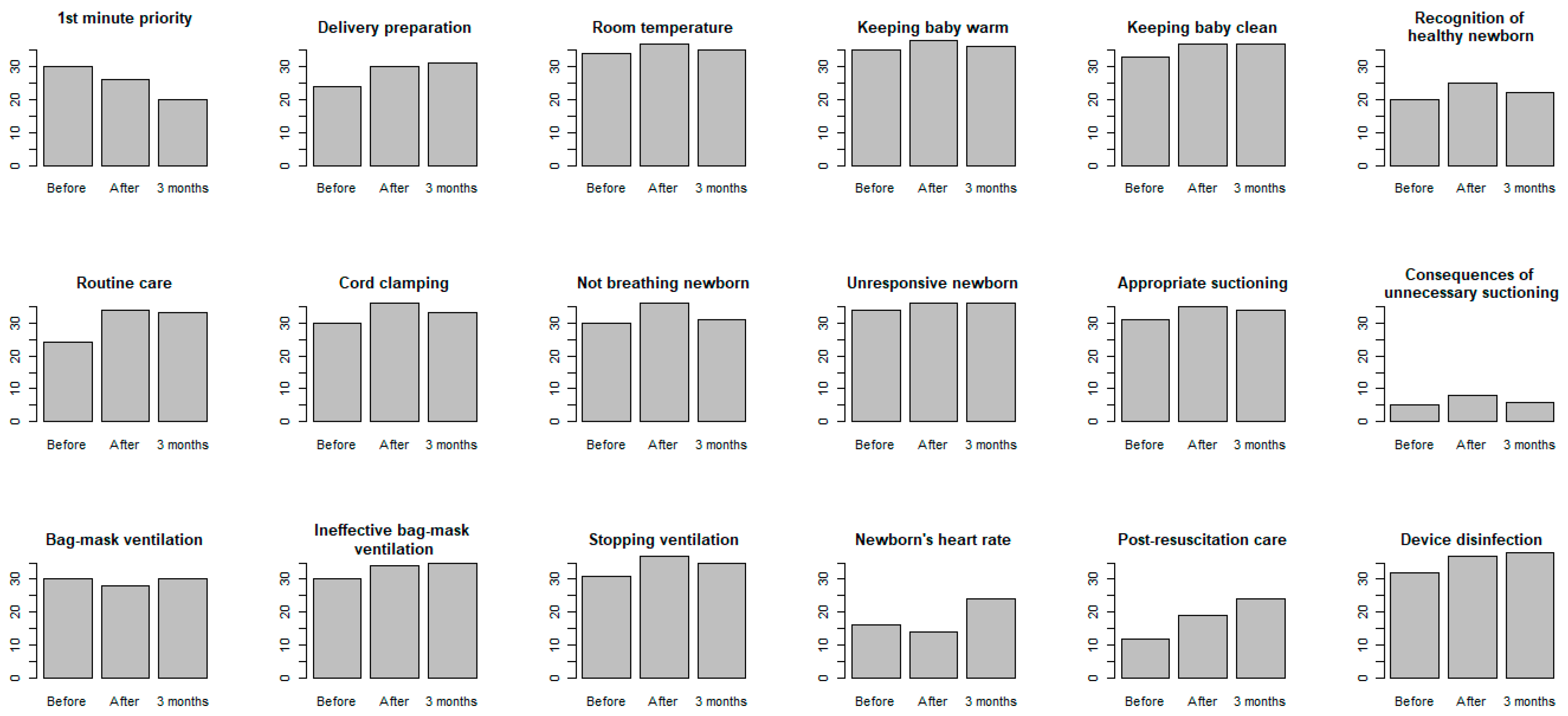
Figure 5 displays the number of correct answers for each item at the three timepoints (before the course, after the course and three months later). Statistically significant changes were observed only in routine care (from 63% before to 89% after the course, p = 0.01) and knowledge on newborn’s heart rate (from 37% after the course to 63% three months later, p = 0.01), while there were no statistically significant changes in the other items across the three timepoints. Item-level comparisons were presented only as descriptive and hypothesis-generating. There were no missing paired observations in the item-level analyses. Full numerical results are reported in Supplementary Table S2.
Figure 5.
Number of correct answers for each item at the three timepoints (before the course, after the course and three months later): bar-plots. Item-level comparisons were presented only as descriptive and hypothesis-generating.
5. Discussion
Our report showed an overall knowledge improvement on neonatal resuscitation after a HBB course among healthcare providers in a referral hospital in Côte d’Ivoire, although the performance was lower at the three-month assessment than immediately after the course.
The course incorporated several components consistent with the Helping Babies Breathe and Helping Babies Survive educational frameworks [7]. Previous studies have established the efficacy of simulation-based training in acquiring neonatal resuscitation skills, where the trainees can apply theoretical knowledge in a controlled and safe environment [18,19]. Moreover, a multi-country study showed that knowledge improvement can be achieved by educational training activities irrespective of different healthcare systems, available resources and professional background [18].
The sequential goals of a neonatal resuscitation course include improvements of knowledge, manual skills and management of the scenario, followed by transfer on clinical practice. While the literature shows the clinical effectiveness of HBB course [8,9,20], we focused on knowledge improvement and decline that are the basis for building the clinical success of the program. Our findings contributed to the evidence about knowledge benefits after a HBB course, and confirmed that knowledge decline might occur even at short-term [8,21,22,23,24,25]. Moreover, they suggested that the minimal duration of the course (4 h) might provide limited benefits when baseline knowledge is low [7,16]. In low-resource settings, training programs on newborn resuscitation may result in common decline in performance over time, and skills deterioration may occur as early as 12 weeks after the initial training [24,25]. Previous studies recognized knowledge deterioration as one of the bottlenecks for long-term educational efficacy, and suggested low-dose high-frequency training as a potential approach for knowledge retention over time [23,25,26,27,28,29]. In these settings, the number of healthcare providers is often limited and resuscitation opportunities may be infrequent, hence routine practice of these skills is not always feasible. In our context, we believe that the involvement of local trainers and facilitators may have contributed to participant engagement and course acceptability [19,30]. Nonetheless, low-dose high-frequency training should be implemented to improve the long-term educational efficacy.
Beyond the overall knowledge improvement, the data might suggest some speculations about specific topics that could be targeted in future educational interventions. The number of correct answers regarding some topics (such as first minute priority, recognition of healthy newborn, consequences of unnecessary suctioning, bag-mask ventilation, newborn’s heart rate and post-resuscitation care) suggested that birth pathophysiology and bag-mask ventilation should require more attention during future training activities. These weak points may be mirrored by suboptimal practice in clinical setting [31]. On the other hand, topics such as thermal management, hygiene, routine care, cord management, care of depressed newborns, appropriate suctioning, stopping ventilation and device disinfection seemed to be well acquired during the course or consolidated in routine clinical practice.
Nonetheless, the impact of the HBB program on neonatal mortality may be limited by several factors that extend beyond the training of healthcare staff alone [8]. Although the acquisition of knowledge and practical skills in neonatal resuscitation represents an essential component of improving the management of birth asphyxia, training cannot fully address the structural and organizational barriers that may affect the timely provision of appropriate care [6,8]. Additional strategies are therefore needed to overcome persistent health system constraints, including staff shortages, which may limit both the participation of healthcare workers in training activities and their ability to provide adequate care during periods of high workload. Staff turnover represents another important challenge, as trained healthcare providers may subsequently leave their facilities or be transferred to other settings, resulting in a progressive loss of trained personnel and requiring repeated investments in training [6,8]. Furthermore, the effectiveness of neonatal resuscitation training may be compromised by the unavailability or inadequate maintenance of essential resuscitation equipment, as well as by poor infrastructure and limited access to basic resources. In such circumstances, even healthcare workers with adequate knowledge and skills may face difficulties in translating their training into effective clinical practice [6,8]. Another relevant issue is the high frequency of non-institutional deliveries in many low-resource settings. In these contexts, a substantial proportion of women may give birth outside healthcare facilities and therefore without the immediate support of trained healthcare providers or access to essential neonatal resuscitation equipment [5,6]. This situation is particularly concerning in cases of unexpected birth complications, when the rapid recognition of neonatal distress and the initiation of appropriate resuscitation measures are critical. In addition, when complications arise during or shortly after delivery, delays in reaching an adequately equipped health facility may further reduce the opportunity for timely intervention. Such delays can be related to inadequate referral systems, limited availability of transportation, long distances between communities and healthcare facilities, and poor road or communication infrastructure [5,6]. Consequently, improving neonatal outcomes is likely to require a comprehensive approach that combines healthcare worker training with broader health-system interventions, including the availability of adequately trained staff, essential equipment, functional referral pathways, and timely access to appropriate care. These complementary strategies may be particularly important for ensuring that the knowledge and skills acquired through programs such as HBB can be effectively translated into improved neonatal survival.
The present report has some limitations that should be acknowledged. First, the limited sample size reduced the capability of detecting some differences over time, and suggests caution in the interpretation of the findings. Moreover, it precluded any reasonable comparisons between subgroups of participants. Second, the single-center design limited the generalizability of the findings to similar settings, hence different knowledge improvement and retention may be found in other healthcare systems with different professional background and resource availability. For example, participants with low baseline knowledge may show the largest magnitude of improvement due to the ceiling imposed by the maximum score of 18, whereas participants with high baseline knowledge may improve the overall achievement of the passing criterion of ≥80%. Third, the follow-up assessment was restricted to three months, hence the data provide only limited information about the onset of knowledge decline. Long-term assessments are required to fully understand the durability of training effects and to identify the optimal timing for refresher training. Finally, only theoretical knowledge was assessed due to time constraints, whereas changes in practical skills or quality of care at birth in clinical practice could not be evaluated. The HBB program includes both theoretical and practical education, which should be assessed after the training [7]. Of note, theoretical knowledge and practical skills may follow different temporal trajectories, with practical skills declining earlier than theoretical knowledge [18,24].
6. Conclusions
In a referral hospital in Côte d’Ivoire, neonatal resuscitation knowledge of healthcare staff was increased after a HBB course but the performance was lower at the three-month assessment than immediately after the course. Further research should include longer follow-up periods (such as 6–12 months) to better understand the durability of training effects and to identify the optimal timing for refresher training. Moreover, future educational interventions may target other areas of improvement such as first minute priority, recognition of healthy newborn, consequences of unnecessary suctioning, bag-mask ventilation, newborn’s heart rate and post-resuscitation care.
Supplementary Materials
The following supporting information can be downloaded at: https://www.mdpi.com/article/10.3390/children13101286/s1.
Author Contributions
Conceptualization: P.E.V. and D.T.; data curation: A.P.R.N.K., A.G.N.K., A.M.B. and L.C.; formal analysis, F.C.; investigation: F.C. and D.T.; project administration: G.M. and G.P.; supervision: P.E.V., A.P.R.N.K. and A.G.N.K.; writing—original draft preparation: F.C. and D.T.; writing—review and editing: G.M., P.E.V., A.P.R.N.K., A.G.N.K., A.M.B., L.C. and G.P. All authors have read and agreed to the published version of the manuscript.
Funding
The report was part of a maternal and neonatal health project financed by the Italian Agency for Development Cooperation (AICS) (AID13135/01/0).
Institutional Review Board Statement
Formal ethics committee approval was not sought because the activities described in this report were carried out as educational activities rather than as research involving human subjects. This report summarized the outcomes arising from educational activities that were performed within a health project framework approved by the Ministry of Health of Côte d’Ivoire (protocol number 06346/MSHPCMU/CAB. 6 September 2024). On this basis, the work was considered to fall outside the scope of formal ethics committee review. Participant privacy was ensured (analysis of anonymized dataset, no identifying information presented in the manuscript) and the course and the assessment did not expose the participants to any harms.
Informed Consent Statement
Informed consent to attend the course and participate in the research assessments was obtained from all participants.
Data Availability Statement
The datasets used and/or analyzed are available from the corresponding author on reasonable request.
Acknowledgments
We are very grateful to the participants of the course.
Conflicts of Interest
The authors declare no conflicts of interest.
Abbreviations
| CHR | Centre Hospitalier Régional Félix Houphouët-Boigny |
| HBB | Helping Babies Breathe |
| IQR | interquartile range |
References
- United Nations Interagency Group for Child Mortality Estimation (UN IGME). Levels and Trends in Child Mortality: Report 2025; UNICEF: New York, NY, USA, 2026; Available online: https://childmortality.org/reports. (accessed on 6 July 2026).
- World Health Organization. Newborn Mortality 2024. Available online: https://www.who.int/news-room/fact-sheets/detail/newborn-mortality (accessed on 6 July 2026).
- Jena, B.H.; Jaldo, M.M.; Demesa, Y.Y.; Kebede, B.A.; Melaku, L.M. Magnitude of neonatal mortality and its association with maternal and child health care in sub-Saharan Africa: A systematic review and meta-analysis. Arch. Public Health 2025, 83, 219. [Google Scholar] [CrossRef] [Scilit]
- Versantvoort, J.M.D.; Kleinhout, M.Y.; Ockhuijsen, H.D.L.; Bloemenkamp, K.; De Vries, W.B.; Van Den Hoogen, A. Helping Babies Breathe and its effects on intrapartum-related stillbirths and neonatal mortality in low-resource settings: A systematic review. Arch. Dis. Child. 2020, 105, 127–133. [Google Scholar] [CrossRef] [Scilit]
- UNICEF. Every Child Alive: The Urgent Need to End Newborn Deaths; UNICEF: New York, NY, USA, 2018; Available online: https://www.unicef.org/reports/every-child-alive-urgent-need-end-newborn-deaths (accessed on 6 July 2026).
- Enweronu-Laryea, C.; Dickson, K.E.; Moxon, S.G.; Simen-Kapeu, A.; Nyange, C.; Niermeyer, S.; Bégin, F.; Sobel, H.L.; Lee, A.C.C.; von Xylander, S.R.; et al. Basic newborn care and neonatal resuscitation: A multi-country analysis of health system bottlenecks and potential solutions. BMC Pregnancy Childbirth 2015, 15, S4. [Google Scholar] [CrossRef] [Scilit]
- American Academy of Pediatrics. Helping Babies Breathe, 2nd Edition Update Guide; American Academy of Pediatrics: Elk Grove Village, IL, USA, 2016; Available online: https://www.aap.org/en/aap-global/helping-babies-survive/our-programs/helping-babies-breathe/helping-babies-breathe-2nd-edition/ (accessed on 1 September 2026).
- Morris, S.M.; Fratt, E.M.; Rodriguez, J.; Ruman, A.; Wibecan, L.; Nelson, B.D. Implementation of the Helping Babies Breathe Training Program: A Systematic Review. Pediatrics 2020, 146, e20193938. [Google Scholar] [CrossRef] [Scilit]
- Niermeyer, S.; Little, G.A.; Singhal, N.; Keenan, W.J. A Short History of Helping Babies Breathe: Why and How, Then and Now. Pediatrics 2020, 146, S101–S111. [Google Scholar] [CrossRef] [Scilit]
- Agudelo-Pérez, S.; Cifuentes-Serrano, A.; Ávila-Celis, P.; Oliveros, H. Effect of the Helping Babies Breathe Program on Newborn Outcomes: Systematic Review and Meta-Analysis. Medicina 2022, 58, 1567. [Google Scholar] [CrossRef] [Scilit]
- World Bank Open Data. Available online: https://data.worldbank.org (accessed on 6 July 2026).
- World Health Organization. WHO Results Report 2024–2025: Côte d’Ivoire 2024. Available online: https://www.who.int/about/accountability/results/who-results-report-2024-2025/country-profile/2024/c-te-d-ivoire (accessed on 6 July 2026).
- Università Degli Studi di Padova; Collegio Universitario Aspiranti Medici Missionari—Medici con l’Africa. DUP—Documento Unico di Progetto per la Preparazione Della Proposta Iniziale e per la Presentazione Dei Rapporti, Delle Modifiche e Delle Proroghe Convenzionali [Documento Unico di Progetto (DUP)]; Università Degli Studi di Padova: Padua, Italy, 2024. [Google Scholar]
- Collegio Universitario Aspiranti Medici Missionari CUAMM. Termes de Référence de la Formation Pratique en Réanimation Néonatale; Collegio Universitario Aspiranti Medici Missionary: Abidjan, Cote D’Ivoire, 2025. [Google Scholar]
- American Academy of Pediatrics. Helping Babies Breathe Facilitator Tools-Knowledge Check. Available online: https://www.aap.org/en-us/Documents/hbs_hbb_knowledgecheck.pdf (accessed on 6 July 2026).
- Gamtessa, L.C.; Kebede, K.M. Knowledge Outcome of Helping Babies Breathe Training in Southern Nations, Nationalities and People’s Region, Ethiopia: A Pre- and Post-Test Study. Res. Rep. Neonatol. 2020, 10, 81–88. [Google Scholar] [CrossRef] [Scilit]
- R Core Team. R: A Language and Environment for Statistical Computing; R Foundation for Statistical Computing: Vienna, Austria, 2026; Available online: https://www.R-project.org/ (accessed on 6 July 2026).
- Trevisanuto, D.; Ibrahim, S.A.; Doglioni, N.; Salvadori, S.; Ferrarese, P.; Zanardo, V. Neonatal resuscitation courses for pediatric residents: Comparison between Khartoum (Sudan) and Padova (Italy). Pediatr. Anesth. 2007, 17, 28–31. [Google Scholar] [CrossRef] [Scilit]
- Jabir, M.M.; Doglioni, N.; Fadhil, T.; Zanardo, V.; Trevisanuto, D. Knowledge and practical performance gained by Iraqi residents after participation to a neonatal resuscitation program course. Acta Paediatr. 2009, 98, 1265–1268. [Google Scholar] [CrossRef] [Scilit]
- Msemo, G.; Massawe, A.; Mmbando, D.; Rusibamayila, N.; Manji, K.; Kidanto, H.L.; Mwizamuholya, D.; Ringia, P.; Ersdal, H.L.; Perlman, J. Newborn mortality and fresh stillbirth rates in Tanzania after helping babies breathe training. Pediatrics 2013, 131, e353–e360. [Google Scholar] [CrossRef] [Scilit]
- Bang, A.; Patel, A.; Bellad, R.; Gisore, P.; Goudar, S.S.; Esamai, F.; Liechty, E.A.; Meleth, S.; Goco, N.; Niermeyer, S.; et al. Helping Babies Breathe (HBB) training: What happens to knowledge and skills over time? BMC Pregnancy Childbirth 2016, 16, 364. [Google Scholar] [CrossRef] [Scilit]
- Emmanuel, A.; Gabriel, I.; Aliyu, D. The impact of educational interventions on the competence of nurses and midwives in neonatal resuscitation in sub-Saharan Africa: A systematic review. J. Public Health Afr. 2025, 16, 1326. [Google Scholar] [CrossRef] [Scilit]
- Sihota, D.; Lee Him, R.; Dominguez, G.; Harrison, L.; Vaivada, T.; Bhutta, Z.A. Effectiveness of Neonatal Resuscitation Training Programs, Implementation, and Scale-Up in Low- and Middle-Income Countries. Neonatology 2025, 122, 52–83. [Google Scholar] [CrossRef] [Scilit]
- Reisman, J.; Arlington, L.; Jensen, L.; Louis, H.; Suarez-Rebling, D.; Nelson, B.D. Newborn Resuscitation Training in Resource-Limited Settings: A Systematic Literature Review. Pediatrics 2016, 138, e20154490. [Google Scholar] [CrossRef] [Scilit]
- Drake, M.; Bishanga, D.R.; Temu, A.; Njozi, M.; Thomas, E.; Mponzi, V.; Arlington, L.; Msemo, G.; Azayo, M.; Kairuki, A.; et al. Structured on-the-job training to improve retention of newborn resuscitation skills: A national cohort Helping Babies Breathe study in Tanzania. BMC Pediatr. 2019, 19, 51. [Google Scholar] [CrossRef] [Scilit]
- Sendo, E.G.; Aga, F.; Gebrewold, L.A. Retention of knowledge and skills among midwives one year after completing helping babies breathe pre-service training in Ethiopia: A non-randomized quasi-experimental study. Matern. Health Neonatol. Perinatol. 2025, 11, 15. [Google Scholar] [CrossRef] [Scilit] [PubMed] [PubMed Central]
- Trevisanuto, D.; Ferrarese, P.; Cavicchioli, P.; Fasson, A.; Zanardo, V.; Zacchello, F. Knowledge gained by pediatric residents after neonatal resuscitation program courses. Pediatr. Anesth. 2005, 15, 944–947. [Google Scholar] [CrossRef] [Scilit]
- Haynes, J.C.; Rettedal, S.I.; Ushakova, A.; Perlman, J.M.; Ersdal, H.L. How Much Training Is Enough? Low-Dose, High-Frequency Simulation Training and Maintenance of Competence in Neonatal Resuscitation. Simul. Healthc. 2024, 19, 341–349. [Google Scholar] [CrossRef] [Scilit]
- Bameri, F.; Ghaderi, R.; Aboubakri, O.; Heydarikhayat, N. Effect of continuous workshop training of the helping babies breathe program on the retention of midwives’ knowledge and skills: A clinical trial study. Nurse Educ. Pract. 2024, 78, 104020. [Google Scholar] [CrossRef] [Scilit]
- Vadla, M.S.; Mdoe, P.; Moshiro, R.; Haug, I.A.; Gomo, Ø.; Kvaløy, J.T.; Oftedal, B.; Ersdal, H. Neonatal Resuscitation Skill-Training Using a New Neonatal Simulator, Facilitated by Local Motivators: Two-Year Prospective Observational Study of 9000 Trainings. Children 2022, 9, 134. [Google Scholar] [CrossRef] [Scilit]
- Trevisanuto, D.; Bertuola, F.; Lanzoni, P.; Cavallin, F.; Matediana, E.; Manzungu, O.W.; Gomez, E.; Da Dalt, L.; Putoto, G. Effect of a Neonatal Resuscitation Course on Healthcare Providers’ Performances Assessed by Video Recording in a Low-Resource Setting. PLoS ONE 2015, 10, e0144443. [Google Scholar] [CrossRef] [Scilit]
Disclaimer/Publisher’s Note: The statements, opinions and data contained in all publications are solely those of the individual author(s) and contributor(s) and not of MDPI and/or the editor(s). MDPI and/or the editor(s) disclaim responsibility for any injury to people or property resulting from any ideas, methods, instructions or products referred to in the content. |
© 2026 by the authors. Licensee MDPI, Basel, Switzerland. This article is an open access article distributed under the terms and conditions of the Creative Commons Attribution (CC BY) license.