


Abstract
Objective: To assess the experience and educational needs of hospital staff who care for pediatric patients with tracheostomies. Study Design: Staff were surveyed and participated in semi-structured, facilitated focus groups regarding their experiences caring for children with tracheostomies and their educational needs. Survey data were analyzed using descriptive statistics and Kruskal–Wallis nonparametric tests. Focus groups were transcribed verbatim and coded for thematic analysis. Results: Pediatric advanced practice providers, nurses, physicians, and respiratory therapists (152/353, 43%) completed the survey. Within the last year, 76% of staff had worked with a tracheostomy-dependent child. However, up to 59% of staff had not performed at least one tracheostomy skill (e.g., tracheostomy site assessment, tube change, etc.). Staff reported the least confidence in changing tracheostomy tubes and using home ventilators and rated these skills as most important for additional education. Forty-three staff members participated in 1 of 10 focus groups. Three themes were identified: building staff competencies in tracheostomy care, promoting the caregiver development of tracheostomy skills, and building caregiver preparedness for home life. Staff emphasized the need for participating in emergency simulations and developing their skills to better prepare caregivers for home life. They indicated a need to streamline the discharge process, gain knowledge of community resources, and develop a standardized team to provide discharge teaching. Conclusions: Hospital staff responsible for providing care to tracheostomy-dependent pediatric patients had limited opportunities to learn and maintain their skills. Survey and focus group findings can guide development of continuing education to optimize the care of tracheostomy-dependent children.
1. Introduction
Over 26,000 tracheostomies were performed in pediatric patients between 2003 and 2016 [1], and children with tracheostomies are increasing in prevalence, due in part from the increased survival of infants born with prematurity and congenital anomalies [2,3,4]. Tracheostomies provide life-saving airway patency and allow for mechanical ventilation in patients with chronic respiratory failure. They can reduce the risk of death, the occurrence of ventilator associated pneumonia (VAP), and the duration of mechanical ventilation [5]. They can also facilitate improved communication skills, oral hygiene, and the ability to swallow and drink/feed orally [5]. In these patients, tracheostomies also facilitate hospital discharge to home or a chronic care facility, leading to a decreased length of hospital stay for patients in the intensive care setting [5,6]. However, when compared with adults with tracheostomies, tracheostomy-dependent pediatric patients (TDPP) have higher rates of hospital readmission, morbidity, and mortality due to the complexity of their underlying medical condition and the smaller size of their airway anatomy [2,7,8,9]. Bleeding (3–7% of children), tracheostomy tube dislodgement (4%), and tracheostomy tube obstruction (7–16%) are among the most common early and late complications contributing to morbidity and mortality [10,11,12].
When tracheostomy-related emergencies occur in the hospital setting, frontline staff who comprise the patient’s primary team are usually the first to respond and stabilize the patient. However, because tracheostomies occur in less than 1% of children [12], staff confidence, knowledge, and experience working with these children vary widely [13,14,15,16]. Published clinical practice guidelines focus on the elements that should be included in caregiver education [17]. While a few countries have recommendations regarding the training of hospital staff in the care of adults with tracheostomies [18,19], there are no similar national or international guidelines for staff who work with TDPP. In addition, very limited studies have explored the experiences of hospital staff working with TDPP or surveyed them to identify their educational needs [20,21,22]. While some studies base curriculum design on a clinical consensus statement [23], recent studies that implement an educational intervention do not report the inclusion of a greater needs assessment to guide curriculum development [13,14,15,24,25,26,27]. Including frontline staff in curriculum design to understand their educational needs would help promote experiential learning grounded in adult learning theory and engage staff to identify relevant learning gaps, practice emergency response, and increase their support of families. We therefore conducted a mixed-methods needs assessment consisting of a survey and focus groups of pediatric staff who care for TDPP. We aimed to explore their experiences and educational needs that will help inform the development of an educational program to improve the knowledge, skills, and self-efficacy of hospital staff who work with TDPP.
2. Materials and Methods
2.1. Participants, Setting, and Approval
In 2021–2022, we conducted a mixed-methods study consisting of a survey and focus groups to ascertain staff confidence, clinical experiences, and educational needs to provide care to TDPP. Eligible staff included advanced practice providers, nurses, respiratory therapists, and attending and fellow physicians in the neonatal, pediatric, and pediatric cardiac intensive care units at the University of Rochester Medical Center, because they provide care to the majority of TDPP in the hospital. The University of Rochester institutional review board approved this study with a waiver of consent (study number 00005759). Study design followed the Standards for Reporting Qualitative Research [28].
2.2. Survey: Design, Distribution, and Data Analysis
The survey was designed, piloted, and iteratively revised by a multidisciplinary team of experts in neonatology, otolaryngology, and pediatric critical care following a systematic approach to survey design [29]. Questions focused on staff experience, confidence, and ongoing educational needs. Initial questions were developed by the multidisciplinary team based on their experiences caring for and working with staff who provided patient care to TDPP. These survey questions were piloted with a group of staff who did not participate in the study, and the questions were refined based on feedback. Utilizing REDCap for distribution [30], the final survey consisted of 13 questions using 6-point Likert scale ratings, multiple-choice options, and open-text responses (Supplementary Materials S1). Embedded links and QR codes were distributed at meetings and via email. Participation was anonymous and voluntary.
Demographic data are presented as descriptive statistics. Likert scale ratings are noted as medians with interquartile ranges (Q1, Q3). We utilized the Kruskal–Wallis nonparametric test to analyze Likert scale ratings based on staff years of experience working with TDPP. Data analyses were conducted with Statistics Kingdom [31]. Significance was accepted at p ≤ 0.05.
2.3. Focus Groups: Interview Guide, Staff Participation, and Data Analysis
We utilized convenience sampling to invite staff who completed the survey to participate in an in-person semi-structured focus group. Convenience sampling helped facilitate the scheduling of staff who had time constraints due to different and busy clinical schedules. The interview guide consisted of 17 open-ended questions to prompt staff reflection on their training, clinical experiences, and interactions with caregivers of TDPP (Supplementary Materials S2). We developed and iteratively revised the guide to ensure clarity and relevance of questions. Investigators (L.D., R.D., A.F., K.P., D.S., and T.W.) paired up to co-facilitate focus groups until thematic saturation was reached. Focus groups were audio recorded, transcribed verbatim using Rev Transcription (Rev.com, Austin, TX, USA), and checked for accuracy.
Utilizing the principles of grounded theory, two investigators coded each transcript independently, then discussed and refined codes [32,33]. They applied codes to subsequent transcripts and refined them further as needed. If they disagreed on a code, they involved a third investigator to reach agreement. All investigators participated in a series of immersion and crystallization cycles to draw contextual meaning, discuss themes and subthemes, and develop visual aids to conceptualize relationships [34,35]. To support the trustworthiness of data analyses, a fourth investigator reviewed the codes of 75% of transcripts and the audit trail of data analyses [32].
3. Results
3.1. Survey
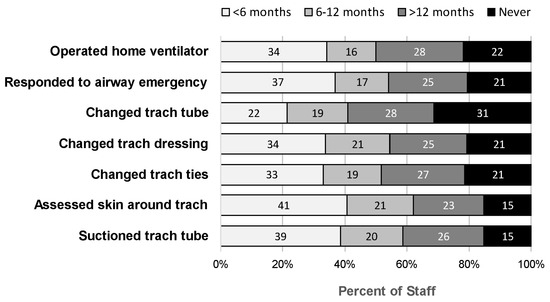
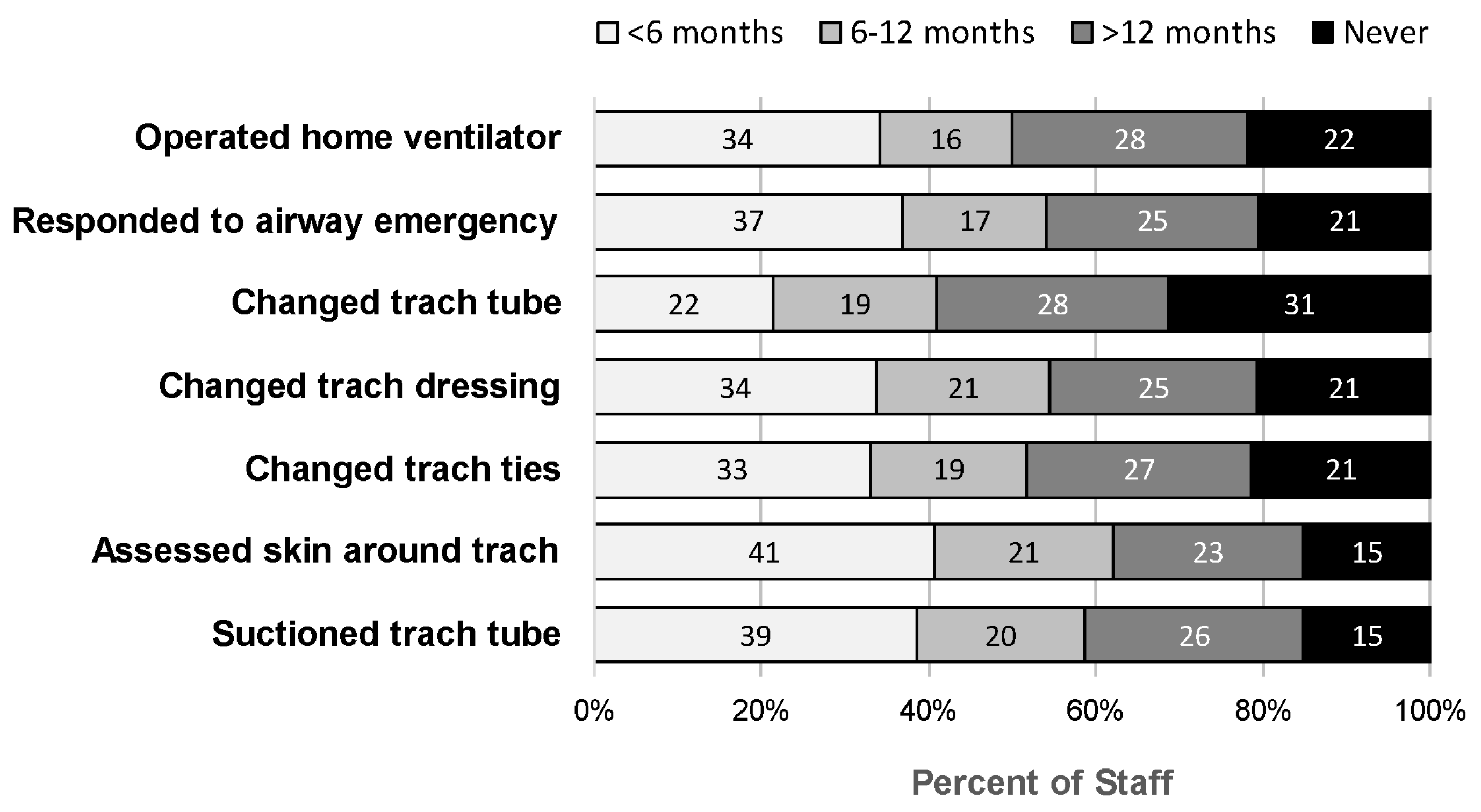
A total of 152/353 (43%) eligible staff completed the survey. Survey respondents had a range of tracheostomy experience (Table 1). Almost half practiced in their professional role for ≤5 years (66/152, 43%) and worked with TDPP for ≤5 years (74/152, 47%). Most (115/152, 76%) provided care to a TDPP within the last year (Table 1). The stacked bar chart (Figure 1) depicts the amount of time that has elapsed since staff performed different tracheostomy skills in the clinical setting. While 22–41% of staff had clinical experience within the last 6 months, 23–28% of staff had last performed these skills over a year ago. Another 15–31% of staff had never performed these skills.
Table 1.
Characteristics of survey and focus groups participants.
Figure 1.
Staff Performance of Specific Tracheostomy Skills.
While staff ranged in their experience, even staff with >10 years of experience reported that they were “slightly” or “moderately” confident in changing tracheostomy tubes [3 (3, 5)], using home ventilators [2 (2, 4)], and responding to alarms on a home ventilator [2 (2, 5)] (Table 2). Staff identified these skills as among the most important for receiving additional education (Table 3). In addition, they desired education on how to train caregivers (Table 3). In open comments, staff indicated a need to develop a standardized team to provide discharge teaching, streamline the discharge process, and gain knowledge of home and community resources.
Table 2.
Staff confidence performing tracheostomy skills.
Table 3.
Staff ratings of the importance for the additional education of specific tracheostomy skills.
To address gaps in tracheostomy knowledge and skills, staff (101/138, 73%) preferred interactive educational methods utilizing simulation and unit-based in-services over computer-based learning. When asked, “What concerns do you have or what changes would you like to make for the discharge process for tracheostomy dependent children”, respondents communicated in open comments the need for more simulation and “hands-on practice” for staff and caregivers.
3.2. Focus Groups
To better understand staff responses to survey questions, we conducted focus groups to allow for more in-depth discussion. We attained thematic saturation after conducting 10 focus groups that averaged 40 ± 10 min with 43 participants. Staff represented different professions and worked in various locations (Table 1). Data analyses revealed three themes (building staff competencies in tracheostomy care, promoting caregiver development of tracheostomy skills, and building caregiver preparedness for home life) and nine subthemes (italicized in sections below), representing major factors that contributed to staff experiences. Table 4 presents interview excerpts (Ex.) that illustrate these themes and subtheme.
Table 4.
Themes, subthemes and focus group excerpts illustrating staff experiences providing care to trach-dependent pediatric patients and supporting their caregivers.
3.3. Theme: Building Staff Competency in Tracheostomy Care
Different factors contributed to staff’s ability to attain competency in tracheostomy skills. A significant factor was the use of an apprenticeship model as the primary modality to train staff. While few staff had experienced didactic teaching (Ex. 1), the majority did not participate in a formal or structured training program. Instead, they learned from colleagues by observing, then performing different skills as clinical opportunities arose (Ex. 2). All units had a policy instructing staff to perform tracheostomy care with a colleague for peer support and patient safety (Ex. 2). When there were no TDPP, new staff reviewed unit-based policies and discussed hypothetical patients and situations (Ex. 3). One participant expressed concern that the absence of a structured program can lead to inconsistent training and negative downstream effects on patient care (Ex. 4).
Because the attainment of competency relied heavily on the availability of TDPP, staff had variability in skills due to inconsistent clinical exposure, which was a finding noted in survey responses (Figure 1). Most staff reported limited-to-no clinical experience working with TDPP, including those who worked in their units for many years (Ex. 5). Only a few expressed comfort performing tracheostomy care and stabilizing patients in emergencies because of experiences accrued over many years and/or outpatient work providing home care (Ex. 6).
Staff shared educational strategies to supplement clinical experience, including didactics (Ex. 7), simulations (Ex. 8), and videos (Ex. 9). Just as the use of simulation was endorsed in survey responses, staff advocated for just-in-time learning to review tracheostomy skills with simulation-based education rolling carts in anticipation of a new TDPP (Ex. 10), as well as taking advantage of opportunities for group learning whenever routine tracheostomy care is performed on a patient (Ex. 11). The majority agreed that written materials are least effective for learning over other modalities (Ex. 12). In addition, while simulations are beneficial for skill acquisition and practice in the non-clinical setting, it does not substitute clinical experiences because of conditions that simulations cannot replicate (Ex. 13).
Discussions revealed the prominent role of emotions in learning as a force to drive internal motivation. The anxiety of providing inadequate patient care was the most common emotion expressed, especially by staff who had the least clinical experience working with TDPP (Ex. 14–15). Staff who have witnessed challenging situations emphasized the need to incorporate these types of situations into training (Ex. 16).
3.4. Theme: Promoting Caregiver Tracheostomy Skill Development
Staff shared that the degree of caregiver engagement impacted the quality of caregiver education. Staff found joy helping caregivers transition home and enjoyed working with caregivers who showed commitment to achieving this goal (Ex. 17). However, there were times when they faced challenges in motivating caregivers to be involved in their child’s tracheostomy care. One participant shared that it was important to show curiosity to understand challenges so that they know how to best help caregivers (Ex. 18). At times, what staff may perceive as a lack of motivation stemmed from the fear of caring for their child with a tracheostomy. Staff expressed the need to challenge caregivers to step outside of their comfort zone to be involved so that they may develop their skills in incremental steps towards independent performance (Ex. 19).
While a number of methods are utilized to teach caregivers, staff noted inconsistent approaches, revealing the need for the standardization of caregiver education. All caregivers receive a binder of information that they used for education (Ex. 20), but staff expressed the need to better document caregiver attainment of different skills (Ex. 21). Staff helped caregivers practice routine tracheostomy skills on task trainers before performing on their child (Ex. 22). However, staff who provide teaching at the patient’s bedside did not consistently cover more complex scenarios, including emergency situations requiring cardiopulmonary resuscitation (Ex. 22–23). For these types of situations, staff advocated for using simulations to prepare caregivers, especially recognizing that emotions can contribute to the stress of stabilizing a child at home (Ex. 24–25). Most staff shared the anxiety of missing critical information or forgetting to teach high-stakes skills before discharge home (Ex. 26).
With this expressed anxiety, participants discussed staff confidence in teaching caregivers. Staff shared being more comfortable teaching routine tracheostomy skills over emergency situations because of the frequency that they have performed these skills (Ex. 27). Some shared not knowing long-term tracheostomy outcomes or some of the day-to-day considerations of caring for a TDPP at home so that they may provide counseling and answer caregiver questions (Ex. 28). One participant suggested aligning the staff and caregiver education so that staff may have a more standardized approach in their teaching, which would also increase their comfort in teaching (Ex. 29).
3.5. Theme: Building Caregiver Preparedness for Home Life
In addition to teaching tracheostomy skills, staff recognized the importance of helping caregivers prepare mentally for home life to help support caregiver confidence and self-efficacy. Staff had to balance caregivers’ development of essential life-saving skills without compromising their confidence that they would be able to perform these skills independently in emergencies (Ex. 30). When possible, staff involved caregivers in such situations so that they can coach them (Ex. 31). However, in the absence of experiencing emergencies in the hospital, one participant suggested involving caregivers in team simulations so that they may learn from staff (Ex. 32).
Staff discussed that identifying community resources was very important to help caregivers prepare and adjust to home life. In the hospital, many caregivers learn quickly that they need to develop managerial skills to identify, hire, and later supervise home nurses (Ex. 33). While staff cannot find and hire nurses for caregivers, staff can help by connecting caregivers to resources such as social media (Ex. 34). Many staff shared that they do not fully understand all the logistics and challenges that families face at home and expressed concern that socioeconomic factors can cause unnecessary hardships (Ex. 35). Some challenges may be mitigated or resolved by connecting caregivers with other families who can offer their lived experience and support (Ex. 34). In some areas, there may be facilities that offer day services for TDPP so that caregivers may retain some daily routine and respite (Ex. 36).
3.6. Conceptual Framework
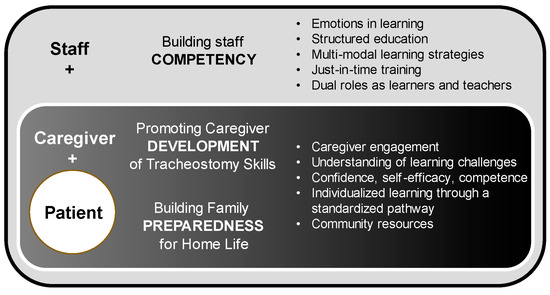
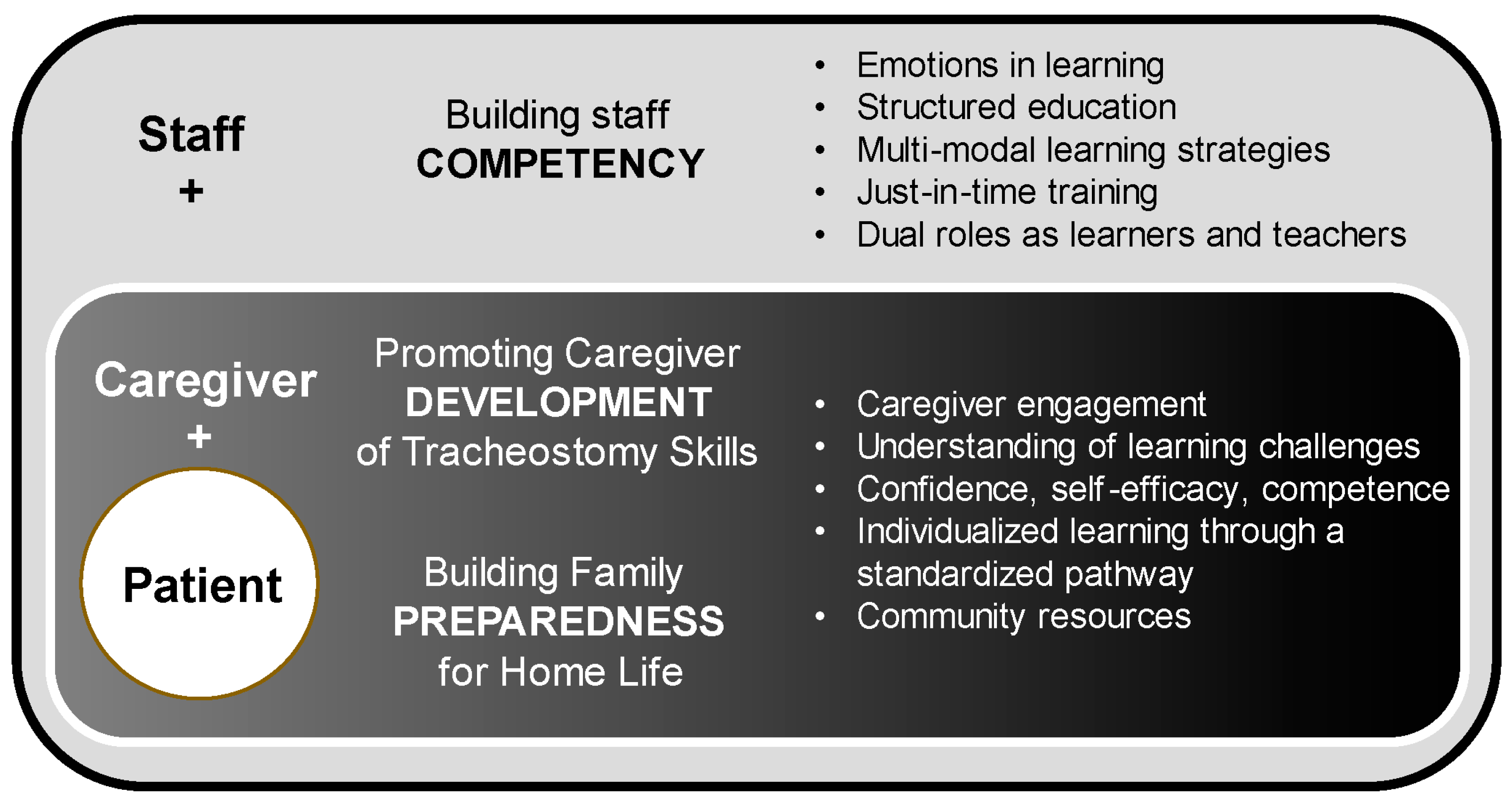
The in-depth analysis of staff experiences, which were drawn from survey responses and focus group discussions, led to the development of a framework that conceptualized the factors that contributed to providing care to TDPPs in the hospital (Figure 2). Staff expressed a keen awareness of their responsibilities to themselves, the caregivers, and their patients to provide safe patient care and effectively prepare caregivers for their transition home. They showed vulnerability by sharing anxiety and concern about developing their own competencies and stabilizing patients during emergencies. These emotions magnify with the responsibility of training caregivers, for whom they feared emergencies that caregivers would need to manage as the lone responder for their child at home. These emotions drive staff motivation to identify gaps in knowledge and skills, as well as identify potential educational opportunities and tools to help them become more effective learners and teachers. Staff communicated the need for multi-modal learning strategies that prioritized clinical opportunities and just-in-time training with simulation. They advocated for a similar approach for caregivers and for the need to provide individualized learning based on a standardized pathway. In addition, staff conveyed the importance of understanding caregiver emotions, socioeconomic factors, and community resources that may impact their readiness to learn, attain tracheostomy skills, and build confidence, self-efficacy, and competence.
Figure 2.
Conceptualization framework. Schematic illustrating the factors (right column) that contribute to providing care to the tracheostomy-dependent pediatric patient in the hospital setting, which include the different needs of staff, caregivers, and their children as patients to effectively attain the goals (themes identified from the focus groups, middle column) and ultimately provide safe patient care and train and support caregivers for the transition home.
4. Discussion
We performed a mixed-methods study as a part of a needs assessment to understand staff experiences of providing patient care to TDPP. Our study revealed several important findings that impacted staff education and their ability to develop expertise in patient care, as well as their role in training caregivers who ultimately assume responsibility for their child’s care after they transition home from the hospital.
Perhaps the most striking finding was that staff ranged in experience working with TDPP and had limited ongoing clinical opportunities to learn and maintain their competency in providing care to this patient population. Clinical experience and confidence may be limited in part by years of clinical service, with junior staff having less cumulative exposure. This was noted in a survey study by Pritchett et al., in which nurses with <5 years of clinical experience are less likely to express comfort performing tracheostomy skills [21]. While years of clinical experience is an important factor, the frequency of ongoing clinical opportunities also contributes to staff experience. In our study, 59% of staff had not performed a variety of tracheostomy skills or participated in an airway emergency in >1 year (Table 1, Figure 1). This was most likely due to the large number of staff relative to the small number of TDPP. This aligns with Mahfoz’s findings, which suggest that individuals who frequently work with tracheostomies demonstrate greater confidence in their ability to manage and care for them compared to those with less experience [22]. Even though TDPP become chronic patients with extended hospitalizations [36,37], most staff experiences remain sporadic without the ability to maintain a regular or longitudinal experience with them.
With the challenge of limited clinical exposure, building staff competencies in tracheostomy care was a central focus group theme identified in this study (Table 4). Attaining experience solely through an apprenticeship model of learning is not a feasible approach to training and maintaining competency [38,39]. This challenge emphasizes the need to develop a structured program that continues to prioritize learning in the clinical setting while offering regular nonclinical professional development opportunities that support the attainment and retention of knowledge and tracheostomy skills. Because staff have diverse learning needs and different work schedules, a structured program would ideally provide synchronous and asynchronous learning utilizing different educational modalities that include simulation-based training. In our study, staff expressed a strong desire for experiential learning with the use of low-fidelity task trainers for technical skills and more high-fidelity team simulations of complex clinical scenarios for communication and teamwork skills, which have been shown to be effective educational interventions in other types of high-acuity, low-occurrence clinical situations [2,39,40,41].
Educational content should also be informed by frontline staff who work directly with TDPP and caregivers. In a survey study by Hewitt-Taylor, nurses and managers identified general areas of education needed for tracheostomy care, such as communication, feeding, pain management, and resuscitation skills [20]. In our study, staff identified specific tracheostomy skills needed for inpatient care, highlighting skills such as changing tracheostomy tubes, using home ventilators, and responding to alarms on a home ventilator as important (Table 2). In addition, staff shared different types of clinical situations for which they desired more training and practice working as a team. Expressions of anxiety and fear recurred in all focus groups. Even the most experienced staff expressed anxiety about being fully prepared to stabilize TDPP during emergencies, such as airway bleeding, tracheostomy dislodgement, and tracheostomy obstruction. These emotions can serve an important role in individual professional development by activating learning and driving internal motivation to self-identify individual learning needs [42].
In the absence of national or international standards to train healthcare professionals on the care of TDPP, staff ideas for training may be augmented by published studies conducted as single-center educational interventions [12,13,14,24,25,26,27,43]. Studies reporting the use of simulation to train pediatric staff on managing tracheostomy emergencies such as inadvertent decannulation and tracheostomy tube occlusion have increased in recent years [12,13,27,43]. In addition, in a recent study by Schiff et al., a modified Delphi process was utilized to develop an education and assessment tool for a simulated tracheostomy emergency scenario [44]. Apart from the use of simulation, other types of educational interventions also include online modules to allow for asynchronous learning and airway placards as visual educational tools [14,15]. Studies largely focus on improving confidence and knowledge outcomes [12,13,14,15,24,25,27], with some studies also assessing performance skills during a simulation or patient outcomes, such as transfer to an intensive care unit or hospital readmission rates [15,26,27,41]. More studies that evaluate the effectiveness of educational interventions on clinical outcomes are needed.
Tied to the focus group theme of building staff competencies in tracheostomy care is staff awareness that their foundational knowledge and skills are important to promoting caregiver development of tracheostomy skills and building caregiver preparedness for home life, which are also important focus group themes identified in this study (Table 4). Staff during our focus groups were keenly aware of their dual roles as learners and educators. They strived to be effective teachers by developing their own confidence and skills to teach but also expressed anxiety that their own limited clinical experience may lead to gaps in the education they provide caregivers at the bedside. Part of this challenge is the lack of standardized guidelines that may be utilized as a framework to train staff and caregivers who care for TDPP. As a result, hospitals have variation in clinical tracheostomy care protocols and standards, which impacts the type of education provided [45,46]. Developing standardized parallel curricula for staff and caregivers that align the specific learning objectives and competencies that staff need to achieve with those that staff in turn need to train caregivers can help staff envision how to provide that education to caregivers. Such curricula should also incorporate education on home life and available community resources to help staff better understand potential challenges that families face when they bring their child home [17,47].
Education of staff and caregivers may require a different approach in clinical care. Even with a robust training program, many staff who work in large institutions would not be able to attain expertise without many years of consistent clinical experience. Some pediatric units may need to develop a specialized team dedicated to TDPP and caregiver education so that a smaller group of staff have increased opportunities to achieve needed expertise, as well as work together in quality improvement initiatives that would ultimately help standardize practice based on local institutional experience and available national evidence. A partnership with patient safety specialists ensures that educational content aligns with areas of clinical need. Examples of such programs that focus on TDPP have demonstrated decreased adverse events, length of stay, and readmissions [19,41,48,49]. In addition, while there remains limited, high-quality evidence supporting the use of standardized, bundled tracheostomy care, there is an opportunity for different institutions to collaborate to share educational resources, learn from each other, and engage in quality improvement and/or research to evaluate patient outcomes [8,50].
5. Limitations
The results of our study reflect staff experiences at a single center. While we reached thematic saturation in analyses of focus group transcripts, healthcare professionals from other institutions may have different experiences working with TDPP, and therefore may have other perceptions of their educational needs. While participants proportionately represented the number of staff who work in different intensive care units of the children’s hospital, we did not include staff who worked in the general pediatric units because the majority of TDPP reside in intensive care units. In addition, the perspectives of caregivers and home care nurses would be important to include for a more comprehensive view of providing care to TDPP. A multicenter study that includes staff who work in inpatient pediatric units with a range of few-to-many TDPPs, as well as home care nurses who work in outpatient settings, would provide a more robust understanding of different educational needs. In addition, a study focused on caregiver experiences, including their training, preparations for the transition home, and their interactions with hospital staff to achieve these goals could strengthen the development of an educational program.
6. Conclusions
One of the main findings of our study was that staff who provided care to TDPP had limited ongoing clinical opportunities to learn and maintain their competency in tracheostomy skills. It is not feasible for staff to attain experience and maintain competency solely through an apprenticeship model of learning. There is a need to develop a structured program that continues to prioritize learning in the clinical setting while offering regular non-clinical professional development opportunities that support the attainment and retention of knowledge and tracheostomy skills.
Supplementary Materials
The following supporting information can be downloaded at: https://www.mdpi.com/article/10.3390/children12050552/s1. Supplementary Materials S1: Survey questions. Supplementary Materials S2: Focus Group Guide.
Author Contributions
Conceptualization, K.L.P., D.S., A.F., L.D., T.W., K.B. and R.D.; Methodology, K.L.P., D.S., A.F., L.D., T.W., K.B. and R.D.; Software, R.D.; Validation, K.L.P., D.S. and R.D.; Formal analysis, K.L.P., D.S., A.F., L.D., T.W. and R.D.; Investigation, K.L.P., D.S., A.F., L.D., T.W., K.B. and R.D.; Resources, K.L.P., D.S. and R.D.; Data curation, K.L.P., D.S. and R.D.; Writing—original draft, K.L.P., D.S., A.F., L.D., T.W. and R.D.; Writing—review & editing, K.L.P., D.S., A.F., L.D., T.W., K.B. and R.D.; Visualization, K.L.P., A.F., L.D., T.W. and R.D.; Supervision, K.L.P., D.S. and R.D.; Project administration, Kathryn Palumbo, D.S. and R.D.; Funding acquisition, K.L.P., D.S. and R.D. All authors have read and agreed to the published version of the manuscript.
Funding
This work was supported by the Neonatology Small Grants Program at the University of Rochester Medical Center in Rochester, NY, USA.
Institutional Review Board Statement
The University of Rochester institutional review board approved this study with a waiver of consent (study number 00005759).
Informed Consent Statement
Not applicable.
Data Availability Statement
The original contributions presented in this study are included in the article/Supplementary Materials. Further inquiries can be directed to the corresponding author.
Conflicts of Interest
The authors do not have any relevant conflicts of interest.
Abbreviations
The following abbreviations are used in this manuscript:
| EX | Excerpt |
| TDPP | Tracheostomy-dependent pediatric patient |
References
- Brown, C.; Shah, G.B.; Mitchell, R.B.; Lenes-Voit, F.; Johnson, R.F. The incidence of pediatric tracheostomy and its association among black children. Otolaryngol. Head Neck Surg. 2021, 164, 206–211. [Google Scholar] [CrossRef] [Scilit] [PubMed]
- Friesen, T.L.; Zamora, S.M.; Rahmanian, R.; Bundogji, N.; Brigger, M.T. Predictors of pediatric tracheostomy outcomes in the United States. Otolaryngol. Head Neck Surg. 2020, 163, 591–599. [Google Scholar] [CrossRef] [Scilit] [PubMed]
- Donda, K.; Agyemang, C.O.; Adjetey, N.A.; Agyekum, A.; Princewill, N.; Ayensu, M.; Bray, L.; Yagnik, P.J.; Bhatt, P.; Dapaah-Siakwan, F. Tracheostomy trends in preterm infants with bronchopulmonary dysplasia in the United States: 2008–2017. Pediatr. Pulmonol. 2021, 56, 1008–1017. [Google Scholar] [CrossRef] [Scilit] [PubMed]
- Veder, L.L.; Joosten, K.F.M.; Zondag, M.D.; Pullens, B. Indications and clinical outcome in pediatric tracheostomy: Lessons learned. Int. J. Pediatr. Otorhinolaryngol. 2021, 151, 110927. [Google Scholar] [CrossRef] [Scilit]
- Merola, R.; Vargas, M.; Sanfilippo, F.; Vergano, M.; Mistraletti, G.; Vetrugno, L.; De Pascale, G.; Bignami, E.G.; Servillo, G.; Battaglini, D. Tracheostomy practice in the Italian intensive care units: A point-prevalence survey. Medicina 2025, 61, 87. [Google Scholar] [CrossRef] [Scilit]
- Merola, R.; Iacovazzo, C.; Troise, S.; Marra, A.; Formichella, A.; Servillo, G.; Vargas, M. Timing of tracheostomy in ICU patients: A systematic review and meta-analysis of randomized controlled trials. Life 2024, 14, 1165. [Google Scholar] [CrossRef] [Scilit]
- Watters, K.F. Tracheostomy in infants and children. Respir. Care 2017, 62, 799–825. [Google Scholar] [CrossRef] [Scilit]
- Brenner, M.J.; Pandian, V.; Milliren, C.E.; Graham, D.A.; Zaga, C.; Morris, L.L.; Bedwell, J.R.; Das, P.; Zhu, H.; Allen, J.L.Y.; et al. Global tracheostomy collaborative: Data-driven improvements in patient safety through multidisciplinary teamwork, standardization, education, and patient partnership. Br. J. Anaesth. 2020, 125, e104–e118. [Google Scholar] [CrossRef] [Scilit]
- Willis, L.D. Pediatric tracheostomy year in review. Respir. Care 2024, 69, 1025–1032. [Google Scholar] [CrossRef] [Scilit]
- Kremer, B.; Botos-Kremer, A.I.; Eckel, H.E.; Schlondorff, G. Indications, complications, and surgical techniques for pediatric tracheostomies—An update. J. Pediatr. Surg. 2002, 37, 1556–1562. [Google Scholar] [CrossRef] [Scilit]
- Roberts, J.; Powell, J.; Begbie, J.; Siou, G.; McLarnon, C.; Welch, A.; McKean, M.; Thomas, M.; Ebdon, A.; Moss, S.; et al. Pediatric tracheostomy: A large single-center experience. Laryngoscope 2020, 130, E375–E380. [Google Scholar] [CrossRef] [Scilit] [PubMed]
- Fuller, C.; Wineland, A.M.; Richter, G.T. Update on Pediatric tracheostomy: Indications, technique, education, and decannulation. Curr. Otorhinolaryngol. Rep. 2021, 9, 188–199. [Google Scholar] [CrossRef] [Scilit] [PubMed]
- Agarwal, A.; Marks, N.; Wessel, V.; Willis, D.; Bai, S.; Tang, X.; Ward, W.L.; Schellhase, D.E.; Carroll, J.L. Improving knowledge, technical skills, and confidence among pediatric health care providers in the management of chronic tracheostomy using a simulation model. Pediatr. Pulmonol. 2016, 51, 696–704. [Google Scholar] [CrossRef] [Scilit] [PubMed]
- Davis, K.A.; Edgar-Zarate, C.L.; Bonilla-Velez, J.; Atkinson, T.N.; Tulunay-Ugur, O.E.; Agarwal, A. Using didactics and simulation to enhance comfort, knowledge, and skills of nonsurgical trainees caring for patients with tracheostomy and laryngectomy. Simul. Healthc. 2019, 14, 384–390. [Google Scholar] [CrossRef] [Scilit]
- Ahmed, S.T.; Yang, C.; Deng, J.; Bottalico, D.M.; Matta-Arroyo, E.; Cassel-Choudhury, G.; Yang, C.J. Implementation of an online multimedia pediatric tracheostomy care module for healthcare providers. Laryngoscope 2021, 131, 1893–1901. [Google Scholar] [CrossRef] [Scilit]
- Wollstein, Y.; McCoy, J.L.; Staltari, G.; Dixit, R.; Freiser, M.E.; Mady, L.J.; Padia, R.; Jabbour, N.; Tobey, A.B.J. Pediatric tracheostomy safety: Implementation of an airway safety placard. Respir. Care 2023, 68, 1701–1707. [Google Scholar] [CrossRef] [Scilit]
- Sterni, L.M.; Collaco, J.M.; Baker, C.D.; Carroll, J.L.; Sharma, G.D.; Brozek, J.L.; Finder, J.D.; Ackerman, V.L.; Arens, R.; Boroughs, D.S.; et al. An official American Thoracic Society Clinical Practice Guideline: Pediatric chronic home invasive ventilation. Am. J. Respir. Crit. Care Med. 2016, 193, e16–e35. [Google Scholar] [CrossRef] [Scilit]
- National Tracheostomy Safety Project. COVID-19 Response: Safe Tracheostomy Care—A Toolkit for Healthcare Staff. Version 2; Academic Health Science Network: Southampton, UK, 2020. [Google Scholar]
- Mussa, C.C.; Gomaa, D.; Rowley, D.D.; Schmidt, U.; Ginier, E.; Strickland, S.L. AARC Clinical Practice Guideline: Management of adult patients with tracheostomy in the acute care setting. Respir. Care 2021, 66, 156–169. [Google Scholar] [CrossRef] [Scilit]
- Hewitt-Taylor, J. Children who require long-term ventilation: Staff education and training. Intensive Crit. Care Nurs. 2004, 20, 93–102. [Google Scholar] [CrossRef] [Scilit]
- Pritchett, C.V.; Foster Rietz, M.; Ray, A.; Brenner, M.J.; Brown, D. Inpatient nursing and parental comfort in managing pediatric tracheostomy care and emergencies. JAMA Otolaryngol. Head Neck Surg. 2016, 142, 132–137. [Google Scholar] [CrossRef] [Scilit]
- Mahfoz, T.M.B. Attitude and practices of tracheostomy care among nursing staff in Saudi Arabia. BMC Nurs. 2022, 21, 367. [Google Scholar] [CrossRef] [Scilit] [PubMed]
- Mitchell, R.B.; Hussey, H.M.; Setzen, G.; Jacobs, I.N.; Nussenbaum, B.; Dawson, C.; Brown, C.A., III; Brandt, C.; Deakins, K.; Hartnick, C.; et al. Clinical consensus statement: Tracheostomy care. Otolaryngol. Head Neck Surg. 2013, 148, 6–20. [Google Scholar] [CrossRef] [Scilit] [PubMed]
- Mehta, K.; Mosha, M.H.; Kavanagh, K.R. A targeted tracheostomy care educational initiative to augment resuscitation training in the pediatric setting. Int. J. Pediatr. Otorhinolaryngol. 2020, 133, 109944. [Google Scholar] [CrossRef] [Scilit] [PubMed]
- Yelverton, J.C.; Nguyen, J.H.; Wan, W.; Kenerson, M.C.; Schuman, T.A. Effectiveness of a standardized education process for tracheostomy care. Laryngoscope 2015, 125, 342–347. [Google Scholar] [CrossRef] [Scilit]
- Khan, E.K.; Lockspeiser, T.M.; Meier, M.; Liptzin, D.R.; Baker, C.D. Improved tracheostomy-dependent patient outcomes after implementation of the Pediatric Resident Education in Pulmonary (PREP) Boot Camp. Pediatr. Pulmonol. 2024, 59, 1388–1393. [Google Scholar] [CrossRef] [Scilit]
- Bas Ikizoglu, N.; Atag, E.; Ergenekon, P.; Gokdemir, Y.; Uyan, Z.S.; Girit, S.; Kilinc Sakalli, A.A.; Erdem Eralp, E.; Cakir, E.; Guven, F.; et al. Implementation of a high fidelity simulation based training program for physicians of children requiring long term invasive home ventilation: A study by ISPAT team. Front. Pediatr. 2024, 12, 1325582. [Google Scholar] [CrossRef] [Scilit]
- O’Brien, B.C.; Harris, I.B.; Beckman, T.J.; Reed, D.A.; Cook, D.A. Standards for reporting qualitative research: A synthesis of recommendations. Acad. Med. 2014, 89, 1245–1251. [Google Scholar] [CrossRef] [Scilit]
- Rickards, G.; Magee, C.; Artino, A.R., Jr. You can’t fix by analysis what you’ve spoiled by design: Developing survey instruments and collecting validity evidence. J. Grad. Med. Educ. 2012, 4, 407–410. [Google Scholar] [CrossRef] [Scilit]
- Harris, P.A.; Taylor, R.; Minor, B.L.; Elliott, V.; Fernandez, M.; O’Neal, L.; McLeod, L.; Delacqua, G.; Delacqua, F.; Kirby, J.; et al. The REDCap consortium: Building an international community of software platform partners. J. Biomed. Inform. 2019, 95, 103208. [Google Scholar] [CrossRef] [Scilit]
- Kruskal Wallis Test Calculator Melbourne, Australia: Statistics Kingdom. 2017. Available online: https://www.statskingdom.com/kruskal-wallis-calculator.html (accessed on 30 March 2025).
- Merriam, S.T.E. Qualitative Research: A Guide to Design and Implementation, 4th ed.; Jossey-Bass: San Francisco, CA, USA, 2016. [Google Scholar]
- Charmaz, K. Teaching theory construction with initial grounded theory tools: A reflection on lessons and learning. Qual. Health Res. 2015, 25, 1610–1622. [Google Scholar] [CrossRef] [Scilit]
- Borkan, J.M. Immersion-Crystallization: A valuable analytic tool for healthcare research. Fam. Pract. 2022, 39, 785–789. [Google Scholar] [CrossRef] [Scilit] [PubMed]
- Verdinelli, S.; Scagnoli, N. Data Display in Qualitative Research. Int. J. Qual. Methods 2013, 12, 359–381. [Google Scholar] [CrossRef] [Scilit]
- Lee, J.H.; Smith, P.B.; Quek, M.B.; Laughon, M.M.; Clark, R.H.; Hornik, C.P. Risk factors and in-hospital outcomes following tracheostomy in infants. J. Pediatr. 2016, 173, 39–44.e1. [Google Scholar] [CrossRef] [Scilit] [PubMed]
- Boyi, T.; Raghavan, M.; Antongiovanni, J.; DeGiovanni, J.C.; Carr, M.M. Tracheotomy in children older than two years: Analysis of discharge trends from 2015 to 2020. Int. J. Pediatr. Otorhinolaryngol. 2024, 176, 111815. [Google Scholar] [CrossRef] [Scilit]
- McGaghie, W.C.; Barsuk, J.H.; Wayne, D.B. Clinical education: Origins and outcomes. In Comprehensive Healthcare Simulation: Mastery Learning in Health Professions Education; Springer Nature Switzerland AG: New York, NY, USA, 2020; 22p. [Google Scholar]
- O’Leary, F. Simulation based education in paediatric resuscitation. Paediatr. Respir. Rev. 2024, 51, 2–9. [Google Scholar] [CrossRef] [Scilit]
- Cicalese, E.; Meisler, S.; Kitchin, M.; Zhang, M.; Verma, S.; Dapul, H.; McKinstry, J.; Toy, B.; Chopra, A.; Fisher, J.C. Developing a new pediatric extracorporeal membrane oxygenation (ECMO) program. J. Perinat. Med. 2023, 51, 697–703. [Google Scholar] [CrossRef] [Scilit]
- Kaijomaa, M.; Gissler, M.; Äyräs, O.; Sten, A.; Grahn, P. Impact of simulation training on the management of shoulder dystocia and incidence of permanent brachial plexus birth injury: An observational study. BJOG 2023, 130, 70–77. [Google Scholar] [CrossRef] [Scilit]
- Dirkx, J. The Power of Feelings: Emotion, imagination, and the construction of meaning in adult learning. New Dir. Adult Contin. Educ. 2001, 89, 10. [Google Scholar] [CrossRef] [Scilit]
- Wells, S.; Shermont, H.; Hockman, G.; Hamilton, S.; Abecassis, L.; Blanchette, S.; Munhall, D. Standardized tracheostomy education across the enterprise. J. Pediatr. Nurs. 2018, 43, 120–126. [Google Scholar] [CrossRef] [Scilit]
- Schiff, E.; Propst, E.J.; Balakrishnan, K.; Johnson, K.; Lounsbury, D.W.; Brenner, M.J.; Tawfik, M.; Workgroup, P.T.E.R.; Yang, C.J. Pediatric tracheostomy emergency readiness assessment tool: International consensus recommendations. Laryngoscope 2023, 133, 3588–3601. [Google Scholar] [CrossRef] [Scilit]
- Caloway, C.; Balakrishnan, K.; Boudewyns, A.; Chan, K.H.; Cheng, A.; Daniel, S.J.; Fayoux, P.; Garabedian, N.; Hart, C.; Moreddu, E.; et al. International Pediatric Otolaryngology Group (IPOG)survey: Efforts to avoid complications in home tracheostomycare. Int. J. Pediatr. Otorhinolaryngol. 2021, 141, 110563. [Google Scholar] [CrossRef] [Scilit] [PubMed]
- Acorda, D.E.; Van Orne, J. Pediatric tracheostomy education program structures, barriers, and support: A nationwide survey of children’s hospitals. Otolaryngol. Head Neck Surg. 2025, 172, 283–291. [Google Scholar] [CrossRef] [Scilit] [PubMed]
- Benscoter, D.; Borschuk, A.; Hart, C.; Voos, K. Preparing families to care for ventilated infants at home. Semin. Fetal Neonatal Med. 2019, 24, 101042. [Google Scholar] [CrossRef] [Scilit] [PubMed]
- Thrasher, J.; Baker, J.; Ventre, K.M.; Martin, S.E.; Dawson, J.; Cox, R.; Moore, H.M.; Brethouwer, S.; Sables-Baus, S.; Baker, C.D. Hospital to home: A quality improvement initiative to implement high-fidelity simulation training for caregivers of children requiring long-term mechanical ventilation. J. Pediatr. Nurs. 2018, 38, 114–121. [Google Scholar] [CrossRef] [Scilit]
- Kou, Y.F.; Chorney, S.R.; Johnson, R.F. Multidisciplinary pediatric tracheostomy teams. Otolaryngol. Clin. N. Am. 2022, 55, 1195–1203. [Google Scholar] [CrossRef] [Scilit]
- Volsko, T.A.; Parker, S.W.; Deakins, K.; Walsh, B.K.; Fedor, K.L.; Valika, T.; Ginier, E.; Strickland, S.L. AARC Clinical practice guideline: Management of pediatric patients with tracheostomy in the acute care setting. Respir. Care 2021, 66, 144–155. [Google Scholar] [CrossRef] [Scilit]

Disclaimer/Publisher’s Note: The statements, opinions and data contained in all publications are solely those of the individual author(s) and contributor(s) and not of MDPI and/or the editor(s). MDPI and/or the editor(s) disclaim responsibility for any injury to people or property resulting from any ideas, methods, instructions or products referred to in the content. |
© 2025 by the authors. Licensee MDPI, Basel, Switzerland. This article is an open access article distributed under the terms and conditions of the Creative Commons Attribution (CC BY) license (https://creativecommons.org/licenses/by/4.0/).