Brief Report

Scaphoid Fat Stripe Sign: Is It a Reliable Radiological Sign of Scaphoid Fracture in Children?

University Hospital of Lausanne, 1011 Lausanne, Switzerland
*
Author to whom correspondence should be addressed.
Children 2025, 12(1), 86; https://doi.org/10.3390/children12010086

Submission received: 9 December 2024 / Revised: 24 December 2024 / Accepted: 12 January 2025 / Published: 13 January 2025
(This article belongs to the Section Pediatric Radiology)

Abstract

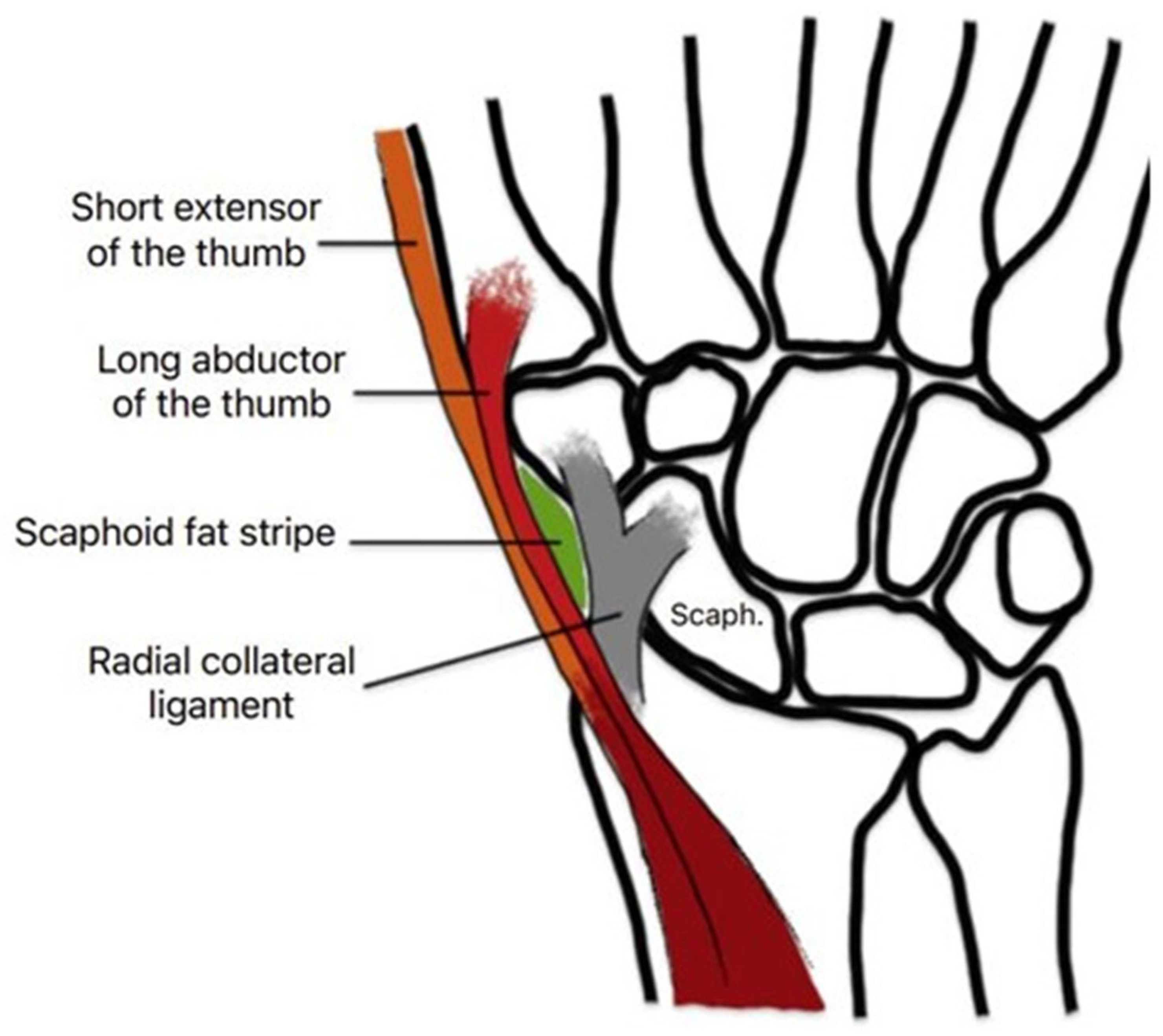
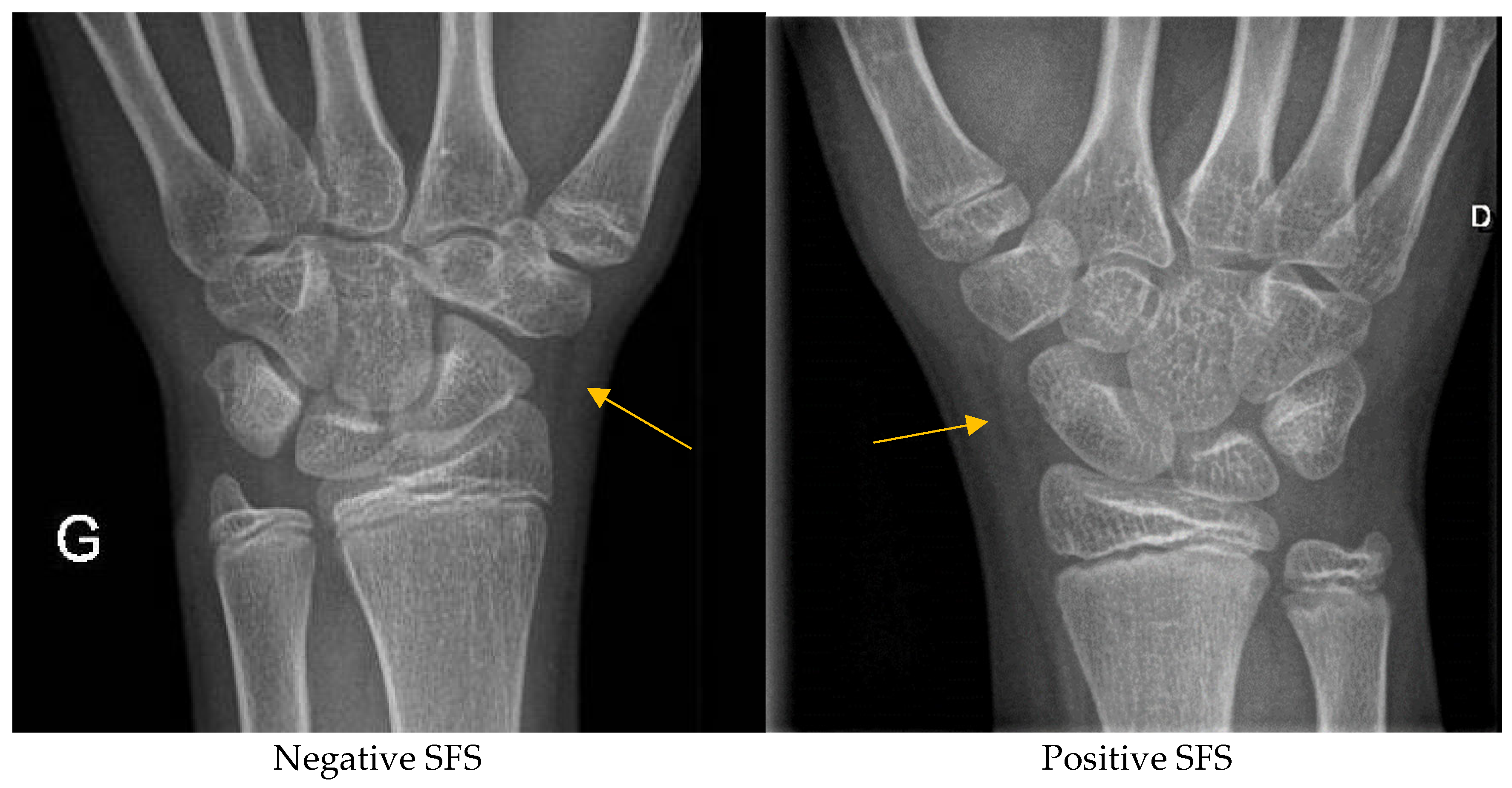
Objectives: The scaphoid fat pad stripe (SFS) is a radiological sign first described in 1975 as a line of relative lucency lying parallel to the lateral border of the scaphoid, with slight convexity toward it, and it is optimally demonstrated on postero-anterior and oblique views with ulnar deviation of the carpus. The obliteration or displacement of this line is commonly present in acute fractures of the scaphoid, radial styloid process, and proximal first metacarpus. The aim of this observational study is to investigate the supportive value of the fat stripe sign (SFS) in the diagnosis of scaphoid fractures in the pediatric population. Methods: This is a monocentric, retrospective study of all patients referred to the Pediatric Traumatology Unit of a tertiary hospital from the Emergency Department with clinical suspicion of scaphoid fracture without visible fracture in the initial X-ray. Radiological reports for CT and MRIs were recorded, and the initial X-rays were blindly reviewed by a pediatric orthopedic fellowship-accredited surgeon for the presence of an abnormal scaphoid fat pad stripe sign and the presence of a fracture line in the initial X-rays. Results: The results of the blind interpretation of the initial X-rays for the fat stripe sign showed 86% sensitivity and 58% specificity, with the negative predictive value reaching 92%. Conclusions: The scaphoid fat stripe sign can be used as an adjacent in the diagnosis of an occult scaphoid fracture in children or adolescents. Its high negative predictive value, if confirmed in larger studies, can be an element used to exclude scaphoid fracture and consequently avoid unnecessary immobilizations and health costs.
Keywords: scaphoid fat pad sign; scaphoid fracture; radiological diagnosis scaphoid fat pad sign; scaphoid fracture; radiological diagnosis