


Abstract
Background/Objectives: Momordica charantia L. (Cucurbitaceae) (MC), commonly known as bitter melon, is a prominent therapeutic and edible species deeply rooted in traditional medicine for the management of diverse metabolic and infectious pathologies. Increasing evidence suggests that MC is a significant source of antiviral compounds that could act against many different types of viruses in humans. This narrative review summarizes the current knowledge regarding the antiviral properties of MC, with a focus on molecular mechanisms and therapeutic perspectives. Methods: A comprehensive literature search was conducted across the PubMed, Scopus and Web of Science databases, using the keywords “Momordica charantia”, “bitter melon”, “antiviral” and “MAP30”. Original in vitro, in vivo, in silico and mechanistic studies were included. Results: MC harbors diverse antiviral molecules acting through conserved and virus-specific mechanisms. Ribosome-inactivating proteins (RIPs) purified from MC display potent antiviral activity by catalyzing the depurination of viral RNA and DNA, inactivating host ribosomes and blocking protein synthesis. RIPs, especially MAP30, are among the most potent natural antiviral proteins described to date. Cucurbitane-type triterpenoids and other phytochemicals from MC also show antiviral activity. Conclusions: MC emerges as a promising candidate for the prevention/treatment of viral diseases through nutraceutical, topical and pharmaceutical applications. MC extracts could represent a resource to support the immune system and provide broad-spectrum benefits against viral infections or a tool for local treatments. Moreover, MC is a valuable source of various bioactive compounds that, after thorough pharmacological characterization, could be further developed into specific antiviral agents.
1. Introduction
Viral infections pose a serious threat to global health, despite the availability of vaccines and several classes of antiviral drugs [1]. Historically, medicinal plants have been an important source of antiviral molecules, providing structurally complex compounds that can affect multiple stages of the viral life cycle [2].
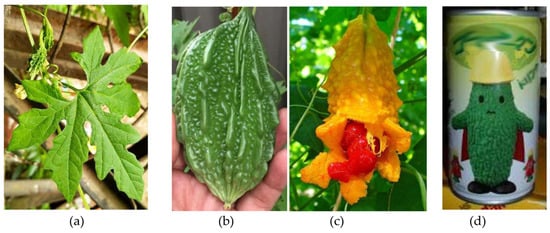
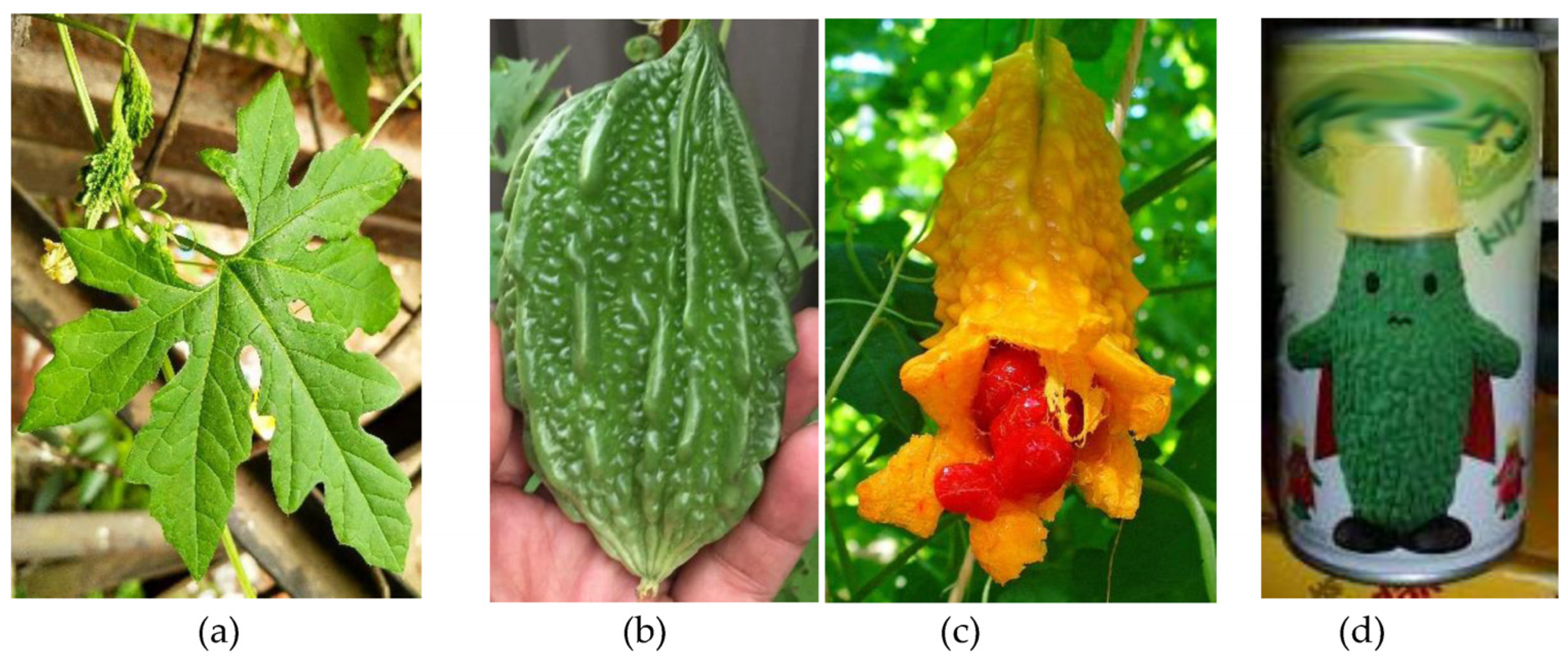
Amongst these medicinal plants, a significant role is represented by plants from the Cucurbitaceae family and, in particular, by Momordica charantia L. (MC), commonly known as bitter gourd, balsam pear, bitter melon, kugua or karela [3,4]. Its name derives from the Latin verb momordi (to bite), referring to the leaves, which look to have been bitten (Figure 1a), and from the Greek noun chárax, meaning “support cane”, for its use as a climber in pergolas. MC is widely cultivated in tropical and subtropical regions, mainly for its wide uses in folk medicine and for culinary purposes [5,6]. The most commonly used parts of the plant are the seeds and fruits, which appear spindle-shaped with pimples on the surface, looking like a small cucumber; unripe fruits are emerald green in color, which turns to orange during ripening (Figure 1b,c). In many parts of the world, MC fruits are eaten as vegetables, despite their bitter taste. This widespread consumption is mainly due to bitter melon’s high nutritional value and numerous bioactive effects [7]. Nowadays, in different Asian regions, mainly China, India and Thailand, several bitter gourd products are quite popular; for example, bitter gourd tea, known as gohyah, or soft drinks are commonly consumed (Figure 1d).
Figure 1.
Different parts and a cultural representation of Momordica charantia (bitter melon or “goya”). (a) The early growth stage of the plant, showing deeply lobed leaves; (b) an unripe green fruit with its characteristic warty surface; (c) a fully ripened fruit, yellow-orange in color, naturally dehiscent to expose bright red arils surrounding the seeds; and (d) a commercial beverage product from Japan featuring a cartoon character, “Goya-man”, illustrating the integration of bitter melon into popular culture and consumer goods.
Numerous medicinal properties of MC have been investigated, particularly its hypoglycemic, antibacterial, anti-inflammatory, antioxidant and anti-tumor activities [8,9,10,11,12,13,14]. In addition, several in vitro studies have confirmed that bitter melon possesses inhibitory effects against different human viruses. These beneficial effects are attributed to the various bioactive components of MC, which are important sources of phytoconstituents used to treat various diseases since ancient times [15,16,17]. While the aforementioned therapeutic activities have been well-documented and experimentally supported [6], antiviral research on MC is still fragmented. Most studies have focused on individual compounds or crude extracts, often using different experimental conditions, viral strains and outcome measures. Standardized preparations and comparative studies are quite scarce and clinical data are lacking.
This narrative review aims to (i) describe the role of Momordica charantia L. (Cucurbitaceae) in folk medicine as an antiviral remedy; (ii) summarize the phytochemical constituents of MC relevant to antiviral activity and describe the spectrum of antiviral effects reported against distinct viruses; and, finally, (iii) detail the antiviral activity of ribosome-inactivating proteins (RIPs) in MC. A comprehensive literature search was conducted across the PubMed, Scopus and Web of Science databases. The search strategy employed combinations of the keywords “Momordica charantia”, “bitter melon”, “antiviral” and “MAP30”. The search included articles published from 1986 to 2025. Studies were selected based on the following inclusion criteria: (1) original research articles including in vitro, in vivo and in silico models and (2) studies specifically investigating molecular mechanisms of Momordica charantia derivatives against viruses. Studies focusing solely on the plant’s nutritional or agricultural aspects, without considering antiviral properties, were excluded from this review.
3. Phytochemistry of Momordica charantia
MC has a rich and heterogeneous phytochemical profile, including numerous substances distributed throughout almost all plant organs and tissues (fruit, seeds, leaves, pericarp and roots). The principal classes of phytochemicals include (i) cucurbitane-type triterpenoid glycosides (e.g., momordicosides and karavilosides); (ii) RIPs such as momordica anti-HIV protein 30 kD (MAP30) and momorcharins; (iii) polysaccharides; (iv) flavonoids, phenolic acids and saponins (quercetin/kaempferol glycosides, catechins, gallic acid, and charantin); and (v) sterols (β-sitosterol, stigmasterol, and linoleic/oleic acids) [9,23]. Among these, RIPs are the most strongly associated with antiviral effects, while the other constituents appear to have mainly immunomodulatory effects supporting antiviral activity (Table 1).
Table 1.
Principal constituents of Momordica charantia and reported antiviral activities.
3.1. Cucurbitane-Type Triterpenoid Glycosides
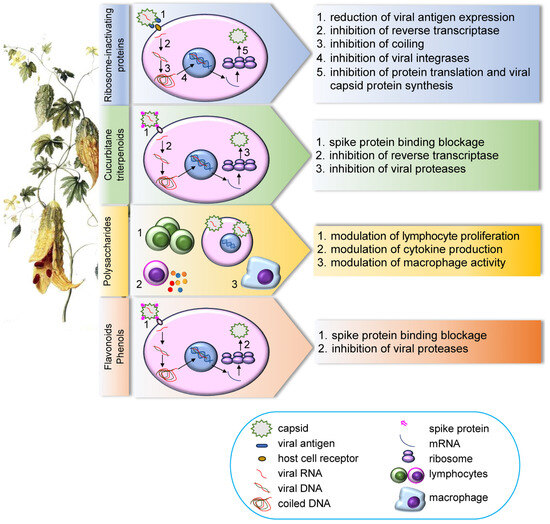
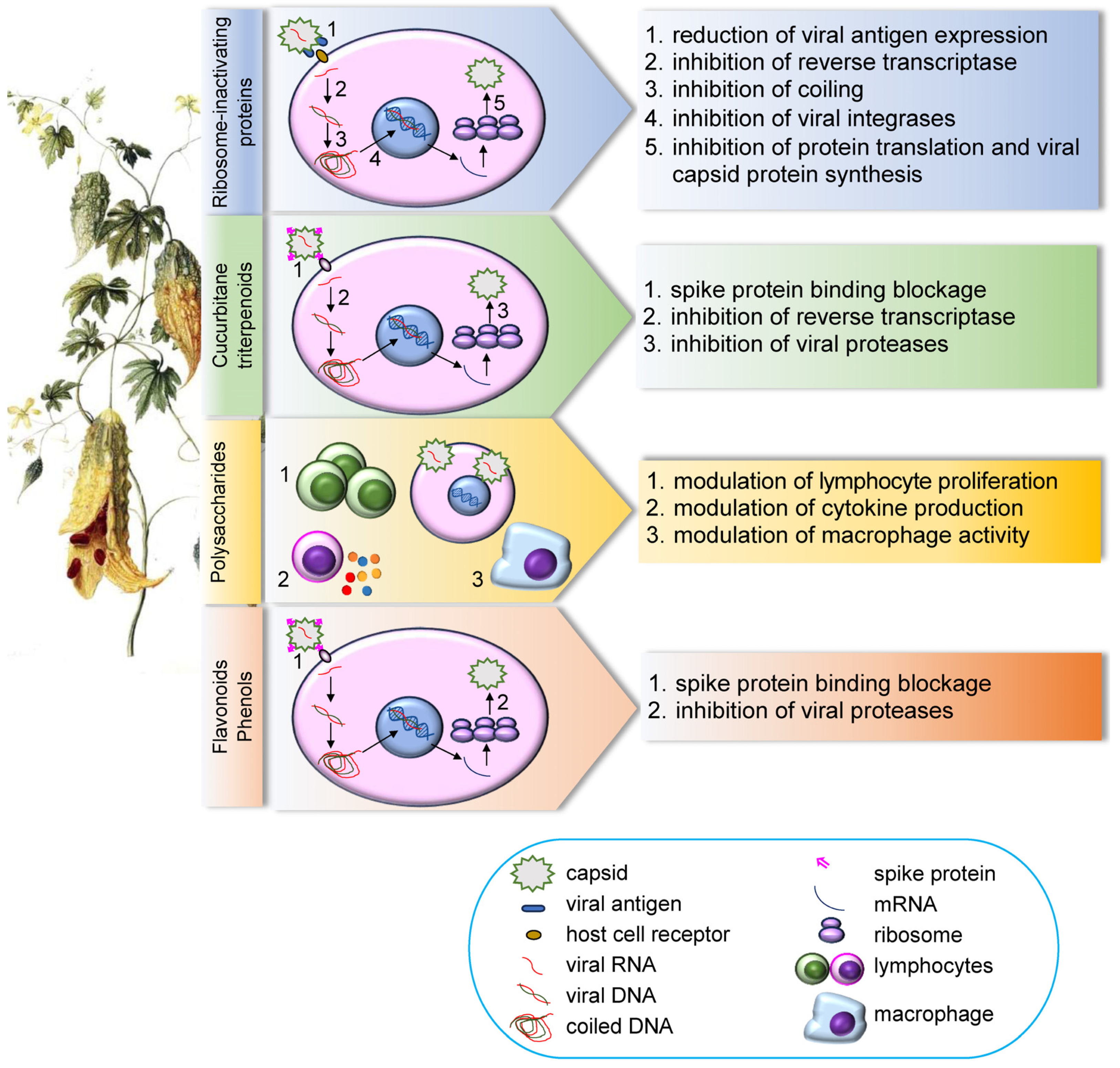
Cucurbitane-type triterpenoid glycosides are among the most distinctive metabolites of MC and have been investigated for their antiviral potential. Their structural diversity, including that of momordicosides and karavilosides, has been linked to interference with viral enzymes and replication pathways (Figure 2).
Figure 2.
The various classes of Momordica charantia antiviral compounds exert their activity through several mechanisms involving different molecular and cellular targets.
Extracts obtained from the vines and leaves of bitter melon led to the isolation of fourteen cucurbitane triterpenoids, designated kuguacins F–S. These compounds were tested in vitro against human immunodeficiency virus-1 (HIV-1)-infected cells; several of them showed weak antiviral activity, with EC50 values ranging from 3.7 to 61 µg/mL and selectivity indices (i.e., the ratios between the concentration killing 50% of host cells and the concentration inhibiting viral replication by 50%) of up to 13.3. Although they were less potent than the reference drug azidothymidine, these cucurbitane derivatives were shown to directly inhibit HIV-1 replication [25].
Other cucurbitane-type triterpenoids extracted from the roots of MC were tested for in vitro inhibitory effects against HIV replication in C8166 cells. Kuguacin C and E displayed moderate anti-HIV-1 activity, with EC50 values of 8.45 and 25.62 µg/mL, and exerted minimal cytotoxicity against C8166 cells (IC50 > 200 µg/mL), with selectivity index values greater than 23.68 and 7.81, respectively [28].
Further investigations confirmed inhibition of HIV-1 reverse transcriptase and protease using ELISA-based assays. Complementary molecular docking analyses revealed strong binding affinities of momordicosides to the active sites of these enzymes, providing both biochemical and mechanistic support for the antiviral potential of cucurbitane glycosides [24].
Multiple docking and molecular modeling studies have identified MC triterpenoids (e.g., momordicine I and related cucurbitanes) as candidate binders of severe acute respiratory syndrome coronavirus 2 (SARS-CoV-2) targets (spike protein or main protease) and other viral enzymes. These in silico results generate testable hypotheses but require biochemical and cell-based validation [36].
Recently, computational studies and docking simulations have suggested possible effects of cucurbitane glycosides from several plants but not MC on the influenza virus, indicating stable theoretical interactions with neuraminidase and leading to hypotheses of potential inhibitory effects against viral replication, which await confirmation through in vitro assays [37]. These results suggest a wider range of antiviral activity, encouraging further research on MC compounds supported by experimental validation.
In silico analysis showed that karaviloside III has strong inhibitory activity and that momordicoside B, kuguaglycoside A and cucurbitadienol also show inhibitory actions against the spike glycoprotein, main protease and RNA-dependent RNA polymerase of SARS-CoV-2, suggesting that these compounds represent candidates for further investigation; however, their actual impact on SARS-CoV-2 viral transmission remains to be determined through experimental models [38,39].
Overall, according to the evidence that is currently available, cucurbitane-type triterpenoid glycosides from MC possess in vitro activity against HIV-1 and are expected to have inhibitory effects against the influenza virus. However, further in vivo and clinical research is required to determine their pharmacological significance and therapeutic potential.
3.2. Polysaccharides, Flavonoids, Saponins, and Sterols
MC contains a broad range of polysaccharides, flavonoids, saponins and sterols/fatty acids with antiviral properties (Figure 2).
The antiviral properties of polysaccharide fractions extracted from MC have been studied indirectly by evaluating their immunomodulatory properties. A recent work demonstrated that MC polysaccharides can modulate lymphocyte proliferation, cytokine production and macrophage activity in vitro, suggesting a host-directed antiviral mechanism in enhancing innate/adaptive responses rather than directly inactivating virus particles [30]. The protective effects of MC polysaccharide fractions were also demonstrated in an animal model of cyclophosphamide-induced immunosuppressed mice. The data specifically showed that high doses of MC polysaccharides (300 mg/kg) provided the strongest immunomodulatory effect, often restoring immune parameters (organ weight, cell proliferation and cytokine levels) to levels comparable to those in the normal healthy group [40]. However, it should be considered that the evidence demonstrating antiviral protection by MC polysaccharides in validated models is limited and often indirect (improved immune markers rather than reduced viral titers).
Flavonoids, saponins and sterols are widely recognized in plant pharmacology for their antiviral properties, which include blocking viral entry, inhibiting key enzymes for viral replication and exerting antioxidant and immunomodulatory effects. Specific MC flavonoids and saponins have been identified in phytochemical screens and some have been subjected to docking or indirect antiviral assays [6,31].
An in silico molecular docking analysis of MC leaf extract constituents indicated three flavonoids, quercetin-3-galactopyranoside, rutin and hyperin, with high theoretical binding scores against SARS-CoV-2 Mpro (known as 3C-like protease), suggesting potential antiviral activity of these derivatives and warranting further experimental validation [41]. Moreover, other bioactive compounds were identified as potential leads with predicted inhibitory activity against Mpro and the SARS spike glycoprotein–human ACE2 complex of SARS-CoV-2. These results suggest that this type of molecule needs further in vitro and in vivo investigation as a promising candidate against SARS-CoV-2 infection [42].
5. Conclusions and Future Directions
The need for novel antiviral agents with a variety of mechanisms of action is highlighted by the emergence of resistant strains, chronic viral infections and recurrent epidemics of novel viruses. MC derivatives represent a very promising resource for the development of natural antiviral agents. Complex plant phytochemistry, particularly the activity of RIPs like MAP30 and MMCs, which target important post-entry steps of viral replication, determines MC potentiality. The theoretical potential of MC phytoconstituents was established mainly by computational studies. According to molecular docking studies, some MC constituents, principally triterpenoids and flavonoids, demonstrate strong binding affinities with main viral proteases, suggesting hypothetical mechanisms for inhibiting viral replication. Although molecular docking represents a useful preliminary tool for identifying the antiviral activity of MC-derived compounds, this approach has some limitations. In fact, in silico studies do not account for biological complexity, including host–virus interactions, intracellular viral replication, off-target effects or cytotoxicity. Furthermore, in silico predictions do not account for pharmacokinetic parameters such as absorption, bioavailability, metabolism and clearance, which are critical for clinical applicability.
In conclusion, MC emerges as a promising candidate for the prevention/treatment of viral diseases through a two-pronged strategy. Standardized MC extracts may represent a nutraceutical resource as dietary supplements to support immune health and provide broad-spectrum antiviral remedies, contributing to the prevention and treatment of viral infections. The plant bioactive properties can also be used in localized topical treatments, through pharmaceutical formulations such as transdermal patches or herbal gels, targeting cutaneous or mucosal viral infections. At the same time, MC represents a valuable source of bioactive compounds that could be further developed into specific antiviral agents after they have undergone rigorous pharmacological characterization and toxicity profiling. While the clinical utility of MC derivatives is currently limited by a narrow therapeutic index, the potential immunogenicity of protein components like RIPs, and a lack of standardized clinical data, MC remains a promising resource for antiviral drug discovery and nutraceutical development.
Author Contributions
M.B.: conceptualization, writing—original draft preparation, and writing—review and editing; F.B.: writing—original draft preparation, and writing—review and editing; A.B.: writing—original draft preparation, and writing—review and editing; L.P.: conceptualization, writing—original draft preparation, and writing—review and editing, funding acquisition. All authors have read and agreed to the published version of the manuscript.
Funding
This research was funded by the “Ministero dell’Università e della Ricerca” (MUR; PRIN 2022 PNRR, entitled ‘Direct or indirect effects of protein synthesis inhibitor enzymes from edible plants and mushrooms on intestinal health and microbiota’, Prot. P2022YERKR).
Institutional Review Board Statement
Not applicable.
Informed Consent Statement
Not applicable.
Data Availability Statement
No new data were created or analyzed in this study.
Conflicts of Interest
The authors declare no conflicts of interest.
Abbreviations
The following abbreviations are used in this manuscript:
| α-MMC | α-Momorcharin |
| β-MMC | β-Momorcharin |
| ChiVMV | Chilli veinal mottle virus |
| CMV | Cucumber mosaic virus |
| DENV | Dengue virus |
| HBV | Hepatitis B virus |
| HIV-1 | Human immunodeficiency virus 1 |
| HPV | Human papilloma virus |
| HSV | Herpes simplex virus |
| MAP30 | Momordica anti-HIV protein of 30 kDa |
| MC | Momordica charantia |
| MCI | Momordin |
| MMC | Momorcharin |
| PAP | Pokeweed antiviral protein |
| PG1 | Protegrin-1 |
| PLSN | Plectasin |
| RIP | Ribosome-inactivating protein |
| SARS-CoV-2 | Severe acute respiratory syndrome coronavirus 2 |
| VZV | Varicella zoster virus |
References
- Luo, G.G.; Gao, S.J. Global health concerns stirred by emerging viral infections. J. Med. Virol. 2020, 92, 399–400. [Google Scholar] [CrossRef] [Scilit] [PubMed]
- Atampugbire, G.; Adomako, E.E.A.; Quaye, O. Medicinal plants as effective antiviral agents and their potential benefits. Nat. Prod. Commun. 2024, 19, 1–13. [Google Scholar] [CrossRef] [Scilit]
- Polito, L.; Bortolotti, M.; Maiello, S.; Battelli, M.G.; Bolognesi, A. Plants producing ribosome-inactivating proteins in traditional medicine. Molecules 2016, 21, 1560. [Google Scholar] [CrossRef] [Scilit] [PubMed]
- Gayathry, K.S.; John, J.A. A comprehensive review on bitter gourd (Momordica charantia L.) as a gold mine of functional bioactive components for therapeutic foods. Food Prod. Process. Nutr. 2022, 4, 10. [Google Scholar] [CrossRef] [Scilit]
- Grover, J.K.; Yadav, S.P. Pharmacological actions and potential uses of Momordica charantia: A review. J. Ethnopharmacol. 2004, 93, 123–132. [Google Scholar] [CrossRef] [Scilit]
- Jia, S.; Shen, M.; Zhang, F.; Xie, J. Recent advances in Momordica charantia: Functional components and biological activities. Int. J. Mol. Sci. 2017, 18, 2555. [Google Scholar] [CrossRef] [Scilit]
- Bara, L.V.; Budau, R.; Apahidean, A.I.; Bara, C.M.; Iancu, C.V.; Jude, E.T.; Cheregi, G.R.; Timar, A.V.; Bei, M.F.; Osvat, I.M.; et al. Momordica charantia L.: Functional health benefits and uses in the food industry. Plants 2025, 14, 2642. [Google Scholar] [CrossRef] [Scilit]
- Bortolotti, M.; Mercatelli, D.; Polito, L. Momordica charantia, a nutraceutical approach for inflammatory related diseases. Front. Pharmacol. 2019, 10, 486. [Google Scholar] [CrossRef] [Scilit]
- Dandawate, P.R.; Subramaniam, D.; Padhye, S.B.; Anant, S. Bitter melon: A panacea for inflammation and cancer. Chin. J. Nat. Med. 2016, 14, 81–100. [Google Scholar] [CrossRef] [Scilit]
- Chao, C.Y.; Sung, P.J.; Wang, W.H.; Kuo, Y.H. Anti-inflammatory effect of Momordica charantia in sepsis mice. Molecules 2014, 19, 12777–12788. [Google Scholar] [CrossRef] [Scilit]
- Oliveira, M.; Almeida, W.; Wariss, F.; Bezerra, F.; Araújo, M.; Ferreira, G.; Carvalho Junior, R. Phytochemical profile and biological activities of Momordica charantia L. (Cucurbitaceae): A review. Afr. J. Biotechnol. 2018, 17, 829–846. [Google Scholar] [CrossRef] [Scilit]
- Oliveira, M.L.D.A.; Sousa, R.M.D.; Barbosa, E.A.; Galdino, O.A.; Dantas, D.L.A.; Alves, I.R.; Sousa Borges, R.; Castelo Branco, N.C.D.M.; Nascimento Rodrigues, A.S.D.; De Souza, G.C.; et al. Momordica charantia L. (Cucurbitaceae) leaf extract from phytochemical characterization and toxicity evaluation to modulation of pro-inflammatory cytokines and MAPK/NFκB pathways. Molecules 2025, 30, 4335. [Google Scholar] [CrossRef] [Scilit] [PubMed]
- Costa, J.G.; Nascimento, E.M.; Campos, A.R.; Rodrigues, F.F. Antibacterial activity of Momordica charantia (Curcubitaceae) extracts and fractions. J. Basic Clin. Pharm. 2010, 2, 45–51. [Google Scholar] [PubMed]
- Sur, S.; Ray, R.B. Bitter melon (Momordica Charantia), a nutraceutical approach for cancer prevention and therapy. Cancers 2020, 12, 2064. [Google Scholar] [CrossRef] [Scilit]
- Bora, A.F.M.; Kouame, K.J.E.; Li, X.; Liu, L.; Pan, Y. New insights into the bioactive polysaccharides, proteins, and triterpenoids isolated from bitter melon (Momordica charantia) and their relevance for nutraceutical and food application: A review. Int. J. Biol. Macromol. 2023, 231, 123173. [Google Scholar] [CrossRef] [Scilit]
- Grover, J.K.; Yadav, S.; Vats, V. Medicinal plants of India with anti-diabetic potential. J. Ethnopharmacol. 2002, 81, 81–100. [Google Scholar] [CrossRef] [Scilit]
- Teoh, S.L.; Latiff, A.A.; Das, S. The effect of topical extract of Momordica charantia (bitter gourd) on wound healing in nondiabetic rats and in rats with diabetes induced by streptozotocin. Clin. Exp. Dermatol. 2009, 34, 815–822. [Google Scholar] [CrossRef] [Scilit]
- Ahmad, N.; Hasan, N.; Ahmad, Z.; Zishan, M.; Zohrameena, S. Momordica charantia: For traditional uses and pharmacological actions. J. Drug Deliv. Ther. 2016, 6, 40–44. [Google Scholar] [CrossRef] [Scilit]
- PROTA4U. Available online: https://prota.prota4u.org/protav8.asp?g=pe&p=Momordica+charantia (accessed on 9 December 2025).
- PROSEA. Available online: https://prosea.prota4u.org/view.aspx?id=2184 (accessed on 9 December 2025).
- Beloin, N.; Gbeassor, M.; Akpagana, K.; Hudson, J.; de Soussa, K.; Koumaglo, K.; Arnason, J.T. Ethnomedicinal uses of Momordica charantia (Cucurbitaceae) in Togo and relation to its phytochemistry and biological activity. J. Ethnopharmacol. 2005, 96, 49–55. [Google Scholar] [CrossRef] [Scilit]
- Lans, C.A. Ethnomedicines used in Trinidad and Tobago for urinary problems and diabetes mellitus. J. Ethnobiol. Ethnomed. 2006, 2, 45. [Google Scholar] [CrossRef] [Scilit]
- Thirumal, S.; Balalsubramanian, D. Momordica Charantia L. Phytoconstituents and pharmacological applications-A critical review. Lett. Appl. NanoBioScience 2024, 13, 101. [Google Scholar] [CrossRef] [Scilit]
- Aldholmi, M.; Ahmad, R.; Shaikh, M.H.; Salem, A.M.; Alqurashi, M.; Alturki, M. Anti-infective activity of Momordica charantia extract with molecular docking of its triterpenoid glycosides. Antibiotics 2024, 13, 544. [Google Scholar] [CrossRef] [Scilit] [PubMed]
- Chen, J.C.; Liu, W.Q.; Lu, L.; Qiu, M.H.; Zheng, Y.T.; Yang, L.M.; Zhang, X.M.; Zhou, L.; Li, Z.R. Kuguacins F-S, cucurbitane triterpenoids from Momordica charantia. Phytochemistry 2009, 70, 133–140. [Google Scholar] [CrossRef] [Scilit] [PubMed]
- Chen, C.R.; Liao, Y.W.; Kuo, Y.H.; Hsu, J.L.; Chang, C.I. Cucurbitane-type triterpenoids from Momordica charantia. Nat. Prod. Commun. 2017, 12, 889–892. [Google Scholar] [CrossRef] [Scilit]
- Gao, Y.; Chen, J.C.; Peng, X.R.; Li, Z.R.; Su, H.G.; Qiu, M.H. Cucurbitane-type triterpene glycosides from Momordica charantia and their α-glucosidase inhibitory activities. Nat. Prod. Bioprospect. 2020, 10, 153–161. [Google Scholar] [CrossRef] [Scilit]
- Chen, J.; Tian, R.; Qiu, M.; Lu, L.; Zheng, Y.; Zhang, Z. Trinorcucurbitane and cucurbitane triterpenoids from the roots of Momordica charantia. Phytochemistry 2008, 69, 1043–1048. [Google Scholar] [CrossRef] [Scilit]
- Deng, Y.Y.; Yi, Y.; Zhang, L.F.; Zhang, R.F.; Zhang, Y.; Wei, Z.C.; Tang, X.J.; Zhang, M.W. Immunomodulatory activity and partial characterisation of polysaccharides from Momordica charantia. Molecules 2014, 19, 13432–13447. [Google Scholar] [CrossRef] [Scilit]
- Zhan, K.; Ji, X.; Luo, L. Recent progress in research on Momordica charantia polysaccharides: Extraction, purification, structural characteristics and bioactivities. Chem. Biol. Technol. Agric. 2023, 10, 58. [Google Scholar] [CrossRef] [Scilit]
- Das, S.; Gajbhiye, R.; Kumar, N.; Sarkar, D. Multi-Targeted prediction of the antiviral effect of Momordica charantia extract based on Network Pharmacology. J. Nat. Remedies 2023, 23, 169–183. [Google Scholar] [CrossRef] [Scilit]
- Li, Z.; Xia, A.; Li, S.; Yang, G.; Jin, W.; Zhang, M.; Wang, S. The pharmacological properties and therapeutic use of bitter melon (Momordica charantia L.). Curr. Pharmacol. Rep. 2020, 6, 103–109. [Google Scholar] [CrossRef] [Scilit]
- Citores, L.; Iglesias, R.; Ferreras, J.M. Antiviral activity of ribosome-inactivating proteins. Toxins 2021, 13, 80. [Google Scholar] [CrossRef] [Scilit] [PubMed]
- Lee-Huang, S.; Lin Huang, P.; Lee Huang, P. The Discovery of MAP30 and elucidation of its medicinal activities. In Antitumor Potential and Other Emerging Medicinal Properties of Natural Compounds; Fang, E., Ng, T., Eds.; Springer: Dordrecht, The Netherlands, 2013; pp. 117–126. [Google Scholar] [CrossRef] [Scilit]
- Huang, W.H.; Su, W.M.; Wang, C.W.; Fang, Y.H.; Jian, Y.W.; Hsu, H.J.; Peng, C.W. Momordica anti-HIV protein MAP30 abrogates the Epstein-Barr virus nuclear antigen 1 dependent functions in host cells. Heliyon 2023, 9, e21486. [Google Scholar] [CrossRef] [Scilit] [PubMed]
- Singh, S.K.; Singh, S.; Singh, R. Targeting novel coronavirus SARS-CoV-2 spike protein with phytoconstituents of Momordica charantia. J. Ovarian Res. 2021, 14, 126. [Google Scholar] [CrossRef] [Scilit] [PubMed]
- Cao, L.; Liu, Y.; Ma, B.; Yi, B.; Sun, J. Discovery of natural multi-targets neuraminidase inhibitor glycosides compounds against influenza A virus through network pharmacology, virtual screening, molecular dynamics simulation, and in vitro experiment. Chem. Biol. Drug Des. 2024, 103, e14359. [Google Scholar] [CrossRef] [Scilit]
- Sheikh, H.I.; Zakaria, N.H.; Abdul Majid, F.A.; Zamzuri, F.; Fadhlina, A.; Hairani, M.A.S. Promising roles of Zingiber officinale, Curcuma longa, and Momordica charantia as immunity modulators against COVID-19: A bibliometric analysis. J. Agric. Food Res. 2023, 14, 100680. [Google Scholar] [CrossRef] [Scilit]
- Tüzün, B.; Sayin, K.; Ataseven, H. Could Momordica Charantia be effective in the treatment of COVID19? Cumhur. Sci. J. 2022, 43, 211–220. [Google Scholar] [CrossRef] [Scilit]
- Ablimit, A.; Yu, Y.; Jin, X.; Li, J.S. Effect of Momordica charantia polysaccharide on immunomodulatory activity in mice. Exp. Ther. Med. 2023, 26, 307. [Google Scholar] [CrossRef] [Scilit]
- Adedayo, A.; Famuti, A. In-silico studies of Momordica charantia extracts as potential candidates against SARS-CoV-2 targeting human main protease (Mpro). Inform. Med. Unlocked 2023, 38, 101216. [Google Scholar] [CrossRef] [Scilit]
- Evary, Y.M.; Masyita, A.; Kurnianto, A.A.; Asri, R.M.; Rifai, Y. Molecular docking of phytochemical compounds of Momordica charantia as potential inhibitors against SARS-CoV-2. Infect. Disord. Drug Targets 2022, 22, e130122200221. [Google Scholar] [CrossRef] [Scilit]
- Barbieri, L.; Valbonesi, P.; Bonora, E.; Gorini, P.; Bolognesi, A.; Stirpe, F. Polynucleotide:adenosine glycosidase activity of ribosome-inactivating proteins: Effect on DNA, RNA and poly(A). Nucleic Acids Res. 1997, 25, 518–522. [Google Scholar] [CrossRef] [Scilit]
- Bolognesi, A.; Bortolotti, M.; Maiello, S.; Battelli, M.G.; Polito, L. Ribosome-inactivating proteins from plants: A historical overview. Molecules 2016, 21, 1627. [Google Scholar] [CrossRef] [Scilit] [PubMed]
- Domashevskiy, A.V.; Goss, D.J. Pokeweed antiviral protein, a ribosome inactivating protein: Activity, inhibition and prospects. Toxins 2015, 7, 274–298. [Google Scholar] [CrossRef] [Scilit] [PubMed]
- Bolognesi, A.; Polito, L.; Lubelli, C.; Barbieri, L.; Parente, A.; Stirpe, F. Ribosome-inactivating and adenine polynucleotide glycosylase activities in Mirabilis jalapa L. tissues. J. Biol. Chem. 2002, 277, 13709–13716. [Google Scholar] [CrossRef] [Scilit] [PubMed]
- Hudak, K.A.; Wang, P.; Tumer, N.E. A novel mechanism for inhibition of translation by pokeweed antiviral protein: Depurination of the capped RNA template. RNA 2000, 6, 369–380. [Google Scholar] [CrossRef] [Scilit]
- Barbieri, L.; Battelli, M.G.; Stirpe, F. Ribosome-inactivating proteins from plants. Biochim. Biophys. Acta 1993, 1154, 237–282. [Google Scholar] [CrossRef] [Scilit]
- Kaur, I.; Gupta, R.C.; Puri, M. Ribosome-inactivating proteins from plants inhibiting viruses. Virol. Sin. 2011, 26, 357–365. [Google Scholar] [CrossRef] [Scilit]
- Rothan, H.A.; Bahrani, H.; Mohamed, Z.; Rahman, N.A.; Yusof, R. Fusion of Protegrin-1 and Plectasin to MAP30 shows significant inhibition activity against Dengue virus replication. PLoS ONE 2014, 9, e94561. [Google Scholar] [CrossRef] [Scilit]
- Fan, J.M.; Zhang, Q.; Xu, J.; Zhu, S.; Ke, T.; Gao, D.F.; Xu, Y.B. Inhibition on Hepatitis B virus in vitro of recombinant MAP30 from bitter melon. Mol. Biol. Rep. 2007, 36, 381–388. [Google Scholar] [CrossRef] [Scilit]
- Watts, N.R.; Eren, E.; Palmer, I.; Huang, P.L.; Huang, P.L.; Shoemaker, R.H.; Lee-Huang, S.; Wingfield, P.T. The ribosome-inactivating proteins MAP30 and Momordin inhibit SARS-CoV-2. PLoS ONE 2023, 18, e0286370. [Google Scholar] [CrossRef] [Scilit]
- Wang, Y.X.; Neamati, N.; Jacob, J.; Palmer, I.; Huang, P.L.; Huang, P.L.; Lee-Huang, S. Anti-HIV and anti-tumor protein MAP30, a 30 kDa single-strand type-I RIP. Protein Sci. 2000, 9, 106–115. [Google Scholar] [CrossRef] [Scilit]
- Ng, T.B.; Cheung, R.C.; Wong, J.H.; Chan, W.Y. Proteins, peptides, polysaccharides, and nucleotides with inhibitory activity on human immunodeficiency virus and its enzymes. Appl. Microbiol. Biotechnol. 2015, 99, 10399–10414. [Google Scholar] [CrossRef] [Scilit] [PubMed]
- Meng, Y.; Liu, S.; Li, J.; Zhao, X. Preparation of an antitumor and antivirus agent: Chemical modification of α-MMC and MAP30 from Momordica Charantia L. with covalent conjugation of polyethyelene glycol. Int. J. Nanomed. 2012, 7, 3133–3142. [Google Scholar] [CrossRef] [Scilit] [PubMed]
- Yao, X.; Li, J.; Deng, N.; Wang, S.; Meng, Y.; Shen, F. Immunoaffinity purification of α-momorcharin from bitter melon seeds (Momordica charantia). J. Sep. Sci. 2011, 34, 3092–3098. [Google Scholar] [CrossRef] [Scilit] [PubMed]
- Zhu, F.; Zhang, P.; Meng, Y.-F.; Xu, F.; Zhang, D.-W.; Cheng, J.; Lin, H.-H.; Xi, D. Alpha-momorcharin, a RIP produced by bitter melon, enhances defense response in tobacco plants against diverse plant viruses and shows antifungal activity in vitro. Planta 2012, 237, 77–88. [Google Scholar] [CrossRef] [Scilit]
- Zhu, F.; Zhu, P.X.; Xu, F.; Che, Y.P.; Ma, Y.M.; Ji, Z.L. Alpha-momorcharin enhances Nicotiana benthamiana resistance to tobacco mosaic virus infection through modulation of reactive oxygen species. Mol. Plant Pathol. 2020, 21, 1212–1226. [Google Scholar] [CrossRef] [Scilit]
- Yang, T.; Peng, Q.; Lin, H.; Xi, D. Alpha-momorcharin preserves catalase activity to inhibit viral infection by disrupting the 2b-CAT interaction in Solanum lycopersicum. Mol. Plant Pathol. 2023, 24, 107–122. [Google Scholar] [CrossRef] [Scilit]
- Yang, T.; Meng, Y.; Chen, L.-J.; Lin, H.; Xi, D.-H. The Roles of Alpha-momorcharin and jasmonic acid in modulating the response of Momordica charantia to cucumber mosaic virus. Front. Microbiol. 2016, 7, 1796. [Google Scholar] [CrossRef] [Scilit]
- Lee-Huang, S.; Huang, P.L.; Nara, P.L.; Chen, H.C.; Kung, H.F.; Huang, P.; Huang, H.I.; Huang, P.L. MAP 30: A new inhibitor of HIV-1 infection and replication. FEBS Lett. 1990, 272, 12–18. [Google Scholar] [CrossRef] [Scilit]
- Fang, E.F.; Ng, T.B. Bitter gourd (Momordica charantia) is a cornucopia of health: A review of its credited antidiabetic, anti-HIV, and antitumor properties. Curr. Mol. Med. 2011, 11, 417–436. [Google Scholar] [CrossRef] [Scilit]
- Kilroy, J.M.; Leal, A.A.; Henderson, A.J. Chronic HIV transcription, translation, and persistent inflammation. Viruses 2024, 16, 751. [Google Scholar] [CrossRef] [Scilit]
- Teixeira, A.R.; Bittar, C.; Silva Santos, G.S.; Oliveira, T.Y.; Huang, A.S.; Linden, N.; Ferreira, I.A.T.M.; Murdza, T.; Muecksch, F.; Jones, R.B.; et al. Transcription of HIV-1 at sites of intact latent provirus integration. J. Exp. Med. 2024, 221, e20231987. [Google Scholar] [CrossRef] [Scilit]
- Angamuthu, D.; Purushothaman, I.; Kothandan, S.; Swaminathan, R. Antiviral study on Punica granatum L., Momordica charantia L., Andrographis paniculata Nees, and Melia azedarach L., to Human Herpes Virus-3. Eur. J. Integr. Med. 2019, 28, 98–108. [Google Scholar] [CrossRef] [Scilit]
- Nugier, F.; Colin, J.N.; Aymard, M.; Langlois, M. Occurrence and characterization of acyclovir-resistant herpes simplex virus isolates: Report on a two-year sensitivity screening survey. J. Med. Virol. 1992, 36, 1–12. [Google Scholar] [CrossRef] [Scilit]
- Yeung, H.; Li, W.; Chan, W.; Law, L.; Ng, T. Alpha and beta momorcharins. Int. J. Pept. Protein Res. 1986, 28, 518–524. [Google Scholar] [CrossRef] [Scilit]
- Zheng, Y.T.; Ben, K.L.; Jin, S.W. Alpha-momorcharin inhibits HIV-1 replication in acutely but not chronically infected T-lymphocytes. Zhongguo Yao Li Xue Bao Acta Pharmacol. Sin. 1999, 20, 239–243. [Google Scholar]

Disclaimer/Publisher’s Note: The statements, opinions and data contained in all publications are solely those of the individual author(s) and contributor(s) and not of MDPI and/or the editor(s). MDPI and/or the editor(s) disclaim responsibility for any injury to people or property resulting from any ideas, methods, instructions or products referred to in the content. |
© 2026 by the authors. Licensee MDPI, Basel, Switzerland. This article is an open access article distributed under the terms and conditions of the Creative Commons Attribution (CC BY) license.