


Abstract
Background/Objectives: Hypertensive disorders of pregnancy (HDPs) affect approximately one in seven hospital deliveries in the United States and increase the risk of pregnancy-associated mortality. Home blood pressure monitoring (HBPM) for patients with HDPs has emerged as a model of care poised to improve ascertainment of blood pressure and triage of care during pregnancy and postpartum periods. However, the strength of evidence supporting HBPM approaches has been variable. This rapid review aimed to understand how HBPM approaches for pregnant and postpartum populations with HDPs have been evaluated in order to strengthen future research. Methods: Search criteria included peer-reviewed literature in English and French published during 2018–2024 that assessed HBPM approaches for pregnant and postpartum populations in high-income countries. A total of 370 records were screened and reviewed to identify 52 eligible articles. Key study characteristics, methodologies, and outcome measures were extracted. Identified outcome measures were mapped by outcome type (implementation, health service, and client) to assess gaps in evaluation of HBPM approaches. Results: A range of study designs were employed to evaluate HBPM approaches: experimental (17%), observational (52%), qualitative (10%), mixed method (10%), and economic (11%) designs. Over a third employed a comparison group, most of which compared HBPM approaches to usual antepartum or postpartum care. Only 11 studies reported on impact outcomes (long-term blood pressure control, adverse maternal and perinatal outcomes). Significant gaps were identified among the implementation outcomes examined. While patient engagement measures were common, assessment of provider adherence and engagement was limited. Hospital admissions and emergency department visits were often employed as proxies to measure HBPM effectiveness, efficiency, and safety. However, no studies adequately reported effectiveness measures for remote patient triage. Conclusions: Our results call for improved HBPM metrics to ensure patients are receiving high-quality care responsive to their clinical condition. Future studies on HBPM approaches should prioritize more transparent reporting on health actor engagement. A composite measure including both patient and provider adherence to monitoring and triage processes will provide stronger evidence on the effectiveness of HBPM for pregnant and postpartum patients and share impactful learning for health systems interested in adopting HBPM approaches.
1. Introduction
High blood pressure, or hypertension, is a serious health risk for adults across the United States and a key risk factor for heart disease and stroke. Nearly one in two adults in the United States have hypertension, and most (over 92.1 million) do not have their blood pressure (BP) under control [1]. Hypertensive disorders of pregnancy (HDPs) is an umbrella term used to describe diagnoses of gestational hypertension, pre-eclampsia/eclampsia, and chronic hypertension with superimposed pre-eclampsia/eclampsia during pregnancy. HDPs are some of the most common conditions during pregnancy, estimated to affect one in seven hospital deliveries in the United States [2]. Evidence suggests these conditions are on the rise: the prevalence of HDPs among delivery hospitalizations increased by 2.6% during 2017–2019 (13.3% to 15.9%) [3] and the rate of chronic hypertension in pregnancy doubled between 2008 and 2021 (1.8% to 3.7%) [4]. Having an HDP increases the risk of a variety of serious health outcomes, including pregnancy-associated mortality at 1 year postpartum [5]. People with HDPs are also at an increased risk for cardiovascular disease in the future, with recent evidence demonstrating an increased risk of hypertension 10–14 years after delivery for individuals with a high BP in the third trimester [6,7]. However, severe complications and mortality from HDPs are often considered preventable, with clinical guidance emphasizing the role of early identification and timely treatment to prevent poor outcomes [3].
Home blood pressure monitoring (HBPM) (also commonly referred to as remote, self, or telehealth monitoring of blood pressure) has emerged as a model of care poised to improve outcomes for patients with HDPs. In this approach, in addition to usual care, patients take their own blood pressure measurements at home, remotely, or outside of a clinical setting. Models for following-up with these patients vary: in a clinician-led model, the provider remotely receives and assesses data from BP readings to advise the patient, while in a self-monitoring model, the patient receives education on how and when to measure their BP and is responsible for assessing their own measurements with established thresholds at which to seek care.
For non-pregnant patients, out-of-office or HBPM for hypertension management is recommended by many professional organizations, including the American College of Cardiology (ACC) and American Heart Association (AHA) [8]. For pregnant or postpartum patients with an HDP, however, an insufficient evidence base has limited clinical recommendations and implementation guidance for HBPM [9,10]. Systematic reviews underscore the limited evidence assessing the effectiveness of HBPM yet suggest that HBPM is a feasible intervention with the potential to improve ascertainment of BP, patient satisfaction, and promote equity [11,12]. In 2022, noting the low certainty of evidence, the World Health Organization published a conditional recommendation for patients with HDPs suggesting that HBPM should be made available as “an additional option to clinic blood pressure monitoring by health workers during antenatal contacts only” [13]. For individuals at risk for pre-eclampsia, a 2023 American Journal of Obstetrics and Gynecology (AJOG) special report strongly recommended HBPM alongside provision of patient education materials, noting the necessity of a clinical support system to respond to reports of high readings [14].
In 2022, the Maryland Maternal Health Innovation Program (MDMOM) launched a telehealth initiative to address severe hypertension in pregnancy. The initiative seeks to improve BP monitoring for patients at risk and diagnosed with severe hypertension in pregnancy or postpartum through statewide distribution of free Bluetooth BP monitors and cuffs and educational materials [15]. Patients are eligible if they have a high BP reading during their clinic visit (>140/90 mmHG), a diagnosis of an HDP, or chronic hypertension. Once a provider has confirmed the patient meets the eligibility criteria, patients are equipped with a BP monitor and appropriately sized cuff, and are supplied with educational materials detailing how to measure their BP at home and urgent maternal warning signs. Health providers also demonstrate how to use the BP unit and ensure patients complete the telehealth initiative registration information. At a minimum, patients are advised to contact their health provider if they have a home BP reading between 140 and 159/90–109 mmHG. However, to ensure better integration within hospital service delivery workflows across Maryland, the MDMOM team has collaborated with participating birthing hospital leadership to adapt the initiative, giving each institution flexibility to establish their own monitoring and follow-up protocols.
Similarly, as part of the National Institutes of Health’s IMPROVE Initiative, researchers are developing and evaluating HBPM approaches [16]. The IMPROVE Initiative supports research to promote maternal health equity and reduce pregnancy-related morbidity and mortality through the Community Implementation Program (CIP) and the establishment of twelve Maternal Health Research Centers of Excellence across the United States. For example, the Southern Center for Maternal Health Equity, a Maternal Health Research Center of Excellence led by Tulane University, the Praxis Project, and Oschner Health, aims to adapt and assess an enhanced HBPM approach across rural parishes in northern Louisiana.
To address identified evidence gaps and support future design, implementation, and evaluation of these initiatives, we explored how various HBPM approaches could be measured. This paper synthesizes findings from a rapid review employed to understand how researchers have studied and evaluated home blood pressure monitoring approaches for pregnant and postpartum populations with hypertensive disorders.
2. Materials and Methods
A rapid review was conducted of peer-reviewed literature that assessed implementation of HBPM interventions for pregnant and postpartum patients [17]. The protocol was registered with the Open Science Foundation (https://osf.io/m8b2e, accessed on 31 December 2024). MEDLINE and Scopus databases were searched electronically in December 2024, employing a search strategy that included keywords related to HBPM and pregnant and postpartum populations (see Supplementary Materials; Table S1). In addition, reference lists of relevant articles were searched for additional literature.
Table 1 outlines the eligibility criteria. The literature was eligible if it assessed HBPM and related approaches for pregnant and postpartum people within high-income countries. Peer-reviewed research, program evaluation, and field report articles published in English or French during 2018–2024 were eligible to assess the most recent methodologies employed to evaluate HBPM approaches. Reviews, letters, commentaries, editorials, protocols, abstracts, posters, and any other article type that did not report original research or evaluation data or was not required to undergo peer review were excluded. Reference lists of relevant reviews were cross-checked to identify additional eligible literature not identified through database searches.
Table 1.
Literature eligibility criteria.
The identified literature was uploaded into Covidence software [18] for screening. MM screened abstracts and conducted subsequent full-text review. SC reviewed approximately 20% of the literature at each stage; no conflicts were identified (100% inter-rater reliability). MM extracted data for all eligible articles using a piloted data extraction template that captured key study characteristics, methodology and outcome measures.
Characteristics of identified HBPM approaches were summarized. In addition, eligible articles were mapped to understand commonly used programmatic inputs, HBPM approaches and activities as well as identify key output, outcome, and impact measures. Outcomes were categorized as implementation, health service delivery, and client measures in alignment with Proctor et al.’s (2011) conceptual model of implementation research [19,20] that incorporates the Institute of Medicine’s six quality improvement aims: efficiency, safety, effectiveness, equity, patient-centeredness, and timeliness (Table 2) [21]. To assess literature and/or knowledge gaps, outcome and impact indicators were mapped by an HBPM approach (i.e., antepartum or postpartum blood pressure monitoring). Risk of bias and quality appraisals were not conducted due to the methodological focus of the review.
Table 2.
Domains of outcome measures.
3. Results
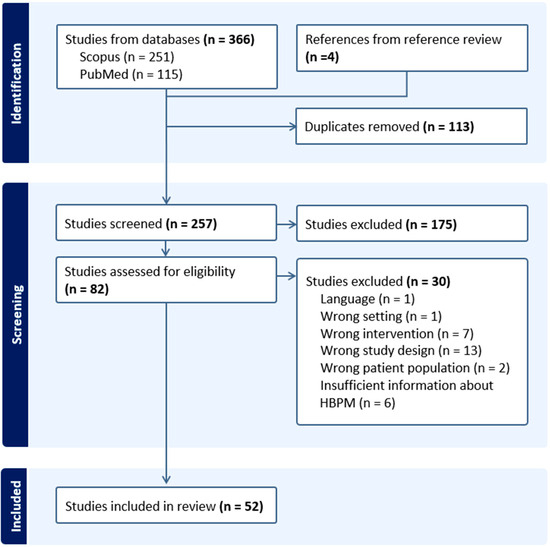
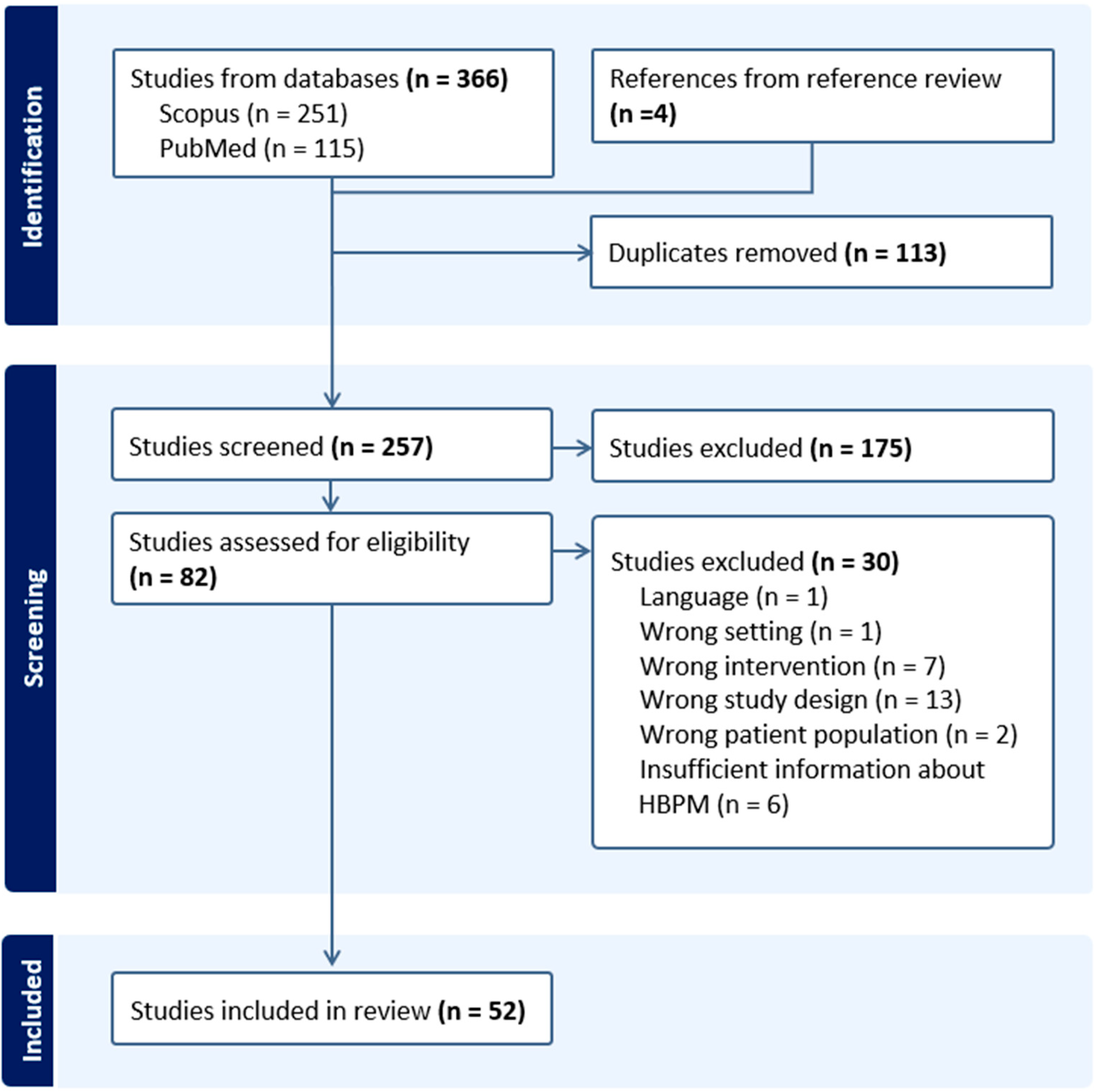
A total of 370 peer-reviewed articles were identified, 366 from Scopus and PubMed databases and four from review of reference lists (Figure 1). After removing 113 duplicates, 257 articles underwent screening, and 82 underwent full-text review. At this stage, 30 articles were excluded based on study eligibility criteria: one article was in German, one article was reporting on an HBPM approach in a low-income country, seven reported on telehealth interventions that did not include HBPM approaches, 13 were editorials or commentaries that did not report on results from an assessment or study on HBPM, two reported on HBPM approaches with patient populations that were not pregnant or in the postpartum period, and six did not report sufficient information about the HBPM approach to understand how the program was assessed.
Figure 1.
Prisma flow diagram.
A total of 52 peer-reviewed articles were eligible [22,23,24,25,26,27,28,29,30,31,32,33,34,35,36,37,38,39,40,41,42,43,44,45,46,47,48,49,50,51,52,53,54,55,56,57,58,59,60,61,62,63,64,65,66,67,68,69,70,71,72,73], many of which assessed the implementation of the same HBPM approach or program (Table 3). Over half of the studies (n = 27; 52%) focused on HBPM approaches within the antepartum period, 40% in the postpartum period (n = 21), and 8% in both periods (n = 4). Most articles (n = 47; 90%) assessed HBPM approaches that employed a digital platform or automated blood pressure monitor to communicate and/or signal patients’ high blood pressure readings to a health provider, electronic medical record, or patient portal. However, some required or had the option for the patient to call, text, or email a health provider (n = 5; 10%) to alert of high BP readings. One HBPM approach also provided the option for rapid telehealth appointments as a mechanism to triage high BP readings. In addition, Wilson et al. (2022) and Bisson et al. (2023) reported on national approaches which distributed blood pressure units to interested hospitals and health systems in England and the United States, respectively, and allowed for each recipient to employ their preferred HBPM approach [71,72].
Table 3.
Characteristics of HBPM approaches identified in rapid review.
A range of study designs and methodologies were employed to evaluate HBPM approaches (Table 4), including (quasi-)experimental (n = 9; 17%), observational (n = 27; 52%), qualitative (n = 5; 10%), mixed method (n = 5; 10%), and economic (n = 6; 11%) designs. Over a third (38%) employed a comparison group, most of which compared HBPM approaches to usual care. Primary outcomes varied widely. However, patient fidelity measures (i.e., patient engagement, adherence, persistence with intervention, submission of BP readings, etc.) were most commonly employed in (quasi-)experimental (n = 19; 56%) and observational studies (n = 13; 37%). Only one study employed provider fidelity outcomes (provider use and interpretation of home BP to manage clinical care) as a primary outcome [70]. Some studies also used health service measures for their primary outcomes: three studies utilized effectiveness measures, including BP control [29,51] and hospital admissions [67], and one study measured the time between randomization and clinic diagnosis of hypertension [28].
Table 4.
Study design of research assessing HBPM approaches.
Mapping of reported measures demonstrated gaps in key implementation, health service, and client outcomes (Supplementary Materials Tables S2–S4). All articles employing (quasi-)experimental studies of antepartum HPBM approaches reported fidelity, effectiveness, patient-centered, safety, satisfaction, and clinical status outcome measures [25,28,29]. However, similar designs evaluating postpartum approaches did not report patient-centered or clinical status outcomes [49,51,56,57,65,67]. The reporting of outcomes among articles employing observational, qualitative, or mixed method designs varied significantly. Among those evaluating antepartum HBPM approaches, there is a notable shift in study focus from primarily measuring health service and client outcomes to greater inclusion and prioritization of implementation outcomes in more recent years. In comparison, articles evaluating postpartum or combined HBPM approaches have consistently reported on a few select implementations, health services, and client outcomes. Among articles reporting on economic analyses [22,23,30,34,42,69], cost outcomes were systematically reported. In addition, van den Heuvel et al. (2021) reported on health service, client, and impact outcomes [42]. Overall, significant gaps in measuring implementation outcomes across the literature were identified, namely measures of penetration (n = 7; 13%), acceptability (n = 5; 10%), sustainability (n = 3; 6%), and adoption (n = 1; 2%). In addition, very few articles reported equity-related health service outcomes (n = 7; 13%) and function-related client outcomes (n = 2; 4%). Impact outcome measures were more likely to be reported when evaluating antepartum HBPM approaches [22,25,28,29,33,35,40,42,46] compared to postpartum or combined HBPM approaches [51,73]; nonetheless, only 21% of articles (n = 11) reported on such measures (e.g., long-term BP control and adverse maternal and perinatal outcomes).
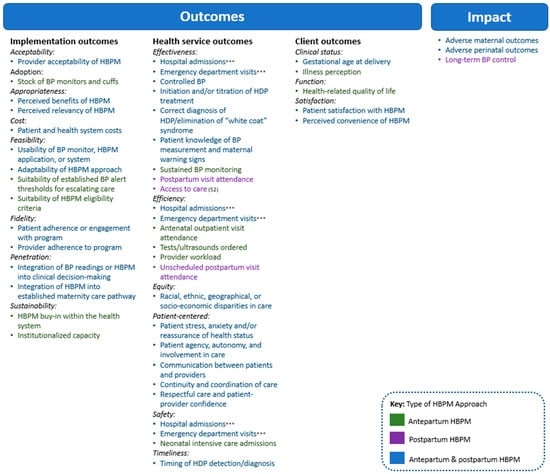
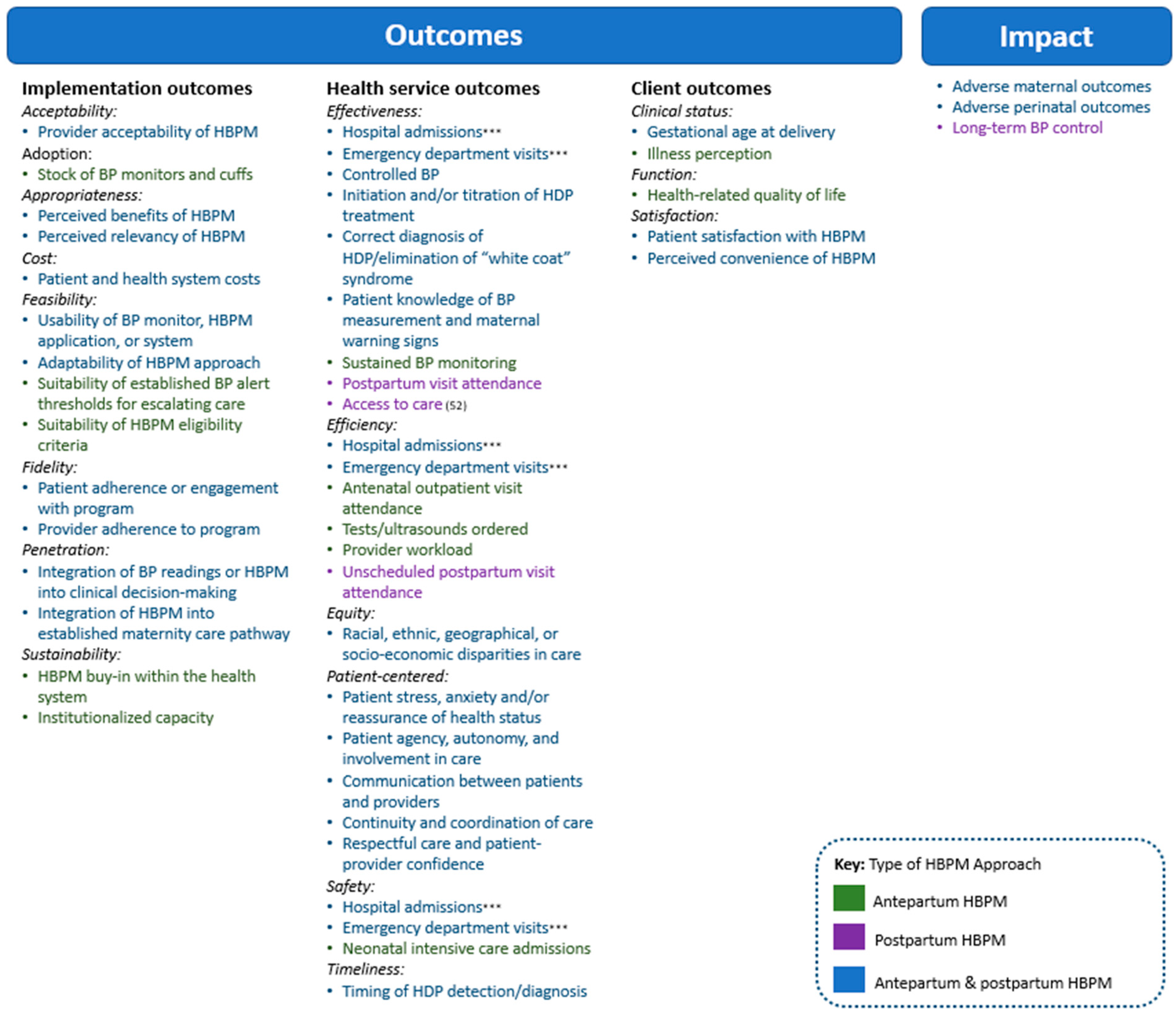
The breadth of indicators reported within each outcome category was also examined. Figure 2 presents key measures extracted from the literature, distinguishing between outcomes measured to evaluate antepartum and postpartum HBPM approaches. Implementation, health service, and client outcomes were identified along with three primary impact measures: long-term postpartum blood pressure control [51], adverse maternal outcomes [22,25,28,29,33,35,40,42,46,73], and adverse perinatal outcomes [25,28,29,33,35,42].
Figure 2.
Key HBPM outcome and impact measures identified from peer-reviewed literature. Acronyms: BP: Blood Pressure; EHR: Electronic Health Records; HBPM: Home Blood Pressure Monitoring; HDPs: Hypertensive Disorders of Pregnancy. *** Cross-cutting measures that were employed to measure three domains of health service outcomes: effectiveness, efficiency, and safety.
3.1. Implementation Outcomes
Among reported implementation outcomes, fidelity and feasibility measures were most frequently employed using both qualitative and quantitative methodologies to assess antepartum and postpartum HBPM approaches. Fidelity or the adherence to the established HBPM approach was assessed primarily from the patient or user perspective. Most studies (n = 34; 65%) measured patient adherence or engagement with the HBPM approach by assessing the number of BP readings conducted by users and whether users sent or reported their BP readings back to a health provider or established platform or portal [25,26,27,28,29,37,38,39,40,45,46,47,48,49,50,52,53,54,55,56,57,58,59,60,61,62,63,65,66,67,70,71,72,73]. However, measurement of provider adherence was less common (n =7; 13%) [32,37,43,60,66,70,72]. While most studies reported on how patients engaged with the system, in most studies it was unclear to what extent health providers (1) monitored reporting systems (e.g., checked EHR, provider platforms, or patient portals) to review reported BP readings and (2) effectively triaged patients upon report of high BP.
Measurement of feasibility primarily concerned the usability of the blood pressure unit, HBPM application or portal, and/or overall approach [27,32,38,39,40,41,43,44,45,47,50,52,59,60,61,62,65,66,72]. However, a few studies also assessed the suitability of the eligibility criteria and/or established BP alert thresholds for escalating care (i.e., specified BP reading ranges whereby patients should contact the health system or seek emergency care) for antepartum HBPM approaches [39,43,44]. Lavallee et al. (2024) and Hayden-Robinson et al. (2023) also documented the adaptability of HBPM approaches including how the HBPM approach was adjusted in response to health provider feedback [37,55].
Appropriateness was assessed qualitatively to understand patient and provider views of the relevancy [31,32,38,52,59,72] and benefits [31,41,43,44,45,50,52,59,72] of HBPM approaches and provider acceptability was assessed using mixed methods [27,31,43,50,72]. Only one outcome related to the HBPM adoption was reported: the stock of BP monitors and cuffs for an antepartum HBPM approach [37]. Other possible adoption measures related to the intention or readiness to implement HBPM approaches were not identified within the literature.
Similarly, the breadth of measures employed to assess the penetration and sustainability of HBPM approaches was limited. To assess the extent to which HBPM was integrated within health systems (penetration), six articles (12%) measured the integration of BP readings into clinical decision-making [25,26,31,32,70,72] and two assessed integration within established maternity care pathways [37,72]. Nonetheless, penetration in terms of implementation scale, reach, and/or alignment or linkage to other models of care outside maternal health was not assessed. Measurement of sustainability was only captured via qualitative assessment of health system leadership buy-in [31,43] and institutionalized capacity [37] among articles evaluating antepartum HBPM approaches. Financial sustainability measures and the sustainability of postpartum HBPM approaches were not assessed. However, associated patient and health system costs to implement HBPM systems were documented via cost-minimization and economic analyses [23,24,30,34,42,69].
3.2. Health Service Outcomes
The identified HBPM studies largely prioritized assessment of health service outcomes as evidenced by the breadth of measures associated with each of IOM’s six quality improvement outcomes (effectiveness, efficiency, patient-centeredness, safety, timeliness, and equity; Figure 2). A total of nine effectiveness outcomes were identified, including two cross-cutting measures: hospital admissions and emergency department (ED) visits. These two outcomes were employed as proxy measures for (1) effectiveness with a reduction in hospital admissions or ED visits denoting effective triage of patients, (2) (in)efficiency in healthcare consumption, and (3) safety as hospital admissions and/or ED visits serve as an indication of need for higher care. Approximately 40% and 19% of articles reported on hospital admissions and ED visits, respectively.
In addition, across antepartum and postpartum HBPM approaches, BP control (n = 15; 29%) [25,26,28,29,40,42,49,53,55,58,61,63,64,66,67] and initiation or titration of HDP treatment (n = 13; 25%) [43,49,50,55,56,57,58,59,62,63,65,66,67] were commonly assessed to demonstrate service effectiveness. Sustainment of BP monitoring beyond the program period was also assessed among antepartum HBPM approaches, often including continued home blood pressure measurement in the postpartum period [25,27,33,37]. Effectiveness outcomes specific to postpartum HBPM approaches included postpartum visit attendance [49,52,54,56,62,63,65,73] and qualitative perceptions related to patient access to care [52] as proxies to measure improved engagement with the health system.
Efficiency of HBPM approaches was measured primarily in terms of healthcare consumption. Studies assessing antepartum HBPM measured antenatal outpatient visit attendance [22,33,34,35,37,40,41,42] and the number of tests and ultrasounds ordered [22,33,40,42,43], while postpartum HBPM studies measured unscheduled postpartum visit attendance [65,71]. Perceptions of the change in provider workload were also captured in three antepartum HBPM articles [27,37,43].
Five patient-centered outcomes were reported across antepartum and postpartum HBPM approaches. Over a third of articles (n = 18; 35%) captured outcomes related to patient stress, anxiety and/or the reassurance of health status as a result of implementing HBPM [25,27,28,29,32,36,38,39,41,43,44,45,50,61,62,70,71,72]. Outcomes related to patient agency, autonomy, and involvement in care, communication between patients and providers, and continuity and coordination of care were also commonly measured. Only four articles assessed respectful care and patient–provider trust [27,41,50,71].
Excluding the cross-cutting outcome measures, only one outcome was identified for the safety, timeliness, and equity domains. Studies assessing antepartum HBPM approaches reported neonatal intensive care admissions as a safety measure [22,25,28,29,33,35,40,42]. In addition, timeliness was measured by assessing the timing of HDP detection and diagnosis [28,29,40,41,42,43,45,66,67]. However, measurement of timely response and/or triage of reported BP measures was not identified. Lastly, equity measures disaggregating or stratifying service delivery outcomes by race, ethnicity, geography, and/or socioeconomic status were employed to assess disparities in care [46,53,54,57,63,65,72].
3.3. Client Outcomes
While many pregnancy and delivery characteristics were reported across the identified articles, few outcomes were identified related to patients’ clinical status and function. For antepartum HBPM approaches, gestational age at delivery was most frequently reported as a proxy for patients’ clinical status [22,25,28,29,33,35,40,42,45,73]. In addition, Tucker et al. (2022) also assessed patients’ illness perceptions while conducting postpartum HBPM [28]. Function outcomes are those that assess patient functioning in daily activities, including in social contexts and for the promotion or prevention of adverse health outcomes. Across the studies, only two articles considered function outcomes with the assessment of patients’ health-related quality of life [28,29].
Patient satisfaction was the most frequently reported client outcome for both antepartum and postpartum HBPM approaches. Almost half of the articles (n = 23; 44%) employed quantitative and/or qualitative measures to assess patients’ satisfaction with HBPM. Yet, only three employed validated patient satisfaction scales (25, 44, 45). In addition, the perceived convenience of HBPM was often measured qualitatively in relation to patient satisfaction.
4. Discussion
Our rapid review reveals a growing literature base focused on demonstrating the value of HBPM approaches for pregnant and postpartum populations at risk for or diagnosed with HDPs. While earlier studies employed experimental research designs to assess the feasibility, safety, and effectiveness of antepartum and postpartum HBPM, a wide range of methodologies and measures have been utilized over the past five years to strengthen the evidence base, with strong reliance on patient implementation fidelity outcome measures and health service consumption measures as proxies to assess effectiveness (i.e., hospital admissions, ED visits, etc.). Nonetheless, when employing these measures in randomized controlled trials to compare HBPM to usual care, researchers have found little to no difference in primary outcomes between HBPM and usual care groups [25,28,29] or greater patient engagement with HBPM approaches, as expected due to the inherent premise of the intervention [56,57,65].
Schoenthaler et al. (2024) questions whether the lack of positive findings are due to poor implementation or an ineffective intervention [74]. Due to the significant gaps identified in measurement, especially of provider adherence or engagement in HBPM, our findings support this conundrum. In the past five years, only 13% (n = 7) of studies documented provider adherence outcomes, none of which employed an experimental or quasi-experimental design nor compared outcomes to usual antepartum or postpartum care. In fact, only four studies quantitatively assessed provider implementation via measures of frequency of provider response or review of elevated home BP readings [60,72], provider-initiated contacts to participating patients [66] and physician use and interpretation of BP measurements to manage clinical care [70].
Beyond the counts of provider engagement with HBPM systems, assessment of effective patient triage upon submission or alert of elevated BP was not captured by any study. Strong assumptions that a documented or “controlled BP” by a predetermined timepoint in the pregnancy or postpartum periods or reductions in hospitalizations and ED visits were employed across the literature as “proof” that HBPM is effective or impactful [28,29,35,40,49,51,56,57,58,65,67]. However, it remains unclear if patients undertaking HBPM are receiving appropriately triaged care that responds to their physiological needs. For example, an increase in hospitalizations or ED visits could simply mean that patients are referred to escalated levels of care to appropriately address their symptoms. Conversely, reduction in healthcare utilization could mean patients’ elevated BP readings are going unnoticed without adequate monitoring and clinical oversight.
As remote monitoring and telehealth interventions become increasingly popular, there is a need to consider how we can look beyond the collected clinical data to understand the pathways through which it is used to inform clinical decisions. Studies on remote triage strategies and HBPM in non-pregnant populations may provide insight on methodological approaches to better capture how implementers can assess risk and direct patients to appropriate levels of care. Vainio et al. (2024) conducted a scoping review to identify performance indicators for telephone triage [75]. Among five identified health service outcomes, three were not assessed in any HBPM literature, namely the accuracy of triage decision (percentage of accurately, over-, and under-triaged patients), severity and urgency of symptoms, and the triage response. In 2019, a systematic review of the effectiveness of remote triage was also conducted by researchers at the Department of Veterans Affairs [76]. Like our results, eligible studies reported on healthcare consumption or service utilization (primary care, ED visits, and hospitalizations), patient satisfaction, and cost; however, some of the literature on remote triage also reported upon case resolution metrics following patient or provider contacts which were not identified in our study.
Assessment of clinical decision-making for appropriate triage of care has also been conducted in HBPM approaches within primary care [77]. For example, Lee et al. (2022) reviewed EHR-documented clinical responses to high BP alerts to assess the frequency and type of clinical action taken [77]. This methodological approach, and others aimed at capturing provider response processes, are crucial to gaining a more nuanced understanding of the mechanisms required for HBPM interventions to reduce adverse maternal and neonatal events and support the experience of care of both pregnant and non-pregnant populations.
Our rapid review is not without limitations. We limited our search to high-income countries to ensure comparability to the United States health system context and functionality. However, in doing so, we may have excluded relevant evidence from low- and middle-income countries with different health systems, HBPM approaches, and related metrics. Exclusion criteria related to the publication language also limited our results to studies from English and Francophone countries. Since we took a rapid review approach, we did not register our protocol.
5. Conclusions
Our results call for improved HBPM metrics including the measurement of remote triage to ensure patients are receiving high-quality care responsive to their clinical condition. Future studies on HBPM approaches should prioritize more transparent reporting on health actor engagement. A composite measure including both patient and provider adherence to monitoring and triage processes will provide stronger evidence on HBPM for pregnant and postpartum patients and share impactful learning for other health systems interested in adopting HBPM approaches.
Supplementary Materials
The following supporting information can be downloaded at: https://www.mdpi.com/article/10.3390/healthcare14081102/s1, Table S1: Search strategy; Table S2: Mapping of outcome measures for antepartum HBPM approaches; Table S3: Mapping of outcome measures for postpartum HBPM approaches; Table S4: Mapping of outcome measures for approaches that implement antepartum and postpartum HBPM.
Author Contributions
Conceptualization, M.M., S.C. and A.A.C.; methodology, M.M.; formal analysis, M.M.; writing—original draft preparation, M.M. and S.C.; writing—review and editing, M.M., S.C. and A.A.C.; visualization, M.M.; funding acquisition, A.A.C. All authors have read and agreed to the published version of the manuscript.
Funding
This research was supported by the Health Resources and Services Administration (HRSA) under Award Number U7AMC50513 and the Eunice Kennedy Shriver National Institute of Child Health & Human Development under Award Number U24HD113136. The content is solely the responsibility of the authors and does not necessarily represent the official views of the HRSA or the National Institutes of Health.
Institutional Review Board Statement
Not applicable.
Informed Consent Statement
Not applicable.
Data Availability Statement
No new data were created or analyzed in this study.
Conflicts of Interest
The authors declare no conflicts of interest.
Abbreviations
The following abbreviations are used in this manuscript:
| ACC | American College of Cardiology |
| AHA | American Heart Association |
| AJOG | American Journal of Obstetrics and Gynecology |
| BP | Blood Pressure |
| BUMP | Blood Pressure Monitoring in High-Risk Pregnancy to Improve the Detection and Monitoring of Hypertension |
| CIP | Community Implementation Program |
| ED | Emergency Department |
| EHR | Electronic Health Records |
| HBPM | Home Blood Pressure Monitoring |
| HDP | Hypertensive Disorder of Pregnancy |
| HRSA | Health Resources and Services Administration |
| MDMOM | Maryland Maternal Health Innovation Program |
| N/A | Not Applicable |
| QUALY | Quality-adjusted Life Years |
| RCT | Randomized Control Trial |
References
- Ostchega, Y.; Fryar, C.D.; Nwankwo, T.; Nguyen, D.T. Hypertension Prevalence Among Adults Aged 18 and Over: United States, 2017–2018 [Internet]; (NCHS Data Brief) Report No.: 364; Centers for Disease Control and Prevention; National Center for Health Statistics: Hyattsville, MD, USA, 2020. Available online: https://www.cdc.gov/nchs/products/databriefs/db364.htm (accessed on 10 January 2025).
- Centers for Disease Control and Prevention. CDC Press Release: Hypertensive Disorders in Pregnancy Affect 1 in 7 Hospital Deliveries [Internet]; Centers for Disease Control and Prevention: Hyattsville, MD, USA, 2022. Available online: https://archive.cdc.gov/#/details?url=https://www.cdc.gov/media/releases/2022/p0428-pregnancy-hypertension.html (accessed on 10 January 2025).
- Ford, N.D.; Cox, S.; Ko, J.Y.; Ouyang, L.; Romero, L.; Colarusso, T.; Ferre, C.D.; Kroelinger, C.D.; Hayes, D.K.; Barfield, W.D. Hypertensive Disorders in Pregnancy and Mortality at Delivery Hospitalization—United States, 2017–2019. MMWR Morb. Mortal. Wkly. Rep. 2022, 71, 585–591. [Google Scholar] [CrossRef] [Scilit] [PubMed]
- Leonard, S.A.; Siadat, S.; Main, E.K.; Huybrechts, K.F.; El-Sayed, Y.Y.; Hlatky, M.A.; Atkinson, J.; Sujan, A.; Bateman, B.T. Chronic Hypertension During Pregnancy: Prevalence and Treatment in the United States, 2008–2021. Hypertension 2024, 81, 1716–1723. [Google Scholar] [CrossRef] [Scilit] [PubMed]
- Lee, R.; Brandt, J.S.; Joseph, K.S.; Ananth, C.V. Pregnancy-associated mortality due to cardiovascular disease: Impact of hypertensive disorders of pregnancy. Paediatr. Perinat. Epidemiol. 2024, 38, 204–215. [Google Scholar] [CrossRef] [Scilit] [PubMed]
- Tooher, J.; Thornton, C.; Makris, A.; Ogle, R.; Korda, A.; Hennessy, A. All Hypertensive Disorders of Pregnancy Increase the Risk of Future Cardiovascular Disease. Hypertension 2017, 70, 798–803. [Google Scholar] [CrossRef] [Scilit]
- Venkatesh, K.K.; Grobman, W.A.M.; Wu, J.M.; Costantine, M.M.; Landon, M.B.; Scholtens, D.; Lowe, W.; Shah, N.S.; Cameron, N.A.; Khan, S.S.M. Blood Pressure in Pregnancy and Hypertension 10–14 Years After Delivery. Obstet. Gynecol. 2024, 145, 217–219. [Google Scholar] [CrossRef] [Scilit]
- Whelton, P.K.; Carey, R.M.; Aronow, W.S.; Casey, D.E., Jr.; Collins, K.J.; Himmelfarb, C.D.; DePalma, S.M.; Gidding, S.; Jamerson, K.A.; Jones, D.W.; et al. 2017 ACC/AHA/AAPA/ABC/ACPM/AGS/APHA/ASH/ASPC/NMA/PCNA Guideline for the Prevention, Detection, Evaluation, and Management of High Blood Pressure in Adults: Executive Summary: A Report of the American College of Cardiology/American Heart Association Task Force on Clinical Practice Guidelines. Hypertension 2018, 71, 1269–1324. [Google Scholar]
- Steele, D.W.; Adam, G.P.; Saldanha, I.J.; Kanaan, G.; Zahradnik, M.L.; Danilack, V.A.; Stuebe, A.M.; Peahl, A.F.; Chen, K.K.; Balk, E.M. Management of Postpartum Hypertensive Disorders of Pregnancy [Internet]; Agency for Healthcare Research and Quality (AHRQ): Rockville, MD, USA, 2023. Available online: https://effectivehealthcare.ahrq.gov/products/hypertensive-disorders-pregnancy/research (accessed on 16 December 2024).
- Henderson, J.T.; Webber, E.M.; Vesco, K.K.; Thomas, R.G. Screening for Hypertensive Disorders of Pregnancy: An Evidence Update for the U.S. Preventive Services Task Force [Internet]; U.S. Preventive Services Task Force Evidence Syntheses, formerly Systematic Evidence Reviews; Agency for Healthcare Research and Quality (US): Rockville, MD, USA, 2023. Available online: http://www.ncbi.nlm.nih.gov/books/NBK595102/ (accessed on 16 December 2024).
- Skirten, M. Designing Remote Patient Monitoring to Optimize Care for Hypertensive Disorders of Pregnancy: A Rapid Review. Can. J. Nurs. Inform. 2023, 18. Available online: https://cjni.net/journal/?p=11566 (accessed on 10 January 2025).
- Steele, D.W.M.; Adam, G.P.M.; Saldanha, I.J.M.; Kanaan, G.; Zahradnik, M.L.M.; Danilack-Fekete, V.A.; Stuebe, A.M.M.; Peahl, A.F.M.; Chen, K.K.; Balk, E.M. Postpartum Home Blood Pressure Monitoring: A Systematic Review. Obstet. Gynecol. 2023, 142, 285–295. [Google Scholar] [CrossRef] [Scilit]
- WHO. WHO Guideline on Self-Care Interventions for Health and Well-Being, 2022 Revision [Internet], 1st ed.; World Health Organization: Geneva, Switzerland, 2022; 1p. Available online: https://www.ncbi.nlm.nih.gov/books/NBK582356/ (accessed on 10 January 2025).
- Roberts, J.M.; King, T.L.; Barton, J.R.; Beck, S.; Bernstein, I.M.; Buck, T.E.; Forgues-Lackie, M.A.; Facco, F.L.; Gernand, A.D.; Graves, C.R.; et al. Care plan for individuals at risk for preeclampsia: Shared approach to education, strategies for prevention, surveillance, and follow-up. Am. J. Obstet. Gynecol. 2023, 229, 193–213. [Google Scholar] [CrossRef] [Scilit]
- Creanga, A.A.; Kramer, B.; Wolfson, C.; Mary, M.; Stierman, E.M.; Clifford, S.; Ezennia, A.; Rhule, J.; Martin, N.; Vance-Reed, M.; et al. Centering Equity and Fostering Stakeholder Collaboration and Trust—Pillars of the Maternal Health Innovation Program in Maryland. Health Equity 2024, 8, 406–418. [Google Scholar] [CrossRef] [Scilit]
- National Institutes of Health. Implementing a Maternal Health and Pregnancy Outcomes Vision for Everyone (IMPROVE) Initiative [Internet]; National Institutes of Health: Bethesda, MD, USA, 2023. Available online: https://www.nichd.nih.gov/research/supported/IMPROVE (accessed on 10 January 2025).
- Garritty, C.; Gartlehner, G.; Kamel, C.; King, V.J.; Nussbaumer-Streit, B.; Stevens, A.; Hamel, C.; Trivella, M.; Devane, D.; Griebler, U. Updated recommendations for the Cochrane rapid review methods guidance for rapid reviews of effectiveness. BMJ 2024, 384, e076335. [Google Scholar] [CrossRef] [Scilit] [PubMed]
- Covidence Systematic Review Software [Internet]; Veritas Health Innovation: Melbourne, Australia, 2022; Available online: www.covidence.org (accessed on 10 January 2025).
- Proctor, E. Implementation research in mental health services: An emerging science with conceptual, methodological, and training challenges. Adm. Policy Ment. Health Ment. Health Serv. Res. 2009, 36, 24–34. [Google Scholar] [CrossRef] [Scilit] [PubMed]
- Proctor, E.; Silmere, H.; Raghavan, R.; Hovmand, P.; Aarons, G.; Bunger, A.; Griffey, R.; Hensley, M. Outcomes for Implementation Research: Conceptual Distinctions, Measurement Challenges, and Research Agenda. Adm. Policy Ment. Health Ment. Health Serv. Res. 2011, 38, 65–76. [Google Scholar] [CrossRef] [Scilit] [PubMed]
- Institute of Medicine. Crossing the Quality Chasm: A New Health System for the 21st Century [Internet]; British Medical Journal Publishing Group: London, UK, 2001; Available online: https://www.bmj.com/content/323/7322/1192.1 (accessed on 15 December 2024).
- Lanssens, D.; Vonck, S.; Storms, V.; Thijs, I.M.; Grieten, L.; Gyselaers, W. The impact of a remote monitoring program on the prenatal follow-up of women with gestational hypertensive disorders. Eur. J. Obstet. Gynecol. Reprod. Biol. 2018, 223, 72–78. [Google Scholar] [CrossRef] [Scilit]
- Lanssens, D.; Vandenberk, T.; Smeets, C.J.; De Cannière, H.; Vonck, S.; Claessens, J.; Heyrman, Y.; Vandijck, D.; Storms, V.; Thijs, I.M.; et al. Prenatal Remote Monitoring of Women with Gestational Hypertensive Diseases: Cost Analysis. J. Med. Internet Res. 2018, 20, e9552. [Google Scholar] [CrossRef] [Scilit]
- Lanssens, D.; Vonck, S.; Vandenberk, T.; Schraepen, C.; Storms, V.; Thijs, I.M.; Grieten, L.; Gyselaers, W. A Prenatal Remote Monitoring Program in Pregnancies Complicated with Gestational Hypertensive Disorders: What Are the Contributors to the Cost Savings? Telemed. e-Health 2019, 25, 686–692. [Google Scholar] [CrossRef] [Scilit]
- Pealing, L.M.; Tucker, K.L.; Mackillop, L.H.; Crawford, C.; Wilson, H.; Nickless, A.; Temple, E.; Chappell, L.C.; McManus, R.J. A randomised controlled trial of blood pressure self-monitoring in the management of hypertensive pregnancy. OPTIMUM-BP: A feasibility trial. Pregnancy Hypertens. 2019, 18, 141–149. [Google Scholar] [CrossRef] [Scilit]
- Bowen, L.; Bowen, L. Adherence with blood pressure self-monitoring in women with pregnancy hypertension, and comparisons to clinic readings: A secondary analysis of OPTIMUM-BP. Pregnancy Hypertens. 2021, 25, 68–74. [Google Scholar] [CrossRef] [Scilit]
- Pealing, L.; Tucker, K.; Fletcher, B.; Lawley, E.; Chappell, L.; McManus, R.; Ziebland, S. Perceptions and experiences of blood pressure self-monitoring during hypertensive pregnancy: A qualitative analysis of women’s and clinicians’ experiences in the OPTIMUM-BP trial. Pregnancy Hypertens. 2022, 30, 113–123. [Google Scholar] [CrossRef] [Scilit]
- Tucker, K.L.; Mort, S.; Yu, L.-M.; Campbell, H.; Rivero-Arias, O.; Wilson, H.M.; Allen, J.; Band, R.; Chisholm, A.; Crawford, C.; et al. Effect of Self-monitoring of Blood Pressure on Diagnosis of Hypertension During Higher-Risk Pregnancy: The BUMP 1 Randomized Clinical Trial. JAMA 2022, 327, 1656–1665. [Google Scholar] [CrossRef] [Scilit]
- Chappell, L.C.; Tucker, K.L.; Galal, U.; Yu, L.M.; Campbell, H.; Rivero-Arias, O.; Allen, J.; Band, R.; Chisholm, A.; Crawford, C.; et al. Effect of Self-monitoring of Blood Pressure on Blood Pressure Control in Pregnant Individuals with Chronic or Gestational Hypertension: The BUMP 2 Randomized Clinical Trial. JAMA 2022, 327, 1666–1678. [Google Scholar] [CrossRef] [Scilit] [PubMed]
- Campbell, H.E.; Chappell, L.C.; McManus, R.J.; Tucker, K.L.; Crawford, C.; Green, M.; Rivero-Arias, O. Detection and Control of Pregnancy Hypertension Using Self-Monitoring of Blood Pressure with Automated Telemonitoring: Cost Analyses of the BUMP Randomized Trials. Hypertension 2024, 81, 887–896. [Google Scholar] [CrossRef] [Scilit] [PubMed]
- Chisholm, A.; Tucker, K.L.; Crawford, C.; Green, M.; Greenfield, S.; Hodgkinson, J.; Lavallee, L.; Leeson, P.; Mackillop, L.; McCourt, C.; et al. Self-monitoring blood pressure in Pregnancy: Evaluation of health professional experiences of the BUMP trials. Pregnancy Hypertens. 2024, 35, 88–95. [Google Scholar] [CrossRef] [Scilit] [PubMed]
- Chisholm, A.; Tucker, K.L.; Crawford, C.; Green, M.; Greenfield, S.; Hodgkinson, J.; Lavallee, L.; Leeson, P.; Mackillop, L.; McCourt, C.; et al. Self-monitoring blood pressure in pregnancy: Evaluation of women’s experiences of the BUMP trials. BMC Pregnancy Childbirth 2024, 24, 800. [Google Scholar] [CrossRef] [Scilit]
- Perry, H.; Sheehan, E.; Thilaganathan, B.; Khalil, A. Home blood-pressure monitoring in a hypertensive pregnant population. Ultrasound Obstet. Gynecol. 2018, 51, 524–530. [Google Scholar] [CrossRef] [Scilit]
- Xydopoulos, G.; Perry, H.; Sheehan, E.; Thilaganathan, B.; Fordham, R.; Khalil, A. Home blood-pressure monitoring in a hypertensive pregnant population: Cost-minimization study. Ultrasound Obstet. Gynecol. 2019, 53, 496–502. [Google Scholar] [CrossRef] [Scilit]
- Kalafat, E.; Kalafat, E. Pregnancy outcomes following home blood pressure monitoring in gestational hypertension. Pregnancy Hypertens. 2019, 18, 14–20. [Google Scholar] [CrossRef] [Scilit]
- Sheehan, E.; Khalil, A.; Kay, L. Using a smartphone app to identify signs of pre-eclampsia and/or worsening blood pressure. Br. J. Midwifery 2019, 27, 92–99. [Google Scholar] [CrossRef] [Scilit]
- Lavallee, L.; Roman, C.; Brace, E.; Mackillop, L.; Yang, Y.; Cairns, A.; Dockree, S.; Tarassenko, L.; McManus, R.J.; Wilson, H.; et al. Rapid implementation of blood pressure self-monitoring in pregnancy at a UK NHS Trust during the COVID-19 pandemic: A quality improvement evaluation. BMJ Open Qual. 2024, 13, e002383. [Google Scholar] [CrossRef] [Scilit]
- Postel-Vinay, N.; Shao, J.D.; Pinton, A.; Servais, A.; Gebara, N.; Amar, L. Home Blood Pressure Measurement and Self-Interpretation of Blood Pressure Readings During Pregnancy: Hy-Result e-Health Prospective Study. Vasc. Health Risk Manag. 2022, 18, 277–287. [Google Scholar] [CrossRef] [Scilit]
- van den Heuvel, J.F.M.; Kariman, S.S.; van Solinge, W.W.; Franx, A.; Lely, A.T.; Bekker, M.N. SAFE@HOME—Feasibility study of a telemonitoring platform combining blood pressure and preeclampsia symptoms in pregnancy care. Eur. J. Obstet. Gynecol. Reprod. Biol. 2019, 240, 226–231. [Google Scholar] [CrossRef] [Scilit] [PubMed]
- van den Heuvel, J.F.M.; van den Heuvel, J.F.M. SAFE@HOME: Digital health platform facilitating a new care path for women at increased risk of preeclampsia—A case-control study. Pregnancy Hypertens. 2020, 22, 30–36. [Google Scholar] [CrossRef] [Scilit] [PubMed]
- Jongsma, K.R.; van den Heuvel, J.F.M.; Rake, J.; Bredenoord, A.L.; Bekker, M.N. User Experiences with and Recommendations for Mobile Health Technology for Hypertensive Disorders of Pregnancy: Mixed Methods Study. JMIR mHealth uHealth 2020, 8, e17271. [Google Scholar] [CrossRef] [Scilit] [PubMed]
- van den Heuvel, J.F.M.; van den Heuvel, J.F.M. SAFE@HOME: Cost analysis of a new care pathway including a digital health platform for women at increased risk of preeclampsia. Pregnancy Hypertens. 2021, 24, 118–123. [Google Scholar] [CrossRef] [Scilit]
- Paterson, C.; Jack, E.; McKinstry, B.; Whyte, S.; Denison, F.C.; Cheyne, H. Qualitative evaluation of rapid implementation of remote blood pressure self-monitoring in pregnancy during COVID-19. PLoS ONE 2023, 18, e0278156. [Google Scholar] [CrossRef] [Scilit]
- Jones, R.D.; Allison, M.K.; Moody, H.; Peng, C.; Eswaran, H. Use of Cellular-Enabled Remote Patient Monitoring Device for Hypertension Management in Pregnant Women: A Feasibility Study. Matern. Child. Health J. 2023, 27, 1191–1198. [Google Scholar] [CrossRef] [Scilit]
- Jones, R.D.; Peng, C.; Jones, C.D.; Long, B.; Helton, V.; Eswaran, H. Cellular-Enabled Remote Patient Monitoring for Pregnancies Complicated by Hypertension. Cardiovasc. Digit. Health J. 2024, 5, 156–163. [Google Scholar] [CrossRef] [Scilit]
- Howard, E.; Gillispie-Bell, V.; Olet, S.; Glenn, B.; Ammar, N.; Price-Haywood, E.G. Evaluating Racial Disparities in Implementation and Monitoring of a Remote Blood Pressure Program in a Pregnant Population—A Retrospective Cohort Study. Ochsner J. 2024, 24, 22–30. [Google Scholar] [CrossRef] [Scilit]
- Runkle, J.D.; Sugg, M.M.; McCrory, S.; Coulson, C.C. Examining the Feasibility of Smart Blood Pressure Home Monitoring: Advancing Remote Prenatal Care in Rural Appalachia. Telemed. Rep. 2021, 2, 125–134. [Google Scholar] [CrossRef] [Scilit]
- Charifson, M.; Wen, T.; Zell, B.; Vaidya, P.; Rios, C.I.; Fagbohun, C.F.; Fulcher, I. Impact of Remote Blood Pressure Monitoring Device Connectivity on Engagement Among Pregnant Individuals Enrolled in the Delfina Care Platform: Observational Study. JMIR mHealth uHealth 2024, 12, e55617. [Google Scholar] [CrossRef] [Scilit]
- Cairns, A.E.; Tucker, K.L.; Leeson, P.; Mackillop, L.H.; Santos, M.; Velardo, C.; Salvi, D.; Mort, S.; Mollison, J.; Tarassenko, L.; et al. Self-Management of Postnatal Hypertension. Hypertension 2018, 72, 425–432. [Google Scholar] [CrossRef] [Scilit] [PubMed]
- Cairns, A.E.; Tucker, K.L.; Crawford, C.; McManus, R.J.; Powell, J. Implementing self-management: A mixed methods study of women’s experiences of a postpartum hypertension intervention (SNAP-HT). Trials 2020, 21, 508. [Google Scholar] [CrossRef] [Scilit] [PubMed]
- Kitt, J.A.; Fox, R.L.; Cairns, A.E.; Mollison, J.; Burchert, H.H.; Kenworthy, Y.; McCourt, A.; Suriano, K.; Lewandowski, A.J.; Mackillop, L.; et al. Short-Term Postpartum Blood Pressure Self-Management and Long-Term Blood Pressure Control: A Randomized Controlled Trial. Hypertension 2021, 78, 469–479. [Google Scholar] [CrossRef] [Scilit] [PubMed]
- Runesha, L.; Yordan, N.T.; Everett, A.; Mueller, A.; Patel, E.; Bisson, C.; Silasi, M.; Duncan, C.; Rana, S. Patient perceptions of remote patient monitoring program for hypertensive disorders of pregnancy. Arch. Gynecol. Obstet. 2024, 310, 1563–1576. [Google Scholar] [CrossRef] [Scilit]
- Mujic, E.; Parker, S.E.; Nelson, K.P.; O’BRien, M.; Chestnut, I.A.; Abrams, J.; Yarrington, C.D. Implementation of a Cell-Enabled Remote Blood Pressure Monitoring Program During the Postpartum Period at a Safety-Net Hospital. J. Am. Heart Assoc. 2024, 13, e034031. [Google Scholar] [CrossRef] [Scilit]
- Moustafa, A.S.; Yimer, W.; Perry, A.; Solis, L.; Belk, S.; Morris, R.; Spencer, S.-K.; Rana, S.; Wallace, K. Report from a text-based blood pressure monitoring prospective cohort trial among postpartum women with hypertensive disorders of pregnancy. BMC Pregnancy Childbirth 2024, 24, 340. [Google Scholar] [CrossRef] [Scilit]
- Hayden-Robinson, K.A.; Deeb, J.L. Postpartum Home Blood Pressure Monitoring Program: Improving Care for Hypertension During Postpartum after a Hospital Birth. MCN Am. J. Matern. Nurs. 2023, 48, 134. [Google Scholar] [CrossRef] [Scilit]
- Hirshberg, A.; Downes, K.; Srinivas, S. Comparing standard office-based follow-up with text-based remote monitoring in the management of postpartum hypertension: A randomised clinical trial. BMJ Qual. Saf. 2018, 27, 871–877. [Google Scholar] [CrossRef] [Scilit]
- Hirshberg, A.; Sammel, M.D.; Srinivas, S.K. Text message remote monitoring reduced racial disparities in postpartum blood pressure ascertainment. Am. J. Obstet. Gynecol. 2019, 221, 283–285. [Google Scholar] [CrossRef] [Scilit]
- Triebwasser, J.E.; Janssen, M.K.; Hirshberg, A.; Srinivas, S.K. Successful implementation of text-based blood pressure monitoring for postpartum hypertension. Pregnancy Hypertens. 2020, 22, 156–159. [Google Scholar] [CrossRef] [Scilit]
- Janssen, M.K.; Janssen, M.K. Implementation of a text-based postpartum blood pressure monitoring program at 3 different academic sites. Am. J. Obstet. Gynecol. MFM 2021, 3, 100446. [Google Scholar] [CrossRef] [Scilit] [PubMed]
- Burgess, A.; Gartrell, K.; Anderson, T. Feasibility of Using Blood Pressure Self-Monitoring and the Epic MyChart Blood Pressure Flowsheet to Monitor Blood Pressure After Preeclampsia. CIN Comput. Inform. Nurs. 2021, 39, 432–438. [Google Scholar] [CrossRef] [Scilit] [PubMed]
- Burgess, A.; Deannuntis, T.; Wheeling, J. Postpartum Remote Blood Pressure Monitoring Using a Mobile App in Women with a Hypertensive Disorder of Pregnancy. MCN Am. J. Matern. Nurs. 2024, 49, 194. [Google Scholar] [CrossRef] [Scilit] [PubMed]
- Hauspurg, A.; Lemon, L.S.; Quinn, B.A.; Binstock, A.; Larkin, J.; Beigi, R.H.; Watson, A.R.; Simhan, H.N. A Postpartum Remote Hypertension Monitoring Protocol Implemented at the Hospital Level. Obstet. Gynecol. 2019, 134, 685–691. [Google Scholar] [CrossRef] [Scilit]
- Lemon, L.S.; Quinn, B.; Binstock, A.; Larkin, J.C.; Simhan, H.N.; Hauspurg, A. Clinical Outcomes Associated with a Remote Postpartum Hypertension Monitoring Program. Obstet. Gynecol. 2024, 144, 377. [Google Scholar] [CrossRef] [Scilit]
- Reddy, A.; Hauspurg, A.; Venkatakrishnan, K.; Pippi, D.; Lemon, L.; Berlacher, K.; Jeyabalan, A.; Countouris, M. Establishing a Remote Blood Pressure Monitoring Program Through the First Year Postpartum After Pregnancy-Induced Hypertension. JACC Adv. 2024, 3, 101189. [Google Scholar] [CrossRef] [Scilit]
- Arkerson, B.J.; Finneran, M.M.; Harris, S.R.; Schnorr, J.; McElwee, E.R.; Demosthenes, L.; Sawyer, R. Remote Monitoring Compared with In-Office Surveillance of Blood Pressure in Patients with Pregnancy-Related Hypertension: A Randomized Controlled Trial. Obstet. Gynecol. 2023, 142, 855–861. [Google Scholar] [CrossRef] [Scilit]
- Hoppe, K.K.; Williams, M.; Thomas, N.; Zella, J.B.; Drewry, A.; Kim, K.; Havighurst, T.; Johnson, H.M. Telehealth with remote blood pressure monitoring for postpartum hypertension: A prospective single-cohort feasibility study. Pregnancy Hypertens. 2019, 15, 171–176. [Google Scholar] [CrossRef] [Scilit]
- Hoppe, K.K.; Thomas, N.; Zernick, M.; Zella, J.B.; Havighurst, T.; Kim, K.; Williams, M.; Niu, B.; Lohr, A.; Johnson, H.M. Telehealth with remote blood pressure monitoring compared with standard care for postpartum hypertension. Am. J. Obstet. Gynecol. 2020, 223, 585–588. [Google Scholar] [CrossRef] [Scilit]
- Thomas, N.A.; Drewry, A.; Racine Passmore, S.; Assad, N.; Hoppe, K.K. Patient perceptions, opinions and satisfaction of telehealth with remote blood pressure monitoring postpartum. BMC Pregnancy Childbirth 2021, 21, 153. [Google Scholar] [CrossRef] [Scilit]
- Niu, B.; Mukhtarova, N.; Alagoz, O.; Hoppe, K. Cost-effectiveness of telehealth with remote patient monitoring for postpartum hypertension. J. Matern. Fetal Neonatal Med. 2022, 35, 7555–7561. [Google Scholar] [CrossRef] [Scilit]
- Tran, K.C.; Freiman, S.; Chaworth-Musters, T.; Purkiss, S.; Foster, C.; Khan, N.A.; Chan, W.S. Implementation of a home blood pressure monitoring program for the management of hypertensive disorders of pregnancy, an observational study in British Columbia, Canada. Obstet. Med. 2023, 17, 22–27. [Google Scholar] [CrossRef] [Scilit]
- Wilson, H.; Tucker, K.L.; Chisholm, A.; Hodgkinson, J.; Lavallee, L.; Mackillop, L.; Cairns, A.E.; Hinton, L.; Podschies, C.; Chappell, L.C.; et al. Self-monitoring of blood pressure in pregnancy: A mixed methods evaluation of a national roll-out in the context of a pandemic. Pregnancy Hypertens. 2022, 30, 7–12. [Google Scholar] [CrossRef] [Scilit]
- Bisson, C.; Dautel, S.; Mueller, A.; Britt, R.; Patel, E.; Suresh, S.; Tsigas, E.; Rana, S. Patient and provider perception of home blood pressure monitoring kits. Pregnancy Hypertens. 2023, 34, 33–38. [Google Scholar] [CrossRef] [Scilit]
- Zhang, Y.; Lin, Y.-Y.; Lal, L.; Swint, J.M.; Tucker, T.; Ivory, D.M.; Zhang, Y.; Chandra, S.; Collier, C. Feasibility of Remote Blood Pressure Monitoring for Detection and Management of Maternal Hypertension in a predominantly Black, Rural and Medicaid Population in Mississippi. Telemed. e-Health 2024, 30, e2096–102. [Google Scholar] [CrossRef] [Scilit]
- Schoenthaler, A.M.; Richardson, S.; Mann, D. Navigating Remote Blood Pressure Monitoring—The Devil Is in the Details. JAMA Netw. Open 2024, 7, e2413739. [Google Scholar] [CrossRef] [Scilit] [PubMed]
- Vainio, H.; Soininen, L.; Castrén, M.; Torkki, P. Identifying performance indicators to measure overall performance of telephone triage—A scoping review. Scand. J. Prim. Health Care 2023, 42, 38–50. [Google Scholar] [CrossRef] [Scilit] [PubMed]
- Rushton, S.; Boggan, J.C.; Lewinski, A.A.; Gordon, A.M.; Shoup, J.P.; Van Voorhees, E.; Whited, J.D.; Tabriz, A.A.; Adam, S.; Fulton, J.; et al. Effectiveness of Remote Triage: A Systematic Review [Internet]; Report No.: VA ESP Project #09-010; Evidence Synthesis Program, Health Services Research and Development Service, Office of Research and Development, Department of Veterans Affairs: Washington, DC, USA, 2019. Available online: https://www.hsrd.research.va.gov/publications/esp/reports.cfm (accessed on 10 January 2025).
- Lee, E.M. When and how to use ambulatory blood pressure monitoring and home blood pressure monitoring for managing hypertension. Clin. Hypertens. 2024, 30, 10. [Google Scholar] [CrossRef] [Scilit] [PubMed]

Disclaimer/Publisher’s Note: The statements, opinions and data contained in all publications are solely those of the individual author(s) and contributor(s) and not of MDPI and/or the editor(s). MDPI and/or the editor(s) disclaim responsibility for any injury to people or property resulting from any ideas, methods, instructions or products referred to in the content. |
© 2026 by the authors. Licensee MDPI, Basel, Switzerland. This article is an open access article distributed under the terms and conditions of the Creative Commons Attribution (CC BY) license.