


Abstract
Background: The effectiveness of prostate-specific antigen (PSA)-based early detection of prostate cancer remains controversial and implementation-dependent. Screening policy changes have substantially altered PSA testing behavior in the United States, yet longitudinal evidence from non-organized European settings is limited. We assessed 12-year changes in awareness and utilization of PSA-based early detection and identified subgroups requiring targeted counseling. Methods: Two cross-sectional survey waves were conducted in 2009 (Study Phase 1) and 2021 (Study Phase 2) among men recruited via general practitioner practices in urban and rural regions of Germany. The survey was developed and reported according to the Consensus-Based Checklist for Reporting of Survey Studies (CROSS). Identical questionnaires were used across phases. Endpoints were awareness of PSA-based early detection and prior PSA testing. Univariable and multivariable logistic regression evaluated independent associations with sociodemographic and behavioral factors. To assess sensitivity to compositional differences between survey waves, post-stratified weighted analyses re-aligning Study Phase 2 to the Study Phase 1 distribution of age category, educational attainment, and smoking status were conducted. Results: The analytic cohort comprised 890 men (Study Phase 1, n = 755; Study Phase 2, n = 135). Compared with Study Phase 1, Study Phase 2 participants more frequently were non-smokers (63.0% vs. 48.5%, p < 0.001) and had a university degree (38.5% vs. 30.5%, p = 0.002). In primary multivariable analyses, higher educational attainment (OR 1.71, 95% CI 1.24–2.36) and paternity (OR 1.94, 95% CI 1.25–3.01) were independently associated with greater awareness, whereas increasing age (OR 1.39, 95% CI 1.29–1.50) and higher educational attainment (OR 1.63, 95% CI 1.19–2.24) were independently associated with utilization. Study phase was not independently associated with either endpoint in primary models. In post-stratified sensitivity analyses, study phase was positively associated with utilization, indicating sensitivity of temporal contrasts to population composition. Conclusions: In primary multivariable analyses, we did not detect statistically significant temporal differences in awareness or utilization of PSA-based early detection within this German non-organized setting. The emergence of a study phase effect in weighted sensitivity analyses suggests that apparent time trends may be influenced by compositional differences between survey waves. Persistent social gradients, particularly related to educational attainment, underscore the importance of targeted, evidence-based counseling in opportunistic early detection systems. Larger, prospectively designed studies are needed to distinguish true temporal change from sampling-related effects.
1. Introduction
Prostate cancer is the most frequently diagnosed malignancy among men in Germany and the United States, with approximately 65,820 and 268,500 newly diagnosed cases per year, respectively [1,2]. It represents the second leading cause of cancer-related death in men in both countries, accounting for 15,379 deaths annually in Germany and 34,500 in the United States [1,2]. Incidence rates peak in men in their eighth decade of life, whereas prostate cancer mortality is highest among men aged 80 years and older [2,3]. Globally, prostate cancer remains the most common cancer and the fifth leading cause of cancer-related death among men, with an estimated 1.4 million new cases and 375,000 deaths reported worldwide in 2020 [1,2,3].
Marked disparities in prostate cancer incidence and outcomes have been consistently observed. African American men exhibit the highest incidence rates worldwide [4]. A positive family history constitutes another well-established, non-modifiable risk factor [4]. Several potentially modifiable factors have also been associated with prostate cancer incidence, including high alcohol consumption, dietary calcium and milk protein intake, and hormonal influences, particularly involving testosterone and dihydrotestosterone [4,5,6]. In contrast, higher consumption of tomatoes, increased physical activity, intake of phytoestrogens such as those found in soy products, higher coffee consumption, and greater sexual activity have been discussed as protective factors [7,8,9,10,11]. Notably, current smoking status has repeatedly been associated with a lower reported incidence of prostate cancer [12]. This paradoxical finding has been attributed to lower participation in prostate cancer early detection among smokers rather than a true protective effect. Large population-based data have demonstrated that active smokers are approximately one-third less likely to undergo prostate-specific antigen testing compared with non-smokers, even after multivariable adjustment [13]. Importantly, despite lower detection rates, smokers exhibit a significantly increased risk of prostate cancer-specific mortality [14].
Prostate-specific antigen testing was introduced in 1994 as an adjunct to digital rectal examination for the early detection of prostate cancer [15]. Potential harms of PSA-based early detection include complications related to subsequent prostate biopsy as well as the risks and long-term consequences of overtreatment [16]. Although the effectiveness of PSA-based early detection remains controversial, robust evidence supports a reduction in prostate cancer-specific mortality in defined age groups. The European Randomized Study of Screening for Prostate Cancer demonstrated a 27% reduction in cancer-specific mortality after a median follow-up of 21 years, despite substantial non-compliance and contamination in both study arms [17]. Conversely, population-level data from the United States indicate that the discontinuation of routine PSA-based screening has been accompanied by an unfavorable stage migration. While incidence rates among men aged 45 to 74 years remained stable between 2004 and 2010, a significant increase in metastatic prostate cancer was observed from 2010 onward following changes in screening recommendations [18].
In 2012, the United States Preventive Services Task Force recommended against routine PSA-based screening [19]. This position was revised in 2018, endorsing shared decision-making for men aged 55 to 69 years [20]. Subsequent studies from the United States consistently reported a sustained decline in PSA testing following these changes, accompanied by reductions in prostate biopsy rates, prostate cancer incidence, and the use of definitive local therapies [21,22,23]. These findings highlight the sensitivity of early detection practices to guideline recommendations and health policy decisions.
In Germany, early detection of prostate cancer is performed by both urologists and general practitioners and is offered from the age of 45 years. Men with statutory health insurance are entitled to an annual digital rectal examination; however, this examination does not constitute a screening test and has limited sensitivity for early-stage disease [24]. Measurement of PSA levels is not routinely reimbursed and is performed only upon patient request after counseling regarding potential benefits and harms [25]. Consequently, PSA-based early detection in Germany largely depends on individual awareness, physician counseling, and patient-driven decision-making.
The effectiveness of any screening strategy depends not only on its diagnostic performance but also on its implementation within the target population. Beyond age, sex, and ethnicity, several patient-related factors, including educational attainment, income, insurance status, and marital status, have been shown to substantially influence screening behavior [21,22,26,27,28,29,30,31,32,33,34]. Recent epidemiological studies have further demonstrated that PSA testing uptake is closely linked to broader health behaviors and indicators of preventive care engagement, underscoring the complex interplay between sociodemographic factors and early detection practices [35].
In parallel with the ongoing controversy surrounding PSA-based early detection, European urological initiatives have increasingly shifted the focus from test-based screening towards structured, risk-adapted early-detection pathways [36]. These concepts aim to preserve potential mortality benefits while reducing harms through improved pre-biopsy risk stratification, integration of magnetic resonance imaging, and consistent use of active surveillance for low-risk disease [36,37,38]. Within this framework, digital rectal examination is no longer considered a stand-alone screening tool, but rather an adjunctive clinical assessment with limited discriminatory value when used in isolation [37]. Similarly to population-based breast cancer screening, the emerging consensus emphasizes that the value of early detection depends less on the screening test itself than on the quality, structure, and governance of the diagnostic pathway in which it is embedded [36].
Throughout this manuscript, we use the term “PSA-based early detection” to refer to PSA testing undertaken in asymptomatic men with the intent to detect prostate cancer at an earlier stage, acknowledging that this occurs in an opportunistic, non-organized setting in Germany.
Identifying population subgroups with limited awareness or reduced utilization of PSA-based early detection is therefore essential for targeted counseling and informed decision-making. The present study evaluates awareness and utilization of PSA-based early detection of prostate cancer over a 12-year period, enabling an assessment of temporal changes in the context of evolving evidence and international guideline recommendations. Of particular interest is whether the decline in PSA testing observed in the United States following the 2012 guideline change is similarly reflected in a German healthcare setting.
In addition to quantifying utilization patterns, this study assesses knowledge and awareness of PSA-based early detection among men considered eligible for testing. Given the lack of comparable longitudinal studies spanning more than a decade, this pilot study aims to provide a data-driven foundation for future large-scale investigations into early detection behavior and targeted counseling strategies.
2. Materials and Methods
2.1. Implementation of the Study
In 2009, an interdisciplinary working group consisting of general practitioners and urologists conducted a cross-sectional survey study to assess attitudes, knowledge, and utilization patterns related to prostate cancer early detection based on prostate-specific antigen testing. A structured questionnaire comprising 20 items was developed, refined, and validated through 12 structured individual interviews to ensure clarity, comprehensibility, and content validity.
Study Phase 1 (SP1) was conducted in 2009. A total of 55 general practitioner practices were randomly selected from a database provided by the regional Association of Statutory Health Insurance Physicians in Berlin and Brandenburg. Each participating practice received 50 questionnaires for distribution to male patients aged 35 years or older who were considered capable of autonomously completing the survey.
Study Phase 2 (SP2) was initiated in October 2021 to evaluate temporal changes over a 12-year interval. This follow-up survey was conducted under the study label “Knowledge and Belief Over Time (KABOT)”. The questionnaire content remained largely identical to that of SP1, with the addition of two thematic blocks addressing contemporary aspects of prostate cancer early detection. The moderate response rate observed in SP1 of 38.2% raised concerns regarding sample size and representativeness. To address these limitations, the number of contacted general practitioner practices was increased to 150 in SP2.
Practices in SP2 were selected using an updated random sampling approach and were complemented by practices affiliated with the KV RegioMed teaching network, identified using predefined geographic search criteria (general practitioner practices located in or around Cottbus or Bernau within a 5 km radius) [39,40]. A reminder letter was distributed in January 2022. All questionnaires returned by 31 March 2022, were included in the final analysis. Data collection was performed by physicians accredited within the statutory health insurance system, while exclusively private practices were excluded. All surveys were completed anonymously in full compliance with applicable data protection regulations.
Ethical approval was obtained from the Ethics Committee of the Brandenburg State Medical Association (approval number 2021-2126-BO-ff) on 10 August 2021. The study was registered in the German Registry of Clinical Studies (DRKS registration number 00027862) [41].
No formal a priori power calculation was performed due to the exploratory and observational nature of the study.
2.2. Structure of the Questionnaires
Questionnaire development followed the Consensus-Based Checklist for Reporting of Survey Studies (CROSS), with full adherence documented in Appendix A Table A1 and Table A2 [42]. The patient questionnaire used in SP1 included 11 items addressing sociodemographic characteristics, family history, and vaccination status, as well as nine additional items assessing knowledge, perceptions, and personal utilization of prostate cancer early detection (Figure A1).
In SP2, one additional item was included to assess participants’ perceptions regarding the potential impact of early detection on cancer-specific mortality (Figure A2). Pilot testing was performed in both study phases with 12 participants each, resulting in minor adjustments to optimize survey length, internal consistency, clarity, and completeness.
All questionnaire items assessing awareness and prior utilization of PSA-based early detection were identical in wording and response options across Study Phase 1 and Study Phase 2.
Response rates were calculated at the practice level and refer to practices that actively participated by returning completed patient questionnaires.
2.3. Research Questions and Statistical Methods
The primary objective of this study was to identify factors independently associated with prostate cancer early detection awareness and utilization. For clarity and focus, analyses were restricted to early detection of prostate cancer.
Age was recorded using predefined categorical response options, including a category for participants younger than 35 years, followed by 5-year increments from 35–39 years up to a category of 75 years and older. Smoking status was recorded as non-smoker, former smoker, or current smoker and was dichotomized for regression analyses into “non-smoker or former smoker” as the reference category versus “current smoker”. Educational attainment was assessed using four categories reflecting the German educational system: basic secondary school qualification, secondary school certificate, higher school certificate, and university degree. For analysis, these were dichotomized into “basic secondary school qualification or secondary school certificate” versus “higher school certificate or university degree”.
Family history of cancer was recorded as “none”, “one case”, or “several cases” and subsequently dichotomized into “no family history of cancer” versus “family history of cancer”. Paternity was categorized as “no children” versus “children”. Employment status options included “jobseeker”, “employed”, “self-employed”, and “pensioner”, and were dichotomized into “jobseeker” versus “employed, self-employed, or pensioner”. Insurance status was recorded as statutory or private health insurance. Study phase (SP1 versus SP2) was included as an independent variable in all analyses.
Two predefined binary endpoints were analyzed: awareness of prostate-specific antigen-based early detection and actual utilization of prostate-specific antigen-based early detection. Univariable logistic regression models were first applied to assess the individual association of each independent variable with the endpoints. Subsequently, multivariable logistic regression models were constructed to identify independent predictors while accounting for potential confounding. Variables were included in the multivariable models based on clinical relevance and statistical significance in univariable analyses, with all dichotomized variables entered using the lower-risk or absence category as the reference group. In case of an incompletely answered questionnaire, available answers were nevertheless considered and appropriately reflected in the analysis.
Comparisons of baseline characteristics between SP1 and SP2 were performed using chi-squared tests for categorical variables and independent-samples t-tests for continuous variables. Effect estimates are reported as odds ratios with corresponding 95% confidence intervals (95% CI). Statistical significance was defined as a two-sided p-value of 0.05 or less.
To assess the sensitivity of temporal associations to compositional differences between survey waves, we conducted a post-stratification analysis. Study Phase 2 observations were re-weighted to match the marginal distribution of age category, educational attainment, and smoking status observed in Study Phase 1. Normalized weights were applied to multivariable logistic regression models for both endpoints. These weighted models were prespecified as exploratory sensitivity analyses to evaluate the robustness of phase-specific associations.
To account for potential intra-practice correlation, we additionally re-estimated all multivariable models using practice-level cluster-robust standard errors. Model performance was assessed using the area under the receiver operating characteristic curve and the Hosmer–Lemeshow goodness-of-fit test. Multicollinearity was evaluated using variance inflation factors.
Item-level missingness is summarized in Table A3; available-case analysis was applied for each model.
All statistical analyses were conducted using SPSS software version 29.0 (IBM Corp., Armonk, NY, USA).
3. Results
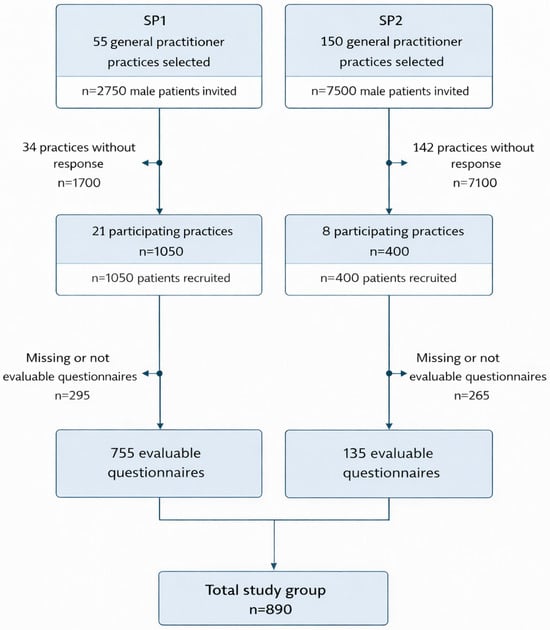
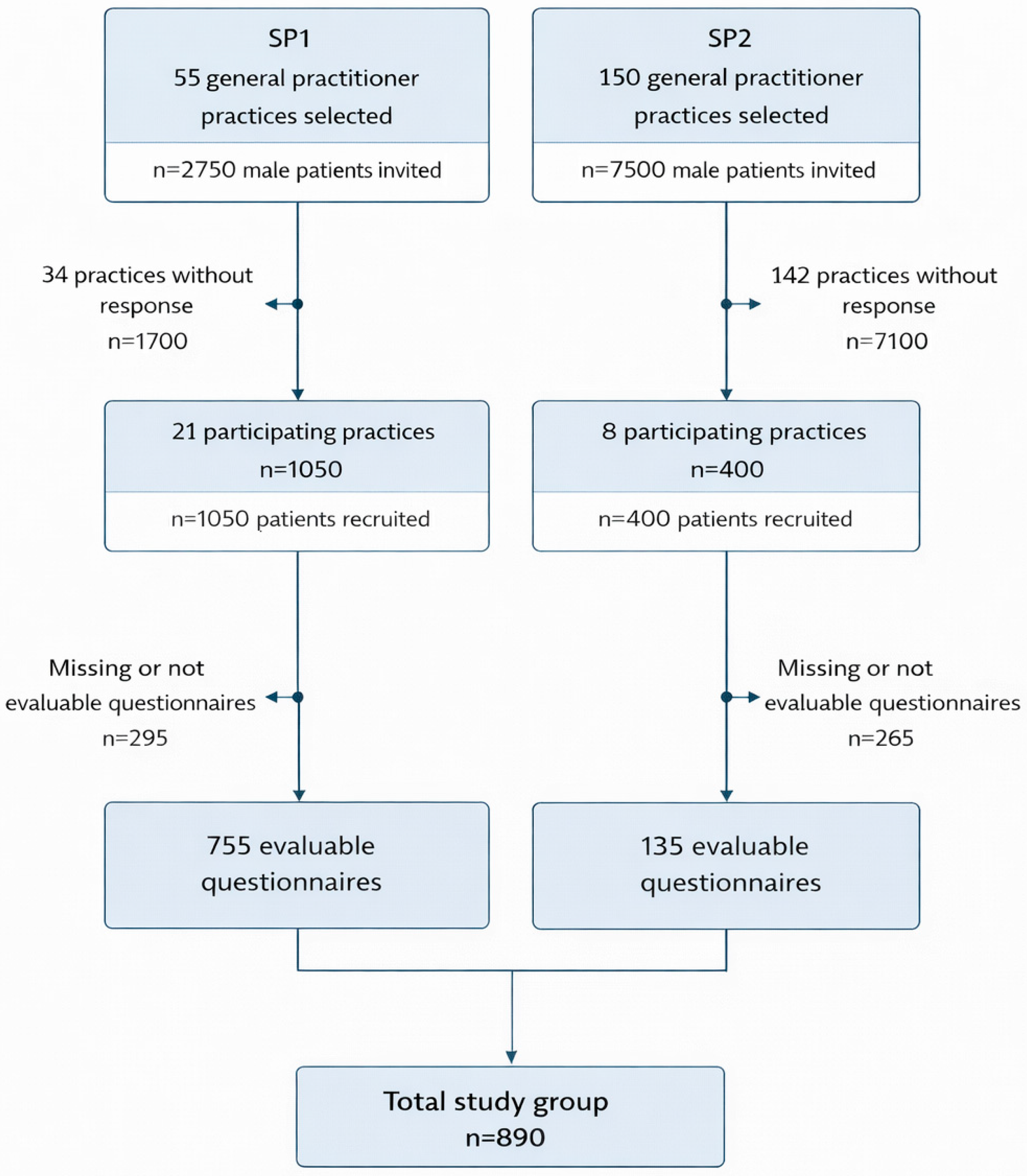
The composition of the study population across both study phases is illustrated in the flow chart shown in Figure 1. The analytic cohort comprised 755 participants in Study Phase 1 (SP1) and 135 participants in Study Phase 2 (SP2) (total n = 890) (Table 1).
Figure 1.
Flow diagram of practice participation and survey response in Study Phase 1 (2009) and Study Phase 2 (2021), including numbers of participating practices, questionnaires distributed and returned, and the analytic sample. Legend: Flow chart illustrating the recruitment of general practitioner practices and study participants, as well as the number of evaluable questionnaires included in Study Phase 1 (2009; Response rate 38.2%) and Study Phase 2 (2021; Response rate 5.3%). The figure depicts the sequential selection process and the final analytic cohort used for all statistical analyses.
Table 1.
Participant characteristics by study phase.
3.1. Participant Characteristics
Baseline characteristics stratified by study phase are summarized in Table 1. Compared with SP1, SP2 included a higher proportion of non-smokers (63.0% vs. 48.5%, p < 0.001) and a higher proportion of participants with a university degree (38.5% vs. 30.5%, p = 0.002). Employment status distributions differed between SP1 and SP2 (p < 0.001), with a markedly higher share of self-employed participants in SP2 (45.2% vs. 4.9%). Paternity was less frequent in SP2 (80.0% vs. 85.4%, p = 0.019). In contrast, differences by study phase were not statistically significant for age distribution (p = 0.068), family history of cancer (p = 0.102), or insurance status (p = 0.344).
3.2. Awareness of PSA-Based Early Detection
Univariable and multivariable logistic regression results for the endpoint “Awareness of PSA-based early detection” are presented in Table 2. In univariable analyses, awareness increased with age (OR 1.063, 95% CI 1.005–1.124; p = 0.032) and was higher among participants with higher educational attainment (OR 2.021, 95% CI 1.496–2.730; p < 0.001) and among participants with children (OR 2.081, 95% CI 1.414–3.064; p < 0.001). Current smoking was significantly associated with lower awareness of PSA-based early detection (OR 0.553, 95% CI 0.397–0.770; p < 0.001). Employment status was also associated with awareness (OR 1.829, 95% CI 1.108–3.018; p = 0.018). Study phase was not associated with awareness in univariable analysis (OR 1.028, 95% CI 0.699–1.513; p = 0.888).
Table 2.
Factors associated with awareness of PSA-based early detection.
In the multivariable model, higher educational attainment (OR 1.709, 95% CI 1.239–2.357; p = 0.001), smoking status (OR 0.688, 95% CI 0.479–0.989; p = 0.043), and paternity (OR 1.939, 95% CI 1.249–3.012; p = 0.003) remained independently associated with awareness, whereas age (OR 0.990, 95% CI 0.926–1.058; p = 0.766) and employment status (OR 1.528, 95% CI 0.888–2.631; p = 0.126) were no longer significant after adjustment. Family history of cancer and insurance status were not independently associated with awareness.
In addition, Table A4 shows the multivariable analysis taking into account educational attainment coded in four levels and smoking status coded as non-smoker, former and current smoker.
The post-stratified sensitivity analyses, in which the weighting of Study Phase 2 was applied to the distribution of age categories, educational levels, and smoking status in Study Phase 1, are presented in Table A5.
3.3. Utilization of PSA-Based Early Detection
Regression results for the endpoint “Already underwent PSA-based early detection” are summarized in Table 3. In univariable analyses, utilization was higher in SP2 than in SP1 (OR 1.476, 95% CI 1.022–2.131; p = 0.038) and increased with age (OR 1.417, 95% CI 1.327–1.513; p < 0.001). Higher educational attainment (OR 1.873, 95% CI 1.422–2.469; p < 0.001), paternity (OR 2.646, 95% CI 1.718–4.076; p < 0.001), and employment status (OR 2.473, 95% CI 1.402–4.362; p = 0.002) were positively associated with utilization, whereas smoking was inversely associated (OR 0.378, 95% CI 0.264–0.541; p < 0.001).
Table 3.
Factors associated with utilization of PSA-based early detection.
In the multivariable model, increasing age (OR 1.391, 95% CI 1.291–1.498; p < 0.001) and higher educational attainment (OR 1.632, 95% CI 1.190–2.239; p = 0.002) remained positively associated with utilization, while current smoking remained independently associated with reduced utilization of PSA-based early detection (OR 0.608, 95% CI 0.405–0.912; p = 0.016). Study phase was no longer significant after adjustment (OR 1.365, 95% CI 0.885–2.105; p = 0.160). Paternity and employment status also lost statistical significance in the multivariable model.
In addition, Table A6 shows the multivariable analysis taking into account educational attainment coded in four levels and smoking status coded as non-smoker, former and current smoker.
In post-stratified sensitivity analyses applying re-weighting of Study Phase 2 to the Study Phase 1 distribution of age category, educational attainment, and smoking status, study phase was positively associated with utilization. Full model estimates are provided in Table A7.
3.4. Subgroup Analysis in Men Aged 45–69 Years
Subgroup analyses restricted to men aged 45–69 years are shown in Table 4 and Table 5. For awareness of PSA-based early detection (Table 4), higher educational attainment was associated with awareness in univariable analysis (OR 1.875, 95% CI 1.258–2.794; p = 0.002) and remained significant after adjustment (OR 1.717, 95% CI 1.113–2.647; p = 0.014). Current smoking was independently associated with lower awareness of PSA-based early detection in both univariable (OR 0.525, 95% CI 0.343–0.804; p = 0.003) and multivariable analyses (OR 0.595, 95% CI 0.375–0.945; p = 0.028). Study phase was not associated with awareness in this subgroup.
Table 4.
Factors associated with awareness of PSA-based early detection in men aged 45–69 years.
Table 5.
Factors associated with utilization of PSA-based early detection in men aged 45–69 years.
For utilization of PSA-based early detection in men aged 45–69 years (Table 5), age was strongly associated with utilization in univariable analysis (OR 1.528, 95% CI 1.338–1.745; p < 0.001) and remained significant in the adjusted model (OR 1.520, 95% CI 1.315–1.757; p < 0.001). Higher educational attainment was also independently associated (OR 1.590, 95% CI 1.077–2.347; p = 0.020). Current smoking remained associated with a lower likelihood of utilization in the adjusted model, reaching borderline statistical significance (OR 0.627, 95% CI 0.393–1.001; p = 0.051). Smoking showed a borderline association after adjustment (OR 0.627, 95% CI 0.393–1.001; p = 0.051). Study phase, employment status, family history of cancer, and insurance status were not independently associated with utilization in this subgroup.
3.5. Cross-Table Analyses
The attenuation of unadjusted differences after multivariable adjustment suggests confounding by compositional differences rather than true temporal change.
In visual analyses using post-stratified standardization, crude phase differences attenuated, and no meaningful differences in standardized proportions were observed (Figure A3).
4. Discussion
This longitudinal survey study provides several novel insights into prostate-specific antigen-based early detection behavior in a non-organized screening setting over a 12-year period. First, despite substantial changes in international screening recommendations and accumulating evidence on the benefits and harms of PSA-based early detection, in primary multivariable analyses, we did not detect statistically significant temporal variations in utilization patterns in Germany. Second, no change over time was observed in terms of pronounced social gradients, with educational attainment and smoking behavior emerging as the most consistent determinants of both awareness and utilization of PSA-based early detection. Third, increasing age was strongly associated with utilization but not with awareness, indicating a widening gap between knowledge and action across the life course. Together, these findings add a longitudinal, population-based perspective to the international literature and highlight persistent structural determinants of early detection behavior.
The absence of a measurable study phase effect contrasts sharply with data from the United States, where the 2012 recommendation of the U.S. Preventive Services Task Force against routine PSA screening was followed by a sustained decline in PSA testing across all age groups [21,22,43,44,45,46,47,48,49]. Several studies have further demonstrated downstream consequences, including reductions in prostate biopsies, prostate cancer incidence, and definitive local therapy [23], accompanied by a subsequent increase in advanced and metastatic disease [18,47]. In particular, Desai et al. reported a significant rise in metastatic prostate cancer among men aged 45–74 years after 2011, whereas incidence rates had remained stable between 2004 and 2010 [18]. In contrast, our data indicate that these international developments did not translate into reduced PSA-based early detection use in Germany. This discrepancy likely reflects fundamental differences in health care organization, reimbursement structures, and the absence of centralized screening policies in Germany, where PSA testing remains largely patient-driven and dependent on individual counseling. The population-level increase in metastatic prostate cancer reported by Desai et al. occurred in the context of centrally influential USPSTF recommendations within an insurance-based healthcare system and should therefore not be directly extrapolated to opportunistic, non-organized screening environments such as Germany [18].
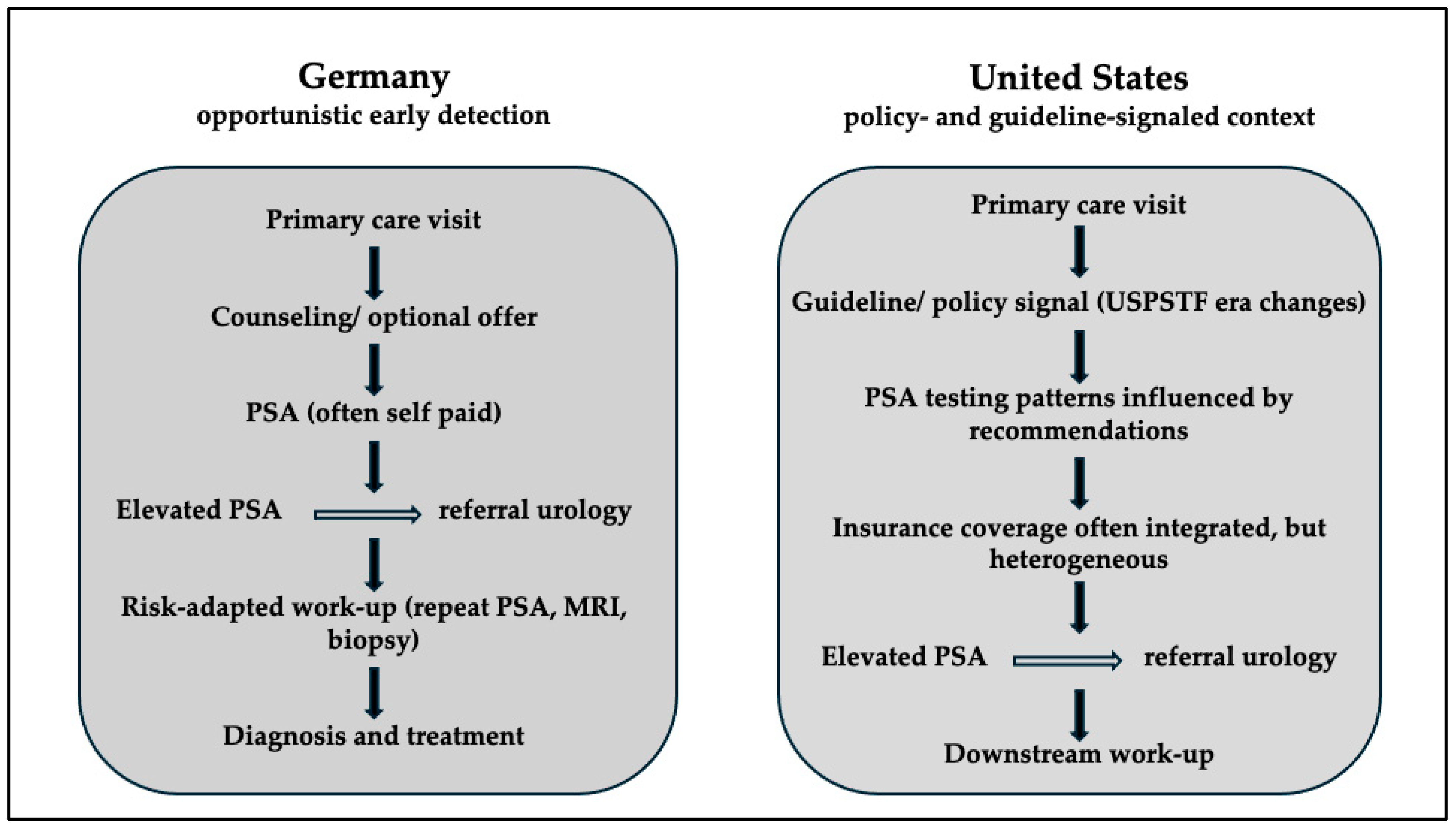
To aid interpretation, we provide a schematic contrast of the opportunistic German early-detection pathway, in which PSA testing is typically offered following individual counseling and is often self-paid, versus a policy- and guideline-signaled environment such as the United States, where changes in national recommendations have been associated with measurable shifts in PSA testing patterns (Figure A4).
Our findings of not statistically significant changes in awareness and utilization of PSA-based early detection over a 12-year period should be interpreted in the context of rapidly evolving European early-detection concepts led by urologic stakeholders [36,37,38]. Recent European initiatives emphasize that PSA testing alone is insufficient to generate population-level value and must be embedded within structured, risk-adapted algorithms incorporating downstream triage tools such as magnetic resonance imaging and defined surveillance strategies [36,38]. This paradigm mirrors the experience from population-based mammography screening, where quality assurance, standardized pathways, and centralized governance were essential to balance benefits and harms despite persistent debate on overdiagnosis [36]. In contrast, the opportunistic nature of PSA testing in Germany may partly explain why evolving evidence and recommendations have not translated into measurable changes in early-detection behavior within the present study.
Educational attainment emerged as the most robust determinant of PSA-based early detection behavior in this study. Higher education was independently associated with both awareness and utilization, in the overall cohort as well as in men aged 45–69 years. These findings are consistent with prior studies demonstrating higher PSA testing rates among men with higher educational levels [28]. At the same time, conflicting evidence exists. Pickles et al. reported higher PSA testing rates among men with lower educational attainment and limited health literacy, attributing this pattern to insufficient understanding of overdiagnosis and overtreatment [32]. Taken together, these findings underscore that educational level does not uniformly translate into more appropriate screening decisions, but rather modulates how information is processed and acted upon. From a public health perspective, our results suggest that men with lower educational attainment represent a key target group for structured, comprehensible counseling that facilitates informed and self-determined decision-making.
Smoking status constituted another consistent determinant of PSA-based early detection behavior. In both the overall cohort and the age-restricted subgroup, smokers showed significantly lower awareness and utilization of PSA-based early detection, with smoking remaining an independent predictor after multivariable adjustment. This finding aligns closely with population-based data from Golijanin et al., who demonstrated that active smoking was associated with approximately one-third lower odds of PSA testing among more than 50,000 screening-eligible men [27]. These behavioral patterns also provide a plausible explanation for epidemiological observations linking smoking to a lower reported incidence of prostate cancer during the PSA screening era [12], despite a clearly increased risk of prostate cancer-specific mortality among smokers [14]. Together, these data indicate that reduced engagement in preventive health behavior, rather than biological protection, underlies this association and identifies smokers as a particularly vulnerable group for targeted counseling interventions.
Paternity was associated with higher awareness of PSA-based early detection but did not translate into higher utilization after adjustment. This dissociation may reflect greater general health awareness among men with children, without a corresponding increase in decisive action. Similarly, age showed a strong and independent association with utilization but not with awareness. This pattern suggests that while knowledge about PSA-based early detection remains relatively stable across age groups, actual uptake increases with advancing age. This finding is particularly relevant given robust evidence from the ERSPC demonstrating a reduction in prostate cancer-specific mortality in men aged 50–65 years [17]. It underscores the need to ensure that counseling is not deferred until older age, but rather reaches men at a time when the potential benefit of early detection is greatest.
In post-stratified sensitivity analyses aligning Study Phase 2 to the Study Phase 1 distribution with respect to age category, educational attainment, and smoking status, study phase was positively associated with utilization. This shift suggests that crude phase contrasts are sensitive to compositional differences between survey waves. However, given the exploratory nature of the weighting procedure and the limited number of participants in Study Phase 2, these findings should be interpreted cautiously and considered hypothesis-generating.
A range of additional determinants of PSA-based early detection behavior have been described in the literature, including marital status, income, insurance status, and family history of cancer. An overview of selected findings is provided in Table 6.
Table 6.
Overview of published evidence on determinants of PSA-based early detection.
In contrast to some prior reports [21,22,26,27,28,29,30,31,32,33,34], we did not observe an independent association of family history of cancer or employment status with awareness or utilization of PSA-based early detection. Insurance status was likewise not associated with PSA testing behavior, despite the fact that PSA testing is not routinely reimbursed by statutory health insurance in Germany but is commonly covered by private insurance. These findings suggest that financial coverage alone may not be sufficient to overcome informational and behavioral barriers to early detection.
An important contextual factor underlying our findings is the opportunistic nature of PSA-based early detection in Germany. In contrast to organized, population-based screening programs, PSA testing is not reimbursed as a preventive service and is typically offered as a self-paid examination following individual counseling. As a result, access to PSA-based early detection is inherently shaped by socioeconomic resources, health literacy, and patients’ willingness and ability to bear out-of-pocket costs.
Within this framework, the pronounced associations with educational attainment and smoking behavior likely reflect structural access gradients rather than individual risk perception alone. Men with higher educational levels may be more familiar with preventive health concepts and better positioned to navigate discretionary testing, whereas current smokers and individuals with lower educational attainment may face cumulative barriers to engagement. These system-level characteristics provide a plausible explanation for the persistent social gradients observed across both study phases and underscore the importance of interpreting PSA utilization patterns within their specific health system context.
The strengths of this study include its extended observation period of 12 years, the assessment of both awareness and actual utilization of PSA-based early detection, and the use of consistent methodology across study phases. To our knowledge, no comparable longitudinal survey addressing these aspects over such a time span has been published to date. Several limitations must nevertheless be acknowledged. The most important limitation is the relatively small sample size in Study Phase 2, which coincided with the coronavirus pandemic and may have affected participation. The smaller sample size in Study Phase 2 limits statistical power for detecting modest temporal effects and may increase the risk of type II error in subgroup analyses. Differences in participant characteristics between SP1 and SP2, particularly with respect to smoking behavior, educational attainment, and employment status, raise concerns regarding cohort comparability. The higher share of self-employed respondents in Study Phase 2 may reflect differential access to PSA-based early detection within the German opportunistic, self-paid screening context. Self-employment may be associated with fewer financial or administrative barriers to discretionary preventive services, emphasizing the role of structural and socioeconomic factors in shaping utilization patterns. In addition, recruitment was limited to patients visiting general practitioner practices, introducing potential selection bias toward individuals with higher health care utilization. The limited number of participating physicians further restricts generalizability, and it remains unclear to what extent participating physicians actively supported early detection and counseling. Given the limited practice participation and the absence of information on non-responders, external validity is constrained, and the findings should be interpreted with appropriate caution. Finally, the questionnaire did not capture the depth or quality of participants’ knowledge regarding potential harms of PSA-based early detection, precluding a more nuanced assessment of informed decision-making.
In summary, this descriptive and hypothesis-generating pilot study demonstrates persistent social gradients in PSA-based early detection behavior over a 12-year period, despite evolving international evidence and recommendations. Educational attainment and smoking status emerged as the most consistent determinants of both awareness and utilization, while no temporal decline in PSA testing was observed in the German non-organized screening setting. These findings underscore the need for targeted, evidence-based counseling strategies that address structural and behavioral barriers to informed participation in early detection. Future implementation research should focus on linking patient knowledge, screening behavior, and downstream diagnostic quality within structured urologic pathways, in order to better evaluate how early detection strategies translate into clinically meaningful and equitable outcomes.
5. Conclusions
In this analysis of two independent survey waves conducted 12 years apart within a non-organized German screening setting, we did not observe an independent study phase effect on awareness of PSA-based early detection in primary multivariable models. Educational attainment consistently emerged as the strongest determinant of both awareness and utilization, while increasing age was primarily associated with utilization. In post-stratified sensitivity analyses re-weighting Study Phase 2 to the Study Phase 1 distribution of age category, educational attainment, and smoking status, study phase was positively associated with utilization. Given the observational design, the limited sample size of the second survey wave, and the dependence on compositional assumptions, this finding should be interpreted as exploratory. Overall, the results emphasize the central role of social gradients in shaping early detection behavior within opportunistic health systems. Future research integrating structured sampling strategies and longitudinal follow-up will be necessary to delineate true temporal changes from compositional effects in decentralized screening environments.
Author Contributions
K.-P.B.: Conceptualization, Methodology, Software, Investigation, Resources, Data curation, Formal analysis, Writing—original draft, Visualization. T.V.: Methodology, Data curation, Writing—review and editing. M.M.: Supervision, Writing—original draft, Writing—review and editing. C.G.: Writing—review and editing. M.H.: Writing—review and editing. A.P.K.: Visualization, Writing—review and editing. J.M.: Validation: Writing—review and editing, Supervision. I.W.: Validation: Formal analysis, Writing—review and editing, Supervision. All authors have read and agreed to the published version of the manuscript.
Funding
This research received no external funding.
Institutional Review Board Statement
This study was approved by the Ethics Committee of the Brandenburg State Medical Association (approval number 2021-2126-BO-ff) on 10 August 2021. German Registry of Clinical Studies (DRKS), registration number DRKS00027862.
Informed Consent Statement
Eligible patients were informed by their treating physicians about the study objectives, procedures, voluntary nature of participation, and the anonymous handling of questionnaire data. Because the survey was fully anonymous and no identifying personal data were collected, no separate written consent form was used. Under the ethics-approved study procedure, voluntary completion and return of the anonymous questionnaire constituted informed consent to participate.
Data Availability Statement
The dataset used and analyzed in this study is available from the corresponding author. The data are not publicly available according to the conditions of the ethics approval and the applicable data protection regulations, the full dataset cannot be made publicly available in an unrestricted repository.
Conflicts of Interest
The authors declare no conflict of interest.
Appendix A. Appendix Information: Appendix Data Associated with This Article Can Be Found in the Online Version at Doi: XXX
Table A1.
Checklist for Reporting Of Survey Studies (CROSS).
Table A2.
Locations of all 19 items of the CROSS checklist within the manuscript.
Table A3.
Item-level missingness.
Table A4.
Factors associated with awareness of PSA-based early detection with educational attainment coded in four levels and smoking status coded as non-smoker, former and current smoker.
Table A5.
Factors associated with awareness of PSA-based early detection in a post-stratification sensitivity analysis aligning Study Phase 2 to the Study Phase 1 distribution with respect to age, educational attainment, and smoking status.
Table A6.
Factors associated with utilization of PSA-based early detection with educational attainment coded in four levels and smoking status coded as non-smoker, former and current smoker.
Table A7.
Factors associated with utilization of PSA-based early detection in a post-stratification sensitivity analysis aligning Study Phase 2 to the Study Phase 1 distribution with respect to age, educational attainment, and smoking status.
Table A8.
Practice-level cluster-robust standard errors in multivariable models.
Table A9.
Evaluation of multicollinearity using variance inflation factors for significant influencing factors of awareness and utilization of PSA-based early detection.
Table A10.
Receiver Operating Characteristics (ROC) analysis for awareness and utilization of PSA-based early detection.
Figure A1.
Questionnaire SP1 (original questionnaire in German, translation for publication).
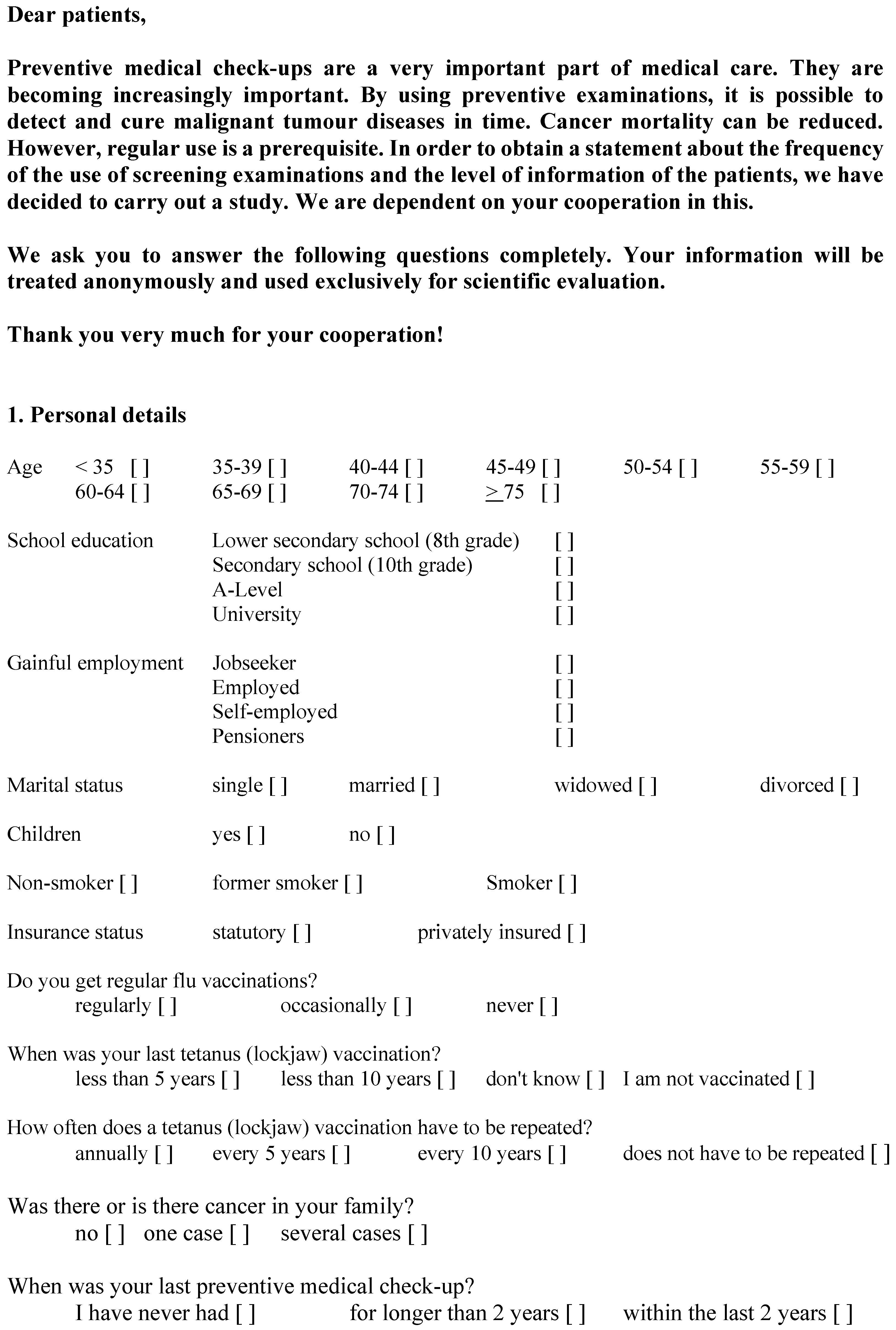
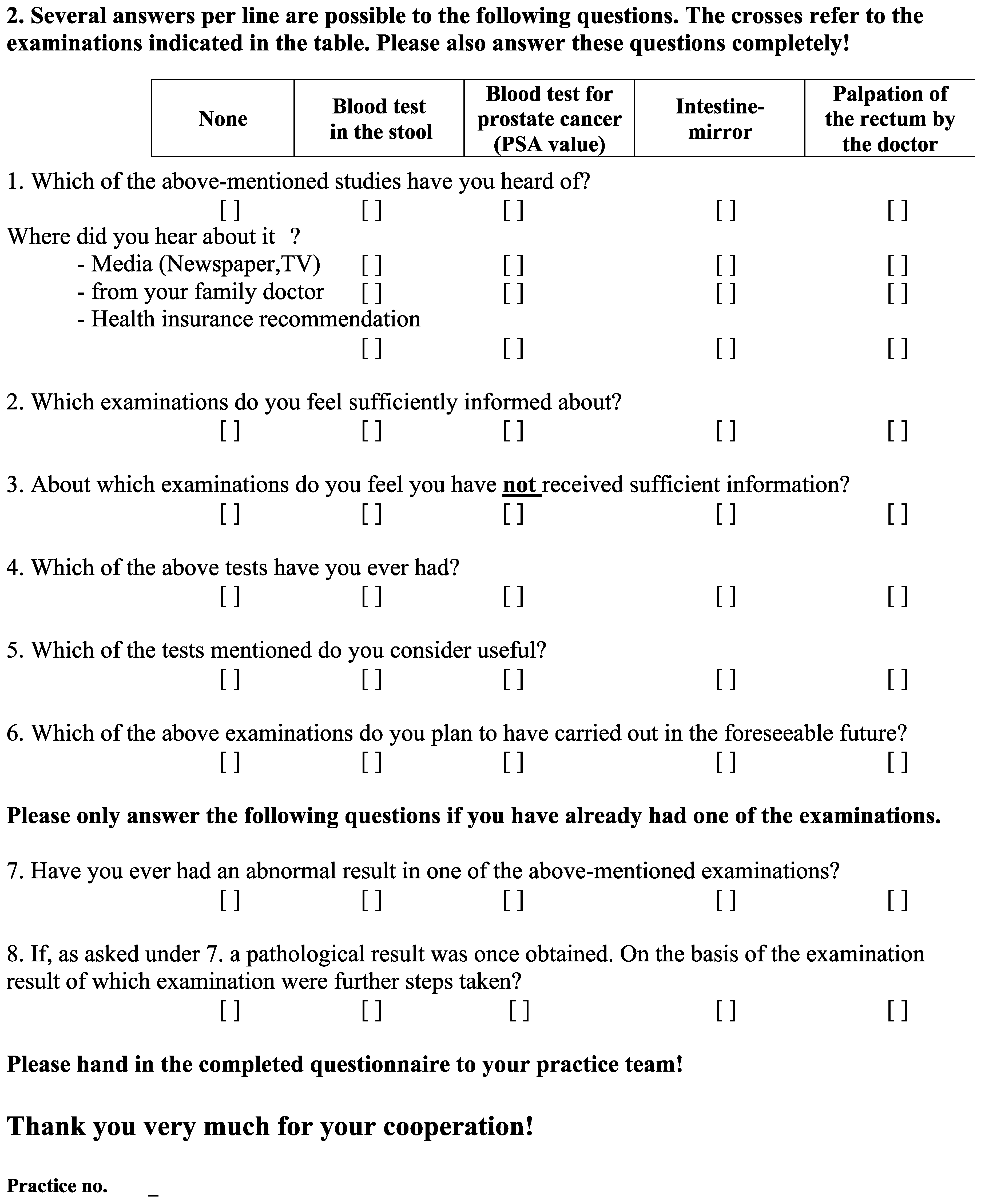
Figure A2.
Questionnaire SP2 (original questionnaire in German, translation for publication).
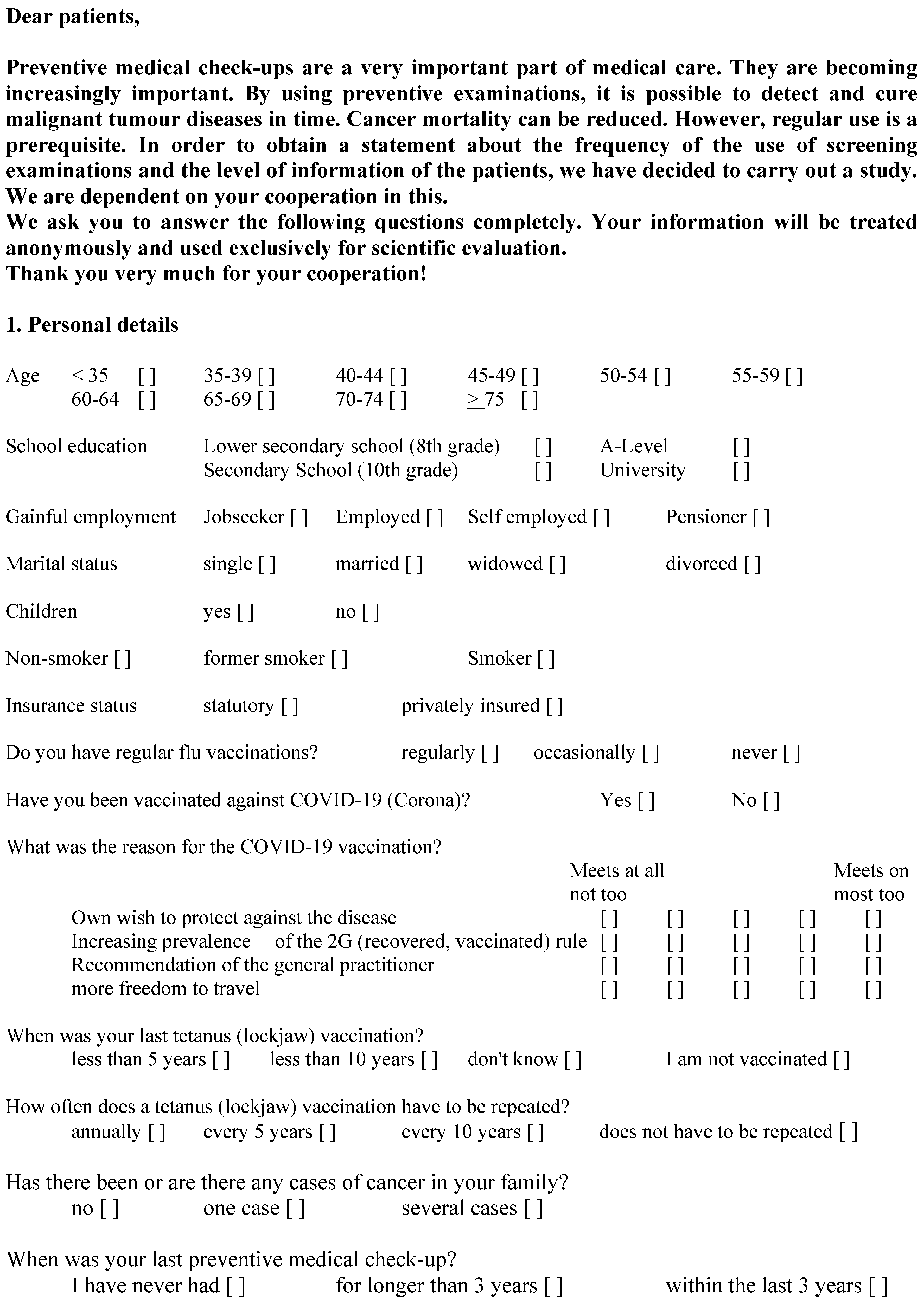
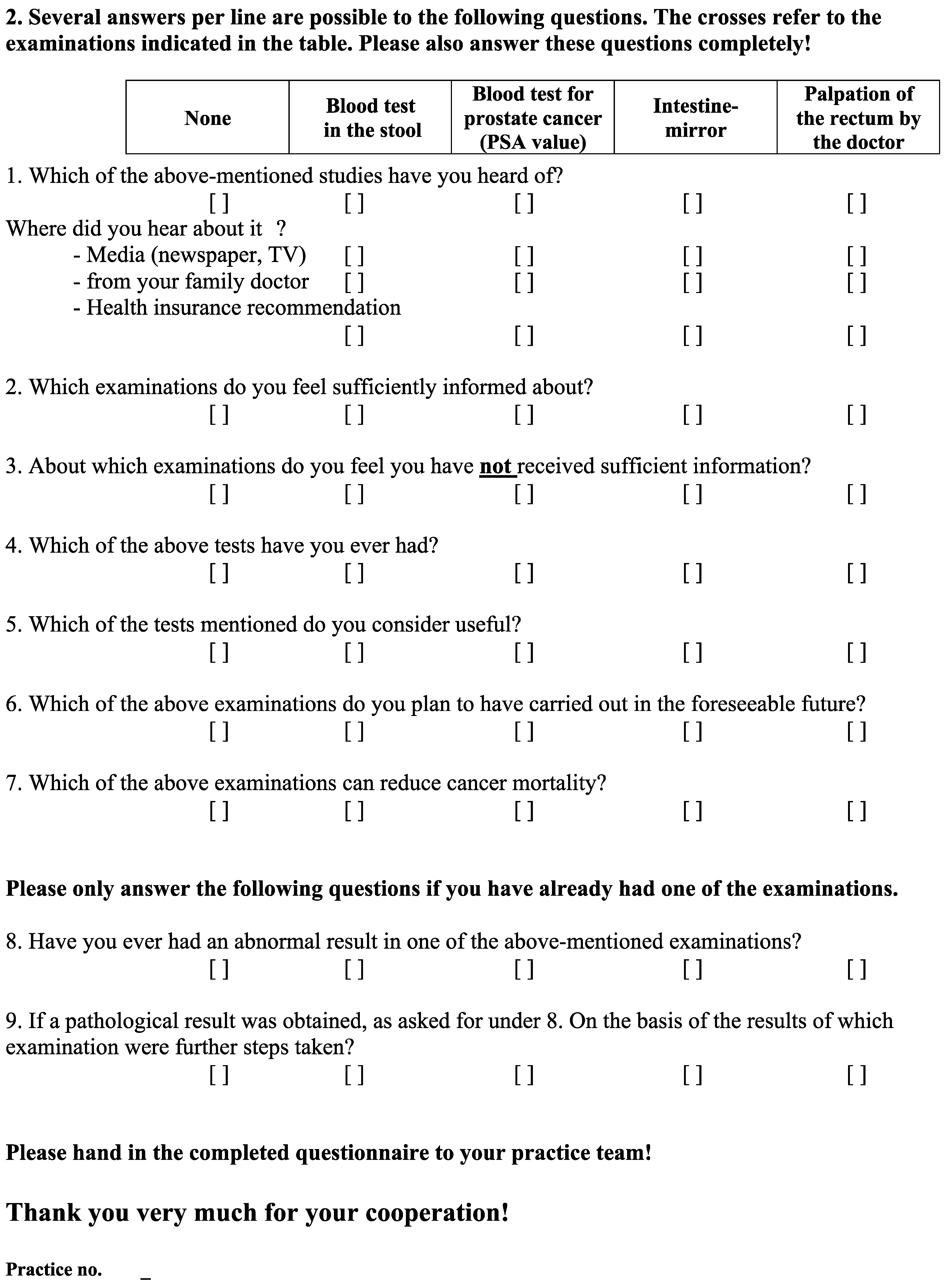
Figure A3.
Side-by-side bar plots of awareness of PSA-based early detection and prior utilization of PSA testing in Study Phase 1 and Study Phase 2. “Raw” bars reflect observed proportions. “Weighted” bars reflect SP2 proportions post-stratified to the SP1 distribution of age category, educational attainment, and smoking status. (* statistically significant).
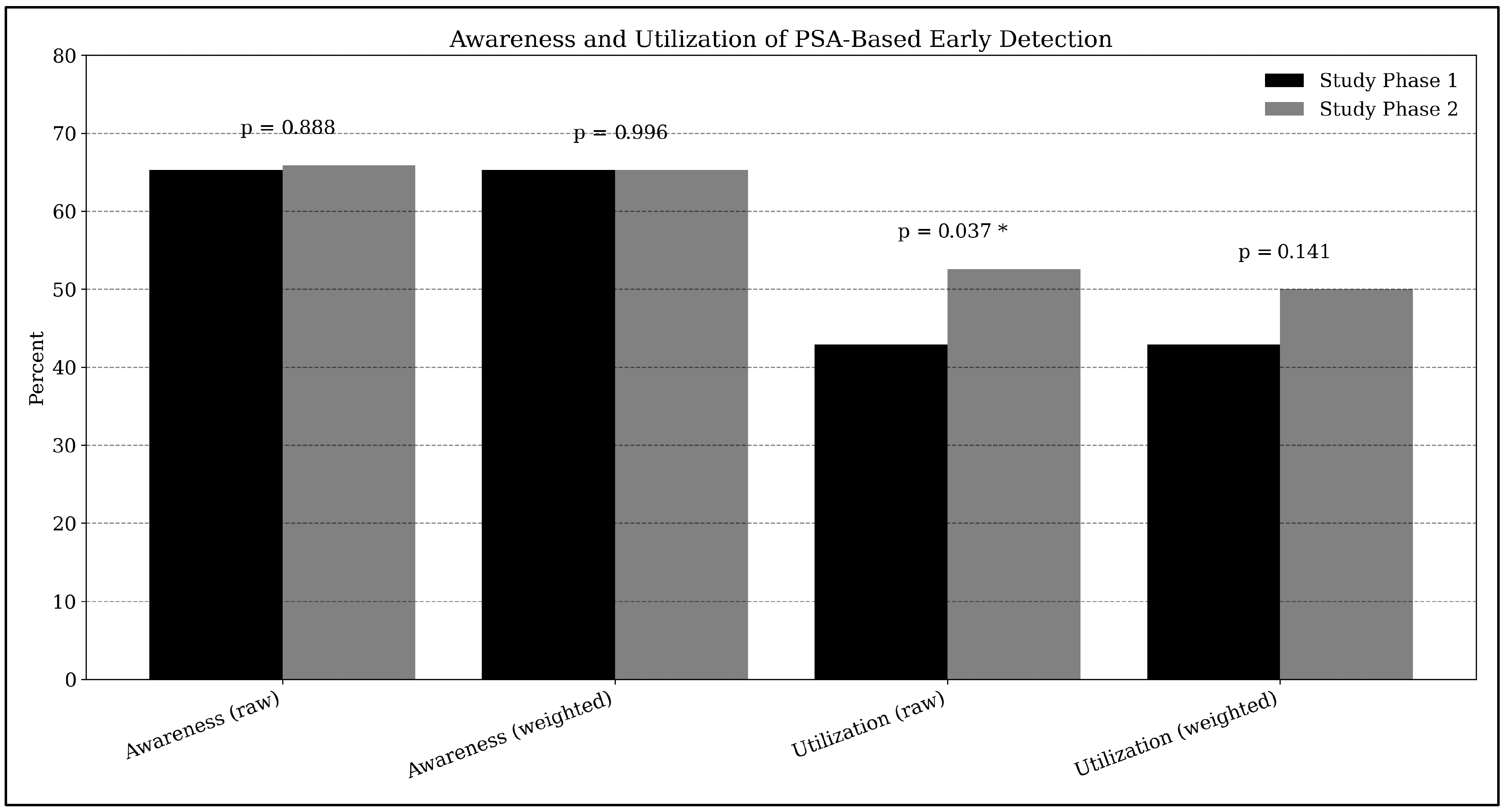
Figure A4.
Conceptual schematic contrasting the opportunistic German PSA-based early-detection pathway with a guideline- and policy-signaled context exemplified by the United States. The figure highlights differences in governance signals and access conditions that may influence population testing behavior.
References
- Krebs in Deutschland für 2019/2020. 14. Ausgabe. Robert Koch-Institut (Hrsg) und die Gesellschaft der Epidemiologischen Krebsregister in Deutschland e.V. (Hrsg). Berlin, 2023. Available online: https://www.krebsdaten.de/Krebs/DE/Content/Publikationen/Krebs_in_Deutschland/krebs_in_deutschland_2023.pdf?__blob=publicationFile (accessed on 11 January 2026).
- SEER Cancer Stat Facts: Prostate Cancer. National Cancer Institute. Bethesda, MD. Available online: https://seer.cancer.gov/statfacts/html/prost.html (accessed on 11 January 2026).
- Sung, H.; Ferlay, J.; Siegel, R.L.; Laversanne, M.; Soerjomataram, I.; Jemal, A.; Bray, F. Global Cancer Statistics 2020: GLOBOCAN Estimates of Incidence and Mortality Worldwide for 36 Cancers in 185 Countries. CA Cancer J. Clin. 2021, 71, 209–249. [Google Scholar] [CrossRef] [Scilit]
- Bostwick, D.G.; Burke, H.B.; Djakiew, D.; Euling, S.; Ho, S.-M.; Landolph, J.; Morrison, H.; Sonawane, B.; Shifflett, T.; Waters, D.J.; et al. Human prostate cancer risk factors. Cancer 2004, 101, 2371–2490. [Google Scholar] [CrossRef] [Scilit]
- Dickerman, B.A.; Markt, S.C.; Koskenvuo, M.; Pukkala, E.; Mucci, L.A.; Kaprio, J. Alcohol intake, drinking patterns, and prostate cancer risk and mortality: A 30-year prospective cohort study of Finnish twins. Cancer Causes Control. 2016, 27, 1049–1058. [Google Scholar] [CrossRef] [Scilit] [PubMed]
- Watling, C.Z.; Kelly, R.K.; Dunneram, Y.; Knuppel, A.; Piernas, C.; Schmidt, J.A.; Travis, R.C.; Key, T.J.; Perez-Cornago, A. Associations of intakes of total protein, protein from dairy sources, and dietary calcium with risks of colorectal, breast, and prostate cancer: A prospective analysis in UK Biobank. Br. J. Cancer 2023, 129, 636–647. [Google Scholar] [CrossRef] [Scilit]
- Chen, X.; Zhao, Y.; Tao, Z.; Wang, K. Coffee consumption and risk of prostate cancer: A systematic review and meta-analysis. BMJ Open 2021, 11, e038902. [Google Scholar] [CrossRef] [Scilit] [PubMed]
- Kim, S.Y.; Yoo, D.M.; Min, C.; Choi, H.G. Association between Coffee Consumption/Physical Exercise and Gastric, Hepatic, Colon, Breast, Uterine Cervix, Lung, Thyroid, Prostate, and Bladder Cancer. Nutrients 2021, 13, 3927. [Google Scholar] [CrossRef] [Scilit]
- Perez-Cornago, A.; Key, T.J.; Allen, N.E.; Fensom, G.K.; Bradbury, K.E.; Martin, R.M.; Travis, R.C. Prospective investigation of risk factors for prostate cancer in the UK Biobank cohort study. Br. J. Cancer 2017, 117, 1562–1571. [Google Scholar] [CrossRef] [Scilit]
- Rowles, J.L., 3rd; Ranard, K.M.; Applegate, C.C.; Jeon, S.; An, R.; Erdman, J.W., Jr. Processed and raw tomato consumption and risk of prostate cancer: A systematic review and dose–response meta-analysis. Prostate Cancer Prostatic Dis. 2018, 21, 319–336. [Google Scholar] [CrossRef] [Scilit] [PubMed]
- Zhang, Q.; Feng, H.; Qluwakemi, B.; Wang, J.; Yao, S.; Cheng, G.; Xu, H.; Qiu, H.; Zhu, L.; Yuan, M. Phytoestrogens and risk of prostate cancer: An updated meta-analysis of epidemiologic studies. Int. J. Food Sci. Nutr. 2017, 68, 28–42. [Google Scholar] [CrossRef] [Scilit] [PubMed]
- Yang, X.; Chen, H.; Zhang, S.; Chen, X.; Sheng, Y.; Pang, J. Association of cigarette smoking habits with the risk of prostate cancer: A systematic review and meta-analysis. BMC Public Health 2023, 23, 1150. [Google Scholar] [CrossRef] [Scilit]
- May, M.; Maurer, O.; Lebentrau, S.; Brookman-May, S. Lower use of prostate specific antigen testing by cigarette smokers—Another possible explanation for the unfavorable prostate cancer (PCA) specific prognosis in smokers? Cancer Epidemiol. 2017, 46, 34–35. [Google Scholar] [CrossRef] [Scilit]
- Islami, F.; Moreira, D.M.; Boffetta, P.; Freedland, S.J. A systematic review and meta-analysis of tobacco use and prostate cancer mortality and incidence in prospective cohort studies. Eur. Urol. 2014, 66, 1054–1064. [Google Scholar] [CrossRef] [Scilit]
- Oesterling, J.E. Prostate specific antigen: A critical assessment of the most useful tumor marker for adenocarcinoma of the prostate. J. Urol. 1991, 145, 907–923. [Google Scholar] [CrossRef] [Scilit] [PubMed]
- Ilic, D.; Neuberger, M.M.; Djulbegovic, M.; Dahm, P. Screening for prostate cancer. Cochrane Database Syst. Rev. 2013, 2013, CD004720. [Google Scholar] [CrossRef] [Scilit]
- de Vos, I.I.; Meertens, A.; Hogenhout, R.; Remmers, S.; Roobol, M.J. A Detailed Evaluation of the Effect of Prostate-specific Antigen–based Screening on Morbidity and Mortality of Prostate Cancer: 21-year Follow-up Results of the Rotterdam Section of the European Randomised Study of Screening for Prostate Cancer. Eur. Urol. 2023, 84, 426–434. [Google Scholar] [CrossRef] [Scilit]
- Desai, M.M.; Cacciamani, G.E.; Gill, K.; Zhang, J.; Liu, L.; Abreu, A.; Gill, I.S. Trends in Incidence of Metastatic Prostate Cancer in the US. JAMA Netw. Open 2022, 5, e222246. [Google Scholar] [CrossRef] [Scilit] [PubMed]
- Moyer, V.A.; Force, O.B.O.T.U.P.S.T. Screening for Prostate Cancer: U.S. Preventive Services Task Force Recommendation Statement. Ann. Intern. Med. 2012, 157, 120–134. [Google Scholar] [CrossRef] [Scilit]
- Force, U.P.S.T.; Grossman, D.C.; Curry, S.J.; Owens, D.K.; Bibbins-Domingo, K.; Caughey, A.B.; Davidson, K.W.; Doubeni, C.A.; Ebell, M.; Epling, J.W.; et al. Screening for Prostate Cancer: US Preventive Services Task Force Recommendation Statement. JAMA 2018, 319, 1901–1913. [Google Scholar] [CrossRef] [Scilit]
- Cohn, J.A.; Wang, C.E.; Lakeman, J.C.; Silverstein, J.C.; Brendler, C.B.; Novakovic, K.R.; McGuire, M.S.; Helfand, B.T. Primary care physician PSA screening practices before and after the final U.S. Preventive Services Task Force recommendation. Urol. Oncol. 2014, 32, 41.e23–41.e30. [Google Scholar] [CrossRef] [Scilit] [PubMed]
- Frendl, D.M.; Epstein, M.M.; Fouayzi, H.; Krajenta, R.; Rybicki, B.A.; Sokoloff, M.H. Prostate-specific antigen testing after the US Preventive Services Task Force recommendation: A population-based analysis of electronic health data. Cancer Causes Control. 2020, 31, 861–867. [Google Scholar] [CrossRef] [Scilit] [PubMed]
- Kearns, J.T.; Holt, S.K.; Wright, J.L.; Lin, D.W.; Lange, P.H.; Gore, J.L. PSA screening, prostate biopsy, and treatment of prostate cancer in the years surrounding the USPSTF recommendation against prostate cancer screening. Cancer 2018, 124, 2733–2739. [Google Scholar] [CrossRef] [Scilit]
- Halpern, J.A.; Oromendia, C.; Shoag, J.E.; Mittal, S.; Cosiano, M.F.; Ballman, K.V.; Vickers, A.J.; Hu, J.C. Use of Digital Rectal Examination as an Adjunct to Prostate Specific Antigen in the Detection of Clinically Significant Prostate Cancer. J. Urol. 2018, 199, 947–953. [Google Scholar] [CrossRef] [Scilit]
- Leitlinienprogramm Onkologie (Deutsche Krebsgesellschaft, Deutsche Krebshilfe, AWMF): S3-Leitlinie Prostatakarzinom, Langversion 6.2, 2021, AWMF Registernummer: 043/022OL. Available online: http://www.leitlinienprogramm-onkologie.de/leitlinien/prostatakarzinom/ (accessed on 11 January 2026).
- Bailey, J.A.; Morton, A.J.; Jones, J.; Chapman, C.J.; Oliver, S.; Morling, J.R.; Patel, H.; Banerjea, A.; Humes, D.J. Sociodemographic variations in the uptake of faecal immunochemical tests in primary care: A retrospective study. Br. J. Gen. Pract. 2023, 73, e843–e849. [Google Scholar] [CrossRef] [Scilit] [PubMed]
- Golijanin, B.; Bhatt, V.; Homer, A.; Malshy, K.; Ochsner, A.; Wales, R.; Khaleel, S.; Mega, A.; Pareek, G.; Hyams, E. “Shared decision-making” for prostate cancer screening: Is it a marker of quality preventative healthcare? Cancer Epidemiol. 2024, 88, 102492. [Google Scholar] [CrossRef] [Scilit]
- Johnson, J.A.; Moser, R.P.; Ellison, G.L.; Martin, D.N. Associations of Prostate-Specific Antigen (PSA) Testing in the US Population: Results from a National Cross-Sectional Survey. J. Community Health 2021, 46, 389–398. [Google Scholar] [CrossRef] [Scilit]
- Littlejohns, T.J.; Travis, R.C.; Key, T.J.; Allen, N.E. Lifestyle factors and prostate-specific antigen (PSA) testing in UK Biobank: Implications for epidemiological research. Cancer Epidemiol. 2016, 45, 40–46. [Google Scholar] [CrossRef] [Scilit]
- Márquez, L.I.M.; Bueso, D.L.D.; Ruiz, L.M.G.; Liu, J.J. Associations between sociodemographic factors and breast, cervical, and colorectal cancer screening in the United States. Cancer Causes Control. 2023, 34, 1073–1084. [Google Scholar] [CrossRef] [Scilit]
- Nair-Shalliker, V.; Bang, A.; Weber, M.; Goldsbury, D.E.; Caruana, M.; Emery, J.; Banks, E.; Canfell, K.; O’cOnnell, D.L.; Smith, D.P. Factors associated with prostate specific antigen testing in Australians: Analysis of the New South Wales 45 and Up Study. Sci. Rep. 2018, 8, 4261. [Google Scholar] [CrossRef] [Scilit] [PubMed]
- Pickles, K.; Scherer, L.D.; Cvejic, E.; Hersch, J.; Barratt, A.; McCaffery, K.J. Preferences for More or Less Health Care and Association With Health Literacy of Men Eligible for Prostate-Specific Antigen Screening in Australia. JAMA Netw. Open 2021, 4, e2128380. [Google Scholar] [CrossRef] [Scilit]
- Trinh, Q.-D.; Li, H.; Meyer, C.P.; Hanske, J.; Choueiri, T.K.; Reznor, G.; Lipsitz, S.R.; Kibel, A.S.; Han, P.K.; Nguyen, P.L.; et al. Determinants of cancer screening in Asian-Americans. Cancer Causes Control. 2016, 27, 989–998. [Google Scholar] [CrossRef] [Scilit] [PubMed]
- Vogelaar, I.; van Ballegooijen, M.; Schrag, D.; Boer, R.; Winawer, S.J.; Habbema, J.D.F.; Zauber, A.G. How much can current interventions reduce colorectal cancer mortality in the U.S.? Cancer 2006, 107, 1624–1633. [Google Scholar] [CrossRef] [Scilit]
- Kohar, A.; Cramb, S.M.; Pickles, K.; Smith, D.P.; Baade, P.D. Changes in prostate specific antigen (PSA) “screening” patterns by geographic region and socio-economic status in Australia: Analysis of medicare data in 50–69 year old men. Cancer Epidemiol. 2023, 83, 102338. [Google Scholar] [CrossRef] [Scilit]
- Carlsson, S.V.; Krilaviciute, A.; Al-Monajjed, R.; Seibold, P.; Kuczyk, M.; Gschwend, J.E.; Debus, J.; Antoch, G.; Schimmöller, L.; Schlemmer, H.-P.; et al. Risk-adapted Prostate Cancer Screening Achieves Mammography-like Benefits: Evidence and Implications for Europe. Eur. Urol. 2025, 89, 193–195. [Google Scholar] [CrossRef] [Scilit]
- Albers, P.; Krilaviciute, A.; Seibold, P.; de Vrieze, M.; Lakes, J.; Kuczyk, M.A.; Harke, N.N.; Debus, J.; Grott, C.A.; Gschwend, J.E.; et al. Do We Need Early Detection of Grade Group 2 Prostate Cancer in a Screening Program for Young Men? Results from the PROBASE Screening Trial. Eur. Urol. Oncol. 2025, in press. [Google Scholar] [CrossRef] [Scilit]
- Boschheidgen, M.; Albers, P.; Schlemmer, H.-P.; Hellms, S.; Bonekamp, D.; Sauter, A.; Hadaschik, B.; Krilaviciute, A.; Radtke, J.P.; Seibold, P.; et al. Multiparametric Magnetic Resonance Imaging in Prostate Cancer Screening at the Age of 45 Years: Results from the First Screening Round of the PROBASE Trial. Eur. Urol. 2024, 85, 105–111. [Google Scholar] [CrossRef] [Scilit] [PubMed]
- Kassenärztliche Vereinigung Brandenburg: Arztsuche. Available online: https://arztsuche.kvbb.de/ases-kvbb/ (accessed on 11 January 2026).
- Kassenärztliche Vereinigung Brandenburg: KV Regiomed Lehrpraxen. Available online: https://www.kvbb.de/praxiseinstieg/studium-weiterbildung/kv-regiomed-lehrpraxis (accessed on 11 January 2026).
- Deutsches Register Klinischer Studien. Available online: https://drks.de/search/de (accessed on 11 January 2026).
- Sharma, A.; Duc, N.T.M.; Thang, T.L.L.; Nam, N.H.; Ng, S.J.; Abbas, K.S.; Huy, N.T.; Marušić, A.; Paul, C.L.; Kwok, J.; et al. A Consensus-Based Checklist for Reporting of Survey Studies (CROSS). J. Gen. Intern. Med. 2021, 36, 3179–3187. [Google Scholar] [CrossRef] [Scilit] [PubMed]
- Bretthauer, M.; Wieszczy, P.; Løberg, M.; Kaminski, M.F.; Werner, T.F.; Helsingen, L.M.; Mori, Y.; Holme, Ø.; Adami, H.-O.; Kalager, M. Estimated Lifetime Gained With Cancer Screening Tests: A Meta-Analysis of Randomized Clinical Trials. JAMA Intern. Med. 2023, 183, 1196–1203. [Google Scholar] [CrossRef] [Scilit]
- Jemal, A.; Fedewa, S.A.; Ma, J.; Siegel, R.; Lin, C.C.; Brawley, O.; Ward, E.M. Prostate Cancer Incidence and PSA Testing Patterns in Relation to USPSTF Screening Recommendations. JAMA 2015, 314, 2054–2061. [Google Scholar] [CrossRef] [Scilit]
- Miller, A.; Yates, J.; Epstein, M.M.; Fantasia, J.; Frendl, D.; Afiadata, A.; Sokoloff, M.; Luckmann, R. Impact of 2012 USPSTF Screening PSA Guideline Statement: Changes in Primary Care Provider Practice Patterns and Attitudes. Urol. Pract. 2017, 4, 126–131. [Google Scholar] [CrossRef] [Scilit]
- Patel, N.H.; Bloom, J.; Hillelsohn, J.; Fullerton, S.; Allman, D.; Matthews, G.; Eshghi, M.; Phillips, J.L. Prostate Cancer Screening Trends After United States Preventative Services Task Force Guidelines in an Underserved Population. Health Equity 2018, 2, 55–61. [Google Scholar] [CrossRef] [Scilit] [PubMed]
- Jemal, A.; Culp, M.B.; Ma, J.; Islami, F.; Fedewa, S.A. Prostate Cancer Incidence 5 Years After US Preventive Services Task Force Recommendations Against Screening. JNCI J. Natl. Cancer Inst. 2021, 113, 64–71. [Google Scholar] [CrossRef] [Scilit] [PubMed]
- Logan, C.D.; Mahenthiran, A.K.; Siddiqui, M.R.; French, D.D.; Hudnall, M.T.; Patel, H.D.; Murphy, A.B.; Halpern, J.A.; Bentrem, D.J. Disparities in access to robotic technology and perioperative outcomes among patients treated with radical prostatectomy. J. Surg. Oncol. 2023, 128, 375–384. [Google Scholar] [CrossRef] [Scilit] [PubMed]
- Nemirovsky, D.R.; Klose, C.; Wynne, M.; McSweeney, B.; Luu, J.; Chen, J.; Atienza, M.; Waddell, B.; Taber, B.; Haji-Momenian, S.; et al. Role of Race and Insurance Status in Prostate Cancer Diagnosis-to-Treatment Interval. Clin. Genitourin. Cancer 2023, 21, e198–e203. [Google Scholar] [CrossRef] [Scilit] [PubMed]

Disclaimer/Publisher’s Note: The statements, opinions and data contained in all publications are solely those of the individual author(s) and contributor(s) and not of MDPI and/or the editor(s). MDPI and/or the editor(s) disclaim responsibility for any injury to people or property resulting from any ideas, methods, instructions or products referred to in the content. |
© 2026 by the authors. Licensee MDPI, Basel, Switzerland. This article is an open access article distributed under the terms and conditions of the Creative Commons Attribution (CC BY) license.