


Abstract
Background: Physical exercise has been proposed as a potential non-pharmacological intervention for adults with attention-deficit/hyperactivity disorder (ADHD). However, evidence remains uncertain regarding its effects across cognitive, psychological, and functional domains, particularly when distinguishing immediate responses to acute exercise from sustained benefits of chronic training. Methods: Six electronic databases were searched from inception to 14 August 2026, supplemented by additional sources. Eligible studies included adults with clinically diagnosed ADHD or elevated symptoms identified using validated screening instruments. Acute and chronic exercise interventions were evaluated separately. Acute-exercise effects were synthesized using three-level random-effects meta-analysis with Hedges’ g, accounting for correlated sampling errors and applying participant-sample-clustered robust variance estimation (CR2). Outcomes with insufficient independent samples and chronic exercise findings were synthesized narratively. Risk of bias and certainty of evidence were assessed using design-appropriate tools and GRADE, respectively. Results: Twenty-three reports were included (15 acute and eight chronic). The primary acute meta-analysis comprised 75 effect sizes from ten reports representing seven conservatively linked participant-sample clusters. Pooled effects were not statistically significant for executive function (g = 0.26, 95% CI: −0.01 to 0.53), attention (g = 0.13, 95% CI: −0.06 to 0.31), or psychological outcomes (mood, affect, anxiety, stress, calmness, and motivation) (g = 0.40, 95% CI: −0.13 to 0.93). Inhibitory control also showed an uncertain effect (g = 0.19, 95% CI: −0.21 to 0.60). Processing speed demonstrated a nominally significant improvement (g = 0.39, 95% CI: 0.03 to 0.75), but this finding was based on limited independent evidence. Sensitivity analyses indicated that selected findings were influenced by analytical assumptions. Chronic exercise findings were inconsistent across interventions and outcomes, precluding reliable quantitative pooling. The certainty of evidence was very low across all assessed domains. Conclusions: Current evidence is insufficient to establish consistent benefits of acute exercise or sustained clinical effectiveness of chronic exercise in adults with ADHD. Although improvements in selected outcomes remain possible, methodological limitations and very low certainty of evidence preclude firm conclusions. Larger, rigorously controlled trials assessing clinically meaningful outcomes and long-term effects are needed to clarify the therapeutic potential of exercise in this population.
1. Introduction
Attention-deficit/hyperactivity disorder (ADHD) is a neurodevelopmental disorder characterized by persistent symptoms of inattention and/or hyperactivity–impulsivity that interfere with functioning across multiple domains of daily life [1]. Although ADHD is commonly identified during childhood, symptoms and associated impairments frequently persist into adulthood, contributing to substantial clinical and functional burden [2]. A global systematic review and meta-analysis estimated the prevalence of persistent adult ADHD at approximately 2.6% and symptomatic adult ADHD at 6.8% [3]. Beyond its core symptoms, adult ADHD is associated with difficulties in executive functioning, academic and occupational performance, emotional regulation, interpersonal relationships, and quality of life. These multidimensional impairments underscore the importance of evaluating interventions not only in terms of symptom reduction but also in relation to cognitive, psychological, and everyday functioning.
Pharmacological treatment is a cornerstone of ADHD management; however, complementary non-pharmacological approaches may help address aspects of functioning that are not fully captured by symptom-based treatment outcomes. Physical exercise has attracted increasing research interest because of its potential to influence cognitive performance, psychological well-being, and physical health [4,5]. Evidence from broader populations suggests that exercise may benefit several aspects of cognition, including executive functioning, although the magnitude and consistency of these effects may vary across populations and outcome domains [6]. In ADHD research, an important distinction concerns acute exercise, which involves a single bout and is generally evaluated through immediate or short-term responses, and chronic exercise, which involves repeated training over an extended period. These intervention paradigms differ in exposure duration, implementation requirements, and the types of outcomes they are intended to influence. Accordingly, improvements observed during or shortly after a single exercise session should not be assumed to indicate sustained symptom reduction or clinically meaningful improvements in everyday functioning following repeated training.
Much of the evidence concerning exercise interventions for ADHD has been generated in children and adolescents. Previous systematic reviews and meta-analyses have reported potential improvements in ADHD symptoms, executive functions, motor performance, and psychosocial outcomes among younger populations [7,8,9]. However, the applicability of these findings to adults remains uncertain. ADHD symptom presentation, functional responsibilities, medication use, and the practical demands of maintaining exercise participation may differ across developmental stages. Adults must often manage exercise participation alongside occupational, educational, and family responsibilities, potentially influencing intervention feasibility and adherence. Consequently, adult-specific evidence is needed to determine whether exercise-related changes observed in younger populations extend to clinically relevant outcomes in adulthood.
Existing systematic reviews of exercise in adults with ADHD have primarily examined core symptoms and selected aspects of executive functioning [10,11,12]. Yang et al. focused on inhibitory control [13], while Xu et al. synthesized evidence concerning executive functions and core ADHD symptoms following acute and chronic exercise [14]. These reviews have contributed to understanding the potential effects of exercise, but several issues warrant further consideration. First, outcomes beyond core symptoms and executive functioning, including psychological well-being, physical function, and quality of life, have received comparatively limited attention in quantitative evidence synthesis. Physical function captures potential general-health gains, such as better fitness or movement capacity. Quality of life captures the perceived impact on daily life and complements ADHD symptom and impairment measures. Improvement in physical function or quality of life alone cannot establish a reduction in ADHD-related impairment. Second, studies frequently report multiple outcomes, experimental conditions, or assessments derived from the same participants, and related publications may draw on overlapping samples. Failure to adequately account for these dependencies may overstate the amount of independent evidence and affect the precision of pooled estimates. Third, differences in study design, comparator conditions, outcome selection, and effect-size standardization can complicate interpretation and comparison across syntheses. These considerations highlight the need for a comprehensive evaluation that distinguishes the breadth of reported outcomes from the strength and independence of the underlying evidence.
Therefore, this systematic review aimed to critically evaluate the effects of acute and chronic exercise on clinical, cognitive, psychological, and functional outcomes in adults with clinically diagnosed ADHD or elevated ADHD symptoms identified using validated screening instruments. Building on previous reviews, we examined a broader range of outcome domains while explicitly considering study design, comparator type, overlapping participant samples, and dependencies among multiple effect sizes. For acute exercise, controlled comparisons were synthesized using three-level random-effects models incorporating correlated sampling errors and cluster-robust statistical inference, where sufficient independent evidence was available. Outcomes supported by sparse independent samples, as well as the heterogeneous chronic-exercise evidence, were evaluated narratively. By integrating these methodological considerations with assessments of risk of bias and certainty of evidence, this review sought to clarify the extent to which existing findings support reliable short-term exercise effects and sustained clinical benefits in adults with ADHD.
2. Methods
2.1. Protocol
This systematic review and meta-analysis was conducted and reported in accordance with the Preferred Reporting Items for Systematic Reviews and Meta-Analyses (PRISMA) 2020 statement [15]. The completed PRISMA checklist is provided in Supplementary Material File S1 Table S1. The review protocol was prospectively registered in the International Prospective Register of Systematic Reviews (PROSPERO; CRD420261478379).
2.2. Eligibility Criteria
Eligibility criteria were established according to the population, intervention, comparator, outcomes, and study design (PICOS) framework. Eligibility for inclusion in the systematic review was distinguished from eligibility for the primary quantitative synthesis, as not all included intervention studies provided comparisons or data suitable for meta-analysis.
2.2.1. Population
Studies were eligible if they included adults aged ≥ 18 years with either clinically diagnosed ADHD or elevated ADHD symptoms identified using validated screening or symptom-rating instruments. Clinical diagnosis was established through specialist assessment, a structured or semi-structured diagnostic interview, or documentation of a previous clinical diagnosis. Participants identified solely through screening instruments were distinguished from those with clinically confirmed ADHD, as screening positivity does not necessarily establish a clinical diagnosis.
Studies involving mixed-age populations were eligible only when data for adult participants could be extracted separately. For studies that also recruited healthy controls, only data from participants with ADHD or elevated ADHD symptoms were considered for the ADHD-specific quantitative synthesis. Sensitivity analyses restricted to clinically diagnosed ADHD excluded screening-positive and mixed-ascertainment samples.
Medication use was not an exclusion criterion. Participant age at assessment, sex, medication status, and ADHD ascertainment method were extracted when available. Because age at initial ADHD diagnosis was inconsistently reported, it was not examined as an effect modifier, and the available evidence could not establish whether age at diagnosis influenced exercise-related outcomes.
2.2.2. Interventions
Eligible interventions involved structured or purposeful physical exercise delivered either as a single bout or through repeated training. Exercise modalities included aerobic exercise, cycling, walking or running, high-intensity interval training, resistance or combined exercise, Pilates, yoga, Tai Chi, coordination-based exercise, and multicomponent training programs.
Acute exercise was defined as a discrete exercise bout designed to assess immediate or short-term responses during or following exercise. Studies involving repeated laboratory visits were classified as acute-exercise investigations when each visit represented a distinct exercise bout with an eligible comparison. For the primary quantitative synthesis, the earliest eligible assessment for each task-specific endpoint and exercise condition was retained to minimize dependence arising from repeated measurements of the same outcome. Subsequent assessments were not treated as additional primary effect sizes. Symptom and psychological outcomes assessed on the following morning were identified separately and excluded in a sensitivity analysis examining the influence of assessment timing.
Chronic exercise was operationally defined as repeated training lasting at least four weeks. Consistent with earlier reviews that distinguished single-bout from repeated exercise [13,14], this lower bound required several weeks of training exposure while retaining short structured programmes. The four-week cutoff is an eligibility rule, and the minimum duration needed for sustained clinical benefit remains unknown. Shorter programmes were eligible only if they provided a separately extractable single-bout comparison.
2.2.3. Comparator
The primary quantitative synthesis was restricted to comparisons between exercise and non-exercise conditions. Eligible comparators included seated rest, sedentary attention-control conditions, wait-list controls, and treatment as usual. These conditions were distinguished because they may differ in participant expectations, contact time, and background care.
Studies comparing different exercise modalities or intensities, walking in natural versus urban environments, or exercise with pharmacological treatment were retained for narrative synthesis. Such comparisons were not interpreted as estimates of exercise efficacy relative to inactivity because they addressed different intervention contrasts. Similarly, uncontrolled pre–post findings were synthesized narratively, as observed changes could not be reliably distinguished from practice effects, expectancy effects, or other time-related influences.
2.2.4. Outcomes
Eligible outcomes encompassed ADHD core symptoms, cognitive performance, psychological functioning, and broader physical or functional health.
For acute exercise, outcomes were classified into five domains: (1) ADHD core symptoms, (2) executive function, (3) attention, (4) psychological outcomes, and (5) motor activity. Executive-function outcomes were further categorized into inhibitory control, working memory, processing speed, and response-time variability. Outcome measures were assigned to domains according to the cognitive or behavioral construct primarily assessed. Specifically, the concentration score (edited targets minus errors) from the editing task was classified as an attention outcome; general trial reaction-time measures were categorized as processing speed; and Flanker interference and Stroop incongruent-condition outcomes were classified as inhibitory control. To avoid retaining closely related measures of the same performance construct as separate primary effects, complementary accuracy and omission outcomes from continuous performance tests (CPTs) were not simultaneously included. Adaptive stop-task success rates and non-monotonic response-style measures were excluded from primary efficacy estimation when their direction could not be consistently interpreted as indicating better or worse performance. Psychological outcomes included measures of mood, affect, anxiety, stress, calmness, and motivation. Subjective stimulant-like responses assessed using the Addiction Research Center Inventory (ARCI) were excluded from the primary psychological domain because they were not considered directly comparable with the other psychological outcomes.
For chronic exercise, outcomes were evaluated separately and included ADHD symptom severity, cognitive and attention-related measures, psychological outcomes, physical function, quality of life, sleep, and global clinical severity. Given the limited number of independent and sufficiently comparable trials, chronic-exercise outcomes were synthesized narratively rather than combined into a common pooled treatment-effect estimate.
2.2.5. Study Design
Randomized parallel-group trials, randomized crossover studies, counterbalanced experimental studies, non-randomized controlled interventions, and prospective pre–post studies were eligible for the systematic review. However, inclusion in the systematic review did not automatically establish eligibility for quantitative synthesis. The primary acute-exercise meta-analysis required an exercise-versus-non-exercise contrast within the eligible adult ADHD population, together with sufficient numerical information to calculate a standardized effect size and its sampling variance. Accordingly, uncontrolled studies and investigations involving only active exercise comparators were retained for narrative synthesis rather than combined with controlled efficacy estimates.
Reports were excluded from the systematic review if they (1) did not provide separable data for eligible adult participants; (2) did not investigate structured physical exercise; (3) met neither the acute- nor the chronic-exercise exposure definition; (4) reported no eligible outcomes; (5) did not present original intervention data; or (6) lacked an accessible complete report. Reports meeting the review-level eligibility criteria but lacking an appropriate exercise-versus-non-exercise contrast or sufficient quantitative information were retained in the narrative synthesis and excluded only from the primary meta-analysis.
2.3. Search Strategy
A systematic literature search was conducted in six electronic databases—PubMed, Embase, Web of Science, the Cochrane Central Register of Controlled Trials (CENTRAL), SPORTDiscus, and the China National Knowledge Infrastructure (CNKI)—from inception to August 14, 2026. Search strategies combined controlled vocabulary and free-text terms, adapted to the indexing systems and search functions of individual databases. Medical Subject Headings (MeSH) and Emtree terms were incorporated where applicable, alongside relevant title, abstract, keyword, and topic-field terms.
The search strategy encompassed three principal concepts: attention-deficit/hyperactivity disorder (ADHD), physical exercise or activity, and adult populations. ADHD-related terms included “attention deficit hyperactivity disorder,” “attention-deficit/hyperactivity disorder,” and “ADHD.” Exercise-related terms included “physical activity,” “exercise,” “aerobic exercise,” “cycling,” “walking,” “running,” “high-intensity interval training,” “resistance training,” “yoga,” “Pilates,” “Tai Chi,” and “coordination training.” Population-related terms included “adult,” “young adult,” “university student,” and related expressions. Synonymous terms were combined using the Boolean operator OR, and the three search concepts were combined using AND. No restrictions were imposed on outcome domains to facilitate the identification of studies assessing diverse clinical, cognitive, psychological, physical, and functional outcomes.
Electronic database searches were supplemented by searches of Google Scholar and manual screening of reference lists from relevant publications. These supplementary searches identified three additional records: two through Google Scholar and one through reference-list screening. The available database-specific search strategies, search yields, and limitations of the retained search documentation are presented in Supplementary Material File S1 Table S2.
2.4. Study Selection
Database records were managed and deduplicated in EndNote X9 (Clarivate Analytics). Two reviewers independently screened the retained database titles and abstracts against the eligibility criteria. Records considered potentially eligible by either reviewer were retrieved for full-text assessment. The same reviewers independently assessed the full texts to determine final eligibility, with disagreements resolved through discussion and consensus.
Inter-rater agreement between the two reviewers was assessed separately for the title/abstract screening and full-text review stages using Cohen’s kappa coefficient. Cohen’s kappa values >0.80 were interpreted as indicating almost perfect inter-rater agreement [16].
2.5. Data Extraction and Effect-Size Calculation
The available data-extraction records were verified against the original study reports to ensure consistency in study design, participant characteristics, ADHD ascertainment, intervention and comparator conditions, outcome measures, assessment timing, and numerical data. Where available, means and standard deviations (SDs) were extracted directly. When SDs were not reported, they were estimated from standard errors (SEs) or 95% confidence intervals (CIs) using established statistical conversions. Alternative conversion assumptions were examined in sensitivity analyses where appropriate. Numerical data extracted from published figures were considered approximate, and their influence was assessed by excluding graph-derived estimates in a sensitivity analysis.
Potential participant overlap across reports was examined using trial registration identifiers, recruitment settings, study protocols, participant characteristics, and reported outcome data. Huan et al. [17] and the two reports by Shi et al. [18,19] shared the trial registration ChiCTR2300067833 and closely matching participant characteristics and were therefore treated as reports from the same trial. Duplicated Stroop outcomes were included only once, while distinct n-back and Positive and Negative Affect Schedule (PANAS) outcomes were retained. The two reports by Mehren et al. [20,21] were assigned to the same participant-sample cluster because the later publication identified their association with a larger research project. Wang et al. [10] and Kuo et al. [11] shared recruitment settings and protocol characteristics, although participant overlap could not be confirmed. These reports were conservatively assigned to the same cluster in the primary analysis, with separate clustering examined in a sensitivity analysis. Thus, participant-sample linkage represented a conservative approach to accounting for potential statistical dependence rather than confirmation of identical participants across all linked reports.
For the quantitative synthesis, effect sizes were expressed as Hedges’ g, with standardization based on marginal outcome-score variability rather than the variability of change scores or paired differences. For crossover and other paired comparisons, the exercise–control mean difference was standardized using the square root of the average marginal variances of the two conditions. Effect sizes, small-sample corrections, and sampling variances were calculated using the SMCRPH option in the metafor package. When the within-person correlation between exercise and control measurements was not reported, a value of 0.50 was assumed, with alternative values of 0.30 and 0.70 examined in sensitivity analyses. For independent parallel-group comparisons, post-intervention mean differences were standardized using the pooled between-group SD and Hedges’ small-sample correction, implemented using the standardized mean difference (SMD) option in metafor. Data labeled as pre- and post-intervention measurements in the original extraction file were interpreted as control and exercise conditions only when this interpretation was supported by the corresponding source report.
Effect directions were harmonized so that positive values consistently indicated outcomes favoring exercise, including lower symptom severity, fewer errors, faster responses where appropriate, or improved cognitive or psychological performance. Because post-intervention comparisons may be influenced by baseline differences, an additional sensitivity analysis excluded reports for which the original numerical extraction involved controlled pre–post comparisons rather than paired exercise–control condition measurements.
Two distinct sources of correlation were considered. First, the within-person correlation between exercise and control measurements was incorporated into the calculation of individual paired-effect sampling variances and small-sample corrections. Second, potential correlations among the sampling errors of multiple effect sizes from the same participant-sample cluster were represented using a working sampling covariance matrix. The primary analysis assumed a within-cluster sampling-error correlation of 0.50, with alternative values of 0.20 and 0.80 examined in sensitivity analyses. Covariances were derived from the assumed correlations and the corresponding sampling variances, while sampling covariances between distinct clusters were set to zero. Importantly, correlations between repeated pre–post measurements were not treated as interchangeable with correlations between paired exercise and control conditions.
2.6. Risk of Bias Assessment
Risk of bias was assessed using design-specific assessment tools. Randomized studies were evaluated using the revised Cochrane Risk of Bias tool (RoB 2) [22], which considers bias arising from the randomization process, deviations from intended interventions, missing outcome data, outcome measurement, and selection of reported results. For crossover trials, additional considerations regarding intervention sequence, period effects, and potential carryover effects were incorporated where applicable. Overall risk-of-bias judgments were classified as low risk, some concerns, or high risk.
Non-randomized intervention studies were assessed using the Risk of Bias in Non-randomized Studies of Interventions (ROBINS-I) tool [23]. The assessment covered seven domains: confounding, participant selection, intervention classification, deviations from intended interventions, missing data, outcome measurement, and selection of reported results. Overall judgments were categorized as low, moderate, serious, or critical risk of bias, or no information, as appropriate.
2.7. Certainty of Evidence
The certainty of evidence was evaluated for each outcome domain using the Grading of Recommendations Assessment, Development and Evaluation (GRADE) approach [24]. Assessments considered five domains: risk of bias, inconsistency, indirectness, imprecision, and publication bias. Risk-of-bias judgments were informed by the RoB 2 and ROBINS-I assessments, while inconsistency was evaluated in relation to variability across study findings and, where available, estimates of statistical heterogeneity.
Imprecision was assessed by considering the width of confidence intervals, the number of independent participant-sample clusters, and the stability of statistical inference. Prediction intervals, when available, were used to inform the interpretation of potential variation in effects across settings, rather than as an automatic or additional reason for downgrading certainty. Indirectness was assessed with particular attention to differences between clinically diagnosed and screening-positive ADHD populations and the applicability of laboratory-based outcomes to everyday clinical functioning. Potential publication bias was considered in light of the available evidence, recognizing the limited informativeness of formal asymmetry tests when few independent samples were available. Certainty ratings were classified as high, moderate, low, or very low.
2.8. Statistical Analysis
For acute exercise outcomes, three-level random-effects meta-analyses were performed using restricted maximum likelihood (REML) estimation to account for multiple effect sizes nested within linked participant-sample clusters. A working sampling covariance matrix was incorporated to account for potential correlations among effect sizes derived from the same participant sample. Cluster-robust variance estimation with bias-reduced linearization (CR2) was applied at the participant-sample level, with Satterthwaite-adjusted degrees of freedom used to calculate two-sided p-values and 95% CIs. Separate models were fitted for each outcome domain and executive-function subdomain when sufficient independent samples were available. No overall effect estimate combining different outcome domains was calculated.
For outcomes represented by fewer than three independent participant-sample clusters, findings were primarily synthesized narratively. Exploratory quantitative analyses of working memory and response-time variability, each supported by only two participant-sample clusters, were conducted separately. For these analyses, multiple effects within each sample were first combined into a covariance-adjusted composite estimate, followed by two-sample random-effects meta-analysis using REML estimation and modified Knapp–Hartung inference. Where at least three independent sample clusters were available, approximate 95% prediction intervals were calculated to illustrate potential variation in effects across future settings. Given the limited number of independent samples, these intervals were interpreted cautiously.
Sensitivity analyses were conducted to examine the robustness of the findings to methodological and statistical assumptions. These analyses included varying the assumed within-person correlations for paired comparisons and the working sampling-error correlations, restricting analyses to randomized studies or clinically diagnosed ADHD samples, excluding graph-digitized estimates and next-morning assessments, and examining alternative clustering assumptions for the Wang and Kuo reports [10,11]. Additional analyses evaluated alternative sample sizes reported for the Rassovsky study [25] and different methods of converting confidence intervals to standard deviations. Leave-one-cluster-out analyses were performed to assess the influence of individual participant-sample clusters, rather than individual publications, on pooled estimates.
Exploratory meta-regression analyses were conducted for executive-function outcomes to examine potential differences according to ADHD ascertainment method (clinically diagnosed versus screening-positive samples, excluding mixed-ascertainment samples) and study design (randomized versus non-randomized). Other potential moderators were not formally examined because the limited number of independent samples and incomplete or heterogeneous reporting would have produced unreliable estimates. Formal tests for funnel plot asymmetry were not performed when fewer than ten independent participant-sample clusters contributed to an analysis.
Chronic-exercise findings were synthesized narratively according to intervention, comparator, and outcome domain. Quantitative pooling was not undertaken because the available studies were limited in number and differed substantially in intervention characteristics, comparison conditions, assessment methods, and outcome measures, precluding a sufficiently interpretable common treatment-effect estimate.
All quantitative analyses were performed using the metafor and clubSandwich packages in R version 4.5.3.
3. Results
3.1. Study Selection
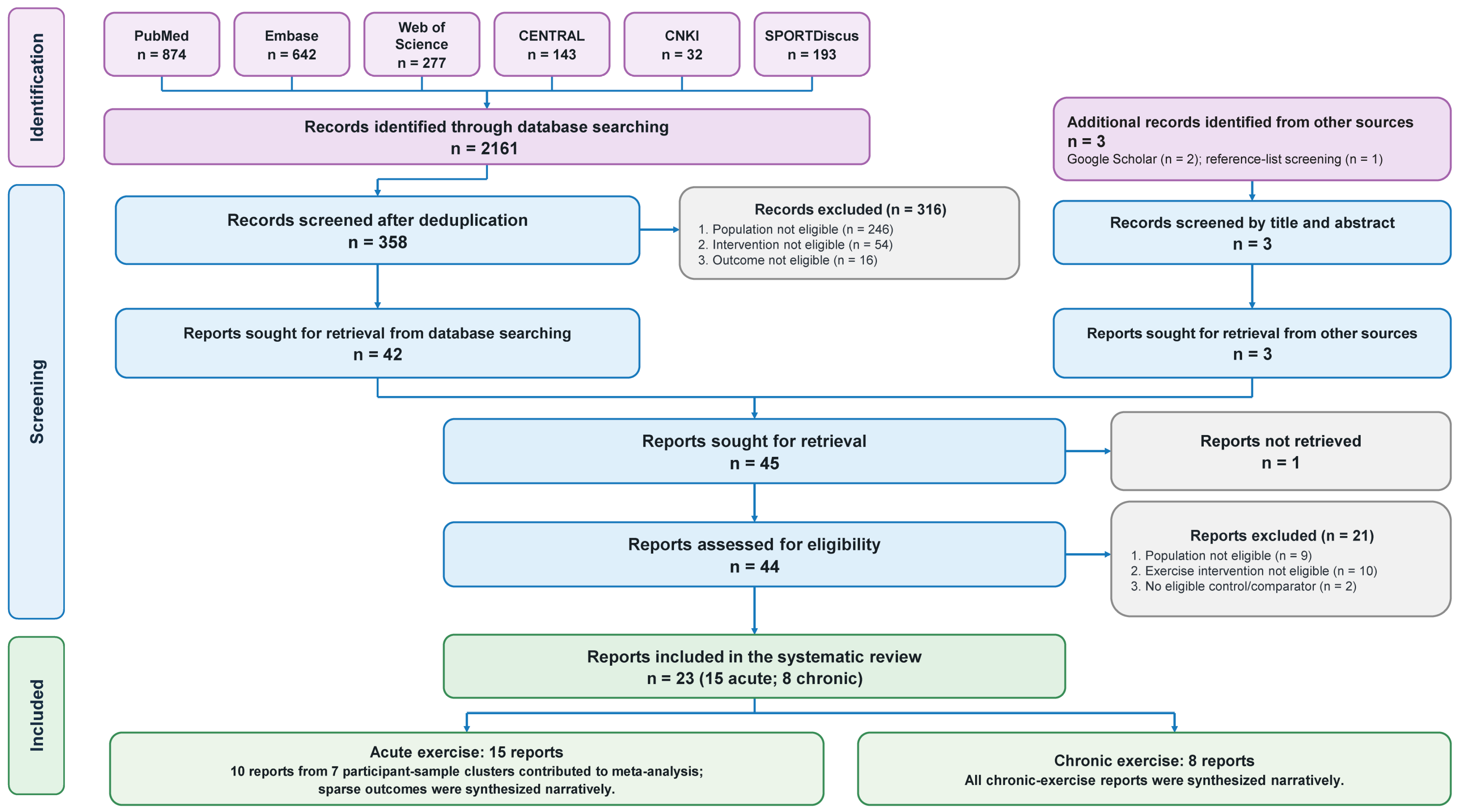
The database searches identified 2161 records across PubMed (n = 874), Embase (n = 642), Web of Science (n = 277), CENTRAL (n = 143), CNKI (n = 32), and SPORTDiscus (n = 193). After duplicate removal, 358 records underwent title and abstract screening, of which 316 were excluded because of ineligible populations (n = 246), interventions (n = 54), or outcomes (n = 16). The remaining 42 database records, together with three additional records identified through supplementary searches (two through Google Scholar and one through reference-list screening), yielded 45 reports sought for retrieval.
Of 45 reports sought for retrieval, one was unavailable. Of 44 full texts assessed, 21 were excluded because of an ineligible population (n = 9), an ineligible exercise intervention (n = 10), or the absence of an eligible control or comparator (n = 2). The review included 23 reports (15 acute and eight chronic). Ten acute reports representing seven conservatively linked participant-sample clusters contributed to the primary meta-analysis. The remaining eligible findings, including those from all 8 chronic-exercise reports, were synthesized narratively. The study-selection process is illustrated in Figure 1.
Figure 1.
PRISMA flow diagram of study selection.
Inter-rater agreement between the two reviewers was high throughout the study-selection process (Supplementary Material File S1 Table S3). The Cohen’s kappa coefficient was 0.83 (95% CI: 0.75–0.92) for title and abstract screening and 0.91 (95% CI: 0.79–1.00) for full-text review.
3.2. Characteristics of Included Studies
A total of 23 reports met the eligibility criteria, comprising 15 acute-exercise and 8 chronic-exercise reports (Table 1 and Table 2). Across all 15 acute reports, ADHD or screening-positive sample sizes ranged from 10 to 82, summing to 413 at the report level. This sum uses 13 participants for Rassovsky et al. [25] after the reported exclusion and omits healthy comparator groups. Overlapping reports and incomplete linkage information precluded an exact unique-participant count. Of the acute-exercise reports, 10 contributed 75 effect sizes to the primary meta-analysis, representing 7 conservatively linked participant-sample clusters. The reported analyzed sample sizes ranged from 18 to 36, with a cumulative report-level sample count of 248. However, because several publications originated from the same or potentially overlapping participant samples, this cumulative count does not represent the number of unique participants. Under the specified sample-linkage assumptions, the estimated number of distinct participants ranged from 184 to 228, although the exact total could not be determined. Studies also varied in ADHD ascertainment methods, medication status, and recruitment settings.
Acute-exercise interventions included cycling, treadmill-based exercise, other aerobic activities, yoga, and walking in different environments (Table 1). Outcome assessments were conducted during exercise, immediately after exercise, following a recovery period, or on the subsequent morning. For the primary quantitative synthesis, the earliest eligible assessment for each outcome and exercise condition was selected. Huan et al. [17] and Shi et al. [18,19] reported complementary outcomes from the same registered trial, with duplicated Stroop results included only once. Other linked or potentially overlapping reports were accounted for through participant-sample clustering.
Chronic-exercise interventions varied considerably in modality, intensity, duration, and frequency (Table 2). Programs included multicomponent exercise combining aerobic, resistance, and flexibility training; Pilates; yoga; Tai Chi; aerobic training; progressive aerobic interval training; and coordination-based exercise. Reported exercise intensities generally ranged from moderate to vigorous, including approximately 60–90% of maximum heart rate (HRmax) in the START programs and progression from 50–60% to 70–80% HRmax in the aerobic interval intervention. Sessions typically lasted 45–90 min and were delivered two to three times per week, although some interventions also incorporated unsupervised exercise or home-based practice. Comparator conditions included treatment as usual, wait-list or inactive controls, continuation of usual treatment, pharmacotherapy combined with ADHD education, and no coordination training.
The eight chronic-exercise reports included three publications associated with the START program [26,27,28], all referencing the same trial registration (NCT05049239). The 2025 and 2026 publications reported complementary outcomes from the same main trial involving 63 participants, whereas the 2023 publication described a 14-participant pilot study. Whether participants from the pilot study were subsequently included in the main trial could not be established. Accordingly, these publications were not considered three independent trials. Across the eight reports, the sample sizes used for the report-level summary ranged from 14 to 63 and summed to 316. The total counts both main START reports at their shared parent-trial size and combines enrolled and analyzed samples where these were the counts used in Table 2. A reliable unique-participant total was unavailable. Most chronic-exercise reports involved clinically diagnosed ADHD populations, whereas Fritz and O’Connor [29] recruited women identified through symptom screening. Additional study characteristics, participant counts, and outcome availability are provided in Supplementary Material File S1 Table S4.
Table 1.
Characteristics of included acute exercise reports.
Table 2.
Characteristics of included chronic exercise reports.
3.3. Risk of Bias
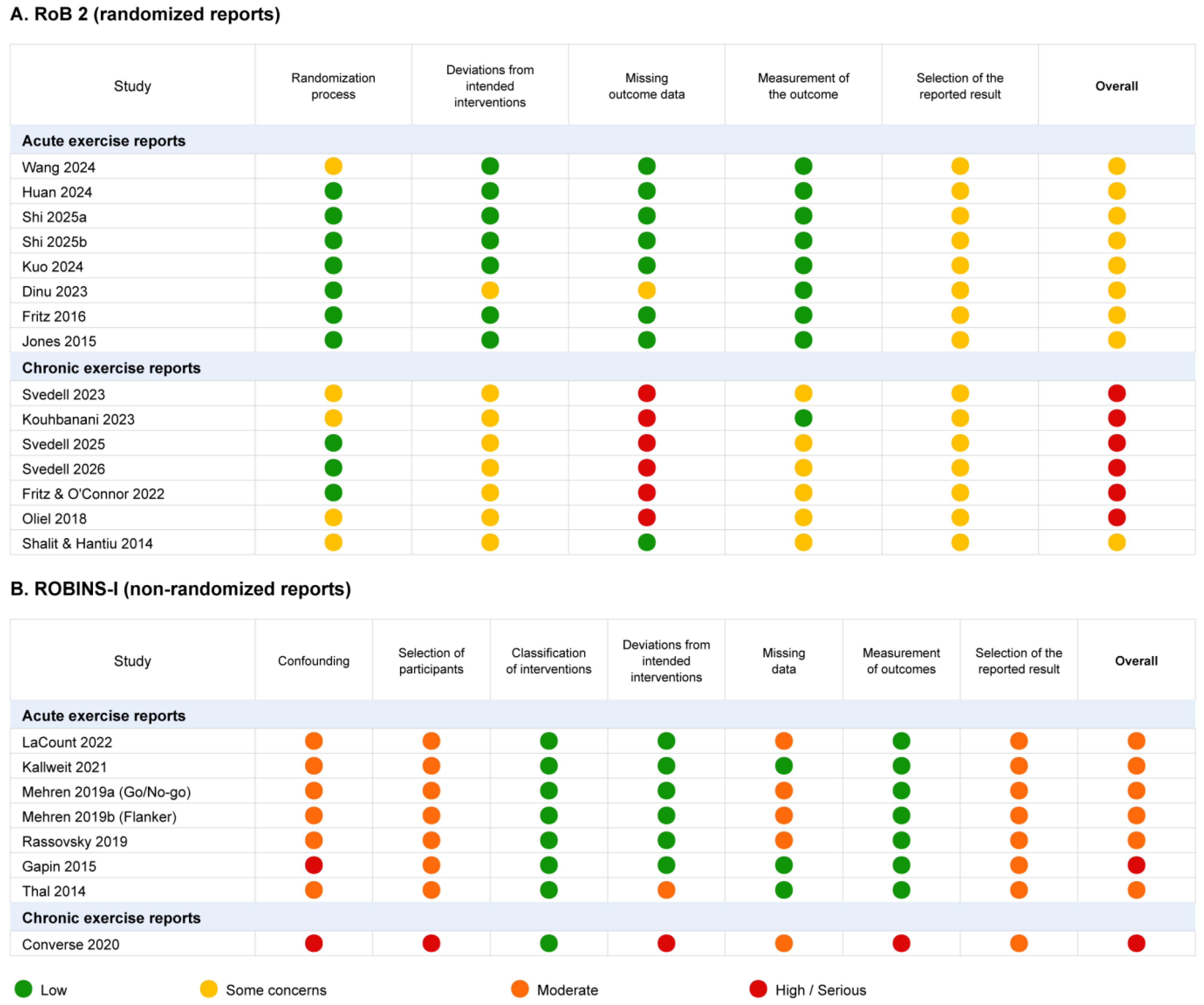
Risk-of-bias assessments for the 23 included reports are presented in Figure 2, with detailed domain-level judgments and supporting evidence provided in Supplementary Material File S1 Table S5. Assessments were conducted separately for randomized and non-randomized studies using RoB 2 and ROBINS-I, respectively.
Figure 2.
Risk-of-bias assessment of included reports. Five common RoB 2 domains shown; crossover-specific domain is reported in Supplementary Material File S1 Table S5. Rows represent reports, not independent trials. Outcome scope and reasons are given in Supplementary Material File S1 Table S5 [10,11,12,17,18,19,20,21,25,26,27,28,29,30,31,32,33,34,35,36,37,38,39].
Among acute-exercise reports, randomized studies were generally judged to have some concerns, primarily related to the randomization process, selection of reported results, and, in some cases, missing outcome data. Although objective cognitive tasks were less susceptible to subjective measurement bias, unblinded assessments of ADHD symptoms and psychological outcomes remained vulnerable to expectancy and reporting effects. Multiple publications involving the same or potentially overlapping participant samples were evaluated at the report level but were not considered independent evidence of methodological quality.
Among chronic-exercise reports, six of the seven randomized-report assessments were classified as high risk of bias, mainly because of missing outcome data and post-randomization exclusions. The remaining randomized report, Shalit and Hanţiu [39], was judged to have some concerns. Importantly, the two main START publications represented linked reports from the same trial and were not interpreted as independent randomized studies.
Non-randomized acute-exercise reports were predominantly judged to have moderate overall risk of bias according to ROBINS-I. Gapin et al. [33] was classified as having serious risk of bias, primarily because the absence of a non-exercise comparison condition limited the ability to distinguish exercise-related effects from practice or time-related changes. Rassovsky et al. [25] also presented inconsistencies in reported participant numbers, which complicated the interpretation of its findings and contributed to its exclusion from the primary quantitative synthesis. Among chronic-exercise studies, Converse et al. [37] was judged to have serious overall risk of bias, particularly because of concerns regarding confounding, participant selection, deviations from intended interventions, and outcome measurement.
Overall, the risk-of-bias assessments identified important methodological limitations across both acute- and chronic-exercise research. The implications of these limitations were considered separately for each outcome domain in the GRADE certainty-of-evidence assessment rather than assuming that study-level judgments applied uniformly to all outcomes.
3.4. Acute Exercise Effects
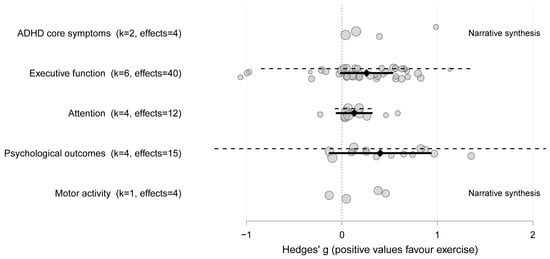
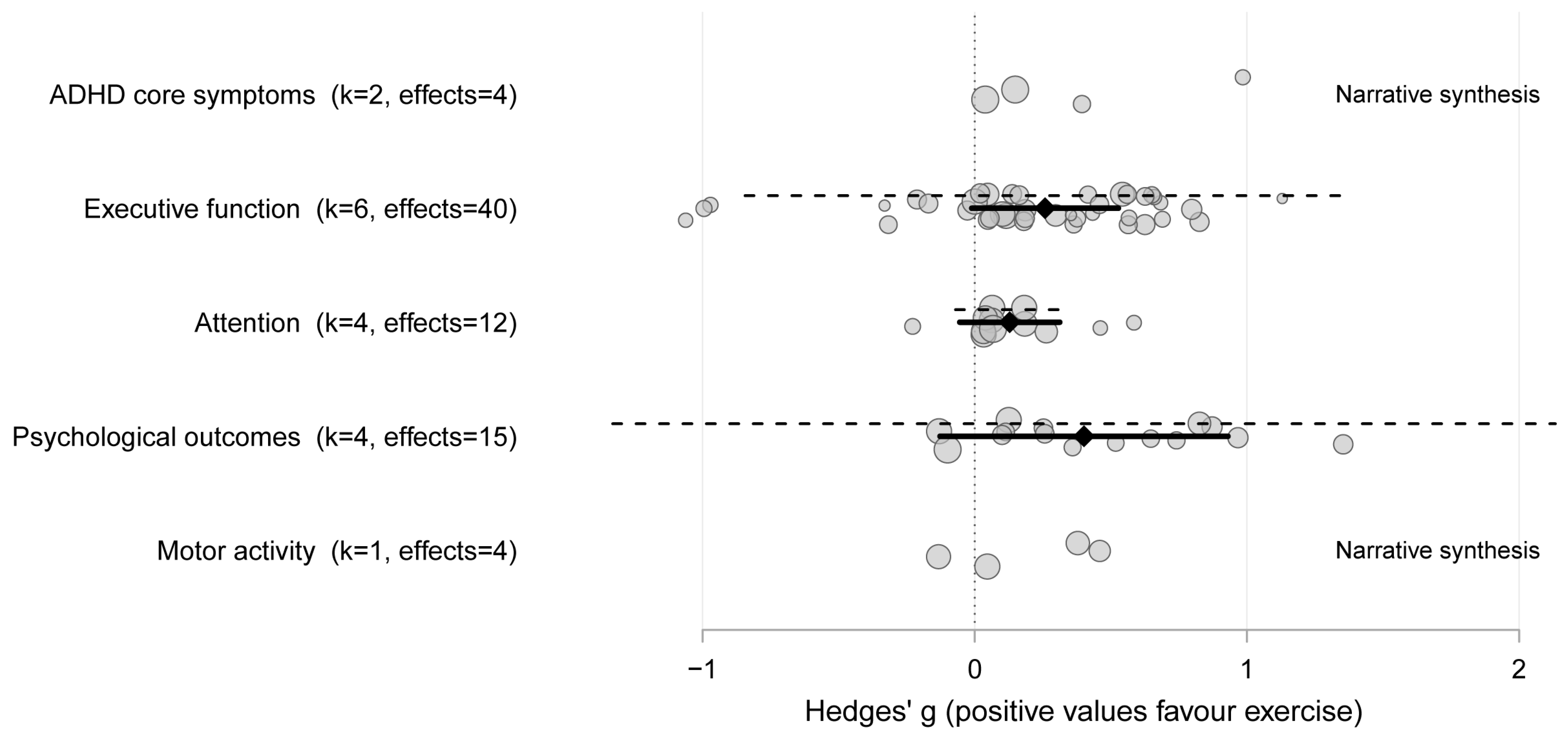
The primary meta-analysis did not demonstrate statistically significant average effects of acute exercise on executive function (g = 0.26, 95% CI: −0.01 to 0.53, p = 0.056; six participant-sample clusters, 40 effect sizes), attention (g = 0.13, 95% CI: −0.06 to 0.31, p = 0.099; four clusters, 12 effect sizes), or psychological outcomes (g = 0.40, 95% CI: −0.13 to 0.93, p = 0.088; four clusters, 15 effect sizes) (Figure 3; Supplementary Material File S1 Table S6). The corresponding approximate 95% prediction intervals were −0.84 to 1.36, −0.07 to 0.33, and −1.33 to 2.13, respectively, indicating considerable uncertainty regarding effects across settings. Statistical inference was particularly limited for attention and psychological outcomes, for which the Satterthwaite-adjusted degrees of freedom were 2.19 and 2.44, respectively.
Figure 3.
Orchard plot of the effects of acute exercise. Gray circles indicate individual effect sizes and black diamonds indicate pooled estimates. Thick solid lines show CR2 95% confidence intervals. Offset dashed lines show approximate 95% prediction intervals. The dotted vertical line marks zero. k is the number of participant-sample clusters. See Supplementary Material File S1 Figure S7 for sample-level estimates.
ADHD core symptoms and motor activity were not quantitatively pooled because of insufficient independent participant samples. Core symptom outcomes were reported by Kallweit et al. [31] and LaCount et al. [12], with differences in assessment timing and outcome measures. All four motor-activity effect sizes originated from a single study by Fritz et al. [32] and therefore did not represent independent replications. These findings were synthesized narratively, with available sample-level estimates presented in Supplementary Material File S1 Figure S7.
3.4.1. Executive-Function Subdomains
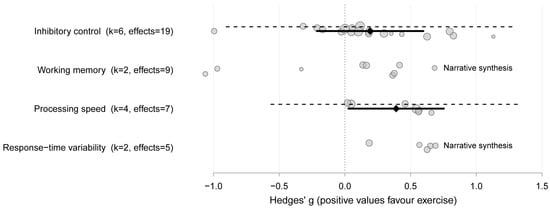
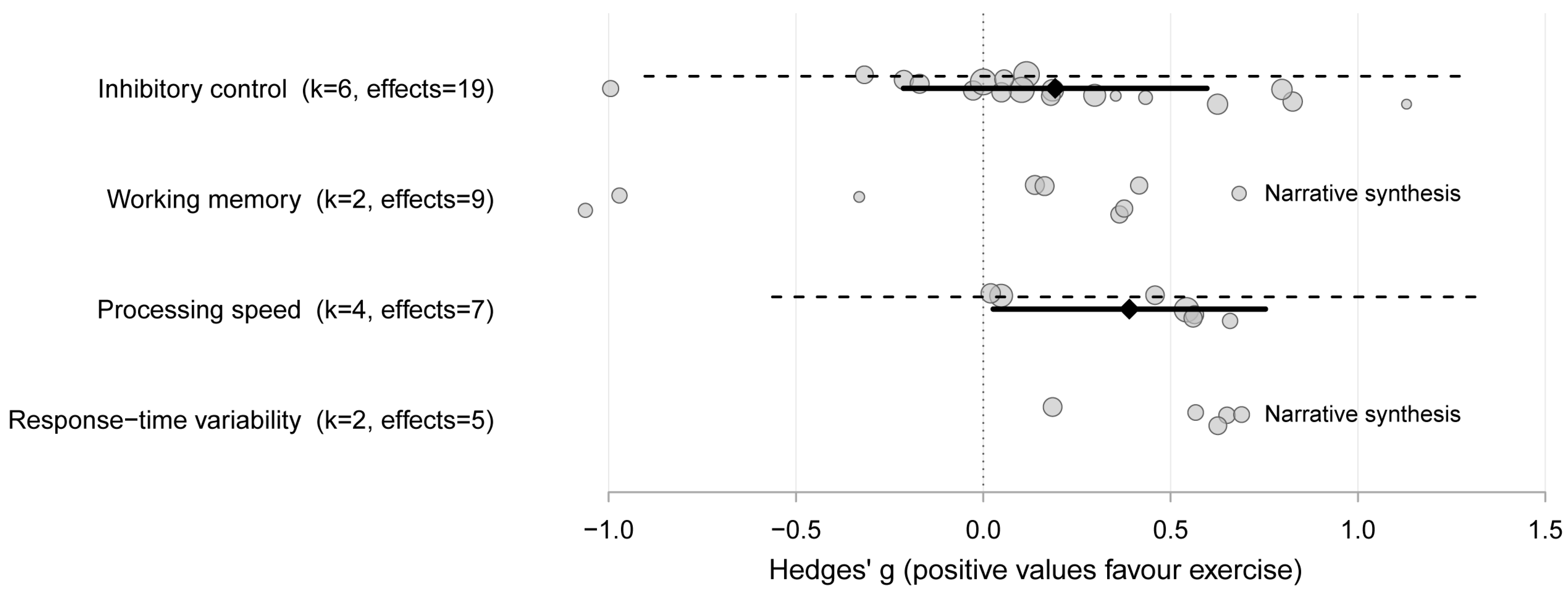
Subdomain analyses showed no statistically significant average effect on inhibitory control (g = 0.19, 95% CI: −0.21 to 0.60, p = 0.272; six participant-sample clusters, 19 effect sizes) (Figure 4; Supplementary Material File S1 Table S8). The corresponding approximate 95% prediction interval ranged from −0.90 to 1.29, suggesting substantial uncertainty in effects across settings.
Figure 4.
Acute executive-function subdomain orchard plot for the primary analysis. Gray circles indicate individual effect sizes and black diamonds indicate pooled estimates. Thick solid lines show CR2 95% confidence intervals. Offset dashed lines show approximate 95% prediction intervals. The dotted vertical line marks zero. k is the number of participant-sample clusters. Working memory and response-time variability have no primary pooled estimate. See Supplementary Material File S1 Table S7 for sample-level composites and Supplementary Material File S1: S9 for exploratory pooling.
A positive pooled effect was observed for processing speed (g = 0.39, 95% CI: 0.03 to 0.75, p = 0.043; four clusters, seven effect sizes), with an approximate 95% prediction interval of −0.56 to 1.34. However, this finding should be interpreted cautiously because the Satterthwaite-adjusted degrees of freedom were only 2.65, and no adjustment was made for multiple subdomain comparisons. Accordingly, the observed statistical significance should be regarded as exploratory rather than conclusive.
Working memory (two clusters, nine effect sizes) and response-time variability (two clusters, five effect sizes) were not included in the primary pooled analyses because of insufficient independent samples. Separate exploratory analyses are presented in Supplementary Material File S1: S9; however, their estimates were highly uncertain and did not establish reliable benefits. Overall, the available evidence did not support definitive conclusions regarding differential effects across executive-function subdomains.
3.4.2. Sensitivity Analyses
Sensitivity analyses indicated that the executive-function findings were influenced by several analytical assumptions and study-selection decisions (Supplementary Material File S1 Table S10). Excluding graph-digitized effect sizes yielded a pooled estimate of g = 0.23 (95% CI: −0.03 to 0.50, p = 0.070). Restricting the analysis to randomized studies produced a smaller and more uncertain effect (g = 0.20, 95% CI: −0.31 to 0.71, p = 0.288; four clusters).
When Wang et al. [10] and Kuo et al. [11] were treated as separate participant-sample clusters, the executive-function estimate reached nominal statistical significance (g = 0.27, 95% CI: 0.03 to 0.51, p = 0.034), whereas the primary analysis conservatively linking these reports did not. Restricting the analysis to clinically diagnosed ADHD samples also yielded a nominally significant effect (g = 0.40, 95% CI: 0.01 to 0.79, p = 0.048). This exploratory estimate was based on three independent clusters and 1.81 Satterthwaite-adjusted degrees of freedom. It provides limited evidence about the effect in clinically diagnosed adults, and differences by ADHD ascertainment remain uncertain.
Exploratory meta-regression analyses did not identify statistically significant associations between executive-function effects and ADHD ascertainment method (p = 0.132) or randomized versus non-randomized study design (p = 0.460). Given the small number of independent samples and low effective degrees of freedom, the analyses provided insufficient evidence to determine whether ADHD ascertainment or study design modified the effects. Restricting psychological outcomes to same-day assessments yielded an uncertain effect (g = 0.41, 95% CI: −0.62 to 1.44).
Leave-one-cluster-out analyses further demonstrated the sensitivity of the executive-function estimates to individual participant-sample clusters. Although pooled point estimates remained positive, statistical significance was not consistent across analyses. Excluding the linked Huan–Shi trial [17,18,19] produced an estimate of g = 0.34 (95% CI: 0.14 to 0.54), whereas exclusion of other influential clusters yielded confidence intervals that included the null. Together, these findings indicate that the apparent magnitude and statistical significance of acute-exercise effects depend partly on the limited independent evidence and assumptions regarding sample dependence.
3.4.3. Publication Bias and Small-Study Effects
Formal assessments of funnel plot asymmetry or small-study effects were not undertaken because fewer than ten independent participant-sample clusters contributed to each acute-exercise outcome domain. Consequently, publication bias and selective reporting could not be reliably assessed or ruled out. These uncertainties were considered when interpreting the overall findings and evaluating the certainty of evidence.
3.5. Chronic Exercise Effects
3.5.1. Clinical and Cognitive Outcomes
Chronic-exercise findings were synthesized narratively because the available trials differed substantially in intervention characteristics, comparator conditions, outcome measures, and methodological quality. Although several studies reported improvements in selected clinical or cognitive outcomes, the findings were inconsistent and subject to important limitations.
The main START trial [27] reported improvements in ADHD symptoms compared with treatment as usual. However, primary outcome data at 12 weeks were unavailable for 22 of the 63 participants, raising concerns about attrition bias. A subsequent START publication [26] examined body awareness and movement quality in the same trial population and therefore did not provide independent evidence of symptom improvement. The earlier START pilot study [28] also reported favorable changes, but its small sample size, predominantly per-protocol analyses, and inconsistencies in reported percentage-change statistics limited the reliability of these findings. These percentage-change data were not converted into standardized effects because the underlying raw-score information could not be reliably reconstructed.
Kouhbanani et al. [36] reported improvements in cognitive task performance following 24 weeks of Pilates training. However, only 52 of the 60 randomized participants were included in the final analysis, following the exclusion of participants with poor attendance and control participants who initiated stimulant medication. In contrast, Fritz and O’Connor [29] found no statistically significant group-by-time interactions for the primary cognitive outcomes or secondary measures after six weeks of yoga. This study recruited women identified through ADHD symptom screening and reported 31% attrition in the yoga group. Similarly, Converse et al. [37] found no statistically significant group-by-time effect on the primary inattention outcome following Tai Chi compared with an inactive control (reported coefficient = −1.7, SE = 2.4, p = 0.50). Interpretation was further limited by non-randomized allocation partly determined by participant availability.
Collectively, these studies provided mixed findings across substantially different interventions, populations, and outcome measures. Their results did not support a reliable pooled estimate of chronic-exercise effects on ADHD symptoms or cognitive functioning.
3.5.2. Comparator and Outcome Specificity
The interpretation of chronic-exercise findings was further influenced by differences in comparator conditions and the clinical relevance of the measured outcomes. Oliel [38] compared an eight-week exercise intervention with pharmacological treatment rather than an inactive or non-exercise control. Observer-rated ADHD symptoms favored medication at post-intervention (reported p = 0.026). Consequently, this study informed the comparative effects of exercise and medication but could not establish exercise efficacy relative to inactivity.
Other studies assessed outcomes closely related to the specific activities performed. Shalit and Hanţiu [39] examined coordination performance following coordination-based exercise, whereas the START secondary analysis [26] evaluated body awareness and movement quality. Although these outcomes may reflect intervention-specific improvements, they are conceptually distinct from reductions in core ADHD symptoms or improvements in everyday functioning.
Differences in outcome definitions, statistical reporting, and comparator conditions further limited cross-study interpretation. In particular, model-based estimates and transformed outcomes were distinguished from unadjusted post-intervention measurements. Given the limited number of comparable trials, no pooled effect estimates or between-study prediction intervals were calculated for chronic-exercise outcomes.
3.5.3. Publication Bias and Reporting Limitations
The number of independent and sufficiently comparable chronic-exercise trials was too small to support informative assessments of funnel plot asymmetry or small-study effects. Therefore, publication bias and selective reporting could not be reliably evaluated or excluded. Narrative synthesis was used to preserve available clinical, cognitive, psychological, and functional findings from studies that could not contribute to a common quantitative estimate.
3.6. Certainty of Evidence
The certainty of evidence was rated as very low across all evaluated acute-exercise outcome domains, including ADHD core symptoms, executive function, attention, psychological outcomes, and motor activity (Supplementary Material File S1 Table S11). The reasons for these judgments varied by domain. For executive function, important concerns included risk of bias, imprecision, and indirectness arising from the inclusion of screening-positive populations and the predominance of laboratory-based cognitive assessments. Although the pooled estimate favored exercise, its confidence interval remained compatible with little or no benefit as well as potentially meaningful improvement.
For attention and psychological outcomes, certainty was particularly limited by the small number of independent participant-sample clusters, imprecise effect estimates, and unstable statistical inference. Evidence for ADHD core symptoms and motor activity was also insufficient for reliable quantitative synthesis because of the limited independent samples. Accordingly, the available acute-exercise findings could not establish consistent or clinically meaningful benefits across outcome domains.
The certainty of chronic-exercise evidence was likewise rated as very low across ADHD symptom, cognitive, psychological, physical-function, quality-of-life, and global-severity outcomes. Major limitations included high or serious risk of bias in several studies, small or selectively analyzed samples, heterogeneous interventions and comparators, and limited applicability of some outcomes to everyday functioning. Furthermore, potentially overlapping trial reports reduced the amount of independent evidence available.
Overall, the very low certainty ratings indicate substantial uncertainty regarding the magnitude, consistency, and reproducibility of exercise-related benefits in adults with ADHD. These judgments should not be interpreted as evidence that exercise is ineffective, but rather that the current evidence is insufficient to support confident conclusions about its clinical effectiveness.
4. Discussion
This systematic review and meta-analysis evaluated the effects of acute and chronic exercise on clinical, cognitive, psychological, and functional outcomes in adults with ADHD or elevated ADHD symptoms. The findings indicate that current evidence does not establish consistent benefits of acute exercise or sustained clinical effectiveness of chronic exercise. Although pooled estimates generally favored acute exercise, the effects on executive function (g = 0.26), attention (g = 0.13), and psychological outcomes (g = 0.40) were not statistically significant. Among executive-function subdomains, processing speed showed a nominally significant improvement, whereas inhibitory control did not. However, the processing-speed finding was based on only four participant-sample clusters and remained subject to substantial statistical uncertainty. Evidence for acute effects on ADHD core symptoms and motor activity was insufficient for reliable quantitative synthesis. Chronic-exercise findings were heterogeneous and could not be meaningfully pooled. Importantly, the certainty of evidence was very low across all evaluated domains, indicating limited confidence in the magnitude and reproducibility of exercise-related benefits.
These findings should be considered alongside previous systematic reviews examining exercise interventions in adults with ADHD. Yang et al. [13] reported potential benefits for inhibitory control, while Xu et al. [14] synthesized evidence on executive functions and ADHD symptoms following acute and chronic exercise. In contrast, the present analysis did not identify a statistically significant average effect on inhibitory control. Such differences may partly reflect variations in study eligibility, outcome classification, comparator conditions, and statistical methods. In particular, several included publications originated from identical or potentially overlapping participant samples, and individual studies frequently contributed multiple correlated outcomes. Treating these observations as independent may overestimate the amount of available evidence and produce overly precise estimates. By accounting for participant-sample linkage and statistical dependence through three-level random-effects models and cluster-robust inference, the present review provides a more cautious interpretation of the existing evidence. Nevertheless, these methodological differences do not necessarily invalidate previous findings but highlight the sensitivity of pooled conclusions to assumptions regarding sample independence and analytical approaches.
The variability observed across acute-exercise outcomes may reflect differences in cognitive demands, exercise characteristics, and assessment timing. Inhibitory control, working memory, and processing speed involve related but distinct cognitive processes, potentially contributing to their different responses to exercise. Acute physical activity may transiently influence arousal, attentional engagement, and cognitive-control processes, although the extent to which these mechanisms explain improvements in adults with ADHD remains uncertain. Furthermore, cognitive outcomes were assessed during exercise, immediately afterward, or following recovery, which may capture different physiological and behavioral states. The nominal improvement in processing speed should therefore be interpreted as exploratory rather than evidence of greater responsiveness than other executive-function domains. Similarly, positive estimates for psychological outcomes may reflect short-term changes in mood or motivation without necessarily indicating improvements in core ADHD symptoms or everyday functioning. Accordingly, the available findings do not establish a consistent pattern of responsiveness across cognitive or psychological domains.
Chronic-exercise studies reported mixed findings across different intervention modalities and clinical outcomes. The START program demonstrated improvements in ADHD symptoms relative to treatment as usual, but missing outcome data and overlapping publications limited confidence in these findings [26,27,28]. Pilates training was associated with improved cognitive task performance, although post-randomization exclusions raised concerns about potential bias [36]. In contrast, yoga and Tai Chi interventions did not demonstrate consistent improvements in their principal cognitive or clinical outcomes [29,37]. The interventions also differed considerably in modality, intensity, frequency, duration, and comparator conditions, limiting their comparability. These intervention characteristics were described narratively rather than formally examined as potential moderators of treatment effects. Therefore, they should be considered possible contributors to the inconsistent findings, rather than empirically established explanations for differences in treatment response. Moreover, improvements in proximal outcomes, such as coordination, body awareness, or movement quality, should not be interpreted as equivalent to reductions in ADHD symptom severity or improvements in everyday functioning. These limitations prevented a reliable pooled estimate of chronic-exercise efficacy. Nevertheless, the absence of quantitative pooling does not indicate that chronic exercise is ineffective; rather, it highlights the need for more rigorous and comparable trials to determine whether repeated exercise training produces sustained clinical benefits.
Several strengths and limitations should be considered when interpreting this review. A key strength was the separate evaluation of acute and chronic exercise, together with explicit consideration of overlapping participant samples, correlated effect sizes, and differences in comparator conditions. The use of three-level random-effects models, cluster-robust inference, sensitivity analyses, and outcome-specific GRADE assessments strengthened the transparency of the evidence synthesis. However, the number of independent participant-sample clusters was small despite the relatively large number of reported effect sizes, resulting in imprecise estimates and unstable statistical inference. Some analyses were sensitive to assumptions regarding participant overlap and within-study correlations, while data extraction required graphical estimates or statistical conversions for certain outcomes. Additional limitations included inconsistent ADHD ascertainment, variable medication status, heterogeneous exercise protocols, missing outcome data, and substantial risk of bias in several studies. Furthermore, most acute-exercise studies assessed short-term laboratory performance rather than clinically meaningful everyday outcomes, and the limited number of independent studies prevented reliable assessment of publication bias. These limitations should be considered when interpreting the findings and their potential applicability to clinical practice.
Future research should prioritize adequately powered, preregistered randomized controlled trials involving clinically diagnosed adults with ADHD. Exercise interventions should be described using standardized parameters, including modality, intensity, frequency, duration, and progression, while medication use, adherence, and assessment timing should be carefully documented. Appropriate non-exercise control conditions and consistent outcome measures are needed to distinguish exercise-specific effects from practice, expectancy, and time-related influences. Longer-term follow-up should evaluate whether observed changes extend beyond laboratory cognitive tasks to clinically meaningful outcomes, including ADHD symptom severity, functional impairment, emotional regulation, quality of life, and occupational or academic functioning. Researchers should also report complete numerical data and sufficient information to identify overlapping participant samples and calculate dependent effect sizes. Although physical exercise may offer complementary benefits for general health and well-being, current evidence remains insufficient to recommend it as an established standalone treatment for adult ADHD. Further high-quality evidence is needed to clarify its clinical effectiveness and potential role alongside established ADHD interventions.
5. Conclusions
This systematic review and meta-analysis found insufficient evidence to establish consistent benefits of acute exercise or sustained clinical effectiveness of chronic exercise in adults with ADHD. Although acute exercise showed positive trends in selected cognitive and psychological outcomes, the pooled effects were generally statistically uncertain, and the nominal improvement in processing speed requires cautious interpretation. Evidence from chronic-exercise interventions was heterogeneous and methodologically limited, preventing reliable conclusions regarding long-term efficacy. The certainty of evidence was very low across all assessed outcomes, primarily because of limited independent samples, risk of bias, and imprecision. Therefore, physical exercise may be considered a complementary approach to supporting general health and well-being, but its effectiveness as a specific treatment for adult ADHD remains uncertain. Future adequately powered, rigorously controlled trials with standardized interventions and clinically meaningful long-term outcomes are needed to clarify its therapeutic potential.
Supplementary Materials
The following supporting information can be downloaded at https://www.mdpi.com/article/10.3390/healthcare14234051/s1. Table S1. PRISMA checklist; Table S2. Full search strategies; Table S3. The inter-rater agreement for selecting studies; Table S4. Report eligibility and sample linkage; Table S5. Risk-of-bias profiles and supporting reasons; Table S6. Primary acute domain results; Figure S7 Sample-level estimates; Table S8. Primary executive-function subdomain results; S9. Exploratory two-sample executive-function pooling; Table S10. Sensitivity analyses and exploratory moderators; Table S11. Certainty of evidence.
Author Contributions
X.P.: conceptualization, data curation, formal analysis, investigation, methodology, visualization, writing—original draft. Y.L.: data curation, methodology, validation, writing—review & editing. R.W.: data curation, investigation, validation, writing—review & editing. P.L.: funding acquisition, validation, writing—review & editing. Y.R.: methodology, validation, writing—review & editing. F.Z.: conceptualization, methodology, project administration, supervision, writing—review & editing. All authors have read and agreed to the published version of the manuscript.
Funding
This work was supported by the National Natural Science Foundation of China (T2600398).
Institutional Review Board Statement
Not applicable.
Informed Consent Statement
Not applicable.
Data Availability Statement
This study analyzed aggregate data from previously published studies. No new individual participant data were collected. The data supporting the findings of this study are available from the corresponding author upon reasonable request.
Acknowledgments
The authors declare that ChatGPT 5.6 Sol was used in the preparation of this manuscript solely to assist with language editing and improve clarity and readability. All AI-assisted content was critically reviewed and verified by the authors, who take full responsibility for the accuracy and integrity of the final manuscript.
Conflicts of Interest
The authors declare that the research was conducted in the absence of any commercial or financial relationships that could be construed as a potential conflict of interest.
References
- Faraone, S.V.; Bellgrove, M.A.; Brikell, I.; Cortese, S.; Hartman, C.A.; Hollis, C.; Newcorn, J.H.; Philipsen, A.; Polanczyk, G.V.; Rubia, K.; et al. Attention-deficit/hyperactivity disorder. Nat. Rev. Dis. Primers 2024, 10, 11. [Google Scholar] [CrossRef] [Scilit] [PubMed]
- Popit, S.; Serod, K.; Locatelli, I.; Stuhec, M. Prevalence of attention-deficit hyperactivity disorder (ADHD): Systematic review and meta-analysis. Eur. Psychiatry 2024, 67, e68. [Google Scholar] [CrossRef] [Scilit] [PubMed]
- Song, P.; Zha, M.; Yang, Q.; Zhang, Y.; Li, X.; Rudan, I. The prevalence of adult attention-deficit hyperactivity disorder: A global systematic review and meta-analysis. J. Glob. Health 2021, 11, 04009. [Google Scholar] [CrossRef] [Scilit] [PubMed]
- Machado, S.; Paes, F.; Lima, J.L. Exercise as a promising non-pharmacological intervention for ADHD. Rev. DE Neurol. 2025, 80, 48058. [Google Scholar] [CrossRef] [Scilit] [PubMed]
- Huang, Z.; Li, L.; Lu, Y.; Meng, J.; Wu, X. Effects of rope skipping exercise on working memory and cardiorespiratory fitness in children with attention deficit hyperactivity disorder. Front. Psychiatry 2024, 15, 1381403. [Google Scholar] [CrossRef] [Scilit] [PubMed]
- Singh, B.; Bennett, H.; Miatke, A.; Dumuid, D.; Curtis, R.; Ferguson, T.; Brinsley, J.; Szeto, K.; Petersen, J.M.; Gough, C.; et al. Effectiveness of exercise for improving cognition, memory and executive function: A systematic umbrella review and meta-meta-analysis. Br. J. Sports Med. 2025, 59, 866–876. [Google Scholar] [CrossRef] [Scilit] [PubMed]
- Zhu, F.; Zhang, X.; Wu, Y.; Li, Y.; Ren, Y.; Zhang, M. Physical exercise interventions for health outcomes in children and adolescents with attention deficit hyperactivity disorder: An umbrella review with meta-analysis. Psychiatry Res. 2026, 364, 117267. [Google Scholar] [CrossRef] [Scilit] [PubMed]
- Zhang, Y.; Che, X.; Dong, Z.; Shen, J.; Tao, Y.; Cui, B.; Zhu, F. Optimizing exercise interventions for motor skills enhancement in attention deficit hyperactivity disorder: Evidence from meta-analysis. Clin. Rehabil. 2026, 40, 1177–1194. [Google Scholar] [CrossRef] [Scilit] [PubMed]
- Zhu, F.; Zhu, X.; Bi, X.; Kuang, D.; Liu, B.; Zhou, J.; Yang, Y.; Ren, Y. Comparative effectiveness of various physical exercise interventions on executive functions and related symptoms in children and adolescents with attention deficit hyperactivity disorder: A systematic review and network meta-analysis. Front. Public Health 2023, 11, 1133727. [Google Scholar] [CrossRef] [Scilit] [PubMed]
- Wang, Y.H.; Gau, S.F.; Yang, L.K.; Chang, J.C.; Cheong, P.L.; Kuo, H.I. Acute aerobic exercise at different intensities modulates inhibitory control and cortical excitability in adults with attention-deficit hyperactivity disorder (ADHD). Asian J. Psychiatry 2024, 95, 103993. [Google Scholar] [CrossRef] [Scilit] [PubMed]
- Kuo, H.I.; Nitsche, M.A.; Wu, Y.T.; Chang, J.C.; Yang, L.K. Acute aerobic exercise modulates cognition and cortical excitability in adults with attention-deficit hyperactivity disorder (ADHD) and healthy controls. Psychiatry Res. 2024, 340, 116108. [Google Scholar] [CrossRef] [Scilit] [PubMed]
- LaCount, P.A.; Hartung, C.M.; Vasko, J.M.; Serrano, J.W.; Wright, H.A.; Smith, D.T. Acute effects of physical exercise on cognitive and psychological functioning in college students with attention-deficit/hyperactivity disorder. Ment. Health Phys. Act. 2022, 22, 100443. [Google Scholar] [CrossRef] [Scilit] [PubMed]
- Yang, Y.; Wu, C.H.; Sun, L.; Zhang, T.R.; Luo, J. The impact of physical activity on inhibitory control of adult ADHD: A systematic review and meta-analysis. J. Glob. Health 2025, 15, 04025. [Google Scholar] [CrossRef] [Scilit] [PubMed]
- Xu, S.; Zhao, C.; Hu, L. The effects of acute and chronic exercise on executive functions and core symptoms in adults with ADHD: A systematic review and meta-analysis. Psychol. Sport Exerc. 2026, 84, 103088. [Google Scholar] [CrossRef] [Scilit] [PubMed]
- Page, M.J.; McKenzie, J.E.; Bossuyt, P.M.; Boutron, I.; Hoffmann, T.C.; Mulrow, C.D.; Shamseer, L.; Tetzlaff, J.M.; Akl, E.A.; Brennan, S.E.; et al. The PRISMA 2020 statement: An updated guideline for reporting systematic reviews. PLoS Med. 2021, 18, e1003583. [Google Scholar] [CrossRef] [PubMed]
- McHugh, M.L. Interrater reliability: The kappa statistic. Biochem. Medica 2012, 22, 276–282. [Google Scholar] [CrossRef] [Scilit]
- Huan, M. Effects of Acute Exercise of Different Intensities on Working Memory in Young Adults with Attention Deficit Symptoms; Shanghai University of Sport: Shanghai, China, 2024. [Google Scholar]
- Shi, L.; Huan, M.; He, C.; Peng, X.; Quan, M. Effects of acute moderate-intensity continuous training and high-intensity interval training on inhibitory control in male college students with attention deficit symptoms. J. Phys. Educ. 2025, 32, 147–154. [Google Scholar]
- Shi, L. Effects of Acute MICT and HIIT on Inhibitory Control and Heart Rate Variability in University Students with Attention Deficit Symptoms; Shanghai University of Sport: Shanghai, China, 2025. [Google Scholar]
- Mehren, A.; Özyurt, J.; Thiel, C.M.; Brandes, M.; Lam, A.P.; Philipsen, A. Effects of acute aerobic exercise on response inhibition in adult patients with ADHD. Sci. Rep. 2019, 9, 19884. [Google Scholar] [CrossRef] [Scilit] [PubMed]
- Mehren, A.; Özyurt, J.; Lam, A.P.; Brandes, M.; Müller, H.H.O.; Thiel, C.M.; Philipsen, A. Acute effects of aerobic exercise on executive function and attention in adult patients with ADHD. Front. Psychiatry 2019, 10, 132. [Google Scholar] [CrossRef] [Scilit] [PubMed]
- Sterne, J.A.C.; Savović, J.; Page, M.J.; Elbers, R.G.; Blencowe, N.S.; Boutron, I.; Cates, C.J.; Cheng, H.Y.; Corbett, M.S.; Eldridge, S.M.; et al. RoB 2: A revised tool for assessing risk of bias in randomised trials. BMJ 2019, 366, l4898. [Google Scholar] [CrossRef] [Scilit] [PubMed]
- Sterne, J.A.; Hernán, M.A.; Reeves, B.C.; Savović, J.; Berkman, N.D.; Viswanathan, M.; Henry, D.; Altman, D.G.; Ansari, M.T.; Boutron, I.; et al. ROBINS-I: A tool for assessing risk of bias in non-randomised studies of interventions. BMJ 2016, 355, i4919. [Google Scholar] [CrossRef] [Scilit] [PubMed]
- Guyatt, G.; Oxman, A.D.; Sultan, S.; Brozek, J.; Glasziou, P.; Alonso-Coello, P.; Atkins, D.; Kunz, R.; Montori, V.; Jaeschke, R.; et al. GRADE guidelines: 11. Making an overall rating of confidence in effect estimates for a single outcome and for all outcomes. J. Clin. Epidemiol. 2013, 66, 151–157. [Google Scholar] [CrossRef] [Scilit] [PubMed]
- Rassovsky, Y.; Alfassi, T. Attention improves during physical exercise in individuals with ADHD. Front. Psychol. 2018, 9, 2747. [Google Scholar] [CrossRef] [Scilit] [PubMed]
- Svedell, L.A.; Holmqvist, K.L.; Msghina, M.; Lindvall, M.A. Physical exercise and body awareness/movement quality in adults with attention deficit/hyperactivity disorder (ADHD): Results from the START randomized controlled trial. Complement. Ther. Med. 2026, 98, 103372. [Google Scholar] [CrossRef] [Scilit] [PubMed]
- Svedell, L.A.; Lindvall, M.A.; Holmqvist, K.L.; Cao, Y.; Msghina, M. Physical exercise as add-on treatment in adults with ADHD—The START study: A randomized controlled trial. Front. Psychiatry 2025, 16, 1690216. [Google Scholar] [CrossRef] [Scilit] [PubMed]
- Svedell, L.A.; Holmqvist, K.L.; Lindvall, M.A.; Cao, Y.; Msghina, M. Feasibility and tolerability of moderate intensity regular physical exercise as treatment for core symptoms of attention deficit hyperactivity disorder: A randomized pilot study. Front. Sports Act. Living 2023, 5, 1133256. [Google Scholar] [CrossRef] [Scilit] [PubMed]
- Fritz, K.; O’Connor, P.J. Effects of a 6 week yoga intervention on executive functioning in women screening positive for adult ADHD: A pilot study. Front. Sports Act. Living 2022, 4, 746409. [Google Scholar] [CrossRef] [Scilit] [PubMed]
- Dinu, L.M.; Singh, S.N.; Baker, N.S.; Georgescu, A.L.; Singer, B.F.; Overton, P.G.; Dommett, E.J. The effects of different exercise approaches on attention deficit hyperactivity disorder in adults: A randomised controlled trial. Behav. Sci. 2023, 13, 129. [Google Scholar] [CrossRef] [Scilit] [PubMed]
- Kallweit, C.; Paucke, M.; Strauß, M.; Exner, C. Adult ADHD: Influence of physical activation, stimulation, and reward on cognitive performance and symptoms. J. Atten. Disord. 2021, 25, 809–819. [Google Scholar] [CrossRef] [Scilit] [PubMed]
- Fritz, K.M.; O’Connor, P.J. Acute exercise improves mood and motivation in young men with ADHD symptoms. Med. Sci. Sports Exerc. 2016, 48, 1153–1160. [Google Scholar] [CrossRef] [Scilit] [PubMed]
- Gapin, J.I.; Labban, J.D.; Bohall, S.C.; Wooten, J.S.; Chang, Y.K. Acute exercise is associated with specific executive functions in college students with ADHD: A preliminary study. J. Sport Health Sci. 2015, 4, 89–96. [Google Scholar] [CrossRef] [Scilit]
- Thal, L. Attention-Deficit Hyperactivity Disorder and Exposure to Nature in College Students. Doctoral Dissertation, University of Missouri-Columbia, Columbia, MO, USA, 2014. [Google Scholar] [CrossRef] [Scilit]
- Jones, G.J.; Ehly, S.W.; Liu, W.M.; Westefeld, J.S.; Wood, S.M.; Vispoel, W.P. Acute Exercise and Executive Function in Young Adults with ADHD. Doctoral Dissertation, University of Iowa, Iowa City, IA, USA, 2015. [Google Scholar] [CrossRef] [Scilit]
- Kouhbanani, S.S.; Zarenezhad, S.; Arabi, S.M. Mind-body exercise affects attention switching and sustained attention in female adults with attention deficit/hyperactivity disorder: A randomized, controlled trial with 6-month follow-up. Curr. Psychol. 2023, 42, 20983–20994. [Google Scholar] [CrossRef] [Scilit]
- Converse, A.K.; Barrett, B.P.; Chewning, B.A.; Wayne, P.M. Tai Chi training for attention deficit hyperactivity disorder: A feasibility trial in college students. Complement. Ther. Med. 2020, 53, 102538. [Google Scholar] [CrossRef] [Scilit] [PubMed]
- Oliel, J. Aerobic Exercise vs Pharmacology in Adults with Attention Deficit Hyperactivity Disorder (ADHD): Pilot Study. Doctoral Dissertation, McGill University, Montreal, QC, Canada, 2019. [Google Scholar]
- Shalit, L.; Hanţiu, I. The impact of exercise based on the Eshkol-Wachman movement notation on general coordination. Palestrica Third Millenn.-Civiliz. Sport 2014, 15, 16–21. [Google Scholar]
Disclaimer/Publisher’s Note: The statements, opinions and data contained in all publications are solely those of the individual author(s) and contributor(s) and not of MDPI and/or the editor(s). MDPI and/or the editor(s) disclaim responsibility for any injury to people or property resulting from any ideas, methods, instructions or products referred to in the content. |
© 2026 by the authors. Licensee MDPI, Basel, Switzerland. This article is an open access article distributed under the terms and conditions of the Creative Commons Attribution (CC BY) license.