


Highlights
What are the main findings?
- Patients with cardiovascular disease reported significantly more adverse events, higher adherence to OTC medication instructions, and more frequent use of herbal products and aphrodisiac formulations than patients with other chronic conditions.
- Patients with cardiovascular disease reported higher monthly OTC medication expenditure.
What are the implications of the main findings?
- Healthcare professionals should provide targeted counseling on the safe use of OTC medications and herbal medical products particularly for patients with cardiovascular disease, to minimize adverse events and potential drug interactions.
- The higher OTC-related expenditure highlights the need to improve patient education and medication management to promote safe, effective, and cost-conscious self-medication practices.
Abstract
Background: Over-the-counter (OTC) medications and herbal products are widely used for the self-management of acute symptoms and chronic diseases. Although these products are generally perceived as safe and accessible, concerns remain regarding adverse events (AEs), healthcare costs, and potential drug interactions, particularly among individuals with cardiovascular disease (CVD). Comparative evidence evaluating OTC use between patients with CVD and those with other chronic conditions remains limited. Aim: The aim was to compare patterns of OTC and herbal medication use, adherence to the instructions, perceived effectiveness, AEs, OTC-related monthly expenditure, and satisfaction among patients with CVD and with other chronic conditions in the United Arab Emirates (UAE). Methods: A comparative cross-sectional study was conducted among adults residing in the UAE. Participants were categorized into CVD and other chronic disease groups based on self-reported diagnoses. Data were collected using a structured questionnaire assessing sociodemographic characteristics, OTC and herbal product use, perceived effectiveness, AEs, OTC-related monthly expenditure, and satisfaction. Chi-square and Fisher’s exact tests were used for categorical comparisons, with p < 0.05 considered statistically significant. Results: Among the 206 participants included, 122 had CVD, and 84 had other chronic conditions. Participants with CVD reported greater occasional use of phytopharmaceuticals and aphrodisiac formulations (91%, 31.97%). Higher adherence to OTC instructions (76.23%), more AEs (28.7%), and greater OTC-related expenditure (31.1%) were also observed in the CVD group. Perceived effectiveness was high in both groups. Conclusions: OTC medication and herbal product use is common among individuals with chronic diseases in the UAE. Compared with participants with other chronic conditions, those with CVD reported higher adherence to instructions, more frequent AEs, and greater OTC-related monthly expenditure. These findings highlight the importance of appropriate patient education and medication safety practices regarding OTC medications and herbal products among individuals with chronic diseases.
1. Introduction
Chronic diseases are the leading cause of morbidity and mortality worldwide, accounting for approximately 74% of all global deaths, equivalent to around 41 million deaths annually [1,2]. They also impose a substantial socioeconomic burden through increased healthcare expenditures, reduced quality of life, and productivity losses [1]. Among these diseases, cardiovascular diseases (CVDs) represent the largest contributor to global mortality. According to the Global Burden of Cardiovascular Diseases and Risks report, approximately 620 million people were living with CVDs globally in 2022, accounting for almost one-third of all deaths worldwide [3]. The increasing prevalence of major cardiovascular risk factors, including hypertension, obesity, diabetes, and dyslipidemia, has further intensified the global burden of CVDs [3]. Consequently, many individuals with cardiovascular conditions require lifelong treatment and often engage in self-management practices to support disease control.
OTC medication use is common worldwide. Approximately 50–80% of adults use at least one OTC medication annually, while the prevalence of self-medication frequently exceeds 60% across different populations [4]. Commonly used OTC products include analgesics, gastrointestinal medications, cough and cold preparations, vitamins, minerals, dietary supplements, and herbal medicines [4,5,6]. In addition, complementary and alternative medicine (CAM) use has been reported among patients with various chronic conditions [7,8]. For example, CAM utilization rates of 27–50% have been reported among patients with liver disease [7,8]. This trend highlights the widespread reliance on traditional and complementary therapies [8]. The World Health Organization (WHO) estimates that approximately 80% of the population mentioned uses traditional and complementary medicines for healthcare purposes [9].
This widespread use of OTC medications is influenced by positive perceptions of effectiveness and satisfaction with treatment outcomes. Many individuals believe that herbal medicines, dietary supplements, vitamins, and OTC products improve general health, strengthen immunity, alleviate symptoms, and prevent disease progression [8,10,11]. Previous studies have identified perceived effectiveness as an important predictor of continued use of complementary and alternative medicines [11]. However, the evidence supporting the perceived effectiveness of many of these products remains limited or inconsistent [8,10].
Safety perceptions also play a critical role in OTC medication use. Although many consumers perceive OTC products and herbal medicines as safe because they are readily available without a prescription, adverse events (AEs), medication misuse, and drug–drug interactions remain important concerns [12]. NSAIDs, among the most frequently used OTC medications worldwide, have been associated with increased cardiovascular risks, particularly among patients with existing cardiovascular disease [12]. Furthermore, herbal medicines may interact with antihypertensive agents, anticoagulants, and other cardiovascular medications, potentially leading to adverse clinical outcomes [10]. Despite these risks, awareness of OTC-related adverse events remains relatively low among many consumers [12].
Financial considerations are another important determinant of OTC medication use. Self-medication may reduce healthcare expenditures by minimizing physician visits and providing accessible treatment options for minor ailments [7]. However, long-term use of OTC medications, dietary supplements, and herbal products can result in considerable out-of-pocket spending. A study among Chinese adults found that self-medication contributed substantially to personal healthcare expenditures, particularly among individuals with chronic conditions [13]. Similarly, the OECD has reported increasing out-of-pocket healthcare spending across many countries, highlighting the financial burden associated with self-managed healthcare [14].
Adherence to OTC medication and complementary therapies is important for achieving intended health outcomes but remains poorly understood [5,15]. Individuals who perceive these products as effective, safe, and cost-effective may be more likely to follow treatment recommendations, whereas concerns regarding adverse events, limited benefits, or financial burden may lead to discontinuation or non-adherence.
Across the Middle East, the use of OTC medication and herbal products is common. In Saudi Arabia, approximately 88% of respondents reported using herbal medicines, with many perceiving them as effective and safe alternatives to conventional therapies [16]. Similarly, a study conducted in the UAE reported herbal medicine use among 98.7% of participants, indicating substantial acceptance of complementary therapies [17]. In Dubai, OTC medications and dietary supplements were also reported to be commonly used for health enhancement, disease prevention, and symptom management [15].
Despite the growing prevalence of self-medication, comparative evidence on OTC and herbal medication use among patients with CVD and those with other chronic conditions in the UAE remains limited. In particular, differences in medication use patterns, adherence, adverse events, perceived effectiveness, OTC-related monthly expenditure, and satisfaction have not been adequately characterized. Therefore, this study aimed to compare these outcomes between patients with CVD and those with other chronic conditions in the UAE. The findings may help identify medication safety concerns and inform pharmacist-led counseling and monitoring of OTC and herbal product use among patients with chronic diseases.
2. Methodology
2.1. Study Design and Setting
A comparative cross-sectional study was conducted to assess patterns of self-medication using OTC and herbal products among individuals with CVD and other chronic conditions. The CVD group included participants who reported a prior diagnosis of at least one cardiovascular condition by a healthcare professional. These conditions included hypertension, hyperlipidemia, coronary artery disease, angina, myocardial infarction, heart failure, or other cardiovascular conditions requiring ongoing management. Participants were included irrespective of disease duration or treatment regimen. The “other chronic condition” group consisted of participants who reported no history of diagnosed cardiovascular disease but had at least one other chronic condition, including diabetes, asthma, bleeding problems, or osteoporosis.
2.2. Study Population and Sampling
A total of 327 individuals were screened for eligibility. The study included adults aged 18 years and above who were residents of the UAE and had a physician-diagnosed cardiovascular disease or at least one other chronic disorder. Eligible participants were required to have used at least one OTC medication within the six months preceding the study and be willing to provide informed consent to participate. Exclusion criteria included incomplete information regarding medication use or expenditure, cognitive impairment, and inability to communicate in English or Arabic.
2.3. Sample Size
The sample size was determined based on the estimation of a population proportion using a 95% confidence level and a 5% margin of error. In the absence of prior prevalence estimates, a conservative prevalence of 50% was assumed to maximize the sample size. Based on these assumptions, the minimum required sample size was 384 participants. A total of 327 individuals were screened for eligibility. Following application of the eligibility and exclusion criteria, 206 participants were included in the final analysis.
2.4. Data Collection Tool
The questionnaire was adapted from previously published studies assessing OTC and herbal medicine use, refined to suit the study objective, and was reviewed by experts in pharmacy practice for content validity. The questionnaire was pre-tested on a small sample to ensure clarity, relevance, and ease of understanding.
The final questionnaire consisted of four main sections:
- Sociodemographic characteristics: Age, gender, income, education level, and employment status.
- Health profile: Presence of cardiovascular and other chronic conditions, which was self-reported by participants.
- OTC and herbal medication use: Types of products used, frequency, reasons for use, and sources of purchase. Participants were asked about their use of different categories of OTC medications, dietary supplements, and herbal products during the preceding six months. For this study, phytopharmaceuticals and botanical extracts referred to plant-derived medicinal or health products. Aphrodisiac formulations referred to OTC or herbal products marketed for sexual enhancement. Frequency of use was categorized as never, occasionally, often, or always.
- Estimated expenditure on OTC products over the past 30 days, perceived effectiveness, satisfaction, adherence, and experience of adverse events.
2.5. Operational Definitions
Cardiovascular disease (CVD) group: Participants were classified into the CVD group if they self-reported a physician-diagnosed cardiovascular condition, including hypertension, hyperlipidemia, coronary artery disease, angina, myocardial infarction, heart failure, or other cardiovascular conditions, based on the predefined questionnaire list. Participants with multiple cardiovascular conditions were included, as were those with additional chronic conditions diagnosed within the preceding six months.
Other chronic conditions group: Participants who did not report a primary cardiovascular or cardiac condition but reported one or more other chronic health conditions were classified into the other chronic conditions group. These included diabetes mellitus, asthma or other respiratory diseases, gastrointestinal disorders, musculoskeletal conditions, renal diseases, and other chronic conditions. Participants with multiple non-cardiovascular chronic conditions were included in this group. This group therefore represents a heterogeneous population with various chronic health conditions, without a primary diagnosed cardiovascular condition.
OTC medication use: OTC use was defined as the use of any medication obtained without a prescription during the specified study period. Participants were asked to report the OTC medication(s) used, including the medication name/category and reason for use.
Herbal products and dietary supplements: These were defined as non-prescription health and self-care products available for consumer use without a prescription. Herbal products and dietary supplements were included within the broader OTC/self-care product category for the purposes of this study, reflecting their relevance to participants’ use of non-prescription products for health maintenance, symptom management, or other health-related purposes.
Adverse Event (AE): An AE was defined as any unwanted or harmful effect that participants perceived to have occurred following the use of an OTC medication. Participants were asked to report the experienced symptom/event and the medication suspected to be associated with it.
Cost: Cost refers to the amount of money self-reported by participants as having been spent on OTC medications during the specified period. Participants reported the approximate expenditure in UAE dirhams (AED).
Adherence: Adherence was operationally defined as the extent to which participants reported following the recommended instructions for the use of OTC medications, including the recommended dose, frequency, and duration of use.
Perceived effectiveness refers to the participants’ assessment of how effective the OTC medications and other non-prescription health products they used were in achieving the intended therapeutic or health-related outcomes, based on their personal experience with the products.
Satisfaction: Satisfaction was defined as the participant’s overall subjective assessment of the OTC medication or non-prescription health product, based on its perceived effectiveness, safety, and cost.
2.6. Data Collection Procedure
Data were collected over a defined study period through in-person approaches. Participants were approached in community and healthcare settings by trained researchers and were provided with a QR code linking to a questionnaire. Respondents could either complete the survey independently or receive assistance from the research team when needed. A non-probability convenience sampling approach was employed.
2.7. Data Analysis
Data were entered and analyzed using the Statistical Package for the Social Sciences (SPSS), version 23 (IBM Corp., Armonk, NY, USA). Descriptive statistics, including means, frequencies, and percentages, were used to summarize participant characteristics and study variables.
Comparative analyses between CVD and those with other chronic conditions were performed using chi-square or Fisher’s exact tests for categorical variables and independent t-tests for continuous variables. A p-value of less than 0.05 was considered statistically significant.
Given the achieved sample size (N = 206, CVD n = 122, other chronic conditions n = 84), the study has 80% power (α = 0.05) to detect a minimum effect size of Cohen’s w = 0.20 for 2 × 2 comparisons and Cohen’s w = 0.24–0.25 for comparisons involving categorical outcomes with more levels. This corresponds to the ability to detect small-to-medium between-group differences.
2.8. Ethical Considerations
Ethical approval was obtained from the Institutional Review Board (IRB) at Gulf Medical University (Ref. No. IRB-COP-STD-34-Sept-2024). Participation was voluntary, and informed consent was obtained from all participants prior to data collection. Confidentiality and anonymity of participant information were strictly maintained throughout the study. No financial compensation or other incentives were provided to participants for their participation.
3. Results
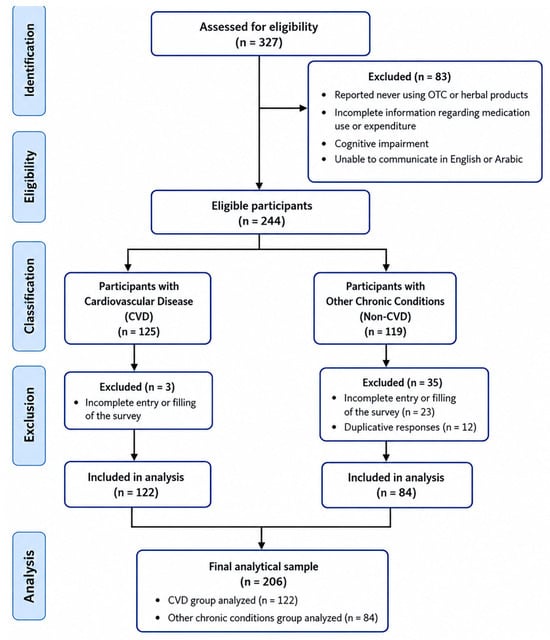
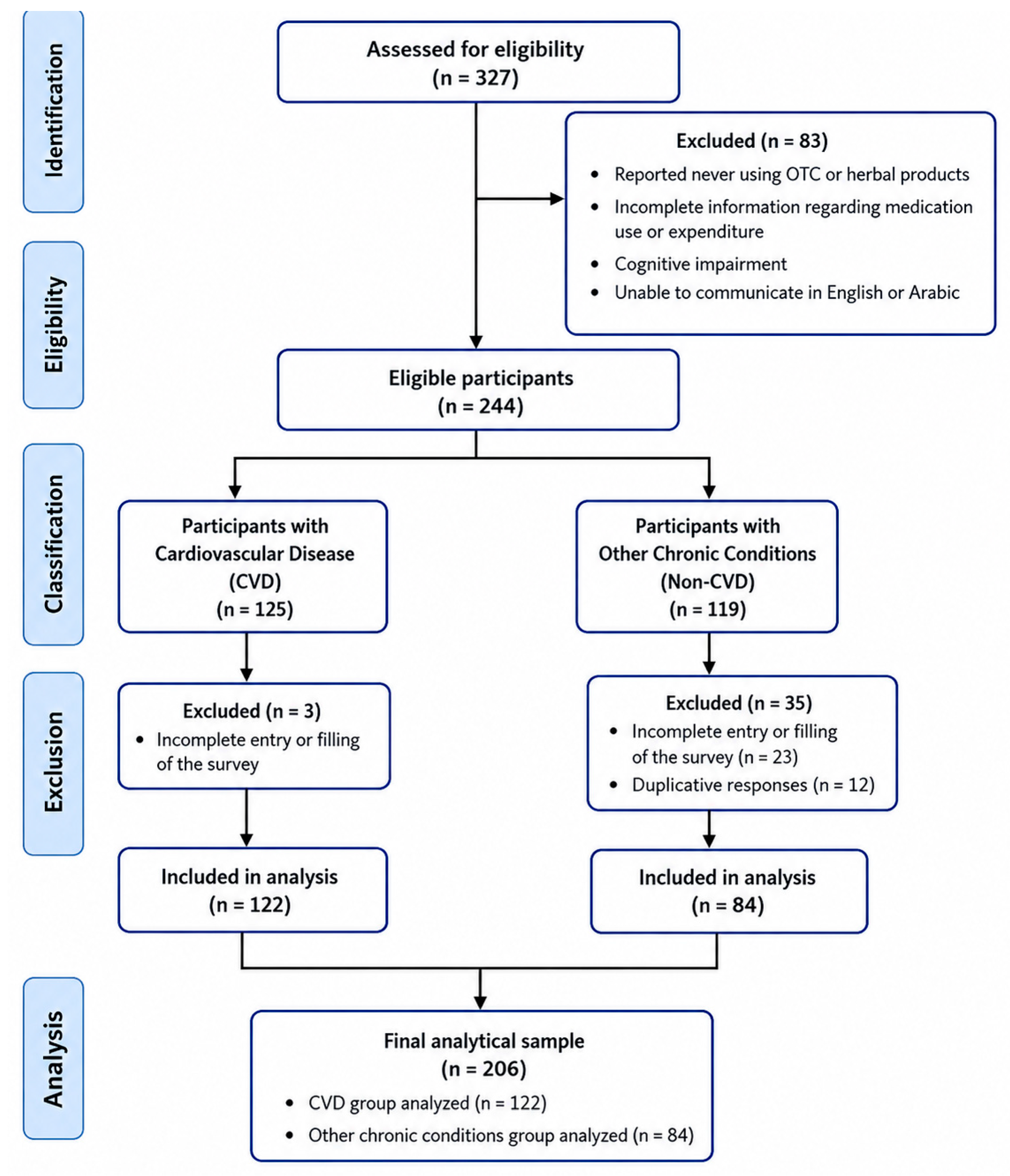
Figure 1 presents a flow diagram of the participant selection process. A total of 327 individuals were assessed for eligibility, of whom 83 were excluded because they met one or more predefined exclusion criteria, leaving 244 eligible participants. Of these, 125 had CVD, and 119 had other chronic conditions. Three participants in the CVD group were subsequently excluded because of incomplete data, leaving 122 participants for the final analysis. In the “other chronic condition” group, 35 participants were excluded, including 23 because of incomplete data and 12 because of duplicate responses, leaving 84 participants for the final analysis. The final analytical sample therefore comprised 206 participants: 122 with CVD and 84 with other chronic conditions.
Figure 1.
Participant selection flow diagram for the study.
Sociodemographic and Clinical Characteristics of the Study Participants
Table 1 summarizes the sociodemographic and clinical characteristics of the study participants, including 122 participants with CVD and 84 participants with other chronic conditions. The mean age was similar between the CVD and chronic conditions groups (56.0 vs. 54.1 years). Males predominated among participants with CVD (n = 77, 63.1%), whereas females were more common among those with other chronic conditions (n = 56, 66.7%). Most participants in both groups were of Asian ethnicity (n = 121, 99.2% and n = 81, 96.4%, respectively). Participants with CVD were more likely to report higher monthly incomes, while lower income categories were more common among participants with other chronic conditions. Most participants in both groups reported taking 2–4 medications in general (n = 88, 72.1% and n = 61, 72.6%, respectively) and 2–4 OTC medications specifically (n = 84, 68.9% and n = 60, 71.4%, respectively).
Table 1.
Participants’ sociodemographic and clinical characteristics.
Table 2 presents the frequency of use of commonly used OTC medication categories among participants. Antitussives, expectorants, and decongestants, as well as antipyretic, analgesic, and anti-inflammatory medications, were frequently used in both groups, with no statistically significant between-group differences. Significant differences were observed in the use of aphrodisiac formulations (p < 0.001) and phytopharmaceuticals and botanical extracts (p = 0.042). Aphrodisiac formulations were used more frequently by participants with CVD, with 31.97% reporting that they used these formulations occasionally, often, or always compared with 4.76% of participants with other chronic conditions (p < 0.001). Similarly, 91.0% of participants with CVD reported at least occasional use of phytopharmaceuticals and botanical extracts compared with 89.29% of participants with other chronic conditions (p = 0.042). Among the individual frequency categories, 33.61% of participants with CVD reported always using phytopharmaceuticals and botanical extracts compared with 22.62% of those with other chronic conditions.
Table 2.
Usage pattern of common OTC medications among participants.
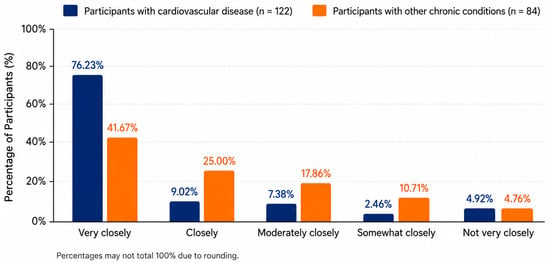
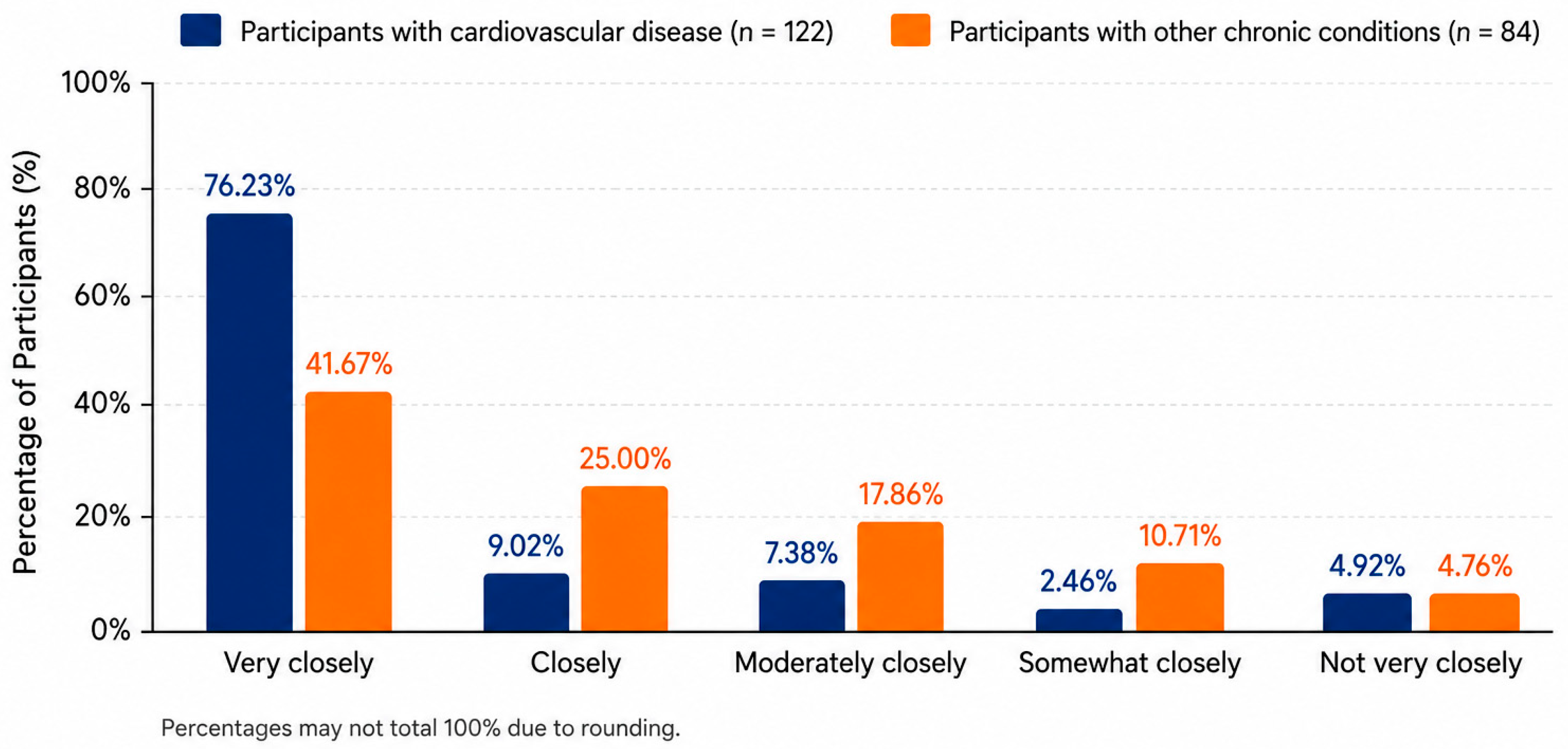
Figure 2 presents the adherence to OTC medications. Adherence was assessed using a five-category self-reported response scale: ‘very closely,’ ‘closely,’ ‘moderately closely,’ ‘somewhat closely,’ and ‘not very closely.’ Participants were asked to select the category that best described how closely they followed the instructions for OTC medication use. The majority of participants with CVD reported following the instructions very closely (n = 93, 76.23%), compared with (n = 35, 41.67%) among those with other chronic diseases. A higher proportion of participants with other chronic conditions reported following instructions either closely or moderately closely. The difference between the groups was statistically significant (p < 0.001), with participants with CVD more frequently reporting close adherence to OTC medication instructions.
Figure 2.
Comparison of adherence among participants using OTC medications.
Table 3 summarizes the outcomes of OTC medication use among participants with CVD and those with other chronic conditions. Self-reported AEs following OTC medication use were more frequent among participants with CVD than among those with other chronic conditions (n = 35, 28.7% vs. n = 11, 13.1%; p = 0.008). Participants with CVD also reported greater OTC-related monthly expenditure, with a higher proportion spending AED 100–499 per month (n = 38, 31.1%) than participants with other chronic conditions (n = 7, 8.3%; p < 0.001). Perceived effectiveness of OTC medications was high in both groups, with 94.3% of participants with CVD and 98.8% of those with other chronic conditions rating the medications as effective or moderately effective (p = 0.097).
Table 3.
OTC use among participants with CVD vs. participants with other chronic conditions.
Table 4 presents participants’ satisfaction with the cost, perceived effectiveness, and safety of OTC medications, stratified by CVD status. Overall, satisfaction with the cost of OTC medications was relatively low, particularly among participants with CVD. Among participants with CVD, 41.8% reported being unsatisfied and 27.1% reported being extremely unsatisfied, compared with 33.3% and 8.3%, respectively, among participants with other chronic conditions. This difference was statistically significant (p < 0.001). In contrast, 18.5% of all participants were satisfied, and 6.3% were extremely satisfied with the cost of OTC medications. Regarding perceived effectiveness, the majority of participants expressed favorable opinions, with 53.9% reporting being satisfied and 19.4% being extremely satisfied. These findings were similar between the groups, with no statistically significant difference (p = 0.357). Satisfaction with the safety of OTC medications was also generally positive, with 47.1% of participants reporting being satisfied and 21.4% being extremely satisfied. A small proportion reported being unsatisfied (9.7%) or extremely unsatisfied (1.0%), and although participants with CVD expressed slightly greater concern, the difference was not statistically significant (p = 0.161).
Table 4.
Participant satisfaction with OTC medications.
4. Discussion
This comparative study examined patterns of OTC medication and herbal product use among patients with cardiovascular disease and those with other chronic conditions in the United Arab Emirates. The findings demonstrate that OTC medication use was common among the study participants, with notable differences between the two groups in herbal product use, adherence, AEs, OTC-related monthly expenditure, and satisfaction with medication costs. The widespread use of OTC medications observed in this study is consistent with previous international evidence demonstrating that self-medication has become an integral component of chronic disease management worldwide [5,6,7]. Antitussives, expectorants, decongestants, and analgesic/anti-inflammatory medications were the most frequently used OTC categories among participants regardless of disease status. Similar trends have been reported in studies examining self-medication practices among adults, where medications for respiratory symptoms, pain, fever, and minor ailments constitute the most utilized OTC products [5,6,7]. The high frequency of use observed in both groups suggests that self-management of common symptoms remains prevalent even among individuals already receiving treatment for chronic diseases.
A notable finding of this study was the significantly higher use of phytopharmaceuticals and botanical extracts among participants with CVD compared with those with other chronic conditions. This observation aligns with previous reports indicating growing utilization of herbal medicines and complementary therapies among patients with CVDs [10,11]. The increasing popularity of herbal products may be explained by perceptions that these therapies are natural, effective, and safer than conventional medicines [16,17,18]. Studies conducted in the UAE and neighboring countries have also reported widespread acceptance of herbal medicine use among the general population [16,17]. However, the increased use of herbal products among cardiovascular patients warrants attention because several herbal preparations have been shown to interact with antihypertensive medications, anticoagulants, antiplatelet agents, and other cardiovascular therapies, potentially leading to adverse clinical outcomes [10,11].
The significantly higher use of aphrodisiac formulations among participants with CVD represents another important finding. Sexual dysfunction is common among patients with cardiovascular disease and is often multifactorial, resulting from vascular impairment, psychological factors, and the adverse events of cardiovascular medications, particularly antihypertensive agents such as thiazide diuretics and non-selective β-blockers, which have been associated with reduced libido and erectile dysfunction [19]. Consequently, many patients seek OTC or herbal sexual enhancement products because they are perceived as more natural, readily accessible, and safer than prescription therapies [20]. However, although herbal aphrodisiacs are widely marketed as safe alternatives, concerns remain regarding the limited evidence supporting their effectiveness, inconsistent product quality, potential adulteration, and clinically significant interactions with cardiovascular medications, including antihypertensive agents [10,11].
Adherence to OTC medication instructions was significantly higher among participants with CVD compared with participants with other chronic conditions. More than three-quarters of cardiovascular patients reported following medication instructions very closely. This finding may reflect greater health awareness and medication-related caution among individuals living with cardiovascular conditions [3]. Individuals with CVD may also be more aware of the potential consequences of medication misuse because of the complexity of their treatment regimens. This interpretation is consistent with evidence indicating that cardiovascular care typically involves regular medication counseling, frequent monitoring, and structured follow-up, all of which can reinforce adherence behaviors and encourage more cautious medication use [21].
Despite better adherence, participants with CVD reported significantly more AEs associated with OTC medication use. Nearly one-third of cardiovascular patients reported experiencing AEs, compared with only 13% of participants with other chronic conditions. This finding is important because cardiovascular patients are often exposed to polypharmacy, increasing the risk of drug–drug interactions and medication-related complications. Previous studies have highlighted the cardiovascular risks associated with commonly used OTC medications, particularly non-steroidal anti-inflammatory drugs (NSAIDs), which may increase the risk of adverse cardiovascular events among susceptible individuals [12,22]. Additionally, herbal products may alter the perceived effectiveness or safety of prescribed cardiovascular therapies [10]. The higher frequency of self-reported AEs in this study reinforces concerns regarding unsupervised OTC and herbal product use among patients with CVD.
The study also revealed a substantial economic burden associated with OTC medication use, particularly among participants with CVD. Monthly OTC-related expenditure differed significantly between the groups, with participants with CVD reporting higher expenditure categories overall. These findings support previous evidence indicating that self-medication and complementary medicine use can contribute considerably to out-of-pocket healthcare expenses, especially among individuals managing chronic diseases [13,14]. Although OTC medications may reduce direct healthcare utilization costs by minimizing physician visits [7], long-term use of supplements, herbal products, and symptom-relief medications may generate substantial cumulative expenditures. The higher financial burden observed among participants with CVD may also be related to their greater use of aphrodisiac formulations. Herbal and OTC sexual enhancement products are often marketed as premium supplements and are typically more expensive than conventional OTC medications, particularly when used regularly. Consequently, their frequent use may contribute substantially to the higher monthly OTC expenditure reported by participants with CVD [20].
Interestingly, despite higher OTC-related monthly expenditures and increased adverse events reporting, participants in both groups reported high perceived effectiveness of OTC medications. More than 94% of cardiovascular patients and nearly 99% of participants with other chronic conditions rated OTC medications as effective or moderately effective. This finding is consistent with previous studies demonstrating that perceived effectiveness is a major determinant of continued OTC and complementary medicine use [9,10,18]. Positive perceptions of treatment outcomes may encourage ongoing self-medication even when objective clinical benefits remain uncertain. Consequently, healthcare providers should provide evidence-based information regarding the benefits, limitations, and appropriate use of OTC and herbal products. Participant satisfaction further highlights the complexity of OTC medication use. While satisfaction with perceived effectiveness and safety was generally high across both groups, satisfaction with cost was significantly lower among cardiovascular patients. This discrepancy suggests that many patients perceive value in OTC medications despite financial concerns. Similar findings have been reported in studies showing that patients often continue using complementary and OTC therapies when they believe these products improve their health, even when costs are substantial [11,13]. The high levels of perceived safety observed in this study should also be interpreted cautiously, as previous research has demonstrated that consumer awareness of OTC medication risks and potential interactions is frequently limited [12]. Consequently, satisfaction with safety may not necessarily reflect actual medication safety profiles.
Overall, the findings of this study emphasize the need for enhanced patient education regarding the safe use of OTC medications and herbal products, particularly among individuals with CVD. Pharmacists and other healthcare professionals are well positioned to identify potential medication–product interactions, monitor adverse events, provide evidence-based recommendations, and support rational self-medication practices. Given the widespread use of OTC medications and complementary therapies observed in this study, structured OTC and herbal product assessment should be integrated into routine chronic disease care through pharmacist-led medication reviews and brief standardized checklists. Incorporating these assessments into existing medication-reconciliation workflows could facilitate the identification of potential interactions and enable individualized patient counseling without requiring separate clinical processes. Electronic medication review tools, multilingual questionnaires, and clinical decision-support systems could further facilitate medication disclosure, support consistent implementation, and improve scalability across different healthcare settings. Future studies should evaluate the feasibility, acceptability, adoption, and sustainability of these interventions across diverse healthcare settings in the UAE.
Limitations and Future Research
Several limitations should be considered when interpreting the findings of this study. First, data were based on self-reported responses and are therefore subject to recall bias, reporting bias, and social desirability bias. Participants may have underreported adverse events or inaccurately estimated medication expenditures and frequency of use. Second, the cross-sectional design precludes establishing temporal or causal relationships between OTC and herbal medication use and the reported outcomes, including AEs, expenditure, adherence, and satisfaction. Therefore, the findings should be interpreted as observed associations and between-group differences rather than causal relationships.
The use of non-probability convenience sampling may have introduced selection bias, while the relatively small sample size may have reduced statistical precision and limited the generalizability of the findings to the broader UAE population. The study population was also ethnically homogeneous, which may limit the applicability of the findings to the UAE’s multi-ethnic population. Differences in medication practices, health beliefs, product preferences, and exposure patterns across ethnic groups may affect the generalizability of OTC and herbal product use patterns, as well as safety findings such as self-reported adverse events and potential herb–drug interactions. Larger studies involving more ethnically diverse populations are needed to confirm these findings across the UAE. The achieved sample size provided adequate power to detect small-to-medium effects but was underpowered to reliably detect smaller effects. Accordingly, the observed effect sizes for perceived effectiveness (Cramer’s V = 0.12), satisfaction with effectiveness (Cramer’s V = 0.15), and satisfaction with safety (Cramer’s V = 0.18) were below the detectable effect threshold of the study. Therefore, the corresponding non-significant findings should be interpreted as inconclusive rather than as evidence that no difference exists between the groups. The study did not objectively verify medical diagnoses, medication histories, or reported adverse events through clinical records. Consequently, misclassification of disease status and medication-related outcomes cannot be excluded. The study population was restricted to individuals with recent OTC use, because eligibility required the use of at least one OTC medication within the preceding six months. Consequently, the findings should not be interpreted as estimates of the prevalence of OTC use among all individuals with chronic diseases over their lifetime or throughout the entire course of their disease.
Future studies should employ longitudinal and prospective designs to better evaluate the long-term impact of OTC medication use on clinical outcomes among patients with CVD and other chronic conditions. Larger multicenter studies involving more diverse populations are also needed to improve generalizability. Further research should investigate specific OTC medications and herbal products associated with adverse outcomes, medication interactions, and healthcare expenditures. Qualitative studies exploring patient beliefs, motivations, and decision-making processes regarding OTC and herbal medicine use may additionally provide valuable insights for developing targeted educational interventions.
5. Conclusions
This study found that OTC medication and herbal product use was common among adults with cardiovascular disease and other chronic conditions in the UAE. Participants with CVD reported greater use of selected herbal products, higher adherence to OTC medication instructions, more frequent self-reported adverse events, greater OTC-related monthly expenditure, and lower satisfaction with medication costs. These findings highlight the need for improved patient education, pharmacist-led counseling, and routine assessment of OTC and herbal product use to promote medication safety and support informed self-care among individuals with chronic diseases.
Author Contributions
Conceptualization, H.F.A. and J.M.L.; Methodology, H.F.A. and J.M.L.; Investigation, H.F.A. and J.M.L.; Formal Analysis, H.F.A., V.B.M., and J.M.L.; Data Curation, H.F.A. and J.M.L.; Writing—Original Draft Preparation, H.F.A., V.B.M., and J.M.L.; Writing—Review and Editing, H.F.A., V.B.M., and J.M.L.; Project Administration, H.F.A., V.B.M., and J.M.L. All authors have read and agreed to the published version of the manuscript.
Funding
The article processing charges (APCs) were funded by Gulf Medical University, Ajman, UAE.
Institutional Review Board Statement
This study was approved by the Institutional Review Board (IRB) at Gulf Medical University (Ref. no. IRB-COP-STD-34-Sept-2024; Date: 11 September 2024).
Informed Consent Statement
Informed consent was obtained from all participants before completing the survey. Data were anonymized to ensure confidentiality and compliance with ethical research guidelines.
Data Availability Statement
The datasets generated and analyzed during the current study are not publicly available because they contain information that could compromise participant privacy.
Conflicts of Interest
The authors declare no conflicts of interest.
References
- World Health Organization. Climate Change and Noncommunicable Diseases: Connections. Available online: https://www.who.int/news/item/02-11-2023-climate-change-and-noncommunicable-diseases-connections (accessed on 28 September 2026).
- Hacker, K. The Burden of Chronic Disease. Mayo Clin. Proc. Innov. Qual. Outcomes 2024, 8, 112–119. [Google Scholar] [CrossRef] [Scilit] [PubMed]
- Mensah, G.A.; Fuster, V.; Murray, C.J.; Roth, G.A.; Global Burden of Cardiovascular Diseases and Risks Collaborators. Global Burden of Cardiovascular Diseases and Risks, 1990–2022. JACC 2023, 82, 2350–2473. [Google Scholar] [CrossRef] [Scilit] [PubMed]
- Bharati, V.; Rajaram, S.; Prakash, A.; Medhi, B. Over-the-counter drug development in developing countries. Indian J. Pharmacol. 2025, 57, 207–211. [Google Scholar] [CrossRef] [Scilit] [PubMed]
- Bustanji, Y.; Taneera, J.; Bargooth, A.; Abuhelwa, A.; Issa, A.; El Huneidi, W.; Abu Gharbieh, E.; Alzoubi, K.H.; Alqudah, M.A.Y.; Alhusban, A.; et al. Exploring the Global Landscape of Self-Medication Among Students: Trends, Risks, and Recommendations for Safe and Responsible Practices. Pharm. Pract. 2024, 22, 1–14. [Google Scholar] [CrossRef] [Scilit]
- Kaufman, D.W.; Kelly, J.P.; Rosenberg, L.; Anderson, T.E.; Mitchell, A.A. Recent Patterns of Medication Use in the Ambulatory Adult Population of the United States. JAMA 2002, 287, 337–344. [Google Scholar] [CrossRef] [Scilit] [PubMed]
- May, U.; Bauer, C.; Schneider-Ziebe, A.; Giulini-Limbach, C. Self-Medication in Europe: Economic and Social Impact on Individuals and Society. Gesundheitsoekonomie Und Qual. 2023, 28, 298–310. [Google Scholar] [CrossRef] [Scilit]
- Henson, J.B.B.; Brown, C.L.; Chow, S.-C.; Muir, A.J.M. Complementary and Alternative Medicine Use in United States Adults With Liver Disease. J. Clin. Gastroenterol. 2017, 51, 564–570. [Google Scholar] [CrossRef] [Scilit] [PubMed]
- World Health Organization. WHO Global Report on Traditional and Complementary Medicine 2024; World Health Organization: Geneva, Switzerland, 2024.
- Nyulas, K.-I.; Simon-Szabó, Z.; Pál, S.; Fodor, M.-A.; Dénes, L.; Cseh, M.J.; Barabás-Hajdu, E.; Csipor, B.; Szakács, J.; Preg, Z.; et al. Cardiovascular Effects of Herbal Products and Their Interaction with Antihypertensive Drugs—Comprehensive Review. Int. J. Mol. Sci. 2024, 25, 6388. [Google Scholar] [CrossRef] [Scilit] [PubMed]
- Chrysant, S.G. The clinical significance and costs of herbs and food supplements used by complementary and alternative medicine for the treatment of cardiovascular diseases and hypertension. J. Hum. Hypertens. 2016, 30, 1–6. [Google Scholar] [CrossRef] [Scilit] [PubMed]
- Dulęba, J.; Religioni, U.; Słodka, E.; Fal, A.; Krysiński, J.; Merks, P. The Awareness of Risks Associated with OTC Drugs Available in Non-Pharmacy Outlets among Polish Patients—A Cross-Sectional Study. Healthcare 2021, 9, 187. [Google Scholar] [CrossRef] [Scilit] [PubMed]
- Liu, Y.; Zheng, Z.; Wang, X.; Xia, J.; Zhu, X.; Cheng, F.; Liu, Z. Factors associated with the incidence and the expenditure of self-medication among middle-aged and older adults in China: A cross-sectional study. Front. Public Heal. 2023, 11. [Google Scholar] [CrossRef] [Scilit] [PubMed]
- Organisation for Economic Co-Operation and Development. Health at a Glance 2023: OECD Indicators; OECD Publishing: Paris, France, 2023.
- AlKhalidi, D.K.; Jawad, R.M.; Alsamak, M.J.; Ahmed, M.M.; Aslam, A. An exploration of individual knowledge and behavior for utilizing OTC drugs and dietary supplements for health enhancement: An empirical analysis from Dubai. Pharm. Pract. 2021, 19, 2564. [Google Scholar] [CrossRef] [Scilit] [PubMed]
- Al Akeel, M.; Al Ghamdi, W.; Al Habib, S.; Koshm, M.; Al Otaibi, F. Herbal medicines: Saudi population knowledge, attitude, and practice at a glance. J. Fam. Med. Prim. Care 2018, 7, 865–875. [Google Scholar] [CrossRef] [Scilit] [PubMed]
- Mazrouei, N.A.; Meslamani, A.Z.A.; Alajeel, R.; Alghadban, G.; Ansari, N.; Al Kaabi, M.; Sadeq, A.; Ibrahim, R.; Ibrahim, O.M. The patterns of herbal medicine use in the United Arab Emirates; A national study. Pharm. Pract. 2022, 20, 2698. [Google Scholar] [CrossRef] [Scilit] [PubMed]
- James, P.B.; Wardle, J.; Steel, A.; Adams, J. Traditional, complementary and alternative medicine use in Sub-Saharan Africa: A systematic review. BMJ Glob. Health 2018, 3, e000895. [Google Scholar] [CrossRef] [Scilit] [PubMed]
- Doumas, M.; Tsakiris, A.; Douma, S.; Grigorakis, A.; Papadopoulos, A.; Hounta, A.; Tsiodras, S.; Dimitriou, D.; Giamarellou, H. Factors Affecting the Increased Prevalence of Erectile Dysfunction in Greek Hypertensive Compared With Normotensive Subjects. J. Androl. 2006, 27, 469–477. [Google Scholar] [CrossRef] [Scilit] [PubMed]
- Aung, H.H.; Dey, L.; Rand, V.; Yuan, C.-S. Alternative Therapies for Male and Female Sexual Dysfunction. Am. J. Chin. Med. 2004, 32, 161–173. [Google Scholar] [CrossRef] [Scilit] [PubMed]
- Lam, W.Y.; Fresco, P. Medication Adherence Measures: An Overview. BioMed Res. Int. 2015, 2015, 217047. [Google Scholar] [CrossRef] [Scilit] [PubMed]
- Bech-Drewes, A.; Bonnesen, K.; Hauge, E.-M.; Schmidt, M. Cardiovascular safety of using non-steroidal anti-inflammatory drugs for gout: A Danish nationwide case-crossover study. Rheumatol. Int. 2024, 44, 1061–1069. [Google Scholar] [CrossRef] [Scilit] [PubMed]

Disclaimer/Publisher’s Note: The statements, opinions and data contained in all publications are solely those of the individual author(s) and contributor(s) and not of MDPI and/or the editor(s). MDPI and/or the editor(s) disclaim responsibility for any injury to people or property resulting from any ideas, methods, instructions or products referred to in the content. |
© 2026 by the authors. Licensee MDPI, Basel, Switzerland. This article is an open access article distributed under the terms and conditions of the Creative Commons Attribution (CC BY) license.