


Abstract
Background/Objectives: Quantify the economic burden of obesity in Italy and explore, through an illustrative scenario-based approach, the potential budgetary implications for the Italian National Health Service (NHS) of full reimbursement of modern Obesity Management Medications (OMMs), including GLP-1 receptor agonists and dual GIP/GLP-1 receptor agonists. Methods: Narrative review based on literature searches of PubMed/MEDLINE, Scopus, and Google Scholar from inception to September 2026 and covering the epidemiology and economic burden of obesity in Italy, the current AIFA reimbursement landscape, cost-effectiveness evidence for approved OMMs, and international reimbursement models. Evidence synthesized from cost-of-illness studies, clinical trials, health technology assessments, and economic modeling. Results: Obesity imposes an estimated €13 billion annual burden on Italy (direct costs €7.89 billion; indirect costs €5.45 billion). AIFA currently restricts reimbursement primarily to patients with obesity plus type 2 diabetes mellitus (T2DM) via Nota 13, excluding the majority of individuals with obesity. Modern pharmacotherapies, including semaglutide 2.4 mg and tirzepatide, achieve 12–22% weight reduction with favorable cost-effectiveness ratios in several non-Italian economic evaluations, whereas Italian-specific analyses are lacking. In an illustrative scenario-based estimate derived from indirect modelling assumptions (not a validated decision-analytic, budget-impact, or cost-effectiveness model, and without formal sensitivity analysis), full reimbursement could avoid approximately €2–4 billion in obesity-related healthcare costs over 10 years (gross avoided costs; medication expenditure was not netted off and net savings were not demonstrated) through prevention of T2DM, cardiovascular disease (CVD), obstructive sleep apnea (OSA), and other obesity-related comorbidities. Conclusions: Full reimbursement of evidence-based Obesity Management Medications (OMMs) may offer long-term value for the Italian NHS, although reimbursement decisions require dedicated Italian cost-effectiveness and budget-impact analyses. Policy priorities should include expanding AIFA Nota 13 criteria, implementing outcomes-based risk-sharing agreements, and formally recognizing obesity as a chronic disease in Italian health policy.
1. Introduction
Obesity has emerged as one of the most pressing public health challenges of the 21st century, affecting populations worldwide with profound health and economic consequences [1,2]. In Italy, as in other European countries, the prevalence of obesity has increased substantially over recent decades, contributing to rising healthcare expenditures and productivity losses [3,4]. The condition is associated with numerous comorbidities, including type 2 diabetes mellitus (T2DM), cardiovascular disease, obstructive sleep apnea, musculoskeletal disorders, and certain cancers, all of which impose additional burdens on both patients and healthcare systems [5,6].
Despite the availability of effective pharmacological treatments for obesity, access remains severely restricted in Italy due to the current reimbursement framework. The Italian Medicines Agency (Agenzia Italiana del Farmaco, AIFA) reimburses OMMs only for very limited indications under Nota 13, primarily covering orlistat for patients with T2DM and obesity. Modern pharmacotherapies, including glucagon-like peptide-1 (GLP-1) receptor agonists such as semaglutide 2.4 mg and the dual glucose-dependent insulinotropic polypeptide (GIP)/GLP-1 receptor agonist tirzepatide, must be purchased entirely out-of-pocket, with monthly costs ranging from €200 to €600 [7,8].
This restrictive reimbursement policy contrasts sharply with growing international evidence that OMM therapy is both clinically effective and cost-effective when evaluated over a lifetime horizon. Countries including the United Kingdom, Denmark, and, increasingly, the United States have expanded reimbursement for OMMs, recognizing the potential long-term economic benefits that may be generated through prevention of costly obesity-related comorbidities [9,10].
This narrative review aims to synthesize available evidence on: (1) the epidemiological and economic burden of obesity in Italy; (2) the current Italian reimbursement landscape for Obesity Management Medications (OMMs); (3) the cost-effectiveness of modern OMMs; (4) international reimbursement models; (5) illustrative, scenario-based estimates of the budgetary implications for the Italian National Health Service (NHS) of full reimbursement; and (6) barriers and opportunities for policy reform in Italy.
2. Methods
This narrative review was conducted using a systematic approach to literature identification and synthesis. Electronic databases including PubMed/MEDLINE, Scopus, and Google Scholar were searched from inception to September 2026 (exact search dates by database: [AUTHORS TO CONFIRM from the saved search records]) using combinations of the following terms (the full database-specific search strings are reported below): “obesity”, “Obesity Management Medications (OMMs)”, “pharmacotherapy”, “reimbursement”, “cost-effectiveness”, “economic burden”, “Italy”, “GLP-1 receptor agonists”, “semaglutide”, “tirzepatide”, “liraglutide”, “orlistat”, “AIFA”, and “Nota 13”.
The full database-specific search strings were as follows. PubMed/MEDLINE: (obesity[Title/Abstract] OR “weight management”[Title/Abstract]) AND (“obesity management medication*”[Title/Abstract] OR “anti-obesity drug*”[Title/Abstract] OR pharmacotherapy[Title/Abstract] OR “GLP-1 receptor agonist*”[Title/Abstract] OR semaglutide[Title/Abstract] OR tirzepatide[Title/Abstract] OR liraglutide[Title/Abstract] OR orlistat[Title/Abstract]) AND (reimbursement[Title/Abstract] OR “cost-effectiveness”[Title/Abstract] OR “economic burden”[Title/Abstract] OR AIFA[Title/Abstract] OR “Nota 13”[Title/Abstract] OR Italy[Title/Abstract] OR Italian[Title/Abstract]). Scopus: TITLE-ABS-KEY((obesity OR “weight management”) AND (“obesity management medication*” OR “anti-obesity drug*” OR pharmacotherapy OR “GLP-1 receptor agonist*” OR semaglutide OR tirzepatide OR liraglutide OR orlistat) AND (reimbursement OR “cost-effectiveness” OR “economic burden” OR AIFA OR “Nota 13” OR Italy OR Italian)). Google Scholar: obesity (semaglutide OR tirzepatide OR liraglutide OR orlistat OR “GLP-1 receptor agonists” OR pharmacotherapy) (reimbursement OR “cost-effectiveness” OR “economic burden”) (Italy OR Italian OR AIFA OR “Nota 13”). Language filters (English, Italian) were applied where available. [AUTHORS TO CONFIRM against the saved search records].
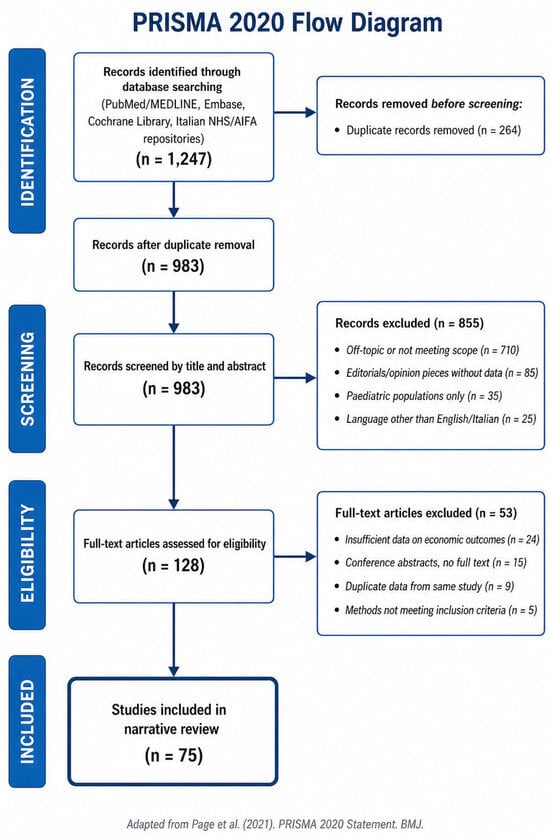
Searches were run on the following dates: PubMed/MEDLINE [date], Scopus [date], and Google Scholar [date] (all in 2026, up to September 2026), and yielded [n], [n], and [n] records, respectively, for a total of 1247 records before deduplication; for Google Scholar, the first [n] results ranked by relevance were screened. [AUTHORS TO CONFIRM against the saved search records]. The searches were reported according to the PRISMA 2020 flow diagram (Figure 1).
Figure 1.
PRISMA 2020 flow diagram illustrating the literature search and selection process. Adapted from Page et al. (2021). PRISMA 2020 Statement. BMJ [11].
Inclusion criteria encompassed peer-reviewed original research articles, systematic reviews, meta-analyses, health technology assessments, and cost-effectiveness analyses published in English or Italian. Studies examining the epidemiology or economic burden of obesity in Italy, the pharmacological management of obesity, cost-effectiveness of OMMs, or reimbursement policies for obesity pharmacotherapy in European healthcare systems were eligible. Grey literature from regulatory agencies (AIFA, NICE, EMA) and health economics reports were also included where relevant. No restrictions were applied regarding study design or publication date, though more recent studies were prioritized to capture the rapidly evolving landscape of obesity pharmacotherapy. Exclusion criteria included: non-peer-reviewed opinion pieces or editorials without supporting data; conference abstracts without full-text availability; studies restricted exclusively to paediatric populations (age <18 years); duplicate records; and studies published in languages other than English or Italian.
The initial database search identified 1247 records. After removal of 264 duplicates, 983 unique records were screened by title and abstract by a single reviewer, without independent duplicate screening [AUTHORS TO CONFIRM the screening procedure; this is acknowledged as a limitation in Section Limitations]. Of these, 128 articles were retrieved for full-text assessment; 75 met the inclusion criteria and were incorporated into this narrative review. Data were extracted and narratively synthesized, with findings organized thematically into the sections described above. Given the heterogeneity of study designs, populations, and outcomes, a formal meta-analysis was not performed. The quality of included studies was assessed narratively, with attention to potential sources of bias and limitations in economic modeling assumptions. No formal risk-of-bias or reporting-quality appraisal tool was applied. Where estimates from different sources conflicted, ranges were reported rather than pooled; preference was given to Italian-specific, more recent, and peer-reviewed sources; non-Italian estimates were explicitly labelled as such; and unresolved discrepancies are noted in the text. As this is a narrative review, publication bias was not formally assessed.
3. Results
3.1. Epidemiology and Economic Burden of Obesity in Italy
3.1.1. Prevalence and Trends
Italy has experienced a significant increase in obesity prevalence over the past three decades, mirroring global trends. Recent epidemiological data indicate that approximately 10–12% of Italian adults have obesity (BMI ≥ 30 kg/m2), with an additional 35–40% living with overweight (BMI 25–29.9 kg/m2) [12,13]. Regional variations exist, with higher prevalence rates observed in southern regions compared to northern Italy [14]. Notably, severe obesity (BMI ≥ 35 kg/m2) affects approximately 2–3% of the adult population and is associated with disproportionately high healthcare utilization and costs [15].
The burden extends beyond adults, with childhood obesity rates in Italy among the highest in Europe, raising concerns about future healthcare costs as these children transition to adulthood [3]. The IMPACT-O study, which included Italian cohorts, revealed that individuals with obesity experience significant impairments in health-related quality of life and face substantial out-of-pocket healthcare expenses [13,16]. Obesity prevalence in Italy is associated with significant heterogeneity across socioeconomic groups, with lower socioeconomic status consistently linked to higher obesity rates and more severe comorbidity profiles [12].
3.1.2. Direct Healthcare Costs
Direct healthcare costs attributable to obesity in Italy encompass expenditures for primary care, specialist consultations, hospitalizations, medications, and diagnostic procedures. Multiple cost-of-illness studies have attempted to quantify these costs, with estimates varying based on methodology and data sources.
A comprehensive cost-of-illness study by d’Errico and colleagues estimated the total economic burden of obesity in Italy at approximately €13.34 billion annually for 2020, with direct healthcare costs of approximately €7.89 billion and indirect costs of €5.45 billion [17]. Atella and colleagues, using longitudinal data from Italian general practice databases, demonstrated that outpatient healthcare costs increase progressively with BMI category, with individuals with obesity incurring 30–40% higher costs than normal-weight individuals [18,19]. Lifetime costs of overweight and obesity in Italy were estimated to exceed €50,000 per individual, with costs concentrated in later life as obesity-related comorbidities manifest [3,20].
Healthcare utilization patterns reveal that individuals with untreated obesity have significantly higher rates of hospitalizations, emergency department visits, and specialist consultations compared to normal-weight individuals [21,22]. A retrospective administrative database analysis by Colao and colleagues confirmed that untreated obesity in Italy generates substantially higher healthcare resource utilization across all healthcare settings, with hospitalization costs particularly pronounced for patients with severe obesity and multiple comorbidities [21]. Obesity-related comorbidities, including T2DM, cardiovascular disease, and musculoskeletal disorders, account for the majority of excess healthcare expenditures [20,22].
Hospitalization data from the Italian national discharge card database confirm that severe obesity is associated with substantially higher hospital admission rates for a wide range of conditions, including respiratory failure, joint arthroplasty, and metabolic emergencies [15]. The economic impact of obesity on inpatient care represents a significant driver of total NHS expenditure, with obesity-related admissions estimated to cost hundreds of millions of euros annually [17,18].
3.1.3. Indirect Costs
Indirect costs of obesity, including productivity losses from absenteeism, presenteeism, disability, and premature mortality, represent a substantial component of the total economic burden. Studies from European countries suggest that indirect costs may equal or exceed direct healthcare costs [23,24]. In Italy, obesity-related absenteeism and reduced work productivity contribute significantly to economic losses, though precise estimates are limited by data availability [17].
Excess body weight is associated with increased risk of work disability and early retirement, particularly for physically demanding occupations [25]. The societal costs extend beyond the healthcare sector to include reduced quality of life, caregiver burden, and lost economic potential [26]. When direct and indirect costs are combined, the total economic burden of obesity in Italy is estimated at approximately €13 billion annually, representing approximately 7–8% of total national healthcare expenditure [17].
3.2. Current Italian Reimbursement Landscape for Obesity Management Medications (OMMs)
3.2.1. AIFA Framework and Nota 13
The Italian pharmaceutical reimbursement system is governed by AIFA, which classifies drugs into three reimbursement classes: Class A (fully reimbursed NHS drugs for serious conditions), Class C (non-reimbursable or partially reimbursable drugs), and Class H (hospital-only drugs) [27,28]. Reimbursement decisions are guided by clinical evidence, cost-effectiveness analyses, and budget impact assessments, with AIFA mandating strict cost-containment measures [29].
Nota 13, the AIFA regulatory note governing OMM prescribing, historically restricted reimbursed use of orlistat to patients with T2DM and obesity (BMI ≥ 30 kg/m2) or to patients with BMI ≥ 28 kg/m2 in the presence of additional cardiometabolic risk factors. Even within these restricted criteria, orlistat reimbursement has been subject to periodic revisions and budget impact negotiations [27,30]. The framework reflects the persistent classification of obesity as a lifestyle-related condition rather than a chronic disease requiring long-term pharmacological management, creating a fundamental policy barrier to expanded reimbursement [31].
3.2.2. Currently Non-Reimbursed Medications
The newer and most effective Obesity Management Medications (OMMs), including naltrexone/bupropion, liraglutide 3.0 mg (Saxenda®), semaglutide 2.4 mg (Wegovy®), and tirzepatide (Mounjaro® for weight management indications), are not reimbursed by the Italian NHS for obesity treatment. Patients who wish to access these treatments must bear the full out-of-pocket costs, which range from approximately €150–200 per month for naltrexone/bupropion to €350–600 per month for semaglutide 2.4 mg and tirzepatide [7,8].
Notably, semaglutide and tirzepatide are reimbursed in Italy for T2DM management at lower doses (Ozempic® and Trulicity®), but the higher doses specifically approved for chronic weight management are not covered. This creates a paradoxical situation where patients with obesity and T2DM can access these medications at subsidized costs for glycemic control, but patients with obesity alone or with other comorbidities cannot. A cross-European analysis confirmed that Italy maintains one of the most restrictive reimbursement policies for OMMs among major EU countries, with consistently low utilization rates compared to countries with more liberal reimbursement frameworks [9].
Out-of-pocket costs represent a major barrier to treatment access, particularly for lower-income patients. A multi-country survey found that Italian patients with obesity report significant financial strain from obesity-related healthcare expenses, with out-of-pocket costs for OMMs being particularly burdensome [8]. This financial barrier exacerbates existing socioeconomic disparities in obesity care and outcomes, with lower-income patients less likely to initiate or sustain pharmacotherapy despite comparable clinical need [20].
3.3. Overview of Approved Obesity Management Medications (OMMs)
The pharmacological management of obesity has evolved considerably over recent years. Current European Medicines Agency (EMA)-approved agents for chronic weight management include orlistat, naltrexone/bupropion, liraglutide 3.0 mg, semaglutide 2.4 mg, and tirzepatide. These agents differ substantially in their mechanisms of action, efficacy, safety profiles, and clinical evidence base [23,32]. Table 1 summarizes the estimated annual costs of obesity-related complications in Italy and illustrative, scenario-based estimates of 10-year cost offsets from full reimbursement of Obesity Management Medications (OMMs).
Table 1.
Summary of obesity-related complication costs in Italy and illustrative scenario-based cost offsets from full reimbursement of Obesity Management Medications (OMMs) by the Italian NHS.
3.3.1. First-Generation Agents: Orlistat
Orlistat, a gastrointestinal lipase inhibitor, was the first pharmacotherapy approved for long-term obesity management in Europe and remains the only agent with any reimbursement status in Italy. By inhibiting the absorption of dietary fat, orlistat achieves modest weight loss of approximately 2.9–3.4 kg beyond placebo at 12 months [19]. Although orlistat is generally well-tolerated, gastrointestinal adverse effects (steatorrhea, fecal incontinence) are common and limit adherence in clinical practice [19].
A cost-utility analysis conducted in Italian patients living with obesity demonstrated that orlistat could be cost-effective under specific clinical scenarios, particularly when T2DM prevention was incorporated into the model [35]. However, given its inferior efficacy compared to modern GLP-1-based therapies and the availability of more effective alternatives, orlistat is increasingly relegated to patients who cannot tolerate or access other agents [19,35].
3.3.2. Combination Therapy: Naltrexone/Bupropion
The combination of naltrexone (an opioid receptor antagonist) and bupropion (a dopamine and noradrenaline reuptake inhibitor) exerts its weight-reducing effects by modulating central neuronal pathways regulating appetite and energy homeostasis, particularly in the hypothalamic pro-opiomelanocortin (POMC) neuron system [17]. Clinical trials have demonstrated weight loss of approximately 5–9% beyond placebo over 56 weeks [17]. The combination has been approved by the EMA as Mysimba® but is not widely prescribed in Italy due to the absence of reimbursement and limited prescriber familiarity.
3.3.3. GLP-1 Receptor Agonists: Liraglutide and Semaglutide
GLP-1 receptor agonists represent a paradigm shift in obesity pharmacotherapy. Liraglutide 3.0 mg (Saxenda®), administered via daily subcutaneous injection, was the first GLP-1 receptor agonist approved for chronic weight management, achieving mean weight loss of 8–9% versus placebo in pivotal trials [17]. Semaglutide 2.4 mg (Wegovy®), a once-weekly subcutaneous injection, has demonstrated substantially greater efficacy, with mean weight loss of 12–15% in the STEP clinical trial program [36,37].
Beyond weight reduction, GLP-1 receptor agonists improve glycemic control, reduce systolic blood pressure, improve lipid profiles, and reduce hepatic steatosis [38]. Crucially, the SELECT cardiovascular outcome trial demonstrated that semaglutide 2.4 mg reduces major adverse cardiovascular events (MACE) by approximately 20% in patients with obesity and established cardiovascular disease without diabetes [29,39]. This landmark finding has significantly strengthened the clinical and economic case for GLP-1 receptor agonist reimbursement, as cardiovascular event prevention may generate long-term cost offsets [29,39].
3.3.4. Dual GIP/GLP-1 Receptor Agonists: Tirzepatide
Tirzepatide (Mounjaro®), a dual GIP/GLP-1 receptor agonist, represents the latest and most efficacious innovation in obesity pharmacotherapy. By simultaneously activating both incretin receptors, tirzepatide achieves superior weight loss compared to selective GLP-1 receptor agonists, with mean weight reductions of 15–22% depending on dose in the SURMOUNT clinical trial program [40,41,42]. Network meta-analyses confirm that tirzepatide produces significantly greater weight loss than semaglutide 2.4 mg, liraglutide 3.0 mg, and all other currently available OMMs [43].
The enhanced efficacy of tirzepatide translates into greater metabolic improvements, including superior reductions in HbA1c, blood pressure, triglycerides, and waist circumference compared to GLP-1 monotherapy [40,41,42]. Long-term cardiovascular outcome data for tirzepatide in the obesity indication are awaited, though early evidence from the T2DM indication suggests favorable cardiovascular effects. Real-world comparative effectiveness studies confirm that tirzepatide produces greater weight loss than semaglutide 2.4 mg in clinical practice, consistent with randomized trial findings [44,45].
3.4. Cost-Effectiveness Evidence for Obesity Management Medications (OMMs)
3.4.1. GLP-1 Receptor Agonists
Multiple cost-effectiveness analyses have evaluated GLP-1 receptor agonists for obesity management across different healthcare systems. A systematic review of economic evaluations found that liraglutide 3.0 mg and semaglutide 2.4 mg generally fall within acceptable cost-effectiveness thresholds when considering lifetime healthcare costs and quality-adjusted life years (QALYs) gained [46,47].
Semaglutide 2.4 mg has been evaluated in several cost-effectiveness analyses from US and European perspectives. Kim and colleagues found that semaglutide 2.4 mg was cost-effective for adults with overweight or obesity in the United States, with an incremental cost-effectiveness ratio (ICER) below commonly accepted willingness-to-pay thresholds [48]. Similar findings have been reported from Canadian and UK perspectives, with semaglutide demonstrating favorable economic profiles when weight loss benefits on comorbidities are incorporated into models [49,50].
For patients with obesity and established cardiovascular disease, semaglutide has demonstrated particularly favorable cost-effectiveness due to prevention of cardiovascular events. Economic modeling based on the SELECT trial data suggests that semaglutide is cost-effective or even cost-saving for secondary cardiovascular prevention in patients with obesity [29,39,51]. Cost-effectiveness is sensitive to drug pricing, treatment duration, and assumptions about long-term weight maintenance, and ICERs improve substantially in higher-risk populations [47,52].
3.4.2. Dual GIP/GLP-1 Receptor Agonists
Cost-effectiveness analyses of tirzepatide for obesity management are emerging, with early evidence suggesting favorable economic profiles. A short-term cost-effectiveness analysis from Greece found that tirzepatide was cost-effective compared to semaglutide for obesity treatment, primarily driven by superior weight loss efficacy [53]. US-based analyses have similarly demonstrated that tirzepatide’s superior efficacy may offset higher acquisition costs, yielding cost-effectiveness ratios comparable to or better than semaglutide [54,55].
Comparative economic evaluations of tirzepatide versus semaglutide and liraglutide have yielded mixed results depending on healthcare system perspective and modeling assumptions [53,54]. Some analyses suggest that tirzepatide provides better value for money due to greater weight loss per unit cost [56], while others find similar cost-effectiveness across GLP-1-based therapies when drug acquisition costs are appropriately discounted [50]. As long-term data accumulate, including cardiovascular outcome trials for tirzepatide, the economic case for this agent is expected to strengthen.
3.4.3. Comparative Economic Analyses
Comparative cost-effectiveness analyses of multiple OMMs have consistently found that GLP-1 receptor agonists and dual GIP/GLP-1 agonists are more cost-effective than older agents such as orlistat, primarily due to greater weight loss efficacy and superior comorbidity reduction [57,58]. A five-medication comparison from a US payer perspective found that semaglutide 2.4 mg had the most favorable cost-effectiveness profile among available pharmacotherapies when considering the full value of weight reduction on health outcomes [57].
When compared to bariatric surgery, OMMs generally have lower upfront costs but require long-term treatment, while surgery involves higher initial costs but potentially more durable weight loss [59,60]. The break-even point between GLP-1 receptor agonist therapy and bariatric surgery is estimated at approximately 3–5 years depending on drug costs and assumed weight maintenance [60]. For most patients with moderate obesity and comorbidities, OMM therapy represents a cost-effective first-line intervention before considering surgical options.
3.5. International Comparisons: Reimbursement Models
3.5.1. United Kingdom
The United Kingdom’s NHS provides reimbursement for OMMs through the National Institute for Health and Care Excellence (NICE) guidance framework. NICE has recommended liraglutide 3.0 mg for patients with BMI ≥ 35 kg/m2 (or ≥32.5 kg/m2 in high-risk ethnic groups) with prediabetes when specialist weight management services are available [61]. More recently, NICE has issued guidance supporting reimbursement of semaglutide 2.4 mg for patients with BMI ≥ 35 kg/m2 and at least one weight-related comorbidity, and tirzepatide in specific patient populations [50].
The UK approach emphasizes formal cost-effectiveness analysis and health technology assessment (HTA), with reimbursement decisions based on ICERs relative to the established willingness-to-pay threshold of £20,000–30,000 per QALY [28]. This framework provides a transparent, evidence-based approach to reimbursement decisions and could serve as a model for Italian policy reform. The UK experience demonstrates that structured reimbursement programs can expand access to effective OMM therapy while managing budget impact through appropriate patient selection criteria.
3.5.2. Denmark
Denmark, home to Novo Nordisk (manufacturer of liraglutide and semaglutide), has adopted relatively favorable reimbursement policies for OMMs compared to other European countries. The Danish healthcare system provides partial reimbursement for GLP-1 receptor agonists when prescribed for obesity with comorbidities, reflecting formal recognition of obesity as a chronic disease requiring long-term pharmacological management [9,61].
Denmark’s policy framework has facilitated higher treatment uptake of OMMs compared to Italy and other southern European countries, and may contribute to better population health outcomes, though long-term comparative effectiveness data are limited [9]. The Danish model of integrating obesity pharmacotherapy into chronic disease management frameworks provides a relevant example for Italian policymakers.
3.5.3. United States
The United States has a fragmented healthcare system with variable reimbursement for OMMs depending on insurance coverage. Medicare, the federal health insurance program for older adults and those with disabilities, historically excluded coverage for weight loss medications but recently expanded coverage for semaglutide specifically for cardiovascular risk reduction in eligible patients [62]. Private insurance coverage varies widely, with some plans providing comprehensive coverage while others exclude OMMs entirely [30].
The US experience demonstrates that reimbursement policies significantly influence treatment uptake and health outcomes [63]. Real-world evidence from the US suggests that semaglutide treatment for patients with obesity and multimorbidity is associated with substantial reductions in healthcare resource utilization and medical costs over time [62]. These findings provide compelling evidence that obesity pharmacotherapy can generate meaningful short- and medium-term cost offsets even without incorporating long-term comorbidity prevention benefits, strengthening the economic case for reimbursement reform in Italy.
3.6. Potential Avoided Healthcare Costs for the Italian NHS: Scenario-Based Estimates
Estimating the potential avoided healthcare costs associated with full reimbursement of OMM therapy in Italy would require modeling the impact of weight loss on obesity-related comorbidities and their associated healthcare costs. The following sub-sections present illustrative, scenario-based estimates (not the output of a validated decision-analytic model) for the major cost-generating comorbidities, drawing on Italian cost-of-illness data and clinical trial evidence.
3.6.1. Reduction in Type 2 Diabetes Mellitus
T2DM represents one of the largest cost drivers associated with obesity in Italy, with annual per-patient costs estimated at €2500–€3500, encompassing medications, monitoring, specialist follow-up, and treatment of complications [64,65]. Weight loss achieved through OMM therapy has been shown to prevent or delay T2DM onset in individuals with prediabetes and to improve glycemic control in those with established diabetes, reducing medication burden and complication rates [32,36].
Approximately 3.5 million Italians have diagnosed T2DM, with an additional estimated 1 million cases undiagnosed. Given that 60–70% of patients with T2DM also have obesity, successful weight management could substantially reduce diabetes-related healthcare expenditure [17,18]. Economic modeling suggests that a 10% weight loss in patients with obesity and prediabetes reduces T2DM incidence by approximately 50–60%, translating to potential prevention of tens of thousands of new T2DM cases annually if OMM therapy were broadly reimbursed [36,52]. Over a 10-year horizon, T2DM prevention alone could, under the scenario assumptions, avoid approximately €1–2 billion in healthcare costs for the Italian NHS (gross avoided costs; this differs from the €0.8–1.2 billion reported in Table 1 and has not been reconciled) [17,64].
3.6.2. Cardiovascular Disease Prevention
Cardiovascular disease, including myocardial infarction, stroke, and heart failure, imposes enormous economic costs on the Italian healthcare system, with annual costs exceeding €10 billion [66]. Obesity is a major modifiable risk factor for cardiovascular disease, and weight loss through pharmacotherapy has been shown to reduce multiple cardiovascular risk factors and, in the case of semaglutide, to directly reduce MACE [29,39].
The SELECT trial demonstrated a 20% reduction in MACE with semaglutide 2.4 mg versus placebo over a mean follow-up of 34 months in patients with obesity and established cardiovascular disease [39]. Translating this benefit to the Italian population level: approximately 300,000 Italians have both obesity and established cardiovascular disease, and MACE prevention could avoid thousands of hospitalizations annually. Cost-effectiveness modeling from multiple countries confirms that cardiovascular event prevention substantially improves the economic case for semaglutide reimbursement [29,39,51]. Estimates suggest that cardiovascular disease prevention could, under the scenario assumptions, avoid approximately €500 million to €1 billion per year in healthcare costs for the Italian NHS at population-relevant treatment uptake rates (gross avoided costs; Table 1 reports approximately €600–900 million over 10 years for CVD, a difference that has not been reconciled).
3.6.3. Obstructive Sleep Apnea and Respiratory Conditions
Obesity is strongly associated with obstructive sleep apnea (OSA), which affects approximately 3–4 million Italians and generates significant healthcare costs through diagnostic polysomnography, continuous positive airway pressure (CPAP) device provision, and treatment of complications including nocturnal hypoxemia and cardiovascular sequelae [67]. Weight loss through OMM therapy reduces OSA severity and may eliminate the need for CPAP therapy in a proportion of patients [36].
A recent randomized trial demonstrated that semaglutide 2.4 mg significantly reduced OSA severity (apnea-hypopnea index) in patients with obesity, with a clinically meaningful proportion achieving resolution of OSA [36]. Economic modeling suggests that reducing OSA prevalence through broad OMM therapy reimbursement could, under the scenario assumptions, avoid approximately €100–300 million annually in healthcare costs (gross avoided costs; this differs from the Table 1 estimate and has not been reconciled) through reduced CPAP prescriptions, diagnostic testing, and management of OSA-related cardiovascular complications [17].
3.6.4. Cancer Risk Reduction
Obesity is associated with increased risk of at least 13 cancer types, including breast (postmenopausal), colorectal, endometrial, kidney, esophageal (adenocarcinoma), gastric cardia, liver, gallbladder, pancreatic, thyroid, meningioma, multiple myeloma, and ovarian cancers [68]. In Italy, the economic burden of cancer is enormous, with treatment costs for advanced cancers exceeding €50,000–€80,000 per patient. While the relationship between weight loss through pharmacotherapy and long-term cancer risk reduction is not yet fully established, epidemiological evidence supports a protective effect of sustained weight loss [68].
If OMM therapy achieves even a 5–10% reduction in obesity-attributable cancer incidence over a 10–20 year horizon, the cumulative avoided costs for the Italian NHS could be meaningful, although this remains speculative. The Italian National Cancer Institute estimates that obesity-attributable cancers represent approximately 3–4% of all cancer diagnoses annually, suggesting a meaningful preventable burden [17]. Precise quantification of cancer-related savings requires sophisticated lifetime modeling incorporating long-term weight maintenance assumptions.
3.6.5. Aggregate Scenario-Based Economic Estimates
Indirect scenario-based estimates that consider all obesity-related comorbidities suggest that, under optimistic assumptions, full reimbursement of OMM therapy could generate avoided healthcare costs for the Italian NHS within a 5–10 year horizon, which may partially offset the substantial upfront medication costs, although net savings have not been demonstrated [17,58]. The key assumptions underlying these hypothetical estimates, which were not derived from a validated decision-analytic model, include: (1) treatment uptake of 20–30% among eligible patients (those with BMI ≥ 30 kg/m2 and comorbidities); (2) mean weight loss of 10–15% sustained over 3–5 years; (3) proportional reductions in comorbidity incidence consistent with clinical trial data; and (4) medication costs of €2000–€4000 per patient per year after potential risk-sharing price negotiations.
Under these assumptions, this hypothetical scenario-based estimate suggests that the Italian NHS could avoid approximately €2–4 billion in obesity-related healthcare costs over a 10-year period, which might partially offset medication costs [17,52]. This is a gross figure that does not net off medication expenditure: at a sustained annual drug spend of €1–2 billion (Section 3.7.1), cumulative medication costs over 10 years would amount to €10–20 billion, so the two sets of figures are not reconciled and net savings are not demonstrated (see Section Limitations). The budget impact in initial years would be significant, requiring careful financial planning and potentially phased implementation starting with highest-risk patients who generate the greatest healthcare costs and among whom cost-effectiveness is most favorable [29]. Risk-sharing agreements and outcome-based rebates could further mitigate budget impact while ensuring reimbursement is linked to real-world effectiveness. Any reimbursement decision should be informed by a dedicated Italian budget-impact analysis [33] and cost-effectiveness analysis reported in accordance with the CHEERS 2022 standard [34], including probabilistic and scenario-based sensitivity analyses.
3.7. Barriers and Opportunities in the Italian Policy Framework
3.7.1. Budget Impact Concerns
The primary institutional barrier to reimbursement of OMMs in Italy is concern about near-term budget impact. With approximately 6 million Italians meeting criteria for pharmacotherapy (BMI ≥ 30 kg/m2 with comorbidities), even moderate treatment uptake could generate annual pharmaceutical expenditures of €1–2 billion, representing a significant increase in AIFA’s pharmaceutical budget [29]. AIFA’s cost-containment mandate and spending ceiling framework create structural tension between providing access to effective treatments and maintaining fiscal sustainability [27,28].
However, short-term budget impact analyses that neglect long-term cost offsets from comorbidity prevention may underestimate the value of OMM therapy investment [69]. Budget impact models that incorporate only pharmaceutical costs without accounting for avoided hospitalizations, reduced T2DM treatment burden, and prevented cardiovascular events may overstate the net cost to the NHS [47,52]. Phased implementation strategies, such as initially limiting reimbursement to patients with severe obesity (BMI ≥ 35 kg/m2) and multiple comorbidities, could manage near-term budget impact while establishing real-world effectiveness data to support subsequent expansion [27].
3.7.2. Therapeutic Inertia and Stigma
Beyond institutional barriers, therapeutic inertia among healthcare providers and persistent social stigma surrounding obesity significantly limit treatment uptake even where pharmacotherapy is clinically indicated [70]. Italian surveys confirm that many general practitioners and specialists do not systematically assess BMI or initiate discussions about weight management during clinical encounters, reflecting inadequate training in obesity medicine and time constraints in clinical practice [4,14]. The continued perception by some healthcare providers that obesity is primarily a behavioral issue rather than a chronic, relapsing neurobiological condition hampers appropriate clinical management [70].
Patient-level stigma and discrimination, including internalized weight bias, deter individuals from seeking obesity treatment, even when pharmacotherapy is available [70]. Addressing these barriers requires comprehensive educational initiatives for healthcare providers, integration of obesity management training into medical school and residency curricula, and public awareness campaigns that promote understanding of obesity as a chronic disease requiring medical intervention. The Italian Society of Obesity Surgery and Metabolic Diseases (SICOB) and other professional societies have developed consensus guidelines for optimal obesity management, but consistent implementation in routine clinical practice remains a challenge [4].
3.7.3. Risk-Sharing and Outcomes-Based Agreements
Risk-sharing agreements (RSAs) between pharmaceutical manufacturers and payers represent a promising mechanism to manage budget impact while expanding access to OMMs [71]. These agreements link reimbursement to real-world outcomes, with manufacturers providing rebates or refunds if specified efficacy or cost-effectiveness targets are not achieved in practice. Italy has substantial experience with RSAs for other high-cost therapies, including oncology drugs and novel biologics, and this framework could be adapted for OMM therapy [27,28].
For Obesity Management Medications (OMMs), RSAs could be structured around: (1) weight loss response criteria at 16–26 weeks, with rebates for patients not achieving predefined thresholds (≥5% weight loss); (2) annual outcome-based rebates linked to long-term weight maintenance or comorbidity outcomes; and (3) real-world database linkage to track healthcare utilization and costs in treated versus untreated populations. Such agreements would align financial risk between AIFA, patients, and manufacturers while providing incentives for appropriate prescribing and adherence support [71].
3.7.4. Disease Recognition and Clinical Guidelines
Formal recognition of obesity as a chronic disease by Italian health authorities is a prerequisite for sustained policy reform. International consensus statements from the European Association for the Study of Obesity (EASO), the World Obesity Federation, and the American Medical Association have all formally recognized obesity as a chronic, relapsing, multifactorial disease with complex biological determinants [72]. Italian professional societies have increasingly endorsed this position, but formal adoption into health policy frameworks has been slow [4,70].
Aligning Italian obesity classification and management guidelines with international best practice frameworks would provide the conceptual foundation for expanded reimbursement. Specifically, updating AIFA Nota 13 to reflect current evidence on obesity pharmacotherapy, removing artificial distinctions between diabetic and non-diabetic obesity indications, and establishing clear eligibility criteria based on contemporary clinical evidence would represent meaningful progress toward equitable access to OMM therapy [9,31].
4. Discussion
This narrative review synthesizes a substantial body of evidence demonstrating that obesity imposes a disproportionate economic burden on Italy, with annual costs approaching €13 billion—a figure that is almost certainly an underestimate, given incomplete capture of indirect costs and the rising prevalence of severe obesity [17]. The convergence of cost-of-illness data, longitudinal healthcare utilization analyses, and administrative database studies consistently supports the conclusion that obesity is among the most costly chronic conditions managed by the Italian NHS, comparable in scale to T2DM and cardiovascular disease [18,19,21,22].
The pharmacological landscape for obesity has been transformed by the development of GLP-1 receptor agonists and dual GIP/GLP-1 agonists. These agents achieve clinically meaningful weight loss (10–22%) with demonstrated improvements in cardiometabolic outcomes, including reduction in MACE for semaglutide in the SELECT trial [29,39]. The availability of such effective pharmacotherapies makes the rationale for reimbursement reform compelling: we now have the tools to substantially reduce obesity prevalence and its complications, but access in Italy is severely restricted by cost [7,8].
The cost-effectiveness evidence reviewed here is broadly consistent across healthcare systems and payer perspectives: GLP-1 receptor agonists and tirzepatide have been reported to be cost-effective or, in some analyses, cost-saving when evaluated over appropriate time horizons in non-Italian settings that capture long-term comorbidity prevention benefits [47,48,52,57]. The challenge is that AIFA’s current framework emphasizes short-term budget impact rather than lifetime cost-effectiveness, creating a structural disincentive for investment in preventive pharmacotherapy. Reforming this framework to incorporate long-term value-based assessments—as practiced by NICE in the UK—would better align reimbursement decisions with economic reality [28].
International comparisons reveal that Italy’s restrictive reimbursement position is increasingly an outlier in Europe [9]. Countries that have expanded reimbursement for OMMs have done so on the basis of robust HTA processes and recognition of the long-term value of obesity treatment. Italy’s failure to similarly reform its policies may perpetuate a cycle of undertreated obesity, preventable comorbidities, and escalating healthcare costs that may ultimately offset part of the costs of pharmacotherapy, although this has not been demonstrated for the Italian setting [17,21].
Limitations
This review has several limitations that should be considered when interpreting its findings, and in particular the economic estimates reported in Section 3.6 and Table 1. They concern, first, the nature and the assumptions of the scenario-based estimates and, second, the methodology of the review itself.
First, and most importantly, the figures reported in Section 3.6 and Table 1, including the approximately €2–4 billion of avoided healthcare costs over 10 years, are hypothetical, scenario-based estimates derived from indirect modelling assumptions (treatment uptake of 20–30%, weight loss of 10–15% over 3–5 years, and medication costs of €2000–4000 per patient-year) applied to published cost-of-illness and cost-effectiveness data. They do not derive from an original, validated decision-analytic, budget-impact, or cost-effectiveness model for the Italian NHS, no deterministic or probabilistic sensitivity analysis was performed, and they were not validated against Italian patient-level data. They represent gross avoided costs: expenditure on the medications themselves was not netted off. At a sustained annual drug expenditure of €1–2 billion (Section 3.7.1), cumulative medication costs over a 10-year horizon (€10–20 billion) could exceed the avoided costs, so that net savings cannot be inferred. In addition, several figures in the narrative text of Section 3.6 differ from those in Table 1 (for T2DM, cardiovascular disease, and OSA), the row estimates in Table 1 sum to approximately €2.7–4.4 billion against a headline range of €2–4 billion, and potential overlap between comorbidity categories (double counting) was not formally addressed. These estimates should therefore be read as an illustration of the potential order of magnitude of the economic implications, not as a forecast, and they cannot support a reimbursement decision on their own. Such a decision requires dedicated Italian budget-impact analyses [33] and cost-effectiveness analyses reported according to current standards [34], including sensitivity and scenario analyses.
Second, most of the cost-effectiveness analyses reviewed were conducted in non-Italian healthcare systems. Incremental cost-effectiveness ratios may differ in the Italian context because of differences in drug prices and confidential discounts, unit costs of healthcare resources, willingness-to-pay thresholds, comorbidity rates, and clinical practice. Moreover, economic evaluations typically rely on randomized trial populations and on extrapolation beyond the observed follow-up, whereas Italian-specific analyses incorporating local costs and epidemiological parameters are currently lacking.
Third, the scenario assumptions imply sustained treatment, whereas persistence in routine care is generally lower than in clinical trials. Real-world data from the United States report frequent discontinuation of GLP-1 receptor agonist treatment among adults with overweight or obesity [73]. Reasons for discontinuation may include tolerability, out-of-pocket costs, and patient preference, and it is unknown to what extent full reimbursement would improve persistence in Italy. Lower persistence would reduce both the costs and the benefits of treatment, with an uncertain net effect on the estimates.
Fourth, weight regain after treatment discontinuation was not modelled. In the extension of the STEP 1 trial, participants who stopped semaglutide 2.4 mg regained two-thirds of their prior weight loss within one year, with cardiometabolic improvements reverting towards baseline [74]. Similarly, in the SURMOUNT-4 trial, participants switched from tirzepatide to placebo regained a substantial proportion of the weight lost, whereas those who continued treatment achieved further weight reduction [75]. A recent systematic review and meta-analysis has also quantified weight regain after cessation of weight-management medication [76]. If treatment is long-term, medication costs accrue throughout while the avoided costs depend on the maintenance of weight loss; if treatment is time-limited, the avoided costs are likely to be attenuated by weight regain. The optimal duration of therapy and the long-term cost consequences of intermittent treatment remain uncertain.
Fifth, medication price is a major determinant of the budget impact, and the outcome of price negotiations between AIFA and manufacturers is unknown. These may include confidential discounts, price–volume agreements, managed-entry or risk-sharing schemes, and future price changes over time. The medication cost range of €2000–4000 per patient-year used here is an assumption: lower negotiated prices would improve the budgetary balance, whereas higher prices, higher uptake than assumed, or a broader eligible population would worsen it. Uptake itself is uncertain and would be constrained by prescribing pathways and the capacity of the NHS, and the entry of newer agents may alter both costs and cost-effectiveness.
Sixth, the scenario estimates did not account for the management of adverse events, the costs of lifestyle intervention and follow-up care, changes in the use of other treatments (such as antidiabetic drugs), the time lag between weight loss and the avoidance of clinical events, discounting of costs and benefits, or the distributional and equity effects of reimbursement.
Finally, regarding the methodology of the review, this is a narrative review and not a systematic review. Although structured searches of three databases were performed, title and abstract screening, full-text assessment, and data extraction were performed by a single reviewer without independent duplicate assessment; no formal risk-of-bias or reporting-quality appraisal tool was applied; publication bias could not be assessed; and only publications in English or Italian were considered. The use of Google Scholar limits the reproducibility of the search because of its ranking algorithm and result limits. Cost-of-illness estimates differ in the definitions of direct and indirect costs, base years, and data sources; conflicting estimates were therefore reported as ranges and were not pooled. Some of the cited sources are preprints or non-Italian analyses, and the evidence base is evolving rapidly.
Future research should prioritize (i) an Italian budget-impact analysis from the NHS perspective, with explicit scenarios for eligibility, uptake, price, persistence, and treatment discontinuation [33]; (ii) an Italian cost-effectiveness analysis with an appropriate time horizon, probabilistic sensitivity analysis, and reporting according to CHEERS 2022 [34]; and (iii) real-world Italian data on persistence, weight regain, and healthcare resource use. Until such analyses are available, the figures presented in this review should not be interpreted as evidence that full reimbursement would be cost-saving for the Italian NHS.
5. Conclusions and Policy Recommendations
Obesity represents a major public health and economic challenge in Italy, with annual costs approaching €13 billion. Modern Obesity Management Medications (OMMs), particularly GLP-1 receptor agonists and dual GIP/GLP-1 agonists, offer unprecedented efficacy in achieving clinically meaningful weight loss and reducing obesity-related comorbidities. Cost-effectiveness evidence from multiple healthcare systems supports the value of these medications when considering lifetime healthcare costs and health outcomes. Current Italian reimbursement policies severely restrict access, creating significant barriers to evidence-based care and contributing to the ongoing economic and health burden of obesity. Full reimbursement of OMM therapy may help reduce this burden while improving population health outcomes; however, whether it would be cost-saving or cost-effective for the Italian NHS can be established only through dedicated Italian cost-effectiveness and budget-impact analyses.
Based on the evidence reviewed, the following policy recommendations are proposed:
- 1. Expand AIFA Nota 13 criteria to initially include patients with BMI ≥ 35 kg/m2 and at least one obesity-related comorbidity for GLP-1-based pharmacotherapy, with phased expansion to BMI ≥ 30 kg/m2 based on real-world effectiveness data.
- 2. Implement outcomes-based risk-sharing agreements between AIFA and pharmaceutical manufacturers, linking reimbursement to weight loss response criteria and long-term comorbidity outcomes.
- 3. Commission Italian-specific cost-effectiveness analyses using local healthcare costs and epidemiological data to provide directly applicable evidence for AIFA reimbursement decisions.
- 4. Formally recognize obesity as a chronic, relapsing disease in Italian health policy frameworks, with corresponding updates to clinical guidelines and reimbursement criteria.
- 5. Invest in healthcare provider education on evidence-based obesity medicine, including pharmacotherapy, to reduce therapeutic inertia and improve treatment uptake.
- 6. Establish real-world monitoring systems to track effectiveness, safety, and cost-effectiveness of reimbursed OMMs, enabling evidence-based policy refinement over time.
- 7. Develop public awareness campaigns to reduce obesity stigma and promote health-seeking behavior among individuals with obesity.
- 8. Integrate obesity management into routine primary care and specialist practice, with clear referral pathways and treatment algorithms aligned with international guidelines.
- 9. Consider differential pricing and tiered reimbursement strategies based on comorbidity burden to optimize cost-effectiveness and manage near-term budget impact.
- 10. Collaborate with European counterparts to share HTA methodologies, real-world evidence, and best practices for OMM reimbursement.
Full reimbursement of evidence-based Obesity Management Medications (OMMs) in Italy has the potential to reduce the substantial economic burden of obesity, prevent costly comorbidities, and improve population health outcomes. While near-term budget impact concerns are legitimate, the potential long-term economic and health benefits of obesity pharmacotherapy warrant formal evaluation of reimbursement reform through dedicated Italian cost-effectiveness and budget-impact analyses. Policymakers, healthcare providers, patients, and pharmaceutical manufacturers must collaborate to overcome existing barriers and ensure equitable access to effective obesity treatment for all Italian citizens.
Author Contributions
S.L.V.: Conceptualization, literature search, data synthesis, manuscript drafting, critical revision, and final approval. A.E.C.: Validation of the data synthesis and scenario-based estimates, critical revision of the manuscript for important intellectual content, supervision, All authors have read and agreed to the published version of the manuscript.
Funding
This research received no external funding.
Institutional Review Board Statement
Not applicable.
Informed Consent Statement
Not applicable.
Data Availability Statement
No new data were created or analyzed in this study. Data sharing is not applicable to this article.
Acknowledgments
The author thanks the Department of Clinical and Experimental Medicine, University of Catania, for institutional support.
Conflicts of Interest
The author declares no conflicts of interest.
References
- Iannazzo, S.; Zaniolo, O.; Pradelli, L. Economic Evaluation of Treatment with Orlistat in Italian obese patients. Curr. Med. Res. Opin. 2008, 24, 63–74. [Google Scholar] [CrossRef]
- Haluzík, M.; Müllerová, D.; Sucharda, P.; Boženský, J.; Holéczy, P.; Fried, M.; Hainer, V.; Kunešová, M.; Málková, I.; Slabá, Š.; et al. Obesity pharmacotherapy—Update 2023. Cas. Lek. Cesk. 2023, 162, 19–31. [Google Scholar]
- Stević, I.; Vajagić, M.; Knežević, B.; Raicević, B.; Janković, S.; Krajnović, D.; Milošević-Georgiev, A.; Lakić, D.; Odalović, M. Antiobesity drugs utilization trend analysis and reimbursement lists status: The perspective of selected European countries. Arh. Farm. 2024, 74, 436–459. [Google Scholar] [CrossRef] [Scilit]
- Afshari, S.; Khosravi, M.; Zamandi, M.; Rezapour, A.; Hadian, M.; Souresrafil, A.; Mazaheri, E.; Gallehzan, N.A. Economic Evaluation of Medications in Prevention and Treatment of Obesity: A Systematic Review. Int. J. Prev. Med. 2025, 16, 56. [Google Scholar] [CrossRef] [Scilit]
- Foxcroft, D.R. Orlistat for the treatment of obesity: Cost utility model. Obes. Rev. 2005, 6, 323–328. [Google Scholar] [CrossRef] [Scilit]
- Garattini, L.; Curto, A.; Padula, A. Reimbursable drug classes and ceilings in Italy: Why not only one? Eur. J. Health Econ. 2016, 17, 923–926. [Google Scholar] [CrossRef] [Scilit]
- Jommi, C.; Minghetti, P. Pharmaceutical Pricing Policies in Italy; Springer International Publishing: Cham, Switzerland, 2015; pp. 131–150. [Google Scholar] [CrossRef] [Scilit]
- Zohrabian, A. Clinical and economic considerations of antiobesity treatment: A review of orlistat. Clin. Outcomes Res. 2010, 2, 63–74. [Google Scholar] [CrossRef] [Scilit]
- Chiovato, L. Obesity and respiratory function. Monaldi Arch. Chest Dis. 2016, 65, 67–68. [Google Scholar] [CrossRef] [Scilit]
- Jommi, C. Innovation and Drugs Price and Reimbursement: A Comparison between Italy and the other Major EU Countries. Glob. Reg. Health Technol. Assess. 2015, 2, 117–124. [Google Scholar] [CrossRef] [Scilit]
- Page, M.J.; McKenzie, J.E.; Bossuyt, P.M.; Boutron, I.; Hoffmann, T.C.; Mulrow, C.D.; Shamseer, L.; Tetzlaff, J.M.; Akl, E.A.; Brennan, S.E.; et al. The PRISMA 2020 statement: An updated guideline for reporting systematic reviews. BMJ 2021, 372, n71. [Google Scholar] [CrossRef] [Scilit]
- Hauegen, R.C. Risk Sharing Agreements: Acordos de Partilha de Risco e o Sistema Público de Saúde no Brasil—Oportunidades e Desafios; Universidade Federal do Rio de Janeiro: Rio de Janeiro, Brazil, 2014. [Google Scholar]
- Manoria, P.C. The Obesity Drug Revolution: New Frontiers in Pharmacotherapy. Cureus 2025, 17, e96713. [Google Scholar] [CrossRef] [Scilit]
- Atella, V.; Schafheutle, E.I.; Noyce, P.R.; Hassell, K. Affordability of medicines and patients’ cost-reducing behaviour: Empirical evidence based on SUR estimates from Italy and the UK. Appl. Health Econ. Health Policy 2005, 4, 23–35. [Google Scholar] [CrossRef] [Scilit]
- Ferreira, K.S.L.; Kont, E.; Abdelkhalik, A.; Jones, D.M.; Baker-Knight, J. The out-of-pocket cost of living with obesity: Results from a survey in Spain, South Korea, Brazil, India, Italy, and Japan. Obes. Sci. Pract. 2024, 10, e70000. [Google Scholar] [CrossRef] [Scilit]
- Zappa, M.A.; Iossa, A.; Busetto, L.; Chiappetta, S.; Greco, F.; Lucchese, M.; Micanti, F.; Mingrone, G.; Navarra, G.; Raffaelli, M.; et al. SICOB-endorsed national Delphi consensus on obesity treatment optimization: Focus on diagnosis, pre-operative management, and weight regain/insufficient weight loss approach. Eat. Weight Disord.-Stud. Anorex. Bulim. Obes. 2023, 28, 5. [Google Scholar] [CrossRef] [Scilit]
- Atella, V.; Belotti, F.; Giaccherini, M.; Medea, G.; Nicolucci, A.; Sbraccia, P.; Mortari, A.P. Lifetime costs of overweight and obesity in Italy. Econ. Hum. Biol. 2024, 53, 101366. [Google Scholar] [CrossRef] [Scilit]
- Salvetti, G.; Basolo, A.; Fierabracci, P.; Galli, G. La malattia obesità ed il rischio cardiovascolare: Evoluzione della terapia farmacologica. Cardiol. Ambulatoriale 2025, 33, 175–186. [Google Scholar] [CrossRef] [Scilit]
- Atella, V.; Belotti, F.; Cricelli, C.; Giaccherini, M.; Medea, G.; Nicolucci, A.; Mortari, A.P.; Sbraccia, P. Outpatient healthcare costs associated with overweight and obesity in Italy. BMC Health Serv. Res. 2023, 23, 619. [Google Scholar] [CrossRef] [Scilit]
- D’Errico, M.; Pavlova, M.; Spandonaro, F. The economic burden of obesity in Italy: A cost-of-illness study. Eur. J. Health Econ. 2021, 23, 177–192. [Google Scholar] [CrossRef] [Scilit]
- Rucker, D.; Padwal, R.; Li, S.K.; Curioni, C.; Lau, D.C.W. Long term pharmacotherapy for obesity and overweight: Updated meta-analysis. BMJ. 2007, 335, 1194–1199, Erratum in BMJ 2007, 335. https://doi.org/10.1136/bmj.39406.519132.AD. [Google Scholar] [CrossRef] [Scilit]
- Garattini, L.; Padula, A. Competition in pharmaceuticals: More product- than price-oriented? Eur. J. Health Econ. 2018, 19, 1–4. [Google Scholar] [CrossRef] [Scilit]
- Colao, A.; Lucchese, M.; D’Adamo, M.; Savastano, S.; Facchiano, E.; Veronesi, C.; Blini, V.; Degli Esposti, L.; Sbraccia, P. Healthcare usage and economic impact of non-treated obesity in Italy: Findings from a retrospective administrative and clinical database analysis. BMJ Open 2017, 7, e013899. [Google Scholar] [CrossRef] [Scilit]
- Cawley, J.; Rizzo, J.A. One pill makes you smaller: The demand for anti-obesity drugs. Adv. Health Econ. Health Serv. Res. 2006, 17, 149. [Google Scholar] [CrossRef] [Scilit]
- Uerlich, M.F.; Yumuk, V.; Finer, N.; Basdevant, A.; Visscher, T.L.S. Obesity Management in Europe: Current Status and Objectives for the Future. Obes. Facts 2016, 9, 273–283. [Google Scholar] [CrossRef] [Scilit]
- Hill, S.R.; Oluboyede, Y.; Becker, F. Health Economics of Obesity; Elsevier: Amsterdam, The Netherlands, 2018; pp. 9–15. [Google Scholar] [CrossRef] [Scilit]
- Carone, G.; Schwierz, C.; Xavier, A. Cost-Containment Policies in Public Pharmaceutical Spending in the EU; Social Science Research Network: Rochester, NY, USA, 2012. [Google Scholar] [CrossRef] [Scilit]
- Leopold, C. Pharmaceutical Policy Analysis—A European Perspective on Pricing and Reimbursement in Challenging Times. Ph.D. Thesis, Utrecht University, Utrecht, The Netherlands, 2014. [Google Scholar]
- Hruby, A.; Hu, F.B. The Epidemiology of Obesity: A Big Picture. PharmacoEconomics 2015, 33, 673–689. [Google Scholar] [CrossRef] [Scilit]
- Busetto, L.; Sbraccia, P.; Vettor, R. Obesity management: At the forefront against disease stigma and therapeutic inertia. Eat. Weight Disord.-Stud. Anorex. Bulim. Obes. 2021, 27, 761–768. [Google Scholar] [CrossRef] [Scilit]
- Artime, E.; Spaepen, E.; Zimner-Rapuch, S.; Lampropoulou, A.; Adam, A.; Lin, X.; Shang, M.; Seager, S.; Le Roux, C.W.; Dicker, D. Epidemiology Landscape and Impact of Overweight and Obesity in Adults: Multi-country Results from the IMPACT-O Study. Adv. Ther. 2025, 42, 5148–5163, Erratum in Adv. Ther. 2026, 43, 449–450. https://doi.org/10.1007/s12325-025-03446-7. [Google Scholar] [CrossRef] [Scilit]
- Atella, V.; Kopinska, J.; Medea, G.; Belotti, F.; Tosti, V.; Mortari, A.P.; Cricelli, C.; Fontana, L. Excess body weight increases the burden of age-associated chronic diseases and their associated health care expenditures. Aging 2015, 7, 882–892. [Google Scholar] [CrossRef] [Scilit]
- Sullivan, S.D.; Mauskopf, J.A.; Augustovski, F.; Caro, J.J.; Lee, K.M.; Minchin, M.; Orlewska, E.; Penna, P.; Barrios, J.-M.R.; Shau, W.-Y. Budget Impact Analysis—Principles of Good Practice: Report of the ISPOR 2012 Budget Impact Analysis Good Practice II Task Force. Value Health 2014, 17, 5–14. [Google Scholar] [CrossRef] [Scilit]
- Husereau, D.; Drummond, M.; Augustovski, F.; de Bekker-Grob, E.; Briggs, A.H.; Carswell, C.; Caulley, L.; Chaiyakunapruk, N.; Greenberg, D.; Loder, E.; et al. Consolidated Health Economic Evaluation Reporting Standards 2022 (CHEERS 2022) statement: Updated reporting guidance for health economic evaluations. BMJ 2022, 376, e067975. [Google Scholar] [CrossRef] [Scilit]
- DiBonaventura, M.; Nicolucci, A.; Meincke, H.H.; Lay, A.L.; Fournier, J. Obesity in Germany and Italy: Prevalence, comorbidities, and associations with patient outcomes. Clin. Outcomes Res. 2018, 10, 457–475. [Google Scholar] [CrossRef] [Scilit]
- Sanz-de-Galdeano, A. An Economic Analysis of Obesity in Europe: Health, Medical Care and Absenteeism Costs; Research Papers in Economics; FEDEA (Fundación de Estudios de Economía Aplicada): Madrid, Spain, 2007. [Google Scholar]
- Seidell, J.C. Societal and personal costs of obesity. Exp. Clin. Endocrinol. Diabetes 2009, 106, 7–10. [Google Scholar] [CrossRef] [Scilit]
- Müller-Riemenschneider, F.; Reinhold, T.; Berghöfer, A.; Willich, S.N. Health-economic burden of obesity in Europe. Eur. J. Epidemiol. 2008, 23, 499–509. [Google Scholar] [CrossRef] [Scilit]
- Grieve, E.; Fenwick, E.; Yang, H.-C.; Lean, M. The disproportionate economic burden associated with severe and complicated obesity: A systematic review. Obes. Rev. 2013, 14, 883–894. [Google Scholar] [CrossRef] [Scilit]
- Kapantais, E.; Athanasakis, K.; Vlachopapadopoulou, E.; Vryonidou, A.; Charmandari, E.; Tentolouris, N. Obesity is a disease: A Consensus Report by the Alliance to Fight Obesity in Greece. J. Atheroscler. Prev. Treat. 2023, 14, 74–91. [Google Scholar] [CrossRef] [Scilit]
- Tuccinardi, D.; Conte, C.; Lampropoulou, A.; Galasso, M.; Bertoccini, L.; Shang, M.; Artime, E. The overweight and obesity landscape in italy: Data from the Italy cohort of the multi-country IMPACT-O study. J. Endocrinol. Investig. 2025, 48, 2957–2966. [Google Scholar] [CrossRef] [Scilit]
- Opalska, L.; Muciek, A.; Mocarska, M.; Orłowska, A.; Strakowska, K.; Maryńczak, A.; Mencel, J.; Nitschke, N. Insights into the Efficacy of GLP-1 Agonists and Dual Agonists: Semaglutide and Tirzepatide in Obesity and Type 2 Diabetes. Qual. Sport 2024, 35, 56425. [Google Scholar] [CrossRef] [Scilit]
- Manno, V.; Minardi, V.; Masocco, M.; Cobellis, F.; Minelli, G.; Greco, D. First national analysis of severe obesity hospitalizations in Italy: Insights from discharge card database. Front. Public Health 2024, 12, 1332076. [Google Scholar] [CrossRef] [Scilit]
- Kasagga, A.; Rebellow, D.; Hashmi, T.; Husami, M.Y.; Lama, P.J.; Selvan, K.; Nakasagga, K. Comparative Efficacy and Tolerability of Tirzepatide Versus Semaglutide at Varying Doses for Weight Loss in Non-diabetic Adults With Obesity: A Network Meta-Analysis of Randomized Controlled Trials. Cureus 2025, 17, e90335. [Google Scholar] [CrossRef] [Scilit]
- Rodriguez, P.J.; Goodwin Cartwright, B.M.; Gratzl, S.; Brar, R.; Baker, C.; Gluckman, T.J.; Stucky, N.L. Comparative Effectiveness of Semaglutide and Tirzepatide for Weight Loss in Adults with Overweight and Obesity in the US: A Real-World Evidence Study. medRxiv 2023. [Google Scholar] [CrossRef] [Scilit]
- Buscemi, S.; Busetto, L.; Pagotto, U.; Sbraccia, P.; Bagatin, C.; Barzaghi, S.; Pegoraro, V.; Gerbino, C.; Delmonte, D.; Clementi, L. The burden of obesity in primary care in Italy: Italian real-world overweight/obesity study (ITROS). Eat. Weight Disord.-Stud. Anorex. Bulim. Obes. 2025, 30, 83. [Google Scholar] [CrossRef] [Scilit]
- Destri, K.; Alves, J.; Gregório, M.J.; Dias, S.S.; Henriques, A.R.; Mendonça, N.; Canhão, H.; Rodrigues, A.M. Obesity- attributable costs of absenteeism among working adults in Portugal. BMC Public Health 2022, 22, 978, Erratum in BMC Public Health 2022, 22, 1210. https://doi.org/10.1186/s12889-022-13483-4. [Google Scholar] [CrossRef] [Scilit]
- Giorda, C.; Manicardi, V.; Cabezudo, J.D. The impact of diabetes mellitus on healthcare costs in Italy. Expert Rev. Pharmacoecon. Outcomes Res. 2011, 11, 709–719. [Google Scholar] [CrossRef] [Scilit]
- Mennini, F.S.; Scortichini, M.; Colivicchi, F.; Maggioni, A.P.; Sciattella, P. The Economic Burden of Atherosclerotic Cardiovascular Disease in Italy. Clin. Drug Investig. 2024, 44, 739–747. [Google Scholar] [CrossRef] [Scilit]
- Rucci, P.; Avaldi, V.M.; Travaglini, C.; Ugolini, C.; Berti, E.; Moro, M.L.; Fantini, M.P. Medical Costs of Patients with Type 2 Diabetes in a Single Payer System: A Classification and Regression Tree Analysis. PharmacoEcon. Open 2020, 4, 181–190. [Google Scholar] [CrossRef] [Scilit]
- Papantoniou, P.; Maniadakis, N. A Short-Term Cost-Effectiveness Analysis of Tirzepatide Versus Semaglutide for the Treatment of Obesity in Greece. Healthcare 2025, 13, 2011. [Google Scholar] [CrossRef] [Scilit]
- Seghieri, C.; Ferrè, F.; Foresi, E.; Borghini, A. Healthcare costs of diabetic foot disease in Italy: Estimates for event and state costs. Eur. J. Health Econ. 2022, 24, 169–177. [Google Scholar] [CrossRef] [Scilit]
- Liu, L.; Cui, J.; Neidecker, M.V.; Nahata, M.C. Tirzepatide vs semaglutide and liraglutide for weight loss in patients with overweight or obesity without diabetes: A short-term cost-effectiveness analysis in the United States. J. Manag. Care Spec. Pharm. 2025, 31, 441–450. [Google Scholar] [CrossRef] [Scilit]
- Nguyen, T.; Wong, E.; Cope, R. Evaluating the Efficacy and Pharmacoeconomics of Semaglutide and Tirzepatide in the Setting of Obesity. Am. J. Ther. 2023, 30, e347–e352. [Google Scholar] [CrossRef] [Scilit]
- Capehorn, M.; Johansson, E.; Davies, A.; Evans, J.G.; Godbeer, F.; van Hest, N.; Cotterill, G.; Tolley, K. Cost-Effectiveness of Tirzepatide Versus Liraglutide, Both Adjunct to Diet and Exercise, for Patients with Obesity or Overweight: A UK Perspective. Adv. Ther. 2025, 42, 5055–5071. [Google Scholar] [CrossRef] [Scilit]
- Lumbreras, A.G.; Tan, M.S.; Vila-Zapata, L.; Ilham, S.; Earl, J.C.; Malone, D.C. Cost-effectiveness analysis of five anti-obesity medications from a US payer’s perspective. Nutr. Metab. Cardiovasc. Dis. 2023, 33, 1268–1276. [Google Scholar] [CrossRef] [Scilit]
- Hu, Y.; Zheng, S.; Ye, X.-L.; Shi, J.-N.; Zheng, X.; Pan, H.; Zhang, Y.-W.; Yang, X.-L.; Huang, P. Cost-effectiveness analysis of 4 GLP-1RAs in the treatment of obesity in a US setting. Ann. Transl. Med. 2022, 10, 152. [Google Scholar] [CrossRef] [Scilit]
- Gupta, N.; Babyak, A.; Chorbajian, A.; Tardio, V.; Ballreich, J.; Dasgupta, K. A cost-effectiveness analysis of behavioural, pharmacological, and surgical obesity treatments in Canada. Diabetes Obes. Metab. 2025, 27, 5748–5760. [Google Scholar] [CrossRef] [Scilit]
- Alshahawey, M.; Ghazy, M.; El Morshedy, M.; El Said, N.O. Cost-effectiveness analysis of once-weekly semaglutide vs. once-daily liraglutide administered subcutaneously in patients with overweight and obesity: A decision analysis. Eur. Rev. Med. Pharmacol. Sci. 2024, 28, 3365–3374. [Google Scholar] [CrossRef] [Scilit]
- Azuri, J.; Hammerman, A.; Aboalhasan, E.; Sluckis, B.; Arbel, R. Abstract 15300: Tirzepatide vs. Semaglutide for Weight Loss in Patients With Type 2 Diabetes Mellitus—A Value for Money Analysis. Circulation 2022, 146. [Google Scholar] [CrossRef] [Scilit]
- Rennert-May, E.; Manns, B.; Clement, F.; Spackman, E.; Collister, D.; Sumner, G.; Leal, J.; Miller, R.J.; Chew, D.S. Cost-Effectiveness of Semaglutide in Patients with Obesity and Cardiovascular Disease. Can. J. Cardiol. 2025, 41, 128–136. [Google Scholar] [CrossRef] [Scilit]
- Zomer, E.; Zhou, J.; Nelson, A.; Nicholls, S.J.; Stub, D.; Zoungas, S. Semaglutide for the secondary prevention of cardiovascular disease in people with overweight or obesity, but without diabetes: A cost-effectiveness analysis. Eur. Heart J. 2024, 45, ehae666.3623. [Google Scholar] [CrossRef] [Scilit]
- McEwan, P.; Bøg, M.; Faurby, M.; Foos, V.; Lingvay, I.; Lübker, C.; Miller, R.; Toliver, J.C.; Yeates, F.; Lincoff, A.M. Cost-effectiveness of semaglutide in people with obesity and cardiovascular disease without diabetes. J. Med. Econ. 2025, 28, 268–278. [Google Scholar] [CrossRef] [Scilit]
- Arora, P.; Dabbous, F.; Udayachalerm, S.; Saiontz-Martinez, C.; Zhao, Z.; Hartaigh, B.O.; Fabricatore, A.; Bassan, M.; Alvarez, S.; Fitch, A. Real-world healthcare resource utilization and medical costs in patients with overweight or obesity and multimorbidity treated with semaglutide in the United States. Expert Rev. Pharmacoecon. Outcomes Res. 2026, 26, 289–301. [Google Scholar] [CrossRef] [Scilit]
- Olivieri, A.; Muratov, S.; Larsen, S.; Luckevich, M.; Chan, K.; Lamotte, M.; Lau, D.C.W. Cost-effectiveness of weight-management pharmacotherapies in Canada: A societal perspective. Int. J. Obes. 2024, 48, 683–693. [Google Scholar] [CrossRef] [Scilit]
- Hennessy, S.; Penko, J.; Bellows, B.K.; Coxson, P.G.; Boylan, R.; Sims, K.D.; Beatty, A.; Inoue, K.; Shi, I.; Decker, S.R.R.; et al. Cost-Effectiveness of Semaglutide for Secondary Prevention of Cardiovascular Disease in US Adults. JAMA Cardiol. 2026, 11, 229. [Google Scholar] [CrossRef] [Scilit]
- Docimo, S., Jr.; Shah, J.; Warren, G.; Ganam, S.; Sujka, J.; DuCoin, C. A cost comparison of GLP-1 receptor agonists and bariatric surgery: What is the break even point? Surg. Endosc. 2024, 38, 6560–6565. [Google Scholar] [CrossRef] [Scilit]
- Huh, Y. Cost-Effectiveness of Obesity Treatments: Glucagon-Like Peptide-1 Receptor Agonists, Endoscopic Sleeve Gastroplasty, and Metabolic/Bariatric Surgery. J. Metab. Bariatr. Surg. 2025, 14, 97. [Google Scholar] [CrossRef] [Scilit]
- Kim, N.-K.; Wang, J.; Burudpakdee, C.; Song, Y.; Ramasamy, A.; Xie, Y.-W.; Sun, R.; Kumar, N.; Wu, E.Q.; Sullivan, S.D. Cost-effectiveness analysis of semaglutide 2.4 mg for the treatment of adult patients with overweight and obesity in the United States. J. Manag. Care Spec. Pharm. 2022, 28, 740–752. [Google Scholar] [CrossRef] [Scilit]
- Valentine, W.J.; Hoog, M.M.; Mody, R.; Belger, M.; Pollock, R.F. Long-term cost-effectiveness analysis of tirzepatide versus semaglutide 1.0 mg for the management of type 2 diabetes in the United States. Diabetes Obes. Metab. 2023, 25, 1292–1300. [Google Scholar] [CrossRef] [Scilit]
- Malik, I.; Petersen, M.C.; Klein, S. Glucagon-like peptide-1, glucose-dependent insulinotropic polypeptide, and glucagon receptor poly-agonists: A new era in obesity pharmacotherapy. Obesity 2022, 30, 1718–1721. [Google Scholar] [CrossRef] [Scilit]
- Velji-Ibrahim, J.; Radadiya, D.; Devani, K.; Patel, H.; Nathani, P.; Hassan, C.; Pugliese, N.; Thompson, C.; Sharma, P. Efficacy and Safety of Glucagon-Like Peptide-1 Receptor Agonists for Obesity Management in Adults With and Without Type 2 Diabetes: A Systematic Review. J. Obes. 2025, 2025, 3897161, Erratum in J. Obes. 2026, 2026, 9821679. https://doi.org/10.1155/jobe/9821679. [Google Scholar] [CrossRef] [Scilit]
- Rodriguez, P.J.; Zhang, V.; Gratzl, S.; Do, D.; Goodwin Cartwright, B.; Baker, C.; Gluckman, T.J.; Stucky, N.; Emanuel, E.J. Discontinuation and Reinitiation of Dual-Labeled GLP-1 Receptor Agonists Among US Adults with Overweight or Obesity. JAMA Netw. Open 2025, 8, e2457349. [Google Scholar] [CrossRef] [Scilit]
- Wilding, J.P.H.; Batterham, R.L.; Davies, M.; Van Gaal, L.F.; Kandler, K.; Konakli, K.; Lingvay, I.; McGowan, B.M.; Oral, T.K.; Rosenstock, J.; et al. Weight regain and cardiometabolic effects after withdrawal of semaglutide: The STEP 1 trial extension. Diabetes Obes. Metab. 2022, 24, 1553–1564. [Google Scholar] [CrossRef] [Scilit]
- Aronne, L.J.; Sattar, N.; Horn, D.B.; Bays, H.E.; Wharton, S.; Lin, W.-Y.; Ahmad, N.N.; Zhang, S.; Liao, R.; Bunck, M.C.; et al. Continued Treatment With Tirzepatide for Maintenance of Weight Reduction in Adults With Obesity: The SURMOUNT-4 Randomized Clinical Trial. JAMA 2024, 331, 38–48. [Google Scholar] [CrossRef] [Scilit]
- West, S.; Scragg, J.; Aveyard, P.; Oke, J.L.; Willis, L.; Haffner, S.J.P.; Knight, H.; Wang, D.; Morrow, S.; Heath, L.; et al. Weight regain after cessation of medication for weight management: Systematic review and meta-analysis. BMJ 2026, 392, e085304. [Google Scholar] [CrossRef] [Scilit]

Disclaimer/Publisher’s Note: The statements, opinions and data contained in all publications are solely those of the individual author(s) and contributor(s) and not of MDPI and/or the editor(s). MDPI and/or the editor(s) disclaim responsibility for any injury to people or property resulting from any ideas, methods, instructions or products referred to in the content. |
© 2026 by the authors. Licensee MDPI, Basel, Switzerland. This article is an open access article distributed under the terms and conditions of the Creative Commons Attribution (CC BY) license.