


Abstract
Background: Biologic therapies have improved outcomes in patients with severe uncontrolled chronic rhinosinusitis with nasal polyps (CRSwNP), but reliable biomarkers predicting treatment response remain unclear. This systematic review and meta-analysis evaluated predictive biomarkers associated with response to biologic therapy. Methods: A systematic review of randomized controlled trials and observational studies evaluating biomarkers of response to biologic therapy in severe uncontrolled CRSwNP was conducted. Data were extracted using a standardized form, and quantitative synthesis was performed where appropriate. Risk of bias was assessed using the Cochrane risk-of-bias 2 tool and the Newcastle–Ottawa Scale. Results: The most frequently investigated predictors of treatment response included blood eosinophil count, serum IgE, tissue eosinophilia, FeNO, and clinical characteristics such as comorbid asthma and NSAID-exacerbated respiratory disease (NSAID-ERD). Biologic therapy consistently improved clinical outcomes; however, evidence supporting any single biomarker as a reliable predictor of treatment response remained inconsistent because of substantial heterogeneity across studies. Conclusions: Current evidence does not support a universally validated predictive biomarker for biologic response in severe uncontrolled CRSwNP. Further standardized, prospective studies are needed to enable personalized biologic therapy.
1. Introduction
Chronic rhinosinusitis with nasal polyps (CRSwNP) is a distinct inflammatory phenotype associated with persistent sinonasal inflammation and substantial symptom and quality-of-life burden [1,2,3,4].
Management aims to control inflammation, reduce polyp burden, and improve symptoms. Intranasal corticosteroids and saline irrigation are first-line therapies, while endoscopic sinus surgery may be required in patients with persistent disease; recurrence remains common in severe type 2 inflammation [5,6].
Biologic therapies targeting type 2 inflammatory pathways, including IgE, IL-4, IL-5, and IL-13, have expanded treatment options for severe uncontrolled CRSwNP and improve polyp burden, symptoms, olfaction, and quality of life [7,8,9].
Despite these advances, treatment response varies among patients. Potential predictors include blood eosinophils, serum IgE, tissue eosinophilia, and comorbid asthma or aspirin-exacerbated respiratory disease, but no biomarker has been consistently validated [7,10].
The aim of this systematic review and meta-analysis was to identify and evaluate predictive biomarkers associated with treatment response to biologic therapy in patients with severe, uncontrolled chronic rhinosinusitis with nasal polyps (CRSwNP).
2. Methods
2.1. Protocol and Reporting Guidelines
This systematic review and meta-analysis followed PRISMA 2020 guidance and was prospectively registered in PROSPERO (CRD420251186451). An administrative amendment designated the supervising assistant professor as guarantor; no substantive methodological changes were made.
2.2. Search Strategy
PubMed/MEDLINE, Scopus, Web of Science, Google Scholar, and the Cochrane CENTRAL database were searched for studies published from 1 January 2010, to 31 December 2025. The strategy combined MeSH and free-text terms for CRSwNP, biologic therapy, biomarkers, and treatment response. Reference lists of eligible studies and relevant reviews were also screened.
2.3. Eligibility Criteria
Studies were eligible for inclusion if they met all of the following criteria:
- Adult patients (≥18 years) diagnosed with chronic rhinosinusitis with nasal polyps (CRSwNP), particularly those with severe or uncontrolled disease.
- Treatment with biologic therapies specifically used for the management of CRSwNP, including dupilumab, omalizumab, mepolizumab, benralizumab, and reslizumab.
- Studies reporting predictive biomarkers associated with response to biologic therapy, including blood biomarkers (e.g., eosinophil count, IgE, and cytokines) and tissue biomarkers (e.g., IL-5, periostin, and tissue eosinophil counts).
- Studies evaluating the association between biomarkers and treatment response, including reduction in nasal polyp score, symptom improvement, nasal congestion, or endoscopic findings.
- Randomized controlled trials, cohort studies, or case-control studies.
- English-language studies.
- Studies published between 2010 and 2025.
Exclusion criteria:
- Pediatric populations (<18 years), patients without nasal polyps (CRSsNP), or mixed CRS populations without separate CRSwNP data.
- Studies assessing only corticosteroids, surgery, or non-biologic therapies.
- Case reports, case series, cross-sectional studies, reviews, and conference abstracts without full data.
- Non-English publications.
- Studies published before 2010.
2.4. Study Selection
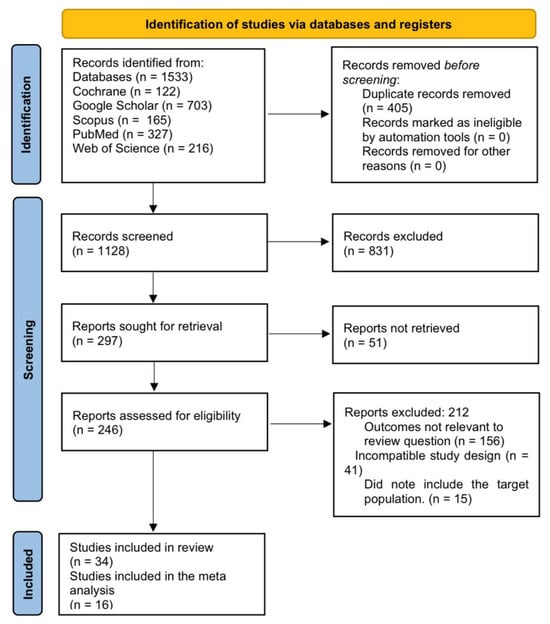
Two reviewers independently screened titles/abstracts and assessed full texts against predefined criteria. Disagreements were resolved by discussion. Study selection was summarized in a PRISMA flow diagram (Figure 1).
Figure 1.
PRISMA 2020 flow diagram of the study selection process.
2.5. Data Extraction
Two reviewers independently extracted study characteristics, participant demographics, biologic agent and dose, comparator, follow-up, biomarkers and sample source, clinical outcomes, and biomarker response statistics using a standardized electronic form. Multiple publications from the same trial program were linked to the parent trial to avoid duplicate participant inclusion.
2.6. Risk-of-Bias Assessment
RCTs were assessed using Cochrane RoB 2 and observational studies using the Newcastle–Ottawa Scale. Two reviewers assessed risk independently and resolved disagreements by consensus.
2.7. Statistical Analysis
RCTs comparing biologics with placebo or standard care were included in the primary meta-analysis. Treatment contrasts (mean differences [MDs] with 95% confidence intervals [CIs]) reported in papers were pooled by generic inverse variance using DerSimonian–Laird random-effects models when at least two independent trial-program estimates were available. For the SINUS program, results were reported separately for patients with and without NSAID-ERD; these mutually exclusive strata were first combined by fixed-effect inverse variance into a single SINUS estimate. Single-arm cohorts were analyzed as supportive pre–post analyses; when change-score SDs were unavailable, they were estimated assuming a pre–post correlation of 0.50. In the supportive and subgroup analyses, fixed-effect models were used with two studies and DerSimonian–Laird random-effects models with three or more. Heterogeneity was assessed using I2. Biomarker correlations were summarized descriptively because overlapping populations and heterogeneous reporting precluded pooled analysis. Funnel plots were planned when at least 10 independent studies were available (Supplementary Table S4).
3. Results
3.1. Study Characteristics
Thirty-four eligible publication records were included: 13 randomized-trial publications (including post hoc analyses), 10 retrospective cohorts, eight prospective cohorts, and three single-arm cohorts. These 34 records are not equivalent to 34 independent patient populations; publications from the SINUS, SYNAPSE, and POLYP programs may share participants. Biologics studied were dupilumab, mepolizumab, omalizumab, and investigational anti-TSLP CM326 (Table 1, Table 2 and Table 3).
Table 1.
Study characteristics and follow-up timepoints.
Table 2.
Treatment and comparator protocols.
Table 3.
Clinical scores and biomarkers reported by included studies.
Study characteristics, sample sizes, and follow-up timepoints are detailed in Table 1.
Trial-program overlap: Bachert 2022 (SINUS biomarker), Bachert 2023, Bachert 2024, Bachert 2025, and Mullol 2022 contain SINUS-program analyses; Bachert 2022 (SYNAPSE), Chupp 2023, and Hopkins 2023 contain SYNAPSE-program analyses; Zhu 2021 reports the POLYP 1/2 program. Multiple reports from a program were linked at the trial-population level rather than pooled as independent cohorts.
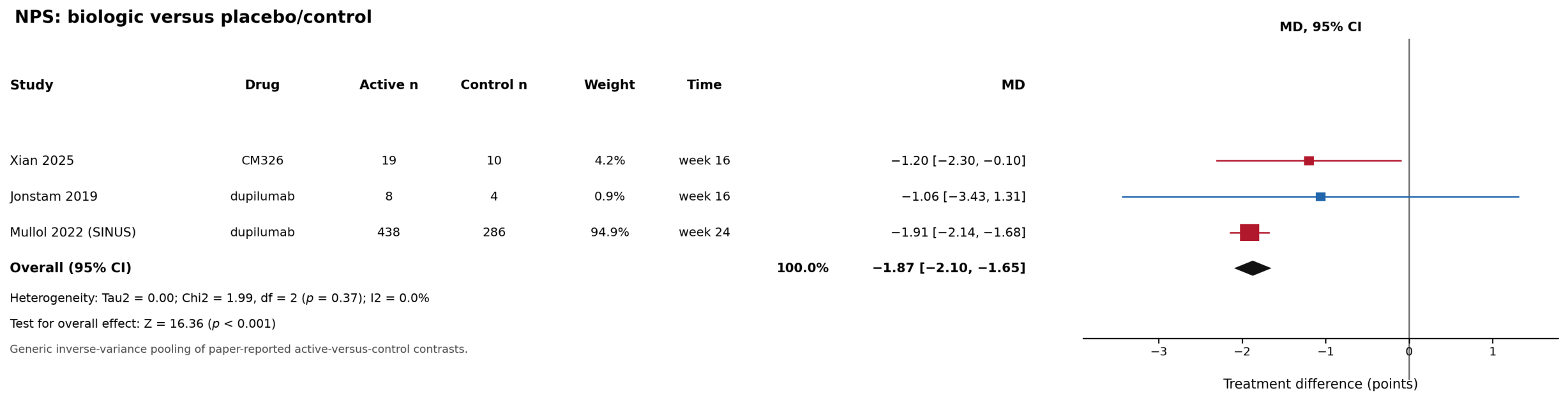
Sample sizes: for Xian et al. (2025), 84 patients were randomized across four arms (CM326 every 2 weeks, n = 40; placebo every 2 weeks, n = 20; CM326 every 4 weeks, n = 20; placebo every 4 weeks, n = 4). The forest plots use the trial’s primary endpoint population, patients with eosinophilic CRSwNP in the every-2-weeks cohort (CM326, n = 19; placebo, n = 10). For Jonstam et al. (2019), 60 patients were randomized in the parent trial; the clinical outcomes used here were reported for the tissue-biopsy subgroup (dupilumab, n = 8; placebo, n = 4). These two subgroups contributed 4.2% and 0.9% of the weight in the nasal polyp score analysis.
Treatment protocols varied by biologic. Dupilumab was generally 300 mg every 2 weeks, mepolizumab was 100 mg every 4 weeks, and CM326 (investigational anti-TSLP antibody) was 220 mg every 2 weeks; omalizumab dosing was weight- and IgE-based. Randomized trials generally used placebo controls, whereas most observational and single-arm studies had no comparator (Table 2).
Common outcomes included NPS, SNOT-22, LMK-CT, VAS, TNSS/TSS, UPSIT, and PNIF. Biomarkers included blood eosinophils, eosinophil percentage, serum IgE, periostin, eotaxin-3, TARC, FeNO, nasal-secretion cytokines, and tissue eosinophils (Table 3).
3.2. Primary Randomized Controlled Trial Analyses
Direct active-versus-placebo treatment effects were pooled when at least two independent trial-program estimates were available (Supplementary Figures S3–S18; Supplementary Tables S3 and S5).
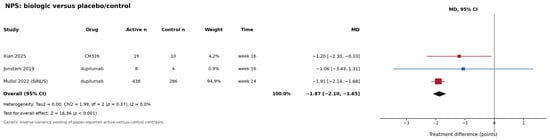
Three independent trial-program estimates contributed data for nasal polyp score. Biologic therapy was associated with a significant reduction in NPS compared with the placebo/control (MD, −1.87; 95% CI, −2.10 to −1.65), with no observed statistical heterogeneity (I2 = 0.0%) (Figure 2).
Figure 2.
Primary randomized controlled trial analysis: biologic versus placebo/control treatment effect for nasal polyp score. Squares represent individual study estimates (marker size reflects study weight), horizontal lines represent 95% confidence intervals, the diamond represents the pooled estimate, and the vertical line indicates no difference between groups. Red and blue markers alternate between rows for visual distinction only and do not denote subgroups. Included studies: Xian 2025 [41], Jonstam 2019 [31], and Mullol 2022 (SINUS) [35].
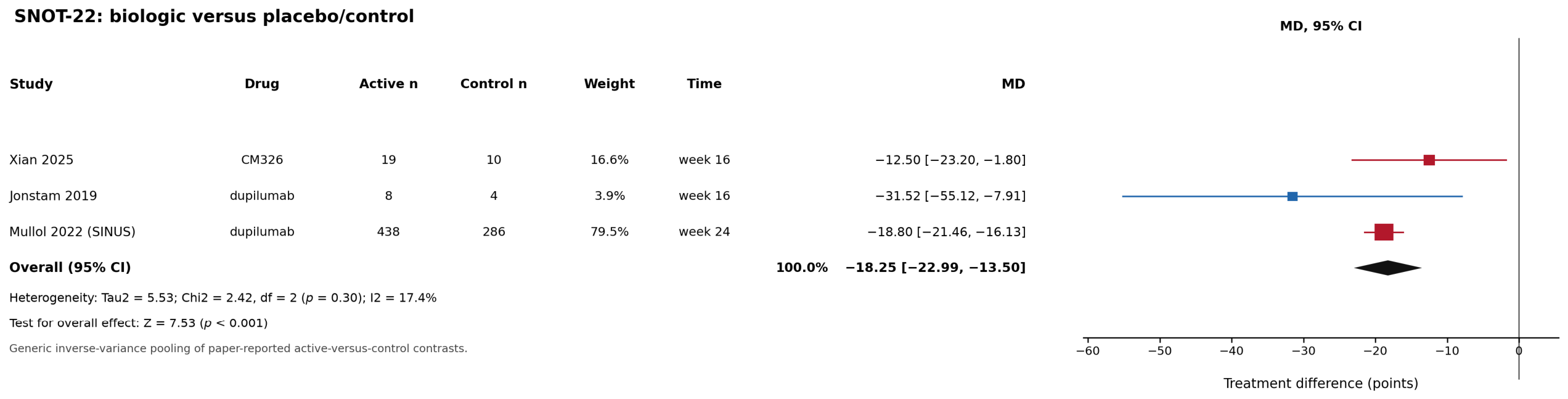
Three independent trial-program estimates contributed data for SNOT-22. Biologic therapy significantly improved disease-specific quality-of-life scores compared with the placebo/control (MD, −18.25; 95% CI, −22.99 to −13.50), with low heterogeneity between studies (I2 = 17.4%) (Figure 3).
Figure 3.
Primary randomized controlled trial analysis: biologic versus placebo/control treatment effect for Sinonasal Outcome Test-22. Squares represent individual study estimates (marker size reflects study weight), horizontal lines represent 95% confidence intervals, the diamond represents the pooled estimate, and the vertical line indicates no difference between groups. Red and blue markers alternate between rows for visual distinction only and do not denote subgroups. Included studies: Xian 2025 [41], Jonstam 2019 [31], and Mullol 2022 (SINUS) [35].
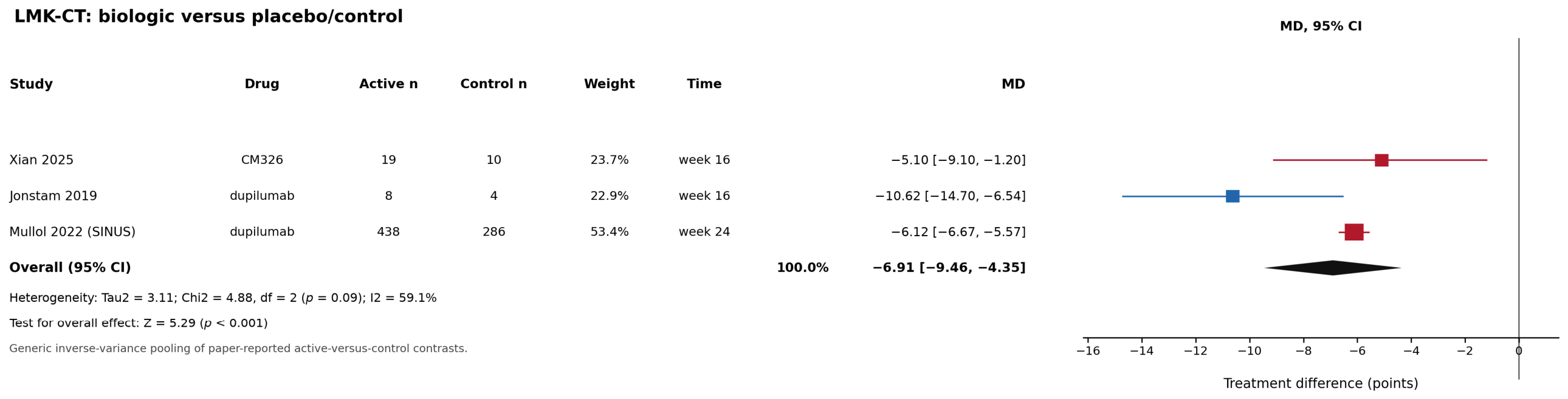
Three independent trial-program estimates evaluated LMK-CT score. Treatment with biologics resulted in a significant improvement in radiological disease burden compared with the placebo/control (MD, −6.91; 95% CI, −9.46 to −4.35). Moderate heterogeneity was observed across studies (I2 = 59.1%) (Figure 4).
Figure 4.
Primary randomized controlled trial analysis: biologic versus placebo/control treatment effect for Lund–Mackay computed tomography score. Squares represent individual study estimates (marker size reflects study weight), horizontal lines represent 95% confidence intervals, the diamond represents the pooled estimate, and the vertical line indicates no difference between groups. Red and blue markers alternate between rows for visual distinction only and do not denote subgroups. Included studies: Xian 2025 [41], Jonstam 2019 [31], and Mullol 2022 (SINUS) [35].
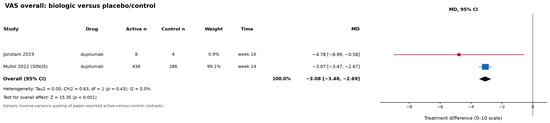
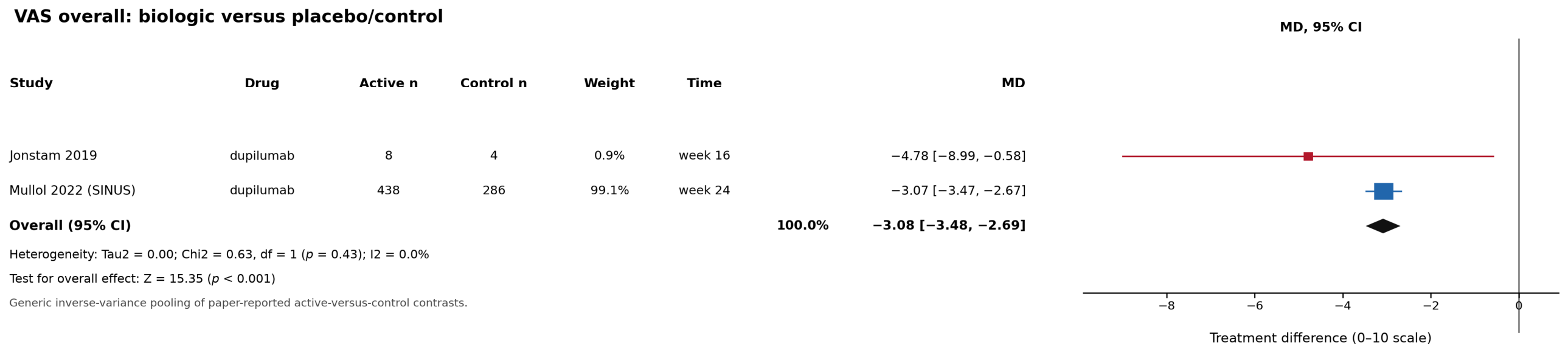
Two independent trial-program estimates reported overall/rhinosinusitis visual analog scale outcomes. Biologic therapy significantly improved VAS scores compared with the placebo/control (MD, −3.08; 95% CI, −3.48 to −2.69), with no observed heterogeneity (I2 = 0.0%) (Figure 5).
Figure 5.
Primary randomized controlled trial analysis: biologic versus placebo/control treatment effect for overall/rhinosinusitis visual analog scale. Squares represent individual study estimates (marker size reflects study weight), horizontal lines represent 95% confidence intervals, the diamond represents the pooled estimate, and the vertical line indicates no difference between groups. Red and blue markers alternate between rows for visual distinction only and do not denote subgroups. Included studies: Jonstam 2019 [31] and Mullol 2022 (SINUS) [35].
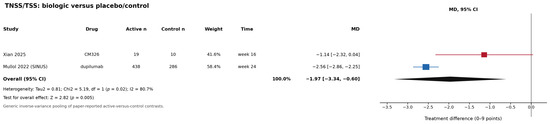
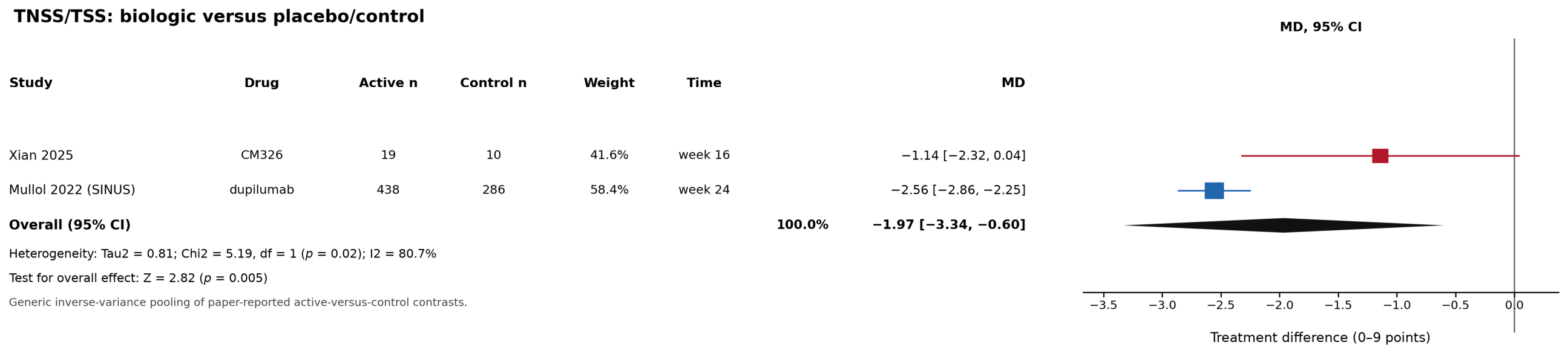
Two independent trial-program estimates contributed data for TNSS/TSS. A significant improvement was observed with biologic therapy compared with the placebo/control (MD, −1.97; 95% CI, −3.34 to −0.60). Considerable heterogeneity was present across studies (I2 = 80.7%) (Figure 6).
Figure 6.
Primary randomized controlled trial analysis: biologic versus placebo/control treatment effect for Total Nasal Symptom Score/total symptom score. Squares represent individual study estimates (marker size reflects study weight), horizontal lines represent 95% confidence intervals, the diamond represents the pooled estimate, and the vertical line indicates no difference between groups. Red and blue markers alternate between rows for visual distinction only and do not denote subgroups. Included studies: Xian 2025 [41] and Mullol 2022 (SINUS) [35].
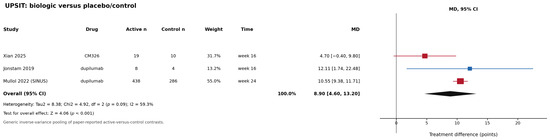
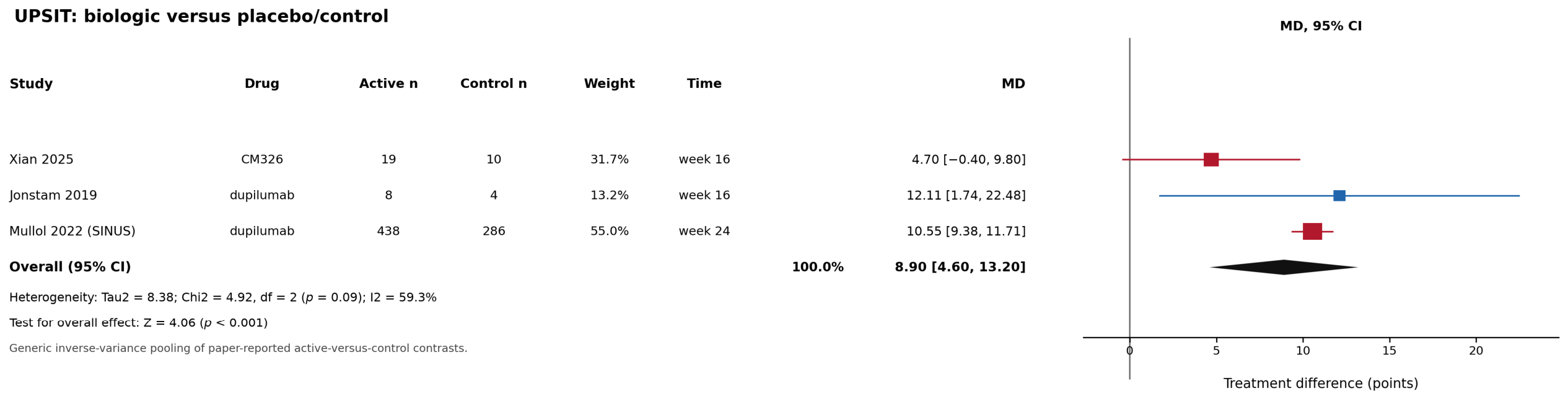
Three independent trial-program estimates evaluated olfactory function using UPSIT. Biologic therapy was associated with significant improvement compared with the placebo/control (MD, 8.90; 95% CI, 4.60 to 13.20), with moderate heterogeneity (I2 = 59.3%) (Figure 7).
Figure 7.
Primary randomized controlled trial analysis: biologic versus placebo/control treatment effect for University of Pennsylvania Smell Identification Test score. Squares represent individual study estimates (marker size reflects study weight), horizontal lines represent 95% confidence intervals, the diamond represents the pooled estimate, and the vertical line indicates no difference between groups. Red and blue markers alternate between rows for visual distinction only and do not denote subgroups. Included studies: Xian 2025 [41], Jonstam 2019 [31], and Mullol 2022 (SINUS) [35].
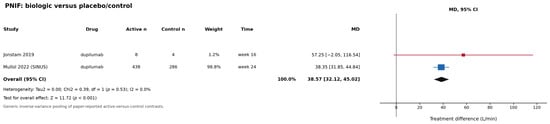
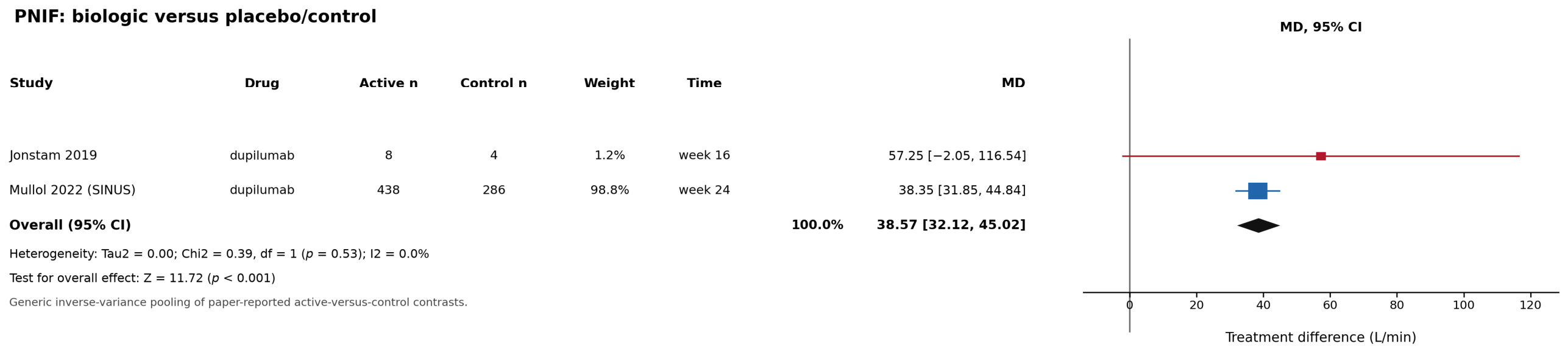
Two independent trial-program estimates assessed PNIF. Biologic therapy significantly improved nasal airflow compared with the placebo/control (MD, 38.57; 95% CI, 32.12 to 45.02), with no observed heterogeneity (I2 = 0.0%) (Figure 8).
Figure 8.
Primary randomized controlled trial analysis: biologic versus placebo/control treatment effect for peak nasal inspiratory flow. Squares represent individual study estimates (marker size reflects study weight), horizontal lines represent 95% confidence intervals, the diamond represents the pooled estimate, and the vertical line indicates no difference between groups. Red and blue markers alternate between rows for visual distinction only and do not denote subgroups. Included studies: Jonstam 2019 [31] and Mullol 2022 (SINUS) [35].
3.3. Supportive Single-Arm Analyses
Supportive analyses were performed using active-treatment cohorts to evaluate within-group changes following biologic therapy.
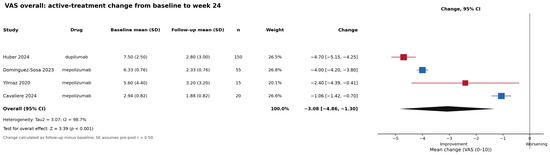
Four active-treatment cohorts contributed data for overall VAS scores. A significant improvement was observed at week 24, with a pooled change of −3.08 (95% CI, −4.86 to −1.30). Considerable heterogeneity was observed (I2 = 98.7%) (Figure 9).
Figure 9.
Supportive single-arm analysis: active-treatment change in visual analog scale overall score from baseline to week 24. Squares represent individual study estimates (marker size reflects study weight), horizontal lines represent 95% confidence intervals, the diamond represents the pooled estimate, and the vertical line indicates no change from baseline. Red and blue markers alternate between rows for visual distinction only and do not denote subgroups. Included studies: Huber 2024 [30], Domínguez-Sosa 2023 [25], Yilmaz 2020 [42], and Cavaliere 2024 [18].
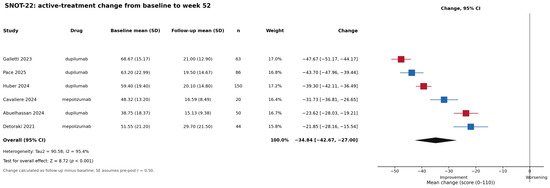
Six active-treatment cohorts contributed data for SNOT-22. At week 52, biologic therapy was associated with a pooled improvement of −34.84 points (95% CI, −42.67 to −27.00), with substantial heterogeneity (I2 = 95.4%) (Figure 10).
Figure 10.
Supportive single-arm analysis: active-treatment change in Sinonasal Outcome Test-22 score from baseline to week 52. Squares represent individual study estimates (marker size reflects study weight), horizontal lines represent 95% confidence intervals, the diamond represents the pooled estimate, and the vertical line indicates no change from baseline. Red and blue markers alternate between rows for visual distinction only and do not denote subgroups. Included studies: Galletti 2023 [26], Pace 2025 [36], Huber 2024 [30], Cavaliere 2024 [18], Abuelhassan 2024 [11], and Detoraki 2021 [24].
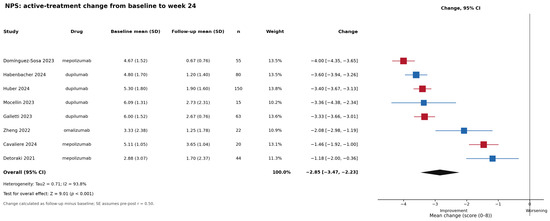
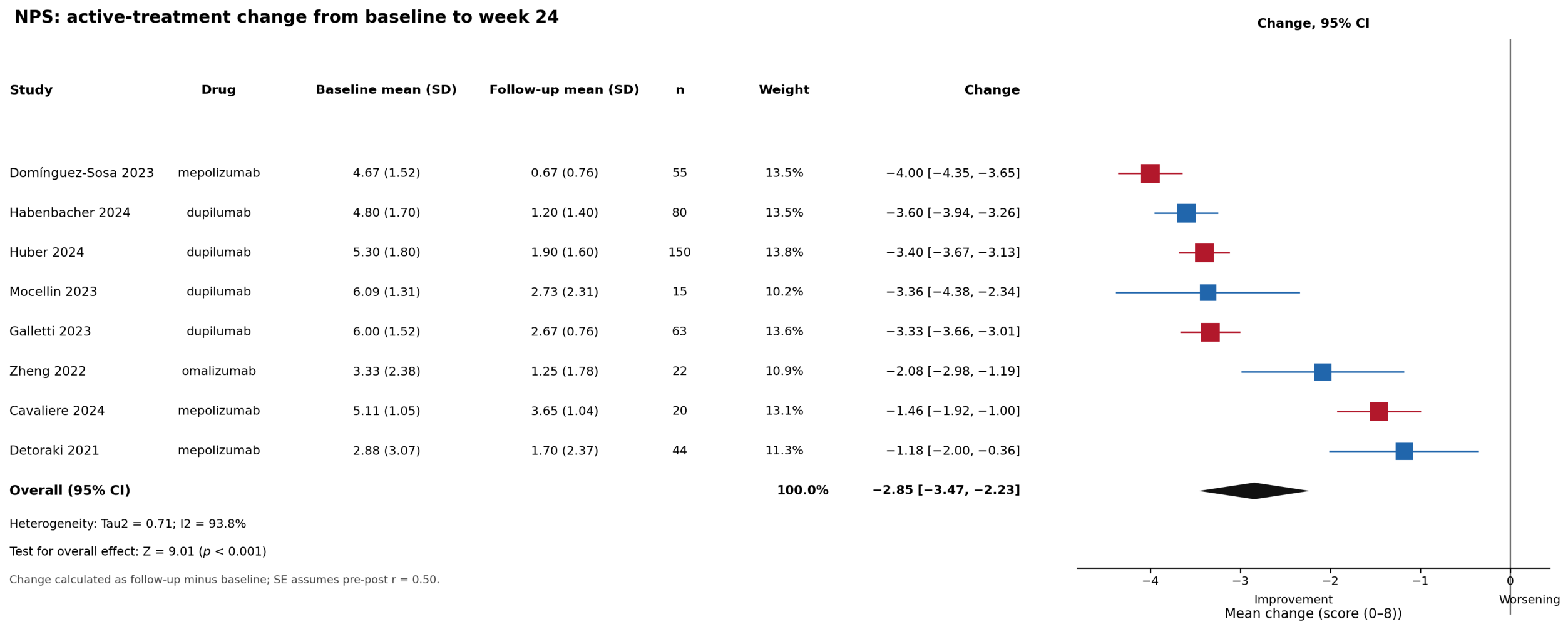
Eight active-treatment cohorts contributed data for NPS. At week 24, the pooled change from baseline was −2.85 (95% CI, −3.47 to −2.23). High heterogeneity was observed among studies (I2 = 93.8%) (Figure 11).
Figure 11.
Supportive single-arm analysis: active-treatment change in nasal polyp score from baseline to week 24. Squares represent individual study estimates (marker size reflects study weight), horizontal lines represent 95% confidence intervals, the diamond represents the pooled estimate, and the vertical line indicates no change from baseline. Red and blue markers alternate between rows for visual distinction only and do not denote subgroups. Included studies: Domínguez-Sosa 2023 [25], Habenbacher 2024 [28], Huber 2024 [30], Mocellin 2023 [34], Galletti 2023 [26], Zheng 2022 [43], Cavaliere 2024 [18], and Detoraki 2021 [24].
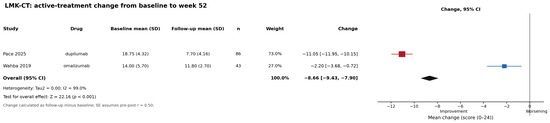
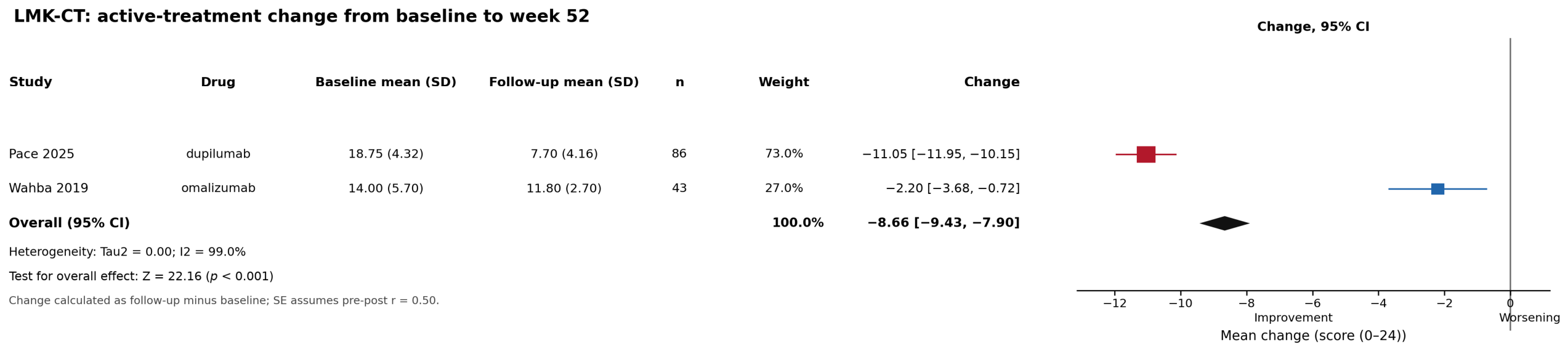
Two active-treatment cohorts contributed data for LMK-CT score. At week 52, the pooled change from baseline was −8.66 (95% CI, −9.43 to −7.90), with substantial heterogeneity (I2 = 99.0%) (Figure 12).
Figure 12.
Supportive single-arm analysis: active-treatment change in Lund–Mackay computed tomography score from baseline to week 52. Squares represent individual study estimates (marker size reflects study weight), horizontal lines represent 95% confidence intervals, the diamond represents the pooled estimate, and the vertical line indicates no change from baseline. Red and blue markers alternate between rows for visual distinction only and do not denote subgroups. Included studies: Pace 2025 [36] and Wahba 2019 [40].
3.4. Exploratory Subgroup Analyses
Two predictive subgroup analyses were quantitatively synthesized.
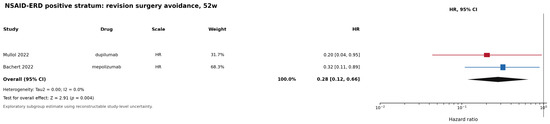
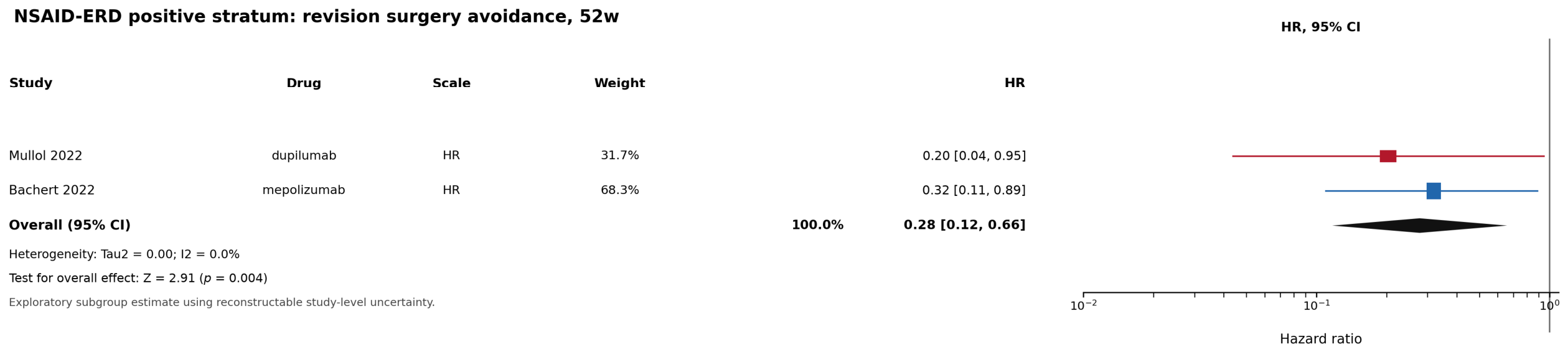
For revision surgery avoidance at 52 weeks among patients with NSAID-exacerbated respiratory disease (NSAID-ERD), two independent estimates demonstrated a lower revision-surgery hazard (HR 0.28, 95% CI, 0.12–0.66), with no observed heterogeneity (I2 = 0.0%) (Figure 13).
Figure 13.
Exploratory subgroup analysis in non-steroidal anti-inflammatory drug-exacerbated respiratory disease-positive patients: revision surgery avoidance at 52 weeks. Squares represent individual study estimates (marker size reflects study weight), horizontal lines represent 95% confidence intervals, the diamond represents the pooled estimate, and the vertical line indicates no difference in hazard (hazard ratio = 1; logarithmic scale). Red and blue markers alternate between rows for visual distinction only and do not denote subgroups. Included studies: Mullol 2022 [35] and Bachert 2022 [13].
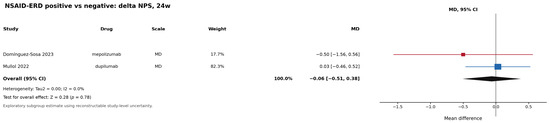
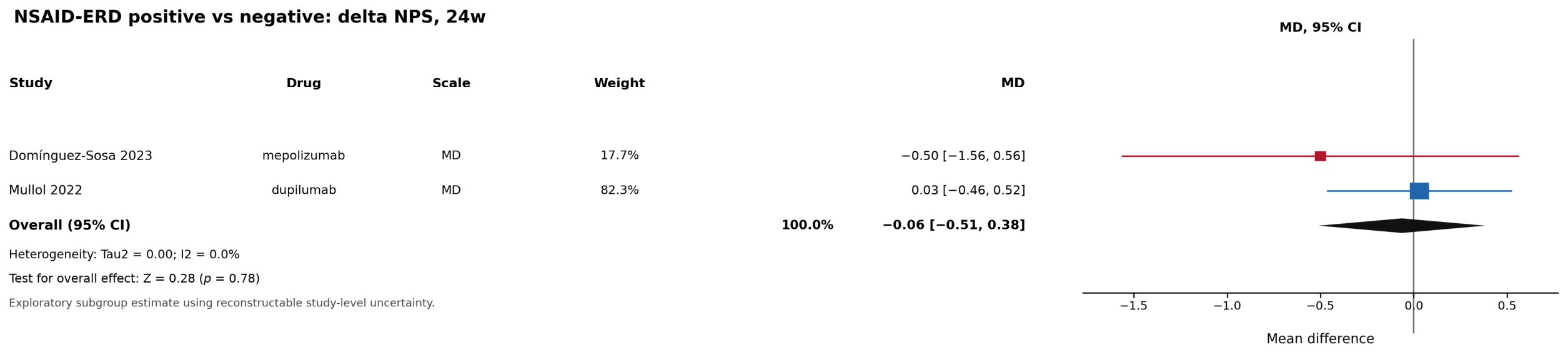
For the change in nasal polyp score according to NSAID-ERD status, two independent estimates showed no significant difference between NSAID-ERD-positive and NSAID-ERD-negative strata (MD −0.06, 95% CI, −0.51 to 0.38), with no observed heterogeneity (I2 = 0.0%) (Figure 14).
Figure 14.
Exploratory subgroup analysis by non-steroidal anti-inflammatory drug-exacerbated respiratory disease status: difference in delta nasal polyp score at 24 weeks. Squares represent individual study estimates (marker size reflects study weight), horizontal lines represent 95% confidence intervals, the diamond represents the pooled estimate, and the vertical line indicates no difference between strata. Red and blue markers alternate between rows for visual distinction only and do not denote subgroups. Included studies: Domínguez-Sosa 2023 [25] and Mullol 2022 [35].
Additional predictive subgroup analyses evaluating changes in SNOT-22 and TNSS according to comorbid NSAID-ERD status were identified but were not quantitatively synthesized because subgroup standard deviations, standard errors, or confidence intervals were not reported (Supplementary Table S6).
3.5. Risk of Bias
Risk of bias was assessed for 13 randomized controlled trial (RCT) publications and 21 observational cohort studies (Supplementary Figures S1 and S2). Among the 13 RCT publications, 12 were judged as having some concerns and one as high risk of bias. Randomization and deviations from intended interventions were generally rated favorably, whereas missing outcome data, outcome measurement, and selective reporting represented the most common sources of concern. Among the 21 observational studies, exposure ascertainment, outcome assessment, follow-up duration, and follow-up adequacy were generally rated as low-risk. The principal limitation was inadequate adjustment for confounding, with comparability rated as high-risk or unadjusted in 19 studies (Supplementary Tables S1 and S2).
3.6. Biomarker Evidence
Pearson correlations between biomarker changes and clinical response were extracted but not pooled or meta-regressed because several observations came from overlapping SINUS trial populations and independent datasets were insufficient for covariate-based analysis.
Two predictive subgroup analyses were identified: revision-surgery avoidance at 52 weeks and change in NPS at 24 weeks according to NSAID-ERD status. Additional SNOT-22 and TNSS subgroup analyses could not be synthesized because measures of uncertainty were unavailable.
Several biomarker outcomes could not be quantitatively synthesized because fewer than two compatible datasets with sufficient mean, SD, and sample-size data were available at comparable timepoints; these findings are summarized in Table 4.
Table 4.
Summary of biomarker evidence and clinical interpretation.
4. Discussion
CRSwNP is a heterogeneous inflammatory disease, and biologic response varies among patients. Although biologics targeting type 2 pathways have substantially improved outcomes in severe disease, reliable predictors of response remain incompletely defined [5,45,46,47,48,49,50].
Biomarker terminology requires careful separation. A prognostic biomarker is associated with the expected outcome regardless of the therapy received, a predictive biomarker modifies the comparative treatment effect (ideally demonstrated by a biomarker-by-treatment interaction in randomized evidence), and a pharmacodynamic biomarker changes after treatment as a measure of target engagement or biological response. Baseline biomarker associations within a single active-treatment arm cannot, on their own, establish drug-specific treatment-effect modification. Post hoc subgroup comparisons are hypothesis-generating unless prospectively specified and externally validated.
4.1. Summary and Interpretation of Findings
We identified 34 studies evaluating biologic therapy and potential predictors of response. The evidence included randomized trials and observational cohorts and covered several biologic agents and biomarker types. Pooled analyses consistently demonstrated beneficial effects of biologics across major clinical outcomes, whereas the biomarker evidence remained heterogeneous and insufficient to establish a validated predictor.
Compared with the placebo or standard care, biologic therapy significantly improved NPS, SNOT-22, LMK-CT, VAS, TNSS/TSS, UPSIT, and PNIF. These findings reinforce the established efficacy of biologics in severe uncontrolled CRSwNP. However, demonstrating treatment efficacy does not establish which baseline characteristics or biomarkers predict differential response. This distinction is central to interpreting the present review.
Heterogeneity was low for several primary comparisons but substantial for TNSS/TSS and supportive single-arm analyses. Variation in patient populations, biologic agents, outcome definitions, treatment duration, and study design likely contributed to this variability. The high heterogeneity of single-arm analyses also supports giving greater weight to randomized comparisons when interpreting treatment effects.
NSAID-ERD was associated with lower revision-surgery hazard, although NPS change did not differ by NSAID-ERD status. This suggests that clinical phenotype may influence some longer-term outcomes, but the small number of independent estimates and the absence of consistent effects across endpoints limit confidence in NSAID-ERD as a predictive factor.
4.2. Comparison with the Previous Literature
Our findings are consistent with major randomized trials demonstrating the efficacy of dupilumab, mepolizumab, and omalizumab in severe CRSwNP [45,46,47]. However, unlike treatment efficacy, the predictive biomarker literature remains fragmented and methodologically heterogeneous.
Potential predictors, such as blood eosinophils, serum IgE, FeNO, tissue eosinophilia, periostin, and cytokine profiles, have been investigated, but differences in biomarker definitions, sampling sites, laboratory methods, outcomes, and statistical reporting prevent reliable cross-study comparison. Unlike severe asthma, no biomarker currently has sufficient evidence to guide routine biologic selection in CRSwNP [49].
The risk-of-bias findings further limit confidence in the biomarker evidence: a total of 12 of 13 RCT publications had at least some concerns, while 19 of 21 observational studies had inadequate adjustment for confounding. Together with fragmented biomarker reporting, these limitations preclude robust quantitative validation.
4.3. Study Limitations
Several limitations should be considered. First, heterogeneity in biologic agents, study designs, populations, outcome definitions, follow-up, and biomarker sampling limited comparability. Second, many biomarker analyses were post hoc or exploratory and overlapping trial populations restricted independent synthesis. Third, incomplete reporting of correlations, regression estimates, hazard ratios, and within-person SDs prevented quantitative synthesis of many biomarkers; the pre–post analyses also required an assumed correlation of 0.50. Finally, observational confounding and the predominance of North American and European populations, together with limited follow-up beyond 52 weeks and limited evidence for newer agents, may restrict generalizability.
Several studies suggested associations between blood eosinophils, serum IgE, FeNO, tissue eosinophilia, periostin, and cytokine profiles and treatment outcomes. However, the direction and magnitude of these associations were not sufficiently consistent to support clinical selection of biologics. Biomarker measurements also differed by biological compartment, assay, timing, and threshold, making direct comparison difficult. In addition, many analyses were exploratory rather than prospectively designed to test predictive performance.
The limited quantitative synthesis of biomarkers is itself an important finding. Many studies did not report correlation coefficients, regression estimates, confidence intervals, or sufficient variance data. Several publications also arose from the same trial programs, particularly SINUS studies, increasing the risk of treating correlated observations as independent. Consequently, the absence of a pooled biomarker effect should not be interpreted as evidence that biomarkers have no predictive value; rather, the current literature is insufficiently standardized for robust validation.
Biomarker studies may also be affected by selective reporting and post hoc subgroup selection. Future studies should therefore prespecify biomarker hypotheses, define clinically meaningful response thresholds, and account for relevant confounders.
Geographic and endotypic generalizability is limited by the predominance of European and North American study populations. In East and other Asian populations, the prevalence and mix of eosinophilic/type 2 versus non-eosinophilic and type 1/type 3 inflammation may differ. Therefore, a blood eosinophil or IgE association observed in Western cohorts should not be presumed to retain the same calibration, predictive interaction, or optimal threshold in Asian or other underrepresented populations. Geographic, ancestry-related, environmental, and endotype diversity should be incorporated into prespecified validation cohorts.
4.4. Future Directions
Future research should prioritize standardized biomarker collection, measurement, and reporting, alongside a consensus core outcome set for CRSwNP biologic trials. At minimum, harmonized reporting of NPS, SNOT-22, objective smell testing, systemic corticosteroid exposure, surgery/revision, and follow-up timepoints would improve between-trial synthesis. Different scales should not be treated as interchangeable; the present primary syntheses use mean differences within common outcomes rather than uniformly using standardized mean differences. Prospective studies should preregister biomarker-by-treatment interactions, patient-important response thresholds, confounder adjustment, and external validation.
Multidimensional approaches may be more informative than individual biomarkers. Composite models integrating clinical phenotype, blood biomarkers, tissue characteristics, and molecular pathways could better capture the biological heterogeneity of CRSwNP. Longitudinal studies should also determine whether changes in biomarker levels during treatment predict sustained response, treatment failure, or recurrence.
Finally, head-to-head comparative-effectiveness studies incorporating biomarker stratification are needed to determine whether particular endotypes derive greater benefit from specific biologics. As the number of available agents increases, such studies should consider patient-centered outcomes, healthcare utilization, and cost-effectiveness alongside biomarker performance.
Clinical thresholds and economic implications: EPOS 2020 [5] proposed type 2 inflammatory eligibility indicators, such as blood eosinophils ≥250 cells/µL, tissue eosinophils ≥ 10/high-power field, or total IgE ≥ 100 IU/mL, within a broader clinical algorithm. Subsequent EPOS/EUFOREA criteria [10] lowered the blood eosinophil indicator to ≥150 cells/µL. These are eligibility/endotyping criteria, not biomarker cut-offs proven to select the most effective biologic or predict non-response; no validated treatment-specific threshold can be derived from this review. Biomarker-guided prescribing might reduce ineffective courses and costs, but formal cost-effectiveness and budget impact analyses require prospectively validated test performance, treatment costs, and patient-centered outcomes.
5. Conclusions
Biologic therapies provide substantial clinical benefits in severe uncontrolled CRSwNP, but no predictive biomarker has been consistently validated to guide biologic selection. Current evidence is heterogeneous because of differences in biomarker definitions, sampling, outcomes, reporting, and study populations. Treatment decisions should therefore continue to rely primarily on clinical characteristics and disease severity. Prospective, standardized biomarker validation studies are needed to support precision medicine.
Supplementary Materials
The following supporting information can be downloaded at: https://www.mdpi.com/article/10.3390/healthcare14223938/s1, Figure S1: Risk of bias summary for randomized trial publications using Risk of Bias 2 domains. Figure S2: Risk of bias summary for observational cohort publications using Newcastle-Ottawa Scale domains. Figure S3: Direct RCT treatment-effect forest plot for Lund–Mackay computed tomography score. Figure S4: Direct RCT treatment-effect forest plot for nasal polyp score. Figure S5: Direct RCT treatment-effect forest plot for peak nasal inspiratory flow. Figure S6: Direct RCT treatment-effect forest plot for Sinonasal Outcome Test-22. Figure S7: Direct RCT treatment-effect forest plot for Total Nasal Symptom Score/total symptom score. Figure S8: Direct RCT treatment-effect forest plot for University of Pennsylvania Smell Identification Test smell score. Figure S9: Direct RCT treatment-effect forest plot for overall/rhinosinusitis visual analogue scale. Figure S10: Supplementary absolute-value forest plot for post-treatment Lund–Mackay computed tomography score. Figure S11: Supplementary absolute-value forest plot for baseline Lund–Mackay computed tomography score. Figure S12: Supplementary absolute-value forest plot for post-treatment nasal polyp score. Figure S13: Supplementary absolute-value forest plot for baseline nasal polyp score. Figure S14: Supplementary absolute-value forest plot for post-treatment Sinonasal Outcome Test-22. Figure S15: Supplementary absolute-value forest plot for baseline Sinonasal Outcome Test-22. Figure S16: Supplementary absolute-value forest plot for baseline Total Nasal Symptom Score. Figure S17: Supplementary absolute-value forest plot for post-treatment overall/rhinosinusitis visual analogue scale. Figure S18: Supplementary absolute-value forest plot for baseline overall/rhinosinusitis visual analogue scale. Table S1: Individual study-level risk-of-bias assessments for randomized controlled trial publications using the Cochrane Risk of Bias 2 domains. Table S2: Individual study-level risk-of-bias assessments for observational cohort studies using the Newcastle–Ottawa Scale domains. Table S3: Summary of direct randomized controlled trial treatment-effect analyses across seven clinical outcomes. Table S4: Publication-bias assessment eligibility across quantitative analyses. Table S5: Randomized controlled trial outcome data excluded from quantitative synthesis because confidence intervals or standard errors were unavailable. Table S6: Predictive subgroup analyses not quantitatively synthesized because of insufficient statistical data.
Author Contributions
Conceptualization, A.A.A. and A.M.A.; methodology, D.M.A. and L.R.A.; formal analysis, R.M.A. and R.H.A.; investigation, S.E.A., R.H.A. and L.R.A.; data curation, D.M.A., S.A.A. and A.A.A.; writing—original draft preparation, L.R.A., R.M.A. and S.E.A.; writing—review and editing, A.A.A.; visualization, A.A.A.; supervision, A.M.A.; project administration, A.A.A.; funding acquisition, A.M.A. All authors have read and agreed to the published version of the manuscript.
Funding
This research received no external funding.
Institutional Review Board Statement
Not applicable.
Informed Consent Statement
Not applicable.
Data Availability Statement
No new data were created or analyzed in this study. Data sharing is not applicable to this article.
Conflicts of Interest
The authors declare no conflict of interest.
References
- De Corso, E.; Settimi, S.; Montuori, C.; Corbò, M.; Passali, G.C.; Porru, D.P.; Lo Verde, S.; Spanu, C.; Penazzi, D.; Di Bella, G.A.; et al. Effectiveness of dupilumab in the treatment of patients with severe uncontrolled CRSwNP: A “real-life” observational study in the first year of treatment. J. Clin. Med. 2022, 11, 2684. [Google Scholar] [CrossRef] [Scilit] [PubMed]
- Stevens, W.W.; Schleimer, R.P.; Kern, R.C. Chronic rhinosinusitis with nasal polyps. J. Allergy Clin. Immunol. Pract. 2016, 4, 565–572. [Google Scholar] [CrossRef] [Scilit] [PubMed]
- Jafar, R.J.; Aljohani, S.A.; Aljohani, S.S.; Altoukhi, S.M.; Alquraini, S.K.; Alanazi, R.; Alyahya, K. Epidemiology of chronic rhinosinusitis with nasal polyps in the adult population. J. Adv. Trends Med. Res. 2024, 1, 1–10. [Google Scholar] [CrossRef] [Scilit] [PubMed]
- Bachert, C.; Bhattacharyya, N.; Desrosiers, M.; Khan, A.H. Burden of disease in chronic rhinosinusitis with nasal polyps. J. Asthma Allergy 2021, 14, 127–134. [Google Scholar] [CrossRef] [Scilit] [PubMed]
- Fokkens, W.; Lund, V.; Hopkins, C.; Hellings, P.; Kern, R.; Reitsma, S.; Toppila-Salmi, S.; Bernal-Sprekelsen, M.; Mullol, J.; Alobid, I.; et al. European Position Paper on Rhinosinusitis and Nasal Polyps 2020. Rhinology 2020, 58, 1–464. [Google Scholar] [CrossRef] [Scilit] [PubMed]
- Bachert, C.; Han, J.K.; Wagenmann, M.; Hosemann, W.; Lee, S.E.; Backer, V.; Mullol, J.; Gevaert, P.; Klimek, L.; Prokopakis, E.; et al. EUFOREA expert board meeting on uncontrolled severe CRSwNP. J. Allergy Clin. Immunol. 2021, 147, 29–36, Correction in J. Allergy Clin. Immunol. 2021, 147, 1981–1982. https://doi.org/10.1016/j.jaci.2021.02.011. [Google Scholar] [CrossRef] [Scilit] [PubMed]
- Bachert, C.; Zhang, N.; Cavaliere, C.; Weiping, W.; Gevaert, E.; Krysko, O. Biologics for chronic rhinosinusitis with nasal polyps. J. Allergy Clin. Immunol. 2020, 145, 725–739. [Google Scholar] [CrossRef] [Scilit] [PubMed]
- Nappi, E.; Marzio, V.; Giombi, F.; Costanzo, G.; Merli, S.; Nicolosi, S.; Cavaglià, E.; Rizzini, F.L.; Traversi, S.; Vrenna, A.; et al. Chronic rhinosinusitis with and without nasal polyps: Current treatment strategies and future developments. Front. Allergy 2025, 6, 1714577. [Google Scholar] [CrossRef] [Scilit] [PubMed]
- Godse, N.R.; Keswani, A.; Lane, A.P.; Lee, S.E.; Sindwani, R. Biologics for nasal polyps: Practical clinical algorithm. Am. J. Rhinol. Allergy 2023, 37, 207–213. [Google Scholar] [CrossRef] [Scilit] [PubMed]
- Hellings, P.W.; Alobid, I.; Anselmo-Lima, W.T.; Bernal-Sprekelsen, M.; Bjermer, L.; Caulley, L.; Chaker, A.; Constantinidis, J.; Conti, D.M.; De Corso, E.; et al. EUFOREA/EPOS2020 statement on CRSwNP care. Allergy 2024, 79, 1123–1133. [Google Scholar] [CrossRef] [Scilit] [PubMed]
- Abuelhassan, U.E.; Elnamaky, M.; Alfifi, A.; Kadasah, S.K.; Alshehri, M.A.; Alasiri, H.A.; Al-Mani, S.Y.; Kadasah, A.S.; Musleh, A.; Alshafa, F.A.; et al. Outcomes of biological therapy in patients with severe asthma with chronic rhinosinusitis in Saudi Arabia: Patients with nasal polyps versus those without nasal polyps. BMC Pulm. Med. 2024, 24, 328. [Google Scholar] [CrossRef] [Scilit] [PubMed]
- Alhejaily, M.A.; Kashoob, M.; AlGhamdi, S.Y.; Alomar, M.A.; Alomar, Y.A.; Alzayed, R.S.; Altoies, A.M.; Alroqi, A. Effectiveness of dupilumab in chronic rhinosinusitis with nasal polyps: A retrospective study of clinical and imaging outcomes. Saudi Med. J. 2025, 46, 781–787. [Google Scholar] [CrossRef] [Scilit] [PubMed]
- Bachert, C.; Sousa, A.R.; Han, J.K.; Schlosser, R.J.; Sowerby, L.J.; Hopkins, C.; Maspero, J.F.; Smith, S.G.; Kante, O.; Karidi-Andrioti, D.E.; et al. Mepolizumab for chronic rhinosinusitis with nasal polyps: Treatment efficacy by comorbidity and blood eosinophil count. J. Allergy Clin. Immunol. 2022, 149, 1711–1721.e6. [Google Scholar] [CrossRef] [Scilit] [PubMed]
- Bachert, C.; Corren, J.; Lee, S.E.; Zhang, H.; Harel, S.; Cunoosamy, D.; Khan, A.H.; Jacob-Nara, J.A.; Siddiqui, S.; Nash, S.; et al. Dupilumab efficacy and biomarkers in chronic rhinosinusitis with nasal polyps: Association between dupilumab treatment effect on nasal polyp score and biomarkers of type 2 inflammation in patients with chronic rhinosinusitis with nasal polyps in the phase 3 SINUS-24 and SINUS-52 trials. Int. Forum Allergy Rhinol. 2022, 12, 1191–1195. [Google Scholar] [CrossRef] [Scilit] [PubMed]
- Bachert, C.; Laidlaw, T.M.; Cho, S.H.; Mullol, J.; Swanson, B.N.; Naimi, S.; Classe, M.; Harel, S.; Jagerschmidt, A.; Laws, E.; et al. Effect of dupilumab on type 2 biomarkers in chronic rhinosinusitis with nasal polyps: SINUS-52 study results. Ann. Otol. Rhinol. Laryngol. 2023, 132, 1649–1661. [Google Scholar] [CrossRef] [Scilit] [PubMed]
- Bachert, C.; Gevaert, P.; Lipworth, B.; Mustafa, S.S.; Lane, A.P.; Mullol, J.; Rowe, P.; Deniz, Y.; Kamat, S.; Khan, A.H.; et al. Dupilumab efficacy across serum IgE and blood eosinophil levels in chronic rhinosinusitis with nasal polyposis. Allergy 2024, 79, 2858–2861. [Google Scholar] [CrossRef] [Scilit] [PubMed]
- Bachert, C.; Khan, A.H.; Hopkins, C.; Han, J.K.; Fokkens, W.J.; Mannent, L.P.; Msihid, J.; Borsos, K.; Kamat, S.; Nash, S.; et al. Mild and symptom-free months in patients with chronic rhinosinusitis with nasal polyps treated with dupilumab. Ann. Allergy Asthma Immunol. 2025, 134, 61–69.e12. [Google Scholar] [CrossRef] [Scilit] [PubMed]
- Cavaliere, C.; Loperfido, A.; Ciofalo, A.; Di Michele, L.; Begvarfaj, E.; Bellocchi, G.; Bugani, M.; de Vincentiis, M.; Greco, A.; Millarelli, S.; et al. Real-life evidence of mepolizumab treatment in chronic rhinosinusitis with nasal polyps: A multicentric study. J. Clin. Med. 2024, 13, 3575. [Google Scholar] [CrossRef] [Scilit] [PubMed]
- Chupp, G.; Alobid, I.; Lugogo, N.L.; Kariyawasam, H.H.; Bourdin, A.; Chaker, A.M.; Smith, S.G.; Sousa, A.R.; Mayer, B.; Chan, R.H.; et al. Mepolizumab reduces systemic corticosteroid use in chronic rhinosinusitis with nasal polyps. J. Allergy Clin. Immunol. Pract. 2023, 11, 3504–3512.e2. [Google Scholar] [CrossRef] [Scilit] [PubMed]
- Ciofalo, A.; Loperfido, A.; Baroncelli, S.; Masieri, S.; Bellocchi, G.; Caramia, R.; Cascone, F.; Filaferro, L.; Re, F.L.; Cavaliere, C. Comparison between clinical and cytological findings in chronic rhinosinusitis with nasal polyps treated with dupilumab. Eur. Arch. Otorhinolaryngol. 2024, 281, 6511–6521. [Google Scholar] [CrossRef] [Scilit] [PubMed]
- Costanzo, G.A.M.L.; Ledda, A.G.; Sambugaro, G.; Murdaca, G.; Caruso, C.; Canalis, S.; Serra, P.; Barca, M.P.; Del Giacco, S.; Firinu, D. A real-life evaluation of SNOT-22 domains in a cohort of CRSwNP patients treated with biologic therapies for 12 months. World Allergy Organ. J. 2025, 18, 101041. [Google Scholar] [CrossRef] [Scilit] [PubMed]
- Danisman, Z.; Linxweiler, M.; Kühn, J.P.; Linxweiler, B.; Solomayer, E.-F.; Wagner, M.; Wagenpfeil, G.; Schick, B.; Berndt, S. Differential nasal swab cytology represents a valuable tool for therapy monitoring but not prediction of therapy response in chronic rhinosinusitis with nasal polyps treated with dupilumab. Front. Immunol. 2023, 14, 1127576. [Google Scholar] [CrossRef] [Scilit] [PubMed]
- De Schryver, E.; Derycke, L.; Calus, L.; Holtappels, G.; Hellings, P.W.; Van Zele, T.; Bachert, C.; Gevaert, P. The effect of systemic treatments on periostin expression reflects their interference with the eosinophilic inflammation in chronic rhinosinusitis with nasal polyps. Rhinology 2017, 55, 152–160. [Google Scholar] [CrossRef] [PubMed]
- Detoraki, A.; Tremante, E.; D’amato, M.; Calabrese, C.; Casella, C.; Maniscalco, M.; Poto, R.; Brancaccio, R.; Boccia, M.; Martino, M.; et al. Mepolizumab improves sino-nasal symptoms and asthma control in severe eosinophilic asthma patients with chronic rhinosinusitis and nasal polyps: A 12-month real-life study. Ther. Adv. Respir. Dis. 2021, 15, 17534666211009398. [Google Scholar] [CrossRef] [Scilit] [PubMed]
- Domínguez-Sosa, M.S.; Cabrera-Ramírez, M.S.; Marrero-Ramos, M.d.C.; Dávila-Quintana, D.; Cabrera-López, C.; Carrillo-Díaz, T.; del Rosario, J.J.B. Real-life effectiveness of mepolizumab in refractory chronic rhinosinusitis with nasal polyps. Biomedicines 2023, 11, 485. [Google Scholar] [CrossRef] [Scilit] [PubMed]
- Galletti, C.; Barbieri, M.A.; Ciodaro, F.; Freni, F.; Galletti, F.; Spina, E.; Galletti, B. Effectiveness and safety profile of dupilumab in chronic rhinosinusitis with nasal polyps: Real-life data in tertiary care. Pharmaceuticals 2023, 16, 630. [Google Scholar] [CrossRef] [Scilit] [PubMed]
- Galletti, C.; Indaco, F.G.; Portelli, D.; Laterra, G.; Zambito, P.; Ferrisi, M.G.; Freni, L.; Ciodaro, F.; Freni, F.; Maira, S.; et al. Efficacy of dupilumab in patients with chronic rhinosinusitis with nasal polyps and eosinophilic otitis media: A six-month observational study. Medicina 2025, 61, 1471. [Google Scholar] [CrossRef] [Scilit] [PubMed]
- Habenbacher, M.; Moser, U.; Abaira, A.; Kiss, P.; Holzmeister, C.; Pock, J.; Walla, K.; Lang, A.; Andrianakis, A. Investigation of blood count-based inflammatory biomarkers as predictors of response to dupilumab treatment in patients with chronic rhinosinusitis with nasal polyps. Pharmaceutics 2024, 16, 1370. [Google Scholar] [CrossRef] [Scilit] [PubMed]
- Hopkins, C.; Han, J.; Lund, V.; Bachert, C.; Fokkens, W.; Diamant, Z.; Mullol, J.; Sousa, A.; Smith, S.; Yang, S.; et al. Evaluating treatment response to mepolizumab in patients with severe CRSwNP. Rhinol. J. 2023, 61, 108–117. [Google Scholar] [CrossRef] [Scilit] [PubMed]
- Huber, P.; Förster-Ruhrmann, U.; Olze, H.; Becker, S.; Bärhold, F.; Cuevas, M.; Gunder, N.; Hagemann, J.; Matthias, C.; Klimek, L.; et al. Real-world data show sustained therapeutic effects of dupilumab in chronic rhinosinusitis with nasal polyps (CRSwNP) over 3 years. Allergy 2024, 79, 3108–3117. [Google Scholar] [CrossRef] [Scilit] [PubMed]
- Jonstam, K.; Swanson, B.N.; Mannent, L.P.; Cardell, L.; Tian, N.; Wang, Y.; Zhang, D.; Fan, C.; Holtappels, G.; Hamilton, J.D.; et al. Dupilumab reduces local type 2 pro-inflammatory biomarkers in chronic rhinosinusitis with nasal polyposis. Allergy 2019, 74, 743–752. [Google Scholar] [CrossRef] [Scilit] [PubMed]
- Lombardo, N.; Piazzetta, G.L.; Lobello, N.; Cicala, G.; Patafi, M.; Benincasa, A.T.; Pelaia, C.; Chiarella, E.; Pelaia, G. Real-life effects of omalizumab on chronic rhinosinusitis with nasal polyposis. J. Pers. Med. 2023, 14, 3. [Google Scholar] [CrossRef] [Scilit] [PubMed]
- Matucci, A.; Accinno, M.; Maggiore, G.; Brugnoli, B.; Vivarelli, E.; Cosmi, L.; Parronchi, P.; Perlato, M.; Milanese, M.; Licci, G.; et al. Mepolizumab reduces inflammatory eosinophils in nasal polyp tissue and restores histological alterations. J. Investig. Allergol. Clin. Immunol. 2026, 36, 292–302. [Google Scholar] [CrossRef] [Scilit] [PubMed]
- Mocellin, D.; Ioppi, A.; Gaglio, G.; Pennacchi, A.; Bertolini, M.; Tirrito, A.; Guastini, L.; Bagnasco, D.; Passalacqua, G.; Peretti, G.; et al. Severe chronic rhinosinusitis treated with dupilumab, a real-life analysis of early effectiveness. Eur. Rev. Med. Pharmacol. Sci. 2023, 27, 7324–7336. [Google Scholar] [CrossRef] [Scilit] [PubMed]
- Mullol, J.; Laidlaw, T.M.; Bachert, C.; Mannent, L.P.; Canonica, G.W.; Han, J.K.; Maspero, J.F.; Picado, C.; Daizadeh, N.; Ortiz, B.; et al. Efficacy and safety of dupilumab in patients with uncontrolled severe chronic rhinosinusitis with nasal polyps and a clinical diagnosis of NSAID-ERD: Results from two randomized placebo-controlled phase 3 trials. Allergy 2022, 77, 1231–1244. [Google Scholar] [CrossRef] [Scilit] [PubMed]
- Pace, G.M.; Mari, G.; Giombi, F.; Cerasuolo, M.; Zimello, C.; Cerri, L.; Canonica, G.W.; Heffler, E.; Paoletti, G.; Puggioni, F.; et al. Predictive value of tissue eosinophilia for dupilumab response in chronic rhinosinusitis with nasal polyps: A retrospective monocentric study. World Allergy Organ. J. 2025, 18, 101129. [Google Scholar] [CrossRef] [Scilit] [PubMed]
- Paoletti, G.; Casini, M.; Malvezzi, L.; Pirola, F.; Russo, E.; Nappi, E.; Muci, G.; Montagna, C.; Messina, M.R.; Ferri, S.; et al. Very rapid improvement in extended nitric oxide parameters is associated with clinical and functional improvement in patients with chronic rhinosinusitis with nasal polyps treated with dupilumab. J. Investig. Allergol. Clin. Immunol. 2023, 33, 457–463. [Google Scholar] [CrossRef] [Scilit] [PubMed]
- Peters, A.T.; Shah, R.; Heffler, E.; Wagenmann, M.; Fujieda, S.; Xia, C.; Nash, S.; Clotz, M.; Corbett, M.; Radwan, A. Baseline disease characteristics among patients with chronic rhinosinusitis with nasal polyps in AROMA: A global registry study. Allergy Asthma Proc. 2025, 46, 414–421. [Google Scholar] [CrossRef] [Scilit] [PubMed]
- Sahota, J.; Bidder, T.; Livingston, R.; Robinson, D.; Lund, V.; Su, M.; Kariyawasam, H. Chronic rhinosinusitis and omalizumab: Eosinophils not IgE predict treatment response in real-life. Rhinol. Online 2018, 1, 147–153. [Google Scholar] [CrossRef] [Scilit]
- Wahba, A.A.; Abdelfattah, A.M. Anti-immunoglobulin E therapy: Is it a valid option for the management of chronic rhinosinusitis with nasal polyposis? Egypt J. Otolaryngol. 2019, 35, 269–277. [Google Scholar] [CrossRef] [Scilit] [PubMed]
- Xian, M.; Lan, F.; Yan, B.; Shen, S.; Liu, S.; Wan, L.; Song, X.; Jiang, L.; Jiang, Y.; Xue, J.; et al. An anti-TSLP monoclonal antibody for uncontrolled CRSwNP: The DUBHE randomized clinical trial. Nat. Commun. 2025, 16, 8607. [Google Scholar] [CrossRef] [Scilit] [PubMed]
- Yilmaz, I.; Türk, M.; Nazik Bahçecioğlu, S.; Tutar, N.; Gülmez, I. Efficacy of mepolizumab treatment in oral corticosteroid-dependent severe eosinophilic asthma patients with chronic rhinosinusitis with nasal polyps: Single center, real life study. Turk. J. Med. Sci. 2020, 50, 433–441. [Google Scholar] [CrossRef] [Scilit] [PubMed]
- Zheng, M.; Sima, Y.; Liu, C.; Zhao, J.; Shao, S.; Wang, X.; Wang, Y.; Cao, F.; Xiong, W.; Wang, X.; et al. Clinical effectiveness and potential predictability of omalizumab in patients with difficult-to-treat chronic rhinosinusitis with nasal polyps and asthma based on the noninvasive markers—A real-life prospective study. World Allergy Organ. J. 2022, 15, 100702. [Google Scholar] [CrossRef] [Scilit] [PubMed]
- Zhu, R.; Owen, R.; Wilkins, J.; Schoemaker, R.; Tian, X.; Gautier, A.; She, G.; Vadhavkar, S.; Cheu, M.; Wong, K.; et al. Pharmacokinetics and exposure-efficacy relationships of omalizumab in patients with nasal polyps. Pulm. Pharmacol. Ther. 2021, 71, 102080. [Google Scholar] [CrossRef] [Scilit] [PubMed]
- Bachert, C.; Han, J.K.; Desrosiers, M.; Hellings, P.W.; Amin, N.; Lee, S.E.; Mullol, J.; Greos, L.S.; Bosso, J.V.; Laidlaw, T.M.; et al. Efficacy and safety of dupilumab in patients with severe chronic rhinosinusitis with nasal polyps (SINUS-24 and SINUS-52). Lancet 2019, 394, 1638–1650. [Google Scholar] [CrossRef] [Scilit] [PubMed]
- Han, J.K.; Bachert, C.; Fokkens, W.; Desrosiers, M.; Wagenmann, M.; Lee, S.E.; Smith, S.G.; Martin, N.; Mayer, B.; Yancey, S.W.; et al. Mepolizumab for chronic rhinosinusitis with nasal polyps (SYNAPSE): A randomised, double-blind, placebo-controlled, phase 3 trial. Lancet Respir. Med. 2021, 9, 1141–1153. [Google Scholar] [CrossRef] [Scilit] [PubMed]
- Gevaert, P.; Omachi, T.A.; Corren, J.; Mullol, J.; Han, J.; ∙Lee, S.E.; ∙Kaufman, D.; Ligueros-Saylan, M.; Howard, M.; Zhu, R.; et al. Efficacy and safety of omalizumab in nasal polyps: Two randomized phase 3 trials (POLYP 1 and POLYP 2). J. Allergy Clin. Immunol. 2020, 146, 595–605. [Google Scholar] [CrossRef] [Scilit] [PubMed]
- Corren, J.; Parnes, J.R.; Wang, L.; Mo, M.; Roseti, S.L.; Griffiths, J.M.; van der Merwe, R. Tezepelumab in Adults with Uncontrolled Asthma. N. Engl. J. Med. 2017, 377, 936–946, Erratum in N. Engl. J. Med. 2019, 380, 2082. https://doi.org/10.1056/NEJMx180026. [Google Scholar] [CrossRef] [Scilit] [PubMed]
- Agache, I.; Akdis, C.A.; Akdis, M.; Canonica, G.W.; Casale, T.; Chivato, T.; Corren, J.; Chu, D.K.; Del Giacco, S.; Eiwegger, T.; et al. EAACI Biologicals Guidelines-Recommendations for Severe Asthma. Allergy 2021, 76, 14–44. [Google Scholar] [CrossRef] [Scilit] [PubMed]
- Bacher, C.; Marple, B.; Hosemann, W.; Cavaliere, C.; Wen, W.; Zhang, N. Endotypes of chronic rhinosinusitis with nasal polyps: Pathology and possible therapeutic implications. J. Allergy Clin. Immunol. Pract. 2020, 8, 1514–1519. [Google Scholar] [CrossRef] [Scilit] [PubMed]

Disclaimer/Publisher’s Note: The statements, opinions and data contained in all publications are solely those of the individual author(s) and contributor(s) and not of MDPI and/or the editor(s). MDPI and/or the editor(s) disclaim responsibility for any injury to people or property resulting from any ideas, methods, instructions or products referred to in the content. |
© 2026 by the authors. Licensee MDPI, Basel, Switzerland. This article is an open access article distributed under the terms and conditions of the Creative Commons Attribution (CC BY) license.