


Highlights
- •
- 28–39% of laboratory-confirmed diabetic inpatients were not coded as diabetic in §21 data.
- •
- HbA1c testing rates were only 3.82–18.53% across study years.
- •
- 95 of 108 diabetes mellitus-related ICD-10 codes changed PCCL or DRG grouping.
- •
- High-impact codes in the Type 2 Diabetes coding (e.g., E11.51, E11.50, E11.31, E11.30) generated the largest reimbursement increases.
- •
- Scenario-based DRG simulations suggested more than 200,000 euros in potential annual reimbursement differences under modeled assumptions.
- •
- Systematic metabolic screening and improved coding workflows are crucial for both clinical outcomes and financial sustainability.
Abstract
Background: Diabetes substantially affects inpatient care, clinical complexity, and resource utilization. Within the German Diagnosis-Related Group (G-DRG) system, diabetes as a secondary diagnosis influences Patient Clinical Complexity Level (PCCL), DRG assignment, and reimbursement. Trauma centers often underdiagnose or under-code diabetes, leading to underestimated metabolic comorbidity and reimbursement potential. This study evaluated the impact of secondary diagnosis coding of diabetes mellitus on DRG grouping and reimbursement in a Level 1 Trauma Center. Methods: All inpatient §21 discharge records from 2019 to 2024 (n = 59,762) were retrospectively analyzed. Diabetes-related ICD-10 codes, laboratory parameters (HbA1c, random blood glucose), and patient-reported diabetes were used to identify uncoded diabetes or prediabetes. DRG simulations were performed using ID-EFIX (v13.1.0), applying 108 diabetes-related codes to assess effects on PCCL, DRG, and reimbursement. Three realistic recoding scenarios (10%, 14%, and 18% of cases) were modeled. Results: Diabetes was coded in 5.99–8.20% of cases, whereas laboratory reassessment estimated prevalence at 9.76–11.62%, indicating that 28–39% of laboratory-confirmed diabetes cases were not coded. However, HbA1c testing rates were low (3.82–18.53%), suggesting a significant number of undetected cases. Of 108 ICD-10 codes tested, 95 altered PCCL or DRG. High-impact type 2 diabetes codes (E11.51, E11.50, E11.31, E11.30) produced the largest reimbursement increases. Under realistic recoding scenarios, potential additional annual reimbursement exceeded 200,000 euros. Conclusions: Diabetes is under-coded in this Level 1 Trauma Center, associated with low HbA1c testing and incomplete documentation. Systematic metabolic screening, increased HbA1c testing, and optimized coding workflows could better reflect clinical complexity, patient care, and appropriate reimbursement within the G-DRG system.
1. Introduction
Healthcare systems worldwide are struggling to provide high-quality care while controlling rising costs, with hospital expenditures representing a major contributor to overall healthcare spending [1,2]. This challenge affects both developed and developing countries, and many health systems are seeking innovations to improve efficiency and resource allocation.
In Germany, diabetes mellitus imposes a substantial economic and clinical burden on patients and the healthcare system [3,4,5]. In 2024, the number of adults living with diabetes was estimated at 10.3 million, with projections suggesting an increase to more than 12 million by 2040 [6,7]. The metabolic alterations associated with diabetes—particularly insulin resistance—affect multiple tissues and organ systems, contributing to higher complication rates, longer hospital stays, and increased hospital costs [4,8,9,10]. Early identification and personalized treatment strategies can help reduce this burden [11,12]. Prediabetes also represents a critical metabolic condition with a high risk of progression to diabetes and its associated complications [13].
The diagnosis-related group (DRG) payment system was developed to control healthcare costs and ensure the financial sustainability of inpatient services [14,15,16]. In Germany, the G-DRG system was introduced in 2003 and implemented nationwide in 2004 to standardize reimbursement for inpatient services [17]. DRG assignment is based on discharge records, including main and secondary diagnoses, procedures, and other clinical information [18]. While the main diagnosis and procedures primarily determine DRG grouping, secondary diagnoses contribute to the assessment of case severity through the Patient Clinical Complexity Level (PCCL) [19]. Diabetes mellitus is typically documented as a secondary diagnosis [12]. However, when diabetes or prediabetes remain undiagnosed or uncoded, the G-DRG system may fail to account for the additional resources required to treat these patients.
Nationwide DRG analyses have reported a documented diabetes prevalence of 18.5% among hospitalized patients in Germany between 2021 and 2023 [12]. In contrast, studies from Level 1 Trauma Centers have reported lower prevalence rates: 10.3% in 2016, more than 12% in 2019, and 17.3% in 2021 [8,20,21]. This discrepancy may reflect undiagnosed cases, which are estimated at 3–4% due to the long latency period before diabetes is clinically recognized. Under-coding of diabetes has been shown to affect both clinical outcomes and financial reimbursement negatively [22]. Despite its relevance, few studies examine the importance of secondary diagnosis coding for diabetes mellitus within the G-DRG system, particularly in Level 1 Trauma Centers.
This study addresses this gap by assessing the impact of ICD-10 coding of diabetes mellitus as a secondary diagnosis on PCCL, DRG grouping, and reimbursement in a Level 1 Trauma Center. Using six years of inpatient §21 data and comprehensive DRG simulations, the study evaluates how accurate documentation of metabolic disease influences clinical complexity and financial compensation.
2. Materials and Methods
2.1. Study Design and Identification of the Inpatient Populations
This retrospective study analyzed anonymized inpatient data from a Level 1 Trauma Center over a six-year period (2019–2024). The dataset consists of §21 discharge records, which are used for reimbursement calculations within the German DRG system. A total of 59,762 inpatient cases from all clinical departments were included.
To identify patients with diabetes mellitus (DM) or prediabetes, ICD-10 diagnoses, laboratory parameters, and patient-reported diabetes were extracted from the hospital information system. Diabetes-related ICD-10 codes were categorized according to established diagnostic groups: diabetes mellitus, type 1 (E10), diabetes mellitus, type 2 (E11), diabetes mellitus associated with malnutrition (E12), other specified diabetes mellitus (E13), unspecified diabetes mellitus (E14), diabetes mellitus in pregnancy (O24), and Prediabetes (R73). Detailed code definitions are provided in Supplementary Table S1. Laboratory values were reviewed to identify prediabetes and diabetes based on the diagnostic criteria of the American Diabetes Association (ADA) [23]. Prediabetes was defined as HbA1c 5.7–6.4%. Diabetes was defined as HbA1c ≥ 6.5% and/or random blood glucose ≥ 200 mg/dL on two separate measurements [24]. Laboratory-based identification of inpatients with diabetes was performed only when sufficient laboratory information was available to apply the predefined diagnostic criteria. Cases without adequate laboratory measurements were classified as not categorizable rather than being assumed to have no diabetes or prediabetes. Accordingly, the laboratory-based prevalence estimates represent only the subgroup of patients with available and sufficient laboratory data and were not extrapolated to the entire inpatient population. Cases were classified as not categorizable, no pre-/diabetes, prediabetes, or diabetes based on available laboratory and coding information.
2.2. DRG Simulation and Regrouping of Inpatient Cases
To evaluate the impact of diabetes-related secondary diagnosis coding on DRG assignment and reimbursement, DRG simulations were performed using ID-EFIX software version 13.1.0. This grouper software is certified by the Institute for the Hospital Remuneration System (InEK), ensuring compliance with national G-DRG classification rules.
All §21 inpatient records were uploaded into the software and organized by year. Patients with an already documented diabetes diagnosis were excluded from the simulations to avoid duplicate coding. For scenario analysis, 108 diabetes-related ICD-10 codes were individually tested in all inpatient records without a previously documented diabetes diagnosis. Each code was added separately in an independent simulation, and the records were regrouped after each individual code addition. The resulting changes in PCCL, DRG assignment, and reimbursement were recorded separately for each ICD-10 code and study year.
The use of a certified DRG grouper ensures the application of the relevant classification rules but does not constitute clinical validation of the simulated diagnoses. These simulations assessed the theoretical impact of individual diabetes-related ICD-10 codes as a secondary diagnosis on DRG classification and reimbursement. They established neither new clinical diagnoses nor implied that all patients without documented diabetes had the condition. In clinical practice, complication-specific codes require independent clinical evidence and appropriate documentation of the corresponding complications before assignment. The results therefore indicate potential coding-related reimbursement differences, not confirmed additional reimbursement attainable for the study population.
2.3. Scenario-Based Analysis of Diabetes Prevalence and Potential Reimbursement Impact
To estimate the financial impact of secondary coding scenario-based conditions, three prevalence-based recoding scenarios were developed. These scenarios assumed that 10%, 14%, or 18% of all inpatients had diabetes, reflecting the observed prevalence in the hospital and previously reported values in trauma center settings [8,20,21]. These percentages represented target diabetes prevalence rates in the total inpatient population at the Level 1 Trauma Center rather than the proportion of additional inpatients to be coded.
The scenario calculations were performed independently for each study year, based on the respective annual inpatient population and the number of inpatients with an already documented diabetes diagnosis. For each year, the number of inpatients corresponding to each target prevalence was calculated based on the total annual inpatient population. The number of patients with an existing diabetes diagnosis was subsequently subtracted from the respective target number to determine the additional number of inpatients required to reach each prevalence scenario. Accordingly, the financial simulations considered only the additional number of inpatients beyond those with an existing diabetes diagnosis, thereby avoiding duplicate coding.
The potential reimbursement differences were calculated based on the individual DRG simulation results with respect to the number of inpatients required to reach target prevalence. These scenarios were designed to illustrate the potential financial implications of the number of inpatients required to reach different overall diabetes prevalence rates through improved identification, clinical confirmation, and appropriate documentation of previously uncoded diabetes cases. As shown in Table 1, the additional number of inpatients required to reach each target prevalence level varied across study years, reflecting differences in the proportion of already documented diabetes cases.
Table 1.
Annual distribution of documented diabetes prevalence and additional inpatients required to reach the target diabetes prevalence scenarios (2019–2024).
These scenario-based simulations and calculations represent hypothetical modeling assumptions and should not be interpreted as observed or clinically confirmed diabetes related to ICD-10 codes. Therefore, the resulting reimbursement estimates illustrate the potential financial implications under the specified assumptions rather than actual or guaranteed additional hospital revenue.
2.4. Statistical Analysis
Statistical analyses were performed using GraphPad Prism (version 8.0.1; GraphPad Software, Inc., San Diego, CA, USA). Descriptive statistics were calculated for all variables. No imputation procedures were applied for missing laboratory values; analyses were restricted to available data. Categorical variables were summarized as frequencies and percentages, while reimbursement differences were reported in euros. Continuous variables were presented as median with interquartile range (IQR; 25–75%) for non-normally distributed data. Length of stay (LOS) was compared between patients with coded and non-coded diabetes mellitus and between male and female patients using the Mann–Whitney U test. Comparisons of LOS among the different diabetes mellitus status groups were performed using the Kruskal–Wallis test. A p-value < 0.05 was considered statistically significant. No inferential statistical tests were performed for the simulated changes in PCCL values, DRG assignments, and reimbursement amounts, as these analyses were intended to describe the potential effects of individual coding changes and prevalence-based scenarios rather than to test statistical hypotheses.
3. Results
3.1. Patient Characteristics
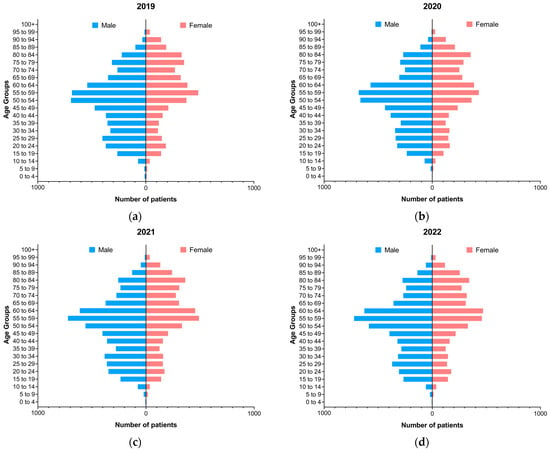
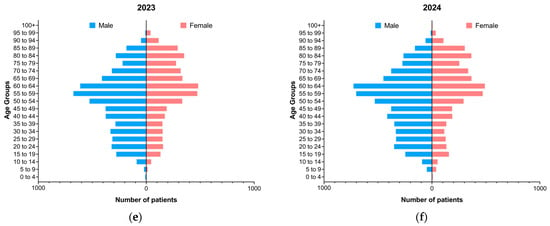
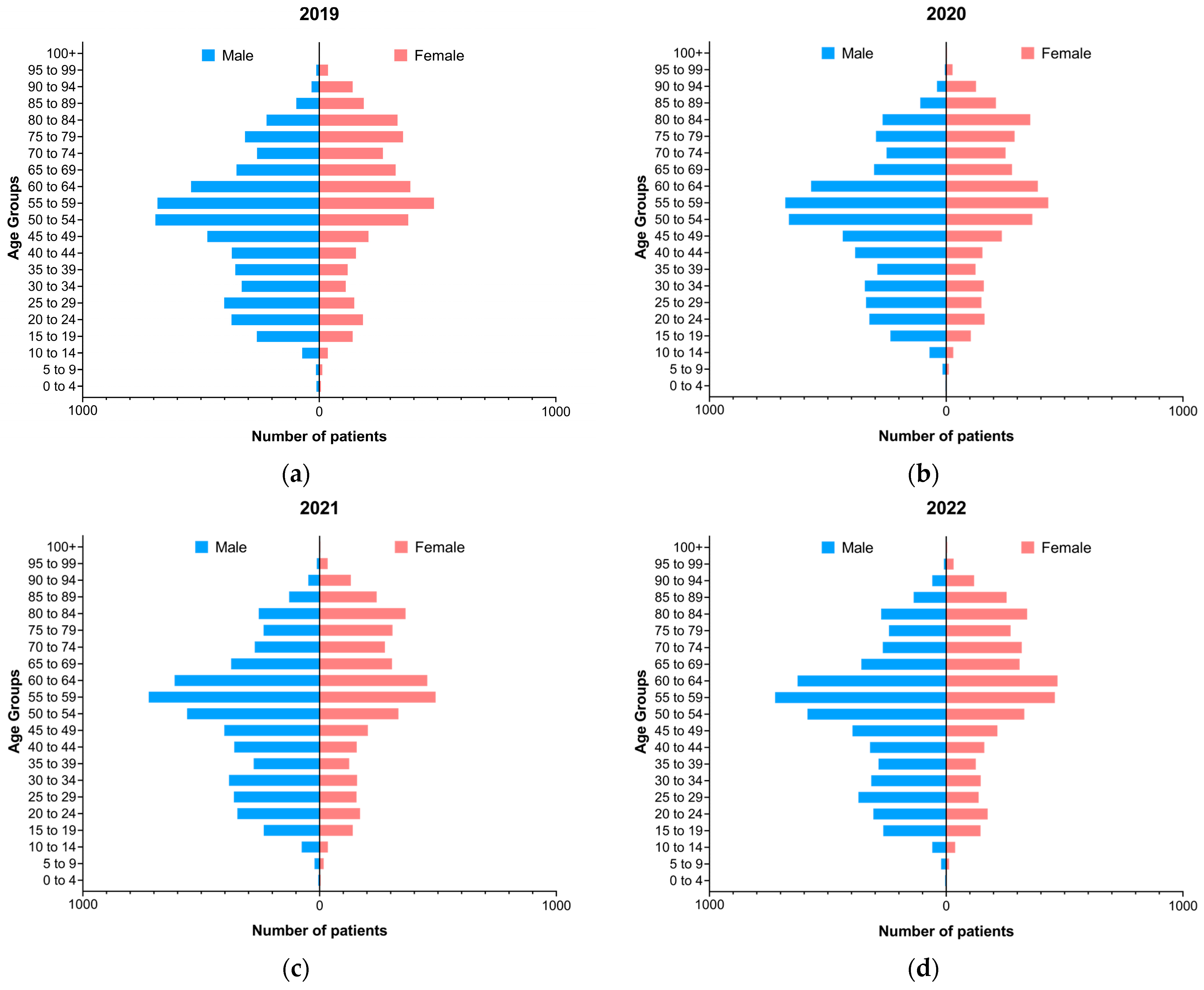
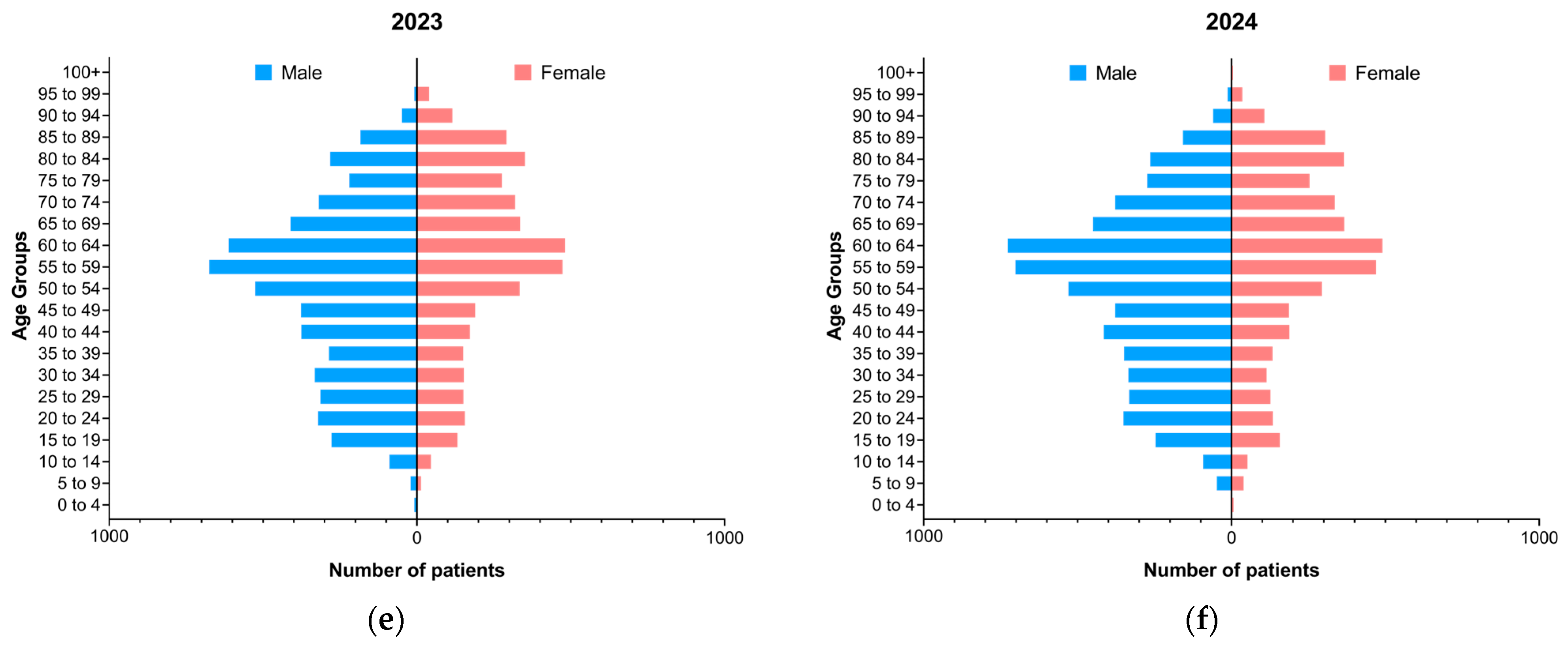
A total of 59,762 inpatient cases from 2019 to 2024 were included in the analysis. Annual case numbers ranged from 9591 to 10,449. The sex distribution remained stable across all years, with males representing 56.9–58.8% and females 39.8–41.8% of cases. The remaining cases were recorded as “Not applicable” (1.0% to 1.7%) or “Diverse” (0.0% to 0.02%) in the hospital information system and were therefore not included in the male and female subgroup comparisons. The age distribution was similarly consistent, with most patients aged 50–79 years. Detailed demographic characteristics are shown in Figure 1.
Figure 1.
Demographic characteristics of inpatient cases from 2019 to 2024. Distribution of inpatient cases by sex and age group for each year of the study period: (a) 2019, (b) 2020, (c) 2021, (d) 2022, (e) 2023, and (f) 2024.
Length of stay (LOS) was analyzed according to diabetes mellitus status and sex. First, LOS was compared between patients with and without DM based on existing §21 coding. Patients with coded DM had a median LOS of 8–9 days, whereas those without DM coding had a median LOS of 4–5 days (all p < 0.0001). After laboratory-based reassessment, the median LOS for patients classified as diabetic remained 8–9 days throughout the study period. LOS did not differ substantially between male and female patients, with both groups showing a median LOS of 4–5 days. Detailed LOS results are provided in Supplementary Tables S2–S4.
3.2. Diabetes Coding in §21 Data
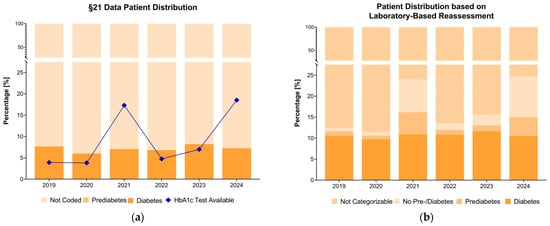
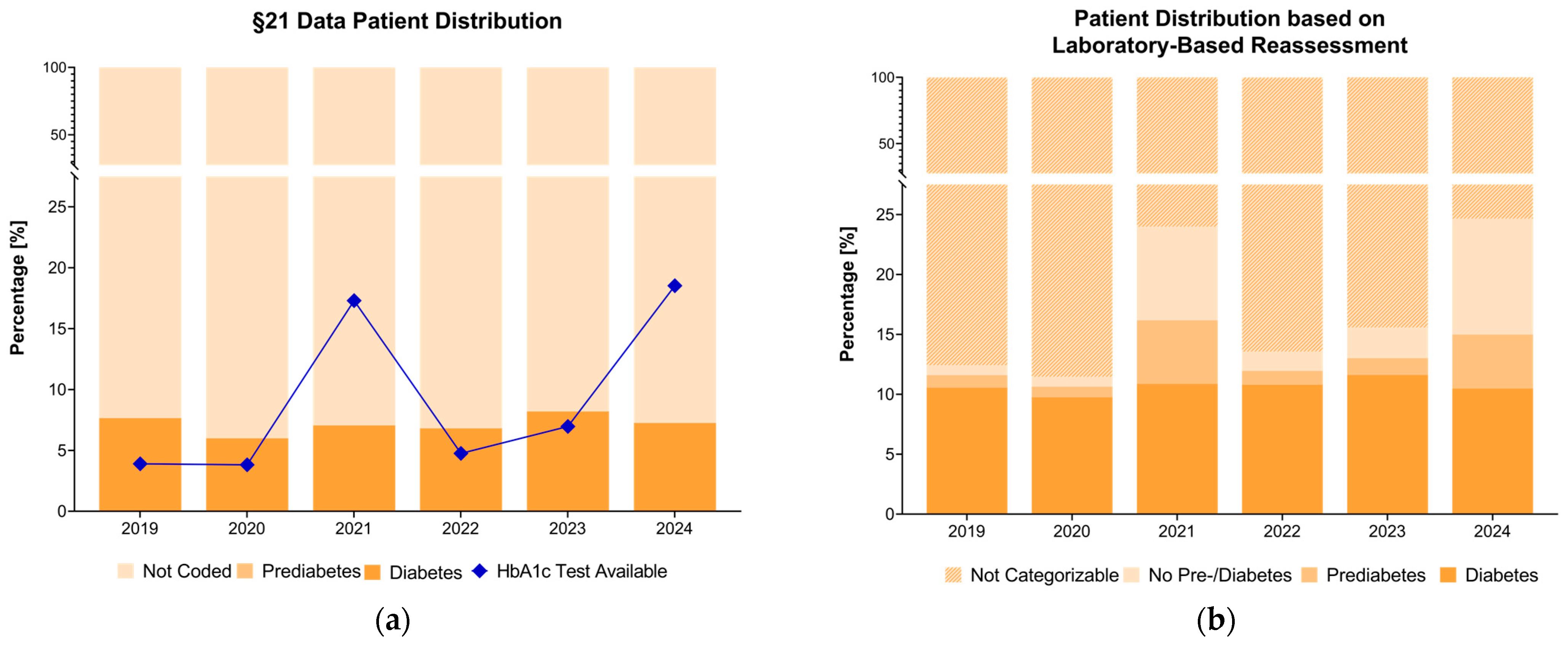
Across all years, diabetes mellitus was coded in only 5.99–8.20% of inpatient cases, while prediabetes was rarely documented (≤0.02%). These values are markedly lower than national DRG-based prevalence estimates. Consequently, more than 90% of all cases were classified as “not coded” with respect to metabolic status (Figure 2a).
Figure 2.
Diabetes status based on coding and laboratory data. (a) Proportion of patients with coded diabetes, prediabetes, and available HbA1c measurements across the study period. (b) Prevalence of inpatients with diabetes and prediabetes following laboratory-based reassessment using available HbA1c data.
3.3. Laboratory-Based Reassessment of Diabetes Status
HbA1c testing was available in only 3.82–18.53% of inpatient cases during the study period, indicating that metabolic screening was not routinely performed across the entire inpatient population. The higher testing rates observed in 2021 and 2024 were associated with separate screening projects performed during those years in our clinic (Figure 2a). When laboratory data were used to reclassify patients, the estimated prevalence of diabetes increased to 9.76–11.62%, and that of prediabetes to 0.89–5.31% (Figure 2b). This means that at least 28–39% of patients meeting laboratory criteria for diabetes were not coded as diabetic.
However, laboratory values were unavailable in 75–88% of cases, preventing definitive metabolic classification. Because laboratory data were unavailable for a large proportion of patients, the true prevalence of diabetes and prediabetes in the overall inpatient population cannot be determined from the present dataset. These findings suggest possible under-coding of diabetes among patients with available laboratory measurements in the Level 1 Trauma Center setting.
3.4. Impact of Diabetes Coding on PCCL
Simulation of 108 diabetes related ICD-10 codes showed that 95 codes had measurable effects on the Patient Clinical Complexity Level (PCCL). High-impact codes, particularly those representing diabetes with peripheral vascular or organ complications, consistently showed PCCL values changing in the majority of cases:
- •
- E11.51 (Type 2 diabetes with peripheral vascular complications, uncontrolled): PCCL values changed in 92.5–94.6% of cases.
- •
- E11.01 (Type 2 diabetes with coma, uncontrolled): PCCL values changed in 90.7–92.9% of cases.
- •
- E11.31 (Type 2 diabetes with eye complications, uncontrolled): PCCL values changed in 88.6–89.9% of cases.
Detailed PCCL changes for all diabetes-related ICD-10 codes are provided in Supplementary Table S5, and those for type 2 diabetes codes are shown in Table 2.
Table 2.
Impact of type 2 diabetes mellitus-related ICD-10 coding on PCCL changes.
3.5. Impact on DRG Grouping
Changes in DRG grouping occurred less frequently than PCCL changes but remained clinically and financially relevant. The most impactful codes were:
- •
- E11.51 (Type 2 diabetes with peripheral vascular complications, uncontrolled): DRG grouping changed in 6.3–8.8% of cases.
- •
- E11.50 (Type 2 diabetes with peripheral vascular complications, controlled): DRG grouping changed in 2.5–4.7% of cases.
- •
- E11.31 (Type 2 diabetes with eye complications, uncontrolled): DRG grouping changed in 1.6–3.1% of cases.
Full DRG change details for all diabetes-related ICD-10 codes are provided in Supplementary Table S6, and those for type 2 diabetes codes are shown in Table 3.
Table 3.
Impact of type 2 diabetes mellitus-related ICD-10 codes on DRG changes.
3.6. Financial Impact of Improved Coding
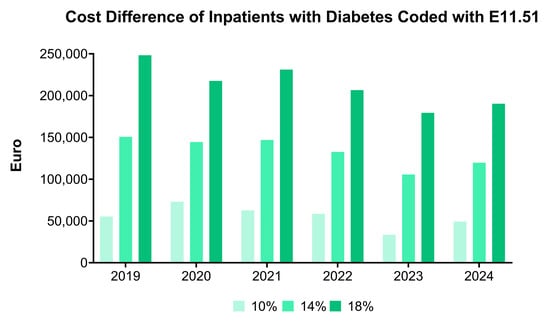
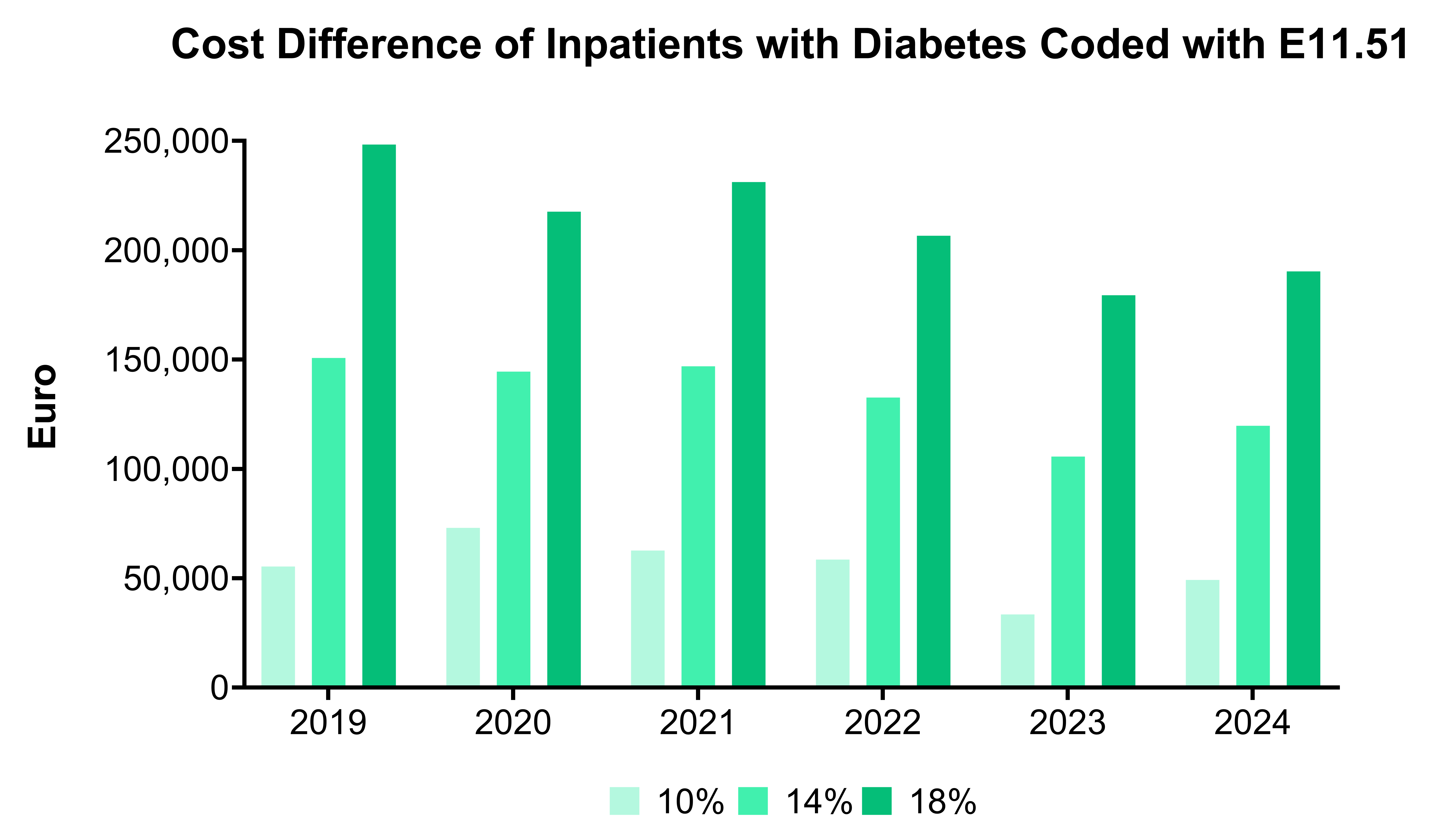
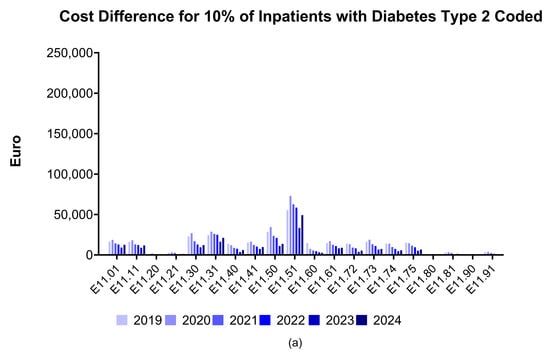
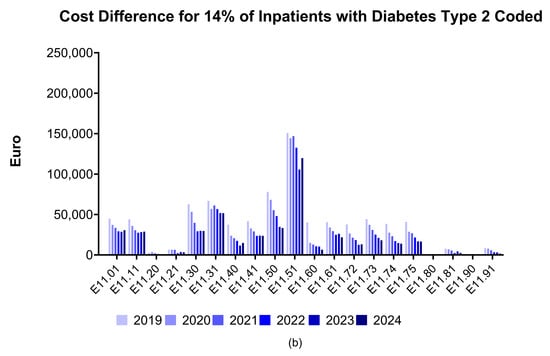
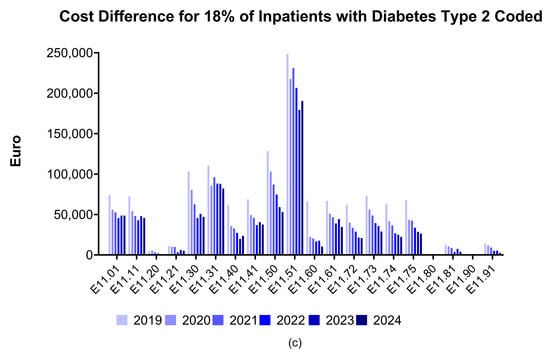
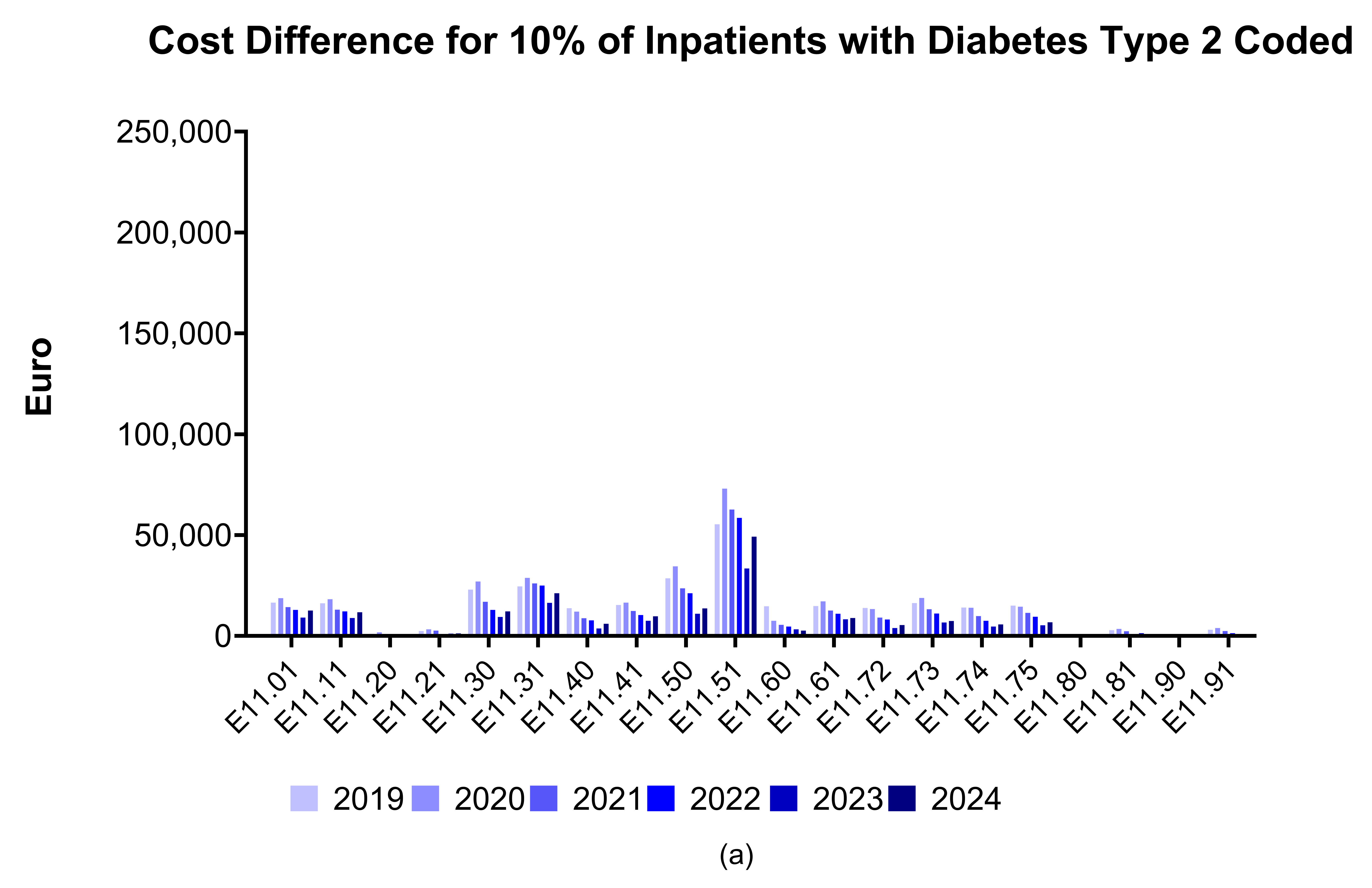
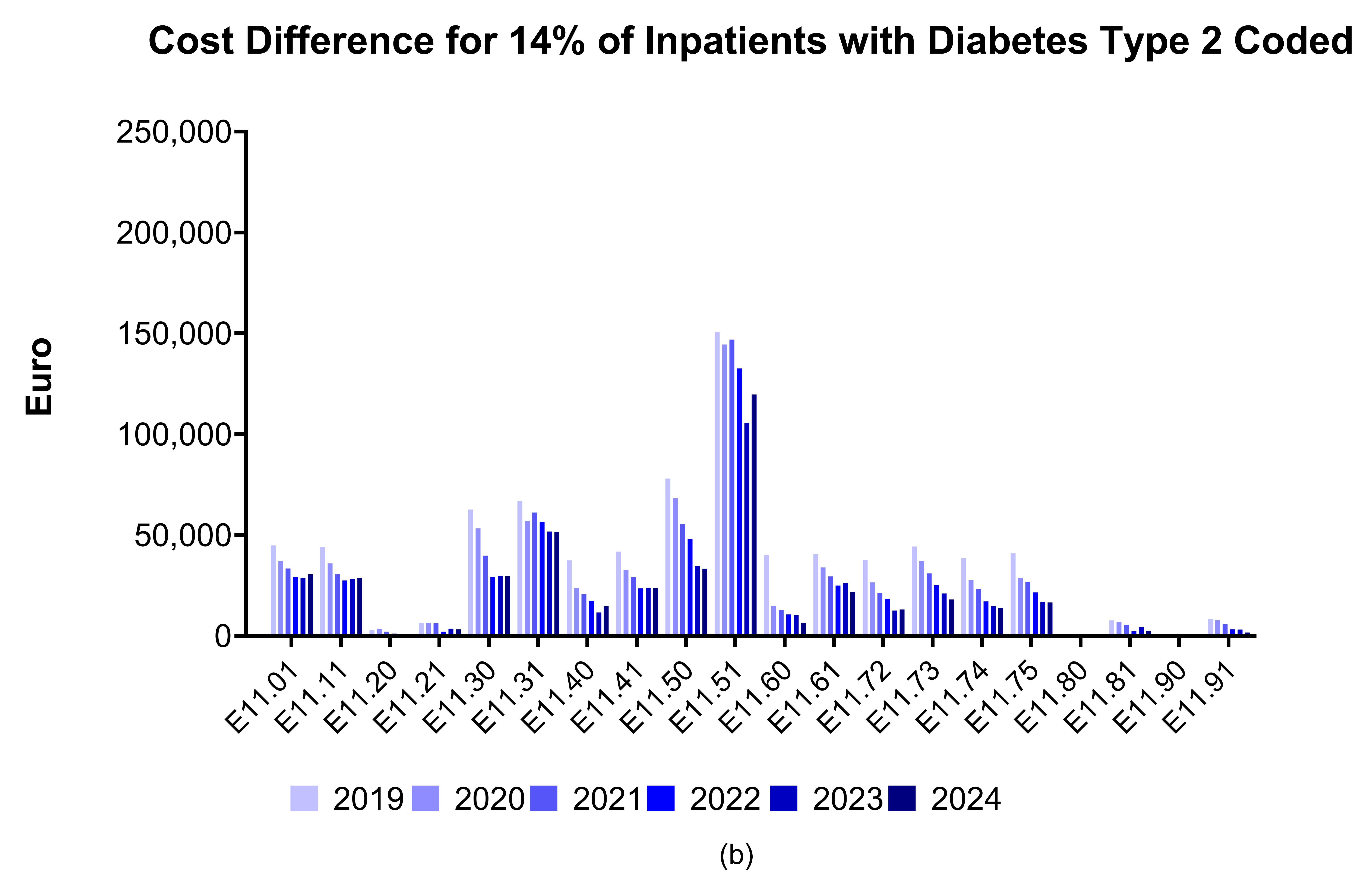
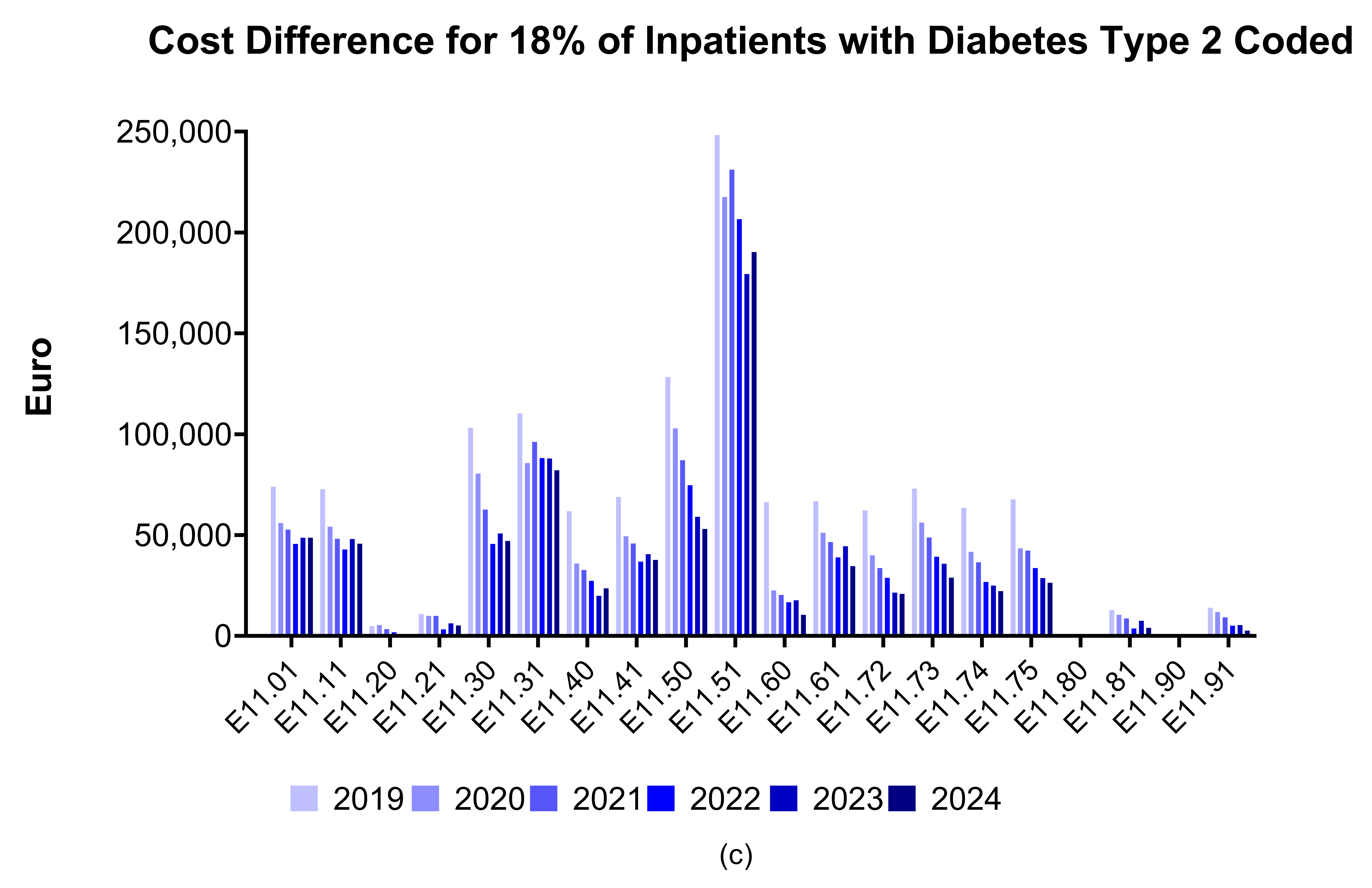
Simulation of reimbursement differences revealed substantial financial implications. The most impactful type 2 diabetes-related codes, E11.51, E11.50, E11.31, and E11.30, generated the largest reimbursement increases. Under prevalence-based recoding scenarios (10%, 14%, and 18% of cases), the hospital could achieve more than 200,000 euros in potential additional annual reimbursement. Detailed reimbursement simulations are provided in the Supplementary Tables S7–S9 and Figure 3 and Figure 4.
Figure 3.
Scenario-based financial impact estimates for inpatients with diabetes coded with E11.51 from 2019 to 2024 under assumed cost-difference scenarios of 10%, 14%, and 18%.
Figure 4.
Scenario-based financial impact estimates for inpatients with type 2 diabetes mellitus-related ICD-10 codes from 2019 to 2024 under three assumed cost-difference scenarios: (a) 10%, (b) 14%, and (c) 18%.
4. Discussion
This study demonstrates a substantial and persistent gap in the documentation of diabetes mellitus as a secondary diagnosis within a Level 1 Trauma Center operating under the German DRG system. Although diabetes was coded in only 5.99–8.20% of inpatient cases, laboratory reassessment increased the estimated prevalence to 9.76–11.62%, indicating that 28–39% of inpatients with laboratory-confirmed diabetes were not coded as diabetic. The true prevalence in the overall inpatient population could not be determined because laboratory data were unavailable for many patients. These findings highlight a systematic underestimation of metabolic comorbidities in trauma patients, a population in which acute injuries often overshadow chronic disease management.
The low rate of HbA1c testing (3.82–18.53%) suggests that the low HbA1c testing rate may contribute to missed opportunities for identifying previously unrecognized diabetes. HbA1c results in inpatient cases during the study period indicate that metabolic screening was not routinely performed across the entire inpatient population. Importantly, the laboratory-based prevalence estimates refer only to patients for whom the relevant laboratory measurements were available and should not be interpreted as the true prevalence of diabetes in the entire inpatient population. Nevertheless, the limited availability of HbA1c measurements also highlights a potential gap in the systematic identification of metabolic disorders in trauma care. Patients with previously unrecognized diabetes may remain unidentified when metabolic screening is not routinely performed. However, our retrospective dataset does not allow for the quantification of the number of undiagnosed cases among inpatients for whom no laboratory values are available. Trauma patients frequently present with stress hyperglycemia, trauma-related metabolic disturbances, or previously unrecognized diabetes [25]. In acute trauma care, clinical priorities focus on stabilization and surgical management, and chronic metabolic assessment is often deferred [26]. However, diabetes and prediabetes are strongly associated with adverse clinical outcomes, including higher complication rates, impaired wound healing, increased infection risk, and prolonged hospital stays [8,20,21,27,28,29,30]. Previous studies in trauma settings have consistently reported longer LOS among patients with diabetes or prediabetes [8,20,21,31], a finding confirmed in our cohort. These results underscore the clinical relevance of identifying metabolic disease early during hospitalization.
Recent evidence further emphasizes the importance of glycemic control in trauma patients. Persistent moderate hyperglycemia within the first 48 h after polytrauma has been independently associated with poorer functional outcomes [25]. In surgical populations, effective perioperative glycemic management reduces postoperative complications, particularly surgical-site infections [32]. Therefore, systematic metabolic screening-- such as routine HbA1c testing in patients older than 40 years or in those presenting with hyperglycemia—could improve clinical care and reduce preventable complications. Additionally, in line with another study’s findings, clinically interpretable machine learning models also support early identification of impaired glucose metabolism in trauma patients, potentially facilitating targeted HbA1c testing and improving recognition of previously undiagnosed diabetes and prediabetes [33].
The clinical relevance of diabetes in trauma patients also extends to its associated macrovascular (coronary and peripheral arterial disease) and microvascular (nephropathy, autonomic neuropathy, retinopathy and peripheral polyneuropathy) complications [34,35,36,37] which may substantially influence the management of perioperative and postoperative complications [38,39,40]. Furthermore, the frequent coexistence of overweight and obesity in patients with type 2 diabetes may increase surgical complexity and perioperative challenges [41] and postsurgical complications [42] which can cause prolonged hospitalization and additional resource consumption. Recognizing these comorbidities in trauma patients is therefore important not only for accurate diagnostic documentation and DRG classification but also for comprehensive perioperative and postoperative risk assessment and individualized patient management. Although these aspects were not directly investigated in the present study, they further emphasize the clinical importance of systematic diabetes identification and documentation.
Beyond clinical implications, this study highlights the economic relevance of accurate diabetes coding. The G-DRG system undergoes annual revisions according to reports received from hospitals to the InEK institution, including modifications to the CCL (Complication or Comorbidity Level) values assigned to individual ICD-10 codes within the G-DRG assignment algorithm for reimbursement [43,44]. These updates and annual revisions to CCL values may influence PCCL value changes and, consequently, DRG assignment and associated reimbursement. In 2020, the G-DRG system underwent a major update together with regular annual updates, in which the calculation of nursing service was excluded from overall G-DRG calculation and started to be calculated separately [45,46]. Therefore, the annual changes in PCCL-change percentages, DRG assignment percentages, and reimbursement values observed in this study should be interpreted in the context of the ongoing evolution of the G-DRG system. Furthermore, certain diagnosis codes may be particularly affected by these changes. For example, the impact of the code E11.60 decreased each year consistently in DRG classification over the study period.
Of the 108 diabetes-related ICD-10 codes tested, 95 influenced PCCL or DRG grouping. High-impact codes representing type 2 diabetes with vascular or organ complications (e.g., E11.51, E11.50, E11.31, E11.30) produced the largest reimbursement increases. These findings reflect the substantial resource utilization associated with diabetes-related complications and suggest that incomplete documentation may lead to underestimation of case severity. Under realistic recoding scenarios (10%, 14% and 18% of cases), potential annual reimbursement gains exceeded 200,000 euros, illustrating the financial consequences of under-coding in trauma centers. The reimbursement differences observed in the DRG simulations should be interpreted as theoretical estimates of the potential impact of additional, clinically justified coding. The individual code simulations did not include patient-level validation of the corresponding diabetes-related complications. Therefore, the simulated reimbursement changes cannot be interpreted as confirmed financial losses or as amounts that could automatically be recovered by the hospital. Actual reimbursement effects would depend on the presence of the respective clinical conditions, adequate documentation, and compliance with applicable coding regulations.
Regarding prediabetes, our DRG simulations did not demonstrate measurable changes in PCCL, DRG assignment, or reimbursement following the addition of prediabetes-related ICD-10 codes. However, the absence of a direct reimbursement effect should not be interpreted as an absence of clinical or economic burden. Patients with prediabetes may require additional metabolic assessment and clinical management during hospitalization. Furthermore, prediabetes is associated with an increased risk of progression to diabetes mellitus and related complications potentially impacting long-term healthcare resource utilization. Thus, although prediabetes coding does not currently translate into additional reimbursement within the simulated G-DRG system, its identification remains clinically important and may have broader economic implications that are not adequately reflected in the current reimbursement structure for trauma centers.
These results align with nationwide DRG analyses reporting a diabetes prevalence of approximately 18.5% among hospitalized patients [12] suggesting that trauma centers may systematically underreport metabolic comorbidities compared to other specialties. This discrepancy likely reflects workflow realities in trauma care, including emergency admissions, rapid surgical decision-making, and fragmented documentation processes [47]. Strengthening the alignment between clinical evidence and administrative coding has the potential to enhance both data quality and financial accuracy [22,27,47,48,49].
This study has limitations. The retrospective design relies on the completeness of available laboratory data, and HbA1c testing was not uniformly performed. The analysis was conducted at a single Level 1 Trauma Center, which may limit the generalizability of the findings to other hospitals and healthcare settings. Although the study included a large six-year inpatient dataset, the single-center diagnostic, screening, and coding practices mean the findings should therefore be interpreted within the context of this specific institutional setting. Multicenter studies using standardized metabolic screening protocols and patient-level clinical validation will help generalize and assess the external validity of these observations. However, the DRG simulations were based on standardized national reimbursement rules, reducing the influence of center-specific practices. Additionally, the simulations assume that coding changes occur without altering clinical management; in practice, improved diagnosis may also influence treatment pathways. A further limitation is the potential influence of trauma-related stress hyperglycemia on laboratory-based diabetes classification. Although diagnostic criteria from the American Diabetes Association [23] and German Diabetes Association guidelines [24] were considered, acute physiological stress may still have influenced blood glucose levels, particularly in patients without available HbA1c measurements. Because clinical outcomes and patient-level coding validation were beyond the scope of this retrospective analysis, the findings should be interpreted as hypothesis-generating rather than definitive evidence of underdiagnosis, under-coding, or reimbursement loss.
Despite these limitations, the findings suggest a relevant discrepancy between laboratory-based reassessment of diabetes prevalence and documented diabetes diagnoses among patients with available laboratory measurements. The study provides evidence that diabetes may be incompletely identified and documented in this trauma-center population and that such incomplete documentation has the potential to influence both clinical management and reimbursement calculations. Improving metabolic screening, increasing HbA1c testing rates, and strengthening coding workflows could enhance patient care, ensure a more accurate representation of case complexity, and support appropriate compensation under the G-DRG system. For trauma centers facing increasing economic pressure, these findings highlight a clear and actionable opportunity for quality improvement.
5. Conclusions
This study demonstrates a substantial and clinically relevant under-coding of diabetes mellitus in a Level 1 Trauma Center. Among inpatients with available laboratory measurements, laboratory reassessment revealed that the true prevalence of diabetes was considerably higher than documented in §21 data, with 28–39% of inpatients with laboratory-confirmed diabetes remaining uncoded. Diabetes-related secondary diagnoses significantly influence PCCL, DRG grouping, and reimbursement; incomplete documentation may lead to underestimation of clinical complexity and may affect reimbursement calculations within the G-DRG system.
The DRG simulations showed that the addition of individual diabetes-related ICD-10 codes as a secondary diagnosis can influence PCCL, DRG assignment, and reimbursement—particularly for diabetes with vascular or organ complications- and has a meaningful impact on reimbursement, with realistic recoding scenarios yielding more than 200,000 euros in additional potential annual reimbursement under the modeled assumptions. These findings highlight the importance of systematic metabolic screening, increased HbA1c testing, and improved coding workflows to ensure accurate representation of patient complexity.
Overall, strengthening metabolic diagnostics and documentation practices is essential not only for optimizing clinical care but also for securing appropriate financial compensation within the G-DRG system. For trauma centers facing increasing clinical and economic pressures, these results identify a clear and actionable opportunity to enhance both quality of care and financial sustainability.
Supplementary Materials
The following supporting information can be downloaded at https://www.mdpi.com/article/10.3390/healthcare14223934/s1, Supplementary Table S1: Diabetes Mellitus-Related ICD-10 Codes and Corresponding Definitions; Supplementary Table S2: Length of stay according to coded and not-coded Diabetes Mellitus status; Supplementary Table S3: Length of stay according to Diabetes Mellitus Status following reassessment of available laboratory data; Supplementary Table S4: Length of Stay According to Sex; Supplementary Table S5: Impact of Diabetes Mellitus-Related ICD-10 Coding on PCCL Changes; Supplementary Table S6: Impact of Diabetes Mellitus-Related ICD-10 Coding on DRG Changes; Supplementary Table S7: Estimated Reimbursement Changes in the Not-Categorized Diabetes-Related Group Under the 10% Cost-Difference Scenario; Supplementary Table S8: Estimated Reimbursement Changes in the Not-Categorized Diabetes-Related Group Under the 14% Cost-Difference Scenario; Supplementary Table S9: Estimated Reimbursement Changes in the Not-Categorized Diabetes-Related Group Under the 18% Cost-Difference Scenario.
Author Contributions
Conceptualization, E.T., S.E. and A.K.N.; methodology, E.T., S.E. and A.K.N.; software, E.T.; validation, E.T., S.E. and A.K.N.; formal analysis, E.T.; investigation, E.T., S.E. and A.K.N.; resources, S.E. and A.K.N.; data curation, E.T. and S.E.; writing—original draft preparation, E.T.; writing—review and editing, E.T., M.T., T.H., S.E. and A.K.N.; visualization, E.T. and S.E.; supervision, S.E. and A.K.N.; project administration, S.E. and A.K.N.; funding acquisition, S.E. and A.K.N. All authors have read and agreed to the published version of the manuscript.
Funding
E.T. is financially supported through a Study Abroad Program by the Ministry of National Education [Law: 1416], Republic of Türkiye.
Institutional Review Board Statement
The study was approved by the ethics committee of the University of Tübingen on 20 September 2021, with project number 454/2021BO2.
Informed Consent Statement
Informed consent was waived because this retrospective study was conducted using anonymized clinical and G-DRG data. The researchers had no access to directly identifiable patient information or any information that would permit patient identification.
Data Availability Statement
The data sets used in the current study are not publicly available.
Acknowledgments
The authors would like to thank the Controlling Department for providing the data extracted from the hospital information system and for their valuable support during this study. The authors have reviewed and edited the output and take full responsibility for the content of this publication. We acknowledge support from the Open Access Publication Fund of the University of Tübingen. The authors used AI-based language tools for language editing and to improve the grammar, readability, and scientific clarity of the manuscript. All intellectual content, data interpretation, and conclusions were developed by the authors. E.T. performed parts of this work as part of his dissertation.
Conflicts of Interest
The authors declare no conflicts of interest.
Abbreviations
The following abbreviations are used in this manuscript:
| ADA | American Diabetes Association |
| CCL | Complication or Comorbidity Level |
| DM | Diabetes Mellitus |
| DRG | Diagnosis Related Groups |
| G-DRG | German Diagnosis Related Groups |
| HbA1c | Glycated Hemoglobin |
| ICD-10 | International Classification of Diseases, 10th Revision |
| IQR | Interquartile Range |
| InEK | Institute for the Hospital Remuneration System |
| LOS | Length of Hospital Stay |
| PCCL | Patient Clinical Complexity Level |
| SD | Standard Deviation |
References
- Di Nitto, M.; Napolitano, F.; Calzolari, M.; Longobucco, Y.; Masotta, V.; Zaghini, F.; Alvaro, R.; Cicolini, G.; Lancia, L.; Manara, D.F. Billing models for measuring nursing care in inpatient and outpatient settings: A scoping review. BMC Health Serv. Res. 2025, 25, 95. [Google Scholar] [CrossRef] [Scilit] [PubMed]
- Liu, Y.; Wang, G.; Qin, T.-G.; Kobayashi, S.; Karako, T.; Song, P. Comparison of diagnosis-related groups (DRG)-based hospital payment system design and implementation strategies in different countries: The case of ischemic stroke. Biosci. Trends 2024, 18, 1–10. [Google Scholar] [CrossRef] [Scilit] [PubMed]
- Teufel, F.; Orgutsova, K.; Genitsaridi, I.; Carrillo-Larco, R.M.; Varghese, J.S.; Marcus, M.E.; Sacre, J.W.; Sajjadi, S.F.; Chiwanga, F.; Manne-Goehler, J. Global, Regional, and National Estimates of Undiagnosed Diabetes in Adults: Findings from the 2025 IDF Diabetes Atlas. Diabetes Care 2026, 49, dc252583. [Google Scholar] [CrossRef] [Scilit] [PubMed]
- Voeltz, D.; Vetterer, M.; Seidel-Jacobs, E.; Brinks, R.; Tonnies, T.; Hoyer, A. Projecting the economic burden of type 1 and type 2 diabetes mellitus in Germany from 2010 until 2040. Popul. Health Metr. 2024, 22, 17. [Google Scholar] [CrossRef] [Scilit] [PubMed]
- Auzanneau, M.; Eckert, A.J.; Fritsche, A.; Heni, M.; Icks, A.; Mueller-Stierlin, A.S.; Dugic, A.; Risse, A.; Lanzinger, S.; Holl, R.W. Diabetes in all hospitalized cases in Germany 2015-2019 and impact of the first COVID-19 year 2020. Endocr. Connect 2023, 12, e220475. [Google Scholar] [CrossRef] [Scilit] [PubMed]
- Tönnies, T.; Rathmann, W. Epidemiologie des Diabetes in Deutschland. Dtsch. Gesundheitsbericht Diabetes 2021, 2020, 10–18. [Google Scholar]
- RKI. Diabetes Mellitus: Prevalence (from 18 years). Federal Health Reporting. 2025. Available online: https://gbe.rki.de (accessed on 1 February 2026).
- Pscherer, S.; Nussler, A.; Bahrs, C.; Reumann, M.; Ihle, C.; Stockle, U.; Ehnert, S.; Freude, T.; Ochs, B.G.; Flesch, I.; et al. Retrospective Analysis of Diabetics with Regard to Treatment Duration and Costs. Z. Orthop. Unf. 2017, 155, 72–76. [Google Scholar] [CrossRef] [Scilit] [PubMed]
- Rossi, M.C.; Nicolucci, A.; Ozzello, A.; Gentile, S.; Aglialoro, A.; Chiambretti, A.; Baccetti, F.; Gentile, F.M.; Romeo, F.; Lucisano, G.; et al. Impact of severe and symptomatic hypoglycemia on quality of life and fear of hypoglycemia in type 1 and type 2 diabetes. Results of the Hypos-1 observational study. Nutr. Metab. Cardiovasc Dis. 2019, 29, 736–743. [Google Scholar] [CrossRef] [Scilit] [PubMed]
- Auzanneau, M.; Fritsche, A.; Icks, A.; Siegel, E.; Kilian, R.; Karges, W.; Lanzinger, S.; Holl, R.W. Diabetes in the Hospital-A Nationwide Analysis of all Hospitalized Cases in Germany With and Without Diabetes, 2015-2017. Dtsch. Arztebl. Int. 2021, 118, 407–412. [Google Scholar] [CrossRef] [Scilit] [PubMed]
- Sugandh, F.; Chandio, M.; Raveena, F.; Kumar, L.; Karishma, F.; Khuwaja, S.; Memon, U.A.; Bai, K.; Kashif, M.; Varrassi, G.; et al. Advances in the Management of Diabetes Mellitus: A Focus on Personalized Medicine. Cureus 2023, 15, e43697. [Google Scholar] [CrossRef] [Scilit] [PubMed]
- Auzanneau, M.; Fritsche, A.; Eckert, A.J.; Seidel-Jacobs, E.; Heni, M.; Lanzinger, S. In-hospital outcomes of adults with diabetes treated in certified vs. non-certified hospitals: A nationwide analysis of German DRG statistics. Front. Health Serv. 2026, 6, 1782882. [Google Scholar] [CrossRef] [Scilit] [PubMed]
- Hostalek, U. Global epidemiology of prediabetes-present and future perspectives. Clin. Diabetes Endocrinol. 2019, 5, 5. [Google Scholar] [CrossRef] [Scilit] [PubMed]
- Liu, J.; Capurro, D.; Nguyen, A.; Verspoor, K. Early prediction of diagnostic-related groups and estimation of hospital cost by processing clinical notes. npj Digit. Med. 2021, 4, 103. [Google Scholar] [CrossRef] [Scilit] [PubMed]
- Mihailovic, N.; Kocic, S.; Jakovljevic, M. Review of diagnosis-related group-based financing of hospital care. Health Serv. Res. Manag. Epidemiol. 2016, 3, 2333392816647892. [Google Scholar] [CrossRef] [Scilit] [PubMed]
- Bredenkamp, C.; Bales, S.; Kahur, K. Transition to Diagnosis-Related Group (DRG) Payments for Health: Lessons from Case Studies; World Bank Publications: Washington, DC, USA, 2019. [Google Scholar]
- Fürstenberg, T.; Zich, K.; Nolting, H.-D.; Laschat, M.; Klein, S.; Häussler, B. G-DRG-Impact evaluation according to sec. 17b para. 8 Hospital Finance Act. In Final Report of the First Research Cycle (2004–2006); German Institute for the Hospital Remuneration System (InEK): Siegburg-Stallberg, Germany, 2010; pp. 1–13. [Google Scholar]
- Vogl, M. Assessing DRG cost accounting with respect to resource allocation and tariff calculation: The case of Germany. Health Econ. Rev. 2012, 2, 15. [Google Scholar] [CrossRef] [Scilit] [PubMed]
- Messerle, R.; Schreyögg, J. System-Wide Effects of Hospital Payment Scheme Reforms: The German Introduction of Diagnosis-Related Groups; HCHE Research Paper. 2022.
- Wintermeyer, E.; Ihle, C.; Ehnert, S.; Schreiner, A.J.; Stollhof, L.; Stockle, U.; Nussler, A.; Fritsche, A.; Pscherer, S. Assessment of the Influence of Diabetes mellitus and Malnutrition on the Postoperative Complication Rate and Quality of Life of Patients in a Clinic Focused on Trauma Surgery. Z. Orthop. Unf. 2019, 157, 173–182. [Google Scholar] [CrossRef] [Scilit] [PubMed]
- Tercan, E.; Tombaz, M.; Huber, P.; Rollmann, M.F.; Nussler, A.K.; Ehnert, S. The Financial Burden of Prediabetes and Diabetes in Trauma Care Under the G-DRG System. Z. Fur Orthop. Und Unfallchirurgie 2026. [Google Scholar] [CrossRef] [Scilit] [PubMed]
- Ren, C.C.; Abusamaan, M.S.; Mathioudakis, N. Validation of diagnostic coding for diabetes mellitus in hospitalized patients. Endocr. Pract. 2022, 28, 458–464. [Google Scholar] [CrossRef] [Scilit] [PubMed]
- American Diabetes Association Professional Practice Committee. 2. Classification and diagnosis of diabetes: Standards of Medical Care in Diabetes—2022. Diabetes Care 2022, 45, S17–S38. [Google Scholar] [CrossRef] [Scilit] [PubMed]
- Brockamp, C.; Landgraf, R.; Müller, U.A.; Müller-Wieland, D.; Petrak, F.; Uebel, T. Shared Decision Making, Diagnostic Evaluation, and Pharmacotherapy in Type 2 Diabetes. Dtsch. Arztebl. Int. 2023, 120, 804–810. [Google Scholar] [CrossRef] [Scilit] [PubMed]
- Deininger, M.M.; Wassersteiner, P.; Haehn, N.; Huth, J.; Marx, G.; Weber, C.D.; Hildebrand, F.; Simon, T.-P.; Benstoem, C.; Breuer, T. Association between sustained moderate hyperglycemia within first 48 hours and poor functional outcome after polytrauma: A retrospective cohort study. Eur. J. Trauma Emerg. Surg. 2026, 52, 63. [Google Scholar] [CrossRef] [Scilit] [PubMed]
- Reade, M.C. Perspective: The top 11 priorities to improve trauma outcomes, from system to patient level. Crit. Care 2022, 26, 395. [Google Scholar] [CrossRef] [Scilit] [PubMed]
- Kufeldt, J.; Kovarova, M.; Adolph, M.; Staiger, H.; Bamberg, M.; Haring, H.U.; Fritsche, A.; Peter, A. Prevalence and Distribution of Diabetes Mellitus in a Maximum Care Hospital: Urgent Need for HbA1c-Screening. Exp. Clin. Endocrinol. Diabetes 2018, 126, 123–129. [Google Scholar] [CrossRef] [Scilit] [PubMed]
- Zhang, T.; Song, D.; Shao, M.; Wang, G.; Jiang, Z. Effects of perioperative tight glycemic control on prognosis in diabetic abdominal surgery patients: A systematic review and meta-analysis. Perioper. Med. 2026, 15, 30. [Google Scholar] [CrossRef] [Scilit] [PubMed]
- Fan, M.; Stephan, A.-J.; Emmert-Fees, K.; Peters, A.; Laxy, M. Health and economic impact of improved glucose, blood pressure and lipid control among German adults with type 2 diabetes: A modelling study. Diabetologia 2023, 66, 1693–1704. [Google Scholar] [CrossRef] [Scilit] [PubMed]
- Zhang, Q.; Wei, X.; Zheng, J.; Lu, Y.; Wu, Y. Financial incentives in the management of diabetes: A systematic review. Cost. Eff. Resour. Alloc. 2024, 22, 71. [Google Scholar] [CrossRef] [Scilit] [PubMed]
- Stollhof, L.E.; Braun, J.M.; Ihle, C.; Schreiner, A.J.; Kufeldt, J.; Adolph, M.; Wintermeyer, E.; Stöckle, U.; Nüssler, A. The continuous downgrading of malnutrition in the German DRG system: Possible effects on the treatment of patients at risk for malnutrition. EXCLI J. 2019, 18, 370. [Google Scholar] [CrossRef] [Scilit] [PubMed]
- Bellusse, G.C.; Ribeiro, J.C.; de Freitas, I.C.M.; Galvão, C.M. Effect of perioperative hyperglycemia on surgical site infection in abdominal surgery: A prospective cohort study. Am. J. Infect. Control 2020, 48, 781–785. [Google Scholar] [CrossRef] [Scilit] [PubMed]
- Tombaz, M.; Nüssler, A.K.; Tercan, E.; Braun, N.R.; Fritsche, A.; Histing, T.; Pfeifer, N.; Ehnert, S. Clinically Interpretable Machine Learning for Glycemic Risk Screening in Trauma Patients. Mach. Learn. Knowl. Extr. 2026, 8, 254. [Google Scholar] [CrossRef] [Scilit]
- Wukich, D.K. Diabetes and its negative impact on outcomes in orthopaedic surgery. World J. Orthop. 2015, 6, 331. [Google Scholar] [CrossRef] [Scilit] [PubMed]
- El-Menyar, A.; Mekkodathil, A.; Al-Thani, H. Traumatic injuries in patients with diabetes mellitus. J. Emerg. Trauma Shock 2016, 9, 64. [Google Scholar] [CrossRef] [Scilit] [PubMed]
- Garofolo, M.; Gualdani, E.; Giannarelli, R.; Aragona, M.; Campi, F.; Lucchesi, D.; Daniele, G.; Miccoli, R.; Francesconi, P.; Del Prato, S. Microvascular complications burden (nephropathy, retinopathy and peripheral polyneuropathy) affects risk of major vascular events and all-cause mortality in type 1 diabetes: A 10-year follow-up study. Cardiovasc. Diabetol. 2019, 18, 159. [Google Scholar] [CrossRef] [Scilit] [PubMed]
- Soe, K.K.; Selvarajah, D. Cardiac autonomic neuropathy and its impact on progression of diabetic kidney disease in type 1 and type 2 diabetes. Kidney Med. 2025, 7, 101149. [Google Scholar] [CrossRef] [Scilit] [PubMed]
- Akiboye, F.; Rayman, G. Management of hyperglycemia and diabetes in orthopedic surgery. Curr. Diabetes Rep. 2017, 17, 13. [Google Scholar] [CrossRef] [Scilit] [PubMed]
- Arokiyanathan, S.; Baalamurugan, H.; Ip, I.; Marcus, L.; Mafullul, D.; Ranchagoda, J. Perioperative glycaemic control and orthopaedic outcomes: A narrative review of evidence and future directions. Cureus 2025, 17, e96905. [Google Scholar] [CrossRef] [Scilit] [PubMed]
- Li, Y.; Liu, Y.; Liu, S.; Gao, M.; Wang, W.; Chen, K.; Huang, L.; Liu, Y. Diabetic vascular diseases: Molecular mechanisms and therapeutic strategies. Signal Transduct. Target. Ther. 2023, 8, 152. [Google Scholar] [CrossRef] [Scilit] [PubMed]
- Brown, C.V.; Velmahos, G.C. The consequences of obesity on trauma, emergency surgery, and surgical critical care. World J. Emerg. Surg. 2006, 1, 27. [Google Scholar] [CrossRef] [Scilit] [PubMed]
- Plassmeier, L.; Hankir, M.K.; Seyfried, F. Impact of excess body weight on postsurgical complications. Visc. Med. 2021, 37, 287–297. [Google Scholar] [CrossRef] [Scilit] [PubMed]
- InEK. InEK–Institut für das Entgeltsystem im Krankenhaus. Available online: https://www.g-drg.de/ (accessed on 1 March 2026).
- Eisenmenger, N. Das AG-DRG-System, 1. Auflage, Backnang; RI Innovation GmbH: Hürth, Germany, 2021. [Google Scholar]
- Verboket, R.D.; Muhlenfeld, N.; Woschek, M.; Marzi, I.; Pieper, M.; Zollner, J.P.; Strzelczyk, A.; Willems, L.M. Inpatient treatment costs, cost-driving factors and potential reimbursement problems due to fall-related fractures in patients with Parkinson’s disease. Der Chir. 2020, 91, 421–427. [Google Scholar] [CrossRef] [Scilit]
- Schopow, N.; Botzon, A.; Schneider, K.; Fuchs, C.; Josten, C.; von Dercks, N.; Fakler, J.; Osterhoff, G. Is polytrauma treatment in deficit in the aG-DRG system? Unfallchirurg 2022, 125, 305–312. [Google Scholar] [CrossRef] [Scilit] [PubMed]
- Stafford, L.K.; Gage, A.; Xu, Y.Y.; Conrad, M.; Beltran, I.B.; Boyko, E.J.; Duncan, B.B.; Hay, S.I.; Lenox, H.; Lozano, R. Global, regional, and national cascades of diabetes care, 2000–23: A systematic review and modelling analysis using findings from the Global Burden of Disease Study. Lancet Diabetes Endocrinol. 2025, 13, 924–934. [Google Scholar] [CrossRef] [Scilit] [PubMed]
- Platis, C.; Papaioannou, L.; Sideri, P.; Messaropoulos, P.; Chalkias, K.; Kontodimopoulos, N. Achieving Robust Medical Coding in DRGs Systems: Innovative Actions Adopted in Greece. Healthcare 2024, 12, 1782. [Google Scholar] [CrossRef] [Scilit] [PubMed]
- Tarantino, I.; Widmann, B.; Warschkow, R.; Weitzendorfer, M.; Bock, S.; Roeske, S.; Abbassi, F.; Sortino, R.; Schmied, B.M.; Steffen, T. Impact of precoding on reimbursement in diagnosis-related group systems: Randomized controlled trial. Int. J. Surg. 2021, 96, 106173. [Google Scholar] [CrossRef] [Scilit] [PubMed]

Disclaimer/Publisher’s Note: The statements, opinions and data contained in all publications are solely those of the individual author(s) and contributor(s) and not of MDPI and/or the editor(s). MDPI and/or the editor(s) disclaim responsibility for any injury to people or property resulting from any ideas, methods, instructions or products referred to in the content. |
© 2026 by the authors. Licensee MDPI, Basel, Switzerland. This article is an open access article distributed under the terms and conditions of the Creative Commons Attribution (CC BY) license.