


Abstract
Background and Objectives: Coronary artery bypass grafting (CABG) is associated with substantial psychological distress, including anxiety and depression, which can impair postoperative recovery. This systematic review and meta-analysis evaluated the effectiveness of psychosocial interventions in reducing anxiety and depression in patients undergoing CABG. Materials and Methods: The review followed the PRISMA 2020 statement and was registered in PROSPERO (CRD420251022254). Six databases were searched for randomized controlled trials (RCTs) published in English between 1 January 2015 and June 2025. Risk of bias was assessed with the Cochrane RoB 2 tool. Hedges’ g was pooled using a DerSimonian–Laird random-effects model, with one independent estimate per trial and outcome. Results: Six reports of five RCTs (947 unique participants) met the inclusion criteria; two reports described the same trial (PSY-HEART). Interventions included psychoeducation, web-based support, and multicomponent rehabilitation. In the meta-analysis of four trials, psychosocial interventions produced a small reduction in anxiety (g = −0.30, 95% CI −0.50 to −0.10, p = 0.003; I2 = 37%), although this finding was not robust in all sensitivity analyses. For depression, only two trials could be pooled, and the effect was small and not statistically significant (g = −0.29, 95% CI −0.60 to 0.01, p = 0.061; I2 = 50%). Conclusions: Psychosocial interventions may produce a small reduction in anxiety in patients undergoing CABG, although this finding is based on four trials and should be interpreted with caution. The evidence for depression is inconclusive. Larger, well-reported trials are needed before firm recommendations can be made; in the meantime, structured psychosocial care, in which nurses can play a central role, is a reasonable component of perioperative care and cardiac rehabilitation.
1. Introduction
Coronary artery bypass grafting (CABG) is among the most frequently performed procedures for the treatment of coronary artery disease (CAD) worldwide [1]. By improving coronary circulation, CABG restores oxygen and nutrient delivery to the myocardium and relieves angina and other symptoms of CAD [2]. However, cardiac surgery is also a major life event that can bring physical and psychological challenges, including anxiety, fear, depression, and pain. Whereas earlier efforts focused largely on surgical technique, anesthesia, comorbidities, and lifestyle factors, growing evidence highlights the role of psychological preparation in improving both preoperative and postoperative outcomes [3]. Psychosocial factors have long been recognized as influencing cardiac outcomes [4], and psychological therapies have been used in secondary prevention to improve psychological well-being rather than solely to reduce cardiovascular risk factors [5]. A review of interventions targeting depression in cardiovascular disease highlighted the effectiveness of cognitive behavioral therapy (CBT), collaborative care, cardiac rehabilitation and exercise, stress management and relaxation training, caregiver interventions, nutritional interventions, and combined behavioral and pharmacological treatment [6].
Before surgery, patients often experience stress and fear of death, which activate the sympathetic nervous system and raise blood pressure, heart rate, and energy expenditure, potentially complicating surgery and recovery. Heightened anxiety can also amplify pain perception after CABG and further hinder recovery [7]. Psychological distress is common after CABG, and managing it is essential to prevent symptom deterioration, improve quality of life and potentially reduce graft degeneration [8]. A systematic review showed that CBT improves depression, anxiety, and quality of life after CABG, although the small number of studies and their heterogeneity point to the need for standardized CBT protocols [9].
Although awareness of the psychological burden of CABG has increased, research on psychosocial interventions remains inconsistent. There is little agreement on which interventions are most effective, when they should be delivered, or how they are best delivered. Given the importance of psychological well-being throughout the perioperative period and recovery, a systematic review is needed to synthesize the evidence on the effectiveness of these interventions.
This systematic review and meta-analysis aimed to evaluate the effectiveness of psychosocial interventions in reducing anxiety and depression in patients undergoing CABG.
2. Methods
2.1. Protocol and Registration
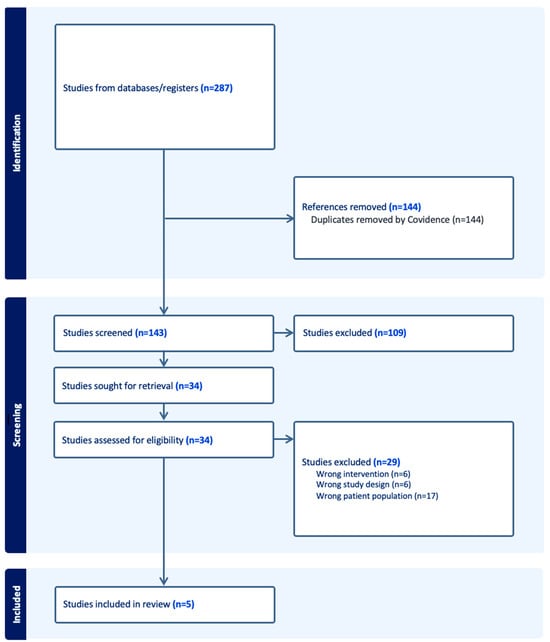
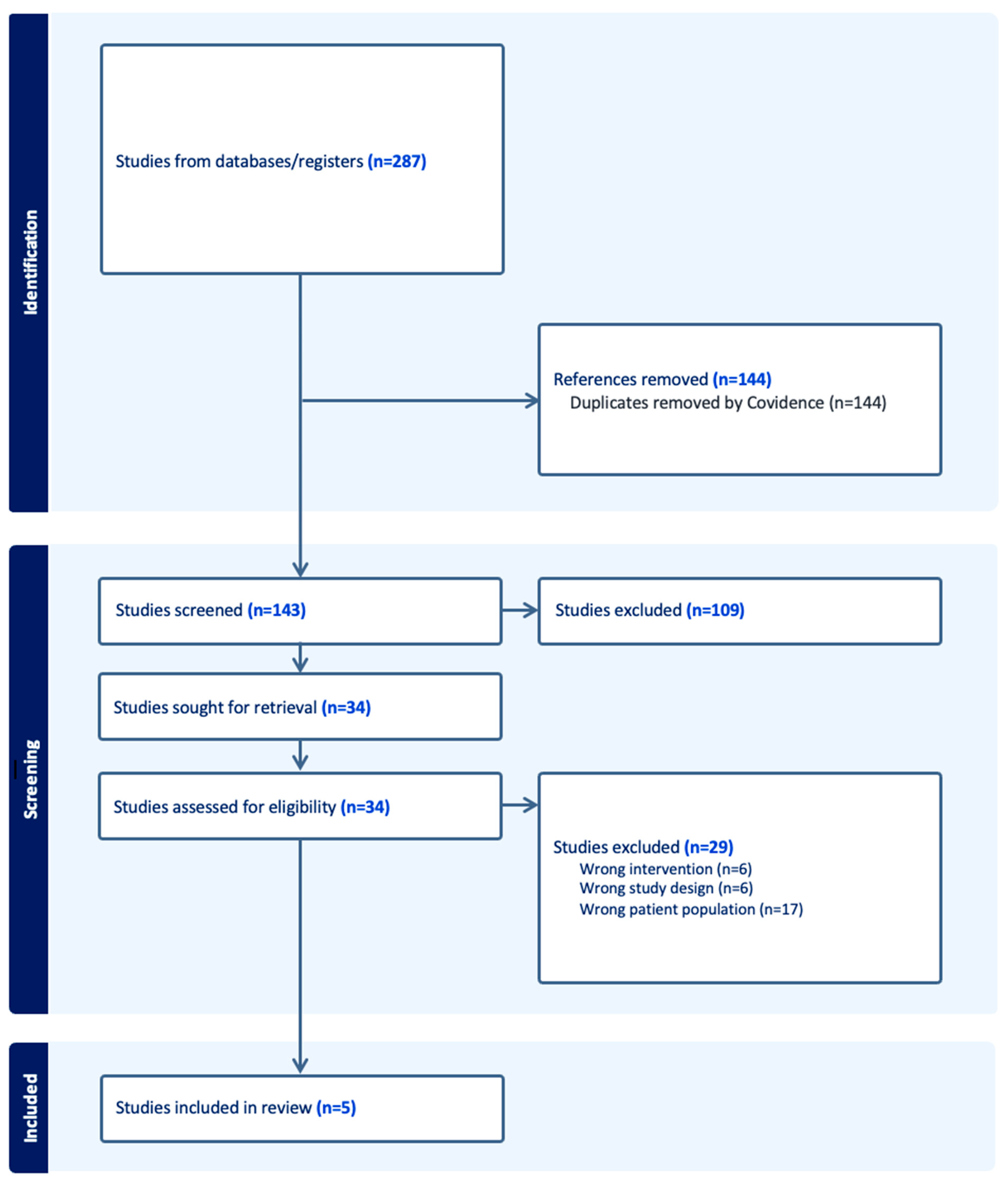
This systematic review and meta-analysis was reported in accordance with the PRISMA (Preferred Reporting Items for Systematic Reviews and Meta-Analyses) 2020 statement (Figure 1) (Supplementary File S1) and was registered in PROSPERO (CRD420251022254). The literature search, study selection, data extraction, and risk-of-bias assessment were performed independently by researchers (ZİK, NDK, MNT, EHKC), and disagreements were resolved by consensus at each stage [10].
Figure 1.
PRISMA 2020 flow diagram.
2.2. Eligibility Criteria
Eligibility was defined using the PICOS framework: (P) adults undergoing CABG; (I) psychosocial interventions; (C) standard or usual care; (O) anxiety and/or depressive symptoms; and (S) RCTs published in English between 1 January 2015 and the final search date.
Studies were excluded if they were not randomized, had an unclear methodology or no available full text, or were published before 1 January 2015 or in a language other than English. The ten-year window was chosen to reflect contemporary perioperative and rehabilitation practice, such as fast-track recovery pathways and digitally delivered follow-up, and to complement an earlier meta-analysis of psychological interventions in cardiac surgery that covered the preceding literature [11] The English-language restriction was applied for feasibility, because the review team did not have the resources to translate full texts reliably; its potential to introduce language bias is acknowledged in the limitations.
2.3. Search Strategy
The search was conducted between 15 February and 29 June 2025 in PubMed, the Cochrane Library, MEDLINE (Ovid), Scopus, Web of Science and CINAHL; the final search was run on 29 June 2025. Search terms combined concepts for the population (e.g., ‘coronary artery bypass’, ‘CABG’, ‘coronary bypass surgery’), the intervention (e.g., ‘psychosocial intervention’, ‘psychological intervention’, ‘psychoeducation’, ‘mental health support’, ‘preoperative care’, ‘postoperative care’) and the outcomes (‘anxiety’, ‘depression’, ‘quality of life’). The databases searched, the search terms, the limits applied, and the number of records retrieved from each database are provided in Supplementary Table S1; the exact database-specific search strings were not saved at the time of searching.
2.4. Data Extraction
Using a standardized extraction form, four researchers (ZİK, NDK, MNT, EHKC) independently extracted the author, year, country, design, sample size, participant characteristics, intervention type and duration, comparator, outcome measures and assessment time points, as well as the group sizes, means and standard deviations (SDs) needed to calculate effect sizes (Supplementary Table S2). When a trial was described in more than one report, the reports were linked and treated as a single study. During revision, all extracted data were re-checked against the full texts.
2.5. Methodological Quality Assessment of Studies
Risk of bias was assessed using the Cochrane Risk of Bias 2 (RoB 2) tool [12] across five domains: the randomization process, deviations from intended interventions, missing outcome data, measurement of the outcome, and selection of the reported result. Overall judgments followed the RoB 2 algorithm: a trial was judged to be at low risk of bias only if all domains were at low risk, and as having some concerns if at least one domain raised some concerns and none was at high risk. Linked reports of the same trial were assessed together. Assessments were made independently by four authors and discrepancies were resolved through discussion; the rationale for each judgement is given in Supplementary Table S3.
2.6. Data Synthesis
For each trial, the standardized mean difference was calculated as Hedges’ g with its 95% confidence interval (CI); negative values favor the intervention. Values of 0.2, 0.5 and 0.8 were interpreted as small, medium and large effects, respectively. Effect sizes were calculated from post-intervention means, SDs and group sizes. When only 95% CIs were reported, SDs were derived from them, following the Cochrane Handbook. When a trial reported two subscales of the same construct, their effect sizes were averaged, conservatively assuming a correlation of 1. For each trial, the assessment at the end of the intervention was used or, if this was not reported, the trial’s primary follow-up. For the three-arm PSY-HEART trial, the two active arms (EXPECT and SUPPORT) were combined into a single intervention group and compared with the shared standard-care control group, as recommended in the Cochrane Handbook, so that control participants were counted only once. The data and calculation method for each effect size are given in Supplementary Table S2. Because the interventions and populations differed, a random-effects model was used, with the between-study variance (τ2) estimated by the DerSimonian–Laird method of moments. Heterogeneity was assessed with Cochran’s Q and the I2 statistic. Each analysis included only one independent estimate per trial and outcome. Sensitivity analyses comprised (i) replacing the PSY-HEART estimate from the primary report [13] with that from the secondary report [14]; (ii) leave-one-out analyses; and (iii) applying the Hartung–Knapp–Sidik–Jonkman (HKSJ) adjustment to the CI of the pooled estimate, given the small number of trials. Sensitivity analyses (ii) and (iii) were not prespecified in the protocol and were added during peer review. Publication bias could not be assessed because fewer than ten trials were available. Analyses were performed in Comprehensive Meta-Analysis (version 3.3.070). Statistical significance was set at p < 0.05 (two-tailed).
3. Results
3.1. Search Results
The database searches identified 287 records. After 144 duplicates had been removed, 143 titles and abstracts were screened, and 109 were excluded. The full texts of 34 articles were assessed for eligibility, of which 29 were excluded (wrong patient population, n = 17; wrong intervention, n = 6; wrong study design, n = 6). One of these, a study of laughter yoga after CABG [15], had been included in the original submission; on re-examination of the full text, participants had been allocated by convenience sampling rather than randomization, so the study did not meet the eligibility criteria. Six reports of five RCTs were included in the review (Figure 1). Two reports (Rief et al. [13] and Horn et al. [14]) described the same trial (PSY-HEART) and the same 124 randomized participants; they were therefore linked and treated as one study.
3.2. Characteristics of Studies and Participants
All included studies were RCTs published between 2016 and 2024. The five trials were conducted in Germany (n = 2), Iran (n = 1), Denmark (n = 1), and China (n = 1) (Table 1).
Table 1.
Characteristics of the included studies.
The five trials randomized 947 unique participants (intervention groups: 504; control groups: 443).
3.3. Characteristics of Intervention
The five interventions varied considerably in format, dose, and timing of delivery, but fell into three broad approaches (Table 1).
3.3.1. Brief Preoperative Interventions
Three trials delivered brief, structured interventions shortly before surgery. Two used nurse-led bedside sessions that combined psychoeducation, tailored emotional support and relaxation training, based on each patient’s assessed stressors or fears: one or two 45 to 60 min sessions after admission [16] and a single 30 min session on the day before surgery [17].The PSY-HEART trial [13,14] instead used a manualized, psychologist-delivered format of two 50 min sessions plus telephone contacts, based on the Common-Sense Model. It compared an expectation-focused arm (EXPECT) and an attention-control arm (SUPPORT), which offered equivalent contact time without targeting expectations, with standard medical care. All three interventions were time-limited and designed to fit within a short preoperative window.
3.3.2. Extended, Multicomponent Rehabilitation
One trial took a longer approach, combining four weeks of physical rehabilitation (respiratory physiotherapy and aerobic training) with a psychoeducational component based on Parse’s Human Becoming Theory, delivered through nurse-led consultations from admission through the early postoperative period [18].
3.3.3. Long-Term Digital/Continuous Nursing Support
One trial was the only intervention to extend well beyond the perioperative period, providing 12 months of web-based continuous nursing care (the WIKAP model) via WeChat/QQ, which combined health education, individualized follow-up and multidisciplinary psychological support [19].
Three of the five interventions were explicitly based on an established theoretical model (the Neuman Systems Model [16], the Common-Sense Model [13,14] and Parse’s Human Becoming Theory [18]), whereas the other two [17,19] used structured protocols without an explicit theoretical framework. The two brief nurse-led preoperative interventions [16,17] reported the most consistent short-term reductions in anxiety, whereas the longer and digitally delivered interventions [18,19] were more likely to report delayed or depression-specific effects.
3.4. Quality Assessment Results
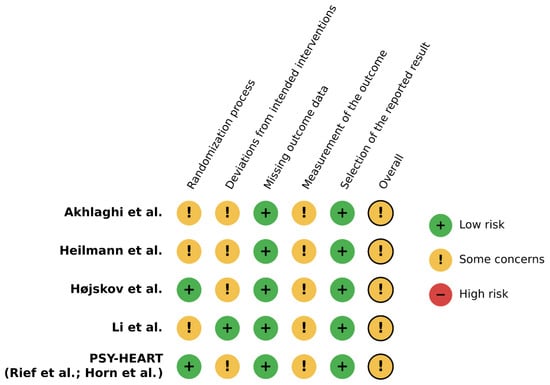
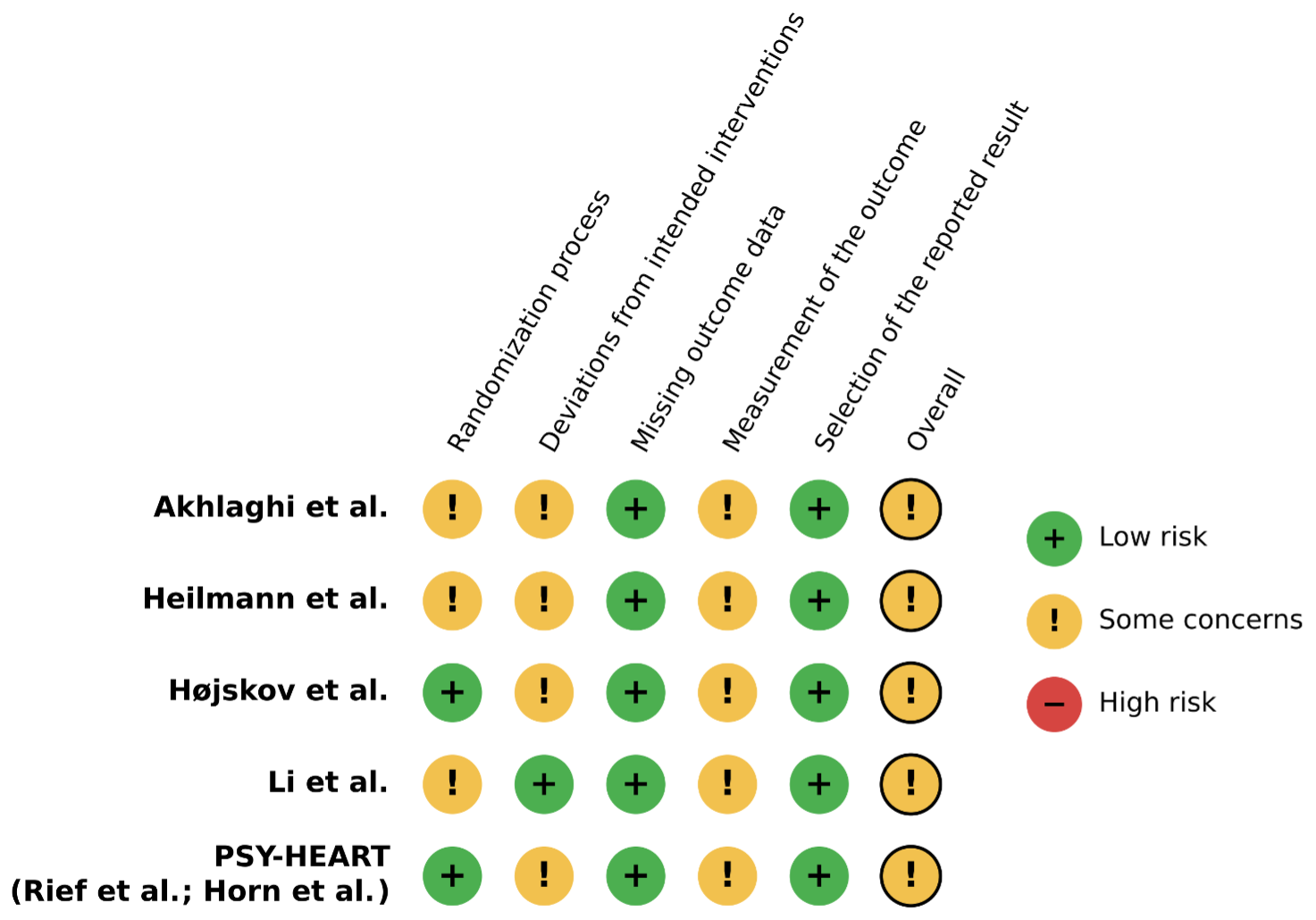
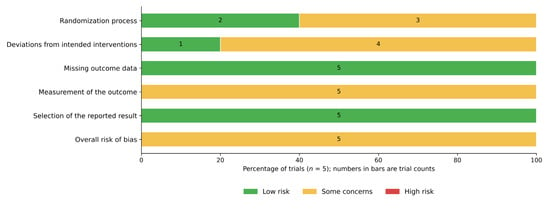
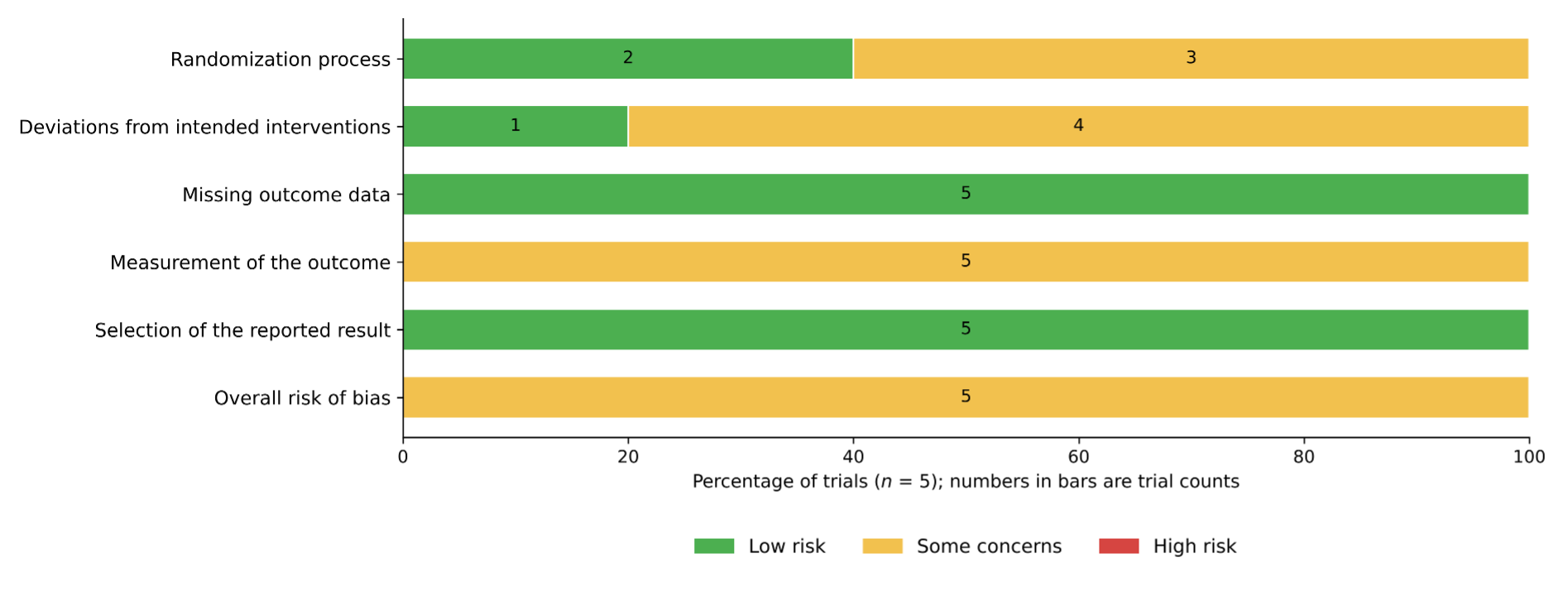
Risk-of-bias judgements are shown in Figure 2 and Figure 3 and justified in Supplementary Table S3. All five trials were judged to have some concerns overall, and none was at high risk of bias. All five trials had some concerns in the domain of measurement of the outcome, because anxiety and depression were self-reported by participants who were aware of their allocation; blinding of study staff does not protect against this bias for self-reported outcomes. Some concerns also arose in the domains of deviations from intended interventions (four trials) and the randomization process (three trials). Missing outcome data and selection of the reported result were at low risk in all trials. Because the two PSY-HEART reports describe the same trial, they were assessed together and are shown as a single trial.
Figure 2.
Risk-of-bias summary. Caption: Akhlaghi et al., (2021) [16]; Heilmann et al., (2016) [17]; Horn et al., (2022) [14]; Højskov et al., (2019) [18]; Li et al., (2024) [19]; Rief et al., (2017) [13].
Figure 3.
Risk-of-bias graph.
3.5. Quantitative Synthesis
Four trials contributed to the meta-analysis of anxiety and two to the meta-analysis of depression; the extracted data are given in Supplementary Table S2. Li et al. [19] could not be pooled because the report presented anxiety and depression scores only in figures, without the descriptive statistics needed to calculate effect sizes; its findings are summarized in the narrative synthesis.
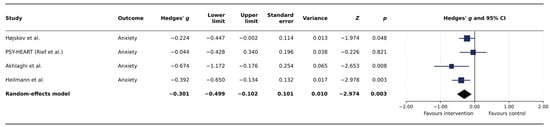
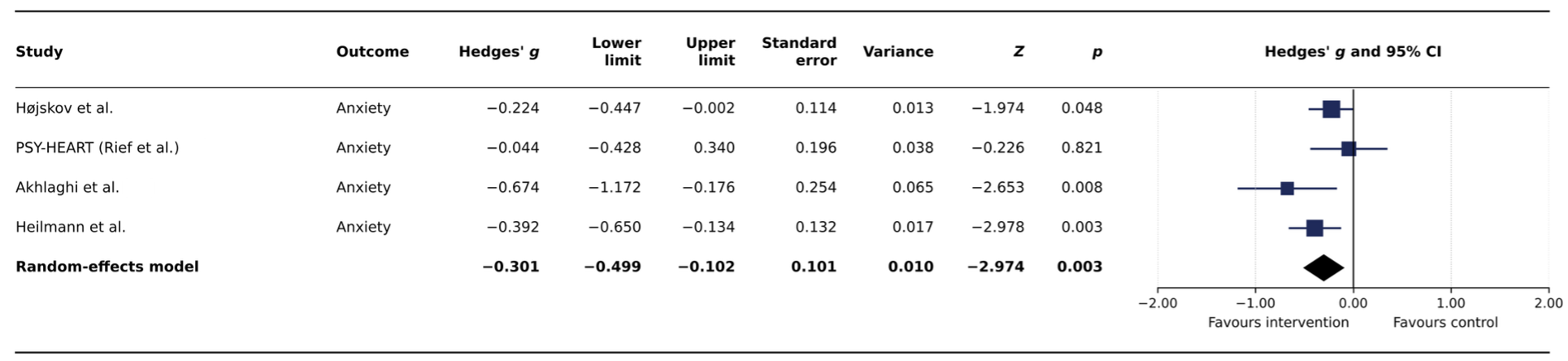
In the primary analysis of four trials (773 randomized participants), psychosocial interventions produced a small, statistically significant reduction in anxiety (g = −0.30, 95% CI −0.50 to −0.10, Z = −2.97, p = 0.003; Figure 4). Heterogeneity was low to moderate (Q = 4.79, df = 3, p = 0.188; I2 = 37.3%; τ2 = 0.015), although with only four trials this estimate is imprecise and should not be taken as evidence that the effect is consistent across settings. The result was similar when the PSY-HEART estimate from the secondary report was used (g = −0.32, 95% CI −0.48 to −0.15). However, the finding was not fully robust: in leave-one-out analyses, the pooled estimate ranged from −0.25 to −0.35, but its CI included zero when Heilmann et al. [17] was omitted (g = −0.27, 95% CI −0.55 to 0.02), and the CI also included zero with the HKSJ adjustment (95% CI −0.65 to 0.04, p = 0.069).
Figure 4.
Forest plot of the effect of psychosocial interventions on anxiety (Hedges’ g, random-effects model). Caption: Højskov et al., (2019) [18]; Rief et al., (2017) [13]; Akhlaghi et al., (2021) [16]; Heilmann et al., (2016) [17].
Only two trials (450 randomized participants) could be pooled. The pooled effect was small and not statistically significant (g = −0.29, 95% CI −0.60 to 0.01, Z = −1.88, p = 0.061; I2 = 49.7%; τ2 = 0.026; Figure 5). When the PSY-HEART estimate from the secondary report was used, the effect was smaller, and its CI only just excluded zero (g = −0.20, 95% CI −0.39 to −0.005). Because pooled estimates based on two trials are highly uncertain, the depression results should be regarded as inconclusive.
Figure 5.
Forest plot of the effect of psychosocial interventions on depression (Hedges’ g, random-effects model). Højskov et al., (2019) [18]; Rief et al., (2017) [13].
3.6. Narrative Synthesis: Anxiety
This narrative synthesis summarizes the findings of all five trials as reported by their authors. A preoperative nursing intervention based on the Neuman Systems Model significantly reduced anxiety immediately after the intervention, and the reduction was maintained until hospital discharge, whereas anxiety did not change significantly in the control group [16]. A brief nurse-led psychosocial intervention delivered the day before surgery reduced both preoperative and postoperative anxiety: anxiety was significantly lower immediately after the intervention and remained lower than in the standard-care group five days after surgery [17]. In the PSY-HEART trial, neither preoperative intervention reduced anxiety more than standard medical care at any follow-up; anxiety declined in all groups over the 6-month follow-up, suggesting natural recovery or a general effect of surgery and hospitalization, although the expectation-focused intervention improved other outcomes, such as disability and quality of life [13,14]. Early combined physical and psychoeducational rehabilitation did not significantly reduce anxiety scores compared with usual care, although scores fell slightly more in the intervention group [18]. Finally, a 12-month web-based nursing intervention (WIKAP) had no detectable effect during the first 6 months but significantly reduced anxiety scores and the prevalence of anxiety at 9 and 12 months after discharge [19].
3.7. Narrative Synthesis: Depression
Early combined physical and psychoeducational rehabilitation did not significantly change mean depression scores, but fewer patients in the intervention group scored above the clinical cut-off at 4 weeks after surgery (odds ratio 0.46, 95% CI 0.22 to 0.97), suggesting a possible preventive effect [18] In the PSY-HEART trial, depressive symptoms improved in all groups by 6 months, and the group difference in the full sample was not statistically significant [13]; however, a secondary analysis found that both interventions reduced depressive symptoms in patients with high baseline depressive symptoms, most clearly at 6 months [14]. The 12-month WIKAP intervention had no short-term effect but significantly reduced depression scores and prevalence from 9 months after discharge onward [19]. Taken together, the narrative evidence suggests that benefits for depression may depend on baseline symptom severity and longer intervention duration, but it does not allow firm conclusions.
4. Discussion
This systematic review and meta-analysis evaluated the effectiveness of psychosocial interventions in reducing anxiety and depression in patients undergoing CABG. Five trials were included, of which four could be pooled. The pooled data showed a small reduction in anxiety, although this finding was not robust in all sensitivity analyses, whereas the evidence for depression, based on two pooled trials, was inconclusive.
Our anxiety findings are broadly consistent with the most comprehensive evidence available. A recent Cochrane review of psychological interventions in coronary heart disease, heart failure and atrial fibrillation reported moderate improvements in both anxiety and depression at 6–12 months, with larger and faster effects when interventions explicitly targeted anxiety [20]. Therapist-assisted e-health interventions combining cognitive behavioral and acceptance-based techniques are also being evaluated in patients with ischemic heart disease [21]. Several sources suggest why brief, targeted interventions may work well for anxiety: focused content on expectation management and emotion regulation, even when delivered in a short preoperative window, appears sufficient to reduce acute anxiety [3], and family-inclusive, nurse-led education programs starting in hospital have proven feasible and effective even when brief [22]. Structured, sustained nurse-led rehabilitation models show comparable benefits [23], and group metacognitive therapy targeting maladaptive thinking has produced durable psychological improvements when embedded in routine cardiac rehabilitation [24]. Evidence from broader cardiac populations supports this pattern: psychological interventions produce small-to-moderate improvements in cardiac surgery patients in general [11] and clinically meaningful, moderate improvements in coronary artery disease [25], although neither review found benefits for mortality or major adverse cardiac events. This suggests that the main value of these interventions lies in psychological rather than clinical recovery. Similar needs have been identified in less-studied cardiac populations: a systematic review of patients with spontaneous coronary artery dissection found high psychological distress and called for routine mental health screening and patient-centered psychosocial support across cardiac rehabilitation pathways [26].
The weaker evidence for depression than for anxiety has also been observed in other reviews and may partly reflect when and by whom interventions are delivered. A meta-analysis of moderators in cardiac surgery patients found that depression improved most when interventions were delivered after surgery, by trained professionals and over longer periods, whereas improvements in anxiety depended less on these factors and were seen even with briefer, less intensive formats [11]. This is consistent with our findings: the interventions that most consistently reduced anxiety [16,17] were brief and delivered immediately before surgery, whereas the clearest benefit for depression was reported for a 12-month intervention [19], and in the PSY-HEART trial [13,14] a secondary analysis suggested that mainly patients with elevated baseline depressive symptoms benefited, a moderation effect that a pooled estimate cannot capture. Depression may therefore be a less acute, more persistent target than preoperative anxiety, one that responds better to sustained contact, and a brief intervention offered to all patients may be less likely to show benefit in an unselected population. With only two pooled trials, however, these explanations remain speculative. Future trials may benefit from stratifying participants by baseline depressive symptom severity rather than treating patients undergoing CABG as a homogeneous group.
Evidence in this area continues to accumulate. An RCT published after our search was completed, and therefore not included in the synthesis, evaluated a nurse-led telehealth transitional care intervention in older adults undergoing CABG and reported significant reductions in both anxiety and depression compared with usual care [27]. This finding is consistent with the digitally delivered, nurse-coordinated model identified in our review [19] and underlines the need to update this evidence base as new trials are published.
5. Conclusions
This systematic review and meta-analysis found that psychosocial interventions were associated with a small reduction in anxiety in patients undergoing CABG, based on four trials, although the effect was not robust in all sensitivity analyses. Narrative evidence from trials of preoperative psychoeducation, multicomponent rehabilitation and long-term digital support was broadly consistent with this finding. For depression, only two trials could be pooled; the effect was not statistically significant, and the evidence is inconclusive.
Given the small number of independent trials and their heterogeneity, these findings provide preliminary support for including structured psychosocial care, particularly for anxiety, in CABG care pathways, but they are not sufficient to justify immediate changes to practice. Nurses are well placed to deliver and coordinate such care. Larger, multicenter trials with standardized interventions, complete reporting of outcome data, and longer follow-up are needed before firm recommendations can be made, particularly for depression, where stratifying patients by baseline psychological risk may help to identify those most likely to benefit.
Strengths and Limitations
The strengths of this review include a registered protocol (PROSPERO), adherence to the PRISMA 2020 statement, formal risk-of-bias assessment with RoB 2, re-checking of all extracted data against the full texts, the use of one independent estimate per trial in each meta-analysis, and sensitivity analyses addressing alternative data sources and small-sample inference.
Several limitations should be considered. First, the evidence base was small: only four trials contributed to the pooled estimate for anxiety and two to that for depression, which limited statistical power, made the heterogeneity estimates unreliable, and precluded subgroup analyses, meta-regression, and the assessment of publication bias. Second, one trial could not be pooled because descriptive statistics were not reported [19], and some effect sizes had to be derived indirectly, from 95% CIs for PSY-HEART and from the average of two subscales for Heilmann et al. [17]; the anxiety estimate depended partly on the latter trial. Third, the PSY-HEART trial had three arms and was reported in two papers, and its estimates differed somewhat depending on the report used. Fourth, the included trials were mostly single-center, and follow-up rarely exceeded six months, which limits conclusions about long-term efficacy and generalizability. Fifth, the format, dose, and providers of the interventions varied considerably, and the small number of trials did not allow these factors to be examined as moderators. Sixth, anxiety and depression were self-reported by participants who were aware of their allocation, so all trials had some concerns for measurement of the outcome, and participants’ expectations may have inflated the pooled effects. Finally, the restriction to English-language publications from the past ten years may have excluded relevant studies; the exact database-specific search strings were not saved, which limits the reproducibility of the search, and the search was not updated after June 2025.
Supplementary Materials
The following supporting information can be downloaded at: https://www.mdpi.com/article/10.3390/healthcare14223905/s1, Table S1: Databases searched, search terms and number of records retrieved; Table S2: Data extracted for the meta-analyses; Table S3: Risk-of-bias judgements (RoB 2); File S1: PRISMA 2020 Checklist. Reference [28] is cited in Supplementary Materials.
Author Contributions
Conceptualization, Z.İ.K. and N.D.K.; methodology, N.D.K. and Z.İ.K.; software, N.D.K.; validation, Z.İ.K., N.D.K., M.N.T. and E.H.K.Ç.; formal analysis, N.D.K.; investigation, Z.İ.K., N.D.K., M.N.T. and E.H.K.Ç.; resources, S.T. and O.K.; data curation, M.N.T. and E.H.K.Ç.; writing-original draft preparation, N.D.K. and Z.İ.K.; writing-review and editing, S.T., M.N.T., E.H.K.Ç. and O.K.; visualization, N.D.K.; supervision, Z.İ.K.; project administration, Z.İ.K. and N.D.K. All authors have read and agreed to the published version of the manuscript.
Funding
This research received no external funding.
Institutional Review Board Statement
Not applicable. Ethical review and approval were waived for this study due to its design as a systematic review and meta-analysis, which involved the analysis of data from previously published studies and did not involve direct contact with human participants or the collection of new data.
Informed Consent Statement
Not applicable.
Data Availability Statement
The data extracted for the meta-analyses are provided in Supplementary Table S2. Further data are available from the corresponding author upon reasonable request.
Conflicts of Interest
The authors declare no conflicts of interest.
References
- Tsai, M.F.; Tsay, S.L.; Moser, D.; Huang, T.Y.; Tsai, F.C. Examining symptom trajectories that predict worse outcomes in post-CABG patients. Eur. J. Cardiovasc. Nurs. 2019, 18, 204–214. [Google Scholar] [CrossRef] [Scilit]
- Zaini, N.H.; Abdullah, K.L.; Raja Mokhtar, R.A.; Chinna, K.; Kamaruzzaman, S.B. Relationship between psychological distress and demographic characteristics among patients undergoing coronary artery bypass graft (CABG) surgery. Healthcare 2022, 10, 1763. [Google Scholar] [CrossRef] [Scilit]
- Salzmann, S.; Salzmann-Djufri, M.; Wilhelm, M.; Nagele, P. Psychological preparation for cardiac surgery. Curr. Cardiol. Rep. 2020, 22, 172. [Google Scholar] [CrossRef] [Scilit]
- Cao, X.; Wong, E.M.L.; Choi, K.C.; Cheng, L.; Chair, S.Y. Interventions for cardiovascular patients with type D personality: A systematic review. Worldviews Evid. Based Nurs. 2016, 13, 314–323. [Google Scholar] [CrossRef] [Scilit]
- Richards, S.H.; Anderson, L.; E Jenkinson, C.; Whalley, B.; Rees, K.; Davies, P.; Bennett, P.; Liu, Z.; West, R.; Thompson, D.R.; et al. Psychological interventions for coronary heart disease: Cochrane systematic review and meta-analysis. Eur. J. Prev. Cardiol. 2018, 25, 247–259. [Google Scholar] [CrossRef] [Scilit]
- Cavanagh, C.E.; Gaffey, A.E.; Rosman, L.; Burg, M.M. Intervention research on therapies that aim to treat depression and cardiovascular disease. In Cardiovascular Implications of Stress and Depression; Burg, M.M., Rozanski, A., Eds.; Elsevier: Amsterdam, The Netherlands, 2020; pp. 61–79. [Google Scholar] [CrossRef] [Scilit]
- Sawalha, O.; Ariza-Vega, P.; Alhalaiqa, F.; Pérez-Rodríguez, S.; Romero-Ayuso, D. Psychological discomfort in patients undergoing coronary artery bypass graft (CABG) in West Bank: A cohort study. J. Clin. Med. 2024, 13, 2027. [Google Scholar] [CrossRef] [Scilit]
- Younes, O.; Amer, R.; Fawzy, H.; Saleh, M. Psychiatric disturbances in patients undergoing open-heart surgery. Middle East. Curr. Psychiatry 2019, 26, 14. [Google Scholar] [CrossRef] [Scilit]
- Ibrahim, D.; Elkhidir, I.H.; Mohammed, Z.; Abdalla, D.; Mohammed, O.A.; Hemmeda, L.; Alrawa, S.; Ahmed, M.; Abdalla, R.; Batran, A.; et al. The role of CBT in enhancing health outcomes in coronary artery bypass graft patients: A systematic review. BMC Psychiatry 2025, 25, 22. [Google Scholar] [CrossRef] [Scilit]
- Higgins, J.; Green, S. (Eds.) Cochrane Handbook for Systematic Reviews of Interventions; Version 5.1.0; The Cochrane Collaboration: London, UK, 2011. [Google Scholar] [CrossRef] [Scilit]
- Protogerou, C.; Fleeman, N.; Dwan, K.; Richardson, M.; Dundar, Y.; Hagger, M.S. Moderators of the effect of psychological interventions on depression and anxiety in cardiac surgery patients: A systematic review and meta-analysis. Behav. Res. Ther. 2015, 73, 151–164. [Google Scholar] [CrossRef] [Scilit]
- Higgins, J.P.T.; Savović, J.; Page, M.J.; Elbers, R.G.; Sterne, J.A.C. Chapter 8: Assessing risk of bias in a randomized trial. In Cochrane Handbook for Systematic Reviews of Interventions; Higgins, J.P.T., Thomas, J., Chandler, M., Cumpston, M., Li, T., Page, M.J., Welch, V.A., Eds.; Version 6.5; Cochrane: London, UK, 2024. [Google Scholar]
- Rief, W.; Shedden-Mora, M.C.; Laferton, J.A.C.; Auer, C.; Petrie, K.J.; Salzmann, S.; Schedlowski, M.; Moosdorf, R. Preoperative optimization of patient expectations improves long-term outcome in heart surgery patients: Results of the randomized controlled PSY-HEART trial. BMC Med. 2017, 15, 4. [Google Scholar] [CrossRef] [Scilit]
- Horn, N.; Laferton, J.A.C.; Shedden-Mora, M.C.; Moosdorf, R.; Rief, W. Baseline depressive symptoms, personal control, and concern moderate the effects of preoperative psychological interventions: The randomized controlled PSY-HEART trial. J. Behav. Med. 2022, 45, 350–365. [Google Scholar] [CrossRef] [Scilit]
- Rouhi, S.; Etemadi, S.; Pooraghajan, M. Laughter in combination with yoga exercises: Changes in psychological distress and quality of life in patients with coronary heart disease (CHD). Open Psychol. J. 2020, 13, 144–150. [Google Scholar] [CrossRef] [Scilit]
- Akhlaghi, E.; Babaei, S.; Mardani, A.; Eskandari, F. The effect of the Neuman Systems Model on anxiety in patients undergoing coronary artery bypass graft: A randomized controlled trial. J. Nurs. Res. 2021, 29, e162. [Google Scholar] [CrossRef] [Scilit]
- Heilmann, C.; Stotz, U.; Burbaum, C.; Feuchtinger, J.; Leonhart, R.; Siepe, M.; Beyersdorf, F.; Fritzsche, K. Short-term intervention to reduce anxiety before coronary artery bypass surgery—A randomised controlled trial. J. Clin. Nurs. 2016, 25, 351–361. [Google Scholar] [CrossRef] [Scilit]
- Højskov, I.; Moons, P.; Egerod, I.; Olsen, P.; Thygesen, L.; Hansen, N.; Cour, S.; Bech, K.; Borregaard, B.; Gluud, C.; et al. Early physical and psycho-educational rehabilitation in patients with coronary artery bypass grafting: A randomized controlled trial. J. Rehabil. Med. 2019, 51, 136–143. [Google Scholar] [CrossRef] [Scilit]
- Li, J.; Deng, Y.; Jiang, Y. The effectiveness of a web-based information-knowledge-attitude-practice continuous intervention on the psychological status, medical compliance, and quality of life of patients after coronary artery bypass grafting surgery: A parallel randomized clinical trial. J. Cardiothorac. Surg. 2024, 19, 125. [Google Scholar] [CrossRef] [Scilit]
- Ski, C.F.; Taylor, R.S.; McGuigan, K.; Long, L.; Lambert, J.D.; Richards, S.H.; Thompson, D.R. Psychological interventions for depression and anxiety in patients with coronary heart disease, heart failure or atrial fibrillation. Cochrane Database Syst. Rev. 2024, 4, CD013508. [Google Scholar] [CrossRef] [Scilit]
- Pedersen, S.S.; Andersen, C.M.; Ahm, R.; Skovbakke, S.J.; Kok, R.; Helmark, C.; Wiil, U.K.; Schmidt, T.; Olsen, K.R.; Hjelmborg, J.; et al. Efficacy and cost-effectiveness of a therapist-assisted web-based intervention for depression and anxiety in patients with ischemic heart disease attending cardiac rehabilitation [eMindYourHeart trial]: A randomised controlled trial protocol. BMC Cardiovasc. Disord. 2021, 21, 20. [Google Scholar] [CrossRef] [Scilit]
- Safabakhsh, L.; Moattari, M.; Ebrahimzadeh, F. Effect of health promotion program on lifestyle after coronary artery bypass graft surgery: A clinical trial study. Glob. J. Health Sci. 2016, 8, 154–163. [Google Scholar] [CrossRef] [Scilit]
- Mares, M.A.; McNally, S.; Fernandez, R.S. Effectiveness of nurse-led cardiac rehabilitation programs following coronary artery bypass graft surgery: A systematic review. JBI Database Syst. Rev. Implement. Rep. 2018, 16, 2304–2329. [Google Scholar] [CrossRef] [Scilit]
- Wells, A.; Reeves, D.; Capobianco, L.; Heal, C.; Davies, L.; Heagerty, A.; Doherty, P.; Fisher, P. Improving the effectiveness of psychological interventions for depression and anxiety in cardiac rehabilitation: PATHWAY—A single-blind, parallel, randomized, controlled trial of group metacognitive therapy. Circulation 2021, 144, 23–33. [Google Scholar] [CrossRef] [Scilit]
- Magán, I.; Jurado-Barba, R.; Casado, L.; Barnum, H.; Jeon, A.; Hernandez, A.V.; Bueno, H. Efficacy of psychological interventions on clinical outcomes of coronary artery disease: Systematic review and meta-analysis. J. Psychosom. Res. 2022, 153, 110710. [Google Scholar] [CrossRef] [Scilit]
- Van Damme, A.; McDermott, S.; McMurtry, S.; Kung, J.Y.; Gyenes, G.; Norris, C. Secondary prevention and rehabilitation for spontaneous coronary artery dissection: A systematic review. Can. J. Cardiol. 2023, 39, S395–S411. [Google Scholar] [CrossRef] [Scilit]
- Mala, J.; Asdornwised, U.; Wongkongkam, K.; Chansatitporn, N.; Thongcharoen, P. Effectiveness of a telehealth intervention on functional status, anxiety, depression, and rehospitalization among older adults undergoing coronary artery bypass grafting: Randomized controlled trial. JMIR Cardio 2026, 10, e81777. [Google Scholar] [CrossRef] [Scilit]
- Page, M.J.; McKenzie, J.E.; Bossuyt, P.M.; Boutron, I.; Hoffmann, T.C.; Mulrow, C.D.; Shamseer, L.; Tetzlaff, J.M.; Akl, E.A.; Brennan, S.E.; et al. The PRISMA 2020 statement: An updated guideline for reporting systematic reviews. BMJ 2021, 372, n71. [Google Scholar] [CrossRef] [Scilit]



Disclaimer/Publisher’s Note: The statements, opinions and data contained in all publications are solely those of the individual author(s) and contributor(s) and not of MDPI and/or the editor(s). MDPI and/or the editor(s) disclaim responsibility for any injury to people or property resulting from any ideas, methods, instructions or products referred to in the content. |
© 2026 by the authors. Licensee MDPI, Basel, Switzerland. This article is an open access article distributed under the terms and conditions of the Creative Commons Attribution (CC BY) license.